EP3343931A2 - Connexion d'individus pour une conformité de mesure de tv - Google Patents
Connexion d'individus pour une conformité de mesure de tv Download PDFInfo
- Publication number
- EP3343931A2 EP3343931A2 EP17199449.4A EP17199449A EP3343931A2 EP 3343931 A2 EP3343931 A2 EP 3343931A2 EP 17199449 A EP17199449 A EP 17199449A EP 3343931 A2 EP3343931 A2 EP 3343931A2
- Authority
- EP
- European Patent Office
- Prior art keywords
- audience
- household
- record
- master device
- records
- Prior art date
- Legal status (The legal status is an assumption and is not a legal conclusion. Google has not performed a legal analysis and makes no representation as to the accuracy of the status listed.)
- Granted
Links
Images



Classifications
-
- H—ELECTRICITY
- H04—ELECTRIC COMMUNICATION TECHNIQUE
- H04N—PICTORIAL COMMUNICATION, e.g. TELEVISION
- H04N21/00—Selective content distribution, e.g. interactive television or video on demand [VOD]
- H04N21/40—Client devices specifically adapted for the reception of or interaction with content, e.g. set-top-box [STB]; Operations thereof
- H04N21/41—Structure of client; Structure of client peripherals
- H04N21/4104—Peripherals receiving signals from specially adapted client devices
- H04N21/4126—The peripheral being portable, e.g. PDAs or mobile phones
- H04N21/41265—The peripheral being portable, e.g. PDAs or mobile phones having a remote control device for bidirectional communication between the remote control device and client device
-
- H—ELECTRICITY
- H04—ELECTRIC COMMUNICATION TECHNIQUE
- H04N—PICTORIAL COMMUNICATION, e.g. TELEVISION
- H04N21/00—Selective content distribution, e.g. interactive television or video on demand [VOD]
- H04N21/20—Servers specifically adapted for the distribution of content, e.g. VOD servers; Operations thereof
- H04N21/25—Management operations performed by the server for facilitating the content distribution or administrating data related to end-users or client devices, e.g. end-user or client device authentication, learning user preferences for recommending movies
- H04N21/251—Learning process for intelligent management, e.g. learning user preferences for recommending movies
- H04N21/252—Processing of multiple end-users' preferences to derive collaborative data
-
- H—ELECTRICITY
- H04—ELECTRIC COMMUNICATION TECHNIQUE
- H04H—BROADCAST COMMUNICATION
- H04H60/00—Arrangements for broadcast applications with a direct linking to broadcast information or broadcast space-time; Broadcast-related systems
- H04H60/29—Arrangements for monitoring broadcast services or broadcast-related services
- H04H60/31—Arrangements for monitoring the use made of the broadcast services
-
- H—ELECTRICITY
- H04—ELECTRIC COMMUNICATION TECHNIQUE
- H04H—BROADCAST COMMUNICATION
- H04H60/00—Arrangements for broadcast applications with a direct linking to broadcast information or broadcast space-time; Broadcast-related systems
- H04H60/35—Arrangements for identifying or recognising characteristics with a direct linkage to broadcast information or to broadcast space-time, e.g. for identifying broadcast stations or for identifying users
- H04H60/37—Arrangements for identifying or recognising characteristics with a direct linkage to broadcast information or to broadcast space-time, e.g. for identifying broadcast stations or for identifying users for identifying segments of broadcast information, e.g. scenes or extracting programme ID
-
- H—ELECTRICITY
- H04—ELECTRIC COMMUNICATION TECHNIQUE
- H04H—BROADCAST COMMUNICATION
- H04H60/00—Arrangements for broadcast applications with a direct linking to broadcast information or broadcast space-time; Broadcast-related systems
- H04H60/35—Arrangements for identifying or recognising characteristics with a direct linkage to broadcast information or to broadcast space-time, e.g. for identifying broadcast stations or for identifying users
- H04H60/45—Arrangements for identifying or recognising characteristics with a direct linkage to broadcast information or to broadcast space-time, e.g. for identifying broadcast stations or for identifying users for identifying users
-
- H—ELECTRICITY
- H04—ELECTRIC COMMUNICATION TECHNIQUE
- H04H—BROADCAST COMMUNICATION
- H04H60/00—Arrangements for broadcast applications with a direct linking to broadcast information or broadcast space-time; Broadcast-related systems
- H04H60/56—Arrangements characterised by components specially adapted for monitoring, identification or recognition covered by groups H04H60/29-H04H60/54
- H04H60/58—Arrangements characterised by components specially adapted for monitoring, identification or recognition covered by groups H04H60/29-H04H60/54 of audio
-
- H—ELECTRICITY
- H04—ELECTRIC COMMUNICATION TECHNIQUE
- H04H—BROADCAST COMMUNICATION
- H04H60/00—Arrangements for broadcast applications with a direct linking to broadcast information or broadcast space-time; Broadcast-related systems
- H04H60/76—Arrangements characterised by transmission systems other than for broadcast, e.g. the Internet
- H04H60/81—Arrangements characterised by transmission systems other than for broadcast, e.g. the Internet characterised by the transmission system itself
- H04H60/82—Arrangements characterised by transmission systems other than for broadcast, e.g. the Internet characterised by the transmission system itself the transmission system being the Internet
-
- H—ELECTRICITY
- H04—ELECTRIC COMMUNICATION TECHNIQUE
- H04H—BROADCAST COMMUNICATION
- H04H60/00—Arrangements for broadcast applications with a direct linking to broadcast information or broadcast space-time; Broadcast-related systems
- H04H60/76—Arrangements characterised by transmission systems other than for broadcast, e.g. the Internet
- H04H60/81—Arrangements characterised by transmission systems other than for broadcast, e.g. the Internet characterised by the transmission system itself
- H04H60/93—Wired transmission systems
- H04H60/94—Telephonic networks
-
- H—ELECTRICITY
- H04—ELECTRIC COMMUNICATION TECHNIQUE
- H04N—PICTORIAL COMMUNICATION, e.g. TELEVISION
- H04N21/00—Selective content distribution, e.g. interactive television or video on demand [VOD]
- H04N21/20—Servers specifically adapted for the distribution of content, e.g. VOD servers; Operations thereof
- H04N21/25—Management operations performed by the server for facilitating the content distribution or administrating data related to end-users or client devices, e.g. end-user or client device authentication, learning user preferences for recommending movies
- H04N21/258—Client or end-user data management, e.g. managing client capabilities, user preferences or demographics, processing of multiple end-users preferences to derive collaborative data
- H04N21/25866—Management of end-user data
- H04N21/25891—Management of end-user data being end-user preferences
-
- H—ELECTRICITY
- H04—ELECTRIC COMMUNICATION TECHNIQUE
- H04N—PICTORIAL COMMUNICATION, e.g. TELEVISION
- H04N21/00—Selective content distribution, e.g. interactive television or video on demand [VOD]
- H04N21/40—Client devices specifically adapted for the reception of or interaction with content, e.g. set-top-box [STB]; Operations thereof
- H04N21/41—Structure of client; Structure of client peripherals
- H04N21/422—Input-only peripherals, i.e. input devices connected to specially adapted client devices, e.g. global positioning system [GPS]
- H04N21/42201—Input-only peripherals, i.e. input devices connected to specially adapted client devices, e.g. global positioning system [GPS] biosensors, e.g. heat sensor for presence detection, EEG sensors or any limb activity sensors worn by the user
-
- H—ELECTRICITY
- H04—ELECTRIC COMMUNICATION TECHNIQUE
- H04N—PICTORIAL COMMUNICATION, e.g. TELEVISION
- H04N21/00—Selective content distribution, e.g. interactive television or video on demand [VOD]
- H04N21/40—Client devices specifically adapted for the reception of or interaction with content, e.g. set-top-box [STB]; Operations thereof
- H04N21/41—Structure of client; Structure of client peripherals
- H04N21/422—Input-only peripherals, i.e. input devices connected to specially adapted client devices, e.g. global positioning system [GPS]
- H04N21/42204—User interfaces specially adapted for controlling a client device through a remote control device; Remote control devices therefor
- H04N21/42206—User interfaces specially adapted for controlling a client device through a remote control device; Remote control devices therefor characterized by hardware details
- H04N21/42212—Specific keyboard arrangements
- H04N21/42218—Specific keyboard arrangements for mapping a matrix of displayed objects on the screen to the numerical key-matrix of the remote control
-
- H—ELECTRICITY
- H04—ELECTRIC COMMUNICATION TECHNIQUE
- H04N—PICTORIAL COMMUNICATION, e.g. TELEVISION
- H04N21/00—Selective content distribution, e.g. interactive television or video on demand [VOD]
- H04N21/40—Client devices specifically adapted for the reception of or interaction with content, e.g. set-top-box [STB]; Operations thereof
- H04N21/43—Processing of content or additional data, e.g. demultiplexing additional data from a digital video stream; Elementary client operations, e.g. monitoring of home network or synchronising decoder's clock; Client middleware
- H04N21/439—Processing of audio elementary streams
- H04N21/4394—Processing of audio elementary streams involving operations for analysing the audio stream, e.g. detecting features or characteristics in audio streams
-
- H—ELECTRICITY
- H04—ELECTRIC COMMUNICATION TECHNIQUE
- H04N—PICTORIAL COMMUNICATION, e.g. TELEVISION
- H04N21/00—Selective content distribution, e.g. interactive television or video on demand [VOD]
- H04N21/40—Client devices specifically adapted for the reception of or interaction with content, e.g. set-top-box [STB]; Operations thereof
- H04N21/43—Processing of content or additional data, e.g. demultiplexing additional data from a digital video stream; Elementary client operations, e.g. monitoring of home network or synchronising decoder's clock; Client middleware
- H04N21/441—Acquiring end-user identification, e.g. using personal code sent by the remote control or by inserting a card
-
- H—ELECTRICITY
- H04—ELECTRIC COMMUNICATION TECHNIQUE
- H04N—PICTORIAL COMMUNICATION, e.g. TELEVISION
- H04N21/00—Selective content distribution, e.g. interactive television or video on demand [VOD]
- H04N21/40—Client devices specifically adapted for the reception of or interaction with content, e.g. set-top-box [STB]; Operations thereof
- H04N21/43—Processing of content or additional data, e.g. demultiplexing additional data from a digital video stream; Elementary client operations, e.g. monitoring of home network or synchronising decoder's clock; Client middleware
- H04N21/442—Monitoring of processes or resources, e.g. detecting the failure of a recording device, monitoring the downstream bandwidth, the number of times a movie has been viewed, the storage space available from the internal hard disk
- H04N21/44204—Monitoring of content usage, e.g. the number of times a movie has been viewed, copied or the amount which has been watched
-
- H—ELECTRICITY
- H04—ELECTRIC COMMUNICATION TECHNIQUE
- H04N—PICTORIAL COMMUNICATION, e.g. TELEVISION
- H04N21/00—Selective content distribution, e.g. interactive television or video on demand [VOD]
- H04N21/40—Client devices specifically adapted for the reception of or interaction with content, e.g. set-top-box [STB]; Operations thereof
- H04N21/43—Processing of content or additional data, e.g. demultiplexing additional data from a digital video stream; Elementary client operations, e.g. monitoring of home network or synchronising decoder's clock; Client middleware
- H04N21/442—Monitoring of processes or resources, e.g. detecting the failure of a recording device, monitoring the downstream bandwidth, the number of times a movie has been viewed, the storage space available from the internal hard disk
- H04N21/44213—Monitoring of end-user related data
- H04N21/44218—Detecting physical presence or behaviour of the user, e.g. using sensors to detect if the user is leaving the room or changes his face expression during a TV programme
-
- H—ELECTRICITY
- H04—ELECTRIC COMMUNICATION TECHNIQUE
- H04N—PICTORIAL COMMUNICATION, e.g. TELEVISION
- H04N21/00—Selective content distribution, e.g. interactive television or video on demand [VOD]
- H04N21/40—Client devices specifically adapted for the reception of or interaction with content, e.g. set-top-box [STB]; Operations thereof
- H04N21/45—Management operations performed by the client for facilitating the reception of or the interaction with the content or administrating data related to the end-user or to the client device itself, e.g. learning user preferences for recommending movies, resolving scheduling conflicts
- H04N21/4508—Management of client data or end-user data
- H04N21/4532—Management of client data or end-user data involving end-user characteristics, e.g. viewer profile, preferences
-
- H—ELECTRICITY
- H04—ELECTRIC COMMUNICATION TECHNIQUE
- H04N—PICTORIAL COMMUNICATION, e.g. TELEVISION
- H04N21/00—Selective content distribution, e.g. interactive television or video on demand [VOD]
- H04N21/40—Client devices specifically adapted for the reception of or interaction with content, e.g. set-top-box [STB]; Operations thereof
- H04N21/47—End-user applications
- H04N21/475—End-user interface for inputting end-user data, e.g. personal identification number [PIN], preference data
- H04N21/4758—End-user interface for inputting end-user data, e.g. personal identification number [PIN], preference data for providing answers, e.g. voting
-
- H—ELECTRICITY
- H04—ELECTRIC COMMUNICATION TECHNIQUE
- H04N—PICTORIAL COMMUNICATION, e.g. TELEVISION
- H04N21/00—Selective content distribution, e.g. interactive television or video on demand [VOD]
- H04N21/40—Client devices specifically adapted for the reception of or interaction with content, e.g. set-top-box [STB]; Operations thereof
- H04N21/47—End-user applications
- H04N21/488—Data services, e.g. news ticker
- H04N21/4882—Data services, e.g. news ticker for displaying messages, e.g. warnings, reminders
-
- H—ELECTRICITY
- H04—ELECTRIC COMMUNICATION TECHNIQUE
- H04N—PICTORIAL COMMUNICATION, e.g. TELEVISION
- H04N21/00—Selective content distribution, e.g. interactive television or video on demand [VOD]
- H04N21/60—Network structure or processes for video distribution between server and client or between remote clients; Control signalling between clients, server and network components; Transmission of management data between server and client, e.g. sending from server to client commands for recording incoming content stream; Communication details between server and client
- H04N21/65—Transmission of management data between client and server
- H04N21/658—Transmission by the client directed to the server
- H04N21/6582—Data stored in the client, e.g. viewing habits, hardware capabilities, credit card number
Definitions
- the disclosed implementations relate generally to a TV viewership rating system, and in particular, to system and method for logging the viewing activities of individuals that watch a TV.
- TV viewership agencies have adopted a number of approaches to determine who is watching TV and what they are watching. For example, some agencies ask participants to complete logs or interact with electronic tools to document their viewing. However, even when viewers have agreed to log their viewing, or that their viewing activities can be monitored, it can still be difficult to accurately measure a program's viewership.
- the TV viewership survey agency would assume that the individual has watched the program based on the logged entry, which constitutes a false positive data sample.
- another individual may spend an entire night watch many TV programs without generating a single entry indicating what he or she is watching. In this case, the TV viewership survey agency would never know which TV programs the individual watched that night due to the lack of log entries, which constitutes a false negative (i.e., missing a data sample).
- a method for determining the TV viewing activities of an individual using a master device adjacent a TV and a tag carried by the individual includes: detecting a plurality of audio signals from the TV; in response to detecting the plurality of audio signals, generating a plurality of TV broadcast records, each TV broadcast record including an audio fingerprint derived from the plurality of audio signals; detecting a plurality of heartbeat signals from the tag; in response to detecting the plurality of heartbeat signals, generating a TV audience record for the individual, the TV audience record including a plurality of audience status update entries, wherein the plurality of audience status update entries keep track of the individual's locations relative to the master device; and sending the plurality of TV broadcast records and the TV audience record to a remote server, wherein the remote server is configured to correlate the plurality of TV broadcast records with the TV audience record to determine one or more TV programs watched by the individual.
- a TV audience survey system for determining the TV viewing activities of an individual using a master device adjacent a TV and a tag carried by the individual is disclosed, the master device having memory to store one or more programs and one or more processors for executing the one or more programs.
- the one or more programs include instructions for: detecting a plurality of audio signals from the TV; in response to detecting the plurality of audio signals, generating a plurality of TV broadcast records, each TV broadcast record including an audio fingerprint derived from the plurality of audio signals; detecting a plurality of heartbeat signals from the tag; in response to detecting the plurality of heartbeat signals, generating a TV audience record for the individual, the TV audience record including a plurality of audience status update entries, wherein the plurality of audience status update entries keep track of the individual's locations relative to the master device; and sending the plurality of TV broadcast records and the TV audience record to a remote server, wherein the remote server is configured to correlate the plurality of TV broadcast records with the TV audience record to determine one or more TV programs watched by the individual.
- a method for determining TV viewership data of individuals in a household equipped with a TV audience survey system includes: receiving a plurality of TV audience records from the TV audience survey system, wherein a respective TV audience record includes an individual's TV viewing activities; receiving a plurality of TV broadcast records from the TV audience survey system, wherein a respective TV broadcast record includes an audio fingerprint derived from a TV program being broadcast at the household and an associated timestamp; and correlating the plurality of TV broadcast records with the plurality of TV audience records to determine TV viewership data for the individuals in the household, wherein the TV viewership data includes a plurality of TV audience measurement records, each record identifying a TV program broadcast at the household and one or more individuals that have watched the TV program.
- a computer system for determining TV viewership data of individuals in a household equipped with a TV audience survey system having memory to store one or more programs and one or more processors for executing the one or more programs.
- the one or more programs include instructions for: receiving a plurality of TV audience records from the TV audience survey system, wherein a respective TV audience record includes an individual's TV viewing activities; receiving a plurality of TV broadcast records from the TV audience survey system, wherein a respective TV broadcast record includes an audio fingerprint derived from a TV program being broadcast at the household and an associated timestamp; and correlating the plurality of TV broadcast records with the plurality of TV audience records to determine TV viewership data for the individuals in the household, wherein the TV viewership data includes a plurality of TV audience measurement records, each record identifying a TV program broadcast at the household and one or more individuals that have watched the TV program.
- FIG. 1A is a block diagram illustrating a distributed TV content delivery and TV viewership measurement system including a plurality of communication channels for delivering TV signals to a household and TV viewership measurement equipment including a TV audience survey system in the household and a TV viewership measurement server in accordance with some implementations.
- one or more TV broadcasters 102 not only provide TV programs to subscriber households but also collect account information 132 for particular subscriber households 180 that have agreed to provide TV viewing activity information for household members.
- This account information 132 and the TV viewing activity information collected from different households is provided to a TV viewership measurement server 150, which aggregates and analyzes the information to determine TV viewership ratings of one or more TV programs among different specific geodemographic categories (e.g., different combinations of TV viewers by age, sex and geographic region).
- a TV viewership measurement server 150 which aggregates and analyzes the information to determine TV viewership ratings of one or more TV programs among different specific geodemographic categories (e.g., different combinations of TV viewers by age, sex and geographic region).
- the households 180 for which the account and viewership data is retained in the database 132 are members of TV viewership panels who have agreed that their TV viewing, account and demographic information can be collected, aggregated and analyzed to allow the TV viewership measurement server 150 to determine the TV viewership data for participant households 180.
- the panelists who have agreed to have their viewing monitored are fitted with personal electronic tags that can be detected by a master device that is located near the TV. Through use of the electronic tags, the master device can determine when a particular panelist is close enough to the TV to be watching a program. Information from the tags can be used to eliminate false positives and false negatives.
- panelist tags are described in greater detail below with reference to Figures 1A and 1B .
- the account information database 132 generally includes an account number 134, a name 136, and a billing address 138 for each participant household.
- the account information 132 includes a physical address 140, such as a residence address for a household, and/or an IP address 126 associated with one or more Internet-enabled devices used by the household 180 to access the Interview and view streaming TV content and/or Internet-based services generally.
- the household 180 has a fixed IP address 126, in which case the fixed IP address 126 is associated with the household's account in the database 132.
- the household has a dynamically-allocated IP address, which can change on a regular basis (e.g., every time a household member "dials up," or makes a new connection to, the Internet service provider 128 (ISP)).
- the broadcaster 102 tracks the changes to the household's IP address 126 and updates the record of the household 180 in the database 132 accordingly.
- the account information database 132 includes an account profile 144 associated with each household.
- the account profile 144 may include one or more demographic parameters that characterize the household members including, but not limited to, the number of household members and the age, gender, educational level, income, and profession of at least one household member.
- the account information database 132 includes the TV viewership data 142 associated with each account.
- the TV viewership data 142 may include either the data sample collected from a household, such as the date and time indicating when the data sample was collected and information about the TV program being watched by the household members when the data sample was collected, or other data sample, such as the broadcasting duration of the TV program at the household.
- the database 132 may include the TV viewership data collected from multiple TV broadcasters 102. A data pre-processing procedure may be applied to the data from different sources if their formats are different from the one used by the database 132.
- the TV viewership data 142 can include information on every TV program viewed by the household, including, for each program, a name and description of the program, the channel that played the program, the date/time of the viewing, etc.
- the TV viewership data 142 includes only programs that are viewed for at least a threshold amount of time (e.g., 1 minute or 5 minutes) as well as the start time of a program and the end time of the program.
- the TV viewing activity tracked by the TV viewership measurement server 150 includes only premium content.
- the TV broadcasters 102 may transmit the television programs to the household 180 over a cable 112, by transmission from a satellite 104, or by streaming over the Internet.
- the household 180 has a receiver antenna 108 to receive the signal.
- the household 180 there is a receiver or converter 110 to process or decode the incoming TV signals.
- the decoded TV signals are transmitted to a set top box 117, which allows household members (118-1, 118-2) to control what is to be played on the television 116.
- the receiver/converter 110 is combined with the set top box 117.
- a household member such as member 118-1 or 118-2 controls the set top box 117 with a remote control device.
- the TV broadcaster 102 there is additional communication between the TV broadcaster 102 and the set top box 117 over a telephone line 114.
- the set top box 117 may provide information about what television programs are being viewed, or may receive further information for interactive television programs.
- the TV broadcaster 102 processes information about the household members' viewing activity from the set top box 117 and stores the processed information in the database 132.
- the actual television program signals are generally transmitted by satellite 104 or over a cable 112.
- the television programs are streamed over the communications network 130, such as the Internet.
- the process of selecting a television program may be performed by a computer 113, the set top box 117, or the receiver / converter 110 that is connected directly to the household router 120 (not shown in FIG. 1A ).
- the household router 120 is the gateway to the Internet from the household 180. Inside the household 180, the router 120 is connected to the set top box 117, and in some cases to a number of computers 113.
- the router 120 is connected to the communication network 130 through an Internet service provider 128.
- the Internet service provider 128 assigns the IP address 126 to the home router 120.
- the computers 113 in the household 180 can access the Internet to perform myriad activities, such as watching TV programs streamed from the TV broadcaster 102 through the communication networks 130, the Internet service provider 128, and the household router 120, shopping, viewing videos online (e.g., on YouTube), playing online games, participating in online social networks, or engaging in many other activities.
- the TV program viewing activities are logged in the database 132 and tracked by the IP Address 126 of the household 180 because it is readily available and is a unique identifier (at least at a specific point in time).
- IP Address 126 a unique identifier
- the set top box 117 is able to ascertain the program being viewed by evaluating the signal received from the receiver / converter 110. In these implementations, the set top box 117 transmits the viewing activity information (e.g., program, channel, date/time, etc.) to the TV viewership measurement server 150, via the household router 120. Because the viewing activity information is transmitted through the household router 120, the IP address 126 of the household router 120 is also transmitted to the TV broadcaster 102 along with the viewing activity information. In some implementations the IP address 126 and/or viewing activity information is transmitted to the TV viewership measurement server 150 on a periodic basis (e.g., once a day). Between two transmissions, the TV viewing activity information is stored in the set top box 117. In some of these implementations, the set top box 117 is able to retrieve the IP address 126 from the router 120 and transmit it with the TV viewing activity information.
- the viewing activity information e.g., program, channel, date/time, etc.
- the TV viewership measurement server 150 is coupled to the communication networks 130 for collecting TV viewing activity information associated with different TV programs from those households that have agreed to be surveyed by the TV viewership measurement server 150 and analyzing the collected information to estimate the TV viewership ratings associated with different TV programs.
- the TV viewership measurement server 150 needs to receive an explicit or implicit authorization from each household 180 before collecting any TV viewing activity information from the household.
- the household 180 may provide this authorization as part of the contract it has with the TV broadcaster 102.
- the household 180 may have a separate contract with an agency that operates the TV viewership measurement server 150 in which the household 180 provides information about its household members and agrees to provide its TV viewing activity information to the agency.
- the household 180 is provided with certain equipment (e.g., the set top box 117 or the like), which is used for collecting the TV viewing activity information and reporting the information to the TV viewership measurement server 150.
- the set top box 117 or the like may be provided by the TV broadcaster 102 with the feature of collecting the TV viewing activity information being switch on.
- the set top box 117 or the like may be provided by the agency that runs the TV viewership measurement server 150 with the same feature of collecting the TV viewing activity information being switch on.
- the members of the household 180 agree that they will follow a protocol by first logging into the set top box 117 before they watch any program on the TV 116.
- the protocol requires that each of the household members use a remote control device to log into the set top box 117 and then identify a list of household members watching the TV. Later if a household member decides to stop watching the TV, he or she should log out from the set top box 117 to have his or her name removed from the list. Similarly, a household member that does not watch the TV initially but joins the other members to watch the TV 116 later on should first log into the set top box 117 to have his or her name added to the list.
- the set top box 117 would assume that this household member is still watching the TV and report this to the TV viewership measurement server 150 which constitutes a "false positive" scenario. Conversely, if a household member does not log into the set top box 117 when he or she watches the TV, the set top box 117 would not report to the TV viewership measurement server 150 that the household member is actually watching TV, which constitutes a "false negative" scenario.
- a TV audience survey system 103 is deployed in a household 180 that has agreed to be surveyed to reduce the probability of "false positive” or “false negative” scenarios occurring to the TV viewing activity information reported from the household 180.
- the TV audience survey system 103 includes a master device 105 and one or more tags 119-1 and 119-2.
- the master device 105 is located near the TV 116 and each of the tags 119-1 or 119-2 is attached to or carried by a respective household member 118-1 or 118-2. In other words, the location of a tag roughly corresponds to the location of a household member.
- the master device 105 can detect audio signals from the TV 116, convert the audio signals into audio fingerprints, and report the audio fingerprints to the TV viewership measurement server 150.
- the master device 105 can also detect whether the tags 119-1, 119-2 are within a predefined distance (e.g., 20 feet) from the master device 105 in order to determine which household member is currently watching the TV and report the audience information to the TV viewership measurement server 150.
- the master device 105 needs to have access to the communication network 130 (e.g., the Internet).
- the master device 105 is electrically coupled to the set top box 117 through a USB connection.
- the master device 105 is coupled to the router 120 through a Wi-Fi connection. In yet some other implementations, the master device 105 is coupled to a wireless network through a base station 127. In each case, a data communication channel is established between the master device 105 and the TV viewership measurement server 150.
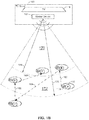
- FIG. 1B is a plan view block diagram illustrating how the TV audience survey system in a household logs entries corresponding to the viewing activities of individual audiences in the household in accordance with some implementation.
- the TV 116 is located on a TV stand 160 and there is a master device 105 located in front of the TV 116.
- the master device 105 is implemented in a smartphone that is configured to generate and transmit the TV viewing activity information to a remote TV viewership measurement server 150.
- a tag 119 is a portable device that is carried by a household member 118 and can communicate with the master device 105 using, e.g., the Bluetooth or RFID technology, ultra-sound signals, Wi-Fi signal or the like.
- the tag 119 has two operation modes, active and passive.
- the tag 119 transmits a signal to the master device 105 in response to a user press of an activation button on the tag 119, indicating that the household member 118 is going to watch the TV 116 and will subject itself to the survey conducted by the master device 105.
- the signal may trigger the master device 105 to create a new entry for the household member 118.
- the tag 119 responds to the query signal from the master device 105, indicating its current location relative to the master device 105.
- FIG. 1B depicts two concentric and fan-shaped regions in front of the TV stand 160, which are defined by two radii 174 and 176, respectively, and the movement of the household member 118 inside and outside the two fan-shaped regions.
- the larger fan-shaped region defined by the radius 176 is the active mode region in which the master device 105 can detect the household member's press of the activation button on the tag 119.
- the smaller fan-shaped region defined by the radius 174 is the passive mode region in which the master device 105 can detect the presence of the tag 119. As shown in FIG.
- the master device 105 when the household member 118 presses the activation button at the location A, the master device 105 creates a new TV audience record for the household member 118 and sets the status of the household member 118 to "logged-in". When the household member 119 moves to the location B, the master device 105 detects its presence and updates the status of the household member 118 from "logged-in” to "active", indicating that the household member 118 is currently watching the TV.
- the master device 105 updates the status of the household member 118 to "inactive" and then to "logged-out” if the household member 118 does not return to the passive mode region defined by the radius 170 after a predefined time delay (e.g., three minutes). If the household member 118 then comes back and presses the activation button again at the location D, the master device 105 creates a new audience record for the household member 118 and sets the status of the household member 118 to be "logged-in” again.
- a predefined time delay e.g., three minutes
- the master device 105 When the household member 119 moves to the location E, the master device 105 detects his or her presence and updates the status of the household member 118 from "logged-in" to "active", indicating that the household member 118 is now watching the TV. Note that, if the household member 119 appears at the location E to watch the TV without pressing the activation button, the master device 105 will notice the presence of the tag 119 because it is within the passive mode region. In this case, the master device 105 may send out an alert signal (e.g., flashes or beeps) to remind the household member 118 that it should press the activation button in order to be surveyed by the master device 105.
- an alert signal e.g., flashes or beeps
- the TV audience survey system 103 including the master device 105 and one or more tags 119, can keep track of each household member's viewing activity information to reduce the occurrence of "false positives" or "false negatives.”
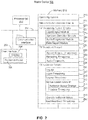
- FIG. 2 is a block diagram illustrating the components of a master device 105 of the TV audience survey system 103 that are configured for logging entries corresponding to the TV viewing activities of one or more household members in accordance with some implementations.
- the master device 105 includes one or more processors 202 for executing modules, programs and/or instructions stored in memory 212 and thereby performing predefined operations; one or more network or other communications interfaces 210; memory 212; and one or more communication buses 214 for interconnecting these components.
- the master device 105 includes a user interface 204 comprising a display device 208 and one or more input devices 206 (e.g., keyboard or mouse).
- the master device 105 is a mobile communication device including a smartphone or a tablet computer.
- the memory 212 includes high-speed random access memory, such as DRAM, SRAM, DDR RAM or other random access solid state memory devices.
- memory 212 includes non-volatile memory, such as one or more magnetic disk storage devices, optical disk storage devices, flash memory devices, or other non-volatile solid state storage devices.
- memory 212 includes one or more storage devices remotely located from the processor(s) 202.
- Memory 212, or alternately one or more storage devices (e.g., one or more nonvolatile storage devices) within memory 212 includes a non-transitory computer readable storage medium.
- memory 212 or the computer readable storage medium of memory 212 stores the following programs, modules and data structures, or a subset thereof:
- the TV viewership survey engine 220 further includes:
- FIG. 3 is a block diagram illustrating the components of a TV viewership measurement server 150 that are configured for determining the TV viewership data based on the log entries from different households in accordance with some implementations.
- the measurement server 150 includes one or more processors 302 for executing modules, programs and/or instructions stored in memory 312 and thereby performing predefined operations; one or more network or other communications interfaces 310; memory 312; and one or more communication buses 314 for interconnecting these components.
- the measurement server 150 includes a user interface 304 comprising a display device 308 and one or more input devices 306 (e.g., keyboard or mouse).
- the memory 312 includes high-speed random access memory, such as DRAM, SRAM, DDR RAM or other random access solid state memory devices.
- memory 312 includes non-volatile memory, such as one or more magnetic disk storage devices, optical disk storage devices, flash memory devices, or other non-volatile solid state storage devices.
- memory 312 includes one or more storage devices remotely located from the processor(s) 302. Memory 312, or alternately one or more storage devices (e.g., one or more nonvolatile storage devices) within memory 312, includes a non-transitory computer readable storage medium.
- memory 312 or the computer readable storage medium of memory 312 stores the following programs, modules and data structures, or a subset thereof:
- the measurement compliance engine 320 further includes:
- FIGS. 4A and 4B are flow charts illustrating how the TV audience survey system 103 generates TV broadcast records and TV audience records for a household, respectively, in accordance with some implementations.
- the master device 105 generates (410) a plurality of TV broadcast records for the household in accordance with a first predefined schedule.
- the master device 105 is set to be always on.
- the master device 105 is configured to check whether the TV 116 is broadcasting any program every 8-15 seconds. If no audio signal is detected, the TV 116 is presumed to be off and the master device 105 does nothing but wait for the next scheduled checkup time. If the master device 105 detects an audio signal broadcast from the TV 116, the master device 105 generates (410-1) an audio fingerprint using the detected audio signal.
- the master device 105 generates (410-3) a TV broadcast record 226, which includes a record ID, the audio fingerprint, and a recording timestamp.
- the record ID is the IP address 126 of the household 180 or the like that can uniquely identify the household.
- the master device 105 sends (412) a plurality of TV broadcast records to the TV viewership measurement server 150.
- the master device 105 is scheduled to send the TV broadcast records it has generated during the past 24 hours to the TV viewership measurement server 150 at a predefined time everyday (e.g., mid-night) when there are very few household members watching the TV and there are relatively more network resources available for this data transfer.
- the TV viewership measurement server 150 aggregates these TV broadcast records to determine the TV programs that have been broadcast at the household 180 as well as the starting time and the ending time of each program.
- the master device 105 also generates (414) a plurality of TV audience records for a household.
- a household member also referred to as a panelist
- the master device 105 may have a touchscreen displaying the names of the household members and any household member can log into the system through a finger touch on any of the names.
- every household member has a dedicated tag so that the master device 105 can tell who is currently watching the TV by interacting with different tags.
- the master device 105 receives (414-1) a login request from the household member.
- the master device 105 generates (414-3) a new TV audience record for the household member.
- the new TV audience record is generated with the implicit approval of the household member.
- the household member may expressly consent to be "tagged" when he or she signs an agreement with an entity that is responsible for managing the TV viewership measurement server 150 or its authorized representative.
- the master device 105 starts surveying the household member's TV viewing activities.
- the tag carried by the household member sends a heartbeat signal to the master device 105 at a predefined time interval (e.g., 2-4 minutes).
- the heartbeat signal received by the master device 105 indicates that the household member is still watching the TV after submitting its login request.
- the tag sends a heartbeat signal in response to a query signal from the master device 105.
- the master device 105 detects (414-5) a change to the household member's viewing activity and then updates the TV audience record accordingly. For example, the household member may send a logout request to the master device 105, indicating that it no longer watches the TV.
- the master device 105 updates the TV audience record to reflect the household member's decision in its viewership status of the TV audience record. Note that this scenario is the ideal case in which the household member does stop watching the TV by, e.g., walking away from the TV and the TV viewership data reported by the set top box 117 does not include any "false positive” or "false negative” scenarios.
- FIGS. 4C and 4D are flow charts illustrating how to deal with these "false positive” or "false negative” scenarios that are common in the real life.
- FIG. 4C is a flow chart illustrating how the TV audience survey system 103 determines and processes a false positive scenario for a household member in accordance with some implementations. Assuming that the household member carries a first tag, he or she logs (431) into the TV audience survey system as a registered audience by pressing a button on the first tag. In response, the TV audience survey system generates (433) a new TV audience record for the household member that includes a log-in timestamp. An exemplary TV audience record 234 is described above in connection with FIG. 2 .
- the master device 105 then starts (435) checking whether the first tag carried by the household member is within a predefined distance from the master device 105 in accordance with a predefined schedule (e.g., every 2-4 minutes). As described above in connection with FIG. 1B , the master device 105 may set the initial status of the household member to be "logged-in” after receiving a login signal generated by the press of the button on the first tag. Next, the first tag broadcasts a heartbeat signal at a regular time interval. Upon detection of the heartbeat signal, the master device 105 updates the status of the household member to be "active," indicating that the household member is actively engaged in watching the TV.
- a predefined schedule e.g., every 2-4 minutes
- the master device 105 may bypass the "logged-in” status and set the household member's status to be “active” upon receiving the login signal.
- the master device 105 updates the TV audience record (e.g., the last heartbeat timestamp 250) associated with the household member whenever it receives a new heartbeat signal to reflect the most recent TV viewing activity by the household member.
- the connection between the master device 105 and the first tag is lost at a later time.
- the TV audience survey system updates (437) the TV audience record (e.g., inserting a status update entry 242) to reflect when there was a change to the audience status (e.g., from "active" to "inactive”).
- the "inactive" status is treated differently from the "logged-out” status, which indicates that the household member has quitting watching the TV by expressly logging out of the TV audience survey system by pressing the button on the first tag again.
- the "inactive” status indicates that the household member is temporarily away from watching the TV and he or she may or may not come back sometime in the future.
- the TV audience survey system updates (439-1) the TV audience record to cause the household member to be logged out.
- the TV audience survey system also inserts another status update entry 242 into the TV audience record to reflect that the household member is forced to be logged out during this round of TV viewing activities.
- the TV audience survey system updates (439-2) the TV audience record by, e.g., inserting another status update entry 242 into the TV audience record, to reflect the change to the status of the household member from "inactive" to "active.”
- the time gap between two consecutive status update entries that are captured by the TV audience record can be used by, e.g., the TV viewership measurement server 150, to detect "false positive" scenario in the of the household member's TV viewing activities.
- the master device 105 may also send an alert or warning message to the household member (e.g., in the form of an email or text message) if he or she repeatedly forgets to log out of the TV audience survey system when quitting watching the TV.
- FIG. 4D is a flow chart illustrating how the TV audience survey system 103 determines and processes a false negative scenario for a household member in accordance with some implementations.
- the master device 105 detects (451) a tag within a predefined distance from the master device 105 by, e.g., receiving a heartbeat signal from the tag.
- the master device 105 can detect the heartbeat signal from any tag within a predefined distance from the master device 105 regardless of whether the household member that carries the tag has logged into the TV audience survey system.
- the heartbeat signal may be picked up by the master device 105 while the household member has logged into the TV audience survey system and is actively watching the TV.
- the heartbeat signal may be detected when the household member has not logged into the TV audience survey system (e.g., the household member may be logged out by the TV audience survey system for not receiving a heartbeat signal from the corresponding tag).
- the master device 105 queries (453) the TV audience survey system for a TV audience record to determine if the household member that carries the tag has logged into the TV audience survey system. If there is a TV audience record associated with the household member whose current audience status is "active,” the household member will be treated in a manner like what is described above in connection with operation 435 of FIG. 4C . If no TV audience record is identified as being associated with the household member or the identified TV audience record indicates that the household member's current audience status is "logged-out,” the household member will be treated in the manner as described below in connection with FIG. 4D .
- the master device 105 may remind (455) the household member so by, e.g., sending an alert signal to the household member.
- the alert signal is a blinking signal generated by the master device 105 through its display.
- the alert signal is a beeping sound signal or a vibration signal generated by the tag carried by the household member.
- the master device 105 may generate other types of alert signals in order to bring to the household member's attention that he or she has been watching the TV without logging into the TV audience survey system appropriately and such act would cause false negative scenarios in the TV viewership data collected from this household.
- the household member then activates (457) a key on the tag, which triggers the TV audience survey system (459) to generate a new TV audience record for the household member.
- the TV audience survey system may report such household member to the TV viewership measurement server 150, which may send warning letters or messages to the household or even revoke the household's participation of the TV audience survey.
- the TV audience survey system 103 not only alerts members of a household not to violate the protocol but also reports to the TV viewership measurement server 150 the false negative scenarios happening within the household.
- the TV audience survey system generates a false scenario record for each detected tag after the query at operation 453 fails to return a TV audience record that corresponds to a household member that is actively watching the TV.
- This false scenario record includes a tag ID that uniquely identifies a tag that has been assigned to a particular household member and a period of time indicating how long the household member has been watching the TV without logging into the TV audience survey system.
- the TV viewership measurement server 150 can use the record to update the TV viewership data reported by the set top box from the same household to eliminate the "false negative" scenarios from the data.
- the master device 105 sends the TV broadcast records and the TV audience records to the TV viewership measurement server 150 according to predefined schedules, respectively.
- the TV viewership measurement server 150 performs at least two functions: correlating the TV broadcast records and the TV audience records to determine which household members actually watched what TV programs ( FIG. 5A ) and updating the TV viewership metering data reported by the set top box 117 ( FIG. 5B ).
- FIG. 5A is a flow chart illustrating how the TV viewership measurement server 150 generates TV audience measurement records for a household in accordance with some implementations.
- the TV viewership measurement server 150 receives (502) a plurality of TV audience records from the TV audience survey system and receives (504) a plurality of TV broadcast records from the TV audience survey system.
- a TV audience record includes an individual's TV viewing activities and a respective TV broadcast record includes an audio fingerprint derived from a TV program being broadcast at the household and an associated timestamp.
- the TV viewership measurement server 150 correlates (506) the plurality of TV broadcast records with the plurality of TV audience records to determine TV viewership data for the individuals in the household.
- the TV viewership data includes a plurality of TV audience measurement records, each record identifying a TV program broadcast at the household and one or more individuals that have watched the TV program.
- the TV viewership measurement server 150 compares (506-1) a respective TV broadcast record with a plurality of TV broadcast reference records to identify one TV broadcast reference record that has the same audio fingerprint as the respective TV broadcast record.
- a TV broadcast reference record is provided to TV viewership measurement server 150 by a third-party (e.g., a TV broadcaster), which includes an audio fingerprint and information associated with a TV program.
- the TV viewership measurement server 150 compares (506-3) the respective TV broadcast record with the plurality of TV audience records to identify individuals in the household that watched the TV program based on their respective TV viewing activities and the timestamp of the respective TV broadcast record.
- the TV viewership measurement server 150 generates (506-5) one or more TV audience measurement records, each record including the information associated with the TV program and information associated with the individuals in the household that actually watched the TV program.
- FIG. 5B is a flow chart illustrating how the TV viewership measurement server 150 updates TV viewership metering records for the household in accordance with some implementations.
- the TV viewership measurement server 150 receives (510) a plurality of TV viewership metering records from a set top box in the household.
- a respective TV viewership metering record includes information identifying a TV program and one or more individuals in the household that registered to watch the TV program.
- the TV viewership measurement server 150 For a respective TV viewership metering record (512), the TV viewership measurement server 150 identifies (512-1) a TV audience measurement record associated with the same TV program as the respective TV metering record and updates (512-3) the registered individuals information in the TV viewership metering record using the identified TV audience measurement record to add individuals that actually watched but did not register for watching the TV program (e.g., a "false negative” scenario) and delete individuals that registered for watching but did not actually watched the TV program (e.g., a "false positive” scenario).
- a TV audience measurement record associated with the same TV program as the respective TV metering record
- updates 512-3 the registered individuals information in the TV viewership metering record using the identified TV audience measurement record to add individuals that actually watched but did not register for watching the TV program (e.g., a "false negative” scenario) and delete individuals that registered for watching but did not actually watched the TV program (e.g., a "false positive” scenario).
- the TV viewership measurement server 150 may send (514) an alert message to the TV audience survey system 103 if the update to the registered individuals information satisfies a predefined condition (e.g., one or more household members often move away from the TV without logging out or watch the TV without logging in appropriately).
- the TV audience survey system 103 may then notify the corresponding household members that they are running the risk of being dismissed from the TV viewership metering data program conducted by a third-party agency, which may provide financial incentives to the household members for signing up the program.
- stages that are not order dependent may be reordered and other stages may be combined or broken out. While some reordering or other groupings are specifically mentioned, others will be obvious to those of ordinary skill in the art and so do not present an exhaustive list of alternatives. Moreover, it should be recognized that the stages could be implemented in hardware, firmware, software or any combination thereof.
- first, second, etc. may be used herein to describe various elements, these elements should not be limited by these terms. These terms are only used to distinguish one element from another.
- first ranking criteria could be termed second ranking criteria, and, similarly, second ranking criteria could be termed first ranking criteria, without departing from the scope of the present invention.
- First ranking criteria and second ranking criteria are both ranking criteria, but they are not the same ranking criteria.
- the term “if' may be construed to mean “when” or “upon” or “in response to determining” or “in accordance with a determination” or “in response to detecting,” that a stated condition precedent is true, depending on the context.
- the phrase “if it is determined [that a stated condition precedent is true]” or “if [a stated condition precedent is true]” or “when [a stated condition precedent is true]” may be construed to mean “upon determining” or “in response to determining” or “in accordance with a determination” or “upon detecting” or “in response to detecting” that the stated condition precedent is true, depending on the context.
Landscapes
- Engineering & Computer Science (AREA)
- Signal Processing (AREA)
- Multimedia (AREA)
- Databases & Information Systems (AREA)
- Health & Medical Sciences (AREA)
- General Health & Medical Sciences (AREA)
- Computer Networks & Wireless Communication (AREA)
- Social Psychology (AREA)
- Human Computer Interaction (AREA)
- Physics & Mathematics (AREA)
- Acoustics & Sound (AREA)
- Life Sciences & Earth Sciences (AREA)
- Chemical & Material Sciences (AREA)
- Analytical Chemistry (AREA)
- Biomedical Technology (AREA)
- Biophysics (AREA)
- Neurosurgery (AREA)
- Computing Systems (AREA)
- Computer Graphics (AREA)
- Two-Way Televisions, Distribution Of Moving Picture Or The Like (AREA)
- Testing, Inspecting, Measuring Of Stereoscopic Televisions And Televisions (AREA)
Applications Claiming Priority (3)
| Application Number | Priority Date | Filing Date | Title |
|---|---|---|---|
| US13/552,561 US9215022B2 (en) | 2012-07-18 | 2012-07-18 | Logging individuals for TV measurement compliance |
| PCT/US2013/050938 WO2014015066A1 (fr) | 2012-07-18 | 2013-07-17 | Connexion d'individus pour une conformité de mesure de tv |
| EP13740197.2A EP2875644B1 (fr) | 2012-07-18 | 2013-07-17 | Connexion d'individus pour une conformité de mesure de tv |
Related Parent Applications (1)
| Application Number | Title | Priority Date | Filing Date |
|---|---|---|---|
| EP13740197.2A Division EP2875644B1 (fr) | 2012-07-18 | 2013-07-17 | Connexion d'individus pour une conformité de mesure de tv |
Publications (3)
| Publication Number | Publication Date |
|---|---|
| EP3343931A2 true EP3343931A2 (fr) | 2018-07-04 |
| EP3343931A3 EP3343931A3 (fr) | 2018-07-25 |
| EP3343931B1 EP3343931B1 (fr) | 2023-01-25 |
Family
ID=48857037
Family Applications (2)
| Application Number | Title | Priority Date | Filing Date |
|---|---|---|---|
| EP17199449.4A Active EP3343931B1 (fr) | 2012-07-18 | 2013-07-17 | Connexion d'individus pour une conformité de mesure de tv |
| EP13740197.2A Active EP2875644B1 (fr) | 2012-07-18 | 2013-07-17 | Connexion d'individus pour une conformité de mesure de tv |
Family Applications After (1)
| Application Number | Title | Priority Date | Filing Date |
|---|---|---|---|
| EP13740197.2A Active EP2875644B1 (fr) | 2012-07-18 | 2013-07-17 | Connexion d'individus pour une conformité de mesure de tv |
Country Status (3)
| Country | Link |
|---|---|
| US (3) | US9215022B2 (fr) |
| EP (2) | EP3343931B1 (fr) |
| WO (1) | WO2014015066A1 (fr) |
Families Citing this family (37)
| Publication number | Priority date | Publication date | Assignee | Title |
|---|---|---|---|---|
| AU2011349435B2 (en) | 2010-12-20 | 2016-08-18 | The Nielsen Company (Us), Llc | Methods and apparatus to determine media impressions using distributed demographic information |
| AU2013204865B2 (en) | 2012-06-11 | 2015-07-09 | The Nielsen Company (Us), Llc | Methods and apparatus to share online media impressions data |
| US20140026156A1 (en) * | 2012-07-18 | 2014-01-23 | David Deephanphongs | Determining User Interest Through Detected Physical Indicia |
| US10034049B1 (en) | 2012-07-18 | 2018-07-24 | Google Llc | Audience attendance monitoring through facial recognition |
| US20140196070A1 (en) * | 2013-01-07 | 2014-07-10 | Smrtv, Inc. | System and method for automated broadcast media identification |
| KR101369475B1 (ko) * | 2013-01-23 | 2014-03-06 | (주)엔써즈 | 방송 시청률 조사 시스템 및 방법 |
| US9179185B2 (en) | 2013-03-14 | 2015-11-03 | The Nielsen Company (Us), Llc | Methods and apparatus to determine a number of people in an area |
| US10078811B2 (en) | 2013-11-29 | 2018-09-18 | Fedex Corporate Services, Inc. | Determining node location based on context data in a wireless node network |
| WO2015156785A1 (fr) * | 2014-04-08 | 2015-10-15 | Empire Technology Development Llc | Recommandations d'activités filtrées d'observateur |
| US10453023B2 (en) | 2014-05-28 | 2019-10-22 | Fedex Corporate Services, Inc. | Methods and node apparatus for adaptive node communication within a wireless node network |
| US9277276B1 (en) | 2014-08-18 | 2016-03-01 | Google Inc. | Systems and methods for active training of broadcast personalization and audience measurement systems using a presence band |
| US9820011B2 (en) * | 2014-10-14 | 2017-11-14 | Verizon Patent And Licensing Inc. | Detecting and preventing false television viewership |
| CA2973328C (fr) * | 2015-01-30 | 2019-11-26 | Sharp Kabushiki Kaisha | Systeme de creation de rapport d'utilisation de service |
| US11238397B2 (en) | 2015-02-09 | 2022-02-01 | Fedex Corporate Services, Inc. | Methods, apparatus, and systems for generating a corrective pickup notification for a shipped item using a mobile master node |
| US9985839B2 (en) | 2015-07-08 | 2018-05-29 | Fedex Corporate Services, Inc. | Systems, apparatus, and methods of event monitoring for an event candidate within a wireless node network based upon sighting events, sporadic events, and benchmark checkpoint events |
| CN106550218B (zh) * | 2015-09-23 | 2019-07-12 | 北京丰源星际传媒科技有限公司 | 影院内容监播及观影统计一体化解决方法及系统 |
| WO2017120469A1 (fr) | 2016-01-06 | 2017-07-13 | Tvision Insights, Inc. | Systèmes et procédés pour évaluer un engagement de spectateur |
| US11540009B2 (en) | 2016-01-06 | 2022-12-27 | Tvision Insights, Inc. | Systems and methods for assessing viewer engagement |
| JP6957496B2 (ja) | 2016-03-23 | 2021-11-02 | フェデックス コーポレイト サービシズ,インコーポレイティド | 無線ノードネットワーク内のノードのブロードキャスト設定を自動調整するための無線ノードベースの方法、その方法を実行する命令を含む非一時的コンピュータ可読媒体、および無線ノードネットワークにおける自動調整ブロードキャストノード装置 |
| US10129610B2 (en) | 2016-09-22 | 2018-11-13 | The Nielsen Company (Us), Llc | Methods and apparatus to monitor media |
| US11770574B2 (en) * | 2017-04-20 | 2023-09-26 | Tvision Insights, Inc. | Methods and apparatus for multi-television measurements |
| GB2573086B (en) | 2017-09-15 | 2023-01-04 | Tva Group Ltd | Viewing Data |
| US10715855B1 (en) * | 2017-12-20 | 2020-07-14 | Groupon, Inc. | Method, system, and apparatus for programmatically generating a channel incrementality ratio |
| US20190245935A1 (en) * | 2018-02-07 | 2019-08-08 | The Nielsen Company (Us), Llc | Methods and apparatus to create opportunistic network of iot collaboration agents to collect data from mobile devices |
| US11039207B2 (en) | 2018-12-17 | 2021-06-15 | The Nielsen Company (Us), Llc | Methods and apparatus for a window-metric rule |
| US11284162B1 (en) | 2019-07-26 | 2022-03-22 | Alphonso Inc. | Consolidation of channel identifiers in electronic program guide (EPG) data for one or more EPG data providers, and use of consolidated channel identifiers for processing audience measurement data |
| US11089366B2 (en) * | 2019-12-12 | 2021-08-10 | The Nielsen Company (Us), Llc | Methods, systems, articles of manufacture and apparatus to remap household identification |
| US20210271964A1 (en) * | 2020-02-28 | 2021-09-02 | The Nielsen Company (Us), Llc | Methods and apparatus to predict in-tab drop using artificial intelligence |
| CN112311491A (zh) * | 2020-03-23 | 2021-02-02 | 尼尔森网联媒介数据服务有限公司 | 多媒体数据采集方法、装置、存储介质及电子设备 |
| CN111601167A (zh) * | 2020-05-21 | 2020-08-28 | 广州欢网科技有限责任公司 | 一种电视节目受众精确定位方法及平台 |
| WO2023111708A1 (fr) * | 2021-11-08 | 2023-06-22 | Siemens Healthcare Diagnostics Inc. | Système et procédé d'étalonnage de paramètres système pour la reconstruction d'images |
| US11968415B1 (en) * | 2022-10-13 | 2024-04-23 | The Nielsen Company (Us), Llc | Methods, apparatus, and articles of manufacture to determine penetration and churn of streaming services |
| JP7569394B2 (ja) * | 2023-02-09 | 2024-10-17 | 株式会社ビデオリサーチ | 視聴実態把握システム |
| JP7569396B2 (ja) * | 2023-02-09 | 2024-10-17 | 株式会社ビデオリサーチ | 視聴実態把握システム |
| JP7569395B2 (ja) * | 2023-02-09 | 2024-10-17 | 株式会社ビデオリサーチ | 視聴実態把握システム |
| JP2024167670A (ja) * | 2023-05-22 | 2024-12-04 | 株式会社Subaru | カメラユニットの校正装置及び校正方法 |
| JP2024167669A (ja) * | 2023-05-22 | 2024-12-04 | 株式会社Subaru | カメラユニットの校正装置及び校正方法 |
Family Cites Families (17)
| Publication number | Priority date | Publication date | Assignee | Title |
|---|---|---|---|---|
| US5481294A (en) | 1993-10-27 | 1996-01-02 | A. C. Nielsen Company | Audience measurement system utilizing ancillary codes and passive signatures |
| US6647548B1 (en) | 1996-09-06 | 2003-11-11 | Nielsen Media Research, Inc. | Coded/non-coded program audience measurement system |
| US7155159B1 (en) | 2000-03-06 | 2006-12-26 | Lee S. Weinblatt | Audience detection |
| NZ535921A (en) | 2002-04-22 | 2007-08-31 | Nielsen Media Res Inc | Methods and apparatus to collect audience information associated with a media presentation |
| TWI377806B (en) * | 2003-10-17 | 2012-11-21 | Nielsen Media Res Inc | Portable multi-purpose audience measurement system |
| EP1805918B1 (fr) * | 2004-09-27 | 2019-02-20 | Nielsen Media Research, Inc. | Procedes et appareil d'utilisation d'information d'emplacement pour gerer un debordement dans un systeme de surveillance d'audience |
| WO2006099612A2 (fr) * | 2005-03-17 | 2006-09-21 | Nielsen Media Research, Inc. | Procedes et appareil permettant d'utiliser des informations relatives au comportement des membres d'une audience pour determiner si des exigences d'usage d'un systeme de mesure d'audience sont respectees |
| US20070033607A1 (en) * | 2005-08-08 | 2007-02-08 | Bryan David A | Presence and proximity responsive program display |
| MX2007015979A (es) | 2006-03-31 | 2009-04-07 | Nielsen Media Res Inc | Metodos, sistemas y aparato para medicion de multiples fines. |
| US20100015398A1 (en) * | 2006-06-20 | 2010-01-21 | Toppan Printing C0. Ltd | Substrate with Partition Pattern and Process for Producing the Same |
| MX2010003819A (es) * | 2007-11-08 | 2010-04-30 | Keystone Retaining Wall System | Bloque de pared con almohadillas de soporte de peso y metodo de produccion de bloques de pared. |
| US20100153983A1 (en) * | 2008-12-15 | 2010-06-17 | Earl Warren Philmon | Automated presence for set top boxes |
| US8494694B2 (en) * | 2009-07-24 | 2013-07-23 | Raymond Dueck | Mass transportation system |
| US9014546B2 (en) * | 2009-09-23 | 2015-04-21 | Rovi Guides, Inc. | Systems and methods for automatically detecting users within detection regions of media devices |
| US8855101B2 (en) * | 2010-03-09 | 2014-10-07 | The Nielsen Company (Us), Llc | Methods, systems, and apparatus to synchronize actions of audio source monitors |
| JP5476242B2 (ja) * | 2010-07-23 | 2014-04-23 | 株式会社日立製作所 | 超電導線材の接続構造体およびその製造方法 |
| US8918802B2 (en) * | 2011-02-28 | 2014-12-23 | The Nielsen Company (Us), Llc | Methods and apparatus to monitor media exposure |
-
2012
- 2012-07-18 US US13/552,561 patent/US9215022B2/en active Active
-
2013
- 2013-07-17 EP EP17199449.4A patent/EP3343931B1/fr active Active
- 2013-07-17 EP EP13740197.2A patent/EP2875644B1/fr active Active
- 2013-07-17 WO PCT/US2013/050938 patent/WO2014015066A1/fr not_active Ceased
-
2015
- 2015-12-03 US US14/958,643 patent/US9781456B2/en active Active
-
2017
- 2017-10-02 US US15/722,065 patent/US10327020B2/en active Active
Non-Patent Citations (1)
| Title |
|---|
| None |
Also Published As
| Publication number | Publication date |
|---|---|
| WO2014015066A1 (fr) | 2014-01-23 |
| US10327020B2 (en) | 2019-06-18 |
| EP3343931B1 (fr) | 2023-01-25 |
| US9781456B2 (en) | 2017-10-03 |
| US20140026158A1 (en) | 2014-01-23 |
| EP3343931A3 (fr) | 2018-07-25 |
| US9215022B2 (en) | 2015-12-15 |
| EP2875644B1 (fr) | 2017-11-29 |
| US20190014365A1 (en) | 2019-01-10 |
| US20160088325A1 (en) | 2016-03-24 |
| EP2875644A1 (fr) | 2015-05-27 |
Similar Documents
| Publication | Publication Date | Title |
|---|---|---|
| US10327020B2 (en) | Logging individuals for TV measurement compliance | |
| US9769508B2 (en) | Method and system for correlating TV broadcasting information with TV panelist status information | |
| US10154295B2 (en) | Method and system for analysis of sensory information to estimate audience reaction | |
| US10547905B2 (en) | Systems, methods, and devices for monitoring content viewership using short-range wireless communication | |
| US11540009B2 (en) | Systems and methods for assessing viewer engagement | |
| US20150229979A1 (en) | Methods and apparatus to calculate video-on-demand and dynamically inserted advertisement viewing probability | |
| US20150289021A1 (en) | System and method for collecting viewer opinion information | |
| US9301019B1 (en) | Media correlation by feature matching | |
| JP2011234198A (ja) | 情報提供方法、コンテンツ表示端末、携帯端末、サーバ装置、情報提供システム及びプログラム | |
| US12301932B2 (en) | Methods and apparatus to determine an audience composition based on voice recognition | |
| US11212570B2 (en) | Viewing data | |
| US9083988B1 (en) | System and method for identifying viewers of television programs | |
| US8904418B1 (en) | Logging TV viewing activities using an infrared detector | |
| US12323656B2 (en) | Systems and methods for assessing viewer engagement | |
| Kim | Audience measurement and analysis | |
| US10778835B2 (en) | Inferring user context via time-series correlation analysis | |
| KR101464051B1 (ko) | 멀티캐스트 그룹 가입자 정보를 이용한 시청률 조사 시스템 및 그 방법 | |
| HK40097093A (en) | Systems and methods for assessing viewer engagement using a camera a microphone and packet monitoring |
Legal Events
| Date | Code | Title | Description |
|---|---|---|---|
| PUAI | Public reference made under article 153(3) epc to a published international application that has entered the european phase |
Free format text: ORIGINAL CODE: 0009012 |
|
| STAA | Information on the status of an ep patent application or granted ep patent |
Free format text: STATUS: THE APPLICATION HAS BEEN PUBLISHED |
|
| PUAL | Search report despatched |
Free format text: ORIGINAL CODE: 0009013 |
|
| AC | Divisional application: reference to earlier application |
Ref document number: 2875644 Country of ref document: EP Kind code of ref document: P |
|
| AK | Designated contracting states |
Kind code of ref document: A2 Designated state(s): AL AT BE BG CH CY CZ DE DK EE ES FI FR GB GR HR HU IE IS IT LI LT LU LV MC MK MT NL NO PL PT RO RS SE SI SK SM TR |
|
| AK | Designated contracting states |
Kind code of ref document: A3 Designated state(s): AL AT BE BG CH CY CZ DE DK EE ES FI FR GB GR HR HU IE IS IT LI LT LU LV MC MK MT NL NO PL PT RO RS SE SI SK SM TR |
|
| RIC1 | Information provided on ipc code assigned before grant |
Ipc: H04H 60/45 20080101ALI20180618BHEP Ipc: H04N 21/442 20110101ALI20180618BHEP Ipc: H04N 21/439 20110101ALI20180618BHEP Ipc: H04N 21/658 20110101ALI20180618BHEP Ipc: H04H 60/31 20080101ALI20180618BHEP Ipc: H04N 21/422 20110101AFI20180618BHEP Ipc: H04H 60/58 20080101ALI20180618BHEP |
|
| STAA | Information on the status of an ep patent application or granted ep patent |
Free format text: STATUS: REQUEST FOR EXAMINATION WAS MADE |
|
| 17P | Request for examination filed |
Effective date: 20190115 |
|
| RBV | Designated contracting states (corrected) |
Designated state(s): AL AT BE BG CH CY CZ DE DK EE ES FI FR GB GR HR HU IE IS IT LI LT LU LV MC MK MT NL NO PL PT RO RS SE SI SK SM TR |
|
| STAA | Information on the status of an ep patent application or granted ep patent |
Free format text: STATUS: EXAMINATION IS IN PROGRESS |
|
| 17Q | First examination report despatched |
Effective date: 20200605 |
|
| GRAP | Despatch of communication of intention to grant a patent |
Free format text: ORIGINAL CODE: EPIDOSNIGR1 |
|
| STAA | Information on the status of an ep patent application or granted ep patent |
Free format text: STATUS: GRANT OF PATENT IS INTENDED |
|
| INTG | Intention to grant announced |
Effective date: 20220914 |
|
| GRAS | Grant fee paid |
Free format text: ORIGINAL CODE: EPIDOSNIGR3 |
|
| GRAA | (expected) grant |
Free format text: ORIGINAL CODE: 0009210 |
|
| STAA | Information on the status of an ep patent application or granted ep patent |
Free format text: STATUS: THE PATENT HAS BEEN GRANTED |
|
| AC | Divisional application: reference to earlier application |
Ref document number: 2875644 Country of ref document: EP Kind code of ref document: P |
|
| AK | Designated contracting states |
Kind code of ref document: B1 Designated state(s): AL AT BE BG CH CY CZ DE DK EE ES FI FR GB GR HR HU IE IS IT LI LT LU LV MC MK MT NL NO PL PT RO RS SE SI SK SM TR |
|
| REG | Reference to a national code |
Ref country code: GB Ref legal event code: FG4D |
|
| REG | Reference to a national code |
Ref country code: CH Ref legal event code: EP |
|
| REG | Reference to a national code |
Ref country code: DE Ref legal event code: R096 Ref document number: 602013083276 Country of ref document: DE |
|
| REG | Reference to a national code |
Ref country code: AT Ref legal event code: REF Ref document number: 1546587 Country of ref document: AT Kind code of ref document: T Effective date: 20230215 Ref country code: IE Ref legal event code: FG4D |
|
| REG | Reference to a national code |
Ref country code: NL Ref legal event code: FP |
|
| REG | Reference to a national code |
Ref country code: LT Ref legal event code: MG9D |
|
| P01 | Opt-out of the competence of the unified patent court (upc) registered |
Effective date: 20230506 |
|
| REG | Reference to a national code |
Ref country code: AT Ref legal event code: MK05 Ref document number: 1546587 Country of ref document: AT Kind code of ref document: T Effective date: 20230125 |
|
| PG25 | Lapsed in a contracting state [announced via postgrant information from national office to epo] |
Ref country code: RS Free format text: LAPSE BECAUSE OF FAILURE TO SUBMIT A TRANSLATION OF THE DESCRIPTION OR TO PAY THE FEE WITHIN THE PRESCRIBED TIME-LIMIT Effective date: 20230125 Ref country code: PT Free format text: LAPSE BECAUSE OF FAILURE TO SUBMIT A TRANSLATION OF THE DESCRIPTION OR TO PAY THE FEE WITHIN THE PRESCRIBED TIME-LIMIT Effective date: 20230525 Ref country code: NO Free format text: LAPSE BECAUSE OF FAILURE TO SUBMIT A TRANSLATION OF THE DESCRIPTION OR TO PAY THE FEE WITHIN THE PRESCRIBED TIME-LIMIT Effective date: 20230425 Ref country code: LV Free format text: LAPSE BECAUSE OF FAILURE TO SUBMIT A TRANSLATION OF THE DESCRIPTION OR TO PAY THE FEE WITHIN THE PRESCRIBED TIME-LIMIT Effective date: 20230125 Ref country code: LT Free format text: LAPSE BECAUSE OF FAILURE TO SUBMIT A TRANSLATION OF THE DESCRIPTION OR TO PAY THE FEE WITHIN THE PRESCRIBED TIME-LIMIT Effective date: 20230125 Ref country code: HR Free format text: LAPSE BECAUSE OF FAILURE TO SUBMIT A TRANSLATION OF THE DESCRIPTION OR TO PAY THE FEE WITHIN THE PRESCRIBED TIME-LIMIT Effective date: 20230125 Ref country code: ES Free format text: LAPSE BECAUSE OF FAILURE TO SUBMIT A TRANSLATION OF THE DESCRIPTION OR TO PAY THE FEE WITHIN THE PRESCRIBED TIME-LIMIT Effective date: 20230125 Ref country code: AT Free format text: LAPSE BECAUSE OF FAILURE TO SUBMIT A TRANSLATION OF THE DESCRIPTION OR TO PAY THE FEE WITHIN THE PRESCRIBED TIME-LIMIT Effective date: 20230125 |
|
| PG25 | Lapsed in a contracting state [announced via postgrant information from national office to epo] |
Ref country code: SE Free format text: LAPSE BECAUSE OF FAILURE TO SUBMIT A TRANSLATION OF THE DESCRIPTION OR TO PAY THE FEE WITHIN THE PRESCRIBED TIME-LIMIT Effective date: 20230125 Ref country code: PL Free format text: LAPSE BECAUSE OF FAILURE TO SUBMIT A TRANSLATION OF THE DESCRIPTION OR TO PAY THE FEE WITHIN THE PRESCRIBED TIME-LIMIT Effective date: 20230125 Ref country code: IS Free format text: LAPSE BECAUSE OF FAILURE TO SUBMIT A TRANSLATION OF THE DESCRIPTION OR TO PAY THE FEE WITHIN THE PRESCRIBED TIME-LIMIT Effective date: 20230525 Ref country code: GR Free format text: LAPSE BECAUSE OF FAILURE TO SUBMIT A TRANSLATION OF THE DESCRIPTION OR TO PAY THE FEE WITHIN THE PRESCRIBED TIME-LIMIT Effective date: 20230426 Ref country code: FI Free format text: LAPSE BECAUSE OF FAILURE TO SUBMIT A TRANSLATION OF THE DESCRIPTION OR TO PAY THE FEE WITHIN THE PRESCRIBED TIME-LIMIT Effective date: 20230125 |
|
| REG | Reference to a national code |
Ref country code: DE Ref legal event code: R097 Ref document number: 602013083276 Country of ref document: DE |
|
| PG25 | Lapsed in a contracting state [announced via postgrant information from national office to epo] |
Ref country code: SM Free format text: LAPSE BECAUSE OF FAILURE TO SUBMIT A TRANSLATION OF THE DESCRIPTION OR TO PAY THE FEE WITHIN THE PRESCRIBED TIME-LIMIT Effective date: 20230125 Ref country code: RO Free format text: LAPSE BECAUSE OF FAILURE TO SUBMIT A TRANSLATION OF THE DESCRIPTION OR TO PAY THE FEE WITHIN THE PRESCRIBED TIME-LIMIT Effective date: 20230125 Ref country code: EE Free format text: LAPSE BECAUSE OF FAILURE TO SUBMIT A TRANSLATION OF THE DESCRIPTION OR TO PAY THE FEE WITHIN THE PRESCRIBED TIME-LIMIT Effective date: 20230125 Ref country code: DK Free format text: LAPSE BECAUSE OF FAILURE TO SUBMIT A TRANSLATION OF THE DESCRIPTION OR TO PAY THE FEE WITHIN THE PRESCRIBED TIME-LIMIT Effective date: 20230125 Ref country code: CZ Free format text: LAPSE BECAUSE OF FAILURE TO SUBMIT A TRANSLATION OF THE DESCRIPTION OR TO PAY THE FEE WITHIN THE PRESCRIBED TIME-LIMIT Effective date: 20230125 |
|
| PG25 | Lapsed in a contracting state [announced via postgrant information from national office to epo] |
Ref country code: SK Free format text: LAPSE BECAUSE OF FAILURE TO SUBMIT A TRANSLATION OF THE DESCRIPTION OR TO PAY THE FEE WITHIN THE PRESCRIBED TIME-LIMIT Effective date: 20230125 |
|
| PLBE | No opposition filed within time limit |
Free format text: ORIGINAL CODE: 0009261 |
|
| STAA | Information on the status of an ep patent application or granted ep patent |
Free format text: STATUS: NO OPPOSITION FILED WITHIN TIME LIMIT |
|
| 26N | No opposition filed |
Effective date: 20231026 |
|
| PG25 | Lapsed in a contracting state [announced via postgrant information from national office to epo] |
Ref country code: SI Free format text: LAPSE BECAUSE OF FAILURE TO SUBMIT A TRANSLATION OF THE DESCRIPTION OR TO PAY THE FEE WITHIN THE PRESCRIBED TIME-LIMIT Effective date: 20230125 |
|
| PG25 | Lapsed in a contracting state [announced via postgrant information from national office to epo] |
Ref country code: MC Free format text: LAPSE BECAUSE OF FAILURE TO SUBMIT A TRANSLATION OF THE DESCRIPTION OR TO PAY THE FEE WITHIN THE PRESCRIBED TIME-LIMIT Effective date: 20230125 |
|
| PG25 | Lapsed in a contracting state [announced via postgrant information from national office to epo] |
Ref country code: MC Free format text: LAPSE BECAUSE OF FAILURE TO SUBMIT A TRANSLATION OF THE DESCRIPTION OR TO PAY THE FEE WITHIN THE PRESCRIBED TIME-LIMIT Effective date: 20230125 |
|
| REG | Reference to a national code |
Ref country code: CH Ref legal event code: PL |
|
| REG | Reference to a national code |
Ref country code: BE Ref legal event code: MM Effective date: 20230731 |
|
| PG25 | Lapsed in a contracting state [announced via postgrant information from national office to epo] |
Ref country code: LU Free format text: LAPSE BECAUSE OF NON-PAYMENT OF DUE FEES Effective date: 20230717 |
|
| PG25 | Lapsed in a contracting state [announced via postgrant information from national office to epo] |
Ref country code: LU Free format text: LAPSE BECAUSE OF NON-PAYMENT OF DUE FEES Effective date: 20230717 |
|
| REG | Reference to a national code |
Ref country code: IE Ref legal event code: MM4A |
|
| PG25 | Lapsed in a contracting state [announced via postgrant information from national office to epo] |
Ref country code: CH Free format text: LAPSE BECAUSE OF NON-PAYMENT OF DUE FEES Effective date: 20230731 |
|
| PG25 | Lapsed in a contracting state [announced via postgrant information from national office to epo] |
Ref country code: IT Free format text: LAPSE BECAUSE OF FAILURE TO SUBMIT A TRANSLATION OF THE DESCRIPTION OR TO PAY THE FEE WITHIN THE PRESCRIBED TIME-LIMIT Effective date: 20230125 Ref country code: BE Free format text: LAPSE BECAUSE OF NON-PAYMENT OF DUE FEES Effective date: 20230731 |
|
| PG25 | Lapsed in a contracting state [announced via postgrant information from national office to epo] |
Ref country code: IE Free format text: LAPSE BECAUSE OF NON-PAYMENT OF DUE FEES Effective date: 20230717 |
|
| PG25 | Lapsed in a contracting state [announced via postgrant information from national office to epo] |
Ref country code: IE Free format text: LAPSE BECAUSE OF NON-PAYMENT OF DUE FEES Effective date: 20230717 |
|
| PGFP | Annual fee paid to national office [announced via postgrant information from national office to epo] |
Ref country code: NL Payment date: 20240726 Year of fee payment: 12 |
|
| PG25 | Lapsed in a contracting state [announced via postgrant information from national office to epo] |
Ref country code: BG Free format text: LAPSE BECAUSE OF FAILURE TO SUBMIT A TRANSLATION OF THE DESCRIPTION OR TO PAY THE FEE WITHIN THE PRESCRIBED TIME-LIMIT Effective date: 20230125 |
|
| PG25 | Lapsed in a contracting state [announced via postgrant information from national office to epo] |
Ref country code: BG Free format text: LAPSE BECAUSE OF FAILURE TO SUBMIT A TRANSLATION OF THE DESCRIPTION OR TO PAY THE FEE WITHIN THE PRESCRIBED TIME-LIMIT Effective date: 20230125 |
|
| PG25 | Lapsed in a contracting state [announced via postgrant information from national office to epo] |
Ref country code: CY Free format text: LAPSE BECAUSE OF FAILURE TO SUBMIT A TRANSLATION OF THE DESCRIPTION OR TO PAY THE FEE WITHIN THE PRESCRIBED TIME-LIMIT; INVALID AB INITIO Effective date: 20130717 |
|
| PG25 | Lapsed in a contracting state [announced via postgrant information from national office to epo] |
Ref country code: HU Free format text: LAPSE BECAUSE OF FAILURE TO SUBMIT A TRANSLATION OF THE DESCRIPTION OR TO PAY THE FEE WITHIN THE PRESCRIBED TIME-LIMIT; INVALID AB INITIO Effective date: 20130717 |
|
| PGFP | Annual fee paid to national office [announced via postgrant information from national office to epo] |
Ref country code: DE Payment date: 20250729 Year of fee payment: 13 |
|
| PGFP | Annual fee paid to national office [announced via postgrant information from national office to epo] |
Ref country code: GB Payment date: 20250728 Year of fee payment: 13 |
|
| PGFP | Annual fee paid to national office [announced via postgrant information from national office to epo] |
Ref country code: FR Payment date: 20250725 Year of fee payment: 13 |
|
| PG25 | Lapsed in a contracting state [announced via postgrant information from national office to epo] |
Ref country code: TR Free format text: LAPSE BECAUSE OF FAILURE TO SUBMIT A TRANSLATION OF THE DESCRIPTION OR TO PAY THE FEE WITHIN THE PRESCRIBED TIME-LIMIT Effective date: 20230125 |
|
| REG | Reference to a national code |
Ref country code: NL Ref legal event code: MM Effective date: 20250801 |
|
| PG25 | Lapsed in a contracting state [announced via postgrant information from national office to epo] |
Ref country code: NL Free format text: LAPSE BECAUSE OF NON-PAYMENT OF DUE FEES Effective date: 20250801 |