EP3343982B1 - Funkrufverfahren, synchronisationsverfahren und benutzergerät - Google Patents
Funkrufverfahren, synchronisationsverfahren und benutzergerät Download PDFInfo
- Publication number
- EP3343982B1 EP3343982B1 EP15904482.5A EP15904482A EP3343982B1 EP 3343982 B1 EP3343982 B1 EP 3343982B1 EP 15904482 A EP15904482 A EP 15904482A EP 3343982 B1 EP3343982 B1 EP 3343982B1
- Authority
- EP
- European Patent Office
- Prior art keywords
- paging
- synchronization
- cycle
- signal
- sequence
- Prior art date
- Legal status (The legal status is an assumption and is not a legal conclusion. Google has not performed a legal analysis and makes no representation as to the accuracy of the status listed.)
- Active
Links
Images


Classifications
-
- H—ELECTRICITY
- H04—ELECTRIC COMMUNICATION TECHNIQUE
- H04W—WIRELESS COMMUNICATION NETWORKS
- H04W68/00—User notification, e.g. alerting and paging, for incoming communication, change of service or the like
- H04W68/005—Transmission of information for alerting of incoming communication
-
- H—ELECTRICITY
- H04—ELECTRIC COMMUNICATION TECHNIQUE
- H04W—WIRELESS COMMUNICATION NETWORKS
- H04W48/00—Access restriction; Network selection; Access point selection
- H04W48/16—Discovering, processing access restriction or access information
-
- H—ELECTRICITY
- H04—ELECTRIC COMMUNICATION TECHNIQUE
- H04W—WIRELESS COMMUNICATION NETWORKS
- H04W56/00—Synchronisation arrangements
- H04W56/001—Synchronization between nodes
- H04W56/0015—Synchronization between nodes one node acting as a reference for the others
-
- H—ELECTRICITY
- H04—ELECTRIC COMMUNICATION TECHNIQUE
- H04W—WIRELESS COMMUNICATION NETWORKS
- H04W88/00—Devices specially adapted for wireless communication networks, e.g. terminals, base stations or access point devices
- H04W88/02—Terminal devices
- H04W88/04—Terminal devices adapted for relaying to or from another terminal or user
-
- H—ELECTRICITY
- H04—ELECTRIC COMMUNICATION TECHNIQUE
- H04W—WIRELESS COMMUNICATION NETWORKS
- H04W92/00—Interfaces specially adapted for wireless communication networks
- H04W92/16—Interfaces between hierarchically similar devices
- H04W92/18—Interfaces between hierarchically similar devices between terminal devices
Definitions
- Embodiments of the present invention relate to communications technologies, and in particular, to a paging method, a synchronization method, and user equipment.
- user equipment may use another user equipment, in addition to a network side device (for example, a base station), to access a network.
- a network side device for example, a base station
- user equipment that provides a network access function for the another user equipment is a first device, for example, a high-capability device such as a smartphone; and user equipment that accesses the network by using the first device is a second device, for example, a low-capability device such as a wearable device.
- the first device In a communication process, when the first device does not perform service transmission or receiving, the first device is in a sleep (Idle) state.
- the network side device needs to send a service to the first device in the idle state, the network side device needs to send a paging message to page the first device.
- the first device cyclically awakes, receives the paging message, and determines, according to the paging message, whether the network side device is paging the first device.
- the first device first decodes a paging control channel (Paging Control Channel, PCCH), so as to determine whether there is an indication of the paging message in the PCCH.
- PCCH paging Control Channel
- the first device If there is no indication of the paging message in the PCCH, the first device continues sleeping, or if there is an indication of the paging message in the PCCH, the first device receives a paging message of a designated location, that is, a paging channel (Paging Channel, PCH), further decodes the PCH, and checks whether there is an identity (Identity, ID) of the first device in the PCH; and if there is no identity of the first device in the PCH, the first device continues sleeping, or if there is an identity of the first device in the PCH, the first device accesses the network.
- a paging message of a designated location that is, a paging channel (Paging Channel, PCH)
- PCH paging channel
- the foregoing paging method is a method for paging the first device by the network side device.
- the second device further needs to be paged.
- the network side device pages the second device, or the first device pages the second device. Therefore, a manner of paging the second device is a problem that urgently needs to be resolved in the industry.
- US 2009/017844 discloses systems and methodologies that facilitate indirectly paging a peer in a peer-to-peer communication network via a series of direct peer-to-peer pages.
- Paging messages may be communicated directly between peers.
- a paging message communicated from a first peer to a second peer may be further routed to a third peer.
- the paging message may include information (e.g., an identifier associated with an ultimate destination) utilized to effectuate multihop paging; thus, upon obtaining the paging message, a peer may forward the paging message based upon such information.
- CN 103 491 647 disclose a method for reducing paging signaling overheads. According to the method, communication is realized in the manner that a cell where a terminal to be paged is located at present is positioned by using a terminal direct-connection D2D mechanism through an MME.
- the functions of the MME are enhanced first so that the MME can achieve the functions that after D2D connection is established between an idle mode terminal and a connection mode terminal which are close to each other, the connection mode terminal can report a Cell-ID of a cell where the idle mode terminal is located to the MME through a base station; thus, when downlink data of the idle mode terminal arrive at a network side, the MME only initiates paging to the cell where the idle mode terminal is located, therefore, the paging signaling overheads can be lowered, signaling processing loads of the base station can be reduced, and paging efficiency can be improved.
- ERICSSON "Synchronization Signals and Channel Design for D2D Discovery and", 3GPP Draft; R1-141380 vol. RAN WG1, no. Shenzhen, China; 20140331 - 20140404 30 March 2014 (2014-03-30 ), discloses synchronization signals and channel design for D2D discovery.
- Embodiments of the present invention provide a paging method and user equipment, so as to page a second device.
- an embodiment of the present invention provides a paging method in a device-to-device communication scenario, wherein a first device is a device that accesses a network side device, and a second device is a device that can access the network side device by using the first device, the method including:
- the method further includes: sending, by the first device, a synchronization signal to the second device according to a synchronization cycle.
- the first paging signal carries identities of M second devices, and the first device is connected to N second devices, where N ⁇ 1, 1 ⁇ M ⁇ N, and N and M are positive integers; and the determining, by the first device, the second paging signal according to the first paging signal includes:
- an embodiment of the present invention provides user equipment, the user equipment is a second device in a device-to-device communication scenario, wherein a first device is a device that accesses a network side device, and the second device is a device that can access the network side device by using the first device, and the second device includes:
- the receiver is further configured to receive a synchronization signal that is sent by the first device according to a synchronization cycle; and the processor is further configured to synchronize with the first device according to the synchronization signal.
- the first paging signal carries identities of M second devices, the first device is connected to N second devices, and the N second devices include the M second devices, where N ⁇ 1, 1 ⁇ M ⁇ N, and N and M are positive integers;
- the synchronization cycle is shorter than or equal to the paging cycle
- the X th paging cycle includes P synchronization moments
- the paging moment of the X th paging cycle and the P synchronization moments meet either of the following conditions: one of the P synchronization moments is the same as the paging moment of the X th paging cycle, or none of the P synchronization moments is the same as the paging moment of the X th paging cycle, where P ⁇ 1.
- the synchronization cycle is shorter than the paging cycle
- the receiver is specifically configured to receive the L second paging signals sent by the first device at the paging moment of the X th paging cycle, where the P synchronization cycles are earlier than the paging moment of the X th paging cycle, and P ⁇ 1.
- the synchronization cycle is equal to the paging cycle
- the receiver is further configured to: if the first device does not need to page the M second devices at the paging moment of the X th paging cycle, receive the synchronization signal sent by the first device at the synchronization moment of the P synchronization cycles; or if duration following a paging moment of an (X-1) th paging cycle exceeds a first threshold, receive Q measurement signals sent by the first device, where the measurement signal is the same as or different from the synchronization signal, and Q ⁇ 1.
- the measurement signal is specifically a measurement sequence
- the second device pre-stores the measurement sequence
- the processor is further configured to: if the duration following the paging moment of the (X-1) th paging cycle exceeds the first threshold, after the receiver receives the Q measurement signals sent by the first device, determine whether a cross-correlation value between the pre-stored measurement sequence and the received measurement sequence exceeds a second threshold; and if the cross-correlation value between the pre-stored measurement sequence and the received measurement sequence exceeds the second threshold, determine that the second device is within coverage of the first device.
- the L second paging signals are L paging sequences orthogonal to each other, and the synchronization signal is a synchronization sequence orthogonal to each paging sequence.
- the second device stores a dedicated paging sequence, and the dedicated paging sequence is a sequence learned by the second device; and the processor is specifically configured to: determine whether a cross-correlation value between the dedicated paging sequence and one of the L paging sequences exceeds a third threshold; and if the cross-correlation value between the dedicated paging sequence and the one of the L paging sequences exceeds the third threshold, determine that the second device is the second device paged by the network side device.
- the first device determines second paging signals used to page second devices, and sends the second paging signals to the second devices connected to the first device, so that the second devices determine, according to the second paging signals, whether the second devices are paged second devices, so that the first device or the network side device pages the second devices.
- FIG. 1 is a schematic diagram of a network architecture to which a paging method according to the present invention is applicable.
- a first device is a device that accesses a network side device, and the first device is connected to N second devices, where N ⁇ 1, and N is an integer.
- the second devices can access the network side device by using the first device.
- the first device is a high-capability device such as a smartphone, the first device can serve as a relay node to assist a low-capability device in accessing the network side device, and the second device is a low-capability device such as a wearable device.
- the following describes in detail a paging method and a synchronization method according to the present invention.
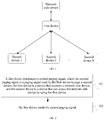
- FIG. 2 is a flowchart of Embodiment 1 of a paging method according to the present invention.
- An execution body in this embodiment is a first device, and the paging method is applicable to a scenario in which the first device or a network side device needs to page a second device. Specifically, this embodiment includes the following steps:
- the first device determines a second paging signal, where the second paging signal is a paging signal used by the first device to page the second device, the first device is a device that accesses the network side device, and the second device is a device that can access the network side device by using the first device.
- the second paging signal is a paging signal used by the first device to page the second device
- the first device is a device that accesses the network side device
- the second device is a device that can access the network side device by using the first device.
- one first device may be connected to a plurality of second devices. Therefore, in embodiments of the present invention, unless otherwise specified, for a specific first device, paging the second device means paging all or some second devices connected to the first device, each second device is corresponding to one second paging signal, and second paging signals of the second devices may be different or the same.
- the first device may pre-store a mapping table of the second paging signal and an identity of the second device; and when the first device needs to page the second device, for example, when the first device needs to send data to the second device, in this case, the first device determines, according to an identity and the like of the second device that needs to be paged, a second paging signal of the second device that needs to be paged.
- the network side device when the network side device needs to page the second device, the network side device sends, to the first device, a first paging message used to page the second device, and in this case, after receiving the first paging message, the first device determines, according to the identity and the like that are carried by the first paging message and that are of the second device that needs to be paged, the second paging signal of the second device that needs to be paged.
- the first device sends the second paging signal.
- the first device After determining the second paging signals, the first device sends the second paging signals to the second devices connected to the first device, for example, the first device sends the second paging signals by means of broadcast.
- the first device determines the second paging signals used to page the second devices, and sends the second paging signals to the second devices connected to the first device, so that the second devices determine, according to the second paging signals, whether the second devices are paged second devices, so that the first device or the network side device pages the second devices.
- the first device may actively determine the second paging signal; or after receiving a first paging signal that is sent by the network side device and that is used to page the second device, the first device passively determines the second paging signal according to the first paging signal. The following describes in detail a passive manner.
- the network side device When paging the first device, the network side device sends a paging message to the first device, and the first device cyclically awakes, receives the paging message, and determines, by decoding a PCCH and a PCH, whether the first device is an object paged by the network side device.
- the network side device needs to page the second device, if the method is still used, the second device needs to decode the PCCH and the PCH.
- the second device is a device of a relatively low capability, and has a small battery capacity and a low radio-frequency capability, frequent decoding causes the second device to consume a large amount of power, and this is inconducive to continuous working of the second device.
- the network side device may page the second device by using the first device, and the first device determines the second paging signal in a passive and triggered manner. That is, after receiving the first paging signal sent by the network side device, the first device determines the second paging signal according to the first paging signal.
- the first paging signal is a paging signal used by the network side device to page the second device.
- the network side device when the network side device needs to page the second device, the network side device first sends, to the first device to which the second device belongs, the first paging signal used to page the second device, so that the first device determines the second paging signal according to the first paging signal and sends the second paging signal to each second device connected to the first device, so that the network side device pages the second device.
- the network side device when the network side device needs to page the second device, the network side device first pages the first device to which the second device belongs, and then the first device pages the second device, so that the second device does not need to frequently decode the PCCH and the PCH. This saves power consumption of the second device to some extent and ensures continuous working of the second device.
- the first device determines the second paging signal according to the first paging signal is specifically as follows:
- the first device sends the second paging signal is specifically as follows: When the first device needs to page the M second devices at a paging moment of an X th paging cycle, the first device sends the L second paging signals, where the X th paging cycle is any paging cycle of paging the second device by the first device.
- the first device sends the second paging signal at the paging moment of the X th paging cycle.
- a prerequisite for receiving the second paging signal is that the second device synchronizes with the first device
- a prerequisite for receiving the first paging signal by the first device from the network side device is that the first device synchronizes with the network side device. Therefore, the foregoing embodiment further includes synchronization of the second device. Specifically, there are the following two synchronization manners for the second device.
- Manner 1 The second device synchronizes with the first device, that is, the first device sends a synchronization signal to the second device according to a synchronization cycle, so that the second device synchronizes with the first device.
- both the second device and the first device synchronize with the network side device, both the first device and the second device receive a primary synchronization signal PSS (Primary Synchronization Singal, PSS) and a secondary synchronization signal SSS (Secondary Synchronization Singal, PSS) that are sent by the network side device, and the first device and the second device synchronize with the network side device according to the PSS and the SSS, so that the second device synchronizes with the first device.
- PSS Primary Synchronization Singal
- SSS Secondary Synchronization Singal
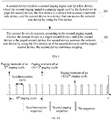
- FIG. 3 is a flowchart of Embodiment 2 of a paging method according to the present invention.
- An execution body in this embodiment is a second device, and the paging method is applicable to a scenario in which a first device or a network side device needs to page the second device. Specifically, this embodiment includes the following steps:
- the second device receives a second paging signal sent by the first device, where the second paging signal is a paging signal used by the first device to page the second device, the first device is a device that accesses the network side device, and the second device is a device that can access the network side device by using the first device.
- the second paging signal is a paging signal used by the first device to page the second device
- the first device is a device that accesses the network side device
- the second device is a device that can access the network side device by using the first device.
- the second device determines, according to the second paging signal, whether the second device is a paged second device; and if the second device is the paged second device, the second device accesses the network side device by using the first device, or if the second device is not the paged second device, the second device continues sleeping.
- step 201 and step 202 for descriptions about the second paging signal and the like, refer to the foregoing embodiment in FIG. 2 . Details are not described herein again.
- the first device determines second paging signals used to page second devices, and sends the second paging signals to the second devices connected to the first device, and the second devices receive the second paging signals and determine, according to the second paging signals, whether the second devices are paged second devices, so that the first device or the network side device pages the second devices.
- the second paging signal is sent after the first device receives a first paging signal sent by the network side device, and the first paging signal is a paging signal used by the network side device to page the second device.
- the second device further receives a synchronization signal that is sent by the first device according to a synchronization cycle, and synchronizes with the first device according to the synchronization signal; or the second device receives a primary synchronization signal PSS and a secondary synchronization signal SSS that are sent by the network side device, and synchronizes with the network side device according to the PSS and the SSS, so as to synchronize with the first device.
- the second paging signal, the synchronization signal, and the like may all be sequences.
- a synchronization sequence and a second paging sequence need to be configured for the first device and the second device.
- the following describes in detail a manner of configuring the synchronization sequence and the second paging sequence. I.
- the synchronization sequence and the second paging sequence are configured for the first device.
- the synchronization sequence and the second paging sequence may be configured for the first device according to a synchronization manner of the second device.
- the synchronization manner of the second device is that the second device synchronizes with the first device.
- N+1 sequences need to be configured for the first device, that is, N second paging sequences and one synchronization sequence that are shown in Table 1.
- Table 1 N+1 sequences Synchronization sequence Second paging sequence 1 ... Second paging sequence N
- the synchronization sequence is different from the N second paging sequences, for example, the synchronization sequence is orthogonal to the N second paging sequences, and the N second paging sequences may be the same or different.
- the synchronization sequence has the following functions: a synchronization function and a measurement function.
- the second device After receiving the synchronization sequence, the second device determines, by detecting the synchronization sequence, whether a cross-correlation value between a synchronization sequence stored in the second device and the received synchronization sequence is greater than a preset threshold, and if the cross-correlation value is greater than the preset threshold, it indicates that the second device is within coverage of the first device and synchronizes with the first device; or otherwise, if the cross-correlation value is less than the preset threshold, the synchronization sequence cannot be detected, and if the second device is outside the coverage of the first device, the second device cannot access the network side device by using the first device.
- the synchronization manner of the second device is that the second device synchronizes with the network side device.
- N+1 sequences still need to be configured for the first device, that is, N second paging sequences and one measurement sequence that are shown in Table 2.
- Table 2 N+1 sequences Measurement sequence Second paging sequence 1 ... Second paging sequence N
- the second device when the second device synchronizes with the network side device, the first device does not need to send the synchronization sequence. However, the second device needs to send the measurement sequence, after receiving the measurement sequence, the second device determines, by detecting a sequence, whether a cross-correlation value between the measurement sequence and a measurement sequence stored in the second device is greater than a preset threshold, and if cross-correlation value is greater than the preset threshold, it indicates that the second device is within the coverage of the first device; or otherwise, if the cross-correlation value is less than the preset threshold, and if the second device is outside the coverage of the first device, the second device cannot access the network side device by using the first device.
- the synchronization sequence and the second paging sequence are configured for the second device.
- One synchronization sequence and one dedicated paging sequence are configured for the second device.
- the second device needs to learn only the synchronization sequence and the dedicated paging sequence of the second device. That is, only two sequences need to be configured for the second device.
- One synchronization sequence and N second paging sequences are configured for the second device.
- the second device needs to learn the synchronization sequence and a second paging sequence corresponding to another second device, that is, N+1 sequences need to be configured for the second device, and the N+1 sequences include a dedicated paging sequence of the second device.
- this case brings the following benefit:
- the second device may perform synchronization by using the second paging sequence corresponding to the another second device.
- FIG. 7 For details, refer to FIG. 7 below.
- the following describes in detail a manner in which the first device sends a synchronization sequence according to a synchronization cycle and sends L paging sequences according to a paging cycle.
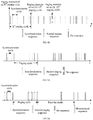
- the second paging sequence is represented by a pattern filled with slash lines; the synchronization sequence is represented by a pattern filled with dots; sending no sequence is represented by a pattern filled with horizontal lines; and a measurement sequence is represented by an unfilled pattern.
- Second paging sequences in all the accompanying drawings are L second paging sequences sent in an overlapped manner.
- the synchronization sequence and the paging sequence may be sent in the following three manners: Manner 1: The first device constantly sends the synchronization sequence according to the synchronization cycle, and constantly sends the paging sequence according to the paging cycle.
- the synchronization cycle is shorter than or equal to the paging cycle
- the X th paging cycle includes P synchronization moments
- the paging moment of the X th paging cycle and the P synchronization moments meet either of the following conditions: one of the P synchronization moments is the same as the paging moment of the X th paging cycle, or none of the P synchronization moments is the same as the paging moment of the X th paging cycle, where P ⁇ 1.
- FIG. 4A is a schematic diagram of a first manner provided in an embodiment of a paging method according to the present invention.
- an X th paging cycle includes five synchronization moments, and a paging moment of one paging cycle is the same as one of the five synchronization moments included in the X th paging cycle, that is, sending a second paging sequence takes up a sending moment of a synchronization sequence.
- the synchronization sequence is orthogonal to the second paging sequence, the second synchronization sequence and the synchronization sequence may be sent in an overlapped manner.
- a first device sends L second paging sequences and the synchronization sequence in the overlapped manner at paging moments of the X th paging cycle and an (X+1) th paging cycle.
- FIG. 4B is a schematic diagram of a first manner provided in another embodiment of a paging method according to the present invention. As shown in FIG. 4B , one paging cycle includes four synchronization moments, and a paging moment of the paging cycle is different from all the four synchronization moments included in the paging cycle, that is, a second paging sequence is sent independently of a synchronization sequence.
- a second device sends L second paging sequences at a paging moment of an X th paging cycle. Additionally, a synchronization moment of a synchronization cycle is different from the paging moment.
- the first device when the first device does not have a paging requirement at the paging moment of the X th paging cycle, the first device stops sending any second paging sequence, but still sends the synchronization sequence at P synchronization cycles, for example, at a paging moment of an (X+2) th paging cycle shown in FIG.
- FIG. 4A or when the first device does not have a paging requirement at the paging moment of the X th paging cycle, the first device stops sending the second paging sequence and the synchronization sequence, and determines whether duration following a paging moment of an (X-1) th paging cycle exceeds a first threshold, and if the duration following the paging moment of the (X-1) th paging cycle exceeds the first threshold, the first device sends Q measurement signals to N second devices, where Q ⁇ 1.
- a measurement signal is not shown in FIG. 4A or FIG. 4B . It should be noted that, if the first device does not have the paging requirement, FIG. 4A and FIG. 4B show only a solution in which the first device stops sending the second paging sequence, but does not stop sending the synchronization sequence, and do not show a solution of stopping sending the second paging sequence and the synchronization sequence.
- Manner 2 The first device sends the synchronization sequence only in a period of time before the paging moment, that is, before the paging moment of the X th paging cycle, the first device first sends P synchronization sequences, and then sends the second paging sequence at the paging moment of the X th paging cycle.
- the first device when the first device needs to page M second devices at the paging moment of the X th paging cycle, the first device sends a synchronization signal to the N second devices at each synchronization moment of the P synchronization cycles in sequence, and sends the L second paging signals to the N second devices at the paging moment of the X th paging cycle, where the P synchronization cycles are earlier than the X th paging cycle, and P ⁇ 1.
- FIG. 5A and FIG. 5B For details, refer to FIG. 5A and FIG. 5B .
- FIG. 5A is a schematic diagram of a second manner provided in an embodiment of a paging method according to the present invention.
- a first device sends a synchronization sequence at synchronization moments of three synchronization cycles before one paging cycle, and then sends a second paging sequence at a paging moment of the paging cycle.
- the first device does not need to constantly send the synchronization sequence, but awakes in a period of time before the paging moment to send P synchronization sequences, so that the second device first synchronizes with the first device and then detects the second paging sequence, and further, the second device is in a sleep state at other time without a need to detect the synchronization sequence of the first device, thereby saving power and resources of the first device and the second device.
- the first device sends the synchronization signal to the N second devices at each synchronization moment of the P synchronization cycles, but stops sending the L second paging signals to the N second devices at the paging moment of the X th paging cycle.
- the first device sends the synchronization signal to the N second devices at each synchronization moment of the P synchronization cycles, but stops sending the L second paging signals to the N second devices at the paging moment of the X th paging cycle.
- the first device stops sending the synchronization sequence to the second device at the synchronization moment of the P synchronization cycles, stops sending the L second paging sequences to the N second devices at the paging moment of the X th paging cycle, and determines whether duration following a paging moment of an (X-1) th paging cycle exceeds a first threshold, and if the duration following the paging moment of the (X-1) th paging cycle exceeds the first threshold, the first device sends Q measurement signals to the N second devices, where Q ⁇ 1.
- FIG. 5B is a schematic diagram of a second manner provided in another embodiment of a paging method according to the present invention.
- Manner 3 The first device simultaneously sends the synchronization sequence and the second paging sequence, that is, the synchronization cycle is equal to the paging cycle, and a synchronization moment of each synchronization cycle coincides with the paging moment of the paging cycle.
- FIG. 6A and FIG. 6B For details, refer to FIG. 6A and FIG. 6B .
- FIG. 6A is a schematic diagram of a third manner provided in an embodiment of a paging method according to the present invention.
- a second device simultaneously sends a synchronization sequence and a second paging sequence at a paging moment of each paging cycle.
- the second paging sequence and the synchronization sequence are sent in an overlapped manner. This is different from the first manner in which at least one synchronization sequence needs to be sent in each paging cycle and the second manner in which at least one synchronization sequence needs to be sent before each paging cycle. Therefore, power and resources of the first device may be saved.
- the first device may not send the synchronization sequence at each paging moment.
- the second device needs to learn a second paging sequence corresponding to each second device in the N second devices connected to the first device.
- the second device performs synchronization by using the second paging sequence, and simultaneously completes detecting the paging sequence.
- the second device detects, in a blind detection manner, whether the second device is a second device paged by the first device.
- the second device each time the second device awakes, the second device first performs synchronization by detecting the synchronization sequence at the paging moment, then performs cross-correlation by using a dedicated paging sequence stored by a user and each second paging sequence in the received L second paging sequences, and determines whether a cross-correlation value between the dedicated paging sequence and one of the L paging sequences exceeds a third threshold; and if the cross-correlation value exceeds the third threshold, the second device determines that the second device is a second device paged by a network side device.
- the first device sends the synchronization signal to the N second devices at each synchronization moment of the P synchronization cycles, but stops sending the L second paging signals to the N second devices at the paging moment of the X th paging cycle.
- the first device sends the synchronization signal to the N second devices at each synchronization moment of the P synchronization cycles, but stops sending the L second paging signals to the N second devices at the paging moment of the X th paging cycle.
- FIG. 6A In brief, in FIG.
- the first device if the first device does not need to page the M second devices at the paging moment of the X th paging cycle, the first device sends only the synchronization sequence at the paging moment; or the first device stops sending the synchronization sequence to the second device at the synchronization moment of the P synchronization cycles, stops sending the L second paging sequences to the N second devices at the paging moment of the X th paging cycle, and determines whether duration following a paging moment of an (X-1) th paging cycle exceeds a first threshold, and if the duration following the paging moment of the (X-1) th paging cycle exceeds the first threshold, the first device sends Q measurement signals to the N second devices, where Q ⁇ 1.
- FIG. 6B is a schematic diagram of a third manner provided in another embodiment of a paging method according to the present invention.
- the first device if the first device does not need to page the M second devices at the paging moment of the X th paging cycle, the first device does not send the synchronization sequence or the second paging sequence at the paging moment, and determines whether the duration following the paging moment of the (X-1) th paging cycle exceeds the first threshold, and if the duration following the paging moment of the (X-1) th paging cycle exceeds the first threshold, the first device sends the Q measurement signals to the N second devices, where Q ⁇ 1.
- the measurement signal is the same as or different from the synchronization signal.
- the measurement signal is specifically a measurement sequence
- the second device pre-stores the measurement sequence. If the duration following the paging moment of the (X-1) th paging cycle exceeds the first threshold, after the second device receives the Q measurement signals sent by the first device, the second device determines whether a cross-correlation value between the pre-stored measurement sequence and the received measurement sequence exceeds a second threshold; and if the cross-correlation value between the pre-stored measurement sequence and the received measurement sequence exceeds the second threshold, the second device determines that the second device is within coverage of the first device.
- the L second paging signals are L paging sequences orthogonal to each other, and the synchronization signal is a synchronization sequence orthogonal to each paging sequence.
- the first device sends the synchronization sequence according to a synchronization cycle, and sends the second paging sequence according to a paging cycle.
- the second device cyclically awakes, detects the second paging sequence in a sequence detection manner to determine whether the first device is paging the second device, and detects the synchronization sequence in the sequence detection manner to determine whether the second device synchronizes with the first device.
- the second device after receiving the L second paging sequences, the second device performs cross-correlation by using a dedicated paging sequence of the second device and the L second paging sequences, and if a cross-correlation value between the dedicated paging sequence of the second device and one of the L second paging sequences is greater than a preset threshold, it indicates that the second device is the second device paged by the first device.
- the second device after receiving the synchronization sequence, the second device performs cross-correlation by using the stored synchronization sequence and the received synchronization sequence, and if a cross-correlation value is greater than a preset threshold, it indicates that the second device synchronizes with the first device.
- FIG. 7 is a schematic diagram of performing synchronization by a second device by using a second paging sequence corresponding to another second device in a paging method according to the present invention.
- a pattern filled with slash lines represents a second paging sequence used to page a second device 1
- a pattern filled with grids represents a second paging sequence used to page a second device 2.
- the second device 1 may perform synchronization by using the second paging sequence of the second device 2 at a moment at which the first device sends the second paging sequence of the second device 2.
- the second device 2 may perform synchronization by using a second paging sequence of the second device 1 at a moment at which the first device sends the second paging sequence of the second device 1.
- FIG. 8 is a flowchart of Embodiment 1 of a synchronization method according to the present invention.
- An execution body in this embodiment is a first device, and the synchronization method is applicable to a scenario in which a second device needs to synchronize with the first device. Specifically, this embodiment includes the following steps:
- the first device generates a synchronization cycle and a synchronization signal.
- the first device generates the synchronization cycle and the synchronization signal according to a clock of the first device.
- the first device sends the synchronization signal to N second devices according to the synchronization cycle, where the first device is a device that accesses a network side device, and the first device is connected to the N second devices, where N ⁇ 1, and N is a positive integer.
- Sending the synchronization signal to the N second devices may be sending the synchronization signal to the N second devices in a broadcast manner.
- the second device can implement downlink frequency synchronization and downlink timing only by using the network side device.
- the first device and the second device use a downlink frequency band, there is no problem when the first device communicates with the second device; or if the first device and the second device use an uplink frequency band, the second device needs to convert the downlink frequency synchronization into uplink frequency synchronization, however, the second device can send a signal only by using the downlink timing.
- sending duration needs to be shortened when sending is performed, for example, one sending symbol is reduced in one subframe, so as to avoid interference in a normal uplink signal that is caused when a signal is sent by using the downlink timing and by occupying an uplink resource.
- the second device synchronizes with the first device, so that the first device and the second device can normally communicate regardless of any frequency band (an LTE downlink frequency band, an LTE uplink frequency band, or an unlicensed frequency band) used for communication between the first device and the second device, without affecting system performance or increasing complexity of device implementation.
- the first device sends, according to the synchronization cycle, the synchronization signal to the N second devices connected to the first device, and may perform sending in the broadcast manner.
- the first device sends, by means of broadcast, the synchronization signal at a synchronization moment of each synchronization cycle, and accordingly, the second device cyclically awakes, receives the synchronization signal, and determines, according to the synchronization signal, whether the second device synchronizes with the first device.
- the second device determines whether a cross-correlation value between a synchronization sequence stored in the second device and the received synchronization sequence is greater than a preset fourth threshold, and if the cross-correlation value between the synchronization sequence stored in the second device and the received synchronization sequence is greater than the preset fourth threshold, it indicates that the second device synchronizes with the first device.
- FIG. 9 is a flowchart of Embodiment 2 of a synchronization method according to the present invention.
- An execution body in this embodiment is a second device, and the synchronization method is applicable to a scenario in which the second device needs to synchronize with a first device. Specifically, this embodiment includes the following steps:
- the second device receives a synchronization signal that is sent by the first device according to a synchronization cycle, where the first device is a device that accesses a network side device, and the first device is connected to N second devices, where N ⁇ 1, and N is a positive integer.
- the second device synchronizes with the first device according to the synchronization signal.
- the synchronization signal and the synchronization cycle refer to the foregoing embodiment in FIG. 8 . Details are not described herein again.
- the first device sends the synchronization signal to the second device, and accordingly, the second device receives the synchronization signal and synchronizes with the first device according to the synchronization signal, thereby broadening a frequency used for communication between the first device and the second device and avoiding increasing complexity of device implementation, without affecting system performance.
- the synchronization signal is specifically a synchronization sequence
- each second device stores the synchronization sequence
- that the second device synchronizes with the first device according to the synchronization signal includes: determining, by the second device, whether a cross-correlation value between the synchronization sequence stored in the second device and the received synchronization sequence exceeds a fourth threshold; and if the cross-correlation value between the synchronization sequence stored in the second device and the received synchronization sequence exceeds the fourth threshold, determining that the second device synchronizes with the first device.
- FIG. 10 is a schematic structural diagram of Embodiment 1 of a first device according to the present invention.
- the first device provided in this embodiment is an apparatus embodiment corresponding to the embodiment in FIG. 2 of the present invention, and a specific implementation process is not described herein again.
- the first device provided in this embodiment includes: a processor 11, configured to determine a second paging signal, where the second paging signal is a paging signal used by the first device to page a second device, the first device is a device that accesses a network side device, and the second device is a device that can access the network side device by using the first device; and a transmitter 12, configured to send the second paging signal determined by the processor 11 to the second device.
- the first device provided in this embodiment of the present invention determines second paging signals used to page second devices, and sends the second paging signals to the second devices connected to the first device, so that the second devices determine, according to the second paging signals, whether the second devices are paged second devices, so that the first device or the network side device pages the second devices.
- FIG. 11 is a schematic structural diagram of Embodiment 2 of a first device according to the present invention. As shown in FIG. 11 , based on the structure in FIG. 10 , further, the first device in this embodiment further includes:
- the transmitter 12 is further configured to send a synchronization signal to the second device according to a synchronization cycle.
- the first paging signal carries identities of M second devices, and the first device is connected to N second devices, where N ⁇ 1, 1 ⁇ M ⁇ N, and N and M are positive integers;
- the synchronization cycle is shorter than or equal to the paging cycle
- the X th paging cycle includes P synchronization moments
- the paging moment of the X th paging cycle and the P synchronization moments meet either of the following conditions: one of the P synchronization moments is the same as the paging moment of the X th paging cycle, or none of the P synchronization moments is the same as the paging moment of the X th paging cycle, where P ⁇ 1.
- the synchronization cycle is shorter than the paging cycle
- the transmitter 12 is specifically configured to: send a synchronization signal to the N second devices at each synchronization moment of P synchronization cycles in sequence, and send the L second paging signals to the N second devices at the paging moment of the X th paging cycle, where the P synchronization cycles are earlier than the paging moment of the X th paging cycle, and P ⁇ 1.
- the synchronization cycle is equal to the paging cycle
- the transmitter 12 is further configured to: if the first device does not need to page the M second devices at the paging moment of the X th paging cycle, send the synchronization signal to the N second devices at the synchronization moment of the P synchronization cycles, but stop sending the L second paging signals to the N second devices at the paging moment of the X th paging cycle; or stop sending the synchronization signal to the N second devices at the synchronization moment of the P synchronization cycles, stop sending the L second paging signals to the N second devices at the paging moment of the X th paging cycle, and determine whether duration following a paging moment of an (X-1) th paging cycle exceeds a first threshold, and if the duration following the paging moment of the (X-1) th paging cycle exceeds the first threshold, send Q measurement signals to the N second devices, where Q ⁇ 1.
- the measurement signal is the same as or different from the synchronization signal.
- the L second paging signals are L paging sequences orthogonal to each other, and the synchronization signal is a synchronization sequence orthogonal to each paging sequence.
- FIG. 12 is a schematic structural diagram of Embodiment 1 of a second device according to the present invention.
- the second device provided in this embodiment is an apparatus embodiment corresponding to the embodiment in FIG. 3 of the present invention, and a specific implementation process is not described herein again.
- the second device provided in this embodiment includes:
- the first device determines second paging signals used to page second devices, and sends the second paging signals to the second devices connected to the first device, and the second devices receive the second paging signals and determine, according to the second paging signals, whether the second devices are paged second devices, so that the first device or the network side device pages the second devices.
- the second paging signal is sent after the first device receives a first paging signal sent by the network side device, and the first paging signal is a paging signal used by the network side device to page the second device.
- the receiver 21 is further configured to receive a synchronization signal that is sent by the first device according to a synchronization cycle; and the processor 22 is further configured to synchronize with the first device according to the synchronization signal.
- the first paging signal carries identities of M second devices
- the first device is connected to N second devices
- the N second devices include the M second devices, where N ⁇ 1, 1 ⁇ M ⁇ N, and N and M are positive integers;
- the synchronization cycle is shorter than or equal to the paging cycle
- the X th paging cycle includes P synchronization moments
- the paging moment of the X th paging cycle and the P synchronization moments meet either of the following conditions: one of the P synchronization moments is the same as the paging moment of the X th paging cycle, or none of the P synchronization moments is the same as the paging moment of the X th paging cycle, where P ⁇ 1.
- the synchronization cycle is shorter than the paging cycle
- the receiver 21 is specifically configured to receive the L second paging signals sent by the first device at the paging moment of the X th paging cycle, where the P synchronization cycles are earlier than the paging moment of the X th paging cycle, and P ⁇ 1.
- the synchronization cycle is equal to the paging cycle
- the receiver 21 is further configured to: if the first device does not need to page the M second devices at the paging moment of the X th paging cycle, receive the synchronization signal sent by the first device at the synchronization moment of the P synchronization cycles; or if duration following a paging moment of an (X-1) th paging cycle exceeds a first threshold, receive Q measurement signals sent by the first device, where the measurement signal is the same as or different from the synchronization signal, and Q ⁇ 1.
- the measurement signal is specifically a measurement sequence
- the second device pre-stores the measurement sequence
- the processor 22 is further configured to: if the duration following the paging moment of the (X-1) th paging cycle exceeds the first threshold, after the receiver 21 receives the Q measurement signals sent by the first device, determine whether a cross-correlation value between the pre-stored measurement sequence and the received measurement sequence exceeds a second threshold; and if the cross-correlation value between the pre-stored measurement sequence and the received measurement sequence exceeds the second threshold, determine that the second device is within coverage of the first device.
- the L second paging signals are L paging sequences orthogonal to each other, and the synchronization signal is a synchronization sequence orthogonal to each paging sequence.
- the second device stores a dedicated paging sequence
- the dedicated paging sequence is a sequence learned by the second device
- the processor 22 is specifically configured to: determine whether a cross-correlation value between the dedicated paging sequence and one of the L paging sequences exceeds a third threshold; and if the cross-correlation value between the dedicated paging sequence and the one of the L paging sequences exceeds the third threshold, determine that the second device is the second device paged by the network side device.
- FIG. 13 is a schematic structural diagram of Embodiment 3 of a first device according to the present invention.
- the first device provided in this embodiment is an apparatus embodiment corresponding to the embodiment in FIG. 8 of the present invention, and a specific implementation process is not described herein again.
- the first device provided in this embodiment includes:
- the first device sends the synchronization signal to the second device, so that the second device synchronizes with the first device according to the synchronization signal, thereby broadening a frequency used for communication between the first device and the second device and avoiding increasing complexity of device implementation, without affecting system performance.
- FIG. 14 is a schematic structural diagram of Embodiment 2 of a second device according to the present invention.
- the second device provided in this embodiment is an apparatus embodiment corresponding to the embodiment in FIG. 9 of the present invention, and a specific implementation process is not described herein again.
- the second device provided in this embodiment includes:
- the first device sends the synchronization signal to the second device, and accordingly, the second device receives the synchronization signal and synchronizes with the first device according to the synchronization signal, thereby broadening a frequency used for communication between the first device and the second device and avoiding increasing complexity of device implementation, without affecting system performance.
- the synchronization signal is specifically a synchronization sequence
- each second device stores the synchronization sequence
- the processor 42 is specifically configured to: determine whether a cross-correlation value between the synchronization sequence stored in the second device and the received synchronization sequence exceeds a fourth threshold; and if the cross-correlation value between the synchronization sequence stored in the second device and the received synchronization sequence exceeds the fourth threshold, determine that the second device synchronizes with the first device.
- FIG. 15 is a schematic structural diagram of Embodiment 4 of a first device according to the present invention.
- the first device 500 provided in this embodiment includes a processor 51 and a memory 52.
- the memory 52 stores an executable instruction; when the first device runs, the processor 51 communicates with the memory 52; and the processor 51 invokes the executable instruction in the memory 52 to execute the method embodiment shown in FIG. 2 .
- An implementation principle and a technical effect of the first device are similar to those of the method embodiment, and details are not described herein again.
- FIG. 16 is a schematic structural diagram of Embodiment 3 of a second device according to the present invention.
- the second device 600 provided in this embodiment includes a processor 61 and a memory 62.
- the memory 62 stores an executable instruction; when the second device runs, the processor 61 communicates with the memory 62; and the processor 61 invokes the executable instruction in the memory 62 to execute the method embodiment shown in FIG. 3 .
- An implementation principle and a technical effect of the second device are similar to those of the method embodiment, and details are not described herein again.
- FIG. 17 is a schematic structural diagram of Embodiment 5 of a first device according to the present invention.
- the first device 700 provided in this embodiment includes a processor 71 and a memory 72.
- the memory 72 stores an executable instruction; when the first device 700 runs, the processor 71 communicates with the memory 72; and the processor 71 invokes the executable instruction in the memory 72 to execute the method embodiment shown in FIG. 8 .
- An implementation principle and a technical effect of the first device 700 are similar to those of the method embodiment, and details are not described herein again.
- FIG. 18 is a schematic structural diagram of Embodiment 4 of a second device according to the present invention.
- the second device 800 provided in this embodiment includes a processor 81 and a memory 82.
- the memory 82 stores an executable instruction; when the second device runs, the processor 81 communicates with the memory 82; and the processor 81 invokes the executable instruction in the memory 82 to execute the method embodiment shown in
- FIG. 9 An implementation principle and a technical effect of the second device are similar to those of the method embodiment, and details are not described herein again.
- the program may be stored in a computer readable storage medium. When the program runs, the steps of the method embodiments are performed.
- the foregoing storage medium includes: any medium that can store program code, such as a ROM, a RAM, a magnetic disk, or an optical disc.
Landscapes
- Engineering & Computer Science (AREA)
- Computer Networks & Wireless Communication (AREA)
- Signal Processing (AREA)
- Computer Security & Cryptography (AREA)
- Mobile Radio Communication Systems (AREA)
Claims (9)
- Funkrufverfahren in einem "Device-to-Device"-Kommunikationsszenario, wobei ein erstes Gerät ein Gerät, das auf ein netzseitiges Gerät zugreift, ist und ein zweites Gerät ein Gerät, das durch Nutzung des ersten Geräts auf das netzseitige Gerät zugreifen kann, ist, wobei das Verfahren Folgendes umfasst:Empfangen eines ersten Funkrufsignals, das durch das netzseitige Gerät gesendet wird, durch das erste Gerät, wobei das erste Funkrufsignal ein Funkrufsignal, das durch das netzseitige Gerät zum Senden eines Funkrufs an das zweite Gerät genutzt wird, ist;Ermitteln (101) eines zweiten Funkrufsignals gemäß dem ersten Funkrufsignal durch das erste Gerät, wobei das zweite Funkrufsignal ein Funkrufsignal, das durch das erste Gerät zum Senden eines Funkrufs an das zweite Gerät genutzt wird, ist; undSenden (102) des zweiten Funkrufsignals an das zweite Gerät durch das erste Gerät;wobei das Verfahren ferner Folgendes umfasst:Senden eines Synchronisierungssignals durch das erste Gerät an das zweite Gerät gemäß einem Synchronisierungszyklus; undwobei das erste Funkrufsignal Identitäten von M zweiten Geräten übermittelt und das erste Gerät mit N zweiten Geräten verbunden ist, wobei N≥1 gilt, 1≤M≤N gilt und N und M positive ganze Zahlen sind; und das Ermitteln des zweiten Funkrufsignals gemäß dem ersten Funkrufsignal durch das erste Gerät Folgendes umfasst:Ermitteln von L zweiten Funkrufsignalen gemäß den Identitäten der M zweiten Geräte durch das erste Gerät, wobei sich die L zweiten Funkrufsignale voneinander unterscheiden und 1≤L≤M gilt;das Senden des zweiten Funkrufsignals durch das erste Gerät Folgendes umfasst:Senden der L zweiten Funkrufsignale durch das erste Gerät, wenn das erste Gerät zu einem Funkrufzeitpunkt eines X. Funkrufzyklus einen Funkruf an die M zweiten Geräte senden muss, wobei der X. Funkrufzyklus ein beliebiger Funkrufzyklus, bei dem durch das erste Gerät Funkrufe an das zweite Gerät gesendet werden, ist; unddas Senden eines Synchronisierungssignals durch das erste Gerät an das zweite Gerät gemäß einem Synchronisierungszyklus Folgendes umfasst:
Senden des Synchronisierungssignals durch das erste Gerät an die N zweiten Geräte gemäß dem Synchronisierungszyklus. - Benutzerendgerät, wobei das Benutzerendgerät ein zweites Gerät in einem "Device-to-Device"-Kommunikationsszenario ist, wobei ein erstes Gerät ein Gerät, das auf ein netzseitiges Gerät zugreift, ist und das zweite Gerät ein Gerät, das durch Nutzung des ersten Geräts auf das netzseitige Gerät zugreifen kann, ist und das zweite Gerät Folgendes umfasst:einen Empfänger (21), der konfiguriert ist, um ein zweites Funkrufsignal, das durch ein erstes Gerät gesendet wird, zu empfangen, wobei das zweite Funkrufsignal ein Funkrufsignal, das durch das erste Gerät zum Senden eines Funkrufs an das zweite Gerät genutzt wird, ist und wobei das zweite Funkrufsignal gesendet wird, nachdem das erste Gerät ein erstes Funkrufsignal, das durch das netzseitige Gerät gesendet wird, empfangen hat, und das erste Funkrufsignal ein Funkrufsignal, das durch das netzseitige Gerät zum Senden eines Funkrufs an das zweite Gerät genutzt wird, ist; undeinen Prozessor (22), der für Folgendes konfiguriert ist: Ermitteln gemäß dem zweiten Funkrufsignal, das durch den Empfänger (21) empfangen wird, ob das zweite Gerät ein zweites Gerät, an das ein Funkruf gesendet wird, ist, wobei, wenn das zweite Gerät das zweite Gerät, an das ein Funkruf gesendet wird, ist, das zweite Gerät durch Nutzung des ersten Geräts auf das netzseitige Gerät zugreift oder, wenn das zweite Gerät nicht das zweite Gerät, an das ein Funkruf gesendet wird, ist, das zweite Gerät im Schlafmodus bleibt;wobei der Empfänger (21) ferner konfiguriert ist, um ein Synchronisierungssignal, das durch das erste Gerät gemäß einem Synchronisierungszyklus gesendet wird, zu empfangen; und der Prozessor (22) ferner zur Synchronisierung mit dem ersten Gerät gemäß dem Synchronisierungssignal konfiguriert ist; undwobei das erste Funkrufsignal Identitäten von M zweiten Geräten übermittelt, das erste Gerät mit N zweiten Geräten verbunden ist und die N zweiten Geräte die M zweiten Geräte umfassen, wobei N≥1 gilt, 1≤M≤N gilt und N und M positive ganze Zahlen sind; der Empfänger (21) speziell für Folgendes konfiguriert ist: wenn das erste Gerät zu einem Funkrufzeitpunkt eines X. Funkrufzyklus einen Funkruf an die M zweiten Geräte senden muss, Empfangen von L zweiten Funkrufsignalen, die zum Funkrufzeitpunkt des X. Funkrufzyklus durch das erste Gerät gesendet werden, wobei der X. Funkrufzyklus ein beliebiger Funkrufzyklus, bei dem durch das erste Gerät Funkrufe an das zweite Gerät gesendet werden, ist, die L zweiten Funkrufsignale durch das erste Gerät gemäß dem ersten Funkrufsignal ermittelt werden und die L zweiten Funkrufsignale sich voneinander unterscheiden, wobei 1≤L≤M gilt; und der Prozessor (22) speziell konfiguriert ist, um gemäß den L zweiten Funkrufsignalen zu ermitteln, ob das zweite Gerät das zweite Gerät, an das durch das netzseitige Gerät ein Funkruf gesendet wird, ist.
- Benutzerendgerät nach Anspruch 2, wobei der Synchronisierungszyklus kürzer als oder genauso lang wie der Funkrufzyklus ist, der X. Funkrufzyklus P Synchronisierungszeitpunkte umfasst und der Funkrufzeitpunkt des X. Funkrufzyklus und die P Synchronisierungszeitpunkte eine der folgenden Bedingungen erfüllen: einer der P Synchronisierungszeitpunkte ist derselbe wie der Funkrufzeitpunkt des X. Funkrufzyklus, oder keiner der P Synchronisierungszeitpunkte ist derselbe wie der Funkrufzeitpunkt des X. Funkrufzyklus, wobei P≥1 gilt.
- Benutzerendgerät nach Anspruch 2, wobei der Synchronisierungszyklus kürzer als der Funkrufzyklus ist, der Empfänger speziell konfiguriert ist, um die L zweiten Funkrufsignale, die zum Funkrufzeitpunkt des X. Funkrufzyklus durch das erste Gerät gesendet werden, zu empfangen, wobei die P Synchronisierungszyklen dem Funkrufzeitpunkt des X. Funkrufzyklus vorausgehen, wobei P≥1 gilt.
- Benutzerendgerät nach Anspruch 2, wobei der Synchronisierungszyklus genauso lang wie der Funkrufzyklus ist und der Empfänger speziell konfiguriert ist, um ein Synchronisierungssignal, das zu einem Synchronisierungszeitpunkt von P Synchronisierungszyklen durch das erste Gerät an die N zweiten Geräte gesendet wird, und die L zweiten Funkrufsignale, die zum Funkrufzeitpunkt des X. Funkrufzyklus gesendet werden, zu empfangen, wobei der Synchronisierungszeitpunkt der P Synchronisierungszyklen derselbe wie der Funkrufzeitpunkt des X. Funkrufzyklus ist, wobei P=1 gilt.
- Benutzerendgerät nach einem der Ansprüche 2 bis 5, wobei:
der Empfänger ferner für Folgendes konfiguriert ist: wenn das erste Gerät zum Funkrufzeitpunkt des X. Funkrufzyklus keinen Funkruf an die M zweiten Geräte senden muss, Empfangen des Synchronisierungssignals, das zum Synchronisierungszeitpunkt der P Synchronisierungszyklen durch das erste Gerät gesendet wird; oder, wenn die Dauer des Zeitraums nach einem Funkrufzeitpunkt eines (X-1). Funkrufzyklus einen ersten Schwellenwert überschreitet, Empfangen von Q Messsignalen, die durch das erste Gerät gesendet werden, wobei das Messsignal dasselbe wie oder ein anderes als das Synchronisierungssignal ist, wobei Q≥1 gilt. - Benutzerendgerät nach Anspruch 6, wobei das Messsignal speziell eine Messsequenz ist und das zweite Gerät die Messsequenz vorher speichert; und
der Prozessor ferner für Folgendes konfiguriert ist: wenn die Dauer des Zeitraums nach dem Funkrufzeitpunkt des (X-1). Funkrufzyklus den ersten Schwellenwert überschreitet, nachdem der Empfänger die Q Messsignale, die durch das erste Gerät gesendet werden, empfangen hat, Ermitteln, ob ein Kreuzkorrelationswert zwischen der vorher gespeicherten Messsequenz und der empfangenen Messsequenz einen zweiten Schwellenwert überschreitet; und, wenn der Kreuzkorrelationswert zwischen der vorher gespeicherten Messsequenz und der empfangenen Messsequenz den zweiten Schwellenwert überschreitet, Ermitteln, dass das zweite Gerät innerhalb des Versorgungsbereichs des ersten Geräts ist. - Benutzerendgerät nach einem der Ansprüche 2 bis 7, wobei die L zweiten Funkrufsignale L zueinander orthogonale Funkrufsequenzen sind und das Synchronisierungssignal eine zu jeder Funkrufsequenz orthogonale Synchronisierungssequenz ist.
- Benutzerendgerät nach Anspruch 8, wobei das zweite Gerät eine dedizierte Funkrufsequenz speichert und die dedizierte Funkrufsequenz eine Sequenz, die dem zweiten Gerät bekannt wird, ist; und
der Prozessor speziell für Folgendes konfiguriert ist: Ermitteln, ob ein Kreuzkorrelationswert zwischen der dedizierten Funkrufsequenz und einer der L Funkrufsequenzen einen dritten Schwellenwert überschreitet; und, wenn der Kreuzkorrelationswert zwischen der dedizierten Funkrufsequenz und der einen der L Funkrufsequenzen den dritten Schwellenwert überschreitet, Ermitteln, dass das zweite Gerät das zweite Gerät, an das durch das netzseitige Gerät ein Funkruf gesendet wird, ist.
Applications Claiming Priority (1)
| Application Number | Priority Date | Filing Date | Title |
|---|---|---|---|
| PCT/CN2015/090770 WO2017049606A1 (zh) | 2015-09-25 | 2015-09-25 | 寻呼方法、同步方法与用户设备 |
Publications (3)
| Publication Number | Publication Date |
|---|---|
| EP3343982A1 EP3343982A1 (de) | 2018-07-04 |
| EP3343982A4 EP3343982A4 (de) | 2018-07-18 |
| EP3343982B1 true EP3343982B1 (de) | 2019-11-06 |
Family
ID=58385738
Family Applications (1)
| Application Number | Title | Priority Date | Filing Date |
|---|---|---|---|
| EP15904482.5A Active EP3343982B1 (de) | 2015-09-25 | 2015-09-25 | Funkrufverfahren, synchronisationsverfahren und benutzergerät |
Country Status (4)
| Country | Link |
|---|---|
| US (1) | US10609675B2 (de) |
| EP (1) | EP3343982B1 (de) |
| CN (1) | CN107615829B (de) |
| WO (1) | WO2017049606A1 (de) |
Families Citing this family (1)
| Publication number | Priority date | Publication date | Assignee | Title |
|---|---|---|---|---|
| US11368344B2 (en) * | 2017-03-15 | 2022-06-21 | Motorola Mobility Llc | Method and apparatus having a synchronization signal sequence structure for low complexity cell detection |
Family Cites Families (10)
| Publication number | Priority date | Publication date | Assignee | Title |
|---|---|---|---|---|
| US7788378B2 (en) * | 2005-04-22 | 2010-08-31 | Microsoft Corporation | Apparatus and method for community relay node discovery |
| CN101047977A (zh) | 2006-03-27 | 2007-10-03 | 华为技术有限公司 | 无线通信系统及方法以及在该系统中使用的寻呼方法 |
| US8706145B2 (en) * | 2007-07-10 | 2014-04-22 | Qualcomm Incorporated | Multihop paging of a peer in a peer-to-peer communication network |
| US9787777B2 (en) | 2008-03-13 | 2017-10-10 | Qualcomm Incorporated | Methods and apparatus for wireless communications including direct paging in combination with hopped data signaling |
| GB2506389B (en) | 2012-09-27 | 2015-02-25 | Broadcom Corp | Apparatus and methods for communication |
| CN104066170A (zh) | 2013-03-20 | 2014-09-24 | 北京三星通信技术研究有限公司 | 一种发现用户终端的方法 |
| CN103491647B (zh) | 2013-09-09 | 2016-08-10 | 北京邮电大学 | 一种减小寻呼信令开销的方法 |
| US10462766B2 (en) | 2013-11-14 | 2019-10-29 | Samsung Electronics Co., Ltd. | Method and apparatus for paging between devices performing direct communication |
| CN104883728B (zh) * | 2014-02-27 | 2019-05-31 | 上海朗帛通信技术有限公司 | 一种d2d通信中的传输方法和装置 |
| WO2016045103A1 (zh) | 2014-09-26 | 2016-03-31 | 华为技术有限公司 | 一种寻呼方法、核心网设备及终端 |
-
2015
- 2015-09-25 EP EP15904482.5A patent/EP3343982B1/de active Active
- 2015-09-25 WO PCT/CN2015/090770 patent/WO2017049606A1/zh not_active Ceased
- 2015-09-25 CN CN201580080000.XA patent/CN107615829B/zh active Active
- 2015-09-25 US US15/762,924 patent/US10609675B2/en active Active
Non-Patent Citations (1)
| Title |
|---|
| None * |
Also Published As
| Publication number | Publication date |
|---|---|
| EP3343982A4 (de) | 2018-07-18 |
| US20180295604A1 (en) | 2018-10-11 |
| WO2017049606A1 (zh) | 2017-03-30 |
| US10609675B2 (en) | 2020-03-31 |
| CN107615829A (zh) | 2018-01-19 |
| EP3343982A1 (de) | 2018-07-04 |
| CN107615829B (zh) | 2020-06-26 |
Similar Documents
| Publication | Publication Date | Title |
|---|---|---|
| US11751136B2 (en) | Power optimization method and device, system, and user equipment | |
| CN110972237B (zh) | 唤醒信号资源的确定、指示方法及装置、终端、基站 | |
| US12127160B2 (en) | Communication method and apparatus | |
| CN115426681B (zh) | 一种信息处理方法和装置 | |
| KR102344603B1 (ko) | 불연속 수신 방법, 네트워크 기기 및 단말 기기 | |
| US9549390B2 (en) | Radio communication device, base station, method for radio communication, program, and radio communication system | |
| US9210686B2 (en) | Radio communication device, base station, method for radio communication, program and radio communication system | |
| EP3634044B1 (de) | Diskontinuierliches empfangsverfahren, endgerät und netzwerkvorrichtung | |
| US20230022160A1 (en) | Extensions of wus for paging for rrc inactive | |
| US20260019994A1 (en) | Paging method and communication device | |
| CN111165035A (zh) | 与无线通信网络中的寻呼相关的方法和设备 | |
| US11229007B2 (en) | Message transmission method, apparatus and system | |
| US12376035B2 (en) | Method and apparatus for WUS detection | |
| CA3130409C (en) | Wireless communication device, radio access network node, methods, and computer programs for power efficient paging escalation | |
| JP2009077289A (ja) | ユーザ装置 | |
| US20220150869A1 (en) | Assignment of a second ue identity to adjust paging timing for ue for wireless network | |
| US10582452B2 (en) | Timer handling in communications | |
| CN116438879A (zh) | 寻呼消息发送的方法和装置 | |
| WO2023080131A1 (ja) | 端末、基地局及び無線通信方法 | |
| WO2025167863A1 (zh) | Prach资源确定、指示方法、装置、终端及网络侧设备 | |
| WO2022205355A1 (en) | Method and apparatus for paging | |
| WO2022236568A1 (en) | Method and apparatus for paging | |
| US10609675B2 (en) | Paging method, synchronization method, and user equipment for device to device communication | |
| WO2023070688A1 (en) | Base station, user equipment, and method for processing paging early indication | |
| EP4415427A1 (de) | Kommunikationsverfahren und -vorrichtung |
Legal Events
| Date | Code | Title | Description |
|---|---|---|---|
| STAA | Information on the status of an ep patent application or granted ep patent |
Free format text: STATUS: THE INTERNATIONAL PUBLICATION HAS BEEN MADE |
|
| PUAI | Public reference made under article 153(3) epc to a published international application that has entered the european phase |
Free format text: ORIGINAL CODE: 0009012 |
|
| STAA | Information on the status of an ep patent application or granted ep patent |
Free format text: STATUS: REQUEST FOR EXAMINATION WAS MADE |
|
| 17P | Request for examination filed |
Effective date: 20180327 |
|
| AK | Designated contracting states |
Kind code of ref document: A1 Designated state(s): AL AT BE BG CH CY CZ DE DK EE ES FI FR GB GR HR HU IE IS IT LI LT LU LV MC MK MT NL NO PL PT RO RS SE SI SK SM TR |
|
| AX | Request for extension of the european patent |
Extension state: BA ME |
|
| A4 | Supplementary search report drawn up and despatched |
Effective date: 20180614 |
|
| RIC1 | Information provided on ipc code assigned before grant |
Ipc: H04W 68/00 20090101ALN20180608BHEP Ipc: H04W 48/16 20090101AFI20180608BHEP |
|
| DAV | Request for validation of the european patent (deleted) | ||
| DAX | Request for extension of the european patent (deleted) | ||
| REG | Reference to a national code |
Ref country code: DE Ref legal event code: R079 Ref document number: 602015041453 Country of ref document: DE Free format text: PREVIOUS MAIN CLASS: H04W0048160000 Ipc: H04W0068000000 |
|
| RIC1 | Information provided on ipc code assigned before grant |
Ipc: H04W 56/00 20090101ALN20190319BHEP Ipc: H04W 68/00 20090101AFI20190319BHEP Ipc: H04W 92/18 20090101ALN20190319BHEP Ipc: H04W 88/04 20090101ALN20190319BHEP |
|
| RIC1 | Information provided on ipc code assigned before grant |
Ipc: H04W 88/04 20090101ALN20190328BHEP Ipc: H04W 92/18 20090101ALN20190328BHEP Ipc: H04W 56/00 20090101ALN20190328BHEP Ipc: H04W 68/00 20090101AFI20190328BHEP |
|
| GRAP | Despatch of communication of intention to grant a patent |
Free format text: ORIGINAL CODE: EPIDOSNIGR1 |
|
| STAA | Information on the status of an ep patent application or granted ep patent |
Free format text: STATUS: GRANT OF PATENT IS INTENDED |
|
| INTG | Intention to grant announced |
Effective date: 20190509 |
|
| GRAS | Grant fee paid |
Free format text: ORIGINAL CODE: EPIDOSNIGR3 |
|
| GRAA | (expected) grant |
Free format text: ORIGINAL CODE: 0009210 |
|
| STAA | Information on the status of an ep patent application or granted ep patent |
Free format text: STATUS: THE PATENT HAS BEEN GRANTED |
|
| AK | Designated contracting states |
Kind code of ref document: B1 Designated state(s): AL AT BE BG CH CY CZ DE DK EE ES FI FR GB GR HR HU IE IS IT LI LT LU LV MC MK MT NL NO PL PT RO RS SE SI SK SM TR |
|
| REG | Reference to a national code |
Ref country code: GB Ref legal event code: FG4D |
|
| REG | Reference to a national code |
Ref country code: CH Ref legal event code: EP Ref country code: AT Ref legal event code: REF Ref document number: 1200616 Country of ref document: AT Kind code of ref document: T Effective date: 20191115 |
|
| REG | Reference to a national code |
Ref country code: DE Ref legal event code: R096 Ref document number: 602015041453 Country of ref document: DE |
|
| REG | Reference to a national code |
Ref country code: IE Ref legal event code: FG4D |
|
| REG | Reference to a national code |
Ref country code: NL Ref legal event code: FP |
|
| REG | Reference to a national code |
Ref country code: LT Ref legal event code: MG4D |
|
| PG25 | Lapsed in a contracting state [announced via postgrant information from national office to epo] |
Ref country code: LV Free format text: LAPSE BECAUSE OF FAILURE TO SUBMIT A TRANSLATION OF THE DESCRIPTION OR TO PAY THE FEE WITHIN THE PRESCRIBED TIME-LIMIT Effective date: 20191106 Ref country code: SE Free format text: LAPSE BECAUSE OF FAILURE TO SUBMIT A TRANSLATION OF THE DESCRIPTION OR TO PAY THE FEE WITHIN THE PRESCRIBED TIME-LIMIT Effective date: 20191106 Ref country code: FI Free format text: LAPSE BECAUSE OF FAILURE TO SUBMIT A TRANSLATION OF THE DESCRIPTION OR TO PAY THE FEE WITHIN THE PRESCRIBED TIME-LIMIT Effective date: 20191106 Ref country code: BG Free format text: LAPSE BECAUSE OF FAILURE TO SUBMIT A TRANSLATION OF THE DESCRIPTION OR TO PAY THE FEE WITHIN THE PRESCRIBED TIME-LIMIT Effective date: 20200206 Ref country code: LT Free format text: LAPSE BECAUSE OF FAILURE TO SUBMIT A TRANSLATION OF THE DESCRIPTION OR TO PAY THE FEE WITHIN THE PRESCRIBED TIME-LIMIT Effective date: 20191106 Ref country code: PT Free format text: LAPSE BECAUSE OF FAILURE TO SUBMIT A TRANSLATION OF THE DESCRIPTION OR TO PAY THE FEE WITHIN THE PRESCRIBED TIME-LIMIT Effective date: 20200306 Ref country code: GR Free format text: LAPSE BECAUSE OF FAILURE TO SUBMIT A TRANSLATION OF THE DESCRIPTION OR TO PAY THE FEE WITHIN THE PRESCRIBED TIME-LIMIT Effective date: 20200207 Ref country code: NO Free format text: LAPSE BECAUSE OF FAILURE TO SUBMIT A TRANSLATION OF THE DESCRIPTION OR TO PAY THE FEE WITHIN THE PRESCRIBED TIME-LIMIT Effective date: 20200206 Ref country code: PL Free format text: LAPSE BECAUSE OF FAILURE TO SUBMIT A TRANSLATION OF THE DESCRIPTION OR TO PAY THE FEE WITHIN THE PRESCRIBED TIME-LIMIT Effective date: 20191106 |
|
| PG25 | Lapsed in a contracting state [announced via postgrant information from national office to epo] |
Ref country code: HR Free format text: LAPSE BECAUSE OF FAILURE TO SUBMIT A TRANSLATION OF THE DESCRIPTION OR TO PAY THE FEE WITHIN THE PRESCRIBED TIME-LIMIT Effective date: 20191106 Ref country code: RS Free format text: LAPSE BECAUSE OF FAILURE TO SUBMIT A TRANSLATION OF THE DESCRIPTION OR TO PAY THE FEE WITHIN THE PRESCRIBED TIME-LIMIT Effective date: 20191106 Ref country code: IS Free format text: LAPSE BECAUSE OF FAILURE TO SUBMIT A TRANSLATION OF THE DESCRIPTION OR TO PAY THE FEE WITHIN THE PRESCRIBED TIME-LIMIT Effective date: 20200306 |
|
| PG25 | Lapsed in a contracting state [announced via postgrant information from national office to epo] |
Ref country code: AL Free format text: LAPSE BECAUSE OF FAILURE TO SUBMIT A TRANSLATION OF THE DESCRIPTION OR TO PAY THE FEE WITHIN THE PRESCRIBED TIME-LIMIT Effective date: 20191106 |
|
| PG25 | Lapsed in a contracting state [announced via postgrant information from national office to epo] |
Ref country code: RO Free format text: LAPSE BECAUSE OF FAILURE TO SUBMIT A TRANSLATION OF THE DESCRIPTION OR TO PAY THE FEE WITHIN THE PRESCRIBED TIME-LIMIT Effective date: 20191106 Ref country code: CZ Free format text: LAPSE BECAUSE OF FAILURE TO SUBMIT A TRANSLATION OF THE DESCRIPTION OR TO PAY THE FEE WITHIN THE PRESCRIBED TIME-LIMIT Effective date: 20191106 Ref country code: ES Free format text: LAPSE BECAUSE OF FAILURE TO SUBMIT A TRANSLATION OF THE DESCRIPTION OR TO PAY THE FEE WITHIN THE PRESCRIBED TIME-LIMIT Effective date: 20191106 Ref country code: EE Free format text: LAPSE BECAUSE OF FAILURE TO SUBMIT A TRANSLATION OF THE DESCRIPTION OR TO PAY THE FEE WITHIN THE PRESCRIBED TIME-LIMIT Effective date: 20191106 Ref country code: DK Free format text: LAPSE BECAUSE OF FAILURE TO SUBMIT A TRANSLATION OF THE DESCRIPTION OR TO PAY THE FEE WITHIN THE PRESCRIBED TIME-LIMIT Effective date: 20191106 |
|
| REG | Reference to a national code |
Ref country code: DE Ref legal event code: R097 Ref document number: 602015041453 Country of ref document: DE |
|
| REG | Reference to a national code |
Ref country code: AT Ref legal event code: MK05 Ref document number: 1200616 Country of ref document: AT Kind code of ref document: T Effective date: 20191106 |
|
| PG25 | Lapsed in a contracting state [announced via postgrant information from national office to epo] |
Ref country code: SK Free format text: LAPSE BECAUSE OF FAILURE TO SUBMIT A TRANSLATION OF THE DESCRIPTION OR TO PAY THE FEE WITHIN THE PRESCRIBED TIME-LIMIT Effective date: 20191106 Ref country code: SM Free format text: LAPSE BECAUSE OF FAILURE TO SUBMIT A TRANSLATION OF THE DESCRIPTION OR TO PAY THE FEE WITHIN THE PRESCRIBED TIME-LIMIT Effective date: 20191106 |
|
| PLBE | No opposition filed within time limit |
Free format text: ORIGINAL CODE: 0009261 |
|
| STAA | Information on the status of an ep patent application or granted ep patent |
Free format text: STATUS: NO OPPOSITION FILED WITHIN TIME LIMIT |
|
| 26N | No opposition filed |
Effective date: 20200807 |
|
| PG25 | Lapsed in a contracting state [announced via postgrant information from national office to epo] |
Ref country code: SI Free format text: LAPSE BECAUSE OF FAILURE TO SUBMIT A TRANSLATION OF THE DESCRIPTION OR TO PAY THE FEE WITHIN THE PRESCRIBED TIME-LIMIT Effective date: 20191106 Ref country code: AT Free format text: LAPSE BECAUSE OF FAILURE TO SUBMIT A TRANSLATION OF THE DESCRIPTION OR TO PAY THE FEE WITHIN THE PRESCRIBED TIME-LIMIT Effective date: 20191106 |
|
| PG25 | Lapsed in a contracting state [announced via postgrant information from national office to epo] |
Ref country code: IT Free format text: LAPSE BECAUSE OF FAILURE TO SUBMIT A TRANSLATION OF THE DESCRIPTION OR TO PAY THE FEE WITHIN THE PRESCRIBED TIME-LIMIT Effective date: 20191106 |
|
| REG | Reference to a national code |
Ref country code: CH Ref legal event code: PL |
|
| REG | Reference to a national code |
Ref country code: BE Ref legal event code: MM Effective date: 20200930 |
|
| PG25 | Lapsed in a contracting state [announced via postgrant information from national office to epo] |
Ref country code: LU Free format text: LAPSE BECAUSE OF NON-PAYMENT OF DUE FEES Effective date: 20200925 |
|
| PG25 | Lapsed in a contracting state [announced via postgrant information from national office to epo] |
Ref country code: CH Free format text: LAPSE BECAUSE OF NON-PAYMENT OF DUE FEES Effective date: 20200930 Ref country code: BE Free format text: LAPSE BECAUSE OF NON-PAYMENT OF DUE FEES Effective date: 20200930 Ref country code: LI Free format text: LAPSE BECAUSE OF NON-PAYMENT OF DUE FEES Effective date: 20200930 Ref country code: IE Free format text: LAPSE BECAUSE OF NON-PAYMENT OF DUE FEES Effective date: 20200925 |
|
| PG25 | Lapsed in a contracting state [announced via postgrant information from national office to epo] |
Ref country code: TR Free format text: LAPSE BECAUSE OF FAILURE TO SUBMIT A TRANSLATION OF THE DESCRIPTION OR TO PAY THE FEE WITHIN THE PRESCRIBED TIME-LIMIT Effective date: 20191106 Ref country code: MT Free format text: LAPSE BECAUSE OF FAILURE TO SUBMIT A TRANSLATION OF THE DESCRIPTION OR TO PAY THE FEE WITHIN THE PRESCRIBED TIME-LIMIT Effective date: 20191106 Ref country code: CY Free format text: LAPSE BECAUSE OF FAILURE TO SUBMIT A TRANSLATION OF THE DESCRIPTION OR TO PAY THE FEE WITHIN THE PRESCRIBED TIME-LIMIT Effective date: 20191106 |
|
| PG25 | Lapsed in a contracting state [announced via postgrant information from national office to epo] |
Ref country code: MK Free format text: LAPSE BECAUSE OF FAILURE TO SUBMIT A TRANSLATION OF THE DESCRIPTION OR TO PAY THE FEE WITHIN THE PRESCRIBED TIME-LIMIT Effective date: 20191106 Ref country code: MC Free format text: LAPSE BECAUSE OF FAILURE TO SUBMIT A TRANSLATION OF THE DESCRIPTION OR TO PAY THE FEE WITHIN THE PRESCRIBED TIME-LIMIT Effective date: 20191106 |
|
| PGFP | Annual fee paid to national office [announced via postgrant information from national office to epo] |
Ref country code: NL Payment date: 20250814 Year of fee payment: 11 |
|
| PGFP | Annual fee paid to national office [announced via postgrant information from national office to epo] |
Ref country code: DE Payment date: 20250730 Year of fee payment: 11 |
|
| PGFP | Annual fee paid to national office [announced via postgrant information from national office to epo] |
Ref country code: GB Payment date: 20250807 Year of fee payment: 11 |
|
| PGFP | Annual fee paid to national office [announced via postgrant information from national office to epo] |
Ref country code: FR Payment date: 20250808 Year of fee payment: 11 |