EP3344249B1 - Procédés de préparation d'ivacaftor - Google Patents
Procédés de préparation d'ivacaftor Download PDFInfo
- Publication number
- EP3344249B1 EP3344249B1 EP16840954.8A EP16840954A EP3344249B1 EP 3344249 B1 EP3344249 B1 EP 3344249B1 EP 16840954 A EP16840954 A EP 16840954A EP 3344249 B1 EP3344249 B1 EP 3344249B1
- Authority
- EP
- European Patent Office
- Prior art keywords
- formula
- compound
- pharmaceutically acceptable
- acceptable salt
- ivacaftor
- Prior art date
- Legal status (The legal status is an assumption and is not a legal conclusion. Google has not performed a legal analysis and makes no representation as to the accuracy of the status listed.)
- Active
Links
- 0 C*(C)C=C(C(c1ccccc1F)=O)C(NCCc1c(C(C)(C)C)cc(C(C)(C)C)c(OC([U]C)=O)c1)=[U] Chemical compound C*(C)C=C(C(c1ccccc1F)=O)C(NCCc1c(C(C)(C)C)cc(C(C)(C)C)c(OC([U]C)=O)c1)=[U] 0.000 description 17
- IBKZZPXTIRRPAA-UHFFFAOYSA-N CC(C)(C)c(c(N)c1)cc(C(C)(C)C)c1OCc1ccccc1 Chemical compound CC(C)(C)c(c(N)c1)cc(C(C)(C)C)c1OCc1ccccc1 IBKZZPXTIRRPAA-UHFFFAOYSA-N 0.000 description 1
- IDJNFCOGMAEPHI-UHFFFAOYSA-N CC(C)(C)c(c(NC(C(C(C1=CC=CCC11)=C)=CC1N)=O)c1)cc(C(C)(C)C)c1OCC1=CCCC=C1 Chemical compound CC(C)(C)c(c(NC(C(C(C1=CC=CCC11)=C)=CC1N)=O)c1)cc(C(C)(C)C)c1OCC1=CCCC=C1 IDJNFCOGMAEPHI-UHFFFAOYSA-N 0.000 description 1
- BODBTOWEJDBXIL-UHFFFAOYSA-N CCC1=C(C2)C2N1 Chemical compound CCC1=C(C2)C2N1 BODBTOWEJDBXIL-UHFFFAOYSA-N 0.000 description 1
Classifications
-
- C—CHEMISTRY; METALLURGY
- C07—ORGANIC CHEMISTRY
- C07D—HETEROCYCLIC COMPOUNDS
- C07D215/00—Heterocyclic compounds containing quinoline or hydrogenated quinoline ring systems
- C07D215/02—Heterocyclic compounds containing quinoline or hydrogenated quinoline ring systems having no bond between the ring nitrogen atom and a non-ring member or having only hydrogen atoms or carbon atoms directly attached to the ring nitrogen atom
- C07D215/16—Heterocyclic compounds containing quinoline or hydrogenated quinoline ring systems having no bond between the ring nitrogen atom and a non-ring member or having only hydrogen atoms or carbon atoms directly attached to the ring nitrogen atom with hetero atoms or with carbon atoms having three bonds to hetero atoms with at the most one bond to halogen, e.g. ester or nitrile radicals, directly attached to ring carbon atoms
- C07D215/48—Carbon atoms having three bonds to hetero atoms with at the most one bond to halogen
- C07D215/54—Carbon atoms having three bonds to hetero atoms with at the most one bond to halogen attached in position 3
- C07D215/56—Carbon atoms having three bonds to hetero atoms with at the most one bond to halogen attached in position 3 with oxygen atoms in position 4
-
- A—HUMAN NECESSITIES
- A61—MEDICAL OR VETERINARY SCIENCE; HYGIENE
- A61K—PREPARATIONS FOR MEDICAL, DENTAL OR TOILETRY PURPOSES
- A61K31/00—Medicinal preparations containing organic active ingredients
- A61K31/33—Heterocyclic compounds
- A61K31/395—Heterocyclic compounds having nitrogen as a ring hetero atom, e.g. guanethidine or rifamycins
- A61K31/435—Heterocyclic compounds having nitrogen as a ring hetero atom, e.g. guanethidine or rifamycins having six-membered rings with one nitrogen as the only ring hetero atom
- A61K31/47—Quinolines; Isoquinolines
-
- C—CHEMISTRY; METALLURGY
- C07—ORGANIC CHEMISTRY
- C07C—ACYCLIC OR CARBOCYCLIC COMPOUNDS
- C07C235/00—Carboxylic acid amides, the carbon skeleton of the acid part being further substituted by oxygen atoms
- C07C235/70—Carboxylic acid amides, the carbon skeleton of the acid part being further substituted by oxygen atoms having carbon atoms of carboxamide groups and doubly-bound oxygen atoms bound to the same carbon skeleton
- C07C235/72—Carboxylic acid amides, the carbon skeleton of the acid part being further substituted by oxygen atoms having carbon atoms of carboxamide groups and doubly-bound oxygen atoms bound to the same carbon skeleton with the carbon atoms of the carboxamide groups bound to acyclic carbon atoms
- C07C235/80—Carboxylic acid amides, the carbon skeleton of the acid part being further substituted by oxygen atoms having carbon atoms of carboxamide groups and doubly-bound oxygen atoms bound to the same carbon skeleton with the carbon atoms of the carboxamide groups bound to acyclic carbon atoms having carbon atoms of carboxamide groups and keto groups bound to the same carbon atom, e.g. acetoacetamides
-
- C—CHEMISTRY; METALLURGY
- C07—ORGANIC CHEMISTRY
- C07C—ACYCLIC OR CARBOCYCLIC COMPOUNDS
- C07C237/00—Carboxylic acid amides, the carbon skeleton of the acid part being further substituted by amino groups
- C07C237/02—Carboxylic acid amides, the carbon skeleton of the acid part being further substituted by amino groups having the carbon atoms of the carboxamide groups bound to acyclic carbon atoms of the carbon skeleton
- C07C237/20—Carboxylic acid amides, the carbon skeleton of the acid part being further substituted by amino groups having the carbon atoms of the carboxamide groups bound to acyclic carbon atoms of the carbon skeleton the carbon skeleton containing six-membered aromatic rings
Definitions
- the present invention generally relates to processes for the preparation of ivacaftor or a pharmaceutically acceptable salt thereof using novel intermediates.
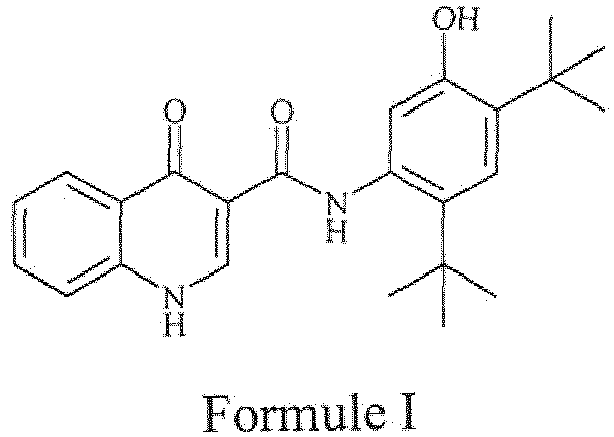
- the drug compound having the adopted name Ivacaftor has a chemical name N-(2, 4- di- tert- butyl-5-hydroxyphenyl)-1,4-dihydro-4-oxoquinoline-3-carboxamide, and is represented by fallowing Formula I:
- Ivacaftor was approved by FDA and marketed by Vertex pharma for the treatment of cystic fibrosis under the brand name KALYDECO® in the form of 150mg oral tablets and in combination with lumacaftor under the brand name ORKAMBI® in the form of 200 mg/125 mg tablets (Lumacaftor/Ivacaftor) for the treatment of cystic fibrosis.
- U.S. Patent No. 7,495,103 discloses modulators of ATP-binding cassette transporters such as ivacaftor.
- the '103 patent further discloses a process for the preparation of modulators of ATP-binding cassette transporters such as quinoline compounds; however, ivacaftor process was not specifically disclosed.
- the '103 patent process includes condensation of 4-oxo-1,4-dihydro-3-quinoline carboxylic acid with aniline in presence of a coupling reagent such as 1-[bis(dimethylamino)methylene]-1H-1,2,3-triazolo[4,5-b]pyridinium 3-oxid hexafluorophosphate (HATU), N,N-diisopropylethylamine (DIEA) in dimethylformamide and then purifying the obtained compound by HPLC.
- HATU 1-[bis(dimethylamino)methylene]-1H-1,2,3-triazolo[4,5-b]pyridinium 3-oxid hexafluorophosphate
- DIEA N,N-diisopropylethylamine
- U.S. Patent No. 8,410,274 (“the '274 patent”) specifically discloses a process for preparation of ivacaftor, which involves condensation of 4-oxo-1,4-dihydro-3-quinoline carboxylic acid with 5-amino-2,4-di-(tert-butyl)phenol in presence of a coupling reagent such as HBTU, triethylamine and dimethyl formamide to obtain ivacaftor.
- a coupling reagent such as HBTU, triethylamine and dimethyl formamide
- U.S. Patent No. 8,476,442 discloses a process for preparation of ivacaftor, which involves the coupling of 4-oxo-1,4-dihydro-3-quinoline carboxylic acid with hydroxyl protected amine intermediate in the presence of a coupling reagent such as propane phosphonic anhydride (T 3 P®) and pyridine followed by deprotection of hydroxyl protection group to obtain ivacaftor.
- a coupling reagent such as propane phosphonic anhydride (T 3 P®) and pyridine followed by deprotection of hydroxyl protection group to obtain ivacaftor.
- T 3 P® propane phosphonic anhydride
- pyridine pyridine
- China Patent publication No. 103044263 discloses a process for the preparation of ivacaftor, which involves the coupling of 4-oxo-1,4-dihydro-3-quinoline carboxylic acid chloride with hydroxyl protected amine intermediate in the presence of triethylamine in methylene chloride followed by deprotection of the hydroxyl protection group to obtain ivacaftor.
- the process disclosed in the '263 publication is schematically represented as follows:
- China Patent publication No. 103787968 discloses a process for the preparation of ivacaftor, which involves the coupling of 4-oxo-1,4-dihydro-3-quinoline carboxylic acid ethyl ester with hydroxyl protected amine intermediate in the presence of ethanol followed by deprotection of hydroxyl protection group to obtain ivacaftor.
- the process disclosed in the '968 publication is schematically represented as follows:
- PCT Publication No. WO2014/118805 discloses a process for the preparation of ivacaftor, which involves reaction of malonate intermediate with 5-amino-2,4-di-(tert-butyl)phenol to obtain ester intermediate and finally cyclized to obtain ivacaftor.
- the process disclosed in the '805 publication is schematically represented as follows:
- PCT Publication No. WO2014/125506 discloses a process for the preparation of ivacaftor, which involves condensation of 1-benzyl-4-oxo-1,4-dihydroquinoline-3-carboxylic acid with 5-amino-2,4-di-(tert-butyl)phenol in the presence of an amide coupling reagent such as HATU in dimethylformamide and followed by deprotection to obtain ivacaftor,
- an amide coupling reagent such as HATU in dimethylformamide
- PCT Publication No. WO2015/128882 (“the '882 publication”) discloses a process for the preparation of ivacaftor, which involves condensation of 4-oxo-1,4-dihydro-3-quinoline carboxylic acid with 5-amino-2,4-di-(tert-butyl)phenol in presence of a coupling reagent such as EDC HCl and HOBt, triethylamine and dimethyl formamide to obtain ivacaftor.
- a coupling reagent such as EDC HCl and HOBt, triethylamine and dimethyl formamide
- CN105130891A discloses a process for the preparation of ivacaftor.
- the process disclosed in the '891 publication is schematically represented as follows:
- the present invention provides a process for the preparation of ivacaftor of Formula I or a pharmaceutically acceptable salt thereof: comprising:
- the present invention provides a process for the preparation of ivacaftor of Formula I or a pharmaceutically acceptable salt thereof: comprising:
- the present invention provides a process for the preparation of ivacaftor of Formula I or a pharmaceutically acceptable salt thereof; comprising:
- the present invention provides a process for the preparation of ivacaftor of Formula I or a pharmaceutically acceptable salt thereof; comprising:
- the present invention provides a compound of Formula VI or a pharmaceutically acceptable salt thereof.
- 'X' represents halo
- 'R 1 ' represents either hydrogen or a suitable protecting group.
- the present invention provides a compound of Formula VIp or a pharmaceutically acceptable salt thereof.
- 'R 1 ' represents either hydrogen or a suitable protecting group.
- the present invention provides a compound of Formula VIa or a pharmaceutically acceptable salt thereof.
- the present invention provides a compound of Formula VIp' or a pharmaceutically acceptable salt thereof.
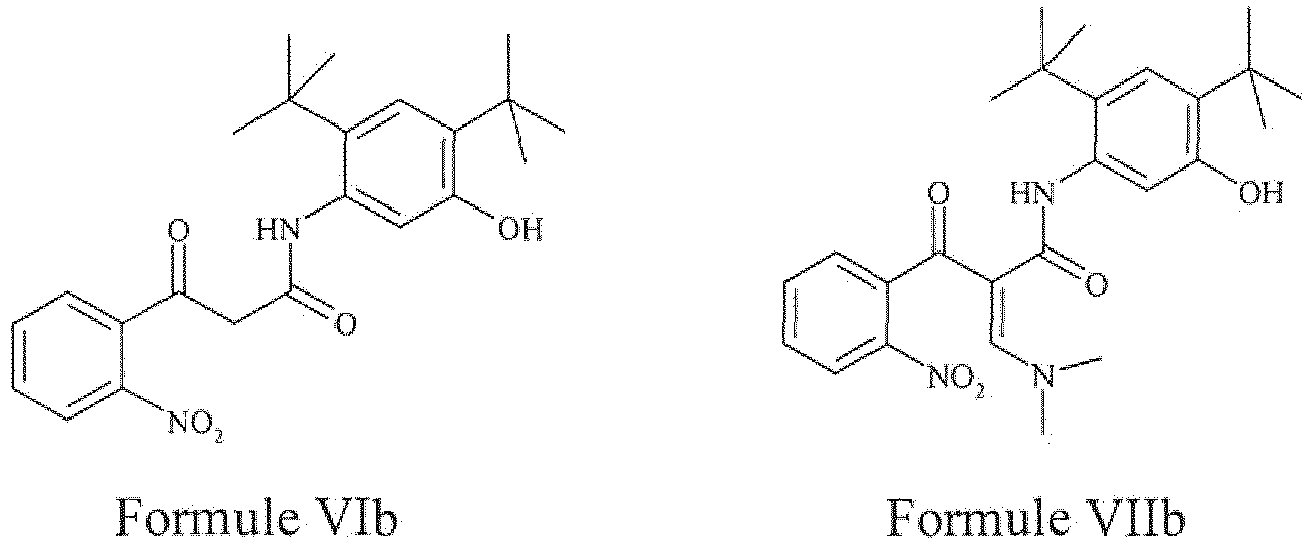
- the present invention provides a compound of Formula VIb or a pharmaceutically acceptable salt thereof.
- the present invention provides a compound of Formula VII or a pharmaceutically acceptable salt thereof.
- 'X' represents halo
- 'R 1 ' represents either hydrogen or a suitable protecting group.
- the present invention provides a compound of Formula VIIp or a pharmaceutically acceptable salt thereof.
- 'R 1 ' represents either hydrogen or a suitable protecting group.
- the present invention provides a compound of Formula VIIa or a pharmaceutically acceptable salt thereof.
- the present invention provides a compound of Formula VIIp' or a pharmaceutically acceptable salt thereof.
- the present invention provides a compound of Formula VIIb or a pharmaceutically acceptable salt thereof.
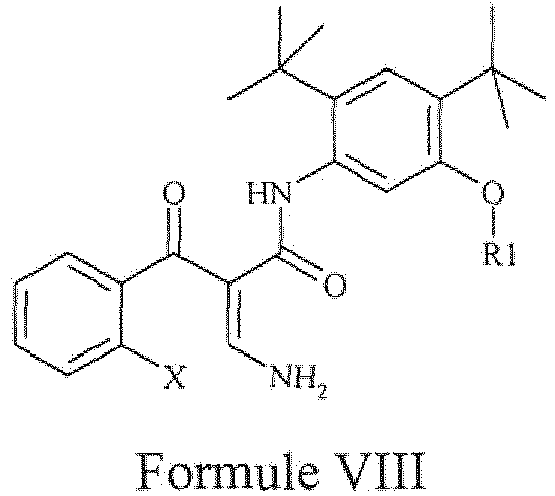
- the present invention provides a compound of Formula VIII or a pharmaceutically acceptable salt thereof.
- 'X' represents halo
- 'R 1 ' represents either hydrogen or a suitable protecting group.
- the present invention provides a compound of Formula VIIIp or a pharmaceutically acceptable salt thereof.
- 'R 1 ' represents either hydrogen or a suitable protecting group.
- the present invention provides a compound of Formula VIIIa or a pharmaceutically acceptable salt thereof.
- the present invention provides a compound of Formula VIIIp' or a pharmaceutically acceptable salt thereof.
- the present invention provides a compound of Formula Xp or a pharmaceutically acceptable salt thereof.
- 'R 1 ' represents either hydrogen or a suitable protecting group.
- the present invention provides a compound of Formula X or a pharmaceutically acceptable salt thereof.
- the present invention provides a compound of Formula Xp or a pharmaceutically acceptable salt thereof, where in the compound of Formula Xp is specifically represented as compound of Formula Xp'.
- the present invention provides a process for the preparation of ivacaftor of Formula I or a pharmaceutically acceptable salt thereof, comprising:
- the present invention provides a process for the preparation of ivacaftor of Formula I or a pharmaceutically acceptable salt thereof, comprising:
- the present invention provides a process for the preparation of ivacaftor of Formula I or a pharmaceutically acceptable salt thereof; comprising:
- the present invention provides a compound of Formula XIII or a pharmaceutically acceptable salt thereof.
- 'X' represents Halo, -NO 2 or -NH 2
- 'R 1 ' represents either hydrogen or a suitable protecting group
- 'R 2 ' represents C 1-5 alkyl; provided that wherein when "X" is -NO 2 or -NH 2 then 'R 1 ' is hydrogen,
- the present invention provides a compound of Formula XIIIa or a pharmaceutically acceptable salt thereof.
- the present invention provides a compound of Formula XIIIb or a pharmaceutically acceptable salt thereof.
- the present invention provides a compound of Formula XIIIc, wherein 'R 2 ' represents C 1-5 alkyl, or a pharmaceutically acceptable salt thereof.
- the present invention provides a compound of Formula XV, wherein 'R 2 ' represents C 1-5 alkyl, or a pharmaceutically acceptable salt thereof.
- the present invention provides a pharmaceutical composition comprising ivacaftor or a pharmaceutically acceptable salt thereof prepared by the processes of the present invention and at least one pharmaceutically acceptable excipient.
- the present invention provides a process for the preparation of ivacaftor of Formula I or a pharmaceutically acceptable salt thereof: comprising:
- the starting compound of Formula VI can be prepared according to process described in one or more below mentioned embodiments.
- step a1) of the aforementioned process involves reaction of compound of Formula VI, obtained by the processes described as above with dimethyl formamide - dimethyl amine complex in a suitable organic solvent; wherein 'X' represents halo and 'R 1 ' represents either hydrogen or a suitable protecting group.
- the exemplary compound of Formula VII can be represented as follows: wherein 'R 1 ' represents either hydrogen or a suitable protecting group.
- the suitable organic solvent used herein for reaction of compound of Formula VI with dimethyl formamide - dimethyl amine complex includes but is not limited to nitriles, ethers, aromatic hydrocarbons and mixtures thereof.
- the nitriles include, but are not limited to acetonitrile, propionitrile and the like; ethers include, but are not limited to tetrahydrofuran, dimethyl ether, methyl tertiary butyl ether, dimethoxyethane and the like; aromatic hydrocarbons include, but are not limited to toluene, xylene and the like and mixtures thereof; preferably toluene.
- reaction of compound of Formula VI with dimethyl formamide-dimethyl amine complex advantageously carried out at a temperature of about room temperature to reflux temperature; preferably 50°C to about 75°C.
- step b1) of the aforementioned process involves reaction of the compound of Formula VII with a source of ammonia to obtain a compound of Formula VIII, wherein 'X' and 'R 1 ' are defined as above.
- the exemplary compound of Formula VIII can be represented as follows: wherein 'R 1 ' represents either hydrogen or a suitable protecting group.
- Exemplary sources of ammonia used herein for the reaction of compound of Formula VII includes but is not limited to ammonia gas, ammonium hydroxide, ammonium acetate, ammonium formate and the like; preferably ammonium hydroxide.
- the reaction of the compound of Formula VII with a source of ammonia may be carried out in a suitable solvent.
- the suitable solvent includes but is not limited to alcohols, amides, aromatic hydrocarbons, water and mixtures thereof.
- the alcohols include, but are not limited to methanol, ethanol, isopropanol and the like; amides include, but are not limited to dimethyl formamide, dimethyl acetamide, N-methyl pyrrolidinone and the like; aromatic hydrocarbons include, but are not limited to toluene, xylene and the like; water and mixtures thereof; preferably ethanol.
- reaction of the compound of Formula VII with a source of ammonia advantageously carried out at a temperature of about room temperature to reflux temperature; preferably at 20°C to about 40°C.
- the step c1) of the aforementioned process involves cyclization of the compound of Formula VIII to obtain ivacaftor, when R 1 is hydrogen, or to obtain a compound of Formula IX, when R 1 is a protecting group and deprotecting the Formula IX to obtain ivacaftor.
- the cyclization of compound of Formula VIII is carried out in presence of a suitable base to obtain a compound of Formula IX.
- the suitable base includes but is not limited to inorganic bases such as sodium hydroxide, potassium hydroxide, sodium methoxide, sodium ethoxide, sodium tert-butoxide, potassium tert-butoxide, sodium carbonate, potassium carbonate, cesium carbonate, sodium bicarbonate, potassium bicarbonate, organic bases such as triethylamine, isopropylethylamine, diisopropylamine, diisopropylethylamine, N-methylmorpholine, piperidine, pyridine and the like and mixtures thereof; preferably potassium hydroxide.
- the cyclization of compound of Formula VIII is carried out in a suitable solvent.
- the suitable solvent includes but is not limited to ethers, alcohols, aromatic hydrocarbons, amides, sulfoxides, nitriles and mixtures thereof.
- ethers include, but are not limited to tetrahydrofuran, 2-methyl tetrahydrofuran, dimethyl ether, methyl tertiary butyl ether and the like; alcohols include, but are not limited to methanol, ethanol, isopropanol and the like; aromatic hydrocarbons include, but are not limited to toluene, xylene and the like; amides include, but are not limited to dimethylformamide, dimethyl acetamide, N-methyl pyrrolidinone and the like; sulfoxides include, but are not limited to dimethylsulfoxide, sulfolane and the like; nitriles include, but are not limited to acetonitrile, propionitrile and like
- the deprotection of the compound of Formula IX is carried out in presence of a suitable deprotecting agent and a suitable solvent.
- the suitable deprotecting agent used herein for the deprotection of the compound of Formula IX; wherein 'R 1 ' defined as above includes but is not limited to acid deprotecting agent such as hydrochloric acid, hydrobromic acid, trifluoro acetic acid and the like and mixture thereof; base deprotecting agent such as potassium carbonate, sodium hydroxide, sodium ethoxide and the like and mixture thereof; preferably potassium carbonate.
- the suitable solvent for deprotection of the compound of Formula IX; wherein 'R 1 ' defined as above includes but is not limited to alcohols, ketones, ethers, amides, sulfoxides and mixtures thereof.
- the alcohols include, but are not limited to methanol, ethanol, isopropanol and the like; ketones include, but are not limited to acetone, methyl isobutyl ketone, methyl ethyl ketone and the like; ethers include, but are not limited to tetrahydrofuran, 2-methyl tetrahydrofuran, methyl tertiary butyl ether and the like; amides include, but are not limited to dimethyl formamide, dimethyl acetamide, N-methyl pyrrolidinone and the like; sulfoxides include, but are not limited to dimethylsulfoxide, sulfolane and the like and mixture thereof; preferably dimethyl formamide.
- the deprotection reaction may be carried out at a temperature of about 0°C to reflux temperature; preferably at 90°C to about 110°C.
- the present invention provides a process for the preparation of compound of Formula VI, comprising: reacting a compound of Formula XI with a compound of Formula IVa or a salt thereof to obtain a compound of Formula VI; wherein when 'X' is halo, then 'R1' is either hydrogen or a suitable protecting group; and when 'X' is nitro, then 'R 1 ' is hydrogen.
- suitable hydroxy protecting group used herein are selected from methoxycarbonyl, methoxymethyl (MOM), benzyloxymethyl (BOM), tetrahydropyranyl (THP), benzyl (Bn), benzoyl (Bz), p-methoxybenzyl (PMB), p- nitrobenzyl, o-nitrobenzyl, p-nitrobenzoyl (PNB), trimethylsilyl (TMS) and the like.
- 'C 1 -C 5 alkoxy' represents methoxy, ethoxy, isopropoxy, butyloxy and pentyloxy.
- 'halo' represents fluoro, chloro, bromo or iodo.
- the aforementioned process involves reaction of compound of Formula XI with a compound of Formula IVa or a salt thereof in presence of a suitable base and in a suitable solvent to obtain a compound of Formula VI; wherein when 'X' is halo, then 'R 1 ' is either hydrogen or a suitable protecting group; and when 'X' is nitro, then 'R 1 ' is hydrogen.
- Exemplary bases used herein for the reaction of a compound of Formula XIa or Formula XIb with a compound of Formula IV or a salt thereof includes but are not limited to inorganic bases such as sodium hydroxide, potassium hydroxide, sodium methoxide, sodium ethoxide, sodium tert-butoxide, potassium tert-butoxide, sodium carbonate, potassium carbonate, cesium carbonate, sodium bicarbonate, potassium bicarbonate, organic bases such as triethylamine, isopropylethylamine, diisopropylamine, diisopropylethylamine, N-methylmorpholine, piperidine, pyridine and the like and mixtures thereof; preferably diisopropylethylamine.
- inorganic bases such as sodium hydroxide, potassium hydroxide, sodium methoxide, sodium ethoxide, sodium tert-butoxide, potassium tert-butoxide, sodium carbonate, potassium carbonate, cesium carbonate, sodium bicarbonate
- the suitable solvent for the reaction of a compound of Formula XIa or Formula XIb with a compound of Formula IV or a salt thereof include but is not limited to amides, halogenated hydrocarbons, aromatic hydrocarbons and mixtures thereof.
- the amides include, but are not limited to dimethyl formamide, dimethyl acetamide, N-methyl pyrrolidinone and the like;
- halogenated hydrocarbons include, but are not limited to methylene chloride, ethylene chloride and the like;
- aromatic hydrocarbons include, but are not limited to toluene, xylene and the like and mixtures thereof; preferably toluene.
- reaction of Formula XIa or Formula XIb with a compound of Formula IV or a salt is advantageously carried out at a temperature of about room temperature to reflux temperature; preferably at 90°C to about 110°C.
- the resultant compound of Formula VI (preferably Formula VIa, Formula VIp' or Formula VIb) can be isolated by conventional methods; for example concentration of the reaction mass under reduced pressure to obtain solid compound as crude, which can be optionally separated by adding suitable hydrocarbon solvent such as hexane, heptane, cyclohexane and the like; preferably heptane and then filtering the product.
- suitable hydrocarbon solvent such as hexane, heptane, cyclohexane and the like; preferably heptane and then filtering the product.
- the present invention provides a process for the preparation of compound of Formula VI, comprising: reacting the compound of Formula XII with a compound of Formula IVa or a salt thereof to obtain a compound of Formula VI, wherein when 'X' is halo, then 'R 1 ' is either hydrogen or a suitable protecting group; when 'X' is nitro, then 'R 1 ' is hydrogen; and wherein "Z" represents C 1 -C 5 alkoxy or halogen.
- the aforementioned process involves reaction of compound of Formula XII with a compound of Formula IVa or a salt thereof in presence of a suitable base and in a suitable solvent to obtain a compound of Formula VI.
- the compound of Formula XII is known in the art and can be prepared by any method known in the art, for example may be prepared by the process disclosed in Journal of Heterocyclic Chemistry, 2011, vol 48, 3, page 620 - 625 , Bioorganic and Medicinal Chemistry, 2013, vol 21, 11, page 2843 - 2855 or by the process described in below examples.
- the base and solvent used herein for reaction of compound of Formula XIIa or Formula XIIb with a compound of Formula IV or a salt thereof is same as used for the reaction of compound of Formula XIa or Formula XIb with a compound of Formula IV or a salt thereof as mentioned above.
- reaction of Formula XIIa or Formula XIIb with a compound of Formula IV or a salt is advantageously carried out at a temperature of about room temperature to reflux temperature; preferably at 90°C to about 110°C.
- the resultant compound of Formula VI (preferably Formula VIa, Formula VIp' or Formula VIb) can be isolated by conventional methods; for example concentration of the reaction mass under reduced pressure to obtain solid compound as crude, which can be optionally separated by adding suitable hydrocarbon solvent such as hexane, heptane, cyclohexane and the like; preferably heptane and then filtering the product.
- suitable hydrocarbon solvent such as hexane, heptane, cyclohexane and the like; preferably heptane and then filtering the product.
- the compound of Formula VI preferably a compound of Formula VIa, Formula VIp' or Formula VIb obtained by the processes described just as above can be used as intermediate in the preparation of ivacaftor of the invention.
- the present invention provides a process for the preparation of ivacaftor of Formula I or a pharmaceutically acceptable salt thereof: comprising:
- the compound of Formula VIb may be prepared by the processes described as above of the present invention.
- step a2) of the aforementioned process involves reaction of compound of Formula VIb with dimethyl formamide - dimethyl amine complex to obtain a compound of Formula VIIb is same as the process described for the preparation of compound of Formula VIIa.
- the step b2) of the aforementioned process involves reduction of the compound of Formula VIIb in presence of a suitable reducing agent to obtain a compound of Formula X.
- the suitable reducing agent used herein is selected from the group consisting of Fe/ammonium chloride, Fe/ammonium formate, Fe/HCl, hydrogen gas, palladium on carbon, raney nickel, platinum oxide, sodium hydrosulfite, zinc and the like; preferably Fe/ammonium chloride.
- the reduction of the compound of Formula VIIb is carried out in a suitable solvent.
- the suitable solvent includes but is not limited to ethers, alcohols, amides, sulfoxides, water and mixtures thereof.
- ethers include, but are not limited to tetrahydrofuran, 2-methyltetrahydrofuran, dimethyl ether, methyl tertiary butyl ether and the like; alcohols include, but are not limited to methanol, ethanol, isopropanol and the like; amides include, but are not limited to dimethylformamide, dimethyl acetamide, N-methyl pyrrolidinone and the like;
- sulfoxides include, but are not limited to dimethylsulfoxide, sulfolane and the like; water and mixtures thereof; preferably ethanol.
- the reduction of the compound of Formula VIIb advantageously carried out at a temperature of about room temperature to reflux temperature; preferably at 55°C to about 80°C.
- the step c2) of the aforementioned process involves convertion of the compound of Formula X in to ivacaftor.
- step c2) of conversion of the compound of Formula X in to ivacaftor is carried out incisively without isolating the compound of Formula X.
- the present invention provides a compound of Formula VI or a pharmaceutically acceptable salt thereof.
- 'X' represents halo
- 'R 1 ' represents either hydrogen or a suitable protecting group.
- the present invention provides a compound of Formula VIp or a pharmaceutically acceptable salt thereof.
- 'R 1 ' represents either hydrogen or a suitable protecting group.
- the present invention provides a compound of Formula VIa a pharmaceutically acceptable salt thereof.
- the present invention provides a compound of Formula VIp' or a pharmaceutically acceptable salt thereof.
- the present invention provides a compound of Formula VIb or a pharmaceutically acceptable salt thereof.
- the present invention provides a compound of Formula VII or a pharmaceutically acceptable salt thereof.
- 'X' represents halo
- 'R 1 ' represents either hydrogen or a suitable protecting group.
- the present invention provides a compound of Formula VIIp or a pharmaceutically acceptable salt thereof.
- 'R 1 ' represents either hydrogen or a suitable protecting group.
- the present invention provides a compound of Formula VIIa or a pharmaceutically acceptable salt thereof.
- the present invention provides a compound of Formula VIIp' or a pharmaceutically acceptable salt thereof.
- the present invention provides a compound of Formula VIIb or a pharmaceutically acceptable salt thereof.
- the present invention provides a compound of Formula VIII or a pharmaceutically acceptable salt thereof.
- 'X' represents halo
- 'R 1 ' represents either hydrogen or a suitable protecting group.
- the present invention provides a compound of Formula VIIIp or a pharmaceutically acceptable salt thereof.
- 'R 1 ' represents either hydrogen or a suitable protecting group.
- the present invention provides a compound of Formula VIIIa or a pharmaceutically acceptable salt thereof.
- the present invention provides a compound of Formula VIIIp' or a pharmaceutically acceptable salt thereof.
- the present invention provides a compound of Formula Xp or a pharmaceutically acceptable salt thereof.
- 'R 1 ' represents either hydrogen or a suitable protecting group.
- the present invention provides a compound of Formula X or a pharmaceutically acceptable salt thereof.
- the present invention provides a compound of Formula Xp' or a pharmaceutically acceptable salt thereof.
- the present invention provides a process for the preparation of ivacaftor of Formula I or a pharmaceutically acceptable salt thereof: comprising:
- suitable hydroxy protecting group used herein are selected from methoxycarbonyl, methoxymethyl (MOM), benzyloxymethyl (BOM), tetrahydropyranyl (THP), benzyl (Bn), benzoyl (Bz), p-methoxybenzyl (PMB), p- nitrobenzyl, o-nitrobenzyl, p-nitrobenzoyl (PNB), trimethylsilyl (TMS) and the like.
- 'halo' represents fluoro, chloro, bromo or iodo.
- 'suitable leaving group' represents halogen such as fluoro, chloro, bromo, iodo or mesyl, tosyl and the like.
- 'C 1-5 alkyl' represents methyl, ethyl, propyl, butyl and pentyl.
- the compound of Formula VI (preferably Formula VIa or Formula VIb) can be prepared by using the process disclosed in applicant's PCT application No. 2016/075730 .
- step a5) of the aforementioned process involves reaction of compound of Formula VI with (C 1-5 alkyl) 3 -orthoformate in presence of a suitable Lewis acid; wherein 'X' represents halo and 'R 1 ' represents either hydrogen or a suitable protecting group to obtain a compound of Formula XIII.
- the suitable (C 1-5 alkyl) 3 -orthoformate used herein for step a5) includes but is not limited to trimethyl orthoformate, triethyl orthoformate, tripropyl orthoformate, tributyl orthoformate, tripentyl orthoformate and the like; preferably triethyl orthoformate.
- the suitable Lewis acid used herein for step a5) includes but is not limited to zinc chloride, tin(IV) chloride, tin(II) chloride, aluminium chloride, boron trifluoride and the like; preferably zinc chloride.
- reaction of compound of Formula VI with (C 1-5 alkyl) 3 -orthoformate may be optionally carried out in a suitable solvent, which includes but is not limited to acid anhydride, nitriles, ethers, aromatic hydrocarbons and mixtures thereof.
- the acid anhydride include, but are not limited to acetic anhydride, propionic anhydride and the like; nitriles include, but are not limited to acetonitrile, propionitrile and the like; ethers include, but are not limited to tetrahydrofuran, dimethyl ether, methyl tertiary butyl ether, dimethoxyethane and the like; aromatic hydrocarbons include, but are not limited to toluene, xylene and the like and mixtures thereof; preferably acetic anhydride.
- reaction of compound of Formula VI with (C 1-5 alkyl) 3 -orthoformate advantageously carried out at a temperature of about room temperature to reflux temperature; preferably at 20°C to about 40°C.
- the resultant compound of Formula XIII may be isolated by known techniques, for example the reaction mass containing compound of Formula XIII may be quenched with water followed by extracting the product with a suitable water immiscible solvent such as ethyl acetate, methylene chloride or toluene; preferably ethyl acetate and then evaporating the solvent completely under normal or reduced pressure to obtain a compound of Formula XIII.
- a suitable water immiscible solvent such as ethyl acetate, methylene chloride or toluene; preferably ethyl acetate and then evaporating the solvent completely under normal or reduced pressure to obtain a compound of Formula XIII.
- the step b5) of the aforementioned process involves reaction of the compound of Formula XIII with a source of ammonia to obtain a compound of Formula VIII, wherein 'X' and 'R 1 ' are defined as above.
- the exemplary compound of Formula VIII can be represented as follows: wherein 'R 1 ' represents either hydrogen or a suitable protecting group.
- Exemplary sources of ammonia used herein for the reaction of compound of Formula XIII includes but is not limited to ammonia gas, ammonium hydroxide, ammonium acetate, ammonium formate and the like; preferably ammonium hydroxide.
- the reaction of the compound of Formula XIII with a source of ammonia may be carried out in a suitable solvent.
- the suitable solvent includes but is not limited to alcohols, amides, aromatic hydrocarbons, water and mixtures thereof.
- the alcohols include, but are not limited to methanol, ethanol, isopropanol and the like; amides include, but are not limited to dimethyl formamide, dimethyl acetamide, N-methyl pyrrolidinone and the like; aromatic hydrocarbons include, but are not limited to toluene, xylene and the like; water and mixtures thereof; preferably ethanol.
- reaction of the compound of Formula XIII with a source of ammonia advantageously carried out at a temperature of about room temperature to reflux temperature; preferably at 70°C to about 80°C
- reaction may be converted in to ivacaftor without isolating the Formula VIII or alternatively the compound of Formula VIII may be isolated as solid by known methods.
- the step c5) of the aforementioned process involves cyclization of the compound of Formula VIII to obtain ivacaftor, when R 1 is hydrogen, or to obtain a compound of Formula IX, when R 1 is a protecting group and deprotecting the Formula IX to obtain ivacaftor.
- the cyclization of compound of Formula VIII is carried out in presence of a suitable base to obtain a compound of Formula IX.
- the suitable base includes but is not limited to inorganic bases such as sodium hydroxide, potassium hydroxide, sodium methoxide, sodium ethoxide, sodium tert-butoxide, potassium tert-butoxide, sodium carbonate, potassium carbonate, cesium carbonate, sodium bicarbonate, potassium bicarbonate, organic bases such as triethylamine, isopropylethylamine, diisopropylamine, diisopropylethylamine, N-methylmorpholine, piperidine, pyridine and the like and mixtures thereof; preferably potassium carbonate.
- the cyclization of compound of Formula VIII is carried out in a suitable solvent.
- the suitable solvent includes but is not limited to ethers, alcohols, aromatic hydrocarbons, amides, sulfoxides, nitriles and mixtures thereof.
- ethers include, but are not limited to tetrahydrofuran, 2-methyl tetrahydrofuran, dimethyl ether, methyl tertiary butyl ether and the like; alcohols include, but are not limited to methanol, ethanol, isopropanol and the like; aromatic hydrocarbons include, but are not limited to toluene, xylene and the like; amides include, but are not limited to dimethylformamide, dimethyl acetamide, N-methyl pyrrolidinone and the like; sulfoxides include, but are not limited to dimethylsulfoxide, sulfolane and the like; nitriles include, but are not limited to acetonitrile, propionitrile and like
- the deprotection of the compound of Formula IX is carried out in presence of a suitable deprotecting agent and a suitable solvent.
- the suitable deprotecting agent used herein for the deprotection of the compound of Formula IX; wherein 'R 1 ' defined as above includes but is not limited to acid deprotecting agent such as hydrochloric acid, hydrobromic acid, trifluoro acetic acid and the like and mixture thereof; base deprotecting agent such as potassium carbonate, sodium hydroxide, sodium ethoxide and the like and mixture thereof; preferably potassium carbonate.
- the suitable solvent for deprotection of the compound of Formula IX; wherein 'R 1 ' defined as above includes but is not limited to alcohols, ketones, ethers, amides, sulfoxides and mixtures thereof.
- the alcohols include, but are not limited to methanol, ethanol, isopropanol and the like; ketones include, but are not limited to acetone, methyl isobutyl ketone, methyl ethyl ketone and the like; ethers include, but are not limited to tetrahydrofuran, 2-methyl tetrahydrofuran, methyl tertiary butyl ether and the like; amides include, but are not limited to dimethyl formamide, dimethyl acetamide, N-methyl pyrrolidinone and the like; sulfoxides include, but are not limited to dimethylsulfoxide, sulfolane and the like; and mixture thereof; preferably dimethylformamide.
- the deprotection reaction may be carried out at a temperature of about 0°C to reflux temperature; preferably at 90°C to about 110°C.
- the resultant ivacaftor of Formula I can be isolated by known isolation techniques, for example the resultant reaction mass may be adjusted pH to about 2.0 to 2.5 with a suitable acid such as hydrochloric acid, sulfuric acid, phosphoric acid, acetic acid and the like, followed by precipitated solid compound can be separated by filtration and the solid ivacaftor obtained may be optionally purification from a suitable solvent such as methanol, ethanol and the like.
- a suitable acid such as hydrochloric acid, sulfuric acid, phosphoric acid, acetic acid and the like
- the present invention provides a process for the preparation of ivacaftor of Formula I or a pharmaceutically acceptable salt thereof: comprising:
- step a6) of the aforementioned process involves reaction of compound of Formula VIb with (C 1-5 alkyl) 3 -orthoformate to obtain a compound of Formula XIV is same as the process described for the preparation of compound of Formula VIIa or Formula VIIb.
- the step b6) of the aforementioned process involves reduction of the compound of Formula XIV in presence of a suitable reducing agent to obtain a compound of Formula XV.
- the suitable reducing agent used herein is selected from the group consisting of Fe/ammonium chloride, Fe/ammonium formate, Fe/HCl, hydrogen gas, Palladium on carbon, Raney nickel, Platinum oxide, Sodium hydrosulfite, Zinc and the like; preferably Fe/ammonium chloride.
- the reduction of the compound of Formula XIV is carried out in a suitable solvent.
- the suitable solvent includes but is not limited to ethers, alcohols, amides, sulfoxides, water and mixtures thereof.
- ethers include, but are not limited to tetrahydrofuran, 2-methyltetrahydrofuran, dimethyl ether, methyl tertiary butyl ether and the like; alcohols include, but are not limited to methanol, ethanol, isopropanol and the like;
- amides include, but are not limited to dimethylformamide, dimethylsulfoxide, dimethyl acetamide, N-methyl pyrrolidinone and the like;
- sulfoxides include, but are not limited to dimethylsulfoxide, sulfolane and the like; water and mixtures thereof; preferably ethanol.
- the reduction of the compound of Formula XIV advantageously carried out at a temperature of about room temperature to reflux temperature; preferably at 60°C to about 80°C.
- step c6) of the aforementioned process involves cyclization of the compound of Formula XV in to ivacaftor,
- step c6) of cyclization of the compound of Formula XV in to ivacaftor is carried out without isolating the compound of Formula XV.
- the present invention provides a process for the preparation of ivacaftor of Formula I or a pharmaceutically acceptable salt thereof; comprising:
- the compound of Formula XVI or a salt thereof known in the art can be prepared by any process known in the art or by using the process disclosed in applicant's PCT application No. 2016/075703 or by using the process disclosed in examples.
- the step a7) of aforementioned process involves reaction of compound of Formula XVI with a compound of Formula IVa or a salt thereof in presence of a suitable base and in a suitable solvent to obtain a compound of Formula XVII, wherein 'R 2 ' represents C 1-5 alkyl; L and L' represents a suitable leaving group.
- Exemplary bases used herein for the reaction of a compound of Formula XVI with a compound of Formula IVa or a salt thereof includes but are not limited to inorganic bases such as sodium hydroxide, potassium hydroxide, sodium methoxide, sodium ethoxide, sodium tert-butoxide, potassium tert-butoxide, sodium carbonate, potassium carbonate, cesium carbonate, sodium bicarbonate, potassium bicarbonate, organic bases such as triethylamine, isopropylethylamine, diisopropylamine, diisopropylethylamine, N-methylmorpholine, piperidine, pyridine and the like and mixtures thereof; preferably pyridine.
- inorganic bases such as sodium hydroxide, potassium hydroxide, sodium methoxide, sodium ethoxide, sodium tert-butoxide, potassium tert-butoxide, sodium carbonate, potassium carbonate, cesium carbonate, sodium bicarbonate, potassium bicarbonate, organic bases such as trieth
- the suitable solvent for the reaction of a compound of Formula XVI with a compound of Formula IVa or a salt thereof include but is not limited to amides, halogenated hydrocarbons, aromatic hydrocarbons and mixtures thereof.
- the amides include, but are not limited to dimethyl formamide, dimethyl acetamide, N-methyl pyrrolidinone and the like;
- halogenated hydrocarbons include, but are not limited to methylene chloride, ethylene chloride and the like;
- aromatic hydrocarbons include, but are not limited to toluene, xylene and the like and mixtures thereof; preferably methylene chloride.
- reaction of Formula XVI with a compound of Formula IVa or a salt thereof is advantageously carried out at a temperature of about room temperature to reflux temperature; preferably at 20°C to about 40°C.
- the step b7) of the aforementioned process involves reaction of the compound of Formula XVII with a compound of Formula XVIII in presence of a suitable base and in a suitable solvent to obtain a compound of Formula XIII, wherein 'R1', 'R2', 'X', L and L' are defined as above.
- reaction of Formula XVII with a compound of Formula XVIII is advantageously carried out at a temperature of about room temperature to reflux temperature; preferably at 40°C to about 65°C.
- the resultant compound of Formula XIII can be isolated by conventional methods; for example washing the reaction mass with a suitable aqueous base such as sodium bicarbonate, potassium bicarbonate and the like. Then the product containing solvent may be separated and subjected to evaporation under vacuum to obtain solid compound as crude, which can be optionally separated by adding suitable hydrocarbon solvent such as hexane, heptane, cyclohexane and the like; preferably heptane and then filtering the product.
- suitable aqueous base such as sodium bicarbonate, potassium bicarbonate and the like.
- the step c7) of the aforementioned process involves convertion of the compound of Formula XIII in to ivacaftor by the process same as described above.
- the present invention provides a compound of Formula XIII or a pharmaceutically acceptable salt thereof: wherein 'X' represents Halo, -NO 2 or -NH 2 , 'R 1 ' represents either hydrogen or a suitable protecting group; and 'R 2 ' represents C 1-5 alkyl; provided that wherein when "X" is -NO 2 or -NH 2 then 'R 1 ' is hydrogen.
- the present invention provides a compound of Formula XIIIa or a pharmaceutically acceptable salt thereof.
- the present invention provides a compound of Formula XIIIb or a pharmaceutically acceptable salt thereof.
- the present invention provides a compound of Formula XIIIb, wherein 'R 2 ' represents C 1-5 alkyl, or a pharmaceutically acceptable salt thereof.
- the present invention provides a compound of Formula XV, wherein 'R 2 ' represents C 1-5 alkyl, or a pharmaceutically acceptable salt thereof.
- the present invention provides ivacaftor or a pharmaceutically acceptable salt thereof obtained by the processes described herein, having a purity of at least about 97%, as measured by HPLC, preferably at least about 98% as measured by HPLC, and more preferably at least about 99.5%, as measured by HPLC.
- the pharmaceutical acceptable salts include acid addition salts formed with inorganic acids or with organic acids.
- the inorganic acids may be selected from hydrochloric acid, hydrobromic acid, sulfuric acid, phosphoric acid, nitric acid, sulfamic acid, and the like; organic acids may be selected from acetic acid, oxalic acid, fumaric acid, citric acid, succinic acid, tartaric acid, salicylic acid, benzoic acid, glycolic acid, methane sulfonic acid, ethanesulfonic acid, benzenesulfonic acid, p-toluenesulfonic acid, lactic acid, maleic acid, malonic acid, malic acid and the like.
- the present invention provides a pharmaceutical composition, comprising ivacaftor or a pharmaceutically acceptable salt thereof prepared by the processes of the present invention and at least one pharmaceutically acceptable excipient.
- Such pharmaceutical composition may be administered to a mammalian patient in any dosage form, e.g., solid, liquid, powder, injectable solution, etc.
- Reaction mass was cooled to room temperature and diluted with methylene chloride (50ml) further cooled to 0-5°C.
- methylene chloride 50ml
- triethylamine 5.35g
- reaction mass was distilled completely under vacuum at below 40°C and to the resultant reaction ethyl acetate (100ml) was charged and washed with 5%sodium carbonate(2x50ml), water (50ml), 1%aq.HCl solution (50ml) and water (50ml) and the resultant organic layer was distilled completely u/v and co-distilled with ethanol to obtain crude.
- the obtaine crude was dissolved in ethanol (450ml) at reflux temperature and then distilled the resultant reaction mass upto ⁇ 20vol at 40°C.
- Reaction mass was cooled to 25-35°C then filtered the solid and washed with ethanol (10ml). The resulting wet cake was dried under vacuum at 60-65°C to obtain Ivacaftor. Yield: 5.0g.
- N-Benzyl-4-oxo-1,4-dihydroquinoline-3-carboxylic acid (3g), methylene chloride (60ml) and triethylamine (2.17g) were charged in to a round bottom flask at 25-35°C and stirred for 10min at same temperature. Reactions mass was cooled to 0-5 °C, slowly add thionyl chloride (2.55g) over a period of 15min, then the reaction mass was heated to reflux and maintained for 2 to 3 hrs. After completion of the reaction, reaction mass was distilled completely under vacuum at below 40°C and co-distilled with methylene chloride (2x30ml).
- reaction mass was cooled to room temperature and diluted with methylene chloride (30ml) further cooled to 0-5°C.
- methylene chloride 30ml
- triethylamine 2.17g
- Reaction mass was heated to 25-35°C and stirred for 4 to 6 hrs.
- reaction mass was distilled completely under vacuum at below 40°C and to the resultant reaction ethyl acetate (60ml) was charged and washed with 5%sodium carbonate(2x30ml), water (30ml), 1% aq.
- N-(2,4-di- tert -butyl-5-hydroxyphenyl)-1-benzyl-4-oxo-1,4-dihydroquinoline-3-carboxamide (3g; obtained from Ex-2) and dimethylformamide (45ml), 20% palladium hydroxide (3g) and ammonium formate (3g) were charged into a round bottom flask at 25-30°C.
- the reaction mass was heated to 70-80°C and stirred for 3 hours. Then the reaction mass was cooled to 40°C and filtered. To the filtered mass water (180ml) was added at 5-10°C, then the reaction mass was stirred for 30 min at 25-30°C and filtered the precipitated solid and solid bed washed with water (15ml).
- Example-1 Preparation of compound of Formula Xia.
- 2-fluorobenzoic acid (30g), Meldrum acid (27.7g), 4-dimethylaminopyridine (39.2g) and methylene chloride (300ml) were charged into a round bottom flask at 25-35°C.
- To the reaction mass was added pre dissolved solution of dicyclohexylcarbodiimide (57.6g) in methylene chloride (150ml) over a period of 1hr at 25-35°C stirred at for 2-3hr at same temperature.
- 10% aq HCl 300ml
- stirred for 15-20min separated the obtained salts from reaction mass by filtration and the resultant filterate was washed with 10% HCl (150ml) and water (150ml).
- Example-2 Preparation of compound of Formula VIa.
- Example-3 Preparation of compound of Formula VIIa.
- Example-4 Preparation of compound of Formula XIIa.
- Example-6 Preparation of Ivacaftor.
- Compound of Formula VIIb was prepared from compound of formula VIb analogously process according to Example-6.
- Example-8 Preparation of Ivacaftor.
- Example-9 Preparation of compound of Formula XIIa.
- Tetrahydrofuran (150ml) and magnesium chloride (24.5g) was added in another round bottom flask at 25-35°C. Reaction mass was cooled to 10-15°C and was added potassium salt of monoethylmalonate (36.4g) at same temperature. To the reaction mass was added triethyl amine (21.6g) slowly over a period of 30min and reaction mass was heated to 25-35°C and stirred for 8hr at same temperature. To the reaction mass was added above pre dissolved tetrahydrofuran solution of 2-fluorobenzoyl chloride at 15-25°C and stirred for 16hr at 25-35°C. After completion of the reaction, reaction mass was distilled completely under vacuum at below 50°C and cooled to 25-35°C.
- Example-11 Preparation of compound of Formula XIIIp.
- Example-12 Preparation of Ivacaftor.
- reaction mass After completion of the reaction, cooled the reaction mass to 25-30°C and slowly added water (270mL) and pH of the reaction mass was adjusted to 2.0 with aq hydrochloric acid. Filtered the precipitated solids and was charged ethanol (200mL) and heated to 75-80°C and stirred for a period of 60min at same temperature. Reaction mass was cooled to 25-35°C and distilled reaction mass to 60mL. Filtered the solids obtained and washed with ethanol (12ml). Dry the material at 45-50°C to obtain title compound. Yield: 5.0g.
- Example-13 Preparation of (E)-3-ethoxyacryloyl chloride of Formula XVIa.
- Example-15 Preparation of compound of Formula XVIIa.
- reaction mass was washed with water (70mL), 5% sodium bicarbonate (70mL) and followed by water (70mL) sequentially.
- Organic layer was distilled completely under vacuum and the resultant crude product was purified by column purification using ethyl acetate/hexane to get title compound as a cream coloured solid.
- Example-16 Preparation of compound of Formula XIIIa.
Landscapes
- Chemical & Material Sciences (AREA)
- Organic Chemistry (AREA)
- Health & Medical Sciences (AREA)
- Medicinal Chemistry (AREA)
- Pharmacology & Pharmacy (AREA)
- Epidemiology (AREA)
- Life Sciences & Earth Sciences (AREA)
- Animal Behavior & Ethology (AREA)
- General Health & Medical Sciences (AREA)
- Public Health (AREA)
- Veterinary Medicine (AREA)
- Pharmaceuticals Containing Other Organic And Inorganic Compounds (AREA)
Claims (8)
- Procédé de préparation d'ivacaftor de formule I ou d'un sel pharmaceutiquement acceptable de celui-ci :
 a1) faire réagir un composé de formule VI avec un complexe diméthylformamide-diméthylamine pour obtenir un composé de formule VII,
 b1) faire réagir le composé de formule VII avec une source d'ammoniac pour obtenir un composé de formule VIII, et
 c1) cycliser le composé de formule VIII pour obtenir de l'ivacaftor, lorsque R1 est de l'hydrogène, ou pour obtenir un composé de formule IX, lorsque R1 est un groupe protecteur et déprotéger la formule IX en présence d'un agent déprotecteur approprié pour obtenir l'ivacaftor,
- Procédé de préparation d'ivacaftor de formule I ou d'un sel pharmaceutiquement acceptable de celui-ci :
 a2) faire réagir un composé de formule VIb avec un complexe diméthylformamide-diméthylamine pour obtenir un composé de formule VIIb,
 b2) réduire le composé de formule VIIb en présence d'un agent réducteur approprié pour obtenir un composé de formule X, et
 c2) convertir le composé de formule X en ivacaftor.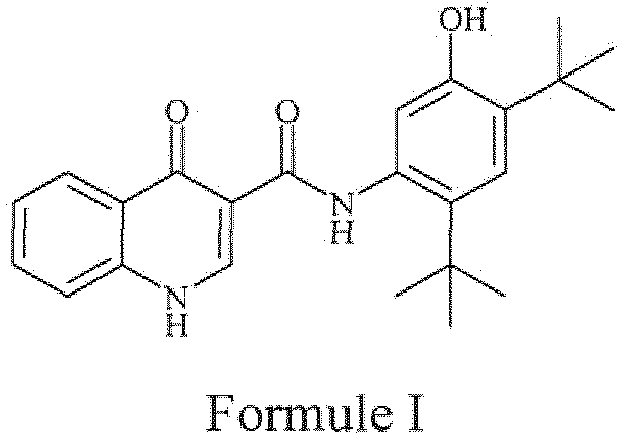
- Procédé de préparation d'ivacaftor de formule I ou d'un sel pharmaceutiquement acceptable de celui-ci comprenant les étapes consistant à ;a3) faire réagir un composé de formule XI avec un composé de formule IVa ou un sel de celui-ci en présence d'une base appropriée pour obtenir un composé de formule VI, et
 b3) convertir le composé de formule VI en Ivacaftor ; où lorsque « X » est un halogéno, alors « R1 » est soit un hydrogène, soit un groupe protecteur approprié ; et lorsque « X » est un nitro, alors « R1 » est hydrogène.
 - Procédé de préparation d'ivacaftor de formule I ou d'un sel pharmaceutiquement acceptable de celui-ci ; comprenant les étapes consistant à :a4) faire réagir le composé de formule XII avec un composé de formule IVa ou un sel de celui-ci en présence d'une base appropriée dans un solvant approprié pour obtenir un composé de formule VI, et
 b4) convertir le composé de formule VI en Ivacaftor ; où lorsque « X » est un halogéno, alors « R1 » est soit de l'hydrogène, soit un groupe protecteur approprié ; lorsque « X » est un nitro, alors « R1 » est l'hydrogène ; et où « Z » représente un alcoxy en C1-C5 ou un halogène.
 - Procédé de préparation d'ivacaftor de formule I ou d'un sel pharmaceutiquement acceptable de celui-ci :
 a5) faire réagir un composé de formule VI avec un (alkyle en C1-5)3-orthoformate en présence d'un acide de Lewis approprié dans un solvant approprié pour obtenir un composé de formule XIII,
 b5) faire réagir le composé de formule XIII avec une source d'ammoniac dans un solvant approprié pour obtenir un composé de formule VIII, et
 c5) cycliser le composé de formule VIII en présence d'une base appropriée pour obtenir l'ivacaftor, lorsque R1 est l'hydrogène, ou pour obtenir un composé de formule IX, lorsque R1 est un groupe protecteur et déprotéger la formule IX en présence d'un agent déprotecteur approprié pour obtenir l'ivacaftor,
- Procédé de préparation d'ivacaftor de formule I ou d'un sel pharmaceutiquement acceptable de celui-ci :
 a6) faire réagir un composé de formule VIb avec un (alkyl en C1-5)3-orthoformate en présence d'un acide de Lewis approprié pour obtenir un composé de formule XIV, où « R2 » représente un alkyle en C1-5,
 b6) réduire le composé de formule XIV en présence d'un agent réducteur approprié pour obtenir un composé de formule XV, et
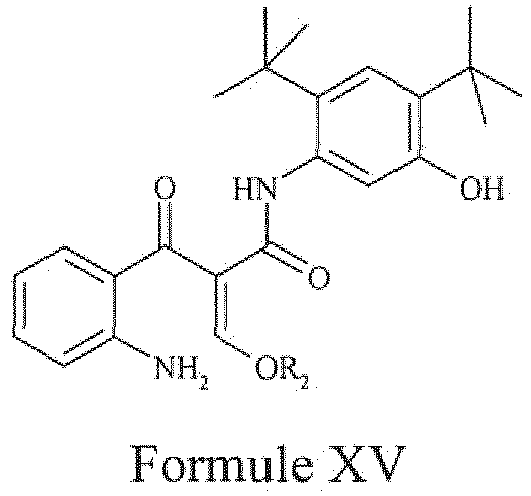 c6) cycliser le composé de formule XV en présence d'une base appropriée en ivacaftor.

- Procédé de préparation d'ivacaftor de formule I ou d'un sel pharmaceutiquement acceptable de celui-ci ; comprenant les étapes consistant à :a7) faire réagir un composé de formule XVI avec un composé de formule IVa ou un sel de celui-ci en présence d'une base appropriée pour obtenir un composé de formule XVII,
 b7) faire réagir le composé de formule XVII avec un composé de formule XVIII en présence d'une base appropriée pour obtenir un composé de formule XIII, et
 c7) convertir le composé de formule XIII en ivacaftor ; où « X » représente un halogéno ou un nitro ; « R1 » représente soit de l'hydrogène, soit un groupe protecteur approprié ; « R2 » représente un alkyle en C1-5 ; L et L' représentent un groupe partant approprié.
 - Composé de formule VI ou un sel pharmaceutiquement acceptable de celui-ci,

ou
composé de formule VIp ou un sel pharmaceutiquement acceptable de celui-ci,
ou
composé de formule VIa ou un sel pharmaceutiquement acceptable de celui-ci,
composé de formule Vip' ou un sel pharmaceutiquement acceptable de celui-ci,
composé de formule VIb ou un sel pharmaceutiquement acceptable de celui-ci,
composé de formule VII ou un sel pharmaceutiquement acceptable de celui-ci,
où le groupe protecteur approprié est choisi parmi méthoxycarbonyle, méthoxyméthyle (MOM), benzyloxyméthyle (BOM), tétrahydropyranyle (THP), benzyle (Bn), benzoyle (Bz), p-méthoxybenzyle (PMB), p-nitrobenzyle, o-nitrobenzyle, p-nitrobenzoyle (PNB), triméthylsilyle (TMS),
ou
composé de formule VIIp ou un sel pharmaceutiquement acceptable de celui-ci,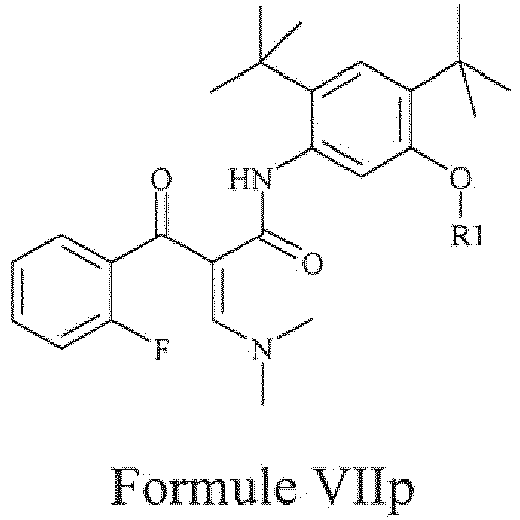
où le groupe protecteur approprié est choisi parmi méthoxycarbonyle, méthoxyméthyle (MOM), benzyloxyméthyle (BOM), tétrahydropyranyle (THP), benzyle (Bn), benzoyle (Bz), p-méthoxybenzyle (PMB), p-nitrobenzyle, o-nitrobenzyle, p-nitrobenzoyle (PNB), triméthylsilyle (TMS),
ou
composé de formule VIIa ou un sel pharmaceutiquement acceptable de celui-ci,
un composé de formule VIIp' ou un sel pharmaceutiquement acceptable de celui-ci,
un composé de formule VIIb ou un sel pharmaceutiquement acceptable de celui-ci,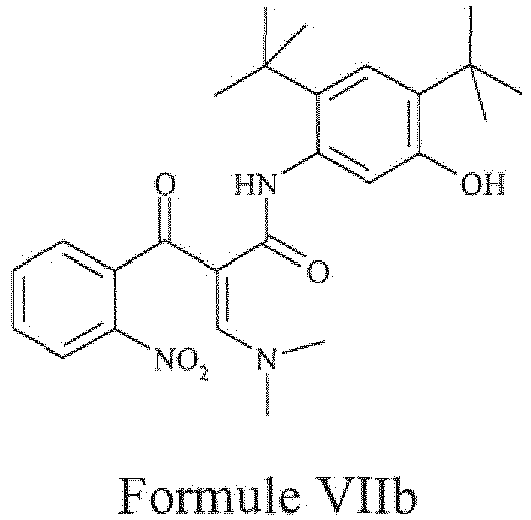
un composé de formule VIII ou un sel pharmaceutiquement acceptable de celui-ci,
où le groupe protecteur approprié est choisi parmi méthoxycarbonyle, méthoxyméthyle (MOM), benzyloxyméthyle (BOM), tétrahydropyranyle (THP), benzyle (Bn), benzoyle (Bz), p-méthoxybenzyle (PMB), p-nitrobenzyle, o-nitrobenzyle, p-nitrobenzoyle (PNB), triméthylsilyle (TMS),
ou
composé de formule VIIIp ou un sel pharmaceutiquement acceptable de celui-ci,
où le groupe protecteur approprié est choisi parmi méthoxycarbonyle, méthoxyméthyle (MOM), benzyloxyméthyle (BOM), tétrahydropyranyle (THP), benzyle (Bn), benzoyle (Bz), p-méthoxybenzyle (PMB), p-nitrobenzyle, o-nitrobenzyle, p-nitrobenzoyle (PNB), triméthylsilyle (TMS),
ou
composé de formule VIIIa ou un sel pharmaceutiquement acceptable de celui-ci,
composé de formule VIIIp' ou un sel pharmaceutiquement acceptable de celui-ci,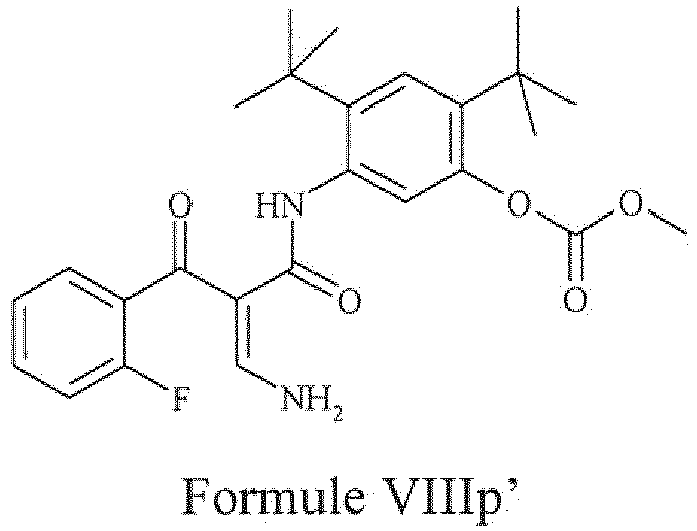
composé de formule Xp ou un sel pharmaceutiquement acceptable de celui-ci,
où le groupe protecteur approprié est choisi parmi méthoxycarbonyle, méthoxyméthyle (MOM), benzyloxyméthyle (BOM), tétrahydropyranyle (THP), benzyle (Bn), benzoyle (Bz), p-méthoxybenzyle (PMB), p-nitrobenzyle, o-nitrobenzyle, p-nitrobenzoyle (PNB), triméthylsilyle (TMS),
ou
composé de formule X ou un sel pharmaceutiquement acceptable de celui-ci,
composé de formule XIII ou un sel pharmaceutiquement acceptable de celui-ci,
où le groupe protecteur approprié est choisi parmi méthoxycarbonyle, méthoxyméthyle (MOM), benzyloxyméthyle (BOM), tétrahydropyranyle (THP), benzyle (Bn), benzoyle (Bz), p-méthoxybenzyle (PMB), p-nitrobenzyle, o-nitrobenzyle, p-nitrobenzoyle (PNB), triméthylsilyle (TMS), et « R2 » représente un alkyle en C1-5 ; à condition que lorsque « X » est -NO2 ou -NH2, alors « R1 » est de l'hydrogène.
ou
composé de formule XIIIp ou un sel pharmaceutiquement acceptable de celui-ci,
composé de formule XIIIb ou un sel pharmaceutiquement acceptable de celui-ci,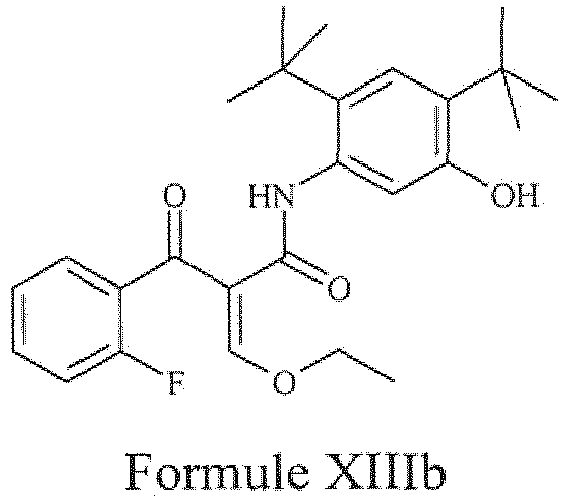
composé de formule XIIIc, où « R2 » représente un alkyle en C1-5, ou un sel pharmaceutiquement acceptable de celui-ci,
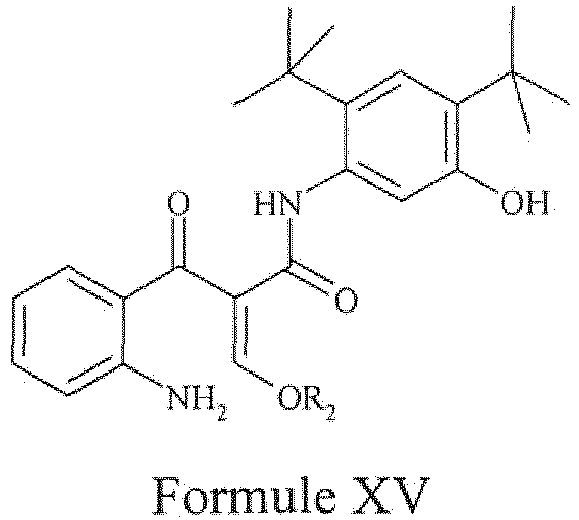
Applications Claiming Priority (4)
| Application Number | Priority Date | Filing Date | Title |
|---|---|---|---|
| IN4640CH2015 | 2015-09-02 | ||
| IN5222CH2015 | 2015-09-30 | ||
| IN5696CH2015 | 2015-10-23 | ||
| PCT/IB2016/055274 WO2017037672A1 (fr) | 2015-09-02 | 2016-09-02 | Procédés de préparation d'ivacaftor |
Publications (3)
| Publication Number | Publication Date |
|---|---|
| EP3344249A1 EP3344249A1 (fr) | 2018-07-11 |
| EP3344249A4 EP3344249A4 (fr) | 2018-08-08 |
| EP3344249B1 true EP3344249B1 (fr) | 2020-10-28 |
Family
ID=58186992
Family Applications (1)
| Application Number | Title | Priority Date | Filing Date |
|---|---|---|---|
| EP16840954.8A Active EP3344249B1 (fr) | 2015-09-02 | 2016-09-02 | Procédés de préparation d'ivacaftor |
Country Status (4)
| Country | Link |
|---|---|
| US (3) | US10501419B2 (fr) |
| EP (1) | EP3344249B1 (fr) |
| ES (1) | ES2839299T3 (fr) |
| WO (1) | WO2017037672A1 (fr) |
Family Cites Families (12)
| Publication number | Priority date | Publication date | Assignee | Title |
|---|---|---|---|---|
| RS56037B1 (sr) | 2004-06-24 | 2017-09-29 | Vertex Pharma | Modulatori atp-vezujućih kasetnih transportera |
| EP3219705B1 (fr) | 2005-12-28 | 2020-03-11 | Vertex Pharmaceuticals Incorporated | Compositions pharmaceutiques de la forme amorphe de n- [2,4-bis (1,1-diméthyléthyl) -5-hydroxyphényl] -1,4-dihydro-4-oxoquinoline-3-carboxamide |
| PL2408750T3 (pl) | 2009-03-20 | 2016-02-29 | Vertex Pharma | Sposób otrzymywania modulatorów błonowego regulatora przewodnictwa swoistego dla mukowiscydozy |
| CN103044263A (zh) | 2013-01-14 | 2013-04-17 | 中国药科大学 | 一种治疗囊性纤维化药物的中间体的制备方法 |
| WO2014118805A1 (fr) | 2013-01-31 | 2014-08-07 | Glenmark Pharmaceuticals Limited; Glenmark Generics Limited | Procédé de préparation d'ivacaftor et de solvates de celui-ci |
| US9573902B2 (en) * | 2013-02-15 | 2017-02-21 | Laurus Labs Private Ltd. | Process for the preparation of Ivacaftor and its intermediates |
| CN104030981A (zh) | 2013-03-06 | 2014-09-10 | 上海特化医药科技有限公司 | Ivacaftor的制备方法及其中间体 |
| CN103787968B (zh) | 2014-02-27 | 2016-04-13 | 上海湖发化学技术有限公司 | 化合物的制备方法 |
| WO2015128882A2 (fr) | 2014-02-27 | 2015-09-03 | Msn Laboratories Private Limited | Formes cristallines de n-(2,4-di-tert-butyl -5-hydroxyphényl)-1,4-dihydro -4-oxoquinoléine-3-carboxamide et procédé de préparation de celles-ci |
| WO2016075730A1 (fr) | 2014-11-10 | 2016-05-19 | 株式会社日立製作所 | Structure de substrat pour la transmission de signaux à grande vitesse |
| WO2016075703A2 (fr) | 2014-11-13 | 2016-05-19 | Laurus Labs Private Limited | Procédé amélioré de préparation de 5-amino-2,4-di-tert-butylphénol ou d'un sel d'addition acide de celui-ci |
| CN105130891B (zh) | 2015-08-05 | 2018-03-23 | 上海皓元医药股份有限公司 | 一种Ivacaftor的合成方法及其中间体 |
-
2016
- 2016-09-02 EP EP16840954.8A patent/EP3344249B1/fr active Active
- 2016-09-02 US US15/755,436 patent/US10501419B2/en not_active Expired - Fee Related
- 2016-09-02 ES ES16840954T patent/ES2839299T3/es active Active
- 2016-09-02 WO PCT/IB2016/055274 patent/WO2017037672A1/fr not_active Ceased
-
2019
- 2019-07-24 US US16/520,626 patent/US10815202B2/en not_active Expired - Fee Related
-
2020
- 2020-09-16 US US17/022,930 patent/US11414386B2/en active Active
Non-Patent Citations (1)
| Title |
|---|
| None * |
Also Published As
| Publication number | Publication date |
|---|---|
| EP3344249A1 (fr) | 2018-07-11 |
| US10501419B2 (en) | 2019-12-10 |
| WO2017037672A1 (fr) | 2017-03-09 |
| US20190345111A1 (en) | 2019-11-14 |
| US11414386B2 (en) | 2022-08-16 |
| US10815202B2 (en) | 2020-10-27 |
| US20200407323A1 (en) | 2020-12-31 |
| ES2839299T3 (es) | 2021-07-05 |
| EP3344249A4 (fr) | 2018-08-08 |
| US20180244622A1 (en) | 2018-08-30 |
Similar Documents
| Publication | Publication Date | Title |
|---|---|---|
| US10358423B2 (en) | Processes for the preparation of 4-alkoxy-3-(acyl or alkyl)oxypicolinamdes | |
| US6184380B1 (en) | Process for preparing naphthyridones and intermediates | |
| WO2014125506A2 (fr) | Procédé de préparation d'ivacaftor et de ses intermédiaires | |
| US9102592B2 (en) | Intermediate compounds and processes for the preparation of quinoline derivatives such as laquinimod sodium | |
| US11236050B2 (en) | Polymorphs of 4-[3-chloro-4-(n′-cyclopropyl ureido)phenoxy] -7-methoxyquinoline-6-carboxamide, its salts and process for the preparation thereof | |
| EP3344249B1 (fr) | Procédés de préparation d'ivacaftor | |
| KR19980701625A (ko) | 퀴놀린카르본산유도체 | |
| EP2307401A2 (fr) | Derives anticancereux de 4-oxo-1,4-dihydro-quinoline, leur preparation et leur application en therapeutique | |
| EP2178864B1 (fr) | Procédé de préparation d'hydrochlorure d'alfuzosine | |
| US20100029939A1 (en) | Preparation of ketone amides | |
| KR102068754B1 (ko) | 의약품 합성용 중간체 화합물의 제조 방법 | |
| EP1339719B1 (fr) | Derives de benzimidazole, leur preparation et leur application en therapeutique | |
| EP0812838A1 (fr) | Derive d'acide pyridonecarboxylique substitue par un groupe amino bicyclique, ester et sel de celui-ci, et amine bicyclique utilisee en tant qu'intermediaire pour celui-ci | |
| RU2742765C1 (ru) | Способ получения промежуточного соединения для синтеза лекарственного средства | |
| US7019142B2 (en) | Process for preparing naphthyridones and intermediates | |
| US20100063280A1 (en) | Process for preparing ccr-5 receptor antagonists utilizing 4-substituted 1-cyclopropane-sulfonyl-piperidinyl compounds | |
| KR19990067905A (ko) | 나프티리돈의 제조방법 및 중간체 | |
| WO2021162070A1 (fr) | Procédé de production d'un monomère pour la production d'acide nucléique | |
| JP2002363171A (ja) | 4−置換−3−アミノイソオキサゾール誘導体の製法 | |
| WO2009133778A1 (fr) | Procédé pour la fabrication de 3-aminopipéridine-1-carboxylate de tert-butyle et intermédiaires de celui-ci | |
| CZ11999A3 (cs) | Způsob výroby naftyridonů a meziprodukty |
Legal Events
| Date | Code | Title | Description |
|---|---|---|---|
| STAA | Information on the status of an ep patent application or granted ep patent |
Free format text: STATUS: THE INTERNATIONAL PUBLICATION HAS BEEN MADE |
|
| PUAI | Public reference made under article 153(3) epc to a published international application that has entered the european phase |
Free format text: ORIGINAL CODE: 0009012 |
|
| STAA | Information on the status of an ep patent application or granted ep patent |
Free format text: STATUS: REQUEST FOR EXAMINATION WAS MADE |
|
| 17P | Request for examination filed |
Effective date: 20180329 |
|
| AK | Designated contracting states |
Kind code of ref document: A1 Designated state(s): AL AT BE BG CH CY CZ DE DK EE ES FI FR GB GR HR HU IE IS IT LI LT LU LV MC MK MT NL NO PL PT RO RS SE SI SK SM TR |
|
| AX | Request for extension of the european patent |
Extension state: BA ME |
|
| A4 | Supplementary search report drawn up and despatched |
Effective date: 20180710 |
|
| RAP1 | Party data changed (applicant data changed or rights of an application transferred) |
Owner name: LAURUS LABS LIMITED |
|
| RIC1 | Information provided on ipc code assigned before grant |
Ipc: C07D 215/56 20060101ALI20180704BHEP Ipc: A61K 31/47 20060101AFI20180704BHEP |
|
| DAV | Request for validation of the european patent (deleted) | ||
| DAX | Request for extension of the european patent (deleted) | ||
| STAA | Information on the status of an ep patent application or granted ep patent |
Free format text: STATUS: EXAMINATION IS IN PROGRESS |
|
| 17Q | First examination report despatched |
Effective date: 20190902 |
|
| GRAP | Despatch of communication of intention to grant a patent |
Free format text: ORIGINAL CODE: EPIDOSNIGR1 |
|
| STAA | Information on the status of an ep patent application or granted ep patent |
Free format text: STATUS: GRANT OF PATENT IS INTENDED |
|
| INTG | Intention to grant announced |
Effective date: 20200512 |
|
| GRAS | Grant fee paid |
Free format text: ORIGINAL CODE: EPIDOSNIGR3 |
|
| GRAA | (expected) grant |
Free format text: ORIGINAL CODE: 0009210 |
|
| STAA | Information on the status of an ep patent application or granted ep patent |
Free format text: STATUS: THE PATENT HAS BEEN GRANTED |
|
| AK | Designated contracting states |
Kind code of ref document: B1 Designated state(s): AL AT BE BG CH CY CZ DE DK EE ES FI FR GB GR HR HU IE IS IT LI LT LU LV MC MK MT NL NO PL PT RO RS SE SI SK SM TR |
|
| REG | Reference to a national code |
Ref country code: GB Ref legal event code: FG4D |
|
| REG | Reference to a national code |
Ref country code: CH Ref legal event code: EP |
|
| REG | Reference to a national code |
Ref country code: AT Ref legal event code: REF Ref document number: 1327514 Country of ref document: AT Kind code of ref document: T Effective date: 20201115 |
|
| REG | Reference to a national code |
Ref country code: DE Ref legal event code: R096 Ref document number: 602016046864 Country of ref document: DE |
|
| REG | Reference to a national code |
Ref country code: IE Ref legal event code: FG4D |
|
| REG | Reference to a national code |
Ref country code: AT Ref legal event code: MK05 Ref document number: 1327514 Country of ref document: AT Kind code of ref document: T Effective date: 20201028 |
|
| REG | Reference to a national code |
Ref country code: NL Ref legal event code: MP Effective date: 20201028 |
|
| PG25 | Lapsed in a contracting state [announced via postgrant information from national office to epo] |
Ref country code: NO Free format text: LAPSE BECAUSE OF FAILURE TO SUBMIT A TRANSLATION OF THE DESCRIPTION OR TO PAY THE FEE WITHIN THE PRESCRIBED TIME-LIMIT Effective date: 20210128 Ref country code: PT Free format text: LAPSE BECAUSE OF FAILURE TO SUBMIT A TRANSLATION OF THE DESCRIPTION OR TO PAY THE FEE WITHIN THE PRESCRIBED TIME-LIMIT Effective date: 20210301 Ref country code: RS Free format text: LAPSE BECAUSE OF FAILURE TO SUBMIT A TRANSLATION OF THE DESCRIPTION OR TO PAY THE FEE WITHIN THE PRESCRIBED TIME-LIMIT Effective date: 20201028 Ref country code: FI Free format text: LAPSE BECAUSE OF FAILURE TO SUBMIT A TRANSLATION OF THE DESCRIPTION OR TO PAY THE FEE WITHIN THE PRESCRIBED TIME-LIMIT Effective date: 20201028 Ref country code: GR Free format text: LAPSE BECAUSE OF FAILURE TO SUBMIT A TRANSLATION OF THE DESCRIPTION OR TO PAY THE FEE WITHIN THE PRESCRIBED TIME-LIMIT Effective date: 20210129 |
|
| REG | Reference to a national code |
Ref country code: LT Ref legal event code: MG4D |
|
| PG25 | Lapsed in a contracting state [announced via postgrant information from national office to epo] |
Ref country code: AT Free format text: LAPSE BECAUSE OF FAILURE TO SUBMIT A TRANSLATION OF THE DESCRIPTION OR TO PAY THE FEE WITHIN THE PRESCRIBED TIME-LIMIT Effective date: 20201028 Ref country code: PL Free format text: LAPSE BECAUSE OF FAILURE TO SUBMIT A TRANSLATION OF THE DESCRIPTION OR TO PAY THE FEE WITHIN THE PRESCRIBED TIME-LIMIT Effective date: 20201028 Ref country code: IS Free format text: LAPSE BECAUSE OF FAILURE TO SUBMIT A TRANSLATION OF THE DESCRIPTION OR TO PAY THE FEE WITHIN THE PRESCRIBED TIME-LIMIT Effective date: 20210228 Ref country code: LV Free format text: LAPSE BECAUSE OF FAILURE TO SUBMIT A TRANSLATION OF THE DESCRIPTION OR TO PAY THE FEE WITHIN THE PRESCRIBED TIME-LIMIT Effective date: 20201028 Ref country code: BG Free format text: LAPSE BECAUSE OF FAILURE TO SUBMIT A TRANSLATION OF THE DESCRIPTION OR TO PAY THE FEE WITHIN THE PRESCRIBED TIME-LIMIT Effective date: 20210128 Ref country code: SE Free format text: LAPSE BECAUSE OF FAILURE TO SUBMIT A TRANSLATION OF THE DESCRIPTION OR TO PAY THE FEE WITHIN THE PRESCRIBED TIME-LIMIT Effective date: 20201028 |
|
| PG25 | Lapsed in a contracting state [announced via postgrant information from national office to epo] |
Ref country code: HR Free format text: LAPSE BECAUSE OF FAILURE TO SUBMIT A TRANSLATION OF THE DESCRIPTION OR TO PAY THE FEE WITHIN THE PRESCRIBED TIME-LIMIT Effective date: 20201028 Ref country code: NL Free format text: LAPSE BECAUSE OF FAILURE TO SUBMIT A TRANSLATION OF THE DESCRIPTION OR TO PAY THE FEE WITHIN THE PRESCRIBED TIME-LIMIT Effective date: 20201028 |
|
| REG | Reference to a national code |
Ref country code: ES Ref legal event code: FG2A Ref document number: 2839299 Country of ref document: ES Kind code of ref document: T3 Effective date: 20210705 |
|
| REG | Reference to a national code |
Ref country code: DE Ref legal event code: R097 Ref document number: 602016046864 Country of ref document: DE |
|
| PG25 | Lapsed in a contracting state [announced via postgrant information from national office to epo] |
Ref country code: SK Free format text: LAPSE BECAUSE OF FAILURE TO SUBMIT A TRANSLATION OF THE DESCRIPTION OR TO PAY THE FEE WITHIN THE PRESCRIBED TIME-LIMIT Effective date: 20201028 Ref country code: RO Free format text: LAPSE BECAUSE OF FAILURE TO SUBMIT A TRANSLATION OF THE DESCRIPTION OR TO PAY THE FEE WITHIN THE PRESCRIBED TIME-LIMIT Effective date: 20201028 Ref country code: CZ Free format text: LAPSE BECAUSE OF FAILURE TO SUBMIT A TRANSLATION OF THE DESCRIPTION OR TO PAY THE FEE WITHIN THE PRESCRIBED TIME-LIMIT Effective date: 20201028 Ref country code: EE Free format text: LAPSE BECAUSE OF FAILURE TO SUBMIT A TRANSLATION OF THE DESCRIPTION OR TO PAY THE FEE WITHIN THE PRESCRIBED TIME-LIMIT Effective date: 20201028 Ref country code: LT Free format text: LAPSE BECAUSE OF FAILURE TO SUBMIT A TRANSLATION OF THE DESCRIPTION OR TO PAY THE FEE WITHIN THE PRESCRIBED TIME-LIMIT Effective date: 20201028 Ref country code: SM Free format text: LAPSE BECAUSE OF FAILURE TO SUBMIT A TRANSLATION OF THE DESCRIPTION OR TO PAY THE FEE WITHIN THE PRESCRIBED TIME-LIMIT Effective date: 20201028 |
|
| PG25 | Lapsed in a contracting state [announced via postgrant information from national office to epo] |
Ref country code: DK Free format text: LAPSE BECAUSE OF FAILURE TO SUBMIT A TRANSLATION OF THE DESCRIPTION OR TO PAY THE FEE WITHIN THE PRESCRIBED TIME-LIMIT Effective date: 20201028 |
|
| PLBE | No opposition filed within time limit |
Free format text: ORIGINAL CODE: 0009261 |
|
| STAA | Information on the status of an ep patent application or granted ep patent |
Free format text: STATUS: NO OPPOSITION FILED WITHIN TIME LIMIT |
|
| 26N | No opposition filed |
Effective date: 20210729 |
|
| PG25 | Lapsed in a contracting state [announced via postgrant information from national office to epo] |
Ref country code: AL Free format text: LAPSE BECAUSE OF FAILURE TO SUBMIT A TRANSLATION OF THE DESCRIPTION OR TO PAY THE FEE WITHIN THE PRESCRIBED TIME-LIMIT Effective date: 20201028 |
|
| PG25 | Lapsed in a contracting state [announced via postgrant information from national office to epo] |
Ref country code: SI Free format text: LAPSE BECAUSE OF FAILURE TO SUBMIT A TRANSLATION OF THE DESCRIPTION OR TO PAY THE FEE WITHIN THE PRESCRIBED TIME-LIMIT Effective date: 20201028 |
|
| REG | Reference to a national code |
Ref country code: CH Ref legal event code: PL |
|
| REG | Reference to a national code |
Ref country code: BE Ref legal event code: MM Effective date: 20210930 |
|
| PG25 | Lapsed in a contracting state [announced via postgrant information from national office to epo] |
Ref country code: IS Free format text: LAPSE BECAUSE OF FAILURE TO SUBMIT A TRANSLATION OF THE DESCRIPTION OR TO PAY THE FEE WITHIN THE PRESCRIBED TIME-LIMIT Effective date: 20210228 Ref country code: MC Free format text: LAPSE BECAUSE OF FAILURE TO SUBMIT A TRANSLATION OF THE DESCRIPTION OR TO PAY THE FEE WITHIN THE PRESCRIBED TIME-LIMIT Effective date: 20201028 |
|
| PG25 | Lapsed in a contracting state [announced via postgrant information from national office to epo] |
Ref country code: LU Free format text: LAPSE BECAUSE OF NON-PAYMENT OF DUE FEES Effective date: 20210902 Ref country code: IE Free format text: LAPSE BECAUSE OF NON-PAYMENT OF DUE FEES Effective date: 20210902 Ref country code: BE Free format text: LAPSE BECAUSE OF NON-PAYMENT OF DUE FEES Effective date: 20210930 |
|
| PG25 | Lapsed in a contracting state [announced via postgrant information from national office to epo] |
Ref country code: LI Free format text: LAPSE BECAUSE OF NON-PAYMENT OF DUE FEES Effective date: 20210930 Ref country code: CH Free format text: LAPSE BECAUSE OF NON-PAYMENT OF DUE FEES Effective date: 20210930 |
|
| PG25 | Lapsed in a contracting state [announced via postgrant information from national office to epo] |
Ref country code: HU Free format text: LAPSE BECAUSE OF FAILURE TO SUBMIT A TRANSLATION OF THE DESCRIPTION OR TO PAY THE FEE WITHIN THE PRESCRIBED TIME-LIMIT; INVALID AB INITIO Effective date: 20160902 |
|
| PG25 | Lapsed in a contracting state [announced via postgrant information from national office to epo] |
Ref country code: CY Free format text: LAPSE BECAUSE OF FAILURE TO SUBMIT A TRANSLATION OF THE DESCRIPTION OR TO PAY THE FEE WITHIN THE PRESCRIBED TIME-LIMIT Effective date: 20201028 |
|
| PG25 | Lapsed in a contracting state [announced via postgrant information from national office to epo] |
Ref country code: MK Free format text: LAPSE BECAUSE OF FAILURE TO SUBMIT A TRANSLATION OF THE DESCRIPTION OR TO PAY THE FEE WITHIN THE PRESCRIBED TIME-LIMIT Effective date: 20201028 |
|
| PG25 | Lapsed in a contracting state [announced via postgrant information from national office to epo] |
Ref country code: MT Free format text: LAPSE BECAUSE OF FAILURE TO SUBMIT A TRANSLATION OF THE DESCRIPTION OR TO PAY THE FEE WITHIN THE PRESCRIBED TIME-LIMIT Effective date: 20201028 |
|
| PGFP | Annual fee paid to national office [announced via postgrant information from national office to epo] |
Ref country code: DE Payment date: 20240827 Year of fee payment: 9 |
|
| PGFP | Annual fee paid to national office [announced via postgrant information from national office to epo] |
Ref country code: GB Payment date: 20240718 Year of fee payment: 9 |
|
| PGFP | Annual fee paid to national office [announced via postgrant information from national office to epo] |
Ref country code: FR Payment date: 20240927 Year of fee payment: 9 |
|
| PGFP | Annual fee paid to national office [announced via postgrant information from national office to epo] |
Ref country code: IT Payment date: 20240905 Year of fee payment: 9 |
|
| PGFP | Annual fee paid to national office [announced via postgrant information from national office to epo] |
Ref country code: ES Payment date: 20241008 Year of fee payment: 9 |
|
| PG25 | Lapsed in a contracting state [announced via postgrant information from national office to epo] |
Ref country code: TR Free format text: LAPSE BECAUSE OF FAILURE TO SUBMIT A TRANSLATION OF THE DESCRIPTION OR TO PAY THE FEE WITHIN THE PRESCRIBED TIME-LIMIT Effective date: 20201028 |