EP3344599B1 - Molécules présentant une utilité en tant que pesticide, et leurs intermédiaires, compositions et procédés - Google Patents
Molécules présentant une utilité en tant que pesticide, et leurs intermédiaires, compositions et procédés Download PDFInfo
- Publication number
- EP3344599B1 EP3344599B1 EP16842636.9A EP16842636A EP3344599B1 EP 3344599 B1 EP3344599 B1 EP 3344599B1 EP 16842636 A EP16842636 A EP 16842636A EP 3344599 B1 EP3344599 B1 EP 3344599B1
- Authority
- EP
- European Patent Office
- Prior art keywords
- spp
- phenyl
- mhz
- methyl
- trifluoromethoxy
- Prior art date
- Legal status (The legal status is an assumption and is not a legal conclusion. Google has not performed a legal analysis and makes no representation as to the accuracy of the status listed.)
- Active
Links
- 0 CC*(C(C(C)(*)N1)=O)C1=* Chemical compound CC*(C(C(C)(*)N1)=O)C1=* 0.000 description 10
- KYIYYPMMMWIOIP-GPFIVKHLSA-N CC(C)c(ccc(C)c1)c1N(C(CS1)=O)/C1=N/C(Nc(ccc(OCc(nc1)n[n]1-c(cc1)ccc1OC(F)(F)F)c1)c1Cl)=O Chemical compound CC(C)c(ccc(C)c1)c1N(C(CS1)=O)/C1=N/C(Nc(ccc(OCc(nc1)n[n]1-c(cc1)ccc1OC(F)(F)F)c1)c1Cl)=O KYIYYPMMMWIOIP-GPFIVKHLSA-N 0.000 description 2
- ULFCOUXHWNQXBI-DKJXEYTPSA-N CC(C)c(ccc(C)c1)c1N(C(CS1)=O)/C1=N/C(Nc(cn1)ccc1OCc(nc1)n[n]1-c(cc1)ccc1OC(F)(F)F)=O Chemical compound CC(C)c(ccc(C)c1)c1N(C(CS1)=O)/C1=N/C(Nc(cn1)ccc1OCc(nc1)n[n]1-c(cc1)ccc1OC(F)(F)F)=O ULFCOUXHWNQXBI-DKJXEYTPSA-N 0.000 description 2
- LVHHDCBLIYFTKA-ONQIKCEGSA-N CCCc(ccc(C)c1)c1N(C(CS1)=O)/C1=N/C(Nc(ccc(OCc(nc1)n[n]1-c(cc1)ccc1OC(F)(F)F)c1)c1OC)=O Chemical compound CCCc(ccc(C)c1)c1N(C(CS1)=O)/C1=N/C(Nc(ccc(OCc(nc1)n[n]1-c(cc1)ccc1OC(F)(F)F)c1)c1OC)=O LVHHDCBLIYFTKA-ONQIKCEGSA-N 0.000 description 2
- JKJXFIMKJBSIFZ-UHFFFAOYSA-N COC(c1ccc(COc(nc2)n[n]2-c(cc2)ccc2OC(F)(F)F)cc1)=O Chemical compound COC(c1ccc(COc(nc2)n[n]2-c(cc2)ccc2OC(F)(F)F)cc1)=O JKJXFIMKJBSIFZ-UHFFFAOYSA-N 0.000 description 2
- XDTHXGVZPNEGCC-JTHRFTPNSA-N Cc1cc(N(C(CS2)=O)/C2=N/C(Nc(c(OC)c2)ccc2OCc(nc2)n[n]2-c(cc2)ccc2OC(F)(F)F)=O)c(COC)cc1 Chemical compound Cc1cc(N(C(CS2)=O)/C2=N/C(Nc(c(OC)c2)ccc2OCc(nc2)n[n]2-c(cc2)ccc2OC(F)(F)F)=O)c(COC)cc1 XDTHXGVZPNEGCC-JTHRFTPNSA-N 0.000 description 2
- YJEICKQSDHAJDV-GPFIVKHLSA-N CC(C)c(ccc(C)c1)c1N(C(CS1)=O)/C1=N/C(Nc(c(Cl)c1)ccc1OCc(nc1)n[n]1-c(cc1)ccc1OC(F)(F)F)O Chemical compound CC(C)c(ccc(C)c1)c1N(C(CS1)=O)/C1=N/C(Nc(c(Cl)c1)ccc1OCc(nc1)n[n]1-c(cc1)ccc1OC(F)(F)F)O YJEICKQSDHAJDV-GPFIVKHLSA-N 0.000 description 1
- FTBOKPRHSPSYBL-JTHRFTPNSA-N CC(C)c(ccc(C)c1)c1N(C(CS1)=O)/C1=N/C(Nc(cc1)ccc1OCc(nc1)n[n]1-c(cc1)ccc1OC(F)(F)F)=O Chemical compound CC(C)c(ccc(C)c1)c1N(C(CS1)=O)/C1=N/C(Nc(cc1)ccc1OCc(nc1)n[n]1-c(cc1)ccc1OC(F)(F)F)=O FTBOKPRHSPSYBL-JTHRFTPNSA-N 0.000 description 1
- GEMNFFPENRKGKZ-ONQIKCEGSA-N CC(C)c(ccc(C)c1)c1N(C(CS1)=O)/C1=N/C(Nc(ccc(OCc(nc1)n[n]1-c(cc1)ccc1OC(F)(F)F)c1)c1OC)=O Chemical compound CC(C)c(ccc(C)c1)c1N(C(CS1)=O)/C1=N/C(Nc(ccc(OCc(nc1)n[n]1-c(cc1)ccc1OC(F)(F)F)c1)c1OC)=O GEMNFFPENRKGKZ-ONQIKCEGSA-N 0.000 description 1
- KKFZDIGEMNQACC-JTHRFTPNSA-N CC(C)c(ccc(C)c1)c1N(C(CS1)=O)/C1=N/C(Nc1ccc(COc(nc2)n[n]2-c(cc2)ccc2OC(F)(F)F)cc1)=O Chemical compound CC(C)c(ccc(C)c1)c1N(C(CS1)=O)/C1=N/C(Nc1ccc(COc(nc2)n[n]2-c(cc2)ccc2OC(F)(F)F)cc1)=O KKFZDIGEMNQACC-JTHRFTPNSA-N 0.000 description 1
- DVRHHICXMJODJN-UHFFFAOYSA-N CC(c(ccc(C)c1)c1[NH+]([O-])O)=O Chemical compound CC(c(ccc(C)c1)c1[NH+]([O-])O)=O DVRHHICXMJODJN-UHFFFAOYSA-N 0.000 description 1
- PLELSGBSNKGHCE-JTHRFTPNSA-N CCCc(ccc(C)c1)c1N(C(CS1)=O)/C1=N/C(Nc(cc1)ccc1OCc(nc1)n[n]1-c(cc1)ccc1OC(F)(F)F)=O Chemical compound CCCc(ccc(C)c1)c1N(C(CS1)=O)/C1=N/C(Nc(cc1)ccc1OCc(nc1)n[n]1-c(cc1)ccc1OC(F)(F)F)=O PLELSGBSNKGHCE-JTHRFTPNSA-N 0.000 description 1
- BJTLRLRZZQKKFQ-GPFIVKHLSA-N CCCc(ccc(C)c1)c1N(C(CS1)=O)/C1=N/C(Nc(cc1Cl)ccc1OCc(nc1)n[n]1-c(cc1)ccc1OC(F)(F)F)=O Chemical compound CCCc(ccc(C)c1)c1N(C(CS1)=O)/C1=N/C(Nc(cc1Cl)ccc1OCc(nc1)n[n]1-c(cc1)ccc1OC(F)(F)F)=O BJTLRLRZZQKKFQ-GPFIVKHLSA-N 0.000 description 1
- RJSDVCGFABAXCU-ZDNCSJAVSA-N CCCc(ccc(C)c1)c1N(C(CS1)=O)/C1=N/C(Nc(cc1F)cc(F)c1/[O]=C/c(nc1)n[n]1-c(cc1)ccc1OC(F)(F)F)=O Chemical compound CCCc(ccc(C)c1)c1N(C(CS1)=O)/C1=N/C(Nc(cc1F)cc(F)c1/[O]=C/c(nc1)n[n]1-c(cc1)ccc1OC(F)(F)F)=O RJSDVCGFABAXCU-ZDNCSJAVSA-N 0.000 description 1
- WRXRXFFUAWNGRB-GPFIVKHLSA-N CCCc(ccc(C)c1)c1N(C(CS1)=O)/C1=N/C(Nc(ccc(OCc(nc1)n[n]1-c(cc1)ccc1OC(F)(F)F)c1)c1Cl)=O Chemical compound CCCc(ccc(C)c1)c1N(C(CS1)=O)/C1=N/C(Nc(ccc(OCc(nc1)n[n]1-c(cc1)ccc1OC(F)(F)F)c1)c1Cl)=O WRXRXFFUAWNGRB-GPFIVKHLSA-N 0.000 description 1
- LZOAUZMSYUGXJQ-UHFFFAOYSA-N CCCc1ccc(C)cc1N(C(CS1)=O)C1=N Chemical compound CCCc1ccc(C)cc1N(C(CS1)=O)C1=N LZOAUZMSYUGXJQ-UHFFFAOYSA-N 0.000 description 1
- RBKAXLPWXUYOGD-UHFFFAOYSA-N COC(c(cc1)cnc1OCc(nc1)n[n]1-c(cc1)ccc1OC(F)(F)F)=O Chemical compound COC(c(cc1)cnc1OCc(nc1)n[n]1-c(cc1)ccc1OC(F)(F)F)=O RBKAXLPWXUYOGD-UHFFFAOYSA-N 0.000 description 1
- FNXWBVXQGJFDLO-UHFFFAOYSA-N COC(c(nc1)ccc1/[O]=C/c(nc1)n[n]1-c(cc1)ccc1OC(F)(F)F)=O Chemical compound COC(c(nc1)ccc1/[O]=C/c(nc1)n[n]1-c(cc1)ccc1OC(F)(F)F)=O FNXWBVXQGJFDLO-UHFFFAOYSA-N 0.000 description 1
- OMJQGESHPVOMHP-UHFFFAOYSA-N COc1cc(C(O)=O)ccc1COc(nc1)n[n]1-c(cc1)ccc1OC(F)(F)F Chemical compound COc1cc(C(O)=O)ccc1COc(nc1)n[n]1-c(cc1)ccc1OC(F)(F)F OMJQGESHPVOMHP-UHFFFAOYSA-N 0.000 description 1
- NIIGRLSRFSPHLE-DKJXEYTPSA-N Cc1cc(N(C(CS2)=O)/C2=N/C(Nc(cc2)cc(Cl)c2OCc(nc2)n[n]2-c(cc2)ccc2OC(F)(F)F)=O)c(COC)cc1 Chemical compound Cc1cc(N(C(CS2)=O)/C2=N/C(Nc(cc2)cc(Cl)c2OCc(nc2)n[n]2-c(cc2)ccc2OC(F)(F)F)=O)c(COC)cc1 NIIGRLSRFSPHLE-DKJXEYTPSA-N 0.000 description 1
- RFMWUHALRQGREG-DKJXEYTPSA-N Cc1cc(N(C(CS2)=O)/C2=N/C(Nc(ccc(OCc(nc2)n[n]2-c(cc2)ccc2OC(F)(F)F)c2)c2Cl)=O)c(COC)cc1 Chemical compound Cc1cc(N(C(CS2)=O)/C2=N/C(Nc(ccc(OCc(nc2)n[n]2-c(cc2)ccc2OC(F)(F)F)c2)c2Cl)=O)c(COC)cc1 RFMWUHALRQGREG-DKJXEYTPSA-N 0.000 description 1
- DRFRPYHJGVXTFR-DKJXEYTPSA-N Cc1cc(N(C(CS2)=O)/C2=N/C(Nc(ccc(OCc(nc2)n[n]2-c(cc2)ccc2OC(F)(F)F)c2)c2F)=O)c(COC)cc1 Chemical compound Cc1cc(N(C(CS2)=O)/C2=N/C(Nc(ccc(OCc(nc2)n[n]2-c(cc2)ccc2OC(F)(F)F)c2)c2F)=O)c(COC)cc1 DRFRPYHJGVXTFR-DKJXEYTPSA-N 0.000 description 1
- HQXJXRUTBGHDJA-UHFFFAOYSA-N Cc1ccc(COC)c(N(C(CS2)=O)C2=N)c1 Chemical compound Cc1ccc(COC)c(N(C(CS2)=O)C2=N)c1 HQXJXRUTBGHDJA-UHFFFAOYSA-N 0.000 description 1
- RVVJYDNTHQLZFZ-UHFFFAOYSA-N OC(c(cc1)ncc1OCc(nc1)n[n]1-c(cc1)ccc1OC(F)(F)F)=O Chemical compound OC(c(cc1)ncc1OCc(nc1)n[n]1-c(cc1)ccc1OC(F)(F)F)=O RVVJYDNTHQLZFZ-UHFFFAOYSA-N 0.000 description 1
- KCMYOIAFEKSUIN-UHFFFAOYSA-N OC(c1ncc(COc(nc2)n[n]2-c(cc2)ccc2OC(F)(F)F)cc1)=O Chemical compound OC(c1ncc(COc(nc2)n[n]2-c(cc2)ccc2OC(F)(F)F)cc1)=O KCMYOIAFEKSUIN-UHFFFAOYSA-N 0.000 description 1
Classifications
-
- C—CHEMISTRY; METALLURGY
- C07—ORGANIC CHEMISTRY
- C07D—HETEROCYCLIC COMPOUNDS
- C07D417/00—Heterocyclic compounds containing two or more hetero rings, at least one ring having nitrogen and sulfur atoms as the only ring hetero atoms, not provided for by group C07D415/00
- C07D417/02—Heterocyclic compounds containing two or more hetero rings, at least one ring having nitrogen and sulfur atoms as the only ring hetero atoms, not provided for by group C07D415/00 containing two hetero rings
- C07D417/12—Heterocyclic compounds containing two or more hetero rings, at least one ring having nitrogen and sulfur atoms as the only ring hetero atoms, not provided for by group C07D415/00 containing two hetero rings linked by a chain containing hetero atoms as chain links
-
- A—HUMAN NECESSITIES
- A01—AGRICULTURE; FORESTRY; ANIMAL HUSBANDRY; HUNTING; TRAPPING; FISHING
- A01N—PRESERVATION OF BODIES OF HUMANS OR ANIMALS OR PLANTS OR PARTS THEREOF; BIOCIDES, e.g. AS DISINFECTANTS, AS PESTICIDES OR AS HERBICIDES; PEST REPELLANTS OR ATTRACTANTS; PLANT GROWTH REGULATORS
- A01N47/00—Biocides, pest repellants or attractants, or plant growth regulators containing organic compounds containing a carbon atom not being member of a ring and having no bond to a carbon or hydrogen atom, e.g. derivatives of carbonic acid
- A01N47/08—Biocides, pest repellants or attractants, or plant growth regulators containing organic compounds containing a carbon atom not being member of a ring and having no bond to a carbon or hydrogen atom, e.g. derivatives of carbonic acid the carbon atom having one or more single bonds to nitrogen atoms
- A01N47/28—Ureas or thioureas containing the groups >N—CO—N< or >N—CS—N<
- A01N47/36—Ureas or thioureas containing the groups >N—CO—N< or >N—CS—N< containing the group >N—CO—N< directly attached to at least one heterocyclic ring; Thio analogues thereof
-
- C—CHEMISTRY; METALLURGY
- C07—ORGANIC CHEMISTRY
- C07D—HETEROCYCLIC COMPOUNDS
- C07D417/00—Heterocyclic compounds containing two or more hetero rings, at least one ring having nitrogen and sulfur atoms as the only ring hetero atoms, not provided for by group C07D415/00
- C07D417/14—Heterocyclic compounds containing two or more hetero rings, at least one ring having nitrogen and sulfur atoms as the only ring hetero atoms, not provided for by group C07D415/00 containing three or more hetero rings
-
- Y—GENERAL TAGGING OF NEW TECHNOLOGICAL DEVELOPMENTS; GENERAL TAGGING OF CROSS-SECTIONAL TECHNOLOGIES SPANNING OVER SEVERAL SECTIONS OF THE IPC; TECHNICAL SUBJECTS COVERED BY FORMER USPC CROSS-REFERENCE ART COLLECTIONS [XRACs] AND DIGESTS
- Y02—TECHNOLOGIES OR APPLICATIONS FOR MITIGATION OR ADAPTATION AGAINST CLIMATE CHANGE
- Y02A—TECHNOLOGIES FOR ADAPTATION TO CLIMATE CHANGE
- Y02A50/00—TECHNOLOGIES FOR ADAPTATION TO CLIMATE CHANGE in human health protection, e.g. against extreme weather
- Y02A50/30—Against vector-borne diseases, e.g. mosquito-borne, fly-borne, tick-borne or waterborne diseases whose impact is exacerbated by climate change
Definitions
- This disclosure relates to the field of molecules having pesticidal utility against pests in Phyla Arthropoda, Mollusca, and Nematoda, processes to produce such molecules, intermediates used in such processes, pesticidal compositions containing such molecules, and non-therapeutic processes of using such pesticidal compositions against such pests.
- These pesticidal compositions may be used, for example, as acaricides, insecticides, miticides, molluscicides, and nematicides.
- Vector control plays a critical role in the prevention and control of infectious diseases.
- insecticide resistance including resistance to multiple insecticides, has arisen in all insect species that are major vectors of human diseases (Rivero et al.).
- arthropod species have developed resistance to at least one pesticide (Whalon et al.).
- the cases of insect resistance continue to exceed by far the number of cases of herbicide and fungicide resistance (Sparks et al.).
- Plant parasitic nematodes are among the most widespread pests, and are frequently one of the most insidious and costly. It has been estimated that losses attributable to nematodes are from about 9% in developed countries to about 15% in undeveloped countries. However, in the United States of America a survey of 35 States on various crops indicated nematode-derived losses of up to 25% (Nicol et al.).
- gastropods are pests of less economic importance than other arthropods or nematodes, but in certain places, they may reduce yields substantially, severely affecting the quality of harvested products, as well as, transmitting human, animal, and plant diseases. While only a few dozen species of gastropods are serious regional pests, a handful of species are important pests on a worldwide scale. In particular, gastropods affect a wide variety of agricultural and horticultural crops, such as, arable, scenic, and fiber crops; vegetables; bush and tree fruits; herbs; and ornamentals (Speiser).
- Molecules having pesticidal utility are described e.g. in WO 2013/009791 A1 , WO 2014/011429 A1 , US 2014/0274688 A1 and US 2015/0225391 A1 .
- two (het)aryl groups are directly bonded to a heterocyclic ring.
- active ingredient means a material having activity useful in controlling pests, and/or that is useful in helping other materials have better activity in controlling pests
- examples of such materials include, but are not limited to, acaricides, algicides, antifeedants, avicides, bactericides, bird repellents, chemosterilants, fungicides, herbicide safeners, herbicides, insect attractants, insect repellents, insecticides, mammal repellents, mating disrupters, molluscicides, nematicides, plant activators, plant growth regulators, rodenticides, synergists, and virucides (see alanwood.net).
- Specific examples of such materials include, but are not limited to, the materials listed in active ingredient group alpha.
- active ingredient group alpha means collectively the following materials: (1) (3-ethoxypropyl)mercury bromide, 1,2-dibromoethane, 1,2-dichloroethane, 1,2-dichloropropane, 1,3-dichloropropene, 1-MCP, 1-methylcyclopropene, 1-naphthol, 2-(octylthio)ethanol, 2,3,3-TPA, 2,3,5-tri-iodobenzoic acid, 2,3,6-TBA, 2,4,5-T, 2,4,5-TB, 2,4,5-TP, 2,4-D, 2,4-DB, 2,4-DEB, 2,4-DEP, 2,4-DES, 2,4-DP, 2,4-MCPA, 2,4-MCPB, 2iP, 2-methoxyethylmercury chloride, 2-phenylphenol, 3,4-DA, 3,4-DB, 3,4-DP, 3,6-dichloropicolinic acid,
- a particularly preferred selection of active ingredients are 1,3-dichloropropene, chlorpyrifos, hexaflumuron, methoxyfenozide, noviflumuron, spinetoram, spinosad, sulfoxaflor, and sulfuryl fluoride (hereafter "AIGA-2").
- active ingredients are acequinocyl, acetamiprid, acetoprole, avermectin, azinphos-methyl, bifenazate, bifenthrin, carbaryl, carbofuran, chlorfenapyr, chlorfluazuron, chromafenozide, clothianidin, cyfluthrin, cypermethrin, deltamethrin, diafenthiuron, emamectin benzoate, endosulfan, esfenvalerate, ethiprole, etoxazole, fipronil, flonicamid, fluacrypyrim, gamma -cyhalothrin, halofenozide, indoxacarb, lambda- cyhalothrin, lufenuron, malathion, methomyl, novaluron, permethrin,
- alkenyl means an acyclic, unsaturated (at least one carbon-carbon double bond), branched or unbranched, substituent consisting of carbon and hydrogen, for example, vinyl, allyl, butenyl, pentenyl, and hexenyl.
- alkenyloxy means an alkenyl further consisting of a carbon-oxygen single bond, for example, allyloxy, butenyloxy, pentenyloxy, hexenyloxy.
- alkoxy means an alkyl further consisting of a carbon-oxygen single bond, for example, methoxy, ethoxy, propoxy, isopropoxy, butoxy, isobutoxy, and tert- butoxy.
- alkyl means an acyclic, saturated, branched or unbranched, substituent consisting of carbon and hydrogen, for example, methyl, ethyl, propyl, isopropyl, butyl, and tert-butyl.
- alkynyl means an acyclic, unsaturated (at least one carbon-carbon triple bond), branched or unbranched, substituent consisting of carbon and hydrogen, for example, ethynyl, propargyl, butynyl, and pentynyl.
- alkynyloxy means an alkynyl further consisting of a carbon-oxygen single bond, for example, pentynyloxy, hexynyloxy, heptynyloxy, and octynyloxy.
- aryl means a cyclic, aromatic substituent consisting of hydrogen and carbon, for example, phenyl, naphthyl, and biphenyl.
- biopesticide means a microbial biological pest control agent that, in general, is applied in a similar manner to chemical pesticides. Commonly they are bacterial, but there are also examples of fungal control agents, including Trichoderma spp. and Ampelomyces quisqualis.
- biopesticide example is Bacillus species, a bacterial disease of Lepidoptera, Coleoptera, and Diptera.
- Biopesticides include products based on entomopathogenic fungi ( e.g. Metarhizium anisopliae ), entomopathogenic nematodes ( e.g. Steinernema feltiae ), and entomopathogenic viruses (e.g.
- Cydia pomonella granulovirus Cydia pomonella granulovirus
- Other examples of entomopathogenic organisms include, but are not limited to, baculoviruses, protozoa, and Microsporidia.
- biopesticides are active ingredients.
- cycloalkenyl means a monocyclic or polycyclic, unsaturated (at least one carbon-carbon double bond) substituent consisting of carbon and hydrogen, for example, cyclobutenyl, cyclopentenyl, cyclohexenyl, norbornenyl, bicyclo[2.2.2]octenyl, tetrahydronaphthyl, hexahydronaphthyl, and octahydronaphthyl.
- cycloalkenyloxy means a cycloalkenyl further consisting of a carbon-oxygen single bond, for example, cyclobutenyloxy, cyclopentenyloxy, norbornenyloxy, and bicyclo[2.2.2]octenyloxy.
- cycloalkyl means a monocyclic or polycyclic, saturated substituent consisting of carbon and hydrogen, for example, cyclopropyl, cyclobutyl, cyclopentyl, norbornyl, bicyclo[2.2.2]octyl, and decahydronaphthyl.
- cycloalkoxy means a cycloalkyl further consisting of a carbon-oxygen single bond, for example, cyclopropyloxy, cyclobutyloxy, cyclopentyloxy, norbornyloxy, and bicyclo[2.2.2]octyloxy.
- halo means fluoro, chloro, bromo, and iodo.
- haloalkoxy means an alkoxy further consisting of, from one to the maximum possible number of identical or different, halos, for example, fluoromethoxy, trifluoromethoxy, 2,2-difluoropropoxy, chloromethoxy, trichloromethoxy, 1,1,2,2-tetrafluoroethoxy, and pentafluoroethoxy.
- haloalkyl means an alkyl further consisting of, from one to the maximum possible number of, identical or different, halos, for example, fluoromethyl, trifluoromethyl, 2,2-difluoropropyl, chloromethyl, trichloromethyl, and 1,1,2,2-tetrafluoroethyl.
- heterocyclyl means a cyclic substituent that may be aromatic, fully saturated, or partially or fully unsaturated, where the cyclic structure contains at least one carbon and at least one heteroatom, where said heteroatom is nitrogen, sulfur, or oxygen. Examples are:
- locus means a habitat, breeding ground, plant, seed, soil, material, or environment, in which a pest is growing, may grow, or may traverse.
- a locus may be: where crops, trees, fruits, cereals, fodder species, vines, turf, and/or ornamental plants, are growing; where domesticated animals are residing; the interior or exterior surfaces of buildings (such as places where grains are stored); the materials of construction used in buildings (such as impregnated wood); and the soil around buildings.
- MoA Material means an active ingredient having a mode of action (“MoA”) as indicated in IRAC MoA Classification v. 7.4, located at irac-online.org., which describes the following groups.
- Groups 26 and 27 are unassigned in this version of the classification scheme. Additionally, there is a Group UN that contains active ingredients of unknown or uncertain mode of action. This group includes the following active ingredients, azadirachtin, benzoximate, bifenazate, bromopropylate, chinomethionat, cryolite, dicofol, pyridalyl, and pyrifluquinazon.
- the term "pest” means an organism that is detrimental to humans, or human concerns (such as, crops, food, livestock, etc.), where said organism is from Phyla Arthropoda, Mollusca, or Nematoda.
- Particular examples are ants, aphids, bed bugs, beetles, bristletails, caterpillars, cockroaches, crickets, earwigs, fleas, flies, grasshoppers, grubs, hornets, jassids, leafhoppers, lice, locusts, maggots, mealybugs, mites, moths, nematodes, plantbugs, planthoppers, psyllids, sawflies, scales, silverfish, slugs, snails, spiders, springtails, stink bugs, symphylans, termites, thrips, ticks, wasps, whiteflies, and wireworms.
- a particularly preferred pest group to control is sap-feeding pests.
- Sap-feeding pests in general, have piercing and/or sucking mouthparts and feed on the sap and inner plant tissues of plants.
- sap-feeding pests of particular concern to agriculture include, but are not limited to, aphids, leafhoppers, moths, scales, thrips, psyllids, mealybugs, stinkbugs, and whiteflies.
- Specific examples of Orders that have sap-feeding pests of concern in agriculture include but are not limited to, Anoplura and Hemiptera.
- Hemiptera that are of concern in agriculture include, but are not limited to, Aulacaspis spp., Aphrophora spp., Aphis spp., Bemisia spp., Coccus spp., Euschistus spp., Lygus spp., Macrosiphum spp., Nezara spp., and Rhopalosiphum spp.
- Chewing pests in general, have mouthparts that allow them to chew on the plant tissue including roots, stems, leaves, buds, and reproductive tissues (including, but not limited to flowers, fruit, and seeds).
- Examples of chewing pests of particular concern to agriculture include, but are not limited to, caterpillars, beetles, grasshoppers, and locusts.
- Specific examples of Orders that have chewing pests of concern in agriculture include but are not limited to, Coleoptera and Lepidoptera.
- Coleoptera that are of concern in agriculture include, but are not limited to, Anthonomus spp., Cerotoma spp., Chaetocnema spp., Colaspis spp., Cyclocephala spp., Diabrotica spp., Hypera spp., Phyllophaga spp., Phyllotreta spp., Sphenophorus spp., Sitophilus spp.
- pestesticidally effective amount means the amount of a pesticide needed to achieve an observable effect on a pest, for example, the effects of necrosis, death, retardation, prevention, removal, destruction, or otherwise diminishing the occurrence and/or activity of a pest in a locus. This effect may come about when pest populations are repulsed from a locus, pests are incapacitated in, or around, a locus, and/or pests are exterminated in, or around, a locus. Of course, a combination of these effects can occur. Generally, pest populations, activity, or both are desirably reduced more than fifty percent, preferably more than 90 percent, and most preferably more than 99 percent.
- a pesticidally effective amount for agricultural purposes, is from about 0.0001 grams per hectare to about 5000 grams per hectare, preferably from about 0.0001 grams per hectare to about 500 grams per hectare, and it is even more preferably from about 0.0001 grams per hectare to about 50 grams per hectare.
- the molecules of Formula One may exist in different geometric or optical isomeric or different tautomeric forms.
- One or more centers of chirality may be present in which case molecules of Formula One may be present as pure enantiomers, mixtures of enantiomers, pure diastereomers or mixtures of diastereomers. It will be appreciated by those skilled in the art that one stereoisomer may be more active than the other stereoisomers.
- Individual stereoisomers may be obtained by known selective synthetic procedures, by conventional synthetic procedures using resolved starting materials, or by conventional resolution procedures. There may be double bonds present in the molecule, in which case compounds of Formula One may exist as single geometric isomers ( cis or trans, E or Z) or mixtures of geometric isomers ( cis and trans, E and Z).
- Ar 1 is (1a) wherein:
- This embodiment may be used in combination with the other embodiments of Het, L 1 , Ar 2 , R 15 , Q 1 , Q 2 , R 16 , R 17 , and L 2 .
- Ar 1 is (1a), wherein R 3 is OCF 3 .
- This embodiment may be used in combination with the other embodiments of R 1 , R 2 , R 4 , R 5 , Het, L 1 , Ar 2 , R 15 , Q 1 , Q 2 , R 16 , R 17 , and L 2 .
- L 1 is (1c) wherein R 7 and R 9 are each independently H.
- This embodiment may be used in combination with the other embodiments of Ar 1 , Het, Ar 2 , R 15 , Q 1 , Q 2 , R 16 , R 17 , and L 2 .
- L 1 is (1d) wherein R 8 and R 10 are each independently H.
- This embodiment may be used in combination with the other embodiments of Ar 1 , Het, Ar 2 , R 15 , Q 1 , Q 2 , R 16 , R 17 , and L 2 .
- Ar 2 is (1e) wherein:
- This embodiment may be used in combination with the other embodiments of Ar 1 , Het, L 1 , R 15 , Q 1 , Q 2 , R 16 , R 17 , and L 2 .
- Ar 2 is (1e), wherein R 13 is CH 3 or OCH 3 .
- This embodiment may be used in combination with the other embodiments of Ar 1 , Het, L 1 , R 11 , R 12 , X 2 , Q 1 , Q 2 , R 16 , R 17 , and L 2 .
- Ar 2 is (1e), wherein R 14 is OCH 3 .
- This embodiment may be used in combination with the other embodiments of Ar 1 , Het, L 1 , R 11 , R 12 , X 1 , Q 1 , Q 2 , R 16 , R 17 , and L 2 .
- L 2 is (1f) wherein:
- This embodiment may be used in combination with the other embodiments of Ar 1 , Het, L 1 , Ar 2 , R 15 , Q 1 , Q 2 , R 16 , and R 17 .
- L 2 is (1f), wherein R 20 is CH 2 CH 2 CH 3 , CH(CH 3 ) 2 , CH 2 OCH 3 , or CH(CH 3 )OCH 3 .
- This embodiment may be used in combination with the other embodiments of Ar 1 , Het, L 1 , Ar 2 , Q 1 , Q 2 , R 16 , R 17 , R 21 , R 22 , R 23 , and R 24 .
- L 2 is (1f), wherein R 23 is CH 3 .
- This embodiment may be used in combination with the other embodiments of Ar 1 , Het, L 1 , Ar 2 , Q 1 , Q 2 , R 16 , R 17 , R 20 , R 21 , R 22 , and R 24 .
- the molecules of Formula One will generally have a molecular mass of about 400 Daltons to about 1200 Daltons.
- Molecules of Formula One disclosed herein may be prepared from the corresponding isocyanates 1-2, wherein Ar 1 , Het, L 1 , and Ar 2 are as previously disclosed. In some cases these isocyanates are not isolated, but are instead generated in situ from a suitable precursor and used directly in the preparation of molecules of Formula One.
- amines 1-1 wherein Ar 1 , Het, L 1 , and Ar 2 are as previously disclosed, which may be converted into isocyanates 1-2 by using one of several common reagents such as phosgene, diphosgene, or triphosgene, in a mixed solvent system such as dichloromethane and water or diethyl ether and water, in the presence of a base such as sodium bicarbonate or triethylamine, at temperatures from about -10 °C to about 50 °C (Scheme 1, step a).
- phosgene diphosgene
- triphosgene in a mixed solvent system
- a base such as sodium bicarbonate or triethylamine
- the isocyanates may be generated via the Curtius rearrangement of acyl azides 1-4, wherein Ar 1 , Het, L 1 , and Ar 2 are as previously disclosed, which is, in turn, prepared from the corresponding carboxylic acids 1-3, wherein Ar 1 , Het, L 1 , and Ar 2 are as previously disclosed.
- Formation of acyl azides 1-4 may occur either by treatment of the acid with ethyl chloroformate and sodium azide in the presence of an amine base such as triethylamine, or with diphenylphosphoryl azide in the presence of an amine base such as trimethylamine (Scheme 1, step b).
- Acyl azides 1-4 are then made to undergo a thermally-induced Curtius rearrangement, leading to the corresponding isocyanates 1-2.
- this rearrangement may occur spontaneously at room temperature, or it may require heating from 40 °C to about 100 °C in a solvent, such as toluene, acetonitrile, or an ethereal solvent such as dioxane or tetrahydrofuran.
- Acyl azides 1-4 are not always fully characterized, but may simply be heated directly without characterization, to generate isocyanates 1-2.
- Isolated isocyanates 1-2 or isocyanates 1-2 prepared in situ from corresponding acyl azides 1-4 via the Curtius rearrangement may be treated directly with ureas 2-1, wherein Q 2 and L 2 are as previously disclosed, in the presence of about 0.1 equivalents to about 2 equivalents of an inorganic base such as cesium carbonate or sodium hydride, resulting in the formation of biurets 2-2, wherein Ar 1 , Het, L 1 , Ar 2 , Q 2 , and L 2 are as previously disclosed (Scheme 2, step a).
- the reaction can be performed at temperatures from about 0 °C to about 100 °C, preferably from about 20 °C to about 80 °C, in an aprotic solvent or solvent mixture chosen from acetonitrile, acetone, toluene, tetrahydrofuran, dichloroethane, dichloromethane, or mixtures thereof, but use of acetonitrile is preferred.
- an aprotic solvent or solvent mixture chosen from acetonitrile, acetone, toluene, tetrahydrofuran, dichloroethane, dichloromethane, or mixtures thereof, but use of acetonitrile is preferred.
- Linear biurets 2-2 may be treated with R 16 -halo, wherein R 16 is as previously disclosed, in a protic solvent, such as ethanol, in the presence of a base, such as sodium acetate, at temperatures from about 0 °C to about 60 °C, to yield substituted linear biurets 3-1, wherein Ar 1 , Het, L 1 , Ar 2 , Q 2 , R 16 , and L 2 are as previously disclosed (Scheme 3, step a).
- a protic solvent such as ethanol
- a base such as sodium acetate
- Linear biurets 2-2 generated in situ may be converted directly without purification into a variety of cyclized analogs (Scheme 4), or they can be isolated from the reaction medium prior to cyclization. Cyclization may be achieved by treatment with an ⁇ -halo ester such as methyl bromoacetate to form 2-imino 1,3-chalcogenazolin-4-ones 4-1, wherein Ar 1 , Het, L 1 , Ar 2 , Q 2 , R 18 , R 19 , and L 2 are as previously disclosed (Scheme 4, step a). With step a in Scheme 4, the use of sodium acetate in a protic solvent such as ethanol or methanol, at temperatures ranging from about 20 °C to about 70 °C is preferred.
- a protic solvent such as ethanol or methanol
- the reaction may be performed at temperatures from about 0 °C to about 100 °C, preferably from about 20 °C to about 80 °C, in an aprotic solvent or solvent mixture chosen from acetonitrile, acetone, toluene, tetrahydrofuran, 1,2-dichloroethane, dichloromethane, or mixtures thereof, but use of acetonitrile is preferred.
- Cyclic biurets 4-1, 4-2, 4-3, 4-4, and 4-5, wherein L 1 contains an olefin may be reduced by treatment with hydrogen in the presence of a transition metal catalyst, such as palladium on carbon or platinum(IV) oxide.
- 2-imino-1,3-chalcogenazoheterocycles 5-1 may be reacted with 4-nitrophenyl chloroformate, forming 4-nitrophenyl carbamates 5-2, wherein C x (Q 2 )(N x ), R 16 , R 17 , and L 2 are as previously disclosed (Scheme 5, step b).
- This reaction may be conducted with equimolar quantities of 2-imino-1,3-chalcogenazoheterocycles 5-1 and the chloroformate, in a polar aprotic solvent, such as tetrahydrofuran, dioxane, or acetonitrile, in the presence of from about 0.1 equivalents to about 2 equivalents of an inorganic base, such as cesium carbonate or potassium carbonate, preferably at about room temperature.
- a polar aprotic solvent such as tetrahydrofuran, dioxane, or acetonitrile
- an inorganic base such as cesium carbonate or potassium carbonate
- Step c may also be conducted in the presence of an inorganic base, such as cesium carbonate or potassium carbonate, from about 0.1 equivalents to about 2 equivalents, preferably about 1 equivalents to about 1.2 equivalents, at temperatures from about 0 °C to about 100 °C, preferably about room temperature.
- Cyclic biurets 5-2, wherein L 1 contains an olefin may be reduced by treatment with hydrogen in the presence of a transition metal catalyst, such as palladium on carbon or platinum(IV) oxide.
- 4-Nitrophenyl carbamates 6-1 may be isolated by filtration and concentration of the filtrate, or 4-nitrophenyl carbamates 6-1 may be used directly (Scheme 6, step b). Treatment of 4-nitrophenyl carbamates 6-1 with 2-imino-1,3-chalcogenazoheterocycles 5-1 may generate cyclic thiobiurets 5-2.
- This reaction may be conducted with equimolar quantities of nitrophenyl carbamates 6-1 and 2-imino-1,3-chalcogenazoheterocycles 5-1, in a polar aprotic solvent, acetonitrile, in the presence of from about 0.1 equivalents to about 2 equivalents of an inorganic base, such as cesium carbonate or potassium carbonate, and about 2 equivalents of an organic base, such as N,N -diisopropylethylamine, preferably at about room temperature.
- Cyclic biurets 5-2, wherein L 1 contains an olefin may be reduced by treatment with hydrogen in the presence of a transition metal catalyst, such as palladium on carbon or platinum(IV) oxide.
- Triazoles 8-2 may be treated with Halo-CH 2 -Ar 2 -C(O)O (C 1 -C 4 ) alkyl, wherein Halo are CI, Br, or I and Ar 2 is as previously disclosed, and an additive such as tetrabutylammonium iodide, in the presence of a base, such as potassium carbonate, in a polar aprotic solvent, such as acetonitrile, at temperatures from about 50 °C to about 90 °C, to form esters 8-3, wherein Ar 1 and Ar 2 are as previously disclosed (Scheme 8, step b).
- a base such as potassium carbonate
- a polar aprotic solvent such as acetonitrile
- Esters 8-3 may be treated with a metal hydroxide such as potassium hydroxide, sodium hydroxide, or lithium hydroxide, in a solvent such as tetrahydrofuran, methanol, water, or mixtures thereof, to form carboxylic acids 8-4 (Scheme 8, step c).
- a metal hydroxide such as potassium hydroxide, sodium hydroxide, or lithium hydroxide
- a solvent such as tetrahydrofuran, methanol, water, or mixtures thereof
- Triazoles 9-1 may be treated with a boronic acid such as Ar 1 -B(OH) 2 , wherein Ar 1 is as previously disclosed, in the presence of a copper catalyst such as copper(II) acetate, and a base such as pyridine, in a solvent such as dichloromethane, at temperatures from about 15 °C to about 30 °C, to form esters 9-2, wherein Ar 1 is as previously disclosed (Scheme 9, step a).
- a boronic acid such as Ar 1 -B(OH) 2
- Ar 1 is as previously disclosed
- a copper catalyst such as copper(II) acetate
- a base such as pyridine
- esters 9-2 with a hydride source such as lithium aluminum hydride, in a polar aprotic solvent such as tetrahydrofuran, at temperatures from about -10 °C to about 40 °C may provide alcohols 9-3, wherein Ar 1 is as previously disclosed (Scheme 9, step b).
- Alcohols 9-3 may be treated with methanesulfonyl chloride in the presence of a base such as triethylamine at temperatures from about -10 °C to about 40 °C to provide sulfonates 9-4, wherein Ar 1 is as previously disclosed (Scheme 9, step c).
- Sulfonates 9-4 may be treated with HO-Ar 2 -C(O)O(C 1 -C 4 )alkyl, wherein Ar 2 is as previously disclosed, in the presence of a base such as potassium carbonate, in a polar aprotic solvent, such as acetonitrile, at temperatures from about 50 °C to about 90 °C, to form esters 9-5, wherein Ar 1 and Ar 2 are as previously disclosed (Scheme 9, step d).
- a base such as potassium carbonate
- a polar aprotic solvent such as acetonitrile
- Esters 9-5 may be treated with a metal hydroxide such as potassium hydroxide, sodium hydroxide, or lithium hydroxide, in a solvent such as tetrahydrofuran, methanol, water, or mixtures thereof, to form carboxylic acids 9-6 (Scheme 9, step e).
- a metal hydroxide such as potassium hydroxide, sodium hydroxide, or lithium hydroxide
- a solvent such as tetrahydrofuran, methanol, water, or mixtures thereof
- Anilines 10-1 wherein L 2 is as previously disclosed, may be treated with chloroacetyl chloride in the presence of a base, such as sodium bicarbonate, in a polar aprotic solvent, such as ethyl acetate, at temperatures from about -10 °C to about 30 °C, to form amides 10-2, wherein L 2 is as previously disclosed (Scheme 10, step a).
- a base such as sodium bicarbonate
- a polar aprotic solvent such as ethyl acetate
- 1 H NMR spectral data are in ppm ( ⁇ ) and were recorded at 300, 400, 500, or 600 MHz; 13 C NMR spectral data are in ppm ( ⁇ ) and were recorded at 75, 100, or 150 MHz, and 19 F NMR spectral data are in ppm ( ⁇ ) and were recorded at 376 MHz, unless otherwise stated.
- methyl 1-(4-(trifluoromethoxy)phenyl)-1 H -1,2,4-triazole-3-carboxylate (C28) (0.500 g, 1.74 mmol).
- the flask was sealed and evacuated/backfilled with nitrogen (3x).
- Tetrahydrofuran (14.5 mL) was added, and the flask was cooled to 0 °C.
- Lithium aluminum hydride (1 M, 1.74 mL, 1.74 mmol) was added dropwise.
- the reaction mixture was allowed to warm to room temperature.
- the reaction mixture was cooled to 0 °C, diluted with ethyl acetate, and quenched with water.
- the vial was capped and heated at 140 °C for 30 minutes in a Biotage Initiator® microwave reactor, with external IR-sensor temperature monitoring from the side of the vessel.
- the reaction mixture was cooled to room temperature, diluted with ethyl acetate, and washed with water.
- the aqueous layer was further extracted with ethyl acetate (3x).
- the combined organic layers were dried over magnesium sulfate, filtered, and concentrated.
- Example A Bioassays on Beet Armyworm (Spodoptera exigua, LAPHEG) ("BAW”) and Cabbage Looper (Trichoplusia ni, TRIPNI) ("CL”)
- Beet armyworm is a serious pest of economic concern for alfalfa, asparagus, beets, citrus, corn, cotton, onions, peas, peppers, potatoes, soybeans, sugar beets, sunflowers, tobacco, and tomatoes, among other crops. It is native to Southeast Asia but is now found in Africa, Australia, Japan, North America, and Southern Europe. The larvae may feed in large swarms causing devastating crop losses. It is known to be resistant to several pesticides.
- Cabbage looper is a serious pest found throughout the world. It attacks alfalfa, beans, beets, broccoli, Brussel sprouts, cabbage, cantaloupe, cauliflower, celery, collards, cotton, cucumbers, eggplant, kale, lettuce, melons, mustard, parsley, peas, peppers, potatoes, soybeans, spinach, squash, tomatoes, turnips, and watermelons, among other crops. This species is very destructive to plants due to its voracious appetite. The larvae consume three times their weight in food daily. The feeding sites are marked by large accumulations of sticky, wet, fecal material, which may contribute to higher disease pressure thereby causing secondary problems on the plants in the site. It is known to be resistant to several pesticides.
- Bioassays on BAW were conducted using a 128-well diet tray assay.
- One to five second instar BAW larvae were placed in each well (3 mL) of the diet tray that had been previously filled with 1 mL of artificial diet to which 50 ⁇ g/cm 2 of the test molecule (dissolved in 50 ⁇ L of 90:10 acetone-water mixture) had been applied (to each of eight wells) and then allowed to dry.
- Trays were covered with a clear self-adhesive cover, vented to allow gas exchange, and held at 25 °C, 14:10 light-dark for five to seven days. Percent mortality was recorded for the larvae in each well; activity in the eight wells was then averaged. The results are indicated in the table entitled "Table ABC: Biological Results” (See Table Section).
- Bioassays on CL were conducted using a 128-well diet tray assay.
- One to five second instar CL larvae were placed in each well (3 mL) of the diet tray that had been previously filled with 1 mL of artificial diet to which 50 ⁇ g/cm 2 of the test molecule (dissolved in 50 ⁇ L of 90:10 acetone-water mixture) had been applied (to each of eight wells) and then allowed to dry.
- Trays were covered with a clear self-adhesive cover, vented to allow gas exchange, and held at 25 °C, 14:10 light-dark for five to seven days. Percent mortality was recorded for the larvae in each well; activity in the eight wells was then averaged. The results are indicated in the table entitled "Table ABC: Biological Results” (See Table Section).
- Example B Bioassays on Yellow Fever Mosquito (Aedes aegypti, AEDSAE) ("YFM").
- YFM prefers to feed on humans during the daytime and is most frequently found in or near human habitations.
- YFM is a vector for transmitting several diseases. It is a mosquito that can spread the dengue fever and yellow fever viruses. Yellow fever is the second most dangerous mosquito-borne disease after malaria. Yellow fever is an acute viral hemorrhagic disease and up to 50% of severely affected persons without treatment will die from yellow fever. There are an estimated 200,000 cases of yellow fever, causing 30,000 deaths worldwide each year. Dengue fever is a nasty, viral disease; it is sometimes called "breakbone fever” or "break-heart fever” because of the intense pain it can produce. Dengue fever kills about 20,000 people annually. Consequently, because of the above factors control of this pest is important. Furthermore, molecules that control this pest (YFM), which is known as a sucking pest, are useful in controlling other pests that cause human and animal suffering.
- Master plates containing 400 ⁇ g of a molecule dissolved in 100 ⁇ L of dimethyl sulfoxide (DMSO) (equivalent to a 4000 ppm solution) are used.
- a master plate of assembled molecules contains 15 ⁇ L per well.
- To this plate 135 ⁇ L of a 90:10 water/acetone mixture is added to each well.
- a robot Biomek® NXP Laboratory Automation Workstation
- a robot is programmed to dispense 15 ⁇ L aspirations from the master plate into an empty 96-well shallow plate ("daughter” plate).
- mosquito eggs are placed in Millipore water containing liver powder to begin hatching (4 g into 400 mL). After the "daughter" plates are created using the robot, they are infested with 220 ⁇ L of the liver powder/larval mosquito mixture (about 1 day-old larvae). After plates are infested with mosquito larvae, a non-evaporative lid is used to cover the plate to reduce drying. Plates are held at room temperature for 3 days prior to grading. After 3 days, each well is observed and scored based on mortality. The results are indicated in the table entitled "Table ABC: Biological Results” (See Table Section).
- Molecules of Formula One may be formulated into agriculturally acceptable acid addition salts.
- an amine function can form salts with hydrochloric, hydrobromic, sulfuric, phosphoric, acetic, benzoic, citric, malonic, salicylic, malic, fumaric, oxalic, succinic, tartaric, lactic, gluconic, ascorbic, maleic, aspartic, benzenesulfonic, methanesulfonic, ethanesulfonic, hydroxyl-methanesulfonic, and hydroxyethanesulfonic acids.
- an acid function can form salts including those derived from alkali or alkaline earth metals and those derived from ammonia and amines. Examples of preferred cations include sodium, potassium, and magnesium.
- Molecules of Formula One may be formulated into salt derivatives.
- a salt derivative may be prepared by contacting a free base with a sufficient amount of the desired acid to produce a salt.
- a free base may be regenerated by treating the salt with a suitable dilute aqueous base solution such as dilute aqueous sodium hydroxide, potassium carbonate, ammonia, and sodium bicarbonate.
- a pesticide such as 2,4-D, is made more water-soluble by converting it to its dimethylamine salt.
- Molecules of Formula One may be formulated into stable complexes with a solvent, such that the complex remains intact after the non-complexed solvent is removed. These complexes are often referred to as "solvates.” However, it is particularly desirable to form stable hydrates with water as the solvent.
- Molecules of Formula One containing an acid functionality may be made into ester derivatives. These ester derivatives can then be applied in the same manner as the molecules disclosed in this document are applied.
- Molecules of Formula One may be made as various crystal polymorphs. Polymorphism is important in the development of agrochemicals since different crystal polymorphs or structures of the same molecule can have vastly different physical properties and biological performances.
- Molecules of Formula One may be made with different isotopes. Of particular importance are molecules having 2 H (also known as deuterium) or 3 H (also known as tritium) in place of 1 H. Molecules of Formula One may be made with different radionuclides. Of particular importance are molecules having 14 C (also known as radiocarbon). Molecules of Formula One having deuterium, tritium, or 14 C may be used in biological studies allowing tracing in chemical and physiological processes and half-life studies, as well as, MoA studies.
- molecules of Formula One may be used in combination (such as, in a compositional mixture, or a simultaneous or sequential application) with one or more active ingredients.
- molecules of Formula One may be used in combination (such as, in a compositional mixture, or a simultaneous or sequential application) with one or more active ingredients each having a MoA that is the same as, similar to, but more likely - different from, the MoA of the molecules of Formula One.
- molecules of Formula One may be used in combination (such as, in a compositional mixture, or a simultaneous or sequential application) with one or more molecules having acaricidal, algicidal, avicidal, bactericidal, fungicidal, herbicidal, insecticidal, molluscicidal, nematicidal, rodenticidal, and/or virucidal properties.
- the molecules of Formula One may be used in combination (such as, in a compositional mixture, or a simultaneous or sequential application) with one or more molecules that are antifeedants, bird repellents, chemosterilants, herbicide safeners, insect attractants, insect repellents, mammal repellents, mating disrupters, plant activators, plant growth regulators, and/or synergists.
- molecules of Formula One may also be used in combination (such as in a compositional mixture, or a simultaneous or sequential application) with one or more biopesticides.
- a pesticidal composition in a pesticidal composition combinations of a molecule of Formula One and an active ingredient may be used in a wide variety of weight ratios.
- the weight ratio of a molecule of Formula One to an active ingredient in Table B may be used.
- weight ratios less than about 10:1 to about 1:10 are preferred. It is also preferred sometimes to use a three, four, five, six, seven, or more, component mixture comprising a molecule of Formula One and an additional two or more active ingredients.
- Weight ratios of a molecule of Formula One to an active ingredient may also be depicted as X:Y; wherein X is the parts by weight of a molecule of Formula One and Y is the parts by weight of active ingredient.
- the numerical range of the parts by weight for X is 0 ⁇ X ⁇ 100 and the parts by weight for Y is 0 ⁇ Y ⁇ 100 and is shown graphically in TABLE C.
- the weight ratio of a molecule of Formula One to an active ingredient may be 20:1.
- Ranges of weight ratios of a molecule of Formula One to an active ingredient may be depicted as X 1 :Y 1 to X 2 :Y 2 , wherein X and Y are defined as above.
- the range of weight ratios may be X 1 :Y 1 to X 2 :Y 2 , wherein X 1 > Y 1 and X 2 ⁇ Y 2 .
- the range of a weight ratio of a molecule of Formula One to an active ingredient may be between 3:1 and 1:3, inclusive of the endpoints.
- the range of weight ratios may be X 1 :Y 1 to X 2 :Y 2 , wherein X 1 > Y 1 and X 2 > Y 2 .
- the range of weight ratio of a molecule of Formula One to an active ingredient may be between 15:1 and 3:1, inclusive of the endpoints.
- the range of weight ratios may be X 1 : Y 1 to X 2 :Y 2 , wherein X 1 ⁇ Y 1 and X 2 ⁇ Y 2 .
- the range of weight ratios of a molecule of Formula One to an active ingredient may be between about 1:3 and about 1:20, inclusive of the endpoints.
- a pesticide is many times not suitable for application in its pure form. It is usually necessary to add other substances so that the pesticide may be used at the required concentration and in an appropriate form, permitting ease of application, handling, transportation, storage, and maximum pesticide activity.
- pesticides are formulated into, for example, baits, concentrated emulsions, dusts, emulsifiable concentrates, fumigants, gels, granules, microencapsulations, seed treatments, suspension concentrates, suspoemulsions, tablets, water soluble liquids, water dispersible granules or dry flowables, wettable powders, and ultra-low volume solutions.
- Pesticides are applied most often as aqueous suspensions or emulsions prepared from concentrated formulations of such pesticides.
- Such water-soluble, water-suspendable, or emulsifiable formulations are either solids, usually known as wettable powders, water dispersible granules, liquids usually known as emulsifiable concentrates, or aqueous suspensions.
- Wettable powders which may be compacted to form water dispersible granules, comprise an intimate mixture of the pesticide, a carrier, and surfactants.
- the concentration of the pesticide is usually from about 10% to about 90% by weight.
- the carrier is usually selected from among the attapulgite clays, the montmorillonite clays, the diatomaceous earths, or the purified silicates.
- Effective surfactants comprising from about 0.5% to about 10% of the wettable powder, are found among sulfonated lignins, condensed naphthalenesulfonates, naphthalenesulfonates, alkylbenzenesulfonates, alkyl sulfates, and non-ionic surfactants such as ethylene oxide adducts of alkyl phenols.
- Emulsifiable concentrates of pesticides comprise a convenient concentration of a pesticide, such as from about 50 to about 500 grams per liter of liquid dissolved in a carrier that is either a water miscible solvent or a mixture of water-immiscible organic solvent and emulsifiers.
- Useful organic solvents include aromatics, especially xylenes and petroleum fractions, especially the high-boiling naphthalenic and olefinic portions of petroleum such as heavy aromatic naphtha.
- Other organic solvents may also be used, such as the terpenic solvents including rosin derivatives, aliphatic ketones such as cyclohexanone, and complex alcohols such as 2-ethoxyethanol.
- Suitable emulsifiers for emulsifiable concentrates are selected from conventional anionic and non-ionic surfactants.
- Aqueous suspensions comprise suspensions of water-insoluble pesticides dispersed in an aqueous carrier at a concentration in the range from about 5% to about 50% by weight.
- Suspensions are prepared by finely grinding the pesticide and vigorously mixing it into a carrier comprised of water and surfactants.
- Ingredients, such as inorganic salts and synthetic or natural gums may, also be added to increase the density and viscosity of the aqueous carrier. It is often most effective to grind and mix the pesticide at the same time by preparing the aqueous mixture and homogenizing it in an implement such as a sand mill, ball mill, or piston-type homogenizer.
- the pesticide in suspension might be microencapsulated in plastic polymer.
- Oil dispersions comprise suspensions of organic solvent-insoluble pesticides finely dispersed in a mixture of organic solvent and emulsifiers at a concentration in the range from about 2% to about 50% by weight.
- One or more pesticide might be dissolved in the organic solvent.
- Useful organic solvents include aromatics, especially xylenes and petroleum fractions, especially the high-boiling naphthalenic and olefinic portions of petroleum such as heavy aromatic naphtha.
- Other solvents may include vegetable oils, seed oils, and esters of vegetable and seed oils.
- Suitable emulsifiers for oil dispersions are selected from conventional anionic and non-ionic surfactants. Thickeners or gelling agents are added in the formulation of oil dispersions to modify the rheology or flow properties of the liquid and to prevent separation and settling of the dispersed particles or droplets.
- Pesticides may also be applied as granular compositions that are particularly useful for applications to the soil.
- Granular compositions usually contain from about 0.5% to about 10% by weight of the pesticide, dispersed in a carrier that comprises clay or a similar substance.
- Such compositions are usually prepared by dissolving the pesticide in a suitable solvent and applying it to a granular carrier, which has been preformed to the appropriate particle size, in the range of from about 0.5 mm to about 3 mm.
- Such compositions may also be formulated by making a dough or paste of the carrier and molecule, and then crushing and drying to obtain the desired granular particle size.
- Another form of granules is a water emulsifiable granule (EG).
- Water emulsifiable granules comprise one or several active ingredient(s), either solubilized or diluted in a suitable organic solvent that is (are) absorbed in a water soluble polymeric shell or some other type of soluble or insoluble matrix.
- Dusts containing a pesticide are prepared by intimately mixing the pesticide in powdered form with a suitable dusty agricultural carrier, such as kaolin clay, ground volcanic rock, and the like. Dusts can suitably contain from about 1% to about 10% of the pesticide. Dusts may be applied as a seed dressing or as a foliage application with a dust blower machine.
- a suitable dusty agricultural carrier such as kaolin clay, ground volcanic rock, and the like. Dusts can suitably contain from about 1% to about 10% of the pesticide. Dusts may be applied as a seed dressing or as a foliage application with a dust blower machine.
- a pesticide in the form of a solution in an appropriate organic solvent, usually petroleum oil, such as the spray oils, which are widely used in agricultural chemistry.
- Pesticides can also be applied in the form of an aerosol composition.
- the pesticide is dissolved or dispersed in a carrier, which is a pressure-generating propellant mixture.
- the aerosol composition is packaged in a container from which the mixture is dispensed through an atomizing valve.
- Pesticide baits are formed when the pesticide is mixed with food or an attractant or both. When the pests eat the bait, they also consume the pesticide. Baits may take the form of granules, gels, flowable powders, liquids, or solids. Baits may be used in pest harborages.
- Fumigants are pesticides that have a relatively high vapor pressure and hence can exist as a gas in sufficient concentrations to kill pests in soil or enclosed spaces.
- the toxicity of the fumigant is proportional to its concentration and the exposure time. They are characterized by a good capacity for diffusion and act by penetrating the pest's respiratory system or being absorbed through the pest's cuticle. Fumigants are applied to control stored product pests under gas proof sheets, in gas sealed rooms or buildings, or in special chambers.
- Pesticides may be microencapsulated by suspending the pesticide particles or droplets in plastic polymers of various types. By altering, the chemistry of the polymer or by changing factors in the processing, microcapsules may be formed of various sizes, solubility, wall thicknesses, and degrees of penetrability. These factors govern the speed with which the active ingredient within is released, which in turn, affects the residual performance, speed of action, and odor of the product.
- the microcapsules might be formulated as suspension concentrates or water dispersible granules.
- Oil solution concentrates are made by dissolving pesticide in a solvent that will hold the pesticide in solution.
- Oil solutions of a pesticide usually provide faster knockdown and kill of pests than other formulations due to the solvents themselves having pesticidal action and the dissolution of the waxy covering of the integument increasing the speed of uptake of the pesticide.
- Other advantages of oil solutions include better storage stability, better penetration of crevices, and better adhesion to greasy surfaces.
- Another embodiment is an oil-in-water emulsion, wherein the emulsion comprises oily globules which are each provided with a lamellar liquid crystal coating and are dispersed in an aqueous phase, wherein each oily globule comprises at least one molecule which is agriculturally active, and is individually coated with a monolamellar or oligolamellar layer comprising: (1) at least one non-ionic lipophilic surface-active agent, (2) at least one non-ionic hydrophilic surface-active agent, and (3) at least one ionic surface-active agent, wherein the globules having a mean particle diameter of less than 800 nanometers.
- such formulation can also contain other components.
- these components include, but are not limited to, (this is a non-exhaustive and non-mutually exclusive list) wetters, spreaders, stickers, penetrants, buffers, sequestering agents, drift reduction agents, compatibility agents, anti-foam agents, cleaning agents, and emulsifiers. A few components are described forthwith.
- a wetting agent is a substance that when added to a liquid increases the spreading or penetration power of the liquid by reducing the interfacial tension between the liquid and the surface on which it is spreading.
- Wetting agents are used for two main functions in agrochemical formulations: during processing and manufacture to increase the rate of wetting of powders in water to make concentrates for soluble liquids or suspension concentrates; and during mixing of a product with water in a spray tank to reduce the wetting time of wettable powders and to improve the penetration of water into water-dispersible granules.
- wetting agents used in wettable powder, suspension concentrate, and water-dispersible granule formulations are: sodium lauryl sulfate, sodium dioctyl sulfosuccinate, alkyl phenol ethoxylates, and aliphatic alcohol ethoxylates.
- a dispersing agent is a substance that adsorbs onto the surface of particles, helps to preserve the state of dispersion of the particles, and prevents them from reaggregating.
- Dispersing agents are added to agrochemical formulations to facilitate dispersion and suspension during manufacture, and to ensure the particles redisperse into water in a spray tank. They are widely used in wettable powders, suspension concentrates, and water-dispersible granules.
- Surfactants that are used as dispersing agents have the ability to adsorb strongly onto a particle surface and provide a charged or steric barrier to reaggregation of particles. The most commonly used surfactants are anionic, non-ionic, or mixtures of the two types.
- dispersing agents For wettable powder formulations, the most common dispersing agents are sodium lignosulfonates. For suspension concentrates, very good adsorption and stabilization are obtained using polyelectrolytes, such as sodium-naphthalene-sulfonate-formaldehyde-condensates. Tristyrylphenol ethoxylate phosphate esters are also used. Non-ionics such as alkylarylethylene oxide condensates and EO-PO block copolymers are sometimes combined with anionics as dispersing agents for suspension concentrates. In recent years, new types of very high molecular weight polymeric surfactants have been developed as dispersing agents.
- hydrophobic 'backbones' and a large number of ethylene oxide chains forming the 'teeth' of a 'comb' surfactant.
- These high molecular weight polymers can give very good long-term stability to suspension concentrates because the hydrophobic backbones have many anchoring points onto the particle surfaces.
- dispersing agents used in agrochemical formulations are: sodium lignosulfonates, sodium naphthalene sulfonate formaldehyde condensates, tristyrylphenol-ethoxylate-phosphate-esters, aliphatic alcohol ethoxylates, alkyl ethoxylates, EO-PO block copolymers, and graft copolymers.
- An emulsifying agent is a substance that stabilizes a suspension of droplets of one liquid phase in another liquid phase. Without the emulsifying agent, the two liquids would separate into two immiscible liquid phases.
- the most commonly used emulsifier blends contain an alkylphenol or an aliphatic alcohol with twelve or more ethylene oxide units and the oil-soluble calcium salt of dodecylbenzenesulfonic acid.
- a range of hydrophile-lipophile balance (“HLB”) values from about 8 to about 18 will normally provide good stable emulsions. Emulsion stability can sometimes be improved by the addition of a small amount of an EO-PO block copolymer surfactant.
- a solubilizing agent is a surfactant that will form micelles in water at concentrations above the critical micelle concentration. The micelles are then able to dissolve or solubilize water-insoluble materials inside the hydrophobic part of the micelle.
- the types of surfactants usually used for solubilization are non-ionics, sorbitan monooleates, sorbitan monooleate ethoxylates, and methyl oleate esters.
- Surfactants are sometimes used, either alone or with other additives such as mineral or vegetable oils as adjuvants to spray-tank mixes to improve the biological performance of the pesticide on the target.
- the types of surfactants used for bioenhancement depend generally on the nature and mode of action of the pesticide. However, they are often non-ionics such as: alkyl ethoxylates, linear aliphatic alcohol ethoxylates, and aliphatic amine ethoxylates.
- a carrier or diluent in an agricultural formulation is a material added to the pesticide to give a product of the required strength.
- Carriers are usually materials with high absorptive capacities, while diluents are usually materials with low absorptive capacities. Carriers and diluents are used in the formulation of dusts, wettable powders, granules, and water-dispersible granules.
- Organic solvents are used mainly in the formulation of emulsifiable concentrates, oil-in-water emulsions, suspoemulsions, oil dispersions, and ultra-low volume formulations, and to a lesser extent, granular formulations. Sometimes mixtures of solvents are used.
- the first main groups of solvents are aliphatic paraffinic oils such as kerosene or refined paraffins.
- the second main group (and the most common) comprises the aromatic solvents such as xylene and higher molecular weight fractions of C9 and C10 aromatic solvents.
- Chlorinated hydrocarbons are useful as cosolvents to prevent crystallization of pesticides when the formulation is emulsified into water. Alcohols are sometimes used as cosolvents to increase solvent power.
- Other solvents may include vegetable oils, seed oils, and esters of vegetable and seed oils.
- Thickeners or gelling agents are used mainly in the formulation of suspension concentrates, oil dispersions, emulsions and suspoemulsions to modify the rheology or flow properties of the liquid and to prevent separation and settling of the dispersed particles or droplets.
- Thickening, gelling, and anti-settling agents generally fall into two categories, namely water-insoluble particulates and water-soluble polymers. It is possible to produce suspension concentrate and oil dispersion formulations using clays and silicas. Examples of these types of materials, include, but are not limited to, montmorillonite, bentonite, magnesium aluminum silicate, and attapulgite. Water-soluble polysaccharides in water based suspension concentrates have been used as thickening-gelling agents for many years.
- polysaccharides most commonly used are natural extracts of seeds and seaweeds or are synthetic derivatives of cellulose. Examples of these types of materials include, but are not limited to, guar gum, locust bean gum, carrageenam, alginates, methyl cellulose, sodium carboxymethyl cellulose (SCMC), and hydroxyethyl cellulose (HEC).
- SCMC sodium carboxymethyl cellulose
- HEC hydroxyethyl cellulose
- Other types of anti-settling agents are based on modified starches, polyacrylates, polyvinyl alcohol, and polyethylene oxide. Another good anti-settling agent is xanthan gum.
- Microorganisms can cause spoilage of formulated products. Therefore, preservation agents are used to eliminate or reduce their effect. Examples of such agents include, but are not limited to: propionic acid and its sodium salt, sorbic acid and its sodium or potassium salts, benzoic acid and its sodium salt, p-hydroxybenzoic acid sodium salt, methyl p-hydroxybenzoate, and 1,2-benzisothiazolin-3-one (BIT).
- anti-foam agents are often added either during the production stage or before filling into bottles.
- anti-foam agents there are two types of anti-foam agents, namely silicones and non-silicones. Silicones are usually aqueous emulsions of dimethyl polysiloxane, while the non-silicone anti-foam agents are water-insoluble oils, such as octanol and nonanol, or silica. In both cases, the function of the anti-foam agent is to displace the surfactant from the air-water interface.
- Green agents e.g., adjuvants, surfactants, solvents
- Green agents can reduce the overall environmental footprint of crop protection formulations.
- Green agents are biodegradable and generally derived from natural and/or sustainable sources, e.g. plant and animal sources. Specific examples are: vegetable oils, seed oils, and esters thereof, also alkoxylated alkyl polyglucosides.
- Molecules of Formula One may be applied to loci where alfalfa, almonds, apples, barley, beans, canola, corn, cotton, crucifers, flowers, fodder species (Rye Grass, Sudan Grass, Tall Fescue, Kentucky Blue Grass, and Clover), fruits, lettuce, oats, oil seed crops, oranges, peanuts, pears, peppers, potatoes, rice, sorghum, soybeans, strawberries, sugarcane, sugarbeets, sunflowers, tobacco, tomatoes, wheat (for example, Hard Red Winter Wheat, Soft Red Winter Wheat, White Winter Wheat, Hard Red Spring Wheat, and Durum Spring Wheat), and other valuable crops are growing or the seeds thereof are going to be planted.
- fodder species Rosin Grass, Sudan Grass, Tall Fescue, Kentucky Blue Grass, and Clover
- fruits lettuce, oats, oil seed crops, oranges, peanuts, pears, peppers, potatoes, rice, sorghum, soybeans
- Molecules of Formula One may also be applied where plants, such as crops, are growing and where there are low levels (even no actual presence) of pests that can commercially damage such plants. Applying such molecules in such locus is to benefit the plants being grown in such locus.
- Such benefits may include, but are not limited to: helping the plant grow a better root system; helping the plant better withstand stressful growing conditions; improving the health of a plant; improving the yield of a plant (e.g. increased biomass and/or increased content of valuable ingredients); improving the vigor of a plant (e.g. improved plant growth and/or greener leaves); improving the quality of a plant ( e.g. improved content or composition of certain ingredients); and improving the tolerance to abiotic and/or biotic stress of the plant.
- Molecules of Formula One may be applied with ammonium sulfate when growing various plants as this may provide additional benefits.
- Molecules of Formula One may be applied on, in, or around plants genetically modified to express specialized traits, such as Bacillus thuringiensis (for example, Cry1Ab, Cry1Ac, Cry1Fa, Cry1A.105, Cry2Ab, Vip3A, mCry3A, Cry3Ab, Cry3Bb, Cry34Ab1/Cry35Ab1), other insecticidal toxins, or those expressing herbicide tolerance, or those with "stacked" foreign genes expressing insecticidal toxins, herbicide tolerance, nutrition-enhancement, or any other beneficial traits.
- specialized traits such as Bacillus thuringiensis (for example, Cry1Ab, Cry1Ac, Cry1Fa, Cry1A.105, Cry2Ab, Vip3A, mCry3A, Cry3Ab, Cry3Bb, Cry34Ab1/Cry35Ab1), other insecticidal toxins, or those expressing herbicide tolerance, or those
- Molecules of Formula One may be applied to the foliar and/or fruiting portions of plants to control pests. Either such molecules will come in direct contact with the pest, or the pest will consume such molecules when eating the plant or while extracting sap or other nutrients from the plant.
- Molecules of Formula One may also be applied to the soil, and when applied in this manner, root and stem feeding pests may be controlled.
- the roots may absorb such molecules thereby taking it up into the foliar portions of the plant to control above ground chewing and sap feeding pests.
- Systemic movement of pesticides in plants may be utilized to control pests on one portion of the plant by applying (for example by spraying a locus) a molecule of Formula One to a different portion of the plant.
- control of foliar-feeding insects may be achieved by drip irrigation or furrow application, by treating the soil with for example pre- or post-planting soil drench, or by treating the seeds of a plant before planting.
- Molecules of Formula One may be used with baits.
- the baits are placed in the ground where, for example, termites can come into contact with, and/or be attracted to, the bait.
- Baits can also be applied to a surface of a building, (horizontal, vertical, or slant surface) where, for example, ants, termites, cockroaches, and flies, can come into contact with, and/or be attracted to, the bait.
- Molecules of Formula One may be encapsulated inside, or placed on the surface of a capsule.
- the size of the capsules can range from nanometer size (about 100-900 nanometers in diameter) to micrometer size (about 10-900 microns in diameter).
- Molecules of Formula One may be applied to eggs of pests. Because of the unique ability of the eggs of some pests to resist certain pesticides, repeated applications of such molecules may be desirable to control newly emerged larvae.
- Molecules of Formula One may be applied as seed treatments. Seed treatments may be applied to all types of seeds, including those from which plants genetically modified to express specialized traits will germinate. Representative examples include those expressing proteins toxic to invertebrate pests, such as Bacillus thuringiensis or other insecticidal toxins, those expressing herbicide tolerance, such as "Roundup Ready” seed, or those with "stacked” foreign genes expressing insecticidal toxins, herbicide tolerance, nutrition-enhancement, drought tolerance, or any other beneficial traits. Furthermore, such seed treatments with molecules of Formula One may further enhance the ability of a plant to withstand stressful growing conditions better. This results in a healthier, more vigorous plant, which can lead to higher yields at harvest time.
- Molecules of Formula One may be applied with one or more active ingredients in a soil amendment.
- Molecules of Formula One may also be applied to invasive pests. Pests around the world have been migrating to new environments (for such pest) and thereafter becoming a new invasive species in such new environment. Such molecules may also be used on such new invasive species to control them in such new environments.
- Molecules according to Formula One may be tested to determine its efficacy against pests. Additionally, a molecule of Formula One may be mixed with another active ingredient to form a pesticidal composition, and then that composition is tested to determine if it is synergistic using conventional testing procedures. Furthermore, mode of action studies may be conducted to determine if said molecule has a different mode of action than other pesticides. Thereafter, such acquired data may be disseminated, such as by the internet, to third parties.
Landscapes
- Organic Chemistry (AREA)
- Chemical & Material Sciences (AREA)
- Life Sciences & Earth Sciences (AREA)
- Health & Medical Sciences (AREA)
- Environmental Sciences (AREA)
- Engineering & Computer Science (AREA)
- Dentistry (AREA)
- General Health & Medical Sciences (AREA)
- Wood Science & Technology (AREA)
- Zoology (AREA)
- Plant Pathology (AREA)
- Pest Control & Pesticides (AREA)
- Agronomy & Crop Science (AREA)
- Agricultural Chemicals And Associated Chemicals (AREA)
- Pharmaceuticals Containing Other Organic And Inorganic Compounds (AREA)
- Plural Heterocyclic Compounds (AREA)
- Heterocyclic Carbon Compounds Containing A Hetero Ring Having Nitrogen And Oxygen As The Only Ring Hetero Atoms (AREA)
- Organic Low-Molecular-Weight Compounds And Preparation Thereof (AREA)
Claims (6)
- Molécule ayant la formule suivante
 (A) Ar1 est un groupe de formule (1a)
 (B) Het est un groupe de formule (1b)
 (C) L1 est choisi dans l'ensemble constitué par
 (D) Ar2 est un groupe de formule (1e)
 (1) X1 est choisi dans l'ensemble constitué par un atome d'azote et un groupe CR13,(2) X2 est choisi dans l'ensemble constitué par un atome d'azote et un groupe CR14, et(3) R11 , R12 , R13 , et R14 sont choisis chacun indépendamment dans l'ensemble constitué par un atome d'hydrogène, de fluor, de chlore, des groupes alkyle en C1-C4, et alcoxy en C1-C4 ;(E) R15 est un atome d'hydrogène ;(F) Q1 est un atome d'oxygène ;(G) Q2 est un atome de soufre ;(H) R16 est (K) ;(I) R17 est (K) ;(J) L2 est un groupe de formule (1f)
 (K) R16 et R17 conjointement avec Cx(Q2)(Nx), forment un groupe de formule (1g)
- Molécule selon la revendication 1, dans laquelle :(A) Ar1 est un groupe de formule (1a)
 (B) Het est un groupe de formule (1b)
 (C) L1 est choisi dans l'ensemble constitué par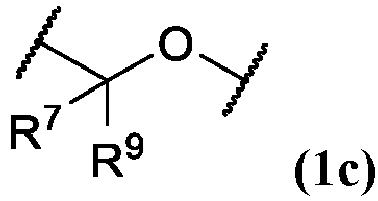
 (D) Ar2 est un groupe de formule (1e)
 (1) X1 est choisi dans l'ensemble constitué par un atome d'azote et un groupe CR13,(2) X2 est choisi dans l'ensemble constitué par un atome d'azote et un groupe CR14, et(3) R11 , R12 , R13 , et R14 sont choisis chacun indépendamment dans l'ensemble constitué par un atome d'hydrogène, de fluor, de chlore, les groupes CH3, et OCH3 ;(E) R15 est un atome d'hydrogène ;(F) Q1 est un atome d'oxygène ;(G) Q2 est un atome de soufre ;(H) R16 est (K) ;(I) R17 est (K) ;(J) L2 est un groupe de formule (1f)
 (K) R16 et R17 conjointement avec Cx(Q2)(Nx), forment un groupe de formule (1g)
- Molécule selon la revendication 1, dans laquelle ladite molécule est
N° Structure F1 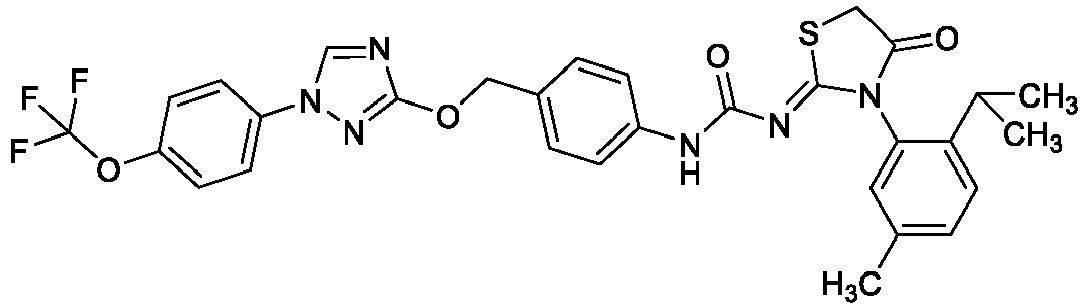
F2 
F3 
F4 
F5 
F6 
F7 
F8 
F9 
F12 
F13 
F14 
F15 
F16 
F17 
F18 
F19 
F20 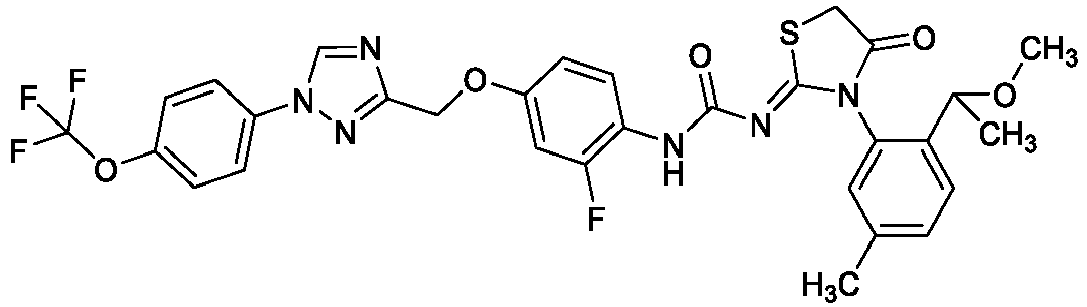
F21 
F22 
F23 
F24 
F25 
F26 
F27 
F28 
F29 
F30 
F31 
F32 
F33 
F34 
F35 
F36 
F37 
F38 
F39 
F40 
F41 
F42 
F43 
F44 
- Composition pesticide comprenant une molécule selon l'une quelconque des revendications 1, 2 et 3, comprenant en outre un composant actif.
- Procédé non thérapeutique pour lutter contre un organisme nuisible, ledit procédé comprenant le fait d'appliquer sur un lieu une quantité à effet pesticide d'une molécule selon l'une quelconque des revendications 1, 2 et 3.
- Procédé non thérapeutique pour lutter contre un organisme nuisible, ledit procédé comprenant le fait d'appliquer sur un lieu une quantité à effet pesticide d'une composition pesticide selon la revendication 4.
Applications Claiming Priority (3)
| Application Number | Priority Date | Filing Date | Title |
|---|---|---|---|
| US201562214329P | 2015-09-04 | 2015-09-04 | |
| US201562214325P | 2015-09-04 | 2015-09-04 | |
| PCT/US2016/048620 WO2017040191A1 (fr) | 2015-09-04 | 2016-08-25 | Molécules présentant une utilité en tant que pesticide, et leurs intermédiaires, compositions et procédés |
Publications (3)
| Publication Number | Publication Date |
|---|---|
| EP3344599A1 EP3344599A1 (fr) | 2018-07-11 |
| EP3344599A4 EP3344599A4 (fr) | 2019-01-16 |
| EP3344599B1 true EP3344599B1 (fr) | 2020-12-09 |
Family
ID=58188025
Family Applications (1)
| Application Number | Title | Priority Date | Filing Date |
|---|---|---|---|
| EP16842636.9A Active EP3344599B1 (fr) | 2015-09-04 | 2016-08-25 | Molécules présentant une utilité en tant que pesticide, et leurs intermédiaires, compositions et procédés |
Country Status (10)
| Country | Link |
|---|---|
| US (1) | US9617253B2 (fr) |
| EP (1) | EP3344599B1 (fr) |
| CN (1) | CN108290832B (fr) |
| AU (1) | AU2016317579B2 (fr) |
| BR (1) | BR112018003516B8 (fr) |
| CA (1) | CA2996517A1 (fr) |
| CO (1) | CO2018003464A2 (fr) |
| ES (1) | ES2858557T3 (fr) |
| MX (1) | MX2018002331A (fr) |
| WO (1) | WO2017040191A1 (fr) |
Families Citing this family (8)
| Publication number | Priority date | Publication date | Assignee | Title |
|---|---|---|---|---|
| US9661854B2 (en) * | 2015-09-04 | 2017-05-30 | Dow Agrosciences Llc | Molecules having pesticidal utility, and intermediates, compositions, and processes, related thereto |
| US11399540B2 (en) * | 2017-06-28 | 2022-08-02 | Corteva Agriscience Llc | Molecules having pesticidal utility, and intermediates, compositions, and processes, related thereto |
| CN108864324B (zh) * | 2018-06-12 | 2020-08-04 | 中国科学院烟台海岸带研究所 | 一种三氮唑基壳聚糖双季铵盐及其制备方法和应用 |
| JP7560461B2 (ja) * | 2018-12-26 | 2024-10-02 | コルテバ アグリサイエンス エルエルシー | 農薬組成物及び殺虫方法 |
| JP7502310B2 (ja) * | 2019-02-04 | 2024-06-18 | コルテバ アグリサイエンス エルエルシー | 農薬組成物及び殺虫方法 |
| CN111116421B (zh) * | 2019-12-31 | 2022-01-25 | 浙江工业大学 | 一种酰胺衍生物的制备方法 |
| CN111116420B (zh) * | 2019-12-31 | 2022-01-14 | 浙江工业大学 | 一种对称脲类化合物的制备方法 |
| CN113429584B (zh) * | 2021-06-24 | 2022-07-05 | 西北民族大学 | 一种耐磨麦秸秆复合板材及其制备方法 |
Family Cites Families (6)
| Publication number | Priority date | Publication date | Assignee | Title |
|---|---|---|---|---|
| AR038703A1 (es) * | 2002-02-28 | 2005-01-26 | Novartis Ag | Derivados de 5-feniltiazol y uso como inhibidor de quinasa p i 3 |
| KR20130100997A (ko) * | 2010-08-26 | 2013-09-12 | 다우 아그로사이언시즈 엘엘씨 | 살충 조성물 |
| AU2012214724B2 (en) * | 2011-02-07 | 2015-09-24 | Corteva Agriscience Llc | Pesticidal compositions and processes related thereto |
| KR20140045542A (ko) * | 2011-07-12 | 2014-04-16 | 다우 아그로사이언시즈 엘엘씨 | 살충 조성물 및 그에 관한 방법 |
| JP2015525758A (ja) * | 2012-07-09 | 2015-09-07 | ダウ アグロサイエンシィズ エルエルシー | 農薬組成物およびそれらに関する方法 |
| TWI631110B (zh) | 2013-03-14 | 2018-08-01 | 美商陶氏農業科學公司 | 具有一定殺蟲效用之分子,及與其相關之中間物、組成物暨方法 |
-
2016
- 2016-08-25 AU AU2016317579A patent/AU2016317579B2/en active Active
- 2016-08-25 WO PCT/US2016/048620 patent/WO2017040191A1/fr not_active Ceased
- 2016-08-25 MX MX2018002331A patent/MX2018002331A/es unknown
- 2016-08-25 ES ES16842636T patent/ES2858557T3/es active Active
- 2016-08-25 US US15/247,068 patent/US9617253B2/en active Active
- 2016-08-25 CN CN201680063186.2A patent/CN108290832B/zh active Active
- 2016-08-25 CA CA2996517A patent/CA2996517A1/fr not_active Abandoned
- 2016-08-25 EP EP16842636.9A patent/EP3344599B1/fr active Active
- 2016-08-25 BR BR112018003516A patent/BR112018003516B8/pt active IP Right Grant
-
2018
- 2018-03-28 CO CONC2018/0003464A patent/CO2018003464A2/es unknown
Non-Patent Citations (1)
| Title |
|---|
| None * |
Also Published As
| Publication number | Publication date |
|---|---|
| BR112018003516A2 (pt) | 2018-09-18 |
| EP3344599A1 (fr) | 2018-07-11 |
| AU2016317579B2 (en) | 2018-10-04 |
| CO2018003464A2 (es) | 2018-07-10 |
| EP3344599A4 (fr) | 2019-01-16 |
| BR112018003516B8 (pt) | 2022-08-23 |
| ES2858557T3 (es) | 2021-09-30 |
| US9617253B2 (en) | 2017-04-11 |
| CN108290832B (zh) | 2020-11-27 |
| AU2016317579A1 (en) | 2018-03-08 |
| US20170066757A1 (en) | 2017-03-09 |
| MX2018002331A (es) | 2018-07-06 |
| BR112018003516B1 (pt) | 2021-02-23 |
| WO2017040191A1 (fr) | 2017-03-09 |
| CA2996517A1 (fr) | 2017-03-09 |
| CN108290832A (zh) | 2018-07-17 |
Similar Documents
| Publication | Publication Date | Title |
|---|---|---|
| EP3801026B1 (fr) | Molécules à utilité pesticide, compositions et procédés associés | |
| EP3964067B1 (fr) | Composition comprenant une molécule ayant une fonction pesticide | |
| EP3772962B9 (fr) | Molécules ayant une utilité pesticide, et intermédiaires, compositions et procédé associé de lutte contre les phytoravageurs | |
| US9617253B2 (en) | Molecules having pesticidal utility, and intermediates, compositions, and processes, related thereto | |
| EP3347341B1 (fr) | Molécules présentant une utilité en tant que pesticides, ainsi qu'intermédiaires, compositions, et procédés associés | |
| US9661854B2 (en) | Molecules having pesticidal utility, and intermediates, compositions, and processes, related thereto | |
| EP3344600B1 (fr) | Molécules présentant une utilité en tant que pesticide, et leurs intermédiaires, compositions et procédés | |
| EP3407717B1 (fr) | Molécules présentant une utilité en tant que pesticides, et intermédiaires, compositions et procédés associés | |
| AU2016317469B2 (en) | Molecules having pesticidal utility, and intermediates, compositions, and processes, related thereto | |
| TW201718567A (zh) | 具有殺蟲效用之分子以及與其相關之中間物、組成物及方法(四) | |
| TW201718566A (zh) | 具有殺蟲效用之分子以及與其相關之中間物、組成物及方法(五) |
Legal Events
| Date | Code | Title | Description |
|---|---|---|---|
| STAA | Information on the status of an ep patent application or granted ep patent |
Free format text: STATUS: THE INTERNATIONAL PUBLICATION HAS BEEN MADE |
|
| PUAI | Public reference made under article 153(3) epc to a published international application that has entered the european phase |
Free format text: ORIGINAL CODE: 0009012 |
|
| STAA | Information on the status of an ep patent application or granted ep patent |
Free format text: STATUS: REQUEST FOR EXAMINATION WAS MADE |
|
| 17P | Request for examination filed |
Effective date: 20180319 |
|
| AK | Designated contracting states |
Kind code of ref document: A1 Designated state(s): AL AT BE BG CH CY CZ DE DK EE ES FI FR GB GR HR HU IE IS IT LI LT LU LV MC MK MT NL NO PL PT RO RS SE SI SK SM TR |
|
| AX | Request for extension of the european patent |
Extension state: BA ME |
|
| DAV | Request for validation of the european patent (deleted) | ||
| DAX | Request for extension of the european patent (deleted) | ||
| A4 | Supplementary search report drawn up and despatched |
Effective date: 20181219 |
|
| RIC1 | Information provided on ipc code assigned before grant |
Ipc: C07D 417/12 20060101ALI20181213BHEP Ipc: C07C 275/26 20060101AFI20181213BHEP Ipc: C07D 417/14 20060101ALI20181213BHEP Ipc: A01N 43/48 20060101ALI20181213BHEP Ipc: A01N 43/72 20060101ALI20181213BHEP Ipc: A01N 53/00 20060101ALI20181213BHEP Ipc: C07D 307/34 20060101ALI20181213BHEP Ipc: A01N 47/42 20060101ALI20181213BHEP Ipc: A01N 47/36 20060101ALI20181213BHEP |
|
| STAA | Information on the status of an ep patent application or granted ep patent |
Free format text: STATUS: EXAMINATION IS IN PROGRESS |
|
| 17Q | First examination report despatched |
Effective date: 20200421 |
|
| GRAP | Despatch of communication of intention to grant a patent |
Free format text: ORIGINAL CODE: EPIDOSNIGR1 |
|
| STAA | Information on the status of an ep patent application or granted ep patent |
Free format text: STATUS: GRANT OF PATENT IS INTENDED |
|
| GRAS | Grant fee paid |
Free format text: ORIGINAL CODE: EPIDOSNIGR3 |
|
| INTG | Intention to grant announced |
Effective date: 20201006 |
|
| GRAA | (expected) grant |
Free format text: ORIGINAL CODE: 0009210 |
|
| STAA | Information on the status of an ep patent application or granted ep patent |
Free format text: STATUS: THE PATENT HAS BEEN GRANTED |
|
| AK | Designated contracting states |
Kind code of ref document: B1 Designated state(s): AL AT BE BG CH CY CZ DE DK EE ES FI FR GB GR HR HU IE IS IT LI LT LU LV MC MK MT NL NO PL PT RO RS SE SI SK SM TR |
|
| REG | Reference to a national code |
Ref country code: GB Ref legal event code: FG4D |
|
| REG | Reference to a national code |
Ref country code: AT Ref legal event code: REF Ref document number: 1343301 Country of ref document: AT Kind code of ref document: T Effective date: 20201215 Ref country code: CH Ref legal event code: EP |
|
| REG | Reference to a national code |
Ref country code: DE Ref legal event code: R096 Ref document number: 602016049598 Country of ref document: DE |
|
| REG | Reference to a national code |
Ref country code: IE Ref legal event code: FG4D |
|
| REG | Reference to a national code |
Ref country code: CH Ref legal event code: NV Representative=s name: FIAMMENGHI-FIAMMENGHI, CH |
|
| REG | Reference to a national code |
Ref country code: NL Ref legal event code: FP |
|
| REG | Reference to a national code |
Ref country code: GR Ref legal event code: EP Ref document number: 20210400460 Country of ref document: GR Effective date: 20210416 |
|
| PG25 | Lapsed in a contracting state [announced via postgrant information from national office to epo] |
Ref country code: FI Free format text: LAPSE BECAUSE OF FAILURE TO SUBMIT A TRANSLATION OF THE DESCRIPTION OR TO PAY THE FEE WITHIN THE PRESCRIBED TIME-LIMIT Effective date: 20201209 Ref country code: NO Free format text: LAPSE BECAUSE OF FAILURE TO SUBMIT A TRANSLATION OF THE DESCRIPTION OR TO PAY THE FEE WITHIN THE PRESCRIBED TIME-LIMIT Effective date: 20210309 Ref country code: RS Free format text: LAPSE BECAUSE OF FAILURE TO SUBMIT A TRANSLATION OF THE DESCRIPTION OR TO PAY THE FEE WITHIN THE PRESCRIBED TIME-LIMIT Effective date: 20201209 |
|
| REG | Reference to a national code |
Ref country code: AT Ref legal event code: MK05 Ref document number: 1343301 Country of ref document: AT Kind code of ref document: T Effective date: 20201209 |
|
| PG25 | Lapsed in a contracting state [announced via postgrant information from national office to epo] |
Ref country code: LV Free format text: LAPSE BECAUSE OF FAILURE TO SUBMIT A TRANSLATION OF THE DESCRIPTION OR TO PAY THE FEE WITHIN THE PRESCRIBED TIME-LIMIT Effective date: 20201209 Ref country code: BG Free format text: LAPSE BECAUSE OF FAILURE TO SUBMIT A TRANSLATION OF THE DESCRIPTION OR TO PAY THE FEE WITHIN THE PRESCRIBED TIME-LIMIT Effective date: 20210309 Ref country code: SE Free format text: LAPSE BECAUSE OF FAILURE TO SUBMIT A TRANSLATION OF THE DESCRIPTION OR TO PAY THE FEE WITHIN THE PRESCRIBED TIME-LIMIT Effective date: 20201209 |
|
| PG25 | Lapsed in a contracting state [announced via postgrant information from national office to epo] |
Ref country code: HR Free format text: LAPSE BECAUSE OF FAILURE TO SUBMIT A TRANSLATION OF THE DESCRIPTION OR TO PAY THE FEE WITHIN THE PRESCRIBED TIME-LIMIT Effective date: 20201209 |
|
| REG | Reference to a national code |
Ref country code: LT Ref legal event code: MG9D |
|
| PG25 | Lapsed in a contracting state [announced via postgrant information from national office to epo] |
Ref country code: SM Free format text: LAPSE BECAUSE OF FAILURE TO SUBMIT A TRANSLATION OF THE DESCRIPTION OR TO PAY THE FEE WITHIN THE PRESCRIBED TIME-LIMIT Effective date: 20201209 Ref country code: LT Free format text: LAPSE BECAUSE OF FAILURE TO SUBMIT A TRANSLATION OF THE DESCRIPTION OR TO PAY THE FEE WITHIN THE PRESCRIBED TIME-LIMIT Effective date: 20201209 Ref country code: CZ Free format text: LAPSE BECAUSE OF FAILURE TO SUBMIT A TRANSLATION OF THE DESCRIPTION OR TO PAY THE FEE WITHIN THE PRESCRIBED TIME-LIMIT Effective date: 20201209 Ref country code: EE Free format text: LAPSE BECAUSE OF FAILURE TO SUBMIT A TRANSLATION OF THE DESCRIPTION OR TO PAY THE FEE WITHIN THE PRESCRIBED TIME-LIMIT Effective date: 20201209 Ref country code: PT Free format text: LAPSE BECAUSE OF FAILURE TO SUBMIT A TRANSLATION OF THE DESCRIPTION OR TO PAY THE FEE WITHIN THE PRESCRIBED TIME-LIMIT Effective date: 20210409 Ref country code: RO Free format text: LAPSE BECAUSE OF FAILURE TO SUBMIT A TRANSLATION OF THE DESCRIPTION OR TO PAY THE FEE WITHIN THE PRESCRIBED TIME-LIMIT Effective date: 20201209 Ref country code: SK Free format text: LAPSE BECAUSE OF FAILURE TO SUBMIT A TRANSLATION OF THE DESCRIPTION OR TO PAY THE FEE WITHIN THE PRESCRIBED TIME-LIMIT Effective date: 20201209 |
|
| PG25 | Lapsed in a contracting state [announced via postgrant information from national office to epo] |
Ref country code: PL Free format text: LAPSE BECAUSE OF FAILURE TO SUBMIT A TRANSLATION OF THE DESCRIPTION OR TO PAY THE FEE WITHIN THE PRESCRIBED TIME-LIMIT Effective date: 20201209 Ref country code: AT Free format text: LAPSE BECAUSE OF FAILURE TO SUBMIT A TRANSLATION OF THE DESCRIPTION OR TO PAY THE FEE WITHIN THE PRESCRIBED TIME-LIMIT Effective date: 20201209 |
|
| REG | Reference to a national code |
Ref country code: DE Ref legal event code: R097 Ref document number: 602016049598 Country of ref document: DE |
|
| PG25 | Lapsed in a contracting state [announced via postgrant information from national office to epo] |
Ref country code: IS Free format text: LAPSE BECAUSE OF FAILURE TO SUBMIT A TRANSLATION OF THE DESCRIPTION OR TO PAY THE FEE WITHIN THE PRESCRIBED TIME-LIMIT Effective date: 20210409 |
|
| REG | Reference to a national code |
Ref country code: ES Ref legal event code: FG2A Ref document number: 2858557 Country of ref document: ES Kind code of ref document: T3 Effective date: 20210930 |
|
| PLBE | No opposition filed within time limit |
Free format text: ORIGINAL CODE: 0009261 |
|
| STAA | Information on the status of an ep patent application or granted ep patent |
Free format text: STATUS: NO OPPOSITION FILED WITHIN TIME LIMIT |
|
| PG25 | Lapsed in a contracting state [announced via postgrant information from national office to epo] |
Ref country code: AL Free format text: LAPSE BECAUSE OF FAILURE TO SUBMIT A TRANSLATION OF THE DESCRIPTION OR TO PAY THE FEE WITHIN THE PRESCRIBED TIME-LIMIT Effective date: 20201209 |
|
| 26N | No opposition filed |
Effective date: 20210910 |
|
| PG25 | Lapsed in a contracting state [announced via postgrant information from national office to epo] |
Ref country code: DK Free format text: LAPSE BECAUSE OF FAILURE TO SUBMIT A TRANSLATION OF THE DESCRIPTION OR TO PAY THE FEE WITHIN THE PRESCRIBED TIME-LIMIT Effective date: 20201209 Ref country code: SI Free format text: LAPSE BECAUSE OF FAILURE TO SUBMIT A TRANSLATION OF THE DESCRIPTION OR TO PAY THE FEE WITHIN THE PRESCRIBED TIME-LIMIT Effective date: 20201209 |
|
| REG | Reference to a national code |
Ref country code: DE Ref legal event code: R081 Ref document number: 602016049598 Country of ref document: DE Owner name: CORTEVA AGRISCIENCE LLC, INDIANAPOLIS, US Free format text: FORMER OWNER: DOW AGROSCIENCES LLC, ZIONSVILLE, IND., US |
|
| REG | Reference to a national code |
Ref country code: NL Ref legal event code: HC Owner name: CORTEVA AGRISCIENCE LLC; US Free format text: DETAILS ASSIGNMENT: CHANGE OF OWNER(S), CHANGE OF OWNER(S) NAME; FORMER OWNER NAME: DOW AGROSCIENCES LLC Effective date: 20220127 |
|
| PG25 | Lapsed in a contracting state [announced via postgrant information from national office to epo] |
Ref country code: MC Free format text: LAPSE BECAUSE OF FAILURE TO SUBMIT A TRANSLATION OF THE DESCRIPTION OR TO PAY THE FEE WITHIN THE PRESCRIBED TIME-LIMIT Effective date: 20201209 |
|
| REG | Reference to a national code |
Ref country code: BE Ref legal event code: HC Owner name: CORTEVA AGRISCIENCE LLC; US Free format text: DETAILS ASSIGNMENT: CHANGE OF OWNER(S), CHANGE OF OWNER(S) NAME; FORMER OWNER NAME: DOW AGROSCIENCES LLC Effective date: 20211206 |
|
| PG25 | Lapsed in a contracting state [announced via postgrant information from national office to epo] |
Ref country code: IS Free format text: LAPSE BECAUSE OF FAILURE TO SUBMIT A TRANSLATION OF THE DESCRIPTION OR TO PAY THE FEE WITHIN THE PRESCRIBED TIME-LIMIT Effective date: 20210409 Ref country code: LU Free format text: LAPSE BECAUSE OF NON-PAYMENT OF DUE FEES Effective date: 20210825 |
|
| PG25 | Lapsed in a contracting state [announced via postgrant information from national office to epo] |
Ref country code: IE Free format text: LAPSE BECAUSE OF NON-PAYMENT OF DUE FEES Effective date: 20210825 |
|
| REG | Reference to a national code |
Ref country code: ES Ref legal event code: PC2A Owner name: CORTEVA AGRISCIENCE LLC Effective date: 20220901 |
|
| PG25 | Lapsed in a contracting state [announced via postgrant information from national office to epo] |
Ref country code: HU Free format text: LAPSE BECAUSE OF FAILURE TO SUBMIT A TRANSLATION OF THE DESCRIPTION OR TO PAY THE FEE WITHIN THE PRESCRIBED TIME-LIMIT; INVALID AB INITIO Effective date: 20160825 |
|
| PG25 | Lapsed in a contracting state [announced via postgrant information from national office to epo] |
Ref country code: CY Free format text: LAPSE BECAUSE OF FAILURE TO SUBMIT A TRANSLATION OF THE DESCRIPTION OR TO PAY THE FEE WITHIN THE PRESCRIBED TIME-LIMIT Effective date: 20201209 |
|
| P01 | Opt-out of the competence of the unified patent court (upc) registered |
Effective date: 20230526 |
|
| PG25 | Lapsed in a contracting state [announced via postgrant information from national office to epo] |
Ref country code: MK Free format text: LAPSE BECAUSE OF FAILURE TO SUBMIT A TRANSLATION OF THE DESCRIPTION OR TO PAY THE FEE WITHIN THE PRESCRIBED TIME-LIMIT Effective date: 20201209 |
|
| PG25 | Lapsed in a contracting state [announced via postgrant information from national office to epo] |
Ref country code: MT Free format text: LAPSE BECAUSE OF FAILURE TO SUBMIT A TRANSLATION OF THE DESCRIPTION OR TO PAY THE FEE WITHIN THE PRESCRIBED TIME-LIMIT Effective date: 20201209 |
|
| PGFP | Annual fee paid to national office [announced via postgrant information from national office to epo] |
Ref country code: NL Payment date: 20250718 Year of fee payment: 10 |
|
| PGFP | Annual fee paid to national office [announced via postgrant information from national office to epo] |
Ref country code: ES Payment date: 20250915 Year of fee payment: 10 |
|
| PGFP | Annual fee paid to national office [announced via postgrant information from national office to epo] |
Ref country code: DE Payment date: 20250729 Year of fee payment: 10 |
|
| PGFP | Annual fee paid to national office [announced via postgrant information from national office to epo] |
Ref country code: GR Payment date: 20250715 Year of fee payment: 10 |
|
| PGFP | Annual fee paid to national office [announced via postgrant information from national office to epo] |
Ref country code: TR Payment date: 20250811 Year of fee payment: 10 Ref country code: IT Payment date: 20250717 Year of fee payment: 10 |
|
| PGFP | Annual fee paid to national office [announced via postgrant information from national office to epo] |
Ref country code: GB Payment date: 20250813 Year of fee payment: 10 Ref country code: BE Payment date: 20250819 Year of fee payment: 10 |
|
| PGFP | Annual fee paid to national office [announced via postgrant information from national office to epo] |
Ref country code: FR Payment date: 20250812 Year of fee payment: 10 |
|
| PGFP | Annual fee paid to national office [announced via postgrant information from national office to epo] |
Ref country code: CH Payment date: 20250901 Year of fee payment: 10 |