EP3345124B1 - Imagerie par résonance magnétique à haute résolution et acquisition comprimée - Google Patents
Imagerie par résonance magnétique à haute résolution et acquisition comprimée Download PDFInfo
- Publication number
- EP3345124B1 EP3345124B1 EP16842828.2A EP16842828A EP3345124B1 EP 3345124 B1 EP3345124 B1 EP 3345124B1 EP 16842828 A EP16842828 A EP 16842828A EP 3345124 B1 EP3345124 B1 EP 3345124B1
- Authority
- EP
- European Patent Office
- Prior art keywords
- fmri
- hsparse
- resolution
- subject
- vds
- Prior art date
- Legal status (The legal status is an assumption and is not a legal conclusion. Google has not performed a legal analysis and makes no representation as to the accuracy of the status listed.)
- Active
Links
Images
























Classifications
-
- A—HUMAN NECESSITIES
- A61—MEDICAL OR VETERINARY SCIENCE; HYGIENE
- A61B—DIAGNOSIS; SURGERY; IDENTIFICATION
- A61B5/00—Measuring for diagnostic purposes; Identification of persons
- A61B5/0033—Features or image-related aspects of imaging apparatus, e.g. for MRI, optical tomography or impedance tomography apparatus; Arrangements of imaging apparatus in a room
- A61B5/004—Features or image-related aspects of imaging apparatus, e.g. for MRI, optical tomography or impedance tomography apparatus; Arrangements of imaging apparatus in a room adapted for image acquisition of a particular organ or body part
- A61B5/0042—Features or image-related aspects of imaging apparatus, e.g. for MRI, optical tomography or impedance tomography apparatus; Arrangements of imaging apparatus in a room adapted for image acquisition of a particular organ or body part for the brain
-
- A—HUMAN NECESSITIES
- A61—MEDICAL OR VETERINARY SCIENCE; HYGIENE
- A61B—DIAGNOSIS; SURGERY; IDENTIFICATION
- A61B5/00—Measuring for diagnostic purposes; Identification of persons
- A61B5/02—Detecting, measuring or recording for evaluating the cardiovascular system, e.g. pulse, heart rate, blood pressure or blood flow
- A61B5/026—Measuring blood flow
- A61B5/0263—Measuring blood flow using NMR
-
- A—HUMAN NECESSITIES
- A61—MEDICAL OR VETERINARY SCIENCE; HYGIENE
- A61B—DIAGNOSIS; SURGERY; IDENTIFICATION
- A61B5/00—Measuring for diagnostic purposes; Identification of persons
- A61B5/05—Detecting, measuring or recording for diagnosis by means of electric currents or magnetic fields; Measuring using microwaves or radio waves
- A61B5/055—Detecting, measuring or recording for diagnosis by means of electric currents or magnetic fields; Measuring using microwaves or radio waves involving electronic [EMR] or nuclear [NMR] magnetic resonance, e.g. magnetic resonance imaging
-
- A—HUMAN NECESSITIES
- A61—MEDICAL OR VETERINARY SCIENCE; HYGIENE
- A61B—DIAGNOSIS; SURGERY; IDENTIFICATION
- A61B5/00—Measuring for diagnostic purposes; Identification of persons
- A61B5/40—Detecting, measuring or recording for evaluating the nervous system
- A61B5/4058—Detecting, measuring or recording for evaluating the nervous system for evaluating the central nervous system
- A61B5/4064—Evaluating the brain
-
- A—HUMAN NECESSITIES
- A61—MEDICAL OR VETERINARY SCIENCE; HYGIENE
- A61B—DIAGNOSIS; SURGERY; IDENTIFICATION
- A61B5/00—Measuring for diagnostic purposes; Identification of persons
- A61B5/72—Signal processing specially adapted for physiological signals or for diagnostic purposes
- A61B5/7203—Signal processing specially adapted for physiological signals or for diagnostic purposes for noise prevention, reduction or removal
-
- A—HUMAN NECESSITIES
- A61—MEDICAL OR VETERINARY SCIENCE; HYGIENE
- A61B—DIAGNOSIS; SURGERY; IDENTIFICATION
- A61B5/00—Measuring for diagnostic purposes; Identification of persons
- A61B5/72—Signal processing specially adapted for physiological signals or for diagnostic purposes
- A61B5/7235—Details of waveform analysis
- A61B5/7253—Details of waveform analysis characterised by using transforms
-
- G—PHYSICS
- G01—MEASURING; TESTING
- G01R—MEASURING ELECTRIC VARIABLES; MEASURING MAGNETIC VARIABLES
- G01R33/00—Arrangements or instruments for measuring magnetic variables
- G01R33/20—Arrangements or instruments for measuring magnetic variables involving magnetic resonance
- G01R33/44—Arrangements or instruments for measuring magnetic variables involving magnetic resonance using nuclear magnetic resonance [NMR]
- G01R33/48—NMR imaging systems
- G01R33/4806—Functional imaging of brain activation
-
- G—PHYSICS
- G01—MEASURING; TESTING
- G01R—MEASURING ELECTRIC VARIABLES; MEASURING MAGNETIC VARIABLES
- G01R33/00—Arrangements or instruments for measuring magnetic variables
- G01R33/20—Arrangements or instruments for measuring magnetic variables involving magnetic resonance
- G01R33/44—Arrangements or instruments for measuring magnetic variables involving magnetic resonance using nuclear magnetic resonance [NMR]
- G01R33/48—NMR imaging systems
- G01R33/4818—MR characterised by data acquisition along a specific k-space trajectory or by the temporal order of k-space coverage, e.g. centric or segmented coverage of k-space
- G01R33/4824—MR characterised by data acquisition along a specific k-space trajectory or by the temporal order of k-space coverage, e.g. centric or segmented coverage of k-space using a non-Cartesian trajectory
-
- G—PHYSICS
- G01—MEASURING; TESTING
- G01R—MEASURING ELECTRIC VARIABLES; MEASURING MAGNETIC VARIABLES
- G01R33/00—Arrangements or instruments for measuring magnetic variables
- G01R33/20—Arrangements or instruments for measuring magnetic variables involving magnetic resonance
- G01R33/44—Arrangements or instruments for measuring magnetic variables involving magnetic resonance using nuclear magnetic resonance [NMR]
- G01R33/48—NMR imaging systems
- G01R33/4818—MR characterised by data acquisition along a specific k-space trajectory or by the temporal order of k-space coverage, e.g. centric or segmented coverage of k-space
- G01R33/4824—MR characterised by data acquisition along a specific k-space trajectory or by the temporal order of k-space coverage, e.g. centric or segmented coverage of k-space using a non-Cartesian trajectory
- G01R33/4826—MR characterised by data acquisition along a specific k-space trajectory or by the temporal order of k-space coverage, e.g. centric or segmented coverage of k-space using a non-Cartesian trajectory in three dimensions
-
- G—PHYSICS
- G01—MEASURING; TESTING
- G01R—MEASURING ELECTRIC VARIABLES; MEASURING MAGNETIC VARIABLES
- G01R33/00—Arrangements or instruments for measuring magnetic variables
- G01R33/20—Arrangements or instruments for measuring magnetic variables involving magnetic resonance
- G01R33/44—Arrangements or instruments for measuring magnetic variables involving magnetic resonance using nuclear magnetic resonance [NMR]
- G01R33/48—NMR imaging systems
- G01R33/54—Signal processing systems, e.g. using pulse sequences ; Generation or control of pulse sequences; Operator console
- G01R33/56—Image enhancement or correction, e.g. subtraction or averaging techniques, e.g. improvement of signal-to-noise ratio and resolution
- G01R33/5608—Data processing and visualization specially adapted for MR, e.g. for feature analysis and pattern recognition on the basis of measured MR data, segmentation of measured MR data, edge contour detection on the basis of measured MR data, for enhancing measured MR data in terms of signal-to-noise ratio by means of noise filtering or apodization, for enhancing measured MR data in terms of resolution by means for deblurring, windowing, zero filling, or generation of gray-scaled images, colour-coded images or images displaying vectors instead of pixels
-
- G—PHYSICS
- G01—MEASURING; TESTING
- G01R—MEASURING ELECTRIC VARIABLES; MEASURING MAGNETIC VARIABLES
- G01R33/00—Arrangements or instruments for measuring magnetic variables
- G01R33/20—Arrangements or instruments for measuring magnetic variables involving magnetic resonance
- G01R33/44—Arrangements or instruments for measuring magnetic variables involving magnetic resonance using nuclear magnetic resonance [NMR]
- G01R33/48—NMR imaging systems
- G01R33/54—Signal processing systems, e.g. using pulse sequences ; Generation or control of pulse sequences; Operator console
- G01R33/56—Image enhancement or correction, e.g. subtraction or averaging techniques, e.g. improvement of signal-to-noise ratio and resolution
- G01R33/561—Image enhancement or correction, e.g. subtraction or averaging techniques, e.g. improvement of signal-to-noise ratio and resolution by reduction of the scanning time, i.e. fast acquiring systems, e.g. using echo-planar pulse sequences
- G01R33/5613—Generating steady state signals, e.g. low flip angle sequences [FLASH]
- G01R33/5614—Generating steady state signals, e.g. low flip angle sequences [FLASH] using a fully balanced steady-state free precession [bSSFP] pulse sequence, e.g. trueFISP
-
- G—PHYSICS
- G01—MEASURING; TESTING
- G01R—MEASURING ELECTRIC VARIABLES; MEASURING MAGNETIC VARIABLES
- G01R33/00—Arrangements or instruments for measuring magnetic variables
- G01R33/20—Arrangements or instruments for measuring magnetic variables involving magnetic resonance
- G01R33/44—Arrangements or instruments for measuring magnetic variables involving magnetic resonance using nuclear magnetic resonance [NMR]
- G01R33/48—NMR imaging systems
- G01R33/54—Signal processing systems, e.g. using pulse sequences ; Generation or control of pulse sequences; Operator console
- G01R33/56—Image enhancement or correction, e.g. subtraction or averaging techniques, e.g. improvement of signal-to-noise ratio and resolution
- G01R33/563—Image enhancement or correction, e.g. subtraction or averaging techniques, e.g. improvement of signal-to-noise ratio and resolution of moving material, e.g. flow contrast angiography
- G01R33/56308—Characterization of motion or flow; Dynamic imaging
-
- A—HUMAN NECESSITIES
- A61—MEDICAL OR VETERINARY SCIENCE; HYGIENE
- A61B—DIAGNOSIS; SURGERY; IDENTIFICATION
- A61B2576/00—Medical imaging apparatus involving image processing or analysis
- A61B2576/02—Medical imaging apparatus involving image processing or analysis specially adapted for a particular organ or body part
- A61B2576/026—Medical imaging apparatus involving image processing or analysis specially adapted for a particular organ or body part for the brain
-
- G—PHYSICS
- G16—INFORMATION AND COMMUNICATION TECHNOLOGY [ICT] SPECIALLY ADAPTED FOR SPECIFIC APPLICATION FIELDS
- G16H—HEALTHCARE INFORMATICS, i.e. INFORMATION AND COMMUNICATION TECHNOLOGY [ICT] SPECIALLY ADAPTED FOR THE HANDLING OR PROCESSING OF MEDICAL OR HEALTHCARE DATA
- G16H30/00—ICT specially adapted for the handling or processing of medical images
- G16H30/40—ICT specially adapted for the handling or processing of medical images for processing medical images, e.g. editing
Definitions
- fMRI Functional magnetic resonance imaging
- CNR contrast-to-noise ratio
- the present disclosure provides methods and systems for high-resolution functional magnetic resonance imaging (fMRI), including real-time high-resolution fMRI methods and systems.
- fMRI functional magnetic resonance imaging
- the present invention provides a method for functional magnetic resonance imaging (fMRI) of a subject as set out in claim 1.
- the present invention provides a functional magnetic resonance imaging (fMRI) system as set out in claim 2.
- the producing comprises analyzing the image data using a spatial sparsifying transform.
- the spatial sparsifying transform comprises a discrete cosine transform (DCT).
- the method is a real-time fMRI method.
- the producing comprises analyzing the image data using a fast iterative shrinkage thresholding algorithm (FISTA).
- FISTA fast iterative shrinkage thresholding algorithm
- the method has a sampling acceleration factor of 2 or more. In some embodiments, the method has a sampling acceleration factor of 5 or more.
- the method produces an image having a spatial resolution of about 0.2x0.2x0.5 mm 3 or greater.
- the method produces an image having a contrast-to-noise ratio of 1.5 or more. In some embodiments, the method produces an image having a contrast-to-noise ratio of 2.5 or more.
- the processor is configured to analyze the image data using a spatial sparsifying transform.
- the spatial sparsifying transform comprises a discrete cosine transform (DCT).
- the system is configured for real-time fMRI.
- the processor is configured to analyze the image data using a fast iterative shrinkage thresholding algorithm (FISTA).
- FISTA fast iterative shrinkage thresholding algorithm
- the system has a sampling acceleration factor of 2 or more. In some embodiments, the system has a sampling acceleration factor of 5 or more.
- the processor produces an image having a spatial resolution of about 0.2x0.2x0.5 mm 3 or greater.
- the processor may produce an image having a contrast-to-noise ratio of 1.5 or more. In some examples, the processor may produce an image having a contrast-to-noise ratio of 2.5 or more.
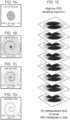
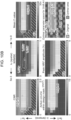
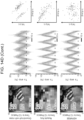
- FIG. 1A A randomized, variable-density, under-sampled spiral acquisition scheme was designed for the HSPARSE fMRI.
- Fig. 1B A low spatial resolution Nyquist trajectory only covers a small range of k-space.
- Fig. 1B To achieve higher spatial resolution without introducing aliasing artifacts or changing the field of view, the k-space coverage can be increased with more interleaves. This inevitably increases the data acquisition time and reduces the temporal resolution.
- Fig. 1C, 1D To overcome this problem, a variable density spiral (VDS) trajectory was designed and interleaves were randomly sampled while keeping the total number of interleaves and scan time the same as the low spatial resolution Nyquist scan.
- VDS variable density spiral
- the HSPARSE fMRI method randomly selects 320 interleaves from a stack of VDS trajectory consisting 32 kz locations and 30 interleaves. More interleaves were sampled near the k-space center and the total number of interleaves in each kz location follows a Laplacian distribution. The sampling pattern was also chosen to be random across temporal frames to exploit the temporal sparsity. However, the total number of interleaves for each time frame was designed to be constant (320 interleaves) to maintain constant temporal resolution over time. Compared to a 3D Nyquist sampled trajectory that has the same spatial resolution, the trajectory used herein achieved a high acceleration factor of 5.3.
- the reconstruction using 4D DCT also resulted in smoother and lower amplitude HRFs compared to the HRFs reconstructed with the 3D+1D DCT.
- the 3D+1D method produced higher mean F-value, contrast and lower noise level in an in vivo dataset.
- the reconstruction using 3D+1D DCT also allowed a higher HRF amplitude, indicating the 3D+1D DCT regularization resulted in less temporal distortion.
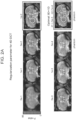
- Fig. 3A Key computationally intensive calculations such as the NUFFT, matrix arithmetic, and DCT were parallelized on a GPU. Since these computations were repeatedly used during the iterative reconstruction loops used in HSPARSE, the GPU parallelization significantly improves the reconstruction speed. The iNUFFT and NUFFT were the most complicated and time-consuming calculations in the HSPRSE reconstruction.
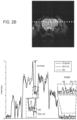
- Fig. 3B iNUFFT resamples the gray Cartesian grid onto the blue spiral samples. In the parallel implementation, each GPU core was assigned a spiral sample, and each thread inside the GPU core was assigned a Cartesian grid within the corresponding spiral sample's convolution window.
- each thread first calculates its Cartesian grid's contribution to the given spiral sample, then an efficient binary summation algorithm was performed to sum all values together.
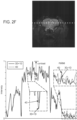
- Fig. 3C NUFFT resamples the blue spiral samples back onto the Cartesian grids.
- each GPU core was assigned to a spiral sample at a different kz-location to avoid memory write conflict.
- Each thread inside the core then retrieves value from the spiral sample point and adds it to the corresponding Cartesian grid inside the convolution window. Because there were thousands of kz slices in the 4D fMRI datasets, this NUFFT algorithm took full advantage of the massive number of GPU cores.
- Fig. 4 Pre-computation of line search decompositions improved the computational efficiency of the gradient descent method.
- Phantoms used for optimization and testing of HSPARSE fMRI were generated.
- the phantoms were designed to first simulate an in vivo fMRI experiment (A1), then to assess the effects of having a distinct base image (B1) and a distinct activation pattern (C1).
- the activation patterns were designed to have decreasing amplitude towards the edge of the activation through Gaussian smoothing (see methods).
- HSPARSE fMRI method achieved high signal sensitivity and low false positive rate across a wide range of CNRs and phantoms.
- the fMRI signal sensitivity was defined as the number of true positive (TP) voxels over the number of true positive and false negative (FN) voxels.
- the false positive rate was defined as the number of false positive (FP) voxels over the number of false positive and true negative (TN) voxels within the 1- to 5-pixel perimeter layers of the designed activation volume (FPR1 to FPR5).
- HSPARSE fMRI method resolved spatially adjacent yet functionally distinct regions.
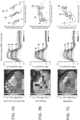
- Fig. 7A , 7D A rat brain phantom with three layers of distinct peak HRF amplitude / latency in the cortex was designed. HRFs of the three layers and their corresponding principal component decompositions demonstrate clear separation of the three layers. Thicker lines in the HRF plot represent the mean HRF of each layer.
- Fig. 7B , 7E Highest spatial resolution Nyquist acquisition resulted in activity with obscured boundaries between layers.
- Fig. 7C , 7F HSPARSE reconstruction correctly identified the spatial location where the amplitude/time-to-peak transition occurs.
- HSPARSE fMRI method resolved in vivo layer-specific activity evoked by optogenetic stimulation of dentate gyrus.
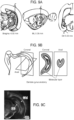
- Fig. 9A Schematic showing optogenetic targeting of the dentate gyrus.
- Fig. 9B Dentate gyrus had a unique horn shape, with its coronal and axial slices showing "O" and "U” shaped profiles, respectively.
- Fig. 9C Histological examination verified that the ChR2-EYFP expression was localized to the dentate gyrus region.
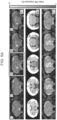
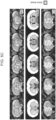
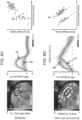
- Fig. 9D The Nyquist acquisition failed to accurately localize dentate gyrus activity and activity occurs on both the dentate gyrus and the CA1.
- both the original and the three times averaged HSPARSE fMRI showed activity localized to the dentate gryus, with the voxels having high peak HRF amplitude precisely following the geometry of the structure's molecular layer.
- White triangles in the top row indicate the approximate site of stimulation.
- Active voxels were identified as those having an F-value greater than 4.42 (p ⁇ 0.001).
- the active voxels' peak HRF amplitudes were then calculated and overlaid onto a high-resolution MRI atlas, with a threshold at the median plus 1.5 times the standard deviation of all peak HRF amplitudes for clear visualization with good dynamic range.
- Optimal range of CS regularization parameters were identified based on quantitative assessments of the reconstructed images.
- Fig. 10A Example reconstructed images of the A1 phantom (30 dB) with different regularization parameters. Voxels were considered to be active if they exhibit an F-value greater than 4.42 (P ⁇ 0.001). Lower left plot shows the original ground-truth image.
- Fig. 10B An optimal regularization parameter range was defined as the region that achieved higher CNR and maximum correlation coefficient, larger active volume within the designed active region compared to the original ground-truth image, and NRMSE of less than 105 % of the minimum NRMSE found within the search range.
- a range of regularization parameters were identified to yield high reconstruction quality (lower right plot, blue area) for the 30 dB A1 phantom.
- the symbols ' ⁇ ' and 'v' in each plot indicate the maximum and minimum values in the corresponding test, respectively.
- "N/A” indicates an area in which CNR, maximum correlation coefficient, and peak HRF amplitude cannot be computed due to limited activation.
- 1.02v, 1.05v and 1.15v indicate the contour lines of 1.02, 1.05, and 1.15 times the minimum NRMSE value.
- Fig. 10C The optimal ranges for 6 phantoms with different base images, activation patterns and SNRs were overlaid, where a set of regularization parameters were found to provide optimal reconstruction quality for all phantoms tested.
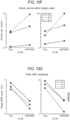
- HSPARSE reconstruction using optimal regularization parameters maintained HRF temporal characteristics over a range of physiologically relevant HRF amplitudes.
- Fig. 11B Although the HSPARSE reconstructed HRFs exhibit lower amplitudes than the original HRFs for all tested amplitudes, the HRF shapes were similar after amplitude normalization (inset on upper right). Error bars represent standard deviation across 5 reconstructions.
- HSPARSE fMRI method was robust against real physiological noise.
- the HSPARSE fMRI also improved the CNR, maximum correlation coefficient, and active volume compared to their corresponding fully-sampled datasets in the presence of real physiological noise.
- the NRMSE values were less than 0.081 across all subjects. Error bars represent the standard error across voxels of the active area for CNR and maximum correlation coefficient.
- Fig. 12B , 12C The images reconstructed with HSPARSE detect the majority of the activity and the active voxels shared between the HSPARSE reconstructions and the fully-sampled images consist 90.3 to 93.0% of active voxels from the fully-sampled images.
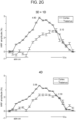
- Fig. 13 Comparison of temporal HRF characteristics between the original fully-sampled and HSPARSE images in the presence of physiological noise. For all three subjects, the HRF durations were similar and the maximum duration difference was 1.67 s. The first subjects gave the same time-to-peak. The rest two subjects showed an increase in time-to-peak for the HSPARSE reconstructed image, but the difference was smaller than the 3 s temporal resolution of the acquisition.
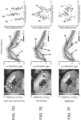
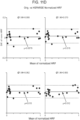
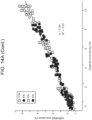
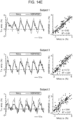
- Fig. 14A , 14B Six-cycle time-series corresponding to Fig. 11 and 12 . Similar to the analysis performed on the HRFs, the HSPARSE reconstructed six-cycle time-series also show a strong linear correlation with the original ground-truth time-series, which indicates the HSPARSE method maintains high temporal fidelity.
- Fig. 14C , 14D Six-cycle time-series corresponding to Fig. 7 and Fig. 8 .
- HSPARSE fMRI While some sinusoidal variations in the HSPARSE fMRI reconstructed time-series were observed (bottom left plot for both C and D), the HSPARSE fMRI was found to preserve the peak amplitude and latency differences between layers, while the highest spatial resolution Nyquist acquisitions fail. HSPARSE also maintains high sensitivity and low FPR. In contrast, Nyquist acquisitions result in high FPR, which could be the result of low spatial resolution induced partial volume effects. ( Fig. 14E ) Six-cycle time-series corresponding to Fig. 9 .
- HSPARSE fMRI In vivo acquired HSPARSE fMRI six-cycle time-series also showed strong linear correlation with the time-series obtained from the highest spatial resolution Nyquist acquisitions for all three subjects, demonstrating that HSPARSE fMRI can provide high temporal fidelity for in vivo experiments.
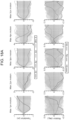
- Fig. 15A , 15B Optimized HSPARSE fMRI method consistently resolved layer-specific activity of the dentate gyrus upon optogenetic stimulation. Two additional in vivo experiment results were shown. With the highest spatial resolution Nyquist rate sampled images, activity was observed throughout the hippocampus. In contrast, activities in the HSPARSE reconstructed images were confined to the dentate gyrus. The peak amplitude activities followed the geometry of the molecular layer for all three subjects. The pink area and the red lines delineate the dentate gyrus. The white arrow indicates the site of stimulation.
- Fig. 16 Comparison of temporal characteristics of HRF between HSPARSE fMRI and Nyquist acquisition fMRI following optogenetic stimulation of the dentate gyrus.
- Three subjects were optogenetically stimulated during imaging, using the single (HSPARSE HSPARSE ⁇ 1) and 3 times averaged (HSPARSE ⁇ 3) high-resolution HSPARSE fMRI and a highest spatial resolution Nyquist acquisition (NAcq).
- the time-to-peak difference between the HSPARSE and NAcq images was less than the 3 s temporal resolution.
- the duration of activity was similar between the HSPARSE and NAcq images for subject 1 and 3 on average, the duration was larger in the HSPARSE reconstructed image for subject 2. This difference could be due biological variability since the Nyquist acquisition datasets and the CS datasets were separately acquired in different fMRI imaging sessions.
- Fig. 17 GPU based HSPARSE fMRI method achieved a 34-fold improvement in speed.
- the GPU methods showed 165-, 28-, and 108-fold improvements in speed, respectively, resulting in a 34-fold overall speedup.
- the HSPARSE fMRI method was robust to motion within a normal physiological range.
- Fig. 18A Five sets of motion profiles with a maximum absolute translation equivalent to 1- to 5-pixels were designed. To simulate realistic motion, the z-dimension translation was restricted to be smaller than the x- and y-dimension translations, and rotations about the x-, y- and z-axis were limited to within ⁇ 0.5 degrees. Solid lines represent an example six degree-of-freedom motion profile and shaded areas represent the ranges of translations or rotations in each motion profile.
- Fig. 18B The motion corrected HSPARSE images show similar activations as the motion corrected original images when the motion was 1-5 pixels.
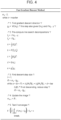
- Fig. 19 Algorithm 1 was implemented on a Graphical Processing Unit platform. Several repeatedly computations such as the non-uniform FFT (NUFFT), inverse NUFFT, DWT and inverse DWT were carefully optimized. For the NUFFT, a similar pre-sorting algorithm was implemented. A custom build workstation was used for the real-time reconstruction with Intel quad-core 2.66 GHz CPU, Nvidia 2048 cores CUDA GPU and 16 GB CPU memory.
- NUFFT non-uniform FFT
- DWT inverse DWT
- DWT inverse DWT
- Fig. 21 Optimized stack of VDS achieved high incoherent sampling and FISTA method successfully reconstructs the under-sampled image. The normalized image intensities are also shown across the yellow dashed line.
- Fig. 22 Real-time high-resolution CS fMRI achieved improved CNR, mean F-value, sensitivity and low FPR.
- a range of parameters were tested to identify the optimal regularization parameters for the real-time high-resolution CS fMRI. After comparing different metrics shown in the Figure, it was found that 1e -3 and 5e -4 offer the best trade-off between metrics and result in improved CNR, mean F-value, sensitivity and low FPR.
- Real-time high-resolution CS fMRI resolves layer specific activity.
- Two different types of HRFs with distinct peak HRF amplitude ( Fig. 23A ) and latency ( Fig. 23B ) were added into a phantom with interleaved layer pattern.
- the real-time high-resolution CS fMRI method successfully resolves the peak HRF amplitude and latency differences between the two layers while the highest spatial resolution Nyquist acquisition failed.
- Randomized variable density stack of spirals design ( Fig. 24A ) The center k-space is designed to have a higher density than the outer k-space. Incoherence is introduced by randomly disturb the angle of each interleaf and random skipping interleaves in the outer k-space. ( Fig. 24B ) The effective field of view of the spiral trajectory is designed to follow a series of exponential functions shown.
- the present disclosure provides methods and systems for high-resolution functional magnetic resonance imaging (fMRI), including real-time high-resolution fMRI methods and systems.
- fMRI functional magnetic resonance imaging
- fMRI functional magnetic resonance imaging
- aspects of the present disclosure include a method for functional magnetic resonance imaging (fMRI) of a subject.
- the method is a compressed sensing (CS) high-resolution fMRI method.
- Compressed sensing refers to a signal processing method where an image can be reconstructed from a series of sampling measurements obtained with a sampling rate below the Nyquist sampling rate.
- the method includes obtaining one or more fMRI images of a target area in a subject.
- the method may include applying with an MRI system (e.g., a permanent magnet or electromagnet of the MRI system) a magnetic field to a target area in a subject.
- an MRI system e.g., a permanent magnet or electromagnet of the MRI system
- the method also includes applying with the MRI system (e.g., an RF coil of the MRI system) an excitation waveform (e.g., an RF excitation waveform) to the target area in the subject to produce detectable image data (e.g., magnetic resonance (MR) signals) of the target area in the subject.
- an excitation waveform e.g., an RF excitation waveform
- detectable image data e.g., magnetic resonance (MR) signals
- One or more additional fields may also be applied by the MRI system, such as, but not limited to, one or more shim fields using one or more shim coils, one or more gradient fields using one or more gradient coils, and the like.
- the method includes acquiring the image data (e.g., with a receiver of the MRI system) and producing an image of the target area in the subject based on the acquired image data.
- the acquired image data may be saved in a computer-readable memory and analyzed at a subsequent time (also referred to herein as "offline” processing or “offline” MRI).
- the acquired image data may be analyzed in real-time to produce the image of the target area in the subject.
- real-time is meant that the acquired signals are analyzed by the MRI system (e.g., by a processor in the MRI system) immediately after signal acquisition and/or during signal acquisition.
- the method may include applying an excitation waveform to the target area in the subject.
- the method includes applying a pulse sequence to the target area in the subject.
- the pulse sequence is a balanced steady state free precession (b-SSFP) sequence that is applied to the target area in the subject.
- the pulse sequence has an echo time (TE) of 50 ms or less, such as 40 ms or less, or 30 ms or less, or 20 ms or less, or 10 ms or less, or 5 ms or less, or 3 ms or less, or 2 ms or less.
- the pulse sequence has a TE of 2 ms.
- the pulse sequence has a repetition time (TR) of 500 ms or less, such as 400 ms or less, or 300 ms or less, or 200 ms or less, or 100 ms or less, or 50 ms or less, or 25 ms or less, or 20 ms or less, or 10 ms or less, or 5 ms or less.
- the pulse sequence has a TR ranging from 5 to 10 ms, such as from 7 to 10 ms, or from 8 to 10 ms, or from 9 to 10 ms.
- the pulse sequence has a TR of 9.375 ms.
- the method includes acquiring image data (MR signals) of the target area in the subject.
- the method includes using a sampling trajectory.
- the sampling trajectory is a randomized sampling trajectory.
- the method may include acquiring image data of the target area in the subject using a randomly undersampled stack of multi-interleaf variable density spiral (VDS) trajectory.
- VDS variable density spiral
- the total number of interleaves at each kz-slice follows a Laplacian distribution. For instance, in some embodiments, the center k-space is more densely sampled than the outer k-space.
- the sampling method has a field of view (FOV).
- FOV field of view
- the sampling method may have a FOV of 10x10x10 mm or more, such as 15x15x15 mm or more, or 20x20x15 mm or more, or 25x25x15 mm or more, or 30x30x15 mm or more, or 35x35x15 mm or more.
- the sampling method has a FOV of 35x35x16 mm.
- the sampling method has a resolution of 1 ⁇ 1 ⁇ 1 mm or less, such as 0.75x0.75x0.75 mm or less, or 0.5x0.5x0.5 mm or less, or 0.25x0.25x0.5 mm or less.
- the sampling method has a resolution of 0.21x0.21x0.5 mm.
- the sampling method achieves a sampling acceleration factor of 2 or more, such as 3 or more, 4 or more, 5 or more, 6 or more, 7 or more, 8 or more, 9 or more, or 10 or more as compared to conventional fMRI.
- the sampling method achieves a sampling acceleration factor of 2 or more.
- the sampling method achieves a sampling acceleration factor of 5 or more.
- the method includes producing an image of the target area in the subject based on the acquired image data using compressed sensing reconstruction.
- the method includes analyzing (also referred to herein as processing) the image data to produce the image of the target area.
- the method includes reconstructing an image from the acquired image data.
- the method includes reconstructing the image using a cost function, such as an L1 regularized cost function.
- the method includes analyzing/processing the image data using a spatial sparsifying transform, such as a discrete cosine transform (DCT).
- DCT discrete cosine transform
- the method may include regularizing the fMRI temporal domain using a DCT.
- the method includes regularizing the fMRI spatial domain using a DCT.
- the method includes regularizing both the temporal domain and the spatial domain using a DCT.
- the method includes reconstructing the image using one or more regularization parameters.
- Regularization parameters of interest for offline fMRI processing include, but are not limited to, contrast to noise ratio (CNR), active volume within the designed active region, mean F statistic value (mean F-value), normalized root mean squared error (NRMSE), and peak hemodynamic response function (HRF) amplitude.
- CNR contrast to noise ratio
- MSE normalized root mean squared error
- HRF peak hemodynamic response function
- a set of regularization parameters is considered to be in an optimal range if the CNR, active volume within the designed mask, and mean F-value are greater than that of the ground-truth, and its NRMSE is less than 105% of the minimum NRMSE found within the search range.
- the subject fMRI methods may produce images having a CNR of 1.5 or more, such as 2 or more, or 2.5 or more, or 3 or more, or 4 or more, or 5 or more, or 6 or more, or 7 or more, or 8 or more, or 9 or more, or 10 or more.
- the subject fMRI methods may produce images having a CNR of 1.5 or more.
- the subject fMRI methods may produce images having a CNR of 2.5 or more.
- the subject fMRI methods produce an image having a spatial resolution of about 0.2x0.2x0.5 mm 3 or greater.
- the subject fMRI methods can produce images having a spatial resolution of 1 ⁇ 1 ⁇ 1 mm 3 or greater, such as 0.9x0.9x0.9 mm 3 or greater, or 0.8x0.8x0.8 mm 3 or greater, or 0.7x0.7x0.7 mm 3 or greater, or 0.6x0.6x0.6 mm 3 or greater, or 0.5x0.5x0.5 mm 3 or greater, or 0.4x0.4x0.5 mm 3 or greater, or 0.3x0.3x0.5 mm 3 or greater, or 0.2x0.2x0.5 mm 3 or greater, or 0.1x0.1x0.5 mm 3 or greater.
- the subject fMRI methods produce an image having a spatial resolution of 0.21x0.21x0.5 mm 3 .
- the subject fMRI methods produce an image having a spatial resolution ranging from 0.1x0.1x0.5 mm 3 to 1 ⁇ 1 ⁇ 1 mm 3 , such as from 0.1x0.1x0.5 mm 3 to 0.9x0.9x0.9 mm 3 , or from 0.1x0.1x0.5 mm 3 to 0.8x0.8x0.8 mm 3 , or from 0.1x0.1x0.5 mm 3 to 0.7x0.7x0.7 mm 3 , or from 0.1x0.1x0.5 mm 3 to 0.6x0.6x0.6 mm 3 , or from 0.1x0.1x0.5 mm 3 to 0.5x0.5x0.5 mm 3 , or from 0.1x0.1x0.5 mm 3 to 0.4x0.4x0.5 mm 3 , or from 0.1x0.1x0.5 mm 3 to 0.3x0.3x0.5 mm 3 .
- the subject fMRI methods produce an image having a spatial resolution ranging
- the acquired image data can be processed in real-time.
- the method includes applying a pulse sequence to the target area in the subject to produce image data (MR signals) that can be acquired by the MRI system.
- the method includes acquiring the image data (MR signals) of the target area in the subject.
- the method includes using a sampling trajectory.
- the method includes acquiring image data of the target area in the subject using a randomly undersampled stack of variable density spiral (VDS) trajectory.
- VDS variable density spiral
- the sampling density follows an exponential function along the kx and ky plane, and the variance of the exponential function decreases along the kz direction.
- randomness is introduced into the sampling for CS reconstruction by randomly perturbing the angle of each spiral interleaf.
- the trajectory has a slightly larger total number of interleaves, and interleaves on the outer k-space are randomly skipped following a Gaussian distribution to achieve the desired temporal resolution.
- the kz-slice location may be adjusted to achieve variable density sampling in the kz dimension and high spatial resolution in the z dimension.
- the sampling method has a field of view (FOV).
- FOV field of view
- the sampling method may have a FOV of 10x10x10 mm or more, such as 15x15x15 mm or more, or 20x20x15 mm or more, or 25x25x15 mm or more, or 30x30x15 mm or more, or 35x35x15 mm or more.
- the sampling method has a FOV of 35x35x16 mm.
- the sampling method has a resolution of 1 ⁇ 1 ⁇ 1 mm or less, such as 0.75x0.75x0.75 mm or less, or 0.5x0.5x0.5 mm or less, or 0.25x0.25x0.5 mm or less.
- the sampling method has a resolution of 0.25x0.25x0.5 mm.
- the sampling method achieves a sampling acceleration factor of 2 or more, such as 3 or more, 4 or more, 5 or more, 6 or more, 7 or more, 8 or more, 9 or more, or 10 or more as compared to conventional fMRI.
- the sampling method achieves a sampling acceleration factor of 2 or more.
- the sampling method achieves a sampling acceleration factor of 5 or more.
- the method includes producing an image of the target area in the subject based on the acquired image data using compressed sensing reconstruction.
- the method includes analyzing (also referred to herein as processing) the image data to produce the image of the target area.
- the image data may be processed in real-time to produce the image of the target area.
- the method includes reconstructing an image from the acquired image data in real-time.
- the method includes reconstructing the image using a cost function, such as an L1 spatial regularized cost function.
- the method includes analyzing/processing the image data using a sparsifying transform, such as a Daubechies 4 wavelet.
- the method includes analyzing/processing the image data using a fast iterative shrinkage thresholding algorithm (FISTA).
- FISTA fast iterative shrinkage thresholding algorithm
- the method includes reconstructing the image using one or more regularization parameters.
- Regularization parameters of interest for real-time fMRI processing include, but are not limited to, contrast to noise ratio (CNR), mean F statistic value (mean F-value), normalized root mean squared error (NRMSE), peak HRF amplitude, sensitivity, and false positive rate in the reconstructed dataset.
- CNR contrast to noise ratio
- mean F-value mean F statistic value
- NRMSE normalized root mean squared error
- peak HRF amplitude peak HRF amplitude
- sensitivity sensitivity
- false positive rate in the reconstructed dataset.
- a set of regularization parameters is considered to be in an optimal range if the parameters give top 50% CNR, mean F-value, sensitivity, and bottom 50% NRMSE and false positive rate.
- the subject fMRI methods may produce images having a CNR of 1.5 or more, such as 2 or more, or 2.5 or more, or 3 or more, or 4 or more, or 5 or more, or 6 or more, or 7 or more, or 8 or more, or 9 or more, or 10 or more.
- the subject fMRI methods may produce images having a CNR of 1.5 or more.
- the subject fMRI methods may produce images having a CNR of 2.5 or more.
- the method is a method for functional MRI (fMRI).
- fMRI functional MRI
- the present disclosure provides a method for monitoring activity in an organ or tissue of an individual (also referred to as "a subject” herein).
- the target organ or tissue is an excitable organ or tissue in the subject.
- Excitable refers to electrically excitable cells in an organ or tissue, such as neurons and muscle cells.
- Excitable cells typically use changes in their membrane potential to transmit signals within the cell.
- an excitable cell may be characterized in having a resting state, where the membrane potential is at the resting membrane potential, and an excited state, where rapid depolarization of the membrane potential is transmitted across the cell as an action potential.
- the "cellular electrical activity" of an excitable cell may refer to the changes in the membrane potential or may refer to any indirect measure of the changes in membrane potential, such as the changes in intracellular calcium concentration or any other biochemical changes that is a functional measure of the change in the membrane potential.
- surgically implanting the device includes opening an access in the subject and inserting at least a portion of the device through the access.
- the access may be an access through the skin, bone, muscle, and/or other tissues of the subject.
- an access may include an access through bone (e.g., skull) of the subject to allow placement of at least a portion of the device (e.g., an optrode) adjacent to target neurons in the subject.
- monitoring the activity of the organ or tissue includes conducting functional magnetic resonance imaging (fMRI) on the organ or tissue.
- the organ or tissue includes excitable cells (e.g., cells that express one or more light-responsive polypeptides).
- the terms "light-activated” and “light-responsive” in reference to a polypeptide or protein that is light-responsive are used interchangeably and include light-responsive ion channels or opsins, and ion pumps as described herein.
- Such light-responsive proteins may have a depolarizing or hyperpolarizing effect on the cell on whose plasma membrane the protein is expressed depending on the ion permeability of the activated protein, and the electrochemical gradients present across the plasma membrane.
- the one or more light-responsive polypeptides include a hyperpolarizing light-responsive polypeptide. In some cases, the one or more light-responsive polypeptides include a depolarizing light-responsive polypeptide.
- the method includes producing an image of the target organ or tissue using fMRI. In some cases, fMRI may be used to image the organ or tissue prior to delivering light to the target organ or tissue using the optrode. In some cases, fMRI may be used to image the organ or tissue during delivery of light to the target organ or tissue using the optrode. In some cases, fMRI may be used to image the organ or tissue after delivering light to the target organ or tissue using the optrode.
- a method further including detecting and/or recording a detectable parameter of the organ or tissue using the device (e.g., optrode).
- the optrode may be configured to detect electrical signals, such as local field potentials produced by changes in the membrane potential of the excitable cells.
- the method includes detecting and/or recording a detectable parameter of the organ or tissue using a carbon fiber electrode of the optrode.
- the device may include a light source.
- the method includes delivering light to the target organ or tissue using the light source.
- the method may include stimulating the excitable cells in the target organ or tissue with light from the light source.
- the light source includes an optical fiber as described herein.
- the method includes delivering light to the target organ or tissue using the optical fiber (e.g., stimulating the excitable cells with light delivered by the optical fiber).
- the light source includes a laser.
- the method includes delivering light to the target organ or tissue using the laser.
- the method may include generating light using the laser and directing the light from the laser to the target organ or tissue using the optical fiber (e.g., for stimulating the excitable cells in the target organ or tissue with light from the laser).
- the light source includes a light-emitting diode (LED).
- the method includes delivering light to the target organ or tissue using the LED.
- the method may include generating light using the LED and directing the light from the LED to the target organ or tissue using the optical fiber (e.g., for stimulating the excitable cells in the target organ or tissue with light from the LED).
- the detectable parameter of the target organ or tissue includes local field potentials, e.g., local field potentials produced by changes in the membrane potential of the excitable cells.
- the local field potentials may be produced by stimulating the excitable cells with light from the light source.
- the detectable parameter is a single-unit activity, e.g., detectable activity from a single target area (i.e., a uniplex assay).
- the detectable parameter is a multi-unit activity, e.g., detectable activity from two or more target areas (i.e., a multiplex assay).
- monitoring the activity of the organ or tissue is performed once. In other cases, monitoring the activity of the organ or tissue is performed two or more times. In some cases, monitoring the activity of the organ or tissue is performed several times over a period of time, e.g., the method includes chronically monitoring the activity of the organ or tissue.
- monitoring the activity of the organ or tissue may be performed over an extended period of time, such as 1 day or more, 2 days or more, 3 days or more, 4 days or more, 5 days or more, 6 days or more, 7 days or more, 8 days or more, 9 days or more, 10 days or more, such as, for example, 1 week or more, 2 weeks or more, 3 weeks or more, 1 month or more, 2 months or more, 3 months or more, 4 months or more, 5 months or more, 6 months or more, 7 months or more, 8 months or more, 9 months or more, 10 months or more, 11 months or more, 1 year or more, or ever longer periods of time.
- the individual is a human. In some cases, the individual is a non-human primate. In some cases, the individual is a rodent (e.g., a rat, a mouse, etc.).
- the tissue or organ e.g., "target tissue” or “target organ” may be an in vivo neuronal tissue, a tissue slice preparation, a nerve fiber bundle, a neuromuscular junction, etc.
- the in vivo neuronal tissue may be neuronal tissue of an animal that is anesthetized or non-anesthetized, and is restrained or non-restrained.
- the target tissue of interest includes, but is not limited to, the neocortex, the hypothalamus, entorhinal and hippocampal formation cortex, mammillary bodies, septum, bed nucleus of stria terminalis, dorsal and ventral striatum, thalamus, amygdala, accumbens, brainstem, subcortical structures in general, muscle, spinal cord, cardiac tissue, etc.
- the excitable cells in a target tissue or organ are genetically modified to express a light-responsive polypeptide that, when stimulated by an appropriate light stimulus, hyperpolarizes or depolarizes the stimulated excitable cell.
- the term "genetic modification” refers to a permanent or transient genetic change induced in a cell following introduction into the cell of a heterologous nucleic acid (i.e., nucleic acid exogenous to the cell). Genetic change (“modification”) can be accomplished by incorporation of the heterologous nucleic acid into the genome of the host cell, or by transient or stable maintenance of the heterologous nucleic acid as an extrachromosomal element.
- a permanent genetic change can be achieved by introduction of the nucleic acid into the genome of the cell.
- Suitable methods of genetic modification include viral infection, transfection, conjugation, protoplast fusion, electroporation, particle gun technology, calcium phosphate precipitation, direct microinjection, and the like.
- the light-responsive polypeptide is a light-activated ion channel polypeptide.
- the light-activated ion channel polypeptides are adapted to allow one or more ions to pass through the plasma membrane of a target cell when the polypeptide is illuminated with light of an activating wavelength.
- Light-activated proteins may be characterized as ion pump proteins, which facilitate the passage of a small number of ions through the plasma membrane per photon of light, or as ion channel proteins, which allow a stream of ions to freely flow through the plasma membrane when the channel is open.
- the light-responsive polypeptide depolarizes the excitable cell when activated by light of an activating wavelength.
- the light-responsive polypeptide hyperpolarizes the excitable cell when activated by light of an activating wavelength.
- the light-responsive polypeptides are activated by blue light. In some disclosures, the light-responsive polypeptides are activated by green light. In some disclosures, the light-responsive polypeptides are activated by yellow light. In some disclosures, the light-responsive polypeptides are activated by orange light. In some disclosures, the light-responsive polypeptides are activated by red light.
- the light-responsive polypeptide expressed in a cell can be fused to one or more amino acid sequence motifs selected from the group consisting of a signal peptide, an endoplasmic reticulum (ER) export signal, a membrane trafficking signal, and/or an N-terminal golgi export signal.
- the one or more amino acid sequence motifs which enhance light-responsive protein transport to the plasma membranes of mammalian cells can be fused to the N-terminus, the C-terminus, or to both the N- and C-terminal ends of the light-responsive polypeptide.
- the one or more amino acid sequence motifs which enhance light-responsive polypeptide transport to the plasma membranes of mammalian cells is fused internally within a light-responsive polypeptide.
- the light-responsive polypeptide and the one or more amino acid sequence motifs may be separated by a linker.
- the light-responsive polypeptide can be modified by the addition of a trafficking signal (ts) which enhances transport of the protein to the cell plasma membrane.
- the trafficking signal can be derived from the amino acid sequence of the human inward rectifier potassium channel Kir2.1.
- the signal peptide sequence in the protein can be deleted or substituted with a signal peptide sequence from a different protein.
- Exemplary light-responsive polypeptides and amino acid sequence motifs that find use in the disclosures referred to above are disclosed in, e.g., PCT App. Nos. PCT/US2011/028893 and PCT/US2015/23 087 .
- the individual may be any suitable individual for analyzing the individual's brain functional activity data.
- the individual is a human individual.
- the human is a healthy human, or a human having a neurological disorder.
- the neurological disorder may be any suitable neurological disorder.
- the neurological disorder is caused by a disease, e.g., a neurological disease.
- the neurological disease may be any suitable disease associated with pathological activity of a network of neurons. Suitable neurological diseases include, without limitation, Parkinson's disease, Alzheimer's disease, dementia, epilepsy, autism, bipolar disorder, schizophrenia, Tourette's syndrome, obsessive compulsive disorder, attention deficit hyperactivity disorder, Huntington's disease, multiple sclerosis, or migraine.
- the neurological disorder is an age-related disorder of brain function.
- the methods may be used to treat a disease or condition (e.g., a neurological disorder) in the subject that is amenable to treatment using the subject methods.
- a disease or condition e.g., a neurological disorder
- the terms “treat,” “treatment,” “treating,” and the like refer to obtaining a desired pharmacologic and/or physiologic effect.
- the effect may be prophylactic in terms of completely or partially preventing a disease or symptom thereof and/or may be therapeutic in terms of a partial or complete cure for a disease and/or adverse effect attributable to the disease.
- Treatment covers any treatment of a disease in a mammal, particularly in a human, and includes: (a) preventing the disease from occurring in a subject which may be predisposed to the disease but has not yet been diagnosed as having it; (b) inhibiting the disease, i.e., arresting its development; and (c) relieving the disease, e.g., causing regression of the disease, e.g., to completely or partially remove symptoms of the disease.
- Selective activation of neurons in order to measure subtype-specific functional activity may be done using any suitable method. Suitable methods of selective neuron activation include, without limitation, optogenetic stimulation, single unit electrophysiology, etc. Where the neurons are selectively activated by optogenetic stimulation, the neurons may express one or more light-activated polypeptides configured to hyperpolarize or depolarize the neurons. Suitable light-activated polypeptides and methods used thereof are described further below.
- a light-activated polypeptide of the present disclosure may be any suitable light-activated polypeptide for selectively activating neurons of a subtype by illuminating the neurons with an activating light stimulus.
- the light-activated polypeptide is a light-activated ion channel polypeptide.
- the light-activated ion channel polypeptides are adapted to allow one or more ions to pass through the plasma membrane of a target cell when the polypeptide is illuminated with light of an activating wavelength.
- Light-activated proteins may be characterized as ion pump proteins, which facilitate the passage of a small number of ions through the plasma membrane per photon of light, or as ion channel proteins, which allow a stream of ions to freely flow through the plasma membrane when the channel is open.
- the light-activated polypeptide depolarizes the cell when activated by light of an activating wavelength. In some embodiments, the light-activated polypeptide hyperpolarizes the cell when activated by light of an activating wavelength.
- Suitable hyperpolarizing and depolarizing polypeptides include, e.g., a channelrhodopsin (e.g., ChR2), variants of ChR2 (e.g., C128S, D156A, C128S + D156A, E123A, E123T), 1C1C2, C1C2, GtACR2, NpHR, eNpHR3.0, C1V1, VChR1, VChR2, SwiChR, Arch, ArchT, KR2, ReaChR, ChiEF, Chronos, ChRGR, CsChrimson, and the like.
- ChR2 channelrhodopsin
- variants of ChR2 e.g., C128S, D156A, C128S + D156A, E123A, E123T
- 1C1C2, C1C2, GtACR2 e.g., NpHR, eNpHR3.0, C1V1, VChR1, VChR2, Swi
- the light-activated polypeptide includes bReaCh-ES, as described herein and described further in, e.g., Rajasethupathy et al., Nature. 2015 Oct 29;526(7575) 653 .
- Hyperpolarizing and depolarizing opsins have been described in various publications; see, e.g., Berndt and Deisseroth (2015) Science 349:590 ; Berndt et al. (2014) Science 344:420 ; and Guru et al. (July 25, 2015) Intl. J. Neuropsychopharmacol. pp. 1-8 (PMID 26209858 ).
- the light-activated polypeptide may be introduced into the neurons using any suitable method.
- the neurons of a subtype of interest are genetically modified to express a light-activated polypeptide.
- the neurons may be genetically modified using a viral vector, e.g., an adeno-associated viral vector, containing a nucleic acid having a nucleotide sequence that encodes the light-activated polypeptide.
- the viral vector may include any suitable control elements (e.g., promoters, enhancers, recombination sites, etc.) to control expression of the light-activated polypeptide according to neuronal subtype, timing, presence of an inducer, etc.
- Neuron-specific promoters and other control elements are known in the art.
- Suitable neuron-specific control sequences include, but are not limited to, a neuron-specific enolase (NSE) promoter (see, e.g., EMBL HSENO2, X51956; see also, e.g., U.S. Pat. No. 6,649,811 , U.S. Pat. No.
- NSE neuron-specific enolase
- an aromatic amino acid decarboxylase (AADC) promoter a neurofilament promoter (see, e.g., GenBank HUMNFL, L04147); a synapsin promoter (see, e.g., GenBank HUMSYNIB, M55301); a thy-1 promoter (see, e.g., Chen et al. (1987) Cell 51:7-19 ; and Llewellyn et al. (2010) Nat. Med. 16:1161 ); a serotonin receptor promoter (see, e.g., GenBank S62283); a tyrosine hydroxylase promoter (TH) (see, e.g., Nucl.
- AADC aromatic amino acid decarboxylase
- a GnRH promoter see, e.g., Radovick et al., Proc. Natl. Acad. Sci. USA 88:3402-3406 (1991 )
- an L7 promoter see, e.g., Oberdick et al., Science 248:223-226 (1990 )
- a DNMT promoter see, e.g., Bartge et al., Proc. Natl. Acad. Sci.
- an enkephalin promoter see, e.g., Comb et al., EMBO J. 17:3793-3805 (1988 )); a myelin basic protein (MBP) promoter; a CMV enhancer/platelet-derived growth factor- ⁇ promoter (see, e.g., Liu et al. (2620) Gene Therapy 11:52-60 ); a motor neuron-specific gene Hb9 promoter (see, e.g., U.S. Pat. No. 7,632,679 ; and Lee et al.
- MBP myelin basic protein
- CaMKII ⁇ Ca( 2+ )-calmodulin-dependent protein kinase II
- Other suitable promoters include elongation factor (EF) 1 ⁇ and dopamine transporter (DAT) promoters.
- neuronal subtype-specific expression of the light-activated polypeptide may be achieved by using recombination systems, e.g., Cre-Lox recombination, Flp-FRT recombination, etc.
- Cell type-specific expression of genes using recombination has been described in, e.g., Fenno et al., Nat Methods, 2014 Jul;11(7):763 ; and Gompf et al., Front Behav Neurosci. 2015 Jul 2;9 152 .
- the system is configured for compressed sensing (CS) high-resolution fMRI.
- the fMRI system is configured to obtain one or more fMRI images of a target area in a subject.
- the MRI system includes a permanent magnet or electromagnet of the MRI system that applies a magnetic field to a target area in a subject.
- the system also includes an RF coil that applies an excitation waveform (e.g., an RF excitation waveform) to the target area in the subject to produce detectable image data (e.g., magnetic resonance (MR) signals) of the target area in the subject.
- an excitation waveform e.g., an RF excitation waveform
- MR magnetic resonance
- One or more additional coils may also be included in the MRI system, such as, but not limited to, one or more shim coils that apply one or more shim fields, one or more gradient coils that apply one or more gradient fields, and the like.
- the system includes a receiver (e.g., a receiver coil) that acquires image data (MR signals).
- the system also includes a processor configured to producing an image of the target area in the subject based on the acquired image data.
- the fMRI system may be configured for offline processing of the image data, where the acquired image data is saved in a computer-readable memory and analyzed at a subsequent time.
- the fMRI system is configured for real-time processing of the acquired image data, where the acquired image data is analyzed in real-time to produce the image of the target area in the subject.
- the fMRI system may include an MRI device, a processor, and a memory (e.g., a non-transient memory on a computer-readable medium).
- the memory may contain an application or program that, when executed by the processor, causes the MRI device to record functional activity of an individual's brain to generate functional activity data for the individual, and further perform a method of analyzing functional activity data, as described herein.
- the MRI device may be any suitable MRI device, such as an MRI device configured to perform the high-resolution fMRI methods described herein. Suitable MRI devices are described in, e.g., U.S. Pat. No. 8,834,546 .
- US 2014/364721 A1 discloses the use of passband b-SSFP fMRI for obtaining distortion-free 3D isotropic resolution images for fMRI applications, in combination with compressed sensing reconstruction along with the option of using undersampled variable density spirals (VDS), and cited an article by LUSTIG M ET AL: "Sparse MRI: the application of compressed sensing for rapid MR imaging", MAGNETIC RESONANCE IN MEDIC, vol. 58, no. 6, pages 1182-1195 (2007 ) with regard to the VDS trajectory.
- VDS variable density spirals
- the subject fMRI devices (and systems) are configured to produce an image having a spatial resolution of about 0.2x0.2x0.5 mm 3 or greater.
- the subject fMRI devices (and systems) can be configured to produce images having a spatial resolution of 1 ⁇ 1 ⁇ 1 mm 3 or greater, such as 0.9x0.9x0.9 mm 3 or greater, or 0.8x0.8x0.8 mm 3 or greater, or 0.7x0.7x0.7 mm 3 or greater, or 0.6x0.6x0.6 mm 3 or greater, or 0.5x0.5x0.5 mm 3 or greater, or 0.4x0.4x0.5 mm 3 or greater, or 0.3x0.3x0.5 mm 3 or greater, or 0.2x0.2x0.5 mm 3 or greater, or 0.1x0.1x0.5 mm 3 or greater.
- the subject fMRI devices (and system) are configured to produce an image having a spatial resolution of 0.21x0.21x0.5 mm 3 .
- the subject fMRI devices (and system) are configured to produce an image having a spatial resolution ranging from 0.1x0.1x0.5 mm 3 to 1 ⁇ 1 ⁇ 1 mm 3 , such as from 0.1x0.1x0.5 mm 3 to 0.9x0.9x0.9 mm 3 , or from 0.1x0.1x0.5 mm 3 to 0.8x0.8x0.8 mm 3 , or from 0.1x0.1x0.5 mm 3 to 0.7x0.7x0.7 mm 3 , or from 0.1x0.1x0.5 mm 3 to 0.6x0.6x0.6 mm 3 , or from 0.1x0.1x0.5 mm 3 to 0.5x0.5x0.5 mm 3 , or from 0.1x0.1x0.5 mm 3 to 0.4x0.4x0.5 mm 3 , or from 0.1x0.1x0.5 mm 3 to 0.3x0.3x0.5 mm 3 .
- the subject fMRI devices are configured to produce an image having a spatial resolution ranging from 0.1x0.1x0.5 mm 3 to 0.3x0.3x0.5 mm 3 .
- a processor of the device is configured to produce an image having a spatial resolution as described herein.
- the system includes one or more processing units (also called herein "processors”), memory (i.e., a computer readable storage medium), an input/output (I/O) interface, and a communications interface. These components communicate with one another over one or more communication buses or signal lines.
- the memory, or the computer readable storage media of memory stores an operating system, programs, modules, instructions, and stored data.
- the one or more processors are coupled to the memory and operable to execute these programs, modules, and instructions, and read/write from/to the stored data.
- the programs include one or more of the algorithms as described herein that are used to apply waveforms to the target area in the subject, acquire MR signals, and/or analyze the acquired image data.
- the processing units include one or more microprocessors, such as a single core or multi-core microprocessor. In some embodiments, the processing units include one or more general purpose processors. In some embodiments, the processing units include one or more special purpose processors specifically programmed to apply waveforms to the target area in the subject, acquire MR signals, and/or analyze the acquired image data using one or more of the algorithms, as described herein.
- the processor is configured to analyze the signals in real-time.
- the acquired signals are saved by the processor in a memory for subsequent analysis of the data (also referred to herein as offline processing).
- the memory includes high-speed random access memory, such as DRAM, SRAM, DDR RAM or other random access solid state memory devices.
- the memory includes non-volatile memory, such as one or more magnetic disk storage devices, optical disk storage devices, flash memory devices, or other non-volatile solid state storage devices.
- the memory includes one or more storage devices remotely located from the processing units.
- the memory, or alternately the non-volatile memory device(s) within the memory includes a computer readable storage medium.
- the memory includes a non-transitory computer readable storage medium.
- the I/O interface is coupled to one or more input/output devices, such as one or more displays, keyboards, touch-sensitive surfaces (such as a track pad or a touch-sensitive surface of the touch-sensitive display), speakers, and microphones.
- the I/O interface may be configured to receive user inputs (e.g., voice input, keyboard inputs, etc.) from a user and process them accordingly.
- the I/O interface may also be configured to present outputs (e.g., sounds, images, text, etc.) to the user according to various program instructions implemented on the system.
- the communications interface includes wired communication port(s) and/or wireless transmission and reception circuitry.
- the wired communication port(s) receive and send communication signals via one or more wired interfaces, e.g., Ethernet, Universal Serial Bus (USB), FIREWIRE, etc.
- the wireless circuitry receives and sends RF signals and/or optical signals from/to communications networks and other communications devices.
- the wireless communications may use any of a plurality of communications standards, protocols and technologies, such as GSM, EDGE, CDMA, TDMA, Bluetooth, Wi-Fi, VoIP, Wi-MAX, or any other suitable communication protocol.
- the network communications interface enables communication between the system with networks, such as the Internet, an intranet and/or a wireless network, such as a cellular telephone network, a wireless local area network (LAN) and/or a metropolitan area network (MAN), and other devices.
- networks such as the Internet, an intranet and/or a wireless network, such as a cellular telephone network, a wireless local area network (LAN) and/or a metropolitan area network (MAN), and other devices.
- Network communications interface is configured to facilitate communications between the system and other devices over a network.
- the system may include a computer, which may be a personal device (e.g., laptop, desktop, workplace computer, portable device, etc.).
- a computer that is a personal device may not need to be connected to a network.
- the computer is a server or a collection of servers, and may not need an I/O interface.
- the computer may be a server, and a neural pathway analysis program of the present disclosure may be accessed by a user through a website.
- the operating system (e.g., LINUX ® , UNIX ® , OS X ® , WINDOWS ® , or an embedded operating system) includes various software components and/or drivers for controlling and managing general system tasks (e.g., memory management, storage device control, power management, etc.) and facilitates communications between various hardware, firmware, and software components.
- general system tasks e.g., memory management, storage device control, power management, etc.
- system is only one example, and that the system may have more or fewer components than shown, may combine two or more components, or may have a different configuration or arrangement of the components.
- the various components of the system may be implemented in hardware, software, firmware, including one or more signal processing and/or application specific integrated circuits, or a combination of thereof.
- a neural pathway analysis program that includes one or more programs may be stored in the memory, and include instructions to perform methods according to one or more embodiments of the above methods section.
- the neural pathway analysis program may include any of the following exemplary modules or a subset or a superset thereof.
- a neural pathway analysis program may be configured to computationally process functional activity data for a region of a brain of an individual, as described above, to generate an estimate of the relative activities of neural pathways regulated by each of a plurality of neuronal subtypes, by generating a connectivity model from the functional activity data based on a network model of functional connections among interconnected nodes representing the region, as described above; and deriving a set of coefficients from a linear regression between a) the connectivity model; and b) neuronal subtype-specific connectivity estimates among the interconnected nodes, as described above.
- the present system may include an fMRI device, configured to measure functional brain activity of an individual.
- the computer system may be in communication with the fMRI device, through the communication interface, such that the computer system can control operation of the fMRI device and/or retrieve functional imaging data from the fMRI device.
- the neural pathway analysis program may include a model-generating module, e.g., a spDCM module, configured to generate the connectivity model from the functional activity data based on a network model of functional connections among interconnected nodes representing the region.
- a model-generating module e.g., a spDCM module
- the neural pathway analysis program may include a linear regression module configured to perform a linear regression between a) the connectivity model; and b) neuronal subtype-specific connectivity estimates, to derive a set of coefficients that represent the contribution to the functional activity data of a neural pathway regulated by different neuronal subtypes.
- the computer system is a distributed computer system.
- the computer system includes a first set of one or more processors located remotely from a second set of one or more processors.
- the computer system includes a web server configured to provide a web interface.
- the web interface is configured to receive data.
- the web interface is configured to display results.
- the neural pathway analysis program may be configurable by a user.
- a the neural pathway analysis program may include a user interface module (not shown) configured to enable a user to determine one or more settings, such as the network model, neuronal subtype-specific connectivity estimates, whether to include neural fluctuations, etc., to apply to the model generating and/or linear regression algorithms, or any other settings that would allow for one or more embodiments described in the above methods section.
- the system includes a brain stimulation device, such as a deep brain stimulation device or a transcranial magnetic stimulation device, configured to stimulate a brain region of the individual being monitored by the fMRI device.
- the brain stimulation device is an optrode.
- the computer system may be configured to control the brain stimulation device based on the analysis of neural pathways contributing to the functional brain activity data, according to methods of the present disclosure.
- the computer system may provide an appropriate stimulation to the relevant brain region that regulates the neural pathway via the brain stimulation device, thereby rebalancing the level of the neural pathway activity in the individual's brain.
- Examples outside the scope of the present invention may include an implantable device, such as an optrode.
- an optrode can be used to detect electrical signals (and/or changes in electrical signals), such as electrical signals produced near the optrode during use.
- the optrode is configured to detect an electrical signal, such as a local field potential (LFP).
- LFP is an electrophysiological signal (electrical potential, or voltage) generated by the summed electric current flowing from multiple nearby neurons within a localized volume of nervous tissue. Voltage is produced across the local extracellular space by action potentials and graded potentials in neurons in the area, and can vary as a result of synaptic activity.
- the subject optrode can detect cellular electrical activity of an excitable cell, such as neurons and muscle cells.
- the optrode is adapted for use in magnetic resonance imaging, such as functional MRI (fMRI).
- the optrode is configured for uniplex analysis of a target area (e.g., target tissue or organ) in a subject.
- target area e.g., target tissue or organ
- uniplex analysis is meant that a single target area is analyzed using the devices and methods disclosed herein.
- a single optrode may be used for analysis of one target area in a subject.
- the optrode is configured for detection and analysis of single-unit activity in a subject.
- target areas e.g., target tissues or organs
- multiplex analysis is meant that the two or more areas of excitable cells may be analyzed using the devices and methods disclosed herein.
- the system may include two or more optrodes.
- the number of target areas for analysis using multiplex devices as disclosed herein is 2 or more, such as 4 or more, 6 or more, 8 or more, 10 or more, etc., up to 20 or more, e.g., 50 or more, including 100 or more, or 500 or more distinct target areas.
- the devices and methods may be used for the multiplex analysis of 2 to 500 distinct target areas in the subject, such as 2 to 250 distinct target areas, including 2 to 100 distinct target areas, or 2 to 50 distinct target areas, or 2 to 25 distinct target areas, or 2 to 10 distinct target areas.
- 2 or more multiplex assays may be conducted in parallel substantially simultaneously.
- the system outside the scope of the present invention may be configured for multiplex analysis, such that the optrode is configured for detection and analysis of multi-unit activity in a subject.
- the optrode may be configured to include an array of electrodes.
- An “array” includes any arrangement of individually addressable electrodes. An array is “addressable” when it has multiple electrodes and each electrode may carry a signal independent of the other electrodes in the array. Thus, an array of electrodes may be used to detect distinct signals from different target tissues or organs in a subject. An array may contain 2 or more, 4 or more, 8 or more, 10 or more, 50 or more, 100 or more, 250 or more, or 500 or more electrodes.
- the device outside the scope of the present invention may also include a light source.
- the light source includes an optical fiber.
- the optical fiber may be configured to direct light to a target area (e.g., a target tissue or organ) in a subject.
- the optical fiber may direct light to a target area in the subject that contains excitable cells, such as neurons or muscle cells.
- the excitable cells e.g., neurons
- the optical fiber may be used to direct light to the target tissue or organ to stimulate the excitable cells.
- the optrode may be used to detect electrical signals and/or changes in electrical signals produced by the excitable cells.
- the distal end of the optical fiber is positioned adjacent to the target area in the subject. Light emitted from the distal end of the optical fiber may stimulate the excitable cells as discussed herein.
- the proximal end of the optical fiber is attached to a source of light.
- the source of light may be any source of light suitable for performing a desired assay, such as, for example, a source of light that produces light of an appropriate wavelength to stimulate the excitable cells in the target area of the subject.
- the light source is a laser.
- the light source is a light emitting diode (LED).
- two or more light sources may be included in the device, such as light sources that produce light of different wavelengths.
- the device also includes an optical switch.
- Embodiments of the methods and systems described herein find use in a variety of functional MRI applications, such as MRI methods and systems where high-resolution fMRI images are desired.
- the subject methods and systems find use in producing high-resolution functional MRI (fMRI) images of a target area in an individual.
- fMRI functional MRI
- the subject methods and systems find use in fMRI techniques for measuring the brain activity of an individual, such as by detecting changes associated with blood flow in one or more target areas in the brain of the individual.
- the subject methods and systems find use in producing high-resolution functional MRI (fMRI) images of a target area in an individual, where the activity in excitable cells in a target organ or tissue in the individual is assessed.
- the subject methods and systems may find use in detecting the activity of light-responsive polypeptides (e.g., light-activated ion channels) in excitable cells (e.g., neurons) in the individual.
- the subject methods and systems find use in global and/or regional brain function studies, such as where the activity of one or more target regions of the brain is mapped in high-resolution.
- the subject methods and systems find use in producing high-resolution fMRI images of a target area in an individual, including high-resolution fMRI images that are produced offline (i.e., where processing of the image data is performed at a time after the image data is acquired), and also high-resolution fMRI images that are produced in real-time (i.e., where processing of the image data occurs immediately following acquisition of the image data and/or during acquisition of the image data).
- the present methods and systems find use in screening in vitro and/or in vivo animal models of disease for neuronal circuit elements diagnostic of or causative for neuropsychiatric disease.
- the present methods and systems find use in pre-surgical brain function diagnosis.
- Embodiments of the present methods and systems also find use in planning brain machine interface, such as by mapping the neuronal activity in areas of the brain to determine appropriate locations in the brain for brain machine interface.
- the present methods and systems find use in diagnosis of neuropsychiatric diseases of interest, which may include disorders of mood and affect, anxiety, psychosis, personality, etc.
- an animal model may be used.
- the animal model may be any suitable model, including, but not limited to, rodents, cats, dogs, monkeys, and non-human primates.
- Perturbations used to model a neuropsychiatric disease include genetic models of neurological or psychiatric disease, such as autism; chronically induced models as with kainate or pilocarpine-induced epilepsy or chronic stress-induced depression; and acutely induced models as with hallucinogens or psychotogenic agents such as ketamine or phencyclidine (PCP).
- PCP ketamine or phencyclidine
- neural correlates of the neuropsychiatric disorder may be identified.
- Optical control of neurons in the target tissue may then allow identification of causative neuronal activity patterns for a particular neuropsychiatric disorder.
- These manipulations may potentially provide novel treatment targets.
- the present methods and systems find use in diagnostic methods for neuropsychiatric diseases, e.g., where the diagnosis is carried out on a human or non-human mammalian subject.
- the present methods and systems find use in methods for identifying a treatment, e.g., a therapeutic treatment, with a desired activity on a group of neurons. If the desired outcome is known, then the present methods and systems may be used to screen for treatments, including, but not limited to, pharmacological agents, nonchemical based therapeutic treatment; behavioral treatment; electrical, magnetic, or optical based neural-modulation treatment; etc., that will bring about the desired neuronal activity pattern.
- the screening may be performed in any suitable animal model, either normal, or a model for a neurological disorder, such as Alzheimer's and Parkinson's disease, mild cognitive impairment, other dementias, and Down's Syndrome, as well as schizophrenia, autism, mood, affective, anxiety, and personality/developmental disorders, or other disease models described herein.
- a neurological disorder such as Alzheimer's and Parkinson's disease, mild cognitive impairment, other dementias, and Down's Syndrome, as well as schizophrenia, autism, mood, affective, anxiety, and personality/developmental disorders, or other disease models described herein.
- the present methods and systems find use in the treatment of a condition or disorder, such as a neurological or psychiatric condition using optogenetic control.
- a controller or processor may be configured to modulate the activity of neurons in response to the imaged activity signals in such a way as to treat or reduce symptoms of the condition or disorder, at the behavioral and/or physiological levels.
- a variety of computer-related embodiments are also provided. Specifically, the data analysis methods described herein may be performed using a computer, e.g., a processor. Accordingly, provided is a computer-based system for analyzing data produced using the above methods and systems in order to provide qualitative and/or quantitative analysis of a target area of interest in a subject.
- the methods are coded onto a computer-readable medium in the form of "programming", where the term "computer readable medium” as used herein refers to any storage or transmission medium that participates in providing instructions and/or data to a computer for execution and/or processing.
- Examples of storage media include CD-ROM, DVD-ROM, BD-ROM, a hard disk drive, a ROM or integrated circuit, a magneto-optical disk, a solidstate memory device, a computer readable flash memory, and the like, whether or not such devices are internal or external to the computer.
- a file containing information may be "stored” on computer readable medium, where "storing” means recording information such that it is accessible and retrievable at a later date by a computer (e.g., for offline processing).
- Non-transitory media e.g., physical media in which the programming is associated with, such as recorded onto, a physical structure.
- Non-transitory media for storing computer programming does not include electronic signals in transit via a wireless protocol.
- computer programming may include instructions for directing a computer to perform one or more steps of the methods disclosed herein.
- the computer programming may include instructions for directing a computer to detect and/or analyze signals acquired by the systems and devices disclosed herein (e.g., the presently disclosed fMRI systems).
- the computer programming includes instructions for directing a computer to analyze the acquired MR signals qualitatively and/or quantitatively.
- Qualitative determination includes determinations in which a simple yes/no result is provided to a user with respect to the presence or absence of a detectable signal.
- Quantitative determination includes both semi-quantitative determinations in which a rough scale result, e.g., low, medium, high, is provided to a user regarding the detectable signal and fine scale results in which an exact measurement of the detectable signal is provided to a user (e.g., a quantitative measurement of local field potentials in a target area of interest).
- a rough scale result e.g., low, medium, high
- fine scale results in which an exact measurement of the detectable signal is provided to a user (e.g., a quantitative measurement of local field potentials in a target area of interest).
- the computer programming includes instructions for directing a computer to perform a uniplex analysis of an analyte in a sample.
- uniplex analysis is meant that detection and analysis is performed on a single target area in the subject. For example, a single tissue area in the subject containing excitable cells may be analyzed.
- the computer programming includes instructions for directing a computer to perform a multiplex analysis of two or more target areas in a subject.
- multiplex analysis is meant that the two or more distinct areas of interest in a subject are analyzed. For example, two or more distinct tissue areas in the subject each containing excitable cells may be analyzed.
- the computer programming includes instructions for directing a computer to perform several multiplex assays in parallel substantially simultaneously.
- permanent memory refers to memory that is not erased by termination of the electrical supply to a computer or processor.
- Computer hard-drive, CD-ROM, DVD-ROM, BD-ROM, and solid state memory are all examples of permanent memory.
- Random Access Memory (RAM) is an example of non-permanent memory.
- a file in permanent memory may be editable and re-writable.
- a file in non-permanent memory may be editable and re-writable.
- Standard abbreviations may be used, e.g., bp, base pair(s); kb, kilobase(s); pl, picoliter(s); s or sec, second(s); min, minute(s); h or hr, hour(s); aa, amino acid(s); kb, kilobase(s); bp, base pair(s); nt, nucleotide(s); i.m., intramuscular(ly); i.p., intraperitoneal(ly); s.c., subcutaneous(ly); and the like.
- CS compressed sensing
- fMRI functional magnetic resonance imaging
- VDS variable density spiral
- the optimal regularization parameter for the offline CS high-resolution fMRI reconstruction was identified by reconstructing phantoms with a range of regularization parameters and monitoring five different metrics of the reconstructed images. Three distinct phantoms at a normal (30 dB) and low (25 dB) signal to noise ratio with different background images were used. Six-cycle 20s-on-40s-off canonical SPM hemodynamic response function (HRF) were added to phantoms. The five monitored metrics included the contrast to noise ratio, active volume within the designed active region, mean F statistic value, normalized root mean squared error (NRMSE) and peak HRF amplitude.
- HRF hemodynamic response function
- a set of regularization parameters was considered to be in the optimal range if its corresponding CNR, active volume within the designed mask, and mean F-value were greater than that of the ground-truth, and its NRMSE was less than 105% of the minimum NRMSE found within the search range.
- the undersampled dataset was reconstructed in real-time using an L1 spatial regularized cost function. Daubechies 4 wavelet was used for the sparsifying transform.
- the fast iterative shrinkage thresholding algorithm (FISTA) was applied to solve the cost function, which converged in approximately 30 iterations.
- the optimal regularization parameters were identified for the real-time high-resolution fMRI by reconstructing phantoms with a range of regularization parameters and monitoring the CNR, mean F-value, NRMSE, peak HRF amplitude, sensitivity and false positive rate in the reconstructed dataset.
- the optimal regularization parameters were identified as the intersect of the parameters that gave top 50 % CNR, mean F-value, sensitivity, and bottom 50 % NRMSE and false positive rate.
- HSPARSE High SPAtial Resolution compressed SEnsing
- VDS variable density spiral
- the performance and reliability of the HSPARSE method was then evaluated. Because the CS reconstruction was substantially dependent on the regularization parameters, the roles of the spatial and temporal regularizations were investigated. Accordingly, systematic evaluation of the capability of the HSPARSE in detecting functional differences between neighboring active regions (e.g. laminar specificity) was performed. Lastly, the HSPARSE method was tested in vivo with optogenetic fMRI (ofMRI) experiments.
- the methods of the present disclosure improved spatial resolution by 6-fold with 12 to 47% contrast-to-noise ratio (CNR), 33 to 117% F-value improvement and maintained the same temporal resolution. It also achieved high sensitivity of 69 to 99% compared the original ground-truth, small false positive rate of less than 0.05 and low HRF distortion across a wide range of CNRs. The method was robust to physiological noise and enabled detection of layer-specific activities in vivo, which cannot be resolved using the highest spatial resolution Nyquist acquisition.
- CNR contrast-to-noise ratio
- the methods of the present disclosure enabled high spatial resolution fMRI that could resolve layer-specific brain activity and demonstrated the significant improvement that CS can bring to high spatial resolution fMRI.
- a randomly under-sampled variable density spiral trajectory enabling an acceleration factor of 5.3 was designed with a balanced steady state free precession sequence to achieve high spatial resolution data acquisition.
- a modified k-t SPARSE method was then implemented and applied with a strategy to optimize regularization parameters for consistent, high quality CS reconstruction.
- HSPARSE the methods and design of HSPARSE were described, and subsequently the in vivo testing of the HSPARSE method with optogenetic fMRI (ofMRI) experiments is described.
- VDS b-SSFP sequence was designed for the HSPARSE fMRI method.
- GRE gradient-recalled-echo
- the b-SSFP sequence provided lower spatial distortion and better activity localization with T2 microvascular sensitivity.
- the VDS trajectory also provided high sampling efficiency and robustness against motion, off-resonance, and gradient artifacts.
- using spiral trajectory for CS also resulted in the highest CNR compared to most CS under-sampling trajectories available (Jeromin et al., 2012).
- a high spatial resolution Nyquist acquisition ( Fig. 1B ) required longer acquisition time and resulted in lower temporal resolution compared to the low spatial resolution Nyquist acquisition ( Fig. 1A ) with the same field of view (FOV).
- the sampling was accelerated by 1.77 times with a 3D VDS trajectory consisting of 32 kz locations and 30 interleaves at each kz location ( Fig. 1C, 1E ).
- 320 interleaves were randomly selected from the 3D VDS trajectory ( Fig. 1D , 1F ), which further accelerated the sampling by another factor of 3 and resulted in an overall acceleration factor of 5.3.
- the under-sampling patterns were also randomized across temporal frames to exploit the fMRI temporal sparsity.
- the total number of interleaves was identical across temporal frames to achieve constant temporal resolution. This design not only enabled rapid data acquisition but also successfully achieved the incoherent sampling for effective CS reconstruction.
- This cost function allows an acceleration factor and reconstruction quality no worse than methods utilizing only spatial or temporal sparsity constraints because its solution set contains optimal solutions of both the spatial and temporal regularization methods. Compared to the cost function that utilizes the 4D sparsifying transform, this method also gives higher image contrast, lower noise level, and lower false positive rate ( Fig. 2 ).
- DCT was chosen for both the spatial and temporal sparsifying transform in the implementation. It has previously been shown that the FT can serve as an effective transform for block-designed CS fMRI. Because DCT has a higher compression ratio than the FT, therefore, DCT can enable better reconstruction for the block-designed fMRI. In addition, DCT also has lower complexity than the data-driven KLT and faster speed than the multi-level-decomposition based DWT on a parallel platform. In order to systematically optimize the reconstruction and investigate hundreds of reconstructions under a wide range of regularization parameters, DCT was chosen to facilitate this process.
- High-speed reconstruction achieved by the GPU parallelization enabled exhaustive testing of the HSPARSE reconstruction across different regularization parameters and phantoms to investigate roles of the spatiotemporal regularizations and to identify optimal parameters for various imaging conditions.
- Three distinct phantoms (denoted A1, B1 and C1) at a normal (30 dB) and low (25 dB) SNR ( Fig. 5A ) were designed.
- the A1 phantom was designed to simulate an in vivo experiment, while B1 and C1 were designed to test across different base images and activation patterns.
- the base image of the B1 phantom was generated from a rat MRI template (Schwarz et al., 2006).
- HRF hemodynamic response function
- the data was analyzed with five-gamma basis set general linear model (GLM) using the SPM. F-test was then conducted and active voxels were recognized as those having an F-value greater than 4.42 (P ⁇ 0.001).
- a set of regularization parameters was considered to be in the optimal range if its corresponding CNR, active volume within the designed active region, and mean F-value were greater than that of the ground-truth, and its normalized root mean squared error (NRMSE) between the ground-truth and the HSPARSE reconstructed images was less than 105 % of the minimum NRMSE found within the search range.
- the peak HRF amplitude was calculated as the maximum value of the GLM regressed HRF.
- the CNR was estimated as the peak HRF amplitude divided by the standard deviation of the residual time-series.
- sensitivity and false positive rate were designed (A2, B2, and C2) in which activity was confined to a single imaging slice with sharp contrast boundaries ( FIG. 5B ).
- This single-slice pattern was designed to evaluate the sensitivity and FPR under the most difficult conditions, and higher sensitivity and lower FPR was expected in real application.
- Four different peak HRF amplitudes (10, 8, 6 and 4 %, corresponding to CNR 2.55, 2.05, 1.58 and 1.23) were tested.
- the sensitivity was quantified as the ratio between the number of true positive voxels and the number of true positive plus false negative voxels.
- the FPR was evaluated as the ratio between the number of false positive voxels and the number of false positive plus true negative voxels in the first to fifth pixel perimeter layer in 3D ( Fig. 6B ).
- Physiological noise in fMRI can lead to decreased sensitivity, increased FPR, and temporal distortion (Kruger et al., 2001), which could be more severe in CS fMRI due to the under-sampling. Therefore, the robustness of the HSPARSE fMRI was evaluated with fully-sampled in vivo datasets containing physiological noise. However, because a fully-sampled high spatial resolution fMRI dataset cannot be acquired without reducing the temporal resolution (due to the fundamental hardware limitations), the highest spatial resolution was acquired in fully-sampled datasets instead. Three fully-sampled in vivo dentate gryus stimulation datasets were acquired. This data was then under-sampled by 5.3 times and reconstructed with the HSPARSE method for comparison.
- the capability of the HSPARSE method was systematically evaluated to detect functional differences between neighboring active regions, such as the laminar specific responses.
- Three 35 dB phantoms were designed with increasing difficulty in resolving activations.
- the spatial resolution, sensitivity, and temporal distortion of the HSPARSE method was compared to the highest spatial resolution Nyquist acquisition in vivo by selectively stimulating dentate gyrus excitatory neurons in three rats using optogenetics.
- Optogenetic fMRI was performed because it allows precise stimulation of target brain regions, which can result in highly localized activations for evaluating improvements in spatial resolution.
- the dentate gyrus was targeted ( Fig. 9A ) due to its unique layered shape ( Fig. 9B ). It also forms the input structure of the hippocampus and its unique unidirectional nature provides a predictable pattern of activity in hippocampus and downstream structures, which can help evaluate the spatial resolution of different fMRI methods.
- the data was acquired at 3 s temporal resolution and each dataset included 10 baseline frames and 120 frames of 6-cycle 20s-on-40s-off optical stimulation. After reconstruction, subject motion was corrected by a GPU based motion correction method (Fang et al., 2013).
- the peak HRF amplitude was calculated for voxels that has an F-value larger than 4.42 (P ⁇ 0.001) and overlaid the peak HRF amplitude map onto a high-resolution atlas MRI image (86) to enable precise anatomical localization of the activity. Since an equivalent fully-sampled high spatial resolution fMRI dataset could not be acquired due to fundamental limitations, the HSPARSE fMRI method was compared with the achievable highest spatial resolution Nyquist image with the same FOV and temporal resolution (NAcq). The SNR of the Nyquist and the HSPARSE images were approximately 30 dB and 25 dB, respectively. Therefore, three HSPARSE datasets were averaged to obtain a high-resolution image with the same SNR as the Nyquist image 25 + 20 log 10 3 ⁇ 30 .
- the point spread function FWHM also decreased from 0.70 mm for the highest spatial resolution Nyquist image to 0.32 mm ( Fig. 10I ) for the HSPARSE image with the optimal regularization parameters. Although the average peak HRF amplitude was reduced, it was later shown that the HRF shape and relative amplitude was maintained after reconstruction.
- the sensitivity ( Fig. 6A ) and FPR ( Fig. 6B ) was evaluated using the 30 dB A2, B2 and C2 phantoms ( Fig. 5B ) at four different peak HRF amplitudes (10 - 4%, corresponding to CNR of 2.55 - 1.23).
- Example reconstructions of the three phantoms with 10 % peak HRF amplitude were shown in Fig. 6C . It was found that the activities were localized to the original volume of activation and the false positive signals were limited.
- the sensitivities of the HSPARSE reconstructed datasets were found to be 69 to 99 % of the original datasets on average.
- HRF normalization also confirmed that the temporal dynamics were well preserved following the HSPARSE reconstruction, i.e., mean differences between normalized HRFs were less than 0.016 and limits of agreement (1.96 ⁇ standard deviation) were less than 0.08 ( Fig. 11D ) across all tested peak HRF amplitudes.
- HRF characteristics such as the duration of activation and time-to-peak were also compared.
- the activity duration of the A3 phantom was not significantly different between the original and the HSPARSE reconstructed images for any of the four tested HRF amplitudes ( Fig. 11E , Wilcoxon ranksum test).
- the maximum mean difference between CS and the original signal of the A3 phantom was 2.4 s ( Fig. 11F ). Because this time-to-peak difference was less than 3 s, which was the temporal resolution of the data acquisition, the differences could simply be a result of having a limited temporal resolution. Similar results were also observed for the B3 and C3 phantoms.
- the fully-sampled datasets were compared with real physiological noise to their corresponding 5.3 times under-sampled HSPARSE images.
- Fig. 12A consistent increases in CNR, mean F-value, and active volume were observed following the HSPARSE reconstructions.
- the NRMSEs between the HSPARSE reconstructed and the fully-sampled in vivo datasets were lower than 0.081 across subjects.
- the HSPARSE reconstructed datasets detect most of the activity in the fully-sampled datasets ( Fig. 12B ).
- the common active voxels in both images were 90 % to 93 % of the active voxels in the fully-sampled images ( Fig. 12C ).
- the HSPARSE method was systematically evaluated to determine whether it can detect differences between functionally distinct yet spatially adjacent regions.
- the first test was performed on a three-layer phantom with distinct peak HRF amplitudes of 15, 10 and 5 % ( Fig. 7A ). With the highest spatial resolution Nyquist acquisition, the borders between the three layers became obscured ( Fig. 7B ). However, using the HSPARSE method, the three layers were well preserved with clear boundaries among layers.
- the HSPARSE raw HRFs and their corresponding first two principal component analysis (PCA) coefficients also showed better separation than those of the Nyquist image ( Fig. 7C ).
- PCA principal component analysis
- the second test was performed on a phantom with a pattern containing 6 interleaved layers of high and low (12 and 4%) amplitude activity ( FIG. 8A ). With the Nyquist acquisition, the layer specificity cannot be resolved ( Fig. 8B ). However, the HSPARSE fMRI accurately reconstructed the 6 layers of activation with clear boundaries ( Fig. 8C ). Similar results were also achieved with two HRFs with distinct latency ( Fig. 8D , 8E ).
- the resolution limit of the HSPARSE fMRI method was investigated using an interleaved pattern phantom with minimum layer thickness ranging from 1- to 4-pixels. As shown in Fig. 8G , with different peak amplitudes across layers, the HSPARSE method successfully resolved layers down to 1-pixel (0.21 mm) thickness while the Nyquist acquisition can only distinguish the differences down to 3-pixel (0.63 mm). Similarly, the HSPARSE method also showed high spatial resolution down to 1-pixel thickness with layers containing distinct latency but the Nyquist acquisition failed when layer thickness below 3 pixels ( Fig. 8H ).
- the optimized HSPARSE fMRI method was further tested in vivo using optogenetic stimulation of the rat dentate gyrus.
- the dentate gyrus was targeted ( Fig. 9A ) due to its well-defined layered structure ( Fig. 9B ) and its function as a gate of the unidirectional hippocampal circuit, which can provide predictable activity patterns in hippocampus and downstream structures. Histological examination confirmed that Channelrhodopsin2-EYFP expression was localized to the dentate gyrus ( Fig. 9C ), indicating successful targeting of this region for light stimulation.
- Fig. 9C both the Nyquist and HSPARSE reconstructed images revealed activity in the dentate gyrus.
- HSPARSE fMRI can provide approximately 6-fold improvement in spatial resolution and resolve layer-specific activations in vivo.
- the HSPARSE fMRI was shown to support an acceleration factor of 5.3, which was 32% higher than the previous fMRI studies using a single coil setup (Holland et al., 2013, Zong et al., 2014).
- improved CNR, high sensitivity, low FPR, and low HRF distortion was achieved without compromising temporal resolution.
- the HSPARSE fMRI also showed high robustness against physiological noise, and was capable of resolving layer specific activations.
- the HSPARSE fMRI enabled precise localization of dentate gyrus activity that could not be resolved with the highest spatial resolution Nyquist acquisition.
- Fig. 10A only utilizing the spatial regularization was not enough to eliminate the noise-like aliasing artifact with a high acceleration factor of 5.3.
- temporal regularization alone can be used to reconstruct the image, the additional spatial regularization can further improve the HRF amplitude and reduce the NRMSE ( Fig. 10B ).
- the common optimal parameters can be identified for distinct activity patterns and background images. Because the ground-truth data was not available for real imaging situations, such generalizable optimal regularization parameters were essential for the practical feasibility of the HSPARSE fMRI.
- the b-SSFP sequence used for the current implementation of the HSPARSE fMRI requires two acquisitions to avoid banding.
- the b-SSFP has added benefits including significantly less spatial distortion than conventional GRE acquisitions and high microvascular sensitivity.
- the random under-sampling spiral acquisition can also be applied to other sequences, such as GRE or spin-echo.
- the HSPARSE fMRI can be combined with other high resolution techniques such as parallel imaging to further improve SNR and image resolution.
- the technique can be generally applied to different field strengths, RF coils, and gradients, enabling wide application of HSPARSE fMRI.
- the HSPARSE will also benefit a wide range of neural circuitry studies. For example, while the dentate gyrus may play a key role in pattern separation, Nyquist acquisition fMRI failed to test this hypothesis due to insufficient spatial resolution. Similarly, the HSPARSE fMRI can also resolve cortical layer-specific activities for building cortical processing models. Given these questions and the need for higher spatial resolution throughout the scientific community, the improvement provided by the HSPARSE method offers an important tool for the advancement of fMRI.
- the NUFFT and iNUFFT convolution processes that resample the k-space between Cartesian grids and non-uniform trajectories can be significantly accelerated by thousands of simultaneous GPU threads.
- the GPU based method achieves 34-fold overall improvement in reconstruction speed ( Fig. 17 ).
- Fig. 18B shows that when the amount of motion increases, the number of false positive voxels increases in both the original and the HSPARSE reconstructed images, while the difference between the HSPARSE and the original images was small.
- the mean F-value of the HSPARSE images decreased compared to the original images ( Fig. 18C ).
- the HSPARSE images had lower sensitivity compared to the original images ( Fig. 18D ). Therefore, while there were minimal differences even up to 5-voxel motion, the HSPARSE fMRI method was robust to motion up to 3-pixels by all measures.
- Fig. 18E shows that the maximum amount of translation was less than 2.5-pixels and rotation was less than 0.2 degrees in all three subjects, which indicated the HSPARSE fMRI reconstruction method was robust for the head-fixed experimental setup.
- rtfMRI Real-time fMRI
- rtfMRI Real-time fMRI
- CS compressed sensing
- SNR signal to noise ratio
- CNR contrast to noise ratio
- CS can be implemented within the limit of available MRI scanner hardware.
- CS can also be integrated with other techniques such as the parallel imaging to further improve the resolution.
- a real-time high-resolution CS fMRI method was demonstrated, which can reconstruct a 3D stack of variable density spiral sampled and 140 ⁇ 140 ⁇ 32 matrix sized image in less than 605 ms.
- highly incoherent sampling was achieved with an acceleration factor of 3.6 and 4-fold spatial resolution improvement.
- improved CNR, mean F-value and sensitivity with low false positive rate was also achieved. This method can also resolve layer specific activities that cannot be resolved with the highest spatial resolution Nyquist sampled image.
- Incoherent measurement of k-space was required for CS reconstruction.
- random skipping phase encodings following a Gaussian-like distribution in Cartesian imaging results in highly effective incoherent sampling
- random skipping interleaved readouts in spiral imaging does not produce enough incoherency and temporal regularization was required for eliminating the aliasing artifact.
- temporal regularization requires simultaneous reconstruction of whole/part of the fMRI dataset, which requires extremely high computational power.
- temporal regularization also introduces unavoidable temporal distortion. Therefore, a simple but effective spiral under-sampling strategy was used for the real-time compressed sensing fMRI.
- VDR-SoS Variable Density Randomized Stack of Spirals
- VDS variable density spirals
- FOV e FOV 0 exp ⁇ k r ak rmax exp ⁇ k z bk zmax 2 2
- FOV 0 was the desired field of view (e.g., 3.5 cm)
- k rmax was the maximum value of k r (1/(2 ⁇ resolution in x and y)
- k z was location for each k z -slice
- k zmax was the number of k z -slices.
- the parameter a and b control the variance of the exponential function along k r and k z direction and determine the acceleration factor.
- the angle of each interleaf was randomly disturbed with a maximum angular change of 0.05 ⁇ ⁇ / N z . Because achieving the exact total number of desired interleaves for each 3D volume was not trivial for this trajectory, the trajectory was first designed with a slightly larger total number of interleaves by adjusting the parameters a and b. Then sampling was randomly skipped on some of the interleaves on the outer k-space following a Gaussian distribution.
- the random stack of VDS trajectory was then applied for the high spatial resolution fMRI.
- a fully-sampled stack of spirals trajectory with the highest achievable spatial resolution was first designed, with 35 ⁇ 35 ⁇ 16 mm field of view, 0.5 ⁇ 0.5 ⁇ 0.5 mm spatial resolution, and 70 ⁇ 70 ⁇ 32 matrix size. There were 10 interleaves in each k z -slice and 432 readouts in each interleaf.
- a randomized stack of VDS trajectory was then designed with same FOV but 4 times spatial resolution improvements in both the x and y dimension (i.e., 0.25 ⁇ 0.25 ⁇ 0.5 mm spatial resolution) compared to the fully-sampled trajectory.
- f m 1 2 ⁇ Fm ⁇ b ⁇ 2 2 + ⁇ ⁇ ⁇ s m ⁇ 1
- m was the image under-reconstruction
- b was the raw k-space sample
- F was the non-uniform Fourier transform
- ⁇ s was the three dimensional Daubechies-4 discrete Wavelet transform (DWT).
- Fig. 19 Algorithm 1, shown in Fig. 19 was implemented on a Graphical Processing Unit platform. Several repeatedly computations such as the non-uniform FFT (NUFFT), inverse NUFFT, DWT and inverse DWT were carefully optimized. For the NUFFT, a pre-sorting algorithm was implemented. A custom build workstation was used for the real-time reconstruction with Intel quad-core 2.66 GHz CPU, Nvidia 2048 cores CUDA GPU and 16 GB CPU memory.
- NUFFT non-uniform FFT
- DWT DWT
- inverse DWT inverse DWT
- a phantom with 30 dB SNR was first designed to identify the optimal CS regularization parameter ⁇ and evaluate the real-time reconstruction quality.
- Six-cycle 20s-on-40s-off canonical statistical parametric map (SPM) hemodynamic response function (HRF) were added to the phantom with a spatial distribution simulating in vivo experiments.
- the peak HRF amplitude of the fMRI signal was set to be 5% modulation, resulting into a CNR of 1.28.
- Six different regularization parameters were tested (1e -2 5e -3 , 1e -3 , 5e -4 , 1e -4 , 5e -5 ).
- the quality of the reconstructed fMRI images was then evaluated by comparing the contrast to noise ratio (CNR), mean F-value, peak hemodynamic response function (HRF) amplitude, sensitivity, and false positive rate to the corresponding metrics of the ground-truth image. Normalized root mean squared error between the reconstructed and the ground-truth images were also compared.
- the sensitivity was measured by the number of active voxels within the originally designed active region over the total number of voxels of the designed active region.
- the false positive rate was measured by the number of active voxels within the first and the second voxel perimeter layers of the designed active region over the total number of voxels within the first and the second voxel perimeter layers.
- the convergence speed of the FISTA MRI reconstruction was first compared with the widely used conjugate gradient descend MRI reconstruction method (CG) (Lustig et al., 2007). As can be seen in Fig. 20A , the FISTA MRI reconstruction method showed a much faster convergence speed (about 30 iterations) than the CG method. FISTA MRI reconstruction also resulted in a much lower cost.
- CG conjugate gradient descend MRI reconstruction method
- the computation speed of the FISTA reconstruction was measured on a GPU.
- the NUFFT took 5.74 ms and the inverse NUFFT took 9.75 ms.
- the highly optimized DWT and inverse DWT only took 0.59 ms and 0.61 ms respectively.
- the overall FISTA reconstruction (30 iterations) took 603.09 ms, which was only 20% of the duration between consecutive fMRI images.
- the real-time inverse gauss newton motion correction (IGNMC) and coherence analysis took less than 5.39 ms and 4.42 ms.
- the total processing time of the real-time system was less than 620 ms.
- This high speed enabled future integration of advanced analysis algorithms into the real-time system such as the brain state classification.
- this fast processing speed also indicated the real-time system can be used for high temporal resolution CS fMRI.
- Fig. 21 shows the comparison of the zero-filling reconstructed dataset with the ground-truth image.
- the designed random stack of VDS trajectory showed significantly high incoherence in the sampling, i.e., the aliasing artifact was highly noise like.
- the FISTA algorithm was successfully removed the noise like aliasing artifacts compared to the zero-filling reconstruction.
- the CS reconstructed image was smoother than the ground-truth image due to the spatial regularization, the CS reconstructed image showed that it can still detect layer specific activity that cannot be resolved by using the highest spatial resolution Nyquist sampled image.
- the CNR, mean F-value, peak HRF amplitude, NRMSE, sensitivity and FPR was then compared across the regularization parameters.
- the optimal regularization parameters were identified as the intersect of the parameters that gave top 50% CNR, mean F-value, sensitivity, and bottom 50% NRMSE and false positive rate.
- the spatial resolution of the real-time CS fMRI was also tested with phantoms containing layer specific activity.
- two interleaved layers consisted of signals with distinct peak HRF amplitude were designed in the first phantom.
- the real-time high-resolution CS fMRI clearly resolved the two layers while the highest spatial resolution Nyquist sampled image completely failed.
- the raw HRFs color labeled by their corresponding original layer index also confirm the real-time high-resolution CS fMRI outperformed the highest spatial resolution Nyquist sampled method.
- Fig. 23B another two HRFs with distinct latencies were added into the phantom with the same interleaved pattern. It was shown that the real-time high-resolution CS fMRI also successfully resolved the latency between layers, while the highest spatial resolution Nyquist sampled image failed.
- a real-time high-resolution CS fMRI method that can reconstruct a 3D volumetric image (140 ⁇ 140 ⁇ 32 matrix size) in less than 605 ms has been demonstrated. Based on FISTA method, the reconstruction showed much faster convergence speed and accuracy than the widely used conjugate gradient method. With the designed high spatial resolution random stack of VDS, high incoherent sampling was achieved. Improvement by 1.47, 2.28, 1.23 times in the CNR, mean F-value, sensitivity and low FPR of 0.058 after the reconstruction was also achieved. This method can also accurately detect layer specific activity which cannot be resolved by the highest spatial resolution Nyquist acquisition.
- the real-time CS fMRI method can be applied to high temporal resolution imaging with little modification of the scanning trajectory. Similar to the demonstrated high spatial resolution trajectory, a high temporal resolution trajectory can be designed with Eq. 5.3 by reducing the number of interleaves compared to the standard resolution Nyquist image. With the high temporal resolution image, finer fMRI temporal dynamics can be captured and the brain network connectivity can be investigated in real-time.
- the real-time high-resolution CS fMRI method can also be combined with the parallel imaging techniques to further improve the image CNR, sensitivity, and to achieve a higher acceleration factor.
- the real-time high-resolution CS fMRI of the present disclosure offers an important tool to the advancement of fMRI technology.
Landscapes
- Health & Medical Sciences (AREA)
- Physics & Mathematics (AREA)
- Life Sciences & Earth Sciences (AREA)
- Engineering & Computer Science (AREA)
- General Health & Medical Sciences (AREA)
- Nuclear Medicine, Radiotherapy & Molecular Imaging (AREA)
- Animal Behavior & Ethology (AREA)
- Veterinary Medicine (AREA)
- Radiology & Medical Imaging (AREA)
- Biophysics (AREA)
- Pathology (AREA)
- Biomedical Technology (AREA)
- Heart & Thoracic Surgery (AREA)
- Medical Informatics (AREA)
- Molecular Biology (AREA)
- Surgery (AREA)
- Public Health (AREA)
- Signal Processing (AREA)
- High Energy & Nuclear Physics (AREA)
- Neurology (AREA)
- Condensed Matter Physics & Semiconductors (AREA)
- General Physics & Mathematics (AREA)
- Physiology (AREA)
- Computer Vision & Pattern Recognition (AREA)
- Artificial Intelligence (AREA)
- Psychiatry (AREA)
- Neurosurgery (AREA)
- Psychology (AREA)
- Vascular Medicine (AREA)
- Hematology (AREA)
- Cardiology (AREA)
- Magnetic Resonance Imaging Apparatus (AREA)
Claims (9)
- Procédé d'imagerie par résonance magnétique fonctionnelle (IRMf) d'un sujet, le procédé comprenant les étapes consistant à :appliquer, à l'aide d'un système d'IRM, une séquence de précession libre équilibrée en état stationnaire (b-SSFP) à une zone cible chez le sujet ;acquérir, à l'aide du système d'IRM, des données d'image de la zone cible chez le sujet en utilisant une trajectoire en spirale à densité variable (VDS) sous-échantillonnée de manière aléatoire, dans lequel la trajectoire VDS inclut une pile aléatoire de trajectoires VDS, dans lequel un changement de direction radiale par rapport à un changement de vitesse dans une direction angulaire des trajectoires VDS est déterminé par un certain nombre d'entrelacements et un champ de vision effectif, dans lequel le champ de vision suit une fonction exponentielle et un angle entre chaque entrelacement du nombre d'entrelacements est distribué de manière aléatoire ; etproduire une image de la zone cible dans le sujet, en utilisant une reconstruction par détection comprimée, sur la base des données d'image acquises,dans lequel une trajectoire en spirale d'Archimède avec des contraintes définies dans les équations suivantes est utilisée pour définir la pile aléatoire 3D de trajectoires VDS :

 où la trajectoire en spirale d'Archimède est décrite en coordonnées polaires sous la forme :


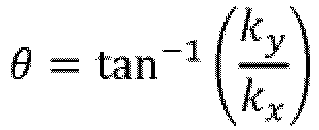 Δkr est le taux de changement dans la direction radialeΔθ est le taux de changement dans la direction angulaireFOVe est le champ de vision effectif en x et yFOV0 est le champ de vision souhaitékrmax est la valeur maximale de kr qui est la moitié de la résolution en x et ykz est l'emplacement pour chaque kz -tranche et kzmax est le nombre de kz -tranchesN est le nombre d'entrelacementsles paramètres a et b commandent la variance de la fonction exponentielle le long des directions kr et kz et déterminent le facteur d'accélération,et dans lequel le nombre d'entrelacements sur chaque kztranche est conçu pour diminuer avec l'augmentation de kz .
 - Système d'imagerie par résonance magnétique fonctionnelle (IRMf), le système comprenant :une bobine configurée pour appliquer une séquence de précession libre équilibrée en état stationnaire (b-SSFP) à une zone cible chez un sujet ;un récepteur configuré pour acquérir des données d'image de la zone cible chez le sujet en utilisant une trajectoire en spirale à densité variable (VDS) sous-échantillonnée de manière aléatoire, dans lequel la trajectoire VDS inclut une pile aléatoire de trajectoires VDS, dans lequel un changement de direction radiale par rapport à un changement de vitesse dans une direction angulaire des trajectoires VDS est déterminé par un certain nombre d'entrelacements et un champ de vision effectif, dans lequel le champ de vision suit une fonction exponentielle et un angle entre chaque entrelacement du nombre d'entrelacements est distribué de manière aléatoire ; etun processeur configuré pour produire une image de la zone cible dans le sujet, en utilisant une reconstruction par détection comprimée, sur la base des données d'image acquises,dans lequel une trajectoire en spirale d'Archimède avec des contraintes définies dans les équations suivantes est utilisée pour définir la pile aléatoire 3D de trajectoires VDS :

 où la trajectoire en spirale d'Archimède est décrite en coordonnées polaires sous la forme :


 Δkr est le taux de changement dans la direction radialeΔθ est le taux de changement dans la direction angulaireFOVe est le champ de vision effectif en x et yFOV0 est le champ de vision souhaitékrmax est la valeur maximale de kr qui est la moitié de la résolution en x et ykz est l'emplacement pour chaque kz -tranche et kzmax est le nombre de kz -tranchesN est le nombre d'entrelacementsles paramètres a et b contrôlent la variance de la fonction exponentielle le long des directions kr et kz etdéterminer le facteur d'accélération, et dans lequel le nombre d'entrelacements sur chaque kz -tranche est conçu pour diminuer avec l'augmentation de kz .
 - Procédé selon la revendication 1, dans lequel les données d'image sont analysées en utilisant une transformée de dispersion spatiale, ou système selon la revendication 2, dans lequel le processeur est en outre configuré pour analyser les données d'image en utilisant une transformée de dispersion spatiale.
- Procédé selon la revendication 3 ou système selon la revendication 3, dans lequel la transformée de dispersion spatiale comprend une transformée en cosinus discrète (TDC).
- Procédé selon la revendication 1 ou système selon la revendication 2, dans lequel l'image est produite en temps réel.
- Procédé selon la revendication 5, dans lequel les données d'image sont analysées en utilisant un algorithme de seuillage de retrait itératif rapide (FISTA), ou système selon la revendication 5, dans lequel le processeur est en outre configuré pour analyser les données d'image en utilisant un algorithme de seuillage de retrait itératif rapide (FISTA).
- Procédé selon la revendication 1 ou système selon la revendication 2, dans lequel la trajectoire VDS sous-échantillonnée de manière aléatoire présente un facteur d'accélération d'échantillonnage de 2 ou plus.
- Procédé selon la revendication 1 ou système selon la revendication 2, dans lequel la trajectoire VDS sous-échantillonnée de manière aléatoire présente un facteur d'accélération d'échantillonnage de 5 ou plus.
- Procédé selon la revendication 1 ou système selon la revendication 2, dans lequel l'image présente une résolution spatiale d'environ 0,2 x 0,2 x 0,5 mm3 ou plus.
Applications Claiming Priority (2)
| Application Number | Priority Date | Filing Date | Title |
|---|---|---|---|
| US201562212335P | 2015-08-31 | 2015-08-31 | |
| PCT/US2016/049508 WO2017040538A1 (fr) | 2015-08-31 | 2016-08-30 | Imagerie par résonance magnétique à haute résolution et acquisition comprimée |
Publications (3)
| Publication Number | Publication Date |
|---|---|
| EP3345124A1 EP3345124A1 (fr) | 2018-07-11 |
| EP3345124A4 EP3345124A4 (fr) | 2019-04-24 |
| EP3345124B1 true EP3345124B1 (fr) | 2024-01-03 |
Family
ID=58188375
Family Applications (1)
| Application Number | Title | Priority Date | Filing Date |
|---|---|---|---|
| EP16842828.2A Active EP3345124B1 (fr) | 2015-08-31 | 2016-08-30 | Imagerie par résonance magnétique à haute résolution et acquisition comprimée |
Country Status (5)
| Country | Link |
|---|---|
| US (2) | US10667691B2 (fr) |
| EP (1) | EP3345124B1 (fr) |
| KR (1) | KR102599871B1 (fr) |
| CA (1) | CA2995019C (fr) |
| WO (1) | WO2017040538A1 (fr) |
Families Citing this family (13)
| Publication number | Priority date | Publication date | Assignee | Title |
|---|---|---|---|---|
| WO2017040538A1 (fr) * | 2015-08-31 | 2017-03-09 | The Board Of Trustees Of The Leland Stanford Junior University | Imagerie par résonance magnétique à haute résolution et acquisition comprimée |
| EP3410926A4 (fr) | 2016-02-01 | 2019-08-28 | The Board of Trustees of the Leland Stanford Junior University | Méthode et systèmes pour analyser des données d'imagerie fonctionnelle |
| GB201702600D0 (en) * | 2017-02-17 | 2017-04-05 | Biomax Informatics Ag | Neurological data processing |
| WO2019060258A1 (fr) | 2017-09-19 | 2019-03-28 | University Of Cincinnati | Systèmes et procédés de détection de petits changements physiologiques ou pathologiques à l'aide d'une imagerie par résonance magnétique à haute résolution |
| US11612353B2 (en) | 2017-11-10 | 2023-03-28 | Lvis Corporation | Efficacy and/or therapeutic parameter recommendation using individual patient data and therapeutic brain network maps |
| EP3578226A1 (fr) * | 2018-06-07 | 2019-12-11 | Koninklijke Philips N.V. | Représentation d'ablation thermique temporelle pour l'administration d'un traitement |
| CN113795764B (zh) | 2018-07-30 | 2025-03-25 | 海珀菲纳股份有限公司 | 用于磁共振图像重建的深度学习技术 |
| CN113557526B (zh) | 2018-08-15 | 2025-11-14 | 海珀菲纳股份有限公司 | 磁共振成像方法、系统和计算机程序产品 |
| JP2022526718A (ja) * | 2019-03-14 | 2022-05-26 | ハイパーファイン,インコーポレイテッド | 空間周波数データから磁気共鳴画像を生成するための深層学習技術 |
| CN110222783B (zh) * | 2019-06-13 | 2023-04-07 | 南京信息工程大学 | 基于小波域正则化的地基和星载雷达降水数据融合方法 |
| CN110263838B (zh) * | 2019-06-13 | 2023-04-18 | 南京信息工程大学 | 一种多传感器降水估计融合方法 |
| CN114786765B (zh) | 2019-09-25 | 2026-03-20 | 小利兰·斯坦福大学托管委员会 | 对眶额皮质的丘脑输入驱动由gaba和未定带介导的全脑频率依赖性抑制 |
| CN113365014B (zh) * | 2021-05-11 | 2022-04-26 | 中国科学院国家空间科学中心 | 一种并行压缩感知gpu加速实时成像系统与方法 |
Family Cites Families (15)
| Publication number | Priority date | Publication date | Assignee | Title |
|---|---|---|---|---|
| US5387742A (en) | 1990-06-15 | 1995-02-07 | Scios Nova Inc. | Transgenic mice displaying the amyloid-forming pathology of alzheimer's disease |
| US5985930A (en) | 1996-11-21 | 1999-11-16 | Pasinetti; Giulio M. | Treatment of neurodegenerative conditions with nimesulide |
| US7632679B2 (en) | 2002-07-16 | 2009-12-15 | The Trustees Of Columbia University In The City Of New York | Systems and methods for screening for modulators of neural differentiation |
| US7788075B2 (en) * | 2004-08-16 | 2010-08-31 | Mcw Research Foundation | System and method for sensory defect simulation |
| JP3668816B1 (ja) * | 2004-12-16 | 2005-07-06 | 学校法人慶應義塾 | 磁気共鳴イメージング装置 |
| US7602183B2 (en) * | 2007-02-13 | 2009-10-13 | The Board Of Trustees Of The Leland Stanford Junior University | K-T sparse: high frame-rate dynamic magnetic resonance imaging exploiting spatio-temporal sparsity |
| US7777487B2 (en) * | 2007-02-15 | 2010-08-17 | Uwm Research Foundation, Inc. | Methods and apparatus for joint image reconstruction and coil sensitivity estimation in parallel MRI |
| US20090285463A1 (en) * | 2008-04-18 | 2009-11-19 | Ricardo Otazo | Superresolution parallel magnetic resonance imaging |
| KR101030676B1 (ko) * | 2009-01-05 | 2011-04-22 | 한국과학기술원 | 높은 시공간 해상도의 기능적 자기 공명 영상을 위한 고차 일반 급수 병렬 영상법 및 샘플링 법 |
| US8400152B2 (en) * | 2010-04-19 | 2013-03-19 | Fa-Hsuan Lin | Method for k-space reconstruction in magnetic resonance inverse imaging |
| US8696722B2 (en) | 2010-11-22 | 2014-04-15 | The Board Of Trustees Of The Leland Stanford Junior University | Optogenetic magnetic resonance imaging |
| EP3708077B1 (fr) * | 2011-09-09 | 2024-06-19 | The Regents of The University of California | Visualisation in vivo et régulation de changements pathologiques dans des circuits de neurones |
| US9466102B2 (en) * | 2012-09-26 | 2016-10-11 | Siemens Corporation | Multi-GPU FISTA implementation for MR reconstruction with non-uniform K-space sampling |
| WO2015034951A1 (fr) * | 2013-09-03 | 2015-03-12 | Cedars-Sinai Medical Center | Viabilité myocardique par irm sans milieu de contraste exogène |
| WO2017040538A1 (fr) * | 2015-08-31 | 2017-03-09 | The Board Of Trustees Of The Leland Stanford Junior University | Imagerie par résonance magnétique à haute résolution et acquisition comprimée |
-
2016
- 2016-08-30 WO PCT/US2016/049508 patent/WO2017040538A1/fr not_active Ceased
- 2016-08-30 CA CA2995019A patent/CA2995019C/fr active Active
- 2016-08-30 US US15/749,767 patent/US10667691B2/en active Active
- 2016-08-30 KR KR1020187008574A patent/KR102599871B1/ko active Active
- 2016-08-30 EP EP16842828.2A patent/EP3345124B1/fr active Active
-
2020
- 2020-04-27 US US16/859,267 patent/US11357402B2/en active Active
Also Published As
| Publication number | Publication date |
|---|---|
| US10667691B2 (en) | 2020-06-02 |
| US20190150742A1 (en) | 2019-05-23 |
| WO2017040538A1 (fr) | 2017-03-09 |
| US20200297212A1 (en) | 2020-09-24 |
| EP3345124A4 (fr) | 2019-04-24 |
| CA2995019C (fr) | 2024-02-13 |
| CA2995019A1 (fr) | 2017-03-09 |
| US11357402B2 (en) | 2022-06-14 |
| KR102599871B1 (ko) | 2023-11-09 |
| EP3345124A1 (fr) | 2018-07-11 |
| KR20180048808A (ko) | 2018-05-10 |
Similar Documents
| Publication | Publication Date | Title |
|---|---|---|
| US11357402B2 (en) | Compressed sensing high resolution functional magnetic resonance imaging | |
| US11672466B2 (en) | System and method for modeling brain dynamics in normal and diseased states | |
| JP6987062B2 (ja) | 機能の画像データを解析するための方法及びシステム | |
| US11759651B2 (en) | In vivo visualization and control of pathological changes in neural circuits | |
| Logothetis et al. | On the nature of the BOLD fMRI contrast mechanism | |
| Diekhoff et al. | Functional localization in the human brain: Gradient‐echo, spin‐echo, and arterial spin‐labeling fMRI compared with neuronavigated TMS | |
| Abe et al. | Neurobiological mechanisms of electroconvulsive therapy for depression: Insights into hippocampal volumetric increases from clinical and preclinical studies | |
| Arrubla et al. | Microstructural and functional correlates of glutamate concentration in the posterior cingulate cortex | |
| Jung et al. | The role of GABA in semantic memory and its neuroplasticity | |
| Handfield-Jones | Connectomic analysis of substantia nigra pars compacta and ventral tegmental area projections to the striatum and cortex | |
| Visser | Leaves and forests. Low level sound processing and methods for the large-scal analysis of white matter structure in autism | |
| Ezzatdoost | Relating the circadian dynamics of cortical glutamate to human motor plasticity: a trimodal MRS-EEG-fMRI imaging study | |
| Lu et al. | Direct mapping of neural activity via glutamate-weighted magnetic resonance imaging | |
| Vaudano et al. | Electroencephalography (EEG) Combined with Neuroimaging and Neurostimulation | |
| Brealy | The relationship between variation in genes, GABA, structure and gamma oscillations in the visual and auditory system of healthy individuals and psychiatric disorder | |
| Hawkins | Acute Anti-psychotic Modulation of the Structure and Function of the Brain | |
| Blamire et al. | Imaging in Neuromuscular Disease 2019 |
Legal Events
| Date | Code | Title | Description |
|---|---|---|---|
| STAA | Information on the status of an ep patent application or granted ep patent |
Free format text: STATUS: THE INTERNATIONAL PUBLICATION HAS BEEN MADE |
|
| PUAI | Public reference made under article 153(3) epc to a published international application that has entered the european phase |
Free format text: ORIGINAL CODE: 0009012 |
|
| STAA | Information on the status of an ep patent application or granted ep patent |
Free format text: STATUS: REQUEST FOR EXAMINATION WAS MADE |
|
| 17P | Request for examination filed |
Effective date: 20180302 |
|
| AK | Designated contracting states |
Kind code of ref document: A1 Designated state(s): AL AT BE BG CH CY CZ DE DK EE ES FI FR GB GR HR HU IE IS IT LI LT LU LV MC MK MT NL NO PL PT RO RS SE SI SK SM TR |
|
| AX | Request for extension of the european patent |
Extension state: BA ME |
|
| DAV | Request for validation of the european patent (deleted) | ||
| DAX | Request for extension of the european patent (deleted) | ||
| REG | Reference to a national code |
Free format text: PREVIOUS MAIN CLASS: G06K0009000000 Ref country code: DE Ref legal event code: R079 Ref document number: 602016085170 Country of ref document: DE Ipc: G01R0033480000 |
|
| A4 | Supplementary search report drawn up and despatched |
Effective date: 20190327 |
|
| RIC1 | Information provided on ipc code assigned before grant |
Ipc: A61B 5/055 20060101ALI20190321BHEP Ipc: G01R 33/563 20060101ALI20190321BHEP Ipc: A61B 5/00 20060101ALI20190321BHEP Ipc: G01R 33/48 20060101AFI20190321BHEP Ipc: G01R 33/56 20060101ALN20190321BHEP Ipc: G01R 33/561 20060101ALI20190321BHEP |
|
| RAP1 | Party data changed (applicant data changed or rights of an application transferred) |
Owner name: THE BOARD OF TRUSTEES OF THE LELAND STANFORD JUNIO |
|
| STAA | Information on the status of an ep patent application or granted ep patent |
Free format text: STATUS: EXAMINATION IS IN PROGRESS |
|
| 17Q | First examination report despatched |
Effective date: 20211013 |
|
| P01 | Opt-out of the competence of the unified patent court (upc) registered |
Effective date: 20230526 |
|
| GRAP | Despatch of communication of intention to grant a patent |
Free format text: ORIGINAL CODE: EPIDOSNIGR1 |
|
| STAA | Information on the status of an ep patent application or granted ep patent |
Free format text: STATUS: GRANT OF PATENT IS INTENDED |
|
| RIC1 | Information provided on ipc code assigned before grant |
Ipc: G01R 33/56 20060101ALN20230629BHEP Ipc: A61B 5/055 20060101ALI20230629BHEP Ipc: A61B 5/00 20060101ALI20230629BHEP Ipc: G01R 33/561 20060101ALI20230629BHEP Ipc: G01R 33/563 20060101ALI20230629BHEP Ipc: G01R 33/48 20060101AFI20230629BHEP |
|
| RIC1 | Information provided on ipc code assigned before grant |
Ipc: G01R 33/56 20060101ALN20230711BHEP Ipc: A61B 5/055 20060101ALI20230711BHEP Ipc: A61B 5/00 20060101ALI20230711BHEP Ipc: G01R 33/561 20060101ALI20230711BHEP Ipc: G01R 33/563 20060101ALI20230711BHEP Ipc: G01R 33/48 20060101AFI20230711BHEP |
|
| INTG | Intention to grant announced |
Effective date: 20230728 |
|
| GRAS | Grant fee paid |
Free format text: ORIGINAL CODE: EPIDOSNIGR3 |
|
| GRAA | (expected) grant |
Free format text: ORIGINAL CODE: 0009210 |
|
| STAA | Information on the status of an ep patent application or granted ep patent |
Free format text: STATUS: THE PATENT HAS BEEN GRANTED |
|
| AK | Designated contracting states |
Kind code of ref document: B1 Designated state(s): AL AT BE BG CH CY CZ DE DK EE ES FI FR GB GR HR HU IE IS IT LI LT LU LV MC MK MT NL NO PL PT RO RS SE SI SK SM TR |
|
| REG | Reference to a national code |
Ref country code: GB Ref legal event code: FG4D |
|
| REG | Reference to a national code |
Ref country code: CH Ref legal event code: EP |
|
| REG | Reference to a national code |
Ref country code: DE Ref legal event code: R096 Ref document number: 602016085170 Country of ref document: DE |
|
| REG | Reference to a national code |
Ref country code: IE Ref legal event code: FG4D |
|
| REG | Reference to a national code |
Ref country code: LT Ref legal event code: MG9D |
|
| PG25 | Lapsed in a contracting state [announced via postgrant information from national office to epo] |
Ref country code: ES Free format text: LAPSE BECAUSE OF FAILURE TO SUBMIT A TRANSLATION OF THE DESCRIPTION OR TO PAY THE FEE WITHIN THE PRESCRIBED TIME-LIMIT Effective date: 20240103 |
|
| PG25 | Lapsed in a contracting state [announced via postgrant information from national office to epo] |
Ref country code: ES Free format text: LAPSE BECAUSE OF FAILURE TO SUBMIT A TRANSLATION OF THE DESCRIPTION OR TO PAY THE FEE WITHIN THE PRESCRIBED TIME-LIMIT Effective date: 20240103 |
|
| REG | Reference to a national code |
Ref country code: NL Ref legal event code: MP Effective date: 20240103 |
|
| REG | Reference to a national code |
Ref country code: AT Ref legal event code: MK05 Ref document number: 1647328 Country of ref document: AT Kind code of ref document: T Effective date: 20240103 |
|
| PG25 | Lapsed in a contracting state [announced via postgrant information from national office to epo] |
Ref country code: NL Free format text: LAPSE BECAUSE OF FAILURE TO SUBMIT A TRANSLATION OF THE DESCRIPTION OR TO PAY THE FEE WITHIN THE PRESCRIBED TIME-LIMIT Effective date: 20240103 |
|
| PG25 | Lapsed in a contracting state [announced via postgrant information from national office to epo] |
Ref country code: NL Free format text: LAPSE BECAUSE OF FAILURE TO SUBMIT A TRANSLATION OF THE DESCRIPTION OR TO PAY THE FEE WITHIN THE PRESCRIBED TIME-LIMIT Effective date: 20240103 |
|
| PG25 | Lapsed in a contracting state [announced via postgrant information from national office to epo] |
Ref country code: IS Free format text: LAPSE BECAUSE OF FAILURE TO SUBMIT A TRANSLATION OF THE DESCRIPTION OR TO PAY THE FEE WITHIN THE PRESCRIBED TIME-LIMIT Effective date: 20240503 |
|
| PG25 | Lapsed in a contracting state [announced via postgrant information from national office to epo] |
Ref country code: LT Free format text: LAPSE BECAUSE OF FAILURE TO SUBMIT A TRANSLATION OF THE DESCRIPTION OR TO PAY THE FEE WITHIN THE PRESCRIBED TIME-LIMIT Effective date: 20240103 |
|
| PG25 | Lapsed in a contracting state [announced via postgrant information from national office to epo] |
Ref country code: GR Free format text: LAPSE BECAUSE OF FAILURE TO SUBMIT A TRANSLATION OF THE DESCRIPTION OR TO PAY THE FEE WITHIN THE PRESCRIBED TIME-LIMIT Effective date: 20240404 |
|
| PG25 | Lapsed in a contracting state [announced via postgrant information from national office to epo] |
Ref country code: RS Free format text: LAPSE BECAUSE OF FAILURE TO SUBMIT A TRANSLATION OF THE DESCRIPTION OR TO PAY THE FEE WITHIN THE PRESCRIBED TIME-LIMIT Effective date: 20240403 Ref country code: HR Free format text: LAPSE BECAUSE OF FAILURE TO SUBMIT A TRANSLATION OF THE DESCRIPTION OR TO PAY THE FEE WITHIN THE PRESCRIBED TIME-LIMIT Effective date: 20240103 |
|
| PG25 | Lapsed in a contracting state [announced via postgrant information from national office to epo] |
Ref country code: AT Free format text: LAPSE BECAUSE OF FAILURE TO SUBMIT A TRANSLATION OF THE DESCRIPTION OR TO PAY THE FEE WITHIN THE PRESCRIBED TIME-LIMIT Effective date: 20240103 Ref country code: CZ Free format text: LAPSE BECAUSE OF FAILURE TO SUBMIT A TRANSLATION OF THE DESCRIPTION OR TO PAY THE FEE WITHIN THE PRESCRIBED TIME-LIMIT Effective date: 20240103 |
|
| PG25 | Lapsed in a contracting state [announced via postgrant information from national office to epo] |
Ref country code: RS Free format text: LAPSE BECAUSE OF FAILURE TO SUBMIT A TRANSLATION OF THE DESCRIPTION OR TO PAY THE FEE WITHIN THE PRESCRIBED TIME-LIMIT Effective date: 20240403 Ref country code: NO Free format text: LAPSE BECAUSE OF FAILURE TO SUBMIT A TRANSLATION OF THE DESCRIPTION OR TO PAY THE FEE WITHIN THE PRESCRIBED TIME-LIMIT Effective date: 20240403 Ref country code: LT Free format text: LAPSE BECAUSE OF FAILURE TO SUBMIT A TRANSLATION OF THE DESCRIPTION OR TO PAY THE FEE WITHIN THE PRESCRIBED TIME-LIMIT Effective date: 20240103 Ref country code: IS Free format text: LAPSE BECAUSE OF FAILURE TO SUBMIT A TRANSLATION OF THE DESCRIPTION OR TO PAY THE FEE WITHIN THE PRESCRIBED TIME-LIMIT Effective date: 20240503 Ref country code: HR Free format text: LAPSE BECAUSE OF FAILURE TO SUBMIT A TRANSLATION OF THE DESCRIPTION OR TO PAY THE FEE WITHIN THE PRESCRIBED TIME-LIMIT Effective date: 20240103 Ref country code: GR Free format text: LAPSE BECAUSE OF FAILURE TO SUBMIT A TRANSLATION OF THE DESCRIPTION OR TO PAY THE FEE WITHIN THE PRESCRIBED TIME-LIMIT Effective date: 20240404 Ref country code: CZ Free format text: LAPSE BECAUSE OF FAILURE TO SUBMIT A TRANSLATION OF THE DESCRIPTION OR TO PAY THE FEE WITHIN THE PRESCRIBED TIME-LIMIT Effective date: 20240103 Ref country code: BG Free format text: LAPSE BECAUSE OF FAILURE TO SUBMIT A TRANSLATION OF THE DESCRIPTION OR TO PAY THE FEE WITHIN THE PRESCRIBED TIME-LIMIT Effective date: 20240103 Ref country code: AT Free format text: LAPSE BECAUSE OF FAILURE TO SUBMIT A TRANSLATION OF THE DESCRIPTION OR TO PAY THE FEE WITHIN THE PRESCRIBED TIME-LIMIT Effective date: 20240103 |
|
| PG25 | Lapsed in a contracting state [announced via postgrant information from national office to epo] |
Ref country code: PL Free format text: LAPSE BECAUSE OF FAILURE TO SUBMIT A TRANSLATION OF THE DESCRIPTION OR TO PAY THE FEE WITHIN THE PRESCRIBED TIME-LIMIT Effective date: 20240103 Ref country code: PT Free format text: LAPSE BECAUSE OF FAILURE TO SUBMIT A TRANSLATION OF THE DESCRIPTION OR TO PAY THE FEE WITHIN THE PRESCRIBED TIME-LIMIT Effective date: 20240503 |
|
| PG25 | Lapsed in a contracting state [announced via postgrant information from national office to epo] |
Ref country code: SE Free format text: LAPSE BECAUSE OF FAILURE TO SUBMIT A TRANSLATION OF THE DESCRIPTION OR TO PAY THE FEE WITHIN THE PRESCRIBED TIME-LIMIT Effective date: 20240103 Ref country code: PT Free format text: LAPSE BECAUSE OF FAILURE TO SUBMIT A TRANSLATION OF THE DESCRIPTION OR TO PAY THE FEE WITHIN THE PRESCRIBED TIME-LIMIT Effective date: 20240503 Ref country code: PL Free format text: LAPSE BECAUSE OF FAILURE TO SUBMIT A TRANSLATION OF THE DESCRIPTION OR TO PAY THE FEE WITHIN THE PRESCRIBED TIME-LIMIT Effective date: 20240103 Ref country code: LV Free format text: LAPSE BECAUSE OF FAILURE TO SUBMIT A TRANSLATION OF THE DESCRIPTION OR TO PAY THE FEE WITHIN THE PRESCRIBED TIME-LIMIT Effective date: 20240103 |
|
| REG | Reference to a national code |
Ref country code: DE Ref legal event code: R097 Ref document number: 602016085170 Country of ref document: DE |
|
| PG25 | Lapsed in a contracting state [announced via postgrant information from national office to epo] |
Ref country code: DK Free format text: LAPSE BECAUSE OF FAILURE TO SUBMIT A TRANSLATION OF THE DESCRIPTION OR TO PAY THE FEE WITHIN THE PRESCRIBED TIME-LIMIT Effective date: 20240103 |
|
| PG25 | Lapsed in a contracting state [announced via postgrant information from national office to epo] |
Ref country code: SM Free format text: LAPSE BECAUSE OF FAILURE TO SUBMIT A TRANSLATION OF THE DESCRIPTION OR TO PAY THE FEE WITHIN THE PRESCRIBED TIME-LIMIT Effective date: 20240103 |
|
| PG25 | Lapsed in a contracting state [announced via postgrant information from national office to epo] |
Ref country code: EE Free format text: LAPSE BECAUSE OF FAILURE TO SUBMIT A TRANSLATION OF THE DESCRIPTION OR TO PAY THE FEE WITHIN THE PRESCRIBED TIME-LIMIT Effective date: 20240103 |
|
| PG25 | Lapsed in a contracting state [announced via postgrant information from national office to epo] |
Ref country code: SK Free format text: LAPSE BECAUSE OF FAILURE TO SUBMIT A TRANSLATION OF THE DESCRIPTION OR TO PAY THE FEE WITHIN THE PRESCRIBED TIME-LIMIT Effective date: 20240103 |
|
| PG25 | Lapsed in a contracting state [announced via postgrant information from national office to epo] |
Ref country code: SM Free format text: LAPSE BECAUSE OF FAILURE TO SUBMIT A TRANSLATION OF THE DESCRIPTION OR TO PAY THE FEE WITHIN THE PRESCRIBED TIME-LIMIT Effective date: 20240103 Ref country code: SK Free format text: LAPSE BECAUSE OF FAILURE TO SUBMIT A TRANSLATION OF THE DESCRIPTION OR TO PAY THE FEE WITHIN THE PRESCRIBED TIME-LIMIT Effective date: 20240103 Ref country code: RO Free format text: LAPSE BECAUSE OF FAILURE TO SUBMIT A TRANSLATION OF THE DESCRIPTION OR TO PAY THE FEE WITHIN THE PRESCRIBED TIME-LIMIT Effective date: 20240103 Ref country code: EE Free format text: LAPSE BECAUSE OF FAILURE TO SUBMIT A TRANSLATION OF THE DESCRIPTION OR TO PAY THE FEE WITHIN THE PRESCRIBED TIME-LIMIT Effective date: 20240103 Ref country code: DK Free format text: LAPSE BECAUSE OF FAILURE TO SUBMIT A TRANSLATION OF THE DESCRIPTION OR TO PAY THE FEE WITHIN THE PRESCRIBED TIME-LIMIT Effective date: 20240103 |
|
| PLBE | No opposition filed within time limit |
Free format text: ORIGINAL CODE: 0009261 |
|
| STAA | Information on the status of an ep patent application or granted ep patent |
Free format text: STATUS: NO OPPOSITION FILED WITHIN TIME LIMIT |
|
| PG25 | Lapsed in a contracting state [announced via postgrant information from national office to epo] |
Ref country code: IT Free format text: LAPSE BECAUSE OF FAILURE TO SUBMIT A TRANSLATION OF THE DESCRIPTION OR TO PAY THE FEE WITHIN THE PRESCRIBED TIME-LIMIT Effective date: 20240103 |
|
| 26N | No opposition filed |
Effective date: 20241007 |
|
| PG25 | Lapsed in a contracting state [announced via postgrant information from national office to epo] |
Ref country code: IT Free format text: LAPSE BECAUSE OF FAILURE TO SUBMIT A TRANSLATION OF THE DESCRIPTION OR TO PAY THE FEE WITHIN THE PRESCRIBED TIME-LIMIT Effective date: 20240103 |
|
| PG25 | Lapsed in a contracting state [announced via postgrant information from national office to epo] |
Ref country code: SI Free format text: LAPSE BECAUSE OF FAILURE TO SUBMIT A TRANSLATION OF THE DESCRIPTION OR TO PAY THE FEE WITHIN THE PRESCRIBED TIME-LIMIT Effective date: 20240103 Ref country code: MC Free format text: LAPSE BECAUSE OF FAILURE TO SUBMIT A TRANSLATION OF THE DESCRIPTION OR TO PAY THE FEE WITHIN THE PRESCRIBED TIME-LIMIT Effective date: 20240103 |
|
| PGFP | Annual fee paid to national office [announced via postgrant information from national office to epo] |
Ref country code: LU Payment date: 20250805 Year of fee payment: 10 |
|
| PG25 | Lapsed in a contracting state [announced via postgrant information from national office to epo] |
Ref country code: FI Free format text: LAPSE BECAUSE OF FAILURE TO SUBMIT A TRANSLATION OF THE DESCRIPTION OR TO PAY THE FEE WITHIN THE PRESCRIBED TIME-LIMIT Effective date: 20240103 |
|
| PGFP | Annual fee paid to national office [announced via postgrant information from national office to epo] |
Ref country code: DE Payment date: 20250702 Year of fee payment: 10 |
|
| PGFP | Annual fee paid to national office [announced via postgrant information from national office to epo] |
Ref country code: BE Payment date: 20250703 Year of fee payment: 10 Ref country code: GB Payment date: 20250703 Year of fee payment: 10 |
|
| PGFP | Annual fee paid to national office [announced via postgrant information from national office to epo] |
Ref country code: FR Payment date: 20250703 Year of fee payment: 10 |
|
| PGFP | Annual fee paid to national office [announced via postgrant information from national office to epo] |
Ref country code: CH Payment date: 20250901 Year of fee payment: 10 |
|
| PGFP | Annual fee paid to national office [announced via postgrant information from national office to epo] |
Ref country code: IE Payment date: 20250702 Year of fee payment: 10 |
|
| PG25 | Lapsed in a contracting state [announced via postgrant information from national office to epo] |
Ref country code: CY Free format text: LAPSE BECAUSE OF FAILURE TO SUBMIT A TRANSLATION OF THE DESCRIPTION OR TO PAY THE FEE WITHIN THE PRESCRIBED TIME-LIMIT; INVALID AB INITIO Effective date: 20160830 |
|
| PG25 | Lapsed in a contracting state [announced via postgrant information from national office to epo] |
Ref country code: HU Free format text: LAPSE BECAUSE OF FAILURE TO SUBMIT A TRANSLATION OF THE DESCRIPTION OR TO PAY THE FEE WITHIN THE PRESCRIBED TIME-LIMIT; INVALID AB INITIO Effective date: 20160830 |