EP3345545A1 - Nanoparticules magnétiques fonctionnalisées et leur utilisation dans l'imagerie de dépôts amyloïdes et d'enchevêtrements neurofibrillaires - Google Patents
Nanoparticules magnétiques fonctionnalisées et leur utilisation dans l'imagerie de dépôts amyloïdes et d'enchevêtrements neurofibrillaires Download PDFInfo
- Publication number
- EP3345545A1 EP3345545A1 EP18150647.8A EP18150647A EP3345545A1 EP 3345545 A1 EP3345545 A1 EP 3345545A1 EP 18150647 A EP18150647 A EP 18150647A EP 3345545 A1 EP3345545 A1 EP 3345545A1
- Authority
- EP
- European Patent Office
- Prior art keywords
- pharmaceutical composition
- mnp
- functionalized
- brain
- functionalized mnp
- Prior art date
- Legal status (The legal status is an assumption and is not a legal conclusion. Google has not performed a legal analysis and makes no representation as to the accuracy of the status listed.)
- Granted
Links
- DCRZYADKQRHHSF-UHFFFAOYSA-N CC(N(Cc(cc(cc1)OC)c1OC)c(cc(cc1)F)c1Oc1ccccc1)=O Chemical compound CC(N(Cc(cc(cc1)OC)c1OC)c(cc(cc1)F)c1Oc1ccccc1)=O DCRZYADKQRHHSF-UHFFFAOYSA-N 0.000 description 1
- FSMCHXXKCDSXHN-UHFFFAOYSA-N CC(N(Cc1cc(OC)ccc1OC)c1cc(O)ccc1Oc1ccccc1)O Chemical compound CC(N(Cc1cc(OC)ccc1OC)c1cc(O)ccc1Oc1ccccc1)O FSMCHXXKCDSXHN-UHFFFAOYSA-N 0.000 description 1
- RAVIZVQZGXBOQO-UHFFFAOYSA-N CCC(C)N(C)C(c1nc(-c(cccc2)c2Cl)c(cccc2)c2c1)=O Chemical compound CCC(C)N(C)C(c1nc(-c(cccc2)c2Cl)c(cccc2)c2c1)=O RAVIZVQZGXBOQO-UHFFFAOYSA-N 0.000 description 1
- CUFWOESQUWMVTN-UHFFFAOYSA-N CCN(CCNCCN)CO Chemical compound CCN(CCNCCN)CO CUFWOESQUWMVTN-UHFFFAOYSA-N 0.000 description 1
- NKHNFMMASYKDQW-NSCUHMNNSA-O CNc1ccc(/C=C/c(cc2)ccc2OCCOCCOCC[OH2+])cc1 Chemical compound CNc1ccc(/C=C/c(cc2)ccc2OCCOCCOCC[OH2+])cc1 NKHNFMMASYKDQW-NSCUHMNNSA-O 0.000 description 1
- HBAXSSYETNIOBA-NSCUHMNNSA-N CNc1ccc(/C=C/c(cn2)ccc2OCCOCCOCCN)cc1 Chemical compound CNc1ccc(/C=C/c(cn2)ccc2OCCOCCOCCN)cc1 HBAXSSYETNIOBA-NSCUHMNNSA-N 0.000 description 1
- HBAXSSYETNIOBA-UHFFFAOYSA-O CNc1ccc(C=Cc(cn2)ccc2OCCOCCOCC[NH3+])cc1 Chemical compound CNc1ccc(C=Cc(cn2)ccc2OCCOCCOCC[NH3+])cc1 HBAXSSYETNIOBA-UHFFFAOYSA-O 0.000 description 1
- KFEMTXGIHUSJRF-UHFFFAOYSA-N COc(nc1[s]2)ccc1[n]1c2nc(-c(cn2)ccc2O)c1 Chemical compound COc(nc1[s]2)ccc1[n]1c2nc(-c(cn2)ccc2O)c1 KFEMTXGIHUSJRF-UHFFFAOYSA-N 0.000 description 1
Images



Classifications
-
- A—HUMAN NECESSITIES
- A61—MEDICAL OR VETERINARY SCIENCE; HYGIENE
- A61K—PREPARATIONS FOR MEDICAL, DENTAL OR TOILETRY PURPOSES
- A61K49/00—Preparations for testing in vivo
- A61K49/06—Nuclear magnetic resonance [NMR] contrast preparations; Magnetic resonance imaging [MRI] contrast preparations
- A61K49/08—Nuclear magnetic resonance [NMR] contrast preparations; Magnetic resonance imaging [MRI] contrast preparations characterised by the carrier
- A61K49/10—Organic compounds
-
- A—HUMAN NECESSITIES
- A61—MEDICAL OR VETERINARY SCIENCE; HYGIENE
- A61K—PREPARATIONS FOR MEDICAL, DENTAL OR TOILETRY PURPOSES
- A61K49/00—Preparations for testing in vivo
- A61K49/06—Nuclear magnetic resonance [NMR] contrast preparations; Magnetic resonance imaging [MRI] contrast preparations
-
- A—HUMAN NECESSITIES
- A61—MEDICAL OR VETERINARY SCIENCE; HYGIENE
- A61B—DIAGNOSIS; SURGERY; IDENTIFICATION
- A61B5/00—Measuring for diagnostic purposes; Identification of persons
- A61B5/05—Detecting, measuring or recording for diagnosis by means of electric currents or magnetic fields; Measuring using microwaves or radio waves
- A61B5/055—Detecting, measuring or recording for diagnosis by means of electric currents or magnetic fields; Measuring using microwaves or radio waves involving electronic [EMR] or nuclear [NMR] magnetic resonance, e.g. magnetic resonance imaging
-
- A—HUMAN NECESSITIES
- A61—MEDICAL OR VETERINARY SCIENCE; HYGIENE
- A61K—PREPARATIONS FOR MEDICAL, DENTAL OR TOILETRY PURPOSES
- A61K31/00—Medicinal preparations containing organic active ingredients
- A61K31/13—Amines
- A61K31/132—Amines having two or more amino groups, e.g. spermidine, putrescine
-
- A—HUMAN NECESSITIES
- A61—MEDICAL OR VETERINARY SCIENCE; HYGIENE
- A61K—PREPARATIONS FOR MEDICAL, DENTAL OR TOILETRY PURPOSES
- A61K31/00—Medicinal preparations containing organic active ingredients
- A61K31/13—Amines
- A61K31/133—Amines having hydroxy groups, e.g. sphingosine
-
- A—HUMAN NECESSITIES
- A61—MEDICAL OR VETERINARY SCIENCE; HYGIENE
- A61K—PREPARATIONS FOR MEDICAL, DENTAL OR TOILETRY PURPOSES
- A61K31/00—Medicinal preparations containing organic active ingredients
- A61K31/13—Amines
- A61K31/135—Amines having aromatic rings, e.g. ketamine, nortriptyline
- A61K31/136—Amines having aromatic rings, e.g. ketamine, nortriptyline having the amino group directly attached to the aromatic ring, e.g. benzeneamine
-
- A—HUMAN NECESSITIES
- A61—MEDICAL OR VETERINARY SCIENCE; HYGIENE
- A61K—PREPARATIONS FOR MEDICAL, DENTAL OR TOILETRY PURPOSES
- A61K31/00—Medicinal preparations containing organic active ingredients
- A61K31/13—Amines
- A61K31/145—Amines having sulfur, e.g. thiurams (>N—C(S)—S—C(S)—N< and >N—C(S)—S—S—C(S)—N<), Sulfinylamines (—N=SO), Sulfonylamines (—N=SO2)
-
- A—HUMAN NECESSITIES
- A61—MEDICAL OR VETERINARY SCIENCE; HYGIENE
- A61K—PREPARATIONS FOR MEDICAL, DENTAL OR TOILETRY PURPOSES
- A61K31/00—Medicinal preparations containing organic active ingredients
- A61K31/16—Amides, e.g. hydroxamic acids
- A61K31/165—Amides, e.g. hydroxamic acids having aromatic rings, e.g. colchicine, atenolol, progabide
- A61K31/167—Amides, e.g. hydroxamic acids having aromatic rings, e.g. colchicine, atenolol, progabide having the nitrogen of a carboxamide group directly attached to the aromatic ring, e.g. lidocaine, paracetamol
-
- A—HUMAN NECESSITIES
- A61—MEDICAL OR VETERINARY SCIENCE; HYGIENE
- A61K—PREPARATIONS FOR MEDICAL, DENTAL OR TOILETRY PURPOSES
- A61K31/00—Medicinal preparations containing organic active ingredients
- A61K31/275—Nitriles; Isonitriles
- A61K31/277—Nitriles; Isonitriles having a ring, e.g. verapamil
-
- A—HUMAN NECESSITIES
- A61—MEDICAL OR VETERINARY SCIENCE; HYGIENE
- A61K—PREPARATIONS FOR MEDICAL, DENTAL OR TOILETRY PURPOSES
- A61K31/00—Medicinal preparations containing organic active ingredients
- A61K31/33—Heterocyclic compounds
- A61K31/395—Heterocyclic compounds having nitrogen as a ring hetero atom, e.g. guanethidine or rifamycins
- A61K31/41—Heterocyclic compounds having nitrogen as a ring hetero atom, e.g. guanethidine or rifamycins having five-membered rings with two or more ring hetero atoms, at least one of which being nitrogen, e.g. tetrazole
- A61K31/425—Thiazoles
- A61K31/427—Thiazoles not condensed and containing further heterocyclic rings
-
- A—HUMAN NECESSITIES
- A61—MEDICAL OR VETERINARY SCIENCE; HYGIENE
- A61K—PREPARATIONS FOR MEDICAL, DENTAL OR TOILETRY PURPOSES
- A61K31/00—Medicinal preparations containing organic active ingredients
- A61K31/33—Heterocyclic compounds
- A61K31/395—Heterocyclic compounds having nitrogen as a ring hetero atom, e.g. guanethidine or rifamycins
- A61K31/41—Heterocyclic compounds having nitrogen as a ring hetero atom, e.g. guanethidine or rifamycins having five-membered rings with two or more ring hetero atoms, at least one of which being nitrogen, e.g. tetrazole
- A61K31/425—Thiazoles
- A61K31/428—Thiazoles condensed with carbocyclic rings
-
- A—HUMAN NECESSITIES
- A61—MEDICAL OR VETERINARY SCIENCE; HYGIENE
- A61K—PREPARATIONS FOR MEDICAL, DENTAL OR TOILETRY PURPOSES
- A61K31/00—Medicinal preparations containing organic active ingredients
- A61K31/33—Heterocyclic compounds
- A61K31/395—Heterocyclic compounds having nitrogen as a ring hetero atom, e.g. guanethidine or rifamycins
- A61K31/435—Heterocyclic compounds having nitrogen as a ring hetero atom, e.g. guanethidine or rifamycins having six-membered rings with one nitrogen as the only ring hetero atom
- A61K31/44—Non condensed pyridines; Hydrogenated derivatives thereof
-
- A—HUMAN NECESSITIES
- A61—MEDICAL OR VETERINARY SCIENCE; HYGIENE
- A61K—PREPARATIONS FOR MEDICAL, DENTAL OR TOILETRY PURPOSES
- A61K31/00—Medicinal preparations containing organic active ingredients
- A61K31/33—Heterocyclic compounds
- A61K31/395—Heterocyclic compounds having nitrogen as a ring hetero atom, e.g. guanethidine or rifamycins
- A61K31/435—Heterocyclic compounds having nitrogen as a ring hetero atom, e.g. guanethidine or rifamycins having six-membered rings with one nitrogen as the only ring hetero atom
- A61K31/44—Non condensed pyridines; Hydrogenated derivatives thereof
- A61K31/4427—Non condensed pyridines; Hydrogenated derivatives thereof containing further heterocyclic ring systems
- A61K31/4439—Non condensed pyridines; Hydrogenated derivatives thereof containing further heterocyclic ring systems containing a five-membered ring with nitrogen as a ring hetero atom, e.g. omeprazole
-
- A—HUMAN NECESSITIES
- A61—MEDICAL OR VETERINARY SCIENCE; HYGIENE
- A61K—PREPARATIONS FOR MEDICAL, DENTAL OR TOILETRY PURPOSES
- A61K31/00—Medicinal preparations containing organic active ingredients
- A61K31/33—Heterocyclic compounds
- A61K31/395—Heterocyclic compounds having nitrogen as a ring hetero atom, e.g. guanethidine or rifamycins
- A61K31/435—Heterocyclic compounds having nitrogen as a ring hetero atom, e.g. guanethidine or rifamycins having six-membered rings with one nitrogen as the only ring hetero atom
- A61K31/44—Non condensed pyridines; Hydrogenated derivatives thereof
- A61K31/4427—Non condensed pyridines; Hydrogenated derivatives thereof containing further heterocyclic ring systems
- A61K31/444—Non condensed pyridines; Hydrogenated derivatives thereof containing further heterocyclic ring systems containing a six-membered ring with nitrogen as a ring heteroatom, e.g. amrinone
-
- A—HUMAN NECESSITIES
- A61—MEDICAL OR VETERINARY SCIENCE; HYGIENE
- A61K—PREPARATIONS FOR MEDICAL, DENTAL OR TOILETRY PURPOSES
- A61K31/00—Medicinal preparations containing organic active ingredients
- A61K31/33—Heterocyclic compounds
- A61K31/395—Heterocyclic compounds having nitrogen as a ring hetero atom, e.g. guanethidine or rifamycins
- A61K31/435—Heterocyclic compounds having nitrogen as a ring hetero atom, e.g. guanethidine or rifamycins having six-membered rings with one nitrogen as the only ring hetero atom
- A61K31/47—Quinolines; Isoquinolines
- A61K31/472—Non-condensed isoquinolines, e.g. papaverine
-
- A—HUMAN NECESSITIES
- A61—MEDICAL OR VETERINARY SCIENCE; HYGIENE
- A61K—PREPARATIONS FOR MEDICAL, DENTAL OR TOILETRY PURPOSES
- A61K31/00—Medicinal preparations containing organic active ingredients
- A61K31/33—Heterocyclic compounds
- A61K31/395—Heterocyclic compounds having nitrogen as a ring hetero atom, e.g. guanethidine or rifamycins
- A61K31/435—Heterocyclic compounds having nitrogen as a ring hetero atom, e.g. guanethidine or rifamycins having six-membered rings with one nitrogen as the only ring hetero atom
- A61K31/47—Quinolines; Isoquinolines
- A61K31/4738—Quinolines; Isoquinolines ortho- or peri-condensed with heterocyclic ring systems
- A61K31/4743—Quinolines; Isoquinolines ortho- or peri-condensed with heterocyclic ring systems condensed with ring systems having sulfur as a ring hetero atom
-
- A—HUMAN NECESSITIES
- A61—MEDICAL OR VETERINARY SCIENCE; HYGIENE
- A61K—PREPARATIONS FOR MEDICAL, DENTAL OR TOILETRY PURPOSES
- A61K31/00—Medicinal preparations containing organic active ingredients
- A61K31/33—Heterocyclic compounds
- A61K31/395—Heterocyclic compounds having nitrogen as a ring hetero atom, e.g. guanethidine or rifamycins
- A61K31/435—Heterocyclic compounds having nitrogen as a ring hetero atom, e.g. guanethidine or rifamycins having six-membered rings with one nitrogen as the only ring hetero atom
- A61K31/47—Quinolines; Isoquinolines
- A61K31/4738—Quinolines; Isoquinolines ortho- or peri-condensed with heterocyclic ring systems
- A61K31/4745—Quinolines; Isoquinolines ortho- or peri-condensed with heterocyclic ring systems condensed with ring systems having nitrogen as a ring hetero atom, e.g. phenantrolines
-
- A—HUMAN NECESSITIES
- A61—MEDICAL OR VETERINARY SCIENCE; HYGIENE
- A61K—PREPARATIONS FOR MEDICAL, DENTAL OR TOILETRY PURPOSES
- A61K49/00—Preparations for testing in vivo
- A61K49/06—Nuclear magnetic resonance [NMR] contrast preparations; Magnetic resonance imaging [MRI] contrast preparations
- A61K49/08—Nuclear magnetic resonance [NMR] contrast preparations; Magnetic resonance imaging [MRI] contrast preparations characterised by the carrier
-
- A—HUMAN NECESSITIES
- A61—MEDICAL OR VETERINARY SCIENCE; HYGIENE
- A61K—PREPARATIONS FOR MEDICAL, DENTAL OR TOILETRY PURPOSES
- A61K49/00—Preparations for testing in vivo
- A61K49/06—Nuclear magnetic resonance [NMR] contrast preparations; Magnetic resonance imaging [MRI] contrast preparations
- A61K49/18—Nuclear magnetic resonance [NMR] contrast preparations; Magnetic resonance imaging [MRI] contrast preparations characterised by a special physical form, e.g. emulsions, microcapsules, liposomes
- A61K49/1818—Nuclear magnetic resonance [NMR] contrast preparations; Magnetic resonance imaging [MRI] contrast preparations characterised by a special physical form, e.g. emulsions, microcapsules, liposomes particles, e.g. uncoated or non-functionalised microparticles or nanoparticles
- A61K49/1821—Nuclear magnetic resonance [NMR] contrast preparations; Magnetic resonance imaging [MRI] contrast preparations characterised by a special physical form, e.g. emulsions, microcapsules, liposomes particles, e.g. uncoated or non-functionalised microparticles or nanoparticles coated or functionalised microparticles or nanoparticles
- A61K49/1824—Nuclear magnetic resonance [NMR] contrast preparations; Magnetic resonance imaging [MRI] contrast preparations characterised by a special physical form, e.g. emulsions, microcapsules, liposomes particles, e.g. uncoated or non-functionalised microparticles or nanoparticles coated or functionalised microparticles or nanoparticles coated or functionalised nanoparticles
- A61K49/1827—Nuclear magnetic resonance [NMR] contrast preparations; Magnetic resonance imaging [MRI] contrast preparations characterised by a special physical form, e.g. emulsions, microcapsules, liposomes particles, e.g. uncoated or non-functionalised microparticles or nanoparticles coated or functionalised microparticles or nanoparticles coated or functionalised nanoparticles having a (super)(para)magnetic core, being a solid MRI-active material, e.g. magnetite, or composed of a plurality of MRI-active, organic agents, e.g. Gd-chelates, or nuclei, e.g. Eu3+, encapsulated or entrapped in the core of the coated or functionalised nanoparticle
- A61K49/1833—Nuclear magnetic resonance [NMR] contrast preparations; Magnetic resonance imaging [MRI] contrast preparations characterised by a special physical form, e.g. emulsions, microcapsules, liposomes particles, e.g. uncoated or non-functionalised microparticles or nanoparticles coated or functionalised microparticles or nanoparticles coated or functionalised nanoparticles having a (super)(para)magnetic core, being a solid MRI-active material, e.g. magnetite, or composed of a plurality of MRI-active, organic agents, e.g. Gd-chelates, or nuclei, e.g. Eu3+, encapsulated or entrapped in the core of the coated or functionalised nanoparticle having a (super)(para)magnetic core coated or functionalised with a small organic molecule
-
- A—HUMAN NECESSITIES
- A61—MEDICAL OR VETERINARY SCIENCE; HYGIENE
- A61K—PREPARATIONS FOR MEDICAL, DENTAL OR TOILETRY PURPOSES
- A61K9/00—Medicinal preparations characterised by special physical form
- A61K9/0012—Galenical forms characterised by the site of application
- A61K9/0019—Injectable compositions; Intramuscular, intravenous, arterial, subcutaneous administration; Compositions to be administered through the skin in an invasive manner
-
- A—HUMAN NECESSITIES
- A61—MEDICAL OR VETERINARY SCIENCE; HYGIENE
- A61K—PREPARATIONS FOR MEDICAL, DENTAL OR TOILETRY PURPOSES
- A61K9/00—Medicinal preparations characterised by special physical form
- A61K9/14—Particulate form, e.g. powders, Processes for size reducing of pure drugs or the resulting products, Pure drug nanoparticles
- A61K9/16—Agglomerates; Granulates; Microbeadlets ; Microspheres; Pellets; Solid products obtained by spray drying, spray freeze drying, spray congealing,(multiple) emulsion solvent evaporation or extraction
-
- A—HUMAN NECESSITIES
- A61—MEDICAL OR VETERINARY SCIENCE; HYGIENE
- A61P—SPECIFIC THERAPEUTIC ACTIVITY OF CHEMICAL COMPOUNDS OR MEDICINAL PREPARATIONS
- A61P25/00—Drugs for disorders of the nervous system
- A61P25/28—Drugs for disorders of the nervous system for treating neurodegenerative disorders of the central nervous system, e.g. nootropic agents, cognition enhancers, drugs for treating Alzheimer's disease or other forms of dementia
Definitions
- Nanoparticles are very small particles typically ranging in size from as small as one nanometer to as large as several hundred nanometers in diameter. Their small size allows nanoparticles to be exploited to produce a variety of products such as dyes and pigments; aesthetic or functional coatings; tools for biological discovery, medical imaging, and therapeutics; magnetic recording media; quantum dots; and even uniform and nanosize semiconductors.
- Amyloid deposits and neurofibrillary tangles are hallmarks of various diseases, including Alzheimer's disease (AD).
- AD Alzheimer's disease
- the present disclosure provides functionalized magnetic nanoparticles (MNPs) comprising a functional group that binds to ⁇ -amyloid deposits and/or NFT (PHF).
- MNPs functionalized magnetic nanoparticles
- PHF NFT
- nanoparticle refers to a particle having a diameter of between about 1 and 1000 nm.
- nanoparticles refers to a plurality of particles having an average diameter of between about 1 and 1000 nm.
- Reference to the "size" of a nanoparticle is a reference to the length of the largest straight dimension of the nanoparticle.
- the size of a perfectly spherical nanoparticle is its diameter.
- the term "functional group,” used interchangeably with “functional moiety” and “functional ligand,” refers to a chemical group that imparts a particular function to an article (e.g., nanoparticle) bearing the chemical group.
- functional groups can include substances such as antibodies, oligonucleotides, biotin, or streptavidin that are known to bind particular molecules; or small chemical groups such as amines, carboxylates, and the like.
- subject or “individual” or “patient” refers to any subject for whom or which diagnosis, prognosis, or therapy is desired, and generally refers to the recipient of a diagnostic method, a prognostic method, or a therapeutic method, to be practiced according to the invention.
- the subject can be any mammal, e.g., a human, a non-human primate, a domestic livestock, a laboratory subject (e.g., a non-human animal model for a disease associated with ⁇ -amyloid deposits and/or NFT; e.g., a rodent such as a rat), or pet animal.
- treatment refers to obtaining a desired pharmacologic and/or physiologic effect.
- the effect may be prophylactic in terms of completely or partially preventing a disease or symptom thereof and/or may be therapeutic in terms of a partial or complete cure for a disease and/or adverse effect attributable to the disease.
- Treatment covers any treatment of a disease in a mammal, particularly in a human, and includes: (a) preventing the disease or a symptom of a disease from occurring in a subject which may be predisposed to the disease but has not yet been diagnosed as having it ( e.g. , including diseases that may be associated with or caused by a primary disease; (b) inhibiting the disease, i.e., arresting its development; and (c) relieving the disease, i.e., causing regression of the disease.
- the present disclosure provides functionalized magnetic nanoparticles (MNPs) that are suitable for use in imaging brain tissue in a living individual who has or is suspected of having ⁇ -amyloid deposits and/or NFT.
- MNPs functionalized magnetic nanoparticles
- a subject functionalized MNP distinguishes between neurological tissue with amyloid deposits and/or neurofibrillary tangles (NFT, also known as paired helical filaments, PHF) and normal neurological tissue.
- NFT neurofibrillary tangles
- a subject functionalized MNP can be used to detect and quantitate amyloid deposits and/or NFT in diseases including, for example, Down's syndrome or Alzheimer's Disease (AD).
- AD Alzheimer's Disease
- a subject functionalized MNP can be used to detect and quantitate amyloid deposits and/or NFT in the brain of a living mammal, e.g., a human, a non-human animal, or a non-human animal model of a disease associated with or resulting from ⁇ -amyloid deposits and/or presence of NFT.
- a pharmaceutical composition comprising a subject functionalized MNP is administered to a living mammal. Any ⁇ -amyloid deposits (e.g., aggregated ⁇ -amyloid such as may be associated with neurofibrillary tangles) present in the brain can be visualized using magnetic resonance imaging (MRI) or any other appropriate imaging method.
- MRI magnetic resonance imaging
- Functional groups (moieties) that can be attached to a magnetic nanoparticle include functional groups that provide for binding to aggregates of ⁇ -amyloid peptides and/or NFT.
- Suitable functional groups that provide for binding to aggregates of ⁇ -amyloid peptides and/or NFT and that can be attached to a magnetic nanoparticle include 2-(1- ⁇ 6-[(2-hydroxyethyl)(methyl)amino]-2-naphthyl ⁇ ethylidene)malononitrile (HODDNP), and analogs and derivatives thereof.
- Suitable functional groups that provide for binding to aggregates of ⁇ -amyloid peptides and that can be attached to a magnetic nanoparticle include (4'-aminophenyl)-6-hydroxybenzothiazole (PIB-2), and analogs and derivatives thereof.
- HODDNP can be conjugated to an MNP through any of a number of attachment sites at the HODDNP molecule.
- HODDNP has the following formula:
- HODDNP can be conjugated to an MNP via the hydroxyl moiety of HODDNP.
- HODDNP-conjugated MNPs can be prepared by covalently linking HODDNP to an epoxy-MNP via the hydroxyl moiety of HODDNP through an appropriate linker.
- HODDNP can be covalently or non-covalently bound to MNP directly or through an appropriate linker through any of the nitrogen or carbon moieties of the molecule or its modifications, precursors, derivatives, or variants.
- PIB-2 can be conjugated to an MNP through any of a number of attachment sites at the PIB-2 molecule.
- PIB-2 has the following formula:
- PIB-2 can be conjugated to an MNP via the amino nitrogen of PIB-2.
- PIB-2-conjugated MNPs can be prepared by covalently linking PIB-2 to an epoxy-MNP via the amino nitrogen of PIB-2 through an appropriate linker.
- PIB-2 can be conjugated to an MNP via the phenolic oxygen of PIB-2.
- PIB-2-conjugated MNPs can be prepared by covalently linking PIB-2 to an epoxy-MNP via the phenolic oxygen of PIB-2 through an appropriate linker.
- PIB-2 can be covalently or non-covalently bound to MNP directly or through an appropriate linker through any of the nitrogen, oxygen, sulfur, or carbon moieties of the molecule or its modifications, precursors, derivatives, or variants.
- a fluorine group can be replaced with oxygen.
- the suitable functional moieties can be conjugated to an MNP via the hydroxyl moiety of the functional moiety.
- functional moiety-conjugated MNPs can be prepared by covalently linking the functional moiety to an epoxy-MNP via the hydroxyl moiety of the functional moiety directly or through an appropriate linker.
- other suitable functional moieties that can be coupled to an MNP include, but are not limited to,
- a fluorine group can be replaced with an amino group.
- a functional moiety comprising an amino group can be conjugated, directly or via a linker, to an MNP via the amino group of the functional moiety.
- functional moiety-conjugated MNPs can be prepared by covalently linking the functional moiety to an epoxy-MNP via the amino group of the functional moiety through an appropriate linker.
- suitable functional moieties that can be coupled to an MNP include, but are not limited to,
- a fluorine group can be replaced with a thiol group.
- a functional moiety comprising a thiol group can be conjugated, directly or via a linker, to an MNP via the thiol group of the functional moiety.
- functional moiety-conjugated MNPs can be prepared by covalently linking the functional moiety to an epoxy-MNP via the thiol group of the functional moiety through an appropriate linker.
- suitable functional moieties that can be coupled to an MNP include, but are not limited to,
- an alkyl group can be replaced with hydroxyalkyl.
- the suitable functional moieties can be conjugated, directly or via a linker, to an MNP via the hydroxyl moiety of the suitable functional moiety.
- functional moiety-conjugated MNPs can be prepared by covalently linking the functional moiety to an epoxy-MNP via the hydroxyl moiety of the functional moiety through an appropriate linker.
- other suitable functional moieties that can be coupled to an MNP include, but are not limited to,
- an alkyl group can be replaced with thioalkyl.
- the suitable functional moieties can be conjugated to an MNP via the thiol moiety of the suitable functional moiety.
- functional moiety-conjugated MNPs can be prepared by covalently linking the functional moiety to an epoxy-MNP via the thiol moiety of the functional moiety through an appropriate linker.
- other suitable functional moieties that can be coupled to an MNP include, but are not limited to,
- a functional moiety of a subject functionalized MNP can have affinity for ⁇ -amyloid peptide (e.g., aggregated ⁇ -amyloid peptide) and/or NFT.
- the functional moiety can have an affinity of from about 10 -6 M, 10 -7 M, 10 -8 M, or greater than 10 -8 M, for ⁇ -amyloid peptide (e.g., aggregated ⁇ -amyloid peptide) and/or NFT.
- a subject functionalized MNP may include a radiolabel, e.g., the functional moiety can include a radiolabel.
- a subject functionalized MNP does not include a radiolabel, e.g., the functional moiety does not include a radiolabel, and no other component of the functionalized MNP comprises a radiolabel.
- a subject functionalized MNP can cross the blood-brain barrier.
- a subject functionalized MNP provides contrast in T2, T2*, and T1 times of affected tissues (e.g., brain tissues with ⁇ -amyloid deposits and/or NFT) to render the tissues visible to MRI.
- affected tissues e.g., brain tissues with ⁇ -amyloid deposits and/or NFT
- a subject functionalized MNP has a relatively long half-life (e.g., a t 1/2 of from about 2 hours to about 14 days; e.g., from about 2 hours to about 4 hours, from about 4 hours to about 8 hours, from about 8 hours to about 16 hours, from about 16 hours to about 24 hours, from about 24 hours to about 2 days, from about 2 days to about 4 days, from about 4 days to about 7 days, or from about 7 days to about 2 weeks).
- a relatively long half-life e.g., a t 1/2 of from about 2 hours to about 14 days; e.g., from about 2 hours to about 4 hours, from about 4 hours to about 8 hours, from about 8 hours to about 16 hours, from about 16 hours to about 24 hours, from about 24 hours to about 2 days, from about 2 days to about 4 days, from about 4 days to about 7 days, or from about 7 days to about 2 weeks).
- Subject nanoparticles generally have a mean size in a range of from about 1 nm to about 1000 nm, e.g., from about 1 nm to about 10 nm, from about 10 nm to about 50 nm, from about 50 nm to about 100 nm, from about 100 nm to about 250 nm, from about 250 nm to about 500 nm, from about 500 nm to about 750 nm, or from about 750 nm to about 1000 nm.
- Average diameters will in some embodiments range from about 10 nm to about 1000 nm, e.g., from about 10 nm to about 20 nm, from about 20 nm to about 40 nm, from about 40 nm to about 60 nm, from about 60 nm to about 80 nm, from about 80 nm to about 100 nm, from about 100 nm to about 200 nm, from about 200 nm to about 400 nm, from about 400 nm to about 600 nm, from about 600 nm to about 800 nm, or from about 800 nm to about 1000 nm.
- Nanoparticles can be simple aggregations of molecules or they can be structured into two or more layers of different substances.
- simple nanoparticles consisting of magnetite or maghemite are suitable for use. See, e.g., Scientific and Clinical Applications of Magnetic Microspheres, U. Hafeli, W. Schutt, J. Teller, and M. Zborowski (eds.) Plenum Press, New York, 1997 ; and Tiefenauer et al., Bioconjugate Chem. 4:347, 1993 .
- More complex nanoparticles can consist of a core made of one substance and one or more shells made of another substance(s).
- the term "magnetic nanoparticle” includes paramagnetic nanoparticles, diamagnetic nanoparticles, and ferromagnetic nanoparticles.
- Exemplary core materials of the nanoparticles according to the invention are ferrites of general composition MeOxFe 2 O 3 wherein Me is a bivalent metal such as Co, Mn or Fe.
- Other suitable materials are ⁇ -Fe 2 O 3 , the pure metals Co, Fe, Ni, and metal compounds such as carbides and nitrides.
- the core material is generally an MRI visible agent.
- the core material is typically coated. Suitable coatings include, but are not limited to, dextran, albumin, starch, silicon, and the like.
- Nanoparticles or micron-sized particles are commercially available from several different manufacturers including: Bangs Laboratories (Fishers, Ind.); Promega (Madison, Wis.); Dynal Inc.(Lake Success, N.Y.); Advanced Magnetics Inc.(Surrey, U.K.); CPG Inc.(Lincoln Park, N.J.); Cortex Biochem (San Leandro, Calif.); European Institute of Science (Lund, Sweden); Ferrofluidics Corp. (Nashua, N.H.); FeRx Inc.; (San Diego, Calif.); Immunicon Corp.; (Huntingdon Valley, Pa.); Magnetically Delivered Therapeutics Inc.
- silica nanoparticles Methods of making silica nanoparticles have also been reported. The processes involve crystallite core aggregation ( Philipse et al., Langmuir, 10:92, 1994 ); fortification of superparamagnetic polymer nanoparticles with intercalated silica ( Gruttner, C and J Teller, Journal of Magnetism and Magnetic Materials, 194:8, 1999 ); and microwave-mediated self-assembly ( Correa-Duarte et al., Langmuir, 14:6430, 1998 ).
- Subject nanoparticle cores are magnetic and can include a metal selected from the group consisting of magnetite, maghemite, and greigite.
- Magnetic nanoparticles can be made using magnetic materials such as magnetite, maghemite, and greigite as part of the core. By varying the overall size and shape of such magnetic cores, they can be made superparamagnetic or stable single-domain (particles that retain a stable magnetic moment after being removed from a magnetic field).
- Core size relates to whether a magnetic nanoparticle is superparamagnetic or single-domain.
- relatively equidimensional superparamagnetic particles generally have a core sized less than 50 to 80 nm. At particle sizes above this upper range, the magnetization of the particle is split into domains of differing magnetization vectors in order to minimize internal magnetic energies.
- the core includes a pigment which can be an inorganic salt such as potassium permanganate, potassium dichromate, nickel sulfate, cobalt chloride, iron(III) chloride, or copper nitrate.
- the core can include a dye such as Ru/Bpy, Eu/Bpy, or the like; or a metal such as Ag and Cd.
- a subject modified nanoparticle comprises a core and a silica shell enveloping the core.
- the functional group is conjugated to the silica shell, e.g., as described in U.S. Patent No. 6,548,264 .
- Numerous known methods for attaching functional groups to silica can be adapted for use in the present invention. See, e.g., Ralph K. Iler, The Chemistry of Silica: Solubility, Polymerization, Colloid and Surface Properties, and Biochemistry, Wiley-Interscience, NY, 1979 ; VanDerVoort, P. and Vansant, E. F., Journal of Liquid Chromatography and Related Technologies, 19:2723-2752, 1996 ; and Immobilized Enzymes.
- a typical process for adding functional groups to silica-coated nanoparticles involves treating the nanoparticles with a silanizing agent that reacts with and couples a chemical group to the silica surface of the nanoparticles.
- the chemical group can itself be the functional group, or it can serve as a substrate to which functional groups can be coupled.
- silica-coated nanoparticles are prepared as described above and the particle surfaces are silanized using trimethylsilylpropyl-diethylenetriamine (DETA), a silanization agent that attaches primary amine groups to silica surfaces.
- DETA trimethylsilylpropyl-diethylenetriamine
- a functional group can then be covalently coupled to the silanized surface using the cyanogen bromide (CNBR) method.
- CNBR-mediated coupling can be achieved by suspending silica-coated nanoparticles previously silanized with DETA in a 2 M sodium carbonate buffer and ultrasonicating the mixture to create a particle suspension.
- a solution of CNBR (e.g., 2 g CNBR/1 ml acetonitirile) is then added to the particle suspension to activate the nanoparticles.
- a neutral buffer e.g., PBS, pH 8
- an antibody solution is added to the activated nanoparticle suspension causing the antibodies to become bound to the nanoparticles.
- a glycine solution can also be added to the antibody-coated nanoparticles to block any remaining unreacted sites.
- the magnetic nanoparticle is dextran coated.
- Magnetic nanoparticles are made using any known process.
- magnetic iron-dextran particles are prepared by mixing 10 ml of 50% (w/w) aqueous Dextran T-40 (Pharmacia) with an equal volume of an aqueous solution containing 1.51 g FeCl 3 -6H 2 O and 0.64 g FeCl 2 -4H 2 O. While stirring, the mixture is titrated to pH 10-11 by the drop-wise addition of 7.5% (v/v) NH 4 OH heated to 60-65°C in a water bath for 15 minutes. Aggregates are then removed by 3 cycles of centrifugation in a low-speed clinical centrifuge at 600 x g for 5 minutes.
- the ferromagnetic iron-dextran particles are separated from unbound dextran by gel filtration chromatography on Sephacryl-300. Five ml of the reaction mixture is then applied to a 2.5 x 33 cm column and eluted with 0.1 M sodium acetate and 0.15 M NaCl at pH 6.5. The purified ferromagnetic iron-dextran particles collected in the void volume will have a concentration of 7-10 mg/ml as determined by dry weight analysis. Molday and Mackenzie (1982) Journal of Immunological Methods 52:353-367 . Also see ( Xianqiao (2003) China Particuology Vol.1, No.2, 76-79 ). The resulting magnetonanoparticles can be separated based on size and or magnetic properties through high-gradient magnetic field separation with appropriate magnetic field strength.
- the coated nanoparticles can comprise an epoxide group.
- Figures 8 and 9 illustrate examples of coated nanoparticles comprising an epoxide group.
- the silica coating can comprise an epoxide group.
- an epoxysilane can be used.
- the dextran coating can comprise an epoxide group.
- an epoxy-modified dextran can be produced by reaction of dextran with reagents that have epoxide groups.
- the hydroxyl groups of dextran can react to form silylated dextran comprising epoxide groups.
- the coating can have a thickness (e.g., the average distance from the outside surface of the core magnetic particle to the outside surface of the coating) of from about 1 nm to about 500 nm, e.g., from about 1 nm to about 5 nm, from about 5 nm to about 10 nm, from about 10 nm to about 15 nm, from about 15 nm to about 20 nm, from about 20 nm to about 25 nm, from about 25 nm to about 30 nm, from about 30 nm to about 40 nm, from about 40 nm to about 50 nm, from about 50 nm to about 60 nm, from about 60 nm to about 70 nm, from about 70 nm to about 80 nm, from about 80 nm to about 90 nm, from about 90 nm to about 100 nm, from about 100 nm to about 125 nm, from about 125 nm to about 150 nm, from about 150
- the ratio of the thickness of the coating to the diameter of the magnetic core particle is from about 1:1 to about 1:1000, e.g., from about 1:1 to about 1:1.5, from about 1:1.5 to about 1:2, from about 1:2 to about 1:2.5, from about 1:2.5 to about 1:5, from about 1:5 to about 1:10, from about 1:10 to about 1:25, from about 1:25 to about 1:50, from about 1:50 to about 1:100, from about 1:100 to about 1:250, from about 1:250 to about 1:500, from about 1:500 to about 1:750, or from about 1:750 to about 1:1000.
- a subject functionalized magnetic nanoparticle is of the formula: M-(L)-Z, the linkage sites between L and Z having covalently bound functional groups, wherein M represents the magnetic core particle, L represents an optional linker group, and Z represents a functional group.
- a subject functionalized magnetic nanoparticle is of the formula: M-S-(L)-Z, the linkage sites between S and L and L and Z having covalently bound functional groups, wherein M represents the magnetic core particle, wherein S represents a biocompatible substrate fixed to M, wherein M represents the magnetic core particle, L represents an optional linker group, and Z represents a functional group.
- Functional groups include moieties that provide for binding to ⁇ -amyloid peptides (e.g., aggregated ⁇ -amyloid peptide) and/or NFT; moieties that provide for crossing the BBB; therapeutic agents; and the like.
- a subject functionalized magnetic nanoparticle comprises two or more different functional groups attached to the same core particle.
- a subject functionalized magnetic nanoparticle is of the formula M-(L)-Z 1 Z 2 , or M-S-(L)-Z 1 Z 2 , where Z 1 and Z 2 are different functional groups.
- Z 1 is a binding moiety ⁇ -amyloid peptides (e.g., aggregated ⁇ -amyloid peptide) and/or NFT; and Z 2 is a therapeutic agent.
- Z 1 is a moiety that provides for crossing the BBB; and Z 2 is a binding moiety that provides for binding to ⁇ -amyloid peptides (e.g., aggregated ⁇ -amyloid peptide) and/or NFT.
- the Z 1 and Z 2 moieties are independently attached to the core particle or the polymer, directly or via a linker.
- a subject functionalized magnetic nanoparticle comprises at least a third functional moiety Z 3 .
- the magnetic core particles consist of magnetite, maghemite, ferrites of general formula MeOxFe2O3 wherein Me is a bivalent metal such as cobalt, manganese, iron, or of cobalt, iron, nickel, iron carbide, or iron nitride, as described above.
- the substrate S is formed by compounds such as polysaccharides or oligosaccharides or derivatives thereof, such as dextran, carboxymethyldextran, starch, dialdehyde starch, chitin, alginate, cellulose, carboxymethylcellulose, proteins or derivatives thereof, such as albumins, peptides, synthetic polymers, such as polyethyleneglycols, polyvinylpyrrolidone, polyethyleneimine, polymethacrylates, bifunctional carboxylic acids and derivatives thereof, such as mercaptosuccinic acid or hydroxycarboxylic acids.
- polysaccharides or oligosaccharides or derivatives thereof such as dextran, carboxymethyldextran, starch, dialdehyde starch, chitin, alginate, cellulose, carboxymethylcellulose, proteins or derivatives thereof, such as albumins, peptides, synthetic polymers, such as polyethyleneglycols, polyvinylpyrrolidone, polyethyleneimine
- the linker group L is formed by reaction of a compound such as poly- and dicarboxylic acids, polyhydroxycarboxylic acids, diamines, amino acids, peptides, proteins, lipids, lipoproteins, glycoproteins, lectins, oligosaccharides, polysaccharides, oligonucleotides and alkylated derivatives thereof, and nucleic acids (DNA, RNA, PNA) and alkylated derivatives thereof, present either in single-stranded or double-stranded form, which compound includes at least two identical or different functional groups.
- a compound such as poly- and dicarboxylic acids, polyhydroxycarboxylic acids, diamines, amino acids, peptides, proteins, lipids, lipoproteins, glycoproteins, lectins, oligosaccharides, polysaccharides, oligonucleotides and alkylated derivatives thereof, and nucleic acids (DNA, RNA, PNA) and alkylated
- a subject functionalized magnetic nanoparticle is capable of passing the blood-brain barrier.
- a subject functionalized magnetic nanoparticle may comprise, attached to the nanoparticle, or in a formulation with the nanoparticle, or coating the nanoparticle, one or more polymers.
- Suitable polymers that facilitate crossing of the blood brain barrier include, but are not limited to, surfactants such as polysorbate (e.g., Tween® 20, 40, 60 and 80); poloxamers such as Pluronic® F 68; and the like.
- a subject functionalized magnetic nanoparticle is coated with a polysorbate such as, e.g., Tween® 80 (which is Polyoxyethylene-80-sorbitan monooleate), Tween® 40 (which is Polyoxyethylene sorbitan monopalmitate); Tween® 60 (which is Polyoxyethylene sorbitan monostearate); Tween® 20 (which is Polyoxyethylene-20-sorbitan monolaurate); polyoxyethylene 20 sorbitan monopalmitate; polyoxyethylene 20 sorbitan monostearate; polyoxyethylene 20 sorbitan monooleate; etc.
- a polysorbate such as, e.g., Tween® 80 (which is Polyoxyethylene-80-sorbitan monooleate), Tween® 40 (which is Polyoxyethylene sorbitan monopalmitate); Tween® 60 (which is Polyoxyethylene sorbitan monostearate); Tween® 20 (which is Polyoxyethylene-20-sorbitan monolaurate); polyoxyethylene 20
- water soluble polymers including, e.g.: polyether, for example, polyalkylene oxides such as polyethylene glycol (“PEG”), polyethylene oxide (“PEO”), polyethylene oxide-co-polypropylene oxide (“PPO”), co-polyethylene oxide block or random copolymers, and polyvinyl alcohol (“PVA”); poly(vinyl pyrrolidinone) (“PVP”); poly(amino acids); dextran, and proteins such as albumin.
- polyether for example, polyalkylene oxides such as polyethylene glycol (“PEG”), polyethylene oxide (“PEO”), polyethylene oxide-co-polypropylene oxide (“PPO”), co-polyethylene oxide block or random copolymers, and polyvinyl alcohol (“PVA”); poly(vinyl pyrrolidinone) (“PVP”); poly(amino acids); dextran, and proteins such as albumin.
- PEG polyethylene glycol
- PEO polyethylene oxide
- PPO polyethylene oxide-co
- Block co-polymers are suitable for use, e.g., a polyethylene oxide-polypropylene oxide-polyethylene-oxide (PEO-PPO-PEO) triblock copolymer (e.g., Pluronic® F68); and the like; see, e.g., U.S. Patent No. 6,923,986 .
- PEO-PPO-PEO polyethylene oxide-polypropylene oxide-polyethylene-oxide
- Pluronic® F68 e.g., Pluronic® F68
- Other methods for crossing the blood brain barrier are discussed in various publications, including, e.g., Chen et al. (2004) Curr. Drug Delivery 1:361-376 .
- a subject functionalized MNP comprises one or more agents that provide for evasion of the reticuloendothelial system (RES).
- Agents that provide for evasion of the RES include, but are not limited to, a block copolymer non-ionic surfactant such as a poloxamine, such as poloxamine 508, poloxamine 908, poloxamine 1508, etc.
- a subject functionalized MNP comprises about 1% poloxamine.
- Nanoparticles can also be transferred across the blood-brain barrier (BBB) by utilizing the specific delivery channels that are present in the BBB.
- BBB blood-brain barrier
- attachment of 2-deoxy glucose to the nanoparticles renders the glucose channels receptive to these particles and aids in delivery across the BBB.
- Other mechanisms are transcytosis and diapedesis, with or without the mediation of the channels present at the BBB.
- a subject functionalized magnetic nanoparticle can be delivered to the central nervous system (CNS) using a neurosurgical techniques.
- CNS central nervous system
- a subject functionalized magnetic nanoparticle can be delivered by direct physical introduction into the CNS, such as intraventricular or intrathecal injection.
- Intraventricular injection may be facilitated by an intraventricular catheter, for example, attached to a reservoir, such as an Ommaya reservoir.
- Methods of introduction may also be provided by rechargeable or biodegradable devices.
- Another approach is the disruption of the blood-brain barrier by substances which increase the permeability of the blood-brain barrier.
- Examples include intra-arterial infusion of poorly diffusible agents such as mannitol, pharmaceuticals which increase cerebrovascular permeability such as etoposide, or vasoactive agents such as leukotrienes.
- poorly diffusible agents such as mannitol
- pharmaceuticals which increase cerebrovascular permeability such as etoposide
- vasoactive agents such as leukotrienes.
- a subject functionalized magnetic nanoparticle may be administered locally to the area in need of diagnosis or treatment; this may be achieved by, for example, local infusion during surgery, by injection, by means of a catheter, or by means of an implant, said implant being of a porous, non-porous, or gelatinous material, including membranes, such as silastic membranes, or fibers.
- a subject functionalized magnetic nanoparticle can also be delivered by using pharmacological techniques including chemical modification such that the subject functionalized magnetic nanoparticle will cross the blood-brain barrier.
- the subject functionalized magnetic nanoparticle may be modified to increase the hydrophobicity of the nanoparticle, decrease net charge or molecular weight of the nanoparticle, or modify the nanoparticle, so that it will resemble one normally transported across the blood-brain barrier.
- Encapsulation of the subject functionalized magnetic nanoparticle in a hydrophobic environment such as liposomes is also effective in delivering drugs to the CNS.
- a hydrophobic environment such as liposomes
- WO 91/04014 describes a liposomal delivery system in which the drug is encapsulated within liposomes to which molecules have been added that are normally transported across the blood-brain barrier.
- Another method of formulating a subject functionalized magnetic nanoparticle to pass through the blood-brain barrier is to encapsulate the subject functionalized magnetic nanoparticle in a cyclodextrin.
- Any suitable cyclodextrin which passes through the blood-brain barrier may be employed, including, but not limited to, ⁇ -cyclodextrin, ⁇ -cyclodextrin and derivatives thereof. See generally, U.S. Patent Nos. 5,017,566 , 5,002,935 and 4,983,586 .
- Such compositions may also include a glycerol derivative as discussed in U.S. Patent No. 5,153,179 .
- a subject functionalized magnetic nanoparticle is capable of entering a cell in the brain, e.g., crossing a cell membrane and entering the cytoplasm of the cell.
- Mechanisms for entering a cell in the brain include, e.g., transcytosis and diapedesis, with or without mediation of appropriate membrane channels.
- a subject functionalized MNP can include, in addition to a functional group that binds ⁇ -amyoid deposits and or NFT, a therapeutic agent, e.g., a therapeutic agent suitable for treating AD.
- Suitable therapeutic agents include agents for treating AD, where such agents include, but are not limited to, acetylcholinesterase inhibitors, including, but not limited to, Aricept (donepezil), Exelon (rivastigmine), metrifonate, Razadyne (galantamine), and tacrine (Cognex); non-steroidal anti-inflammatory agents, including, but not limited to, ibuprofen and indomethacin; cyclooxygenase-2 (Cox2) inhibitors such as Celebrex; monoamine oxidase inhibitors, such as Selegilene (Eldepryl or Deprenyl); and N-methyl D-aspartate (NMDA) antagonists such as Namenda (memantine).
- Namenda memantine
- Another suitable additional therapeutic agent for treating AD is an apoE4 "structure corrector" that reduces apoE4 domain interaction.
- Agents that reduce apoE4 domain interaction include, e.g., an agent as described in U.S. Patent Publication No. 2006/0073104 ); and in Ye et al. (2005) Proc. Natl. Acad. Sci. USA 102:18700 .
- Another suitable additional therapeutic agent for treating AD is an agent that inhibits tau aggregation, e.g., a napthoquinone derivative that inhibits tau aggregation, as described in U.S. Patent No. 7,605,179 .
- Another suitable additional therapeutic agent is an agent that inhibits phosphorylation of tau, e.g., a 3-substituted-4-pyrimidone derivative that inhibits tau protein kinase 1, as described in U.S. Patent No. 7,572,793 .
- compositions comprising a subject functionalized MNP.
- compositions comprising a subject functionalized magnetic nanoparticle will include one or more of the following: a salt; a buffer; a pH adjusting agent; a non-ionic detergent; a protease inhibitor; a nuclease inhibitor; and the like.
- a pharmaceutical composition comprising a subject functionalized MNP will comprise one or more pharmaceutically acceptable carriers.
- pharmaceutically acceptable carrier includes any material which, when combined with an active ingredient of a composition, allows the ingredient to retain biological activity and without causing disruptive reactions with the subject's immune system or other physiological function. Examples include, but are not limited to, any of the standard pharmaceutical carriers such as a phosphate buffered saline solution, water, emulsions such as oil/water emulsion, and various types of wetting agents. Exemplary diluents for aerosol or parenteral administration are phosphate buffered saline or normal (0.9%) saline.
- compositions comprising such carriers are formulated by well-known conventional methods (see, for example, Remington's Pharmaceutical Sciences, Chapter 43, 14th Ed., Mack Publishing Col, Easton PA 18042, USA ).
- Pharmaceutically acceptable excipients have been amply described in a variety of publications, including, for example, A. Gennaro (2000) "Remington: The Science and Practice of Pharmacy," 20th edition, Lippincott, Williams, & Wilkins ; Remington's Pharmaceutical Sciences, 14th Ed. or latest edition, Mack Publishing Col, Easton PA 18042, USA ; Pharmaceutical Dosage Forms and Drug Delivery Systems (1999) H.C.
- a subject functionalized magnetic nanoparticle can be formulated into preparations for injection by dissolving, suspending or emulsifying in an aqueous or nonaqueous solvent, such as vegetable or other similar oils, synthetic aliphatic acid glycerides, esters of higher aliphatic acids or propylene glycol; and if desired, with conventional additives such as solubilizers, isotonic agents, suspending agents, emulsifying agents, stabilizers and preservatives.
- a subject functionalized MNP can be used to detect and quantitate amyloid deposits and/or NFT in the brain of a living mammal, e.g., a human, a non-human animal, or a non-human animal model of a disease associated with or resulting from ⁇ -amyloid deposits and/or NFT.
- a pharmaceutical composition comprising a subject functionalized MNP is administered to a living mammal.
- Any ⁇ -amyloid deposits e.g., aggregated ⁇ -amyloid such as may be associated with neurofibrillary tangles
- MRI magnetic resonance imaging
- the present disclosure provides methods of detecting and quantitating amyloid deposits and/or NFT in the brain of a living mammal.
- the methods generally involve administering to a mammal a diagnostically effective amount of a pharmaceutical composition comprising a subject functionalized MNP; and b) imaging the brain tissue via MRI.
- the administered functionalized MNP is allowed to distribute into the brain tissue, and any functionalized MNP bound to aggregated ⁇ -amyloid peptides and/or NFT can be imaged using MRI.
- An increase in binding of the functionalized MNP to the brain tissue compared to a normal control level of binding indicates that the mammal is suffering from or is at risk of developing Alzheimer's Disease.
- a subject functionalized MNP provides contrast in T2, T2*, and T1 times of affected tissues (e.g., brain tissues with ⁇ -amyloid deposits) to render the tissues visible to MRI.
- affected tissues e.g., brain tissues with ⁇ -amyloid deposits
- Regions of interest to be imaged include, e.g., the hippocampus, the cortex, and the midbrain.
- a subject functionalized MNP can be used to image ⁇ -amyloid deposits (e.g., aggregated ⁇ -amyloid protein) and/or NFT in the brain of a non-human animal model of Alzheimer's disease (AD), e.g., for research purposes.
- Suitable non-human animal models of AD include a transgenic mouse comprising a human amyloid precursor protein (hAPP) mutant transgene; a transgenic mouse comprising a presenilin1 or a presenilin2 transgene; and the like. See, e.g., Götz et al. (2004) Mol. Psychiatry 9:664 ; Götz and Ittner (2008) Nature Reviews 9:532 .
- an experimental drug for the treatment of AD can be administered to a non-human animal model of AD; and a subject functionalized MNP can be used to determine the effect of the experimental drug on the amount of ⁇ -amyloid deposits and/or NFT in the brain of the non-human animal model.
- a subject functionalized MNP can be administered to an individual by any of a variety of routes of administration, including parenteral and enteral routes.
- routes of administration include, e.g., intravenous, oral, rectal, vaginal, nasal, ocular, intrathecal, intracranial, intramuscular, etc.
- a subject functionalized MNP can include, in addition to a functional moiety (group) that binds ⁇ -amyloid deposits and/or NFT, a therapeutic agent.
- a functionalized MNP can be used in imaging and/or treatment of AD.
- Suitable therapeutic agents include agents for treating AD, where such agents include, but are not limited to, acetylcholinesterase inhibitors, including, but not limited to, Aricept (donepezil), Exelon (rivastigmine), metrifonate, and tacrine (Cognex); non-steroidal anti-inflammatory agents, including, but not limited to, ibuprofen and indomethacin; cyclooxygenase-2 (Cox2) inhibitors such as Celebrex; and monoamine oxidase inhibitors, such as Selegilene (Eldepryl or Deprenyl).
- acetylcholinesterase inhibitors including, but not limited to, Aricept (donepezil), Exelon (rivastigmine), metrifonate, and tacrine (Cognex)
- non-steroidal anti-inflammatory agents including, but not limited to, ibuprofen and indomethacin
- cyclooxygenase-2 (Cox2) inhibitors such
- Another suitable additional therapeutic agent for treating AD is an apoE4 "structure corrector" that reduces apoE4 domain interaction.
- Agents that reduce apoE4 domain interaction include, e.g., an agent as described in U.S. Patent Publication No. 2006/0073104 ); and in Ye et al. (2005) Proc. Natl. Acad. Sci. USA 102:18700 .
- Another suitable additional therapeutic agent for treating AD is an agent that inhibits tau aggregation, e.g., a napthoquinone derivative that inhibits tau aggregation, as described in U.S. Patent No. 7,605,179 .
- Another suitable additional therapeutic agent is an agent that inhibits phosphorylation of tau, e.g., a 3-substituted-4-pyrimidone derivative that inhibits tau protein kinase 1, as described in U.S. Patent No. 7,572,793 .
- a subject functionalized MNP can be administered by any of a variety of routes of administration, including parenteral and enteral routes.
- routes of administration include, e.g., intravenous, oral, rectal, vaginal, nasal, ocular, intrathecal, intracranial, intramuscular, etc.
- Standard abbreviations may be used, e.g., bp, base pair(s); kb, kilobase(s); pl, picoliter(s); s or sec, second(s); min, minute(s); h or hr, hour(s); aa, amino acid(s); kb, kilobase(s); bp, base pair(s); nt, nucleotide(s); i.m., intramuscular(ly); i.p., intraperitoneal(ly); s.c., subcutaneous(ly); and the like.
- DNP-MNPs HODDNP-conjugated MNPs
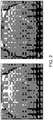
- HODDNP-conjugated MNPs were administered to naive (no AD) rats and to a rat model of AD. The data are shown in Figures 1-6 .
- Figures 1A and 1B MR (magnetic resonance) images (T2, TR 6000 milliseconds (ms), TE 10-120 ms, 12 echoes) of a naive (non-AD) rat are shown.
- Figure 1A shows the baseline (pre-contrast) MR image of a representative slice.
- Figure 1b shows the post-contrast MR image of the same slice.
- Table 1 shows the quantitative T2 values ("Base T2 (ms)”) of the regions of interest (ROIs) (where the ROIs include hippocampus, cortex, midbrain) in the baseline scan.
- Table 1 shows the quantitative T2 values ("Post T2") of the same regions of interest in the same rat 1.5 hours after intravenous (i.v.; tail vein) injection of HODDNP-MNP.
- Table 1 ROI Base T2 (ms) Post T2 Hippocampus 55.0 ⁇ 0.2 51.3 ⁇ 0.3 cortex 53.0 ⁇ 0.3 48.6 ⁇ 0.2 midbrain 50.7 ⁇ 0.4 46.5 ⁇ 0.4
- FIGs 2A and 2B MR images (T2, TR 6000 ms, TE 10-120 ms, 12 echoes) of a 1-year-old rat that is a genetic model of AD (triple genetic model of amyloid- ⁇ (A ⁇ ) plaques) are shown.
- Figure 2A shows the baseline (pre-contrast) MR image of a representative slice in this rat.
- Figure 2B shows the post-contrast MR image of the same slice, 2.5 hours after injection with contrast.
- Table 2 shows the quantitative T2 values ("Base T2 (ms)”) of the ROIs (hippocampus, cortex, and midbrain) in the baseline scan.
- Table 2 shows the quantitative T2 values ("Post T2") of the same ROIs in the same rat 2.5 hours after i.v. (tail vein) injection of HODDNP-MNPs.
- Table 2 ROI Base T2 (ms) Post T2 hippocampus 56.2 ⁇ 0.3 48.5 ⁇ 0.3 cortex 52.4 ⁇ 0.3 45.3 ⁇ 0.3 midbrain 49.4 ⁇ 0.4 44.1 ⁇ 0.5
- FIGs 3A and 3B MR images (T2, TR 6000 ms, TE 10-120 ms, 12 echoes) of a second 1-year-old rat that is a genetic model of AD (triple genetic model of A ⁇ plaques) are shown.
- Figure 3A shows the baseline (pre-contrast) MR image of a representative slice in this rat.
- Figure 3B shows the post-contrast MR image of the same slice, 2.5 hours after injection with the contrast.
- Comparison of the T2 values of the volumetric ROIs (hippocampus, cortex, and midbrain) in the baseline ( Figure 3A ) and post-contrast ( Figure 3B ) scans showed significant (P ⁇ 0.05) contrast enhancement in all ROIs following injection with DNP-MNP. Contrast enhancement was most prominent in the hippocampus, followed by the cortex.
- Table 3 shows the quantitative T2 values ("Base T2 (ms)”) of the ROIs (hippocampus, cortex, and midbrain) in the baseline scan.
- Table 3 shows the quantitative T2 values ("Post T2") of the same ROIs in the same rat 2.5 hours after i.v. (tail vein) injection of HODDNP-MNPs.
- Table 3 ROI Base T2 (ms) Post T2 hippocampus 65.8 ⁇ 0.4 51.8 ⁇ 0.4 cortex 61.0 ⁇ 0.4 48.8 ⁇ 0.3 midbrain 61.0 ⁇ 0.5 46.5 ⁇ 0.5
- FIGs 4A-C A representative MRI slice of a transgenic rat model of AD is shown in Figure 4A .
- the corresponding boxed area (hippocampus) is shown on a stained histological section in Figure 4B .
- the inset shows prominent plaque presence in the hippocampus. More diffuse plaque presence ( Figure 4C ) was observed in all brain areas.
- FIGs 5A-D Diffuse plaque presence is shown ( Figure 5A ) in the hippocampus. Perl's iron stain in adjacent slices shows the presence of DNP-MNPs in areas containing plaques ( Figures 5B-D ).
- FIGs 6A and 6B DAB-enhanced Perl's stain of the transgenic rat brain slice (post DNP-MNP intravenous injection, via tail vein) is shown in Figure 6A .
- DNP-MNP crossed the BBB and is present in the intracellular (arrows) as well as extracellular brain tissue.
- DAB-enhanced Perl's stain of the naive control animal (without contrast injection) shows no iron staining present in the same brain area (entorhinal cortex) shown in Figure 6A .
- HODDNP can be covalently conjugated to epoxy-MNPs via the hydroxyl group of HODDNP.
- An example of a conjugation method is depicted in Figure 7 .
- PIB-2 can be covalently conjugated to epoxy-MNPs via the amino nitrogen of PIB-2.
- An example of such a method is depicted in Figure 8 .
Landscapes
- Health & Medical Sciences (AREA)
- Chemical & Material Sciences (AREA)
- Life Sciences & Earth Sciences (AREA)
- Veterinary Medicine (AREA)
- Public Health (AREA)
- General Health & Medical Sciences (AREA)
- Animal Behavior & Ethology (AREA)
- Epidemiology (AREA)
- Medicinal Chemistry (AREA)
- Pharmacology & Pharmacy (AREA)
- Engineering & Computer Science (AREA)
- Nuclear Medicine, Radiotherapy & Molecular Imaging (AREA)
- Nanotechnology (AREA)
- Radiology & Medical Imaging (AREA)
- Bioinformatics & Cheminformatics (AREA)
- Biomedical Technology (AREA)
- Pain & Pain Management (AREA)
- Neurosurgery (AREA)
- Neurology (AREA)
- Physics & Mathematics (AREA)
- Dermatology (AREA)
- Chemical Kinetics & Catalysis (AREA)
- Organic Chemistry (AREA)
- General Chemical & Material Sciences (AREA)
- Psychiatry (AREA)
- Hospice & Palliative Care (AREA)
- High Energy & Nuclear Physics (AREA)
- Biophysics (AREA)
- Pathology (AREA)
- Heart & Thoracic Surgery (AREA)
- Medical Informatics (AREA)
- Molecular Biology (AREA)
- Surgery (AREA)
- Medicines Containing Antibodies Or Antigens For Use As Internal Diagnostic Agents (AREA)
- Medicinal Preparation (AREA)
- Pharmaceuticals Containing Other Organic And Inorganic Compounds (AREA)
- Medicines That Contain Protein Lipid Enzymes And Other Medicines (AREA)
Applications Claiming Priority (3)
| Application Number | Priority Date | Filing Date | Title |
|---|---|---|---|
| US201161477958P | 2011-04-21 | 2011-04-21 | |
| PCT/US2012/032100 WO2012145169A2 (fr) | 2011-04-21 | 2012-04-04 | Nanoparticules magnétiques fonctionnalisées et leur utilisation dans l'imagerie de dépôts amyloïdes et d'enchevêtrements neurofibrillaires |
| EP12773933.2A EP2699157B1 (fr) | 2011-04-21 | 2012-04-04 | Nanoparticules magnétiques fonctionnalisées et leur utilisation dans l'imagerie de dépôts amyloïdes et d'enchevêtrements neurofibrillaires |
Related Parent Applications (2)
| Application Number | Title | Priority Date | Filing Date |
|---|---|---|---|
| EP12773933.2A Division EP2699157B1 (fr) | 2011-04-21 | 2012-04-04 | Nanoparticules magnétiques fonctionnalisées et leur utilisation dans l'imagerie de dépôts amyloïdes et d'enchevêtrements neurofibrillaires |
| EP12773933.2A Division-Into EP2699157B1 (fr) | 2011-04-21 | 2012-04-04 | Nanoparticules magnétiques fonctionnalisées et leur utilisation dans l'imagerie de dépôts amyloïdes et d'enchevêtrements neurofibrillaires |
Publications (2)
| Publication Number | Publication Date |
|---|---|
| EP3345545A1 true EP3345545A1 (fr) | 2018-07-11 |
| EP3345545B1 EP3345545B1 (fr) | 2021-10-20 |
Family
ID=47042109
Family Applications (2)
| Application Number | Title | Priority Date | Filing Date |
|---|---|---|---|
| EP12773933.2A Active EP2699157B1 (fr) | 2011-04-21 | 2012-04-04 | Nanoparticules magnétiques fonctionnalisées et leur utilisation dans l'imagerie de dépôts amyloïdes et d'enchevêtrements neurofibrillaires |
| EP18150647.8A Active EP3345545B1 (fr) | 2011-04-21 | 2012-04-04 | Nanoparticules magnétiques fonctionnalisées et leur utilisation dans l'imagerie de dépôts amyloïdes et d'enchevêtrements neurofibrillaires |
Family Applications Before (1)
| Application Number | Title | Priority Date | Filing Date |
|---|---|---|---|
| EP12773933.2A Active EP2699157B1 (fr) | 2011-04-21 | 2012-04-04 | Nanoparticules magnétiques fonctionnalisées et leur utilisation dans l'imagerie de dépôts amyloïdes et d'enchevêtrements neurofibrillaires |
Country Status (9)
| Country | Link |
|---|---|
| US (3) | US9272055B2 (fr) |
| EP (2) | EP2699157B1 (fr) |
| JP (3) | JP6038122B2 (fr) |
| KR (1) | KR20140012732A (fr) |
| CN (2) | CN103491870B (fr) |
| AU (3) | AU2012245861A1 (fr) |
| CA (2) | CA2831331C (fr) |
| ES (1) | ES2667894T3 (fr) |
| WO (1) | WO2012145169A2 (fr) |
Families Citing this family (4)
| Publication number | Priority date | Publication date | Assignee | Title |
|---|---|---|---|---|
| CN103157414B (zh) * | 2013-03-28 | 2014-10-01 | 天津理工大学 | 一种聚缩水甘油表面接枝的铁磁纳米粒子的制备方法 |
| CA3108048A1 (fr) * | 2017-07-31 | 2019-02-07 | Washington University | Derives de la pirfenidone pour la modulation de l'activite des lymphocytes b et la protection des organes |
| CN117320621A (zh) | 2021-05-18 | 2023-12-29 | 三菱电机株式会社 | 生物体信息检测装置以及生物体信息检测方法 |
| DE102023003949A1 (de) | 2023-09-30 | 2025-04-03 | Carola Kryschi | Eisensulfid-Nanopartikel als Enzym-mimetische Nanokatalysatoren (nanoXcats) |
Citations (15)
| Publication number | Priority date | Publication date | Assignee | Title |
|---|---|---|---|---|
| US4983586A (en) | 1987-12-30 | 1991-01-08 | University Of Florida | Pharmaceutical formulations for parenteral use |
| WO1991004014A1 (fr) | 1989-09-21 | 1991-04-04 | Synergen, Inc. | Procede de transport de compositions a travers la barriere hemato-encephalique |
| US5017566A (en) | 1987-12-30 | 1991-05-21 | University Of Florida | Redox systems for brain-targeted drug delivery |
| US5153179A (en) | 1983-12-01 | 1992-10-06 | Max-Planck-Gesellschaft Zur Foerderung Der Wissenschaft E.V. | Medicament with improved penetration of the tissue membrane |
| US5411730A (en) | 1993-07-20 | 1995-05-02 | Research Corporation Technologies, Inc. | Magnetic microparticles |
| US6274119B1 (en) | 1998-08-20 | 2001-08-14 | The Regents Of The Univ. Of California | Methods for labeling β-amyloid plaques and neurofibrillary tangles |
| US6534039B2 (en) | 2000-07-21 | 2003-03-18 | James F. Hainfeld | Extended organic cobalt and nickel magnetic complexes |
| US6548264B1 (en) | 2000-05-17 | 2003-04-15 | University Of Florida | Coated nanoparticles |
| US6767635B1 (en) | 1999-09-14 | 2004-07-27 | Biomedical Apherese Systeme Gmbh | Magnetic nanoparticles having biochemical activity, method for the production thereof and their use |
| US6923986B2 (en) | 1995-07-28 | 2005-08-02 | Genzyme Corporation | Multiblock biodegradable hydrogels for drug delivery and tissue treatment |
| US20060073104A1 (en) | 1995-10-17 | 2006-04-06 | Mahley Robert W | ApoE4 domain interaction inhibitors and methods of use thereof |
| WO2006102377A2 (fr) | 2005-03-21 | 2006-09-28 | The Regents Of The University Of California | Nanoparticules magnetiques fonctionnalisees et leurs methodes d'utilisation |
| US7270800B2 (en) | 2000-08-24 | 2007-09-18 | University Of Pittsburgh | Thioflavin derivatives for use in antemortem diagnosis of Alzheimer's disease and in vivo imaging and prevention of amyloid deposition |
| US7572793B2 (en) | 2001-09-21 | 2009-08-11 | Mitsubishi Tanabe Pharma Corporation | 3-Substituted-4-pyrimidone derivatives |
| US7605179B2 (en) | 2001-07-16 | 2009-10-20 | Wista Laboratories Ltd. | Napthoquinone derivatives as inhibitors of tau aggregation for the treatment of alzheimer's and related neurodegenerative disorders |
Family Cites Families (16)
| Publication number | Priority date | Publication date | Assignee | Title |
|---|---|---|---|---|
| US6714138B1 (en) | 2000-09-29 | 2004-03-30 | Aps Technology, Inc. | Method and apparatus for transmitting information to the surface from a drill string down hole in a well |
| WO2002028441A2 (fr) * | 2000-10-04 | 2002-04-11 | California Institute Of Technology | Agents d'imagerie par resonance magnetique pour la detection et l'etiquetage in vivo de depots amyloides |
| WO2002094191A2 (fr) | 2001-05-23 | 2002-11-28 | New York University | Detection des amyloides de la maladie d'alzheimer au moyen de l'imagerie par resonance magnetique (irm) |
| JPWO2004035522A1 (ja) * | 2002-08-30 | 2006-02-16 | 株式会社 ビーエフ研究所 | プリオン蛋白蓄積性疾患の診断プローブおよび治療薬ならびにプリオン蛋白の染色剤 |
| CN1312479C (zh) * | 2003-08-08 | 2007-04-25 | 清华大学 | 一种纳米荧光磁粒及其制备方法 |
| WO2006018625A2 (fr) * | 2004-08-16 | 2006-02-23 | Queen Mary University Of London | Generation de superoxyde independante du recepteur de benzodiazepine peripherique |
| CA2591534C (fr) * | 2004-12-17 | 2013-08-06 | The Trustees Of The University Of Pennsylvania | Derives de stilbene et leur utilisation pour la liaison et l'imagerie de plaques amyloides |
| CN101748117B (zh) * | 2005-02-10 | 2014-03-26 | 恰根有限公司 | 反应表面的样品裂解和涂层 |
| TW201018678A (en) | 2006-01-27 | 2010-05-16 | Astrazeneca Ab | Novel heteroaryl substituted benzothiazoles |
| PL1999109T3 (pl) * | 2006-03-30 | 2012-05-31 | Univ Pennsylvania | Pochodne styrylopirydyny i ich zastosowanie do wiązania i obrazowania blaszek amyloidowych |
| US7737183B2 (en) * | 2006-10-17 | 2010-06-15 | The Regents Of The University Of California | β-amyloid and neurofibrillary tangle imaging agents |
| FR2913886B1 (fr) | 2007-03-22 | 2012-03-02 | Guerbet Sa | Utilisation de nanoparticules metalliques dans le diagnostique de la maladie d'alzheimer |
| CN101544584B (zh) * | 2008-03-26 | 2013-09-25 | 中国医学科学院放射医学研究所 | 阿尔茨海默病显像剂前体物的制备方法 |
| WO2009123734A1 (fr) * | 2008-04-04 | 2009-10-08 | The Regents Of The University Of California | Nanoparticules magnétiques fonctionnalisées et leurs procédés d’utilisation |
| WO2010011964A2 (fr) * | 2008-07-24 | 2010-01-28 | Siemens Medical Solutions Usa, Inc. | Agents d'imagerie utiles pour identifier une pathologie |
| AU2009335049B2 (en) * | 2008-12-31 | 2015-07-16 | Avid Radiopharmaceuticals, Inc. | Synthesis of 18F-radiolabeled styrylpyridines from tosylate precursors and stable pharmaceutical compositions thereof |
-
2012
- 2012-04-04 WO PCT/US2012/032100 patent/WO2012145169A2/fr not_active Ceased
- 2012-04-04 ES ES12773933.2T patent/ES2667894T3/es active Active
- 2012-04-04 KR KR1020137027143A patent/KR20140012732A/ko not_active Ceased
- 2012-04-04 CA CA2831331A patent/CA2831331C/fr active Active
- 2012-04-04 JP JP2014506434A patent/JP6038122B2/ja active Active
- 2012-04-04 CN CN201280019009.6A patent/CN103491870B/zh active Active
- 2012-04-04 AU AU2012245861A patent/AU2012245861A1/en not_active Abandoned
- 2012-04-04 EP EP12773933.2A patent/EP2699157B1/fr active Active
- 2012-04-04 EP EP18150647.8A patent/EP3345545B1/fr active Active
- 2012-04-04 CA CA3058702A patent/CA3058702C/fr active Active
- 2012-04-04 US US14/007,298 patent/US9272055B2/en active Active
- 2012-04-04 CN CN201611125000.XA patent/CN106729771A/zh active Pending
-
2015
- 2015-12-21 US US14/977,366 patent/US10232059B2/en active Active
-
2016
- 2016-10-31 JP JP2016212546A patent/JP6353007B2/ja active Active
-
2017
- 2017-06-09 AU AU2017203920A patent/AU2017203920B2/en active Active
-
2018
- 2018-06-07 JP JP2018109290A patent/JP6960883B2/ja active Active
-
2019
- 2019-03-18 US US16/356,326 patent/US10751428B2/en active Active
- 2019-04-30 AU AU2019203038A patent/AU2019203038B2/en active Active
Patent Citations (17)
| Publication number | Priority date | Publication date | Assignee | Title |
|---|---|---|---|---|
| US5153179A (en) | 1983-12-01 | 1992-10-06 | Max-Planck-Gesellschaft Zur Foerderung Der Wissenschaft E.V. | Medicament with improved penetration of the tissue membrane |
| US5002935A (en) | 1987-12-30 | 1991-03-26 | University Of Florida | Improvements in redox systems for brain-targeted drug delivery |
| US5017566A (en) | 1987-12-30 | 1991-05-21 | University Of Florida | Redox systems for brain-targeted drug delivery |
| US4983586A (en) | 1987-12-30 | 1991-01-08 | University Of Florida | Pharmaceutical formulations for parenteral use |
| WO1991004014A1 (fr) | 1989-09-21 | 1991-04-04 | Synergen, Inc. | Procede de transport de compositions a travers la barriere hemato-encephalique |
| US5411730A (en) | 1993-07-20 | 1995-05-02 | Research Corporation Technologies, Inc. | Magnetic microparticles |
| US6923986B2 (en) | 1995-07-28 | 2005-08-02 | Genzyme Corporation | Multiblock biodegradable hydrogels for drug delivery and tissue treatment |
| US20060073104A1 (en) | 1995-10-17 | 2006-04-06 | Mahley Robert W | ApoE4 domain interaction inhibitors and methods of use thereof |
| US6274119B1 (en) | 1998-08-20 | 2001-08-14 | The Regents Of The Univ. Of California | Methods for labeling β-amyloid plaques and neurofibrillary tangles |
| US6767635B1 (en) | 1999-09-14 | 2004-07-27 | Biomedical Apherese Systeme Gmbh | Magnetic nanoparticles having biochemical activity, method for the production thereof and their use |
| US6548264B1 (en) | 2000-05-17 | 2003-04-15 | University Of Florida | Coated nanoparticles |
| US6534039B2 (en) | 2000-07-21 | 2003-03-18 | James F. Hainfeld | Extended organic cobalt and nickel magnetic complexes |
| US7270800B2 (en) | 2000-08-24 | 2007-09-18 | University Of Pittsburgh | Thioflavin derivatives for use in antemortem diagnosis of Alzheimer's disease and in vivo imaging and prevention of amyloid deposition |
| US7605179B2 (en) | 2001-07-16 | 2009-10-20 | Wista Laboratories Ltd. | Napthoquinone derivatives as inhibitors of tau aggregation for the treatment of alzheimer's and related neurodegenerative disorders |
| US7572793B2 (en) | 2001-09-21 | 2009-08-11 | Mitsubishi Tanabe Pharma Corporation | 3-Substituted-4-pyrimidone derivatives |
| WO2006102377A2 (fr) | 2005-03-21 | 2006-09-28 | The Regents Of The University Of California | Nanoparticules magnetiques fonctionnalisees et leurs methodes d'utilisation |
| US20080206146A1 (en) | 2005-03-21 | 2008-08-28 | Massoud Akhtari | Functionalized Magnetic Nanoparticles and Methods of Use Thereof |
Non-Patent Citations (35)
| Title |
|---|
| "Handbook of Pharmaceutical Excipients", 2000, AMER. PHARMACEUTICAL ASSOC |
| "Immobilized Enzymes. Antigens, Antibodies, and Peptides: Preparation and Characterization", 1975 |
| "Pharmaceutical Dosage Forms and Drug Delivery Systems", 1999, LIPPINCOTT, WILLIAMS, & WILKINS |
| "Remington's Pharmaceutical Sciences", MACK PUBLISHING COL |
| "Scientific and Clinical Applications of Magnetic Microspheres", 1997, PLENUM PRESS |
| A. GENNARO: "Remington: The Science and Practice of Pharmacy", 2000, LIPPINCOTT, WILLIAMS, & WILKINS |
| AGDEPPA ET AL., NEUROSCI, vol. 117, 2003, pages 723 |
| BABA ET AL., J. CEREB. BLOOD FLOW METAB., vol. 11, 1991, pages 638 - 643 |
| BERRY; CURTIS, J. PHYS. D: APPLIED PHYSICS, vol. 36, 2003, pages R198 - R206 |
| CHEN ET AL., CURR. DRUG DELIVERY, vol. 1, 2004, pages 361 - 376 |
| CORREA-DUARTE ET AL., LANGMUIR, vol. 14, 1998, pages 6430 |
| DOUSSET ET AL., AM. J. NEURORADIOL., vol. 20, 1999, pages 223 - 227 |
| DOUSSET ET AL., MAGNETIC RESONANCE IN MEDICINE, vol. 41, 1999, pages 329 - 333 |
| DUNNING ET AL., J. NEUROSCI., vol. 24, 2004, pages 9799 - 9810 |
| GENNUSO ET AL., CANCER INVEST., vol. 11, 1993, pages 638 - 643 |
| GOTZ ET AL., MOL. PSYCHIATRY, vol. 9, 2004, pages 664 |
| GOTZ; ITTNER, NATURE REVIEWS, vol. 9, 2008, pages 532 |
| GRUTTNER, C; J TELLER, JOURNAL OF MAGNETISM AND MAGNETIC MATERIALS, vol. 194, 1999, pages 8 |
| KLUNK ET AL., ANNALS NEUROL., vol. 55, 2004, pages 306 |
| KOSTIS ET AL., J. CLIN. PHARMACOL., vol. 34, 1994, pages 989 - 996 |
| LEE ET AL., J. NEUROIMAGING, vol. 13, 2003, pages 199 |
| LEVIN, J. MED. CHEM., vol. 23, 1980, pages 682 - 684 |
| MOGHIMI ET AL., PHARMACOL. REV., vol. 53, 2001, pages 283 - 318 |
| MOLDAY; MACKENZIE, JOURNAL OF IMMUNOLOGICAL METHODS, vol. 52, 1982, pages 353 - 367 |
| NEUWELT; RAPPOPORT, FED. PROC., vol. 43, 1984, pages 214 - 219 |
| PANKHURST ET AL., J. PHYS. D: APPLIED PHYSICS, vol. 36, 2003, pages R167 - R181 |
| PARDRIDGE, PEPTIDE DRUG DELIVERY TO THE BRAIN, 1991 |
| PHILIPSE ET AL., LANGMUIR, vol. 10, 1994, pages 92 |
| PUCHTLER ET AL., J. HISTOCHEM. CYTOCHEM., vol. 10, 1962, pages 35 |
| RALPH K. HER: "The Chemistry of Silica: Solubility, Polymerization, Colloid and Surface Properties, and Biochemistry", 1979, WILEY-INTERSCIENCE |
| S. R. CHOI ET AL: "Preclinical Properties of 18F-AV-45: A PET Agent for A Plaques in the Brain", THE JOURNAL OF NUCLEAR MEDICINE, vol. 50, no. 11, 16 October 2009 (2009-10-16), pages 1887 - 1894, XP055007729, ISSN: 0161-5505, DOI: 10.2967/jnumed.109.065284 * |
| TIEFENAUER ET AL., BIOCONJUGATE CHEM., vol. 4, 1993, pages 347 |
| VANDERVOORT, P.; VANSANT, E. F., JOURNAL OF LIQUID CHROMATOGRAPHY AND RELATED TECHNOLOGIES, vol. 19, 1996, pages 2723 - 2752 |
| XIANQIAO, CHINA PARTICUOLOGY, vol. 1, no. 2, 2003, pages 76 - 79 |
| YE ET AL., PROC. NATL. ACAD. SCI. USA, vol. 102, 2005, pages 18700 |
Also Published As
| Publication number | Publication date |
|---|---|
| CA2831331C (fr) | 2019-10-15 |
| CA3058702C (fr) | 2023-11-07 |
| CA2831331A1 (fr) | 2012-10-26 |
| WO2012145169A2 (fr) | 2012-10-26 |
| CN103491870B (zh) | 2016-12-28 |
| US9272055B2 (en) | 2016-03-01 |
| EP3345545B1 (fr) | 2021-10-20 |
| EP2699157A4 (fr) | 2015-02-25 |
| CN106729771A (zh) | 2017-05-31 |
| JP2018154646A (ja) | 2018-10-04 |
| ES2667894T3 (es) | 2018-05-14 |
| CA3058702A1 (fr) | 2012-10-26 |
| JP2014512382A (ja) | 2014-05-22 |
| JP2017048218A (ja) | 2017-03-09 |
| JP6038122B2 (ja) | 2016-12-07 |
| US10232059B2 (en) | 2019-03-19 |
| EP2699157A2 (fr) | 2014-02-26 |
| US20190374658A1 (en) | 2019-12-12 |
| US20160184461A1 (en) | 2016-06-30 |
| CN103491870A (zh) | 2014-01-01 |
| US20140140932A1 (en) | 2014-05-22 |
| WO2012145169A3 (fr) | 2013-03-14 |
| AU2019203038A1 (en) | 2019-05-23 |
| JP6960883B2 (ja) | 2021-11-05 |
| AU2019203038B2 (en) | 2021-03-25 |
| EP2699157B1 (fr) | 2018-03-14 |
| JP6353007B2 (ja) | 2018-07-04 |
| KR20140012732A (ko) | 2014-02-03 |
| AU2012245861A1 (en) | 2013-10-17 |
| AU2017203920A1 (en) | 2017-06-29 |
| US10751428B2 (en) | 2020-08-25 |
| AU2017203920B2 (en) | 2019-03-28 |
Similar Documents
| Publication | Publication Date | Title |
|---|---|---|
| CA2923748C (fr) | Nanoparticules magnetiques fonctionnalisees et leurs methodes d'utilisation | |
| US10751428B2 (en) | Functionalized magnetic nanoparticles and use in imaging amyloid deposits and neurofibrillary tangles | |
| AU2012204100B2 (en) | Functionalized magnetic nanoparticles and methods of use thereof | |
| HK1188916A (en) | Functionalized magnetic nanoparticles and use in imaging amyloid deposits and neurofibrillary tangles | |
| HK1188916B (en) | Functionalized magnetic nanoparticles and use in imaging amyloid deposits and neurofibrillary tangles | |
| AU2013203241B2 (en) | Functionalized magnetic nanoparticles and methods of use thereof |
Legal Events
| Date | Code | Title | Description |
|---|---|---|---|
| PUAI | Public reference made under article 153(3) epc to a published international application that has entered the european phase |
Free format text: ORIGINAL CODE: 0009012 |
|
| STAA | Information on the status of an ep patent application or granted ep patent |
Free format text: STATUS: THE APPLICATION HAS BEEN PUBLISHED |
|
| AC | Divisional application: reference to earlier application |
Ref document number: 2699157 Country of ref document: EP Kind code of ref document: P |
|
| AK | Designated contracting states |
Kind code of ref document: A1 Designated state(s): AL AT BE BG CH CY CZ DE DK EE ES FI FR GB GR HR HU IE IS IT LI LT LU LV MC MK MT NL NO PL PT RO RS SE SI SK SM TR |
|
| STAA | Information on the status of an ep patent application or granted ep patent |
Free format text: STATUS: REQUEST FOR EXAMINATION WAS MADE |
|
| 17P | Request for examination filed |
Effective date: 20190111 |
|
| RBV | Designated contracting states (corrected) |
Designated state(s): AL AT BE BG CH CY CZ DE DK EE ES FI FR GB GR HR HU IE IS IT LI LT LU LV MC MK MT NL NO PL PT RO RS SE SI SK SM TR |
|
| STAA | Information on the status of an ep patent application or granted ep patent |
Free format text: STATUS: EXAMINATION IS IN PROGRESS |
|
| 17Q | First examination report despatched |
Effective date: 20200701 |
|
| REG | Reference to a national code |
Ref country code: DE Ref legal event code: R079 Ref document number: 602012076979 Country of ref document: DE Free format text: PREVIOUS MAIN CLASS: A61B0005055000 Ipc: A61K0049180000 |
|
| GRAP | Despatch of communication of intention to grant a patent |
Free format text: ORIGINAL CODE: EPIDOSNIGR1 |
|
| RIC1 | Information provided on ipc code assigned before grant |
Ipc: A61P 25/28 20060101ALI20210330BHEP Ipc: A61K 31/4745 20060101ALI20210330BHEP Ipc: A61K 31/472 20060101ALI20210330BHEP Ipc: A61K 31/444 20060101ALI20210330BHEP Ipc: A61K 31/4439 20060101ALI20210330BHEP Ipc: A61K 31/44 20060101ALI20210330BHEP Ipc: A61K 31/428 20060101ALI20210330BHEP Ipc: A61K 31/427 20060101ALI20210330BHEP Ipc: A61K 31/277 20060101ALI20210330BHEP Ipc: A61K 31/167 20060101ALI20210330BHEP Ipc: A61K 31/145 20060101ALI20210330BHEP Ipc: A61K 31/136 20060101ALI20210330BHEP Ipc: A61K 31/133 20060101ALI20210330BHEP Ipc: A61K 31/132 20060101ALI20210330BHEP Ipc: A61B 5/055 20060101ALI20210330BHEP Ipc: A61K 49/18 20060101AFI20210330BHEP |
|
| STAA | Information on the status of an ep patent application or granted ep patent |
Free format text: STATUS: GRANT OF PATENT IS INTENDED |
|
| INTG | Intention to grant announced |
Effective date: 20210506 |
|
| GRAS | Grant fee paid |
Free format text: ORIGINAL CODE: EPIDOSNIGR3 |
|
| GRAA | (expected) grant |
Free format text: ORIGINAL CODE: 0009210 |
|
| STAA | Information on the status of an ep patent application or granted ep patent |
Free format text: STATUS: THE PATENT HAS BEEN GRANTED |
|
| AC | Divisional application: reference to earlier application |
Ref document number: 2699157 Country of ref document: EP Kind code of ref document: P |
|
| AK | Designated contracting states |
Kind code of ref document: B1 Designated state(s): AL AT BE BG CH CY CZ DE DK EE ES FI FR GB GR HR HU IE IS IT LI LT LU LV MC MK MT NL NO PL PT RO RS SE SI SK SM TR |
|
| REG | Reference to a national code |
Ref country code: GB Ref legal event code: FG4D |
|
| REG | Reference to a national code |
Ref country code: CH Ref legal event code: EP |
|
| REG | Reference to a national code |
Ref country code: IE Ref legal event code: FG4D |
|
| REG | Reference to a national code |
Ref country code: DE Ref legal event code: R096 Ref document number: 602012076979 Country of ref document: DE |
|
| REG | Reference to a national code |
Ref country code: AT Ref legal event code: REF Ref document number: 1439383 Country of ref document: AT Kind code of ref document: T Effective date: 20211115 |
|
| REG | Reference to a national code |
Ref country code: LT Ref legal event code: MG9D |
|
| REG | Reference to a national code |
Ref country code: NL Ref legal event code: MP Effective date: 20211020 |
|
| REG | Reference to a national code |
Ref country code: AT Ref legal event code: MK05 Ref document number: 1439383 Country of ref document: AT Kind code of ref document: T Effective date: 20211020 |
|
| PG25 | Lapsed in a contracting state [announced via postgrant information from national office to epo] |
Ref country code: RS Free format text: LAPSE BECAUSE OF FAILURE TO SUBMIT A TRANSLATION OF THE DESCRIPTION OR TO PAY THE FEE WITHIN THE PRESCRIBED TIME-LIMIT Effective date: 20211020 Ref country code: LT Free format text: LAPSE BECAUSE OF FAILURE TO SUBMIT A TRANSLATION OF THE DESCRIPTION OR TO PAY THE FEE WITHIN THE PRESCRIBED TIME-LIMIT Effective date: 20211020 Ref country code: FI Free format text: LAPSE BECAUSE OF FAILURE TO SUBMIT A TRANSLATION OF THE DESCRIPTION OR TO PAY THE FEE WITHIN THE PRESCRIBED TIME-LIMIT Effective date: 20211020 Ref country code: BG Free format text: LAPSE BECAUSE OF FAILURE TO SUBMIT A TRANSLATION OF THE DESCRIPTION OR TO PAY THE FEE WITHIN THE PRESCRIBED TIME-LIMIT Effective date: 20220120 Ref country code: AT Free format text: LAPSE BECAUSE OF FAILURE TO SUBMIT A TRANSLATION OF THE DESCRIPTION OR TO PAY THE FEE WITHIN THE PRESCRIBED TIME-LIMIT Effective date: 20211020 |
|
| PG25 | Lapsed in a contracting state [announced via postgrant information from national office to epo] |
Ref country code: IS Free format text: LAPSE BECAUSE OF FAILURE TO SUBMIT A TRANSLATION OF THE DESCRIPTION OR TO PAY THE FEE WITHIN THE PRESCRIBED TIME-LIMIT Effective date: 20220220 Ref country code: SE Free format text: LAPSE BECAUSE OF FAILURE TO SUBMIT A TRANSLATION OF THE DESCRIPTION OR TO PAY THE FEE WITHIN THE PRESCRIBED TIME-LIMIT Effective date: 20211020 Ref country code: PT Free format text: LAPSE BECAUSE OF FAILURE TO SUBMIT A TRANSLATION OF THE DESCRIPTION OR TO PAY THE FEE WITHIN THE PRESCRIBED TIME-LIMIT Effective date: 20220221 Ref country code: PL Free format text: LAPSE BECAUSE OF FAILURE TO SUBMIT A TRANSLATION OF THE DESCRIPTION OR TO PAY THE FEE WITHIN THE PRESCRIBED TIME-LIMIT Effective date: 20211020 Ref country code: NO Free format text: LAPSE BECAUSE OF FAILURE TO SUBMIT A TRANSLATION OF THE DESCRIPTION OR TO PAY THE FEE WITHIN THE PRESCRIBED TIME-LIMIT Effective date: 20220120 Ref country code: NL Free format text: LAPSE BECAUSE OF FAILURE TO SUBMIT A TRANSLATION OF THE DESCRIPTION OR TO PAY THE FEE WITHIN THE PRESCRIBED TIME-LIMIT Effective date: 20211020 Ref country code: LV Free format text: LAPSE BECAUSE OF FAILURE TO SUBMIT A TRANSLATION OF THE DESCRIPTION OR TO PAY THE FEE WITHIN THE PRESCRIBED TIME-LIMIT Effective date: 20211020 Ref country code: HR Free format text: LAPSE BECAUSE OF FAILURE TO SUBMIT A TRANSLATION OF THE DESCRIPTION OR TO PAY THE FEE WITHIN THE PRESCRIBED TIME-LIMIT Effective date: 20211020 Ref country code: GR Free format text: LAPSE BECAUSE OF FAILURE TO SUBMIT A TRANSLATION OF THE DESCRIPTION OR TO PAY THE FEE WITHIN THE PRESCRIBED TIME-LIMIT Effective date: 20220121 Ref country code: ES Free format text: LAPSE BECAUSE OF FAILURE TO SUBMIT A TRANSLATION OF THE DESCRIPTION OR TO PAY THE FEE WITHIN THE PRESCRIBED TIME-LIMIT Effective date: 20211020 |
|
| REG | Reference to a national code |
Ref country code: DE Ref legal event code: R097 Ref document number: 602012076979 Country of ref document: DE |
|
| PG25 | Lapsed in a contracting state [announced via postgrant information from national office to epo] |
Ref country code: SM Free format text: LAPSE BECAUSE OF FAILURE TO SUBMIT A TRANSLATION OF THE DESCRIPTION OR TO PAY THE FEE WITHIN THE PRESCRIBED TIME-LIMIT Effective date: 20211020 Ref country code: SK Free format text: LAPSE BECAUSE OF FAILURE TO SUBMIT A TRANSLATION OF THE DESCRIPTION OR TO PAY THE FEE WITHIN THE PRESCRIBED TIME-LIMIT Effective date: 20211020 Ref country code: RO Free format text: LAPSE BECAUSE OF FAILURE TO SUBMIT A TRANSLATION OF THE DESCRIPTION OR TO PAY THE FEE WITHIN THE PRESCRIBED TIME-LIMIT Effective date: 20211020 Ref country code: EE Free format text: LAPSE BECAUSE OF FAILURE TO SUBMIT A TRANSLATION OF THE DESCRIPTION OR TO PAY THE FEE WITHIN THE PRESCRIBED TIME-LIMIT Effective date: 20211020 Ref country code: DK Free format text: LAPSE BECAUSE OF FAILURE TO SUBMIT A TRANSLATION OF THE DESCRIPTION OR TO PAY THE FEE WITHIN THE PRESCRIBED TIME-LIMIT Effective date: 20211020 Ref country code: CZ Free format text: LAPSE BECAUSE OF FAILURE TO SUBMIT A TRANSLATION OF THE DESCRIPTION OR TO PAY THE FEE WITHIN THE PRESCRIBED TIME-LIMIT Effective date: 20211020 |
|
| PLBE | No opposition filed within time limit |
Free format text: ORIGINAL CODE: 0009261 |
|
| STAA | Information on the status of an ep patent application or granted ep patent |
Free format text: STATUS: NO OPPOSITION FILED WITHIN TIME LIMIT |
|
| 26N | No opposition filed |
Effective date: 20220721 |
|
| PG25 | Lapsed in a contracting state [announced via postgrant information from national office to epo] |
Ref country code: AL Free format text: LAPSE BECAUSE OF FAILURE TO SUBMIT A TRANSLATION OF THE DESCRIPTION OR TO PAY THE FEE WITHIN THE PRESCRIBED TIME-LIMIT Effective date: 20211020 |
|
| PG25 | Lapsed in a contracting state [announced via postgrant information from national office to epo] |
Ref country code: SI Free format text: LAPSE BECAUSE OF FAILURE TO SUBMIT A TRANSLATION OF THE DESCRIPTION OR TO PAY THE FEE WITHIN THE PRESCRIBED TIME-LIMIT Effective date: 20211020 |
|
| REG | Reference to a national code |
Ref country code: CH Ref legal event code: PL |
|
| REG | Reference to a national code |
Ref country code: BE Ref legal event code: MM Effective date: 20220430 |
|
| PG25 | Lapsed in a contracting state [announced via postgrant information from national office to epo] |
Ref country code: MC Free format text: LAPSE BECAUSE OF FAILURE TO SUBMIT A TRANSLATION OF THE DESCRIPTION OR TO PAY THE FEE WITHIN THE PRESCRIBED TIME-LIMIT Effective date: 20211020 Ref country code: LU Free format text: LAPSE BECAUSE OF NON-PAYMENT OF DUE FEES Effective date: 20220404 Ref country code: LI Free format text: LAPSE BECAUSE OF NON-PAYMENT OF DUE FEES Effective date: 20220430 Ref country code: CH Free format text: LAPSE BECAUSE OF NON-PAYMENT OF DUE FEES Effective date: 20220430 |
|
| PG25 | Lapsed in a contracting state [announced via postgrant information from national office to epo] |
Ref country code: BE Free format text: LAPSE BECAUSE OF NON-PAYMENT OF DUE FEES Effective date: 20220430 |
|
| PG25 | Lapsed in a contracting state [announced via postgrant information from national office to epo] |
Ref country code: IE Free format text: LAPSE BECAUSE OF NON-PAYMENT OF DUE FEES Effective date: 20220404 |
|
| PG25 | Lapsed in a contracting state [announced via postgrant information from national office to epo] |
Ref country code: IT Free format text: LAPSE BECAUSE OF FAILURE TO SUBMIT A TRANSLATION OF THE DESCRIPTION OR TO PAY THE FEE WITHIN THE PRESCRIBED TIME-LIMIT Effective date: 20211020 |
|
| PG25 | Lapsed in a contracting state [announced via postgrant information from national office to epo] |
Ref country code: HU Free format text: LAPSE BECAUSE OF FAILURE TO SUBMIT A TRANSLATION OF THE DESCRIPTION OR TO PAY THE FEE WITHIN THE PRESCRIBED TIME-LIMIT; INVALID AB INITIO Effective date: 20120404 |
|
| PG25 | Lapsed in a contracting state [announced via postgrant information from national office to epo] |
Ref country code: MK Free format text: LAPSE BECAUSE OF FAILURE TO SUBMIT A TRANSLATION OF THE DESCRIPTION OR TO PAY THE FEE WITHIN THE PRESCRIBED TIME-LIMIT Effective date: 20211020 Ref country code: CY Free format text: LAPSE BECAUSE OF FAILURE TO SUBMIT A TRANSLATION OF THE DESCRIPTION OR TO PAY THE FEE WITHIN THE PRESCRIBED TIME-LIMIT Effective date: 20211020 |
|
| PG25 | Lapsed in a contracting state [announced via postgrant information from national office to epo] |
Ref country code: MT Free format text: LAPSE BECAUSE OF FAILURE TO SUBMIT A TRANSLATION OF THE DESCRIPTION OR TO PAY THE FEE WITHIN THE PRESCRIBED TIME-LIMIT Effective date: 20211020 |
|
| PG25 | Lapsed in a contracting state [announced via postgrant information from national office to epo] |
Ref country code: TR Free format text: LAPSE BECAUSE OF FAILURE TO SUBMIT A TRANSLATION OF THE DESCRIPTION OR TO PAY THE FEE WITHIN THE PRESCRIBED TIME-LIMIT Effective date: 20211020 |
|
| PGFP | Annual fee paid to national office [announced via postgrant information from national office to epo] |
Ref country code: GB Payment date: 20260427 Year of fee payment: 15 |
|
| PGFP | Annual fee paid to national office [announced via postgrant information from national office to epo] |
Ref country code: DE Payment date: 20260429 Year of fee payment: 15 |
|
| PGFP | Annual fee paid to national office [announced via postgrant information from national office to epo] |
Ref country code: FR Payment date: 20260427 Year of fee payment: 15 |