EP3346668B1 - Verschlüssung in drahtlos kommunikationsystem - Google Patents
Verschlüssung in drahtlos kommunikationsystem Download PDFInfo
- Publication number
- EP3346668B1 EP3346668B1 EP18150215.4A EP18150215A EP3346668B1 EP 3346668 B1 EP3346668 B1 EP 3346668B1 EP 18150215 A EP18150215 A EP 18150215A EP 3346668 B1 EP3346668 B1 EP 3346668B1
- Authority
- EP
- European Patent Office
- Prior art keywords
- control channel
- radio resource
- user identity
- encrypted
- rnti
- Prior art date
- Legal status (The legal status is an assumption and is not a legal conclusion. Google has not performed a legal analysis and makes no representation as to the accuracy of the status listed.)
- Active
Links
Images



Classifications
-
- H—ELECTRICITY
- H04—ELECTRIC COMMUNICATION TECHNIQUE
- H04L—TRANSMISSION OF DIGITAL INFORMATION, e.g. TELEGRAPHIC COMMUNICATION
- H04L9/00—Cryptographic mechanisms or cryptographic arrangements for secret or secure communications; Network security protocols
- H04L9/002—Countermeasures against attacks on cryptographic mechanisms
-
- H—ELECTRICITY
- H04—ELECTRIC COMMUNICATION TECHNIQUE
- H04L—TRANSMISSION OF DIGITAL INFORMATION, e.g. TELEGRAPHIC COMMUNICATION
- H04L1/00—Arrangements for detecting or preventing errors in the information received
- H04L1/004—Arrangements for detecting or preventing errors in the information received by using forward error control
-
- H—ELECTRICITY
- H04—ELECTRIC COMMUNICATION TECHNIQUE
- H04L—TRANSMISSION OF DIGITAL INFORMATION, e.g. TELEGRAPHIC COMMUNICATION
- H04L1/00—Arrangements for detecting or preventing errors in the information received
- H04L1/004—Arrangements for detecting or preventing errors in the information received by using forward error control
- H04L1/0056—Systems characterized by the type of code used
- H04L1/0061—Error detection codes
-
- H—ELECTRICITY
- H04—ELECTRIC COMMUNICATION TECHNIQUE
- H04L—TRANSMISSION OF DIGITAL INFORMATION, e.g. TELEGRAPHIC COMMUNICATION
- H04L5/00—Arrangements affording multiple use of the transmission path
-
- H—ELECTRICITY
- H04—ELECTRIC COMMUNICATION TECHNIQUE
- H04L—TRANSMISSION OF DIGITAL INFORMATION, e.g. TELEGRAPHIC COMMUNICATION
- H04L63/00—Network architectures or network communication protocols for network security
- H04L63/04—Network architectures or network communication protocols for network security for providing a confidential data exchange among entities communicating through data packet networks
- H04L63/0428—Network architectures or network communication protocols for network security for providing a confidential data exchange among entities communicating through data packet networks wherein the data content is protected, e.g. by encrypting or encapsulating the payload
-
- H—ELECTRICITY
- H04—ELECTRIC COMMUNICATION TECHNIQUE
- H04W—WIRELESS COMMUNICATION NETWORKS
- H04W12/00—Security arrangements; Authentication; Protecting privacy or anonymity
- H04W12/02—Protecting privacy or anonymity, e.g. protecting personally identifiable information [PII]
-
- H—ELECTRICITY
- H04—ELECTRIC COMMUNICATION TECHNIQUE
- H04W—WIRELESS COMMUNICATION NETWORKS
- H04W12/00—Security arrangements; Authentication; Protecting privacy or anonymity
- H04W12/03—Protecting confidentiality, e.g. by encryption
- H04W12/037—Protecting confidentiality, e.g. by encryption of the control plane, e.g. signalling traffic
-
- H—ELECTRICITY
- H04—ELECTRIC COMMUNICATION TECHNIQUE
- H04W—WIRELESS COMMUNICATION NETWORKS
- H04W76/00—Connection management
- H04W76/10—Connection setup
- H04W76/11—Allocation or use of connection identifiers
-
- H—ELECTRICITY
- H04—ELECTRIC COMMUNICATION TECHNIQUE
- H04L—TRANSMISSION OF DIGITAL INFORMATION, e.g. TELEGRAPHIC COMMUNICATION
- H04L2209/00—Additional information or applications relating to cryptographic mechanisms or cryptographic arrangements for secret or secure communication H04L9/00
- H04L2209/80—Wireless
-
- H—ELECTRICITY
- H04—ELECTRIC COMMUNICATION TECHNIQUE
- H04L—TRANSMISSION OF DIGITAL INFORMATION, e.g. TELEGRAPHIC COMMUNICATION
- H04L9/00—Cryptographic mechanisms or cryptographic arrangements for secret or secure communications; Network security protocols
- H04L9/08—Key distribution or management, e.g. generation, sharing or updating, of cryptographic keys or passwords
- H04L9/0861—Generation of secret information including derivation or calculation of cryptographic keys or passwords
-
- H—ELECTRICITY
- H04—ELECTRIC COMMUNICATION TECHNIQUE
- H04W—WIRELESS COMMUNICATION NETWORKS
- H04W12/00—Security arrangements; Authentication; Protecting privacy or anonymity
- H04W12/60—Context-dependent security
- H04W12/69—Identity-dependent
- H04W12/75—Temporary identity
Definitions
- This disclosure relates to encryption in wireless communication systems and, more specifically, to encryption on physical layer channels.
- Security is an essential feature for communication systems involving wireless connections, because the over-the-air nature of wireless transmissions makes the communications more easily compromised.
- a malicious entity could attempt to receive user plane data (for example, voice or data files) intended for a third party as an eavesdrop.
- a malicious entity could also attempt to receive control plane data intended for a third party, as a way to spy on activities of the third party.
- These vulnerabilities can be generally solved by encrypting which prevents user plane and/or control plane data being sent in unencrypted plain text over the air and read by a malicious entity.
- EP1992189 discloses techniques for deriving temporary identifiers (IDs) used to address specific user equipment (UEs) in a wireless communication network.
- IDs temporary identifiers
- a first ID assigned to a UE and additional information are transformed to obtain a second ID for the UE.
- Document " 3rd Generation Partnership Project; Technical Specification Group Radio Access Network; Evolved Universal Terrestrial Radio Access (E-UTRA); Physical layer procedures (Release 10)” discloses the characteristics of the physical layer procedures in the FDD and TDD modes of E-UTRA.
- US8,855,303 discloses a method for implementing an encryption technique by combining matrix mathematics, audio frequencies, and a symmetric key.
- Document " Use of Combined TVP/IV parameter", 3GGP TSG-SA3 Meeting 18, by Ericsson discloses to include a time variant parameter, TVP, in a message Security Header.
- Document " Privacy-Enhancing Security Protocol in LTE Initial Attack by J. Uijin at al ., discloses a security protocol to transmit identification parameters in different cases of an initial attach section for accessing a LTE network.
- the control channel type can be a downlink control information (DCI) format
- the radio resource aggregation level of the control channel can be a control channel element (CCE) aggregation level
- the radio resource index of the control channel can be a CCE index.
- the base station can further encrypt the data of the control channel using at least one of a current time, a frame number, a subframe number, or a reference parameter generated based on a frame number.
- the data of the control channel to be encrypted can also comprise a message payload of the control channel.
- the user identity is an RNTI.
- UE user equipment
- a physical layer device identifier can be assigned to a user equipment (UE) to identify the UE on physical layer channels.
- UE user equipment
- a radio network temporary identifier is an identifier to identify a UE in a radio access network.
- a base station can assign an RNTI to a UE when the UE is in a cell coverage of the base station or when the UE is in communication with the base station.
- an RNTI is a cell-specific identity.
- an RNTI is transmitted over the air and can be intercepted by an attacker.
- an RNTI is assigned to the UE during the random access procedure in which multiple unencrypted messages are exchanged and the RNTI may be intercepted from the unencrypted messages.
- the RNTI is transmitted in every physical downlink control channel (PDCCH) from the base station to the UE.
- PDCCH physical downlink control channel
- the RNTI is not transmitted in plain text and is combined (e.g., using an XOR or exclusive or operation) with cyclic redundancy check (CRC) parity bits, in the case that the attacker can assume that the message is received error-free, it may be possible for the attacker to exploit redundancy in the CRC algorithm to recover the RNTI.
- CRC cyclic redundancy check
- a number of security attacks can happen following the interception of the physical layer device identifier. For example, once the RNTI is known, any messages addressed to the specific RNTI in a given cell can be tracked by the attacker. With the RNTI information, a malicious user could track information as to how-long a user stays at a given cell (e.g., causing privacy problems). The attacker may also perform certain denial of service style attacks, e.g., by sending messages scrambled with the intercepted RNTI pretending to be the legitimate UE. Therefore, it is desirable to enhance confidentiality of a physical layer device identifier when the device identifier is transmitted over the air, for example, over a physical layer control channel such as PDCCH.
- PDCCH physical layer control channel
- security can be achieved by using keys or parameters that are shared between the UE and the network to cipher/decipher user plane and/or control plane data.
- a number of parameters can be input to the encryption algorithm. It is a generally accepted principle that any two messages/data streams are desired to be independently encrypted using different input parameters, to decrease security vulnerabilities for an attacker to decipher these messages/data streams. In other words, it is desired that at least one of the input parameters or the combination of input parameters to the encryption algorithm is different among possible occurrences of encryption. Note that the message/data to be encrypted does not count as a different input parameter even though its content can be different, as redundancy in the message structure or content in the message can be exploited by a deciphering attacker.
- FIG. 1 is an example wireless communication system 100 that includes encryption according to some implementations.
- the example communication system 100 includes a UE 102 and a wireless network 106 including a base station 104, where the UE 102 is in the cell coverage of the base station 104 or connected to the base station 104.
- the base station 104 can encrypt user plane and/or control plane data and send encrypted data 108 to the UE 102.
- the UE 102 can encrypt user plane and/or control plane data and send encrypted data 110 to the base station 104.
- the encryption in wireless systems enables secure wireless communications between a UE and a base station, and prevents a malicious user from tracking information exchanged between the UE and the base station.
- IMSI international mobile subscriber identity
- TMSI Temporary Mobile Subscriber Identity
- the described approach ciphers a user identity at a physical layer such as the cell-specific RNTI, and improves security on the physical layer.
- FIGS. 2-9 and associated descriptions provide additional details for these implementations.
- a UE 102 may be referred to but is not limited to as a mobile electronic device, user device, mobile station, subscriber station, portable electronic device, mobile communications device, wireless modem, push-to-talk (PTT) dispatch console, or wireless terminal.
- Examples of a UE may include but are not limited to a cellular phone, personal data assistant (PDA), smart phone, PTT dispatch console, laptop, tablet personal computer (PC), pager, portable computer, portable gaming device, wearable electronic device, test equipment, gambling machine, car/vehicle, notice board, home appliance or other mobile communications device having components for communicating voice or data via a wireless communication network.
- the wireless communication network may include a wireless link over at least one of a licensed spectrum and an unlicensed spectrum.
- a UE may include a Mobile Equipment (ME) device and a removable memory module, such as a Universal Integrated Circuit Card (UICC) that includes a subscriber identity module (SIM), a Universal SIM (USIM), or a Removable User Identity Module (R-UIM).
- UE can also refer to any hardware or software component that can terminate a communication session for a user.
- SIM subscriber identity module
- USIM Universal SIM
- R-UIM Removable User Identity Module
- UE can also refer to any hardware or software component that can terminate a communication session for a user.
- the terms "user equipment,” “UE,” “user equipment device,” “user agent,” “UA,” “user device,” and “mobile device” can be used synonymously herein.
- the wireless communication network 106 may include one or a plurality of radio access networks (RANs), other access networks such as fixed Ethernet or IEEE 802.11 WLAN, core networks (CNs), and external networks.
- the RANs may include one or more radio access technologies.
- the radio access technologies may be but are not limited to GSM, Interim Standard 95 (IS-95), Universal Mobile Telecommunications System (UMTS), CDMA2000 (Code Division Multiple Access), Evolved UMTS, LTE, or LTE-Advanced.
- the core networks may be evolved packet cores (EPCs).
- a RAN is part of a wireless telecommunication system which implements a radio access technology, such as UMTS, CDMA2000, 3GPP LTE, and 3GPP LTE-A.
- a RAN includes at least one base station.
- a base station e.g., the base station 104 may be a radio base station that may control all or at least some radio-related functions in a fixed part of the system.
- the base station may provide radio interface within their coverage area or a cell for a UE to communicate.
- the base station or plurality of base stations may constitute the cellular network to provide a wide area of coverage.
- the base station directly communicates with one or a plurality of UEs, other base stations, and one or more core network nodes.
- FIG. 1 While elements of FIG. 1 are shown as including various component parts, portions, or modules that implement the various features and functionality, nevertheless these elements may instead include a number of sub-modules, third-party services, components, libraries, and such, as appropriate. Furthermore, the features and functionality of various components can be combined into fewer components as appropriate. Although in some of the following description LTE is used as an example, as will be understood by those of ordinary skill in the art, the described approach can also be used for other wireless communication systems such as 5 th Generation or IEEE wireless systems.
- RNTI is used as an example for user identity
- the described approach can be also used for user identities such as paging RNTI (P-RNTI), cell RNTI (C-RNTI), group RNTI (G-RNTI), random access RNTI (RA-RNTI), system information RNTI (SI-RNTI), sidelink RNTI (SL-RNTI) or other identities in existing or future wireless systems.
- P-RNTI paging RNTI
- C-RNTI cell RNTI
- G-RNTI group RNTI
- RA-RNTI random access RNTI
- SI-RNTI system information RNTI
- SL-RNTI sidelink RNTI
- the described approach can be used for physical layer data channels (e.g., LTE PDSCH or PUSCH), physical layer control channels (e.g., LTE PDCCH or PUCCH), uplink channels, downlink channels, channels between a bases station and a UE, channels between two base stations, channels between two UEs, or other wireless or wired channels.
- LTE PDSCH or PUSCH physical layer data channels
- physical layer control channels e.g., LTE PDCCH or PUCCH
- uplink channels e.g., LTE PDCCH or PUCCH
- uplink channels e.g., LTE PDCCH or PUCCH
- uplink channels e.g., LTE PDCCH or PUCCH
- uplink channels e.g., LTE PDCCH or PUCCH
- uplink channels e.g., LTE PDCCH or PUCCH
- uplink channels e.g., LTE PDCCH or PUCCH
- uplink channels e.g.
- FIG. 2 is a data flow diagram 200 illustrating encryption in wireless communication systems according to some implementations.
- the data flow diagram 200 includes an encryption module 208 that can perform encryption algorithms such as KASUMI, SNOW, or other encryption algorithms.
- the input streams of the encryption module 208 include unciphered stream 202, specific instance parameter 204, and key parameter 206.
- the output steam of the encryption module 208 includes ciphered steam 210.
- the unciphered stream 202 can include user plane or control plane data, physical layer device identifier (e.g., RNTI), or others.
- the key parameter 206 can be a static key shared between the UE and the wireless network, e.g., during a communication session or an LTE radio resource control (RRC) connection.
- RRC radio resource control
- the key parameter 206 can be the same for different encryption occurrences during an RRC connection.
- the specific instance parameter 204 can include additional parameters changing from one encryption occurrence to another within a communication session.
- the specific instance parameter 204 can include one or more of the following parameters or a combination of one or more of the following parameters.
- the specific instance parameter 204 can include a parameter indicating a channel type or a channel identity of a physical channel associated with the unciphered stream 202.
- the specific instance parameter 204 can be a downlink control information (DCI) format of the PDCCH.
- DCI downlink control information
- the specific instance parameter 204 can include a parameter indicating a radio resource aggregation level of a physical channel associated with the unciphered stream 202.
- the specific instance parameter 204 can be a parameter indicating a control channel element (CCE) aggregation level of the PDCCH, where the CCE aggregation level refers to the number of CCEs of a PDCCH.
- CCE control channel element
- LTE defines four possible aggregation levels, i.e., 1, 2, 4, or 8 CCEs. Therefore, the specific instance parameter 204 can be a 2-bit input parameter to the encryption module 208 to indicate one of the four different aggregation levels.
- the specific instance parameter 204 can include a parameter indicating a radio resource index of a physical channel associated with the unciphered stream 202.
- the specific instance parameter 204 can be a parameter indicating a CCE index of the PDCCH, e.g., an index of the first CCE of the PDCCH.
- a CCE index can take a value up to 84
- the specific instance parameter 204 can be a 7-bit input parameter to the encryption module 208 to indicate one of the 84 possibilities for the CCE index.
- the specific instance parameter 204 can include a combination of more than one parameter, e.g., a combination of channel type, CCE aggregation level, and CCE index.
- parameters of channel type and channel radio resources may not be sufficient to provide different parameters for possible encryption occurrences.
- one subframe can include multiple PDCCHs, and a combination of channel type, CCE aggregation level, and CCE index is sufficient to provide different encryption parameters for different PDCCHs within a subframe.
- this combination is not sufficient to provide different parameters for PDCCHs in different subframes, for example, two PDCCHs in two subframes can have the same DCI format, CCE aggregation level, and CCE index.
- the specific instance parameter 204 further includes:
- the specific instance parameter 204 includes a parameter indicating a subcarrier frequency of the radio resource used by the physical channel such as PDCCH.
- the specific instance parameter 204 can also include a parameter indicating a frequency of a component carrier on which the physical channel is sent.
- the specific instance parameter 204 can further include:
- the specific instance parameter 204 can include a time-based parameter, e.g., a frame number, subframe number, or a reference parameter based on the frame number and/or subframe number, so that the specific instance parameter 204 can be different for different frames/subframes.
- a time-based parameter e.g., a frame number, subframe number, or a reference parameter based on the frame number and/or subframe number, so that the specific instance parameter 204 can be different for different frames/subframes.
- a time-based parameter e.g., a frame number, subframe number, or a reference parameter based on the frame number and/or subframe number, so that the specific instance parameter 204 can be different for different frames/subframes.
- a reference parameter based on the frame number can extend the frame number with additional bits, for example with additional MSBs.
- the reference parameter can be used by both the network and the device in conjunction with the frame number.
- the reference parameter can increase by one after the frame number has reached its maximum value (e.g., 1024 for LTE).
- the reference parameter is reset to zero after that it has reached a maximum value of the reference parameter.
- MIB Master Information Block
- SIB System Information Broadcast
- the initial value of the reference parameter can be specified in the standards (for example, it can be all "0" bits value, or any other value), or taken from a parameter in the MIB or SIB.
- the reference parameter can be initially set as the value of the RNTI or other values.
- the specific instance parameter 204 includes a combination of the frame number and the reference parameter, the specific instance parameter 204 will not repeat itself for 7.77 days. Since it is unlikely that an LTE RRC connection would last as long as 7.77 days, this provides enough robustness to ensure that the input parameter combination would not repeat itself.
- One way to enable the 20-bit reference parameter is to use the 16-bit RNTI as an initial value, together with four appended pre-set bits (for example, all four bits can be initially set to 0). With the 20-bit reference number, multiple control channels can be transmitted in any subframe without the risk of repeating the instance parameter 204 for at least a period of 4.14 months.
- the specific instance parameter 204 can include a current time. In some cases, a common timing reference between the device and the network can be used.
- One or more of the specific instance parameters 204 described above can be input to the encryption module 208.
- these specific instance parameters can be used in addition to the parameters already used in the system, e.g., a cipher key such as a symmetric key Kasme or KeNB of LTE as defined in 3GPP TS 33.401.
- the specific instance parameters 204 to the encryption module 208 can apply in different ways, for example, applying in parallel into the encryption algorithm, or concatenating more than one parameter and inputting them altogether into the encryption algorithm.
- the encryption algorithm is run until the end to find one output.
- the DCI format could be used to indicate which block output from the cipher to select (16 encrypted bits for each potential DCI format).
- Other alternatives are possible including using one or more of the specific instance parameter to indicate which block output from the cipher to select.
- FIG. 3 is a block diagram 300 illustrating encrypting a user identity and a control message according to some implementations.
- a physical layer control channel e.g., PDCCH
- PDCCH physical layer control channel
- CRC parity bits where the CRC is generated based on the control message and appended to the control message for the purpose of error detection.
- the base station scrambles the CRC with a user identity (e.g., RNTI) of the target UE using an XOR operation (i.e., CRC XOR RNTI) so that the target UE can decode the PDCCH but not the other UEs.
- FIG. 3 illustrates steps of encrypting a physical layer control channel, including encrypting the user identity and scrambling the encrypted user identity with the CRC parity bits.
- the base station encrypts a control message (i.e., message payload) of a physical layer control channel, such as PDCCH.
- Step 1 can use the method discussed in FIG. 2 , where the unciphered stream 202 is the control message.
- the base station encrypts a user identity, such as RNTI.
- Step 2 can use the method discussed in FIG. 2 , where the unciphered stream 202 is RNTI.
- the base station derives the CRC (e.g., 16 bits) based on the encrypted control message from step 1.
- the base station scrambles the encrypted RNTI (eRNTI) from step 2 with the CRC from step 3, for example, using CRC XOR eRNTI.
- CRC XOR eRNTI can also be of the form CRC XOR RNTI XOR ⁇ some encrypted, key-derived content>.
- the base station can include the encrypted control message from step 1 and the scrambled CRC from step 4 in the physical layer control channel and send to the UE. Note that the order of steps shown in FIG. 3 is an example and other ordering of steps is possible. For example, step 3 of deriving CRC may be performed before step 2 of encrypting RNTI.
- the UE When the UE receives the physical layer control channel data, the UE separates the encrypted control message and the scrambled CRC (i.e., CRC XOR eRNTI) based on, for example, a predefined number of bits for CRC.
- the UE can determine its eRNTI by performing the same encryption as the base station. Assuming no transmission error occurs during transmission of the control channel data, the UE can compute CRC parity bits based on the encrypted control message and XOR the computed CRC with the scrambled CRC. If the result from the XOR operation matches the UE's eRNTI, then the control channel is intended for the UE and the UE decodes the control message.
- CRC XOR eRNTI the scrambled CRC
- the UE can XOR its eRNTI with the scrambled CRC. If the result from the XOR operation matches the CRC computed based on the encrypted control message, then the UE proceeds to decode the control message as it is intended for the UE. Otherwise, the UE ignores the control message.
- the UE can decrypt the encrypted control message using the same encryption parameters the base station used. Note that the error control code redundancy (e.g., redundancy in CRC) cannot be used by a malicious attacker as it will not be able to retrieve a transmitted RNTI.
- the eRNTIs are made of 16 bits, and any two eRNTI instances have a probability of 1/2 16 of being the same. Similar to what occurs in LTE Rel-8, there will be instances where a UE decodes a control message not intended for it. In LTE Rel-8 this occurs in several scenarios:
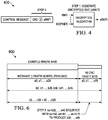
- FIG. 4 is a block diagram 400 illustrating encrypting a user identity according to some implementations.
- FIG. 4 is similar to FIG. 3 except that the control message is not encrypted.
- the RNTI is encrypted to generate an eRNTI.
- Step 1 can use the method discussed in FIG. 2 , where the unciphered stream 202 is RNTI.
- the CRC is computed using the unprotected control message.
- the CRC parity portion is XORed with the eRNTI.
- the described approaches in FIGS. 3 and 4 can be performed either by a base station to encrypt downlink channels or by a UE to encrypt uplink channels.
- FIGS. 5A and 5B show an example description of CRC attachment according to some implementations.
- FIGS. 5A-5B show changes to 3GPP TS 36.212 that can include the following description for encryption sequence:
- Inputs to generate the encryption sequence e 0 ,e 1 ,..., e 15 that will be used to encrypt the RNTI are:
- the subframe number consists of 4 bits indicating subframe 0, .., 9.
- the frame number is the SFN (system frame number) consisting of 10 bits.
- 16 bits are outputted from the cipher to produce e 0 ,e 1 ,..., e 15 .
- 3GPP TS 36.212 can include the following description for CRC generation: Error detection is provided on DCI transmissions through a Cyclic Redundancy Check (CRC).
- CRC Cyclic Redundancy Check
- the entire payload is used to calculate the CRC parity bits.
- A is the payload size and L is the number of parity bits.
- the RNTI x rnti ,0 ,x rnti, 1 ,...,x rnti, 15 is scrambled with the encryption sequence e 0 , e 1 ,..., e 15 to produce the encrypted RNTI (eRNTI) x ernti, 0 , x ernti, 1 ,..., x ernti, 15.
- the CRC parity bits are scrambled with the corresponding eRNTI x ernti ,0 , x ernti ,1 ,..., x ernti, 15 , where x ernti ,0 corresponds to the MSB of the eRNTI, to form the sequence of bits c 0 , c 1 , c 2 , c 3 ,..., c B- 1 .
- the CRC parity bits with DCI format 0 are scrambled with the antenna selection mask x AS, 0 , x AS, 1 ,..., x AS, 15 as indicated in Table 5.3.3.2-1 and the corresponding eRNTI x ernti, 0 , x ernti ,1 ,.. .,x ernti ,15 to form the sequence of bits c 0 , c 1 , c 2 , c 3 ,..., c B -1 .
- FIG. 6 illustrates an example of CRC generation according to some implementations.
- the payload size A equals 30.
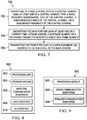
- FIG. 7 is a flowchart illustrating an example method 700 for encryption in wireless commination systems according to some implementations.
- the method 700 starts at block 702, where a base station encrypts data of a physical layer control channel using at least one of a control channel type, a radio resource aggregation level of the control channel, a radio resource index of the control channel, or a subcarrier frequency of the control channel, as discussed in FIG. 2 .
- the data to be encrypted can be a message payload of the physical layer control channel or a user identity as shown in FIGS. 3 and 4 .
- the base station further encrypts the data using at least one of a current time, a frame number, a subframe number, or a reference parameter generated based on a frame number, as discussed in FIG. 2 .
- the base station transmits the encrypted data to a UE that is in a cell of the base station.
- FIG. 8 is a schematic illustrating an example UE 800 apparatus according to some implementations.
- the example UE 800 includes a processing unit 802, a computer-readable storage medium 804 (for example, ROM or flash memory), a wireless communication subsystem 806, an interface 808, and an I/O interface 810.
- the processing unit 802 can include one or more processing components (alternatively referred to as "processors” or “central processing units” (CPUs)) configured to execute instructions related to one or more of the processes, steps, or actions described above in connection with one or more of the implementations disclosed herein.
- the processing unit 802 can also include other auxiliary components, such as random access memory (RAM) and read only memory (ROM).
- the computer-readable storage medium 804 can be embodied by a non-transitory medium configured to store an operating system (OS) of the device 800 and various other computer-executable software programs for performing one or more of the processes, steps, or actions described above.
- OS operating system
- the wireless communication subsystem 806 may be configured to provide wireless communications for data information or control information provided by the processing unit 802.
- the wireless communication subsystem 806 can include, for example, one or more antennas, a receiver, a transmitter, a local oscillator, a mixer, and a digital signal processing (DSP) unit.
- DSP digital signal processing
- the subsystem 806 can support multiple input multiple output (MIMO) transmissions.
- the receivers in the wireless communication subsystems 806 can be an advance receiver or a baseline receiver. Two receivers can be implemented with identical, similar, or different receiver processing algorithms.
- the user interface 808 can include, for example, one or more of a screen or touch screen (for example, a liquid crystal display (LCD), a light emitting display (LED), an organic light emitting display (OLED), a microelectromechanical system (MEMS) display), a keyboard or keypad, a trackball, a speaker, and a microphone.
- a screen or touch screen for example, a liquid crystal display (LCD), a light emitting display (LED), an organic light emitting display (OLED), a microelectromechanical system (MEMS) display), a keyboard or keypad, a trackball, a speaker, and a microphone.
- the I/O interface 810 can include, for example, a universal serial bus (USB) interface.
- USB universal serial bus
- FIG. 9 is a schematic illustrating an example network node 900 according to some implementations.
- the illustrated device 900 includes a processing module 902, a wired communication subsystem 904, and a wireless communication subsystem 906.
- the wireless communication subsystem 906 can receive data traffic and control traffic from the UE.
- the wireless communication subsystem 906 may include a receiver and a transmitter.
- the wired communication subsystem 904 can be configured to transmit and receive control information between other access node devices via backhaul connections.
- the processing module 902 can include one or more processing components (alternatively referred to as "processors” or “central processing units” (CPUs)) capable of executing instructions related to one or more of the processes, steps, or actions described above in connection with one or more of the implementations disclosed herein.
- the processing module 902 can also include other auxiliary components, such as random access memory (RAM), read only memory (ROM), secondary storage (for example, a hard disk drive, flash memory or other non-transitory storage medium).
- RAM random access memory
- ROM read only memory
- secondary storage for example, a hard disk drive, flash memory or other non-transitory storage medium.
- the processing module 902 can execute certain instructions and commands to provide wireless or wired communication, using the wired communication subsystem 904 or a wireless communication subsystem 906.
- Various other components can also be included in the device 900.
Landscapes
- Engineering & Computer Science (AREA)
- Computer Security & Cryptography (AREA)
- Signal Processing (AREA)
- Computer Networks & Wireless Communication (AREA)
- Computer Hardware Design (AREA)
- Computing Systems (AREA)
- General Engineering & Computer Science (AREA)
- Mobile Radio Communication Systems (AREA)
Claims (15)
- Verfahren (700) an einer Basisstation (104), die eine Zelle aufweist, die ein Benutzerendgerät, UE (102) abdeckt, umfassend:Verschlüsseln (702) einer Benutzeridentität, die das UE für physikalische Downlink-Steuerkanäle in verschiedenen Sendeunterrahmen identifiziert, Verwenden für jeden Sendeunterrahmen: mindestens eins von einem Steuerkanaltyp, einer Funkressourcenaggregationsebene des Steuerkanals oder eines Funkressourcenindizes des Steuerkanals; und einer Unterträgerfrequenz des mit dem jeweiligen Sendeunterrahmen verknüpften Steuerkanals; undSenden (706) der verschlüsselten Benutzeridentität an das UE.
- Verfahren nach Anspruch 1, wobei der Steuerkanaltyp ein Downlink-Steuerinformations, DCI,-Format ist, die Funkressourcenaggregationsebene des Steuerkanals eine Steuerkanalelement, CCE,-Aggregationsebene ist und der Funkressourcenindex des Steuerkanals ein CCE-Index ist.
- Verfahren nach Anspruch 1, ferner umfassend:
Verschlüsseln (704) der Benutzeridentität mithilfe einer aktuellen Zeit. - Verfahren nach Anspruch 1, ferner umfassend:
Verschlüsseln (704) der Benutzeridentität mithilfe von mindestens einer von einer Rahmennummer oder einer Unterrahmennummer. - Verfahren nach Anspruch 1, ferner umfassend:
Verschlüsseln (704) der Benutzeridentität mithilfe eines Referenzparameters, der basierend auf einer Rahmennummer erzeugt wurde. - Verfahren nach Anspruch 1, ferner umfassend:Verschlüsseln der Nachrichten-Payload des Steuerkanals mithilfe des mindestens einen von einem Steuerkanaltyp, einer Funkressourcenaggregationsebene des Steuerkanals oder eines Funkressourcenindizes des Steuerkanals; und der Unterträgerfrequenz des Steuerkanals; undSenden der verschlüsselten Nachrichten-Payload an das UE.
- Verfahren nach Anspruch 1, wobei die Benutzeridentität eine temporäre Funknetzwerkkennung, RNTI, ist.
- Verfahren nach Anspruch 7, ferner umfassend:
Scrambling der verschlüsselten RNTI mit Paritätsbits der zyklischen Redundanzprüfung, CRC, wobei die CRC-Paritätsbits basierend auf der Nachrichten-Payload des Steuerkanals erzeugt werden. - Basisstation (900), umfassend:einen Speicher; undmindestens einen Hardwareprozessor (902), der kommunikativ mit dem Speicher gekoppelt und dazu ausgelegt ist, die Schritte nach einem der Ansprüche 1 bis 8 durchzuführen.
- Materielles nichtflüchtiges computerlesbares Medium, das Anweisungen enthält, die, wenn ausgeführt, bewirken, dass eine Basisstation (900) die Vorgänge nach einem der Ansprüche 1 bis 8 durchführt.
- Verfahren, auf einem Benutzerendgerät, UE (102), in einer Zelle einer Basisstation (104), umfassend:Empfangen einer ersten verschlüsselten Benutzeridentität, die das UE für einen physikalischen Downlink-Steuerkanal in einem gegebenen Sendeunterrahmen identifiziert, wobei die erste verschlüsselte Benutzeridentität erzeugt wird mithilfe von: mindestens einem von einem Steuerkanaltyp, einer Funkressourcenaggregationsebene des Steuerkanals oder eines Funkressourcenindizes des Steuerkanals; und einer Unterträgerfrequenz des mit dem gegebenen Sendeunterrahmens verknüpften Steuerkanals;Erzeugen einer zweiten verschlüsselten Benutzeridentität mithilfe von: dem mindestens einen von einem Steuerkanaltyp, einer Funkressourcenaggregationsebene des Steuerkanals oder eines Funkressourcenindizes des Steuerkanals; und der Unterträgerfrequenz, die mit dem gegebenen Sendeunterrahmen des Steuerkanals verknüpft ist;Bestimmen der empfangenen ersten verschlüsselten Benutzeridentität; undBestimmen, dass der Steuerkanal für das UE in Reaktion auf das Bestimmen einer Übereinstimmung zwischen der ersten und zweiten verschlüsselten Benutzeridentität gedacht ist.
- Verfahren nach Anspruch 11, wobei der Steuerkanaltyp ein Downlink-Steuerinformations, DCI,-Format ist, die Funkressourcenaggregationsebene des Steuerkanals eine Steuerkanalelement, CCE,-Aggregationsebene ist und der Funkressourcenindex des Steuerkanals ein CCE-Index ist.
- Verfahren nach Anspruch 11, wobei die erste und zweite Benutzeridentität ferner verschlüsselt sind mithilfe von mindestens einer von einer aktuellen Zeit, einer Rahmennummer, einer Unterrahmennummer oder eines Referenzparameters, der basierend auf einer Rahmennummer erzeugt wurde.
- Benutzerendgerät, UE (800), umfassend:einen Speicher (804); undmindestens einen Hardwareprozessor (802), der kommunikativ mit dem Speicher gekoppelt und dazu ausgelegt ist, die Schritte nach einem der Ansprüche 11 bis 13 durchzuführen.
- Materielles nichtflüchtiges computerlesbares Medium (804), das Anweisungen enthält, die, wenn ausgeführt, bewirken, dass ein UE die Vorgänge nach einem der Ansprüche 11 bis 13 durchführt.
Applications Claiming Priority (1)
| Application Number | Priority Date | Filing Date | Title |
|---|---|---|---|
| US15/400,346 US10361839B2 (en) | 2017-01-06 | 2017-01-06 | Encryption in wireless communication systems |
Publications (2)
| Publication Number | Publication Date |
|---|---|
| EP3346668A1 EP3346668A1 (de) | 2018-07-11 |
| EP3346668B1 true EP3346668B1 (de) | 2019-12-04 |
Family
ID=61022101
Family Applications (1)
| Application Number | Title | Priority Date | Filing Date |
|---|---|---|---|
| EP18150215.4A Active EP3346668B1 (de) | 2017-01-06 | 2018-01-03 | Verschlüssung in drahtlos kommunikationsystem |
Country Status (3)
| Country | Link |
|---|---|
| US (1) | US10361839B2 (de) |
| EP (1) | EP3346668B1 (de) |
| CN (1) | CN108462959B (de) |
Families Citing this family (5)
| Publication number | Priority date | Publication date | Assignee | Title |
|---|---|---|---|---|
| US20190014095A1 (en) * | 2017-07-06 | 2019-01-10 | At&T Intellectual Property I, L.P. | Facilitating provisioning of an out-of-band pseudonym over a secure communication channel |
| US10606790B2 (en) | 2018-04-16 | 2020-03-31 | Intel Corporation | Precoding mechanism in PCI-express |
| WO2021072741A1 (en) * | 2019-10-18 | 2021-04-22 | Qualcomm Incorporated | Encryption of pdcch ordered rach resource for more secured positioning |
| CN117882409A (zh) * | 2021-07-01 | 2024-04-12 | 高通股份有限公司 | 用于使用私钥保护下行链路控制信息的方法和系统 |
| EP4601240A4 (de) * | 2022-10-25 | 2025-08-13 | Huawei Tech Co Ltd | Kommunikationsverfahren und kommunikationsvorrichtung |
Citations (1)
| Publication number | Priority date | Publication date | Assignee | Title |
|---|---|---|---|---|
| EP1992188A2 (de) * | 2006-02-10 | 2008-11-19 | Qualcomm Incorporated | Verbergen der identitäten von temporären benutzergeräten |
Family Cites Families (14)
| Publication number | Priority date | Publication date | Assignee | Title |
|---|---|---|---|---|
| FI107487B (fi) * | 1999-03-08 | 2001-08-15 | Nokia Mobile Phones Ltd | Datalähetyksen salausmenetelmä radiojärjestelmässä |
| FI20001876A7 (fi) * | 2000-08-25 | 2002-02-26 | Nokia Corp | Parannettu menetelmä ja järjestely tiedonsiirtämiseksi pakettiradiopalvelussa |
| US8260356B2 (en) * | 2009-06-18 | 2012-09-04 | Samsung Electronics Co., Ltd. | Method and system for indicating method used to scramble dedicated reference signals |
| TWI554137B (zh) * | 2010-05-26 | 2016-10-11 | 財團法人工業技術研究院 | 控制通道配置方法與控制通道搜尋方法及其通信裝置 |
| AU2016201151B2 (en) * | 2012-04-13 | 2017-04-06 | Intel Corporation | Enhanced local communications in mobile broadband networks |
| US8855303B1 (en) | 2012-12-05 | 2014-10-07 | The Boeing Company | Cryptography using a symmetric frequency-based encryption algorithm |
| US9635659B2 (en) * | 2013-01-03 | 2017-04-25 | Qualcomm Incorporated | ENB PDCCH implementation to avoid ambiguous DCI information |
| US9839018B2 (en) * | 2013-07-03 | 2017-12-05 | Futurewei Technologies, Inc. | Systems and methods for transmitting data information messages on a downlink of a wireless communication system |
| US9960911B2 (en) * | 2015-09-11 | 2018-05-01 | Signalchip Innovations Private Limited | System and method for securing wireless communication through physical layer control and data channel |
| US10135795B2 (en) * | 2016-03-23 | 2018-11-20 | Qualcomm Incorporated | Downlink control channel encryption for jamming resilience |
| US10243929B2 (en) * | 2016-03-30 | 2019-03-26 | Qualcomm Incorporated | Uplink control channel scheduling for jamming resilience |
| CN109314617B (zh) * | 2016-06-30 | 2023-03-03 | 苹果公司 | 用于5g dci解码中的crc模糊避免的方法 |
| US10775361B2 (en) * | 2016-07-22 | 2020-09-15 | Qualcomm Incorporated | Monitoring control channel with different encoding schemes |
| US20180227888A1 (en) * | 2017-02-06 | 2018-08-09 | Mediatek Inc. | Techniques of decoding aggregated dci messages |
-
2017
- 2017-01-06 US US15/400,346 patent/US10361839B2/en active Active
-
2018
- 2018-01-03 EP EP18150215.4A patent/EP3346668B1/de active Active
- 2018-01-05 CN CN201810010487.XA patent/CN108462959B/zh active Active
Patent Citations (1)
| Publication number | Priority date | Publication date | Assignee | Title |
|---|---|---|---|---|
| EP1992188A2 (de) * | 2006-02-10 | 2008-11-19 | Qualcomm Incorporated | Verbergen der identitäten von temporären benutzergeräten |
Also Published As
| Publication number | Publication date |
|---|---|
| EP3346668A1 (de) | 2018-07-11 |
| US10361839B2 (en) | 2019-07-23 |
| US20180198600A1 (en) | 2018-07-12 |
| CN108462959B (zh) | 2022-12-23 |
| CN108462959A (zh) | 2018-08-28 |
Similar Documents
| Publication | Publication Date | Title |
|---|---|---|
| CN112154624B (zh) | 针对伪基站的用户身份隐私保护 | |
| KR101091793B1 (ko) | 보안 키 변경 처리 방법 및 관련 통신 기기 | |
| EP2033479B1 (de) | Verfahren und vorrichtung zum sicheren schutz der ursprünglichen benutzeridentität in einer anfangssignal-nachricht | |
| EP3346668B1 (de) | Verschlüssung in drahtlos kommunikationsystem | |
| US9681261B2 (en) | Method and apparatus of providing integrity protection for proximity-based service discovery with extended discovery range | |
| CN114450988B (zh) | 保护蜂窝通信网络中的下行链路控制信息 | |
| US11917073B2 (en) | Integrity protection | |
| KR101461236B1 (ko) | 무선 호를 연결 과정에서 엔티티의 인증을 수행하는 방법 | |
| US9319878B2 (en) | Streaming alignment of key stream to unaligned data stream | |
| CN114245372B (zh) | 一种认证方法、装置和系统 | |
| JP2018530261A (ja) | ワイヤレス通信 | |
| US20250280397A1 (en) | Methods and apparatus for l1 security enhancement | |
| US20230077219A1 (en) | Securing polar codes | |
| US20230246809A1 (en) | Processing module for authenticating a communication device in a 3g capable network | |
| Ludant | Securing Wireless Communications From the PHY Up: A Low-Layer Protocol Approach for Privacy, Security, and Resilience | |
| WO2025040259A1 (en) | Secure physical channel scrambling |
Legal Events
| Date | Code | Title | Description |
|---|---|---|---|
| PUAI | Public reference made under article 153(3) epc to a published international application that has entered the european phase |
Free format text: ORIGINAL CODE: 0009012 |
|
| STAA | Information on the status of an ep patent application or granted ep patent |
Free format text: STATUS: THE APPLICATION HAS BEEN PUBLISHED |
|
| AK | Designated contracting states |
Kind code of ref document: A1 Designated state(s): AL AT BE BG CH CY CZ DE DK EE ES FI FR GB GR HR HU IE IS IT LI LT LU LV MC MK MT NL NO PL PT RO RS SE SI SK SM TR |
|
| AX | Request for extension of the european patent |
Extension state: BA ME |
|
| STAA | Information on the status of an ep patent application or granted ep patent |
Free format text: STATUS: REQUEST FOR EXAMINATION WAS MADE |
|
| 17P | Request for examination filed |
Effective date: 20181218 |
|
| RBV | Designated contracting states (corrected) |
Designated state(s): AL AT BE BG CH CY CZ DE DK EE ES FI FR GB GR HR HU IE IS IT LI LT LU LV MC MK MT NL NO PL PT RO RS SE SI SK SM TR |
|
| STAA | Information on the status of an ep patent application or granted ep patent |
Free format text: STATUS: EXAMINATION IS IN PROGRESS |
|
| 17Q | First examination report despatched |
Effective date: 20190208 |
|
| GRAP | Despatch of communication of intention to grant a patent |
Free format text: ORIGINAL CODE: EPIDOSNIGR1 |
|
| STAA | Information on the status of an ep patent application or granted ep patent |
Free format text: STATUS: GRANT OF PATENT IS INTENDED |
|
| RIC1 | Information provided on ipc code assigned before grant |
Ipc: H04W 72/00 20090101ALI20190605BHEP Ipc: H04W 12/02 20090101ALI20190605BHEP Ipc: H04L 9/00 20060101ALI20190605BHEP Ipc: H04L 29/06 20060101AFI20190605BHEP Ipc: H04W 12/00 20090101ALI20190605BHEP Ipc: H04L 9/08 20060101ALN20190605BHEP Ipc: H04W 76/11 20180101ALI20190605BHEP |
|
| RIC1 | Information provided on ipc code assigned before grant |
Ipc: H04L 29/06 20060101AFI20190612BHEP Ipc: H04W 12/00 20090101ALI20190612BHEP Ipc: H04L 9/08 20060101ALN20190612BHEP Ipc: H04W 72/00 20090101ALI20190612BHEP Ipc: H04W 76/11 20180101ALI20190612BHEP Ipc: H04L 9/00 20060101ALI20190612BHEP Ipc: H04W 12/02 20090101ALI20190612BHEP |
|
| INTG | Intention to grant announced |
Effective date: 20190626 |
|
| GRAS | Grant fee paid |
Free format text: ORIGINAL CODE: EPIDOSNIGR3 |
|
| GRAA | (expected) grant |
Free format text: ORIGINAL CODE: 0009210 |
|
| STAA | Information on the status of an ep patent application or granted ep patent |
Free format text: STATUS: THE PATENT HAS BEEN GRANTED |
|
| AK | Designated contracting states |
Kind code of ref document: B1 Designated state(s): AL AT BE BG CH CY CZ DE DK EE ES FI FR GB GR HR HU IE IS IT LI LT LU LV MC MK MT NL NO PL PT RO RS SE SI SK SM TR |
|
| REG | Reference to a national code |
Ref country code: GB Ref legal event code: FG4D |
|
| REG | Reference to a national code |
Ref country code: CH Ref legal event code: EP |
|
| REG | Reference to a national code |
Ref country code: AT Ref legal event code: REF Ref document number: 1210916 Country of ref document: AT Kind code of ref document: T Effective date: 20191215 |
|
| REG | Reference to a national code |
Ref country code: DE Ref legal event code: R096 Ref document number: 602018001404 Country of ref document: DE |
|
| REG | Reference to a national code |
Ref country code: IE Ref legal event code: FG4D |
|
| REG | Reference to a national code |
Ref country code: NL Ref legal event code: MP Effective date: 20191204 |
|
| REG | Reference to a national code |
Ref country code: LT Ref legal event code: MG4D |
|
| PG25 | Lapsed in a contracting state [announced via postgrant information from national office to epo] |
Ref country code: LV Free format text: LAPSE BECAUSE OF FAILURE TO SUBMIT A TRANSLATION OF THE DESCRIPTION OR TO PAY THE FEE WITHIN THE PRESCRIBED TIME-LIMIT Effective date: 20191204 Ref country code: SE Free format text: LAPSE BECAUSE OF FAILURE TO SUBMIT A TRANSLATION OF THE DESCRIPTION OR TO PAY THE FEE WITHIN THE PRESCRIBED TIME-LIMIT Effective date: 20191204 Ref country code: LT Free format text: LAPSE BECAUSE OF FAILURE TO SUBMIT A TRANSLATION OF THE DESCRIPTION OR TO PAY THE FEE WITHIN THE PRESCRIBED TIME-LIMIT Effective date: 20191204 Ref country code: BG Free format text: LAPSE BECAUSE OF FAILURE TO SUBMIT A TRANSLATION OF THE DESCRIPTION OR TO PAY THE FEE WITHIN THE PRESCRIBED TIME-LIMIT Effective date: 20200304 Ref country code: FI Free format text: LAPSE BECAUSE OF FAILURE TO SUBMIT A TRANSLATION OF THE DESCRIPTION OR TO PAY THE FEE WITHIN THE PRESCRIBED TIME-LIMIT Effective date: 20191204 Ref country code: GR Free format text: LAPSE BECAUSE OF FAILURE TO SUBMIT A TRANSLATION OF THE DESCRIPTION OR TO PAY THE FEE WITHIN THE PRESCRIBED TIME-LIMIT Effective date: 20200305 Ref country code: NO Free format text: LAPSE BECAUSE OF FAILURE TO SUBMIT A TRANSLATION OF THE DESCRIPTION OR TO PAY THE FEE WITHIN THE PRESCRIBED TIME-LIMIT Effective date: 20200304 |
|
| PG25 | Lapsed in a contracting state [announced via postgrant information from national office to epo] |
Ref country code: RS Free format text: LAPSE BECAUSE OF FAILURE TO SUBMIT A TRANSLATION OF THE DESCRIPTION OR TO PAY THE FEE WITHIN THE PRESCRIBED TIME-LIMIT Effective date: 20191204 Ref country code: HR Free format text: LAPSE BECAUSE OF FAILURE TO SUBMIT A TRANSLATION OF THE DESCRIPTION OR TO PAY THE FEE WITHIN THE PRESCRIBED TIME-LIMIT Effective date: 20191204 |
|
| PG25 | Lapsed in a contracting state [announced via postgrant information from national office to epo] |
Ref country code: AL Free format text: LAPSE BECAUSE OF FAILURE TO SUBMIT A TRANSLATION OF THE DESCRIPTION OR TO PAY THE FEE WITHIN THE PRESCRIBED TIME-LIMIT Effective date: 20191204 |
|
| PG25 | Lapsed in a contracting state [announced via postgrant information from national office to epo] |
Ref country code: PT Free format text: LAPSE BECAUSE OF FAILURE TO SUBMIT A TRANSLATION OF THE DESCRIPTION OR TO PAY THE FEE WITHIN THE PRESCRIBED TIME-LIMIT Effective date: 20200429 Ref country code: EE Free format text: LAPSE BECAUSE OF FAILURE TO SUBMIT A TRANSLATION OF THE DESCRIPTION OR TO PAY THE FEE WITHIN THE PRESCRIBED TIME-LIMIT Effective date: 20191204 Ref country code: NL Free format text: LAPSE BECAUSE OF FAILURE TO SUBMIT A TRANSLATION OF THE DESCRIPTION OR TO PAY THE FEE WITHIN THE PRESCRIBED TIME-LIMIT Effective date: 20191204 Ref country code: RO Free format text: LAPSE BECAUSE OF FAILURE TO SUBMIT A TRANSLATION OF THE DESCRIPTION OR TO PAY THE FEE WITHIN THE PRESCRIBED TIME-LIMIT Effective date: 20191204 Ref country code: CZ Free format text: LAPSE BECAUSE OF FAILURE TO SUBMIT A TRANSLATION OF THE DESCRIPTION OR TO PAY THE FEE WITHIN THE PRESCRIBED TIME-LIMIT Effective date: 20191204 |
|
| PG25 | Lapsed in a contracting state [announced via postgrant information from national office to epo] |
Ref country code: IS Free format text: LAPSE BECAUSE OF FAILURE TO SUBMIT A TRANSLATION OF THE DESCRIPTION OR TO PAY THE FEE WITHIN THE PRESCRIBED TIME-LIMIT Effective date: 20200404 Ref country code: SM Free format text: LAPSE BECAUSE OF FAILURE TO SUBMIT A TRANSLATION OF THE DESCRIPTION OR TO PAY THE FEE WITHIN THE PRESCRIBED TIME-LIMIT Effective date: 20191204 Ref country code: SK Free format text: LAPSE BECAUSE OF FAILURE TO SUBMIT A TRANSLATION OF THE DESCRIPTION OR TO PAY THE FEE WITHIN THE PRESCRIBED TIME-LIMIT Effective date: 20191204 |
|
| REG | Reference to a national code |
Ref country code: DE Ref legal event code: R097 Ref document number: 602018001404 Country of ref document: DE |
|
| REG | Reference to a national code |
Ref country code: AT Ref legal event code: MK05 Ref document number: 1210916 Country of ref document: AT Kind code of ref document: T Effective date: 20191204 |
|
| PG25 | Lapsed in a contracting state [announced via postgrant information from national office to epo] |
Ref country code: MC Free format text: LAPSE BECAUSE OF FAILURE TO SUBMIT A TRANSLATION OF THE DESCRIPTION OR TO PAY THE FEE WITHIN THE PRESCRIBED TIME-LIMIT Effective date: 20191204 |
|
| PLBE | No opposition filed within time limit |
Free format text: ORIGINAL CODE: 0009261 |
|
| STAA | Information on the status of an ep patent application or granted ep patent |
Free format text: STATUS: NO OPPOSITION FILED WITHIN TIME LIMIT |
|
| REG | Reference to a national code |
Ref country code: BE Ref legal event code: MM Effective date: 20200131 |
|
| PG25 | Lapsed in a contracting state [announced via postgrant information from national office to epo] |
Ref country code: ES Free format text: LAPSE BECAUSE OF FAILURE TO SUBMIT A TRANSLATION OF THE DESCRIPTION OR TO PAY THE FEE WITHIN THE PRESCRIBED TIME-LIMIT Effective date: 20191204 Ref country code: LU Free format text: LAPSE BECAUSE OF NON-PAYMENT OF DUE FEES Effective date: 20200103 Ref country code: DK Free format text: LAPSE BECAUSE OF FAILURE TO SUBMIT A TRANSLATION OF THE DESCRIPTION OR TO PAY THE FEE WITHIN THE PRESCRIBED TIME-LIMIT Effective date: 20191204 |
|
| 26N | No opposition filed |
Effective date: 20200907 |
|
| PG25 | Lapsed in a contracting state [announced via postgrant information from national office to epo] |
Ref country code: SI Free format text: LAPSE BECAUSE OF FAILURE TO SUBMIT A TRANSLATION OF THE DESCRIPTION OR TO PAY THE FEE WITHIN THE PRESCRIBED TIME-LIMIT Effective date: 20191204 Ref country code: PL Free format text: LAPSE BECAUSE OF FAILURE TO SUBMIT A TRANSLATION OF THE DESCRIPTION OR TO PAY THE FEE WITHIN THE PRESCRIBED TIME-LIMIT Effective date: 20191204 Ref country code: BE Free format text: LAPSE BECAUSE OF NON-PAYMENT OF DUE FEES Effective date: 20200131 Ref country code: AT Free format text: LAPSE BECAUSE OF FAILURE TO SUBMIT A TRANSLATION OF THE DESCRIPTION OR TO PAY THE FEE WITHIN THE PRESCRIBED TIME-LIMIT Effective date: 20191204 |
|
| PG25 | Lapsed in a contracting state [announced via postgrant information from national office to epo] |
Ref country code: IE Free format text: LAPSE BECAUSE OF NON-PAYMENT OF DUE FEES Effective date: 20200103 Ref country code: IT Free format text: LAPSE BECAUSE OF FAILURE TO SUBMIT A TRANSLATION OF THE DESCRIPTION OR TO PAY THE FEE WITHIN THE PRESCRIBED TIME-LIMIT Effective date: 20191204 |
|
| REG | Reference to a national code |
Ref country code: CH Ref legal event code: PL |
|
| REG | Reference to a national code |
Ref country code: DE Ref legal event code: R079 Ref document number: 602018001404 Country of ref document: DE Free format text: PREVIOUS MAIN CLASS: H04L0029060000 Ipc: H04L0065000000 |
|
| PG25 | Lapsed in a contracting state [announced via postgrant information from national office to epo] |
Ref country code: CH Free format text: LAPSE BECAUSE OF NON-PAYMENT OF DUE FEES Effective date: 20210131 Ref country code: LI Free format text: LAPSE BECAUSE OF NON-PAYMENT OF DUE FEES Effective date: 20210131 |
|
| PG25 | Lapsed in a contracting state [announced via postgrant information from national office to epo] |
Ref country code: TR Free format text: LAPSE BECAUSE OF FAILURE TO SUBMIT A TRANSLATION OF THE DESCRIPTION OR TO PAY THE FEE WITHIN THE PRESCRIBED TIME-LIMIT Effective date: 20191204 Ref country code: MT Free format text: LAPSE BECAUSE OF FAILURE TO SUBMIT A TRANSLATION OF THE DESCRIPTION OR TO PAY THE FEE WITHIN THE PRESCRIBED TIME-LIMIT Effective date: 20191204 Ref country code: CY Free format text: LAPSE BECAUSE OF FAILURE TO SUBMIT A TRANSLATION OF THE DESCRIPTION OR TO PAY THE FEE WITHIN THE PRESCRIBED TIME-LIMIT Effective date: 20191204 |
|
| PG25 | Lapsed in a contracting state [announced via postgrant information from national office to epo] |
Ref country code: MK Free format text: LAPSE BECAUSE OF FAILURE TO SUBMIT A TRANSLATION OF THE DESCRIPTION OR TO PAY THE FEE WITHIN THE PRESCRIBED TIME-LIMIT Effective date: 20191204 |
|
| REG | Reference to a national code |
Ref country code: DE Ref legal event code: R081 Ref document number: 602018001404 Country of ref document: DE Owner name: MALIKIE INNOVATIONS LTD., IE Free format text: FORMER OWNER: BLACKBERRY LIMITED, WATERLOO, ONTARIO, CA |
|
| REG | Reference to a national code |
Ref country code: GB Ref legal event code: 732E Free format text: REGISTERED BETWEEN 20240530 AND 20240605 |
|
| PGFP | Annual fee paid to national office [announced via postgrant information from national office to epo] |
Ref country code: GB Payment date: 20260126 Year of fee payment: 9 |
|
| PGFP | Annual fee paid to national office [announced via postgrant information from national office to epo] |
Ref country code: DE Payment date: 20260127 Year of fee payment: 9 |
|
| PGFP | Annual fee paid to national office [announced via postgrant information from national office to epo] |
Ref country code: FR Payment date: 20260126 Year of fee payment: 9 |