EP3348280A1 - Konjugate aus zellbindenden molekülen mit zytotoxika - Google Patents
Konjugate aus zellbindenden molekülen mit zytotoxika Download PDFInfo
- Publication number
- EP3348280A1 EP3348280A1 EP17206539.3A EP17206539A EP3348280A1 EP 3348280 A1 EP3348280 A1 EP 3348280A1 EP 17206539 A EP17206539 A EP 17206539A EP 3348280 A1 EP3348280 A1 EP 3348280A1
- Authority
- EP
- European Patent Office
- Prior art keywords
- alkyl
- independently
- heteroalkyl
- heterocyclic
- aryl
- Prior art date
- Legal status (The legal status is an assumption and is not a legal conclusion. Google has not performed a legal analysis and makes no representation as to the accuracy of the status listed.)
- Withdrawn
Links
- 0 C**C(*)C(*=*)N(**)C(c1c[s]c(C(*)CC(C(C)S)N(*C)C(C(C(*)*)NC(C(*)(*)*(*)*C)=O)=O)n1)=O Chemical compound C**C(*)C(*=*)N(**)C(c1c[s]c(C(*)CC(C(C)S)N(*C)C(C(C(*)*)NC(C(*)(*)*(*)*C)=O)=O)n1)=O 0.000 description 18
- LEBVUUMSZBINIC-AHJYTTNNSA-N CC[C@H](C)C(C(N(C)[C@H](C[C@H](c1nc(C(NC)=O)c[s]1)OC(C)=O)C(C)C)=O)NC([C@@H]1N(C)CC1C)=O Chemical compound CC[C@H](C)C(C(N(C)[C@H](C[C@H](c1nc(C(NC)=O)c[s]1)OC(C)=O)C(C)C)=O)NC([C@@H]1N(C)CC1C)=O LEBVUUMSZBINIC-AHJYTTNNSA-N 0.000 description 1
- PAMIQIKDUOTOBW-UHFFFAOYSA-N CN1CCCCC1 Chemical compound CN1CCCCC1 PAMIQIKDUOTOBW-UHFFFAOYSA-N 0.000 description 1
- HNKJADCVZUBCPG-UHFFFAOYSA-N CSc1ccccc1 Chemical compound CSc1ccccc1 HNKJADCVZUBCPG-UHFFFAOYSA-N 0.000 description 1
- HVJCFZGWAXNTNX-UHFFFAOYSA-N O=C(CCCCN(C(C=C1)=O)C1=O)ON1OCCC1=O Chemical compound O=C(CCCCN(C(C=C1)=O)C1=O)ON1OCCC1=O HVJCFZGWAXNTNX-UHFFFAOYSA-N 0.000 description 1
- VIJZALLVDTYKRK-UHFFFAOYSA-N OC(CCCCN(C(C(Br)=C1I)=O)C1=O)=O Chemical compound OC(CCCCN(C(C(Br)=C1I)=O)C1=O)=O VIJZALLVDTYKRK-UHFFFAOYSA-N 0.000 description 1
- NHJYOIVBSCPZMO-UHFFFAOYSA-N OCCCCN(C(C=C1)=O)C1=O Chemical compound OCCCCN(C(C=C1)=O)C1=O NHJYOIVBSCPZMO-UHFFFAOYSA-N 0.000 description 1
Images



















Classifications
-
- C—CHEMISTRY; METALLURGY
- C07—ORGANIC CHEMISTRY
- C07D—HETEROCYCLIC COMPOUNDS
- C07D207/00—Heterocyclic compounds containing five-membered rings not condensed with other rings, with one nitrogen atom as the only ring hetero atom
- C07D207/02—Heterocyclic compounds containing five-membered rings not condensed with other rings, with one nitrogen atom as the only ring hetero atom with only hydrogen or carbon atoms directly attached to the ring nitrogen atom
- C07D207/30—Heterocyclic compounds containing five-membered rings not condensed with other rings, with one nitrogen atom as the only ring hetero atom with only hydrogen or carbon atoms directly attached to the ring nitrogen atom having two double bonds between ring members or between ring members and non-ring members
- C07D207/34—Heterocyclic compounds containing five-membered rings not condensed with other rings, with one nitrogen atom as the only ring hetero atom with only hydrogen or carbon atoms directly attached to the ring nitrogen atom having two double bonds between ring members or between ring members and non-ring members with hetero atoms or with carbon atoms having three bonds to hetero atoms with at the most one bond to halogen, e.g. ester or nitrile radicals, directly attached to ring carbon atoms
- C07D207/36—Oxygen or sulfur atoms
- C07D207/40—2,5-Pyrrolidine-diones
-
- A—HUMAN NECESSITIES
- A61—MEDICAL OR VETERINARY SCIENCE; HYGIENE
- A61K—PREPARATIONS FOR MEDICAL, DENTAL OR TOILETRY PURPOSES
- A61K45/00—Medicinal preparations containing active ingredients not provided for in groups A61K31/00 - A61K41/00
- A61K45/06—Mixtures of active ingredients without chemical characterisation, e.g. antiphlogistics and cardiaca
-
- A—HUMAN NECESSITIES
- A61—MEDICAL OR VETERINARY SCIENCE; HYGIENE
- A61K—PREPARATIONS FOR MEDICAL, DENTAL OR TOILETRY PURPOSES
- A61K47/00—Medicinal preparations characterised by the non-active ingredients used, e.g. carriers or inert additives; Targeting or modifying agents chemically bound to the active ingredient
- A61K47/50—Medicinal preparations characterised by the non-active ingredients used, e.g. carriers or inert additives; Targeting or modifying agents chemically bound to the active ingredient the non-active ingredient being chemically bound to the active ingredient, e.g. polymer-drug conjugates
- A61K47/51—Medicinal preparations characterised by the non-active ingredients used, e.g. carriers or inert additives; Targeting or modifying agents chemically bound to the active ingredient the non-active ingredient being chemically bound to the active ingredient, e.g. polymer-drug conjugates the non-active ingredient being a modifying agent
- A61K47/62—Medicinal preparations characterised by the non-active ingredients used, e.g. carriers or inert additives; Targeting or modifying agents chemically bound to the active ingredient the non-active ingredient being chemically bound to the active ingredient, e.g. polymer-drug conjugates the non-active ingredient being a modifying agent the modifying agent being a protein, peptide or polyamino acid
- A61K47/64—Drug-peptide, drug-protein or drug-polyamino acid conjugates, i.e. the modifying agent being a peptide, protein or polyamino acid which is covalently bonded or complexed to a therapeutically active agent
-
- A—HUMAN NECESSITIES
- A61—MEDICAL OR VETERINARY SCIENCE; HYGIENE
- A61K—PREPARATIONS FOR MEDICAL, DENTAL OR TOILETRY PURPOSES
- A61K47/00—Medicinal preparations characterised by the non-active ingredients used, e.g. carriers or inert additives; Targeting or modifying agents chemically bound to the active ingredient
- A61K47/50—Medicinal preparations characterised by the non-active ingredients used, e.g. carriers or inert additives; Targeting or modifying agents chemically bound to the active ingredient the non-active ingredient being chemically bound to the active ingredient, e.g. polymer-drug conjugates
- A61K47/51—Medicinal preparations characterised by the non-active ingredients used, e.g. carriers or inert additives; Targeting or modifying agents chemically bound to the active ingredient the non-active ingredient being chemically bound to the active ingredient, e.g. polymer-drug conjugates the non-active ingredient being a modifying agent
- A61K47/68—Medicinal preparations characterised by the non-active ingredients used, e.g. carriers or inert additives; Targeting or modifying agents chemically bound to the active ingredient the non-active ingredient being chemically bound to the active ingredient, e.g. polymer-drug conjugates the non-active ingredient being a modifying agent the modifying agent being an antibody, an immunoglobulin or a fragment thereof, e.g. an Fc-fragment
- A61K47/6801—Drug-antibody or immunoglobulin conjugates defined by the pharmacologically or therapeutically active agent
- A61K47/6803—Drugs conjugated to an antibody or immunoglobulin, e.g. cisplatin-antibody conjugates
-
- A—HUMAN NECESSITIES
- A61—MEDICAL OR VETERINARY SCIENCE; HYGIENE
- A61K—PREPARATIONS FOR MEDICAL, DENTAL OR TOILETRY PURPOSES
- A61K47/00—Medicinal preparations characterised by the non-active ingredients used, e.g. carriers or inert additives; Targeting or modifying agents chemically bound to the active ingredient
- A61K47/50—Medicinal preparations characterised by the non-active ingredients used, e.g. carriers or inert additives; Targeting or modifying agents chemically bound to the active ingredient the non-active ingredient being chemically bound to the active ingredient, e.g. polymer-drug conjugates
- A61K47/51—Medicinal preparations characterised by the non-active ingredients used, e.g. carriers or inert additives; Targeting or modifying agents chemically bound to the active ingredient the non-active ingredient being chemically bound to the active ingredient, e.g. polymer-drug conjugates the non-active ingredient being a modifying agent
- A61K47/68—Medicinal preparations characterised by the non-active ingredients used, e.g. carriers or inert additives; Targeting or modifying agents chemically bound to the active ingredient the non-active ingredient being chemically bound to the active ingredient, e.g. polymer-drug conjugates the non-active ingredient being a modifying agent the modifying agent being an antibody, an immunoglobulin or a fragment thereof, e.g. an Fc-fragment
- A61K47/6801—Drug-antibody or immunoglobulin conjugates defined by the pharmacologically or therapeutically active agent
- A61K47/6803—Drugs conjugated to an antibody or immunoglobulin, e.g. cisplatin-antibody conjugates
- A61K47/6811—Drugs conjugated to an antibody or immunoglobulin, e.g. cisplatin-antibody conjugates the drug being a protein or peptide, e.g. transferrin or bleomycin
-
- A—HUMAN NECESSITIES
- A61—MEDICAL OR VETERINARY SCIENCE; HYGIENE
- A61K—PREPARATIONS FOR MEDICAL, DENTAL OR TOILETRY PURPOSES
- A61K47/00—Medicinal preparations characterised by the non-active ingredients used, e.g. carriers or inert additives; Targeting or modifying agents chemically bound to the active ingredient
- A61K47/50—Medicinal preparations characterised by the non-active ingredients used, e.g. carriers or inert additives; Targeting or modifying agents chemically bound to the active ingredient the non-active ingredient being chemically bound to the active ingredient, e.g. polymer-drug conjugates
- A61K47/51—Medicinal preparations characterised by the non-active ingredients used, e.g. carriers or inert additives; Targeting or modifying agents chemically bound to the active ingredient the non-active ingredient being chemically bound to the active ingredient, e.g. polymer-drug conjugates the non-active ingredient being a modifying agent
- A61K47/68—Medicinal preparations characterised by the non-active ingredients used, e.g. carriers or inert additives; Targeting or modifying agents chemically bound to the active ingredient the non-active ingredient being chemically bound to the active ingredient, e.g. polymer-drug conjugates the non-active ingredient being a modifying agent the modifying agent being an antibody, an immunoglobulin or a fragment thereof, e.g. an Fc-fragment
- A61K47/6835—Medicinal preparations characterised by the non-active ingredients used, e.g. carriers or inert additives; Targeting or modifying agents chemically bound to the active ingredient the non-active ingredient being chemically bound to the active ingredient, e.g. polymer-drug conjugates the non-active ingredient being a modifying agent the modifying agent being an antibody, an immunoglobulin or a fragment thereof, e.g. an Fc-fragment the modifying agent being an antibody or an immunoglobulin bearing at least one antigen-binding site
- A61K47/6849—Medicinal preparations characterised by the non-active ingredients used, e.g. carriers or inert additives; Targeting or modifying agents chemically bound to the active ingredient the non-active ingredient being chemically bound to the active ingredient, e.g. polymer-drug conjugates the non-active ingredient being a modifying agent the modifying agent being an antibody, an immunoglobulin or a fragment thereof, e.g. an Fc-fragment the modifying agent being an antibody or an immunoglobulin bearing at least one antigen-binding site the antibody targeting a receptor, a cell surface antigen or a cell surface determinant
-
- A—HUMAN NECESSITIES
- A61—MEDICAL OR VETERINARY SCIENCE; HYGIENE
- A61K—PREPARATIONS FOR MEDICAL, DENTAL OR TOILETRY PURPOSES
- A61K47/00—Medicinal preparations characterised by the non-active ingredients used, e.g. carriers or inert additives; Targeting or modifying agents chemically bound to the active ingredient
- A61K47/50—Medicinal preparations characterised by the non-active ingredients used, e.g. carriers or inert additives; Targeting or modifying agents chemically bound to the active ingredient the non-active ingredient being chemically bound to the active ingredient, e.g. polymer-drug conjugates
- A61K47/51—Medicinal preparations characterised by the non-active ingredients used, e.g. carriers or inert additives; Targeting or modifying agents chemically bound to the active ingredient the non-active ingredient being chemically bound to the active ingredient, e.g. polymer-drug conjugates the non-active ingredient being a modifying agent
- A61K47/68—Medicinal preparations characterised by the non-active ingredients used, e.g. carriers or inert additives; Targeting or modifying agents chemically bound to the active ingredient the non-active ingredient being chemically bound to the active ingredient, e.g. polymer-drug conjugates the non-active ingredient being a modifying agent the modifying agent being an antibody, an immunoglobulin or a fragment thereof, e.g. an Fc-fragment
- A61K47/6835—Medicinal preparations characterised by the non-active ingredients used, e.g. carriers or inert additives; Targeting or modifying agents chemically bound to the active ingredient the non-active ingredient being chemically bound to the active ingredient, e.g. polymer-drug conjugates the non-active ingredient being a modifying agent the modifying agent being an antibody, an immunoglobulin or a fragment thereof, e.g. an Fc-fragment the modifying agent being an antibody or an immunoglobulin bearing at least one antigen-binding site
- A61K47/6851—Medicinal preparations characterised by the non-active ingredients used, e.g. carriers or inert additives; Targeting or modifying agents chemically bound to the active ingredient the non-active ingredient being chemically bound to the active ingredient, e.g. polymer-drug conjugates the non-active ingredient being a modifying agent the modifying agent being an antibody, an immunoglobulin or a fragment thereof, e.g. an Fc-fragment the modifying agent being an antibody or an immunoglobulin bearing at least one antigen-binding site the antibody targeting a determinant of a tumour cell
-
- A—HUMAN NECESSITIES
- A61—MEDICAL OR VETERINARY SCIENCE; HYGIENE
- A61K—PREPARATIONS FOR MEDICAL, DENTAL OR TOILETRY PURPOSES
- A61K47/00—Medicinal preparations characterised by the non-active ingredients used, e.g. carriers or inert additives; Targeting or modifying agents chemically bound to the active ingredient
- A61K47/50—Medicinal preparations characterised by the non-active ingredients used, e.g. carriers or inert additives; Targeting or modifying agents chemically bound to the active ingredient the non-active ingredient being chemically bound to the active ingredient, e.g. polymer-drug conjugates
- A61K47/51—Medicinal preparations characterised by the non-active ingredients used, e.g. carriers or inert additives; Targeting or modifying agents chemically bound to the active ingredient the non-active ingredient being chemically bound to the active ingredient, e.g. polymer-drug conjugates the non-active ingredient being a modifying agent
- A61K47/68—Medicinal preparations characterised by the non-active ingredients used, e.g. carriers or inert additives; Targeting or modifying agents chemically bound to the active ingredient the non-active ingredient being chemically bound to the active ingredient, e.g. polymer-drug conjugates the non-active ingredient being a modifying agent the modifying agent being an antibody, an immunoglobulin or a fragment thereof, e.g. an Fc-fragment
- A61K47/6835—Medicinal preparations characterised by the non-active ingredients used, e.g. carriers or inert additives; Targeting or modifying agents chemically bound to the active ingredient the non-active ingredient being chemically bound to the active ingredient, e.g. polymer-drug conjugates the non-active ingredient being a modifying agent the modifying agent being an antibody, an immunoglobulin or a fragment thereof, e.g. an Fc-fragment the modifying agent being an antibody or an immunoglobulin bearing at least one antigen-binding site
- A61K47/6851—Medicinal preparations characterised by the non-active ingredients used, e.g. carriers or inert additives; Targeting or modifying agents chemically bound to the active ingredient the non-active ingredient being chemically bound to the active ingredient, e.g. polymer-drug conjugates the non-active ingredient being a modifying agent the modifying agent being an antibody, an immunoglobulin or a fragment thereof, e.g. an Fc-fragment the modifying agent being an antibody or an immunoglobulin bearing at least one antigen-binding site the antibody targeting a determinant of a tumour cell
- A61K47/6855—Medicinal preparations characterised by the non-active ingredients used, e.g. carriers or inert additives; Targeting or modifying agents chemically bound to the active ingredient the non-active ingredient being chemically bound to the active ingredient, e.g. polymer-drug conjugates the non-active ingredient being a modifying agent the modifying agent being an antibody, an immunoglobulin or a fragment thereof, e.g. an Fc-fragment the modifying agent being an antibody or an immunoglobulin bearing at least one antigen-binding site the antibody targeting a determinant of a tumour cell the tumour determinant being from breast cancer cell
-
- A—HUMAN NECESSITIES
- A61—MEDICAL OR VETERINARY SCIENCE; HYGIENE
- A61K—PREPARATIONS FOR MEDICAL, DENTAL OR TOILETRY PURPOSES
- A61K47/00—Medicinal preparations characterised by the non-active ingredients used, e.g. carriers or inert additives; Targeting or modifying agents chemically bound to the active ingredient
- A61K47/50—Medicinal preparations characterised by the non-active ingredients used, e.g. carriers or inert additives; Targeting or modifying agents chemically bound to the active ingredient the non-active ingredient being chemically bound to the active ingredient, e.g. polymer-drug conjugates
- A61K47/51—Medicinal preparations characterised by the non-active ingredients used, e.g. carriers or inert additives; Targeting or modifying agents chemically bound to the active ingredient the non-active ingredient being chemically bound to the active ingredient, e.g. polymer-drug conjugates the non-active ingredient being a modifying agent
- A61K47/68—Medicinal preparations characterised by the non-active ingredients used, e.g. carriers or inert additives; Targeting or modifying agents chemically bound to the active ingredient the non-active ingredient being chemically bound to the active ingredient, e.g. polymer-drug conjugates the non-active ingredient being a modifying agent the modifying agent being an antibody, an immunoglobulin or a fragment thereof, e.g. an Fc-fragment
- A61K47/6835—Medicinal preparations characterised by the non-active ingredients used, e.g. carriers or inert additives; Targeting or modifying agents chemically bound to the active ingredient the non-active ingredient being chemically bound to the active ingredient, e.g. polymer-drug conjugates the non-active ingredient being a modifying agent the modifying agent being an antibody, an immunoglobulin or a fragment thereof, e.g. an Fc-fragment the modifying agent being an antibody or an immunoglobulin bearing at least one antigen-binding site
- A61K47/6851—Medicinal preparations characterised by the non-active ingredients used, e.g. carriers or inert additives; Targeting or modifying agents chemically bound to the active ingredient the non-active ingredient being chemically bound to the active ingredient, e.g. polymer-drug conjugates the non-active ingredient being a modifying agent the modifying agent being an antibody, an immunoglobulin or a fragment thereof, e.g. an Fc-fragment the modifying agent being an antibody or an immunoglobulin bearing at least one antigen-binding site the antibody targeting a determinant of a tumour cell
- A61K47/6863—Medicinal preparations characterised by the non-active ingredients used, e.g. carriers or inert additives; Targeting or modifying agents chemically bound to the active ingredient the non-active ingredient being chemically bound to the active ingredient, e.g. polymer-drug conjugates the non-active ingredient being a modifying agent the modifying agent being an antibody, an immunoglobulin or a fragment thereof, e.g. an Fc-fragment the modifying agent being an antibody or an immunoglobulin bearing at least one antigen-binding site the antibody targeting a determinant of a tumour cell the tumour determinant being from stomach or intestines cancer cell
-
- A—HUMAN NECESSITIES
- A61—MEDICAL OR VETERINARY SCIENCE; HYGIENE
- A61K—PREPARATIONS FOR MEDICAL, DENTAL OR TOILETRY PURPOSES
- A61K47/00—Medicinal preparations characterised by the non-active ingredients used, e.g. carriers or inert additives; Targeting or modifying agents chemically bound to the active ingredient
- A61K47/50—Medicinal preparations characterised by the non-active ingredients used, e.g. carriers or inert additives; Targeting or modifying agents chemically bound to the active ingredient the non-active ingredient being chemically bound to the active ingredient, e.g. polymer-drug conjugates
- A61K47/51—Medicinal preparations characterised by the non-active ingredients used, e.g. carriers or inert additives; Targeting or modifying agents chemically bound to the active ingredient the non-active ingredient being chemically bound to the active ingredient, e.g. polymer-drug conjugates the non-active ingredient being a modifying agent
- A61K47/68—Medicinal preparations characterised by the non-active ingredients used, e.g. carriers or inert additives; Targeting or modifying agents chemically bound to the active ingredient the non-active ingredient being chemically bound to the active ingredient, e.g. polymer-drug conjugates the non-active ingredient being a modifying agent the modifying agent being an antibody, an immunoglobulin or a fragment thereof, e.g. an Fc-fragment
- A61K47/6835—Medicinal preparations characterised by the non-active ingredients used, e.g. carriers or inert additives; Targeting or modifying agents chemically bound to the active ingredient the non-active ingredient being chemically bound to the active ingredient, e.g. polymer-drug conjugates the non-active ingredient being a modifying agent the modifying agent being an antibody, an immunoglobulin or a fragment thereof, e.g. an Fc-fragment the modifying agent being an antibody or an immunoglobulin bearing at least one antigen-binding site
- A61K47/6851—Medicinal preparations characterised by the non-active ingredients used, e.g. carriers or inert additives; Targeting or modifying agents chemically bound to the active ingredient the non-active ingredient being chemically bound to the active ingredient, e.g. polymer-drug conjugates the non-active ingredient being a modifying agent the modifying agent being an antibody, an immunoglobulin or a fragment thereof, e.g. an Fc-fragment the modifying agent being an antibody or an immunoglobulin bearing at least one antigen-binding site the antibody targeting a determinant of a tumour cell
- A61K47/6867—Medicinal preparations characterised by the non-active ingredients used, e.g. carriers or inert additives; Targeting or modifying agents chemically bound to the active ingredient the non-active ingredient being chemically bound to the active ingredient, e.g. polymer-drug conjugates the non-active ingredient being a modifying agent the modifying agent being an antibody, an immunoglobulin or a fragment thereof, e.g. an Fc-fragment the modifying agent being an antibody or an immunoglobulin bearing at least one antigen-binding site the antibody targeting a determinant of a tumour cell the tumour determinant being from a cell of a blood cancer
-
- A—HUMAN NECESSITIES
- A61—MEDICAL OR VETERINARY SCIENCE; HYGIENE
- A61P—SPECIFIC THERAPEUTIC ACTIVITY OF CHEMICAL COMPOUNDS OR MEDICINAL PREPARATIONS
- A61P31/00—Antiinfectives, i.e. antibiotics, antiseptics, chemotherapeutics
-
- A—HUMAN NECESSITIES
- A61—MEDICAL OR VETERINARY SCIENCE; HYGIENE
- A61P—SPECIFIC THERAPEUTIC ACTIVITY OF CHEMICAL COMPOUNDS OR MEDICINAL PREPARATIONS
- A61P31/00—Antiinfectives, i.e. antibiotics, antiseptics, chemotherapeutics
- A61P31/04—Antibacterial agents
-
- A—HUMAN NECESSITIES
- A61—MEDICAL OR VETERINARY SCIENCE; HYGIENE
- A61P—SPECIFIC THERAPEUTIC ACTIVITY OF CHEMICAL COMPOUNDS OR MEDICINAL PREPARATIONS
- A61P35/00—Antineoplastic agents
-
- A—HUMAN NECESSITIES
- A61—MEDICAL OR VETERINARY SCIENCE; HYGIENE
- A61P—SPECIFIC THERAPEUTIC ACTIVITY OF CHEMICAL COMPOUNDS OR MEDICINAL PREPARATIONS
- A61P37/00—Drugs for immunological or allergic disorders
-
- A—HUMAN NECESSITIES
- A61—MEDICAL OR VETERINARY SCIENCE; HYGIENE
- A61P—SPECIFIC THERAPEUTIC ACTIVITY OF CHEMICAL COMPOUNDS OR MEDICINAL PREPARATIONS
- A61P37/00—Drugs for immunological or allergic disorders
- A61P37/02—Immunomodulators
-
- A—HUMAN NECESSITIES
- A61—MEDICAL OR VETERINARY SCIENCE; HYGIENE
- A61P—SPECIFIC THERAPEUTIC ACTIVITY OF CHEMICAL COMPOUNDS OR MEDICINAL PREPARATIONS
- A61P43/00—Drugs for specific purposes, not provided for in groups A61P1/00-A61P41/00
-
- Y—GENERAL TAGGING OF NEW TECHNOLOGICAL DEVELOPMENTS; GENERAL TAGGING OF CROSS-SECTIONAL TECHNOLOGIES SPANNING OVER SEVERAL SECTIONS OF THE IPC; TECHNICAL SUBJECTS COVERED BY FORMER USPC CROSS-REFERENCE ART COLLECTIONS [XRACs] AND DIGESTS
- Y02—TECHNOLOGIES OR APPLICATIONS FOR MITIGATION OR ADAPTATION AGAINST CLIMATE CHANGE
- Y02A—TECHNOLOGIES FOR ADAPTATION TO CLIMATE CHANGE
- Y02A50/00—TECHNOLOGIES FOR ADAPTATION TO CLIMATE CHANGE in human health protection, e.g. against extreme weather
- Y02A50/30—Against vector-borne diseases, e.g. mosquito-borne, fly-borne, tick-borne or waterborne diseases whose impact is exacerbated by climate change
Definitions
- This invention relates to a conjugate of a potent cytotoxic agent with a cell-surface receptor binding molecule for targeted therapy.
- the invention also relates to use of the compositions comprising the cell-surface receptor binding molecule-antimitotic agent conjugates for treating cancer, autoimmune disease, and infectious disease.
- a cell-surface receptor binding agent particularly a targeting antibody having an affinity for the pathogenic cells makes it possible to deliver the cytotoxic agent directly in the vicinity or directly in the pathogenic cell, thus increasing the efficiency of the cytotoxic agent while minimizing the side-effects commonly associated with the cytotoxic agents.
- the tetrapeptide tubulysins comprise of N -methylpipecolinic acid (Mep) at the N-terminus, isoleucine (Ile) as the second residue, the unique thiazole-containing tubuvaline (Tuv) as the third residue, and two possible ⁇ -amino acids at the C-terminus (tubutyrosine (Tut) or tubuphenylalanine (Tup)).
- tubulysins Despite several tubulysins have recently been synthesized, significant general toxicities (>15% animal body weight loss) of the existing tubulysins at doses required for achieving a therapeutic effect compromise their efficacy ( US Patent appl. 2010/0048490 ).
- the tubulysins are hardly soluble in a buffer solution, resulting in significant amount of antibody aggregation when conjugated with the tubulysins.
- a simpler analog, such as using phenyl alanine (Phe) and tyrosine (Tyr) to replace Tup and Tut components respectively for the antibody conjugation leads to the hydrolysis of Phe and Tyr in the animal blood circulation and generates the much less potent Mep-Ile-Tuv moiety (over 200 fold less potency than tubulysin A and D).
- this patent discloses conjugates of a cell surface binding ligand with water soluble and stable, as well as in lower systematical toxicity, tubulysin derivatives and using these conjugates for treating cancer and immune disorders.
- T is a targeting or binding ligand
- L is a releasable linker
- ----- is a linkage bond that L connects to a molecule inside the round bracket independently
- n is 1 ⁇ 20 and m is 1 ⁇ 10.
- R 1 , R 2 , R 3 , and R 4 are independently C 1 ⁇ C 8 of alkyl, heteroalkyl; C 2 ⁇ C 8 of heterocyclic, carbocyclic, alkylcycloalkyl, heterocycloalkyl, C 3 ⁇ C 8 of aryl, Ar-alkyl, heteroalkylcycloalkyl, alkylcarbonyl; or two R's, such as R 1 R 2 , R 2 R 3 , R 3 R 4 , R 5 R 6 and R 12 R 13 can be 3 ⁇ 7 members of a carbocyclic, cycloalkyl, or heterocyclic, heterocycloalkyl ring system; Y is N or CH; In addition, R 1 , R 3 , and R 4 can be H; and R 2 can be absent.
- R 5 , R 6 , R 8 and R 10 are independently H, C 1 ⁇ C 4 of alkyl or heteroalkyl.
- R 14 is independently C 1 ⁇ C 8 of alkyl, heteroalkyl; C 2 ⁇ C 8 of alkenyl, alkynyl, hetero-cyclic, carbocyclic; C 3 ⁇ C 8 of aryl, cycloalkyl, alkylcycloalkyl, heterocycloalkyl, heteroaralkyl, heteroalkylcycloalkyl, alkylcarbonyl.
- R 16 is H, OH, R 14 or one to four amino acid units;
- R 13 is C 1 ⁇ C 10 of alkyl, heteroalkyl, alkyl acid, alkyl amide, alkyl amine, or Ar;
- Ar refers to a aromatic or hetero aromatic group, composed of one or several rings, comprising four to ten carbon, preferentially four to six carbon atoms.
- the term of hetero aromatic group refers one or several carbon on aromatic group, preferentially one, two or three carbon atoms are replaced by O, N, Si, Se, P or S, preferentially O, S, N.
- R 12 can be H when R 10 is not H, or when R 13 is: wherein Z 1 is H, CH 2 OP(O)(OR 18 ) 2 , PO(OR 18 ) 2 , C(O)OP(O)(OR 18 ) 2 , C(O)R 18 , C(O)NHR 18 , SO 2 (OR 18 ), C 4 ⁇ C 12 glycosides or C 1 ⁇ C 8 of alkyl, carboxyalkyl, heterocyclic; R 18 is H, C 1 ⁇ C 8 of alkyl, carboxyalkyl, heteroalkyl; C 2 ⁇ C 8 of alkenyl, alkynyl, heterocyclic; C 3 ⁇ C 8 of aryl, alkylcarbonyl; R 19 is H, OH, NH 2 , OSO 2 (OR 18 ), XCH 2 OP(O)(OR 18 ) 2 , XPO(OR 18 ) 2 , XC(O)R 18 , XC(O)
- the linker L of the potent antimitotic agent- binding molecule conjugates has the formula: --Ww-(Aa)r--Vv-; wherein: --W-- is a Stretcher unit; w is 0 or 1; each --Aa-- is independently an Amino Acid unit; r is independently an integer ranging from 0 to 12; --V-- is a Spacer unit; and v is 0, 1 or 2.
- the Stretcher unit W may independently contain a self-immolative spacer, peptidyl units, a hydrazone bond, disulfide or thioether bonds.
- the cell-surface binding molecule T may be of any kind presently known, or which become known cell binding ligands, such as peptides and non-peptides.
- the binding molecule T is an antibody; a single chain antibody; an antibody fragment that binds to the target cell; a monoclonal antibody; a single chain monoclonal antibody; or a monoclonal antibody fragment that binds the target cell; a chimeric antibody; a chimeric antibody fragment that binds to the target cell; a domain antibody; a domain antibody fragment that binds to the target cell; adnectins that mimic antibodies; DARPins; a lymphokine; a hormone; a vitamin; a growth factor; a colony stimulating factor; or a nutrient-transport molecule (a transferrin); a binding peptide, or protein, or antibody, or small molecule attached on albumin, polymers, dendrimers, liposomes, nanoparticles, vesicles,
- a compound of formula I ⁇ VII or a pharmaceutically acceptable salt or solvate thereof is used for treating cancer, an autoimmune disease or an infectious disease in a human or an animal.
- Alkyl means an aliphatic hydrocarbon group which may be straight or branched having 1 to 8 carbon atoms in the chain or cyclic. "Branched” means that one or more lower alkyl groups such as methyl, ethyl or propyl are attached to a linear alkyl chain.
- alkyl groups include methyl, ethyl, n -propyl, i -propyl, n -butyl, t -butyl, n -pentyl, 3-pentyl, octyl, nonyl, decyl, cyclopentyl, cyclohexyl, 2,2-dimethylbutyl, 2,3-dimethylbutyl, 2,2-dimethylpentyl, 2,3-dimethylpentyl, 3,3-dimethylpentyl, 2,3,4-trimethylpentyl, 3-methylhexyl, 2,2-dimethylhexyl, 2,4-dimethylhexyl, 2,5-dimethylhexyl, 3,5-dimethylhexyl, 2,4-dimethylpentyl, 2-methylheptyl, 3-methylheptyl, n-heptyl, isoheptyl, n-octyl, and
- a C 1 -C 8 alkyl group can be unsubstituted or substituted with one or more groups including, but not limited to, -C 1 ⁇ C 8 alkyl, -O-(C 1 ⁇ C 8 alkyl), -aryl, -C(O)R', -OC(O)R', -C(O)OR', -C(O)NH 2 , -C(O)NHR', -C(O)N(R') 2 -NHC(O)R', -S(O) 2 R', -S(O)R', -OH, -halogen (F, Cl, Br or I), -N 3 , -NH 2 , -NH(R'), -N(R') 2 and - CN; where each R' is independently selected from -C 1 ⁇ C 8 alkyl and aryl.
- C 3 ⁇ C 8 carbocycle means a 3-, 4-, 5-, 6-, 7- or 8-membered saturated or unsaturated non-aromatic carbocyclic ring.
- Representative C 3 ⁇ C 8 carbocycles include, but are not limited to, - cyclopropyl, -cyclobutyl, -cyclopentyl, -cyclopentadienyl, -cyclohexyl, -cyclohexenyl, -1,3-cyclohexadienyl, -1,4-cyclohexadienyl, -cycloheptyl, -1,3-cycloheptadienyl, -1,3,5-cycloheptatrienyl, -cyclooctyl, and -cyclooctadienyl.
- a C 3 ⁇ C 8 carbocycle group can be unsubstituted or substituted with one or more groups including, but not limited to, --C 1 ⁇ C 8 alkyl, -O-(C 1 ⁇ C 8 alkyl), -aryl, -C(O)R', -OC(O)R', -C(O)OR', -C(O)NH 2 , -C(O)NHR', -C(O)N(R') 2 -NHC(O)R', -S(O) 2 R', -S(O)R', -OH, -halogen, -N 3 , -NH 2 , -NH(R'), -N(R') 2 and -CN; where each R' is independently selected from -C 1 ⁇ C 8 alkyl and aryl.
- a "C 3 ⁇ C 8 carbocyclo" refers to a C 3 ⁇ C 8 carbocycle group defined above wherein one of
- Alkenyl means an aliphatic hydrocarbon group containing a carbon-carbon double bond and which may be straight or branched having 2 to 8 carbon atoms in the chain.
- alkenyl groups include ethenyl, propenyl, n -butenyl, i -butenyl, 3-methylbut-2-enyl, n -pentenyl, hexylenyl, heptenyl, octenyl.
- Alkynyl means an aliphatic hydrocarbon group containing a carbon-carbon triple bond and which may be straight or branched having 2 to 8 carbon atoms in the chain.
- exemplary alkynyl groups include ethynyl, propynyl, n -butynyl, 2-butynyl, 3-methylbutynyl, pentynyl, n- pentynyl, hexylynyl, heptynyl, and octynyl.
- Heteroalkyl is C 2 ⁇ C 8 alkyl in which one to four carbon atoms are independently replaced with a heteroatom from the group consisting of O, S and N.
- Aryl or Ar refers to an aromatic or hetero aromatic group, composed of one or several rings, comprising three to fourteen carbon atoms, preferentially six to ten carbon atoms.
- hetero aromatic group refers one or several carbon on aromatic group, preferentially one, two, three or four carbon atoms are replaced by O, N, Si, Se, P or S, preferentially by O, S, and N.
- Halogen atom refers to fluorine, chlorine, bromine or iodine atom; preferably fluorine and chlorine atom.
- Heterocycle refers to an aromatic or non-aromatic C 2 ⁇ C 8 heterocycle in which one to four of the ring carbon atoms are independently replaced with a heteroatom from the group of O, N, S Se, and P. Preferable heteroatoms are oxygen, nitrogen and sulfur. Suitable heterocycles are also disclosed in The Handbook of Chemistry and Physics, 78th Edition, CRC Press, Inc., 1997-1998, p. 2-25 to 2-26 , the disclosure of which is hereby incorporated by reference.
- Preferred non aromatic heterocyclic include, but are not limited to epoxy, aziridinyl, thiiranyl, pyrrolidinyl, pyrazolidinyl, imidazolidinyl, oxiranyl, tetrahydrofuranyl, dioxolanyl, tetrahydro-pyranyl, dioxanyl, dioxolanyl, piperidyl, piperazinyl, morpholinyl, pyranyl, imidazolinyl, pyrrolinyl, pyrazolinyl, thiazolidinyl, tetrahydrothiopyranyl, dithianyl, thiomorpholinyl, dihydro-pyranyl, tetrahydropyranyl, dihydropyranyl, tetrahydro-pyridyl, dihydropyridyl, tetrahydropyrinidinyl, dihydrothiopyranyl, azepany
- heteroaryl refers to a 5 to 14, preferably 5 to 10 membered aromatic hetero, mono-, bi- or multicyclic ring.
- examples include pyrrolyl, pyridyl, pyrazolyl, thienyl, pyrimidinyl, pyrazinyl, tetrazolyl, indolyl, quinolinyl, purinyl, imidazolyl, thienyl, thiazolyl, benzothiazolyl, furanyl, benzofuranyl, 1,2,4-thiadiazolyl, isothiazolyl, triazoyl, tetrazolyl, isoquinolyl, benzothienyl, isobenzofuryl, pyrazolyl, carbazolyl, benzimidazolyl, isoxazolyl, pyridyl-N-oxide, as well as the fused systems resulting from the condensation with a phenyl group.
- Alkyl refers also to the corresponding "alkylene”, “cycloalkylene”, “alkenylene”, “alkynylene”, “arylene”, “heteroarylene”, “heterocyclene” and the likes which are formed by the removal of two hydrogen atoms.
- “Pharmaceutically” or “pharmaceutically acceptable” refer to molecular entities and compositions that do not produce an adverse, allergic or other untoward reaction when administered to an animal, or a human, as appropriate.
- “Pharmaceutically acceptable excipient” includes any carriers, diluents, adjuvants, or vehicles, such as preserving or antioxidant agents, fillers, disintegrating agents, wetting agents, emulsifying agents, suspending agents, solvents, dispersion media, coatings, antibacterial and antifungal agents, isotonic and absorption delaying agents and the like.
- preserving or antioxidant agents such as preserving or antioxidant agents, fillers, disintegrating agents, wetting agents, emulsifying agents, suspending agents, solvents, dispersion media, coatings, antibacterial and antifungal agents, isotonic and absorption delaying agents and the like.
- the use of such media and agents for pharmaceutical active substances is well known in the art. Except insofar as any conventional media or agent is incompatible with the active ingredient, its use in the therapeutic compositions is contemplated. Supplementary active ingredients can also be incorporated into the compositions as suitable therapeutic combinations.
- pharmaceutically acceptable salts refer to derivatives of the disclosed compounds wherein the parent compound is modified by making acid or base salts thereof.
- the pharmaceutically acceptable salts include the conventional non-toxic salts or the quaternary ammonium salts of the parent compound formed, for example, from non-toxic inorganic or organic acids.
- such conventional non-toxic salts include those derived from inorganic acids such as hydrochloric, hydrobromic, sulfuric, sulfamic, phosphoric, nitric and the like; and the salts prepared from organic acids such as acetic, propionic, succinic, tartaric, citric, methanesulfonic, benzenesulfonic, glucuronic, glutamic, benzoic, salicylic, toluenesulfonic, oxalic, fumaric, maleic, lactic and the like.
- Further addition salts include ammonium salts such as tromethamine, meglumine, epolamine, etc., metal salts such as sodium, potassium, calcium, zinc or magnesium.
- the pharmaceutical salts of the present invention can be synthesized from the parent compound which contains a basic or acidic moiety by conventional chemical methods.
- such salts can be prepared by reaction of the free acid or base forms of these compounds with a stoichiometric amount of the appropriate base or acid in water or in an organic solvent, or in a mixture of the two.
- non-aqueous media like ether, ethyl acetate, ethanol, isopropanol, or acetonitrile are preferred. Lists of suitable salts are found in Remington's Pharmaceutical Sciences, 17th ed., Mack Publishing Company, Easton, PA, 1985, p. 1418 , the disclosure of which is hereby incorporated by reference.
- this invention provides a cell surface binding molecule - antimitotic agent conjugate of formula (I): and pharmaceutical acceptable salts and solvates thereof
- T is a targeting or binding ligand
- L is a releasable linker
- ----- is a linkage bond that L connects to a molecule inside the bracket independently
- n is 1 ⁇ 20 and m is 1 ⁇ 10.
- R 1 , R 2 , R 3 , and R 4 are independently C 1 ⁇ C 8 of alkyl, heteroalkyl; C 2 ⁇ C 8 of heterocyclic, carbocyclic, alkylcycloalkyl, heterocycloalkyl, C 3 ⁇ C 8 of aryl, Ar-alkyl, heteroalkylcycloalkyl, alkylcarbonyl; or two R's, such as R 1 R 2 , R 2 R 3 , R 3 R 4 , R 5 R 6 and R 12 R 13 can be 3 ⁇ 7 members of a carbocyclic, cycloalkyl, or heterocyclic, heterocycloalkyl ring system; Y is N or CH; In addition, R 1 , R 3 , and R 4 can be H; and R 2 can be absent.
- R 5 , R 6 , R 8 and R 10 are independently H, C 1 ⁇ C 4 of alkyl or heteroalkyl.
- R 14 is independently C 1 ⁇ C 8 of alkyl, heteroalkyl; C 2 ⁇ C 8 of alkenyl, alkynyl, hetero-cyclic, carbocyclic; C 3 ⁇ C 8 of aryl, cycloalkyl, alkylcycloalkyl, heterocycloalkyl, heteroaralkyl, heteroalkylcycloalkyl, alkylcarbonyl.
- R 16 is H, OH, R 14 or one to four amino acid units;
- R 13 is C 1 ⁇ C 10 of alkyl, heteroalkyl, alkyl acid, alkyl amide, alkyl amine, or Ar;
- Ar refers to a aromatic or hetero aromatic group, composed of one or several rings, comprising four to ten carbon, preferentially four to six carbon atoms.
- the term of hetero aromatic group refers one or several carbon on aromatic group, preferentially one, two or three carbon atoms are replaced by O, N, Si, Se, P or S, preferentially O, S, N.
- R 12 can be H when R 10 is not H, or when R 13 is: wherein Z 1 is H, CH 2 OP(O)(OR 18 ) 2 , C(O)OP(O)(OR 18 ) 2 , PO(OR 18 ) 2 , C(O)R 18 , SO 2 (OR 18 ), SO 2 (OR 18 ), C 4 ⁇ C 12 glycosides or C 1 ⁇ C 8 of alkyl, carboxyalkyl, heterocyclic; R 18 is H, C 1 ⁇ C 8 of alkyl, carboxyalkyl, heteroalkyl; C 2 ⁇ C 8 of alkenyl, alkynyl, heterocyclic; C 3 ⁇ C 8 of aryl, alkylcarbonyl; R 19 is H, OH, NH 2 , OSO 2 (OR 18 ), XCH 2 OP(O)(OR 18 ) 2 , C(O)R 18 , SO 2 (OR 18 ), SO 2 (OR 18 ), C 1 ⁇ C 8 of
- conjugates of antimitotic agents have the formula (II) and pharmaceutical acceptable salts and solvates thereof
- T is a targeting or binding ligand
- L is a releasable linker
- ----- is a linkage bond that L connects to a molecule inside the bracket independently
- n is 1 ⁇ 20 and m is 1 ⁇ 10.
- R 1 , R 2 , R 3 , and R 4 are independently C 1 ⁇ C 8 of alkyl, heteroalkyl; C 2 ⁇ C 8 of heterocyclic, carbocyclic, alkylcycloalkyl, heterocycloalkyl, C 3 ⁇ C 8 of aryl, Ar-alkyl, heteroalkylcycloalkyl, alkylcarbonyl; or two R's, such as R 1 R 2 , R 2 R 3 , R 3 R 4 , R 5 R 6 and R 12 R 13 can be 3 ⁇ 7 members of a carbocyclic, cycloalkyl, or heterocyclic, heterocycloalkyl ring system; Y is N or CH; In addition, R 1 , R 3 , and R 4 can be H; and R 2 can be absent.
- R 5 , R 6 , R 8 and R 10 are independently H, C 1 ⁇ C 4 of alkyl or heteroalkyl.
- R 14 is independently C 1 ⁇ C 8 of alkyl, heteroalkyl; C 2 ⁇ C 8 of alkenyl, alkynyl, hetero-cyclic, carbocyclic; C 3 ⁇ C 8 of aryl, cycloalkyl, alkylcycloalkyl, heterocycloalkyl, heteroaralkyl, heteroalkylcycloalkyl, alkylcarbonyl.
- R 16 is H, OH, R 14 or one to four amino acid units;
- R 13 is C 1 ⁇ C 10 of alkyl, heteroalkyl, alkyl acid, alkyl amide, alkyl amine, or Ar;
- Ar refers to a aromatic or hetero aromatic group, composed of one or several rings, comprising four to ten carbon, preferentially four to six carbon atoms.
- the term of hetero aromatic group refers one or several carbon on aromatic group, preferentially one, two or three carbon atoms are replaced by O, N, Si, Se, P or S, preferentially O, S, N.
- R 12 can be H when R 10 is not H, or when R 13 is: wherein Z 1 is H, CH 2 OP(O)(OR 18 ) 2 , C(O)OP(O)(OR 18 ) 2 , PO(OR 18 ) 2 , C(O)R 18 , C(O)NHR 18 , SO 2 (OR 18 ), C 4 ⁇ C 12 glycosides or C 1 ⁇ C 8 of alkyl, carboxyalkyl, heterocyclic; R 18 is H, C 1 ⁇ C 8 of alkyl, carboxyalkyl, heteroalkyl; C 2 ⁇ C 8 of alkenyl, alkynyl, heterocyclic; C 3 ⁇ C 8 of aryl, alkylcarbonyl; R 19 is H, OH, NH 2 , OSO 2 (OR 18 ), XCH 2 OP(O)(OR 18 ) 2 , XC(O)OP(O)(OR 18 ) 2 , XPO(OR 18 ) 2
- a conjugate of a cell binding molecule-antimitotic agent has the formula (III): wherein T, L, m, Y, R 1 , R 2 , R 3 , R 4 , R 5 , R 6 , R 8 , R 9 , R 10 , R 11 , R 12 , R 13 and n are defined the same as in formula (II).
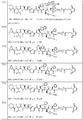
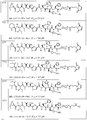
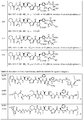
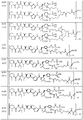
- Illustrative examples of compounds of formula (III) have the structures: Wherein Ar, n, q, X, Y', Z', R 22 , R 23 , R' and R" are defined the same as for formula IIa ⁇ IIr.
- a binding molecule-antimitotic agent conjugate has the formula (IV) wherein T, L, m, Y, R 1 , R 2 , R 3 , R 4 , R 5 , R 6 , R 7 , R 8 , R 10 , R 11 , R 12 , R 13 and n are defined the same as in formula (II).
- Illustrative examples of compounds of formula (IV) have the structures: wherein Ar, Aa, n, q, X', Y', R 22 , R 23 , R' and R" are defined the same as for formula IIa ⁇ IIr.
- a binding molecule -antimitotic agent conjugate has the formula (V) wherein T, L, m, Y, R 1 , R 2 , R 3 , R 4 , R 5 , R 6 , R 7 , R 8 , R 9 , R 10 , R 12 , R 13 and n are defined the same as in formula (II).
- R 14 is C 1 ⁇ C 8 of alkyl, heteroalkyl; C 2 ⁇ C 8 of alkenyl, alkynyl; C 3 ⁇ C 8 of aryl, hetero
- Illustrative examples of compounds of formula (V) have the structures: Wherein Ar, Aa, n, q, X', R 22 , R 23 , R' and R" are defined the same as for formula IIa ⁇ IIr.
- a conjugates of a cell binding-antimitotic agent have the formula (VI) wherein T, L, m, R 1 , R 2 , R 3 , R 4 , R 5 , R 6 , R 7 , R 8 , R 9 , R 11 , R 13 and n are defined the same as in formula (II).
- R 14 , R 15 are independently C 1 ⁇ C 8 of alkyl, heteroalkyl; C 2 ⁇ C 8 of alkenyl, alkynyl; C 3 ⁇ C 8 of aryl, heterocyclic, carbocyclic, cycloalkyl, alkylcycloalkyl, heterocycloalkyl, heteroaralkyl, heteroalkylcycloalkyl, alkylcarbonyl.
- the conjugates of the cell-surface binding molecule-antimitotic agents have the formula (VII) wherein T, L, m, R 1 , R 2 , R 3 , R 4 , R 5 , R 6 , R 7 , R 8 , R 9 , R 11 , R 12 and n are defined the same as in formula (II).
- R 13 is C 1 ⁇ C 10 of alkyl, heteroalkyl, alkyl acid, alkyl amide, alkyl amine, or Ar;
- Ar refers to a aromatic or hetero aromatic group, composed of one or several rings, comprising four to ten carbon, preferentially four to six carbon atoms.
- the term of hetero aromatic group refers one or several carbon on aromatic group, preferentially one, two or three carbon atoms are replaced by O, N, Si, Se, P or S, preferentially O, S, N.
- R 12 can be H when R 10 is not H, or when R 13 is: wherein Z 1 is H, CH 2 OP(O)(OR 18 ) 2 , C(O)OP(O)(OR 18 ) 2 , PO(OR 18 ) 2 , PO(OR 18 )OPO(OR 18 ) 2 , C(O)R 18 , C(O)NHR 18 , SO 2 (OR 18 ), C 4 ⁇ C 12 glycosides, or C 1 ⁇ C 8 of alkyl, carboxyalkyl, heterocyclic; R 18 is H, C 1 ⁇ C 8 of alkyl, carboxyalkyl, heteroalkyl; C 2 ⁇ C 8 of alkenyl, alkynyl, heterocyclic; C 3 ⁇ C 8 of aryl, alkylcarbonyl; R 19 is H, OH, NH 2 , OSO 2 (OR 18 ), XCH 2 OP(O)(OR 18 ) 2 , XC(O)OP(O)
- R 12 can be H when R 11 is: X 2 is O, S, N-R 8 ; R 8 is H, C 1 ⁇ C 4 of alkyl or heteroalkyl.
- Illustrative examples of compounds of formula VII have the following structures:
- Ar, Aa, n, q, X', R 22 , R 23 , R' and R" are defined the same as for formula IIa ⁇ IIr; R 24 is H or CH 3 .
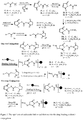
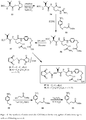
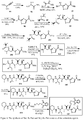
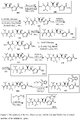
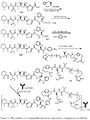
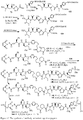
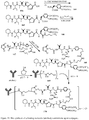
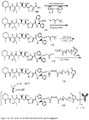
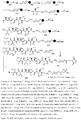
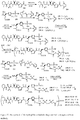
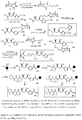
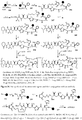
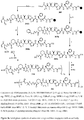
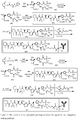
- the synthetic routes to produce the antimitotic agents and their conjugation to a cell-surface receptor binding molecules of the present invention are exampled, but not limited to, shown in figures 1-32 .
- the releasable linker (L) used for the conjugation of the present invention is a chain of atoms selected from C, N, O, S, Si, and P that covalently connects the cell-surface binding ligand (T) to the potent antimitotic agents.
- the linker may have a wide variety of lengths, such as in the range from about 2 to about 100 atoms.
- the atoms used in forming the linker may be combined in all chemically relevant ways, such as forming alkylene, alkenylene, and alkynylene, ethers, polyoxyalkylene, esters, amines, imines, polyamines, hydrazines, hydrazones, amides, ureas, semicarbazides, carbazides, alkoxyamines, alkoxylamines, urethanes, amino acids, acyloxylamines, hydroxamic acids, and many others.
- the atoms forming the releasable linker (L) may be either saturated or unsaturated, or may be radicals, or may be cyclized upon each other to form divalent cyclic structures, including cyclo alkanes, cyclic ethers, cyclic amines, arylenes, heteroarylenes, and the like in the linker.
- releasable linker refers to a linker that includes at least one bond that can be broken under physiological conditions, such as a pH-labile, acid-labile, base-labile, oxidatively labile, metabolically labile, biochemically labile, or enzyme-labile bond. It is appreciated that such physiological conditions resulting in bond breaking do not necessarily include a biological or metabolic process, and instead may include a standard chemical reaction, such as a hydrolysis or substitution reaction, for example, an endosome having a lower pH than cytosolic pH, and/or disulfide bond exchange reaction with a intracellular thiol, such as a millimolar range of abundant of glutathione inside the malignant cells.
- physiological conditions resulting in bond breaking do not necessarily include a biological or metabolic process, and instead may include a standard chemical reaction, such as a hydrolysis or substitution reaction, for example, an endosome having a lower pH than cytosolic pH, and/or disulfide bond exchange reaction with a intracellular
- the releasable linker L of conjugates may have the formula: --Ww-(Aa)r--Vv-- wherein: --W-- is a Stretcher unit; w is 0 or 1; each --Aa-- is independently an Amino Acid unit; r is independently an integer ranging from 0 to 12; --V-- is a Spacer unit; and v is 0, 1 or 2.
- the Stretcher unit W may independently contain a self-immolative spacer, peptidyl units, a hydrazone bond, disulfide or thioether bonds.
- a binding molecular (T) has a functional group that can form a bond with a functional group of a Stretcher.
- Useful functional groups that can be present on a binding molecular, either naturally or via chemical manipulation include, but are not limited to, sulfhydryl (--SH), amino, hydroxyl, carbonyl, the anomeric hydroxyl group of a carbohydrate, and carboxyl.
- Preferred functional groups are sulfhydryl, carboxy and amino.
- Sulfhydryl groups can be generated by reduction of an intramolecular disulfide bond of a binding ligand, such as of an antibody.
- sulfhydryl groups can be generated by reaction of an amino group of a lysine moiety of a binding molecular using 2-iminothiolane (Traut's reagent) or thiolactone or another sulfhydryl generating reagent, such as modifies T with a disulfide bond linker, or a thiol ester following by reduction or hydrolysis respectively.
- 2-iminothiolane Trimethiolactone
- another sulfhydryl generating reagent such as modifies T with a disulfide bond linker, or a thiol ester following by reduction or hydrolysis respectively.
- W linked to T have the structures: wherein R 20 and R 21 are selected from -C 1 ⁇ C 9 alkylene-, --C 1 ⁇ C 7 carbocyclo-, -O-(C 1 ⁇ C 8 alkyl)-, -arylene-, --C 1 ⁇ C 9 alkylene-arylene-, -arylene, -C 1 ⁇ C 9 alkylene-, -C 1 ⁇ C 9 alkylene-(C 1 ⁇ C 8 carbocyclo)-, -(C 3 ⁇ C 7 carbocyclo)-C 1 ⁇ C 9 alkylene-, -C 3 ⁇ C 8 heterocyclo-, -C 1 ⁇ C 10 alkylene-(C 3 ⁇ C 8 heterocyclo)-,-(C 3 ⁇ C 8 heterocyclo)-C 1 ⁇ C 9 alkylene-, -(CH 2 CH 2 O) k -, -(CH(CH 3 )CH 2 O) k -, and -
- conjugation of W to T covalently as illustrated above can be via various chemical reactions.
- the Stretcher unit contains a reactive site of E, which can form an amide bond with a primary or secondary amino group of a binding molecule.
- Example of the reactive E includes, but is not limited to, such as hydroxysuccinimidyl esters (NHS, Sulfo-NHS, etc), 4-nitrophenyl esters, pentafluorophenyl esters, tetrafluorophenyl (includes sulfo-tetrafluorophenyl) esters, anhydrides, acid chlorides, sulfonyl chlorides, isocyanates and isothiocyanates.
- the Stretcher unit contains a sulfhydryl reactive site, which can form a thiol ether or disulfide bond with a thiol group which is generated by reduction of an intramolecular disulfide bond of the binding ligand T, or generated by a chemical modification on the binding ligand T.
- a Stretcher that contains a functionality such as a hydrazide, an oxime, a primary or secondary amine, a hydrazine, a thiosemicarbazone, a hydrazine carboxylate, and an arylhydrazide.
- the Stretchers (which may contain a spacer V and/or an amino acid) can be linked to the binding molecules (T), followed by conjugation of a potent antimitotic agent to the binding molecule-stretcher moiety in an aqueous buffered solution.
- E includes, but is not limited to, such as hydroxysuccinimidyl esters (NHS, Sulfo-NHS, etc), 4-nitrophenyl esters, pentafluorophenyl esters, tetrafluorophenyl (includes sulfo-tetrafluorophenyl) esters, anhydrides, acid chlorides, sulfonyl chlorides, isocyanates and isothiocyanates.
- R' and R" are independently H or CH 3 ;
- R 20 , R 16 and Ar are defined in various embodiment throughout this inventions;
- R 26 is H, or F, or NO 2 independently;
- J is F, Cl, Br, I, tosylate (TsO) or mesylate (MsO) independently and wherein R 16 bears at least one antimitotic agent/drug as (drug) R 16
- the Stretchers can be linked to a potent antimitotic agent first, followed by conjugation of the binding molecules (T) in an aqueous pH 3 ⁇ 10 (preferably pH 5 ⁇ 8.5) buffered solution containing up to 50% of organic cosolvents.
- E includes, but is not limited to, such as hydroxysuccinimidyl esters (NHS, Sulfo-NHS, etc), 4-nitrophenyl esters, pentafluorophenyl esters, tetrafluorophenyl (includes sulfo-tetrafluorophenyl) esters, anhydrides, acid chlorides, sulfonyl chlorides, isocyanates and isothiocyanates.
- R' and R" are independently H or CH 3 ;
- R 16 , R 20 and Ar are defined in various embodiment throughout this inventions;
- R 26 is H, or F, or NO 2 independently;
- J is F, Cl, Br, I, tosylate (TsO) or mesylate (MsO) independently and wherein R 16 bears at least one antimitotic agent/drug
- the Amino Acid unit when present, links the Stretcher unit to the Spacer unit if the Spacer unit is present, links the Stretcher unit to the antimitotic agent unit if the Spacer unit is absent, and links the binding molecule (T) unit to the antimitotic agent unit if the Stretcher unit and Spacer unit are absent.
- --(Aa)r-- is a natural or unnatural amino acid, dipeptide, tripeptide, tetrapeptide, pentapeptide, hexapeptide, heptapeptide, octapeptide, nonapeptide, decapeptide, undecapeptide or dodecapeptide unit, and r is an integer ranging from 0 to 12.
- amino acid refers generally to aminoalkylcarboxylate, where the alkyl radical is optionally substituted, such as with alkyl, acyl, hydroxy alkyl, sulfhydrylalkyl, aminoalkyl, carboxyalkyl, and the like,
- alkyl radical is optionally substituted, such as with alkyl, acyl, hydroxy alkyl, sulfhydrylalkyl, aminoalkyl, carboxyalkyl, and the like
- amino acid refers to beta, gamma, and longer amino acids with intra chain containing methyl, benzyl, hydroxymethyl, thiomethyl, carboxyl, carboxylmethyl, guanidinopropyl, and the like.
- amino acid is selected from arginine, asparagine, aspartic acid, citrulline, cysteine, glycine, glutamic acid, leucine, lysine, glutamic acid, glutamine, serine, ornithine, phenylalanine, threonine, tyrosine, valine and the like.
- the Amino Acid unit used in this invention can be enzymatically cleaved by one or more enzymes, including a tumor-associated protease, to liberate the antimitotic agent, which in one embodiment is protonated in vivo upon release to provide an antimitotic agent.
- one or more enzymes including a tumor-associated protease
- the Spacer unit when present, links an Amino Acid unit to the antimitotic agent when an Amino Acid unit is present. Alternately, the Spacer unit links the Stretcher unit to antimitotic agent when the Amino Acid unit is absent. The Spacer unit also links antimitotic agent to the binding molecule (T) when both the Amino Acid unit and Stretcher unit are absent.
- the spacer linkers may contain function groups that substantially increase the water solubility, biological transport, preferential renal clearance, uptake, absorption, biodistribution, and/or bioavailability of the conjugate are described herein. Spacer units are of two general types: self-immolative and non self-immolative.
- a non self-immolative Spacer unit is one in which part or all of the Spacer unit remains bound to antimitotic agent after cleavage, particularly enzymatic, of an Amino Acid unit from the antimitotic agent-Linker- binding molecule conjugate or the antimitotic agent-Linker Compound.
- Examples of the self-immolative spacer linkers wherein the (*) atom is the point of attachment of additional spacer or releasable linker units, the antimitotic agent, and/or the binding molecule (T); X, Y and Z 3 are independently NH, O, or S; Z 2 is H, NH, O or S independently.
- v is 0 or 1;
- (*) atom is the point of attachment of additional spacer or releasable linkers, the antimitotic agents, and/or the binding molecules; m is 1 ⁇ 10; n is 1 ⁇ 20.
- the binding molecule (T) may be of any kind presently known, or that become known, molecule that binds to, complexes with or reacts with a moiety of a cell population sought to be therapeutically or otherwise biologically modified.
- the binding molecule unit acts to deliver the antimitotic agents to the particular target cell population with which the binding molecule (T) reacts.
- the cell binding agents include, but are not limited to, large molecular weight proteins such as, for example, full-length antibodies (polyclonal and monoclonal antibodies); single chain antibodies; fragments of antibodies such as Fab, Fab', F(ab') 2 , F v , [ Parham, J. Immunol.
- PSMA prostate-specific membrane antigen
- TKI small molecular tyrosine kinase inhibitors
- nanoparticles Liong, et al, ACS Nano, 2008, 19, 1309-12 ; Medarova, et al, Nat. Med. 2007, 13, 372-7 ; Javier, et al, Bioconjugate Chem. 2008, 19, 1309-12 ); liposomes ( Medinai, et al, Curr. Phar. Des. 2004, 10, 2981-9 ); viral capsides ( Flenniken, et al, Viruses Nanotechnol. 2009, 327, 71-93 ). In general monoclonal antibodies are preferred as a cell-surface binding agent if an appropriate one is available.
- the binding molecules can be modified through attachment of a more specific peptide, a protein, or a drug, or the other functional molecules with a heterobifunctional cross linker such as with linkers of Amine-to-Nonselective (succinimidyl (NHS)-diazirine (SDA), NHS ester /Azide), Amine-to-Sulfhydryl (NHS ester/maleimide, NHS ester/ pyridyldithiol, NHS esters/ haloacetyl), Sulfhydryl-to-Carbohydrate (Maleimide/Hydrazide, Pyridyldithiol /Hydrazide), Hydroxyl-to-Sulfhydryl (Isocyanate / Maleimide), Amine-to-DNA (NHS ester/ Psoralen), Amine-to-Carboxyl (Carbodiimide).
- a heterobifunctional cross linker such as with linkers of Am
- the NHS ester of a SDA linker reacts with primary an amine group of a binding molecule backbone in pH 6 ⁇ 9 buffer to form a stable amide bond upon release of NHS.
- photoactivation of the diarzirine with long-wave UV light creates a reactive carbene intermediate that can react with an amine group of a more specific peptide or a protein or the other functional molecule.
- the order of these two steps can be different as this: an amine group of a functional molecule reacts with a SDA linker first following by photoactive reaction of a binding molecule with long-wave UV light (330-370nm).
- the SDA crosslinkers can be cleavable (with a disulfide bond inside such as SDAD linker).
- the NHS ester of the linker reacts with primary an amine group of a binding molecule backbone in pH 6 ⁇ 9 buffer to form a stable amide. Then an alkynyl group on a more specific peptide or a protein or the other functional molecule reacts to the azide on the other side of the linker via Azide-Alkyne Huisgen Cycloaddition to form a 1,2,3-triazole linkage (click chemistry). Also, the NHS ester of the linker reacts with primary an amine group of a functional molecule in pH 6 ⁇ 9 buffer to form a stable amide. Then an alkynyl group being linked on a binding molecule reacts to the azide on the other side of the linker via Azide-Alkyne Huisgen Cycloaddition to form a 1,2,3-triazole linkage.
- the NHS ester of the linker reacts with a primary amine group of a binding molecule backbone in pH 6 ⁇ 9 buffer to form a stable amide bond. Then a sulfhydryl on a more specific peptide or a protein or the other functional molecule reacts to the maleimide, or pyridyldithiol, or haloacetyl on the other side of the Amine-to-sulfhydryl linker at pH 4.5 ⁇ 8.5 to form a thioether or a disulfide bond.
- the conjugation with the Amine-to-Sulfhydryl linker can be in different orders.
- an amine group of a functional molecule can be reacted with the linker to form an amide bond first, following by reaction with a sulfhydryl on a binding molecule.
- a sulfhydryl group of a functional molecule can be reacted with the linker to form a thioether or a disulfide bond at pH 4.5 ⁇ 7 first, following by reaction with an amine group on a binding molecule at pH 6 ⁇ 9 to form an amide bond.
- the sulfhydryl group of a binding molecule can be reacted with the maleimide or the pyridyldithiol on the linker to form a thioether or a disulfide bond at pH 4.5 ⁇ 8 first, Then a carbonyl (aldehyde/ketone) group on a functional molecule reacts with the hydrazide to form an hydrazone bond.
- the sulfhydryl group on a functional molecule can react with the linker to form a thioether or a disulfide bond at pH 4.5 ⁇ 8 first, following by reaction with a carbohydrate, or an oxidized carbohydrate, or an carbonyl (aldehyde/ketone) group on a binding molecule form an hydrazone bond.
- the sulfhydryl group of a binding molecule can be reacted with the maleimide or the pyridyldithiol on the linker to form a thioether or a disulfide bond at pH 6 ⁇ 8 first, Then a hydroxy group on a functional molecule reacts with the isocyanate on the linker to form a carbamate bond at pH 8 ⁇ 9.
- the sulfhydryl group on a functional molecule can react with the linker to form a thioether or a disulfide bond at pH 6 ⁇ 8 first, following by reaction with a hydroxy on a binding molecule form a carbamate bond at pH 8 ⁇ 9.
- the production of antibodies used in the present invention involves in vivo or in vitro procedures or combinations thereof.
- Methods for producing polyclonal anti-receptor peptide antibodies are well-known in the art, such as in U.S. Pat. No. 4,493,795 (to Nestor et al ).
- a monoclonal antibody is typically made by fusing myeloma cells with the spleen cells from a mouse that has been immunized with the desired antigen ( Köhler, G.; Milstein, C. (1975). Nature 256: 495-497 ).
- Monoclonal antibodies are produced by immunizing mice, rats, hamsters or any other mammal with the antigen of interest such as the intact target cell, antigens isolated from the target cell, whole virus, attenuated whole virus, and viral proteins.
- Splenocytes are typically fused with myeloma cells using polyethylene glycol (PEG) 6000.
- Fused hybrids are selected by their sensitivity to HAT (hypoxanthine-aminopterin-thymine).
- Hybridomas producing a monoclonal antibody useful in practicing this invention are identified by their ability to immunoreact specified receptors or inhibit receptor activity on target cells.
- a monoclonal antibody used in the present invention can be produced by initiating a monoclonal hybridoma culture comprising a nutrient medium containing a hybridoma that secretes antibody molecules of the appropriate antigen specificity.
- the culture is maintained under conditions and for a time period sufficient for the hybridoma to secrete the antibody molecules into the medium.
- the antibody-containing medium is then collected.
- the antibody molecules can then be further isolated by well-known techniques, such as using protein-A affinity chromatography; anion, cation, hydrophobic, or size exclusive chromatographies (particularly by affinity for the specific antigen after Protein A, and sizing column chromatography); centrifugation, differential solubility, or by any other standard technique for the purification of proteins.
- DMEM Dulbecco's minimal essential medium
- 20 mm glutamine 20 mm glutamine
- 20% fetal calf serum supplemented with an antifoaming agent, such as polyoxyethylene-polyoxypropylene block copolymer.
- an antifoaming agent such as polyoxyethylene-polyoxypropylene block copolymer.
- antibody-producing cell lines can also be created by techniques other than fusion, such as direct transformation of B lymphocytes with oncogenic DNA, or transfection with an oncovirus, such as Epstein-Barr virus (EBV, also called human herpesvirus 4 (HHV-4)) or Kaposi's sarcoma-associated herpesvirus (KSHV).
- EBV Epstein-Barr virus
- HHV-4 human herpesvirus 4
- KSHV Kaposi's sarcoma-associated herpesvirus
- a monoclonal antibody may also be produced via an anti-receptor peptide or peptides containing the carboxyl terminal as described well-known in the art. See Niman et al., Proc. Natl. Acad. Sci. USA, 80: 4949-4953 (1983 ); Geysen et al., Proc. Natl. Acad. Sci. USA, 82: 178-182 (1985 ); Lei et al. Biochemistry 34(20): 6675-6688, (1995 ). Typically, the anti-receptor peptide or a peptide analog is used either alone or conjugated to an immunogenic carrier, as the immunogen for producing anti-receptor peptide monoclonal antibodies.
- phage display technology which can be used to select a range of human antibodies binding specifically to the antigen using methods of affinity enrichment. Phage display has been thoroughly described in the literature and the construction and screening of phage display libraries are well known in the art, see, e.g., Dente et al, Gene. 148(1):7-13 (1994 ); Little et al, Biotechnol Adv. 12(3):539-55 (1994 ); Clackson et al., Nature 352:264-628 (1991 ); Huse et al., Science 246:1275-1281 (1989 ).
- Monoclonal antibodies derived by hybridoma technique from another species than human, such as mouse, can be humanized to avoid human anti-mouse antibodies when infused into humans.
- complementarity-determining region grafting and resurfacing are more common methods of humanization of antibodies. These methods have been extensively described, see e.g. U.S. Pat. 5,859,205 and 6,797,492 ; Liu et al, Immunol Rev. 222:9-27 (2008 ); Almagro et al, Front Biosci. 1;13:1619-33 (2008 ); Lazar et al, Mol Immunol. 44(8):1986-98 (2007 ); Li et al, Proc. Natl. Acad. Sci. USA.
- Fully human antibodies can also be prepared by immunizing transgenic mice, rabbits, monkeys, or other mammals, carrying large portions of the human immunoglobulin heavy and light chains, with an immunogen. Examples of such mice are: the Xenomouse. (Abgenix, Inc.), the HuMAb-Mouse (MedarexBMS), the VelociMouse (Regeneron), see also U.S. Pat. No.
- murine variable regions and human constant regions can also be fused to construct called "chimeric antibodies" that are considerably less immunogenic in man than murine mAbs ( Kipriyanov et al, Mol Biotechnol. 26:39-60 (2004 ); Houdebine, Curr Opin Biotechnol. 13:625-9 (2002 ) each incorporated herein by reference).
- site-directed mutagenesis in the variable region of an antibody can result in an antibody with higher affinity and specificity for its antigen ( Brannigan et al, Nat Rev Mol Cell Biol. 3:964-70, (2002 )); Adams et al, J Immunol Methods. 231:249-60 (1999 )) and exchanging constant regions of a mAb can improve its ability to mediate effector functions of binding and cytotoxicity.
- Antibodies immunospecific for a malignant cell antigen can also be obtained commercially or produced by any method known to one of skill in the art such as, e.g., chemical synthesis or recombinant expression techniques.
- the nucleotide sequence encoding antibodies immunospecific for a malignant cell antigen can be obtained commercially, e.g., from the GenBank database or a database like it, the literature publications, or by routine cloning and sequencing.
- a peptide or protein that bind/block/target or in some other way interact with the epitopes or corresponding receptors on a targeted cell can be used as a binding molecule.
- These peptides or proteins could be any random peptide or proteins that have an affinity for the epitopes or corresponding receptors and they don't necessarily have to be of the immunoglobulin family.
- These peptides can be isolated by similar techniques as for phage display antibodies ( Szardenings, J Recept Signal Transduct Res. 2003; 23(4):307-49 ).
- the use of peptides from such random peptide libraries can be similar to antibodies and antibody fragments.
- binding molecules of peptides or proteins may be conjugated on or linked to a large molecules or materials, such as, but is not limited, an albumin, a polymer, a liposome, a nano particle, dendrimers, as long as such attachment permits the peptide or protein to retain its antigen binding specificity.
- a large molecules or materials such as, but is not limited, an albumin, a polymer, a liposome, a nano particle, dendrimers, as long as such attachment permits the peptide or protein to retain its antigen binding specificity.
- antibodies used for conjugation of antimitotic agents in this prevention for treating cancer, autoimmune disease, and infectious disease include, but are not limited to, 3F8 (anti-GD2), Abagovomab (anti CA-125), Abciximab (anti CD41 (integrin alpha-IIb), Adalimumab (anti-TNF- ⁇ ), Adecatumumab (anti-EpCAM, CD326), Afelimomab (anti-TNF- ⁇ ); Afutuzumab (anti-CD20), Alacizumab pegol (anti-VEGFR2), ALD518 (anti-IL-6), Alemtuzumab (Campath, MabCampath, anti- CD52), Altumomab (anti-CEA), Anatumomab (anti-TAG-72), Anrukinzumab (IMA-638, anti-IL-13), Apolizumab (anti-HLA-DR), Arcitumomab (anti-CEA
- ImmuRAIT from Immunomedics for NHL
- Lym-1 anti-HLA-DR10, Peregrine Pharm. for Cancers
- MAK-195F anti-TNF (tumor necrosis factor; TNFA, TNF-alpha; TNFSF2), from Abbott / Knoll for Sepsis toxic shock
- MEDI-500 [T10B9, anti-CD3, TR ⁇ (T cell receptor alpha/beta), complex, from MedImmune Inc for Graft-versus-host disease]
- RING SCAN anti-TAG 72 (tumour associated glycoprotein 72), from Neoprobe Corp.
- LymphoCide Immunomedics, NJ
- Smart ID10 Protein Design Labs
- Oncolym Techniclone Inc, CA
- Allomune BioTransplant, CA
- anti-VEGF Genetech, CA
- CEAcide Immunomedics, NJ
- IMC-1C11 ImClone Systems, NJ
- Cetuximab ImClone, NJ
- antibodies as binding ligands include, but are not limited to, are antibodies against the following antigens: Aminopeptidase N (CD13), Annexin A1, B7-H3 (CD276, various cancers), CA125, CA15-3 (carcinomas), CA19-9 (carcinomas), L6 (carcinomas), Lewis Y (carcinomas), Lewis X (carcinomas), alpha fetoprotein (carcinomas), CA242, placental alkaline phosphatase (carcinomas), prostate specific antigen (prostate), prostatic acid phosphatase (prostate), epidermal growth factor (carcinomas), CD2 (Hodgkin's disease, NHL lymphoma, multiple myeloma), CD3 epsilon (T cell lymphoma, lung, breast, gastric, ovarian cancers, autoimmune diseases, malignant ascites), CD19 (B cell malignancies), CD20 (non-Hodgkin's lymphoma), CD22 (leukemia,
- CD4 Cluster of Differentiations
- the antimitotic agent- binding molecule conjugates of the invention are used in accordance with the compositions and methods of the invention for the treatment of cancers.
- the cancers include, but are not limited, Adrenocortical Carcinoma, Anal Cancer, Bladder Cancer, Brain Tumor (Adult, Brain Stem Glioma, Childhood, Cerebellar Astrocytoma, Cerebral Astrocytoma, Ependymoma, Medulloblastoma, Supratentorial Primitive Neuroectodermal and Pineal Tumors, Visual Pathway and Hypothalamic Glioma), Breast Cancer, Carcinoid Tumor, Gastrointestinal, Carcinoma of Unknown Primary, Cervical Cancer, Colon Cancer, Endometrial Cancer, Esophageal Cancer, Extrahepatic Bile Duct Cancer, Ewings Family of Tumors (PNET), Extracranial Germ Cell Tumor, Eye Cancer, Intraocular Melanoma, Gallbladder Cancer,
- the antimitotic agent- binding molecule conjugates of the invention are used in accordance with the compositions and methods of the invention for the treatment or prevention of an autoimmune disease.
- the autoimmune diseases include, but are not limited, Achlorhydra Autoimmune Active Chronic Hepatitis, Acute Disseminated Encephalomyelitis, Acute hemorrhagic leukoencephalitis, Addison's Disease, Agammaglobulinemia, Alopecia areata, Amyotrophic Lateral Sclerosis, Ankylosing Spondylitis, Anti-GBM/TBM Nephritis, Antiphospholipid syndrome, Antisynthetase syndrome, Arthritis, Atopic allergy, Atopic Dermatitis, Autoimmune Aplastic Anemia, Autoimmune cardiomyopathy, Autoimmune hemolytic anemia, Autoimmune hepatitis, Autoimmune inner ear disease, Autoimmune lymphoproliferative syndrome, Autoimmune peripheral neuropathy, Autoimmune pan
- a binding molecule used for the conjugate for the treatment or prevention of an autoimmune disease includes, but are not limited to, anti-elastin antibody; Abys against epithelial cells antibody; Anti-Basement Membrane Collagen Type IV Protein antibody; Anti-Nuclear Antibody; Anti ds DNA; Anti ss DNA, Anti Cardiolipin Antibody IgM, IgG; anti-celiac antibody; Anti Phospholipid Antibody IgK, IgG; Anti SM Antibody; Anti Mitochondrial Antibody; Thyroid Antibody; Microsomal Antibody, T-cells antibody; Thyroglobulin Antibody, Anti SCL-70; Anti-Jo; Anti-U.sub.lRNP; Anti-La/SSB; Anti SSA; Anti SSB; Anti Perital Cells Antibody; Anti Histones; Anti RNP; C-ANCA; P-ANCA; Anti centromere; Anti-Fibrillarin, and Anti GBM Antibody, Anti-ganglioside antibody; Anti
- the binding molecule for the conjugate in the present invention can bind to either a receptor or a receptor complex expressed on an activated lymphocyte which is associated with an autoimmune disease.
- the receptor or receptor complex can comprise an immunoglobulin gene superfamily member (e.g. CD2, CD3, CD4, CD8, CD19, CD22, CD28, CD79, CD90, CD152/CTLA-4, PD-1, or ICOS), a TNF receptor superfamily member (e.g.
- useful binding ligands that are immunospecific for a viral or a microbial antigen are humanized or human monoclonal antibodies.
- viral antigen includes, but is not limited to, any viral peptide, polypeptide protein (e.g. HIV gp120, HIV nef, RSV F glycoprotein, influenza virus neuraminidase, influenza virus hemagglutinin, HTLV tax, herpes simplex virus glycoprotein (e.g. gB, gC, gD, and gE) and hepatitis B surface antigen) that is capable of eliciting an immune response.
- polypeptide protein e.g. HIV gp120, HIV nef, RSV F glycoprotein, influenza virus neuraminidase, influenza virus hemagglutinin, HTLV tax, herpes simplex virus glycoprotein (e.g. gB, gC, gD, and gE) and hepatitis B surface antigen
- microbial antigen includes, but is not limited to, any microbial peptide, polypeptide, protein, saccharide, polysaccharide, or lipid molecule (e.g., a bacteria, fungi, pathogenic protozoa, or yeast polypeptide including, e.g., LPS and capsular polysaccharide 5/8) that is capable of eliciting an immune response.
- microbial antigen includes, but is not limited to, any microbial peptide, polypeptide, protein, saccharide, polysaccharide, or lipid molecule (e.g., a bacteria, fungi, pathogenic protozoa, or yeast polypeptide including, e.g., LPS and capsular polysaccharide 5/8) that is capable of eliciting an immune response.
- antibodies available 1 for the viral or microbial infection include, but are not limited to, Palivizumab which is a humanized anti-respiratory syncytial virus monoclonal antibody for the treatment of RSV infection; PRO542 which is a CD4 fusion antibody for the treatment of HIV infection; Ostavir which is a human antibody for the treatment of hepatitis B virus; PROTVIR which is a humanized IgG.sub.1 antibody for the treatment of cytomegalovirus; and anti-LPS antibodies.
- the binding molecules -antimitotic agent conjugates of this invention can be used in the treatment of infectious diseases.
- infectious diseases include, but are not limited to, Acinetobacter infections, Actinomycosis, African sleeping sickness (African trypanosomiasis), AIDS (Acquired immune deficiency syndrome), Amebiasis, Anaplasmosis, Anthrax, Arcanobacterium haemolyticum infection, Argentine hemorrhagic fever, Ascariasis, Aspergillosis, Astrovirus infection, Babesiosis, Bacillus cereus infection, Bacterial pneumonia, Bacterial vaginosis, Bacteroides infection, Balantidiasis, Baylisascaris infection, BK virus infection, Black piedra, Blastocystis hominis infection, Blastomycosis, Venezuelan hemorrhagic fever, Borrelia infection, Botulism (and Infant botulism), Brazilian hemorrhagic fever, Brucellosis,
- binding molecules preferable antibodies described in this patent that are against pathogenic strains include, but are not limit, Acinetobacter baumannii, Actinomyces israelii, Actinomyces gerencseriae and Propionibacterium propionicus, Trypanosoma brucei, HIV (Human immunodeficiency virus), Entamoeba histolytica, Anaplasma genus, Bacillus anthracis, Arcanobacterium haemolyticum, Junin virus, Ascaris lumbricoides, Aspergillus genus, Astroviridae family, Babesia genus, Bacillus cereus, multiple bacteria, Bacteroides genus, Balantidium coli, Baylisascaris genus, BK virus, Piedraia hortae, Blastocystis hominis, Blastomyces dermatitides, Machupo virus, Borrelia genus, Clostridium botulinum, Sabia,
- antibodies as a binding ligand in this invention for treatment of viral disease include, but are not limited to, antibodies against antigens of pathogenic viruses, including as examples and not by limitation: Poxyiridae, Herpesviridae, Adenoviridae, Papovaviridae, Enteroviridae, Picornaviridae, Parvoviridae, Reoviridae, Retroviridae, influenza viruses, parainfluenza viruses, mumps, measles, respiratory syncytial virus, rubella, Arboviridae, Rhabdoviridae, Arenaviridae, Non-A/Non-B Hepatitis virus, Rhinoviridae, Coronaviridae, Rotoviridae, Oncovirus [such as, HBV (Hepatocellular carcinoma), HPV (Cervical cancer, Anal cancer), Kaposi's sarcoma-associated herpesvirus (Kaposi's sarcoma), Epstein-Barr virus (Nasoph
- the present invention also concerns pharmaceutical compositions comprising the conjugate of the invention together with a pharmaceutically acceptable carrier for treatment of cancer and autoimmune disorders.
- the method for treatment of cancer and autoimmune disorders can be practiced in vitro , in vivo , or ex vivo.
- in vitro uses include treatments of cell cultures in order to kill all cells except for desired variants that do not express the target antigen; or to kill variants that express undesired antigen.
- Examples of ex vivo uses include treatments of hematopoietic stem cells (HSC) prior to the performance of the transplantation (HSCT) into the same patient in order to kill diseased or malignant cells.
- HSC hematopoietic stem cells
- the bone marrow cells After incubation the bone marrow cells are washed with medium containing serum and returned to the patient by i.v. infusion according to known methods. In circumstances where the patient receives other treatment such as a course of ablative chemotherapy or total-body irradiation between the time of harvest of the marrow and reinfusion of the treated cells, the treated marrow cells are stored frozen in liquid nitrogen using standard medical equipment.
- the conjugate of the invention will be supplied as solutions or as a lyophilized solid that can be redisolved in sterile water for injection.
- suitable protocols of conjugate administration are as follows. Conjugates are given weekly for 8 weeks as an i.v. bolus. Bolus doses are given in 50 to 500 ml of normal saline to which human serum albumin (e.g. 0.5 to 1 mL of a concentrated solution of human serum albumin, 100 mg/mL) can be added. Dosages will be about 50 ⁇ g to 20 mg/kg of body weight per week, i.v. (range of 10 ⁇ g to 200 mg/kg per injection). 8 weeks after treatment, the patient may receive a second course of treatment. Specific clinical protocols with regard to route of administration, excipients, diluents, dosages, times, etc., can be determined by the skilled clinicians.
- Examples of medical conditions that can be treated according to the in vivo or ex vivo methods of killing selected cell populations include malignancy of any types of cancer, autoimmune diseases, graft rejections, and infections (viral, bacterial or parasite).
- the amount of a conjugate which is required to achieve the desired biological effect will vary depending upon a number of factors, including the chemical characteristics, the potency, and the bioavailability of the conjugates, the type of disease, the species to which the patient belongs, the diseased state of the patient, the route of administration, all factors which dictate the required dose amounts, delivery and regimen to be administered.
- the conjugates of this invention may be provided in an aqueous physiological buffer solution containing 0.1 to 10% w/v conjugates for parenteral administration.
- Typical dose ranges are from 1 ⁇ g/kg to 0.1 g/kg of body weight per day; a preferred dose range is from 0.01 mg/kg to 20 mg/kg of body weight per day or an equivalent dose in a human child.
- the preferred dosage of drug to be administered is likely to depend on such variables as the type and extent of progression of the disease or disorder, the overall health status of the particular patient, the relative biological efficacy of the compound selected, the formulation of the compound, the route of administration (intravenous, intramuscular, or other), the pharmaco-kinetic properties of the compound by the chosen delivery route, and the speed (bolus or continuous infusion) and schedule of administrations (number of repetitions in a given period of time).
- the conjugates of the present invention are also capable of being administered in unit dose forms, wherein the term "unit dose” means a single dose which is capable of being administered to a patient, and which can be readily handled and packaged, remaining as a physically and chemically stable unit dose comprising either the active conjugate itself, or as a pharmaceutically acceptable composition, as described hereinafter.
- typical total daily dose ranges are from 0.01 to 100 mg/kg of body weight.
- unit doses for humans range from 1 mg to 3000 mg per day.
- the unit dose range is from 1 to 500 mg administered one to four times a day, and even more preferably from 10 mg to 500 mg, once a day.
- Conjugates provided herein can be formulated into pharmaceutical compositions by admixture with one or more pharmaceutically acceptable excipients.
- Such unit dose compositions may be prepared for use by oral administration, particularly in the form of tablets, simple capsules or soft gel capsules; or intranasally, particularly in the form of powders, nasal drops, or aerosols; or dermally, for example, topically in ointments, creams, lotions, gels or sprays, or via trans-dermal patches.
- the compositions may conveniently be administered in unit dosage form and may be prepared by any of the methods well known in the pharmaceutical art, for example, as described in Remington: The Science and Practice of Pharmacy, 21th ed.; Lippincott Williams & Wilkins: Philadelphia, PA, 2005 .
- Preferred formulations include pharmaceutical compositions in which a compound of the present invention is formulated for oral or parenteral administration.
- tablets, pills, powders, capsules, troches and the like can contain one or more of any of the following ingredients, or compounds of a similar nature: a binder such as microcrystalline cellulose, or gum tragacanth; a diluent such as starch or lactose; a disintegrant such as starch and cellulose derivatives; a lubricant such as magnesium stearate; a glidant such as colloidal silicon dioxide; a sweetening agent such as sucrose or saccharin; or a flavoring agent such as peppermint, or methyl salicylate.
- a binder such as microcrystalline cellulose, or gum tragacanth
- a diluent such as starch or lactose
- a disintegrant such as starch and cellulose derivatives
- a lubricant such as magnesium stearate
- a glidant
- Capsules can be in the form of a hard capsule or soft capsule, which are generally made from gelatin blends optionally blended with plasticizers, as well as a starch capsule.
- dosage unit forms can contain various other materials that modify the physical form of the dosage unit, for example, coatings of sugar, shellac, or enteric agents.
- Other oral dosage forms syrup or elixir may contain sweetening agents, preservatives, dyes, colorings, and flavorings.
- the active compounds may be incorporated into fast dissolve, modified-release or sustained-release preparations and formulations, and wherein such sustained-release formulations are preferably bimodal.
- Preferred tablets contain lactose, cornstarch, magnesium silicate, croscarmellose sodium, povidone, magnesium stearate, or talc in any combination.
- Liquid preparations for parenteral administration include sterile aqueous or non-aqueous solutions, suspensions, and emulsions.
- the liquid compositions may also include binders, buffers, preservatives, chelating agents, sweetening, flavoring and coloring agents, and the like.
- Non-aqueous solvents include alcohols, propylene glycol, polyethylene glycol, vegetable oils such as olive oil, and organic esters such as ethyl oleate.
- Aqueous carriers include mixtures of alcohols and water, buffered media, and saline.
- biocompatible, biodegradable lactide polymer, lactide/glycolide copolymer, or polyoxyethylene-polyoxypropylene copolymers may be useful excipients to control the release of the active compounds.
- Intravenous vehicles can include fluid and nutrient replenishers, electrolyte replenishers, such as those based on Ringer's dextrose, and the like.
- Other potentially useful parenteral delivery systems for these active compounds include ethylene-vinyl acetate copolymer particles, osmotic pumps, implantable infusion systems, and liposomes.
- formulations for inhalation which include such means as dry powder, aerosol, or drops. They may be aqueous solutions containing, for example, polyoxyethylene-9-lauryl ether, glycocholate and deoxycholate, or oily solutions for administration in the form of nasal drops, or as a gel to be applied intranasally.
- Formulations for buccal administration include, for example, lozenges or pastilles and may also include a flavored base, such as sucrose or acacia, and other excipients such as glycocholate.
- Formulations suitable for rectal administration are preferably presented as unit-dose suppositories, with a solid based carrier, such as cocoa butter, and may include a salicylate.
- Formulations for topical application to the skin preferably take the form of an ointment, cream, lotion, paste, gel, spray, aerosol, or oil.
- Carriers which can be used include petroleum jelly, lanolin, polyethylene glycols, alcohols, or their combinations.
- Formulations suitable for transdermal administration can be presented as discrete patches and can be lipophilic emulsions or buffered, aqueous solutions, dissolved and/or dispersed in a polymer or an adhesive.
- a conjugate of the invention is administered concurrently with the other known or will be known therapeutic agents such as the chemotherapeutic agent, the radiation therapy, immunotherapy agents, autoimmune disorder agents, anti-infectious agents or the other antibody-drug conjugates, resulting in a synergistic effect.
- the synergistic drugs or radiation therapy are administered prior or subsequent to administration of a conjugate, in one aspect at least an hour, 12 hours, a day, a week, a month, in further aspects several months, prior or subsequent to administration of a conjugate of the invention.
- the synergistic drugs include, but not limited to:
- the present invention is also concerned with the process of preparation of the conjugate of the invention.
- the conjugate and process of the present invention may be prepared in a number of ways well known to those skilled in the art.
- the antimitotic agents used in the conjugate can be synthesized, for example, by application or adaptation of the methods described below, or variations thereon as appreciated by the skilled artisan.
- the appropriate modifications and substitutions will be readily apparent and well known or readily obtainable from the scientific literature to those skilled in the art. In particular, such methods can be found in R.C. Larock, Comprehensive Organic Transformations, 2nd Edition, Wiley-VCH Publishers, 1999 .
- any base, acid or solvent conventionally used in reactions of this type may equally be used here, provided that it has no adverse effect on other parts of the molecule.
- the reactions can take place over a wide range of temperatures. In general, we find it convenient to carry out the reaction at a temperature of from -80°C to 150°C (more preferably from about room temperature to 100°C).
- the time required for the reaction may also vary widely, depending on many factors, notably the reaction temperature and the nature of the reagents. However, provided that the reaction is effected under the preferred conditions outlined above, a period of from 3 hours to 20 hours will usually suffice.
- the work-up of the reaction can be carried out by conventional means.
- the reaction products may be recovered by distilling off the solvent from the reaction mixture or, if necessary after distilling off the solvent from the reaction mixture, pouring the residue into water followed by extraction with a water-immiscible organic solvent and distilling off the solvent from the extract.
- the product can, if desired, be further purified by various well known techniques, such as recrystallization, reprecipitation or the various chromatography techniques, notably column chromatography or preparative thin layer chromatography.
- the synthesis of the antimitotic agents and their conjugates of this invention are illustrated in the figures 1 -28 .
- Mass spectra were obtained using a Bruker Esquire 3000 system. NMR spectra were recorded on a Bruker AVANCE300 spectrometer. Chemical shifts are reported in ppm relative to TMS as an internal standard. Ultraviolet spectra were recorded on a Hitachi U1200 spectrophotometer. HPLC was performed using an Agilent 1100 HPLC system equipped with a fraction collector and a variable wavelength detector. Thin layer chromatography was performed on Analtech GF silica gel TLC plates. Aminal acids and their derivatives as well as preloaded resins were either from Merck Chemicals International Co, or Synthetech Co., or Peptides International Inc or Chembridge International Co. or Sigma -Aldrich Co.
- Linkers of NHS ester /Maleimide (AMAS, BMPS, GMBS, MBS, SMCC, EMCS or Sulfo-EMCS, SMPB, SMPH, LC-SMCC, Sulfo-KMUS, SM(PEG)4, SM(PEG)6, SM(PEG)8, SM(PEG)12, SM(PEG)24); NHS ester /Pyridyldithiol (SPDP, LC-SPDP or Sulfo-LC-SPDP, SMPT, Sulfo-LC-SMPT); NHS esters /Haloacetyl (SIA, SBAP, SIAB or Sulfo-SIAB); NHS ester /Diazirine (SDA or Sulfo-SDA, LC-SDA or Sulfo-LC-SDA, SDAD or Sulfo-SDAD); Maleimide /Hydrazide (BMPH, EMCH, MPBH,
- SPDB SPP linkers were made according to the references ( Cumber, A. et al, Bioconjugate Chem., 1992, 3, 397-401 ).
- Human anti-CD22 antibody was from Santa Cruz Biotechnology, Inc. and Trastuzumab was from Genentech. All other chemicals or anhydrous solvents were from Sigma-Aldrich International.
- Example 15 General procedure for 3'-bromo-maleimdo compounds 39 and 40, and 3',4'-dibromo-maleimdo compounds 43 and 44.
- Example 17 4-(2-Pyridyldithio)-4-methylpentanoic acid.
- iPr2NEt (0.75 mL, 4.31 mmol) and TBTU (2.50 g, 7.78 mmol) were added to a solution of (3R,5R)-2-(tert-butoxycarbonyl)-3-isopropylisoxazolidine-5-carboxylic acid (1.01 g, 3.89 mmol) and 1-(S)-Tr-cysteine methyl ester hydrochloride (1.76 g, 4.27 mmol) in CH 2 Cl 2 (15 mL) at 4 °C and the mixture was stirred at RT for overnight.
- Example 25 Methyl 2-((1R,3R)-3-(tert-butoxycarbonylamino)-1-hydroxy-4-methylpentyl)-thiazole-4-carboxylate (70).
- Example 28 Methyl 2-((1R,3R)-3-(tert-butoxycarbonyl(methyl)amino)-1-(3-(1,3-dioxoisoindolin-2-yl)propoxy)-4-methylpentyl)thiazole-4-carboxylate (86).
- Example 41 Benzyl 3-[4-(benzyloxy)phenyl]-(2R)-2- ⁇ [(tert-butoxy)carbonyl]-(methyl)-amino ⁇ -propanoate (200).
- Example 46 (1R,3R)-3-((2S,3S)-N-(methyl)-3-methyl-2-((R)-1-methylpiperidine-2-carboxamido)-pentamido)-4-methyl-1-(4-((1-oxo-1-phenylpropan-2-yl)carbamoyl)thiazol-2-yl)-pentyl acetate (205).
- Example 52 (4R)-4-(2-((1R,3R)-1-acetoxy-3-((2S,3S)-N,3-dimethyl-2-((R)-1-methylpiperidine-2-carboxamido)pentanamido)-4-methylpentyl)thiazole-4-carboxamido)-5-(3-(5-(2,5-dioxo-2,5-dihydro-1H-pyrrol-1-yl)pentanamido)-4-(phosphonooxy)phenyl)-2-methylpentanoic acid (239).
- Example 56 (4R)-4-(2-((1R,3R)-1-acetoxy-3-((2S,3S)-N,3-dimethyl-2-((R)-1-methylpiperidine-2-carboxamido)pentanamido)-4-methylpentyl)thiazole-4-carboxamido)-5-(3-(4-mercaptobutanamido)-4-(phosphonooxy)phenyl)-2-methylpentanoic acid (248b).
- Example 57 4-(4-bromobutyl)-10-oxa-4-azatricyclo[5.2.1.0 ⁇ 2,6 ⁇ ]dec-8-ene-3,5-dione ( 271 ).
- Example 58 Methyl 2-((1R,3R)-3-(tert-butoxycarbonylamino)-1-[4'-(3",6"-endoxo- ⁇ -tetrahydrophthalimido)butyloxy]-4-methylpentyl)thiazole-4-carboxylate (272).
- Example 59 Methyl 2-((1R,3R)-3-(N,N-tert-butoxycarbonylmethylamino)-1-[4'-(3",6"-endoxo- ⁇ -tetrahydrophthalimido)butyloxy]-4-methylpentyl)thiazole-4-carboxylate ( 273 ).
- Example 60 2-((1R,3R)-3-(N,N-tert-butoxycarbonylmethyl-amino)-1-(4'-maleimido-butyloxy)-4-methylpentyl)thiazole-4-carboxylic acid (274).
- the HCl salt of an amine (1 eq) was dissolved in CH 2 Cl 2 or DMF (0.2 M) and cooled to 4 °C in an ice bath, followed by the addition of the appropriate Boc-protected amino acid (1.3 eq), EDC (2 eq), or TBTU (2 eq), or PyBrOP (2 eq), HOBt (1.5 eq) and DIPEA (3.5 eq).
- the reaction was allowed to slowly warm to room temperature and stirred for 15 h, after which it was diluted with EtOAc and washed successively with aqueous solutions of 1M HCl, saturated sodium bicarbonate, water and saturated sodium chloride.
- the organic layer was dried with Na 2 SO 4 , filtered and concentrated under reduced pressure. Purification by column chromatography (0% to 20% MeOH:CH 2 Cl 2 ) yielded Boc protected peptide.
- the Boc protected amino acid was dissolved in 20% TFA in CH 2 Cl 2 or 4 M HCl in dioxane and stirred 30 min, or until the reaction was deemed complete by TLC. The solution was then concentrated under reduced pressure to give the TFA or HCl salt of the peptide.
- the TFA salt of the peptide was coevaporated with 2% HCl in CH 2 Cl 2 /Toluene for 3 ⁇ 4 times to generate the HCl salt.
- Boc SPPS was used Merrifield resin or modified PAM resin or MBHA resin.
- Fmoc SPPS was used Wang resin, or 2-chlorotrityl resin, or HMPB, MBHA resin.
- the pre-treatment of the resin (pre-swell) and the first loading of an amino compound were followed the manufacture's labels or notes.
- Resin bound Boc protected amino acids were deprotected with 20% TFA in CH 2 Cl 2 or 3M HCl in dioxane for 30 minutes and washed with DMF, MeOH, 50% DIPEA (iPr 2 Net) in CH 2 Cl 2 and CH 2 Cl 2 .
- this step was repeated once before acylation to ensure completeness of reaction.
- Resin bound Fmoc protected amino acids were deprotected with 20% piperidine in DMF for 30 minutes and washed with DMF, MeOH and CH 2 Cl 2 .
- this step was repeated once before acylation to ensure completeness of reaction.
- the free amine beads were then suspended in a solution of the protected amino acid (3 eq per eq of free amine), TBTU or PyBrOP (3 eq per eq of free amine) and DIPEA (5 eq per eq of free amine) and mixed for 4 h, and then washed with DMF, MeOH and CH 2 Cl 2 .
- the coupling procedure was repeated once before deprotection to ensure completeness of reaction. These steps were repeated until the desired peptide was synthesized.
- the peptide bound with Wang resin was mixed with 50% TFA in CH 2 Cl 2 and tri-isopropylsilane (1 ⁇ 5%) or the peptide bound with 2-Chlorotrityl resin was mixed with 1% TFA in CH 2 Cl 2 . Mixed for 2 h and then filtered. The resin was washed with CH 2 Cl 2 (3x30 ml), Methanol (3x30 ml), which were combined with the filtrate and evaporated to almost dryness. Cold Et 2 O was then added to precipitate the desired deprotected peptide.
- the peptide bound with the resins was mixed with HF/Me 2 S/anisole (10:1:1) or CH 3 SO 3 H/Me 2 S/ anisole (20:1:1), or HF/anisole/Me2S/p-thiocresol (10:1:1:0.2) for peptide containing Cys.
- HF/Me 2 S/anisole 10:1:1
- CH 3 SO 3 H/Me 2 S/ anisole (20:1:1) HF/anisole/Me2S/p-thiocresol (10:1:1:0.2) for peptide containing Cys.
- the resin was washed with CH 2 Cl 2 (3x30 ml), Methanol (3x30 ml), which were combined with the filtrate and condensed under reduced pressure to almost dryness. Cold Et 2 O was then added to precipitate the desired deprotected peptide.
- the crude peptide mixture was then purified through SiO 2 column chromatography (10% to 25% MeOH in CH 2 Cl 2 ) or by a reverse phase HPLC eluted with gradient from 100% of water (optionally containing 1% HOAc) to 30% of water (containing 1% HOAc)/70% methanol in 1h, pooled the fraction, evaporated to give the desired protected.
- a binding molecule preferably an antibody can be conjugated to an antimitotic agents of this prevention through amide, or thiol ether or disulfide bond linkage.
- the antibodies (mAbs) >5 mg/mL) in PBS containing 50 mM sodium borate, pH 8.0, were treated with dithiothreitol (10 mM final) at 35 °C for 30 min. After gel filtration (G-25, PBS containing ImM EDTA), thiol determination using Ellman's reagent [5,5'-dithiobis(2-nitrobenzoic acid)] indicated that there were approximately eight thiols per mAb.
- the free thiols were also introduced through conjugation of Traut's Reagent (2-Iminothiolane) ( Jue, R., et al. Biochem. 1978, 17 (25): 5399-5405 ), or through conjugation of SATP ( N -succinimidyl-S-acetylthiopropionate) or SAT(PEG)4 linkers at pH 7 ⁇ 8, followed by releasing SH group with hydroxylamine treatment ( Duncan, R, et al, Anal. Biochem. 1983,132, 68-73 , Fuji, N. et al, Chem. Pharm. Bull. 1985, 33, 362-367 ). On average, 5 ⁇ 8 of free thiols were introduced on mAbs.
- Size-exclusion HPLC was used to determine percent monomer of each conjugate prepared, and RP-HPLC established that there was less than 0.5% unconjugated cysteine-quenched drug.
- the resulting conjugate was monomeric and contained, on the average, 3.2-4.2 antimitotic agents linked per antibody molecule for these thiol ether linked conjugation.
- SMDP conjugation through DMPS
- SMPT conjugation through DMPS
- SPDP conjugation through DMPS
- SMCC SM(PEG)n linkers.
- the reaction mixture was purified via a Sephadex G25 gel filtration column to remove low molecular weight material. (The concentration of the antibody was determined spectrophotometrically if the linkers contained a pyridylthio.
- the coefficients for the antibody ⁇ 280nm 2067550 M -1 cm -1 .
- the modified antibody was treated with 1.2 ⁇ 1.5 equiv of an antimitotic agent bearing a thiol group. The reaction mixture was incubated for 5-18 h at RT.
- the reaction mixture was purified via a Sephadex G25 gel filtration column to remove the unconjugated drug and other low molecular weight species.
- concentration of the conjugate was determined spectrophotometrically at 280 and 252 nm.
- the resulting conjugate was monomeric and contained, on the average, 3.2-4.5 antimitotic agent molecules linked per antibody molecule.
- Example 75 In Vitro Cytotoxicity Assays.
- BJAB Breast tumor line KPL-4 was from Dr. J. Kurebayashi ( Kurebayashi, J. et al. Br J Cancer 1999; 79: 707-17 ).
- the cultures were maintained in RPMI 1640 supplemented with 10% heat-inactivated fetal bovine serum (FBS). All cell lines were cultured in a humidified incubator at 37°C, 6% CO 2 .
- the cytotoxicity study was performed using a clonogenic assay similar to a reference described ( Franken, et al, Nature Protocols 1, 2315 - 2319 (2006 )).
- the test cell lines were plated into 6-well culture dishes at a constant number of 5000 cells per well.
- the cells were incubated with varying concentrations (1 pM to 50 nM) of the test-agent (the antimitotic agents or their conjugates) for 72 h.
- the medium was then aspirated from the plates and replaced with fresh medium.
- the cultures were allowed to grow and form colonies for a total of 7 to 10 days after plating.
- the cultures were then fixed and stained with 0.2% crystal violet in 10% formalin /PBS, and the colonies were counted.
- Plating efficiency of non-treated cells was determined by dividing the number of colonies counted by the number of cells plated.
- the surviving fraction of cells exposed to a toxic agent was determined by dividing the number of colonies in wells that were exposed to the agent by the number of colonies in the control wells.
Landscapes
- Health & Medical Sciences (AREA)
- Life Sciences & Earth Sciences (AREA)
- Chemical & Material Sciences (AREA)
- Bioinformatics & Cheminformatics (AREA)
- Engineering & Computer Science (AREA)
- Veterinary Medicine (AREA)
- Medicinal Chemistry (AREA)
- Pharmacology & Pharmacy (AREA)
- Animal Behavior & Ethology (AREA)
- General Health & Medical Sciences (AREA)
- Public Health (AREA)
- Epidemiology (AREA)
- Immunology (AREA)
- Organic Chemistry (AREA)
- Cell Biology (AREA)
- Chemical Kinetics & Catalysis (AREA)
- General Chemical & Material Sciences (AREA)
- Nuclear Medicine, Radiotherapy & Molecular Imaging (AREA)
- Oncology (AREA)
- Proteomics, Peptides & Aminoacids (AREA)
- Molecular Biology (AREA)
- Communicable Diseases (AREA)
- Hematology (AREA)
- Peptides Or Proteins (AREA)
- Medicines That Contain Protein Lipid Enzymes And Other Medicines (AREA)
- Medicinal Preparation (AREA)
- Pharmaceuticals Containing Other Organic And Inorganic Compounds (AREA)
- Medicines Containing Antibodies Or Antigens For Use As Internal Diagnostic Agents (AREA)
- Medicines Containing Material From Animals Or Micro-Organisms (AREA)
- Preparation Of Compounds By Using Micro-Organisms (AREA)
Priority Applications (1)
| Application Number | Priority Date | Filing Date | Title |
|---|---|---|---|
| EP17206539.3A EP3348280A1 (de) | 2012-07-12 | 2012-07-12 | Konjugate aus zellbindenden molekülen mit zytotoxika |
Applications Claiming Priority (3)
| Application Number | Priority Date | Filing Date | Title |
|---|---|---|---|
| EP17206539.3A EP3348280A1 (de) | 2012-07-12 | 2012-07-12 | Konjugate aus zellbindenden molekülen mit zytotoxika |
| EP12880769.0A EP2872157B1 (de) | 2012-07-12 | 2012-07-12 | Konjugate aus zellbindungsmolekülen mit zytotoxika |
| PCT/IB2012/053554 WO2014009774A1 (en) | 2012-07-12 | 2012-07-12 | Conjugates of cell binding molecules with cytotoxic agents |
Related Parent Applications (2)
| Application Number | Title | Priority Date | Filing Date |
|---|---|---|---|
| EP12880769.0A Division-Into EP2872157B1 (de) | 2012-07-12 | 2012-07-12 | Konjugate aus zellbindungsmolekülen mit zytotoxika |
| EP12880769.0A Division EP2872157B1 (de) | 2012-07-12 | 2012-07-12 | Konjugate aus zellbindungsmolekülen mit zytotoxika |
Publications (1)
| Publication Number | Publication Date |
|---|---|
| EP3348280A1 true EP3348280A1 (de) | 2018-07-18 |
Family
ID=49915464
Family Applications (3)
| Application Number | Title | Priority Date | Filing Date |
|---|---|---|---|
| EP17206539.3A Withdrawn EP3348280A1 (de) | 2012-07-12 | 2012-07-12 | Konjugate aus zellbindenden molekülen mit zytotoxika |
| EP17151529.9A Active EP3210627B1 (de) | 2012-07-12 | 2012-07-12 | Konjugate aus zellbindungsmolekülen mit zytotoxika |
| EP12880769.0A Active EP2872157B1 (de) | 2012-07-12 | 2012-07-12 | Konjugate aus zellbindungsmolekülen mit zytotoxika |
Family Applications After (2)
| Application Number | Title | Priority Date | Filing Date |
|---|---|---|---|
| EP17151529.9A Active EP3210627B1 (de) | 2012-07-12 | 2012-07-12 | Konjugate aus zellbindungsmolekülen mit zytotoxika |
| EP12880769.0A Active EP2872157B1 (de) | 2012-07-12 | 2012-07-12 | Konjugate aus zellbindungsmolekülen mit zytotoxika |
Country Status (13)
| Country | Link |
|---|---|
| US (4) | US10501412B2 (de) |
| EP (3) | EP3348280A1 (de) |
| JP (1) | JP6117921B2 (de) |
| AU (2) | AU2012385228B2 (de) |
| CA (3) | CA2977032C (de) |
| DK (2) | DK2872157T3 (de) |
| ES (2) | ES2781523T3 (de) |
| FI (1) | FI3210627T3 (de) |
| HU (2) | HUE061182T2 (de) |
| LT (1) | LT3210627T (de) |
| PL (2) | PL2872157T3 (de) |
| PT (2) | PT2872157T (de) |
| WO (1) | WO2014009774A1 (de) |
Families Citing this family (93)
| Publication number | Priority date | Publication date | Assignee | Title |
|---|---|---|---|---|
| CN101098854B (zh) | 2004-07-23 | 2012-12-05 | 恩多塞特公司 | 二价连接体及其轭合物 |
| AU2008224988A1 (en) | 2007-03-14 | 2008-09-18 | Endocyte, Inc. | Binding ligand linked drug delivery conjugates of tubulysins |
| CN101784565B (zh) | 2007-06-25 | 2014-12-10 | 恩多塞特公司 | 含有亲水性间隔区接头的共轭物 |
| US9877965B2 (en) | 2007-06-25 | 2018-01-30 | Endocyte, Inc. | Vitamin receptor drug delivery conjugates for treating inflammation |
| US9428845B1 (en) | 2010-12-28 | 2016-08-30 | Warp Drive Bio, Inc. | Identifying new therapeutic agents |
| AU2012253571A1 (en) | 2011-05-09 | 2014-01-09 | Mayo Foundation For Medical Education And Research | Cancer treatments |
| US10080805B2 (en) | 2012-02-24 | 2018-09-25 | Purdue Research Foundation | Cholecystokinin B receptor targeting for imaging and therapy |
| US20140080175A1 (en) | 2012-03-29 | 2014-03-20 | Endocyte, Inc. | Processes for preparing tubulysin derivatives and conjugates thereof |
| ES2781523T3 (es) | 2012-07-12 | 2020-09-02 | Hangzhou Dac Biotech Co Ltd | Conjugados de moléculas de unión celular con agentes citotóxicos |
| US11873281B2 (en) | 2012-07-12 | 2024-01-16 | Hangzhou Dac Biotech Co., Ltd. | Conjugates of cell binding molecules with cytotoxic agents |
| US10413606B2 (en) | 2012-10-01 | 2019-09-17 | Mayo Foundation For Medical Education And Research | Methods for treating cancer with nanoparticle complexes of albumin-bound paclitaxel and anti-VEGF antibodies |
| BR112015008365A2 (pt) | 2012-10-16 | 2017-07-04 | Endocyte Inc | composto da fórmula b-l(d)x, ou um sal farmaceuticamente aceitável do mesmo, composição farmacêutica, uso de um composto, composição de forma de dosagem unitária ou dose unitária, composição para tratar um câncer em um paciente, e método para tratar um câncer em um paciente |
| CA2891280C (en) | 2012-11-24 | 2018-03-20 | Hangzhou Dac Biotech Co., Ltd. | Hydrophilic linkers and their uses for conjugation of drugs to cell binding molecules |
| US9089614B2 (en) | 2012-12-21 | 2015-07-28 | Bioalliance C.V. | Hydrophilic self-immolative linkers and conjugates thereof |
| US10781259B2 (en) | 2013-06-06 | 2020-09-22 | Magenta Therapeutics, Inc. | Modified antibodies and related compounds, compositions, and methods of use |
| WO2015095953A1 (en) | 2013-12-27 | 2015-07-02 | The Centre For Drug Research And Development | Sulfonamide-containing linkage systems for drug conjugates |
| WO2015113760A1 (en) | 2014-01-28 | 2015-08-06 | Tube Pharmaceuticals Gmbh | Cytotoxic tubulysin compounds for conjugation |
| GB201402006D0 (en) * | 2014-02-06 | 2014-03-26 | Oncomatryx Biopharma S L | Antibody-drug conjugates and immunotoxins |
| GB201402009D0 (en) | 2014-02-06 | 2014-03-26 | Oncomatryx Biopharma S L | Antibody-drug conjugates and immunotoxins |
| US10464955B2 (en) * | 2014-02-28 | 2019-11-05 | Hangzhou Dac Biotech Co., Ltd. | Charged linkers and their uses for conjugation |
| KR20170020371A (ko) | 2014-06-16 | 2017-02-22 | 메이오 파운데이션 포 메디칼 에쥬케이션 앤드 리써치 | 골수종의 치료 |
| SG11201610624WA (en) * | 2014-06-20 | 2017-01-27 | Bioalliance Cv | Anti-cd22 antibody-drug conjugates and methods of using thereof |
| US9950077B2 (en) * | 2014-06-20 | 2018-04-24 | Bioalliance C.V. | Anti-folate receptor alpha (FRA) antibody-drug conjugates and methods of using thereof |
| EP3160513B1 (de) | 2014-06-30 | 2020-02-12 | Glykos Finland Oy | Saccharidderivat einer toxischen nutzlast und antikörperkonjugate davon |
| US9446148B2 (en) | 2014-10-06 | 2016-09-20 | Mayo Foundation For Medical Education And Research | Carrier-antibody compositions and methods of making and using the same |
| GB2531715A (en) * | 2014-10-24 | 2016-05-04 | Polytherics Ltd | Novel drug conjugates |
| EP3218009B1 (de) | 2014-10-14 | 2021-04-07 | Polytherics Limited | Verfahren zur konjugation eines peptids oder proteins mit einem reagenz mit abgangsgruppe mit einem peg-teil |
| US10077287B2 (en) | 2014-11-10 | 2018-09-18 | Bristol-Myers Squibb Company | Tubulysin analogs and methods of making and use |
| EP3247378B8 (de) | 2015-01-09 | 2023-08-23 | Revolution Medicines, Inc. | Makrozyklische verbindungen mit beteiligung an einer kooperativen bindung und medizinische verwendungen davon |
| WO2015151079A2 (en) * | 2015-06-20 | 2015-10-08 | Hangzhou Dac Biotech Co, Ltd | Auristatin analogues and their conjugates with cell-binding molecules |
| NZ739830A (en) | 2015-07-12 | 2021-12-24 | Hangzhou Dac Biotech Co Ltd | Bridge linkers for conjugation of cell-binding molecules |
| US9839687B2 (en) | 2015-07-15 | 2017-12-12 | Suzhou M-Conj Biotech Co., Ltd. | Acetylenedicarboxyl linkers and their uses in specific conjugation of a cell-binding molecule |
| JP6817288B2 (ja) * | 2015-08-10 | 2021-01-20 | ハンジョウ ディーエーシー バイオテック シーオー.,エルティディ.Hangzhou Dac Biotech Co.,Ltd. | 新規な連結体及び生体分子と薬物との特異的共役におけるその使用 |
| JP7330515B2 (ja) * | 2015-08-10 | 2023-08-22 | ハンジョウ ディーエーシー バイオテック シーオー.,エルティディ. | 新規な連結体及び生体分子と薬物との特異的共役におけるその使用 |
| JP6772199B2 (ja) | 2015-08-11 | 2020-10-21 | コヒレント バイオファーマ | 多リガンド−薬物複合体及びその使用 |
| TW201707725A (zh) | 2015-08-18 | 2017-03-01 | 美國馬友醫藥教育研究基金會 | 載體-抗體組合物及其製造及使用方法 |
| EP4242304A3 (de) | 2015-10-01 | 2024-02-07 | Revolution Medicines, Inc. | Verfahren und reagenzien zur analyse von protein-protein-schnittstellen |
| US10526413B2 (en) | 2015-10-02 | 2020-01-07 | Hoffmann-La Roche Inc. | Bispecific antibodies specific for OX40 |
| TW201713360A (en) | 2015-10-06 | 2017-04-16 | Mayo Foundation | Methods of treating cancer using compositions of antibodies and carrier proteins |
| UA123219C2 (uk) * | 2015-10-23 | 2021-03-03 | Віфор (Інтернаціональ) Аґ | Інгібітори феропортину |
| KR20180090290A (ko) | 2015-12-04 | 2018-08-10 | 시애틀 지네틱스, 인크. | 사차화 튜불리신 화합물들의 컨쥬게이트들 |
| US11793880B2 (en) | 2015-12-04 | 2023-10-24 | Seagen Inc. | Conjugates of quaternized tubulysin compounds |
| WO2017120501A1 (en) | 2016-01-07 | 2017-07-13 | Mayo Foundation For Medical Education And Research | Methods of treating cancer with interferon |
| IL260289B (en) | 2016-01-08 | 2022-08-01 | Bioalliance Cv | Tetravalent anti-psgl-1 antibodies and uses thereof |
| TWI747873B (zh) * | 2016-02-01 | 2021-12-01 | 美商百歐克斯製藥公司 | 苯并吡唑化合物及其類似物 |
| US11129910B2 (en) | 2016-02-04 | 2021-09-28 | Hangzhou Dac Biotech Co., Ltd. | Specific conjugation linkers, specific immunoconjugates thereof, methods of making and uses such conjugates thereof |
| WO2017139698A1 (en) | 2016-02-12 | 2017-08-17 | Mayo Foundation For Medical Education And Research | Hematologic cancer treatments |
| PE20231050A1 (es) | 2016-03-02 | 2023-07-11 | Eisai Randd Man Co Ltd | Conjugados de anticuerpo y farmaco basados en eribulina y metodos para su uso |
| EP3432926A4 (de) | 2016-03-21 | 2019-11-20 | Mayo Foundation for Medical Education and Research | Verfahren zur verminderung der toxizität eines chemotherapeutikums |
| EP3432928A4 (de) | 2016-03-21 | 2019-11-20 | Mayo Foundation for Medical Education and Research | Verfahren zur verbesserung des therapeutischen index für ein chemotherapeutikum |
| US10618969B2 (en) | 2016-04-06 | 2020-04-14 | Mayo Foundation For Medical Education And Research | Carrier-binding agent compositions and methods of making and using the same |
| CN109641062A (zh) | 2016-04-12 | 2019-04-16 | 华普卓威生物公司 | 用于产生化合物的组合物和方法 |
| WO2018037060A1 (en) * | 2016-08-25 | 2018-03-01 | Roche Diagnostics Gmbh | Multifunctionalized silicon nanoparticles, processes for their preparation and uses thereof in electrochemiluminescence based detection methods |
| WO2018045239A1 (en) | 2016-09-01 | 2018-03-08 | Mayo Foundation For Medical Education And Research | Carrier-pd-l1 binding agent compositions for treating cancers |
| JP2019526579A (ja) | 2016-09-01 | 2019-09-19 | マヨ ファウンデーション フォー メディカル エデュケーション アンド リサーチMayo Foundation For Medical Education And Research | T細胞癌を標的とする為の方法及び組成物 |
| RU2021128415A (ru) | 2016-09-06 | 2021-11-08 | Мэйо Фаундейшн Фор Медикал Эдьюкейшн Энд Рисерч | Композиции с паклитакселом, альбумином и связывающим средством и способы их применения и получения |
| KR20230011473A (ko) | 2016-09-06 | 2023-01-20 | 메이오 파운데이션 포 메디칼 에쥬케이션 앤드 리써치 | Pd-l1 발현 암의 치료 방법 |
| EP3509635A1 (de) | 2016-09-06 | 2019-07-17 | Vavotar Life Sciences LLC | Verfahren zur behandlung von dreifach negativem brustkrebs unter verwendung von zusammensetzungen aus antikörpern und trägerproteinen |
| US11479797B2 (en) | 2016-10-28 | 2022-10-25 | Ginkgo Bioworks, Inc. | Compositions and methods for the production of compounds |
| KR20220150408A (ko) | 2016-11-14 | 2022-11-10 | 항저우 디에이씨 바이오테크 씨오, 엘티디 | 결합 링커, 그러한 결합 링커를 함유하는 세포 결합 분자-약물 결합체, 링커를 갖는 그러한 결합체의 제조 및 사용 |
| CA3044898C (en) * | 2016-11-25 | 2022-04-05 | Mabwell (shanghai) Bioscience Co., Ltd. | Di-substituted maleic amide linker for antibody-drug conjugating and preparation method and use thereof |
| CN109810039B (zh) * | 2017-11-22 | 2021-11-12 | 迈威(上海)生物科技股份有限公司 | 一种用于抗体-药物偶联的双取代马来酰胺类连接子及其制备方法和用途 |
| US20230190950A1 (en) * | 2017-01-06 | 2023-06-22 | Cidara Therapeutics, Inc. | Compositions and methods for the treatment of bacterial infections |
| CN120682290A (zh) | 2017-07-04 | 2025-09-23 | 尹图赛利有限公司 | 包含可裂解接头的化合物及其用途 |
| US11576981B2 (en) | 2017-12-06 | 2023-02-14 | Ontario Institute For Cancer Research (Oicr) | Acyl hydrazone linkers, methods and uses thereof |
| WO2019119141A1 (en) | 2017-12-22 | 2019-06-27 | Ontario Institute For Cancer Research (Oicr) | Heterocyclic acyl hydrazone linkers, methods and uses thereof |
| EP3621652A4 (de) * | 2017-12-31 | 2021-01-13 | Hangzhou DAC Biotech Co, Ltd | Konjugat eines tubulysinanalogs mit verzweigten linkern |
| CN110922401B (zh) * | 2018-09-19 | 2022-07-26 | 广东东阳光药业有限公司 | 一种奎宁酮衍生物的制备方法 |
| US12331320B2 (en) | 2018-10-10 | 2025-06-17 | The Research Foundation For The State University Of New York | Genome edited cancer cell vaccines |
| AU2019392090A1 (en) | 2018-12-03 | 2021-06-17 | Agensys, Inc. | Pharmaceutical compositions comprising anti-191P4D12 antibody drug conjugates and methods of use thereof |
| AU2019403552A1 (en) * | 2018-12-21 | 2021-06-17 | Seagen Inc. | ADCs with thiol multiplex linkers |
| JP7590328B2 (ja) | 2018-12-21 | 2024-11-26 | レゲネロン ファーマシューティカルス,インコーポレーテッド | ツブリシン及びタンパク質-ツブリシンコンジュゲート |
| KR20210099658A (ko) | 2019-01-03 | 2021-08-12 | 주식회사 인투셀 | 절단가능 링커를 포함하는 화합물 및 이의 용도 |
| CN109928908B (zh) * | 2019-03-08 | 2022-05-03 | 联宁(苏州)生物制药有限公司 | 一种用于抗体药物偶联物的药物-连接子mc-mmaf的制备方法及其中间体 |
| PH12021500050A1 (en) * | 2019-06-24 | 2022-05-02 | Hangzhou Dac Biotech Co Ltd | A conjugate of a cytotoxic agent to a cell binding molecule with branched linkers |
| CN114040781A (zh) * | 2019-06-24 | 2022-02-11 | 杭州多禧生物科技有限公司 | Tubulysin衍生物与细胞结合分子偶联物的制剂配方 |
| CN114040778A (zh) * | 2019-06-29 | 2022-02-11 | 杭州多禧生物科技有限公司 | 一种细胞结合分子-Tubulysin衍生物偶联物及其制备方法 |
| CN112472704A (zh) * | 2019-09-12 | 2021-03-12 | 井冈山市红扁担科技有限公司 | 美洛昔康与雷替曲塞联合用药在制备治疗肺癌药物中的应用 |
| IL322454A (en) | 2019-11-04 | 2025-09-01 | Revolution Medicines Inc | ras inhibitors |
| AU2020377925A1 (en) | 2019-11-04 | 2022-05-05 | Revolution Medicines, Inc. | Ras inhibitors |
| TW202132316A (zh) | 2019-11-04 | 2021-09-01 | 美商銳新醫藥公司 | Ras抑制劑 |
| KR20220106779A (ko) * | 2019-11-25 | 2022-07-29 | 어젠시스 인코포레이티드 | 191p4d12 단백질에 결합하는 항체 약물 접합체(adc)를 사용한 암의 치료 |
| EP4121082A4 (de) * | 2020-03-17 | 2024-05-01 | Fog Pharmaceuticals, Inc. | Helixartig geheftete peptide und verwendungen davon |
| WO2021262910A2 (en) * | 2020-06-24 | 2021-12-30 | Regeneron Pharmaceuticals, Inc. | Tubulysins and protein-tubulysin conjugates |
| CA3194067A1 (en) | 2020-09-15 | 2022-03-24 | Revolution Medicines, Inc. | Ras inhibitors |
| CN113816990B (zh) * | 2021-03-22 | 2023-08-22 | 联宁(苏州)生物制药有限公司 | 修饰的氨基酸及其在adc中的应用 |
| KR20240017811A (ko) | 2021-05-05 | 2024-02-08 | 레볼루션 메디슨즈, 인크. | 암의 치료를 위한 ras 억제제 |
| CN113416304B (zh) * | 2021-06-22 | 2022-07-29 | 四川永诺生物科技有限公司 | 一种四臂聚乙二醇琥珀酸氟苯尼考化合物的制备方法及应用 |
| AR127308A1 (es) | 2021-10-08 | 2024-01-10 | Revolution Medicines Inc | Inhibidores ras |
| EP4426727A2 (de) | 2021-11-03 | 2024-09-11 | Hangzhou Dac Biotech Co., Ltd. | Spezifische konjugation eines antikörpers |
| CN118767158A (zh) * | 2023-04-07 | 2024-10-15 | 成都科岭源医药技术有限公司 | 一种抗体-药物偶联物及其制备方法和用途 |
| CN116143832A (zh) * | 2023-04-17 | 2023-05-23 | 中国中医科学院医学实验中心 | 一种甲拌磷半抗原及其合成工艺 |
| CN117838879B (zh) * | 2023-12-21 | 2024-11-01 | 上海药明合联生物技术有限公司 | 一种提高抗体-药物缀合物同质性的制备方法及其应用 |
Citations (53)
| Publication number | Priority date | Publication date | Assignee | Title |
|---|---|---|---|---|
| US4341761A (en) | 1980-07-25 | 1982-07-27 | E. I. Du Pont De Nemours And Company | Antibodies to immunogenic peptides and their use to purify human fibroblast interferon |
| US4399121A (en) | 1981-11-04 | 1983-08-16 | Miles Laboratories, Inc. | Iodothyronine immunogens and antibodies |
| US4427783A (en) | 1981-12-14 | 1984-01-24 | Hoffmann-La Roche Inc. | Immunoassay of thymosin α1 |
| US4444887A (en) | 1979-12-10 | 1984-04-24 | Sloan-Kettering Institute | Process for making human antibody producing B-lymphocytes |
| US4451570A (en) | 1981-03-26 | 1984-05-29 | The Regents Of The University Of California | Immunoglobulin-secreting human hybridomas from a cultured human lymphoblastoid cell line |
| US4466917A (en) | 1981-02-12 | 1984-08-21 | New York University | Malaria vaccine |
| US4472500A (en) | 1980-07-07 | 1984-09-18 | National Research Development Corporation | Rat myeloma cell lines |
| US4491632A (en) | 1979-10-22 | 1985-01-01 | The Massachusetts General Hospital | Process for producing antibodies to hepatitis virus and cell lines therefor |
| US4493795A (en) | 1983-10-17 | 1985-01-15 | Syntex (U.S.A.) Inc. | Synthetic peptide sequences useful in biological and pharmaceutical applications and methods of manufacture |
| US4493890A (en) | 1981-03-23 | 1985-01-15 | Miles Laboratories, Inc. | Activated apoglucose oxidase and its use in specific binding assays |
| US5436149A (en) | 1993-02-19 | 1995-07-25 | Barnes; Wayne M. | Thermostable DNA polymerase with enhanced thermostability and enhanced length and efficiency of primer extension |
| US5545806A (en) | 1990-08-29 | 1996-08-13 | Genpharm International, Inc. | Ransgenic non-human animals for producing heterologous antibodies |
| US5569825A (en) | 1990-08-29 | 1996-10-29 | Genpharm International | Transgenic non-human animals capable of producing heterologous antibodies of various isotypes |
| US5661016A (en) | 1990-08-29 | 1997-08-26 | Genpharm International Inc. | Transgenic non-human animals capable of producing heterologous antibodies of various isotypes |
| DE19638870A1 (de) | 1996-09-23 | 1998-03-26 | Biotechnolog Forschung Gmbh | Verbindungen mit antimykotischer und cytostatischer Wirkung, Herstellungsverfahren, Mittel und DSM 11 092 |
| US5859205A (en) | 1989-12-21 | 1999-01-12 | Celltech Limited | Humanised antibodies |
| US5922545A (en) | 1993-10-29 | 1999-07-13 | Affymax Technologies N.V. | In vitro peptide and antibody display libraries |
| US6075181A (en) | 1990-01-12 | 2000-06-13 | Abgenix, Inc. | Human antibodies derived from immunized xenomice |
| US6111166A (en) | 1994-09-19 | 2000-08-29 | Medarex, Incorporated | Transgenic mice expressing human Fcα and β receptors |
| US6150584A (en) | 1990-01-12 | 2000-11-21 | Abgenix, Inc. | Human antibodies derived from immunized xenomice |
| US6207418B1 (en) | 1996-10-11 | 2001-03-27 | Abgenix, Inc. | Production of a multimeric protein by cell fusion method |
| DE10008089A1 (de) | 2000-02-22 | 2001-10-31 | Biotechnolog Forschung Gmbh | Syntheseverfahren zur Herstellung von Tubulysinen |
| WO2002077036A2 (en) | 2001-03-21 | 2002-10-03 | Cell Therapeutics, Inc. | Recombinant production of polyanionic polymers, and uses thereof |
| US6596541B2 (en) | 2000-10-31 | 2003-07-22 | Regeneron Pharmaceuticals, Inc. | Methods of modifying eukaryotic cells |
| WO2004005269A1 (de) | 2002-07-09 | 2004-01-15 | Morphochem Ag Komb Chemie | Verfahren zur herstellung von substituierten thiazol-2-ylmethylestern |
| WO2004005327A1 (de) | 2002-07-09 | 2004-01-15 | Morphochem Ag Komb Chemie | Neue tubulysinanaloga |
| WO2004005326A2 (de) | 2002-07-09 | 2004-01-15 | Morphochem Aktiengellschaft Fu | Tubulysinkonjugate |
| DE10241152A1 (de) | 2002-09-05 | 2004-03-18 | GESELLSCHAFT FüR BIOTECHNOLOGISCHE FORSCHUNG MBH (GBF) | Tubulysin-Biosynthese-Gene |
| DE10254439A1 (de) | 2002-11-21 | 2004-06-03 | GESELLSCHAFT FüR BIOTECHNOLOGISCHE FORSCHUNG MBH (GBF) | Tubulysine, Herstellungsverfahren und Tubulysin-Mittel |
| US6797492B2 (en) | 1991-05-17 | 2004-09-28 | Merck & Co., Inc. | Method for reducing the immunogenicity of antibody variable domains |
| US20040249130A1 (en) | 2002-06-18 | 2004-12-09 | Martin Stanton | Aptamer-toxin molecules and methods for using same |
| DE102004030227A1 (de) | 2004-06-23 | 2006-01-26 | Dömling, Alexander, Dr. | Wirkstoffe mit antiangiogenetischen Eigenschaften |
| WO2006033913A2 (en) | 2004-09-16 | 2006-03-30 | Synta Pharmaceuticals Corp. | Bis (thio-hydrazide amides) for treament of hyperplasia |
| WO2006056464A2 (en) | 2004-11-26 | 2006-06-01 | Pieris Ag | Compound with affinity for the cytotoxic t lymphocyte-associated antigen (ctla-4) |
| WO2006061258A2 (en) | 2004-12-07 | 2006-06-15 | Aventis Pharma S.A. | Cytotoxic agents comprising new taxanes |
| WO2006096754A2 (en) | 2005-03-07 | 2006-09-14 | Archemix Corp. | Stabilized aptamers to psma and their use as prostate cancer therapeutics |
| US20070041901A1 (en) | 2002-06-18 | 2007-02-22 | Diener John L | Stabilized aptamers to PSMA and their use as prostate cancer therapeutics |
| WO2007102069A1 (en) | 2006-03-07 | 2007-09-13 | Sanofi-Aventis | Improved prodrugs of cc-1065 analogs |
| WO2007144709A2 (en) | 2006-06-09 | 2007-12-21 | Sanofi-Aventis | Leptomycin derivatives |
| WO2008076333A2 (en) | 2006-12-13 | 2008-06-26 | Insert Therapeutics, Inc. | Polymer-drug conjugates with tether groups for controlled drug delivery |
| WO2008112873A2 (en) | 2007-03-14 | 2008-09-18 | Endocyte, Inc. | Binding ligand linked drug delivery conjugates of tubulysins |
| WO2008125116A2 (en) | 2007-03-31 | 2008-10-23 | Aarhus Universitet | Upar inhibition |
| WO2008138561A1 (en) | 2007-05-10 | 2008-11-20 | R & D Biopharmaceuticals Gmbh | Tubulysine derivatives |
| WO2009002993A1 (en) | 2007-06-25 | 2008-12-31 | Endocyte, Inc. | Conjugates containing hydrophilic spacer linkers |
| WO2009012958A2 (en) | 2007-07-20 | 2009-01-29 | Helmholtz-Zentrum für Infektionsforschung GmbH | Tubulysin d analogues |
| WO2009026177A1 (en) | 2007-08-17 | 2009-02-26 | Purdue Research Foundation | Psma binding ligand-linker conjugates and methods for using |
| WO2009055562A1 (en) | 2007-10-25 | 2009-04-30 | Endocyte, Inc. | Tubulysins and processes for preparing |
| WO2009095447A1 (en) | 2008-01-30 | 2009-08-06 | Pieris Ag | Muteins of tear lipocalin having affinity to human c-met receptor tyrosine kinase and methods for obtaining the same |
| WO2009134279A1 (en) | 2007-07-20 | 2009-11-05 | The Regents Of The University Of California | Tubulysin d analogues |
| WO2010033733A1 (en) | 2008-09-17 | 2010-03-25 | Endocyte, Inc. | Folate receptor binding conjugates of antifolates |
| WO2010034724A1 (en) | 2008-09-25 | 2010-04-01 | Universität des Saarlandes | Bioactive pre-tubulysins and use thereof |
| WO2011017249A1 (en) * | 2009-08-03 | 2011-02-10 | Medarex, Inc. | Antiproliferative compounds, conjugates thereof, methods therefor, and uses thereof |
| WO2011069116A1 (en) * | 2009-12-04 | 2011-06-09 | Endocyte, Inc. | Binding ligand linked drug delivery conjugates of tubulysins |
Family Cites Families (28)
| Publication number | Priority date | Publication date | Assignee | Title |
|---|---|---|---|---|
| EP2478912B1 (de) * | 2003-11-06 | 2016-08-31 | Seattle Genetics, Inc. | Konjugate von Auristatin mit gegen HER2- oder CD22-gerichtete Antikörper und deren therapeutische Verwendung |
| US20080176958A1 (en) | 2007-01-24 | 2008-07-24 | Insert Therapeutics, Inc. | Cyclodextrin-based polymers for therapeutics delivery |
| IT1394860B1 (it) | 2009-07-22 | 2012-07-20 | Kemotech S R L | Composti farmaceutici |
| WO2012171020A1 (en) * | 2011-06-10 | 2012-12-13 | Mersana Therapeutics, Inc. | Protein-polymer-drug conjugates |
| RU2014124984A (ru) * | 2011-12-05 | 2016-01-27 | Идженика Биотерапьютикс, Инк. | Конъюгаты антитело-лекарственное средство и родственные соединения, композиции и способы |
| ES2781523T3 (es) | 2012-07-12 | 2020-09-02 | Hangzhou Dac Biotech Co Ltd | Conjugados de moléculas de unión celular con agentes citotóxicos |
| US11873281B2 (en) | 2012-07-12 | 2024-01-16 | Hangzhou Dac Biotech Co., Ltd. | Conjugates of cell binding molecules with cytotoxic agents |
| CA2891280C (en) | 2012-11-24 | 2018-03-20 | Hangzhou Dac Biotech Co., Ltd. | Hydrophilic linkers and their uses for conjugation of drugs to cell binding molecules |
| US10464955B2 (en) | 2014-02-28 | 2019-11-05 | Hangzhou Dac Biotech Co., Ltd. | Charged linkers and their uses for conjugation |
| CN112826940A (zh) | 2014-11-11 | 2021-05-25 | 杭州多禧生物科技有限公司 | 细胞毒素分子同细胞结合受体分子的共轭体 |
| CA2989269C (en) | 2015-06-15 | 2020-09-22 | Robert Yongxin Zhao | Hydrophilic linkers for conjugation of a cytotoxic agent or chromophore molecule to a cell-binding molecule |
| US10975112B2 (en) | 2015-06-16 | 2021-04-13 | Hangzhou Dac Biotech Co., Ltd. | Linkers for conjugation of cell-binding molecules |
| JP7573262B2 (ja) | 2015-07-12 | 2024-10-25 | ハンジョウ ディーエーシー バイオテック シーオー.,エルティディ. | 細胞結合分子の共役のための架橋連結体 |
| NZ739830A (en) | 2015-07-12 | 2021-12-24 | Hangzhou Dac Biotech Co Ltd | Bridge linkers for conjugation of cell-binding molecules |
| US9839687B2 (en) | 2015-07-15 | 2017-12-12 | Suzhou M-Conj Biotech Co., Ltd. | Acetylenedicarboxyl linkers and their uses in specific conjugation of a cell-binding molecule |
| US10292961B2 (en) | 2015-07-15 | 2019-05-21 | Hangzhou Dac Biotech Co., Ltd. | Disulfur bridge linkers for conjugation of a cell-binding molecule |
| US11129910B2 (en) | 2016-02-04 | 2021-09-28 | Hangzhou Dac Biotech Co., Ltd. | Specific conjugation linkers, specific immunoconjugates thereof, methods of making and uses such conjugates thereof |
| KR20220150408A (ko) | 2016-11-14 | 2022-11-10 | 항저우 디에이씨 바이오테크 씨오, 엘티디 | 결합 링커, 그러한 결합 링커를 함유하는 세포 결합 분자-약물 결합체, 링커를 갖는 그러한 결합체의 제조 및 사용 |
| JP6585650B2 (ja) | 2017-03-23 | 2019-10-02 | ハンヂョウ ディーエイシー バイオテック カンパニー リミテッド | 細胞毒性剤と細胞結合受容体との共役体 |
| KR20210122319A (ko) | 2017-04-06 | 2021-10-08 | 항저우 디에이씨 바이오테크 씨오, 엘티디 | 비스-링키지를 사용한 세포독성 약물의 접합 |
| CN115505029A (zh) | 2017-12-13 | 2022-12-23 | 杭州多禧生物科技有限公司 | 一种细胞毒素分子、偶联物及其制备方法和应用 |
| EP3621652A4 (de) | 2017-12-31 | 2021-01-13 | Hangzhou DAC Biotech Co, Ltd | Konjugat eines tubulysinanalogs mit verzweigten linkern |
| IL282182B2 (en) | 2018-10-12 | 2025-09-01 | Hangzhou Dac Biotech Co Ltd | Cytotoxic drug conjugates with a bis linkage |
| TWI753252B (zh) | 2019-05-03 | 2022-01-21 | 中國大陸商杭州多禧生物科技有限公司 | 含支鏈連接體的Tubulysin同系物偶聯物 |
| CN114040781A (zh) | 2019-06-24 | 2022-02-11 | 杭州多禧生物科技有限公司 | Tubulysin衍生物与细胞结合分子偶联物的制剂配方 |
| PH12021500050A1 (en) | 2019-06-24 | 2022-05-02 | Hangzhou Dac Biotech Co Ltd | A conjugate of a cytotoxic agent to a cell binding molecule with branched linkers |
| CN114040778A (zh) | 2019-06-29 | 2022-02-11 | 杭州多禧生物科技有限公司 | 一种细胞结合分子-Tubulysin衍生物偶联物及其制备方法 |
| JP7149610B2 (ja) | 2019-11-22 | 2022-10-07 | ハンジョウ ディーエーシー バイオテック シーオー.,エルティディ. | 細胞結合分子の特異的共役体 |
-
2012
- 2012-07-12 ES ES12880769T patent/ES2781523T3/es active Active
- 2012-07-12 PL PL12880769T patent/PL2872157T3/pl unknown
- 2012-07-12 LT LTEP17151529.9T patent/LT3210627T/lt unknown
- 2012-07-12 JP JP2015521075A patent/JP6117921B2/ja active Active
- 2012-07-12 CA CA2977032A patent/CA2977032C/en active Active
- 2012-07-12 ES ES17151529T patent/ES2939836T3/es active Active
- 2012-07-12 PT PT128807690T patent/PT2872157T/pt unknown
- 2012-07-12 HU HUE17151529A patent/HUE061182T2/hu unknown
- 2012-07-12 HU HUE12880769A patent/HUE048574T2/hu unknown
- 2012-07-12 WO PCT/IB2012/053554 patent/WO2014009774A1/en not_active Ceased
- 2012-07-12 AU AU2012385228A patent/AU2012385228B2/en active Active
- 2012-07-12 CA CA3102268A patent/CA3102268C/en active Active
- 2012-07-12 DK DK12880769.0T patent/DK2872157T3/da active
- 2012-07-12 EP EP17206539.3A patent/EP3348280A1/de not_active Withdrawn
- 2012-07-12 EP EP17151529.9A patent/EP3210627B1/de active Active
- 2012-07-12 CA CA2878733A patent/CA2878733C/en active Active
- 2012-07-12 PL PL17151529.9T patent/PL3210627T3/pl unknown
- 2012-07-12 PT PT171515299T patent/PT3210627T/pt unknown
- 2012-07-12 US US14/430,230 patent/US10501412B2/en active Active
- 2012-07-12 FI FIEP17151529.9T patent/FI3210627T3/fi active
- 2012-07-12 EP EP12880769.0A patent/EP2872157B1/de active Active
- 2012-07-12 DK DK17151529.9T patent/DK3210627T3/da active
-
2014
- 2014-04-16 US US14/253,881 patent/US10399941B2/en active Active
-
2016
- 2016-09-15 AU AU2016228256A patent/AU2016228256B2/en active Active
-
2019
- 2019-05-09 US US16/407,367 patent/US11767294B2/en active Active
- 2019-08-13 US US16/539,342 patent/US11834406B2/en active Active
Patent Citations (55)
| Publication number | Priority date | Publication date | Assignee | Title |
|---|---|---|---|---|
| US4491632A (en) | 1979-10-22 | 1985-01-01 | The Massachusetts General Hospital | Process for producing antibodies to hepatitis virus and cell lines therefor |
| US4444887A (en) | 1979-12-10 | 1984-04-24 | Sloan-Kettering Institute | Process for making human antibody producing B-lymphocytes |
| US4472500A (en) | 1980-07-07 | 1984-09-18 | National Research Development Corporation | Rat myeloma cell lines |
| US4341761A (en) | 1980-07-25 | 1982-07-27 | E. I. Du Pont De Nemours And Company | Antibodies to immunogenic peptides and their use to purify human fibroblast interferon |
| US4466917A (en) | 1981-02-12 | 1984-08-21 | New York University | Malaria vaccine |
| US4493890A (en) | 1981-03-23 | 1985-01-15 | Miles Laboratories, Inc. | Activated apoglucose oxidase and its use in specific binding assays |
| US4451570A (en) | 1981-03-26 | 1984-05-29 | The Regents Of The University Of California | Immunoglobulin-secreting human hybridomas from a cultured human lymphoblastoid cell line |
| US4399121A (en) | 1981-11-04 | 1983-08-16 | Miles Laboratories, Inc. | Iodothyronine immunogens and antibodies |
| US4427783A (en) | 1981-12-14 | 1984-01-24 | Hoffmann-La Roche Inc. | Immunoassay of thymosin α1 |
| US4493795A (en) | 1983-10-17 | 1985-01-15 | Syntex (U.S.A.) Inc. | Synthetic peptide sequences useful in biological and pharmaceutical applications and methods of manufacture |
| US5859205A (en) | 1989-12-21 | 1999-01-12 | Celltech Limited | Humanised antibodies |
| US6075181A (en) | 1990-01-12 | 2000-06-13 | Abgenix, Inc. | Human antibodies derived from immunized xenomice |
| US6150584A (en) | 1990-01-12 | 2000-11-21 | Abgenix, Inc. | Human antibodies derived from immunized xenomice |
| US5661016A (en) | 1990-08-29 | 1997-08-26 | Genpharm International Inc. | Transgenic non-human animals capable of producing heterologous antibodies of various isotypes |
| US5569825A (en) | 1990-08-29 | 1996-10-29 | Genpharm International | Transgenic non-human animals capable of producing heterologous antibodies of various isotypes |
| US5545806A (en) | 1990-08-29 | 1996-08-13 | Genpharm International, Inc. | Ransgenic non-human animals for producing heterologous antibodies |
| US6797492B2 (en) | 1991-05-17 | 2004-09-28 | Merck & Co., Inc. | Method for reducing the immunogenicity of antibody variable domains |
| US5436149A (en) | 1993-02-19 | 1995-07-25 | Barnes; Wayne M. | Thermostable DNA polymerase with enhanced thermostability and enhanced length and efficiency of primer extension |
| US5922545A (en) | 1993-10-29 | 1999-07-13 | Affymax Technologies N.V. | In vitro peptide and antibody display libraries |
| US6111166A (en) | 1994-09-19 | 2000-08-29 | Medarex, Incorporated | Transgenic mice expressing human Fcα and β receptors |
| DE19638870A1 (de) | 1996-09-23 | 1998-03-26 | Biotechnolog Forschung Gmbh | Verbindungen mit antimykotischer und cytostatischer Wirkung, Herstellungsverfahren, Mittel und DSM 11 092 |
| WO1998013375A1 (de) | 1996-09-23 | 1998-04-02 | GESELLSCHAFT FüR BIOTECHNOLOGISCHE FORSCHUNG MBH (GBF) | Verbindungen mit antimykotischer und cytostatischer wirkung, herstellungsverfahren, mittel und dsm 11 092 |
| US6207418B1 (en) | 1996-10-11 | 2001-03-27 | Abgenix, Inc. | Production of a multimeric protein by cell fusion method |
| DE10008089A1 (de) | 2000-02-22 | 2001-10-31 | Biotechnolog Forschung Gmbh | Syntheseverfahren zur Herstellung von Tubulysinen |
| US6596541B2 (en) | 2000-10-31 | 2003-07-22 | Regeneron Pharmaceuticals, Inc. | Methods of modifying eukaryotic cells |
| WO2002077036A2 (en) | 2001-03-21 | 2002-10-03 | Cell Therapeutics, Inc. | Recombinant production of polyanionic polymers, and uses thereof |
| US20070041901A1 (en) | 2002-06-18 | 2007-02-22 | Diener John L | Stabilized aptamers to PSMA and their use as prostate cancer therapeutics |
| US20040249130A1 (en) | 2002-06-18 | 2004-12-09 | Martin Stanton | Aptamer-toxin molecules and methods for using same |
| WO2004005327A1 (de) | 2002-07-09 | 2004-01-15 | Morphochem Ag Komb Chemie | Neue tubulysinanaloga |
| WO2004005326A2 (de) | 2002-07-09 | 2004-01-15 | Morphochem Aktiengellschaft Fu | Tubulysinkonjugate |
| WO2004005269A1 (de) | 2002-07-09 | 2004-01-15 | Morphochem Ag Komb Chemie | Verfahren zur herstellung von substituierten thiazol-2-ylmethylestern |
| DE10241152A1 (de) | 2002-09-05 | 2004-03-18 | GESELLSCHAFT FüR BIOTECHNOLOGISCHE FORSCHUNG MBH (GBF) | Tubulysin-Biosynthese-Gene |
| DE10254439A1 (de) | 2002-11-21 | 2004-06-03 | GESELLSCHAFT FüR BIOTECHNOLOGISCHE FORSCHUNG MBH (GBF) | Tubulysine, Herstellungsverfahren und Tubulysin-Mittel |
| DE102004030227A1 (de) | 2004-06-23 | 2006-01-26 | Dömling, Alexander, Dr. | Wirkstoffe mit antiangiogenetischen Eigenschaften |
| WO2006033913A2 (en) | 2004-09-16 | 2006-03-30 | Synta Pharmaceuticals Corp. | Bis (thio-hydrazide amides) for treament of hyperplasia |
| WO2006056464A2 (en) | 2004-11-26 | 2006-06-01 | Pieris Ag | Compound with affinity for the cytotoxic t lymphocyte-associated antigen (ctla-4) |
| WO2006061258A2 (en) | 2004-12-07 | 2006-06-15 | Aventis Pharma S.A. | Cytotoxic agents comprising new taxanes |
| WO2006096754A2 (en) | 2005-03-07 | 2006-09-14 | Archemix Corp. | Stabilized aptamers to psma and their use as prostate cancer therapeutics |
| WO2007102069A1 (en) | 2006-03-07 | 2007-09-13 | Sanofi-Aventis | Improved prodrugs of cc-1065 analogs |
| WO2007144709A2 (en) | 2006-06-09 | 2007-12-21 | Sanofi-Aventis | Leptomycin derivatives |
| WO2008076333A2 (en) | 2006-12-13 | 2008-06-26 | Insert Therapeutics, Inc. | Polymer-drug conjugates with tether groups for controlled drug delivery |
| WO2008112873A2 (en) | 2007-03-14 | 2008-09-18 | Endocyte, Inc. | Binding ligand linked drug delivery conjugates of tubulysins |
| US20100048490A1 (en) | 2007-03-14 | 2010-02-25 | Iontcho Radoslavov Vlahov | Binding ligand linked drug delivery conjugates of tubulysins |
| WO2008125116A2 (en) | 2007-03-31 | 2008-10-23 | Aarhus Universitet | Upar inhibition |
| WO2008138561A1 (en) | 2007-05-10 | 2008-11-20 | R & D Biopharmaceuticals Gmbh | Tubulysine derivatives |
| WO2009002993A1 (en) | 2007-06-25 | 2008-12-31 | Endocyte, Inc. | Conjugates containing hydrophilic spacer linkers |
| WO2009012958A2 (en) | 2007-07-20 | 2009-01-29 | Helmholtz-Zentrum für Infektionsforschung GmbH | Tubulysin d analogues |
| WO2009134279A1 (en) | 2007-07-20 | 2009-11-05 | The Regents Of The University Of California | Tubulysin d analogues |
| WO2009026177A1 (en) | 2007-08-17 | 2009-02-26 | Purdue Research Foundation | Psma binding ligand-linker conjugates and methods for using |
| WO2009055562A1 (en) | 2007-10-25 | 2009-04-30 | Endocyte, Inc. | Tubulysins and processes for preparing |
| WO2009095447A1 (en) | 2008-01-30 | 2009-08-06 | Pieris Ag | Muteins of tear lipocalin having affinity to human c-met receptor tyrosine kinase and methods for obtaining the same |
| WO2010033733A1 (en) | 2008-09-17 | 2010-03-25 | Endocyte, Inc. | Folate receptor binding conjugates of antifolates |
| WO2010034724A1 (en) | 2008-09-25 | 2010-04-01 | Universität des Saarlandes | Bioactive pre-tubulysins and use thereof |
| WO2011017249A1 (en) * | 2009-08-03 | 2011-02-10 | Medarex, Inc. | Antiproliferative compounds, conjugates thereof, methods therefor, and uses thereof |
| WO2011069116A1 (en) * | 2009-12-04 | 2011-06-09 | Endocyte, Inc. | Binding ligand linked drug delivery conjugates of tubulysins |
Non-Patent Citations (114)
| Title |
|---|
| "Antibodies--A Laboratory Manual", 1988, COLD SPRING HARBOR LABORATORY PRESS |
| "Remington: The Science and Practice of Pharmacy", 2005, LIPPINCOTT WILLIAMS & WILKINS |
| "Remington's Pharmaceutical Sciences", 1985, MACK PUBLISHING COMPANY, pages: 1418 |
| "The Handbook of Chemistry and Physics", 1997, CRC PRESS, INC., pages: 2-25 - 2-26 |
| ADAMS ET AL., J IMMUNOL METHODS., vol. 231, 1999, pages 249 - 60 |
| ALMAGRO ET AL., FRONT BIOSCI., vol. 1, no. 13, 2008, pages 1619 - 33 |
| ALMUTAIRI ET AL., PROC. NATL. ACAD. SCI., vol. 106, 2009, pages 685 - 90 |
| BALASUBRAMANIAN, R. ET AL., BIOORG MED CHEM LETT, vol. 18, no. 9, 2008, pages 2996 - 9 |
| BALASUBRAMANIAN, R. ET AL., J MED CHEM, vol. 52, no. 2, 2009, pages 238 - 40 |
| BRANNIGAN ET AL., NAT REV MOL CELL BIOL., vol. 3, 2002, pages 964 - 70 |
| BURGESS, IMMUNOLOGY TODAY, vol. 5, 1984, pages 155 - 158 |
| C. P. LEAMON ET AL: "Folate Targeting Enables Durable and Specific Antitumor Responses from a Therapeutically Null Tubulysin B Analogue", CANCER RESEARCH, vol. 68, no. 23, 1 December 2008 (2008-12-01), pages 9839 - 9844, XP055180521, ISSN: 0008-5472, DOI: 10.1158/0008-5472.CAN-08-2341 * |
| CHAI, Y. ET AL., CHEM BIOL, vol. 17, no. 3, 2010, pages 296 - 309 |
| CHAI, Y. ET AL., EUR. PAT. APPL., 2010, pages 2174947 |
| CHANDRASEKHAR, S., J ORG CHEM, vol. 74, no. 24, 2009, pages 9531 - 4 |
| CLACKSON ET AL., NATURE, vol. 352, 1991, pages 264 - 628 |
| CUMBER, A. ET AL., BIOCONJUGATE CHEM., vol. 3, 1992, pages 397 - 401 |
| DARBRE ET AL., CURR. TOP. MED. CHEM., vol. 8, 2008, pages 1286 - 93 |
| DENTE ET AL., GENE, vol. 148, no. 1, 1994, pages 7 - 13 |
| DHAR ET AL., PROC. NATL. ACAD. SCI., vol. 105, 2008, pages 17356 - 61 |
| DIENER ET AL.: "Antibody mediated delivery systems", 1988, pages: 1 - 23 |
| DOMLING, A. ET AL., ANGEW CHEM INT ED ENGL, vol. 45, no. 43, 2006, pages 7235 - 9 |
| DORONINA ET AL., BIOCONJUG CHEM, vol. 17, 2006, pages 114 - 24 |
| DULBECCO ET AL., VIROL, vol. 8, 1959, pages 396 |
| DUNCAN, R ET AL., ANAL. BIOCHEM., vol. 132, 1983, pages 68 - 73 |
| F. SASSE ET AL., J. ANTIBIOT., vol. 53, 2000, pages 879 - 885 |
| FANNING ET AL., CLIN. IMMUNOL. IMMUNOPATHOL., vol. 79, 1996, pages 1 - 14 |
| FLENNIKEN ET AL., VIRUSES NANOTECHNOL., vol. 327, 2009, pages 71 - 93 |
| FLOYD, W.C. ET AL., CHEMMEDCHEM, vol. 6, no. 1, 2011, pages 49 - 53 |
| FRANKE ET AL., CANCER BIOTHER RADIOPHARM., vol. 15, 2000, pages 459 - 76 |
| FRANKEN ET AL., NATURE PROTOCOLS, vol. 1, 2006, pages 2315 - 2319 |
| FRIESTAD, G.K. ET AL., ORG LETT, vol. 6, no. 19, 2004, pages 3249 - 52 |
| FUJI, N. ET AL., CHEM. PHARM. BULL., vol. 33, 1985, pages 362 - 367 |
| GERBER ET AL., MABS, vol. 1, no. 3, 2009, pages 247 - 253 |
| GEYSEN ET AL., PROC. NATL. ACAD. SCI., vol. 82, 1985, pages 178 - 182 |
| GHOSE ET AL.: "Targeted Drugs", 1983, pages: 1 - 22 |
| GILES ET AL., CANCER, vol. 98, 2003, pages 2095 - 104 |
| GOFF, D. ET AL., BIOCONJUGATE CHEM., vol. 1, 1990, pages 381 - 386 |
| GUPTA ET AL., CRIT. REV. THERAP. DRUG CARRIER SYST., vol. 25, 2008, pages 347 - 79 |
| HAMANN ET AL., BIOCONJUG CHEM, vol. 13, 2002, pages 47 - 58 |
| HOUDEBINE, CURR OPIN BIOTECHNOL., vol. 13, 2002, pages 625 - 9 |
| HUSE ET AL., SCIENCE, vol. 246, 1989, pages 1275 - 1281 |
| IKEDA ET AL., CLIN CANCER RES, vol. 15, 2009, pages 4028 - 37 |
| JAVIER ET AL., BIOCONJUGATE CHEM., vol. 19, 2008, pages 1309 - 12 |
| JUE, R. ET AL., BIOCHEM., vol. 17, no. 25, 1978, pages 5399 - 5405 |
| KAUR, G. ET AL., BIOCHEM J, vol. 396, no. 2, 2006, pages 235 - 42 |
| KHALIL, M.W. ET AL., CHEMBIOCHEM, vol. 7, no. 4, 2006, pages 678 - 83 |
| KIPRIYANOV ET AL., MOL BIOTECHNOL., vol. 26, 2004, pages 39 - 60 |
| KOHLER, G.; MILSTEIN, C., NATURE, vol. 256, 1975, pages 495 - 497 |
| KUBICEK, K. ET AL., ANGEW CHEM INT ED ENGL, vol. 49, no. 28, 2010, pages 4809 - 12 |
| KUREBAYASHI, J. ET AL., BR J CANCER, vol. 79, 1999, pages 707 - 17 |
| LAZAR ET AL., MOL IMMUNOL., vol. 44, no. 8, 2007, pages 1986 - 98 |
| LEAMON, C.P. ET AL., CANCER RES, vol. 68, no. 23, 2008, pages 9839 - 44 |
| LEE ET AL., NAT. BIOTECHNOL., vol. 23, 2005, pages 1517 - 26 |
| LEI ET AL., BIOCHEMISTRY, vol. 34, no. 20, 1995, pages 6675 - 6688 |
| LI ET AL., PROC. NATL. ACAD. SCI., vol. 103, no. 10, 2006, pages 3557 - 62 |
| LIONG ET AL., ACS NANO, vol. 19, 2008, pages 1309 - 12 |
| LITTLE ET AL., BIOTECHNOL ADV., vol. 12, no. 3, 1994, pages 539 - 55 |
| LIU ET AL., IMMUNOL REV., vol. 222, 2008, pages 9 - 27 |
| MEDAROVA ET AL., NAT. MED., vol. 13, 2007, pages 372 - 7 |
| MEDINAI ET AL., CURR. PHAR. DES., vol. 10, 2004, pages 2981 - 9 |
| MILLER ET AL., J MED CHEM, vol. 47, 2004, pages 4802 - 5 |
| NIMAN ET AL., PROC. NATL. ACAD. SCI., vol. 80, 1983, pages 4949 - 4953 |
| NOVELLINO ET AL., CANCER IMMUNOL IMMUNOTHER., vol. 54, no. 3, 2005, pages 187 - 207 |
| O'KEEFE ET AL., J. BIOL. CHEM., vol. 260, 1985, pages 932 - 937 |
| P. G. WUTS; T.W. GREENE: "Greene's Protective Groups in Organic Synthesis", 2006, WILEY-INTERSCIENCE |
| PANDO ET AL., ORG. LETT., vol. 11, 2009, pages 5567 - 9 |
| PANDO, O. ET AL., ORG LETT, vol. 11, no. 24, 2009, pages 5567 - 9 |
| PARHAM, J. IMMUNOL., vol. 131, 1983, pages 2895 - 2902 |
| PATTERSON, A.W. ET AL., CHEMISTRY, vol. 13, no. 34, 2007, pages 9534 - 41 |
| PATTERSON, A.W. ET AL., J ORG CHEM, vol. 73, no. 12, 2008, pages 4362 - 9 |
| PELTIER ET AL., J. AM. CHEM. SOC., vol. 128, 2006, pages 16018 - 9 |
| PELTIER, H.M. ET AL., J AM CHEM SOC, vol. 128, no. 50, 2006, pages 16018 - 9 |
| PETRUS ET AL., ANGEW. CHEM. INT. ED., vol. 48, 2009, pages 1022 - 8 |
| R.C. LAROCK: "Comprehensive Organic Transformations", 1999, WILEY-VCH PUBLISHERS |
| RAGHAVAN, B. ET AL., J MED CHEM, vol. 51, no. 6, 2008, pages 1530 - 3 |
| REDDY ET AL., MOL. PHARM., vol. 6, 2009, pages 1518 - 25 |
| REDDY, J.A., MOL PHARM, vol. 6, no. 5, 2009, pages 1518 - 25 |
| RICART A.D. ET AL., NATURE CLINICAL PRACTICE ONCOLOGY, vol. 4, 2007, pages 245 - 255 |
| RICART ET AL., NAT. CLIN. PRACT. ONCOL., vol. 4, 2007, pages 245 - 255 |
| RICHTER, C.D. ET AL., NAT CHEM BIOL, vol. 4, no. 1, 2008, pages 75 - 81 |
| SALEH ET AL., J CLIN ONCOL, vol. 18, 2000, pages 2282 - 92 |
| SANDMANN, A. ET AL., CHEM BIOL, vol. 11, no. 8, 2004, pages 1071 - 9 |
| SANI, M. ET AL., ANGEW CHEM INT ED ENGL, vol. 46, no. 19, 2007, pages 3526 - 9 |
| SASSE, F. ET AL., J ANTIBIOT (TOKYO, vol. 53, no. 9, 2000, pages 879 - 85 |
| SASSE, F. ET AL., NAT CHEM BIOL, vol. 3, no. 2, 2007, pages 87 - 9 |
| SCHLUEP, T. ET AL., CLIN CANCER RES, vol. 15, no. 1, 2009, pages 181 - 9 |
| SELA ET AL.: "Immunoconjugates", 1987, pages: 189 - 216 |
| SHIBUE, T. ET AL., BIOORG MED CHEM LETT, vol. 21, no. 1, 2011, pages 431 - 4 |
| SHIBUE, T. ET AL.: "Total Syntheses of Tubulysins", CHEMISTRY, 2010 |
| SILVERSTEIN: "Nat. Immunol.", vol. 5, 2004, pages: 1211 - 7 |
| SINGH R.; RICKSON H.K., THERAPEUTIC ANTIBODIES : METHODS AND PROTOCOLS, vol. 525, 2009, pages 445 - 467 |
| STEINMETZ, H. ET AL., ANGEW CHEM INT ED ENGL, vol. 43, no. 37, 2004, pages 4888 - 92 |
| SUDIMACK, J. ET AL., ADV. DRUG DELIVERY REV., vol. 41, 2000, pages 147 - 162 |
| SUN, L. ET AL., J. MOL. CATALYSIS A: CHEM., vol. 234, no. 1-2, 2005, pages 29 - 34 |
| SUTHERLAND ET AL., J BIOL CHEM, vol. 281, 2006, pages 10540 - 7 |
| SUZAWA ET AL., BIOORG MED CHEM, vol. 8, 2000, pages 2175 - 84 |
| SUZAWA ET AL., J CONTROL RELEASE, vol. 79, 2002, pages 229 - 42 |
| SZARDENINGS, J RECEPT SIGNAL TRANSDUCT RES., vol. 23, no. 4, 2003, pages 307 - 49 |
| TEMMING ET AL., BIOCONJUGATE CHEM., vol. 17, 2006, pages 1385 - 1394 |
| TRAIL ET AL., SCIENCE, vol. 261, 1993, pages 212 - 5 |
| ULLRICH, A. ET AL., ANGEW CHEM INT ED ENGL, vol. 48, no. 24, 2009, pages 4422 - 5 |
| ULLRICH, A. ET AL., EUROPEAN J. ORG. CHEM., vol. 36, 2009, pages 6367 - 6378 |
| VLAHOV, I.R. ET AL., BIOORG MED CHEM LETT, vol. 18, no. 16, 2008, pages 4558 - 61 |
| WANG ET AL., CHEM. BIOL. DRUG DES., vol. 70, 2007, pages 75 - 86 |
| WANG, Z. ET AL., CHEM BIOL DRUG DES, vol. 70, no. 2, 2007, pages 75 - 86 |
| WIDDISON ET AL., J MED CHEM, vol. 49, 2006, pages 4392 - 408 |
| WIPF ET AL., ORG. LETT., vol. 6, 2004, pages 4057 - 60 |
| WIPF ET AL., ORG. LETT., vol. 9, 2007, pages 1605 - 1607 |
| WIPF, P. ET AL., ORG LETT, vol. 6, no. 22, 2004, pages 4057 - 60 |
| WIPF, P. ET AL., ORG LETT, vol. 9, no. 8, 2007, pages 1605 - 7 |
| WU ET AL., NAT. BIOTECHNOL., vol. 23, 2005, pages 1137 - 1146 |
| XIE ET AL., EXPERT OPIN BIOL THER, vol. 6, 2006, pages 281 - 91 |
| ZANDA, M. ET AL., CAN. PAT. APPL. CA, 2011, pages 2710693 |
Also Published As
Similar Documents
| Publication | Publication Date | Title |
|---|---|---|
| US11767294B2 (en) | Conjugates of cell binding molecules with cytotoxic agents | |
| US10696700B2 (en) | Charged linkers and their uses for conjugation | |
| US10328157B2 (en) | Acetylenedicarboxyl linkers and their uses in specific conjugation of a cell-binding molecule | |
| EP2922818B1 (de) | Hydrophile binder und deren verwendung zur konjugation von wirkstoffen an zellbindende moleküle | |
| US20160207949A1 (en) | Novel cytotoxic agents for conjugation to a cell binding molecule | |
| HK1258097A1 (en) | Conjugates of cell binding molecules with cytotoxic agents | |
| HK1210059B (en) | Conjugates of cell binding molecules with cytotoxic agents | |
| NZ719369A (en) | Conjugates of cell binding molecules with cytotoxic agents | |
| NZ719369B2 (en) | Conjugates of Cell Binding Molecules with Cytotoxic Agents |
Legal Events
| Date | Code | Title | Description |
|---|---|---|---|
| PUAI | Public reference made under article 153(3) epc to a published international application that has entered the european phase |
Free format text: ORIGINAL CODE: 0009012 |
|
| STAA | Information on the status of an ep patent application or granted ep patent |
Free format text: STATUS: THE APPLICATION HAS BEEN PUBLISHED |
|
| AC | Divisional application: reference to earlier application |
Ref document number: 2872157 Country of ref document: EP Kind code of ref document: P |
|
| AK | Designated contracting states |
Kind code of ref document: A1 Designated state(s): AL AT BE BG CH CY CZ DE DK EE ES FI FR GB GR HR HU IE IS IT LI LT LU LV MC MK MT NL NO PL PT RO RS SE SI SK SM TR |
|
| STAA | Information on the status of an ep patent application or granted ep patent |
Free format text: STATUS: REQUEST FOR EXAMINATION WAS MADE |
|
| 17P | Request for examination filed |
Effective date: 20181221 |
|
| RBV | Designated contracting states (corrected) |
Designated state(s): AL AT BE BG CH CY CZ DE DK EE ES FI FR GB GR HR HU IE IS IT LI LT LU LV MC MK MT NL NO PL PT RO RS SE SI SK SM TR |
|
| REG | Reference to a national code |
Ref country code: HK Ref legal event code: DE Ref document number: 1258097 Country of ref document: HK |
|
| STAA | Information on the status of an ep patent application or granted ep patent |
Free format text: STATUS: EXAMINATION IS IN PROGRESS |
|
| 17Q | First examination report despatched |
Effective date: 20220310 |
|
| P01 | Opt-out of the competence of the unified patent court (upc) registered |
Effective date: 20230516 |
|
| STAA | Information on the status of an ep patent application or granted ep patent |
Free format text: STATUS: THE APPLICATION HAS BEEN WITHDRAWN |
|
| 18W | Application withdrawn |
Effective date: 20260323 |