EP3349079B1 - Procédé d'adaptation d'un fonctionnement d'au moins un système de porte - Google Patents
Procédé d'adaptation d'un fonctionnement d'au moins un système de porte Download PDFInfo
- Publication number
- EP3349079B1 EP3349079B1 EP17151288.2A EP17151288A EP3349079B1 EP 3349079 B1 EP3349079 B1 EP 3349079B1 EP 17151288 A EP17151288 A EP 17151288A EP 3349079 B1 EP3349079 B1 EP 3349079B1
- Authority
- EP
- European Patent Office
- Prior art keywords
- door
- door system
- unit
- drive
- component
- Prior art date
- Legal status (The legal status is an assumption and is not a legal conclusion. Google has not performed a legal analysis and makes no representation as to the accuracy of the status listed.)
- Active
Links
Images




Classifications
-
- G—PHYSICS
- G05—CONTROLLING; REGULATING
- G05B—CONTROL OR REGULATING SYSTEMS IN GENERAL; FUNCTIONAL ELEMENTS OF SUCH SYSTEMS; MONITORING OR TESTING ARRANGEMENTS FOR SUCH SYSTEMS OR ELEMENTS
- G05B19/00—Program-control systems
- G05B19/02—Program-control systems electric
- G05B19/04—Program control other than numerical control, i.e. in sequence controllers or logic controllers
- G05B19/042—Program control other than numerical control, i.e. in sequence controllers or logic controllers using digital processors
- G05B19/0426—Programming the control sequence
-
- G—PHYSICS
- G05—CONTROLLING; REGULATING
- G05B—CONTROL OR REGULATING SYSTEMS IN GENERAL; FUNCTIONAL ELEMENTS OF SUCH SYSTEMS; MONITORING OR TESTING ARRANGEMENTS FOR SUCH SYSTEMS OR ELEMENTS
- G05B15/00—Systems controlled by a computer
- G05B15/02—Systems controlled by a computer electric
-
- E—FIXED CONSTRUCTIONS
- E05—LOCKS; KEYS; WINDOW OR DOOR FITTINGS; SAFES
- E05F—DEVICES FOR MOVING WINGS INTO OPEN OR CLOSED POSITION; CHECKS FOR WINGS; WING FITTINGS NOT OTHERWISE PROVIDED FOR, CONCERNED WITH THE FUNCTIONING OF THE WING
- E05F15/00—Power-operated mechanisms for wings
- E05F15/70—Power-operated mechanisms for wings with automatic actuation
- E05F15/77—Power-operated mechanisms for wings with automatic actuation using wireless control
-
- G—PHYSICS
- G05—CONTROLLING; REGULATING
- G05B—CONTROL OR REGULATING SYSTEMS IN GENERAL; FUNCTIONAL ELEMENTS OF SUCH SYSTEMS; MONITORING OR TESTING ARRANGEMENTS FOR SUCH SYSTEMS OR ELEMENTS
- G05B2219/00—Program-control systems
- G05B2219/20—Pc systems
- G05B2219/26—Pc applications
- G05B2219/2628—Door, window
-
- G—PHYSICS
- G05—CONTROLLING; REGULATING
- G05B—CONTROL OR REGULATING SYSTEMS IN GENERAL; FUNCTIONAL ELEMENTS OF SUCH SYSTEMS; MONITORING OR TESTING ARRANGEMENTS FOR SUCH SYSTEMS OR ELEMENTS
- G05B2219/00—Program-control systems
- G05B2219/30—Nc systems
- G05B2219/45—Nc applications
- G05B2219/45242—Door, panel, window operation, opening, closing
Definitions
- the door system is usually influenced directly or indirectly by various drive parameters.
- drive parameters such as the frequency of use (usage cycle) can be functionally relevant for the operation of the door. It is also possible that the drive parameters lead to functional impairment of the door system in a certain constellation. The door system is therefore often serviced after a certain period of time or at a certain frequency of use. It is also possible that some of the drive parameters are taken into account by manually configuring the door system. e.g. when programming a time for opening and/or closing the door system.
- the operation of the door system often represents a technical challenge, in particular the maintenance and/or configuration of the door system is technically complex and time-consuming.
- drive parameters such as error information must be determined on the door system at great expense.
- adjustment specifications and/or configuration specifications may have to be determined manually for programming and then a device for configuration and/or programming must be connected to the door system.
- the adjustment and/or configuration specifications may be determined too imprecisely and/or inappropriately, particularly if it is difficult to adequately estimate the relevant drive parameters. In such a case, a conventional door system can therefore often only be used at great expense and/or with great technical complexity.
- the object is achieved in particular by a method for adapting the operation of at least one door system.
- the door system has at least one at least partially automated door component for carrying out at least one door function, preferably opening and/or closing the door component.
- the adaptation specification can also include a configuration specification, e.g. a sequence of instructions for controlling the door function.
- the (at least partially wireless) transmission of at least one drive parameter can first include sending, then possibly transmitting (e.g. via transmission stations such as repeaters, servers or the like) and then receiving the drive parameter.
- the sending and/or transmitting and/or receiving can each be at least partially wireless, e.g. via (mobile) radio.
- the sending and/or transmitting and/or receiving can each be at least partially wired, e.g. via an Ethernet network.
- the transmission or transmission can take place via varying transmission paths, e.g. via Internet servers.
- This enables flexible and reliable transmission of the drive parameters.
- the transmission is carried out, for example, by a door system and the reception is carried out by a storage system, for example to collect and/or store drive parameters from the door system (or several door systems) in the storage system.
- the transmission is carried out by the storage system and the reception is carried out by the door system, for example to use drive parameters that are generated in the storage system to control the door system.
- the evaluation can take place in the storage system, for example using a database and/or by an evaluation unit, or directly in the door system, for example by a processing component, or possibly by a communication unit.
- a detection unit and/or transmission unit of the door system can receive the at least one drive parameter from the storage system.
- the at least one drive parameter and/or further drive parameters are received and/or stored by the storage system, e.g. by the door system and/or other door systems.
- a communication unit is provided inside or outside the door system, for example in a provisioning system, which is designed, for example, to receive and/or transmit (possibly wirelessly) the at least one drive parameter transmitted or received (by the transmission unit) (for example through a communication interface of the communication unit).
- the communication unit is designed to transmit (e.g. wirelessly) the at least one drive parameter, in particular transmitted by the transmission unit and/or received by the communication unit, to a storage system remote from the door system, preferably at least partially via radio, so that the drive parameter transmitted (in this way) can be made available remote from the door system.
- the drive parameter can be made available outside the door system in a technically simple and cost-effective manner.
- the transmission unit can be designed to be technically simpler than the communication unit, so that only the communication unit needs to be adapted to use new communication technologies.
- wireless also: wireless
- a radio communication or transmission
- a transmission and/or sending and/or receiving is carried out at least partially via radio.
- at least part of the transmission technologies used must be implemented as radio technology, even if, for example, several transmission technologies are used (for example when transmitting from the communication unit via WLAN to the access point and then, for example, via cable to the storage system).
- a wireless design refers only to at least part of a transmission path, for example the (air) transmission path, via which radio waves, i.e. electromagnetic waves and in particular modulated electromagnetic waves, are transmitted.
- the radio technology or at least one of the technologies used for transmission can be implemented, for example, as Bluetooth, in particular Bluetooth Low Energy, or as near field communication (NFC) or as a wireless local area network (WLAN) or the like.
- the radio technology can also comprise several different radio technologies, which are used, for example, in parallel or serially.
- a communication interface of the communication unit may be provided for (possibly wirelessly) receiving and/or transmitting information, such as the at least one drive parameter, from or to the transmission unit.
- the communication interface is designed, for example, as a radio communication interface, in particular as a Bluetooth communication interface and/or WLAN communication interface and/or Bluetooth Low Energy (BLE) communication interface and/or as a mobile radio communication interface.
- BLE Bluetooth Low Energy
- the communication interface can be suitable for (possibly wireless) communication via the corresponding communication technology, in particular for (data) connection, with the transmission unit, in particular an interface element of the transmission unit.
- the transmission unit, in particular the interface element can also be designed to at least partially provide and/or implement the communication technology of the communication interface. This enables simple and secure transmission of information.
- the implementation of the communication technology or the at least partial provision also includes the case that further components outside the interface element or the communication interface (such as a power source, an antenna or the like) may be necessary for complete provision.
- the door component can be brought into at least one movement state, for example to carry out a movement from a first state to a second state (or vice versa).
- the first state can be, for example, an open state and the second state can be, for example, a closed state of the door component.
- a first movement process is, for example, opening the door component and a second movement process, e.g. closing the door component.
- the closed state serves to close a passage (in particular for people) and/or the open state serves to clear a passage (in particular for people to walk through).
- the door component can therefore preferably be designed as a movable door leaf of a pedestrian door.
- the door system is designed in particular as an automatic door system and/or pedestrian door system. This enables the provision of a large number of door functions, which can be carried out at least partially automatically depending on a configuration.
- the door component is in (e.g. mechanical) operative connection with the drive unit, so that the drive unit can bring about the transfer to the movement state (i.e. the movement or the movement process) of the door component.
- the drive unit comprises, for example, at least one (electric) motor or the like. It is also conceivable that at least one further motor of the drive unit is provided, or possibly at least one further drive unit, for example to control a lock and/or a locking mechanism of the door component.
- the control unit can also control at least one further component of the door system to carry out a door function, for example an electromagnet or a camera or lighting or the like. This enables extensive automation of the door system.
- the door component (or at least one of the door components of the door system(s)) can also be designed as a personal door and/or fire door and/or external door and/or internal door and/or front door and/or smoke protection door and/or burglar-resistant door and/or security door and/or room door (each, for example, of a building or a house).
- a door component in the broader sense can also be understood as a gate, although the door component in the narrower sense is not designed as a gate.
- door components of the same or different designs can be provided in the door system and/or in a building in order to provide extensive automation options.
- the door components can be controlled, in particular moved, in dependence on one another based on the configuration and/or the drive parameters and/or the control unit. and/or locked.
- complex door functions such as a lock function, can advantageously be provided.
- the detection unit prefferably to be designed to detect the at least one drive parameter, i.e. in particular to determine the at least one drive parameter, preferably to record and/or collect and/or measure it.
- the sensor component can be used to carry out a measurement and/or detection on the drive unit and/or the door component.
- the sensor component is preferably arranged in the area of the drive unit and/or door component and/or aligned with them.
- the sensor component can measure a speed of a drive and/or output shaft of the drive unit, and/or a duration of movement of the door component from a first state to a second state (i.e. a movement process). It may also be possible to determine a usage cycle of the door system based on the detection of the sensor component.
- the usage cycle is dependent, for example, on each individual movement process from the first to the second state (e.g. the opening and closing of the door component) or on a combination of the movement processes (e.g. the opening and subsequent closing is counted). This can have the advantage that the stress and, if necessary, the maintenance status of the door system can be determined.
- the detection unit in particular at least one sensor component of the detection unit, to carry out a current and/or voltage measurement on the door system, in particular on the drive unit, so that the drive parameter is determined based on the current and/or voltage measurement.
- a measured value of the measurement is compared with at least one limit value, so that the drive parameter preferably includes information about the measured value exceeding the limit value.
- the measurement indicates a critical operating state or stress state of the door system, so that this can be recognized early, in particular based on the drive parameter.
- the drive parameter can be specific to a result of this measurement.
- the sensor component and/or the processing component and/or the receiving component of the detection unit are each designed as electronic components, which are arranged on a circuit board and/or are at least partially electrically connected to one another via conductor tracks.
- the processing component is designed as an integrated circuit, e.g. as a microcontroller, in order to carry out processing and/or determination of the drive parameter quickly and efficiently.
- This evaluation can be carried out, for example, by the storage system or, based on the storage system, by a data processing system.
- the detection unit may determine the drive parameter based on a location signal from a location component and/or a network or internet signal (i.e., for example, via internet communication), for example as weather information such as temperature and/or wind and/or (geographical) location information and/or time information and/or the like.
- This information in particular the weather information, can also optionally be compared with further information (e.g. geographic location information of the location component). For example, by determining the location information, the door system can be located, i.e. the location of the detection unit can be determined.
- connection information can also be used as drive parameters via a transmission (sending/receiving) of the transmission unit.
- this drive parameter can be transferred to the storage system.
- the door systems As a further possibility for networking the door systems, it is conceivable that at least two or three or four or more door systems are provided, each of which has a transmission unit. It may be possible for one or more of the door systems to communicate (directly) with the communication unit (possibly wirelessly) or to be able to communicate (i.e. to be able to send, receive and/or transmit information to the communication unit, e.g. drive parameters).
- a (possibly wireless) transmission of information such as drive parameters
- the door systems are networked via the transmission units.
- the communication of at least one of the transmission units of at least one of the door systems with the communication unit can also be used by other door systems, in particular to transmit specific drive parameters.
- the other door systems may also be controllable (e.g. controllable and/or configurable) by the communication unit via the communication of at least one of the door systems with the communication unit, and thus in particular bidirectional communication takes place.
- the communication unit may be able to communicate with all of the networked door systems via this transmission unit if the communication unit is located near one of the transmission units of the door systems.
- the door system (or at least one of the door systems in the case of several door systems) has the communication unit in addition to or instead of the transmission unit.
- transmission units of the other door systems can then connect to the communication unit in order to transmit drive parameters to the storage system (if necessary wirelessly).
- the communication unit can preferably be integrated into the door system, in particular originally, or retrofitted later. This has the advantage that only one of the door systems needs to be equipped with the interface element of the transmission unit, and yet all door systems can transmit drive parameters to the storage system, so that the costs and complexity of the overall system can be reduced.
- the communication unit can be integrated in the door system (or in at least one of the door systems) or can be designed separately from the door system, for example in a portable manner.
- the communication unit (which may be integrated in the door system or designed to be portable) differs from the transmission unit (or transmission units) of the door system in that the communication unit has at least one different type of transmission interface (in relation to the communication technology), in particular a radio transmission interface, compared to the transmission unit.
- the communication unit comprises a radio transmission interface, which can be designed, for example, as a mobile radio interface or WLAN interface in order to establish a data connection to a network.
- the transmission unit may not be suitable for implementing this communication technology of the communication unit, such as mobile radio communication and/or WLAN communication. This can reduce the manufacturing effort of the door system and/or the transmission unit, since one or more door systems can use the data connection of the communication unit.
- a communication range of the transmission unit in particular of a radio interface of the transmission unit, to be a maximum of 50 m or a maximum of 20 m or a maximum of 10 m or a maximum of 5 m. This makes it possible to ensure energy-saving communication (e.g. via BLE) and/or increased security.
- the transmission unit may also be possible for the transmission unit to be originally integrated into the door system and thus not retrofittable.
- the transmission unit can be firmly and/or permanently connected to the door system, e.g. to a circuit board and/or other electronic components of the door system. This makes it possible to provide a door system with a wide range of functions for the transmission of drive parameters.
- a retrofit preferably the transmission unit, particularly preferably as an adapter and/or Bluetooth stick, is or will be connected to the door system (subsequently and/or detachably) to expand its functionality.
- the retrofit can be used to provide a communication method or transmission method, e.g. for transmitting (drive) information, such as at least one drive parameter, via Bluetooth.
- this transmitted (drive) information is used to carry out a control (i.e., for example, control and/or regulation and/or configuration, such as programming) of the door system, in particular the drive unit.
- a control i.e., for example, control and/or regulation and/or configuration, such as programming
- a control i.e., for example, control and/or regulation and/or configuration, such as programming
- a control i.e., for example, control and/or regulation and/or configuration, such as programming
- a (possibly electro-) mechanical switching device in particular a key switch or the like, can also be provided for such a control (
- an at least partially automatic and/or manual operation, in particular a configuration and/or control, of the door system, in particular the drive unit and/or a door function and/or the door component is carried out using drive information.
- the drive information includes, for example, information determined by an operator and/or at least one drive parameter and/or information determined using at least one drive parameter (e.g. configurations that were generated using the drive parameters of the storage system).
- the drive information is transmitted from the communication unit to the transmission unit and/or determined by the transmission unit and/or determined by the control unit.
- an operator may use the communication unit via a computer program, in particular an app, e.g. a smartphone app or computer app or the like.
- the computer program is executed on the communication unit, for example, in order to influence the operation of the door system and/or evaluate drive parameters. This enables particularly convenient operation and/or configuration of the door system.
- drive information can then be determined and/or transmitted to the door system, in particular the transmission unit (if necessary wirelessly). If necessary, the drive information is then forwarded from the transmission unit to the control unit of the door system.
- the drive information is then evaluated, for example, by the transmission unit and/or by the control unit and, if necessary, the drive unit is controlled depending on this evaluation. For example, when a first piece of drive information is transmitted and/or evaluated, the door component can be opened and when a second piece of drive information, which differs from the first piece of drive information, is transmitted and/or evaluated, the door component can be closed.
- the drive information can also be used, for example, to determine a configuration or programming of the door system. This enables simple operation of the door system.
- a mode can also be determined by the configuration if necessary.
- the mode can be, for example, a time-controlled or event-controlled or a manual or remote-controlled mode.
- the remote-controlled mode it is conceivable that drive information is transmitted by transmitting information to the transmission unit, e.g. via the Internet and/or the communication unit, and in particular the door system is controlled based on the transmitted drive information.
- the manual mode for example, drive information specified by a user on the communication unit and transmitted by the communication unit can be used for control.
- a combination of different modes can also be configured if necessary. This enables flexible and adaptable operation of the door system.
- the door functions include, for example, certain movement processes that are carried out in a certain way and/or depending on specifications (such as authentication depending on an authentication specification, such as a password or the like). Furthermore, it may be possible that configurations and/or door functions are provided that cause the state of the door component to be maintained (e.g. maintaining the open or closed state). In particular, it can be useful to carry out the door functions depending on the drive parameters (e.g. to keep the door component completely closed at certain times). This has the advantage that the door system can be designed to be flexible and comprehensively configurable.
- a coupling of a door handle (door lever) of the door component with a lock of the door component can be controlled (e.g. controlled) depending on the configuration and/or door function, for example in such a way that only the operation of a door handle on one of the sides of the door component (i.e. a one-sided operation) leads to the operation of the lock, in particular a lock latch.
- This can, for example, provide a function that is useful for many applications of the door system, e.g. for exit doors that should only allow one-sided opening from the inside, but not entry from the outside.
- the detection unit receives and/or evaluates signals, for example electrical signals from at least one sensor component and/or received signals from a communication connection, for example Internet data, for example by a receiving component of the detection unit.
- signals for example electrical signals from at least one sensor component and/or received signals from a communication connection, for example Internet data, for example by a receiving component of the detection unit.
- these drive parameters are at least partially already originally collected by the door system and/or provided by an originally existing interface.
- Drive parameters which are originally collected by the door system through the detection unit can include, for example, a usage cycle (e.g. as a cycle number, i.e.
- a count of the movement processes such as opening and/or closing processes
- an operating time and/or an identifier such as a serial number
- a configuration such as programming of the door system
- an operating log usage log
- at least one error information and/or the like may be possible for other drive parameters to be determined, possibly also by other devices or from sources other than the detection unit (such as image information from a camera sensor of the communication unit, which can then be transmitted to the transmission unit, possibly wirelessly). This means that extensive information can be used to determine the drive parameters.
- At least one interface element of the transmission unit is provided for sending and/or transmitting the drive parameters (determined by the detection unit) to the communication unit (and/or from the communication unit to the detection unit and/or to the control unit of the door system).
- the interface element serves, for example, to send information (in particular drive parameters) to the communication unit and/or to receive it from the communication unit.
- the interface element can thus be designed as a unidirectional or bidirectional communication interface element, so that information can be transmitted in only one or two directions.
- a further interface means or another interface element can optionally be provided in order to transmit information, such as the drive parameters, to other components of the door system or to other door systems (possibly wirelessly) and/or to receive it from them.
- the other components include, for example, the detection unit and/or the control unit. It may also be possible for the transmission unit to include a storage element in order to store the information (such as the drive parameters) persistently or temporarily. In particular, retrofitting the transmission unit is made possible by the transmission unit being adapted to an interface that is already present in the door system, e.g. a maintenance interface or the like, and/or being (electrically) connected to it, in particular via a connection interface element.
- the transmission unit can have a memory element for storing at least one drive parameter.
- the memory element can be designed as a non-volatile data memory, for example as a flash memory.
- the transmission unit can also be possible for the transmission unit to have a processing element in order to carry out processing and/or evaluation and/or analysis of the at least one drive parameter.
- the transmission unit can be designed as an "intelligent" transmission unit and thus easily integrate a large number of functions into the door system. This allows the range of functions of the door system to be significantly expanded in a cost-effective and technically simple manner.
- the transmission unit can also be possible for the transmission unit to be designed without a memory element (or the memory element may only be intended for intermediate storage), so that the transmission unit only transmits data. In this case, it is possible, for example, for a large part of the processing (e.g. for evaluating or further transmitting the drive parameter to the storage system) to be carried out by the communication unit. This can further reduce the effort required to produce the transmission unit.
- the door system and/or the transmission unit can be retrofitted in such a way that the door system without the transmission unit has no network and/or Bluetooth communication capability and/or only has an outdated (i.e. lower version) communication capability compared to the transmission unit and/or only has a wired communication capability.
- the transmission unit it may be possible for the transmission unit to expand the communication capability of the door system when integrated into the door system.
- the transmission unit can be connected, for example, to an interface of the door system that is specially provided for the transmission unit and is therefore specific to the transmission unit. Such an interface can be provided, for example, in the control unit.
- the transmission unit may also be connected to an existing (non-specific for the transmission unit) interface of the door system, for example a bus and/or network and/or serial interface of a communication capability already present in the door system.
- an existing (non-specific for the transmission unit) interface of the door system for example a bus and/or network and/or serial interface of a communication capability already present in the door system.
- This can provide the advantage that the transmission unit uses an existing (possibly technically less flexible, e.g. wired) interface of the door system and extends this by a further interface (i.e. an interface element, which may be a technically more flexible interface, such as a radio interface) in a technically simpler manner.
- the transmission unit can have a processing element and/or a storage element in order to carry out a complex processing of the data transmitted (in particular via the interface), for example a conversion into drive parameters or into a specific (digital) format of the drive parameters.
- the transmission unit can also be possible for the transmission unit to be designed without a storage and/or processing element and/or to not process the transmitted data and/or does not carry out any conversion of the transmitted data, which is not only necessary at a transmission protocol level (ie there is no change in the information or user data to be transmitted).
- the transmission unit can also only carry out a user data-invariant transmission (e.g. of the drive parameter), e.g. from the (original) interface of the door system to the interface element of the transmission unit, so that the drive parameter can be sent from this.
- the transmission unit may also be possible for the transmission unit to have sensors, such as the detection unit, to determine the drive parameters, for example. This means that (at least some) of the drive parameters to be sent can be determined by the transmission unit itself. This can also increase the expandability of the door system if the transmission unit can also provide additional sensors.
- the communication unit may also be possible for the communication unit to have at least one data storage device and/or at least one processing means, for example an integrated circuit and/or processor, in order to preferably store and/or process and/or evaluate the at least one drive parameter.
- the stored drive parameters can be analyzed for this purpose, e.g. via an app of the communication unit.
- the data storage device serves, for example, for the persistent storage of the at least one drive parameter.
- the data storage device can also only serve to temporarily store the drive parameter or not store it at all, so that the communication unit is only used to transmit the drive parameter to the storage system. This enables, in particular, an improvement in the transmission of the drive parameters.
- a particular advantage can result from the fact that the at least one (specific) drive parameter does not have to be transmitted directly from the door system or the recognition unit of the door system to the storage system remote from the door system, but can be transmitted via the transmission unit and/or via the communication unit (if necessary wirelessly).
- the door system can thus be designed to be particularly simple and cost-effective, since no complex electronics or interface for transmitting the drive parameter directly to the storage system in the recognition unit or in the door system have to be provided.
- Such electronics/interfaces must, for example, carry out complex network and/or Internet communication for data transmission if the storage system can only be reached by the door system via a network (local area network, i.e. LAN, or wireless LAN or mobile network or Internet).
- the transmission (i.e. in particular the sending) of the at least one drive parameter via or through the transmission unit to the communication unit can be carried out in a technically simpler and more energy-efficient manner.
- the transmission unit can use BLE to carry out the transmission to the communication unit.
- the further transmission of at least one drive parameter is then carried out by the communication unit.
- the communication unit can be, for example, a device that is already being used by an operator and/or is already connected to the network, in particular the Internet and/or mobile network, this can result in significant energy savings or savings in technical effort.
- the communication unit is designed as a smartphone of the operator, and/or comprises a computer program which is adapted for the transmission and/or to the door system and/or to the transmission unit.
- a further advantage can arise from the fact that the at least one (specific) drive parameter does not have to be transmitted directly from the door system or the recognition unit of the door system to the communication unit, but is transmitted to the communication unit via the transmission unit. This enables, for example, the door system to be easily retrofitted or adapted with the transmission unit.
- the communication unit may also be possible for several door systems and/or transmission units to be designed to transmit the at least one drive parameter and/or further information to (at least or exactly) one (single) communication unit.
- the communication unit may also have connection information for several door systems and/or transmission units. This has the advantage that these several door systems and/or transmission units can jointly use the one communication unit to transmit information (such as the at least one drive parameter) to the storage system. This can also result in further cost and/or energy savings.
- the communication unit e.g. permanently integrated
- the communication unit may also be designed as a portable communication unit and may need to be brought close to the respective door systems and/or transmission units for transmission.
- the at least one drive parameter is transmitted cyclically and/or at irregular intervals, for example a maximum of once a day (or also a maximum of every second or third day), in particular via the transmission unit and/or communication unit, to the storage system.
- This has the advantage that the communication unit does not have to be permanently connected to the storage system, so that further energy savings are possible.
- a transmission of the drive parameter i.e., if necessary, a transmission of the drive parameter or all specific and possibly temporarily stored drive parameters by the transmission unit
- the transmission unit can therefore also be possible for the transmission unit to have a storage element in order to temporarily store the drive parameters (determined by the recognition unit) until they are transmitted. This can further improve energy efficiency.
- the communication unit and/or at least one further communication unit is designed as a mobile radio communication unit, in particular as a mobile phone, and/or as a smartphone and/or as a smartwatch and/or as a wearable (wearable computer) and/or as a computer and/or as a laptop and/or as part of a further door system.
- the communication unit preferably comprises at least one sensor, for example a location sensor (e.g. GPS sensor) and/or an acceleration sensor and/or a camera sensor and/or an acoustic sensor.
- the communication unit (or at least one of the communication units), in particular the at least one sensor of the communication unit, is used to determine the at least one drive parameter.
- the recognition unit of the door system can be provided for determining first drive parameters and the communication unit to be provided for determining second drive parameters, wherein the first and second drive parameters differ from one another.
- the at least one drive parameter determined by the communication unit(s) can be transmitted to the door system and/or to the storage system via wireless data transmission, and optionally temporarily stored in the door system and/or in the communication unit before the (respective) transmission.
- the at least one drive parameter can be determined by the communication unit by detecting it using at least one sensor and/or retrieving information, for example via an Internet connection (e.g. weather data) and/or via a user interface (e.g. from a user input).
- an Internet connection e.g. weather data
- a user interface e.g. from a user input
- the communication unit may have at least one transmission interface, preferably a radio transmission interface, in particular a mobile radio communication interface and/or WLAN and/or Bluetooth interface.
- the transmission interface can be designed to carry out the transmission of the at least one received drive parameter (at least partially via radio and/or wirelessly).
- the (possibly wireless) transmission of the (at least one received) drive parameter takes place at least partially via radio to a storage system remote from the door system, in particular to a database remote from the door system. so that the transmitted drive parameter can preferably be made available remotely from the door system (via the storage system).
- the communication unit is operated by a computer program, wherein the computer program is stored persistently, for example, in a data memory of the communication unit.
- the computer program can be designed as a smartphone app.
- the computer program serves, for example, to evaluate the received drive parameters and/or to initiate the transmission to the storage system and/or to the transmission unit of the door system.
- the communication unit in particular the computer program, can have one or more connection information for one or more transmission units or door systems.
- connection information items can be provided, each of which enables the connection to different door systems and/or is assigned to different door components or door systems.
- the respective connection information can have been determined during an initial connection process, in particular a Bluetooth pairing, between the communication unit and a respective transmission unit (possibly a respective or single door system).
- the computer program can thus manage the connection to several transmission units and/or door systems in order to receive drive parameters from these respective transmission units or door systems and/or transmit them to the storage system. In particular, a secure connection can thus be guaranteed.
- the transmission unit can have a (door system-side) connection information and/or a security feature, wherein particularly Preferably, the connection information and/or the security feature is stored in a memory element of the transmission unit (persistently).
- the connection information and/or the security feature of the transmission unit comprises at least one identifier and/or at least one key and/or at least one password and/or the like.
- connection information may be at least partially determined, in particular generated, during a (possibly first) connection with the communication unit (initial connection process), for example based on the security feature as a fixed security feature.
- a first (door system-side) connection information of the transmission unit is provided, and a second (communication unit-side) connection information of the communication unit is provided.
- the first connection information can be compared with the second connection information in order to carry out authentication.
- a connection between the transmission unit and the communication unit for transmitting the drive parameter can be authorized and/or established.
- the (door system-side) connection information and/or the security feature can be stored at least partially in a fixed and/or unchangeable manner in the transmission unit, preferably cryptographically secured.
- the (door system-side) connection information and/or the security feature may also be designed to be changeable, and for example to be changeable by the communication unit, preferably via the computer program of the communication unit.
- an (possibly additional and/or stricter) authentication may preferably be necessary in order to remove cryptographic protection of the connection information and/or the security feature, and thus enable the change.
- the (door system-side) connection information and/or the security feature can also be stored in another component of the door system (e.g. in a door closer) and read out by the transmission unit.
- the transmission of the drive parameter by the transmission unit and/or the reception of the drive parameter by the communication unit takes place connectionless and/or encrypted.
- connection protocol information in particular user information and/or a time stamp and/or a connection duration and/or information transmitted through the connection, in particular control information and/or configuration, and/or the like, is evaluated and/or stored and/or logged.
- at least one of the drive parameters can be determined depending on the connection protocol information, for example, the user information.
- the user information comprises at least a user identifier, e.g. an identifier uniquely assigned to the user of the communication unit and/or connection information (e.g. user name and password) or the like.
- the communication unit can be integrated in one of the door systems of the object or can be designed to be portable, and thus preferably brought into the communication range of the respective door systems for reception.
- the transmission unit of the respective door systems supports a connection-based communication technology, in particular Bluetooth communication, it can be provided that the communication unit can be connected, e.g. paired, with at least one or each of the respective transmission units, possibly also at different times.
- door components are provided in each of the one or more objects, and preferably their respective door function (in particular also the movement state) can be adapted by the drive parameters.
- Several door components can also be present in a door system.
- the multiple door components or the drive units of the respective door components are each controlled (e.g. controlled) by a (single) control unit of the respective door systems.
- the at least one drive parameter (received by the communication unit) can be transmitted to a storage system remote from the door system (possibly at least partially wirelessly) transmitted, i.e. for example sent from the communication unit to the storage system, e.g. via a network, and/or subsequently received by the storage system, and/or vice versa.
- the drive parameter received from the storage system can also be forwarded to the door system (in particular the transmission unit) by the communication unit at a later point in time, if necessary, or another drive parameter (e.g. for a configuration).
- the communication unit (in particular via a computer program such as an app) to determine a configuration of the door system based on the drive parameter (in particular received from the storage system) and/or to transmit it to the door system, in particular the transmission unit.
- the configuration can also be created outside of this system and/or transmitted from the storage system to the communication unit.
- the expression "remote from the door system” refers to the fact that the storage system is provided outside the door system.
- the storage system can also be provided outside the communication unit.
- the storage system is designed at a spatial distance from the door system and/or the communication unit, and in particular has a distance from the door system and/or the communication unit of preferably greater than 1 meter (m), preferably greater than 10 m, particularly preferably greater than 100 m, particularly greater than 1000 m and/or in the range from 1 m to 100 (or 1000 or 10000) kilometers (km), preferably 5 m to 50 km, preferably 10 m to 10 km, particularly preferably 100 m to 1 km.
- the storage system is in data connection with the communication unit, e.g. via one or more networks.
- the transmission of the at least one (received) drive parameter from the communication unit to the storage system initially takes place via radio transmission (e.g. from the communication unit to at least one intermediate point).
- the intermediate point is, for example, a hotspot (e.g. WLAN or mobile hotspot) and/or an access point (e.g. for WLAN) and/or a base station of a mobile network and/or a network component (e.g. hub/switch/repeater) of a (data) network and/or the like.
- a hotspot e.g. WLAN or mobile hotspot
- an access point e.g. for WLAN
- a base station of a mobile network and/or a network component e.g. hub/switch/repeater
- a network component e.g. hub/switch/repeater
- the storage system can be provided by at least one data processing system, e.g. in a data center or the like. It may therefore be possible for a wired transmission of the drive parameter (e.g. received from the intermediate location) to take place (at least partially) to and/or within the data center.
- This wired transmission includes, for example, an Internet transmission and/or a network transmission (e.g. a local area network) and/or a DSL (Digital Subscriber Line) transmission and/or the like. This can ensure a reliable and fast transmission of the drive parameter.
- drive parameters may also be possible for several drive parameters to be transmitted in a bundle (e.g. as data packets) and/or encrypted and/or modulated.
- the door system communicates with the Storage system, e.g. the transmission of at least one drive parameter, exclusively using the communication unit.
- the door system does not originally have to implement the communication technology of the transmission interface of the communication unit, and can nevertheless be connected to the storage system at least indirectly.
- the storage system is preferably designed as a non-volatile storage system for persistent data storage and/or as a database system.
- the storage system provides functions for electronic data management and/or data storage and/or data provision and/or data evaluation and/or data analysis.
- the database system is preferably designed as a relational database system.
- the database system comprises, for example, at least one database and/or a database management system.
- the storage system can have at least one interface for accessing the data stored therein, for example an SQL interface or the like.
- the storage system is preferably designed to persistently store and/or manage and/or evaluate the drive parameters transferred to the storage system and/or to provide a user interface for carrying out these functions.
- drive parameters of different door systems ie, for example, the drive parameters of the door system and at least one further drive parameter of a further door system
- the drive parameter is assigned to the door system in which the drive parameter was determined, for example based on an identifier of the door system.
- the drive parameters of the door systems in the storage system and/or remotely from the door system are evaluated by an evaluation unit of the storage system, e.g. processed and/or analyzed and/or compared with each other, preferably so that an evaluation result of the evaluation is determined, in particular which is correlated with the drive parameters of the different door systems.
- an evaluation unit of the storage system e.g. processed and/or analyzed and/or compared with each other, preferably so that an evaluation result of the evaluation is determined, in particular which is correlated with the drive parameters of the different door systems.
- at least one of the door systems can be operated and/or checked (e.g. according to an error check) and/or analyzed (e.g. maintenance information can be determined).
- At least one piece of information is read out of the storage system and evaluated, in particular processed and/or analyzed.
- at least one data processing system in particular an evaluation unit, is provided which comprises the storage system (e.g. as a database) or is connected to it.
- the evaluation of the information can comprise at least one statistical analysis or the like.
- Drive parameters of different types can advantageously be stored in the storage system, for example drive parameters with information about a location of the (respectively assigned) door system (location information) and/or drive parameters with information about an identifier of the respectively assigned door system. It is also conceivable that drive parameters of different door systems are stored in the storage system.
- the evaluation and/or analysis remote from the door system can then, for example, comprise at least one comparison and/or an evaluation of a correlation of at least some of these stored drive parameters.
- an evaluation and/or analysis of the drive parameters can be carried out in such a way that maintenance information (planning information) is determined.
- various drive parameters such as usage information, usage cycles, identifiers, error information, and/or the like
- the evaluation and/or analysis can be carried out based on predetermined criteria, e.g. a comparison of the drive parameters and/or other information. It may also be possible to make a trend or prediction based on the drive parameters (e.g. for defects, failures, maintenance), possibly also depending on a location.
- the evaluation and/or analysis can also include filter functions in order, for example, to use only those drive parameters for the evaluation/analysis based on the selected filter that meet a certain requirement (e.g. have certain location information and/or identifier).
- a configuration for the door system or at least some of the door systems is determined based on the evaluation and/or analysis. It is also conceivable that at least one existing configuration is first transferred from a door system to the storage system using the drive parameters, then modified, and then transferred back to the door system. This means that, for example, the operation of the door system can be improved based on the drive parameters.
- the information to be stored in the storage system remote from the door system can be stored by several door systems and/or several communication units to the storage system as a central storage system.
- the storage system can receive and/or store drive parameters from at least 10 or 100 or 1000 or 10,000 different door systems and/or communication units. This makes it possible to create a comprehensive information database that allows reliable analysis.
- the drive parameters can also include manufacturer information and/or partner information.
- the manufacturer information relates, for example, to information about a manufacturer, in particular of the door system.
- the partner information relates, for example, to information, in particular a partner identifier, which is clearly assigned to a sales partner and/or installer of the door system.
- These drive parameters can be used, for example, to carry out a particularly reliable analysis of the information stored in the storage system, since, for example, maintenance information and/or planning information can be determined and transmitted to the partners concerned. It may also be possible for such a partner to receive protected access to the stored information assigned to them, for example through authentication on the storage system.
- the storage system preferably comprises an access component, e.g. with a user interface, in order to be able to access the information stored in the storage system and/or to evaluate or analyze it.
- the access component provides an authentication process so that an operator and/or partner and/or manufacturer can authenticate themselves for access.
- access to the access component can also be provided via an app or the like.
- a computer program in particular an app, can be provided for the communication unit, which enables, for example, configuration and/or programming of macros for the door system.
- These macros can, for example, include a sequence of commands, e.g. for initiating various door functions depending on predetermined conditions.
- the computer program configures an opening and/or closing time for the door system (e.g. depending on a time of day).
- the communication unit may also be possible for the communication unit to initiate a (possibly at least partially automatic) functional test on the door system, in particular to determine at least one of the drive parameters based on the result of the functional test.
- a functional test it may be determined, for example, that maintenance of the door system is required.
- the functional test can be initiated and/or carried out, for example, by the communication unit (i.e. in particular by the computer program) and/or by the control unit and/or by the transmission unit and/or by the storage system (or a data processing system connected to it).
- the functional test can be carried out based on at least one of the drive parameters, for example based on image information or the like.
- the communication unit may be designed to determine at least one drive parameter for the door system.
- a camera sensor of the communication unit can be used to capture image and/or video information about the door system, in particular a movement of the door component. This image and/or video information can then be used, for example, as a drive parameter can be used, for example, to carry out a functional test on the door system.
- the at least one drive parameter (i.e. one or more drive parameters) is relevant for the door function, in particular for the movement of the door component and/or for the drive of the door component.
- the at least one drive parameter is correlated with (the implementation of) the door function.
- the drive parameter can be specific to at least one of the influences, e.g. be (measurement or other) information about it.
- drive parameters such as a period of use, frequency of use (in particular a number of usage cycles for opening and closing the door component) or a (geographical) location of the door component are relevant to the operation of the door system, in particular the movement of the door component, i.e. are correlated with it.
- a single usage cycle corresponds, for example, to a complete opening and closing of the door component, i.e. in particular to a complete movement.
- various of these drive parameters and/or information can be stored and/or compared with each other and/or evaluated so that complex conclusions (such as maintenance information or error diagnosis) can be drawn based on the drive parameters and/or information.
- At least one evaluation function in particular for the at least one door system
- the evaluation can also be carried out based on a combination and/or a comparison of at least two of the drive parameters.
- the evaluation function can also have a function for determining at least one of the aforementioned first pieces of information, for example if this at least one first piece of information is/was not used to determine the drive parameter and/or is not directly known.
- the transmission unit is designed as a radio, in particular Bluetooth, transmission unit, so that the transmission and/or reception of the drive parameters takes place at least partially via Bluetooth, preferably Bluetooth Low Energy.
- Bluetooth preferably Bluetooth Low Energy
- the use of the Bluetooth or BLE standard enables energy-saving and reliable transmission of the drive parameters.
- near-field communication or other radio communication with the communication unit can also be carried out via the transmission unit.
- the transmission unit comprises one or more antennas for transmission and/or reception so that communication can be carried out reliably.
- the transmission unit is designed as a retrofittable transmission unit, so that the transmission unit can be subsequently integrated into the door system (retrofitted), in particular in order to make the door system capable of communication according to a radio technology (such as Bluetooth or BLE).
- a radio technology such as Bluetooth or BLE
- the transmission unit is designed as a retrofit or integrated into a retrofit.
- This enables the door system to be easily expanded with a communication technology that is provided by the transmission unit (possibly exclusively in the door system), e.g. Bluetooth or BLE.
- the transmission unit preferably also provides additional options for receiving and/or sending and/or evaluating drive parameters, e.g. additionally via a wired communication technology, e.g. Ethernet or LAN. This can provide an alternative reading option for drive parameters, for example.
- the evaluation takes place at least partially remotely from the door system, wherein preferably for this purpose the at least one drive parameter is transmitted at least partially wirelessly and received by a storage system remote from the door system and possibly stored persistently, and is read out and/or evaluated by an evaluation unit in order to determine the adjustment specification, wherein preferably the specific adjustment specification is transmitted at least partially wirelessly (e.g. from the storage system and/or the evaluation unit) to the door system so that the door function can be adjusted in the door system.
- the evaluation of the drive parameter and/or the adjustment of the door function or door operation can be carried out based on analyses of several drive parameters which are stored in the storage system (in particular in a database).
- these drive parameters are also assigned to other door systems and were determined, for example, in these other door systems.
- the evaluation also includes at least one door system information (such as a drive identifier of the drive unit and/or a door system identifier and/or the like) are taken into account so that the drive parameter in particular can be assigned to a specific door system.
- the evaluation is carried out at least partially by the door system, wherein preferably during the transmission of the at least one drive parameter is received by a detection unit and/or a transmission unit of the door system, and preferably then evaluated in order to determine the adjustment specification, wherein particularly preferably the adjustment is carried out on the basis of the adjustment specification by a control unit of the door system.
- drive parameters can also be received by the door system which, for example, were stored and/or determined remotely from the door system, and/or were determined at or by other door systems. This has the advantage that information outside the door system can also be used to adapt the operation. In particular, the operation of the door system can thus be adapted (e.g. automatically) on the basis of analyses, e.g.
- environmental information preferably time and/or weather data and/or the like
- drive parameters can be received from the communication unit by the transmission unit (e.g. drive parameters with macros or the like for providing a configuration specification for the door system).
- the evaluation includes an analysis of the transmitted drive parameters and/or other drive parameters of other door systems, so that the adjustment of the door function is preferably correlated with other door systems.
- the correlation arises because the operation is adjusted based on the operation of other door systems. For example, errors that have occurred in other door systems can be used to improve the operation of the door system.
- the at least one drive parameter may be determined by a portable communication unit, in particular a communication unit for mobile communication, and/or transmitted wirelessly from the communication unit to a transmission unit of the door system and/or to a storage system remote from the door system.
- a communication technology of the communication unit can be used for the transmission.
- drive parameters can also be transmitted which include at least one instruction (such as a control command for the control unit) and/or a macro (with a sequence of instructions) and/or the like.
- the operation of the door system e.g. according to a configuration specification
- an evaluation in the storage system e.g. an analysis of the stored drive parameters
- the at least one drive parameter is determined by a detection unit of the door system, preferably based on detection of at least one sensor component of the door system and/or based on wireless detection, preferably based on communication via a network, in particular Internet, and/or by receiving a radio signal, in particular time and/or location signal.
- a detection unit of the door system preferably based on detection of at least one sensor component of the door system and/or based on wireless detection, preferably based on communication via a network, in particular Internet, and/or by receiving a radio signal, in particular time and/or location signal.
- this provides the advantage that a large amount of information can be used in the door system to adapt and/or improve operation.
- several drive parameters can also be determined, some of which are wireless and others are determined, for example, by the detection of the sensor component.
- operating information of the door system is determined, for example information about the force exerted by the drive unit and/or the door component.
- At least one of the drive parameters can be detected using wireless detection, for example via GPS (Global Positioning System). It may also be possible for at least one error information or the like to be detected by the detection unit, for example based on a functional test (in particular based on a self-test) of the door system.
- GPS Global Positioning System
- the adjustment specification is determined by the evaluation by analyzing a large number of drive parameters of the door system and/or other door systems, in particular remotely from the door system, preferably by the storage system.
- correlations between the door systems can also be evaluated in order to improve the operation of the door system.
- Such a correlation is, for example, a probability of failure (based on error information from the door systems) or the like, so that maintenance information for the door systems can be determined, preferably based on error information from the door systems.
- the error information from different door systems can be compared with one another, for example.
- the adjustment of the door function is carried out by determining an opening and/or closing time for the door component based on the adjustment specification.
- the adjustment specification can preferably have a configuration specification which, for example, includes the corresponding time information (as a programmed time for activating the door function).
- the door system can thus be programmed in a simple manner.
- the adjustment of the door function takes place automatically or depending on a user input, in particular in a communication unit, wherein preferably in the communication unit at least one piece of information of the adjustment specification is displayed to a user.
- the adjustment specification or the information displayed includes, for example, the programmed times (e.g. for activating the door function) and/or a sequence of instructions for the door system.
- the adjustment can be initiated automatically and/or manually (e.g. after checking) by a user based on the adjustment specification.
- the video information is used for facial recognition in order to improve the security of the door system, for example.
- at least one of the door functions can be activated depending on the video information.
- the adjustment is made based on a recorded usage cycle frequency, e.g. initiating an energy-saving mode at certain times of the day when the usage cycle frequency is low.
- operating information can also be used, which preferably adjusts the door system for a specific operation, e.g. a kindergarten operation with (e.g. one-sided) locking and/or unlocking of the door using an emergency button or the like.
- control includes the controlling and/or regulating and/or adjusting, in particular of the door function, preferably by means of a corresponding (electrical) control of a drive unit.
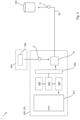
- FIG. 1 a door system 400 and at least partially an adaptation system 1 according to the invention for visualizing a method according to the invention are shown schematically.
- the adaptation system 1 comprises at least one non-volatile memory system 100.
- the adaptation system 1 can comprise at least one memory unit 110 and/or at least one interface unit 120 and/or at least one evaluation unit 130.
- the memory unit 110, the interface unit 120 and the evaluation unit 130 can each also be part of the memory system 100, as in Figure 6 is clarified.
- the adaptation system 1 can also comprise a communication unit 10 and/or parts of the door system 400.
- the communication unit 10 is designed, for example, as a mobile radio device, in particular a smartphone.
- radio communication takes place through a radio transmission interface 20 of the communication unit 10 in order to send data to a network 90, for example a mobile radio network.
- a wireless data transmission of the at least one drive parameter P from the door system 400 to the storage system 100 remote from the door system and/or vice versa is possible, wherein the storage system 100 can preferably also be connected to the network 90 directly or indirectly (e.g. via other networks).
- the communication unit 10 can have at least one communication interface 25 in order to carry out further communication, in particular radio communication, preferably Bluetooth communication. This can then be used, for example, to exchange data via a Bluetooth connection 95 with a transmission unit 500 of the door system 400.
- at least one drive parameter P can be exchanged via the Bluetooth connection 95. This drive parameter P can then be transmitted, for example, via the network 90 to the storage system 100 remote from the door system.
- the door system 400 comprises, for example, at least one door component 410, in particular a movable door leaf.
- the door component 410 can be moved by a drive unit 480, wherein the drive unit 480 can be controlled, i.e., for example, actuated, by a control unit 420.
- at least one door function can be provided, for example, opening the door component 410.
- Other door functions are, for example, locking the door (e.g., at certain times) or the like.
- a detection unit 440 of the door system 400 can be used to determine at least one drive parameter P that is correlated with the door function. This drive parameter P can then be transmitted, if necessary, via the transmission unit 500 to the communication unit 10, and then via the network 90 to the storage system 100 remote from the door system.
- the communication unit 10 can be designed as a portable communication unit 10 and can optionally receive and/or transmit several drive parameters P that originate from different door systems 400.
- a first door system 401 and a second door system 402 can be provided, which can establish a respective connection, in particular a Bluetooth connection 95, with the communication unit 10 via respective transmission units 500.
- the connection can only be established if the portable communication unit 10 is within communication range of the respective transmission units 500.
- the communication unit 10 can also be integrated in the door system 400 (ie in at least one of the door systems 400). In this case too, it may be possible for a further door system 402 to communicate with the communication unit 10 of the first door system 401 and/or to transmit drive parameters P to it. In this way, a cost-effective and reliable networking of the door systems can be achieved in order to transmit drive parameters P to a storage system 100 remote from the door system.
- Figure 4 shows schematically (at least partially) the structure of a communication unit 10.
- the communication unit 10 comprises, for example, at least one radio transmission interface 20 and/or at least one communication interface 25 and/or at least one sensor 30, in particular at least one camera sensor 31 and/or at least one location sensor 32 and/or at least one acceleration sensor 33, and/or at least one processing means 40 and/or at least one data storage device 50, which may be (at least partially) electrically or electronically connected to one another.
- FIG. 5 a schematic at least partial structure of a detection unit 440 is shown.
- This can, for example, have a memory component 441 and/or a locating component 442 and/or a receiving component 443 and/or a processing component 444 and/or a sensor component 445 and/or a counter component 446, which can be at least partially connected to one another electrically or electronically.
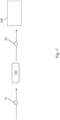
- FIG. 7 A method according to the invention is schematically visualized. It is shown that according to a first method step, at least one drive parameter P can be transmitted, in particular to an evaluation unit 130, wherein the transmission is at least partially wireless. According to a second method step, at least the transmitted drive parameter P can be evaluated, in particular by the evaluation unit 130, so that an adaptation specification AV is determined. Then, according to a third method step, the at least one door function can be adapted based on the adaptation specification AV in the door system 400.
Landscapes
- Engineering & Computer Science (AREA)
- Physics & Mathematics (AREA)
- General Physics & Mathematics (AREA)
- Automation & Control Theory (AREA)
- General Engineering & Computer Science (AREA)
- Power-Operated Mechanisms For Wings (AREA)
Claims (11)
- Procédé d'adaptation d'un fonctionnement d'au moins un système de porte (400), dans lequel le système de porte (400) présente au moins un composant de porte (410) à fonctionnement au moins partiellement automatisé pour l'exécution d'au moins une fonction de porte et au moins une unité d'entraînement ( 480), dans lequel le composant de porte (410) est réalisé comme un vantail mobile d'une porte pour piétons, dans lequel l'unité d'entraînement (480) est en liaison active avec le composant de porte (410) afin d'amener le composant de porte (410) dans au moins un état de mouvement pour l'exécution de l'au moins une fonction de porte, dans lequel le système de porte (400) présente une unité de commande (420) pour la commande d'au moins la fonction de porte, et dans lequel le système de porte (400) présente au moins une unité de détection (440) pour la détermination d'au moins un paramètre d'entraînement (P), dans lequel au moins un paramètre d'entraînement (P) déterminé par l'unité de détection (440) est transmis soit par l'unité de détection (440), soit par une unité de transmission (500) du système de porte (400) et/ou une unité de communication du système de porte (400) sans fil à un système de stockage distant du système de porte, dans lequel au moins le paramètre d'entraînement (P) transmis est évalué, de sorte qu'une spécification d'adaptation (AV) est déterminée, dans lequel l'au moins une fonction de porte est adaptée par l'unité de commande (420) sur la base de la spécification d'adaptation (AV), dans lequel l'évaluation est réalisée au moins en partie à distance du système de porte, dans lequel dans ce but l'au moins un paramètre d'entraînement (P) est reçu et mémorisé de manière persistante lors de la transmission sans fil par le système de stockage (100) distant du système de porte, et est lu et évalué par une unité d'évaluation (130) afin de déterminer la spécification d'adaptation (AV), dans lequel la spécification d'adaptation (AV) déterminée est transmise sans fil au système de porte (400), de sorte que dans le système de porte (400), l'adaptation de la fonction de porte peut être effectuée, caractérisé en ce que le paramètre d'entraînement (P) est corrélé à une température ambiante du composant de porte (410).
- Procédé selon la revendication 1,
caractérisé,
en ce que l'évaluation est effectuée au moins en partie par le système de porte (400), dans lequel, de préférence, pendant la transmission, l'au moins un paramètre d'entraînement (P) est reçu par une unité de détection (440) et/ou une unité de transmission (500) du système de porte (400) et est de préférence ensuite évalué pour déterminer la spécification d'adaptation (AV), dans lequel l'adaptation est réalisée de préférence sur la base de la spécification d'adaptation (AV) par une unité de commande (420) du système de porte (400). - Procédé selon la revendication 1 ou 2,
caractérisé,
en ce que l'évaluation comprend une analyse du paramètre d'entraînement (P) transmis et d'autres paramètres d'entraînement (P) d'autres systèmes de porte (400), de sorte que l'adaptation de la fonction de porte est de préférence corrélée à d'autres systèmes de porte (400). - Procédé selon l'une des revendications précédentes,
caractérisé,
en ce que l'au moins un paramètre d'entraînement (P) est déterminé par une unité de communication portable (10), en particulier pour la communication radio mobile, et/ou transmis par l'unité de communication (10) sans fil à une unité de transmission (500) du système de porte (400) et à un système de stockage (100) distant du système de porte. - Procédé selon l'une des revendications 1 à 3,
caractérisé,
en ce que l'au moins un paramètre d'entraînement (P) est déterminé par une unité de détection (440) du système de porte (400), de préférence sur la base d'une détection d'au moins un composant de capteur (445) du système de porte (400) et /ou sur la base d'une détection sans fil, de préférence sur la base d'une communication par l'intermédiaire d'un réseau, notamment Internet, et/ou par une réception d'un signal radio, notamment un signal horaire et/ou de localisation. - Procédé selon l'une des revendications précédentes,
caractérisé,
en ce que la spécification d'adaptation (AV) est déterminée par l'évaluation en ce qu'une pluralité de paramètres d'entraînement du système de porte (400) et/ou d'autres systèmes de porte (400) sont analysés, en particulier à distance du système de porte. - Procédé selon l'une des revendications précédentes,
caractérisé,
en ce que l'adaptation de la fonction de porte est effectuée en déterminant un temps d'ouverture et/ou de fermeture pour le composant de porte (410) sur la base de la spécification d'adaptation (AV). - Procédé selon l'une des revendications précédentes,
caractérisé,
en ce que l'adaptation de la fonction de porte est effectuée automatiquement ou en fonction d'une entrée de l'utilisateur, en particulier dans une unité de communication (10), dans lequel au moins une information de la spécification d'adaptation (AV) est de préférence affichée à un utilisateur dans l'unité de communication (10). - Système d'adaptation (1) pour l'adaptation d'un fonctionnement d'au moins un système de porte (400), le système de porte (400) présentant :
au moins un composant de porte (410), dans lequel le composant de porte (410) est réalisé comme vantail mobile d'une porte pour piétons et au moins une unité d'entraînement (480) du système de porte (400), dans lequel l'unité d'entraînement (480) est en liaison active avec le composant de porte (410) pour amener le composant de porte (410) dans au moins un état de mouvement pour l'exécution d'au moins une fonction de porte, au moins une unité de commande (420) du système de porte (400) pour la commande de la fonction de porte, dans lequel la commande est adaptable sur la base d'au moins une spécification d'adaptation (AV),dans lequel le système de porte (400) présente au moins une unité de détection (440) pour la détermination d'au moins un paramètre d'entraînement (P),dans lequel la spécification d'adaptation (AV) peut être déterminée par le système d'adaptation (1) sur la base de l'au moins un paramètre d'entraînement (P) transmis sans fil soit par l'unité de détection (440), soit par une unité de transmission (500) du système de porte ( 400) et/ou une unité de communication du système de porte (400),dans lequel l'au moins un paramètre d'entraînement (P) peut être reçu et mémorisé de manière persistante par un système de stockage (100) distant du système de porte et peut être au moins partiellement évalué à distance du système de porte par une unité d'évaluation (130) afin de déterminer la spécification d'adaptation (AV), caractérisé en ce que le paramètre d'entraînement (P) est corrélé à une température ambiante du composant de porte (410). - Système d'adaptation (1) selon la revendication 9,
caractérisé,
en ce qu'il est prévu au moins une unité de transmission (500) du système de porte (400), laquelle est réalisée pour la transmission sans fil de l'au moins un paramètre d'entraînement (P). - Système d'adaptation (1) selon la revendication 9 ou 10,
caractérisé,
en ce que le système d'adaptation (1) présente une unité de communication portable (10), en particulier pour la communication radio mobile, qui est réalisée pour la transmission sans fil de l'au moins un paramètre d'entraînement (P) à un système de stockage (100) distant du système de porte, de sorte que le paramètre d'entraînement (P) peut de préférence être fourni à distance du système de porte.
Priority Applications (1)
| Application Number | Priority Date | Filing Date | Title |
|---|---|---|---|
| EP17151288.2A EP3349079B1 (fr) | 2017-01-12 | 2017-01-12 | Procédé d'adaptation d'un fonctionnement d'au moins un système de porte |
Applications Claiming Priority (1)
| Application Number | Priority Date | Filing Date | Title |
|---|---|---|---|
| EP17151288.2A EP3349079B1 (fr) | 2017-01-12 | 2017-01-12 | Procédé d'adaptation d'un fonctionnement d'au moins un système de porte |
Publications (3)
| Publication Number | Publication Date |
|---|---|
| EP3349079A1 EP3349079A1 (fr) | 2018-07-18 |
| EP3349079B1 true EP3349079B1 (fr) | 2024-09-04 |
| EP3349079C0 EP3349079C0 (fr) | 2024-09-04 |
Family
ID=57850898
Family Applications (1)
| Application Number | Title | Priority Date | Filing Date |
|---|---|---|---|
| EP17151288.2A Active EP3349079B1 (fr) | 2017-01-12 | 2017-01-12 | Procédé d'adaptation d'un fonctionnement d'au moins un système de porte |
Country Status (1)
| Country | Link |
|---|---|
| EP (1) | EP3349079B1 (fr) |
Citations (1)
| Publication number | Priority date | Publication date | Assignee | Title |
|---|---|---|---|---|
| US20130346300A1 (en) * | 2011-04-18 | 2013-12-26 | Seonghwan KANG | Network system and method for controlling same |
Family Cites Families (3)
| Publication number | Priority date | Publication date | Assignee | Title |
|---|---|---|---|---|
| US8831970B2 (en) * | 2000-08-24 | 2014-09-09 | Martin Herman Weik, III | Virtual attendant system and parking management system |
| US9507335B2 (en) * | 2012-05-31 | 2016-11-29 | Overhead Door Corporation | Remote barrier operator command and status device and operation |
| US9122254B2 (en) * | 2012-11-08 | 2015-09-01 | The Chamberlain Group, Inc. | Barrier operator feature enhancement |
-
2017
- 2017-01-12 EP EP17151288.2A patent/EP3349079B1/fr active Active
Patent Citations (1)
| Publication number | Priority date | Publication date | Assignee | Title |
|---|---|---|---|---|
| US20130346300A1 (en) * | 2011-04-18 | 2013-12-26 | Seonghwan KANG | Network system and method for controlling same |
Also Published As
| Publication number | Publication date |
|---|---|
| EP3349079A1 (fr) | 2018-07-18 |
| EP3349079C0 (fr) | 2024-09-04 |
Similar Documents
| Publication | Publication Date | Title |
|---|---|---|
| EP3349185B1 (fr) | Procédé d'exécution d'un contrôle de fonctionnement d'au moins un système de porte | |
| DE102013107015A1 (de) | Gebäude- oder Einfriedungsabschlussantriebsfernbedienung und Verwendungen derselben | |
| EP3320168B1 (fr) | Système de maintenance et de surveillance pour la surveillance d'un élément formant porte | |
| EP3348767B1 (fr) | Système permettant d'obtenir au moins un paramètre d'entraînement d'un système de porte | |
| EP3070683B1 (fr) | Surveillance de l'état de fermeture d'un verrou tournant | |
| WO2021052864A1 (fr) | Capteur radioélectrique et procédé de communication avec un capteur radioélectrique | |
| DE102013107016A1 (de) | Gateway für eine Gebäude- oder Einfriedungsabschlussantriebsvorrichtung sowie Verwendungen desselben | |
| DE102014115187A1 (de) | Türschließsystem | |
| EP3349188B1 (fr) | Système de portes et unité de communication d'adaptation d'un fonctionnement du système de portes | |
| EP3349189A1 (fr) | Système d'évaluation d'au moins un paramètre d'entraînement d'au moins un système de porte | |
| WO2021052757A1 (fr) | Dispositif et procédé d'identification et de surveillance de l'état d'un agencement devant être surveillé ayant un élément d'aile pouvant être ouvert et fermé | |
| EP3349079B1 (fr) | Procédé d'adaptation d'un fonctionnement d'au moins un système de porte | |
| EP2862029A1 (fr) | Commande de porte de secours, procédé et système correspondants | |
| EP3349187B1 (fr) | Procédé permettant d'obtenir au moins un paramètre de commande d'au moins un système de porte | |
| EP3349186B1 (fr) | Procédé d'évaluation d'au moins un paramètre d'entraînement | |
| EP3096297A1 (fr) | Installation de fermeture pour une porte de batiment | |
| EP4298624A1 (fr) | Système de porte destiné à une ou plusieurs portes et contenant de multiples composants de porte ainsi qu'un premier bus de communication | |
| DE102015118945A1 (de) | Fernbedieneinheit für Gebäudeeinrichtungen und Torantriebsanordnung mit NFC-Nutzerschnittstelle | |
| DE102007010482A1 (de) | Schaltschranküberwachungseinrichtung | |
| DE102007042238A1 (de) | Alarmmelde- und Fernwirksystem zur Überwachung, Konfiguration und Fernbedienung von Geräten insbesondere in Nutzfahrzeugen und Immobilien | |
| EP3816946A1 (fr) | Système de contrôle d'accès pour un bâtiment ainsi que procédé correspondant | |
| EP3298464B1 (fr) | Système de maintenance à distance comprenant une unité de maintenance à distance mobile et un procédé de configuration | |
| EP4050578A1 (fr) | Système de porte pour au moins une porte pourvue de plusieurs parties de porte, ainsi que d'un premier bus de communication | |
| EP3481034A1 (fr) | Procédé de fonctionnement d'un système de communication, en particulier d'un système d'accès | |
| DE60028279T2 (de) | Diagnoseverfahren zum Testen der Funktion wenigstens einer motorisierten Verschlusseinrichtung, beispielsweise eines Rolladens oder dergleichen |
Legal Events
| Date | Code | Title | Description |
|---|---|---|---|
| PUAI | Public reference made under article 153(3) epc to a published international application that has entered the european phase |
Free format text: ORIGINAL CODE: 0009012 |
|
| STAA | Information on the status of an ep patent application or granted ep patent |
Free format text: STATUS: THE APPLICATION HAS BEEN PUBLISHED |
|
| AK | Designated contracting states |
Kind code of ref document: A1 Designated state(s): AL AT BE BG CH CY CZ DE DK EE ES FI FR GB GR HR HU IE IS IT LI LT LU LV MC MK MT NL NO PL PT RO RS SE SI SK SM TR |
|
| AX | Request for extension of the european patent |
Extension state: BA ME |
|
| STAA | Information on the status of an ep patent application or granted ep patent |
Free format text: STATUS: REQUEST FOR EXAMINATION WAS MADE |
|
| 17P | Request for examination filed |
Effective date: 20190117 |
|
| RBV | Designated contracting states (corrected) |
Designated state(s): AL AT BE BG CH CY CZ DE DK EE ES FI FR GB GR HR HU IE IS IT LI LT LU LV MC MK MT NL NO PL PT RO RS SE SI SK SM TR |
|
| STAA | Information on the status of an ep patent application or granted ep patent |
Free format text: STATUS: EXAMINATION IS IN PROGRESS |
|
| 17Q | First examination report despatched |
Effective date: 20190913 |
|
| GRAP | Despatch of communication of intention to grant a patent |
Free format text: ORIGINAL CODE: EPIDOSNIGR1 |
|
| STAA | Information on the status of an ep patent application or granted ep patent |
Free format text: STATUS: GRANT OF PATENT IS INTENDED |
|
| INTG | Intention to grant announced |
Effective date: 20231222 |
|
| GRAJ | Information related to disapproval of communication of intention to grant by the applicant or resumption of examination proceedings by the epo deleted |
Free format text: ORIGINAL CODE: EPIDOSDIGR1 |
|
| STAA | Information on the status of an ep patent application or granted ep patent |
Free format text: STATUS: EXAMINATION IS IN PROGRESS |
|
| GRAP | Despatch of communication of intention to grant a patent |
Free format text: ORIGINAL CODE: EPIDOSNIGR1 |
|
| STAA | Information on the status of an ep patent application or granted ep patent |
Free format text: STATUS: GRANT OF PATENT IS INTENDED |
|
| INTC | Intention to grant announced (deleted) | ||
| INTG | Intention to grant announced |
Effective date: 20240404 |
|
| GRAS | Grant fee paid |
Free format text: ORIGINAL CODE: EPIDOSNIGR3 |
|
| GRAA | (expected) grant |
Free format text: ORIGINAL CODE: 0009210 |
|
| STAA | Information on the status of an ep patent application or granted ep patent |
Free format text: STATUS: THE PATENT HAS BEEN GRANTED |
|
| AK | Designated contracting states |
Kind code of ref document: B1 Designated state(s): AL AT BE BG CH CY CZ DE DK EE ES FI FR GB GR HR HU IE IS IT LI LT LU LV MC MK MT NL NO PL PT RO RS SE SI SK SM TR |
|
| REG | Reference to a national code |
Ref country code: GB Ref legal event code: FG4D Free format text: NOT ENGLISH |
|
| REG | Reference to a national code |
Ref country code: CH Ref legal event code: EP |
|
| REG | Reference to a national code |
Ref country code: IE Ref legal event code: FG4D Free format text: LANGUAGE OF EP DOCUMENT: GERMAN |
|
| REG | Reference to a national code |
Ref country code: DE Ref legal event code: R096 Ref document number: 502017016394 Country of ref document: DE |
|
| U01 | Request for unitary effect filed |
Effective date: 20240923 |
|
| U07 | Unitary effect registered |
Designated state(s): AT BE BG DE DK EE FI FR IT LT LU LV MT NL PT RO SE SI Effective date: 20241016 |
|
| PG25 | Lapsed in a contracting state [announced via postgrant information from national office to epo] |
Ref country code: NO Free format text: LAPSE BECAUSE OF FAILURE TO SUBMIT A TRANSLATION OF THE DESCRIPTION OR TO PAY THE FEE WITHIN THE PRESCRIBED TIME-LIMIT Effective date: 20241204 |
|
| PG25 | Lapsed in a contracting state [announced via postgrant information from national office to epo] |
Ref country code: PL Free format text: LAPSE BECAUSE OF FAILURE TO SUBMIT A TRANSLATION OF THE DESCRIPTION OR TO PAY THE FEE WITHIN THE PRESCRIBED TIME-LIMIT Effective date: 20240904 Ref country code: GR Free format text: LAPSE BECAUSE OF FAILURE TO SUBMIT A TRANSLATION OF THE DESCRIPTION OR TO PAY THE FEE WITHIN THE PRESCRIBED TIME-LIMIT Effective date: 20241205 |
|
| PG25 | Lapsed in a contracting state [announced via postgrant information from national office to epo] |
Ref country code: HR Free format text: LAPSE BECAUSE OF FAILURE TO SUBMIT A TRANSLATION OF THE DESCRIPTION OR TO PAY THE FEE WITHIN THE PRESCRIBED TIME-LIMIT Effective date: 20240904 |
|
| PG25 | Lapsed in a contracting state [announced via postgrant information from national office to epo] |
Ref country code: ES Free format text: LAPSE BECAUSE OF FAILURE TO SUBMIT A TRANSLATION OF THE DESCRIPTION OR TO PAY THE FEE WITHIN THE PRESCRIBED TIME-LIMIT Effective date: 20240904 Ref country code: RS Free format text: LAPSE BECAUSE OF FAILURE TO SUBMIT A TRANSLATION OF THE DESCRIPTION OR TO PAY THE FEE WITHIN THE PRESCRIBED TIME-LIMIT Effective date: 20241204 |
|
| PG25 | Lapsed in a contracting state [announced via postgrant information from national office to epo] |
Ref country code: RS Free format text: LAPSE BECAUSE OF FAILURE TO SUBMIT A TRANSLATION OF THE DESCRIPTION OR TO PAY THE FEE WITHIN THE PRESCRIBED TIME-LIMIT Effective date: 20241204 Ref country code: PL Free format text: LAPSE BECAUSE OF FAILURE TO SUBMIT A TRANSLATION OF THE DESCRIPTION OR TO PAY THE FEE WITHIN THE PRESCRIBED TIME-LIMIT Effective date: 20240904 Ref country code: NO Free format text: LAPSE BECAUSE OF FAILURE TO SUBMIT A TRANSLATION OF THE DESCRIPTION OR TO PAY THE FEE WITHIN THE PRESCRIBED TIME-LIMIT Effective date: 20241204 Ref country code: HR Free format text: LAPSE BECAUSE OF FAILURE TO SUBMIT A TRANSLATION OF THE DESCRIPTION OR TO PAY THE FEE WITHIN THE PRESCRIBED TIME-LIMIT Effective date: 20240904 Ref country code: GR Free format text: LAPSE BECAUSE OF FAILURE TO SUBMIT A TRANSLATION OF THE DESCRIPTION OR TO PAY THE FEE WITHIN THE PRESCRIBED TIME-LIMIT Effective date: 20241205 Ref country code: ES Free format text: LAPSE BECAUSE OF FAILURE TO SUBMIT A TRANSLATION OF THE DESCRIPTION OR TO PAY THE FEE WITHIN THE PRESCRIBED TIME-LIMIT Effective date: 20240904 |
|
| U20 | Renewal fee for the european patent with unitary effect paid |
Year of fee payment: 9 Effective date: 20250128 |
|
| PG25 | Lapsed in a contracting state [announced via postgrant information from national office to epo] |
Ref country code: IS Free format text: LAPSE BECAUSE OF FAILURE TO SUBMIT A TRANSLATION OF THE DESCRIPTION OR TO PAY THE FEE WITHIN THE PRESCRIBED TIME-LIMIT Effective date: 20250104 |
|
| PG25 | Lapsed in a contracting state [announced via postgrant information from national office to epo] |
Ref country code: SM Free format text: LAPSE BECAUSE OF FAILURE TO SUBMIT A TRANSLATION OF THE DESCRIPTION OR TO PAY THE FEE WITHIN THE PRESCRIBED TIME-LIMIT Effective date: 20240904 |
|
| PG25 | Lapsed in a contracting state [announced via postgrant information from national office to epo] |
Ref country code: CZ Free format text: LAPSE BECAUSE OF FAILURE TO SUBMIT A TRANSLATION OF THE DESCRIPTION OR TO PAY THE FEE WITHIN THE PRESCRIBED TIME-LIMIT Effective date: 20240904 |
|
| PG25 | Lapsed in a contracting state [announced via postgrant information from national office to epo] |
Ref country code: SK Free format text: LAPSE BECAUSE OF FAILURE TO SUBMIT A TRANSLATION OF THE DESCRIPTION OR TO PAY THE FEE WITHIN THE PRESCRIBED TIME-LIMIT Effective date: 20240904 |
|
| PLBE | No opposition filed within time limit |
Free format text: ORIGINAL CODE: 0009261 |
|
| STAA | Information on the status of an ep patent application or granted ep patent |
Free format text: STATUS: NO OPPOSITION FILED WITHIN TIME LIMIT |
|
| 26N | No opposition filed |
Effective date: 20250605 |
|
| REG | Reference to a national code |
Ref country code: CH Ref legal event code: PL |
|
| PG25 | Lapsed in a contracting state [announced via postgrant information from national office to epo] |
Ref country code: MC Free format text: LAPSE BECAUSE OF FAILURE TO SUBMIT A TRANSLATION OF THE DESCRIPTION OR TO PAY THE FEE WITHIN THE PRESCRIBED TIME-LIMIT Effective date: 20240904 |
|
| GBPC | Gb: european patent ceased through non-payment of renewal fee |
Effective date: 20250112 |
|
| PG25 | Lapsed in a contracting state [announced via postgrant information from national office to epo] |
Ref country code: GB Free format text: LAPSE BECAUSE OF NON-PAYMENT OF DUE FEES Effective date: 20250112 |
|
| PG25 | Lapsed in a contracting state [announced via postgrant information from national office to epo] |
Ref country code: CH Free format text: LAPSE BECAUSE OF NON-PAYMENT OF DUE FEES Effective date: 20250131 |
|
| PG25 | Lapsed in a contracting state [announced via postgrant information from national office to epo] |
Ref country code: IE Free format text: LAPSE BECAUSE OF NON-PAYMENT OF DUE FEES Effective date: 20250112 |
|
| U20 | Renewal fee for the european patent with unitary effect paid |
Year of fee payment: 10 Effective date: 20260129 |