EP3349420B1 - Ip-adresszuteilungsverfahren, -vorrichtung und -system für ein master-slave-netzwerk - Google Patents
Ip-adresszuteilungsverfahren, -vorrichtung und -system für ein master-slave-netzwerk Download PDFInfo
- Publication number
- EP3349420B1 EP3349420B1 EP15905052.5A EP15905052A EP3349420B1 EP 3349420 B1 EP3349420 B1 EP 3349420B1 EP 15905052 A EP15905052 A EP 15905052A EP 3349420 B1 EP3349420 B1 EP 3349420B1
- Authority
- EP
- European Patent Office
- Prior art keywords
- segment
- address
- address sub
- master device
- sub
- Prior art date
- Legal status (The legal status is an assumption and is not a legal conclusion. Google has not performed a legal analysis and makes no representation as to the accuracy of the status listed.)
- Active
Links
Images




Classifications
-
- H—ELECTRICITY
- H04—ELECTRIC COMMUNICATION TECHNIQUE
- H04L—TRANSMISSION OF DIGITAL INFORMATION, e.g. TELEGRAPHIC COMMUNICATION
- H04L67/00—Network arrangements or protocols for supporting network services or applications
- H04L67/2866—Architectures; Arrangements
-
- H—ELECTRICITY
- H04—ELECTRIC COMMUNICATION TECHNIQUE
- H04L—TRANSMISSION OF DIGITAL INFORMATION, e.g. TELEGRAPHIC COMMUNICATION
- H04L61/00—Network arrangements, protocols or services for addressing or naming
-
- H—ELECTRICITY
- H04—ELECTRIC COMMUNICATION TECHNIQUE
- H04L—TRANSMISSION OF DIGITAL INFORMATION, e.g. TELEGRAPHIC COMMUNICATION
- H04L61/00—Network arrangements, protocols or services for addressing or naming
- H04L61/50—Address allocation
- H04L61/5007—Internet protocol [IP] addresses
- H04L61/5014—Internet protocol [IP] addresses using dynamic host configuration protocol [DHCP] or bootstrap protocol [BOOTP]
-
- H—ELECTRICITY
- H04—ELECTRIC COMMUNICATION TECHNIQUE
- H04L—TRANSMISSION OF DIGITAL INFORMATION, e.g. TELEGRAPHIC COMMUNICATION
- H04L61/00—Network arrangements, protocols or services for addressing or naming
- H04L61/50—Address allocation
- H04L61/5038—Address allocation for local use, e.g. in LAN or USB networks, or in a controller area network [CAN]
-
- H—ELECTRICITY
- H04—ELECTRIC COMMUNICATION TECHNIQUE
- H04L—TRANSMISSION OF DIGITAL INFORMATION, e.g. TELEGRAPHIC COMMUNICATION
- H04L61/00—Network arrangements, protocols or services for addressing or naming
- H04L61/50—Address allocation
- H04L61/5061—Pools of addresses
-
- H—ELECTRICITY
- H04—ELECTRIC COMMUNICATION TECHNIQUE
- H04L—TRANSMISSION OF DIGITAL INFORMATION, e.g. TELEGRAPHIC COMMUNICATION
- H04L2101/00—Indexing scheme associated with group H04L61/00
- H04L2101/60—Types of network addresses
- H04L2101/668—Internet protocol [IP] address subnets
Definitions
- the present invention relates to the field of wireless communications technologies, and in particular, to an IP address allocation method for a master-slave network, an apparatus, and a system.
- a master-slave network generally includes a master device (Master Device, MD for short), a slave device (Slave Device, SD for short), and a user device (User Device, UD for short).
- the MD is responsible for managing an SD that is homed to a management area, and when necessary, communicating and interacting with another MD based on a communications protocol between the MDs.
- the MD may also bear a service function of the SD, and provide a service outward.
- the SD cooperates with the MD to implement a service function, provides a service outward, and may provide a management signaling channel and a service forwarding channel for a next-level SD.
- the UD may be connected to an autonomous network to obtain a service.
- the UD In the master-slave network, the UD first needs to obtain an IP address before obtaining a service from the autonomous network.
- the MD centrally manages all Internet Protocol (Internet Protocol, IP for short) address allocation.
- IP Internet Protocol
- DHCP Dynamic Host Configuration Protocol
- the SD After receiving a Dynamic Host Configuration Protocol (Dynamic Host Configuration Protocol, DHCP for short) IP request of the UD, the SD transparently transmits the request to the MD level by level. Then the MD allocates an IP address to the UD based on the request, and transparently transmits the allocated address to the UD level by level.
- DHCP Dynamic Host Configuration Protocol
- US 2013/326014 A1 discloses an address allocation processing method, apparatus and system.
- the method includes: receiving, by a first BRAS, a DHCP relay packet sent by a second BRAS, wherein the DHCP relay packet includes a gateway IP address and source IP address-based response information; parsing, by the first BRAS, the DHCP relay packet, acquiring the gateway IP address, and allocating an idle IP address from an acquired address pool matching the gateway IP address; encapsulating, by the first BRAS, a source IP address in the DHCP relay packet into a destination IP address in a response packet according to the source IP address-based response information, and sending the idle IP address carried in the encapsulated response packet to the second BRAS.
- the present invention provides an IP address allocation method for a master-slave network, an apparatus, and a system, to improve communication efficiency of the master-slave network.
- FIG. 1 is a schematic architecture diagram of a master-slave network according to an embodiment of the present invention.
- the master-slave network includes a master device (Master Device, MD for short), at least one slave device (Slave Device, SD for short) in a management area of the master device, and at least one user device (User Device, UD for short).
- Master Device MD for short
- slave Device SD for short
- User Device User Device
- Functions of the MD are: managing the slave device that belongs to the management area, and when necessary, communicating and interacting with another master device based on a communications protocol between the master devices.
- a greatest improvement of the MD provided in the embodiments of the present invention on a prior-art MD is:
- the MD provided in the embodiments of the present invention can divide an IP address segment into a plurality of IP address sub-segments, and separately allocate different IP address sub-segments to different SDs. Further, the MD can reallocate and reclaim an IP address by dynamically configuring the IP address.
- the SD cooperating with the master device to implement a service function, providing a service outward, and providing a management signaling channel and a service forwarding channel for a next-level slave device.
- a greatest improvement of the SD provided in the embodiments of the present invention on a prior-art SD is:
- the SD provided in the embodiments of the present invention supports the DHCP protocol, can establish a DHCP server address pool according to an IP address sub-segment allocated by the MD, and directly allocates an IP address to the UD, thereby avoiding transparent transmission of an IP address request level by level when allocating the IP address to the UD. Therefore, an unnecessary interaction procedure is reduced in a configuration process, a delay is reduced, and communication efficiency of the master-slave network is improved. Further, corresponding to dynamically adjusting the IP address sub-segment by the MD, the SD also has a function of managing, maintaining, and updating the DHCP server address pool.
- FIG. 1 the schematic architecture diagram shown in FIG. 1 is merely an example.
- the MD and another MD may also communicate with each other by using a protocol, and the UD may also be directly connected to the MD.
- a deployment structure of a system for configuring an IP address in the master-slave network is not specifically limited herein.
- FIG. 2 is a schematic flowchart of Embodiment 1 of an IP address allocation method for a master-slave network according to the present invention.
- the method is performed by an MD in the foregoing master-slave network.
- the method includes the following steps. S201.
- a master device generates an IP address sub-segment group, where the IP address sub-segment group includes at least one IP address sub-segment, and each IP address sub-segment includes at least one IP address.
- the master device divides an IP address segment into a plurality of IP address sub-segments, and then groups the plurality of IP address sub-segments into the IP address sub-segment group.
- the master device separately sends the at least one IP address sub-segment in the IP address sub-segment group to at least one slave device, so that the at least one slave device uses the received IP address sub-segment as a DHCP server address, and allocates an IP address to a user device according to the DHCP server address.
- the MD allocates the IP address sub-segment to a slave device in a management area.
- the slave device supports the DHCP protocol, and after receiving the IP address sub-segment sent by the master device, the slave device may establish a DHCP server address pool to accommodate the DHCP server address, so as to allocate the IP address to the user device according to a requirement of the user device.
- IP address sub-segments allocated by the MD to the SDs are mutually different.
- the MD marks an allocated IP address sub-segment in the IP address sub-segment group as allocated.
- the master device generates the IP address sub-segment group, and separately sends the at least one IP address sub-segment in the IP address sub-segment group to the at least one slave device, so that the slave device can use the received IP address sub-segment as the DHCP server address and allocate the IP address to the user device according to the DHCP server address.
- the slave device can directly allocate the IP address to the user device, so that an IP address allocation time is greatly reduced, and communication efficiency of the master-slave network is improved.
- the master device receives an IP address sub-segment request that is actively sent by the slave device in the management area, that is, the slave device actively requests the master device to allocate an IP address sub-segment.
- FIG. 3 is a schematic flowchart of Embodiment 2 of an IP address allocation method for a master-slave network according to the present invention.
- the method may further include the following steps.
- the master device receives an IP address sub-segment request message sent by the slave device, where the IP address sub-segment request message is used for requesting the master device to allocate N IP address sub-segments to the slave device.
- N is a positive integer.
- the slave device herein may be any slave device that has an IP address allocation requirement in the master-slave network.
- the master device After receiving the IP address sub-segment request message, the master device checks an allocatable IP address sub-segment in the IP address sub-segment group of the master device.
- the allocatable IP address sub-segment herein is an IP address sub-segment that has not been allocated to the slave device.
- the master device obtains the N IP address sub-segments from the allocatable IP address sub-segments, so that the master device can allocate the N IP address sub-segments to the slave device.
- the master device determines whether there are, in the allocatable IP address sub-segments in the IP address sub-segment group, the N IP address sub-segments requested by the slave device, and an IP address sub-segment that has been allocated to the slave device is not in a determining range.
- the master device may preset a preset threshold k of the allocatable IP address sub-segments, that is, the master device retains at least k IP address sub-segments, so as to meet a requirement of the slave device in time. That is, if a slave device requests the master device to allocate N IP address sub-segments, the master device has at least N+k allocatable IP address sub-segments, and if a quantity of allocatable IP address sub-segments on the master device is less than N+k, the master device needs to reclaim an IP address sub-segment from another slave device before allocating the IP address sub-segment, where k is a positive integer greater than or equal to 0.
- the master device reclaims an allocatable IP address sub-segment from another slave device in a management area of the master device until there are N allocatable IP address sub-segments in the IP address sub-segment group, and the master device obtains the N IP address sub-segments from the allocatable IP address sub-segments.
- the master device may allocate the N IP address sub-segments to the slave device. If the master device has set the threshold k, the master device needs to reclaim the allocated IP address sub-segments from another slave device, and the master device may divide the reclaimed IP address sub-segments, to update or generate the IP address sub-segment group until there are N+k allocatable IP address sub-segments in the IP address sub-segment group of the master device.
- the master device can randomly request to reclaim M allocatable IP address sub-segments from a slave device in the management area. If there are only m allocatable IP address sub-segments on the slave device, and m is less than M, the slave device returns the m allocatable IP address sub-segments to the master device, then the master device requests to reclaim M-m allocatable IP address sub-segments from another slave device, and the rest may be deduced by analogy until a quantity of allocatable IP address sub-segments in the IP address sub-segment group minus the preset threshold is greater than or equal to N.
- FIG. 4 is a schematic flowchart of Embodiment 3 of an IP address allocation method for a master-slave network according to the present invention. As shown in FIG. 4 , based on the embodiment in FIG. 2 , before the separately sending, by the master device, the at least one IP address sub-segment in the IP address sub-segment group to at least one slave device, the method may further include the following steps.
- the master device receives a specific IP address sub-segment request message sent by the slave device, where the IP address sub-segment request message carries an identifier of a specific IP address sub-segment required by the slave device, and is used for requesting the master device to allocate the specific IP address sub-segment to the slave device.
- the slave device requests the master device to allocate some specific IP address sub-segments, and the slave device may add identifiers of the specific IP address sub-segments to the IP address sub-segment request message, so as to notify the master device of the requested IP address sub-segments.
- the master device After receiving the specific IP address sub-segment request message, the master device checks an allocatable IP address sub-segment of the master dcvicc, to find whether there is the specific IP address sub-segment.
- the master device obtains the specific IP address sub-segment, so that the master device can allocate the specific IP address sub-segment to the slave device. S403.
- the master device reclaims the specific IP address sub-segment from another slave device in a management area of the master device, and the master device obtains the reclaimed specific IP address sub-segment, so that the reclaimed specific IP address sub-segment can be allocated to the first slave device.
- the master device can randomly request to reclaim the specific IP address sub-segment from a slave device in the management area. If the slave device has the specific IP address sub-segment, the slave device returns the specific IP address sub-segment to the master device, and the master device may allocate the reclaimed specific IP address sub-segment to the slave device that requests the specific IP address sub-segment.
- the slave device If the slave device from which the master device requests to reclaim the specific IP address sub-segment does not have the specific IP address sub-segment, the slave device notifies the master device that the slave device does not have the specific IP address sub-segment, and then the master device reclaims the specific IP address sub-segment from another slave device.
- a slave device that has the specific IP address sub-segment may refuse to return the specific IP address sub-segment to the master device. In this case, the master device cannot allocate the specific IP address sub-segment to the slave device that requests the specific IP address sub-segment, and a procedure ends. Alternatively, the master device may notify the slave device that the master device does not have the specific IP address sub-segment.
- the master device needs to reclaim a previously allocated IP address sub-segment from the slave device in the management area. For example, (1) when an IP address sub-segment of the MD cannot meet a requirement of a new IP address apply request or a new IP address sub-segment apply request, the MD requests the SD to newly add an IP address sub-segment, or the SD requests to occupy an IP address that has been allocated to another UD; (2) the MD periodically triggers reclaiming of an allocatable IP address from each SD, or each SD periodically reports an allocatable IP address to the MD.
- the present invention is not limited to the foregoing cases.
- FIG. 5 is a schematic flowchart of Embodiment 4 of an IP address allocation method for a master-slave network according to the present invention. As shown in FIG. 5 , the method includes the following steps.
- the master device sends a reclaiming message to the at least one slave device, where the reclaiming message is used for requesting the slave device to return the IP address sub-segment required by the master device to the master device.
- the reclaiming message is further used for requesting the slave device to return an IP address required by the master device to the master device.
- the master device may randomly send the reclaiming message to one of the at least one slave device. If the slave device does not have the IP address sub-segment required by the master device, or has only some IP address sub-segments, the master device reclaims the IP address sub-segment from another slave device, and the like.
- the master device receives a returning response message sent by the slave device according to the reclaiming message, where the returning response message carries identifiers of all or some of IP address sub-segments that are required by the master device and returned by the slave device, or the returning response message indicates that the slave device does not have the IP address sub-segment required by the master device.
- the reclaiming message carries an identifier of at least one IP address sub-segment that needs to be reclaimed by the master device. That is, a specific IP address sub-segment that needs to be reclaimed by the master device is indicated in the reclaiming message.
- the master device receives the returning response message sent by the slave device according to the reclaiming message, and the returning response message carries identifiers of all or some of the at least one IP address sub-segment that needs to be reclaimed by the master device and that is returned by the slave device.
- the returning response message indicates that the first slave device has no IP address sub-segment that can be returned.
- the master device needs to reclaim three IP address sub-segments: an IP address sub-segment A, an IP address sub-segment B, and an IP address sub-segment C. If the slave device has none of the three IP address sub-segments, the slave device indicates, in the returning response message, that the slave device has no IP address sub-segment that can be returned. If the slave device has the three IP address sub-segments, the slave device may add identifiers of the three IP address sub-segments to the returning response message.
- the slave device may add an identifier of the IP address sub-segment A to the returning response message.
- the slave device may keep the IP address sub-segment A, and notify the master device that the IP address sub-segment A is not returned.
- the master device may need to reclaim an IP address sub-segment that includes a specific IP address, and the reclaiming message carries an identifier of the specific IP address.
- the slave device may directly return, by using the returning response message, the IP address sub-segment that includes the IP address. If the slave device has the IP address, but an original IP address sub-segment in which the IP address is located does not exist, the slave device may return only the IP address by using the returning response message, and the master device generates a new IP address sub-segment according to the IP address.
- the reclaiming message carries a quantity N of IP address sub-segments that need to be reclaimed by the master device, where N is a positive integer. That is, the master device indicates only the quantity of IP address sub-segments that need to be reclaimed, and does not require a specific IP address sub-segment.
- the master device receives the returning response message sent by the slave device according to the reclaiming message, the returning response message carries identifiers of n IP address sub-segments returned by the slave device, where n is a positive integer less than or equal to N.
- the returning response message indicates that the slave device has no IP address sub-segment that can be returned.
- the slave device may specifically determine a quantity of returned IP address sub-segments according to a quantity of allocatable IP address sub-segments on the slave device.
- the slave device may set the quantity of allocatable IP address sub-segments on the slave device to be no less than k, where k is greater than or equal to 0. For example, if the slave device has M allocatable IP address sub-segments, and M is greater than k, the slave device may return a maximum of M-k IP address sub-segments to the master device. If the quantity of allocatable IP address sub-segments on the slave device is less than or equal to k, it indicates that the slave device has no IP address sub-segment that can be returned.
- the master device may also send only the reclaiming message to the slave device, that is, indicates neither a quantity of to-be-reclaimed IP address sub-segments nor an identifier of a specific IP address sub-segment.
- the slave device may return one or more allocatable IP address sub-segments or one or more allocatable IP addresses to the master device according to a status of the slave dcvicc.
- the master device sends the reclaiming message to a slave device in the management area other than the foregoing slave device, and the reclaiming message is used for requesting the slave device to return the IP address sub-segment required by the master device to the master device, and the rest may be deduced by analogy until the master device reclaims the required IP address sub-segment.
- the master device may further send the reclaiming message to a slave device in the management area other than the foregoing slave device, and the reclaiming message is used for requesting the slave device to return a remaining IP address sub-segment required by the master device to the master device.
- the remaining IP address sub-segment is an IP address sub-segment, other than the some IP address sub-segments returned by the slave device, in the IP address sub-segment required by the master device.
- the master device requests ten IP address sub-segments from a first slave device, the first slave device returns six IP address sub-segments to the master device, then the master device requests to reclaim four IP address sub-segments from a second slave device, the second slave device determines, in a manner the same as that of the first slave device, a quantity of IP address sub-segments that can be returned, and if the master device still has not reclaimed ten IP address sub-segments, the master device may continue to request an IP address sub-segment from another slave device until ten IP address sub-segments are obtained. Likewise, the master device may also separately reclaim a plurality of specific IP address sub-segments from different slave devices.
- the master device may randomly select a slave device, so as to reclaim the IP address sub-segment. This is not limited herein.
- each slave device may be preset to periodically report a status of a DHCP server address maintained by the slave device.
- a message periodically reported by each slave device may include information about an allocatable IP address in a DHCP server address pool, a total quantity of allocatable IP addresses, and the like.
- the master device may perform selection based on the message reported by the slave device.
- the master device may periodically send a query message to the slave device. The query message is used for requesting the slave device to report a status of a DHCP server address maintained by the slave device.
- the master device may further directly allocate an IP address sub-segment to the user device.
- the master device may send an IP address sub-segment, in the IP address sub-segment group, of the user device to the user device.
- the IP address of the user device is at least one IP address sub-segment in the IP address sub-segment group.
- the MD may use at least one IP address sub-segment in the generated IP address sub-segment group as the IP address sub-segment of the user device, so as to allocate the IP address to the UD.
- FIG. 6 is a schematic flowchart of Embodiment 5 of an IP address allocation method for a master-slave network according to the present invention. The method is performed by a slave device, the slave device may be any slave device in the management area of the master device, and the slave device supports the DHCP protocol.
- the method includes the following steps.
- a slave device receives an IP address sub-segment sent by a master device, and uses the IP address sub-segment as a DHCP server address, where the IP address sub-segment includes at least one IP address.
- the slave device allocates an IP address to a user according to the DHCP server address.
- the master device directly sends the IP address sub-segment to the slave device, and the IP address sub-segment includes the at least one IP address.
- the slave device can directly allocate, to a user device, an IP address in the IP address sub-segment allocated by the master device.
- the slave device receives the IP address sub-segment sent by the master device, uses the IP address sub-segment as the DHCP server address, and may allocate the IP address to the user according to the DHCP server address. In this way, the slave device can directly allocate the IP address to the user device, so that an IP address allocation time is greatly rcduccd, and communication efficiency of the master-slave network is improved.
- the slave device further needs to actively request the master device to allocate the IP address sub-segment. For example, a new UD accesses the network, an IP address needs to be allocated, but there is no allocatable IP address in the DHCP server address; or a UD requests allocation of a specific IP address, but the specific IP address is not in an allocatable IP address of the slave device. This is not limited herein.
- the UD requests the slave device to allocate an IP address A, and the slave device checks an allocatable DHCP server address of the slave device, and finds that there is no IP address A in the DHCP server address.
- the slave device may request the master device to allocate a specific IP address sub-segment that includes the IP address A.
- the SD does not need an IP address, and therefore the SD usually does not apply, as a requester, for an IP address from the MD.
- FIG. 7 is a schematic flowchart of Embodiment 6 of an IP address allocation method for a master-slave network according to the present invention. As shown in FIG. 7 , based on the embodiment shown in FIG. 6 , the method further includes the following steps.
- the slave device receives a reclaiming message sent by the master device, where the reclaiming message is used for requesting the slave device to return an IP address sub-segment required by the master device to the master device.
- the slave device queries whether the DHCP server address includes the IP address sub-segment required by the master device.
- the slave device sends a returning response message to the master device, where the returning response message carries identifiers of all or some of the IP address sub-scgmcnts that arc included in the DHCP server address and required by the master dcvicc.
- the slave device may not return the IP address sub-segment required by the master device, and a procedure ends.
- the slave device sends a returning response message to the master device, where the returning response message notifies the master device that the slave device does not have the IP address sub-segment required by the master device.
- the reclaiming message carries an identifier of at least one IP address sub-segment that needs to be reclaimed by the master device.
- the foregoing S702 may be specifically:
- the slave device queries whether the DHCP server address includes all or some of the at least one IP address sub-segment that needs to be reclaimed by the master device.
- S703 is specifically: If the DHCP server address includes all or some of the at least one IP address sub-segment that needs to be reclaimed by the master device, the slave device sends the returning response message to the master device, where the returning response message carries identifiers of all or some of the at least one IP address sub-segment that needs to be reclaimed by the master device and that is included in the DHCP.
- the reclaiming message carries a quantity N of IP address sub-segments that need to be reclaimed by the master device, where N is a positive integer.
- the slave device queries a quantity of allocatable IP address sub-segments in the DHCP server address.
- S703 is specifically: If the quantity of allocatable IP address sub-segments in the DHCP server address is n, and n is a positive integer greater than or equal to N, the slave device sends the returning response message to the master device, where the returning response message carries identifiers of the N allocatable IP address sub-segments in the DHCP server address. It should be noted that, if the slave device has set a threshold k, and k is a positive integer, that is, the slave device needs to have no less than k allocatable IP address sub-segments, the slave device returns the N IP address sub-segments to the master device only when n is greater than or equal to N+k.
- S703 is specifically: If the quantity of allocatable IP address sub-segments in the DHCP server address is n, and n is a positive integer less than N, the slave device sends the returning response message to the master device, where the returning response message carries identifiers of the n allocatable IP address sub-segments in the DHCP server address. In this case, the master device further needs N-n IP address sub-segments, and the master device continues to request to reclaim an IP address sub-segment from another slave device in the management area.
- the UD may actively request the slave device to allocate an IP address, that is, the slave device receives a request message sent by the user device. The request message is used for requesting the slave device to allocate the IP address to the user device.
- the foregoing S602 specifically includes: The slave device queries whether there is an allocatable IP address in the DHCP server address; and if yes, the slave device allocates an IP address in the allocatable IP address to the user device; or if no, the slave device first requests the master device to allocate a new IP address sub-segment, and after receiving the new IP address sub-segment allocated by the master device, the slave device allocates an IP address in the new IP address sub-segment to the user device.
- the slave device receives a second request message sent by the user device, where the second request message carries an identifier of a first IP address that has been allocated to the user device before, and the second request message is used for requesting the slave device to allocate the first IP address to the user device for reusing. That is, the first IP address has been allocated to the UD before, and the UD requests to reuse the IP address instead of requiring a new IP address.
- the foregoing S602 specifically includes: The slave device queries whether an allocatable IP address in the DHCP server address includes the first IP address; and if yes, the slave device marks the first IP address as allocated; or if no, the slave device requests the master device to allocate an IP address sub-segment that includes the first IP address, and after receiving the IP address sub-segment that is allocated by the master device and that includes the first IP address, the slave device marks the IP address as allocated.
- the slave device after receiving the IP address sub-segment that is allocated by the master device and that includes the first IP address, the slave device first updates the allocatable IP address in the DHCP server address of the slave device, and then marks the first IP address in the DHCP server address as allocated.
- the slave device when the slave device requests allocation of the IP address sub-segment that includes the first IP address, if the master device has the IP address sub-segment that includes the first IP address, the slave device may directly allocate the IP address sub-segment to the slave device, and if the master device does not have the IP address sub-segment that includes the first IP address, the master device reclaims the IP address sub-segment that includes the first IP address from another slave device. If a slave device has the IP address sub-segment that includes the first IP address, the slave device may directly return the entire IP address sub-segment that includes the first IP address to the master device.
- a slave device has the first IP address, but an original IP address sub-segment in which the first IP address is located does not exist because, for example, another IP address has been allocated, the slave device may return only the first IP address to the master device, and the master device generates a new IP address sub-segment according to the first IP address, and then sends the IP address sub-segment to the slave device.
- the master device is connected to the slave device by using a wide area network (Wide Area Network, WAN for short) interface, that is, a logic interface or a physical interface that connects the SD device and the MD device is usually defined as the WAN interface.
- WAN Wide Area Network
- IP IP Network
- no IP address is allocated to the WAN interface.
- the SD after receiving a request message that is sent by the UD for requesting IP address allocation, the SD first determines whether the message is from the WAN interface, and if yes, the SD ignores the request message, or if no, the SD allocates an IP address to the UD according to the foregoing procedure.
- One MD, two SDs (a first SD and a second SD), and two UDs (a first UD and a second UD) are used as an example below to describe an IP address allocation method for a master-slave network according to an embodiment of the present invention.
- the first SD and the second SD are SDs in a management area of the MD.
- FIG. 8A and FIG. 8B are a schematic flowchart of Embodiment 7 of an IP address allocation method for a master-slave network according to the present invention.
- an interaction procedure of the IP address allocation method for the master-slave network may be as follows:
- the IP address sub-segment A includes an IP address a3 and an IP address b4, and the IP address sub-segment B includes an IP address c and an IP address d.
- the first SD starts a DHCP server, and establishes a DHCP server address pool, where the DHCP server address pool includes the IP address sub-segment A; and the second SD starts a DHCP server, and establishes a DHCP server address pool, where the DHCP server address pool includes the IP address sub-segment B.
- a second UD accesses the second SD.
- the second UD is a UD to which an IP address can be allocated.
- the second UD sends an IP address request message to the second SD.
- the second SD determines that the IP address request message is not from a WAN interface, and the allocatable IP address c and the allocatable IP address d are in the DHCP server address pool of the second SD.
- the second SD allocates the IP address c to the second UD, and marks the IP address c in the DHCP server address pool of the second SD as allocated.
- a first UD accesses the first SD.
- the first UD is a UD to which an IP address has been allocated before, and the IP address allocated to the first UD is the IP address d.
- the first UD sends an IP address request message to the first SD, to request the first SD to allocate the IP address d to the first UD for reusing.
- the first SD determines that the IP address request message is not from the wide area network WAN interface, and the IP address d is not in the DHCP server address pool of the first SD.
- the first SD sends an IP address sub-segment request message to the MD, to request the MD to allocate an IP address sub-segment that includes the IP address d to the SD.
- the MD queries an allocatable IP address sub-segment in the IP address sub-segment group of the MD, and determines that there is no IP address sub-segment that includes the IP address d.
- the MD sends a reclaiming request message to the second SD, to request the second SD to return the IP address sub-segment that includes the IP address d to the MD.
- An allocatable IP address in the DHCP server address pool of the second SD includes the IP address d.
- the second SD sends a returning response to the MD, where the returning response carries the IP address d; and the second SD updates the DHCP server address pool, and deletes the IP address d from the DHCP server address pool.
- the MD generates a new IP address sub-segment according to the IP address d, and sends the new IP address sub-segment to the first SD.
- the first SD updates the DHCP server address pool, and marks the IP address d in the updated DHCP server address pool as allocated.
- FIG. 8A and FIG. 8B are merely an example of a specific embodiment, and the present invention is not limited to this example.
- the MD after the network is powered on, the MD generates the IP address sub-segment group, that is, divides an IP address segment of the MD into several IP address sub-segments, and after the SD joins an autonomous network controlled by the MD, the MD allocates an IP address sub-segment in the IP address sub-segment group of the MD to the SD.
- FIG. 9 is a schematic structural diagram of Embodiment 1 of a master device according to the present invention.
- the master device is the master device in the foregoing master-slave network.
- the master device includes a generation module 901 and a sending module 902.
- the generation module 901 is configured to generate an address sub-segment group, where the IP address sub-segment group includes at least one IP address sub-segment, and each IP address sub-segment includes at least one IP address.
- the sending module 902 is configured to separately send the at least one IP address sub-segment in the IP address sub-segment group to the at least one slave device, so that the at least one slave device uses the received IP address sub-segment as a DHCP server address, and allocates an IP address to a user device according to the DHCP server address.
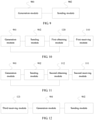
- FIG. 10 is a schematic structural diagram of Embodiment 2 of a master device according to the present invention. As shown in FIG. 10 , the master device further includes a first receiving module 110 and a first obtaining module 120. Specifically, based on the foregoing embodiment,
- FIG. 11 is a schematic structural diagram of Embodiment 3 of a master device according to the present invention. As shown in FIG. 11 , the master device further includes a second receiving module 111 and a second obtaining module 112. Specifically:
- FIG. 12 is a schematic structural diagram of Embodiment 4 of a master device according to the present invention. As shown in FIG. 12 , the master device further includes a third receiving module 121. The embodiment shown in FIG. 12 may also include the first receiving module 110 and the first obtaining module 120, or includes the second receiving module 111 and the second obtaining module 112.
- the master device is configured to perform the method embodiment performed by the foregoing master device. Implementation principles and technical effects of the master device are similar to those in the method embodiment. Details are not described herein again.
- FIG. 13 is a schematic structural diagram of Embodiment 1 of a slave device according to the present invention.
- the slave device is the slave device in the foregoing master-slave network.
- the slave device includes a receiving module 131 and an allocation module 132.
- the receiving module 131 is configured to: receive an IP address sub-segment sent by a master device, and use the IP address sub-segment as a Dynamic Host Configuration Protocol DHCP server address, where the IP address sub-segment includes at least one IP address.
- the allocation module 132 is configured to allocate an IP address to a user device according to the DHCP server address.
- FIG. 14 is a schematic structural diagram of Embodiment 2 of a slave device according to the present invention. As shown in FIG. 14 , based on FIG. 13 , the slave device further includes a first sending module 141.
- the first sending module 141 is configured to: before the receiving module 131 receives the IP address sub-segment sent by the master device, send an IP address sub-segment request message to the master device, where the IP address sub-segment request message is used for requesting the master device to allocate N IP address sub-segments to the slave device, and N is a positive integer.
- FIG. 15 is a schematic structural diagram of Embodiment 3 of a slave device according to the present invention. As shown in FIG. 15 , based on FIG. 13 , the slave device further includes a second sending module 151.
- the second sending module 151 is configured to: before the receiving module 131 receives the IP address sub-segment sent by the master device, send a specific IP address sub-segment request message to the master device, where the IP address sub-segment request message carries an identifier of a specific IP address sub-segment required by the slave device, and is used for requesting the master device to allocate the specific IP address sub-segment to the slave device.
- FIG. 16 is a schematic structural diagram of Embodiment 4 of a slave device according to the present invention. As shown in FIG. 16 , based on the foregoing embodiment, the slave device may further include a query module 161 and a third sending module 162. The first sending module 141 or the second sending module 151 may also be included in FIG. 16 .
- the receiving module 131 is further configured to receive a reclaiming message sent by the master device, where the reclaiming message is used for requesting the slave device to return the IP address sub-segment required by the master device to the master device.
- the query module 161 is configured to query whether the DHCP server address includes the IP address sub-segment required by the master device.
- the third sending module 162 is configured to: if the DHCP server address includes all or some of IP address sub-segments required by the master device, send a returning response message to the master device, where the returning response message carries identifiers of all or some of the IP address sub-segments that are included in the DHCP server address and required by the master device; or if the DHCP server address does not include the IP address sub-segment required by the master device, send a returning response message to the master device, where the returning response message notifies the master device that the slave device does not have the IP address sub-segment required by the master device.
- the receiving module 131 is further configured to receive a request message sent by the user device, where the request message is used for requesting the slave device to allocate the IP address to the user device.
- FIG. 17 is a schematic structural diagram of Embodiment 5 of a master device according to the present invention.
- the master device is the master device in the foregoing master-slave network.
- the master device includes a processor 171 and a transmitter 172.
- the processor 171 is configured to generate an Internet Protocol IP address sub-segment group, where the IP address sub-segment group includes at least one IP address sub-segment, and each IP address sub-segment includes at least one IP address.
- the transmitter 172 is configured to separately send the at least one IP address sub-segment in the IP address sub-segment group to the at least one slave device, so that the at least one slave device uses the received IP address sub-segment as a Dynamic Host Configuration Protocol DHCP server address, and allocates an IP address to a user device according to the DHCP server address.
- the master device further includes a receiver 173, configured to: before the transmitter 172 separately sends the at least one IP address sub-segment in the IP address sub-segment group to the at least one slave dcvicc, receive an IP address sub-segment request message sent by the slave device, where the IP address sub-segment request message is used for requesting the master device to allocate N IP address sub-segments to the slave device, and N is a positive integer.
- the processor 171 obtains the N IP address sub-segments from the allocatable IP address sub-segments. If there are no N allocatable IP address sub-segments in the IP address sub-segment group, the processor 171 reclaims an allocatable IP address sub-segment from another slave device in a management area of the master device until there are N allocatable IP address sub-segments in the IP address sub-segment group, obtains the N IP address sub-segments from the allocatable IP address sub-segments. Specifically, in a reclaiming process, the processor 171 may send a request by using the transmitter 172, and receive a response by using the receiver 173, and the like.
- the transmitter 172 sends the obtained N allocatable IP address sub-segments to the slave device.
- the receiver 173 is configured to receive a specific IP address sub-segment request message sent by the slave device, where the IP address sub-segment request message carries an identifier of a specific IP address sub-segment required by the slave device, and is used for requesting the master device to allocate the specific IP address sub-segment to the slave device.
- the processor 171 obtains the specific IP address sub-segment. If there is not the specific IP address sub-segment in an allocatable IP address sub-segment in the IP address sub-segment group, the processor 171 reclaims the specific IP address sub-segment from another slave device in a management area of the master device, and obtains the reclaimed specific IP address sub-segment.
- the transmitter 172 is further configured to send a reclaiming message to the at least one slave device, where the reclaiming message is used for requesting the slave device to return the IP address sub-segment required by the master device to the master device.
- the receiver is configured to receive a returning response message sent by the slave device according to the reclaiming message, where the returning response message carries identifiers of all or some of IP address sub-segments that are required by the master device and returned by the slave dcvicc, or the returning response message indicates that the slave device docs not have the IP address sub-segment required by the master device.
- the master device is configured to perform the method embodiment corresponding to the foregoing master device.
- Implementation principles and technical effects of the master device are similar to those in the method embodiment. Details are not described herein again.
- FIG. 18 is a schematic structural diagram of Embodiment 5 of a slave device according to the present invention.
- the slave device is the slave device in the foregoing master-slave network.
- the slave device includes a receiver 181 and a processor 182.
- the receiver 181 is configured to: receive an IP address sub-segment sent by a master device, and use the IP address sub-segment as a DHCP server address, where the IP address sub-segment includes at least one IP address.
- the processor 182 is configured to allocate an IP address to a user device according to the DHCP server address.
- the slave device may further include a transmitter 183.
- the transmitter 183 is configured to: before the receiver 181 receives the IP address sub-segment sent by the master device, send an IP address sub-segment request message to the master device, where the IP address sub-segment request message is used for requesting the master device to allocate N IP address sub-segments to the slave device, and N is a positive integer.
- the transmitter 183 is configured to: before the receiver 181 receives the IP address sub-segment sent by the master device, send a specific IP address sub-segment request message to the master device, where the IP address sub-segment request message carries an identifier of a specific IP address sub-segment required by the slave device, and is used for requesting the master device to allocate the specific IP address sub-segment to the slave device.
- the receiver 181 is specifically configured to: receive the specific IP address sub-segment allocated by the master device, and use the specific IP address sub-segment as the DHCP server address.
- the receiver 181 is further configured to receive a reclaiming message sent by the master device, where the reclaiming message is used for requesting the slave device to return the IP address sub-segment required by the master device to the master device.
- the processor 182 is configured to query whether the DHCP server address includes the IP address sub-segment required by the master device.
- the transmitter 183 is configured to: if the DHCP server address includes all or some of IP address sub-scgmcnts required by the master dcvicc, send a returning response message to the master device, where the returning response message carries identifiers of all or some of the IP address sub-segments that are included in the DHCP server address and required by the master device; or if the DHCP server address does not include the IP address sub-segment required by the master device, send a returning response message to the master device, where the returning response message notifies the master device that the slave device does not have the IP address sub-segment required by the master device.
- the receiver 161 is further configured to receive a request message sent by the user device, where the request message is used for requesting the slave device to allocate the IP address to the user device.
- the program may be stored in a computer readable storage medium. When the program runs, the steps of the method embodiments are performed.
- the foregoing storage medium includes various media that can store program code, such as a ROM, a RAM, a magnetic disk, or an optical disc.
Landscapes
- Engineering & Computer Science (AREA)
- Computer Networks & Wireless Communication (AREA)
- Signal Processing (AREA)
- Small-Scale Networks (AREA)
- Data Exchanges In Wide-Area Networks (AREA)
- Mobile Radio Communication Systems (AREA)
Claims (10)
- IP-Adresszuteilungsverfahren für ein Master-Slave-Netzwerk, wobei das Master-Slave-Netzwerk eine Master-Vorrichtung und mindestens eine Slave-Vorrichtung in einem Verwaltungsbereich der Master-Vorrichtung umfasst und das Verfahren Folgendes umfasst:Erzeugen (S201), durch die Master-Vorrichtung, einer Internetprotokoll-, IP-, Adresssubsegmentgruppe, wobei die IP-Adresssubsegmentgruppe mindestens ein IP-Adresssubsegment umfasst und jedes IP-Adresssubsegment mindestens eine IP-Adresse umfasst;
undseparates Senden (S202), durch die Master-Vorrichtung, des mindestens einen IP-Adresssubsegments in der IP-Adresssubsegmentgruppe an die mindestens eine Slave-Vorrichtung, so dass die mindestens eine Slave-Vorrichtung das empfangene IP-Adresssubsegment als eine "Dynamic Host Configuration Protocol"-DHCP-Server-Adresse verwendet und einer Benutzervorrichtung gemäß der DHCP-Server-Adresse eine IP-Adresse zuteilt;Empfangen (S301), durch die Master-Vorrichtung, vor dem separaten Senden, durch die Master-Vorrichtung, des mindestens einen IP-Adresssubsegments in der IP-Adresssubsegmentgruppe an die mindestens eine Slave-Vorrichtung, einer IP-Adresssubsegmentanforderungsnachricht, die von der Slave-Vorrichtung gesendet wurde, wobei die IP-Adresssubsegmentanforderungsnachricht zum Anfordern verwendet wird, dass die Master-Vorrichtung der Slave-Vorrichtung N IP-Adresssubsegmente zuteilt, und N eine positive ganze Zahl ist;wenn es N zuteilbare IP-Adresssubsegmente in der IP-Adresssubsegmentgruppe gibt, Ermitteln (S302), durch die Master-Vorrichtung, der N IP-Adresssubsegmente aus den zuteilbaren IP-Adresssubsegmenten; oder, wenn es keine N zuteilbaren IP-Adresssubsegmente in der IP-Adresssubsegmentgruppe gibt, Zurückholen (S303), durch die Master-Vorrichtung, eines zuteilbaren IP-Adresssubsegments von einer anderen Slave-Vorrichtung in dem Verwaltungsbereich der Master-Vorrichtung bis es N zuteilbare IP-Adresssubsegmente in der IP-Adresssubsegmentgruppe gibt, und Ermitteln, durch die Master-Vorrichtung, der N IP-Adresssubsegmente aus den zuteilbaren IP-Adresssubsegmenten, wobei vor dem separaten Senden, durch die Master-Vorrichtung, des mindestens einen IP-Adresssubsegments in der IP-Adresssubsegmentgruppe an die mindestens eine Slave-Vorrichtung weiterhin Folgendes umfasst:Empfangen (S401), durch die Master-Vorrichtung, einer spezifischen IP-Adresssubsegmentanforderungsnachricht, die von der Slave-Vorrichtung gesendet wurde, wobei die IP-Adresssubsegmentanforderungsnachricht eine Kennung eines spezifischen IP-Adresssubsegments trägt, das von der Slave-Vorrichtung benötigt wird, und zum Anfordern verwendet wird, dass die Master-Vorrichtung der Slave-Vorrichtung das spezifische IP-Adresssubsegment zuteilt;
und,wenn es das spezifische IP-Adresssubsegment in einem zuteilbaren IP-Adresssubsegment in der IP-Adresssubsegmentgruppe gibt, Ermitteln (S402), durch die Master-Vorrichtung, des spezifischen IP-Adresssubsegments; oder, wenn es das spezifische IP-Adresssubsegment in keinem zuteilbaren IP-Adresssubsegment in der IP-Adresssubsegmentgruppe gibt, Zurückholen (S403), durch die Master-Vorrichtung, des spezifischen IP-Adresssubsegments von einer anderen Slave-Vorrichtung in dem Verwaltungsbereich der Master-Vorrichtung und Ermitteln, durch die Master-Vorrichtung, des zurückgeholten spezifischen IP-Adresssubsegments. - Verfahren nach Anspruch 1, wobei das Verfahren weiterhin Folgendes umfasst:Senden (S501), durch die Master-Vorrichtung, einer Zurückholnachricht an die mindestens eine Slave-Vorrichtung, wobei die Zurückholnachricht zum Anfordern verwendet wird, dass die Slave-Vorrichtung das IP-Adresssubsegment, das von der Master-Vorrichtung benötigt wird, an die Master-Vorrichtung zurückgibt; undEmpfangen (S502), durch die Master-Vorrichtung, einer Zurückgabeantwortnachricht, die von der Slave-Vorrichtung gemäß der Zurückholnachricht gesendet wurde, wobei die Zurückgabeantwortnachricht Kennungen von allen oder einigen IP-Adresssubsegmenten trägt, die von der Master-Vorrichtung benötigt werden und von der Slave-Vorrichtung zurückgegeben wurden, oder die Zurückgabeantwortnachricht angibt, dass die Slave-Vorrichtung nicht das IP-Adresssubsegment aufweist, das von der Master-Vorrichtung benötigt wird.
- IP-Adresszuteilungsverfahren für ein Master-Slave-Netzwerk, wobei das Master-Slave-Netzwerk eine Master-Vorrichtung und mindestens eine Slave-Vorrichtung in einem Verwaltungsbereich der Master-Vorrichtung umfasst und das Verfahren Folgendes umfasst:Empfangen (S601), durch die Slave-Vorrichtung, eines IP-Adresssubsegments, das von der Master-Vorrichtung gesendet wurde, und Verwenden des IP-Adresssubsegments als eine "Dynamic Host Configuration Protocol"-DHCP-Server-Adresse, wobei das IP-Adresssubsegment mindestens eine IP-Adresse umfasst; undZuteilen (S602), durch die Slave-Vorrichtung, einer IP-Adresse zu einer Benutzervorrichtung gemäß der DHCP-Server-AdresseSenden, durch die Slave-Vorrichtung, vor dem Empfangen, durch die Slave-Vorrichtung, eines IP-Adresssubsegments, das von der Master-Vorrichtung gesendet wurde, einer IP-Adresssubsegmentanforderungsnachricht an die Master-Vorrichtung, wobei die IP-Adresssubsegmentanforderungsnachricht zum Anfordern verwendet wird, dass die Master-Vorrichtung der Slave-Vorrichtung N IP-Adresssubsegmente zuteilt, und N eine positive ganze Zahl ist, wobei vor dem Empfangen, durch die Slave-Vorrichtung, eines IP-Adresssubsegments, das von der Master-Vorrichtung gesendet wurde, weiterhin Folgendes umfasst:
Senden, durch die Slave-Vorrichtung, einer spezifischen IP-Adresssubsegmentanforderungsnachricht an die Master-Vorrichtung, wobei die IP-Adresssubsegmentanforderungsnachricht eine Kennung eines spezifischen IP-Adresssubsegments trägt, das von der Slave-Vorrichtung benötigt wird, und zum Anfordern verwendet wird, dass die Master-Vorrichtung der Slave-Vorrichtung das spezifische IP-Adresssubsegment zuteilt. - Verfahren nach Anspruch 3, wobei das Verfahren weiterhin Folgendes umfasst:Empfangen (S701), durch die Slave-Vorrichtung, einer Zurückholnachricht, die von der Master-Vorrichtung gesendet wurde, wobei die Zurückholnachricht zum Anfordern verwendet wird, dass die Slave-Vorrichtung das IP-Adresssubsegment, das von der Master-Vorrichtung benötigt wird, an die Master-Vorrichtung zurückgibt;Abfragen (S702), durch die Slave-Vorrichtung, ob die DHCP-Server-Adresse das IP-Adresssubsegment umfasst, das von der Master-Vorrichtung benötigt wird; und,wenn die DHCP-Server-Adresse alle oder einige IP-Adresssubsegmente umfasst, die von der Master-Vorrichtung benötigt werden, Senden (S703), durch die Slave-Vorrichtung, einer Zurückgabeantwortnachricht an die Master-Vorrichtung, wobei die Zurückgabeantwortnachricht Kennungen von allen oder einigen IP-Adresssubsegmenten trägt, die in der DHCP-Server-Adresse enthalten sind und die von der Master-Vorrichtung benötigt werden; oder, wenn die DHCP-Server-Adresse nicht das IP-Adresssubsegment umfasst, das von der Master-Vorrichtung benötigt wird, Senden (S704), durch die Slave-Vorrichtung, einer Zurückgabeantwortnachricht an die Master-Vorrichtung, wobei die Zurückgabeantwortnachricht die Master-Vorrichtung benachrichtigt, dass die Slave-Vorrichtung nicht das IP-Adresssubsegment aufweist, das von der Master-Vorrichtung benötigt wird.
- Verfahren nach einem der Ansprüche 3 bis 4, wobei das Verfahren weiterhin Folgendes umfasst:
Empfangen, durch die Slave-Vorrichtung, einer Anforderungsnachricht, die von der Benutzervorrichtung gesendet wurde, wobei die Anforderungsnachricht zum Anfordern verwendet wird, dass die Slave-Vorrichtung der Benutzervorrichtung die IP-Adresse zuteilt. - Master-Vorrichtung, wobei die Master-Vorrichtung zu einem Master-Slave-Netzwerk gehört, wobei das Master-Slave-Netzwerk die Master-Vorrichtung und mindestens eine Slave-Vorrichtung in einem Verwaltungsbereich der Master-Vorrichtung umfasst, und die Master-Vorrichtung Folgendes umfasst:ein Erzeugungsmodul (901), das eingerichtet ist, um eine Internetprotokoll-, IP-, Adresssubsegmentgruppe zu erzeugen, wobei die IP-Adresssubsegmentgruppe mindestens ein IP-Adresssubsegment umfasst und jedes IP-Adresssubsegment mindestens eine IP-Adresse umfasst; undein Sendemodul (902), das eingerichtet ist, um das mindestens eine IP-Adresssubsegment in der IP-Adresssubsegmentgruppe an die mindestens eine Slave-Vorrichtung separat zu senden, so dass die mindestens eine Slave-Vorrichtung das empfangene IP-Adresssubsegment als eine "Dynamic Host Configuration Protocol"-DHCP-Server-Adresse verwendet und einer Benutzervorrichtung gemäß der DHCP-Server-Adresse eine IP-Adresse zuteilt,ein erstes Empfangsmodul (110), das eingerichtet ist, um: bevor das Sendemodul das mindestens eine IP-Adresssubsegment in der IP-Adresssubsegmentgruppe an die mindestens eine Slave-Vorrichtung separat sendet, eine IP-Adresssubsegmentanforderungsnachricht zu empfangen, die von der Slave-Vorrichtung gesendet wurde, wobei die IP-Adresssubsegmentanforderungsnachricht zum Anfordern verwendet wird, dass die Master-Vorrichtung der Slave-Vorrichtung N IP-Adresssubsegmente zuteilt, und N eine positive ganze Zahl ist;ein erstes Ermittlungsmodul (120), das eingerichtet ist, um: wenn es N zuteilbare IP-Adresssubsegmente in der IP-Adresssubsegmentgruppe gibt, die N IP-Adresssubsegmente aus den zuteilbaren IP-Adresssubsegmenten zu ermitteln; oder, wenn es keine N zuteilbaren IP-Adresssubsegmente in der IP-Adresssubsegmentgruppe gibt, ein zuteilbares IP-Adresssubsegment von einer anderen Slave-Vorrichtung in dem Verwaltungsbereich der Master-Vorrichtung zurückzuholen, bis es N zuteilbare IP-Adresssubsegmente in der IP-Adresssubsegmentgruppe gibt, und die N IP-Adresssubsegmente aus den zuteilbaren IP-Adresssubsegmenten zu ermitteln, wobei sie weiterhin ein zweites Empfangsmodul (111) und ein zweites Ermittlungsmodul (112) umfasst, wobeidas zweite Empfangsmodul (111) eingerichtet ist, um: bevor das Sendemodul (902) das mindestens eine IP-Adresssubsegment in der IP-Adresssubsegmentgruppe an die mindestens eine Slave-Vorrichtung getrennt sendet, eine spezifische IP-Adresssubsegmentanforderungsnachricht zu empfangen, die von der Slave-Vorrichtung gesendet wurde, wobei die IP-Adresssubsegmentanforderungsnachricht eine Kennung eines spezifischen IP-Adresssubsegments trägt, das von der Slave-Vorrichtung benötigt wird, und zum Anfordern verwendet wird, dass die Master-Vorrichtung der Slave-Vorrichtung das spezifische IP-Adresssubsegment zuteilt; unddas zweite Ermittlungsmodul (112) eingerichtet ist, um: wenn es das spezifische IP-Adresssubsegment in einem zuteilbaren IP-Adresssubsegment in der IP-Adresssubsegmentgruppe gibt, das spezifische IP-Adresssubsegment zu ermitteln; oder, wenn es das spezifische IP-Adresssubsegment in keinem zuteilbaren IP-Adresssubsegment in der IP-Adresssubsegmentgruppe gibt, das spezifische IP-Adresssubsegment von einer anderen Slave-Vorrichtung in dem Verwaltungsbereich der Master-Vorrichtung zurückzuholen und das zurückgeholte spezifische IP-Adresssubsegment zu ermitteln.
- Master-Vorrichtung nach Anspruch 6, weiterhin ein drittes Empfangsmodul (121) umfassend, wobeidas Sendemodul (902) weiterhin konfiguriert ist, um eine Zurückholnachricht an die mindestens eine Slave-Vorrichtung zu senden, wobei die Zurückholnachricht zum Anfordern verwendet wird, dass die Slave-Vorrichtung das IP-Adresssubsegment, das von der Master-Vorrichtung benötigt wird, an die Master-Vorrichtung zurückgibt; unddas dritte Empfangsmodul (121) konfiguriert ist, um eine Zurückgabeantwortnachricht zu empfangen, die von der Slave-Vorrichtung gemäß der Zurückholnachricht gesendet wurde, wobei die Zurückgabeantwortnachricht Kennungen von allen oder einigen IP-Adresssubsegmenten trägt, die von der Master-Vorrichtung benötigt werden und von der Slave-Vorrichtung zurückgegeben wurden, oder die Zurückgabeantwortnachricht angibt, dass die Slave-Vorrichtung nicht das IP-Adresssubsegment aufweist, das von der Master-Vorrichtung benötigt wird.
- Slave-Vorrichtung, wobei die Slave-Vorrichtung zu einem Master-Slave-Netzwerk gehört, wobei das Master-Slave-Netzwerk eine Master-Vorrichtung und mindestens eine Slave-Vorrichtung in einem Verwaltungsbereich der Master-Vorrichtung umfasst, und die Slave-Vorrichtung Folgendes umfasst:ein Empfangsmodul (131), das eingerichtet ist, um: ein IP-Adresssubsegment zu empfangen, das von der Master-Vorrichtung gesendet wurde, und das IP-Adresssubsegment als eine "Dynamic Host Configuration Protocol"-DHCP-Server-Adresse zu verwenden, wobei das IP-Adresssubsegment mindestens eine IP-Adresse umfasst; undein Zuteilungsmodul (132), das eingerichtet ist, um einer Benutzervorrichtung eine IP-Adresse gemäß der DHCP-Server-Adresse zuzuteilen,ein erstes Sendemodul (141), das eingerichtet ist, um: bevor das Empfangsmodul (131) das IP-Adresssubsegment empfängt, das von der Master-Vorrichtung gesendet wurde, eine IP-Adresssubsegmentanforderungsnachricht an die Master-Vorrichtung zu senden, wobei die IP-Adresssubsegmentanforderungsnachricht zum Anfordern verwendet wird, dass die Master-Vorrichtung der Slave-Vorrichtung N IP-Adresssubsegmente zuteilt, und N eine positive ganze Zahl ist, ein zweites Sendemodul (151), wobeidas zweite Sendemodul (151) eingerichtet ist, um: bevor das Empfangsmodul (131) das IP-Adresssubsegment empfängt, das von der Master-Vorrichtung gesendet wurde, eine spezifische IP-Adresssubsegmentanforderungsnachricht an die Master-Vorrichtung zu senden, wobei die IP-Adresssubsegmentanforderungsnachricht eine Kennung eines spezifischen IP-Adresssubsegments trägt, das von der Slave-Vorrichtung benötigt wird, und zum Anfordern verwendet wird, dass die Master-Vorrichtung der Slave-Vorrichtung das spezifische IP-Adresssubsegment zuteilt.
- Slave-Vorrichtung nach Anspruch 8, weiterhin ein Abfragemodul (161) und ein drittes Sendemodul (162) umfassend, wobeidas Empfangsmodul (131) weiterhin konfiguriert ist, um eine Zurückholnachricht zu empfangen, die von der Master-Vorrichtung gesendet wurde, wobei die Zurückholnachricht zum Anfordern verwendet wird, dass die Slave-Vorrichtung das IP-Adresssubsegment, das von der Master-Vorrichtung benötigt wird, an die Master-Vorrichtung zurückgibt;das Abfragemodul (161) eingerichtet ist, um abzufragen, ob die DHCP-Server-Adresse das IP-Adresssubsegment umfasst, das von der Master-Vorrichtung benötigt wird; unddas dritte Sendemodul (162) eingerichtet ist, um: wenn die DHCP-Server-Adresse alle oder einige IP-Adresssubsegmente umfasst, die von der Master-Vorrichtung benötigt werden, eine Zurückgabeantwortnachricht an die Master-Vorrichtung zu senden, wobei die Zurückgabeantwortnachricht Kennungen von allen oder einigen IP-Adresssubsegmenten trägt, die in der DHCP-Server-Adresse enthalten sind und die von der Master-Vorrichtung benötigt werden; oder, wenn die DHCP-Server-Adresse nicht das IP-Adresssubsegment umfasst, das von der Master-Vorrichtung benötigt wird, eine Zurückgabeantwortnachricht an die Master-Vorrichtung zu senden, wobei die Zurückgabeantwortnachricht die Master-Vorrichtung benachrichtigt, dass die Slave-Vorrichtung nicht das IP-Adresssubsegment aufweist, das von der Master-Vorrichtung benötigt wird.
- Slave-Vorrichtung nach einem der Ansprüche 8 bis 9, wobei das Empfangsmodul (131) weiterhin eingerichtet ist, um eine Anforderungsnachricht zu empfangen, die von der Benutzervorrichtung gesendet wurde, wobei die Anforderungsnachricht zum Anfragen verwendet wird, dass die Slave-Vorrichtung der Benutzervorrichtung die IP-Adresse zuteilt.
Applications Claiming Priority (1)
| Application Number | Priority Date | Filing Date | Title |
|---|---|---|---|
| PCT/CN2015/091125 WO2017054140A1 (zh) | 2015-09-29 | 2015-09-29 | 主从型网络的ip地址分配方法、装置及系统 |
Publications (3)
| Publication Number | Publication Date |
|---|---|
| EP3349420A1 EP3349420A1 (de) | 2018-07-18 |
| EP3349420A4 EP3349420A4 (de) | 2018-08-29 |
| EP3349420B1 true EP3349420B1 (de) | 2022-02-23 |
Family
ID=58422521
Family Applications (1)
| Application Number | Title | Priority Date | Filing Date |
|---|---|---|---|
| EP15905052.5A Active EP3349420B1 (de) | 2015-09-29 | 2015-09-29 | Ip-adresszuteilungsverfahren, -vorrichtung und -system für ein master-slave-netzwerk |
Country Status (5)
| Country | Link |
|---|---|
| US (1) | US10757069B2 (de) |
| EP (1) | EP3349420B1 (de) |
| JP (1) | JP6574906B2 (de) |
| CN (1) | CN107925684B (de) |
| WO (1) | WO2017054140A1 (de) |
Families Citing this family (6)
| Publication number | Priority date | Publication date | Assignee | Title |
|---|---|---|---|---|
| FR3072238B1 (fr) * | 2017-10-10 | 2019-09-27 | Commissariat A L'energie Atomique Et Aux Energies Alternatives | Dispositif et procede de transmission de donnees |
| CN111147619B (zh) * | 2019-12-20 | 2022-07-19 | 海丰通航科技有限公司 | 本地实现rs485从机设备自动分配地址的方法和系统 |
| CN114513491B (zh) * | 2020-10-28 | 2023-04-11 | 华为技术有限公司 | 获取地址的方法、装置及系统 |
| CN114301731B (zh) * | 2021-12-31 | 2023-12-22 | 德力西电气有限公司 | 地址管理方法、主设备及从设备 |
| CN116485702A (zh) * | 2022-01-17 | 2023-07-25 | 株式会社理光 | 图像处理方法、装置以及存储介质 |
| CN116112913B (zh) * | 2022-11-01 | 2025-08-12 | 深圳市赛欧菲照明科技有限公司 | 巷道灯的网络地址赋码方法、装置、设备及存储介质 |
Family Cites Families (31)
| Publication number | Priority date | Publication date | Assignee | Title |
|---|---|---|---|---|
| US7051089B1 (en) * | 2001-10-24 | 2006-05-23 | Cisco Technology, Inc. | Techniques for automatically delegating address spaces among dynamic host configuration servers |
| JP2005210554A (ja) | 2004-01-26 | 2005-08-04 | Fujitsu Access Ltd | Dhcp代理サーバ |
| US8451833B2 (en) * | 2004-05-14 | 2013-05-28 | Motorola Mobility Llc | System and method for transparent virtual routing |
| US20070002833A1 (en) | 2005-06-30 | 2007-01-04 | Symbol Technologies, Inc. | Method, system and apparatus for assigning and managing IP addresses for wireless clients in wireless local area networks (WLANs) |
| JP4974287B2 (ja) | 2007-06-29 | 2012-07-11 | Kddi株式会社 | Dhcpサーバのアドレス割当容量を制御する割当容量制御サーバ及びプログラム |
| FI20080345A0 (fi) * | 2008-05-09 | 2008-05-09 | Joikusoft Oy Ltd | Symbian S60 puhelin 3G kaistanyhdistäjänä |
| US8190697B2 (en) * | 2009-05-20 | 2012-05-29 | Square D Company | Automated configuration of device communication settings |
| CN102231725B (zh) | 2010-03-25 | 2014-09-10 | 北京星网锐捷网络技术有限公司 | 一种动态主机配置协议报文的认证方法、设备及系统 |
| US8458303B2 (en) * | 2010-07-12 | 2013-06-04 | Cisco Technology, Inc. | Utilizing a gateway for the assignment of internet protocol addresses to client devices in a shared subset |
| CN102025798B (zh) * | 2010-12-15 | 2013-12-04 | 华为技术有限公司 | 地址分配处理方法、装置和系统 |
| US9184987B2 (en) | 2011-02-23 | 2015-11-10 | Tyco Fire & Security Gmbh | System and method for automatic configuration of master/slave devices on a network |
| CN102098354B (zh) * | 2011-02-28 | 2014-09-10 | 北京星网锐捷网络技术有限公司 | 动态主机配置协议地址分配方法及服务器 |
| WO2013026049A1 (en) * | 2011-08-17 | 2013-02-21 | Nicira, Inc. | Distributed logical l3 routing |
| US9055121B2 (en) * | 2011-10-08 | 2015-06-09 | Broadcom Corporation | Social processing member offering fixed and intelligent services |
| CN102594933B (zh) | 2011-12-20 | 2015-04-08 | 华为技术有限公司 | 一种公网地址分配的方法、装置及系统 |
| CN103297254B (zh) * | 2012-02-23 | 2017-06-20 | 华为技术有限公司 | 管理地址资源的方法及网关设备 |
| US8856296B2 (en) * | 2012-06-28 | 2014-10-07 | Alcatel Lucent | Subnet prioritization for IP address allocation from a DHCP server |
| EP2936786B1 (de) * | 2012-12-21 | 2021-02-24 | Airbus Ds Sas | Verfahren zum zusammenführen zweier subnetze in ein einziges ad-hoc-netzwerk unter verwendung des d2hcp-protokolls |
| CN104158917B (zh) | 2013-05-14 | 2017-12-15 | 新华三技术有限公司 | 回收动态主机配置协议客户端的ip地址的方法及设备 |
| US9537818B2 (en) * | 2013-05-15 | 2017-01-03 | Mediatek Inc. | Enhanced DHCP method |
| WO2015021629A1 (zh) | 2013-08-15 | 2015-02-19 | 华为技术有限公司 | 一种资源发放方法 |
| TWI548246B (zh) * | 2013-12-02 | 2016-09-01 | 緯創資通股份有限公司 | 叢集伺服器部署方法以及使用該方法的裝置 |
| JP2014143697A (ja) * | 2014-02-27 | 2014-08-07 | Huawei Technologies Co Ltd | スケーラブルwlanゲートウェイ |
| US20150281947A1 (en) * | 2014-03-26 | 2015-10-01 | Qualcomm Incorporated | Method and apparatus for fast ip address assignment |
| US9398629B2 (en) * | 2014-06-13 | 2016-07-19 | Alcatel Lucent | System and method for a distributed wireless network |
| CN104092790B (zh) | 2014-07-02 | 2017-09-29 | 京信通信系统(中国)有限公司 | 基站主从站通信方法和系统 |
| WO2016051263A1 (en) * | 2014-09-30 | 2016-04-07 | Sercel | Method for dynamically configuring a network comprising a plurality of subnets |
| CN104243632A (zh) | 2014-10-13 | 2014-12-24 | 三星电子(中国)研发中心 | 使非ip设备接入虚拟ip网络的方法和系统 |
| US10601766B2 (en) * | 2015-03-13 | 2020-03-24 | Hewlett Packard Enterprise Development Lp | Determine anomalous behavior based on dynamic device configuration address range |
| US9769115B2 (en) * | 2015-04-24 | 2017-09-19 | Fortinet, Inc. | DHCP agent assisted routing and access control |
| US10713062B2 (en) * | 2017-12-07 | 2020-07-14 | Dell Products, L.P. | System and method for configuring an information handling system |
-
2015
- 2015-09-29 JP JP2018535215A patent/JP6574906B2/ja not_active Expired - Fee Related
- 2015-09-29 CN CN201580082540.1A patent/CN107925684B/zh active Active
- 2015-09-29 WO PCT/CN2015/091125 patent/WO2017054140A1/zh not_active Ceased
- 2015-09-29 EP EP15905052.5A patent/EP3349420B1/de active Active
- 2015-09-29 US US15/764,270 patent/US10757069B2/en active Active
Also Published As
| Publication number | Publication date |
|---|---|
| US10757069B2 (en) | 2020-08-25 |
| EP3349420A1 (de) | 2018-07-18 |
| JP2018531563A (ja) | 2018-10-25 |
| WO2017054140A1 (zh) | 2017-04-06 |
| US20180287993A1 (en) | 2018-10-04 |
| CN107925684B (zh) | 2021-02-09 |
| CN107925684A (zh) | 2018-04-17 |
| EP3349420A4 (de) | 2018-08-29 |
| JP6574906B2 (ja) | 2019-09-11 |
Similar Documents
| Publication | Publication Date | Title |
|---|---|---|
| EP3349420B1 (de) | Ip-adresszuteilungsverfahren, -vorrichtung und -system für ein master-slave-netzwerk | |
| US12149584B2 (en) | Application relocation method and apparatus | |
| US10375015B2 (en) | Methods and system for allocating an IP address for an instance in a network function virtualization (NFV) system | |
| CN103312605B (zh) | 一种网关设备身份设置的方法及管理网关设备 | |
| US20200015131A1 (en) | Communication method and communications device | |
| EP3735043B1 (de) | Verfahren und vorrichtung zum einsatz von netzwerkscheiben | |
| KR20210048610A (ko) | Nf 구성요소의 예외를 처리하기 위한 방법 및 시스템, 그리고 기기 | |
| WO2019148389A1 (zh) | 无人驾驶飞行器uav能力信息传输方法、装置及系统 | |
| CN104601680B (zh) | 一种资源管理方法及装置 | |
| JP2018531563A6 (ja) | マスター・スレーブ・ネットワークのためのipアドレス割り当て方法、装置、およびシステム | |
| CN1762126A (zh) | 使用双栈过渡机制的移动ip通信系统及其方法 | |
| CN110365727A (zh) | 通信方法和相关装置 | |
| CN105245629A (zh) | 基于dhcp的主机通信方法及装置 | |
| CN117177330A (zh) | 网络管理方法、装置及存储介质 | |
| CN102340421B (zh) | 网关的管理方法、地址分配的方法及装置、系统 | |
| EP2838245B1 (de) | Verfahren und netzwerkvorrichtung zum konfigurieren eines datenübertragungsnetzwerks | |
| KR102219270B1 (ko) | Sdn 기반의 트래픽 처리 방법 | |
| CN101141307B (zh) | 一种应用于通信系统的基于策略管理的方法及系统 | |
| CN104683491B (zh) | 一种获取虚拟机的因特网协议地址的方法和系统 | |
| US20150098468A1 (en) | Method of controlling routing of identifier/locator mapping service | |
| JP6858887B2 (ja) | Ipアドレス設定方法および装置 | |
| CN112311866A (zh) | 面向服务的新型物联网体系结构 | |
| US20190278625A1 (en) | Rule-based reallocation of hosted compute resources | |
| EP3094066A1 (de) | Verfahren und vorrichtung zur netzwerkadressenübersetzung | |
| KR20050054003A (ko) | 동일한 아이피 서브넷에 속하는 가상 근거리 통신망 간의데이터 스위칭 시스템 및 방법 |
Legal Events
| Date | Code | Title | Description |
|---|---|---|---|
| STAA | Information on the status of an ep patent application or granted ep patent |
Free format text: STATUS: THE INTERNATIONAL PUBLICATION HAS BEEN MADE |
|
| PUAI | Public reference made under article 153(3) epc to a published international application that has entered the european phase |
Free format text: ORIGINAL CODE: 0009012 |
|
| STAA | Information on the status of an ep patent application or granted ep patent |
Free format text: STATUS: REQUEST FOR EXAMINATION WAS MADE |
|
| 17P | Request for examination filed |
Effective date: 20180409 |
|
| AK | Designated contracting states |
Kind code of ref document: A1 Designated state(s): AL AT BE BG CH CY CZ DE DK EE ES FI FR GB GR HR HU IE IS IT LI LT LU LV MC MK MT NL NO PL PT RO RS SE SI SK SM TR |
|
| AX | Request for extension of the european patent |
Extension state: BA ME |
|
| A4 | Supplementary search report drawn up and despatched |
Effective date: 20180730 |
|
| RIC1 | Information provided on ipc code assigned before grant |
Ipc: H04L 29/12 20060101AFI20180724BHEP |
|
| DAV | Request for validation of the european patent (deleted) | ||
| DAX | Request for extension of the european patent (deleted) | ||
| REG | Reference to a national code |
Ref country code: DE Ref legal event code: R079 Ref document number: 602015077176 Country of ref document: DE Free format text: PREVIOUS MAIN CLASS: H04L0029120000 Ipc: H04L0029080000 |
|
| RIC1 | Information provided on ipc code assigned before grant |
Ipc: H04L 29/08 20060101AFI20200220BHEP |
|
| STAA | Information on the status of an ep patent application or granted ep patent |
Free format text: STATUS: EXAMINATION IS IN PROGRESS |
|
| 17Q | First examination report despatched |
Effective date: 20200428 |
|
| GRAP | Despatch of communication of intention to grant a patent |
Free format text: ORIGINAL CODE: EPIDOSNIGR1 |
|
| STAA | Information on the status of an ep patent application or granted ep patent |
Free format text: STATUS: GRANT OF PATENT IS INTENDED |
|
| INTG | Intention to grant announced |
Effective date: 20211027 |
|
| GRAS | Grant fee paid |
Free format text: ORIGINAL CODE: EPIDOSNIGR3 |
|
| GRAA | (expected) grant |
Free format text: ORIGINAL CODE: 0009210 |
|
| STAA | Information on the status of an ep patent application or granted ep patent |
Free format text: STATUS: THE PATENT HAS BEEN GRANTED |
|
| AK | Designated contracting states |
Kind code of ref document: B1 Designated state(s): AL AT BE BG CH CY CZ DE DK EE ES FI FR GB GR HR HU IE IS IT LI LT LU LV MC MK MT NL NO PL PT RO RS SE SI SK SM TR |
|
| REG | Reference to a national code |
Ref country code: GB Ref legal event code: FG4D |
|
| REG | Reference to a national code |
Ref country code: CH Ref legal event code: EP |
|
| REG | Reference to a national code |
Ref country code: AT Ref legal event code: REF Ref document number: 1471347 Country of ref document: AT Kind code of ref document: T Effective date: 20220315 |
|
| REG | Reference to a national code |
Ref country code: IE Ref legal event code: FG4D |
|
| REG | Reference to a national code |
Ref country code: DE Ref legal event code: R096 Ref document number: 602015077176 Country of ref document: DE |
|
| REG | Reference to a national code |
Ref country code: LT Ref legal event code: MG9D |
|
| REG | Reference to a national code |
Ref country code: NL Ref legal event code: MP Effective date: 20220223 |
|
| REG | Reference to a national code |
Ref country code: AT Ref legal event code: MK05 Ref document number: 1471347 Country of ref document: AT Kind code of ref document: T Effective date: 20220223 |
|
| PG25 | Lapsed in a contracting state [announced via postgrant information from national office to epo] |
Ref country code: SE Free format text: LAPSE BECAUSE OF FAILURE TO SUBMIT A TRANSLATION OF THE DESCRIPTION OR TO PAY THE FEE WITHIN THE PRESCRIBED TIME-LIMIT Effective date: 20220223 Ref country code: RS Free format text: LAPSE BECAUSE OF FAILURE TO SUBMIT A TRANSLATION OF THE DESCRIPTION OR TO PAY THE FEE WITHIN THE PRESCRIBED TIME-LIMIT Effective date: 20220223 Ref country code: PT Free format text: LAPSE BECAUSE OF FAILURE TO SUBMIT A TRANSLATION OF THE DESCRIPTION OR TO PAY THE FEE WITHIN THE PRESCRIBED TIME-LIMIT Effective date: 20220623 Ref country code: NO Free format text: LAPSE BECAUSE OF FAILURE TO SUBMIT A TRANSLATION OF THE DESCRIPTION OR TO PAY THE FEE WITHIN THE PRESCRIBED TIME-LIMIT Effective date: 20220523 Ref country code: NL Free format text: LAPSE BECAUSE OF FAILURE TO SUBMIT A TRANSLATION OF THE DESCRIPTION OR TO PAY THE FEE WITHIN THE PRESCRIBED TIME-LIMIT Effective date: 20220223 Ref country code: LT Free format text: LAPSE BECAUSE OF FAILURE TO SUBMIT A TRANSLATION OF THE DESCRIPTION OR TO PAY THE FEE WITHIN THE PRESCRIBED TIME-LIMIT Effective date: 20220223 Ref country code: HR Free format text: LAPSE BECAUSE OF FAILURE TO SUBMIT A TRANSLATION OF THE DESCRIPTION OR TO PAY THE FEE WITHIN THE PRESCRIBED TIME-LIMIT Effective date: 20220223 Ref country code: ES Free format text: LAPSE BECAUSE OF FAILURE TO SUBMIT A TRANSLATION OF THE DESCRIPTION OR TO PAY THE FEE WITHIN THE PRESCRIBED TIME-LIMIT Effective date: 20220223 Ref country code: BG Free format text: LAPSE BECAUSE OF FAILURE TO SUBMIT A TRANSLATION OF THE DESCRIPTION OR TO PAY THE FEE WITHIN THE PRESCRIBED TIME-LIMIT Effective date: 20220523 |
|
| PG25 | Lapsed in a contracting state [announced via postgrant information from national office to epo] |
Ref country code: PL Free format text: LAPSE BECAUSE OF FAILURE TO SUBMIT A TRANSLATION OF THE DESCRIPTION OR TO PAY THE FEE WITHIN THE PRESCRIBED TIME-LIMIT Effective date: 20220223 Ref country code: LV Free format text: LAPSE BECAUSE OF FAILURE TO SUBMIT A TRANSLATION OF THE DESCRIPTION OR TO PAY THE FEE WITHIN THE PRESCRIBED TIME-LIMIT Effective date: 20220223 Ref country code: GR Free format text: LAPSE BECAUSE OF FAILURE TO SUBMIT A TRANSLATION OF THE DESCRIPTION OR TO PAY THE FEE WITHIN THE PRESCRIBED TIME-LIMIT Effective date: 20220524 Ref country code: FI Free format text: LAPSE BECAUSE OF FAILURE TO SUBMIT A TRANSLATION OF THE DESCRIPTION OR TO PAY THE FEE WITHIN THE PRESCRIBED TIME-LIMIT Effective date: 20220223 Ref country code: AT Free format text: LAPSE BECAUSE OF FAILURE TO SUBMIT A TRANSLATION OF THE DESCRIPTION OR TO PAY THE FEE WITHIN THE PRESCRIBED TIME-LIMIT Effective date: 20220223 |
|
| PG25 | Lapsed in a contracting state [announced via postgrant information from national office to epo] |
Ref country code: IS Free format text: LAPSE BECAUSE OF FAILURE TO SUBMIT A TRANSLATION OF THE DESCRIPTION OR TO PAY THE FEE WITHIN THE PRESCRIBED TIME-LIMIT Effective date: 20220623 |
|
| PG25 | Lapsed in a contracting state [announced via postgrant information from national office to epo] |
Ref country code: SM Free format text: LAPSE BECAUSE OF FAILURE TO SUBMIT A TRANSLATION OF THE DESCRIPTION OR TO PAY THE FEE WITHIN THE PRESCRIBED TIME-LIMIT Effective date: 20220223 Ref country code: SK Free format text: LAPSE BECAUSE OF FAILURE TO SUBMIT A TRANSLATION OF THE DESCRIPTION OR TO PAY THE FEE WITHIN THE PRESCRIBED TIME-LIMIT Effective date: 20220223 Ref country code: RO Free format text: LAPSE BECAUSE OF FAILURE TO SUBMIT A TRANSLATION OF THE DESCRIPTION OR TO PAY THE FEE WITHIN THE PRESCRIBED TIME-LIMIT Effective date: 20220223 Ref country code: EE Free format text: LAPSE BECAUSE OF FAILURE TO SUBMIT A TRANSLATION OF THE DESCRIPTION OR TO PAY THE FEE WITHIN THE PRESCRIBED TIME-LIMIT Effective date: 20220223 Ref country code: DK Free format text: LAPSE BECAUSE OF FAILURE TO SUBMIT A TRANSLATION OF THE DESCRIPTION OR TO PAY THE FEE WITHIN THE PRESCRIBED TIME-LIMIT Effective date: 20220223 Ref country code: CZ Free format text: LAPSE BECAUSE OF FAILURE TO SUBMIT A TRANSLATION OF THE DESCRIPTION OR TO PAY THE FEE WITHIN THE PRESCRIBED TIME-LIMIT Effective date: 20220223 |
|
| REG | Reference to a national code |
Ref country code: DE Ref legal event code: R097 Ref document number: 602015077176 Country of ref document: DE |
|
| PG25 | Lapsed in a contracting state [announced via postgrant information from national office to epo] |
Ref country code: AL Free format text: LAPSE BECAUSE OF FAILURE TO SUBMIT A TRANSLATION OF THE DESCRIPTION OR TO PAY THE FEE WITHIN THE PRESCRIBED TIME-LIMIT Effective date: 20220223 |
|
| PLBE | No opposition filed within time limit |
Free format text: ORIGINAL CODE: 0009261 |
|
| STAA | Information on the status of an ep patent application or granted ep patent |
Free format text: STATUS: NO OPPOSITION FILED WITHIN TIME LIMIT |
|
| 26N | No opposition filed |
Effective date: 20221124 |
|
| PG25 | Lapsed in a contracting state [announced via postgrant information from national office to epo] |
Ref country code: SI Free format text: LAPSE BECAUSE OF FAILURE TO SUBMIT A TRANSLATION OF THE DESCRIPTION OR TO PAY THE FEE WITHIN THE PRESCRIBED TIME-LIMIT Effective date: 20220223 |
|
| PG25 | Lapsed in a contracting state [announced via postgrant information from national office to epo] |
Ref country code: MC Free format text: LAPSE BECAUSE OF FAILURE TO SUBMIT A TRANSLATION OF THE DESCRIPTION OR TO PAY THE FEE WITHIN THE PRESCRIBED TIME-LIMIT Effective date: 20220223 |
|
| REG | Reference to a national code |
Ref country code: CH Ref legal event code: PL |
|
| REG | Reference to a national code |
Ref country code: BE Ref legal event code: MM Effective date: 20220930 |
|
| PG25 | Lapsed in a contracting state [announced via postgrant information from national office to epo] |
Ref country code: LU Free format text: LAPSE BECAUSE OF NON-PAYMENT OF DUE FEES Effective date: 20220929 |
|
| PG25 | Lapsed in a contracting state [announced via postgrant information from national office to epo] |
Ref country code: LI Free format text: LAPSE BECAUSE OF NON-PAYMENT OF DUE FEES Effective date: 20220930 Ref country code: IT Free format text: LAPSE BECAUSE OF FAILURE TO SUBMIT A TRANSLATION OF THE DESCRIPTION OR TO PAY THE FEE WITHIN THE PRESCRIBED TIME-LIMIT Effective date: 20220223 Ref country code: IE Free format text: LAPSE BECAUSE OF NON-PAYMENT OF DUE FEES Effective date: 20220929 Ref country code: CH Free format text: LAPSE BECAUSE OF NON-PAYMENT OF DUE FEES Effective date: 20220930 |
|
| PG25 | Lapsed in a contracting state [announced via postgrant information from national office to epo] |
Ref country code: BE Free format text: LAPSE BECAUSE OF NON-PAYMENT OF DUE FEES Effective date: 20220930 |
|
| PG25 | Lapsed in a contracting state [announced via postgrant information from national office to epo] |
Ref country code: HU Free format text: LAPSE BECAUSE OF FAILURE TO SUBMIT A TRANSLATION OF THE DESCRIPTION OR TO PAY THE FEE WITHIN THE PRESCRIBED TIME-LIMIT; INVALID AB INITIO Effective date: 20150929 |
|
| PG25 | Lapsed in a contracting state [announced via postgrant information from national office to epo] |
Ref country code: CY Free format text: LAPSE BECAUSE OF FAILURE TO SUBMIT A TRANSLATION OF THE DESCRIPTION OR TO PAY THE FEE WITHIN THE PRESCRIBED TIME-LIMIT Effective date: 20220223 |
|
| PG25 | Lapsed in a contracting state [announced via postgrant information from national office to epo] |
Ref country code: MK Free format text: LAPSE BECAUSE OF FAILURE TO SUBMIT A TRANSLATION OF THE DESCRIPTION OR TO PAY THE FEE WITHIN THE PRESCRIBED TIME-LIMIT Effective date: 20220223 |
|
| PG25 | Lapsed in a contracting state [announced via postgrant information from national office to epo] |
Ref country code: MT Free format text: LAPSE BECAUSE OF FAILURE TO SUBMIT A TRANSLATION OF THE DESCRIPTION OR TO PAY THE FEE WITHIN THE PRESCRIBED TIME-LIMIT Effective date: 20220223 |
|
| PGFP | Annual fee paid to national office [announced via postgrant information from national office to epo] |
Ref country code: DE Payment date: 20250805 Year of fee payment: 11 |
|
| PGFP | Annual fee paid to national office [announced via postgrant information from national office to epo] |
Ref country code: GB Payment date: 20250807 Year of fee payment: 11 |
|
| PGFP | Annual fee paid to national office [announced via postgrant information from national office to epo] |
Ref country code: FR Payment date: 20250808 Year of fee payment: 11 |
|
| PG25 | Lapsed in a contracting state [announced via postgrant information from national office to epo] |
Ref country code: TR Free format text: LAPSE BECAUSE OF FAILURE TO SUBMIT A TRANSLATION OF THE DESCRIPTION OR TO PAY THE FEE WITHIN THE PRESCRIBED TIME-LIMIT Effective date: 20220223 |