EP3349743B1 - Verfahren und zusammensetzungen zur hemmung der dcn1-ubc12-interaktion - Google Patents
Verfahren und zusammensetzungen zur hemmung der dcn1-ubc12-interaktion Download PDFInfo
- Publication number
- EP3349743B1 EP3349743B1 EP16847549.9A EP16847549A EP3349743B1 EP 3349743 B1 EP3349743 B1 EP 3349743B1 EP 16847549 A EP16847549 A EP 16847549A EP 3349743 B1 EP3349743 B1 EP 3349743B1
- Authority
- EP
- European Patent Office
- Prior art keywords
- alkyl
- compound
- further aspect
- disclosed
- hydrogen
- Prior art date
- Legal status (The legal status is an assumption and is not a legal conclusion. Google has not performed a legal analysis and makes no representation as to the accuracy of the status listed.)
- Active
Links
Images












Classifications
-
- A—HUMAN NECESSITIES
- A61—MEDICAL OR VETERINARY SCIENCE; HYGIENE
- A61K—PREPARATIONS FOR MEDICAL, DENTAL OR TOILETRY PURPOSES
- A61K31/00—Medicinal preparations containing organic active ingredients
- A61K31/33—Heterocyclic compounds
- A61K31/395—Heterocyclic compounds having nitrogen as a ring hetero atom, e.g. guanethidine or rifamycins
- A61K31/435—Heterocyclic compounds having nitrogen as a ring hetero atom, e.g. guanethidine or rifamycins having six-membered rings with one nitrogen as the only ring hetero atom
- A61K31/44—Non condensed pyridines; Hydrogenated derivatives thereof
- A61K31/445—Non condensed piperidines, e.g. piperocaine
- A61K31/4523—Non condensed piperidines, e.g. piperocaine containing further heterocyclic ring systems
- A61K31/4545—Non condensed piperidines, e.g. piperocaine containing further heterocyclic ring systems containing a six-membered ring with nitrogen as a ring hetero atom, e.g. pipamperone, anabasine
-
- A—HUMAN NECESSITIES
- A61—MEDICAL OR VETERINARY SCIENCE; HYGIENE
- A61K—PREPARATIONS FOR MEDICAL, DENTAL OR TOILETRY PURPOSES
- A61K31/00—Medicinal preparations containing organic active ingredients
- A61K31/16—Amides, e.g. hydroxamic acids
- A61K31/17—Amides, e.g. hydroxamic acids having the group >N—C(O)—N< or >N—C(S)—N<, e.g. urea, thiourea, carmustine
-
- A—HUMAN NECESSITIES
- A61—MEDICAL OR VETERINARY SCIENCE; HYGIENE
- A61K—PREPARATIONS FOR MEDICAL, DENTAL OR TOILETRY PURPOSES
- A61K31/00—Medicinal preparations containing organic active ingredients
- A61K31/33—Heterocyclic compounds
- A61K31/395—Heterocyclic compounds having nitrogen as a ring hetero atom, e.g. guanethidine or rifamycins
- A61K31/435—Heterocyclic compounds having nitrogen as a ring hetero atom, e.g. guanethidine or rifamycins having six-membered rings with one nitrogen as the only ring hetero atom
- A61K31/4353—Heterocyclic compounds having nitrogen as a ring hetero atom, e.g. guanethidine or rifamycins having six-membered rings with one nitrogen as the only ring hetero atom ortho- or peri-condensed with heterocyclic ring systems
- A61K31/437—Heterocyclic compounds having nitrogen as a ring hetero atom, e.g. guanethidine or rifamycins having six-membered rings with one nitrogen as the only ring hetero atom ortho- or peri-condensed with heterocyclic ring systems the heterocyclic ring system containing a five-membered ring having nitrogen as a ring hetero atom, e.g. indolizine, beta-carboline
-
- A—HUMAN NECESSITIES
- A61—MEDICAL OR VETERINARY SCIENCE; HYGIENE
- A61K—PREPARATIONS FOR MEDICAL, DENTAL OR TOILETRY PURPOSES
- A61K31/00—Medicinal preparations containing organic active ingredients
- A61K31/33—Heterocyclic compounds
- A61K31/395—Heterocyclic compounds having nitrogen as a ring hetero atom, e.g. guanethidine or rifamycins
- A61K31/435—Heterocyclic compounds having nitrogen as a ring hetero atom, e.g. guanethidine or rifamycins having six-membered rings with one nitrogen as the only ring hetero atom
- A61K31/44—Non condensed pyridines; Hydrogenated derivatives thereof
- A61K31/445—Non condensed piperidines, e.g. piperocaine
- A61K31/451—Non condensed piperidines, e.g. piperocaine having a carbocyclic group directly attached to the heterocyclic ring, e.g. glutethimide, meperidine, loperamide, phencyclidine, piminodine
-
- A—HUMAN NECESSITIES
- A61—MEDICAL OR VETERINARY SCIENCE; HYGIENE
- A61K—PREPARATIONS FOR MEDICAL, DENTAL OR TOILETRY PURPOSES
- A61K31/00—Medicinal preparations containing organic active ingredients
- A61K31/33—Heterocyclic compounds
- A61K31/395—Heterocyclic compounds having nitrogen as a ring hetero atom, e.g. guanethidine or rifamycins
- A61K31/435—Heterocyclic compounds having nitrogen as a ring hetero atom, e.g. guanethidine or rifamycins having six-membered rings with one nitrogen as the only ring hetero atom
- A61K31/44—Non condensed pyridines; Hydrogenated derivatives thereof
- A61K31/445—Non condensed piperidines, e.g. piperocaine
- A61K31/4523—Non condensed piperidines, e.g. piperocaine containing further heterocyclic ring systems
- A61K31/4525—Non condensed piperidines, e.g. piperocaine containing further heterocyclic ring systems containing a five-membered ring with oxygen as a ring hetero atom
-
- A—HUMAN NECESSITIES
- A61—MEDICAL OR VETERINARY SCIENCE; HYGIENE
- A61K—PREPARATIONS FOR MEDICAL, DENTAL OR TOILETRY PURPOSES
- A61K31/00—Medicinal preparations containing organic active ingredients
- A61K31/33—Heterocyclic compounds
- A61K31/395—Heterocyclic compounds having nitrogen as a ring hetero atom, e.g. guanethidine or rifamycins
- A61K31/435—Heterocyclic compounds having nitrogen as a ring hetero atom, e.g. guanethidine or rifamycins having six-membered rings with one nitrogen as the only ring hetero atom
- A61K31/44—Non condensed pyridines; Hydrogenated derivatives thereof
- A61K31/445—Non condensed piperidines, e.g. piperocaine
- A61K31/4523—Non condensed piperidines, e.g. piperocaine containing further heterocyclic ring systems
- A61K31/454—Non condensed piperidines, e.g. piperocaine containing further heterocyclic ring systems containing a five-membered ring with nitrogen as a ring hetero atom, e.g. pimozide, domperidone
-
- A—HUMAN NECESSITIES
- A61—MEDICAL OR VETERINARY SCIENCE; HYGIENE
- A61K—PREPARATIONS FOR MEDICAL, DENTAL OR TOILETRY PURPOSES
- A61K31/00—Medicinal preparations containing organic active ingredients
- A61K31/33—Heterocyclic compounds
- A61K31/395—Heterocyclic compounds having nitrogen as a ring hetero atom, e.g. guanethidine or rifamycins
- A61K31/495—Heterocyclic compounds having nitrogen as a ring hetero atom, e.g. guanethidine or rifamycins having six-membered rings with two or more nitrogen atoms as the only ring heteroatoms, e.g. piperazine or tetrazines
- A61K31/505—Pyrimidines; Hydrogenated pyrimidines, e.g. trimethoprim
- A61K31/506—Pyrimidines; Hydrogenated pyrimidines, e.g. trimethoprim not condensed and containing further heterocyclic rings
-
- A—HUMAN NECESSITIES
- A61—MEDICAL OR VETERINARY SCIENCE; HYGIENE
- A61P—SPECIFIC THERAPEUTIC ACTIVITY OF CHEMICAL COMPOUNDS OR MEDICINAL PREPARATIONS
- A61P15/00—Drugs for genital or sexual disorders; Contraceptives
- A61P15/16—Masculine contraceptives
-
- A—HUMAN NECESSITIES
- A61—MEDICAL OR VETERINARY SCIENCE; HYGIENE
- A61P—SPECIFIC THERAPEUTIC ACTIVITY OF CHEMICAL COMPOUNDS OR MEDICINAL PREPARATIONS
- A61P31/00—Antiinfectives, i.e. antibiotics, antiseptics, chemotherapeutics
- A61P31/04—Antibacterial agents
-
- A—HUMAN NECESSITIES
- A61—MEDICAL OR VETERINARY SCIENCE; HYGIENE
- A61P—SPECIFIC THERAPEUTIC ACTIVITY OF CHEMICAL COMPOUNDS OR MEDICINAL PREPARATIONS
- A61P31/00—Antiinfectives, i.e. antibiotics, antiseptics, chemotherapeutics
- A61P31/12—Antivirals
-
- C—CHEMISTRY; METALLURGY
- C07—ORGANIC CHEMISTRY
- C07D—HETEROCYCLIC COMPOUNDS
- C07D211/00—Heterocyclic compounds containing hydrogenated pyridine rings, not condensed with other rings
- C07D211/04—Heterocyclic compounds containing hydrogenated pyridine rings, not condensed with other rings with only hydrogen or carbon atoms directly attached to the ring nitrogen atom
- C07D211/06—Heterocyclic compounds containing hydrogenated pyridine rings, not condensed with other rings with only hydrogen or carbon atoms directly attached to the ring nitrogen atom having no double bonds between ring members or between ring members and non-ring members
- C07D211/36—Heterocyclic compounds containing hydrogenated pyridine rings, not condensed with other rings with only hydrogen or carbon atoms directly attached to the ring nitrogen atom having no double bonds between ring members or between ring members and non-ring members with hetero atoms or with carbon atoms having three bonds to hetero atoms with at the most one bond to halogen, e.g. ester or nitrile radicals, directly attached to ring carbon atoms
- C07D211/56—Nitrogen atoms
- C07D211/58—Nitrogen atoms attached in position 4
-
- C—CHEMISTRY; METALLURGY
- C07—ORGANIC CHEMISTRY
- C07D—HETEROCYCLIC COMPOUNDS
- C07D401/00—Heterocyclic compounds containing two or more hetero rings, having nitrogen atoms as the only ring hetero atoms, at least one ring being a six-membered ring with only one nitrogen atom
- C07D401/02—Heterocyclic compounds containing two or more hetero rings, having nitrogen atoms as the only ring hetero atoms, at least one ring being a six-membered ring with only one nitrogen atom containing two hetero rings
- C07D401/04—Heterocyclic compounds containing two or more hetero rings, having nitrogen atoms as the only ring hetero atoms, at least one ring being a six-membered ring with only one nitrogen atom containing two hetero rings directly linked by a ring-member-to-ring-member bond
-
- C—CHEMISTRY; METALLURGY
- C07—ORGANIC CHEMISTRY
- C07D—HETEROCYCLIC COMPOUNDS
- C07D401/00—Heterocyclic compounds containing two or more hetero rings, having nitrogen atoms as the only ring hetero atoms, at least one ring being a six-membered ring with only one nitrogen atom
- C07D401/02—Heterocyclic compounds containing two or more hetero rings, having nitrogen atoms as the only ring hetero atoms, at least one ring being a six-membered ring with only one nitrogen atom containing two hetero rings
- C07D401/06—Heterocyclic compounds containing two or more hetero rings, having nitrogen atoms as the only ring hetero atoms, at least one ring being a six-membered ring with only one nitrogen atom containing two hetero rings linked by a carbon chain containing only aliphatic carbon atoms
-
- C—CHEMISTRY; METALLURGY
- C07—ORGANIC CHEMISTRY
- C07D—HETEROCYCLIC COMPOUNDS
- C07D401/00—Heterocyclic compounds containing two or more hetero rings, having nitrogen atoms as the only ring hetero atoms, at least one ring being a six-membered ring with only one nitrogen atom
- C07D401/02—Heterocyclic compounds containing two or more hetero rings, having nitrogen atoms as the only ring hetero atoms, at least one ring being a six-membered ring with only one nitrogen atom containing two hetero rings
- C07D401/12—Heterocyclic compounds containing two or more hetero rings, having nitrogen atoms as the only ring hetero atoms, at least one ring being a six-membered ring with only one nitrogen atom containing two hetero rings linked by a chain containing hetero atoms as chain links
-
- C—CHEMISTRY; METALLURGY
- C07—ORGANIC CHEMISTRY
- C07D—HETEROCYCLIC COMPOUNDS
- C07D405/00—Heterocyclic compounds containing both one or more hetero rings having oxygen atoms as the only ring hetero atoms, and one or more rings having nitrogen as the only ring hetero atom
- C07D405/02—Heterocyclic compounds containing both one or more hetero rings having oxygen atoms as the only ring hetero atoms, and one or more rings having nitrogen as the only ring hetero atom containing two hetero rings
- C07D405/06—Heterocyclic compounds containing both one or more hetero rings having oxygen atoms as the only ring hetero atoms, and one or more rings having nitrogen as the only ring hetero atom containing two hetero rings linked by a carbon chain containing only aliphatic carbon atoms
-
- C—CHEMISTRY; METALLURGY
- C07—ORGANIC CHEMISTRY
- C07D—HETEROCYCLIC COMPOUNDS
- C07D405/00—Heterocyclic compounds containing both one or more hetero rings having oxygen atoms as the only ring hetero atoms, and one or more rings having nitrogen as the only ring hetero atom
- C07D405/02—Heterocyclic compounds containing both one or more hetero rings having oxygen atoms as the only ring hetero atoms, and one or more rings having nitrogen as the only ring hetero atom containing two hetero rings
- C07D405/12—Heterocyclic compounds containing both one or more hetero rings having oxygen atoms as the only ring hetero atoms, and one or more rings having nitrogen as the only ring hetero atom containing two hetero rings linked by a chain containing hetero atoms as chain links
-
- C—CHEMISTRY; METALLURGY
- C07—ORGANIC CHEMISTRY
- C07D—HETEROCYCLIC COMPOUNDS
- C07D409/00—Heterocyclic compounds containing two or more hetero rings, at least one ring having sulfur atoms as the only ring hetero atoms
- C07D409/14—Heterocyclic compounds containing two or more hetero rings, at least one ring having sulfur atoms as the only ring hetero atoms containing three or more hetero rings
-
- C—CHEMISTRY; METALLURGY
- C07—ORGANIC CHEMISTRY
- C07D—HETEROCYCLIC COMPOUNDS
- C07D417/00—Heterocyclic compounds containing two or more hetero rings, at least one ring having nitrogen and sulfur atoms as the only ring hetero atoms, not provided for by group C07D415/00
- C07D417/02—Heterocyclic compounds containing two or more hetero rings, at least one ring having nitrogen and sulfur atoms as the only ring hetero atoms, not provided for by group C07D415/00 containing two hetero rings
- C07D417/04—Heterocyclic compounds containing two or more hetero rings, at least one ring having nitrogen and sulfur atoms as the only ring hetero atoms, not provided for by group C07D415/00 containing two hetero rings directly linked by a ring-member-to-ring-member bond
-
- C—CHEMISTRY; METALLURGY
- C07—ORGANIC CHEMISTRY
- C07D—HETEROCYCLIC COMPOUNDS
- C07D417/00—Heterocyclic compounds containing two or more hetero rings, at least one ring having nitrogen and sulfur atoms as the only ring hetero atoms, not provided for by group C07D415/00
- C07D417/02—Heterocyclic compounds containing two or more hetero rings, at least one ring having nitrogen and sulfur atoms as the only ring hetero atoms, not provided for by group C07D415/00 containing two hetero rings
- C07D417/06—Heterocyclic compounds containing two or more hetero rings, at least one ring having nitrogen and sulfur atoms as the only ring hetero atoms, not provided for by group C07D415/00 containing two hetero rings linked by a carbon chain containing only aliphatic carbon atoms
-
- C—CHEMISTRY; METALLURGY
- C07—ORGANIC CHEMISTRY
- C07D—HETEROCYCLIC COMPOUNDS
- C07D471/00—Heterocyclic compounds containing nitrogen atoms as the only ring hetero atoms in the condensed system, at least one ring being a six-membered ring with one nitrogen atom, not provided for by groups C07D451/00 - C07D463/00
- C07D471/02—Heterocyclic compounds containing nitrogen atoms as the only ring hetero atoms in the condensed system, at least one ring being a six-membered ring with one nitrogen atom, not provided for by groups C07D451/00 - C07D463/00 in which the condensed system contains two hetero rings
- C07D471/04—Ortho-condensed systems
Definitions
- Ubiquitin-like protein (UBL) modification pathways have emerged as important targets for drug discovery based on their vast roles in regulation, and on clinical and preclinical successes of proteasome inhibitors (e.g. bortezomib or carfelzomib), E3 inhibitors, and the NEDD8 E1 inhibitor (MLN4924) (e.g., see Ciechanover, A. BioorgMed Chem 2013, 21:3400 ; and Bassermann, F.; Eichner, R.; Pagano, M. Biochim Biophys Acta 2014 1843(1):150-62 ). These chemical inhibitors of UBL pathways have also proven to be essential probes for dissecting multifactorial regulatory networks that were opaque to genetic approaches.
- proteasome inhibitors e.g. bortezomib or carfelzomib
- E3 inhibitors e.g., E3 inhibitors, and the NEDD8 E1 inhibitor (MLN4924)
- MN4924 NEDD8 E1
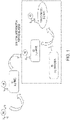
- DCN1 The function of DCN1 is to bind the acetylated N-terminus of UBC12 (an E2 enzyme for the UBL NEDD8) and the "Cullin (or CUL)" family of proteins to act as a co-E3 promoting NEDD8 modification (neddylation) of the CULs (see Kurz, T., et al. Mol. Cell 2008, 29:23 ; Scott, D. C., et al. Mol. Cell 2010, 39:784 ; Kim, A. Y. et. al. J. Biol. Chem. 2008, 283:33211 ; and Scott, D. C., et al. Science 2011, 334:674 ) .
- DCN1 is part of a dynamic signaling system that regulates ligation of both NEDD8 and ubiquitin (UB), which are among more than a dozen human UBLs that dynamically post-translationally modify and regulate the functions of thousands of different eukaryotic proteins. It is believed that inhibition of the DCN1-UBC12 interaction could regulate CRL activity without completely blocking neddylation and provide efficacious compounds with less severe off-target effects and toxicity relative to existing drugs that target the UPS system (see Sun, Y. Neoplasia 2006, 8:645 ; Petroski, M.D.; and Deshaies, R.J. Nat Rev Mol Cell Biol 2005, 6:9 ; Nakayama, K.I.; and Nakayama, K. Nat Rev Cancer 2006, 6:369 ).
- UB ubiquitin
- the invention provides a compound having a structure represented by a formula: or a pharmaceutically acceptable salt thereof, wherein
- the invention provides a therapeutically effective amount of a compound of the invention or a pharmaceutically acceptable salt thereof, for use in treating a viral or bacterial infection.
- each of R 1a , R 1b , and R 1c is independently hydrogen, halogen, -SF 5 , -NO 2 , -CH 3 , -CH 2 F, -CHF 2 , -CF 3 , -OCF 3 , -NHCH 3 , -N(CH 3 ) 2 , -(CH 2 )-phenyl, -(CH 2 )-pyridinyl, -(CH 2 )-pyrimidinyl, -O-phenyl, -O-pyridinyl, or -O-pyrimidinyl, provided that at least one of R 1a , R 1b , and R 1c is not hydrogen; or R 1a and R 1b are optionally covalently bonded and, together with the intermediate atoms, comprise an optionally substituted 3- to 7-membered fuse
- each of R 1a , R 1b , and R 1c is independently hydrogen, halogen, -SF 5 , -NO 2 , -CH 3 , -CH 2 F, -CHF 2 , -CF 3 , -OCF 3 , -NHCH 3 , -N(CH 3 ) 2 , -(CH 2 )-phenyl, -(CH 2 )-pyridinyl, -(CH 2 )-pyrimidinyl, -O-phenyl, -O-pyridinyl, or -O-pyrimidinyl, provided that at least one of R 1a , R 1b , and R 1c is not hydrogen; or R 1a and R 1b are optionally covalently bonded and, together with the intermediate atoms, comprise an optionally substituted 3- to 7-membered fused aryl, heteroaryl, cycloalkyl, cycloalkeny
- compositions comprising a therapeutically effective amount of a disclosed compound, or a pharmaceutically acceptable salt thereof, and a pharmaceutically acceptable carrier.
- Also disclosed are methods for the treatment of a disorder of uncontrolled cellular proliferation comprising the step of administering to a mammal a therapeutically effective amount of a compound inhibiting DCN1-UBC12 interaction, wherein the compound is a disclosed compound.
- Also disclosed are methods for the treatment of a neurodegenerative disorder comprising the step of administering to a mammal a therapeutically effective amount of a compound inhibiting DCN1-UBC12 interaction, wherein the compound is a disclosed compound.
- Also disclosed are methods for the treatment of a viral or bacterial infection comprising the step of administering to a mammal a therapeutically effective amount of a compound inhibiting DCN1-UBC12 interaction, wherein the compound is a disclosed compound.
- Also disclosed are methods for male contraception comprising the step of administering to a mammal a therapeutically effective amount of a compound inhibiting DCN1-UBC12 interaction, wherien the compound is a disclosed compound.
- Also disclosed are methods for inhibiting in at least one cell DCN1-mediated cullin-RING ligase activity comprising the step of contacting the at least one cell with an effective amount of at least one compound of that is an inhibitor of DCN1-UBC12 interaction, wherien the compound is a disclosed compound.
- kits comprising at least one disclosed compound, or a pharmaceutically acceptable salt thereof; and one or more of: (a) at least one agent known to increase cell proliferation; (b) at least one agent known to increase activity of the ubiquitin-proteosome system; (c) at least one agent known to decrease activity of the ubiquitin-proteosome system; (d) at least one agent known to treat a disorder associated with DCN1-UBC12 interaction; or (e) at least one agent known to treat a disease of uncontrolled cellular proliferation; or (f) instructions for treating a a disease of uncontrolled cellular proliferation.
- kits comprising at least one disclosed compound, or a pharmaceutically acceptable salt thereof; and one or more of: (a) at least one agent known to increase activity of the ubiquitin-proteosome system; (b) at least one agent known to decrease activity of the ubiquitin-proteosome system; (c) at least one agent known to treat a disorder associated with DCN1-UBC12 interaction; (d) at least one agent known to treat a neurodegenerative disease; or (e) instructions for treating a neurodegenerative disease.
- kits comprising at least one disclosed compound, or a pharmaceutically acceptable salt thereof; and one or more of: (a) at least one agent known to increase activity of the ubiquitin-proteosome system; (b) at least one agent known to decrease activity of the ubiquitin-proteosome system; (c) at least one agent known to treat a disorder associated with DCN1-UBC12 interaction; (d) at least one agent known to treat a viral or bacterial infection; or (e) instructions for treating a viral or bacterial infection.
- kits comprising at least one disclosed compound, or a pharmaceutically acceptable salt thereof; and one or more of: (a) at least one agent known to increase activity of the ubiquitin-proteosome system; (b) at least one agent known to decrease activity of the ubiquitin-proteosome system; (c) at least one agent known to treat a disorder associated with DCN1-UBC12 interaction; (d) at least one agent known to be used as a male contraceptive; or (e) instructions for effecting male contraception.
- Also disclosed are methods for the manufacture of a medicament to inhibit the DCN1-UBC12 interaction interaction in a mammal comprising combining at least one disclosed compound or at least one disclosed product with a pharmaceutically acceptable carrier or diluent.
- Also disclosed are methods for the manufacture of a medicament to inhibit DCN1-mediated cullin-RING ligase activity in a mammal comprising combining at least one disclosed compound or at least one disclosed product with a pharmaceutically acceptable carrier or diluent.
- Also disclosed are methods for the manufacture of a medicament for male contraception in a mammal comprising combining at least one disclosed compound or at least one disclosed product with a pharmaceutically acceptable carrier or diluent.
- Ranges can be expressed herein as from “about” one particular value, and/or to "about” another particular value. When such a range is expressed, a further aspect includes from the one particular value and/or to the other particular value. Similarly, when values are expressed as approximations, by use of the antecedent "about,” it will be understood that the particular value forms a further aspect. It will be further understood that the endpoints of each of the ranges are significant both in relation to the other endpoint, and independently of the other endpoint. It is also understood that there are a number of values disclosed herein, and that each value is also herein disclosed as "about” that particular value in addition to the value itself. For example, if the value “10” is disclosed, then “about 10" is also disclosed. It is also understood that each unit between two particular units are also disclosed. For example, if 10 and 15 are disclosed, then 11, 12, 13, and 14 are also disclosed.
- references in the specification and concluding claims to parts by weight of a particular element or component in a composition denotes the weight relationship between the element or component and any other elements or components in the composition or article for which a part by weight is expressed.
- X and Y are present at a weight ratio of 2:5, and are present in such ratio regardless of whether additional components are contained in the compound.
- a weight percent (wt. %) of a component is based on the total weight of the formulation or composition in which the component is included.
- the terms "optional” or “optionally” means that the subsequently described event or circumstance can or cannot occur, and that the description includes instances where said event or circumstance occurs and instances where it does not.
- the term "subject” can be a vertebrate, such as a mammal, a fish, a bird, a reptile, or an amphibian.
- the subject of the herein disclosed methods can be a human, non-human primate, horse, pig, rabbit, dog, sheep, goat, cow, cat, guinea pig or rodent.
- the term does not denote a particular age or sex. Thus, adult and newborn subjects, as well as fetuses, whether male or female, are intended to be covered.
- the subject is a mammal.
- a patient refers to a subject afflicted with a disease or disorder.
- patient includes human and veterinary subjects.
- the subject has been diagnosed with a need for treatment of one or more disorders, e.g., a neurodegenerative disease or disease of uncontrolled cellular proliferation, associated with DCN1-UBC12 interaction prior to the administering step.
- the subject has been diagnosed with a need for inhibition of DCN1-mediated cullin-RING ligase activity activity prior to the administering step.
- the subject has been diagnosed with a disorder of uncontrolled cellular proliferation, e.g., a cancer, prior to the administering step.
- the subject has been diagnosed with a neurodegenerative disorder prior to the administering step.
- the subject has been identified with a disorder treatable by inhibiting the DCN1-UBC12 interaction prior to the administering step. In some aspects of the disclosed method, the subject has been identified with a disorder treatable by inhibiting DCN1-mediated cullin-RING ligase activity prior to the administering step. In some aspects of the disclosed method, the subject has been identified with a bacterial or viral infection prior to the administering step. In some aspects of the disclosed method, the subject has been identified with a need for male contraception. In one aspect, a subject can be treated prophylactically with a compound or composition disclosed herein, as discussed herein elsewhere.
- treatment refers to the medical management of a patient with the intent to cure, ameliorate, stabilize, or prevent a disease, pathological condition, or disorder.
- This term includes active treatment, that is, treatment directed specifically toward the improvement of a disease, pathological condition, or disorder, and also includes causal treatment, that is, treatment directed toward removal of the cause of the associated disease, pathological condition, or disorder.
- this term includes palliative treatment, that is, treatment designed for the relief of symptoms rather than the curing of the disease, pathological condition, or disorder; preventative treatment, that is, treatment directed to minimizing or partially or completely inhibiting the development of the associated disease, pathological condition, or disorder; and supportive treatment, that is, treatment employed to supplement another specific therapy directed toward the improvement of the associated disease, pathological condition, or disorder.
- the term covers any treatment of a subject, including a mammal (e.g., a human), and includes: (i) preventing the disease from occurring in a subject that can be predisposed to the disease but has not yet been diagnosed as having it; (ii) inhibiting the disease, i.e., arresting its development; or (iii) relieving the disease, i.e., causing regression of the disease.
- the subject is a mammal such as a primate, and, in a further aspect, the subject is a human.
- subject also includes domesticated animals (e.g., cats, dogs, etc.), livestock (e.g., cattle, horses, pigs, sheep, goats, etc.), and laboratory animals (e.g., mouse, rabbit, rat, guinea pig, fruit fly, etc.).
- domesticated animals e.g., cats, dogs, etc.
- livestock e.g., cattle, horses, pigs, sheep, goats, etc.
- laboratory animals e.g., mouse, rabbit, rat, guinea pig, fruit fly, etc.
- prevent refers to precluding, averting, obviating, forestalling, stopping, or hindering something from happening, especially by advance action. It is understood that where reduce, inhibit or prevent are used herein, unless specifically indicated otherwise, the use of the other two words is also expressly disclosed.
- diagnosisd means having been subjected to a physical examination by a person of skill, for example, a physician, and found to have a condition that can be diagnosed or treated by the compounds, compositions, or methods disclosed herein.
- diagnosis with a disorder treatable by inhibiting the DCN1-UBC12 interaction means having been subjected to a physical examination by a person of skill, for example, a physician, and found to have a condition that can be diagnosed or treated by a compound or composition that can inhibit the DCN1-UBC12 interaction.
- diagnosis refers to having been subjected to a physical examination by a person of skill, for example, a physician, and found to have a condition characterized by a DCN1-UBC12 interaction dysfunction.
- diagnosis can be in reference to a disorder, such as a neurodegenerative disease, and the like, as discussed herein.
- the term "diagnosed with a need for treatment of a disorder of uncontrolled cellular proliferation” refers to having been subjected to a physical examination by a person of skill, for example, a physician, and found to have a condition of uncontrolled cellular proliferation, e.g., a cancer, that can be treated by various therapeutic agents or methods, including, but not limited to, the disclosed compounds and/or products of the disclosed methods of making.
- diagnosisd with a need for treatment of one or more disorders of uncontrolled cellular proliferation associated with a DCN1-UBC12 interaction dysfunction means having been subjected to a physical examination by a person of skill, for example, a physician, and found to have one or more disorders of uncontrolled cellular proliferation, e.g., a cancer, associated with a DCN1-UBC12 interaction dysfunction.
- the phrase "identified to be in need of treatment for a disorder," or the like, refers to selection of a subject based upon need for treatment of the disorder.
- a subject can be identified as having a need for treatment of a disorder (e.g., a disorder related to a DCN1-UBC12 interaction dysfunction) based upon an earlier diagnosis by a person of skill and thereafter subjected to treatment for the disorder.
- the identification can, in one aspect, be performed by a person different from the person making the diagnosis.
- the administration can be performed by one who subsequently performed the administration.
- administering refers to any method of providing a pharmaceutical preparation to a subject. Such methods are well known to those skilled in the art and include, but are not limited to, oral administration, transdermal administration, administration by inhalation, nasal administration, topical administration, intravaginal administration, ophthalmic administration, intraaural administration, intracerebral administration, rectal administration, sublingual administration, buccal administration, and parenteral administration, including injectable such as intravenous administration, intra-arterial administration, intramuscular administration, and subcutaneous administration. Administration can be continuous or intermittent.
- a preparation can be administered therapeutically; that is, administered to treat an existing disease or condition.
- a preparation can be administered prophylactically; that is, administered for prevention of a disease or condition.
- contacting refers to bringing a disclosed compound and a cell, a target protein(s) (e.g., the DCN1-UBC12 proteins), or other biological entity together in such a manner that the compound can affect the activity of the target, either directly; e.g., by interacting with the target protein(s) itself, or indirectly; i.e., by interacting with another molecule, co-factor, factor, or protein on which the activity of the target is dependent.
- a target protein(s) e.g., the DCN1-UBC12 proteins
- the terms “effective amount” and “amount effective” refer to an amount that is sufficient to achieve the desired result or to have an effect on an undesired condition.
- a “therapeutically effective amount” refers to an amount that is sufficient to achieve the desired therapeutic result or to have an effect on undesired symptoms, but is generally insufficient to cause adverse side effects.
- the specific therapeutically effective dose level for any particular patient will depend upon a variety of factors including the disorder being treated and the severity of the disorder; the specific composition employed; the age, body weight, general health, sex and diet of the patient; the time of administration; the route of administration; the rate of excretion of the specific compound employed; the duration of the treatment; drugs used in combination or coincidental with the specific compound employed and like factors well known in the medical arts. For example, it is well within the skill of the art to start doses of a compound at levels lower than those required to achieve the desired therapeutic effect and to gradually increase the dosage until the desired effect is achieved. If desired, the effective daily dose can be divided into multiple doses for purposes of administration.
- compositions can contain such amounts or submultiples thereof to make up the daily dose.
- the dosage can be adjusted by the individual physician in the event of any contraindications. Dosage can vary, and can be administered in one or more dose administrations daily, for one or several days. Guidance can be found in the literature for appropriate dosages for given classes of pharmaceutical products.
- a preparation can be administered in a "prophylactically effective amount"; that is, an amount effective for prevention of a disease or condition.
- kit means a collection of at least two components constituting the kit. Together, the components constitute a functional unit for a given purpose. Individual member components may be physically packaged together or separately. For example, a kit comprising an instruction for using the kit may or may not physically include the instruction with other individual member components. Instead, the instruction can be supplied as a separate member component, either in a paper form or an electronic form which may be supplied on computer readable memory device or downloaded from an internet website, or as recorded presentation.
- instruction(s) means documents describing relevant materials or methodologies pertaining to a kit. These materials may include any combination of the following: background information, list of components and their availability information (purchase information, etc.), brief or detailed protocols for using the kit, trouble-shooting, references, technical support, and any other related documents. Instructions can be supplied with the kit or as a separate member component, either as a paper form or an electronic form which may be supplied on computer readable memory device or downloaded from an internet website, or as recorded presentation. Instructions can comprise one or multiple documents, and are meant to include future updates.
- therapeutic agent include any synthetic or naturally occurring biologically active compound or composition of matter which, when administered to an organism (human or nonhuman animal), induces a desired pharmacologic, immunogenic, and/or physiologic effect by local and/or systemic action.
- the term therefore encompasses those compounds or chemicals traditionally regarded as drugs, vaccines, and biopharmaceuticals including molecules such as proteins, peptides, hormones, nucleic acids, gene constructs and the like.
- therapeutic agents are described in well-known literature references such as the Merck Index (14th editi on), the Physicians' Desk Reference (64th editi on), and The Pharmacological Basis of Therapeutics (12th editi on), and they include, without limitation, medicaments; vitamins; mineral supplements; substances used for the treatment, prevention, diagnosis, cure or mitigation of a disease or illness; substances that affect the structure or function of the body, or pro-drugs, which become biologically active or more active after they have been placed in a physiological environment.
- the term "therapeutic agent” includes compounds or compositions for use in all of the major therapeutic areas including, but not limited to, adjuvants; anti-infectives such as antibiotics and antiviral agents; analgesics and analgesic combinations, anorexics, anti-inflammatory agents, anti-epileptics, local and general anesthetics, hypnotics, sedatives, antipsychotic agents, neuroleptic agents, antidepressants, anxiolytics, antagonists, neuron blocking agents, anticholinergic and cholinomimetic agents, antimuscarinic and muscarinic agents, antiadrenergics, antiarrhythmics, antihypertensive agents, hormones, and nutrients, antiarthritics, antiasthmatic agents, anticonvulsants, antihistamines, antinauseants, antineoplastics, antipruritics, antipyretics; antispasmodics, cardiovascular preparations (including calcium channel blockers, beta-blockers, an
- the agent may be a biologically active agent used in medical, including veterinary, applications and in agriculture, such as with plants, as well as other areas.
- therapeutic agent also includes without limitation, medicaments; vitamins; mineral supplements; substances used for the treatment, prevention, diagnosis, cure or mitigation of disease or illness; or substances which affect the structure or function of the body; or pro- drugs, which become biologically active or more active after they have been placed in a predetermined physiological environment.
- IC 50 is intended to refer to the concentration of a substance (e.g., a compound or a drug) that is required for 50% inhibition of a biological process, or component of a process, including a protein, subunit, organelle, ribonucleoprotein, etc.
- IC 50 refers to the half maximal (50%) inhibitory concentration (IC) of a substance as determined in a suitable assay.
- an IC 50 for inhibiting DCN1-UBC12 interaction can be determined in an in vitro assay system.
- pharmaceutically acceptable describes a material that is not biologically or otherwise undesirable, i.e., without causing an unacceptable level of undesirable biological effects or interacting in a deleterious manner.
- derivative refers to a compound having a structure derived from the structure of a parent compound (e.g., a compound disclosed herein) and whose structure is sufficiently similar to those disclosed herein and based upon that similarity, would be expected by one skilled in the art to exhibit the same or similar activities and utilities as the claimed compounds, or to induce, as a precursor, the same or similar activities and utilities as the claimed compounds.
- exemplary derivatives include salts, esters, amides, salts of esters or amides, and N-oxides of a parent compound.
- aqueous and nonaqueous carriers include water, ethanol, polyols (such as glycerol, propylene glycol, polyethylene glycol and the like), carboxymethylcellulose and suitable mixtures thereof, vegetable oils (such as olive oil) and injectable organic esters such as ethyl oleate.
- Proper fluidity can be maintained, for example, by the use of coating materials such as lecithin, by the maintenance of the required particle size in the case of dispersions and by the use of surfactants.
- These compositions can also contain adjuvants such as preservatives, wetting agents, emulsifying agents and dispersing agents.
- Prevention of the action of microorganisms can be ensured by the inclusion of various antibacterial and antifungal agents such as paraben, chlorobutanol, phenol, sorbic acid and the like. It can also be desirable to include isotonic agents such as sugars, sodium chloride and the like.
- Prolonged absorption of the injectable pharmaceutical form can be brought about by the inclusion of agents, such as aluminum monostearate and gelatin, which delay absorption.
- Injectable depot forms are made by forming microencapsule matrices of the drug in biodegradable polymers such as polylactide-polyglycolide, poly(orthoesters) and poly(anhydrides). Depending upon the ratio of drug to polymer and the nature of the particular polymer employed, the rate of drug release can be controlled. Depot injectable formulations are also prepared by entrapping the drug in liposomes or microemulsions which are compatible with body tissues.
- the injectable formulations can be sterilized, for example, by filtration through a bacterial-retaining filter or by incorporating sterilizing agents in the form of sterile solid compositions which can be dissolved or dispersed in sterile water or other sterile injectable media just prior to use.
- Suitable inert carriers can include sugars such as lactose. Desirably, at least 95% by weight of the particles of the active ingredient have an effective particle size in the range of 0.01 to 10 micrometers.
- a residue of a chemical species refers to the moiety that is the resulting product of the chemical species in a particular reaction scheme or subsequent formulation or chemical product, regardless of whether the moiety is actually obtained from the chemical species.
- an ethylene glycol residue in a polyester refers to one or more -OCH 2 CH 2 O- units in the polyester, regardless of whether ethylene glycol was used to prepare the polyester.
- a sebacic acid residue in a polyester refers to one or more -CO(CH 2 ) 8 CO- moieties in the polyester, regardless of whether the residue is obtained by reacting sebacic acid or an ester thereof to obtain the polyester.
- the term "substituted" is contemplated to include all permissible substituents of organic compounds.
- the permissible substituents include acyclic and cyclic, branched and unbranched, carbocyclic and heterocyclic, and aromatic and nonaromatic substituents of organic compounds.
- Illustrative substituents include, for example, those described below.
- the permissible substituents can be one or more and the same or different for appropriate organic compounds.
- the heteroatoms, such as nitrogen can have hydrogen substituents and/or any permissible substituents of organic compounds described herein which satisfy the valences of the heteroatoms.
- substitution or “substituted with” include the implicit proviso that such substitution is in accordance with permitted valence of the substituted atom and the substituent, and that the substitution results in a stable compound, e.g., a compound that does not spontaneously undergo transformation such as by rearrangement, cyclization, elimination, etc. It is also contemplated that, in certain aspects, unless expressly indicated to the contrary, individual substituents can be further optionally substituted (i.e., further substituted or unsubstituted).
- a 1 ,” “A 2 ,” “A 3 ,” and “A 4 " are used herein as generic symbols to represent various specific substituents. These symbols can be any substituent, not limited to those disclosed herein, and when they are defined to be certain substituents in one instance, they can, in another instance, be defined as some other substituents.
- aliphatic or "aliphatic group”, as used herein, denotes a hydrocarbon moiety that may be straight-chain ( i.e., unbranched), branched, or cyclic (including fused, bridging, and spirofused polycyclic) and may be completely saturated or may contain one or more units of unsaturation, but which is not aromatic. Unless otherwise specified, aliphatic groups contain 1-20 carbon atoms. Aliphatic groups include, but are not limited to, linear or branched, alkyl, alkenyl, and alkynyl groups, and hybrids thereof such as (cycloalkyl)alkyl, (cycloalkenyl)alkyl or (cycloalkyl)alkenyl.
- alkyl as used herein is a branched or unbranched saturated hydrocarbon group of 1 to 24 carbon atoms, such as methyl, ethyl, n -propyl, isopropyl, n -butyl, isobutyl, s-butyl, t -butyl, n -pentyl, isopentyl, s -pentyl, neopentyl, hexyl, heptyl, octyl, nonyl, decyl, dodecyl, tetradecyl, hexadecyl, eicosyl, tetracosyl, and the like.
- the alkyl group is acyclic.
- the alkyl group can be branched or unbranched.
- the alkyl group can also be substituted or unsubstituted.
- the alkyl group can be substituted with one or more groups including, but not limited to, alkyl, cycloalkyl, alkoxy, amino, ether, halide, hydroxy, nitro, silyl, sulfo-oxo, or thiol, as described herein.
- a "lower alkyl” group is an alkyl group containing from one to six (e.g., from one to four) carbon atoms.
- alkyl is generally used to refer to both unsubstituted alkyl groups and substituted alkyl groups; however, substituted alkyl groups are also specifically referred to herein by identifying the specific substituent(s) on the alkyl group.
- halogenated alkyl or “haloalkyl” specifically refers to an alkyl group that is substituted with one or more halide, e.g., fluorine, chlorine, bromine, or iodine.
- alkoxyalkyl specifically refers to an alkyl group that is substituted with one or more alkoxy groups, as described below.
- alkylamino specifically refers to an alkyl group that is substituted with one or more amino groups, as described below, and the like.
- alkyl is used in one instance and a specific term such as “alkylalcohol” is used in another, it is not meant to imply that the term “alkyl” does not also refer to specific terms such as “alkylalcohol” and the like.
- cycloalkyl refers to both unsubstituted and substituted cycloalkyl moieties
- the substituted moieties can, in addition, be specifically identified herein; for example, a particular substituted cycloalkyl can be referred to as, e.g., an "alkylcycloalkyl.”
- a substituted alkoxy can be specifically referred to as, e.g., a "halogenated alkoxy”
- a particular substituted alkenyl can be, e.g., an "alkenylalcohol,” and the like.
- cycloalkyl as used herein is a non-aromatic carbon-based ring composed of at least three carbon atoms.
- examples of cycloalkyl groups include, but are not limited to, cyclopropyl, cyclobutyl, cyclopentyl, cyclohexyl, norbornyl, and the like.
- heterocycloalkyl is a type of cycloalkyl group as defined above, and is included within the meaning of the term “cycloalkyl,” where at least one of the carbon atoms of the ring is replaced with a heteroatom such as, but not limited to, nitrogen, oxygen, sulfur, or phosphorus.
- the cycloalkyl group and heterocycloalkyl group can be substituted or unsubstituted.
- the cycloalkyl group and heterocycloalkyl group can be substituted with one or more groups including, but not limited to, alkyl, cycloalkyl, alkoxy, amino, ether, halide, hydroxy, nitro, silyl, sulfo-oxo, or thiol as described herein.
- polyalkylene group as used herein is a group having two or more CH 2 groups linked to one another.
- the polyalkylene group can be represented by the formula - (CH 2 ) a -, where "a" is an integer of from 2 to 500.
- Alkoxy also includes polymers of alkoxy groups as just described; that is, an alkoxy can be a polyether such as -OA 1 -OA 2 or - OA 1 -(OA 2 ) a -OA 3 , where "a” is an integer of from 1 to 200 and A 1 , A 2 , and A 3 are alkyl and/or cycloalkyl groups.
- alkenyl as used herein is a hydrocarbon group of from 2 to 24 carbon atoms with a structural formula containing at least one carbon-carbon double bond.
- the alkenyl group can be substituted with one or more groups including, but not limited to, alkyl, cycloalkyl, alkoxy, alkenyl, cycloalkenyl, alkynyl, cycloalkynyl, aryl, heteroaryl, aldehyde, amino, carboxylic acid, ester, ether, halide, hydroxy, ketone, azide, nitro, silyl, sulfo-oxo, or thiol, as described herein.
- groups including, but not limited to, alkyl, cycloalkyl, alkoxy, alkenyl, cycloalkenyl, alkynyl, cycloalkynyl, aryl, heteroaryl, aldehyde, amino, carboxylic acid, ester, ether, halide, hydroxy, ketone, azide, nitro, silyl, sulfo-oxo, or thiol, as described here
- Examples of cycloalkenyl groups include, but are not limited to, cyclopropenyl, cyclobutenyl, cyclopentenyl, cyclopentadienyl, cyclohexenyl, cyclohexadienyl, norbornenyl, and the like.
- heterocycloalkenyl is a type of cycloalkenyl group as defined above, and is included within the meaning of the term “cycloalkenyl,” where at least one of the carbon atoms of the ring is replaced with a heteroatom such as, but not limited to, nitrogen, oxygen, sulfur, or phosphorus.
- the cycloalkenyl group and heterocycloalkenyl group can be substituted or unsubstituted.
- the cycloalkenyl group and heterocycloalkenyl group can be substituted with one or more groups including, but not limited to, alkyl, cycloalkyl, alkoxy, alkenyl, cycloalkenyl, alkynyl, cycloalkynyl, aryl, heteroaryl, aldehyde, amino, carboxylic acid, ester, ether, halide, hydroxy, ketone, azide, nitro, silyl, sulfo-oxo, or thiol as described herein.
- alkynyl as used herein is a hydrocarbon group of 2 to 24 carbon atoms with a structural formula containing at least one carbon-carbon triple bond.
- the alkynyl group can be unsubstituted or substituted with one or more groups including, but not limited to, alkyl, cycloalkyl, alkoxy, alkenyl, cycloalkenyl, alkynyl, cycloalkynyl, aryl, heteroaryl, aldehyde, amino, carboxylic acid, ester, ether, halide, hydroxy, ketone, azide, nitro, silyl, sulfo-oxo, or thiol, as described herein.
- cycloalkynyl as used herein is a non-aromatic carbon-based ring composed of at least seven carbon atoms and containing at least one carbon-carbon triple bound.
- cycloalkynyl groups include, but are not limited to, cycloheptynyl, cyclooctynyl, cyclononynyl, and the like.
- heterocycloalkynyl is a type of cycloalkenyl group as defined above, and is included within the meaning of the term “cycloalkynyl,” where at least one of the carbon atoms of the ring is replaced with a heteroatom such as, but not limited to, nitrogen, oxygen, sulfur, or phosphorus.
- the cycloalkynyl group and heterocycloalkynyl group can be substituted or unsubstituted.
- the cycloalkynyl group and heterocycloalkynyl group can be substituted with one or more groups including, but not limited to, alkyl, cycloalkyl, alkoxy, alkenyl, cycloalkenyl, alkynyl, cycloalkynyl, aryl, heteroaryl, aldehyde, amino, carboxylic acid, ester, ether, halide, hydroxy, ketone, azide, nitro, silyl, sulfo-oxo, or thiol as described herein.
- aromatic group refers to a ring structure having cyclic clouds of delocalized ⁇ electrons above and below the plane of the molecule, where the ⁇ clouds contain (4n+2) ⁇ electrons.
- aromaticity is found in Morrison and Boyd, Organic Chemistry, (5th Ed., 1987), Chapter 13, entitled “ Aromaticity,” pages 477-497 .
- aromatic group is inclusive of both aryl and heteroaryl groups.
- aryl as used herein is a group that contains any carbon-based aromatic group including, but not limited to, benzene, naphthalene, phenyl, biphenyl, anthracene, and the like.
- the aryl group can be substituted or unsubstituted.
- the aryl group can be substituted with one or more groups including, but not limited to, alkyl, cycloalkyl, alkoxy, alkenyl, cycloalkenyl, alkynyl, cycloalkynyl, aryl, heteroaryl, aldehyde, amino, carboxylic acid, ester, ether, halide, hydroxy, ketone, azide, nitro, silyl, sulfo-oxo, or thiol as described herein.
- groups including, but not limited to, alkyl, cycloalkyl, alkoxy, alkenyl, cycloalkenyl, alkynyl, cycloalkynyl, aryl, heteroaryl, aldehyde, amino, carboxylic acid, ester, ether, halide, hydroxy, ketone, azide, nitro, silyl, sulfo-oxo, or thiol as described herein.
- biasing is a specific type of aryl group and is included in the definition of "aryl.”
- Biaryl refers to two aryl groups that are bound together via a fused ring structure, as in naphthalene, or are attached via one or more carbon-carbon bonds, as in biphenyl.
- amine or “amino” as used herein are represented by the formula - NA 1 A 2 , where A 1 and A 2 can be, independently, hydrogen or alkyl, cycloalkyl, alkenyl, cycloalkenyl, alkynyl, cycloalkynyl, aryl, or heteroaryl group as described herein.
- a specific example of amino is -NH2.
- alkylamino as used herein is represented by the formula -NH(-alkyl) where alkyl is a described herein. Representative examples include, but are not limited to, methylamino group, ethylamino group, propylamino group, isopropylamino group, butylamino group, isobutylamino group, (sec-butyl)amino group, ( tert -butyl)amino group, pentylamino group, isopentylamino group, ( tert -pentyl)amino group, hexylamino group, and the like.
- dialkylamino as used herein is represented by the formula -N(-alkyl) 2 where alkyl is a described herein.
- Representative examples include, but are not limited to, dimethylamino group, diethylamino group, dipropylamino group, diisopropylamino group, dibutylamino group, diisobutylamino group, di( sec -butyl)amino group, di( tert -butyl)amino group, dipentylamino group, diisopentylamino group, di( tert -pentyl)amino group, dihexylamino group, N -ethyl- N -methylamino group, N -methyl- N -propylamino group, N- ethyl- N -propylamino group and the like.
- carboxylic acid as used herein is represented by the formula -C(O)OH.
- esters as used herein is represented by the formula -OC(O)A 1 or - C(O)OA 1 , where A 1 can be alkyl, cycloalkyl, alkenyl, cycloalkenyl, alkynyl, cycloalkynyl, aryl, or heteroaryl group as described herein.
- polystyrene resin as used herein is represented by the formula -(A 1 O(O)C-A 2 -C(O)O) a - or -(A 1 O(O)C-A 2 -OC(O)) a -, where A 1 and A 2 can be, independently, an alkyl, cycloalkyl, alkenyl, cycloalkenyl, alkynyl, cycloalkynyl, aryl, or heteroaryl group described herein and "a” is an integer from 1 to 500.
- Polyyester is as the term used to describe a group that is produced by the reaction between a compound having at least two carboxylic acid groups with a compound having at least two hydroxyl groups.
- ether as used herein is represented by the formula A 1 OA 2 , where A 1 and A 2 can be, independently, an alkyl, cycloalkyl, alkenyl, cycloalkenyl, alkynyl, cycloalkynyl, aryl, or heteroaryl group described herein.
- polyether as used herein is represented by the formula -(A 1 O-A 2 O) a -, where A 1 and A 2 can be, independently, an alkyl, cycloalkyl, alkenyl, cycloalkenyl, alkynyl, cycloalkynyl, aryl, or heteroaryl group described herein and "a" is an integer of from 1 to 500.
- Examples of polyether groups include polyethylene oxide, polypropylene oxide, and polybutylene oxide.
- halo halogen
- halogen halogen
- halide as used herein can be used interchangeably and refer to F, Cl, Br, or I.
- pseudohalide pseudohalogen or “pseudohalo,” as used herein can be used interchangeably and refer to functional groups that behave substantially similar to halides.
- Such functional groups include, by way of example, cyano, thiocyanato, azido, trifluoromethyl, trifluoromethoxy, perfluoroalkyl, and perfluoroalkoxy groups.
- heteroalkyl refers to an alkyl group containing at least one heteroatom. Suitable heteroatoms include, but are not limited to, O, N, Si, P and S, the nitrogen, phosphorous and sulfur atoms are optionally oxidized, and the nitrogen heteroatom is optionally quaternized. Heteroalkyls can be substituted as defined above for alkyl groups.
- heteroaryl refers to an aromatic group that has at least one heteroatom incorporated within the ring of the aromatic group.
- heteroatoms include, but are not limited to, nitrogen, oxygen, sulfur, and phosphorus, where N-oxides, sulfur oxides, and dioxides are permissible heteroatom substitutions.
- the heteroaryl group can be substituted or unsubstituted.
- the heteroaryl group can be substituted with one or more groups including, but not limited to, alkyl, cycloalkyl, alkoxy, amino, ether, halide, hydroxy, nitro, silyl, sulfo-oxo, or thiol as described herein.
- Heteroaryl groups can be monocyclic, or alternatively fused ring systems. Heteroaryl groups include, but are not limited to, furyl, imidazolyl, pyrimidinyl, tetrazolyl, thienyl, pyridinyl, pyrrolyl, N-methylpyrrolyl, quinolinyl, isoquinolinyl, pyrazolyl, triazolyl, thiazolyl, oxazolyl, isoxazolyl, oxadiazolyl, thiadiazolyl, isothiazolyl, pyridazinyl, pyrazinyl, benzofuranyl, benzodioxolyl, benzothiophenyl, indolyl, indazolyl, benzimidazolyl, imidazopyridinyl, pyrazolopyridinyl, pyrazolopyrimidinyl, 1,2-oxazol-4-yl,
- heterocycle or “heterocyclyl,” as used herein can be used interchangeably and refer to single and multi-cyclic aromatic or non-aromatic ring systems in which at least one of the ring members is other than carbon.
- the term is inclusive of, but not limited to, "heterocycloalkyl,” “heteroaryl,” “bicyclic heterocycle” and “polycyclic heterocycle.”
- Heterocycle includes pyridine, pyrimidine, furan, thiophene, pyrrole, isoxazole, isothiazole, pyrazole, oxazole, thiazole, imidazole, oxazole, including, 1,2,3-oxadiazole, 1,2,5-oxadiazole and 1,3,4-oxadiazole, thiadiazole, including, 1,2,3-thiadiazole, 1,2,5-thiadiazole, and 1,3,4-thiadiazole, triazole, including, 1,2,3-triazole
- bicyclic heterocycle or "bicyclic heterocyclyl,” as used herein refers to a ring system in which at least one of the ring members is other than carbon.
- Bicyclic heterocyclyl encompasses ring systems an aromatic ring is fused with another aromatic ring, or an aromatic ring is fused with a non-aromatic ring.
- Bicyclic heterocyclyl encompasses ring systems a benzene ring is fused to a 5- or a 6-membered ring containing 1, 2 or 3 ring heteroatoms or a pyridine ring is fused to a 5- or a 6-membered ring containing 1, 2 or 3 ring heteroatoms.
- Bicyclic heterocyclic groups include, but are not limited to, indolyl, indazolyl, pyrazolo[1,5-a]pyridinyl, benzofuranyl, quinolinyl, quinoxalinyl, 1,3-benzodioxolyl, 2,3-dihydro-1,4-benzodioxinyl, 3,4-dihydro-2H-chromenyl, 1H-pyrazolo[4,3-c]pyridin-3-yl; 1H-pyrrolo[3,2-b]pyridin-3-yl; and 1H-pyrazolo[3,2-b]pyridin-3-yl.
- heterocycloalkyl refers to an aliphatic, partially unsaturated or fully saturated, 3- to 14-membered ring system, including single rings of 3 to 8 atoms and bi- and tricyclic ring systems.
- the heterocycloalkyl ring-systems include one to four heteroatoms independently selected from oxygen, nitrogen, and sulfur, a nitrogen and sulfur heteroatom optionally can be oxidized and a nitrogen heteroatom optionally can be substituted.
- heterocycloalkyl groups include, but are not limited to, pyrrolidinyl, pyrazolinyl, pyrazolidinyl, imidazolinyl, imidazolidinyl, piperidinyl, piperazinyl, oxazolidinyl, isoxazolidinyl, morpholinyl, thiazolidinyl, isothiazolidinyl, and tetrahydrofuryl.
- hydroxyl as used herein is represented by the formula -OH.
- ketone as used herein is represented by the formula A 1 C(O)A 2 , where A 1 and A 2 can be, independently, an alkyl, cycloalkyl, alkenyl, cycloalkenyl, alkynyl, cycloalkynyl, aryl, or heteroaryl group as described herein.
- nitro as used herein is represented by the formula -NO 2 .
- nitrile as used herein is represented by the formula -CN.
- sil as used herein is represented by the formula -SiA 1 A 2 A 3 , where A 1 , A 2 , and A 3 can be, independently, hydrogen or an alkyl, cycloalkyl, alkoxy, alkenyl, cycloalkenyl, alkynyl, cycloalkynyl, aryl, or heteroaryl group as described herein.
- sulfo-oxo is represented by the formulas -S(O)A 1 , - S(O) 2 A 1 , -OS(O) 2 A 1 , or -OS(O) 2 OA 1 , where A 1 can be hydrogen or an alkyl, cycloalkyl, alkenyl, cycloalkenyl, alkynyl, cycloalkynyl, aryl, or heteroaryl group as described herein.
- sulfonyl is used herein to refer to the sulfo-oxo group represented by the formula -S(O) 2 A 1 , where A 1 can be hydrogen or an alkyl, cycloalkyl, alkenyl, cycloalkenyl, alkynyl, cycloalkynyl, aryl, or heteroaryl group as described herein.
- sulfone as used herein is represented by the formula A 1 S(O) 2 A 2 , where A 1 and A 2 can be, independently, an alkyl, cycloalkyl, alkenyl, cycloalkenyl, alkynyl, cycloalkynyl, aryl, or heteroaryl group as described herein.
- sulfoxide as used herein is represented by the formula A 1 S(O)A 2 , where A 1 and A 2 can be, independently, an alkyl, cycloalkyl, alkenyl, cycloalkenyl, alkynyl, cycloalkynyl, aryl, or heteroaryl group as described herein.
- thiol as used herein is represented by the formula -SH.
- R 1 ,” “R 2 ,” “R 3 ,” “R n ,” where n is an integer, as used herein can, independently, possess one or more of the groups listed above.
- R 1 is a straight chain alkyl group
- one of the hydrogen atoms of the alkyl group can optionally be substituted with a hydroxyl group, an alkoxy group, an alkyl group, a halide, and the like.
- a first group can be incorporated within second group or, alternatively, the first group can be pendant ( i.e., attached) to the second group.
- an alkyl group comprising an amino group the amino group can be incorporated within the backbone of the alkyl group.
- the amino group can be attached to the backbone of the alkyl group.
- the nature of the group(s) that is (are) selected will determine if the first group is embedded or attached to the second group.
- compounds of the invention may contain "optionally substituted" moieties.
- substituted whether preceded by the term “optionally” or not, means that one or more hydrogens of the designated moiety are replaced with a suitable substituent.
- an “optionally substituted” group may have a suitable substituent at each substitutable position of the group, and when more than one position in any given structure may be substituted with more than one substituent selected from a specified group, the substituent may be either the same or different at every position.
- Combinations of substituents envisioned by this invention are preferably those that result in the formation of stable or chemically feasible compounds.
- individual substituents can be further optionally substituted ( i.e., further substituted or unsubstituted).
- stable refers to compounds that are not substantially altered when subjected to conditions to allow for their production, detection, and, in certain aspects, their recovery, purification, and use for one or more of the purposes disclosed herein.
- Suitable monovalent substituents on R° are independently halogen, -(CH 2 ) 0-2 R ⁇ , -(haloR ⁇ ), -(CH 2 ) 0 - 2 OH, -(CH 2 ) 0 - 2 OR ⁇ , -(CH 2 ) 0 - 2 CH(OR ⁇ ) 2 ; -O(haloR ⁇ ), -CN, -N 3 , -(CH 2 ) 0-2 C(O)R ⁇ , -(CH 2 ) 0-2 C(O)OH, -(CH 2 ) 0 - 2 C(O)OR ⁇ , -(CH 2 ) 0-2 SR ⁇ , -(CH 2 ) 0-2 SH, -(CH 2 ) 0-2 NH 2 , -(CH 2 ) 0-2 NHR ⁇
- Suitable divalent substituents that are bound to vicinal substitutable carbons of an "optionally substituted” group include: -O(CR ⁇ 2 ) 2-3 O-, each independent occurrence of R ⁇ is selected from hydrogen, C 1-6 aliphatic which may be substituted as defined below, or an unsubstituted 5-6-membered saturated, partially unsaturated, or aryl ring having 0-4 heteroatoms independently selected from nitrogen, oxygen, or sulfur.
- Suitable substituents on the aliphatic group of R ⁇ include halogen, - R ⁇ , -(haloR ⁇ ), -OH, -OR ⁇ , -O(haloR ⁇ ), -CN, -C(O)OH, -C(O)OR ⁇ , -NH 2 , -NHR ⁇ , -NR ⁇ 2 , or -NO 2 , each R ⁇ is unsubstituted or where preceded by "halo" is substituted only with one or more halogens, and is independently C 1-4 aliphatic, -CH 2 Ph, -O(CH 2 ) 0 - 1 Ph, or a 5-6-membered saturated, partially unsaturated, or aryl ring having 0-4 heteroatoms independently selected from nitrogen, oxygen, or sulfur.
- Suitable substituents on a substitutable nitrogen of an "optionally substituted" group include -R ⁇ , -NR ⁇ 2 , -C(O)R ⁇ , -C(O)OR ⁇ , -C(O)C(O)R ⁇ , -C(O)CH 2 C(O)R ⁇ , - S(O) 2 R ⁇ , -S(O) 2 NR ⁇ 2 , -C(S)NR ⁇ 2 , -C(NH)NR ⁇ 2 , or -N(R ⁇ )S(O) 2 R ⁇ ; each R ⁇ is independently hydrogen, C 1-6 aliphatic which may be substituted as defined below, unsubstituted -OPh, or an unsubstituted 5-6-membered saturated, partially unsaturated, or aryl ring having 0-4 heteroatoms independently selected from nitrogen, oxygen, or sulfur, or, notwithstanding the definition above, two independent occurrences of
- Suitable substituents on the aliphatic group of R ⁇ are independently halogen, - R ⁇ , -(haloR ⁇ ), -OH, -OR ⁇ , -O(haloR ⁇ ), -CN, -C(O)OH, -C(O)OR ⁇ , -NH 2 , -NHR ⁇ , -NR ⁇ 2 , or -NO 2 , each R ⁇ is unsubstituted or where preceded by "halo" is substituted only with one or more halogens, and is independently C 1-4 aliphatic, -CH 2 Ph, -O(CH 2 ) 0 - 1 Ph, or a 5-6-membered saturated, partially unsaturated, or aryl ring having 0-4 heteroatoms independently selected from nitrogen, oxygen, or sulfur.
- leaving group refers to an atom (or a group of atoms) with electron withdrawing ability that can be displaced as a stable species, taking with it the bonding electrons.
- suitable leaving groups include halides and sulfonate esters, including, but not limited to, triflate, mesylate, tosylate, brosylate, and halides.
- hydrolysable group and “hydrolysable moiety” refer to a functional group capable of undergoing hydrolysis, e.g., under basic or acidic conditions.
- hydrolysable residues include, without limitation, acid halides, activated carboxylic acids, and various protecting groups known in the art (see, for example, " Protective Groups in Organic Synthesis,” T. W. Greene, P. G. M. Wuts, Wiley-Interscience, 1999 ).
- organic residue defines a carbon containing residue, i.e., a residue comprising at least one carbon atom, and includes but is not limited to the carbon-containing groups, residues, or radicals defined hereinabove.
- Organic residues can contain various heteroatoms, or be bonded to another molecule through a heteroatom, including oxygen, nitrogen, sulfur, phosphorus, or the like. Examples of organic residues include but are not limited alkyl or substituted alkyls, alkoxy or substituted alkoxy, mono or di-substituted amino, amide groups, etc.
- Organic residues can preferably comprise 1 to 18 carbon atoms, 1 to 15, carbon atoms, 1 to 12 carbon atoms, 1 to 8 carbon atoms, 1 to 6 carbon atoms, or 1 to 4 carbon atoms.
- an organic residue can comprise 2 to 18 carbon atoms, 2 to 15, carbon atoms, 2 to 12 carbon atoms, 2 to 8 carbon atoms, 2 to 4 carbon atoms, or 2 to 4 carbon atoms.
- a very close synonym of the term "residue” is the term "radical,” which as used in the specification, refers to a fragment, group, or substructure of a molecule described herein, regardless of how the molecule is prepared.
- a 2,4-thiazolidinedione radical in a particular compound has the structure: regardless of whether thiazolidinedione is used to prepare the compound.
- the radical for example an alkyl
- the number of atoms in a given radical is not critical to the present invention unless it is indicated to the contrary elsewhere herein.
- Organic radicals contain one or more carbon atoms.
- An organic radical can have, for example, 1-26 carbon atoms, 1-18 carbon atoms, 1-12 carbon atoms, 1-8 carbon atoms, 1-6 carbon atoms, or 1-4 carbon atoms.
- an organic radical can have 2-26 carbon atoms, 2-18 carbon atoms, 2-12 carbon atoms, 2-8 carbon atoms, 2-6 carbon atoms, or 2-4 carbon atoms.
- Organic radicals often have hydrogen bound to at least some of the carbon atoms of the organic radical.
- an organic radical that comprises no inorganic atoms is a 5, 6, 7, 8-tetrahydro-2-naphthyl radical.
- an organic radical can contain 1-10 inorganic heteroatoms bound thereto or therein, including halogens, oxygen, sulfur, nitrogen, phosphorus, and the like.
- organic radicals include but are not limited to an alkyl, substituted alkyl, cycloalkyl, substituted cycloalkyl, mono-substituted amino, di-substituted amino, acyloxy, cyano, carboxy, carboalkoxy, alkylcarboxamide, substituted alkylcarboxamide, dialkylcarboxamide, substituted dialkylcarboxamide, alkylsulfonyl, alkylsulfinyl, thioalkyl, thiohaloalkyl, alkoxy, substituted alkoxy, haloalkyl, haloalkoxy, aryl, substituted aryl, heteroaryl, heterocyclic, or substituted heterocyclic radicals, the terms are defined elsewhere herein.
- organic radicals that include heteroatoms include alkoxy radicals, trifluoromethoxy radicals, acetoxy radicals, dimethylamino radicals and the like.
- Inorganic radicals contain no carbon atoms and therefore comprise only atoms other than carbon.
- Inorganic radicals comprise bonded combinations of atoms selected from hydrogen, nitrogen, oxygen, silicon, phosphorus, sulfur, selenium, and halogens such as fluorine, chlorine, bromine, and iodine, which can be present individually or bonded together in their chemically stable combinations.
- Inorganic radicals have 10 or fewer, or preferably one to six or one to four inorganic atoms as listed above bonded together. Examples of inorganic radicals include, but not limited to, amino, hydroxy, halogens, nitro, thiol, sulfate, phosphate, and like commonly known inorganic radicals.
- the inorganic radicals do not have bonded therein the metallic elements of the periodic table (such as the alkali metals, alkaline earth metals, transition metals, lanthanide metals, or actinide metals), although such metal ions can sometimes serve as a pharmaceutically acceptable cation for anionic inorganic radicals such as a sulfate, phosphate, or like anionic inorganic radical.
- Inorganic radicals do not comprise metalloids elements such as boron, aluminum, gallium, germanium, arsenic, tin, lead, or tellurium, or the noble gas elements, unless otherwise specifically indicated elsewhere herein.
- a formula with chemical bonds shown only as solid lines and not as wedges or dashed lines contemplates each possible isomer, e.g., each enantiomer and diastereomer, and a mixture of isomers, such as a racemic or scalemic mixture.
- Compounds described herein can contain one or more asymmetric centers and, thus, potentially give rise to diastereomers and optical isomers.
- the present invention includes all such possible diastereomers as well as their racemic mixtures, their substantially pure resolved enantiomers, all possible geometric isomers, and pharmaceutically acceptable salts thereof. Mixtures of stereoisomers, as well as isolated specific stereoisomers, are also included.
- the products of such procedures can be a mixture of stereoisomers.
- a specific stereoisomer can also be referred to as an enantiomer, and a mixture of such isomers is often called an enantiomeric mixture.
- a 50:50 mixture of enantiomers is referred to as a racemic mixture.
- Many of the compounds described herein can have one or more chiral centers and therefore can exist in different enantiomeric forms. If desired, a chiral carbon can be designated with an asterisk ( ⁇ ). When bonds to the chiral carbon are depicted as straight lines in the disclosed formulas, it is understood that both the (R) and (S) configurations of the chiral carbon, and hence both enantiomers and mixtures thereof, are embraced within the formula.
- one of the bonds to the chiral carbon can be depicted as a wedge (bonds to atoms above the plane) and the other can be depicted as a series or wedge of short parallel lines is (bonds to atoms below the plane).
- the Cahn-Inglod-Prelog system can be used to assign the (R) or (S) configuration to a chiral carbon.
- Compounds described herein comprise atoms in both their natural isotopic abundance and in non-natural abundance.
- the disclosed compounds can be isotopically-labeled or isotopically-substituted compounds identical to those described, but for the fact that one or more atoms are replaced by an atom having an atomic mass or mass number different from the atomic mass or mass number typically found in nature.
- isotopes that can be incorporated into compounds of the invention include isotopes of hydrogen, carbon, nitrogen, oxygen, phosphorous, fluorine and chlorine, such as 2 H, 3 H, 13 C, 14 C, 15 N, 18 O, 17 O, 35 S, 18 F and 36 Cl, respectively.
- Compounds further comprise prodrugs thereof, and pharmaceutically acceptable salts of said compounds or of said prodrugs which contain the aforementioned isotopes and/or other isotopes of other atoms are within the scope of this invention.
- Certain isotopically-labeled compounds of the present invention for example those into which radioactive isotopes such as 3 H and 14 C are incorporated, are useful in drug and/or substrate tissue distribution assays. Tritiated, i.e., 3 H, and carbon-14, i.e., 4 C, isotopes are particularly preferred for their ease of preparation and detectability.
- isotopically labeled compounds of the present invention and prodrugs thereof can generally be prepared by carrying out the procedures below, by substituting a readily available isotopically labeled reagent for a non- isotopically labeled reagent.
- the compounds described in the invention can be present as a solvate.
- the solvent used to prepare the solvate is an aqueous solution, and the solvate is then often referred to as a hydrate.
- the compounds can be present as a hydrate, which can be obtained, for example, by crystallization from a solvent or from aqueous solution.
- one, two, three or any arbitrary number of solvate or water molecules can combine with the compounds according to the invention to form solvates and hydrates.
- the invention includes all such possible solvates.
- co-crystal means a physical association of two or more molecules which are added together prior to crystallization. In certain instances, the two or more molecules may owe their stability through non-covalent interaction. One or more components of this molecular complex provide a stable framework in the crystalline lattice. In certain instances, the guest molecules are incorporated in the crystalline lattice as anhydrates or solvates, see e.g., " Crystal Engineering of the Composition of Pharmaceutical Phases. Do Pharmaceutical Co-crystals Represent a New Path to Improved Medicines?" Almarasson, O., et al., The Royal Society of Chemistry, 1889-1896, 2004 . Examples of co-crystals include p-toluenesulfonic acid and benzenesulfonic acid.
- ketones with an ⁇ -hydrogen can exist in an equilibrium of the keto form and the enol form.
- amides with an N-hydrogen can exist in an equilibrium of the amide form and the imidic acid form.
- pyrazoles can exist in two tautomeric forms, N 1 -unsubstituted, 3-R 3 and N 1 -unsubstituted, 5-R 3 as shown below.
- the invention includes all such possible tautomers.
- polymorphic forms It is known that chemical substances form solids which are present in different states of order which are termed polymorphic forms or modifications.
- the different modifications of a polymorphic substance can differ greatly in their physical properties.
- the compounds according to the invention can be present in different polymorphic forms, with it being possible for particular modifications to be metastable. Unless stated to the contrary, the invention includes all such possible polymorphic forms.
- a structure of a compound can be represented by a formula: which is understood to be equivalent to a formula: n is typically an integer. That is, R n is understood to represent five independent substituents, R n (a) , R n (b) , R n (c) , R n (d) , and R n (e) .
- independent substituents it is meant that each R substituent can be independently defined. For example, if in one instance R n (a) is halogen, then R n (b) is not necessarily halogen in that instance.
- Certain materials, compounds, compositions, and components disclosed herein can be obtained commercially or readily synthesized using techniques generally known to those of skill in the art.
- the starting materials and reagents used in preparing the disclosed compounds and compositions are either available from commercial suppliers such as Aldrich Chemical Co., (Milwaukee, Wis.), Acros Organics (Morris Plains, N.J.), Fisher Scientific (Pittsburgh, Pa.), or Sigma (St.
- compositions of the disclosure Disclosed are the components to be used to prepare the compositions of the disclosure as well as the compositions themselves to be used within the methods disclosed herein.
- these and other materials are disclosed herein, and it is understood that when combinations, subsets, interactions, groups, etc. of these materials are disclosed that while specific reference of each various individual and collective combinations and permutation of these compounds cannot be explicitly disclosed, each is specifically contemplated and described herein. For example, if a particular compound is disclosed and discussed and a number of modifications that can be made to a number of molecules including the compounds are discussed, specifically contemplated is each and every combination and permutation of the compound and the modifications that are possible unless specifically indicated to the contrary.
- compositions disclosed herein have certain functions. Disclosed herein are certain structural requirements for performing the disclosed functions, and it is understood that there are a variety of structures that can perform the same function that are related to the disclosed structures, and that these structures will typically achieve the same result.
- the invention relates to compounds useful as inhibitors of DCN1-mediated cullin-RING ligase activity.
- the present invention relates to compounds that inhibit the DCN1-UBC12 interaction.
- the present invention relates to compounds that exhibit inhibition of the DCN1-UBC12 interaction in a TR-FRET assay comprising a labeled DCN1 protein or peptide and a labeled UBC12 protein or peptide.
- a list of potential targets of the disclosed compounds is shown in Table 1 below. TABLE 1.
- the compounds of the invention are useful in the treatment of disorders of uncontrolled cellular proliferation, e.g., a cancer.
- the compounds of the invention are useful in the treatment of a squamous cell cancer.
- the compounds of the invention are useful in the treatment of a cancer associated with a DCN1-UBC12 interaction dysfunction.
- the compounds of the invention are useful in the treatment of a cancer associated with a DCN1-mediated cullin-RING ligase activity dysfunction.
- the compounds of the invention are useful in the treatment of a neurodegenerative disorder.
- the compounds of the invention are useful in the treatment of a neurodegenerative disorder associated with a DCN1-UBC12 interaction dysfunction
- the compounds of the invention are useful in the treatment of a neurodegenerative disorder associated with a DCN1-mediated cullin-RING ligase activity dysfunction.
- the compounds of the invention are useful in the treatment of a viral or bacterial infection.
- the compounds of the invention are useful for male contraception.
- a compound can be present as a racemate.
- a compound can be selected from: ,
- a compound can be present as a cis diastereomer.
- a compound can be selected from:
- a compound in a further aspect, can be selected from:
- a compound can be present as a trans diastereomer.
- a compound can be selected from:
- a compound in a further aspect, can be selected from:
- the cis diastereomer may be preferred.
- each disclosed derivative can be optionally further substituted. It is also contemplated that any one or more derivative can be optionally omitted from the invention. It is understood that a disclosed compound can be provided by the disclosed methods. It is also understood that the disclosed compounds can be employed in the disclosed methods of using.
- each of R 1a , R 1b , and R 1c is independently hydrogen, halogen, -SF 5 , -NO 2 , -CH 3 , -CH 2 F, -CHF 2 , -CF 3 , -OCF 3 , -NHCH 3 , -N(CH 3 ) 2 , -(CH 2 )-phenyl, -(CH 2 )-pyridinyl, -(CH 2 )-pyrimidinyl, -O-phenyl, -O-pyridinyl, or -O-pyrimidinyl, provided that at least one of R 1a , R 1b , and R 1c is not hydrogen; or R 1a and R 1b are optionally covalently bonded and, together with the intermediate atoms, comprise an optionally substituted 3- to 7-membered fused aryl, heteroaryl, cycloalkyl, cycloalken
- each of R 1a , R 1b , and R 1c is independently hydrogen, halogen, -SF 5 , -NO 2 , -CH 3 , -CH 2 F, -CHF 2 , -CF 3 , -OCF 3 , -NHCH 3 , -N(CH 3 ) 2 , -(CH 2 )-phenyl, -(CH 2 )-pyridinyl, -(CH 2 )-pyrimidinyl, -O-phenyl, -O-pyridinyl, or -O-pyrimidinyl, provided that at least one of R 1a , R 1b , and R 1c is not hydrogen; or R 1a and R 1b are optionally covalently bonded and, together with the intermediate atoms, comprise an optionally substituted 3- to 7-membered fused aryl, heteroaryl, cycloalkyl, cycloalkeny
- a compound has a structure represented by the formula: each of R 1a and R 1c are independently selected from halogen, -SF 5 , -NO 2 , -CH 3 , -CH 2 F, -CHF 2 , -CF 3 , -OCF 3 , -NHCH 3 , and -N(CH 3 ) 2 .
- a compound has a structure represented by the formula: each of R 1a and R 1b are independently halogen, -SF 5 , -NO 2 , -CH 3 , -CH 2 F, -CRF 2 , -CF 3 , -OCF 3 , -NHCH 3 , or -N(CH 3 ) 2 .
- a compound has a structure selected from the formula: or
- a compound has a structure represented by the formula: each of R 10a , R 10b , R 10c , R 10d , and R 10e is independently hydrogen, halogen, -SF 5 , -NO 2 , -CH 3 , -CH 2 F, -CHF 2 , -CF 3 , -OCF 3 , -NHCH 3 , or -N(CH 3 ) 2 ; and at least one of R 10a , R 10b , R l0c, R 10d , and R 10e is hydrogen.
- a compound has a structure represented by the formula: each of R 10a , R 10b , R 10c , R 10d , and R 10e is independently hydrogen, halogen, -SF 5 , -NO 2 , -CH 3 , -CH 2 F, -CHF 2 , -CF 3 , -OCF 3 , -NHCH 3 , or -N(CH 3 ) 2 ; and at least one of R 10a , R 10b , R l0c, R 10d , and R 10e is hydrogen.
- a compound has a structure represented by the formula: each of R 10a , R 10b , R 10c , R 10d , and R 10e is independently hydrogen, halogen, -SF 5 , -NO 2 , -CH 3 , -CH 2 F, -CHF 2 , -CF 3 , -OCF 3 , -NHCH 3 , or -N(CH 3 ) 2 ; and at least one of R 10a , R 10b , R l0c, R 10d , and R 10e is hydrogen.
- a compound has a structure represented by the formula: each of R 10a , R 10b , R 10c , R 10d , and R 10e is independently hydrogen, halogen, -SF 5 , -NO 2 , -CH 3 , -CH 2 F, -CHF 2 , -CF 3 , -OCF 3 , -NHCH 3 , or -N(CH 3 ) 2 ; and at least one of R 10a , R 10b , R 10c , R 10d , and R 10e is hydrogen.
- a compound has a structure selected from the formula: , or
- a compound has a structure represented by the formula:
- a compound has a structure represented by the formula:
- each of R 1a , R 1b , and R 1c is independently hydrogen, halogen, -SF 5 , -NO 2 , -CH 3 , -CH 2 F, -CHF 2 , -CF 3 , -OCF 3 , -NHCH 3 , -N(CH 3 ) 2 , -(CH 2 )-phenyl, -(CH 2 )-pyridinyl, -(CH 2 )-pyrimidinyl, -O-phenyl, -O-pyridinyl, or -O-pyrimidinyl, provided that at least one of R 1a , R 1b , and R 1c is not hydrogen; or wherein R 1a and R 1b are optionally covalently bonded and, together with the intermediate atoms, comprise an optionally substituted 3- to 7-membered fused aryl, heteroaryl, cycloalkyl,
- each of R 1a , R 1b , and R 1c is independently hydrogen, halogen, -SF 5 , -NO 2 , -CH 3 , -CH 2 F, -CHF 2 , -CF 3 , -OCF 3 , -NHCH 3 , -N(CH 3 ) 2 , -(CH 2 )-phenyl, -(CH 2 )-pyridinyl, -(CH 2 )-pyrimidinyl, -O-phenyl, -O-pyridinyl, or -O-pyrimidinyl, provided that at least one of R 1a , R 1b , and R 1c is not hydrogen; or wherein R 1a and R 1b are optionally covalently bonded and, together with the intermediate atoms, comprise an optionally substituted 3- to 7-membered fused aryl, heteroaryl, cycloalkyl,
- each of R 1a , R 1b , and R 1c is independently hydrogen, halogen, -SF 5 , -NO 2 , -CH 3 , -CH 2 F, -CHF 2 , -CF 3 , -OCF 3 , -NHCH 3 , -N(CH 3 ) 2 , -(CH 2 )-phenyl, -(CH 2 )-pyridinyl, -(CH 2 )-pyrimidinyl, -O-phenyl, -O-pyridinyl, or -O-pyrimidinyl, provided that at least one of R 1a , R 1b , and R 1c is not hydrogen; or wherein R 1a and R 1b are optionally covalently bonded and, together with the intermediate atoms, comprise an optionally substituted 3- to 7-membered fused aryl, heteroaryl, cycloalkyl,
- each of R 1a , R 1b , and R 1c is independently hydrogen, halogen, -SF 5 , -NO 2 , -CH 3 , -CH 2 F, -CHF 2 , -CF 3 , -OCF 3 , -NHCH 3 , -N(CH 3 ) 2 , -(CH 2 )-phenyl, -(CH 2 )-pyridinyl, -(CH 2 )-pyrimidinyl, -O-phenyl, -O-pyridinyl, or -O-pyrimidinyl, provided that at least one of R 1a , R 1b , and R 1c is not hydrogen; or wherein R 1a and R 1b are optionally covalently bonded and, together with the intermediate atoms, comprise an optionally substituted 3- to 7-membered fused aryl, heteroaryl, cycloalkyl,
- each of R 1a , R 1b , and R 1c is independently hydrogen, halogen, -SF 5 , -NO 2 , -CH 3 , -CH 2 F, -CHF 2 , -CF 3 , -OCF 3 , -NHCH 3 , -N(CH 3 ) 2 , -(CH 2 )-phenyl, -(CH 2 )-pyridinyl, -(CH 2 )-pyrimidinyl, -O-phenyl, -O-pyridinyl, or -O-pyrimidinyl, provided that at least one of R 1a , R 1b , and R 1c is not hydrogen; or wherein R 1a and R 1b are optionally covalently bonded and, together with the intermediate atoms, comprise an optionally substituted 3- to 7-membered fused aryl, heteroaryl, cycloalkyl,
- each of R 1a , R 1b , and R 1c is independently hydrogen, halogen, -SF 5 , -NO 2 , -CH 3 , -CH 2 F, -CHF 2 , -CF 3 , -OCF 3 , -NHCH 3 , -N(CH 3 ) 2 , -(CH 2 )-phenyl, -(CH 2 )-pyridinyl, -(CH 2 )-pyrimidinyl, -O-phenyl, -O-pyridinyl, or -O-pyrimidinyl, provided that at least one of R 1a , R 1b , and R 1c is not hydrogen; or wherein R 1a and R 1b are optionally covalently bonded and, together with the intermediate atoms, comprise an optionally substituted 3- to 7-membered fused aryl, heteroaryl, cycloalkyl,
- each of R 1a , R 1b , and R 1c is independently hydrogen, halogen, -SF 5 , -NO 2 , -CH 3 , -CH 2 F, -CHF 2 , -CF 3 , -OCF 3 , -NHCH 3 , -N(CH 3 ) 2 , -(CH 2 )-phenyl, -(CH 2 )-pyridinyl, -(CH 2 )-pyrimidinyl, -O-phenyl, -O-pyridinyl, or -O-pyrimidinyl, provided that at least one of R 1a , R 1b , and R 1c is not hydrogen; or R 1a and R 1b are optionally covalently bonded and, together with the intermediate atoms, comprise an optionally substituted 3- to 7-membered fused aryl, heteroaryl, cycloalkyl, cycloalkenyl, heterocycloalklyl,
- each of R 1a , R 1b , and R 1c is independently hydrogen, halogen, -SF 5 , -CH 3 , -CF 3 , or -OCF 3 , provided that at least one of R 1a , R 1b , and R 1c is not hydrogen.
- R 1c is hydrogen; and each of R 1a and R 1b is independently halogen, -SF 5 , -NO 2 , -CH 3 , -CH 2 F, -CHF 2 , -CF 3 , -OCF 3 , -NHCH 3 , -N(CH 3 ) 2 , -(CH 2 )-phenyl, -(CH 2 )-pyridinyl, -(CH 2 )-pyrimidinyl, -O-phenyl, -O-pyridinyl, or -O-pyrimidinyl.
- R 1c is hydrogen; and each of R 1a and R 1b is independently halogen, -SF 5 , -CH 3 , -CF 3 , or -OCF 3 .
- R 1b is hydrogen; and each of R 1a and R 1c is independently halogen, -SF 5 , -NO 2 , -CH 3 , -CH 2 F, -CHF 2 , -CF 3 , -OCF 3 , -NHCH 3 , -N(CH 3 ) 2 , -(CH 2 )-phenyl, -(CH 2 )-pyridinyl, -(CH 2 )-pyrimidinyl, -O-phenyl, -O-pyridinyl, or -O-pyrimidinyl.
- R 1b is hydrogen; and each of R 1a and R 1c is independently halogen, -SF 5 , -CH 3 , -CF 3 , or -OCF 3 .
- each of R 1b and R 1c is hydrogen; and R 1a is halogen, -SF 5 , -NO 2 , -CH 3 , -CH 2 F, -CHF 2 , -CF 3 , -OCF 3 , -NHCH 3 , -N(CH 3 ) 2 , -(CH 2 )-phenyl, -(CH 2 )-pyridinyl, -(CH 2 )-pyrimidinyl, -O-phenyl, -O-pyridinyl, or -O-pyrimidinyl.
- each of R 1b and R 1c is hydrogen; and R 1a is independently halogen, -SF 5 , -CH 3 , -CF 3 , or -OCF 3 .
- each of R 1a and R 1c is hydrogen; and R 1b is halogen, -SF 5 , -NO 2 , -CH 3 , -CH 2 F, -CHF 2 , -CF 3 , -OCF 3 , -NHCH 3 , -N(CH 3 ) 2 , -(CH 2 )-phenyl, -(CH 2 )-pyridinyl, -(CH 2 )-pyrimidinyl, -O-phenyl, -O-pyridinyl, or -O-pyrimidinyl.
- each of R 1a and R 1c is hydrogen; and R 1b is independently halogen, -SF 5 , -CH 3 , -CF 3 , or -OCF 3 .
- R 2 is -(C1-C3 alkyl)-cyclopropyl, -(C1-C3 alkyl)-cyclobutyl, -(C1-C3 alkyl)-cyclopentyl, -(C1-C3 alkyl)-cyclohexyl, -(C1-C3 alkyl)-(bicycloalkyl), -(C1-C3 alkyl)-(bicycloalkenyl), -(C1-C3)-aryl, -(C1-C3)-heteroaryl, or -(C1-C3)-(bicyclic); and R 2 is unsubstituted.
- R 2 is C3-C6 alkyl, -(C1-C3 alkyl)-cyclopropyl, -(C1-C3 alkyl)-cyclobutyl, -(C1-C3 alkyl)-cyclopentyl, -(C1-C3 alkyl)-cyclohexyl, -(C1-C3 alkyl)-(bicycloalkyl), or -(C1-C3 alkyl)-(bicycloalkenyl).
- R 2 is C3-C6 alkyl, -(C1-C6)-CF 3 , or -(C1-C6)-C ⁇ CH.
- R 2 is -SO 2 -(C1-C6 alkyl).
- R 2 is -(CH 2 )-cyclopropyl.
- R 2 is C3-C6 alkyl, -(C1-C3 alkyl)-cyclopropyl, -(C1-C3 alkyl)-cyclobutyl, -(C1-C3 alkyl)-cyclopentyl, -(C1-C3 alkyl)-cyclohexyl, -(C1-C3 alkyl)-(bicycloalkyl), or -(C1-C3 alkyl)-(bicycloalkenyl).
- R 2 is C3-C6 alkyl, -(CH 2 )-cyclopropyl, -(CH 2 )-cyclobutyl, -(CH 2 )-cyclopentyl, or -(CH 2 )-cyclohexyl.
- R 2 is C3-C6 alkyl, -(CH 2 )-cyclopropyl, -(CH 2 )-cyclopentyl, or -(CH 2 )-cyclohexyl.
- R 2 is C3-C6 alkyl or -(CH 2 )-cyclopropyl.
- R 2 is C3-C6 alkyl. In a still further aspect, R 2 has a structure represented by a formula: or
- R 2 has a structure represented by a formula:
- R 2 is -(C1-C3 alkyl)-(bicycloalkyl); and the -(C1-C3 alkyl)-(bicycloalkyl) group has 3 to 8 carbon atoms in each ring structure.
- R 2 is -(C1-C3 alkyl)-(bicycloalkyl); and the -(C1-C3 alkyl)-(bicycloalkyl) group has two fused ring systems collectively composed of 7-12 carbon atoms.
- R 2 is -(C1-C3 alkyl)-(bicycloalkenyl); and the -(C1-C3 alkyl)-(bicycloalkenyl) group has 3 to 8 carbon atoms in each ring structure.
- R 2 is -(C1-C3 alkyl)-(bicycloalkenyl); and the -(C1-C3 alkyl)-(bicycloalkenyl) group has two fused ring systems collectively composed of 7-12 carbon atoms.
- R 2 is -(C1-C3 alkyl)-(1R,4S)-bicyclo[2.2.1]hept-2-ene.
- R 2 is -(CH 2 )-(1R,4S)-bicyclo[2.2.1]hept-2-ene.
- R 3 is C1-C8 alkyl; C1-C8 alkoxyalkyl; -(C1-C3 alklyl)-(C3-C8 cycloalkyl); or -(C1-C3 alkyl)-Ar 1 .
- R 3 is a group having a structure represented by a formula:
- R 3 is a group having a structure represented by a formula:
- R 3 is -CH 2 -Ar 1 .
- each of R 10a , R 10b , R 10c , R 10d , and R 10e are hydrogen.
- each of R 10a , R 10b , R 10c , R 10d , and R 10e is independently hydrogen, halogen, -SF 5 , -NO 2 , -CH 3 , -CH 2 F, -CHF 2 , -CF 3 , -OCF 3 , -NHCH 3 , or - N(CH 3 ) 2 ; provided that at least one of R 10a , R 10b , R 10c , R 10d , and R 10e is hydrogen.
- each of R 10a , R 10b , R 10c , R 10d , and R 10e is independently hydrogen, halogen, -SF 5 , -CH 3 , -CF 3 , or -OCF 3 ; provided that at least one of R 10a , R 10b , R 10c , R 10d , and R 10e is hydrogen.
- each of R 10a , R 10b , R 10c , R 10d , and R 10e is independently hydrogen, halogen, -SF 5 , and -CF 3 ; provided that at least one of R 10a , R 10b , R 10c , R 10d , and R 10e is hydrogen.
- each of R 10a , R 10b , R 10c , R 10d , and R 10e is independently hydrogen, halogen, -SF 5 , -NO 2 , -CH 3 , -CH 2 F, -CHF 2 , -CF 3 , -OCF 3 , -NHCH 3 , or - N(CH 3 ) 2 ; provided that at least two of R 10a , R 10b , R 10c , R 10d , and R 10e are hydrogen.
- each of R 10a , R 10b , R 10c , R 10d , and R 10e is independently hydrogen, halogen, -SF 5 , -CH 3 , -CF 3 , or -OCF 3 ; provided that at least two of R 10a , R 10b , R 10c , R 10d , and R 10e are hydrogen.
- each of R 10a , R 10b , R 10c , R 10d , and R 10e is independently hydrogen, halogen, -SF 5 , and -CF 3 ; provided that at least two of R 10a , R 10b , R 10c , R 10d , and R 10e are hydrogen.
- each of R 10a , R 10b , R 10c , R 10d , and R 10e is independently hydrogen, halogen, -SF 5 , -NO 2 , -CH 3 , -CH 2 F, -CHF 2 , -CF 3 , -OCF 3 , -NHCH 3 , or - N(CH 3 ) 2 ; provided that at least three of R 10a , R 10b , R 10c , R 10d , and R 10e are hydrogen.
- each of R 10a , R 10b , R 10c , R 10d , and R 10e is independently hydrogen, halogen, -SF 5 , -CH 3 , -CF 3 , or -OCF 3 ; provided that at least three of R 10a , R 10b , R 10c , R 10d , and R 10e are hydrogen.
- each of R 10a , R 10b , R 10c , R 10d , and R 10e is independently hydrogen, halogen, -SF 5 , and -CF 3 ; provided that at least three of R 10a , R 10b , R 10c , R 10d , and R 10e are hydrogen.
- each of R 10a , R 10b , R 10c , R 10d , and R 10e is independently hydrogen, halogen, -SF 5 , -NO 2 , -CH 3 , -CH 2 F, -CHF 2 , -CF 3 , -OCF 3 , -NHCH 3 , or - N(CH 3 ) 2 ; provided that at least four of R 10a , R 10b , R 10c , R 10d , and R 10e are hydrogen.
- each of R 10a , R 10b , R 10c , R 10d , and R 10e is independently hydrogen, halogen, -SF 5 , -CH 3 , -CF 3 , or -OCF 3 ; provided that at least four of R 10a , R 10b , R 10c , R 10d , and R 10e are hydrogen.
- each of R 10a , R 10b , R 10c , R 10d , and R 10e is independently hydrogen, halogen, -SF 5 , and -CF 3 ; provided that at least four of R 10a , R 10b , R 10c , R 10d , and R 10e are hydrogen.
- each of R 10a , R 10b , R 10c , and R 10d is independently hydrogen, halogen, -SF 5 , -NO 2 , -CH 3 , -CH 2 F, -CHF 2 , -CF 3 , -OCF 3 , -NHCH 3 , or -N(CH 3 ) 2 ; provided that at least one of R 10a , R 10b , R 10c , and R 10d is hydrogen.
- each of R 10a , R 10b , R 10c , and R 10d is independently hydrogen, halogen, -SF 5 , -CH 3 , -CF 3 , or -OCF 3 ; provided that at least one of R 10a , R 10b , R 10c , and R 10d is hydrogen.
- each of R 10a , R 10b , R 10c , and R 10d is independently hydrogen, halogen, -SF 5 , and -CF 3 ; provided that at least one of R 10a , R 10b , R 10c , and R 10d is hydrogen.
- each of R 10a , R 10b , R 10c , and R 10d is hydrogen.
- each of R 10a , R 10b , R 10c , and R 10d is independently hydrogen, halogen, -SF 5 , -NO 2 , -CH 3 , -CH 2 F, -CHF 2 , -CF 3 , -OCF 3 , -NHCH 3 , or -N(CH 3 ) 2 ; provided that at least two of R 10a , R 10b , R 10c , and R 10d are hydrogen.
- each of R 10a , R 10b , R 10c , and R 10d is independently hydrogen, halogen, -SF 5 , -CH 3 , -CF 3 , or -OCF 3 ; provided that at least two of R 10a , R 10b , R 10c , and R 10d are hydrogen.
- each of R 10a , R 10b , R 10c , and R 10d is independently hydrogen, halogen, -SF 5 , and -CF 3 ; provided that at least two of R 10a , R 10b , R 10c , and R 10d are hydrogen.
- each of R 10a , R 10b , R 10c , and R 10d is independently hydrogen, halogen, -SF 5 , -NO 2 , -CH 3 , -CH 2 F, -CHF 2 , -CF 3 , -OCF 3 , -NHCH 3 , or -N(CH 3 ) 2 ; provided that at least three of R 10a , R 10b , R 10c , and R 10d are hydrogen.
- each of R 10a , R 10b , R 10c , and R 10d is independently hydrogen, halogen, -SF 5 , -CH 3 , -CF 3 , or -OCF 3 ; provided that at least three of R 10a , R 10b , R 10c , R 10d , and R 10e are hydrogen.
- each of R 10a , R 10b , R 10c , and R 10d is independently hydrogen, halogen, -SF 5 , and -CF 3 ; provided that at least three of R 10a , R 10b , R 10c , and R 10d are hydrogen.
- each of R 10a , R 10b , R 10c , and R 10e is independently hydrogen, halogen, -SF 5 , -NO 2 , -CH 3 , -CH 2 F, -CHF 2 , -CF 3 , -OCF 3 , -NHCH 3 , or -N(CH 3 ) 2 ; provided that at least one of R 10a , R 10b , R 10c , and R 10e is hydrogen.
- each of R 10a , R 10b , R 10c , and R 10e is independently hydrogen, halogen, -SF 5 , -CH 3 , -CF 3 , or -OCF 3 ; provided that at least one of R 10a , R 10b , R 10c , and R 10e is hydrogen.
- each of R 10a , R 10b , R 10c , and R 10e is independently hydrogen, halogen, -SF 5 , and -CF 3 ; provided that at least one of R 10a , R 10b , R 10c , and R 10e is hydrogen.
- each of R 10a , R 10b , R 10c , and R 10d is hydrogen.
- each of R 10a , R 10b , R 10c , and R 10e is independently hydrogen, halogen, -SF 5 , -NO 2 , -CH 3 , -CH 2 F, -CHF 2 , -CF 3 , -OCF 3 , -NHCH 3 , or -N(CH 3 ) 2 ; provided that at least two of R 10a , R 10b , R 10c , and R 10e are hydrogen.
- each of R 10a , R 10b , R 10c , and R 10e is independently hydrogen, halogen, -SF 5 , -CH 3 , -CF 3 , or -OCF 3 ; provided that at least two of R 10a , R 10b , R 10c , and R 10e are hydrogen.
- each of R 10a , R 10b , R 10c , and R 10e is independently hydrogen, halogen, -SF 5 , and -CF 3 ; provided that at least two of R 10a , R 10b , R 10c , and R 10e are hydrogen.
- each of R 10a , R 10b , R 10c , and R 10e is independently hydrogen, halogen, -SF 5 , -NO 2 , -CH 3 , -CH 2 F, -CHF 2 , -CF 3 , -OCF 3 , -NHCH 3 , or -N(CH 3 ) 2 ; provided that at least three of R 10a , R 10b , R 10c , and R 10e are hydrogen.
- each of R 10a , R 10b , R 10c , and R 10e is independently hydrogen, halogen, -SF 5 , -CH 3 , -CF 3 , or -OCF 3 ; provided that at least three of R 10a , R 10b , R 10c , R 10e , and R 10e are hydrogen.
- each of R 10a , R 10b , R 10c , and R 10e is independently hydrogen, halogen, -SF 5 , and -CF 3 ; provided that at least three of R 10a , R 10b , R 10c , and R 10e are hydrogen.
- each of R 20a , R 20b , R 20c , and R 20d is hydrogen.
- each of R 20a , R 20b , R 20c , and R 20d is independently hydrogen, halogen, -SF 5 , -NO 2 , -CH 3 , -CH 2 F, -CHF 2 , -CF 3 , -OCF 3 , -NHCH 3 , or -N(CH 3 ) 2 ; provided that at least one of R 20a , R 20b , R 20c , and R 20d is hydrogen.
- each of R 20a , R 20b , R 20c , and R 20d is independently hydrogen, halogen, -SF 5 , -CH 3 , -CF 3 , or -OCF 3 ; provided that at least one of R 20a , R 20b , R 20c , and R 20d is hydrogen.
- each of R 20a , R 20b , R 20c , and R 20d is independently hydrogen, halogen, -SF 5 , and -CF 3 ; provided that at least one of R 20a , R 20b , R 20c , and R 20d is hydrogen.
- each of R 20a , R 20b , R 20c , and R 20d is independently hydrogen, halogen, -SF 5 , -NO 2 , -CH 3 , -CH 2 F, -CHF 2 , -CF 3 , -OCF 3 , -NHCH 3 , or -N(CH 3 ) 2 ; provided that at least two of R 20a , R 20b , R 20c , and R 20d are hydrogen.
- each of R 20a , R 20b , R 20c , and R 20d is independently hydrogen, halogen, -SF 5 , -CH 3 , -CF 3 , or -OCF 3 ; provided that at least two of R 20a , R 20b , R 20c , and R 20d are hydrogen.
- each of R 20a , R 20b , R 20c , and R 20d is independently hydrogen, halogen, -SF 5 , and -CF 3 ; provided that at least two of R 20a , R 20b , R 20c , and R 20d are hydrogen.
- each of R 20a , R 20b , R 20c , and R 20d is independently hydrogen, halogen, -SF 5 , -NO 2 , -CH 3 , -CH 2 F, -CHF 2 , -CF 3 , -OCF 3 , -NHCH 3 , or -N(CH 3 ) 2 ; provided that at least three of R 20a , R 20b , R 20c , and R 20d are hydrogen.
- each of R 20a , R 20b , R 20c , and R 20d is independently hydrogen, halogen, -SF 5 , -CH 3 , -CF 3 , or -OCF 3 ; provided that at least three of R 20a , R 20b , R 20c , R 20d , and R 10e are hydrogen.
- each of R 20a , R 20b , R 20c , and R 20d is independently hydrogen, halogen, -SF 5 , and -CF 3 ; provided that at least three of R 20a , R 20b , R 20c , and R 20d are hydrogen.
- Ar 1 is unsubstituted.
- Ar 1 is phenyl independently substituted with 0, 1, 2, or 3 groups selected from halogen, -SF 5 , -NO 2 , -CH 3 , -CH 2 F, -CHF 2 , -CF 3 , -OCF 3 , -NHCH 3 , and -N(CH 3 ) 2 .
- Ar 1 is phenyl independently substituted with 0, 1, 2, or 3 groups selected from halogen, -SF 5 , -CH 3 , -CF 3 , and -OCF 3 .
- Ar 1 is phenyl independently substituted with 0, 1, 2, or 3 groups selected from halogen, -SF 5 , and -CF 3 .
- Ar 1 is phenyl monosubstituted with -NHC(O)CH 2 Cl.
- Ar 1 is unsubstituted phenyl.
- Ar 1 is pyridinyl independently substituted with 0, 1, 2, or 3 groups selected from halogen, -SF 5 , -NO 2 , -CH 3 , -CH 2 F, -CHF 2 , -CF 3 , -OCF 3 , -NHCH 3 , and -N(CH 3 ) 2 .
- Ar 1 is pyridinyl independently substituted with 0, 1, 2, or 3 groups selected from halogen, -SF 5 , -CH 3 , -CF 3 , and -OCF 3 .
- Ar 1 is pyridinyl independently substituted with 0, 1, 2, or 3 groups selected from halogen, -SF 5 , and -CF 3 .
- Ar 1 is pyridinyl monosubstituted with -NHC(O)CH 2 Cl.
- Ar 1 is unsubstituted pyridinyl.
- Ar 1 is phenyl, pyridinyl, furanyl, thiophenyl, pyrrolyl, benzofuranyl, 2,3-dihydrobenzofuranyl, 1,3-dihydroisobenzofuranyl, or benzo[ d ][1,3]dioxolyl.
- Ar 1 is phenyl, pyridinyl, furanyl, thiophenyl, pyrrolyl, benzofuranyl, 2,3-dihydrobenzofuranyl, 1,3-dihydroisobenzofuranyl, or benzo[ d ][1,3]dioxolyl, and Ar 1 is unsubstituted.
- Ar 1 is phenyl, pyridinyl, furanyl, or benzo[ d ][1,3]dioxolyl. In a still further aspect, Ar 1 is phenyl, pyridinyl, furanyl, or benzo[ d ][1,3]dioxolyl, and Ar 1 is unsubstituted.
- the compound may be selected from:
- the compound may be selected from:
- a compound may be selected from:
- a compound may be selected from: and
- a compound may be selected from: and
- a compound may be selected from: and
- Reference compounds may be selected from: and
- a compound may be selected from: and
- the compound may be:
- the compound may be:
- a reference compound may be:
- a reference compound may be:
- a reference compound may be:
- a reference compound may be:
- a reference compound may be:
- the compound may be:
- the compound may be:
- pharmaceutical acceptable derivatives of the disclosed compounds can be used also in connection with the disclosed methods, compositions, kits, and uses.
- the pharmaceutical acceptable derivatives of the compounds can include any suitable derivative, such as pharmaceutically acceptable salts as discussed below, isomers, radiolabeled analogs, tautomers, and the like.
- the disclosure relates to the disclosed synthetic manipulations.
- the disclosed compounds may comprise the products of the synthetic methods described herein.
- the disclosed compounds comprise a compound produced by a synthetic method described herein.
- a pharmaceutical composition comprising a therapeutically effective amount of the product of the disclosed methods and a pharmaceutically acceptable carrier.
- a method for manufacturing a medicament comprising combining at least one product of the disclosed methods with a pharmaceutically acceptable carrier or diluent.
- the compounds of this invention can be prepared by employing reactions as shown in the disclosed schemes, in addition to other standard manipulations that are known in the literature, exemplified in the experimental sections or clear to one skilled in the art. For clarity, examples having a fewer substituent can be shown where multiple substituents are allowed under the definitions disclosed herein. Thus, the following examples are provided so that the invention might be more fully understood, are illustrative only, and should not be construed as limiting.
- each disclosed method can further comprise additional steps, manipulations, and/or components. It is also contemplated that any one or more step, manipulation, and/or component can be optionally omitted from the invention. It is understood that a disclosed method can be used to provide the disclosed compounds. It is also understood that the products of the disclosed methods can be employed in the disclosed compositions, kits, and uses.
- substituted 1-phenyl-3-(piperidin-4-yl)urea analogs can be prepared as shown below.
- PG protecting group
- synthesis of 1-phenyl-3-(piperidin-4-yl)urea analogs can begin with tert-butyl piperidin-4-ylcarbamate.
- Tert-butyl piperidin-4-ylcarbamates are commercially available or readily prepared by one skilled in the art.
- compounds of type 1.9, and similar compounds can be prepared according to reaction Scheme 1B above.
- Compounds of type 1.7 can be prepared by reductive amination of an appropriate amine, e.g., 1.1 as shown above.
- the reductive amination is carried out in the presence of an appropriate aldehyde, e.g., 1.6 as shown above, an appropriate reducing agent, e.g., sodium triacetoxyborohydride, and an appropriate acid, e.g., acetic acid, in an appropriate solvent, e.g., dichloromethane.
- an appropriate aldehyde e.g., 1.6 as shown above
- an appropriate reducing agent e.g., sodium triacetoxyborohydride
- an appropriate acid e.g., acetic acid
- the coupling reaction is carried out in the presence of an appropriate isocyanate, e.g., 1.8 as shown above, and an appropriate coupling agent, e.g., N , N -diisopropylethylamine, in an appropriate solvent, e.g., dichloromethane.
- an appropriate isocyanate e.g., 1.8 as shown above
- an appropriate coupling agent e.g., N , N -diisopropylethylamine
- an appropriate solvent e.g., dichloromethane.
- the above reaction provides an example of a generalized approach compounds similar in structure to the specific reactants above (compounds similar to compounds of type 1.1, 1.2, 1.3, and 1.4 ), can be substituted in the reaction to provide substituted 1-phenyl-3-(piperidin-4-yl)urea analogs similar to Formula 1.5.
- substituted 1-phenyl-3-(piperidin-4-yl)urea analogs can be prepared as shown below.
- synthesis of 1-phenyl-3-(piperidin-4-yl)urea analogs can begin with tert-butyl 4-oxopiperidine-1-carboxylate.
- Tert-butyl 4-oxopiperidine-1-carboxylates are commercially available or readily prepared by one skilled in the art.
- compounds of type 3.7, and similar compounds can be prepared according to reaction Scheme 2B above.
- Compounds of type 3.4 can be prepared by reductive amination of an appropriate ketone, e.g., 2.1 as shown above.
- the reductive amination is carried out in the presence of an appropriate amine, e.g., 2.9 as shown above, an appropriate reducing agent, e.g., sodium triacetoxyborohydride, and an appropriate acid, e.g., acetic acid, in an appropriate solvent, e.g., dichloromethane.
- an appropriate reducing agent e.g., sodium triacetoxyborohydride
- an appropriate acid e.g., acetic acid
- an appropriate solvent e.g., dichloromethane.
- Compounds of type 3.6 can be prepared by a coupling reaction of an appropriate amine, e.g., 3.4 as shown above.
- the coupling reaction is carried out in the presence of an appropriate isocyanate, e.g., 3.5 as shown above, and an appropriate coupling agent, e.g., N , N -diisopropylethylamine, in an appropriate solvent, e.g., dichloromethane.
- an appropriate isocyanate e.g., 3.5 as shown above
- an appropriate coupling agent e.g., N , N -diisopropylethylamine
- an appropriate solvent e.g., dichloromethane.
- Compounds of type 3.7 can be prepared by deprotection of an appropriate amine, e.g., 1.6 as shown above, followed by reductive amination.
- the reductive amination is carried out in the presence of an appropriate amine, e.g., 2.9 as shown above, an appropriate reducing agent, e.g., sodium triacetoxyborohydride, and an appropriate acid, e.g., acetic acid, in an appropriate solvent, e.g., dichloromethane.
- an appropriate catalyst e.g., (Bu) 2 SnCl 2
- an appropriate reducing agent e.g., C 6 HsSiH 3
- the above reaction provides an example of a generalized approach compounds similar in structure to the specific reactants above (compounds similar to compounds of type 1.2, 1.4, 2.1, 2.4, 3.1, and 3.2), can be substituted in the reaction to provide substituted 1-phenyl-3-(piperidin-4-yl)urea analogs similar to Formula 3.3.
- substituted 1-phenyl-3-(piperidin-4-yl)urea analogs can be prepared as shown below.
- 1-phenyl-3-(piperidin-4-yl)urea analogs can begin with piperidinone 4.1.
- Piperidinones are commercially available or readily prepared by one skilled in the art.
- compounds of type 4.5, and similar compounds can be prepared according to reaction Scheme 3B above.
- Compounds of type 4.4 can be prepared by reductive amination of an appropriate ketone, e.g., 2.1 as shown above.
- the reductive amination is carried out in the presence of an appropriate amine, e.g., 2.9 as shown above, an appropriate reducing agent, e.g., sodium triacetoxyborohydride, and an appropriate acid, e.g., acetic acid, in an appropriate solvent, e.g., dichloromethane.
- an appropriate reducing agent e.g., sodium triacetoxyborohydride
- an appropriate acid e.g., acetic acid
- an appropriate solvent e.g., dichloromethane.
- Compounds of type 4.5 can be prepared by a coupling reaction of an appropriate amine, e.g., 4.4 as shown above.
- the coupling reaction is carried out in the presence of an appropriate isocyanate, e.g., 3.5 as shown above, and an appropriate coupling agent, e.g., N , N -diisopropylethylamine, in an appropriate solvent, e.g., dichloromethane.
- an appropriate isocyanate e.g., 3.5 as shown above
- an appropriate coupling agent e.g., N , N -diisopropylethylamine
- an appropriate solvent e.g., dichloromethane.
- the above reaction provides an example of a generalized approach compounds similar in structure to the specific reactants above (compounds similar to compounds of type 1.4, 2.4, 4.1, and 4.2), can be substituted in the reaction to provide substituted 1-phenyl-3-(piperidin-4-yl)urea analogs similar to Formula 3.3.
- substituted 1-phenyl-3-(piperidin-4-yl)urea analogs can be prepared as shown below.
- 1-phenyl-3-(piperidin-4-yl)urea analogs can begin with piperidine 4.2.
- compounds of type 4.5, and similar compounds can be prepared according to reaction Scheme 4B above.
- Compounds of type 4.5 can be prepared by acetylation of an appropriate amine, e.g., 4.4 as shown above.
- the acetylation is carried out in the presence of an appropriate amine, e.g., 5.2 as shown above, an appropriate coupling agent, e.g., 1,1'-carbonyldiimidazole (CDI), an appropriate base, e.g, N,N- diisopropylethylamine, in an appropriate solvent, e.g., dichloromethane.
- an appropriate solvent e.g., dichloromethane.
- the above reaction provides an example of a generalized approach compounds similar in structure to the specific reactants above (compounds similar to compounds of type 4.2 and 5.1), can be substituted in the reaction to provide substituted 1-phenyl-3-(piperidin-4-yl)urea analogs similar to Formula 3.3.
- compositions comprising the disclosed compounds. That is, a pharmaceutical composition can be provided comprising an effective amount of at least one disclosed compound, or a pharmaceutically acceptable salt thereof, or at least one product of a disclosed method, or a pharmaceutically acceptable salt thereof.
- the compound of the pharmaceutical composition is a solvate or polymorph of a disclosed compound or product of a disclosed method of making.
- compositions comprising a compound selected from a compound in Table 2, 3, 4, 5, 6, or 7. That is, a pharmaceutical composition can be provided comprising an effective amount of at least one a compound selected from a compound in Table 2, 3, 4, 5, 6, or 7, or a pharmaceutically acceptable salt thereof, or at least one product of a disclosed method, or a pharmaceutically acceptable salt thereof.
- the compound of the pharmaceutical composition is a solvate or polymorph of a compound selected from a compound in Table 2, 3, 4, 5, 6, or 7 or product of a disclosed method of making.
- compositions comprising a therapeutically effective amount of a compound selected from: or a pharmaceutically acceptable salt thereof, and a pharmaceutically acceptable carrier.
- the effective amount of the pharmaceutical composition is a therapeutically effective amount. In a still further aspect, the effective amount of the pharmaceutical composition is a prophylactically effective amount.
- the pharmaceutical composition comprises a disclosed compound. In a yet further aspect, the pharmaceutical composition comprises a product of a disclosed method of making.
- the pharmaceutical composition exhibits inhibition of the DCN1-UBC12 interaction with an IC 50 of less than about 50,000 nM. In a still further aspect, the pharmaceutical composition exhibits inhibition of the DCN1-UBC12 interaction with an IC 50 of less than about 30,000 nM. In a yet further aspect, the pharmaceutical composition exhibits inhibition of the DCN1-UBC12 interaction with an IC 50 of less than about 20,000 nM. In an even further aspect, the pharmaceutical composition exhibits inhibition of the DCN1-UBC12 interaction with an IC 50 of less than about 10,000 nM. In a still further aspect, the pharmaceutical composition exhibits inhibition of the DCN1-UBC12 interaction with an IC 50 of less than about 5,000 nM.
- the pharmaceutical composition exhibits inhibition of the DCN1-UBC12 interaction with an IC 50 of less than about 2,500 nM. In an even further aspect the pharmaceutical composition exhibits inhibition of the DCN1-UBC12 interaction with an IC 50 of less than about 1,000 nM. In a further aspect, the pharmaceutical composition exhibits inhibition of the DCN1-UBC12 interaction with an IC 50 of less than about 500 nM. In a still further aspect, the pharmaceutical composition exhibits inhibition of the DCN1-UBC12 interaction with an IC 50 of less than about 250 nM. In a yet further aspect, the pharmaceutical composition inhibition of the DCN1-UBC12 interaction with an IC 50 of less than about 100 nM.
- the pharmaceutical composition is used to treat a mammal.
- the mammal is a human.
- the mammal has been diagnosed with a need for treatment of the disorder prior to the administering step.
- the mammal has been identified to be in need of treatment of the disorder.
- the pharmaceutical composition is used to treat a neurological and/or psychiatric disorder.
- the disorder is associated with a DCN1-UBC12 interaction dysfunction.
- the disorder is associated with a DCN1-mediated cullin-RING ligase activity dysfunction.
- the pharmaceutical composition is used to treat a disorder of uncontrolled cellular proliferation.
- the disorder of uncontrolled cellular proliferation associated with the DCN1-UBC12 interaction.
- the disorder of uncontrolled cellular proliferation associated with the DCN1-mediated cullin-RING ligase pathway.
- the pharmaceutical composition is used to treat a cancer.
- the pharmaceutical composition is used to treat a squamous cell carcinoma. In a further aspect, the pharmaceutical composition is used to treat a metastatic squamous cell carcinoma. In a still further aspect, the pharmaceutical composition is used to treat a non-small cell lung carcinoma.
- the pharmaceutical composition is used to treat a uterine carcinosarcoma.
- the pharmaceutical composition is used to treat an embryonal rhabdomyosarcoma, glioblastoma, medullablastoma, or osteosarcoma.
- the pharmaceutical composition is used to treat an adrenocortical tumor.
- the pharmaceutical composition is used to treat a solid tumor.
- the pharmaceutical composition is used to treat a hematological malignancy.
- the pharmaceutical composition is used to treat a leukemia, lymphoma, or myeloma.
- the pharmaceutical composition is used to treat multiple lymphoma or B-cell non-Hodgkin's lymphoma.
- the pharmaceutical composition is used to treat multiple myeloma.
- the pharmaceutical composition is used to treat acute myeloid leukemia.
- the pharmaceutical composition is used to treat a cancer of lung, cervix, ovary, uterus, esophagus, prostate, or head and neck. In a still further aspect, the pharmaceutical composition is used to treat a cancer of lung, cervix,esophagus, uterus, or prostate.
- the pharmaceutical composition is used to treat a lung cancer.
- the lung cancedr is a non-small cell lung cancer.
- the pharmaceutical composition is used to treat a squamous cell carcinoma, adenocarcinoma, or large cell-undifferentiated carcinoma.
- the pharmaceutical composition is used to treat a neurodegenerative disorder.
- the pharmaceutical composition is used to treat a bacterial or viral infection.
- the pharmaceutical composition is used for male contraception.
- the disorder is associated with the DCN1-UBC12 interaction. In a still further aspect, the disorder is associated with the DCN1-mediated cullin-RING ligase pathway.
- the disclosed pharmaceutical compositions comprise the disclosed compounds (including pharmaceutically acceptable salt(s) thereof) as an active ingredient, a pharmaceutically acceptable carrier, and, optionally, other therapeutic ingredients or adjuvants.
- the instant compositions include those suitable for oral, rectal, topical, and parenteral (including subcutaneous, intramuscular, and intravenous) administration, although the most suitable route in any given case will depend on the particular host, and nature and severity of the conditions for which the active ingredient is being administered.
- the pharmaceutical compositions can be conveniently presented in unit dosage form and prepared by any of the methods well known in the art of pharmacy.
- salts refers to salts prepared from pharmaceutically acceptable non-toxic bases or acids.
- the compound of the present invention is acidic, its corresponding salt can be conveniently prepared from pharmaceutically acceptable non-toxic bases, including inorganic bases and organic bases.
- Salts derived from such inorganic bases include aluminum, ammonium, calcium, copper (-ic and -ous), ferric, ferrous, lithium, magnesium, manganese (-ic and -ous), potassium, sodium, zinc and the like salts. Particularly preferred are the ammonium, calcium, magnesium, potassium and sodium salts.
- Salts derived from pharmaceutically acceptable organic non-toxic bases include salts of primary, secondary, and tertiary amines, as well as cyclic amines and substituted amines such as naturally occurring and synthesized substituted amines.
- Other pharmaceutically acceptable organic non-toxic bases from which salts can be formed include ion exchange resins such as, for example, arginine, betaine, caffeine, choline, N,N - dibenzylethylenediamine, diethylamine, 2-diethylaminoethanol, 2-dimethylaminoethanol, ethanolamine, ethylenediamine, N-ethylmorpholine, N-ethylpiperidine, glucamine, glucosamine, histidine, hydrabamine, isopropylamine, lysine, methylglucamine, morpholine, piperazine, piperidine, polyamine resins, procaine, purines, theobromine, triethylamine, trimethylamine, trip
- the term "pharmaceutically acceptable non-toxic acids” includes inorganic acids, organic acids, and salts prepared therefrom, for example, acetic, benzenesulfonic, benzoic, camphorsulfonic, citric, ethanesulfonic, fumaric, gluconic, glutamic, hydrobromic, hydrochloric, isethionic, lactic, maleic, malic, mandelic, methanesulfonic, mucic, nitric, pamoic, pantothenic, phosphoric, succinic, sulfuric, tartaric, p-toluenesulfonic acid and the like.
- the compounds of the invention, or pharmaceutically acceptable salts thereof, of this invention can be combined as the active ingredient in intimate admixture with a pharmaceutical carrier according to conventional pharmaceutical compounding techniques.
- the carrier can take a wide variety of forms depending on the form of preparation desired for administration, e.g., oral or parenteral (including intravenous).
- the pharmaceutical compositions disclosed herein can be presented as discrete units suitable for oral administration such as capsules, cachets or tablets each containing a predetermined amount of the active ingredient.
- compositions can be presented as a powder, as granules, as a solution, as a suspension in an aqueous liquid, as a non-aqueous liquid, as an oil-in-water emulsion or as a water-in-oil liquid emulsion.
- the compounds of the invention, and/or pharmaceutically acceptable salt(s) thereof can also be administered by controlled release means and/or delivery devices.
- the compositions can be prepared by any of the methods of pharmacy. In general, such methods include a step of bringing into association the active ingredient with the carrier that constitutes one or more necessary ingredients. In general, the compositions are prepared by uniformly and intimately admixing the active ingredient with liquid carriers or finely divided solid carriers or both. The product can then be conveniently shaped into the desired presentation.
- compositions disclosed herein can include a pharmaceutically acceptable carrier and a compound or a pharmaceutically acceptable salt of the compounds of the invention.
- the compounds of the invention, or pharmaceutically acceptable salts thereof, can also be included in pharmaceutical compositions in combination with one or more other therapeutically active compounds.
- the pharmaceutical carrier employed can be, for example, a solid, liquid, or gas.
- solid carriers include lactose, terra alba, sucrose, talc, gelatin, agar, pectin, acacia, magnesium stearate, and stearic acid.
- liquid carriers are sugar syrup, peanut oil, olive oil, and water.
- gaseous carriers include carbon dioxide and nitrogen.
- any convenient pharmaceutical media can be employed.
- water, glycols, oils, alcohols, flavoring agents, preservatives, coloring agents and the like can be used to form oral liquid preparations such as suspensions, elixirs and solutions; while carriers such as starches, sugars, microcrystalline cellulose, diluents, granulating agents, lubricants, binders, disintegrating agents, and the like can be used to form oral solid preparations such as powders, capsules and tablets.
- carriers such as starches, sugars, microcrystalline cellulose, diluents, granulating agents, lubricants, binders, disintegrating agents, and the like
- oral solid preparations such as powders, capsules and tablets.
- tablets and capsules are the preferred oral dosage units whereby solid pharmaceutical carriers are employed.
- tablets can be coated by standard aqueous or nonaqueous techniques
- a tablet containing the composition disclosed herein can be prepared by compression or molding, optionally with one or more accessory ingredients or adjuvants.
- Compressed tablets can be prepared by compressing, in a suitable machine, the active ingredient in a free-flowing form such as powder or granules, optionally mixed with a binder, lubricant, inert diluent, surface active or dispersing agent.
- Molded tablets can be made by molding in a suitable machine, a mixture of the powdered compound moistened with an inert liquid diluent.
- compositions disclosed herein comprise a compound of the invention (or pharmaceutically acceptable salts thereof) as an active ingredient, a pharmaceutically acceptable carrier, and optionally one or more additional therapeutic agents or adjuvants.
- the instant compositions include compositions suitable for oral, rectal, topical, and parenteral (including subcutaneous, intramuscular, and intravenous) administration, although the most suitable route in any given case will depend on the particular host, and nature and severity of the conditions for which the active ingredient is being administered.
- the pharmaceutical compositions can be conveniently presented in unit dosage form and prepared by any of the methods well known in the art of pharmacy.
- compositions disclosed herein suitable for parenteral administration can be prepared as solutions or suspensions of the active compounds in water.
- a suitable surfactant can be included such as, for example, hydroxypropylcellulose.
- Dispersions can also be prepared in glycerol, liquid polyethylene glycols, and mixtures thereof in oils. Further, a preservative can be included to prevent the detrimental growth of microorganisms.
- compositions disclosed herein suitable for injectable use include sterile aqueous solutions or dispersions.
- the compositions can be in the form of sterile powders for the extemporaneous preparation of such sterile injectable solutions or dispersions.
- the final injectable form must be sterile and must be effectively fluid for easy syringability.
- the pharmaceutical compositions must be stable under the conditions of manufacture and storage; thus, preferably should be preserved against the contaminating action of microorganisms such as bacteria and fungi.
- the carrier can be a solvent or dispersion medium containing, for example, water, ethanol, polyol ( e.g., glycerol, propylene glycol and liquid polyethylene glycol), vegetable oils, and suitable mixtures thereof.
- compositions disclosed herein can be in a form suitable for topical use such as, for example, an aerosol, cream, ointment, lotion, dusting powder, mouth washes, gargles, and the like. Further, the compositions can be in a form suitable for use in transdermal devices. These formulations can be prepared, utilizing a compound of the invention, or pharmaceutically acceptable salts thereof, via conventional processing methods. As an example, a cream or ointment is prepared by mixing hydrophilic material and water, together with about 5 wt% to about 10 wt% of the compound, to produce a cream or ointment having a desired consistency.
- compositions disclosed herein can be in a form suitable for rectal administration the carrier is a solid. It is preferable that the mixture forms unit dose suppositories. Suitable carriers include cocoa butter and other materials commonly used in the art. The suppositories can be conveniently formed by first admixing the composition with the softened or melted carrier(s) followed by chilling and shaping in molds.
- the pharmaceutical formulations described above can include, as appropriate, one or more additional carrier ingredients such as diluents, buffers, flavoring agents, binders, surface-active agents, thickeners, lubricants, preservatives (including anti-oxidants) and the like.
- additional carrier ingredients such as diluents, buffers, flavoring agents, binders, surface-active agents, thickeners, lubricants, preservatives (including anti-oxidants) and the like.
- additional carrier ingredients such as diluents, buffers, flavoring agents, binders, surface-active agents, thickeners, lubricants, preservatives (including anti-oxidants) and the like.
- additional carrier ingredients such as diluents, buffers, flavoring agents, binders, surface-active agents, thickeners, lubricants, preservatives (including anti-oxidants) and the like.
- other adjuvants can be included to render the formulation isotonic with the blood of the intended recipient
- an appropriate dosage level will generally be about 0.01 to 500 mg per kg patient body weight per day and can be administered in single or multiple doses.
- the dosage level will be about 0.1 to about 250 mg/kg per day; more preferably 0.5 to 100 mg/kg per day.
- a suitable dosage level can be about 0.01 to 250 mg/kg per day, about 0.05 to 100 mg/kg per day, or about 0.1 to 50 mg/kg per day. Within this range the dosage can be 0.05 to 0.5, 0.5 to 5.0 or 5.0 to 50 mg/kg per day.
- compositions are preferably provided in the form of tablets containing 1.0 to 1000 milligrams of the active ingredient, particularly 1.0, 5.0, 10, 15, 20, 25, 50, 75, 100, 150, 200, 250, 300, 400, 500, 600, 750, 800, 900 and 1000 milligrams of the active ingredient for the symptomatic adjustment of the dosage of the patient to be treated.
- the compound can be administered on a regimen of 1 to 4 times per day, preferably once or twice per day. This dosing regimen can be adjusted to provide the optimal therapeutic response.
- the specific dose level for any particular patient will depend upon a variety of factors. Such factors include the age, body weight, general health, sex, and diet of the patient. Other factors include the time and route of administration, rate of excretion, drug combination, and the type and severity of the particular disease undergoing therapy.
- the present disclosure is further directed to a method for the manufacture of a medicament for inhibition of the DCN1-UBC12 interaction with an IC 50 of less than about (e.g., treatment of one or more disorders associated with a inhibition of the DCN1-UBC12 interaction with an IC 50 of less than about dysfunction) in mammals (e.g., humans) comprising combining one or more disclosed compounds, products, or compositions with a pharmaceutically acceptable carrier or diluent.
- the disclosure relates to a method for manufacturing a medicament comprising combining at least one disclosed compound or at least one disclosed product with a pharmaceutically acceptable carrier or diluent.
- compositions can further comprise other therapeutically active compounds, which are usually applied in the treatment of the above mentioned pathological conditions.
- compositions can be prepared from the disclosed compounds. It is also understood that the disclosed compositions can be employed in the disclosed methods of using.
- Cancers include but are not limited to cancers, premalignant conditions (e.g., hyperplasia, metaplasia, and dysplasia), benign tumors, hyperproliferative disorders, and benign dysproliferative disorders.
- Cancer is characterized primarily by an increase in the number of abnormal cells derived from a given normal tissue, invasion of adjacent tissues by these abnormal cells, and lymphatic or blood-borne.
- Malignancies and related disorders that can be treated, prevented, managed, ameliorated, particularly metastatic cancer, by administration of a compound of the invention that inhibits ceramidase function as discussed below (for a review of such disorders, see Fishman et al., 1985, Medicine, 2d Ed., J. B. Lippincott Co., Philadelphia ).
- cancers and related disorders that can be treated or prevented by methods and compositions disclosed herein include, but are not limited, to the following: a squamous cell carcinoma, a metastatic squamous cell carcinoma, a non-small cell lung carcinoma, a uterine carcinosarcoma, an embryonal rhabdomyosarcoma, a glioblastoma, a medullablastoma, an osteosarcomam, or an adrenocortical tumor.
- cancers and related disorders that can be treated or prevented by methods and compositions disclosed herein include a cancer of the lung, cervix, ovary, uterus, esophagus, prostate, or head and neck.
- cancers and related disorders that can be treated or prevented by methods and compositions disclosed herein include a cancer of the lung, such as a non-small cell lung cancer, including, but not limited to a squamous cell carcinoma, adenocarcinoma, or large cell-undifferentiated carcinoma.
- a cancer of the lung such as a non-small cell lung cancer, including, but not limited to a squamous cell carcinoma, adenocarcinoma, or large cell-undifferentiated carcinoma.
- cancers and related disorders that can be treated or prevented by methods and compositions disclosed herein include a hematological malignancy such as a leukemia, a lymphoma, a myeloma, a multiple lymphoma, a B-cell non-Hodgkin's lymphoma, or an acute myeloid leukemia.
- a hematological malignancy such as a leukemia, a lymphoma, a myeloma, a multiple lymphoma, a B-cell non-Hodgkin's lymphoma, or an acute myeloid leukemia.
- the disclosed compounds and/or compositions can be useful for the treatment of a cancer, including, but not limited to, leukemia, acute leukemia, acute lymphocytic leukemia, acute myelocytic leukemia, myeloblastic, promyelocytic, myelomonocytic, monocytic, erythroleukemia, chronic leukemia, chronic myelocytic (granulocytic) leukemia, chronic lymphocytic leukemia, polycythemia vera, Lymphoma, Hodgkin's disease, non-Hodgkin's disease, multiple myeloma, Waldenstrom's macroglobulinemia, heavy chain disease, Solid tumors, sarcomas and carcinomas, fibrosarcoma, myxosarcoma, liposarcoma, chondrosarcoma, osteogenic sarcoma, chordoma, angiosarcoma, endotheliosarcoma
- cancers and related disorders that can be treated or prevented by methods and compositions disclosed herein include, but are not limited, to the following: leukemia, including, but not limited to, acute leukemia, acute lymphocytic leukemia; acute myelocytic leukemia, including, but not limited to, myeloblastic, promyelocytic, myelomonocytic, monocytic, erythroleukemia and myelodysplastic syndrome; chronic leukemia, including, but not limited to, chronic myelocytic (granulocytic) leukemia, chronic lymphocytic leukemia, hairy cell leukemia; polycythemia vera; lymphomas, including, but not limited to, Hodgkin's lymphoma, non-Hodgkin's lymphoma; myeloma, including, but not limited, to smoldering multiple myeloma, nonsecretory myeloma, osteosclerotic my
- cancer includes myxosarcoma, osteogenic sarcoma, endotheliosarcoma, lymphangioendotheliosarcoma, mesothelioma, synovioma, hemangioblastoma, epithelial carcinoma, cystadenocarcinoma, bronchogenic carcinoma, sweat gland carcinoma, sebaceous gland carcinoma, papillary carcinoma and papillary adenocarcinomas (for a review of such disorders, see Fishman et al., 1985, Medicine, 2d Ed., J. B. Lippincott Co., Philadelphia and Murphy et al., 1997, Informed Decisions : The Complete Book of Cancer Diagnosis, Treatment, and Recovery, Viking Penguin, Penguin Books U. S. A., Inc., United States of America ).
- the method of use is directed to the treatment of a disorder.
- the disclosed compounds can be used as single agents or in combination with one or more other drugs in the treatment, prevention, control, amelioration or reduction of risk of the aforementioned diseases, disorders and conditions for which the compound or the other drugs have utility, where the combination of drugs together are safer or more effective than either drug alone.
- the other drug(s) can be administered by a route and in an amount commonly used therefore, contemporaneously or sequentially with a disclosed compound.
- a pharmaceutical composition in unit dosage form containing such drugs and the disclosed compound is preferred.
- the combination therapy can also be administered on overlapping schedules. It is also envisioned that the combination of one or more active ingredients and a disclosed compound can be more efficacious than either as a single agent.
- compositions disclosed herein can be used to treat a neurodegenerative disorder.
- compositions disclosed herein can be used to treat a bacterial or viral infection.
- compositions disclosed herein can be used for male contraception.
- a treatment can include DCN1-UBC12 interaction to an extent effective to inhibit the NEDD8/CUL pathway.
- a disorder can be associated with the NEDD8/CUL pathway.
- a method of treating or preventing a disorder in a subject comprising the step of administering to the subject at least one disclosed compound; at least one disclosed pharmaceutical composition; and/or at least one disclosed product in a dosage and amount effective to treat the disorder in the subject.
- Also provided are methods for the treatment of one or more disorders, for which inhibition of the DCN1-UBC12 interaction is predicted to be beneficial, in a subject comprising the step of administering to the subject at least one disclosed compound; at least one disclosed pharmaceutical composition; and/or at least one disclosed product in a dosage and amount effective to treat the disorder in the subject.
- Also provided are methods for the treatment of one or more disorders, for which inhibition of DCN1-mediated cullin-RING ligase activity is predicted to be beneficial, in a subject comprising the step of administering to the subject at least one disclosed compound; at least one disclosed pharmaceutical composition; and/or at least one disclosed product in a dosage and amount effective to treat the disorder in the subject.
- Disclosed herein is the use of described chemical compositions to treat diseases or disorders in patients (preferably human) inhibition of the DCN1-UBC12 interaction or intervention in an DCN1-UBC12 interaction dysfunction would be predicted to have a therapeutic effect, e.g., a cancer or a neurodegenerative disorder, by administering one or more disclosed compounds or products.
- a method for treating or preventing a bacterial or viral infection comprising: administering to a subject at least one disclosed compound; at least one disclosed pharmaceutical composition; and/or at least one disclosed product in a dosage and amount effective to treat the disorder in the subject.
- Also provided is a method for the treatment of a disorder in a mammal comprising the step of administering to the mammal at least one disclosed compound, composition, or medicament.
- the compounds are further useful in a method for the prevention, treatment, control, amelioration, or reduction of risk of the diseases, disorders and conditions noted herein.
- the compounds are further useful in a method for the prevention, treatment, control, amelioration, or reduction of risk of the aforementioned diseases, disorders and conditions in combination with other agents.
- the present disclosure is further directed to administration of an inhibitor of the DCN1-UBC12 interaction for improving treatment outcomes in the context of cancer therapy. That is, in one aspect, the disclosure relates to a cotherapeutic method comprising the step of administering to a mammal an effective amount and dosage of at least one compound of the invention in connection with cancer therapy.
- administration improves treatment outcomes in the context of cancer therapy, e.g., surgical intervention, chemotherapeutic therapy, or radiotherapy for cancer treatment.
- Administration in connection with cancer therapy can be continuous or intermittent. Administration need not be simultaneous with therapy and can be before, during, and/or after therapy.
- cancer therapy can be provided within 1, 2, 3, 4, 5, 6, 7 days before or after administration of the compound.
- cancer can be provided within 1, 2, 3, or 4 weeks before or after administration of the compound.
- cancer therapy can be provided before or after administration within a period of time of 1, 2, 3, 4, 5, 6, 7, 8, 9, or 10 half-lives of the administered compound.
- the disclosed compounds can be used in combination with one or more other drugs in the treatment, prevention, control, amelioration, or reduction of risk of diseases or conditions for which disclosed compounds or the other drugs can have utility, where the combination of the drugs together are safer or more effective than either drug alone.
- Such other drug(s) can be administered, by a route and in an amount commonly used therefor, contemporaneously or sequentially with a compound of the present invention.
- a pharmaceutical composition in unit dosage form containing such other drugs and a disclosed compound is preferred.
- the combination therapy can also include therapies in which a disclosed compound and one or more other drugs are administered on different overlapping schedules. It is also contemplated that when used in combination with one or more other active ingredients, the disclosed compounds and the other active ingredients can be used in lower doses than when each is used singly.
- compositions include those that contain one or more other active ingredients, in addition to a compound of the present invention.
- the above combinations include combinations of a disclosed compound not only with one other active compound, but also with two or more other active compounds.
- disclosed compounds can be used in combination with other drugs that are used in the prevention, treatment, control, amelioration, or reduction of risk of the diseases or conditions for which disclosed compounds are useful.
- Such other drugs can be administered, by a route and in an amount commonly used therefor, contemporaneously or sequentially with a compound of the present invention.
- a pharmaceutical composition containing such other drugs in addition to a disclosed compound is preferred.
- the pharmaceutical compositions include those that also contain one or more other active ingredients, in addition to a compound of the present invention.
- the weight ratio of a disclosed compound to the second active ingredient can be varied and will depend upon the effective dose of each ingredient. Generally, an effective dose of each will be used. Thus, for example, when a compound of the present invention is combined with another agent, the weight ratio of a disclosed compound to the other agent will generally range from about 1000:1 to about 1:1000, preferably about 200:1 to about 1:200. Combinations of a compound of the present invention and other active ingredients will generally also be within the aforementioned range, but in each case, an effective dose of each active ingredient should be used.
- a disclosed compound and other active agents can be administered separately or in conjunction.
- the administration of one element can be prior to, concurrent to, or subsequent to the administration of other agent(s).
- the subject compounds can be used alone or in combination with other agents which are known to be beneficial in the subject indications or other drugs that affect receptors or enzymes that either increase the efficacy, safety, convenience, or reduce unwanted side effects or toxicity of the disclosed compounds.
- the subject compound and the other agent can be coadministered, either in concomitant therapy or in a fixed combination.
- the disclosure relates to methods for inhibiting the DCN1-UBC12 interaction in at least one cell, comprising the step of contacting the at least one cell with at least one compound of the invention, in an amount effective to inhibit the DCN1-UBC12 interaction in the at least one cell.
- the cell is mammalian, for example human.
- the cell has been isolated from a subject prior to the contacting step.
- contacting is via administration to a subject.
- the disclosure relates to a method for the treatment of a disorder of uncontrolled cellular proliferation, comprising the step of administering to a mammal a therapeutically effective amount of a compound inhibiting DCN1-mediated cullin-RING ligase activity.
- the disclosure relates to a method for the treatment of a disorder of uncontrolled cellular proliferation, comprising the step of administering to a mammal a therapeutically effective amount of a compound inhibiting the DCN1-UBC12 interaction.
- the compound used in the treatment of the disorder of uncontrolled cellular proliferation is at least one disclosed compound, or a pharmaceutically acceptable salt thereof, or an effective amount of at least one product of a disclosed method of making, or a pharmaceutically acceptable salt thereof.
- the compound used in the treatment of the disorder of uncontrolled cellular proliferation is at least one compound, or a pharmaceutically acceptable salt thereof, selected from Table 2, 3, 4, 5, 6, or 7.
- a method for treating a disorder of uncontrolled cellular proliferation comprising the step of administering to a mammal a therapeutically effective amount of a compound having a structure represented by a formula: wherein each of R 1a , R 1b , and R 1c is independently hydrogen, halogen, -SF 5 , -NO 2 , -CH 3 , -CH 2 F, -CHF 2 , -CF 3 , -OCF 3 , -NHCH 3 , -N(CH 3 ) 2 , -(CH 2 )-phenyl, -(CH 2 )-pyridinyl, -(CH 2 )-pyrimidinyl, -O-phenyl, -O-pyridinyl, or -O-pyrimidinyl, provided that at least one of R 1a , R 1b , and R 1c is not hydrogen; or wherein R 1a and R 1b are optionally covalently
- each of R 1a , R 1b , and R 1c is independently hydrogen, halogen, -SF 5 , -NO 2 , -CH 3 , -CH 2 F, -CHF 2 , -CF 3 , -OCF 3 , -NHCH 3 , -N(CH 3 ) 2 , -(CH 2 )-phenyl, -(CH 2 )-pyridinyl, -(CH 2 )-pyrimidinyl, -O-phenyl, -O-pyridinyl, or -O-pyrimidinyl, provided that at least one of R 1a , R 1b , and R 1c is not hydrogen; or wherein R 1a and R 1b are optionally covalently bonded and,
- a disorder of uncontrolled cellular proliferation comprising the step of administering to a mammal a therapeutically effective amount of a compound selected from: or a pharmaceutically acceptable salt thereof.
- the compound is administered to a mammal, and the mammal is a human.
- the mammal has been diagnosed with a need for treatment of the disorder of uncontrolled cellular proliferation prior to the administering step.
- the method for the treatment of a disorder of uncontrolled cellular proliferation further comprises the step of identifying a mammal in need of treatment of the disorder of uncontrolled cellular proliferation.
- the disorder of uncontrolled cellular proliferation is a cancer.
- the cancer is a squamous cell carcinoma.
- the squamous cell carcinoma is a metastatic squamous cell carcinoma.
- the squamous cell carcinoma is a non-small cell lung carcinoma.
- the cancer is a uterine carcinosarcoma.
- the cancer is an embryonal rhabdomyosarcoma, a glioblastoma, a medullablastoma, or an osteosarcoma.
- the cancer is an adrenocortical tumor.
- the cancer is a solid tumor.
- the cancer is a hematological malignancy.
- the hematological malignancy is a leukemia, a lymphoma, or a myeloma.
- the lymphoma is multiple lymphoma or B-cell non-Hodgkin's lymphoma.
- the myeloma is multiple myeloma.
- the leukemia is acute myeloid leukemia.
- the cancer is a cancer of lung, cervix, ovary, uterus, esophagus, prostate, or head and neck. In a still further aspect, the cancer is a cancer of lung, cervix,esophagus, uterus, or prostate.
- the method for the treatment of a disorder of uncontrolled cellular proliferation is a treatment for lung cancer.
- the lung cancer is a non-small cell lung cancer.
- the non-small cell lung cancer is a squamous cell carcinoma, adenocarcinoma, or large cell-undifferentiated carcinoma.
- the disclosure relates to a method for the treatment of a neurodegenerative disorder, comprising the step of administering to a mammal a therapeutically effective amount of a compound inhibiting DCN1-mediated cullin-RING ligase activity.
- the disclosure relates to a method for the treatment of a neurodegenerative disorder, comprising the step of administering to a mammal a therapeutically effective amount of a compound inhibiting the DCN1-UBC12 interaction.
- the compound used in the treatment of the neurodegenerative disorder is at least one disclosed compound, or a pharmaceutically acceptable salt thereof, or an effective amount of at least one product of a disclosed method of making, or a pharmaceutically acceptable salt thereof.
- the compound used in the treatment of the neurodegenerative disorder is at least one compound, or a pharmaceutically acceptable salt thereof, selected from Table 2, 3, 4, 5, 6, or 7.
- the compound is administered to a mammal, and the mammal is a human.
- the mammal has been diagnosed with a need for treatment of the neurodegenerative disorder prior to the administering step.
- neurodegenerative disorders include, but are not limited to, Alzheimer's disease, Parkinson's disease, Huntington's disease, Amyotrophic lateral sclerosis (ALS/Lou Gehrig's disease), Multiple Sclerosis, spinal muscular atrophy, spinal and bulbar muscular atrophy, familial spastic paraparesis, Machado Joseph disease, Friedreich's ataxia and Lewy body disease.
- ALS/Lou Gehrig's disease Amyotrophic lateral sclerosis
- Multiple Sclerosis spinal muscular atrophy
- spinal and bulbar muscular atrophy familial spastic paraparesis
- Machado Joseph disease Friedreich's ataxia
- Lewy body disease Lewy body disease
- a neurodegenerative disorder comprising the step of administering to a mammal a therapeutically effective amount of a compound having a structure represented by a formula: wherein each of R 1a , R 1b , and R 1c is independently hydrogen, halogen, -SF 5 , -NO 2 , -CH 3 , -CH 2 F, -CHF 2 , -CF 3 , -OCF 3 , -NHCH 3 , -N(CH 3 ) 2 , -(CH 2 )-phenyl, -(CH 2 )-pyridinyl, -(CH 2 )-pyrimidinyl, -O-phenyl, -O-pyridinyl, or -O-pyrimidinyl, provided that at least one of R 1a , R 1b , and R 1c is not hydrogen; or wherein R 1a and R 1b are optionally covalently bonded and, together
- a neurodegenerative disorder comprising the step of administering to a mammal a therapeutically effective amount of a compound having a structure represented by a formula: wherein each of R 1a , R 1b , and R 1c is independently hydrogen, halogen, -SF 5 , -NO 2 , -CH 3 , -CH 2 F, -CHF 2 , -CF 3 , -OCF 3 , -NHCH 3 , -N(CH 3 ) 2 , -(CH 2 )-phenyl, -(CH 2 )-pyridinyl, -(CH 2 )-pyrimidinyl, -O-phenyl, -O-pyridinyl, or -O-pyrimidinyl, provided that at least one of R 1a , R 1b , and R 1c is not hydrogen; or wherein R 1a and R 1b are optionally covalently bonded and, together with the
- a neurodegenerative disorder comprising the step of administering to a mammal a therapeutically effective amount of a compound selected from: or a pharmaceutically acceptable salt thereof.
- the disclosure relates to a method for the treatment of a viral or bacterial infection, comprising the step of administering to a mammal a therapeutically effective amount of a compound inhibiting DCN1-mediated cullin-RING ligase activity.
- the disclosure relates to a method for the treatment of a viral or bacterial infection, comprising the step of administering to a mammal a therapeutically effective amount of a compound inhibiting the DCN1-UBC12 interaction.
- the compound used in the treatment of a viral or bacterial infection is at least one disclosed compound, or a pharmaceutically acceptable salt thereof, or an effective amount of at least one product of a disclosed method of making, or a pharmaceutically acceptable salt thereof.
- the compound used in the treatment of a viral or bacterial infection is at least one compound, or a pharmaceutically acceptable salt thereof, selected from Table 2, 3, 4, 5, 6, or 7.
- the compound is administered to a mammal, and the mammal is a human.
- the mammal has been diagnosed with a need for treatment of a viral or bacterial infection prior to the administering step.
- viral infections include, but are not limited to, human immunodeficiency virus (HIV), human papillomavirus (HPV), influenza, chicken pox, infectious mononucleosis, mumps, measles, rubella, shingles, ebola, viral gastroenteritis, viral hepatitis, viral meningitis, human metapneumovirus, human parainfluenza virus type 1, parainfluenza virus type 2, parainfluenza virus type 3, respiratory syncytial virus, and viral pneumonia.
- bacterial infections include, but are not limited to, M. tuberculosis, M. bovis, M. bovis strain BCG, BCG substrains, M. avium, M. intracellulare, M.
- a method for treating a viral or bacterial infection comprising the step of administering to a mammal a therapeutically effective amount of a compound having a structure represented by a formula: wherein each of R 1a , R 1b , and R 1c is independently hydrogen, halogen, -SF 5 , -NO 2 , -CH 3 , -CH 2 F, -CHF 2 , -CF 3 , -OCF 3 , -NHCH 3 , -N(CH 3 ) 2 , -(CH 2 )-phenyl, -(CH 2 )-pyridinyl, -(CH 2 )-pyrimidinyl, -O-phenyl, -O-pyridinyl, or -O-pyrimidinyl, provided that at least one of R 1a , R 1b , and R 1c is not hydrogen; or wherein R 1a and R 1b are optionally covalently bonded and,
- each of R 1a , R 1b , and R 1c is independently hydrogen, halogen, -SF 5 , -NO 2 , -CH 3 , -CH 2 F, -CHF 2 , -CF 3 , -OCF 3 , -NHCH 3 , -N(CH 3 ) 2 , -(CH 2 )-phenyl, -(CH 2 )-pyridinyl, -(CH 2 )-pyrimidinyl, -O-phenyl, -O-pyridinyl, or -O-pyrimidinyl, provided that at least one of R 1a , R 1b , and R 1c is not hydrogen; or wherein R 1a and R 1b are optionally covalently bonded and, together with
- a viral or bacterial infection comprising the step of administering to a mammal a therapeutically effective amount of a compound selected from: or a pharmaceutically acceptable salt thereof.
- the disclosure relates to a method for male contraception, comprising the step of administering to a mammal a therapeutically effective amount of a compound inhibiting DCN1-mediated cullin-RING ligase activity.
- the disclosure relates to a method for male contraception, comprising the step of administering to a mammal a therapeutically effective amount of a compound inhibiting the DCN1-UBC12 interaction.
- the compound used for male contraception is at least one disclosed compound, or a pharmaceutically acceptable salt thereof, or an effective amount of at least one product of a disclosed method of making, or a pharmaceutically acceptable salt thereof.
- the compound used for male contraception is at least one compound, or a pharmaceutically acceptable salt thereof, selected from Table 2, 3, 4, 5, 6, or 7.
- the compound is administered to a mammal, and the mammal is a human.
- contraceptive methods comprising the step of administering to a male mammal a prophylactically effective amount of a compound having a structure represented by a formula: wherein each of R 1a , R 1b , and R 1c is independently hydrogen, halogen, -SF 5 , -NO 2 , -CH 3 , -CH 2 F, -CHF 2 , -CF 3 , -OCF 3 , -NHCH 3 , -N(CH 3 ) 2 , -(CH 2 )-phenyl, -(CH 2 )-pyridinyl, -(CH 2 )-pyrimidinyl, -O-phenyl, -O-pyridinyl, or -O-pyrimidinyl, provided that at least one of R 1a , R 1b , and R 1c is not hydrogen; or wherein R 1a and R 1b are optionally covalently bonded and, together with the intermediate atom
- contraceptive methods comprising the step of administering to a male mammal a prophylactically effective amount of a compound having a structure represented by a formula: wherein each of R 1a , R 1b , and R 1c is independently hydrogen, halogen, -SF 5 , -NO 2 , -CH 3 , -CH 2 F, -CHF 2 , -CF 3 , -OCF 3 , -NHCH 3 , -N(CH 3 ) 2 , -(CH 2 )-phenyl, -(CH 2 )-pyridinyl, -(CH 2 )-pyrimidinyl, -O-phenyl, -O-pyridinyl, or -O-pyrimidinyl, provided that at least one of R 1a , R 1b , and R 1c is not hydrogen; or wherein R 1a and R 1b are optionally covalently bonded and, together with the intermediate atoms,
- contraceptive method comprising the step of administering to a male mammal a prophylactically effective amount of a compound selected from: or a pharmaceutically acceptable salt thereof.
- the disclosure relates to a method for inhibiting in at least one cell DCN1-mediated cullin-RING ligase activity, comprising the step of contacting the at least one cell with an effective amount of at least one compound of that is an inhibitor of DCN1-UBC12 interaction.
- the compound contacting the at least one cell is at least one disclosed compound, or a pharmaceutically acceptable salt thereof, or an effective amount of at least one product of a disclosed method of making, or a pharmaceutically acceptable salt thereof.
- the compound contacting the at least one cell is at least one compound, or a pharmaceutically acceptable salt thereof, selected from Table 2, 3, 4, 5, 6, or 7.
- the mammalian cell is a human cell.
- the cell of the method has been isolated from a mammal prior to the contacting step.
- the contacting is via administration of the compound to a mammal.
- Toxicity and therapeutic efficacy of the disclosed compounds can be determined by standard pharmaceutical procedures in cell cultures or experimental animals, e. g., for determining the LD 50 (the dose lethal to 50% of the population) and the ED 50 (the dose therapeutically effective in 50% of the population).
- the dose ratio between toxic and therapeutic effects is the therapeutic index and it can be expressed as the ratio LD 50 /ED 50 .
- Compounds that exhibit large therapeutic indices can be desirable. While compounds that exhibit toxic side effects can be used, care should be taken to design a delivery system that targets such compounds to the site of affected tissue in order to minimize potential damage to uninfected cells and, thereby, reduce side effects.
- Data obtained from the cell culture assays and animal studies can be used in formulating a range of dosage for use in humans.
- the dosage of such compounds lies preferably within a range of circulating concentrations that include the ED 50 with little or no toxicity. Dosages can vary within this range depending upon the dosage form employed and the route of administration utilized.
- the therapeutically effective dose can be estimated initially from cell culture assays.
- a dose can be formulated in animal models to achieve a circulating plasma concentration range that includes the IC 50 as determined in cell culture experiments. Such information can be used to more accurately determine useful doses in humans. Levels in plasma can be measured, for example, by high performance liquid chromatography.
- a recommended dose of a compound of a compound disclosed herein can be from about 0.1 mg to about 1000 mg per day, e.g., from about 0.1 to about 500 mg/kg/day, 0.1 to about 250 mg/kg/day, or 0.1 to about 100 mg/kg/day, per kg of body weight, given as a single dose, a single once-a-day dose, or as divided doses throughout a selected time period.
- the anti-cancer activity of the disclosed therapies can be determined by using various experimental animal models of such as the SCID mouse model or nude mice with human tumor grafts known in the art and described in Yamanaka, 2001, Microbiol Immunol 2001; 45 (7): 507-14 .
- in vitro assays which can be used to determine whether administration of a specific therapeutic protocol is indicated, include in vitro cell culture assays in which a patient tissue sample is grown in culture, and exposed to or otherwise administered a protocol, and the effect of such protocol upon the tissue sample is observed.
- a lower level of proliferation or survival of the contacted cells can indicate that the therapy can be effective to treat a selected disorder in a subject.
- protocols can be screened using cells of a tumor or malignant cell line.
- Many assays known in the art can be used to assess such survival and/or growth; for example, cell proliferation can be assayed by measuring 3 H-thymidine incorporation, by direct cell count, by detecting changes in transcriptional activity of known genes such as proto-oncogenes or cell cycle markers; cell viability can be assessed by trypan blue staining, while differentiation can be assessed visually based on changes in morphology, etc.
- mice Compounds for use in therapy can be tested in suitable animal model systems prior to testing in humans, including but not limited to in rats, mice, chicken, cows, monkeys, rabbits, etc.
- suitable animal model systems including but not limited to in rats, mice, chicken, cows, monkeys, rabbits, etc.
- the principle animal models for cancer known in the art and widely used include mice, such as described in Hann et al., 2001, Curr Opin Cell Biol 2001, 13 (6): 778-84 .
- any assays known to those skilled in the art can be used to evaluate the prophylactic and/or therapeutic utility of the combinatorial therapies disclosed herein for treatment, prophylaxis, management or amelioration of one or more symptoms associated with the disease or disorder as described hereinabove.
- cancer treatments can be used in combination with the administration of one or more compounds disclosed herein.
- Such treatments include the use of one or more molecules, or compounds for the treatment of cancer (i. e., cancer therapeutics).
- Some examples include, but are not limited to, chemoagents, immunotherapeutics, cancer vaccines, anti-angiogenic agents, cytokines, hormone therapies, gene therapies, biological therapies, and radiotherapies.
- chemoagents e.g., chemoagents, immunotherapeutics, cancer vaccines, anti-angiogenic agents, cytokines, hormone therapies, gene therapies, biological therapies, and radiotherapies.
- the methods of the present disclosure increase patient compliance, improve therapy and/or reduce unwanted or adverse effects.
- the methods of the disclosure includes the administration of one or more angiogenesis inhibitors such as but not limited to: angiostatin (plasminogen fragment); antiangiogenic antithrombin III; angiozyme; ABT-627; Bay 12- 9566; benefin; bevacizumab; BMS-275291; cartilage-derived inhibitor (CDI); CAI; CD59 complement fragment; CEP-7055; Col 3; combretastatin A-4; endostatin (collagen XVIII fragment); fibronectin fragment; Gro-beta; halofuginone; heparinases; heparin hexasaccharide fragment; HMV833; Human chorionic gonadotropin (hCG); IM-862; Interferon alpha/beta/gamma; Interferon inducible protein (IP-10); Interleukin-12; Kringle 5 (plasminogen fragment); marimastat; metalloproteinase inhibitors (TIMPs); 2-
- anti-cancer agents that can be used in the various aspects disclosed herein, including pharmaceutical compositions and dosage forms disclosed herein, include, but are not limited to: acivicin; aclarubicin; acodazole hydrochloride; acronine; adozelesin; aldesleukin; altretamine; ambomycin; ametantrone acetate; aminoglutethimide; amsacrine; anastrozole; anthramycin; asparaginase; asperlin; azacitidine; azetepa; azotomycin; batimastat; benzodepa; bicalutamide; bisantrene hydrochloride; bisnafide dimesylate; bizelesin; bleomycin sulfate; brequinar sodium; bropirimine; busulfan; cactinomycin; calusterone; caracemide; carbetimer; carboplatin; carmustine; carubict
- anti-cancer drugs include, but are not limited to: 20-epi-1, 25 dihydroxyvitamin D3; 5-ethynyluracil; abiraterone; aclarubicin; acylfulvene; adecypenol; adozelesin; aldesleukin; ALL-TK antagonists; altretamine; ambamustine; amidox; amifostine; aminolevulinic acid; amrubicin; amsacrine; anagrelide; anastrozole; andrographolide; angiogenesis inhibitors; antagonist D; antagonist G; antarelix; anti-dorsalizing morphogenetic protein-1; antiandrogen, prostatic carcinoma; antiestrogen; antineoplaston; antisense oligonucleotides; aphidicolin glycinate; apoptosis gene modulators; apoptosis regulators; apurinic acid; ara-CDP-DL-PTBA;
- the treatment methods disclosed herein includes the administration of one or more immunotherapeutic agents, such as antibodies and immunomodulators, which include, but are not limited to, HERCEPTINS, RITUXANS, OVAREX TM , PANOREX@, BEC2, IMC-C225, VITAMIN, CAMPATH@ I/H, Smart MI95, LYMPHOCIDE TM , Smart ID10, and ONCOLYM TM , rituximab, gemtuzumab, or trastuzumab.
- immunotherapeutic agents such as antibodies and immunomodulators, which include, but are not limited to, HERCEPTINS, RITUXANS, OVAREX TM , PANOREX@, BEC2, IMC-C225, VITAMIN, CAMPATH@ I/H, Smart MI95, LYMPHOCIDE TM , Smart ID10, and ONCOLYM TM , rituximab, gemtuzumab, or trastuzumab.
- the treatment methods disclosed herein includes administering one or more anti-angiogenic agents, which include, but are not limited to, angiostatin, thalidomide, kringle 5, endostatin, other Serpins, anti-thrombin, 29 kDa N-terminal and 40 kDa C-terminal proteolytic fragments of fibronectin, 16 kDa proteolytic fragment of prolactin, 7.8 kDa proteolytic fragment of platelet factor-4, a 13- amino acid peptide corresponding to a fragment of platelet factor-4 ( Maione et al., 1990, Cancer Res.
- anti-angiogenic agents include, but are not limited to, angiostatin, thalidomide, kringle 5, endostatin, other Serpins, anti-thrombin, 29 kDa N-terminal and 40 kDa C-terminal proteolytic fragments of fibronectin, 16 kDa proteolytic fragment of prolactin, 7.8 kDa
- the treatment methods disclosed herein can comprise the use of radiation.
- the treatment methods further comprises the administration of one or more cytokines, which includes, but is not limited to, lymphokines, tumor necrosis factors, tumor necrosis factor-like cytokines, lymphotoxin-a, lymphotoxin- ⁇ , interferon- ⁇ , interferon- ⁇ , macrophage inflammatory proteins, granulocyte monocyte colony stimulating factor, interleukins (including, but not limited to, interleukin-1, interleukin-2, interleukin-6, interleukin-12, interleukin-15, interleukin-18), OX40, CD27, CD30, CD40 or CD137 ligands, Fas-Fas ligand, 4-1BBL, endothelial monocyte activating protein or any fragments, family members, or derivatives thereof, including pharmaceutically acceptable salts thereof.
- cytokines which includes, but is not limited to, lymphokines, tumor necrosis factors, tumor necrosis factor-like cytokines, lymphotoxin-a, lympho
- the treatment method comprises hormonal treatment.
- Hormonal therapeutic treatments comprise hormonal agonists, hormonal antagonists (e.g., flutamide, tamoxifen, leuprolide acetate (LUPRONTM), LH-RH antagonists), inhibitors of hormone biosynthesis and processing, steroids (e. g., dexamethasone, retinoids, betamethasone, cortisol, cortisone, prednisone, dehydrotestosterone, glucocorticoids, mineralocorticoids, estrogen, testosterone, progestins), antigestagens (e. g., mifepristone, onapristone), antiandrogens (e. g., cyproterone acetate), and the like.
- hormonal antagonists e.g., flutamide, tamoxifen, leuprolide acetate (LUPRONTM), LH-RH antagonists
- steroids e. g., dexamethasone, retinoids
- kits comprising at least one disclosed compound and one or more other therapeutically active compounds, which are usually applied in the treatment of the above mentioned conditions.
- the disclosed kits can comprise therapeutically effective amounts of one or more disclosed compound and one or anti-cancer agents.
- the kits can be co-packaged, co-formulated, and/or co-delivered with the anti-cancer agents.
- a drug manufacturer, a drug reseller, a physician, or a pharmacist can provide a disclosed kit for delivery to a patient.
- the disclosed compounds, compositions, and methods can be used prophylactically, i.e., to prevent progression to a neoplastic or malignant state, including but not limited to those disorders listed above.
- prophylactic use is indicated in conditions known or suspected of preceding progression to neoplasia or cancer, in particular, where non-neoplastic cell growth consisting of hyperplasia, metaplasia, or most particularly, dysplasia has occurred (for review of such abnormal growth conditions, see Robbins and Angell, 1976, Basic Pathology, 2d Ed., W.B. Saunders Co., Philadelphia, pp.
- Hyperplasia is a form of controlled cell proliferation involving an increase in cell number in a tissue or organ, without significant alteration in structure or function. As but one example, endometrial hyperplasia often precedes endometrial cancer. Metaplasia is a form of controlled cell growth in which one type of adult or fully differentiated cell substitutes for another type of adult cell. Metaplasia can occur in epithelial or connective tissue cells. A typical metaplasia involves a somewhat disorderly metaplastic epithelium.
- Dysplasia is frequently a forerunner of cancer, and is found mainly in the epithelia; it is the most disorderly form of non-neoplastic cell growth, involving a loss in individual cell uniformity and in the architectural orientation of cells.
- Dysplastic cells often have abnormally large, deeply stained nuclei, and exhibit pleomorphism.
- Dysplasia characteristically occurs where there exists chronic irritation or inflammation, and is often found in the cervix, respiratory passages, oral cavity, and gall bladder.
- a method for the manufacture of a medicament for treatment of a disorder in a subject comprising a therapeutically effective amount of a compound inhibiting DCN1-mediated cullin-RING ligase activity.
- the disclosure relates to a method for the manufacture of a medicament for treatment of a disorder in a subject (e.g., a mammal), comprising a therapeutically effective amount of a compound inhibiting the DCN1-UBC12 interaction.
- the compound used in the manufacture of the medicament is at least one disclosed compound, or a pharmaceutically acceptable salt thereof, or an effective amount of at least one product of a disclosed method of making, or a pharmaceutically acceptable salt thereof.
- the compound used in the manufacture of a medicament is at least one compound, or a pharmaceutically acceptable salt thereof, selected from Table 2, 3, 4, 5, 6, or 7.
- the disclosure relates to uses of compounds inhibiting the DCN1-UBC12 interaction.
- the compound used for inhibiting DCN1-mediated cullin-RING ligase activity or inhibiting the DCN1-UBC12 interaction is at least one disclosed compound, or a pharmaceutically acceptable salt thereof, or an effective amount of at least one product of a disclosed method of making, or a pharmaceutically acceptable salt thereof.
- the compound used for inhibiting DCN1-mediated cullin-RING ligase activity or inhibiting the DCN1-UBC12 interaction is at least one compound, or a pharmaceutically acceptable salt thereof, selected from Table 2, 3, 4, 5, 6, or 7.
- the use relates to the treatment of a disorder in a subject, e.g., a mammal, including a human.
- a disorder of uncontrolled cellular proliferation e.g., a cancer, or a neurodegenerative disorder.
- the use relates to the treatment of a viral or bacterial infection in a subject, e.g., a mammal, including a human.
- the use relates to contraception in a male subject, e.g., a mammal, including a human.
- the disclosure relates to a kit comprising at least one disclosed compound, or a pharmaceutically acceptable salt thereof; and one or more of: (a) at least one agent known to increase cell proliferation; (b) at least one agent known to increase activity of the ubiquitin-proteosome system; (c) at least one agent known to decrease activity of the ubiquitin-proteosome system; (d) at least one agent known to treat a disorder associated with DCN1-UBC12 interaction; or (e) at least one agent known to treat a disease of uncontrolled cellular proliferation; or (f) instructions for treating a a disease of uncontrolled cellular proliferation.
- the disclosure relates to a kit comprising at least one disclosed compound, or a pharmaceutically acceptable salt thereof; and one or more of: (a) at least one agent known to increase activity of the ubiquitin-proteosome system; (b) at least one agent known to decrease activity of the ubiquitin-proteosome system; (c) at least one agent known to treat a disorder associated with DCN1-UBC12 interaction; (d) at least one agent known to treat a neurodegenerative disease; or (e) instructions for treating a neurodegenerative disease.
- the disclosure relates to a kit comprising at least one disclosed compound, or a pharmaceutically acceptable salt thereof; and one or more of: (a) at least one agent known to increase activity of the ubiquitin-proteosome system; (b) at least one agent known to decrease activity of the ubiquitin-proteosome system; (c) at least one agent known to treat a disorder associated with DCN1-UBC12 interaction; (d) at least one agent known to treat a viral or bacterial infection; or (e) instructions for treating a viral or bacterial infection.
- the disclosure relates to a kit comprising at least one disclosed compound, or a pharmaceutically acceptable salt thereof; and one or more of: (a) at least one agent known to increase activity of the ubiquitin-proteosome system; (b) at least one agent known to decrease activity of the ubiquitin-proteosome system; (c) at least one agent known to treat a disorder associated with DCN1-UBC12 interaction; (d) at least one agent known to be used as a male contraceptive; or (e) instructions for effecting male contraception.
- the at least one compound and the at least one agent are co-formulated. In a still further aspect, the at least one compound and the at least one agent are co-packaged.
- the at least one agent is a hormone therapy agent.
- the hormone therapy agent is selected from one or more of the group consisting of leuprolide, tamoxifen, raloxifene, megestrol, fulvestrant, triptorelin, medroxyprogesterone, letrozole, anastrozole, exemestane, bicalutamide, goserelin, histrelin, fluoxymesterone, estramustine, flutamide, toremifene, degarelix, nilutamide, abarelix, and testolactone, or a pharmaceutically acceptable salt, hydrate, solvate, or polymorph thereof.
- the at least one agent is a chemotherapeutic agent.
- the chemotherapeutic agent is selected from one or more of the group consisting of an alkylating-like agent, an antimetabolite agent, an antineoplastic antibiotic agent, a mitotic inhibitor agent, an mTor inhibitor agent or other chemotherapeutic agent.
- the antineoplastic antibiotic agent is selected from one or more of the group consisting of doxorubicin, mitoxantrone, bleomycin, daunorubicin, dactinomycin, epirubicin, idarubicin, plicamycin, mitomycin, pentostatin, and valrubicin, or a pharmaceutically acceptable salt, hydrate, solvate, or polymorph thereof.
- the antimetabolite agent is selected from one or more of the group consisting of gemcitabine, 5-fluorouracil, capecitabine, hydroxyurea, mercaptopurine, pemetrexed, fludarabine, nelarabine, cladribine, clofarabine, cytarabine, decitabine, pralatrexate, floxuridine, methotrexate, and thioguanine, or a pharmaceutically acceptable salt, hydrate, solvate, or polymorph thereof.
- the alkylating-like agent is selected from one or more of the group consisting of carboplatin, cisplatin, cyclophosphamide, chlorambucil, melphalan, carmustine, busulfan, lomustine, dacarbazine, oxaliplatin, ifosfamide, mechlorethamine, temozolomide, thiotepa, bendamustine, and streptozocin, or a pharmaceutically acceptable salt, hydrate, solvate, or polymorph thereof.
- the mitotic inhibitor agent is selected from one or more of the group consisting of etopside, vincristine, ixabepilone, vinorelbine, vinblastine, and teniposide, or a pharmaceutically acceptable salt, hydrate, solvate, or polymorph thereof.
- the mTor inhibitor agent is selected from one or more of the group consisting of everolimus, siroliumus, and temsirolimus, or a pharmaceutically acceptable salt, hydrate, solvate, or polymorph thereof.
- the kit further comprises instructions to provide the compound in connection with surgery. In a still further aspect, the kit further comprises instructions to provide the compound in connection with surgery, wherein the instructions provide that surgery is performed prior to the administering of at least one compound. In a yet further aspect, the kit further comprises instructions to provide the compound in connection with surgery, wherein the instructions provide that surgery is performed after the administering of at least one compound. In an even further aspect, the kit further comprises instructions to provide the compound in connection with surgery, wherein the instructions provide that surgery is performed after the administering of at least one compound, and wherein the instructions provide that the administering of at least one compound is to effect presurgical debulking of a tumor.
- the kit further comprises instructions to provide the compound in connection with surgery, wherein the instructions provide that surgery is performed after the administering of at least one compound, and wherein the instructions provide that surgery is performed at about the same time as the administering of at least one compound.
- the kit further comprises instructions to provide the compound in connection with radiotherapy.
- the kit further comprises instructions to provide the compound in connection with radiotherapy, wherein the instructions provide that radiotherapy is performed prior to the administering of at least one compound.
- the kit further comprises instructions to provide the compound in connection with radiotherapy, wherein the instructions provide that radiotherapy is performed after the step of the administering of at least one compound.
- the kit further comprises instructions to provide the compound in connection with radiotherapy, wherein the instructions provide that radiotherapy is performed at about the same time as the step of the administering of at least one compound.
- the kit further comprises a plurality of dosage forms, the plurality comprising one or more doses; wherein each dose comprises a therapeutically effective amount of the compound and the at least one agent.
- the kit further comprises a plurality of dosage forms, the plurality comprising one or more doses; wherein each dose comprises a therapeutically effective amount of the compound and the at least one agent, and wherein each dose of the compound and the at least one agent are co-formulated.
- the kit further comprises a plurality of dosage forms, the plurality comprising one or more doses; wherein each dose comprises a therapeutically effective amount of the compound and the at least one agent, and wherein each dose of the compound and the at least one agent are co-packaged.
- the kit further comprises a plurality of dosage forms, the plurality comprising one or more doses; wherein each dose comprises a therapeutically effective amount of the compound and the at least one agent, and wherein the dosage forms are formulated for oral administration and/or intravenous administration.
- the kit further comprises a plurality of dosage forms, the plurality comprising one or more doses; wherein each dose comprises a therapeutically effective amount of the compound and the at least one agent, and wherein the dosage forms are formulated for oral administration.
- the kit further comprises a plurality of dosage forms, the plurality comprising one or more doses; wherein each dose comprises a therapeutically effective amount of the compound and the at least one agent, and wherein the dosage forms are formulated for intravenous administration.
- the kit further comprises a plurality of dosage forms, the plurality comprising one or more doses; wherein each dose comprises a therapeutically effective amount of the compound and the at least one agent; and wherein the dosage form for the compound is formulated for oral administration and the dosage form for the at least one agent is formulated for intravenous administration.
- the kit further comprises a plurality of dosage forms, the plurality comprising one or more doses; wherein each dose comprises a therapeutically effective amount of the compound and the at least one agent; and wherein the dosage form for the compound is formulated for intravenous administration and the dosage form for the at least one agent is formulated for oral administration.
- the instructions for treating a disorder of uncontrolled cellular proliferation provide instructions for treating a cancer.
- the cancer is a squamous cell carcinoma.
- the squamous cell carcinoma is a metastatic squamous cell carcinoma.
- the squamous cell carcinoma is a non-small cell lung carcinoma.
- the cancer is a uterine carcinosarcoma.
- the cancer is an embryonal rhabdomyosarcoma, glioblastoma, medullablastoma, or osteosarcoma.
- the cancer is an adrenocortical tumor.
- the cancer is a solid tumor.
- the cancer is a hematological malignancy.
- the hematological malignancy is a leukemia, lymphoma, or myeloma.
- the lymphoma is multiple lymphoma or B-cell non-Hodgkin's lymphoma.
- the myeloma is multiple myeloma.
- the leukemia is acute myeloid leukemia.
- the cancer is a cancer of lung, cervix, ovary, uterus, esophagus, prostate, or head and neck. In a still further aspect, the cancer is a cancer of lung, cervix, esophagus, uterus, or prostate.
- the cancer is lung cancer.
- the lung cancer is a non-small cell lung cancer.
- the non-small cell lung cancer is a squamous cell carcinoma, adenocarcinoma, or large cell-undifferentiated carcinoma.
- a subject can be any age, including a fetus.
- a subject to which a compound or compositions disclosed herein can be administered can be an animal, including but not limited to a mammal, such as a non-primate mammal (e.g., cows, pigs, sheep, goats, horses, chickens, dogs, rats, etc.) and a primate (e.g., a monkey such as a acynomolgous monkey and a human).
- a subject can also be a laboratory animal (e.g., a mouse, rabbit, guinea pig, fruit fly, etc.).
- a subject can be diagnosed with one or more disorders as discussed herein elsewhere.
- a subject can be diagnosed with one or more disorders as discussed herein elsewhere before the step of administering to the subject a therapeutically effective amount of one more compounds disclosed herein.
- a subject can be a subject in need of treatment for disorder of uncontrolled cellular proliferation, e.g., cancer.
- a subject can have cancer or a related disorder, as discussed hereinbefore.
- a subject can be treated prophylactically with a compound or composition disclosed herein, as discussed herein elsewhere.
- One or more compounds or compositions disclosed herein can be utilized for the prevention of a variety of cancers, e. g, in individuals who are predisposed as a result of familial history or in individuals with an enhanced risk to cancer due to environmental factors.
- compositions of the disclosure can be used in patients who are treatment naive, in patients who have previously received or are currently receiving treatment with other pharmaceutical agents or combinations, including but not limited to anti-cancer agents.
- Other subjects can include patients that have metastasis or no metastasis.
- the methods and compositions of the disclosure are useful not only in untreated patients but are also useful in the treatment of patients partially or completely un-responsive to other treatments.
- the disclosure provides methods and compositions useful for the treatment of diseases or disorders in patients that have been shown to be or can be refractory or non-responsive to therapies comprising the administration of other agents.
- subjects that can be treated with the compositions disclosed herein include those subjects displaying the presence of one or more characteristics of a transformed phenotype, or of a malignant phenotype, displayed in vivo or displayed in vitro by a cell sample from a subject, can indicate the desirability of prophylactic/therapeutic administration of a compound or composition disclosed herein.
- characteristics of a transformed phenotype include morphology changes, looser substratum attachment, loss of contact inhibition, loss of anchorage dependence, protease release, increased sugar transport, decreased serum requirement, expression of fetal antigens, disappearance of the 250,000 Dalton cell surface protein, etc.
- a subject that exhibits one or more of the following predisposing factors for malignancy can be treated by administration of an effective amount of a compound disclosed herein.
- Flash column chromatography was performed using a Biotage Isolera one and Biotage KP-SIL SNAP cartridges. Microwave reactions were performed on a Biotage Initiator microwave reactor. Unless otherwise indicated, all NMR data were collected at room temperature in CDCl 3 or (CD 3 ) 2 SO on a 400 or 600 MHz Bruker instrument. Chemical shifts ( ⁇ ) are reported in parts per million (ppm) with internal CHCl 3 ( ⁇ 7.26 ppm for 1 H and 77.00 ppm for 13 C), or internal trimethylsilane (TMS) ( ⁇ 0.00 ppm for 1 H and 0.0 ppm for 13 C), as the reference.
- ppm parts per million
- TMS trimethylsilane
- the resulting suspension was stirred for 30 min at - 40 °C, allowed to warm to 0 °C, and stirred for 1 hr.
- the reaction was quenched at 0 °C with H 2 O (0.33 ml, 1.5 equiv) in THF (3 ml) and a solution of DDQ (3.05 g, 13.5 mmol, 1.1 equiv) in THF (15 ml) was added.
- the resulting suspension was warmed to room temperature for 15 min, cooled to 0 °C, diluted with hexanes (10 ml), and a 3M aqueous solution of NaOH (10 ml) was added.
- the reaction was stirred at room temperature for an additional 24 h, diluted with EtOAc, the desired acid was extracted into the water layer with a saturated aqueous solution of NaHCO 3 , the organic layer was separated, the pH of the aqueous layer was adjusted to ca. 1 with concentrated HCl, the acidic aqueous layer was extracted with EtOAc, the organic layer was separated, and concentrated under reduced pressure to give the crude acid as a yellow oil.
- the crude acid was diluted with DMF (1 mL), and 1-propylpiperazine (0.115 g, 0.396 mmol, 1.3 equiv), DIPEA (0.265 mL, 1.52 mmol, 5 equiv), and HBTU (0.139 g, 0.365 mmol, 1.2 equiv) were added sequentially.
- the mixture was heated to 50 °C and stirred at this temperature for 4 h.
- the reaction mixture was diluted with EtOAc, washed with a saturated aqueous solution of NaHCO 3 , brine, dried (MgSO 4 ), filtered, and concentrated under reduced pressure.
- the crude residue was purified by chromatography on SiO 2 (CH 2 Cl 2 , MeOH 10:1 to 5:1) to give 0.043 g (33% yield) of the desired product.
- the mixture was cooled to room temperature, diluted with EtOAc, washed with a saturated aqueous solution of NH 4 Cl, a saturated aqueous solution of NaHCO 3 , brine, dried (MgSO 4 ), filtered and concentrated under reduced pressure.
- the crude mixture was purified by chromatography on SiO 2 (EtOAc/hex; 1:10 to 2:1) to give two major fractions consisting of the cis and trans isomers. Each fraction was independently resubjected to chromatography on SiO 2 EtOAc/hex; 1:10 to 2:1) to give 15 mg of the cis isomer (5% yield) and 20 mg trans isomer (6% yield) as white solids.
- the TR-FRET assay is illustrated in FIG. 3A and FIG. 3B .
- the TR-FRET assay cocktail was prepared by mixing 50 nM Biotin-DCN1 P , 20 nM AlexaFluor488 UBC12 peptide, and 2.5 nM Tb-Streptavidin conjugate (Life Technologies) in 25 mM Hepes, 10 mM NaCl, 0.1% Triton X-100, 0.5 mM DTT, pH 7.5. 20 ul of the cocktail was aliquoted out into black 384-well plates (Corning8849BC) using the WellMate and incubated for about 1 hour. Compounds were introduced to the desired concentration using the Biomek and the samples were incubated at r.t. for 60 min. The TR-FRET signal was read by the Pherastar plate-reader.
- IC 50 data were calculated as previously described ( Stewart et al, Cell Rep. 2014 Nov 6;9(3):829-41. doi: 10.1016/j.celrep.2014.09.028. Epub 2014 Oct 23 ). Briefly, concentration-response data were analyzed using a custom script written in the R language (R Core Team (2013). R: A language and environment for statistical computing. R Foundation for Statistical Computing, Vienna, Austria).
- the Hill parameters were estimated using the drm function in the R drc package ( Ritz, C. & Streibig, J. C. (2005) Bioassay Analysis using R. J. Statist. Software, Vol 12, Issue 5 ) with modified arguments specifying parameter constraints and a custom-written function for estimating initial parameter values.
- an outlier removal approach employing leave-one-out cross-validation was performed.
- the confidence intervals for model parameters were determined using a bootstrap approach.
- the best fit Hill parameters were used to define a base curve. The residuals from the model fit were sampled, with replacement, and added to the base curve at each observed concentration. The resulting dose-response curve was refit using the procedure described above to generate a new set of Hill parameters. This process was repeated 200 times to generate a distribution for each Hill parameter from which 95% confidence intervals could be obtained.
- Pulse-Chase assay and related data are illustrated in FIG. 4A-C .
- Compound inhibition of Dcn1 P -mediated co-E3 activity was monitored using pulse-chase assays to exclusively monitor effects of Nedd8 transfer to Cul2 without sensing earlier steps in the reaction.
- 10 ⁇ M of Ubc12 was loaded for 15 minutes at room temperature with 0.2 ⁇ M APPBP1/UBA3, 15 ⁇ M [ FAM ]-Nedd8, in 50 mM Hepes, 100 mM NaCl, 1.25 mM ATP, 2.5 mM MgCl 2 , pH 7.5.
- lysis buffer 50 mM Tris, 150 mM NaCl, 0.5% NP-40, 0.1% SDS, 6.5 M Urea, 2 mM 1,10-orthophenanthroline, 1X Halt Protease and Phosphatase inhibitor cocktail (ThermoFisher), 0.25 kU Universal Nuclease (ThermoFisher), pH 7.5).
- Cell pellet suspensions were incubated on ice for 25 minutes with occasional mixing by pipetting up and down. Lysates were cleared by centrifugation at 13 K rpm for 20 minutes and the supernatant was removed as total cell lysate sample.
- Protein concentration of the cell lysate was determined by BCA assay (Pierce) using BSA as a control.
- Cell lysates were diluted into 2X SDS-PAGE sample buffer such that 25 ⁇ g of total protein was loaded per well.
- Samples were heated at 95 °C for 2 minutes, briefly cleared by pulse centrifugation, and separated on 4-12% NuPAGE gels (Invitrogen). Gels were transferred to PVDF membranes (BIO-RAD) at 100V for 90 minutes at 4 °C. Membranes were blocked for 1 hour in blocking buffer consisting of 1XTBS, 0.1% Tween-20, and 5% Blotting grade non-fat dry milk (BIO-RAD).
- Solubility assays were carried out on a Biomek FX lab automation workstation (Beckman Coulter, Inc., Fullerton, CA) using ⁇ SOL Evolution software (pION Inc., Woburn, MA). The detailed method is described as following. Compound stock (10 mM in DMSO, 10 ⁇ L) was added to 1-propanol (190 ⁇ L) to make a reference stock plate. Reference stock solution (5 ⁇ L) was mixed with 1-propanol (70 ⁇ L) and citrate phosphate buffered saline (75 ⁇ L) to make the reference plate which was then measured with UV detection. Test compound stock (10 mM, 6 ⁇ L) was added to buffer (594 ⁇ L) in a 96-well storage plate and mixed.
- the storage plate was sealed and incubated at room temperature for 18 hours.
- the suspension was then filtered through a 96-well filter plate (pION Inc., Woburn, MA). Filtrate (75 ⁇ L) was mixed with 1propanol (75 ⁇ L) to make the sample plate, and the UV spectrum (250 nm - 500 nm) of the sample plate was read. Calculation was carried out by ⁇ SOL Evolution software based on the AUC (area under curve) of UV spectrum of the sample plate and the reference plate. All compounds were tested in triplicate.
- PAMPA Parallel Artificial Membrane Permeability Assay
- Each well of the donor plate in a PAMPA sandwich plate contained a filter that was painted on one side with 4 ⁇ L GIT lipid (pION Inc., Woburn, MA) to form a membrane.
- acceptor solution buffer 200 ⁇ L, pION Inc., Woburn, MA
- the donor plate was filled with diluted test compound (180 ⁇ L).
- the PAMPA sandwich was assembled by placing the donor plate over the acceptor plate.
- the combined PAMPA plate was placed on a plon Gut-boxTM, a stirring apparatus that allows equilibrium to be reached quicker.
- Aqueous Boundary Layer of the plon Gut-boxTM was set to 40 ⁇ m and the compounds stirred for 30 minutes.
- the UV spectrum (250 nm - 500 nm) of the donor and the acceptor were read.
- the permeability coefficient was calculated using PAMPA evolution 96 command software (pION Inc., Woburn, MA) based on the whole spectrum measured from the reference plate, the donor plate, and the acceptor plate. All compounds were tested in triplicates.
- the first in vivo experiment was an IV dose ranging in adult female C57BL/6 mice that establishes acute tolerability and rough plasma PK parameters (using a single animal per dose/time point).
- Clinical signs and symptoms were monitored daily (weight loss, disruption of locomotor coordination, hunching, lack of grooming, lethargy, etc.) and organ function (kidney, liver, blood) and tissue histopathology (major organs) checked after 2 days. Dosage levels were estimated based on in vitro cytotoxicity and efficacy studies previously performed for the new chemical entity (NCE) and comparison to toxicity of structurally and/or pharmacologically similar compounds.
- NCE new chemical entity
- Three dosages were selected (i.e., low, mid, and high) from a range of dosages (this generally ranges between 1 and 200 mg/kg).
- Six mice/dosage group were administered a single IV dosage of compound on day 1. Administration of compound began with the lowest dosage group, and were only escalated if there were no obvious immediate negative consequences (e.g., death, convulsion, ataxia, aberrant behavior, or evident pain observed within 15 minutes of observation). Dosage escalation was continued until serious adverse events were observed or the high dosage was reached (usually a maximum of 200 mg/kg). Once dosing was complete, animals were observed for 2 days.
- a single retro-orbital blood sample (100 ⁇ L) was collected from each mouse in the study (at 5 min, 15 min, 30 min, 1 h, 4 h, 24 h, and 48 h, respectively). Only one sample was collected from each mouse. These samples allow monitoring of clinical chemistries (e.g., renal, liver, and hematopoietic function) and rough drug levels.
- clinical chemistries e.g., renal, liver, and hematopoietic function
- All mice were euthanized and a terminal blood sample collected by cardiac puncture. After euthanasia, selected animals were necropsied. Tissue samples from liver, lung, brain, and kidney were collected from selected animals after sacrifice.
- FIG. 5A A primary screen followed by receiver operating characteristic (ROC) analysis resulted in the identification of 850 compounds (see FIG. 5A ). This was narrowed to 100 compounds having an IC 50 of less than 10 ⁇ M using a second screen. A graphical representation of the screen is shown in FIG. 5B .
- ROC receiver operating characteristic
- FIG. 6A Representative structures of these scaffolds are illustrated in FIG. 6A .
- FIG. 6B Representative structures of these scaffolds are illustrated in FIG. 6B .
- FIG. 6C An overlay these compounds co-crystalized with DCN1 is illustrated in FIG. 6D .
- B7 specifically inhibits DCN1 dependent nedylation.
- a 1.8A co-crystal structure of B7 and DCN1 illustrated five subpockets for optimization ( FIG. 9A ).
- a SAR based on B7 is shown in FIG. 9B .
- compounds A7 and A18 selectively inhibit cullin neddylation in HCC95 cancer cells.
- A7 selectively inhibits DCN1 2-fold over DCN2, 250-fold over DCN3, and greater than 300-fold over each of DCN4 and DCN5.
- compounds A15 (10 ⁇ M on cells) and A83 (3 ⁇ M on cells) affect endosome maturation (13B) compared to DMSO (13A), and a negative control (13C).
- the off-target selectivity of A7 and A18 is illustrated in FIG. 15 .
- FIG. 16A and FIG. 16B The ability of DCNi's to inhibit anchorage independent growth in HCC95 cells is illustrated in FIG. 16A and FIG. 16B .
- the pharmacokinetic parameters of A7 are illustrated in FIG. 17A-D .
- Xenograft tumors are first established from an SK-MEL-2 cell culture at the St. Jude Children's Research Hospital Xenograft Core. After these tumors are established as a mouse xenograft model, they are routinely maintained in the CB-17 scid strain (Taconic Farms, Germantown, NY). Experimental animals are prepared by transplanting small pieces of dissected tumors from donor animals into recipient mice. All animal studies are performed in accordance with the St. Jude Children's Research Hospital Animal Care and Use Committee. SK-MEL-2 xenograft tumors were transplanted into male CB-17 scid mice on Day -21. On Days -7 to -5, a jugular vein catheter is surgically implanted into each mouse.
- Infusions are carried out by placing the animals inside a continuous infusion system (Instech Laboratories, Madison Meeting, PA), and delivering the vehicle or drug solution via the jugular catheter at a rate of 4 ⁇ L/min with a SP230iw syringe pump (WPI, Sarasota, FL).
- each of R 1a , R 1b , and R 1c is independently hydrogen, halogen, -SF 5 , -NO 2 , -CH 3 , -CH 2 F, -CHF 2 , -CF 3 , -OCF 3 , -NHCH 3 , -N(CH 3 ) 2 , -(CH 2 )-phenyl, -(CH 2 )-pyridinyl, -(CH 2 )-pyrimidinyl, -O-phenyl, -O-pyridinyl, or -O-pyrimidinyl, provided that at least one of R 1a , R 1b , and R 1c is not hydrogen; or R 1a and R 1b are optionally covalently bonded and, together with the intermediate atoms, comprise an optionally substituted 3- to 7-membered fused aryl, heteroaryl, cycloalkyl, cycloalkeny
- Active ingredient as used throughout these examples relates to one or more disclosed compounds or products of disclosed methods of making as described hereinbefore, or a pharmaceutically acceptable salt, solvate, or polymorph thereof.
- the following examples of the formulation of the compounds of the present invention in tablets, suspension, injectables and ointments are prophetic. Typical examples of recipes for the formulation of the disclosure are as given below.
- dosage forms can be applied herein such as a filled gelatin capsule, liquid emulsion/suspension, ointments, suppositories or chewable tablet form employing the disclosed compounds in desired dosage amounts in accordance with the present disclosure.
- Various conventional techniques for preparing suitable dosage forms can be used to prepare the prophetic pharmaceutical compositions, such as those disclosed herein and in standard reference texts, for example the British and US Pharmacopoeias, Remington's Pharmaceutical Sciences (Mack Publishing Co.) and Martindale The Extra Pharmacopoeia (London The Pharmaceutical Press).
- a tablet can be prepared as follows: Component Amount Active ingredient 10 to 500 mg Lactose 100 mg Crystalline 60 mg cellulose Magnesium stearate 5 Starch (e.g. potato starch) Amount necessary to yield total weight indicated below Total (per capsule) 1000 mg
- a disclosed compound 50 mg of lactose (monohydrate), 50 mg of maize starch (native), 10 mg of polyvinylpyrrolidone (PVP 25) (e.g. from BASF, Ludwigshafen, Germany) and 2 mg of magnesium stearate are used per tablet.
- the mixture of active component, lactose and starch is granulated with a 5% solution (m/m) of the PVP in water. After drying, the granules are mixed with magnesium stearate for 5 min.
- This mixture is molded using a customary tablet press (e.g. tablet format: diameter 8 mm, curvature radius 12 mm). The molding force applied is typically about 15 kN.
- a disclosed compound can be administered in a suspension formulated for oral use.
- a suspension formulated for oral use for example, about 100-5000 mg of the desired disclosed compound, 1000 mg of ethanol (96%), 400 mg of xanthan gum, and 99 g of water are combined with stirring.
- a single dose of about 10-500 mg of the desired disclosed compound according can be provided by 10 ml of oral suspension.
- active ingredient can be replaced with the same amount of any of the compounds according to the present invention, in particular by the same amount of any of the exemplified compounds.
- a capsule e.g. a filled gelatin capsule, instead of a tablet form.
- the choice of tablet or capsule will depend, in part, upon physicochemical characteristics of the particular disclosed compound used.
- alternative useful carriers for making oral preparations are lactose, sucrose, starch, talc, magnesium stearate, crystalline cellulose, methyl cellulose, hydroxypropyl cellulose, hydroxypropylmethyl cellulose, carboxymethyl cellulose, glycerin, sodium alginate, gum arabic, etc. These alternative carriers can be substituted for those given above as required for desired dissolution, absorption, and manufacturing characteristics.
- the amount of a disclosed compound per tablet for use in a pharmaceutical composition for human use is determined from both toxicological and pharmacokinetic data obtained in suitable animal models, e.g. rat and at least one non-rodent species, and adjusted based upon human clinical trial data. For example, it could be appropriate that a disclosed compound is present at a level of about 10 to 1000 mg per tablet dosage unit.
- a parenteral composition can be prepared as follows: Component Amount Active ingredient 10 to 500 mg Sodium carbonate 560 mg ⁇ Sodium hydroxide 80 mg ⁇ Distilled, sterile water Quantity sufficient to prepare total volume indicated below. Total (per capsule) 10 ml per ampule ⁇ Amount adjusted as required to maintain physiological pH in the context of the amount of active ingredient, and form of active ingredient, e.g. a particular salt form of the active ingredient.
- a pharmaceutical composition for intravenous injection can be used, with composition comprising about 100-5000 mg of a disclosed compound, 15 g polyethylenglycol 400 and 250 g water in saline with optionally up to about 15% Cremophor EL, and optionally up to 15% ethyl alcohol, and optionally up to 2 equivalents of a pharmaceutically suitable acid such as citric acid or hydrochloric acid are used.
- the preparation of such an injectable composition can be accomplished as follows: The disclosed compound and the polyethylenglycol 400 are dissolved in the water with stirring. The solution is sterile filtered (pore size 0.22 ⁇ m) and filled into heat sterilized infusion bottles under aseptic conditions. The infusion bottles are sealed with rubber seals.
- a pharmaceutical composition for intravenous injection can be used, with composition comprising about 10-500 mg of a disclosed compound, standard saline solution, optionally with up to 15% by weight of Cremophor EL, and optionally up to 15% by weight of ethyl alcohol, and optionally up to 2 equivalents of a pharmaceutically suitable acid such as citric acid or hydrochloric acid.
- Preparation can be accomplished as follows: a desired disclosed compound is dissolved in the saline solution with stirring.
- Cremophor EL, ethyl alcohol or acid are added.
- the solution is sterile filtered (pore size 0.22 ⁇ m) and filled into heat sterilized infusion bottles under aseptic conditions. The infusion bottles are sealed with rubber seals.
- active ingredient can be replaced with the same amount of any of the compounds according to the present invention, in particular by the same amount of any of the exemplified compounds.
- the amount of a disclosed compound per ampule for use in a pharmaceutical composition for human use is determined from both toxicological and pharmacokinetic data obtained in suitable animal models, e.g. rat and at least one non-rodent species, and adjusted based upon human clinical trial data. For example, it could be appropriate that a disclosed compound is present at a level of about 10 to 1000 mg per tablet dosage unit.
- Carriers suitable for parenteral preparations are, for example, water, physiological saline solution, etc. which can be used with tris(hydroxymethyl)aminomethane, sodium carbonate, sodium hydroxide or the like serving as a solubilizer or pH adjusting agent.
- the parenteral preparations contain preferably 50 to 1000 mg of a disclosed compound per dosage unit.
Landscapes
- Chemical & Material Sciences (AREA)
- Organic Chemistry (AREA)
- Health & Medical Sciences (AREA)
- Life Sciences & Earth Sciences (AREA)
- General Health & Medical Sciences (AREA)
- Public Health (AREA)
- Medicinal Chemistry (AREA)
- Veterinary Medicine (AREA)
- Animal Behavior & Ethology (AREA)
- Pharmacology & Pharmacy (AREA)
- Epidemiology (AREA)
- Chemical Kinetics & Catalysis (AREA)
- General Chemical & Material Sciences (AREA)
- Nuclear Medicine, Radiotherapy & Molecular Imaging (AREA)
- Oncology (AREA)
- Communicable Diseases (AREA)
- Virology (AREA)
- Engineering & Computer Science (AREA)
- Bioinformatics & Cheminformatics (AREA)
- Endocrinology (AREA)
- Reproductive Health (AREA)
- Pharmaceuticals Containing Other Organic And Inorganic Compounds (AREA)
- Liquid Crystal Substances (AREA)
- Signal Processing For Digital Recording And Reproducing (AREA)
Claims (8)
- Verbindung mit einer Struktur, die durch die Formel
 R1a, R1b und R1c jeweils unabhängig für Wasserstoff, Halogen, -SF5, -NO2, -CH3, -CH2F, -CHF2, -CF3, -OCF3, -NHCH3, -N(CH3)2, -(CH2)-Phenyl, -(CH2)-Pyridinyl, -(CH2)-Pyrimidinyl, -O-Phenyl, -O-Pyridinyl oder -O-Pyrimidinyl stehen, mit der Maßgabe, dass mindestens eines von R1a, R1b und R1c nicht für Wasserstoff steht; oder wobei R1a und R1b gegebenenfalls kovalent verbunden sind und zusammen mit den dazwischenliegenden Atomen ein gegebenenfalls substituiertes 3- bis 7-gliedriges anelliertes Aryl, Heteroaryl, Cycloalkyl, Cycloalkenyl, Heterocycloalkyl oder Heterocycloalkenyl bilden und wobei R1c für Wasserstoff, Halogen, OH, -SCF3, -SF5, -NO2, -CH3, -CH2F, -CHF2, -CF3, -OCF3, -NHCH3 oder -N(CH3)2 steht;R3 für Ar1 oder -(C1-C3-Alkyl)-Ar1 steht undAr1 für Phenyl, das unabhängig durch 0, 1, 2 oder 3 Gruppen, die aus Halogen, -SF5, -NO2, -CH3, -CH2F, -CHF2, -CF3, -OCF3, -NHCH3 und -N(CH3)2 ausgewählt sind, substituiert ist, steht oder für Pyridinyl mit einer Struktur, die durch die Formel
 wobei dann, wenn R3 für Ar1 steht, R2 für C3-C6-Alkyl, -(C1-C3-Alkyl)-cyclopropyl, -(C1-C3-Alkyl)-cyclobutyl, -(C1-C3-Alkyl)-cyclopentyl, -(C1-C3-Alkyl)-cyclohexyl steht, undwobei dann, wenn R3 für -(C1-C3-Alkyl)-Ar1 steht, R2 für C3-C6-Alkyl, -(C1-C6-Alkyl)-CF3, -(C1-C6-Alkyl)-C=CH, -(C1-C3-Alkyl)-cyclopropyl, -(C1-C3-Alkyl)-cyclobutyl, -(C1-C3-Alkyl)-cyclopentyl, -(C1-C3-Alkyl)-cyclohexyl, -(C1-C3-Alkyl)- heteroaryl oder -SO2-(C1-C6-Alkyl) steht; und wobei R2 unabhängig durch 0, 1, 2 oder 3 Gruppen, die unabhängig aus Halogen, -OH, -SCF3 , -SF5, -NO2, -CH3, -CH2F, -CHF2, -CF3, -OCF3,- NHCH3 und -N(CH3)2 ausgewählt sind, substituiert ist.
 - Verbindung nach Anspruch 1, wobei R1a, R1b und R1c jeweils unabhängig für Wasserstoff, Halogen, SF5, -CH3, -CF3 oder -OCF3 stehen, mit der Maßgabe, dass mindestens eines von R1a, R1b und R1c nicht für Wasserstoff steht.
- Verbindung nach Anspruch 1, wobei R1c für Wasserstoff steht und wobei R1a und R1b jeweils unabhängig für Wasserstoff, Halogen, SF5, -CH3, -CF3 oder -OCF3 stehen.
- Verbindung nach Anspruch 1, wobei R1b für Wasserstoff steht und wobei R1a und R1c jeweils unabhängig für Wasserstoff, Halogen, SF5, -CH3, -CF3 oder -OCF3 stehen.
- Verbindung nach Anspruch 1, wobei R1b und R1c jeweils für Wasserstoff stehen und wobei R1a unabhängig für Wasserstoff, Halogen, SF5, -CH3, -CF3 oder -OCF3 steht.
- Verbindung nach Anspruch 1, wobei R2 für C3-C6-Alkyl, -(CH2)-Cyclopropyl, -(CH2)-Cyclobutyl, -(CH2)-Cyclopentyl oder -(CH2)-Cyclohexyl steht.
- Verbindung nach Anspruch 1, wobei R2 für C3-C6-Alkyl oder -(CH2)-Cyclopropyl steht, gegebenenfalls wobei R2 eine Struktur, die durch die Formel


- Therapeutisch wirksame Menge einer Verbindung gemäß einem der Ansprüche 1 bis 7 oder eines pharmazeutisch unbedenklichen Salzes davon zur Verwendung bei der Behandlung einer Virus- oder Bakterieninfektion.
Applications Claiming Priority (2)
| Application Number | Priority Date | Filing Date | Title |
|---|---|---|---|
| US201562220683P | 2015-09-18 | 2015-09-18 | |
| PCT/US2016/052493 WO2017049295A1 (en) | 2015-09-18 | 2016-09-19 | Methods and compositions of inhibiting dcn1-ubc12 interaction |
Publications (3)
| Publication Number | Publication Date |
|---|---|
| EP3349743A1 EP3349743A1 (de) | 2018-07-25 |
| EP3349743A4 EP3349743A4 (de) | 2019-04-17 |
| EP3349743B1 true EP3349743B1 (de) | 2022-04-06 |
Family
ID=58289760
Family Applications (1)
| Application Number | Title | Priority Date | Filing Date |
|---|---|---|---|
| EP16847549.9A Active EP3349743B1 (de) | 2015-09-18 | 2016-09-19 | Verfahren und zusammensetzungen zur hemmung der dcn1-ubc12-interaktion |
Country Status (7)
| Country | Link |
|---|---|
| US (4) | US10525048B2 (de) |
| EP (1) | EP3349743B1 (de) |
| AU (3) | AU2016324483B2 (de) |
| CA (1) | CA2998753A1 (de) |
| ES (1) | ES2922080T3 (de) |
| PL (1) | PL3349743T3 (de) |
| WO (1) | WO2017049295A1 (de) |
Families Citing this family (14)
| Publication number | Priority date | Publication date | Assignee | Title |
|---|---|---|---|---|
| NZ598262A (en) | 2009-08-17 | 2014-05-30 | Sloan Kettering Inst Cancer | Heat shock protein binding compounds, compositions, and methods for making and using same |
| EA201692155A1 (ru) * | 2014-05-13 | 2017-04-28 | Мемориал Слоун-Кеттеринг Кэнсэ Сентр | МОДУЛЯТОРЫ Hsp70 И СПОСОБЫ ИХ ПОЛУЧЕНИЯ И ПРИМЕНЕНИЯ |
| EP3349743B1 (de) | 2015-09-18 | 2022-04-06 | St. Jude Children's Research Hospital | Verfahren und zusammensetzungen zur hemmung der dcn1-ubc12-interaktion |
| US12012467B2 (en) | 2017-03-28 | 2024-06-18 | Regents Of The University Of Michigan | Small molecule DCN1 inhibitors and therapeutic methods using the same |
| US10500194B2 (en) | 2017-04-10 | 2019-12-10 | The Regents Of The University Of Michigan | Covalent small molecule DCN1 inhibitors and therapeutic methods using the same |
| WO2020257790A1 (en) * | 2019-06-20 | 2020-12-24 | University Of Kentucky Research Foundation | Pharmaceutically active pyrazolo-pyridone modulators of dcn1/2-mediated cullin neddylation |
| AU2020343737A1 (en) * | 2019-09-05 | 2022-03-31 | Lunan Pharmaceutical Group Corporation | MAGL inhibitor, preparation method therefor and use thereof |
| WO2021061858A1 (en) * | 2019-09-25 | 2021-04-01 | Frontier Medicines Corporation | Targeted autophagy conjugates and methods |
| KR20230107291A (ko) | 2020-11-09 | 2023-07-14 | 에자이 알앤드디 매니지먼트 가부시키가이샤 | PPARγ 조절제 및 사용 방법 |
| WO2023244691A1 (en) * | 2022-06-14 | 2023-12-21 | University Of Kentucky Research Foundation | Compositions, and methods for inhibiting dcn1-ubc12 interaction |
| CN118546081A (zh) * | 2023-02-27 | 2024-08-27 | 上海交通大学 | 一类肉桂酰胺衍生物及其应用 |
| US12473285B2 (en) * | 2023-11-03 | 2025-11-18 | Cellarity, Inc. | DCN-1 modulating compounds and methods of use thereof |
| US12435087B2 (en) * | 2023-11-03 | 2025-10-07 | Cellarity, Inc. | Modulators of DCN-1 and methods of use thereof |
| CN119613393B (zh) * | 2024-11-13 | 2026-02-17 | 深圳华津生物科技有限公司 | Trpc5抑制剂及其制备方法和应用 |
Family Cites Families (15)
| Publication number | Priority date | Publication date | Assignee | Title |
|---|---|---|---|---|
| CA8748A (en) | 1878-05-04 | George W. Ainsworth | Improvements on clothes dryers | |
| WO1999007672A1 (en) | 1997-08-05 | 1999-02-18 | Novo Nordisk A/S | Derivatives of 2,5- and 3,5-disubstituted anilines, their preparation and use |
| FR2802206B1 (fr) | 1999-12-14 | 2005-04-22 | Sod Conseils Rech Applic | Derives de 4-aminopiperidine et leur utilisation en tant que medicament |
| GB0011838D0 (en) | 2000-05-17 | 2000-07-05 | Astrazeneca Ab | Chemical compounds |
| AU2001291830A1 (en) | 2000-09-25 | 2002-04-02 | Actelion Pharmaceuticals Ltd. | Substituted amino-aza-cycloalkanes useful against malaria |
| AU2002322585A1 (en) | 2001-07-20 | 2003-03-03 | Adipogenix, Inc. | Fat accumulation-modulating compounds |
| GB0203994D0 (en) | 2002-02-20 | 2002-04-03 | Celltech R&D Ltd | Chemical compounds |
| AU2003249983A1 (en) * | 2002-07-18 | 2004-02-09 | Actelion Pharmaceuticals Ltd | Piperidines useful for the treatment of central nervous system disorders |
| WO2011060396A1 (en) * | 2009-11-16 | 2011-05-19 | Schering Corporation | Aliphatic amines based heterocycles useful as hiv entry blockers |
| EP2611808B1 (de) | 2010-09-02 | 2014-11-12 | Merck Patent GmbH | Pyrazolopyridinon-derivate als lpa-rezeptor-antagonisten |
| ES2524423T3 (es) | 2010-12-01 | 2014-12-09 | Pfizer Inc. | Inhibidores de KAT II |
| CA2927023C (en) * | 2013-10-10 | 2022-08-02 | The Regents Of The University Of Michigan | Deubiquitinase inhibitors and methods for use of the same |
| EP3349743B1 (de) | 2015-09-18 | 2022-04-06 | St. Jude Children's Research Hospital | Verfahren und zusammensetzungen zur hemmung der dcn1-ubc12-interaktion |
| CN107271687A (zh) | 2017-07-14 | 2017-10-20 | 郑州大学 | 利用HTRF技术筛选UBC12/Dcn1小分子抑制剂的方法 |
| WO2020257790A1 (en) | 2019-06-20 | 2020-12-24 | University Of Kentucky Research Foundation | Pharmaceutically active pyrazolo-pyridone modulators of dcn1/2-mediated cullin neddylation |
-
2016
- 2016-09-19 EP EP16847549.9A patent/EP3349743B1/de active Active
- 2016-09-19 PL PL16847549.9T patent/PL3349743T3/pl unknown
- 2016-09-19 AU AU2016324483A patent/AU2016324483B2/en active Active
- 2016-09-19 CA CA2998753A patent/CA2998753A1/en active Pending
- 2016-09-19 WO PCT/US2016/052493 patent/WO2017049295A1/en not_active Ceased
- 2016-09-19 US US15/760,560 patent/US10525048B2/en active Active
- 2016-09-19 ES ES16847549T patent/ES2922080T3/es active Active
-
2019
- 2019-11-13 US US16/683,076 patent/US11116757B2/en active Active
-
2021
- 2021-09-09 US US17/470,678 patent/US11963954B2/en active Active
- 2021-10-19 AU AU2021254537A patent/AU2021254537B2/en active Active
-
2024
- 2024-01-18 AU AU2024200342A patent/AU2024200342A1/en not_active Abandoned
- 2024-03-05 US US18/596,521 patent/US12605373B2/en active Active
Also Published As
| Publication number | Publication date |
|---|---|
| US10525048B2 (en) | 2020-01-07 |
| US11116757B2 (en) | 2021-09-14 |
| US11963954B2 (en) | 2024-04-23 |
| EP3349743A4 (de) | 2019-04-17 |
| AU2016324483B2 (en) | 2021-07-29 |
| WO2017049295A1 (en) | 2017-03-23 |
| AU2021254537B2 (en) | 2023-10-19 |
| ES2922080T3 (es) | 2022-09-07 |
| US20230021224A1 (en) | 2023-01-19 |
| US20250120965A1 (en) | 2025-04-17 |
| PL3349743T3 (pl) | 2022-08-08 |
| US20210069172A1 (en) | 2021-03-11 |
| CA2998753A1 (en) | 2017-03-23 |
| AU2021254537A1 (en) | 2021-12-02 |
| AU2016324483A1 (en) | 2018-04-12 |
| US12605373B2 (en) | 2026-04-21 |
| EP3349743A1 (de) | 2018-07-25 |
| AU2024200342A1 (en) | 2024-02-08 |
| US20180256558A1 (en) | 2018-09-13 |
Similar Documents
| Publication | Publication Date | Title |
|---|---|---|
| US12605373B2 (en) | Methods and compositions of inhibiting DCN1-UBC12 interaction | |
| EP3967695B1 (de) | 1-(7-(quinazolin-4-yl)-2,7-diazaspiro[3.5]nonan-2-yl)prop-2-en-1-on-derivate als kras-inhibitoren zur behandlung von krebs | |
| KR102806565B1 (ko) | PD-L1 면역조절제로서의 테트라하이드로-이미다조[4,5-c]피리딘 유도체 | |
| CN105308036B (zh) | 用于激酶调节的化合物和方法及其适应症 | |
| TW202540081A (zh) | 苯基胺基嘧啶醯胺自噬抑制劑及其使用方法 | |
| ES2413808T3 (es) | Derivados de piridina y pirimidina como inhibidores de fosfodiesterasa 10 | |
| CA2889919C (en) | Pyrazolopyrimidine compounds | |
| CA2933466A1 (en) | Pyrrolo[3,2-c]pyridine derivatives as tlr inhibitors | |
| EP3468961B1 (de) | 5-[3-[piperidin-1-yl]-3-oxo-propyl]-imidazolidin-2,4-dion derivate als adamts 4 und 5 inhibitoren zur behandlung von z.b. arthrose | |
| EA021715B1 (ru) | Ингибиторы тирозинкиназы брутона | |
| WO2020078362A1 (zh) | 一类咪唑并芳环类化合物的制备和应用 | |
| AU2013352261B2 (en) | Azaquinazoline carboxamide derivatives | |
| RS56211B1 (sr) | Oksohinazolinil-butanamid derivati | |
| TW202024051A (zh) | 苯氧基-吡啶基-嘧啶化合物及使用方法 | |
| KR20170048596A (ko) | 거대고리 rip2 키나아제 억제제 | |
| KR20260035912A (ko) | 무스카린성 아세틸콜린 수용체 m4의 양성 조절제 | |
| US20250361239A1 (en) | Protein degraders and uses thereof | |
| KR20240128040A (ko) | 2 고리성 골격을 갖는 1h-피라졸-3-아민 유도체 | |
| WO2023030170A1 (zh) | 基于nampt靶蛋白的蛋白降解化合物及其应用 | |
| HK40098918A (en) | Inhibitors of the menin-mll interaction | |
| CN119302952A (zh) | 含苯基取代的二氢萘啶类化合物的药物制剂与用途 | |
| TW202539637A (zh) | 用於誘發鐵死亡之組成物及方法 | |
| HK40012443A (en) | Inhibitors of the menin-mll interaction | |
| HK1236029B (en) | Naphthofuran derivatives for use as anticancer agents | |
| HK1236029A1 (en) | Naphthofuran derivatives for use as anticancer agents |
Legal Events
| Date | Code | Title | Description |
|---|---|---|---|
| STAA | Information on the status of an ep patent application or granted ep patent |
Free format text: STATUS: THE INTERNATIONAL PUBLICATION HAS BEEN MADE |
|
| PUAI | Public reference made under article 153(3) epc to a published international application that has entered the european phase |
Free format text: ORIGINAL CODE: 0009012 |
|
| STAA | Information on the status of an ep patent application or granted ep patent |
Free format text: STATUS: REQUEST FOR EXAMINATION WAS MADE |
|
| 17P | Request for examination filed |
Effective date: 20180405 |
|
| AK | Designated contracting states |
Kind code of ref document: A1 Designated state(s): AL AT BE BG CH CY CZ DE DK EE ES FI FR GB GR HR HU IE IS IT LI LT LU LV MC MK MT NL NO PL PT RO RS SE SI SK SM TR |
|
| AX | Request for extension of the european patent |
Extension state: BA ME |
|
| DAV | Request for validation of the european patent (deleted) | ||
| DAX | Request for extension of the european patent (deleted) | ||
| A4 | Supplementary search report drawn up and despatched |
Effective date: 20190315 |
|
| RIC1 | Information provided on ipc code assigned before grant |
Ipc: C07D 211/58 20060101ALI20190311BHEP Ipc: A61K 31/17 20060101AFI20190311BHEP Ipc: C07D 401/12 20060101ALI20190311BHEP Ipc: A61K 31/445 20060101ALI20190311BHEP |
|
| STAA | Information on the status of an ep patent application or granted ep patent |
Free format text: STATUS: EXAMINATION IS IN PROGRESS |
|
| 17Q | First examination report despatched |
Effective date: 20210311 |
|
| GRAP | Despatch of communication of intention to grant a patent |
Free format text: ORIGINAL CODE: EPIDOSNIGR1 |
|
| STAA | Information on the status of an ep patent application or granted ep patent |
Free format text: STATUS: GRANT OF PATENT IS INTENDED |
|
| INTG | Intention to grant announced |
Effective date: 20211025 |
|
| GRAS | Grant fee paid |
Free format text: ORIGINAL CODE: EPIDOSNIGR3 |
|
| GRAA | (expected) grant |
Free format text: ORIGINAL CODE: 0009210 |
|
| STAA | Information on the status of an ep patent application or granted ep patent |
Free format text: STATUS: THE PATENT HAS BEEN GRANTED |
|
| AK | Designated contracting states |
Kind code of ref document: B1 Designated state(s): AL AT BE BG CH CY CZ DE DK EE ES FI FR GB GR HR HU IE IS IT LI LT LU LV MC MK MT NL NO PL PT RO RS SE SI SK SM TR |
|
| REG | Reference to a national code |
Ref country code: GB Ref legal event code: FG4D |
|
| REG | Reference to a national code |
Ref country code: CH Ref legal event code: EP |
|
| REG | Reference to a national code |
Ref country code: AT Ref legal event code: REF Ref document number: 1480651 Country of ref document: AT Kind code of ref document: T Effective date: 20220415 |
|
| REG | Reference to a national code |
Ref country code: IE Ref legal event code: FG4D |
|
| REG | Reference to a national code |
Ref country code: DE Ref legal event code: R096 Ref document number: 602016070891 Country of ref document: DE |
|
| REG | Reference to a national code |
Ref country code: RO Ref legal event code: EPE |
|
| REG | Reference to a national code |
Ref country code: NL Ref legal event code: FP |
|
| REG | Reference to a national code |
Ref country code: LT Ref legal event code: MG9D |
|
| REG | Reference to a national code |
Ref country code: ES Ref legal event code: FG2A Ref document number: 2922080 Country of ref document: ES Kind code of ref document: T3 Effective date: 20220907 |
|
| REG | Reference to a national code |
Ref country code: AT Ref legal event code: MK05 Ref document number: 1480651 Country of ref document: AT Kind code of ref document: T Effective date: 20220406 |
|
| PG25 | Lapsed in a contracting state [announced via postgrant information from national office to epo] |
Ref country code: SE Free format text: LAPSE BECAUSE OF FAILURE TO SUBMIT A TRANSLATION OF THE DESCRIPTION OR TO PAY THE FEE WITHIN THE PRESCRIBED TIME-LIMIT Effective date: 20220406 Ref country code: PT Free format text: LAPSE BECAUSE OF FAILURE TO SUBMIT A TRANSLATION OF THE DESCRIPTION OR TO PAY THE FEE WITHIN THE PRESCRIBED TIME-LIMIT Effective date: 20220808 Ref country code: NO Free format text: LAPSE BECAUSE OF FAILURE TO SUBMIT A TRANSLATION OF THE DESCRIPTION OR TO PAY THE FEE WITHIN THE PRESCRIBED TIME-LIMIT Effective date: 20220706 Ref country code: LT Free format text: LAPSE BECAUSE OF FAILURE TO SUBMIT A TRANSLATION OF THE DESCRIPTION OR TO PAY THE FEE WITHIN THE PRESCRIBED TIME-LIMIT Effective date: 20220406 Ref country code: HR Free format text: LAPSE BECAUSE OF FAILURE TO SUBMIT A TRANSLATION OF THE DESCRIPTION OR TO PAY THE FEE WITHIN THE PRESCRIBED TIME-LIMIT Effective date: 20220406 Ref country code: GR Free format text: LAPSE BECAUSE OF FAILURE TO SUBMIT A TRANSLATION OF THE DESCRIPTION OR TO PAY THE FEE WITHIN THE PRESCRIBED TIME-LIMIT Effective date: 20220707 Ref country code: FI Free format text: LAPSE BECAUSE OF FAILURE TO SUBMIT A TRANSLATION OF THE DESCRIPTION OR TO PAY THE FEE WITHIN THE PRESCRIBED TIME-LIMIT Effective date: 20220406 Ref country code: BG Free format text: LAPSE BECAUSE OF FAILURE TO SUBMIT A TRANSLATION OF THE DESCRIPTION OR TO PAY THE FEE WITHIN THE PRESCRIBED TIME-LIMIT Effective date: 20220706 Ref country code: AT Free format text: LAPSE BECAUSE OF FAILURE TO SUBMIT A TRANSLATION OF THE DESCRIPTION OR TO PAY THE FEE WITHIN THE PRESCRIBED TIME-LIMIT Effective date: 20220406 |
|
| PG25 | Lapsed in a contracting state [announced via postgrant information from national office to epo] |
Ref country code: RS Free format text: LAPSE BECAUSE OF FAILURE TO SUBMIT A TRANSLATION OF THE DESCRIPTION OR TO PAY THE FEE WITHIN THE PRESCRIBED TIME-LIMIT Effective date: 20220406 Ref country code: LV Free format text: LAPSE BECAUSE OF FAILURE TO SUBMIT A TRANSLATION OF THE DESCRIPTION OR TO PAY THE FEE WITHIN THE PRESCRIBED TIME-LIMIT Effective date: 20220406 Ref country code: IS Free format text: LAPSE BECAUSE OF FAILURE TO SUBMIT A TRANSLATION OF THE DESCRIPTION OR TO PAY THE FEE WITHIN THE PRESCRIBED TIME-LIMIT Effective date: 20220806 |
|
| REG | Reference to a national code |
Ref country code: DE Ref legal event code: R097 Ref document number: 602016070891 Country of ref document: DE |
|
| PG25 | Lapsed in a contracting state [announced via postgrant information from national office to epo] |
Ref country code: SM Free format text: LAPSE BECAUSE OF FAILURE TO SUBMIT A TRANSLATION OF THE DESCRIPTION OR TO PAY THE FEE WITHIN THE PRESCRIBED TIME-LIMIT Effective date: 20220406 Ref country code: SK Free format text: LAPSE BECAUSE OF FAILURE TO SUBMIT A TRANSLATION OF THE DESCRIPTION OR TO PAY THE FEE WITHIN THE PRESCRIBED TIME-LIMIT Effective date: 20220406 Ref country code: EE Free format text: LAPSE BECAUSE OF FAILURE TO SUBMIT A TRANSLATION OF THE DESCRIPTION OR TO PAY THE FEE WITHIN THE PRESCRIBED TIME-LIMIT Effective date: 20220406 Ref country code: DK Free format text: LAPSE BECAUSE OF FAILURE TO SUBMIT A TRANSLATION OF THE DESCRIPTION OR TO PAY THE FEE WITHIN THE PRESCRIBED TIME-LIMIT Effective date: 20220406 Ref country code: CZ Free format text: LAPSE BECAUSE OF FAILURE TO SUBMIT A TRANSLATION OF THE DESCRIPTION OR TO PAY THE FEE WITHIN THE PRESCRIBED TIME-LIMIT Effective date: 20220406 |
|
| PLBE | No opposition filed within time limit |
Free format text: ORIGINAL CODE: 0009261 |
|
| STAA | Information on the status of an ep patent application or granted ep patent |
Free format text: STATUS: NO OPPOSITION FILED WITHIN TIME LIMIT |
|
| 26N | No opposition filed |
Effective date: 20230110 |
|
| PG25 | Lapsed in a contracting state [announced via postgrant information from national office to epo] |
Ref country code: AL Free format text: LAPSE BECAUSE OF FAILURE TO SUBMIT A TRANSLATION OF THE DESCRIPTION OR TO PAY THE FEE WITHIN THE PRESCRIBED TIME-LIMIT Effective date: 20220406 |
|
| PG25 | Lapsed in a contracting state [announced via postgrant information from national office to epo] |
Ref country code: MC Free format text: LAPSE BECAUSE OF FAILURE TO SUBMIT A TRANSLATION OF THE DESCRIPTION OR TO PAY THE FEE WITHIN THE PRESCRIBED TIME-LIMIT Effective date: 20220406 |
|
| REG | Reference to a national code |
Ref country code: CH Ref legal event code: PL |
|
| REG | Reference to a national code |
Ref country code: BE Ref legal event code: MM Effective date: 20220930 |
|
| PG25 | Lapsed in a contracting state [announced via postgrant information from national office to epo] |
Ref country code: SI Free format text: LAPSE BECAUSE OF FAILURE TO SUBMIT A TRANSLATION OF THE DESCRIPTION OR TO PAY THE FEE WITHIN THE PRESCRIBED TIME-LIMIT Effective date: 20220406 |
|
| P01 | Opt-out of the competence of the unified patent court (upc) registered |
Effective date: 20230517 |
|
| PG25 | Lapsed in a contracting state [announced via postgrant information from national office to epo] |
Ref country code: LU Free format text: LAPSE BECAUSE OF NON-PAYMENT OF DUE FEES Effective date: 20220919 |
|
| PG25 | Lapsed in a contracting state [announced via postgrant information from national office to epo] |
Ref country code: LI Free format text: LAPSE BECAUSE OF NON-PAYMENT OF DUE FEES Effective date: 20220930 Ref country code: IE Free format text: LAPSE BECAUSE OF NON-PAYMENT OF DUE FEES Effective date: 20220919 Ref country code: CH Free format text: LAPSE BECAUSE OF NON-PAYMENT OF DUE FEES Effective date: 20220930 |
|
| PG25 | Lapsed in a contracting state [announced via postgrant information from national office to epo] |
Ref country code: BE Free format text: LAPSE BECAUSE OF NON-PAYMENT OF DUE FEES Effective date: 20220930 |
|
| PG25 | Lapsed in a contracting state [announced via postgrant information from national office to epo] |
Ref country code: HU Free format text: LAPSE BECAUSE OF FAILURE TO SUBMIT A TRANSLATION OF THE DESCRIPTION OR TO PAY THE FEE WITHIN THE PRESCRIBED TIME-LIMIT; INVALID AB INITIO Effective date: 20160919 |
|
| PG25 | Lapsed in a contracting state [announced via postgrant information from national office to epo] |
Ref country code: CY Free format text: LAPSE BECAUSE OF FAILURE TO SUBMIT A TRANSLATION OF THE DESCRIPTION OR TO PAY THE FEE WITHIN THE PRESCRIBED TIME-LIMIT Effective date: 20220406 |
|
| PG25 | Lapsed in a contracting state [announced via postgrant information from national office to epo] |
Ref country code: MK Free format text: LAPSE BECAUSE OF FAILURE TO SUBMIT A TRANSLATION OF THE DESCRIPTION OR TO PAY THE FEE WITHIN THE PRESCRIBED TIME-LIMIT Effective date: 20220406 |
|
| PG25 | Lapsed in a contracting state [announced via postgrant information from national office to epo] |
Ref country code: TR Free format text: LAPSE BECAUSE OF FAILURE TO SUBMIT A TRANSLATION OF THE DESCRIPTION OR TO PAY THE FEE WITHIN THE PRESCRIBED TIME-LIMIT Effective date: 20220406 |
|
| PG25 | Lapsed in a contracting state [announced via postgrant information from national office to epo] |
Ref country code: MT Free format text: LAPSE BECAUSE OF FAILURE TO SUBMIT A TRANSLATION OF THE DESCRIPTION OR TO PAY THE FEE WITHIN THE PRESCRIBED TIME-LIMIT Effective date: 20220406 |
|
| PG25 | Lapsed in a contracting state [announced via postgrant information from national office to epo] |
Ref country code: BG Free format text: LAPSE BECAUSE OF FAILURE TO SUBMIT A TRANSLATION OF THE DESCRIPTION OR TO PAY THE FEE WITHIN THE PRESCRIBED TIME-LIMIT Effective date: 20220406 |
|
| PG25 | Lapsed in a contracting state [announced via postgrant information from national office to epo] |
Ref country code: BG Free format text: LAPSE BECAUSE OF FAILURE TO SUBMIT A TRANSLATION OF THE DESCRIPTION OR TO PAY THE FEE WITHIN THE PRESCRIBED TIME-LIMIT Effective date: 20220406 |
|
| PGFP | Annual fee paid to national office [announced via postgrant information from national office to epo] |
Ref country code: PL Payment date: 20250630 Year of fee payment: 10 |
|
| PGFP | Annual fee paid to national office [announced via postgrant information from national office to epo] |
Ref country code: NL Payment date: 20250704 Year of fee payment: 10 |
|
| PGFP | Annual fee paid to national office [announced via postgrant information from national office to epo] |
Ref country code: DE Payment date: 20250702 Year of fee payment: 10 |
|
| PGFP | Annual fee paid to national office [announced via postgrant information from national office to epo] |
Ref country code: IT Payment date: 20250825 Year of fee payment: 10 |
|
| PGFP | Annual fee paid to national office [announced via postgrant information from national office to epo] |
Ref country code: GB Payment date: 20250703 Year of fee payment: 10 |
|
| PGFP | Annual fee paid to national office [announced via postgrant information from national office to epo] |
Ref country code: FR Payment date: 20250708 Year of fee payment: 10 |
|
| PGFP | Annual fee paid to national office [announced via postgrant information from national office to epo] |
Ref country code: RO Payment date: 20250828 Year of fee payment: 10 |
|
| PGFP | Annual fee paid to national office [announced via postgrant information from national office to epo] |
Ref country code: ES Payment date: 20251017 Year of fee payment: 10 |