EP3350792B1 - Dispositif, procédé et programme d'ordinateur pour fournir des informations concernant la fin d'un embouteillage par une interface de véhicule à véhicule - Google Patents
Dispositif, procédé et programme d'ordinateur pour fournir des informations concernant la fin d'un embouteillage par une interface de véhicule à véhicule Download PDFInfo
- Publication number
- EP3350792B1 EP3350792B1 EP16725524.9A EP16725524A EP3350792B1 EP 3350792 B1 EP3350792 B1 EP 3350792B1 EP 16725524 A EP16725524 A EP 16725524A EP 3350792 B1 EP3350792 B1 EP 3350792B1
- Authority
- EP
- European Patent Office
- Prior art keywords
- vehicle
- information
- queue
- vehicles
- traffic jam
- Prior art date
- Legal status (The legal status is an assumption and is not a legal conclusion. Google has not performed a legal analysis and makes no representation as to the accuracy of the status listed.)
- Active
Links
Images


Classifications
-
- G—PHYSICS
- G08—SIGNALLING
- G08G—TRAFFIC CONTROL SYSTEMS
- G08G1/00—Traffic control systems for road vehicles
- G08G1/01—Detecting movement of traffic to be counted or controlled
- G08G1/0104—Measuring and analyzing of parameters relative to traffic conditions
- G08G1/0108—Measuring and analyzing of parameters relative to traffic conditions based on the source of data
- G08G1/0112—Measuring and analyzing of parameters relative to traffic conditions based on the source of data from the vehicle, e.g. floating car data [FCD]
-
- G—PHYSICS
- G08—SIGNALLING
- G08G—TRAFFIC CONTROL SYSTEMS
- G08G1/00—Traffic control systems for road vehicles
- G08G1/01—Detecting movement of traffic to be counted or controlled
- G08G1/0104—Measuring and analyzing of parameters relative to traffic conditions
- G08G1/0125—Traffic data processing
- G08G1/0133—Traffic data processing for classifying traffic situation
-
- G—PHYSICS
- G08—SIGNALLING
- G08G—TRAFFIC CONTROL SYSTEMS
- G08G1/00—Traffic control systems for road vehicles
- G08G1/01—Detecting movement of traffic to be counted or controlled
- G08G1/0104—Measuring and analyzing of parameters relative to traffic conditions
- G08G1/0137—Measuring and analyzing of parameters relative to traffic conditions for specific applications
- G08G1/0141—Measuring and analyzing of parameters relative to traffic conditions for specific applications for traffic information dissemination
-
- G—PHYSICS
- G08—SIGNALLING
- G08G—TRAFFIC CONTROL SYSTEMS
- G08G1/00—Traffic control systems for road vehicles
- G08G1/09—Arrangements for giving variable traffic instructions
- G08G1/0962—Arrangements for giving variable traffic instructions having an indicator mounted inside the vehicle, e.g. giving voice messages
- G08G1/0965—Arrangements for giving variable traffic instructions having an indicator mounted inside the vehicle, e.g. giving voice messages responding to signals from another vehicle, e.g. emergency vehicle
-
- G—PHYSICS
- G08—SIGNALLING
- G08G—TRAFFIC CONTROL SYSTEMS
- G08G1/00—Traffic control systems for road vehicles
- G08G1/09—Arrangements for giving variable traffic instructions
- G08G1/0962—Arrangements for giving variable traffic instructions having an indicator mounted inside the vehicle, e.g. giving voice messages
- G08G1/0967—Systems involving transmission of highway information, e.g. weather, speed limits
- G08G1/096708—Systems involving transmission of highway information, e.g. weather, speed limits where the received information might be used to generate an automatic action on the vehicle control
- G08G1/096716—Systems involving transmission of highway information, e.g. weather, speed limits where the received information might be used to generate an automatic action on the vehicle control where the received information does not generate an automatic action on the vehicle control
-
- G—PHYSICS
- G08—SIGNALLING
- G08G—TRAFFIC CONTROL SYSTEMS
- G08G1/00—Traffic control systems for road vehicles
- G08G1/09—Arrangements for giving variable traffic instructions
- G08G1/0962—Arrangements for giving variable traffic instructions having an indicator mounted inside the vehicle, e.g. giving voice messages
- G08G1/0967—Systems involving transmission of highway information, e.g. weather, speed limits
- G08G1/096733—Systems involving transmission of highway information, e.g. weather, speed limits where a selection of the information might take place
- G08G1/096758—Systems involving transmission of highway information, e.g. weather, speed limits where a selection of the information might take place where no selection takes place on the transmitted or the received information
-
- G—PHYSICS
- G08—SIGNALLING
- G08G—TRAFFIC CONTROL SYSTEMS
- G08G1/00—Traffic control systems for road vehicles
- G08G1/09—Arrangements for giving variable traffic instructions
- G08G1/0962—Arrangements for giving variable traffic instructions having an indicator mounted inside the vehicle, e.g. giving voice messages
- G08G1/0967—Systems involving transmission of highway information, e.g. weather, speed limits
- G08G1/096766—Systems involving transmission of highway information, e.g. weather, speed limits where the system is characterised by the origin of the information transmission
- G08G1/096775—Systems involving transmission of highway information, e.g. weather, speed limits where the system is characterised by the origin of the information transmission where the origin of the information is a central station
-
- G—PHYSICS
- G08—SIGNALLING
- G08G—TRAFFIC CONTROL SYSTEMS
- G08G1/00—Traffic control systems for road vehicles
- G08G1/09—Arrangements for giving variable traffic instructions
- G08G1/0962—Arrangements for giving variable traffic instructions having an indicator mounted inside the vehicle, e.g. giving voice messages
- G08G1/0967—Systems involving transmission of highway information, e.g. weather, speed limits
- G08G1/096766—Systems involving transmission of highway information, e.g. weather, speed limits where the system is characterised by the origin of the information transmission
- G08G1/096791—Systems involving transmission of highway information, e.g. weather, speed limits where the system is characterised by the origin of the information transmission where the origin of the information is another vehicle
-
- G—PHYSICS
- G08—SIGNALLING
- G08G—TRAFFIC CONTROL SYSTEMS
- G08G1/00—Traffic control systems for road vehicles
- G08G1/16—Anti-collision systems
- G08G1/161—Decentralised systems, e.g. inter-vehicle communication
- G08G1/162—Decentralised systems, e.g. inter-vehicle communication event-triggered
-
- G—PHYSICS
- G08—SIGNALLING
- G08G—TRAFFIC CONTROL SYSTEMS
- G08G1/00—Traffic control systems for road vehicles
- G08G1/16—Anti-collision systems
- G08G1/161—Decentralised systems, e.g. inter-vehicle communication
- G08G1/163—Decentralised systems, e.g. inter-vehicle communication involving continuous checking
-
- H—ELECTRICITY
- H04—ELECTRIC COMMUNICATION TECHNIQUE
- H04W—WIRELESS COMMUNICATION NETWORKS
- H04W4/00—Services specially adapted for wireless communication networks; Facilities therefor
- H04W4/30—Services specially adapted for particular environments, situations or purposes
- H04W4/40—Services specially adapted for particular environments, situations or purposes for vehicles, e.g. vehicle-to-pedestrians [V2P]
- H04W4/46—Services specially adapted for particular environments, situations or purposes for vehicles, e.g. vehicle-to-pedestrians [V2P] for vehicle-to-vehicle communication [V2V]
Definitions
- Vehicle-to-vehicle communication also Car2Car, C2C, or Vehicle2Vehicle, V2V
- vehicle-to-infrastructure communication also Car2Infrastructure, C2I or Vehicle2Roadside, V2R
- Communication between vehicles or between vehicles or traffic infrastructure enables a multitude of new possibilities, for example coordination of vehicles with one another or communication of vehicles with the traffic infrastructure, for example in order to provide the vehicles with traffic jam warnings.
- Vehicles that are designed for C2C or C2I have a transmitter and receiver unit in order to be able to communicate with other vehicles, for example via direct radio connections or cellular networks. Communication can be limited, for example, between vehicles or between vehicles and traffic infrastructure within a radius of a few hundred meters. Communication between vehicles via C2C or C2I can be encrypted, and it can be secured using certificates, e.g. long-term certificates (LTC) or pseudonym certificates that are only valid for a limited time (also known as pseudonym certificates, PC).
- LTC long-term certificates
- PC pseudonym certificates
- German patent application DE 10 2009 047097 A1 relates to methods for determining a traffic jam end, wherein the determination of the traffic jam end is performed based on vehicle-to-X communication, and wherein the traffic jam end can be provided to other vehicles via vehicle-to-X communication.
- the international patent application WO 2013/135535 A1 relates to a method for traffic jam detection by means of wireless vehicle-to-vehicle communication, in which a ego vehicle in which the method is carried out has speed and position values of those located in the reception area of the vehicle-to-vehicle communication Receives surrounding vehicles. These values are combined and a virtual vehicle is created based on the combined values. Based on the speed of this virtual vehicle, it is decided whether there is a traffic jam.
- German patent application DE 10 2012 024166 A1 relates to a method for warning a driver of a motor vehicle against a traffic jam front.
- a vehicle calculates a forecast of a traffic jam front, receives a current location of the traffic jam front, and adjusts the forecast based on this.
- Driving a vehicle in road traffic depends on many factors - for example, the road layout, traffic lights, obstacles, but above all other road users who use the same, often multi-lane road. This often leads to dangerous driving situations, for example because a dangerous situation occurs in a place that is difficult to see.
- Exemplary embodiments achieve this by determining and providing information about the end of a traffic jam.
- a device for a vehicle is designed in accordance with exemplary embodiments to determine whether the vehicle is approaching an end of the traffic jam or is at an end of a traffic jam based on indicators of an end of a traffic jam.
- the congestion indicators can be based, for example, on kinetic information from the vehicle, that is to say, for example, a speed, an acceleration or a direction of movement, on kinetic information from vehicles in the vicinity of the vehicle, or on congestion warnings from other vehicles or central systems, for example congestion warning systems. These indicators can be combined to increase the likelihood that the analysis will recognize the end of a traffic jam.
- the device includes hazard warning systems of vehicles in the area via a video sensor and is used together with a hazard warning lamp of the driver's own vehicle and / or a steering angle of the driver's vehicle to determine that the vehicle will end the traffic jam in the near future.
- the information about the end of the traffic jam is then made available to other vehicles via a vehicle-to-vehicle interface, for example periodically as part of a Cooperative Awareness Message (CAM), periodic message via vehicle-to-vehicle communication is provided and other vehicles receive a status of the vehicle) or event-based as a so-called Decentralized Environmental Notification Message (DENM), for example to be displayed as a warning by the other vehicles.
- CAM Cooperative Awareness Message
- DENM Decentralized Environmental Notification Message
- Other vehicles that have received the information about the end of the traffic jam via a vehicle-to-vehicle interface can use the traffic jam information, for example, to increase driving safety, for example by displaying warnings.
- Using the indicators to determine may increase the likelihood or accuracy of the determination, and may allow cross-model and cross-manufacturer standards to determine whether a vehicle is at the end of a traffic jam.
- the provision of the information about the end of the traffic jam via the vehicle-to-vehicle interface can, for example, further reduce a delay in the transmission of the traffic jam information compared to a centralized solution.
- Providing information about the end of the traffic jam can also increase driving safety.
- the kinetic information corresponds to speed information, acceleration information or steering angle information.
- speed, acceleration or steering angle information can make it possible to identify a traffic jam situation and a traffic jam end, for example by analyzing the information and comparing it with known situations, situation patterns and limit values.
- the traffic jam warnings comprise at least one element of the group of hazard lights of the vehicle, hazard lights of vehicles in the vicinity of the vehicle, information about a security vehicle, information about a traffic jam end of another vehicle, or traffic jam warning messages.
- Use of the traffic jam warnings can enable or specify detection of a traffic jam end, since knowledge of vehicles that are closer to the end of the traffic jam or can be used by centralized systems to verify recognition of the traffic jam end or to calculate a probability of a traffic jam end.
- the device for receiving the indicators is designed to receive the traffic jam warnings via a vehicle-to-infrastructure communication connection, a vehicle-to-vehicle communication connection, via a mobile communication system or via a sensor module.
- Receiving the indicators over a vehicle-to-vehicle communication link or a vehicle-to-infrastructure communication link can reduce a delay in the transmission of the congestion warnings or increase the topicality compared to a mobile communication system.
- Receiving the indicators via the mobile communication system can enable further use of centrally collected or processed data, which can be based on many different indicators, for example.
- Obtaining the indicators via a sensor module can enable a driving analysis of vehicles that do not have a vehicle-to-vehicle interface.
- the device for receiving the indicators can be designed to receive the traffic jam warnings via a decentralized environmental notification message, DENM, via the vehicle-to-vehicle interface.
- DENM decentralized environmental notification message
- Receiving congestion warnings via an event-based DENM message can increase the timeliness of the congestion warnings.
- the device for determining the information about the end of the traffic jam is designed to determine that the vehicle will reach the end of a traffic jam in the near future if the hazard warning lights of the vehicle have been activated for at least a minimum period within a measurement period that Hazard warning lights of vehicles in an environment of the vehicle have been activated for at least a minimum period within a measurement period, and the steering angle of the vehicle has been substantially smaller than an upper steering angle limit value during a further measurement period.
- the device for determining the information about the end of the traffic jam is designed to determine that the vehicle will reach the end of a traffic jam in the near future if the steering angle of the vehicle is substantially smaller than an upper steering angle during a further measurement period.
- Limit value the vehicle has been braked from above an upper speed limit value to below a lower speed limit value, and with another indicator indicating an end of a traffic jam.
- the further indicator can increase the probability of detection.
- the further indicator corresponds to the activation of a hazard warning lamp of vehicles in the vicinity of the vehicle for a minimum period within a measurement period.
- the further indicator can correspond to receiving information about an end of another vehicle's traffic jam, receiving traffic jam warnings from a plurality of other vehicles, or receiving information about a security vehicle.
- the further indicator can increase the probability of detection.
- the minimum duration can be, for example, between 2 and 5 seconds.
- the measurement period can last, for example, from 5s to 30s.
- the further measurement period can have a duration between 30s and 90s, for example.
- the upper speed limit can be, for example, between 60 km / h and 100 km / h.
- the lower speed limit can be, for example, between 20 km / h and 40 km / h.
- the use of the threshold values can enable, for example, a reproducible, transferable or standardized determination of a traffic jam end.
- the vehicle-to-vehicle interface can also be designed for vehicle-to-infrastructure communication.
- the device can receive traffic jam warnings from a traffic infrastructure, for example, or the information about the end of the traffic jam can be passed on to the traffic infrastructure, for example for a coordinated determination of the extent of a traffic jam or a transfer of the information about the traffic jam end.
- the device can be designed to provide the information about the end of the traffic jam to a traffic infrastructure via the vehicle-to-vehicle interface.
- the forwarding of the information about the end of the traffic jam to the traffic infrastructure can be used, for example, for a coordinated determination of the extent of a traffic jam or can enable the information about the end of the traffic jam to be passed on (also known as relaying).
- the device can be designed, for example, to provide the information about the end of the traffic jam as a cooperative awareness message, CAM, via the vehicle-to-vehicle interface.
- the provision of the information about the end of the congestion via CAM can, for example, use the existing messages and enable a comprehensive, periodic provision of the congestion information with a low latency.
- the device for obtaining the indicators comprises a sensor module, in particular a video sensor, and / or an input interface for access to a video sensor.
- a sensor module can make it possible, for example, to detect vehicles that are not equipped with a vehicle-to-vehicle interface.
- the input interface can enable indicators from other modules or entities to be obtained.
- the device for determining the information about the end of the traffic jam can comprise a calculation module and / or correspond to a calculation module.
- the calculation module can, for example, compare the indicators with threshold values or calculate a probability that there is an end to a traffic jam.
- the method further comprises providing the information about the end of the traffic jam to one or more further vehicles via a vehicle-to-vehicle communication link.
- Embodiments also create a program with a program code for performing the method when the program code is executed on a computer, a processor, a control module or a programmable hardware component.
- a transmitter (a vehicle in front) can be designed to recognize whether it is approaching an end of a traffic jam and transmit this knowledge to a receiver (vehicle traveling behind) which can process this knowledge and, for example, can display a warning.
- the transmitter can be surrounded by stationary or halting vehicles.
- An ignition of the transmitter vehicle is activated, for example (or the terminal 15), and the vehicle could be designed to recognize that it is on a freeway, for example via a speed profile, via a digital map, or via a camera).
- the trigger criteria for determining a traffic jam end can be updated or checked periodically or permanently.
- Fig. 1 illustrates a block diagram of an embodiment of an apparatus 10 for a vehicle 100.
- the apparatus 10 includes a device 12 configured to receive indicators of an end of a traffic jam.
- the indicators include at least one element of the group of kinetic information of the vehicle 100 or of vehicles in an environment of the vehicle 100 and traffic jam warnings.
- the indicators can be used, for example, to determine whether the vehicle 100 is approaching a traffic jam or is at the end of a traffic jam.
- the kinetic information can correspond, for example, to speed information, acceleration information or steering angle information.
- the device 12 can be configured, for example, to receive the kinetic information of the vehicle 100 via a CAN bus of the vehicle, or a sensor module of the device 12 can be configured to determine the kinetic information of the vehicle 100, for example relative to a traffic infrastructure, or based on a satellite navigation signal, or based on an acceleration or speed sensor.
- the device 12 can also record the kinetic information of the vehicles in an environment of the vehicle 100, for example, via a sensor module, for example via an optical or acoustic transit time sensor, or via a video sensor.
- the device 12 can access one or more sensors of the vehicle, for example, parking sensors or sensors for at least partially automating the vehicle (e.g. for adaptive cruise control, adaptive adaptation of the speed).
- the device 12 can be designed, for example, to process raw data from the sensors in order to determine the indicators, for example via an image analysis or a runtime analysis.
- the device 12 can be designed, for example, in order to obtain the kinetic information of the vehicles in an environment of the vehicle via a vehicle-to-vehicle interface 16.
- the vehicles in the area can be designed to make their kinetic information available to other vehicles via periodic status messages. So-called. Cooperative awareness messages (CAM) of a vehicle-to-vehicle standard are an exemplary embodiment of such status messages, which the device 12 can receive, for example, via the vehicle-to-vehicle interface 16.
- CAM Cooperative awareness messages
- the congestion warnings can include at least one element from the group of hazard lights of vehicle 100, hazard lights of vehicles in an environment of vehicle 100, information about a security vehicle, information about a traffic jam end of another vehicle, or traffic jam warning messages.
- the congestion warnings can be made by the device 12, for example, via a vehicle-to-infrastructure communication connection, a vehicle-to-vehicle communication connection, or via a mobile communication system, for example via a Universal Mobile Telecommunication System (UMTS), a Long Term Evolution (LTE). Mobile communication system or a 5th generation (5G) mobile communication system.
- UMTS Universal Mobile Telecommunication System
- LTE Long Term Evolution
- 5G 5th generation
- the traffic jam warnings can include a periodic or event-dependent message which the device 12 can receive, for example, from other vehicles, from traffic infrastructure or from a central system, for example a regional or global traffic jam reporting system.
- the device 12 can, for example, be designed to receive the traffic jam warnings via a so-called decentralized environmental notification message (DENM), via the vehicle-to-vehicle interface 16, for example from another vehicle or from a traffic infrastructure, for example one Traffic jam station of a motorway.
- the traffic jam warnings can include, for example, information about an end of a traffic jam of another vehicle.
- device 12 can detect the traffic jam warnings via a sensor module or an interface.
- the device can receive a signal that the hazard lights of the vehicle 100 are activated.
- the device 12 comprises a video sensor or accesses a video sensor in order to detect hazard warning lights of vehicles in the vicinity of the vehicle 100.
- the video sensor can only react to light of a wavelength range in order to recognize the hazard warning lights.
- the device 12 can be designed to analyze raw data from the sensor module, for example the video sensor, in order to determine the indicators.
- the device 10 further comprises a device 14 configured to determine information about a traffic jam end based on the indicators, the information about the traffic jam end indicating whether the vehicle 100 will reach the end of a traffic jam in the near future.
- the information about the end of the jam can correspond, for example, to a data packet or a data signal.
- the data packet or the data signal can comprise the information about the end of the traffic jam, for example the information about the end of the traffic jam can be part of the data packet.
- the information about the end of the traffic jam may be information of a series of status information of the vehicle 100 in a status message, for example one or more bits in a bit vector, wherein a 0 in the bit vector could mean, for example, that the vehicle is 100 is not at an end of a traffic jam, and a 1 that the vehicle is at an end of a traffic jam.
- the data packet or the status information can comprise, for example, information about a confidence interval for the information about the end of the traffic jam, for example to indicate how conclusively the device 14 evaluates the information about the end of the traffic jam.
- the device 14 can, for example, comprise a calculation module or correspond to a calculation module that calculates and encodes the information about the end of the traffic jam from the indicators and / or for example calculates a probability that the specific information about the traffic jam end is true.
- Indicators that the device 14 has received via the device 12 and via the vehicle-to-vehicle interface 16 (or via a sensor module) can be checked by the device, for example, for their relevance to the vehicle 100.
- the device 14 can check whether the direction of travel of another vehicle, to which the indicator relates, corresponds to the direction of travel of the vehicle 100, whether a position of the other vehicle is relevant (for example, on a digital map, to see whether the other vehicle is on) a turning lane), or whether the distance of the other vehicle is too great.
- Fig. 2 shows an exemplary overview of possible combinations of indicators for determining the information about the end of the traffic jam.
- Fig. 2 shows an example of the indicators for hazard warning lights of vehicle 2002, change in steering wheel angle in 2004; 2008, foreign warning flashers 2006; 2018 (hazard lights of vehicles in an environment of vehicle 100), braking history of vehicle 2010, traffic jam event of vehicles in an environment of vehicle 100 2012, traffic jam event of vehicles in an environment of vehicle 100 2014, and safeguarding vehicle 2016.
- congestion warnings can include indicators 2002, 2006, 2012, 2014, 2016 and 2018, and kinetic information can include indicators 2004, 2008 and 2010.
- the device 14 can be designed, for example, to determine that the vehicle 100 will reach the end of a traffic jam in the near future if the hazard warning lights of the vehicle 100 have been activated for at least a minimum period within a measurement period (2002), the hazard indicators of vehicles in one Environment of the vehicle 100 has been activated for at least a minimum period within one measurement period (2006) and 2102, the steering angle of the vehicle 100 being substantially smaller than an upper steering angle limit value during a further measurement period (2004).
- the minimum duration can be between 2 and 5 seconds, for example.
- the measurement period can last, for example, from 5s to 30s.
- the further measurement period can have a duration between 30s and 90s, for example.
- the upper speed limit can be, for example, between 60 km / h and 100 km / h.
- the lower speed limit can be, for example, between 20 km / h and 40 km / h.
- the steering angle limit value can correspond, for example, to a change in the steering wheel angle of less than 45 °, 75 °, 90 °, 105 ° or 120 ° from a normal position.
- the steering angle limit value can be used to determine that the vehicle 100 is traveling in lanes on a freeway and does not, for example, turn on an exit and therefore brakes.
- the steering angle can be used to at least partially confirm a plausibility of driving on an expressway or highway.
- the steering angle can be based, for example, on satellite positioning or on sensor data, for example video sensor data or acceleration sensor data.
- the indicator 2004 can therefore show, for example, that the steering wheel angle of the vehicle 100 has been less than 90 ° in the last 60 seconds, that is to say the vehicle has essentially driven straight ahead.
- the indicators 2008 to 2018 offer a further exemplary possibility of recognizing a traffic jam.
- the device 14 can be designed to determine that the vehicle 100 will reach the end of a traffic jam in the near future if the steering angle of the vehicle 100 essentially during the further measurement period was less than an upper steering angle limit value (2008), the vehicle 100 was braked from above an upper speed limit value to below a lower speed limit value (2010), and 2104 with another indicator indicating an end of a traffic jam (2012-2018).
- the further indicator can, for example, correspond to the activation of a hazard warning lamp of vehicles in an environment of vehicle 100 for a minimum period, for example within a measurement period.
- the further indicator can correspond to an activation of the hazard warning lights of vehicles in an environment of vehicle 100 for 3 seconds (2016).
- the further indicator can correspond to receiving information about the end of a traffic jam of another vehicle (2012).
- the further vehicle can also include the device 10, for example, in order to provide the information about the end of the traffic jam.
- the further indicator can also correspond to receiving the traffic jam warnings of a plurality of other vehicles (2014), or 2106 receiving information about a security vehicle (2016).
- the information about a security vehicle can also correspond, for example, to a CAM or a DENM, and / or indicate that a security vehicle, for example an emergency vehicle, a tow vehicle or a police vehicle, is approaching the current position or is in the vicinity.
- Security vehicles can, for example, have one or more bits in a bit vector of a CAM, which indicate that these are security vehicles. Both exemplary ways of determining the information about the end of the traffic jam can, for example, be used alternatively or simultaneously 2108 to determine the information about the end of the traffic jam 2110.
- the device 10 further comprises the vehicle-to-vehicle interface 16 designed to provide the information about the end of the traffic jam to one or more further vehicles 200 via a vehicle-to-vehicle communication link.
- the vehicle-to-vehicle communication connection can take place, for example, via a shared communication channel (broadcast channel), and the vehicle-to-vehicle interface 16 can be designed to transmit the information about the end of the traffic jam to the other vehicles 200 Provide message to multiple recipients (also broadcast) over the vehicle-to-vehicle communication link.
- the vehicle-to-vehicle communication link may be a direct communication link between two vehicles, for example without the Use of a base station, correspond approximately to IEEE 802.11p (a standard of the Institute of Electrical and Electronics Engineers, Institut für Elektroingenieure).
- the vehicle-to-vehicle interface 16 may also be configured for vehicle-to-infrastructure communication.
- the device 14 can, for example, be designed to provide the information about the end of the traffic jam to a traffic infrastructure via the vehicle-to-vehicle interface 16, for example by means of a periodic status message, for example a CAM, or via an event-based message, for example a DENM .
- the device 14 is designed to transmit the information about the end of the traffic jam several times, for example based on a (possibly standardized) repetition interval and based on a repetition duration.
- a time blocker can be set so as not to flood the radio channel.
- the periodic status message can include, for example, a bit vector that represents a state of the vehicle, and the congestion information can be included, for example, in one or more bits of the bit vector.
- the periodic status message can be sent, for example, with a repetition frequency of 1 to 10 repetitions per second.
- the event-based message (such as DENM) may also be repeated, and may include the information about the traffic jam end, and further, for example, a reason (such as the indicator) of the information about the traffic jam end and a position of the vehicle or the traffic jam.
- a reason such as the indicator
- the information about the end of the traffic jam can be represented on a scale, for example based on a confidence interval.
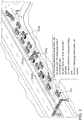
- FIG. 12 shows an exemplary embodiment in which the vehicle 100 is at the end of a traffic jam.
- the device 14 detects a traffic jam by the vehicle 100 being braked from above an upper speed limit value to below a lower speed limit value (2010), being on a freeway, there were no major steering deflections (2008) and other vehicles 3006 activating a hazard warning lights to have.
- the device 14 is designed, for example, to detect the hazard warning lights 3006 of the vehicles in the area via the vehicle-to-vehicle interface 16 (vehicles 3002, recognizable by the radio signals shown schematically) or via a sensor module (vehicles without vehicle-to-vehicle Interface 3004).
- the device 12 and / or the device 14 can be any controller or processor or a programmable hardware component correspond.
- the device 12 and / or the device 14 can also be implemented as software that is programmed for a corresponding hardware component.
- the device 12 and / or the device 14 can be implemented as programmable hardware with correspondingly adapted software.
- Any processors such as digital signal processors (DSPs) can be used. Exemplary embodiments are not restricted to a specific type of processor. There are any processors or even several processors for implementing the device 12 and / or the device 14.
- the device 14 is coupled to the device 12 and the vehicle-to-vehicle interface 16.
- the vehicle-to-vehicle interface 16 corresponds to a direct vehicle-to-vehicle radio interface.
- the vehicle-to-vehicle interface 16 can be designed, for example, for direct data communication with the one or more further vehicles, for example in accordance with IEEE 802.11p.
- the device 10 can, for example, exchange data messages with vehicles in its vicinity via the vehicle-to-vehicle interface 16.
- the data messages can, for example, be transmitted periodically, i.e. data is transmitted with a defined repetition frequency, for example data about a status of the vehicle, for example its speed, position etc.
- the data messages can be transmitted in an event-based manner, that is to say based on an event such as, for example Detection of a traffic jam end or detection of a slippery road.
- Event-based data messages can also be repeated, for example with a defined repetition duration and repetition frequency, for example in order to reach more recipients or to increase the likelihood of receiving the data messages.
- the Cooperative Awareness Messages are an example of periodic data messages
- Decentralized Environmental Notification Message (DENM) is an example of event-based ones Data messages.
- These data messages can, for example, receive current information about the vehicle 100, for example the position and the motion vector, but also, for example, sensor data such as acceleration, speed, or calculated information such as the information about the end of the traffic jam.
- vehicle-to-vehicle interface 16 may enable transmission of data messages over a shared channel, and / or vehicle-to-vehicle interface 16 may allow transmission of data messages without multi-page connection establishment, and / or Vehicle-to-vehicle interface 16 can correspond to a distributor radio interface (also English broadcast) for distributing data messages to a plurality of receivers.
- vehicle-to-vehicle interface 16 may communicate over frequencies in a 5.9 GHz frequency range (eg, between 5.85 GHz and 5.925 GHz).
- a vehicle for example the vehicle 100 or the one or more further vehicles 200, may correspond to a land vehicle, a road vehicle, a car, an off-road vehicle, a motor vehicle, or a truck.
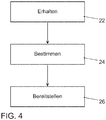
- Fig. 4 11 shows a flow diagram of a method for a vehicle 100.
- the method includes obtaining 22 indicators of an end of a traffic jam.
- the indicators include at least one element of the group of kinetic information of the vehicle 100 or of vehicles in an environment of the vehicle 100 and traffic jam warnings.
- the method further includes determining 24 end of jam information based on the indicators.
- the end of traffic jam information indicates whether the vehicle 100 will reach the end of a traffic jam in the near future.
- the method further includes providing 26 the end of traffic jam information to one or more other vehicles 200 via a vehicle-to-vehicle communication link.
- Embodiments further create a vehicle (100) comprising the device (10).
- a further exemplary embodiment is a computer program for carrying out the method if the computer program runs on a computer, a processor or a programmable hardware component.
- Another exemplary embodiment is also a digital storage medium which is machine or computer readable and which has electronically readable control signals which can interact with a programmable hardware component such that one of the methods described above is carried out.
- exemplary embodiments of the invention can be implemented in hardware or in software.
- the implementation can be done at Using a digital storage medium, for example a floppy disk, a DVD, a Blu-ray disc, a CD, a ROM, a PROM, an EPROM, an EEPROM or a FLASH memory, a hard disk or another magnetic or optical memory are on which electronically readable control signals are stored, which can cooperate with a programmable hardware component or cooperate in such a way that the respective method is carried out.
- a digital storage medium for example a floppy disk, a DVD, a Blu-ray disc, a CD, a ROM, a PROM, an EPROM, an EEPROM or a FLASH memory, a hard disk or another magnetic or optical memory are on which electronically readable control signals are stored, which can cooperate with a programmable hardware component or cooperate in such a way that the respective method is carried out.
- CPU Central Processing Unit
- GPU Graphics Processing Unit
- ASIC Application-Specific Integrated Circuit
- IC integrated Circuit
- SOC System on Chip
- FPGA Field Programmable Gate Array
- the digital storage medium can therefore be machine or computer readable.
- Some exemplary embodiments thus comprise a data carrier which has electronically readable control signals which are able to interact with a programmable computer system or a programmable hardware component in such a way that one of the methods described herein is carried out.
- One embodiment is thus a data carrier (or a digital storage medium or a computer-readable medium) on which the program for performing one of the methods described herein is recorded.
- exemplary embodiments of the present invention can be implemented as a program, firmware, computer program or computer program product with a program code or as data, the program code or the data being or being effective in performing one of the methods when the program is on a processor or programmable hardware component expires.
- the program code or the data can, for example, also be stored on a machine-readable carrier or data carrier.
- the program code or the data can be present, inter alia, as source code, machine code or byte code and as another intermediate code.
- a program can implement one of the methods during its implementation, for example, by reading out memory locations or writing a date or more data into them, which may result in switching operations or other operations in transistor structures, in amplifier structures or in others electrical, optical, magnetic or components operating according to another functional principle. Accordingly, data, values, sensor values or other information can be recorded, determined or measured by a program by reading out a memory location.
- a program can therefore capture, determine or measure sizes, values, measured variables and other information by reading out one or more storage locations, as well as cause, initiate or carry out an action by writing to one or more storage locations and control other devices, machines and components .
Landscapes
- Physics & Mathematics (AREA)
- General Physics & Mathematics (AREA)
- Life Sciences & Earth Sciences (AREA)
- Atmospheric Sciences (AREA)
- Chemical & Material Sciences (AREA)
- Analytical Chemistry (AREA)
- Business, Economics & Management (AREA)
- Emergency Management (AREA)
- Engineering & Computer Science (AREA)
- Computer Networks & Wireless Communication (AREA)
- Signal Processing (AREA)
- Traffic Control Systems (AREA)
Claims (12)
- Dispositif (10) destiné à un véhicule (100), le dispositif (10) comprenant
un moyen (12) conçu pour obtenir des indicateurs concernant la fin d'un embouteillage, dans lequel les indicateurs comprennent au moins un élément du groupe constitué d'informations cinétiques du véhicule (100) ou de véhicules dans un environnement du véhicule (100) et des signalisations d'embouteillage, dans lequel le moyen (12) comprend ou a accès à un capteur vidéo destiné à détecter des feux de détresse de véhicules situés à proximité du véhicule (100) ;
un moyen (14) conçu pour déterminer une informations concernant une fin d'embouteillage sur la base desdits indicateurs, dans lequel l'information concernant la fin d'embouteillage indique si le véhicule (100) atteindra la fin d'un embouteillage dans un avenir proche ; et une interface de véhicule à véhicule (16) conçue pour fournir les informations concernant la fin d'embouteillage à un ou plusieurs autres véhicules (200) par l'intermédiaire d'une liaison de communication de véhicule à véhicule,
dans lequel le moyen (14) est conçu pour déterminer que le véhicule (100) atteindra la fin d'un embouteillage dans un avenir proche,a) si le feu de détresse du véhicule (100) a été activé pendant au moins une durée minimale au cours d'une période de mesure, le feu de détresse de véhicules se trouvant à proximité du véhicule (100) a été activé pendant au moins une durée minimale au cours d'une période de mesure, et l'angle de braquage du véhicule (100) a été sensiblement inférieur à une limite supérieure d'angle de braquage pendant une autre période de mesure, oub) si l'angle de braquage du véhicule (100) a été sensiblement inférieur à une limite supérieure d'angle de braquage pendant une autre période de mesure, le véhicule (100) a été freiné d'une limite supérieure de vitesse à une limite inférieure de vitesse, et les feux de détresse de véhicules situés à proximité du véhicule (100) ont été activés pendant au moins une durée minimale au cours d'une période de mesure. - Dispositif (10) selon la revendication 1, dans lequel les informations cinétiques correspondent à des informations de vitesse, à des informations d'accélération ou à des informations d'angle de braquage.
- Dispositif selon l'une des revendications précédentes, dans lequel les signalisations d'embouteillage comprennent au moins un élément du groupe constitué de feux de détresse du véhicule (100), de feux de détresse de véhicules situés à proximité du véhicule (100), d'informations concernant un véhicule de sécurité, d'informations concernant une fin d'embouteillage d'un autre véhicule ou des messages de signalisation d'embouteillage.
- Dispositif (10) selon l'une des revendications précédentes, dans lequel le moyen (12) est conçu pour recevoir les signalisations d'embouteillage par l'intermédiaire d'une liaison de communication de véhicule à infrastructure, d'une liaison de communication de véhicule à véhicule, par l'intermédiaire d'un système de communication mobile, ou par l'intermédiaire d'un module de capteur.
- Dispositif (10) selon la revendication 4, dans lequel le dispositif (12) est conçu pour recevoir les signalisations d'embouteillage par l'intermédiaire d'un Message de Notification Environnemental Décentralisé, DENM, par l'intermédiaire de l'interface de véhicule à véhicule (16).
- Dispositif selon l'une des revendications précédentes, dans lequel la durée minimale est comprise entre 2 et 5 secondes,
dans lequel la période de mesure a une durée de 5 s à 30 s,
dans lequel l'autre période de mesure a une durée comprise entre 30 s et 90 s,
dans lequel la limite supérieure de vitesse se situe entre 60 km/h et 100 km/h,
et/ou dans lequel la limite inférieure de vitesse se situe entre 20 km/h et 40 km/h. - Dispositif (10) selon l'une des revendications précédentes, dans lequel l'interface de véhicule à véhicule (16) est en outre conçue pour la communication de véhicule à infrastructure.
- Dispositif (10) selon la revendication 7, dans lequel le dispositif (14) est conçu pour fournir en outre une information concernant la fin d'embouteillage à une infrastructure de trafic par l'intermédiaire de l'interface de véhicule à véhicule (16).
- Dispositif (10) selon la revendication 1, dans lequel le dispositif (14) est conçu pour fournir l'information concernant la fin d'embouteillage sous la forme d'un Message de Vigilance Coopérative, CAM, par l'intermédiaire de l'interface de véhicule à véhicule (16) .
- Dispositif (10) selon l'une des revendications précédentes, dans lequel le dispositif (12) comprend un module de capteur et/ou une interface d'entrée, et/ou dans lequel le moyen (14) comprend un module de calcul et/ou correspond à un module de calcul.
- Procédé destiné à un véhicule (100) comprenant l'obtention (22) d'indicateurs concernant la fin d'un embouteillage, dans lequel les indicateurs comprennent au moins un élément du groupe constitué d'informations cinétiques du véhicule (100) ou de véhicules dans un environnement du véhicule (100) et des signalisations d'embouteillage ;
la détection de feux de détresse de véhicules situés à proximité du véhicule (100) par l'intermédiaire d'un capteur vidéo ;
la détermination (24) d'une information concernant une fin d'embouteillage sur la base desdits indicateurs, dans lequel l'information concernant la fin d'embouteillage indique si le véhicule (100) atteindra la fin d'un embouteillage dans un avenir proche, dans lequel il est déterminé que le véhicule (100) atteindra la fin d'un embouteillage dans un avenir proche,a) si le feu de détresse du véhicule (100) a été activé pendant au moins une durée minimale au cours d'une période de mesure, le feu de détresse de véhicules se trouvant à proximité du véhicule (100) a été activé pendant au moins une durée minimale au cours d'une période de mesure, et l'angle de braquage du véhicule (100) a été sensiblement inférieur à une limite supérieure d'angle de braquage pendant une autre période de mesure, oub) si l'angle de braquage du véhicule (100) a été sensiblement inférieur à une limite supérieure d'angle de braquage pendant une autre période de mesure, le véhicule (100) a été freiné d'une limite supérieure de vitesse à une limite inférieure de vitesse, et les feux de détresse de véhicules situés à proximité du véhicule (100) ont été activés pendant au moins une période minimale au cours d'une période de mesure ; etla fourniture (26) de l'information concernant la fin d'embouteillage à un ou plusieurs autres véhicules (200) par l'intermédiaire d'une liaison de communication de véhicule à véhicule. - Programme comprenant un code de programme permettant de mettre en œuvre le procédé selon la revendication 11 lorsque le code de programme est exécuté sur un ordinateur, un processeur, un module de commande ou un composant matériel programmable.
Applications Claiming Priority (2)
| Application Number | Priority Date | Filing Date | Title |
|---|---|---|---|
| DE102015217792.0A DE102015217792B4 (de) | 2015-09-17 | 2015-09-17 | Vorrichtung, Verfahren und Computerprogramm zum Bereitstellen von Information über ein Stauende über eine Fahrzeug-zu-Fahrzeug-Schnittstelle |
| PCT/EP2016/061915 WO2017045779A1 (fr) | 2015-09-17 | 2016-05-26 | Dispositif, procédé et programme d'ordinateur pour fournir des informations concernant la fin d'un embouteillage par une interface de véhicule à véhicule |
Publications (2)
| Publication Number | Publication Date |
|---|---|
| EP3350792A1 EP3350792A1 (fr) | 2018-07-25 |
| EP3350792B1 true EP3350792B1 (fr) | 2020-07-29 |
Family
ID=56084045
Family Applications (1)
| Application Number | Title | Priority Date | Filing Date |
|---|---|---|---|
| EP16725524.9A Active EP3350792B1 (fr) | 2015-09-17 | 2016-05-26 | Dispositif, procédé et programme d'ordinateur pour fournir des informations concernant la fin d'un embouteillage par une interface de véhicule à véhicule |
Country Status (6)
| Country | Link |
|---|---|
| US (1) | US10388152B2 (fr) |
| EP (1) | EP3350792B1 (fr) |
| KR (1) | KR102099745B1 (fr) |
| CN (1) | CN108028012B (fr) |
| DE (1) | DE102015217792B4 (fr) |
| WO (1) | WO2017045779A1 (fr) |
Families Citing this family (17)
| Publication number | Priority date | Publication date | Assignee | Title |
|---|---|---|---|---|
| DE102015217792B4 (de) * | 2015-09-17 | 2022-07-14 | Volkswagen Aktiengesellschaft | Vorrichtung, Verfahren und Computerprogramm zum Bereitstellen von Information über ein Stauende über eine Fahrzeug-zu-Fahrzeug-Schnittstelle |
| US11520460B1 (en) * | 2017-02-06 | 2022-12-06 | United Services Automobile Association (Usaa) | System on board an on-road vehicle for identifying, tagging and reporting hazardous drivers in the vicinity of a host vehicle |
| CN108810044A (zh) * | 2017-04-28 | 2018-11-13 | 南宁富桂精密工业有限公司 | 车辆通信传输方法及系统 |
| JP6567602B2 (ja) | 2017-06-22 | 2019-08-28 | 株式会社東芝 | 情報処理装置、情報処理システム、および情報処理方法 |
| US10757485B2 (en) | 2017-08-25 | 2020-08-25 | Honda Motor Co., Ltd. | System and method for synchronized vehicle sensor data acquisition processing using vehicular communication |
| US10908607B2 (en) * | 2017-11-30 | 2021-02-02 | Ford Global Technologies, Llc | Enhanced traffic jam assist |
| US11163317B2 (en) | 2018-07-31 | 2021-11-02 | Honda Motor Co., Ltd. | System and method for shared autonomy through cooperative sensing |
| US11181929B2 (en) | 2018-07-31 | 2021-11-23 | Honda Motor Co., Ltd. | System and method for shared autonomy through cooperative sensing |
| CN109410582B (zh) * | 2018-11-27 | 2021-11-16 | 易念科技(深圳)有限公司 | 交通状况分析方法及终端设备 |
| GB2622490B (en) | 2019-02-14 | 2024-06-19 | Mobileye Vision Technologies Ltd | Systems and methods for vehicle navigation |
| WO2020256238A1 (fr) * | 2019-06-18 | 2020-12-24 | 엘지전자 주식회사 | Procédé de communication entre un véhicule et un réseau dans un système de communication sans fil, et véhicule et réseau associés |
| CN111681417B (zh) * | 2020-05-14 | 2022-01-25 | 阿波罗智联(北京)科技有限公司 | 交通路口渠化调整方法和装置 |
| CN111640321B (zh) * | 2020-05-29 | 2021-11-12 | 深圳市元征科技股份有限公司 | 一种基于边缘计算的拥堵缓解方法及相关设备 |
| US20210398236A1 (en) | 2020-06-19 | 2021-12-23 | Abhijit R. Nesarikar | Remote Monitoring with Artificial Intelligence and Awareness Machines |
| KR102689239B1 (ko) | 2021-11-24 | 2024-07-26 | 동서대학교 산학협력단 | 인공지능 기술기반의 사거리 교통체증 예측 시스템 및 방법 |
| JP7812695B2 (ja) * | 2022-03-04 | 2026-02-10 | オムロン株式会社 | 交通状況推定装置、交通状況推定方法、および交通状況推定プログラム |
| US12451005B2 (en) | 2023-03-07 | 2025-10-21 | Toyota Motor Engineering & Manufacturing North America, Inc. | Systems, methods, and non-transitory computer-readable mediums for estimating a position of a tail of a vehicle queue |
Citations (2)
| Publication number | Priority date | Publication date | Assignee | Title |
|---|---|---|---|---|
| DE19909276A1 (de) * | 1999-03-03 | 2000-09-07 | Bosch Gmbh Robert | Verfahren und Einrichtung zur Warnung vor Staus und zur Übertragung von Nachrichten zwischen Fahrzeugen |
| DE102012024166A1 (de) * | 2012-12-08 | 2013-07-11 | Daimler Ag | Warnen eines Fahrers eines Kraftfahrzeugs vor einer Staufront mit Hilfe einer korrigierten Prognosefunktion |
Family Cites Families (21)
| Publication number | Priority date | Publication date | Assignee | Title |
|---|---|---|---|---|
| DE10103392A1 (de) * | 2001-01-26 | 2002-08-08 | Bosch Gmbh Robert | Verfahren zur automatischen Stauwarnung |
| DE10343683A1 (de) * | 2003-09-20 | 2005-04-21 | Daimler Chrysler Ag | Informationssystem für Kraftfahrzeuge |
| CN101151860A (zh) * | 2005-04-04 | 2008-03-26 | 皇家飞利浦电子股份有限公司 | 用于传输消息的方法和采用相应方法的机动车辆 |
| JP2007011557A (ja) * | 2005-06-29 | 2007-01-18 | Nissan Motor Co Ltd | 渋滞検出システム、車載情報端末、および情報センター、および渋滞検出方法 |
| JP5015849B2 (ja) * | 2008-04-11 | 2012-08-29 | トヨタ自動車株式会社 | 逆走警告装置、逆走警告方法 |
| DE102009047097A1 (de) * | 2009-11-25 | 2011-05-26 | Robert Bosch Gmbh | Verfahren zum Bestimmen eines Stauendes |
| KR20130056732A (ko) * | 2011-11-22 | 2013-05-30 | 한국전자통신연구원 | 차량간 통신 방법 및 그 장치 |
| JP5857389B2 (ja) * | 2012-01-10 | 2016-02-10 | 住友電工システムソリューション株式会社 | 交通指標推定装置及びコンピュータプログラム |
| DE102012204098A1 (de) * | 2012-03-15 | 2013-09-19 | Continental Automotive Gmbh | Verfahren zur Stauerkennung mittels einer drahtlosen Fahrzeug-zu-Fahrzeug-Kommunikation |
| DE102012204542A1 (de) * | 2012-03-21 | 2013-09-26 | Bayerische Motoren Werke Aktiengesellschaft | Verfahren und Vorrichtung zum Ermitteln eines Verkehrszustandes |
| DE102012210059A1 (de) * | 2012-06-14 | 2013-12-19 | Continental Automotive Gmbh | Verfahren zur Verifikation und/oder Vorverarbeitung von Datenpaketen und zur Durchführung des Verfahrens eingerichtetes Steuergerät |
| KR20140049330A (ko) * | 2012-10-17 | 2014-04-25 | 현대모비스 주식회사 | 우회 도로 안내 방법 및 시스템 |
| KR101466763B1 (ko) * | 2012-12-27 | 2014-12-09 | 세종대학교산학협력단 | 차량 내 컴퓨팅 장치 및 이를 이용한 무선 네트워크 통신 수행방법 |
| JP5974920B2 (ja) * | 2013-02-08 | 2016-08-23 | 住友電気工業株式会社 | 情報通信装置 |
| DE102013014872A1 (de) * | 2013-09-06 | 2015-03-12 | Audi Ag | Verfahren, Auswertesystem und kooperatives Fahrzeug zum Prognostizieren von mindestens einem Stauparameter |
| CN103745609A (zh) * | 2014-02-12 | 2014-04-23 | 北京车网互联科技股份有限公司 | 基于近距离通信协议的车辆报警终端 |
| US9569960B2 (en) * | 2015-02-24 | 2017-02-14 | Here Global B.V. | Method and apparatus for providing traffic jam detection and prediction |
| US20170367100A1 (en) * | 2015-03-05 | 2017-12-21 | Telefonaktiebolaget Lm Ericsson (Publ) | Interference behavior detection |
| CN104809874B (zh) * | 2015-04-15 | 2017-03-08 | 东软集团股份有限公司 | 一种交通事件检测方法和装置 |
| DE102015217792B4 (de) * | 2015-09-17 | 2022-07-14 | Volkswagen Aktiengesellschaft | Vorrichtung, Verfahren und Computerprogramm zum Bereitstellen von Information über ein Stauende über eine Fahrzeug-zu-Fahrzeug-Schnittstelle |
| US10747804B2 (en) * | 2016-10-04 | 2020-08-18 | International Business Machines Corporation | Focus-assisted intelligent personal assistant query response determination |
-
2015
- 2015-09-17 DE DE102015217792.0A patent/DE102015217792B4/de active Active
-
2016
- 2016-05-26 EP EP16725524.9A patent/EP3350792B1/fr active Active
- 2016-05-26 US US15/758,618 patent/US10388152B2/en active Active
- 2016-05-26 CN CN201680053194.9A patent/CN108028012B/zh active Active
- 2016-05-26 WO PCT/EP2016/061915 patent/WO2017045779A1/fr not_active Ceased
- 2016-05-26 KR KR1020187008212A patent/KR102099745B1/ko active Active
Patent Citations (2)
| Publication number | Priority date | Publication date | Assignee | Title |
|---|---|---|---|---|
| DE19909276A1 (de) * | 1999-03-03 | 2000-09-07 | Bosch Gmbh Robert | Verfahren und Einrichtung zur Warnung vor Staus und zur Übertragung von Nachrichten zwischen Fahrzeugen |
| DE102012024166A1 (de) * | 2012-12-08 | 2013-07-11 | Daimler Ag | Warnen eines Fahrers eines Kraftfahrzeugs vor einer Staufront mit Hilfe einer korrigierten Prognosefunktion |
Also Published As
| Publication number | Publication date |
|---|---|
| WO2017045779A1 (fr) | 2017-03-23 |
| EP3350792A1 (fr) | 2018-07-25 |
| KR20180043336A (ko) | 2018-04-27 |
| US10388152B2 (en) | 2019-08-20 |
| DE102015217792B4 (de) | 2022-07-14 |
| DE102015217792A1 (de) | 2017-03-23 |
| US20180247527A1 (en) | 2018-08-30 |
| CN108028012A (zh) | 2018-05-11 |
| CN108028012B (zh) | 2021-04-23 |
| KR102099745B1 (ko) | 2020-04-10 |
Similar Documents
| Publication | Publication Date | Title |
|---|---|---|
| EP3350792B1 (fr) | Dispositif, procédé et programme d'ordinateur pour fournir des informations concernant la fin d'un embouteillage par une interface de véhicule à véhicule | |
| EP3338252B1 (fr) | Dispositifs, procédé et logiciel pour produire des informations sur une intention de conduite probable | |
| DE102019108083B4 (de) | Verkehrszeichenerkennung für vernetzte Fahrzeuge | |
| EP3350793A1 (fr) | Dispositif, procédé et programme d'ordinateur pour fournir des informations d'embouteillage par une interface de véhicule à véhicule | |
| EP3371022B1 (fr) | Procédés et systèmes de régulation pour la détermination d'un intervalle entre deux véhicules pour un changement de file d'un véhicule | |
| EP2732603B1 (fr) | Procédé et système de communication pour la réception de données lors d'une communication sans fil véhicule à environnement | |
| DE102016217645B4 (de) | Verfahren zum Bereitstellen von Information über eine voraussichtliche Fahrintention eines Fahrzeugs | |
| EP3371799B1 (fr) | Procédé et système de communication de véhicule pour déterminer une intention de conduite pour un véhicule | |
| DE102013019112B4 (de) | Kraftfahrzeug mit Spurverlaufserkennung für die Fahrerassistenz | |
| DE102016211750B4 (de) | Verfahren zur spektral-effizienten Ermittlung von kollektiver Umfeld-Information für das kooperative und/oder autonome Fahren, sowie berichtendes Fahrzeug und weiteres Fahrzeug zur Verwendung bei dem Verfahren | |
| DE102019101847B4 (de) | Genauigkeitssystem für vernetzte Fahrzeuge | |
| EP2862405B1 (fr) | Procédé de vérification et/ou de préparation de paquets de données et appareil de commande mis au point pour la mise en oeuvre dudit procédé | |
| EP4361995A2 (fr) | Procédé et dispositif de fonctionnement d'un appareil de surveillance du trafic, appareil de surveillance du trafic et système de surveillance du trafic | |
| DE102013222586A1 (de) | Verfahren zur Vermeidung einer Kollision eines Kraftfahrzeugs mit einem falschfahrenden Fahrzeug und Steuer- und Erfassungseinrichtung für ein Kraftfahrzeug zur Vermeidung einer Kollision des Kraftfahrzeugs mit einem falschfahrenden Fahrzeug | |
| DE102010038640A1 (de) | Vorrichtung und Verfahren zur C2X-Kommunikation | |
| DE102012007367A1 (de) | Verfahren zur Bestimmung der Verkehrs-/Wetterinformationen für eine Anwendung in den Navigations- und Fahrerassistenzsystemen eines Fahrzeugs | |
| WO2017054956A1 (fr) | Procédé et système pour déterminer des usagers de la route présentant un potentiel d'interaction | |
| DE102013107738B4 (de) | Verfahren zum Betrieb eines Fahrzeugsystems, Fahrzeugsystem, Computerprogramm und Fahrzeugkommunikationseinheit eines Fahrzeugsystems | |
| DE102013224167A1 (de) | Verfahren und Steuer- und Erfassungseinrichtung zum Plausibilisieren einer Falschfahrt eines Kraftfahrzeugs | |
| DE102019218028B4 (de) | Steuereinheit für ein Fahrzeug, Fahrzeug, Netzwerkserver und Intelligente Infrastruktureinheit | |
| DE102021132736A1 (de) | Controller area network-nachrichten in einem autonomen fahrzeug | |
| DE102012207864A1 (de) | Verfahren zum Reduzieren einer Staugefahr | |
| EP4014062B1 (fr) | Procédé pour fournir une carte d'état d'environnement locale instantanée pour un véhicule à moteur et véhicule à moteur pour mettre en oeuvre ledit procédé | |
| DE102013007171A1 (de) | Verkehrsinformationssystem | |
| DE102007027651A1 (de) | Sicherheitssystem für ein Kraftfahrzeug und Verfahren zum Betreiben des Sicherheitssystems, ortfeste Kommunikationsvorrichtung und Verfahren zum Betreiben der ortfesten Kommunikationsvorrichtung |
Legal Events
| Date | Code | Title | Description |
|---|---|---|---|
| STAA | Information on the status of an ep patent application or granted ep patent |
Free format text: STATUS: THE INTERNATIONAL PUBLICATION HAS BEEN MADE |
|
| PUAI | Public reference made under article 153(3) epc to a published international application that has entered the european phase |
Free format text: ORIGINAL CODE: 0009012 |
|
| STAA | Information on the status of an ep patent application or granted ep patent |
Free format text: STATUS: REQUEST FOR EXAMINATION WAS MADE |
|
| 17P | Request for examination filed |
Effective date: 20180417 |
|
| AK | Designated contracting states |
Kind code of ref document: A1 Designated state(s): AL AT BE BG CH CY CZ DE DK EE ES FI FR GB GR HR HU IE IS IT LI LT LU LV MC MK MT NL NO PL PT RO RS SE SI SK SM TR |
|
| AX | Request for extension of the european patent |
Extension state: BA ME |
|
| STAA | Information on the status of an ep patent application or granted ep patent |
Free format text: STATUS: EXAMINATION IS IN PROGRESS |
|
| 17Q | First examination report despatched |
Effective date: 20181122 |
|
| DAV | Request for validation of the european patent (deleted) | ||
| DAX | Request for extension of the european patent (deleted) | ||
| GRAP | Despatch of communication of intention to grant a patent |
Free format text: ORIGINAL CODE: EPIDOSNIGR1 |
|
| STAA | Information on the status of an ep patent application or granted ep patent |
Free format text: STATUS: GRANT OF PATENT IS INTENDED |
|
| INTG | Intention to grant announced |
Effective date: 20200109 |
|
| GRAJ | Information related to disapproval of communication of intention to grant by the applicant or resumption of examination proceedings by the epo deleted |
Free format text: ORIGINAL CODE: EPIDOSDIGR1 |
|
| STAA | Information on the status of an ep patent application or granted ep patent |
Free format text: STATUS: EXAMINATION IS IN PROGRESS |
|
| INTC | Intention to grant announced (deleted) | ||
| GRAP | Despatch of communication of intention to grant a patent |
Free format text: ORIGINAL CODE: EPIDOSNIGR1 |
|
| STAA | Information on the status of an ep patent application or granted ep patent |
Free format text: STATUS: GRANT OF PATENT IS INTENDED |
|
| GRAS | Grant fee paid |
Free format text: ORIGINAL CODE: EPIDOSNIGR3 |
|
| INTG | Intention to grant announced |
Effective date: 20200602 |
|
| GRAA | (expected) grant |
Free format text: ORIGINAL CODE: 0009210 |
|
| STAA | Information on the status of an ep patent application or granted ep patent |
Free format text: STATUS: THE PATENT HAS BEEN GRANTED |
|
| AK | Designated contracting states |
Kind code of ref document: B1 Designated state(s): AL AT BE BG CH CY CZ DE DK EE ES FI FR GB GR HR HU IE IS IT LI LT LU LV MC MK MT NL NO PL PT RO RS SE SI SK SM TR |
|
| REG | Reference to a national code |
Ref country code: CH Ref legal event code: EP |
|
| REG | Reference to a national code |
Ref country code: DE Ref legal event code: R096 Ref document number: 502016010661 Country of ref document: DE |
|
| REG | Reference to a national code |
Ref country code: AT Ref legal event code: REF Ref document number: 1296709 Country of ref document: AT Kind code of ref document: T Effective date: 20200815 |
|
| REG | Reference to a national code |
Ref country code: IE Ref legal event code: FG4D Free format text: LANGUAGE OF EP DOCUMENT: GERMAN |
|
| REG | Reference to a national code |
Ref country code: LT Ref legal event code: MG4D |
|
| REG | Reference to a national code |
Ref country code: NL Ref legal event code: MP Effective date: 20200729 |
|
| PG25 | Lapsed in a contracting state [announced via postgrant information from national office to epo] |
Ref country code: BG Free format text: LAPSE BECAUSE OF FAILURE TO SUBMIT A TRANSLATION OF THE DESCRIPTION OR TO PAY THE FEE WITHIN THE PRESCRIBED TIME-LIMIT Effective date: 20201029 Ref country code: SE Free format text: LAPSE BECAUSE OF FAILURE TO SUBMIT A TRANSLATION OF THE DESCRIPTION OR TO PAY THE FEE WITHIN THE PRESCRIBED TIME-LIMIT Effective date: 20200729 Ref country code: ES Free format text: LAPSE BECAUSE OF FAILURE TO SUBMIT A TRANSLATION OF THE DESCRIPTION OR TO PAY THE FEE WITHIN THE PRESCRIBED TIME-LIMIT Effective date: 20200729 Ref country code: LT Free format text: LAPSE BECAUSE OF FAILURE TO SUBMIT A TRANSLATION OF THE DESCRIPTION OR TO PAY THE FEE WITHIN THE PRESCRIBED TIME-LIMIT Effective date: 20200729 Ref country code: GR Free format text: LAPSE BECAUSE OF FAILURE TO SUBMIT A TRANSLATION OF THE DESCRIPTION OR TO PAY THE FEE WITHIN THE PRESCRIBED TIME-LIMIT Effective date: 20201030 Ref country code: HR Free format text: LAPSE BECAUSE OF FAILURE TO SUBMIT A TRANSLATION OF THE DESCRIPTION OR TO PAY THE FEE WITHIN THE PRESCRIBED TIME-LIMIT Effective date: 20200729 Ref country code: PT Free format text: LAPSE BECAUSE OF FAILURE TO SUBMIT A TRANSLATION OF THE DESCRIPTION OR TO PAY THE FEE WITHIN THE PRESCRIBED TIME-LIMIT Effective date: 20201130 Ref country code: FI Free format text: LAPSE BECAUSE OF FAILURE TO SUBMIT A TRANSLATION OF THE DESCRIPTION OR TO PAY THE FEE WITHIN THE PRESCRIBED TIME-LIMIT Effective date: 20200729 Ref country code: NO Free format text: LAPSE BECAUSE OF FAILURE TO SUBMIT A TRANSLATION OF THE DESCRIPTION OR TO PAY THE FEE WITHIN THE PRESCRIBED TIME-LIMIT Effective date: 20201029 |
|
| PG25 | Lapsed in a contracting state [announced via postgrant information from national office to epo] |
Ref country code: RS Free format text: LAPSE BECAUSE OF FAILURE TO SUBMIT A TRANSLATION OF THE DESCRIPTION OR TO PAY THE FEE WITHIN THE PRESCRIBED TIME-LIMIT Effective date: 20200729 Ref country code: PL Free format text: LAPSE BECAUSE OF FAILURE TO SUBMIT A TRANSLATION OF THE DESCRIPTION OR TO PAY THE FEE WITHIN THE PRESCRIBED TIME-LIMIT Effective date: 20200729 Ref country code: LV Free format text: LAPSE BECAUSE OF FAILURE TO SUBMIT A TRANSLATION OF THE DESCRIPTION OR TO PAY THE FEE WITHIN THE PRESCRIBED TIME-LIMIT Effective date: 20200729 Ref country code: IS Free format text: LAPSE BECAUSE OF FAILURE TO SUBMIT A TRANSLATION OF THE DESCRIPTION OR TO PAY THE FEE WITHIN THE PRESCRIBED TIME-LIMIT Effective date: 20201129 |
|
| PG25 | Lapsed in a contracting state [announced via postgrant information from national office to epo] |
Ref country code: NL Free format text: LAPSE BECAUSE OF FAILURE TO SUBMIT A TRANSLATION OF THE DESCRIPTION OR TO PAY THE FEE WITHIN THE PRESCRIBED TIME-LIMIT Effective date: 20200729 |
|
| PG25 | Lapsed in a contracting state [announced via postgrant information from national office to epo] |
Ref country code: IT Free format text: LAPSE BECAUSE OF FAILURE TO SUBMIT A TRANSLATION OF THE DESCRIPTION OR TO PAY THE FEE WITHIN THE PRESCRIBED TIME-LIMIT Effective date: 20200729 Ref country code: EE Free format text: LAPSE BECAUSE OF FAILURE TO SUBMIT A TRANSLATION OF THE DESCRIPTION OR TO PAY THE FEE WITHIN THE PRESCRIBED TIME-LIMIT Effective date: 20200729 Ref country code: CZ Free format text: LAPSE BECAUSE OF FAILURE TO SUBMIT A TRANSLATION OF THE DESCRIPTION OR TO PAY THE FEE WITHIN THE PRESCRIBED TIME-LIMIT Effective date: 20200729 Ref country code: DK Free format text: LAPSE BECAUSE OF FAILURE TO SUBMIT A TRANSLATION OF THE DESCRIPTION OR TO PAY THE FEE WITHIN THE PRESCRIBED TIME-LIMIT Effective date: 20200729 Ref country code: RO Free format text: LAPSE BECAUSE OF FAILURE TO SUBMIT A TRANSLATION OF THE DESCRIPTION OR TO PAY THE FEE WITHIN THE PRESCRIBED TIME-LIMIT Effective date: 20200729 Ref country code: SM Free format text: LAPSE BECAUSE OF FAILURE TO SUBMIT A TRANSLATION OF THE DESCRIPTION OR TO PAY THE FEE WITHIN THE PRESCRIBED TIME-LIMIT Effective date: 20200729 |
|
| REG | Reference to a national code |
Ref country code: DE Ref legal event code: R097 Ref document number: 502016010661 Country of ref document: DE |
|
| PG25 | Lapsed in a contracting state [announced via postgrant information from national office to epo] |
Ref country code: AL Free format text: LAPSE BECAUSE OF FAILURE TO SUBMIT A TRANSLATION OF THE DESCRIPTION OR TO PAY THE FEE WITHIN THE PRESCRIBED TIME-LIMIT Effective date: 20200729 |
|
| PLBE | No opposition filed within time limit |
Free format text: ORIGINAL CODE: 0009261 |
|
| STAA | Information on the status of an ep patent application or granted ep patent |
Free format text: STATUS: NO OPPOSITION FILED WITHIN TIME LIMIT |
|
| PG25 | Lapsed in a contracting state [announced via postgrant information from national office to epo] |
Ref country code: SK Free format text: LAPSE BECAUSE OF FAILURE TO SUBMIT A TRANSLATION OF THE DESCRIPTION OR TO PAY THE FEE WITHIN THE PRESCRIBED TIME-LIMIT Effective date: 20200729 |
|
| 26N | No opposition filed |
Effective date: 20210430 |
|
| PG25 | Lapsed in a contracting state [announced via postgrant information from national office to epo] |
Ref country code: SI Free format text: LAPSE BECAUSE OF FAILURE TO SUBMIT A TRANSLATION OF THE DESCRIPTION OR TO PAY THE FEE WITHIN THE PRESCRIBED TIME-LIMIT Effective date: 20200729 |
|
| REG | Reference to a national code |
Ref country code: CH Ref legal event code: PL |
|
| GBPC | Gb: european patent ceased through non-payment of renewal fee |
Effective date: 20210526 |
|
| PG25 | Lapsed in a contracting state [announced via postgrant information from national office to epo] |
Ref country code: LU Free format text: LAPSE BECAUSE OF NON-PAYMENT OF DUE FEES Effective date: 20210526 Ref country code: MC Free format text: LAPSE BECAUSE OF FAILURE TO SUBMIT A TRANSLATION OF THE DESCRIPTION OR TO PAY THE FEE WITHIN THE PRESCRIBED TIME-LIMIT Effective date: 20200729 Ref country code: LI Free format text: LAPSE BECAUSE OF NON-PAYMENT OF DUE FEES Effective date: 20210531 Ref country code: CH Free format text: LAPSE BECAUSE OF NON-PAYMENT OF DUE FEES Effective date: 20210531 |
|
| REG | Reference to a national code |
Ref country code: BE Ref legal event code: MM Effective date: 20210531 |
|
| PG25 | Lapsed in a contracting state [announced via postgrant information from national office to epo] |
Ref country code: IE Free format text: LAPSE BECAUSE OF NON-PAYMENT OF DUE FEES Effective date: 20210526 Ref country code: GB Free format text: LAPSE BECAUSE OF NON-PAYMENT OF DUE FEES Effective date: 20210526 |
|
| PG25 | Lapsed in a contracting state [announced via postgrant information from national office to epo] |
Ref country code: FR Free format text: LAPSE BECAUSE OF NON-PAYMENT OF DUE FEES Effective date: 20210531 |
|
| REG | Reference to a national code |
Ref country code: AT Ref legal event code: MM01 Ref document number: 1296709 Country of ref document: AT Kind code of ref document: T Effective date: 20210526 |
|
| PG25 | Lapsed in a contracting state [announced via postgrant information from national office to epo] |
Ref country code: BE Free format text: LAPSE BECAUSE OF NON-PAYMENT OF DUE FEES Effective date: 20210531 |
|
| PG25 | Lapsed in a contracting state [announced via postgrant information from national office to epo] |
Ref country code: AT Free format text: LAPSE BECAUSE OF NON-PAYMENT OF DUE FEES Effective date: 20210526 |
|
| P01 | Opt-out of the competence of the unified patent court (upc) registered |
Effective date: 20230523 |
|
| PG25 | Lapsed in a contracting state [announced via postgrant information from national office to epo] |
Ref country code: CY Free format text: LAPSE BECAUSE OF FAILURE TO SUBMIT A TRANSLATION OF THE DESCRIPTION OR TO PAY THE FEE WITHIN THE PRESCRIBED TIME-LIMIT Effective date: 20200729 |
|
| PG25 | Lapsed in a contracting state [announced via postgrant information from national office to epo] |
Ref country code: HU Free format text: LAPSE BECAUSE OF FAILURE TO SUBMIT A TRANSLATION OF THE DESCRIPTION OR TO PAY THE FEE WITHIN THE PRESCRIBED TIME-LIMIT; INVALID AB INITIO Effective date: 20160526 |
|
| PG25 | Lapsed in a contracting state [announced via postgrant information from national office to epo] |
Ref country code: MK Free format text: LAPSE BECAUSE OF FAILURE TO SUBMIT A TRANSLATION OF THE DESCRIPTION OR TO PAY THE FEE WITHIN THE PRESCRIBED TIME-LIMIT Effective date: 20200729 |
|
| PG25 | Lapsed in a contracting state [announced via postgrant information from national office to epo] |
Ref country code: MT Free format text: LAPSE BECAUSE OF FAILURE TO SUBMIT A TRANSLATION OF THE DESCRIPTION OR TO PAY THE FEE WITHIN THE PRESCRIBED TIME-LIMIT Effective date: 20200729 |
|
| PGFP | Annual fee paid to national office [announced via postgrant information from national office to epo] |
Ref country code: DE Payment date: 20250531 Year of fee payment: 10 |
|
| PG25 | Lapsed in a contracting state [announced via postgrant information from national office to epo] |
Ref country code: TR Free format text: LAPSE BECAUSE OF FAILURE TO SUBMIT A TRANSLATION OF THE DESCRIPTION OR TO PAY THE FEE WITHIN THE PRESCRIBED TIME-LIMIT Effective date: 20200729 |