EP3352132A1 - Bildverarbeitungsverfahren und bildverarbeitungsvorrichtung - Google Patents
Bildverarbeitungsverfahren und bildverarbeitungsvorrichtung Download PDFInfo
- Publication number
- EP3352132A1 EP3352132A1 EP16858624.6A EP16858624A EP3352132A1 EP 3352132 A1 EP3352132 A1 EP 3352132A1 EP 16858624 A EP16858624 A EP 16858624A EP 3352132 A1 EP3352132 A1 EP 3352132A1
- Authority
- EP
- European Patent Office
- Prior art keywords
- processing unit
- memory
- image
- partitioning
- classification
- Prior art date
- Legal status (The legal status is an assumption and is not a legal conclusion. Google has not performed a legal analysis and makes no representation as to the accuracy of the status listed.)
- Granted
Links
Images





Classifications
-
- G—PHYSICS
- G06—COMPUTING OR CALCULATING; COUNTING
- G06T—IMAGE DATA PROCESSING OR GENERATION, IN GENERAL
- G06T1/00—General purpose image data processing
- G06T1/60—Memory management
-
- G—PHYSICS
- G06—COMPUTING OR CALCULATING; COUNTING
- G06F—ELECTRIC DIGITAL DATA PROCESSING
- G06F18/00—Pattern recognition
- G06F18/20—Analysing
- G06F18/24—Classification techniques
- G06F18/243—Classification techniques relating to the number of classes
- G06F18/24317—Piecewise classification, i.e. whereby each classification requires several discriminant rules
-
- G—PHYSICS
- G06—COMPUTING OR CALCULATING; COUNTING
- G06T—IMAGE DATA PROCESSING OR GENERATION, IN GENERAL
- G06T1/00—General purpose image data processing
- G06T1/20—Processor architectures; Processor configuration, e.g. pipelining
-
- G—PHYSICS
- G06—COMPUTING OR CALCULATING; COUNTING
- G06V—IMAGE OR VIDEO RECOGNITION OR UNDERSTANDING
- G06V10/00—Arrangements for image or video recognition or understanding
- G06V10/70—Arrangements for image or video recognition or understanding using pattern recognition or machine learning
- G06V10/764—Arrangements for image or video recognition or understanding using pattern recognition or machine learning using classification, e.g. of video objects
-
- G—PHYSICS
- G06—COMPUTING OR CALCULATING; COUNTING
- G06V—IMAGE OR VIDEO RECOGNITION OR UNDERSTANDING
- G06V10/00—Arrangements for image or video recognition or understanding
- G06V10/94—Hardware or software architectures specially adapted for image or video understanding
- G06V10/955—Hardware or software architectures specially adapted for image or video understanding using specific electronic processors
-
- G—PHYSICS
- G06—COMPUTING OR CALCULATING; COUNTING
- G06V—IMAGE OR VIDEO RECOGNITION OR UNDERSTANDING
- G06V10/00—Arrangements for image or video recognition or understanding
- G06V10/96—Management of image or video recognition tasks
-
- G—PHYSICS
- G06—COMPUTING OR CALCULATING; COUNTING
- G06T—IMAGE DATA PROCESSING OR GENERATION, IN GENERAL
- G06T2207/00—Indexing scheme for image analysis or image enhancement
- G06T2207/20—Special algorithmic details
- G06T2207/20016—Hierarchical, coarse-to-fine, multiscale or multiresolution image processing; Pyramid transform
-
- G—PHYSICS
- G06—COMPUTING OR CALCULATING; COUNTING
- G06T—IMAGE DATA PROCESSING OR GENERATION, IN GENERAL
- G06T2207/00—Indexing scheme for image analysis or image enhancement
- G06T2207/20—Special algorithmic details
- G06T2207/20084—Artificial neural networks [ANN]
Definitions
- the present invention relates to the image processing field, and in particular, to an image processing method and an image processing apparatus.
- a target in an image is generally detected and recognized by using two operations: partitioning and classification.
- an image partitioning model receives an input image, and divides the input image into areas of different sizes.
- An image classification model constantly extracts a feature of each area of the image by using a hierarchical structure and by using a convolutional neural network or another classification algorithm, to finally recognize a target object.
- a partitioning operation and a classification operation have different requirements for performance of a processor.
- a heterogeneous platform is generally used for image recognition.
- a central processing unit (CPU, Central Processing Unit)+graphics processing unit (GPU, Graphics Processing Unit) heterogeneous platform is used for image recognition.
- a GPU is an easily programmable high-performance processor. Different from a CPU that is mainly used for data computation and instruction interpretation, the GPU is specifically designed for complex mathematical and geometrical computations and is mainly used for graph and image processing.
- the CPU+GPU heterogeneous platform is used when image recognition is performed. The CPU is first used for image partitioning, and then the GPU is used for image classification.
- the heterogeneous platform memories of processors of different types are independent of each other.
- the CPU has an independent CPU memory
- the GPU also has an independent GPU memory (also referred to as a video RAM). Therefore, when the heterogeneous platform is used for target detection and recognition, data needs to be constantly exchanged between heterogeneous processors (such as, the CPU and the GPU), and a large quantity of data exchange operations cause a relatively long delay. Consequently, detection performance of the entire heterogeneous platform is affected.
- the present invention provides an image processing method, to improve image processing performance.
- the present invention further provides a related image processing apparatus.
- a first aspect of the present invention provides an image processing method, which is applicable to an image processing apparatus.
- Processing units of the image processing apparatus include a partitioning processing unit and a classification processing unit, and memories include a first memory and a second memory.
- the partitioning processing unit may be a CPU, a DSP, a processor core, or another hardware circuit that can implement an image partitioning operation.
- the classification processing unit may be a GPU, an FPGA, or a hardware circuit that can implement an image classification operation.
- the partitioning processing unit and the classification processing unit are heterogeneous processing units, and share the first memory and the second memory.
- the first memory stores a first to-be-processed image.
- the partitioning processing unit obtains the first image from the first memory, partitions the first image to obtain a first partitioning result, and then saves the first partitioning result in the second memory.
- the classification processing unit obtains the first partitioning result saved by the partitioning processing unit from the second memory, and obtains the first image from the first memory. Then the classification processing unit classifies the first image according to the first image and the first partitioning result to obtain a first classification result.
- the first memory and the second memory are shared by the partitioning processing unit and the classification processing unit in the present invention.
- the processing units of the image processing apparatus may further include a scheduling processing unit, which is configured to obtain the first to-be-processed image from outside of the image processing apparatus, and save the obtained first image in the first memory. Because the scheduling processing unit needs to access the first memory, the scheduling processing unit, the partitioning processing unit, and the classification processing unit share the first memory.
- each processing unit does not process multiple images in batches, but processes multiple images in series in a pipelining manner.
- the scheduling processing unit performs the following operations: obtaining a second to-be-processed image, and saving the second image in the first memory.
- the partitioning processing unit performs the following steps: obtaining the second image from the first memory, partitioning the second image to obtain a second partitioning result, and saving the second partitioning result in the second memory.
- the classification processing unit After obtaining the first classification result, the classification processing unit performs the following steps: obtaining the second image from the first memory, obtaining the second partitioning result from the second memory, and then classifying the second image according to the second image and the second partitioning result to obtain a second classification result.
- a memory capacity requirement of each processing unit can be reduced, and each processing unit can be fully used.
- the scheduling processing unit may control start, working, and suspension of each processing unit. Specifically, the scheduling processing unit may control a moment at which the scheduling processing unit starts the operation of obtaining the second to-be-processed image to be not earlier than a moment at which the partitioning processing unit starts the operation of partitioning the first image, so as to reduce average power of the scheduling processing unit. Similarly, the scheduling processing unit may further control a moment at which the partitioning processing unit starts the operation of partitioning the second image to be not earlier than a moment at which the classification processing unit starts the operation of classifying the first image, so as to reduce average power of the partitioning processing unit.
- the scheduling processing unit may suspend the partitioning processing unit when usage of the second memory reaches first preset usage or the second memory is full, so as to avoid overstock of a partitioning result in the second memory, where the partitioning result is obtained by computing by the partitioning processing unit.
- the image processing apparatus may further include a third memory, which is configured to store a classification result obtained by computing by the classification processing unit. After obtaining the first classification result, the classification processing unit saves the first classification result in the third memory.
- the scheduling processing unit is responsible for reading the first classification result from the third memory, and outputting the first classification result to the outside of the image processing apparatus, such as writing the first classification result to a disk.
- the third memory is shared at least by the scheduling processing unit and the classification processing unit.
- the scheduling processing unit may suspend the classification processing unit when usage of the third memory reaches second preset usage or the third memory is full, so as to avoid overstock of the classification result in the third memory, where the classification result is obtained by computing by the classification processing unit.
- the scheduling processing unit may further be responsible for adjusting a size or bandwidth of a memory in the image processing apparatus. Specifically, the scheduling processing unit may obtain first duration in which the partitioning processing unit performs the operation of partitioning the first image and second duration in which the classification processing unit performs the operation of classifying the first image. If the first duration is greater than the second duration, it indicates that a rate at which the classification processing unit performs the classification operation is higher than a rate at which the partitioning processing unit performs the partitioning operation, and the scheduling processing unit may increase a size of the second memory, and/or increase bandwidth of the second memory, and/or reduce a size of the third memory, and/or reduce bandwidth of the third memory.
- the scheduling processing unit may reduce a size of the second memory, and/or reduce bandwidth of the second memory, and/or increase a size of the third memory, and/or increase bandwidth of the third memory.
- the image processing apparatus may further include a fourth memory and/or a fifth memory, where the fourth memory is configured to store an intermediate result generated when the partitioning processing unit performs the partitioning operation, and the fifth memory is configured to store an intermediate result generated when the classification processing unit performs the classification operation.
- the scheduling processing unit may further increase a size of the fourth memory, and/or reduce a size of the fifth memory, and/or increase bandwidth of the fourth memory, and/or reduce bandwidth of the fifth memory.
- the scheduling processing unit may reduce a size of the fourth memory, and/or increase a size of the fifth memory, and/or reduce bandwidth of the fourth memory, and/or increase bandwidth of the fifth memory.
- the scheduling processing unit may suspend the partitioning processing unit when usage of the fourth memory reaches third preset usage or the fourth memory is full; and/or the scheduling processing unit may suspend the classification processing unit when usage of the fifth memory reaches fourth preset usage or the fifth memory is full.
- the image processing apparatus may further include a sixth memory, which is configured to store an algorithm parameter used by the partitioning processing unit to perform the partitioning operation and an algorithm parameter used by the classification processing unit to perform the classification operation.
- the sixth memory is shared at least by the partitioning processing unit and the classification processing unit.
- a second aspect of the present invention provides an image processing apparatus.
- Processing units of the image processing apparatus include a partitioning processing unit and a classification processing unit, and memories include a first memory and a second memory.
- the partitioning processing unit may be a CPU, a DSP, a processor core, or another hardware circuit that can implement an image partitioning operation.
- the classification processing unit may be a GPU, an FPGA, or a hardware circuit that can implement an image classification operation.
- the partitioning processing unit and the classification processing unit are heterogeneous processing units, and share the first memory and the second memory.
- the partitioning processing unit is configured to: obtain a first to-be-processed image from the first memory, partition the first image to obtain a first partitioning result, and save the first partitioning result in the second memory.
- the classification processing unit is configured to: obtain the first partitioning result saved by the partitioning processing unit from the second memory, and obtain the first image from the first memory. Then the classification processing unit classifies the first image according to the first image and the first partitioning result to obtain a first classification result. Because the first memory and the second memory are shared by the partitioning processing unit and the classification processing unit, shared data such as the first image and the first partitioning result does not need to be transported between the partitioning processing unit and the classification processing unit. In this way, a delay caused by data transportation between the processing units is avoided, and an image processing speed is increased, and image processing performance is improved.
- the processing units of the image processing apparatus may further include a scheduling processing unit, which is configured to obtain the first to-be-processed image from outside of the image processing apparatus, and save the obtained first image in the first memory. Because the scheduling processing unit needs to access the first memory, the scheduling processing unit, the partitioning processing unit, and the classification processing unit share the first memory.
- each processing unit does not process multiple images in batches, but processes multiple images in series in a pipelining manner.
- the scheduling processing unit is further configured to start to perform the following steps: obtaining a second to-be-processed image, and saving the obtained second image in the first memory.
- the partitioning processing unit is further configured to start to perform the following steps: obtaining the second image from the first memory, partitioning the second image to obtain a second partitioning result, and saving the second partitioning result in the second memory.
- the classification processing unit is further configured to start to perform the following steps: obtaining the second image from the first memory, obtaining the second partitioning result from the second memory, and then classifying the second image according to the second image and the second partitioning result to obtain a second classification result.
- a start moment of each processing unit may be controlled by the scheduling processing unit.
- the scheduling processing unit is further configured to control start, working, and suspension of each processing unit.
- the scheduling processing unit is configured to control a moment at which the scheduling processing unit starts the operation of obtaining the second to-be-processed image to be not earlier than a moment at which the partitioning processing unit starts the operation of partitioning the first image, so as to reduce average power of the scheduling processing unit; and/or the scheduling processing unit may further be configured to control a moment at which the partitioning processing unit starts the operation of partitioning the second image to be not earlier than a moment at which the classification processing unit starts the operation of classifying the first image, so as to reduce average power of the partitioning processing unit.
- the scheduling processing unit is further configured to suspend the partitioning processing unit when usage of the second memory reaches first preset usage or the second memory is full, so as to avoid overstock of a partitioning result in the second memory, where the partitioning result is obtained by computing by the partitioning processing unit.
- the image processing apparatus may further include a third memory, which is configured to store a classification result that is obtained by computing by the classification processing unit. After obtaining the first classification result, the classification processing unit is further configured to save the first classification result in the third memory.
- the scheduling processing unit is further configured to: read the first classification result from the third memory, and output the first classification result to the outside of the image processing apparatus, such as writing the first classification result to a disk.
- the third memory is shared at least by the scheduling processing unit and the classification processing unit.
- the scheduling processing unit is further configured to suspend the classification processing unit when usage of the third memory reaches second preset usage or the third memory is full, so as to avoid overstock of the classification result in the third memory, where the classification result is obtained by computing by the classification processing unit.
- the scheduling processing unit is further configured to adjust a size or bandwidth of a memory in the image processing apparatus. Specifically, the scheduling processing unit is further configured to obtain first duration in which the partitioning processing unit performs the operation of partitioning the first image and second duration in which the classification processing unit performs the operation of classifying the first image. If the first duration is greater than the second duration, it indicates that a rate at which the classification processing unit performs the classification operation is higher than a rate at which the partitioning processing unit performs the partitioning operation, and the scheduling processing unit increases a size of the second memory, and/or increases bandwidth of the second memory, and/or reduces a size of the third memory, and/or reduces bandwidth of the third memory.
- the scheduling processing unit reduces a size of the second memory, and/or reduces bandwidth of the second memory, and/or increases a size of the third memory, and/or increases bandwidth of the third memory.
- the image processing apparatus may further include a fourth memory and/or a fifth memory, where the fourth memory is configured to store an intermediate result generated when the partitioning processing unit performs the partitioning operation, and the fifth memory is configured to store an intermediate result generated when the classification processing unit performs the classification operation.
- the scheduling processing unit is further configured to increase a size of the fourth memory, and/or reduce a size of the fifth memory, and/or increase bandwidth of the fourth memory, and/or reduce bandwidth of the fifth memory.
- the scheduling processing unit is further configured to reduce a size of the fourth memory, and/or increase a size of the fifth memory, and/or reduce bandwidth of the fourth memory, and/or increase bandwidth of the fifth memory.
- the scheduling processing unit is further configured to suspend the partitioning processing unit when usage of the fourth memory reaches third preset usage or the fourth memory is full; and/or the scheduling processing unit is further configured to suspend the classification processing unit when usage of the fifth memory reaches fourth preset usage or the fifth memory is full.
- the image processing apparatus may further include a sixth memory, which is configured to store an algorithm parameter used by the partitioning processing unit to perform the partitioning operation and an algorithm parameter used by the classification processing unit to perform the classification operation.
- the sixth memory is shared at least by the partitioning processing unit and the classification processing unit.
- Embodiments of the present invention provide an image processing method, to improve image processing performance.
- the embodiments of the present invention further provide a related image processing apparatus.
- the image processing method and the image processing apparatus are separately described in the following.
- a target in an image is generally detected and recognized by using two operations: partitioning and classification.
- an image partitioning model receives an input image, and divides the input image into areas of different sizes by using a partitioning operation.
- An image classification model performs a classification operation by using a convolutional neural network or another classification algorithm, to finally recognize a target object.
- a heterogeneous platform is generally used for image recognition.
- a central processing unit (CPU, Central Processing Unit) is a computation and control core of a system, and a main function of the central processing unit is interpreting a system instruction and processing data in system software.
- a graphics processing unit (GPU, Graphics Processing Unit) is an easily programmable high-performance processor, can perform complex mathematical and geometrical computations, and is generally used for graph and image processing of a system.
- a CPU+GPU heterogeneous platform is generally used to detect and recognize a target in an image.
- the heterogeneous platform refers to a platform on which two or more types of processors are integrated. For ease of description, in the embodiments of the present invention, only an example in which CPU+GPU is used as a heterogeneous platform to perform image recognition is described.
- the CPU In a target detection and recognition process, the CPU first partitions a to-be-detected source image, and writes a partitioning result to a CPU memory. Because different types of processors on the heterogeneous platform do not share a memory, the CPU needs to transport the partitioning result to a GPU memory (also referred to as a video RAM), and then the GPU classifies the source image with reference to the source image and the partitioning result to obtain a classification result (that is, a detection and recognition result of the target in the image). In an image processing process, the CPU obtains partitioning results by means of constant computations, and writes the partitioning results to the CPU memory. Therefore, the CPU needs to constantly transport data in the CPU memory to the GPU memory. A large amount of data transportation between the CPU memory and the GPU memory causes a relatively long delay and reduces an image processing speed. Consequently, target detection performance of the entire platform is affected.
- a GPU memory also referred to as a video RAM
- the present invention provides an image processing apparatus, and provides a corresponding image processing method based on the image processing apparatus.
- the following describes, with reference to FIG. 3 , a basic structure of the image processing apparatus provided in the present invention, and the image processing apparatus specifically includes a partitioning processing unit 301, a classification processing unit 302, a first memory 303, and a second memory 304.
- the partitioning processing unit 301 is mainly configured to perform an image partitioning operation.
- the partitioning processing unit 301 may be specifically one or more processors, and the processor may be a CPU, a digital signal processing (DSP, Digital Signal Processing), or one or more of processors of other types; the partitioning processing unit 301 may also be one or more cores in a processor, or another hardware circuit that can implement the image partitioning operation, which is not limited in this embodiment of the present invention.
- the classification processing unit 302 is mainly configured to perform an image classification operation.
- the classification processing unit 302 may be specifically one or more processors, and the processor may be a GPU, a field-programmable gate array (FPGA, Field-Programmable Gate array) or one or more of processors of other types; the classification processing unit 302 may also be one or more cores in a processor, or another hardware circuit that can implement the image classification operation, which is not limited in this embodiment of the present invention.
- the partitioning processing unit 301 and the classification processing unit 302 are heterogeneous processing units, that is, the partitioning processing unit 301 and the classification processing unit 302 are processing units of different types.
- the partitioning processing unit 301 is a CPU
- the classification processing unit 302 cannot be a CPU, but may be a GPU, an FPGA, or a processing unit of another type.
- the first memory 303 is configured to store a to-be-processed image, that is, a source image.
- the first memory 303 is connected to both the partitioning processing unit 301 and the classification processing unit 302, and is shared by the partitioning processing unit 301 and the classification processing unit 302, that is, both the partitioning processing unit 301 and the classification processing unit 302 can directly access data in the first memory 303.
- the second memory 304 is configured to store a result of the image partitioning operation performed by the partitioning processing unit 301.
- the second memory 304 is connected to both the partitioning processing unit 301 and the classification processing unit 302, and is shared by the partitioning processing unit 301 and the classification processing unit 302, that is, both the partitioning processing unit 301 and the classification processing unit 302 can directly access data in the second memory 303.
- the present invention provides a corresponding image processing method.
- FIG. 4 the following explains a basic procedure of the method by using a processing process of a first image as an example.
- a first memory stores a first to-be-processed image
- a partitioning processing unit obtains the first image from the first memory.
- the partitioning processing unit partitions the first image to obtain a first partitioning result.
- the partitioning processing unit saves the first partitioning result in a second memory.
- a classification processing unit obtains the first partitioning result saved by the partitioning processing unit from the second memory.
- the first partitioning result may be deleted from the second memory.
- the classification processing result obtains the first image from the first memory.
- the first image may be deleted from the first memory.
- step 405 may also be before any one of steps 401 to 404.
- the classification processing unit classifies the first image according to the first image and the first partitioning result to obtain a first classification result.
- the first image needs to be shared by the partitioning processing unit and the classification processing unit, and the first partitioning result obtained by computing by the partitioning processing unit needs to be used by the classification processing unit.
- the first image is stored in the first memory, and the first memory is shared by the partitioning processing unit and the classification processing unit. Therefore, the partitioning processing unit does not need to transport the first image from a memory of the partitioning processing unit to a memory of the classification processing unit.
- the first partitioning result is stored in the second memory, and the second memory is also shared by the partitioning processing unit and the classification processing unit.
- the partitioning processing unit does not need to transport the first partitioning result from the memory of the partitioning processing unit to the memory of the classification processing unit.
- shared data is stored in a shared memory, so that data transportation operations between different processing units are reduced in an image processing process. Therefore, a delay caused by data transportation between the processing units is avoided, and an image processing speed is increased, and image processing performance is improved.
- the first memory stores the first to-be-processed image.
- the first image may be obtained by the partitioning processing unit and saved in the first memory.
- a scheduling processing unit is further described in this embodiment of the present invention.
- the scheduling processing unit is configured to obtain the first to-be-processed image before step 401, and save the obtained first image in the first memory. It may be understood that the scheduling processing unit, the partitioning processing unit, and the classification processing unit share the first memory.
- the scheduling processing unit is described in the description in the last paragraph, and the scheduling processing unit is used to obtain the first image from outside of the image processing apparatus and save the first image in the first memory. It may be understood that, after step 406, the image processing apparatus needs to output the first classification result from the image processing apparatus (such as writing the first classification result to a disk). Alternatively, this operation may also be performed by the scheduling processing unit. Specifically, a third memory may be further described in the present invention. After step 406, the classification processing unit saves the first classification result in the third memory. The scheduling processing unit outputs the first classification result in the third memory from the image processing apparatus.
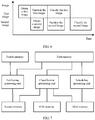
- a partitioning processing unit 501, a classification processing unit 502, a first memory 503, and a second memory 504 are basically the same as the partitioning processing unit 301, the classification processing unit 302, the first memory 303, and the second memory 304 that are shown in FIG. 3 , and details are not described herein.
- Both a scheduling processing unit 505 and a third memory 506 are optional modules. For operations specifically performed by the scheduling processing unit 505 and the third memory 506 or functions specifically performed by the scheduling processing unit 505 and the third memory 506, reference may be made to the descriptions in the foregoing two paragraphs, and details are not described herein.
- an image processing apparatus In a technology at a current stage, an image processing apparatus generally processes multiple images in batches. For example, a scheduling processing unit obtains 50 images in batches. After the 50 images are obtained, a partitioning processing unit partitions the 50 images in batches, and writes results to a memory of the partitioning processing unit. After the 50 images are partitioned, a classification processing unit classifies the 50 images. It may be learned that such a manner of processing in batches requires that each processing unit have a relatively large memory capacity and that when one processing unit works, another processing unit be in an idle state (for example, in a process in which the partitioning processing unit performs partitioning on the 50 images in batches, the classification processing unit is in an idle state all the time). Alternatively, in the present invention, the image processing apparatus may process an image in a pipelining manner, so as to lower a memory capacity requirement and make full use of each processing unit. The following describes the pipelining manner by using a first image and a second image as an example.
- a horizontal-axis direction indicates time
- a vertical-axis direction indicates a processed image. It may be learned from FIG. 6 that, after obtaining a first image and saving the first image in a first memory, a task scheduling processing unit starts an operation of obtaining a second image and saving the second image in the first memory.
- the scheduling processing unit may start, immediately after completing the operation of obtaining the first image, the operation of obtaining the second image, or may start, at a moment after completing the operation of obtaining the first image, the operation of obtaining the second image, which is not limited herein.
- the scheduling processing unit may control start of the following operations, or the partitioning processing unit may spontaneously control to start the following operations: partitioning the second image to obtain a second partitioning result, and saving the second partitioning result in the second memory.
- the scheduling processing unit may control start of the following operations, or the partitioning processing unit may spontaneously control to start the following operations: obtaining the second image from the first memory, obtaining the second partitioning result from the second memory, and classifying the second image according to the second image and the second partitioning result to obtain a second classification result. If a data processing apparatus includes the scheduling processing unit and a third memory, the classification processing unit further saves the second classification result in the third memory, and the scheduling processing unit outputs the second classification result from the third memory.
- the scheduling processing unit is merely a processing unit that is abstracted in functions.
- the scheduling processing unit may be an independent processing unit, or may be a same processing unit as the partitioning processing unit or the classification processing unit (that is, the actual product may not include an entity scheduling processing unit, and in this embodiment of the present invention, operations performed by the scheduling processing unit may be performed by the partitioning processing unit and/or the classification processing unit).
- the data processing apparatus provided in this embodiment of the present invention may be created by using one DSP, a single-core CPU, and a dual-core GPU.
- the CPU plays a role of the scheduling processing unit
- the DSP plays a role of the partitioning processing unit
- the dual-core GPU plays a role of the classification processing unit.
- the data processing apparatus provided in this embodiment of the present invention may be created by using a quad-core CPU and a dual-core GPU.
- the dual-core GPU plays a role of the classification processing unit.
- First three cores of the quad-core CPU play a role of the partitioning processing unit
- the fourth core is responsible for playing a role of the partitioning processing unit, and is further responsible for performing an operation that needs to be performed by the scheduling processing unit.
- the scheduling processing unit is a processing unit that is abstracted in functions.
- more scheduling tasks are further introduced for the scheduling processing unit.
- the scheduling tasks include a memory adjustment task, and/or a procedure control task, which are specifically as follows: First: Memory adjustment task.
- the scheduling processing unit may adjust a parameter such as a size or bandwidth of a memory in the image processing apparatus according to a running state of the image processing apparatus.
- a partitioning computation amount needs to be less than a classification computation amount, and therefore an image partitioning operation is generally faster than an image classification operation.
- the partitioning processing unit performs a partitioning operation excessively fast, the classification processing unit cannot process a partitioning result of the partitioning processing unit in time, and the partitioning result is overstocked in the second memory. Consequently, fast computation performance of the partitioning processing unit is wasted.
- the scheduling processing unit may obtain first duration in which the partitioning processing unit performs an operation of partitioning the first image and second duration in which the classification processing unit performs an operation of classifying the first image.
- the scheduling processing unit may increase a size of the second memory. In this way, more partitioning results can be saved in the second memory, and the classification processing unit does not need to spend a relatively long time waiting for the partitioning result of the partitioning processing unit. In addition, because a total memory of the image processing apparatus is fixed, increasing the size of the second memory may reduce a size of the third memory.
- the scheduling processing unit may also directly reduce a size of the third memory to limit the image classification rate of the classification processing unit; and/or the scheduling processing unit may further increase bandwidth of the second memory, so that the partitioning result of the partitioning processing unit can be quickly transported to the second memory, which is beneficial to an increase of the image partitioning rate of the partitioning processing unit.
- increasing the bandwidth of the second memory may reduce bandwidth of the third memory.
- the scheduling processing unit may also directly reduce bandwidth of the third memory to limit the image classification rate of the classification processing unit. Based on a similar reason, if the first duration is less than the second duration, that is, the duration in which the partitioning processing unit partitions the first image is less than the duration in which the classification processing unit classifies the first image, it indicates that a rate at which the partitioning processing unit performs the partitioning operation is higher than an image classification rate of the classification processing unit.
- the scheduling processing unit may reduce a size of the second memory, and/or reduce bandwidth of the second memory, and/or increase a size of the third memory, and/or increase bandwidth of the third memory, to limit the rate at which the partitioning processing unit performs the partitioning operation.
- the image processing apparatus may further include a fourth memory that is configured to store an intermediate result generated when the partitioning processing unit performs the partitioning operation, and/or a fifth memory that is configured to store an intermediate result generated when the classification processing unit performs the classification operation. If the first duration is greater than the second duration, it indicates that a rate of the partitioning processing unit is lower than a rate of the classification processing unit, and the scheduling processing unit may reduce a rate at which the classification processing unit performs the classification operation by increasing a size of the fourth memory, and/or increasing bandwidth of the fourth memory, and/or reducing a size of the fifth memory, and/or reducing bandwidth of the fifth memory.
- the scheduling processing unit may reduce a size of the fourth memory, and/or reduce bandwidth of the fourth memory, and/or increase a size of the fifth memory, and/or increase bandwidth of the fifth memory.
- the scheduling processing unit may suspend the partitioning processing unit.
- the scheduling processing unit may further restart the partitioning processing unit when the partitioning result is no longer overstocked in the second memory (specifically, it may be considered that the partitioning result is no longer overstocked in the second memory after the partitioning processing unit has been suspended for first preset duration, or after the usage of the second memory is reduced to below a preset threshold, or under another specified condition).
- usage of the third memory reaches second preset usage, it indicates that the classification result of the classification processing unit is overstocked in the third memory, and the scheduling processing unit may suspend the classification processing unit.
- the scheduling processing unit may further restart the classification processing unit when the classification result is no longer overstocked in the third memory. Similarly, if usage of a fourth memory in FIG. 7 reaches third preset usage, the scheduling processing unit may suspend the partitioning processing unit. If usage of a fifth memory in FIG. 7 reaches fourth preset usage, the scheduling processing unit may suspend the classification processing unit.
- the first preset usage to the fourth preset usage are preset values such as 80% or 90%, or 100% (that is, the memory is full). Values of any two or more of the first preset usage to the fourth preset usage may be the same, or values of the first preset usage to the fourth preset usage may be different from each other, which is not limited herein.
- the scheduling processing unit may suspend the partitioning processing unit.
- the scheduling processing unit may restart the partitioning processing unit when the partitioning result is no longer overstocked in the second memory (specifically, it may be considered that the partitioning result is no longer overstocked in the second memory after the partitioning processing unit has been suspended for first preset duration, or after usage of the second memory is reduced to below a preset threshold, or after the remaining space of the second memory is greater than the preset size, or under another specified condition).
- the scheduling processing unit may suspend the classification processing unit.
- the scheduling processing unit may further restart the classification processing unit when the classification result is no longer overstocked in the third memory.
- the scheduling processing unit may suspend the partitioning processing unit.
- the scheduling processing unit may suspend the classification processing unit.
- the second preset size to the fifth preset size are preset values, and may be positive values, or may be 0 (that is, the memory is full). Values of any two or more of the first preset size to the fifth preset size may be the same, or values of the first preset size to the fifth preset size may be different from each other, which is not limited herein.
- the scheduling processing unit may further control start times of an image obtaining operation, a partitioning operation performed by the partitioning processing unit, and a classification operation performed by the classification processing unit.
- an image processing procedure in the pipelining manner is described by using the first image and the second image as an example, and the following describes the image processing procedure in the pipelining manner by using the first image, the second image and a third image as an example.
- FIG. 8(a) an image processing apparatus successively processes the third image, the first image, and the second image.
- a scheduling processing unit After obtaining the third image, a scheduling processing unit immediately starts an operation of obtaining the first image, and immediately starts, after completing the operation of obtaining the first image, an operation of obtaining the second image.
- the scheduling processing unit In the entire image processing procedure, the scheduling processing unit is in an image obtaining operation state all the time. However, at a moment T1 (a moment at which the scheduling processing unit starts the operation of obtaining the second image), the partitioning processing unit is still partitioning the third image, and has not started to partition the first image, or started to partition the second image.
- the scheduling processing unit only needs to obtain the first image, so that the partitioning processing unit can start to partition the first image at any moment, and Therefore, at the moment T1, the scheduling processing unit only needs to obtain the first image, so that the partitioning processing unit can start to partition the first image at any moment, and the second image does not need to be prepared at this moment.
- the scheduling processing unit needs to obtain the second image only at a moment T2 (a moment at which the partitioning processing unit starts to partition the first image), so that the partitioning processing unit starts, at any moment after completing the operation of partitioning the first image, to partition the second image.
- the scheduling processing unit may temporarily stop obtaining the second image, so that the scheduling processing unit gets a rest, so as to reduce average power of the scheduling processing unit. Therefore, in this embodiment of the present invention, the scheduling processing unit may control a moment at which the scheduling processing unit starts an operation of obtaining the second to-be-processed image to be not earlier than a moment at which the partitioning processing unit starts the operation of partitioning the first image. Similarly, as shown in FIG. 8(b) , the scheduling processing unit may further control a moment at which the partitioning processing unit starts an operation of partitioning the second image to be not earlier than a moment at which the classification processing unit starts an operation of classifying the first image.
- the partitioning processing unit may classify an image by using a convolutional neural network (CNN, Convolutional Neural network) or another algorithm, which is not limited in the present invention.
- CNN convolutional neural network
- the image processing apparatus provided in the present invention may further include a sixth memory, which is configured to store an algorithm and a parameter that are used by the partitioning processing unit to perform the partitioning operation, and an algorithm and a parameter that are used by the classification processing unit to perform the classification operation.
- the sixth memory is shared by the partitioning processing unit and the classification processing unit.
- the first memory to the sixth memory that are of the image processing apparatus are described, and processing units that need to and can share these memories are limited. It should be noted that, in addition to being shared by limited processing units, these memories may also be shared by processing units that are not limited.
- the second memory is limited to be shared by the partitioning processing unit and the classification processing unit, but at the same time, the second memory may also be shared by the scheduling processing unit.
- the third memory is limited to be shared by the classification processing unit and the scheduling processing unit, but at the same time, the third memory may also be shared by the partitioning processing unit.
- the fourth memory, the fifth memory, and the sixth memory may also be shared by one, two, or more of the partitioning processing unit, the classification processing unit, and the scheduling processing unit.
- Division of the first memory to the sixth memory described in the present invention is logical division.
- the first memory to the sixth memory are shown in a separate and independent manner in accompanying drawings, in actual forms of the first memory to the sixth memory, any two or more memories may be integrated.
- the entire image processing apparatus may include only one memory that is shared by the processing units.
- the scheduling processing unit divides an address segment of the shared memory into six parts that respectively play roles of the first memory to the sixth memory.
- the image processing apparatus provided in the present invention may further include more memories.
- the more memories may be shared by multiple processing units, or may be dedicated to a specific processing unit, which is not limited herein.
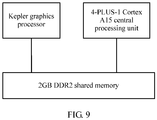
- FIG. 9 shows an image processing apparatus including a CPU+GPU heterogeneous system.
- a CPU is a 4-PLUS-1 Cortex A15 model and includes four ARM A15 computation cores and one ARM A15 management core with low power consumption.
- a GPU is a Kepler GPU model and includes 192 GPU CUDA cores.
- three ARM A15 computation cores are used for image partitioning (that is, functioning as a partitioning processing unit), one ARM A15 computation core is used for task scheduling (that is, functioning as a scheduling processing unit), and 192 GPU cores are used for image classification (that is, functioning as a classification processing unit).
- the core of the CPU and the core of the GPU exchange data by using a 2-GB double data rate 2 (DDR2) shared memory, and form a hardware pipeline.
- DDR2 2-GB double data rate 2
- An EdgeBox (EdgeBox) algorithm is used as an image partitioning algorithm
- a CNN is used as an image processing algorithm.
- Space of 500 MB is divided by the scheduling processing unit from the 2-GB DDR2 to be used as a first memory, to be configured to store a source image obtained by the scheduling processing unit.
- Space of 200 MB is divided by the scheduling processing unit from the 2-GB DDR2, to be used as a second memory, to be configured to store a partitioning result of the partitioning processing unit.
- Space of 100 MB is further divided by the scheduling processing unit from the 2GB DDR2, to be used as a third memory, to be configured to store a classification result of the classification processing unit.
- a user detects and recognizes targets in an image A, an image B, and an image C by using the heterogeneous system shown in FIG. 9 .
- the scheduling processing unit in the heterogeneous system first obtains the image A and writes the image A in the first memory.
- the partitioning processing unit starts an operation of partitioning the image A, which is specifically: reading the image A from the first memory, partitioning the image A, and writing a partitioning result of the image A to the second memory.
- the scheduling processing unit starts an operation of obtaining the image B and writes the image B to the first memory.
- the classification processing unit starts an operation of classifying the image A, which is specifically: reading the image A from the first memory, reading the partitioning result of the image A from the second memory, classifying the image A according to the partitioning result of the image A, and writing a classification result to the third memory.
- the partitioning processing unit starts an operation of partitioning the image B: reading the image B from the first memory, partitioning the image B, and writing a partitioning result of the image B to the second memory.
- the scheduling processing unit starts an operation of obtaining the image C and writes the image C to the first memory.
- the classification processing unit In a time period from T5 to T6, the classification processing unit has not completed the operation of classifying the image A, and therefore cannot process all partitioning results of the image A that are in the second memory. However, in the time period from T5 to T6, the partitioning processing unit is still partitioning the image B, and outputs the partitioning result of the image B to the second memory. Consequently, the partitioning results of the image A and the image B are overstocked in the second memory. It is assumed that the scheduling processing unit suspends the partitioning processing unit if usage of the second memory reaches 100% at the moment T6.
- the scheduling processing unit restarts the partitioning processing unit.
- the partitioning processing unit completes the operation of partitioning the image B, and saves the partitioning result in the second memory.
- the classification processing unit starts to classify the image B, and writes a classification result to the third memory.
- the partitioning processing unit starts an operation of partitioning the image C, and writes a partitioning result of the image C to the second memory.
- the classification processing unit starts an operation of classifying the image C, and writes a classification result to the third memory.
- the disclosed system, apparatus, and method may be implemented in other manners.
- the described apparatus embodiment is merely exemplary.
- the unit division is merely logical function division and may be other division in actual implementation.
- a plurality of units or components may be combined or integrated into another system, or some features may be ignored or not performed.
- the displayed or discussed mutual couplings or direct couplings or communication connections may be implemented by using some interfaces.
- the indirect couplings or communication connections between the apparatuses or units may be implemented in electrical, mechanical, or other forms.
- the units described as separate parts may or may not be physically separate, and parts displayed as units may or may not be physical units, may be located in one position, or may be distributed on a plurality of network units. Some or all of the units may be selected according to actual needs to achieve the objectives of the solutions of the embodiments.
- functional units in the embodiments of the present invention may be integrated into one processing unit, or each of the units may exist alone physically, or two or more units are integrated into one unit.
- the integrated unit may be implemented in a form of hardware, or may be implemented in a form of a software functional unit.
- the integrated unit When the integrated unit is implemented in the form of a software functional unit and sold or used as an independent product, the integrated unit may be stored in a computer-readable storage medium.
- the computer software product is stored in a storage medium, and the storage medium includes: any medium that can store program code, such as a USB flash drive, a removable hard disk, a memory (which may include a read-only memory (ROM, Read-Only Memory), a random access memory (RAM, Random Access Memory), and the like), a magnetic disk, or an optical disc.
- the scheduling processing unit, the partitioning processing unit, and the classification processing unit in the present invention may all read an instruction in the storage medium, and perform all or a part of steps of each embodiment of the present invention according to the read instruction.
Landscapes
- Engineering & Computer Science (AREA)
- Theoretical Computer Science (AREA)
- General Physics & Mathematics (AREA)
- Physics & Mathematics (AREA)
- Multimedia (AREA)
- Artificial Intelligence (AREA)
- Computer Vision & Pattern Recognition (AREA)
- Data Mining & Analysis (AREA)
- Evolutionary Computation (AREA)
- Software Systems (AREA)
- Databases & Information Systems (AREA)
- Medical Informatics (AREA)
- General Health & Medical Sciences (AREA)
- Health & Medical Sciences (AREA)
- Computing Systems (AREA)
- Life Sciences & Earth Sciences (AREA)
- Bioinformatics & Cheminformatics (AREA)
- Bioinformatics & Computational Biology (AREA)
- Evolutionary Biology (AREA)
- General Engineering & Computer Science (AREA)
- Image Processing (AREA)
- Image Analysis (AREA)
Applications Claiming Priority (2)
| Application Number | Priority Date | Filing Date | Title |
|---|---|---|---|
| CN201510728119.5A CN106651748B (zh) | 2015-10-30 | 2015-10-30 | 一种图像处理方法与图像处理装置 |
| PCT/CN2016/080997 WO2017071176A1 (zh) | 2015-10-30 | 2016-05-04 | 一种图像处理方法与图像处理装置 |
Publications (3)
| Publication Number | Publication Date |
|---|---|
| EP3352132A1 true EP3352132A1 (de) | 2018-07-25 |
| EP3352132A4 EP3352132A4 (de) | 2018-10-24 |
| EP3352132B1 EP3352132B1 (de) | 2022-09-28 |
Family
ID=58629792
Family Applications (1)
| Application Number | Title | Priority Date | Filing Date |
|---|---|---|---|
| EP16858624.6A Active EP3352132B1 (de) | 2015-10-30 | 2016-05-04 | Bildverarbeitungsverfahren und bildverarbeitungsvorrichtung |
Country Status (4)
| Country | Link |
|---|---|
| US (1) | US10740657B2 (de) |
| EP (1) | EP3352132B1 (de) |
| CN (1) | CN106651748B (de) |
| WO (1) | WO2017071176A1 (de) |
Cited By (1)
| Publication number | Priority date | Publication date | Assignee | Title |
|---|---|---|---|---|
| GB2640253A (en) * | 2024-04-08 | 2025-10-15 | Mendel Sudak Menachem | An image processing system, and a method of image processing |
Families Citing this family (10)
| Publication number | Priority date | Publication date | Assignee | Title |
|---|---|---|---|---|
| CN107239570A (zh) * | 2017-06-27 | 2017-10-10 | 联想(北京)有限公司 | 数据处理方法及服务器集群 |
| CN107341127B (zh) * | 2017-07-05 | 2020-04-14 | 西安电子科技大学 | 基于OpenCL标准的卷积神经网络加速方法 |
| US10867399B2 (en) | 2018-12-02 | 2020-12-15 | Himax Technologies Limited | Image processing circuit for convolutional neural network |
| TWI694413B (zh) * | 2018-12-12 | 2020-05-21 | 奇景光電股份有限公司 | 影像處理電路 |
| US11341745B1 (en) | 2019-11-14 | 2022-05-24 | Lockheed Martin Corporation | Unresolved object target detection using a deep neural network |
| JP2021150738A (ja) * | 2020-03-17 | 2021-09-27 | キヤノン株式会社 | 分割パターン決定装置、及び、それを用いた画像符号化装置、及び、学習装置、並びに、分割パターン決定装置及び学習装置の制御方法、及び、プログラム |
| CN112906636A (zh) * | 2021-03-18 | 2021-06-04 | 广州视源电子科技股份有限公司 | 图像处理电路和安防机器人 |
| CN113362219B (zh) * | 2021-07-02 | 2023-08-11 | 展讯通信(天津)有限公司 | 一种图像数据处理方法及装置 |
| CN116680042A (zh) * | 2022-02-22 | 2023-09-01 | 华为技术有限公司 | 一种图像处理的方法及相关装置和系统 |
| US12505049B2 (en) | 2023-04-05 | 2025-12-23 | Samsung Electronics Co., Ltd. | Hierarchical memory system |
Family Cites Families (13)
| Publication number | Priority date | Publication date | Assignee | Title |
|---|---|---|---|---|
| US7003660B2 (en) | 2000-06-13 | 2006-02-21 | Pact Xpp Technologies Ag | Pipeline configuration unit protocols and communication |
| US20050050305A1 (en) | 2003-08-28 | 2005-03-03 | Kissell Kevin D. | Integrated mechanism for suspension and deallocation of computational threads of execution in a processor |
| US8108863B2 (en) | 2005-12-30 | 2012-01-31 | Intel Corporation | Load balancing for multi-threaded applications via asymmetric power throttling |
| US8468532B2 (en) | 2006-06-21 | 2013-06-18 | International Business Machines Corporation | Adjusting CPU time allocated to next thread based on gathered data in heterogeneous processor system having plurality of different instruction set architectures |
| CN101369315A (zh) * | 2007-08-17 | 2009-02-18 | 上海银晨智能识别科技有限公司 | 人脸检测方法 |
| US8531471B2 (en) | 2008-11-13 | 2013-09-10 | Intel Corporation | Shared virtual memory |
| US8615637B2 (en) * | 2009-09-10 | 2013-12-24 | Advanced Micro Devices, Inc. | Systems and methods for processing memory requests in a multi-processor system using a probe engine |
| US9292933B2 (en) * | 2011-01-10 | 2016-03-22 | Anant Madabhushi | Method and apparatus for shape based deformable segmentation of multiple overlapping objects |
| CN103166995B (zh) * | 2011-12-14 | 2016-08-10 | 华为技术有限公司 | 一种视频传输方法及装置 |
| US9235769B2 (en) | 2012-03-15 | 2016-01-12 | Herta Security, S.L. | Parallel object detection method for heterogeneous multithreaded microarchitectures |
| US9600852B2 (en) * | 2013-05-10 | 2017-03-21 | Nvidia Corporation | Hierarchical hash tables for SIMT processing and a method of establishing hierarchical hash tables |
| US9129161B2 (en) * | 2013-05-31 | 2015-09-08 | Toyota Jidosha Kabushiki Kaisha | Computationally efficient scene classification |
| CN203930824U (zh) * | 2014-04-17 | 2014-11-05 | 超威半导体产品(中国)有限公司 | 具有结合的cpu和gpu的芯片器件,相应的主板和计算机系统 |
-
2015
- 2015-10-30 CN CN201510728119.5A patent/CN106651748B/zh active Active
-
2016
- 2016-05-04 WO PCT/CN2016/080997 patent/WO2017071176A1/zh not_active Ceased
- 2016-05-04 EP EP16858624.6A patent/EP3352132B1/de active Active
-
2018
- 2018-04-26 US US15/964,045 patent/US10740657B2/en active Active
Cited By (1)
| Publication number | Priority date | Publication date | Assignee | Title |
|---|---|---|---|---|
| GB2640253A (en) * | 2024-04-08 | 2025-10-15 | Mendel Sudak Menachem | An image processing system, and a method of image processing |
Also Published As
| Publication number | Publication date |
|---|---|
| US20180247164A1 (en) | 2018-08-30 |
| EP3352132B1 (de) | 2022-09-28 |
| CN106651748A (zh) | 2017-05-10 |
| EP3352132A4 (de) | 2018-10-24 |
| US10740657B2 (en) | 2020-08-11 |
| WO2017071176A1 (zh) | 2017-05-04 |
| CN106651748B (zh) | 2019-10-22 |
Similar Documents
| Publication | Publication Date | Title |
|---|---|---|
| EP3352132A1 (de) | Bildverarbeitungsverfahren und bildverarbeitungsvorrichtung | |
| CN110582785B (zh) | 配置用于执行层描述符列表的具有功率效率的深度神经网络模块 | |
| US12287742B2 (en) | Data processing apparatus for data-level pipeline | |
| US20190114534A1 (en) | Neural network processing system having multiple processors and a neural network accelerator | |
| US20180082175A1 (en) | Convolutional Neural Network Processing Method and Device | |
| CN110689115A (zh) | 神经网络模型处理方法、装置、计算机设备及存储介质 | |
| CN101894051A (zh) | 基于主辅数据结构的cpu-gpu合作计算方法 | |
| CN110751676A (zh) | 一种基于目标检测的异构计算系统、方法和可读存储介质 | |
| US11687242B1 (en) | FPGA board memory data reading method and apparatus, and medium | |
| EP3724822A1 (de) | On-chip-rechnernetzwerk | |
| US20240232630A1 (en) | Neural network training in a distributed system | |
| JP7268063B2 (ja) | 低電力のリアルタイムオブジェクト検出用のシステム及び方法 | |
| US20250335358A1 (en) | Reconfigurable cache architecture and methods for cache coherency | |
| CN102656603A (zh) | 利用性能计数器的图形流水线调度架构 | |
| CN112084023A (zh) | 数据并行处理的方法、电子设备及计算机可读存储介质 | |
| CN111783954A (zh) | 一种用于确定神经网络的性能的方法和设备 | |
| CN112116071B (zh) | 神经网络计算方法、装置、可读存储介质以及电子设备 | |
| CN115698937A (zh) | 用于深度学习任务调度的硬件电路 | |
| EP4163791B1 (de) | Modul eines künstlichen neuronalen netzwerks zur durchführung eines künstlichen neuronalen netzwerkbetriebs auf mehreren subgraphen und betriebsverfahren dafür | |
| CN114020476B (zh) | 一种作业的处理方法、设备及介质 | |
| EP4142217A1 (de) | Kommunikationsverfahren und -vorrichtung zwischen knoten auf basis mehrerer verarbeitungsknoten | |
| US10877926B2 (en) | Method and system for partial wavefront merger | |
| US20250077285A1 (en) | Systems and methods for processing tasks via a heterogeneous memory system | |
| US20240005075A1 (en) | Graphic neural network acceleration solution with customized board for solid-state drives | |
| US20250045562A1 (en) | Method and apparatus with neural network execution |
Legal Events
| Date | Code | Title | Description |
|---|---|---|---|
| STAA | Information on the status of an ep patent application or granted ep patent |
Free format text: STATUS: THE INTERNATIONAL PUBLICATION HAS BEEN MADE |
|
| PUAI | Public reference made under article 153(3) epc to a published international application that has entered the european phase |
Free format text: ORIGINAL CODE: 0009012 |
|
| STAA | Information on the status of an ep patent application or granted ep patent |
Free format text: STATUS: REQUEST FOR EXAMINATION WAS MADE |
|
| 17P | Request for examination filed |
Effective date: 20180420 |
|
| AK | Designated contracting states |
Kind code of ref document: A1 Designated state(s): AL AT BE BG CH CY CZ DE DK EE ES FI FR GB GR HR HU IE IS IT LI LT LU LV MC MK MT NL NO PL PT RO RS SE SI SK SM TR |
|
| AX | Request for extension of the european patent |
Extension state: BA ME |
|
| A4 | Supplementary search report drawn up and despatched |
Effective date: 20180926 |
|
| RIC1 | Information provided on ipc code assigned before grant |
Ipc: G06T 1/60 20060101AFI20180920BHEP Ipc: G06K 9/62 20060101ALI20180920BHEP Ipc: G06T 1/20 20060101ALI20180920BHEP Ipc: G06K 9/46 20060101ALI20180920BHEP Ipc: G06K 9/00 20060101ALI20180920BHEP |
|
| DAV | Request for validation of the european patent (deleted) | ||
| DAX | Request for extension of the european patent (deleted) | ||
| STAA | Information on the status of an ep patent application or granted ep patent |
Free format text: STATUS: EXAMINATION IS IN PROGRESS |
|
| 17Q | First examination report despatched |
Effective date: 20200225 |
|
| RIC1 | Information provided on ipc code assigned before grant |
Ipc: G06V 10/96 20220101ALI20220311BHEP Ipc: G06V 10/94 20220101ALI20220311BHEP Ipc: G06T 1/20 20060101ALI20220311BHEP Ipc: G06K 9/62 20060101ALI20220311BHEP Ipc: G06K 9/00 20060101ALI20220311BHEP Ipc: G06T 1/60 20060101AFI20220311BHEP |
|
| GRAP | Despatch of communication of intention to grant a patent |
Free format text: ORIGINAL CODE: EPIDOSNIGR1 |
|
| STAA | Information on the status of an ep patent application or granted ep patent |
Free format text: STATUS: GRANT OF PATENT IS INTENDED |
|
| INTG | Intention to grant announced |
Effective date: 20220512 |
|
| GRAS | Grant fee paid |
Free format text: ORIGINAL CODE: EPIDOSNIGR3 |
|
| GRAA | (expected) grant |
Free format text: ORIGINAL CODE: 0009210 |
|
| STAA | Information on the status of an ep patent application or granted ep patent |
Free format text: STATUS: THE PATENT HAS BEEN GRANTED |
|
| AK | Designated contracting states |
Kind code of ref document: B1 Designated state(s): AL AT BE BG CH CY CZ DE DK EE ES FI FR GB GR HR HU IE IS IT LI LT LU LV MC MK MT NL NO PL PT RO RS SE SI SK SM TR |
|
| REG | Reference to a national code |
Ref country code: GB Ref legal event code: FG4D |
|
| REG | Reference to a national code |
Ref country code: CH Ref legal event code: EP |
|
| REG | Reference to a national code |
Ref country code: AT Ref legal event code: REF Ref document number: 1521741 Country of ref document: AT Kind code of ref document: T Effective date: 20221015 |
|
| REG | Reference to a national code |
Ref country code: DE Ref legal event code: R096 Ref document number: 602016075338 Country of ref document: DE |
|
| REG | Reference to a national code |
Ref country code: IE Ref legal event code: FG4D |
|
| REG | Reference to a national code |
Ref country code: LT Ref legal event code: MG9D |
|
| PG25 | Lapsed in a contracting state [announced via postgrant information from national office to epo] |
Ref country code: SE Free format text: LAPSE BECAUSE OF FAILURE TO SUBMIT A TRANSLATION OF THE DESCRIPTION OR TO PAY THE FEE WITHIN THE PRESCRIBED TIME-LIMIT Effective date: 20220928 Ref country code: RS Free format text: LAPSE BECAUSE OF FAILURE TO SUBMIT A TRANSLATION OF THE DESCRIPTION OR TO PAY THE FEE WITHIN THE PRESCRIBED TIME-LIMIT Effective date: 20220928 Ref country code: NO Free format text: LAPSE BECAUSE OF FAILURE TO SUBMIT A TRANSLATION OF THE DESCRIPTION OR TO PAY THE FEE WITHIN THE PRESCRIBED TIME-LIMIT Effective date: 20221228 Ref country code: LV Free format text: LAPSE BECAUSE OF FAILURE TO SUBMIT A TRANSLATION OF THE DESCRIPTION OR TO PAY THE FEE WITHIN THE PRESCRIBED TIME-LIMIT Effective date: 20220928 Ref country code: LT Free format text: LAPSE BECAUSE OF FAILURE TO SUBMIT A TRANSLATION OF THE DESCRIPTION OR TO PAY THE FEE WITHIN THE PRESCRIBED TIME-LIMIT Effective date: 20220928 Ref country code: FI Free format text: LAPSE BECAUSE OF FAILURE TO SUBMIT A TRANSLATION OF THE DESCRIPTION OR TO PAY THE FEE WITHIN THE PRESCRIBED TIME-LIMIT Effective date: 20220928 |
|
| REG | Reference to a national code |
Ref country code: NL Ref legal event code: MP Effective date: 20220928 |
|
| REG | Reference to a national code |
Ref country code: AT Ref legal event code: MK05 Ref document number: 1521741 Country of ref document: AT Kind code of ref document: T Effective date: 20220928 |
|
| PG25 | Lapsed in a contracting state [announced via postgrant information from national office to epo] |
Ref country code: HR Free format text: LAPSE BECAUSE OF FAILURE TO SUBMIT A TRANSLATION OF THE DESCRIPTION OR TO PAY THE FEE WITHIN THE PRESCRIBED TIME-LIMIT Effective date: 20220928 Ref country code: GR Free format text: LAPSE BECAUSE OF FAILURE TO SUBMIT A TRANSLATION OF THE DESCRIPTION OR TO PAY THE FEE WITHIN THE PRESCRIBED TIME-LIMIT Effective date: 20221229 |
|
| PG25 | Lapsed in a contracting state [announced via postgrant information from national office to epo] |
Ref country code: SM Free format text: LAPSE BECAUSE OF FAILURE TO SUBMIT A TRANSLATION OF THE DESCRIPTION OR TO PAY THE FEE WITHIN THE PRESCRIBED TIME-LIMIT Effective date: 20220928 Ref country code: RO Free format text: LAPSE BECAUSE OF FAILURE TO SUBMIT A TRANSLATION OF THE DESCRIPTION OR TO PAY THE FEE WITHIN THE PRESCRIBED TIME-LIMIT Effective date: 20220928 Ref country code: PT Free format text: LAPSE BECAUSE OF FAILURE TO SUBMIT A TRANSLATION OF THE DESCRIPTION OR TO PAY THE FEE WITHIN THE PRESCRIBED TIME-LIMIT Effective date: 20230130 Ref country code: ES Free format text: LAPSE BECAUSE OF FAILURE TO SUBMIT A TRANSLATION OF THE DESCRIPTION OR TO PAY THE FEE WITHIN THE PRESCRIBED TIME-LIMIT Effective date: 20220928 Ref country code: CZ Free format text: LAPSE BECAUSE OF FAILURE TO SUBMIT A TRANSLATION OF THE DESCRIPTION OR TO PAY THE FEE WITHIN THE PRESCRIBED TIME-LIMIT Effective date: 20220928 Ref country code: AT Free format text: LAPSE BECAUSE OF FAILURE TO SUBMIT A TRANSLATION OF THE DESCRIPTION OR TO PAY THE FEE WITHIN THE PRESCRIBED TIME-LIMIT Effective date: 20220928 |
|
| PG25 | Lapsed in a contracting state [announced via postgrant information from national office to epo] |
Ref country code: SK Free format text: LAPSE BECAUSE OF FAILURE TO SUBMIT A TRANSLATION OF THE DESCRIPTION OR TO PAY THE FEE WITHIN THE PRESCRIBED TIME-LIMIT Effective date: 20220928 Ref country code: PL Free format text: LAPSE BECAUSE OF FAILURE TO SUBMIT A TRANSLATION OF THE DESCRIPTION OR TO PAY THE FEE WITHIN THE PRESCRIBED TIME-LIMIT Effective date: 20220928 Ref country code: IS Free format text: LAPSE BECAUSE OF FAILURE TO SUBMIT A TRANSLATION OF THE DESCRIPTION OR TO PAY THE FEE WITHIN THE PRESCRIBED TIME-LIMIT Effective date: 20230128 Ref country code: EE Free format text: LAPSE BECAUSE OF FAILURE TO SUBMIT A TRANSLATION OF THE DESCRIPTION OR TO PAY THE FEE WITHIN THE PRESCRIBED TIME-LIMIT Effective date: 20220928 |
|
| REG | Reference to a national code |
Ref country code: DE Ref legal event code: R097 Ref document number: 602016075338 Country of ref document: DE |
|
| PG25 | Lapsed in a contracting state [announced via postgrant information from national office to epo] |
Ref country code: NL Free format text: LAPSE BECAUSE OF FAILURE TO SUBMIT A TRANSLATION OF THE DESCRIPTION OR TO PAY THE FEE WITHIN THE PRESCRIBED TIME-LIMIT Effective date: 20220928 Ref country code: AL Free format text: LAPSE BECAUSE OF FAILURE TO SUBMIT A TRANSLATION OF THE DESCRIPTION OR TO PAY THE FEE WITHIN THE PRESCRIBED TIME-LIMIT Effective date: 20220928 |
|
| PG25 | Lapsed in a contracting state [announced via postgrant information from national office to epo] |
Ref country code: DK Free format text: LAPSE BECAUSE OF FAILURE TO SUBMIT A TRANSLATION OF THE DESCRIPTION OR TO PAY THE FEE WITHIN THE PRESCRIBED TIME-LIMIT Effective date: 20220928 |
|
| PLBE | No opposition filed within time limit |
Free format text: ORIGINAL CODE: 0009261 |
|
| STAA | Information on the status of an ep patent application or granted ep patent |
Free format text: STATUS: NO OPPOSITION FILED WITHIN TIME LIMIT |
|
| 26N | No opposition filed |
Effective date: 20230629 |
|
| PG25 | Lapsed in a contracting state [announced via postgrant information from national office to epo] |
Ref country code: SI Free format text: LAPSE BECAUSE OF FAILURE TO SUBMIT A TRANSLATION OF THE DESCRIPTION OR TO PAY THE FEE WITHIN THE PRESCRIBED TIME-LIMIT Effective date: 20220928 |
|
| REG | Reference to a national code |
Ref country code: CH Ref legal event code: PL |
|
| PG25 | Lapsed in a contracting state [announced via postgrant information from national office to epo] |
Ref country code: MC Free format text: LAPSE BECAUSE OF FAILURE TO SUBMIT A TRANSLATION OF THE DESCRIPTION OR TO PAY THE FEE WITHIN THE PRESCRIBED TIME-LIMIT Effective date: 20220928 |
|
| REG | Reference to a national code |
Ref country code: BE Ref legal event code: MM Effective date: 20230531 |
|
| PG25 | Lapsed in a contracting state [announced via postgrant information from national office to epo] |
Ref country code: MC Free format text: LAPSE BECAUSE OF FAILURE TO SUBMIT A TRANSLATION OF THE DESCRIPTION OR TO PAY THE FEE WITHIN THE PRESCRIBED TIME-LIMIT Effective date: 20220928 Ref country code: LU Free format text: LAPSE BECAUSE OF NON-PAYMENT OF DUE FEES Effective date: 20230504 Ref country code: LI Free format text: LAPSE BECAUSE OF NON-PAYMENT OF DUE FEES Effective date: 20230531 Ref country code: CH Free format text: LAPSE BECAUSE OF NON-PAYMENT OF DUE FEES Effective date: 20230531 |
|
| REG | Reference to a national code |
Ref country code: IE Ref legal event code: MM4A |
|
| PG25 | Lapsed in a contracting state [announced via postgrant information from national office to epo] |
Ref country code: IE Free format text: LAPSE BECAUSE OF NON-PAYMENT OF DUE FEES Effective date: 20230504 |
|
| PG25 | Lapsed in a contracting state [announced via postgrant information from national office to epo] |
Ref country code: IE Free format text: LAPSE BECAUSE OF NON-PAYMENT OF DUE FEES Effective date: 20230504 |
|
| PG25 | Lapsed in a contracting state [announced via postgrant information from national office to epo] |
Ref country code: IT Free format text: LAPSE BECAUSE OF FAILURE TO SUBMIT A TRANSLATION OF THE DESCRIPTION OR TO PAY THE FEE WITHIN THE PRESCRIBED TIME-LIMIT Effective date: 20220928 Ref country code: BE Free format text: LAPSE BECAUSE OF NON-PAYMENT OF DUE FEES Effective date: 20230531 |
|
| PG25 | Lapsed in a contracting state [announced via postgrant information from national office to epo] |
Ref country code: BG Free format text: LAPSE BECAUSE OF FAILURE TO SUBMIT A TRANSLATION OF THE DESCRIPTION OR TO PAY THE FEE WITHIN THE PRESCRIBED TIME-LIMIT Effective date: 20220928 |
|
| P01 | Opt-out of the competence of the unified patent court (upc) registered |
Free format text: CASE NUMBER: UPC_APP_327490/2023 Effective date: 20230524 |
|
| PG25 | Lapsed in a contracting state [announced via postgrant information from national office to epo] |
Ref country code: BG Free format text: LAPSE BECAUSE OF FAILURE TO SUBMIT A TRANSLATION OF THE DESCRIPTION OR TO PAY THE FEE WITHIN THE PRESCRIBED TIME-LIMIT Effective date: 20220928 |
|
| PGFP | Annual fee paid to national office [announced via postgrant information from national office to epo] |
Ref country code: DE Payment date: 20250402 Year of fee payment: 10 |
|
| PGFP | Annual fee paid to national office [announced via postgrant information from national office to epo] |
Ref country code: FR Payment date: 20250401 Year of fee payment: 10 |
|
| PG25 | Lapsed in a contracting state [announced via postgrant information from national office to epo] |
Ref country code: CY Free format text: LAPSE BECAUSE OF FAILURE TO SUBMIT A TRANSLATION OF THE DESCRIPTION OR TO PAY THE FEE WITHIN THE PRESCRIBED TIME-LIMIT; INVALID AB INITIO Effective date: 20160504 |
|
| PG25 | Lapsed in a contracting state [announced via postgrant information from national office to epo] |
Ref country code: HU Free format text: LAPSE BECAUSE OF FAILURE TO SUBMIT A TRANSLATION OF THE DESCRIPTION OR TO PAY THE FEE WITHIN THE PRESCRIBED TIME-LIMIT; INVALID AB INITIO Effective date: 20160504 |
|
| PG25 | Lapsed in a contracting state [announced via postgrant information from national office to epo] |
Ref country code: TR Free format text: LAPSE BECAUSE OF FAILURE TO SUBMIT A TRANSLATION OF THE DESCRIPTION OR TO PAY THE FEE WITHIN THE PRESCRIBED TIME-LIMIT Effective date: 20220928 |
|
| PGFP | Annual fee paid to national office [announced via postgrant information from national office to epo] |
Ref country code: GB Payment date: 20260325 Year of fee payment: 11 |