EP3353627B1 - Récupération adaptative d'espace de stockage - Google Patents
Récupération adaptative d'espace de stockage Download PDFInfo
- Publication number
- EP3353627B1 EP3353627B1 EP15904910.5A EP15904910A EP3353627B1 EP 3353627 B1 EP3353627 B1 EP 3353627B1 EP 15904910 A EP15904910 A EP 15904910A EP 3353627 B1 EP3353627 B1 EP 3353627B1
- Authority
- EP
- European Patent Office
- Prior art keywords
- storage
- volume
- data
- reclamation
- user data
- Prior art date
- Legal status (The legal status is an assumption and is not a legal conclusion. Google has not performed a legal analysis and makes no representation as to the accuracy of the status listed.)
- Active
Links
Images





Classifications
-
- G—PHYSICS
- G06—COMPUTING OR CALCULATING; COUNTING
- G06F—ELECTRIC DIGITAL DATA PROCESSING
- G06F3/00—Input arrangements for transferring data to be processed into a form capable of being handled by the computer; Output arrangements for transferring data from processing unit to output unit, e.g. interface arrangements
- G06F3/06—Digital input from, or digital output to, record carriers, e.g. RAID, emulated record carriers or networked record carriers
- G06F3/0601—Interfaces specially adapted for storage systems
- G06F3/0602—Interfaces specially adapted for storage systems specifically adapted to achieve a particular effect
- G06F3/0608—Saving storage space on storage systems
-
- G—PHYSICS
- G06—COMPUTING OR CALCULATING; COUNTING
- G06F—ELECTRIC DIGITAL DATA PROCESSING
- G06F12/00—Accessing, addressing or allocating within memory systems or architectures
- G06F12/02—Addressing or allocation; Relocation
- G06F12/0223—User address space allocation, e.g. contiguous or non contiguous base addressing
- G06F12/023—Free address space management
- G06F12/0253—Garbage collection, i.e. reclamation of unreferenced memory
- G06F12/0269—Incremental or concurrent garbage collection, e.g. in real-time systems
- G06F12/0276—Generational garbage collection
-
- G—PHYSICS
- G06—COMPUTING OR CALCULATING; COUNTING
- G06F—ELECTRIC DIGITAL DATA PROCESSING
- G06F3/00—Input arrangements for transferring data to be processed into a form capable of being handled by the computer; Output arrangements for transferring data from processing unit to output unit, e.g. interface arrangements
- G06F3/06—Digital input from, or digital output to, record carriers, e.g. RAID, emulated record carriers or networked record carriers
- G06F3/0601—Interfaces specially adapted for storage systems
- G06F3/0602—Interfaces specially adapted for storage systems specifically adapted to achieve a particular effect
- G06F3/0604—Improving or facilitating administration, e.g. storage management
- G06F3/0605—Improving or facilitating administration, e.g. storage management by facilitating the interaction with a user or administrator
-
- G—PHYSICS
- G06—COMPUTING OR CALCULATING; COUNTING
- G06F—ELECTRIC DIGITAL DATA PROCESSING
- G06F3/00—Input arrangements for transferring data to be processed into a form capable of being handled by the computer; Output arrangements for transferring data from processing unit to output unit, e.g. interface arrangements
- G06F3/06—Digital input from, or digital output to, record carriers, e.g. RAID, emulated record carriers or networked record carriers
- G06F3/0601—Interfaces specially adapted for storage systems
- G06F3/0628—Interfaces specially adapted for storage systems making use of a particular technique
- G06F3/0646—Horizontal data movement in storage systems, i.e. moving data in between storage devices or systems
- G06F3/0652—Erasing, e.g. deleting, data cleaning, moving of data to a wastebasket
-
- G—PHYSICS
- G06—COMPUTING OR CALCULATING; COUNTING
- G06F—ELECTRIC DIGITAL DATA PROCESSING
- G06F3/00—Input arrangements for transferring data to be processed into a form capable of being handled by the computer; Output arrangements for transferring data from processing unit to output unit, e.g. interface arrangements
- G06F3/06—Digital input from, or digital output to, record carriers, e.g. RAID, emulated record carriers or networked record carriers
- G06F3/0601—Interfaces specially adapted for storage systems
- G06F3/0628—Interfaces specially adapted for storage systems making use of a particular technique
- G06F3/0662—Virtualisation aspects
- G06F3/0665—Virtualisation aspects at area level, e.g. provisioning of virtual or logical volumes
-
- G—PHYSICS
- G06—COMPUTING OR CALCULATING; COUNTING
- G06F—ELECTRIC DIGITAL DATA PROCESSING
- G06F3/00—Input arrangements for transferring data to be processed into a form capable of being handled by the computer; Output arrangements for transferring data from processing unit to output unit, e.g. interface arrangements
- G06F3/06—Digital input from, or digital output to, record carriers, e.g. RAID, emulated record carriers or networked record carriers
- G06F3/0601—Interfaces specially adapted for storage systems
- G06F3/0668—Interfaces specially adapted for storage systems adopting a particular infrastructure
- G06F3/067—Distributed or networked storage systems, e.g. storage area networks [SAN], network attached storage [NAS]
-
- G—PHYSICS
- G06—COMPUTING OR CALCULATING; COUNTING
- G06F—ELECTRIC DIGITAL DATA PROCESSING
- G06F3/00—Input arrangements for transferring data to be processed into a form capable of being handled by the computer; Output arrangements for transferring data from processing unit to output unit, e.g. interface arrangements
- G06F3/06—Digital input from, or digital output to, record carriers, e.g. RAID, emulated record carriers or networked record carriers
- G06F3/0601—Interfaces specially adapted for storage systems
- G06F3/0668—Interfaces specially adapted for storage systems adopting a particular infrastructure
- G06F3/0671—In-line storage system
- G06F3/0683—Plurality of storage devices
- G06F3/0689—Disk arrays, e.g. RAID, JBOD
Definitions
- This disclosure relates to the technical field of storage systems, including reclaiming storage capacity in a storage system.
- Some types of storage require reclamation of storage following deletion of data before new data can be written to the storage.
- reclamation may involve overwriting an area of storage with a consistent pattern, such as all zeros, or the like.
- solid-state drives SSDs typically require that old data be overwritten before new data can be stored in its place. Further SSDs may wear out over time as each cell in a flash memory bank has a limited number of write and erase cycles, so unnecessary reclamation may be undesirable.
- thin provisioned storage such as may be employed using hard disk drives (HDDs) and/or SSDs, as well as other storage arrays with dynamic provisioning/tiering features, may not automatically free storage space when data is deleted. Accordingly, this class of storage also may employ storage space reclamation before the storage space can be reused.
- HDDs hard disk drives
- SSDs solid state drives
- this class of storage also may employ storage space reclamation before the storage space can be reused.
- Reclamation is an expensive Operation in terms of time consumed by the reclamation process and the performance impact that the reclamation process imposes on the rest of the storage system.
- Typical approaches to reclamation of storage space on SSDs and thin provisioned storages may include "reclaim after each Operation" or "reclaim periodically". While both of these conventional approaches ensure that space is reclaimed, these approaches may have a significant impact on the performance of the storage system.
- WO 2007/019198 A2 a non-volatile memory array, scheduling of reclaim operations to occur before a shortage of erased blocks arises avoids extended periods of reclaim that could exceed a time limit.
- a memory controller uses information regarding the data stored in the memory array to estimate the additional host data that may be programmed and the reclaim operations to be performed and schedules the reclaim operations to be evenly distributed between write operations until the memory is full.
- a computer-implemented method for reclaiming storage space from deleted volumes on thin-provisioned disks may include: identifying a deleted volume, identifying storage space on a thin-provisioned disk that was allocated to the deleted volume, saving information that identifies the storage space, identifying a policy that specifies reclaiming the storage space asynchronously with respect to the deleted volume, and then reclaiming the storage space asynchronously with respect to deletion of the volume in accordance with the policy.
- US 2012/331242 discloses a method for releasing free storage blocks previously allocated to logical block device back to underlying storage system supporting logical block device, involving receiving notification from process of processing entity
- US 2015/058381 discloses a system and method for dynamically selecting a garbage collection algorithm based on the contents of heap regions (short-lived or long-lived types of data / object).
- the present invention is disclosed in the embodiments of figs.7 , 8 , 9 and in the corresponding parts of the description.
- a storage manager may actively manage its own storage and may control where information is stored and what operations are carried out.
- the storage manager may further include logic for selecting portions of storage on which to perform reclamation.
- the storage manager may further determine times for performing reclamation, such as at times when the impact of reclamation may be minimal and/or the reclamation may provide optimal benefit. For instance, implementations herein may ensure reclamation does not take place when reclamation is not really needed, that reclamation takes place when the overall system state is best suited for reclamation, and that reclamation takes place when there is an actual benefit to be gained from reclamation.
- the storage manager may manage multiple different classes of storage.
- the storage manager may be access various different classes of storage, such as direct attached storage (DAS), storage arrays, and/or hybrid cloud storage.
- DAS direct attached storage
- Some of those storage classes may be "thin provisioned", meaning that freed up space is reclaimed after data is deleted to enable the freed storage space to be reused.
- Storage classes that are subject to reclamation processing include solid state drives (SSDs) and thin provisioned storage arrays with dynamic provisioning, and, in some cases, tiering.
- reclamation in the examples herein may include any technique for restoring freed up storage space to a condition for reuse.
- reclamation may include overwriting the freed storage space on an SSD with a predetermined pattern, such as by writing all zero bits (or all one bits, or any other known pattern) to the storage area being reclaimed.
- a reclamation request is sent to the thin provisioning array so that a physical storage area of the HDDs and/or SSDs corresponding to the reclamation request is released from allocation to a virtual storage area of the thin provisioning array to free up the released real storage area.
- the released physical storage area of the HDDs and/or SSDs may undergo a further reclamation process conducted internally by the thin provisioning array to restore the freed storage space to a condition of reuse.
- reclamation may include overwriting the freed storage space on an SSD with a predetermined pattern, such as by writing all zero bits (or other known pattern) to the storage area being reclaimed by the thin provisioning array.
- the storage manager may manage and store different categories of data on the storage.
- two categories of data include user data and system data.
- User data managed by the storage manager may include files or other objects generated or otherwise received from user devices, such as from applications on a user device. Accordingly, user data may include data not created by the storage manager or other system software. User data may also include custom metadata for the user data, such as file names and other file information, user generated object information, or the like.
- System data may include system generated data such as system logs, transaction logs, indexes, internal databases, system generated data structures, operating system data, lists of users, and other data generated by system modules and components. These two data categories may have very different update and deletion profiles. For example, while user data may change infrequently, the system data may change continually.
- the storage manager may manage both the storage that it is configured to access and the data stored by the storage manager on the storage. This means that the storage manager has knowledge of what category of data is stored on which classes of storage at any given time, along with the available capacity on each storage device or logical unit in each class of storage. Accordingly, the storage manager may be configured to execute one or more reclamation algorithms that can be applied to perform reclamation based in part on the data profile, the storage class, and other considerations. In implementations herein, the storage manager may treat storage volumes storing user data differently from storage volumes storing system data when executing a reclamation process.
- the storage manager manages all objects under its control, the storage manager knows what operations are being performed on those objects by users as well as by internal system services. Consequently, the storage manager knows when data is physically deleted and from what storage devices. Based on this knowledge, the storage manager may apply selective reclamation algorithms, such as for only reclaiming storage space when physical deletions have taken place, free space is sparse, and the overall system is not encumbered by a large number of other operations.
- the storage manager may apportion at least some of the storage into logical volumes.
- volumes may include logical units (LUs) identified by logical unit numbers (LUNs) which may be provided from an array, from directly attached storage, or from cloud “buckets".
- LUNs logical unit numbers
- the storage manager knows what the class of storage is and what the category of data stored on the storage is, including what individual objects are stored on each volume.
- the storage manager may maintain a data structure, such as a table, including at least some of this information, and may refer to the data structure when determining whether to perform reclamation.
- system data may change frequently.
- storage manager may perform reclamation regularly and periodically on the volumes where system data is stored.
- the storage manager may be configured to reclaim storage space on volumes hosting system data at configurable specified time intervals (e.g., once an hour, twice a day, once a day, etc.).
- the interval between reclamations may be automatically adjusted by the storage manager based on storage metrics collected from the volumes, such as the amount of storage space reclaimed during one or more past reclamation processings.
- the volumes where this category of data is stored may only go through reclamation processing when some data has been deleted from a volume and the free space in the volume is sparse.
- the storage manager since the storage manager manages data lifecycles on the data, the storage manager has information for making a determination as to which volumes to subject to reclamation and the timing of such reclamation. For example, reclamation may typically be performed at some point in time subsequent to deletion of data from a volume.
- the storage manager may perform deletions in batches, such as through execution of an internal service called "garbage collection".
- a garbage collection module may run periodically, e.g., based on a defined schedule.
- the system may have deleted data from storage, e.g., based on deletion from a file system.
- the storage manager may then determine which volumes on which to perform the reclamation process based on one or more parameters, such as amount of utilization of the volume, whether there were any deletions of data on the volume, and overall load on the system.
- the storage manager may avoid unnecessary reclamation invocations by not reclaiming any space on volumes unless the volumes have a remaining available capacity that is lower than a configurable threshold amount, such as less than 50% remaining capacity available for use, less than 40% remaining capacity available, etc. Further, reclamation is not performed on volumes from which no data has been deleted since the last reclamation invocation.
- the storage manager may adapt the reclamation workflow to the overall system load, such as by timing reclamation for periods that typically have lower user usage than other periods.
- the storage manager may invoke reclamation in the background so that real-time user ingests are not affected.
- implementations herein are described in the environment of storage system having one or more storage nodes. However, implementations herein are not limited to the particular examples provided, and may be extended to other types of storage systems, other execution environments, other system architectures, and so forth, as will be apparent to those of skill in the art in light of the disclosure herein.
- FIG. 1 illustrates an example architecture of a system 100 configured to perform storage reclamation according to some implementations.
- the system 100 includes one or more computing devices as storage node(s) 102 that are able to communicate with or otherwise coupled to storage 104. Further, the storage node 102 may be able to communicate over one or more networks 106 with one or more user devices 108, such as user devices 108(1), ..., 108(M).
- the storage 104 may include one or more of various different classes of storage.
- storage 104 may include one or more arrays 110.
- the array 110 may include a plurality of hard disk drives (HDDs) or other storage devices configured as one or more logical units (LUs) 112.
- Each LU may correspond to at least a portion of one or more physical storage devices, such as may be arranged in a RAID (redundant array of independent disks) configuration or other storage configuration, and which in some cases may be part of a Storage Area Network (SAN) or other array configuration.
- SAN Storage Area Network
- a certain amount of storage capacity is pre-allocated to each LU 112 and the array 110 typically does not require reclamation.
- reclamation may be performed on the SSDs in the array 110 following deletion of data from a corresponding LU 112.
- the storage 104 may include one or more thin provisioning arrays 114.
- a thin provisioning array may include a plurality of LUs 116 that are thin provisioned.
- thin provisioning of storage enables optimizing utilization of available storage by relying on on-demand allocation of blocks of data versus the traditional method of allocating all the blocks up front. This technique helps avoid the poor utilization rates that may occur in the traditional storage allocation.
- the system may monitor the storage used by each thin provisioning array 114 and may employ dynamic provisioning of the LUs. Further, when data has been deleted from a volume provided by a thin-provisioned array, the allocated storage may be reclaimed to be returned to a storage pool provided by the thin-provisioned array.
- the array 114 may offer tiered storage such as by offering multiple storage media types, such as SSDs and HDDs for delivering different performance levels. For example, tiering may be applied, such as for providing a first tier of data that is expected to be accessed more frequently and a second tier for data that is expected to be accessed less frequently. Faster devices, such as SSDs, may be used for the first tier and HDDs may be used for the second tier. When data is deleted from a volume that corresponds to SSDs used for one of the tiers, then freed storage space on the SSDs is reclaimed before being reused.
- tiering may be applied, such as for providing a first tier of data that is expected to be accessed more frequently and a second tier for data that is expected to be accessed less frequently.
- Faster devices such as SSDs
- HDDs may be used for the second tier.
- the storage 104 may include direct attached storage (DAS).
- DAS is digital storage directly attached to the computer that accesses the storage, as opposed to storage accessed over a computer network.
- the storage 104 may include one or more SSDs 118 as DAS.
- the storage 104 may include one or more HDDs 120 as DAS.
- the DAS SSDs 118 are subject to reclamation following deletion of data from a storage location on the DAS SSDs 118. For example, SSDs typically require reclamation before storage capacity can be reused.
- HDDs 120 typically do not require reclamation, and freed up storage locations may merely be overwritten with new data rather than first being reclaimed.
- the storage node 102 may include one or more servers or other types of computing devices that may be embodied in any number of ways.
- the modules, other functional components, and at least a portion of data storage may be implemented on at least one server, such as in a cluster of servers, a server farm or data center, a cloud-hosted computing service, and so forth, although other computer architectures may additionally or alternatively be used.
- the node 102 includes, or may have associated therewith, one or more processors 122, one or more computer-readable media 204, and one or more communication interfaces 126.
- Each processor 122 may be a single processing unit or a number of processing units, and may include single or multiple computing units or multiple processing cores.
- the processor(s) 122 can be implemented as one or more central processing units, microprocessors, microcomputers, microcontrollers, digital signal processors, state machines, logic circuitries, and/or any devices that manipulate signals based on operational instructions.
- the processor(s) 122 may be one or more hardware processors and/or logic circuits of any suitable type specifically programmed or configured to execute the algorithms and processes described herein.
- the processor(s) 122 can be configured to fetch and execute computer-readable instructions stored in the computer-readable media 124, which can program the processor(s) 122 to perform the functions described herein.
- the computer-readable media 124 may be at the same location as the node 102, while in other examples, the computer-readable media 124 may be remote from the node 102.
- the computer-readable media may include a portion of the storage 104, such as the DAS SSDs 118 and/or the DAS HDDs 120.
- the computer-readable media 124 may include volatile and nonvolatile memory and/or removable and non-removable media implemented in any type of technology for storage of information, such as computer-readable instructions, data structures, program modules, or other data.
- the computer-readable media 124 may include, but is not limited to, RAM, ROM, EEPROM, flash memory or other memory technology, optical storage, solid state storage, magnetic tape, magnetic disk storage, RAID storage systems, storage arrays, network attached storage, storage area networks, cloud storage, or any other medium that can be used to store the desired information and that can be accessed by a computing device.
- the computer-readable media 124 may be a tangible non-transitory medium to the extent that, when mentioned, non-transitory computer-readable media exclude media such as energy, carrier signals, electromagnetic waves, and/or signals per se.
- the computer-readable media 124 may be used to store any number of functional components that are executable by the processor(s) 122. In many implementations, these functional components comprise instructions or programs that are executable by the processor(s) 122 and that, when executed, specifically program the processor(s) 122 to perform the actions attributed herein to the node 102.
- Functional components stored in the computer-readable media 124 may include storage manager 128, which may be one or more computer programs, applications, executable code, or portions thereof, and which may provide the storage management algorithms discussed herein.
- the storage manager 128 may include, or may employ a reclamation management module 130 that may provide one or more reclamation management algorithms described herein, such as described below with respect to FIGS. 7-9 .
- the storage manager 128 may include a garbage collection module 132, functions of which are discussed additionally below.
- Additional functional components stored in the computer-readable media 124 may include an operating system 134 for controlling and managing various functions of the node 102. As one example, these functional components may be stored in a storage portion of the computer-readable media 124, loaded into a local memory portion of the computer-readable media 124, and executed by the one or more processors 122.
- the computer-readable media 124 may store data and data structures used for performing the functions and services described herein.
- the computer-readable media 124 may store a storage profile table, as discussed below with respect to FIG. 6 .
- the node 102 may also include or maintain other functional components and data, which may include programs, drivers, etc., and the data used or generated by the functional components. Further, the node 102 may include many other logical, programmatic, and physical components, of which those described above are merely examples that are related to the discussion herein.
- the communication interface(s) 126 may include one or more interfaces and hardware components for enabling communication with various other devices, such as over the network(s) 106 and/or the storage 104.
- the communication interfaces 126 may include, or may couple to, one or more ports that provide connection to the storage 104, and one or more ports that provide connection to the user devices 108.
- communication interface(s) 126 may enable communication through one or more of a LAN, the Internet, cable networks, cellular networks, wireless networks (e.g., Wi-Fi) and wired networks (e.g., Fibre Channel, fiber optic, Ethernet), direct connections, as well as close-range communications such as BLUETOOTH ® , and the like, as additionally enumerated elsewhere herein.
- Each user device 108 may be any suitable type of computing device such as a desktop, laptop, tablet computing device, mobile device, smart phone, wearable device, or any other suitable type of computing device.
- the user devices 108 may include hardware configurations similar to that described for the node 102, but with different data and functional components to enable them to perform the various functions discussed herein.
- Users 120(1), ..., 120(M) may be associated with respective user devices 108(1), ..., 108(M), such as through a user account, user login credentials, or the like.
- the user devices 108 may access the node 102 via an application server (not shown in FIG. 1 ), while in other examples, the user devices 108 may access the node 102 directly.
- the user devices 108 may be able to communicate with the node 102 through the one or more networks 106, through separate networks, or through any other suitable type of communication connection. Numerous other variations will be apparent to those of skill in the art having the benefit of the disclosure herein.
- the one or more networks 106 can include any suitable network, including a wide area network, such as the Internet; a local area network, such as an intranet; a wireless network, such as a cellular network, a local wireless network, such as Wi-Fi, and/or short-range wireless communications, such as BLUETOOTH ® ; a wired network including Fibre Channel, fiber optics, Ethernet, or any other such network, a direct wired connection, or any combination thereof.
- the one or more networks 106 may include both wired and/or wireless communication technologies. Components used for such communications can depend at least in part upon the type of network, the environment selected, or both. Protocols for communicating over such networks are well known and will not be discussed herein in detail. Accordingly, the node 102 and user devices 108 are able to communicate over the one or more networks 106 using wired or wireless connections, and combinations thereof.
- user data 136 may include user metadata 140 that is managed as user data 136.
- the user metadata 140 may include file name, file size, as well as custom metadata, which may depend at least in part on the type of file.
- an X-ray image file may include custom metadata such as the doctor's name, contact information, date of the X-ray, and so forth.
- User metadata 140 may be stored with other user data 136, and therefore can be categorized the same as user data 136 according to implementations herein.
- System data 138 may include system logs, transaction logs, indexes, internal databases, system generated data structures, operating system data, lists of users, and other data generated by system modules and components. Further, system data 138 may include system metadata 142 that is managed as system data 138. System metadata 142 may be stored with other system data 138 and can be categorized the same as system data 138 according to implementations herein.
- reclamation such as the thin provisioning array 114 or the DAS SSDs 118
- different reclamation algorithms are employed depending on whether the storage space being freed up was used for storing user data 136 or system data 138.
- user data 138 including user metadata 140 may be received from the user device 108, such as from one or more applications 144 executing on the user device.
- one or more first user applications 144(1) may execute on the first user device 108(1)
- one or more Mth user applications 144(M) may execute on the Mth user device 108(M)
- the user applications 144 may generate user data and/or may save the user data to the storage 104, such as by sending user data to the storage node 102.
- user data 136 may include content items, such as images, documents, emails, video recordings, audio recordings, and the like.
- the storage manager 128 may categorize the received data as user data 136, and may store the user data 136 on a volume designated for user data. Thus, if the user data 136 is subsequently manipulated by the storage manager, moved to another storage location, or the like, the user data 136 remains categorized as user data 136. Similarly, system data 138 may remain categorized as system data 138 despite being moved from one location to another in the storage 104. According to some examples herein, user data 136 may be stored on volumes designated for user data and system data 138 may be stored separately on volumes designated for system data.
- a storage that is used to store system data 138 may have reclamation performed on a periodic basis, such as according to a schedule selected by an administrator or other user.
- the storage manager 128 may adjust the schedule based on how much space is reclaimed during each reclamation process.
- storage that is used to store user data 136 may have reclamation performed in response to one or more conditions being met.
- a remaining capacity threshold may be set for particular storage volumes, devices, or the like. For instance, if a storage volume has had data deleted since a last reclamation process, and if the remaining available capacity of the volume is less than a remaining capacity threshold amount, reclamation may be performed on the storage device corresponding to the volume. Further, in some cases, the storage manager 128 may also take into consideration historic system usage patterns for timing reclamation for periods of lower user activity.
- one or more controllers may be associated with the storage 104.
- a controller 146 may be associated with the array 110
- a controller 148 may be associated with the thin provisioning array 114
- a controller 150 may be associated with the DAS SSDs 118
- a controller 152 may be associated with the DAS HDDs 120.
- the controller 146 may control the array 110, such as for configuring the array 110 in a RAID configuration, presenting the LUs 112 to the storage manager 128, managing data stored on the underlying physical devices, and so forth.
- the controller 148 may control the thin provisioning array 114, such as for providing thin provisioning functionality, managing data on the underlying physical devices, presenting the LUs 116, as well as for performing reclamation.
- the controller 148 may execute a reclamation module 154 that may be part of a thin provisioning software stack used by the array controller 148 for providing thin provisioned storage to the storage manager 128.
- the DAS SSDs 118 may include a controller 150 for controlling read and write operations to SSDs 158.
- a reclamation module 156 executed by the controller 150 may be a driver for the SSDs 158 or other reclamation module that performs reclamation on the SSDs 158.
- the controller 152 may control data operations on HDDs 160.
- the storage manager 128 may determine that reclamation is to be performed on storage corresponding to a volume (not shown in FIG. 1 ) from which data has been deleted.
- the storage manager 128 may include a file system module 162 that presents a file system to the user devices 108.
- the garbage collection module 132 may determine when to delete the corresponding data from a volume, such as based on a retention policy or other considerations, as discussed additionally below.
- the garbage collection module may delete the file or other object from the file system.
- the storage manager may send a reclamation instruction 164 to a controller that controls the storage corresponding to the volume.
- the storage is the thin provisioning array 114.
- the controller 148 associated with the thin provisioning array 114 may execute the reclamation module 154 to reclaim virtual storage capacity corresponding to the area of the volume from which the data was deleted.
- garbage collection may not be used in some examples.
- the storage manager 128 may delete system data 138 according to one or more system policies, and may perform reclamation periodically. For example, following the elapse of a certain period of time since the last reclamation performed on system data volumes, the storage manager 128 may determine that reclamation is to be performed on storage corresponding to one or more of these system data volumes, as discussed additionally below.
- the storage manager 128 may send a reclamation instruction 164 to the controller associated with the particular storage. In response to receiving the instruction, the controller may perform reclamation on the corresponding storage.
- FIG. 2 illustrates an example of a system 200 that may implement at least some portions of the architecture 100 of FIG. 1 according to some implementations.
- a plurality of the nodes 102 may be included in a scalable storage management system in which the system architecture based on a redundant array of independent nodes 102.
- the nodes 102 may comprise different hardware and thus may be considered "heterogeneous".
- the storage manager 128 (and, optionally, the underlying operating system (not shown in FIG. 2 ) on which that the storage manager 128 executes) may be the same on each node 102.
- the software stack (which may include the storage manager 128 and operating system) on each node 102 may be symmetric, whereas the hardware may be heterogeneous.
- some or all of the nodes 102 may include one or more DAS SSDs, as discussed above with respect to FIG. 1 , for storing user data and/or system data, and which may be subject to reclamation processing of unused storage. Additionally, or alternatively, as another example, some or all of the nodes 102 may access a thin provisioning array, as discussed above with respect to FIG. 1 , for storing user data and/or system data, and which may be subject to reclamation processing of unused storage.
- enterprises may use the system 200 to create long term and reliable storage for many different types of fixed content information such as e-mail archives 202, images, audio, and/or video recordings 204, check images 206, documents 208, and custom applications 210, to name a few examples. These examples are merely illustrative, and do not limit the implementations herein.
- the system 200 may include at least one file system 212, which may be shared by the nodes 102 and which may enable various protocols such as network file system (NFS) 214, server message block (SMB) 216, and hypertext transfer protocol (HTTP) 218. High levels of reliability may be achieved by replicating data among the storage nodes 102.
- NFS network file system
- SMB server message block
- HTTP hypertext transfer protocol
- each node 102 may be functionally symmetric with its peers. Thus, because any given node 102 may be able to perform all functions, the failure of any one node 102 has little impact on the overall availability of the system 200.
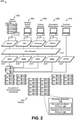
- FIG. 3 illustrates an example of a system 300 that may implement at least some portions of the architecture 100 of FIG. 1 according to some implementations.
- the system 300 may be referred to as a redundant array of independent nodes (RAIN) that are networked together as a cluster.
- the storage manager 128 may be, or may be included in, a distributed software application, such as an archive cluster application. The application may capture, preserve, manage, and retrieve digital assets.
- the system 300 is referred to as a cluster.
- a cluster is not a single device, but rather a collection of devices including a plurality of the nodes 102.
- nodes 102 may be homogeneous or heterogeneous.
- a typical node 102 may be a computing device executing an operating system such as LINUX ® , WINDOWS ® , or the like.
- some or all of the nodes 102 may include one or more DAS SSDs, as discussed above with respect to FIG. 1 , for storing user data and/or system data, and which may be subject to reclamation processing of unused storage. Additionally, or alternatively, as another example, some or all of the nodes 102 may access a thin provisioning array, as discussed above with respect to FIG. 1 , for storing user data and/or system data, and which may be subject to reclamation processing of unused storage.
- the plurality of nodes 102 provide the system 300 that can be scaled from a few storage nodes 102 to many nodes 102 able to store thousands of terabytes of data.
- This scalable architecture of FIG. 3 may ensure that storage capacity is able to keep pace with an organization's increasing storage requirements.
- stored data may be replicated across the cluster so that the system 300 is protected from device failure. If a node 102 fails, or a storage device associated with a node 102 fails, the system 300 may automatically fail over to other nodes in the cluster that maintain replicas of the same data.
- the system 300 includes the plurality of nodes 102, a plurality of network switches 302 and 304, power distribution units (PDUs) 306, and uninterruptible power supplies (UPSs) 308.
- the network switch 302 may be an internal switch that enables peer-to-peer communication between the nodes 102
- the network switch 304 may be an external switch that allows extra-cluster access to each node 102, such as for communicating with client devices (not shown in FIG. 3 ).
- PDUs 206 are used to power the nodes 102 and switches 302, 304, and the UPSs 208 are used to protect and maintain power to the nodes and switches.
- a cluster is connectable to a network, such as the public Internet, an enterprise intranet, or other wide area or local area network.
- a network such as the public Internet, an enterprise intranet, or other wide area or local area network.
- the system 300 may be implemented within an enterprise environment, and may be reached, for example, by navigating through a site's corporate domain name system (DNS) name server (not shown in FIG. 3 ).
- DNS corporate domain name system
- the cluster's domain may be a sub-domain of an existing domain. Users may access the system 300 using any conventional interface or access tool.
- access to the system 300 may be carried out over any IP-based protocol (HTTP, FTP, NFS, AFS, SMB, a Web service, or the like), via an API, or through any other known or later-developed access method, service, program or tool.
- IP-based protocol HTTP, FTP, NFS, AFS, SMB, a Web service, or the like
- users may use client applications to access the system 300 through one or more types of external gateways such as standard UNIX ® file protocols or HTTP APIs.
- the system 300 may be exposed through a virtual file system that can optionally sit under any standard UNIX ® file protocol-oriented facility. Examples include: NFS, FTP, SMB/CIFS, or the like.
- At least a portion of the storage manager 128 and reclamation management module 130 may be implemented in a storage controller (not shown in FIG. 3 ) that manages a particular thin provisioned storage array, an SSD array, a DAS SSD, or other classes of storage that employ reclamation.
- a storage controller not shown in FIG. 3
- numerous other systems able to implement the reclamation techniques herein will be apparent to those of skill in the art having the benefit of the disclosure herein.
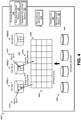
- FIG. 4 illustrates an example 400 of thin provisioning space allocation and space reclamation according to some implementations herein.
- a plurality of storage devices 402 may make up a storage pool 404.
- the storage pool 404 may include a plurality of logical units (LUs) 406 that may each have a respective individually distinguishable LUN assigned.
- the storage manager 128 may create a plurality of logical volumes 408(1), 408(2), ..., 408(N) from the storage pool 404 that may be used by users for storing user data and/or by the system for storing system data, such as discussed above.
- LUs logical units
- an initial amount of storage space may be allocated to the volume. Subsequently, suppose that data is written to the first volume 408(1), as indicated at 410. In some cases, when the amount of free space remaining in the first volume 408(1) is below a threshold level, additional space may be allocated to the volume, as indicated at 412.
- the garbage collection module 132 may be executed, may determine that the deleted data should be permanently deleted from the second volume 408(2), and may indicate that the corresponding storage space can be reclaimed.
- the storage manager 128 may determine that the freed up space is to be reclaimed, and may send a reclamation instruction 416 to the controller 148 to reclaim storage corresponding to the deleted data on the second volume 408(2).
- the reclamation module 154 may be executed by the controller to reclaim the freed up storage space, and the reclaimed storage space may be returned to the storage pool 404.
- the reclamation module 154 may write all zeros to the virtual storage area corresponding to the deleted data. Units of storage space, such as pages, blocks, etc., having all zeros may be returned to the storage pool 404, and may be subsequently reallocated from the storage pool 404 to any of the volumes 408(1)-408(N) in an on-demand manner.
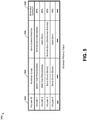
- FIG. 5 illustrates an example storage profile table 500 according to some implementations.
- the storage profile table 500 may be maintained by the storage manager for determining when to perform reclamation on a volume.
- the storage profile table includes a volume ID 502, storage class 504, data characteristics 506, and available capacity 508.
- volume ID 502 may be the volume identifier used for distinguishing the volumes created by the storage manager.
- the storage class 504 may be the class of storage from which the respective volume is created, such as array thin provisioning, DAS thin provisioning, solid-state devices, or other types of storage classes that employ reclamation processing.
- the data characteristics 506 may be the type of data that is stored on the respective volume such as system data or user data.
- the available capacity 508 may indicate the amount of storage capacity of the respective volume that has not yet been used and is available for storing data. For instance, the table 500 indicates that 40 percent of the first volume is still available for storing new data.
- the storage manager may generate and update the storage profile table 500 as new volumes are created by the storage manager. For example, the storage manager knows the class of storage from which each volume is created. Furthermore, the storage manager knows the category of data that is stored in each volume. In addition, the storage manager may determine the used and available capacity of each volume such as based on a comparison of the amount of data stored in each volume with the amount of total capacity of the volume. Further, the storage manager may update the storage profile table as reclamation is performed based on information received from the reclamation module, such as an amount of storage that is reclaimed. The storage manager may refer to the storage profile table 500 when determining whether to perform reclamation on a particular volume as discussed additionally below. Furthermore, while the storage profile table 500 is illustrated as a table in this example, any other type of data structure capable of maintaining the illustrated information may be used instead of, or in addition to, a table.
- individual volumes storing user data may have different used remaining capacity thresholds for invoking reclamation. For instance, reclamation may be invoked when less than 50 percent capacity is remaining for some volumes, and when less than 40 percent capacity is remaining for other volumes.
- an additional column may be added to the table 500 to indicate the remaining capacity threshold for each volume storing user data.
- FIG. 6 illustrates an example graph 600 showing storage capacity as a function of time according to some implementations.
- a curve 602 may represent the percentage of remaining available storage capacity of a particular volume storing user data managed by the storage manager. For example, over time, as one or more users store data to the volume, the remaining available capacity of the volume may decrease, as indicated at 604.
- a user deletes a first portion of data from the volume.
- the storage manager may subsequently compare the remaining available capacity of the volume to a remaining capacity threshold 608 to determine whether to perform reclamation on the volume. For example, a remaining capacity threshold 608 for performing reclamation may be established for all volumes storing user data in the system.
- the remaining capacity threshold 608 may be different for different volumes storing different user data in the system.
- the remaining capacity threshold 608 may be fixed unless changed or otherwise reconfigured by an administrator.
- the storage manager may adjust the remaining capacity threshold 608 for particular user volumes or for all user volumes.
- the threshold may be based on an amount of capacity used rather than the amount of capacity remaining. As these two numbers are complimentary, either may be used in the examples herein for determining whether to perform reclamation.
- the storage manager may determine that the available remaining capacity of the volume is below the remaining capacity threshold 608, and may further determine that data has been deleted from the volume since the last time reclamation was performed on the volume. Accordingly, the storage manager may invoke the reclamation module to perform reclamation on the volume as indicated at 612.
- the reclamation process in this example causes the available capacity of the volume to rise back above the remaining capacity threshold 608. Subsequently, as indicated at 614 the available capacity may again gradually decrease as additional data is stored to the volume.
- the reclamation may not result in the available capacity rising back above the remaining capacity threshold 608.
- the volume may be subject to reclamation each time data is deleted.
- some examples may include adjusting of the remaining capacity threshold 608, such as from 50 percent to 40 percent. For instance, the storage manager may monitor the amount of space being reclaimed, and if there are frequent small reclamations, the remaining capacity threshold 608 may be adjusted. However, the adjustment of the remaining capacity threshold 608 may be balanced against the need to reclaim space more aggressively from volumes that are closer to being full.
- FIGS. 7-9 are flow diagrams illustrating processes according to the embodiments of the present invention .
- the processes are illustrated as collections of blocks in logical flow diagrams, which represent a sequence of operations, some or all of which may be implemented in hardware, software or a combination thereof.
- the blocks may represent computer-executable instructions stored on one or more computer-readable media that, when executed by one or more processors, program the processors to perform the recited operations.
- computer-executable instructions include routines, programs, objects, components, data structures and the like that perform particular functions or implement particular data types.
- the processes are described with reference to the environments, frameworks and systems described in the examples herein, although the processes may be implemented in a wide variety of other environments, frameworks and systems.
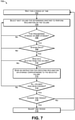
- F1G. 7 is a flow diagram illustrating a process 700 executed for reclaiming storage space from volumes storing system data according to an embodiment.
- the process 700 is executed by a storage manager executing on at least one storage node
- the storage manager waits for a period of time.
- the storage manager is configured to perform reclamation of unused storage freed by deletion of system data according to a schedule or periodic basis.
- the storage manager is configured to wait for a specified period of time after completing the previous reclamation, or until the next scheduled time for performing reclamation arrives.
- the storage manager selects a next volume for determining whether to perform reclamation on the volume.
- the storage manager accesses the storage profile table 500 discussed above with respect reference to FIG. 5 for selecting a next volume to examine.
- the storage manager determines whether the selected volume corresponds to thin provision storage, SSD storage, or other class of storage that is configured for employing reclamation of freed storage space to enable reuse of the freed storage space. For instance, the storage manager determines from the storage profile table 500 whether the selected volume is provided from thin provision storage, SSD storage, or other class of storage requiring reclamation. If the result is no, the process returns to block 704 for selecting the next volume. On the other hand, if the result is yes, the process proceeds to block 708.
- the storage manager determines whether the selected volume stores system data. Typically, the storage manager stores system data in separate volumes from user data. Accordingly, the storage manager determines from the storage profile table 500 whether the selected volume stores system data or user data. If the result is no, the process returns to block 704 for selecting the next volume in the storage profile table 500. On the other hand, if the result is yes, the process proceeds to block 710.
- the storage manager determines whether data has been deleted from the selected volume. For example, the storage manager knows, e.g., from the file system, which volumes have had system data deleted. If no data has been deleted, reclamation is not performed and the process goes to block 704. On the other hand, if data has been deleted, the process goes to block 712. Furthermore, prior to going to block 712, the storage manager determines a user usage load on the system, and waits to perform reclamation until the user usage load is less than a threshold load.
- the storage manager sends an instruction for executing reclamation on the volume.
- the storage manager sends the reclamation instruction to controller that controls storage corresponding to the volume, such as an array controller or an SSD controller.
- a reclamation module may be executed by the controller for performing the reclamation.
- a driver for the SSD executes a reclamation module that performs reclamation on the SSD.
- the array controller executes a reclamation module that is part of a thin provisioning software stack used by the array controller for providing thin provisioned storage to the storage manager.
- the reclamation be is performed as a background process such as if the current load on the system exceeds a threshold level.
- the reclamation is executed with a lower priority with respect to user events, such as user- requests to write or read data to or from the storage, respectively.
- user events such as user- requests to write or read data to or from the storage, respectively.
- the volume corresponds to an LU on an SSD array
- the corresponding storage space of the LU is reclaimed, which in some cases, such as in the case that the array is configured in a RAID configuration, involves performing reclamation on portions of several different physical SSD devices.
- the storage manager determines whether all volumes have been checked. For example, the storage manager traverses through the storage profile table 500 and the volumes in sequential order. When the service manager reaches the end of the storage profile table 500, the service manager determines that all volumes have been checked. When the result is no, the process returns to block 704 to select the next volume. On the other hand, when the result is yes, the process proceeds to block 716.
- the storage manager determines whether to change the time period between the reclamation processings. For example, the storage manager checks the amount of storage that was reclaimed by the reclamation processing and if the amount reclaimed is less than a first threshold, the storage manager extends the period of time between reclamation processings by a specified amount. For instance, if only a small amount of storage capacity is being reclaimed during each reclamation processing, then the period of time between reclamation processing is increased so that a larger amount of storage capacity is reclaimed and efficiency of the reclamation process is increased. On the other hand, if the amount reclaimed is more than a second threshold, the storage manager shortens the period of time between reclamation processing by a specified amount.
- the storage manager checks the amount of storage space that was reclaimed over a plurality of recent reclamation processings when making the determination as to whether to change the period of time between reclamation processings. If the result is no, the process returns to block 702 to wait for the next scheduled reclamation processing. On the other hand, if the result is yes, the process proceeds to block 718.
- the storage manager adjusts the time period until the next reclamation processing for system data. In some examples, the storage manager adjusts the time period by a specified or predetermined amount. Alternatively, in other examples, the amount of change of the time between reclamation processings is based at least in part on by how much the amount of storage space that is reclaimed is less than the first threshold or greater than the second threshold.
- FIG. 8 is a flow diagram illustrating a process 800 for reclaiming storage space from volumes storing user data according to an embodiment.
- the process 800 is executed by the storage manager executing on at least one storage node.
- the storage manager receives an indication that garbage collection is complete.
- the garbage collection module performs garbage collection on the user data on a periodic basis or on an as-needed basis such as in the case that there are a large number of user data deletions.
- the garbage collection module determines whether deleted data is to be permanently deleted from the storage system or is to be retained for a period of time based on a retention policy or the like.
- the retention policy safeguards against accidental user deletion by retaining deleted data for a period of time before actually deleting the data from the storage.
- retention policies applies to particular pieces of data, such as archive data, and these pieces of data may be deleted automatically by the garbage collection module when the retention period for these pieces of data expire.
- garbage collection is only performed on user data, and not on system data. Further, the garbage collection runs on a schedule set by an administrator, or based on other conditions within the system, such as a number of deletions.
- the storage manager determines whether any user data was deleted. For example, the garbage collection module makes the determination as to whether the data indicated to be linked deleted by the user is to be permanently deleted from the storage. If the result is no, then the process goes to block 806 and reclamation is not performed. On the other hand, if the result is yes, the process goes to block 808.
- the storage manager would not perform reclamation if no user data is deleted or if no thin provisioned or SSD volumes exist.
- the storage manager determines whether any unexamined thin provisioned or SSD volumes exist, i.e., volumes whose corresponding underlying physical storage device(s) correspond to a thin provisioning array, an SSD, or other class of storage that is configured for employing reclamation of freed storage space to enable reuse of the freed storage space.
- the storage manager refers to the storage profile table 500 discussed above with respect to FIG. 5 for determining the class of storage for a particular volume. If there are no thin provisioned or SSD volumes that have not yet been examined the process proceeds to block 806 and reclamation is not performed. On the other hand, if there is an unexamined thin provisioned volume, SSD volume, or volume from another class of storage requiring reclamation, the process selects the volume and proceeds to block 810.
- the storage manager determines whether a current remaining available capacity of the selected volume is less than the remaining capacity threshold, as discussed above, e.g., with respect to FIG. 6 . For example, if the remaining capacity threshold is set at 50 percent, the storage manager determines from the storage profile 500 whether the remaining available capacity of the selected volume is less than 50 percent. In some examples, the remaining capacity threshold is set initially by an administrator, and is adjusted by the storage manager, as discussed below with respect to blocks 818 and 820. If the result is no, the process returns to block 808 to select a next volume. On the other hand, if the result is yes the process proceeds to block 812.
- the storage manager determines whether data was deleted from the selected volume. For example, the storage manager receives from the garbage collection module a list of volumes from which data was deleted during garbage collection. If no data was deleted from the selected volume, the process returns to block 808. On the other hand, if the result is yes, the process proceeds to block 814.
- the storage manager determines whether now is a good time to perform reclamation.
- the storage manager determines an overall user usage load on the system and determines whether the load exceeds a threshold. If the user usage load exceeds the threshold, the storage manager waits for a period of time until the user usage load will not exceed the threshold.
- the storage manager refers to historic user usage patterns for the system when determining the load for the system during an upcoming period of time. As one example, if a large number of users are currently logged in or otherwise using the system, and the load on the storage during such usage typically exceeds a threshold level of system use, then the load is expected to exceed the threshold, and the reclamation is delayed until a smaller number of users are using the system. This operation is also performed in the process 700, such as prior executing the operation of block 712.
- the storage manager sends an instruction for executing reclamation on the volume.
- the storage manager sends the reclamation instruction to a controller that controls storage corresponding to the volume, such as an array controller or an SSD controller.
- a reclamation module may be executed by the controller for performing the reclamation.
- a driver for the SSD executes a reclamation module that performs reclamation on the SSD.
- the array controller executes a reclamation module that is part of a thin provisioning software stack used by the array controller for providing thin provisioned storage to the storage manager.
- the reclamation be is performed as a background process such as if the current load on the system exceeds a threshold level.
- the reclamation is executed with a lower priority with respect to user events, such as user-requests to write or read data to or from the storage, respectively.
- user events such as user-requests to write or read data to or from the storage, respectively.
- the volume corresponds to an LU on an SSD array
- the corresponding storage space of the LU is reclaimed, which in some cases, such as in the case that the array is configured in a RAID configuration, involves performing reclamation on portions of several different physical SSD devices.
- the storage manager determines whether to adjust the remaining capacity threshold used in block 810. For example, as discussed above with respect to FIG. 6 , the remaining capacity threshold is adjusted if the volume capacity is less 50 percent full and the reclamation consistently results in a small amount of storage space being reclaimed. For instance, the remaining capacity threshold is adjusted to 40 percent or 30 percent, etc., to possibly reduce the frequency of small reclamation returns. If the result is no, the process returns to block 808. On the other hand, if the result is yes, the process goes to block 820. In some examples, the determination is made based upon the amount of storage reclaimed in the volume over a plurality of recent reclamation processings.
- the storage manager adjusts the remaining capacity threshold used in block 810 based on the amount of storage space reclaimed by the processing. For instance, the remaining capacity threshold is adjusted to 40 percent or 30 percent, etc., to possibly reduce the frequency of small reclamation returns. As mentioned above, the adjustment of the remaining capacity threshold is balanced against the need to reclaim storage more aggressively from volumes that are closer to being full.
- FIG. 9 is a flow diagram illustrating a process 900 for performing reclamation in a storage system according to an embodiment.
- the process 900 is performed by the storage manager executing on at least one node .
- the storage manager categorizes data received from a user device as user data.
- User data including user metadata, is received from the user device, such as from one or more applications executing on the user device.
- the user application generates user data and/or save the user data to the storage, such as by sending user data to the storage system.
- user data includes content items, such as images, documents, emails, video recordings, audio recordings, and the like.
- the storage manager creates a first volume from a storage pool for storing user data. For example, the storage manager creates a logical volume for corresponding to one or more LUs and/or one or more physical storage devices or portions thereof.
- the storage manager categorizes datas generated by the system as system data.
- system data include system logs, transaction logs, indexes, internal databases, system generated data structures, operating system data, lists of users, and other data generated by system modules and components.
- the storage manager creates a second volume from the storage pool for storing system data. For example, the storage manager creates a separate logical volume for storing system data. Thus, system data is stored in separate volumes from user data.
- the storage manager determines whether a thin provisioning array, an SSD, or other class of storage that is configured for employing reclamation of freed storage space to enable reuse of the freed storage space is used for creating a volume in the system. For example, the storage manager refers to the storage profile table 500 to determine whether there are any volumes corresponding to LUs on thin provisioning arrays or SSDs currently being used. If there is none being used in the system, the process waits until such a volume is created.
- the storage manager determines whether the selected volume is used to store system data or user data. For example, the storage manager refers to the storage profile table 500 to determine the category of data being stored in the selected volume.
- the storage manager performs the process of FIG. 7 periodically on a schedule. For example, storage manager invokes the reclamation process on volumes storing system data on a regular basis such as every hour, every half-day, every day, or the like. As one example, the reclamation process is performed on a daily basis late at night and/or early in the morning when there are few users using the system. Further, in some cases, the storage manager takes a current and predicted overall system load into consideration when determining when to perform reclamation.
- the storage manager performs the process of FIG. 8 for performing reclamation based at least in part on an available capacity of the volume being less than a remaining capacity threshold. For example, if there are no thin provisioned or SSD volumes storing user data in the system, it is not necessary to execute the process of FIG. 8 following garbage collection. Further, in some cases, the storage manager takes a current and predicted overall system load into consideration when determining when to perform reclamation.
- Various instructions, processes, and techniques described herein may be considered in the general context of computer-executable instructions, such as program modules stored on computer-readable media, and executed by the processor(s) herein.
- program modules include routines, programs, objects, components, data structures, etc., for performing particular tasks or implementing particular abstract data types.
- These program modules, and the like may be executed as native code or may be downloaded and executed, such as in a virtual machine or other just-in-time compilation execution environment.
- the functionality of the program modules may be combined or distributed as desired in various implementations.
- An implementation of these modules and techniques may be stored on computer storage media or transmitted across some form of communication media.
Landscapes
- Engineering & Computer Science (AREA)
- Theoretical Computer Science (AREA)
- Physics & Mathematics (AREA)
- General Engineering & Computer Science (AREA)
- General Physics & Mathematics (AREA)
- Human Computer Interaction (AREA)
- Information Retrieval, Db Structures And Fs Structures Therefor (AREA)
Claims (12)
- Système (100) pour une récupération d'espace de stockage physique libéré à partir d'un disque statique à semi-conducteurs (SSD) ou d'un réseau de SSD à allocation fine et dynamique (thin provisioning), comprenant :un ou plusieurs dispositifs de stockage configurés pour fournir un stockage (104) qui est configuré à des fins de récupération d'espace de stockage libéré pour permettre une réutilisation de l'espace de stockage libéré ;un ou plusieurs processeurs (122) couplés auxdits un ou plusieurs dispositifs de stockage, lesdits un ou plusieurs processeurs (122) étant programmés par des instructions exécutables pour effectuer des opérations consistant à :établir deux catégories de données différentes pour le stockage, les deux catégories différentes étant une catégorie de données d'utilisateur et une catégorie de données de système, dans lequel les données d'utilisateur sont reçues depuis un dispositif d'utilisateur et les données de système sont générées par le système ;créer au moins un premier volume à partir d'un pool de stockage pour stocker des données d'utilisateur, dans lequel ledit au moins un premier volume est classé pour stocker les données d'utilisateur ;créer au moins un second volume à partir du pool de stockage pour stocker des données de systèmes, dans lequel ledit au moins un second volume est classé pour stocker les données de système et est séparé dudit au moins un premier volume ;établir une procédure de récupération de stockage différente pour chacun des deux volumes différents correspondant aux deux catégories différentes, dans lequel une première procédure de récupération de stockage pour la catégorie de données d'utilisateur inclut d'effectuer une récupération sur ledit au moins un volume de données d'utilisateur sur la base d'une détermination selon laquelle une capacité disponible dudit au moins un volume de données d'utilisateur est inférieure à un seuil de capacité restante, dans lequel une seconde procédure de récupération de stockage pour la catégorie de données de système inclut d'effectuer une récupération sur ledit au moins un volume de données de système sur la base d'une détermination selon laquelle une période de temps spécifiée s'est écoulée depuis qu'une dernière récupération a été effectuée sur le volume de données de système ;classer des données reçues ou générés devant être stockées dans le stockage soit en tant que données d'utilisateur pour un stockage dans ledit au moins un volume de données d'utilisateur, soit en tant que données de système pour un stockage dans ledit au moins un volume de données de système ;déterminer qu'un premier volume (408(1)) correspond à un réseau de SSD ou à un SSD à thin provisioning qui est configuré à des fins de récupération d'espace de stockage libéré pour permettre une réutilisation de l'espace de stockage libéré ;déterminer si un premier volume (408(1)) a été classé en tant que volume de données de système (138) ou en tant que volume de données d'utilisateur (136) ;quand il est déterminé que le premier volume (408(1)) a été classé en tant qu'un volume parmi ledit au moins un volume de données d'utilisateur pour stocker des données d'utilisateur (136) et quand il est déterminé qu'une portion des données d'utilisateur (136) a été effacée du premier volume (408(1)),déterminer qu'une capacité disponible du premier volume (408(1)) est inférieure à un seuil de capacité restante ;déterminer une charge d'utilisation d'utilisateur sur le système pendant une période temporelle à venir sur la base d'une charge d'historique pour le nombre d'utilisateurs actuellement connectés ; etenvoyer une instruction pour effectuer une récupération sur un stockage (104) correspondant au premier volume (408(1)) sur la base en partie d'une détermination selon laquelle la charge d'utilisation d'utilisateur est inférieure à une charge seuil ; etajuster le seuil de capacité sur la base d'une quantité de stockage récupérée dans le volume de données d'utilisateur sur une pluralité de procédures de récupération récentes ;déterminer qu'un second volume (408(2)) a été classé en tant qu'un volume parmi ledit au moins un volume de données de système pour stocker des données de système (138) ;déterminer qu'une période de temps s'est écoulée depuis une récupération d'espace de stockage libéré sur le second volume (408(2)) ou sur au moins un autre volume utilisé pour stocker des données de système (138) ;envoyer une instruction pour effectuer la seconde procédure de récupération de stockage sur un stockage (104) alloué au second volume (408(2)).
- Système (100) selon la revendication 1, les opérations consistant en outre à :déterminer qu'une quantité d'espace de stockage récupérée à partir d'un ou de plusieurs volumes stockant des données de systèmes (138), incluant le second volume (408(2)), excède une quantité seuil ; etdiminuer une période d'attente prédéterminée jusqu'à ce qu'une récupération suivante sur lesdits un ou plusieurs volumes stockant des données de systèmes (138) soit effectuée.
- Système (100) selon la revendication 1, les opérations consistant en outre à envoyer l'instruction pour effectuer la récupération à un contrôleur associé au stockage (104), dans lequel le contrôleur est programmé pour effectuer au moins une récupération parmi :une récupération sur un disque statique à semi-conducteurs ; ouune récupération sur un stockage virtuel fourni par un réseau à thin provisioning (114).
- Système (100) selon la revendication 1, les opérations consistant en outre à déterminer qu'une portion des données d'utilisateur (136) ont été effacées du premier volume (408(1)) en effectuant une collecte de déchets sur le volume, dans lequel l'opération consistant à effectuer une collecte de déchets consiste à :déterminer qu'une indication a été reçue depuis un dispositif d'utilisateur (108) indiquant que la portion de données d'utilisateur (136) doit être effacée du volume ; etdéterminer qu'une politique de conservation de données indique que la portion de données d'utilisateur (136) est apte à être effacée du volume.
- Système (100) selon la revendication 1, les opérations consistant en outre à effectuer la récupération sur le stockage (104) correspondant au premier volume (408(1)) en écrasant un espace de stockage correspondant à la première portion de données avec un motif associé à l'espace de stockage non utilisé.
- Système (100) selon la revendication 1, les opérations consistant en outre à :recevoir initialement, via lesdits un ou plusieurs processeurs (122), les données d'utilisateur (136), au moins en partie, depuis une application exécutée sur un dispositif d'utilisateur (108), pour un stockage (104) sur lesdits un ou plusieurs dispositifs de stockage ; etsur la base de la réception au moins en partie, classer les données d'utilisateur reçues (136) en tant que données d'utilisateur (136).
- Système (100) selon la revendication 1, les opérations consistant en outre à générer, via lesdits un ou plusieurs processeurs (122), les données de système (138), dans lequel les données de système (138) comprennent au moins un élément parmi des données de système d'exploitation (138), un journal généré par lesdits un ou plusieurs processeurs (122), et un index généré par lesdits un ou plusieurs processeurs (122).
- Système (100) selon la revendication 1, les opérations consistant en outre à :déterminer qu'une quantité de capacité de stockage récupérée est inférieure à une quantité seuil de récupération ; etchanger le seuil de capacité restante à un seuil de capacité restante plus bas.
- Système (100) selon la revendication 1,dans lequel les données d'utilisateur incluent des fichiers ou d'autres objets générés ou reçus de quelque autre manière depuis des dispositifs d'utilisateur, par exemple depuis des applications sur un dispositif d'utilisateur ;dans lequel les données d'utilisateur incluent également des métadonnées personnalisées pour les données d'utilisateur, telles que des noms de fichiers et autres informations de fichiers ou des informations d'objets générés par l'utilisateur.
- Système (100) selon la revendication 1,
dans lequel les données de système incluent des données générées de système telles que des journaux de système, des journaux de transaction, des index, des bases de données, des structures de données générées de système, des données de système d'exploitation, des listes d'utilisateurs, et d'autres données générées par les modules et composants de système. - Procédé pour un système (100) selon la revendication 1, le procédé comprenant les étapes consistant à :établir deux catégories de données différentes pour le stockage, les deux catégories différentes étant une catégorie de données d'utilisateur et une catégorie de données de système, dans lequel les données d'utilisateur sont reçues depuis un dispositif d'utilisateur et les données de système sont générées par le système ;créer au moins un premier volume à partir d'un pool de stockage pour stocker des données d'utilisateur, dans lequel ledit au moins un premier volume est classé pour stocker les données d'utilisateur ;créer au moins un second volume à partir du pool de stockage pour stocker des données de systèmes, dans lequel ledit au moins un second volume est classé pour stocker les données de système et est séparé dudit au moins un premier volume ;établir une procédure de récupération de stockage différente pour chacun des deux volumes différents correspondant aux deux catégories différentes, dans lequel une première procédure de récupération de stockage pour la catégorie de données d'utilisateur inclut d'effectuer une récupération sur ledit au moins un volume de données d'utilisateur sur la base d'une détermination selon laquelle une capacité disponible dudit au moins un volume de données d'utilisateur est inférieure à un seuil de capacité restante, dans lequel une seconde procédure de récupération de stockage pour la catégorie de données de système inclut d'effectuer une récupération sur ledit au moins un volume de données de système sur la base d'une détermination selon laquelle une période de temps spécifiée s'est écoulée depuis qu'une dernière récupération a été effectuée sur le volume de données de système ;classer des données reçues ou générés devant être stockées dans le stockage soit en tant données d'utilisateur pour un stockage dans ledit au moins un volume de données d'utilisateur, soit en tant que données de système pour un stockage dans ledit au moins un volume de données de système ;déterminer qu'un premier volume (408(1)) correspond à un réseau de SSD ou à un SSD à thin provisioning qui est configuré à des fins de récupération d'espace de stockage libéré pour permettre une réutilisation de l'espace de stockage libéré ;déterminer si un premier volume (408(1)) a été classé en tant que volume de données de système (138) ou en tant que volume de données d'utilisateur (136) ;quand il est déterminé que le premier volume (408(1)) a été classé en tant qu'un volume parmi ledit au moins un volume de données d'utilisateur pour stocker des données d'utilisateur (136) et quand il est déterminé qu'une portion des données d'utilisateur (136) a été effacée du premier volume (408(1)),déterminer qu'une capacité disponible du premier volume (408(1)) est inférieure à un seuil de capacité restante ;déterminer une charge d'utilisation d'utilisateur sur le système pendant une période temporelle à venir sur la base d'une charge d'historique pour le nombre d'utilisateurs actuellement connectés ; etenvoyer une instruction pour effectuer une récupération sur un stockage (104) correspondant au premier volume (408(1)) sur la base en partie d'une détermination selon laquelle la charge d'utilisation d'utilisateur est inférieure à une charge seuil ; etajuster le seuil de capacité sur la base d'une quantité de stockage récupérée dans le volume de données d'utilisateur sur une pluralité de procédures de récupération récentes ;déterminer qu'un second volume (408(2)) a été classé en tant qu'un volume parmi ledit au moins un volume de données de système pour stocker des données de système (138) ;déterminer qu'une période de temps s'est écoulée depuis une récupération d'espace de stockage libéré sur le second volume (408(2)) ou sur au moins un autre volume utilisé pour stocker des données de système (138) ;envoyer une instruction pour effectuer la seconde procédure de récupération de stockage sur un stockage (104) alloué au second volume (408(2)).
- Support ou pluralité de supports non- transitoires lisibles sur d'ordinateur stockant des instructions qui, quand elles sont exécutées par un ou plusieurs processeurs (122), programment lesdits un ou plusieurs processeurs (122) à effectuer le procédé selon la revendication 11.
Applications Claiming Priority (1)
| Application Number | Priority Date | Filing Date | Title |
|---|---|---|---|
| PCT/US2015/052146 WO2017052571A1 (fr) | 2015-09-25 | 2015-09-25 | Récupération adaptative d'espace de stockage |
Publications (3)
| Publication Number | Publication Date |
|---|---|
| EP3353627A1 EP3353627A1 (fr) | 2018-08-01 |
| EP3353627A4 EP3353627A4 (fr) | 2019-04-24 |
| EP3353627B1 true EP3353627B1 (fr) | 2022-01-19 |
Family
ID=58386856
Family Applications (1)
| Application Number | Title | Priority Date | Filing Date |
|---|---|---|---|
| EP15904910.5A Active EP3353627B1 (fr) | 2015-09-25 | 2015-09-25 | Récupération adaptative d'espace de stockage |
Country Status (3)
| Country | Link |
|---|---|
| US (1) | US11188229B2 (fr) |
| EP (1) | EP3353627B1 (fr) |
| WO (1) | WO2017052571A1 (fr) |
Families Citing this family (23)
| Publication number | Priority date | Publication date | Assignee | Title |
|---|---|---|---|---|
| JP6734058B2 (ja) * | 2016-01-27 | 2020-08-05 | 株式会社バイオス | 制御装置 |
| US10042581B2 (en) * | 2016-12-07 | 2018-08-07 | International Business Machines Corporation | Releasing space allocated to a space efficient target storage in a copy relationship with a source storage |
| US10754556B2 (en) * | 2017-06-27 | 2020-08-25 | International Business Machines Corporation | Prioritization of virtual volumes to take offline in a thin provisioning system |
| US10949343B2 (en) | 2018-02-12 | 2021-03-16 | International Business Machines Corporation | Instant storage reclamation ensuring uninterrupted media recording |
| CN111124254B (zh) * | 2018-10-30 | 2023-09-29 | 伊姆西Ip控股有限责任公司 | 调度存储空间回收请求的方法、电子设备和程序产品 |
| US10976950B1 (en) | 2019-01-15 | 2021-04-13 | Twitter, Inc. | Distributed dataset modification, retention, and replication |
| US11216197B2 (en) * | 2019-08-02 | 2022-01-04 | EMC IP Holding Company, LLC | System and method for smart pool space reclamation |
| US12406768B2 (en) | 2023-03-27 | 2025-09-02 | Dell Products L.P. | System and method for collection and management of data from managed and unmanaged devices |
| US12505241B2 (en) | 2023-03-27 | 2025-12-23 | Dell Products L.P. | System and method for access control to and management of diagnostic data |
| US12499029B2 (en) | 2023-03-27 | 2025-12-16 | Dell Products L.P. | System and method for use based management of diagnostic data |
| US12505248B2 (en) | 2023-04-27 | 2025-12-23 | Dell Products L.P. | System and method for managing access control of data across a distributed system |
| US12210546B2 (en) | 2023-04-27 | 2025-01-28 | Dell Products L.P. | System and method for managing storage usage and capacity |
| US12339994B2 (en) | 2023-04-27 | 2025-06-24 | Dell Products L.P. | System and method for managing access control of sensitive data |
| US20250028459A1 (en) * | 2023-07-20 | 2025-01-23 | Google Llc | Lowering Emergency Capacity Reservations for Storage Systems |
| US12488043B2 (en) | 2023-08-30 | 2025-12-02 | Dell Products L.P. | System and method for managing storage of data in a set of storage tiers |
| US12411888B2 (en) | 2023-08-30 | 2025-09-09 | Dell Products L.P. | System and method for managing user accessibility based on data in a data management system |
| US12216707B1 (en) * | 2023-08-30 | 2025-02-04 | Dell Products L.P. | System and method for managing storage space in a data management system |
| US12524560B2 (en) | 2023-08-30 | 2026-01-13 | Dell Products L.P. | Multifactor authentication based on user experiences |
| US12332857B2 (en) | 2023-08-30 | 2025-06-17 | Dell Products L.P. | Automated garbage collection based on contextual analysis driven by NLP audio |
| US12481781B2 (en) | 2023-08-30 | 2025-11-25 | Dell Products L.P. | System and method for managing access to data stored in a data management system |
| US12282489B2 (en) | 2023-08-30 | 2025-04-22 | Dell Products L.P. | System and method for enrichment of stored data |
| US12536182B2 (en) | 2023-08-30 | 2026-01-27 | Dell Products L.P. | System and method for managing data by processing search queries |
| WO2025235325A1 (fr) * | 2024-05-08 | 2025-11-13 | Micron Technology, Inc. | Réduction d'opérations de récupération des secteurs inutiles dans un dispositif de stockage de données connecté à un système hôte comprenant de multiples locataires |
Citations (1)
| Publication number | Priority date | Publication date | Assignee | Title |
|---|---|---|---|---|
| US20150058381A1 (en) * | 2013-08-21 | 2015-02-26 | Oracle International Corporation | System and method for dynamically selecting a garbage collection algorithm based on the contents of heap regions |
Family Cites Families (18)
| Publication number | Priority date | Publication date | Assignee | Title |
|---|---|---|---|---|
| US6065020A (en) * | 1998-05-27 | 2000-05-16 | Microsoft Corporation | Dynamic adjustment of garbage collection |
| US7136882B2 (en) | 2001-07-31 | 2006-11-14 | Hewlett-Packard Development Company, L.P. | Storage device manager |
| US7984084B2 (en) * | 2005-08-03 | 2011-07-19 | SanDisk Technologies, Inc. | Non-volatile memory with scheduled reclaim operations |
| KR101089150B1 (ko) * | 2005-08-03 | 2011-12-02 | 쌘디스크 코포레이션 | 스케쥴링된 리클레임 작동들을 갖는 비휘발성 메모리 |
| GB0623255D0 (en) | 2006-11-22 | 2007-01-03 | Ibm | Apparatus and method for resource reclamation in data storage |
| US8364918B1 (en) * | 2007-04-06 | 2013-01-29 | Marvell International Ltd. | Sensed opportunistic garbage collection in memory components |
| US20090125572A1 (en) * | 2007-11-14 | 2009-05-14 | International Business Machines Corporation | Method for managing retention of data on worm disk media based on event notification |
| US8504524B1 (en) | 2009-02-09 | 2013-08-06 | American Megatrends, Inc. | Reclaiming space from a file system |
| US8635422B1 (en) | 2009-10-29 | 2014-01-21 | Symantec Corporation | Systems and methods for reclaiming storage space from deleted volumes on thin-provisioned disks |
| US8812563B2 (en) | 2010-03-02 | 2014-08-19 | Kaspersky Lab, Zao | System for permanent file deletion |
| US8788769B2 (en) * | 2010-11-16 | 2014-07-22 | Actifio, Inc. | System and method for performing backup or restore operations utilizing difference information and timeline state information |
| US8813071B2 (en) | 2011-01-31 | 2014-08-19 | Symantec Corporation | Storage reclamation systems and methods |
| US9146766B2 (en) * | 2011-06-22 | 2015-09-29 | Vmware, Inc. | Consistent unmapping of application data in presence of concurrent, unquiesced writers and readers |
| JP5853734B2 (ja) * | 2012-02-02 | 2016-02-09 | 富士通株式会社 | 仮想ストレージ装置,制御装置及び制御プログラム |
| KR102053865B1 (ko) * | 2013-03-15 | 2019-12-09 | 삼성전자주식회사 | 호스트-주도 가비지 컬렉션 방법과 상기 방법을 수행할 수 있는 시스템 |
| US20190042405A1 (en) * | 2013-06-21 | 2019-02-07 | Western Digital Technologies, Inc. | Storing data based on writing frequency in data storage systems |
| US9558122B2 (en) * | 2014-05-29 | 2017-01-31 | Apple Inc. | Cache reclamation using prioritized record removal |
| US9542119B2 (en) * | 2014-07-09 | 2017-01-10 | Toshiba Corporation | Solid-state mass storage media having data volumes with different service levels for different data types |
-
2015
- 2015-09-25 WO PCT/US2015/052146 patent/WO2017052571A1/fr not_active Ceased
- 2015-09-25 US US15/742,558 patent/US11188229B2/en active Active
- 2015-09-25 EP EP15904910.5A patent/EP3353627B1/fr active Active
Patent Citations (1)
| Publication number | Priority date | Publication date | Assignee | Title |
|---|---|---|---|---|
| US20150058381A1 (en) * | 2013-08-21 | 2015-02-26 | Oracle International Corporation | System and method for dynamically selecting a garbage collection algorithm based on the contents of heap regions |
Also Published As
| Publication number | Publication date |
|---|---|
| US20180203612A1 (en) | 2018-07-19 |
| US11188229B2 (en) | 2021-11-30 |
| EP3353627A4 (fr) | 2019-04-24 |
| WO2017052571A1 (fr) | 2017-03-30 |
| EP3353627A1 (fr) | 2018-08-01 |
Similar Documents
| Publication | Publication Date | Title |
|---|---|---|
| EP3353627B1 (fr) | Récupération adaptative d'espace de stockage | |
| US11372810B2 (en) | Storage system implementing snapshot longevity ranking for efficient management of snapshots | |
| US11513997B2 (en) | Assignment of longevity ranking values of storage volume snapshots based on snapshot policies | |
| US9361034B2 (en) | Transferring storage resources between snapshot storage pools and volume storage pools in a distributed network | |
| US12086471B2 (en) | Tiering data strategy for a distributed storage system | |
| US10642633B1 (en) | Intelligent backups with dynamic proxy in virtualized environment | |
| EP2422274B1 (fr) | Niveaux intelligents de données de sauvegarde | |
| US9798629B1 (en) | Predicting backup failures due to exceeding the backup window | |
| US10810054B1 (en) | Capacity balancing for data storage system | |
| EP2774040B1 (fr) | Gestion de stockage coopératif | |
| US9906596B2 (en) | Resource node interface protocol | |
| JP5592493B2 (ja) | ストレージネットワークシステム及びその制御方法 | |
| US11108864B2 (en) | System and method for client policy assignment in a data storage system | |
| US10963182B2 (en) | System and method for on-demand recovery points | |
| US9934106B1 (en) | Handling backups when target storage is unavailable | |
| US12014061B2 (en) | Capacity and performance optimization in non-homogeneous storage | |
| US12530318B2 (en) | Grouping data to conserve storage capacity |
Legal Events
| Date | Code | Title | Description |
|---|---|---|---|
| STAA | Information on the status of an ep patent application or granted ep patent |
Free format text: STATUS: THE INTERNATIONAL PUBLICATION HAS BEEN MADE |
|
| PUAI | Public reference made under article 153(3) epc to a published international application that has entered the european phase |
Free format text: ORIGINAL CODE: 0009012 |
|
| STAA | Information on the status of an ep patent application or granted ep patent |
Free format text: STATUS: REQUEST FOR EXAMINATION WAS MADE |
|
| 17P | Request for examination filed |
Effective date: 20180328 |
|
| AK | Designated contracting states |
Kind code of ref document: A1 Designated state(s): AL AT BE BG CH CY CZ DE DK EE ES FI FR GB GR HR HU IE IS IT LI LT LU LV MC MK MT NL NO PL PT RO RS SE SI SK SM TR |
|
| AX | Request for extension of the european patent |
Extension state: BA ME |
|
| DAV | Request for validation of the european patent (deleted) | ||
| DAX | Request for extension of the european patent (deleted) | ||
| A4 | Supplementary search report drawn up and despatched |
Effective date: 20190322 |
|
| RIC1 | Information provided on ipc code assigned before grant |
Ipc: G06F 3/00 20060101AFI20190318BHEP Ipc: G06F 12/02 20060101ALI20190318BHEP Ipc: G06F 3/06 20060101ALI20190318BHEP |
|
| STAA | Information on the status of an ep patent application or granted ep patent |
Free format text: STATUS: EXAMINATION IS IN PROGRESS |
|
| 17Q | First examination report despatched |
Effective date: 20200224 |
|
| RAP1 | Party data changed (applicant data changed or rights of an application transferred) |
Owner name: HITACHI VANTARA LLC |
|
| GRAP | Despatch of communication of intention to grant a patent |
Free format text: ORIGINAL CODE: EPIDOSNIGR1 |
|
| STAA | Information on the status of an ep patent application or granted ep patent |
Free format text: STATUS: GRANT OF PATENT IS INTENDED |
|
| GRAJ | Information related to disapproval of communication of intention to grant by the applicant or resumption of examination proceedings by the epo deleted |
Free format text: ORIGINAL CODE: EPIDOSDIGR1 |
|
| GRAP | Despatch of communication of intention to grant a patent |
Free format text: ORIGINAL CODE: EPIDOSNIGR1 |
|
| INTG | Intention to grant announced |
Effective date: 20211011 |
|
| INTG | Intention to grant announced |
Effective date: 20211027 |
|
| GRAS | Grant fee paid |
Free format text: ORIGINAL CODE: EPIDOSNIGR3 |
|
| GRAA | (expected) grant |
Free format text: ORIGINAL CODE: 0009210 |
|
| STAA | Information on the status of an ep patent application or granted ep patent |
Free format text: STATUS: THE PATENT HAS BEEN GRANTED |
|
| AK | Designated contracting states |
Kind code of ref document: B1 Designated state(s): AL AT BE BG CH CY CZ DE DK EE ES FI FR GB GR HR HU IE IS IT LI LT LU LV MC MK MT NL NO PL PT RO RS SE SI SK SM TR |
|
| REG | Reference to a national code |
Ref country code: GB Ref legal event code: FG4D |
|
| REG | Reference to a national code |
Ref country code: CH Ref legal event code: EP |
|
| REG | Reference to a national code |
Ref country code: DE Ref legal event code: R096 Ref document number: 602015076597 Country of ref document: DE |
|
| REG | Reference to a national code |
Ref country code: AT Ref legal event code: REF Ref document number: 1464168 Country of ref document: AT Kind code of ref document: T Effective date: 20220215 |
|
| REG | Reference to a national code |
Ref country code: IE Ref legal event code: FG4D |
|
| REG | Reference to a national code |
Ref country code: LT Ref legal event code: MG9D |
|
| REG | Reference to a national code |
Ref country code: NL Ref legal event code: MP Effective date: 20220119 |
|
| REG | Reference to a national code |
Ref country code: AT Ref legal event code: MK05 Ref document number: 1464168 Country of ref document: AT Kind code of ref document: T Effective date: 20220119 |
|
| PG25 | Lapsed in a contracting state [announced via postgrant information from national office to epo] |
Ref country code: NL Free format text: LAPSE BECAUSE OF FAILURE TO SUBMIT A TRANSLATION OF THE DESCRIPTION OR TO PAY THE FEE WITHIN THE PRESCRIBED TIME-LIMIT Effective date: 20220119 |
|
| PG25 | Lapsed in a contracting state [announced via postgrant information from national office to epo] |
Ref country code: SE Free format text: LAPSE BECAUSE OF FAILURE TO SUBMIT A TRANSLATION OF THE DESCRIPTION OR TO PAY THE FEE WITHIN THE PRESCRIBED TIME-LIMIT Effective date: 20220119 Ref country code: RS Free format text: LAPSE BECAUSE OF FAILURE TO SUBMIT A TRANSLATION OF THE DESCRIPTION OR TO PAY THE FEE WITHIN THE PRESCRIBED TIME-LIMIT Effective date: 20220119 Ref country code: PT Free format text: LAPSE BECAUSE OF FAILURE TO SUBMIT A TRANSLATION OF THE DESCRIPTION OR TO PAY THE FEE WITHIN THE PRESCRIBED TIME-LIMIT Effective date: 20220519 Ref country code: NO Free format text: LAPSE BECAUSE OF FAILURE TO SUBMIT A TRANSLATION OF THE DESCRIPTION OR TO PAY THE FEE WITHIN THE PRESCRIBED TIME-LIMIT Effective date: 20220419 Ref country code: LT Free format text: LAPSE BECAUSE OF FAILURE TO SUBMIT A TRANSLATION OF THE DESCRIPTION OR TO PAY THE FEE WITHIN THE PRESCRIBED TIME-LIMIT Effective date: 20220119 Ref country code: HR Free format text: LAPSE BECAUSE OF FAILURE TO SUBMIT A TRANSLATION OF THE DESCRIPTION OR TO PAY THE FEE WITHIN THE PRESCRIBED TIME-LIMIT Effective date: 20220119 Ref country code: ES Free format text: LAPSE BECAUSE OF FAILURE TO SUBMIT A TRANSLATION OF THE DESCRIPTION OR TO PAY THE FEE WITHIN THE PRESCRIBED TIME-LIMIT Effective date: 20220119 Ref country code: BG Free format text: LAPSE BECAUSE OF FAILURE TO SUBMIT A TRANSLATION OF THE DESCRIPTION OR TO PAY THE FEE WITHIN THE PRESCRIBED TIME-LIMIT Effective date: 20220419 |
|
| PG25 | Lapsed in a contracting state [announced via postgrant information from national office to epo] |
Ref country code: PL Free format text: LAPSE BECAUSE OF FAILURE TO SUBMIT A TRANSLATION OF THE DESCRIPTION OR TO PAY THE FEE WITHIN THE PRESCRIBED TIME-LIMIT Effective date: 20220119 Ref country code: LV Free format text: LAPSE BECAUSE OF FAILURE TO SUBMIT A TRANSLATION OF THE DESCRIPTION OR TO PAY THE FEE WITHIN THE PRESCRIBED TIME-LIMIT Effective date: 20220119 Ref country code: GR Free format text: LAPSE BECAUSE OF FAILURE TO SUBMIT A TRANSLATION OF THE DESCRIPTION OR TO PAY THE FEE WITHIN THE PRESCRIBED TIME-LIMIT Effective date: 20220420 Ref country code: FI Free format text: LAPSE BECAUSE OF FAILURE TO SUBMIT A TRANSLATION OF THE DESCRIPTION OR TO PAY THE FEE WITHIN THE PRESCRIBED TIME-LIMIT Effective date: 20220119 Ref country code: AT Free format text: LAPSE BECAUSE OF FAILURE TO SUBMIT A TRANSLATION OF THE DESCRIPTION OR TO PAY THE FEE WITHIN THE PRESCRIBED TIME-LIMIT Effective date: 20220119 |
|
| PG25 | Lapsed in a contracting state [announced via postgrant information from national office to epo] |
Ref country code: IS Free format text: LAPSE BECAUSE OF FAILURE TO SUBMIT A TRANSLATION OF THE DESCRIPTION OR TO PAY THE FEE WITHIN THE PRESCRIBED TIME-LIMIT Effective date: 20220519 |
|
| REG | Reference to a national code |
Ref country code: DE Ref legal event code: R097 Ref document number: 602015076597 Country of ref document: DE |
|
| PG25 | Lapsed in a contracting state [announced via postgrant information from national office to epo] |
Ref country code: SM Free format text: LAPSE BECAUSE OF FAILURE TO SUBMIT A TRANSLATION OF THE DESCRIPTION OR TO PAY THE FEE WITHIN THE PRESCRIBED TIME-LIMIT Effective date: 20220119 Ref country code: SK Free format text: LAPSE BECAUSE OF FAILURE TO SUBMIT A TRANSLATION OF THE DESCRIPTION OR TO PAY THE FEE WITHIN THE PRESCRIBED TIME-LIMIT Effective date: 20220119 Ref country code: RO Free format text: LAPSE BECAUSE OF FAILURE TO SUBMIT A TRANSLATION OF THE DESCRIPTION OR TO PAY THE FEE WITHIN THE PRESCRIBED TIME-LIMIT Effective date: 20220119 Ref country code: EE Free format text: LAPSE BECAUSE OF FAILURE TO SUBMIT A TRANSLATION OF THE DESCRIPTION OR TO PAY THE FEE WITHIN THE PRESCRIBED TIME-LIMIT Effective date: 20220119 Ref country code: DK Free format text: LAPSE BECAUSE OF FAILURE TO SUBMIT A TRANSLATION OF THE DESCRIPTION OR TO PAY THE FEE WITHIN THE PRESCRIBED TIME-LIMIT Effective date: 20220119 Ref country code: CZ Free format text: LAPSE BECAUSE OF FAILURE TO SUBMIT A TRANSLATION OF THE DESCRIPTION OR TO PAY THE FEE WITHIN THE PRESCRIBED TIME-LIMIT Effective date: 20220119 |
|
| PLBE | No opposition filed within time limit |
Free format text: ORIGINAL CODE: 0009261 |
|
| STAA | Information on the status of an ep patent application or granted ep patent |
Free format text: STATUS: NO OPPOSITION FILED WITHIN TIME LIMIT |
|
| PG25 | Lapsed in a contracting state [announced via postgrant information from national office to epo] |
Ref country code: AL Free format text: LAPSE BECAUSE OF FAILURE TO SUBMIT A TRANSLATION OF THE DESCRIPTION OR TO PAY THE FEE WITHIN THE PRESCRIBED TIME-LIMIT Effective date: 20220119 |
|
| 26N | No opposition filed |
Effective date: 20221020 |
|
| PG25 | Lapsed in a contracting state [announced via postgrant information from national office to epo] |
Ref country code: SI Free format text: LAPSE BECAUSE OF FAILURE TO SUBMIT A TRANSLATION OF THE DESCRIPTION OR TO PAY THE FEE WITHIN THE PRESCRIBED TIME-LIMIT Effective date: 20220119 |
|
| PG25 | Lapsed in a contracting state [announced via postgrant information from national office to epo] |
Ref country code: MC Free format text: LAPSE BECAUSE OF FAILURE TO SUBMIT A TRANSLATION OF THE DESCRIPTION OR TO PAY THE FEE WITHIN THE PRESCRIBED TIME-LIMIT Effective date: 20220119 |
|
| REG | Reference to a national code |
Ref country code: CH Ref legal event code: PL |
|
| REG | Reference to a national code |
Ref country code: BE Ref legal event code: MM Effective date: 20220930 |
|
| PG25 | Lapsed in a contracting state [announced via postgrant information from national office to epo] |
Ref country code: LU Free format text: LAPSE BECAUSE OF NON-PAYMENT OF DUE FEES Effective date: 20220925 |
|
| PG25 | Lapsed in a contracting state [announced via postgrant information from national office to epo] |
Ref country code: LI Free format text: LAPSE BECAUSE OF NON-PAYMENT OF DUE FEES Effective date: 20220930 Ref country code: IT Free format text: LAPSE BECAUSE OF FAILURE TO SUBMIT A TRANSLATION OF THE DESCRIPTION OR TO PAY THE FEE WITHIN THE PRESCRIBED TIME-LIMIT Effective date: 20220119 Ref country code: IE Free format text: LAPSE BECAUSE OF NON-PAYMENT OF DUE FEES Effective date: 20220925 Ref country code: CH Free format text: LAPSE BECAUSE OF NON-PAYMENT OF DUE FEES Effective date: 20220930 |
|
| PG25 | Lapsed in a contracting state [announced via postgrant information from national office to epo] |
Ref country code: BE Free format text: LAPSE BECAUSE OF NON-PAYMENT OF DUE FEES Effective date: 20220930 |
|
| PG25 | Lapsed in a contracting state [announced via postgrant information from national office to epo] |
Ref country code: HU Free format text: LAPSE BECAUSE OF FAILURE TO SUBMIT A TRANSLATION OF THE DESCRIPTION OR TO PAY THE FEE WITHIN THE PRESCRIBED TIME-LIMIT; INVALID AB INITIO Effective date: 20150925 |
|
| PG25 | Lapsed in a contracting state [announced via postgrant information from national office to epo] |
Ref country code: CY Free format text: LAPSE BECAUSE OF FAILURE TO SUBMIT A TRANSLATION OF THE DESCRIPTION OR TO PAY THE FEE WITHIN THE PRESCRIBED TIME-LIMIT Effective date: 20220119 |
|
| PG25 | Lapsed in a contracting state [announced via postgrant information from national office to epo] |
Ref country code: MK Free format text: LAPSE BECAUSE OF FAILURE TO SUBMIT A TRANSLATION OF THE DESCRIPTION OR TO PAY THE FEE WITHIN THE PRESCRIBED TIME-LIMIT Effective date: 20220119 |
|
| PG25 | Lapsed in a contracting state [announced via postgrant information from national office to epo] |
Ref country code: MT Free format text: LAPSE BECAUSE OF FAILURE TO SUBMIT A TRANSLATION OF THE DESCRIPTION OR TO PAY THE FEE WITHIN THE PRESCRIBED TIME-LIMIT Effective date: 20220119 |
|
| PGFP | Annual fee paid to national office [announced via postgrant information from national office to epo] |
Ref country code: DE Payment date: 20250820 Year of fee payment: 11 |
|
| PGFP | Annual fee paid to national office [announced via postgrant information from national office to epo] |
Ref country code: GB Payment date: 20250822 Year of fee payment: 11 |
|
| PGFP | Annual fee paid to national office [announced via postgrant information from national office to epo] |
Ref country code: FR Payment date: 20250821 Year of fee payment: 11 |
|
| PG25 | Lapsed in a contracting state [announced via postgrant information from national office to epo] |
Ref country code: TR Free format text: LAPSE BECAUSE OF FAILURE TO SUBMIT A TRANSLATION OF THE DESCRIPTION OR TO PAY THE FEE WITHIN THE PRESCRIBED TIME-LIMIT Effective date: 20220119 |