EP3354085B1 - Bereitstellung von messberichten - Google Patents
Bereitstellung von messberichten Download PDFInfo
- Publication number
- EP3354085B1 EP3354085B1 EP16778477.6A EP16778477A EP3354085B1 EP 3354085 B1 EP3354085 B1 EP 3354085B1 EP 16778477 A EP16778477 A EP 16778477A EP 3354085 B1 EP3354085 B1 EP 3354085B1
- Authority
- EP
- European Patent Office
- Prior art keywords
- terminal device
- cell
- network
- cells
- timing
- Prior art date
- Legal status (The legal status is an assumption and is not a legal conclusion. Google has not performed a legal analysis and makes no representation as to the accuracy of the status listed.)
- Not-in-force
Links
- 238000005259 measurement Methods 0.000 title claims description 69
- 238000000034 method Methods 0.000 claims description 70
- 230000009977 dual effect Effects 0.000 claims description 47
- 230000010267 cellular communication Effects 0.000 claims description 15
- 238000004590 computer program Methods 0.000 claims description 2
- 210000004027 cell Anatomy 0.000 description 441
- 230000001360 synchronised effect Effects 0.000 description 35
- 230000005540 biological transmission Effects 0.000 description 24
- 230000004044 response Effects 0.000 description 9
- 230000006870 function Effects 0.000 description 6
- 230000007774 longterm Effects 0.000 description 5
- 238000012913 prioritisation Methods 0.000 description 5
- 238000004891 communication Methods 0.000 description 4
- 238000007726 management method Methods 0.000 description 4
- 238000013468 resource allocation Methods 0.000 description 4
- 230000011664 signaling Effects 0.000 description 4
- 241000700159 Rattus Species 0.000 description 3
- 238000005516 engineering process Methods 0.000 description 3
- 238000012545 processing Methods 0.000 description 3
- 101150071746 Pbsn gene Proteins 0.000 description 2
- 230000009286 beneficial effect Effects 0.000 description 2
- 230000008901 benefit Effects 0.000 description 2
- 239000000969 carrier Substances 0.000 description 2
- 230000008859 change Effects 0.000 description 2
- 238000010295 mobile communication Methods 0.000 description 2
- 238000012986 modification Methods 0.000 description 2
- 230000004048 modification Effects 0.000 description 2
- 210000004460 N cell Anatomy 0.000 description 1
- 230000002776 aggregation Effects 0.000 description 1
- 238000004220 aggregation Methods 0.000 description 1
- 238000013459 approach Methods 0.000 description 1
- 230000001427 coherent effect Effects 0.000 description 1
- 238000012544 monitoring process Methods 0.000 description 1
- 230000003287 optical effect Effects 0.000 description 1
- 229920000747 poly(lactic acid) Polymers 0.000 description 1
- 230000009467 reduction Effects 0.000 description 1
- 238000001228 spectrum Methods 0.000 description 1
Images








Classifications
-
- H—ELECTRICITY
- H04—ELECTRIC COMMUNICATION TECHNIQUE
- H04W—WIRELESS COMMUNICATION NETWORKS
- H04W24/00—Supervisory, monitoring or testing arrangements
- H04W24/10—Scheduling measurement reports ; Arrangements for measurement reports
-
- H—ELECTRICITY
- H04—ELECTRIC COMMUNICATION TECHNIQUE
- H04W—WIRELESS COMMUNICATION NETWORKS
- H04W16/00—Network planning, e.g. coverage or traffic planning tools; Network deployment, e.g. resource partitioning or cells structures
- H04W16/24—Cell structures
- H04W16/32—Hierarchical cell structures
-
- H—ELECTRICITY
- H04—ELECTRIC COMMUNICATION TECHNIQUE
- H04W—WIRELESS COMMUNICATION NETWORKS
- H04W56/00—Synchronisation arrangements
- H04W56/001—Synchronization between nodes
- H04W56/0015—Synchronization between nodes one node acting as a reference for the others
-
- H—ELECTRICITY
- H04—ELECTRIC COMMUNICATION TECHNIQUE
- H04W—WIRELESS COMMUNICATION NETWORKS
- H04W72/00—Local resource management
- H04W72/50—Allocation or scheduling criteria for wireless resources
- H04W72/56—Allocation or scheduling criteria for wireless resources based on priority criteria
-
- H—ELECTRICITY
- H04—ELECTRIC COMMUNICATION TECHNIQUE
- H04W—WIRELESS COMMUNICATION NETWORKS
- H04W76/00—Connection management
- H04W76/10—Connection setup
- H04W76/15—Setup of multiple wireless link connections
Definitions
- aspects of this disclosure relate to operating a terminal device in a communications network, and to nodes for use in the network.
- LTE Long-Term Evolution
- OFDM Orthogonal Frequency Division Multiplexing
- DFT Discrete Fourier Transform
- resource allocation in LTE is typically described in terms of Resource Blocks (RBs) where a resource block corresponds to one slot (0.5 ms) in the time domain and twelve contiguous subcarriers in the frequency domain.
- RBs Resource Blocks
- a pair of two adjacent resource blocks in time direction (1.0 ms) is known as a resource block pair.
- Resource blocks are numbered in the frequency domain, starting with 0 from one end of the system bandwidth.
- VRB virtual resource blocks
- PRB physical resource blocks
- Downlink transmissions are dynamically scheduled, i.e., in each subframe the base station transmits control information about to which terminals data is transmitted and upon which resource blocks the data is transmitted, in the current downlink subframe.
- CFI Control Format Indicator
- PCHICH physical CFI channel
- the control region also contains physical downlink control channels (PDCCH) and possibly also physical Hybrid Automatic Repeat Request (HARQ) indication channels (PHICH) carrying acknowledgements for the uplink transmission.
- PDCH physical downlink control channels
- HARQ Hybrid Automatic Repeat Request
- the downlink subframe also contains common reference symbols (CRS), which are known to the receiver and used for coherent demodulation of e.g. the control information.
- CRS common reference symbols
- a terminal device can be served by two nodes called master eNB (MeNB) and secondary eNB (SeNB).
- the terminal device is configured with a primary component carrier (PCC) from both the MeNB and the SeNB.
- PCC primary component carrier
- the primary cell from the MeNB and the SeNB are called a PCell and PSCell respectively.
- the PCell and PSCell typically operate the terminal device independently.
- the terminal device is also configured with one or more Secondary Component Carriers (SCCs) from each of MeNB and SeNB.
- SCCs Secondary Component Carriers
- the corresponding secondary serving cells served by MeNB and SeNB are called SCells.
- the terminal device in DC typically has separate transmitting and receiving functions for each of the connections with MeNB and SeNB. This allows the MeNB and SeNB to independently configure the terminal device with one or more procedures e.g. radio link monitoring (RLM), discontinuous reception cycle etc. on their PCell and PSCell respectively.
- RLM radio link monitoring
- the cellular communications network may be a Long Term Evolution, LTE, network, in which case the method may comprise receiving said timing measurement command from an eNodeB of the network, and/or reporting said timing information to an eNodeB of the network.
- LTE Long Term Evolution
- Said timing information may comprise information relating to a timing difference between the at least one selected cell and a reference cell
- the reference cell may be a cell that is already configured for the user terminal, or a PCell for the user terminal.
- the timing information may comprise information relating to a subframe timing difference between the at least one selected cell and a reference cell, as measured at the terminal device.
- the method may further comprise, in response to receiving the timing measurement command from the network, from a plurality of cells of the network, selecting only the or each cell that meets at least one predetermined condition, or alternatively selecting only one or more cell that meets at least one predetermined condition.
- the predetermined condition may be that the timing difference of the cell compared with a reference cell is below a threshold value.
- the method may comprise determining the timing difference of the cell compared with the reference cell based on a subframe boundary offset, determining the timing difference of the cell compared with the reference cell based on a frame boundary offset, and/or determining the timing difference of the cell compared with the reference cell based on a system frame number, SFN, offset.
- the predetermined condition may be that the timing difference, as measured by one of multiple metrics, is below a threshold value; or that the timing difference, as measured by more than one of multiple metrics, is below a threshold value; or that the timing difference, as measured by all of multiple metrics, is below a threshold value.
- the threshold value may be such that the cell is considered to be synchronous with the reference cell.
- the threshold value may be determined by the terminal device, or indicated to the terminal device by the network, or predefined and known to the terminal device and the network.
- the method may comprise determining the timing difference of the cell compared with the reference cell based on a metric notified to the terminal device by the network.
- the method may then comprise: receiving at least one threshold value notified to the terminal device by the network; inferring a metric based on the or each said threshold value; and determining the timing difference of the cell compared with the reference cell based on the or each inferred metric.
- the method may comprise determining the timing difference of the cell compared with the reference cell based on a metric selected by the terminal device.
- the reference cell may be an existing serving cell, for example a PCell for the user terminal, or a cell notified to the terminal device by the network.
- the predetermined condition may be that the terminal device is capable of specific functionality in the cell, for example that the terminal device is capable of performing dual connectivity with the cell and with an existing serving cell.
- the terminal device may consider a combination of the cell and a reference cell when determining if the terminal is capable of the specific functionality in the cell.
- the predetermined condition may be that the terminal device is capable of performing synchronous dual connectivity with the cell and with an existing serving cell.
- the predetermined condition may be that the terminal device is capable of supporting a maximum transmission timing difference that is greater than the transmission timing difference required to transmit in the cell and in the reference cell.
- the method may comprise determining whether or not to apply the predetermined condition that the terminal device is capable of specific functionality in the cell, in response to a configuration from the network.
- the predetermined condition may relate to a frequency used by the cell, in which case the predetermined condition may be that the frequency used by the cell is spaced from the frequency used by an existing serving cell by a frequency difference exceeding a threshold value, or that the frequency used by the cell has no harmonic or intermodulation relationships with the frequency used by an existing serving cell, or that the frequency used by the cell has no transmission power restrictions due to transmissions on the frequency used by an existing serving cell.
- the predetermined condition may relate to a duplex mode used by the cell, in which case the predetermined condition may be that the duplex mode used by the cell is the same as the duplex mode used by an existing serving cell.
- the method may comprise, in response to receiving the timing measurement command from the network: obtaining timing information for a plurality of cells of the network; allocating different priorities to said cells; and reporting to the network timing information for a subset of said cells having highest priorities.
- the method may comprise reporting to the network timing information for a predetermined maximum number of said cells having the highest allocated priorities, and the maximum number of cells may be predetermined and known to the terminal device, or the method may comprise receiving from the network information specifying said maximum number of said cells.
- Reporting to the network the timing information for said subset of said cells may comprise sending a list to the network, with the cells being listed in the report in order of their allocated priorities.
- the method may comprise: allocating a higher priority to at least one cell with which the terminal device is capable of performing dual connectivity than to at least one cell with which the terminal device is not capable of performing dual connectivity; or allocating a higher priority to at least one cell with which the terminal device is capable of performing synchronous dual connectivity than to at least one cell with which the terminal device is not capable of performing synchronous dual connectivity; or allocating priorities to said cells based on respective timing differences of the cells compared with a reference cell, allocating higher priorities to cells having smaller timing differences compared with the reference cell.
- the timing difference may be a subframe timing difference.
- the reference cell may be an existing serving cell, for example a PCell for the user terminal, or the reference cell may be a cell notified to the terminal device by the network.
- the method may comprise: allocating a higher priority to at least one cell which has a timing difference compared with a reference cell that is lower than a threshold value, than to at least one cell which has a timing difference compared with a reference cell that is higher than the threshold value.
- the threshold value may be the sum of a predetermined timing difference and an offset value, in which case the predetermined timing difference is a standardized limit for synchronous dual connectivity; and/or the offset value may be signaled to the terminal device by the network, the method may comprise determining the offset value in the terminal device, or the method may comprise determining the offset value in the terminal device as an estimate of measurement uncertainty.
- the offset value may be either positive or negative.
- the method may comprise determining the timing difference of the cell compared with the reference cell based on a metric notified to the terminal device by the network, in which case the method may comprise: receiving at least one threshold value notified to the terminal device by the network; inferring a metric based on the or each said threshold value; and determining the timing difference of the cell compared with the reference cell based on the or each inferred metric.
- the method may comprise determining the timing difference of the cell compared with the reference cell based on a metric selected by the terminal device.
- the method may further comprise: allocating a higher priority to at least one serving cell with which the terminal device is already configured than to at least one other cell with which the terminal device is not configured, and specifically allocating a higher priority to at least one cell listed by the network in the configuration of the terminal device than to at least one other cell detected by the terminal device but not listed by the network in the configuration of the terminal device.
- the method may comprise including the at least one serving cell in a separate list from the at least one other cell with which the terminal device is not configured.
- the method may further comprise allocating a higher priority to at least one cell suggested by the network as a measurement cell than to at least one other cell not suggested by the network.
- the cellular communications network may be a Long Term Evolution, LTE, network, in which case the terminal device may be adapted to receive said timing measurement command from an eNodeB of the network, and/or the terminal device may be adapted to report said timing information to an eNodeB of the network.
- LTE Long Term Evolution
- the timing information may comprise information relating to a timing difference between the at least one selected cell and a reference cell, in which case said reference cell may be a cell that is already configured for the user terminal, or said reference cell may be a PCell for the user terminal.
- the timing information may comprise information relating to a subframe timing difference between the at least one selected cell and a reference cell, as measured at the terminal device.
- the terminal device may be configured for, in response to receiving the timing measurement command from the network, from a plurality of cells of the network, selecting only the or each cell that meets at least one predetermined condition, or alternatively selecting only one or more cell that meets at least one predetermined condition.
- the predetermined condition may be that the timing difference of the cell compared with a reference cell is below a threshold value.
- the terminal device may be adapted to determine the timing difference of the cell compared with the reference cell based on a subframe boundary offset, and/or based on a frame boundary offset, and/or based on a system frame number, SFN, offset.
- the predetermined condition may be that the timing difference, as measured by any one of multiple metrics, is below a threshold value; or may be that the timing difference, as measured by more than one of multiple metrics, is below a threshold value; or may be that the timing difference, as measured by all of multiple metrics, is below a threshold value.
- the threshold value may be such that the cell is considered to be synchronous with the reference cell.
- the threshold value may be determined by the terminal device, or the threshold value may be indicated to the terminal device by the network, or the threshold value may be predefined and known to the terminal device and the network.
- the terminal device may be adapted to determine the timing difference of the cell compared with the reference cell based on a metric notified to the terminal device by the network, in which case the terminal device may be adapted to: receive at least one threshold value notified to the terminal device by the network; infer a metric based on the or each said threshold value; and determine the timing difference of the cell compared with the reference cell based on the or each inferred metric.
- the terminal device may be adapted to determine the timing difference of the cell compared with the reference cell based on a metric selected by the terminal device.
- the reference cell may be an existing serving cell, and may be a PCell for the user terminal.
- the reference cell may be a cell notified to the terminal device by the network.
- the predetermined condition may be that the terminal device is capable of specific functionality in the cell, and in that case the predetermined condition may be that the terminal device is capable of performing dual connectivity with the cell and with an existing serving cell, and in particular may be that the terminal device is capable of performing synchronous dual connectivity with the cell and with an existing serving cell.
- the terminal device may consider a combination of the cell and a reference cell when determining if the terminal is capable of the specific functionality in the cell.
- the predetermined condition may be that the terminal device is capable of supporting a maximum transmission timing difference that is greater than the transmission timing difference required to transmit in the cell and in the reference cell.
- the terminal device may be adapted to determine whether or not to apply the predetermined condition that the terminal device is capable of specific functionality in the cell, in response to a configuration from the network.
- the predetermined condition may relate to a frequency used by the cell, and may be that the frequency used by the cell is spaced from the frequency used by an existing serving cell by a frequency difference exceeding a threshold value; or that the frequency used by the cell has no harmonic or intermodulation relationships with the frequency used by an existing serving cell; or that the frequency used by the cell has no transmission power restrictions due to transmissions on the frequency used by an existing serving cell.
- the predetermined condition may relate to a duplex mode used by the cell, and may be that the duplex mode used by the cell is the same as the duplex mode used by an existing serving cell.
- the terminal device may be adapted to, in response to receiving the timing measurement command from the network: obtain timing information for a plurality of cells of the network; allocate different priorities to said cells; and report to the network timing information for a subset of said cells having highest priorities.
- the terminal device may be adapted to report to the network timing information for a predetermined maximum number of said cells having the highest allocated priorities, and said maximum number of cells may be predetermined and known to the terminal device, or the terminal device may be adapted to receive from the network information specifying said maximum number of said cells.
- Reporting to the network the timing information for said subset of said cells may comprise sending a list to the network, with the cells being listed in the report in order of their allocated priorities.
- the terminal device may be adapted to: allocate a higher priority to at least one cell with which the terminal device is capable of performing dual connectivity than to at least one cell with which the terminal device is not capable of performing dual connectivity.
- the terminal device may be adapted to: allocate a higher priority to at least one cell with which the terminal device is capable of performing synchronous dual connectivity than to at least one cell with which the terminal device is not capable of performing synchronous dual connectivity.
- the terminal device may be adapted to: allocate priorities to said cells based on respective timing differences of the cells compared with a reference cell, allocating higher priorities to cells having smaller timing differences compared with the reference cell, in which case said timing difference may be a subframe timing difference, and/or the reference cell may be an existing serving cell, specifically a PCell for the user terminal.
- the reference cell may be a cell notified to the terminal device by the network.
- the terminal device may be adapted to: allocate a higher priority to at least one cell which has a timing difference compared with a reference cell that is lower than a threshold value, than to at least one cell which has a timing difference compared with a reference cell that is higher than the threshold value.
- the threshold value may then be the sum of a predetermined timing difference and an offset value, and the predetermined timing difference may then be a standardized limit for synchronous dual connectivity, and/or the offset value may be signaled to the terminal device by the network, the terminal device may be adapted to determine the offset value in the terminal device, or the terminal device may be adapted to determine the offset value in the terminal device as an estimate of measurement uncertainty.
- the offset value may be either positive or negative.
- the terminal device may be adapted to determine the timing difference of the cell compared with the reference cell based on a metric notified to the terminal device by the network, in which case the terminal device may be adapted to: receive at least one threshold value notified to the terminal device by the network; infer a metric based on the or each said threshold value; and determine the timing difference of the cell compared with the reference cell based on the or each inferred metric.
- the terminal device may be adapted to determine the timing difference of the cell compared with the reference cell based on a metric selected by the terminal device.
- the terminal device may be adapted to: allocate a higher priority to at least one serving cell with which the terminal device is already configured than to at least one other cell with which the terminal device is not configured, in which case the terminal device may be adapted to: allocate a higher priority to at least one cell listed by the network in the configuration of the terminal device than to at least one other cell detected by the terminal device but not listed by the network in the configuration of the terminal device.
- the terminal device may be adapted to: include the at least one serving cell in a separate list from the at least one other cell with which the terminal device is not configured.
- the terminal device may be adapted to: allocate a higher priority to at least one cell suggested by the network as a measurement cell than to at least one other cell not suggested by the network.
- Nodes that communicate using the air interface also have suitable radio communications circuitry.
- the technology can additionally be considered to be embodied entirely within any form of computer-readable memory, such as solid-state memory, magnetic disk, or optical disk containing an appropriate set of computer instructions that would cause a processor to carry out the techniques described herein.
- Hardware implementation may include or encompass, without limitation, digital signal processor (DSP) hardware, a reduced instruction set processor, hardware (e.g., digital or analog) circuitry including but not limited to application specific integrated circuit(s) (ASIC) and/or field programmable gate array(s) (FPGA(s)), and (where appropriate) state machines capable of performing such functions.
- DSP digital signal processor
- ASIC application specific integrated circuit
- FPGA field programmable gate array
- a computer is generally understood to comprise one or more processors, one or more processing modules or one or more controllers, and the terms computer, processor, processing module and controller may be employed interchangeably.
- the functions may be provided by a single dedicated computer or processor or controller, by a single shared computer or processor or controller, or by a plurality of individual computers or processors or controllers, some of which may be shared or distributed.
- the term "processor” or “controller” also refers to other hardware capable of performing such functions and/or executing software, such as the example hardware recited above.
- UE user equipment
- UE user equipment
- UE user equipment
- a UE herein may comprise a UE (in its general sense) capable of operating or at least performing measurements in one or more frequencies, carrier frequencies, component carriers or frequency bands. It may be a "UE” operating in single- or multi-radio access technology (RAT) or multi-standard mode.
- RAT radio access technology
- mobile device and terminal device may be used interchangeably in the following description, and it will be appreciated that such a device does not necessarily have to be 'mobile' in the sense that it is carried by a user. Instead, the term “mobile device” encompasses any device that is capable of communicating with communication networks that operate according to one or more mobile communication standards, such as the Global System for Mobile communications, GSM, UMTS, Long-Term Evolution, LTE, etc.
- GSM Global System for Mobile communications
- UMTS Universal Mobile communications
- LTE Long-Term Evolution
- a cell is associated with a base station, where a base station comprises in a general sense any network node transmitting radio signals in the downlink (DL) and/or receiving radio signals in the uplink (UL).
- Some example base stations, or terms used for describing base stations are eNodeB, eNB, NodeB, macro/micro/pico/femto radio base station, home eNodeB (also known as femto base station), relay, repeater, sensor, transmitting-only radio nodes or receiving-only radio nodes, or WLAN access point (AP).
- a base station may operate or at least perform measurements in one or more frequencies, carrier frequencies or frequency bands and may be capable of carrier aggregation. It may also be a single-radio access technology (RAT), multi-RAT, or multi-standard node, e.g., using the same or different base band modules for different RATs.
- RAT radio access technology
- network node can refer to a base station, such as an eNodeB, a WLAN AP, a network node in the RAN responsible for resource management, such as a radio network controller (RNC), or, in some cases, a core network node, such as a mobility management entity (MME).
- a base station such as an eNodeB, a WLAN AP
- RNC radio network controller
- MME mobility management entity
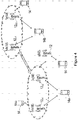
- Figure 4 illustrates a network 10 comprising basestations 12 and terminal devices 14.
- the terminal device 14a may be connected to both basestations 12 a1 and 12 a2 .
- the basestation 12 a1 is acting as the Master Basestation and the basestation 12 a2 is the Secondary Basestation.
- a backhaul link may connect the two basestations 12 a1 , 12 a2 , and this backhaul link may be non-ideal.
- the terminal device 14b is connected to both basestations 12 b1 and 12 b2 , and a non-ideal backhaul link may connect the two basestations 12 b1 , 12 b2 .
- the basestations 12 a1 , 12 a2 may be located very far from the basestations 12 b1 , 12 b2 .
- DC dual connectivity
- MCG Master Cell Group
- SCG Secondary Cell Group
- MCG Master Cell Group
- MeNB Master eNB
- SeNB Secondary eNB
- the Master Cell Group is a group of serving cells associated with the MeNB, comprising of the Primary Cell (PCell) and optionally one or more Secondary Cells (SCells).
- the MCG comprises the MeNB 16 a1 serving the cell 51 and the basestations 50 1 and 50 2 with their respective cells 52 1 and 52 2 .
- the Secondary Cell Group is a group of serving cells associated with the SeNB comprising of the PSCell (Primary SCell) and optionally one or more SCells.
- the SCG comprises the SeNB 16 a2 serving the cell 53 and the basestations 54 1 54 2 and 54 3 with their respective cells 56 1 , 56 2 and 56 3 .
- the MCG and SCG may comprise any number of serving cells.
- the downlink timing for MeNB and SeNB is synchronized down to about half an OFDM symbol (about ⁇ 33 ⁇ s).
- the downlink timing for MeNB and SeNB is synchronized down to half a subframe ( ⁇ 500 ⁇ s).
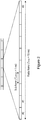
- Figure 6 illustrates the maximum receive timing difference (MRTD) in synchronized and unsynchronized dual connectivity modes.
- an eNB can configure a terminal device to report to the network when the terminal device detects an LTE cell which has, for example, a signal strength above a configured threshold.
- the terminal device would, when configured with such a configuration, scan for LTE cells and, if the terminal device detects an LTE cell with signal strength above the configured threshold, trigger a measurement report.
- the terminal device includes in this report measurements also for other cells, even those cells which do not have signal strength above the threshold.
- the eNB uses these measurements to perform mobility procedures for the terminal device, e.g. to add additional cells for the terminal device to boost the terminal device's throughput.
- the terminal device includes measurements for a limited number of cells and the terminal device selects the cells based on how strong their signal strength/quality is.
- the terminal device will report serving cells in the order of their signal strength, with the cell with the best signal first. Whilst this is suitable for performing actions such as handover etc, it will not be suitable for System Frame Number (SFN) and/or subframe difference reporting (SSTD).
- SFN System Frame Number
- SSTD reporting involves the timing difference between PCell and a number of other cells, thus, the current definition of the "best signal first" is not usable any more for SSTD reporting.
- SFN and subframe timing offset is defined based on the timing difference from MCG to SCG. It is essentially one measurement which reveals both the difference in SFNs and the receive time difference at the terminal device. In the specification the measurement can be specified in more compact form such as an "SSTD".
- the MCG or SCG can be seen as the leading CG can be used in many procedures related to dual connectivity. For example, based on whether MCG is leading or not, the SCG can determine which subframes to avoid for scheduling when gaps are configured.
- SFN offset will also provide indication on which subframes the interruption may happen in the PCell, PSCell or in the SCell(s) of either primary cell. This will also be helpful together with SFN offset to determine the exact subframes which will be affected to e.g. measurement gap length, DRX, etc.
- a Subframe timing offset measurement will allow for determining whether synchronous or asynchronous dual connectivity can be supported for the terminal device.
- Figure 8 is a flowchart illustrating a method according to embodiments described in more detail below.
- step 801 the terminal device receives a timing measurement command from the network.
- step 803 the terminal device determines whether to select at least one cell of the network and in step 805 the terminal device reports timing information for any selected cell to the network.
- the timing information comprises information relating to a timing difference between the at least one selected cell and a reference cell.
- the network can use the received report, containing the timing information, for any suitable purpose, such as selecting cells that can be used by the terminal device.
- the terminal device may be able to handover to a cell mentioned in the report, or may be able to use a cell mentioned in the report as a primary cell PSCell of a secondary eNB (SeNB) or as a secondary serving cell SCell of the MeNB or SeNB.
- SeNB secondary eNB
- the cellular communications network may be a Long Term Evolution, LTE, network.
- the timing measurement command may be received from an eNodeB of the network and the said timing information may be reported to an eNodeB of the network.
- the timing information comprises information relating to a timing difference between the at least one selected cell and a reference cell.
- the reference cell may be a cell that is already configured for the user terminal.
- the timing information may comprise information relating to a subframe timing difference between the at least one selected cell and a reference cell, as measured at the terminal device.
- the method further comprises in response to receiving the timing measurement command from the network, obtaining timing information for a plurality of cells of the network; and selecting only the one or more cell that meets at least one predetermined condition.
- the terminal device may determine that no cell should be selected.
- the terminal device may be configured by the network command to send a report at predetermined times, in which case it will send a report even if it is unable to detect any other cell. In that case the report will be an empty report.
- the network may set a condition that only synchronous cells should be reported, and the terminal device may be unable to detect any suitable cell for synchronous operation. If the terminal device determines that no cell should be selected, it may send an empty report listing no cells, or it may simply send no report to the network.
- a set of methods are described herein which can be applied when constructing a measurement report for timing differences for cells. They may be applied by an LTE terminal device when configured to send measurement reports to the eNB related to the timing difference between cells with respect to a reference cell. It will however be appreciated that the methods and apparatus described herein could be utilized within any telecommunications network.
- a reference cell as the first cell or as PCell.
- a second cell or a third cell or a fourth cell and so on can be the cell that is (are) being measured.
- the PCell or the first cell or the reference cell is the cell that is already configured for the user terminal.
- the reference cell is a cell that is indicated to the terminal device by the network. This is useful if the network intends to change which cell the terminal device should be configured with, e.g. by doing a handover to a particular target cell, and hence the network would be interested in knowing what the timing difference is between that target cell and other cells, and so it is useful to designate that target cell as the reference cell.
- subframe timing difference is used to denote the received subframe timing difference at the terminal device. It is measured for the second cell with respect to the first cell.
- the terminal device will only include a certain cell in the measurement report if the cell fulfills certain predetermined condition.
- Some example predetermined conditions are listed below.
- a predetermined condition to determine which cells are to be reported may be that the timing difference of a second cell compared to a first cell, referred to as "reference cell” (e.g. the PCell), should be below a certain threshold value.
- reference cell e.g. the PCell
- the timing difference could be determined based on one or more metrics. For example, the subframe boundary offset, the frame boundary offset and the SFN offset.
- the terminal device may consider one or several metrics. For example, the terminal device may only include a cell in the report if the subframe boundary offset between the cell compared to another cell (e.g. the PCell) is less than a threshold. Or the terminal device may consider both subframe boundary offset and frame boundary offset and then include a cell if the subframe boundary offset is less than a threshold and the frame boundary offset is less than a threshold. If multiple metrics are considered it would also be possible that OR-logic is applied; i.e. that the terminal device would include a cell in the report if either a first metric is less than threshold or a second metric is less than threshold.
- Figure 9 is a flowchart showing a method of determining whether to include a cell in the measurement report according to an embodiment.
- step 901 the terminal device determines whether a cell is synchronous or asynchronous. If a cell is synchronous it has a subframe timing difference of less than a specified threshold, for example, 33 ⁇ s.
- the terminal device includes the cell in the report in step 903.
- step 905 If the cell is not synchronous, the method passes to step 905 and the terminal device does not include the cell in the report.
- the network indicates to the terminal device the thresholds to be used by the terminal device.
- the threshold can be predefined and known to both the terminal device and the basestations.
- Which metrics the terminal device considers for determining which cells are to be included in the report may be specified in a specification. For example, it may be specified that the terminal device should consider the metric "Subframe boundary offset". Another possibility is that the particular metrics to be considered are configured by the network. It would also be possible that in the case of an absence of any indication from the network of which metrics the terminal device shall consider, the terminal device may be able to select which metrics to consider based on a specification. However, if the network has provided an indication of which metrics should be considered, the terminal device may consider those metrics. In other words, in the absence of any indication from the network, the terminal device can apply a default rule with respect to which metrics to consider and the network can, if it deems necessary, refine these rules by providing an indication of which metrics the terminal device shall consider.
- FIG. 10 is a flowchart according to an embodiment.
- step 1001 the terminal device determines if it has received any thresholds from the network. For example, the terminal device may receive a threshold for the "Frame boundary offset” and/or for "Subframe boundary offset” and/or for "Subframe number offset”.
- the method passes to step 1003 in which the terminal device uses default metrics to determine which metrics to use.
- the method then passes to step 1007 in which the terminal device uses the metrics to provide a report of relevant cells to the network.
- the method passes to step 1005 where the thresholds are used to determine which metrics to use. This way of implicitly indicating which metrics the terminal device shall consider will save signaling and hence system capacity will be improved as less signaling overhead will be created.
- the method then passes to step 1007 in which the terminal device uses the determined metrics to provide a report of the relevant cells to the network.
- the terminal device considers its own capabilities when determining whether to include a certain cell in the report.
- the terminal device may include a cell in the report only if the terminal device is capable of performing Dual Connectivity with this cell.
- the terminal device may be able to perform both synchronous and asynchronous Dual Connectivity. In other embodiments, the terminal device may only be able to perform synchronous Dual Connectivity or in other embodiments neither synchronous nor asynchronous Dual Connectivity. This may for example depend on which band combinations the cells are in. But it may also be so that a certain terminal device only supports synchronous Dual Connectivity (regardless of band combinations). So according to one embodiment the terminal device considers whether it is capable of performing Dual Connectivity with the cell in a particular scenario. Examples of methods which may be carried out by the terminal device to consider its own capabilities are shown in Figures 11 and 12 .
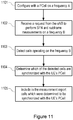
- Figure 11 is a flowchart illustrating a method according to some embodiments where the terminal device is only able to perform synchronous Dual connectivity when operating on frequencies A and B.
- the terminal device is configured with a PCell on a frequency A.
- step 1102 the terminal device receives a request from the eNB to perform SFN and subframe measurements on a frequency B. This may be done by receiving threshold values for the SFN and subframe measurements from the eNB.
- step 1103 the terminal device detects cells operating on the frequency B.
- step 1104 The terminal device determines which of the detected cells are synchronized with the terminal device's PCell.
- step 1105 the terminal device includes in the measurement report cells which were determined to be synchronized with the terminal device's PCell.
- the frequencies A and B may be different.
- the frequencies A and B may be the same and the method proceeds in the same way.
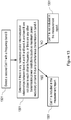
- Figure 12 is a flowchart according to another embodiment wherein the terminal device may only support a transmission timing difference below or equal to a threshold value.
- step 1201 the terminal device determines the transmission timing to a cell.
- step 1203 the terminal device determines if the transmission timing difference compared to the reference cell is less than a threshold value.
- the method passes to step 1207, in which the terminal device includes the cell in the measurement report.
- the method passes to step 1209, in which the terminal device does not include the cell in the measurement report.
- the synchronous and asynchronous capabilities of a terminal device may be related to the terminal devices capability of maximum uplink transmission timing difference. Whether or not the terminal device considers its own terminal device capabilities, for example as in figures 11 and 12 , may be configured by the network. This is beneficial as the terminal device may not know whether the network is requesting for it to perform the metrics with the intention to find a cell with which Dual Connectivity should be performed, or, for example, with the intention of determining the synchronization between nodes in the network.
- the network may not be interested in getting measurements for a cell if the terminal device cannot perform Dual Connectivity using that cell. In this case, considering the terminal device's capabilities may be useful to discount any cells with which the Dual Connectivity could not be performed.
- the network may be unnecessary to include the terminal device's specific capabilities as the network is interested in information about all of the network nodes. Hence the network may indicate to the terminal device whether the terminal device shall consider its capabilities when configuring the terminal device measurements.
- the terminal device may report for the cells for which the resulting band combination involves two bands which are far apart in the frequency spectrum.
- the terminal device may only report for a band combination when the bands do not have any harmonics and/or intermodulation relations.
- Figure 13 illustrates a method carried out by a terminal device configured with a first Cell X (PCell or reference cell) with frequency band A.
- a terminal device configured with a first Cell X (PCell or reference cell) with frequency band A.
- step 1301 the terminal device detects a second Cell Y with a frequency band B.
- the frequencies A and B may be different or they may be the same and the method proceeds in the same way.
- step 1303 the terminal device determines if there is any harmonics and/or intermodulation relationships between band A and band B or if band A and band B are not close to each other in frequency, or there are any other transmission power restrictions (such as maximum power reduction) on band B due to simultaneous transmission in band A.
- step 1305 If there are harmonics and/or intermodulation relationships between band A and band B, or band A and band B are not close to each other in frequency, or there are no other transmission power restrictions (such as MPR) on band B due to simultaneous transmission in band A then the method passes to step 1305 in which the Cell Y is included in the measurement report.
- MPR transmission power restrictions
- step 1307 If there are no harmonics and/or intermodulation relationships between band A and band B, or band A and band B are close to each other in frequency, or there are other transmission power restrictions (such as MPR) on band B due to simultaneous transmission in band A then the method passes to step 1307 in which the Cell Y is not included in the measurement report.
- MPR transmission power restrictions
- a terminal device may choose to only report the measured cells which are of same duplex method as the first cell.
- TDD Time Division duplex
- FDD Frequency division duplex
- the terminal device in the measurement report, may be configured to include a certain number (N) of serving cells. This number may be specified in a specification and/or signaled by the network. If there is a limit to the number of serving cells which the terminal device can include in the report it is important that relevant cells are included in the report. Below it will be provided different ways in which the terminal device can prioritize cells when creating the report.
- a "detected cell” is having higher priority than a “listed cell” if the "detected cell” has much better timing difference properties (e.g. the timing difference compared to the reference cell is much lower for the "detected cell” than for the "listed cell”).
- the terminal device may prioritize cells which could be involved in synchronous dual connectivity. This means that the terminal device may include cells which can be used for asynchronous DC in the report but only if there is room left, e.g. if the terminal device has measured ten cells but is configured to only report eight cells and five cells are meeting a synchronous requirement but five do not meet such requirement, then the terminal device would first include the five cells with possibilities for synchronous DC (unless they have been excluded from the report due to some other reason) and following that the terminal device would include three of the cells which can be used for asynchronous DC.
- the terminal device may also list the cells included in the report according to timing difference.
- the terminal device will include in the report the N cells which have the smallest timing difference compared to the reference cell. For example, if the N is 5 and the terminal device measures ten cells, then the terminal device may select, out of the ten measured cells, the five cells which have the lowest timing difference (e.g. lowest subframe timing difference) compared to the reference cell.
- the terminal device determines a threshold margin ⁇ , which can be used to determine the cells that need to be reported.
- a threshold margin ⁇ which can be used to determine the cells that need to be reported.
- X is the receive timing difference that is defined in the specification. For example, this may be defined as 33 ⁇ s.
- ⁇ is the margin in ⁇ s, which can be determined by the terminal device, or can be signaled by the network to the terminal device.
- P subframetiming_cell1 and P subframetiming_cell2 are the subframe timing for the primary cell and the measured cell, respectively.
- ⁇ can be the measurement uncertainty from terminal device side.
- the terminal device may select one timing difference metric to base the prioritization on. Which timing difference metric the terminal device prioritizes according to may be specified in a specification. Alternatively it may be signaled by the network. The network indication of which metric to prioritize according to may be indicated explicitly. Another possibility is that it is indicated implicitly, e.g. the terminal device prioritizes the cells according to the same threshold used to determine whether to include a cell or not.
- prioritization is done considering the type of cell.
- Examples of different types of cells include “serving cells”, “listed cells” and “detected cells”.
- Serving cells are cells which the terminal device is currently configured with. It may be important that the eNB knows the timing difference between such cells and the reference cell (e.g. the terminal device's PCell) for example to determine which power control mode the terminal device should be configured with. Hence the terminal device may give higher priority to a cell if it is considered to be a serving cell.
- Listed cells are cells which the network has indicated to the terminal device in the measurement configuration. These cells are cells which the network may determine to be suitable candidate cells to be configured for the terminal device in a Dual Connectivity configuration. Hence it may be more important that the terminal device includes these cells in the measurement report rather than other cells which are not candidates for Dual Connectivity.
- ected cells Other cells, which are not “serving cells” or “listed cells” but cells which the terminal device has detected are referred to as "detected cells”. These cells may be suitable for the network to get a report of as network may not have initially known that they are close to the terminal device.
- the terminal device may perform prioritization based on which type the cells the terminal device has measured.
- the terminal device may prioritize serving cells in the following priority order: serving cells, listed cells and detected cells.
- serving cells are included in a separate list, i.e. a different list than the list for "listed cells” and "detected cells".
- the terminal device prioritizes the cells which are originally suggested by the network for potential measurement cells. In that way, terminal device will only include some detected cells if the total measurement report capability exceeds number of the network suggested cells.
- the reference cell may be the terminal device's PCell.
- the terminal device is aware of which cell is its PCell and hence no signaling is needed for this approach.
- the reference cell is the cell indicated to the terminal device by the network. This is useful if the network intends to change which cell the terminal device should be configured with, e.g. by doing a handover, and hence the network would be interested in knowing what the timing difference is between the reference cell and other cells.
- Figure 14 shows a terminal device (terminal device) 1400 adapted or configured to receive a timing measurement command from the network, determine whether to select at least one cell of the network, and report timing information for any selected cell to the network, wherein said timing information comprises information relating to a timing difference between the at least one selected cell and a reference cell.
- the terminal device is adapted to operate according to one or more of the non-limiting example embodiments described.
- the terminal device 1400 comprises a processor 1401 that controls the operation of the terminal device 1400.
- the processor 1401 is connected to a transceiver 1403 (which comprises a receiver and a transmitter) with associated antenna(s) 1405 which are used to transmit signals to and receive signals from a base station in a network and to transmit signals to and receive signals from an eNB.
- the processor 1401 and the transceiver 1403 are also configured or adapted to enable the terminal device 1400 to operate in Dual Connectivity mode.
- the terminal device 1400 also comprises a memory 1407 that is connected to the processor 1401 and that contains instructions or computer code executable by the processor 1401 and other information or data required for the operation of the terminal device 1400.
- the transceiver 1403 may be configured to receive a timing measurement command from the network.
- the processor may be configured to select at least one cell of the network and report timing information for the at least one selected cell to the network.
- Figure 18 shows an alternative implementation of a terminal device 1800 for use in a cellular communications network.
- the terminal device comprises: a receiving module 1801 for receiving timing measurement command from the network; a determining module 1803 for determining whether to select at least one cell of the network; and a reporting module 1805 for reporting timing information for any selected cell to the network, wherein said timing information comprises information relating to a timing difference between the at least one selected cell and a reference cell.
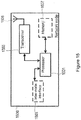
- Figure 15 shows a network node (for example a base station such as a NodeB or an eNodeB, or a WLAN AP) that can be adapted or configured to send a timing measurement command to a terminal device in the cellular communications network, and receive from the terminal device a report containing timing information for at least one selected cell in the network, wherein said timing information comprises information relating to a timing difference between the at least one selected cell and a reference cell, wherein said timing information comprises information relating to a timing difference between the at least one selected cell and a reference cell.
- the network node is adapted to operate according to the example embodiments described.
- the network node 1500 comprises a processor 1501 that controls the operation of the network node 1500.
- the processor 1501 is connected to a transceiver 1503 (which comprises a receiver and a transmitter) with associated antenna(s) 1505 which are used to transmit signals to, and receive signals from, terminal devices in a network.
- the network node 1500 also comprises a memory 1507 that is connected to the processor 1501 and that contains instructions or computer code executable by the processor 1501 and other information or data required for the operation of the network node 1500.
- the network node 1500 also includes components and/or circuitry 1509 for allowing the network node 1500 to exchange information with another network node 1500 (for example via an X2 and/or S1 interface).
- base stations for use in other types of network e.g. UTRAN or Wideband Code Division Multiple Access (WCDMA) radio access network (RAN)
- WCDMA Wideband Code Division Multiple Access
- RAN radio access network
- the transceiver 1503 may be configured to send a timing measurement command to a terminal device in the cellular communications network.
- the transceiver 1503 may also be configured to receive from the terminal device a report containing timing information for at least one selected cell in the network.
- FIG 19 shows an alternative implementation network node 1900 for use in a cellular communications network.
- the network node comprises: a sending module 1901 for sending a timing measurement command to a terminal device in the cellular communications network; and a receiving module 1903 for receiving from the terminal device a report containing timing information for at least one selected cell in the network wherein said timing information comprises information relating to a timing difference between the at least one selected cell and a reference cell.
- Figure 16 shows a method 1600 performed in a terminal device.
- the terminal device receives a timing measurement command from the network.
- the terminal device obtains timing information for a plurality of cells of the network.
- the terminal device allocates different priorities to said cells. For example, this may include: allocating a higher priority to at least one cell with which the terminal device is capable of performing dual connectivity than to at least one cell with which the terminal device is not capable of performing dual connectivity, as shown at step 1607; and/or allocating priorities to said cells based on respective timing differences of the cells compared with a reference cell, and allocating higher priorities to cells having smaller timing differences compared with the reference cell, as shown at step 1609; and/or allocating a higher priority to at least one serving cell with which the terminal device is already configured (for example a cell listed by the network in the configuration of the terminal device) than to at least one other cell with which the terminal device is not configured, as shown at step 1611; and/or allocating a higher priority to at least one cell suggested by the network as a measurement cell than to at least one other cell not suggested by the network, as shown at step 1613.
- step 1615 the terminal device determines whether to select at least one cell of the network, and, if so, selects a predetermined maximum number of said cells having the highest allocated priorities.
- step 1617 the terminal device reports timing information for any selected cell to the network, wherein said timing information comprises information relating to a timing difference between the at least one selected cell and a reference cell.
- Figure 17 shows a method 1700 performed in a network node.
- the network node sends a timing measurement command to a terminal device in the cellular communications network.
- the network node receives from the terminal device a report containing timing information for at least one selected cell in the network.
- Sending the timing measurement command to the terminal device may comprise: notifying to the terminal device a timing difference threshold value; and/or notifying to the terminal device a metric to be used by the terminal device in measuring the timing difference; and/or notifying to the terminal device a cell to be used as a reference cell for measuring the timing difference.
Landscapes
- Engineering & Computer Science (AREA)
- Computer Networks & Wireless Communication (AREA)
- Signal Processing (AREA)
- Mobile Radio Communication Systems (AREA)
Claims (15)
- Verfahren zum Betreiben einer Endgerät-Vorrichtung in einem zellularen Kommunikationsnetz mit Dualer Konnektivität, wobei die Endgerät-Vorrichtung mit einer Hauptzellengruppe (Master Cell Group, MCG) verbunden ist, umfassend eine Primärzelle, PCell, und wobei die PCell einem Master eNB, MeNB, zugeordnet ist, wobei das Verfahren Folgendes umfasst:Empfangen eines Zeitmessbefehls von dem Netzwerk (1601) zum Messen von Zeitinformationen, umfassend eine System-Frame-Nummer und eine Subframe-Zeitdifferenz (Subframe Timing Difference, SSTD);Erhalten der Zeitinformationen für eine Vielzahl von Zellen des Netzwerks (1603);Zuweisen von unterschiedlichen Prioritäten an die Zellen; undBerichten der Zeitinformationen für eine Teilmenge der Zellen mit den höchsten Prioritäten an das Netzwerk, wobei die Zeitinformationen Informationen in Bezug auf eine Zeitdifferenz zwischen einer Referenzzelle und jeder Zelle in der Teilmenge der Zellen (1617) umfassen, wobei die Referenzzelle die PCell ist.
- Verfahren nach Anspruch 1, umfassend das Berichten von Zeitinformationen an das Netzwerk für eine vorbestimmte maximale Anzahl von Zellen mit den höchsten zugewiesenen Prioritäten.
- Verfahren nach einem der Ansprüche 1 oder 2, umfassend:
Zuweisen einer höheren Priorität an mindestens eine Zelle, mit der die Endgerät-Vorrichtung in der Lage ist, eine duale Konnektivität durchzuführen, als an mindestens eine Zelle, mit der die Endgerät-Vorrichtung nicht in der Lage ist, eine duale Konnektivität durchzuführen. - Verfahren nach einem der Ansprüche 1-3, umfassend:
Zuweisen von Prioritäten an die Zellen basierend auf entsprechenden Zeitunterschieden der Zellen im Vergleich zu der Referenzzelle, Zuweisen von höheren Prioritäten an Zellen mit kleineren Zeitunterschieden im Vergleich zu der Referenzzelle. - Verfahren nach einem der Ansprüche 1-4, umfassend:
Zuweisen einer höheren Priorität an mindestens eine bedienende Zelle, mit der die Endgerät-Vorrichtung bereits konfiguriert ist, als an mindestens eine andere Zelle, mit der die Endgerät-Vorrichtung nicht konfiguriert ist. - Verfahren nach einem der Ansprüche 1-5, umfassend:
Zuweisen einer höheren Priorität an mindestens eine Zelle, die vom Netzwerk in der Konfiguration der Endgerät-Vorrichtung aufgelistet ist, als an mindestens eine andere Zelle, die von der Endgerät-Vorrichtung erkannt, aber nicht vom Netzwerk in der Konfiguration der Endgerät-Vorrichtung aufgelistet ist. - Verfahren nach einem der Ansprüche 1-6, umfassend:
Zuweisen einer höheren Priorität an mindestens eine Zelle, die vom Netzwerk als Messzelle vorgeschlagen wird, als an mindestens eine andere Zelle, die nicht vom Netzwerk vorgeschlagen wird. - Computerprogrammprodukt, umfassend ein computerlesbares Medium mit darin enthaltenem computerlesbaren Code, wobei der computerlesbare Code so konfiguriert ist, dass der Computer oder Prozessor beim Ausführen durch einen geeigneten Computer oder Prozessor veranlasst wird, das Verfahren nach einem der Ansprüche 1-7 durchzuführen.
- Endgerät-Vorrichtung (1400) zur Verwendung in einem zellularen Kommunikationsnetz, das eine duale Konnektivität bereitstellt, wobei die Endgerät-Vorrichtung angepasst ist zum:Verbinden mit einer Hauptzellengruppe, MCG, umfassend eine Primärzelle, PCell, und wobei die PCell einem Master eNB, MeNB, zugeordnet ist;Empfangen eines Zeitmessbefehls von dem Netzwerk zum Messen von Zeitinformationen, umfassend eine System-Frame-Nummer und Subframe-Zeitdifferenz (Subframe-Timing-Differenz, SSTD) (1601);Erhalten der Zeitinformationen für eine Vielzahl von Zellen des Netzwerks (1603);Zuweisen von unterschiedlichen Prioritäten an die Zellen; undBerichten der Zeitinformationen für eine Teilmenge der Zellen mit den höchsten Prioritäten an das Netzwerk, wobei die Zeitinformationen Informationen in Bezug auf eine Zeitdifferenz zwischen einer Referenzzelle und jeder Zelle in der Teilmenge der Zellen (1617) umfassen,wobei die Referenzzelle die PCell ist.
- Endgerät-Vorrichtung nach Anspruch 9, umfassend das Berichten von Zeitinformationen an das Netzwerk für eine vorbestimmte maximale Anzahl von Zellen mit den höchsten zugewiesenen Prioritäten.
- Endgerät-Vorrichtung nach Anspruch 9 oder 10, ferner angepasst zum:
Zuweisen einer höheren Priorität an mindestens eine Zelle, mit der die Endgerät-Vorrichtung in der Lage ist, eine duale Konnektivität durchzuführen, als an mindestens eine Zelle, mit der die Endgerät-Vorrichtung nicht in der Lage ist, eine duale Konnektivität durchzuführen. - Endgerät-Vorrichtung nach einem der Ansprüche 9-11, ferner angepasst zum: Zuweisen von Prioritäten an die Zellen basierend auf entsprechenden Zeitunterschieden der Zellen im Vergleich zu der Referenzzelle, Zuweisen von höheren Prioritäten an Zellen mit kleineren Zeitunterschieden im Vergleich zu der Referenzzelle.
- Endgerät-Vorrichtung nach einem der Ansprüche 9-12, ferner angepasst zum:
Zuweisen einer höheren Priorität an mindestens eine bedienende Zelle, mit der die Endgerät-Vorrichtung bereits konfiguriert ist, als an mindestens eine andere Zelle, mit der die Endgerät-Vorrichtung nicht konfiguriert ist. - Endgerät-Vorrichtung nach einem der Ansprüche 9-13, ferner angepasst zum:
Zuweisen einer höheren Priorität an mindestens eine Zelle, die vom Netzwerk in der Konfiguration der Endgerät-Vorrichtung aufgelistet ist, als an mindestens eine andere Zelle, die von der Endgerät-Vorrichtung erkannt, aber nicht vom Netzwerk in der Konfiguration der Endgerät-Vorrichtung aufgelistet ist. - Endgerät-Vorrichtung nach einem der Ansprüche 9-14, ferner angepasst zum:
Zuweisen einer höheren Priorität an mindestens eine Zelle, die vom Netzwerk als Messzelle vorgeschlagen wird, als an mindestens eine andere Zelle, die nicht vom Netzwerk vorgeschlagen wird.
Applications Claiming Priority (2)
| Application Number | Priority Date | Filing Date | Title |
|---|---|---|---|
| US201562232765P | 2015-09-25 | 2015-09-25 | |
| PCT/SE2016/050905 WO2017052464A1 (en) | 2015-09-25 | 2016-09-26 | Providing measurement reports |
Publications (2)
| Publication Number | Publication Date |
|---|---|
| EP3354085A1 EP3354085A1 (de) | 2018-08-01 |
| EP3354085B1 true EP3354085B1 (de) | 2019-09-04 |
Family
ID=57113653
Family Applications (1)
| Application Number | Title | Priority Date | Filing Date |
|---|---|---|---|
| EP16778477.6A Not-in-force EP3354085B1 (de) | 2015-09-25 | 2016-09-26 | Bereitstellung von messberichten |
Country Status (3)
| Country | Link |
|---|---|
| US (1) | US10440600B2 (de) |
| EP (1) | EP3354085B1 (de) |
| WO (1) | WO2017052464A1 (de) |
Families Citing this family (11)
| Publication number | Priority date | Publication date | Assignee | Title |
|---|---|---|---|---|
| CN107333324A (zh) * | 2017-07-18 | 2017-11-07 | 努比亚技术有限公司 | 一种网络选择方法、设备及计算机可读存储介质 |
| CN109391390B (zh) * | 2017-08-08 | 2022-04-05 | 华为技术有限公司 | 获取定时偏差的方法及相关设备 |
| CN111316706B (zh) * | 2017-11-14 | 2022-03-18 | 鸿颖创新有限公司 | 用于具有多分量载波的网络辅助传输的方法、设备和系统 |
| EP3713325B1 (de) * | 2017-11-14 | 2026-01-14 | Beijing Xiaomi Mobile Software Co., Ltd. | Verfahren und vorrichtung zur konfiguration von kommunikationsverbindungen |
| US11206563B2 (en) * | 2018-01-10 | 2021-12-21 | Mediatek Inc. | Apparatuses and methods for extending use of SFN (system frame number) and frame timing difference (SFTD) measurements |
| JP7186806B2 (ja) * | 2019-02-08 | 2022-12-09 | 株式会社Nttドコモ | 端末、通信方法及び無線通信システム |
| WO2020223694A1 (en) * | 2019-05-02 | 2020-11-05 | Nokia Technologies Oy | Timing-based user equipment mobility for transparent satellites |
| CN114223263A (zh) * | 2019-08-15 | 2022-03-22 | 高通股份有限公司 | 关于多个辅节点(多sn)的新无线电(nr)早期测量 |
| CN112584425B (zh) * | 2019-09-30 | 2022-07-12 | 华为技术有限公司 | 一种测量能力上报的网络系统、电子设备及芯片系统 |
| CN114071690B (zh) * | 2020-08-06 | 2024-04-26 | 维沃移动通信有限公司 | 信息上报方法、信息接收方法及相关设备 |
| US11985085B2 (en) * | 2021-01-26 | 2024-05-14 | Samsung Electronics Co., Ltd. | Method and apparatus for communications in a distributed antenna system |
Family Cites Families (12)
| Publication number | Priority date | Publication date | Assignee | Title |
|---|---|---|---|---|
| US8948028B2 (en) * | 2009-10-13 | 2015-02-03 | Qualcomm Incorporated | Reporting of timing information to support downlink data transmission |
| KR101191215B1 (ko) * | 2010-07-16 | 2012-10-15 | 엘지전자 주식회사 | 무선 통신 시스템에서 위치 결정 방법 및 장치 |
| US9277384B2 (en) * | 2010-12-18 | 2016-03-01 | Telefonaktiebolaget L M Ericsson (Publ) | Methods and apparatus for communicating location information for enhancing emergency positioning |
| US9344985B2 (en) * | 2011-03-08 | 2016-05-17 | Panasonic Intellectual Property Corporation Of America | Propagation delay difference reporting for multiple component carriers |
| US9462562B2 (en) * | 2013-09-30 | 2016-10-04 | Qualcomm Incorporated | Methods and apparatuses for user equipment assisted time and frequency synchronization of small cells |
| EP3075182B1 (de) * | 2013-12-03 | 2019-10-16 | Nokia Solutions and Networks Oy | Benutzervorrichtungsunterstützter einsatz in einem unlizenzierten frequenzband |
| CN105850172B (zh) * | 2014-01-09 | 2019-06-04 | Lg电子株式会社 | 用于在无线通信系统中支持网络侦听的方法和设备 |
| CN106031256B (zh) | 2014-02-11 | 2019-07-23 | Lg电子株式会社 | 在无线中控制上行链路功率的方法和设备 |
| US9973959B2 (en) * | 2014-04-16 | 2018-05-15 | Telefonaktiebolaget L M Ericsson (Publ) | Method and apparatus for controlling cell aggregation |
| WO2015176934A1 (en) * | 2014-05-19 | 2015-11-26 | Telefonaktiebolaget L M Ericsson (Publ) | Technique for aggregating radio resources |
| EP3281441B1 (de) | 2015-04-10 | 2018-09-26 | Telefonaktiebolaget LM Ericsson (publ) | Messberichte |
| US10681576B2 (en) * | 2015-04-13 | 2020-06-09 | Qualcomm Incorporated | Measurement gap enhancements |
-
2016
- 2016-09-26 EP EP16778477.6A patent/EP3354085B1/de not_active Not-in-force
- 2016-09-26 WO PCT/SE2016/050905 patent/WO2017052464A1/en not_active Ceased
- 2016-09-26 US US15/759,843 patent/US10440600B2/en not_active Expired - Fee Related
Non-Patent Citations (1)
| Title |
|---|
| None * |
Also Published As
| Publication number | Publication date |
|---|---|
| US20180270686A1 (en) | 2018-09-20 |
| US10440600B2 (en) | 2019-10-08 |
| EP3354085A1 (de) | 2018-08-01 |
| WO2017052464A1 (en) | 2017-03-30 |
Similar Documents
| Publication | Publication Date | Title |
|---|---|---|
| EP3354085B1 (de) | Bereitstellung von messberichten | |
| US11470611B2 (en) | Communications in a wireless network for carrier selection and switching | |
| US11228927B2 (en) | User terminal and base station | |
| US10491263B2 (en) | Data transmission method and data transmission device | |
| JP6239756B2 (ja) | ユーザ端末、無線基地局及び無線通信方法 | |
| US10498500B2 (en) | Network node, communication device and methods therein for handling dynamic subframe configurations | |
| JP6472440B2 (ja) | 無線基地局、ユーザ端末および無線通信システム | |
| JP6174265B2 (ja) | ユーザ端末及び無線通信方法 | |
| US11528695B2 (en) | First communication device and methods therein, for sending one or more control signals to a second communication device | |
| KR102036625B1 (ko) | 비동기 네트워크들에서의 scell들에 대한 발견 신호 측정 타이밍 구성 | |
| US20200228223A1 (en) | Carrier aggregation configuration method and device for same | |
| JP2020025340A (ja) | ユーザ端末及び無線通信方法 | |
| AU2015413652B2 (en) | Method for data transmission of LAA-LTE system, terminal, and base station | |
| WO2016148629A1 (en) | Transmitting device, receiving device, and methods therein, for selecting a channel for transmission |
Legal Events
| Date | Code | Title | Description |
|---|---|---|---|
| STAA | Information on the status of an ep patent application or granted ep patent |
Free format text: STATUS: THE INTERNATIONAL PUBLICATION HAS BEEN MADE |
|
| PUAI | Public reference made under article 153(3) epc to a published international application that has entered the european phase |
Free format text: ORIGINAL CODE: 0009012 |
|
| STAA | Information on the status of an ep patent application or granted ep patent |
Free format text: STATUS: REQUEST FOR EXAMINATION WAS MADE |
|
| 17P | Request for examination filed |
Effective date: 20180419 |
|
| AK | Designated contracting states |
Kind code of ref document: A1 Designated state(s): AL AT BE BG CH CY CZ DE DK EE ES FI FR GB GR HR HU IE IS IT LI LT LU LV MC MK MT NL NO PL PT RO RS SE SI SK SM TR |
|
| AX | Request for extension of the european patent |
Extension state: BA ME |
|
| DAV | Request for validation of the european patent (deleted) | ||
| DAX | Request for extension of the european patent (deleted) | ||
| RIC1 | Information provided on ipc code assigned before grant |
Ipc: H04W 56/00 20090101AFI20170411BHEP Ipc: H04W 24/10 20090101ALI20170411BHEP Ipc: H04W 76/02 20090101ALI20170411BHEP |
|
| GRAP | Despatch of communication of intention to grant a patent |
Free format text: ORIGINAL CODE: EPIDOSNIGR1 |
|
| STAA | Information on the status of an ep patent application or granted ep patent |
Free format text: STATUS: GRANT OF PATENT IS INTENDED |
|
| RIC1 | Information provided on ipc code assigned before grant |
Ipc: H04W 24/10 20090101ALI20190612BHEP Ipc: H04W 56/00 20090101AFI20190612BHEP |
|
| GRAS | Grant fee paid |
Free format text: ORIGINAL CODE: EPIDOSNIGR3 |
|
| INTG | Intention to grant announced |
Effective date: 20190702 |
|
| GRAA | (expected) grant |
Free format text: ORIGINAL CODE: 0009210 |
|
| STAA | Information on the status of an ep patent application or granted ep patent |
Free format text: STATUS: THE PATENT HAS BEEN GRANTED |
|
| AK | Designated contracting states |
Kind code of ref document: B1 Designated state(s): AL AT BE BG CH CY CZ DE DK EE ES FI FR GB GR HR HU IE IS IT LI LT LU LV MC MK MT NL NO PL PT RO RS SE SI SK SM TR |
|
| REG | Reference to a national code |
Ref country code: GB Ref legal event code: FG4D |
|
| REG | Reference to a national code |
Ref country code: CH Ref legal event code: EP |
|
| REG | Reference to a national code |
Ref country code: AT Ref legal event code: REF Ref document number: 1177191 Country of ref document: AT Kind code of ref document: T Effective date: 20190915 |
|
| REG | Reference to a national code |
Ref country code: DE Ref legal event code: R096 Ref document number: 602016020059 Country of ref document: DE Ref country code: IE Ref legal event code: FG4D |
|
| REG | Reference to a national code |
Ref country code: NL Ref legal event code: MP Effective date: 20190904 |
|
| REG | Reference to a national code |
Ref country code: LT Ref legal event code: MG4D |
|
| PG25 | Lapsed in a contracting state [announced via postgrant information from national office to epo] |
Ref country code: NO Free format text: LAPSE BECAUSE OF FAILURE TO SUBMIT A TRANSLATION OF THE DESCRIPTION OR TO PAY THE FEE WITHIN THE PRESCRIBED TIME-LIMIT Effective date: 20191204 Ref country code: SE Free format text: LAPSE BECAUSE OF FAILURE TO SUBMIT A TRANSLATION OF THE DESCRIPTION OR TO PAY THE FEE WITHIN THE PRESCRIBED TIME-LIMIT Effective date: 20190904 Ref country code: BG Free format text: LAPSE BECAUSE OF FAILURE TO SUBMIT A TRANSLATION OF THE DESCRIPTION OR TO PAY THE FEE WITHIN THE PRESCRIBED TIME-LIMIT Effective date: 20191204 Ref country code: HR Free format text: LAPSE BECAUSE OF FAILURE TO SUBMIT A TRANSLATION OF THE DESCRIPTION OR TO PAY THE FEE WITHIN THE PRESCRIBED TIME-LIMIT Effective date: 20190904 Ref country code: LT Free format text: LAPSE BECAUSE OF FAILURE TO SUBMIT A TRANSLATION OF THE DESCRIPTION OR TO PAY THE FEE WITHIN THE PRESCRIBED TIME-LIMIT Effective date: 20190904 Ref country code: FI Free format text: LAPSE BECAUSE OF FAILURE TO SUBMIT A TRANSLATION OF THE DESCRIPTION OR TO PAY THE FEE WITHIN THE PRESCRIBED TIME-LIMIT Effective date: 20190904 |
|
| PG25 | Lapsed in a contracting state [announced via postgrant information from national office to epo] |
Ref country code: GR Free format text: LAPSE BECAUSE OF FAILURE TO SUBMIT A TRANSLATION OF THE DESCRIPTION OR TO PAY THE FEE WITHIN THE PRESCRIBED TIME-LIMIT Effective date: 20191205 Ref country code: ES Free format text: LAPSE BECAUSE OF FAILURE TO SUBMIT A TRANSLATION OF THE DESCRIPTION OR TO PAY THE FEE WITHIN THE PRESCRIBED TIME-LIMIT Effective date: 20190904 Ref country code: RS Free format text: LAPSE BECAUSE OF FAILURE TO SUBMIT A TRANSLATION OF THE DESCRIPTION OR TO PAY THE FEE WITHIN THE PRESCRIBED TIME-LIMIT Effective date: 20190904 Ref country code: LV Free format text: LAPSE BECAUSE OF FAILURE TO SUBMIT A TRANSLATION OF THE DESCRIPTION OR TO PAY THE FEE WITHIN THE PRESCRIBED TIME-LIMIT Effective date: 20190904 Ref country code: AL Free format text: LAPSE BECAUSE OF FAILURE TO SUBMIT A TRANSLATION OF THE DESCRIPTION OR TO PAY THE FEE WITHIN THE PRESCRIBED TIME-LIMIT Effective date: 20190904 |
|
| REG | Reference to a national code |
Ref country code: AT Ref legal event code: MK05 Ref document number: 1177191 Country of ref document: AT Kind code of ref document: T Effective date: 20190904 |
|
| PG25 | Lapsed in a contracting state [announced via postgrant information from national office to epo] |
Ref country code: PT Free format text: LAPSE BECAUSE OF FAILURE TO SUBMIT A TRANSLATION OF THE DESCRIPTION OR TO PAY THE FEE WITHIN THE PRESCRIBED TIME-LIMIT Effective date: 20200106 Ref country code: NL Free format text: LAPSE BECAUSE OF FAILURE TO SUBMIT A TRANSLATION OF THE DESCRIPTION OR TO PAY THE FEE WITHIN THE PRESCRIBED TIME-LIMIT Effective date: 20190904 Ref country code: IT Free format text: LAPSE BECAUSE OF FAILURE TO SUBMIT A TRANSLATION OF THE DESCRIPTION OR TO PAY THE FEE WITHIN THE PRESCRIBED TIME-LIMIT Effective date: 20190904 Ref country code: RO Free format text: LAPSE BECAUSE OF FAILURE TO SUBMIT A TRANSLATION OF THE DESCRIPTION OR TO PAY THE FEE WITHIN THE PRESCRIBED TIME-LIMIT Effective date: 20190904 Ref country code: AT Free format text: LAPSE BECAUSE OF FAILURE TO SUBMIT A TRANSLATION OF THE DESCRIPTION OR TO PAY THE FEE WITHIN THE PRESCRIBED TIME-LIMIT Effective date: 20190904 Ref country code: EE Free format text: LAPSE BECAUSE OF FAILURE TO SUBMIT A TRANSLATION OF THE DESCRIPTION OR TO PAY THE FEE WITHIN THE PRESCRIBED TIME-LIMIT Effective date: 20190904 Ref country code: PL Free format text: LAPSE BECAUSE OF FAILURE TO SUBMIT A TRANSLATION OF THE DESCRIPTION OR TO PAY THE FEE WITHIN THE PRESCRIBED TIME-LIMIT Effective date: 20190904 |
|
| PG25 | Lapsed in a contracting state [announced via postgrant information from national office to epo] |
Ref country code: IS Free format text: LAPSE BECAUSE OF FAILURE TO SUBMIT A TRANSLATION OF THE DESCRIPTION OR TO PAY THE FEE WITHIN THE PRESCRIBED TIME-LIMIT Effective date: 20200224 Ref country code: SK Free format text: LAPSE BECAUSE OF FAILURE TO SUBMIT A TRANSLATION OF THE DESCRIPTION OR TO PAY THE FEE WITHIN THE PRESCRIBED TIME-LIMIT Effective date: 20190904 Ref country code: SM Free format text: LAPSE BECAUSE OF FAILURE TO SUBMIT A TRANSLATION OF THE DESCRIPTION OR TO PAY THE FEE WITHIN THE PRESCRIBED TIME-LIMIT Effective date: 20190904 Ref country code: CZ Free format text: LAPSE BECAUSE OF FAILURE TO SUBMIT A TRANSLATION OF THE DESCRIPTION OR TO PAY THE FEE WITHIN THE PRESCRIBED TIME-LIMIT Effective date: 20190904 |
|
| REG | Reference to a national code |
Ref country code: CH Ref legal event code: PL |
|
| REG | Reference to a national code |
Ref country code: DE Ref legal event code: R097 Ref document number: 602016020059 Country of ref document: DE |
|
| PLBE | No opposition filed within time limit |
Free format text: ORIGINAL CODE: 0009261 |
|
| STAA | Information on the status of an ep patent application or granted ep patent |
Free format text: STATUS: NO OPPOSITION FILED WITHIN TIME LIMIT |
|
| PG2D | Information on lapse in contracting state deleted |
Ref country code: IS |
|
| PG25 | Lapsed in a contracting state [announced via postgrant information from national office to epo] |
Ref country code: CH Free format text: LAPSE BECAUSE OF NON-PAYMENT OF DUE FEES Effective date: 20190930 Ref country code: LI Free format text: LAPSE BECAUSE OF NON-PAYMENT OF DUE FEES Effective date: 20190930 Ref country code: IE Free format text: LAPSE BECAUSE OF NON-PAYMENT OF DUE FEES Effective date: 20190926 Ref country code: DK Free format text: LAPSE BECAUSE OF FAILURE TO SUBMIT A TRANSLATION OF THE DESCRIPTION OR TO PAY THE FEE WITHIN THE PRESCRIBED TIME-LIMIT Effective date: 20190904 Ref country code: LU Free format text: LAPSE BECAUSE OF NON-PAYMENT OF DUE FEES Effective date: 20190926 Ref country code: IS Free format text: LAPSE BECAUSE OF FAILURE TO SUBMIT A TRANSLATION OF THE DESCRIPTION OR TO PAY THE FEE WITHIN THE PRESCRIBED TIME-LIMIT Effective date: 20200105 |
|
| REG | Reference to a national code |
Ref country code: BE Ref legal event code: MM Effective date: 20190930 |
|
| 26N | No opposition filed |
Effective date: 20200605 |
|
| PG25 | Lapsed in a contracting state [announced via postgrant information from national office to epo] |
Ref country code: SI Free format text: LAPSE BECAUSE OF FAILURE TO SUBMIT A TRANSLATION OF THE DESCRIPTION OR TO PAY THE FEE WITHIN THE PRESCRIBED TIME-LIMIT Effective date: 20190904 Ref country code: MC Free format text: LAPSE BECAUSE OF FAILURE TO SUBMIT A TRANSLATION OF THE DESCRIPTION OR TO PAY THE FEE WITHIN THE PRESCRIBED TIME-LIMIT Effective date: 20190904 Ref country code: BE Free format text: LAPSE BECAUSE OF NON-PAYMENT OF DUE FEES Effective date: 20190930 |
|
| PG25 | Lapsed in a contracting state [announced via postgrant information from national office to epo] |
Ref country code: FR Free format text: LAPSE BECAUSE OF NON-PAYMENT OF DUE FEES Effective date: 20191104 |
|
| PG25 | Lapsed in a contracting state [announced via postgrant information from national office to epo] |
Ref country code: CY Free format text: LAPSE BECAUSE OF FAILURE TO SUBMIT A TRANSLATION OF THE DESCRIPTION OR TO PAY THE FEE WITHIN THE PRESCRIBED TIME-LIMIT Effective date: 20190904 |
|
| PG25 | Lapsed in a contracting state [announced via postgrant information from national office to epo] |
Ref country code: HU Free format text: LAPSE BECAUSE OF FAILURE TO SUBMIT A TRANSLATION OF THE DESCRIPTION OR TO PAY THE FEE WITHIN THE PRESCRIBED TIME-LIMIT; INVALID AB INITIO Effective date: 20160926 Ref country code: MT Free format text: LAPSE BECAUSE OF FAILURE TO SUBMIT A TRANSLATION OF THE DESCRIPTION OR TO PAY THE FEE WITHIN THE PRESCRIBED TIME-LIMIT Effective date: 20190904 |
|
| PGFP | Annual fee paid to national office [announced via postgrant information from national office to epo] |
Ref country code: GB Payment date: 20210927 Year of fee payment: 6 Ref country code: DE Payment date: 20210929 Year of fee payment: 6 |
|
| PG25 | Lapsed in a contracting state [announced via postgrant information from national office to epo] |
Ref country code: TR Free format text: LAPSE BECAUSE OF FAILURE TO SUBMIT A TRANSLATION OF THE DESCRIPTION OR TO PAY THE FEE WITHIN THE PRESCRIBED TIME-LIMIT Effective date: 20190904 |
|
| PG25 | Lapsed in a contracting state [announced via postgrant information from national office to epo] |
Ref country code: MK Free format text: LAPSE BECAUSE OF FAILURE TO SUBMIT A TRANSLATION OF THE DESCRIPTION OR TO PAY THE FEE WITHIN THE PRESCRIBED TIME-LIMIT Effective date: 20190904 |
|
| REG | Reference to a national code |
Ref country code: DE Ref legal event code: R119 Ref document number: 602016020059 Country of ref document: DE |
|
| GBPC | Gb: european patent ceased through non-payment of renewal fee |
Effective date: 20220926 |
|
| PG25 | Lapsed in a contracting state [announced via postgrant information from national office to epo] |
Ref country code: DE Free format text: LAPSE BECAUSE OF NON-PAYMENT OF DUE FEES Effective date: 20230401 |
|
| PG25 | Lapsed in a contracting state [announced via postgrant information from national office to epo] |
Ref country code: GB Free format text: LAPSE BECAUSE OF NON-PAYMENT OF DUE FEES Effective date: 20220926 |