EP3354744B1 - Procédé de sélection de traitement et biomarqueur indiquant la sélection - Google Patents
Procédé de sélection de traitement et biomarqueur indiquant la sélection Download PDFInfo
- Publication number
- EP3354744B1 EP3354744B1 EP16848333.7A EP16848333A EP3354744B1 EP 3354744 B1 EP3354744 B1 EP 3354744B1 EP 16848333 A EP16848333 A EP 16848333A EP 3354744 B1 EP3354744 B1 EP 3354744B1
- Authority
- EP
- European Patent Office
- Prior art keywords
- regimen
- group
- cng
- folfiri
- amplification
- Prior art date
- Legal status (The legal status is an assumption and is not a legal conclusion. Google has not performed a legal analysis and makes no representation as to the accuracy of the status listed.)
- Not-in-force
Links
Images






Classifications
-
- C—CHEMISTRY; METALLURGY
- C12—BIOCHEMISTRY; BEER; SPIRITS; WINE; VINEGAR; MICROBIOLOGY; ENZYMOLOGY; MUTATION OR GENETIC ENGINEERING
- C12Q—MEASURING OR TESTING PROCESSES INVOLVING ENZYMES, NUCLEIC ACIDS OR MICROORGANISMS; COMPOSITIONS OR TEST PAPERS THEREFOR; PROCESSES OF PREPARING SUCH COMPOSITIONS; CONDITION-RESPONSIVE CONTROL IN MICROBIOLOGICAL OR ENZYMOLOGICAL PROCESSES
- C12Q1/00—Measuring or testing processes involving enzymes, nucleic acids or microorganisms; Compositions therefor; Processes of preparing such compositions
- C12Q1/68—Measuring or testing processes involving enzymes, nucleic acids or microorganisms; Compositions therefor; Processes of preparing such compositions involving nucleic acids
- C12Q1/6813—Hybridisation assays
- C12Q1/6827—Hybridisation assays for detection of mutation or polymorphism
-
- C—CHEMISTRY; METALLURGY
- C12—BIOCHEMISTRY; BEER; SPIRITS; WINE; VINEGAR; MICROBIOLOGY; ENZYMOLOGY; MUTATION OR GENETIC ENGINEERING
- C12Q—MEASURING OR TESTING PROCESSES INVOLVING ENZYMES, NUCLEIC ACIDS OR MICROORGANISMS; COMPOSITIONS OR TEST PAPERS THEREFOR; PROCESSES OF PREPARING SUCH COMPOSITIONS; CONDITION-RESPONSIVE CONTROL IN MICROBIOLOGICAL OR ENZYMOLOGICAL PROCESSES
- C12Q1/00—Measuring or testing processes involving enzymes, nucleic acids or microorganisms; Compositions therefor; Processes of preparing such compositions
- C12Q1/68—Measuring or testing processes involving enzymes, nucleic acids or microorganisms; Compositions therefor; Processes of preparing such compositions involving nucleic acids
-
- C—CHEMISTRY; METALLURGY
- C12—BIOCHEMISTRY; BEER; SPIRITS; WINE; VINEGAR; MICROBIOLOGY; ENZYMOLOGY; MUTATION OR GENETIC ENGINEERING
- C12Q—MEASURING OR TESTING PROCESSES INVOLVING ENZYMES, NUCLEIC ACIDS OR MICROORGANISMS; COMPOSITIONS OR TEST PAPERS THEREFOR; PROCESSES OF PREPARING SUCH COMPOSITIONS; CONDITION-RESPONSIVE CONTROL IN MICROBIOLOGICAL OR ENZYMOLOGICAL PROCESSES
- C12Q1/00—Measuring or testing processes involving enzymes, nucleic acids or microorganisms; Compositions therefor; Processes of preparing such compositions
- C12Q1/68—Measuring or testing processes involving enzymes, nucleic acids or microorganisms; Compositions therefor; Processes of preparing such compositions involving nucleic acids
- C12Q1/6876—Nucleic acid products used in the analysis of nucleic acids, e.g. primers or probes
- C12Q1/6883—Nucleic acid products used in the analysis of nucleic acids, e.g. primers or probes for diseases caused by alterations of genetic material
- C12Q1/6886—Nucleic acid products used in the analysis of nucleic acids, e.g. primers or probes for diseases caused by alterations of genetic material for cancer
-
- G—PHYSICS
- G16—INFORMATION AND COMMUNICATION TECHNOLOGY [ICT] SPECIALLY ADAPTED FOR SPECIFIC APPLICATION FIELDS
- G16B—BIOINFORMATICS, i.e. INFORMATION AND COMMUNICATION TECHNOLOGY [ICT] SPECIALLY ADAPTED FOR GENETIC OR PROTEIN-RELATED DATA PROCESSING IN COMPUTATIONAL MOLECULAR BIOLOGY
- G16B30/00—ICT specially adapted for sequence analysis involving nucleotides or amino acids
-
- G—PHYSICS
- G16—INFORMATION AND COMMUNICATION TECHNOLOGY [ICT] SPECIALLY ADAPTED FOR SPECIFIC APPLICATION FIELDS
- G16H—HEALTHCARE INFORMATICS, i.e. INFORMATION AND COMMUNICATION TECHNOLOGY [ICT] SPECIALLY ADAPTED FOR THE HANDLING OR PROCESSING OF MEDICAL OR HEALTHCARE DATA
- G16H50/00—ICT specially adapted for medical diagnosis, medical simulation or medical data mining; ICT specially adapted for detecting, monitoring or modelling epidemics or pandemics
- G16H50/20—ICT specially adapted for medical diagnosis, medical simulation or medical data mining; ICT specially adapted for detecting, monitoring or modelling epidemics or pandemics for computer-aided diagnosis, e.g. based on medical expert systems
-
- C—CHEMISTRY; METALLURGY
- C12—BIOCHEMISTRY; BEER; SPIRITS; WINE; VINEGAR; MICROBIOLOGY; ENZYMOLOGY; MUTATION OR GENETIC ENGINEERING
- C12Q—MEASURING OR TESTING PROCESSES INVOLVING ENZYMES, NUCLEIC ACIDS OR MICROORGANISMS; COMPOSITIONS OR TEST PAPERS THEREFOR; PROCESSES OF PREPARING SUCH COMPOSITIONS; CONDITION-RESPONSIVE CONTROL IN MICROBIOLOGICAL OR ENZYMOLOGICAL PROCESSES
- C12Q2600/00—Oligonucleotides characterized by their use
- C12Q2600/106—Pharmacogenomics, i.e. genetic variability in individual responses to drugs and drug metabolism
-
- C—CHEMISTRY; METALLURGY
- C12—BIOCHEMISTRY; BEER; SPIRITS; WINE; VINEGAR; MICROBIOLOGY; ENZYMOLOGY; MUTATION OR GENETIC ENGINEERING
- C12Q—MEASURING OR TESTING PROCESSES INVOLVING ENZYMES, NUCLEIC ACIDS OR MICROORGANISMS; COMPOSITIONS OR TEST PAPERS THEREFOR; PROCESSES OF PREPARING SUCH COMPOSITIONS; CONDITION-RESPONSIVE CONTROL IN MICROBIOLOGICAL OR ENZYMOLOGICAL PROCESSES
- C12Q2600/00—Oligonucleotides characterized by their use
- C12Q2600/156—Polymorphic or mutational markers
Definitions
- the present invention relates to a biomarker that indicates which, a FOLFOX regimen or a FOLFIRI regimen, is advantageous to select for a patient having colorectal cancer and a selection method of the regimens using the biomarker.
- colorectal cancer is categorized into 5 different stages according to the progression of the cancer. As the stages progress, the cancer becomes more advanced. The stages of the cancer are judged by a degree of invasion into the colon wall, the presence of metastasis to lymph nodes, and the presence of metastasis to other organs. The colorectal cancer in a stage IV is most advanced and has spread to other organs. The cancer in such a stage is hardly removed by surgery and usually subjected to a systemic chemotherapy.
- bevacizumab As a first-line therapy for such advanced metastatic colorectal cancer, a FOLFOX regimen plus bevacizumab or a FOLFIRI regimen plus bevacizumab is widely recommended.
- bevacizumab BEV
- BEV bevacizumab
- VEGF-A vascular endothelial growth factor A
- the drug applied to a vascular endothelial cell in a tumor blood vessel blocks a signal transduction pathway regulated by a vascular endothelial growth factor receptor (VEGFR) to cause a strong angiogenesis inhibitory effect on the tumor blood vessel.
- VEGFR vascular endothelial growth factor receptor
- BEV BEV
- angiogenesis inhibitor such as BEV
- a simple and noninvasive biomarker which ensures sufficient reproducibility in conducting clinical trial and shows no discrepancy in measured values between facilities, has not been identified yet to present time.
- Patent literature 1 Japanese Patent Application Laid-Open No. 2011-135838 discloses that the copy number of DNA can be used as a marker for selecting an optimum drug treatment method for an affected patient. This marker can predict the onset and progress of age-related macular degeneration causing a significant vision loss with high accuracy and probability.
- this disclosure provides a marker for determining a patient having susceptibility to age-related macular degeneration. The marker can be preferably used for early prevention of age-related macular degeneration and selecting an optimum drug treatment method for an affected patient.
- Patent literature 2 Japanese Patent Application Laid-Open No. 2010-162029 ) provides an example in which the copy number of DNA is used as a marker for colorectal cancer.
- This disclosure provides a method of quickly and accurately detecting changes in the copy numbers of genes which may serve as markers for various genetic disorders such as cancer and trisomy with high resolution by combining two very different types of arrays.
- diseases to which this method can be applied may include breast cancer, lung cancer, colorectal cancer, testicular cancer, endometrial cancer, and bladder cancer.
- Patent literature 3 Japanese Translation of PCT Patent Application Publication No. 2008-524986 discloses a method in which a change in the copy number of gene is used for diagnosis, prognosis, prediction, prevention, and treatment of breast cancer, ovarian cancer, stomach cancer, colorectal cancer, esophageal cancer, mesenchymal cancer, bladder cancer, or non-small cell lung cancer. More specifically, according to the disclosure, a change in the copy number of gene is used to predict a response of tumorous lesion to various treatment plans including a derivative based on a taxane such as Taxol (trademark) or Taxotere (trademark), or any other taxane.
- a taxane such as Taxol (trademark) or Taxotere (trademark)
- Patent literature 3 has already disclosed that a gain in the copy number of gene can be used to predict a response to a cancer treatment method.
- this disclosure does not provide a more specific marker that determines which, the FOLFOX regimen or the FOLFIRI regimen, is advantageous to select for an individual patient having colorectal cancer.
- identifying a predictive factor for effects of anti-tumor drugs in the FOLFOX regimen and the FOLFIRI regimen to categorize patients to be treated will be beneficial from the point of health economics as a future task. Further, not only from the point of health economics, such a predictive factor also offers other beneficial effects on the patient. For example, the patient can avoid an adverse event caused by administration of a non-effective drug or eliminate a wasteful treatment period in which a non-effective drug is administered. Thus, it is highly needed to predict which, the FOLFOX regime or the FOLFIRI regime, is advantageous for the patient.
- the present invention was conceived in view of the foregoing problems, and an object of the present invention is to provide a biomarker that indicates which, a FOLFOX regimen or a FOLFIRI regimen, is advantageous for treating a patient on the basis of whether the copy number of a specific region on a human chromosome is gained or not, and a selection method of the regimens.
- a biomarker useful in the present invention indicates which, a FOLFOX regimen or a FOLFIRI regimen, is advantageous for treating a patient having colorectal cancer, the biomarker being characterized by being a gain in the copy number of at least one region among 7p15.3, 8q24.1, and 9q34.3, on human chromosomes, whereby all further chromosomal sites mentioned herein are not part of the invention.
- a FOLFOX regimen or a FOLFIRI regimen for use in the treatment of colorectal cancer in a patient, whereby the patient has been selected by the method comprising the steps of:
- FOLFOX regimen or FOLFIRI regimen for use according to the present invention is characterized in that wherein:
- FOLFOX regimen or FOLFIRI regimen for use is characterized in that wherein:
- FOLFOX regimen or FOLFIRI regimen for use is characterized in that wherein:
- the present invention enables to selection of which of regimens, the FOLFOX regimen or the FOLFIRI regimen, both having no statistically significant difference in effects, is advantageous for an individual patient. Accordingly, there is obtained an effect that allows the patient to eliminate the necessity of repeating another regimen after receiving one regimen.
- a chemotherapy used in a stage IV includes a FOLFOX regimen and a FOLFIRI regimen.
- the FOLFOX regimen is a regimen in which 3 drugs, fluorouracil (5-fluorouracil (5-FU)), folinic acid (levofolinate calcium (I-LV)), and oxaliplatin (L-OHP) are used in combination.
- the FOLFOX regimen may be further used in combination with bevacizumab (BEV).
- the FOLFIRI regimen is a regimen in which 3 drugs, fluorouracil (5-fluorouracil (5-FU)), folinic acid (levofolinate calcium (I-LV)), and irinotecan hydrochloride (irinotecan (CPT-11)) (hereinafter simply referred to as “irinotecan”), are used in combination.
- the FOLFIRI regimen may be further used in combination with bevacizumab (BEV).
- the present invention makes it possible to determine which of the regimens is advantageous to select by examining a gain in the copy number of a specific region on a human chromosome using chromosomes in a tumor tissue specimen derived from a patient.
- the term "advantageous" in the description is used to mean that a longer survival period can be expected with high probability after treatment.
- the gain in the copy number of a specific region on a human chromosome can be measured by a method, such as a CGH method, a PCR method, and a RT-PCR method, described below.
- Cases used in Example below were subjected to a first-line chemotherapy for unresectable recurrent colorectal cancer registered to "a randomized comparative phase III trial (WJOG4407G) of a 5-fluorouracil (5-FU) / levofolinate calcium (I-LV) plus oxaliplatin (L-OHP)) plus bevacizumab (BEV) combination regimen versus a 5FU / I-LI plus irinotecan (CPT-11) plus BEV combination regimen in a first-line chemotherapy for unresectable recurrent colorectal cancer" in West Japan Oncology Group from September 2008 to December 2012. Data were obtained from patients who gave informed consent to WJOG4407GTR.
- 5-FU 5-fluorouracil
- I-LV levofolinate calcium
- L-OHP oxaliplatin
- BEV bevacizumab
- CPT-11 irinotecan
- a tumor tissue specimen obtained before treatment was used to create a pathology slide (an FFPE slide).
- the tumor tissue specimen which was a surgical specimen or an endoscopic biopsy specimen, was paraffin embedded, sliced into 5 ⁇ m thin layers, and fixed on a glass slide to prepare a slide.
- a step of collecting the tumor tissue specimen includes collecting a specimen during surgery or collecting a biopsy tissue by an endoscope. Note that a specimen collected prior to the registration of clinical trial was also used.
- a change in the copy number of a specific region on a human chromosome in the tumor tissue was measured by using a comparative genomic hybridization (CGH) method.
- the CGH method detects an abnormality in the copy number of genomic DNA, such as gain, loss, and amplification, from all chromosomes in a short time.
- the CGH method capable of detecting a change in the copy number of chromosome is currently widely used as a method for analyzing genome abnormality in a solid tumor, which has been difficult to analyze in detail by a conventional chromosome analysis method.
- the present technique can detect loss, gain, and amplification of the copy number, which change the physical size of the chromosome, but fails to detect a balanced chromosomal translocation not causing a change in the copy number. For example, translocation or the like does not change the copy number of the chromosome and is thus undetectable.
- a cancer-related gene located in a newly identified amplification region is likely to be more expressed due to a gene amplification.
- the CGH analysis is frequently performed to search such a gene as a new target for cancer treatment.
- genomic DNA was extracted from a paraffin section and an analysis was performed by competing such genomic DNA with commercially available DNA derived from a normal tissue.
- Procedures of the CGH analysis are as follows. First, DNA was extracted from an FFPE slide specimen. In total, 154 DNA samples were extracted.
- DNA extracted from a cancer site was prepared for fluorescent labelling and hybridization. Specifically, the DNA extracted from a cancer site was fluorescently labelled by cyanine 5 (Cy5), and reference DNA (DNA from a normal tissue) was fluorescently labelled by cyanine 3 (Cy3).
- Cy5 cyanine 5
- Cy3 cyanine 3
- Hybridization was performed as follows. In a processed sample (Cy5-labelled DNA from a cancer site plus Cy3-labelled reference DNA) having a total volume of 110 ⁇ l, 100 ⁇ l was applied to a gasket slide glass corresponding to a 4X44K format of a CGH microarray manufactured by Agilent. Next, the gasket slide glass was overlaid on a surface of a 4X44K microarray slide glass coated with probes. Two slides were then fixed to a chamber. A hybridization reaction was performed in a rotary type oven at 65°C for 40 hours.
- the array was transferred with the slide rack to another glass container filled with a CGH washing buffer 2 manufactured by Agilent.
- the slide was then left at 37°C for 1 minute.
- the array was taken out and set to a slide holder.
- the slide holder was then set to a scanner equipped with an ozone removal filter manufactured by Agilent to scan the array.
- a scan control software manufactured by Agilent was started in a personal computer (PC) to fetch an array image.
- fluorescence intensity of Cy3 and Cy5 at probe-bound spots (about 44,000 spots) on the array was obtained from the previously fetched image using a Feature Extraction software manufactured by Agilent.
- a log2 ratio of Cy5/Cy3 was calculated at each spot (corresponding to a particular locus on a chromosome) to estimate whether the copy number of the specific region on the human chromosome corresponding to the spot is gained or not.
- a gain in the copy number of a specific region on a human chromosome is referred to as an aberration.
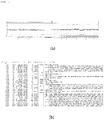
- a Genomic Workbench 6.5 Lite software manufactured by Agilent was used to analyze on which chromosomes and in which regions aberrations exist. Data created by this software were shown, as an example, in Fig. 1(a) (a panel showing an entire region of a chromosome) and Fig. 1(b) (a table showing a list of genes encoded in various chromosomal regions). Such data allow users to find locations of aberrations on all chromosomes in each case.
- the table in Fig. 1 includes information on a sample name, a chromosome number, a locus, amplification or loss, gene names located in each locus, and the like.
- Examining a gain/loss of the copy number by comparing with a normal tissue in this manner constitutes a step of measuring a gain in the copy number of a specific region on a human chromosome in a tumor tissue specimen of colorectal cancer.
- the amplification ratio was not necessarily set to an integer multiple and instead set to 1.19, for example, in this Example by assuming heterogeneity in a cell of the tumor tissue from which DNS was isolated, caused by contamination of a normal cell, nonuniformity of the tumor cell, or the like.
- copy numbers of almost all human genes in all tissues can be easily measured by using a "Taqman (registered trademark) Copy Number Assay” manufactured by Life Technologies.
- the CGH analysis was performed with an "Agilent Oligo CGH Microarray Kit” manufactured by Agilent using the cancer site genomic DNA extracted from a paraffin embedded section of a surgical specimen before treatment or a biopsy specimen (an endoscopic biopsy tissue) isolated from 154 colorectal cancer patients subjected to either of 2 combination therapies, (1) a FOLFOX regimen plus bevacizumab or (2) a FOLFIRI regimen plus bevacizumab. Note that an observation period of the patients was 1,600 days.
- a cutoff value for a gain in the copy number of a specific region on a human chromosome was set to greater than 0.25 in the log2 ratio to search regions amplified about 1.2 times or more of the original copy number, that is, regions having 2.4 copies or more.
- amplification regions were concentrated on chromosomes 7, 8, 13, and 20 in many cases.
- Table 1 shows the regions of which the amplification was observed in 30 cases or more.
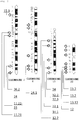
- Fig. 2 shows locations of amplification regions on chromosomes 7, 8, 13, and 20.
- the amplification regions are indicated by arrows.
- the actual amplification regions may be shifted to some degree from the center of those regions. Note that region numbers of long arms of chromosomes 7, 13, and 20 were indicated by leading lines.
- Fig. 3 shows results (survival curves) in the long arm 34 region of chromosome 7 (7q34).
- Fig. 3(a) shows a result of PFS
- Fig. 3(b) shows a result of OS.
- a lateral axis indicates an observation period (daily unit from day 0 to 1,600)
- a longitudinal axis indicates a survival rate (arbitrary unit from 0 to 1).
- the survival rates of patients having amplification (Amplification+) in these regions are indicated by square marks and the survival rates of patients having no amplification (Amplification-) in these regions are indicated by rhombic marks.
- the patients having amplification (amplification+) in this region had significantly more favorable prognosis in terms of OS than the patients having no amplification (amplification-).
- Fig. 4 shows graphs in 4 amplification regions in total located on the long arm of chromosome 7.
- Fig. 4(a) shows a graph in 7q11.21
- Fig. 4(b) in 7q11.22-23
- Fig. 4(c) in 7q34
- Fig. 4(d) in 7q36.2.
- a lateral axis indicates an observation period (daily unit from day 0 to 1,600)
- a longitudinal axis indicates a survival rate (arbitrary unit from 0 to 1).
- the survival rates of patients having amplification (Amplification+) in these regions are indicated by square marks and the survival rates of patients having no amplification (Amplification-) in these regions are indicated by rhombic marks.
- the patients having amplification had significantly more favorable prognosis in terms of OS than the patients having no amplification. Further, these regions are located on the same arm (long arm) of the same chromosome, and thus combinations of the patients allocated to the amplification groups and the no amplification groups are similar to each other between the regions. As a result, their graphs also exhibit similar curves.
- Fig. 5 and Fig. 6 show results (survival curves) of OS on chromosome 13 and chromosome 20, respectively.
- Figs. 5(a) to 5(e) show results in amplification regions including 13q12.2, 13q14.11, 13q22.1, 13q32.2-q32.3, and 13q34, respectively.
- Figs. 6(a) to 6(d) show results in amplification regions including 20q12, 20q13.13, 20q13.2, and 20q13.3, respectively.
- a lateral axis indicates an observation period (daily unit from day 0 to 1,600) and a longitudinal axis indicates a survival rate (arbitrary unit from 0 to 1). Further, the survival rates of patients having amplification (Amplification+) in these regions are indicated by square marks and the survival rates of patients having no amplification (Amplification-) in these regions are indicated by rhombic marks. In all amplification regions on these chromosomes, the patients having amplification had more favorable prognosis. Further, the survival rate curves were similar to each other between the regions on the same arm of chromosome, specifically, on the long arm of chromosome 13 and on the long arm of chromosome 20.
- ETS early tumor shrinkage
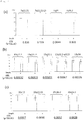
- Fig. 7 shows results of ETS on respective chromosomes 7 ( Fig. 7(a) ), 13 ( Fig. 7(b) ), and 20 ( Fig. 7(c) ).
- a lateral axis indicates the presence or absence of amplification (Amplification ⁇ ) of respective chromosomes and p-values of ETS.
- a longitudinal axis indicates a ratio (%) of the size of the tumor compared to that at the time of registration. Note that p-values less than 5% were printed with an underline.
- a significant difference was observed in ETS in one location (q34) on the long arm of chromosome 7. Further, as shown in Fig. 7(b) , a significant difference was observed in ETS in all 5 locations (q12.2, q14.11, q22.1, q32.2-q32.3, and q34) on the long arm of chromosome 13. As shown in Fig. 7(c) , a significant difference was observed in ETS in 4 locations (q12, q13.13, q13.2, and q13.3) on the long arm of chromosome 20 (no significant difference was observed in 3 locations on the short arm). That is, a significant difference was observed in ETS in total of 10 regions.
- a total of 10 chromosomal regions described above include a predictive factor for an effect of the multidrug combination chemotherapy, (1) the FOLFOX regimen plus bevacizumab or (2) the FOLFIRI regimen plus bevacizumab.
- performing the FOLFOX regimen or the FOLFIRI regimen is advantageous to a patient if the copy number of at least one chromosomal region is gained among the 10 regions on chromosomes 7, 13, and 20 described above.
- a gain in the copy number of the specific region on the human chromosome can be used as a marker that indicates whether performing the FOLFOX regimen or the FOLFIRI regimen is advantageous.
- the copy number is amplified to at least 2.4 copies or more compared to a normal tissue.
- Results are described below for determining whether there is any region in which a therapeutic effect is different between two combination therapies, (1) and (2).
- Fig. 8 to Fig. 12 show results (Kaplan-Meier curves) of comparison in OS by a log-rank test between a total of 4 groups: (1) a FOLFOX group applied with the FOLFOX regime plus bevacizumab, 75 cases; (2) a FOLFIRI group applied with the FOLFIRI regime plus bevacizumab, 79 cases; and each group further subdivided into two groups according to the presence or absence of amplification, in the 10 regions (7q34, 13q12.2, 13q14.11, 13q22.1, 13q32.2-q32.3, 13q34, 20q12, 20q13.13, 20q13.2, and 20q13.3) having a significant difference both in OS and ETS.
- p-values less than 5% (0.05) were printed with an underline.
- a lateral axis indicates an observation period (daily unit from day 0 to 1,600) and a longitudinal axis indicates a survival rate (arbitrary unit from 0 to 1).
- the group of the FOLFOX regimen plus bevacizumab having amplification in the copy number of the specific region on the human chromosome is indicated by "X+”
- the group of the FOLFOX regimen plus bevacizumab having no amplification is indicated by "X-”
- the group of the FOLFIRI regimen plus bevacizumab having amplification is indicated by "R+”
- the group of the FOLFIRI regimen plus bevacizumab having no amplification is indicated by "R-”.
- Fig. 9 to Fig. 12 below use the same annotation.
- a difference in an effect between the group of cases with amplification and the group of cases with no amplification is larger in the FOLFIRI group (R+ and R-) than the FOLFOX group (X+ and X-) in q34 of chromosome 7.
- this region may include a gene that increases a sensitivity to irinotecan without affecting a sensitivity to oxaliplatin.
- Common genes in the group of cases (35 cases) having amplification in the copy number in this region (7q34) are HIPK2, TBXAS1, PARP12, JHDM1D, LOC100134229, SLC37A3, RAB19, and MKRN1 (see Table 3 below).
- Either the FOLFOX regimen or the FOLFIRI regimen can be selected by determining the amplification of 7q34. However, it may also be possible to select either the FOLFOX regimen or the FOLFIRI regimen by measuring the copy numbers of the above-mentioned genes included in 7q34.
- Fig. 9 and Fig. 10 show results on chromosome 13. As shown in Fig. 9 and Fig. 10 , a larger difference between the groups with and without amplification was observed in the FOLFIRI group also on chromosome 13. Moreover, when comparing between the groups having amplification, the FOLFIRI group tended to have a higher sensitivity than the FOLFOX group (with a p-value of about 0.2). Thus, this region may also include a gene that increases a sensitivity to irinotecan without affecting a sensitivity to oxaliplatin.
- Common genes in the group of cases (74 cases) having amplification in the copy number in the 13q12.2 region are the following 21 genes: USP12, RPL21, RPL21P28, SNORD102, SNORA27, RASL11A, GTF3A, MTIF3, LNX2, POLR1D, GSX1, PDX1, ATP5EP2, CDX2, PRHOXNB, FLT3, LOC100288730, PAN3, FLT1, POMP, and SLC46A3 (see Table 3 below).
- common genes in the group of cases (64 cases) having amplification in the copy number in the 13q14.11 region are the following 27 genes: LOC646982, FOXO1, MIR320D1, MRPS31, SLC25A15, SUGT1L1, MIR621, ELF1, WBP4, KBTBD6, KBTBD7, MTRF1, NAA16, OR7E37P, C13orf15, KIAA0564, DGKH, AKAP11, TNFSF11, C13orf30, EPSTI1, DNAJC15, ENOX1, CCDC122, C13orf31, LOC121838, and SERP2 (see Table 3 below).
- Either the FOLFOX regimen or the FOLFIRI regimen can be selected by determining the amplification in the copy numbers of 13q12.2, 13q14.11, and 13q22.1. However, it may also be possible to select either the FOLFOX regimen or the FOLFIRI regimen by measuring the copy numbers of the above-mentioned genes included in these 3 regions.
- a predictive factor (gene) for effect can be found by over-expressing or knocking down by siRNAs these candidate genes shown in Table 3 in a colorectal cancer cell line and measuring a change in sensitivity to irinotecan and oxaliplatin. It is also possible to predict which of the regimens is advantageous as a combination drug with bevacizumab to an individual patient having colorectal cancer by measuring the copy numbers (expression levels) of the genes shown in Table 3.
- a difference between the FOLFOX regimen and the FOLFIRI regimen lies on whether oxaliplatin or irinotecan is used.
- amplification in the copy number of any of these 4 regions including 7q34, 13q12.2, 13q14.11, and 3q22.1 can be used as a marker to predict a therapeutic effect of irinotecan.
- the copy number is amplified to at least 2.4 copies or more compared to a normal tissue.
- a cutoff value in amplification in the copy number of a specific region on a human chromosome was set to greater than 0.25 in the log2 ratio to search a region amplified about 1.2 times or more of the original copy number, that is, a region having 2.4 copies or more.
- amplification regions were concentrated on chromosomes 7, 8 (long arm), 13, and 20 in many cases.
- the amplification regions on chromosomes 7, 8, 13, and 20 are shown in Fig. 2 .
- Fig. 13 shows, in the form of a table, differences (p-values) in OS and PFS between a group having a copy number gain (CNG) and a group having no CNG in all patients (154 patients), a FOLFOX regimen group (75 patients), and a FOLFIRI regimen group (79 patients), and differences (p-values) in OS and PFS between the FOLFOX regimen group and the FOLFIRI regimen group in each of 2 groups, the group having a CNG indicated by CNG(+) and the group having no CNG indicated by CNG(-), in these chromosomal regions defined by cytobands.
- a log-rank test was performed in these regions in terms of progression-free survival (PFS) and overall survival (OS) between two groups, a group of cases (patients) having amplification in the copy number of the specific region on the human chromosome and a group of cases (patients) having no amplification in all patients (154 patients).
- PFS progression-free survival
- OS overall survival
- p-values in such regions were less than 0.05 (p ⁇ 0.05). It is suggested that the gene amplification regions having a significant difference in OS, as described above, may include a prognostic factor.
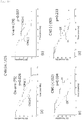
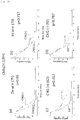
- a semi-significant difference (p ⁇ 0.1) in PFS was observed in the CNG(-) group in most of the regions on a short arm 7p of chromosome 7. Among those regions, the 7p15.3 region has the smallest p-value, and Kaplan-Meier curves of PFS in this region are shown in Fig. 16 .
- Fig. 16(a) is a graph of the FOLFOX regimen group subdivided into the gain (CNG(+)) and no gain (CNG(-)) groups.
- Fig. 16(b) is a graph of the FOLFIRI regimen group subdivided into the gain (CNG(+)) and no gain (CNG(-)) groups.
- Fig. 16(c) is a graph of the gain (CNG(+)) group subdivided into the FOLFOX regimen and FOLFIRI regimen groups.
- Fig. 16(d) is a graph of the no gain (CNG(-)) group subdivided into the FOLFOX regimen and FOLFIRI regimen groups.
- a lateral axis indicates an observation period (labelled as “Time (months)”) and a longitudinal axis indicates a survival probability of PFS (labelled as “PFS Probability”). Note that, in all graphs, the lateral axes range from (month) 0 to 70 and the longitudinal axes range from 0 to 1.
- Fig. 16 a semi-significant difference having a p-value of 0.059 was observed in Fig. 16(d) . That is, it is shown that the FOLFIRI regimen exhibited a higher therapeutic effect than the FOLFOX regimen in the patients having no gene amplification in this region.
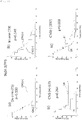
- Kaplan-Meier curves of OS and PFS in 8q24.1 are shown in Fig. 17 and Fig. 18 , respectively.
- a lateral axis indicates an observation period (labelled as “Time (months)") and a longitudinal axis indicates a survival probability (labelled as "OS or PFS Probability"). Further, in each figure, as in Fig. 16 , a lateral axis indicates an observation period (labelled as “Time (months)”) and a longitudinal axis indicates a survival probability (labelled as "OS or PFS Probability"). Further, in each figure, as in Fig.
- (a) is a graph of the FOLFOX regimen group subdivided into the gain (CNG(+)) and no gain (CNG(-)) groups
- (b) is a graph of the FOLFIRI regimen group subdivided into the gain (CNG(+)) and no gain (CNG(-)) groups
- (c) is a graph of the gain (CNG(+)) group subdivided into the FOLFOX regimen group and the FOLFIRI regimen group
- (d) is a graph of the no gain (CNG(-)) group subdivided into the FOLFOX regimen group and FOLFIRI regimen group.
- the lateral axes range from (month) 0 to 70 and the longitudinal axes range from 0 to 1.
- Fig. 19 and Fig. 20 show Kaplan-Meier curves of PFS and OS in 4 groups categorized on the basis of the status of CNG in 7p15.3 and 8q24.1.
- Fig. 19(a) and Fig. 19(b) are graphs of a group having CNG (CNG(+)) both in 7p15.3 and 8q24.1.
- Graphs in Fig. 19(a) and Fig. 19(b) were drawn by plotting PFS and OS, respectively.
- Fig. 19(c) and Fig. 19(d) are graphs of a group having CNG (CNG(+)) in 7p15.3 and no CNG (CNG(-)) in 8q24.1. Graphs in Fig. 19(c) and Fig. 19(d) were drawn by plotting PFS and OS, respectively.
- Fig. 20(a) and Fig. 20(b) are graphs of a group having no CNG (CNG(-)) in 7p15.3 and having CNG (CNG(+)) in 8q24.1. Graphs in Fig. 20(a) and Fig. 20(b) were drawn by plotting PFS and OS, respectively.
- Fig. 20(c) and Fig. 20(d) are graphs of a group having no CNG (CNG(-)) both in 7p15.3 and 8q24.1. Graphs in Fig. 20(c) and Fig. 20(d) were drawn by plotting PFS and OS, respectively.
- a lateral axis indicates an observation period (labelled as “Time (months)”) and a longitudinal axis indicates a survival probability (labelled as "OS or PFS Probability"). Further, in each graph, the lateral axis ranges from (month) 0 to 70 and the longitudinal axis ranges from 0 to 1.
- the FOLFIRI regimen group advantageously exhibited a much higher therapeutic effect in the group having CNG(-) in 7p15.3 and CNG(+) in 8q24.1 (i.e., the group of CNG(-,+): see Figs. 20(a) and (b) ).
- Figs. 19(a) and (b) suggested that the FOLFIRI regimen was advantageous if a gain in a gene copy was observed in both regions of 7p15.3 and 8q24.1. Further, Figs. 19(c) and (d) suggested that the FOLFOX regimen was advantageous if a gain in a gene was observed in 7p15.3 and a gain in a gene was not observed in 8q24.1.
- the copy number of the gene A can be measured in a patient having advanced metastatic colorectal cancer.
- the combination therapy of the FOLFIRI regimen and bevacizumab can be positively selected.
- the entire 7p region including 7p15.3 may include a factor that increases an effect of the FOLFOX regimen.
- Fig. 21 shows differences (p-values) in OS and PFS between a group having a gain in the copy number and a group having no gain in the copy number in all patients (154 patients), the FOLFOX regimen group (75 patients), and the FOLFIRI regimen group (79 patients) in chromosomal amplification regions other than those on chromosomes 7, 8, 13 and 20.
- Fig. 22 shows Kaplan-Meier curves in the FOLFOX regimen group and the FOLFIRI regimen group, each group further subdivided into the group having a gain in the copy number and the group having no gain in the copy number, and Kaplan-Meier curves in the group having CNG indicated by CNG(+) and the group having no CNG indicated by CNG(-), each group further subdivided into the FOLFOX regimen group and the FOLFIRI regimen group, in the 9q34.3 region having a low p-value (0.11) particularly in terms of PFS.
- Fig. 22(a) shows a graph of the FOLFOX regimen group further subdivided into the group having CNG (CNG(+)) and the group having no CNG (CNG(-)).
- Fig. 22(b) shows a graph of the FOLFIRI regimen group further subdivided into the group having CNG (CNG(+)) and the group having no CNG (CNG(-)).
- Fig. 22(c) shows a graph of the group having CNG (CNG(+)) further subdivided into the FOLFOX regimen group and the FOLFIRI regimen group.
- Fig. 22(d) shows a graph of the group having no CNG (CNG(-)) further subdivided into the FOLFOX regimen group and the FOLFIRI regimen group.
- a lateral axis indicates an observation period (labelled as “Time (months)”) and a longitudinal axis indicates a survival probability of PFS (labelled as “PFS Probability”). Further, in each graph, the lateral axis ranges from (month) 0 to 70 and the longitudinal axis ranges from 0 to 1.
- the FOLFIRI regimen exhibited a significantly favorable therapeutic effect in 137 cases having no gain in the copy number in this region among the total of 154 cases.
- CNG was most frequently and commonly observed in the following gene group: NOTCH1, EGFL7, MIR126, AGPAT2, FAM69B, and SNHG7.
- the genes may include a factor that increases a therapeutic effect of the FOLFOX regimen or decreases a therapeutic effect of the FOLFIRI regimen.
- the copy number of the gene B can be measured in a patient having advanced metastatic colorectal cancer.
- the FOLFIRI (irinotecan) regimen can be preferentially selected as a combination therapy with bevacizumab.
- FOLFIRI irinotecan regimen
- the FOLFIRI regimen is preferably selected in combination with bevacizumab if gene amplification is observed in the amplification region of 8q24.1-q24.2.
- the amplification in the 8q24.1-q24.2 region includes a case where a gain in the copy number of gene is observed only in the 8q24.1 region or the 8q24.2 region.
- the FOLFIRI regimen is preferably selected in combination with bevacizumab if gene amplification is not observed in the 9q34.3 amplification region.
- the present invention can be preferably used for determining which, a FOLFOX regimen or a FOLFIRI regimen, is selected as a treatment method of colorectal cancer.
Landscapes
- Chemical & Material Sciences (AREA)
- Life Sciences & Earth Sciences (AREA)
- Health & Medical Sciences (AREA)
- Organic Chemistry (AREA)
- Engineering & Computer Science (AREA)
- Proteomics, Peptides & Aminoacids (AREA)
- Zoology (AREA)
- Wood Science & Technology (AREA)
- Analytical Chemistry (AREA)
- Physics & Mathematics (AREA)
- General Health & Medical Sciences (AREA)
- Immunology (AREA)
- Biophysics (AREA)
- Biotechnology (AREA)
- Genetics & Genomics (AREA)
- Bioinformatics & Cheminformatics (AREA)
- General Engineering & Computer Science (AREA)
- Microbiology (AREA)
- Biochemistry (AREA)
- Molecular Biology (AREA)
- Pathology (AREA)
- Medical Informatics (AREA)
- Biomedical Technology (AREA)
- Public Health (AREA)
- Hospice & Palliative Care (AREA)
- Theoretical Computer Science (AREA)
- Oncology (AREA)
- Bioinformatics & Computational Biology (AREA)
- Spectroscopy & Molecular Physics (AREA)
- Evolutionary Biology (AREA)
- Databases & Information Systems (AREA)
- Primary Health Care (AREA)
- Epidemiology (AREA)
- Data Mining & Analysis (AREA)
- Measuring Or Testing Involving Enzymes Or Micro-Organisms (AREA)
Claims (4)
- Schéma posologique de FOLFOX ou schéma posologique de FOLFIRI destiné à être utilisé dans le traitement du cancer colorectal chez un patient, le patient ayant été sélectionné par le procédé comprenant les étapes consistant à :mesurer un gain dans un nombre de copies d'une région spécifique sur un chromosome humain dans un échantillon de tissu tumoral du cancer colorectal ; etsélectionner le schéma posologique de FOLFOX ou le schéma posologique de FOLFIRI sur la base du fait de savoir si le numéro de copie est acquis ou non,la région spécifique sur le chromosome humain étant une région parmi la région 7p15.3, la région 9q34.3 et la combinaison des régions 7p15.3 et 8q24.1.
- Schéma posologique de FOLFOX ou schéma posologique de FOLFIRI destiné à être utilisé selon la revendication 1,la région spécifique sur le chromosome humain étant la région 7p15.3, etdans l'étape de sélection du schéma posologique de FOLFOX ou du schéma posologique de FOLFIRI, le schéma posologique de FOLFIRI étant sélectionné lorsque le numéro de copie de la région spécifique n'est pas obtenu.
- Schéma thérapeutique de FOLFOX ou schéma posologique de FOLFIRI destiné à être utilisé selon la revendication 1,la région spécifique sur le chromosome humain étant la région 9q34.3, etdans l'étape de sélection du schéma posologique de FOLFOX ou du schéma posologique de FOLFIRI, le schéma posologique de FOLFIRI étant sélectionné lorsque le numéro de copie de la région spécifique n'est pas obtenu.
- Schéma posologique de FOLFOX ou schéma posologique de FOLFIRI destiné à être utilisé selon la revendication 1,les régions spécifiques sur les chromosomes humains étant la combinaison de 7p15.3 et 8q24.1, etdans l'étape de sélection du schéma posologique de FOLFOX ou du schéma posologique de FOLFIRI, le schéma posologique de FOLFOX étant sélectionné lorsque le numéro de copie de la région 7p15.3 est obtenu et que le numéro de copie de la région 8q24.1 n'est pas obtenu.
Applications Claiming Priority (2)
| Application Number | Priority Date | Filing Date | Title |
|---|---|---|---|
| JP2015187300 | 2015-09-24 | ||
| PCT/JP2016/004327 WO2017051542A1 (fr) | 2015-09-24 | 2016-09-23 | Procédé de sélection de traitement et biomarqueur indiquant la sélection |
Publications (3)
| Publication Number | Publication Date |
|---|---|
| EP3354744A1 EP3354744A1 (fr) | 2018-08-01 |
| EP3354744A4 EP3354744A4 (fr) | 2019-04-17 |
| EP3354744B1 true EP3354744B1 (fr) | 2021-09-08 |
Family
ID=58385922
Family Applications (1)
| Application Number | Title | Priority Date | Filing Date |
|---|---|---|---|
| EP16848333.7A Not-in-force EP3354744B1 (fr) | 2015-09-24 | 2016-09-23 | Procédé de sélection de traitement et biomarqueur indiquant la sélection |
Country Status (5)
| Country | Link |
|---|---|
| US (1) | US11879150B2 (fr) |
| EP (1) | EP3354744B1 (fr) |
| JP (1) | JP6860148B2 (fr) |
| CN (1) | CN108026589B (fr) |
| WO (1) | WO2017051542A1 (fr) |
Families Citing this family (1)
| Publication number | Priority date | Publication date | Assignee | Title |
|---|---|---|---|---|
| CN113684277B (zh) * | 2021-09-06 | 2022-05-17 | 南方医科大学南方医院 | 一种基于基因组拷贝数变异的生物标志物预测卵巢癌同源重组缺陷的方法及应用 |
Family Cites Families (13)
| Publication number | Priority date | Publication date | Assignee | Title |
|---|---|---|---|---|
| WO2000024940A1 (fr) | 1998-10-28 | 2000-05-04 | Vysis, Inc. | Reseaux cellulaires et methodes de detection et d'utilisation de marqueurs de troubles genetiques |
| CA2585025A1 (fr) * | 2004-10-22 | 2006-05-04 | Redpath Integrated Pathology, Inc. | Expansion dynamique des suppressions genomiques et formulation de jeux de marqueurs moleculaires pour diagnostic integre de pathologie moleculaire et caracterisation des echantillons de tissus, de fluides cellulaires et de fluides purs |
| ATE481504T1 (de) | 2004-12-10 | 2010-10-15 | Siemens Healthcare Diagnostics | Für die vorhersage des ansprechens maligner neoplasie auf eine auf taxan beruhende medizinische behandlung geeignete genetische veränderung |
| JP2008048689A (ja) * | 2006-08-25 | 2008-03-06 | Aichi Prefecture | 生物体のタイプを判別するためのマーカーの選択方法及び選択されたマーカーの利用 |
| JP2011523067A (ja) * | 2008-06-11 | 2011-08-04 | アーゲ ブルナー,ニルス | ネオアジュバントおよびアジュバント全身性抗癌治療のための結腸直腸癌患者の選択 |
| AU2009298150A1 (en) | 2008-10-03 | 2010-04-08 | Dana-Farber Cancer Institute, Inc. | Compositions, kits and methods for the diagnosis, prognosis, and monitoring of cancer using GOLPH3 |
| ES2354922B1 (es) | 2009-09-02 | 2012-02-07 | Fundacion Institut De Recerca De L'hospital Universitari Vall D'hebron | Marcadores para la selección de terapias personalizadas para el tratamiento del c�?ncer. |
| CA2777169C (fr) * | 2009-10-26 | 2018-11-20 | Abbott Laboratories | Methodes de diagnostic permettant d'etablir un pronostic en cas de cancer du poumon non a petites cellules |
| JP5706612B2 (ja) | 2009-12-28 | 2015-04-22 | 学校法人 埼玉医科大学 | 加齢黄斑変性症易罹患性の判定マーカー並びに判定方法及び判定キット |
| CN103710451B (zh) * | 2013-12-26 | 2015-06-24 | 上海锐赛生物技术有限公司 | Pik3c2g在结直肠癌化疗疗效判断和检测试剂盒中的应用 |
| US10570457B2 (en) * | 2014-09-26 | 2020-02-25 | Medical Prognosis Institute A/S | Methods for predicting drug responsiveness |
| CN104878083B (zh) * | 2015-03-04 | 2018-05-22 | 上海市杨浦区中心医院 | 检测folfox化疗药物对于结直肠癌有效性的试剂盒 |
| CN104762375B (zh) * | 2015-03-13 | 2018-07-06 | 中山大学肿瘤防治中心 | Pou5f1b在肿瘤诊断、治疗、预后和预测复发中的应用 |
-
2016
- 2016-09-23 EP EP16848333.7A patent/EP3354744B1/fr not_active Not-in-force
- 2016-09-23 JP JP2017541433A patent/JP6860148B2/ja not_active Expired - Fee Related
- 2016-09-23 US US15/762,834 patent/US11879150B2/en active Active
- 2016-09-23 CN CN201680055580.1A patent/CN108026589B/zh not_active Expired - Fee Related
- 2016-09-23 WO PCT/JP2016/004327 patent/WO2017051542A1/fr not_active Ceased
Also Published As
| Publication number | Publication date |
|---|---|
| JPWO2017051542A1 (ja) | 2018-07-05 |
| EP3354744A1 (fr) | 2018-08-01 |
| JP6860148B2 (ja) | 2021-04-14 |
| WO2017051542A1 (fr) | 2017-03-30 |
| US11879150B2 (en) | 2024-01-23 |
| CN108026589B (zh) | 2022-09-06 |
| CN108026589A (zh) | 2018-05-11 |
| US20180285521A1 (en) | 2018-10-04 |
| EP3354744A4 (fr) | 2019-04-17 |
Similar Documents
| Publication | Publication Date | Title |
|---|---|---|
| Lu et al. | Identification of a novel biomarker, sema5a, for non–small cell lung carcinoma in nonsmoking women | |
| Kim et al. | Monitoring circulating tumor DNA by analyzing personalized cancer-specific rearrangements to detect recurrence in gastric cancer | |
| Fallet et al. | High-throughput somatic mutation profiling in pulmonary sarcomatoid carcinomas using the LungCarta™ Panel: exploring therapeutic targets | |
| Dômont et al. | High frequency of β-catenin heterozygous mutations in extra-abdominal fibromatosis: a potential molecular tool for disease management | |
| Gow et al. | Comparison of epidermal growth factor receptor mutations between primary and corresponding metastatic tumors in tyrosine kinase inhibitor-naive non-small-cell lung cancer | |
| Shin et al. | Addressing the challenges of applying precision oncology | |
| Chen et al. | Comparison of nanostring nCounter® data on FFPE colon cancer samples and affymetrix microarray data on matched frozen tissues | |
| Chan et al. | Genomic copy number analysis of a spectrum of blue nevi identifies recurrent aberrations of entire chromosomal arms in melanoma ex blue nevus | |
| JP6704861B2 (ja) | 癌処置のための個別化三剤治療を選択するための方法 | |
| JP2015512630A5 (fr) | ||
| JP2020503850A (ja) | 腫瘍抑制foxo活性を酸化ストレスから区別する方法 | |
| EP2633070B1 (fr) | Nouveau marqueur du cancer du sein de sous type luminal b | |
| Köhn et al. | Liquid biopsies in lung cancer—time to implement research technologies in routine care? | |
| Zhang et al. | CUX1-ALK, a novel ALK rearrangement that responds to crizotinib in non–small cell lung cancer | |
| Kim et al. | Circulating tumor DNA shows variable clonal response of breast cancer during neoadjuvant chemotherapy | |
| Park et al. | FGFR2 assessment in gastric cancer using quantitative real-time polymerase chain reaction, fluorescent in situ hybridization, and immunohistochemistry | |
| Kulesza et al. | Emerging concepts in the pathology and molecular biology of advanced non–small cell lung cancer | |
| US20140329714A1 (en) | Stat3 activation as a marker for classification and prognosis of dlbcl patients | |
| Subramanian et al. | Multi-genomic analysis of 260 adrenocortical cancer patient tumors identifies novel network BIRC5-hsa-miR-335-5p-PAX8-AS1 strongly associated with poor survival | |
| van Engen-van Grunsven et al. | Whole-genome copy-number analysis identifies new leads for chromosomal aberrations involved in the oncogenesis and metastastic behavior of uveal melanomas | |
| Liu et al. | Protocadherin γ-A7 is down-regulated in colorectal cancer and associated with the prognosis in patients with wild-type KRAS | |
| WO2008137089A2 (fr) | Signature génique d'un début d'hypoxie pouvant prédire la survie d'un patient | |
| Zhou et al. | Using digital PCR to detect HER2 amplification in breast and gastric cancer patients | |
| US11879150B2 (en) | Treatment selection method and biomarker indicating selection | |
| Mizukami et al. | Identification of a FGFR3-TACC3 fusion in esophageal cancer |
Legal Events
| Date | Code | Title | Description |
|---|---|---|---|
| STAA | Information on the status of an ep patent application or granted ep patent |
Free format text: STATUS: THE INTERNATIONAL PUBLICATION HAS BEEN MADE |
|
| PUAI | Public reference made under article 153(3) epc to a published international application that has entered the european phase |
Free format text: ORIGINAL CODE: 0009012 |
|
| STAA | Information on the status of an ep patent application or granted ep patent |
Free format text: STATUS: REQUEST FOR EXAMINATION WAS MADE |
|
| 17P | Request for examination filed |
Effective date: 20180323 |
|
| AK | Designated contracting states |
Kind code of ref document: A1 Designated state(s): AL AT BE BG CH CY CZ DE DK EE ES FI FR GB GR HR HU IE IS IT LI LT LU LV MC MK MT NL NO PL PT RO RS SE SI SK SM TR |
|
| AX | Request for extension of the european patent |
Extension state: BA ME |
|
| DAV | Request for validation of the european patent (deleted) | ||
| DAX | Request for extension of the european patent (deleted) | ||
| A4 | Supplementary search report drawn up and despatched |
Effective date: 20190320 |
|
| RIC1 | Information provided on ipc code assigned before grant |
Ipc: C12Q 1/68 20180101AFI20190313BHEP Ipc: C12Q 1/6886 20180101ALI20190313BHEP |
|
| STAA | Information on the status of an ep patent application or granted ep patent |
Free format text: STATUS: EXAMINATION IS IN PROGRESS |
|
| 17Q | First examination report despatched |
Effective date: 20200612 |
|
| GRAP | Despatch of communication of intention to grant a patent |
Free format text: ORIGINAL CODE: EPIDOSNIGR1 |
|
| STAA | Information on the status of an ep patent application or granted ep patent |
Free format text: STATUS: GRANT OF PATENT IS INTENDED |
|
| INTG | Intention to grant announced |
Effective date: 20210407 |
|
| GRAS | Grant fee paid |
Free format text: ORIGINAL CODE: EPIDOSNIGR3 |
|
| GRAA | (expected) grant |
Free format text: ORIGINAL CODE: 0009210 |
|
| STAA | Information on the status of an ep patent application or granted ep patent |
Free format text: STATUS: THE PATENT HAS BEEN GRANTED |
|
| RAP3 | Party data changed (applicant data changed or rights of an application transferred) |
Owner name: KINKI UNIVERSITY Owner name: YAKULT HONSHA CO., LTD. |
|
| AK | Designated contracting states |
Kind code of ref document: B1 Designated state(s): AL AT BE BG CH CY CZ DE DK EE ES FI FR GB GR HR HU IE IS IT LI LT LU LV MC MK MT NL NO PL PT RO RS SE SI SK SM TR |
|
| REG | Reference to a national code |
Ref country code: GB Ref legal event code: FG4D |
|
| REG | Reference to a national code |
Ref country code: AT Ref legal event code: REF Ref document number: 1428640 Country of ref document: AT Kind code of ref document: T Effective date: 20210915 Ref country code: CH Ref legal event code: EP |
|
| REG | Reference to a national code |
Ref country code: IE Ref legal event code: FG4D |
|
| REG | Reference to a national code |
Ref country code: DE Ref legal event code: R096 Ref document number: 602016063544 Country of ref document: DE |
|
| REG | Reference to a national code |
Ref country code: LT Ref legal event code: MG9D |
|
| REG | Reference to a national code |
Ref country code: NL Ref legal event code: MP Effective date: 20210908 |
|
| PG25 | Lapsed in a contracting state [announced via postgrant information from national office to epo] |
Ref country code: HR Free format text: LAPSE BECAUSE OF FAILURE TO SUBMIT A TRANSLATION OF THE DESCRIPTION OR TO PAY THE FEE WITHIN THE PRESCRIBED TIME-LIMIT Effective date: 20210908 Ref country code: FI Free format text: LAPSE BECAUSE OF FAILURE TO SUBMIT A TRANSLATION OF THE DESCRIPTION OR TO PAY THE FEE WITHIN THE PRESCRIBED TIME-LIMIT Effective date: 20210908 Ref country code: ES Free format text: LAPSE BECAUSE OF FAILURE TO SUBMIT A TRANSLATION OF THE DESCRIPTION OR TO PAY THE FEE WITHIN THE PRESCRIBED TIME-LIMIT Effective date: 20210908 Ref country code: NO Free format text: LAPSE BECAUSE OF FAILURE TO SUBMIT A TRANSLATION OF THE DESCRIPTION OR TO PAY THE FEE WITHIN THE PRESCRIBED TIME-LIMIT Effective date: 20211208 Ref country code: LT Free format text: LAPSE BECAUSE OF FAILURE TO SUBMIT A TRANSLATION OF THE DESCRIPTION OR TO PAY THE FEE WITHIN THE PRESCRIBED TIME-LIMIT Effective date: 20210908 Ref country code: BG Free format text: LAPSE BECAUSE OF FAILURE TO SUBMIT A TRANSLATION OF THE DESCRIPTION OR TO PAY THE FEE WITHIN THE PRESCRIBED TIME-LIMIT Effective date: 20211208 Ref country code: SE Free format text: LAPSE BECAUSE OF FAILURE TO SUBMIT A TRANSLATION OF THE DESCRIPTION OR TO PAY THE FEE WITHIN THE PRESCRIBED TIME-LIMIT Effective date: 20210908 Ref country code: RS Free format text: LAPSE BECAUSE OF FAILURE TO SUBMIT A TRANSLATION OF THE DESCRIPTION OR TO PAY THE FEE WITHIN THE PRESCRIBED TIME-LIMIT Effective date: 20210908 |
|
| REG | Reference to a national code |
Ref country code: AT Ref legal event code: MK05 Ref document number: 1428640 Country of ref document: AT Kind code of ref document: T Effective date: 20210908 |
|
| PG25 | Lapsed in a contracting state [announced via postgrant information from national office to epo] |
Ref country code: LV Free format text: LAPSE BECAUSE OF FAILURE TO SUBMIT A TRANSLATION OF THE DESCRIPTION OR TO PAY THE FEE WITHIN THE PRESCRIBED TIME-LIMIT Effective date: 20210908 Ref country code: GR Free format text: LAPSE BECAUSE OF FAILURE TO SUBMIT A TRANSLATION OF THE DESCRIPTION OR TO PAY THE FEE WITHIN THE PRESCRIBED TIME-LIMIT Effective date: 20211209 |
|
| PG25 | Lapsed in a contracting state [announced via postgrant information from national office to epo] |
Ref country code: AT Free format text: LAPSE BECAUSE OF FAILURE TO SUBMIT A TRANSLATION OF THE DESCRIPTION OR TO PAY THE FEE WITHIN THE PRESCRIBED TIME-LIMIT Effective date: 20210908 |
|
| REG | Reference to a national code |
Ref country code: CH Ref legal event code: PL |
|
| REG | Reference to a national code |
Ref country code: BE Ref legal event code: MM Effective date: 20210930 |
|
| PG25 | Lapsed in a contracting state [announced via postgrant information from national office to epo] |
Ref country code: IS Free format text: LAPSE BECAUSE OF FAILURE TO SUBMIT A TRANSLATION OF THE DESCRIPTION OR TO PAY THE FEE WITHIN THE PRESCRIBED TIME-LIMIT Effective date: 20220108 Ref country code: SM Free format text: LAPSE BECAUSE OF FAILURE TO SUBMIT A TRANSLATION OF THE DESCRIPTION OR TO PAY THE FEE WITHIN THE PRESCRIBED TIME-LIMIT Effective date: 20210908 Ref country code: SK Free format text: LAPSE BECAUSE OF FAILURE TO SUBMIT A TRANSLATION OF THE DESCRIPTION OR TO PAY THE FEE WITHIN THE PRESCRIBED TIME-LIMIT Effective date: 20210908 Ref country code: RO Free format text: LAPSE BECAUSE OF FAILURE TO SUBMIT A TRANSLATION OF THE DESCRIPTION OR TO PAY THE FEE WITHIN THE PRESCRIBED TIME-LIMIT Effective date: 20210908 Ref country code: PT Free format text: LAPSE BECAUSE OF FAILURE TO SUBMIT A TRANSLATION OF THE DESCRIPTION OR TO PAY THE FEE WITHIN THE PRESCRIBED TIME-LIMIT Effective date: 20220110 Ref country code: PL Free format text: LAPSE BECAUSE OF FAILURE TO SUBMIT A TRANSLATION OF THE DESCRIPTION OR TO PAY THE FEE WITHIN THE PRESCRIBED TIME-LIMIT Effective date: 20210908 Ref country code: NL Free format text: LAPSE BECAUSE OF FAILURE TO SUBMIT A TRANSLATION OF THE DESCRIPTION OR TO PAY THE FEE WITHIN THE PRESCRIBED TIME-LIMIT Effective date: 20210908 Ref country code: EE Free format text: LAPSE BECAUSE OF FAILURE TO SUBMIT A TRANSLATION OF THE DESCRIPTION OR TO PAY THE FEE WITHIN THE PRESCRIBED TIME-LIMIT Effective date: 20210908 Ref country code: CZ Free format text: LAPSE BECAUSE OF FAILURE TO SUBMIT A TRANSLATION OF THE DESCRIPTION OR TO PAY THE FEE WITHIN THE PRESCRIBED TIME-LIMIT Effective date: 20210908 Ref country code: AL Free format text: LAPSE BECAUSE OF FAILURE TO SUBMIT A TRANSLATION OF THE DESCRIPTION OR TO PAY THE FEE WITHIN THE PRESCRIBED TIME-LIMIT Effective date: 20210908 |
|
| REG | Reference to a national code |
Ref country code: DE Ref legal event code: R097 Ref document number: 602016063544 Country of ref document: DE |
|
| PG25 | Lapsed in a contracting state [announced via postgrant information from national office to epo] |
Ref country code: MC Free format text: LAPSE BECAUSE OF FAILURE TO SUBMIT A TRANSLATION OF THE DESCRIPTION OR TO PAY THE FEE WITHIN THE PRESCRIBED TIME-LIMIT Effective date: 20210908 |
|
| PLBE | No opposition filed within time limit |
Free format text: ORIGINAL CODE: 0009261 |
|
| STAA | Information on the status of an ep patent application or granted ep patent |
Free format text: STATUS: NO OPPOSITION FILED WITHIN TIME LIMIT |
|
| PG25 | Lapsed in a contracting state [announced via postgrant information from national office to epo] |
Ref country code: LU Free format text: LAPSE BECAUSE OF NON-PAYMENT OF DUE FEES Effective date: 20210923 Ref country code: IE Free format text: LAPSE BECAUSE OF NON-PAYMENT OF DUE FEES Effective date: 20210923 Ref country code: DK Free format text: LAPSE BECAUSE OF FAILURE TO SUBMIT A TRANSLATION OF THE DESCRIPTION OR TO PAY THE FEE WITHIN THE PRESCRIBED TIME-LIMIT Effective date: 20210908 Ref country code: BE Free format text: LAPSE BECAUSE OF NON-PAYMENT OF DUE FEES Effective date: 20210930 |
|
| 26N | No opposition filed |
Effective date: 20220609 |
|
| PG25 | Lapsed in a contracting state [announced via postgrant information from national office to epo] |
Ref country code: SI Free format text: LAPSE BECAUSE OF FAILURE TO SUBMIT A TRANSLATION OF THE DESCRIPTION OR TO PAY THE FEE WITHIN THE PRESCRIBED TIME-LIMIT Effective date: 20210908 Ref country code: LI Free format text: LAPSE BECAUSE OF NON-PAYMENT OF DUE FEES Effective date: 20210930 Ref country code: CH Free format text: LAPSE BECAUSE OF NON-PAYMENT OF DUE FEES Effective date: 20210930 |
|
| PG25 | Lapsed in a contracting state [announced via postgrant information from national office to epo] |
Ref country code: IT Free format text: LAPSE BECAUSE OF FAILURE TO SUBMIT A TRANSLATION OF THE DESCRIPTION OR TO PAY THE FEE WITHIN THE PRESCRIBED TIME-LIMIT Effective date: 20210908 |
|
| PG25 | Lapsed in a contracting state [announced via postgrant information from national office to epo] |
Ref country code: HU Free format text: LAPSE BECAUSE OF FAILURE TO SUBMIT A TRANSLATION OF THE DESCRIPTION OR TO PAY THE FEE WITHIN THE PRESCRIBED TIME-LIMIT; INVALID AB INITIO Effective date: 20160923 |
|
| PG25 | Lapsed in a contracting state [announced via postgrant information from national office to epo] |
Ref country code: CY Free format text: LAPSE BECAUSE OF FAILURE TO SUBMIT A TRANSLATION OF THE DESCRIPTION OR TO PAY THE FEE WITHIN THE PRESCRIBED TIME-LIMIT Effective date: 20210908 |
|
| PGFP | Annual fee paid to national office [announced via postgrant information from national office to epo] |
Ref country code: GB Payment date: 20230920 Year of fee payment: 8 |
|
| PGFP | Annual fee paid to national office [announced via postgrant information from national office to epo] |
Ref country code: FR Payment date: 20230928 Year of fee payment: 8 Ref country code: DE Payment date: 20230920 Year of fee payment: 8 |
|
| PG25 | Lapsed in a contracting state [announced via postgrant information from national office to epo] |
Ref country code: MK Free format text: LAPSE BECAUSE OF FAILURE TO SUBMIT A TRANSLATION OF THE DESCRIPTION OR TO PAY THE FEE WITHIN THE PRESCRIBED TIME-LIMIT Effective date: 20210908 |
|
| PG25 | Lapsed in a contracting state [announced via postgrant information from national office to epo] |
Ref country code: TR Free format text: LAPSE BECAUSE OF FAILURE TO SUBMIT A TRANSLATION OF THE DESCRIPTION OR TO PAY THE FEE WITHIN THE PRESCRIBED TIME-LIMIT Effective date: 20210908 |
|
| PG25 | Lapsed in a contracting state [announced via postgrant information from national office to epo] |
Ref country code: MT Free format text: LAPSE BECAUSE OF FAILURE TO SUBMIT A TRANSLATION OF THE DESCRIPTION OR TO PAY THE FEE WITHIN THE PRESCRIBED TIME-LIMIT Effective date: 20210908 |
|
| REG | Reference to a national code |
Ref country code: DE Ref legal event code: R119 Ref document number: 602016063544 Country of ref document: DE |
|
| GBPC | Gb: european patent ceased through non-payment of renewal fee |
Effective date: 20240923 |
|
| PG25 | Lapsed in a contracting state [announced via postgrant information from national office to epo] |
Ref country code: DE Free format text: LAPSE BECAUSE OF NON-PAYMENT OF DUE FEES Effective date: 20250401 |
|
| PG25 | Lapsed in a contracting state [announced via postgrant information from national office to epo] |
Ref country code: GB Free format text: LAPSE BECAUSE OF NON-PAYMENT OF DUE FEES Effective date: 20240923 |
|
| PG25 | Lapsed in a contracting state [announced via postgrant information from national office to epo] |
Ref country code: FR Free format text: LAPSE BECAUSE OF NON-PAYMENT OF DUE FEES Effective date: 20240930 |