EP3355264A1 - Procédé d'invite d'informations et terminal de service mobile utilisé pour un lieu public - Google Patents
Procédé d'invite d'informations et terminal de service mobile utilisé pour un lieu public Download PDFInfo
- Publication number
- EP3355264A1 EP3355264A1 EP16848086.1A EP16848086A EP3355264A1 EP 3355264 A1 EP3355264 A1 EP 3355264A1 EP 16848086 A EP16848086 A EP 16848086A EP 3355264 A1 EP3355264 A1 EP 3355264A1
- Authority
- EP
- European Patent Office
- Prior art keywords
- user
- route
- information
- time
- needed
- Prior art date
- Legal status (The legal status is an assumption and is not a legal conclusion. Google has not performed a legal analysis and makes no representation as to the accuracy of the status listed.)
- Withdrawn
Links
Images


Classifications
-
- G—PHYSICS
- G01—MEASURING; TESTING
- G01C—MEASURING DISTANCES, LEVELS OR BEARINGS; SURVEYING; NAVIGATION; GYROSCOPIC INSTRUMENTS; PHOTOGRAMMETRY OR VIDEOGRAMMETRY
- G01C21/00—Navigation; Navigational instruments not provided for in groups G01C1/00 - G01C19/00
- G01C21/20—Instruments for performing navigational calculations
- G01C21/206—Instruments for performing navigational calculations specially adapted for indoor navigation
-
- G—PHYSICS
- G01—MEASURING; TESTING
- G01C—MEASURING DISTANCES, LEVELS OR BEARINGS; SURVEYING; NAVIGATION; GYROSCOPIC INSTRUMENTS; PHOTOGRAMMETRY OR VIDEOGRAMMETRY
- G01C21/00—Navigation; Navigational instruments not provided for in groups G01C1/00 - G01C19/00
- G01C21/005—Navigation; Navigational instruments not provided for in groups G01C1/00 - G01C19/00 with correlation of navigation data from several sources, e.g. map or contour matching
-
- G—PHYSICS
- G01—MEASURING; TESTING
- G01C—MEASURING DISTANCES, LEVELS OR BEARINGS; SURVEYING; NAVIGATION; GYROSCOPIC INSTRUMENTS; PHOTOGRAMMETRY OR VIDEOGRAMMETRY
- G01C21/00—Navigation; Navigational instruments not provided for in groups G01C1/00 - G01C19/00
- G01C21/10—Navigation; Navigational instruments not provided for in groups G01C1/00 - G01C19/00 by using measurements of speed or acceleration
- G01C21/12—Navigation; Navigational instruments not provided for in groups G01C1/00 - G01C19/00 by using measurements of speed or acceleration executed aboard the object being navigated; Dead reckoning
- G01C21/14—Navigation; Navigational instruments not provided for in groups G01C1/00 - G01C19/00 by using measurements of speed or acceleration executed aboard the object being navigated; Dead reckoning by recording the course traversed by the object
-
- G—PHYSICS
- G06—COMPUTING OR CALCULATING; COUNTING
- G06F—ELECTRIC DIGITAL DATA PROCESSING
- G06F16/00—Information retrieval; Database structures therefor; File system structures therefor
- G06F16/90—Details of database functions independent of the retrieved data types
- G06F16/95—Retrieval from the web
- G06F16/953—Querying, e.g. by the use of web search engines
- G06F16/9537—Spatial or temporal dependent retrieval, e.g. spatiotemporal queries
-
- G—PHYSICS
- G06—COMPUTING OR CALCULATING; COUNTING
- G06Q—INFORMATION AND COMMUNICATION TECHNOLOGY [ICT] SPECIALLY ADAPTED FOR ADMINISTRATIVE, COMMERCIAL, FINANCIAL, MANAGERIAL OR SUPERVISORY PURPOSES; SYSTEMS OR METHODS SPECIALLY ADAPTED FOR ADMINISTRATIVE, COMMERCIAL, FINANCIAL, MANAGERIAL OR SUPERVISORY PURPOSES, NOT OTHERWISE PROVIDED FOR
- G06Q10/00—Administration; Management
- G06Q10/04—Forecasting or optimisation specially adapted for administrative or management purposes, e.g. linear programming or "cutting stock problem"
-
- G—PHYSICS
- G06—COMPUTING OR CALCULATING; COUNTING
- G06Q—INFORMATION AND COMMUNICATION TECHNOLOGY [ICT] SPECIALLY ADAPTED FOR ADMINISTRATIVE, COMMERCIAL, FINANCIAL, MANAGERIAL OR SUPERVISORY PURPOSES; SYSTEMS OR METHODS SPECIALLY ADAPTED FOR ADMINISTRATIVE, COMMERCIAL, FINANCIAL, MANAGERIAL OR SUPERVISORY PURPOSES, NOT OTHERWISE PROVIDED FOR
- G06Q10/00—Administration; Management
- G06Q10/06—Resources, workflows, human or project management; Enterprise or organisation planning; Enterprise or organisation modelling
- G06Q10/063—Operations research, analysis or management
- G06Q10/0631—Resource planning, allocation, distributing or scheduling for enterprises or organisations
-
- G—PHYSICS
- G06—COMPUTING OR CALCULATING; COUNTING
- G06Q—INFORMATION AND COMMUNICATION TECHNOLOGY [ICT] SPECIALLY ADAPTED FOR ADMINISTRATIVE, COMMERCIAL, FINANCIAL, MANAGERIAL OR SUPERVISORY PURPOSES; SYSTEMS OR METHODS SPECIALLY ADAPTED FOR ADMINISTRATIVE, COMMERCIAL, FINANCIAL, MANAGERIAL OR SUPERVISORY PURPOSES, NOT OTHERWISE PROVIDED FOR
- G06Q50/00—Information and communication technology [ICT] specially adapted for implementation of business processes of specific business sectors, e.g. utilities or tourism
- G06Q50/40—Business processes related to the transportation industry
-
- H—ELECTRICITY
- H04—ELECTRIC COMMUNICATION TECHNIQUE
- H04W—WIRELESS COMMUNICATION NETWORKS
- H04W4/00—Services specially adapted for wireless communication networks; Facilities therefor
- H04W4/02—Services making use of location information
-
- G—PHYSICS
- G06—COMPUTING OR CALCULATING; COUNTING
- G06N—COMPUTING ARRANGEMENTS BASED ON SPECIFIC COMPUTATIONAL MODELS
- G06N5/00—Computing arrangements using knowledge-based models
- G06N5/04—Inference or reasoning models
- G06N5/048—Fuzzy inferencing
-
- G—PHYSICS
- G09—EDUCATION; CRYPTOGRAPHY; DISPLAY; ADVERTISING; SEALS
- G09F—DISPLAYING; ADVERTISING; SIGNS; LABELS OR NAME-PLATES; SEALS
- G09F27/00—Combined visual and audible advertising or displaying, e.g. for public address
- G09F2027/002—Advertising message recorded in a memory device
Definitions
- the present invention relates to the field of information processing, and more particularly to an information prompting method for a public place and mobile service terminal.
- services to public service establishments are mainly guidance services for the public, such as manual guidance, signage guidance and broadcast guidance.
- public service establishments e.g. airports, train stations, exhibition halls, shopping malls, etc.
- guidance services for the public such as manual guidance, signage guidance and broadcast guidance.
- the user is unfamiliar with the route from his current location to the boarding gate, it is difficult to determine when to proceed to the boarding gate.
- the user often needs to go to the airport as early as possible while keeping an eye on environmental changes in real time to avoid missing boarding time.
- an information prompting method for a public place includes: acquiring user information, and categorizing a user into a target user group according to the user information; planning a first route to a predetermined destination, and estimating a first time period (T1) needed for completing the first route according to the user information corresponding to the users within the target user group; prompting the user for the planned first route and the first estimated time; acquiring user's movement information, planning a second route, and estimating a second time period (T2) needed for completing the second route according to the user movement information; and prompting the user for the planned second route and the second estimated time.
- the public place is an airport
- the predetermined destination is a boarding gate
- the method may further include: displaying and/or broadcasting the remaining planned route distances and/or altered boarding gates and/or modified takeoff time and/or remaining time from takeoff in real time, and navigating the user.
- a mobile service terminal includes: a collection module configured to collect user information; an interface module configured to perform data exchange with an external device according to the collected user information to acquire user database and/or resource information; a storage module configured to store the user information; and a service push module configured to plan a first route to a predetermined destination for the user, to estimate a first time period needed for completing the first route, and to plan a second route during the travel of the first route, to estimate a second time period (T2) needed for completing the second route; and to prompt in real time for the remaining movement distance and/or the time needed in the walking route, and to navigate the user.
- a collection module configured to collect user information
- an interface module configured to perform data exchange with an external device according to the collected user information to acquire user database and/or resource information
- a storage module configured to store the user information
- a service push module configured to plan a first route to a predetermined destination for the user, to estimate a first time period needed for completing the first route, and to plan a second route during
- a user can be provided with more accurate and predictive information prompts, and the content of the prompt service can be adjusted in real time, which helps the user to plan routes and activities, improving the user's convenience and satisfaction.
- the user's identity information is acquired and added to a user database.
- the user database is updated in real time, which makes the mobile service terminal keep rich and continuously updated information.
- a relatively high accuracy of acquiring the average movement speed of a target user group to which the user belongs based on the average movement speed (such as the walking speed) of each user in the target user group can be obtained, hence the accuracy of the estimated time from the user's current location to the boarding gate will also be higher.
- the time needed for the user to the destination can be calculated according to the average speed of the users in the target user group to which the user belongs so as to provide the user with a preliminary prompt so that the user can reasonably arrange his/her time according to the prompt, thereby improving user experience. Then the user's own average movement speed will be collected. A more accurate boarding time prompt can be provided according to the user's movement speed and real-time movement information.
- a user may be prompted in time to go to the boarding gate at a time prior to take-off, and if the boarding gate or the take-off time changes, the updated takeoff time, the updated boarding gate, and the updated remaining time from takeoff can be prompted to the user and the user can be navigated so that the user can easily cope with various unexpected situations encountered during boarding.
- the user can effectively avoid missing flight, which facilitates the user to make reasonable schedules and plan activities, improving user satisfaction.
- the embodiments of the present invention can be applied to such public places as airports and can also be applied to places such as shopping malls, exhibition halls and the like. It may typically be implemented in a computer system/server that can operate with any number of other general-purpose or special-purpose computing systems or configurations. Examples of well-known computing systems, environments and/or configurations suitable for use with the computer system/server include, but are not limited to, a personal computer system, a server computer system, a client computer, a handheld or laptop device, a microprocessor-based system, a set top box, programmable consumer electronics, a networked personal computer, a minicomputer system, a mainframe computer system, and a distributed cloud computing technology environment that includes any of the above systems.
- the computer system/server may be described in the general context of computer system executable instructions that are executed by a computer system.
- program modules can include routines, programs, object programs, components, logic, data structures, etc. that perform particular tasks or implement particular abstract data types.
- the computer system/server may be implemented in a distributed cloud computing environment where tasks are performed by remote processing devices that are linked through a communications network.
- program modules may be located in local or remote computing system storage media including storage devices.
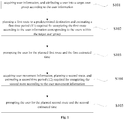
- Fig. 1 is a schematic flowchart of a boarding prompt method for an airport according to an embodiment of the present invention. As shown in Fig. 1 , the method includes the following steps.
- step S101 information of a user is acquired, and the user is categorized into a user group according to the user information.
- the user information may include identity information, flight information, historical behavior information, user movement information, and the like.
- the identity information may include user ID, gender, age, and the like.
- the flight information may include flight number, flight departure time, boarding gate, seat number and so on.
- the historical behavior information includes place of departure, destination, takeoff time period, seat, flight frequency, behavioral interest, and the like.
- This user movement information includes the user's speed, the time spent, and the like.
- the user information may be specifically stored in a user database, where a user may be categorized into a target user group according to user information, and the user information of the user may be stored in a corresponding target user group data packet.
- a mobile service terminal creates a user information folder for each user, assigns them an independent user identity number, and establishes registration data information. Registered users do not need to repeat the registration, and it is only necessary to add new information of the user to their data information.
- the user information may be analyzed and sorted according to identity information and historical behavior information of different users to obtain subdivided target user group databases with different dimensions.
- the database may include the contents of a user's following attributes:
- users are classified into target various user groups with different attributes by storing and analyzing mass different user information data.
- typical user groups in the user database may include, for example:
- the user database stores user information of multiple users (for example, information folders of users A and B (belonging to high-end business person) and information folders of users C and D (belonging to ordinary business trip user)).
- the user database stores different target user group data packets (e.g., high-end business group data packets, young woman group data packets, geriatric group data packets, etc.).
- Users A and B are classified into the high-end business group.
- the information folders of users A and B are stored in the directory of high-end business group data packet.
- Users C and D are classified into the ordinary business travel user group, and information folders of users C and D are stored in the directory of ordinary business travel user group data packet.
- the above user database may be adjusted as needed.
- the present embodiment supports custom definition of a new user group (for example, young men and women who are between the ages of 20 and 30, the flight destination of which is Hong Kong, Macao, or Taiwan, and who love travelling).
- a specific implementation of categorizing the user into the target user group may adopt a manual analysis method to analyze the attributes of a specific user, and then use a configuration file to match, classify and sort users possessing the same attributes.
- high-end business group taking more than 50 flights per year, the first class prevails and the flight time occurs mostly during the day, concerned about high-end service products such as investment and financial management, real estate, and automotive.
- high-end service products such as investment and financial management, real estate, and automotive.
- the classification may adopt an exact matching manner.
- the user is classified into the target user group.
- a fuzzy matching manner may also be used for classification.
- a fuzzy matching manner may also be used for classification.
- the preset rule may also be that, when the proportion of the user's attributes consistent with that of the target user group is greater than a first preset value (for example, 70%), or a weight is preset for each attribute of the user, the user is attributed to the target user group when the total weight value of the attributes of the user consistent with that of the target user group is greater than a second preset value (for example, 60%).
- a first preset value for example, 70%
- a weight is preset for each attribute of the user
- each attribute may also be preset with a weight, and when the total weight value is greater than a preset value, the matching succeeds.
- Various settings can be performed as needed in particular to meet personalized service requirements.
- step S102 a first route to a predetermined destination (for example, a boarding gate) is planned, and a first time period T1 needed for completing the first route is estimated according to user information corresponding to the users in the target user group.
- a predetermined destination for example, a boarding gate
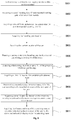
- Fig. 2 is a schematic diagram of route planning in Fig. 1 . As shown in Fig. 2 , in the present embodiment, the process of route planning includes the following sub-steps.
- sub-step S201 the user's current location is determined.
- sub-step S202 the location of the boarding gate corresponding to the flight of the user is acquired.
- sub-step S203 a route from the user's current location to the boarding gate is planned.
- Fig. 3 is a schematic flowchart of a method for estimating the first time period T1 needed for completing the first route in Fig. 1 .
- the step of estimating the first time period T1 needed for completing the first route includes the following sub-steps.
- a first movement distance S1 is determined according to the first route.
- route planning can be realized by utilizing the existing navigation function of a navigation unit. For example, according to a map of the airport where the user locates and the user's current location and boarding gate location acquired, a route between the two locations is generated and a drawn moving route is displayed.
- a first average movement speed V1 of the target user group is determined based on the average movement speed of the users in the target user group.
- the first time period T1 needed for completing the first movement distance S1 is estimated according to the first average movement speed (V1).
- step S103 the user is prompted for the planned first route and the first estimated time.
- the first estimated time may specifically include at least one of the first time period T1 and the current time left from the takeoff.
- the time needed for the user to the destination can be calculated according to the average speed of the users in the target user group to provide the user with a preliminary prompt so that the user can make reasonable schedule and plan activities according to the prompt, thus improving user experience.
- step S104 user movement information is acquired, a second route is planned, and a second time period T2 needed for completing the second route is estimated according to the user movement information.
- the user's movement information may be acquired and the second route may be planned within a preset time interval, where the preset time interval may be the first time period T1, or another preset time value.
- the preset time interval is not specifically limited herein.
- Fig. 4 is a schematic flowchart of a method for estimating the second time period T2 needed for completing the second route in Fig. 1 .
- the step of estimating the second time period T2 needed for completing the second route includes the following sub-steps.
- a second movement distance S2 is determined according to the second route.
- a second average movement speed V2 of the user is determined based on the used time and distance during the movement of the user.
- the second time period T2 is determined according to the second movement distance S2 and the second average movement speed V2.
- step 105 the user is prompted for the planned second route and the second estimated time.
- the second estimated time may specifically include at least one of the second time period T2 and the current time left from takeoff.
- the above method may further specifically include the following steps.
- step S106 the time needed for the remaining movement distance in the planned route is displayed and/or broadcasted in real time.
- step S107 the remaining movement distance in the planned route is displayed and/or broadcasted in real time, and navigation for the user is conducted.
- the user's identity information is acquired and added to the user database.
- the user database is updated in real time, which makes the mobile service terminal keep rich and continuously updated information.
- the accuracy of acquiring the average movement speed V1 of the target user group based on the average movement speed (such as the walking speed) of each user in the target user group is higher, so that the accuracy of the estimated time from the user's current location to the boarding gate will be very high.
- On the basis of initially prompt to the user by collecting the user's own average speed and real-time route changes, more accurate boarding time prompts can be provided.
- the user may be prompted continuously before take-off so that the user can arrange his/her activities in the airport and board easily. If the boarding gate or the take-off time changes, the updated takeoff time, the updated boarding gate, and the updated remaining time from takeoff can be prompted to the user and navigation can be provided to the user so that the user can easily cope with various unexpected situations encountered during boarding.
- the user can effectively avoid flight missing, while being facilitated to make reasonable schedules, making the best of the user's time and improving user satisfaction.
- Fig. 5 is a schematic diagram of a mobile service terminal for boarding prompt of an airport according to an embodiment of the present invention.
- the mobile service terminal may include a collection module 11, a storage module 12, an interface module 13, and a service push module 14.
- the collection module 11 may be configured to collect user information.
- the user information may specifically include identity information, flight information, historical behavior information, and movement information.
- the identity information includes user ID, gender, age, and the like.
- the flight information includes flight number, flight departure time, boarding gate, seat number and so on.
- the historical behavior information includes place of departure, destination, takeoff time, seat, flight frequency, behavioral interest, and the like.
- This user movement information includes the user's speed, the time spent, and the like.
- the storage module 12 may be configured to store user information.
- the storage module may store user information through a user database, where the user database stores user information of multiple users, and the user information is classified into data packets corresponding to different target user groups based on characteristic attributes of the user.
- the interface module 13 may be configured to acquire user database and/or resource information from an external device.
- the external device may be a background server or a third-party server that provides data support for the mobile service terminal, for example, an airport background system, through which system, the mobile service terminal may obtain resource information of the user's concerned aircraft, such as flight number, airline, departure date, place of departure, destination, planned departure time, planned arrival time, flight status, boarding gate, transit or stopover.
- the service push module 14 may be configured to plan a first route, estimate a first time period T1 needed for completing the first route, and prompt the user to go boarding at a preset time before the first time period T1 before boarding; plan a second route on the way of the user's boarding, and estimate a second time period T2 needed for completing the second route; display and/or broadcast the time needed for remaining movement distance in the planned route in real time, display and/or broadcast the remaining movement distance in the planned route in real time, and navigate the user's way.
- Fig. 6 (a) is a schematic diagram of an embodiment of the service push module in Fig. 5 .
- the service push module 14 may include a positioning unit 141, a navigation unit 142, and a processing unit 143.
- the positioning unit 141 can be configured to determine the current location of the user and the location of the boarding gate corresponding to the user's flight.
- the positioning unit can adopt a variety of technologies such as wireless communication, base station positioning and inertial navigation positioning to form a set of indoor location positioning systems so as to realize the positioning of personnel, objects and the like in an interior space.
- the navigation unit 142 can be configured to plan a route from the current location of the user to the boarding gate corresponding to the user's flight, and provide a navigation service.
- Wi-Fi can be used for indoor positioning and navigation.
- the existing commercially available navigation unit can be adopted to complete the function, which will not be described here again
- the processing unit 143 is configured to calculate distance, time, and speed parameters, push service content to the user, and update the pushed content in real time.
- the processing unit 143 may be, for example, a single-chip computer or a processor including an FPGA chip.
- Fig. 6 (b) is a schematic diagram of another embodiment of the service push module in Fig. 5 .
- the service push module 14 may include a positioning unit 141, a navigation unit 142, a processing unit 143, a query unit 144 and an analysis unit 145.
- the similar portions of the two embodiments in Fig. 6 will not be described again, while only the differences between the two embodiments will be described herein.
- the public place is an airport
- the predetermined destination is a boarding gate
- the analysis unit 145 is configured to extract the user's characteristic attributes according to the collected user information, and match the user with the characteristic attributes of the target user group according to the characteristic attributes.
- the query unit 144 is configured to query an average movement speed of the user from the data packet corresponding to the target user group stored by the storage module and query the updated departure time point and the updated boarding gate information from external resource through the interface module.
- the processing unit 143 may be further configured to prompt the user to go to the boarding gate at a preset time point within the first time period (T1).
- Fig. 7 is a schematic diagram of the collection module in Fig. 5 .
- the collection module 11 includes a camera unit 111 and an information input unit 112.
- the camera unit 111 is configured to collect the user's identity information.
- the information input unit 112 is configured to collect information input by the user.
- the information input unit 112 may be a touch screen unit.
- Fig. 8 is a schematic flowchart of a mobile service terminal prompting a user to board according to an embodiment of the present invention.
- This embodiment takes a 40-year-old middle-aged male user taking an airport plane as an example, and specifically describes a specific implementation of the mobile service terminal prompting the user to board.
- the user is prompted to board the flight.
- step S801 the user's identity is authenticated and the mobile service terminal is logged in.
- a middle-aged male user enters the airport and acquires a mobile service terminal, which can be placed on a trolley carrying luggage.
- the user's identity is authenticated according to user information.
- the user's identity can be authenticated through the boarding pass, ID and passport, phone number, face and voiceprint, etc., thus logging in the system.
- the mobile service terminal can also be used in large public places such as shopping malls, etc. When it is used in a shopping mall, this system can be accessed by scanning or entering the shopping mall's membership card.
- step S802 an expected boarding time T3 and expected boarding gate information are acquired from outside.
- the mobile service terminal connects to a third-party server, for example, an airport iTC (Airport Data Center) through a background server, and obtains the expected boarding time T1 and the expected boarding gate (e.g., A123) information corresponding to the flight number.
- a third-party server for example, an airport iTC (Airport Data Center)
- the expected boarding time T1 and the expected boarding gate (e.g., A123) information corresponding to the flight number for example, an airport iTC (Airport Data Center)
- the expected boarding time T1 and the expected boarding gate e.g., A123
- step S803 a time difference ⁇ t between the current time T4 and the preset boarding time T3 is acquired, in minutes.
- step S804 the boarding gate location is acquired.
- the mobile service terminal includes a map resource of the current airport and a POI (Point of Interest) database.
- the POI database stores key location object information in the airport, for example, boarding gates, merchants, public facilities and so on.
- Each POI data contains the following fields: name, category, and spatial location coordinates. For example: for a given boarding gate A123, the storage form in the POI database is:
- the POI information of the boarding gate is found in the boarding gate category of the POI database, and the location of the boarding gate in the map is determined through the spatial location coordinates.
- step S805 the current location of the user is acquired.
- an indoor positioning device built in the mobile service terminal acquires the spatial location coordinates of the user's current location so as to determines the current location of the user in the map.
- step S806 a moving route of the user to the boarding gate is planned, and the distance S1 of the route is determined.
- one or more moving routes may be planned, an optimal moving route with the shortest distance may be selected, and the distance S1 of the planned route may be calculated.
- step S807 the first average movement speed V1 of the group is obtained.
- V1 is determined as follows:
- a plurality of user groups are oriented through 2 dimension of the user's gender and age, and an average movement speed matching the characteristics of each group is preset for each group and stored in the mobile service terminal.
- the first average movement speed of the target user group may also be acquired according to the collected user information. Specifically, the first average movement speed of the target user group may be calculated according to the collected speeds of multiple users, and the accuracy of the data becomes higher as the amount of collected data increases.
- the user scans the boarding pass when he or she logs in the system.
- the system obtains the basic identity information of the user from a third-party public service platform by parsing the boarding pass information (two items are used in this example: user gender and user age). By comparing the preset information in the mobile service terminal, the first average movement speed V1 of the group is obtained.
- step S808 a time T1 needed for completing the planned route is acquired, in minutes.
- T 1 S 1 / V 1
- ⁇ t-T3 is less than a preset time value
- the user is prompted to go to the boarding gate, the distance S1 of the moving route and the time T1 needed for completing the planned route are displayed and/or broadcasted, and navigation is performed.
- the user is prompted in real time for the boarding information and navigation service is provided to the user on the way of the user to the boarding gate.
- step S809 a second average movement speed V2 of the user is determined according to the distance traveled by the user and the time spent.
- the mobile service terminal can obtain the location information of the user through a built-in positioning unit, such as once every 30 seconds to form the user's movement track. According to the track length (the distance of the moving route) and the time consumed to complete the distance, the second average movement speed V2 of the current movement of the user can be calculated.
- the second average movement speed V1 of the group and the average movement speed V2 of the user may be averaged to improve the accuracy of the speed.
- step S810 the time T2 spent by the user on the remaining moving route is acquired based on the second average movement speed V2 of the user.
- step S811 the distance and the time of the remaining moving route at any time point during the movement of the user is acquired by the above method and displayed and/or broadcasted.
- the user may be prompted and guided according to a preset prompting rule:
- a popup window of boarding prompt is popped up on a user interface of the mobile service terminal to inform the user to go to the boarding gate, and at the same time, on the user interface of the mobile service terminal, a map route preview from the current location to the boarding gate and the navigation service are provided.
- the boarding prompt popup window continues to be displayed on the user interface of the mobile service terminal until the user arrives near the boarding gate.
- the mobile service terminal can update the content of the prompt in time according to the change of the external environment. There are specifically the following two points.
- the system automatically recalculates the route distance and the time needed to reach the boarding gate as the user's location changes, and prompts the user according to the above prompting rule.
- the mobile service terminal connects to a third-party public service system through a background server system to obtain the expected boarding time and boarding gate. Since the mobile service terminal requests the background server for the flight's latest information every fixed time (for example, 60 seconds), the background server will return the latest information obtained from the third-party server (for example, airport iTC) to the mobile service terminal. The mobile service terminal compares the received flight data with the last received data. If it is found that the expected boarding time and/or the boarding gate changes, a boarding prompt pop-up window will be popped up actively to inform the flight status or expected boarding time or boarding gate change.
- a boarding prompt pop-up window will be popped up actively to inform the flight status or expected boarding time or boarding gate change.
- the method for determining the current location of the user and the route and distance can be found in Chinese Patent Application No. 201310350209.6 , entitled “Target Positioning Method and System", Chinese patent application No. 201410277471.7 , entitled “Target Immediate Positioning and Map Construction Method and System”, and Chinese patent application 201410653839.5 , entitled “Airport Mobile Self-service Method and System ", which are hereby incorporated by reference in its entirety.
Landscapes
- Engineering & Computer Science (AREA)
- Business, Economics & Management (AREA)
- Physics & Mathematics (AREA)
- General Physics & Mathematics (AREA)
- Radar, Positioning & Navigation (AREA)
- Remote Sensing (AREA)
- Human Resources & Organizations (AREA)
- Theoretical Computer Science (AREA)
- Economics (AREA)
- Strategic Management (AREA)
- Databases & Information Systems (AREA)
- Tourism & Hospitality (AREA)
- General Business, Economics & Management (AREA)
- Marketing (AREA)
- Entrepreneurship & Innovation (AREA)
- Automation & Control Theory (AREA)
- General Health & Medical Sciences (AREA)
- Primary Health Care (AREA)
- Health & Medical Sciences (AREA)
- Operations Research (AREA)
- Development Economics (AREA)
- Game Theory and Decision Science (AREA)
- Quality & Reliability (AREA)
- Signal Processing (AREA)
- Computer Networks & Wireless Communication (AREA)
- General Engineering & Computer Science (AREA)
- Data Mining & Analysis (AREA)
- Educational Administration (AREA)
- Navigation (AREA)
- Traffic Control Systems (AREA)
- Management, Administration, Business Operations System, And Electronic Commerce (AREA)
- Information Transfer Between Computers (AREA)
- User Interface Of Digital Computer (AREA)
- Instructional Devices (AREA)
Applications Claiming Priority (2)
| Application Number | Priority Date | Filing Date | Title |
|---|---|---|---|
| CN201510603573.8A CN105118015A (zh) | 2015-09-21 | 2015-09-21 | 用于公共场所的信息提示方法及移动服务终端 |
| PCT/CN2016/099396 WO2017050205A1 (fr) | 2015-09-21 | 2016-09-19 | Procédé d'invite d'informations et terminal de service mobile utilisé pour un lieu public |
Publications (2)
| Publication Number | Publication Date |
|---|---|
| EP3355264A1 true EP3355264A1 (fr) | 2018-08-01 |
| EP3355264A4 EP3355264A4 (fr) | 2019-03-27 |
Family
ID=54665990
Family Applications (1)
| Application Number | Title | Priority Date | Filing Date |
|---|---|---|---|
| EP16848086.1A Withdrawn EP3355264A4 (fr) | 2015-09-21 | 2016-09-19 | Procédé d'invite d'informations et terminal de service mobile utilisé pour un lieu public |
Country Status (6)
| Country | Link |
|---|---|
| US (1) | US20180245925A1 (fr) |
| EP (1) | EP3355264A4 (fr) |
| JP (1) | JP2018535472A (fr) |
| KR (1) | KR20180058787A (fr) |
| CN (1) | CN105118015A (fr) |
| WO (1) | WO2017050205A1 (fr) |
Families Citing this family (17)
| Publication number | Priority date | Publication date | Assignee | Title |
|---|---|---|---|---|
| CN105118015A (zh) * | 2015-09-21 | 2015-12-02 | 无锡知谷网络科技有限公司 | 用于公共场所的信息提示方法及移动服务终端 |
| SG11201807429UA (en) * | 2016-03-18 | 2018-09-27 | Betria Interactive Llc | Real-time multimodal travel estimation and routing system |
| CN108073999A (zh) * | 2016-11-18 | 2018-05-25 | 乔山健康科技(上海)有限公司 | 运动器材组 |
| CN106649673A (zh) * | 2016-12-15 | 2017-05-10 | 北京万相融通科技股份有限公司 | 一种数据处理方法 |
| CN106774333B (zh) * | 2016-12-30 | 2020-05-29 | 中国民航信息网络股份有限公司 | 机场服务机器人及其工作方法 |
| CN108810060B (zh) * | 2017-05-05 | 2022-03-25 | 阿里巴巴集团控股有限公司 | 业务信息的提供、接收、用户聚合方法、服务器及客户端 |
| CN111177528A (zh) * | 2018-11-13 | 2020-05-19 | 上海博泰悦臻网络技术服务有限公司 | 航班信息的展示方法及系统 |
| CN109614066B (zh) * | 2018-12-19 | 2022-09-20 | 北京南师信息技术有限公司 | 信息显示方法及装置 |
| CN109685570B (zh) * | 2018-12-25 | 2021-05-28 | 重庆锐云科技有限公司 | 房地产客户来源检测方法、终端及服务器 |
| JP7358767B2 (ja) * | 2019-04-15 | 2023-10-11 | 日本電気株式会社 | 情報処理装置、通知方法及びプログラム |
| CN110793537A (zh) * | 2019-10-08 | 2020-02-14 | 上海博泰悦臻网络技术服务有限公司 | 一种导航路径推荐方法、车机及车辆 |
| CN112131460B (zh) * | 2020-08-21 | 2025-03-11 | 英睿健康科技有限公司 | 一种信息推送系统、方法、设备 |
| CN113393274A (zh) * | 2021-04-20 | 2021-09-14 | 深圳市东信时代信息技术有限公司 | 移动广告的自适应投放方法、服务器及存储介质 |
| CN113240354B (zh) * | 2021-07-12 | 2021-10-15 | 湖南中惠旅智能科技有限责任公司 | 基于电子地图的智慧景区数据处理方法及系统 |
| CN113920592A (zh) * | 2021-09-07 | 2022-01-11 | 海南太美航空股份有限公司 | 一种航班服务管理系统、方法及存储介质 |
| CN113836466A (zh) * | 2021-09-18 | 2021-12-24 | 北京来也网络科技有限公司 | 基于rpa和ai的推送站内信的方法、装置及计算设备 |
| CN116932931A (zh) * | 2022-09-09 | 2023-10-24 | 杭州师范大学 | 一种拟真人群轨迹数据的生成方法 |
Family Cites Families (17)
| Publication number | Priority date | Publication date | Assignee | Title |
|---|---|---|---|---|
| US7379738B2 (en) * | 2002-08-05 | 2008-05-27 | Telefonaktiebolaget Lm Ericsson (Publ) | Information service broadcast control in a wireless communication network |
| KR20060081193A (ko) * | 2005-01-07 | 2006-07-12 | 삼성전자주식회사 | 스케쥴 기능과 연계한 네비게이션 기능이 구현된 이동통신 단말기에서의 경로 안내 제공 방법 |
| CN101657698B (zh) * | 2007-03-09 | 2012-07-11 | 通腾科技股份有限公司 | 辅助道路交通堵塞管理的导航装置 |
| WO2008142783A1 (fr) * | 2007-05-23 | 2008-11-27 | Navitime Japan Co., Ltd. | Système de navigation, serveur d'extraction d'itinéraire et dispositif de terminal mobile et procédé de guidage d'itinéraire |
| WO2011004026A2 (fr) * | 2009-07-09 | 2011-01-13 | Tomtom International Bv | Appareils de navigation et procédés exécutés sur ces appareils |
| US20110153189A1 (en) * | 2009-12-17 | 2011-06-23 | Garmin Ltd. | Historical traffic data compression |
| US8626439B2 (en) * | 2010-07-09 | 2014-01-07 | Telenav, Inc. | Navigation system with traffic estimation mechanism and method of operation thereof |
| DE102011011213A1 (de) * | 2011-02-14 | 2012-08-16 | Deutsches Zentrum für Luft- und Raumfahrt e.V. | Automatische Unterstützung der Routenplanung |
| US20150294396A1 (en) * | 2012-10-09 | 2015-10-15 | Bruce Lewis Goodwin | Item location indication in indoor environment |
| CN104375117B (zh) * | 2013-08-12 | 2018-05-04 | 无锡知谷网络科技有限公司 | 目标定位方法及系统 |
| JP6177666B2 (ja) * | 2013-11-12 | 2017-08-09 | 日立オートモティブシステムズ株式会社 | 移動体の駆動制御装置 |
| CN104019813B (zh) * | 2014-06-19 | 2017-01-25 | 无锡知谷网络科技有限公司 | 目标即时定位和构建地图的方法与系统 |
| CN104165634B (zh) * | 2014-07-28 | 2017-04-12 | 广州视源电子科技股份有限公司 | 基于用户使用习惯的路径规划方法 |
| CN104463761A (zh) * | 2014-11-17 | 2015-03-25 | 无锡知谷网络科技有限公司 | 一种机场移动自助服务方法和系统 |
| US9769564B2 (en) * | 2015-02-11 | 2017-09-19 | Google Inc. | Methods, systems, and media for ambient background noise modification based on mood and/or behavior information |
| US10223459B2 (en) * | 2015-02-11 | 2019-03-05 | Google Llc | Methods, systems, and media for personalizing computerized services based on mood and/or behavior information from multiple data sources |
| CN105118015A (zh) * | 2015-09-21 | 2015-12-02 | 无锡知谷网络科技有限公司 | 用于公共场所的信息提示方法及移动服务终端 |
-
2015
- 2015-09-21 CN CN201510603573.8A patent/CN105118015A/zh active Pending
-
2016
- 2016-09-19 JP JP2018514975A patent/JP2018535472A/ja active Pending
- 2016-09-19 EP EP16848086.1A patent/EP3355264A4/fr not_active Withdrawn
- 2016-09-19 WO PCT/CN2016/099396 patent/WO2017050205A1/fr not_active Ceased
- 2016-09-19 KR KR1020187011419A patent/KR20180058787A/ko not_active Withdrawn
-
2018
- 2018-03-21 US US15/927,341 patent/US20180245925A1/en not_active Abandoned
Also Published As
| Publication number | Publication date |
|---|---|
| CN105118015A (zh) | 2015-12-02 |
| WO2017050205A1 (fr) | 2017-03-30 |
| US20180245925A1 (en) | 2018-08-30 |
| KR20180058787A (ko) | 2018-06-01 |
| JP2018535472A (ja) | 2018-11-29 |
| EP3355264A4 (fr) | 2019-03-27 |
Similar Documents
| Publication | Publication Date | Title |
|---|---|---|
| EP3355264A1 (fr) | Procédé d'invite d'informations et terminal de service mobile utilisé pour un lieu public | |
| Gan et al. | Understanding urban mobility patterns from a spatiotemporal perspective: daily ridership profiles of metro stations | |
| Zheng et al. | Urban computing: concepts, methodologies, and applications | |
| KR101867291B1 (ko) | 분석 시스템 및 분석 방법 | |
| Sun et al. | Operational considerations regarding on‐demand air mobility: a literature review and research challenges | |
| US20150276410A1 (en) | Journey planning method and system | |
| CN103678489A (zh) | 智慧城市出行信息推荐方法及装置 | |
| US20150176997A1 (en) | Adaptive transportation framework | |
| US20160117618A1 (en) | Determining alternative travel itineraries using current location | |
| US20140379476A1 (en) | Method and data processing apparatus | |
| CN105844556A (zh) | 基于北斗智能旅游系统 | |
| CN111339409A (zh) | 地图展示方法与系统 | |
| CN202475755U (zh) | 基于gis的智能旅游服务系统 | |
| Marzuoli et al. | Implementing and validating air passenger–centric metrics using mobile phone data | |
| García-Albertos et al. | Analyzing door-to-door travel times through mobile phone data: P. García-Albertos et al. | |
| Appleyard | Sustainable and healthy travel choices and the built environment: analyses of green and active access to rail transit stations along individual corridors | |
| Liu et al. | Travel patterns and spatial structure: understanding winter tourism by trajectory data mining | |
| Setiawan et al. | Development of emobility mobile APP based on geographic information systems: Integratiing public transportation, regional GDP, regional government budget revenues and expenditures (APBD) in Indonesia | |
| Wang et al. | Flow-based accessibility measurement: The Place Rank approach | |
| Zhang et al. | An automatic approach for transit advertising in public transportation systems | |
| CN110162520A (zh) | 面向地铁乘客的朋友推荐方法及系统 | |
| Zacepins et al. | Usage of GPS Data for Real-time Public Transport Location Visualisation. | |
| KR102188384B1 (ko) | 오프라인 점포 상태 공유 서비스 제공 시스템 | |
| JP2019121209A (ja) | 情報提供システム、情報提供サーバ、情報提供方法およびプログラム | |
| Pinelli et al. | Space and time-dependant bus accessibility: a case study in Rome |
Legal Events
| Date | Code | Title | Description |
|---|---|---|---|
| PUAI | Public reference made under article 153(3) epc to a published international application that has entered the european phase |
Free format text: ORIGINAL CODE: 0009012 |
|
| 17P | Request for examination filed |
Effective date: 20180420 |
|
| AK | Designated contracting states |
Kind code of ref document: A1 Designated state(s): AL AT BE BG CH CY CZ DE DK EE ES FI FR GB GR HR HU IE IS IT LI LT LU LV MC MK MT NL NO PL PT RO RS SE SI SK SM TR |
|
| AX | Request for extension of the european patent |
Extension state: BA ME |
|
| DAV | Request for validation of the european patent (deleted) | ||
| DAX | Request for extension of the european patent (deleted) | ||
| A4 | Supplementary search report drawn up and despatched |
Effective date: 20190222 |
|
| RIC1 | Information provided on ipc code assigned before grant |
Ipc: G06Q 50/30 20120101ALI20190218BHEP Ipc: H04W 4/02 20180101AFI20190218BHEP |
|
| STAA | Information on the status of an ep patent application or granted ep patent |
Free format text: STATUS: THE APPLICATION IS DEEMED TO BE WITHDRAWN |
|
| 18D | Application deemed to be withdrawn |
Effective date: 20190924 |