EP3357201B1 - Verfahren zur lokalen steuerung einer elektronischen vorrichtung - Google Patents
Verfahren zur lokalen steuerung einer elektronischen vorrichtung Download PDFInfo
- Publication number
- EP3357201B1 EP3357201B1 EP16785214.4A EP16785214A EP3357201B1 EP 3357201 B1 EP3357201 B1 EP 3357201B1 EP 16785214 A EP16785214 A EP 16785214A EP 3357201 B1 EP3357201 B1 EP 3357201B1
- Authority
- EP
- European Patent Office
- Prior art keywords
- terminal
- user interface
- interface data
- radio link
- ihm
- Prior art date
- Legal status (The legal status is an assumption and is not a legal conclusion. Google has not performed a legal analysis and makes no representation as to the accuracy of the status listed.)
- Active
Links
Images
Classifications
-
- G—PHYSICS
- G08—SIGNALLING
- G08C—TRANSMISSION SYSTEMS FOR MEASURED VALUES, CONTROL OR SIMILAR SIGNALS
- G08C17/00—Arrangements for transmitting signals characterised by the use of a wireless electrical link
- G08C17/02—Arrangements for transmitting signals characterised by the use of a wireless electrical link using a radio link
-
- G—PHYSICS
- G06—COMPUTING OR CALCULATING; COUNTING
- G06F—ELECTRIC DIGITAL DATA PROCESSING
- G06F3/00—Input arrangements for transferring data to be processed into a form capable of being handled by the computer; Output arrangements for transferring data from processing unit to output unit, e.g. interface arrangements
- G06F3/01—Input arrangements or combined input and output arrangements for interaction between user and computer
- G06F3/017—Gesture based interaction, e.g. based on a set of recognized hand gestures
-
- H—ELECTRICITY
- H04—ELECTRIC COMMUNICATION TECHNIQUE
- H04L—TRANSMISSION OF DIGITAL INFORMATION, e.g. TELEGRAPHIC COMMUNICATION
- H04L67/00—Network arrangements or protocols for supporting network services or applications
- H04L67/01—Protocols
- H04L67/12—Protocols specially adapted for proprietary or special-purpose networking environments, e.g. medical networks, sensor networks, networks in vehicles or remote metering networks
- H04L67/125—Protocols specially adapted for proprietary or special-purpose networking environments, e.g. medical networks, sensor networks, networks in vehicles or remote metering networks involving control of end-device applications over a network
-
- H—ELECTRICITY
- H04—ELECTRIC COMMUNICATION TECHNIQUE
- H04L—TRANSMISSION OF DIGITAL INFORMATION, e.g. TELEGRAPHIC COMMUNICATION
- H04L67/00—Network arrangements or protocols for supporting network services or applications
- H04L67/50—Network services
- H04L67/54—Presence management, e.g. monitoring or registration for receipt of user log-on information, or the connection status of the users
-
- H—ELECTRICITY
- H04—ELECTRIC COMMUNICATION TECHNIQUE
- H04W—WIRELESS COMMUNICATION NETWORKS
- H04W4/00—Services specially adapted for wireless communication networks; Facilities therefor
- H04W4/70—Services for machine-to-machine communication [M2M] or machine type communication [MTC]
-
- H—ELECTRICITY
- H04—ELECTRIC COMMUNICATION TECHNIQUE
- H04W—WIRELESS COMMUNICATION NETWORKS
- H04W4/00—Services specially adapted for wireless communication networks; Facilities therefor
- H04W4/80—Services using short range communication, e.g. near-field communication [NFC], radio-frequency identification [RFID] or low energy communication
-
- H—ELECTRICITY
- H04—ELECTRIC COMMUNICATION TECHNIQUE
- H04W—WIRELESS COMMUNICATION NETWORKS
- H04W76/00—Connection management
- H04W76/10—Connection setup
- H04W76/14—Direct-mode setup
-
- H—ELECTRICITY
- H04—ELECTRIC COMMUNICATION TECHNIQUE
- H04W—WIRELESS COMMUNICATION NETWORKS
- H04W76/00—Connection management
- H04W76/30—Connection release
-
- G—PHYSICS
- G08—SIGNALLING
- G08C—TRANSMISSION SYSTEMS FOR MEASURED VALUES, CONTROL OR SIMILAR SIGNALS
- G08C2201/00—Transmission systems of control signals via wireless link
- G08C2201/30—User interface
-
- G—PHYSICS
- G08—SIGNALLING
- G08C—TRANSMISSION SYSTEMS FOR MEASURED VALUES, CONTROL OR SIMILAR SIGNALS
- G08C2201/00—Transmission systems of control signals via wireless link
- G08C2201/30—User interface
- G08C2201/32—Remote control based on movements, attitude of remote control device
-
- G—PHYSICS
- G08—SIGNALLING
- G08C—TRANSMISSION SYSTEMS FOR MEASURED VALUES, CONTROL OR SIMILAR SIGNALS
- G08C2201/00—Transmission systems of control signals via wireless link
- G08C2201/90—Additional features
- G08C2201/91—Remote control based on location and proximity
-
- G—PHYSICS
- G08—SIGNALLING
- G08C—TRANSMISSION SYSTEMS FOR MEASURED VALUES, CONTROL OR SIMILAR SIGNALS
- G08C2201/00—Transmission systems of control signals via wireless link
- G08C2201/90—Additional features
- G08C2201/93—Remote control using other portable devices, e.g. mobile phone, PDA, laptop
-
- H—ELECTRICITY
- H04—ELECTRIC COMMUNICATION TECHNIQUE
- H04N—PICTORIAL COMMUNICATION, e.g. TELEVISION
- H04N21/00—Selective content distribution, e.g. interactive television or video on demand [VOD]
- H04N21/40—Client devices specifically adapted for the reception of or interaction with content, e.g. set-top-box [STB]; Operations thereof
- H04N21/43—Processing of content or additional data, e.g. demultiplexing additional data from a digital video stream; Elementary client operations, e.g. monitoring of home network or synchronising decoder's clock; Client middleware
- H04N21/436—Interfacing a local distribution network, e.g. communicating with another STB or one or more peripheral devices inside the home
- H04N21/43615—Interfacing a Home Network, e.g. for connecting the client to a plurality of peripherals
Definitions
- the present invention relates to the field of electronics. More particularly, the present invention relates to the interoperability of electronic devices in order to make an electronic device benefit from the functionalities of another electronic device, here called a terminal, having a restitution means for a user.
- Certain electronic devices such as domestic gateways (or “Box” in Anglo-Saxon terminology), digital decoders (or “Set Top Box” in Anglo-Saxon terminology), household objects (refrigerators, electric heaters, etc. ), have a small screen, or do not have one. It is therefore difficult to know their internal data (status, capacities, control modes, etc.).
- a communication network for example a refrigerator with “smart” capabilities may or may not be connected to the local network of the house.
- the communication network for example a home gateway or an STB
- the document EP2701407 A1 discloses a method for managing a device communicating with a terminal and comprising the automatic association and the establishment of a communication link between the device and the terminal following the exchange of configuration by a near-field communication link (NFC). A graphical interface for the device is thus presented on the terminal.
- NFC near-field communication link
- the invention offers a solution that does not have the disadvantages of the state of the art.
- the subject of the invention is a management method as defined in claim 1.
- mobile terminals smartphones , tablets, etc.
- smartphones are equipped with a processor and comfortable playback capabilities; they can advantageously be used for restitution, for example display, of data from another device.
- the invention offers the advantage of locally deporting a user interface on such a mobile terminal (eg a smartphone ) which is close to the electronic device, as soon as this terminal comes within the range of the device, it is that is to say as soon as the reception of the signal by the device can be carried out correctly.
- This concept of range which results in a minimum distance to be respected between the two devices, depends on the constraints of the radio technology used and the level of security to be respected. For example, it is possible to rely on a contactless technology using short-distance radio technologies, in particular of the RFID (Radio Frequency IDentification) or NFC (Near Field Communication) type, or radio technologies of the Bluetooth, Wi-Fi, etc. It is thus possible to control locally, by receiving its interface, any electronic device by simply approaching the mobile terminal of said device.
- RFID Radio Frequency IDentification
- NFC Near Field Communication
- user interface also called HMI, for Human Machine Interface
- HMI Human Machine Interface
- This may be either a textual interface (using semi-graphic characters to display menus, dialog boxes, messages, or any other element intended for the user), a graphical interface (for which the objects to be manipulated are presented in the form of pictograms on which the user can imitate physical manipulations), a Web-type interface (a graphical interface a Web application, handled using a Web browser), or even a voice interface, etc.
- RVU Remote view
- UPnP Universal Plug and Play
- DLNA Digital Living Network Alliance
- the mobile terminal and the device are generally quite far from each other (typically from a few meters to a few tens of meters in a house, or even greater distance if the user is not at home) and communicate via a communication network (local and/or wide area network).
- a communication network local and/or wide area network
- the device it is not necessary for the device to be connected to the local network.
- the user is thus freed from a discovery step, since he only needs to get close enough to the target device.
- the terminal and the device can be disconnected, during the implementation of the invention, from any communication network.
- a management method as described above is further characterized in that the detection step comprises a sub-step of evaluating a distance between the device and the terminal.
- a certain proximity is required so that communication can be established between the device and the terminal.
- the terminal must be within range and moreover at a maximum distance from the device.
- the range can reach several tens of meters, which does not make it possible to associate this range with a concept of proximity in the sense of the invention.
- this distance is variable and can be defined when the device is initialized, or during operation, etc.
- the evaluation of the distance can conventionally be carried out according to one example by measuring the power of the signal received during the reception step. This evaluation depends on the technology used.
- the method is characterized in that the detection step comprises a motion detection sub-step terminal of the terminal corresponding to a voluntary gesture of the user and in that the step of transmitting user interface data is performed only after detection of said predetermined movement.
- a voluntary gesture by the user resulting in a predetermined movement of the terminal (rotation, acceleration, rapid approach, contact with the device, etc.) is required so that communication can be established between the device and the terminal.
- the movement can be measured conventionally by measuring the characteristics of the signal received during the reception step. The measurement depends on the technology used and the context of use. For example, a fast approach results in a rapid increase in radio signal strength, which can be analyzed by the device.
- the terminal itself can transmit validation information with the signal (the terminal can use a gyroscope to determine a rotation, or the user presses a button to validate his approach gesture, or pronounces a word, etc).
- it is ensured, by a voluntary gesture of the user, not to unnecessarily transmit the interface to a terminal which would be approached unintentionally, or for any purpose other than to receive the graphical interface, of the device.
- the method is characterized in that the detection step comprises a sub-step of receiving a request restitution from the terminal.
- the device only transmits the interface data when it has received a specific request from the terminal. This ensures that the interface is not unnecessarily transmitted to a terminal which has approached the device involuntarily, or for a purpose other than that of receiving the graphical interface.
- the method is characterized in that it further comprises, prior to the transmission step, a step transmission of a signal comprising a restitution request intended for the terminal.
- a request is sent to the terminal before transmitting the interface to it, which avoids transmitting the interface to a terminal which has approached involuntarily, or for a purpose other than that of receiving the interface.
- graphic, of the device This request may be accompanied by a specific request, for example that the terminal perform a predetermined movement, or perform a specific action.
- the method is characterized in that it further comprises, prior to the transmission step, a step establishment of a point-to-point communication session with the terminal on a second radio link for the transmission of user interface data.
- the point-to-point communication limits the knowledge of the data exchanged to the electronic device and to the terminal which is nearby.
- the device does not need to be connected to a local network.
- the data is not necessarily transmitted over a communication network but only exchanged between the two devices (terminal and device).
- the data exchanged on the point-to-point session cannot be intercepted by another device, which would be for example as a spy on the local network.
- the method is characterized in that the second radio link is separate from the first radio link.
- the radio technology it is possible to change the radio technology to transmit the data from the graphic interface to the terminal.
- the communication can be initiated in NFC (that is to say that the first signal, signaling the presence of the terminal within the range of the device, is emitted in the near field) and the interface data are exchanged by the following via Bluetooth. It is thus possible to advantageously overcome the drawbacks of the first communication technology used while benefiting from its advantages.
- the range of NFC is limited to a few centimeters, which is particularly interesting for the approach phase (the very low range of NFC forces the user to approach very close to the device, or even to touch it , which naturally validates its movement as being voluntary) but can prove to be restrictive thereafter, because the user must remain physically very close, even in contact, with the device, whereas Bluetooth authorizes to be kept at a greater distance ; in addition, NFC does not allow the exchange of voluminous data, unlike Bluetooth.
- the user interface data is adapted according to the capabilities of the terminal.
- This mode of implementation of the invention makes it possible to adapt the data of the graphic interface to the capacities of the terminal which will restore them, for example in terms of display: if the terminal is equipped with a large screen, it can display more intelligible information for the user. If, on the contrary, the terminal has a small screen, it is advantageous to send it minimal data to be displayed.
- Such an adaptation method is well known to those skilled in the art, for example in the specifications of the aforementioned RVU standard.
- the capacities of the terminal can for example be transmitted by the latter to the device during the step of establishing the communication session.
- the user interface data is encoded using a markup language using appropriate semantics to the description of the elements of the user interface, before being transmitted to the terminal.
- This embodiment of the invention makes it possible to simply transmit easily displayable data to the terminal, for example in the form of XML/HTML language, etc.
- Data of this type can be interpreted by most existing norms or standards. It is moreover easier to adapt, with this type of data, to the capacities of the terminal.
- the management method is further characterized in that it comprises a step of receiving a command from the terminal.
- the communication session established between the electronic device and the terminal can be used to exchange commands selected by a user via the user interface which has been rendered on his terminal.
- This command can be generated by pressing a button, key, etc., to command the device to perform an action. It can be for example a command in order to reduce the temperature of the device (radiator, refrigerator, etc.), modify a parameter of the device (configuration of a gateway, an STB, .... ), etc.
- the method also comprises a step of closing the communication session.
- this embodiment makes it possible to explicitly close the session between the terminal and the device. This action may be necessary if the terminal or device wishes to reset another session (eg Wi-Fi direct) using the same technology, or if the device wishes to make itself available to another terminal, etc.
- This action may be necessary if the terminal or device wishes to reset another session (eg Wi-Fi direct) using the same technology, or if the device wishes to make itself available to another terminal, etc.
- the invention also relates to an electronic device as defined in claim 9.
- module can correspond to a software component as well as to a hardware component or a set of hardware and software components, a software component itself corresponding to one or more computer programs or subroutines or more generally to any element of a program able to implement a function or a set of functions as described for the modules concerned.
- a hardware component corresponds to any element of a hardware (or hardware) assembly capable of implementing a function or a set of functions for the module concerned (integrated circuit, smart card, memory card, etc. .).
- the invention also relates to domestic equipment comprising an electronic device as described above.
- domestic equipment we mean here any device in the house that allows a user to interact via an HMI (domestic gateway, STB, washing machine, refrigerator, etc.), in particular equipment that does not have a screen large enough to display the required data.
- HMI domestic gateway, STB, washing machine, refrigerator, etc.
- the invention also relates to a computer program capable of being implemented for the method of local management of an electronic device as described above, the program comprising code instructions which, when the program is executed by a processor of the electronic device., carries out the steps of the method.
- This local management device and this computer program have characteristics and advantages similar to those previously described in relation to the method for local management of an electronic device.
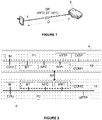
- the figure 1 illustrates an electronic device (6) controlled locally by a mobile terminal (4) according to one embodiment.
- the electronic device is a service gateway (6) and the user interface (HMI) to be transferred to the terminal is a gateway management interface.
- HMI user interface
- this channel can be established by any means within the reach of those skilled in the art: for example, infrared (RF), the Zigbee protocol (a protocol which allows communication in local networks, on a radio link, with reduced consumption), the “DECT Ultra Low Energy” standard (abbreviated DECT ULE, an extension of DECT for low energy applications), or the “Bluetooth Low Energy” standard (abbreviated BLE), the purpose of which is to provide reduced power compared to standard applications of the Bluetooth standard, etc.
- RF infrared
- DECT ULE an extension of DECT for low energy applications
- BLE Bluetooth Low Energy
- this channel can be established in broadcast mode: the device can broadcast its MMI to several terminals.
- the device When the device detects that the terminal is within its range, that is to say that it receives the signal correctly, it can prepare the data of the graphical interface to be transmitted, after an optional step of measuring the proximity of the terminal. Indeed, if the terminal, in the context of Wi-Fi or Bluetooth, is several meters away, it cannot reasonably be assumed that the user wishes to automatically receive the interface of this device in order to restore it. He must, in the context of the invention, approach it to make his wish explicit. This measure is however optional, especially in the case of NFC, for which the range is naturally limited to a few centimeters.
- a local communication session can then be established between the two devices; according to this embodiment of the invention, the session is established on the same channel (Wi-Fi, Bluetooth or NFC) as that which was used for the request.
- the point-to-point session can be established according to another mode of communication, for example Wi-Fi, whereas the initial request had taken place via NFC.
- the electronic device can transmit the data relating to its HMI.
- the mobile terminal receives the data, displays the interface for a user and waits for any command from the latter (lower the temperature, modify the configuration of the Box, etc.)
- Disconnection is explicit in the case of a prior Wi-Fi connection, because the electronic device cannot connect both point-to-point in “Wi-Fi Ad-hoc” mode to the mobile terminal and in “Wi-Fi Ad-hoc” mode. Fi infrastructure” to a service gateway. It is therefore preferable to disconnect. Disconnection is optional in the case of Bluetooth. The disconnection of two Bluetooth devices is generally implicit (if the two devices move away from a range greater than the maximum range allowed by the standard). It is also optional in the case of NFC because the electromagnetic field decreases with distance, naturally ending the communication when the terminal is no longer within range of the device.
- the picture 2 represents a hardware architecture of an electronic device controlled locally by a mobile terminal and of said mobile terminal according to one embodiment.
- the mobile terminal (4) conventionally comprises memories M articulated around a processor CPU.
- the memories can be of the ROM (Read Only Memory) or RAM (Random Access Memory) type, removable or fixed, etc.
- the random access memory makes it possible to store in a non-durable manner calculation data used during the implementation of a method according to embodiments.
- the non-volatile memory (for example of the EEPROM type) makes it possible to store, for example, a computer program according to one embodiment for its execution by a processor. It communicates with the electronic device (6) via a communication module (COM1) which allows it to connect wirelessly via a radio channel such as Wi-Fi, Bluetooth (BT), NFC or even Zigbee (not shown), etc. .
- COM1 communication module
- a point-to-point communication channel is established according to this example between the two devices (4) and (6).
- the terminal also comprises, according to this example, an HTTP-type communication module to provide HTTP-type communications, for example of the WebSocket (WS) type; it will be noted that a communication of the WS type is possible on a Bluetooth link.
- WS WebSocket
- the module P1 which can be software and/or hardware, is in particular capable of performing the actions which will be described in support of the picture 3 , that is to say the sending of requests and commands to the electronic device as well as processing user interface data, according to methods according to embodiments.
- the terminal comprises a user interface such as for example a keypad (not shown) to receive commands from a user and a screen (DISP) to render the user interface of the electronic device.
- a user interface such as for example a keypad (not shown) to receive commands from a user and a screen (DISP) to render the user interface of the electronic device.
- DISP screen
- All these modules communicate with each other conventionally via a data bus (13).
- the electronic device (6) also includes memories M articulated around a processor CPU. It connects to the mobile terminal via the SP link in Wi-Fi or Bluetooth mode, etc. via its communication module COM2 similar to the previously described module COM1.
- It also includes a module (P2) responsible for processing information: establishment of communication with the mobile terminal, reception of control commands or restitution requests from the mobile terminal, preparation (formatting, coding, etc. ) user interface data, transmission of the user interface to the terminal, etc.
- P2 responsible for processing information: establishment of communication with the mobile terminal, reception of control commands or restitution requests from the mobile terminal, preparation (formatting, coding, etc. ) user interface data, transmission of the user interface to the terminal, etc.
- All the modules communicate with each other conventionally via a data bus (14).
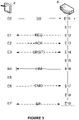
- the picture 3 represents a flowchart illustrating the different steps of the method according to an embodiment on the electronic device (6) and an example of a corresponding method on the mobile terminal (4).
- the purpose of the steps is to establish communication between the mobile terminal (4) and the electronic device (6) in order to transmit the user interface (IHM) of the device to the terminal when the latter is within range of the device.
- IHM user interface
- the terminal approaches the electronic device.
- the terminal sends a radio signal to the device. It will be noted that in the case of NFC, the terminal cannot, if it is passive, emit a signal before being placed in the field of the device.
- the electronic device is positioned during step E10 in reception mode (Wi-Fi “hotspot”, Bluetooth, NFC, etc.). For example, the user voluntarily positions the device in this mode (one can imagine a software or hardware button, a command, etc.). According to another example, the device is always in reception mode.
- the terminal When the terminal enters the range of the device, the latter correctly receives the radio signal. He can then validate the terminal detection step during a step E11.
- the device can also perform, in step E11, an additional step for the validation of the detection of the terminal, in particular an evaluation of the distance at which the terminal is located.
- an optional step E12 enables the device to transmit a request (REQ) to the terminal.
- This request is useful for receiving during a successive step E13 an acknowledgment message that the terminal sent during step E2, in order to ensure that the user really wishes to receive the interface data, and that the terminal was therefore not detected by mistake.
- the device can perform, in step E13, an additional step of detecting the terminal, for example by measuring a voluntary gesture on the part of the user, resulting in a predetermined movement of the terminal (rotation, acceleration, etc. .), a beep, etc.
- the steps presented previously in which the equipment detects and accepts the terminal, are reversed so that the establishment of the session is at the initiative of the terminal.
- the terminal then performs the detection steps (and possibly the optional distance evaluation and request steps) which are in the example described previously the responsibility of the device (steps E10, E11, E12, E13).
- the communication is established in broadcast mode so that the interface of the device is transmitted to several terminals detected within the range of the device.
- the electronic device processes the request, that is to say it prepares the user interface data, for example graphic interface data.
- the interface data is transmitted to the terminal during a step E16.
- the terminal receives them during a step E4; it then processes these data during a step E5 and restores them: according to this example, it displays the graphic interface on its screen (DISP).
- DISP graphic interface on its screen
- it may be a web interface, a voice interface rendered via a loudspeaker, etc.
- the processing unit of the terminal optionally sends one or more commands during a step E6 (CMD), via its communication module.
- the device processing module receives the command (E17) and performs processing to convert it into an effective command for the device (lowering the temperature, modifying the configuration of the Box, reducing the speed of a motor, etc.) during a step E18.
- the point-to-point (SP) session can optionally be closed during a step E19 (resp. E7 on the terminal). Closing the session allows the two devices to be able to leave point-to-point mode to establish another session, for example.
Landscapes
- Engineering & Computer Science (AREA)
- Computer Networks & Wireless Communication (AREA)
- Signal Processing (AREA)
- Physics & Mathematics (AREA)
- General Physics & Mathematics (AREA)
- Theoretical Computer Science (AREA)
- General Engineering & Computer Science (AREA)
- Health & Medical Sciences (AREA)
- Medical Informatics (AREA)
- General Health & Medical Sciences (AREA)
- Computing Systems (AREA)
- Human Computer Interaction (AREA)
- Mobile Radio Communication Systems (AREA)
- Telephone Function (AREA)
Claims (12)
- Verfahren zur lokalen Verwaltung einer Vorrichtung, die geeignet ist, mit mindestens einem Endgerät zu kommunizieren, das geeignet ist, Benutzerschnittstellendaten (IHM) der Vorrichtung zu verarbeiten und wiederzugeben, wobei das Verfahren auf der Vorrichtung aufweist:Positionieren (E10) der Vorrichtung im Empfangsmodus auf einer ersten Funkverbindung;Erfassen (E11) des Eintritts des mindestens einen Endgeräts in die Reichweite der Vorrichtung auf der ersten Funkverbindung, wobei die erste Funkverbindung eine gegebene Reichweite hat,vor dem Schritt der Übertragung (E16) einen Schritt (E14) des Sendens eines eine Wiedergabeanforderung (REQ) aufweisenden Signals an das Endgerät (4);vor dem Schritt der Übertragung (E16) einen Schritt des Aufbaus (E14) einer Kommunikation anders als die erste Verbindung und mit einer größeren Reichweite als die erste Verbindung mit dem Endgerät auf der zweiten Funkverbindung für die Übertragung der Benutzerschnittstellendaten (IHM);einen Schritt des Erhalts der Kapazitäten des Endgeräts;Vorbereitung (E15) der Benutzerschnittstellendaten (IHM) der Vorrichtung, die an das in der Reichweite der Vorrichtung erfasste Endgerät zu übertragen sind; wobei der Vorbereitungsschritt die Anpassung der Benutzerschnittstellendaten abhängig von den Kapazitäten des Endgeräts enthält;Übertragung (E16) der Benutzerschnittstellendaten (IHM) an das Endgerät auf der zweiten Funkverbindung.
- Verfahren nach Anspruch 1, dadurch gekennzeichnet, dass der Erfassungsschritt einen Teilschritt (E11) der Ermittlung eines Abstands zwischen der Vorrichtung und dem Endgerät aufweist.
- Verfahren nach Anspruch 1, dadurch gekennzeichnet, dass der Erfassungsschritt einen Teilschritt (E12, E13) der Erfassung einer vorbestimmten Bewegung des Endgeräts entsprechend einer absichtlichen Geste des Benutzers aufweist, und dass der Schritt der Übertragung der Benutzerschnittstellendaten erst nach Erfassung der vorbestimmten Bewegung ausgeführt wird.
- Verfahren nach Anspruch 1, dadurch gekennzeichnet, dass der Erfassungsschritt einen Teilschritt des Empfangs einer vom Endgerät kommenden Wiedergabeanforderung aufweist.
- Verfahren nach Anspruch 1, wobei die Benutzerschnittstellendaten abhängig von den Kapazitäten des Endgeräts angepasst werden.
- Verfahren nach Anspruch 1, wobei die Daten der Benutzerschnittstelle (IHM) mit Hilfe einer Markierungssprache codiert werden, die eine Semantik verwendet, die an die Beschreibung der Elemente der Benutzerschnittstelle angepasst wird, ehe sie an das Endgerät übertragen werden.
- Kommunikationsverfahren nach Anspruch 1, dadurch gekennzeichnet, dass es außerdem einen Schritt (E17) des Empfangs eines Befehls (CMD) vom Endgerät aufweist.
- Kommunikationsverfahren nach Anspruch 6, dadurch gekennzeichnet, dass es außerdem einen Schritt (E19) des Schließens der Kommunikationssitzung aufweist.
- Elektronische Vorrichtung, die geeignet ist, mit mindestens einem Endgerät zu kommunizieren, das geeignet ist, Benutzerschnittstellendaten (IHM) der Vorrichtung zu verarbeiten und wiederzugeben, die aufweist:- ein Modul, um die Vorrichtung im Empfangsmodus auf einer ersten Funkverbindung zu positionieren;- ein Modul zur Erfassung (COMM2, NFC, WIFI, BT) des Eintritts des mindestens einen Endgeräts in die Reichweite der Vorrichtung auf der ersten Funkverbindung, wobei die erste Funkverbindung eine gegebene Reichweite hat,- ein Sendemodul, das geeignet ist, vor dem Übertragungsschritt (E16) ein eine Wiedergabeanforderung (REQ) aufweisendes Signal an das Endgerät (4) zu senden;- ein Aufbaumodul, das geeignet ist, vor dem Schritt eine Kommunikation anders als die erste Verbindung und mit einer größeren Reichweite als die erste Verbindung mit dem Endgerät auf der zweiten Funkverbindung für die Übertragung der Benutzerschnittstellendaten (IHM) aufzubauen;- ein Erhaltsmodul der Kapazitäten des Endgeräts;- ein Verarbeitungsmodul (P2), das konfiguriert ist, die Benutzerschnittstellendaten (IHM) nach der Erfassung des Eintritts des Endgeräts in die Reichweite der Vorrichtung vorzubereiten; wobei der Vorbereitungsschritt die Anpassung der Benutzerschnittstellendaten abhängig von den Kapazitäten des Endgeräts enthält;- Übertragung (E16) der Benutzerschnittstellendaten (IHM) an das Endgerät auf der zweiten Funkverbindung;- ein Verarbeitungsmodul (P2), das konfiguriert ist, die Benutzerschnittstellendaten (IHM) nach der Erfassung des Eintritts des Endgeräts in die Reichweite der Vorrichtung vorzubereiten;- ein Übertragungsmodul der Benutzerschnittstellendaten (IHM) auf einer zweiten Funkverbindung, das nach der Erfassung des Eintritts des Endgeräts in die Reichweite aktiviert wird, wobei die zweite Funkverbindung anders als die erste Verbindung ist und eine größere Reichweite hat als die erste Verbindung.
- Heimausstattung, die eine Vorrichtung nach Anspruch 9 aufweist.
- System, das eine elektronische Vorrichtung nach Anspruch 9 und ein Endgerät enthält, das aufweist:- ein Modul (COM1) zur Kommunikation (COM1, NFC, WIFI, BT), das geeignet ist, ein Signal auf der ersten Funkverbindung zu senden;- ein Verarbeitungsmodul (P1), das geeignet ist, empfangene Benutzerschnittstellendaten zu verarbeiten, und- ein Wiedergabemodul, um mit einem Benutzer zu interagieren.
- Computerprogramm, das Codeanweisungen für die Durchführung des lokalen Verwaltungsverfahrens einer elektronischen Vorrichtung nach Anspruch 1 aufweist, wenn diese von einem Prozessor der elektronischen Vorrichtung ausgeführt wird.
Applications Claiming Priority (2)
| Application Number | Priority Date | Filing Date | Title |
|---|---|---|---|
| FR1559286A FR3041857A1 (fr) | 2015-09-30 | 2015-09-30 | Procede de commande locale d'un dispositif electronique |
| PCT/FR2016/052413 WO2017055715A1 (fr) | 2015-09-30 | 2016-09-23 | Procede de commande locale d'un dispositif electronique |
Publications (2)
| Publication Number | Publication Date |
|---|---|
| EP3357201A1 EP3357201A1 (de) | 2018-08-08 |
| EP3357201B1 true EP3357201B1 (de) | 2022-09-07 |
Family
ID=55178120
Family Applications (1)
| Application Number | Title | Priority Date | Filing Date |
|---|---|---|---|
| EP16785214.4A Active EP3357201B1 (de) | 2015-09-30 | 2016-09-23 | Verfahren zur lokalen steuerung einer elektronischen vorrichtung |
Country Status (4)
| Country | Link |
|---|---|
| US (1) | US10388149B2 (de) |
| EP (1) | EP3357201B1 (de) |
| FR (1) | FR3041857A1 (de) |
| WO (1) | WO2017055715A1 (de) |
Families Citing this family (2)
| Publication number | Priority date | Publication date | Assignee | Title |
|---|---|---|---|---|
| FR3079643A1 (fr) | 2018-03-30 | 2019-10-04 | Orange | Procede de gestion d'un dispositif electronique. |
| DK3838830T3 (da) * | 2019-12-20 | 2022-09-12 | Hiab Ab | Styresystem for stabilisatorben, et køretøj, og en metode |
Citations (4)
| Publication number | Priority date | Publication date | Assignee | Title |
|---|---|---|---|---|
| US5313670A (en) * | 1991-09-06 | 1994-05-24 | Entropy Racing | Cervical protection system |
| US20020060701A1 (en) * | 1993-05-24 | 2002-05-23 | Sun Microsystems, Inc. | Graphical user interface for displaying and navigating in a directed graph structure |
| US20020130834A1 (en) * | 2001-03-16 | 2002-09-19 | Emsquare Research, Inc. | System and method for universal control of devices |
| US8498572B1 (en) * | 2012-08-24 | 2013-07-30 | Google Inc. | Home automation device pairing by NFC-enabled portable device |
Family Cites Families (5)
| Publication number | Priority date | Publication date | Assignee | Title |
|---|---|---|---|---|
| US20060179079A1 (en) * | 2005-02-09 | 2006-08-10 | Mikko Kolehmainen | System, method and apparatus for data transfer between computing hosts |
| KR101764251B1 (ko) * | 2011-04-19 | 2017-08-04 | 삼성전자주식회사 | 전력 사용 상태 표시 방법 및 이를 적용한 휴대기기 |
| JP5874214B2 (ja) * | 2011-06-24 | 2016-03-02 | ソニー株式会社 | 情報処理装置、プログラム、情報処理方法及び情報処理システム |
| US9438440B2 (en) * | 2013-07-29 | 2016-09-06 | Qualcomm Incorporated | Proximity detection of internet of things (IoT) devices using sound chirps |
| US10142699B2 (en) * | 2016-03-18 | 2018-11-27 | Google Llc | Systems and methods for providing interactive content |
-
2015
- 2015-09-30 FR FR1559286A patent/FR3041857A1/fr not_active Withdrawn
-
2016
- 2016-09-23 WO PCT/FR2016/052413 patent/WO2017055715A1/fr not_active Ceased
- 2016-09-23 US US15/764,648 patent/US10388149B2/en active Active
- 2016-09-23 EP EP16785214.4A patent/EP3357201B1/de active Active
Patent Citations (5)
| Publication number | Priority date | Publication date | Assignee | Title |
|---|---|---|---|---|
| US5313670A (en) * | 1991-09-06 | 1994-05-24 | Entropy Racing | Cervical protection system |
| US20020060701A1 (en) * | 1993-05-24 | 2002-05-23 | Sun Microsystems, Inc. | Graphical user interface for displaying and navigating in a directed graph structure |
| US20020130834A1 (en) * | 2001-03-16 | 2002-09-19 | Emsquare Research, Inc. | System and method for universal control of devices |
| US8498572B1 (en) * | 2012-08-24 | 2013-07-30 | Google Inc. | Home automation device pairing by NFC-enabled portable device |
| EP2701407A1 (de) * | 2012-08-24 | 2014-02-26 | Google Inc. | Domotikvorrichtungspaarung über eine Nahfeldkommunikations-fähige tragbare Vorrichtung |
Also Published As
| Publication number | Publication date |
|---|---|
| US20180322773A1 (en) | 2018-11-08 |
| EP3357201A1 (de) | 2018-08-08 |
| WO2017055715A1 (fr) | 2017-04-06 |
| US10388149B2 (en) | 2019-08-20 |
| FR3041857A1 (fr) | 2017-03-31 |
Similar Documents
| Publication | Publication Date | Title |
|---|---|---|
| EP1164756B1 (de) | System für den Zugriff auf eine Automatikeinrichtung über ein drahtloses Netz kurzer Entfernung | |
| EP2720435B1 (de) | Steuerungsanordnung für gemeinsame Mediennutzung und Verfahren zur Bereitstellung einer Benutzerschnittstelle dafür zur gemeinsamen Mediennutzung | |
| FR2923337A1 (fr) | Procede et systeme d'echange de donnees entre serveurs distants. | |
| EP2306324A1 (de) | Verfahren, System und adaptierende Vorrichtung zum Ermöglichen eines Datenaustausches zwischen einem kommunizierenden Objekt und einer Verarbeitungseinheit | |
| EP3149917B1 (de) | Vorrichtung und verfahren von gateway zu konsistenter aktualisierung der diensten einer lokalen netzwerk | |
| EP3357201B1 (de) | Verfahren zur lokalen steuerung einer elektronischen vorrichtung | |
| EP2888861B1 (de) | Ferndatazugang aus einem thin client | |
| EP3314596B1 (de) | Verfahren zur steuerung einer funktion eines fahrzeugs mittels eines benutzerendgeräts | |
| EP3556151A1 (de) | Verfahren zur steuerung eines von einem gateway gesendeten funksignals, entsprechendes gateway und computerprogramm | |
| CA2835123A1 (fr) | Procede et dispositif de controle d'au moins un appareil par au moins un autre appareil, systeme mettant en oeuvre un tel dispositif | |
| EP4285491A1 (de) | Verfahren und vorrichtung zur anpassung einer nahfeldkommunikation | |
| KR102056188B1 (ko) | 미디어 공유 제어장치, 미디어 재생장치, 미디어 공유를 위한 사용자 인터페이스 제공 방법 | |
| WO2015097402A1 (fr) | Transmission et traitement de données relatives a une transaction sans contact | |
| EP3547616B1 (de) | Verfahren zur verwaltung einer elektronischen vorrichtung | |
| FR3065608A1 (fr) | Procede de commande d'une passerelle multimedia et equipement pour la mise en œuvre du procede | |
| FR2964523A1 (fr) | Mise a disposition d'informations par un terminal mobile dans un reseau. | |
| FR3060929A1 (fr) | Mise en oeuvre conditionnelle d' un service | |
| FR3119284A1 (fr) | Procédé et dispositif de transfert de données en champ proche. | |
| FR3086478A1 (fr) | Gestion du fonctionnement d'une telecommande lors de la reception d'un appel telephonique. | |
| EP3433979B1 (de) | Dienstaufzeichnung in einem lokalen netzwerk | |
| EP3062538A1 (de) | Authentifizierungsverfahren, verfahren zum erhalten der zugangserlaubnis, endgerät, server, funketikett-komponente, produkt, computerprogrammprodukt und entsprechender datenträger zum speichern | |
| FR2871317A1 (fr) | Dispositif de programmation par messages | |
| FR3044134A1 (fr) | Procede et systeme de securisation de communication entre un terminal communicant et un dispositif communicant | |
| FR3015823A1 (fr) | Gestion du fonctionnement d'un module de commande | |
| EP2442534A1 (de) | Erfassung von WEB-Diensten in einem lokalen Netz |
Legal Events
| Date | Code | Title | Description |
|---|---|---|---|
| STAA | Information on the status of an ep patent application or granted ep patent |
Free format text: STATUS: UNKNOWN |
|
| STAA | Information on the status of an ep patent application or granted ep patent |
Free format text: STATUS: THE INTERNATIONAL PUBLICATION HAS BEEN MADE |
|
| PUAI | Public reference made under article 153(3) epc to a published international application that has entered the european phase |
Free format text: ORIGINAL CODE: 0009012 |
|
| STAA | Information on the status of an ep patent application or granted ep patent |
Free format text: STATUS: REQUEST FOR EXAMINATION WAS MADE |
|
| 17P | Request for examination filed |
Effective date: 20180409 |
|
| AK | Designated contracting states |
Kind code of ref document: A1 Designated state(s): AL AT BE BG CH CY CZ DE DK EE ES FI FR GB GR HR HU IE IS IT LI LT LU LV MC MK MT NL NO PL PT RO RS SE SI SK SM TR |
|
| AX | Request for extension of the european patent |
Extension state: BA ME |
|
| DAV | Request for validation of the european patent (deleted) | ||
| DAX | Request for extension of the european patent (deleted) | ||
| STAA | Information on the status of an ep patent application or granted ep patent |
Free format text: STATUS: EXAMINATION IS IN PROGRESS |
|
| 17Q | First examination report despatched |
Effective date: 20190916 |
|
| RAP1 | Party data changed (applicant data changed or rights of an application transferred) |
Owner name: ORANGE |
|
| GRAP | Despatch of communication of intention to grant a patent |
Free format text: ORIGINAL CODE: EPIDOSNIGR1 |
|
| STAA | Information on the status of an ep patent application or granted ep patent |
Free format text: STATUS: GRANT OF PATENT IS INTENDED |
|
| INTG | Intention to grant announced |
Effective date: 20210406 |
|
| GRAJ | Information related to disapproval of communication of intention to grant by the applicant or resumption of examination proceedings by the epo deleted |
Free format text: ORIGINAL CODE: EPIDOSDIGR1 |
|
| STAA | Information on the status of an ep patent application or granted ep patent |
Free format text: STATUS: EXAMINATION IS IN PROGRESS |
|
| RAP3 | Party data changed (applicant data changed or rights of an application transferred) |
Owner name: ORANGE |
|
| INTC | Intention to grant announced (deleted) | ||
| GRAP | Despatch of communication of intention to grant a patent |
Free format text: ORIGINAL CODE: EPIDOSNIGR1 |
|
| STAA | Information on the status of an ep patent application or granted ep patent |
Free format text: STATUS: GRANT OF PATENT IS INTENDED |
|
| INTG | Intention to grant announced |
Effective date: 20220419 |
|
| GRAS | Grant fee paid |
Free format text: ORIGINAL CODE: EPIDOSNIGR3 |
|
| GRAA | (expected) grant |
Free format text: ORIGINAL CODE: 0009210 |
|
| STAA | Information on the status of an ep patent application or granted ep patent |
Free format text: STATUS: THE PATENT HAS BEEN GRANTED |
|
| AK | Designated contracting states |
Kind code of ref document: B1 Designated state(s): AL AT BE BG CH CY CZ DE DK EE ES FI FR GB GR HR HU IE IS IT LI LT LU LV MC MK MT NL NO PL PT RO RS SE SI SK SM TR |
|
| REG | Reference to a national code |
Ref country code: GB Ref legal event code: FG4D Free format text: NOT ENGLISH |
|
| REG | Reference to a national code |
Ref country code: CH Ref legal event code: EP Ref country code: AT Ref legal event code: REF Ref document number: 1517976 Country of ref document: AT Kind code of ref document: T Effective date: 20220915 |
|
| REG | Reference to a national code |
Ref country code: IE Ref legal event code: FG4D Free format text: LANGUAGE OF EP DOCUMENT: FRENCH |
|
| REG | Reference to a national code |
Ref country code: DE Ref legal event code: R096 Ref document number: 602016074854 Country of ref document: DE |
|
| REG | Reference to a national code |
Ref country code: LT Ref legal event code: MG9D |
|
| REG | Reference to a national code |
Ref country code: NL Ref legal event code: MP Effective date: 20220907 |
|
| PG25 | Lapsed in a contracting state [announced via postgrant information from national office to epo] |
Ref country code: SE Free format text: LAPSE BECAUSE OF FAILURE TO SUBMIT A TRANSLATION OF THE DESCRIPTION OR TO PAY THE FEE WITHIN THE PRESCRIBED TIME-LIMIT Effective date: 20220907 Ref country code: RS Free format text: LAPSE BECAUSE OF FAILURE TO SUBMIT A TRANSLATION OF THE DESCRIPTION OR TO PAY THE FEE WITHIN THE PRESCRIBED TIME-LIMIT Effective date: 20220907 Ref country code: NO Free format text: LAPSE BECAUSE OF FAILURE TO SUBMIT A TRANSLATION OF THE DESCRIPTION OR TO PAY THE FEE WITHIN THE PRESCRIBED TIME-LIMIT Effective date: 20221207 Ref country code: LV Free format text: LAPSE BECAUSE OF FAILURE TO SUBMIT A TRANSLATION OF THE DESCRIPTION OR TO PAY THE FEE WITHIN THE PRESCRIBED TIME-LIMIT Effective date: 20220907 Ref country code: LT Free format text: LAPSE BECAUSE OF FAILURE TO SUBMIT A TRANSLATION OF THE DESCRIPTION OR TO PAY THE FEE WITHIN THE PRESCRIBED TIME-LIMIT Effective date: 20220907 Ref country code: FI Free format text: LAPSE BECAUSE OF FAILURE TO SUBMIT A TRANSLATION OF THE DESCRIPTION OR TO PAY THE FEE WITHIN THE PRESCRIBED TIME-LIMIT Effective date: 20220907 |
|
| REG | Reference to a national code |
Ref country code: AT Ref legal event code: MK05 Ref document number: 1517976 Country of ref document: AT Kind code of ref document: T Effective date: 20220907 |
|
| PG25 | Lapsed in a contracting state [announced via postgrant information from national office to epo] |
Ref country code: HR Free format text: LAPSE BECAUSE OF FAILURE TO SUBMIT A TRANSLATION OF THE DESCRIPTION OR TO PAY THE FEE WITHIN THE PRESCRIBED TIME-LIMIT Effective date: 20220907 Ref country code: GR Free format text: LAPSE BECAUSE OF FAILURE TO SUBMIT A TRANSLATION OF THE DESCRIPTION OR TO PAY THE FEE WITHIN THE PRESCRIBED TIME-LIMIT Effective date: 20221208 |
|
| PG25 | Lapsed in a contracting state [announced via postgrant information from national office to epo] |
Ref country code: SM Free format text: LAPSE BECAUSE OF FAILURE TO SUBMIT A TRANSLATION OF THE DESCRIPTION OR TO PAY THE FEE WITHIN THE PRESCRIBED TIME-LIMIT Effective date: 20220907 Ref country code: RO Free format text: LAPSE BECAUSE OF FAILURE TO SUBMIT A TRANSLATION OF THE DESCRIPTION OR TO PAY THE FEE WITHIN THE PRESCRIBED TIME-LIMIT Effective date: 20220907 Ref country code: PT Free format text: LAPSE BECAUSE OF FAILURE TO SUBMIT A TRANSLATION OF THE DESCRIPTION OR TO PAY THE FEE WITHIN THE PRESCRIBED TIME-LIMIT Effective date: 20230109 Ref country code: ES Free format text: LAPSE BECAUSE OF FAILURE TO SUBMIT A TRANSLATION OF THE DESCRIPTION OR TO PAY THE FEE WITHIN THE PRESCRIBED TIME-LIMIT Effective date: 20220907 Ref country code: CZ Free format text: LAPSE BECAUSE OF FAILURE TO SUBMIT A TRANSLATION OF THE DESCRIPTION OR TO PAY THE FEE WITHIN THE PRESCRIBED TIME-LIMIT Effective date: 20220907 Ref country code: AT Free format text: LAPSE BECAUSE OF FAILURE TO SUBMIT A TRANSLATION OF THE DESCRIPTION OR TO PAY THE FEE WITHIN THE PRESCRIBED TIME-LIMIT Effective date: 20220907 |
|
| REG | Reference to a national code |
Ref country code: CH Ref legal event code: PL |
|
| REG | Reference to a national code |
Ref country code: BE Ref legal event code: MM Effective date: 20220930 |
|
| PG25 | Lapsed in a contracting state [announced via postgrant information from national office to epo] |
Ref country code: SK Free format text: LAPSE BECAUSE OF FAILURE TO SUBMIT A TRANSLATION OF THE DESCRIPTION OR TO PAY THE FEE WITHIN THE PRESCRIBED TIME-LIMIT Effective date: 20220907 Ref country code: PL Free format text: LAPSE BECAUSE OF FAILURE TO SUBMIT A TRANSLATION OF THE DESCRIPTION OR TO PAY THE FEE WITHIN THE PRESCRIBED TIME-LIMIT Effective date: 20220907 Ref country code: IS Free format text: LAPSE BECAUSE OF FAILURE TO SUBMIT A TRANSLATION OF THE DESCRIPTION OR TO PAY THE FEE WITHIN THE PRESCRIBED TIME-LIMIT Effective date: 20230107 Ref country code: EE Free format text: LAPSE BECAUSE OF FAILURE TO SUBMIT A TRANSLATION OF THE DESCRIPTION OR TO PAY THE FEE WITHIN THE PRESCRIBED TIME-LIMIT Effective date: 20220907 |
|
| REG | Reference to a national code |
Ref country code: DE Ref legal event code: R097 Ref document number: 602016074854 Country of ref document: DE |
|
| PG25 | Lapsed in a contracting state [announced via postgrant information from national office to epo] |
Ref country code: NL Free format text: LAPSE BECAUSE OF FAILURE TO SUBMIT A TRANSLATION OF THE DESCRIPTION OR TO PAY THE FEE WITHIN THE PRESCRIBED TIME-LIMIT Effective date: 20220907 Ref country code: MC Free format text: LAPSE BECAUSE OF FAILURE TO SUBMIT A TRANSLATION OF THE DESCRIPTION OR TO PAY THE FEE WITHIN THE PRESCRIBED TIME-LIMIT Effective date: 20220907 Ref country code: LU Free format text: LAPSE BECAUSE OF NON-PAYMENT OF DUE FEES Effective date: 20220923 Ref country code: AL Free format text: LAPSE BECAUSE OF FAILURE TO SUBMIT A TRANSLATION OF THE DESCRIPTION OR TO PAY THE FEE WITHIN THE PRESCRIBED TIME-LIMIT Effective date: 20220907 |
|
| PLBE | No opposition filed within time limit |
Free format text: ORIGINAL CODE: 0009261 |
|
| STAA | Information on the status of an ep patent application or granted ep patent |
Free format text: STATUS: NO OPPOSITION FILED WITHIN TIME LIMIT |
|
| PG25 | Lapsed in a contracting state [announced via postgrant information from national office to epo] |
Ref country code: LI Free format text: LAPSE BECAUSE OF NON-PAYMENT OF DUE FEES Effective date: 20220930 Ref country code: IE Free format text: LAPSE BECAUSE OF NON-PAYMENT OF DUE FEES Effective date: 20220923 Ref country code: DK Free format text: LAPSE BECAUSE OF FAILURE TO SUBMIT A TRANSLATION OF THE DESCRIPTION OR TO PAY THE FEE WITHIN THE PRESCRIBED TIME-LIMIT Effective date: 20220907 Ref country code: CH Free format text: LAPSE BECAUSE OF NON-PAYMENT OF DUE FEES Effective date: 20220930 |
|
| 26N | No opposition filed |
Effective date: 20230608 |
|
| PG25 | Lapsed in a contracting state [announced via postgrant information from national office to epo] |
Ref country code: SI Free format text: LAPSE BECAUSE OF FAILURE TO SUBMIT A TRANSLATION OF THE DESCRIPTION OR TO PAY THE FEE WITHIN THE PRESCRIBED TIME-LIMIT Effective date: 20220907 |
|
| PG25 | Lapsed in a contracting state [announced via postgrant information from national office to epo] |
Ref country code: BE Free format text: LAPSE BECAUSE OF NON-PAYMENT OF DUE FEES Effective date: 20220930 |
|
| PG25 | Lapsed in a contracting state [announced via postgrant information from national office to epo] |
Ref country code: HU Free format text: LAPSE BECAUSE OF FAILURE TO SUBMIT A TRANSLATION OF THE DESCRIPTION OR TO PAY THE FEE WITHIN THE PRESCRIBED TIME-LIMIT; INVALID AB INITIO Effective date: 20160923 |
|
| PG25 | Lapsed in a contracting state [announced via postgrant information from national office to epo] |
Ref country code: CY Free format text: LAPSE BECAUSE OF FAILURE TO SUBMIT A TRANSLATION OF THE DESCRIPTION OR TO PAY THE FEE WITHIN THE PRESCRIBED TIME-LIMIT Effective date: 20220907 |
|
| PG25 | Lapsed in a contracting state [announced via postgrant information from national office to epo] |
Ref country code: MK Free format text: LAPSE BECAUSE OF FAILURE TO SUBMIT A TRANSLATION OF THE DESCRIPTION OR TO PAY THE FEE WITHIN THE PRESCRIBED TIME-LIMIT Effective date: 20220907 Ref country code: IT Free format text: LAPSE BECAUSE OF FAILURE TO SUBMIT A TRANSLATION OF THE DESCRIPTION OR TO PAY THE FEE WITHIN THE PRESCRIBED TIME-LIMIT Effective date: 20220907 |
|
| PG25 | Lapsed in a contracting state [announced via postgrant information from national office to epo] |
Ref country code: BG Free format text: LAPSE BECAUSE OF FAILURE TO SUBMIT A TRANSLATION OF THE DESCRIPTION OR TO PAY THE FEE WITHIN THE PRESCRIBED TIME-LIMIT Effective date: 20220907 |
|
| PG25 | Lapsed in a contracting state [announced via postgrant information from national office to epo] |
Ref country code: MT Free format text: LAPSE BECAUSE OF FAILURE TO SUBMIT A TRANSLATION OF THE DESCRIPTION OR TO PAY THE FEE WITHIN THE PRESCRIBED TIME-LIMIT Effective date: 20220907 |
|
| PGFP | Annual fee paid to national office [announced via postgrant information from national office to epo] |
Ref country code: DE Payment date: 20250820 Year of fee payment: 10 |
|
| PGFP | Annual fee paid to national office [announced via postgrant information from national office to epo] |
Ref country code: GB Payment date: 20250820 Year of fee payment: 10 |
|
| PGFP | Annual fee paid to national office [announced via postgrant information from national office to epo] |
Ref country code: FR Payment date: 20250820 Year of fee payment: 10 |
|
| PG25 | Lapsed in a contracting state [announced via postgrant information from national office to epo] |
Ref country code: TR Free format text: LAPSE BECAUSE OF FAILURE TO SUBMIT A TRANSLATION OF THE DESCRIPTION OR TO PAY THE FEE WITHIN THE PRESCRIBED TIME-LIMIT Effective date: 20220907 |