EP3357202B1 - System zur wiederherstellung von durch ein residential-gateway bereitgestellten diensten - Google Patents
System zur wiederherstellung von durch ein residential-gateway bereitgestellten diensten Download PDFInfo
- Publication number
- EP3357202B1 EP3357202B1 EP16790638.7A EP16790638A EP3357202B1 EP 3357202 B1 EP3357202 B1 EP 3357202B1 EP 16790638 A EP16790638 A EP 16790638A EP 3357202 B1 EP3357202 B1 EP 3357202B1
- Authority
- EP
- European Patent Office
- Prior art keywords
- backup
- gateway
- service
- route
- residential gateway
- Prior art date
- Legal status (The legal status is an assumption and is not a legal conclusion. Google has not performed a legal analysis and makes no representation as to the accuracy of the status listed.)
- Active
Links
Images


Classifications
-
- H—ELECTRICITY
- H04—ELECTRIC COMMUNICATION TECHNIQUE
- H04L—TRANSMISSION OF DIGITAL INFORMATION, e.g. TELEGRAPHIC COMMUNICATION
- H04L12/00—Data switching networks
- H04L12/28—Data switching networks characterised by path configuration, e.g. LAN [Local Area Networks] or WAN [Wide Area Networks]
- H04L12/2803—Home automation networks
- H04L12/283—Processing of data at an internetworking point of a home automation network
- H04L12/2834—Switching of information between an external network and a home network
-
- H—ELECTRICITY
- H04—ELECTRIC COMMUNICATION TECHNIQUE
- H04L—TRANSMISSION OF DIGITAL INFORMATION, e.g. TELEGRAPHIC COMMUNICATION
- H04L12/00—Data switching networks
- H04L12/66—Arrangements for connecting between networks having differing types of switching systems, e.g. gateways
-
- H—ELECTRICITY
- H04—ELECTRIC COMMUNICATION TECHNIQUE
- H04L—TRANSMISSION OF DIGITAL INFORMATION, e.g. TELEGRAPHIC COMMUNICATION
- H04L41/00—Arrangements for maintenance, administration or management of data switching networks, e.g. of packet switching networks
- H04L41/06—Management of faults, events, alarms or notifications
- H04L41/0654—Management of faults, events, alarms or notifications using network fault recovery
-
- H—ELECTRICITY
- H04—ELECTRIC COMMUNICATION TECHNIQUE
- H04L—TRANSMISSION OF DIGITAL INFORMATION, e.g. TELEGRAPHIC COMMUNICATION
- H04L45/00—Routing or path finding of packets in data switching networks
- H04L45/24—Multipath
- H04L45/247—Multipath using M:N active or standby paths
-
- H—ELECTRICITY
- H04—ELECTRIC COMMUNICATION TECHNIQUE
- H04L—TRANSMISSION OF DIGITAL INFORMATION, e.g. TELEGRAPHIC COMMUNICATION
- H04L45/00—Routing or path finding of packets in data switching networks
- H04L45/28—Routing or path finding of packets in data switching networks using route fault recovery
-
- H—ELECTRICITY
- H04—ELECTRIC COMMUNICATION TECHNIQUE
- H04L—TRANSMISSION OF DIGITAL INFORMATION, e.g. TELEGRAPHIC COMMUNICATION
- H04L69/00—Network arrangements, protocols or services independent of the application payload and not provided for in the other groups of this subclass
- H04L69/40—Network arrangements, protocols or services independent of the application payload and not provided for in the other groups of this subclass for recovering from a failure of a protocol instance or entity, e.g. service redundancy protocols, protocol state redundancy or protocol service redirection
Definitions
- the present invention relates to residential gateways.
- the invention relates to the restoration of at least one telecommunications service to which a residential gateway provides access, so as to ensure continuity of service in the event of a failure.
- a gateway is "down" when at least one service to which it provides access in normal time is no longer accessible, or when the quality of at least one. service to which it provides access in normal times is degraded.
- IP Internet Protocol
- VoIP Voice over IP
- IPTV digital television
- multi-service offers including so-called “ Triple Play ” offers (because simultaneously offering access to the Internet, video content (including the broadcasting of television programs) and conversational services (telephony over IP )), have captured a growing market share.
- these offers attract the general public thanks to their functional richness accessible at a reasonable price.
- Telecommunications operators therefore seek to stand out from one another by increasing and diversifying the number of services available in their "packages / packages", in order to attract and then retain their general public customers, in particular.
- all general public customer profiles constitute a potential marketing target, from couples to young people, including people of a more advanced age.
- a gateway “provides” a telecommunications service to the user of this gateway, when the gateway allows the user to access this service.
- gateways Despite their increasingly widespread presence in homes for the general public, most of these residential gateways remain poorly known, even “mysterious”, equipment for most of their users. Worse, the majority of users, once the gateway is installed when subscribing to the service (if it is the customer who performs this installation himself), no longer intervenes on this equipment. In fact, these gateways generally represent kinds of “black boxes” unknown to their users, even though they are the central node which provides access to all the services they use on a daily basis.
- Most residential gateways have a web-based configuration and management interface, accessible in a protected manner via HTTP (HyperText Transfer Protocol ) .
- This interface is accessible via a URL ( Uniform Resource Locator) which can take the form of a predefined address (the IPv4 address “192.168.1.1” or a specific service name such as “MyBox”, for example); a username and password are generally required to access it in administrator mode.
- URL Uniform Resource Locator
- the client can then have access to a certain number of tools allowing him to act directly on the services and connections managed by his residential gateway.
- this gateway administration interface is little known to most customers.
- the customer must be generally familiar with the technical terms used for the description of these services, otherwise he will not be able to predict exactly the impact of the changes he makes through the administration interface. .
- the residential gateway can continue to provide the service (s) to which the customer is entitled, when events of a different nature have the effect of degrading the level of quality associated with a service to which the residential gateway provides access. , by using communicating devices located in its vicinity.
- the invention thus guarantees the continuity of one or more services during breakdowns located in the gateways (including when the failure affects a main component of the gateway) or in their vicinity (in particular the local home network), or even during failures in the operator's network, by allowing the failed gateway to find workarounds of emergency, and this, in an autonomous way.
- the service restoration systems currently available to the general public do not include technical means intended to guarantee the continuity of service in an autonomous manner.
- the invention advantageously provides service restoration means that do not involve the slightest intervention on the part of the customer. It is of course possible, as an option, to keep the customer informed of the progress of the treatment of the failure, while ensuring that the fault detection and resolution procedures remain transparent for the customer (the invention can indeed be implemented without informing the customer that a failure has been detected, particularly when an emergency route allowing to continue providing the service affected by the failure has been found). Regardless, the invention significantly improves customer experience and satisfaction.
- said residential gateway comprises means for, following said selection of at least one backup route, updating a routing table comprising said backup route.
- the residential gateway can dynamically set up routing and routing policies to direct outgoing traffic to one or more backup routes.
- said routing table comprises said backup route before said detection of a failure.
- the residential gateway can, following the detection of a fault, determine without delay which backup routes are available.
- the implementation of the invention does not require a telephone terminal or an interface fitted on the gateway. Nevertheless, it is possible, optionally, to integrate external terminals for needs such as the notification of breakdowns, or the transmission of specific messages to the operator network.
- said backup identifier is characteristic of the technology of said backup interface and / or of said service.
- the gateway has a plurality of backup interfaces, it can use different interfaces, and therefore different backup routes, depending on the technology of the backup interface used and / or the service of which. continuity must be ensured.
- said broadcasting device further comprises means for temporarily stopping broadcasting said emergency identifier when it does not have an operational IP route to provide the associated service (s). to this backup identifier.
- routing loops generated when a failed residential gateway chooses, to relay the traffic, a broadcasting device which is at the same time unable to act as a relay is avoided (for example, in the case of where the failure affects the network element which terminates the network connections of both the gateway and the broadcasting device).
- Said method is remarkable in that the residential gateway has detected the presence of said broadcasting device by listening to and recognizing at least one identifier, called backup identifier, broadcast by said broadcasting device.
- said method comprises a step of updating a routing table comprising said backup route.
- said routing table comprises said backup route before said detection of a failure.
- said backup identifier is characteristic of the technology of said backup interface and / or of said service.
- said residential gateway sends said fault report via an IP interface or via the data link layer.
- the gateway and the broadcasting device according to the invention in the context of software instructions and / or in the context of electronic circuits.
- the invention also relates to a computer program which can be downloaded from a communication network and / or stored on a medium readable by a computer and / or executable by a microprocessor according to claims 15 and 16.
- This computer program is remarkable in that it includes instructions for performing the steps of the service restoration method described briefly above, when it is executed on a computer.
- the invention aims to enhance the capabilities and intelligence of a residential gateway in order to ensure continuity of service in the event of a failure.
- the gateways must naturally be configured to implement the invention; this configuration can be done statically or dynamically, for example using protocols such as DHCP (Dynamic Host Configuration Protocol) or TR-69 (CPE WAN Management Protocol).
- DHCP Dynamic Host Configuration Protocol
- TR-69 CPE WAN Management Protocol
- the transmission of such a message assumes that the gateway has the required information on the commercial offer subscribed by the customer.
- a network entity detects a failure concerning a residential gateway CPE_1 connected to the network.
- a failure of a service will result in the unavailability of all the services based on the failed service: for example, the unavailability of the Internet access service can prevent the communication of electronic messages and the establishment of communications. telephone.
- This intrinsic dependency between services may be known to, or detected by, the residential gateway.
- the CPE_1 gateway itself which detects this failure.
- the CPE_1 gateway preferably embeds the following two modules.
- a first module records recent modifications in the configurations and states of the physical interfaces, as well as the decisions taken locally by the gateway automatically. These decisions taken locally are intended to resolve certain problems without straining the network.
- the first module also records software updates and activation / deactivation operations of services such as DNS (Domain Name System), UPnP (Universal Plug and Play), firewall, PCP (Port Control Protocol), or SAMBA (Server Message Block).
- DNS Domain Name System
- UPnP Universal Plug and Play
- firewall PCP
- PCP Port Control Protocol
- SAMBA Server Message Block
- the gateway preferably activates a mechanism for synchronizing its internal clock, for example by using the resources of the NTP (Network Time Protocol).
- NTP Network Time Protocol
- a file for logging diagnostic and troubleshooting operations is maintained by the gateway. This file can be consulted remotely by the operator, or be recovered by a fault management platform. It can be attached to any complaint made by the customer. Note that the data recorded in this file must not infringe on privacy or disclose personal information. Only the information necessary for the provision of the service (s) is processed. This module continues to operate even during the outage.
- a second module is responsible for checking whether the services subscribed by the customer are fully accessible (that is to say accessible with the nominal Quality of Service).
- This module also concerns the domestic services embedded in the gateway, such as for example a print server or a file sharing server.
- the benchmark used to characterize a nominal level of service provision can be calculated locally by the gateway on the basis of heuristics (for example, local profiling) or provided by the operator as input information for an application. dedicated. This information is specific to each service, to the underlying technologies used for the provision of a service, and also includes other parameters.
- This second module is also responsible for detecting any loss of connectivity in the local network (for example, a problem with attaching a laptop computer) or in the WAN network (initials of the English words " Wide Area Network " meaning " Extended Network ”).
- This module makes it possible to distinguish whether a failure comes from the local network or from the WAN network. Particularly, the status of WAN connectivity should be monitored and checked regularly.
- This module performs local tests, for example, on a regular basis or when certain events occur. The results of these tests are recorded locally in order to assess any deviation in the behavior of the gateway. The results are also time-stamped in order to facilitate the correlation of the configuration operations, carried out by the customer or requested by the operator, with the faults observed.
- the gateway further comprises means for purging the data used for autonomous service supervision.
- These means can be automated (for example, change of client connection identifier, critical memory size exceeding a certain threshold, memory leak, and so on) or invoked on demand (either by the network operator or by the customer).
- certain adjustments can be made locally, such as deactivating a faulty process.
- precautions can be taken to minimize the risks of dysfunction of the autonomous management procedures, for example by assigning them a high priority.
- Other precautions can be taken to ensure the reliability of the autonomous control system. These precautions will generally be specific to each operator.
- the failure affecting the gateway CPE_1 is detected by an entity other than the gateway CPE_1 itself, this entity being located in the access infrastructure of the network.
- a failure caused by the breaking of the link connecting the gateway to the network can be detected by a DSLAM (initials of the English words " Digital Subscriber Line Access Multiplexer " meaning "Digital Subscriber Line Access Multiplexer”) or by an ARM (initials of the English words “Broadband Remote Access Server ” meaning “Broadband Server for Remote Access”).
- this detection can be carried out by a dynamic routing protocol, or by a failure detection protocol such as the BFD (Bidirectional Forwarding Detection) protocol.
- BFD Bidirectional Forwarding Detection
- the network entity which detected the failure sends at least one failure report to at least one supervision platform denoted CSC (initials of the English words “ CPE Supervision Center ” meaning “Supervision Center”. of Gateways ”) located upstream in the network to which the gateway is connected, in order to notify the network of this failure, and to launch the operations required to determine the origin of the failure and to repair it.
- CSC initials of the English words “ CPE Supervision Center ” meaning “Supervision Center”. of Gateways
- a CSC can issue a fault ticket; in addition, a fault number is communicated to the gateway.
- This number can also be communicated to the customer locally (for example on a gateway or television configuration interface), or by SMS (initials of the English words “ Simple Message Service ” meaning “Simple Message Service”) or SMTP (initials of the English words " Simple Mail Transfer Protocol " meaning "Simple Mail Transfer Protocol”).
- SMS initials of the English words “ Simple Message Service ” meaning “Simple Message Service”
- SMTP initials of the English words " Simple Mail Transfer Protocol " meaning "Simple Mail Transfer Protocol”
- a message can be displayed using a screen on the gateway, this message telling the customer that arrangements have been made, and asking them not to call technical support.
- the customer is preferably informed regularly of the progress of the treatment of the failure.
- a fault report can be made available to the customer once the fault has been resolved.
- This report can be sent to the customer (email, SMS) or can be viewed online.
- the procedure can be dispensed with the notification phase: there is indeed no need to pollute the customer with irrelevant information, since the service provided maintains its level of quality; this makes fault detection and resolution as transparent as possible for the customer.
- the gateway also comprises means for searching for at least one route which can connect it to at least one CSC, following or, preferably, prior to the detection of a failure.
- the gateway may however send a failure report using L2 framing (for example, by transmitting Ethernet packets), unless the L2 layer is also down. If, moreover, the gateway does not have any IP connectivity, it will be necessary to wait for the technical services of the operator or the service provider to resolve the failure; in this case, it is preferable to transmit to the customer (for example according to one of the methods described above) the information according to which the network has been notified of the failure.
- the gateway can optionally send the fault report via this backup interface, instead of using L2 framing.
- a failure report sent by a gateway CPE_1 having detected a failure, is routed via one or more gateways CPE_2, CPE_3, ..., CPE_n playing the role of relay.
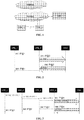
- the figure 2 illustrates an example of messages exchanged between a CPE_1 gateway having detected a failure and a CSC via a single CPE_2 relay gateway.
- the figure 3 illustrates an example of messages exchanged between a gateway having detected a CPE_1 failure and a CSC via a plurality of relay gateways CPE_2, CPE_3, ..., CPE_n.
- the routing tables of the relay gateways can, in addition to the source IP address used in said messages, take into account an identifier specific to each gateway, such as a serial number or a MAC address (initials of the English words " Medium Access Control ”meaning“ Medium Access Control ”).
- a CSC may issue instructions to the failed gateway.
- the CSC or the network can send the gateway the instruction to let the network take care of the operations capable of ensuring the continuity of service. If a CSC has received the fault report via more than one path, it can choose which of these paths it will use to transmit these instructions to the gateway.
- the failed gateway provides service continuity autonomously. It is obviously assumed here that the gateway has not received a back command from the network, according to the option mentioned above; in addition, it is assumed that the failed gateway has at least one backup interface, as defined above.
- IP route is understood to mean a route calculated, selected and installed by a failed gateway to route IP traffic to a given destination.
- a gateway When a gateway therefore experiences a failure affecting the nominal IP connectivity service, it establishes an automatic session association with a nearby backup device. This emergency device will play the role of relay.
- the gateway's IP routing table is then updated accordingly.
- the structure of the routing tables can be configured to indicate the type of a route, ie "primary" or "backup".
- CPE roaming Interconnection agreements (for this new form of “roaming”, which will be referred to as “CPE roaming”) may be required to allow the use of back-up devices (without customers necessarily being aware of these agreements) ; CPE roaming agreements allow an operator to ensure optimal coverage in order to be able to rescue certain customer gateways in the event of a breakdown; in doing so, the pooling of the back-up procedure between all the operators or a group of operators makes it possible to optimize the integration costs, and also to improve the efficiency of the procedure.
- CPE roaming agreements allow an operator to ensure optimal coverage in order to be able to rescue certain customer gateways in the event of a breakdown; in doing so, the pooling of the back-up procedure between all the operators or a group of operators makes it possible to optimize the integration costs, and also to improve the efficiency of the procedure.
- the data sent by a failed CPE_1 gateway are routed to a correspondent RM1 (RM are the initials of the English words “ Remote Machine ” meaning “Remote Machine”) connected to the Internet, via a succession of backup devices constituted here by gateways CPE_2, CPE_3, ..., CPE_n.
- RM are the initials of the English words “ Remote Machine ” meaning “Remote Machine”
- Traffic sent via a backup route can be rejected by the operator's network if the gateway fails to identify or if the client has not subscribed to the service associated with this traffic. In fact, it is necessary to prevent a user from being able to use the resources of the service continuity system according to the invention to access a service, when he is not entitled to it and therefore cannot have access to it via his. main line.
- a mutual authentication procedure will preferably be provided between the gateway and the backup device.
- backup chosen to relay the fault report and / or ensure continuity of service (this relay is called a “requested relay device”); this mutual authentication will make it possible to prevent the broken down gateway from relaying the traffic to a “pirate” device, that is to say not authorized to relay the data sent by the gateway and likely to cause a denial of service.
- all the traffic sent to a requested relay device is preferably encrypted.
- the requested relay device allocates to the failed gateway an IPv4 address, or an IPv6 address, or both, a pool of addresses IPv4 and / or IPv6 having been reserved for this use.
- the identifier (such as a serial number or a MAC address) of the failed gateway is not altered during the routing of its packets to the requested relay device.
- Each intermediate gateway keeps in memory a state of a packet relayed to other neighboring gateways or to the CSC. This storage can be implemented for sending the fault report to the CSC and receiving instructions from the network ( figure 1 ), and / or to guarantee continuity of service in the event of a breakdown ( figure 4 ) thanks to the installation of symmetrical routes making it possible to relay the return traffic to the broken down gateway. Examples of messages illustrated on figures 2 and 3 , described above, provide more details regarding the processing of packets by intermediate gateways; in particular, with reference to these two examples, a NAT operation is performed by each intermediate relay gateway without modifying the identifier of the failed gateway.
- the CSC may, as illustrated by the figure 5 , update the traffic conditioning rules (“ Policing / Shaping ” in English), as applied, preferably, by the connection node (designated by “R” in the figure) to the access network (this node which can be a DSLAM, for example) in the chain of standby devices, in order to be able to absorb the traffic of the failed gateway.
- the traffic conditioning rules (“ Policing / Shaping ” in English), as applied, preferably, by the connection node (designated by “R” in the figure) to the access network (this node which can be a DSLAM, for example) in the chain of standby devices, in order to be able to absorb the traffic of the failed gateway.
- the CSC can for example send a message (designated by POLICY_UPDATE () in the figure) having the effect of modifying the admission control rules, the uplink / downlink resource thresholds, the authorized services, and so on, after having received the fault report (denoted by REPORT () in the figure).
- a message designated by POLICY_UPDATE () in the figure
- REPORT denoted by REPORT
- network connection concentrator In order for the data sent by a failed gateway to reach its correspondents in packets having the same source address (called “external address”) independently of the relay device (s) requested, it is possible, as illustrated by figure 7 , use a network connection concentrator (known per se); in this regard, it will be recalled that the term “network connection concentrator” is used to refer to any network function making it possible to aggregate the connections using the different paths that can be used by any device to establish communication with any remote device. It is thus also possible to isolate the traffic originating from the failed gateway from that of the relay device and provide legal interception functions. In this embodiment, the traffic is encapsulated towards said concentrator; the identifier of the failed gateway is inserted in the header of the packet encapsulating the data sent by this gateway.
- the figure 8 illustrates an example of messages exchanged between a failed gateway and a correspondent RM1 via a chain of gateways CPE_3, ..., CPE_n and a concentrator.
- the operator can provide a commercial gesture in favor of the owner of the emergency device.
- users typically rely on gateway LEDs to detect that traffic is being sent / received by a gateway. This is why we can use a dedicated LED diode to reassure the owner of a gateway used as a relay that the traffic exchanged is legitimate.
- LEDs can signal the presence or absence of relayed traffic: for example, the color code "green” could be used to indicate that the gateway is only handling local customer traffic, while the color code " orange ”could be used to indicate that the gateway is handling, in addition to the local traffic of the client, the traffic of another client as part of the fallback procedure.
- the meters controlling the interfaces must also take into account this distinction between local traffic and relayed traffic characteristic of another user / client.
- IP connectivity despite the failure affecting the nominal IP connectivity service can in practice present itself in a wide variety of ways.
- service restoration systems are known in which the gateway has, in its vicinity, at least one permanent backup WAN route, for example due to the fact that the gateway is connected to a LTE radio station (Long Term Evolution), or the fact that the gateway is installed on the site of a company which systematically provides for a double connection to the network (s) based on the use of two separate paths.
- LTE radio station Long Term Evolution
- the gateway is installed on the site of a company which systematically provides for a double connection to the network (s) based on the use of two separate paths.
- a gateway dynamically selects another IP route than the nominal route for connection to the network, this other IP route (called “backup route”) passing through an emergency device capable of serving as a relay ; for example, the gateway can use a client's mobile phone as a relay, connected to a WLAN, or Bluetooth, or NFC (Near Field Communication) interface of the gateway and which will relay the data traffic via a GSM connection (Global System for Mobile Communications) or LTE.
- the backup IP route (s) can be proactively installed in routing tables in order to anticipate any failure or degradation of service.
- the invention proposes the use of one or more dedicated identifiers, which will be called “backup identifiers”, and which were detected (“listened to”) by the gateway before and / or after the failure was detected.
- the backup identifiers are configured in a particular set of backup devices called “broadcast devices", which can be, for example, residential gateways and / or WLAN access points and / or mobile terminals of clients; each backup identifier is broadcast, preferably periodically, by at least one broadcasting device.
- a given backup identifier can be specific to each network operator, or be common to a group of operators.
- each backup identifier is characteristic of the technology of the associated backup interfaces. It is therefore possible, in a given set of broadcasting devices, to provide several distinct backup identifiers if the gateway has backup interfaces of different technologies.
- the backup identifier should not be confused with the “SSID” conventionally used by WLAN access points for local use; it is recalled in this regard that the “SSID” (initials of the English words “ Service Set Identifier ” meaning “Service Set Identifier”) is the name of a “Wi-Fi” network according to the IEEE 802.11 standard, and that 'it is intended to be “listened to” by the terminals to allow them (if they are authorized to do so) to connect to a “Wi-Fi” access point broadcasting a certain SSID.
- the end of the failure can be detected directly by the gateway, or be notified to the gateway by a CSC or the network.
- the gateway comprises means for returning to nominal routing when the failure has been resolved, so that the failure and its resolution are completely transparent to the client.
- the switching of traffic to the main connection thus re-established can then be done immediately or in a deferred manner, by virtue of a logic which can be specific to each service and known to the gateway. For example, it can be expected that only new telephone calls will use the primary line, while calls in progress continue to use an emergency route.
- the gateway embeds a proxy function, for example SIP Proxy (initials of the English words "Session Initiation Protocol” meaning “Session Initialization Protocol” ), intended to relay the signaling messages (SIP INVITE) sent by a VoIP terminal to a telephony service platform, for example an SBC (Session Border Controller) or a P-CSCF (Proxy-Call Session Control Function); it is these signaling messages which condition access to the VoIP service, that is to say which make it possible to register with the service, then to establish and receive calls.
- SIP Proxy initials of the English words "Session Initiation Protocol” meaning “Session Initialization Protocol”
- SIP INVITE signaling messages
- SBC Session Border Controller
- P-CSCF Proxy-Call Session Control Function
- the figure 9 illustrates the establishment of a telephone communication, via one or more relay gateways, between a VoIP telephone "A”, connected to a gateway CPE_1, and a VoIP phone “X”, connected to the network. Note that the identifiers of the telephone line, even when requesting a relay gateway, remain those of the broken telephone line.
- the gateway embeds a proxy function, for example IGMP (Internet Group Management Protocol) or MLD (Multicast Listener Discovery) proxy, intended to relay the subscription and unsubscription messages to an IPTV content broadcasting service (broadcasting of television programs, in particular) sent by the receiver / decoder (" Set Top Box ” , or STB in English) connected to the gateway to the access equipment in charge of processing these subscription / unsubscribe messages; it is these signaling messages which condition access to the IPTV content desired by the client, that is to say the television program to which the client wishes to access.
- IGMP Internet Group Management Protocol
- MLD Multicast Listener Discovery
- the corresponding traffic is routed along distribution trees calculated and established according to the IP multicast transmission mode. Each termination of the tree is located in an access device which connects different clients interested in receiving the content.
- the signaling traffic is redirected to a relay device which embeds the appropriate proxy function: this assumes that the failed gateway has the capacity to dynamically discover the functions provided by the relay devices that this gateway is likely to call upon; conventional protocols such as DHCP or SLP can be used for this purpose.
- the proxy function of the relay gateway is then responsible for relaying the new subscription or unsubscription requests to an IPTV content broadcasting service sent by the IPTV receiver (s) connected to the broken down gateway. These requests will be processed by the access equipment to which the relay gateway is connected. Once the subscription request is processed, the characteristic traffic of the requested IPTV content is routed by the access equipment to the relay device, which transmits it to the broken down gateway, which finally takes care of forwarding it to the IPTV receiver.
- the traffic is inevitably broadcast on the local network to which the relay gateway is connected (because the gateway behaves like an L2 device on the local network), in addition to being routed to the failed gateway.
- the relay gateway can use means for analyzing and filtering the traffic intended for an IP multicast group address.
- the invention can be implemented within nodes, for example domestic or corporate gateways, or broadcast devices, of communication networks, by means of software and / or hardware components.
- the software components can be integrated into a conventional computer program for managing a network node. Therefore, as indicated above, the present invention also relates to a computer system.
- This computer system conventionally comprises a central processing unit controlling a memory by signals, as well as an input unit and an output unit.
- this computer system can be used to execute a computer program comprising instructions for implementing the service restoration method according to the invention.
- the invention is also aimed at a computer program downloadable from a communication network comprising instructions for the execution of the steps of the service restoration method according to the invention, when it is executed on a computer.
- This computer program can be stored on a computer readable medium and can be executed by a microprocessor.
- This program can use any programming language, and be in the form of source code, object code, or intermediate code between source code and object code, such as in a partially compiled form, or in any other desirable shape.
- the invention also relates to an information medium, irremovable, or partially or totally removable, readable by a computer, and comprising instructions of a computer program as mentioned above.
- the information medium can be any entity or device capable of storing the program.
- the medium can comprise a storage means, such as a ROM, for example a CD ROM or a microelectronic circuit ROM, or a magnetic recording means, such as a hard disk, or even a USB key. (" USB flash drive " in English).
- the information medium can be a transmissible medium such as an electrical or optical signal, which can be conveyed via an electrical or optical cable, by radio or by other means.
- the computer program according to the invention can in particular be downloaded from an Internet type network.
- the information medium can be an integrated circuit in which the program is incorporated, the circuit being adapted to execute or to be used in the execution of the service restoration method according to the invention.
Landscapes
- Engineering & Computer Science (AREA)
- Computer Networks & Wireless Communication (AREA)
- Signal Processing (AREA)
- Automation & Control Theory (AREA)
- Computing Systems (AREA)
- Data Exchanges In Wide-Area Networks (AREA)
- Telephonic Communication Services (AREA)
Claims (16)
- Residential-Gateway, das Einrichtungen enthält, um nach Erfassung einer Störung, die darin besteht, dass mindestens ein Dienst, zu dem das Gateway normalerweise den Zugang erlaubt, nicht mehr zugänglich ist, oder dass die Qualität mindestens eines Diensts, zu dem es normalerweise den Zugang erlaubt, verschlechtert ist:- mindestens eine IP-Route, Hilfsroute genannt, zu einem Empfänger von dem Dienst zugeordneten Daten zu suchen, wobei die Hilfsroute verläuft• über eine IP-Schnittstelle des Residential-Gateways, Hilfsschnittstelle genannt, anders als die Verbindung zwischen dem Residential-Gateway und seiner nominalen Netzanschlussausrüstung, und• über eine andere kommunizierende Vorrichtung, Hilfsvorrichtung genannt, mit der das Residential-Gateway eine Netzassoziation aufbauen kann, und- eine solche Hilfsroute auszuwählen, um die Lieferung des Diensts zu gewährleisten, indem die verbreitende Vorrichtung als Relais verwendet wird,dadurch gekennzeichnet, dass die Hilfsvorrichtung zu einer Einheit von Hilfsvorrichtungen gehört, bei denen dedizierte so genannte Hilfskennungen, die vom Residential-Gateway erkannt werden können, konfiguriert wurden, wobei diese Hilfsvorrichtungen die dedizierten Hilfskennungen verbreiten, mit denen sie konfiguriert wurden, und dass das Residential-Gateway außerdem Einrichtungen enthält, um das Vorhandensein der Hilfsvorrichtung zu erfassen, indem sie mindestens eine dedizierte Hilfskennung abhören und erkennen, die von der Hilfsvorrichtung verbreitet wird.
- Residential-Gateway nach Anspruch 1, dadurch gekennzeichnet, dass es Einrichtungen enthält, um nach der Auswahl mindestens einer Hilfsroute eine die Hilfsroute enthaltende Routing-Tabelle zu aktualisieren.
- Residential-Gateway nach Anspruch 2, dadurch gekennzeichnet, dass die Routing-Tabelle die Hilfsroute vor der Erfassung einer Störung enthält.
- Residential-Gateway nach einem der Ansprüche 1 bis 3, dadurch gekennzeichnet, dass es außerdem Einrichtungen enthält, um:- die Störung zu erfassen,- mindestens eine Route zu suchen, die es mit mindestens einer Überwachungszentrale der Gateways verbinden kann, und- wenn es eine solche Route findet und wenn es eine Störung erfasst, diese Route zu verwenden, um mindestens einen Störungsbericht an mindestens eine Überwachungszentrale der Gateways zu schicken.
- Residential-Gateway nach Anspruch 4, dadurch gekennzeichnet, dass es Einrichtungen enthält, um den Störungsbericht über eine IP-Schnittstelle oder über die Datenverbindungsschicht zu schicken.
- Dienstwiederherstellungssystem, das enthält:- mindestens ein Residential-Gateway nach einem der Ansprüche 1 bis 5, und- mindestens eine andere kommunizierende Vorrichtung, Hilfsvorrichtung genannt, die Einrichtungen enthält, um als Relais für das Residential-Gateway zu dienen, um das Liefern des Diensts zu gewährleisten, sowie Einrichtungen, um eine dedizierte Hilfskennung zu verbreiten, die vom Residential-Gateway erkannt werden kann und mit der es konfiguriert wurde.
- Dienstwiederherstellungssystem nach Anspruch 6, dadurch gekennzeichnet, dass die Hilfskennung für die Technologie der Hilfsschnittstelle und/oder des Diensts charakteristisch ist.
- Dienstwiederherstellungssystem nach Anspruch 6 oder Anspruch 7, dadurch gekennzeichnet, dass die Hilfsvorrichtung außerdem Einrichtungen enthält, um vorübergehend die Verbreitung der dedizierten Hilfskennung zu beenden, wenn sie nicht über eine betriebsbereite IP-Route verfügt, um den oder die Dienst(e) zu liefern, die dieser dedizierten Hilfskennung zugeordnet ist (sind).
- Dienstwiederherstellungsverfahren, das die folgenden Schritte enthält:- Erfassung einer Störung, die darin besteht, dass mindestens ein Dienst, zu dem ein Residential-Gateway normalerweise den Zugang erlaubt, nicht mehr zugänglich ist, oder dass die Qualität mindestens eines Diensts, zu dem ein Residential-Gateway normalerweise den Zugang erlaubt, verschlechtert ist,- Suche durch das Gateway mindestens einer IP-Route, Hilfsroute genannt, zu einem Empfänger von dem Dienst zugeordneten Daten, wobei die Hilfsroute verläuft• über eine IP-Schnittstelle des Residential-Gateways, Hilfsschnittstelle genannt, anders als die Verbindung zwischen dem Residential-Gateway und seiner nominalen Netzanschlussausrüstung, und• über eine andere kommunizierende Vorrichtung, Hilfsvorrichtung genannt, mit der das Residential-Gateway eine Netzassoziation aufbauen kann, und- Auswahl einer solchen Hilfsroute durch das Residential-Gateway, um die Lieferung des Diensts zu gewährleisten, indem die verbreitende Vorrichtung als Relais verwendet wird,dadurch gekennzeichnet, dass die Hilfsvorrichtung zu einer Einheit von Hilfsvorrichtungen gehört, bei denen dedizierte so genannten Hilfskennungen, die vom Residential-Gateway erkannt werden können, konfiguriert wurden, wobei diese Hilfsvorrichtungen die dedizierten Hilfskennungen verbreiten, mit denen sie konfiguriert wurden, und dass das Residential-Gateway das Vorhandensein der Hilfsvorrichtung erfasst hat, indem es mindestens eine dedizierte Hilfskennung abhört und erkennt, die von der Hilfsvorrichtung verbreitet wird.
- Dienstwiederherstellungsverfahren nach Anspruch 9, dadurch gekennzeichnet, dass es nach der Auswahl mindestens einer Hilfsroute einen Schritt der Aktualisierung einer die Hilfsroute enthaltenden Routing-Tabelle enthält.
- Dienstwiederherstellungsverfahren nach Anspruch 10, dadurch gekennzeichnet, dass die Routing-Tabelle die Hilfsroute vor der Erfassung einer Störung enthält.
- Dienstwiederherstellungsverfahren nach einem der Ansprüche 9 bis 11, dadurch gekennzeichnet, dass die Hilfskennung für die Technologie der Hilfsschnittstelle und/oder des Diensts charakteristisch ist.
- Dienstwiederherstellungsverfahren nach einem der Ansprüche 9 bis 12, dadurch gekennzeichnet, dass die Störungserfassung vom Gateway durchgeführt wird, und dass das Gateway dann die folgenden Schritte anwendet:- Suche mindestens einer Route, die es mit mindestens einer Überwachungszentrale der Gateways verbinden kann, und- wenn es eine solche Route findet, Verwendung dieser Route, um mindestens einen Störungsbericht an mindestens eine Überwachungszentrale der Gateways zu schicken.
- Dienstwiederherstellungsverfahren nach Anspruch 13, dadurch gekennzeichnet, dass das Residential-Gateway den Störungsbericht über eine IP-Schnittstelle oder über die Datenverbindungsschicht schickt.
- Nicht entfernbare oder teilweise oder vollständig entfernbare Datenspeichereinrichtung, die EDV-Programmcodeanweisungen zur Ausführung aller Schritte eines Dienstwiederherstellungsverfahrens nach einem der Ansprüche 9 bis 14 aufweist.
- Computerprogramm, das von einem Kommunikationsnetzwerk heruntergeladen werden kann und/oder auf einem computerlesbaren Träger gespeichert und/oder von einem Mikroprozessor ausführbar ist, dadurch gekennzeichnet, dass es Anweisungen zur Ausführung aller Schritte eines Dienstwiederherstellungsverfahrens nach einem der Ansprüche 9 bis 14 enthält, wenn es auf einem Computer ausgeführt wird.
Applications Claiming Priority (2)
| Application Number | Priority Date | Filing Date | Title |
|---|---|---|---|
| FR1559282A FR3041842A1 (fr) | 2015-09-30 | 2015-09-30 | Systeme de restauration de services fournis par une passerelle residentielle |
| PCT/FR2016/052495 WO2017055761A1 (fr) | 2015-09-30 | 2016-09-29 | Système de restauration de services fournis par une passerelle résidentielle |
Publications (2)
| Publication Number | Publication Date |
|---|---|
| EP3357202A1 EP3357202A1 (de) | 2018-08-08 |
| EP3357202B1 true EP3357202B1 (de) | 2021-10-27 |
Family
ID=55178119
Family Applications (1)
| Application Number | Title | Priority Date | Filing Date |
|---|---|---|---|
| EP16790638.7A Active EP3357202B1 (de) | 2015-09-30 | 2016-09-29 | System zur wiederherstellung von durch ein residential-gateway bereitgestellten diensten |
Country Status (4)
| Country | Link |
|---|---|
| US (1) | US10855516B2 (de) |
| EP (1) | EP3357202B1 (de) |
| FR (1) | FR3041842A1 (de) |
| WO (1) | WO2017055761A1 (de) |
Families Citing this family (7)
| Publication number | Priority date | Publication date | Assignee | Title |
|---|---|---|---|---|
| US10147984B2 (en) | 2015-07-31 | 2018-12-04 | SynCells, Inc. | Portable and modular energy storage for multiple applications |
| FR3042931A1 (fr) * | 2015-10-23 | 2017-04-28 | Orange | Systeme de continuite de services fournis par une passerelle residentielle |
| US10440053B2 (en) * | 2016-05-31 | 2019-10-08 | Lookout, Inc. | Methods and systems for detecting and preventing network connection compromise |
| MX2019001568A (es) * | 2016-08-19 | 2019-06-06 | Sony Corp | Aparato de procesamiento de informacion, aparato del cliente y metodo de procesamiento de datos. |
| US11394573B2 (en) | 2017-06-13 | 2022-07-19 | SynCells, Inc. | Energy virtualization layer with a universal smart gateway |
| US11125461B2 (en) | 2017-06-13 | 2021-09-21 | Gerard O'Hora | Smart vent system with local and central control |
| US11271766B2 (en) * | 2017-06-13 | 2022-03-08 | SynCells, Inc. | Energy virtualization layer with a universal smart gateway |
Family Cites Families (27)
| Publication number | Priority date | Publication date | Assignee | Title |
|---|---|---|---|---|
| US6112249A (en) * | 1997-05-30 | 2000-08-29 | International Business Machines Corporation | Non-disruptively rerouting network communications from a secondary network path to a primary path |
| US6868509B2 (en) * | 2001-12-07 | 2005-03-15 | Invensys Systems, Inc. | Method and apparatus for network fault correction via adaptive fault router |
| US7283618B2 (en) * | 2002-03-27 | 2007-10-16 | Texas Instruments Incorporated | Automatic line pair detection in a modem |
| US6950628B1 (en) * | 2002-08-02 | 2005-09-27 | Cisco Technology, Inc. | Method for grouping 802.11 stations into authorized service sets to differentiate network access and services |
| US20070217338A1 (en) * | 2006-03-14 | 2007-09-20 | Sbc Knowledge Ventures L.P. | Method and apparatus for out-of-band XDSL troubleshooting and testing |
| US8886831B2 (en) * | 2006-04-05 | 2014-11-11 | Cisco Technology, Inc. | System and methodology for fast link failover based on remote upstream failures |
| EP1850532B1 (de) * | 2006-04-29 | 2012-03-28 | Alcatel Lucent | Verfahren zu einem notfälligen Gastzugang zu einem drahtlosen Netzwerk |
| US7782931B2 (en) * | 2006-10-25 | 2010-08-24 | NetTraffic, Inc. | Methods, systems, and computer program products for automatic detection of an incorrect digital subscriber line modem and filter configuration at a customer premises |
| US8477600B2 (en) * | 2008-01-18 | 2013-07-02 | Futurewei Technologies, Inc. | Composite transport functions |
| EP2096793B1 (de) * | 2008-02-28 | 2014-11-19 | Alcatel Lucent | Systeme und Verfahren für die automatische Konfiguration von Kundengeländeausrüstungen |
| US8811148B2 (en) * | 2008-07-29 | 2014-08-19 | At&T Intellectual Property I, L.P. | System and method for service restoration in a media communication system |
| US20110216646A1 (en) * | 2008-10-16 | 2011-09-08 | Telefonaktiebolaget Lm Ericsson (Publ) | Residential gateway for providing backup interface to external network |
| US8972550B2 (en) * | 2009-09-10 | 2015-03-03 | At&T Intellectual Property I, L.P. | Apparatus and method for establishing communications |
| US8811152B2 (en) * | 2009-10-29 | 2014-08-19 | At&T Intellectual Property I, L.P. | System and method to support secondary channel connection from residential gateway to service provider network |
| FR2962618B1 (fr) * | 2010-07-09 | 2012-07-27 | Softathome | " procede d'auto-configuration d'une passerelle domestique en presence de differents reseaux externes, et passerelle mettant en ?uvre un tel procede." |
| FR2962869B1 (fr) * | 2010-07-15 | 2012-07-27 | Softathome | Procede pour assurer la continuite de la disponibilite d'un service de communication entre une passerelle domestique locale et un reseau wan, et passerelle domestique mettant en ?uvre un tel procede. |
| US10225178B2 (en) * | 2010-09-15 | 2019-03-05 | Telefonaktiebolaget Lm Ericsson (Publ) | Methods and apparatus for relocating and restoring connections through a failed serving gateway and traffic offloading |
| WO2013064170A1 (en) * | 2011-10-31 | 2013-05-10 | Telefonaktiebolaget L M Ericsson (Publ) | Discovery and disconnection of client addresses in an access node for an ip network |
| EP2621135B1 (de) * | 2012-01-24 | 2018-06-13 | ADVA Optical Networking SE | Verfahren und System zur Bereitstellung eines flexiblen Sekundärdatenpfades |
| CN114945007B (zh) * | 2012-02-22 | 2025-03-07 | 华为技术有限公司 | 用户终端设备的接入方法、装置和系统 |
| US9560108B2 (en) * | 2012-09-13 | 2017-01-31 | Google Technology Holdings LLC | Providing a mobile access point |
| KR20160078971A (ko) * | 2013-11-01 | 2016-07-05 | 톰슨 라이센싱 | 무선 네트워크 및 각 디바이스들의 링크 복구를 위한 방법들 |
| FR3024809B1 (fr) * | 2014-08-08 | 2017-12-01 | Myfox | Dispositif domotique a liaison de communication alternative avec un serveur informatique distant |
| EP3257318B1 (de) * | 2015-02-13 | 2018-11-14 | British Telecommunications public limited company | Wiederherstellung des netzwerkzugriffs |
| CA2935644C (en) * | 2015-07-09 | 2021-04-13 | Bce Inc. | Unified service architecture |
| FR3042931A1 (fr) * | 2015-10-23 | 2017-04-28 | Orange | Systeme de continuite de services fournis par une passerelle residentielle |
| US10187300B2 (en) * | 2015-12-08 | 2019-01-22 | Carrier Corporation | Fallback mobile proxy |
-
2015
- 2015-09-30 FR FR1559282A patent/FR3041842A1/fr not_active Withdrawn
-
2016
- 2016-09-29 WO PCT/FR2016/052495 patent/WO2017055761A1/fr not_active Ceased
- 2016-09-29 US US15/765,146 patent/US10855516B2/en active Active
- 2016-09-29 EP EP16790638.7A patent/EP3357202B1/de active Active
Non-Patent Citations (1)
| Title |
|---|
| None * |
Also Published As
| Publication number | Publication date |
|---|---|
| WO2017055761A1 (fr) | 2017-04-06 |
| US10855516B2 (en) | 2020-12-01 |
| FR3041842A1 (fr) | 2017-03-31 |
| US20190058628A1 (en) | 2019-02-21 |
| EP3357202A1 (de) | 2018-08-08 |
Similar Documents
| Publication | Publication Date | Title |
|---|---|---|
| EP3357202B1 (de) | System zur wiederherstellung von durch ein residential-gateway bereitgestellten diensten | |
| EP3366009B1 (de) | Durch residential gateway bereitgestelltes dienstkontinuitätsverfahren | |
| US20220385658A1 (en) | Voice control of endpoint devices through a multi-services gateway device at the user premises | |
| US8649386B2 (en) | Multi-interface wireless adapter and network bridge | |
| EP3318023B1 (de) | Verfahren zur optimierung der ladung eines netzwerkverbindungs-hubs | |
| EP3085065B1 (de) | Verfahren zur aktualisierung der von einem dns server erhaltenen informationen. | |
| EP2210396B1 (de) | System zur herstellung einer verbindung zwischen mindestens einer kommunikationsvorrichtung und mindestens einem ferninformationssystem sowie verbindungsverfahren | |
| EP3533202B1 (de) | Dynamische und interaktive steuerung eines mit einem kommunikationsnetz verbundenen residential-gateways | |
| WO2023047068A1 (fr) | Procede de controle d'un acces a un service applicatif mis en œuvre dans un reseau de telecommunications, procede de traitement d'un message de controle d'un acces audit service applicatif, dispositifs, equipement de controle, equipement client, systeme et programmes d'ordinateur correspondants | |
| EP3453141B1 (de) | Verfahren zur steuerung eines residential gateway aus einem kommunikationsnetz, verfahren zur überwachung, verfahren zur ausführung einer aktion, entsprechende vorrichtungen und computerprogramm | |
| EP2591579B1 (de) | Verfahren zur selbstkonfiguration eines heim-gateways in gegenwart mehrerer externer netzwerke und gateway mit einem derartigen verfahren | |
| FR2981234A1 (fr) | Methode d'attribution d'une adresse reseau publique a un equipement disposant d'une adresse reseau privee | |
| EP3785463B1 (de) | Verfahren zur föderierung von mindestens zwei kommunikationsnetzen für mobile endgeräte und föderierfähiges netzwerk | |
| EP2229751B1 (de) | Verfahren und einrichtung für das wake-on-lan einer mit einem netzwerk verbundenen einrichtung | |
| WO2025078594A1 (fr) | Procédés de sélection de tranches réseau adaptées à un service, de gestion d'au moins une tranche réseau et de communication, et entités configurées pour mettre en œuvre ces procédés | |
| EP4595404A1 (de) | Verfahren zur verwaltung von datenverkehr zwischen einer quell- und empfängereinheit sowie entsprechende einheit und computerprogramm | |
| FR3124681A1 (fr) | Procédé de traitement d’une connexion entre un équipement utilisateur et un équipement distant dans un réseau de communication, procédé de contrôle, dispositifs, satellite, station terrestre, système et programmes d’ordinateur correspondants. | |
| EP2260641A1 (de) | Verwaltung des zugangs auf einen über ein kommunikationsnetzwerk zugänglichen dienst | |
| WO2009030869A2 (fr) | Procede et dispositif pour gerer le desenregistrement d'un terminal aupres d'une entite dans un reseau de telecommunications |
Legal Events
| Date | Code | Title | Description |
|---|---|---|---|
| STAA | Information on the status of an ep patent application or granted ep patent |
Free format text: STATUS: UNKNOWN |
|
| STAA | Information on the status of an ep patent application or granted ep patent |
Free format text: STATUS: THE INTERNATIONAL PUBLICATION HAS BEEN MADE |
|
| PUAI | Public reference made under article 153(3) epc to a published international application that has entered the european phase |
Free format text: ORIGINAL CODE: 0009012 |
|
| STAA | Information on the status of an ep patent application or granted ep patent |
Free format text: STATUS: REQUEST FOR EXAMINATION WAS MADE |
|
| 17P | Request for examination filed |
Effective date: 20180409 |
|
| AK | Designated contracting states |
Kind code of ref document: A1 Designated state(s): AL AT BE BG CH CY CZ DE DK EE ES FI FR GB GR HR HU IE IS IT LI LT LU LV MC MK MT NL NO PL PT RO RS SE SI SK SM TR |
|
| AX | Request for extension of the european patent |
Extension state: BA ME |
|
| DAV | Request for validation of the european patent (deleted) | ||
| DAX | Request for extension of the european patent (deleted) | ||
| STAA | Information on the status of an ep patent application or granted ep patent |
Free format text: STATUS: EXAMINATION IS IN PROGRESS |
|
| 17Q | First examination report despatched |
Effective date: 20200403 |
|
| RAP1 | Party data changed (applicant data changed or rights of an application transferred) |
Owner name: ORANGE |
|
| GRAP | Despatch of communication of intention to grant a patent |
Free format text: ORIGINAL CODE: EPIDOSNIGR1 |
|
| STAA | Information on the status of an ep patent application or granted ep patent |
Free format text: STATUS: GRANT OF PATENT IS INTENDED |
|
| RIC1 | Information provided on ipc code assigned before grant |
Ipc: H04L 29/14 20060101ALN20210507BHEP Ipc: H04L 12/703 20130101ALI20210507BHEP Ipc: H04L 12/28 20060101AFI20210507BHEP |
|
| INTG | Intention to grant announced |
Effective date: 20210525 |
|
| RAP3 | Party data changed (applicant data changed or rights of an application transferred) |
Owner name: ORANGE |
|
| GRAS | Grant fee paid |
Free format text: ORIGINAL CODE: EPIDOSNIGR3 |
|
| GRAA | (expected) grant |
Free format text: ORIGINAL CODE: 0009210 |
|
| STAA | Information on the status of an ep patent application or granted ep patent |
Free format text: STATUS: THE PATENT HAS BEEN GRANTED |
|
| AK | Designated contracting states |
Kind code of ref document: B1 Designated state(s): AL AT BE BG CH CY CZ DE DK EE ES FI FR GB GR HR HU IE IS IT LI LT LU LV MC MK MT NL NO PL PT RO RS SE SI SK SM TR |
|
| REG | Reference to a national code |
Ref country code: GB Ref legal event code: FG4D Free format text: NOT ENGLISH |
|
| REG | Reference to a national code |
Ref country code: CH Ref legal event code: EP |
|
| REG | Reference to a national code |
Ref country code: AT Ref legal event code: REF Ref document number: 1442860 Country of ref document: AT Kind code of ref document: T Effective date: 20211115 |
|
| REG | Reference to a national code |
Ref country code: DE Ref legal event code: R096 Ref document number: 602016065470 Country of ref document: DE |
|
| REG | Reference to a national code |
Ref country code: IE Ref legal event code: FG4D Free format text: LANGUAGE OF EP DOCUMENT: FRENCH |
|
| REG | Reference to a national code |
Ref country code: LT Ref legal event code: MG9D |
|
| REG | Reference to a national code |
Ref country code: NL Ref legal event code: MP Effective date: 20211027 |
|
| REG | Reference to a national code |
Ref country code: AT Ref legal event code: MK05 Ref document number: 1442860 Country of ref document: AT Kind code of ref document: T Effective date: 20211027 |
|
| PG25 | Lapsed in a contracting state [announced via postgrant information from national office to epo] |
Ref country code: RS Free format text: LAPSE BECAUSE OF FAILURE TO SUBMIT A TRANSLATION OF THE DESCRIPTION OR TO PAY THE FEE WITHIN THE PRESCRIBED TIME-LIMIT Effective date: 20211027 Ref country code: LT Free format text: LAPSE BECAUSE OF FAILURE TO SUBMIT A TRANSLATION OF THE DESCRIPTION OR TO PAY THE FEE WITHIN THE PRESCRIBED TIME-LIMIT Effective date: 20211027 Ref country code: FI Free format text: LAPSE BECAUSE OF FAILURE TO SUBMIT A TRANSLATION OF THE DESCRIPTION OR TO PAY THE FEE WITHIN THE PRESCRIBED TIME-LIMIT Effective date: 20211027 Ref country code: BG Free format text: LAPSE BECAUSE OF FAILURE TO SUBMIT A TRANSLATION OF THE DESCRIPTION OR TO PAY THE FEE WITHIN THE PRESCRIBED TIME-LIMIT Effective date: 20220127 Ref country code: AT Free format text: LAPSE BECAUSE OF FAILURE TO SUBMIT A TRANSLATION OF THE DESCRIPTION OR TO PAY THE FEE WITHIN THE PRESCRIBED TIME-LIMIT Effective date: 20211027 |
|
| PG25 | Lapsed in a contracting state [announced via postgrant information from national office to epo] |
Ref country code: IS Free format text: LAPSE BECAUSE OF FAILURE TO SUBMIT A TRANSLATION OF THE DESCRIPTION OR TO PAY THE FEE WITHIN THE PRESCRIBED TIME-LIMIT Effective date: 20220227 Ref country code: SE Free format text: LAPSE BECAUSE OF FAILURE TO SUBMIT A TRANSLATION OF THE DESCRIPTION OR TO PAY THE FEE WITHIN THE PRESCRIBED TIME-LIMIT Effective date: 20211027 Ref country code: PT Free format text: LAPSE BECAUSE OF FAILURE TO SUBMIT A TRANSLATION OF THE DESCRIPTION OR TO PAY THE FEE WITHIN THE PRESCRIBED TIME-LIMIT Effective date: 20220228 Ref country code: PL Free format text: LAPSE BECAUSE OF FAILURE TO SUBMIT A TRANSLATION OF THE DESCRIPTION OR TO PAY THE FEE WITHIN THE PRESCRIBED TIME-LIMIT Effective date: 20211027 Ref country code: NO Free format text: LAPSE BECAUSE OF FAILURE TO SUBMIT A TRANSLATION OF THE DESCRIPTION OR TO PAY THE FEE WITHIN THE PRESCRIBED TIME-LIMIT Effective date: 20220127 Ref country code: NL Free format text: LAPSE BECAUSE OF FAILURE TO SUBMIT A TRANSLATION OF THE DESCRIPTION OR TO PAY THE FEE WITHIN THE PRESCRIBED TIME-LIMIT Effective date: 20211027 Ref country code: LV Free format text: LAPSE BECAUSE OF FAILURE TO SUBMIT A TRANSLATION OF THE DESCRIPTION OR TO PAY THE FEE WITHIN THE PRESCRIBED TIME-LIMIT Effective date: 20211027 Ref country code: HR Free format text: LAPSE BECAUSE OF FAILURE TO SUBMIT A TRANSLATION OF THE DESCRIPTION OR TO PAY THE FEE WITHIN THE PRESCRIBED TIME-LIMIT Effective date: 20211027 Ref country code: GR Free format text: LAPSE BECAUSE OF FAILURE TO SUBMIT A TRANSLATION OF THE DESCRIPTION OR TO PAY THE FEE WITHIN THE PRESCRIBED TIME-LIMIT Effective date: 20220128 Ref country code: ES Free format text: LAPSE BECAUSE OF FAILURE TO SUBMIT A TRANSLATION OF THE DESCRIPTION OR TO PAY THE FEE WITHIN THE PRESCRIBED TIME-LIMIT Effective date: 20211027 |
|
| REG | Reference to a national code |
Ref country code: DE Ref legal event code: R097 Ref document number: 602016065470 Country of ref document: DE |
|
| PG25 | Lapsed in a contracting state [announced via postgrant information from national office to epo] |
Ref country code: SM Free format text: LAPSE BECAUSE OF FAILURE TO SUBMIT A TRANSLATION OF THE DESCRIPTION OR TO PAY THE FEE WITHIN THE PRESCRIBED TIME-LIMIT Effective date: 20211027 Ref country code: SK Free format text: LAPSE BECAUSE OF FAILURE TO SUBMIT A TRANSLATION OF THE DESCRIPTION OR TO PAY THE FEE WITHIN THE PRESCRIBED TIME-LIMIT Effective date: 20211027 Ref country code: RO Free format text: LAPSE BECAUSE OF FAILURE TO SUBMIT A TRANSLATION OF THE DESCRIPTION OR TO PAY THE FEE WITHIN THE PRESCRIBED TIME-LIMIT Effective date: 20211027 Ref country code: EE Free format text: LAPSE BECAUSE OF FAILURE TO SUBMIT A TRANSLATION OF THE DESCRIPTION OR TO PAY THE FEE WITHIN THE PRESCRIBED TIME-LIMIT Effective date: 20211027 Ref country code: DK Free format text: LAPSE BECAUSE OF FAILURE TO SUBMIT A TRANSLATION OF THE DESCRIPTION OR TO PAY THE FEE WITHIN THE PRESCRIBED TIME-LIMIT Effective date: 20211027 Ref country code: CZ Free format text: LAPSE BECAUSE OF FAILURE TO SUBMIT A TRANSLATION OF THE DESCRIPTION OR TO PAY THE FEE WITHIN THE PRESCRIBED TIME-LIMIT Effective date: 20211027 |
|
| PLBE | No opposition filed within time limit |
Free format text: ORIGINAL CODE: 0009261 |
|
| STAA | Information on the status of an ep patent application or granted ep patent |
Free format text: STATUS: NO OPPOSITION FILED WITHIN TIME LIMIT |
|
| 26N | No opposition filed |
Effective date: 20220728 |
|
| PG25 | Lapsed in a contracting state [announced via postgrant information from national office to epo] |
Ref country code: AL Free format text: LAPSE BECAUSE OF FAILURE TO SUBMIT A TRANSLATION OF THE DESCRIPTION OR TO PAY THE FEE WITHIN THE PRESCRIBED TIME-LIMIT Effective date: 20211027 |
|
| PG25 | Lapsed in a contracting state [announced via postgrant information from national office to epo] |
Ref country code: SI Free format text: LAPSE BECAUSE OF FAILURE TO SUBMIT A TRANSLATION OF THE DESCRIPTION OR TO PAY THE FEE WITHIN THE PRESCRIBED TIME-LIMIT Effective date: 20211027 |
|
| PG25 | Lapsed in a contracting state [announced via postgrant information from national office to epo] |
Ref country code: MC Free format text: LAPSE BECAUSE OF FAILURE TO SUBMIT A TRANSLATION OF THE DESCRIPTION OR TO PAY THE FEE WITHIN THE PRESCRIBED TIME-LIMIT Effective date: 20211027 |
|
| REG | Reference to a national code |
Ref country code: CH Ref legal event code: PL |
|
| REG | Reference to a national code |
Ref country code: BE Ref legal event code: MM Effective date: 20220930 |
|
| PG25 | Lapsed in a contracting state [announced via postgrant information from national office to epo] |
Ref country code: IT Free format text: LAPSE BECAUSE OF FAILURE TO SUBMIT A TRANSLATION OF THE DESCRIPTION OR TO PAY THE FEE WITHIN THE PRESCRIBED TIME-LIMIT Effective date: 20211027 |
|
| PG25 | Lapsed in a contracting state [announced via postgrant information from national office to epo] |
Ref country code: LU Free format text: LAPSE BECAUSE OF NON-PAYMENT OF DUE FEES Effective date: 20220929 |
|
| PG25 | Lapsed in a contracting state [announced via postgrant information from national office to epo] |
Ref country code: LI Free format text: LAPSE BECAUSE OF NON-PAYMENT OF DUE FEES Effective date: 20220930 Ref country code: IE Free format text: LAPSE BECAUSE OF NON-PAYMENT OF DUE FEES Effective date: 20220929 Ref country code: CH Free format text: LAPSE BECAUSE OF NON-PAYMENT OF DUE FEES Effective date: 20220930 |
|
| PG25 | Lapsed in a contracting state [announced via postgrant information from national office to epo] |
Ref country code: BE Free format text: LAPSE BECAUSE OF NON-PAYMENT OF DUE FEES Effective date: 20220930 |
|
| PG25 | Lapsed in a contracting state [announced via postgrant information from national office to epo] |
Ref country code: HU Free format text: LAPSE BECAUSE OF FAILURE TO SUBMIT A TRANSLATION OF THE DESCRIPTION OR TO PAY THE FEE WITHIN THE PRESCRIBED TIME-LIMIT; INVALID AB INITIO Effective date: 20160929 |
|
| PG25 | Lapsed in a contracting state [announced via postgrant information from national office to epo] |
Ref country code: CY Free format text: LAPSE BECAUSE OF FAILURE TO SUBMIT A TRANSLATION OF THE DESCRIPTION OR TO PAY THE FEE WITHIN THE PRESCRIBED TIME-LIMIT Effective date: 20211027 |
|
| PG25 | Lapsed in a contracting state [announced via postgrant information from national office to epo] |
Ref country code: MK Free format text: LAPSE BECAUSE OF FAILURE TO SUBMIT A TRANSLATION OF THE DESCRIPTION OR TO PAY THE FEE WITHIN THE PRESCRIBED TIME-LIMIT Effective date: 20211027 |
|
| PG25 | Lapsed in a contracting state [announced via postgrant information from national office to epo] |
Ref country code: TR Free format text: LAPSE BECAUSE OF FAILURE TO SUBMIT A TRANSLATION OF THE DESCRIPTION OR TO PAY THE FEE WITHIN THE PRESCRIBED TIME-LIMIT Effective date: 20211027 |
|
| PG25 | Lapsed in a contracting state [announced via postgrant information from national office to epo] |
Ref country code: MT Free format text: LAPSE BECAUSE OF FAILURE TO SUBMIT A TRANSLATION OF THE DESCRIPTION OR TO PAY THE FEE WITHIN THE PRESCRIBED TIME-LIMIT Effective date: 20211027 |
|
| PGFP | Annual fee paid to national office [announced via postgrant information from national office to epo] |
Ref country code: DE Payment date: 20250820 Year of fee payment: 10 |
|
| PGFP | Annual fee paid to national office [announced via postgrant information from national office to epo] |
Ref country code: GB Payment date: 20250820 Year of fee payment: 10 |
|
| PGFP | Annual fee paid to national office [announced via postgrant information from national office to epo] |
Ref country code: FR Payment date: 20250820 Year of fee payment: 10 |