EP3359504B1 - Zusammensetzung für ein feuerfestes material - Google Patents
Zusammensetzung für ein feuerfestes material Download PDFInfo
- Publication number
- EP3359504B1 EP3359504B1 EP16781561.2A EP16781561A EP3359504B1 EP 3359504 B1 EP3359504 B1 EP 3359504B1 EP 16781561 A EP16781561 A EP 16781561A EP 3359504 B1 EP3359504 B1 EP 3359504B1
- Authority
- EP
- European Patent Office
- Prior art keywords
- refractory material
- composition
- base mixture
- weight
- cao
- Prior art date
- Legal status (The legal status is an assumption and is not a legal conclusion. Google has not performed a legal analysis and makes no representation as to the accuracy of the status listed.)
- Active
Links
Images

Classifications
-
- C—CHEMISTRY; METALLURGY
- C04—CEMENTS; CONCRETE; ARTIFICIAL STONE; CERAMICS; REFRACTORIES
- C04B—LIME, MAGNESIA; SLAG; CEMENTS; COMPOSITIONS THEREOF, e.g. MORTARS, CONCRETE OR LIKE BUILDING MATERIALS; ARTIFICIAL STONE; CERAMICS; REFRACTORIES; TREATMENT OF NATURAL STONE
- C04B33/00—Clay-wares
- C04B33/02—Preparing or treating the raw materials individually or as batches
- C04B33/04—Clay; Kaolin
-
- C—CHEMISTRY; METALLURGY
- C04—CEMENTS; CONCRETE; ARTIFICIAL STONE; CERAMICS; REFRACTORIES
- C04B—LIME, MAGNESIA; SLAG; CEMENTS; COMPOSITIONS THEREOF, e.g. MORTARS, CONCRETE OR LIKE BUILDING MATERIALS; ARTIFICIAL STONE; CERAMICS; REFRACTORIES; TREATMENT OF NATURAL STONE
- C04B33/00—Clay-wares
- C04B33/02—Preparing or treating the raw materials individually or as batches
- C04B33/13—Compounding ingredients
-
- C—CHEMISTRY; METALLURGY
- C04—CEMENTS; CONCRETE; ARTIFICIAL STONE; CERAMICS; REFRACTORIES
- C04B—LIME, MAGNESIA; SLAG; CEMENTS; COMPOSITIONS THEREOF, e.g. MORTARS, CONCRETE OR LIKE BUILDING MATERIALS; ARTIFICIAL STONE; CERAMICS; REFRACTORIES; TREATMENT OF NATURAL STONE
- C04B33/00—Clay-wares
- C04B33/02—Preparing or treating the raw materials individually or as batches
- C04B33/13—Compounding ingredients
- C04B33/1305—Organic additives
-
- C—CHEMISTRY; METALLURGY
- C04—CEMENTS; CONCRETE; ARTIFICIAL STONE; CERAMICS; REFRACTORIES
- C04B—LIME, MAGNESIA; SLAG; CEMENTS; COMPOSITIONS THEREOF, e.g. MORTARS, CONCRETE OR LIKE BUILDING MATERIALS; ARTIFICIAL STONE; CERAMICS; REFRACTORIES; TREATMENT OF NATURAL STONE
- C04B33/00—Clay-wares
- C04B33/24—Manufacture of porcelain or white ware
-
- C—CHEMISTRY; METALLURGY
- C04—CEMENTS; CONCRETE; ARTIFICIAL STONE; CERAMICS; REFRACTORIES
- C04B—LIME, MAGNESIA; SLAG; CEMENTS; COMPOSITIONS THEREOF, e.g. MORTARS, CONCRETE OR LIKE BUILDING MATERIALS; ARTIFICIAL STONE; CERAMICS; REFRACTORIES; TREATMENT OF NATURAL STONE
- C04B33/00—Clay-wares
- C04B33/28—Slip casting
-
- C—CHEMISTRY; METALLURGY
- C04—CEMENTS; CONCRETE; ARTIFICIAL STONE; CERAMICS; REFRACTORIES
- C04B—LIME, MAGNESIA; SLAG; CEMENTS; COMPOSITIONS THEREOF, e.g. MORTARS, CONCRETE OR LIKE BUILDING MATERIALS; ARTIFICIAL STONE; CERAMICS; REFRACTORIES; TREATMENT OF NATURAL STONE
- C04B33/00—Clay-wares
- C04B33/30—Drying methods
-
- C—CHEMISTRY; METALLURGY
- C04—CEMENTS; CONCRETE; ARTIFICIAL STONE; CERAMICS; REFRACTORIES
- C04B—LIME, MAGNESIA; SLAG; CEMENTS; COMPOSITIONS THEREOF, e.g. MORTARS, CONCRETE OR LIKE BUILDING MATERIALS; ARTIFICIAL STONE; CERAMICS; REFRACTORIES; TREATMENT OF NATURAL STONE
- C04B33/00—Clay-wares
- C04B33/32—Burning methods
-
- C—CHEMISTRY; METALLURGY
- C04—CEMENTS; CONCRETE; ARTIFICIAL STONE; CERAMICS; REFRACTORIES
- C04B—LIME, MAGNESIA; SLAG; CEMENTS; COMPOSITIONS THEREOF, e.g. MORTARS, CONCRETE OR LIKE BUILDING MATERIALS; ARTIFICIAL STONE; CERAMICS; REFRACTORIES; TREATMENT OF NATURAL STONE
- C04B35/00—Shaped ceramic products characterised by their composition; Ceramics compositions; Processing powders of inorganic compounds preparatory to the manufacturing of ceramic products
- C04B35/66—Monolithic refractories or refractory mortars, including those whether or not containing clay
-
- C—CHEMISTRY; METALLURGY
- C04—CEMENTS; CONCRETE; ARTIFICIAL STONE; CERAMICS; REFRACTORIES
- C04B—LIME, MAGNESIA; SLAG; CEMENTS; COMPOSITIONS THEREOF, e.g. MORTARS, CONCRETE OR LIKE BUILDING MATERIALS; ARTIFICIAL STONE; CERAMICS; REFRACTORIES; TREATMENT OF NATURAL STONE
- C04B2235/00—Aspects relating to ceramic starting mixtures or sintered ceramic products
- C04B2235/02—Composition of constituents of the starting material or of secondary phases of the final product
- C04B2235/30—Constituents and secondary phases not being of a fibrous nature
- C04B2235/32—Metal oxides, mixed metal oxides, or oxide-forming salts thereof, e.g. carbonates, nitrates, (oxy)hydroxides, chlorides
- C04B2235/3201—Alkali metal oxides or oxide-forming salts thereof
-
- C—CHEMISTRY; METALLURGY
- C04—CEMENTS; CONCRETE; ARTIFICIAL STONE; CERAMICS; REFRACTORIES
- C04B—LIME, MAGNESIA; SLAG; CEMENTS; COMPOSITIONS THEREOF, e.g. MORTARS, CONCRETE OR LIKE BUILDING MATERIALS; ARTIFICIAL STONE; CERAMICS; REFRACTORIES; TREATMENT OF NATURAL STONE
- C04B2235/00—Aspects relating to ceramic starting mixtures or sintered ceramic products
- C04B2235/02—Composition of constituents of the starting material or of secondary phases of the final product
- C04B2235/30—Constituents and secondary phases not being of a fibrous nature
- C04B2235/32—Metal oxides, mixed metal oxides, or oxide-forming salts thereof, e.g. carbonates, nitrates, (oxy)hydroxides, chlorides
- C04B2235/3201—Alkali metal oxides or oxide-forming salts thereof
- C04B2235/3203—Lithium oxide or oxide-forming salts thereof
-
- C—CHEMISTRY; METALLURGY
- C04—CEMENTS; CONCRETE; ARTIFICIAL STONE; CERAMICS; REFRACTORIES
- C04B—LIME, MAGNESIA; SLAG; CEMENTS; COMPOSITIONS THEREOF, e.g. MORTARS, CONCRETE OR LIKE BUILDING MATERIALS; ARTIFICIAL STONE; CERAMICS; REFRACTORIES; TREATMENT OF NATURAL STONE
- C04B2235/00—Aspects relating to ceramic starting mixtures or sintered ceramic products
- C04B2235/02—Composition of constituents of the starting material or of secondary phases of the final product
- C04B2235/30—Constituents and secondary phases not being of a fibrous nature
- C04B2235/32—Metal oxides, mixed metal oxides, or oxide-forming salts thereof, e.g. carbonates, nitrates, (oxy)hydroxides, chlorides
- C04B2235/3205—Alkaline earth oxides or oxide forming salts thereof, e.g. beryllium oxide
- C04B2235/3206—Magnesium oxides or oxide-forming salts thereof
-
- C—CHEMISTRY; METALLURGY
- C04—CEMENTS; CONCRETE; ARTIFICIAL STONE; CERAMICS; REFRACTORIES
- C04B—LIME, MAGNESIA; SLAG; CEMENTS; COMPOSITIONS THEREOF, e.g. MORTARS, CONCRETE OR LIKE BUILDING MATERIALS; ARTIFICIAL STONE; CERAMICS; REFRACTORIES; TREATMENT OF NATURAL STONE
- C04B2235/00—Aspects relating to ceramic starting mixtures or sintered ceramic products
- C04B2235/02—Composition of constituents of the starting material or of secondary phases of the final product
- C04B2235/30—Constituents and secondary phases not being of a fibrous nature
- C04B2235/32—Metal oxides, mixed metal oxides, or oxide-forming salts thereof, e.g. carbonates, nitrates, (oxy)hydroxides, chlorides
- C04B2235/3205—Alkaline earth oxides or oxide forming salts thereof, e.g. beryllium oxide
- C04B2235/3208—Calcium oxide or oxide-forming salts thereof, e.g. lime
-
- C—CHEMISTRY; METALLURGY
- C04—CEMENTS; CONCRETE; ARTIFICIAL STONE; CERAMICS; REFRACTORIES
- C04B—LIME, MAGNESIA; SLAG; CEMENTS; COMPOSITIONS THEREOF, e.g. MORTARS, CONCRETE OR LIKE BUILDING MATERIALS; ARTIFICIAL STONE; CERAMICS; REFRACTORIES; TREATMENT OF NATURAL STONE
- C04B2235/00—Aspects relating to ceramic starting mixtures or sintered ceramic products
- C04B2235/02—Composition of constituents of the starting material or of secondary phases of the final product
- C04B2235/30—Constituents and secondary phases not being of a fibrous nature
- C04B2235/32—Metal oxides, mixed metal oxides, or oxide-forming salts thereof, e.g. carbonates, nitrates, (oxy)hydroxides, chlorides
- C04B2235/3231—Refractory metal oxides, their mixed metal oxides, or oxide-forming salts thereof
- C04B2235/3232—Titanium oxides or titanates, e.g. rutile or anatase
-
- C—CHEMISTRY; METALLURGY
- C04—CEMENTS; CONCRETE; ARTIFICIAL STONE; CERAMICS; REFRACTORIES
- C04B—LIME, MAGNESIA; SLAG; CEMENTS; COMPOSITIONS THEREOF, e.g. MORTARS, CONCRETE OR LIKE BUILDING MATERIALS; ARTIFICIAL STONE; CERAMICS; REFRACTORIES; TREATMENT OF NATURAL STONE
- C04B2235/00—Aspects relating to ceramic starting mixtures or sintered ceramic products
- C04B2235/02—Composition of constituents of the starting material or of secondary phases of the final product
- C04B2235/30—Constituents and secondary phases not being of a fibrous nature
- C04B2235/32—Metal oxides, mixed metal oxides, or oxide-forming salts thereof, e.g. carbonates, nitrates, (oxy)hydroxides, chlorides
- C04B2235/327—Iron group oxides, their mixed metal oxides, or oxide-forming salts thereof
- C04B2235/3272—Iron oxides or oxide forming salts thereof, e.g. hematite, magnetite
-
- C—CHEMISTRY; METALLURGY
- C04—CEMENTS; CONCRETE; ARTIFICIAL STONE; CERAMICS; REFRACTORIES
- C04B—LIME, MAGNESIA; SLAG; CEMENTS; COMPOSITIONS THEREOF, e.g. MORTARS, CONCRETE OR LIKE BUILDING MATERIALS; ARTIFICIAL STONE; CERAMICS; REFRACTORIES; TREATMENT OF NATURAL STONE
- C04B2235/00—Aspects relating to ceramic starting mixtures or sintered ceramic products
- C04B2235/70—Aspects relating to sintered or melt-casted ceramic products
- C04B2235/74—Physical characteristics
- C04B2235/77—Density
-
- C—CHEMISTRY; METALLURGY
- C04—CEMENTS; CONCRETE; ARTIFICIAL STONE; CERAMICS; REFRACTORIES
- C04B—LIME, MAGNESIA; SLAG; CEMENTS; COMPOSITIONS THEREOF, e.g. MORTARS, CONCRETE OR LIKE BUILDING MATERIALS; ARTIFICIAL STONE; CERAMICS; REFRACTORIES; TREATMENT OF NATURAL STONE
- C04B2235/00—Aspects relating to ceramic starting mixtures or sintered ceramic products
- C04B2235/70—Aspects relating to sintered or melt-casted ceramic products
- C04B2235/96—Properties of ceramic products, e.g. mechanical properties such as strength, toughness, wear resistance
- C04B2235/9607—Thermal properties, e.g. thermal expansion coefficient
-
- C—CHEMISTRY; METALLURGY
- C04—CEMENTS; CONCRETE; ARTIFICIAL STONE; CERAMICS; REFRACTORIES
- C04B—LIME, MAGNESIA; SLAG; CEMENTS; COMPOSITIONS THEREOF, e.g. MORTARS, CONCRETE OR LIKE BUILDING MATERIALS; ARTIFICIAL STONE; CERAMICS; REFRACTORIES; TREATMENT OF NATURAL STONE
- C04B2235/00—Aspects relating to ceramic starting mixtures or sintered ceramic products
- C04B2235/70—Aspects relating to sintered or melt-casted ceramic products
- C04B2235/96—Properties of ceramic products, e.g. mechanical properties such as strength, toughness, wear resistance
- C04B2235/9607—Thermal properties, e.g. thermal expansion coefficient
- C04B2235/9615—Linear firing shrinkage
Definitions
- the present invention relates to a refractory material.
- the present invention relates to a refractory material for applications in contact with flames, such as for example barbecues and/or ovens, and/or for tableware applications destined also for contact with food or other applications.
- various devices for heating environments and/or for cooking foods comprise fire chambers, i.e. environments, internal of the device, in which the combustion of a fuel takes place, for example wood, coal or gas.
- ovens or burners are widely used that exploit wood or gas for heating environments.
- barbecues or grills are widely available that use combustion, mainly of wood or charcoal, for cooking foods.
- Fire chambers of known type are usually made of a metal material, such as for example cast iron or steel.
- the refractory materials as is known, are characterised by good mechanical resistance to high temperatures.
- the known refractory means, used for these purpose are often characterised by a resistance to thermal shock that is not sufficient and which limits use thereof.
- refractory materials are usually characterised by a high absorption coefficient which prevents use thereof for direct contact with food, or in moist environments.
- Document JP H10 194827 A discloses a composition for a refractory material for tableware which comprises Petalite (Li 2 O*Al 2 O 3* 8SiO 2 ) and is characterized by a thermal expansion coefficient of 3 ⁇ 10 -6 °C -1 .
- WO2010/022115 A2 discloses a refractory material comprising a mixture of a coarse platy clay ad a fine hydrous day.
- An aim of the present invention is to obviate the above-mentioned drawbacks of the prior art, with a solution that is simple, rational and relatively inexpensive.
- an embodiment of the invention makes available a composition for a refractory material comprising a base mixture having a composition in oxides (mol%) as follows: SiO 2 between 69% and 73%; Al 2 O 3 between 22% and 28%; TiO 2 between 0.4% and 1%; Fe 2 O 3 between 0.2% and 1%; CaO between 0.1% and 1%; MgO between 0.1% and 1%; K 2 O between 0.5% and 2%; Na 2 O between 0.1% and 0.5%; and comprising a filler mixture comprising at least one from between a schamotte and a smelting agent.
- mol% oxides
- a refractory material is made available that is characterised by a high resistance to thermal shock and a good ability to accumulate heat and, therefore, is particularly suitable for use in a fire chamber or as a catalyser.
- the material is characterised by a low absorption coefficient and therefore is particularly suitable for realising products able to enter into direct contact with foodstuffs or destined for applications in moist environments.
- a refractory material is made available obtained with raw materials of natural origin, completely recyclable and therefore substantially biocompatible.
- the base mixture gives the refractory material the necessary plasticity for forming a product and at the same time guarantees a good resistance to thermal shock.
- the composition is constituted by the base mixture and the smelting agent, wherein the smelting agent is a feldspar preferably having a composition as follows: Li 2 O between 2% and 6%; SiO 2 between 75% and 79%; Al 2 O 3 between 15% and 19%; TiO 2 between 0.1 % and 1%; Fe 2 O 3 between 0.01% and 0.05%; CaO between 0,01% and 0,5%; MgO between 0.01% and 0.1%; K 2 O between 0.1% and 1%; Na 2 O between 0,1% and 1%.
- the smelting agent is a feldspar preferably having a composition as follows: Li 2 O between 2% and 6%; SiO 2 between 75% and 79%; Al 2 O 3 between 15% and 19%; TiO 2 between 0.1 % and 1%; Fe 2 O 3 between 0.01% and 0.05%; CaO between 0,01% and 0,5%; MgO between 0.01% and 0.1%; K 2 O between 0.1% and 1%; Na 2 O between 0,1% and
- the smelting agent facilitates the formation of a glass phase which closes the open surface pores of the material and make it effectively impermeable; the refractory material can therefore be generally used for food purposes.
- composition comprises between 30% and 50% in weight of base mixture and between 50% and 70% in weight of smelting agent.
- the refractory material comprises a sufficient plastic component, given by the base material, for guaranteeing the forming of the material itself into a manufactured product, and a sufficient component of smelting agent to give a low coefficient of dilation and excellent surface characteristics.
- the composition is constituted by the base mixture and a filler material comprising both the schamotte and a smelting agent, wherein the schamotte has a composition as follows: SiO 2 between 52% and 56%; Al 2 O 3 between 39% and 43%; TiO 2 between 1% and 2%; Fe 2 O 3 between 0.5% and 1.5%; CaO between 0.01% and 1%; MgO between 0.01% and 1%; K 2 O between 0.5% and 1.5%; and wherein the lithium feldspar has the following composition: Li 2 O between 2% and 6%; SiO 2 between 75% and 79%; Al 2 O 3 between 15% and 19%; TiO 2 between 0.1% and 1%; Fe 2 O 3 between 0.01% and 0.05%; CaO between 0.01% and 0.5%; MgO between 0.01% and 0.1%; K 2 O between 0.1% and 1%; Na 2 O between 0.1% and 1%.
- the schamotte has a composition as follows: SiO 2 between 52% and 56%; Al 2 O
- the refractory material is enriched by a component, such as schamotte, which gives the refractory material itself a particular rigidity at high temperatures, i.e. a low thermal dilation coefficient and a high resistance to thermal shock.
- a component such as schamotte
- composition comprises between 30% and 50% in weight of base mixture and between 50% and 70% in weight of schamotte and lithium feldspar.
- the refractory material comprises a sufficient plastic component, given by the base material, for guaranteeing the forming of the material itself into a manufactured product, and a sufficient component of schamotte to guarantee resistance to high temperatures.
- a method for realising a refractory material having a composition according to the invention comprising steps of: mixing the base mixture and the filler mixture, mixing the composition with water to obtain a slip; dropping the slip into a die; drying the slip in the die so as to obtain a raw product; subjecting the raw product to a firing heat treatment so as to sinter the refractory material.
- the refractory material can be worked simply and economically for forming the refractory material.
- the forming by dropping the refractory material can be used for forming products with a complex geometry.
- the firing takes place at a maximum temperature comprised between 1120°C and 1200°C for a time comprised between 30 and 50 minutes, preferably having a heating curve comprised between 11 and 14 hours and a cooling curve comprised between 11 and 14 hours.
- the material can be sintered at relatively low temperatures while obtaining a compaction that is such as to guarantee high rigidity at high temperatures and excellent resistance to thermal shock.
- the firing takes place at a maximum temperature comprised between 1100°C and 1200°C for a time comprised between 30 and 50 minutes, preferably having a heating curve comprised between 11 and 14 hours and a cooling curve comprised between 11 and 14 hours.
- the material can be sintered at relatively low temperatures while obtaining a compaction that is such as to guarantee high rigidity at high temperatures and excellent surface characteristics.
- the product is given, in the die, a shape of an element able to define at least an internal cladding portion of a fire chamber and/or able to enter into direct contact with a flame internally of the fire chamber.
- the refractory material because of the resistance thereof to high temperatures and to thermal shock, can be used in fire chambers without reaching breaking point.
- the refractory material enables a slow release of heat even after the flame has been switched off.
- the product is given, in the die, a shape of an item of tableware.
- the refractory material can be used, thanks to the excellent surface properties and in particular because of the low absorption coefficient and the high level of hygiene, for direct contact with foodstuffs.
- the tableware products can be placed in proximity of heat sources and then be distanced even sharply, without being subject to breakage and enabling a slow release of the heat so as to maintain the foodstuffs at a warm temperature.
- a refractory material for applications in a fire chamber and/or in contact with food comprising a base mixture having a base of a substantially clayey nature obtained by grinding and mixing one or more raw materials.
- the base mixture is obtained by mixing a plurality of clays, for example of a kaolinite type.
- the base mixture comprises the following composition in oxides: SiO 2 between 69% and 73%; Al 2 0 3 between 22% and 28%; TiO 2 between 0.4% and 1%; Fe 2 O 3 between 0.2% and 1%; CaO between 0.1% and 1%; MgO between 0.1% and 1%; K 2 O between 0.5% and 2%; Na 2 O between 0.1% and 0.5%.
- the base mixture enables obtaining, following sintering, a refractory material characterised by low coefficients of heat expansion, and consequently good resistance to thermal shock, and by a good ability to accumulate heat.
- the clayey nature of the base mixture guarantees a sufficient plasticity for enabling the forming of products even having complex shapes by means of the refractory material.
- the refractory material further comprises a filler mixture which comprises at least one from between a schamotte and a smelting agent.
- the mixing of these components with the base mixture enables further reducing the coefficient of heat expansion so as to significantly improve resistance thereof to thermal shock and further enables reducing the porosity of the refractory material, considerably improving the absorption coefficient.
- the refractory material comprises between 30% and 50% in weight of base mixture and between 50% and 70% in weight of at least one from between the schamotte and the smelting agent.
- the refractory material comprises between 30% and 50% in weight of base mixture and, alternatively, between 50% and 70% in weight of the schamotte, or between 50% and 70% in weight of smelting agent.
- the refractory material comprises between 30% and 50% in weight of base mixture and, alternatively, between 50% and 70% in weight of a filler comprising both schamotte and smelting agent.
- a first embodiment of the invention includes a refractory material A constituted by the base mixture and by a smelting agent.
- the refractory material A comprises between 30% and 50% in weight of base mixture and between 50% and 70% in weight of a smelting agent, for example a feldspar, preferably a lithium feldspar.
- a smelting agent for example a feldspar, preferably a lithium feldspar.
- the refractory material A preferably comprises 50% in weight of base mixture and 50% in weight of lithium feldspar.
- the lithium feldspar comprises the following composition in oxides: Li 2 O between 2% and 6%; SiO 2 between 75% and 79%; Al 2 0 3 between 15% and 19%; TiO 2 between 0.1% and 1%; Fe 2 O 3 between 0.01% and 0.05%; CaO between 0,01% and 0,5%; MgO between 0.01% and 0.1%; K 2 O between 0.1% and 1%; Na 2 O between 0.1% and 1%.
- Lithium feldspar is mixed to the base mixture so as to obtain a refractory mixture.
- the mixture between the base mixture and the lithium feldspar is done in a moist mixture so as to obtain a homogeneous refractory mixture.
- the mixture takes place in moist conditions with an addition of water so as to obtain a slip comprising between 65% and 75% in weight of refractory mixture and 25% and 35% in weight of water, and having a density comprised between 1.78 and 1.80 kg/l.
- the slip preferably comprises 71% in weight of refractory mixture and 29% in weight of water.
- the slip can further comprise additives such as for example flocculants or deflocculants, so as to control the rheological characteristics of the slip.
- additives such as for example flocculants or deflocculants, so as to control the rheological characteristics of the slip.
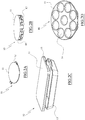
- the slip is then dropped into the die 1 ( figure 1 ), the cavity of which substantially has the shape of the product 2 that is to be obtained, for example the shape of the tableware product 2 that will be described in the following.
- the slip contained in the die 1 is dried so as to remove the water and enable the refractory material mixture to take on the shape of the cavity of the die 1 due to the plastic properties of the base mixture, defining the raw product 2.
- the slip is dried so as to conserve a moisture comprised between 5% and 7% in weight.
- the raw product 2, once formed in the die, is subjected to a firing heat treatment which brings it to the sintered condition.
- the heat treatment has a maximum temperature T comprised between 1120°C and 1200°C which is maintained for a time ⁇ comprised between 40 and 60 minutes.
- the raw material 2 is preferably fired at a maximum temperature T of 1150°C for a time ⁇ comprised between 40 and 60 minutes.
- the heat treatment exhibits a heating curve for reaching the maximum temperature T starting from ambient temperature which lasts for a time ⁇ ist comprised between 11 and 14 hours, for example 12 hours.
- the heat treatment exhibits a cooling curve for reaching ambient temperature starting from the maximum temperature T, which lasts for a time ⁇ raff comprised between 11 and 14 hours, for example 12 hours.
- the refractory material A of this first embodiment comprises the following composition: SiO 2 between 68% and 73%; Al 2 0 3 between 23% and 27%; TiO 2 between 0.1% and 1%; Fe 2 O 3 between 0.1% and 1%; CaO between 0.1% and 0.5%; MgO between 0.1% and 0.5%; K 2 O between 0.5% and 1.5%; Na 2 O between 0.1% and 0.5%; Li 2 O between 1.5% and 3%.
- the refractory material A has a thermal dilation coefficient comprised between 1.7 X 10 -6 e 2 X 10 -6 °C -1 , preferably 1.8 X 10⁻⁶ °C -1 and an absorption coefficient comprised between 6 and 10%, for example 8%.
- the refractory material A is characterised by a high resistance to thermal shock and a good mechanical resistance, and a significant ability to accumulate heat.
- the addition of the lithium feldspar facilitates the sintering of the refractory material A even at relatively low temperatures so as to reduce to a minimum the open pores and improve the surface properties of the refractory material A itself such as for example the absorption coefficient.
- the refractory material A thus-produced is white and pleasant to view and especially suitable for realisation of tableware products, even without the need for application of a glaze on the surface of the product.
- the low absorption coefficient is connected to other characteristics of the refractory material A such as, for example, the degree of dirtying.
- a low absorption coefficient is equivalent to a poor ability to absorb substances such as for example water, oil or fats, and consequently the material is easily cleanable and in general particularly hygienic.
- a material obtained in this way being characterised by a high resistance to thermal shock and low absorption, is further usable for applications in moist environments such as for example saunas or aggressive environments such as for example catalysers.
- the refractory material A is particularly suitable for realisation of products 10 able to enter into direct contact with foodstuffs, for example tableware products.
- the refractory material A is suitable for products 10 subject to heat leaps such as, for example, cooking dishes, baking dishes or other products.
- FIG. 2A illustrates a tray 10 comprising a flat body 11 to which handles 12 can be associated to enable gripping and manipulation of the tray 10 by a user.
- the tray 10, and in particular the flat body 11, is advantageously realised using refractory material A.
- the tray 10 can be positioned in proximity of a heat source, for example the cinders of a barbecue or an oven, and support foods, for example a pizza, so as to enable it to cook, and, thanks to the resistance to thermal shock of the refractory material A, it can be even sharply removed from the heat source, thus being subjected to a heat leap without this leading to breakage of the tray 10.
- a heat source for example the cinders of a barbecue or an oven
- support foods for example a pizza
- the tray 10 slowly releases the accumulated heat in proximity of the heat source so as to maintain the cooked food warm even a long time after it has been cooked.
- FIGS. 2B to 2D illustrates further embodiments of the tray 10.
- the tray 10 shown in figure 2B comprises a container body 13, able to be associated inferiorly to the flat body 11, which, in turn, defines a cover of the container body 13.
- the container body 13 is able to contain a heat source, such as for example cinders or radiating bodies 80 ( figure 8 ) so as to maintain a high temperature of the flat body 11, which can be used for cooking or heating meals.
- a heat source such as for example cinders or radiating bodies 80 ( figure 8 ) so as to maintain a high temperature of the flat body 11, which can be used for cooking or heating meals.
- the container body 13 for example tub-conformed (such as a baking dish) can be heated, together with the flat body 11, in proximity of the heat source and can internally contain the cooked foods so as to function as a food-warmer.
- tub-conformed such as a baking dish
- the flat body 11 can comprise a perimeter edge 15 which develops inferiorly of the flat body 11 and is able to associate to the edge of the opening of the container body 13 so as to isolate the tray 10.
- Figure 2D illustrates a further embodiment of the tray 10, in which the flat body 11 comprises a plurality of recesses 14 able to contain foods to be cooked or heated.
- a second embodiment of the invention includes a refractory material B constituted by the base mixture and by a filler comprising both smelting agent and schamotte.
- the refractory material B comprises between 30% and 50% in weight of base mixture, as described herein above, and between 50% and 70% in weight of a filler material comprising both a smelting agent and schamotte.
- the refractory material B preferably comprises 30% in weight of base mixture and 70% in weight of filler.
- the refractory material comprises 30% in weight of base mixture and between 20% and 40% of smelting agent and 50% of schamotte, for example 30% of smelting agent and 40% of schamotte.
- the smelting agent is lithium feldspar as described above, so that the refractory material B is alike to the refractory material A to which is added a weight percentage variable between 30% and 50%, for example 40% of schamotte.
- the schamotte comprises the following composition: SiO 2 between 52% and 56%; Al 2 0 3 between 39% and 43%; TiO 2 between 1% and 2%; Fe 2 O 3 between 0.5% and 1.5%; CaO between 0,01% and 1%; MgO between 0.01% and 1%; K 2 O between 0.5% and 1.5%.
- the schamotte is ground so as to obtain a grain dimension comprised between 0.001 mm and 0.5 mm, and is then mixed to the base mixture and to the smelting agent so as to obtain a refractory mixture.
- the mixture between the base mixture and the filler is advantageously done in a moist mixture so as to obtain a homogeneous refractory mixture.
- the mixture takes place in moist conditions with an addition of water so as to obtain a slip comprising between 80% and 90% in weight of refractory mixture and 10% and 20% in weight of water, and having a density comprised between 1.99 and 2.00 kg/I.
- the slip preferably comprises 84% in weight of refractory mixture and 16% in weight of water.
- the slip can further comprise additives such as for example flocculants or deflocculents, so as to control the rheological characteristics of the slip.
- additives such as for example flocculants or deflocculents, so as to control the rheological characteristics of the slip.
- the slip is then dropped into the die 1 ( figure 1 ), the cavity of which substantially has the shape of the product 2 that is to be obtained, for example a product able to define at least a cladding of a fire chamber and/or to enter into direct contact with the flame, as will be more fully described in the following.
- the slip contained in the die 1 is dried so as to remove the water and enable the refractory material to take on the shape of the cavity of the die 1 due to the plastic properties of the base mixture, defining the raw product 2.
- the slip is dried so as to conserve a moisture comprised between 5% and 7% in weight.
- the raw product 2, once formed in the die, is subjected to a firing heat treatment which brings it to the sintered condition.
- the heat treatment has a maximum temperature T comprised between 1100°C and 1200°C which is maintained for a time ⁇ comprised between 40 and 60 minutes.
- the raw material 2 is preferably fired at a maximum temperature T of 1180°C for a time ⁇ comprised between 40 and 60 minutes.
- the heat treatment exhibits a heating curve for reaching the maximum temperature T starting from ambient temperature which lasts for a time ⁇ ist comprised between 11 and 14 hours, for example 12 hours.
- the heat treatment exhibits a cooling curve for reaching ambient temperature starting from the maximum temperature T, which lasts for a time ⁇ raff comprised between 11 and 14 hours, for example 12 hours.
- the refractory material B of this embodiment comprises the following composition: SiO 2 between 60% and 65%; Al 2 0 3 between 30% and 35%; TiO 2 between 0.8% and 1.2%; Fe 2 O 3 between 0.5% and 1.1%; CaO between 0.1% and 0.3%; MgO between 0.1% and 0.3%; K 2 O between 0.5% and 1.5%; Na 2 O between 0.01% and 0.5%; Li 2 O between 0.5% and 1.5%.
- the refractory material B has a thermal dilation coefficient comprised between 2.6 X 10 -6 and 2.9 X 10 -6 °C -1 , preferably 2.7 X 10 -6 °C -1 .
- the refractory material B has a coefficient of water absorbance comprised between 9% and 12%.
- the refractory material B can, further, be glazed so as to occlude the open pores of the products, improving their surface characteristics, such as for example surface hardness, the capacity to reflect heat and resist dirt, as well as being able to be decorated as desired.
- the refractory material B is characterised by a high resistance to thermal shock and a good mechanical resistance, and a significant ability to accumulate heat which, for example, is particularly suitable for applications internally of fire chambers.
- the refractory material B is suitable for products that constitute components, including structural components, of the fire chambers themselves.
- the refractory material B can be used for realising refractory products 2 able to define at least a portion of an internal cladding of a fire chamber and/or able to enter into direct contact with a flame internally of the fire chamber.
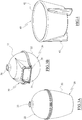
- Figure 3A illustrates a barbecue 20, for example having a substantially ovoid shape provided with a first lower concave body 21, for example having a substantially truncoconical or hemispheric shape, and able to delimit a fire chamber internally of the concavity.
- the first concave body 21 can rest on the ground on rest feet of known type and not shown in the figures.
- the barbecue 20 further comprises a second upper concave body 22, for example shaped as a hemispherical cap able to close the concavity of the first concave body 21 defining a cover of the barbecue 20.
- the second concave body 22 comprises an upper opening 23 enabling exit of the combustion fumes which are generated internally of the barbecue 20.
- the first and the second concave bodies 21,22 are made using the refractory material B.
- the walls internal of the concavity of the concave bodies 21 and 22 are at least partly clad using the refractory material B.
- Figure 3B illustrates an oven 30 provided with a flat base 31 surmounted by a vault 32 so as to define a cooking chamber internally of the oven 30.
- the oven 30 further comprises a front opening 35 which enables insertion of the foods internally of the cooking chamber, and can comprise an upper opening 36 for exit of the hot fumes.
- the oven 30 is able to be used in combination with a barbecue 20, for example made of a refractory material shown in figure 3A .
- the oven 30 can be used in replacement for the second concave body 22 and can be associated to the upper opening of the first concave body 21 of the barbecue 20.
- the base 31 is able to occlude the opening of the first concave body 21 and enables, through appropriate holes, not illustrated (for example made at the flat base 31, preferably in a perimeter zone thereof), the passage of the fumes and heat from the fire chamber (internal of the first concave body 21) to the cooking chamber (internal of the oven 30).
- the oven 30 is advantageously entirely made using the refractory material B; in this way the vault 32 and the base 31 enable, thanks to the capacity for heat accumulation, to reach the suitable temperatures for cooking the foods, for example bread or pizza.
- Figure 4 illustrates a brazier 40 provided with a tub body 41 that is superiorly open.
- the brazier 40 further comprises rest feet 42 associated to the concave body 41 for improving the stability of the brazier 40 on a rest surface, for example on the ground.
- the brazier 40 and in particular at least the concave body 41 is advantageously realised using the refractory material B, and can be used for combustion of wood or coal, for example for realising a bonfire in a garden or another open environment.
- Figure 5 illustrates an igniter 50, provided with a body shaped as a beaker 51 and a cover 52, for example cap-shaped and provided with an upper opening.
- the beaker body 51 comprises a lateral wall provided with a plurality of holes 53 which enable aeration of the internal cavity of the beaker body 51.
- the beaker body 51 can accommodate cinders to facilitate combustion thereof before locating them internally of the fire chamber, for example of a barbecue.
- the igniter 50 further comprises a handle 54 fixed to the beaker body 51 so as to enable an operator to move the igniter 50 itself.
- the igniter 50 and in particular the beaker body 51 and the cover 52, is realised using refractory material B.
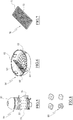
- Figure 6 illustrates a cinder-bearing device 60 able to definer the bottom of the fire chamber of a barbecue, not illustrated.
- the cinder-bearing device 60 can be inserted in a barbecue, for example made of a metal or another material such as what is described in the foregoing, so as to define the bottom of the fire chamber in which the cinders are placed.
- the cinder-bearing device 60 comprises a base 61 that is substantially flat, and comprises a lateral edge 62, salient from the base 61, able to adhere to the walls of the barbecue.
- the base 61 comprises a plurality of through-holes 63 which facilitate the oxygenation of the cinders contained in the device 60.
- the cinder-bearing device 60 can further comprise one or more vertical walls 64, for separating the internal volume of the base 61, also provided with through-holes 63.
- the vertical walls 64 are housed internally of the cinder-bearing device 60 associated, for example removably, to the lateral edge 62.
- the vertical walls 64 are for subdividing the cavity of the cinder-bearing device 60 into a plurality of compartments for receiving the cinders.
- a cinder-bearing device 60 housed in a barbecue, it is possible to create compartments for the cinders and compartments which will remain empty and free of cinders above which the foods to be cooked will be arranged so as to remain distanced from the heat source and so that the fat, or the substances released by the foodstuffs during cooking, can be collected in special trays located in the compartments that are free of cinders.
- the cinder-bearing device 60 is advantageously made entirely of the refractory material B.
- Figure 7 illustrates a heat-diffuser plate 70 able to be arranged in proximity of a burner in a gas barbecue.
- the heat-diffuser plate 70 comprises a plurality of through-holes 71 for facilitating transmission of the heat and the air flow towards the burner.
- the heat-diffuser plate 70 can be arranged between the burner of a gas barbecue and the support grill of the foods being cooked and prevents the fat released from the foodstuffs, by falling on the burner, from generating a potentially dangerous flame for the operator.
- the heat-diffuser plate 70 is advantageously realised entirely of a refractory material B able to resist, thanks to the property of the refractory material, the differences of temperature which are generated between the opposite faces of the plate 70 itself.
- Figure 8 illustrates a radiating body 80, realised entirely of refractory material B, which can have any shape and geometry as shown in the figure.
- the radiating body 80 can have a polyhedral shape having a quadrangular, hexagonal or irregular base, for example with bevelled or rounded edges, so as to maximise the surface of the radiating body.
- the radiating body 80 can be arranged in contact with the flame, for example mixed with the cinders, in a fire chamber, for example in an oven or a barbecue, so as to exploit the heat accumulating capacity of the refractory material B and so as to facilitate a slow release of the heat including following the switching-off of the flame.
- the radiating bodies 80 can be used also, for example, in braziers for saunas or Turkish baths so that they can be directly sprayed with water for generation of heat.
- the refractory material B might, alternatively, comprise, further to the base mixture, a filler comprising only schamotte, without the addition of the smelting agent without for this reason forsaking the scope of the present invention.
Landscapes
- Chemical & Material Sciences (AREA)
- Engineering & Computer Science (AREA)
- Ceramic Engineering (AREA)
- Materials Engineering (AREA)
- Structural Engineering (AREA)
- Organic Chemistry (AREA)
- Dispersion Chemistry (AREA)
- Manufacturing & Machinery (AREA)
- Mechanical Engineering (AREA)
- Compositions Of Oxide Ceramics (AREA)
- Baking, Grill, Roasting (AREA)
Claims (10)
- Zusammensetzung für ein feuerfestes Material, umfassend ein Basisgemisch, das eine Zusammensetzung wie folgt aufweist (Mol-%):• SiO2 zwischen 69 % und 73 %;• Al2O3 zwischen 22 % und 28 %;• TiO2 zwischen 0,4 % und 1 %;• Fe2O3 zwischen 0,2 % und 1 %;• CaO zwischen 0,1 % und 1 %;• MgO zwischen 0,1 % und 1 %;• K2O zwischen 0,5 % und 2 %;• Na2O zwischen 0,1 % und 0,5 %;und umfassend ein Füllstoffgemisch, das mindestens eines von einer Schamotte und einem Schmelzmittel umfasst.
- Zusammensetzung nach Anspruch 1, dadurch gekennzeichnet, dass das Basisgemisch vorzugsweise eine Zusammensetzung wie folgt in Oxiden (Mol-%) aufweist:• SiO2 = 71,4 %;• Al2O3 = 25,7 %;• TiO2 = 0,6 %;• Fe2O3 = 0,5 %.• CaO = 0,3 %;• MgO = 0,2 %.• K2O = 1 %;• Na2O = 0,3 %.
- Zusammensetzung nach einem der vorherigen Ansprüche, bestehend aus dem Basisgemisch und dem Schmelzmittel, wobei das Schmelzmittel ein Feldspat ist, der vorzugsweise eine Zusammensetzung wie folgt (Mol-%) aufweist:• Li2O zwischen 2 % und 6 %;• SiO2 zwischen 75 % und 79 %;• Al2O3 zwischen 15 % und 19 %;• TiO2 zwischen 0,1 % und 1 %;• Fe2O3 zwischen 0,01 % und 0,05 %;• CaO zwischen 0,01 % und 0,5 %;• MgO zwischen 0,01 % und 0,1 %;• K2O zwischen 0,1 % und 1 %;• Na2O zwischen 0,1 % und 1 %.
- Zusammensetzung nach Anspruch 3, dadurch gekennzeichnet, dass sie zwischen 30 % und 50 % nach Gewicht des Basisgemischs und zwischen 50 % und 70 % nach Gewicht des Schmelzmittels umfasst.
- Zusammensetzung nach einem der Ansprüche 1 oder 2, bestehend aus dem Basisgemisch und einem Füllstoff, umfassend sowohl die Schamotte als auch das Schmelzmittel, wobei die Schamotte eine Zusammensetzung wie folgt (Mol- %) umfasst:• SiO2 zwischen 52 % und 56 %;• Al2O3 zwischen 39 % und 43 %;• TiO2 zwischen 1 % und 2 %;• Fe2O3 zwischen 0,5 % und 1.5 %;• CaO zwischen 0,01 % und 1 %;• MgO zwischen 0,01 % und 1 %;• K2O zwischen 0,5 % und 1.5 %;und wobei das Schmelzmittel ein Lithiumfeldspat ist, der eine Zusammensetzung wie folgt (Mol-%) aufweist:• Li2O zwischen 2 % und 6 %;• SiO2 zwischen 75 % und 79 %;• Al2O3 zwischen 15 % und 19 %;• TiO2 zwischen 0,1 % und 1 %;• Fe2O3 zwischen 0,01 % und 0,05 %;• CaO zwischen 0,01 % und 0,5 %;• MgO zwischen 0,01 % und 0,1 %;• K2O zwischen 0,1 % und 1 %;• Na2O zwischen 0,1 % und 1 %.
- Zusammensetzung nach Anspruch 5, dadurch gekennzeichnet, dass sie zwischen 30 % und 50 % nach Gewicht des Basisgemischs und zwischen 50 % und 70 % nach Gewicht von Schamotte und Feldspat umfasst.
- Verfahren zur Herstellung eines feuerfesten Materials mit einer Zusammensetzung nach einem der vorherigen Ansprüche, umfassend die folgenden Schritte:• Mischen des Basisgemischs mit dem Schmelzmittel;• Mischen der Zusammensetzung mit Wasser, um einen Schlicker zu erlangen;• Einbringen des Schlickers in eine Form (1);• Trocknen des Schlickers in der Form (1), um ein Rohprodukt (2) zu erhalten;• Unterziehen des Rohprodukts (2) einer Wärmebehandlung, um das feuerfeste Material zu sintern.
- Verfahren nach Anspruch 7, wobei das Brennen bei einer maximalen Temperatur zwischen 1100 und 1200 °C über eine Zeit zwischen 30 und 50 Minuten erfolgt, vorzugsweise mit einer Heizkurve zwischen 11 und 14 Stunden und einer Abkühlkurve zwischen 11 und 14 Stunden.
- Verfahren nach einem der Ansprüche 7 oder 8, wobei die Form die Form eines Geschirrelements aufweist.
- Verfahren nach einem der Ansprüche 7 oder 8, wobei die Form die Form eines Elements aufweist, das in der Lage ist, mindestens einen inneren Auskleidungsabschnitt einer Brennkammer zu definieren und/oder in direkten Kontakt mit einer Flamme innerhalb der Brennkammer zu gelangen.
Applications Claiming Priority (2)
| Application Number | Priority Date | Filing Date | Title |
|---|---|---|---|
| ITUB2015A004270A ITUB20154270A1 (it) | 2015-10-09 | 2015-10-09 | Composizione per materiale refrattario |
| PCT/IB2016/055653 WO2017060789A1 (en) | 2015-10-09 | 2016-09-22 | A composition for refractory material |
Publications (2)
| Publication Number | Publication Date |
|---|---|
| EP3359504A1 EP3359504A1 (de) | 2018-08-15 |
| EP3359504B1 true EP3359504B1 (de) | 2019-11-06 |
Family
ID=55085832
Family Applications (1)
| Application Number | Title | Priority Date | Filing Date |
|---|---|---|---|
| EP16781561.2A Active EP3359504B1 (de) | 2015-10-09 | 2016-09-22 | Zusammensetzung für ein feuerfestes material |
Country Status (5)
| Country | Link |
|---|---|
| US (1) | US10364188B2 (de) |
| EP (1) | EP3359504B1 (de) |
| ES (1) | ES2769919T3 (de) |
| IT (1) | ITUB20154270A1 (de) |
| WO (1) | WO2017060789A1 (de) |
Families Citing this family (1)
| Publication number | Priority date | Publication date | Assignee | Title |
|---|---|---|---|---|
| US20220160173A1 (en) * | 2020-11-20 | 2022-05-26 | Lodge Manufacturing Company | Grill |
Family Cites Families (6)
| Publication number | Priority date | Publication date | Assignee | Title |
|---|---|---|---|---|
| DE19504141A1 (de) * | 1995-02-09 | 1996-08-14 | Otto Feuerfest Gmbh | Verfahren zum Recycling von Feuerfestmaterial |
| JP3031872B2 (ja) * | 1997-01-14 | 2000-04-10 | 有限会社水野技研 | 耐熱衝撃性セラミックスおよびその製造方法 |
| AT8345U1 (de) | 2005-01-27 | 2006-06-15 | Styrokeram Gmbh Ges Fuer Feuer | Verfahren zum herstellen feuerfester feuerleichtsteine |
| US20080300129A1 (en) * | 2005-12-28 | 2008-12-04 | Caroma Insdustries Limited | Ceramic material, compositions and methods for manufacture thereof |
| US7579084B2 (en) * | 2005-12-28 | 2009-08-25 | Caroma Industries Limited | Ceramic material, compositions and methods for manufacture thereof |
| PL2349947T3 (pl) * | 2008-08-19 | 2015-01-30 | Basf Corp | Produkt w postaci mieszanki uwodnionego kaolinu, sposób wytwarzania kordierytu przez spiekanie mieszanki i otrzymany kordieryt |
-
2015
- 2015-10-09 IT ITUB2015A004270A patent/ITUB20154270A1/it unknown
-
2016
- 2016-09-22 US US15/764,078 patent/US10364188B2/en active Active
- 2016-09-22 EP EP16781561.2A patent/EP3359504B1/de active Active
- 2016-09-22 WO PCT/IB2016/055653 patent/WO2017060789A1/en not_active Ceased
- 2016-09-22 ES ES16781561T patent/ES2769919T3/es active Active
Non-Patent Citations (1)
| Title |
|---|
| None * |
Also Published As
| Publication number | Publication date |
|---|---|
| US20180282221A1 (en) | 2018-10-04 |
| WO2017060789A1 (en) | 2017-04-13 |
| ITUB20154270A1 (it) | 2017-04-09 |
| US10364188B2 (en) | 2019-07-30 |
| ES2769919T3 (es) | 2020-06-29 |
| EP3359504A1 (de) | 2018-08-15 |
Similar Documents
| Publication | Publication Date | Title |
|---|---|---|
| KR200478529Y1 (ko) | 내부 착탈식 바닥판 가열용 가스버너를 구비한 이동식 돔형 화덕 | |
| EP3359504B1 (de) | Zusammensetzung für ein feuerfestes material | |
| KR200397274Y1 (ko) | 고기구이용 화덕 | |
| KR101904377B1 (ko) | 내열 도자기 구이판 전기 로스터 | |
| KR101100800B1 (ko) | 원적외선 세라믹 조리장치 | |
| JP3110426U (ja) | 陶器製鍋 | |
| KR100826854B1 (ko) | 구이물에 수분이 공급되게 하는 오븐용 구이판 | |
| JP2004057491A (ja) | 焼物調理用陶板及びその製造方法 | |
| KR101948301B1 (ko) | 도자기 불판 및 이를 구비한 조리 기구 | |
| JPH1014776A (ja) | 焼き物調理器具 | |
| RU2715951C1 (ru) | Каменная панель для приготовления пищи на мангале или гриле | |
| KR101472707B1 (ko) | 황토 원적외선 방출 기능을 갖는 계란구이기 | |
| JP2020116343A (ja) | 加熱調理器 | |
| KR200463320Y1 (ko) | 매개층을 구비한 이중구조 불판 | |
| RU2773472C1 (ru) | Устройство для домашнего приготовления пищи на мангале или гриле | |
| KR200425862Y1 (ko) | 육류 구이용 불판 | |
| ES1242844U (es) | Barbacoa | |
| KR200424658Y1 (ko) | 신선로 겸용 취사기 | |
| JPH03176006A (ja) | 調理器具 | |
| CN2438395Y (zh) | 改良结构的锅具 | |
| KR200297014Y1 (ko) | 맥반석 구이판 | |
| KR20080111758A (ko) | 다공성 도기 화덕 | |
| KR200197851Y1 (ko) | 바비큐 용기 | |
| KR200315598Y1 (ko) | 황토가마 맥반석석쇠구이판 | |
| KR200307351Y1 (ko) | 현무암 열처리 구이판 |
Legal Events
| Date | Code | Title | Description |
|---|---|---|---|
| STAA | Information on the status of an ep patent application or granted ep patent |
Free format text: STATUS: UNKNOWN |
|
| STAA | Information on the status of an ep patent application or granted ep patent |
Free format text: STATUS: THE INTERNATIONAL PUBLICATION HAS BEEN MADE |
|
| PUAI | Public reference made under article 153(3) epc to a published international application that has entered the european phase |
Free format text: ORIGINAL CODE: 0009012 |
|
| STAA | Information on the status of an ep patent application or granted ep patent |
Free format text: STATUS: REQUEST FOR EXAMINATION WAS MADE |
|
| 17P | Request for examination filed |
Effective date: 20180329 |
|
| AK | Designated contracting states |
Kind code of ref document: A1 Designated state(s): AL AT BE BG CH CY CZ DE DK EE ES FI FR GB GR HR HU IE IS IT LI LT LU LV MC MK MT NL NO PL PT RO RS SE SI SK SM TR |
|
| AX | Request for extension of the european patent |
Extension state: BA ME |
|
| DAV | Request for validation of the european patent (deleted) | ||
| DAX | Request for extension of the european patent (deleted) | ||
| GRAP | Despatch of communication of intention to grant a patent |
Free format text: ORIGINAL CODE: EPIDOSNIGR1 |
|
| STAA | Information on the status of an ep patent application or granted ep patent |
Free format text: STATUS: GRANT OF PATENT IS INTENDED |
|
| INTG | Intention to grant announced |
Effective date: 20190308 |
|
| GRAJ | Information related to disapproval of communication of intention to grant by the applicant or resumption of examination proceedings by the epo deleted |
Free format text: ORIGINAL CODE: EPIDOSDIGR1 |
|
| STAA | Information on the status of an ep patent application or granted ep patent |
Free format text: STATUS: REQUEST FOR EXAMINATION WAS MADE |
|
| GRAP | Despatch of communication of intention to grant a patent |
Free format text: ORIGINAL CODE: EPIDOSNIGR1 |
|
| STAA | Information on the status of an ep patent application or granted ep patent |
Free format text: STATUS: GRANT OF PATENT IS INTENDED |
|
| INTC | Intention to grant announced (deleted) | ||
| INTG | Intention to grant announced |
Effective date: 20190606 |
|
| GRAS | Grant fee paid |
Free format text: ORIGINAL CODE: EPIDOSNIGR3 |
|
| GRAA | (expected) grant |
Free format text: ORIGINAL CODE: 0009210 |
|
| STAA | Information on the status of an ep patent application or granted ep patent |
Free format text: STATUS: THE PATENT HAS BEEN GRANTED |
|
| AK | Designated contracting states |
Kind code of ref document: B1 Designated state(s): AL AT BE BG CH CY CZ DE DK EE ES FI FR GB GR HR HU IE IS IT LI LT LU LV MC MK MT NL NO PL PT RO RS SE SI SK SM TR |
|
| REG | Reference to a national code |
Ref country code: GB Ref legal event code: FG4D |
|
| REG | Reference to a national code |
Ref country code: CH Ref legal event code: EP Ref country code: AT Ref legal event code: REF Ref document number: 1198538 Country of ref document: AT Kind code of ref document: T Effective date: 20191115 |
|
| REG | Reference to a national code |
Ref country code: IE Ref legal event code: FG4D |
|
| REG | Reference to a national code |
Ref country code: DE Ref legal event code: R096 Ref document number: 602016023931 Country of ref document: DE |
|
| REG | Reference to a national code |
Ref country code: NL Ref legal event code: MP Effective date: 20191106 |
|
| REG | Reference to a national code |
Ref country code: LT Ref legal event code: MG4D |
|
| PG25 | Lapsed in a contracting state [announced via postgrant information from national office to epo] |
Ref country code: FI Free format text: LAPSE BECAUSE OF FAILURE TO SUBMIT A TRANSLATION OF THE DESCRIPTION OR TO PAY THE FEE WITHIN THE PRESCRIBED TIME-LIMIT Effective date: 20191106 Ref country code: BG Free format text: LAPSE BECAUSE OF FAILURE TO SUBMIT A TRANSLATION OF THE DESCRIPTION OR TO PAY THE FEE WITHIN THE PRESCRIBED TIME-LIMIT Effective date: 20200206 Ref country code: NO Free format text: LAPSE BECAUSE OF FAILURE TO SUBMIT A TRANSLATION OF THE DESCRIPTION OR TO PAY THE FEE WITHIN THE PRESCRIBED TIME-LIMIT Effective date: 20200206 Ref country code: PT Free format text: LAPSE BECAUSE OF FAILURE TO SUBMIT A TRANSLATION OF THE DESCRIPTION OR TO PAY THE FEE WITHIN THE PRESCRIBED TIME-LIMIT Effective date: 20200306 Ref country code: LV Free format text: LAPSE BECAUSE OF FAILURE TO SUBMIT A TRANSLATION OF THE DESCRIPTION OR TO PAY THE FEE WITHIN THE PRESCRIBED TIME-LIMIT Effective date: 20191106 Ref country code: SE Free format text: LAPSE BECAUSE OF FAILURE TO SUBMIT A TRANSLATION OF THE DESCRIPTION OR TO PAY THE FEE WITHIN THE PRESCRIBED TIME-LIMIT Effective date: 20191106 Ref country code: NL Free format text: LAPSE BECAUSE OF FAILURE TO SUBMIT A TRANSLATION OF THE DESCRIPTION OR TO PAY THE FEE WITHIN THE PRESCRIBED TIME-LIMIT Effective date: 20191106 Ref country code: LT Free format text: LAPSE BECAUSE OF FAILURE TO SUBMIT A TRANSLATION OF THE DESCRIPTION OR TO PAY THE FEE WITHIN THE PRESCRIBED TIME-LIMIT Effective date: 20191106 Ref country code: GR Free format text: LAPSE BECAUSE OF FAILURE TO SUBMIT A TRANSLATION OF THE DESCRIPTION OR TO PAY THE FEE WITHIN THE PRESCRIBED TIME-LIMIT Effective date: 20200207 Ref country code: PL Free format text: LAPSE BECAUSE OF FAILURE TO SUBMIT A TRANSLATION OF THE DESCRIPTION OR TO PAY THE FEE WITHIN THE PRESCRIBED TIME-LIMIT Effective date: 20191106 |
|
| PG25 | Lapsed in a contracting state [announced via postgrant information from national office to epo] |
Ref country code: HR Free format text: LAPSE BECAUSE OF FAILURE TO SUBMIT A TRANSLATION OF THE DESCRIPTION OR TO PAY THE FEE WITHIN THE PRESCRIBED TIME-LIMIT Effective date: 20191106 Ref country code: IS Free format text: LAPSE BECAUSE OF FAILURE TO SUBMIT A TRANSLATION OF THE DESCRIPTION OR TO PAY THE FEE WITHIN THE PRESCRIBED TIME-LIMIT Effective date: 20200306 Ref country code: RS Free format text: LAPSE BECAUSE OF FAILURE TO SUBMIT A TRANSLATION OF THE DESCRIPTION OR TO PAY THE FEE WITHIN THE PRESCRIBED TIME-LIMIT Effective date: 20191106 |
|
| REG | Reference to a national code |
Ref country code: ES Ref legal event code: FG2A Ref document number: 2769919 Country of ref document: ES Kind code of ref document: T3 Effective date: 20200629 |
|
| PG25 | Lapsed in a contracting state [announced via postgrant information from national office to epo] |
Ref country code: AL Free format text: LAPSE BECAUSE OF FAILURE TO SUBMIT A TRANSLATION OF THE DESCRIPTION OR TO PAY THE FEE WITHIN THE PRESCRIBED TIME-LIMIT Effective date: 20191106 |
|
| PG25 | Lapsed in a contracting state [announced via postgrant information from national office to epo] |
Ref country code: CZ Free format text: LAPSE BECAUSE OF FAILURE TO SUBMIT A TRANSLATION OF THE DESCRIPTION OR TO PAY THE FEE WITHIN THE PRESCRIBED TIME-LIMIT Effective date: 20191106 Ref country code: RO Free format text: LAPSE BECAUSE OF FAILURE TO SUBMIT A TRANSLATION OF THE DESCRIPTION OR TO PAY THE FEE WITHIN THE PRESCRIBED TIME-LIMIT Effective date: 20191106 Ref country code: EE Free format text: LAPSE BECAUSE OF FAILURE TO SUBMIT A TRANSLATION OF THE DESCRIPTION OR TO PAY THE FEE WITHIN THE PRESCRIBED TIME-LIMIT Effective date: 20191106 Ref country code: DK Free format text: LAPSE BECAUSE OF FAILURE TO SUBMIT A TRANSLATION OF THE DESCRIPTION OR TO PAY THE FEE WITHIN THE PRESCRIBED TIME-LIMIT Effective date: 20191106 |
|
| REG | Reference to a national code |
Ref country code: DE Ref legal event code: R097 Ref document number: 602016023931 Country of ref document: DE |
|
| REG | Reference to a national code |
Ref country code: AT Ref legal event code: MK05 Ref document number: 1198538 Country of ref document: AT Kind code of ref document: T Effective date: 20191106 |
|
| PG25 | Lapsed in a contracting state [announced via postgrant information from national office to epo] |
Ref country code: SK Free format text: LAPSE BECAUSE OF FAILURE TO SUBMIT A TRANSLATION OF THE DESCRIPTION OR TO PAY THE FEE WITHIN THE PRESCRIBED TIME-LIMIT Effective date: 20191106 Ref country code: SM Free format text: LAPSE BECAUSE OF FAILURE TO SUBMIT A TRANSLATION OF THE DESCRIPTION OR TO PAY THE FEE WITHIN THE PRESCRIBED TIME-LIMIT Effective date: 20191106 |
|
| PLBE | No opposition filed within time limit |
Free format text: ORIGINAL CODE: 0009261 |
|
| STAA | Information on the status of an ep patent application or granted ep patent |
Free format text: STATUS: NO OPPOSITION FILED WITHIN TIME LIMIT |
|
| 26N | No opposition filed |
Effective date: 20200807 |
|
| PG25 | Lapsed in a contracting state [announced via postgrant information from national office to epo] |
Ref country code: AT Free format text: LAPSE BECAUSE OF FAILURE TO SUBMIT A TRANSLATION OF THE DESCRIPTION OR TO PAY THE FEE WITHIN THE PRESCRIBED TIME-LIMIT Effective date: 20191106 Ref country code: SI Free format text: LAPSE BECAUSE OF FAILURE TO SUBMIT A TRANSLATION OF THE DESCRIPTION OR TO PAY THE FEE WITHIN THE PRESCRIBED TIME-LIMIT Effective date: 20191106 |
|
| REG | Reference to a national code |
Ref country code: CH Ref legal event code: PL |
|
| GBPC | Gb: european patent ceased through non-payment of renewal fee |
Effective date: 20200922 |
|
| REG | Reference to a national code |
Ref country code: BE Ref legal event code: MM Effective date: 20200930 |
|
| PG25 | Lapsed in a contracting state [announced via postgrant information from national office to epo] |
Ref country code: LU Free format text: LAPSE BECAUSE OF NON-PAYMENT OF DUE FEES Effective date: 20200922 |
|
| PG25 | Lapsed in a contracting state [announced via postgrant information from national office to epo] |
Ref country code: LI Free format text: LAPSE BECAUSE OF NON-PAYMENT OF DUE FEES Effective date: 20200930 Ref country code: IE Free format text: LAPSE BECAUSE OF NON-PAYMENT OF DUE FEES Effective date: 20200922 Ref country code: GB Free format text: LAPSE BECAUSE OF NON-PAYMENT OF DUE FEES Effective date: 20200922 Ref country code: BE Free format text: LAPSE BECAUSE OF NON-PAYMENT OF DUE FEES Effective date: 20200930 Ref country code: CH Free format text: LAPSE BECAUSE OF NON-PAYMENT OF DUE FEES Effective date: 20200930 |
|
| PG25 | Lapsed in a contracting state [announced via postgrant information from national office to epo] |
Ref country code: TR Free format text: LAPSE BECAUSE OF FAILURE TO SUBMIT A TRANSLATION OF THE DESCRIPTION OR TO PAY THE FEE WITHIN THE PRESCRIBED TIME-LIMIT Effective date: 20191106 Ref country code: MT Free format text: LAPSE BECAUSE OF FAILURE TO SUBMIT A TRANSLATION OF THE DESCRIPTION OR TO PAY THE FEE WITHIN THE PRESCRIBED TIME-LIMIT Effective date: 20191106 Ref country code: CY Free format text: LAPSE BECAUSE OF FAILURE TO SUBMIT A TRANSLATION OF THE DESCRIPTION OR TO PAY THE FEE WITHIN THE PRESCRIBED TIME-LIMIT Effective date: 20191106 |
|
| PG25 | Lapsed in a contracting state [announced via postgrant information from national office to epo] |
Ref country code: MK Free format text: LAPSE BECAUSE OF FAILURE TO SUBMIT A TRANSLATION OF THE DESCRIPTION OR TO PAY THE FEE WITHIN THE PRESCRIBED TIME-LIMIT Effective date: 20191106 Ref country code: MC Free format text: LAPSE BECAUSE OF FAILURE TO SUBMIT A TRANSLATION OF THE DESCRIPTION OR TO PAY THE FEE WITHIN THE PRESCRIBED TIME-LIMIT Effective date: 20191106 |
|
| P01 | Opt-out of the competence of the unified patent court (upc) registered |
Effective date: 20230519 |
|
| PGFP | Annual fee paid to national office [announced via postgrant information from national office to epo] |
Ref country code: DE Payment date: 20250929 Year of fee payment: 10 |
|
| PGFP | Annual fee paid to national office [announced via postgrant information from national office to epo] |
Ref country code: IT Payment date: 20250731 Year of fee payment: 10 |
|
| PGFP | Annual fee paid to national office [announced via postgrant information from national office to epo] |
Ref country code: FR Payment date: 20250925 Year of fee payment: 10 |
|
| PGFP | Annual fee paid to national office [announced via postgrant information from national office to epo] |
Ref country code: ES Payment date: 20251001 Year of fee payment: 10 |