EP3360913A1 - Polyhydroxyuréthanes partiellement cristallins sans isocyanates à propriétés programmables et commutables thermomécaniquement - Google Patents
Polyhydroxyuréthanes partiellement cristallins sans isocyanates à propriétés programmables et commutables thermomécaniquement Download PDFInfo
- Publication number
- EP3360913A1 EP3360913A1 EP18000059.8A EP18000059A EP3360913A1 EP 3360913 A1 EP3360913 A1 EP 3360913A1 EP 18000059 A EP18000059 A EP 18000059A EP 3360913 A1 EP3360913 A1 EP 3360913A1
- Authority
- EP
- European Patent Office
- Prior art keywords
- polymer composition
- polyfunctional
- cyclic carbonate
- polyhydroxyurethane
- free
- Prior art date
- Legal status (The legal status is an assumption and is not a legal conclusion. Google has not performed a legal analysis and makes no representation as to the accuracy of the status listed.)
- Withdrawn
Links
- ZAVZCDSAXZJXJV-UHFFFAOYSA-N CC1OC(O)OC1 Chemical compound CC1OC(O)OC1 ZAVZCDSAXZJXJV-UHFFFAOYSA-N 0.000 description 1
- COFNVTFPQKJBAJ-GJVOSNTJSA-N CCC(C)(CC(C)(C)C(C)O)C(NCCNCCN(CCNC/C=N\C(C(C)(C)CC(C)(C)C)=O)CCN(CCN(CCCNCCN)CCN)CCN(CCN)CCNCCN)=O Chemical compound CCC(C)(CC(C)(C)C(C)O)C(NCCNCCN(CCNC/C=N\C(C(C)(C)CC(C)(C)C)=O)CCN(CCN(CCCNCCN)CCN)CCN(CCN)CCNCCN)=O COFNVTFPQKJBAJ-GJVOSNTJSA-N 0.000 description 1
- NYJAETHFGQUTSN-UHFFFAOYSA-N O=C1OC(COCC(COCC(CO2)OC2=O)(COCC(CO2)OC2=O)COCC(CO2)OC2=O)CO1 Chemical compound O=C1OC(COCC(COCC(CO2)OC2=O)(COCC(CO2)OC2=O)COCC(CO2)OC2=O)CO1 NYJAETHFGQUTSN-UHFFFAOYSA-N 0.000 description 1
Images



Classifications
-
- C—CHEMISTRY; METALLURGY
- C08—ORGANIC MACROMOLECULAR COMPOUNDS; THEIR PREPARATION OR CHEMICAL WORKING-UP; COMPOSITIONS BASED THEREON
- C08G—MACROMOLECULAR COMPOUNDS OBTAINED OTHERWISE THAN BY REACTIONS ONLY INVOLVING UNSATURATED CARBON-TO-CARBON BONDS
- C08G71/00—Macromolecular compounds obtained by reactions forming a ureide or urethane link, otherwise, than from isocyanate radicals in the main chain of the macromolecule
- C08G71/04—Polyurethanes
-
- C—CHEMISTRY; METALLURGY
- C08—ORGANIC MACROMOLECULAR COMPOUNDS; THEIR PREPARATION OR CHEMICAL WORKING-UP; COMPOSITIONS BASED THEREON
- C08G—MACROMOLECULAR COMPOUNDS OBTAINED OTHERWISE THAN BY REACTIONS ONLY INVOLVING UNSATURATED CARBON-TO-CARBON BONDS
- C08G2280/00—Compositions for creating shape memory
Definitions
- the present invention relates to a polymer composition comprising a linear, branched and / or crosslinked isocyanate-free polyhydroxyurethane having semicrystalline properties, which can be thermomechanically programmed and switched and reacts to an external stimulus with a change in shape.
- the present invention further relates to a layer system comprising the polymer composition according to the invention.
- the present invention relates to the use of the polymer composition according to the invention and the use of the layer system according to the invention.
- Stimulus-responsive polymers also referred to as smart polymers, respond to changing environmental conditions with a change in their polymer structure. As stimuli, for example, changes in temperature, pressure, humidity, pH, etc. come into question.
- shape memory polymers An important class of stimulus-responsive polymers are so-called “shape memory” polymers, abbreviated as SMPs ( Angew. Chem. Int. Ed. 2002, 41, 2034-2057 ). "Shape memory” polymers, as it were, have a shape memory and are able to remember their earlier structure, despite interim transformation due to the stimulus.
- thermoresponsive SMPs are thermoresponsive, which requires the presence of one or more thermal transitions.
- thermoresponsive SMPs are semicrystalline, ie, they also have one or even several melting temperatures for the semi-crystalline regions in addition to a glass transition temperature, all of these transitions occurring in a temperature range rather than a discrete temperature.
- thermoresponsive "Triple Shape Memory” polymers usually have two thermal transitions with T 1 and T 2 (T 1 > T 2 ) above room temperature, which can be used to generate two temporary forms F 1 and F 2 of the Polymer in addition to the original, permanent form F p , as it is obtained directly in the preparation of the polymer to thermomechanically program.
- the programming of the first temporary shape F 1 is carried out by deformation of the polymer starting from its permanent shape F p at a temperature above T 1 . Subsequent cooling of the thus-deformed polymer to a temperature below T 1 fixes the first temporary form F 1 , for example by crystallization. Accordingly, T 1 is the melting temperature.
- T 2 is the glass transition temperature.
- thermomechanically switch to the permanent form F p above T 1 by heating first into the first temporary form F 1 above T 2 and further heating , Covalent crosslinking is responsible for the restoration of the permanent form F p in elastomers and thermosets, while noncovalent entanglements, also referred to as entanglements, provide thermoplastics for the restoration of the permanent form F p ( Progress in Polymer Science 2012, 37, 1720-1763 ).
- the "shape memory" polymers described in the prior art often have the disadvantage that they require a complicated synthesis or are based on partly toxic monomeric precursor stages. Accordingly, there is a great need for alternative SMPs which do not have the aforementioned disadvantages.
- the object of the present invention is therefore to provide "shape memory" polymers which are to be synthetically produced in a comparatively simple and harmless manner without having to accept losses in relation to the stimulus-responsive properties of the SMPs.
- the present invention provides a polymer composition
- a polymer composition comprising a linear, branched and / or crosslinked isocyanate-free polyhydroxyurethane having semicrystalline properties which can be thermomechanically programmed and switched and responsive to an external stimulus having a shape change derived from at least one polyfunctional cyclic carbonate, its cyclic carbonate groups are five-, six-, seven- and / or eight-membered, as component A1 and at least one polyfunctional amine as component A2, wherein the at least one polyfunctional cyclic carbonate, the at least one polyfunctional amine and / or the combination of the two are crystallizable and wherein the isocyanate-free polyhydroxyurethane has the following repeating structural unit (A):
- X is a linear, branched and / or cyclic, saturated or unsaturated, aliphatic and / or aromatic, optionally heteroatom-containing hydrocarbon radical at least two carbon atoms and Y is a hydrogen atom or an alkyl group, with the proviso that the hydroxy group shown in the repeating structural unit (A) on a carbon atom in ⁇ , ⁇ , ⁇ or ⁇ position with respect to the oxygen atom of Urethane group is located.
- the isocyanate-free polyhydroxyurethane present in the polymer composition according to the invention is thermomechanically programmable and switchable and stimulus-responsive, thus satisfying the requirements placed on a "shape memory" polymer. Furthermore, the polymer composition according to the invention is accessible without much expenditure on apparatus. In particular, their preparation does not require the toxic isocyanates used in the synthesis of conventional polyurethanes. Rather, the isocyanate-free polyhydroxyurethanes of the polymer composition according to the invention can be obtained from bio-based precursor stages.
- the polymer composition according to the invention comprises a linear, branched and / or crosslinked isocyanate-free polyhydroxyurethane having semicrystalline properties. According to the present invention, this is obtained from at least one polyfunctional cyclic carbonate whose cyclic carbonate groups are five, six, seven and / or eight membered as component A1 and from at least one polyfunctional amine as component A2.
- the semi-crystalline nature of the isocyanate-free polyhydroxyurethane in the polymer composition according to the invention which is indispensable for the thermomechanical programming and switchability of a shape memory polymer, is based on the crystallizability of the at least one polyfunctional cyclic carbonate and / or the at least one polyfunctional amine the crystallizability can also be achieved by an interaction of these two components A1 and A2.
- the general structure of the two components A1 and A2 and the general structure of the isocyanate-free polyhydroxyurethane obtainable therefrom will first be described in more detail.
- a polyurethane-based polymeric system wherein in each polymeric repeating unit in the vicinity of the oxygen atom of the urethane group, a hydroxy group is present.
- the hydroxy group of each polymeric repeat unit is formed during polymerization by ring opening of a cyclic carbonate group upon nucleophilic attack of an amino group on the carbonyl carbon atom.
- the polyurethanes obtained from components A1 and A2 of the polymer composition according to the invention are also referred to as polyhydroxyurethanes.
- polyfunctional means that the number of polymerisable functional groups, i. cyclic carbonate groups of component A1 and amino groups of component A2, at least two. Both component A1 and component A2 can therefore be di-, tri-, tetra-, penta-, hexafunctional, etc.
- the number of polymerisable functional groups in both component A1 and component A2 is not subject to any further restrictions, as long as the isocyanate-free polyhydroxyurethane obtainable therefrom has partially crystalline properties, as described below.
- thermoplastic system branched isocyanate-free polyhydroxyurethanes are obtained in the case of more than two polymerisable functional groups in component A1 and / or component A2, in which case crosslinking is also possible. In this way, elastomers and thermosets are accessible. Accordingly, in this case the polymer composition according to the invention is a casting resin system. If, on the other hand, both components A1 and A2 each have only two polymerisable functional groups, linear polyhydroxyurethanes are formed during their polyaddition. In this way, thermoplastics are accessible, which is why the polymer composition according to the invention in this case can also be referred to as a thermoplastic system.
- Component A1 according to the present invention is not limited to a single polyfunctional cyclic carbonate.
- any number of different monomers can be used as the polyfunctional cyclic carbonate to provide the polymer composition according to the invention.
- the number of polymerizable functional groups of the individual monomers can also be different. In the same way, this also applies to the component A2, which is not limited to a single polyfunctional amine. It is also possible to use different monomers with a different number of polymerizable functional groups. Accordingly, the isocyanate-free polyhydroxyurethanes obtainable from components A1 and A2 may also be a mixture.
- Component A1 ie the at least one polyfunctional cyclic carbonate, can typically be represented by the following general formula (I):
- R 1 here is a linear, branched and / or cyclic, saturated or unsaturated aliphatic and / or aromatic hydrocarbon residue which may contain hetero atoms.
- the heteroatoms may be, for example, halogens, sulfur, nitrogen or oxygen.
- the index i which reflects the number of polymerizable functional groups, is at least two. Preferably, the index i is from 2 to 6.
- the index n influences the number of methylene groups and thus the ring size.
- n assumes values of 1 to 4, for which reason the cyclic carbonate groups can be five, six, seven and / or eight members.
- the index n takes on a value of 1, whereby five-membered cyclic carbonate groups are obtained.
- Polyfunctional cyclic carbonates with five-membered cyclic carbonate groups can be prepared with relatively little technical effort from the analogous epoxides by catalytic carbon dioxide fixation.
- the at least one polyfunctional cyclic carbonate is glycidyl ether-based and thus has five-membered cyclic carbonate groups.
- the corresponding precursor stages ie the glycidyl ethers
- the corresponding precursor stages can be obtained, for example, by reacting the abovementioned polyols with bio-based epichlorohydrin (E-picerol, Solvay), the cyclic carbonate being obtained by glycidylation after biological or chemical CO 2 fixation , In this way, the use of non-renewable raw materials can be almost completely avoided.
- bio-based epichlorohydrin E-picerol, Solvay
- Component A2 ie the at least one polyfunctional amine, can typically be represented by the following general formula (II):
- R 2 here is a linear, branched and / or cyclic, saturated or unsaturated, aliphatic and / or aromatic hydrocarbon radical which may contain heteroatoms.
- the heteroatoms may be, for example, halogens, nitrogen or oxygen.
- imine, secondary amine, tertiary amine, amide and / or ether groups can be present in the hydrocarbon radical R 2 .
- the polyfunctional amines can be derived, for example, from polyethylene glycol or polyethyleneimine.
- the index k which reflects the number of polymerizable functional groups, is at least two. Preferably, the index k is from 2 to 6.
- a hydrogen atom of the amino group may also be substituted by an alkyl group, for example, a linear C 1-6 alkyl group. Consequently, component A2 is not limited to primary polyfunctional amines. However, it is in accordance with the present Invention preferred that the amino groups of the at least one polyfunctional amine are not further substituted.
- polyhydroxyurethanes obtainable from components A1 and A2 are therefore polyurethanes produced without isocyanates, so-called NIPUs (non-isocyanate polyurethanes), which are also referred to in the present application as isocyanate-free polyhydroxyurethanes.
- NIPUs non-isocyanate polyurethanes
- isocyanate-free polyhydroxyurethanes With regard to sustainability, environmental protection and occupational safety, the replacement of conventionally produced polyurethanes, some of which are based on highly reactive isocyanates, is becoming increasingly important.
- a fundamental disadvantage of isocyanates, apart from their synthesis from toxic phosgene, is generally their pronounced sensitivity to moisture.
- the isocyanate-free polyhydroxyurethane of the polymer composition according to the invention has the following repeating structural unit (A):
- X is a linear, branched and / or cyclic, saturated or unsaturated, aliphatic and / or aromatic, optionally heteroatom-containing hydrocarbon radical having at least two carbon atoms.
- Y is a hydrogen atom or an alkyl group, in a preferred embodiment Y being a hydrogen atom.
- the hydroxy group shown in the repeating structural unit (A) is necessarily located on a carbon atom in the ⁇ -, ⁇ -, ⁇ - or ⁇ -position with respect to the oxygen atom of the urethane group.
- the recurring structural unit (A), which can also be understood as a monomer unit, is not an end group, as can be obtained, for example, in the linking of polyvinyl alcohol with polyurethane to polyvinyl alcohol-polyurethane graft copolymers ( Polym. Chem. 2016, 7, 6637-6644 ).
- the at least one polyfunctional cyclic carbonate is glycidyl ether based, and therefore the cyclic carbonate groups are five-membered.
- the isocyanate-free polyhydroxyurethane has at least one of the following two repeating structural units (B) and (C), wherein Y is preferably a hydrogen atom:
- the hydroxy group is in the ⁇ position with respect to the oxygen atom of the urethane group.
- the repeating structural units (B) and (C) are the same as the repeating structural unit (A) not to be construed as polymeric repeating units, which would result in the actual isocyanate-free polyhydroxyurethane by juxtaposition. This is immediately obvious, since a mere juxtaposition of the recurring structural units could not represent branched and / or crosslinked polymers. Rather, the recurring structural units represented here are the characteristic detail which covers the urethane group and its immediate surroundings, the respective characteristic section being found in the polymer.
- the polymer composition of the present invention may further comprise, as needed, other additives, hereinafter also referred to as component B, which are intended to improve, for example, the mechanical properties, processability, thermo-oxidative stability, reaction rate, light-shielding, microbial stability, etc. of the polymer composition.
- component B which are intended to improve, for example, the mechanical properties, processability, thermo-oxidative stability, reaction rate, light-shielding, microbial stability, etc. of the polymer composition.
- component B is at least one additive selected from the group consisting of fillers, fibers, plasticizers, antioxidants, light stabilizers and microbiocides.
- suitable fillers, fibers, plasticizers, antioxidants, light stabilizers and microbicides can be used here as an additive.
- stabilizers can be added to the polymer composition according to the invention, in particular sterically hindered phenols, such as Irganox 1010, Irganox 1076, butylhydroxytoluene (BHT) and vitamin E.
- the light protection effect is by adding UV absorbers such as esters of Hydroxybenzoic acid or carbon black, as well as radical scavengers, such as sterically hindered amines, such as derivatives of tetramethylpiperidine, increased.
- phosphites may be added. It may also contain plasticizers such as phthalic acid ester as an additive.
- fillers and fibers known to the person skilled in the art may be added as additives, in particular talc, Wood flour, phyllosilicates, carbon materials based on graphene and short glass fibers.
- component B may also be a catalyst which increases the reaction rate of the two components A1 and A2.
- Suitable catalysts for the composition according to the invention are typically 1,4-diazabicyclo [2.2.2] octane (DABCO), 1,8-diazabicyclo [5.4.0] undec-7-ene (DBU) and 1,5,7-triazabicyclo [ 4.4.0] dec-5-en (TBD).
- DABCO 1,4-diazabicyclo [2.2.2] octane
- DBU 1,8-diazabicyclo [5.4.0] undec-7-ene
- TBD 1,5,7-triazabicyclo [ 4.4.0] dec-5-en
- the latter is the catalyst recommended in the prior art because it has a comparatively high activity.
- trimethylaminopropylethanolamine, dimethylethanolamine, dimethylaminocyclohexane and N-methylmorpholine as catalysts.
- metal-based catalysts such as stannous ethylhexanoate, lead (II) ethylhexanoate, dibutyltin dilaurate, potassium acetate, potassium ethylhexanoate, and combinations thereof.
- the polymer composition according to the invention is either a casting resin system or a thermoplastic system.
- the polymer composition of the invention is pourable and moldable at a temperature of less than 150 ° C.
- the person skilled in the art is here aware that the casting ability or moldability of the polymer composition according to the invention can be influenced by the selection of the respective monomers of the at least one polyfunctional cyclic carbonate and of the at least one polyfunctional amine.
- the at least one polyfunctional cyclic carbonate and / or the at least one polyfunctional amine must / must be suitably modified or coordinated with one another. According to the invention, therefore, the at least one polyfunctional cyclic carbonate which is capable of crystallizing at least one polyfunctional amine and / or the combination of both thereof. This can be accomplished in a variety of ways, as described below.
- the at least one polyfunctional cyclic carbonate and / or the at least one polyfunctional amine have / have crystallizable side groups. These can form crystallites within the polymer network and thus impart stimulus-responsive properties to the polyhydroxyurethane.
- the at least one polyfunctional amine has crystallizable side groups, wherein the crystallizable side groups are preferably fatty acid side chains. Obtained the fatty acid side chains functionalized amines from the polyfunctional amines, for example, by amidation with fatty acids or fatty acid esters. Preferred fatty acids are palmitic, stearic and in particular behenic acid.
- the mass fraction of the n-alkyl groups derived from the fatty acid side chains relative to the total mass of the functionalized amine is preferably in the range of 30 to 50 mass%, but not limited thereto.
- Polyfunctional amines which are particularly suitable for functionalization with fatty acid side chains are, for example, branched, amino-terminated polyethyleneimines, such as e.g. Lupasol® (BASF).
- the thus-functionalized amine can be generally described by the formula (H 2 N) f -R 3 - (NH (CO) (CH 2 ) g CH 3 ) h .
- R 3 the same definitions apply as in connection with the above general formula (II) for the hydrocarbon radical R 2 apply.
- the index f which reflects the number of polymerizable functional groups, is at least two.
- the index h which corresponds to the degree of functionalization with fatty acid side chains, is typically in the range of 1 to 3.
- the index g corresponds to the number of methylene groups in the respective fatty acid side chains and is at least 11, preferably taking values in the range of 14 to 20.
- the index g for palmitic acid is 14, for stearic a value of 16 and for behenic acid a value of 20.
- the at least one polyfunctional amine is a branched, amino-terminated polyethyleneimine which by amidation fatty acid side chains with Alkyl radicals consisting of 15 to 21 carbon atoms having.
- the at least one polyfunctional cyclic carbonate having crystallizable side groups may also be functionalized, for example with nonpolar aliphatic monoamines. Accordingly, in this case, the hydrocarbon radical R 1 in the above-described general formula (I) is modified with crystallizable side groups.
- the polymer composition of the present invention may further comprise monofunctional reactive diluents which reduce network density and thus facilitate processing of the polymer composition.
- Preferred reactive diluents are propylene and ethylene carbonate, which are commercially available.
- thermoresponsive networks are obtained from isocyanate-free polyhydroxyurethanes with crystallizable side groups.
- the crystallizability of the non-polar side groups generally increases with increasing polarity of the isocyanate-free polyhydroxyurethanes forming the network. Also, the crystallizability increases with decreasing network density.
- the side group content, the network density and the curing temperature, but also by annealing the obtained semi-crystalline polymer networks the material properties as well as the microstructure and nanostructure formation can be controlled.
- the curing temperature is preferably in the region of the crystallization temperature of the crystallizable side groups. In this case, cross-linking and crystallite formation or growth occur simultaneously, thereby producing particularly high-melting crystallites.
- thermo-reversible crosslinking sites in the polymer network which are dissolved when the melting temperature is exceeded. This leads to an increase in volume, which can be reversed by cooling. If the glass transition temperature of the network of polyhydroxyurethane is also above room temperature, this will result in "triple Shape memory "polymers can be obtained, whereby a temporary shape can be fixed in addition to a permanent shape given by the network, both by the crystallization and by the glazing After thermo-mechanical programming, thus defined shape changes can be brought about by thermomechanical switching.
- the combination of suitable components A1 and A2 gives networks of isocyanate-free polyhydroxyurethane having linear, crystallizable segments.
- a difunctional cyclic carbonate is combined with a difunctional amine, wherein the presence of a further component having more than two functional groups crosslinks to a polymer network with linear, crystallizable segments.
- Networks of isocyanate-free polyhydroxyurethane with linear, crystallizable segments can be obtained, for example, by crosslinking of linear, crystallizable polyhydroxyurethane prepolymers with a polyfunctional cyclic carbonate.
- a difunctional cyclic carbonate is reacted with a difunctional amine to give a linear, crystallizable prepolymer.
- a polyfunctional cyclic carbonate which has more than two cyclic carbonate groups the crosslinking of the prepolymer finally takes place.
- the general reaction scheme is shown below:
- R 1 the same definitions apply here as have been made in connection with the above general formula (I).
- the index i here is greater than two, with values in the range of 3 to 6 being preferred.
- R 2 is necessarily here a linear hydrocarbon radical, for example (CH 2 ) m or (O) (CH 2 ) m , where the index m typically assumes values in the range of 8 to 12.
- R 3 here is also necessarily linear, for example C 6 H 12 , CH 2 O (CH 2 ) 4 OCH 2 , CH 2 O (CH 2 ) 6 OCH 2 , CH 2 OCH 2 C (CH 3 ) 2 CH 2 OCH 2 , CH 2 OCH 2 , preferably CH 2 O (CH 2 ) 4 OCH 2 .
- x represents the molar ratio of difunctional cyclic carbonate used with respect to the difunctional amine used, where x assumes a value less than 1. For example, x assumes values in the range of 0.70 to 0.99, with values in the range of 0.80 to 0.95 being preferred.
- one equivalent of the difunctional amine can be reacted with 0.90 equivalents of the difunctional cyclic carbonate.
- the linear, semi-crystalline prepolymer thus obtained is then reacted with 0.20 / i equivalents of the polyfunctional cyclic carbonate to give a network of isocyanate-free polyhydroxyurethane with linear, crystallizable segments derived from the prepolymer.
- the polyfunctional cyclic carbonate is a tetrafunctional cyclic carbonate, 0.050 equivalents thereof are reacted with the prepolymer.
- difunctional amine particularly preferred are polyether-based diamines, e.g. Jeffamine® D series, and 1,12-diaminododecane.
- difunctional cyclic carbonates 1,4-butanediol diglycidyl ether carbonate, hexanediol diglycidyl ether carbonate, neopentyl diol diglycidyl ether carbonate and diglycidyl ether carbonate are preferably used, since these form preferably linear, crystallizable segments with 1,12-diaminododecane.
- the polyfunctional cyclic carbonate which serves as a crosslinker of the prepolymer is not further limited as long as it has at least three cyclic carbonate groups.
- the preparation of the isocyanate-free polyhydroxyurethane network having linear, crystallizable segments can be solvent-free through a two-step process wherein first the difunctional cyclic carbonate and the difunctional amine react non-stoichiometrically at elevated temperature to form the linear prepolymer. This is then homogenized in a second step with the polyfunctional cyclic carbonate, poured into a corresponding mold and cured in the oven. It is basically also a one-step "One Pot” method possible, with all three components are directly combined and networked.
- thermally reversible strains such as up to 115% of the original length, can be induced, which can be explained by directed crystallization of the linear segments in the polymer network.
- two different difunctional cyclic carbonates or two different difunctional amines are used to prepare block copolymers having linear, crystallizable segments. Since each block is partially crystalline and has its own melting point, the block copolymers are multicrystalline systems. Each block can thus be thermomechanically programmed and switched individually. Again, the semi-crystalline properties are obtained by the interaction of the two components A1 and A2. Since exclusively difunctional cyclic carbonates and difunctional amines are used here, the multicrystalline block copolymers are naturally thermoplastic systems.
- Thermoplastic multicrystalline block copolymers of isocyanate-free polyhydroxyurethane can be obtained by a two-stage polymerization process wherein either two different difunctional amines are reacted together with a difunctional cyclic carbonate or two different difunctional cyclic carbonates with a difunctional amine.
- the first difunctional amine (cyclic carbonate) can be homogenized with an excess of the difunctional cyclic carbonate (amine) at elevated temperature and converted to a linear, crystallizable prepolymer.
- the second difunctional amine (cyclic carbonate) is added stoichiometrically together with further difunctional cyclic carbonate (amine) as a chain extender.
- thermoplastic, multicrystalline block copolymers of isocyanate-free polyhydroxyurethane can also be obtained in a one-step "one-pot" process
- either two different difunctional amines are used together with a difunctional cyclic carbonate or vice versa.
- the first difunctional amine (cyclic carbonate) and the second difunctional amine (cyclic carbonate) can be reacted with the stoichiometric amount of the difunctional cyclic carbonate (amine) at elevated temperature.
- difunctional amine polyether-based diamines such as Jeffamine® D series and 1,12-diaminododecane are also preferably used herein.
- Preferred difunctional cyclic carbonates have the following structural features:
- R 4 is a linear, possibly heteroatom-containing hydrocarbon radical, preferably C 6 H 12 , CH 2 O (CH 2 ) 4 OCH 2 , CH 2 O (CH 2 ) 6 OCH 2 , CH 2 OCH 2 C (CH 3 ) 2 CH 2 OCH 2 , CH 2 OCH 2 , CH 2 O (CH 2 CH 2 O) n CH 2 with n> 6, where CH 2 O (CH 2 ) 4 OCH 2 , CH 2 OCH 2 and CH 2 O (CH 2 CH 2 O) n CH 2 with n> 6 are particularly preferred.
- the index p assumes values in the range of 2 to 12, where p is preferably 12.
- the block copolymer is multicrystalline, i. it has two melting points in addition to the glass transition temperature. These can be used together with the glass transition temperature to thermomechanically program and switch several temporary shapes.
- Multicrystalline systems can also be obtained by compounding a mixture of semi-crystalline thermoplastics of different isocyanate-free polyhydroxyurethanes.
- the choice of the difunctional cyclic carbonates and the difunctional amines is analogous to the selection for multicrystalline block copolymers. However, only a specific difunctional cyclic carbonate and a certain difunctional amine used for the respective isocyanate-free polyhydroxyurethane.
- multicrystalline blends can also be obtained by compounding partially crystalline thermoplastics from isocyanate-free polyhydroxyurethane with partially crystalline polyethers, such as polyethylene glycol or polytetramethylene glycol, or with partially crystalline polycarpolactone.
- the multicrystalline blends also contain various types of crystallites which melt at different temperatures. Accordingly, they can also be thermomechanically programmed and switched. In addition to the melting points of the respective crystallites, the glass transition temperatures can also be used here for programming and switching the various shapes.
- the polymer composition of the present invention permits the provision of isocyanate-free polyhydroxyurethanes having semi-crystalline properties, whereby these systems are stimulus-responsive.
- the isocyanate-free polyhydroxyurethane of the polymer composition according to the invention is obtained by polyaddition of the two components A1 and A2.
- the at least one polyfunctional cyclic carbonate and the at least one polyfunctional amine react to form a linear, branched and / or crosslinked isocyanate-free polyhydroxyurethane having partially crystalline properties.
- the number average molecular weights range from, but are not limited to, 16 to 20 kg / mol.
- the molecular weights are determined here by means of gel permeation chromatography (GPC) in DMAc, 0.5% LiBr, PMMA standard. It is clear to the person skilled in the art that, in the case of crosslinked polyhydroxyurethanes, the specification of molar masses is naturally of little significance.
- reaction conditions in particular the temperature and the curing time, depend on the respective components A1 and A2 and on the presence of a catalyst.
- a catalyst in particular steric as well as inductive effects change the reactivity of the amino groups, which can result in different curing times at a certain temperature.
- the shaping of the polymer composition according to the invention is preferably carried out by casting, injection molding, extrusion, coextrusion, spraying, printing, coating or additive manufacturing.
- the person skilled in the art is aware that the choice of shape depends not least on whether the polymer composition according to the invention is a thermoplastic system or a cast resin system. Depending on the system and intended use, the person skilled in the art routinely selects a suitable shaping method.
- the polymer composition according to the invention is ready for use after the polyaddition of the two components A1 and A2. Solvents and special processing conditions, such as the exclusion of atmospheric moisture or additional predrying, are not required, unlike isocyanate-based polyurethanes. Thus, the polymer composition according to the invention can be used without further processing after production as a "shape memory" polymer.
- the isocyanate-free polyhydroxyurethanes contained in the polymer composition according to the invention can be thermomechanically programmed and switched due to their semi-crystalline properties. They can respond to an external stimulus with a change of shape.
- the external stimulus is typically a temperature change and the present invention is not necessarily limited thereto.
- the isocyanate-free polyhydroxyurethanes of the polymer composition of the invention may also react to a change in humidity, such as humidity, with a change in shape. When the external stimulus is removed, the partially crystalline polyhydroxyurethane can return to its original shape.
- the shape change induced by the external stimulus in the isocyanate-free partially crystalline polyhydroxyurethanes may also be reversible, as discussed above with the networks of isocyanate-free polyhydroxyurethane with linear, crystallizable segments described.
- the present invention relates to a layer system which comprises at least one layer consisting of the polymer composition according to the invention and at least one further layer which can not be thermomechanically programmed and switched and does not react to an external stimulus with a change in shape.
- a layer consists of a network of isocyanate-free polyhydroxyurethane with crystallizable side groups, as described above.
- this system usually shows a significant increase in the expansion coefficient, which is due to the increased space requirements of the molten side groups compared to the dense packing of the side group crystallites.
- thermoresponsive two-layer systems can be obtained via a covalent bond of a partially crystalline Polyhydroxyurethan für amorphous Polyhydroxyurethan für advant.
- Polyhydroxyurethanes having enthalpies of fusion of more than 15 J / g are preferably used as the partially crystalline network of polyhydroxyurethane.
- Such a lower limit is preferred because the volume expansion of the partially crystalline polyhydroxyurethane layer correlates with the amount of crystallites and consequently also with the enthalpy of fusion. As the enthalpy of fusion increases, so does the difference in volume expansion of the two layers upon heating, which in turn increases the extent of thermally induced strain.
- the amorphous layer of polyhydroxyurethane is obtained, for example, by polyaddition of polyfunctional cyclic carbonates with polyfunctional amines, for example bifunctional linear amines having from 2 to 12, preferably from 5 to 6, methylene units being used because of their commercial availability. Basically, an amorphous morphology is favored by cross-linking, as this prevents the formation of crystallites.
- the amorphous polyhydroxyurethane should also have, preferably below, a glass transition in the region of the crystallization temperature of the partially crystalline polyhydroxyurethane.
- the two-layer thermoresponsive systems described above can be obtained by overcoating a surface-dispersed polymer composition for the partially crystalline polyhydroxyurethane prior to complete cure with a polymer composition for the amorphous polyhydroxyurethane. After subsequent thermal curing, the covalently bonded two-layer system is obtained.
- the partially crystalline layer of polyhydroxyurethane usually shows a pronounced contraction due to the dense packing of the crystallizable side groups to the crystallites, causing a bending of the two-layer system. This bending is thermally reversible by the melting of the crystallites in the partially crystalline Polyhydroxyurethan für, because this space requirement of the crystallizable side groups is increased again.
- the two-layer system thus returns to its original form.
- the change in shape is induced by water absorption.
- Covalently bonded multi-layer systems comprising a hydrophilic and a hydrophobic polyhydroxyurethane layer can show a defined change in shape due to the different water-absorption capacity of the respective layers.
- polar polyfunctional cyclic carbonates and amines used as a monomer for layers of Polyhydroxyurethan with high water absorption capacity. At least one of the two components has polar moieties, such as ether, alcohol or amino groups.
- Preferred polyfunctional cyclic carbonates for the hydrophilic layer of polyhydroxyurethane are characterized by the following formula:
- R 5 the same definitions apply here as have been made in connection with the above general formula (I) for the carbon radical R 1 .
- the index q is at least 1 and preferably greater than 6.
- the index r assumes values in the range from 2 to 6. It is preferably 3 or 4.
- R 7 may also have the unit -NHCH 2 CH 2 -.
- nonpolar polyfunctional cyclic carbonates and amines are used as components for a layer of polyhydroxyurethane having a low water absorption capacity. At least one of the two components has non-polar alkyl segments in the backbone, preferably polycarbonates based on vegetable oils, and fatty acid-based amines, for example from the Priamine TM series (Croda).
- the present invention relates to the use of the polymer composition according to the invention and of the layer system according to the invention as a shaped body, coating, fiber, film, actuator or component for medical technology.
- the polymer composition according to the invention and the layer system formed therefrom can be used wherever stimulus-responsive polymers are advantageous.
- the present invention allows the provision of "shape memory" polymers of isocyanate-free polyhydroxyurethanes having semi-crystalline properties using polyfunctional cyclic carbonates and polyfunctional amines without toxic starting and intermediate compounds. Furthermore, the use of renewable resources by combined chemical and biological CO 2 fixation is possible with the present invention. It is even possible to obtain completely biobased semicrystalline polyhydroxyurethanes which have stimulus-responsive properties.
- the polyfunctional cyclic carbonates used herein are not moisture sensitive. This is a decisive advantage over conventionally prepared polyurethanes, whose synthesis is possible only with the exclusion of water. This also makes the production of "shape memory polymers" possible with relatively little expenditure on equipment.
- Polyfunctional polyethylenimine (PEI, Lupasol® FG, BASF, 800 g / mol, 43.98 g, 54.98 mmol) was mixed with behenic acid (technical grade,> 85%, 29.47 g, 86.53 mmol) in bulk (170 ° C, 7.5 hours, nitrogen atmosphere) via partial amidation of the primary amino groups to the crystallizable polyfunctional amine A reacted with fatty acid groups.
- 1 H and 13 C NMR analysis showed an average degree of amidation of 1.9 fatty acid side chains per PEI molecule and a fatty acid content of 43 mass%.
- the polyfunctional cyclic carbonate B was obtained via the chemical fixation of carbon dioxide to pentaerythritol glycidyl ether with tetrabutylammonium bromide (2% by mass) as a catalyst in the stainless steel reactor (30 bar CO 2 , 96 hours, 135 ° C.) and the product obtained was used without further purification.
- Propylene carbonate C was purchased commercially and served as a reactive diluent for gel time increase, viscosity reduction and in situ functionality control of the polyfunctional amine A.
- the carbonate mixture BC (1.85 g, 12.1 mmol “CO 3 ”) was homogenized with the crystallizable amine A (2.73, 12.0 mmol “NH 2 ”) in a beaker at 90 ° C and then in a poured tempered mold. The cure was carried out in the oven for a period of ten hours at 80 ° C to give a partially crystalline network P1 with 26% by mass fatty acid residue.
- the carbonate mixture BC (5.38 g, 35.2 mmol “CO 3 ”) was homogenized with the crystallizable polyfunctional amine A (7.92, 34.9 mmol “NH 2 ”) in a beaker at 90 ° C, and then poured onto a tempered, 90 ° C hot glass plate. A doctor blade was used to produce a 1 mm thick film of the reaction mixture on the glass plate. Subsequently, the curing was carried out for a period of ten hours at 50 ° C and for a period of one hour at 100 ° C in the oven. A partially crystalline network P2 with 26% by mass fatty acid residue was obtained.
- the semicrystalline network P1 with a curing temperature above the melting temperature of the fatty acid side chains showed a broad melting range, which in the thermogram was almost at the glass transition temperature between 30 and 40 ° C ( Fig. 1 above).
- the dynamic mechanical analysis (3 K / min, 1 Hz, 1%, dual cantilever) of the semi-crystalline network P2 showed three plateaus and two inflection points in the profile of the memory module as a function of the temperature.
- the profile was due to the glass transition temperature of the matrix (38 ° C) and to the melting temperature of the fatty acid side chains (69 ° C), both above room temperature ( Fig. 2 ).
- the semi-crystalline network P2 two temporary forms could be thermomechanically programmed in addition to the permanent shape and temperature-controlled change. Above a temperature of 80 ° C., the material of the partially crystalline network P2 was brought into the first temporary form and fixed by crystallization of the fatty acid side chains. Above the glass transition temperature, the material was still flexible and could be converted to the second temporary form before this was fixed by cooling and glazing the Polyhydroxyurethanmatrix.
- thermomechanically programmed material of the semi-crystalline network P2 was then heated slowly on the 90 ° C hot plate.
- the first strain was induced.
- the second temporary form changed to the first temporary form, which was fixed by the side chain crystallites.
- the material changed into its permanent form, in which the material had been cross-linked ( Fig. 3 ).
- 1,4-Butanediol diglycidyl ether carbonate (BDGC, 3.044 g, 20.98 mmol "CO 3 ") and 1,12-diaminododecane (DAD, 2.336 g, 23.32 mmol "NH 2 ”) were stirred in a beaker at 100 ° C a spatula for 15 minutes. Subsequently, pentaerythritol glycidyl ether carbonate (PGC, 0.473 g, 2.32 mmol "CO 3 ”) was added.
- PPC pentaerythritol glycidyl ether carbonate
- the reaction mixture was homogenized for one minute and then poured onto a tempered, 80 ° C hot Teflon plate, with a layer thickness of 0.5 mm was adjusted with a doctor blade. The material cooled to room temperature. The curing was then carried out in the oven (16 hours: 50 ° C., 24 hours: 70 ° C., two hours: 100 ° C.).
- the resulting colorless film was then measured on the DMA and showed a "two-way reversible shape memory" behavior under constant load.
- Directional crystallization of the linear, crystallizable polyhydroxyurethane segments on cooling produced a crystallization-induced stretching of up to 115% of the initial length, which could be reversed upon heating by melting the crystallites.
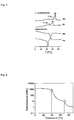
- the resulting colorless film showed a wide melting range between 30 and 55 ° C (DSC, first heating curve, 10 K / min) ( Fig. 4 ).
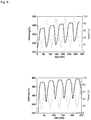
- the dynamic mechanical analysis of the elongation behavior showed a periodic course (film clamp, 3 K / min, 10 to 95 ° C, film clamp, 3 K / min, 10 to 80 ° C) ( Fig. 5 above and below).
- amorphous network P3 (layer 1), which consists of pentaerythritol glycidyl ether carbonate (PGC) and 1,5-diaminopentane (DAP) and the partially crystalline network P2 from Example 1 (layer 2).
- Pentaerythritol glycidyl ether carbonate (PGC, 2.823 g, 13.83 mmol "CO 3 ”) and 1,5-diaminopentane (DAP, 0.706 g, 13.82 mmol “NH 2 ”) were homogenized within one minute at 50 ° C in a beaker and then poured onto a 70 ° C hot Teflon plate. With a squeegee, an approximately 0.7 mm thin film was produced. After a period of ten minutes, the final reaction mixture for the semi-crystalline network P2 was poured next to the film and spread evenly over the first layer with a squeegee and a gap spacing of 1.5 mm. The curing was then carried out in the oven at 100 ° C for a period of four hours.
- the reaction mixture for the partially crystalline network P2 was prepared by mixing the carbonate mixture BC (from Example 1: 1.973 g, 12.92 mmol “CO 3 ”) with the crystallizable polyfunctional amine A (from Example 1: 2.946 g, 12.95 mmol “NH 2 ”) at 90 ° C in a beaker.
- the two-layer system on cooling to room temperature showed a bend which could be reversed by heating over the melting range of the layer with the partially crystalline network P2 (layer 2) ( Fig. 7 ).
- Partially crystalline homopolymers of polyhydroxyurethane on the one hand P4 (3.5 g), which was obtained from PolyTHF amine (Jeffamine® THF-170, Huntsman) and 1,4-butanediol diglycidyl ether carbonate (BDGC), and on the other hand P5 (3.5 g), which from the diamidodicarbonate and 2 DA-DC and 1,12-diaminododecane (DAD) were melted in a twin-screw compounder at 130 ° C under a nitrogen atmosphere and mixed for a period of 5 minutes. From the polymer melt, a film was subsequently produced by injection molding.
- P4 3.5 g
- BDGC 1,4-butanediol diglycidyl ether carbonate
- P5 3.5 g
- DAD 1,12-diaminododecane
- the difunctional cyclic carbonates used are shown below:
- a template was printed ( Fig. 10 ) and placed under a glass plate heated to 80 ° C.
- the black fields were filled with the hydrophobic polyhydroxyurethane composition, and then the white fields with the hydrophilic polyhydroxyurethane composition.
- the compositions ran, resulting in a covalent attachment.
- the second layer was then applied in an analogous manner over the first layer and cured in the oven.
- composition for the hydrophobic polyhydroxyurethane was filled into a syringe and the black fields of the first layer were filled.
- composition for the hydrophilic polyhydroxyurethane was filled into a syringe and the white fields of the first layer were filled in, whereby contacting of the compositions at the interfaces of the squares resulted in a covalent bonding of hydrophilic and hydrophobic layer.
- the first layer was cured for 20 minutes at 80 ° C.
- the second layer was subsequently applied to the first layer in an analogous manner. It was then baked in the oven for 14 hours at 80 ° C and for four hours at 100 ° C.
- the multilayer system thus obtained was detached from the glass plate and, after cooling to room temperature, placed in water. The change in shape was documented with a camera and was reversible by storage in air ( Fig. 11 ).
Landscapes
- Chemical & Material Sciences (AREA)
- Health & Medical Sciences (AREA)
- Chemical Kinetics & Catalysis (AREA)
- Medicinal Chemistry (AREA)
- Polymers & Plastics (AREA)
- Organic Chemistry (AREA)
- Polyurethanes Or Polyureas (AREA)
Applications Claiming Priority (1)
| Application Number | Priority Date | Filing Date | Title |
|---|---|---|---|
| DE102017001393.4A DE102017001393A1 (de) | 2017-02-13 | 2017-02-13 | Teilkristalline isocyanatfreie Polyhydroxyurethane mit thermomechanisch programmier- und schaltbaren Eigenschaften |
Publications (1)
| Publication Number | Publication Date |
|---|---|
| EP3360913A1 true EP3360913A1 (fr) | 2018-08-15 |
Family
ID=61027413
Family Applications (1)
| Application Number | Title | Priority Date | Filing Date |
|---|---|---|---|
| EP18000059.8A Withdrawn EP3360913A1 (fr) | 2017-02-13 | 2018-01-24 | Polyhydroxyuréthanes partiellement cristallins sans isocyanates à propriétés programmables et commutables thermomécaniquement |
Country Status (2)
| Country | Link |
|---|---|
| EP (1) | EP3360913A1 (fr) |
| DE (1) | DE102017001393A1 (fr) |
Cited By (1)
| Publication number | Priority date | Publication date | Assignee | Title |
|---|---|---|---|---|
| CN114573807A (zh) * | 2020-12-01 | 2022-06-03 | 中国科学院理化技术研究所 | 支化聚乙烯亚胺脂肪酸酰胺、其制备、包含其的乳化剂及应用 |
Families Citing this family (1)
| Publication number | Priority date | Publication date | Assignee | Title |
|---|---|---|---|---|
| WO2023183081A1 (fr) * | 2022-03-23 | 2023-09-28 | Rockytech, Ltd. | Polyhydroxyuréthanes et leurs procédés de fabrication et d'utilisation |
Citations (1)
| Publication number | Priority date | Publication date | Assignee | Title |
|---|---|---|---|---|
| DE102006012169A1 (de) * | 2006-03-14 | 2007-09-20 | Gkss-Forschungszentrum Geesthacht Gmbh | Formgedächtnispolymer mit Polyester- und Polyethersegmenten und Verfahren zu seiner Herstellung und Programmierung |
-
2017
- 2017-02-13 DE DE102017001393.4A patent/DE102017001393A1/de not_active Withdrawn
-
2018
- 2018-01-24 EP EP18000059.8A patent/EP3360913A1/fr not_active Withdrawn
Patent Citations (1)
| Publication number | Priority date | Publication date | Assignee | Title |
|---|---|---|---|---|
| DE102006012169A1 (de) * | 2006-03-14 | 2007-09-20 | Gkss-Forschungszentrum Geesthacht Gmbh | Formgedächtnispolymer mit Polyester- und Polyethersegmenten und Verfahren zu seiner Herstellung und Programmierung |
Non-Patent Citations (2)
| Title |
|---|
| IVAN JAVNI ET AL: "Polyurethanes from Soybean Oil, Aromatic, and Cycloaliphatic Diamines by NonIsocyanate Route", JOURNAL OF APPLIED POLYMER SCIENCE, vol. 128, 10 July 2012 (2012-07-10), pages 566 - 571, XP055486058, DOI: 10.1002/app.38215 * |
| STEPHAN WEYAND ET AL: "Structure-property-glass transition relationships in non-isocyanate polyurethanes investigated by dynamic nanoindentation", MATERIALS RESEARCH EXPRESS, vol. 3, no. 7, 25 July 2016 (2016-07-25), pages 1 - 10, XP055460963, DOI: 10.1088/2053-1591/3/7/075019 * |
Cited By (2)
| Publication number | Priority date | Publication date | Assignee | Title |
|---|---|---|---|---|
| CN114573807A (zh) * | 2020-12-01 | 2022-06-03 | 中国科学院理化技术研究所 | 支化聚乙烯亚胺脂肪酸酰胺、其制备、包含其的乳化剂及应用 |
| CN114573807B (zh) * | 2020-12-01 | 2024-05-07 | 中国科学院理化技术研究所 | 支化聚乙烯亚胺脂肪酸酰胺、其制备、包含其的乳化剂及应用 |
Also Published As
| Publication number | Publication date |
|---|---|
| DE102017001393A1 (de) | 2018-08-16 |
Similar Documents
| Publication | Publication Date | Title |
|---|---|---|
| EP1362879B1 (fr) | Résaux interpénétrants | |
| EP3157737B1 (fr) | Utilisation de polyuréthane en poudre thermoplastique | |
| EP1338614B1 (fr) | Procédé de production des elastomères de polyuréthane thermoplastiques, mous, facilement démoulables et à retrait minime | |
| EP1611205B1 (fr) | Melanges a memoire de forme | |
| DE3486281T2 (de) | Polyurethankunststoffe mit Schlagfestigkeit. | |
| EP3129421B1 (fr) | Polyuréthannes thermoplastiques, leur production et leur utilisation | |
| DE10115224C1 (de) | Lichtstabile thermoplastische Polyurethane, Verfahren zu ihrer Herstellung und ihre Verwendung | |
| EP1994071B1 (fr) | Polymere a memoire de forme comprenant des segments polyester et polyether, son procede de fabrication et sa programmation | |
| DE4315173A1 (de) | Reine, insbesondere katalysatorfreie Polyurethane | |
| DE3426875C2 (de) | Verfahren zur Herstellung von Polyurethanen mit überragender Hydrolysebeständigkeit | |
| DE1956456A1 (de) | Verfahren zur Herstellung von kristallinen Polyurethan-Kunststoffprodukten auf Basis von Diisocyanaten und linearen Polyestern | |
| CN107602812A (zh) | 一种可降解聚氨酯生物材料及其制备方法 | |
| EP2726549B1 (fr) | Article fabriqué par moulage par injection | |
| DE69418003T2 (de) | Modifizierte Polyharnstoff-Polyurethansysteme ausgestattet mit verbesserter Verarbeitbarkeit | |
| DE102017001393A1 (de) | Teilkristalline isocyanatfreie Polyhydroxyurethane mit thermomechanisch programmier- und schaltbaren Eigenschaften | |
| DE4428458A1 (de) | Cycloaliphatische thermoplastische Polyurethanelastomere | |
| DE2327116A1 (de) | Flammverzoegerte polyurethan- und polyharnstoffmassen | |
| EP4010390A1 (fr) | Procédé de production de polymères de polyuréthane pouvant être traités thermoplastiquement | |
| DE3643465A1 (de) | Biokompatible polyurethane | |
| DE3885649T2 (de) | Polyamidimid-Elastomer und seine Herstellung. | |
| DE2418075A1 (de) | Thermoplastische polyurethan-elastomere mit verbesserter verarbeitbarkeit | |
| EP0922719B1 (fr) | Procédé de préparation de produits de polyaddition d'isocyanates | |
| WO2005078036A1 (fr) | Composition de colle a base de copolymeres d'oxyde de polypropylene semi-cristallins et duromeres produits a partir de cette composition | |
| DE102019101729B4 (de) | Verfahren zur Herstellung eines Polyurea-Formkörpers oder eines Polyurea-Formkörperteiles und entsprechendes Polyureaformteil | |
| EP1397425B1 (fr) | Melanges de substances pour stabiliser les uv de matieres plastiques et leur production |
Legal Events
| Date | Code | Title | Description |
|---|---|---|---|
| PUAI | Public reference made under article 153(3) epc to a published international application that has entered the european phase |
Free format text: ORIGINAL CODE: 0009012 |
|
| AK | Designated contracting states |
Kind code of ref document: A1 Designated state(s): AL AT BE BG CH CY CZ DE DK EE ES FI FR GB GR HR HU IE IS IT LI LT LU LV MC MK MT NL NO PL PT RO RS SE SI SK SM TR |
|
| AX | Request for extension of the european patent |
Extension state: BA ME |
|
| STAA | Information on the status of an ep patent application or granted ep patent |
Free format text: STATUS: THE APPLICATION IS DEEMED TO BE WITHDRAWN |
|
| 18D | Application deemed to be withdrawn |
Effective date: 20190216 |