EP3363192B1 - Apparatus and method for providing dynamic panorama function - Google Patents
Apparatus and method for providing dynamic panorama function Download PDFInfo
- Publication number
- EP3363192B1 EP3363192B1 EP17753439.3A EP17753439A EP3363192B1 EP 3363192 B1 EP3363192 B1 EP 3363192B1 EP 17753439 A EP17753439 A EP 17753439A EP 3363192 B1 EP3363192 B1 EP 3363192B1
- Authority
- EP
- European Patent Office
- Prior art keywords
- panorama
- electronic device
- image
- data
- images
- Prior art date
- Legal status (The legal status is an assumption and is not a legal conclusion. Google has not performed a legal analysis and makes no representation as to the accuracy of the status listed.)
- Active
Links
Images




Classifications
-
- G—PHYSICS
- G06—COMPUTING OR CALCULATING; COUNTING
- G06T—IMAGE DATA PROCESSING OR GENERATION, IN GENERAL
- G06T7/00—Image analysis
- G06T7/30—Determination of transform parameters for the alignment of images, i.e. image registration
- G06T7/33—Determination of transform parameters for the alignment of images, i.e. image registration using feature-based methods
-
- H—ELECTRICITY
- H04—ELECTRIC COMMUNICATION TECHNIQUE
- H04N—PICTORIAL COMMUNICATION, e.g. TELEVISION
- H04N23/00—Cameras or camera modules comprising electronic image sensors; Control thereof
- H04N23/60—Control of cameras or camera modules
- H04N23/63—Control of cameras or camera modules by using electronic viewfinders
- H04N23/631—Graphical user interfaces [GUI] specially adapted for controlling image capture or setting capture parameters
-
- H—ELECTRICITY
- H04—ELECTRIC COMMUNICATION TECHNIQUE
- H04N—PICTORIAL COMMUNICATION, e.g. TELEVISION
- H04N23/00—Cameras or camera modules comprising electronic image sensors; Control thereof
- H04N23/60—Control of cameras or camera modules
- H04N23/698—Control of cameras or camera modules for achieving an enlarged field of view, e.g. panoramic image capture
-
- H—ELECTRICITY
- H04—ELECTRIC COMMUNICATION TECHNIQUE
- H04N—PICTORIAL COMMUNICATION, e.g. TELEVISION
- H04N5/00—Details of television systems
- H04N5/04—Synchronising
-
- H—ELECTRICITY
- H04—ELECTRIC COMMUNICATION TECHNIQUE
- H04N—PICTORIAL COMMUNICATION, e.g. TELEVISION
- H04N5/00—Details of television systems
- H04N5/222—Studio circuitry; Studio devices; Studio equipment
- H04N5/262—Studio circuits, e.g. for mixing, switching-over, change of character of image, other special effects ; Cameras specially adapted for the electronic generation of special effects
- H04N5/2621—Cameras specially adapted for the electronic generation of special effects during image pickup, e.g. digital cameras, camcorders, video cameras having integrated special effects capability
-
- G—PHYSICS
- G06—COMPUTING OR CALCULATING; COUNTING
- G06T—IMAGE DATA PROCESSING OR GENERATION, IN GENERAL
- G06T2207/00—Indexing scheme for image analysis or image enhancement
- G06T2207/10—Image acquisition modality
- G06T2207/10016—Video; Image sequence
-
- H—ELECTRICITY
- H04—ELECTRIC COMMUNICATION TECHNIQUE
- H04N—PICTORIAL COMMUNICATION, e.g. TELEVISION
- H04N23/00—Cameras or camera modules comprising electronic image sensors; Control thereof
- H04N23/60—Control of cameras or camera modules
- H04N23/68—Control of cameras or camera modules for stable pick-up of the scene, e.g. compensating for camera body vibrations
- H04N23/681—Motion detection
- H04N23/6812—Motion detection based on additional sensors, e.g. acceleration sensors
-
- H—ELECTRICITY
- H04—ELECTRIC COMMUNICATION TECHNIQUE
- H04N—PICTORIAL COMMUNICATION, e.g. TELEVISION
- H04N7/00—Television systems
- H04N7/01—Conversion of standards, e.g. involving analogue television standards or digital television standards processed at pixel level
- H04N7/0127—Conversion of standards, e.g. involving analogue television standards or digital television standards processed at pixel level by changing the field or frame frequency of the incoming video signal, e.g. frame rate converter
Definitions
- the present disclosure relates to technologies for generating and consuming content using images obtained through panorama image capture.
- a panorama image capture function provided from a smartphone or digital camera of the related art may generate one panorama image (still image) using images obtained through panorama image capture.
- CN 105120155 A1 relates to a panorama generation method and apparatus disclosed in particular relates to the field of photography.
- the method comprises: determining the work state information of a shooting device in a shooting video file process; determining whether the work state information accords with a preset condition, and extracting the video fragment corresponding to the work state information if the work state information accords with the preset condition; and generating a panoramic photograph through the video fragment.
- the technical scheme can ensure that video materials according with a panorama mode are generated into panoramic photographs, and provide different visual experiences for users through video files.
- WO 2016/015624 A1 relates to a portable device capable of generating a panoramic photo/video/audio file.
- the portable device has a plurality of sensors with overlapping sensing areas and an input device receiving a trigger signal that triggers the sensors to sense data for generating a panoramic photo/video/audio file.
- a conventional panorama image may be incorrectly matched or one object may be represented as a plurality of objects, thus hindering the quality of images or user experience.
- an aspect of the present disclosure is to provide a method and an electronic device for providing a dynamic panorama function.
- the electronic device may reproduce motion of an object included in panorama image capture by providing a dynamic panorama which may be reproduced as video other than a panorama image (still image) upon panorama image capture.
- the electronic device may synchronize a panorama image (a static panorama) with a panorama video (a dynamic panorama) by using images and analysis information used to generate a panorama image to generate a dynamic panorama.
- the electronic device may provide a dynamic panorama synchronized with audio data obtained upon panorama image capture.
- the electronic device may provide a variety of effects directly or indirectly ascertained through the present disclosure.
- An electronic device may include at least one of a smartphone, a tablet personal computer (PC), and a digital camera supporting a panorama function.
- An electronic device may be one or more combinations of the above-mentioned devices.
- An electronic device according to some various embodiments of the present disclosure may be a flexible device.
- An electronic device according to an embodiment of the present disclosure is not limited to the above-mentioned devices, and may include new electronic devices with the development of new technology.
- the term "user” used herein may refer to a person who uses an electronic device or may refer to a device (e.g., an artificial intelligence electronic device) that uses an electronic device.
- FIG. 1 is a block diagram illustrating a configuration of an electronic device according to an embodiment of the present disclosure.
- an electronic device 100 may include a processor 110.
- the processor 110 may perform a function of processing a variety of calculations and controlling hardware/software components of the electronic device 100.
- the processor 110 may include a panorama image generator 121, a dynamic panorama generator 122, and a last file generator 123.
- some or all of the panorama image generator 121, the dynamic panorama generator 122, and the last file generator 123 may be implemented with a software module.
- a memory 130 may store instructions for implementing the panorama image generator 121 and the last file generator 123 with software.
- the processor 110 may load a first instruction set stored in the memory 130 into a framework to implement the panorama image generator 121.
- the processor 110 may load a second instruction set into the framework to implement the dynamic panorama generator 122.
- the dynamic panorama generator 122 may be implemented with hardware.
- the dynamic panorama generator 122 implemented with hardware may be referred to as a dynamic panorama generation circuit.
- the memory 130 may store instructions for implementing various embodiments, an application, and files.
- the memory 130 may store the above-mentioned first instruction set, the above-mentioned second instruction set, a panorama content file according to an embodiment, and an application associated with the panorama content file.
- the camera 140 obtains a plurality of images. For example, if an image capture button for obtaining a panorama image is selected on a user interface displayed on a display 170 of the electronic device 100 or if a physical key or a physical button for starting to capture an image is pushed by a user, the electronic device 100 may continuously obtain images via the camera 140. The electronic device 100 may obtain a proper number of images for generating a panorama image and a dynamic panorama for each second via the camera 140. For example, the electronic device 100 may obtain 24 images per second or 60 images per second. The electronic device 100 may stop obtaining an image in response to an input for stopping the image capture (e.g., reselection of the image capture button).
- a microphone 150 may obtain audio data generated around the electronic device 100 during image capture in progress. For example, voices of a person or noises around the electronic device 100 may be obtained as audio data. Also, in an embodiment, the microphone 150 may recognize a voice instruction of the user for starting or stopping image capture. For example, the processor 110 may allow the camera 140 to obtain a plurality of images until the voice instruction "stop" is recognized in response to the voice instruction "start” in a state where a user interface for panorama image capture is displayed. For another example, the processor 110 may allow the camera 140 to obtain a plurality of images in response to the voice instruction "start panorama” in a state where the display 170 of the electronic device 100 is turned off or where an application is being executed.
- a motion sensor 160 senses motion of the electronic device 100 during image capture in progress to obtain information about the motion.
- the motion sensor 160 may correspond to, for example, an acceleration sensor or a gyro sensor, or a combination of the acceleration sensor and the gyro sensor.
- panorama image capture may be performed while the user moves the electronic device 100 such as a smartphone in a direction (e.g., to the right) in a state where image capture is started.
- the motion sensor 160 may obtain motion information of the electronic device 100, such as a direction and distance where the electronic device 100 is moved and an up-and-down shake which occurs while the electronic device 100 is moved.
- the processor 110 may stop the panorama image capture.
- the specified distance may be defined in a different way based on a maximum size of an image file which may be processed by the processor 110 or the panorama image generator 121.
- the processor 110 may stop the panorama image capture.
- the up-and-down direction is assumed if the electronic device 100 performs panorama image capture while being moved in a left and right direction. In general, if motion in a second direction perpendicular to a first direction departs from a specified range while the electronic device 100 performs panorama image capture while being moved in the first direction, the processor 100 may stop the panorama image capture.
- the display 170 may display a panorama image according to an embodiment and may reproduce a panorama video according to an embodiment.
- the processor 110 may generate a panorama content file including panorama image data corresponding to the panorama image and dynamic panorama data corresponding to the panorama video and may store the generated panorama content file in the memory 130.
- the display 170 may output normal images or a panorama image in a proper form (e.g., a thumbnail and the like). If the user selects the panorama image, the display 170 may output the panorama image.
- the display 170 may output the panorama image together with an item (e.g., an icon, a menu, and the like) indicating that there is dynamic panorama data corresponding to the panorama image. If the item is selected, the processor 110 may reproduce a panorama video based on the dynamic panorama data on the display 170.
- an item e.g., an icon, a menu, and the like
- a touch sensor 180 may receive a touch input from the user.
- the touch sensor 180 may be integrated with the display 170 to be implemented with, for example, a touch screen panel and the like.
- a touch input may be replaced with a user input by another input means such as a physical key or a physical button.
- FIG. 2 is a drawing illustrating a process of generating panorama image data according to an embodiment of the present disclosure.
- a first image 201 and a second image 202 are sequentially obtained.
- the first image 201 and the second image 202 may have the same resolution (e.g., width W ⁇ height H).
- a width value and a height value of resolution may be changed to each other based on an image capture mode (e.g., a landscape mode/portrait mode) of an electronic device 100 of FIG. 1 sensed by a sensor (e.g., a gyro sensor).
- a sensor e.g., a gyro sensor.
- the first image 201 may have 1600 ⁇ 900 resolution when a camera 140 of FIG. 1 is in the landscape mode
- the first image 201 may have 900 ⁇ 1600 resolution if the camera 140 is in the portrait mode.
- an image is obtained in a state where image capture is performed in the landscape mode.
- an image is captured in the portrait mode, it may be applied to the same embodiment as the various embodiments of FIGS. 2 and 3 .
- the electronic device 100 may shake up and down during panorama image capture.
- the second image 202 may be located at a little lower side than the first image 201. Since a virtual panorama region 200 is set by the first image 201 initially obtained, a region which departs from the panorama region 200 may be excluded from a panorama image.
- an image 212 a region of which is excluded from a lower end of the second image 202, may be used to generate the panorama image.
- an image 211 a region of which is excluded from an upper end of the first image 201, may be used to generate the panorama image in response to the region excluded from the second image 202 to prevent a blank portion from being generated in the panorama image.
- the operation described with reference to FIG. 2 may be performed by a panorama image generator 121 of FIG. 1 .
- the panorama image generator 121 may perform a task of generating panorama image data by using image sequentially obtained by the camera 140 as input images.
- the task of the generating the panorama image data may correspond to a task (e.g., image matching) of adding a previously obtained image to a current image.
- the panorama image generator 121 performs image matching based on the images obtained by the camera 140 and motion information sensed by a motion sensor 160 of FIG. 1 .
- the panorama image generator 121 may extract a feature point of each of the first image 201 and the second image 202 by analyzing pixel values of the first image 201 and the second image 202.
- the panorama image generator 121 may estimate a location of the electronic device 100 based on motion information of the electronic device 100, obtained by the motion sensor 160. If it is determined that the feature point is changed or that the location of the electronic device 100 is changed, the panorama image generator 121 may match the second image 202 to the first image 201 based on the determination. The panorama image generator 121 may repeatedly perform the above-mentioned matching process during panorama image capture in progress. In other words, the panorama image generator 121 continuously matches a currently obtained image to a previously matched image based on image processing and motion information until the panorama image capture is stopped.
- the panorama image generator 121 may provide information for generating dynamic panorama data to a dynamic panorama generator 122.
- the images 211 and 212 and a variety of analysis information used for the image matching may be provided to the dynamic panorama generator 122.
- a process of generating the dynamic panorama data will be given with reference to FIG. 3 .
- FIG. 3 is a drawing illustrating a process of generating dynamic panorama image data according to an embodiment of the present disclosure.
- 1st to 9th images 201 to 209 may be used to generate panorama image data and dynamic panorama image. It is necessary for a larger number of images to generate real panorama image data and/or real dynamic panorama data. However, a description will be given of 9 images for convenience of description with reference to FIG. 3 .
- a first plurality of images is obtained during panorama image capture, and a second plurality of images to be used to generate panorama image data is selected among the first plurality of images.
- a plurality of images may refer to the second plurality of images used to generate panorama image data and dynamic panorama data among the first plurality of images.
- a dynamic panorama generator 122 of FIG. 1 may receive images 221 to 229 used to generate a panorama image or information about the images 221 to 229 from a panorama image generator 121 of FIG. 1 .
- the information about the images 221 to 229 may include the images 221 to 229 used to generate the panorama image data among a plurality of images obtained by a camera 140 of FIG. 1 and information in which each of the used images 221 to 229 is edited (e.g., a region used for image matching, and the like).
- the images 221 to 229 received in the dynamic panorama generator 122 may be continuously updated during panorama image capture in progress (or during image matching in progress in the panorama image generator 121). For example, in a state shown in FIG. 2 , the dynamic panorama generator 122 may receive images 211 and 212. If proceeding with panorama image capture in this state, for example, if proceeding with image matching to the 6th image 206, the dynamic panorama generator 122 may finally update the images 211 and 212 to the images 221 and 22 and may further obtain the images 223 to 226. Although the 7th to 9th images 207, 208, and 209 are obtained in this state, since a height of a panorama image is not changed when the panorama image generator 121 performs image matching, the images 221 to 226 may fail to be updated. Thus, the dynamic panorama generator 122 may additionally obtain only the images 227 to 229 used for image matching in the panorama image generator 121.
- the dynamic panorama generator 122 may generate dynamic panorama data using an image (e.g., the image 221 and the like) used for image matching in the panorama image generator 121. Images may be resized and/or encoded to reduce capacity of a last result (e.g., a panorama content file).
- the dynamic panorama data may correspond to a kind of encoded moving image data.
- the dynamic panorama generator 122 may encode each of images used for image matching into a Motion Picture Experts Group audio layer 4 (MP4) file format and may provide the encoded result data as dynamic panorama data to a last file generator 123 of FIG. 1 .
- MP4 Motion Picture Experts Group audio layer 4
- the dynamic panorama generator 122 may generate dynamic panorama data using an input image (e.g., the first image 201 and the like) used for image matching in the panorama image generator 121 and analysis information used for the image matching.
- the analysis information may be a kind of metadata, and may be stored in a memory 130 of FIG. 1 or may be stored in a partial region of a panorama content file, and may be used when a panorama video is reproduced.
- the panorama video may refer to a moving image reproduced based on dynamic panorama data.
- the dynamic panorama generator 122 uses information (e.g., an input image, image analysis information, and motion information of an electronic device 100 of FIG. 1 ) used by the panorama image generator 121, an amount of calculation or a calculation processing time may be reduced, compared to the case where each of the panorama image generator 121 and the dynamic panorama generator 122 independently generate image/video data. Since the dynamic panorama generator 122 uses result data calculated by the panorama image generator 121, the panorama image generator 121 may referred to as a first result image generator, and the dynamic panorama generator 122 may be referred to as a second result image generator. Similarly, the last file generator 123 may be referred to as a third result image generator.
- the dynamic panorama generator 122 may generate the dynamic panorama data using the image using the images 222 to 229 used for image matching.
- the dynamic panorama generator 122 may generate dynamic panorama data temporally and spatially synchronized with panorama image data based on the images 221 to 229 and analysis information used to generate the panorama image data.
- the dynamic panorama data may include frames for reproducing a moving image.
- the dynamic panorama data may include frames 301 to 309. Each frame (e.g., the frame 301 or the like) may the same as each image (e.g., the image 221 or the like) or may be image data properly encoded to be suitable for reproducing a video.
- the dynamic panorama generator 122 may generate dynamic panorama data using the original images 201 to 209 (or resized original images) used for image matching.
- the dynamic panorama generator 122 may encode original images obtained upon panorama image capture into a moving image and may generate analysis information used for image matching, motion information of the electronic device 100, time information, and the like as metadata.
- panorama image data e.g., a single panorama image in which matching is completed
- dynamic panorama data e.g., encoded moving image data
- metadata may be included in a panorama content file.
- the metadata may be stored in a separate file linked to the panorama content file.
- FIG. 4 is a drawing illustrating a process of synchronizing panorama image data with dynamic panorama data according to an embodiment of the present disclosure.
- audio data may correspond to audio data obtained by a microphone 150 of FIG. 1 during panorama image capture.
- An input image may correspond to images sequentially obtained by a camera 140 of FIG. 1 during panorama image capture.
- the images obtained by the camera 140 may be provided as input images to a panorama image generator 121 of FIG. 1 .
- the panorama image generator 121 may use some of the provided images to generate panorama image data. For example, if it is determined that the electronic device 100 is moved at a level or more or that an object captured by the camera 160 is changed at a level or more, based on motion of an electronic device 100 of FIG. 1 sensed by a motion sensor 160 of FIG.
- the panorama image generator 121 may select a corresponding input image as an image for generating the panorama image data.
- an embodiment is exemplified as 10 images per second are obtained.
- the number of images obtained per second may be changed by performance of a camera 140 of FIG. 1 , a setting of the electronic device 100, user settings, or the like.
- the electronic device 100 may be moved to be relatively slower than a movement speed optimized for generating a panorama image in a first time interval 410 in the entire panorama image capture time. Therefore, the panorama image generator 121 may use three of six images obtained in the first time interval 410 to generate panorama image data. In other words, the panorama image generator 121 may fail to use a second image obtained at a time when it is determined that a motion (e.g., a movement distance) of the electronic device 100 is insufficient to perform image matching and may use a third image obtained when sufficient motion occurs to perform image matching, with respect to a first image obtained in the first time interval 410.
- a motion e.g., a movement distance
- the electronic device 100 may not be actually moved or may be very slowly moved.
- the panorama image generator 121 may use a first image among 4 images obtained in the second time interval 420 to generate panorama image data and may fail to use the other 3 images to generate the image panorama image data.
- the electronic device 100 may be moved at a proper speed.
- the panorama image generator 121 may use all of 4 images obtained as input images to generate panorama image data.
- the panorama image generator 121 may provide information about the input images used for the image matching and analysis information used for the image matching to a dynamic panorama generator 122 of FIG. 1 . For example, if 100 images obtained by a camera 140 of FIG.
- the panorama image generator 121 may provide information about the 27 images and used analyzed information (e.g., feature point information of each of the 27 images, information about a time when each of the 27 images is obtained, information in which each of the 27 images is cropped, motion information of the electronic device 100, and the like) to the dynamic panorama generator 122.
- the panorama image generator 121 may perform 26 image matching processes (a series of tasks of additionally stitching 26 images onto a first image) and may provide image information and analysis information updated for each image matching process to the dynamic panorama image generator 122.
- panorama image generator 121 provides an image edited to generate panorama image data (e.g., an image, part of an upper or lower end of which is cropped) to the dynamic panorama generator 122, editing information may fail to be provided to the dynamic panorama generator 122.
- image data e.g., an image, part of an upper or lower end of which is cropped
- a dynamic panorama rendering period may correspond to a period of rendering images (frames) included in dynamic panorama data when the dynamic panorama data generated by the dynamic panorama generator 122 is reproduced.
- the dynamic panorama data may be rendered to be reproduced based on an image capture time upon panorama image capture and motion of the electronic device 100 when reproduced by a processor 110 of FIG. 1 .
- the dynamic panorama data may be rendered at a different frame rate for each time interval, that is, at a variable frame rate.
- the dynamic panorama data may be rendered at 4 frames per second (4 FPS) in the first time interval 410.
- the dynamic panorama data may be rendered at 2 frames per second (2 FPS) in the second time interval 420.
- the dynamic panorama data may be rendered at 8 frames per second (8 FPS) in the third time interval 430.
- a panorama video is reproduced by the processor 110, a playback speed may be the same at one time speed in the entire time interval.
- a user may feel as if the panorama video is reproduced at 0.5 times speed in the first time interval.
- the user may feel as if the panorama video is reproduced at 0.25 times speed in the second time interval.
- the numeral values of the frame rate described with reference to FIG. 4 are exemplified for convenience of description, and may be modified in various manners by those skilled in the art.
- dynamic panorama data may be rendered at a constant frame rate for each time interval, but may be reproduced in a different way for each time interval by the processor 110.
- the processor 110 may refer to analysis information (e.g., information about a time when an image is obtained) when a panorama video is reproduced.
- a panorama video generated by rendering a dynamic panorama may be reproduced to be slower two times than a reference speed during the first time interval 410 (10 frames per second may be reproduced in an example of FIG. 4 ).
- the panorama video may be actually stopped or may be very slowly reproduced like a slow motion in the second time interval 420.
- the panorama video may be reproduced at the reference speed in the third time interval 430.
- a panorama video may be reproduced with the same or similar feeling to an image displayed on a display 170 of the electronic device 100 upon real panorama image capture. Also, as a time when a panorama video is reproduced and a time when audio data obtained via a microphone 150 of FIG. 1 is reproduced are synchronized with each other one to one, since an audio is undistorted when the panorama video is reproduced, video and audio upon image capture may be reproduced.
- the rendering/playback of the panorama video in the above-mentioned manner may be referred to as rendering/playback about audio in the present disclosure.
- dynamic panorama data may be rendered at a constant frame rate, and a panorama video may be reproduced at a constant speed.
- images used to generate the dynamic panorama data are images, in which motion of a constant level occurs to a previous image, used for image matching of the panorama image data, a change amount of an image displayed on the display 170 of the electronic device 100 may be a constant amount.
- the electronic device 100 may show the entire panorama image at a constant speed from left to right or from right to left.
- the rendering/playback of the panorama video in the above-mentioned manner may be referred to as rendering/playback about video in the present disclosure.
- a playback speed of audio data may be changed for each time interval.
- audio data generated in the second time interval 420 may have temporally the same length as audio data obtained in the third time interval 430.
- a playback time of a panorama video corresponding to the second time interval 420 may be only 1/3 of a playback time of a panorama video corresponding to the third time interval 430.
- audio data of the second time interval 420 may be reproduced at three times speed.
- the processor 110 may fail to reproduce audio data not to hinder user experience.
- the processor 110 may classify audio data into a voice interval and a silence interval, may reproduce a panorama video about audio at the voice interval (i.e., change a playback speed), may reproduce the panorama video about video at the silence interval.
- the processor 110 may reproduce audio data corresponding to a moved object. For example, if capturing a play or musical performance in which a user A, a user B, and a user B appear, using a panorama function, the processor 110 may recognize a direction of a speech which occurs from each of the users A to C. For example, when the user A is displayed on the display 170 of the electronic device 100 during panorama image capture, if the user A and the user B alternately speak their lines, the electronic device 100 may distinguish audio data collected from a direction where the user A is located from audio data collected from a direction where the user B is located.
- the processor 110 may map an audio data interval to an image capture direction based on the image capture direction of the electronic device 100, determined using a phase difference between audio waveforms collected from the plurality of microphones and various sensors (e.g., an acceleration sensor, a geomagnetic sensor, a gyro sensor, and the like) of the electronic device 100.
- various sensors e.g., an acceleration sensor, a geomagnetic sensor, a gyro sensor, and the like
- the processor 110 may reproduce audio data corresponding to the corresponding object (i.e., the corresponding direction). If it is started to show an object (i.e., the user B) corresponding to another direction, the processor 110 may reproduce audio data corresponding to a direction of the user B.
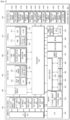
- FIG. 5 is a flowchart illustrating the entire process of generating a panorama content file according to an embodiment of the present disclosure.
- an electronic device 100 of FIG. 1 obtains a plurality of images via a camera 140 of FIG. 1 during panorama image capture in progress.
- the plurality of images may correspond to a first plurality of images.
- the electronic device 100 obtains motion information of the electronic device 100 via a motion sensor 100 of FIG. 1 while a plurality of images are obtained.
- the electronic device 100 may further obtain audio data.
- the plurality of obtained images, the obtained motion information, and the obtained audio data may be matched to each other relative to a time when each of the plurality of images, the motion information, and the audio data is obtained.
- the electronic device 100 generates panorama image data based on the plurality of obtained images and the obtained motion information.
- the electronic device 100 e.g., a panorama image generator 121 of FIG. 1
- the electronic device 100 In operation 505, the electronic device 100 generates dynamic panorama data based on the data (e.g., the second plurality of images) and the analysis information used in operation 503.
- the electronic device 100 generates a panorama content file including the panorama image data and the dynamic panorama data and stores the generated panorama content file in a storage space (e.g., a memory 130) of the electronic device 100.
- the analysis information may be metadata and may be stored to be independent of the panorama content file. If the metadata is stored to be independent of the panorama content file, the electronic device 100 may refer to metadata for synchronization when rendering a panorama video using the dynamic panorama data.
- an embodiment of storing the metadata to be independent of the panorama content file may be replaced with an embodiment of not storing the metadata to be independent of the panorama content file.
- a description will be given of the embodiment of not storing the metadata to be independent of the panorama content file to exclude unnecessary duplication of the description.
- FIG. 6 is a flowchart illustrating a detailed process of generating a panorama content file according to an embodiment of the present disclosure.
- a panorama image generator 121 of FIG. 1 may receive data for generating panorama image data. For example, a plurality of images obtained by a camera 140 of FIG. 1 , audio data obtained by a microphone 150 of FIG. 1 , motion information of the electronic device 100 obtained by a motion sensor 160 of FIG. 1 , time information associated with each of the plurality of images, the audio data and the motion information, and the like may be provided as input data to the panorama image generator 121.
- the panorama image generator 121 may analyze the input image and the motion information of the electronic device 100. In operation 605, the panorama image generator 121 may determine whether to match a current input image to panorama image data previously generated by image matching, based on the analyzed result. For example, if it is determined that motion of the electronic device 100 meets a specified condition based on the analyzed result, the panorama image generator 121 may determine that image matching will be performed.
- the panorama image generator 121 may update the panorama image data at operation 607. For example, referring to FIG. 3 , while matching a 3rd image 203 to old panorama image data generated after a 1st image 201 and a 2nd image 202 are matched to each other, the panorama image generator 121 may crop part of an upper end of the 1st image 201 and part of an upper end of the 2nd image 202 relative to the 3rd image 203.
- the panorama image generator 121 may provide the updated information to a dynamic panorama generator 122 of FIG. 1 .
- the dynamic panorama generator 122 may update the old dynamic panorama data at operation 609 based on the newly provided information.
- the above-mentioned image matching process may be repeatedly performed until the panorama image capture is ended. For example, in operation 611, if it is determined that the image capture is ended, operations 503, 505, and 507 of FIG. 5 may be performed.
- the panorama image generator 121 may finally generate panorama image data.
- the dynamic panorama generator 122 may generate dynamic panorama data based on the information finally provided from the panorama image generator 121.
- a last result generator 123 of FIG. 1 may generate a panorama content file based on the panorama image data and the dynamic panorama data.
- the panorama content file may have a format (e.g., a joint photographic coding experts group (JPEG), a portable network graphics (PNG), and the like) of an image file, but may additionally include data (e.g., MP4 data) corresponding to a moving image file in its additional data region.
- the last result generator 123 may generate an image file in which information (e.g., a marker) indicating that additional data is present other than image data is recorded in a header, a footer, or a tail portion of the image file. This information may include information indicating whether additional data (i.e., a variety of additional (analysis) information used to generate dynamic panorama data and panorama image data, and the like) is present, information about a start location, and information about a stop location.
- additional data i.e., a variety of additional (analysis) information used to generate dynamic panorama data and panorama image data, and the like
- the panorama image generator 121, the dynamic panorama generator 122, and the last result generator 123 may be implemented with a software module.
- an operation performed by the software module may be performed by the processor 110.
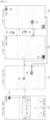
- FIG. 7 is a drawing illustrating a screen of executing a panorama content file according to an embodiment of the present disclosure.
- a panorama content file may be displayed on a first screen 710 based on a panorama image.
- a processor 110 of FIG. 1 may display a panorama image based on panorama image data in the panorama content file on a display 170 of FIG. 1 .
- the processor 110 may display control menus 711 (e.g., a share menu, an edit menu, a delete menu, and the like) and an item 701 corresponding to dynamic panorama data in the panorama content file other than the panorama image.
- the processor 110 may reproduce the dynamic panorama data on a second screen 720.
- the processor 110 may render a panorama video based on the dynamic panorama data and may reproduce the rendered panorama video on the display 170.
- the processor 110 may render the panorama video in a first time order.
- the first time order may correspond to an order of a time when each of images included in the dynamic panorama data is obtained.
- the processor 110 may render a panorama video in a reverse order of the first time order (i.e., a second time order). For example, if a user performs panorama image capture while moving an electronic device 100 of FIG.
- the panorama video rendered in the first time order may have an effect shown while a panorama image is moved in a left direction. If a panorama video is rendered in the second time order, the panorama video may have an effect shown while a panorama image is moved in the right direction.
- dynamic panorama data may correspond to encoded video data.
- the processor 110 (or a codec corresponding to video data) may decode video data. If the video data is synchronized with a panorama image, for example, if video data is encoded based on images encoded to generate a panorama image, the processor 110 may render decoded frames on the display 170. If video data is encoded based on original images used to generate a panorama image, the processor 110 may edit decoded frames based on metadata (e.g., image analysis information, motion information, and time information) and may render the edited frames on a screen.
- metadata e.g., image analysis information, motion information, and time information
- a panorama video is generated based on a plurality of images used to generate a panorama image
- a moved object e.g., a person, an animal, a car, and the like
- motion of the object may be reproduced without distortion.
- a moved object is distorted and represented on a panorama image
- the user may execute a panorama video to check motion of the object.
- a panorama image and a panorama video displayed/reproduced based on a panorama content file has the same virtual field of view (FOV).
- FOV virtual field of view
- a virtual FOV shown by a panorama video may also have the first height and the first width.
- the panorama video may be generated to output the virtual FOV corresponding to the first height and the first width at intervals of an FOV corresponding to the same first height and a second width which is narrower than the first width during a time when reproduced by the processor 110.
- the FOV of the panorama image since the FOV of the panorama image has a higher value than that of a camera 140 of the electronic device 100, the FOV of the panorama image may be a virtual FOV.
- an image (or a frame) displayed on the display 170 when a panorama video is reproduced may the same as the FOV of the camera 140 or may correspond to a real FOV having a lower range than that of the camera 140 due to encoding.
- the reproduction of a panorama video may be controlled in various manners. For example, while a panorama video is reproduced on the second screen 720, if a touch input 702 on any region occurs, video playback may pause on a third screen 730. If a touch input on a playback icon 703 occurs on the third screen 730 or if a touch input on any region occurs again, the reproduction of the panorama video may be resumed. If a touch input 708 on a save video icon occurs, the panorama video may be saved to memory.
- a panorama video rendered in a time order may be reproduced on the second screen 720.
- the processor 110 may render the panorama video in a reverse order, that is, a reverse order of a time.
- the panorama video may be reproduced on a fourth screen 740 like an opposite direction, that is, as if the camera 140 is moved from right to left. If a drag input 705 of the first direction occurs, the processor 110 may pause the video as in the third screen 730.
- a rendering order may be changed by tilting the electronic device 100 in a specified direction while a panorama video is reproduced. For example, if a motion sensor 160 of FIG. 1 senses motion 706 where the electronic device 100 rotates clockwise at an angle or more on a central axis of a vertical direction, the processor 110 may render a panorama video in a first order (e.g., a time order). If the motion sensor 160 senses motion 707 where the electronic device 100 rotates counterclockwise, the processor 110 may render the panorama video in a second order opposite to the first order.
- a first order e.g., a time order
- an event of changing an order of rendering a panorama video may be defined in various manners. For example, if a last frame of a panorama video rendered in the first order is reproduced, the processor 110 may reproduce a panorama video rendered in the second order on the display 170. In this case, the user may have experience as if he or she appreciates a panorama image in one direction (e.g., from left to right) and then appreciates the panorama image in an opposite direction.
- FIG. 8 illustrates an electronic device in a network environment according to an embodiment of the present disclosure.
- the electronic device 801 may include a bus 810, a processor 820, a memory 830, an input/output interface 850, a display 860, and a communication interface 870.
- a bus 810 may be used to connect to the electronic device 801.
- the bus 810 may include a circuit for connecting the above-mentioned elements 810 to 870 to each other and transferring communications (e.g., control messages and/or data) among the above-mentioned elements.
- the processor 820 may include at least one of a CPU, an AP, or a communication processor (CP).
- the processor 820 may perform data processing or an operation related to communication and/or control of at least one of the other elements of the electronic device 801.
- the memory 830 may include a volatile memory and/or a nonvolatile memory.
- the memory 830 may store instructions or data related to at least one of the other elements of the electronic device 801.
- the memory 830 may store software and/or a program 840.
- the program 840 may include, for example, a kernel 841, a middleware 843, an application programming interface (API) 845, and/or an application program (or an application) 847. At least a portion of the kernel 841, the middleware 843, or the API 845 may be referred to as an operating system (OS).
- OS operating system
- the kernel 841 may control or manage system resources (e.g., the bus 810, the processor 820, the memory 830, or the like) used to perform operations or functions of other programs (e.g., the middleware 843, the API 845, or the application program 847). Furthermore, the kernel 841 may provide an interface for allowing the middleware 843, the API 845, or the application program 847 to access individual elements of the electronic device 801 in order to control or manage the system resources.
- system resources e.g., the bus 810, the processor 820, the memory 830, or the like
- other programs e.g., the middleware 843, the API 845, or the application program 847.
- the kernel 841 may provide an interface for allowing the middleware 843, the API 845, or the application program 847 to access individual elements of the electronic device 801 in order to control or manage the system resources.
- the middleware 843 may serve as an intermediary so that the API 845 or the application program 847 communicates and exchanges data with the kernel 841.
- the middleware 843 may handle one or more task requests received from the application program 847 according to a priority order. For example, the middleware 843 may assign at least one application program 847 a priority for using the system resources (e.g., the bus 810, the processor 820, the memory 830, or the like) of the electronic device 801. For example, the middleware 843 may handle the one or more task requests according to the priority assigned to the at least one application, thereby performing scheduling or load balancing with respect to the one or more task requests.
- system resources e.g., the bus 810, the processor 820, the memory 830, or the like
- the API 845 which is an interface for allowing the application 847 to control a function provided by the kernel 841 or the middleware 843, may include, for example, at least one interface or function (e.g., instructions) for file control, window control, image processing, character control, or the like.
- the input/output interface 850 may serve to transfer an instruction or data input from a user or another external device to (an)other element(s) of the electronic device 801. Furthermore, the input/output interface 850 may output instructions or data received from (an)other element(s) of the electronic device 801 to the user or another external device.
- the display 860 may include, for example, a liquid crystal display (LCD), a light-emitting diode (LED) display, an organic LED (OLED) display, a microelectromechanical systems (MEMS) display, or an electronic paper display.
- the display 860 may present various content (e.g., a text, an image, a video, an icon, a symbol, or the like) to the user.
- the display 860 may include a touch screen, and may receive a touch, gesture, proximity or hovering input from an electronic pen or a part of a body of the user.
- the communication interface 870 may set communications between the electronic device 801 and an external device (e.g., a first external electronic device 802, a second external electronic device 804, or a server 806).
- the communication interface 870 may be connected to a network 862 via wireless communications or wired communications so as to communicate with the external device (e.g., the second external electronic device 804 or the server 806).
- the wireless communications may employ at least one of cellular communication protocols such as long-term evolution (LTE), LTE-advance (LTE-A), code division multiple access (CDMA), wideband CDMA (WCDMA), universal mobile telecommunications system (UMTS), wireless broadband (Wi-Bro), or global system for mobile communications (GSM).
- LTE long-term evolution
- LTE-A LTE-advance
- CDMA code division multiple access
- WCDMA wideband CDMA
- UMTS universal mobile telecommunications system
- Wi-Bro wireless broadband
- GSM global system for mobile communications
- the wireless communications may include, for example, short-range communications 864.
- the short-range communications may include at least one of wireless fidelity (Wi-Fi), Bluetooth, near field communication (NFC), magnetic secure transmission (MST), or global navigation satellite system (GNSS).
- Wi-Fi wireless fidelity
- NFC near field communication
- MST magnetic secure transmission
- GNSS global navigation satellite system
- the MST may generate a pulse by using electro-magnetic signals according to transmission data, and the pulse may cause magnetic signals.
- the electronic device 801 may transmit the magnetic signals to a point of sales (POS).
- the POS may detect the magnetic signals using a MST reader and obtain the transmission data by converting the magnetic signals to electronic signals.
- the GNSS may include, for example, at least one of global positioning system (GPS), global navigation satellite system (GLONASS), BeiDou navigation satellite system (BeiDou), or Galileo, the European global satellite-based navigation system according to a use area or a bandwidth.
- GPS global positioning system
- GLONASS global navigation satellite system
- BeiDou BeiDou navigation satellite system
- Galileo the European global satellite-based navigation system according to a use area or a bandwidth.
- the wired communications may include at least one of universal serial bus (USB), high definition multimedia interface (HDMI), recommended standard 232 (RS-232), plain old telephone service (POTS), or the like.
- the network 862 may include at least one of telecommunications networks, for example, a computer network (e.g., local area network (LAN) or wide area network (WAN)), the Internet, or a telephone network.
- the types of the first external electronic device 802 and the second external electronic device 804 may be the same as or different from the type of the electronic device 801.
- the server 806 may include a group of one or more servers. A portion or all of operations performed in the electronic device 801 may be performed in one or more other electronic devices (e.g., the first electronic device 802, the second external electronic device 804, or the server 806).
- the electronic device 801 may request at least a portion of functions related to the function or service from another device (e.g., the first electronic device 802, the second external electronic device 804, or the server 806) instead of or in addition to performing the function or service for itself.
- the other electronic device may perform the requested function or additional function, and may transfer a result of the performance to the electronic device 801.
- the electronic device 801 may use a received result itself or additionally process the received result to provide the requested function or service.
- a cloud computing technology e.g., a distributed computing technology, or a client-server computing technology may be used.
- FIG. 9 is a block diagram illustrating a configuration of an electronic device according to an embodiment of the present disclosure.
- the electronic device 901 may include, for example, a part or the entirety of the UE 800 illustrated in FIG. 8 .
- the electronic device 901 may include at least one processor (e.g., an AP) 910, a communication module 920, a subscriber identification module (SIM) 929, a memory 930, a sensor module 940, an input device 950, a display module 960, an interface 970, an audio module 980, a camera module 991, a power management module 995, a battery 996, an indicator 997, and a motor 998.
- processor e.g., an AP
- SIM subscriber identification module
- the processor 910 may execute, or run, an OS or an application program so as to control a plurality of hardware or software elements connected to the processor 910, process various data, and perform operations.
- the processor 910 may be implemented with, for example, a system on chip (SoC).
- SoC system on chip
- the processor 910 may further include a graphics processing unit (GPU) and/or an image signal processor (ISP).
- the processor 910 may include at least a portion (e.g., a cellular module 921) of the elements illustrated in FIG. 9 .
- the processor 910 may load, on a volatile memory, an instruction or data received from at least one of the other elements (e.g., a nonvolatile memory) to process the instruction or data, and may store various data in a nonvolatile memory.
- the communication module 920 may be configured the same as or similar to that of the communication circuit 820 of FIG. 8 .
- the communication module 920 may include, for example, a cellular module 921 (e.g., a modem), a Wi-Fi module 922, a Bluetooth (BT) module 923, a GNSS module 924 (e.g., a GPS module, a GLONASS module, a BeiDou navigation satellite system module, or a Galileo global navigation satellite system module), a NFC module 925, a MST module 926, and a radio frequency (RF) module 927.
- a cellular module 921 e.g., a modem
- BT Bluetooth
- GNSS module 924 e.g., a GPS module, a GLONASS module, a BeiDou navigation satellite system module, or a Galileo global navigation satellite system module
- NFC module 925 e.g., a GPS module, a GLONASS module, a
- the cellular module 921 may provide, for example, a voice call service, a video call service, a text message service, or an Internet service through a communication network.
- the cellular module 921 may identify and authenticate the electronic device 901 in the communication network using the SIM 929 (e.g., a SIM card).
- the cellular module 921 may perform at least a part of the functions that may be provided by the processor 910.
- the cellular module 921 may include a CP.
- Each of the Wi-Fi module 922, the Bluetooth module 923, the GNSS module 924, the NFC module 925, and the MST module 926 may include, for example, a processor for processing data transmitted/received through the modules.
- at least a part (e.g., two or more) of the cellular module 921, the Wi-Fi module 922, the Bluetooth module 923, the GNSS module 924, the NFC module 925, and the MST module 926 may be included in a single integrated circuit (IC) or IC package.
- the RF module 927 may transmit/receive, for example, communication signals (e.g., RF signals).
- the RF module 927 may include, for example, a transceiver, a power amplifier module (PAM), a frequency filter, a low noise amplifier (LNA), an antenna, or the like.
- PAM power amplifier module
- LNA low noise amplifier
- at least one of the cellular module 921, the Wi-Fi module 922, the Bluetooth module 923, the GNSS module 924, the NFC module 925, or the MST module 926 may transmit/receive RF signals through a separate RF module.
- the SIM 929 may include, for example, an embedded SIM and/or a card containing the SIM, and may include unique identification information (e.g., an integrated circuit card identifier (ICCID)) or subscriber information (e.g., an international mobile subscriber identity (IMSI)).
- ICCID integrated circuit card identifier
- IMSI international mobile subscriber identity
- the memory 930 may include, for example, an internal memory 932 or an external memory 934.
- the internal memory 932 may include at least one of a volatile memory (e.g., a dynamic random access memory (DRAM), a static random access memory (SRAM), a synchronous DRAM (SDRAM), or the like), a nonvolatile memory (e.g., a one-time programmable read only memory (OTPROM), a programmable ROM (PROM), an erasable and programmable ROM (EPROM), an electrically erasable and programmable ROM (EEPROM), a mask ROM, a flash ROM, a flash memory (e.g., a NAND flash memory, a NOR flash memory, or the like)), a hard drive, or a solid state drive (SSD).
- a volatile memory e.g., a dynamic random access memory (DRAM), a static random access memory (SRAM), a synchronous DRAM (SDRAM), or the like
- the external memory 934 may include a flash drive such as a compact flash (CF) drive, a secure digital (SD) drive, a micro-SD drive, a mini-SD drive, an extreme digital (xD) drive, a multi media card (MMC), a memory stick, or the like.
- the external memory 934 may be operatively and/or physically connected to the electronic device 901 through various interfaces.
- a security module 936 which is a module including a storage space that is more secure (e.g. has a higher security level) than the memory 930, may be a circuit for providing secure data storage and protected execution circumstances.
- the security module 936 may be implemented with an additional circuit and may include an additional processor.
- the security module 936 may be present in an attachable smart chip or SD card, or may include an embedded secure element (eSE), which is installed in a fixed chip. Additionally, the security module 936 may be driven in another OS which is different from the OS of the electronic device 901. For example, the security module 936 may operate based on a java card open platform (JCOP) OS.
- JCOP java card open platform
- the sensor module 940 may, for example, measure a physical quantity or detect an operation state of the electronic device 901 so as to convert measured or detected information into an electrical signal.
- the sensor module 940 may include, for example, at least one of a gesture sensor 940A, a gyro sensor 940B, a barometric pressure sensor 940C, a magnetic sensor 940D, an acceleration sensor 940E, a grip sensor 940F, a proximity sensor 940G, a color sensor 940H (e.g., a red/green/blue (RGB) sensor), a biometric sensor 940I, a temperature/humidity sensor 940J, an illumination sensor 940K, or an ultraviolet (UV) light sensor 940M.
- a gesture sensor 940A e.g., a gyro sensor 940B, a barometric pressure sensor 940C, a magnetic sensor 940D, an acceleration sensor 940E, a grip sensor 940F, a proximity sensor 940G
- the sensor module 940 may include, for example, an olfactory sensor (e.g., an electronic nose (E-nose) sensor), an electromyography (EMG) sensor, an electroencephalogram (EEG) sensor, an electrocardiogram (ECG) sensor, an infrared (IR) sensor, an iris recognition sensor, and/or a fingerprint sensor.
- the sensor module 940 may further include a control circuit for controlling at least one sensor included therein.
- the electronic device 901 may further include a processor configured to control the sensor module 940 as a part of the processor 910 or separately, so that the sensor module 940 is controlled while the processor 910 is in a reduced power, or sleep, state.
- the input device 950 may include, for example, a touch panel 952, a (digital) pen sensor 954, a key 956, or an ultrasonic input device 958.
- the touch panel 952 may employ at least one of a capacitive method, a resistive method, an infrared method, and an ultraviolet light sensing method.
- the touch panel 952 may further include a control circuit.
- the touch panel 952 may further include a tactile layer so as to provide a haptic feedback to a user.
- the (digital) pen sensor 954 may include, for example, a sheet for recognition which is a part of a touch panel or is separate.
- the key 956 may include, for example, a physical button, an optical button, or a keypad.
- the ultrasonic input device 958 may sense ultrasonic waves generated by an input tool through a microphone 988 so as to identify data corresponding to the ultrasonic waves sensed.
- the display module 960 may include a panel 962, a hologram device 964, or a projector 966.
- the panel 962 may be configured the same as or similar to that of the display 870 of FIG. 8 .
- the panel 962 may be, for example, flexible, transparent, or wearable.
- the panel 962 and the touch panel 952 may be integrated into a single module.
- the hologram device 964 may display a stereoscopic image in a space using a light interference phenomenon.
- the projector 966 may project light onto a screen so as to display an image.
- the screen may be disposed internally or externally to the electronic device 901.
- the display module 960 may further include a control circuit for controlling the panel 962, the hologram device 964, or the projector 966.
- the interface 970 may include, for example, an HDMI 972, a USB 974, an optical interface 976, or a D-subminiature (D-sub) connector 978.
- the interface 970 may be included in the communication circuit 820 of FIG. 8 .
- the interface 970 may include, for example, a mobile high-definition link (MHL) interface, an SD/MMC interface, or an Infrared Data Association (IrDA) interface.
- MHL mobile high-definition link
- SD/MMC interface Secure Digital MultimediaCard Data Association
- IrDA Infrared Data Association
- the audio module 980 may convert, for example, a sound into an electrical signal or vice versa.
- the audio module 980 may process sound information input or output through a speaker 982, a receiver 984, an earphone 986, or the microphone 988.
- the camera module 991 is, for example, a device for taking a still image or a video.
- the camera module 991 may include at least one image sensor (e.g., a front sensor or a rear sensor), a lens, an ISP, or a flash (e.g., a LED or a xenon lamp).
- the power management module 995 may manage power of the electronic device 901.
- the power management module 995 may include a power management integrated circuit (PMIC), a charger IC, a battery, or a battery gauge.
- the PMIC may employ a wired and/or a wireless charging method.
- a wireless charging method may include, for example, a magnetic resonance method, a magnetic induction method, an electromagnetic method, or the like.
- An additional circuit for wireless charging, such as a coil loop, a resonant circuit, a rectifier, or the like, may be further included.
- the battery gauge may measure, for example, a remaining capacity of the battery 996 and a voltage, current, or temperature thereof while the battery is charged.
- the battery 996 may include, for example, a rechargeable battery and/or a solar battery.
- the indicator 997 may display a certain state of the electronic device 901 or a part thereof (e.g., the processor 910), such as a booting state, a message state, a charging state, or the like.
- the motor 998 may convert an electrical signal into a mechanical vibration, and may generate a vibration or a haptic effect.
- a processing device e.g., a GPU
- the processing device for supporting mobile TV may process media data according to the standards of digital multimedia broadcasting (DMB), digital video broadcasting (DVB), MediaFLO TM , or the like.
- an electronic device may include at least one of the elements described herein, and some elements may be omitted or other additional elements may be added. Furthermore, some of the elements of the electronic device may be combined with each other so as to form one entity, so that the functions of the elements may be performed in the same manner as before the combination.
- FIG. 10 is a block diagram illustrating a program module according to an embodiment of the present disclosure.
- a program module 1010 may include an OS for controlling a resource related to an electronic device (e.g., the electronic device 801) and/or various applications (e.g., the application program 847) running on the OS.
- the OS may be, for example, Android, iOS, Windows, Symbian, Tizen, or the like.
- the program module 1010 may include a kernel 1020, a middleware 1030, an API 1060, and/or an application 1070. At least a part of the program module 1010 may be preloaded on an electronic device or may be downloaded from an external electronic device (e.g., the first electronic device 802, the second external electronic device 804, or the server 806).
- an external electronic device e.g., the first electronic device 802, the second external electronic device 804, or the server 806
- the kernel 1020 may include, for example, a system resource manager 1021 or a device driver 1023.
- the system resource manager 1021 may perform control, allocation, or retrieval of a system resource.
- the system resource manager 1021 may include a process management unit, a memory management unit, a file system management unit, or the like.
- the device driver 1023 may include, for example, a display driver, a camera driver, a Bluetooth driver, a shared memory driver, a USB driver, a keypad driver, a Wi-Fi driver, an audio driver, or an inter-process communication (IPC) driver.
- IPC inter-process communication
- the middleware 1030 may provide a function that the applications 1070 require in common, or may provide various functions to the applications 1070 through the API 1060 so that the applications 1070 may efficiently use limited system resources in the electronic device.
- the middleware 1030 e.g., the middleware 843 may include at least one of a runtime library 1035, an application manager 1041, a window manager 1042, a multimedia manager 1043, a resource manager 1044, a power manager 1045, a database manager 1046, a package manager 1047, a connectivity manager 1048, a notification manager 1049, a location manager 1050, a graphic manager 1051, a security manager 1052, and a payment manager 1054.
- the runtime library 1035 may include, for example, a library module that a complier uses to add a new function through a programming language while the application 1070 is running.
- the runtime library 1035 may perform a function for input/output management, memory management, or an arithmetic function.
- the application manager 1041 may mange, for example, a life cycle of at least one of the applications 1070.
- the window manager 1042 may manage a GUI resource used in a screen.
- the multimedia manager 1043 may recognize a format required for playing various media files and may encode or decode a media file using a codec matched to the format.
- the resource manager 1044 may manage a resource such as a source code, a memory, or a storage space of at least one of the applications 1070.
- the power manager 1045 may operate together with a basic input/output system (BIOS) to manage a battery or power and may provide power information required for operating the electronic device.
- the database manager 1046 may generate, search, or modify a database to be used in at least one of the applications 1070.
- the package manager 1047 may manage installation or update of an application distributed in a package file format.
- the connectivity manger 1048 may manage wireless connection of Wi-Fi, Bluetooth, or the like.
- the notification manager 1049 may display or notify an event such as message arrival, appointments, and proximity alerts in such a manner as not to disturb a user.
- the location manager 1050 may manage location information of the electronic device.
- the graphic manager 1051 may manage a graphic effect to be provided to a user or a user interface related thereto.
- the security manager 1052 may provide various security functions required for system security or user authentication. According to an embodiment of the present disclosure, in the case in which an electronic device (e.g., the electronic device 801) includes a phone function, the middleware 1030 may further include a telephony manager for managing a voice or video call function of the electronic device.
- the middleware 1030 may include a middleware module for forming a combination of various functions of the above-mentioned elements.
- the middleware 1030 may provide a module specialized for each type of an OS to provide differentiated functions. Furthermore, the middleware 1030 may delete a part of existing elements or may add new elements dynamically.
- the API 1060 (e.g., the API 845) which is, for example, a set of API programming functions may be provided in different configurations according to an OS. For example, in the case of Android or iOS, one API set may be provided for each platform, and, in the case of Tizen, at least two API sets may be provided for each platform.
- the application 1070 may include at least one application capable of performing functions such as a home 1071, a dialer 1072, an short message service (SMS)/multimedia messaging service (MMS) 1073, an instant message (IM) 1074, a browser 1075, a camera 1076, an alarm 1077, a contact 1078, a voice dial 1079, an e-mail 1080, a calendar 1081, a media player 1082, an album 1083, a clock 1084, a payment application 1085, health care (e.g., measure an exercise amount or blood sugar), or environmental information provision (e.g., provide air pressure, humidity, or temperature information).
- health care e.g., measure an exercise amount or blood sugar
- environmental information provision e.g., provide air pressure, humidity, or temperature information.
- the application 1070 may include an information exchange application for supporting information exchange between the electronic device (e.g., the electronic device 801) and an external electronic device (e.g., the first electronic device 802 or the second external electronic device 804).
- the information exchange application may include, for example, a notification relay application for relaying specific information to the external electronic device or a device management application for managing the external electronic device.
- the notification relay application may have a function for relaying, to an external electronic device (e.g., the first electronic device 802 or the second external electronic device 804), notification information generated in another application (e.g., an SMS/MMS application, an e-mail application, a health care application, an environmental information application, or the like) of the electronic device. Furthermore, the notification relay application may receive notification information from the external electronic device and may provide the received notification information to the user.
- an external electronic device e.g., the first electronic device 802 or the second external electronic device 804
- notification information generated in another application e.g., an SMS/MMS application, an e-mail application, a health care application, an environmental information application, or the like
- the notification relay application may receive notification information from the external electronic device and may provide the received notification information to the user.
- the device management application may manage (e.g., install, delete, or update) at least one function (e.g., turn-on/turn off of the external electronic device itself (or some elements) or the brightness (or resolution) adjustment of a display) of the external electronic device (e.g., the first electronic device 802 or the second external electronic device 804) communicating with the electronic device, an application running in the external electronic device, or a service (e.g., a call service, a message service, or the like) provided from the external electronic device.
- function e.g., turn-on/turn off of the external electronic device itself (or some elements) or the brightness (or resolution) adjustment of a display
- the external electronic device e.g., the first electronic device 802 or the second external electronic device 804
- a service e.g., a call service, a message service, or the like
- the application 1070 may include a specified application (e.g., a healthcare application of a mobile medical device) according to an attribute of the external electronic device (e.g., the first electronic device 802 or the second external electronic device 804).
- the application 1070 may include an application received from an external electronic device (e.g., the first electronic device 802 or the second external electronic device 804).
- the application 1070 may include a preloaded application or a third-party application downloadable from a server.
- the names of the elements of the program module 1010 illustrated may vary with the type of an operating system.
- At least a part of the program module 1010 may be implemented with software, firmware, hardware, or a combination thereof. At least a part of the program module 1010, for example, may be implemented (e.g., executed) by a processor (e.g., the processor 910). At least a part of the program module 1010 may include, for example, a module, a program, a routine, sets of instructions, or a process for performing at least one function.
- module used herein may represent, for example, a unit including one of hardware, software and firmware or a combination thereof.
- the term “module” may be interchangeably used with the terms “unit”, “logic”, “logical block”, “component” and “circuit”.
- the “module” may be a minimum unit of an integrated component or may be a part thereof.
- the “module” may be a minimum unit for performing one or more functions or a part thereof.
- the “module” may be implemented mechanically or electronically.
- the “module” may include at least one of an application-specific integrated circuit (ASIC) chip, a field-programmable gate array (FPGA), and a programmable-logic device for performing some operations, which are known or will be developed.
- ASIC application-specific integrated circuit
- FPGA field-programmable gate array
- At least a part of devices (e.g., modules or functions thereof) or methods (e.g., operations) according to various embodiments of the present disclosure may be implemented as instructions stored in a non-transitory computer-readable storage medium in the form of a program module.
- the instructions are performed by a processor (e.g., the processor 820), the processor may perform functions corresponding to the instructions.
- the non-transitory computer-readable storage medium may be, for example, the memory 830.
- the non-transitory computer-readable recording medium may include a hard disk, a floppy disk, a magnetic medium (e.g., a magnetic tape), an optical medium (e.g., compact disc-ROM (CD-ROM), digital versatile disc (DVD)), a magneto-optical medium (e.g., a floptical disk), or a hardware device (e.g., a ROM, a RAM, a flash memory, or the like).
- the program instructions may include machine language codes generated by compilers and high-level language codes that can be executed by computers using interpreters.
- the above-mentioned hardware device may be configured to be operated as one or more software modules for performing operations of various embodiments of the present disclosure and vice versa.
- an electronic device may include a processor and a memory for storing computer-readable instructions.
- the memory may include instructions for performing the above-mentioned various methods or functions when executed by the processor.
- a module or a program module according to various embodiments of the present disclosure may include at least one of the above-mentioned elements, or some elements may be omitted or other additional elements may be added. Operations performed by the module, the program module or other elements according to various embodiments of the present disclosure may be performed in a sequential, parallel, iterative or heuristic way. Furthermore, some operations may be performed in another order or may be omitted, or other operations may be added.
Landscapes
- Engineering & Computer Science (AREA)
- Multimedia (AREA)
- Signal Processing (AREA)
- Human Computer Interaction (AREA)
- Physics & Mathematics (AREA)
- General Physics & Mathematics (AREA)
- Theoretical Computer Science (AREA)
- Computer Vision & Pattern Recognition (AREA)
- Studio Devices (AREA)
- Television Signal Processing For Recording (AREA)
Applications Claiming Priority (2)
| Application Number | Priority Date | Filing Date | Title |
|---|---|---|---|
| KR1020160017863A KR102576908B1 (ko) | 2016-02-16 | 2016-02-16 | 동적 파노라마 기능을 제공하는 방법 및 장치 |
| PCT/KR2017/001567 WO2017142278A1 (en) | 2016-02-16 | 2017-02-13 | Apparatus and method for providing dynamic panorama function |
Publications (3)
| Publication Number | Publication Date |
|---|---|
| EP3363192A1 EP3363192A1 (en) | 2018-08-22 |
| EP3363192A4 EP3363192A4 (en) | 2019-03-20 |
| EP3363192B1 true EP3363192B1 (en) | 2025-06-18 |
Family
ID=59560447
Family Applications (1)
| Application Number | Title | Priority Date | Filing Date |
|---|---|---|---|
| EP17753439.3A Active EP3363192B1 (en) | 2016-02-16 | 2017-02-13 | Apparatus and method for providing dynamic panorama function |
Country Status (5)
| Country | Link |
|---|---|
| US (1) | US10659684B2 (ko) |
| EP (1) | EP3363192B1 (ko) |
| KR (1) | KR102576908B1 (ko) |
| CN (1) | CN107087101B (ko) |
| WO (1) | WO2017142278A1 (ko) |
Families Citing this family (22)
| Publication number | Priority date | Publication date | Assignee | Title |
|---|---|---|---|---|
| US9026928B2 (en) * | 2012-06-06 | 2015-05-05 | Apple Inc. | Graphical user interface layout |
| US12554325B2 (en) | 2016-07-25 | 2026-02-17 | Meta Platforms Technologies, Llc | Methods and apparatuses for low latency body state prediction based on neuromuscular data |
| US20180234617A1 (en) * | 2017-02-15 | 2018-08-16 | John Przyborski | Motion camera autofocus systems |
| TWI631848B (zh) * | 2017-09-21 | 2018-08-01 | 欣普羅光電股份有限公司 | 全景動態影像同步系統及其方法 |
| CN112040858B (zh) | 2017-10-19 | 2024-06-07 | 元平台技术有限公司 | 用于识别与神经肌肉源信号相关的生物结构的系统和方法 |
| US11493993B2 (en) | 2019-09-04 | 2022-11-08 | Meta Platforms Technologies, Llc | Systems, methods, and interfaces for performing inputs based on neuromuscular control |
| US11150730B1 (en) | 2019-04-30 | 2021-10-19 | Facebook Technologies, Llc | Devices, systems, and methods for controlling computing devices via neuromuscular signals of users |
| US11961494B1 (en) | 2019-03-29 | 2024-04-16 | Meta Platforms Technologies, Llc | Electromagnetic interference reduction in extended reality environments |
| US11907423B2 (en) | 2019-11-25 | 2024-02-20 | Meta Platforms Technologies, Llc | Systems and methods for contextualized interactions with an environment |
| US12579768B2 (en) | 2018-01-25 | 2026-03-17 | Meta Platforms Technologies, Llc | Wearable electronic devices, extended reality systems including neuromuscular sensors, and methods for generating text from speech input and modifying the generated text based on neuromuscular data |
| US11481030B2 (en) | 2019-03-29 | 2022-10-25 | Meta Platforms Technologies, Llc | Methods and apparatus for gesture detection and classification |
| CN108447018B (zh) * | 2018-01-31 | 2022-04-12 | 苏州佳世达电通有限公司 | 产生超音波全景影像的方法及产生全景影像的超音波装置 |
| JP7047095B2 (ja) * | 2018-02-27 | 2022-04-04 | エルジー エレクトロニクス インコーポレイティド | カメラレンズ情報を含む360°ビデオを送受信する方法及びその装置 |
| KR102710599B1 (ko) * | 2018-03-21 | 2024-09-27 | 삼성전자주식회사 | 이미지 데이터 처리 방법 및 이를 위한 장치 |
| EP3853698A4 (en) | 2018-09-20 | 2021-11-17 | Facebook Technologies, LLC | NEUROMUSCULAR TEXT ENTRY, WRITING AND DRAWING IN SYSTEMS WITH EXTENDED REALITY |
| EP3651448B1 (en) * | 2018-11-07 | 2023-06-28 | Nokia Technologies Oy | Panoramas |
| EP3886693A4 (en) | 2018-11-27 | 2022-06-08 | Facebook Technologies, LLC. | METHOD AND DEVICE FOR AUTOCALIBRATION OF A PORTABLE ELECTRODE SENSING SYSTEM |
| WO2020199090A1 (en) * | 2019-04-01 | 2020-10-08 | Citrix Systems, Inc. | Automatic image capture |
| CN111031233B (zh) * | 2019-11-13 | 2021-01-15 | 安凯(广州)微电子技术有限公司 | 一种数字图像处理帧率控制方法及装置 |
| KR102827857B1 (ko) * | 2020-12-31 | 2025-07-01 | 삼성전자주식회사 | 전자 장치 및 전자 장치의 동작 방법 |
| EP4330925A4 (en) * | 2021-04-30 | 2024-11-27 | Google LLC | Intermediate view synthesis between wide-baseline panoramas |
| US12094075B2 (en) | 2021-07-26 | 2024-09-17 | Samsung Electronics Co., Ltd. | Electronic device generating image and method for operating the same |
Family Cites Families (21)
| Publication number | Priority date | Publication date | Assignee | Title |
|---|---|---|---|---|
| US6356297B1 (en) * | 1998-01-15 | 2002-03-12 | International Business Machines Corporation | Method and apparatus for displaying panoramas with streaming video |
| US6885392B1 (en) * | 1999-12-31 | 2005-04-26 | Stmicroelectronics, Inc. | Perspective correction for preview area of panoramic digital camera |
| JP2005223519A (ja) * | 2004-02-04 | 2005-08-18 | Seiko Epson Corp | 画像保存装置、画像保存方法および自動保存システム |
| WO2006048875A2 (en) * | 2004-11-05 | 2006-05-11 | Yissum Research Development Company Of The Hebrew University Of Jerusalem | Method and system for spatio-temporal video warping |
| KR101336951B1 (ko) | 2007-11-02 | 2013-12-04 | 삼성전자주식회사 | 휴대 단말기 및 그 파노라마 이미지 촬영 모드 수행 방법 |
| JP4678404B2 (ja) * | 2007-12-27 | 2011-04-27 | ソニー株式会社 | 撮像装置、その制御方法およびプログラム |
| US20100265313A1 (en) * | 2009-04-17 | 2010-10-21 | Sony Corporation | In-camera generation of high quality composite panoramic images |
| US20120019613A1 (en) | 2009-12-11 | 2012-01-26 | Tessera Technologies Ireland Limited | Dynamically Variable Stereo Base for (3D) Panorama Creation on Handheld Device |
| US8928579B2 (en) * | 2010-02-22 | 2015-01-06 | Andrew David Wilson | Interacting with an omni-directionally projected display |
| JP2011250103A (ja) * | 2010-05-26 | 2011-12-08 | Canon Inc | 再生装置 |
| US9147260B2 (en) | 2010-12-20 | 2015-09-29 | International Business Machines Corporation | Detection and tracking of moving objects |
| EP2795919A4 (en) * | 2011-12-23 | 2015-11-11 | Nokia Technologies Oy | ALIGNMENT OF VARIOUS VIEWS OF VIEWING VIDEOS |
| US8953012B2 (en) * | 2012-02-13 | 2015-02-10 | Raytheon Company | Multi-plenoptic system with image stacking and method for wide field-of-regard high-resolution imaging |
| JP6056551B2 (ja) | 2013-02-28 | 2017-01-11 | 株式会社ニコン | 画像処理プログラムおよびデジタルカメラ |
| US10021295B1 (en) * | 2013-06-03 | 2018-07-10 | Amazon Technologies, Inc. | Visual cues for managing image capture |
| CN103561209A (zh) * | 2013-10-21 | 2014-02-05 | 广东明创软件科技有限公司 | 基于移动终端拍摄全景照片或视频的方法及其移动终端 |
| KR20150059534A (ko) * | 2013-11-22 | 2015-06-01 | 삼성전자주식회사 | 파노라마 영상 생성 방법, 상기 방법을 기록한 컴퓨터 판독 가능 저장매체 및 파노라마 영상 생성 장치. |
| KR102157295B1 (ko) * | 2013-12-23 | 2020-09-17 | 삼성전자주식회사 | 이미지 처리 방법 및 그 전자 장치 |
| US20150296139A1 (en) | 2014-04-11 | 2015-10-15 | Timothy Onyenobi | Mobile communication device multidirectional/wide angle camera lens system |
| WO2016015623A1 (en) | 2014-07-28 | 2016-02-04 | Mediatek Inc. | Portable device with adaptive panoramic image processor |
| CN105120155A (zh) | 2015-08-21 | 2015-12-02 | 小米科技有限责任公司 | 全景照片的生成方法及装置 |
-
2016
- 2016-02-16 KR KR1020160017863A patent/KR102576908B1/ko active Active
-
2017
- 2017-02-13 EP EP17753439.3A patent/EP3363192B1/en active Active
- 2017-02-13 US US15/431,210 patent/US10659684B2/en active Active
- 2017-02-13 WO PCT/KR2017/001567 patent/WO2017142278A1/en not_active Ceased
- 2017-02-16 CN CN201710083611.0A patent/CN107087101B/zh active Active
Also Published As
| Publication number | Publication date |
|---|---|
| KR102576908B1 (ko) | 2023-09-12 |
| CN107087101B (zh) | 2021-02-26 |
| EP3363192A4 (en) | 2019-03-20 |
| US10659684B2 (en) | 2020-05-19 |
| EP3363192A1 (en) | 2018-08-22 |
| CN107087101A (zh) | 2017-08-22 |
| US20170237901A1 (en) | 2017-08-17 |
| KR20170096459A (ko) | 2017-08-24 |
| WO2017142278A1 (en) | 2017-08-24 |
Similar Documents
| Publication | Publication Date | Title |
|---|---|---|
| EP3363192B1 (en) | Apparatus and method for providing dynamic panorama function | |
| KR102445699B1 (ko) | 전자 장치 및 그의 동작 방법 | |
| KR102386398B1 (ko) | 촬영 모드에 따라 이미지에 대한 표시자를 다르게 제공하는 방법 및 그 전자 장치 | |
| US10244177B2 (en) | Method for processing image to generate relevant data based on user inputs and electronic device supporting the same | |
| KR102289837B1 (ko) | 촬영 방법 및 전자 장치 | |
| EP3511817B1 (en) | Electronic device having double-sided display and method for controlling application | |
| US10602076B2 (en) | Method for combining and providing image, obtained through a camera, electronic device, and storage medium | |
| EP3399742B1 (en) | Method for processing image and electronic device for supporting same | |
| US20160366344A1 (en) | Electronic device and method for displaying image therein | |
| EP3131302B1 (en) | Method and device for generating video content | |
| US12301930B2 (en) | Digital space management method, apparatus, and device | |
| US10181203B2 (en) | Method for processing image data and apparatus for the same | |
| US10347221B2 (en) | Electronic device and method for controlling display thereof | |
| KR20180006782A (ko) | 영상의 초점을 제어하는 전자 장치와 이의 동작 방법 | |
| KR20170097860A (ko) | 디스플레이를 이용하여 이미지를 촬영하는 전자 장치 및 이미지 촬영 방법 | |
| US10141027B2 (en) | Method, storage medium, and electronic device for providing plurality of images | |
| EP3280131B1 (en) | Method of processing image and electronic device supporting the same | |
| KR20180075203A (ko) | 전자 장치 및 전자 장치 제어 방법 | |
| CN117632329B (zh) | 显示方法、存储介质及电子设备 | |
| CN112783993A (zh) | 基于数字地图的多个授权空间的内容同步方法 | |
| KR20180060546A (ko) | 전자 장치의 태그 입력 장치 및 그 제어 방법 |
Legal Events
| Date | Code | Title | Description |
|---|---|---|---|
| STAA | Information on the status of an ep patent application or granted ep patent |
Free format text: STATUS: THE INTERNATIONAL PUBLICATION HAS BEEN MADE |
|
| PUAI | Public reference made under article 153(3) epc to a published international application that has entered the european phase |
Free format text: ORIGINAL CODE: 0009012 |
|
| STAA | Information on the status of an ep patent application or granted ep patent |
Free format text: STATUS: REQUEST FOR EXAMINATION WAS MADE |
|
| 17P | Request for examination filed |
Effective date: 20180517 |
|
| AK | Designated contracting states |
Kind code of ref document: A1 Designated state(s): AL AT BE BG CH CY CZ DE DK EE ES FI FR GB GR HR HU IE IS IT LI LT LU LV MC MK MT NL NO PL PT RO RS SE SI SK SM TR |
|
| AX | Request for extension of the european patent |
Extension state: BA ME |
|
| RIC1 | Information provided on ipc code assigned before grant |
Ipc: H04N 5/232 20060101AFI20181030BHEP |
|
| A4 | Supplementary search report drawn up and despatched |
Effective date: 20190214 |
|
| RIC1 | Information provided on ipc code assigned before grant |
Ipc: H04N 5/232 20060101AFI20190208BHEP |
|
| DAV | Request for validation of the european patent (deleted) | ||
| DAX | Request for extension of the european patent (deleted) | ||
| STAA | Information on the status of an ep patent application or granted ep patent |
Free format text: STATUS: EXAMINATION IS IN PROGRESS |
|
| 17Q | First examination report despatched |
Effective date: 20210420 |
|
| REG | Reference to a national code |
Ref country code: DE Free format text: PREVIOUS MAIN CLASS: H04N0005232000 Ref country code: DE Ref legal event code: R079 Ref document number: 602017089997 Country of ref document: DE Free format text: PREVIOUS MAIN CLASS: H04N0005232000 Ipc: H04N0023698000 |
|
| GRAP | Despatch of communication of intention to grant a patent |
Free format text: ORIGINAL CODE: EPIDOSNIGR1 |
|
| STAA | Information on the status of an ep patent application or granted ep patent |
Free format text: STATUS: GRANT OF PATENT IS INTENDED |
|
| RIC1 | Information provided on ipc code assigned before grant |
Ipc: H04N 23/698 20230101AFI20250218BHEP |
|
| INTG | Intention to grant announced |
Effective date: 20250313 |
|
| GRAS | Grant fee paid |
Free format text: ORIGINAL CODE: EPIDOSNIGR3 |
|
| GRAA | (expected) grant |
Free format text: ORIGINAL CODE: 0009210 |
|
| STAA | Information on the status of an ep patent application or granted ep patent |
Free format text: STATUS: THE PATENT HAS BEEN GRANTED |
|
| AK | Designated contracting states |
Kind code of ref document: B1 Designated state(s): AL AT BE BG CH CY CZ DE DK EE ES FI FR GB GR HR HU IE IS IT LI LT LU LV MC MK MT NL NO PL PT RO RS SE SI SK SM TR |
|
| REG | Reference to a national code |
Ref country code: GB Ref legal event code: FG4D |
|
| REG | Reference to a national code |
Ref country code: CH Ref legal event code: EP |
|
| REG | Reference to a national code |
Ref country code: DE Ref legal event code: R096 Ref document number: 602017089997 Country of ref document: DE |
|
| REG | Reference to a national code |
Ref country code: CH Ref legal event code: EP |
|
| REG | Reference to a national code |
Ref country code: IE Ref legal event code: FG4D |
|
| PG25 | Lapsed in a contracting state [announced via postgrant information from national office to epo] |
Ref country code: FI Free format text: LAPSE BECAUSE OF FAILURE TO SUBMIT A TRANSLATION OF THE DESCRIPTION OR TO PAY THE FEE WITHIN THE PRESCRIBED TIME-LIMIT Effective date: 20250618 |
|
| REG | Reference to a national code |
Ref country code: LT Ref legal event code: MG9D |
|
| PG25 | Lapsed in a contracting state [announced via postgrant information from national office to epo] |
Ref country code: NO Free format text: LAPSE BECAUSE OF FAILURE TO SUBMIT A TRANSLATION OF THE DESCRIPTION OR TO PAY THE FEE WITHIN THE PRESCRIBED TIME-LIMIT Effective date: 20250918 Ref country code: GR Free format text: LAPSE BECAUSE OF FAILURE TO SUBMIT A TRANSLATION OF THE DESCRIPTION OR TO PAY THE FEE WITHIN THE PRESCRIBED TIME-LIMIT Effective date: 20250919 |
|
| PG25 | Lapsed in a contracting state [announced via postgrant information from national office to epo] |
Ref country code: BG Free format text: LAPSE BECAUSE OF FAILURE TO SUBMIT A TRANSLATION OF THE DESCRIPTION OR TO PAY THE FEE WITHIN THE PRESCRIBED TIME-LIMIT Effective date: 20250618 |
|
| PG25 | Lapsed in a contracting state [announced via postgrant information from national office to epo] |
Ref country code: HR Free format text: LAPSE BECAUSE OF FAILURE TO SUBMIT A TRANSLATION OF THE DESCRIPTION OR TO PAY THE FEE WITHIN THE PRESCRIBED TIME-LIMIT Effective date: 20250618 |
|
| PG25 | Lapsed in a contracting state [announced via postgrant information from national office to epo] |
Ref country code: RS Free format text: LAPSE BECAUSE OF FAILURE TO SUBMIT A TRANSLATION OF THE DESCRIPTION OR TO PAY THE FEE WITHIN THE PRESCRIBED TIME-LIMIT Effective date: 20250918 |
|
| REG | Reference to a national code |
Ref country code: NL Ref legal event code: MP Effective date: 20250618 |
|
| PG25 | Lapsed in a contracting state [announced via postgrant information from national office to epo] |
Ref country code: LV Free format text: LAPSE BECAUSE OF FAILURE TO SUBMIT A TRANSLATION OF THE DESCRIPTION OR TO PAY THE FEE WITHIN THE PRESCRIBED TIME-LIMIT Effective date: 20250618 |
|
| PG25 | Lapsed in a contracting state [announced via postgrant information from national office to epo] |
Ref country code: NL Free format text: LAPSE BECAUSE OF FAILURE TO SUBMIT A TRANSLATION OF THE DESCRIPTION OR TO PAY THE FEE WITHIN THE PRESCRIBED TIME-LIMIT Effective date: 20250618 |
|
| PG25 | Lapsed in a contracting state [announced via postgrant information from national office to epo] |
Ref country code: PT Free format text: LAPSE BECAUSE OF FAILURE TO SUBMIT A TRANSLATION OF THE DESCRIPTION OR TO PAY THE FEE WITHIN THE PRESCRIBED TIME-LIMIT Effective date: 20251020 |
|
| REG | Reference to a national code |
Ref country code: AT Ref legal event code: MK05 Ref document number: 1805301 Country of ref document: AT Kind code of ref document: T Effective date: 20250618 |
|
| PG25 | Lapsed in a contracting state [announced via postgrant information from national office to epo] |
Ref country code: IS Free format text: LAPSE BECAUSE OF FAILURE TO SUBMIT A TRANSLATION OF THE DESCRIPTION OR TO PAY THE FEE WITHIN THE PRESCRIBED TIME-LIMIT Effective date: 20251018 |
|
| PG25 | Lapsed in a contracting state [announced via postgrant information from national office to epo] |
Ref country code: AT Free format text: LAPSE BECAUSE OF FAILURE TO SUBMIT A TRANSLATION OF THE DESCRIPTION OR TO PAY THE FEE WITHIN THE PRESCRIBED TIME-LIMIT Effective date: 20250618 Ref country code: SM Free format text: LAPSE BECAUSE OF FAILURE TO SUBMIT A TRANSLATION OF THE DESCRIPTION OR TO PAY THE FEE WITHIN THE PRESCRIBED TIME-LIMIT Effective date: 20250618 |
|
| PG25 | Lapsed in a contracting state [announced via postgrant information from national office to epo] |
Ref country code: CZ Free format text: LAPSE BECAUSE OF FAILURE TO SUBMIT A TRANSLATION OF THE DESCRIPTION OR TO PAY THE FEE WITHIN THE PRESCRIBED TIME-LIMIT Effective date: 20250618 |
|
| PG25 | Lapsed in a contracting state [announced via postgrant information from national office to epo] |
Ref country code: PL Free format text: LAPSE BECAUSE OF FAILURE TO SUBMIT A TRANSLATION OF THE DESCRIPTION OR TO PAY THE FEE WITHIN THE PRESCRIBED TIME-LIMIT Effective date: 20250618 |
|
| PG25 | Lapsed in a contracting state [announced via postgrant information from national office to epo] |
Ref country code: EE Free format text: LAPSE BECAUSE OF FAILURE TO SUBMIT A TRANSLATION OF THE DESCRIPTION OR TO PAY THE FEE WITHIN THE PRESCRIBED TIME-LIMIT Effective date: 20250618 |
|
| PG25 | Lapsed in a contracting state [announced via postgrant information from national office to epo] |
Ref country code: SK Free format text: LAPSE BECAUSE OF FAILURE TO SUBMIT A TRANSLATION OF THE DESCRIPTION OR TO PAY THE FEE WITHIN THE PRESCRIBED TIME-LIMIT Effective date: 20250618 Ref country code: RO Free format text: LAPSE BECAUSE OF FAILURE TO SUBMIT A TRANSLATION OF THE DESCRIPTION OR TO PAY THE FEE WITHIN THE PRESCRIBED TIME-LIMIT Effective date: 20250618 |
|
| PG25 | Lapsed in a contracting state [announced via postgrant information from national office to epo] |
Ref country code: ES Free format text: LAPSE BECAUSE OF FAILURE TO SUBMIT A TRANSLATION OF THE DESCRIPTION OR TO PAY THE FEE WITHIN THE PRESCRIBED TIME-LIMIT Effective date: 20250618 |
|
| PG25 | Lapsed in a contracting state [announced via postgrant information from national office to epo] |
Ref country code: DK Free format text: LAPSE BECAUSE OF FAILURE TO SUBMIT A TRANSLATION OF THE DESCRIPTION OR TO PAY THE FEE WITHIN THE PRESCRIBED TIME-LIMIT Effective date: 20250618 |
|
| PGFP | Annual fee paid to national office [announced via postgrant information from national office to epo] |
Ref country code: DE Payment date: 20260120 Year of fee payment: 10 |
|
| PG25 | Lapsed in a contracting state [announced via postgrant information from national office to epo] |
Ref country code: IT Free format text: LAPSE BECAUSE OF FAILURE TO SUBMIT A TRANSLATION OF THE DESCRIPTION OR TO PAY THE FEE WITHIN THE PRESCRIBED TIME-LIMIT Effective date: 20250618 |
|
| PLBE | No opposition filed within time limit |
Free format text: ORIGINAL CODE: 0009261 |
|
| STAA | Information on the status of an ep patent application or granted ep patent |
Free format text: STATUS: NO OPPOSITION FILED WITHIN TIME LIMIT |
|
| REG | Reference to a national code |
Ref country code: CH Ref legal event code: L10 Free format text: ST27 STATUS EVENT CODE: U-0-0-L10-L00 (AS PROVIDED BY THE NATIONAL OFFICE) Effective date: 20260430 |