EP3364606B1 - Netzwerkfunktionvirtualisierungssystem und netzwerkdienstinstanziierungsverfahren - Google Patents
Netzwerkfunktionvirtualisierungssystem und netzwerkdienstinstanziierungsverfahren Download PDFInfo
- Publication number
- EP3364606B1 EP3364606B1 EP16791993.5A EP16791993A EP3364606B1 EP 3364606 B1 EP3364606 B1 EP 3364606B1 EP 16791993 A EP16791993 A EP 16791993A EP 3364606 B1 EP3364606 B1 EP 3364606B1
- Authority
- EP
- European Patent Office
- Prior art keywords
- domain
- resource
- resource reservation
- cross
- vnfo
- Prior art date
- Legal status (The legal status is an assumption and is not a legal conclusion. Google has not performed a legal analysis and makes no representation as to the accuracy of the status listed.)
- Active
Links
Images



Classifications
-
- G—PHYSICS
- G06—COMPUTING OR CALCULATING; COUNTING
- G06F—ELECTRIC DIGITAL DATA PROCESSING
- G06F9/00—Arrangements for program control, e.g. control units
- G06F9/06—Arrangements for program control, e.g. control units using stored programs, i.e. using an internal store of processing equipment to receive or retain programs
- G06F9/46—Multiprogramming arrangements
- G06F9/50—Allocation of resources, e.g. of the central processing unit [CPU]
- G06F9/5005—Allocation of resources, e.g. of the central processing unit [CPU] to service a request
- G06F9/5027—Allocation of resources, e.g. of the central processing unit [CPU] to service a request the resource being a machine, e.g. CPUs, Servers, Terminals
-
- G—PHYSICS
- G06—COMPUTING OR CALCULATING; COUNTING
- G06F—ELECTRIC DIGITAL DATA PROCESSING
- G06F9/00—Arrangements for program control, e.g. control units
- G06F9/06—Arrangements for program control, e.g. control units using stored programs, i.e. using an internal store of processing equipment to receive or retain programs
- G06F9/44—Arrangements for executing specific programs
- G06F9/455—Emulation; Interpretation; Software simulation, e.g. virtualisation or emulation of application or operating system execution engines
- G06F9/45533—Hypervisors; Virtual machine monitors
- G06F9/45558—Hypervisor-specific management and integration aspects
-
- H—ELECTRICITY
- H04—ELECTRIC COMMUNICATION TECHNIQUE
- H04L—TRANSMISSION OF DIGITAL INFORMATION, e.g. TELEGRAPHIC COMMUNICATION
- H04L12/00—Data switching networks
- H04L12/28—Data switching networks characterised by path configuration, e.g. LAN [Local Area Networks] or WAN [Wide Area Networks]
- H04L12/46—Interconnection of networks
- H04L12/4641—Virtual LANs, VLANs, e.g. virtual private networks [VPN]
- H04L12/4675—Dynamic sharing of VLAN information amongst network nodes
- H04L12/4683—Dynamic sharing of VLAN information amongst network nodes characterized by the protocol used
-
- G—PHYSICS
- G06—COMPUTING OR CALCULATING; COUNTING
- G06F—ELECTRIC DIGITAL DATA PROCESSING
- G06F9/00—Arrangements for program control, e.g. control units
- G06F9/06—Arrangements for program control, e.g. control units using stored programs, i.e. using an internal store of processing equipment to receive or retain programs
- G06F9/46—Multiprogramming arrangements
- G06F9/50—Allocation of resources, e.g. of the central processing unit [CPU]
-
- G—PHYSICS
- G06—COMPUTING OR CALCULATING; COUNTING
- G06F—ELECTRIC DIGITAL DATA PROCESSING
- G06F9/00—Arrangements for program control, e.g. control units
- G06F9/06—Arrangements for program control, e.g. control units using stored programs, i.e. using an internal store of processing equipment to receive or retain programs
- G06F9/46—Multiprogramming arrangements
- G06F9/50—Allocation of resources, e.g. of the central processing unit [CPU]
- G06F9/5061—Partitioning or combining of resources
-
- H—ELECTRICITY
- H04—ELECTRIC COMMUNICATION TECHNIQUE
- H04L—TRANSMISSION OF DIGITAL INFORMATION, e.g. TELEGRAPHIC COMMUNICATION
- H04L12/00—Data switching networks
- H04L12/28—Data switching networks characterised by path configuration, e.g. LAN [Local Area Networks] or WAN [Wide Area Networks]
- H04L12/46—Interconnection of networks
-
- H—ELECTRICITY
- H04—ELECTRIC COMMUNICATION TECHNIQUE
- H04L—TRANSMISSION OF DIGITAL INFORMATION, e.g. TELEGRAPHIC COMMUNICATION
- H04L12/00—Data switching networks
- H04L12/28—Data switching networks characterised by path configuration, e.g. LAN [Local Area Networks] or WAN [Wide Area Networks]
- H04L12/46—Interconnection of networks
- H04L12/4604—LAN interconnection over a backbone network, e.g. Internet, Frame Relay
- H04L12/462—LAN interconnection over a bridge based backbone
- H04L12/4625—Single bridge functionality, e.g. connection of two networks over a single bridge
-
- H—ELECTRICITY
- H04—ELECTRIC COMMUNICATION TECHNIQUE
- H04L—TRANSMISSION OF DIGITAL INFORMATION, e.g. TELEGRAPHIC COMMUNICATION
- H04L12/00—Data switching networks
- H04L12/28—Data switching networks characterised by path configuration, e.g. LAN [Local Area Networks] or WAN [Wide Area Networks]
- H04L12/46—Interconnection of networks
- H04L12/4641—Virtual LANs, VLANs, e.g. virtual private networks [VPN]
Definitions
- the present disclosure relates to, but not limited to, the field of network function virtualization, and in particular, relates to a network function virtualization system and a network service instantiation method.
- a network of a network operator is deployed through ever-increasing large dedicated hardware devices.
- energy consumption is increased, capital investment is challenged, and there is a lack of a necessary skill for designing, integrating and operating the increasingly complex hardware devices.
- NFV Network Function Virtualization
- the network operator will undergo radical changes in how to set up their own networks and implement new services.
- the operator may provide faster and better network services and help the operator improve their competitiveness.
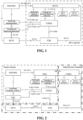
- FIG. 1 is a NFV system defined by the European Telecommunications Standards Institute, ETSI, in a first phase.
- a block enclosed by a dotted line at right side represents Network Function Virtualization Management and Orchestration, NFV MANO, including a Network function virtualization orchestrator, NFVO, a Network Service, NS, Catalogue, a Virtualized Network Function, VNF, Catalogue, NFV instances, Network Function Virtualization Infrastructure, NFVI, Resources, a Virtualized Network Function Manager, VNFM, which are connected to the NFVO, and a Virtualized infrastructure manager, VIM, connected to the VNFM and the NFVO, where the VNFM is also connected to the VNF Catalogue.
- NFV MANO including a Network function virtualization orchestrator, NFVO, a Network Service, NS, Catalogue, a Virtualized Network Function, VNF, Catalogue, NFV instances, Network Function Virtualization Infrastructure, NFVI, Resources, a Virtualized Network Function Manager, VNF
- Main NFV reference points are set between the NFVO and the VNFM, between the NFVO and the VIM, as well as between the VNFM and the VIM, which are represented by short vertical lines on a solid line in FIG. 1 , and are respectively Or-Vnfin, Or-Vi and Vi-Vnfm in FIG. 1 .
- Other NFV reference points are respectively set between the NFVO and the NS Catalogue, the VNF Catalogue, the NFV Instances, and the NFVI Resources as well as between the VNFM and the VNF Catalogue, and are represented by short vertical lines on a dotted line in FIG. 1 .
- main NFV reference points are set between the NFVO and an Operation support system, OSS/ Business support system, BSS, between the VNFM and an Element Manage, EM/VNF as well as between the VIM and a Network Function Virtualization Infrastructure, NFVI, as well, and are respectively Os-Ma-nfvo, Ve-Vnfm-em, Ve-Vnfm-vnf and Nf-Vi in FIG. 1 .
- other NFV reference points are set between the OSS/BSS and the EM, between the OSS/BSS and the NFVI as well as between the EM and the VNF.
- Execution reference points Vn-Nf are set between the VNF and the NFVI, and are represented by short vertical line on the solid line with origins at two ends in FIG. 1 .
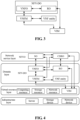
- FIG. 2 is a draft defined in a second phase, in which the resource orchestration management and the service orchestration management are separated, and the NFV MANO in FIG. 1 is canceled.
- the NFVO is divided into two portions, namely, a Network Service Orchestrator, NSO, and a Cross-domain resource orchestrator, CDRO.
- the EM is replaced with a network manage system, ENMS.
- ENMS Network Service Orchestrator
- the OSS/BSS, the ENMS, the VNF, the NS Catalogue, the VNF Catalogue, the VNFM, and the NSO are grouped into a tenant domain; and the CDRO, the NFV Instances, the NFVI Resources, the VIM, and the NFVI are grouped into a NFV infrastructure domain.
- the main NFV reference points set between the NSO and the VNFM, between the NSO and the OSS/BSS, between the VNFM and the VIM, between the VNFM and the ENMS, and between the VNFM and the VNF are respectively Nfvo-Vnfm, Os-Nfvo, Vnfm-Vi, VeEn-Vnfm and VeNf-Vnfm in FIG. 2 .
- the main NFV reference points set between the CDRO and the VIM as well as between the VIM and the NFVI are Nfvo-Vi and Nf-Vi in FIG. 2 ; and the execution reference points set between the VNF and the NFVI are Vn-Nf.
- NFV may be a phase evolution for implementation which is firstly from a single-domain NFV and then extends to full-domain NFV.
- the implementation process of NFV may be a phase evolution for implementation which is firstly in a certain administrative domain and then extended to a full-administrative domain.
- Further relevant technology is also known from US 2014/317261 A1 (CISCO TECHNOLOGY, INC) (2014-10-23 ) which relates to virtualization of network functions
- the paper "Architecture changes in section 5"(NFVMAN(14)000157r1) addresses the impact of management and orchestration layers and administrative domains on NFV architectures.
- it relates to an NFVO of a NFV-MANO architecture which implements cross-domain resource orchestration.
- An embodiment of the present disclosure discloses an NFV system and a network service instantiation method as defined in the attached independent claim, which can meet requirements for phased evolution implemented by a current NFV system and for multinational, cross-regional and multi-vendor service provision and multi-layer management. Further improvements are provided in the dependent claims.
- An embodiment of the present disclosure provides a network function virtualization, NFV, system, including:
- the NFV-DO comprises a virtualized network function orchestrator, VNFO, and the VNFO is configured to manage any one or more of the following functions in a single-domain in which the NFFO is located: network service instance, network service life cycle, VNFM instantiation, VNF instantiation, and VNF life cycle.
- the NFV-DO further includes: a single-domain resource orchestrator, RO, and wherein the single-domain RO is configured to perform any one or more of the following processes in a single-domain in which the single-domain RO is located: association of a VNF instance and a resource, resource authentication and management, resource orchestration policy management, and resource monitoring.
- a single-domain resource orchestrator RO
- the single-domain RO is configured to perform any one or more of the following processes in a single-domain in which the single-domain RO is located: association of a VNF instance and a resource, resource authentication and management, resource orchestration policy management, and resource monitoring.
- the NFV system further includes: a network function virtualization orchestrator, NFVO.
- the NFVO comprises a service orchestrator, SO, and a cross-domain resource orchestrator, CDRO.
- the SO interacts with one or more VNFOs interfaced with the SO, and interacts with an operation support system, OSS, or a business support system, BSS, and is configured to perform any one or more of the following cross-domain processes: network service orchestration, network service instance management, network service life cycle management, network service, and VNF instance policy management.
- the CDRO interacts with one or more NFV-Dos interfaced with the CDRO and/or interacts with multiple VIMs, and is configured to perform any one or more of the following cross-domain processes: resource authentication and management, resource orchestration policy management, and resource monitoring.
- the NFVO belongs to a network service layer; the NFV-DO, the VNFM and a VNF entity belong to a domain layer; and the VIM belongs to a virtual resource layer.
- the system further includes a computing resource pool, a network resource pool and a storage resource pool, which belong to the virtual resource layer; and an infrastructure belonging to a physical layer.
- the RO is configured to: forward a resource application in a single-domain in which the RO is located to the CDRO or transmit the resource disclosure in the single-domain in which the RO is located to the VIM.
- the RO is configured to: transmit a resource application in the single-domain in which the RO is located to the VIM.
- An embodiment of the present disclosure further provides a network service instantiation method applied to the above NFV system, including:
- the transmitting a resource reservation application includes:
- the method further includes:
- the method further includes: receiving a network service instantiation request by a service orchestrator, SO; determining a home domain of a VNF instance in a service by the SO; if the VNF instance belongs to a single-domain, transmitting, by the SO, the VNF instantiation request to a VNFO in the single-domain to which the VNF instance belongs; and if the VNF instance is a cross-domain VNF instance, transmitting, by the SO, a cross-domain VNF instantiation request to a cross-domain independent VNFM.
- SO network service instantiation request by a service orchestrator
- the method further includes:
- an embodiment of the present disclosure further provides a computer-readable storage medium storing computer-executable instructions, where the computer-executable instructions, when being executed, implement the foregoing network service instantiation method.
- the embodiments of the present disclosure can meet requirements for phased evolution implemented by a current NFV system and for multinational, cross-regional, multi-vendor service provision and multi-layer management.
- the present embodiment provides a NFV system.
- the NFV system includes: a network function virtualization single-domain orchestrator, NFV-DO, a single-domain virtualized network function manager, VNFM, a single-domain virtualized network function, VNF, entity, and a virtualized infrastructure manager, VIM.
- the VNFM is configured to manage the NFV entity.
- the NFV-DO includes a virtualized network function orchestrator, VNFO.
- the VNFO is configured to manage any one or more of the following functions in a single-domain in which the VNFO is located: a network service instance, a network service life cycle, YNFM instantiation, VNF instantiation and a VNF life cycle.
- the NFV-DO further includes a single-domain resource orchestrator, RO.
- the RO may exist as required or may not exist as required.
- the RO is configured to perform any one or more of the following processes in the single-domain in which the RO is located: association of a VNF instance and a resource, resource authentication and management, resource orchestration policy management, resource monitoring, and the like.
- the NFV-DO may not exist as well, and when the NFV-DO does not exist, a NFV system in the relevant standard may be compatible.
- the NFV system further includes a NFVO;
- the NFVO includes a service orchestrator, SO, and a cross-domain resource orchestrator, CDRO.
- the SO is configured to perform any one or more of the following cross-domain (multiple product domains or multiple administrative domains) processes: network service orchestration, network service instance management, network service life cycle management, and network service and VNF instance policy management.
- the SO interacts with one or more VNFOs interfaced with the SO, and interacts with an OSS/ BSS.
- the CDRO is configured to perform any one or more of the following cross-domain (multiple product domains or multiple administrative domains) processes: resource authentication and management, resource orchestration policy management and resource monitoring.
- the CDRO interacts with one or more NFV-DOs interfaced with the CDRO and/or interacts with multiple VIMs.
- a resource application in the domain may be forwarded to the CDRO of the NFVO through the RO, at this time, the RO serves as a forwarding channel.
- the RO may also interact with multiple VIMs through the RO, at this time, the RO and the CDRO do not interact with each other.
- the RO may interact with the CDRO only when there is a cross-domain resource application (such as the resource of this domain is insufficient). Otherwise, the RO only interacts with multiple VIMs.
- the resource application is processed through the CDRO of the NFVO. In the absence of the NFVO, the RO must exist.
- the system may be applied to a four-layer framework: a network service layer, a domain layer, a virtual resource layer, and a physical layer.
- a network service layer When being applied in a single-domain, the system may be applied to a three-layer framework:: a domain layer, a virtual resource layer, and a physical layer.
- the NFVO belongs to the network service layer, and may include a SO and a CDRO;
- the NFV-DO, the VNFM and the VNF entity belong to the domain layer; and the NFV-DO may include a VNFO and a RO.
- the virtual resource layer may include multiple VIMs and a computing resource pool, a network resource pool, and a storage resource pool, and is responsible for actually processing virtual resources, such as virtual machine creation, deletion, and migration.
- the physical layer may include infrastructures such as a server, a storage device, and a network device.
- step S501 a cloud computing infrastructure hardware environment is built, which includes a computing facility, a storage facility, and a network facility.
- step S502 a virtualized infrastructure manager, VIM, is installed and configured.
- step S503 it is determined whether single-domain orchestration is needed or not, that is, it is determined whether a network function virtualized single-domain orchestrator, NFV-DO is needed or not.
- step S504 If the single-domain orchestration is needed, the method proceeds to step S504, and if the single-domain orchestration is not needed, the method proceeds to step S507.
- step S504 a virtual network function orchestrator, VNFO is installed and configured for each single-domain.
- step S505 it is determined, for each single-domain, whether single-domain resource orchestration is needed.
- step S506 If the single-domain resource orchestration is needed, the method proceeds to step S507.
- step S506 a single-domain RO is installed and configured.
- step S507 it is determined whether cross-domain orchestration is needed or not.
- step S508 If the cross-domain orchestration is needed, the method proceeds to step S508, and if the cross-domain orchestration is not needed, the method ends.
- step S508 a cross-domain network function virtualization orchestrator, NFVO is installed and configured.
- step S509 it is determined whether cross-domain independent management is needed or not.
- step S510 If the cross-domain independent management is needed, the method proceeds to step S510, and if the cross-domain independent management is not needed, the method ends.
- step S510 a cross-domain independent virtualized network function manager, VNFM, is installed and configured; and the method ends.
- VNFM virtualized network function manager
- a first implementation example A first implementation example
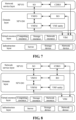
- FIG. 6 is a schematic diagram of an implementation in which the NFV domain has no network service layer according to an embodiment of the present disclosure.
- the implementation is applied in a single-domain scenario to complete self-operation and maintenance of a single-domain, for example, a core network product domain, or a certain administrative domain east region.
- the VNFO is responsible for network service orchestration management, life cycle management and the like of this domain, and the resource orchestration is performed through a RO.
- the implementation includes the following steps.
- a cloud computing infrastructure hardware environment is built, which includes a computing facility, a storage facility, and a network facility.
- step 12 a VIM is installed and configured.
- step 13 it is determined whether single-domain orchestration is needed or not (that is, whether a NFV-DO is needed or not). If the single-domain orchestration is needed, a VNFO is installed and configured for each single-domain.
- step 14 it is determined, for each single-domain, whether single-domain resource orchestration is needed or not. If the single-domain resource orchestration is needed, a single-domain RO is installed and configured.
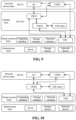
- FIG. 7 is a schematic diagram of an implementation in which the NFV domain has with a network service layer according to an embodiment of the present disclosure.
- cross-domain network service and resource orchestration is completed in the NFVO.
- Single-domain network service and resource orchestration are delivered to a NFV-DO of the single-domain for completion.
- the resource orchestration within the NFV-DO is completed by direct interaction of a RO with one or more VIMs, the RO completes logic processing of the resource orchestration of this domain.
- a CDRO of the NFVO interacts with one or more VIMs to perform the cross-domain resource orchestration.
- the implementation includes the following steps.
- step 21 a cloud computing infrastructure hardware environment, which includes a computing facility, a storage facility, and a network facility, is built.
- step 22 a VIM is installed and configured.
- step 23 it is determined whether single-domain orchestration is needed or not (that is, whether a NFV-DO is needed or not). If the single-domain orchestration is needed, a VNFO is installed and configured for each single-domain.
- step 24 it is determined, for each single-domain, whether single-domain resource orchestration is needed or not. If the single-domain resource orchestration is needed, a single-domain RO is installed and configured.
- step 25 it is determined whether cross-domain orchestration is needed or not; and if the cross-domain orchestration is needed, a cross-domain NFVO is installed and configured.
- FIG. 8 is a schematic diagram of an implementation in which the NFV domain has a network service layer, a domain layer, and an RO forwarding channel according to an embodiment of the present disclosure.
- cross-domain network service and resource orchestration are completed in the NFVO.
- Single-domain network service and resource orchestration are delivered to a NFV-DO of the single-domain for completion.
- the resource orchestration within the NFV-DO is forwarded to a CDRO by the RO for execution.
- the RO does not perform logical processing of the resource orchestration or only performs simple logical processing.
- the CDRO of the NFVO interacts with one or more VIMs to complete the resource orchestration.
- the implementation includes the following steps.
- a cloud computing infrastructure hardware environment is built, which includes a computing facility, a storage facility, and a network facility.
- step 32 a VIM is installed and configured.
- step 33 it is determined whether single-domain orchestration is needed or not (that is, whether a NFV-DO is needed or not); if the single-domain orchestration is needed, a VNFO is installed and configured for each single-domain.
- step 34 it is determined, for each single-domain, whether single-domain resource orchestration is needed or not.
- a determination result is that the single-domain resource orchestration is not needed, a single-domain RO is still installed and configured as a channel for interfacing CDRO.
- step 35 it is determined whether cross-domain orchestration is needed or not; and if the cross-domain orchestration is needed, a cross-domain NFVO is installed and configured.
- FIG. 9 is a schematic diagram of an implementation when the NFV domain has a network service layer and a domain layer but has no RO according to an embodiment of the present disclosure.
- the development of resource management and orchestration has a tendency of centralization.
- This scenario may exist in a scenario having an early single-domain, a later cross-domain orchestration, and requiring a centralizing resource management and orchestration.
- cross-domain network service and resource orchestration are completed in the NFVO.
- Single-domain network service and resource orchestration are delivered to a single-domain NFV-DO for completion.
- the resource orchestration within the NFV-DO is completed by direct interaction with a CDRO, and the CDRO of the NFVO interacts with one or more VIMs to complete the resource orchestration.
- the implementation includes the following steps.
- a cloud computing infrastructure hardware environment is built, which includes a computing facility, a storage facility, and a network facility.
- step 42 a VIM is installed and configured.
- step 43 it is determined whether single-domain orchestration is needed or not (that is, whether a NFV-DO is needed or not). If the single-domain orchestration is needed, a VNFO is installed and configured for each single-domain.
- step 44 it is determined, for each single-domain, whether single-domain resource orchestration is needed or not.
- a determination result is that the single-domain resource orchestration is not needed.
- step 45 it is determined whether cross-domain orchestration is needed or not; and if the cross-domain orchestration is needed, a cross-domain NFVO is installed and configured.
- FIG. 10 is a schematic diagram of an implementation in which the NFV domain has a network service layer but has no domain layer according to an embodiment of the present disclosure.
- all network service and resource orchestrations are completed in a NFVO, and a SO interacts with an independent VNFM.
- the implementation includes the following steps.
- a cloud computing infrastructure hardware environment is built, which includes a computing facility, a storage facility, and a network facility.
- step 52 a VIM is installed and configured.
- step 53 it is determined whether single-domain orchestration is needed or not (that is, whether a NFV-DO is needed or not). In this implementation example, a determination result is that the single-domain orchestration is not needed.
- step 54 it is determined whether cross-domain orchestration is needed or not; and if the cross-domain orchestration is needed, a cross-domain NFVO is installed and configured.
- step 55 it is determined whether a cross-domain independent VNFM is needed or not; and if the cross-domain independent VNFM is needed, the cross-domain independent VNFM is installed and configured.
- FIG. 11 is a schematic diagram of an implementation when the NFV domain has a network service layer, a domain layer, and a cross-domain VNFM according to an embodiment of the present disclosure.
- cross-domain network service and resource orchestrations are completed in a NFVO.
- Single-domain network service and resource orchestrations are sent to a single-domain NFV-DO for execution.
- the resource orchestration within the NFV-DO is completed by direct interaction of a RO with one or more VIMs
- a CDRO of the NFVO interacts with the one or more VIMs to complete the cross-domain resource orchestration.
- the cross-domain service orchestration is completed by interaction between a SO and a VNFM.
- the resource application is completed by interaction between the VNFM and the CDRO.
- the implementation includes the following steps.
- a cloud computing infrastructure hardware environment is built, which includes a computing facility, a storage facility, and a network facility.
- step 62 a VIM is installed and configured.
- step 63 it is determined whether single-domain orchestration is needed or not (that is, whether a NFV-DO is needed or not); if the single-domain orchestration is needed, a VNFO is installed and configured for each single-domain.
- step 64 it is determined, for each single-domain, whether single-domain resource orchestration is needed or not; and if the single-domain resource orchestration is needed, a single-domain RO is installed and configured.
- step 65 it is determined whether cross-domain orchestration is needed or not; and if the cross-domain orchestration is needed, a cross-domain NFVO is installed and configured.
- step 66 it is determined whether a cross-domain independent VNFM is needed or not; and if the cross-domain independent VNFM is needed, the cross-domain independent VNFM is installed and configured.
- the present embodiment provides a network service instantiation method applied to the above NFV system. As shown in FIG. 12 , the network service instantiation method includes the following steps.
- step S1201 after a single-domain VNFO receives a VNF instantiation request, a resource reservation application is transmitted by the single-domain VNFO.
- step S1202 after the VNFO receives resource reservation information indicating that the resource reservation application is successful, the VNFO initiates a VNF instantiation request to a VNFM of the single-domain in which the VNFO is located.
- step S1203 the VNFM initiates a resource instantiation request to a VIM according to the resource reservation information.
- the transmitting a resource reservation application includes:
- the method further includes:
- the method further includes: a SO receives a network service instantiation request, and determines a home domain of a VNF instance in the service. If the VNF instance belongs to this single-domain, the SO transmits the VNF instantiation request to the VNFO of the single-domain to which the VNF instance belongs; and if the VNF instance is cross-domain VNF instance, the SO transmits a cross-domain VNF instantiation request to a cross-domain independent VNFM.
- a SO receives a network service instantiation request, and determines a home domain of a VNF instance in the service. If the VNF instance belongs to this single-domain, the SO transmits the VNF instantiation request to the VNFO of the single-domain to which the VNF instance belongs; and if the VNF instance is cross-domain VNF instance, the SO transmits a cross-domain VNF instantiation request to a cross-domain independent VNFM.
- the method further includes:
- FIG. 13 An example of this embodiment is shown in FIG. 13 and includes the following steps.
- step S130 a network service instantiation request is initiated.
- a service orchestrator determines a home domain of a VNF instance in a service. If the VNF instance belongs to a certain single-domain, the method proceeds to step S1303; and if the VNF instance is a cross-domain VNF instance, the method proceeds to step S1311.
- step S1303 the SO transmits a VNF instantiation request to the corresponding single-domain virtualized network function orchestrator, VNFO.
- this single-domain has a resource orchestrator, RO
- the VNFO transmits a resource reservation application to the RO. If there is no RO in other examples, the VNFO transmits the resource reservation application to a cross-domain resource orchestrator, CDRO.
- step S1305 the RO determines whether the RO is a channel or not. If the RO is a channel, the method proceeds to step S1306; and if not, the method proceeds to step S1307.
- step S1306 the RO transmits the resource reservation application to the CDRO and the method proceeds to step S1313.
- step S1307 the RO transmits the resource reservation application to a virtualized infrastructure manager, VIM.
- step S1308 the RO receives the resource reservation information fed back by the VIM and transmits the resource reservation information to the VNFO.
- step S1309 after receiving the resource reservation information, indicating that the resource reservation application is successful, fed back by the RO, the VNFO initiates a VNF instantiation request to the virtualized network function manager (VNFM).
- VNFM virtualized network function manager
- step S1310 the VNFM initiates a resource instantiation request to the VIM according to the resource reservation information.
- step S1311 the SO transmits a cross-domain VNF instantiation request to a cross-domain independent VNFM.
- step S1312 the cross-domain independent VNFM initiates a resource reservation application to the CDRO.
- step S1313 the CDRO initiates the resource reservation application to the VIM.
- step S1314 the CDRO receives the resource reservation information fed back by the VIM, and transmits the resource reservation information fed back by the VIM to the cross-domain independent VNFM.
- step S1315 the cross-domain independent VNFM initiates a resource instantiation request to the VIM according to the resource reservation information.
- an embodiment of the present disclosure further provides a computer-readable storage medium storing computer-executable instructions, where the computer-executable instructions, when being executed, implement the foregoing network service instantiation method.
- each module/unit in the above embodiments may be implemented in the form of hardware, for example, the corresponding function of the each module/unit is implemented by the integrated circuit(s); or may be implemented in the form of a software function module, for example, the corresponding function of the each module/unit is implemented by a processor through executing the programs/instructions stored in a memory.
- the present disclosure is not limited to any specific combination of hardware and software.
- Embodiments of the present disclosure provide a network function virtualization system and a network service instantiation method, which can meet requirements for phased evolution implemented by a current NFV system and for multinational, cross-regional, multi-vendor service provision and multi-layer management.
Landscapes
- Engineering & Computer Science (AREA)
- Software Systems (AREA)
- Theoretical Computer Science (AREA)
- Physics & Mathematics (AREA)
- General Engineering & Computer Science (AREA)
- General Physics & Mathematics (AREA)
- Computer Networks & Wireless Communication (AREA)
- Signal Processing (AREA)
- Computer Security & Cryptography (AREA)
- Data Exchanges In Wide-Area Networks (AREA)
Claims (7)
- Netzwerkfunktionsvirtualisierungs-System, NFV-System, das Folgendes umfasst:einen virtualisierten Einzeldomänen-Netzwerkfunktionsmanager Domäne, VNFM, der zu einer Domänenschicht gehört;eine virtualisierte Einzeldomänen-Netzwerkfunktionsentität (VNF-Entität), die zu der Domänenschicht gehört;einen virtualisierten Infrastrukturmanager, VIM, der zu einer virtuellen Ressourcenschicht gehört; undeinen oder mehrere virtualisierte Netzwerkfunktions-Einzeldomänen-Orchestratoren, NFV-DOs, die zu einer Domänenschicht gehören und in einer Eins-zu-Eins-Entsprechung mit Einzeldomänen stehen,wobei die NFV-DOs jeweils einen virtualisierten Netzwerkfunktions-Orchestrator, VNFO, und einen Einzeldomänen-Ressourcen-Orchestrator, RO, umfassen und der VNFO dazu konfiguriert ist, eine oder mehrere der folgenden Funktionen in einer Einzeldomäne, in der sich der VNFO befindet, zu verwalten: Netzwerkdienstinstanz, Netzwerkdienstlebenszyklus, VNFM-Instanziierung, VNF-Instanziierung und VNF-Lebenszyklus;einen Netzwerkfunktions-Virtualisierungs-Orchestrator, NFVO, der zu einer Netzwerkdienstschicht gehört;wobei der NFVO einen Dienst-Orchestrator, SO, und einen domänenübergreifenden Ressourcen-Orchestrator, CDRO, umfasst;der SO mit einem oder mehreren VNFOs, die mit dem SO eine Schnittstelle bilden, interagiert, und mit einem Betriebsunterstützungssystem, OSS, oder einem Geschäftsunterstützungssystem, BSS, interagiert und dazu konfiguriert ist, einen oder mehrere der folgenden domänenübergreifenden Prozesse durchzuführen: Netzwerkdienst-Orchestrierung, Netzwerkdienstinstanzen-Verwaltung, Netzwerkdienst-Lebenszyklusverwaltung, Netzwerkdienst- und VNF-Instanzrichtlinienverwaltung; undder CDRO in der Netzwerkdienstschicht mit einem oder mehreren NFV-DOs, die mit dem CDRO in der Domänenschicht eine Schnittstelle bilden, interagiert, und/oder mit mehreren VIMs interagiert und dazu konfiguriert ist, einen oder mehrere der folgenden domänenübergreifenden Prozesse durchzuführen: Ressourcenauthentifizierung und -verwaltung, Ressourcenorchestrierungsrichtlinienverwaltung und Ressourcenüberwachung;der VNFO der Einzeldomäne dazu konfiguriert, bei Empfangen einer VNF-Instanziierungsanforderung einen Ressourcenreservierungsantrag zu übertragen und bei Empfangen von Ressourcenreservierungsinformationen, die angeben, dass der Ressourcenreservierungsantrag erfolgreich ist, eine VNF-Instanziierungsanforderung an den VNFM der Einzeldomäne, in der sich der VNFO befindet, zu initiieren;der VNFM dazu konfiguriert ist, gemäß den Ressourcenreservierungsinformationen eine Ressourceninstanziierungsanforderung an den VIM zu initiieren; der RO dazu konfiguriert ist, den Ressourcenreservierungsantrag von dem VNFO nur dann zu empfangen, wenn eine Ressource der Einzeldomäne, in der sich der RO befindet, unzureichend ist und ein domänenübergreifender Ressourcenreservierungsantrag erforderlich ist, der den domänenübergreifenden Ressourcenreservierungsantrag an den CDRO überträgt, und, wenn die Ressource der Einzeldomäne, in der sich der RO befindet, ausreicht, mit dem VIM zu interagieren, um den Ressourcenreservierungsantrag in der Einzeldomäne, in der sich der RO befindet, an den VIM zu übertragen.
- System nach Anspruch 1, wobei der Einzeldomänen-RO dazu konfiguriert ist, einen oder mehrere der folgenden Prozesse in einer Einzeldomäne durchzuführen, in der sich der Einzeldomänen-RO befindet: Assoziation einer VNF-Instanz und einer Ressource, Ressourcenauthentifizierung und -verwaltung, Ressourcenorchestrierungs-Richtlinienverwaltung und Ressourcenüberwachung.
- System nach Anspruch 1, wobei
das System ferner einen Rechenressourcenpool, einen Netzwerkressourcenpool und einen Speicherressourcenpool, die zu der virtuellen Ressourcenschicht gehören, umfasst; und eine Infrastruktur, die zu einer physischen Schicht gehört. - Netzwerkdienst-Instanziierungsverfahren, das auf das Netzwerkfunktionsvirtualisierungssystem (NFV) nach einem der Ansprüche 1 bis 3 angewendet wird und Folgendes umfasst:beim Empfangen einer virtualisierten Netzwerkfunktions-Instanziierungsanforderung, VNF-Instanziierungsanforderung, durch einen virtualisierten Netzwerkfunktions-Orchestrator (VNFO) einer Einzeldomäne, Übertragen eines Ressourcenreservierungsantrags durch den VNFO der Einzeldomäne;beim Empfangen von Ressourcenreservierungsinformationen, die angeben, dass der Ressourcenreservierungsantrag erfolgreich ist, Initiieren einer VNF-Instanziierungsanforderung durch den VNFO an den virtuellen Netzwerkfunktionsverwalter (VNFM) der Einzeldomäne, in der sich der VNFO befindet; undInitiieren einer Ressourceninstanziierungsanfrage an einen virtualisierten Infrastrukturmanager (VIM) durch das VNFM gemäß den Ressourcenreservierungsinformationen;wobei das Übertragen des Ressourcenreservierungsantrags Folgendes umfasst:Übertragen des Ressourcenreservierungsantrags an den RO durch das VNFO;Bestimmen durch den RO, ob eine Ressource der Einzeldomäne, in der sich der RO befindet, ausreichend ist;als Reaktion auf das Bestimmen, dass die Ressource der Einzeldomäne, in der sich der RO befindet, unzureichend ist, Übertragen eines domänenübergreifenden Ressourcenreservierungsantrags durch den SO an den CDRO; undAls Reaktion auf das Bestimmen, dass die Ressource der Einzeldomäne, in der sich der RO befindet, ausreichend ist, Übertragen, durch den SO, des Ressourcenreservierungsantrags in die Einzeldomäne, in der sich der RO befindet, an den VIM.
- Verfahren nach Anspruch 4, bevor der VNFO der Einzeldomäne die VNF-Instanziierungsanforderung empfängt, wobei das Verfahren ferner Folgendes umfasst:Empfangen einer Netzwerkdienst-Instanziierungsanforderung durch einen Dienst-Orchestrator, SO;Bestimmen einer Heimatdomäne einer VNF-Instanz in einem Dienst durch den SO;als Reaktion auf das Bestimmen, dass die VNF-Instanz zu einer Einzeldomäne gehört, Übertragen der VNF-Instanziierungsanforderung durch den SO an einen VNFO in der Einzeldomäne, zu der die VNF-Instanz gehört; undals Reaktion auf das Bestimmen, dass die VNF-Instanz eine domänenübergreifende VNF-Instanz ist, Übertragen einer domänenübergreifenden VNF-Instanziierungsanforderung durch den SO an einen domänenübergreifenden unabhängigen VNFM.
- Verfahren nach Anspruch 4, nach dem Übertragen des Ressourcenreservierungsantrags, wobei das Verfahren ferner Folgendes umfasst:der RO empfängt die Ressourcenreservierungsinformationen von dem VIM und überträgt die Ressourcenreservierungsinformationen an den VNFO der Einzeldomäne;
oderder CDRO empfängt die von dem VIM zurückgemeldeten Ressourcenreservierungsinformationen und leitet die Ressourcenreservierungsinformationen an den VNFO weiter, der den Ressourcenreservierungsantrag überträgt. - Verfahren nach Anspruch 4, nach dem Übertragen einer domänenübergreifenden VNF-Instanziierungsanforderung an ein domänenübergreifendes unabhängiges VNFM, wobei das Verfahren ferner Folgendes umfasst:Initiieren des Ressourcenreservierungsantrags an den CDRO durch den domänenübergreifenden unabhängigen VNFM;Initiieren des Ressourcenreservierungsantrags an den VIM durch den CDRO, Empfangen der von dem VIM zurückgemeldeten Ressourcenreservierungsinformationen durch den CDRO und Übertragen der Ressourcenreservierungsinformationen durch den CDRO an den domänenübergreifenden unabhängigen VNFM; undInitiieren der Ressourceninstanziierungsanforderung an den VIM durch den domänenübergreifenden unabhängigen VNFM gemäß den Ressourcenreservierungsinformationen.
Applications Claiming Priority (2)
| Application Number | Priority Date | Filing Date | Title |
|---|---|---|---|
| CN201510662615.5A CN106603371B (zh) | 2015-10-14 | 2015-10-14 | 一种网络功能虚拟化系统及网络服务实例化方法 |
| PCT/CN2016/079197 WO2016180143A1 (zh) | 2015-10-14 | 2016-04-13 | 一种网络功能虚拟化系统及网络服务实例化方法 |
Publications (3)
| Publication Number | Publication Date |
|---|---|
| EP3364606A1 EP3364606A1 (de) | 2018-08-22 |
| EP3364606A4 EP3364606A4 (de) | 2019-06-05 |
| EP3364606B1 true EP3364606B1 (de) | 2023-07-26 |
Family
ID=57248835
Family Applications (1)
| Application Number | Title | Priority Date | Filing Date |
|---|---|---|---|
| EP16791993.5A Active EP3364606B1 (de) | 2015-10-14 | 2016-04-13 | Netzwerkfunktionvirtualisierungssystem und netzwerkdienstinstanziierungsverfahren |
Country Status (4)
| Country | Link |
|---|---|
| US (1) | US11175955B2 (de) |
| EP (1) | EP3364606B1 (de) |
| CN (1) | CN106603371B (de) |
| WO (1) | WO2016180143A1 (de) |
Cited By (1)
| Publication number | Priority date | Publication date | Assignee | Title |
|---|---|---|---|---|
| WO2025069047A1 (en) * | 2023-09-25 | 2025-04-03 | Jio Platforms Limited | Method and system for reserving resources for instantiation of a network function |
Families Citing this family (11)
| Publication number | Priority date | Publication date | Assignee | Title |
|---|---|---|---|---|
| CN106375101B (zh) * | 2015-07-20 | 2019-08-27 | 华为技术有限公司 | 一种生命周期管理方法及装置 |
| CN108156095B (zh) * | 2016-12-02 | 2020-07-14 | 中兴通讯股份有限公司 | 资源确定方法及装置、nfvo |
| CN107294769A (zh) * | 2017-05-16 | 2017-10-24 | 南京邮电大学 | 一种基于5g网络的敏捷化云服务管理系统及其控制方法 |
| CN109587024B (zh) * | 2017-09-29 | 2020-12-22 | 华为技术有限公司 | 一种资源处理的方法以及相关装置 |
| WO2019149368A1 (en) * | 2018-02-02 | 2019-08-08 | Nokia Solutions And Networks Oy | Using self-operation cases to identify and resolve issues causing network slice reselection |
| CN110401554B (zh) * | 2018-04-25 | 2021-11-30 | 中移(苏州)软件技术有限公司 | Vnf纳管的方法、装置、系统、电子设备及存储介质 |
| CN110569101B (zh) * | 2018-06-05 | 2022-05-31 | 华为技术有限公司 | 管理容器服务的方法和装置 |
| CN109347661B (zh) * | 2018-09-25 | 2021-12-17 | 中国联合网络通信集团有限公司 | 消费者vnf的实例化方法及装置 |
| US12131174B2 (en) * | 2021-06-30 | 2024-10-29 | International Business Machines Corporation | Quantifying service chain functions of virtual machines for cross interferences |
| WO2023243076A1 (ja) * | 2022-06-17 | 2023-12-21 | 楽天モバイル株式会社 | クラウド上の仮想化ネットワーク機能を管理するために当該クラウドとライフサイクルマネージャの間で行われる通信に対する調整 |
| CN118282823A (zh) * | 2022-12-29 | 2024-07-02 | 华为技术有限公司 | 通信方法和通信装置 |
Family Cites Families (9)
| Publication number | Priority date | Publication date | Assignee | Title |
|---|---|---|---|---|
| CA2467939A1 (en) * | 2004-05-20 | 2005-11-20 | Fernando Cuervo | Architecture for configuration and management of cross-domain network services |
| US8832249B2 (en) | 2011-11-30 | 2014-09-09 | At&T Intellectual Property I, L.P. | Methods and apparatus to adjust resource allocation in a distributive computing network |
| US9973375B2 (en) * | 2013-04-22 | 2018-05-15 | Cisco Technology, Inc. | App store portal providing point-and-click deployment of third-party virtualized network functions |
| US9864623B2 (en) * | 2013-11-21 | 2018-01-09 | Centurylink Intellectual Property Llc | Physical to virtual network transport function abstraction |
| CN105103507B (zh) * | 2014-01-28 | 2018-01-05 | 华为技术有限公司 | 网络功能虚拟化的方法及装置 |
| WO2015126430A1 (en) * | 2014-02-24 | 2015-08-27 | Hewlett-Packard Development Company, L.P. | Virtual network function management with deactivated virtual machines |
| EP3116177B1 (de) * | 2014-03-24 | 2020-02-26 | Huawei Technologies Co. Ltd. | Dienstimplementierungsverfahren für nfv-system und kommunikationseinheiten |
| CN104954220B (zh) * | 2014-03-31 | 2018-01-16 | 华为技术有限公司 | 一种虚拟网络业务部署方法和设备 |
| US10880180B2 (en) * | 2015-09-16 | 2020-12-29 | Huawei Technologies Co., Ltd. | Method and apparatus for data analytics management |
-
2015
- 2015-10-14 CN CN201510662615.5A patent/CN106603371B/zh active Active
-
2016
- 2016-04-13 US US15/768,502 patent/US11175955B2/en not_active Expired - Fee Related
- 2016-04-13 EP EP16791993.5A patent/EP3364606B1/de active Active
- 2016-04-13 WO PCT/CN2016/079197 patent/WO2016180143A1/zh not_active Ceased
Non-Patent Citations (1)
| Title |
|---|
| HP ET AL: "Architecture changes in section 5;NFVMAN(14)000157r1_NFV_MANO_Section_5_changes", ETSI DRAFT; NFVMAN(14)000157R1_NFV_MANO_SECTION_5_CHANGES, EUROPEAN TELECOMMUNICATIONS STANDARDS INSTITUTE (ETSI), 650, ROUTE DES LUCIOLES ; F-06921 SOPHIA-ANTIPOLIS ; FRANCE, vol. ISG, 28 March 2014 (2014-03-28), pages 1 - 6, XP014181682 * |
Cited By (1)
| Publication number | Priority date | Publication date | Assignee | Title |
|---|---|---|---|---|
| WO2025069047A1 (en) * | 2023-09-25 | 2025-04-03 | Jio Platforms Limited | Method and system for reserving resources for instantiation of a network function |
Also Published As
| Publication number | Publication date |
|---|---|
| WO2016180143A1 (zh) | 2016-11-17 |
| CN106603371B (zh) | 2020-11-24 |
| EP3364606A1 (de) | 2018-08-22 |
| EP3364606A4 (de) | 2019-06-05 |
| CN106603371A (zh) | 2017-04-26 |
| US11175955B2 (en) | 2021-11-16 |
| US20180307538A1 (en) | 2018-10-25 |
Similar Documents
| Publication | Publication Date | Title |
|---|---|---|
| EP3364606B1 (de) | Netzwerkfunktionvirtualisierungssystem und netzwerkdienstinstanziierungsverfahren | |
| US11429408B2 (en) | System and method for network function virtualization resource management | |
| EP3313023B1 (de) | Verfahren und vorrichtung zur lebenszyklusverwaltung | |
| US10742502B2 (en) | Software modification initiation method, and metadata release method and apparatus | |
| US9348646B1 (en) | Reboot-initiated virtual machine instance migration | |
| US20200293359A1 (en) | System and Method for Dynamic Virtualized Network Function Descriptor Management | |
| US10884792B2 (en) | Client live migration for a virtual machine | |
| US10846119B2 (en) | Virtualized network function management apparatus, virtual machine management apparatus, method for allocating resources to virtual network function, and program | |
| JP6101360B2 (ja) | アプリケーションの状態を設定するための方法、装置、プログラム及び記録媒体 | |
| WO2017148249A1 (zh) | 配置资源的方法及其网络设备 | |
| WO2017181875A1 (zh) | 虚拟化网络的部署方法和部署系统 | |
| EP3893437B1 (de) | Verfahren und vorrichtung zum einsatz einer virtuellen netzwerkfunktion | |
| US12561180B2 (en) | System and method for subscription management by instantiating and/or retiring composed systems of a managed system | |
| WO2017035738A1 (zh) | 一种资源管理方法及装置 | |
| WO2017011938A1 (zh) | 虚拟网络功能扩容的方法和装置 | |
| US12174756B2 (en) | Caching system and method for a workspace environment | |
| CN110795205A (zh) | 基于软件容器提供云端服务的系统及方法 | |
| US10805156B2 (en) | Discovering and mitigating out-of-sync network parameters | |
| EP3193253B1 (de) | Verfahren, vorrichtung und system zur anzeige von namen einer virtuellen maschine | |
| CN108604996A (zh) | 一种nfv系统中的策略传输方法和装置 | |
| US10284668B2 (en) | Managing a logical client for an application | |
| US20180335894A1 (en) | Messaging and orchestrating platform in a computer network environment | |
| JP6891727B2 (ja) | メンテナンス制御プログラム、メンテナンス制御方法、およびシステム制御装置 |
Legal Events
| Date | Code | Title | Description |
|---|---|---|---|
| STAA | Information on the status of an ep patent application or granted ep patent |
Free format text: STATUS: THE INTERNATIONAL PUBLICATION HAS BEEN MADE |
|
| PUAI | Public reference made under article 153(3) epc to a published international application that has entered the european phase |
Free format text: ORIGINAL CODE: 0009012 |
|
| STAA | Information on the status of an ep patent application or granted ep patent |
Free format text: STATUS: REQUEST FOR EXAMINATION WAS MADE |
|
| 17P | Request for examination filed |
Effective date: 20180511 |
|
| AK | Designated contracting states |
Kind code of ref document: A1 Designated state(s): AL AT BE BG CH CY CZ DE DK EE ES FI FR GB GR HR HU IE IS IT LI LT LU LV MC MK MT NL NO PL PT RO RS SE SI SK SM TR |
|
| AX | Request for extension of the european patent |
Extension state: BA ME |
|
| DAV | Request for validation of the european patent (deleted) | ||
| DAX | Request for extension of the european patent (deleted) | ||
| A4 | Supplementary search report drawn up and despatched |
Effective date: 20190508 |
|
| RIC1 | Information provided on ipc code assigned before grant |
Ipc: G06F 9/455 20180101ALI20190502BHEP Ipc: H04L 12/46 20060101AFI20190502BHEP Ipc: G06F 9/50 20060101ALI20190502BHEP |
|
| STAA | Information on the status of an ep patent application or granted ep patent |
Free format text: STATUS: EXAMINATION IS IN PROGRESS |
|
| 17Q | First examination report despatched |
Effective date: 20210518 |
|
| GRAP | Despatch of communication of intention to grant a patent |
Free format text: ORIGINAL CODE: EPIDOSNIGR1 |
|
| STAA | Information on the status of an ep patent application or granted ep patent |
Free format text: STATUS: GRANT OF PATENT IS INTENDED |
|
| INTG | Intention to grant announced |
Effective date: 20230419 |
|
| GRAS | Grant fee paid |
Free format text: ORIGINAL CODE: EPIDOSNIGR3 |
|
| GRAA | (expected) grant |
Free format text: ORIGINAL CODE: 0009210 |
|
| STAA | Information on the status of an ep patent application or granted ep patent |
Free format text: STATUS: THE PATENT HAS BEEN GRANTED |
|
| AK | Designated contracting states |
Kind code of ref document: B1 Designated state(s): AL AT BE BG CH CY CZ DE DK EE ES FI FR GB GR HR HU IE IS IT LI LT LU LV MC MK MT NL NO PL PT RO RS SE SI SK SM TR |
|
| REG | Reference to a national code |
Ref country code: GB Ref legal event code: FG4D |
|
| REG | Reference to a national code |
Ref country code: CH Ref legal event code: EP |
|
| REG | Reference to a national code |
Ref country code: IE Ref legal event code: FG4D |
|
| REG | Reference to a national code |
Ref country code: DE Ref legal event code: R096 Ref document number: 602016081395 Country of ref document: DE |
|
| REG | Reference to a national code |
Ref country code: LT Ref legal event code: MG9D |
|
| REG | Reference to a national code |
Ref country code: NL Ref legal event code: MP Effective date: 20230726 |
|
| REG | Reference to a national code |
Ref country code: AT Ref legal event code: MK05 Ref document number: 1593250 Country of ref document: AT Kind code of ref document: T Effective date: 20230726 |
|
| PG25 | Lapsed in a contracting state [announced via postgrant information from national office to epo] |
Ref country code: NL Free format text: LAPSE BECAUSE OF FAILURE TO SUBMIT A TRANSLATION OF THE DESCRIPTION OR TO PAY THE FEE WITHIN THE PRESCRIBED TIME-LIMIT Effective date: 20230726 |
|
| PG25 | Lapsed in a contracting state [announced via postgrant information from national office to epo] |
Ref country code: GR Free format text: LAPSE BECAUSE OF FAILURE TO SUBMIT A TRANSLATION OF THE DESCRIPTION OR TO PAY THE FEE WITHIN THE PRESCRIBED TIME-LIMIT Effective date: 20231027 |
|
| PG25 | Lapsed in a contracting state [announced via postgrant information from national office to epo] |
Ref country code: IS Free format text: LAPSE BECAUSE OF FAILURE TO SUBMIT A TRANSLATION OF THE DESCRIPTION OR TO PAY THE FEE WITHIN THE PRESCRIBED TIME-LIMIT Effective date: 20231126 |
|
| PG25 | Lapsed in a contracting state [announced via postgrant information from national office to epo] |
Ref country code: SE Free format text: LAPSE BECAUSE OF FAILURE TO SUBMIT A TRANSLATION OF THE DESCRIPTION OR TO PAY THE FEE WITHIN THE PRESCRIBED TIME-LIMIT Effective date: 20230726 Ref country code: RS Free format text: LAPSE BECAUSE OF FAILURE TO SUBMIT A TRANSLATION OF THE DESCRIPTION OR TO PAY THE FEE WITHIN THE PRESCRIBED TIME-LIMIT Effective date: 20230726 Ref country code: PT Free format text: LAPSE BECAUSE OF FAILURE TO SUBMIT A TRANSLATION OF THE DESCRIPTION OR TO PAY THE FEE WITHIN THE PRESCRIBED TIME-LIMIT Effective date: 20231127 Ref country code: NO Free format text: LAPSE BECAUSE OF FAILURE TO SUBMIT A TRANSLATION OF THE DESCRIPTION OR TO PAY THE FEE WITHIN THE PRESCRIBED TIME-LIMIT Effective date: 20231026 Ref country code: LV Free format text: LAPSE BECAUSE OF FAILURE TO SUBMIT A TRANSLATION OF THE DESCRIPTION OR TO PAY THE FEE WITHIN THE PRESCRIBED TIME-LIMIT Effective date: 20230726 Ref country code: LT Free format text: LAPSE BECAUSE OF FAILURE TO SUBMIT A TRANSLATION OF THE DESCRIPTION OR TO PAY THE FEE WITHIN THE PRESCRIBED TIME-LIMIT Effective date: 20230726 Ref country code: IS Free format text: LAPSE BECAUSE OF FAILURE TO SUBMIT A TRANSLATION OF THE DESCRIPTION OR TO PAY THE FEE WITHIN THE PRESCRIBED TIME-LIMIT Effective date: 20231126 Ref country code: HR Free format text: LAPSE BECAUSE OF FAILURE TO SUBMIT A TRANSLATION OF THE DESCRIPTION OR TO PAY THE FEE WITHIN THE PRESCRIBED TIME-LIMIT Effective date: 20230726 Ref country code: GR Free format text: LAPSE BECAUSE OF FAILURE TO SUBMIT A TRANSLATION OF THE DESCRIPTION OR TO PAY THE FEE WITHIN THE PRESCRIBED TIME-LIMIT Effective date: 20231027 Ref country code: FI Free format text: LAPSE BECAUSE OF FAILURE TO SUBMIT A TRANSLATION OF THE DESCRIPTION OR TO PAY THE FEE WITHIN THE PRESCRIBED TIME-LIMIT Effective date: 20230726 Ref country code: AT Free format text: LAPSE BECAUSE OF FAILURE TO SUBMIT A TRANSLATION OF THE DESCRIPTION OR TO PAY THE FEE WITHIN THE PRESCRIBED TIME-LIMIT Effective date: 20230726 |
|
| PG25 | Lapsed in a contracting state [announced via postgrant information from national office to epo] |
Ref country code: PL Free format text: LAPSE BECAUSE OF FAILURE TO SUBMIT A TRANSLATION OF THE DESCRIPTION OR TO PAY THE FEE WITHIN THE PRESCRIBED TIME-LIMIT Effective date: 20230726 |
|
| PG25 | Lapsed in a contracting state [announced via postgrant information from national office to epo] |
Ref country code: ES Free format text: LAPSE BECAUSE OF FAILURE TO SUBMIT A TRANSLATION OF THE DESCRIPTION OR TO PAY THE FEE WITHIN THE PRESCRIBED TIME-LIMIT Effective date: 20230726 |
|
| REG | Reference to a national code |
Ref country code: DE Ref legal event code: R097 Ref document number: 602016081395 Country of ref document: DE |
|
| PG25 | Lapsed in a contracting state [announced via postgrant information from national office to epo] |
Ref country code: SM Free format text: LAPSE BECAUSE OF FAILURE TO SUBMIT A TRANSLATION OF THE DESCRIPTION OR TO PAY THE FEE WITHIN THE PRESCRIBED TIME-LIMIT Effective date: 20230726 Ref country code: RO Free format text: LAPSE BECAUSE OF FAILURE TO SUBMIT A TRANSLATION OF THE DESCRIPTION OR TO PAY THE FEE WITHIN THE PRESCRIBED TIME-LIMIT Effective date: 20230726 Ref country code: ES Free format text: LAPSE BECAUSE OF FAILURE TO SUBMIT A TRANSLATION OF THE DESCRIPTION OR TO PAY THE FEE WITHIN THE PRESCRIBED TIME-LIMIT Effective date: 20230726 Ref country code: EE Free format text: LAPSE BECAUSE OF FAILURE TO SUBMIT A TRANSLATION OF THE DESCRIPTION OR TO PAY THE FEE WITHIN THE PRESCRIBED TIME-LIMIT Effective date: 20230726 Ref country code: DK Free format text: LAPSE BECAUSE OF FAILURE TO SUBMIT A TRANSLATION OF THE DESCRIPTION OR TO PAY THE FEE WITHIN THE PRESCRIBED TIME-LIMIT Effective date: 20230726 Ref country code: CZ Free format text: LAPSE BECAUSE OF FAILURE TO SUBMIT A TRANSLATION OF THE DESCRIPTION OR TO PAY THE FEE WITHIN THE PRESCRIBED TIME-LIMIT Effective date: 20230726 Ref country code: SK Free format text: LAPSE BECAUSE OF FAILURE TO SUBMIT A TRANSLATION OF THE DESCRIPTION OR TO PAY THE FEE WITHIN THE PRESCRIBED TIME-LIMIT Effective date: 20230726 |
|
| PGFP | Annual fee paid to national office [announced via postgrant information from national office to epo] |
Ref country code: GB Payment date: 20240229 Year of fee payment: 9 |
|
| PG25 | Lapsed in a contracting state [announced via postgrant information from national office to epo] |
Ref country code: IT Free format text: LAPSE BECAUSE OF FAILURE TO SUBMIT A TRANSLATION OF THE DESCRIPTION OR TO PAY THE FEE WITHIN THE PRESCRIBED TIME-LIMIT Effective date: 20230726 |
|
| PGFP | Annual fee paid to national office [announced via postgrant information from national office to epo] |
Ref country code: FR Payment date: 20240308 Year of fee payment: 9 |
|
| PLBE | No opposition filed within time limit |
Free format text: ORIGINAL CODE: 0009261 |
|
| STAA | Information on the status of an ep patent application or granted ep patent |
Free format text: STATUS: NO OPPOSITION FILED WITHIN TIME LIMIT |
|
| 26N | No opposition filed |
Effective date: 20240429 |
|
| PGFP | Annual fee paid to national office [announced via postgrant information from national office to epo] |
Ref country code: DE Payment date: 20240306 Year of fee payment: 9 |
|
| PG25 | Lapsed in a contracting state [announced via postgrant information from national office to epo] |
Ref country code: SI Free format text: LAPSE BECAUSE OF FAILURE TO SUBMIT A TRANSLATION OF THE DESCRIPTION OR TO PAY THE FEE WITHIN THE PRESCRIBED TIME-LIMIT Effective date: 20230726 |
|
| PG25 | Lapsed in a contracting state [announced via postgrant information from national office to epo] |
Ref country code: BG Free format text: LAPSE BECAUSE OF FAILURE TO SUBMIT A TRANSLATION OF THE DESCRIPTION OR TO PAY THE FEE WITHIN THE PRESCRIBED TIME-LIMIT Effective date: 20230726 |
|
| PG25 | Lapsed in a contracting state [announced via postgrant information from national office to epo] |
Ref country code: MC Free format text: LAPSE BECAUSE OF FAILURE TO SUBMIT A TRANSLATION OF THE DESCRIPTION OR TO PAY THE FEE WITHIN THE PRESCRIBED TIME-LIMIT Effective date: 20230726 |
|
| PG25 | Lapsed in a contracting state [announced via postgrant information from national office to epo] |
Ref country code: MC Free format text: LAPSE BECAUSE OF FAILURE TO SUBMIT A TRANSLATION OF THE DESCRIPTION OR TO PAY THE FEE WITHIN THE PRESCRIBED TIME-LIMIT Effective date: 20230726 Ref country code: BG Free format text: LAPSE BECAUSE OF FAILURE TO SUBMIT A TRANSLATION OF THE DESCRIPTION OR TO PAY THE FEE WITHIN THE PRESCRIBED TIME-LIMIT Effective date: 20230726 |
|
| REG | Reference to a national code |
Ref country code: CH Ref legal event code: PL |
|
| PG25 | Lapsed in a contracting state [announced via postgrant information from national office to epo] |
Ref country code: LU Free format text: LAPSE BECAUSE OF NON-PAYMENT OF DUE FEES Effective date: 20240413 |
|
| REG | Reference to a national code |
Ref country code: BE Ref legal event code: MM Effective date: 20240430 |
|
| PG25 | Lapsed in a contracting state [announced via postgrant information from national office to epo] |
Ref country code: LU Free format text: LAPSE BECAUSE OF NON-PAYMENT OF DUE FEES Effective date: 20240413 |
|
| PG25 | Lapsed in a contracting state [announced via postgrant information from national office to epo] |
Ref country code: BE Free format text: LAPSE BECAUSE OF NON-PAYMENT OF DUE FEES Effective date: 20240430 |
|
| PG25 | Lapsed in a contracting state [announced via postgrant information from national office to epo] |
Ref country code: BE Free format text: LAPSE BECAUSE OF NON-PAYMENT OF DUE FEES Effective date: 20240430 Ref country code: CH Free format text: LAPSE BECAUSE OF NON-PAYMENT OF DUE FEES Effective date: 20240430 |
|
| PG25 | Lapsed in a contracting state [announced via postgrant information from national office to epo] |
Ref country code: IE Free format text: LAPSE BECAUSE OF NON-PAYMENT OF DUE FEES Effective date: 20240413 |
|
| PG25 | Lapsed in a contracting state [announced via postgrant information from national office to epo] |
Ref country code: CY Free format text: LAPSE BECAUSE OF FAILURE TO SUBMIT A TRANSLATION OF THE DESCRIPTION OR TO PAY THE FEE WITHIN THE PRESCRIBED TIME-LIMIT; INVALID AB INITIO Effective date: 20160413 |
|
| PG25 | Lapsed in a contracting state [announced via postgrant information from national office to epo] |
Ref country code: HU Free format text: LAPSE BECAUSE OF FAILURE TO SUBMIT A TRANSLATION OF THE DESCRIPTION OR TO PAY THE FEE WITHIN THE PRESCRIBED TIME-LIMIT; INVALID AB INITIO Effective date: 20160413 |
|
| REG | Reference to a national code |
Ref country code: DE Ref legal event code: R119 Ref document number: 602016081395 Country of ref document: DE |
|
| GBPC | Gb: european patent ceased through non-payment of renewal fee |
Effective date: 20250413 |
|
| PG25 | Lapsed in a contracting state [announced via postgrant information from national office to epo] |
Ref country code: DE Free format text: LAPSE BECAUSE OF NON-PAYMENT OF DUE FEES Effective date: 20251104 |
|
| PG25 | Lapsed in a contracting state [announced via postgrant information from national office to epo] |
Ref country code: GB Free format text: LAPSE BECAUSE OF NON-PAYMENT OF DUE FEES Effective date: 20250413 |
|
| PG25 | Lapsed in a contracting state [announced via postgrant information from national office to epo] |
Ref country code: FR Free format text: LAPSE BECAUSE OF NON-PAYMENT OF DUE FEES Effective date: 20250430 |