EP3367005B1 - Système de chauffage - Google Patents
Système de chauffage Download PDFInfo
- Publication number
- EP3367005B1 EP3367005B1 EP18155484.1A EP18155484A EP3367005B1 EP 3367005 B1 EP3367005 B1 EP 3367005B1 EP 18155484 A EP18155484 A EP 18155484A EP 3367005 B1 EP3367005 B1 EP 3367005B1
- Authority
- EP
- European Patent Office
- Prior art keywords
- consumer
- flow
- fluid
- heating system
- heater
- Prior art date
- Legal status (The legal status is an assumption and is not a legal conclusion. Google has not performed a legal analysis and makes no representation as to the accuracy of the status listed.)
- Active
Links
Images


Classifications
-
- F—MECHANICAL ENGINEERING; LIGHTING; HEATING; WEAPONS; BLASTING
- F24—HEATING; RANGES; VENTILATING
- F24D—DOMESTIC- OR SPACE-HEATING SYSTEMS, e.g. CENTRAL HEATING SYSTEMS; DOMESTIC HOT-WATER SUPPLY SYSTEMS; ELEMENTS OR COMPONENTS THEREFOR
- F24D19/00—Details
- F24D19/10—Arrangement or mounting of control or safety devices
- F24D19/1006—Arrangement or mounting of control or safety devices for water heating systems
- F24D19/1009—Arrangement or mounting of control or safety devices for water heating systems for central heating
-
- F—MECHANICAL ENGINEERING; LIGHTING; HEATING; WEAPONS; BLASTING
- F24—HEATING; RANGES; VENTILATING
- F24D—DOMESTIC- OR SPACE-HEATING SYSTEMS, e.g. CENTRAL HEATING SYSTEMS; DOMESTIC HOT-WATER SUPPLY SYSTEMS; ELEMENTS OR COMPONENTS THEREFOR
- F24D19/00—Details
- F24D19/10—Arrangement or mounting of control or safety devices
- F24D19/1006—Arrangement or mounting of control or safety devices for water heating systems
- F24D19/1009—Arrangement or mounting of control or safety devices for water heating systems for central heating
- F24D19/1015—Arrangement or mounting of control or safety devices for water heating systems for central heating using a valve or valves
-
- F—MECHANICAL ENGINEERING; LIGHTING; HEATING; WEAPONS; BLASTING
- F24—HEATING; RANGES; VENTILATING
- F24D—DOMESTIC- OR SPACE-HEATING SYSTEMS, e.g. CENTRAL HEATING SYSTEMS; DOMESTIC HOT-WATER SUPPLY SYSTEMS; ELEMENTS OR COMPONENTS THEREFOR
- F24D2220/00—Components of central heating installations excluding heat sources
- F24D2220/04—Sensors
- F24D2220/044—Flow sensors
Definitions
- the invention relates to a heating system with a heater, several consumer circuits, each consumer circuit being assigned a control device.
- a heating system for heating a house.
- the heating system comprises a heater and at least one consumer circuit, with a fluid circulating between the heater and the consumer circuits.
- the fluid is heated in the heater, flows through a flow into the consumer circuit, cools down there and flows back into the heater through a return.
- a flow temperature can be assigned to the consumer circuit, which is permanently preset or can be determined using parameters such as an inside and an outside temperature. In particular, if several consumer circuits are operated on the same heating device, the consumer circuit can be assigned a control device which issues a request for the flow temperature of the consumer circuit.
- the heater is then controlled in such a way that the highest of the required flow temperatures of all consumer circuits is set in the flow. If the consumer circuit requires a lower flow temperature than this, it can mix cooler fluid from the return with the hot fluid that is provided by the heater.
- the DE 10 2011 001 223 A1 discloses a heating system and an operating method and control device for a heating system.
- the DE 10 2012 208 994 A1 discloses a device for controlling room temperature.
- the DE 10 2012 101 850 A1 discloses a method for needs-based control of a heat generator in a heating system.
- the DE 10 2013 105 786 A1 discloses a method for controlling a central heating system.
- the EP 2 775 370 A2 discloses a heating system according to the preamble of claim 1.
- An object underlying the invention is to provide an improved technique for controlling such a heating system.
- the invention solves this problem by means of the subject matter of the independent claims. Subclaims reflect preferred embodiments.
- a heating system includes a heater and several consumer circuits between which a fluid circulates for heat transfer.
- a method for controlling a heating system comprises the steps of determining a requirement for a flow temperature of the consumer circuit; and providing the request to the heater. The request is only made available if there is a heat demand in the consumer circuit.
- the heater can reduce or stop heating the fluid. Energy consumption can thus be reduced. If the heater is operated with fuel, fuel can be saved. If the heating device includes a heat pump, the efficiency can be increased. Under certain conditions, a return temperature at the heater can be lowered, which means that the heater can be operated in a more favorable temperature range.
- the heat requirement is determined if a volume flow through the consumer circuit is above a predetermined threshold value.
- this threshold value can be a small fraction of a maximum volume flow, for example approx. 1-2%, or otherwise very small, close to zero or practically or actually correspond to zero.
- a control device for the above-mentioned heating system comprises a scanning device for determining the presence of a heat requirement in the consumer circuit; and a processing device that is set up to provide a request for a predetermined flow temperature to the heater only when there is a heat requirement.
- the control device can be set up to carry out the method described above in whole or in part.
- the control device can include a processing device, which is designed, for example, as a programmable microcomputer.
- the method can be in the form of a computer program product and can include program code means that are suitable for carrying out the method when the computer program product runs on the processing device.
- the method and the controller or system described below may correspond in part or in full, such that features or advantages of the method may be applied to the controller or system, or vice versa.
- the scanning device is set up to determine the volume flow of fluid through the consumer circuit. The determined volume flow can then be compared with a threshold value. In another embodiment, the scanning device is set up to determine the presence of the heat requirement when a volume flow of the fluid through the consumer circuit exceeds a predetermined threshold value.
- the threshold is in both Cases preferably essentially zero, as described in more detail above.
- the heating system can include several consumer circuits, each consumer circuit being assigned a device for requesting a predetermined flow temperature.
- the heater is preferably set up to heat the fluid to the highest of the requested flow temperatures. If there is no request for a flow temperature from one of the consumer circuits, the heating device can be controlled in an improved manner so that the requirements of the one or more remaining consumer circuits with regard to the flow temperature are met.
- Different flow temperatures can be assigned to two consumer circuits.
- the heater can lower the flow temperature when requested by the other consumer circuit.
- One of the consumer circuits can include a mixing device for mixing fluid from the supply line with fluid from the return line in order to achieve the required flow temperature. If the required flow temperatures of the consumer circuits connected to the heater are similar or even the same, then mixing can be dispensed with.
- a low loss header can be arranged between the heater and the consumer circuits.
- the hydraulic separator is used for hydraulic decoupling of the various consumer circuits, especially if they require different flow rates or different flow temperatures. Under certain circumstances, however, heated fluid can flow back through the low loss header into the return, so that a temperature difference between the flow and the return is reduced. This can reduce the efficiency of the heater, particularly if it is a condensing boiler or a heat pump.
- a heating system includes a heater and several consumer circuits between which a fluid circulates for heat transfer, as well as the control devices described above.
- FIG 1 shows a heating system 100, which is preferably set up for use in a building such as a one- or multi-party house.
- the heating system 100 includes a heater 105, which is preferably implemented as a condensing boiler by burning gas or another fuel.
- the heating device 105 can also be based on a different principle, for example on that of a heat pump.
- the heating system 100 also includes one or more consumer circuits 110.
- a first consumer circuit 110 is shown on the left and a second consumer circuit 110 is shown on the right.
- the load circuits 110 can dissipate heat in different ways.
- the first consumer circuit 110 shown on the left can include a radiator 115 and the second consumer circuit 110 shown on the right can include underfloor heating 125 .
- similarly constructed load circuits 110 can also be provided.
- the heater 105 is set up to heat a fluid 125, usually water, and to make it available at a flow 130.
- the fluid 125 then flows through the at least one consumer circuit 110 and returns to the heater 105 via a return 135.
- a pump 140 can be provided, which is usually controlled by a control device that a heat output of the heater 105 also controls.
- a hydraulic switch 145 is then usually provided.
- the hydraulic switch 145 is designed as a vertical pipeline with a preferably large cross section and, as a result, a small pressure loss between the flow 130 and the return 135 .
- Temperature stratification forms in the hydraulic separator 145 due to the Density difference of warm and cold fluid 125. In the upper area there is warm fluid of the flow 130 and in the lower area there is colder fluid 125 of the return 135.
- the volume flows of the fluid 125 through the heater 105 and through the consumer circuits 110 are not the same, compensation takes place in the hydraulic separator 145 by mixing fluid 125 from the flow 130 and the return 135. If the current volume flow through the heater 105 is greater than which is through the consumer circuits 160, a subset of the warm fluid 125 of the flow 130 is added to the returning fluid 125 from the consumer circuit 160. If, on the other hand, a larger volume flow is circulated in the consumer circuits 160 than through the heater 105, the warmer fluid 125 flowing into the consumer circuit 160 is mixed with colder, returning fluid 125, so that the flow temperature of the consumer circuits 110 is reduced.
- the volume flow flowing through a consumer circuit 110 can be controlled individually, for example by means of a consumer pump 150.
- the volume flow can be controlled, for example, as a function of the flow temperature or a return temperature and an inside temperature of the house.
- the consumer circuit 110 can comprise a control device 155 .
- the control device 155 is preferably set up to provide a request for a flow temperature to the heating device 105 or its controller as a function of a quantity of heat to be emitted.
- the control devices 155 are also designed to be integrated with the control of the heating device 105 .
- the consumer circuits 110 may require different temperatures of the fluid 125 in the supply line 130 .
- the flow temperature at the design point e.g. at an outside temperature of -15 °C
- the flow temperature of the second consumer circuit 110 with the underfloor heating 120 is between 30°C and 45°C.
- the heater 105 is usually controlled to the flow temperature to the maximum of to control the flow temperatures requested by the consumer circuits 110 or their control devices 155 .
- a consumer circuit 110 that requires a lower flow temperature can be equipped with a mixer 160, which mixes fluid 125 returning from the consumer circuit 110 into the return 135 with fluid 125 flowing in from the flow 130 in such a way that the fluid entering the heat exchanger 115, 120 Fluid 125 has a predetermined temperature.
- first consumer circuit 110 requests a flow temperature of 50° C. and second consumer circuit 110 requests a flow temperature of 70° C.
- fluid 125 in flow 130 is heated to 50° C. by heater 105 .
- the pump 140 delivers the fluid 125 to the hydraulic separator 145 and the consumer pumps 150 deliver it through the heat exchangers 115 and 120.
- the mixer 160 mixes the warm fluid 125 in the flow 130 with cooler fluid 125, for example at 25 °C, which comes from the underfloor heating 120 exits, so that the underfloor heating 120 has a flow temperature of 30 °C.
- one of the consumer circuits 110 has no heat requirement because the associated volume flow is zero. For example, all radiators of the first consumer circuit 110 can be closed. However, a predetermined flow temperature that is higher than the requested flow temperature of another consumer circuit 110 is usually requested.
- the volume flow through the first consumer circuit 110 is zero and that through the second consumer circuit 110 is 10 l/min after the mixer 160.
- the flow rate through the heater 105 is 14 l/min, so that fluid 125 flows from the flow 130 through the hydraulic switch 145 into the return 135 and mixes there with fluid 125 that flows back from the underfloor heating 120 at, for example, 25 °C.
- the return temperature to the heating device 105 is approx. 43 °C.
- a demand from a consumer circuit 110 to provide a flow temperature is only given if a volume flow through the consumer circuit 110 exceeds a predetermined threshold value, in particular if it is above zero.
- the heater 105 is preferably set up not to provide any heating output and preferably also to deactivate the pump 140 if there is no requirement to provide a flow temperature. If there are several requests, the flow temperature is controlled to the maximum of the requested temperatures. If there is only one request, the flow temperature is controlled based on this request.
- the requirement (50° C.) of the first consumer circuit 110 is omitted and only the requirement (35° C.) of the second consumer circuit 110 is present.
- the flow temperature is therefore set to 35 °C.
- the mixer 160 of the second consumer circuit 110 adjusts the admixture of fluid 125 flowing back, and volumetric flows upstream and downstream of the mixer 160 are the same at approximately 10 l/min.
- the volume flow through the heater 105 is unchanged at 14 l/min, but that through the low loss header 145 is significantly smaller, so that the return temperature is only 28 °C.
- a flow sensor 170 can only be provided in the consumer circuits 110 whose predetermined flow temperature is higher than that of another consumer circuit 110 .
- flow sensors 170 can be installed on all with radiators 115 equipped consumer circuits 110 may be provided, while heating circuits 110 with underfloor heating 120 remain unchanged.
- the flow sensor 170 can determine a volumetric flow rate, which is then compared to a predetermined threshold value.
- a flow switch 170 can be provided which only provides a two-value signal as to whether the volume flow exceeds the threshold value or not.
- the threshold value can be predetermined mechanically, for example.
- the threshold value at the flow switch 170 is adjustable.
- the request for a flow temperature by a consumer circuit 110 can be suppressed independently of the type, number and composition of consumer circuits 110 . Operation of the heater 105 can thereby be minimized. In particular, a reduction in the efficiency of the heater 105 can be avoided by raising the return temperature.
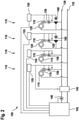
- figure 2 shows an example of a further heating system 100 with two consumer circuits 110 with radiators 115 and two further consumer circuits 110 with underfloor heating 120.
- a flow sensor 170 is provided on each consumer circuit 110 and the provision of a request for a flow temperature of a consumer circuit 170 is suppressed if the specific volume flow predetermined threshold value, in particular zero, falls below.
- FIG 3 shows a flowchart of a method 300 for controlling a heating system 100.
- the method 300 begins in a step 305.
- a step 310 a required flow temperature is determined for each existing consumer circuit 110.
- a step 320 carried out for each consumer circuit 110 the specific requirement is only provided if the associated need is also given.
- the order of steps 310 to 320 can be varied and, for example, a required one can be omitted To determine the flow temperature if the heat demand is zero.
- Steps 310 to 320 of the individual consumer circuits 110 can be carried out independently of one another in terms of time, and also at different times.
Landscapes
- Engineering & Computer Science (AREA)
- Physics & Mathematics (AREA)
- Thermal Sciences (AREA)
- Chemical & Material Sciences (AREA)
- Combustion & Propulsion (AREA)
- Mechanical Engineering (AREA)
- General Engineering & Computer Science (AREA)
- Steam Or Hot-Water Central Heating Systems (AREA)
Claims (5)
- Système de chauffage comprenant un appareil de chauffage (105) et plusieurs circuits consommateurs (110), un fluide (125) de transfert de chaleur circulant entre l'appareil de chauffage (105) et les circuits consommateurs (110),un dispositif de commande (155) étant associé à chaque circuit consommateur (110), chaque dispositif de commande (155) comprenant les éléments suivants :- un dispositif de balayage (170) destiné à déterminer la présence d'une demande de chaleur dans le circuit consommateur (110), le dispositif de balayage (170) étant conçu pour déterminer la présence de la demande de chaleur lorsqu'un flux volumique du fluide (125) à travers le circuit consommateur (110) dépasse une valeur seuil prédéterminée ;caractérisé en ce que chaque dispositif de commande (155) comprend un moyen de traitement qui est conçu pour fournir une demande de température de canalisation montante prédéterminée à l'appareil de chauffage (105) uniquement en présence d'une demande de chaleur ; et en ce quel'appareil de chauffage (105) est conçu pour chauffer le fluide (125) à la plus élevée des températures de canalisation montante demandées.
- Système de chauffage selon la revendication précédente, caractérisé en ce que la valeur seuil est sensiblement nulle.
- Système de chauffage selon l'une des revendications 1 à 2, caractérisé en ce que deux circuits consommateurs (110) sont associés à des températures de canalisation montante différentes.
- Système de chauffage selon l'une des revendications 1 à 3,
caractérisé en ce que l'un des circuits consommateurs (110) comprend un moyen de mélange (160) destiné à mélanger le fluide (125) de la canalisation montante (130) au fluide (125) de la canalisation de retour (135) afin d'atteindre la température de canalisation montante demandée. - Système de chauffage selon l'une des revendications 1 à 4,
caractérisé en ce que
une bifurcation hydraulique (145) est disposée entre l'appareil de chauffage (105) et les circuits consommateurs (110).
Applications Claiming Priority (1)
| Application Number | Priority Date | Filing Date | Title |
|---|---|---|---|
| DE102017203133.6A DE102017203133A1 (de) | 2017-02-27 | 2017-02-27 | Verfahren und Vorrichtung zur Steuerung eines Heizsystems |
Publications (2)
| Publication Number | Publication Date |
|---|---|
| EP3367005A1 EP3367005A1 (fr) | 2018-08-29 |
| EP3367005B1 true EP3367005B1 (fr) | 2022-01-26 |
Family
ID=61187154
Family Applications (1)
| Application Number | Title | Priority Date | Filing Date |
|---|---|---|---|
| EP18155484.1A Active EP3367005B1 (fr) | 2017-02-27 | 2018-02-07 | Système de chauffage |
Country Status (2)
| Country | Link |
|---|---|
| EP (1) | EP3367005B1 (fr) |
| DE (1) | DE102017203133A1 (fr) |
Families Citing this family (1)
| Publication number | Priority date | Publication date | Assignee | Title |
|---|---|---|---|---|
| DE102022133190A1 (de) * | 2022-12-14 | 2024-06-20 | Vaillant Gmbh | Verfahren zum Betreiben einer Heizungsanlage, Computerprogramm, Regel- und Steuergerät und Heizungsanlagen |
Family Cites Families (5)
| Publication number | Priority date | Publication date | Assignee | Title |
|---|---|---|---|---|
| DE102011001223A1 (de) * | 2011-03-11 | 2012-09-13 | SCHÜCO International KG | Heizungsanlage sowie Betriebsverfahren und Steuereinrichtung für eine Heizungsanlage |
| DE102012101850A1 (de) * | 2012-03-06 | 2013-09-12 | Stefan Jöken | Verfahren zur bedarfsgeführten Regelung eines Wärmeerzeugers in einer Heizungsanlage |
| DE102012208994A1 (de) * | 2012-05-29 | 2013-12-05 | Mattias Grosse | Vorrichtung zum Regeln der Raumtemperatur |
| DE102013003933A1 (de) * | 2013-03-08 | 2014-09-11 | Paw Gmbh & Co. Kg | Vorrichtung zum Heizen von Räumen,umfaasend zumindest eine zentrale Wärmequelle und umfassend den Räumen zugeordnete Heizkreise |
| DE102013105786B4 (de) * | 2013-06-05 | 2017-08-03 | Michael Jeromin | Verfahren zur Regelung einer Zentral-Heizungsanlage |
-
2017
- 2017-02-27 DE DE102017203133.6A patent/DE102017203133A1/de not_active Withdrawn
-
2018
- 2018-02-07 EP EP18155484.1A patent/EP3367005B1/fr active Active
Also Published As
| Publication number | Publication date |
|---|---|
| EP3367005A1 (fr) | 2018-08-29 |
| DE102017203133A1 (de) | 2018-08-30 |
Similar Documents
| Publication | Publication Date | Title |
|---|---|---|
| EP3032181B1 (fr) | Systeme de chauffage comprenant un chauffe-eau | |
| DE102010044535B4 (de) | Warmwasserbereitungsanlage und Verfahren zum Betreiben einer Warmwasserbereitungsanlage | |
| DE102013009608A1 (de) | Wärmequellen-Auswahlvorrichtung für ein Wärmequellensystem, ein Verfahren davon und ein Wärmequellensystem | |
| DE60119551T2 (de) | Fernwärmeanordnung, lokale Einheit einer Fernwärmeanordnung, Steuereinheit für die lokale Einheit und Verfahren zum Betreiben einer Fernwärmeanordnung | |
| AT406081B (de) | Heizanlage | |
| EP3367005B1 (fr) | Système de chauffage | |
| EP1207355B1 (fr) | Installation centrale de chauffage et/ou de réfrigération pour au moins une bâtiment | |
| EP3800403B1 (fr) | Procédé de fonctionnement d'un dispositif de chauffage, dispositif de chauffage | |
| EP3980695B1 (fr) | Procédé pour faire fonctionner une installation de chauffage comprenant une pompe de chaleur et installation de chauffage | |
| DE10259279B3 (de) | Versorgungssystem für Heiz-oder Kühlwasser sowie Verfahren zum Betreiben desselben | |
| EP2014992A1 (fr) | Répartiteur d'installations de température | |
| DE102020211169A1 (de) | Verfahren zum Steuern eines Heizungssystems | |
| WO2020228921A1 (fr) | Procédé pour faire fonctionner un système de circulation thermorégulé ainsi que système de circulation thermorégulé | |
| DE102005035821B3 (de) | Thermische Solaranlage | |
| EP3997389B1 (fr) | Procédé de commande d'un ensemble composé d'une pompe de chauffage et d'une vanne mélangeuse à trois voies | |
| EP1710512B1 (fr) | Procédé pour faire fonctionner une installation de chaufage comportant un mélangeur | |
| EP2339247B1 (fr) | Procédé de chauffage d'eau non potable | |
| DE202016004616U1 (de) | System zur flächenmäßigen Wärmeübertragung und Verteiler eines solchen Systems | |
| AT526014A1 (de) | Verfahren zum Kühlen oder Heizen von Räumen | |
| AT410250B (de) | Massenstrom-stabilisierungsbrücke für ein warmwasserzirkulationssystem und warmwasserzirkulationssystem | |
| DE102018213258A1 (de) | Verfahren und Vorrichtung zur Steuerung eines Heizsystems | |
| DE102020118676A1 (de) | Verfahren zum Betrieb einer wärmetechnischen Anlage | |
| EP2835599B1 (fr) | Échangeur thermique primaire d'un appareil de chauffage à condensation | |
| DE102019000775A1 (de) | System aus hintereinander geschalteten Heizkreisen mit unterschiedlichen Temperaturniveaus | |
| DE102014116368A1 (de) | Wärmeübertragungssystem für Gebäude |
Legal Events
| Date | Code | Title | Description |
|---|---|---|---|
| PUAI | Public reference made under article 153(3) epc to a published international application that has entered the european phase |
Free format text: ORIGINAL CODE: 0009012 |
|
| STAA | Information on the status of an ep patent application or granted ep patent |
Free format text: STATUS: THE APPLICATION HAS BEEN PUBLISHED |
|
| AK | Designated contracting states |
Kind code of ref document: A1 Designated state(s): AL AT BE BG CH CY CZ DE DK EE ES FI FR GB GR HR HU IE IS IT LI LT LU LV MC MK MT NL NO PL PT RO RS SE SI SK SM TR |
|
| AX | Request for extension of the european patent |
Extension state: BA ME |
|
| STAA | Information on the status of an ep patent application or granted ep patent |
Free format text: STATUS: REQUEST FOR EXAMINATION WAS MADE |
|
| 17P | Request for examination filed |
Effective date: 20190228 |
|
| RBV | Designated contracting states (corrected) |
Designated state(s): AL AT BE BG CH CY CZ DE DK EE ES FI FR GB GR HR HU IE IS IT LI LT LU LV MC MK MT NL NO PL PT RO RS SE SI SK SM TR |
|
| STAA | Information on the status of an ep patent application or granted ep patent |
Free format text: STATUS: EXAMINATION IS IN PROGRESS |
|
| 17Q | First examination report despatched |
Effective date: 20191031 |
|
| RAP1 | Party data changed (applicant data changed or rights of an application transferred) |
Owner name: ROBERT BOSCH GMBH |
|
| GRAP | Despatch of communication of intention to grant a patent |
Free format text: ORIGINAL CODE: EPIDOSNIGR1 |
|
| STAA | Information on the status of an ep patent application or granted ep patent |
Free format text: STATUS: GRANT OF PATENT IS INTENDED |
|
| INTG | Intention to grant announced |
Effective date: 20210408 |
|
| GRAJ | Information related to disapproval of communication of intention to grant by the applicant or resumption of examination proceedings by the epo deleted |
Free format text: ORIGINAL CODE: EPIDOSDIGR1 |
|
| STAA | Information on the status of an ep patent application or granted ep patent |
Free format text: STATUS: EXAMINATION IS IN PROGRESS |
|
| INTC | Intention to grant announced (deleted) | ||
| GRAP | Despatch of communication of intention to grant a patent |
Free format text: ORIGINAL CODE: EPIDOSNIGR1 |
|
| STAA | Information on the status of an ep patent application or granted ep patent |
Free format text: STATUS: GRANT OF PATENT IS INTENDED |
|
| INTG | Intention to grant announced |
Effective date: 20211008 |
|
| GRAS | Grant fee paid |
Free format text: ORIGINAL CODE: EPIDOSNIGR3 |
|
| GRAA | (expected) grant |
Free format text: ORIGINAL CODE: 0009210 |
|
| STAA | Information on the status of an ep patent application or granted ep patent |
Free format text: STATUS: THE PATENT HAS BEEN GRANTED |
|
| AK | Designated contracting states |
Kind code of ref document: B1 Designated state(s): AL AT BE BG CH CY CZ DE DK EE ES FI FR GB GR HR HU IE IS IT LI LT LU LV MC MK MT NL NO PL PT RO RS SE SI SK SM TR |
|
| REG | Reference to a national code |
Ref country code: GB Ref legal event code: FG4D Free format text: NOT ENGLISH |
|
| REG | Reference to a national code |
Ref country code: CH Ref legal event code: EP |
|
| REG | Reference to a national code |
Ref country code: AT Ref legal event code: REF Ref document number: 1465563 Country of ref document: AT Kind code of ref document: T Effective date: 20220215 |
|
| REG | Reference to a national code |
Ref country code: IE Ref legal event code: FG4D Free format text: LANGUAGE OF EP DOCUMENT: GERMAN |
|
| REG | Reference to a national code |
Ref country code: DE Ref legal event code: R096 Ref document number: 502018008617 Country of ref document: DE |
|
| REG | Reference to a national code |
Ref country code: SE Ref legal event code: TRGR |
|
| REG | Reference to a national code |
Ref country code: LT Ref legal event code: MG9D |
|
| REG | Reference to a national code |
Ref country code: NL Ref legal event code: MP Effective date: 20220126 |
|
| PG25 | Lapsed in a contracting state [announced via postgrant information from national office to epo] |
Ref country code: NL Free format text: LAPSE BECAUSE OF FAILURE TO SUBMIT A TRANSLATION OF THE DESCRIPTION OR TO PAY THE FEE WITHIN THE PRESCRIBED TIME-LIMIT Effective date: 20220126 |
|
| PG25 | Lapsed in a contracting state [announced via postgrant information from national office to epo] |
Ref country code: RS Free format text: LAPSE BECAUSE OF FAILURE TO SUBMIT A TRANSLATION OF THE DESCRIPTION OR TO PAY THE FEE WITHIN THE PRESCRIBED TIME-LIMIT Effective date: 20220126 Ref country code: PT Free format text: LAPSE BECAUSE OF FAILURE TO SUBMIT A TRANSLATION OF THE DESCRIPTION OR TO PAY THE FEE WITHIN THE PRESCRIBED TIME-LIMIT Effective date: 20220526 Ref country code: NO Free format text: LAPSE BECAUSE OF FAILURE TO SUBMIT A TRANSLATION OF THE DESCRIPTION OR TO PAY THE FEE WITHIN THE PRESCRIBED TIME-LIMIT Effective date: 20220426 Ref country code: LT Free format text: LAPSE BECAUSE OF FAILURE TO SUBMIT A TRANSLATION OF THE DESCRIPTION OR TO PAY THE FEE WITHIN THE PRESCRIBED TIME-LIMIT Effective date: 20220126 Ref country code: HR Free format text: LAPSE BECAUSE OF FAILURE TO SUBMIT A TRANSLATION OF THE DESCRIPTION OR TO PAY THE FEE WITHIN THE PRESCRIBED TIME-LIMIT Effective date: 20220126 Ref country code: ES Free format text: LAPSE BECAUSE OF FAILURE TO SUBMIT A TRANSLATION OF THE DESCRIPTION OR TO PAY THE FEE WITHIN THE PRESCRIBED TIME-LIMIT Effective date: 20220126 Ref country code: BG Free format text: LAPSE BECAUSE OF FAILURE TO SUBMIT A TRANSLATION OF THE DESCRIPTION OR TO PAY THE FEE WITHIN THE PRESCRIBED TIME-LIMIT Effective date: 20220426 |
|
| PG25 | Lapsed in a contracting state [announced via postgrant information from national office to epo] |
Ref country code: PL Free format text: LAPSE BECAUSE OF FAILURE TO SUBMIT A TRANSLATION OF THE DESCRIPTION OR TO PAY THE FEE WITHIN THE PRESCRIBED TIME-LIMIT Effective date: 20220126 Ref country code: LV Free format text: LAPSE BECAUSE OF FAILURE TO SUBMIT A TRANSLATION OF THE DESCRIPTION OR TO PAY THE FEE WITHIN THE PRESCRIBED TIME-LIMIT Effective date: 20220126 Ref country code: GR Free format text: LAPSE BECAUSE OF FAILURE TO SUBMIT A TRANSLATION OF THE DESCRIPTION OR TO PAY THE FEE WITHIN THE PRESCRIBED TIME-LIMIT Effective date: 20220427 Ref country code: FI Free format text: LAPSE BECAUSE OF FAILURE TO SUBMIT A TRANSLATION OF THE DESCRIPTION OR TO PAY THE FEE WITHIN THE PRESCRIBED TIME-LIMIT Effective date: 20220126 |
|
| PG25 | Lapsed in a contracting state [announced via postgrant information from national office to epo] |
Ref country code: IS Free format text: LAPSE BECAUSE OF FAILURE TO SUBMIT A TRANSLATION OF THE DESCRIPTION OR TO PAY THE FEE WITHIN THE PRESCRIBED TIME-LIMIT Effective date: 20220526 |
|
| REG | Reference to a national code |
Ref country code: CH Ref legal event code: PL |
|
| REG | Reference to a national code |
Ref country code: BE Ref legal event code: MM Effective date: 20220228 |
|
| REG | Reference to a national code |
Ref country code: DE Ref legal event code: R097 Ref document number: 502018008617 Country of ref document: DE |
|
| PG25 | Lapsed in a contracting state [announced via postgrant information from national office to epo] |
Ref country code: SM Free format text: LAPSE BECAUSE OF FAILURE TO SUBMIT A TRANSLATION OF THE DESCRIPTION OR TO PAY THE FEE WITHIN THE PRESCRIBED TIME-LIMIT Effective date: 20220126 Ref country code: SK Free format text: LAPSE BECAUSE OF FAILURE TO SUBMIT A TRANSLATION OF THE DESCRIPTION OR TO PAY THE FEE WITHIN THE PRESCRIBED TIME-LIMIT Effective date: 20220126 Ref country code: RO Free format text: LAPSE BECAUSE OF FAILURE TO SUBMIT A TRANSLATION OF THE DESCRIPTION OR TO PAY THE FEE WITHIN THE PRESCRIBED TIME-LIMIT Effective date: 20220126 Ref country code: MC Free format text: LAPSE BECAUSE OF FAILURE TO SUBMIT A TRANSLATION OF THE DESCRIPTION OR TO PAY THE FEE WITHIN THE PRESCRIBED TIME-LIMIT Effective date: 20220126 Ref country code: LU Free format text: LAPSE BECAUSE OF NON-PAYMENT OF DUE FEES Effective date: 20220207 Ref country code: EE Free format text: LAPSE BECAUSE OF FAILURE TO SUBMIT A TRANSLATION OF THE DESCRIPTION OR TO PAY THE FEE WITHIN THE PRESCRIBED TIME-LIMIT Effective date: 20220126 Ref country code: DK Free format text: LAPSE BECAUSE OF FAILURE TO SUBMIT A TRANSLATION OF THE DESCRIPTION OR TO PAY THE FEE WITHIN THE PRESCRIBED TIME-LIMIT Effective date: 20220126 Ref country code: CZ Free format text: LAPSE BECAUSE OF FAILURE TO SUBMIT A TRANSLATION OF THE DESCRIPTION OR TO PAY THE FEE WITHIN THE PRESCRIBED TIME-LIMIT Effective date: 20220126 |
|
| PG25 | Lapsed in a contracting state [announced via postgrant information from national office to epo] |
Ref country code: AL Free format text: LAPSE BECAUSE OF FAILURE TO SUBMIT A TRANSLATION OF THE DESCRIPTION OR TO PAY THE FEE WITHIN THE PRESCRIBED TIME-LIMIT Effective date: 20220126 |
|
| PLBE | No opposition filed within time limit |
Free format text: ORIGINAL CODE: 0009261 |
|
| STAA | Information on the status of an ep patent application or granted ep patent |
Free format text: STATUS: NO OPPOSITION FILED WITHIN TIME LIMIT |
|
| 26N | No opposition filed |
Effective date: 20221027 |
|
| PG25 | Lapsed in a contracting state [announced via postgrant information from national office to epo] |
Ref country code: LI Free format text: LAPSE BECAUSE OF NON-PAYMENT OF DUE FEES Effective date: 20220228 Ref country code: IE Free format text: LAPSE BECAUSE OF NON-PAYMENT OF DUE FEES Effective date: 20220207 Ref country code: CH Free format text: LAPSE BECAUSE OF NON-PAYMENT OF DUE FEES Effective date: 20220228 |
|
| PG25 | Lapsed in a contracting state [announced via postgrant information from national office to epo] |
Ref country code: SI Free format text: LAPSE BECAUSE OF FAILURE TO SUBMIT A TRANSLATION OF THE DESCRIPTION OR TO PAY THE FEE WITHIN THE PRESCRIBED TIME-LIMIT Effective date: 20220126 Ref country code: BE Free format text: LAPSE BECAUSE OF NON-PAYMENT OF DUE FEES Effective date: 20220228 |
|
| PG25 | Lapsed in a contracting state [announced via postgrant information from national office to epo] |
Ref country code: IT Free format text: LAPSE BECAUSE OF FAILURE TO SUBMIT A TRANSLATION OF THE DESCRIPTION OR TO PAY THE FEE WITHIN THE PRESCRIBED TIME-LIMIT Effective date: 20220126 |
|
| PG25 | Lapsed in a contracting state [announced via postgrant information from national office to epo] |
Ref country code: HU Free format text: LAPSE BECAUSE OF FAILURE TO SUBMIT A TRANSLATION OF THE DESCRIPTION OR TO PAY THE FEE WITHIN THE PRESCRIBED TIME-LIMIT; INVALID AB INITIO Effective date: 20180207 |
|
| PG25 | Lapsed in a contracting state [announced via postgrant information from national office to epo] |
Ref country code: MK Free format text: LAPSE BECAUSE OF FAILURE TO SUBMIT A TRANSLATION OF THE DESCRIPTION OR TO PAY THE FEE WITHIN THE PRESCRIBED TIME-LIMIT Effective date: 20220126 Ref country code: CY Free format text: LAPSE BECAUSE OF FAILURE TO SUBMIT A TRANSLATION OF THE DESCRIPTION OR TO PAY THE FEE WITHIN THE PRESCRIBED TIME-LIMIT Effective date: 20220126 |
|
| PG25 | Lapsed in a contracting state [announced via postgrant information from national office to epo] |
Ref country code: MT Free format text: LAPSE BECAUSE OF FAILURE TO SUBMIT A TRANSLATION OF THE DESCRIPTION OR TO PAY THE FEE WITHIN THE PRESCRIBED TIME-LIMIT Effective date: 20220126 |
|
| PGFP | Annual fee paid to national office [announced via postgrant information from national office to epo] |
Ref country code: DE Payment date: 20250422 Year of fee payment: 8 |
|
| PG25 | Lapsed in a contracting state [announced via postgrant information from national office to epo] |
Ref country code: TR Free format text: LAPSE BECAUSE OF FAILURE TO SUBMIT A TRANSLATION OF THE DESCRIPTION OR TO PAY THE FEE WITHIN THE PRESCRIBED TIME-LIMIT Effective date: 20220126 |
|
| PGFP | Annual fee paid to national office [announced via postgrant information from national office to epo] |
Ref country code: SE Payment date: 20260218 Year of fee payment: 9 |
|
| PGFP | Annual fee paid to national office [announced via postgrant information from national office to epo] |
Ref country code: GB Payment date: 20260219 Year of fee payment: 9 |
|
| PGFP | Annual fee paid to national office [announced via postgrant information from national office to epo] |
Ref country code: AT Payment date: 20260216 Year of fee payment: 9 |
|
| PGFP | Annual fee paid to national office [announced via postgrant information from national office to epo] |
Ref country code: FR Payment date: 20260219 Year of fee payment: 9 |