EP3367258A1 - Procédé de détermination de liste de listes de lecture, dispositif, dispositif électronique et support de stockage - Google Patents
Procédé de détermination de liste de listes de lecture, dispositif, dispositif électronique et support de stockage Download PDFInfo
- Publication number
- EP3367258A1 EP3367258A1 EP16856598.4A EP16856598A EP3367258A1 EP 3367258 A1 EP3367258 A1 EP 3367258A1 EP 16856598 A EP16856598 A EP 16856598A EP 3367258 A1 EP3367258 A1 EP 3367258A1
- Authority
- EP
- European Patent Office
- Prior art keywords
- playlists
- music
- target user
- preselected
- feature data
- Prior art date
- Legal status (The legal status is an assumption and is not a legal conclusion. Google has not performed a legal analysis and makes no representation as to the accuracy of the status listed.)
- Ceased
Links
Images



Classifications
-
- G—PHYSICS
- G06—COMPUTING OR CALCULATING; COUNTING
- G06F—ELECTRIC DIGITAL DATA PROCESSING
- G06F16/00—Information retrieval; Database structures therefor; File system structures therefor
- G06F16/60—Information retrieval; Database structures therefor; File system structures therefor of audio data
- G06F16/63—Querying
- G06F16/638—Presentation of query results
- G06F16/639—Presentation of query results using playlists
-
- G—PHYSICS
- G06—COMPUTING OR CALCULATING; COUNTING
- G06F—ELECTRIC DIGITAL DATA PROCESSING
- G06F16/00—Information retrieval; Database structures therefor; File system structures therefor
- G06F16/40—Information retrieval; Database structures therefor; File system structures therefor of multimedia data, e.g. slideshows comprising image and additional audio data
-
- G—PHYSICS
- G06—COMPUTING OR CALCULATING; COUNTING
- G06F—ELECTRIC DIGITAL DATA PROCESSING
- G06F16/00—Information retrieval; Database structures therefor; File system structures therefor
-
- G—PHYSICS
- G06—COMPUTING OR CALCULATING; COUNTING
- G06F—ELECTRIC DIGITAL DATA PROCESSING
- G06F16/00—Information retrieval; Database structures therefor; File system structures therefor
- G06F16/20—Information retrieval; Database structures therefor; File system structures therefor of structured data, e.g. relational data
- G06F16/24—Querying
- G06F16/245—Query processing
- G06F16/2457—Query processing with adaptation to user needs
- G06F16/24578—Query processing with adaptation to user needs using ranking
-
- G—PHYSICS
- G06—COMPUTING OR CALCULATING; COUNTING
- G06F—ELECTRIC DIGITAL DATA PROCESSING
- G06F16/00—Information retrieval; Database structures therefor; File system structures therefor
- G06F16/40—Information retrieval; Database structures therefor; File system structures therefor of multimedia data, e.g. slideshows comprising image and additional audio data
- G06F16/43—Querying
- G06F16/432—Query formulation
- G06F16/433—Query formulation using audio data
-
- G—PHYSICS
- G06—COMPUTING OR CALCULATING; COUNTING
- G06F—ELECTRIC DIGITAL DATA PROCESSING
- G06F16/00—Information retrieval; Database structures therefor; File system structures therefor
- G06F16/40—Information retrieval; Database structures therefor; File system structures therefor of multimedia data, e.g. slideshows comprising image and additional audio data
- G06F16/43—Querying
- G06F16/438—Presentation of query results
- G06F16/4387—Presentation of query results by the use of playlists
-
- G—PHYSICS
- G06—COMPUTING OR CALCULATING; COUNTING
- G06F—ELECTRIC DIGITAL DATA PROCESSING
- G06F16/00—Information retrieval; Database structures therefor; File system structures therefor
- G06F16/60—Information retrieval; Database structures therefor; File system structures therefor of audio data
- G06F16/63—Querying
- G06F16/635—Filtering based on additional data, e.g. user or group profiles
-
- G—PHYSICS
- G06—COMPUTING OR CALCULATING; COUNTING
- G06F—ELECTRIC DIGITAL DATA PROCESSING
- G06F16/00—Information retrieval; Database structures therefor; File system structures therefor
- G06F16/60—Information retrieval; Database structures therefor; File system structures therefor of audio data
- G06F16/68—Retrieval characterised by using metadata, e.g. metadata not derived from the content or metadata generated manually
-
- G—PHYSICS
- G06—COMPUTING OR CALCULATING; COUNTING
- G06F—ELECTRIC DIGITAL DATA PROCESSING
- G06F16/00—Information retrieval; Database structures therefor; File system structures therefor
- G06F16/60—Information retrieval; Database structures therefor; File system structures therefor of audio data
- G06F16/68—Retrieval characterised by using metadata, e.g. metadata not derived from the content or metadata generated manually
- G06F16/686—Retrieval characterised by using metadata, e.g. metadata not derived from the content or metadata generated manually using information manually generated, e.g. tags, keywords, comments, title or artist information, time, location or usage information, user ratings
-
- G—PHYSICS
- G06—COMPUTING OR CALCULATING; COUNTING
- G06Q—INFORMATION AND COMMUNICATION TECHNOLOGY [ICT] SPECIALLY ADAPTED FOR ADMINISTRATIVE, COMMERCIAL, FINANCIAL, MANAGERIAL OR SUPERVISORY PURPOSES; SYSTEMS OR METHODS SPECIALLY ADAPTED FOR ADMINISTRATIVE, COMMERCIAL, FINANCIAL, MANAGERIAL OR SUPERVISORY PURPOSES, NOT OTHERWISE PROVIDED FOR
- G06Q30/00—Commerce
- G06Q30/02—Marketing; Price estimation or determination; Fundraising
-
- G—PHYSICS
- G06—COMPUTING OR CALCULATING; COUNTING
- G06Q—INFORMATION AND COMMUNICATION TECHNOLOGY [ICT] SPECIALLY ADAPTED FOR ADMINISTRATIVE, COMMERCIAL, FINANCIAL, MANAGERIAL OR SUPERVISORY PURPOSES; SYSTEMS OR METHODS SPECIALLY ADAPTED FOR ADMINISTRATIVE, COMMERCIAL, FINANCIAL, MANAGERIAL OR SUPERVISORY PURPOSES, NOT OTHERWISE PROVIDED FOR
- G06Q30/00—Commerce
- G06Q30/06—Buying, selling or leasing transactions
- G06Q30/0601—Electronic shopping [e-shopping]
- G06Q30/0631—Recommending goods or services
Definitions
- the present invention relates to the technical field of playlist data processing, and in particular, to a playlist list determination method and device, an electronic equipment, and a storage medium.
- a playlist list is a set of the playlist recommended to a user by a music player application.
- a playlist may be a set of multiple songs.
- the music player application such as a webpage providing a music playing service, a client installed on a user terminal for providing the music playing service, and so on.
- a playlist list determination approach mainly includes: selecting, according to a type of a playlist list, playlists with types thereof corresponding to the type of the playlist list from a playlist library, and gathering the selected playlists into the playlist list, for example, if the type of a playlist list is "hot", then hot playlists can be selected from the playlist library, and the selected hot playlists are gathered into the playlist list to form a playlist list having the hot playlists.
- Embodiments of the present invention provide a playlist list determination method and device, an electronic equipment, and a storage medium, so that playlists in a playlist list have a relatively high correlation with a user to who a recommendation is made, thereby providing the probability of improving the listening conversion rate of the playlist list.
- a playlist list determination method comprising:
- a playlist list determination device comprising one or more processors, and a storage medium in which operating instructions are stored; when the operating instructions in the storage medium are run, the processor executes the following steps:
- the probability that the target user prefers the playlists in the playlist list is enhanced, so that the probability that the target user clicks and listens to the playlist list determined by the embodiments of the present application, after being recommended to the target user, is enhanced, thereby providing a probability of improving the listening conversion rate of the playlist list.
- the playlist list determination method provided by the embodiments of the present application can make playlists in a playlist list have a relatively high correlation with a user to which a recommendation is made, thereby providing the probability of improving the listening conversion rate of the playlist list.
- Fig. 1 is a flow chart of a playlist list determination method provided by an embodiment of the present application.
- the method can be applied to an electronic equipment, such as a server providing a music playing service, an equipment having data processing capability on the user side, or the like.
- the method may include steps S100 to S140.
- step S100 a plurality of preselected playlists are determined.
- the plurality of preselected playlists may be selected from a playlist library.
- playlist data of the playlist library mainly comes from User Generated Content (UGC) data
- UGC User Generated Content
- the selection rule may include: a playlist name conforms to a predetermined playlist name writing rule, playlist description content conforms to a predetermined playlist description content writing rule, song-related number data in the playlist conforms to a predetermined number requirement, and song-related listening data in the playlist conforms to a predetermined listening requirement, etc.
- step S110 feature data of music features of each preselected playlist and feature data of music features preferred by a target user are determined.
- the music features may be considered as types of music attributes of the playlist.
- the types of the music attributes may include singers, songs, genres, decades, languages, melodies, and the like of the playlist.
- the type of at least one music attribute of the playlist can be preset as the music feature of the playlist, so that at least one music feature is preset.
- one or more of the types of the music attributes, such as the singers, songs, genres, decades, languages, and melodies of the playlist can be selected as the music features of the playlist.
- a singer feature of the playlist may take a singer number set of songs in the playlist as a feature vector. For example, if a playlist includes two songs of a singer A, one song of a singer B, and two songs of a singer C, then the singer features of the playlist are (singer A, 2), (singer B, 1), and (singer C, 2).
- genres of songs which have the largest number in the playlist, can be selected as the genre of the playlist.
- the genre feature of the playlist may take the number of songs in each genre of the playlist as a feature vector.
- Other music features in the playlist such as decades, languages, and melodies, may also be determined according to the method above.
- the music features of the playlist may include information of the songs, such as the genres, languages, decades, play amounts, and the like.
- the feature data of each music feature of the preselected playlist may be determined by the embodiments of the present application, and the feature data of the music feature may be considered as a value representative of the music feature.
- related data of the music feature can be abstracted to a music feature vector in the embodiments of the present application, and the value of the music feature vector of the music feature is calculated to obtain a feature value of the music feature vector of the music feature.
- the feature value of the music feature may be considered as the feature data of the music feature.
- the feature data of each music feature in each preselected playlist can be determined by determining the feature value of each music feature in each preselected playlist.
- the related data of the singer feature of each preselected playlist may be abstracted to a singer feature vector
- the related data of the song feature may be abstracted to a song feature vector
- the related data of the genre feature may be abstracted to a genre feature vector, so as to obtain a feature value of the singer feature vector, a feature value of the song feature, and a feature value of the genre feature value of each preselected playlist, thereby determining a feature data of the singer feature, a feature data of the song feature, and a feature data of the genre feature of each preselected playlist.
- the target user is a user to which the playlist list is recommended.
- the music features preferred by the target user correspond to the music features of the playlists set in the embodiments of the present application. For example, when the music features of the playlists include the singer feature, the song feature, and the genre feature, the music features preferred by the target user also include the singer feature, the song feature, and the genre feature.
- the target user may define the specific content of the preferred music features, and calculate the feature value of the specific content of each music feature preferred by the target user, so that the feature data of each music feature preferred by the target user can be obtained.
- the music features preferred by the target user can also be obtained by analyzing historical data of music listened by the target user in the embodiments of the present application.
- step S120 correlation coefficients between the feature data of each of the same music features of each preselected playlist and the target user are determined.
- the correlation coefficients between the feature data of the same music features of the preselected playlists and the target user can be determined.
- the correlation coefficients between the preselected playlist and the target user, in terms of the feature data of the singer feature, the feature data of the song feature, and the feature data of the genre feature, can be determined.
- the correlation coefficients between the feature data of the same music features of the preselected playlists and the target user reflect the correlations between the same music features of the preselected catalysts and the target user.
- the correlation between the feature data of the same music features of the preselected playlist and the target user may be determined by determining the Pearson correlation coefficients between the feature data of the same music features of the preselected playlists and the target user.
- step S130 candidate playlists from the plurality of preselected playlists is determined according to the correlation coefficients between the feature data of the same music features of each preselected playlist and the target user.
- the candidate playlists are the playlists having higher correlations with the target user in terms of the same music features in the plurality of preselected playlists.
- the playlists preferred by the target user in the preselected playlists can be determined by synthesizing the correlation coefficients of the feature data of all the same music features of the preselected playlists and the target user in the embodiments of the present application, so as to determine the playlists preferred by the target user in the plurality of preselected playlists to be the candidate playlists.
- the number of the determined candidate playlists is multiple, but less than the number of the plurality of preselected playlists.
- step S140 playlists constituting a playlist list is determined from the candidate playlists.
- playlists can also be selected from the candidate playlists to constitute a playlist list.
- the correlations between the same music features of the preselected playlists and the target user may be obtained by determining the correlation coefficients between the feature data of the same music features of the preselected playlists and the target user in the embodiments of the present application, so as to determine playlists having higher correlations with the target users in terms of the same music features from the plurality of preselected playlists, and obtain the candidate playlists preferred by the target user.
- the playlists constituting the playlist list are determined from the candidate playlists preferred by the target user, so that the probability that the target user prefers the playlists in the playlist list is enhanced, and the probability that the target user clicks and listens to the playlist list determined by the embodiments of the present application, after being recommended to the target user, is enhanced, thereby providing a probability of improving the listening conversion rate of the playlist list.
- the playlist list determination method provided by the embodiments of the present application can make playlists in a playlist list have a relatively high correlation with a user to which a recommendation is made, thereby providing the probability of improving the listening conversion rate of the playlist list.
- the correlation coefficients between the feature data of the same music features of the preselected playlists and the target user may be Pearson correlation coefficients. Accordingly, the correlation coefficients between the feature data of each of the same music features of the preselected playlists and the target user may be determined as follows:
- P ( U , P ) is the Pearson correlation coefficient between the feature data of one of the same music features of the preselected playlist and the target user; U is the feature data of a music feature preferred by the target user; P is the feature data of a same music feature as U in the preselected playlists; * indicates a multiplication sign; and ⁇ ⁇ indicates a square root of a quadratic sum of each feature of the feature data therein.
- U indicates the feature data of the singer feature in the playlist (i.e., the feature vector of the singer feature in the playlist)
- the number of singers of each song in the playlist may be used as each feature of U .
- the feature data of the singer feature may be a set of ((singer A, 2), (singer B, 1), (singer C, 2), etc.), then (singer A, 2), (singer B, 1), and (singer C, 2) may be considered as the features of U .
- ⁇ U ⁇ may be considered to be a square root of a quadratic sum of each feature in the singer feature vector.
- the correlation coefficients between the feature data of the same music features of the preselected playlists and the target user may be determined in the way as follows:
- P ( U 1, P 1) is a Pearson correlation coefficient between the singer feature of the preselected playlist and the target user; U 1 is the feature data of a singer feature preferred by the target user; P 1 is the feature data of the singer feature in the preselected playlist.
- P ( U 2, P 2) is the Pearson correlation coefficient between the feature data of the song feature of the preselected playlist and the target user; U 2 is the feature data of a song feature preferred by the target user; P 2 is the feature data of the song feature in the preselected playlist.
- P ( U 3, P 3) is the Pearson correlation coefficient between the feature data of the genre feature of the preselected playlist and the target user; U 3 is the feature data of a genre feature preferred by the target user; P 3 is the feature data of the genre feature in the preselected playlist.
- the Pearson correlation coefficients between the preselected list and the target user in terms of the singer feature, the song feature, and the genre feature, can be obtained respectively.
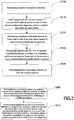
- Fig. 2 shows a flow chart of a method for determining candidate playlists from the plurality of preselected playlists provided by an embodiment of the present application. Referring to Fig. 2 , the method may also include step S200 to step S210.
- the preselected playlists is determined to be candidate playlists if the correlation coefficients between the feature data of all the same music features of the preselected playlists and the target user all satisfy a predetermined coefficient condition.
- the predetermined coefficient condition may be set coefficient values of high correlations between the same music features of the preselected playlists and the target user, and can be specifically set according to actual situations. If the correlation coefficients between the feature data of all the same music features of a certain preselected playlist and the target user all satisfy the predetermined coefficient condition, it can be determined that the preselected playlist has a high correlation with the target user and conforms to the preference of the target user, and the preselected playlist is determined to be a candidate playlist.
- the preselected playlists can be determined as the candidate playlists.
- the preselected playlists is determined to be preselected playlists to be judged if the correlation coefficients between the feature data of the same music features of the preselected playlist and the target user do not satisfy the predetermined coefficient condition, and judging whether the preselected playlists to be judged are the candidate playlists according to music portrait data of the target user.
- the preselected playlists can be determined to be the preselected playlists to be judged as long as the correlation coefficient between the feature data of at least one of the singer feature, the song feature, and the genre feature of the preselected playlists and the target user does not satisfy the predetermined coefficient condition.
- the music portrait data of the target user may be introduced.
- whether the feature data of the music features in the preselected playlists matches the content of the music features indicated in the music portrait data of the target user can be determined, so as to determine whether the target user prefers the preselected playlists according to the matching result.
- the music portrait data is representative of user portrait data in the field of music.
- the user portrait data may be considered as the tagging of user information.
- the user portrait data is obtained by collecting and analyzing data of main information such as user social attributes, living habits, and behaviors in a certain field, and then abstracting overview features of the user in the certain field.
- the user portrait data can help quickly finding a precise user group and implementing the matching of user requirements.
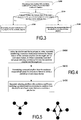
- Fig. 3 shows a flow chart of a method for judging whether the preselected playlists are candidate playlists on the basis of the music portrait data provided by an embodiment of the present application.
- the method may include step S300 to step S330.
- step S300 music features with correlation coefficients not satisfying the predetermined coefficient condition are determined.
- the music features with correlation coefficients between the feature data of the preselected playlists to be judged and the target user not satisfying the predetermined coefficient condition are determined in the step S300. For example, if only the correlation coefficient between the feature data of the singer feature of the preselected playlists and the target user does not satisfies the predetermined coefficient condition, then the music feature determined in the step S300 is the singer feature.
- step S310 it is judged whether the feature data of the music features in the preselected playlists to be judged matches content of music features indicated in music portrait data of the target user; if yes, executing step S320; otherwise, executing step S330.
- the embodiments of the present application can directly verify whether the feature data of the music features in the preselected playlists to be judged exists in the content of the music features counted by the music portrait data; if not, mismatching is determined; and if yes, matching is determined.
- step S320 the preselected playlists is determined to be judged to be the candidate playlists.
- step S330 the preselected playlists to be judged is determined not to be the candidate playlists.
- the method shown in Fig. 3 is only a processing mode in the case that the correlation coefficient between the feature data of any one of the same music features of the preselected playlists and the target user does not satisfy the predetermined coefficient condition.
- the embodiments of the present application can also calculate an average value of the correlation coefficients between the feature data of the music features of the preselected playlists to be judged and the target user, and determine whether the preselected playlists to be judged are playlists preferred by the target user according to the calculated average value.
- the average value is greater than a preset average value, it can be determined that the preselected playlists to be judged are the playlists preferred by the target user; when the average value is less than the preset average value, it can be determined that the preselected playlists to be judged are not the playlists preferred by the target user.
- the preset average value may be set according to actual use situations.
- a predetermined number of playlists can further be randomly selected from the candidate playlists to constitute a playlist list.
- the candidate playlists determined according to the correlation coefficients between the feature data of the same music features of each preselected playlist and the target user are the playlists preferred by the target user, most of the candidate playlists focus on a certain music feature, if the playlist list is determined whereby and is recommended to the target user, the target user may listen to the same type of songs for a long time. As a result, the user experience in playlist diversity is reduced, bringing visual and auditory fatigues to the target user.
- the embodiments of the present application can quantize the degrees of liking the pop music, the rock music, and the folk music of the target user according to the correlation coefficients between the feature data of the corresponding music features of each preselected playlist and the target user, i.e., represented by the values of the correlation coefficients between the music features in the playlist. Based on the results obtained by the calculation, the playlists having high correlation coefficients of same music feature are all determined to be the candidate playlists, and the same type of playlists aggregately exist in the playlist list determined by these candidate playlists.
- the first five playlists in a playlist list are pop music related playlists
- the middle three are pop music related playlists
- the last four are folk music related playlists.
- Fig. 4 shows a flow chart of a method for determining playlists constituting a playlist list from candidate playlists provided by an embodiment of the present application. Referring to Fig. 4 , the method may include step S400 to step S420.
- step S400 the playlists and the target user are took as nodes, to separately establish connection relationships between the feature data of all the candidate playlists and the target user for each music feature, so as to obtain a maximum connected sub-graph reflecting correlations between the candidate playlists and the target user.
- the maximum connected sub-graph may be considered as a sub-graph formed by connecting all the nodes in the figure with the fewest edges.
- the edges used for connecting the nodes in the embodiments of the present application may be considered as the correlations between the feature data of the candidate playlists and the target user. For example, if the music features of the playlists include the singer feature, the song feature, and the genre feature, then for the same music features of the playlists and the target user (which are the singer feature, the song feature, and the genre feature respectively), relationships may be established according to the correlations between the feature data of the same music features. After all the relationships are established, these relationships, taken as a whole, form a maximum connected sub-graph.
- step S410 connected playlists are determined from the maximum connected sub-graph for each music feature to obtain a playlist set of each music feature.
- Fig. 5 shows a schematic diagram of sub-graphs of associations between playlists and a user. Cycles in the figure indicate playlists and triangles indicate users.
- the playlists corresponding to the connected nodes may be considered to have correlations, e.g., are all rock music playlists.
- the unconnected playlists are playlists having no association with each other, for example, one sub-graph is a rock music playlist and the other sub-graph is folk music playlist.
- step S420 playlists with correlation coefficients satisfying a predetermined recommendation condition are separately selected from the playlist set of each music feature to constitute a playlist list.
- playlists with correlation coefficients satisfying the predetermined recommendation condition in the playlist set may be considered as the playlists having the highest correlation coefficients in the playlist set.
- playlists with correlation coefficients satisfying the predetermined recommendation condition may also be set according to actual situations.
- the playlists with multiple types and having high correlations with the target user can be obtained.
- the playlist list constituted by these playlists endows the playlists in the playlist list subsequently recommended to the target user with features of diversity and high correlations with the target user, thereby providing the probability of improving the listening conversion rate of the playlists.
- the playlists in the playlist list are sorted in the embodiments of the present application. For example, an average value of the correlation coefficients between the feature data of each music feature of each playlist in the playlist list and the target user can be determined, so as to sort the playlists in the playlist list according to the average value, for example, the playlists in the playlist list are sorted according to the average value in a descending order.
- the embodiments of the present application can determine average values of the correlation coefficients between the feature data of the singer feature, the song feature, and the genre feature of the playlist and the target user, so as to sort the positions of the playlists in the playlist list according to the determined average values of the playlists.
- a plurality of preselected playlists can be determined from a playlist library according to a selection rule in the embodiments of the present application. For example, playlists with playlist name conforming to a predetermined playlist name writing rule, playlist description content conforming to a predetermined playlist description content writing rule, song-related number data in the playlists conforming to a predetermined number requirement, and song-related listening data in the playlists conforming to a predetermined listening requirement can be selected from the playlist library to obtain the plurality of preselected playlists.
- the playlist name may conform to the playlist name writing rule in the following conditions: the number of characters in the playlist name is greater than 5 but less than 20; the number of special symbols in the playlist name is less than 20% of the total number of the characters, and the special symbols include non-mainstream symbols, Martian language symbols, personalized symbols, etc.; there are no more than two blanks at the beginning of the playlist name, and there are not more than three blanks in all the characters of the playlist name; there is no punctuation, such as a comma, a period, an exclamation mark, and an interrogation mark at the beginning of the playlist name, and there are no more than three punctuations in all the characters of the playlist name.
- the playlist description content may conform to the predetermined playlist description content writing rule in the following conditions: the total number of characters in the playlist description content is greater than 5; the number of special symbols in the playlist description content is less than 20% of the total number of the characters.
- the song-related number data in the playlist may be the number of songs, the number of albums, the number of singers, the number of languages, and the like in the playlist.
- the song-related number data in the playlist may conform to the predetermined number requirement in the following conditions: the number of songs is not less than 10; the number of albums is greater than 3, the number of songs belonging to the same album in the playlist is not more than 5; the number of singers is unlimited; and the number of languages of the songs in the playlist is less than 5.
- the song-related listening data in the playlist may be the listening ratio of the songs in the playlist, the full listening ratio of the playlist, the average number of persons listened to the playlist, etc.
- the listening ratio of the songs in the playlist may be the total number of times of listening to the songs in the playlist/the total number of times of listening to all the songs in the playlist library
- the full listening ratio of the playlist may be the average value of full listening ratios of the songs in the playlist
- the full listening ratio of a song is the ratio of the sum of each play duration of the song to (play times * song duration)
- the average number of persons listened to the playlist is the average value of persons listened to each song in the playlist.
- the song-related listening data in the playlist may conform to the predetermined listening requirement in the following conditions: the listening ratio of the songs in the playlist is greater than 90%, the full listening ratio of the playlist is greater than 65%, and the average number of persons listened to the playlist is greater than 3.
- Fig. 6 is another flow chart of a playlist list determination method provided by an embodiment of the present application.
- the method can be applied to an electronic equipment, such as a server providing a music playing service, an equipment having a data processing capability on the user side, or the like.
- the method may include steps S500 to step S590.
- step S500 playlists with playlist name conforming to a predetermined playlist name writing rule, playlist description content conforming to a predetermined playlist description content writing rule, song-related number data in the playlists conforming to a predetermined number requirement, and song-related listening data in the playlists conforming to a predetermined listening requirement are selected from a playlist library, to obtain a plurality of preselected playlists.
- step S510 feature data of music features of each predetermined playlist and feature data of music features preferred by a target user are determined, where one playlist has at least one music feature.
- P ( U , P ) is the Pearson correlation coefficient between the feature data of one of the same music feature of the preselected playlist and the target user; U is the feature data of a music feature preferred by the target user; P is the feature data of the same music feature as U in the preselected playlist.
- the preselected playlists are determined to be candidate playlists if the correlation coefficients between the feature data of all the same music features of the preselected playlists and the target user all satisfy a predetermined coefficient condition.
- the preselected playlists are determined to be preselected playlists to be judged if the correlation coefficient between the feature data of any one of the same music features of the preselected playlist and the target user does not satisfy the predetermined coefficient condition; determining music features with correlation coefficients not satisfying the predetermined coefficient condition; judging whether the feature data of the music features in the preselected playlists to be judged matches content of music features indicated in a music portrait data of the target user; if yes, determining the preselected playlists to be judged to be the candidate playlists; and if not, determining the preselected playlists to be judged not to be the candidate playlists.
- step S550 the playlists and the target user are took as nodes to separately establish connection relationships between the feature data of all the candidate playlists and the target user for each music feature, so as to obtain a maximum connected sub-graph reflecting correlations between the candidate playlists and the target user.
- step S560 connected playlists are determined from the maximum connected sub-graph for each music feature to obtain a playlist set of each music feature.
- step S570 playlists with correlation coefficients satisfying a predetermined recommendation condition are selected from the playlist set of each music feature respectively to form a predetermined number of playlists, so as to constitute a playlist list.
- step S580 an average value of the correlation coefficients between the feature data of each music feature of each playlist in the playlist list and the target user are determined.
- step S590 the playlists in the playlist list are sorted according to the average value.
- the playlist list can be recommended to the target user. Because the recommended playlist list has a relatively high correlation with the target user, the probability of improving the listening conversion rates of the playlists is provided.
- the playlist list determination device provided by the embodiments of the present application is introduced below.
- the playlist list determination device described below may correspond and refer to the playlist list determination method described above.
- Fig. 7 is a structure block diagram of a playlist list determination device provided by an embodiment of the present application.
- the device can be applied to an electronic equipment, such as a server providing a music playing service, an equipment having a data processing capability on the user side, or the like.
- the device may include:
- Fig. 8 shows an optional structure of the correlation coefficient determination module 300 provided by an embodiment of the present application.
- the correlation coefficient determination module 300 may include:
- Fig. 9 shows an optional structure of the candidate playlist determination module 400 provided by an embodiment of the present application.
- the candidate playlist determination module 400 may include:
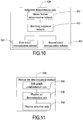
- Fig. 10 shows an optional structure of the judgment unit 420 provided by an embodiment of the present application.
- the judgment unit 420 may include:
- the playlist list determination module 500 may be specifically configured to select a predetermined number of playlists from the candidate lists to constitute a playlist list.
- the playlist list determination module 500 can determine the playlists constituting the playlist list from the candidate playlists in combination with the diversity of the playlists. Accordingly, Fig. 11 shows an optional structure of the playlist list determination module 500 provided by an embodiment of the present application. Referring to Fig. 11 , the playlist list determination module 500 may include:
- Fig. 12 shows another structure of the playlist list determination device provided by an embodiment of the present application.
- the device may further include:
- the preselected playlist determination module 100 may determine a plurality of preselected playlists from a playlist library according to a preset selection rule.
- the preselected playlist determination module 100 may be used to select playlists with playlist name conforming to a predetermined playlist name writing rule, playlist description content conforming to a predetermined playlist description content writing rule, song-related number data in the playlists conforming to a predetermined number requirement, and song-related listening data in the playlists conforming to a predetermined listening requirement from the playlist library to obtain the plurality of preselected playlists.
- the electronic equipment may include the playlist list determination device.
- the playlists in the playlist list is determined by adopting the electronic equipment provided by the embodiments of the present application, allowing the determined playlist lists have a relatively high correlation with the target user, and the probability of improving the listening conversion rates of the playlists is provided.
- Fig. 13 is a block diagram of a hardware structure of an electronic equipment provided by an embodiment of the present application.
- the electronic equipment may be a server, an equipment on the user side, or the like.
- the electronic equipment may include: a processor 1, a communication interface 2, a memory 3, and a communication bus 4; where the processor 1, the communication interface 2, and the memory 3 communicate with each other by means of the communication bus 4.
- the communication interface 2 may be an interface of a communication module, such as an interface of a GSM module, an interface of a CDMA module, and an interface of an LTE module;
- the processor 1 is configured to execute a program;
- the memory 3 is configured to store the program; and
- the program may include a program code that comprises computer operating instructions.
- the processor 1 may be a Central Processing Unit (CPU) or an Application Specific Integrated Circuit (ASIC), and is configured to be one or more integrated circuits for implementing the embodiments of the present application.
- CPU Central Processing Unit
- ASIC Application Specific Integrated Circuit
- the memory 3 may include a high-speed RAM memory, and may also further include a non-volatile memory, such as at least one disk memory.
- the program may be specifically configured to:
- the steps of the method or the algorithm that are described in conjunction with the embodiments disclosed herein can be implemented in the hardware, the software module executed by the processor, or the combination thereof.
- the software module can be built in a Random Access Memory (RAM), the memory, a Read-Only Memory (ROM), an electrically programmable ROM, an electrically erasable programmable ROM, a register, hardware, a movable disk, a CD-ROM, or a storage medium in any other form that is well-known in the technical field.
Landscapes
- Engineering & Computer Science (AREA)
- Theoretical Computer Science (AREA)
- Physics & Mathematics (AREA)
- General Physics & Mathematics (AREA)
- Data Mining & Analysis (AREA)
- Databases & Information Systems (AREA)
- General Engineering & Computer Science (AREA)
- Multimedia (AREA)
- Business, Economics & Management (AREA)
- Accounting & Taxation (AREA)
- Finance (AREA)
- Strategic Management (AREA)
- Development Economics (AREA)
- Marketing (AREA)
- Economics (AREA)
- General Business, Economics & Management (AREA)
- Library & Information Science (AREA)
- Computational Linguistics (AREA)
- Entrepreneurship & Innovation (AREA)
- Game Theory and Decision Science (AREA)
- Mathematical Physics (AREA)
- Information Retrieval, Db Structures And Fs Structures Therefor (AREA)
- Indexing, Searching, Synchronizing, And The Amount Of Synchronization Travel Of Record Carriers (AREA)
- Reverberation, Karaoke And Other Acoustics (AREA)
- Management Or Editing Of Information On Record Carriers (AREA)
Applications Claiming Priority (2)
| Application Number | Priority Date | Filing Date | Title |
|---|---|---|---|
| CN201510688392.XA CN106610968B (zh) | 2015-10-21 | 2015-10-21 | 一种歌单列表确定方法、装置及电子设备 |
| PCT/CN2016/082203 WO2017067156A1 (fr) | 2015-10-21 | 2016-05-16 | Procédé de détermination de liste de listes de lecture, dispositif, dispositif électronique et support de stockage |
Publications (2)
| Publication Number | Publication Date |
|---|---|
| EP3367258A1 true EP3367258A1 (fr) | 2018-08-29 |
| EP3367258A4 EP3367258A4 (fr) | 2019-05-15 |
Family
ID=58556536
Family Applications (1)
| Application Number | Title | Priority Date | Filing Date |
|---|---|---|---|
| EP16856598.4A Ceased EP3367258A4 (fr) | 2015-10-21 | 2016-05-16 | Procédé de détermination de liste de listes de lecture, dispositif, dispositif électronique et support de stockage |
Country Status (7)
| Country | Link |
|---|---|
| US (1) | US10846332B2 (fr) |
| EP (1) | EP3367258A4 (fr) |
| JP (1) | JP6596592B2 (fr) |
| KR (1) | KR102103844B1 (fr) |
| CN (1) | CN106610968B (fr) |
| TW (1) | TWI578309B (fr) |
| WO (1) | WO2017067156A1 (fr) |
Families Citing this family (12)
| Publication number | Priority date | Publication date | Assignee | Title |
|---|---|---|---|---|
| KR20200124215A (ko) * | 2018-02-26 | 2020-11-02 | 라인플러스 주식회사 | 성장 그래프 기반의 플레이리스트 추천 방법 및 시스템 |
| CN108388652B (zh) * | 2018-02-28 | 2021-01-12 | 腾讯音乐娱乐科技(深圳)有限公司 | 一种发送歌单标识的方法和装置 |
| CN109616094A (zh) * | 2018-12-29 | 2019-04-12 | 百度在线网络技术(北京)有限公司 | 语音合成方法、装置、系统及存储介质 |
| CN109992694A (zh) * | 2019-04-17 | 2019-07-09 | 重庆誉存大数据科技有限公司 | 一种音乐智能推荐方法及系统 |
| CN110704671B (zh) * | 2019-10-17 | 2024-04-05 | 腾讯科技(深圳)有限公司 | 一种乐曲播放控制方法、装置及存储介质 |
| CN110942376B (zh) * | 2019-12-02 | 2023-09-01 | 上海麦克风文化传媒有限公司 | 一种音频类产品的实时多召回策略的融合方法 |
| CN112035697A (zh) * | 2020-09-01 | 2020-12-04 | 北京字节跳动网络技术有限公司 | 信息处理方法及设备 |
| CN113420204B (zh) * | 2021-05-21 | 2023-12-26 | 北京达佳互联信息技术有限公司 | 目标用户确定方法、装置、电子设备及存储介质 |
| CN114201138A (zh) * | 2021-12-10 | 2022-03-18 | 珠海格力电器股份有限公司 | 智能家居的控制方法、装置、系统以及存储介质 |
| CN117312602B (zh) * | 2023-09-20 | 2025-08-08 | 阿维塔科技(重庆)有限公司 | 歌单推荐方法、装置、设备和存储介质 |
| CN118013072A (zh) * | 2023-12-18 | 2024-05-10 | 腾讯音乐娱乐科技(深圳)有限公司 | 音乐播放方法、计算机设备和存储介质 |
| CN117593949B (zh) * | 2024-01-19 | 2024-03-29 | 成都金都超星天文设备有限公司 | 一种用于天象仪运行演示天象的控制方法、设备及介质 |
Family Cites Families (23)
| Publication number | Priority date | Publication date | Assignee | Title |
|---|---|---|---|---|
| WO2005072405A2 (fr) * | 2004-01-27 | 2005-08-11 | Transpose, Llc | Etablissement de recommandations et de communaute par recherche massivement distribuee des plus proches voisins |
| JP4581476B2 (ja) * | 2004-05-11 | 2010-11-17 | ソニー株式会社 | 情報処理装置および方法、並びにプログラム |
| KR20090077073A (ko) * | 2006-10-20 | 2009-07-14 | 스트랜즈, 아이엔씨. | 퍼스널 음악 추천 매핑 |
| US20080147711A1 (en) * | 2006-12-19 | 2008-06-19 | Yahoo! Inc. | Method and system for providing playlist recommendations |
| US8117185B2 (en) * | 2007-06-26 | 2012-02-14 | Intertrust Technologies Corporation | Media discovery and playlist generation |
| KR101459136B1 (ko) * | 2007-09-03 | 2014-11-10 | 엘지전자 주식회사 | 오디오 데이터 플레이어 및 이의 재생목록 생성방법 |
| US8805854B2 (en) * | 2009-06-23 | 2014-08-12 | Gracenote, Inc. | Methods and apparatus for determining a mood profile associated with media data |
| CN102063433A (zh) * | 2009-11-16 | 2011-05-18 | 华为技术有限公司 | 相关项推荐方法和装置 |
| KR101422772B1 (ko) * | 2009-12-28 | 2014-07-29 | 에스케이플래닛 주식회사 | 사용자 선호와 평가를 반영한 음악 재생 목록을 생성하는 온라인 음악 서비스 장치 및 방법 |
| US8504422B2 (en) * | 2010-05-24 | 2013-08-06 | Microsoft Corporation | Enhancing photo browsing through music and advertising |
| CN102004785B (zh) * | 2010-11-30 | 2012-08-29 | 北京瑞信在线系统技术有限公司 | 一种音乐推荐方法及装置 |
| JP5742378B2 (ja) * | 2011-03-30 | 2015-07-01 | ソニー株式会社 | 情報処理装置、プレイリスト生成方法及びプレイリスト生成プログラム |
| CN102402625A (zh) * | 2011-12-28 | 2012-04-04 | 深圳市五巨科技有限公司 | 一种音乐推荐的方法及系统 |
| US9639608B2 (en) * | 2013-03-15 | 2017-05-02 | Daniel Freeman | Comprehensive user/event matching or recommendations based on awareness of entities, activities, interests, desires, location |
| US20140380146A1 (en) * | 2013-06-25 | 2014-12-25 | Microsoft Corporation | Creating playlist from web page |
| CN103440873B (zh) * | 2013-08-27 | 2015-10-28 | 大连理工大学 | 一种基于相似性的音乐推荐方法 |
| CN103678518B (zh) * | 2013-11-28 | 2017-02-15 | 北京邮电大学 | 一种推荐列表调整方法和装置 |
| CN103793537B (zh) * | 2014-03-04 | 2017-01-25 | 南京大学 | 一种基于多维时间序列分析的个性化音乐推荐系统及其实现方法 |
| US10223438B1 (en) * | 2014-04-24 | 2019-03-05 | Broadbandtv, Corp. | System and method for digital-content-grouping, playlist-creation, and collaborator-recommendation |
| WO2016029039A1 (fr) * | 2014-08-20 | 2016-02-25 | Puretech Management, Inc. | Systèmes et techniques permettant d'identifier et d'exploiter des liens entre la consommation multimédia et la santé |
| CN104485110A (zh) * | 2014-11-25 | 2015-04-01 | 科大讯飞股份有限公司 | 点歌系统、方法、服务器及移动终端 |
| US20170169341A1 (en) * | 2015-12-14 | 2017-06-15 | Le Holdings (Beijing) Co., Ltd. | Method for intelligent recommendation |
| US11263532B2 (en) * | 2016-04-22 | 2022-03-01 | Spotify Ab | System and method for breaking artist prediction in a media content environment |
-
2015
- 2015-10-21 CN CN201510688392.XA patent/CN106610968B/zh active Active
-
2016
- 2016-04-14 TW TW105111617A patent/TWI578309B/zh active
- 2016-05-16 EP EP16856598.4A patent/EP3367258A4/fr not_active Ceased
- 2016-05-16 JP JP2018540195A patent/JP6596592B2/ja active Active
- 2016-05-16 KR KR1020187014147A patent/KR102103844B1/ko active Active
- 2016-05-16 WO PCT/CN2016/082203 patent/WO2017067156A1/fr not_active Ceased
-
2018
- 2018-05-01 US US15/968,675 patent/US10846332B2/en active Active
Also Published As
| Publication number | Publication date |
|---|---|
| CN106610968A (zh) | 2017-05-03 |
| KR102103844B1 (ko) | 2020-04-27 |
| WO2017067156A1 (fr) | 2017-04-27 |
| TWI578309B (zh) | 2017-04-11 |
| US20180246962A1 (en) | 2018-08-30 |
| EP3367258A4 (fr) | 2019-05-15 |
| US10846332B2 (en) | 2020-11-24 |
| CN106610968B (zh) | 2020-09-04 |
| TW201715514A (zh) | 2017-05-01 |
| JP6596592B2 (ja) | 2019-10-23 |
| KR20180090261A (ko) | 2018-08-10 |
| JP2018537799A (ja) | 2018-12-20 |
Similar Documents
| Publication | Publication Date | Title |
|---|---|---|
| EP3367258A1 (fr) | Procédé de détermination de liste de listes de lecture, dispositif, dispositif électronique et support de stockage | |
| US12505139B2 (en) | Topic recommendation method, computer device, and storage medium | |
| EP3623956A1 (fr) | Procédé et appareil pour l'obtention d'informations de recommandation, et dispositif électronique | |
| US20220374444A1 (en) | Systems and methods for generating tables from print-ready digital source documents | |
| CN105183731B (zh) | 推荐信息生成方法、装置及系统 | |
| US20240354353A1 (en) | Method and apparatus for displaying search result, and method and apparatus for processing search request | |
| JP2005122533A (ja) | 質問応答システムおよび質問応答処理方法 | |
| EP3279806A1 (fr) | Procédé et appareil de traitement de données | |
| JP2009064187A (ja) | 情報処理装置、情報処理方法、およびプログラム | |
| CN106874503B (zh) | 获取推荐数据的方法和装置 | |
| US9147009B2 (en) | Method of temporal bipartite projection | |
| CN106095941B (zh) | 基于大数据知识库的解决方案推荐方法和系统 | |
| WO2024250748A9 (fr) | Ensemble d'objets et procédé et appareil de génération d'image, dispositif électronique, support de stockage, programme informatique et produit-programme informatique | |
| CN106844504B (zh) | 一种发送歌单标识的方法和装置 | |
| CN104809109A (zh) | 一种社交信息展示方法、装置及服务器 | |
| CN113191812A (zh) | 业务推荐方法、计算机设备及计算机可读存储介质 | |
| CN106951532A (zh) | 商品流行度的演化分析方法及装置 | |
| CN110874376A (zh) | 一种基于双库联动的知识挖掘方法及装置 | |
| US20250021598A1 (en) | Information processing apparatus, information processing method, and program | |
| JP6050800B2 (ja) | 情報処理装置、方法及びプログラム | |
| JP5633411B2 (ja) | ファイル分類装置 | |
| TW200923861A (en) | System and method for generating snapshots of learning objects | |
| CN107577823A (zh) | 多样性增强的医疗资讯推荐方法及装置 | |
| CN116501955A (zh) | 信息推荐方法、装置、计算机设备及存储介质 | |
| CN115329199A (zh) | 产品推送方法、装置、设备和存储介质 |
Legal Events
| Date | Code | Title | Description |
|---|---|---|---|
| STAA | Information on the status of an ep patent application or granted ep patent |
Free format text: STATUS: THE INTERNATIONAL PUBLICATION HAS BEEN MADE |
|
| PUAI | Public reference made under article 153(3) epc to a published international application that has entered the european phase |
Free format text: ORIGINAL CODE: 0009012 |
|
| STAA | Information on the status of an ep patent application or granted ep patent |
Free format text: STATUS: REQUEST FOR EXAMINATION WAS MADE |
|
| 17P | Request for examination filed |
Effective date: 20180521 |
|
| AK | Designated contracting states |
Kind code of ref document: A1 Designated state(s): AL AT BE BG CH CY CZ DE DK EE ES FI FR GB GR HR HU IE IS IT LI LT LU LV MC MK MT NL NO PL PT RO RS SE SI SK SM TR |
|
| AX | Request for extension of the european patent |
Extension state: BA ME |
|
| DAV | Request for validation of the european patent (deleted) | ||
| DAX | Request for extension of the european patent (deleted) | ||
| RAP1 | Party data changed (applicant data changed or rights of an application transferred) |
Owner name: GUANGZHOU KUGOU COMPUTER TECHNOLOGY CO., LTD. |
|
| A4 | Supplementary search report drawn up and despatched |
Effective date: 20190411 |
|
| RIC1 | Information provided on ipc code assigned before grant |
Ipc: G06F 16/635 20190101ALI20190405BHEP Ipc: G06F 16/2457 20190101ALI20190405BHEP Ipc: G06Q 30/06 20120101ALI20190405BHEP Ipc: G06F 16/68 20190101ALI20190405BHEP Ipc: G06Q 30/02 20120101AFI20190405BHEP Ipc: G06F 16/438 20190101ALI20190405BHEP Ipc: G06F 16/00 20190101ALI20190405BHEP Ipc: G06F 16/638 20190101ALI20190405BHEP |
|
| STAA | Information on the status of an ep patent application or granted ep patent |
Free format text: STATUS: EXAMINATION IS IN PROGRESS |
|
| 17Q | First examination report despatched |
Effective date: 20201126 |
|
| REG | Reference to a national code |
Ref country code: DE Ref legal event code: R003 |
|
| STAA | Information on the status of an ep patent application or granted ep patent |
Free format text: STATUS: THE APPLICATION HAS BEEN REFUSED |
|
| 18R | Application refused |
Effective date: 20230929 |