EP3367713A1 - Système et procédé de communication avec un véhicule - Google Patents
Système et procédé de communication avec un véhicule Download PDFInfo
- Publication number
- EP3367713A1 EP3367713A1 EP18157909.5A EP18157909A EP3367713A1 EP 3367713 A1 EP3367713 A1 EP 3367713A1 EP 18157909 A EP18157909 A EP 18157909A EP 3367713 A1 EP3367713 A1 EP 3367713A1
- Authority
- EP
- European Patent Office
- Prior art keywords
- communication node
- vehicle
- wireless communication
- disposed
- signal strength
- Prior art date
- Legal status (The legal status is an assumption and is not a legal conclusion. Google has not performed a legal analysis and makes no representation as to the accuracy of the status listed.)
- Granted
Links
Images



Classifications
-
- G—PHYSICS
- G07—CHECKING-DEVICES
- G07C—TIME OR ATTENDANCE REGISTERS; REGISTERING OR INDICATING THE WORKING OF MACHINES; GENERATING RANDOM NUMBERS; VOTING OR LOTTERY APPARATUS; ARRANGEMENTS, SYSTEMS OR APPARATUS FOR CHECKING NOT PROVIDED FOR ELSEWHERE
- G07C9/00—Individual registration on entry or exit
- G07C9/20—Individual registration on entry or exit involving the use of a pass
-
- B—PERFORMING OPERATIONS; TRANSPORTING
- B60—VEHICLES IN GENERAL
- B60R—VEHICLES, VEHICLE FITTINGS, OR VEHICLE PARTS, NOT OTHERWISE PROVIDED FOR
- B60R16/00—Electric or fluid circuits specially adapted for vehicles and not otherwise provided for; Arrangement of elements of electric or fluid circuits specially adapted for vehicles and not otherwise provided for
- B60R16/02—Electric or fluid circuits specially adapted for vehicles and not otherwise provided for; Arrangement of elements of electric or fluid circuits specially adapted for vehicles and not otherwise provided for electric constitutive elements
- B60R16/023—Electric or fluid circuits specially adapted for vehicles and not otherwise provided for; Arrangement of elements of electric or fluid circuits specially adapted for vehicles and not otherwise provided for electric constitutive elements for transmission of signals between vehicle parts or subsystems
-
- G—PHYSICS
- G01—MEASURING; TESTING
- G01S—RADIO DIRECTION-FINDING; RADIO NAVIGATION; DETERMINING DISTANCE OR VELOCITY BY USE OF RADIO WAVES; LOCATING OR PRESENCE-DETECTING BY USE OF THE REFLECTION OR RERADIATION OF RADIO WAVES; ANALOGOUS ARRANGEMENTS USING OTHER WAVES
- G01S11/00—Systems for determining distance or velocity not using reflection or reradiation
- G01S11/02—Systems for determining distance or velocity not using reflection or reradiation using radio waves
- G01S11/06—Systems for determining distance or velocity not using reflection or reradiation using radio waves using intensity measurements
-
- G—PHYSICS
- G01—MEASURING; TESTING
- G01S—RADIO DIRECTION-FINDING; RADIO NAVIGATION; DETERMINING DISTANCE OR VELOCITY BY USE OF RADIO WAVES; LOCATING OR PRESENCE-DETECTING BY USE OF THE REFLECTION OR RERADIATION OF RADIO WAVES; ANALOGOUS ARRANGEMENTS USING OTHER WAVES
- G01S13/00—Systems using the reflection or reradiation of radio waves, e.g. radar systems; Analogous systems using reflection or reradiation of waves whose nature or wavelength is irrelevant or unspecified
- G01S13/74—Systems using reradiation of radio waves, e.g. secondary radar systems; Analogous systems
-
- G—PHYSICS
- G01—MEASURING; TESTING
- G01S—RADIO DIRECTION-FINDING; RADIO NAVIGATION; DETERMINING DISTANCE OR VELOCITY BY USE OF RADIO WAVES; LOCATING OR PRESENCE-DETECTING BY USE OF THE REFLECTION OR RERADIATION OF RADIO WAVES; ANALOGOUS ARRANGEMENTS USING OTHER WAVES
- G01S5/00—Position-fixing by co-ordinating two or more direction or position line determinations; Position-fixing by co-ordinating two or more distance determinations
- G01S5/02—Position-fixing by co-ordinating two or more direction or position line determinations; Position-fixing by co-ordinating two or more distance determinations using radio waves
- G01S5/0269—Inferred or constrained positioning, e.g. employing knowledge of the physical or electromagnetic environment, state of motion or other contextual information to infer or constrain a position
-
- G—PHYSICS
- G01—MEASURING; TESTING
- G01S—RADIO DIRECTION-FINDING; RADIO NAVIGATION; DETERMINING DISTANCE OR VELOCITY BY USE OF RADIO WAVES; LOCATING OR PRESENCE-DETECTING BY USE OF THE REFLECTION OR RERADIATION OF RADIO WAVES; ANALOGOUS ARRANGEMENTS USING OTHER WAVES
- G01S5/00—Position-fixing by co-ordinating two or more direction or position line determinations; Position-fixing by co-ordinating two or more distance determinations
- G01S5/02—Position-fixing by co-ordinating two or more direction or position line determinations; Position-fixing by co-ordinating two or more distance determinations using radio waves
- G01S5/0284—Relative positioning
-
- G—PHYSICS
- G01—MEASURING; TESTING
- G01S—RADIO DIRECTION-FINDING; RADIO NAVIGATION; DETERMINING DISTANCE OR VELOCITY BY USE OF RADIO WAVES; LOCATING OR PRESENCE-DETECTING BY USE OF THE REFLECTION OR RERADIATION OF RADIO WAVES; ANALOGOUS ARRANGEMENTS USING OTHER WAVES
- G01S5/00—Position-fixing by co-ordinating two or more direction or position line determinations; Position-fixing by co-ordinating two or more distance determinations
- G01S5/02—Position-fixing by co-ordinating two or more direction or position line determinations; Position-fixing by co-ordinating two or more distance determinations using radio waves
- G01S5/0295—Proximity-based methods, e.g. position inferred from reception of particular signals
-
- H—ELECTRICITY
- H04—ELECTRIC COMMUNICATION TECHNIQUE
- H04B—TRANSMISSION
- H04B17/00—Monitoring; Testing
- H04B17/30—Monitoring; Testing of propagation channels
- H04B17/309—Measuring or estimating channel quality parameters
- H04B17/318—Received signal strength
-
- H—ELECTRICITY
- H04—ELECTRIC COMMUNICATION TECHNIQUE
- H04W—WIRELESS COMMUNICATION NETWORKS
- H04W4/00—Services specially adapted for wireless communication networks; Facilities therefor
- H04W4/02—Services making use of location information
- H04W4/023—Services making use of location information using mutual or relative location information between multiple location based services [LBS] targets or of distance thresholds
-
- H—ELECTRICITY
- H04—ELECTRIC COMMUNICATION TECHNIQUE
- H04W—WIRELESS COMMUNICATION NETWORKS
- H04W4/00—Services specially adapted for wireless communication networks; Facilities therefor
- H04W4/30—Services specially adapted for particular environments, situations or purposes
- H04W4/40—Services specially adapted for particular environments, situations or purposes for vehicles, e.g. vehicle-to-pedestrians [V2P]
-
- H—ELECTRICITY
- H04—ELECTRIC COMMUNICATION TECHNIQUE
- H04W—WIRELESS COMMUNICATION NETWORKS
- H04W4/00—Services specially adapted for wireless communication networks; Facilities therefor
- H04W4/30—Services specially adapted for particular environments, situations or purposes
- H04W4/40—Services specially adapted for particular environments, situations or purposes for vehicles, e.g. vehicle-to-pedestrians [V2P]
- H04W4/48—Services specially adapted for particular environments, situations or purposes for vehicles, e.g. vehicle-to-pedestrians [V2P] for in-vehicle communication
-
- H—ELECTRICITY
- H04—ELECTRIC COMMUNICATION TECHNIQUE
- H04W—WIRELESS COMMUNICATION NETWORKS
- H04W4/00—Services specially adapted for wireless communication networks; Facilities therefor
- H04W4/80—Services using short range communication, e.g. near-field communication [NFC], radio-frequency identification [RFID] or low energy communication
-
- B—PERFORMING OPERATIONS; TRANSPORTING
- B60—VEHICLES IN GENERAL
- B60R—VEHICLES, VEHICLE FITTINGS, OR VEHICLE PARTS, NOT OTHERWISE PROVIDED FOR
- B60R2325/00—Indexing scheme relating to vehicle anti-theft devices
- B60R2325/10—Communication protocols, communication systems of vehicle anti-theft devices
- B60R2325/101—Bluetooth®
-
- B—PERFORMING OPERATIONS; TRANSPORTING
- B60—VEHICLES IN GENERAL
- B60R—VEHICLES, VEHICLE FITTINGS, OR VEHICLE PARTS, NOT OTHERWISE PROVIDED FOR
- B60R25/00—Fittings or systems for preventing or indicating unauthorised use or theft of vehicles
- B60R25/20—Means to switch the anti-theft system on or off
- B60R25/24—Means to switch the anti-theft system on or off using electronic identifiers containing a code not memorised by the user
- B60R25/245—Means to switch the anti-theft system on or off using electronic identifiers containing a code not memorised by the user where the antenna reception area plays a role
-
- G—PHYSICS
- G07—CHECKING-DEVICES
- G07C—TIME OR ATTENDANCE REGISTERS; REGISTERING OR INDICATING THE WORKING OF MACHINES; GENERATING RANDOM NUMBERS; VOTING OR LOTTERY APPARATUS; ARRANGEMENTS, SYSTEMS OR APPARATUS FOR CHECKING NOT PROVIDED FOR ELSEWHERE
- G07C9/00—Individual registration on entry or exit
- G07C9/00174—Electronically operated locks; Circuits therefor; Nonmechanical keys therefor, e.g. passive or active electrical keys or other data carriers without mechanical keys
- G07C2009/00753—Electronically operated locks; Circuits therefor; Nonmechanical keys therefor, e.g. passive or active electrical keys or other data carriers without mechanical keys operated by active electrical keys
- G07C2009/00769—Electronically operated locks; Circuits therefor; Nonmechanical keys therefor, e.g. passive or active electrical keys or other data carriers without mechanical keys operated by active electrical keys with data transmission performed by wireless means
-
- G—PHYSICS
- G07—CHECKING-DEVICES
- G07C—TIME OR ATTENDANCE REGISTERS; REGISTERING OR INDICATING THE WORKING OF MACHINES; GENERATING RANDOM NUMBERS; VOTING OR LOTTERY APPARATUS; ARRANGEMENTS, SYSTEMS OR APPARATUS FOR CHECKING NOT PROVIDED FOR ELSEWHERE
- G07C2209/00—Indexing scheme relating to groups G07C9/00 - G07C9/38
- G07C2209/60—Indexing scheme relating to groups G07C9/00174 - G07C9/00944
- G07C2209/63—Comprising locating means for detecting the position of the data carrier, i.e. within the vehicle or within a certain distance from the vehicle
-
- H—ELECTRICITY
- H04—ELECTRIC COMMUNICATION TECHNIQUE
- H04M—TELEPHONIC COMMUNICATION
- H04M2250/00—Details of telephonic subscriber devices
- H04M2250/02—Details of telephonic subscriber devices including a Bluetooth® interface
Definitions
- the present disclosure relates generally to a system and method for communicating with a vehicle, and more particularly to a system and method for determining a location of a vehicle access device relative to a vehicle.
- a wireless communication device such as a key fob, a smartphone, a smart watch, or a computer (e.g., a tablet, laptop, personal digital assistant, etc.), for example, can be used to communicate with a motor vehicle.
- a wireless communication device can communicate with a vehicle in order to access, diagnose faults, start/stop, and/or provide power to certain components and/or systems within the vehicle.
- a user may utilize a wireless communication protocol (e.g., short-range radio wave communication, Wi-Fi, BLUETOOTH®, near field communication (NFC), etc.) to access and/or operate the vehicle.
- the operator may access and/or operate the vehicle by utilizing a wireless communication protocol controlled and powered by a smartphone.
- a system for communicating with a vehicle may include a vehicle access device and the vehicle.
- the vehicle access device may include a first wireless communication node.
- the vehicle may include a primary wireless communication node and a plurality of secondary wireless communication nodes.
- the primary wireless communication node may be configured to communicate with the plurality of secondary wireless communication node.
- the first wireless communication node may be configured to communicate with the primary and secondary wireless communication nodes.
- the plurality of secondary wireless communication nodes may include a first secondary wireless communication node disposed on an exterior of the vehicle, a second secondary wireless communication node disposed in an interior of the vehicle, and a third secondary wireless communication node disposed on the exterior of the vehicle.
- the first, primary, and secondary wireless communication nodes include Bluetooth Low Energy communication nodes.
- the first secondary wireless communication node is disposed on a driver's side of the vehicle, and the third secondary wireless communication node is disposed on a passenger's side of the vehicle opposite the driver's side.
- the system includes a fourth secondary wireless communication node disposed on the exterior of the vehicle, a fifth secondary wireless communication node disposed in the interior of the vehicle, a sixth secondary wireless communication node disposed on the exterior of the vehicle, and a seventh secondary wireless communication node disposed on the exterior of the vehicle.
- the third secondary wireless communication node is disposed proximate a center of the vehicle
- the fourth secondary wireless communication node is disposed proximate a first C-pillar of the vehicle
- the fifth secondary wireless communication node is disposed in the interior of the vehicle
- the sixth secondary wireless communication node is disposed proximate a second C-pillar of the vehicle
- the seventh secondary wireless communication node is disposed proximate a rear portion of the vehicle.
- the first wireless communication node is configured to (i) receive a plurality of received signal strength indication values transmitted from the plurality of secondary wireless communication nodes, (ii) identify at least one communication node corresponding to a highest value of the plurality of received signal strength indication values, and (iii) determine whether the vehicle access device is disposed in an interior portion of the vehicle or on an exterior of the vehicle based on the highest value of the plurality of received signal strength indication values.
- the primary wireless communication node is configured to (i) activate one of the first communication node or the second communication node and (ii) idle the other of the first communication node or the second communication node.
- the first wireless communication node is configured to transmit the plurality of received signal strength indication values to the primary wireless communication node.
- the primary wireless communication node is configured to (i) identify a first value of the plurality of received signal strength indication values that occurs most frequently, (ii) identify a second value of the plurality of received signal strength indication values that occurs less frequently, and (iii) remove the second value from the gathered plurality of received signal strength indication values.
- the vehicle includes a door and a lock control module.
- the lock control module may be configured to communicate with the primary wireless communication node to control access to the vehicle through the door based on the identity of the at least one communication node corresponding to the highest value of the plurality of received signal strength indication values.
- a method may includes determining a distance between a vehicle access device and a vehicle. The method also may include activating at least one communication node in response to the distance being less than a threshold distance, and transmitting a signal from the at least one communication node. The method may further include gathering a plurality of received signal strength indication values corresponding to the signal, filtering the plurality of received signal strength indication values, and identifying at least one communication node corresponding to a highest value of the plurality of received signal strength indication values. The method may also include determining whether the vehicle access device is disposed in an interior portion of the vehicle or on an exterior of the vehicle based on the highest value of the plurality of received signal strength indication values.
- At least one communication node includes a Bluetooth Low Energy communication node.
- filtering the plurality of received signal strength indication values includes transmitting the plurality of received signal strength indication values from the vehicle access device to the vehicle.
- filtering the plurality of received signal strength indication values includes identifying a first value of the gathered plurality of received signal strength indication values that occurs most frequently, identifying a second value of the gathered plurality of received signal strength indication values that occurs less frequently, and removing the second value from the gathered plurality of received signal strength indication values.
- the at least one communication node includes a plurality of communication nodes disposed on an exterior of the vehicle and a plurality of communication nodes disposed in an interior of the vehicle.
- the method includes idling at least one of the at least one communication node.
- the at least one of the at least one communication node is disposed in an interior of the vehicle.
- transmitting the signal from the at least one communication node includes transmitting the signal using a high duty cycle transmission interval.
- the at least one communication node includes a first communication node disposed in an interior of the vehicle and a second communication node disposed on an exterior of the vehicle.
- the method may further include activating one of the first communication node or the second communication node, and idling the other of the first communication node or the second communication node.
- the method includes transmitting the signal from the activated communication node.
- a system and method for enhancing the performance of the Bluetooth Low Energy (BLE) wireless communication protocol may include determining the location of a vehicle access device (e.g., a key FOB, a phone, etc.), including determining whether the vehicle access device is inside or outside the vehicle.
- the system may include of a number of BLE communication nodes in the vehicle and a vehicle access device using BLE technology.
- the vehicle access device may include a dedicated application (APPS) that is solely intended for a car access application.
- APPS dedicated application
- the system may also include a sub-system in the vehicle comprising a main wireless communication node (M-node) which communicates with a control module (e.g., engine control module) of the vehicle via a wired communication protocol (e.g., CAN, HSCAN/CAFD, LIN, K-LINE, etc.) and a plurality of auxiliary wireless communication nodes placed at predetermined, strategic locations in the vehicle.
- M-node main wireless communication node
- a control module e.g., engine control module
- a wired communication protocol e.g., CAN, HSCAN/CAFD, LIN, K-LINE, etc.
- the M-node and the auxiliary nodes may communicate with each other via private wired communication link or wireless communication protocol (e.g., BLE, Mesh, etc.).
- private wired communication link or wireless communication protocol e.g., BLE, Mesh, etc.
- a BLE role assignment for the vehicle access device and the M-node may be switchable according to requirements.
- the role could be a central role or any other role (e.g., Peripheral role, Scanner role, etc.).
- the auxiliary nodes may be assigned a peripheral, slave, and/or GATT server role.
- the location and number of wireless communication nodes may vary depending on the size of the vehicle.
- a vehicle access device that includes a mobile app (APPS) for a vehicle access feature and also includes BLE related communication secret keys (i.e. LTK) may be disposed within a predetermined distance of the vehicle, and may be advertising as a peripheral device, while the M-node is assigned to be the BLE central/scanner.
- APS mobile app
- LTK BLE related communication secret keys
- the vehicle access device may advertise BLE packets after the mobile app is activated and interacted by an end user.
- M-node may initiate a connection and the M-node and the vehicle access device may enter a connected state.
- the M-node may perform a localization algorithm process to determine the approximate location of the vehicle access device relative to the vehicle.
- the M-node may send a specific command to the auxiliary nodes to wake up the auxiliary nodes.
- the auxiliary nodes may wake up and send a response message to the M-node to confirm that the auxiliary nodes are awake.
- the M-node while still connected to the vehicle access device (as a peripheral device) will ask for the vehicle access device to begin scanning.
- the vehicle access device may have a multi-role feature (e.g., Peripheral and Scanner).
- the vehicle access device may have knowledge of the auxiliary nodes on the vehicle.
- the M-node may instruct each and every auxiliary node to advertise using the high duty cycle advertising interval (3.75ms) for a 1.28 second duration, respectively.
- the vehicle access device may gather received signal strength indication (RSSI) values from the auxiliary advertising nodes.
- RSSI values may be filtered by the vehicle access device, or the gathered RSSI values may be transmitted to the M-node and the M-node may filter the RSSI values.
- auxiliary node advertising at high duty cycle and the vehicle access device's scanning operation while it is connected to the M-node may be repeated.
- the auxiliary nodes on the outside of the vehicle may advertise while the nodes inside the vehicle may be in a standby state.
- the M-node may determine which node has the strongest (e.g., largest) RSSI value. For example, if two of the external wireless communication nodes have the strongest RSSI values relative to the vehicle access device, then, the system may focus on these two nodes. The M-node may instruct the other nodes to enter a standby state.
- the two nodes having the strongest RSSI values may be instructed by the M-node to advertise alternately towards the vehicle access device.
- the vehicle access device may consequently send back to the M-node the RSSI value corresponding to each auxiliary node. For example, if the localization algorithm on the M-node determines that the vehicle access device is very close to the vehicle, then the M-node may wake up the wireless communication nodes inside the vehicle, and such node may advertise towards the vehicle access device one after the other (e.g., consecutively).
- the system can determine if the vehicle access device is inside or outside the vehicle. This approach also is optimized in terms of power consumption and latency of detection.
- the same method may be used if, for example, the other vehicle access device is on the other side of the vehicle, where a different wireless communication node on the vehicle may perform the localization.
- Example configurations will now be described more fully with reference to the accompanying drawings.
- Example configurations are provided so that this disclosure will be thorough, and will fully convey the scope of the disclosure to those of ordinary skill in the art. Specific details are set forth such as examples of specific components, devices, and methods, to provide a thorough understanding of configurations of the present disclosure. It will be apparent to those of ordinary skill in the art that specific details need not be employed, that example configurations may be embodied in many different forms, and that the specific details and the example configurations should not be construed to limit the scope of the disclosure.
- module may be replaced with the term circuit.
- the term module may refer to, be part of, or include an Application Specific Integrated Circuit (ASIC); a digital, analog, or mixed analog/digital discrete circuit; a digital, analog, or mixed analog/digital integrated circuit; a combinational logic circuit; a field programmable gate array (FPGA); a processor (shared, dedicated, or group) that executes code; memory (shared, dedicated, or group) that stores code executed by a processor; other suitable hardware components that provide the described functionality; or a combination of some or all of the above, such as in a system-on-chip.
- ASIC Application Specific Integrated Circuit
- FPGA field programmable gate array
- code may include software, firmware, and/or microcode, and may refer to programs, routines, functions, classes, and/or objects.
- shared processor encompasses a single processor that executes some or all code from multiple modules.
- group processor encompasses a processor that, in combination with additional processors, executes some or all code from one or more modules.
- shared memory encompasses a single memory that stores some or all code from multiple modules.
- group memory encompasses a memory that, in combination with additional memories, stores some or all code from one or more modules.
- the term memory may be a subset of the term computer-readable medium.
- Non-limiting examples of a non-transitory tangible computer readable medium include nonvolatile memory, volatile memory, magnetic storage, and optical storage.
- the apparatuses and methods described in this application may be partially or fully implemented by one or more computer programs executed by one or more processors.
- the computer programs include processor-executable instructions that are stored on at least one non-transitory tangible computer readable medium.
- the computer programs may also include and/or rely on stored data.
- the vehicle communication system 10 may include a vehicle 12 and a vehicle access device 14.
- the vehicle 12 may be any known variety of motorized vehicle, such as a car, truck, or van, for example, having a front end 16a, a rear end 16b opposite the front end 16a, a driver's side 18a, and a passenger's side 18b opposite the driver's side 18a.
- the vehicle 12 may include an access system 20, a communication system 22, and one or more control modules 23 (e.g., a body control module, an engine control module, a transmission control module, etc.).
- the access system 20 may include one or more locks 24, a lock control module 26, and one or more doors 28-1, 28-2,...28-n and/or other access location(s).
- the locks 24 may permit and/or prevent access to a cabin portion 29 of the vehicle 12 through the doors 28-1, 28-2,...28-n.
- each door 28-1, 28-2,...28-n of the vehicle 12 may include a lock 24 and a handle 30.
- the lock control module 26 may communicate with the lock(s) 24 to permit and/or prevent operation of the handle 30 in order to permit and/or prevent access to the vehicle 12 through the doors 28-1, 28-2,...28-n.
- the lock control module 26 may receive a signal from the communication system 22 to control a state (e.g., locked or unlocked) of the lock(s) 24 based on the signal(s) received from the vehicle access device 14.
- the communication system 22 may include a communication application 32, a first communication node 34-1, a second communication node 34-2, a third communication node 34-3, a fourth communication node 34-4, a fifth communication node 34-5, a sixth communication node 34-6, a seventh communication node 34-7, and an eighth communication node 34-8. It will be appreciated that the communication system 22 may include more or less than eight communication nodes within the scope of the present disclosure. In this regard, the number of communication nodes may depend on the size, shape, or other configuration of the vehicle 12.
- each communication node 34-1, 34-2, 34-3, 34-4, 34-5, 34-6, 34-7, 34-8 may communicate with other(s) of the communication nodes 34-1, 34-2, 34-3, 34-4, 34-5, 34-6, 34-7, 34-8 and/or with the vehicle access device 14.
- the communication nodes 34-1, 34-2, 34-3, 34-4, 34-5, 34-6, 34-7, 34-8 may communicate with one another, and with the vehicle access device 14, through one or more wired and/or wireless communication protocols, such as LIN Communication, CAN-FD communication, K-Line communication, short-range radio wave communication, Wi-Fi, BLUETOOTH®, and/or BLUETOOTH® low energy (BLE) (e.g., Mesh BLE or scatternet BLE).
- BLE BLUETOOTH® low energy
- the communication nodes 34-1, 34-2, 34-3, 34-4, 34-5, 34-6, 34-7, 34-8 may be BLE nodes.
- the communication nodes 34-1, 34-2, 34-3, 34-4, 34-5, 34-6, 34-7, 34-8 may be referred to herein as BLE communication nodes 34-1, 34-2, 34-3, 34-4, 34-5, 34-6, 34-7, 34-8.
- the communication nodes 34-1, 34-2, 34-3, 34-4, 34-5, 34-6, 34-7, 34-8 may be disposed at various locations on and/or in the vehicle 12.
- the precise location of each of the communication nodes may depend on the size, shape, or other configuration of the vehicle 12.
- the first, third, fourth, sixth, and seventh communication nodes 34-1, 34-3, 34-4, 34-6, 34-7 are disposed on an exterior portion of the vehicle, while the second, fifth, and eighth communication nodes 34-2, 34-5, 34-8 are disposed in an interior portion (e.g., cabin portion 29) of the vehicle.
- the first communication node 34-1 may be disposed on the driver's side 18a of the vehicle 12.
- the first communication node 34-1 may be located on or proximate to one of the doors 28-1, 28-2,...28-n of the vehicle 12.
- the first communication node 34-1 may be located on the door 28-1 (e.g., driver's door) disposed on the driver's side 18a of the vehicle 12.
- the first communication node 34-1 may be disposed on or proximate to the handle 30 of the door 28-1 (e.g., driver's door) disposed on the driver's side 18a of the vehicle 12.
- the second communication node 34-2 may be located within the cabin portion 29 of the vehicle 12.
- the second communication node 34-2 may be located on or proximate to a console 36 disposed within the center (e.g., centrally disposed between the driver's side 18a and the passenger's side 18b) of the vehicle 12.
- the second communication node 34-2 is disposed between a driver's seat (not shown) and a passenger's seat (not shown) of the vehicle 12.
- the third communication node 34-3 may be disposed on the passenger's side 18b of the vehicle 12. In some implementations, the third communication node 34-3 is located on or proximate to one of the doors 28-1, 28-2,...28-n of the vehicle 12. For example, the third communication node 34-3 may be located on the door 28-2 (e.g., passenger's door) disposed on the passenger's side 18b of the vehicle 12. In particular, the third communication node 34-3 may be disposed on or proximate to the handle 30 of the door 28-2 (e.g., passenger's door) disposed on the passenger's side 18b of the vehicle 12.
- the fourth communication node 34-4 may be located on a structural member of the vehicle 12. In some implementations, the fourth communication node 34-4 is located on the driver's side 18a of the vehicle 12. For example, the fourth communication node 34-4 may be located on a C-pillar 38a on the driver's side 18a of the vehicle 12.
- the fifth communication node 34-5 may be located within the cabin portion 29 of the vehicle 12. In some implementations, the fifth communication node 34-5 is located in or proximate to a central portion of the vehicle 12. In this regard, the fifth communication node 34-5 may be disposed between the driver's side 18a and the passenger's side 18b of the vehicle 12. In particular, the fifth communication node 34-5 may be disposed within a headliner 40 of the vehicle 12.
- the sixth communication node 34-6 may be located on or proximate to a structural member of the vehicle 12. In some implementations, the sixth communication node 34-6 is located on the passenger's side 18b of the vehicle 12. For example, the sixth communication node 34-6 may be located on or proximate to a C-pillar 38b on the passenger's side 18b of the vehicle 12.
- the seventh communication node 34-7 may be located proximate the rear end 16b of the vehicle 12.
- the seventh communication node 34-7 may be located on or proximate to a rear door 28-3 (e.g., trunk, hatch, tailgate, etc.) of the vehicle 12.
- the seventh communication node 34-7 is disposed on or proximate to an emblem 39 (e.g., an emblem representing the manufacturer of the vehicle 12) of the vehicle 12.
- the eighth communication node 34-8 may be located on or proximate to a structural member of the vehicle 12. In some implementations, the eighth communication node 34-8 is located on the passenger's side 18b of the vehicle 12. For example, the eighth communication node 34-8 may be located on or proximate to the C-pillar 38b on the passenger's side 18b of the vehicle 12.
- Each communication node 34-1, 34-2, 34-3, 34-4, 34-5, 34-6, 34-7, 34-8 may include an antenna 41 and an identification code or address (e.g., a BLE address).
- the eighth communication node 34-8 may be assigned as a main or primary communication node having a major BLE address. Accordingly, the eighth communication node 34-8 may be referred to herein as the "primary communication node 34-8.”
- the primary communication node 34-8 may be responsible for long-range communication between the vehicle access device 14 and the vehicle 12.
- the primary communication node 34-8 may be responsible for communicating with the vehicle access device 14 when the distance between the vehicle access device 14 and the vehicle 12 is greater than two meters.
- the primary communication node 34-8 may be responsible for communicating with the vehicle access device 14 when the distance between the vehicle access device 14 and the vehicle 12 is greater than five meters.
- the first, second, third, fourth, fifth, sixth, and seventh communication nodes 34-1, 34-2, 34-3, 34-4, 34-5, 34-6, 34-7 may be assigned as secondary BLE communication nodes, each having a minor BLE address. Accordingly, the first, second, third, fourth, fifth, sixth, and seventh communication nodes 34-1, 34-2, 34-3, 34-4, 34-5, 34-6, 34-7 may be referred to herein as "secondary BLE communication nodes 34-1, 34-2, 34-3, 34-4, 34-5, 34-6, 34-7.”
- the minor BLE address of each of the secondary communication nodes 34-1, 34-2, 34-3, 34-4, 34-5, 34-6, 34-7 may be different than the minor BLE address of each of the other secondary communication nodes 34-1, 34-2, 34-3, 34-4, 34-5, 34-6, 34-7.
- the minor BLE addresses can allow the secondary communication nodes 34-1, 34-2, 34-3, 34-4, 34-5, 34-6, 34-7 to be differentiated from each other and from the primary communication node 34-8, which can help the vehicle access device 14 determine which of the communication nodes 34-1, 34-2, 34-3, 34-4, 34-5, 34-6, 34-7, 34-8 to communicate with when there is more than one vehicle 12.
- the antenna 41 may include at least one of a directional antenna and an omnidirectional antenna.
- the first, second, third, fourth, fifth, sixth, and seventh communication nodes 34-1, 34-2, 34-3, 34-4, 34-5, 34-6, 34-7 include a directional antenna 41, while the eighth communication node 34-8 includes an omnidirectional antenna.
- the antenna 41 disposed on each of the first, second, third, fourth, fifth, sixth, and seventh communication nodes 34-1, 34-2, 34-3, 34-4, 34-5, 34-6, 34-7 may produce and receive an energy radiation pattern that is focused in one or more directions
- the antenna 41 disposed on the eighth communication node 34-8 may produce and receive an energy radiation pattern that is focused in a plurality of directions.
- the antenna 41 disposed on each of the first, second, third, fourth, fifth, sixth, and seventh communication nodes 34-1, 34-2, 34-3, 34-4, 34-5, 34-6, 34-7 may produce and receive an energy radiation pattern that is focused toward one of the front end 16a, the rear end 16b, the driver's side 18a, and the passenger's side 18b of the vehicle 12, while the antenna 41 disposed on the eighth communication node 34-8 may produce and receive an energy radiation pattern that is focused toward more than one of the front end 16a, the rear end 16b, the driver's side 18a, and the passenger's side 18b of the vehicle 12.
- the antenna 41 disposed on the eighth communication node 34-8 may produce and receive an energy radiation pattern that is the same (e.g., symmetrical) in all horizontal directions.
- the radiation pattern of the antenna 41 of the first communication node 34-1 extends from the first communication node 34-1 towards the driver's side 18a and/or away from the passenger's side 18b of the vehicle 12.
- the radiation pattern of the antenna 41 of the second communication node 34-2 may extend from the second communication node 34-2 towards the rear end 16b of the vehicle 12 and/or away from the front end 16a of the vehicle 12.
- the radiation pattern of the antenna 41 of the third communication node 34-3 may extend from the third communication node 34-3 towards the passenger's side 18b and/or away from the driver's side 18a of the vehicle 12.
- the radiation pattern of the antenna 41 of the fourth communication node 34-4 may extend from the fourth communication node 34-4 towards the driver's side 18a and/or away from the passenger's side 18b of the vehicle 12.
- the radiation pattern of the antenna 41 of the fifth communication node 34-5 may extend from the fifth communication node 34-5 towards the front end 16a of the vehicle 12 and/or away from the rear end 16b of the vehicle 12.
- the radiation pattern of the antenna 41 of the sixth communication node 34-6 may extend from the sixth communication node 34-6 towards the passenger's side 18b and/or away from the driver's side 18a of the vehicle 12.
- the radiation pattern of the antenna 41 of the seventh communication node 34-7 may extend from the seventh communication node 34-7 towards the rear end 16b of the vehicle 12 and/or away from the front end 16a of the vehicle 12.
- the system 10 may implement a localization strategy using one or more of the communication nodes 34-1, 34-2, 34-3, 34-4, 34-5, 34-6, 34-7, 34-8.
- the communication nodes 34-1, 34-2, 34-3, 34-4, 34-5, 34-6, 34-7, 34-8 may determine a location of the vehicle access device 14 based on a received single strength indication (RSSI) value (e.g., a calibration value) corresponding to a signal received from the vehicle access device 14.
- RSSI received single strength indication
- the communication nodes 34-1, 34-2, 34-3, 34-4, 34-5, 34-6, 34-7, 34-8 may determine a location of the vehicle access device 14 based on at least one of (i) the RSSI value, (ii) the angle at which a signal is received by, or transmitted from, the communication nodes 34-1, 34-2, 34-3, 34-4, 34-5, 34-6, 34-7, 34-8, and (iii) the time at which a signal is received by, or transmitted from, the communication nodes 34-1, 34-2, 34-3, 34-4, 34-5, 34-6, 34-7, 34-8.
- the control module 23 may control various aspects of accessing and/or operating the vehicle 12.
- the control module 23 may be, or otherwise include, a body control module configured to communicate with the access system 20 and/or the communication system 22 in order to permit or prevent access to the vehicle 12 through the doors 28.
- the control module 23 may be, or otherwise include, an engine control module configured to permit or prevent access to the vehicle 12 via the engine (not shown).
- the control module 23 may permit or prevent the vehicle access device 14 from starting and/or otherwise operating the engine of the vehicle 12.
- the communication nodes 34-1, 34-2, 34-3, 34-4, 34-5, 34-6, 34-7, 34-8 may communicate with the control module 23 through one or more wired and/or wireless communication protocols, such as LIN Communication, CAN-FD communication, and/or K-Line communication.
- wired and/or wireless communication protocols such as LIN Communication, CAN-FD communication, and/or K-Line communication.
- the vehicle access device 14 may include a wireless communication device such as a key fob, a smartphone, a smart watch, or a computer (e.g., a tablet, laptop, personal digital assistant, etc.), for example.
- the vehicle access device 14 may include a communication application 44 and a wireless communication node 46.
- the communication application 44 may communicate with the communication application 32 of the vehicle 12 through the wireless communication node 46 and one or more of the communication nodes 34-1, 34-2, 34-3, 34-4, 34-5, 34-6, 34-7, 34-8 of the vehicle 12.
- the vehicle access device 14 may use the communication application 44 to communicate through the wireless communication node 46 with the eighth communication node 34-8.
- the wireless communication node 46 communicates with the eighth communication node 34-8 through one or more wireless communication protocols, such as short-range radio wave communication, Wi-Fi, BLUETOOTH®, and/or BLE.
- the first wireless communication node 46 may be referred to herein as the BLE communication node 46.
- the method 100 may correspond to, or otherwise include, a localization method.
- the method 100 may include determining the location of the vehicle access device 14 relative to the location of the vehicle 12.
- the method 100 may include determining the location of the vehicle access device 14 relative to the front end 16a, the rear end 16b, the driver's side 18a, and/or the passenger's side 18b of the vehicle 12.
- the method 100 may include determining (a) whether the vehicle access device 14 is located within the cabin portion 29 of the vehicle 12, or (b) whether the vehicle access device 14 is located proximate the front end 16a, rear end 16b, driver's side 18a, and/or passenger's side 18b of the vehicle 12.
- the method 100 may include activating the vehicle access device 14.
- an end user e.g., an authorized user of the vehicle 12
- the communication application 44 on the vehicle access device 14 may be activated.
- the method 100 may include pairing, or otherwise establishing a secure connection between, the vehicle access device 14 and the vehicle 12.
- the vehicle access device 14 and the vehicle 12 may exchange security credentials, such as identification codes, for example.
- the vehicle access device 14 may transmit security credentials (e.g., an identification code corresponding to the vehicle access device 14) to the vehicle 12, and the vehicle 12 may transmit security credentials (e.g., an identification code corresponding to the vehicle 12) to the vehicle access device 14.
- the wireless communication node 46 of the vehicle access device 14 and the communication node 34a of the vehicle 12 may share and store a link key (e.g., a pass code) in order to establish a secure connection between the one of the communication nodes 34-1, 34-2, 34-3, 34-4, 34-5, 34-6, 34-7, 34-8 of the vehicle and the communication node 46 of the vehicle access device 14.
- the eighth communication node 34-8 may also share the link key with the auxiliary communication nodes 34-1, 34-2, 34-3, 34-4, 34-5, 34-6, 34-7 such that the auxiliary communication nodes 34-1, 34-2, 34-3, 34-4, 34-5, 34-6, 34-7 of the vehicle 12 are securely connected to the communication node 46 of the vehicle access device 14.
- the method may include advertising (e.g., transmitting) information from the vehicle access device 14.
- advertising e.g., transmitting
- the communication node 46 of the vehicle access device 14 may advertise BLE packets 60 ( FIG. 1 ).
- the method may include searching for and/or receiving information transmitted from the vehicle access device 14.
- one or more of the communication nodes 34-1, 34-2, 34-3, 34-4, 34-5, 34-6, 34-7, 34-8 on the vehicle 12 may start scanning for BLE packets transmitted from the vehicle access device 14, and/or receiving the BLE packet(s) 60 transmitted from the vehicle access device 14.
- the eighth communication node 34-8 may scan for BLE packets 60 transmitted from the communication node 46 of the vehicle access device 14.
- the method 100 may include connecting the vehicle access device 14 to the vehicle 12.
- the communication system 22 may wirelessly connect the vehicle access device 14 to the vehicle 12.
- the communication system 22 may establish a wireless connection between the eighth communication node 34-8 of the vehicle 12 and the communication node 46 of the vehicle access device 14.
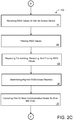
- the method may include determining the location of the vehicle access device 14 relative to the vehicle 12. For example, at step 112, the method may include determining the distance between the vehicle access device 14 and the vehicle 12. In this regard, at step 112, the method may include gathering received single strength indication (RSSI) values (e.g., a calibration values) with the eighth communication node 34-8 and performing one or more smoothing algorithms.
- RSSI received single strength indication
- the eighth communication node 34-8 may gather RSSI values corresponding to the BLE packets 60 advertised from the communication node 46 of the vehicle access device 14 and perform one or more smoothing algorithm, while the communication nodes 34-1, 34-2, 34-3, 34-4, 34-5, 34-6, 34-7 may be in sleep or low power state.
- performing the one or more smoothing algorithm may include (i) determining which value of the gathered RSSI values occurs most frequently amongst the gathered RSSI values and (ii) determining which values of the gathered RSSI values occur less frequently than the most frequently occurring RSSI value.
- performing the one or more smoothing algorithm may include removing from the gathered RSSI values the RSSI value that occur less frequently than the most frequently occurring RSSI value.
- performing the one or more smoothing algorithm may include removing high and/or low outlier RSSI values from the gathered RSSI values to produce smoothed RSSI values.
- the method may include determining whether the vehicle access device 14 is within a threshold distance of the vehicle 12. For example, at step 114, the method may include determining whether the vehicle access device 14 is less than or equal to ten meters from the vehicle 12. In this regard, the method may include determining whether the communication node 46 is within the threshold distance of the eighth communication node 34-8 of the vehicle 12. If step 114 is false, the method may return to 110. If step 114 is true, the method may proceed to step 116.
- the method may include activating one or more of the communication nodes 34-1, 34-2, 34-3, 34-4, 34-5, 34-6, 34-7, 34-8 on the vehicle 12.
- the method may include activating the first, second, third, fourth, fifth, sixth, and seventh communication nodes 34-1, 34-2, 34-3, 34-4, 34-5, 34-6, 34-7.
- the method may include transmitting an activation signal from the eighth communication node 34-8 to each of the first, second, third, fourth, fifth, sixth, and seventh communication nodes 34-1, 34-2, 34-3, 34-4, 34-5, 34-6, 34-7.
- the method may also include transmitting a confirmation signal from each of the first, second, third, fourth, fifth, sixth, and seventh communication nodes 34-1, 34-2, 34-3, 34-4, 34-5, 34-6, 34-7 to the eighth communication node 34-8.
- the confirmation signal may confirm to the eighth communication node 34-8 that the first, second, third, fourth, fifth, sixth, and seventh communication nodes 34-1, 34-2, 34-3, 34-4, 34-5, 34-6, 34-7 have been activated.
- the method may include instructing the vehicle access device 14 to search for and/or receive information transmitted from one or more of the first, second, third, fourth, fifth, sixth, and seventh communication nodes 34-1, 34-2, 34-3, 34-4, 34-5, 34-6, 34-7.
- the eighth communication node 34-8 may instruct the communication node 46 of the vehicle access device 14 to search for BLE packets 60 ( FIG. 1 ) transmitted from the first, second, third, fourth, fifth, sixth, or seventh communication nodes 34-1, 34-2, 34-3, 34-4, 34-5, 34-6, 34-7.
- the communication node 46 of the vehicle access device 14 may perform dual roles of both transmitting and receiving BLE packets 60.
- the method may include instructing one or more of the first, second, third, fourth, fifth, sixth, and seventh communication nodes 34-1, 34-2, 34-3, 34-4, 34-5, 34-6, 34-7 to transmit BLE packets 60 ( FIG. 1 ).
- the eighth communication node 34-8 may instruct the first, second, third, fourth, fifth, sixth, and seventh communication nodes 34-1, 34-2, 34-3, 34-4, 34-5, 34-6, 34-7 to advertise BLE packets 60.
- the method may include advertising BLE packets 60 from the first, second, third, fourth, fifth, sixth, and seventh communication nodes 34-1, 34-2, 34-3, 34-4, 34-5, 34-6, 34-7.
- the first, second, third, fourth, fifth, sixth, and seventh communication nodes 34-1, 34-2, 34-3, 34-4, 34-5, 34-6, 34-7 may advertise BLE packets 60 using a high duty cycle advertising interval.
- the first, second, third, fourth, fifth, sixth, and seventh communication nodes 34-1, 34-2, 34-3, 34-4, 34-5, 34-6, 34-7 may cycle between (i) advertising for 1.28 seconds and (ii) pausing (e.g., ceasing advertising) for 3.75 milliseconds.
- the method may include receiving RSSI values from one or more of the first, second, third, fourth, fifth, sixth, and seventh communication nodes 34-1, 34-2, 34-3, 34-4, 34-5, 34-6, 34-7.
- the vehicle access device 14 e.g., communication node 46
- the method may include filtering the RSSI values received at step 122.
- the vehicle access device 14 may filter the RSSI values received at step 124.
- the eighth communication node 34-8 may filter the RSSI values received at step 124.
- the method may include transmitting the RSSI values from the vehicle access device 14 to the eighth communication node 34-8. Filtering the RSSI values at step 124 may include (i) determining which value of the gathered RSSI values occurs most frequently amongst the gathered RSSI values and (ii) determining which values of the gathered RSSI values occur less frequently than the most frequently occurring RSSI value.
- filtering the RSSI values may include removing from the gathered RSSI values the RSSI value that occur less frequently than the most frequently occurring RSSI value.
- performing the one or more smoothing algorithm may include removing high and/or low outlier RSSI values from the gathered RSSI values to produce smoothed RSSI values.
- the method may include repeating one or more of steps 120, 122, and 124 a predetermined number of times. For example, at step 126, the method may repeat the steps of advertising, receiving, and filtering the BLE packets 60 as long as there is a vehicle access device 14 is connected to the eighth communication node 34-8, where the eighth communication node 34-8 will instruct one or more of the first, second, third, fourth, fifth, sixth, and seventh communication nodes 34-1, 34-2, 34-3, 34-4, 34-5, 34-6, 34-7 to perform an operation.
- repeating the step 120 may include advertising BLE packets 60 from only certain ones of the first, second, third, fourth, fifth, sixth, and seventh communication nodes 34-1, 34-2, 34-3, 34-4, 34-5, 34-6, 34-7.
- the method may repeat the step 120 and only advertise BLE packets from the communication nodes located on the exterior of the vehicle 12.
- the method may repeat the step 120 and only advertise BLE packets from the first, third, fourth, sixth, and seventh communication nodes 34-1, 34-3, 34-4, 34-6, 34-7.
- the method may include determining the highest RSSI values relative to the RSSI values transmitted at step 120 and/or 126 and determining the communication nodes (e.g., one or more of the first, third, fourth, sixth, and seventh communication nodes 34-1, 34-3, 34-4, 34-6, 34-7) corresponding to the highest RSSI values and determining the communication nodes (e.g., one or more of the first, third, fourth, sixth, and seventh communication nodes 34-1, 34-3, 34-4, 34-6, 34-7) corresponding to the lowest RSSI values.
- the communication nodes e.g., one or more of the first, third, fourth, sixth, and seventh communication nodes 34-1, 34-3, 34-4, 34-6, 34-
- the method may include identifying or determining, with the primary communication node 34-8, the two communication nodes (e.g., two of the communication nodes 34-1, 34-3, 34-4, 34-6, 34-7) corresponding to the two highest RSSI values and determining the three communication nodes (e.g., three of the communication nodes 34-1, 34-3, 34-4, 34-6, 34-7) corresponding to the three lowest RSSI values.
- the two communication nodes e.g., two of the communication nodes 34-1, 34-3, 34-4, 34-6, 34-7 corresponding to the two highest RSSI values
- the three communication nodes e.g., three of the communication nodes 34-1, 34-3, 34-4, 34-6, 34-7 corresponding to the three lowest RSSI values.
- the method may include instructing one or more of the communication nodes 34-1, 34-2, 34-3, 34-4, 34-5, 34-6, 34-7 to enter a standby or idle state.
- the method may include instructing one or more of the communication nodes 34-1, 34-2, 34-3, 34-4, 34-5, 34-6, 34-7 to cease advertising BLE packets 60.
- the method includes instructing one or more of the communication nodes 34-1, 34-2, 34-3, 34-4, 34-5, 34-6, 34-7 corresponding to the lowest RSSI values determined at step 128 to enter a standby state.
- the method may include instructing one or more of the communication nodes 34-1, 34-2, 34-3, 34-4, 34-5, 34-6, 34-7 to advertise BLE packets 60.
- the eighth communication node 34-8 may instruct one or more of the communication nodes 34-1, 34-2, 34-3, 34-4, 34-5, 34-6, 34-7 to advertise BLE packets 60.
- the eighth communication node 34-8 may instruct one or more of the communication nodes 34-1, 34-2, 34-3, 34-4, 34-5, 34-6, 34-7 corresponding to the highest RSSI values determined at step 128 to advertise BLE packets 60.
- the eighth communication node 34-8 may instruct two of the communication nodes 34-1, 34-2, 34-3, 34-4, 34-5, 34-6, 34-7 corresponding to the two highest RSSI values determined at step 128 to advertise BLE packets 60.
- the method may include receiving RSSI values from one or more of the first, second, third, fourth, fifth, sixth, and seventh communication nodes 34-1, 34-2, 34-3, 34-4, 34-5, 34-6, 34-7.
- the vehicle access device 14 e.g., communication node 46
- the method may include transmitting one or more RSSI values from the vehicle access device 14 to one or more of the communication nodes 34-1, 34-2, 34-3, 34-4, 34-5, 34-6, 34-7, 34-8.
- the method includes transmitting from the vehicle access device 14 to the eighth communication node 34-8 the RSSI values received at step 134.
- the method may include activating one or more of the communication nodes 34-1, 34-2, 34-3, 34-4, 34-5, 34-6, 34-7, 34-8. For example, if the location of the vehicle access device 14 determined at step 112 indicates that the vehicle access device 14 is within a predetermined distance of the vehicle 12, the method may include activating one or more of the communication nodes 34-1, 34-2, 34-3, 34-4, 34-5, 34-6, 34-7, 34-8.
- the method may include activating one or more of the communication nodes located in the cabin portion 29 of the vehicle 14. For example, if the method determines at step 112 that the vehicle access device 14 is located in the cabin portion 29 of the vehicle 14, the method may include activating one or more of the second, fifth, and eighth communication nodes 34-2, 34-5, 34-8.
- the method may include instructing one or more of the communication nodes 34-1, 34-2, 34-3, 34-4, 34-5, 34-6, 34-7 to advertise BLE packets 60.
- the eighth communication node 34-8 may instruct one or more of the communication nodes location in the cabin portion 29 of the vehicle 14 to advertise BLE packets 60.
- the eighth communication node 34-8 may instruct one or more of the second, fifth, and eighth communication nodes 34-2, 34-5, 34-8 to advertise BLE packets 60.
- the second, fifth, and/or eighth communication nodes 34-2, 34-5, and/or 34-8 may take turns advertising BLE packets 60 such that one of the second, fifth, and eighth communication nodes 34-2, 34-5, 34-8 is advertising BLE packets 60 prior to another of the second, fifth, and eighth communication nodes 34-2, 34-5, 34-8 advertising BLE packets 60.
- the system 10 can effectively and efficiently determine whether the vehicle access device 14 is located inside or outside of the cabin portion 29 of the vehicle 12, while also optimizing the amount of power consumed by the vehicle 12 and the vehicle access device 14.
Landscapes
- Engineering & Computer Science (AREA)
- Physics & Mathematics (AREA)
- Radar, Positioning & Navigation (AREA)
- Remote Sensing (AREA)
- Computer Networks & Wireless Communication (AREA)
- Signal Processing (AREA)
- General Physics & Mathematics (AREA)
- Electromagnetism (AREA)
- Quality & Reliability (AREA)
- Mechanical Engineering (AREA)
- Lock And Its Accessories (AREA)
Applications Claiming Priority (2)
| Application Number | Priority Date | Filing Date | Title |
|---|---|---|---|
| US201762462958P | 2017-02-24 | 2017-02-24 | |
| US15/897,629 US10262479B2 (en) | 2017-02-24 | 2018-02-15 | System and method for communicating with a vehicle |
Publications (2)
| Publication Number | Publication Date |
|---|---|
| EP3367713A1 true EP3367713A1 (fr) | 2018-08-29 |
| EP3367713B1 EP3367713B1 (fr) | 2021-03-24 |
Family
ID=61626884
Family Applications (1)
| Application Number | Title | Priority Date | Filing Date |
|---|---|---|---|
| EP18157909.5A Active EP3367713B1 (fr) | 2017-02-24 | 2018-02-21 | Système et procédé de communication avec un véhicule |
Country Status (2)
| Country | Link |
|---|---|
| US (1) | US10262479B2 (fr) |
| EP (1) | EP3367713B1 (fr) |
Cited By (3)
| Publication number | Priority date | Publication date | Assignee | Title |
|---|---|---|---|---|
| WO2020099432A1 (fr) * | 2018-11-13 | 2020-05-22 | Bayerische Motoren Werke Aktiengesellschaft | Procédé et unité de commande servant à faire fonctionner un système d'accès et/ou d'activation d'un véhicule |
| CN111674358A (zh) * | 2020-05-29 | 2020-09-18 | 长城汽车股份有限公司 | 无钥匙进入系统及其控制方法 |
| US20220236364A1 (en) * | 2020-01-02 | 2022-07-28 | Boe Technology Group Co., Ltd. | Vehicle positioning method and apparatus, and vehicle |
Families Citing this family (8)
| Publication number | Priority date | Publication date | Assignee | Title |
|---|---|---|---|---|
| EP3746337A4 (fr) | 2018-02-01 | 2022-01-19 | Strattec Security Corporation | Procédés et systèmes pour fournir une entrée passive et un démarrage passif (peps) basés sur le bluetooth pour un véhicule |
| US10574339B2 (en) * | 2018-02-27 | 2020-02-25 | Microsoft Technology Licensing, Llc | Network access from airborne vehicle |
| US10984615B2 (en) * | 2018-10-12 | 2021-04-20 | Denso International America, Inc. | Passive entry/passive start access systems with tone exchange sniffing |
| CN113597401B (zh) * | 2019-03-27 | 2023-06-23 | Tvs电机股份有限公司 | 智能连接仪表组 |
| KR102792594B1 (ko) * | 2020-07-31 | 2025-04-08 | 주식회사 모카시스템 | 리더기 및 그 제어 방법 |
| DE102021002166B4 (de) * | 2021-04-23 | 2023-07-20 | Mercedes-Benz Group AG | Verfahren zum Entriegeln und zum Freigeben eines Motorstarts eines Kraftfahrzeugs |
| EP4250690A1 (fr) * | 2022-03-22 | 2023-09-27 | INTEL Corporation | Procédés et dispositifs permettant d'établir et de maintenir des connexions avec plusieurs dispositifs de communication |
| EP4312451A1 (fr) * | 2022-07-26 | 2024-01-31 | Bayerische Motoren Werke Aktiengesellschaft | Véhicule, appareil, programme informatique et procédés pour commander une connexion entre un dispositif utilisateur et des n uds bluetooth basse consommation, ble, d'un véhicule |
Citations (9)
| Publication number | Priority date | Publication date | Assignee | Title |
|---|---|---|---|---|
| EP1184236A2 (fr) * | 2000-08-30 | 2002-03-06 | Omron Corporation | Système de radio |
| US20030193388A1 (en) * | 2002-04-11 | 2003-10-16 | Riad Ghabra | System and method for vehicle passive entry having inside/outside detection |
| EP1816039A1 (fr) * | 2006-02-01 | 2007-08-08 | Alps Electric Co., Ltd. | Un système d'entrée sans clef |
| EP2278573A1 (fr) * | 2006-03-03 | 2011-01-26 | Inrix, Inc. | Évaluation des conditions de circulation routière au moyen de données provenant de sources differentes |
| DE102014102328A1 (de) * | 2013-02-25 | 2014-08-28 | GM Global Technology Operations LLC | Fahrzeugintegration von BLE Knoten zur Aktivierung von passiven Zugangs- und Startmerkmalen |
| EP2942760A1 (fr) * | 2014-05-06 | 2015-11-11 | Nxp B.V. | Compensation de mesure de champ |
| WO2015199010A1 (fr) * | 2014-06-26 | 2015-12-30 | 株式会社オートネットワーク技術研究所 | Système de communication de véhicule, dispositif embarqué, dispositif portable, et programme informatique |
| US20160031417A1 (en) * | 2013-03-28 | 2016-02-04 | Robert Bosch (Australia) Pty Ltd | Method for determining the location of a remote transmitter positioned near a vehicle |
| US20160320469A1 (en) * | 2015-05-01 | 2016-11-03 | GM Global Technology Operations LLC | Vehicle peps systems using bluetooth low-energy and wi-fi |
Family Cites Families (2)
| Publication number | Priority date | Publication date | Assignee | Title |
|---|---|---|---|---|
| EP1255368A1 (fr) * | 2001-04-30 | 2002-11-06 | Siemens Information and Communication Networks S.p.A. | Procède pour l'adaptation de liaison en systèmes de communication cellulaire amélioré utilisant plusieurs schémas de modulation et codage |
| US7205938B2 (en) * | 2004-03-05 | 2007-04-17 | Airespace, Inc. | Wireless node location mechanism responsive to observed propagation characteristics of wireless network infrastructure signals |
-
2018
- 2018-02-15 US US15/897,629 patent/US10262479B2/en active Active
- 2018-02-21 EP EP18157909.5A patent/EP3367713B1/fr active Active
Patent Citations (10)
| Publication number | Priority date | Publication date | Assignee | Title |
|---|---|---|---|---|
| EP1184236A2 (fr) * | 2000-08-30 | 2002-03-06 | Omron Corporation | Système de radio |
| US20030193388A1 (en) * | 2002-04-11 | 2003-10-16 | Riad Ghabra | System and method for vehicle passive entry having inside/outside detection |
| EP1816039A1 (fr) * | 2006-02-01 | 2007-08-08 | Alps Electric Co., Ltd. | Un système d'entrée sans clef |
| EP2278573A1 (fr) * | 2006-03-03 | 2011-01-26 | Inrix, Inc. | Évaluation des conditions de circulation routière au moyen de données provenant de sources differentes |
| DE102014102328A1 (de) * | 2013-02-25 | 2014-08-28 | GM Global Technology Operations LLC | Fahrzeugintegration von BLE Knoten zur Aktivierung von passiven Zugangs- und Startmerkmalen |
| US20160031417A1 (en) * | 2013-03-28 | 2016-02-04 | Robert Bosch (Australia) Pty Ltd | Method for determining the location of a remote transmitter positioned near a vehicle |
| EP2942760A1 (fr) * | 2014-05-06 | 2015-11-11 | Nxp B.V. | Compensation de mesure de champ |
| WO2015199010A1 (fr) * | 2014-06-26 | 2015-12-30 | 株式会社オートネットワーク技術研究所 | Système de communication de véhicule, dispositif embarqué, dispositif portable, et programme informatique |
| US20170136992A1 (en) * | 2014-06-26 | 2017-05-18 | Autonetworks Technologies, Ltd. | Vehicle communication system, in-vehicle device, portable device, and computer program |
| US20160320469A1 (en) * | 2015-05-01 | 2016-11-03 | GM Global Technology Operations LLC | Vehicle peps systems using bluetooth low-energy and wi-fi |
Cited By (4)
| Publication number | Priority date | Publication date | Assignee | Title |
|---|---|---|---|---|
| WO2020099432A1 (fr) * | 2018-11-13 | 2020-05-22 | Bayerische Motoren Werke Aktiengesellschaft | Procédé et unité de commande servant à faire fonctionner un système d'accès et/ou d'activation d'un véhicule |
| US20220236364A1 (en) * | 2020-01-02 | 2022-07-28 | Boe Technology Group Co., Ltd. | Vehicle positioning method and apparatus, and vehicle |
| US11747431B2 (en) * | 2020-01-02 | 2023-09-05 | Boe Technology Group Co., Ltd. | Vehicle positioning method and apparatus, and vehicle |
| CN111674358A (zh) * | 2020-05-29 | 2020-09-18 | 长城汽车股份有限公司 | 无钥匙进入系统及其控制方法 |
Also Published As
| Publication number | Publication date |
|---|---|
| US10262479B2 (en) | 2019-04-16 |
| US20180247472A1 (en) | 2018-08-30 |
| EP3367713B1 (fr) | 2021-03-24 |
Similar Documents
| Publication | Publication Date | Title |
|---|---|---|
| US10262479B2 (en) | System and method for communicating with a vehicle | |
| CN107465422B (zh) | 用于检测智能电话或其它装置与车辆的接近度和位置的系统和方法 | |
| US10013830B2 (en) | Method and smartkey system for reducing battery consumption | |
| US9008917B2 (en) | Method and system for detecting proximity of an end device to a vehicle based on signal strength information received over a bluetooth low energy (BLE) advertising channel | |
| US9892581B2 (en) | Vehicle door control system and operating method thereof | |
| EP3361759B1 (fr) | Système et procédé de communication avec un véhicule | |
| WO2019152836A1 (fr) | Procédés et systèmes pour fournir une entrée passive et un démarrage passif (peps) basés sur le bluetooth pour un véhicule | |
| CN105966353A (zh) | 车辆无线通信系统、车辆控制装置和便携式机器 | |
| CN113993755B (zh) | 用于借助于移动通信终端来远程控制机动车辆的安全功能的方法和器件 | |
| CN108368709A (zh) | 车载器、便携设备以及车辆用无线通信系统 | |
| US10442398B2 (en) | Vehicle control system | |
| CN102237938A (zh) | 无线通信正规与否判断系统 | |
| US12365310B2 (en) | System, and communication device | |
| US20210217259A1 (en) | System and Method For Communicating With A Vehicle | |
| WO2015111123A1 (fr) | Dispositif embarqué dans un véhicule | |
| JP2023173767A (ja) | 車両制御システム、車両制御プログラム、位置確認装置 | |
| JP2013034147A (ja) | 制御装置およびプログラム | |
| KR101049666B1 (ko) | 사용자 인식 카드 시스템 및 스마트키 검출 방법 | |
| CN116761922A (zh) | 电子钥匙系统 | |
| JP5468834B2 (ja) | ソフトウェア無線式通信端末及びソフトウェア無線通信システム | |
| JP2021197650A (ja) | 通信システム及び通信方法 | |
| US12091901B2 (en) | Dynamic change in touch response time of door hand touch sensor | |
| CN111431294B (zh) | 提供无线充电器资源的无钥匙进入启动设备及其操作方法 | |
| WO2024210015A1 (fr) | Système de mesure de distance et procédé de mesure de distance | |
| JP2018071157A (ja) | 車両用通信システム及び携帯機 |
Legal Events
| Date | Code | Title | Description |
|---|---|---|---|
| PUAI | Public reference made under article 153(3) epc to a published international application that has entered the european phase |
Free format text: ORIGINAL CODE: 0009012 |
|
| STAA | Information on the status of an ep patent application or granted ep patent |
Free format text: STATUS: THE APPLICATION HAS BEEN PUBLISHED |
|
| AK | Designated contracting states |
Kind code of ref document: A1 Designated state(s): AL AT BE BG CH CY CZ DE DK EE ES FI FR GB GR HR HU IE IS IT LI LT LU LV MC MK MT NL NO PL PT RO RS SE SI SK SM TR |
|
| AX | Request for extension of the european patent |
Extension state: BA ME |
|
| STAA | Information on the status of an ep patent application or granted ep patent |
Free format text: STATUS: REQUEST FOR EXAMINATION WAS MADE |
|
| 17P | Request for examination filed |
Effective date: 20190222 |
|
| RBV | Designated contracting states (corrected) |
Designated state(s): AL AT BE BG CH CY CZ DE DK EE ES FI FR GB GR HR HU IE IS IT LI LT LU LV MC MK MT NL NO PL PT RO RS SE SI SK SM TR |
|
| REG | Reference to a national code |
Ref country code: DE Ref legal event code: R079 Ref document number: 602018014214 Country of ref document: DE Free format text: PREVIOUS MAIN CLASS: H04W0004800000 Ipc: H04W0004020000 |
|
| GRAP | Despatch of communication of intention to grant a patent |
Free format text: ORIGINAL CODE: EPIDOSNIGR1 |
|
| RIC1 | Information provided on ipc code assigned before grant |
Ipc: G01S 13/74 20060101ALI20200826BHEP Ipc: G01S 11/06 20060101ALI20200826BHEP Ipc: G01S 5/02 20100101ALI20200826BHEP Ipc: H04W 4/02 20180101AFI20200826BHEP Ipc: H04W 4/40 20180101ALI20200826BHEP Ipc: H04W 4/80 20180101ALI20200826BHEP Ipc: H04W 4/48 20180101ALI20200826BHEP Ipc: B60R 25/24 20130101ALI20200826BHEP Ipc: B60R 16/023 20060101ALI20200826BHEP |
|
| STAA | Information on the status of an ep patent application or granted ep patent |
Free format text: STATUS: GRANT OF PATENT IS INTENDED |
|
| INTG | Intention to grant announced |
Effective date: 20201001 |
|
| GRAS | Grant fee paid |
Free format text: ORIGINAL CODE: EPIDOSNIGR3 |
|
| GRAA | (expected) grant |
Free format text: ORIGINAL CODE: 0009210 |
|
| STAA | Information on the status of an ep patent application or granted ep patent |
Free format text: STATUS: THE PATENT HAS BEEN GRANTED |
|
| AK | Designated contracting states |
Kind code of ref document: B1 Designated state(s): AL AT BE BG CH CY CZ DE DK EE ES FI FR GB GR HR HU IE IS IT LI LT LU LV MC MK MT NL NO PL PT RO RS SE SI SK SM TR |
|
| REG | Reference to a national code |
Ref country code: GB Ref legal event code: FG4D |
|
| REG | Reference to a national code |
Ref country code: CH Ref legal event code: EP |
|
| REG | Reference to a national code |
Ref country code: IE Ref legal event code: FG4D |
|
| REG | Reference to a national code |
Ref country code: AT Ref legal event code: REF Ref document number: 1375734 Country of ref document: AT Kind code of ref document: T Effective date: 20210415 Ref country code: DE Ref legal event code: R096 Ref document number: 602018014214 Country of ref document: DE |
|
| REG | Reference to a national code |
Ref country code: LT Ref legal event code: MG9D |
|
| PG25 | Lapsed in a contracting state [announced via postgrant information from national office to epo] |
Ref country code: BG Free format text: LAPSE BECAUSE OF FAILURE TO SUBMIT A TRANSLATION OF THE DESCRIPTION OR TO PAY THE FEE WITHIN THE PRESCRIBED TIME-LIMIT Effective date: 20210624 Ref country code: NO Free format text: LAPSE BECAUSE OF FAILURE TO SUBMIT A TRANSLATION OF THE DESCRIPTION OR TO PAY THE FEE WITHIN THE PRESCRIBED TIME-LIMIT Effective date: 20210624 Ref country code: GR Free format text: LAPSE BECAUSE OF FAILURE TO SUBMIT A TRANSLATION OF THE DESCRIPTION OR TO PAY THE FEE WITHIN THE PRESCRIBED TIME-LIMIT Effective date: 20210625 Ref country code: HR Free format text: LAPSE BECAUSE OF FAILURE TO SUBMIT A TRANSLATION OF THE DESCRIPTION OR TO PAY THE FEE WITHIN THE PRESCRIBED TIME-LIMIT Effective date: 20210324 Ref country code: FI Free format text: LAPSE BECAUSE OF FAILURE TO SUBMIT A TRANSLATION OF THE DESCRIPTION OR TO PAY THE FEE WITHIN THE PRESCRIBED TIME-LIMIT Effective date: 20210324 |
|
| PG25 | Lapsed in a contracting state [announced via postgrant information from national office to epo] |
Ref country code: SE Free format text: LAPSE BECAUSE OF FAILURE TO SUBMIT A TRANSLATION OF THE DESCRIPTION OR TO PAY THE FEE WITHIN THE PRESCRIBED TIME-LIMIT Effective date: 20210324 Ref country code: LV Free format text: LAPSE BECAUSE OF FAILURE TO SUBMIT A TRANSLATION OF THE DESCRIPTION OR TO PAY THE FEE WITHIN THE PRESCRIBED TIME-LIMIT Effective date: 20210324 Ref country code: RS Free format text: LAPSE BECAUSE OF FAILURE TO SUBMIT A TRANSLATION OF THE DESCRIPTION OR TO PAY THE FEE WITHIN THE PRESCRIBED TIME-LIMIT Effective date: 20210324 |
|
| REG | Reference to a national code |
Ref country code: NL Ref legal event code: MP Effective date: 20210324 |
|
| REG | Reference to a national code |
Ref country code: AT Ref legal event code: MK05 Ref document number: 1375734 Country of ref document: AT Kind code of ref document: T Effective date: 20210324 |
|
| PG25 | Lapsed in a contracting state [announced via postgrant information from national office to epo] |
Ref country code: NL Free format text: LAPSE BECAUSE OF FAILURE TO SUBMIT A TRANSLATION OF THE DESCRIPTION OR TO PAY THE FEE WITHIN THE PRESCRIBED TIME-LIMIT Effective date: 20210324 |
|
| PG25 | Lapsed in a contracting state [announced via postgrant information from national office to epo] |
Ref country code: SM Free format text: LAPSE BECAUSE OF FAILURE TO SUBMIT A TRANSLATION OF THE DESCRIPTION OR TO PAY THE FEE WITHIN THE PRESCRIBED TIME-LIMIT Effective date: 20210324 Ref country code: AT Free format text: LAPSE BECAUSE OF FAILURE TO SUBMIT A TRANSLATION OF THE DESCRIPTION OR TO PAY THE FEE WITHIN THE PRESCRIBED TIME-LIMIT Effective date: 20210324 Ref country code: EE Free format text: LAPSE BECAUSE OF FAILURE TO SUBMIT A TRANSLATION OF THE DESCRIPTION OR TO PAY THE FEE WITHIN THE PRESCRIBED TIME-LIMIT Effective date: 20210324 Ref country code: CZ Free format text: LAPSE BECAUSE OF FAILURE TO SUBMIT A TRANSLATION OF THE DESCRIPTION OR TO PAY THE FEE WITHIN THE PRESCRIBED TIME-LIMIT Effective date: 20210324 Ref country code: LT Free format text: LAPSE BECAUSE OF FAILURE TO SUBMIT A TRANSLATION OF THE DESCRIPTION OR TO PAY THE FEE WITHIN THE PRESCRIBED TIME-LIMIT Effective date: 20210324 |
|
| PG25 | Lapsed in a contracting state [announced via postgrant information from national office to epo] |
Ref country code: IS Free format text: LAPSE BECAUSE OF FAILURE TO SUBMIT A TRANSLATION OF THE DESCRIPTION OR TO PAY THE FEE WITHIN THE PRESCRIBED TIME-LIMIT Effective date: 20210724 Ref country code: PT Free format text: LAPSE BECAUSE OF FAILURE TO SUBMIT A TRANSLATION OF THE DESCRIPTION OR TO PAY THE FEE WITHIN THE PRESCRIBED TIME-LIMIT Effective date: 20210726 Ref country code: PL Free format text: LAPSE BECAUSE OF FAILURE TO SUBMIT A TRANSLATION OF THE DESCRIPTION OR TO PAY THE FEE WITHIN THE PRESCRIBED TIME-LIMIT Effective date: 20210324 Ref country code: SK Free format text: LAPSE BECAUSE OF FAILURE TO SUBMIT A TRANSLATION OF THE DESCRIPTION OR TO PAY THE FEE WITHIN THE PRESCRIBED TIME-LIMIT Effective date: 20210324 Ref country code: RO Free format text: LAPSE BECAUSE OF FAILURE TO SUBMIT A TRANSLATION OF THE DESCRIPTION OR TO PAY THE FEE WITHIN THE PRESCRIBED TIME-LIMIT Effective date: 20210324 |
|
| REG | Reference to a national code |
Ref country code: DE Ref legal event code: R097 Ref document number: 602018014214 Country of ref document: DE |
|
| PG25 | Lapsed in a contracting state [announced via postgrant information from national office to epo] |
Ref country code: ES Free format text: LAPSE BECAUSE OF FAILURE TO SUBMIT A TRANSLATION OF THE DESCRIPTION OR TO PAY THE FEE WITHIN THE PRESCRIBED TIME-LIMIT Effective date: 20210324 Ref country code: DK Free format text: LAPSE BECAUSE OF FAILURE TO SUBMIT A TRANSLATION OF THE DESCRIPTION OR TO PAY THE FEE WITHIN THE PRESCRIBED TIME-LIMIT Effective date: 20210324 Ref country code: AL Free format text: LAPSE BECAUSE OF FAILURE TO SUBMIT A TRANSLATION OF THE DESCRIPTION OR TO PAY THE FEE WITHIN THE PRESCRIBED TIME-LIMIT Effective date: 20210324 |
|
| PLBE | No opposition filed within time limit |
Free format text: ORIGINAL CODE: 0009261 |
|
| STAA | Information on the status of an ep patent application or granted ep patent |
Free format text: STATUS: NO OPPOSITION FILED WITHIN TIME LIMIT |
|
| PG25 | Lapsed in a contracting state [announced via postgrant information from national office to epo] |
Ref country code: SI Free format text: LAPSE BECAUSE OF FAILURE TO SUBMIT A TRANSLATION OF THE DESCRIPTION OR TO PAY THE FEE WITHIN THE PRESCRIBED TIME-LIMIT Effective date: 20210324 |
|
| 26N | No opposition filed |
Effective date: 20220104 |
|
| PG25 | Lapsed in a contracting state [announced via postgrant information from national office to epo] |
Ref country code: IS Free format text: LAPSE BECAUSE OF FAILURE TO SUBMIT A TRANSLATION OF THE DESCRIPTION OR TO PAY THE FEE WITHIN THE PRESCRIBED TIME-LIMIT Effective date: 20210724 |
|
| PG25 | Lapsed in a contracting state [announced via postgrant information from national office to epo] |
Ref country code: MC Free format text: LAPSE BECAUSE OF FAILURE TO SUBMIT A TRANSLATION OF THE DESCRIPTION OR TO PAY THE FEE WITHIN THE PRESCRIBED TIME-LIMIT Effective date: 20210324 |
|
| REG | Reference to a national code |
Ref country code: CH Ref legal event code: PL |
|
| REG | Reference to a national code |
Ref country code: BE Ref legal event code: MM Effective date: 20220228 |
|
| PG25 | Lapsed in a contracting state [announced via postgrant information from national office to epo] |
Ref country code: LU Free format text: LAPSE BECAUSE OF NON-PAYMENT OF DUE FEES Effective date: 20220221 |
|
| PG25 | Lapsed in a contracting state [announced via postgrant information from national office to epo] |
Ref country code: LI Free format text: LAPSE BECAUSE OF NON-PAYMENT OF DUE FEES Effective date: 20220228 Ref country code: IT Free format text: LAPSE BECAUSE OF FAILURE TO SUBMIT A TRANSLATION OF THE DESCRIPTION OR TO PAY THE FEE WITHIN THE PRESCRIBED TIME-LIMIT Effective date: 20210324 Ref country code: IE Free format text: LAPSE BECAUSE OF NON-PAYMENT OF DUE FEES Effective date: 20220221 Ref country code: CH Free format text: LAPSE BECAUSE OF NON-PAYMENT OF DUE FEES Effective date: 20220228 |
|
| PG25 | Lapsed in a contracting state [announced via postgrant information from national office to epo] |
Ref country code: BE Free format text: LAPSE BECAUSE OF NON-PAYMENT OF DUE FEES Effective date: 20220228 |
|
| P01 | Opt-out of the competence of the unified patent court (upc) registered |
Effective date: 20230505 |
|
| PG25 | Lapsed in a contracting state [announced via postgrant information from national office to epo] |
Ref country code: HU Free format text: LAPSE BECAUSE OF FAILURE TO SUBMIT A TRANSLATION OF THE DESCRIPTION OR TO PAY THE FEE WITHIN THE PRESCRIBED TIME-LIMIT; INVALID AB INITIO Effective date: 20180221 |
|
| PG25 | Lapsed in a contracting state [announced via postgrant information from national office to epo] |
Ref country code: MK Free format text: LAPSE BECAUSE OF FAILURE TO SUBMIT A TRANSLATION OF THE DESCRIPTION OR TO PAY THE FEE WITHIN THE PRESCRIBED TIME-LIMIT Effective date: 20210324 Ref country code: CY Free format text: LAPSE BECAUSE OF FAILURE TO SUBMIT A TRANSLATION OF THE DESCRIPTION OR TO PAY THE FEE WITHIN THE PRESCRIBED TIME-LIMIT Effective date: 20210324 |
|
| PG25 | Lapsed in a contracting state [announced via postgrant information from national office to epo] |
Ref country code: TR Free format text: LAPSE BECAUSE OF FAILURE TO SUBMIT A TRANSLATION OF THE DESCRIPTION OR TO PAY THE FEE WITHIN THE PRESCRIBED TIME-LIMIT Effective date: 20210324 |
|
| PG25 | Lapsed in a contracting state [announced via postgrant information from national office to epo] |
Ref country code: MT Free format text: LAPSE BECAUSE OF FAILURE TO SUBMIT A TRANSLATION OF THE DESCRIPTION OR TO PAY THE FEE WITHIN THE PRESCRIBED TIME-LIMIT Effective date: 20210324 |
|
| PGFP | Annual fee paid to national office [announced via postgrant information from national office to epo] |
Ref country code: GB Payment date: 20260219 Year of fee payment: 9 |
|
| PGFP | Annual fee paid to national office [announced via postgrant information from national office to epo] |
Ref country code: DE Payment date: 20260217 Year of fee payment: 9 |
|
| PGFP | Annual fee paid to national office [announced via postgrant information from national office to epo] |
Ref country code: FR Payment date: 20260219 Year of fee payment: 9 |