EP3367908B1 - Vorrichtungen, algorithmen, systeme und verfahren für programmierbares elektronisches stethoskop - Google Patents
Vorrichtungen, algorithmen, systeme und verfahren für programmierbares elektronisches stethoskop Download PDFInfo
- Publication number
- EP3367908B1 EP3367908B1 EP16861049.1A EP16861049A EP3367908B1 EP 3367908 B1 EP3367908 B1 EP 3367908B1 EP 16861049 A EP16861049 A EP 16861049A EP 3367908 B1 EP3367908 B1 EP 3367908B1
- Authority
- EP
- European Patent Office
- Prior art keywords
- signal
- noise
- auscultation
- sound
- processed signal
- Prior art date
- Legal status (The legal status is an assumption and is not a legal conclusion. Google has not performed a legal analysis and makes no representation as to the accuracy of the status listed.)
- Active
Links
Images




Classifications
-
- A—HUMAN NECESSITIES
- A61—MEDICAL OR VETERINARY SCIENCE; HYGIENE
- A61B—DIAGNOSIS; SURGERY; IDENTIFICATION
- A61B7/00—Instruments for auscultation
- A61B7/02—Stethoscopes
- A61B7/04—Electric stethoscopes
-
- A—HUMAN NECESSITIES
- A61—MEDICAL OR VETERINARY SCIENCE; HYGIENE
- A61B—DIAGNOSIS; SURGERY; IDENTIFICATION
- A61B5/00—Measuring for diagnostic purposes; Identification of persons
- A61B5/08—Measuring devices for evaluating the respiratory organs
-
- A—HUMAN NECESSITIES
- A61—MEDICAL OR VETERINARY SCIENCE; HYGIENE
- A61B—DIAGNOSIS; SURGERY; IDENTIFICATION
- A61B5/00—Measuring for diagnostic purposes; Identification of persons
- A61B5/72—Signal processing specially adapted for physiological signals or for diagnostic purposes
- A61B5/7203—Signal processing specially adapted for physiological signals or for diagnostic purposes for noise prevention, reduction or removal
-
- A—HUMAN NECESSITIES
- A61—MEDICAL OR VETERINARY SCIENCE; HYGIENE
- A61B—DIAGNOSIS; SURGERY; IDENTIFICATION
- A61B5/00—Measuring for diagnostic purposes; Identification of persons
- A61B5/72—Signal processing specially adapted for physiological signals or for diagnostic purposes
- A61B5/7235—Details of waveform analysis
- A61B5/7264—Classification of physiological signals or data, e.g. using neural networks, statistical classifiers, expert systems or fuzzy systems
-
- A—HUMAN NECESSITIES
- A61—MEDICAL OR VETERINARY SCIENCE; HYGIENE
- A61B—DIAGNOSIS; SURGERY; IDENTIFICATION
- A61B7/00—Instruments for auscultation
- A61B7/003—Detecting lung or respiration noise
-
- A—HUMAN NECESSITIES
- A61—MEDICAL OR VETERINARY SCIENCE; HYGIENE
- A61B—DIAGNOSIS; SURGERY; IDENTIFICATION
- A61B7/00—Instruments for auscultation
- A61B7/02—Stethoscopes
- A61B7/026—Stethoscopes comprising more than one sound collector
-
- G—PHYSICS
- G06—COMPUTING OR CALCULATING; COUNTING
- G06N—COMPUTING ARRANGEMENTS BASED ON SPECIFIC COMPUTATIONAL MODELS
- G06N20/00—Machine learning
-
- G—PHYSICS
- G06—COMPUTING OR CALCULATING; COUNTING
- G06N—COMPUTING ARRANGEMENTS BASED ON SPECIFIC COMPUTATIONAL MODELS
- G06N99/00—Subject matter not provided for in other groups of this subclass
-
- G—PHYSICS
- G16—INFORMATION AND COMMUNICATION TECHNOLOGY [ICT] SPECIALLY ADAPTED FOR SPECIFIC APPLICATION FIELDS
- G16H—HEALTHCARE INFORMATICS, i.e. INFORMATION AND COMMUNICATION TECHNOLOGY [ICT] SPECIALLY ADAPTED FOR THE HANDLING OR PROCESSING OF MEDICAL OR HEALTHCARE DATA
- G16H40/00—ICT specially adapted for the management or administration of healthcare resources or facilities; ICT specially adapted for the management or operation of medical equipment or devices
- G16H40/60—ICT specially adapted for the management or administration of healthcare resources or facilities; ICT specially adapted for the management or operation of medical equipment or devices for the operation of medical equipment or devices
- G16H40/63—ICT specially adapted for the management or administration of healthcare resources or facilities; ICT specially adapted for the management or operation of medical equipment or devices for the operation of medical equipment or devices for local operation
-
- G—PHYSICS
- G10—MUSICAL INSTRUMENTS; ACOUSTICS
- G10K—SOUND-PRODUCING DEVICES; METHODS OR DEVICES FOR PROTECTING AGAINST, OR FOR DAMPING, NOISE OR OTHER ACOUSTIC WAVES IN GENERAL; ACOUSTICS NOT OTHERWISE PROVIDED FOR
- G10K2210/00—Details of active noise control [ANC] covered by G10K11/178 but not provided for in any of its subgroups
- G10K2210/10—Applications
- G10K2210/116—Medical; Dental
-
- G—PHYSICS
- G10—MUSICAL INSTRUMENTS; ACOUSTICS
- G10L—SPEECH ANALYSIS TECHNIQUES OR SPEECH SYNTHESIS; SPEECH RECOGNITION; SPEECH OR VOICE PROCESSING TECHNIQUES; SPEECH OR AUDIO CODING OR DECODING
- G10L25/00—Speech or voice analysis techniques not restricted to a single one of groups G10L15/00 - G10L21/00
- G10L25/48—Speech or voice analysis techniques not restricted to a single one of groups G10L15/00 - G10L21/00 specially adapted for particular use
- G10L25/51—Speech or voice analysis techniques not restricted to a single one of groups G10L15/00 - G10L21/00 specially adapted for particular use for comparison or discrimination
Definitions
- the currently claimed embodiments of this invention relate to electronic stethoscopes, and more particularly to electronic stethoscopes that provide noise removal and automated classification of auscultation signals.
- the clinical setting typically involves rudimentary and noisy environments.
- available health-care providers usually have minimal training, resulting in high inter-observer variability in interpreting findings and high rates of overtreatment or misdiagnosis.
- high ambient noise contaminates the lung sound signal and further affects diagnostic capability and accuracy. Examples of contaminating sounds are patient-specific distortions (e.g., crying or motion-originating friction noises) or environmental sounds (e.g., crying in the waiting area, ambient chatter, phones ringing, nearby vehicles passing).
- US 2013/0041278 A1 discloses an electronic stethoscope and a method for diagnosing of diseases via the electronic stethoscope.
- a digital electronic stethoscope includes an acoustic sensor assembly that includes a body sensor portion and an ambient sensor portion, the body sensor portion being configured to make acoustically coupled contact with a subject while the ambient sensor portion is configured to face away from the body sensor portion so as to capture environmental noise proximate the body sensor portion; a signal processor and data storage system configured to communicate with the acoustic sensor assembly so as to receive detection signals therefrom, the detection signals including an auscultation signal comprising body target sound and a noise signal; and an output device configured to communicate with the signal processor and data storage system to provide at least one of an output signal or information derived from the output signal.
- the signal processor and data storage system includes a noise reduction system that removes both stationary noise and non-stationary noise from the detection signal to provide a clean auscultation signal substantially free of distortions.
- the signal processor and data storage system further includes an auscultation sound classification system configured to receive the clean auscultation signal and provide a classification thereof as at least one of a normal breath sound or an abnormal breath sound.
- a method of processing signals detected by a digital electronic stethoscope includes obtaining an auscultation signal from the electronic stethoscope, the auscultation signal including a target body sound; obtaining a noise signal that includes noise from an environment of the body; obtaining a processed signal by reducing unwanted noise in the auscultation signal based on at least one of the auscultation signal and the noise signal; performing acoustic analysis of the processed signal; and performing statistical analysis of the processed signal.
- a computer-readable medium includes non-transitory computer-executable code for processing signals detected by a digital electronic stethoscope, which when executed by a computer causes the computer to obtain an auscultation signal from the electronic stethoscope, the auscultation signal including a target body sound; obtain a noise signal that includes noise from an environment of the body; obtain a processed signal by reducing unwanted noise in the auscultation signal based on at least one of the auscultation signal and the noise signal; performing acoustic analysis of the processed signal; and performing statistical analysis of said processed signal.
- noise is intended to have a broad meaning to include any types of sounds that interfere with the sounds of interest.
- Sounds of interest according to some embodiments of this invention include breathing sounds and/or sounds resulting from breathing.
- sounds of interest according to this embodiment of the invention can include sounds emanating from a subjects lungs and/or airways.
- noise can include, but is not limited to, stochastic noise other sounds within the subject such as, but not limited to, heartbeats, crying, etc. external sounds such as, but not limited to, other people crying, passing cars, and/or interactions between the use of the stethoscope and the patient such as, but not limited to, scratching sounds of the stethoscope against the subject or the subjects clothing.
- a programmable, electronic stethoscope as well as systems, algorithms and methods for detecting and processing auscultation signals, offer hardware/software solutions for improved digital auscultation in non-ideal settings and follow-up clinical aid.
- Some embodiments of the invention can provide a stethoscope that is a smart device, robust in natural ambient noise, that can aid health-care providers deliver an improved clinical diagnosis especially in challenging auscultation environments and remote settings.
- the smart stethoscope offers a direct solution to the problems of the existing stethoscopes and current studies described above, while also providing the flexibility to implement solutions to future problems. It allows active filtering of ambient noise, using knowledge of the normal and abnormal lung sound profiles to dynamically adapt to abrupt, highly non-stationary environmental noise.
- the stethoscope can offer an additive array of five sensors for localized lung auscultation.
- An external microphone captures the concurrent ambient noise and the built-in spectral subtraction implementation suppresses sounds that are unrelated to chest sounds.
- the algorithm dynamically adapts to the level and profile of the ambient noise and delivers a noise-free signal.
- the stethoscope can allow a user to choose between a digital mode in which the user hears the sounds as digitized and an "acoustic mode".
- the acoustic mode is designed to sound more similar to conventional, non-electronic stethoscopes since many medical personnel are more familiar with sounds from those stethoscopes.
- filtering is introduced that makes the electronic system sound like a mechanical unit. To achieve this, the signal is contaminated by the mechanical system and the frequency characteristics are limited.
- the filter can be engaged by the user activating a switch to toggle between the "true" unfiltered signal and the limited signal from the mechanical system.
- the outputted signal can be further processed for removal of subject-specific contaminations including crying and friction noises, and heart sound removal (which is considered noise in the context of lung auscultation), for example.
- the identified heart sounds can be used for an automated heart-rate extraction. Some embodiments of the current invention can extract further biometric measurements.
- Novel feature extraction and machine learning algorithms are then used for an automated detection of abnormal sounds according to an embodiment of the current invention, providing an aid-tool towards objective interpretation of the lung sounds and telemedicine.
- Some embodiments of this invention can bridge the gap between true need and commercial availability for programmable electronic stethoscopes. Being highly adaptable to unknown clinical settings, some embodiments of this invention can address the above limitations; and subsequent analysis can provide diagnostic aid to health care providers including patient diagnosing and monitoring, and can increase accessibility to healthcare.
- Some embodiments of the current invention can provide noise-cancellation and automated diagnosis algorithms, plus the ability to program new algorithms into the stethoscope to provide new and useful capabilities including tailoring for specific patient parameters.
- the noise suppression scheme according to an embodiment of the current invention is based on a general framework of spectral subtraction algorithms that were adapted to the problem at hand, considering the peculiarities of the lung sound and those of the natural ambient sounds.
- the signal picked up by the stethoscope's internal microphone (sensor) is assumed to be additive, comprising of the clean (unknown) lung sounds and the concurrent ambient noise.
- An external microphone further picks up the ambient noise.
- We augment the general spectral subtraction scheme by first processing the signal into multiple localized frequency bands.
- Every frequency band is processed individually by different subtraction rules that account for the non-uniform spectral profiles of the ambient noise and natural sounds and their overlapping profiles with the lung sounds.
- every rule takes into account the current, localized Signal to Noise Ratio, providing high adaptability to sudden unexpected noises from which other Adaptive Noise Cancelling techniques are known to suffer.
- reconstruction we smooth the output result across adjacent signal frames suppressing reconstruction distortions or musical noise typically occurring in spectral subtraction algorithms [1].
- the recovered signal is further processed for quality improvement to tackle remaining patient-centric contaminations.
- a heart rate elimination and extraction (HR) algorithm is further implemented using the lung sound signal itself. Automating the extraction of biometric information can be crucial, especially in poor communities, due to lack of personnel; or in pediatric auscultation where minimizing the duration of the visit is paramount, as increased child agitation highly impedes the physician's work. These features will also be useful for general use where patients measure their own response while at home or work.
- the heart rate extraction and elimination algorithm can provide valuable biometric information while suppressing the heart sounds-irrelevant to the lung sounds of interest.
- FIG. 1 provides a schematic illustration of a digital electronic stethoscope 100 according to an embodiment of the current invention.
- the digital electronic stethoscope 100 includes an acoustic sensor assembly 102 that includes a body sensor portion 104 and an ambient sensor portion 106.
- the body sensor portion 104 is configured to make acoustically coupled contact with a subject while the ambient sensor portion 106 is configured to face away from the body sensor portion so as to capture environmental noise in the vicinity of the body sensor portion 106.
- face away does not require any particular direction and the term "in the vicinity of' does not require any particular distance as long as the "noise" external from the subject that interferes with body sounds can be captured more strongly than body sounds.
- the digital electronic stethoscope 100 also includes a signal processor and data storage system 108 configured to communicate with the acoustic sensor assembly 102 so as to receive detection signals therefrom.
- the detection signals include an auscultation signal including a body target sound and a noise signal. Both signals are digitized for automatic evaluation.
- the digital electronic stethoscope 100 also includes an output device 110 configured to communicate with the signal processor and data storage system 108 to provide at least one of an output signal or information derived from the output signal.
- the signal processor and data storage system 108 includes a noise reduction system 112 that removes both stationary noise and non-stationary noise from the detection signal to provide a clean auscultation signal substantially free of distortions.
- the noise reduction system 112 can also be referred to as a noise cancellation system. This is not intended to require complete cancellation and can thus be synonymous with noise reduction.
- the signal processor and data storage system 108 further includes an auscultation sound classification system 114 configured to receive the clean auscultation signal and provide a classification of it into at least one of a normal breath sound or an abnormal breath sound.
- the classification system is not limited to only binary, e.g., normal vs. abnormal, classifications and can be generalized for further classifications according to some embodiments of the current invention.
- body sensor portion 104 of the acoustic sensor assembly 102 includes a microphone array of a plurality of microphones.
- the signals from the microphones are added, however, in other cases the microphone array may be processed to obtain special characteristics such as focusing, e.g., operated in a phased array.
- the general concepts of the current invention are not limited to a specific number of microphones in the microphone array. In some applications, an array of five microphones has been found to be effective. In some embodiments, without limitation, the microphones can be electret microphones, for example.
- the output device 110 can be at least one of earphones, a smart phone, a personal data assist, or a computer, for example.
- the output device 110 is not limited to only these examples.
- output could also be stored on-board in some embodiments and the digital electronic stethoscope can be, but is not limited to, a wearable digital electronic stethoscope.
- the signal processing and/or further processing such as for the decision processes could all be done on-board or with any combination of on-board and external components.
- the digital electronic stethoscope could be designed to be worm 24/7 for extended periods of time in some embodiments.
- connections with external devices can be hard wired and/or wireless in some embodiments.
- the noise reduction system 112 includes a clipping repair system 116 to repair clipping of the auscultation signal to provide the clean auscultation signal substantially free of distortions.
- the noise reduction system 112 also includes a heart sound elimination system 118 to remove the subject's heart sounds from the detection signal to provide the clean auscultation signal substantially free of distortions.
- the noise reduction system 112 can further include a friction noise removal system 120 to remove friction noise of the acoustic sensor assembly rubbing against the subject from the detection signal to provide the clean auscultation signal substantially free of distortions.
- the noise reduction system 112 can also include a subject's crying removal system 122 to remove the crying noise of the subject from the detection signal to provide the clean auscultation signal substantially free of distortions.
- the digital hardware design includes two subsystems-an audio codec and a microprocessor ( Figure 1 ).
- the implemented audio codec is the Analog Devices ADAU1761, a low power, 96 kHz, 24-Bit audio codec.
- ADAU1761 Analog Devices
- SigmaDSP technology Using their SigmaDSP technology and SigmaStudio GUI interface, the added signal from the array of five microphones and the noise signal from the external microphone are used for the real-time noise-cancelation, frequency filtering, and acoustic stethoscope modeling through built-in functions such as band-pass filters and subtraction methods (see below).
- This codec has an analog output to a 3.5mm headphone jack and a serial data output interfacing with the microprocessor.
- the microprocessor fulfills the many of the other requirements for a 'smart' device implemented by the low-power Freescale Kinetis MK64 microcontroller unit with a USB interface.
- the microprocessor is used to control the audio codec and notification LEDs and store audio data on a microSD card. It is also programmed with user-defined algorithms such as heart rate extraction, patient-centric contamination suppression and automated detection of abnormal pulmonary events.
- the real-time noise-cancellation is based on spectral subtraction frameworks.
- d(n) be the external microphone recording
- x(n) the clean lung sound signal (unknown, desired)
- y(n) the recorded signal.
- y(n,t) x(n,t)+d(n,t).
- d(n,t) the phase spectrum of d(n,t) is replaced by the phase of y(n,t) under reasonable assumptions.
- the reconstructed signal free of background interferences, is then processed for clipping correction, followed by a friction and patient crying identification algorithm, exploiting fundamental frequency findings during infant crying.
- Subject-specific noise suppression schemes further identify heart sounds via a Stationary Wavelet Transform, extrapolated and replaced with values recovered from an Auto-Regression predictive model, thus providing a "cleaner" signal with suppressed ambient and body-sound interferences and a Heart-Rate estimation.
- a detection algorithm is then applied distinguishing abnormal lung sounds among normal breaths and flagging the existence of potential diseases.
- a model according to some embodiments of the current invention is based on a multi-resolution analysis extracting 4D spectro-temporal dynamics from the lung sounds (see reference [3] for some background information). This combined feature space has been proven to be more robust than other frequency-based techniques and is complemented by a Support-Vector-Machines classifier. Some results according to an embodiment of the current invention provided 80% accuracy. This can be compared with a 60% accuracy achieved by recent, off-the-shelf conventional approaches, revealing their low-tolerance to more challenging non-ideal auscultation settings.
- Some embodiments of the current invention have the potential for significant economic and societal impact in the medical and mobile health fields due to price and usability in multiple environments.
- Current electronic stethoscopes are very expensive: the 3M Stethoscope can range from USD $339 to USD $396 while the ThinkLabs One Stethoscope sells for USD $499.
- Their low-adaptability to real challenging scenarios does not justify the high cost and physicians and emergency medical technicians are often discouraged from using them, especially in low-resource clinics.
- Their built-in noise cancellation fails in challenging clinical environments with natural unexpected sources of noise contaminations. As such, electronic stethoscopes have remained a novelty in the health field.
- An embodiment of a stethoscope according to the current invention can be manufactured for USD $44, a fraction of the cost of leading electronic stethoscopes.
- USD $44 a fraction of the cost of leading electronic stethoscopes.
- Some embodiments of the invention can provide a combination of benefits not provided in existing devices, systems, and methods, including noise cancellation by sophisticated weighted multiband spectral subtraction; analysis algorithms with further single microphone de-noising, biometric measurements (Heart Rate), sophisticated decision making mechanism using spectro-temporal sound extracted features; data storage; and stethoscope sensor using a five-microphone array for localized auscultation and external microphone (ambient noise).
- Chest auscultation is a key clinical diagnostic tool for detection of respiratory pathologies. Skilled and highly-trained health care providers are needed to accurately interpret the sound information captured by the acoustic stethoscope and provide a clinical assessment. However, such assessment can be challenged by inter-observer variability during interpretation of chest sounds or by technical restrictions imposed by the stethoscope. In high resource areas, limitations can be addressed by extending the standard of care for pulmonary diseases to include chest radiography, oxygen saturation measurements or even ultrasound; when it comes to resource-poor settings, chest auscultation is typically the only available diagnostic tool, combining low cost and fast diagnosis. In such settings however, skilled physicians are usually unavailable, and environmental noise can highly impede the interpretation of acoustic information.
- Digital stethoscopes and computerized lung sound analysis come as a natural aid to overcome the imposed limitations. Digital recordings do not suffer from signal attenuation as opposed to acoustic auscultation, and can be further stored and processed offline. Sophisticated signal analysis techniques such as signal enhancement or noise suppression when combined with advanced machine learning algorithms for feature extraction and classification are valuable aid tools for physicians and promise to detect features or patterns that are not easily recognized by human ear.
- Pulmonary auscultation aims to capture acoustic signals originating from different sources within the respiratory system, the lung sounds. These sounds consist of multiple components and typically span the range of 50 to 2500 Hz. Breathing airflows of healthy subjects are associated with the term normal lung sounds; additional respiratory sounds when superimposed on normal breaths can be indicative of pulmonary diseases, and are known as adventitious or abnormal sounds. These events of interest can be stationary in nature, like wheeze or stridor; or transient and explosive, like crackles. Although abnormal lung sounds have been extensively studied in the literature, despite their differences, they are not well-defined from a signal processing point of view: for example, wheezes have been reported to span a wide range of frequencies 100-2500 or 400-1600 Hz
- crackles have been reported within various spectral ranges, below 2000Hz, or above 500Hz or between 100-500 Hz with a duration less than 20 msec with energy content in the lower frequency range of 100-500 Hz [21][24][7].
- This work addresses noise contaminations imposed during auscultation in natural environments.
- An efficient noise suppression scheme is introduced and the enhanced sounds are then projected to a multidimensional feature space for detecting and classifying abnormal events.
- the framework is challenged by non-ideal settings during data acquisition, by the young age of the subjects, and by the use of a single recorded signal per patient, without imposing nose clips, simultaneous tracheal or other flow recordings or any kind of controlled breathing on the subjects. Data acquisition details for the recordings used in this example are presented below.
- the main algorithm in example below starts with a conservative heart sound suppression scheme, followed by a noise elimination algorithm that accounts for stethoscope movement noise and crying contaminations.
- a multi-resolution analysis is then invoked for feature extraction, capturing temporal and spectral variations of the lung sounds and the final step of statistical analysis is performed by SVM classifiers.
- Digital auscultation recordings were acquired by the Pneumonia Etiology Research for Child Health (PERCH) study group [4] in busy clinical settings of seven countries including Thailand, Bangladesh and 5 African sites. Children were enrolled to the study with either severe or very severe clinical pneumonia, as defined by the World Health Organization [4a]; or were enrolled as community controls (without clinical pneumonia). In total, 1157 children were enrolled ranging from 1 to 59 months with an average age of 11 (+-11.43) months.
- PERCH Pneumonia Etiology Research for Child Health
- Annotation labels were made available for the full dataset by a panel of 8 reviewers and one expert reader. Every 7s interval was annotated by two distinct reviewers; each reviewer indicated a "primary” and a "secondary findings” label from the list of available labels in Table I.
- a label would be registered as "definite” only if the particular finding could be heard within at least two full breath cycles. For example, if a reviewer heard wheezing sounds within a recorded interval, and such a finding were heard during at least two full breaths, then a "definite wheeze” label would be registered for the interval; but if, according to the reviewer, only a single breath contained wheezing sounds, then the interval would be registered as a "probable” wheeze.
- wheeze and crackle typically have a range of 100-2500 Hz and 100-500 (up to 2000) Hz respectively; other abnormal sounds include stridors, squawks, rhonchi or cough, and exhibit a frequency profile below 4 kHz. Therefore, with regards to the respiratory sounds, no crucial information loss was expected after resampling.
- Lung sounds are fade signals than can only be captured when the recording microphone is placed in touch with -or very close to- the sound source, i.e. upper and lower thoracic areas. If during the recording process the amplitude of the signal exceeds the allowed amplitude range, as determined by system's specifications, then all exceeding values are truncated with the upper/lower thresholds producing signal distortion known as clipping. While distortion is created in the time domain, it also results in higher frequency harmonics in the frequency domain, where simple filtering techniques might not be enough to overcome the distortion [17] [3].
- x corresponds to the true, clean lung sound signal which we wish to recover
- n corresponds to the noise leakage into the stethoscope recording and will be approximated using the externally mounted microphone on the back of the actual stethoscope.
- the algorithm operates in the spectral domain in short time windows to account for stationarity assumptions.
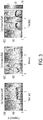
- high-pitch sounds comprising of varying temporal and frequency signatures (see Figure 3 ).
- These sounds can be categorized into the following modes: phonation (or normophonation), consisting of the typical cry with a harmonic structure and a fundamental frequency ranging in 400-600Hz or 350-750 Hz; hyperphonation mode, also harmonically structured but with rapidly changing resonance and a shifted fundamental frequency of 1000-2000Hz or even higher.
- This high-pitched crying is often emitted by children in major distress or important pain, or infants who show biomedical indices of high risk; dysphonation mode, consisting of crying intervals with aperiodic vibrations (i.e.
- Instances of phonation and hyperphonation crying modes can be localized using properties of the time-frequency representation (spectrogram) of the signal. Elevated frequency contents within the ranges of 200-600 Hz or above 1000 Hz, combined with a harmonic structure can be highly indicative of such events. However when these events are considered within lung sound content, caution is needed: adventitious sounds can produce patterns of similar or overlapping specifications as shown in Figure 3 .
- Heart Sound provides valuable clinical information for the patient and is usually part of the standard biometric measurements taken in a routine assessment.
- the heart rate combined with the waveform of the heart beat can be very indicative in case of disease.
- auscultation it proves to be another noise component masking the respiratory sounds.
- the problem of HS suppression has been addressed in several studies [8].
- an Auto-Regressive/Moving Average (ARMA) method to fill up the extrapolated intervals, which are identified by a wavelet multi-scale decomposition, inspired by [8].
- Heart Sound Identification Identifying heart beats on heart auscultation can be a tedious task on its own. On lung sound recordings it can be even more challenging since the heart sound waveform is highly "corrupted" by lung sound and inherent noise. Therefore, when it comes to busy clinics and pediatric auscultation we need to relax the goal of high accuracy to low specificity. In other words, we treat this task very conservatively to avoid any false alarms coming from possible adventitious events. With the aim of suppressing the heart sounds in a scenario of no false alarms, we propose the following algorithm.
- the decomposition filters used are obtained from the symlet filter family. Due to its shape, the symlet waveform can be used to capture heart beat irregularities in the signal.
- SWT Discrete Static Wavelet Transform
- SWT is time invariant as opposed to DWT: after the Detail and Approximation coefficients, D j (n) and A j (n), are obtained, signals do not undergo downsampling.
- the reconstruction of the original signal can be easily obtained by averaging the inverse wavelet transforms [20].
- the resulting wavelet representation is used to identify irregularities corresponding to heart beats. It is well known that as the scale level increases, the signal singularities become more apparent, a property that has been used extensively in image processing.
- the components at every scale are normalized before forming the product. We then act on the approximation coefficients A j (n) and exclude all regions identified by the multiscale product. These excluded intervals correspond to heart sounds that will be replaced by estimated data, as explained below.
- ⁇ -a p (k) ⁇ are the prediction coefficients of our order-p predictor.
- the Levinson-Durbin algorithm was invoked to efficiently solve the normal equations for the prediction coefficients.
- a zero value for the above quantity indicated that the segment is a WSS process.
- the multitaper periodogram was preferred to the periodogram, as it typically results in smaller variance.
- a bank of 128 cochlear filters h(t; f), with 24 channels per octave, was used to analyze the sound signals s(t). These filters were modeled as constant-Q asymmetric band-pass filters and tonotopically arranged with their central frequencies logarithmically spaced. Then, signals were preempasised by a temporal derivative and spectrally sharpened using a first-order difference between adjacent frequency channels, followed by half-way rectification and a short-time integration ⁇ (t; ⁇ ), with ⁇ 8 msec.
- y(t,j) is passed through a bank of symmetric filters formed by the seed function h S (f) and it's dilations h S (f; ⁇ c ) with modulation frequency ⁇ c measured in cycles/octave (c/o).
- the time slices of the auditory spectrogram were filtered in using the Fourier representation of (8), H R ( ⁇ ) as a seed function for different modulation rates ⁇ , measured in Hz.
- H R ( ⁇ ) a seed function for different modulation rates ⁇ , measured in Hz.
- MFCCs Mel-frequency cepstral coefficients
- the resulting spectrums provide one coefficient per frequency band and constitute the MFCCs amplitudes.
- MFCC_P For the purposes of this study we call this method MFCC_P. and according to [27], 13 MFCCs were extracted; a window length of 50 ms was used with 25% overlap.
- PERCH database was used for the comparison among methods MFCC_P, WIGNER_J and the proposed method, PROPOSED.
- intervals with a "definite" label for which the two reviewers were in agreement.
- Group Abnormal contained lung sound intervals whose primary label indicated the existence of Crackles, Wheeze or Crackles and Wheeze and for which the two reviewers were in agreement.
- Group Normal contained recorded intervals that had a "Normal" primary label and for which reviewers were in agreement, excluding segments with an abnormal (Crackle/Wheeze) secondary annotation. Each 10 s annotation was split into 3 s segments, with 75% overlap.
- Sensitivity and specificity indices correspond to the number of correctly identified abnormal and normal breath sounds, respectively.
- Accuracy index depicts the average of Sensitivity and Specificity indices.
- Low accuracy percentages of the WIGNER_J method are noticeable. It is an expected outcome considering the nature of the extracted features: they are designed to detect unexpected abnormal patterns (thus the high Sensitivity value) but the feature space lacks the ability of separating respiratory-related abnormal sounds from noise-related sounds or signal corruption, and so, without further improvement, this method is not suitable for real-life auscultation scenarios.
- the clipping regions for all signals were identified and repaired according to the described algorithm.
- a visual inspection of the processed signals revealed no artifacts.
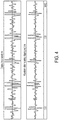
- the outputted waveforms kept the characteristics of the original time signal with the benefit of repaired clipping distortions, as shown in Figure 4 .
- the next step was identification and elimination of the intervals highly contaminated with stethoscope movement noise and intense crying. Noise produced by subject's crying or short-time stethoscope displacements was replaced by silent segments.
- Heart sound identification is illustrated in Figure 5 (top).
- the vertical lines correspond to indicators of heart sound candidates.
- the algorithm keeps only the round dot indicators.
- the spectrogram of the input signal and the output after heart sound suppression in the identified regions is shown middle and lower portions of Figure 5 .
- Performance evaluation is not a trivial task in such a setup: the classifier produces a decision for every sub-interval, while a decision per site location (10 s segments) is desired.
- a simple rule while taking into consideration the expected duration of the adventitious events.
- M was chosen to be equal to 5.
- the particular 10 s interval was assigned an abnormal label; otherwise the interval was assigned a normal label. Evaluation results are shown below in Table III. TABLE III FINAL CLASSIFICATION RESULTS PER SITE LOCATION Sensitivity % Specificity % Accuracy % PROPOSED 72.41 80.85 77.13 *Performance is evaluated per site location (10 s decision)
Landscapes
- Health & Medical Sciences (AREA)
- Engineering & Computer Science (AREA)
- Life Sciences & Earth Sciences (AREA)
- Physics & Mathematics (AREA)
- Biomedical Technology (AREA)
- Medical Informatics (AREA)
- Public Health (AREA)
- General Health & Medical Sciences (AREA)
- Animal Behavior & Ethology (AREA)
- Veterinary Medicine (AREA)
- Surgery (AREA)
- Molecular Biology (AREA)
- Heart & Thoracic Surgery (AREA)
- Artificial Intelligence (AREA)
- Theoretical Computer Science (AREA)
- Acoustics & Sound (AREA)
- Signal Processing (AREA)
- Pathology (AREA)
- Biophysics (AREA)
- Physiology (AREA)
- Computer Vision & Pattern Recognition (AREA)
- Mathematical Physics (AREA)
- Software Systems (AREA)
- Psychiatry (AREA)
- Evolutionary Computation (AREA)
- Pulmonology (AREA)
- General Physics & Mathematics (AREA)
- Computing Systems (AREA)
- General Engineering & Computer Science (AREA)
- Primary Health Care (AREA)
- Business, Economics & Management (AREA)
- Fuzzy Systems (AREA)
- Epidemiology (AREA)
- General Business, Economics & Management (AREA)
- Data Mining & Analysis (AREA)
- Measurement Of The Respiration, Hearing Ability, Form, And Blood Characteristics Of Living Organisms (AREA)
- Measuring Pulse, Heart Rate, Blood Pressure Or Blood Flow (AREA)
- Multimedia (AREA)
Claims (12)
- Digitales elektronisches Stethoskop (100), das aufweist:eine akustische Sensoranordnung (102), die einen Körpersensorabschnitt (104) und einen Umgebungssensorabschnitt (106) aufweist, wobei der Körpersensorabschnitt (104) so konfiguriert ist, dass er einen akustisch gekoppelten Kontakt mit einem Subjekt macht, während der Umgebungssensorabschnitt (106) so konfiguriert ist, dass er von dem Körpersensorabschnitt (104) weg gerichtet ist, um Umgebungsrauschen in der Nähe des Körpersensorabschnitts (104) aufzunehmen;ein Signalverarbeitungs- und Datenspeichersystem (108), das so konfiguriert ist, dass es mit der akustischen Sensoranordnung (102) kommuniziert, um Erfassungssignale von dieser zu empfangen, wobei die Erfassungssignale ein Auskultationssignal aufweisen, das ein Körperzielgeräusch und ein Rauschsignal aufweist; undeine Ausgabevorrichtung (110), die so konfiguriert ist, dass sie mit dem Signalverarbeitungs- und Datenspeichersystem (108) kommuniziert, um mindestens eine der Einheiten, Ausgangssignal oder Information, die von dem Ausgangssignal abgeleitet ist, bereitzustellen,wobei das Signalverarbeitungs- und Datenspeichersystem (108) ein Rauschreduziersystem (112) aufweist, das so konfiguriert ist, dass es sowohl stationäres Rauschen, als auch nicht-stationäres Rauschen aus dem Erfassungssignal entfernt, um ein verarbeitetes Signal bereitzustellen, das im Wesentlichen frei von Verzerrungen ist,wobei das Signalverarbeitungs- und Datenspeichersystem (108) ferner ein Auskultationsgeräusch-Klassifikationssystem (114) aufweist, das so konfiguriert ist, dass es das verarbeitete Signal empfängt und eine Klassifikation davon als mindestens eines der Geräusche, normales Atemgeräusch oder ein anormales Atemgeräusch, bereitstellt,dadurch gekennzeichnet, dass:das Rauschreduziersystem Umgebungsrauschen durch mehrbandige spektrale Subtraktion des Rauschsignals von dem Erfassungssignal unterdrückt, um das verarbeitete Signal im Wesentlichen frei von Verzerrungen bereitzustellen, undwobei die mehrbandige spektrale Subtraktion aufweist:Verarbeiten individueller Frequenzbänder auf Grundlage der spektralen Eigenschaften eines Zielkörpergeräusches und des Rauschsignals,Anpassen einer Verarbeitung eines lokalisierten Zeitfensters des Erfassungssignals auf Grundlage einer lokalen Information über das Signal-Rausch-Verhältnis (SNR), um ein verarbeitetes Signal bereitzustellen, undGlätten des verarbeiteten Signals entlang benachbarter Zeitframes und Frequenzbänder, um Rekonstruktionsverzerrungen in dem verarbeiteten Signal zu reduzieren.
- Digitales elektronisches Stethoskop (100) gemäß Anspruch 1, wobei der Körpersensorabschnitt (106) der akustischen Sensoranordnung (102) ein Mikrofonarray von einer Vielzahl von Mikrofonen aufweist.
- Digitales elektronisches Stethoskop (100) gemäß Anspruch 2, wobei jedes von der Vielzahl von Mikrofonen ein Elektretmikrofon ist.
- Digitales elektronisches Stethoskop (100) gemäß einem der Ansprüche 1-3, wobei die Ausgabevorrichtung mindestens eine der Einheiten, Kopfhörer, Smartphone oder Computer, ist.
- Digitales elektronisches Stethoskop (100) gemäß Anspruch 1, wobei das Rauschreduziersystem (112) ein Übersteuerungsreparatursystem (116) aufweist, um eine Übersteuerung des Auskultationssignals zu reparieren, um das verarbeitete Signal im Wesentlichen frei von Verzerrungen bereitzustellen.
- Digitales elektronisches Stethoskop (100) gemäß einem der Ansprüche 1-3 und 5,
wobei das Rauschreduziersystem (112) ein Herzgeräusch-Eliminiersystem (118) aufweist, um die Herzgeräusche des Subjekts aus dem Erfassungssignal zu entfernen, um das verarbeitete Signal im Wesentlichen frei von Verzerrungen bereitzustellen;
und/oder
wobei das Rauschreduziersystem (112) ein Reibungsrauschen-Entfernsystem (120) aufweist, um Reibungsrauschen der akustischen Sensoranordnung (102), die an dem Objekt reibt, aus dem Erfassungssignal zu entfernen, um das verarbeitete Signal im Wesentlichen frei von Verzerrungen bereitzustellen. - Digitales elektronisches Stethoskop (100) gemäß einem der Ansprüche 1-3, 5 und 6, wobei das Rauschreduziersystem (112) ein System (122) zum Entfernen eines Weines eines Subjekts aufweist, um das Weinrauschen des Subjekts aus dem Erfassungssignal zu entfernen, um das verarbeitete Signal im Wesentlichen frei von Verzerrungen bereitzustellen.
- Digitales elektronisches Stethoskop (100) gemäß einem der Ansprüche 1-3 und 5, wobei das Auskultationsgeräusch-Klassifikationssystem (114) ein System zum maschinellen Lernen ist, das aus Trainingsdaten lernt.
- Digitales elektronisches Stethoskop (100) gemäß Anspruch 8, wobei das Auskultationsgeräusch-Klassifikationssystem (114) einen binären Support-Vector-Machine-(SVM)-Algorithmus und Radial-Basis-Kernels (RBFs) verwendet.
- Verfahren zum Verarbeiten von Signalen, die durch ein digitales elektronisches Stethoskop (100) erfasst werden, das aufweist:Erhalten eines Auskultationssignals von dem elektronischen Stethoskop (100), wobei das Auskultationssignal ein Zielkörpergeräusch aufweist;Erhalten eines Rauschsignals, das Rauschen aus einer Umgebung des Körpers aufweist;Erhalten eines verarbeiteten Signals durch Reduzieren von unerwünschtem Rauschen in dem Auskultationssignal auf Grundlage des Auskultationssignals und des Rauschsignals;Durchführen einer akustischen Analyse des verarbeiteten Signals; undDurchführen einer statistischen Analyse des verarbeiteten Signals;dadurch gekennzeichnet, dass:das Erhalten des verarbeiteten Signals Unterdrücken von Umgebungsrauschen durch mehrbandige spektrale Subtraktion des Rauschsignals von dem Auskultationssignal aufweist, undwobei die mehrbandige spektrale Subtraktion aufweist:Verarbeiten individueller Frequenzbänder auf Grundlage der spektralen Eigenschaften des Zielkörpergeräuschs und des Rauschsignals,Anpassen der Verarbeitung eines lokalisierten Zeitfensters des Auskultationssignals auf Grundlage einer Information über das lokale Signal-Rausch-Verhältnis (SNR), undGlätten des verarbeiteten Signals entlang benachbarter Zeitframes und Frequenzbänder, um Rekonstruktionsverzerrungen in dem verarbeiteten Signal zu reduzieren.
- Verfahren zum Verarbeiten von Signalen gemäß Anspruch 10,
wobei das Erhalten des verarbeiteten Signals Erfassen und Reparieren der Übersteuerungsverzerrung in dem Auskultationssignal aufweist;
und/oder
wobei das Erhalten des verarbeiteten Signals Reduzieren des mechanischen Rauschens des elektronischen Stethoskops (100) aufweist;
und/oder
wobei das Erhalten des verarbeiteten Signals Unterdrücken von Rauschen von dem Weinen eines Patienten, von dem das Auskultationssignal erhalten wurde, aufweist. - Verfahren zum Verarbeiten von Signalen gemäß Anspruch 10,
wobei das Erhalten des verarbeiteten Signals aufweist:Identifizieren und Unterdrücken oder Extrahieren von Herzgeräuschen in dem Auskultationssignal, undExtrapolieren des verarbeiteten Signals über Intervalle, in denen die Herzgeräusche unterdrückt oder extrahiert wurden, unter Verwendung eines Verfahrens mit Autoregression/gleitendem Mittelwert (ARMA);und/oderwobei die akustische Analyse aufweist:Erhalten eines auditiven Spektrogramms durch Verbessern des verarbeiteten Signals unter Verwendung einer Vielzahl von Filtern, undAufnehmen von Signalmodulationen sowohl entlang der Zeit-, als auch der Frequenzachse des auditiven Spektrogramms.
Applications Claiming Priority (2)
| Application Number | Priority Date | Filing Date | Title |
|---|---|---|---|
| US201562249028P | 2015-10-30 | 2015-10-30 | |
| PCT/US2016/059752 WO2017075601A1 (en) | 2015-10-30 | 2016-10-31 | Programmable electronic stethoscope devices, algorithms, systems, and methods |
Publications (3)
| Publication Number | Publication Date |
|---|---|
| EP3367908A1 EP3367908A1 (de) | 2018-09-05 |
| EP3367908A4 EP3367908A4 (de) | 2019-07-17 |
| EP3367908B1 true EP3367908B1 (de) | 2020-09-23 |
Family
ID=58631917
Family Applications (1)
| Application Number | Title | Priority Date | Filing Date |
|---|---|---|---|
| EP16861049.1A Active EP3367908B1 (de) | 2015-10-30 | 2016-10-31 | Vorrichtungen, algorithmen, systeme und verfahren für programmierbares elektronisches stethoskop |
Country Status (3)
| Country | Link |
|---|---|
| US (1) | US10765399B2 (de) |
| EP (1) | EP3367908B1 (de) |
| WO (1) | WO2017075601A1 (de) |
Families Citing this family (47)
| Publication number | Priority date | Publication date | Assignee | Title |
|---|---|---|---|---|
| US9240188B2 (en) | 2004-09-16 | 2016-01-19 | Lena Foundation | System and method for expressive language, developmental disorder, and emotion assessment |
| WO2018102821A1 (en) * | 2016-12-02 | 2018-06-07 | Children's National Medical Center | Apparatus and method for identification of wheezing in auscultated lung sounds |
| US20180177432A1 (en) * | 2016-12-27 | 2018-06-28 | Strados Labs Llc | Apparatus and method for detection of breathing abnormalities |
| EP3424432B1 (de) * | 2017-07-04 | 2020-09-30 | Tata Consultancy Services Limited | Systeme und verfahren zur detektion von lungenanomalien mithilfe von lungengeräuschen |
| CN107260208A (zh) * | 2017-07-10 | 2017-10-20 | 山东朗朗智能科技发展有限公司 | 肺音图机监听方法和系统 |
| US11045163B2 (en) * | 2017-09-19 | 2021-06-29 | Ausculsciences, Inc. | Method of detecting noise in auscultatory sound signals of a coronary-artery-disease detection system |
| US11191486B2 (en) * | 2017-09-19 | 2021-12-07 | Ausculsciences, Inc. | System and method for detecting decoupling of an auscultatory sound sensor from a test-subject |
| US20210298685A1 (en) * | 2017-10-20 | 2021-09-30 | Jikang ZENG | Coronary artery disease detection signal processing system and method |
| US11284827B2 (en) | 2017-10-21 | 2022-03-29 | Ausculsciences, Inc. | Medical decision support system |
| US10529357B2 (en) * | 2017-12-07 | 2020-01-07 | Lena Foundation | Systems and methods for automatic determination of infant cry and discrimination of cry from fussiness |
| JP7006473B2 (ja) * | 2018-04-13 | 2022-01-24 | オムロンヘルスケア株式会社 | 生体音測定装置、生体音測定支援方法、生体音測定支援プログラム |
| CN111276159A (zh) * | 2018-12-05 | 2020-06-12 | 阿里健康信息技术有限公司 | 一种婴儿发音分析方法及服务器 |
| CN109545239B (zh) * | 2018-12-06 | 2021-11-05 | 华南理工大学 | 用于采集体音信号的双麦克风自适应滤波算法及应用 |
| TWI687206B (zh) * | 2018-12-06 | 2020-03-11 | 財團法人工業技術研究院 | 異常肺音標記的方法及裝置 |
| CN109805954B (zh) * | 2019-01-23 | 2021-09-14 | 苏州美糯爱医疗科技有限公司 | 一种电子听诊器的摩擦音干扰自动消除方法 |
| CN109893163B (zh) * | 2019-01-23 | 2021-07-02 | 苏州美糯爱医疗科技有限公司 | 一种自动定位并修复电子听诊器削波失真波形的方法 |
| CN109999314B (zh) * | 2019-05-15 | 2020-08-04 | 江南大学 | 一种基于脑电波监测智能助眠系统及其睡眠耳机 |
| CN112336320A (zh) * | 2019-08-09 | 2021-02-09 | 陈汝建 | 一种智能项链及心音、肺音、颈大血管音的监测方法 |
| US10709353B1 (en) | 2019-10-21 | 2020-07-14 | Sonavi Labs, Inc. | Detecting a respiratory abnormality using a convolution, and applications thereof |
| US12433506B2 (en) | 2019-10-21 | 2025-10-07 | Sonavi Labs, Inc. | Digital stethoscope for counting coughs, and applications thereof |
| WO2021080939A1 (en) | 2019-10-21 | 2021-04-29 | Sonavi Labs, Inc. | A digital stethoscope |
| US10750976B1 (en) | 2019-10-21 | 2020-08-25 | Sonavi Labs, Inc. | Digital stethoscope for counting coughs, and applications thereof |
| US10709414B1 (en) | 2019-10-21 | 2020-07-14 | Sonavi Labs, Inc. | Predicting a respiratory event based on trend information, and applications thereof |
| US10702239B1 (en) | 2019-10-21 | 2020-07-07 | Sonavi Labs, Inc. | Predicting characteristics of a future respiratory event, and applications thereof |
| US10716534B1 (en) | 2019-10-21 | 2020-07-21 | Sonavi Labs, Inc. | Base station for a digital stethoscope, and applications thereof |
| CN111028860B (zh) * | 2019-11-22 | 2021-08-06 | 深圳市康冠智能科技有限公司 | 音频数据处理方法、装置、计算机设备以及存储介质 |
| US11475910B2 (en) | 2020-02-11 | 2022-10-18 | Purdue Research Foundation | System and methods for machine anomaly detection based on sound spectrogram images and neural networks |
| TWI769449B (zh) * | 2020-04-21 | 2022-07-01 | 廣達電腦股份有限公司 | 濾波系統及濾波方法 |
| CN111753368B (zh) * | 2020-05-18 | 2022-07-08 | 重庆长安汽车股份有限公司 | 预测车内吸声性能的方法 |
| CN111707355A (zh) * | 2020-06-19 | 2020-09-25 | 浙江讯飞智能科技有限公司 | 设备运行状态检测方法、装置、设备及存储介质 |
| CN111789629A (zh) * | 2020-06-29 | 2020-10-20 | 中南大学 | 一种基于深度学习的呼吸音智能诊疗系统及方法 |
| US12183457B2 (en) * | 2020-07-04 | 2024-12-31 | Medentum Innovations Inc. | Diagnostic device for remote consultations and telemedicine |
| US20220031256A1 (en) * | 2020-07-31 | 2022-02-03 | 3M Innovative Properties Company | Composite phonocardiogram visualization on an electronic stethoscope display |
| EP4211701B1 (de) * | 2020-09-09 | 2025-12-24 | Sparrow Acoustics Inc. | Verfahren und system zur durchführung von zeitbereichsverarbeitung eines wellenformsignals |
| CN112233693B (zh) * | 2020-10-14 | 2023-12-01 | 腾讯音乐娱乐科技(深圳)有限公司 | 一种音质评估方法、装置和设备 |
| JP7434668B2 (ja) * | 2020-10-30 | 2024-02-20 | グーグル エルエルシー | テレプレゼンス会議用マイクロフォンアレイの自動較正 |
| KR20220061505A (ko) * | 2020-11-06 | 2022-05-13 | 현대자동차주식회사 | 감정 조절 시스템 및 감정 조절 방법 |
| CN112461477B (zh) * | 2020-11-12 | 2022-12-02 | 合肥元正质量技术服务有限公司 | 呼吸器震动处理试验箱 |
| US11783826B2 (en) * | 2021-02-18 | 2023-10-10 | Nuance Communications, Inc. | System and method for data augmentation and speech processing in dynamic acoustic environments |
| US12482560B2 (en) | 2021-04-23 | 2025-11-25 | Lasarrus Clinic And Research Center | Energy-efficient collection of wearable sensor data |
| US12476006B2 (en) | 2021-07-10 | 2025-11-18 | Lassarrus Clinic And Research Center Inc. | Smart multi-modal telehealth-IoT system for respiratory analysis |
| US12148525B2 (en) | 2021-09-04 | 2024-11-19 | Lasarrus Clinic And Research Center Inc. | Wearable multi-modal system for remote monitoring of patients with chronic obstructive pulmonary disease |
| JP2023125820A (ja) * | 2022-02-28 | 2023-09-07 | ミネベアミツミ株式会社 | 異常判定モデルの生成方法、異常判定装置、異常判定方法、及び学習済みモデル |
| WO2023200955A1 (en) * | 2022-04-14 | 2023-10-19 | Sonavi Labs, Inc. | Detecting and de-noising abnormal lung sounds and extracting a respiratory cycle from an auditory signal |
| CN114822567B (zh) * | 2022-06-22 | 2022-09-27 | 天津大学 | 一种基于能量算子的病理嗓音频谱重构方法 |
| US12514465B2 (en) | 2023-04-07 | 2026-01-06 | Lasarrus Clinic and Research Center Inc | Bilateral acoustic sensing for predicting FEV1/FVC |
| CN120345918B (zh) * | 2025-04-07 | 2025-10-28 | 山东朗朗智能科技发展有限公司 | 基于压电薄膜的数字听诊器系统 |
Family Cites Families (16)
| Publication number | Priority date | Publication date | Assignee | Title |
|---|---|---|---|---|
| US5036857A (en) * | 1989-10-26 | 1991-08-06 | Rutgers, The State University Of New Jersey | Noninvasive diagnostic system for coronary artery disease |
| US5539831A (en) * | 1993-08-16 | 1996-07-23 | The University Of Mississippi | Active noise control stethoscope |
| EP1774912A1 (de) | 1996-02-08 | 2007-04-18 | Hal Greenberger | Rauschreduzierendes Stethoskop |
| US5812678A (en) * | 1996-02-26 | 1998-09-22 | Scalise; Stanley J. | Auscultation augmentation device |
| US6439393B1 (en) * | 2000-02-14 | 2002-08-27 | Bruce K. Zeller | Method and apparatus for separating excavated material |
| US20100145210A1 (en) | 2006-06-26 | 2010-06-10 | Claus Graff | Multi parametric classification of cardiovascular sounds |
| US20080013747A1 (en) * | 2006-06-30 | 2008-01-17 | Bao Tran | Digital stethoscope and monitoring instrument |
| US20090060215A1 (en) | 2007-08-30 | 2009-03-05 | Ocasio Luz M | Portable amplified stethoscope with recording capability |
| US20090316925A1 (en) * | 2008-06-20 | 2009-12-24 | Leonard Eisenfeld | Electronic stethoscope system |
| US9480400B2 (en) * | 2010-02-01 | 2016-11-01 | 3M Innovative Properties Company | Electronic stethoscope system for telemedicine applications |
| TWI528944B (zh) | 2011-08-11 | 2016-04-11 | Nat Univ Tsing Hua | 應用於電子聽診器的疾病診斷方法 |
| US9113780B2 (en) | 2012-03-29 | 2015-08-25 | I Shou University | Device and method for detecting occurrence of wheeze |
| WO2014120300A2 (en) * | 2012-10-24 | 2014-08-07 | The Johns Hopkins University | Acoustic monitoring system and methods |
| KR101974482B1 (ko) * | 2013-04-05 | 2019-05-02 | 삼성전자주식회사 | 전자 청진 장치, 자동 진단 장치 및 자동 진단 방법 |
| US10441243B2 (en) * | 2014-03-28 | 2019-10-15 | Pioneer Corporation | Biological sound analyzing apparatus, biological sound analyzing method, computer program, and recording medium |
| US9445779B2 (en) * | 2014-10-02 | 2016-09-20 | The United States Of America As Represented By The Administrator Of The National Aeronautics And Space Administration | Infrasonic stethoscope for monitoring physiological processes |
-
2016
- 2016-10-31 US US15/772,454 patent/US10765399B2/en active Active
- 2016-10-31 EP EP16861049.1A patent/EP3367908B1/de active Active
- 2016-10-31 WO PCT/US2016/059752 patent/WO2017075601A1/en not_active Ceased
Non-Patent Citations (1)
| Title |
|---|
| None * |
Also Published As
| Publication number | Publication date |
|---|---|
| EP3367908A4 (de) | 2019-07-17 |
| US10765399B2 (en) | 2020-09-08 |
| US20180317876A1 (en) | 2018-11-08 |
| WO2017075601A1 (en) | 2017-05-04 |
| EP3367908A1 (de) | 2018-09-05 |
Similar Documents
| Publication | Publication Date | Title |
|---|---|---|
| US10765399B2 (en) | Programmable electronic stethoscope devices, algorithms, systems, and methods | |
| Emmanouilidou et al. | Computerized lung sound screening for pediatric auscultation in noisy field environments | |
| EP3885974B1 (de) | Verfahren und systeme zur erkennung der anwesenheit abnormaler herztöne eines subjekts | |
| Ismail et al. | Localization and classification of heart beats in phonocardiography signals—a comprehensive review | |
| Reichert et al. | Analysis of respiratory sounds: state of the art | |
| Leng et al. | The electronic stethoscope | |
| Khan et al. | Artificial neural network-based cardiovascular disease prediction using spectral features | |
| Naseri et al. | Detection and boundary identification of phonocardiogram sounds using an expert frequency-energy based metric | |
| JP6435257B2 (ja) | 患者音を処理するための方法および装置 | |
| Chakrabarti et al. | Phonocardiogram signal analysis-practices, trends and challenges: A critical review | |
| Mishra et al. | Characterization of $ S_1 $ and $ S_2 $ heart sounds using stacked autoencoder and convolutional neural network | |
| San Chun et al. | Towards passive assessment of pulmonary function from natural speech recorded using a mobile phone | |
| Sharan et al. | Automated cough sound analysis for detecting childhood pneumonia | |
| Talal et al. | Machine learning‐based classification of multiple heart disorders from PCG signals | |
| Bhoi et al. | Multidimensional analytical study of heart sounds: A review | |
| Mustafa et al. | Detection of heartbeat sounds arrhythmia using automatic spectral methods and cardiac auscultatory: M. Mustafa et al. | |
| McLane et al. | Comprehensive analysis system for automated respiratory cycle segmentation and crackle peak detection | |
| Zhao et al. | BSMonitor: noise-resistant bowel sound monitoring via earphones | |
| Giorgio et al. | An effective CAD system for heart sound abnormality detection | |
| Fattahi et al. | A blind filtering framework for noisy neonatal chest sounds | |
| Asmare et al. | Can heart sound denoising be beneficial in phonocardiogram classification tasksƒ | |
| Narváez et al. | Classification of heart sounds using linear prediction coefficients and mel-frequency cepstral coefficients as acoustic features | |
| Rao et al. | Improved detection of lung fluid with standardized acoustic stimulation of the chest | |
| Uwaoma et al. | Detection and classification of abnormal respiratory sounds on a resource-constraint mobile device | |
| Raboshchuk et al. | A knowledge-based approach to automatic detection of equipment alarm sounds in a neonatal intensive care unit environment |
Legal Events
| Date | Code | Title | Description |
|---|---|---|---|
| STAA | Information on the status of an ep patent application or granted ep patent |
Free format text: STATUS: THE INTERNATIONAL PUBLICATION HAS BEEN MADE |
|
| PUAI | Public reference made under article 153(3) epc to a published international application that has entered the european phase |
Free format text: ORIGINAL CODE: 0009012 |
|
| STAA | Information on the status of an ep patent application or granted ep patent |
Free format text: STATUS: REQUEST FOR EXAMINATION WAS MADE |
|
| 17P | Request for examination filed |
Effective date: 20180525 |
|
| AK | Designated contracting states |
Kind code of ref document: A1 Designated state(s): AL AT BE BG CH CY CZ DE DK EE ES FI FR GB GR HR HU IE IS IT LI LT LU LV MC MK MT NL NO PL PT RO RS SE SI SK SM TR |
|
| AX | Request for extension of the european patent |
Extension state: BA ME |
|
| RIN1 | Information on inventor provided before grant (corrected) |
Inventor name: EMMANOUILIDOU, DIMITRA Inventor name: ELHILALI, MOUNYA Inventor name: MCLANE, IAN Inventor name: WEST, JAMES E. |
|
| DAV | Request for validation of the european patent (deleted) | ||
| DAX | Request for extension of the european patent (deleted) | ||
| A4 | Supplementary search report drawn up and despatched |
Effective date: 20190618 |
|
| RIC1 | Information provided on ipc code assigned before grant |
Ipc: A61B 7/02 20060101ALI20190612BHEP Ipc: A61B 7/00 20060101ALI20190612BHEP Ipc: A61B 7/04 20060101AFI20190612BHEP |
|
| GRAP | Despatch of communication of intention to grant a patent |
Free format text: ORIGINAL CODE: EPIDOSNIGR1 |
|
| STAA | Information on the status of an ep patent application or granted ep patent |
Free format text: STATUS: GRANT OF PATENT IS INTENDED |
|
| RIC1 | Information provided on ipc code assigned before grant |
Ipc: A61B 7/04 20060101AFI20200402BHEP Ipc: A61B 7/02 20060101ALI20200402BHEP Ipc: A61B 7/00 20060101ALI20200402BHEP |
|
| INTG | Intention to grant announced |
Effective date: 20200423 |
|
| RIN1 | Information on inventor provided before grant (corrected) |
Inventor name: ELHILALI, MOUNYA Inventor name: EMMANOUILIDOU, DIMITRA Inventor name: WEST, JAMES E. Inventor name: MCLANE, IAN |
|
| GRAS | Grant fee paid |
Free format text: ORIGINAL CODE: EPIDOSNIGR3 |
|
| GRAA | (expected) grant |
Free format text: ORIGINAL CODE: 0009210 |
|
| STAA | Information on the status of an ep patent application or granted ep patent |
Free format text: STATUS: THE PATENT HAS BEEN GRANTED |
|
| AK | Designated contracting states |
Kind code of ref document: B1 Designated state(s): AL AT BE BG CH CY CZ DE DK EE ES FI FR GB GR HR HU IE IS IT LI LT LU LV MC MK MT NL NO PL PT RO RS SE SI SK SM TR |
|
| REG | Reference to a national code |
Ref country code: GB Ref legal event code: FG4D |
|
| REG | Reference to a national code |
Ref country code: CH Ref legal event code: EP |
|
| REG | Reference to a national code |
Ref country code: DE Ref legal event code: R096 Ref document number: 602016044720 Country of ref document: DE |
|
| REG | Reference to a national code |
Ref country code: IE Ref legal event code: FG4D |
|
| REG | Reference to a national code |
Ref country code: AT Ref legal event code: REF Ref document number: 1315554 Country of ref document: AT Kind code of ref document: T Effective date: 20201015 |
|
| PG25 | Lapsed in a contracting state [announced via postgrant information from national office to epo] |
Ref country code: SE Free format text: LAPSE BECAUSE OF FAILURE TO SUBMIT A TRANSLATION OF THE DESCRIPTION OR TO PAY THE FEE WITHIN THE PRESCRIBED TIME-LIMIT Effective date: 20200923 Ref country code: BG Free format text: LAPSE BECAUSE OF FAILURE TO SUBMIT A TRANSLATION OF THE DESCRIPTION OR TO PAY THE FEE WITHIN THE PRESCRIBED TIME-LIMIT Effective date: 20201223 Ref country code: GR Free format text: LAPSE BECAUSE OF FAILURE TO SUBMIT A TRANSLATION OF THE DESCRIPTION OR TO PAY THE FEE WITHIN THE PRESCRIBED TIME-LIMIT Effective date: 20201224 Ref country code: HR Free format text: LAPSE BECAUSE OF FAILURE TO SUBMIT A TRANSLATION OF THE DESCRIPTION OR TO PAY THE FEE WITHIN THE PRESCRIBED TIME-LIMIT Effective date: 20200923 Ref country code: FI Free format text: LAPSE BECAUSE OF FAILURE TO SUBMIT A TRANSLATION OF THE DESCRIPTION OR TO PAY THE FEE WITHIN THE PRESCRIBED TIME-LIMIT Effective date: 20200923 Ref country code: NO Free format text: LAPSE BECAUSE OF FAILURE TO SUBMIT A TRANSLATION OF THE DESCRIPTION OR TO PAY THE FEE WITHIN THE PRESCRIBED TIME-LIMIT Effective date: 20201223 |
|
| REG | Reference to a national code |
Ref country code: AT Ref legal event code: MK05 Ref document number: 1315554 Country of ref document: AT Kind code of ref document: T Effective date: 20200923 |
|
| PG25 | Lapsed in a contracting state [announced via postgrant information from national office to epo] |
Ref country code: RS Free format text: LAPSE BECAUSE OF FAILURE TO SUBMIT A TRANSLATION OF THE DESCRIPTION OR TO PAY THE FEE WITHIN THE PRESCRIBED TIME-LIMIT Effective date: 20200923 Ref country code: LV Free format text: LAPSE BECAUSE OF FAILURE TO SUBMIT A TRANSLATION OF THE DESCRIPTION OR TO PAY THE FEE WITHIN THE PRESCRIBED TIME-LIMIT Effective date: 20200923 |
|
| REG | Reference to a national code |
Ref country code: NL Ref legal event code: MP Effective date: 20200923 |
|
| REG | Reference to a national code |
Ref country code: LT Ref legal event code: MG4D |
|
| PG25 | Lapsed in a contracting state [announced via postgrant information from national office to epo] |
Ref country code: SM Free format text: LAPSE BECAUSE OF FAILURE TO SUBMIT A TRANSLATION OF THE DESCRIPTION OR TO PAY THE FEE WITHIN THE PRESCRIBED TIME-LIMIT Effective date: 20200923 Ref country code: EE Free format text: LAPSE BECAUSE OF FAILURE TO SUBMIT A TRANSLATION OF THE DESCRIPTION OR TO PAY THE FEE WITHIN THE PRESCRIBED TIME-LIMIT Effective date: 20200923 Ref country code: CZ Free format text: LAPSE BECAUSE OF FAILURE TO SUBMIT A TRANSLATION OF THE DESCRIPTION OR TO PAY THE FEE WITHIN THE PRESCRIBED TIME-LIMIT Effective date: 20200923 Ref country code: RO Free format text: LAPSE BECAUSE OF FAILURE TO SUBMIT A TRANSLATION OF THE DESCRIPTION OR TO PAY THE FEE WITHIN THE PRESCRIBED TIME-LIMIT Effective date: 20200923 Ref country code: PT Free format text: LAPSE BECAUSE OF FAILURE TO SUBMIT A TRANSLATION OF THE DESCRIPTION OR TO PAY THE FEE WITHIN THE PRESCRIBED TIME-LIMIT Effective date: 20210125 Ref country code: LT Free format text: LAPSE BECAUSE OF FAILURE TO SUBMIT A TRANSLATION OF THE DESCRIPTION OR TO PAY THE FEE WITHIN THE PRESCRIBED TIME-LIMIT Effective date: 20200923 |
|
| PG25 | Lapsed in a contracting state [announced via postgrant information from national office to epo] |
Ref country code: AT Free format text: LAPSE BECAUSE OF FAILURE TO SUBMIT A TRANSLATION OF THE DESCRIPTION OR TO PAY THE FEE WITHIN THE PRESCRIBED TIME-LIMIT Effective date: 20200923 Ref country code: AL Free format text: LAPSE BECAUSE OF FAILURE TO SUBMIT A TRANSLATION OF THE DESCRIPTION OR TO PAY THE FEE WITHIN THE PRESCRIBED TIME-LIMIT Effective date: 20200923 Ref country code: ES Free format text: LAPSE BECAUSE OF FAILURE TO SUBMIT A TRANSLATION OF THE DESCRIPTION OR TO PAY THE FEE WITHIN THE PRESCRIBED TIME-LIMIT Effective date: 20200923 Ref country code: PL Free format text: LAPSE BECAUSE OF FAILURE TO SUBMIT A TRANSLATION OF THE DESCRIPTION OR TO PAY THE FEE WITHIN THE PRESCRIBED TIME-LIMIT Effective date: 20200923 Ref country code: IS Free format text: LAPSE BECAUSE OF FAILURE TO SUBMIT A TRANSLATION OF THE DESCRIPTION OR TO PAY THE FEE WITHIN THE PRESCRIBED TIME-LIMIT Effective date: 20210123 |
|
| REG | Reference to a national code |
Ref country code: CH Ref legal event code: PL |
|
| REG | Reference to a national code |
Ref country code: DE Ref legal event code: R097 Ref document number: 602016044720 Country of ref document: DE |
|
| PG25 | Lapsed in a contracting state [announced via postgrant information from national office to epo] |
Ref country code: SK Free format text: LAPSE BECAUSE OF FAILURE TO SUBMIT A TRANSLATION OF THE DESCRIPTION OR TO PAY THE FEE WITHIN THE PRESCRIBED TIME-LIMIT Effective date: 20200923 Ref country code: MC Free format text: LAPSE BECAUSE OF FAILURE TO SUBMIT A TRANSLATION OF THE DESCRIPTION OR TO PAY THE FEE WITHIN THE PRESCRIBED TIME-LIMIT Effective date: 20200923 Ref country code: LU Free format text: LAPSE BECAUSE OF NON-PAYMENT OF DUE FEES Effective date: 20201031 |
|
| REG | Reference to a national code |
Ref country code: BE Ref legal event code: MM Effective date: 20201031 |
|
| PLBE | No opposition filed within time limit |
Free format text: ORIGINAL CODE: 0009261 |
|
| STAA | Information on the status of an ep patent application or granted ep patent |
Free format text: STATUS: NO OPPOSITION FILED WITHIN TIME LIMIT |
|
| PG25 | Lapsed in a contracting state [announced via postgrant information from national office to epo] |
Ref country code: SI Free format text: LAPSE BECAUSE OF FAILURE TO SUBMIT A TRANSLATION OF THE DESCRIPTION OR TO PAY THE FEE WITHIN THE PRESCRIBED TIME-LIMIT Effective date: 20200923 Ref country code: LI Free format text: LAPSE BECAUSE OF NON-PAYMENT OF DUE FEES Effective date: 20201031 Ref country code: DK Free format text: LAPSE BECAUSE OF FAILURE TO SUBMIT A TRANSLATION OF THE DESCRIPTION OR TO PAY THE FEE WITHIN THE PRESCRIBED TIME-LIMIT Effective date: 20200923 Ref country code: CH Free format text: LAPSE BECAUSE OF NON-PAYMENT OF DUE FEES Effective date: 20201031 Ref country code: BE Free format text: LAPSE BECAUSE OF NON-PAYMENT OF DUE FEES Effective date: 20201031 |
|
| 26N | No opposition filed |
Effective date: 20210624 |
|
| PG25 | Lapsed in a contracting state [announced via postgrant information from national office to epo] |
Ref country code: IT Free format text: LAPSE BECAUSE OF FAILURE TO SUBMIT A TRANSLATION OF THE DESCRIPTION OR TO PAY THE FEE WITHIN THE PRESCRIBED TIME-LIMIT Effective date: 20200923 Ref country code: IE Free format text: LAPSE BECAUSE OF NON-PAYMENT OF DUE FEES Effective date: 20201031 |
|
| PG25 | Lapsed in a contracting state [announced via postgrant information from national office to epo] |
Ref country code: TR Free format text: LAPSE BECAUSE OF FAILURE TO SUBMIT A TRANSLATION OF THE DESCRIPTION OR TO PAY THE FEE WITHIN THE PRESCRIBED TIME-LIMIT Effective date: 20200923 Ref country code: MT Free format text: LAPSE BECAUSE OF FAILURE TO SUBMIT A TRANSLATION OF THE DESCRIPTION OR TO PAY THE FEE WITHIN THE PRESCRIBED TIME-LIMIT Effective date: 20200923 Ref country code: CY Free format text: LAPSE BECAUSE OF FAILURE TO SUBMIT A TRANSLATION OF THE DESCRIPTION OR TO PAY THE FEE WITHIN THE PRESCRIBED TIME-LIMIT Effective date: 20200923 |
|
| PG25 | Lapsed in a contracting state [announced via postgrant information from national office to epo] |
Ref country code: MK Free format text: LAPSE BECAUSE OF FAILURE TO SUBMIT A TRANSLATION OF THE DESCRIPTION OR TO PAY THE FEE WITHIN THE PRESCRIBED TIME-LIMIT Effective date: 20200923 |
|
| PG25 | Lapsed in a contracting state [announced via postgrant information from national office to epo] |
Ref country code: NL Free format text: LAPSE BECAUSE OF NON-PAYMENT OF DUE FEES Effective date: 20200923 |
|
| P01 | Opt-out of the competence of the unified patent court (upc) registered |
Effective date: 20230528 |
|
| PGFP | Annual fee paid to national office [announced via postgrant information from national office to epo] |
Ref country code: DE Payment date: 20251029 Year of fee payment: 10 |
|
| PGFP | Annual fee paid to national office [announced via postgrant information from national office to epo] |
Ref country code: GB Payment date: 20251027 Year of fee payment: 10 |
|
| PGFP | Annual fee paid to national office [announced via postgrant information from national office to epo] |
Ref country code: FR Payment date: 20251027 Year of fee payment: 10 |