EP3369036B1 - Détection de visage falsifié - Google Patents
Détection de visage falsifié Download PDFInfo
- Publication number
- EP3369036B1 EP3369036B1 EP15906983.0A EP15906983A EP3369036B1 EP 3369036 B1 EP3369036 B1 EP 3369036B1 EP 15906983 A EP15906983 A EP 15906983A EP 3369036 B1 EP3369036 B1 EP 3369036B1
- Authority
- EP
- European Patent Office
- Prior art keywords
- human face
- image data
- feature
- test
- spectral region
- Prior art date
- Legal status (The legal status is an assumption and is not a legal conclusion. Google has not performed a legal analysis and makes no representation as to the accuracy of the status listed.)
- Active
Links
Images
Classifications
-
- G—PHYSICS
- G06—COMPUTING OR CALCULATING; COUNTING
- G06V—IMAGE OR VIDEO RECOGNITION OR UNDERSTANDING
- G06V10/00—Arrangements for image or video recognition or understanding
- G06V10/40—Extraction of image or video features
- G06V10/50—Extraction of image or video features by performing operations within image blocks; by using histograms, e.g. histogram of oriented gradients [HoG]; by summing image-intensity values; Projection analysis
-
- G—PHYSICS
- G06—COMPUTING OR CALCULATING; COUNTING
- G06F—ELECTRIC DIGITAL DATA PROCESSING
- G06F18/00—Pattern recognition
- G06F18/20—Analysing
- G06F18/21—Design or setup of recognition systems or techniques; Extraction of features in feature space; Blind source separation
-
- G—PHYSICS
- G06—COMPUTING OR CALCULATING; COUNTING
- G06F—ELECTRIC DIGITAL DATA PROCESSING
- G06F18/00—Pattern recognition
- G06F18/20—Analysing
- G06F18/24—Classification techniques
- G06F18/241—Classification techniques relating to the classification model, e.g. parametric or non-parametric approaches
- G06F18/2411—Classification techniques relating to the classification model, e.g. parametric or non-parametric approaches based on the proximity to a decision surface, e.g. support vector machines
-
- G—PHYSICS
- G06—COMPUTING OR CALCULATING; COUNTING
- G06V—IMAGE OR VIDEO RECOGNITION OR UNDERSTANDING
- G06V10/00—Arrangements for image or video recognition or understanding
- G06V10/40—Extraction of image or video features
- G06V10/56—Extraction of image or video features relating to colour
-
- G—PHYSICS
- G06—COMPUTING OR CALCULATING; COUNTING
- G06V—IMAGE OR VIDEO RECOGNITION OR UNDERSTANDING
- G06V10/00—Arrangements for image or video recognition or understanding
- G06V10/70—Arrangements for image or video recognition or understanding using pattern recognition or machine learning
- G06V10/764—Arrangements for image or video recognition or understanding using pattern recognition or machine learning using classification, e.g. of video objects
-
- G—PHYSICS
- G06—COMPUTING OR CALCULATING; COUNTING
- G06V—IMAGE OR VIDEO RECOGNITION OR UNDERSTANDING
- G06V40/00—Recognition of biometric, human-related or animal-related patterns in image or video data
- G06V40/10—Human or animal bodies, e.g. vehicle occupants or pedestrians; Body parts, e.g. hands
- G06V40/16—Human faces, e.g. facial parts, sketches or expressions
- G06V40/172—Classification, e.g. identification
-
- G—PHYSICS
- G06—COMPUTING OR CALCULATING; COUNTING
- G06V—IMAGE OR VIDEO RECOGNITION OR UNDERSTANDING
- G06V40/00—Recognition of biometric, human-related or animal-related patterns in image or video data
- G06V40/40—Spoof detection, e.g. liveness detection
-
- G—PHYSICS
- G06—COMPUTING OR CALCULATING; COUNTING
- G06V—IMAGE OR VIDEO RECOGNITION OR UNDERSTANDING
- G06V10/00—Arrangements for image or video recognition or understanding
- G06V10/40—Extraction of image or video features
- G06V10/46—Descriptors for shape, contour or point-related descriptors, e.g. scale invariant feature transform [SIFT] or bags of words [BoW]; Salient regional features
- G06V10/467—Encoded features or binary features, e.g. local binary patterns [LBP]
Definitions
- the present application relates to detecting spoofed human faces.
- Facial recognition is one technique for performing user authentication.
- An instant image of a human face may be compared to previously captured images of human faces to determine or verify the identity to which the human face in the instant image corresponds, for example.
- CN101964056 discloses a method of bimodal face authentication with a living body detection function and system.
- CN102622588 discloses a dual-certification face anti-counterfeit method and a dual-certification face anti-counterfeit device.
- CN102385704 discloses a negative sample selection method in biometrics identification and an apparatus thereof.
- CN102024145 discloses face recognition technology comprising two layers of classifiers.
- CN103514438 discloses a system and method for identifying a human face including a visible light camera, an infrared (IR) camera, a non-contact temperature sensing device and a processing unit.
- CN101739555 discloses a method and a system for detecting a false face and a method and a system for training a false face model.
- CN104751110 discloses a bio-assay detection method.
- a first embodiment relates to a computing device for performing biometric verification according to claim 1.
- a second embodiment relates to a method of biometric verification accord to claim 11.
- facial recognition is one mechanism for performing user authentication.
- an instant image of a human face is compared to previously captured images of the human face to determine or verify the identity to which the human face in the instant image corresponds.
- some such facial recognition systems are vulnerable to spoofing, in which a real human face is simulated by a fake face to fool the facial recognition system. Spoofing may occur in a variety of manners - for example, a nefarious user may present a printed image of a human face, or a three-dimensional model such as a face mold, to an image capture device to achieve user authentication as a different user. If the spoofing technique fools the facial recognition system, a nefarious user can gain unauthorized access to computing resources and/or data.
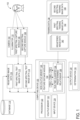
- first and second spectral regions are chosen such that the respective outputs of first and second spectral capture modules 106 and 108 exhibit detectable differences.
- differences are characteristic of human skin, and as such may be unreproducible by spoofing objects not comprised of human skin. The differences may result at least in part from subsurface scattering of light by human skin, which may cause a detectable color and/or brightness difference between visible and infrared image data, in one example.
- Camera 104 may include an illuminator 110 for illuminating user 102.
- a portion of the light produced by illuminator 110 and reflected from the face of user 102 may be captured by first and second spectral capture modules 106 and 108 to image the user's face.
- Illuminator 110 may assume any suitable form, including but not limited to that of an optical assembly comprising a diffuser and a light emitting diode (LED), and may be configured to emit light in any suitable spectral region.
- a spectral region such as infrared may be chosen in view of the reflectance and scattering properties of human skin and/or to maximize signal-to-noise ratio (SNR), for example.
- SNR signal-to-noise ratio
- the light output of illuminator 110 may be modulated - e.g., spatially and/or temporally, which may enable camera 104 to sense depth.
- light emitted by illuminator 110 may be polarized (e.g., linearly, circularly), for example to reduce glint/glare produced by specular reflective surfaces. While a single illuminator 110 is depicted in FIG. 1 , two or more illuminators are contemplated, which may or may not differ in their output of light.
- Non-volatile memory 126 may include a feature distance module 132, which is a software program for computing a feature distance between features (or data structures including features) extracted from image data.
- feature may refer to a wide variety of data types that can be extracted from image data and used to represent the content therein.
- Run-time classifier 134 may be trained with training data 138.
- Training data 138 may include data sets of the same type as those used to assess spoofing of the face of user 102. To this end, training data 138 may include a registered training image data set 140, a test training image data set 142 in the first spectral region, and a test training image data set 144 in the second spectral region.
- Registered training image data set 140 may include image data corresponding to real human faces, and not spoofed human faces.
- first and second test training image data sets 142 and 144 may include a subset of image data corresponding to real human faces, and a subset of image data corresponding to spoofed human faces.
- Training data 138 may be stored as triples of subsets of data sets 140, 142, and 144. Using images as an example representation, a triple of a registered image, a test training image in the first spectral region, and a test training image in the second spectral image, all of a given user, may be stored for the given user. In such a configuration, training data 138 may comprise a plurality of triples of registered, first test training, and second test training image data subsets each associated with a respective user. Training data 138 may be stored and represented in any suitable manner, however, and in some examples two or more triples may be associated with the same user.
- image data described herein - e.g., image data produced by camera 104, image data in training data 138 - may assume any suitable form.
- image data takes the form of face images encoded in feature vectors.
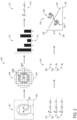
- FIG. 2 shows a flow diagram illustrating an example process 200 for training run-time classifier 134 with training data 138.
- Reference to FIG. 1 is made throughout the description of FIG. 2 .
- process 200 is described in connection with local binary patterns (LBPs), though any suitable features and method of feature extraction may be used.
- LBPs local binary patterns
- Process 200 may include, at 201, receiving registered training image data from registered training image data set 140.
- the registered training image data is depicted in FIG. 2 as a registered training image 202, but may assume any suitable form as described above.
- Image 202 includes image data whose correspondence to a real human face is verified.
- a plurality of regions of interest (ROIs) such as ROI 204 may be identified in image 202.
- ROI may correspond to a region in image data where an extractable feature is known or expected to reside. The feature may be useful for subsequent analysis, and may potentially provide data unique to the image data from which it is extracted.
- ROI 204 corresponds to a corner of the mouth of the user in image 202.
- Process 200 may include, at 206, performing texture classification in each ROI.
- FIG. 2 shows texture classification in the form of LBP analysis performed for ROI 204.
- ROI 204 includes a plurality of pixels, such as a central pixel 208A, that each specify at least one parameter corresponding to the visual content therein.
- texture classification is described herein with reference to the brightness specified by each pixel, though texture classification may consider any suitable parameter, including two or more parameters (e.g., color, brightness, hue, saturation). While shown as being circular, the geometry of ROI 204 may assume any suitable form, including rectangular, triangular, annular, and non-contiguous geometries.
- the brightness of central pixel 208A at the center of ROI 204 is compared to the respective brightnesses of its neighboring pixels (e.g., neighboring pixel 208B) all at a common radial distance from the central pixel. Twelve neighboring pixels are considered at the example radial distance shown in FIG. 2 . If, for a particular neighboring pixel, that neighboring pixel's brightness is greater than the brightness of central pixel 208A, one of two values (e.g., 0) may be associated with that neighboring pixel. If the brightness of the neighboring pixel is less than the brightness of central pixel 208A, the other of the two values (e.g., 1) may be associated with that neighboring pixel.
- the neighboring pixels e.g., neighboring 208B
- Process 200 may include, at 212, extracting at least one feature from each of the plurality of ROIs.
- FIG. 2 shows the extraction from ROI 204 of a feature 214.
- Feature 214 may assume the form of a histogram that plots the frequency of each texture value (e.g., t 1 , t 2 , t 3 , t 4 , t 5 ) computed for the ROI 204 - e.g., the texture values computed for each applicable pixel in the ROI. Any suitable feature or combination of features may be extracted from the plurality of ROIs, however.
- Process 200 may include, at 216, assembling the extracted features into a feature vector.
- FIG. 2 shows the assembly of all features extracted from the plurality of ROIs into a feature vector 218.
- the features extracted from image 202 are histograms of texture value frequencies
- feature vector 218 may assume the form of a vector whose basis vectors each correspond to a respective bin of all bins of the collection of histograms.
- Each basis vector may be associated with a respective scalar indicating the (e.g., relative) frequency of its corresponding texture value.
- Feature vector 218 may assume any suitable form, however, which may be determined by the features on which it is based.
- Process 200 may be substantially repeated for test training image data corresponding to the same human face represented by the registered training image data from which feature vector 218 was derived. Thus, in some examples substantially the same processing may be performed on each data set in a given triple of training data 138.
- Process 200 may accordingly include receiving test training image data in the first spectral region from first test training image data set 142, and further receiving test training image data in the second spectral region from second test training image data set 144.
- a plurality of ROIs may be identified, at least one feature may be extracted from each of the plurality of ROIs, and the extracted features may be assembled into a feature vector.
- FIG. 2 shows feature vectors 220 and 222 respectively computed for the first and second test training image data.
- process 200 may include, at 224, computing a feature distance for each pair of image data sets.
- FIG. 2 shows a first feature distance 226 computed between feature vector 218 of the registered training image data in the first spectral region and feature vector 220 of the test training image data in the first spectral region, a second feature distance 228 computed between feature vector 218 of the registered training image data and feature vector 222 of the test training image data in the second spectral region, and a third feature distance 230 computed between feature vector 220 of the first test training image data and feature vector 222 of the second test training image data.
- Feature distances may be computed in a variety of suitable manners.
- Face x may refer to any suitable representation of a face (e.g., facial image, feature(s), feature vector), while ⁇ and ⁇ may be independent Gaussian variables respectively representing the identity and intra-personal variation of the face.
- Face x may be the face of the corresponding user with the mean of a plurality of faces x i subtracted therefrom.
- the plurality of faces x i may be representative of the gamut of human faces, which may enable the emphasis of unique features in face x when subtracted from face x, for example.
- the plurality of faces x i may be derived from database 118 or any other suitable source.
- the variables ⁇ and ⁇ may be latent variables that follow two Gaussian distributions N(0, S ⁇ ) and N(0, S ⁇ ), respectively.
- S ⁇ and S ⁇ may be unknown covariance matrices.
- Such representation of face x may be referred to as a "face prior".
- the joint distribution of two faces x 1 , x 2 may be modeled as a Gaussian distribution with a mean of zero.
- Face x 1 may correspond to one of registered training image data, first test training image data, and second test training image data
- face x 2 may correspond to a different one of the registered training image data, first test training image data, and second test training image data, for example.
- an intra-personal hypothesis H 1 that the two faces x 1 , x 2 belong to the same user, and an extra-personal hypothesis H E that the two faces x 1 , x 2 do not belong to the same user, may be tested.
- the identity pair ⁇ 1 , ⁇ 2 are the same, and their intra-personal variations ⁇ 1 , ⁇ 2 are independent.
- H E both the identities and intra-personal variations are independent.
- H E ))] x T 1 *Ax 1 + x T 2 *Ax 2 - 2x T 1 *Gx 2 .
- S ⁇ and S ⁇ are two unknown covariance matrices which are learned from the corresponding data.
- other suitable methods of machine learning may be employed, such as by approximation with between-class and within-class covariance matrices used in linear discriminant analysis (LDA).
- LDA linear discriminant analysis
- an expectation-maximization-like algorithm may be used to jointly estimate the two matrices.
- each feature distance 226, 228, and 230 may be computed as a likelihood ratio of a probability of a respective pair of feature vectors belonging to a real human face and a probability of the respective pair of feature vectors belonging to a spoofed human face.
- Feature distances for each data set in a plurality of triples of training data 138 may be similarly computed. These feature distances may then be plotted in a two-dimensional feature space for identifying and separating feature distances into two classes respectively corresponding to spoofed human face image data and non-spoofed human face image data.
- Process 200 may thus include, at 232, separating the first, second, and third feature distances 226, 228, and 230 into one of a real human face image data class and a spoofed human face image data class.
- FIG. 2 shows a two-dimensional feature distance space 234 plotting a plurality of feature distance coordinates.
- a first axis 236 of space 234 plots a range of test feature distances (e.g., third feature distance 230) between corresponding pairs of test training image data of a human face in the first spectral region and test training image data of the human face in the second spectral region.
- a second axis 238 of space 234 plots a range of differences between corresponding pairs of first feature distances and second feature distances (e.g., first feature distance 226 subtracted from second feature distance 228).
- a predetermined relationship 244 (e.g., predetermined relationship 136) may be derived that provides an efficient determination during run-time for determining which class to which image data belongs.
- Predetermined relationship 244 may be determined according to linear discriminant analysis as described above, and may assume the following example form: c 1 *d 3 + c 2 *(d 2 -d 1 ) > t, where c 1 and c 2 are constants derived from the feature distance coordinates, d 1 , d 2 , d 3 are first, second, and third (e.g., test) feature distances, respectively, and t is a threshold derived from the feature distance coordinates.
- the classifier may compare a linear combination of first, second, and test (e.g., third) feature distances (e.g., for a given triple) to the threshold t.
- the classifier may be configured to determine that a human face is a real human face when the comparison exceeds the threshold t, and to determine that the human face is a spoofed human face when the comparison falls below the threshold t.
- the human face to which test image data in the first and second spectral regions corresponds may be determined to be a real human face when the test feature distance (e.g., between feature vectors of the first and second test image data) exceeds a test feature distance threshold.
- the human face to which test image data in the first and second spectral regions corresponds may be determined to be a real human face when the second feature distance (e.g., between corresponding registered image data and the second test image data) exceeds the first feature distance (e.g., between the corresponding registered image data and the first test image data).
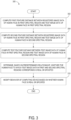
- FIG. 3 shows a flowchart illustrating a method 300 of determining whether a human face in image data is a real human face or a spoofed human face.
- Method 300 includes, at 302, computing a first feature distance between registered image data of a human face in a first spectral region and test image data of the human face in the first spectral region.
- the first feature distance is computed between respective feature vectors of the registered image data and the first test image data, as described above.
- the first spectral region may be an infrared spectral region, although alternatively other spectral regions may be used, as described above.
- Method 300 includes, at 304, computing a second feature distance between the registered image data of the human face in the first spectral region and test image data of the human face in a second spectral region.
- the second feature distance is computed between respective feature vectors of the registered image data and the second test image data, as described above.
- the second spectral region may be a visible spectral region, although alternatively other spectral regions may be used as the second spectral region, as described above.
- Method 300 includes, at 306, computing a test feature distance between the test image data of the human face in the first spectral region and the test image data of the human face in the second spectral region.
- the test feature distance is computed between respective feature vectors of the first test image data and the second test image data.
- Method 300 includes, at 308, determining, based on a predetermined relationship differentiating between real human face image data and spoofed human face image data, whether the human face to which the test image data in the first and second spectral regions corresponds is a real human face or a spoofed human face.
- the predetermined relationship may be determined by training a classifier (e.g., classifier 134 of FIG. 1 ) to differentiate between real human face image data and spoofed human face image data classes in a two-dimensional feature space (e.g., space 234 of FIG. 2 ).
- a first axis of the two-dimensional feature distance space may plot a range of test feature distances
- a second axis of the two-dimensional feature space may plot a range of differences between corresponding pairs of first and second feature distances.
- the predetermined relationship compares a linear combination of the first, second, and test feature distances to a threshold.
- the classifier may be configured to determine that the human face is a real human face when the comparison exceeds the threshold, and to determine that the human face is a spoofed human face when the comparison falls below the threshold. It may be determined that the human face to which the test image data in the first and second spectral regions corresponds is the real human face when the test feature distance exceeds a threshold. Further, it may be determined that the human face to which the test image data in the first and second spectral regions corresponds is the real human face when the second feature distance exceeds the first feature distance.
- An example method of training the classifier is described below with reference to FIG. 4 .
- Method 300 includes, at 310, modifying a behavior of a computing device (e.g., computing device 100 of FIG. 1 ) based on whether the human face is determined to be the real human face or the spoofed human face.
- Modifying the behavior of the computing device may include permitting access to secured data when the human face is determined to be the real human face, and denying access to secured data when the human face is determined to be the spoofed human face, for example.
- Other modifications to the behavior of the computing device may include permitting or denying access to computing resources, and/or supplying the determination made at 308 to an output device (e.g., output device 128), which may include displaying a graphical user interface (e.g., on the output device) indicating whether user authentication passed or failed, for example. Any suitable modifications to the behavior of the computing device may be made, however. Further, it will be appreciated that the techniques described herein may be combined with other security techniques to enable multifactor authentication of the user prior to permitting access to the secured data.
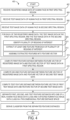
- FIG. 4 shows a flowchart illustrating a method 400 of deriving a classifier for differentiating between real human face image data and spoofed human face image data.
- Method 400 may include, at 402, receiving registered image data of a human face in a first spectral region, at 404, receiving test image data of the human face in the first spectral region, and at 406, receiving test image data of the human face in a second spectral region.
- method 400 may include, at 408, identifying a plurality of regions of interest, at 410, extracting at least one feature from each of the plurality of regions of interest, and, at 412, assembling the extracted features into a feature vector.
- Method 400 may include, at 414, computing a first feature distance between the feature vector of the registered image data and the feature vector of the test image data in the first spectral region.
- Method 400 may include, at 416, computing a second feature distance between the feature vector of the registered image data and the feature vector of the test image data in the second spectral region.
- computing device 10 illustrated in FIG. 1 and described herein may take the form of one or more personal computers, server computers, tablet computers, home-entertainment computers, network computing devices, gaming devices, mobile computing devices, mobile communication devices (e.g., smart phone), and/or other computing devices.
- module may encompass individual or groups of executable files, data files, libraries, drivers, scripts, database records, etc.
- the term module may also designate hardware in some cases, and when used in this context the description will clearly indicate whether that a module is hardware.
- Each computing device may include an associated display, which may be used to present a visual representation of data computed and output by the processor.
- This visual representation may take the form of a graphical user interface (GUI).
- GUI graphical user interface
- Such display devices may be combined with processor, volatile memory, and non-volatile memory in a shared enclosure, or such display devices may be peripheral display devices. Touch screens may be utilized that function both as a display and as an input device.
- Each computing device may include a communication subsystem configured to communicatively couple the computing device with one or more other computing devices.
- the communication subsystem may include wired and/or wireless communication devices compatible with one or more different communication protocols.
- the communication subsystem may be configured for communication via a wireless telephone or data network, or a wired or wireless local- or wide-area network.
- the communication subsystem may allow the computing device to send and/or receive messages to and/or from other devices via a network such as the Internet.
- a computing device comprising a processor configured to compute a first feature distance between registered image data of a human face in a first spectral region and test image data of the human face in the first spectral region, compute a second feature distance between the registered image data of the human face in the first spectral region and test image data of the human face in a second spectral region, compute a test feature distance between the test image data of the human face in the first spectral region and the test image data of the human face in the second spectral region, determine, based on a predetermined relationship differentiating between real human face image data and spoofed human face image data, whether the human face to which the test image data in the first and second spectral regions corresponds is a real human face or a spoofed human face, and modify a behavior of the computing device based on whether the human face is determined to be the real human face or the spoofed human face.
- the predetermined relationship alternatively or additionally may be determined by training a classifier to differentiate between real human face image data and spoofed human face image data classes in a two-dimensional feature distance space.
- a first axis of the two-dimensional feature distance space alternatively or additionally may plot a range of test feature distances.
- a second axis of the two-dimensional feature space alternatively or additionally may plot a range of differences between corresponding pairs of first and second feature distances.
- the predetermined relationship compares a linear combination of the first, second, and test feature distances to a threshold.
- the classifier alternatively or additionally may be configured to determine that the human face is a real human face when the comparison exceeds the threshold, and to determine that the human face is a spoofed human face when the comparison falls below the threshold.
- each feature distance alternatively or additionally may be computed as a likelihood ratio of a probability of a respective pair of feature vectors belonging to the real human face and a probability of the respective pair of feature vectors belonging to the spoofed human face.
- the feature vectors alternatively or additionally may be computed based on local binary pattern analysis.
- the first spectral region alternatively or additionally may be an infrared spectral region.
- the second spectral region alternatively or additionally may be a visible spectral region.
- it alternatively or additionally may be determined that the human face to which the test image data in the first and second spectral regions corresponds is the real human face when the test feature distance exceeds a threshold.
- it alternatively or additionally may be determined that the human face to which the test image data in the first and second spectral regions corresponds is the real human face when the second feature distance exceeds the first feature distance.
- computing the first, second, and test feature distances includes computing a respective pair of feature vectors, each feature vector encoding, for corresponding image data, a histogram of texture values, and optionally one or more of an edge, a point, a shape, and a brightness. Any or all of the above-described examples may be combined in any suitable manner in various implementations.
- Another example provides a method of biometric verification comprising computing a first feature distance between registered image data of a human face in a first spectral region and test image data of the human face in the first spectral region, computing a second feature distance between the registered image data of the human face in the first spectral region and test image data of the human face in a second spectral region, computing a test feature distance between the test image data of the human face in the first spectral region and the test image data of the human face in the second spectral region, determining, based on a predetermined relationship differentiating between real human image data and spoofed human image data, whether the human face to which the test image data in the first and second spectral regions corresponds is a real human face or a spoofed human face, and modifying a behavior of a computing device based on whether the human face is determined to be the real human face or the spoofed human face.
- the predetermined relationship alternatively or additionally may be determined by training a classifier to differentiate between real human face image data and spoofed human face image data classes in a two-dimensional feature distance space.
- a first axis of the two-dimensional feature distance space alternatively or additionally may plot a range of test feature distances.
- a second axis of the two-dimensional feature space alternatively or additionally may plot a range of differences between corresponding pairs of first and second feature distances.
- the predetermined relationship compares a linear combination of the first, second, and test feature distances to a threshold.
- the classifier alternatively or additionally may be configured to determine that the human face is a real human face when the comparison exceeds the threshold, and to determine that the human face is a spoofed human face when the comparison falls below the threshold.
- each feature distance alternatively or additionally may be computed as a likelihood ratio of a probability of a respective pair of feature vectors belonging to the real human face and a probability of the respective pair of feature vectors belonging to the spoofed human face.
- the feature vectors alternatively or additionally may be computed based on local binary pattern analysis.
- the first spectral region alternatively or additionally may be an infrared spectral region.
- the second spectral region alternatively or additionally may be a visible spectral region.
- it alternatively or additionally may be determined that the human face to which the test image data in the first and second spectral regions corresponds is the real human face when the test feature distance exceeds a threshold.
- it alternatively or additionally may be determined that the human face to which the test image data in the first and second spectral regions corresponds is the real human face when the second feature distance exceeds the first feature distance. Any or all of the above-described examples may be combined in any suitable manner in various implementations.
Landscapes
- Engineering & Computer Science (AREA)
- Theoretical Computer Science (AREA)
- General Physics & Mathematics (AREA)
- Physics & Mathematics (AREA)
- Multimedia (AREA)
- Evolutionary Computation (AREA)
- Computer Vision & Pattern Recognition (AREA)
- General Health & Medical Sciences (AREA)
- Data Mining & Analysis (AREA)
- Human Computer Interaction (AREA)
- Health & Medical Sciences (AREA)
- Artificial Intelligence (AREA)
- Databases & Information Systems (AREA)
- Computing Systems (AREA)
- Software Systems (AREA)
- Medical Informatics (AREA)
- Life Sciences & Earth Sciences (AREA)
- Bioinformatics & Cheminformatics (AREA)
- Bioinformatics & Computational Biology (AREA)
- Evolutionary Biology (AREA)
- General Engineering & Computer Science (AREA)
- Oral & Maxillofacial Surgery (AREA)
- Collating Specific Patterns (AREA)
- Image Analysis (AREA)
Claims (15)
- Dispositif informatique (100) permettant d'effectuer une vérification biométrique, comprenant :
un processeur (120) configuré pour :calculer (302) une première distance caractéristique (226) entre des données d'image enregistrées (116) d'un visage humain dans une première région spectrale et des données d'image de test (112) du visage humain dans la première région spectrale, les données d'image de test ayant été capturées par une caméra comprenant un premier module de capture spectrale et un second module de capture spectrale ;calculer (304) une seconde distance caractéristique (228) entre les données d'image enregistrées (116) du visage humain dans la première région spectrale et les données d'image de test (114) du visage humain dans une seconde région spectrale, les première et seconde régions spectrales étant telles que les sorties respectives des premier et second modules de capture spectrale présentent des différences détectables caractéristiques de la peau humaine, les différences détectables pouvant être non reproductibles en usurpant des objets non constitués de peau humaine ;calculer (306) une distance de caractéristique de test (230) entre les données d'image de test (112) du visage humain dans la première région spectrale et les données d'image de test (114) du visage humain dans la seconde région spectrale ;déterminer (308), sur la base d'une relation prédéterminée (244) différenciant les données d'image de visage humain réel et les données d'image de visage humain falsifiées, si le visage humain auquel correspondent les données d'image de test dans les première (112) et seconde (114) régions spectrales est un visage humain réel ou un visage humain falsifié, la relation prédéterminée (244) comparant une combinaison linéaire de la première distance caractéristique (226), de la seconde distance caractéristique (228) et de la distance caractéristique de test (230) à un seuil ; etmodifier (310) un comportement du dispositif informatique selon que le visage humain est déterminé comme étant le vrai visage humain ou le visage humain falsifié ;dans lequel le calcul des première (226), seconde (228) et distances de caractéristiques de test (230) comprend le calcul d'une paire respective de vecteurs de caractéristiques, chaque vecteur de caractéristiques codant, pour les données d'image correspondantes, un histogramme de valeurs de texture. - Dispositif informatique (100) selon la revendication 1, dans lequel la relation prédéterminée (244) est déterminée en formant un classificateur pour différencier entre des données d'image de visage humain réelles et des classes de données d'image de visage humain falsifiées dans un espace de distance de caractéristiques bidimensionnelles.
- Dispositif informatique (100) selon la revendication 2, dans lequel un premier axe de l'espace de distance de caractéristiques bidimensionnel trace une plage de distances de caractéristiques de test, et
dans lequel un second axe de l'espace de caractéristiques bidimensionnel trace une plage de différences entre des paires correspondantes de première (226) et seconde (228) distances de caractéristiques. - Dispositif informatique (100) selon la revendication 2,
dans lequel le classificateur est configuré pour déterminer que le visage humain est un visage humain réel lorsque la comparaison dépasse le seuil, et pour déterminer que le visage humain est un visage humain falsifié lorsque la comparaison tombe en dessous du seuil. - Dispositif informatique (100) selon la revendication 1, dans lequel chaque distance caractéristique est calculée comme un rapport de vraisemblance d'une probabilité d'une paire respective de vecteurs caractéristiques appartenant au visage humain réel et d'une probabilité de la paire respective de vecteurs caractéristiques appartenant au visage humain falsifié.
- Dispositif informatique (100) selon la revendication 5, dans lequel les vecteurs de caractéristiques sont calculés sur la base d'une analyse de motif binaire local.
- Dispositif informatique (100) selon la revendication 1, dans lequel la première région spectrale est une région spectrale infrarouge, et
dans lequel la seconde région spectrale est une région spectrale visible. - Dispositif informatique (100) selon la revendication 1, dans lequel il est déterminé que le visage humain auquel correspondent les données d'image de test dans les première (112) et seconde (114) régions spectrales est le visage humain réel lorsque la distance de caractéristique de test dépasse le seuil.
- Dispositif informatique (100) selon la revendication 1, dans lequel il est déterminé que le visage humain auquel correspondent les données d'image de test dans les première (112) et seconde (114) régions spectrales est le visage humain réel lorsque la seconde distance caractéristique (228) dépasse la première distance caractéristique (226).
- Dispositif informatique (100) selon la revendication 1, chaque vecteur de caractéristiques codant, pour des données d'image correspondantes, un ou plusieurs éléments parmi un bord, un point, une forme et une luminosité.
- Procédé (300) de vérification biométrique, comprenant :le calcul (302) d'une première distance caractéristique (226) entre des données d'image enregistrées (116) d'un visage humain dans une première région spectrale et des données d'image de test (112) du visage humain dans la première région spectrale, les données d'image de test ayant été capturées par une caméra comprenant un premier module de capture spectrale et un second module de capture spectrale ;le calcul (304) d'une seconde distance caractéristique (228) entre les données d'image enregistrées du visage humain dans la première région spectrale et les données d'image de test (114) du visage humain dans une seconde région spectrale, la première région spectrale et la seconde région spectrale étant telles que les sorties respectives des premier et second modules de capture spectrale présentent des différences détectables caractéristiques de la peau humaine, les différences détectables pouvant être non reproductibles en usurpant des objets non constitués de peau humaine ;le calcul (306) d'une distance de caractéristique de test (230) entre les données d'image de test du visage humain dans la première région spectrale et les données d'image de test du visage humain dans la seconde région spectrale ;la détermination (308), sur la base d'une relation prédéterminée (244) différenciant les données d'image humaine réelle et les données d'image humaine falsifiée, si le visage humain auquel correspondent les données d'image de test dans les première (112) et seconde (114) régions spectrales est un visage humain réel ou un visage humain falsifié, la relation prédéterminée (244) comprenant une comparaison d'une combinaison linéaire de la première distance caractéristique (226), de la seconde distance caractéristique (228) et de la distance caractéristique de test (230) à un seuil ; etla modification (310) d'un comportement d'un dispositif informatique (100) selon que le visage humain est déterminé comme étant le vrai visage humain ou le visage humain falsifié ;dans lequel le calcul des première (226), seconde (228) et distances de caractéristiques de test (230) comprend le calcul d'une paire respective de vecteurs de caractéristiques, chaque vecteur de caractéristiques codant, pour les données d'image correspondantes, un histogramme de valeurs de texture.
- Procédé selon la revendication 11, dans lequel la relation prédéterminée (244) est déterminée en formant un classificateur pour différencier entre des données d'image de visage humain réel et des classes de données d'image de visage humain falsifié dans un espace de distance de caractéristiques bidimensionnelles.
- Procédé selon la revendication 12, dans lequel un premier axe de l'espace de distance de caractéristiques bidimensionnel trace une plage de distances de caractéristiques de test, et
dans lequel un second axe de l'espace de caractéristiques bidimensionnel trace une plage de différences entre des paires correspondantes de première (226) et seconde (228) distances de caractéristiques. - Procédé selon la revendication 12,
dans lequel le classificateur est configuré pour déterminer que le visage humain est un visage humain réel lorsque la comparaison dépasse le seuil, et pour déterminer que le visage humain est un visage humain falsifié lorsque la comparaison tombe en dessous du seuil. - Procédé selon la revendication 11, dans lequel chaque distance caractéristique est calculée comme un rapport de vraisemblance d'une probabilité d'une paire respective de vecteurs caractéristiques appartenant au visage humain réel et d'une probabilité de la paire respective de vecteurs caractéristiques appartenant au visage humain falsifié.
Applications Claiming Priority (1)
| Application Number | Priority Date | Filing Date | Title |
|---|---|---|---|
| PCT/CN2015/093334 WO2017070920A1 (fr) | 2015-10-30 | 2015-10-30 | Détection de visage falsifié |
Publications (3)
| Publication Number | Publication Date |
|---|---|
| EP3369036A1 EP3369036A1 (fr) | 2018-09-05 |
| EP3369036A4 EP3369036A4 (fr) | 2019-05-22 |
| EP3369036B1 true EP3369036B1 (fr) | 2025-07-02 |
Family
ID=58629791
Family Applications (1)
| Application Number | Title | Priority Date | Filing Date |
|---|---|---|---|
| EP15906983.0A Active EP3369036B1 (fr) | 2015-10-30 | 2015-10-30 | Détection de visage falsifié |
Country Status (4)
| Country | Link |
|---|---|
| US (1) | US10452935B2 (fr) |
| EP (1) | EP3369036B1 (fr) |
| CN (1) | CN107111750B (fr) |
| WO (1) | WO2017070920A1 (fr) |
Families Citing this family (30)
| Publication number | Priority date | Publication date | Assignee | Title |
|---|---|---|---|---|
| WO2017070920A1 (fr) * | 2015-10-30 | 2017-05-04 | Microsoft Technology Licensing, Llc | Détection de visage falsifié |
| CN107480601B (zh) * | 2017-07-20 | 2019-12-13 | Oppo广东移动通信有限公司 | 检测方法及相关产品 |
| US11003933B2 (en) * | 2017-08-15 | 2021-05-11 | Noblis, Inc. | Multispectral anomaly detection |
| EP3447684A1 (fr) * | 2017-08-22 | 2019-02-27 | Eyn Limited | Procédé et système de vérification |
| US10726245B2 (en) * | 2017-12-12 | 2020-07-28 | Black Sesame International Holding Limited | Secure facial authentication system using active infrared light source and RGB-IR sensor |
| TWI672957B (zh) * | 2018-03-29 | 2019-09-21 | 瑞昱半導體股份有限公司 | 影像處理裝置及影像處理方法 |
| CN108596141B (zh) * | 2018-05-08 | 2022-05-17 | 深圳大学 | 一种深度网络生成人脸图像的检测方法及系统 |
| WO2020057365A1 (fr) * | 2018-09-18 | 2020-03-26 | Guangdong Oppo Mobile Telecommunications Corp., Ltd. | Procédé, système et support lisible par ordinateur destinés à générer un visage usurpé éclairé par une lumière structurée |
| US10885363B2 (en) * | 2018-10-25 | 2021-01-05 | Advanced New Technologies Co., Ltd. | Spoof detection using structured light illumination |
| US11170242B2 (en) | 2018-12-26 | 2021-11-09 | Advanced New Technologies Co., Ltd. | Spoof detection using dual-band fluorescence |
| WO2020140893A1 (fr) * | 2019-01-04 | 2020-07-09 | Shenzhen GOODIX Technology Co., Ltd. | Détection de visage vivant anti-mystification permettant d'améliorer la sécurité de reconnaissance faciale |
| US10970574B2 (en) * | 2019-02-06 | 2021-04-06 | Advanced New Technologies Co., Ltd. | Spoof detection using dual-band near-infrared (NIR) imaging |
| US11328043B2 (en) * | 2019-03-15 | 2022-05-10 | Advanced New Technologies Co., Ltd. | Spoof detection by comparing images captured using visible-range and infrared (IR) illuminations |
| US11049239B2 (en) * | 2019-03-29 | 2021-06-29 | GE Precision Healthcare LLC | Deep neural network based identification of realistic synthetic images generated using a generative adversarial network |
| US20200314411A1 (en) | 2019-03-29 | 2020-10-01 | Alibaba Group Holding Limited | Synchronizing an illumination sequence of illumination sources with image capture in rolling shutter mode |
| FR3095064B1 (fr) | 2019-04-09 | 2025-04-25 | Cynove | Procédés et dispositifs de levée de doute biométrique |
| US11398127B2 (en) | 2019-10-07 | 2022-07-26 | Sg Gaming, Inc. | Gaming systems and methods using image analysis authentication |
| US11074467B2 (en) * | 2019-12-05 | 2021-07-27 | Shenzhen GOODIX Technology Co., Ltd. | Anti-spoofing of transparent fake object overlays with optical sensing modules |
| CN113128271B (zh) | 2019-12-30 | 2025-10-28 | 微软技术许可有限责任公司 | 脸部图像的伪造检测 |
| CN111339832B (zh) * | 2020-02-03 | 2023-09-12 | 中国人民解放军国防科技大学 | 人脸合成图像的检测方法及装置 |
| DE102020206350A1 (de) * | 2020-05-20 | 2022-01-27 | Robert Bosch Gesellschaft mit beschränkter Haftung | Verfahren zur Detektion von Vergleichspersonen zu einer Suchperson, Überwachungsanordnung, insbesondere zur Umsetzung des Verfahrens, sowie Computerprogramm und computerlesbares Medium |
| WO2022049704A1 (fr) * | 2020-09-03 | 2022-03-10 | 日本電気株式会社 | Système de traitement d'informations, procédé de traitement d'informations et programme informatique |
| CN111968264A (zh) * | 2020-10-21 | 2020-11-20 | 东华理工大学南昌校区 | 体育项目时间登记装置 |
| CN114510982B (zh) * | 2020-11-17 | 2025-09-09 | 阿里巴巴集团控股有限公司 | 模型处理方法、装置、存储介质及计算机设备 |
| US20220222466A1 (en) | 2021-01-13 | 2022-07-14 | Ford Global Technologies, Llc | Material spectroscopy |
| US11657589B2 (en) | 2021-01-13 | 2023-05-23 | Ford Global Technologies, Llc | Material spectroscopy |
| US11443527B2 (en) * | 2021-01-13 | 2022-09-13 | Ford Global Technologies, Llc | Material spectroscopy |
| US11538283B1 (en) * | 2021-06-09 | 2022-12-27 | Nec Corporation Of America | Detecting people wearing masks to prevent impersonation attacks |
| US20220398820A1 (en) * | 2021-06-11 | 2022-12-15 | University Of Southern California | Multispectral biometrics system |
| CN115641649A (zh) * | 2021-07-19 | 2023-01-24 | 清华大学 | 一种人脸识别方法及系统 |
Family Cites Families (37)
| Publication number | Priority date | Publication date | Assignee | Title |
|---|---|---|---|---|
| US7921297B2 (en) | 2001-01-10 | 2011-04-05 | Luis Melisendro Ortiz | Random biometric authentication utilizing unique biometric signatures |
| US7460696B2 (en) | 2004-06-01 | 2008-12-02 | Lumidigm, Inc. | Multispectral imaging biometrics |
| CN1627317A (zh) | 2003-12-12 | 2005-06-15 | 北京阳光奥森科技有限公司 | 利用主动光源获取人脸图像的方法 |
| US7602942B2 (en) | 2004-11-12 | 2009-10-13 | Honeywell International Inc. | Infrared and visible fusion face recognition system |
| KR101484566B1 (ko) | 2007-03-21 | 2015-01-20 | 루미다임 인크. | 국소적으로 일관된 피처를 기초로 하는 생체인식 |
| US8090160B2 (en) | 2007-10-12 | 2012-01-03 | The University Of Houston System | Automated method for human face modeling and relighting with application to face recognition |
| WO2010007094A2 (fr) | 2008-07-15 | 2010-01-21 | Gfmesstechnik Gmbh | Procédé et dispositif de détection 3d d'objets, programme d'ordinateur correspondant et support d'enregistrement lisible par ordinateur |
| KR101064945B1 (ko) | 2008-11-25 | 2011-09-15 | 한국전자통신연구원 | 적외선 영상을 이용한 위조 얼굴 검출 방법 및 그 장치 |
| CN101739555B (zh) * | 2009-12-01 | 2014-11-26 | 北京中星微电子有限公司 | 假脸检测方法及系统、假脸模型训练方法及系统 |
| CN102385704B (zh) | 2010-08-27 | 2015-11-25 | 北京中星微电子有限公司 | 一种生物特征识别中的反样本挑选方法及装置 |
| CN101964056B (zh) | 2010-10-26 | 2012-06-27 | 徐勇 | 一种具有活体检测功能的双模态人脸认证方法和系统 |
| CN102024145B (zh) * | 2010-12-01 | 2012-11-21 | 五邑大学 | 一种伪装人脸分层识别方法及系统 |
| US8587657B2 (en) | 2011-04-13 | 2013-11-19 | Xerox Corporation | Determining a number of objects in an IR image |
| US8509495B2 (en) | 2011-04-15 | 2013-08-13 | Xerox Corporation | Subcutaneous vein pattern detection via multi-spectral IR imaging in an identity verification system |
| US9082235B2 (en) * | 2011-07-12 | 2015-07-14 | Microsoft Technology Licensing, Llc | Using facial data for device authentication or subject identification |
| WO2013098708A2 (fr) | 2011-12-30 | 2013-07-04 | Koninklijke Philips Electronics N.V. | Acquisition de données multispectrales |
| CN102622588B (zh) | 2012-03-08 | 2013-10-09 | 无锡中科奥森科技有限公司 | 双验证人脸防伪方法及装置 |
| CN103324904A (zh) | 2012-03-20 | 2013-09-25 | 凹凸电子(武汉)有限公司 | 人脸识别系统及其方法 |
| US9173570B2 (en) | 2012-04-12 | 2015-11-03 | Thomas Nathan Millikan | Viewing and processing multispectral images |
| TW201401186A (zh) * | 2012-06-25 | 2014-01-01 | 盈泰安股份有限公司 | 人臉判斷系統以及方法 |
| EP2711899A3 (fr) | 2012-09-21 | 2016-12-28 | Burg-Wächter Kg | Dispositif optique de reconnaissance faciale |
| US8924735B2 (en) | 2013-02-15 | 2014-12-30 | Microsoft Corporation | Managed biometric identity |
| CN103324911A (zh) | 2013-05-30 | 2013-09-25 | 苏州福丰科技有限公司 | 一种基于人脸识别的防作弊系统 |
| DE102013015600A1 (de) * | 2013-09-19 | 2015-03-19 | Mühlbauer Ag | Vorrichtung, System und Verfahren zum Identifizieren einer Person |
| CN104751110B (zh) | 2013-12-31 | 2018-12-04 | 汉王科技股份有限公司 | 一种活体检测方法和装置 |
| CN104766039A (zh) | 2014-01-02 | 2015-07-08 | 深圳市元轩科技发展有限公司 | 一种防欺骗人脸识别系统及方法 |
| US10339685B2 (en) * | 2014-02-23 | 2019-07-02 | Northeastern University | System for beauty, cosmetic, and fashion analysis |
| CN109213882B (zh) * | 2014-03-12 | 2020-07-24 | 华为技术有限公司 | 图片排序方法及终端 |
| WO2016076914A1 (fr) * | 2014-11-13 | 2016-05-19 | Intel Corporation | Détection d'activité du visage dans l'imagerie biométrique |
| EP3218842A4 (fr) * | 2014-11-13 | 2018-08-22 | Intel Corporation | Détection, sur la base de la biométrie, de l'usurpation d'un visage dans une image |
| US20180034852A1 (en) * | 2014-11-26 | 2018-02-01 | Isityou Ltd. | Anti-spoofing system and methods useful in conjunction therewith |
| CN204288308U (zh) | 2015-02-26 | 2015-04-22 | 四川浩特通信有限公司 | 双摄像组合人脸识别考勤设备 |
| CN104766063B (zh) | 2015-04-08 | 2018-01-05 | 宁波大学 | 一种活体人脸识别方法 |
| WO2017070920A1 (fr) * | 2015-10-30 | 2017-05-04 | Microsoft Technology Licensing, Llc | Détection de visage falsifié |
| US10990808B2 (en) * | 2016-02-09 | 2021-04-27 | Aware, Inc. | Face liveness detection using background/foreground motion analysis |
| EP3301476B1 (fr) * | 2016-09-28 | 2023-03-15 | STMicroelectronics (Research & Development) Limited | Appareil comprenant une camera et un module de détection de distance basé sur une diode à avalanche à photon unique à temps de vol pour contrôler la caméra et procédé correspondant |
| US10599912B2 (en) * | 2016-12-23 | 2020-03-24 | Aware, Inc. | Analysis of reflections of projected light in varying colors, brightness, patterns, and sequences for liveness detection in biometric systems |
-
2015
- 2015-10-30 WO PCT/CN2015/093334 patent/WO2017070920A1/fr not_active Ceased
- 2015-10-30 EP EP15906983.0A patent/EP3369036B1/fr active Active
- 2015-10-30 CN CN201580070912.9A patent/CN107111750B/zh active Active
- 2015-10-30 US US15/763,619 patent/US10452935B2/en active Active
Also Published As
| Publication number | Publication date |
|---|---|
| CN107111750A (zh) | 2017-08-29 |
| US20180285668A1 (en) | 2018-10-04 |
| WO2017070920A1 (fr) | 2017-05-04 |
| EP3369036A4 (fr) | 2019-05-22 |
| EP3369036A1 (fr) | 2018-09-05 |
| CN107111750B (zh) | 2020-06-05 |
| US10452935B2 (en) | 2019-10-22 |
Similar Documents
| Publication | Publication Date | Title |
|---|---|---|
| EP3369036B1 (fr) | Détection de visage falsifié | |
| Scherhag et al. | Detection of face morphing attacks based on PRNU analysis | |
| EP3525133B1 (fr) | Appareil et procédé avec vérification de vivacité | |
| US11625954B2 (en) | Method and apparatus with liveness testing | |
| US12272173B2 (en) | Method and apparatus with liveness test and/or biometric authentication | |
| Chan et al. | Face liveness detection using a flash against 2D spoofing attack | |
| KR102387571B1 (ko) | 라이브니스 검사 방법 및 장치 | |
| Chingovska et al. | Face recognition systems under spoofing attacks | |
| Gomez-Barrero et al. | Is your biometric system robust to morphing attacks? | |
| CN111881429A (zh) | 活性检测方法和设备以及面部验证方法和设备 | |
| US9501719B1 (en) | System and method for verification of three-dimensional (3D) object | |
| KR101443139B1 (ko) | 단일 영상을 사용한 위조 얼굴 검출 방법 | |
| KR102257897B1 (ko) | 라이브니스 검사 방법과 장치,및 영상 처리 방법과 장치 | |
| Tapia et al. | Single morphing attack detection using feature selection and visualization based on mutual information | |
| Gomez‐Barrero et al. | Predicting the vulnerability of biometric systems to attacks based on morphed biometric information | |
| Boulkenafet et al. | Face anti-spoofing in biometric systems | |
| Mohammadi et al. | New approaches to fingerprint authentication using software methods based on fingerprint texture | |
| Kaman et al. | Hybrid CNN-based detection of forged facial images using Gabor filters and local binary patterns | |
| Hussein et al. | KurdFace morph dataset creation using OpenCV | |
| Kechagias‐Stamatis et al. | Performance evaluation of single and cross‐dimensional feature detection and description | |
| Maurya et al. | Spoofed video detection using histogram of oriented gradients | |
| Shahriar et al. | Presentation attack detection framework | |
| Graça | Liveness Detection and Facial Recognition with Multi-modal Features | |
| Etienne | A Framework to Detect Presentation Attacks | |
| Vinay et al. | Face recognition using BFSS features |
Legal Events
| Date | Code | Title | Description |
|---|---|---|---|
| STAA | Information on the status of an ep patent application or granted ep patent |
Free format text: STATUS: THE INTERNATIONAL PUBLICATION HAS BEEN MADE |
|
| PUAI | Public reference made under article 153(3) epc to a published international application that has entered the european phase |
Free format text: ORIGINAL CODE: 0009012 |
|
| STAA | Information on the status of an ep patent application or granted ep patent |
Free format text: STATUS: REQUEST FOR EXAMINATION WAS MADE |
|
| 17P | Request for examination filed |
Effective date: 20180411 |
|
| AK | Designated contracting states |
Kind code of ref document: A1 Designated state(s): AL AT BE BG CH CY CZ DE DK EE ES FI FR GB GR HR HU IE IS IT LI LT LU LV MC MK MT NL NO PL PT RO RS SE SI SK SM TR |
|
| AX | Request for extension of the european patent |
Extension state: BA ME |
|
| DAV | Request for validation of the european patent (deleted) | ||
| DAX | Request for extension of the european patent (deleted) | ||
| A4 | Supplementary search report drawn up and despatched |
Effective date: 20190424 |
|
| RIC1 | Information provided on ipc code assigned before grant |
Ipc: G06K 9/46 20060101ALI20190416BHEP Ipc: G06K 9/62 20060101ALI20190416BHEP Ipc: G06K 9/00 20060101AFI20190416BHEP |
|
| STAA | Information on the status of an ep patent application or granted ep patent |
Free format text: STATUS: EXAMINATION IS IN PROGRESS |
|
| 17Q | First examination report despatched |
Effective date: 20210602 |
|
| RAP3 | Party data changed (applicant data changed or rights of an application transferred) |
Owner name: MICROSOFT TECHNOLOGY LICENSING, LLC |
|
| REG | Reference to a national code |
Ref country code: DE Ref legal event code: R079 Free format text: PREVIOUS MAIN CLASS: G06K0009000000 Ipc: G06V0010500000 Ref country code: DE Ref legal event code: R079 Ref document number: 602015091944 Country of ref document: DE Free format text: PREVIOUS MAIN CLASS: G06K0009000000 Ipc: G06V0010500000 |
|
| GRAP | Despatch of communication of intention to grant a patent |
Free format text: ORIGINAL CODE: EPIDOSNIGR1 |
|
| STAA | Information on the status of an ep patent application or granted ep patent |
Free format text: STATUS: GRANT OF PATENT IS INTENDED |
|
| RIC1 | Information provided on ipc code assigned before grant |
Ipc: G06V 40/40 20220101ALI20250121BHEP Ipc: G06V 40/16 20220101ALI20250121BHEP Ipc: G06V 10/764 20220101ALI20250121BHEP Ipc: G06V 10/56 20220101ALI20250121BHEP Ipc: G06V 10/50 20220101AFI20250121BHEP |
|
| INTG | Intention to grant announced |
Effective date: 20250203 |
|
| P01 | Opt-out of the competence of the unified patent court (upc) registered |
Free format text: CASE NUMBER: APP_6674/2025 Effective date: 20250208 |
|
| GRAS | Grant fee paid |
Free format text: ORIGINAL CODE: EPIDOSNIGR3 |
|
| GRAA | (expected) grant |
Free format text: ORIGINAL CODE: 0009210 |
|
| STAA | Information on the status of an ep patent application or granted ep patent |
Free format text: STATUS: THE PATENT HAS BEEN GRANTED |
|
| AK | Designated contracting states |
Kind code of ref document: B1 Designated state(s): AL AT BE BG CH CY CZ DE DK EE ES FI FR GB GR HR HU IE IS IT LI LT LU LV MC MK MT NL NO PL PT RO RS SE SI SK SM TR |
|
| REG | Reference to a national code |
Ref country code: GB Ref legal event code: FG4D |
|
| REG | Reference to a national code |
Ref country code: CH Ref legal event code: EP |
|
| REG | Reference to a national code |
Ref country code: DE Ref legal event code: R096 Ref document number: 602015091944 Country of ref document: DE |
|
| REG | Reference to a national code |
Ref country code: IE Ref legal event code: FG4D |
|
| PGFP | Annual fee paid to national office [announced via postgrant information from national office to epo] |
Ref country code: GB Payment date: 20250923 Year of fee payment: 11 |
|
| REG | Reference to a national code |
Ref country code: NL Ref legal event code: MP Effective date: 20250702 |
|
| PG25 | Lapsed in a contracting state [announced via postgrant information from national office to epo] |
Ref country code: PT Free format text: LAPSE BECAUSE OF FAILURE TO SUBMIT A TRANSLATION OF THE DESCRIPTION OR TO PAY THE FEE WITHIN THE PRESCRIBED TIME-LIMIT Effective date: 20251103 |
|
| PG25 | Lapsed in a contracting state [announced via postgrant information from national office to epo] |
Ref country code: NL Free format text: LAPSE BECAUSE OF FAILURE TO SUBMIT A TRANSLATION OF THE DESCRIPTION OR TO PAY THE FEE WITHIN THE PRESCRIBED TIME-LIMIT Effective date: 20250702 |
|
| REG | Reference to a national code |
Ref country code: AT Ref legal event code: MK05 Ref document number: 1810153 Country of ref document: AT Kind code of ref document: T Effective date: 20250702 |
|
| PG25 | Lapsed in a contracting state [announced via postgrant information from national office to epo] |
Ref country code: IS Free format text: LAPSE BECAUSE OF FAILURE TO SUBMIT A TRANSLATION OF THE DESCRIPTION OR TO PAY THE FEE WITHIN THE PRESCRIBED TIME-LIMIT Effective date: 20251102 |
|
| PGFP | Annual fee paid to national office [announced via postgrant information from national office to epo] |
Ref country code: DE Payment date: 20250923 Year of fee payment: 11 |
|
| PG25 | Lapsed in a contracting state [announced via postgrant information from national office to epo] |
Ref country code: NO Free format text: LAPSE BECAUSE OF FAILURE TO SUBMIT A TRANSLATION OF THE DESCRIPTION OR TO PAY THE FEE WITHIN THE PRESCRIBED TIME-LIMIT Effective date: 20251002 |
|
| REG | Reference to a national code |
Ref country code: LT Ref legal event code: MG9D |
|
| PG25 | Lapsed in a contracting state [announced via postgrant information from national office to epo] |
Ref country code: AT Free format text: LAPSE BECAUSE OF FAILURE TO SUBMIT A TRANSLATION OF THE DESCRIPTION OR TO PAY THE FEE WITHIN THE PRESCRIBED TIME-LIMIT Effective date: 20250702 |
|
| PG25 | Lapsed in a contracting state [announced via postgrant information from national office to epo] |
Ref country code: FI Free format text: LAPSE BECAUSE OF FAILURE TO SUBMIT A TRANSLATION OF THE DESCRIPTION OR TO PAY THE FEE WITHIN THE PRESCRIBED TIME-LIMIT Effective date: 20250702 |
|
| PG25 | Lapsed in a contracting state [announced via postgrant information from national office to epo] |
Ref country code: HR Free format text: LAPSE BECAUSE OF FAILURE TO SUBMIT A TRANSLATION OF THE DESCRIPTION OR TO PAY THE FEE WITHIN THE PRESCRIBED TIME-LIMIT Effective date: 20250702 |
|
| PG25 | Lapsed in a contracting state [announced via postgrant information from national office to epo] |
Ref country code: GR Free format text: LAPSE BECAUSE OF FAILURE TO SUBMIT A TRANSLATION OF THE DESCRIPTION OR TO PAY THE FEE WITHIN THE PRESCRIBED TIME-LIMIT Effective date: 20251003 |
|
| PG25 | Lapsed in a contracting state [announced via postgrant information from national office to epo] |
Ref country code: SE Free format text: LAPSE BECAUSE OF FAILURE TO SUBMIT A TRANSLATION OF THE DESCRIPTION OR TO PAY THE FEE WITHIN THE PRESCRIBED TIME-LIMIT Effective date: 20250702 Ref country code: CZ Free format text: LAPSE BECAUSE OF FAILURE TO SUBMIT A TRANSLATION OF THE DESCRIPTION OR TO PAY THE FEE WITHIN THE PRESCRIBED TIME-LIMIT Effective date: 20250702 |
|
| PG25 | Lapsed in a contracting state [announced via postgrant information from national office to epo] |
Ref country code: LV Free format text: LAPSE BECAUSE OF FAILURE TO SUBMIT A TRANSLATION OF THE DESCRIPTION OR TO PAY THE FEE WITHIN THE PRESCRIBED TIME-LIMIT Effective date: 20250702 |
|
| PG25 | Lapsed in a contracting state [announced via postgrant information from national office to epo] |
Ref country code: BG Free format text: LAPSE BECAUSE OF FAILURE TO SUBMIT A TRANSLATION OF THE DESCRIPTION OR TO PAY THE FEE WITHIN THE PRESCRIBED TIME-LIMIT Effective date: 20250702 Ref country code: PL Free format text: LAPSE BECAUSE OF FAILURE TO SUBMIT A TRANSLATION OF THE DESCRIPTION OR TO PAY THE FEE WITHIN THE PRESCRIBED TIME-LIMIT Effective date: 20250702 |
|
| PG25 | Lapsed in a contracting state [announced via postgrant information from national office to epo] |
Ref country code: RS Free format text: LAPSE BECAUSE OF FAILURE TO SUBMIT A TRANSLATION OF THE DESCRIPTION OR TO PAY THE FEE WITHIN THE PRESCRIBED TIME-LIMIT Effective date: 20251002 |
|
| PG25 | Lapsed in a contracting state [announced via postgrant information from national office to epo] |
Ref country code: ES Free format text: LAPSE BECAUSE OF FAILURE TO SUBMIT A TRANSLATION OF THE DESCRIPTION OR TO PAY THE FEE WITHIN THE PRESCRIBED TIME-LIMIT Effective date: 20250702 |
|
| PG25 | Lapsed in a contracting state [announced via postgrant information from national office to epo] |
Ref country code: RO Free format text: LAPSE BECAUSE OF FAILURE TO SUBMIT A TRANSLATION OF THE DESCRIPTION OR TO PAY THE FEE WITHIN THE PRESCRIBED TIME-LIMIT Effective date: 20250702 |
|
| PG25 | Lapsed in a contracting state [announced via postgrant information from national office to epo] |
Ref country code: SM Free format text: LAPSE BECAUSE OF FAILURE TO SUBMIT A TRANSLATION OF THE DESCRIPTION OR TO PAY THE FEE WITHIN THE PRESCRIBED TIME-LIMIT Effective date: 20250702 |
|
| PG25 | Lapsed in a contracting state [announced via postgrant information from national office to epo] |
Ref country code: DK Free format text: LAPSE BECAUSE OF FAILURE TO SUBMIT A TRANSLATION OF THE DESCRIPTION OR TO PAY THE FEE WITHIN THE PRESCRIBED TIME-LIMIT Effective date: 20250702 |
|
| PG25 | Lapsed in a contracting state [announced via postgrant information from national office to epo] |
Ref country code: IT Free format text: LAPSE BECAUSE OF FAILURE TO SUBMIT A TRANSLATION OF THE DESCRIPTION OR TO PAY THE FEE WITHIN THE PRESCRIBED TIME-LIMIT Effective date: 20250702 |
|
| PG25 | Lapsed in a contracting state [announced via postgrant information from national office to epo] |
Ref country code: EE Free format text: LAPSE BECAUSE OF FAILURE TO SUBMIT A TRANSLATION OF THE DESCRIPTION OR TO PAY THE FEE WITHIN THE PRESCRIBED TIME-LIMIT Effective date: 20250702 Ref country code: SK Free format text: LAPSE BECAUSE OF FAILURE TO SUBMIT A TRANSLATION OF THE DESCRIPTION OR TO PAY THE FEE WITHIN THE PRESCRIBED TIME-LIMIT Effective date: 20250702 |