EP3369207B1 - Sicheres informationsprotokoll für mobile proaktive teilung von geheimnissen mit fast optimaler resilienz - Google Patents
Sicheres informationsprotokoll für mobile proaktive teilung von geheimnissen mit fast optimaler resilienz Download PDFInfo
- Publication number
- EP3369207B1 EP3369207B1 EP16861056.6A EP16861056A EP3369207B1 EP 3369207 B1 EP3369207 B1 EP 3369207B1 EP 16861056 A EP16861056 A EP 16861056A EP 3369207 B1 EP3369207 B1 EP 3369207B1
- Authority
- EP
- European Patent Office
- Prior art keywords
- data
- protocol
- servers
- adversary
- shares
- Prior art date
- Legal status (The legal status is an assumption and is not a legal conclusion. Google has not performed a legal analysis and makes no representation as to the accuracy of the status listed.)
- Active
Links
Images


Classifications
-
- H—ELECTRICITY
- H04—ELECTRIC COMMUNICATION TECHNIQUE
- H04L—TRANSMISSION OF DIGITAL INFORMATION, e.g. TELEGRAPHIC COMMUNICATION
- H04L9/00—Cryptographic mechanisms or cryptographic arrangements for secret or secure communications; Network security protocols
- H04L9/08—Key distribution or management, e.g. generation, sharing or updating, of cryptographic keys or passwords
- H04L9/0816—Key establishment, i.e. cryptographic processes or cryptographic protocols whereby a shared secret becomes available to two or more parties, for subsequent use
- H04L9/085—Secret sharing or secret splitting, e.g. threshold schemes
-
- H—ELECTRICITY
- H04—ELECTRIC COMMUNICATION TECHNIQUE
- H04L—TRANSMISSION OF DIGITAL INFORMATION, e.g. TELEGRAPHIC COMMUNICATION
- H04L67/00—Network arrangements or protocols for supporting network services or applications
- H04L67/01—Protocols
- H04L67/10—Protocols in which an application is distributed across nodes in the network
Definitions
- the present invention relates to a secret sharing system and, more particularly, to a secret sharing system that provides non-statistical security,
- Secret sharing is a process by which secrets are distributed among an arbitrary number of servers.
- a concern in secret sharing is the possibility of an adversary who may corrupt a fixed portion of the servers. When the adversary corrupts a server, it learns all information stored on that server. The adversary can force corrupt servers to behave arbitrarily, irrespective of the protocol. Thus, it is imperative to implement a secure secret sharing protocol.
- Literature Reference Nos. 16, 17, and 18 do not have optimal efficiency.
- Literature Reference Nos. 17 and 18 have communication complexity O (exp( n )), and Literature Reference No. 16 has communication complexity O ( n 3 ),
- O ( n 3 ) per secret where n is the number of servers.
- the protocol described in U.S. Application No. 14/449,115 had communication complexity O ( n 2 ) per secret.
- MPSS mobile proactive secret sharing
- the present invention relates to a secret sharing system and, more particularly, to a secret sharing system that provides non-statistical security.
- the system comprises one or more processors and a memory having instructions such that when the instructions are executed, the one or more processors perform multiple operations.
- a First protocol is initialized to distribute a block of secret data among a set of servers comprising n servers of a synchronous network, wherein the block of secret data comprises a plurality of shares of data, wherein each server in the set of servers holds one share of data encoding the block of secret data, and wherein the plurality of shares of data is transmitted electronically via a secure, authenticated broadcast channel.
- At least one Second protocol is initialized to protect against an adversary that attempts to corrupt the set of servers, wherein during a Second protocol the set of servers periodically refreshes its plurality of shares of data such that each server holds a new share of data that is independent of the previous share of data.
- a Third protocol reveals the block of secret data.
- Each server periodically erases the plurality of shares of data to preserve security against the adversary.
- the at least one Second protocol provides statistical security of non-statistical security against the adversary.
- n can increase or decrease by a factor of two at each Second protocol.
- a threshold of corruption is 1/2 - ⁇ for statistical security, where ⁇ is an arbitrary positive constant, and wherein provided that the adversary corrupts no more than a 1/2 - ⁇ fraction of the set of servers, then the system maintains statistical security.
- a threshold of corruption is 1/3 - ⁇ for non-statistical security, where ⁇ is an arbitrary positive constant, and wherein provided that the adversary corrupts no more than a 1/3 - ⁇ fraction of the set of servers, then the system maintains non-statistical security.
- the fraction of data expires after a given time such that the expired fraction of data does not reveal any information about the blocks of secret data to the adversary.
- the present invention also includes a computer program product and a computer implemented method.
- the computer program product includes computer-readable instructions stored on a non-transitory computer-readable medium that are executable by a computer having one or more processors, such that upon execution of the instructions, the one or more processors perform the operations listed herein.
- the computer implemented method includes an act of causing a computer to execute such instructions and perform the resulting operations.
- the present invention relates to a secret sharing system and, more particularly, to a secret sharing system that provides non-statistical security.
- the following description is presented to enable one of ordinary skill in the art to make and use the invention and to incorporate it in the context of particular applications. Various modifications, as well as a variety of uses in different applications will be readily apparent to those skilled in the art, and the general principles defined herein may be applied to a wide range of aspects. Thus, the present invention is not intended to be limited to the aspects presented, but is to be accorded the widest scope consistent with the principles and novel features disclosed herein.
- the first is a mobile proactive secret sharing system.
- the system is typically in the form of a computer system operating software or in the form of a "hard-coded" instruction set. This system may be incorporated into a wide variety of devices that provide different functionalities.
- the second principal aspect is a method, typically in the form of software, operated using a data processing system (computer).
- the third principal aspect is a computer program product.
- the computer program product generally represents computer-readable instructions stored on a non-transitory computer-readable medium such as an optical storage device, e.g., a compact disc (CD) or digital versatile disc (DVD), or a magnetic storage device such as a floppy disk or magnetic tape.
- Other, nonlimiting examples of computer-readable media include hard disks, read-only memory (ROM), and flash-type memories.
- FIG. 1 A block diagram depicting an example of a system (i.e., computer system 100) of the present invention is provided in FIG. 1 .
- the computer system 100 is configured to perform calculations, processes, operations, and/or functions associated with a program or algorithm.
- certain processes and steps discussed herein are realized as a series of instructions (e.g., software program) that reside within computer readable memory units and are executed by one or more processors of the computer system 100. When executed, the instructions cause the computer system 100 to perform specific actions and exhibit specific behavior, such as described herein.
- the computer system 100 may include an address data bus 102 that is configured to communicate information. Additionally, one or more data processing units, such as a processor 104 (or processors), are coupled with the address/data bus 102.
- the processor 104 is configured to process information and instructions.
- the processor 104 is a microprocessor.
- the processor 1 04 may be a different type of processor such as a parallel processor, application-specific integrated circuit (ASIC), programmable logic array (PLA), complex programmable logic device (CPLD), or a field programmable gate array (FPGA).
- the computer system 100 is configured to utilize one or more data storage units.
- the computer system 100 may include a volatile memory unit 106 (e.g., random access memory (“RAM”), static RAM, dynamic RAM, etc.) coupled with the address/data bus 102, wherein a volatile memory unit 106 is configured to store information and instructions for the processor 104.
- RAM random access memory
- static RAM static RAM
- dynamic RAM dynamic RAM
- the computer system 100 further may include a non-volatile memory unit 108 (e.g., read-only memory (“ROM”), programmable ROM (“PROM”), erasable programmable ROM (“EPROM”), electrically erasable programmable ROM “EEPROM”), flash memory, etc.) coupled with the address/data bus 102, wherein the non-volatile memory unit 108 is configured to store static information and instructions for the processor 104.
- the computer system 100 may execute instructions retrieved from an online data storage unit such as in "Cloud” computing.
- the computer system 100 also may include one or more interfaces, such as an interface 110, coupled with the address/data bus 102.
- the one or more interfaces are configured to enable the computer system 100 to interface with other electronic devices and computer systems.
- the communication interfaces implemented by the one or more interfaces may include wire line (e.g., serial cables, modems, network adaptors, etc.) and/or wireless (e.g., wireless modems, wireless network adaptors, etc.) communication technology.
- the computer system 100 may include an input device 112 coupled with the address/data bus 102, wherein the input device 112 is configured to communicate information and command selections to the processor 100.
- the input device 112 is an alphanumeric input device, such as a keyboard, that may include alphanumeric and/or function keys.
- the input device 112 may be an input device other than an alphanumeric input device.
- the computer system 100 may include a cursor control device 114 coupled with the address/data bus 102, wherein the cursor control device 114 is configured to communicate user input information and/or command selections to the processor 100.
- the cursor control device 114 is implemented using a device such as a mouse, a track-ball, a track-pad, an optical tracking device, or a touch screen.
- a device such as a mouse, a track-ball, a track-pad, an optical tracking device, or a touch screen.
- the cursor control device 114 is directed and/or activated via input from the input device 112, such as in response to the use of special keys and key sequence commands associated with the input device 112.
- the cursor control device 114 is configured to be directed or guided by voice commands.
- the computer system 100 further may include one or more optional computer usable data storage devices, such as a storage device 116, coupled with the address/data bus 102,
- the storage device 116 is configured to store information and/or computer executable instructions.
- the storage device 116 is a storage device such as a magnetic or optical disk drive (e.g., hard disk drive (“HDD”), floppy diskette, compact disk read only memory (“CD-ROM”), digital versatile disk (“DVD”)).
- a display device 118 is coupled with the address/data bus 102, wherein the display device 118 is configured to display video and/or graphics.
- the display device 118 may include a cathode ray tube (“CRT”), liquid crystal display (“LCD”), field emission display (“FED”), plasma display, or any other display device suitable for displaying video and/or graphic images and alphanumeric characters recognizable to a user.
- CTR cathode ray tube
- LCD liquid crystal display
- FED field emission display
- plasma display or any other display device suitable for displaying video and/or graphic images and alphanumeric characters recognizable to a user.
- the computer system 100 presented herein is an example computing environment in accordance with an aspect.
- the non-limiting example of the computer system 100 is not strictly limited to being a computer system.
- the computer system 100 represents a type of data processing analysis that may be used in accordance with various aspects described herein.
- other computing systems may also be implemented.
- the spirit and scope of the present technology is not limited to any single data processing environment.
- one or more operations of various aspects of the present technology are controlled or implemented using computer-executable instructions, such as program modules, being executed by a computer.
- program modules include routines, programs, objects, components and/or data structures that are configured to perform particular tasks or implement particular abstract data types.
- an aspect provides that one or more aspects of the present technology are implemented by utilizing one or more distributed computing environments, such as where tasks are performed by remote processing devices that are linked through a communications network, or such as where various program modules are located in both local and remote computer-storage media including memory-storage devices.
- FIG. 2 An illustrative diagram of a computer program product (i.e., storage device) embodying the present invention is depicted in FIG. 2 .
- the computer program product is depicted as floppy disk 200 or an optical disk 202 such as a CD or DVD.
- the computer program product generally represents computer-readable instructions stored on any compatible non-transitory computer-readable medium.
- the term "instructions” as used with respect to this invention generally indicates a set of operations to be performed on a computer, and may represent pieces of a whole program or individual, separable, software modules.
- Non-limiting examples of "instruction” include computer program code (source or object code) and "hard-coded" electronics (i.e. computer operations coded into a computer chip).
- the "instruction" is stored on any non-transitory computer-readable medium, such as in the memory of a computer or on a floppy disk, a CD-ROM, and a flash drive. In either event, the instructions are encoded on a non-transitory computer-readable medium.
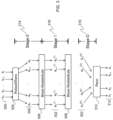
- a high-level description of how MPSS would be implemented is as follows.
- the data to be stored is arranged in blocks of a specific size (defined later).
- a block of secret data is distributed among a group of servers using the RobustShare protocol. Each server holds one share of data encoding the block of secrets.
- Some of the servers may be corrupted by a malicious party, called an adversary. Even though in practice there may be more than one malicious party corrupting player, one can assume without loss of generality that there is one malicious party.
- the servers periodically "refresh" their shares so that each server holds a new share of the same block of data that is independent of the previous share.
- the refreshing is implemented using the Black-Redistribute protocol, which is described in detail below.
- the set of servers engaged in the protocol and the number of servers, n may change at each redistribution.
- the servers may simply store their shares of the data, or they may perform some linear operations on their shares.
- the servers run the Reco protocol (described below) to reveal the data. A diagram illustrating this process is shown in FIG. 3 .
- the secrets are stored as follows: fix some generator ⁇ of F ⁇ .
- Each batch of l > 1 secrets is stored in a polynomial H of degree d (where the value of d depends on the security model as described below).
- the polynomial H is chosen such that H ( ⁇ j ) is the j th secret for j ⁇ [ l ] and H ( ⁇ l + j ) is random for j d ⁇ [ d - l + 1].
- the unique redistribution protocol described herein redistributes the secrets to a new set of players P' of size n' .
- the players in P' are denoted by P j ′ for ⁇ [ n '].
- the share of player P j ′ ⁇ P ′ is H ( ⁇ j ).
- the system according to embodiments of the present disclosure requires that ⁇ i ⁇ ⁇ j for each i , j (and that no ⁇ i or ⁇ j is equal to ⁇ k for any ⁇ [ l ]). Since the labels t, l, d are used for , n', t', and d' are used for P ′ .
- the system incorporates a collection of protocols that implement mobile proactive secret sharing.
- the data to be stored is arranged in blocks of a specific size.
- a block of secret data (e.g., S 1 through S t , 300) is distributed among a set of servers using a RobustShare protocol 304.
- Each server in the set of servers holds one share of data encoding the block of secrets. For instance, server P i 's share during a stage k is ⁇ i k .
- Some of the set of servers may be corrupted by a malicious party, called an adversary. While in practice, there may be more than one malicious party corrupting players, for the purposes of this application it is assumed that there is one malicious party.
- the servers periodically "refresh" their shares so that each server holds a new share of the same block of data that is independent of the previous share.
- the refreshing is implemented using a Block-Redistribute protocol.
- the protocol may include a first invocation of a Block-Redistribute protocol 306 and a second invocation of a Block-Redistribute protocol 308 (or additional consecutive invocations of Block-Redistribute protocols).
- the set of servers engaged in the protocol and the number of servers, n may change at each redistribution.
- the set of servers may simply store their shares of the data, or they may perform some linear operations on their shares.
- the set of servers runs a Reco (i.e., reconstruct) protocol 310 to reveal a set of secret data 312.
- a set of servers store data represented in some finite field .
- the set of servers may change over the course of the entire protocol.
- the shares of the data will be redistributed periodically.
- the period between consecutive redistributions e.g., between the first Block-Redistribute protocol 306 and the second Block-Redistribute protocol 308 is called a stage (e.g., stage 0 represented by element 314, stage 1 represented by element 316, stage D represented by element 318).
- the period before the first Block-Redistribute protocol is a stage (e.g., stage 0, 314)
- the period after the last redistribution is a stage (e.g., stage D, 318).
- Stages are defined such that the redistribution (e.g., the first Block-Redistribute protocol 306), itself is considered to be in both the stage before and after the redistribution.
- the redistribution e.g., the first Block-Redistribute protocol 306
- the first Block-Redistribute protocol 306 redistribution is in both stage 0 (element 314) and stage 1 (element 316).
- the redistribution protocol is written in such a way that and P ′ contain no servers in common. However, the protocol can be adapted so that the sets can overlap as follows: Each server P i in is given a new identity P j ′ ⁇ P ′ . The real server plays the part of both identities during redistribution. Once the redistribution protocol is complete, the real server deletes all data associated with P i , and then proceeds to act as P' j .
- a perfectly secure (non-statistically secure) and a statistically secure version of the redistribution protocol required to construct the MPSS scheme is provided.
- the threshold can be made arbitrarily close to n /3 ( n /2 for the statistical security).
- the threshold, batch size, and degree of polynomials for the two versions are described below.
- the number of players cannot decrease so much that the corrupt players in the old group can interpolate the new polynomials (i.e., d' - l ' ⁇ t ), and the number of players cannot increase so much that the uncorrupted players in the old group cannot interpolate the new polynomials in the presence of corrupt shares (i.e., d' + 2 t + 1 ⁇ n ).
- a low threshold is picked initially and then later raised using the player virtualization technique described in Literature Reference No. 6.
- the protocol in section (3.4) is written as a perfectly secure protocol with a lower threshold, and then is raised using statistically secure virtualization (see section (3.5)).
- the batch size, l is selected to be the highest power of 2 not greater than n /4
- the threshold is t ⁇ n /16
- the redistribution protocol requires the use of a hyper-invertible matrix (see Literature Reference No. 2 for a description of a hyper-invertible matrix).
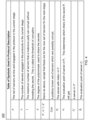
- FIG. 4 shows a table 400 illustrating symbols as used in the protocol according to the embodiments of the present disclosure.
- Block-Redistribute protocol for redistributing W secrets that are block-shared among a server set of size n to a new set of servers P ′ of size n'.
- the protocol assumes that W is a multiple of 4 l 2 ( n - 3 t ). If W is not a multiple of 4 l 2 ( n - 3 t ), one can generate random sharings of blocks to make it so.
- this can be achieved with poly( n ) communication complexity, and since it adds only a poly( n ) amount of data to W , this does not affect the overall communication complexity of redistributing W secrets.
- the number of polynomials/sharings input to the protocol is a multiple of 4 l ( n - 3 t ).
- the polynomials are arranged in groups of size, l , and then these groups are arranged into "towers," where each tower contains n - 3 t groups.
- n ⁇ n' and t ⁇ t' the secrets stored in polynomials of degree d will have to be re-stored in polynomials of degree d' .
- a change in the server set size may also cause a change in the block size, l .
- l is always a power of 2, meaning that l' ⁇ l , then l' will either be twice l or half l . Therefore, there are a total of four situations that need to be considered: n increases and l stays the same; n increases and l increases; n decreases and l stays the same; and n decreases and l decreases.
- the protocol must be able to re-store the polynomials in any of these four cases, and the first step of the Block-Redistribute protocol according to embodiments of the present disclosure describes how to do this,
- the protocol requires a slightly altered version of the RanDouSha protocol for step 4.3 below.
- the security proof for this altered protocol is the same as in Literature Reference No. 7.
- the Block-Redistribute protocol it is assumed that the servers have some means of knowing what the new set of servers w ill be. There are many methods of assuring this. They may have a schedule for which servers will be added that was fixed prior to protocol execution, they may decide by communicating with one another, or there may be some trusted third party (such as a network administrator) that provides the specification. This will ultimately depend on the intended application of this protocol.
- the protocol Block-Redistribute has communication complexity O ( W + n 3 ).
- the computational complexity is the communication complexity times a log 3 n factor.
- the Block-Redistribute protocol (as written) has a low threshold of corruption.
- server visualization is used (see Literature Reference No. 4 for a description of server visualization).
- the servers in the above protocol are replaced with committees of servers so that there are fewer corrupt committees than there are corrupt servers.
- a functionality that performs the transfer can be accomplished as follows.
- the parties in one committee consisting of parties A 1 , ... , A s , must send information with tags to another committee consisting of parties B 1 , ... , B s , All 2 s of these parties compute a functionality which transfers the data.
- the input from A j is her share and authentication/verification tags for the piece of data that the committee ⁇ A 1 , ..., A s ⁇ holds.
- the output for B j is her newly generated share and authentication/verification tags for this same piece of data, now held by the committee ⁇ B 1 , ..., B s ⁇ . This is done such that the new sharing is independent of the initial sharing. Because the committee sizes are constant, this does not asymptotically increase the communication or computational complexity. Additions are performed simply by adding shares as specified in the BGW protocol.
- Multiplication by hyper-invertible matrices can be done efficiently in committees. Each committee member simply performs the required operations on their shares. Each hyper-invertible matrix in the redistribution protocol has dimension ⁇ ( n ) by ⁇ ( n ). Normally, such a computation would require ⁇ ( n 2 ) multiplications. However, since the hyper-invertible matrices model polynomial interpolation and evaluation, one can use efficient algorithms from the computer science literature. For instance, Literature Reference No. 1 can be used to do these computations with only O ( n log 3 n ) multiplications.
- the application of the Berlekamp-Welch algorithm in committees requires some care, because a straightforward application of the BGW protocol would lead to non-constant round complexity.
- the Berlekamp-Welch algorithm can be performed with O ( n log 3 ( n )) computational complexity (see Literature Reference No. 11). This adds a log 3 ( n ) factor to the computational complexity, which is not problematic. However, it requires O ( -polylog ( n )) rounds of communication, and the redistribution protocol must work in a constant number of rounds.
- each execution of the Berlekamp-Welch algorithm is replaced with an execution of the protocol Committee-BW described below.
- the protocol uses RanDouSha as a sub-protocol to generate random masking polynomials.
- the number of polynomials generated and the degrees of the polynomials will be different in different steps.
- the servers want to interpolate they generate c masking polynomials of the same degree. Again, this does not add to the overall communication complexity of the protocol since c is constant once ⁇ is decided.
- a server/committee is not interpolating a polynomial, but rather a vector generated by a hyper-invertible matrix. However, since the hyper-invertible matrices used model polynomial interpolation, such a vector can be seen as a set of evaluation points on a polynomial.
- the protocol Commiftee-BW implements a committee performing Berlekamp-Welch in a constant number of rounds.
- the evaluation point of P i is ⁇ i and the evaluation point of p j is ⁇ j . It is assumed that the polynomial f to be interpolated has already been sent to the committee.
- the protocol uses an s by c + 1 hyper-invertible matrix M' , which is publicly known and fixed throughout all protocols.
- the system according to embodiments of the present disclosure is not obvious in light of existing literature on MPSS because it uses double sharing for block-shared secrets. Double sharing has never been applied to block-shared secrets in existing literature. In the statistical security setting, it uses server visualization as in Literature Reference No. 7, but straightforward implantation of virtualization cannot be used. Instead, the application of the Berlekamp-Welch algorithm (see Literature Reference No. j; is replaced with a protocol for a virtualized server to perform this task in a constant number of communication rounds.
- the invention described herein differs from previously known mobile proactive secret sharing protocols in that among those protocols secure against active adversaries, this protocol has the lowest communication complexity.
- the most efficient existing protocol for MPSS secure against active adversaries had communication complexity O ( n 3 ) per secret (where n is the number of servers engaged in the protocol).
- the present system has communication complexity O ( W + n 3 ) for redistributing W secrets, which means that if W is at least n 3 , the per-secret communication complexity for redistribution is O (1).
- the invention described herein includes protocols implementing the MPSS functionality. These protocols allow secret data to be securely distributed among a group of servers (servers are also called players or parties in Multiparty Computation (MPC) literature) in such a way that if an adversary compromises no more than a fixed fraction of the servers, the adversary will not gain any information about the data and cannot cause data corruption. This remains true even if the adversary is allowed to eventually compromise all of the servers, so long as no more than a fixed fraction is compromised during any given stage of the operation of the MPSS protocol.
- MPC Multiparty Computation
- the system according to embodiments of the present disclosures achieves the same functionality as U.S. Application No. 14/207,321 .
- the protocols described herein can provide either statistical or non-statistical security, whereas the protocol disclosed in U.S. Application No. 14/449,115 only provided cryptographic security.
- Cryptographic security means that the probability of an adversary being able to compromise the security of the computation is negligibly low and that the protocol is only secure under the assumption that a certain mathematical problem is infeasible for the adversary to solve.
- the protocol described herein can provide a threshold of corruption, which is the fraction of servers that can be corrupted during a given stage, that is either arbitrarily close to 1/2 in the statistical security setting or arbitrarily close to 1/3 in the non-statistical security setting.
- the protocol disclosed in U.S. Application No. 14/207,321 allowed the threshold to be arbitrarily close to 1/2.
- a purpose of the protocol described herein is to securely store data distributed among a group of servers in such a way that if a malicious party captures a (limited) fraction of the data, then this data will "expire” after a given time. Any "expired” data gives the malicious party no information about the secret stored data.
- the present invention differs from previously known mobile proactive secret sharing protocols in that among those protocols secure against active adversaries, this protocol has the lowest communication complexity.
- MPSS Mobile proactive secret sharing
- a non-limiting example of an application of the invention includes storing data, such as sensitive security data like certificates, in a distributed fashion across nearby vehicles. If a fraction of vehicles are corrupted at any one time, security and integrity is still maintained. The group of vehicles participating in the storage can change over time.
- the invention described herein can be utilized to store data in a distributed fashion across unmanned aerial vehicles, soldiers, and other platforms. For instance, a group of soldiers can maintain a highly sensitive piece of information (such as encryption keys and identifying information) distributed across cell phones (or other communication devices) that each soldier possesses. Data security and integrity is maintained as long as less than 30% or 49% of soldiers are compromised.
- the system according to embodiments of the present disclosure can also be used as a means of securing cell phone data.
- certain smart phone applications store sensitive information, such as cell phone data.
- the invention described herein can secure this data by dynamically spreading it to all cell phones in the area. This group of nearby cell phones changes dynamically, and as long as less than 30% or 49% of the cell phones are compromised, data security and integrity is maintained.
Landscapes
- Engineering & Computer Science (AREA)
- Computer Security & Cryptography (AREA)
- Computer Networks & Wireless Communication (AREA)
- Signal Processing (AREA)
- Storage Device Security (AREA)
Claims (15)
- System für eine mobile proaktive Geheimnisteilung, wobei das System umfasst:
einen oder mehrere Prozessoren und einen Speicher, wobei der Speicher ein nicht-transitorisches computerlesbares Medium ist, welches ausführbare Anweisungen darauf verschlüsselt aufweist, so dass auf eine Ausführung der Anweisungen hin, der eine oder die mehreren Prozessoren folgende Operationen durchführen:Initialisieren eines ersten Protokolls, um einen Block geheimer Daten unter einem Satz von Servern zu verteilen, welche n Server eines synchronen Netzwerks umfassen, wobei der Block von geheimen Daten eine Mehrzahl von Teilen von Daten umfasst, wobei jeder Server in dem Satz von Servern einen Teil von Daten enthält, welcher den Block von geheimen Daten verschlüsselt, und wobei die Mehrzahl von Teilen von Daten elektronisch über einen sicheren, authentifizierten Übertragungskanal übertragen wird;Initialisieren wenigstens eines zweiten Protokolls, um vor einem Gegner zu schützen, welcher versucht, den Satz von Servern zu beschädigen, wobei während eines zweiten Protokolls der Satz von Servern seine Mehrzahl von Teilen von Daten periodisch aktualisiert, so dass jeder Server einen neuen Teil von Daten enthält, welcher unabhängig von dem vorhergehenden Teil von Daten ist, wobei sich der Satz von Servern, welcher an einem zweiten Protokoll beteiligt ist, und die Anzahl von Servern, n, bei jeder Neuverteilung ändern können; undPeriodisches Löschen, durch jeden Server, der Mehrzahl von Teilen von Daten, um eine Sicherheit vor dem Gegner zu bewahren,wobei das wenigstens eine zweite Protokoll eines aus einer statistisch sicheren Version und einer Version perfekter Sicherheit für eine Sicherheit vor dem Gegner umfasst, wobei die Version perfekter Sicherheit einen Schwellenwert für eine Beschädigung aufweist, welcher geringer als derjenige der statistisch sicheren Version ist,wobei das wenigstens eine zweite Protokoll als die Version perfekter Sicherheit initiiert wird, und dann der Schwellenwert für eine Beschädigung in der statistisch sicheren Version unter Verwendung einer statistisch sicheren Virtualisierung erhöht wird. - System nach Anspruch 1, oder Verfahren nach Anspruch 13,
wobei der eine oder die mehreren Prozessoren ferner eine Operation eines Initialisierens eines dritten Protokolls durchführen, um den Block geheimer Daten offenzulegen. - System nach Anspruch 1, oder Verfahren nach Anspruch 13,
wobei sich n bei jedem zweiten Protokoll um einen Faktor von zwei erhöhen oder verringern kann. - System nach Anspruch 1, oder Verfahren nach Anspruch 13,
wobei ein Schwellenwert für eine Beschädigung 1/2 - ε für eine statistische Sicherheit ist, wobei ε eine beliebige positive Konstante ist, und wobei, vorausgesetzt, dass der Gegner nicht mehr als einen 1/2 - e-Anteil des Satzes von Servern beschädigt, das System eine statistische Sicherheit beibehält. - System nach Anspruch 1, wobei ein Schwellenwert einer Beschädigung 1/3 - ε für eine perfekte Sicherheit ist, wobei ε eine beliebige positive Konstante ist, und wobei, vorausgesetzt, dass der Gegner nicht mehr als einen 1/3 - e-Anteil des Satzes von Servern beschädigt, das System eine perfekte Sicherheit beibehält.
- System nach Anspruch 1, wobei, wenn der Gegner einen Anteil von Daten aus der Mehrzahl von Teilen von Daten erfasst, der Anteil von Daten nach einer gegebenen Zeit abläuft, so dass der abgelaufene Anteil von Daten dem Gegner keinerlei Informationen über die Blöcke von geheimen Daten offenlegt.
- Computerprogrammprodukt für eine mobile proaktive Geheimnisteilung, wobei das Computerprogrammprodukt umfasst:
ein nicht-transitorisches computerlesbares Medium, welches ausführbare Anweisungen darauf verschlüsselt aufweist, so dass auf eine Ausführung der Anweisungen durch einen oder mehrere Prozessoren hin, der eine oder die mehreren Prozessoren folgende Operationen durchführen:Initialisieren eines ersten Protokolls, um einen Block geheimer Daten unter einem Satz von Servern zu verteilen, welche n Server eines synchronen Netzwerks umfassen, wobei der Block von geheimen Daten eine Mehrzahl von Teilen von Daten umfasst, wobei jeder Server in dem Satz von Servern einen Teil von Daten enthält, welcher den Block von geheimen Daten verschlüsselt, und wobei die Mehrzahl von Teilen von Daten elektronisch über einen sicheren, authentifizierten Übertragungskanal übertragen wird;Initialisieren wenigstens eines zweiten Protokolls, um vor einem Gegner zu schützen, welcher versucht, den Satz von Servern zu beschädigen, wobei während eines zweiten Protokolls der Satz von Servern seine Mehrzahl von Teilen von Daten periodisch aktualisiert, so dass jeder Server einen neuen Teil von Daten enthält, welcher unabhängig von dem vorhergehenden Teil von Daten ist, wobei sich der Satz von Servern, welcher an einem zweiten Protokoll beteiligt ist, und die Anzahl von Servern, n, bei jeder Neuverteilung ändern können; undPeriodisches Löschen, durch jeden Server, der Mehrzahl von Teilen von Daten, um eine Sicherheit vor dem Gegner zu bewahren,wobei das wenigstens eine zweite Protokoll eines aus einer statistisch sicheren Version und einer Version perfekter Sicherheit für eine Sicherheit vor dem Gegner umfasst, wobei die Version perfekter Sicherheit einen Schwellenwert für eine Beschädigung aufweist, welcher geringer als derjenige der statistisch sicheren Version ist,wobei das wenigstens eine zweite Protokoll als die Version perfekter Sicherheit initiiert wird, und dann der Schwellenwert für eine Beschädigung in der statistisch sicheren Version unter Verwendung einer statistisch sicheren Virtualisierung erhöht wird. - Computerprogrammprodukt nach Anspruch 7, ferner umfassend Anweisungen, um zu bewirken, dass der eine oder die mehreren Prozessoren ferner eine Operation eines Initialisierens eines dritten Protokolls durchführen, um den Block geheimer Daten offenzulegen.
- Computerprogrammprodukt nach Anspruch 7, wobei sich n bei jedem zweiten Protokoll um einen Faktor von zwei erhöhen oder verringern kann.
- Computerprogrammprodukt nach Anspruch 7, wobei ein Schwellenwert für eine Beschädigung 1/2 - ε für eine statistische Sicherheit ist, wobei ε eine beliebige positive Konstante ist, und wobei, vorausgesetzt, dass der Gegner nicht mehr als einen 1/2 - e-Anteil des Satzes von Servern beschädigt, das System eine statistische Sicherheit beibehält.
- Computerprogrammprodukt nach Anspruch 7, wobei ein Schwellenwert einer Beschädigung 1/3 - ε für eine perfekte Sicherheit ist, wobei ε eine beliebige positive Konstante ist, und wobei vorausgesetzt, dass der Gegner nicht mehr als einen 1/3 - e-Anteil des Satzes von Servern beschädigt, das System eine perfekte Sicherheit beibehält.
- Computerprogrammprodukt nach Anspruch 7, wobei, wenn der Gegner einen Anteil von Daten aus der Mehrzahl von Teilen von Daten erfasst, der Anteil von Daten nach einer gegebenen Zeit abläuft, so dass der abgelaufene Anteil von Daten dem Gegner keinerlei Informationen über die Blöcke von geheimen Daten offenlegt.
- Computerimplementiertes Verfahren für eine mobile proaktive Geheimnisteilung, wobei das Verfahren folgenden Schritt umfasst:Bewirken, dass ein oder mehrere Prozessoren Anweisungen ausführen, welche auf einem nicht-transitorischen computerlesbaren Medium verschlüsselt sind, so dass auf eine Ausführung hin, der eine oder die mehreren Prozessoren folgende Operationen durchführen:Initialisieren eines ersten Protokolls, um einen Block geheimer Daten unter einem Satz von Servern zu verteilen, welche n Server eines synchronen Netzwerks umfassen, wobei der Block von geheimen Daten eine Mehrzahl von Teilen von Daten umfasst, wobei jeder Server in dem Satz von Servern einen Teil von Daten enthält, welcher den Block von geheimen Daten verschlüsselt, und wobei die Mehrzahl von Teilen von Daten elektronisch über einen sicheren, authentifizierten Übertragungskanal übertragen wird;Initialisieren wenigstens eines zweiten Protokolls, um vor einem Gegner zu schützen, welcher versucht, den Satz von Servern zu beschädigen, wobei während eines zweiten Protokolls der Satz von Servern seine Mehrzahl von Teilen von Daten periodisch aktualisiert, so dass jeder Server einen neuen Teil von Daten enthält, welcher unabhängig von dem vorhergehenden Teil von Daten ist, wobei sich der Satz von Servern, welcher an einem zweiten Protokoll beteiligt ist, und die Anzahl von Servern, n, bei jeder Neuverteilung ändern können; undPeriodisches Löschen, durch jeden Server, der Mehrzahl von Teilen von Daten, um eine Sicherheit vor dem Gegner zu bewahren,wobei das wenigstens eine zweite Protokoll eines aus einer statistisch sicheren Version und einer Version perfekter Sicherheit für eine Sicherheit vor dem Gegner umfasst, wobei die Version perfekter Sicherheit einen Schwellenwert für eine Beschädigung aufweist, welcher geringer als derjenige der statistisch sicheren Version ist,wobei das wenigstens eine zweite Protokoll als die Version perfekter Sicherheit initiiert wird, und dann der Schwellenwert für eine Beschädigung in der statistisch sicheren Version unter Verwendung einer statistisch sicheren Virtualisierung erhöht wird.
- Verfahren nach Anspruch 13, wobei ein Schwellenwert einer Beschädigung 1/3 - ε für eine perfekte Sicherheit ist, wobei ε eine beliebige positive Konstante ist, und wobei vorausgesetzt, dass der Gegner nicht mehr als einen 1/3 - e-Anteil des Satzes von Servern beschädigt, das System eine perfekte Sicherheit beibehält.
- Verfahren nach Anspruch 13, wobei, wenn der Gegner einen Anteil von Daten aus der Mehrzahl von Teilen von Daten erfasst, der Anteil von Daten nach einer gegebenen Zeit abläuft, so dass der abgelaufene Anteil von Daten dem Gegner keinerlei Informationen über die Blöcke von geheimen Daten offenlegt.
Applications Claiming Priority (2)
| Application Number | Priority Date | Filing Date | Title |
|---|---|---|---|
| US201562248093P | 2015-10-29 | 2015-10-29 | |
| PCT/US2016/059774 WO2017075609A1 (en) | 2015-10-29 | 2016-10-31 | An information secure protocol for mobile proactive secret sharing with near-optimal resilience |
Publications (3)
| Publication Number | Publication Date |
|---|---|
| EP3369207A1 EP3369207A1 (de) | 2018-09-05 |
| EP3369207A4 EP3369207A4 (de) | 2019-06-19 |
| EP3369207B1 true EP3369207B1 (de) | 2023-04-12 |
Family
ID=58630971
Family Applications (1)
| Application Number | Title | Priority Date | Filing Date |
|---|---|---|---|
| EP16861056.6A Active EP3369207B1 (de) | 2015-10-29 | 2016-10-31 | Sicheres informationsprotokoll für mobile proaktive teilung von geheimnissen mit fast optimaler resilienz |
Country Status (3)
| Country | Link |
|---|---|
| EP (1) | EP3369207B1 (de) |
| CN (1) | CN108028751B (de) |
| WO (1) | WO2017075609A1 (de) |
Families Citing this family (7)
| Publication number | Priority date | Publication date | Assignee | Title |
|---|---|---|---|---|
| CN112119608B (zh) * | 2018-06-05 | 2024-02-23 | 赫尔实验室有限公司 | 用于可验证秘密共享的系统和异步协议 |
| US10887092B2 (en) * | 2018-08-09 | 2021-01-05 | Hrl Laboratories, Llc | Anonymous allocation and majority voting in a compromised environment |
| CN110837623B (zh) * | 2019-11-13 | 2023-07-21 | 中国科学技术大学 | 利用非欧几里得环上的crt非迭代算法实现秘密共享的方法 |
| CN112232367B (zh) * | 2020-09-10 | 2022-06-21 | 山东师范大学 | 一种网络行为相似性判断方法及系统 |
| CN115277031B (zh) * | 2021-04-13 | 2024-05-10 | 华为技术有限公司 | 一种数据处理的方法和装置 |
| CN115801247A (zh) * | 2022-11-16 | 2023-03-14 | 贵州大学 | 一种基于信誉机制的理性秘密共享技术 |
| CN116366368B (zh) * | 2023-05-09 | 2025-10-10 | 中国工商银行股份有限公司 | 基于信息隐藏的密文传输方法及装置 |
Family Cites Families (8)
| Publication number | Priority date | Publication date | Assignee | Title |
|---|---|---|---|---|
| US8139770B2 (en) * | 2003-12-23 | 2012-03-20 | Wells Fargo Bank, N.A. | Cryptographic key backup and escrow system |
| US9130757B2 (en) * | 2008-08-11 | 2015-09-08 | International Business Machines Corporation | Method for authenticated communication in dynamic federated environments |
| CN101873212B (zh) * | 2010-06-09 | 2012-04-18 | 中国农业大学 | 门限秘密信息分配、还原装置及方法 |
| CN101882992B (zh) * | 2010-06-21 | 2012-12-12 | 中国农业大学 | 门限秘密信息分配、还原方法及装置 |
| US8874990B2 (en) * | 2011-04-01 | 2014-10-28 | Cleversafe, Inc. | Pre-fetching data segments stored in a dispersed storage network |
| US9065637B2 (en) * | 2012-01-25 | 2015-06-23 | CertiVox Ltd. | System and method for securing private keys issued from distributed private key generator (D-PKG) nodes |
| US8745415B2 (en) * | 2012-09-26 | 2014-06-03 | Pure Storage, Inc. | Multi-drive cooperation to generate an encryption key |
| EP3132560A4 (de) * | 2014-04-17 | 2017-12-20 | Hrl Laboratories, Llc | Verfahren zur sicheren und elastischen verteilten erzeugung digitaler signaturen auf der basis eines elliptischen kurvenalgorithmus für digitale signaturen (ecdsa) mit proaktiver sicherheit |
-
2016
- 2016-10-31 EP EP16861056.6A patent/EP3369207B1/de active Active
- 2016-10-31 CN CN201680051892.5A patent/CN108028751B/zh active Active
- 2016-10-31 WO PCT/US2016/059774 patent/WO2017075609A1/en not_active Ceased
Non-Patent Citations (3)
| Title |
|---|
| DAVID SCHULTZ ET AL: "MPSS", ACM TRANSACTIONS ON INFORMATION AND SYSTEM SECURITY, ACM, NEW YORK, NY, US, vol. 13, no. 4, 1 December 2010 (2010-12-01), pages 1 - 32, XP058098403, ISSN: 1094-9224, DOI: 10.1145/1880022.1880028 * |
| JOSHUA BARON ET AL: "How to withstand mobile virus attacks, revisited", PRINCIPLES OF DISTRIBUTED COMPUTING, ACM, 2 PENN PLAZA, SUITE 701 NEW YORK NY 10121-0701 USA, 15 July 2014 (2014-07-15), pages 293 - 302, XP058052816, ISBN: 978-1-4503-2944-6, DOI: 10.1145/2611462.2611474 * |
| LIDONG ZHOU ET AL: "APSS", ACM TRANSACTIONS ON INFORMATION AND SYSTEM SECURITY, ACM, NEW YORK, NY, US, vol. 8, no. 3, 1 August 2005 (2005-08-01), pages 259 - 286, XP058153104, ISSN: 1094-9224, DOI: 10.1145/1085126.1085127 * |
Also Published As
| Publication number | Publication date |
|---|---|
| EP3369207A1 (de) | 2018-09-05 |
| WO2017075609A1 (en) | 2017-05-04 |
| CN108028751B (zh) | 2021-08-27 |
| CN108028751A (zh) | 2018-05-11 |
| EP3369207A4 (de) | 2019-06-19 |
Similar Documents
| Publication | Publication Date | Title |
|---|---|---|
| EP3369207B1 (de) | Sicheres informationsprotokoll für mobile proaktive teilung von geheimnissen mit fast optimaler resilienz | |
| US9536114B1 (en) | Secure mobile proactive multiparty computation protocol | |
| US10083310B1 (en) | System and method for mobile proactive secure multi-party computation (MPMPC) using commitments | |
| US10360392B2 (en) | Generating shares of secret data | |
| US9489522B1 (en) | Method for secure and resilient distributed generation of elliptic curve digital signature algorithm (ECDSA) based digital signatures with proactive security | |
| CN106664205B (zh) | 生成数字签名的系统和方法、非瞬时计算机可读存储介质 | |
| US9449177B1 (en) | General protocol for proactively secure computation | |
| US9450938B1 (en) | Information secure proactive multiparty computation (PMPC) protocol with linear bandwidth complexity | |
| US9614676B1 (en) | Cryptographically-secure packed proactive secret sharing (PPSS) protocol | |
| EP4398514A2 (de) | Computerimplementiertes wählverfahren und system | |
| Raman et al. | Dynamic distributed storage for blockchains | |
| US7995764B2 (en) | Sharing a secret using hyperplanes over GF(2m) | |
| US9787472B1 (en) | Information secure protocol for mobile proactive secret sharing with near-optimal resilience | |
| US11989325B1 (en) | Protecting membership in a secure multi-party computation and/or communication | |
| Traverso et al. | Dynamic and verifiable hierarchical secret sharing | |
| EP3002904A1 (de) | Verfahren zur Verschlüsselung/Entschüsselung und Verarbeitung von Vektoren der Größe n, mit n als ganze Zahl größer oder gleich 1 | |
| US12561475B2 (en) | Protecting membership for secure computation and communication | |
| CN114006689A (zh) | 基于联邦学习的数据处理方法、装置及介质 | |
| CN114760052B (zh) | 银行物联网平台密钥生成方法、装置、电子设备及介质 | |
| Li et al. | Toward both privacy and efficiency of homomorphic MACs for polynomial functions and its applications | |
| EP2879325A1 (de) | Verfahren zur Bestimmung eines statistischen Werts über Daten auf Basis von verschlüsselten Daten | |
| US9558359B1 (en) | Information theoretically secure protocol for mobile proactive secret sharing with near-optimal resilience | |
| US9443089B1 (en) | System and method for mobile proactive secret sharing | |
| US12231563B2 (en) | Secure computation and communication | |
| US11809588B1 (en) | Protecting membership in multi-identification secure computation and communication |
Legal Events
| Date | Code | Title | Description |
|---|---|---|---|
| STAA | Information on the status of an ep patent application or granted ep patent |
Free format text: STATUS: THE INTERNATIONAL PUBLICATION HAS BEEN MADE |
|
| PUAI | Public reference made under article 153(3) epc to a published international application that has entered the european phase |
Free format text: ORIGINAL CODE: 0009012 |
|
| STAA | Information on the status of an ep patent application or granted ep patent |
Free format text: STATUS: REQUEST FOR EXAMINATION WAS MADE |
|
| 17P | Request for examination filed |
Effective date: 20180430 |
|
| AK | Designated contracting states |
Kind code of ref document: A1 Designated state(s): AL AT BE BG CH CY CZ DE DK EE ES FI FR GB GR HR HU IE IS IT LI LT LU LV MC MK MT NL NO PL PT RO RS SE SI SK SM TR |
|
| AX | Request for extension of the european patent |
Extension state: BA ME |
|
| DAV | Request for validation of the european patent (deleted) | ||
| DAX | Request for extension of the european patent (deleted) | ||
| A4 | Supplementary search report drawn up and despatched |
Effective date: 20190517 |
|
| RIC1 | Information provided on ipc code assigned before grant |
Ipc: H04L 29/08 20060101ALI20190513BHEP Ipc: H04L 29/06 20060101ALI20190513BHEP Ipc: H04W 12/04 20090101ALI20190513BHEP Ipc: H04L 9/08 20060101AFI20190513BHEP |
|
| STAA | Information on the status of an ep patent application or granted ep patent |
Free format text: STATUS: EXAMINATION IS IN PROGRESS |
|
| 17Q | First examination report despatched |
Effective date: 20200708 |
|
| GRAP | Despatch of communication of intention to grant a patent |
Free format text: ORIGINAL CODE: EPIDOSNIGR1 |
|
| STAA | Information on the status of an ep patent application or granted ep patent |
Free format text: STATUS: GRANT OF PATENT IS INTENDED |
|
| RIC1 | Information provided on ipc code assigned before grant |
Ipc: H04L 67/10 20220101ALI20220209BHEP Ipc: H04W 12/04 20090101ALI20220209BHEP Ipc: H04L 9/40 20220101ALI20220209BHEP Ipc: H04L 9/08 20060101AFI20220209BHEP |
|
| INTG | Intention to grant announced |
Effective date: 20220223 |
|
| RAP3 | Party data changed (applicant data changed or rights of an application transferred) |
Owner name: HRL LABORATORIES, LLC |
|
| GRAJ | Information related to disapproval of communication of intention to grant by the applicant or resumption of examination proceedings by the epo deleted |
Free format text: ORIGINAL CODE: EPIDOSDIGR1 |
|
| STAA | Information on the status of an ep patent application or granted ep patent |
Free format text: STATUS: EXAMINATION IS IN PROGRESS |
|
| GRAP | Despatch of communication of intention to grant a patent |
Free format text: ORIGINAL CODE: EPIDOSNIGR1 |
|
| STAA | Information on the status of an ep patent application or granted ep patent |
Free format text: STATUS: GRANT OF PATENT IS INTENDED |
|
| INTC | Intention to grant announced (deleted) | ||
| INTG | Intention to grant announced |
Effective date: 20221017 |
|
| GRAS | Grant fee paid |
Free format text: ORIGINAL CODE: EPIDOSNIGR3 |
|
| GRAA | (expected) grant |
Free format text: ORIGINAL CODE: 0009210 |
|
| STAA | Information on the status of an ep patent application or granted ep patent |
Free format text: STATUS: THE PATENT HAS BEEN GRANTED |
|
| AK | Designated contracting states |
Kind code of ref document: B1 Designated state(s): AL AT BE BG CH CY CZ DE DK EE ES FI FR GB GR HR HU IE IS IT LI LT LU LV MC MK MT NL NO PL PT RO RS SE SI SK SM TR |
|
| REG | Reference to a national code |
Ref country code: GB Ref legal event code: FG4D |
|
| REG | Reference to a national code |
Ref country code: CH Ref legal event code: EP |
|
| REG | Reference to a national code |
Ref country code: DE Ref legal event code: R096 Ref document number: 602016078830 Country of ref document: DE |
|
| REG | Reference to a national code |
Ref country code: IE Ref legal event code: FG4D |
|
| REG | Reference to a national code |
Ref country code: AT Ref legal event code: REF Ref document number: 1560393 Country of ref document: AT Kind code of ref document: T Effective date: 20230515 |
|
| P01 | Opt-out of the competence of the unified patent court (upc) registered |
Effective date: 20230524 |
|
| REG | Reference to a national code |
Ref country code: LT Ref legal event code: MG9D |
|
| REG | Reference to a national code |
Ref country code: NL Ref legal event code: MP Effective date: 20230412 |
|
| REG | Reference to a national code |
Ref country code: AT Ref legal event code: MK05 Ref document number: 1560393 Country of ref document: AT Kind code of ref document: T Effective date: 20230412 |
|
| PG25 | Lapsed in a contracting state [announced via postgrant information from national office to epo] |
Ref country code: NL Free format text: LAPSE BECAUSE OF FAILURE TO SUBMIT A TRANSLATION OF THE DESCRIPTION OR TO PAY THE FEE WITHIN THE PRESCRIBED TIME-LIMIT Effective date: 20230412 |
|
| PG25 | Lapsed in a contracting state [announced via postgrant information from national office to epo] |
Ref country code: SE Free format text: LAPSE BECAUSE OF FAILURE TO SUBMIT A TRANSLATION OF THE DESCRIPTION OR TO PAY THE FEE WITHIN THE PRESCRIBED TIME-LIMIT Effective date: 20230412 Ref country code: PT Free format text: LAPSE BECAUSE OF FAILURE TO SUBMIT A TRANSLATION OF THE DESCRIPTION OR TO PAY THE FEE WITHIN THE PRESCRIBED TIME-LIMIT Effective date: 20230814 Ref country code: NO Free format text: LAPSE BECAUSE OF FAILURE TO SUBMIT A TRANSLATION OF THE DESCRIPTION OR TO PAY THE FEE WITHIN THE PRESCRIBED TIME-LIMIT Effective date: 20230712 Ref country code: ES Free format text: LAPSE BECAUSE OF FAILURE TO SUBMIT A TRANSLATION OF THE DESCRIPTION OR TO PAY THE FEE WITHIN THE PRESCRIBED TIME-LIMIT Effective date: 20230412 Ref country code: AT Free format text: LAPSE BECAUSE OF FAILURE TO SUBMIT A TRANSLATION OF THE DESCRIPTION OR TO PAY THE FEE WITHIN THE PRESCRIBED TIME-LIMIT Effective date: 20230412 |
|
| PG25 | Lapsed in a contracting state [announced via postgrant information from national office to epo] |
Ref country code: RS Free format text: LAPSE BECAUSE OF FAILURE TO SUBMIT A TRANSLATION OF THE DESCRIPTION OR TO PAY THE FEE WITHIN THE PRESCRIBED TIME-LIMIT Effective date: 20230412 Ref country code: PL Free format text: LAPSE BECAUSE OF FAILURE TO SUBMIT A TRANSLATION OF THE DESCRIPTION OR TO PAY THE FEE WITHIN THE PRESCRIBED TIME-LIMIT Effective date: 20230412 Ref country code: LV Free format text: LAPSE BECAUSE OF FAILURE TO SUBMIT A TRANSLATION OF THE DESCRIPTION OR TO PAY THE FEE WITHIN THE PRESCRIBED TIME-LIMIT Effective date: 20230412 Ref country code: LT Free format text: LAPSE BECAUSE OF FAILURE TO SUBMIT A TRANSLATION OF THE DESCRIPTION OR TO PAY THE FEE WITHIN THE PRESCRIBED TIME-LIMIT Effective date: 20230412 Ref country code: IS Free format text: LAPSE BECAUSE OF FAILURE TO SUBMIT A TRANSLATION OF THE DESCRIPTION OR TO PAY THE FEE WITHIN THE PRESCRIBED TIME-LIMIT Effective date: 20230812 Ref country code: HR Free format text: LAPSE BECAUSE OF FAILURE TO SUBMIT A TRANSLATION OF THE DESCRIPTION OR TO PAY THE FEE WITHIN THE PRESCRIBED TIME-LIMIT Effective date: 20230412 Ref country code: GR Free format text: LAPSE BECAUSE OF FAILURE TO SUBMIT A TRANSLATION OF THE DESCRIPTION OR TO PAY THE FEE WITHIN THE PRESCRIBED TIME-LIMIT Effective date: 20230713 Ref country code: AL Free format text: LAPSE BECAUSE OF FAILURE TO SUBMIT A TRANSLATION OF THE DESCRIPTION OR TO PAY THE FEE WITHIN THE PRESCRIBED TIME-LIMIT Effective date: 20230412 |
|
| PG25 | Lapsed in a contracting state [announced via postgrant information from national office to epo] |
Ref country code: FI Free format text: LAPSE BECAUSE OF FAILURE TO SUBMIT A TRANSLATION OF THE DESCRIPTION OR TO PAY THE FEE WITHIN THE PRESCRIBED TIME-LIMIT Effective date: 20230412 |
|
| REG | Reference to a national code |
Ref country code: DE Ref legal event code: R097 Ref document number: 602016078830 Country of ref document: DE |
|
| PG25 | Lapsed in a contracting state [announced via postgrant information from national office to epo] |
Ref country code: SK Free format text: LAPSE BECAUSE OF FAILURE TO SUBMIT A TRANSLATION OF THE DESCRIPTION OR TO PAY THE FEE WITHIN THE PRESCRIBED TIME-LIMIT Effective date: 20230412 |
|
| PG25 | Lapsed in a contracting state [announced via postgrant information from national office to epo] |
Ref country code: SM Free format text: LAPSE BECAUSE OF FAILURE TO SUBMIT A TRANSLATION OF THE DESCRIPTION OR TO PAY THE FEE WITHIN THE PRESCRIBED TIME-LIMIT Effective date: 20230412 Ref country code: SK Free format text: LAPSE BECAUSE OF FAILURE TO SUBMIT A TRANSLATION OF THE DESCRIPTION OR TO PAY THE FEE WITHIN THE PRESCRIBED TIME-LIMIT Effective date: 20230412 Ref country code: RO Free format text: LAPSE BECAUSE OF FAILURE TO SUBMIT A TRANSLATION OF THE DESCRIPTION OR TO PAY THE FEE WITHIN THE PRESCRIBED TIME-LIMIT Effective date: 20230412 Ref country code: EE Free format text: LAPSE BECAUSE OF FAILURE TO SUBMIT A TRANSLATION OF THE DESCRIPTION OR TO PAY THE FEE WITHIN THE PRESCRIBED TIME-LIMIT Effective date: 20230412 Ref country code: DK Free format text: LAPSE BECAUSE OF FAILURE TO SUBMIT A TRANSLATION OF THE DESCRIPTION OR TO PAY THE FEE WITHIN THE PRESCRIBED TIME-LIMIT Effective date: 20230412 Ref country code: CZ Free format text: LAPSE BECAUSE OF FAILURE TO SUBMIT A TRANSLATION OF THE DESCRIPTION OR TO PAY THE FEE WITHIN THE PRESCRIBED TIME-LIMIT Effective date: 20230412 |
|
| PLBE | No opposition filed within time limit |
Free format text: ORIGINAL CODE: 0009261 |
|
| STAA | Information on the status of an ep patent application or granted ep patent |
Free format text: STATUS: NO OPPOSITION FILED WITHIN TIME LIMIT |
|
| 26N | No opposition filed |
Effective date: 20240115 |
|
| PG25 | Lapsed in a contracting state [announced via postgrant information from national office to epo] |
Ref country code: SI Free format text: LAPSE BECAUSE OF FAILURE TO SUBMIT A TRANSLATION OF THE DESCRIPTION OR TO PAY THE FEE WITHIN THE PRESCRIBED TIME-LIMIT Effective date: 20230412 |
|
| PG25 | Lapsed in a contracting state [announced via postgrant information from national office to epo] |
Ref country code: SI Free format text: LAPSE BECAUSE OF FAILURE TO SUBMIT A TRANSLATION OF THE DESCRIPTION OR TO PAY THE FEE WITHIN THE PRESCRIBED TIME-LIMIT Effective date: 20230412 Ref country code: IT Free format text: LAPSE BECAUSE OF FAILURE TO SUBMIT A TRANSLATION OF THE DESCRIPTION OR TO PAY THE FEE WITHIN THE PRESCRIBED TIME-LIMIT Effective date: 20230412 Ref country code: MC Free format text: LAPSE BECAUSE OF FAILURE TO SUBMIT A TRANSLATION OF THE DESCRIPTION OR TO PAY THE FEE WITHIN THE PRESCRIBED TIME-LIMIT Effective date: 20230412 |
|
| REG | Reference to a national code |
Ref country code: CH Ref legal event code: PL |
|
| REG | Reference to a national code |
Ref country code: BE Ref legal event code: MM Effective date: 20231031 |
|
| PG25 | Lapsed in a contracting state [announced via postgrant information from national office to epo] |
Ref country code: LU Free format text: LAPSE BECAUSE OF NON-PAYMENT OF DUE FEES Effective date: 20231031 |
|
| GBPC | Gb: european patent ceased through non-payment of renewal fee |
Effective date: 20231031 |
|
| PG25 | Lapsed in a contracting state [announced via postgrant information from national office to epo] |
Ref country code: LU Free format text: LAPSE BECAUSE OF NON-PAYMENT OF DUE FEES Effective date: 20231031 |
|
| PG25 | Lapsed in a contracting state [announced via postgrant information from national office to epo] |
Ref country code: GB Free format text: LAPSE BECAUSE OF NON-PAYMENT OF DUE FEES Effective date: 20231031 |
|
| PG25 | Lapsed in a contracting state [announced via postgrant information from national office to epo] |
Ref country code: CH Free format text: LAPSE BECAUSE OF NON-PAYMENT OF DUE FEES Effective date: 20231031 |
|
| PG25 | Lapsed in a contracting state [announced via postgrant information from national office to epo] |
Ref country code: GB Free format text: LAPSE BECAUSE OF NON-PAYMENT OF DUE FEES Effective date: 20231031 Ref country code: FR Free format text: LAPSE BECAUSE OF NON-PAYMENT OF DUE FEES Effective date: 20231031 Ref country code: CH Free format text: LAPSE BECAUSE OF NON-PAYMENT OF DUE FEES Effective date: 20231031 |
|
| PG25 | Lapsed in a contracting state [announced via postgrant information from national office to epo] |
Ref country code: BE Free format text: LAPSE BECAUSE OF NON-PAYMENT OF DUE FEES Effective date: 20231031 |
|
| PG25 | Lapsed in a contracting state [announced via postgrant information from national office to epo] |
Ref country code: IE Free format text: LAPSE BECAUSE OF NON-PAYMENT OF DUE FEES Effective date: 20231031 |
|
| PG25 | Lapsed in a contracting state [announced via postgrant information from national office to epo] |
Ref country code: IE Free format text: LAPSE BECAUSE OF NON-PAYMENT OF DUE FEES Effective date: 20231031 |
|
| PG25 | Lapsed in a contracting state [announced via postgrant information from national office to epo] |
Ref country code: BG Free format text: LAPSE BECAUSE OF FAILURE TO SUBMIT A TRANSLATION OF THE DESCRIPTION OR TO PAY THE FEE WITHIN THE PRESCRIBED TIME-LIMIT Effective date: 20230412 |
|
| PG25 | Lapsed in a contracting state [announced via postgrant information from national office to epo] |
Ref country code: BG Free format text: LAPSE BECAUSE OF FAILURE TO SUBMIT A TRANSLATION OF THE DESCRIPTION OR TO PAY THE FEE WITHIN THE PRESCRIBED TIME-LIMIT Effective date: 20230412 |
|
| PG25 | Lapsed in a contracting state [announced via postgrant information from national office to epo] |
Ref country code: CY Free format text: LAPSE BECAUSE OF FAILURE TO SUBMIT A TRANSLATION OF THE DESCRIPTION OR TO PAY THE FEE WITHIN THE PRESCRIBED TIME-LIMIT; INVALID AB INITIO Effective date: 20161031 |
|
| PG25 | Lapsed in a contracting state [announced via postgrant information from national office to epo] |
Ref country code: HU Free format text: LAPSE BECAUSE OF FAILURE TO SUBMIT A TRANSLATION OF THE DESCRIPTION OR TO PAY THE FEE WITHIN THE PRESCRIBED TIME-LIMIT; INVALID AB INITIO Effective date: 20161031 |
|
| PG25 | Lapsed in a contracting state [announced via postgrant information from national office to epo] |
Ref country code: TR Free format text: LAPSE BECAUSE OF FAILURE TO SUBMIT A TRANSLATION OF THE DESCRIPTION OR TO PAY THE FEE WITHIN THE PRESCRIBED TIME-LIMIT Effective date: 20230412 |
|
| PGFP | Annual fee paid to national office [announced via postgrant information from national office to epo] |
Ref country code: DE Payment date: 20251029 Year of fee payment: 10 |