EP3369738B1 - Procédé de préparation de nicotinates de riboside et de nicotinamide-beta-riboside - Google Patents
Procédé de préparation de nicotinates de riboside et de nicotinamide-beta-riboside Download PDFInfo
- Publication number
- EP3369738B1 EP3369738B1 EP18161394.4A EP18161394A EP3369738B1 EP 3369738 B1 EP3369738 B1 EP 3369738B1 EP 18161394 A EP18161394 A EP 18161394A EP 3369738 B1 EP3369738 B1 EP 3369738B1
- Authority
- EP
- European Patent Office
- Prior art keywords
- riboside
- cells
- compound
- nicotinamide
- nad
- Prior art date
- Legal status (The legal status is an assumption and is not a legal conclusion. Google has not performed a legal analysis and makes no representation as to the accuracy of the status listed.)
- Active
Links
- 0 CC(OC[C@@](C(C1OC(C)=O)OC(C)=O)O[C@]1C12/C=C/C(/C(O*)[U])=C/C=C/*1C2)=O Chemical compound CC(OC[C@@](C(C1OC(C)=O)OC(C)=O)O[C@]1C12/C=C/C(/C(O*)[U])=C/C=C/*1C2)=O 0.000 description 3
Images






Classifications
-
- A—HUMAN NECESSITIES
- A61—MEDICAL OR VETERINARY SCIENCE; HYGIENE
- A61K—PREPARATIONS FOR MEDICAL, DENTAL OR TOILETRY PURPOSES
- A61K31/00—Medicinal preparations containing organic active ingredients
- A61K31/70—Carbohydrates; Sugars; Derivatives thereof
- A61K31/7042—Compounds having saccharide radicals and heterocyclic rings
- A61K31/7052—Compounds having saccharide radicals and heterocyclic rings having nitrogen as a ring hetero atom, e.g. nucleosides, nucleotides
- A61K31/706—Compounds having saccharide radicals and heterocyclic rings having nitrogen as a ring hetero atom, e.g. nucleosides, nucleotides containing six-membered rings with nitrogen as a ring hetero atom
-
- A—HUMAN NECESSITIES
- A61—MEDICAL OR VETERINARY SCIENCE; HYGIENE
- A61K—PREPARATIONS FOR MEDICAL, DENTAL OR TOILETRY PURPOSES
- A61K31/00—Medicinal preparations containing organic active ingredients
- A61K31/33—Heterocyclic compounds
- A61K31/335—Heterocyclic compounds having oxygen as the only ring hetero atom, e.g. fungichromin
- A61K31/35—Heterocyclic compounds having oxygen as the only ring hetero atom, e.g. fungichromin having six-membered rings with one oxygen as the only ring hetero atom
- A61K31/351—Heterocyclic compounds having oxygen as the only ring hetero atom, e.g. fungichromin having six-membered rings with one oxygen as the only ring hetero atom not condensed with another ring
-
- A—HUMAN NECESSITIES
- A61—MEDICAL OR VETERINARY SCIENCE; HYGIENE
- A61K—PREPARATIONS FOR MEDICAL, DENTAL OR TOILETRY PURPOSES
- A61K45/00—Medicinal preparations containing active ingredients not provided for in groups A61K31/00 - A61K41/00
- A61K45/06—Mixtures of active ingredients without chemical characterisation, e.g. antiphlogistics and cardiaca
-
- C—CHEMISTRY; METALLURGY
- C07—ORGANIC CHEMISTRY
- C07H—SUGARS; DERIVATIVES THEREOF; NUCLEOSIDES; NUCLEOTIDES; NUCLEIC ACIDS
- C07H1/00—Processes for the preparation of sugar derivatives
-
- C—CHEMISTRY; METALLURGY
- C07—ORGANIC CHEMISTRY
- C07H—SUGARS; DERIVATIVES THEREOF; NUCLEOSIDES; NUCLEOTIDES; NUCLEIC ACIDS
- C07H19/00—Compounds containing a hetero ring sharing one ring hetero atom with a saccharide radical; Nucleosides; Mononucleotides; Anhydro-derivatives thereof
- C07H19/02—Compounds containing a hetero ring sharing one ring hetero atom with a saccharide radical; Nucleosides; Mononucleotides; Anhydro-derivatives thereof sharing nitrogen
- C07H19/04—Heterocyclic radicals containing only nitrogen atoms as ring hetero atom
- C07H19/048—Pyridine radicals
Definitions
- the invention relates to a method for making nicotinoyl ribosides and nicotinamide riboside.
- the disclosure relates to pharmaceutical compositions and nutritional supplements containing a nicotinoyl riboside.
- the disclosure relates to methods of using nicotinoyl ribosides and nicotinamide riboside derivatives that promote the increase of intracellular levels of nicotinamide adenine dinucleotide (NAD+) in cells and tissues for improving cell and tissue survival.
- NAD+ nicotinamide adenine dinucleotide
- Nicotinamide adenine dinucleotide is a natural coenzyme that functions as an intermediary in cellular oxidation and reduction reactions as well as an ADP-ribosyltransferase substrate. Altering intracellular NAD+ levels can improve the health of a cell, but introduction of compounds that enter NAD+ metabolic pathways can also prove toxic to cells.
- benzamide riboside BAR
- BAR benzamide riboside
- BR is a prodrug that can be phosphorylated to its 5'-monophosphate and then converted to its active metabolite benzamide adenine dinucleotide (BAD).
- That metabolite is an active analogue of NAD+ and an inhibitor of inosine 5'-monophosphate dehydrogenase (IMPHD).
- IMPDH is linked to malignant transformations.
- BAR shows selective sensitivity to central nervous system and leukemic cell lines.
- BAD also inhibits other dehydrogenases, such as malate dehydrogenase and glutamic acid dehydrogenase which may cause adverse effects if used as a therapeutic.
- dehydrogenases such as malate dehydrogenase and glutamic acid dehydrogenase which may cause adverse effects if used as a therapeutic.
- the invention relates to a method of making nicotinoyl ribosides and nicotinamide riboside according to present claims 1 to 7.
- the disclosure relates to pharmaceutical compositions and nutritional supplements containing a nicotinoyl riboside.
- the disclosure relates to methods of using nicotinoyl ribosides and nicotinamide riboside derivatives that promote the increase of intracellular levels nicotinamide adenine dinucleotide (NAD+) in cells and tissues for improving cell and tissue survival.
- NAD+ nicotinamide adenine dinucleotide
- the invention relates to a method of making a compound having Formula I: wherein, R 1 is amino, comprising: i) mixing a) tetra-acyl or substituted acyl ribofuranose and b) a compound having formula II: wherein, R 2 is alkyloxy, -OCH 2 CH 2 OH, aryloxy, to form a compound of formula III: wherein, R 2 is alkyloxy, -OCH 2 CH 2 OH, aryloxy, and R 3 , R 4 and R 5 are each acyl and ii) mixing the compound of formula III with a solution of ammonia, to form a compound of formula I.
- the conditions of making compound I from compound III are in a halogenated alkyl alcohol solvent at a temperature below room temperature. In futher embodiments, said solvent is trifluoromethanol.
- the disclosure relates to a method of making a compound having Formula I: wherein, R 1 is amine, substituted amine, alkylamine, substituted alkylamine, dialkylamine, substituted dialkylamine, alkyloxy, or substituted alkyloxy, comprising: i) mixing a) tetra-acyl or substituted acyl ribofuranose, preferably tetra-acetyl ribofuranose, and b) a compound having formula II: wherein, R 2 is alkyloxy, substituted alkyloxy, aryloxy, substituted aryloxy, alkylthiol, substituted alkylthiol, arylthiol or substituted arylthiol under conditions such that a compound of formula III: wherein, R 2 is alkyloxy, substituted alkyloxy, aryloxy, substituted aryloxy, alkylthiol, substituted alkylthiol, arylthiol or
- the disclosure relates to a method of making a compound having Formula I: wherein, R is NH 2 , alkylamino, substituted alkylamino, dialkylamino, substituted dialkylamino, alkyloxy, and substituted alkyloxy, comprising: i) mixing tetra-acyl ribofuranose, preferably tetra-acetyl ribofuranose, and alkyl or aryl pyridine-3-carboxylate ester or thioester compound under conditions such that a compound of formula II: is formed where R 2 is -O-alkyl, -O-aryl, -S-alkyl or -S-aryl and, R 3 , R 4 and R 5 are the same or different and, at each occurrence, independently acyl and iii) mixing the compound of formula II with an alkylamine, substituted alkylamine, dialkylamine, substituted dialkylamine, alkoxide, and substituted
- the disclosure relates to making alkyl 1-[3,4-diacetyloxy-5-(acetyloxymethyl)oxolan-2-yl]-pyridine-3-carboxylate, preferably alkyl 1-[3,4-diacetyloxy-5-(acetyloxymethyl)oxolan-2-yl]-pyridine-3-carboxylate, comprising mixing a composition consisting essentially of 1,2,3,5-tetra-O-acetyl-beta-D-ribofuranose, alkyl pyridine-3-carboxylate, and trimethylsilyl trifluoromethanesulfonate under conditions such that alkyl 1-[3,4-diacetyloxy-5-(acetyloxymethyl)oxolan-2-yl]-pyridine-3-carboxylate is formed.
- the disclosure relates to a method of making N-alkyl or N,N dialkyl 1-[3,4-dihydroxy-5-(hydroxymethyl)oxolan-2-yl]pyridine-5-carboxamide comprising mixing alkyl 1-[3,4-diacetyloxy-5-(acetyloxymethyl)oxolan-2-yl]-pyridine-3-carboxylate with an primary or secondary amine under conditions such that N-alkyl or N,N dialkyl 1-[3,4-dihydroxy-5-(hydroxymethyl)oxolan-2-yl]pyridine-5-carboxamide is formed.
- the disclosure relates to a method of making O-Alkyl 2 1-[3,4-dihydroxy-5-(hydroxymethyl)oxolan-2-yl]pyridine-5-carboxylate comprising mixing O-Alkyl 1 1-[3,4-dihydroxy-5-(hydroxymethyl)oxolan-2-yl]pyridine-5-carboxylate and sodium alkyl 2 oxide under conditions such that O-Alkyl 2 1-[3,4-dihydroxy-5-(hydroxymethyl)oxolan-2-yl]pyridine-5-carboxylate is formed.
- the invention relates to a method of making nicotinoyl ribosides and nicotinamide riboside according to present claims 1 to 7.
- the disclosure relates to pharmaceutical compositions and nutritional supplements containing a nicotinoyl riboside.
- the disclosure relates to methods of using nicotinoyl ribosides and nicotinamide riboside derivatives that promote the increase of intracellular levels of nicotinamide adenine dinucleotide (NAD+) in cells and tissues for improving cell and tissue survival.
- NAD+ nicotinamide adenine dinucleotide
- a “nicotinoyl riboside” compound means a substituted or unsubstituted compound of the following formula:
- Nicotinoyl riboside “salts” refers to salts which make up the composition which specifically include the nicotinoyl riboside salt having the partial formula and Z is a counter ion, including chloride, bromide, iodide, alkoxide, toluenesulfonate, methylsulfonate, sulfonate, phosphate, or carboxylate (such as benzoate, succinate, acetate, glycolate, maleate, malate, fumarate, citrate, tartrate, ascorbate, cinnamoate, mandeloate, and diphenylacetate).
- nicotinoyl riboside component refers that part of a composition that contains all of the nicotinoyl riboside molecules in a given composition, including all conformational and stereomeric forms.
- a given compound e.g. designated by a structure
- makes up a large percentage e.g. by number of molecules and/or by weight
- a given nicotinoyl riboside molecule may be present in an aqueous composition at a level where 70% of all the nicotinoyl riboside molecules are of that given compound, while most of the composition itself is composed of water.
- Alkyl means a straight chain or branched, noncyclic or cyclic, unsaturated or saturated aliphatic hydrocarbon containing from 1 to 10 carbon atoms, while the term “lower alkyl” has the same meaning as alkyl but contains from 1 to 6 carbon atoms. The term “higher alkyl” has the same meaning as alkyl but contains from 2 to 10 carbon atoms.
- saturated straight chain alkyls include methyl, ethyl, n-propyl, n-butyl, n-pentyl, n-hexyl, n-septyl, n-octyl, n-nonyl, and the like; while saturated branched alkyls include isopropyl, sec-butyl, isobutyl, tert-butyl, isopentyl, and the like.
- saturated cyclic alkyls include cyclopropyl, cyclobutyl, cyclopentyl, cyclohexyl, and the like; while unsaturated cyclic alkyls include cyclopentenyl and cyclohexenyl, and the like.
- Cyclic alkyls are also referred to herein as a "homocycles” or “homocyclic rings.”
- Unsaturated alkyls contain at least one double or triple bond between adjacent carbon atoms (referred to as an "alkenyl” or “alkynyl", respectively).
- Representative straight chain and branched alkenyls include ethylenyl, propylenyl, 1-butenyl, 2-butenyl, isobutylenyl, 1-pentenyl, 2-pentenyl, 3-methyl-1-butenyl, 2-methyl-2-butenyl, 2,3-dimethyl-2-butenyl, and the like; while representative straight chain and branched alkynyls include acetylenyl, propynyl, 1-butynyl, 2-butynyl, 1-pentynyl, 2-pentynyl, 3-methyl-1-butynyl, and the like.
- Alkylamino and dialkylamino mean one or two alkyl moiety attached through a nitrogen bridge (i.e., --N-alkyl) such as methylamino, ethylamino, dimethylamino, diethylamino, and the like.
- Alkylthiol means an alkyl moiety attached through a sulfur bridge (i.e., -S-alkyl).
- Alkyloxy means an alkyl moiety attached through an oxygen bridge (i.e., --O-alkyl) such as methoxy, ethoxy, and the like.
- Alkoxide means an alkyl moiety attached to a negatively charged oxygen atom (i.e., - Oalkyl) such as methoxide or ethoxide.
- an "amine” means -NH 2 or “ammonia” the gas NH 3 .
- Aryl means an aromatic carbocyclic moiety such as phenyl or naphthyl.
- Aryloxy means an aryl moiety attached through an oxygen bridge (i.e., --O-aryl).
- Arylthio means an alkyl moiety attached through a sulfur bridge (i.e., -S-aryl).
- aminooxy means an amino moiety attached through an oxyen bridge (i.e., -O-NH 2 ).
- Hydroxylamino means hydroxyl moiety attached through an amine bridge (i.e., -NH-OH).
- O-alkyloxyamino means an alkyloxy moetiy attached through an amine bridge (i.e., -NH-O-alkyl).
- N-alkylaminooxy means an alkylamino moeity attached through an oxyen bridge (i.e., -O-NH-alkyl).
- Hydrazino means an amino moiety attached through a nitrogen bridge (i.e., - NH-NH 2 ) depending on the context.
- Alkylhydrazino means an alkyl moiety attached through a hydrazine bridge (i.e., -NH-NH-alkyl).
- Cells means the structural unit of an organism consisting of one or more nuclei, cytoplasm, and various organelles, all surrounded by a semipermeable cell membrane.
- “Growth media” are compositions used to grow microorganisms or cells in culture. There are different sorts of media for growing different sorts of cells. The biggest difference in growth media are between those used for growing cells in culture (cell culture uses specific cell types derived from plants or animals) and those used for growing microorganisms (usually bacteria or yeast). These differences arise due to the fact that cells derived from whole organisms and grown in culture are often incapable of growth without the provision of certain requirements, such as hormones or growth factors which usually occur in vivo. In the case of animal cells these requirements are often provided by the addition of blood serum to the medium. These media are often red or pink due to the inclusion of pH indicators.
- Growth media for embryonic stem cells preferably contains minimal essential medium, i.e., Eagle's: amino acids, salts (Ferric nitrate nonahydrate, Potassium chloride, Magnesium sulfate, Sodium chloride, Sodium dihydrogen phosphate), vitamins, (Ascorbic acid, Folic acid, Nicotinamide, Riboflavin, B-12) or Dulbecco's: additionally iron, glucose; non-essential amino acids, sodium pyruvate, ⁇ -mercaptoethanol, L-glutamine, fetal bovine serum and Leukemia Inhibitory Factor (LIF).
- minimal essential medium i.e., Eagle's: amino acids, salts (Ferric nitrate nonahydrate, Potassium chloride, Magnesium sulfate, Sodium chloride, Sodium dihydrogen phosphate), vitamins, (Ascorbic acid, Folic acid, Nicotinamide, Riboflavin, B-12) or Dulbecco
- E. coli Escherichia coli
- liquid nutrient medium is commonly called nutrient broth.
- the preferred growth media for microorganisms are nutrient broth or Luria-Bertani medium (L-B medium).
- Bacteria grown in liquid cultures often form colloidal suspensions. When agar (a substance which sets into a gel) is added to a liquid medium it can be poured into petri dishes where it will solidify (these are called agar plates) and provide a solid medium on which microbes may be cultured.
- agar a substance which sets into a gel
- Homocycle (also referred to herein as “homocyclic ring”) means a saturated or unsaturated (but not aromatic) carbocyclic ring containing from 3-7 carbon atoms, such as cyclopropane, cyclobutane, cyclopentane, cyclohexane, cycloheptane, cyclohexene, and the like.
- “Isomers” means any of two or more substances that are composed of the same elements in the same proportions but differ in the three dimensional arrangement of atoms including enantiomeric (i.e., mirror images) and diastereomeric isomers.
- derivative when used in relation to a chemical compound refers to a similar structure that upon application, e.g., administration to a subject, is capable of providing, directly or indirectly, the function said chemical compound is disclosed to have.
- a “nicotinamide riboside (NAR) derivative” is understood to not include the compound NAR.
- purified isomer and “purified isomer composition” are meant to indicate a composition (e.g. derived from a racemic mixture or synthesized de novo ) wherein one isomer has been enriched (e.g., alpha-isomer) over the other (e.g., beta-isomer), and more preferably, wherein the other isomer represents less than 10%, and more preferably less than 7%, and still more preferably, less than 2% of the preparation.
- a composition e.g. derived from a racemic mixture or synthesized de novo
- one isomer has been enriched (e.g., alpha-isomer) over the other (e.g., beta-isomer)
- the other isomer represents less than 10%, and more preferably less than 7%, and still more preferably, less than 2% of the preparation.
- Purified compositions in accordance with the invention preferably contain less than 5% mass/mass (m/m), advantageously less than 3% m/m, of impurities. It is to be understood that references herein to "impurities" are to be understood as to include unwanted reaction products that are not isomers formed during synthesis and does not include residual solvents remaining from the process used in the preparation of the composition or excipients used in pharmaceutical preparations.
- essentially free of a molecule means that the molecule is present in a composition only as an unavoidable impurity.
- Subject means any animal, preferably a human patient, livestock, or domestic pet.
- embryonic stem cell is defined by its origin-that is from one of the earliest stages of the development of the embryo, called the blastocyst. Specifically, embryonic stem cells are derived from the inner cell mass of the blastocyst at a stage before it would implant in the uterine wall. At this stage, the preimplantation embryo of the mouse is made up of 150 cells and consists of a sphere made up of an outer layer of cells (the trophectoderm), a fluid-filled cavity (the blastocoel), and a cluster of cells on the interior (the inner cell mass). Pluripotent ES cells can give rise to differentiated cell types that are derived from all three primary germ layers of the embryo (endoderm, mesoderm, and ectoderm).
- the "adult" stem cell is an undifferentiated (unspecialized) cell that is found in a differentiated (specialized) tissue; it can renew itself and become specialized to yield all of the specialized cell types of the tissue from which it originated.
- Adult stem cells are capable of self-renewal for the lifetime of the organism. Sources of adult stem cells have been found in the bone marrow, blood stream, cornea and retina of the eye, the dental pulp of the tooth, liver, skin, gastrointestinal tract, and pancreas. Unlike embryonic stem cells, there are no identifiable adult stem cells that are capable of forming all cells of the body. However, blood stem cells (derived from mesoderm) are able to generate a number of differentiated cells including both skeletal muscle (also derived from mesoderm) and neurons (derived from ectoderm).
- substituted means any of the above groups (i.e., alkyl, aryl, arylalkyl, heteroaryl, heteroarylalkyl, homocycle, heterocycle and/or heterocyclealkyl) wherein at least one hydrogen atom is replaced with a substituent.
- substituent i.e., alkyl, aryl, arylalkyl, heteroaryl, heteroarylalkyl, homocycle, heterocycle and/or heterocyclealkyl
- substituents may be further substituted with one or more of the above substituents, such that the substituent substituted alky, substituted aryl, substituted arylalkyl, substituted heterocycle or substituted heterocyclealkyl.
- R a and R b in this context may be the same or different and independently hydrogen, alkyl, haloalkyl, substituted alkyl, aryl, substituted aryl, arylalkyl, substituted arylalkyl, heterocycle, substituted heterocycle, heterocyclealkyl or substituted heterocyclealkyl.
- a compound may be described as "unsubstituted" meaning that the compound does not contain extra substituents attached to the compound.
- unsubstituted compound refers to the chemical makeup of the compound without extra substituents, e.g., the compound does not contain protecting group(s).
- unsubstituted proline is the proline amino acid even though the amino group of proline may be considered disubstituted with alkyl groups.
- Nicotinamide adenine dinucleotide is important as a co-enzyme for different enzymes.
- SIR2 sient information regulator 2
- NAD+ has a role in regulating multiple biological processes, such as p53 regulated apoptosis, fat storage, stress resistance, and gene silencing. Without limiting the potential uses of the compositions described herein by any single theory, there are various pathways through which NAR is currently thought to be metabolized. Nicotinamide riboside (NAR) is known as a NAD+ precursor for both human and yeast.
- NAR nicotinamide riboside kinase
- Nrk nicotinamide riboside kinase
- NAD+ nicotinamide mononucleotide adenylytransferase
- Nmnat nicotinamide mononucleotide adenylytransferase
- nicotinamide riboside can enter NAD metabolism by means of other metabolic paths, which would include action from enzymes that separate the nicotinamide moiety from the sugar.
- Nicotinamide is competent to enter NAD+ metabolism and is converted to NAD+ by the action of the enzyme nicotinamide pyrophosphoribosyltransferase.
- Sirtuins are class III histone deacetylases (HDACs) and are ADP-ribosyl transferases also. They deacetylate lysine residues in a novel chemical reaction that consumes nicotinamide adenine dinucleotide (NAD+), releasing nicotinamide, O-acetyl-ADPribose (AADPR), and the deacetylated substrate. Altering intracellular NAD+ levels can improve the health of a cell, but introduction of compounds that enter NAD+ metabolic pathways can also prove toxic to cells.
- HDACs histone deacetylases
- AADPR O-acetyl-ADPribose
- the invention relates to the use of compounds disclosed herein to manipulate NAD+ levels, to modulate the activity of sirtuins and other ADP-ribosyl transferases, and to modulate IMPHD. These embodiments are used to destroy or weaken the defenses of cancer cells, or to promote survival of neurons, myocytes, or stem cells via addition to growth media.
- Nicotinic acid is an effective agent in controlling low-density lipoprotein cholesterol, increasing high-density lipoprotein cholesterol, and reducing triglyceride and lipoprotein (a) levels in humans.
- nicotinic acid treatment affects all of the key lipids in the desirable direction and has been shown to reduce mortality in target populations, its use is limited because of a side effect of heat and redness termed flushing. Further, nicotinamide protects against stroke injury in model systems, presumably due to multiple mechanisms including increasing mitochondrial NAD+ levels.
- the disclosure relates to the use of compounds disclosed herein as agonist and antagonist of enzymes in the pathway of NAD+ biosynthesis.
- the NAR derivatives disclosed herein are agonist, i.e., stimulates activities normally stimulated by naturally occurring substances, of one or more surtuins, preferably SIRT1 in humans or Sir2p in yeast.
- the NAR derivatives are antagonist of one or surtuins.
- SIRT1 deacetylates transcription factors such as FOXOs, p53, and nuclear factor Kappa B (NFKB), that provide stress resistance, apoptosis, and inflammatory responses improving organism survival.
- the sirtuin SIRT1 upregulates stress-protective pathways by deacetylation of FOXO transcription factors, leading to increased transcription of GADD45 (DNA repair) and MnSOD (reactive oxygen detoxification).
- SIRT1 concomitantly downregulates FOXO transcription of the proapoptotic factors Fas and Bcl-2 interacting mediator of cell death. (BIM).
- the p53 network in normal, non-activated situations is non-functional, but is activated in cells as a response to various signals by inhibiting the abnormal growth of cells and triggering of programmed cell death.
- SIRT1 interacts with p53 and deacetylates the C-terminal regulatory domain. This activity downregulates effects of p53 transcriptional activation on target genes.
- NAR nicotinamide riboside
- nicotinoyl riboside compounds were initiated with the preparation of a preferred intermediate, ethyl 1-[3,4-diacetyloxy-5-(acetyloxymethyl)oxolan-2-yl]-pyridine-3-carboxylate. Nicotinic acid riboside O-alkyl derivatives were prepared from there. Refluxing of the protected sugar, 1,2,3,5-tetra-O-acetyl- ⁇ -D-ribofuranose with ethyl nicotinate (1.2 equiv.) in methylene chloride under the catalysis of TMSOTf (1 equiv.) stereoselectively formed ⁇ -isomer in good yield (>90%).
- Ethyl 1-[3,4-diacetyloxy-5-(acetyloxymethyl)oxolan-2-yl]-pyridine-3-carboxylate was also treated with NaOCH 3 /MeOH at -20°C to form O-methyl nicotinate riboside.
- Other O-alkyl nicotinate ribosides were prepared similarly.
- Reverse HPLC was used to detect and purify products.
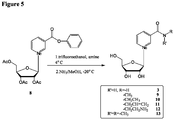
- N-alkyl ⁇ -NAR derivatives starts from, 2, 3, 5-tri-O-acetyl- ⁇ -phenyl nicotinate riboside (see Figure 5 ) an activated phenyl ester.
- Incubation of nicotinic chloride with phenol in THF overnight at room temperature quantitatively produced pure phenyl nicotinate, which was then treated with 1,2,3,5-tetra-O-acetyl- ⁇ -D-ribofuranose in methylene chloride under the catalysis of TMSOTf to give 2, 3, 5-tri-O-acetyl- ⁇ -phenyl nicotinate riboside.
- MALDI-MS of the product showed the molecular weight at 270 which is one mass more than the expected 269.
- the m/z peak at 138 rather than 137 was also detected which was due to the methyl nicotinate piece coming after the C 1' -N 1 bond of the methyl ester was broken. All the information suggests that a transesterificaiton occurs rather than the ester-amide exchange. In the low temperature, both transesterification and ester-amide reactions were very slow so that the reaction selectivity was kinetically controlled. The transesterification was more kinetially favored than the ester-amide exchange because of the higher concentration of the solvent, methanol.
- TFE trifluoroethanol
- TFE has a pKa of 12.5, which makes it more acidic compared to solvent like methanol or ethanol.
- This acidity of the TFE decreases the neutrophilicity of N-alkyl amines, therefore helps stabilizing the C 1' -N 1 bond.
- the reaction of the ethyl ester was then performed in trifluoroethanol under 4°C for days. It was found the acidity of trifluoroethanol also moderates the nucleophilicity/basicity of N-methyl amine so that the ester-amide exchange reaction takes weeks to complete. The ester-amide exchange from the phenol ester in trifluroethanol at 4°C could complete overnight.
- compositions comprising the active compounds include nutritional/dietary supplements and bulk-drug compositions useful in the manufacture of pharmaceutical compositions (e.g., impure or non-sterile compositions) and pharmaceutical compositions (i.e., compositions that are suitable for administration to a subject) that can be used in the preparation of unit dosage forms.
- Such compositions optionally comprise a prophylactically or therapeutically effective amount of a prophylactic and/or therapeutic agent disclosed herein or a combination of those agents and a pharmaceutically acceptable carrier.
- compositions of the disclosure comprise a prophylactically or therapeutically effective amount of the active compound and another therapeutic or prophylactic agent, and a pharmaceutically acceptable carrier. These compositions may contain between 0.1 - 99 % of the active ingredient
- the term "pharmaceutically acceptable” means approved by a regulatory agency of the Federal or a state government or listed in the U.S. Pharmacopeia or other generally recognized pharmacopeia for use in animals, and more particularly in humans.
- carrier refers to a diluent, adjuvant, excipient, or vehicle with which the active compound is administered.
- Such pharmaceutical vehicles can be liquids, such as water and oils, including those of petroleum, animal, vegetable or synthetic origin, such as peanut oil, soybean oil, mineral oil, sesame oil and the like.
- the pharmaceutical vehicles can be saline, gum acacia, gelatin, starch paste, talc, keratin, colloidal silica, urea, and the like.
- the pharmaceutically acceptable vehicles are preferably sterile.
- Water can be the vehicle when the active compound is administered intravenously.
- Saline solutions and aqueous dextrose and glycerol solutions can also be employed as liquid vehicles, particularly for injectable solutions.
- Suitable pharmaceutical vehicles also include excipients such as starch, glucose, lactose, sucrose, gelatin, malt, rice, flour, chalk, silica gel, sodium stearate, glycerol monostearate, talc, sodium chloride, dried skim milk, glycerol, propyleneglycol, water, ethanol and the like.
- the present compositions if desired, can also contain minor amounts of wetting or emulsifying agents, or pH buffering agents.
- compositions can take the form of solutions, suspensions, emulsion, tablets, pills, pellets, capsules, capsules containing liquids, powders, sustained-release formulations, suppositories, emulsions, aerosols, sprays, suspensions, or any other form suitable for use.
- the pharmaceutically acceptable vehicle is a capsule (see e.g., U.S. Pat. No. 5,698,155 ).
- the active compound and optionally another therapeutic or prophylactic agent are formulated in accordance with routine procedures as pharmaceutical compositions adapted for intravenous administration to human beings.
- the active compound for intravenous administration are solutions in sterile isotonic aqueous buffer.
- the compositions can also include a solubilizing agent.
- Compositions for intravenous administration can optionally include a local anesthetic such as lignocaine to ease pain at the site of the injection.
- the ingredients are supplied either separately or mixed together in unit dosage form, for example, as a dry lyophilized powder or water free concentrate in a hermetically sealed container such as an ampoule or sachette indicating the quantity of active agent.
- the active compound is to be administered by infusion, it can be dispensed, for example, with an infusion bottle containing sterile pharmaceutical grade water or saline.
- an ampoule of sterile water for injection or saline can be provided so that the ingredients can be mixed prior to administration.
- compositions for oral delivery can be in the form of tablets, lozenges, aqueous or oily suspensions, granules, powders, emulsions, capsules, syrups, or elixirs, for example.
- Orally administered compositions can contain one or more optional agents, for example, sweetening agents such as fructose, aspartame or saccharin; flavoring agents such as peppermint, oil of wintergreen, or cherry; coloring agents; and preserving agents, to provide a pharmaceutically palatable preparation.
- sweetening agents such as fructose, aspartame or saccharin
- flavoring agents such as peppermint, oil of wintergreen, or cherry
- coloring agents such as peppermint, oil of wintergreen, or cherry
- preserving agents to provide a pharmaceutically palatable preparation.
- the compositions can be coated to delay disintegration and absorption in the gastrointestinal tract thereby providing a sustained action over an extended period of time.
- Selectively permeable membranes surrounding an osmotically active driving compound are also suitable for an orally administered of the active compound.
- fluid from the environment surrounding the capsule is imbibed by the driving compound, which swells to displace the agent or agent composition through an aperture.
- delivery platforms can provide an essentially zero order delivery profile as opposed to the spiked profiles of immediate release formulations.
- a time delay material such as glycerol monostearate or glycerol stearate can also be used.
- Oral compositions can include standard vehicles such as mannitol, lactose, starch, magnesium stearate, sodium saccharine, cellulose, magnesium carbonate, and the like. Such vehicles are preferably of pharmaceutical grade.
- the effect of the active compound can be delayed or prolonged by proper formulation.
- a slowly soluble pellet of the active compound can be prepared and incorporated in a tablet or capsule.
- the technique can be improved by making pellets of several different dissolution rates and filling capsules with a mixture of the pellets. Tablets or capsules can be coated with a film that resists dissolution for a predictable period of time. Even the parenteral preparations can be made long-acting, by dissolving or suspending the compound in oily or emulsified vehicles which allow it to disperse only slowly in the serum.
- compositions for use in accordance with the present disclosure can be formulated in conventional manner using one or more physiologically acceptable carriers or excipients.
- the compound and optionally another therapeutic or prophylactic agent and their physiologically acceptable salts and solvates can be formulated into pharmaceutical compositions for administration by inhalation or insufflation (either through the mouth or the nose) or oral, parenteral or mucosol (such as buccal, vaginal, rectal, sublingual) administration.
- parenteral or mucosol such as buccal, vaginal, rectal, sublingual
- local or systemic parenteral administration is used.
- compositions can take the form of, for example, tablets or capsules prepared by conventional means with pharmaceutically acceptable excipients such as binding agents (e.g., pregelatinised maize starch, polyvinylpyrrolidone or hydroxypropyl methylcellulose); fillers (e.g., lactose, microcrystalline cellulose or calcium hydrogen phosphate); lubricants (e.g., magnesium stearate, talc or silica); disintegrants (e.g., potato starch or sodium starch glycolate); or wetting agents (e.g., sodium lauryl sulphate).
- binding agents e.g., pregelatinised maize starch, polyvinylpyrrolidone or hydroxypropyl methylcellulose
- fillers e.g., lactose, microcrystalline cellulose or calcium hydrogen phosphate
- lubricants e.g., magnesium stearate, talc or silica
- disintegrants e.g., potato starch or sodium
- Liquid preparations for oral administration can take the form of, for example, solutions, syrups or suspensions, or they can be presented as a dry product for constitution with water or other suitable vehicle before use.
- Such liquid preparations can be prepared by conventional means with pharmaceutically acceptable additives such as suspending agents (e.g., sorbitol syrup, cellulose derivatives or hydrogenated edible fats); emulsifying agents (e.g., lecithin or acacia); non-aqueous vehicles (e.g., almond oil, oily esters, ethyl alcohol or fractionated vegetable oils); and preservatives (e.g., methyl or propyl-p-hydroxybenzoates or sorbic acid).
- the preparations can also contain buffer salts, flavoring, coloring and sweetening agents as appropriate.
- Preparations for oral administration can be suitably formulated to give controlled release of the active compound.
- compositions can take the form of tablets or lozenges formulated in conventional manner.
- compositions for use according to the present disclosure are conveniently delivered in the form of an aerosol spray presentation from pressurized packs or a nebulizer, with the use of a suitable propellant, e.g., dichlorodifluoromethane, trichlorofluoromethane, dichlorotetrafluoroethane, carbon dioxide or other suitable gas.
- a suitable propellant e.g., dichlorodifluoromethane, trichlorofluoromethane, dichlorotetrafluoroethane, carbon dioxide or other suitable gas.
- a suitable propellant e.g., dichlorodifluoromethane, trichlorofluoromethane, dichlorotetrafluoroethane, carbon dioxide or other suitable gas.
- a suitable propellant e.g., dichlorodifluoromethane, trichlorofluoromethane, dichlorotetrafluoroethane, carbon dioxide or
- compositions can be formulated for parenteral administration by injection, e.g., by bolus injection or continuous infusion.
- Formulations for injection can be presented in unit dosage form, e.g., in ampoules or in multi-dose containers, with an added preservative.
- the pharmaceutical compositions can take such forms as suspensions, solutions or emulsions in oily or aqueous vehicles, and can contain formulatory agents such as suspending, stabilizing and/or dispersing agents.
- the active ingredient can be in powder form for constitution with a suitable vehicle, e.g., sterile pyrogen-free water, before use.
- compositions can also be formulated in rectal compositions such as suppositories or retention enemas, e.g., containing conventional suppository bases such as cocoa butter or other glycerides.
- compositions can also be formulated as a depot preparation.
- Such long acting formulations can be administered by implantation (for example subcutaneously or intramuscularly) or by intramuscular injection.
- the pharmaceutical compositions can be formulated with suitable polymeric or hydrophobic materials (for example as an emulsion in an acceptable oil) or ion exchange resins, or as sparingly soluble derivatives, for example, as a sparingly soluble salt.
- radiation therapy agents such as radioactive isotopes can be given orally as liquids in capsules or as a drink.
- Radioactive isotopes can also be formulated for intravenous injection. The skilled oncologist can determine the preferred formulation and route of administration.
- compositions can, if desired, be presented in a pack or dispenser device that can contain one or more unit dosage forms containing the active ingredient.
- the pack can for example comprise metal or plastic foil, such as a blister pack.
- the pack or dispenser device can be accompanied by instructions for administration.
- the pack or dispenser contains one or more unit dosage forms containing no more than the recommended dosage formulation as determined in the Physician 's Desk Reference (56th ed. 2002 ).
- Methods of administering the active compound and optionally another therapeutic or prophylactic agent include, but are not limited to, parenteral administration (e.g., intradermal, intramuscular, intraperitoneal, intravenous and subcutaneous), epidural, and mucosal (e.g., intranasal, rectal, vaginal, sublingual, buccal or oral routes).
- parenteral administration e.g., intradermal, intramuscular, intraperitoneal, intravenous and subcutaneous
- epidural e.g., epidural, and mucosal (e.g., intranasal, rectal, vaginal, sublingual, buccal or oral routes).
- the active compound and optionally another prophylactic or therapeutic agents are administered intramuscularly, intravenously, or subcutaneously.
- the active compound and optionally another prophylactic or therapeutic agent can also be administered by infusion or bolus injection and can be administered together with other biologically active agents. Administration can be local or systemic.
- the active compound and optionally the prophylactic or therapeutic agent and their physiologically acceptable salts and solvates can also be administered by inhalation or insufflation (either through the mouth or the nose). In a preferred embodiment, local or systemic parenteral administration is used.
- the active compound can be desirable to administer the active compound locally to the area in need of treatment.
- This can be achieved, for example, and not by way of limitation, by local infusion during surgery, topical application, e.g., in conjunction with a wound dressing after surgery, by injection, by means of a catheter, by means of a suppository, or by means of an implant, said implant being of a porous, nonporous, or gelatinous material, including membranes, such as silastic membranes, or fibers.
- administration can be by direct injection at the site (or former site) of an atherosclerotic plaque tissue.
- Pulmonary administration can also be employed, e.g., by use of an inhaler or nebulizer, and formulation with an aerosolizing agent, or via perfusion in a fluorocarbon or synthetic pulmonary surfactant.
- the active compound can be formulated as a suppository, with traditional binders and vehicles such as triglycerides.
- the active compound can be delivered in a vesicle, in particular a liposome.
- the active compound can be delivered in a controlled release system.
- a pump can be used.
- polymeric materials can be used.
- the amount of the active compound that is effective in the treatment or prevention of heart conditions can be determined by standard research techniques.
- the dosage of the active compound which will be effective in the treatment or prevention of heart conditions can be determined by administering the active compound to an animal in a model such as, e.g., the animal models known to those skilled in the art.
- in vitro assays can optionally be employed to help identify optimal dosage ranges.
- Selection of a particular effective dose can be determined (e.g., via clinical trials) by a skilled artisan based upon the consideration of several factors which will be known to one skilled in the art. Such factors include the disease to be treated or prevented, the symptoms involved, the subject's body mass, the subject's immune status and other factors known by the skilled artisan.
- Effective doses can be extrapolated from dose-response curves derived from in vitro or animal model test systems.
- the dose of the active compound to be administered to a subject is rather widely variable and can be subject to independent judgment. It is often practical to administer the daily dose of the active compound at various hours of the day. However, in any given case, the amount of the active compound administered will depend on such factors as the solubility of the active component, the formulation used, subject condition (such as weight), and/or the route of administration.
- the general range of effective amounts of the active compound alone or in combination with another prophylactic or therapeutic agent(s) are from about 0.001 mg/day to about 1000 mg/day, more preferably from about 0.001 mg/day to 750 mg/day, more preferably from about 0.001 mg/day to 500 mg/day, more preferably from about 0.001 mg/day to 250 mg/day, more preferably from about 0.001 mg/day to 100 mg/day, more preferably from about 0.001 mg/day to 75 mg/day, more preferably from about 0.001 mg/day to 50 mg/day, more preferably from about 0.001 mg/day to 25 mg/day, more preferably from about 0.001 mg/day to 10 mg/day, more preferably from about 0.001 mg/day to 1 mg/day.
- the amount of compound administered will depend on such factors as the solubility of the active component, the formulation used, subject condition (such as weight), and/or the route of administration.
- a popular cancer drug is taxol.
- Typical dosage ranges of taxol include less than 10 mg to 100 mg or more.
- Particular doses of taxol include about 5 mg, 10 mg, 20 mg, 40 mg, 50 mg, 60 mg, 80 mg, 100 mg, 150 mg, 200 mg.
- these are daily dosages.
- higher dosages are less preferred because of potential gastric disturbances.
- Therapeutic dosages may range between 40 to 80 mg per day when tolerable by a subject.
- the disclosure provides for any method of administrating lower doses of known agents (e.g., taxol) than previously thought to be useful for the prevention or treatment of cancer.
- known agents e.g., taxol
- Example 1 Synthesis of 2', 3', 5'-Triacetyl ethyl nicotinate riboside (ethyl 1-[3,4-diacetyloxy-5-(acetyloxymethyl)oxolan-2-yl]-pyridine-3-carboxylate)
- TMSOTf trimethylsilyl trifluoromethanesulfonate
- the riboside was prepared according to the procedure provided in Example 1. This phenol ester (25mg, 0.61 ⁇ mol) was added to various amines (400 ⁇ M) in 0.9mL of trifluoroethanol.
- Mouse embryonic stem cells were plated onto cell culture flasks (250mL, 75 cm2) and grown to 50% confluence in 48 hours after passage. At 48 hours 2 flasks were set aside as controls and 2 flasks were used to determine effect of NAR on NAD+ biosynthesis. Cells were treated with 1M HClO 4 , and a specific amount of 18 O-NAM (nicotinamide mononucleotide) and 18 O-NAD+. Samples were fractionated by HPLC and the fractions containing NAM and NAD+ were analyzed by ESI-MS and MALDI-MS respectively. Peak ratio ( 16 O/ 18 O) was used to quantitate NAM and NAD+ amounts in each sample.
- 18 O-NAM nicotinamide mononucleotide
- NAR treated cells exhibit a higher concentration of NAD+ compared to the controls. According to our measurement, the NAD+ level in NAR treated cells is 3886.6 pmoL/mg cell protein and nucleic acid content, and the NAD+ in control cells is only 1782.2 pmoL/mg cell protein and nucleic acid content. Cell protein and nucleic acid content were measured separately (See figure 3 ).
- Mouse embryonic stem cells are passed into 7 flasks (250mL, 75 cm 2 ) with 20mL of media [For 500 mL: Dulbeccos modification of Eagles media 2mM glutamine, 10% ES qualified Fetal Bovine Serum to 10%, Penicillin/streptomycin (5 mL 100X), Non-essential amino acids (5 mL 100X), Sodium pyruvate (5 mL 100X), 4 ⁇ L beta-mercapto-ethanol and leukemia inhibitory factor final conc. 1000 units/mL], named from #1 to #7. After 2 days incubation at 37°C with 5% CO 2 , NAR was added to flask #3, 5, 7 to make final concentration at ImM, and cells were incubated for another day.
- NAR was added to flask #3, 5, 7 to make final concentration at ImM, and cells were incubated for another day.
- Mms (200mM) was added to flask #2, 3, 4, 5, 6, 7 to make final concentration as ImM.
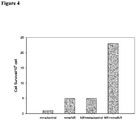
- Cell flask #1 is kept as a control, and used for passage. After 3hrs incubation, fresh media was changed for flask # 4, 5, 6, 7. And Cell #2, and 3 are harvested. After 6 hrs treatment of mms, Cell #4, 5 are harvested. And Cell #6, 7 are harvested at 9 hrs treatment of mms. The harvest cells (living ones) are counted for the percentage of death with trypan blue (See figure 2 ).
- Mouse embryonic stem cells are passed into 2 flasks (250mL, 75 cm2) with 20mL of media, named #A and #B. After 2 days incubation at 37°C with 5% CO 2 , NAR was added to flask #A to make final concentration at ImM, and both cells were incubated for another day. Mms (200mM) was added to both flask #A and #B to make final concentration as ImM. After 3hrs incubation, each cell culture (with/without NR treated) is passed to two new flasks with/without ImM of NAR.
- Equal numbers of mouse embryonic stem cells are passed into two 6 well tissue culture plates (10 cm 2 each well) with 3 mL of media [For 500 mL: Dulbeccos modification of Eagles media 2mM glutamine, 10% ES qualified Fetal Bovine Serum to 10%, Penicillin/streptomycin (5 mL 100X), Non-essential amino acids (5 mL 100X), Sodium pyruvate (5 mL 100X), 4 ⁇ L beta-mercapto-ethanol and leukemia inhibitory factor final conc. 1000 units/mL], named from #1 to #6.
- cells were reseeded from each individual well into new wells in new 6 well plates and treated immediately with the same concentration of NR and statin as the cells from the originating well.
- the seeded cells were identical in number of viable cells in each case as determined by cell counting an appropriate dilution of the cells trypsinized from each well.
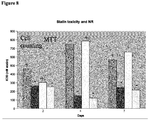
- the cell viability at each time point was plotted against statin concentration to determine the IC50 of the statin in the NR and the no NR plate where IC50 is defined as the concentration of statin that reduces cell viability by 50% under the experimental conditions.
- the statin typically reduces cell viability by 50% at a concentration between 130 nM- 300 nM at each time point for cells not treated with NR ( Figure 8 ).
- the IC50 of the statin increases moderately at 2 days treatment and two to three fold after 4 and 7 days treatment ( Figure 8 ). This shows that NR mitigates statin toxicity in a significant way with NR available in cell media.
- the cell viability as measured by cell counting and MTT assay is significantly higher in the NR treated group versus no NR at virtually every statin concentration, resulting in a higher IC50 for statins in the presence of NR (566 nM, determined by cell counting; 656 nM determined by MTT assay) versus the absence of NR (248 nM, determined by cell counting; 216 nM determined by MTT assay).
- NR 566 nM, determined by cell counting; 656 nM determined by MTT assay
- NR 248 nM, determined by cell counting; 216 nM determined by MTT assay
- Hela cells were seeded on a 6-well plate at 37°C with 5% CO 2 for 24hrs.
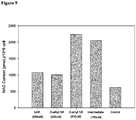
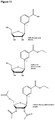
- Synthesized compounds (NAR: Nicotinic acid riboside, O-ethyl-NR: ethyl-nicotinate riboside, Intermediate: TAENR, triacetyl-ethyl-nicotinate riboside, See figure 10 ) were added to the cells separately after 24 hours (no compound added for control). The cells were then incubated for another 24 hrs before harvest. Cells were trypsinized and an aliquot removed for counting.
- NAD+ content (pmoL) in ES cells after treated with different compounds Compounds 664/666 16 O-NAD+ (pmol) 18 O-NAD+ (pmol) Cell number (*10 ⁇ 6) [NAD+]/10 ⁇ 6 cell (pmoL)
- NAR (669uM) 4.11 2201.2 535.5 2.04 1079 O-ethyl NR (500uM) 2.02 1084.1 535.5 1.08 1004 O-ethyl NR (803uM) 4.90 2622.7 535.5 1.17 2242 TAENR (750uM) 8.28 4432.2 535.5 2.16 2052 Control 2.01 1075.5 535.5 1.74 618 NAR: Nicotinic acid riboside, O-ethyl-NR: ethyl-nicotinate riboside, TAENR, triacetyl-ethyl-nicotinate riboside
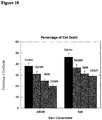
- ES cells were growing on four 6-well plate at 37°C with 5% CO 2 for 24hrs. The cells were then treated with 0, 800 or 5000 nM lovastatin (final concentration) and also treated with one of 500 ⁇ M NAR, ImM OENR, ImM TAENR or no compound. After 48 hours cells media was removed and cells were harvested by trypsinizing. Cells were counted by haemocytometry and using propidium iodide staining to assess for viability. Cells were counted for no statin treatment and 800 nM and 5 ⁇ M statin treatment in each group. Cell death percentage was determined by the viable cells in each group divided by the cell numbers in the corresponding no statin treated group. Cell counts were similar in controls from each group (no statin) indicating low toxicity of the added nicotinate riboside compounds to the treated cells.
- Figure 10 shows data suggesting that statin toxicity can be mitigated by nicotinate riboside compounds.
- the lower cell death percentages show that nicotinate riboside compounds prevent cells from succumbing to toxic statin treatment.
- these compounds can enter NAD+ metabolism as demonstrated by our study of the potency of these molecules as NAD+ precursors and thereby protect cells from stress or toxicity.
- various degenerative disorders resulting from disease processes can be treated by using these compounds.
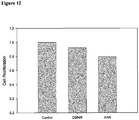
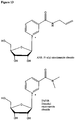
- mouse ES Cells were incubated in cell culture media for a 24 hour period with no compound (control) dimethyl nicotinamide riboside (1 mM) or N-allyl nicotinamide riboside (1 mM). After a 24 hour period cells were treated with MTT reagent and further incubated at 37 degrees centigrade for three additional hours. After this time, media was then removed by pipet and DMSO added to solubilize dye. Purple color was measured at 590 nm in a plate reader to assess cell viability. All samples were run in duplicate and the average MTT reading ratioed against the average reading versus control. N-allyl nicotinamide riboside is able to reduce cell proliferation in comparison with controls that are not treated with compound ( Figure 12 ).
- the HPLC system consists of a Hitachi EZChrom Elite HPLC system with a L2450 diode array as a detector.
- the purification system employed a mobile phase system involving 20mM of ammonium acetate buffer with a flow rate of 2.0 mL/min and a Waters Delta PAK C 18 (15 ⁇ m, 300X7.8 mm) column.
- MALDI-mass spectra were obtained from Proteomics Resource center at Rockefeller University with using the PerSeptive Voyager DERP MALDI-TOF Mass Spectrometer.
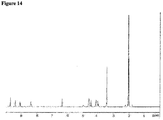
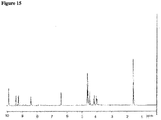
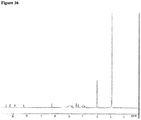
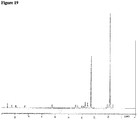
- HRMS spectra were obtained from the Hunter College Mass Spectrometry Facility. 1 H and 13 C NMR spectra were recorded on Bruker NMR spectrometer operating at 400 MHz (DPX Avance), respectively. 1 H and 13 C chemical shifts are expressed in ppm with respect to the standard deuterium solvent peaks.
- Phenyl nicotinate
- EtOAC ethyl acetate
- TMSOTf trimethylsilyl trifluoromethanesulfonate
- TMSOTf trimethylsilyl trifluoromethanesulfonate
- N-alkyl ⁇ -NAR derivatives (9, 10, 11, 12, 13):
- 13C NMR (300MHz, D 2 O): ⁇ 145.3, 142.4, 140.0, 128.4, 100.0, 87.8, 77.5, 69.9, 60.2, 27.5.
- 13C NMR (300MHz, D 2 O): ⁇ 145.8, 142.7, 140.3, 129.0, 100.5, 88.0, 77.8, 70.0, 60.6, 36.0, 13.4. MS: m/z (%): 283.1 (93, [M] + ), 227 (50), 207.1 (100), 151.1 (44).
- 13C NMR (300MHz, D 2 O): ⁇ 146.2, 143.5, 140.7, 133.7, 129.4, 117.3, 100.9, 88.4, 78.2, 70.8, 61.0, 43.5. MS: m/z (%): 295.1 (63, [M] + ), 163.1 (98), 133.1 (5), 123.1 (88).
- N-ethanol ⁇ -nicotinamide riboside (12): 1H NMR (400MHz, D 2 O): ⁇ 9.55 (s, 1H), 9.24 (d, 1H), 8.93 (d, 1H), 8.24 (t, 1H), 6.22 (d, 1H), 5.99 (m, 1H), 4.48 (m, 2H), 4.33 (t, 1H), 4.02 (dd, 1H), 3.87 (dd, 1H), 3.77 (t, 2H), 3.58 (t, 2H).
- 13C NMR (300MHz, D 2 O): ⁇ 145.0, 142.7, 140.3, 128.2, 99.3, 88.0, 77.8, 69.6, 59.9, 48.5, 41.9. MS: m/z (%): 295.1 (63, [M] + ), 163.1 (98), 133.1 (5), 123.1 (88).
Landscapes
- Health & Medical Sciences (AREA)
- Chemical & Material Sciences (AREA)
- Life Sciences & Earth Sciences (AREA)
- General Health & Medical Sciences (AREA)
- Organic Chemistry (AREA)
- Medicinal Chemistry (AREA)
- Epidemiology (AREA)
- Animal Behavior & Ethology (AREA)
- Pharmacology & Pharmacy (AREA)
- Public Health (AREA)
- Veterinary Medicine (AREA)
- Molecular Biology (AREA)
- Engineering & Computer Science (AREA)
- Biochemistry (AREA)
- Biotechnology (AREA)
- Genetics & Genomics (AREA)
- Pharmaceuticals Containing Other Organic And Inorganic Compounds (AREA)
Claims (7)
- Procédé de production de nicotinamide riboside de formule I :
 (i) mélange de(a) tétra-acyle ou acyle substitué ribofuranose et(b) un composé de formule II :
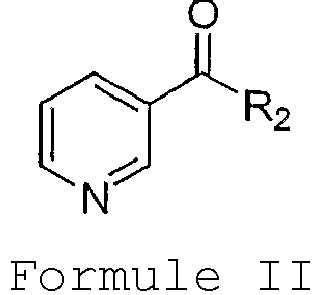
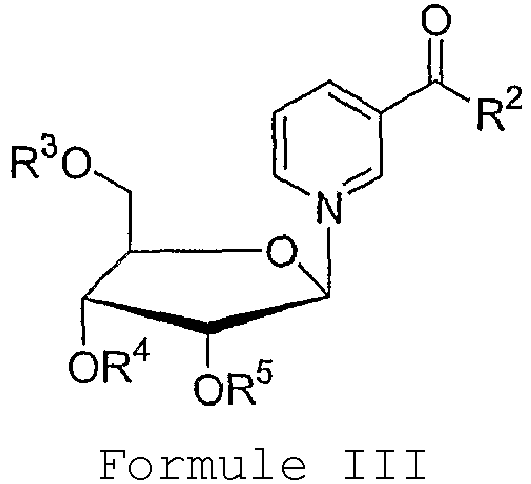 R2 est alkyloxy, -OCH2CH2OH, ou aryloxy, etchacun de R3, R4 et R5 est acyle, et(ii) mélange du composé de formule III avec une solution d'ammoniac pour former du nicotinamide riboside.
- Procédé selon la revendication 1, dans lequel R2 est phényloxy.
- Procédé selon la revendication 2, dans lequel l'étape (i) est mise en œuvre en présence de trifluorométhanesulfonate de triméthylsilyle.
- Procédé selon la revendication 2, dans lequel la solution d'ammoniac dans l'étape (ii) est une solution d'ammoniac dans du méthanol.
- Procédé de production de nicotinamide riboside comprenant :(i) l'obtention d'un composé de formule III :
 R2 est alkyloxy, -OCH2CH2OH, ou aryloxy, etchacun de R3, R4 et R5 est acyle, et(ii) le mélange du composé de formule III avec une solution d'ammoniac pour former le nicotinamide riboside de formule I :

- Procédé selon la revendication 5, dans lequel R2 est phényloxy.
- Procédé selon la revendication 5, dans laquelle la solution d'ammoniac dans l'étape (ii) est une solution d'ammoniac dans du méthanol.
Priority Applications (1)
| Application Number | Priority Date | Filing Date | Title |
|---|---|---|---|
| EP20175346.4A EP3730507A1 (fr) | 2005-11-18 | 2006-11-17 | Compositions de ribosides de nicotinoyle et de ribosides de nicotinamide pour utilisation dans la réduction de la toxicité induite par les inhibiteurs de la hmg-coa réductase |
Applications Claiming Priority (4)
| Application Number | Priority Date | Filing Date | Title |
|---|---|---|---|
| US73808105P | 2005-11-18 | 2005-11-18 | |
| EP06837837.1A EP1957086B1 (fr) | 2005-11-18 | 2006-11-17 | Compositions à base de nicotinoyle riboside et leur procédés d'utilisation |
| PCT/US2006/044580 WO2007061798A2 (fr) | 2005-11-18 | 2006-11-17 | Compositions à base de nicotinoyle riboside et leur procédés d'utilisation |
| US11/601,714 US8106184B2 (en) | 2005-11-18 | 2006-11-17 | Nicotinoyl riboside compositions and methods of use |
Related Parent Applications (2)
| Application Number | Title | Priority Date | Filing Date |
|---|---|---|---|
| EP06837837.1A Division EP1957086B1 (fr) | 2005-11-18 | 2006-11-17 | Compositions à base de nicotinoyle riboside et leur procédés d'utilisation |
| EP06837837.1A Division-Into EP1957086B1 (fr) | 2005-11-18 | 2006-11-17 | Compositions à base de nicotinoyle riboside et leur procédés d'utilisation |
Related Child Applications (1)
| Application Number | Title | Priority Date | Filing Date |
|---|---|---|---|
| EP20175346.4A Division EP3730507A1 (fr) | 2005-11-18 | 2006-11-17 | Compositions de ribosides de nicotinoyle et de ribosides de nicotinamide pour utilisation dans la réduction de la toxicité induite par les inhibiteurs de la hmg-coa réductase |
Publications (2)
| Publication Number | Publication Date |
|---|---|
| EP3369738A1 EP3369738A1 (fr) | 2018-09-05 |
| EP3369738B1 true EP3369738B1 (fr) | 2020-05-20 |
Family
ID=38054312
Family Applications (3)
| Application Number | Title | Priority Date | Filing Date |
|---|---|---|---|
| EP20175346.4A Pending EP3730507A1 (fr) | 2005-11-18 | 2006-11-17 | Compositions de ribosides de nicotinoyle et de ribosides de nicotinamide pour utilisation dans la réduction de la toxicité induite par les inhibiteurs de la hmg-coa réductase |
| EP06837837.1A Active EP1957086B1 (fr) | 2005-11-18 | 2006-11-17 | Compositions à base de nicotinoyle riboside et leur procédés d'utilisation |
| EP18161394.4A Active EP3369738B1 (fr) | 2005-11-18 | 2006-11-17 | Procédé de préparation de nicotinates de riboside et de nicotinamide-beta-riboside |
Family Applications Before (2)
| Application Number | Title | Priority Date | Filing Date |
|---|---|---|---|
| EP20175346.4A Pending EP3730507A1 (fr) | 2005-11-18 | 2006-11-17 | Compositions de ribosides de nicotinoyle et de ribosides de nicotinamide pour utilisation dans la réduction de la toxicité induite par les inhibiteurs de la hmg-coa réductase |
| EP06837837.1A Active EP1957086B1 (fr) | 2005-11-18 | 2006-11-17 | Compositions à base de nicotinoyle riboside et leur procédés d'utilisation |
Country Status (6)
| Country | Link |
|---|---|
| US (7) | US8106184B2 (fr) |
| EP (3) | EP3730507A1 (fr) |
| CN (1) | CN101360421B (fr) |
| DK (1) | DK1957086T3 (fr) |
| ES (1) | ES2670927T3 (fr) |
| WO (1) | WO2007061798A2 (fr) |
Families Citing this family (117)
| Publication number | Priority date | Publication date | Assignee | Title |
|---|---|---|---|---|
| US8017634B2 (en) * | 2003-12-29 | 2011-09-13 | President And Fellows Of Harvard College | Compositions for treating obesity and insulin resistance disorders |
| US20070014833A1 (en) * | 2005-03-30 | 2007-01-18 | Sirtris Pharmaceuticals, Inc. | Treatment of eye disorders with sirtuin modulators |
| EP2805719A1 (fr) * | 2005-03-30 | 2014-11-26 | Glaxosmithkline LLC | Nicotinamide riboside et analogues |
| US20060292099A1 (en) * | 2005-05-25 | 2006-12-28 | Michael Milburn | Treatment of eye disorders with sirtuin modulators |
| US20070149466A1 (en) * | 2005-07-07 | 2007-06-28 | Michael Milburn | Methods and related compositions for treating or preventing obesity, insulin resistance disorders, and mitochondrial-associated disorders |
| WO2007061798A2 (fr) | 2005-11-18 | 2007-05-31 | Cornell Research Foundation, Inc. | Compositions à base de nicotinoyle riboside et leur procédés d'utilisation |
| WO2008063135A1 (fr) | 2006-11-24 | 2008-05-29 | Agency For Science, Technology And Research | Appareil pour traiter un échantillon dans une gouttelette de liquide et procédé d'utilisation |
| US9874501B2 (en) | 2006-11-24 | 2018-01-23 | Curiox Biosystems Pte Ltd. | Use of chemically patterned substrate for liquid handling, chemical and biological reactions |
| WO2013114217A1 (fr) | 2012-02-05 | 2013-08-08 | Curiox Biosystems Pte Ltd. | Plaques de réseau et leurs procédés de fabrication et d'utilisation |
| US10725020B2 (en) * | 2007-11-14 | 2020-07-28 | Curiox Biosystems Pte Ltd. | High throughput miniaturized assay system and methods |
| US20120156134A1 (en) | 2007-12-20 | 2012-06-21 | Shayne Squires | Compositions and methods for detecting or eliminating senescent cells to diagnose or treat disease |
| US20100015072A1 (en) * | 2008-06-30 | 2010-01-21 | Christopher Polla | Topical Compositions Comprising Isonicotinamide |
| CA2748813C (fr) | 2009-01-09 | 2018-07-10 | Board Of Regents Of The University Of Texas System | Composes pro-neurogeniques |
| US9162980B2 (en) | 2009-01-09 | 2015-10-20 | Board Of Regents Of The University Of Texas System | Anti-depression compounds |
| US9095572B2 (en) | 2009-01-09 | 2015-08-04 | Board Of Regents Of The University Of Texas System | Pro-neurogenic compounds |
| US8362277B2 (en) | 2009-01-09 | 2013-01-29 | Board Of Regents Of The University Of Texas System | Pro-neurogenic compounds |
| WO2011081942A1 (fr) | 2009-12-14 | 2011-07-07 | Cornell University | Activation et activateurs de la sirt5 |
| WO2012011877A2 (fr) | 2010-07-23 | 2012-01-26 | Curiox Biosystems Pte Ltd | Appareil et procédé permettant des réactions multiples dans de petits volumes |
| CN102000079B (zh) * | 2010-09-30 | 2012-05-30 | 中国人民解放军第二军医大学 | 尼克酰胺单核苷酸磷酸核糖转移酶抑制剂的应用 |
| WO2012114204A2 (fr) | 2011-02-15 | 2012-08-30 | Ecole Polytechnique Federale De Lausanne (Epfl) Epfl-Tto | Procédés de traitement d'une dysfonction mitochondriale |
| US20140189897A1 (en) | 2011-06-21 | 2014-07-03 | Mayo Foundation For Medical Education And Research | Transgenic animals capable of being induced to delete senescent cells |
| US20120328526A1 (en) * | 2011-06-27 | 2012-12-27 | University Of Maryland, Baltimore | Modulation of Nad+ Activity in Neuropathophysiological Conditions and Uses Thereof |
| CA2859385A1 (fr) | 2011-12-13 | 2013-06-20 | Buck Institute For Research On Aging | Procedes d'amelioration de therapies medicales |
| WO2013158664A2 (fr) | 2012-04-17 | 2013-10-24 | Kythera Biopharmaceuticals, Inc. | Utilisation de virus modifiés pour tuer spécifiquement les cellules sénescentes |
| US9901081B2 (en) | 2012-08-23 | 2018-02-27 | Buck Institute For Research On Aging | Transgenic mouse for determining the role of senescent cells in cancer |
| US9901080B2 (en) | 2012-08-23 | 2018-02-27 | Buck Institute For Research On Aging | Transgenic mouse having a transgene that converts a prodrug into a cytotoxic compound in senescent cells |
| CN102876759A (zh) * | 2012-10-29 | 2013-01-16 | 尚科生物医药(上海)有限公司 | 尼克酰胺腺嘌呤二核苷酸的制备方法 |
| CN103233051B (zh) * | 2012-12-19 | 2016-01-27 | 浙江嘉华化工有限公司 | 一种化学生物合成法规模化制备尼克酰胺腺嘌呤二核苷酸的方法 |
| US9557318B2 (en) | 2013-07-09 | 2017-01-31 | Curiox Biosystems Pte Ltd. | Array plates for washing samples |
| DE202013006354U1 (de) * | 2013-07-15 | 2014-10-20 | Marianne Brøndlund | Stoffgemisch zur Behandlung von Koagulopathien |
| GB201313465D0 (en) | 2013-07-29 | 2013-09-11 | Queens University Of The Belfast | Methods of preparing nicotinamide riboside and derivatives thereof |
| WO2015057315A1 (fr) * | 2013-09-04 | 2015-04-23 | Kelly Joseph Michael Lawless | Procédés et systèmes de détection de maladie |
| JP6509844B2 (ja) * | 2013-10-30 | 2019-05-08 | クロマデックス, インコーポレイテッドChromaDex, Inc. | 皮膚症状の治療において局所使用されるニコチンアミドリボシド組成物 |
| WO2015070237A1 (fr) | 2013-11-11 | 2015-05-14 | Board Of Regents Of The University Of Texas System | Produits chimiques neuroprotecteurs et leurs procédés d'identification et d'utilisation |
| EP3068388A4 (fr) | 2013-11-11 | 2017-04-12 | Board of Regents of the University of Texas System | Composés neuroprotecteurs et leur utilisation |
| EP3068364B1 (fr) * | 2013-11-14 | 2021-11-03 | Metro Biotech NSW Pty Ltd | Précurseur de nad+ choisi parmi les nmn, naad,namn, ou sel pharmaceutiquement acceptable pour le traitement d'un effet secondaire de la radiotherapie et/ou la chimiotherapie chez un sujet |
| RU2016149767A (ru) | 2014-06-06 | 2018-07-16 | Глэксосмитклайн Интеллекчуал Проперти (Но.2) Лимитед | Аналоги никотинамидрибозида и фармацевтические композиции и их применение |
| CA2956163C (fr) | 2014-07-24 | 2023-01-10 | W.R. Grace & Co.-Conn. | Forme cristalline du riboside de nicotinamide |
| EP2979706A1 (fr) | 2014-07-30 | 2016-02-03 | Fundación Centro Nacional De Investigaciones Oncológicas Carlos III | Procédés pour le traitement du cancer du foie ou du pancréas |
| CN104352513B (zh) * | 2014-11-14 | 2017-04-05 | 邦泰生物工程(深圳)有限公司 | Nadh或盐在制备治疗苯丙酮尿症药物或保健品的应用 |
| WO2016130691A1 (fr) * | 2015-02-10 | 2016-08-18 | Duke University | Méthode de traitement de l'insuffisance cardiaque |
| CN104622886A (zh) * | 2015-03-05 | 2015-05-20 | 中国人民解放军第二军医大学 | 烟酰胺核糖在制备治疗非酒精性脂肪性肝炎的药物中的应用 |
| ES2963057T3 (es) * | 2015-03-09 | 2024-03-25 | Grace W R & Co | Forma cristalina de ribósido de nicotinamida |
| NZ735411A (en) * | 2015-03-16 | 2021-07-30 | Chromadex Inc | Nicotinic acid riboside or nicotinamide riboside compositions, reduced derivatives thereof, and the use thereof |
| CN104771330A (zh) * | 2015-03-16 | 2015-07-15 | 邦泰生物工程(深圳)有限公司 | 一种含烟酰胺单核苷酸抗衰老美容护肤品组合物 |
| CA2984379C (fr) | 2015-04-28 | 2024-06-11 | Newsouth Innovations Pty Limited | Ciblage de nad+ pour traiter la deficience cognitive, les neuropathies et l'inactivite induites par la chimiotherapie et la radiotherapie |
| EP3288529A1 (fr) | 2015-05-01 | 2018-03-07 | The Procter and Gamble Company | Procédé d'amélioration de l'apparence de la peau et ses compositions comprenant du nicotinamide riboside |
| WO2016178945A1 (fr) | 2015-05-01 | 2016-11-10 | The Procter & Gamble Company | Méthode d'amélioration de l'aspect de la peau et compositions pour sa mise en œuvre en utilisant du nicotinamide riboside |
| JP6611099B2 (ja) * | 2015-05-01 | 2019-11-27 | ザ プロクター アンド ギャンブル カンパニー | 皮膚の健康を改善する方法及びそのための組成物 |
| US10123985B2 (en) | 2015-06-08 | 2018-11-13 | Whitehead Institute For Biomedical Research | Therapeutic strategies for treating mitochondrial disorders |
| CN107849083A (zh) | 2015-06-10 | 2018-03-27 | 益力舒健康公司 | 用于治疗皮肤病症的烟酰胺核苷和紫檀芪组合物和方法 |
| US10545139B2 (en) | 2015-06-16 | 2020-01-28 | Curiox Biosystems Pte Ltd. | Methods and devices for performing biological assays using magnetic components |
| WO2017004100A1 (fr) | 2015-06-29 | 2017-01-05 | The Procter & Gamble Company | Particules encapsulées comprenant du nicotinamide riboside |
| US20160374908A1 (en) | 2015-06-29 | 2016-12-29 | The Procter & Gamble Company | Skin care composition and methods of using the same |
| WO2017004102A1 (fr) | 2015-06-29 | 2017-01-05 | The Procter & Gamble Company | Produit de soin de la peau multi-constituant comprenant du nicotinamide riboside dans un récipient à chambres multiples |
| WO2017011788A1 (fr) | 2015-07-15 | 2017-01-19 | Cornell University | Synthèses, activités et procédés d'utilisation de dérivés du dihydronicotinamide riboside |
| US9855289B2 (en) | 2015-08-05 | 2018-01-02 | Metro International Biotech, Llc | Nicotinamide mononucleotide derivatives and their uses |
| CA3001483A1 (fr) * | 2015-10-07 | 2017-04-13 | Joel HUIZENGA | Reinitialisation de voies biologiques de defense contre et de reparation d'une deterioration causee par le vieillissement humain |
| KR102427115B1 (ko) | 2015-10-29 | 2022-08-01 | 주식회사 엘지생활건강 | 신규한 차단 제형 |
| US10611790B2 (en) | 2015-11-02 | 2020-04-07 | Mitobridge, Inc. | Nicotinamide riboside and nicotinamide mononucleotide derivatives for use in the treatments of mitochondrial-related diseases |
| US20170165283A1 (en) * | 2015-12-11 | 2017-06-15 | Bontac Bio-Engineering (Shenzhen) Co., Ltd | Use of beta-nicotinamide mononucleotide in preparation of health-care products for preventing and treating arteriosclerosis and cardio-cerebrovascular diseases, and health-care product containing the same |
| US20170165282A1 (en) * | 2015-12-11 | 2017-06-15 | Bontac Bio-Engineering (Shenzhen) Co., Ltd. | Use of beta-nicotinamide mononucleotide in preparation of drugs for preventing and treating arteriosclerosis and cardio-cerebrovascular diseases, and drugs containing the same |
| EP3393467B1 (fr) * | 2015-12-24 | 2020-07-01 | Amazentis SA | Compositions comprenant un riboside de nicotinamide et une urolithine |
| KR102114892B1 (ko) | 2016-01-11 | 2020-05-26 | 더 프록터 앤드 갬블 캄파니 | 피부 상태의 치료 방법 및 그를 위한 조성물 |
| US11116784B2 (en) * | 2016-02-26 | 2021-09-14 | Beth Israel Deaconess Medical Center, Inc. | Niacinamide (NAM) in ischemic tissue injury |
| EP3429354A4 (fr) | 2016-03-16 | 2020-03-25 | Chromadex Inc. | Conjugués de vitamine b et d'acides aminés de ribosides de nicotinoyle et de ribosides de nicotinoyle réduits, dérivés de ceux-ci, et leurs procédés de préparation |
| WO2017158132A1 (fr) * | 2016-03-16 | 2017-09-21 | Dsm Ip Assets B.V. | Production microbienne de riboside d'acide nicotinique |
| EA201892060A1 (ru) * | 2016-03-16 | 2019-02-28 | ДСМ АйПи АССЕТС Б.В. | Микробная продукция рибозида никотиновой кислоты |
| CA3054674A1 (fr) | 2016-04-04 | 2017-12-10 | Sinopia Biosciences, Inc. | Traitement de syndrome extrapyramidal a l'aide de trapidil |
| CN109562104A (zh) * | 2016-04-14 | 2019-04-02 | 可劳迈戴斯有限公司 | 烟酰胺核苷、烟酸核苷、烟酰胺单核苷酸、和烟碱基化合物衍生物在婴儿配方中的用途 |
| ES2948968T3 (es) * | 2016-04-20 | 2023-09-22 | Chromadex Inc | Uso del ribósido de ácido nicotínico o derivados del ribósido de nicotinamida, y derivados reducidos de los mismos, como precursores que aumentan el NAD++ |
| WO2017218580A1 (fr) | 2016-06-14 | 2017-12-21 | Rejuvenation Therapeutics Corporation | Procédés synthétiques pour la préparation de nicotinamide riboside et de composés apparentés |
| GB2553001A (en) * | 2016-08-19 | 2018-02-21 | The Queen's Univ Of Belfast | Lactone intermediates of nicotinamide riboside and nicotinate riboside |
| NZ803738A (en) | 2016-11-11 | 2024-05-31 | Chromadex Inc | Efficient and scalable syntheses of nicotinoyl ribosides and reduced nicotinoyl ribosides, modified derivatives thereof, phosphorylated analogs thereof, adenylyl dinucleotide conjugates thereof, and novel crystalline forms thereof |
| EP3554285A4 (fr) | 2016-11-29 | 2021-01-20 | University of Iowa Research Foundation | Utilisation de précurseurs de nad pour améliorer la santé maternelle et/ou la santé de la descendance |
| US11071747B2 (en) | 2016-11-29 | 2021-07-27 | University Of Iowa Research Foundation | Use of NAD precursors for breast enhancement |
| WO2018129040A1 (fr) | 2017-01-04 | 2018-07-12 | President And Fellows Of Harvard College | Modulation du domaine d'homologie nudix (nhd) avec des analogues mononucléotidiques de nicotinamide et leurs dérivés |
| EP3568488A4 (fr) * | 2017-01-13 | 2020-09-23 | The Regents of The University of Colorado, A Body Corporate | Méthodes de traitement de l'hypertension et de la rigidité artérielle |
| US10376528B2 (en) | 2017-03-10 | 2019-08-13 | Tecton Group, Llc | Composition comprising ketone body and nicotinamide adenine dinucleotide modulator and methyl donor |
| AU2018250242B2 (en) * | 2017-04-05 | 2021-07-15 | Cornell University | Beta-nicotinate ester nucleotides and processes for preparing same |
| EP4280260A3 (fr) | 2017-04-05 | 2024-03-06 | Curiox Biosystems Pte Ltd. | Procédés, dispositifs et appareil pour laver des échantillons sur des plaques de réseau |
| US11286274B2 (en) | 2017-06-19 | 2022-03-29 | Mitopower Llc | Nicotinamide riboside derivatives and their uses |
| EP3641725A1 (fr) | 2017-06-23 | 2020-04-29 | The Procter and Gamble Company | Composition et procédé permettant d'améliorer l'aspect de la peau |
| JP2020526511A (ja) | 2017-06-30 | 2020-08-31 | エリジウム・ヘルス・インコーポレイテッド | ニコチンアミドリボシドの合成方法 |
| CN107536844A (zh) * | 2017-06-30 | 2018-01-05 | 上海风劲生物医药科技有限公司 | 烟酰胺单核苷酸在制备预防或治疗rtPA血管并发症的药物中的应用 |
| EP3727400A4 (fr) | 2017-12-22 | 2021-10-20 | Elysium Health, Inc. | Formes cristallines de chlorure de nicotinamide riboside |
| WO2019122084A1 (fr) | 2017-12-22 | 2019-06-27 | Stemtek Therapeutics, S.L. | Procédé de préparation de dérivés de chlorure de nicotinamide riboside |
| EP3794005B1 (fr) * | 2018-05-15 | 2025-10-22 | Jumpstart Fertility Pty Ltd | Sels inorganiques de mononucléotide d'acide nicotinique utilisés en tant qu'agents anti-âge |
| US11622963B2 (en) | 2018-07-03 | 2023-04-11 | The Procter & Gamble Company | Method of treating a skin condition |
| CN108949677B (zh) * | 2018-07-05 | 2021-11-30 | 浙江大学 | 地黄苷c和丹酚酸a在促进体外培养骨髓间充质干细胞增殖和抑制复制性衰老中的应用 |
| CN109053838A (zh) * | 2018-07-26 | 2018-12-21 | 四川大学 | 制备β-烟酰胺单核苷酸或β-烟酰胺核糖的方法 |
| AU2019346007B2 (en) | 2018-09-27 | 2025-08-14 | Société des Produits Nestlé S.A. | Compositions and methods using at least one glycine or derivative thereof, at least one N-acetylcysteine or derivative thereof, and at least one nicotinamide riboside or NAD+ precursor |
| US20210388018A1 (en) * | 2018-10-01 | 2021-12-16 | Cornell University | Methyl and ethyl nicotinate-riboside-5-phosphates, preparation thereof and methods of use thereof |
| US12285182B2 (en) | 2018-10-10 | 2025-04-29 | Innova Vascular, Inc. | Devices and methods for removing an embolus |
| WO2020131578A2 (fr) * | 2018-12-17 | 2020-06-25 | Mitopower Llc | Composés nicotinyl riboside et leurs utilisations |
| WO2020191359A1 (fr) * | 2019-03-21 | 2020-09-24 | Fred Hutchinson Cancer Research Center | Polythérapies anticancéreuses utilisant un inhibiteur de nicotinamide phosphoribosyltransférase en combinaison avec un précurseur de la voie de récupération du nicotinamide adénine dinucléotide |
| JP7675061B2 (ja) | 2019-07-19 | 2025-05-12 | バイオシント アクチェンゲゼルシャフト | ニコチンアミドリボフラノシド塩の製造方法、ニコチンアミドリボフラノシド塩自体、およびその使用 |
| US20220324899A1 (en) * | 2019-08-14 | 2022-10-13 | Metro International Biotech, Llc | Compounds and compositions for differential modulation of nicotinamide adenine dinucleotide |
| KR102315139B1 (ko) * | 2019-12-17 | 2021-10-20 | 주식회사 휴메딕스 | 지방아민 컨쥬게이션된 니코틴아미드 리보사이드 유도체 |
| CN111153953A (zh) * | 2020-01-07 | 2020-05-15 | 杭州洁汉化工有限公司 | 一种烟酰胺核糖氯化物的高效合成方法 |
| CN111253448B (zh) * | 2020-03-04 | 2021-09-21 | 上海昶法新材料有限公司 | 一种β-烟酰胺单核苷酸的制备方法和纯化方法 |
| IL296788A (en) | 2020-03-26 | 2022-11-01 | Sinopia Biosciences Inc | Isotopically labeled trepidil histories |
| US12544397B2 (en) | 2020-04-01 | 2026-02-10 | Societe Des Produits Nestle S.A. | Compositions and methods containing N-acetylcystein and nicotinamide riboside for prevention and treatment of neurological diseases and conditions |
| US10959933B1 (en) | 2020-06-01 | 2021-03-30 | The Procter & Gamble Company | Low pH skin care composition and methods of using the same |
| CN115843238B (zh) | 2020-06-01 | 2025-06-10 | 宝洁公司 | 改善维生素b3化合物渗透到皮肤中的方法 |
| CN111632049A (zh) * | 2020-06-09 | 2020-09-08 | 西北农林科技大学 | 一种通过综合矫正细胞活性氧簇代谢紊乱以缓解睾丸衰老损伤的复合配方 |
| CN111763235A (zh) * | 2020-06-29 | 2020-10-13 | 上海舒泽生物科技研究所 | 一种烟酰胺核糖的合成方法 |
| CN111973614A (zh) * | 2020-07-28 | 2020-11-24 | 南华大学 | 烟酰胺单核苷酸在制备预防、改善和/或治疗囊卵巢综合症的药物中的应用 |
| US20230263817A1 (en) * | 2020-08-28 | 2023-08-24 | University Of Washington | High dose nicotinamide adenine dinucleotide (nad) precursor regimens for reduction of inflammation in human patients with preexisting inflammation |
| WO2022106407A1 (fr) | 2020-11-18 | 2022-05-27 | Société des Produits Nestlé S.A. | Compositions et procédés utilisant une combinaison d'oleuropéine et de nicotinamide riboside pour l'énergie cellulaire |
| CN112851730B (zh) * | 2021-01-08 | 2023-02-21 | 厦门瑞林药业有限公司 | 一种nmn中间体nr氯化物合成方法 |
| WO2022233923A1 (fr) | 2021-05-04 | 2022-11-10 | Bohan & Co As. | Procédé de synthèse de chlorure de nicotinamide riboside (nrcl) |
| WO2023147161A2 (fr) * | 2022-01-31 | 2023-08-03 | New Frontier Bio, Inc. | Composés à base de nicotinate riboside et de nicotinamide riboside et leurs dérivés |
| WO2023150072A1 (fr) | 2022-02-01 | 2023-08-10 | Sinclair David A | Compositions et procédés de conservation de matière végétale |
| EP4727544A2 (fr) | 2023-06-14 | 2026-04-22 | Chromadex Inc. | Nicotinamide riboside et ses dérivés dans formulations intraveineuses et ses méthodes d'utilisation |
| WO2025259632A1 (fr) * | 2024-06-12 | 2025-12-18 | Sirtsei Pharmaceuticals, Inc. | Compositions et méthodes de traitement de maladies ou d'affections rétiniennes |
| WO2025264727A1 (fr) * | 2024-06-18 | 2025-12-26 | Arc Research Institute | Compositions et méthodes faisant intervenir slc7a1 et slc7a2 |
Family Cites Families (24)
| Publication number | Priority date | Publication date | Assignee | Title |
|---|---|---|---|---|
| US3783137A (en) * | 1971-06-09 | 1974-01-01 | Horizons Inc | Process for the preparation of heterocyclic polymers fromaromatic tetra-mines and derivatives of polycarboxylic acids |
| US4735966A (en) * | 1986-08-25 | 1988-04-05 | Syntex (U.S.A.) Inc. | Novel substituted (4.2.0)bicyclooctane derivatives with valuable therapeutic properties |
| US5698155A (en) | 1991-05-31 | 1997-12-16 | Gs Technologies, Inc. | Method for the manufacture of pharmaceutical cellulose capsules |
| HUP0201597A3 (en) * | 1999-06-08 | 2003-04-28 | Sigma Tau Ind Farmaceutiche S | Antilipemic combunations comprising hmg-coa reductase inhibitors and carnitines |
| WO2001094370A1 (fr) | 2000-06-07 | 2001-12-13 | Wako Pure Chemical Industries, Ltd. | Derives de coenzymes et enzymes appropries |
| AUPR177300A0 (en) * | 2000-11-29 | 2000-12-21 | Centre For Molecular Biology And Medicine | Therapeutic methods |
| WO2003032951A1 (fr) * | 2001-08-29 | 2003-04-24 | Dow Global Technologies Inc. | Procede de preparation de particules cristallines de medicaments par precipitation |
| US20030119808A1 (en) * | 2001-09-21 | 2003-06-26 | Schering Corporation | Methods of treating or preventing cardiovascular conditions while preventing or minimizing muscular degeneration side effects |
| AUPR951101A0 (en) * | 2001-12-13 | 2002-01-24 | Centre For Molecular Biology And Medicine | Method of treatment |
| US7022680B2 (en) * | 2002-05-30 | 2006-04-04 | Albert Einstein College Of Medicine Of Yeshiva University | Inhibitors of ADP-ribosyl transferases, cyclases, and hydrolases |
| US7977049B2 (en) * | 2002-08-09 | 2011-07-12 | President And Fellows Of Harvard College | Methods and compositions for extending the life span and increasing the stress resistance of cells and organisms |
| US20050220862A1 (en) * | 2004-03-31 | 2005-10-06 | Bernstein Joel E | Compositions with reduced hepatotoxicity |
| EP2805719A1 (fr) | 2005-03-30 | 2014-11-26 | Glaxosmithkline LLC | Nicotinamide riboside et analogues |
| WO2007061798A2 (fr) | 2005-11-18 | 2007-05-31 | Cornell Research Foundation, Inc. | Compositions à base de nicotinoyle riboside et leur procédés d'utilisation |
| US9790252B2 (en) | 2009-07-01 | 2017-10-17 | Cornell University | 2-fluorinated riboses and arabinoses and methods of use and synthesis |
| WO2011081945A2 (fr) | 2009-12-14 | 2011-07-07 | Cornell University | Activation et activateurs de sirt6 |
| WO2011081942A1 (fr) | 2009-12-14 | 2011-07-07 | Cornell University | Activation et activateurs de la sirt5 |
| US9290791B2 (en) | 2010-05-18 | 2016-03-22 | Cornell University | Reagents and methods for sirtuin capture |
| EP2872128B1 (fr) | 2012-07-16 | 2020-02-19 | Cornell University | Nicotinamide riboside pour traiter la perte auditive |
| WO2016130691A1 (fr) | 2015-02-10 | 2016-08-18 | Duke University | Méthode de traitement de l'insuffisance cardiaque |
| EP3274357B1 (fr) | 2015-03-27 | 2019-12-11 | Cornell University | Synthèse efficace d'un nicotinamide mononucléotide |
| WO2017011788A1 (fr) | 2015-07-15 | 2017-01-19 | Cornell University | Synthèses, activités et procédés d'utilisation de dérivés du dihydronicotinamide riboside |
| AU2018250242B2 (en) | 2017-04-05 | 2021-07-15 | Cornell University | Beta-nicotinate ester nucleotides and processes for preparing same |
| US20210388018A1 (en) | 2018-10-01 | 2021-12-16 | Cornell University | Methyl and ethyl nicotinate-riboside-5-phosphates, preparation thereof and methods of use thereof |
-
2006
- 2006-11-17 WO PCT/US2006/044580 patent/WO2007061798A2/fr not_active Ceased
- 2006-11-17 ES ES06837837.1T patent/ES2670927T3/es active Active
- 2006-11-17 CN CN200680051368.4A patent/CN101360421B/zh active Active
- 2006-11-17 US US11/601,714 patent/US8106184B2/en active Active
- 2006-11-17 DK DK06837837.1T patent/DK1957086T3/en active
- 2006-11-17 EP EP20175346.4A patent/EP3730507A1/fr active Pending
- 2006-11-17 EP EP06837837.1A patent/EP1957086B1/fr active Active
- 2006-11-17 EP EP18161394.4A patent/EP3369738B1/fr active Active
-
2012
- 2012-01-17 US US13/351,411 patent/US9000147B2/en active Active
-
2014
- 2014-11-17 US US14/543,439 patent/US9321797B2/en active Active
-
2016
- 2016-04-25 US US15/137,818 patent/US10206940B2/en active Active
-
2019
- 2019-02-15 US US16/277,741 patent/US10668096B2/en active Active
-
2020
- 2020-05-29 US US16/888,336 patent/US11077129B2/en active Active
-
2021
- 2021-07-27 US US17/386,237 patent/US11633414B2/en active Active
Non-Patent Citations (1)
| Title |
|---|
| None * |
Also Published As
| Publication number | Publication date |
|---|---|
| US10206940B2 (en) | 2019-02-19 |
| US20190192542A1 (en) | 2019-06-27 |
| US20150072950A1 (en) | 2015-03-12 |
| EP1957086A2 (fr) | 2008-08-20 |
| CN101360421A (zh) | 2009-02-04 |
| ES2670927T3 (es) | 2018-06-04 |
| US9321797B2 (en) | 2016-04-26 |
| US20070117765A1 (en) | 2007-05-24 |
| US20120172584A1 (en) | 2012-07-05 |
| EP3369738A1 (fr) | 2018-09-05 |
| WO2007061798A3 (fr) | 2007-07-12 |
| US20200289535A1 (en) | 2020-09-17 |
| US20210353657A1 (en) | 2021-11-18 |
| CN101360421B (zh) | 2014-06-18 |
| US20160310517A1 (en) | 2016-10-27 |
| US8106184B2 (en) | 2012-01-31 |
| US9000147B2 (en) | 2015-04-07 |
| US10668096B2 (en) | 2020-06-02 |
| DK1957086T3 (en) | 2018-06-06 |
| EP1957086A4 (fr) | 2014-04-02 |
| EP3730507A1 (fr) | 2020-10-28 |
| US11077129B2 (en) | 2021-08-03 |
| EP1957086B1 (fr) | 2018-05-02 |
| US11633414B2 (en) | 2023-04-25 |
| WO2007061798A2 (fr) | 2007-05-31 |
Similar Documents
| Publication | Publication Date | Title |
|---|---|---|
| EP1957086B1 (fr) | Compositions à base de nicotinoyle riboside et leur procédés d'utilisation | |
| US8158605B2 (en) | Azacytidine analogues and uses thereof | |
| HU229480B1 (en) | Nucleoside analogs with carboxamidine modified monocyclic base | |
| EP4406962A1 (fr) | Inhibiteur de protéase peptidomimétique macrocyclique et son utilisation | |
| CN101511185A (zh) | 唑类核苷和作为rna和dna病毒聚合酶抑制剂的用途 | |
| ES2798435T3 (es) | Método para preparar nicotinoil ribósidos y nicotinamida beta-ribósido | |
| EP1968971B1 (fr) | Dérivés de dioxolanne pour le traitement du cancer | |
| CA3188239A1 (fr) | Compositions et methodes pour le traitement d'une infection a coronavirus | |
| US20100179324A1 (en) | Anti-tumor agent comprising sulphostin or sulphostin-related compound as the active ingredient | |
| WO2007075094A1 (fr) | Nouveaux derives d'epirubicine, leur application medicinale et formes medicamenteuses de qualite pharmaceutique | |
| KR20170001936A (ko) | 신규 2-치환된 테트라하이드로피란 또는 2-치환된 테트라하이드로퓨란 유도체 화합물, 이의 제조방법 및 이의 용도 | |
| PL212279B1 (pl) | Nowe pochodne epirubicyny, ich nowe zastosowanie medyczne oraz farmaceutycznie akceptowalna postać leku |
Legal Events
| Date | Code | Title | Description |
|---|---|---|---|
| PUAI | Public reference made under article 153(3) epc to a published international application that has entered the european phase |
Free format text: ORIGINAL CODE: 0009012 |
|
| STAA | Information on the status of an ep patent application or granted ep patent |
Free format text: STATUS: THE APPLICATION HAS BEEN PUBLISHED |
|
| AC | Divisional application: reference to earlier application |
Ref document number: 1957086 Country of ref document: EP Kind code of ref document: P |
|
| AK | Designated contracting states |
Kind code of ref document: A1 Designated state(s): AT BE BG CH CY CZ DE DK EE ES FI FR GB GR HU IE IS IT LI LT LU LV MC NL PL PT RO SE SI SK TR |
|
| STAA | Information on the status of an ep patent application or granted ep patent |
Free format text: STATUS: REQUEST FOR EXAMINATION WAS MADE |
|
| 17P | Request for examination filed |
Effective date: 20190226 |
|
| RBV | Designated contracting states (corrected) |
Designated state(s): AT BE BG CH CY CZ DE DK EE ES FI FR GB GR HU IE IS IT LI LT LU LV MC NL PL PT RO SE SI SK TR |
|
| GRAP | Despatch of communication of intention to grant a patent |
Free format text: ORIGINAL CODE: EPIDOSNIGR1 |
|
| STAA | Information on the status of an ep patent application or granted ep patent |
Free format text: STATUS: GRANT OF PATENT IS INTENDED |
|
| RIC1 | Information provided on ipc code assigned before grant |
Ipc: C07H 1/00 20060101AFI20191220BHEP Ipc: C07H 19/048 20060101ALI20191220BHEP |
|
| INTG | Intention to grant announced |
Effective date: 20200124 |
|
| GRAS | Grant fee paid |
Free format text: ORIGINAL CODE: EPIDOSNIGR3 |
|
| GRAA | (expected) grant |
Free format text: ORIGINAL CODE: 0009210 |
|
| STAA | Information on the status of an ep patent application or granted ep patent |
Free format text: STATUS: THE PATENT HAS BEEN GRANTED |
|
| AC | Divisional application: reference to earlier application |
Ref document number: 1957086 Country of ref document: EP Kind code of ref document: P |
|
| AK | Designated contracting states |
Kind code of ref document: B1 Designated state(s): AT BE BG CH CY CZ DE DK EE ES FI FR GB GR HU IE IS IT LI LT LU LV MC NL PL PT RO SE SI SK TR |
|
| REG | Reference to a national code |
Ref country code: GB Ref legal event code: FG4D |
|
| REG | Reference to a national code |
Ref country code: CH Ref legal event code: EP |
|
| REG | Reference to a national code |
Ref country code: DE Ref legal event code: R096 Ref document number: 602006059423 Country of ref document: DE |
|
| REG | Reference to a national code |
Ref country code: AT Ref legal event code: REF Ref document number: 1272538 Country of ref document: AT Kind code of ref document: T Effective date: 20200615 |
|
| REG | Reference to a national code |
Ref country code: DK Ref legal event code: T3 Effective date: 20200617 |
|
| REG | Reference to a national code |
Ref country code: NL Ref legal event code: FP |
|
| REG | Reference to a national code |
Ref country code: SE Ref legal event code: TRGR |
|
| REG | Reference to a national code |
Ref country code: CH Ref legal event code: NV Representative=s name: VALIPAT S.A. C/O BOVARD SA NEUCHATEL, CH |
|
| REG | Reference to a national code |
Ref country code: LT Ref legal event code: MG4D |
|
| PG25 | Lapsed in a contracting state [announced via postgrant information from national office to epo] |
Ref country code: LT Free format text: LAPSE BECAUSE OF FAILURE TO SUBMIT A TRANSLATION OF THE DESCRIPTION OR TO PAY THE FEE WITHIN THE PRESCRIBED TIME-LIMIT Effective date: 20200520 Ref country code: GR Free format text: LAPSE BECAUSE OF FAILURE TO SUBMIT A TRANSLATION OF THE DESCRIPTION OR TO PAY THE FEE WITHIN THE PRESCRIBED TIME-LIMIT Effective date: 20200821 Ref country code: PT Free format text: LAPSE BECAUSE OF FAILURE TO SUBMIT A TRANSLATION OF THE DESCRIPTION OR TO PAY THE FEE WITHIN THE PRESCRIBED TIME-LIMIT Effective date: 20200921 Ref country code: IS Free format text: LAPSE BECAUSE OF FAILURE TO SUBMIT A TRANSLATION OF THE DESCRIPTION OR TO PAY THE FEE WITHIN THE PRESCRIBED TIME-LIMIT Effective date: 20200920 Ref country code: FI Free format text: LAPSE BECAUSE OF FAILURE TO SUBMIT A TRANSLATION OF THE DESCRIPTION OR TO PAY THE FEE WITHIN THE PRESCRIBED TIME-LIMIT Effective date: 20200520 |
|
| PG25 | Lapsed in a contracting state [announced via postgrant information from national office to epo] |
Ref country code: LV Free format text: LAPSE BECAUSE OF FAILURE TO SUBMIT A TRANSLATION OF THE DESCRIPTION OR TO PAY THE FEE WITHIN THE PRESCRIBED TIME-LIMIT Effective date: 20200520 Ref country code: BG Free format text: LAPSE BECAUSE OF FAILURE TO SUBMIT A TRANSLATION OF THE DESCRIPTION OR TO PAY THE FEE WITHIN THE PRESCRIBED TIME-LIMIT Effective date: 20200820 |
|
| REG | Reference to a national code |
Ref country code: ES Ref legal event code: FG2A Ref document number: 2798435 Country of ref document: ES Kind code of ref document: T3 Effective date: 20201211 |
|
| REG | Reference to a national code |
Ref country code: AT Ref legal event code: MK05 Ref document number: 1272538 Country of ref document: AT Kind code of ref document: T Effective date: 20200520 |
|
| PG25 | Lapsed in a contracting state [announced via postgrant information from national office to epo] |
Ref country code: CZ Free format text: LAPSE BECAUSE OF FAILURE TO SUBMIT A TRANSLATION OF THE DESCRIPTION OR TO PAY THE FEE WITHIN THE PRESCRIBED TIME-LIMIT Effective date: 20200520 Ref country code: RO Free format text: LAPSE BECAUSE OF FAILURE TO SUBMIT A TRANSLATION OF THE DESCRIPTION OR TO PAY THE FEE WITHIN THE PRESCRIBED TIME-LIMIT Effective date: 20200520 Ref country code: AT Free format text: LAPSE BECAUSE OF FAILURE TO SUBMIT A TRANSLATION OF THE DESCRIPTION OR TO PAY THE FEE WITHIN THE PRESCRIBED TIME-LIMIT Effective date: 20200520 Ref country code: EE Free format text: LAPSE BECAUSE OF FAILURE TO SUBMIT A TRANSLATION OF THE DESCRIPTION OR TO PAY THE FEE WITHIN THE PRESCRIBED TIME-LIMIT Effective date: 20200520 |
|
| REG | Reference to a national code |
Ref country code: DE Ref legal event code: R097 Ref document number: 602006059423 Country of ref document: DE |
|
| PG25 | Lapsed in a contracting state [announced via postgrant information from national office to epo] |
Ref country code: SK Free format text: LAPSE BECAUSE OF FAILURE TO SUBMIT A TRANSLATION OF THE DESCRIPTION OR TO PAY THE FEE WITHIN THE PRESCRIBED TIME-LIMIT Effective date: 20200520 Ref country code: PL Free format text: LAPSE BECAUSE OF FAILURE TO SUBMIT A TRANSLATION OF THE DESCRIPTION OR TO PAY THE FEE WITHIN THE PRESCRIBED TIME-LIMIT Effective date: 20200520 |
|
| PLBE | No opposition filed within time limit |
Free format text: ORIGINAL CODE: 0009261 |
|
| STAA | Information on the status of an ep patent application or granted ep patent |
Free format text: STATUS: NO OPPOSITION FILED WITHIN TIME LIMIT |
|
| 26N | No opposition filed |
Effective date: 20210223 |
|
| PG25 | Lapsed in a contracting state [announced via postgrant information from national office to epo] |
Ref country code: SI Free format text: LAPSE BECAUSE OF FAILURE TO SUBMIT A TRANSLATION OF THE DESCRIPTION OR TO PAY THE FEE WITHIN THE PRESCRIBED TIME-LIMIT Effective date: 20200520 |
|
| PG25 | Lapsed in a contracting state [announced via postgrant information from national office to epo] |
Ref country code: MC Free format text: LAPSE BECAUSE OF FAILURE TO SUBMIT A TRANSLATION OF THE DESCRIPTION OR TO PAY THE FEE WITHIN THE PRESCRIBED TIME-LIMIT Effective date: 20200520 |
|
| PG25 | Lapsed in a contracting state [announced via postgrant information from national office to epo] |
Ref country code: LU Free format text: LAPSE BECAUSE OF NON-PAYMENT OF DUE FEES Effective date: 20201117 |
|
| PG25 | Lapsed in a contracting state [announced via postgrant information from national office to epo] |
Ref country code: TR Free format text: LAPSE BECAUSE OF FAILURE TO SUBMIT A TRANSLATION OF THE DESCRIPTION OR TO PAY THE FEE WITHIN THE PRESCRIBED TIME-LIMIT Effective date: 20200520 Ref country code: CY Free format text: LAPSE BECAUSE OF FAILURE TO SUBMIT A TRANSLATION OF THE DESCRIPTION OR TO PAY THE FEE WITHIN THE PRESCRIBED TIME-LIMIT Effective date: 20200520 |
|
| P01 | Opt-out of the competence of the unified patent court (upc) registered |
Effective date: 20230519 |
|
| REG | Reference to a national code |
Ref country code: CH Ref legal event code: U11 Free format text: ST27 STATUS EVENT CODE: U-0-0-U10-U11 (AS PROVIDED BY THE NATIONAL OFFICE) Effective date: 20251201 |
|
| PGFP | Annual fee paid to national office [announced via postgrant information from national office to epo] |
Ref country code: NL Payment date: 20251126 Year of fee payment: 20 |
|
| PGFP | Annual fee paid to national office [announced via postgrant information from national office to epo] |
Ref country code: DE Payment date: 20251128 Year of fee payment: 20 |
|
| PGFP | Annual fee paid to national office [announced via postgrant information from national office to epo] |
Ref country code: GB Payment date: 20251127 Year of fee payment: 20 |
|
| PGFP | Annual fee paid to national office [announced via postgrant information from national office to epo] |
Ref country code: DK Payment date: 20251125 Year of fee payment: 20 Ref country code: IT Payment date: 20251119 Year of fee payment: 20 |
|
| PGFP | Annual fee paid to national office [announced via postgrant information from national office to epo] |
Ref country code: FR Payment date: 20251125 Year of fee payment: 20 |
|
| PGFP | Annual fee paid to national office [announced via postgrant information from national office to epo] |
Ref country code: BE Payment date: 20251127 Year of fee payment: 20 |
|
| PGFP | Annual fee paid to national office [announced via postgrant information from national office to epo] |
Ref country code: SE Payment date: 20251127 Year of fee payment: 20 Ref country code: CH Payment date: 20251201 Year of fee payment: 20 |
|
| PGFP | Annual fee paid to national office [announced via postgrant information from national office to epo] |
Ref country code: IE Payment date: 20251127 Year of fee payment: 20 |
|
| PGFP | Annual fee paid to national office [announced via postgrant information from national office to epo] |
Ref country code: ES Payment date: 20251201 Year of fee payment: 20 |