EP3369823A1 - Procédé de production de stéviol et de glycoside de stéviol à l'aide d'un homologue d'aobgl3 - Google Patents
Procédé de production de stéviol et de glycoside de stéviol à l'aide d'un homologue d'aobgl3 Download PDFInfo
- Publication number
- EP3369823A1 EP3369823A1 EP16859944.7A EP16859944A EP3369823A1 EP 3369823 A1 EP3369823 A1 EP 3369823A1 EP 16859944 A EP16859944 A EP 16859944A EP 3369823 A1 EP3369823 A1 EP 3369823A1
- Authority
- EP
- European Patent Office
- Prior art keywords
- bond
- amino acid
- steviol glycoside
- acid sequence
- seq
- Prior art date
- Legal status (The legal status is an assumption and is not a legal conclusion. Google has not performed a legal analysis and makes no representation as to the accuracy of the status listed.)
- Pending
Links
- GDOPTJXRTPNYNR-UHFFFAOYSA-N CC1CCCC1 Chemical compound CC1CCCC1 GDOPTJXRTPNYNR-UHFFFAOYSA-N 0.000 description 1
Images
Classifications
-
- C—CHEMISTRY; METALLURGY
- C12—BIOCHEMISTRY; BEER; SPIRITS; WINE; VINEGAR; MICROBIOLOGY; ENZYMOLOGY; MUTATION OR GENETIC ENGINEERING
- C12P—FERMENTATION OR ENZYME-USING PROCESSES TO SYNTHESISE A DESIRED CHEMICAL COMPOUND OR COMPOSITION OR TO SEPARATE OPTICAL ISOMERS FROM A RACEMIC MIXTURE
- C12P19/00—Preparation of compounds containing saccharide radicals
- C12P19/14—Preparation of compounds containing saccharide radicals produced by the action of a carbohydrase (EC 3.2.x), e.g. by alpha-amylase, e.g. by cellulase, hemicellulase
-
- C—CHEMISTRY; METALLURGY
- C12—BIOCHEMISTRY; BEER; SPIRITS; WINE; VINEGAR; MICROBIOLOGY; ENZYMOLOGY; MUTATION OR GENETIC ENGINEERING
- C12N—MICROORGANISMS OR ENZYMES; COMPOSITIONS THEREOF; PROPAGATING, PRESERVING, OR MAINTAINING MICROORGANISMS; MUTATION OR GENETIC ENGINEERING; CULTURE MEDIA
- C12N9/00—Enzymes; Proenzymes; Compositions thereof; Processes for preparing, activating, inhibiting, separating or purifying enzymes
- C12N9/14—Hydrolases (3)
- C12N9/24—Hydrolases (3) acting on glycosyl compounds (3.2)
- C12N9/2402—Hydrolases (3) acting on glycosyl compounds (3.2) hydrolysing O- and S- glycosyl compounds (3.2.1)
- C12N9/2405—Glucanases
- C12N9/2434—Glucanases acting on beta-1,4-glucosidic bonds
- C12N9/2445—Beta-glucosidase (3.2.1.21)
-
- C—CHEMISTRY; METALLURGY
- C12—BIOCHEMISTRY; BEER; SPIRITS; WINE; VINEGAR; MICROBIOLOGY; ENZYMOLOGY; MUTATION OR GENETIC ENGINEERING
- C12P—FERMENTATION OR ENZYME-USING PROCESSES TO SYNTHESISE A DESIRED CHEMICAL COMPOUND OR COMPOSITION OR TO SEPARATE OPTICAL ISOMERS FROM A RACEMIC MIXTURE
- C12P15/00—Preparation of compounds containing at least three condensed carbocyclic rings
-
- C—CHEMISTRY; METALLURGY
- C12—BIOCHEMISTRY; BEER; SPIRITS; WINE; VINEGAR; MICROBIOLOGY; ENZYMOLOGY; MUTATION OR GENETIC ENGINEERING
- C12P—FERMENTATION OR ENZYME-USING PROCESSES TO SYNTHESISE A DESIRED CHEMICAL COMPOUND OR COMPOSITION OR TO SEPARATE OPTICAL ISOMERS FROM A RACEMIC MIXTURE
- C12P7/00—Preparation of oxygen-containing organic compounds
- C12P7/02—Preparation of oxygen-containing organic compounds containing a hydroxy group
-
- C—CHEMISTRY; METALLURGY
- C07—ORGANIC CHEMISTRY
- C07C—ACYCLIC OR CARBOCYCLIC COMPOUNDS
- C07C61/00—Compounds having carboxyl groups bound to carbon atoms of rings other than six-membered aromatic rings
- C07C61/16—Unsaturated compounds
- C07C61/28—Unsaturated compounds polycyclic
- C07C61/29—Unsaturated compounds polycyclic having a carboxyl group bound to a condensed ring system
-
- C—CHEMISTRY; METALLURGY
- C07—ORGANIC CHEMISTRY
- C07H—SUGARS; DERIVATIVES THEREOF; NUCLEOSIDES; NUCLEOTIDES; NUCLEIC ACIDS
- C07H3/00—Compounds containing only hydrogen atoms and saccharide radicals having only carbon, hydrogen, and oxygen atoms
- C07H3/02—Monosaccharides
-
- C—CHEMISTRY; METALLURGY
- C12—BIOCHEMISTRY; BEER; SPIRITS; WINE; VINEGAR; MICROBIOLOGY; ENZYMOLOGY; MUTATION OR GENETIC ENGINEERING
- C12N—MICROORGANISMS OR ENZYMES; COMPOSITIONS THEREOF; PROPAGATING, PRESERVING, OR MAINTAINING MICROORGANISMS; MUTATION OR GENETIC ENGINEERING; CULTURE MEDIA
- C12N15/00—Mutation or genetic engineering; DNA or RNA concerning genetic engineering, vectors, e.g. plasmids, or their isolation, preparation or purification; Use of hosts therefor
- C12N15/09—Recombinant DNA-technology
-
- C—CHEMISTRY; METALLURGY
- C12—BIOCHEMISTRY; BEER; SPIRITS; WINE; VINEGAR; MICROBIOLOGY; ENZYMOLOGY; MUTATION OR GENETIC ENGINEERING
- C12N—MICROORGANISMS OR ENZYMES; COMPOSITIONS THEREOF; PROPAGATING, PRESERVING, OR MAINTAINING MICROORGANISMS; MUTATION OR GENETIC ENGINEERING; CULTURE MEDIA
- C12N15/00—Mutation or genetic engineering; DNA or RNA concerning genetic engineering, vectors, e.g. plasmids, or their isolation, preparation or purification; Use of hosts therefor
- C12N15/09—Recombinant DNA-technology
- C12N15/63—Introduction of foreign genetic material using vectors; Vectors; Use of hosts therefor; Regulation of expression
- C12N15/79—Vectors or expression systems specially adapted for eukaryotic hosts
- C12N15/80—Vectors or expression systems specially adapted for eukaryotic hosts for fungi
-
- C—CHEMISTRY; METALLURGY
- C12—BIOCHEMISTRY; BEER; SPIRITS; WINE; VINEGAR; MICROBIOLOGY; ENZYMOLOGY; MUTATION OR GENETIC ENGINEERING
- C12N—MICROORGANISMS OR ENZYMES; COMPOSITIONS THEREOF; PROPAGATING, PRESERVING, OR MAINTAINING MICROORGANISMS; MUTATION OR GENETIC ENGINEERING; CULTURE MEDIA
- C12N9/00—Enzymes; Proenzymes; Compositions thereof; Processes for preparing, activating, inhibiting, separating or purifying enzymes
- C12N9/14—Hydrolases (3)
- C12N9/24—Hydrolases (3) acting on glycosyl compounds (3.2)
-
- C—CHEMISTRY; METALLURGY
- C12—BIOCHEMISTRY; BEER; SPIRITS; WINE; VINEGAR; MICROBIOLOGY; ENZYMOLOGY; MUTATION OR GENETIC ENGINEERING
- C12Y—ENZYMES
- C12Y302/00—Hydrolases acting on glycosyl compounds, i.e. glycosylases (3.2)
- C12Y302/01—Glycosidases, i.e. enzymes hydrolysing O- and S-glycosyl compounds (3.2.1)
- C12Y302/01021—Beta-glucosidase (3.2.1.21)
Definitions
- the present invention relates to a method for producing a steviol glycoside and steviol.
- Steviol glycosides which are products of the addition of sugars to steviol, include those having sweetness about 300 times higher than that of table sugar.
- Such steviol glycosides are used as non-caloric sweeteners in the food industry. Obesity is becoming more of a serious social issue on an international scale, and non-caloric sweeteners are increasingly demanded from the viewpoint of promotion of health and reduction of medical cost.
- aspartame and acesulfame potassium which are artificially-synthesized amino acid derivatives, are used as artificial sweeteners.
- naturally-occurring non-caloric sweeteners such as steviol glycosides are expected to be safer and gain more public acceptance.
- stevioside is a compound in which three glucose units are added to steviol, and is contained in the largest amount in the leaves of common Stevia rebaudiana.
- Stevioside has a degree of sweetness about 300 times higher than that of sucrose, but has slightly bitter taste.
- Rebaudioside A which is another steviol glycoside, is a compound in which four glucose units are added to steviol, and has a degree of sweetness about 400 times higher than that of sucrose.
- Stevioside and rebaudioside A are primary substances responsible for the sweetness of Stevia rebaudiana.
- glycosides such as rebaudioside D in which five glucose units are added to steviol and rebaudioside M in which six glucose units are added to steviol.
- Rubus suavissimus contains rubusoside in which one glucose unit is added at each of the 13 and 19 positions of steviol and that this rubusoside is a primary sweet component of Rubus suavissimus.
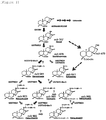
- glycosides considered to be reaction intermediates and analogs differing in the type of sugar are known to exist ( Figure 1 ).
- steviol is known to have, for example, improving effect on cognitive function.
- filamentous fungi of the genus Aspergillus including koji mold, have been suggested to have an enzyme gene having steviol glycoside-hydrolyzing activity.
- enzyme gene having steviol glycoside-hydrolyzing activity.
- Non Patent Literature 7 It has been reported that the ⁇ -glucosidase of the glycoside hydrolase (GH) family 3 encoded by the A0090009000356 gene of koji mold hydrolyzes disaccharides with a ⁇ -glucoside bond (Non Patent Literature 7). Specifically, its specificity for hydrolysis is the highest for laminaribiose with a ⁇ -1,3 linkage, followed by ⁇ -gentiobiose with a ⁇ -1,6 linkage, cellobiose with a ⁇ -1,4 linkage, and sophorose with a ⁇ -1,2 linkage. However, there has been no report on whether the ⁇ -glucosidase has an activity to hydrolyze terpene glycosides typified by steviol glycosides.
- Some other organisms have also been reported to have an activity to hydrolyze steviol glycosides.
- bacteria of the genus Clavibacter have an enzyme that decomposes the glucosyl ester bond at the 19 position of rubusoside but does not decompose the glucoside bond at the 13 position (Patent Literature 2).
- Flavobacterium johnsoniae- derived ⁇ -glucosidase has an activity to decompose steviol glycosides (an activity to hydrolyze the ⁇ -glucoside bond at the 13 position and the glucosyl ester bond at the 19 position).
- koji mold contains a large number of genes considered to encode GH3 family or GH5 family enzymes having ⁇ -glucosidase-like activity, and thus, even if an enzyme activity can be detected, it is not easy to determine which gene is responsible for the activity.
- the present inventors conducted extensive research to solve the aforementioned problem, and found that a koji mold-derived glycoside hydrolase homolog protein encoded by AOBGL3 gene has an activity to hydrolyze steviol glycosides. That is, the present inventors have found that, for example, the protein has an activity to cleave a monoglucoside and/or monoglucosyl ester of a steviol glycoside, thus completing the present invention. Additionally, the present inventors have succeeded in producing a steviol glycoside and/or steviol by further expressing another koji mold-derived glycosidase homolog protein encoded by AOBGL1 gene, thus completing the present invention.
- a novel method for preparing steviol and a steviol glycoside With the method according to the present invention, a steviol glycoside and/or steviol having no monoglucoside bond and/or monoglucosyl ester bond can be produced. Additionally, a steviol glycoside and/or steviol having no monoglucoside bond and/or monoglucosyl ester bond can be efficiently extracted and purified.
- AOBGL3 designates a koji mold-derived ⁇ -glucosidase; the cDNA sequence, the genomic DNA sequence, the amino acid sequence, and the amino acid sequence of the mature protein are shown in SEQ ID NO: 1, SEQ ID NO: 2, SEQ ID NO: 3, and SEQ ID NO: 4, respectively.
- AOBGL1 designates a koji mold-derived ⁇ -glucosidase; the cDNA sequence, the genomic DNA sequence, the amino acid sequence, and the amino acid sequence of the mature protein are shown in SEQ ID NO: 5, SEQ ID NO: 6, SEQ ID NO: 7, and SEQ ID NO: 8, respectively.
- the present invention provides a method for preparing steviol or a steviol glycoside having no monoglucoside bond and/or monoglucosyl ester bond comprising reacting a protein selected from the group consisting of proteins (a) to (c) shown below (hereinafter referred to as "the protein of the present invention") with a steviol glycoside having at least one monoglucoside bond and/or monoglucosyl ester bond, thereby cleaving said monoglucoside bond and/or monoglucosyl ester bond.
- proteins shown in (b) or (c) above is typically a variant of a protein consisting of the amino acid sequence of SEQ ID NO: 3 or 4, these proteins also include proteins that can be artificially obtained using site-directed mutagenesis as described in, for example, “ Sambrook & Russell, Molecular Cloning: A Laboratory Manual Vol. 4, Cold Spring Harbor Laboratory Press 2012 ", “ Ausubel, Current Protocols in Molecular Biology, John Wiley & Sons 1987-1997 ", “ Nuc. Acids. Res., 10, 6487 (1982 )”, “ Proc. Natl. Acad. Sci. USA, 79, 6409 (1982 )", “ Gene, 34, 315 (1985 )", “ Nuc. Acids. Res., 13, 4431 (1985 )", and “ Proc. Natl. Acad. Sci. USA, 82, 488 (1985 )”.
- Examples of the "protein consisting of an amino acid sequence wherein 1 to 77 amino acids have been deleted, substituted, inserted, and/or added in the amino acid sequence of SEQ ID NO: 3 or 4, and having an activity to cleave a monoglucoside bond and/or monoglucosyl ester bond of a steviol glycoside” include a protein consisting of an amino acid sequence wherein, for example, 1 to 77, 1 to 75, 1 to 70, 1 to 65, 1 to 60, 1 to 55, 1 to 50, 1 to 49, 1 to 48, 1 to 47, 1 to 46, 1 to 45, 1 to 44, 1 to 43, 1 to 42, 1 to 41, 1 to 40, 1 to 39, 1 to 38, 1 to 37, 1 to 36, 1 to 35, 1 to 34, 1 to 33, 1 to 32, 1 to 31, 1 to 30, 1 to 29, 1 to 28, 1 to 27, 1 to 26, 1 to 25, 1 to 24, 1 to 23, 1 to 22, 1 to 21, 1 to 20, 1 to 19, 1 to 18, 1 to 17, 1 to 16, 1 to 15, 1 to
- proteins include a protein having an amino acid sequence sharing 90% or more, 91% or more, 92% or more, 93% or more, 94% or more, 95% or more, 96% or more, 97% or more, 98% or more, 99% or more, 99.1% or more, 99.2% or more, 99.3% or more, 99.4% or more, 99.5% or more, 99.6% or more, 99.7% or more, 99.8% or more, or 99.9% or more sequence identity with the amino acid sequence of SEQ ID NO: 3 or 4, and having an activity to cleave a monoglucoside bond and/or monoglucosyl ester bond of a steviol glycoside.
- sequence identity is preferably greater.
- the phrase "activity to cleave a monoglucoside bond and/or monoglucosyl ester bond of a steviol glycoside” refers to the activity to cleave (hydrolyze) either a monoglucoside or monoglucosyl ester or both (a monoglucoside and monoglucosyl ester) of a steviol glycoside, which is a glycoside wherein glucose is linked to the aglycone, steviol.
- the bond to be cleaved is, but not limited to, a monoglucoside bond at the 13 position.
- the bond to be cleaved is, but not limited to, a monoglucosyl ester bond at the 19 position.
- the activity to cleave a monoglucoside bond or monoglucosyl ester bond of a steviol glycoside can be confirmed by reacting the protein of the present invention with a steviol glycoside having at least one monoglucoside bond and/or monoglucosyl ester bond, such as rebaudioside A, stevioside, or rubusoside, purifying the resulting reaction product, and analyzing the purified product using a known technique such as liquid chromatography (LC).
- the activity to hydrolyze a ⁇ -glucoside bond can be detected by using a medium containing X- ⁇ -Glc to culture a transformant genetically modified to express the protein of the present invention and confirming whether the cells and surrounding regions are stained blue. When X- ⁇ -Glc is hydrolyzed in the medium, the cells and surrounding regions are stained blue; thus, having blue color is considered to indicate the presence of the activity to hydrolyze a ⁇ -glucoside bond.
- the activity to hydrolyze a ⁇ -glucoside bond can be examined by using p-nitrophenyl ⁇ -D-glucopyranoside as a substrate to measure the amount of p-nitrophenol produced by hydrolysis in terms of absorbance (A405).
- the activity to hydrolyze a ⁇ -glucoside bond can be detected by using a medium containing X- ⁇ -Glc to culture a transformant genetically modified to express the protein of the present invention and confirming whether the cells and surrounding regions are stained blue.
- an amino acid sequence wherein 1 to 77 amino acid residues have been deleted, substituted, inserted, and/or added in the amino acid sequence of SEQ ID NO: 3 or 4" means that 1 to 77 amino acid residues have been deleted, substituted, inserted, and/or added at any 1 to 77 positions in the same sequence, wherein two or more of deletion, substitution, insertion, and addition may occur simultaneously.
- amino acid residues that are interchangeable are shown below.
- the amino acid residues included in the same group are interchangeable.
- the protein of the present invention in some embodiments does not contain a secretory signal peptide, because the secretory signal peptide is cleaved. Some other proteins of the present invention may further contain a secretory signal peptide, because the secretory signal peptide remains uncleaved.
- the protein of the present invention contains a secretory signal peptide, it preferably contains the secretory signal peptide at its N-terminus.
- the secretory signal peptide refers to a peptide domain that serves to cause extracellular secretion of a protein bound to the secretory signal peptide. Amino acid sequences of such secretory signal peptides and polynucleotide sequences encoding such amino acid sequences have been well known and reported in the art.
- the protein of the present invention can be obtained by, for example, expressing a polynucleotide encoding this protein (see "the polynucleotide of the present invention” described below) in appropriate host cells, although it can also be produced by a chemical synthesis method such as the Fmoc method (fluorenylmethyloxycarbonyl method) or the tBoc method (t-butyloxycarbonyl method).
- the protein of the present invention can also be chemically synthesized using a peptide synthesizer from AAPPTec LLC, Perkin Elmer Inc., Protein Technologies Inc., PerSeptive Biosystems, Applied Biosystems, or SHIMADZU CORPORATION, for example.
- steviol glycoside refers to a glycoside wherein glucose is linked to the aglycone, steviol.
- Examples of steviol and steviol glycosides are represented by the following formula (I).
- Glc designates glucose and “Glc-” designates the inclusion of a monoglucoside bond (R 1 position) or monoglucosyl ester bond (R 2 position).
- a steviol glycoside having at least one (for example, one or two) monoglucoside bond and/or monoglucosyl ester bond is, for example, a steviol glycoside selected from rebaudioside A, stevioside, rubusoside, steviolmonoside, and steviol monoglucosyl ester.
- the method for preparing a steviol glycoside and/or steviol according to the present invention cleaves the monoglucoside bond and/or monoglucosyl ester bond, thereby producing a steviol glycoside and/or steviol having no monoglucoside bond and/or monoglucosyl ester bond (hereinafter referred to as "the steviol glycoside and/or steviol of the present invention” or collectively referred to as "the steviol glycoside of the present invention”).
- the steviol glycoside and/or steviol having no monoglucoside bond and/or monoglucosyl ester bond varies depending on the starting material, the "steviol glycoside having a monoglucoside bond and/or monoglucosyl ester bond", as follows. Examples thereof are shown below.
- the steviol glycoside having at least one monoglucoside bond and/or monoglucosyl ester bond for use as the starting material can be obtained by extraction from Stevia rebaudiana or Rubus suavissimus followed by purification using known methods including extraction with an appropriate solvent (an aqueous solvent such as water, or an organic solvent such as an alcohol, ether, or acetone), a gradient between water and ethyl acetate or other organic solvent, high performance liquid chromatography (HPLC), gas chromatography, time-of-flight mass spectrometry (TOF-MS), and ultra (high) performance liquid chromatography (UPLC).
- an appropriate solvent an aqueous solvent such as water, or an organic solvent such as an alcohol, ether, or acetone
- HPLC high performance liquid chromatography
- TOF-MS time-of-flight mass spectrometry
- UPLC ultra (high) performance liquid chromatography
- a commercially-available product may be used as the steviol glycoside having at least one
- a monoglucoside bond and monoglucosyl ester bond of rubusoside are cleaved to produce steviol.
- the method for preparing a steviol glycoside and/or steviol according to the present invention comprises reacting the protein of the present invention with a steviol glycoside having at least one monoglucoside bond and/or monoglucosyl ester bond, thereby cleaving said monoglucoside bond and/or monoglucosyl ester bond.
- the method of the present invention may further comprise purifying the steviol glycoside and/or steviol of the present invention which is produced in the above step and which has no monoglucoside bond and/or monoglucosyl ester bond.
- the steviol glycoside according to the present invention which has no monoglucoside bond or glucosyl ester bond can be purified using known methods including extraction with an appropriate solvent (an aqueous solvent such as water, or an organic solvent such as an alcohol, ether, or acetone), a gradient between water and ethyl acetate or other organic solvent, high performance liquid chromatography (HPLC), gas chromatography, time-of-flight mass spectrometry (TOF-MS), and ultra (high) performance liquid chromatography (UPLC).
- an appropriate solvent an aqueous solvent such as water, or an organic solvent such as an alcohol, ether, or acetone
- HPLC high performance liquid chromatography
- TOF-MS time-of-flight mass spectrometry
- UPLC ultra (high) performance liquid chromatography
- a different steviol glycoside can be produced by combining the protein of the present invention with another protein having a different activity.
- a method for producing at least one of rebaudioside B and steviol comprising reacting the protein of the present invention, a protein selected from the group consisting of proteins (d) to (f) shown below (hereinafter referred to as "the second active protein"), and a steviol glycoside having at least one monoglucoside bond and/or monoglucosyl ester bond:
- the steviol glycoside having at least one monoglucoside bond and/or monoglucosyl ester bond may comprise one or more steviol glycosides selected from rebaudioside A, rebaudioside D, stevioside, rubusoside, steviolmonoside, and steviol monoglucosyl ester.
- the phrase "activity to cleave an unbranched ⁇ -1,2-glucoside bond of a steviol glycoside” refers to the activity to cleave an unbranched ⁇ -1,2-glucoside bond formed between two glucose residues in a steviol glycoside (a glycoside wherein glucose is linked to the aglycone, steviol).
- the phrase “unbranched ⁇ -1,2-glucoside bond” refers to a ⁇ -1,2-glucoside bond wherein the ⁇ -1,2-glucoside-bonded glucose residues have no branched structure such as a ⁇ -1,3-glucoside bond ("Glc- ⁇ 1,2-Glu" in Table 1 below).
- the ⁇ -1,2-glucoside-bonded glucose residues further have a branched structure such as a ⁇ -1,3-glucoside bond
- the ⁇ -1,2-glucoside bond can be referred to as a branched ⁇ -1,2-glucoside bond ("Glc- ⁇ 1,2-Glu ( ⁇ 1,3-Glu)" in Table 1 above).
- the activity to cleave an unbranched ⁇ -1,2-glucoside bond of a steviol glycoside can be confirmed by reacting the protein of the present invention with a steviol glycoside having at least one ⁇ -1,2-glucoside bond, such as stevioside, purifying the resulting reaction product, and analyzing the purified product using a known technique such as liquid chromatography (LC).
- a steviol glycoside having at least one ⁇ -1,2-glucoside bond such as stevioside
- the activity to hydrolyze a ⁇ -glucoside bond can be detected by using a medium containing X- ⁇ -Glc to culture a transformant genetically modified to express the protein of the present invention and confirming whether the cells and surrounding regions are stained blue.
- X- ⁇ -Glc is hydrolyzed in the medium, the cells and surrounding regions are stained blue; thus, having blue color is considered to indicate the presence of the activity to hydrolyze a ⁇ -glucoside bond.
- the activity to hydrolyze a ⁇ -glucoside bond can be examined by using p-nitrophenyl ⁇ -D-glucopyranoside as a substrate to measure the amount of p-nitrophenol produced by hydrolysis in terms of absorbance (A405).
- amino acid sequence wherein 1 to 77 amino acid residues have been deleted, substituted, inserted, and/or added in the amino acid sequence of SEQ ID NO: 7 or 8 means that 1 to 77 amino acid residues have been deleted, substituted, inserted, and/or added at any 1 to 77 positions in the same sequence, wherein two or more of deletion, substitution, insertion, and addition may occur simultaneously.
- amino acid residues that are interchangeable are as previously described.
- the second active protein may not contain any secretory signal peptide or may contain a secretory signal peptide.
- the protein of the present invention contains a secretory signal peptide, it preferably contains the secretory signal peptide at its N-terminus.
- the secretory signal peptide refers to a peptide domain that serves to cause extracellular secretion of a protein bound to the secretory signal peptide. Amino acid sequences of such secretory signal peptides and polynucleotide sequences encoding such amino acid sequences have been well known and reported in the art.
- the second active protein can be obtained by, for example, expressing a polynucleotide encoding this protein (such as a polynucleotide consisting of SEQ ID NO: 5 or 6) in appropriate host cells, although it can also be produced by a chemical synthesis method such as the Fmoc method (fluorenylmethyloxycarbonyl method) or the tBoc method (t-butyloxycarbonyl method).
- the second active protein can also be chemically synthesized using a peptide synthesizer from AAPPTec LLC, Perkin Elmer Inc., Protein Technologies Inc., PerSeptive Biosystems, Applied Biosystems, or SHIMADZU CORPORATION, for example.
- the "steviol glycoside” is as previously described.
- the steviol glycoside having at least one unbranched ⁇ -1,2-glucoside bond is, for example, a steviol glycoside selected from rebaudioside D, rebaudioside E, stevioside, and steviolbioside.
- the second active protein cleaves the unbranched ⁇ -1,2-glucoside bond.
- the resulting product varies depending on the starting material, the "steviol glycoside having at least one unbranched ⁇ -1,2-glucoside bond", as follows. Examples thereof are shown below.
- an unbranched ⁇ -1,2-glucoside bond of a steviol glycoside selected from stevioside, rebaudioside D, and steviolbioside is cleaved to produce a steviol glycoside selected from rubusoside, rebaudioside A, and steviolmonoside.
- rebaudioside B and steviol comprising reacting the protein of the present invention, the second active protein, and one or more steviol glycosides selected from rebaudioside A, rebaudioside D, stevioside, rubusoside, steviolmonoside, and steviol monoglucosyl ester, based on the activity of the second active protein, rebaudioside B and steviol can be obtained as products from rebaudioside A, rebaudioside D, and stevioside as shown below.
- the protein of the present invention is a koji mold-derived secretory enzyme or a variant thereof, and is expected to have high activity in an extracellular environment.
- the steviol glycoside of the present invention can be produced by introducing a polynucleotide encoding the protein of the present invention (see “the polynucleotide of the present invention” described below) into host cells derived from bacteria, fungi, plants, insects, non-human mammals, or the like, for extracellular expression of the protein of the present invention, and by reacting the protein of the present invention with a steviol glycoside having a monoglucoside bond and/or monoglucosyl ester bond.
- the steviol glycoside and/or steviol of the present invention can be produced by expressing the protein of the present invention in the host cells.
- the present invention provides a method for producing a steviol glycoside and/or steviol having no monoglucoside bond and/or monoglucosyl ester bond comprising culturing a non-human transformant (hereinafter referred to as “the transformant of the present invention") obtained by introducing a polynucleotide selected from the group consisting of polynucleotides (a) to (e) shown below (hereinafter referred to as "the polynucleotide of the present invention”) into a host producing a steviol glycoside having at least one monoglucoside bond and/or monoglucosyl ester bond:
- polynucleotide refers to DNA or RNA.
- Examples of the polynucleotide encoding the protein consisting of the amino acid sequence of SEQ ID NO: 3 or 4 include a polynucleotide consisting of the nucleotide sequence of SEQ ID NO: 1. Examples of the polynucleotide encoding the protein consisting of the amino acid sequence of SEQ ID NO: 8 include a polynucleotide consisting of the nucleotide sequence of SEQ ID NO: 5.
- proteins consisting of an amino acid sequence wherein 1 to 77 amino acids have been deleted, substituted, inserted, and/or added in the amino acid sequence of SEQ ID NO: 3 or 4, and having an activity to cleave a monoglucoside bond and/or monoglucosyl ester bond of a steviol glycoside" are as described above.
- proteins having an amino acid sequence having 90% or more sequence identity to the amino acid sequence of SEQ ID NO: 3 or 4, and having an activity to cleave a monoglucoside bond and/or monoglucosyl ester bond of a steviol glycoside are as described above.
- a polynucleotide which hybridizes under highly stringent conditions refers to a polynucleotide obtained by means of a hybridization method such as colony hybridization, plaque hybridization, or Southern hybridization, using, as a probe, all of or a portion of a polynucleotide consisting of a nucleotide sequence complementary to the nucleotide sequence of SEQ ID NO: 1 or a polynucleotide consisting of a nucleotide sequence complementary to a nucleotide sequence encoding the amino acid sequence of SEQ ID NO: 3 or 4.
- a hybridization method such as colony hybridization, plaque hybridization, or Southern hybridization
- highly stringent conditions refers to, for example, the following conditions: 5 x SSC, 5 x Denhardt's solution, 0.5% SDS, 50% formamide, 50°C; 0.2 x SSC, 0.1% SDS, 60°C; 0.2 x SSC, 0.1% SDS, 62°C; or 0.2 x SSC, 0.1% SDS, 65°C; although not limited thereto. Under these conditions, it is expected that DNA having a higher sequence identity will be efficiently obtained at a higher temperature.
- hybridization is accomplished in accordance with the protocol attached to the kit, i.e., a membrane may be incubated overnight with a labeled probe and then washed with a primary washing buffer containing 0.1% (w/v) SDS at 55 to 60°C to detect the hybridized DNA.
- DIG digoxigenin
- examples of other hybridizable polynucleotides include DNA sharing 60% or more, 61% or more, 62% or more, 63% or more, 64% or more, 65% or more, 66% or more, 67% or more, 68% or more, 69% or more, 70% or more, 71% or more, 72% or more, 73% or more, 74% or more, 75% or more, 76% or more, 77% or more, 78% or more, 79% or more, 80% or more, 81% or more, 82% or more, 83% or more, 84% or more, 85% or more, 86% or more, 87% or more, 88% or more, 89% or more, 90% or more, 91% or more, 92% or more, 93% or more, 94% or more, 95% or more, 96% or more, 97% or more, 98% or more, 99% or more, 99.1% or more, 99.2% or more, 99.3% or more, 99.4% or more, 99.5% or more, 99.6% or
- sequence identity of amino acid sequences or nucleotide sequences can be determined using the BLAST algorithm developed by Karlin and Altschul (Basic Local Alignment Search Tool) (Proc. Natl. Acad. Sci. USA 872264-2268, 1990 ; Proc Natl Acad Sci USA 90: 5873, 1993 ). When BLAST is used, default parameters in each program are used.
- the polynucleotide of the present invention may further contain a polynucleotide consisting of a nucleotide sequence encoding a secretory signal peptide.
- the polynucleotide of the present invention contains, at its 5' end, the polynucleotide consisting of a nucleotide sequence encoding a secretory signal peptide.
- the secretory signal peptide is as described above. Such a secretory signal peptide can be selected as appropriate, depending on the host into which the polynucleotide of the present invention is to be introduced.
- examples of secretory signal peptides include yeast-derived secretory signal peptides, such as MF(ALPHA)1 signal peptide, PHO5 signal peptide, and SUC2 signal peptide.
- yeast-derived secretory signal peptides such as MF(ALPHA)1 signal peptide, PHO5 signal peptide, and SUC2 signal peptide.
- polynucleotides encoding MF(ALPHA)1 signal peptide, PH05 signal peptide, and SUC2 signal peptide include polynucleotides consisting of the nucleotide sequences shown in SEQ ID NO: 31, SEQ ID NO: 33, and SEQ ID NO: 35, respectively.
- amino acid sequences of MF(ALPHA)1 signal peptide, PHO5 signal peptide, and SUC2 signal peptide are shown in SEQ ID NO: 32, SEQ ID NO: 34, and SEQ ID NO: 36, respectively.
- secretory signal peptides include koji mold-derived signal peptides, such as a peptide consisting of the amino acid sequence of SEQ ID NO: 28 or SEQ ID NO: 30.
- the polynucleotide encoding the peptide consisting of the amino acid sequence of SEQ ID NO: 28 or SEQ ID NO: 30 is a polynucleotide consisting of the nucleotide sequence of SEQ ID NO: 27 or SEQ ID NO: 29, respectively, for example.
- the above-described polynucleotide of the present invention can be obtained using a known genetic engineering technique or a known synthesis technique.
- the polynucleotide of the present invention is preferably inserted into an appropriate expression vector for introduction into a host.
- An appropriate expression vector is typically configured to include:
- Examples of methods for preparing such an expression vector include, although not particularly limited to, using plasmids, phages, cosmids, or the like.
- the specific type of the vector is not particularly limited, and any vector expressible in host cells may be selected as appropriate.
- an appropriate promoter sequence may be selected in accordance with the type of the host cells to ensure the expression of the polynucleotide of the present invention, and this promoter sequence and the polynucleotide of the present invention may then be integrated into any of various plasmids, for example, for use as an expression vector.
- the expression vector of the present invention contains an expression control region (e.g., a promoter, a terminator, and/or a replication origin), depending on the type of the host into which the expression vector is to be introduced.
- an expression control region e.g., a promoter, a terminator, and/or a replication origin
- commonly used promoters e.g., trc promoter, tac promoter, and lac promoter
- yeast promoters include glyceraldehyde-3-phosphate dehydrogenase promoter and PH05 promoter.
- filamentous fungi promoters include amylase and trpC.
- promoters for expression of a target gene in plant cells include cauliflower mosaic virus 35S RNA promoter, rd29A gene promoter, rbcS promoter, and mac-1 promoter configured to have the enhancer sequence of the above-mentioned cauliflower mosaic virus 35S RNA promoter at the 5'-side of Agrobacterium- derived mannopine synthase promoter sequence.
- promoters for animal cell hosts include viral promoters (e.g., SV40 early promoter and SV40 late promoter).
- promoters inducibly activated by external stimulation include mouse mammary tumor virus (MMTV) promoter, tetracycline-responsive promoter, metallothionein promoter, and heat-shock protein promoter.
- MMTV mouse mammary tumor virus
- the expression vector preferably contains at least one selection marker.
- auxotrophic markers ura5, niaD
- drug resistance markers hygromycin, zeocin
- geneticin resistance gene G418r
- copper resistance gene CUP1
- cerulenin resistance genes fas2m, PDR4
- the method for preparing (producing) the transformant of the present invention is not particularly limited, the transformant of the present invention may be prepared by, for example, introducing an expression vector containing the polynucleotide of the present invention into a host to transform the host.
- the host to be used herein is not particularly limited as long as it produces a steviol glycoside having at least one monoglucoside bond and/or monoglucosyl ester bond, and may include not only a plant such as Stevia rebaudiana that produces a steviol glycoside having at least one monoglucoside bond and/or monoglucosyl ester bond, but also a host obtained by introducing a gene required for the production of a steviol glycoside having at least one monoglucoside bond and/or monoglucosyl ester bond into cells or an organism that does not originally produce a steviol glycoside having at least one monoglucoside bond and/or monoglucosyl ester bond.
- Examples of the "gene required for the production of a steviol glycoside having at least one monoglucoside bond and/or monoglucosyl ester bond” include genes having steviol or steviol glycoside synthesis activity such as those described in WO 2011093509 .
- Any of conventionally known various types of cells or organisms can be suitably used as the cells or organism to be transformed.
- the cells to be transformed include bacteria such as Escherichia coli, yeast (budding yeast Saccharomyces cerevisiae, fission yeast Schizosaccharomyces pombe ), filamentous fungi (koji mold Aspergillus oryzae, Aspergillus sojae ), plant cells, and non-human animal cells.
- the organism to be transformed is not particularly limited, and examples include various microorganisms, plants, and non-human animals described above as examples of host cells.
- the transformant is preferably yeast or a plant.
- transformation can be accomplished using electroporation ( Mackenxie, D. A. et al., Appl. Environ. Microbiol., vol. 66, p. 4655-4661, 2000 ), the particle delivery method (described in JP 2005-287403 A entitled "Breeding Method of Lipid Producing Fungi"), the spheroplast method ( Proc. Natl. Acad. Sci. USA, vol. 75, p. 1929, 1978 ), the lithium acetate method ( J. Bacteriology, vol. 153, p.
- the transformant is yeast or koji mold
- the transformant is obtained by introducing a recombinant vector containing the polynucleotide of the present invention into yeast or koji mold such that a polypeptide encoded by the polynucleotide can be expressed.
- the yeast or koji mold transformed with the polynucleotide of the present invention expresses a higher level of the protein of the present invention than in the wild-type counterpart.
- the expressed protein of the present invention reacts with the steviol glycoside having at least one monoglucoside bond and/or monoglucosyl ester bond produced in the yeast or koji mold, thereby cleaving said monoglucoside bond and/or monoglucosyl ester bond.
- the steviol glycoside of the present invention having no monoglucoside bond and/or monoglucosyl ester bond is produced in the cells or culture medium of the yeast or koji mold, preferably in the culture medium.
- the transformant When the transformant is a plant, the transformant is obtained by introducing a recombinant vector containing the polynucleotide of the present invention into a plant such that a protein encoded by the polynucleotide can be expressed.
- the plant to be transformed in the present invention refers to any of whole plants, plant organs (e.g., leaves, petals, stems, roots, and seeds), plant tissues (e.g., epidermis, phloem, parenchyma, xylem, vascular bundles, palisade tissue, and spongy parenchyma) or plant cultured cells, or various forms of plant cells (e.g., suspension cultured cells), protoplasts, leaf sections, calli, and the like.
- plant organs e.g., leaves, petals, stems, roots, and seeds
- plant tissues e.g., epidermis, phloem, parenchyma, xylem
- the plant used for transformation is not particularly limited as long as it is a plant that produces a steviol glycoside having at least one monoglucoside bond and/or monoglucosyl ester bond, or a plant that does not originally produce a steviol glycoside having at least one monoglucoside bond and/or monoglucosyl ester bond, but can produce a steviol glycoside having at least monoglucoside bond and/or monoglucosyl ester bond through the introduction of a required gene.
- the plant used for transformation may be a plant in the class of either monocotyledons or dicotyledons.
- the introduction of the polynucleotide of the present invention into the plant can be confirmed by using PCR, Southern hybridization, or Northern hybridization, for example.
- progeny plants can be produced by sexual or asexual reproduction of the plant. Moreover, seeds, fruits, cuttings, tubers, root tubers, rootstocks, calli, protoplasts or the like can be obtained from this plant or progeny plants thereof, or clones thereof, and used to achieve mass production of the plant.
- the plant transformed with the polynucleotide of the present invention (hereinafter, "the plant of the present invention") contains a greater amount of the protein of the present invention than in the wild-type counterpart.
- the protein of the present invention reacts with the steviol glycoside having at least one monoglucoside bond and/or monoglucosyl ester bond produced in the plant of the present invention, thereby cleaving said monoglucoside bond and/or monoglucosyl ester bond.
- the steviol glycoside of the present invention having no monoglucoside bond and/or monoglucosyl ester bond is produced in the plant.
- the transformant in some embodiments of the present invention or the culture medium thereof has a content of the Steviol glycoside of the present invention higher than that in the wild-type counterpart, and an extract or the culture medium of the transformant contains a high concentration of the Steviol glycoside of the present invention.
- An extract of the transformant of the present invention can be obtained by homogenating the transformant with glass beads, a homogenizer, or a sonicator, for example, centrifuging the homogenate, and collecting the supernatant.
- the transformant and the culture supernatant may be separated using a standard method (e.g., centrifugation or filtration) after the completion of culture, thereby obtaining the culture supernatant containing the Steviol glycoside of the present invention.
- a standard method e.g., centrifugation or filtration
- the extract or culture supernatant thus obtained may be further subjected to a purification step.
- the Steviol glycoside of the present invention may be purified in accordance with a standard separation and purification method. Specific methods for purification are the same as described above.
- the steviol glycoside of the present invention can be produced by using an enzyme agent derived from transformed cells expressing the protein of the present invention, which are obtained by introducing the polynucleotide of the present invention into host cells derived from bacteria, fungi, plants, insects, non-human mammals, or the like, for expression of the protein of the present invention, i.e., by contacting the enzyme agent derived from transformed cells expressing the protein of the present invention with a steviol glycoside having at least one monoglucoside bond and/or monoglucosyl ester bond.
- the "enzyme agent derived from transformed cells” is not limited as long as it is prepared using transformed cells, and contains the protein of the present invention.
- the present invention provides a method for preparing a steviol glycoside and/or steviol having no monoglucosyl ester bond comprising contacting an enzyme agent derived from a non-human transformed cell obtained by introducing, into a host cell, a polynucleotide selected from the group consisting of polynucleotides (a) to (e) shown below, with a steviol glycoside having at least one monoglucoside bond and/or monoglucosyl ester bond, thereby cleaving said monoglucoside bond and/or monoglucosyl ester bond:
- polynucleotide selected from the group consisting of polynucleotides (a) to (e) shown above is the polynucleotide of the present invention, which is the same as described above.
- the polynucleotide of the present invention may further contain a polynucleotide consisting of a nucleotide sequence encoding a secretory signal peptide.
- the polynucleotide of the present invention contains, at its 5' end, the polynucleotide consisting of a nucleotide sequence encoding a secretory signal peptide.
- the secretory signal peptide and the polynucleotide consisting of a nucleotide sequence encoding the secretory signal peptide are the same as described above.
- the polynucleotide of the present invention is preferably inserted into an appropriate expression vector for introduction into host cells.
- An appropriate expression vector is the same as described above.
- the transformed cells of the present invention may be prepared by, for example, introducing an expression vector containing the polynucleotide of the present invention into host cells to transform the host cells.
- the cells to be transformed are the same as described above.
- the method for transforming the host cells is as described above.
- the transformed cells of the present invention are obtained by, for example, introducing a recombinant vector containing the polynucleotide of the present invention into the host cells such that a polypeptide encoded by the polynucleotide can be expressed.
- the host cells transformed with the polynucleotide of the present invention express a higher level of the protein of the present invention than in the wild-type counterpart.
- the steviol glycoside and/or steviol of the present invention can be obtained by using an enzyme agent derived from transformed cells expressing the protein of the present invention, i.e., by contacting the enzyme agent derived from transformed cells expressing the protein of the present invention with a steviol glycoside having at least one monoglucoside bond and/or monoglucosyl ester bond.
- contact refers to causing the enzyme agent derived from the transformed cells of the present invention and the steviol glycoside having at least one monoglucoside bond and/or monoglucosyl ester bond to exist in the same reaction or culture system.
- the term “contact” includes, for example, adding the steviol glycoside having at least one monoglucoside bond and/or monoglucosyl ester bond to a container containing the enzyme agent derived from the transformed cells of the present invention, mixing the enzyme agent derived from the transformed cells of the present invention and the steviol glycoside having at least one monoglucoside bond and/or monoglucosyl ester bond, and adding the enzyme agent derived from the transformed cells of the present invention to a container containing the steviol glycoside having at least one monoglucoside bond and/or monoglucosyl ester bond.
- steviol glycoside "steviol glycoside having at least one monoglucoside bond and/or monoglucosyl ester bond", “steviol glycoside and/or steviol having no monoglucosyl ester bond”, “monoglucoside bond and/or monoglucosyl ester bond”, and "activity to cleave a monoglucoside bond and/or monoglucosyl ester bond of a steviol glycoside” are the same as described above.
- the Steviol glycoside of the present invention thus obtained can be used for such purposes as the production of foods, sweeteners, flavors, pharmaceutical products, and industrial raw materials (raw materials for cosmetics, soaps, and the like), for example, in accordance with conventional methods.
- foods examples include nutritional supplements, health foods, functional foods, foods for children, and foods for the elderly.
- foods refers collectively to edible materials in the form of solids, fluids, liquids, and mixtures thereof.
- AO090009000356 and A0090701000274 were cloned and expressed in yeast to examine the activity.
- Koji mold Aspergillus oryzae var. Brunneus (IFO30102) was inoculated to a GY plate (2% glucose, 0.5% yeast extract, and 2% agar), and cultured at 25°C for 3 days. The grown cells were collected from the GY plate, and total RNA was extracted using RNeasy (QIAGEN). A cDNA was synthesized using the SuperScript DoubleStranded cDNA Synthesis Kit (Life Technologies).
- a DNA fragment obtained by digesting the yeast expression vector pYE22m ( Biosci. Biotech. Biochem., 59, 1221-1228, 1995 ) with restriction enzymes BamHI and SalI and approximately 2.6 kbp of a DNA fragment obtained by digesting pCR-AOBGL1 with restriction enzymes BglII and SalI were ligated using the DNA Ligation Kit Ver.1 (Takara Bio), and the resulting plasmid was designated as pYE-AOBGL1.
- a DNA fragment obtained by digesting pYE22mN with restriction enzymes NotI and BamHI and approximately 2.3 kbp of a DNA fragment obtained by digesting pCR-AOBGL3 with restriction enzymes NotI and BamHI were ligated in the same manner as above, and the resulting plasmid was designated as pYE-AOBGL3.
- S. cerevisiae strain EH13-15 (trp1, MAT ⁇ ) Appl. Microbiol. Biotechnol., 30, 515-520, 1989 ) was used as the parental strain for transformation.
- Each of the plasmids pYE22m (control), pYE-AOBGL1 (for expression of AOBGL1), and pYE-AOBGL3 (for expression of AOBGL3) was used to transform strain EH13-15 in accordance with the lithium acetate method.
- a strain that grew on SC-Trp (containing, per liter, 6.7 g of Yeast nitrogen base w/o amino acids (DIFCO), 20 g of glucose, and 1.3 g of amino acid powder (a mixture of 1.25 g of adenine sulfate, 0.6 g of arginine, 3 g of aspartic acid, 3 g of glutamic acid, 0.6 g of histidine, 1.8 g of leucine, 0.9 g of lysine, 0.6 g of methionine, 1.5 g of phenylalanine, 11.25 g of serine, 0.9 g of tyrosine, 4.5 g of valine, 6 g of threonine, and 0.6 g of uracil) agar medium (2% agar) was selected as the transformed strain.
- amino acid powder a mixture of 1.25 g of adenine sulfate, 0.6 g of arginine, 3 g of as
- the selected strain was applied to SC-Trp agar medium containing 0.004% of X- ⁇ -Glc, and cultured at 30°C for 3 days.
- the strain transformed with any of the plasmids pYE-AOBGL1 and pYE-AOBGL3 nor the strain transformed with the control pYE22m was stained blue, and no X- ⁇ -Glc degrading activity was confirmed.
- one platinum loop of the selected strain was inoculated to 10 mL of SC-Trp liquid medium supplemented with 1/10 volume of 1 M potassium phosphate buffer, and cultured with shaking at 30°C and 125 rpm for 2 days.
- the resulting culture was separated into the culture supernatant and cells by centrifugation.
- the cells were suspended in 50 mM sodium phosphate buffer (pH 7.0) containing 0.1% CHAPS solution and then homogenated with glass beads, and the supernatant obtained by centrifugation was used as the cell homogenate.
- the obtained culture supernatant or cell homogenate was examined for its pNP- ⁇ -Glc activity.
- both the culture supernatant and cell homogenate for each type of transformed strain including the control exhibited pNP- ⁇ -Glc degrading activity, and no significant difference in activity was observed between them.
- This host strain was created as follows: Each of ⁇ exg1 strain (MATalpha his3 ⁇ 1 leu2 ⁇ 0 lys2 ⁇ 0 ura3 ⁇ 0; clone ID: 15210; Open Bio Systems) and ⁇ exg2 strain (MATa his3 ⁇ 1 leu2 ⁇ 0 met15 ⁇ 0 ura3 ⁇ 0; clone ID: 3620; Open BioSystems) was applied to YPD agar medium, and cultured at 30°C for 2 days.
- the cells of each strain were scraped with a platinum loop and mixed on SC-Met, Lys (containing, per liter, 6.7 g of Yeast nitrogen base w/o amino acids (DIFCO), 20 g of glucose, and 1.3 g of amino acid powder (a mixture of 1.25 g of adenine sulfate, 0.6 g of arginine, 3 g of aspartic acid, 3 g of glutamic acid, 0.6 g of histidine, 1.8 g of leucine, 1.5 g of phenylalanine, 11.25 g of serine, 0.9 g of tyrosine, 4.5 g of valine, 6 g of threonine, 1.2 g of tryptophan, and 0.6 g of uracil) agar medium (2% agar), and the mixture was cultured at 30°C for 2 days.
- amino acid powder a mixture of 1.25 g of adenine sulfate, 0.6 g of
- the grown strain was considered to be a hetero-diploid obtained by hybridization of the two strains.
- the obtained strain was applied to YPD agar medium and cultured at 30°C for 2 days, and then the cells were scraped with a platinum loop, applied to 0.5% potassium acetate agar medium (2% agar), and cultured at room temperature for 5 days, thus forming spores. Tetrad dissection was performed to separate haploid strains. Genotypes of the obtained strains were confirmed by PCR, and ⁇ exg1 ⁇ exg2-1 strain (his3 ⁇ 1 leu2 ⁇ 0 lys2 ⁇ 0 ura3 ⁇ 0) was selected.
- PCR was performed with the following primers TRP1-F and TRP1-R, using KOD-Plus (Toyobo). Approximately 2.7 kbp of the amplified DNA fragment was cloned using the Zero Blunt TOPO PCR cloning Kit (Life Technologies), thus obtaining a plasmid pCR-TRP1.
- the transformed strain was cultured on YPGal medium (yeast extract: 2%, polypeptone: 1%, galactose: 2%) and then applied to SC+5-FOA (containing, per liter, 6.7 g of Yeast nitrogen base w/o amino acids (DIFCO), 20 g of glucose, and 1.3 g of amino acid powder (a mixture of 1.25 g of adenine sulfate, 0.6 g of arginine, 3 g of aspartic acid, 3 g of glutamic acid, 0.6 g of histidine, 1.8 g of leucine, 0.9 g of lysine, 0.6 g of methionine, 1.5 g of phenylalanine, 11.25 g of serine, 0.9 g of tyrosine, 4.5 g of valine, 6 g of threonine, 1.2 g of tryptophan, and 0.6 g of uracil) agar medium (2% agar), and
- the estimated secretory signal sequence was substituted with a secretory signal sequence of a yeast secretory protein. Initially, the following oligodeoxynucleotides were synthesized and annealed, and then inserted into the EcoRI site of the vector pYE22m, thus creating pYE-PacNhe.
- PCR was performed with the following primers Bgl2-AOBGL1-F and AOBGL1-2, using KOD-Plus (Toyobo). Approximately 2.5 kbp of a DNA fragment obtained by digesting the PCR-amplified DNA fragment with restriction enzymes BglII and SalI was inserted into the sites of restriction enzymes BamHI and SalI of the vector pYE-PacNhe, thus constructing a plasmid pYE-PN-AOBGL1.
- PCR was performed with the following primers Bam-ASBGL3-F and Sal-ASBGL3-R, using KOD-Plus (Toyobo). Approximately 2.3 kbp of a DNA fragment obtained by digesting the PCR-amplified DNA fragment with restriction enzymes BamHI and SalI was inserted into the sites of restriction enzymes BamHI and SalI of the vector pYE-PacNhe, thus constructing a plasmid pYE-PN-AOBGL3.
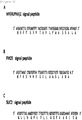
- the primers shown below were designed to construct a plasmid for expression of a protein in which the estimated secretory signal sequence of AOBGL1 or AOBGL3 was substituted with the secretory signal sequence MF(ALPHA)1 (YPL187W) (the sequence of positions 1 to 19 of the amino acid sequence (SEQ ID NO: 32) shown in Figure 2A ), PHO5 (YBR093C) (the sequence of positions 1 to 17 of the amino acid sequence (SEQ ID NO: 34) shown in Figure 2B ), or SUC2 (YIL162W) (the sequence of positions 1 to 19 of the amino acid sequence (SEQ ID NO: 36) shown in Figure 2C ) of a yeast secretory protein.
- MF(ALPHA)1 YPL187W
- PHO5 YBR093C
- SUC2 YIL162W
- ⁇ exg1 ⁇ exg2-2 strain was transformed with these plasmids in accordance with the lithium acetate method, and a strain that grew on SC-Trp agar medium was selected as the transformed strain.
- the obtained transformed strain was applied to SD-Trp agar medium containing 0.004% of X- ⁇ -Glc, and cultured at 30°C for 3 days.
- the cells and surrounding regions were stained blue in the strain transformed with pYE-PHO5s-AOBGL1, pYE-SUC2s-AOBGL1, pYE-MF1s-AOBGL1, pYE-PHO5s-ASBGL1, pYE-SUC2s-ASBGL1, or pYE-MF1s-ASBGL1, suggesting that these strains had X- ⁇ -Glc hydrolyzing activity.
- the cells and surrounding regions were not stained blue, and the activity to hydrolyze X- ⁇ -Glc was not confirmed.
- One platinum loop of the obtained transformed strain was inoculated to a liquid medium obtained by mixing 10 mL of SD-Trp liquid medium and 1 mL of 1 M potassium phosphate buffer, and cultured with shaking at 30°C for 2 days.
- the culture was separated into the cells and culture supernatant by centrifugation. 50 ⁇ L of the culture supernatant, 50 ⁇ L of a 0.2 M sodium citrate buffer, 50 ⁇ L of a 20 mM aqueous pNP- ⁇ Glc solution, and 50 ⁇ L of water were mixed, and the mixture was reacted at 37°C for 1 hour, after which the increase in absorbance at 405 nm due to ⁇ -glucosidase activity was examined.
- AOBGL1 was expressed, the ⁇ -glucosidase activity was confirmed as shown in Table 5.
- AOBGL1 was considered to be expressed at the highest level when substituted with the MF1 signal sequence.
- AOBGL1 was confirmed to have an activity to convert stevioside into rubusoside.
- Koji mold was transformed as follows.
- Aspergillus oryzae niaD300 strain (National Research Institute of Brewing) was used as a host. The host strain was inoculated to a PDA plate and cultured at 30°C for about 1 week. In order to obtain a conidial suspension, the resulting conidia were suspended by adding 0.1% tween 80 and 0.8% NaCl. The suspension was filtered through Miracloth and then centrifuged to collect the conidia. The conidia were then washed with 0.1% tween 80 and 0.8% NaCl and suspended in sterilized water.
- the conidia were applied to a CD plate, and DNA was introduced into the conidia by the particle delivery method. This was performed using PDS-1000/He (Bio-Rad), tungsten M-10 particles, and a 1100 psi rupture disc at a distance of 3 cm.
- a strain that grew on a CD plate (containing, per liter, 6 g of NaNO 3 , 0.52 g of KCl, 1.52 g of KH 2 PO 4 , 10 g of glucose, 2 ml of 1M MgSO 4 , 1 ml of a trace element solution (containing, per liter, 1 g of FeSO 4 ⁇ 7H 2 O, 8.8 g of ZnSO 4 ⁇ 7H 2 O, 0.4 g of CuSO 4 ⁇ 5H 2 O, 0.1 g of NaB 4 O 7 ⁇ 10H 2 O, and 0.05 g of (NH 4 ) 6 Mo 7 O 24 ⁇ 4H 2 O), and 20 g of agar (pH 6.5)) was selected as the transformed strain.
- BGL3-1 stain or C-1 strain was inoculated to a CD plate and cultured at 30°C for 7 days to form conidia.
- the conidia were suspended by adding 0.1% tween 80 and 0.8% NaCl. The suspension was filtered through Miracloth and then centrifuged to collect the conidia. The conidia were then washed with 0.1% tween 80 and 0.8% NaCl and suspended in sterilized water to prepare a conidial suspension.
- Conidia of BGL3-1 strain or C-1 strain were inoculated to a liquid culture medium for enzyme production (containing, per liter, 100 g of maltose, 1 g of Bacto-tryptone, 5 g of yeast extract, 1 g of NaNO 3 , 0.5 g of K 2 HPO 4 , 0.5 g of MgSO 4 ⁇ 7H 2 O, and 0.01 g of FeSO 4 ⁇ 7H 2 O) and cultured with shaking at 30°C for 2 days.
- the medium was filtered through Miracloth to remove the cells and further filtered through a membrane filtration system (IWAKI) to collect the supernatant.
- the supernatant was then concentrated by ultrafiltration through Amicon Ultra-15 50k (Merck), and the buffer was replaced with a 50 mM sodium phosphate buffer (pH 7.0) containing 0.1% CHAPS to obtain a crude enzyme solution.
- the X- ⁇ -Glc:BGL3-1 strain was stained blue, showing that it had the activity to hydrolyze X- ⁇ -Glc.
- the C-1 strain was not stained blue, which was considered to indicate that the C-1 strain did not have the activity to hydrolyze X- ⁇ -Glc.
- the activity on X- ⁇ -Glc was attributed to an AOBGL3 gene product.
- the enzyme activity to hydrolyze the glucoside bond at the 13 position of rubusoside and the glucosyl ester bond at the 19 position of rubusoside was exhibited through expression of AOBGL3.
- the AOBGL3 protein was found to be an enzyme which, although capable of hydrolyzing both the glucoside bond at the 13 position of rubusoside and the glucosyl ester bond at the 19 position of rubusoside, preferentially hydrolyzes the glucoside bond at the 13 position.
Landscapes
- Chemical & Material Sciences (AREA)
- Organic Chemistry (AREA)
- Life Sciences & Earth Sciences (AREA)
- Engineering & Computer Science (AREA)
- Zoology (AREA)
- Wood Science & Technology (AREA)
- Health & Medical Sciences (AREA)
- Genetics & Genomics (AREA)
- Bioinformatics & Cheminformatics (AREA)
- General Health & Medical Sciences (AREA)
- Biochemistry (AREA)
- General Engineering & Computer Science (AREA)
- Microbiology (AREA)
- Biotechnology (AREA)
- Chemical Kinetics & Catalysis (AREA)
- General Chemical & Material Sciences (AREA)
- Medicinal Chemistry (AREA)
- Molecular Biology (AREA)
- Biomedical Technology (AREA)
- Micro-Organisms Or Cultivation Processes Thereof (AREA)
- Preparation Of Compounds By Using Micro-Organisms (AREA)
- Enzymes And Modification Thereof (AREA)
- Saccharide Compounds (AREA)
Applications Claiming Priority (2)
| Application Number | Priority Date | Filing Date | Title |
|---|---|---|---|
| JP2015214256 | 2015-10-30 | ||
| PCT/JP2016/082028 WO2017073716A1 (fr) | 2015-10-30 | 2016-10-28 | Procédé de production de stéviol et de glycoside de stéviol à l'aide d'un homologue d'aobgl3 |
Publications (2)
| Publication Number | Publication Date |
|---|---|
| EP3369823A1 true EP3369823A1 (fr) | 2018-09-05 |
| EP3369823A4 EP3369823A4 (fr) | 2019-04-03 |
Family
ID=58631695
Family Applications (1)
| Application Number | Title | Priority Date | Filing Date |
|---|---|---|---|
| EP16859944.7A Pending EP3369823A4 (fr) | 2015-10-30 | 2016-10-28 | Procédé de production de stéviol et de glycoside de stéviol à l'aide d'un homologue d'aobgl3 |
Country Status (5)
| Country | Link |
|---|---|
| US (1) | US10415071B2 (fr) |
| EP (1) | EP3369823A4 (fr) |
| JP (1) | JP6778207B2 (fr) |
| CN (1) | CN108350470B (fr) |
| WO (1) | WO2017073716A1 (fr) |
Cited By (2)
| Publication number | Priority date | Publication date | Assignee | Title |
|---|---|---|---|---|
| EP3369824A4 (fr) * | 2015-10-30 | 2019-04-03 | Suntory Holdings Limited | Procédé de production de stéviol et de glycoside de stéviol à l'aide d'un homologue d'aobgl1 |
| EP3467115A4 (fr) * | 2016-05-25 | 2020-01-08 | Suntory Holdings Limited | Procédé de production de stéviol et de glycoside de stéviol à l'aide d'un homologue d'aobgl11 |
Families Citing this family (1)
| Publication number | Priority date | Publication date | Assignee | Title |
|---|---|---|---|---|
| JP7516395B2 (ja) * | 2019-08-23 | 2024-07-16 | サントリーホールディングス株式会社 | レバウジオシドd含有水性組成物の製造方法、レバウジオシドdを含む甘味組成物、および甘味組成物を含む飲料 |
Family Cites Families (10)
| Publication number | Priority date | Publication date | Assignee | Title |
|---|---|---|---|---|
| JPH10276775A (ja) * | 1997-03-31 | 1998-10-20 | Showa Sangyo Co Ltd | グリコシルエステル分解酵素 |
| WO2004111228A1 (fr) | 2003-05-02 | 2004-12-23 | Novozymes Inc. | Procedes de production de polypeptides secretes |
| JP5698663B2 (ja) * | 2009-05-19 | 2015-04-08 | サントリーホールディングス株式会社 | フロフラン型リグナン4位グルコース転移酵素、及びそれをコードするポリヌクレオチド |
| CN102712940A (zh) * | 2010-01-19 | 2012-10-03 | 帝斯曼知识产权资产管理有限公司 | 用酶从甜菊苷中制备甜菊醇的方法 |
| AU2011211291B2 (en) * | 2010-02-01 | 2014-05-15 | Suntory Holdings Limited | Polynucleotide encoding acyl-CoA synthetase homolog and use thereof |
| KR101437308B1 (ko) * | 2011-08-04 | 2014-09-03 | 산토리 홀딩스 가부시키가이샤 | 지방산 쇄 길이 연장 촉진 활성을 갖는 단백질, 이것을 코드하는 유전자 및 그 용도 |
| TW201402599A (zh) | 2012-05-30 | 2014-01-16 | Suntory Holdings Ltd | 甜菊糖苷糖苷轉化酵素及編碼該酵素之基因 |
| CN102827891B (zh) | 2012-09-21 | 2014-01-22 | 江南大学 | 用β-葡萄糖苷酶催化水解甜菊苷制备甜菊醇的方法 |
| CN108350475B (zh) * | 2015-10-30 | 2022-12-13 | 三得利控股株式会社 | 使用aobgl1同源体的甜菊醇糖苷及甜菊醇的制造方法 |
| WO2017204284A1 (fr) * | 2016-05-25 | 2017-11-30 | サントリーホールディングス株式会社 | Procédé de production de stéviol et de glycoside de stéviol à l'aide d'un homologue d'aobgl11 |
-
2016
- 2016-10-28 EP EP16859944.7A patent/EP3369823A4/fr active Pending
- 2016-10-28 CN CN201680062208.3A patent/CN108350470B/zh active Active
- 2016-10-28 WO PCT/JP2016/082028 patent/WO2017073716A1/fr not_active Ceased
- 2016-10-28 US US15/770,896 patent/US10415071B2/en active Active
- 2016-10-28 JP JP2017547882A patent/JP6778207B2/ja active Active
Cited By (2)
| Publication number | Priority date | Publication date | Assignee | Title |
|---|---|---|---|---|
| EP3369824A4 (fr) * | 2015-10-30 | 2019-04-03 | Suntory Holdings Limited | Procédé de production de stéviol et de glycoside de stéviol à l'aide d'un homologue d'aobgl1 |
| EP3467115A4 (fr) * | 2016-05-25 | 2020-01-08 | Suntory Holdings Limited | Procédé de production de stéviol et de glycoside de stéviol à l'aide d'un homologue d'aobgl11 |
Also Published As
| Publication number | Publication date |
|---|---|
| WO2017073716A1 (fr) | 2017-05-04 |
| JPWO2017073716A1 (ja) | 2018-09-27 |
| CN108350470B (zh) | 2022-01-11 |
| US20180312892A1 (en) | 2018-11-01 |
| JP6778207B2 (ja) | 2020-10-28 |
| EP3369823A4 (fr) | 2019-04-03 |
| CN108350470A (zh) | 2018-07-31 |
| US10415071B2 (en) | 2019-09-17 |
Similar Documents
| Publication | Publication Date | Title |
|---|---|---|
| EP3502265B1 (fr) | Procédé de production de mogrol ou de mogrol glycoside | |
| CN107567492B (zh) | Udp-糖基转移酶 | |
| US10988790B2 (en) | Method for producing steviol and steviol glycoside by using AOBGL11 homolog | |
| US10626430B2 (en) | Method for preparing mogroside having no β-1,6-glucoside bond | |
| US11268118B2 (en) | Method for producing steviol and steviol glycoside using AOBGL1 homolog | |
| CN107922913A (zh) | 甜菊醇糖苷转运 | |
| US10415071B2 (en) | Method for producing steviol and steviol glycoside using AOBGL3 homolog | |
| JP6916801B2 (ja) | セサミノールまたはセサミノール配糖体の生産方法 | |
| CA2974185C (fr) | Procede de preparation de mogroside | |
| HK40003005B (en) | Method for producing sesaminol or sesaminol glycoside | |
| HK40003005A (en) | Method for producing sesaminol or sesaminol glycoside |
Legal Events
| Date | Code | Title | Description |
|---|---|---|---|
| STAA | Information on the status of an ep patent application or granted ep patent |
Free format text: STATUS: THE INTERNATIONAL PUBLICATION HAS BEEN MADE |
|
| PUAI | Public reference made under article 153(3) epc to a published international application that has entered the european phase |
Free format text: ORIGINAL CODE: 0009012 |
|
| STAA | Information on the status of an ep patent application or granted ep patent |
Free format text: STATUS: REQUEST FOR EXAMINATION WAS MADE |
|
| 17P | Request for examination filed |
Effective date: 20180509 |
|
| AK | Designated contracting states |
Kind code of ref document: A1 Designated state(s): AL AT BE BG CH CY CZ DE DK EE ES FI FR GB GR HR HU IE IS IT LI LT LU LV MC MK MT NL NO PL PT RO RS SE SI SK SM TR |
|
| AX | Request for extension of the european patent |
Extension state: BA ME |
|
| DAV | Request for validation of the european patent (deleted) | ||
| DAX | Request for extension of the european patent (deleted) | ||
| A4 | Supplementary search report drawn up and despatched |
Effective date: 20190304 |
|
| RIC1 | Information provided on ipc code assigned before grant |
Ipc: C12N 9/24 20060101ALI20190226BHEP Ipc: C12P 7/02 20060101AFI20190226BHEP Ipc: C12P 15/00 20060101ALI20190226BHEP Ipc: C12N 15/09 20060101ALI20190226BHEP |
|
| STAA | Information on the status of an ep patent application or granted ep patent |
Free format text: STATUS: EXAMINATION IS IN PROGRESS |
|
| 17Q | First examination report despatched |
Effective date: 20200206 |