EP3370178A2 - Procédé et système de test in silico d'agents actifs sur la peau humaine - Google Patents
Procédé et système de test in silico d'agents actifs sur la peau humaine Download PDFInfo
- Publication number
- EP3370178A2 EP3370178A2 EP18155772.9A EP18155772A EP3370178A2 EP 3370178 A2 EP3370178 A2 EP 3370178A2 EP 18155772 A EP18155772 A EP 18155772A EP 3370178 A2 EP3370178 A2 EP 3370178A2
- Authority
- EP
- European Patent Office
- Prior art keywords
- actives
- input
- model
- skin
- processor
- Prior art date
- Legal status (The legal status is an assumption and is not a legal conclusion. Google has not performed a legal analysis and makes no representation as to the accuracy of the status listed.)
- Ceased
Links
- 238000000034 method Methods 0.000 title claims abstract description 28
- 238000012360 testing method Methods 0.000 title claims abstract description 21
- 238000000126 in silico method Methods 0.000 title claims abstract description 12
- 210000003491 skin Anatomy 0.000 claims abstract description 76
- 210000000434 stratum corneum Anatomy 0.000 claims abstract description 53
- 238000000329 molecular dynamics simulation Methods 0.000 claims abstract description 24
- 229940079593 drug Drugs 0.000 claims abstract description 16
- 239000003814 drug Substances 0.000 claims abstract description 16
- 239000002537 cosmetic Substances 0.000 claims abstract description 13
- 238000004088 simulation Methods 0.000 claims description 46
- 230000015654 memory Effects 0.000 claims description 17
- 239000012528 membrane Substances 0.000 claims description 16
- HVYWMOMLDIMFJA-DPAQBDIFSA-N cholesterol Chemical compound C1C=C2C[C@@H](O)CC[C@]2(C)[C@@H]2[C@@H]1[C@@H]1CC[C@H]([C@H](C)CCCC(C)C)[C@@]1(C)CC2 HVYWMOMLDIMFJA-DPAQBDIFSA-N 0.000 claims description 10
- 230000007723 transport mechanism Effects 0.000 claims description 10
- YDNKGFDKKRUKPY-JHOUSYSJSA-N C16 ceramide Natural products CCCCCCCCCCCCCCCC(=O)N[C@@H](CO)[C@H](O)C=CCCCCCCCCCCCCC YDNKGFDKKRUKPY-JHOUSYSJSA-N 0.000 claims description 7
- CRJGESKKUOMBCT-VQTJNVASSA-N N-acetylsphinganine Chemical compound CCCCCCCCCCCCCCC[C@@H](O)[C@H](CO)NC(C)=O CRJGESKKUOMBCT-VQTJNVASSA-N 0.000 claims description 7
- 229940106189 ceramide Drugs 0.000 claims description 7
- ZVEQCJWYRWKARO-UHFFFAOYSA-N ceramide Natural products CCCCCCCCCCCCCCC(O)C(=O)NC(CO)C(O)C=CCCC=C(C)CCCCCCCCC ZVEQCJWYRWKARO-UHFFFAOYSA-N 0.000 claims description 7
- VVGIYYKRAMHVLU-UHFFFAOYSA-N newbouldiamide Natural products CCCCCCCCCCCCCCCCCCCC(O)C(O)C(O)C(CO)NC(=O)CCCCCCCCCCCCCCCCC VVGIYYKRAMHVLU-UHFFFAOYSA-N 0.000 claims description 7
- 239000011449 brick Substances 0.000 claims description 6
- 235000021588 free fatty acids Nutrition 0.000 claims description 6
- 239000004570 mortar (masonry) Substances 0.000 claims description 6
- 238000012935 Averaging Methods 0.000 claims description 5
- 235000012000 cholesterol Nutrition 0.000 claims description 5
- 238000004891 communication Methods 0.000 claims description 5
- 102000004169 proteins and genes Human genes 0.000 claims description 4
- 108090000623 proteins and genes Proteins 0.000 claims description 4
- 239000002105 nanoparticle Substances 0.000 claims description 3
- 239000002904 solvent Substances 0.000 claims description 3
- 230000009471 action Effects 0.000 claims description 2
- 238000009792 diffusion process Methods 0.000 abstract description 25
- 239000010410 layer Substances 0.000 abstract description 21
- 239000012530 fluid Substances 0.000 abstract description 7
- 238000004364 calculation method Methods 0.000 abstract description 6
- 239000012466 permeate Substances 0.000 abstract description 3
- 238000013459 approach Methods 0.000 abstract description 2
- 239000002245 particle Substances 0.000 abstract description 2
- 239000011241 protective layer Substances 0.000 abstract description 2
- 150000002632 lipids Chemical class 0.000 description 18
- 210000000736 corneocyte Anatomy 0.000 description 13
- PJMPHNIQZUBGLI-UHFFFAOYSA-N fentanyl Chemical compound C=1C=CC=CC=1N(C(=O)CC)C(CC1)CCN1CCC1=CC=CC=C1 PJMPHNIQZUBGLI-UHFFFAOYSA-N 0.000 description 10
- 229960002428 fentanyl Drugs 0.000 description 10
- 230000001186 cumulative effect Effects 0.000 description 8
- XLYOFNOQVPJJNP-UHFFFAOYSA-N water Substances O XLYOFNOQVPJJNP-UHFFFAOYSA-N 0.000 description 8
- 230000004907 flux Effects 0.000 description 6
- 230000035699 permeability Effects 0.000 description 6
- 230000002500 effect on skin Effects 0.000 description 5
- 230000006870 function Effects 0.000 description 5
- 230000003993 interaction Effects 0.000 description 5
- 239000011159 matrix material Substances 0.000 description 5
- 238000012545 processing Methods 0.000 description 5
- 238000004422 calculation algorithm Methods 0.000 description 4
- 238000001727 in vivo Methods 0.000 description 4
- 239000000203 mixture Substances 0.000 description 4
- 241001465754 Metazoa Species 0.000 description 3
- 238000011161 development Methods 0.000 description 3
- 230000003287 optical effect Effects 0.000 description 3
- 238000005192 partition Methods 0.000 description 3
- 230000004888 barrier function Effects 0.000 description 2
- 238000010586 diagram Methods 0.000 description 2
- 238000000338 in vitro Methods 0.000 description 2
- 238000012986 modification Methods 0.000 description 2
- 230000004048 modification Effects 0.000 description 2
- 239000004065 semiconductor Substances 0.000 description 2
- 239000000126 substance Substances 0.000 description 2
- 231100000949 EpiSkin SIT Toxicity 0.000 description 1
- 241000283984 Rodentia Species 0.000 description 1
- 230000004075 alteration Effects 0.000 description 1
- 210000003484 anatomy Anatomy 0.000 description 1
- 210000004027 cell Anatomy 0.000 description 1
- 210000000170 cell membrane Anatomy 0.000 description 1
- 230000001413 cellular effect Effects 0.000 description 1
- 238000006243 chemical reaction Methods 0.000 description 1
- 238000005094 computer simulation Methods 0.000 description 1
- 239000000470 constituent Substances 0.000 description 1
- 230000008878 coupling Effects 0.000 description 1
- 238000010168 coupling process Methods 0.000 description 1
- 238000005859 coupling reaction Methods 0.000 description 1
- 230000003247 decreasing effect Effects 0.000 description 1
- 230000001419 dependent effect Effects 0.000 description 1
- 238000013461 design Methods 0.000 description 1
- 238000013400 design of experiment Methods 0.000 description 1
- 238000012377 drug delivery Methods 0.000 description 1
- 239000013583 drug formulation Substances 0.000 description 1
- 230000009881 electrostatic interaction Effects 0.000 description 1
- 238000005516 engineering process Methods 0.000 description 1
- 238000011067 equilibration Methods 0.000 description 1
- 238000002474 experimental method Methods 0.000 description 1
- 238000009472 formulation Methods 0.000 description 1
- 230000036571 hydration Effects 0.000 description 1
- 238000006703 hydration reaction Methods 0.000 description 1
- 125000001183 hydrocarbyl group Chemical group 0.000 description 1
- 238000012606 in vitro cell culture Methods 0.000 description 1
- 239000004615 ingredient Substances 0.000 description 1
- 239000007788 liquid Substances 0.000 description 1
- 238000005259 measurement Methods 0.000 description 1
- 238000012900 molecular simulation Methods 0.000 description 1
- 239000002547 new drug Substances 0.000 description 1
- 210000000056 organ Anatomy 0.000 description 1
- 239000012074 organic phase Substances 0.000 description 1
- 244000052769 pathogen Species 0.000 description 1
- 230000035515 penetration Effects 0.000 description 1
- 230000000737 periodic effect Effects 0.000 description 1
- 230000002093 peripheral effect Effects 0.000 description 1
- 239000012071 phase Substances 0.000 description 1
- 230000000704 physical effect Effects 0.000 description 1
- 238000002360 preparation method Methods 0.000 description 1
- 230000008569 process Effects 0.000 description 1
- 230000001105 regulatory effect Effects 0.000 description 1
- 238000005070 sampling Methods 0.000 description 1
- 238000012216 screening Methods 0.000 description 1
- 239000007787 solid Substances 0.000 description 1
- 241000894007 species Species 0.000 description 1
- 210000001519 tissue Anatomy 0.000 description 1
- 230000000699 topical effect Effects 0.000 description 1
- 238000013271 transdermal drug delivery Methods 0.000 description 1
Images



Classifications
-
- G—PHYSICS
- G16—INFORMATION AND COMMUNICATION TECHNOLOGY [ICT] SPECIALLY ADAPTED FOR SPECIFIC APPLICATION FIELDS
- G16C—COMPUTATIONAL CHEMISTRY; CHEMOINFORMATICS; COMPUTATIONAL MATERIALS SCIENCE
- G16C20/00—Chemoinformatics, i.e. ICT specially adapted for the handling of physicochemical or structural data of chemical particles, elements, compounds or mixtures
- G16C20/50—Molecular design, e.g. of drugs
-
- G—PHYSICS
- G16—INFORMATION AND COMMUNICATION TECHNOLOGY [ICT] SPECIALLY ADAPTED FOR SPECIFIC APPLICATION FIELDS
- G16B—BIOINFORMATICS, i.e. INFORMATION AND COMMUNICATION TECHNOLOGY [ICT] SPECIALLY ADAPTED FOR GENETIC OR PROTEIN-RELATED DATA PROCESSING IN COMPUTATIONAL MOLECULAR BIOLOGY
- G16B35/00—ICT specially adapted for in silico combinatorial libraries of nucleic acids, proteins or peptides
-
- G—PHYSICS
- G16—INFORMATION AND COMMUNICATION TECHNOLOGY [ICT] SPECIALLY ADAPTED FOR SPECIFIC APPLICATION FIELDS
- G16B—BIOINFORMATICS, i.e. INFORMATION AND COMMUNICATION TECHNOLOGY [ICT] SPECIALLY ADAPTED FOR GENETIC OR PROTEIN-RELATED DATA PROCESSING IN COMPUTATIONAL MOLECULAR BIOLOGY
- G16B5/00—ICT specially adapted for modelling or simulations in systems biology, e.g. gene-regulatory networks, protein interaction networks or metabolic networks
-
- G—PHYSICS
- G16—INFORMATION AND COMMUNICATION TECHNOLOGY [ICT] SPECIALLY ADAPTED FOR SPECIFIC APPLICATION FIELDS
- G16B—BIOINFORMATICS, i.e. INFORMATION AND COMMUNICATION TECHNOLOGY [ICT] SPECIALLY ADAPTED FOR GENETIC OR PROTEIN-RELATED DATA PROCESSING IN COMPUTATIONAL MOLECULAR BIOLOGY
- G16B5/00—ICT specially adapted for modelling or simulations in systems biology, e.g. gene-regulatory networks, protein interaction networks or metabolic networks
- G16B5/30—Dynamic-time models
-
- G—PHYSICS
- G16—INFORMATION AND COMMUNICATION TECHNOLOGY [ICT] SPECIALLY ADAPTED FOR SPECIFIC APPLICATION FIELDS
- G16C—COMPUTATIONAL CHEMISTRY; CHEMOINFORMATICS; COMPUTATIONAL MATERIALS SCIENCE
- G16C10/00—Computational theoretical chemistry, i.e. ICT specially adapted for theoretical aspects of quantum chemistry, molecular mechanics, molecular dynamics or the like
-
- G—PHYSICS
- G16—INFORMATION AND COMMUNICATION TECHNOLOGY [ICT] SPECIALLY ADAPTED FOR SPECIFIC APPLICATION FIELDS
- G16C—COMPUTATIONAL CHEMISTRY; CHEMOINFORMATICS; COMPUTATIONAL MATERIALS SCIENCE
- G16C20/00—Chemoinformatics, i.e. ICT specially adapted for the handling of physicochemical or structural data of chemical particles, elements, compounds or mixtures
- G16C20/30—Prediction of properties of chemical compounds, compositions or mixtures
-
- G—PHYSICS
- G16—INFORMATION AND COMMUNICATION TECHNOLOGY [ICT] SPECIALLY ADAPTED FOR SPECIFIC APPLICATION FIELDS
- G16C—COMPUTATIONAL CHEMISTRY; CHEMOINFORMATICS; COMPUTATIONAL MATERIALS SCIENCE
- G16C20/00—Chemoinformatics, i.e. ICT specially adapted for the handling of physicochemical or structural data of chemical particles, elements, compounds or mixtures
- G16C20/60—In silico combinatorial chemistry
-
- G—PHYSICS
- G16—INFORMATION AND COMMUNICATION TECHNOLOGY [ICT] SPECIALLY ADAPTED FOR SPECIFIC APPLICATION FIELDS
- G16C—COMPUTATIONAL CHEMISTRY; CHEMOINFORMATICS; COMPUTATIONAL MATERIALS SCIENCE
- G16C20/00—Chemoinformatics, i.e. ICT specially adapted for the handling of physicochemical or structural data of chemical particles, elements, compounds or mixtures
- G16C20/60—In silico combinatorial chemistry
- G16C20/64—Screening of libraries
-
- G—PHYSICS
- G16—INFORMATION AND COMMUNICATION TECHNOLOGY [ICT] SPECIALLY ADAPTED FOR SPECIFIC APPLICATION FIELDS
- G16H—HEALTHCARE INFORMATICS, i.e. INFORMATION AND COMMUNICATION TECHNOLOGY [ICT] SPECIALLY ADAPTED FOR THE HANDLING OR PROCESSING OF MEDICAL OR HEALTHCARE DATA
- G16H50/00—ICT specially adapted for medical diagnosis, medical simulation or medical data mining; ICT specially adapted for detecting, monitoring or modelling epidemics or pandemics
- G16H50/50—ICT specially adapted for medical diagnosis, medical simulation or medical data mining; ICT specially adapted for detecting, monitoring or modelling epidemics or pandemics for simulation or modelling of medical disorders
-
- G—PHYSICS
- G16—INFORMATION AND COMMUNICATION TECHNOLOGY [ICT] SPECIALLY ADAPTED FOR SPECIFIC APPLICATION FIELDS
- G16C—COMPUTATIONAL CHEMISTRY; CHEMOINFORMATICS; COMPUTATIONAL MATERIALS SCIENCE
- G16C20/00—Chemoinformatics, i.e. ICT specially adapted for the handling of physicochemical or structural data of chemical particles, elements, compounds or mixtures
- G16C20/10—Analysis or design of chemical reactions, syntheses or processes
-
- G—PHYSICS
- G16—INFORMATION AND COMMUNICATION TECHNOLOGY [ICT] SPECIALLY ADAPTED FOR SPECIFIC APPLICATION FIELDS
- G16H—HEALTHCARE INFORMATICS, i.e. INFORMATION AND COMMUNICATION TECHNOLOGY [ICT] SPECIALLY ADAPTED FOR THE HANDLING OR PROCESSING OF MEDICAL OR HEALTHCARE DATA
- G16H50/00—ICT specially adapted for medical diagnosis, medical simulation or medical data mining; ICT specially adapted for detecting, monitoring or modelling epidemics or pandemics
- G16H50/20—ICT specially adapted for medical diagnosis, medical simulation or medical data mining; ICT specially adapted for detecting, monitoring or modelling epidemics or pandemics for computer-aided diagnosis, e.g. based on medical expert systems
Definitions
- the embodiments herein generally relates to the field of human skin modelling and simulation, and, more particularly, to a method and system for testing of active molecules through developed skin model using molecular dynamics simulations and computational fluid dynamics.
- the outer layer of skin also known as Stratum Corneum (SC) is mainly responsible for these barrier properties.
- the delivery of drugs through the skin provides a convenient route of administration because of high surface area of skin and can typically be self-administered.
- the accurate prediction of dermal uptake of chemicals is therefore relevant to both transdermal drug delivery as well as topical application of cosmetics.
- the main physical property that governs the species transport in the skin is diffusion coefficient.
- Stratum corneum the first layer of the skin offers more resistance for permeation. Studying the permeation through stratum corneum is necessary.
- Stratum corneum consists of corneocytes (dead proteins) and lipid matrix arranged in bricks and mortar fashion respectively.
- the measurement of the diffusion coefficient of the molecules in stratum corneum is very important in order to predict the transport mechanism. Studying the transport mechanism of molecules through skin is necessary in order to design a new molecule/drugs/cosmetic.
- the developed molecule is desired to pass the skin layers for drug delivery perspective while penetration inside the skin is not desired for the same in case of cosmetic or skin care application.
- the current practice is to first carry out permeation experiments and then permeation data is fitted to a known homogeneous model.
- the fitted diffusion coefficient is an approximate one because it doesn't account for heterogeneity of the stratum corneum lipids.
- the lipids of skin stratum corneum should be approximated with realistic composition in order to calculate the diffusion coefficient accurately.
- the calculated diffusion coefficient can further be used to predict the dermal uptake/ cumulative release through the stratum corneum using computational fluid dynamics techniques.
- an embodiment herein provides a system for in-silico testing of actives using simulations of human skin.
- the system comprises an input / output interface, a structure library, a force field library, a memory and a processor.
- the input / output interface provides a skin model of the structure of skin's upper layer as a first input.
- the structure library provides actives as a second input.
- the force field library provides force field parameters of the skin model and actives a third input.
- the processor is in communication with the memory. The processor further configured to receive the first input, the second input and the third input from the input / output interface.
- the processor further configured to perform the steps of: developing a molecular model of stratum corneum layer of the skin membrane in presence of actives using the first input, the second input and the third input; calculating diffusivity of the actives using multiple molecular dynamic simulation; averaging out the diffusivity along a bilayer normal; developing a transport model of the stratum corneum, wherein the transport model represents the transport mechanism of the actives; providing average diffusivity as input to the transport model; and generating, by the processor, the release profile of the actives using the transport model.
- a skin model of the structure of skin's upper layer is provided as a first input to a processor.
- the actives are provided as a second input to the processor.
- the force field parameters of the skin model and actives are provided as a third input to the processor.
- a molecular model of stratum corneum layer of the skin membrane is developed by the processor in presence of actives using the first input, the second input and the third input.
- diffusivity of the actives is calculated using multiple molecular dynamic simulation.
- the diffusivity along a bilayer normal is averaged.
- a transport model of the stratum corneum is developed. The transport model represents the transport mechanism of the actives. The average diffusivity is then provided as input to the transport model.
- the release profile of the actives is generated by the processor using the transport model.
- non-transitory machine readable information storage mediums comprising one or more instructions, which when executed by one or more hardware processors perform actions including providing a skin model of the structure of skin's upper layer as a first input to a processor. Further, providing the actives as a second input to the processor and then providing force filed parameters of the skin model and actives to the processor as third input. Then, developing a molecular model of stratum corneum layer of the skin membrane in the presence of actives using the first input, the second input and the third input. Furthermore, calculating diffusivity of the actives using multiple molecular dynamic simulation. Then, averaging out the diffusivity along a bilayer normal. Further, developing a transport model of the stratum corneum, wherein the transport model represents the transport mechanism of the actives. Furthermore, providing average diffusivity as input to the transport model and generating the release profile of the actives using the transport model.
- FIG. 1 where similar reference characters denote corresponding features consistently throughout the figures, there are shown preferred embodiments and these embodiments are described in the context of the following exemplary system and/or method.
- actives or “active molecules” refers to the different types of molecules which are going to be used for testing. It should be appreciated that the words actives, active molecules, drugs may be used interchangeably in the description hereunder to represent the testing molecules which are being used in exemplary embodiments.
- a system 100 for in-silico testing of actives using simulations of human skin is shown in Fig. 1 .
- the disclosure provides a micro and macroscopic level model of the skin's upper protective layer "Stratum-Corneum".
- the invention presents a multi-scale modeling framework for the calculation of diffusion and release profile of different actives like drugs, particles and cosmetics through developed skin model using molecular dynamics simulations and computational fluid dynamics approach.
- the systems consist of a molecular model of the skin's upper layer stratum corneum and permeate molecules.
- the system also consists of a macroscopic transport model of stratum corneum.
- the skin model is made up of three most important stratum corneum components namely, Ceramide, cholesterol and free fatty acid.
- the molecular model employs bonded and non-bonded parameters to describe the interaction between the molecules. Constrained molecular dynamics simulation is used for the calculation of diffusion coefficient. This averaged diffusion coefficient along the bilayer normal is used as an input to the macroscopic model. The macroscopic model is further solved using computational fluid dynamics technique.
- a block diagram of the system 100 is shown in Fig. 1 .
- the system 100 includes an input/output interface 102, a memory 104 and a processor 106 in communication with the memory 104.
- the memory 104 is configured to store a plurality of algorithms.
- the processor 106 further includes a plurality of modules for performing various functions. The plurality of modules access the plurality of algorithms stored in the memory 104 to perform various functions.
- the system 100 also includes a structure library 108 and a force field library 110.
- the I/O interface 102 can include a variety of software and hardware interfaces, for example, a web interface, a graphical user interface, and the like and can facilitate multiple communications within a wide variety of networks N/W and protocol types, including wired networks, for example, LAN, cable, etc., and wireless networks, such as WLAN, cellular, or satellite.
- the I/O interface device(s) can include one or more ports for connecting a number of devices to one another or to another server.
- the input / output interface 102 is configured to provide a skin model of the structure of skin's upper layer as a first input to the processor 106.
- the system 100 also includes the structure library 108 and the force field library 110.
- the structure library 108 is a database of different types of actives such as drugs, biomolecules, protein, cosmetics, nanoparticles, skin constituents' solvents etc.
- the structure library 108 is configured to provide a second input to the processor 106.
- the force field library 110 comprises various databases such as GROMOS, OPLS, AMBER, CHARMM, COMPASS etc.
- the force field library 110 is configured to provide a third input to the processor 106.
- the processor 106 further includes a molecular dynamic simulation module 112 and a transport model simulation module 114.
- the molecular dynamic simulation module 112 is configured to develop a molecular model of stratum corneum layer of the skin membrane in presence of actives using the first input, the second input and the third input.
- the multiple molecular dynamic simulations are performed under a constant temperature and pressure. In an example, the simulations are performed at the physiological temperature of 310 K and normal atmospheric condition of 1 atm. Though the simulations can also be performed at any other temperature and pressure but need to be maintained constant.
- the molecular model of the stratum corneum provides molecular level information of skin lipid matrix as well as the permeation process of the actives.
- the system 100 is using GROMOS database for the molecular dynamic simulation.
- the skin model is made up of three most important stratum corneum components namely, Ceramide, cholesterol and free fatty acid.
- the molecular model developed by the molecular dynamic simulation module 112 employs bonded and non-bonded parameters to describe the interaction between the molecules. Constrained multiple molecular dynamics simulation is used for the calculation of diffusion coefficient or diffusivity of the active molecules.
- the molecular dynamic simulation module 112 is further configured to average out the diffusivity along a bilayer normal. The simulation provides lateral and z direction (along the bilayer normal) diffusion of the actives through the skin lipid matrix.
- the transport model simulation module 114 develops the transport model of the stratum corneum.
- the transport model represents the transport mechanism of the actives.
- the averaged diffusion coefficient along the bilayer normal is further used as an input to the transport model.
- FEM finite element technique
- the transport model is further configured to generate the release profile of the actives. The diffusivity and release profile of actives determine the permeation property of the actives on the human skin membrane.
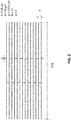
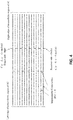
- Bricks and mortar model is used to represent corneocytes and lipid matrix respectively.
- the structure is characterized by geometric parameters like corneocytes width, length, thickness of the lipid region, corneocytes offset ratio and number of corneocytes layers.
- the flux across the SC is measured and integrated with respect to time to calculate the dermal uptake/cumulative release of permeate through SC.
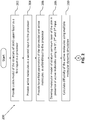
- a flowchart 200 for in-silico testing of actives using simulations of human skin is shown in Fig. 2 .
- a skin model of the structure of skin's upper layer is provided as a first input to the processor 106.
- the first input is provided using the input / output interface 102.
- the active molecules are provided as a second input to the processor 106.
- the active molecules are stored in the structure library.
- the force field parameters of the skin model and active molecules are provided as a third input to the processor 106.
- the force field parameters are stored in the force field library 110.
- the force field parameters contain both bonded and non-bonded interaction parameters which are used in running the molecular dynamic simulation. They can have different mathematical form like harmonic, combinations of cosines and sines, exponentials, etc.
- a molecular model of stratum corneum layer of the skin membrane is developed by the processor 106 in presence of actives using the first input, the second input and the third input.
- the diffusivity of the actives is calculated using multiple molecular dynamic simulation.
- the diffusivity along a bilayer normal is averaged out.
- the transport model of the stratum corneum is developed by the processor 106.
- the transport model represents the transport mechanism of the active molecule.
- finite element technique FEM
- the average diffusivity is provided as input to the transport model.
- the release profile of the active molecules is generated by the processor 106 using the transport model.
- the system 100 is also configured to compare or validate the release profile of the actives with an experimental release profile of the actives.
- the method of in-silico testing of actives using simulations of human skin were validated with the help of following experimental findings.
- the present skin bilayer model was first tested with the experimental data and diffusivity was calculated. This diffusivity compared with the experimental data and used as an input in transport model simulation.
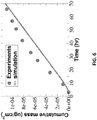
- the final cumulative release profile of the drug molecule through this virtual skin was compared with the experimental release profile as follows:
- the force field parameters for the Ceramide were taken from the Berger force field and GROMOS87 parameters.
- the Ryckaert-Bellemans dihedral potential was used for the hydrocarbon chains of free fatty acids and Ceramide.
- the parameters for free fatty acid and cholesterol were taken from the GROMOS data set.
- the simple point charge (SPC) model was used for water molecule.
- the simulations were carried out in NVT and NPT ensemble.
- the temperature was controlled at 310 K by Nose-Hoover thermostat with a time constant of 5 ps and thermostat coupled separately to lipid molecules and water.
- Pressure was controlled at 1 bar by Parrinello-Rahman barostat with a time constant of 5 ps and compressibility of 4.5 x 10⁻⁵ bar with semi isotropic coupling (XY and Z direction coupled separately). All the bonds in lipid and solute molecules were constrained using LINCS algorithm while SETTLE algorithm was used for water.
- a time step of 2 fs was used for all simulations.
- a cut off of 1.2 nm was used for Vander Wall and electrostatic interactions. All the systems were equilibrated for at least ⁇ 5 ns. The final 25 ns run of constrained simulation was used to calculation of constrained force and other properties.
- the equi-molar bilayer structure equilibrated for ⁇ 200 ns in NPT ensemble.
- the equi-molar bilayer is made up of 52 CER, 52 CHOL, 52 FFA and 5120 water molecules.
- COM center of mass
- For each system four drug molecules placed manually at different XY plane and Z distance of 4.8 from the COM of the bilayer. Overlapped water molecules were removed and system was then energy minimized.
- Each system was then equilibrated in NPT ensemble for another 20 ns by keeping solute molecules fixed at their positions. These equilibrated structures were further used for the preparation of the initial configuration of constrained simulations.
- the stored equidistance configuration was further run for 30 ns out of which first 5 ns simulation was discarded as an equilibration run.
- the distance between the COM of solute and COM of bilayer was constrained in z direction while solute was free to move in lateral direction.
- the configuration was stored at every 1 ps and constrained force was stored at every 10 fs.
- Last 25 ns runs of each simulation were used to calculate diffusion and potential of mean force. It was assumed that bilayer is symmetric and result from the one side of bilayer will be the mirror image of the result of other side.
- the homogenous solubility diffusion model is generally used for the calculation of passive permeability of solutes through membranes. According to this model the solute first dissolves into the membrane, then diffuses through the membrane interior, and finally dissolves again in the outer surrounding medium.
- K the solute partition function from aqueous to organic phase, D is the diffusion coefficient of solute and d is the thickness of the bilayer.
- This model has been challenged many times. It has been shown previously that solute size and composition changes the permeability many folds as well as local partition function governs the solute permeability.
- Molecular dynamics simulation provides attractive way to calculate D(z) along the bilayer normal z. We have adopted nonhomogeneous solubility diffusion model to compute the diffusivity.
- R gas constant
- T temperature
- F (z,t) constrained force on solute at a given z.
- Bricks and mortar model is generally used to represent corneocytes and lipid matrix respectively.
- the structure is characterized by geometric parameters like corneocyte width, length, thickness of the lipid region, corneocyte offset ratio and number of corneocyte layers.
- the flux across the SC is measured and integrated with respect to time to calculate the dermal uptake/cumulative release of permeant through SC.
- the permeant studied in here is fentanyl.
- the concentration of fentanyl is 0.09 mol/m3.
- the partition coefficient of fentanyl from the patch to SC is 0.14.
- the hardware device can be any kind of device which can be programmed including e.g. any kind of computer like a server or a personal computer, or the like, or any combination thereof.
- the device may also include means which could be e.g. hardware means like e.g. an application-specific integrated circuit (ASIC), a field-programmable gate array (FPGA), or a combination of hardware and software means, e.g.
- ASIC application-specific integrated circuit
- FPGA field-programmable gate array
- the means can include both hardware means and software means.
- the method embodiments described herein could be implemented in hardware and software.
- the device may also include software means.
- the embodiments may be implemented on different hardware devices, e.g. using a plurality of CPUs.
- the embodiments herein can comprise hardware and software elements.
- the embodiments that are implemented in software include but are not limited to, firmware, resident software, microcode, etc.
- the functions performed by various modules described herein may be implemented in other modules or combinations of other modules.
- a computer-usable or computer readable medium can be any apparatus that can comprise, store, communicate, propagate, or transport the program for use by or in connection with the instruction execution system, apparatus, or device.
- the medium can be an electronic, magnetic, optical, electromagnetic, infrared, or semiconductor system (or apparatus or device) or a propagation medium.
- Examples of a computer-readable medium include a semiconductor or solid state memory, magnetic tape, a removable computer diskette, a random access memory (RAM), a read-only memory (ROM), a rigid magnetic disk and an optical disk.
- Current examples of optical disks include compact disk-read only memory (CD-ROM), compact disk-read/write (CD-R/W) and DVD.
- a data processing system suitable for storing and/or executing program code will include at least one processor coupled directly or indirectly to memory elements through a system bus.
- the memory elements can include local memory employed during actual execution of the program code, bulk storage, and cache memories which provide temporary storage of at least some program code in order to reduce the number of times code must be retrieved from bulk storage during execution.
- I/O devices can be coupled to the system either directly or through intervening I/O controllers.
- Network adapters may also be coupled to the system to enable the data processing system to become coupled to other data processing systems or remote printers or storage devices through intervening private or public networks. Modems, cable modem and Ethernet cards are just a few of the currently available types of network adapters.
- a representative hardware environment for practicing the embodiments may include a hardware configuration of an information handling/computer system in accordance with the embodiments herein.
- the system herein comprises at least one processor or central processing unit (CPU).
- the CPUs are interconnected via system bus to various devices such as a random access memory (RAM), read-only memory (ROM), and an input/output (I/O) adapter.
- RAM random access memory
- ROM read-only memory
- I/O input/output
- the I/O adapter can connect to peripheral devices, such as disk units and tape drives, or other program storage devices that are readable by the system.
- the system can read the inventive instructions on the program storage devices and follow these instructions to execute the methodology of the embodiments herein.
- the system further includes a user interface adapter that connects a keyboard, mouse, speaker, microphone, and/or other user interface devices such as a touch screen device (not shown) to the bus to gather user input.
- a communication adapter connects the bus to a data processing network
- a display adapter connects the bus to a display device which may be embodied as an output device such as a monitor, printer, or transmitter, for example.
Landscapes
- Engineering & Computer Science (AREA)
- Health & Medical Sciences (AREA)
- Life Sciences & Earth Sciences (AREA)
- Bioinformatics & Cheminformatics (AREA)
- Theoretical Computer Science (AREA)
- Bioinformatics & Computational Biology (AREA)
- General Health & Medical Sciences (AREA)
- Chemical & Material Sciences (AREA)
- Physics & Mathematics (AREA)
- Medical Informatics (AREA)
- Computing Systems (AREA)
- Spectroscopy & Molecular Physics (AREA)
- Crystallography & Structural Chemistry (AREA)
- Biotechnology (AREA)
- Molecular Biology (AREA)
- Biophysics (AREA)
- Evolutionary Biology (AREA)
- Medicinal Chemistry (AREA)
- Physiology (AREA)
- Library & Information Science (AREA)
- Public Health (AREA)
- Epidemiology (AREA)
- Data Mining & Analysis (AREA)
- Databases & Information Systems (AREA)
- Pathology (AREA)
- Biomedical Technology (AREA)
- Primary Health Care (AREA)
- Biochemistry (AREA)
- Pharmacology & Pharmacy (AREA)
- Investigating Or Analysing Biological Materials (AREA)
- Management, Administration, Business Operations System, And Electronic Commerce (AREA)
- Cosmetics (AREA)
- Measuring And Recording Apparatus For Diagnosis (AREA)
Applications Claiming Priority (1)
| Application Number | Priority Date | Filing Date | Title |
|---|---|---|---|
| IN201721007631 | 2017-03-03 |
Publications (2)
| Publication Number | Publication Date |
|---|---|
| EP3370178A2 true EP3370178A2 (fr) | 2018-09-05 |
| EP3370178A3 EP3370178A3 (fr) | 2018-12-19 |
Family
ID=61192691
Family Applications (1)
| Application Number | Title | Priority Date | Filing Date |
|---|---|---|---|
| EP18155772.9A Ceased EP3370178A3 (fr) | 2017-03-03 | 2018-02-08 | Procédé et système de test in silico d'agents actifs sur la peau humaine |
Country Status (6)
| Country | Link |
|---|---|
| US (1) | US11488686B2 (fr) |
| EP (1) | EP3370178A3 (fr) |
| JP (1) | JP6591586B2 (fr) |
| KR (1) | KR102138418B1 (fr) |
| CN (1) | CN108536995B (fr) |
| AU (1) | AU2018201366B2 (fr) |
Cited By (2)
| Publication number | Priority date | Publication date | Assignee | Title |
|---|---|---|---|---|
| EP3683800A1 (fr) * | 2019-01-18 | 2020-07-22 | Tata Consultancy Services Limited | Procédé et système de conception et d'essai in silico de formulations à l'aide d'un modèle physicochimique de la peau |
| CN111602207A (zh) * | 2018-01-05 | 2020-08-28 | 强生消费者公司 | 皮肤阻隔制备物及其方法 |
Families Citing this family (2)
| Publication number | Priority date | Publication date | Assignee | Title |
|---|---|---|---|---|
| EP3869512B1 (fr) * | 2020-02-20 | 2025-11-12 | Tata Consultancy Services Limited | Conception in-silico d'expériences d'électroporation pour des applications d'administration de médicaments topique et transdermique |
| CN112669913B (zh) * | 2020-12-18 | 2024-02-09 | 安徽工业大学 | 活性硫化物含量对环烷酸腐蚀速率影响因子的确定方法 |
Family Cites Families (14)
| Publication number | Priority date | Publication date | Assignee | Title |
|---|---|---|---|---|
| JPH0816551A (ja) * | 1994-07-04 | 1996-01-19 | Lion Corp | 生体内拡散のシミュレーション方法及び装置 |
| JP2005529604A (ja) * | 2002-06-13 | 2005-10-06 | ザ・トラスティーズ・オブ・ザ・ユニバーシティ・オブ・ペンシルベニア | 粗粒度モデルを用いる生体膜をシミュレートするための方法、システム、およびコンピュータプログラム製品 |
| EP1590743A1 (fr) * | 2003-01-21 | 2005-11-02 | Alza Corporation | Modele informatique de liberation transdermique de medicament |
| US7169382B2 (en) | 2003-01-30 | 2007-01-30 | L'oreal | Reconstructed epidermis/skin equivalent comprising a ceramide 7 and /or 5.5 and lipid lamellar vesicular compositions comprising ceramide 7 and/or 5.5 compounds |
| GB2414675B (en) | 2004-06-05 | 2006-09-06 | Dewan Fazlul Hoque Chowdhury | Transdermal drug delivery device |
| EP1898930A4 (fr) | 2005-06-17 | 2009-12-09 | Dynamis Therapeutics Inc | Traitement d'etats inflammatoires |
| ES2283212B1 (es) * | 2006-03-31 | 2008-08-16 | Lipotec S.A. | Peptidos sinteticos utiles en el tratamiento de la piel y su uso en composiciones cosmeticas o dermofarmaceuticas. |
| CN101221160B (zh) | 2007-01-09 | 2011-05-11 | 浙江中医药大学 | 一种脉动循环式透皮实验仪 |
| WO2011016743A1 (fr) | 2009-08-03 | 2011-02-10 | Petr Olegovich Fedichev | Nouveaux procédés de modélisation moléculaire, procédés associés, logiciel, systèmes et produits |
| US10080760B2 (en) | 2009-10-27 | 2018-09-25 | Besins Healthcare Luxembourg Sarl | Transdermal pharmaceutical compositions comprising active agents |
| CN103020483A (zh) * | 2013-01-08 | 2013-04-03 | 安徽中医学院 | 用软件建立体内屏障晶体结构模型及其制备方法和应用 |
| US20160184245A1 (en) | 2013-07-25 | 2016-06-30 | Cheryl Lee Eberting | Formulations for epidermal repair |
| CA2932156A1 (fr) * | 2013-12-24 | 2015-07-02 | The Procter & Gamble Company | Compositions cosmetiques et procedes permettant de procurer une penetration amelioree de principes actifs pour soin de la peau |
| WO2016054079A1 (fr) * | 2014-09-29 | 2016-04-07 | Zyomed Corp. | Systèmes et procédés pour la détection et la mesure du glucose sanguin du sang et d'autres analytes à l'aide du calcul de collision |
-
2018
- 2018-02-08 EP EP18155772.9A patent/EP3370178A3/fr not_active Ceased
- 2018-02-20 US US15/900,448 patent/US11488686B2/en active Active
- 2018-02-21 JP JP2018028649A patent/JP6591586B2/ja active Active
- 2018-02-22 KR KR1020180021357A patent/KR102138418B1/ko active Active
- 2018-02-26 AU AU2018201366A patent/AU2018201366B2/en active Active
- 2018-03-01 CN CN201810172287.4A patent/CN108536995B/zh active Active
Non-Patent Citations (1)
| Title |
|---|
| None |
Cited By (2)
| Publication number | Priority date | Publication date | Assignee | Title |
|---|---|---|---|---|
| CN111602207A (zh) * | 2018-01-05 | 2020-08-28 | 强生消费者公司 | 皮肤阻隔制备物及其方法 |
| EP3683800A1 (fr) * | 2019-01-18 | 2020-07-22 | Tata Consultancy Services Limited | Procédé et système de conception et d'essai in silico de formulations à l'aide d'un modèle physicochimique de la peau |
Also Published As
| Publication number | Publication date |
|---|---|
| KR102138418B1 (ko) | 2020-07-28 |
| US11488686B2 (en) | 2022-11-01 |
| US20180253525A1 (en) | 2018-09-06 |
| AU2018201366A1 (en) | 2018-09-20 |
| EP3370178A3 (fr) | 2018-12-19 |
| AU2018201366B2 (en) | 2020-02-27 |
| CN108536995B (zh) | 2022-12-20 |
| JP6591586B2 (ja) | 2019-10-16 |
| CN108536995A (zh) | 2018-09-14 |
| KR20180101187A (ko) | 2018-09-12 |
| JP2018152058A (ja) | 2018-09-27 |
Similar Documents
| Publication | Publication Date | Title |
|---|---|---|
| US10720228B2 (en) | Method and system for testing of active molecules using molecular simulation of skin membrane | |
| Orsi et al. | Permeability of drugs and hormones through a lipid bilayer: insights from dual-resolution molecular dynamics | |
| US11488686B2 (en) | Method and system for in silico testing of actives on human skin | |
| Orsi et al. | Permeability of small molecules through a lipid bilayer: a multiscale simulation study | |
| Venable et al. | Molecular dynamics simulations of membrane permeability | |
| Carpenter et al. | Capturing phase behavior of ternary lipid mixtures with a refined martini coarse-grained force field | |
| Gupta et al. | Molecular dynamics simulation study of permeation of molecules through skin lipid bilayer | |
| Levine et al. | Determination of biomembrane bending moduli in fully atomistic simulations | |
| Paloncýová et al. | Structural changes in ceramide bilayers rationalize increased permeation through stratum corneum models with shorter acyl tails | |
| Querleux | Computational biophysics of the skin | |
| Zhang et al. | Passive transmembrane permeation mechanisms of monovalent ions explored by molecular dynamics simulations | |
| Ghaemi et al. | Permeability coefficients of lipophilic compounds estimated by computer simulations | |
| Song et al. | Molecular dynamics simulations of micelle properties and behaviors of sodium lauryl ether sulfate penetrating ceramide and phospholipid bilayers | |
| Neely et al. | Nonlinear quantitative structure-property relationship modeling of skin permeation coefficient | |
| Alinchenko et al. | Effect of cholesterol on the properties of phospholipid membranes. 4. Interatomic voids | |
| Li et al. | ADME characterization and PBK model development of 3 highly protein-bound UV filters through topical application | |
| Vishnyakov et al. | Interactions of crosslinked polyacrylic acid polyelectrolyte gels with nonionic and ionic surfactants | |
| Zhang et al. | A computational workflow for end-to-end simulation of percutaneous absorption | |
| Shigematsu et al. | Stretch-induced interdigitation of a phospholipid/cholesterol bilayer | |
| Selzer et al. | A strategy for in-silico prediction of skin absorption in man | |
| Dancik et al. | Physiologically based pharmacokinetic modelling of in vitro skin permeation of sunscreen actives under various experimental conditions | |
| Benmameri et al. | MemCross: Accelerated Weight Histogram method to assess membrane permeability | |
| US11682473B2 (en) | Skin permeability prediction | |
| Lian et al. | Understanding drug delivery outcomes: Progress in microscopic modeling of skin barrier property, permeation pathway, Dermatopharmacokinetics, and bioavailability | |
| Radhakrishnan et al. | Establishing a general atomistic model for the stratum corneum lipid matrix based on experimental data for skin permeation studies |
Legal Events
| Date | Code | Title | Description |
|---|---|---|---|
| PUAI | Public reference made under article 153(3) epc to a published international application that has entered the european phase |
Free format text: ORIGINAL CODE: 0009012 |
|
| STAA | Information on the status of an ep patent application or granted ep patent |
Free format text: STATUS: THE APPLICATION HAS BEEN PUBLISHED |
|
| AK | Designated contracting states |
Kind code of ref document: A2 Designated state(s): AL AT BE BG CH CY CZ DE DK EE ES FI FR GB GR HR HU IE IS IT LI LT LU LV MC MK MT NL NO PL PT RO RS SE SI SK SM TR |
|
| AX | Request for extension of the european patent |
Extension state: BA ME |
|
| PUAL | Search report despatched |
Free format text: ORIGINAL CODE: 0009013 |
|
| AK | Designated contracting states |
Kind code of ref document: A3 Designated state(s): AL AT BE BG CH CY CZ DE DK EE ES FI FR GB GR HR HU IE IS IT LI LT LU LV MC MK MT NL NO PL PT RO RS SE SI SK SM TR |
|
| AX | Request for extension of the european patent |
Extension state: BA ME |
|
| RIC1 | Information provided on ipc code assigned before grant |
Ipc: G06F 19/00 20180101AFI20181114BHEP |
|
| STAA | Information on the status of an ep patent application or granted ep patent |
Free format text: STATUS: REQUEST FOR EXAMINATION WAS MADE |
|
| 17P | Request for examination filed |
Effective date: 20190619 |
|
| RBV | Designated contracting states (corrected) |
Designated state(s): AL AT BE BG CH CY CZ DE DK EE ES FI FR GB GR HR HU IE IS IT LI LT LU LV MC MK MT NL NO PL PT RO RS SE SI SK SM TR |
|
| STAA | Information on the status of an ep patent application or granted ep patent |
Free format text: STATUS: EXAMINATION IS IN PROGRESS |
|
| 17Q | First examination report despatched |
Effective date: 20220404 |
|
| STAA | Information on the status of an ep patent application or granted ep patent |
Free format text: STATUS: THE APPLICATION HAS BEEN REFUSED |
|
| 18R | Application refused |
Effective date: 20231221 |