EP3370383B1 - Procédé et système d'authentification ca photonique - Google Patents
Procédé et système d'authentification ca photonique Download PDFInfo
- Publication number
- EP3370383B1 EP3370383B1 EP16858914.1A EP16858914A EP3370383B1 EP 3370383 B1 EP3370383 B1 EP 3370383B1 EP 16858914 A EP16858914 A EP 16858914A EP 3370383 B1 EP3370383 B1 EP 3370383B1
- Authority
- EP
- European Patent Office
- Prior art keywords
- user
- pin code
- photon
- authentication
- verification
- Prior art date
- Legal status (The legal status is an assumption and is not a legal conclusion. Google has not performed a legal analysis and makes no representation as to the accuracy of the status listed.)
- Not-in-force
Links
Images

Classifications
-
- H—ELECTRICITY
- H04—ELECTRIC COMMUNICATION TECHNIQUE
- H04L—TRANSMISSION OF DIGITAL INFORMATION, e.g. TELEGRAPHIC COMMUNICATION
- H04L9/00—Cryptographic mechanisms or cryptographic arrangements for secret or secure communications; Network security protocols
- H04L9/32—Cryptographic mechanisms or cryptographic arrangements for secret or secure communications; Network security protocols including means for verifying the identity or authority of a user of the system or for message authentication, e.g. authorization, entity authentication, data integrity or data verification, non-repudiation, key authentication or verification of credentials
- H04L9/3263—Cryptographic mechanisms or cryptographic arrangements for secret or secure communications; Network security protocols including means for verifying the identity or authority of a user of the system or for message authentication, e.g. authorization, entity authentication, data integrity or data verification, non-repudiation, key authentication or verification of credentials involving certificates, e.g. public key certificate [PKC] or attribute certificate [AC]; Public key infrastructure [PKI] arrangements
- H04L9/3268—Cryptographic mechanisms or cryptographic arrangements for secret or secure communications; Network security protocols including means for verifying the identity or authority of a user of the system or for message authentication, e.g. authorization, entity authentication, data integrity or data verification, non-repudiation, key authentication or verification of credentials involving certificates, e.g. public key certificate [PKC] or attribute certificate [AC]; Public key infrastructure [PKI] arrangements using certificate validation, registration, distribution or revocation, e.g. certificate revocation list [CRL]
-
- G—PHYSICS
- G06—COMPUTING OR CALCULATING; COUNTING
- G06F—ELECTRIC DIGITAL DATA PROCESSING
- G06F21/00—Security arrangements for protecting computers, components thereof, programs or data against unauthorised activity
- G06F21/30—Authentication, i.e. establishing the identity or authorisation of security principals
- G06F21/31—User authentication
- G06F21/34—User authentication involving the use of external additional devices, e.g. dongles or smart cards
- G06F21/35—User authentication involving the use of external additional devices, e.g. dongles or smart cards communicating wirelessly
-
- G—PHYSICS
- G06—COMPUTING OR CALCULATING; COUNTING
- G06V—IMAGE OR VIDEO RECOGNITION OR UNDERSTANDING
- G06V40/00—Recognition of biometric, human-related or animal-related patterns in image or video data
- G06V40/10—Human or animal bodies, e.g. vehicle occupants or pedestrians; Body parts, e.g. hands
- G06V40/12—Fingerprints or palmprints
- G06V40/1365—Matching; Classification
-
- H—ELECTRICITY
- H04—ELECTRIC COMMUNICATION TECHNIQUE
- H04B—TRANSMISSION
- H04B10/00—Transmission systems employing electromagnetic waves other than radio-waves, e.g. infrared, visible or ultraviolet light, or employing corpuscular radiation, e.g. quantum communication
- H04B10/11—Arrangements specific to free-space transmission, i.e. transmission through air or vacuum
- H04B10/114—Indoor or close-range type systems
-
- H—ELECTRICITY
- H04—ELECTRIC COMMUNICATION TECHNIQUE
- H04B—TRANSMISSION
- H04B10/00—Transmission systems employing electromagnetic waves other than radio-waves, e.g. infrared, visible or ultraviolet light, or employing corpuscular radiation, e.g. quantum communication
- H04B10/70—Photonic quantum communication
-
- H—ELECTRICITY
- H04—ELECTRIC COMMUNICATION TECHNIQUE
- H04B—TRANSMISSION
- H04B10/00—Transmission systems employing electromagnetic waves other than radio-waves, e.g. infrared, visible or ultraviolet light, or employing corpuscular radiation, e.g. quantum communication
- H04B10/80—Optical aspects relating to the use of optical transmission for specific applications, not provided for in groups H04B10/03 - H04B10/70, e.g. optical power feeding or optical transmission through water
- H04B10/85—Protection from unauthorised access, e.g. eavesdrop protection
-
- H—ELECTRICITY
- H04—ELECTRIC COMMUNICATION TECHNIQUE
- H04L—TRANSMISSION OF DIGITAL INFORMATION, e.g. TELEGRAPHIC COMMUNICATION
- H04L63/00—Network architectures or network communication protocols for network security
- H04L63/08—Network architectures or network communication protocols for network security for authentication of entities
- H04L63/0823—Network architectures or network communication protocols for network security for authentication of entities using certificates
-
- H—ELECTRICITY
- H04—ELECTRIC COMMUNICATION TECHNIQUE
- H04L—TRANSMISSION OF DIGITAL INFORMATION, e.g. TELEGRAPHIC COMMUNICATION
- H04L63/00—Network architectures or network communication protocols for network security
- H04L63/08—Network architectures or network communication protocols for network security for authentication of entities
- H04L63/0861—Network architectures or network communication protocols for network security for authentication of entities using biometrical features, e.g. fingerprint, retina-scan
-
- H—ELECTRICITY
- H04—ELECTRIC COMMUNICATION TECHNIQUE
- H04L—TRANSMISSION OF DIGITAL INFORMATION, e.g. TELEGRAPHIC COMMUNICATION
- H04L9/00—Cryptographic mechanisms or cryptographic arrangements for secret or secure communications; Network security protocols
- H04L9/08—Key distribution or management, e.g. generation, sharing or updating, of cryptographic keys or passwords
- H04L9/0816—Key establishment, i.e. cryptographic processes or cryptographic protocols whereby a shared secret becomes available to two or more parties, for subsequent use
- H04L9/0819—Key transport or distribution, i.e. key establishment techniques where one party creates or otherwise obtains a secret value, and securely transfers it to the other(s)
- H04L9/0822—Key transport or distribution, i.e. key establishment techniques where one party creates or otherwise obtains a secret value, and securely transfers it to the other(s) using key encryption key
-
- H—ELECTRICITY
- H04—ELECTRIC COMMUNICATION TECHNIQUE
- H04L—TRANSMISSION OF DIGITAL INFORMATION, e.g. TELEGRAPHIC COMMUNICATION
- H04L9/00—Cryptographic mechanisms or cryptographic arrangements for secret or secure communications; Network security protocols
- H04L9/32—Cryptographic mechanisms or cryptographic arrangements for secret or secure communications; Network security protocols including means for verifying the identity or authority of a user of the system or for message authentication, e.g. authorization, entity authentication, data integrity or data verification, non-repudiation, key authentication or verification of credentials
- H04L9/321—Cryptographic mechanisms or cryptographic arrangements for secret or secure communications; Network security protocols including means for verifying the identity or authority of a user of the system or for message authentication, e.g. authorization, entity authentication, data integrity or data verification, non-repudiation, key authentication or verification of credentials involving a third party or a trusted authority
-
- H—ELECTRICITY
- H04—ELECTRIC COMMUNICATION TECHNIQUE
- H04L—TRANSMISSION OF DIGITAL INFORMATION, e.g. TELEGRAPHIC COMMUNICATION
- H04L9/00—Cryptographic mechanisms or cryptographic arrangements for secret or secure communications; Network security protocols
- H04L9/32—Cryptographic mechanisms or cryptographic arrangements for secret or secure communications; Network security protocols including means for verifying the identity or authority of a user of the system or for message authentication, e.g. authorization, entity authentication, data integrity or data verification, non-repudiation, key authentication or verification of credentials
- H04L9/3226—Cryptographic mechanisms or cryptographic arrangements for secret or secure communications; Network security protocols including means for verifying the identity or authority of a user of the system or for message authentication, e.g. authorization, entity authentication, data integrity or data verification, non-repudiation, key authentication or verification of credentials using a predetermined code, e.g. password, passphrase or PIN
- H04L9/3231—Biological data, e.g. fingerprint, voice or retina
-
- H—ELECTRICITY
- H04—ELECTRIC COMMUNICATION TECHNIQUE
- H04L—TRANSMISSION OF DIGITAL INFORMATION, e.g. TELEGRAPHIC COMMUNICATION
- H04L9/00—Cryptographic mechanisms or cryptographic arrangements for secret or secure communications; Network security protocols
- H04L9/32—Cryptographic mechanisms or cryptographic arrangements for secret or secure communications; Network security protocols including means for verifying the identity or authority of a user of the system or for message authentication, e.g. authorization, entity authentication, data integrity or data verification, non-repudiation, key authentication or verification of credentials
- H04L9/3263—Cryptographic mechanisms or cryptographic arrangements for secret or secure communications; Network security protocols including means for verifying the identity or authority of a user of the system or for message authentication, e.g. authorization, entity authentication, data integrity or data verification, non-repudiation, key authentication or verification of credentials involving certificates, e.g. public key certificate [PKC] or attribute certificate [AC]; Public key infrastructure [PKI] arrangements
-
- H—ELECTRICITY
- H04—ELECTRIC COMMUNICATION TECHNIQUE
- H04W—WIRELESS COMMUNICATION NETWORKS
- H04W12/00—Security arrangements; Authentication; Protecting privacy or anonymity
- H04W12/06—Authentication
-
- H—ELECTRICITY
- H04—ELECTRIC COMMUNICATION TECHNIQUE
- H04L—TRANSMISSION OF DIGITAL INFORMATION, e.g. TELEGRAPHIC COMMUNICATION
- H04L9/00—Cryptographic mechanisms or cryptographic arrangements for secret or secure communications; Network security protocols
- H04L9/50—Cryptographic mechanisms or cryptographic arrangements for secret or secure communications; Network security protocols using hash chains, e.g. blockchains or hash trees
Definitions
- the present application relates to a CA authentication, and in particular, to an optical communication-based photon-based CA authentication method and system.
- a CA (Certificate Authority) digital certificate is issued by an authorization center of an authority agency, and can be used to identify an identity of an opposite party.
- a digital certificate is a file that is digitally signed by a certificate authorization center and that contains public key owner information and a public key.
- the CA digital certificate can perform security authentication in a safe and effective manner, but has such drawbacks as digital certificate abuse or theft.
- a visible light communication technology is a new-type wireless optical communication technology developed based on the LED technology. Communication is performed by using blinking of an LED light source at a high frequency, and a transmission rate of the visible light communication can reach a maximum of gigabits per second.
- the visible light communication has rich spectrum resources that common wireless communication such as microwave communication does not have.
- the visible light communication can be applied to any communication protocol and any environment, and the visible light communication features a flexible, convenient, and low-cost device setup, and is applicable to large-scale popularization and application.
- WO 2004089029 provides a solution for user authentication using infrared communication, but the above problem still remains unsolved.
- a photon-based CA authentication method including:
- the method further includes: performing, by the photon terminal, user fingerprint recognition; and sending, in response to successful fingerprint recognition, the optical signal including the user ID.
- the verifying the user ID included in the optical signal includes: comparing the user ID included in the optical signal with a locally stored ID; and if the two are consistent, determining that the user ID verification is successful, or if the two are inconsistent, determining that the user ID verification fails.
- the method further includes: sending, in response to failed user ID verification, an error message to the client.
- the providing, in response to successful user ID verification, a user certificate to a client to perform CA certificate authentication includes: performing, in response to successful user ID verification, by the photon-based CA authentication terminal, PIN code verification; and providing, in response to successful PIN code verification, the user certificate to the client to perform the CA certificate authentication.
- the photon-based CA authentication terminal includes a CA authentication module and a photon processing module
- the performing PIN code verification includes: transferring, in response to successful user ID verification, by the photon processing module, a PIN code to the CA authentication module; and comparing, by the CA authentication module, the received PIN code with a locally stored PIN code, to perform the PIN code verification, and if the two are consistent, determining that the PIN code verification is successful, or if the two are inconsistent, determining that the PIN code verification fails.
- the PIN code sent by the photon processing module is a PIN code encrypted using a first key algorithm
- the PIN code locally stored by the CA authentication module is a PIN code encrypted using a second key algorithm
- the comparing, by the CA authentication module, the received PIN code with a locally stored PIN code includes: decrypting the received PIN code by using the first key algorithm; decrypting the locally stored PIN code by using the second key algorithm; and comparing the two decrypted PIN codes to perform the PIN code verification.
- the method further includes: sending, in response to failed PIN code verification, an error message to the client.
- the method further includes: submitting, by the client, the user certificate to a certificate authentication gateway, to perform the CA certificate authentication.
- the method further includes: submitting, by the client, the user certificate and a certificate device password input by the user to the certificate authentication gateway, to perform the CA certificate authentication.
- a photon-based CA authentication system including: a photon-based CA authentication terminal, where the photon-based CA authentication terminal includes:
- the system further includes: the photon terminal, configured to perform user fingerprint recognition, and send, in response to successful fingerprint recognition, the optical signal including the user ID to the photon-based CA authentication terminal.
- the photon processing module includes: a storage unit, configured to store user ID; and a comparing unit, configured to compare the user ID included in the optical signal with a user ID locally stored in the storage unit; and if the two are consistent, determine that the user ID verification is successful, or if the two are inconsistent, determine that the user ID verification fails.
- the photon-based CA authentication terminal sends, in response to failed user ID verification, an error message to the client.
- the photon-based CA authentication terminal further includes a CA authentication module, configured to perform, in response to successful user ID verification, PIN code verification, and provide, in response to successful PIN code verification, the user certificate to the client to perform the CA certificate authentication.
- a CA authentication module configured to perform, in response to successful user ID verification, PIN code verification, and provide, in response to successful PIN code verification, the user certificate to the client to perform the CA certificate authentication.
- the storage unit of the photon processing module further stores a PIN code
- the photon processing module transfers, in response to successful user ID verification, the PIN code to the CA authentication module
- the CA authentication module includes: a storage unit, configured to store a PIN code; and a comparing unit, configured to compare the received PIN code with a locally stored PIN code, to perform the PIN code verification, and if the two are consistent, determine that the PIN code verification is successful, of if the two are inconsistent, determine that the PIN code verification fails.
- the PIN code sent by the photon processing module is a PIN code encrypted using a first key algorithm
- the PIN code locally stored by the CA authentication module is a PIN code encrypted using a second key algorithm
- the CA authentication module further includes: a key unit, configured to decrypt the received PIN code by using the first key algorithm, and decrypt the locally stored PIN code by using the second key algorithm, where the comparing unit compares the two decrypted PIN codes to perform the PIN code verification.
- the photon-based CA authentication terminal sends, in response to failed PIN code verification, an error message to the client.
- the system further includes the client, connected to the photon-based CA authentication terminal by using a USB port, where the client submits the user certificate to a certificate authentication gateway, to perform the CA certificate authentication.
- the client submits the user certificate and a certificate device password input by the user to the certificate authentication gateway, to perform the CA certificate authentication.
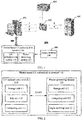
- FIG. 1 shows a block diagram of architecture of a photon-based CA authentication system 1000 according to an aspect of the present application.
- a photon-based CA authentication terminal 100 is connected to a client 300 by a USB port.
- a certificate authentication gateway 400 is deployed between the client 300 and a server 600 and is deployed in series. All information interactions between the client 300 and the server 600 pass through the authentication gateway 400.
- the authentication gateway 400 is responsible for performing a complete certificate authentication process of the client 300 and encrypted transmission of data. A request can really reach the server only after the client 300 is successfully verified by the authentication gateway.
- the photon-based CA authentication system 1000 may further include a photon terminal 200.
- a user uses the photon terminal 200 to perform preliminary photon verification against the photon-based CA authentication terminal 100, and subsequent CA authentication is performed only after successful preliminary photon verification.
- the user sends an optical signal including a user ID to the photon-based CA authentication terminal 100 by using the photon terminal 200, and a photon processing module 120 of the photon-based CA authentication terminal 100 receives the optical signal and performs photon verification.
- the photon terminal 200 includes a fingerprint recognition module that can perform fingerprint recognition on the user.
- the photon terminal 200 sends the optical signal only after the user passes the fingerprint recognition.
- the photon terminal 200 may be in a form of a card, for example, an all-in-one photon card.
- FIG. 2 shows a block diagram of a photon-based CA authentication terminal 100 according to an aspect of the present application.
- the photon-based CA authentication terminal 100 may include two parts: a CA authentication module 110 and the photon processing module 120.
- the two modules can communicate by using a UART protocol.
- the photon processing module 120 is mainly responsible for performing preliminary photon verification against a user.
- the photon-based CA authentication terminal 100 may be an integrated device, for example, an online banking USB key with a photon receiving function.
- the CA authentication module 110 and the photon processing module 120 may also be a complete set of instruments encapsulated in different devices.
- the CA authentication module 110 may be an existing USB-type electronic password card with a CA authentication function
- the photon processing module 120 may be a photon receiving end only used to receive an optical signal. The two are respectively connected to a computer by using a USB port to form the complete set of instruments.
- the photon processing module 120 first may include a light receiving unit 123, and accordingly, the photon terminal 200 may include a light emitting unit (not shown), so that the two can perform optical communication.
- the light emitting unit (for example, an encoding part) of the photon terminal 200 may encode original communication data, for example, a user ID, in any encoding manner.
- Common encodings may include NRZ encoding, NRZI encoding, NRZI inversion count encoding, and the like.
- the NRZ encoding uses 1 to represent a high level, and 0 to represent a low level.
- the NRZI encoding uses a signal inversion, that is, a transition between the high level and the low level, to represent a logic, for example, 1 (0), and uses a state in which high and low levels of signals remain unchanged to represent another logic, for example, 0 (1).
- RZ pulse count encoding adds n bits of original information into a group, sets an inter-group time interval between two adjacent groups of signals, and uses a quantity of pulses in each group to represent information of n bits in the group of signals. According to the RZ encoding, one pulse is used to indicate information 00, and three pulses are used to indicate information 10.
- the NRZI inversion count encoding also adds n bits of original information into a group, and sets an inter-group time interval between two adjacent groups of signals. Different from the RZ pulse count encoding, the NRZI uses a quantity of inversions from the high level to the low level (or from the low level to the high level) in each group to respectively represent information of n bits in the group of signals.
- the light emitting unit may transmit a received encoded signal in a form of visible light by using, for example, light-emitting to represent a high level signal and no-light-emitting to represent a low level signal.
- the light receiving unit 123 may be used to receive a visible light signal emitted by the photon terminal 200 and convert the visible light signal into a digital signal. For example, for high-frequency blinking generated by an LED light, presence of light may indicate a high level, and absence of light may indicate a low level, or vice versa, thereby converting the received visible light signal into the digital signal.
- the light receiving unit 123 (for example, a photoelectric conversion part) forms an electrical pulse signal by means of photoelectric conversion by using characteristics of an electrical signal and an optical signal of a photodiode.
- the threshold values may be reduced, and if a distance is close, the threshold values may be increased relatively.
- a level can be adjusted to a certain range, to ensure a correct pulse shape, and ensure sampling accuracy as far as possible.
- the light receiving unit 123 (for example, a decoding part) further decodes the obtained digital signal to recover the original communication data, for example, the user ID sent by the photon terminal 200.
- the photon terminal 200 sends an optical signal including the user ID to the photon processing module 120, and the light receiving unit 123 receives and processes the optical signal, to obtain the user ID.
- the light receiving unit 123 may perform A/D conversion and decryption processing (when the user ID is encrypted).
- the photon processing module 120 may verify the user ID, and if the verification is successful, the photon-based CA authentication terminal 100 may provide a user certificate to the client 300 by using, for example, a USB port, to perform CA certificate authentication.
- the user certificate is stored in a storage unit 111 of the CA authentication module 110, and at least as long as the photon verification is successful, the CA authentication module 110 can provide the user certificate for CA authentication.
- the photon processing module 120 mainly includes two parts in function: a light receiving part, such as the light receiving unit 123 described above, and a verifying part, such as a comparing unit 122 described in detail below.
- the photon-based CA authentication terminal 100 performs device initialization at the beginning, the client 300 delivers the user ID to the photon-based CA authentication terminal 100 by using a USB port, the photon processing module 120 encrypts the user ID and stores the user ID in the storage unit 121, and the user ID is a value same as that in the photon terminal 200.
- the comparing unit 122 may compare the user ID obtained by the light receiving unit 123 with the user ID in the storage unit 121. If the two are consistent, the comparing unit 122 determines that the user ID verification is successful, or if the two are inconsistent, the comparing unit 122 determines that the user ID verification fails. In a case in which the user ID in the storage unit 121 is an encrypted user ID, the photon processing module 120 further needs to decrypt it first and then compare the decrypted user ID with the user ID obtained by the light receiving unit 123.
- the CA authentication module 110 may submit a user certificate to the client 300, and when the photon verification fails, the photon-based CA authentication terminal 100 sends an error message to the client 300 by using the USB port.
- the CA authentication module 110 when the photon verification is successful, the CA authentication module 110 needs to further perform PIN code verification.
- the user certificate is provided to the client 300 for CA authentication only when the PIN code verification is successful, and when the PIN code verification fails, the photon-based CA authentication terminal 100 sends an error message to the client 300.
- the client 300 delivers a PIN code allocated by the certificate authentication gateway 400 to the photon-based CA authentication terminal 100 by using the USB port.
- the PIN code For the PIN code, each of the CA authentication module 110 and the photon processing module 120 maintains the PIN code, and stores the PIN code by using different AES keys.
- the PIN code in the storage unit 111 of the CA authentication module 110 is a PIN code encrypted using a first key algorithm, such as a PIN code encrypted using AES1
- the PIN code in the storage unit 121 of the photon processing module 120 is a PIN code encrypted using a second key algorithm, such as a PIN code encrypted using AES2.
- a key unit 112 of the CA authentication module 110 may use the second key algorithm, for example, on the basis of AES2, to decrypt the received PIN code, and use the first key algorithm, for example, on the basis of AES1, to decrypt the locally stored PIN code, and then compare the two. If the two are consistent, the key unit 112 determines that the PIN code verification is successful, or if the two are inconsistent, the key unit 112 determines that the PIN code verification fails.
- the CA authentication terminal 110 may send the user certificate to the client 300, and when the PIN code verification fails, the CA authentication terminal 110 may send an error message to the client.
- the client 300 may submit the user certificate to the certificate authentication gateway 400 to perform CA certificate authentication.
- the client 300 further needs to simultaneously submit a certificate device password input by the user to the certificate authentication gateway 400 for the CA certificate authentication.
- the client 300 sends a connection request to an application server 600, and the request first arrives at the authentication gateway 400, as indicated by an arrow numbered 1.
- the certificate authentication gateway 400 requires the user to submit a user certificate, as indicated by an arrow numbered 2.
- the client 300 prompts the user to input the certificate device password and submits the user certificate to the server, as indicated by an arrow numbered 3.
- the authentication gateway 400 verifies the acquired user certificate, including the validity of the certificate itself, a trust certificate chain, blacklist verification, or OCSP verification, as indicated by an arrow numbered 4. If the verification is successful, the authentication gateway 400 may send the request to the real server 600 and attach user certificate information to the request, as indicated by an arrow numbered 5.
- the server 600 acquires an identity of the user from the request, as indicated by an arrow numbered 6.
- FIG. 3 shows a flowchart of a photon-based CA authentication method 300 according to an aspect of the present application.
- the method 300 may include the following steps: Step 301: Prepare authentication.
- Step 302 Initialize a terminal.
- the photon-based CA authentication terminal 100 may acquire a PIN code and a user ID.
- Step 303 Perform fingerprint recognition.
- a user wants to perform photon verification by using the photon terminal 200 to send an optical signal, the user needs to input fingerprint information to perform the fingerprint recognition.
- Step 304 If the fingerprint recognition is successful, the process proceeds to step 305, or if the fingerprint recognition fails, the process proceeds to step 306.
- Step 305 The photon processing module 120 parses the received optical signal to obtain the user ID.
- Step 306 Report an error to the client 300.
- Step 307 The photon processing module 120 compares the received user ID with a locally stored user ID to perform the photon verification. If the verification is successful, the process proceeds to step 308, or if the verification fails, the process proceeds to step 309.
- Step 308 The photon processing module 120 sends the PIN code to the CA authentication module 110.
- the PIN code herein may be a PIN code encrypted by using AES2.
- Step 310 The CA authentication module 110 decrypts the received PIN code.
- the CA authentication module 110 may use AES2 to decrypt the PIN code.
- Step 311 The CA authentication module 110 decrypts the locally stored PIN code.
- the CA authentication module 110 may use, for example, AES1, to decrypt the PIN code herein.
- Step 312 Compare whether the two are consistent. If the two are consistent, the process proceeds to step 313, or if the two are inconsistent, the process proceeds to step 314.
- Step 313 The CA authentication module 110 submits the user certificate to the client 300.
- Step 314 Report an error to the client 300.
- fingerprint recognition is performed first, followed by photon ID verification, and finally CA authentication.
- a person, a photon card, and an authentication terminal are fully bound. This can effectively prevent a certificate abuse phenomenon, improving an authentication security level.
- Zhang San can legally access an authorized device by using a device carrying a CA certificate, such as a USB memory. However, the device carrying a CA certificate is not bound to Zhang San. If Zhang San lends the CA certificate device to Li Si, because the CA certificate device is not bound to a user, Li Si still can legally start the A1111 device when using the CA certificate device, resulting in a security risk.
- Zhang San and his/her CA certificate are bound to each other in a manner of photon ID verification: Firstly, fingerprint recognition is performed, and if the fingerprint recognition is successful, a current operator is confirmed as Zhang San, and then photon verification is performed. If a photon ID is valid, the CA authentication module is started to confirm that Zhang San has a valid CA certificate device. CA authentication is finally performed to confirm that Zhang San has rights to use the device.
- the solution used in the present application binds the user and a CA certificate device allocated to the user together in a manner of photon ID verification, so that others cannot replace to use, thereby increasing safety of device use.
- three verifications are performed. Firstly, fingerprint recognition is performed, followed by photon ID verification, and finally CA authentication. This effectively prevents a certificate abuse phenomenon, improving an authentication security level.
- a universal processor may be a microprocessor, but in an alternative solution, the processor may be any conventional processor, controller, microcontroller, or state machine.
- the processor may also be implemented as a combination of computing devices, such as a combination of a DSP and a microprocessor, multiple microprocessors, one or more microprocessors that collaborate with a DSP core, or any other similar configurations.
- the steps of methods or algorithms described with reference to the embodiments disclosed herein may be reflected directly in hardware, a software module executed by a processor, or a combination thereof.
- the software module may camp on a RAM memory, a flash memory, a ROM memory, an EPROM memory, an EEPROM memory, a register, a hard disk, a movable disk, a CD-ROM, or any other forms of storage medium known in the art.
- An illustrative storage medium is coupled to a processor so that the processor can read and write information from/into the storage medium.
- the storage medium may be integrated into the processor.
- the processor and the storage medium may camp on the ASIC.
- the ASIC may camp on a user terminal.
- the processor and the storage medium may camp on a user terminal as stand-alone components.
Landscapes
- Engineering & Computer Science (AREA)
- Computer Security & Cryptography (AREA)
- Computer Networks & Wireless Communication (AREA)
- Signal Processing (AREA)
- Physics & Mathematics (AREA)
- Electromagnetism (AREA)
- General Engineering & Computer Science (AREA)
- Computer Hardware Design (AREA)
- General Health & Medical Sciences (AREA)
- Biomedical Technology (AREA)
- Health & Medical Sciences (AREA)
- Theoretical Computer Science (AREA)
- Computing Systems (AREA)
- Life Sciences & Earth Sciences (AREA)
- Biodiversity & Conservation Biology (AREA)
- General Physics & Mathematics (AREA)
- Optics & Photonics (AREA)
- Software Systems (AREA)
- Human Computer Interaction (AREA)
- Multimedia (AREA)
- Collating Specific Patterns (AREA)
- Storage Device Security (AREA)
- Optical Communication System (AREA)
Claims (12)
- Procédé d'authentification CA (Certificate authority - Autorité de Certification) à base de photons, comportant les étapes consistant à :recevoir, par un terminal d'authentification CA à base de photons, un signal optique en provenance d'un terminal à photons, dans lequel le signal optique comporte une ID d'utilisateur, dans lequel le signal optique est un signal de lumière visible ;vérifier l'ID d'utilisateur comprise dans le signal optique ;fournir, en réponse à la vérification réussie de l'ID d'utilisateur, un certificat d'utilisateur à un client pour effectuer une authentification de certificat CA,dans lequel l'étape consistant à fournir, en réponse à la vérification réussie de l'ID d'utilisateur, un certificat d'utilisateur à un client pour effectuer une authentification de certificat CA comporte les étapes consistant à :effectuer, en réponse à la vérification réussie de l'ID d'utilisateur, par le terminal d'authentification CA à base de photons, une vérification du code PIN ; etfournir, en réponse à la vérification réussie du code PIN, le certificat d'utilisateur au client pour effectuer l'authentification de certificat CA.
- Procédé d'authentification CA à base de photons selon la revendication 1, comportant par ailleurs les étapes consistant à :effectuer, par le terminal à photons, une reconnaissance d'empreintes digitales de l'utilisateur ; etenvoyer, en réponse à la reconnaissance réussie des empreintes digitales, le signal optique comportant l'ID d'utilisateur.
- Procédé d'authentification CA à base de photons selon la revendication 1, dans lequel l'étape consistant à vérifier l'ID d'utilisateur comprise dans le signal optique comporte les étapes consistant à :comparer l'ID d'utilisateur comprise dans le signal optique par rapport à une ID stockée localement ; etsi l'ID d'utilisateur comprise dans le signal optique et l'ID stockée localement sont compatibles, déterminer que la vérification de l'ID d'utilisateur est réussie, ou si l'ID d'utilisateur comprise dans le signal optique et l'ID stockée localement ne sont pas compatibles, déterminer que la vérification de l'ID d'utilisateur a échoué, envoyer, en réponse à la vérification échouée de l'ID d'utilisateur, un message d'erreur au client.
- Procédé d'authentification CA à base de photons selon la revendication 1, dans lequel le terminal d'authentification CA à base de photons comporte un module d'authentification CA et un module de traitement de photons, et l'étape consistant à effectuer la vérification du code PIN comporte les étapes consistant à :transférer, en réponse à la vérification réussie de l'ID d'utilisateur, par le module de traitement de photons, un code PIN au module d'authentification CA ; etcomparer, par le module d'authentification CA, le code PIN reçu par rapport à un code PIN stocké localement, pour effectuer la vérification du code PIN, et si le code PIN reçu et le code PIN stocké localement sont compatibles, déterminer que la vérification du code PIN est réussie, ou si le code PIN reçu et le code PIN stocké localement ne sont pas compatibles, déterminer que la vérification du code PIN a échoué, envoyer, en réponse à la vérification échouée de l'ID d'utilisateur, un message d'erreur au client.
- Procédé d'authentification CA à base de photons selon la revendication 4, dans lequel le code PIN envoyé par le module de traitement de photons est un code PIN chiffré en utilisant un premier algorithme de clé, et le code PIN stocké localement par le module d'authentification CA est un code PIN chiffré en utilisant un deuxième algorithme de clé, et l'étape consistant à comparer, par le module d'authentification CA, le code PIN reçu par rapport à un code PIN stocké localement comporte les étapes consistant à :déchiffrer le code PIN reçu en utilisant le premier algorithme de clé ;déchiffrer le code PIN stocké localement en utilisant le deuxième algorithme de clé ; etcomparer les deux codes PIN déchiffrés pour effectuer la vérification du code PIN.
- Procédé d'authentification CA à base de photons selon la revendication 1, comportant par ailleurs l'étape consistant à :
soumettre, par le client, le certificat d'utilisateur et un mot de passe de dispositif de certificat entré par l'utilisateur à la passerelle d'authentification de certificat, pour effectuer l'authentification de certificat CA. - Système d'authentification CA à base de photons, comportant :
un terminal d'authentification CA à base de photons (100), dans lequel le terminal d'authentification CA à base de photons (100) comporte :un module de traitement de photons (120), configuré pour recevoir un signal optique en provenance d'un terminal à photons et pour vérifier une ID d'utilisateur comprise dans le signal optique, dans lequel le signal optique est un signal de lumière visible, etle terminal d'authentification CA à base de photons (100) est configuré pour fournir, en réponse à la vérification réussie de l'ID d'utilisateur, un certificat d'utilisateur à un client (300) pour effectuer une authentification de certificat CA ;dans lequel le terminal d'authentification CA à base de photons (100) comporte par ailleurs :
un module d'authentification CA (110), configuré pour effectuer, en réponse à la vérification réussie de l'ID d'utilisateur, une vérification du code PIN, et fournir, en réponse à la vérification réussie du code PIN, le certificat d'utilisateur au client (300) pour effectuer l'authentification de certificat CA. - Système d'authentification CA à base de photons selon la revendication 7, comportant par ailleurs :
le terminal à photons (200), configuré pour effectuer une reconnaissance d'empreintes digitales de l'utilisateur, et envoyer, en réponse à la reconnaissance réussie des empreintes digitales, le signal optique comportant l'ID d'utilisateur au terminal d'authentification CA à base de photons. - Système d'authentification CA à base de photons selon la revendication 7, dans lequel le module de traitement de photons (120) comporte :une unité de stockage (121), configurée pour stocker une ID d'utilisateur ; etune unité de comparaison (122), configurée pour comparer l'ID d'utilisateur comprise dans le signal optique par rapport à une ID d'utilisateur stockée localement dans l'unité de stockage (121) ;l'unité de comparaison (122), étant par ailleurs configurée pour déterminer que la vérification de l'ID d'utilisateur est réussie dans un cas de figure où l'ID d'utilisateur comprise dans le signal optique et l'ID d'utilisateur stockée localement dans l'unité de stockage (121) sont compatibles,l'unité de comparaison (122), étant par ailleurs configurée pour déterminer que la vérification de l'ID d'utilisateur a échoué ; le terminal d'authentification CA à base de photons envoie, en réponse à la vérification échouée de l'ID d'utilisateur, un message d'erreur au client (300) dans un cas de figure où l'ID d'utilisateur comprise dans le signal optique et l'ID d'utilisateur localement stockée dans l'unité de stockage (121) ne sont pas compatibles.
- Système d'authentification CA à base de photons selon la revendication 9, dans lequel l'unité de stockage (121) du module de traitement de photons (120) est par ailleurs configurée pour stocker un code PIN, et le module de traitement de photons (120) est par ailleurs configurée pour transférer, en réponse à la vérification réussie de l'ID d'utilisateur, le code PIN au module d'authentification CA (110), et
le module d'authentification CA (110) comporte :une unité de stockage (111), configurée pour stocker un code PIN ; etune unité de comparaison (113), configurée pour comparer le code PIN reçu par rapport à un code PIN stocké localement, pour effectuer la vérification du code PIN, et si le code PIN reçu et le code PIN stocké localement sont compatibles, déterminer que la vérification du code PIN a réussi, ou si le code PIN reçu et le code PIN stocké localement ne sont pas compatibles, déterminer que la vérification du code PIN a échoué ; le terminal d'authentification CA à base de photons (100) envoie, en réponse à la vérification échouée du code PIN, un message d'erreur au client (300). - Système d'authentification CA à base de photons selon la revendication 10, dans lequel le code PIN envoyé par le module de traitement de photons (120) est un code PIN chiffré en utilisant un premier algorithme de clé, et le code PIN stocké localement par le module d'authentification CA (110) est un code PIN chiffré en utilisant un deuxième algorithme de clé, et le module d'authentification CA (110) comporte par ailleurs :une unité de clé (112), configurée pour déchiffrer le code PIN reçu en utilisant le premier algorithme de clé, et pour déchiffrer le code PIN stocké localement en utilisant le deuxième algorithme de clé, dans lequell'unité de comparaison (113) est par ailleurs configurée pour comparer les deux codes PIN déchiffrés pour effectuer la vérification du code PIN.
- Système d'authentification CA à base de photons selon la revendication 9,
le client est configuré pour soumettre le certificat d'utilisateur et un mot de passe de dispositif de certificat entré par l'utilisateur à la passerelle d'authentification de certificat (400), pour effectuer une authentification de certificat CA.
Applications Claiming Priority (2)
| Application Number | Priority Date | Filing Date | Title |
|---|---|---|---|
| CN201510716528.3A CN106656349B (zh) | 2015-10-28 | 2015-10-28 | 光子ca认证方法及系统 |
| PCT/CN2016/101972 WO2017071478A1 (fr) | 2015-10-28 | 2016-10-13 | Procédé et système d'authentification ca photonique |
Publications (3)
| Publication Number | Publication Date |
|---|---|
| EP3370383A1 EP3370383A1 (fr) | 2018-09-05 |
| EP3370383A4 EP3370383A4 (fr) | 2019-06-26 |
| EP3370383B1 true EP3370383B1 (fr) | 2021-12-29 |
Family
ID=58629887
Family Applications (1)
| Application Number | Title | Priority Date | Filing Date |
|---|---|---|---|
| EP16858914.1A Not-in-force EP3370383B1 (fr) | 2015-10-28 | 2016-10-13 | Procédé et système d'authentification ca photonique |
Country Status (4)
| Country | Link |
|---|---|
| US (1) | US10911247B2 (fr) |
| EP (1) | EP3370383B1 (fr) |
| CN (1) | CN106656349B (fr) |
| WO (1) | WO2017071478A1 (fr) |
Families Citing this family (3)
| Publication number | Priority date | Publication date | Assignee | Title |
|---|---|---|---|---|
| CN108183794B (zh) * | 2017-12-25 | 2020-08-28 | 中科稀土(长春)有限责任公司 | 一种基于光信息的认证方法 |
| JP7199949B2 (ja) * | 2018-12-12 | 2023-01-06 | キヤノン株式会社 | 情報処理装置、システム、情報処理装置の制御方法、システムの制御方法及びプログラム |
| CN110958247B (zh) * | 2019-12-01 | 2022-11-04 | 成都华迈通信技术有限公司 | 一种网关设备数据传输系统及数据传输方法 |
Family Cites Families (22)
| Publication number | Priority date | Publication date | Assignee | Title |
|---|---|---|---|---|
| EP0946022B1 (fr) * | 1998-03-26 | 2013-12-18 | Nippon Telegraph And Telephone Corporation | Schéma de contrôle d'accès de courrier électronique pour un réseau de communication utilisant un dispositif de masquage d'identification |
| GB2360617A (en) * | 2000-03-24 | 2001-09-26 | Liu Kuo Shen | Identifying the owner of a card or code, eg credit card |
| HK1049750B (en) * | 2001-04-19 | 2006-08-04 | Ntt Docomo, Inc. | Terminal communication system |
| US20030065920A1 (en) * | 2001-10-01 | 2003-04-03 | International Business Machines Corporation | Method and apparatus for using host authentication for automated public key certification |
| KR100559008B1 (ko) * | 2003-04-02 | 2006-03-10 | 에스케이 텔레콤주식회사 | 이동통신 단말기의 적외선 통신을 이용한 사용자 인증시스템 및 그 방법 |
| JP2006121524A (ja) * | 2004-10-22 | 2006-05-11 | Toshiba Solutions Corp | 公開鍵暗号装置 |
| CN1696967A (zh) * | 2005-05-16 | 2005-11-16 | 刘小鹏 | 多层密码生物自主认证卡及认证话机 |
| CN101427509A (zh) * | 2006-04-18 | 2009-05-06 | Magiq技术公司 | 用于量子密码网络的密钥管理和用户认证 |
| JP5042109B2 (ja) * | 2008-04-17 | 2012-10-03 | 株式会社リコー | 電子証明書発行システム、電子証明書発行方法、及び電子証明書発行プログラム |
| CN101504732B (zh) * | 2009-03-13 | 2010-12-01 | 华中科技大学 | 基于标识密码技术的电子护照扩展访问控制系统及鉴权方法 |
| CN101707594A (zh) * | 2009-10-21 | 2010-05-12 | 南京邮电大学 | 基于单点登录的网格认证信任模型 |
| WO2011056110A1 (fr) * | 2009-11-06 | 2011-05-12 | Telefonaktiebolaget L M Ericsson (Publ) | Système et procédés permettant une communication d'application web |
| US8464960B2 (en) * | 2011-06-30 | 2013-06-18 | Verisign, Inc. | Trusted barcodes |
| US9509506B2 (en) * | 2011-09-30 | 2016-11-29 | Los Alamos National Security, Llc | Quantum key management |
| CN102710611A (zh) * | 2012-05-11 | 2012-10-03 | 福建联迪商用设备有限公司 | 网络安全身份认证方法和系统 |
| CA2883313C (fr) * | 2012-08-30 | 2020-06-16 | Los Alamos National Security, Llc | Authentification a plusieurs facteurs a l'aide d'une communication quantique |
| CN102916970B (zh) * | 2012-10-30 | 2015-04-15 | 飞天诚信科技股份有限公司 | 一种基于网络的pin码缓存方法 |
| CN203180938U (zh) * | 2012-12-21 | 2013-09-04 | 国民技术股份有限公司 | 电子令牌和电子令牌认证系统 |
| US9270651B2 (en) * | 2013-04-05 | 2016-02-23 | Futurewei Technologies, Inc. | Authentication and initial key exchange in ethernet passive optical network over coaxial network |
| AU2013204989A1 (en) * | 2013-04-13 | 2014-10-30 | Digital (Id)Entity Limited | A system, method, computer program and data signal for the provision of a profile of identification |
| KR101516881B1 (ko) * | 2013-09-23 | 2015-05-04 | 숭실대학교산학협력단 | 사용자 인증 방법 및 장치 |
| CN103929310A (zh) * | 2014-04-25 | 2014-07-16 | 长沙市梦马软件有限公司 | 一种手机客户端口令统一认证方法及系统 |
-
2015
- 2015-10-28 CN CN201510716528.3A patent/CN106656349B/zh active Active
-
2016
- 2016-10-13 EP EP16858914.1A patent/EP3370383B1/fr not_active Not-in-force
- 2016-10-13 WO PCT/CN2016/101972 patent/WO2017071478A1/fr not_active Ceased
-
2018
- 2018-04-19 US US15/956,773 patent/US10911247B2/en not_active Expired - Fee Related
Also Published As
| Publication number | Publication date |
|---|---|
| CN106656349A (zh) | 2017-05-10 |
| CN106656349B (zh) | 2019-10-25 |
| US20180241576A1 (en) | 2018-08-23 |
| US10911247B2 (en) | 2021-02-02 |
| EP3370383A1 (fr) | 2018-09-05 |
| WO2017071478A1 (fr) | 2017-05-04 |
| EP3370383A4 (fr) | 2019-06-26 |
Similar Documents
| Publication | Publication Date | Title |
|---|---|---|
| CN109522698B (zh) | 基于区块链的用户认证方法及终端设备 | |
| US10797879B2 (en) | Methods and systems to facilitate authentication of a user | |
| CN109040067B (zh) | 一种基于物理不可克隆技术puf的用户认证设备及认证方法 | |
| CN106575326B (zh) | 利用非对称加密实施一次性密码的系统和方法 | |
| CN1777096B (zh) | 用于口令保护的方法和设备 | |
| CN101340437B (zh) | 时间源校正方法及其系统 | |
| US20190174304A1 (en) | Universal Authentication and Data Exchange Method, System and Service | |
| US8566952B1 (en) | System and method for encrypting data and providing controlled access to encrypted data with limited additional access | |
| CN101945114B (zh) | 基于fuzzy vault和数字证书的身份认证方法 | |
| CN114072796A (zh) | 具有远程验证的硬件认证令牌 | |
| CN103368954B (zh) | 一种基于口令和生物特征的智能卡注册登录方法 | |
| US20230038949A1 (en) | Electronic signature system and tamper-resistant device | |
| CN109361508B (zh) | 数据传输方法、电子设备及计算机可读存储介质 | |
| AU2015218507A1 (en) | Method of using one device to unlock another device | |
| US9647842B2 (en) | Dual-party session key derivation | |
| US20200127824A1 (en) | Updating biometric template protection keys | |
| US8799649B2 (en) | One time passwords with IPsec and IKE version 1 authentication | |
| US10911247B2 (en) | Photon-based CA authentication method and system | |
| US10951607B2 (en) | Authentication methods and systems | |
| CN110650021A (zh) | 一种认证终端网络实名认证方法和系统 | |
| CN104158797B (zh) | 口令和标识型密码相集成的用户登录鉴别实施方法 | |
| CN104734856A (zh) | 一种抗服务器端信息泄露的口令认证方法 | |
| US11343078B2 (en) | System and method for secure input at a remote service | |
| US11494480B2 (en) | Authentication method | |
| CN100477594C (zh) | 网际网络通关安全认证方法 |
Legal Events
| Date | Code | Title | Description |
|---|---|---|---|
| STAA | Information on the status of an ep patent application or granted ep patent |
Free format text: STATUS: THE INTERNATIONAL PUBLICATION HAS BEEN MADE |
|
| PUAI | Public reference made under article 153(3) epc to a published international application that has entered the european phase |
Free format text: ORIGINAL CODE: 0009012 |
|
| STAA | Information on the status of an ep patent application or granted ep patent |
Free format text: STATUS: REQUEST FOR EXAMINATION WAS MADE |
|
| 17P | Request for examination filed |
Effective date: 20180418 |
|
| AK | Designated contracting states |
Kind code of ref document: A1 Designated state(s): AL AT BE BG CH CY CZ DE DK EE ES FI FR GB GR HR HU IE IS IT LI LT LU LV MC MK MT NL NO PL PT RO RS SE SI SK SM TR |
|
| AX | Request for extension of the european patent |
Extension state: BA ME |
|
| DAV | Request for validation of the european patent (deleted) | ||
| DAX | Request for extension of the european patent (deleted) | ||
| A4 | Supplementary search report drawn up and despatched |
Effective date: 20190524 |
|
| RIC1 | Information provided on ipc code assigned before grant |
Ipc: H04W 12/06 20090101ALI20190520BHEP Ipc: H04B 10/85 20130101ALI20190520BHEP Ipc: H04L 9/32 20060101AFI20190520BHEP Ipc: G06F 21/35 20130101ALI20190520BHEP Ipc: H04L 29/06 20060101ALI20190520BHEP Ipc: H04B 10/70 20130101ALI20190520BHEP |
|
| REG | Reference to a national code |
Ref country code: DE Ref legal event code: R079 Ref document number: 602016067932 Country of ref document: DE Free format text: PREVIOUS MAIN CLASS: H04L0029060000 Ipc: H04L0009320000 |
|
| GRAP | Despatch of communication of intention to grant a patent |
Free format text: ORIGINAL CODE: EPIDOSNIGR1 |
|
| STAA | Information on the status of an ep patent application or granted ep patent |
Free format text: STATUS: GRANT OF PATENT IS INTENDED |
|
| RIC1 | Information provided on ipc code assigned before grant |
Ipc: H04L 9/08 20060101ALI20210920BHEP Ipc: H04B 10/114 20130101ALI20210920BHEP Ipc: H04B 10/85 20130101ALI20210920BHEP Ipc: H04B 10/70 20130101ALI20210920BHEP Ipc: H04W 12/06 20210101ALI20210920BHEP Ipc: H04L 29/06 20060101ALI20210920BHEP Ipc: G06F 21/35 20130101ALI20210920BHEP Ipc: H04L 9/32 20060101AFI20210920BHEP |
|
| INTG | Intention to grant announced |
Effective date: 20211008 |
|
| GRAS | Grant fee paid |
Free format text: ORIGINAL CODE: EPIDOSNIGR3 |
|
| GRAA | (expected) grant |
Free format text: ORIGINAL CODE: 0009210 |
|
| STAA | Information on the status of an ep patent application or granted ep patent |
Free format text: STATUS: THE PATENT HAS BEEN GRANTED |
|
| AK | Designated contracting states |
Kind code of ref document: B1 Designated state(s): AL AT BE BG CH CY CZ DE DK EE ES FI FR GB GR HR HU IE IS IT LI LT LU LV MC MK MT NL NO PL PT RO RS SE SI SK SM TR |
|
| REG | Reference to a national code |
Ref country code: GB Ref legal event code: FG4D |
|
| REG | Reference to a national code |
Ref country code: CH Ref legal event code: EP |
|
| REG | Reference to a national code |
Ref country code: AT Ref legal event code: REF Ref document number: 1459497 Country of ref document: AT Kind code of ref document: T Effective date: 20220115 |
|
| REG | Reference to a national code |
Ref country code: IE Ref legal event code: FG4D |
|
| REG | Reference to a national code |
Ref country code: DE Ref legal event code: R096 Ref document number: 602016067932 Country of ref document: DE |
|
| REG | Reference to a national code |
Ref country code: LT Ref legal event code: MG9D |
|
| PG25 | Lapsed in a contracting state [announced via postgrant information from national office to epo] |
Ref country code: RS Free format text: LAPSE BECAUSE OF FAILURE TO SUBMIT A TRANSLATION OF THE DESCRIPTION OR TO PAY THE FEE WITHIN THE PRESCRIBED TIME-LIMIT Effective date: 20211229 Ref country code: LT Free format text: LAPSE BECAUSE OF FAILURE TO SUBMIT A TRANSLATION OF THE DESCRIPTION OR TO PAY THE FEE WITHIN THE PRESCRIBED TIME-LIMIT Effective date: 20211229 Ref country code: FI Free format text: LAPSE BECAUSE OF FAILURE TO SUBMIT A TRANSLATION OF THE DESCRIPTION OR TO PAY THE FEE WITHIN THE PRESCRIBED TIME-LIMIT Effective date: 20211229 Ref country code: BG Free format text: LAPSE BECAUSE OF FAILURE TO SUBMIT A TRANSLATION OF THE DESCRIPTION OR TO PAY THE FEE WITHIN THE PRESCRIBED TIME-LIMIT Effective date: 20220329 |
|
| REG | Reference to a national code |
Ref country code: NL Ref legal event code: MP Effective date: 20211229 |
|
| REG | Reference to a national code |
Ref country code: AT Ref legal event code: MK05 Ref document number: 1459497 Country of ref document: AT Kind code of ref document: T Effective date: 20211229 |
|
| PG25 | Lapsed in a contracting state [announced via postgrant information from national office to epo] |
Ref country code: SE Free format text: LAPSE BECAUSE OF FAILURE TO SUBMIT A TRANSLATION OF THE DESCRIPTION OR TO PAY THE FEE WITHIN THE PRESCRIBED TIME-LIMIT Effective date: 20211229 Ref country code: NO Free format text: LAPSE BECAUSE OF FAILURE TO SUBMIT A TRANSLATION OF THE DESCRIPTION OR TO PAY THE FEE WITHIN THE PRESCRIBED TIME-LIMIT Effective date: 20220329 Ref country code: LV Free format text: LAPSE BECAUSE OF FAILURE TO SUBMIT A TRANSLATION OF THE DESCRIPTION OR TO PAY THE FEE WITHIN THE PRESCRIBED TIME-LIMIT Effective date: 20211229 Ref country code: HR Free format text: LAPSE BECAUSE OF FAILURE TO SUBMIT A TRANSLATION OF THE DESCRIPTION OR TO PAY THE FEE WITHIN THE PRESCRIBED TIME-LIMIT Effective date: 20211229 Ref country code: GR Free format text: LAPSE BECAUSE OF FAILURE TO SUBMIT A TRANSLATION OF THE DESCRIPTION OR TO PAY THE FEE WITHIN THE PRESCRIBED TIME-LIMIT Effective date: 20220330 |
|
| PG25 | Lapsed in a contracting state [announced via postgrant information from national office to epo] |
Ref country code: NL Free format text: LAPSE BECAUSE OF FAILURE TO SUBMIT A TRANSLATION OF THE DESCRIPTION OR TO PAY THE FEE WITHIN THE PRESCRIBED TIME-LIMIT Effective date: 20211229 |
|
| PG25 | Lapsed in a contracting state [announced via postgrant information from national office to epo] |
Ref country code: SM Free format text: LAPSE BECAUSE OF FAILURE TO SUBMIT A TRANSLATION OF THE DESCRIPTION OR TO PAY THE FEE WITHIN THE PRESCRIBED TIME-LIMIT Effective date: 20211229 Ref country code: SK Free format text: LAPSE BECAUSE OF FAILURE TO SUBMIT A TRANSLATION OF THE DESCRIPTION OR TO PAY THE FEE WITHIN THE PRESCRIBED TIME-LIMIT Effective date: 20211229 Ref country code: RO Free format text: LAPSE BECAUSE OF FAILURE TO SUBMIT A TRANSLATION OF THE DESCRIPTION OR TO PAY THE FEE WITHIN THE PRESCRIBED TIME-LIMIT Effective date: 20211229 Ref country code: PT Free format text: LAPSE BECAUSE OF FAILURE TO SUBMIT A TRANSLATION OF THE DESCRIPTION OR TO PAY THE FEE WITHIN THE PRESCRIBED TIME-LIMIT Effective date: 20220429 Ref country code: ES Free format text: LAPSE BECAUSE OF FAILURE TO SUBMIT A TRANSLATION OF THE DESCRIPTION OR TO PAY THE FEE WITHIN THE PRESCRIBED TIME-LIMIT Effective date: 20211229 Ref country code: EE Free format text: LAPSE BECAUSE OF FAILURE TO SUBMIT A TRANSLATION OF THE DESCRIPTION OR TO PAY THE FEE WITHIN THE PRESCRIBED TIME-LIMIT Effective date: 20211229 Ref country code: CZ Free format text: LAPSE BECAUSE OF FAILURE TO SUBMIT A TRANSLATION OF THE DESCRIPTION OR TO PAY THE FEE WITHIN THE PRESCRIBED TIME-LIMIT Effective date: 20211229 |
|
| PG25 | Lapsed in a contracting state [announced via postgrant information from national office to epo] |
Ref country code: PL Free format text: LAPSE BECAUSE OF FAILURE TO SUBMIT A TRANSLATION OF THE DESCRIPTION OR TO PAY THE FEE WITHIN THE PRESCRIBED TIME-LIMIT Effective date: 20211229 Ref country code: AT Free format text: LAPSE BECAUSE OF FAILURE TO SUBMIT A TRANSLATION OF THE DESCRIPTION OR TO PAY THE FEE WITHIN THE PRESCRIBED TIME-LIMIT Effective date: 20211229 |
|
| PG25 | Lapsed in a contracting state [announced via postgrant information from national office to epo] |
Ref country code: IS Free format text: LAPSE BECAUSE OF FAILURE TO SUBMIT A TRANSLATION OF THE DESCRIPTION OR TO PAY THE FEE WITHIN THE PRESCRIBED TIME-LIMIT Effective date: 20220429 |
|
| REG | Reference to a national code |
Ref country code: DE Ref legal event code: R097 Ref document number: 602016067932 Country of ref document: DE |
|
| PG25 | Lapsed in a contracting state [announced via postgrant information from national office to epo] |
Ref country code: DK Free format text: LAPSE BECAUSE OF FAILURE TO SUBMIT A TRANSLATION OF THE DESCRIPTION OR TO PAY THE FEE WITHIN THE PRESCRIBED TIME-LIMIT Effective date: 20211229 Ref country code: AL Free format text: LAPSE BECAUSE OF FAILURE TO SUBMIT A TRANSLATION OF THE DESCRIPTION OR TO PAY THE FEE WITHIN THE PRESCRIBED TIME-LIMIT Effective date: 20211229 |
|
| PLBE | No opposition filed within time limit |
Free format text: ORIGINAL CODE: 0009261 |
|
| STAA | Information on the status of an ep patent application or granted ep patent |
Free format text: STATUS: NO OPPOSITION FILED WITHIN TIME LIMIT |
|
| 26N | No opposition filed |
Effective date: 20220930 |
|
| PG25 | Lapsed in a contracting state [announced via postgrant information from national office to epo] |
Ref country code: SI Free format text: LAPSE BECAUSE OF FAILURE TO SUBMIT A TRANSLATION OF THE DESCRIPTION OR TO PAY THE FEE WITHIN THE PRESCRIBED TIME-LIMIT Effective date: 20211229 |
|
| REG | Reference to a national code |
Ref country code: DE Ref legal event code: R119 Ref document number: 602016067932 Country of ref document: DE |
|
| PG25 | Lapsed in a contracting state [announced via postgrant information from national office to epo] |
Ref country code: MC Free format text: LAPSE BECAUSE OF FAILURE TO SUBMIT A TRANSLATION OF THE DESCRIPTION OR TO PAY THE FEE WITHIN THE PRESCRIBED TIME-LIMIT Effective date: 20211229 Ref country code: IT Free format text: LAPSE BECAUSE OF FAILURE TO SUBMIT A TRANSLATION OF THE DESCRIPTION OR TO PAY THE FEE WITHIN THE PRESCRIBED TIME-LIMIT Effective date: 20211229 |
|
| REG | Reference to a national code |
Ref country code: CH Ref legal event code: PL |
|
| REG | Reference to a national code |
Ref country code: BE Ref legal event code: MM Effective date: 20221031 |
|
| GBPC | Gb: european patent ceased through non-payment of renewal fee |
Effective date: 20221013 |
|
| PG25 | Lapsed in a contracting state [announced via postgrant information from national office to epo] |
Ref country code: LU Free format text: LAPSE BECAUSE OF NON-PAYMENT OF DUE FEES Effective date: 20221013 |
|
| PG25 | Lapsed in a contracting state [announced via postgrant information from national office to epo] |
Ref country code: LI Free format text: LAPSE BECAUSE OF NON-PAYMENT OF DUE FEES Effective date: 20221031 Ref country code: FR Free format text: LAPSE BECAUSE OF NON-PAYMENT OF DUE FEES Effective date: 20221031 Ref country code: DE Free format text: LAPSE BECAUSE OF NON-PAYMENT OF DUE FEES Effective date: 20230503 Ref country code: CH Free format text: LAPSE BECAUSE OF NON-PAYMENT OF DUE FEES Effective date: 20221031 |
|
| PG25 | Lapsed in a contracting state [announced via postgrant information from national office to epo] |
Ref country code: BE Free format text: LAPSE BECAUSE OF NON-PAYMENT OF DUE FEES Effective date: 20221031 |
|
| PG25 | Lapsed in a contracting state [announced via postgrant information from national office to epo] |
Ref country code: IE Free format text: LAPSE BECAUSE OF NON-PAYMENT OF DUE FEES Effective date: 20221013 Ref country code: GB Free format text: LAPSE BECAUSE OF NON-PAYMENT OF DUE FEES Effective date: 20221013 |
|
| PG25 | Lapsed in a contracting state [announced via postgrant information from national office to epo] |
Ref country code: HU Free format text: LAPSE BECAUSE OF FAILURE TO SUBMIT A TRANSLATION OF THE DESCRIPTION OR TO PAY THE FEE WITHIN THE PRESCRIBED TIME-LIMIT; INVALID AB INITIO Effective date: 20161013 |
|
| PG25 | Lapsed in a contracting state [announced via postgrant information from national office to epo] |
Ref country code: CY Free format text: LAPSE BECAUSE OF FAILURE TO SUBMIT A TRANSLATION OF THE DESCRIPTION OR TO PAY THE FEE WITHIN THE PRESCRIBED TIME-LIMIT Effective date: 20211229 |
|
| PG25 | Lapsed in a contracting state [announced via postgrant information from national office to epo] |
Ref country code: MK Free format text: LAPSE BECAUSE OF FAILURE TO SUBMIT A TRANSLATION OF THE DESCRIPTION OR TO PAY THE FEE WITHIN THE PRESCRIBED TIME-LIMIT Effective date: 20211229 |
|
| PG25 | Lapsed in a contracting state [announced via postgrant information from national office to epo] |
Ref country code: TR Free format text: LAPSE BECAUSE OF FAILURE TO SUBMIT A TRANSLATION OF THE DESCRIPTION OR TO PAY THE FEE WITHIN THE PRESCRIBED TIME-LIMIT Effective date: 20211229 |
|
| PG25 | Lapsed in a contracting state [announced via postgrant information from national office to epo] |
Ref country code: MT Free format text: LAPSE BECAUSE OF FAILURE TO SUBMIT A TRANSLATION OF THE DESCRIPTION OR TO PAY THE FEE WITHIN THE PRESCRIBED TIME-LIMIT Effective date: 20211229 |