EP3370434B1 - Écouteur et système interactif - Google Patents
Écouteur et système interactif Download PDFInfo
- Publication number
- EP3370434B1 EP3370434B1 EP16890905.9A EP16890905A EP3370434B1 EP 3370434 B1 EP3370434 B1 EP 3370434B1 EP 16890905 A EP16890905 A EP 16890905A EP 3370434 B1 EP3370434 B1 EP 3370434B1
- Authority
- EP
- European Patent Office
- Prior art keywords
- biological features
- headphone
- controller
- pin
- detection module
- Prior art date
- Legal status (The legal status is an assumption and is not a legal conclusion. Google has not performed a legal analysis and makes no representation as to the accuracy of the status listed.)
- Active
Links
Images


Classifications
-
- H—ELECTRICITY
- H04—ELECTRIC COMMUNICATION TECHNIQUE
- H04R—LOUDSPEAKERS, MICROPHONES, GRAMOPHONE PICK-UPS OR LIKE ACOUSTIC ELECTROMECHANICAL TRANSDUCERS; ELECTRIC HEARING AIDS; PUBLIC ADDRESS SYSTEMS
- H04R1/00—Details of transducers, loudspeakers or microphones
- H04R1/10—Earpieces; Attachments therefor ; Earphones; Monophonic headphones
- H04R1/1091—Details not provided for in groups H04R1/1008 - H04R1/1083
-
- H—ELECTRICITY
- H04—ELECTRIC COMMUNICATION TECHNIQUE
- H04R—LOUDSPEAKERS, MICROPHONES, GRAMOPHONE PICK-UPS OR LIKE ACOUSTIC ELECTROMECHANICAL TRANSDUCERS; ELECTRIC HEARING AIDS; PUBLIC ADDRESS SYSTEMS
- H04R1/00—Details of transducers, loudspeakers or microphones
- H04R1/10—Earpieces; Attachments therefor ; Earphones; Monophonic headphones
- H04R1/1041—Mechanical or electronic switches, or control elements
-
- A—HUMAN NECESSITIES
- A61—MEDICAL OR VETERINARY SCIENCE; HYGIENE
- A61B—DIAGNOSIS; SURGERY; IDENTIFICATION
- A61B5/00—Measuring for diagnostic purposes; Identification of persons
- A61B5/01—Measuring temperature of body parts ; Diagnostic temperature sensing, e.g. for malignant or inflamed tissue
-
- A—HUMAN NECESSITIES
- A61—MEDICAL OR VETERINARY SCIENCE; HYGIENE
- A61B—DIAGNOSIS; SURGERY; IDENTIFICATION
- A61B5/00—Measuring for diagnostic purposes; Identification of persons
- A61B5/02—Detecting, measuring or recording for evaluating the cardiovascular system, e.g. pulse, heart rate, blood pressure or blood flow
- A61B5/024—Measuring pulse rate or heart rate
-
- A—HUMAN NECESSITIES
- A61—MEDICAL OR VETERINARY SCIENCE; HYGIENE
- A61B—DIAGNOSIS; SURGERY; IDENTIFICATION
- A61B5/00—Measuring for diagnostic purposes; Identification of persons
- A61B5/145—Measuring characteristics of blood in vivo, e.g. gas concentration or pH-value ; Measuring characteristics of body fluids or tissues, e.g. interstitial fluid or cerebral tissue
- A61B5/1455—Measuring characteristics of blood in vivo, e.g. gas concentration or pH-value ; Measuring characteristics of body fluids or tissues, e.g. interstitial fluid or cerebral tissue using optical sensors, e.g. spectral photometrical oximeters
- A61B5/14551—Measuring characteristics of blood in vivo, e.g. gas concentration or pH-value ; Measuring characteristics of body fluids or tissues, e.g. interstitial fluid or cerebral tissue using optical sensors, e.g. spectral photometrical oximeters for measuring blood gases
-
- G—PHYSICS
- G06—COMPUTING OR CALCULATING; COUNTING
- G06F—ELECTRIC DIGITAL DATA PROCESSING
- G06F13/00—Interconnection of, or transfer of information or other signals between, memories, input/output devices or central processing units
- G06F13/38—Information transfer, e.g. on bus
- G06F13/40—Bus structure
- G06F13/4004—Coupling between buses
- G06F13/4022—Coupling between buses using switching circuits, e.g. switching matrix, connection or expansion network
-
- G—PHYSICS
- G10—MUSICAL INSTRUMENTS; ACOUSTICS
- G10L—SPEECH ANALYSIS TECHNIQUES OR SPEECH SYNTHESIS; SPEECH RECOGNITION; SPEECH OR VOICE PROCESSING TECHNIQUES; SPEECH OR AUDIO CODING OR DECODING
- G10L19/00—Speech or audio signals analysis-synthesis techniques for redundancy reduction, e.g. in vocoders; Coding or decoding of speech or audio signals, using source filter models or psychoacoustic analysis
-
- H—ELECTRICITY
- H04—ELECTRIC COMMUNICATION TECHNIQUE
- H04N—PICTORIAL COMMUNICATION, e.g. TELEVISION
- H04N21/00—Selective content distribution, e.g. interactive television or video on demand [VOD]
- H04N21/40—Client devices specifically adapted for the reception of or interaction with content, e.g. set-top-box [STB]; Operations thereof
- H04N21/41—Structure of client; Structure of client peripherals
- H04N21/426—Internal components of the client ; Characteristics thereof
- H04N21/42676—Internal components of the client ; Characteristics thereof for modulating an analogue carrier signal to encode digital information or demodulating it to decode digital information, e.g. ADSL or cable modem
-
- H—ELECTRICITY
- H04—ELECTRIC COMMUNICATION TECHNIQUE
- H04N—PICTORIAL COMMUNICATION, e.g. TELEVISION
- H04N21/00—Selective content distribution, e.g. interactive television or video on demand [VOD]
- H04N21/40—Client devices specifically adapted for the reception of or interaction with content, e.g. set-top-box [STB]; Operations thereof
- H04N21/43—Processing of content or additional data, e.g. demultiplexing additional data from a digital video stream; Elementary client operations, e.g. monitoring of home network or synchronising decoder's clock; Client middleware
- H04N21/441—Acquiring end-user identification, e.g. using personal code sent by the remote control or by inserting a card
- H04N21/4415—Acquiring end-user identification, e.g. using personal code sent by the remote control or by inserting a card using biometric characteristics of the user, e.g. by voice recognition or fingerprint scanning
-
- H—ELECTRICITY
- H04—ELECTRIC COMMUNICATION TECHNIQUE
- H04N—PICTORIAL COMMUNICATION, e.g. TELEVISION
- H04N21/00—Selective content distribution, e.g. interactive television or video on demand [VOD]
- H04N21/40—Client devices specifically adapted for the reception of or interaction with content, e.g. set-top-box [STB]; Operations thereof
- H04N21/47—End-user applications
- H04N21/475—End-user interface for inputting end-user data, e.g. personal identification number [PIN], preference data
- H04N21/4753—End-user interface for inputting end-user data, e.g. personal identification number [PIN], preference data for user identification, e.g. by entering a PIN or password
-
- H—ELECTRICITY
- H04—ELECTRIC COMMUNICATION TECHNIQUE
- H04R—LOUDSPEAKERS, MICROPHONES, GRAMOPHONE PICK-UPS OR LIKE ACOUSTIC ELECTROMECHANICAL TRANSDUCERS; ELECTRIC HEARING AIDS; PUBLIC ADDRESS SYSTEMS
- H04R1/00—Details of transducers, loudspeakers or microphones
- H04R1/10—Earpieces; Attachments therefor ; Earphones; Monophonic headphones
- H04R1/1058—Manufacture or assembly
-
- H—ELECTRICITY
- H04—ELECTRIC COMMUNICATION TECHNIQUE
- H04R—LOUDSPEAKERS, MICROPHONES, GRAMOPHONE PICK-UPS OR LIKE ACOUSTIC ELECTROMECHANICAL TRANSDUCERS; ELECTRIC HEARING AIDS; PUBLIC ADDRESS SYSTEMS
- H04R3/00—Circuits for transducers
-
- F—MECHANICAL ENGINEERING; LIGHTING; HEATING; WEAPONS; BLASTING
- F21—LIGHTING
- F21V—FUNCTIONAL FEATURES OR DETAILS OF LIGHTING DEVICES OR SYSTEMS THEREOF; STRUCTURAL COMBINATIONS OF LIGHTING DEVICES WITH OTHER ARTICLES, NOT OTHERWISE PROVIDED FOR
- F21V23/00—Arrangement of electric circuit elements in or on lighting devices
- F21V23/003—Arrangement of electric circuit elements in or on lighting devices the elements being electronics drivers or controllers for operating the light source, e.g. for a LED array
-
- F—MECHANICAL ENGINEERING; LIGHTING; HEATING; WEAPONS; BLASTING
- F21—LIGHTING
- F21V—FUNCTIONAL FEATURES OR DETAILS OF LIGHTING DEVICES OR SYSTEMS THEREOF; STRUCTURAL COMBINATIONS OF LIGHTING DEVICES WITH OTHER ARTICLES, NOT OTHERWISE PROVIDED FOR
- F21V33/00—Structural combinations of lighting devices with other articles, not otherwise provided for
- F21V33/0004—Personal or domestic articles
- F21V33/0052—Audio or video equipment, e.g. televisions, telephones, cameras or computers; Remote control devices therefor
- F21V33/0056—Audio equipment, e.g. music instruments, radios or speakers
-
- F—MECHANICAL ENGINEERING; LIGHTING; HEATING; WEAPONS; BLASTING
- F21—LIGHTING
- F21Y—INDEXING SCHEME ASSOCIATED WITH SUBCLASSES F21K, F21L, F21S and F21V, RELATING TO THE FORM OR THE KIND OF THE LIGHT SOURCES OR OF THE COLOUR OF THE LIGHT EMITTED
- F21Y2115/00—Light-generating elements of semiconductor light sources
- F21Y2115/10—Light-emitting diodes [LED]
-
- H—ELECTRICITY
- H04—ELECTRIC COMMUNICATION TECHNIQUE
- H04R—LOUDSPEAKERS, MICROPHONES, GRAMOPHONE PICK-UPS OR LIKE ACOUSTIC ELECTROMECHANICAL TRANSDUCERS; ELECTRIC HEARING AIDS; PUBLIC ADDRESS SYSTEMS
- H04R2201/00—Details of transducers, loudspeakers or microphones covered by H04R1/00 but not provided for in any of its subgroups
- H04R2201/10—Details of earpieces, attachments therefor, earphones or monophonic headphones covered by H04R1/10 but not provided for in any of its subgroups
- H04R2201/107—Monophonic and stereophonic headphones with microphone for two-way hands free communication
-
- H—ELECTRICITY
- H04—ELECTRIC COMMUNICATION TECHNIQUE
- H04R—LOUDSPEAKERS, MICROPHONES, GRAMOPHONE PICK-UPS OR LIKE ACOUSTIC ELECTROMECHANICAL TRANSDUCERS; ELECTRIC HEARING AIDS; PUBLIC ADDRESS SYSTEMS
- H04R2420/00—Details of connection covered by H04R, not provided for in its groups
- H04R2420/07—Applications of wireless loudspeakers or wireless microphones
-
- H—ELECTRICITY
- H04—ELECTRIC COMMUNICATION TECHNIQUE
- H04R—LOUDSPEAKERS, MICROPHONES, GRAMOPHONE PICK-UPS OR LIKE ACOUSTIC ELECTROMECHANICAL TRANSDUCERS; ELECTRIC HEARING AIDS; PUBLIC ADDRESS SYSTEMS
- H04R2420/00—Details of connection covered by H04R, not provided for in its groups
- H04R2420/09—Applications of special connectors, e.g. USB, XLR, in loudspeakers, microphones or headphones
Definitions
- Embodiments of the present invention relate to the field of wearable devices, and in particular, relate to a headphone and an interaction system.
- Headphones are an entertainment tool which is frequently used by people, and are small in size and convenient to wear. Therefore, the headphones are widely used in people's life and work. For example, people may listen to music via the headphones while they are doing morning exercise, and may wear the headphones to watch videos, enjoy music and practice their English listening when they are going to work or going home after work.
- the function of the headphone is not limited to the single function of a traditional headphone.
- Smart headphones are nowadays being used among people.
- smart headphones capable of detecting heart rate information of human bodies by detecting vibration at the auricle are well populated.
- the biological features may be categorized into physiological features (for example, fingerprint, face image, iris, palm print and the like) and behavior features (for example, gait, voice, handwriting and the like).
- physiological features for example, fingerprint, face image, iris, palm print and the like
- behavior features for example, gait, voice, handwriting and the like.
- the headphone is connected to a smart terminal such as a mobile phone, and enables the biological features detection function upon receiving an instruction of the smart terminal.
- a smart terminal such as a mobile phone
- the inventors have found that the interaction between the smart terminal and the headphone is mainly based on a 3.5 mm headphone interface in the prior art, and only the analog audio protocol may be implemented. Therefore, the extensibility is poor, and if biological features detection needs to be implemented using the headphone, the headphone may only be inserted into a dedicated headphone socket of the smart terminal such as the mobile phone and the like.
- CN105451115A discloses a headphone.
- the connection member 10 of the headphone for connecting the headphone and a smart terminal has four ends: i.e., a ground end 11, a first end 12 for connecting the smart terminal to a mode switching module 31 of the headphone, a second end 13 and a third end 14 for connecting the smart terminal to the left sound channel and right sound channel of the headphone loudspeaker 22.
- the headphone 30 includes: a loudspeaker 22, a microphone 21, a biological feature detection module 33; the mode switching module 31 for switching a working mode of the headphone supporting or not supporting biological feature detection according to a instruction of a control module 34; and a first communication module 35 for carrying out communication between the headphone and a smart terminal.
- the control module 34 detects and determines whether an instruction is received from the smart terminal, and controls, according to the instruction received from the smart terminal, the biological feature detection module 33, the mode switching module 31, the power management module 32 and the first communication module 35 to work. Biological feature data detected by the biological feature detection module 33 are transmitted to the smart terminal via the first communication module 35.
- the power management module 32 is configured to supply power to modules in the headphone 30.
- the mode switching module 31 is configured to select the connection of the first end 12 with the microphone 21 or connection with the first communication module 35, to determine whether the headphone 30 is in the working mode supporting the biological feature detection mode. When the first end 12 is connected to the microphone 21 via the mode switching module 31, the headphone is in the call mode; and when the first end 12 is connected to the first communication module 35 via the mode switching module 31, the headphone is in the biological feature detection mode.
- Embodiments of the present invention are intended to provide a headphone and an interaction system, to at least solve the above technical problem in the prior art.
- embodiments of the present invention provide a headphone according to claim 1.
- Embodiments of the present invention further provide an interaction system according to claim 11.
- the present invention has the following technical advantages:
- the headphone includes: a Type-C interface, a controller electrically connected to the Type-C interface, a processor connected to the controller, a microphone electrically connected to the processor, and a loudspeaker electrically connected to the processor.
- the processor includes a biological features detection module.
- the biological features detection module is configured to detect biological features of a user wearing the headphone; and the controller is configured to control communication between the Type-C interface and the processor to control detection of biological features and processing of audio and video data.
- Type-C interface not only supports analog communication, but also supports digital communication and analog-digital hybrid communication, no dedicated headphone socket is needed during practice of biological features detection using the headphone; instead, the Type-C interface may be directly used, which optimizes extensibility of the headphone.
- a headphone includes: a Type-C interface, a controller electrically connected to the Type-C interface, a biological features detection module connected to the controller, a microphone electrically connected to the controller, and a loudspeaker electrically connected to the controller.
- the biological features detection module is configured to detect biological features of a user wearing the headphone; and the controller is configured to control paring between the Type-C interface and a terminal and communication between the terminal and the biological features detection module, the microphone and the loudspeaker when the headphone is in a digital mode, to control detection of biological features and processing of audio and video data.
- Type-C interface not only supports analog communication, but also supports digital communication and analog-digital hybrid communication, no dedicated headphone socket, is needed during detecting biological features with the headphone; instead, the Type-C interface may be directly used, which optimizes extensibility of the headphone.
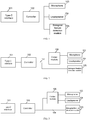
- FIG. 1 is a schematic structural diagram of a headphone according to Embodiment 1 of the present invention.
- the headphone includes: a Type-C interface 101, a controller 102 electrically connected to the Type-C interface 101, a biological features detection module 105 connected to the controller 102, a microphone 103 electrically connected to the controller, and a loudspeaker 104 electrically connected to the controller.
- the biological features detection module 105 is configured to detect biological features of a user wearing the headphone; and the controller 102 is configured to control paring between the Type-C interface 101 and a terminal and communication between the biological features detection module 105, the microphone 103 and the loudspeaker 104 when the headphone is in a digital mode, to control detection of biological features and processing of audio and video data to match the microphone 103 and the left and right amplifiers.
- the Type-C interface and the terminal are paired, such that the headphone and the terminal may identify each other and data may be transmitted there between.
- a plurality of biological features may be detected, for example, heart rate, step counting, body temperature, blood oxygen and the like.
- the duration of detecting biological features may involve monitoring biological features and parsing the monitored biological features.
- the microphone 103 may be configured to acquire sounds which may be audio and video analog signals; the loudspeaker 104 is configured to play the sounds, for example, when the headphone is connected to a smart terminal, the loudspeaker could be configured to play music or voice interactions for instant communication or the like, and convert digital signals corresponding to the music to audio and video analog signals to play, or convert the acquired audio and video analog signals by means of analog-to-digital conversion and digital-to-analog conversion to audio and video analog signals to play, which is not described herein any further.
- the biological features detection module 105 when the headphone is connected to a smart terminal, for example, in a wireless manner or in a wired manner, according to a control instruction of the smart terminal, the biological features detection module 105 is triggered to perform detection of biological features.
- the control instruction may be a voice control instruction, a mechanical key control instruction or the like, which is not described herein any further.
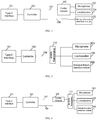
- FIG. 2 is a schematic structural diagram of a headphone according to Embodiment 2 of the present invention.
- the headphone further includes a codec module 106.
- the codec module 106 is configured to communicate with the controller 102 via a first digital channel 107, and is configured to process audio and video analog signals and process audio and video digital signals; and the controller 102 is configured to communicate with the biological features detection module 105 by the first digital channel 107, to control detection of biological features.
- a connection is established between the first digital channel 107 and the codec module 106, to control process of audio and video digital data to match the microphone 103 and the loudspeaker 104.
- the headphone when the headphone is connected to the smart terminal, music or voice interactions for instant communication or the like are played, and digital signals corresponding to the music are converted into audio and video analog signals and are then amplified to play by the loudspeaker 104; or audio and video analog signals acquired using the microphone 103 are converted by means of analog-to-digital conversion and digital-to-analog conversion to audio and video analog signals and are then amplified to play using the loudspeaker 104, which is not described herein any further.
- the controller 102 when the headphone is connected to a smart terminal, for example, in a wireless manner or in a wired manner, according to a control instruction of the smart terminal, when the biological features detection module 105 is triggered to perform detection of biological features, the controller 102 is connected to the biological features detection module 105 by the first digital channel 107, to control detection of biological features.
- the first digital channel 107 may be multiplexed by using a multiplexing switch, which is not described herein any further.
- the microphone 103 is connected to the codec module 106 via a wire of the microphone 103, and the loudspeaker 104 is connected to the codec module 106 via left and right sound channel wires, which is not described herein any further.
- the codec module may directly be configured to communicate with the controller via the first digital channel, so as to process the audio and video analog signals and process the audio and video digital signals.
- the controller is configured to communicate with the biological features detection module by the first digital channel.
- FIG. 3 is a schematic structural diagram of a headphone according to Embodiment 3 of the present invention.
- the controller 102 is configured to communicate with the biological features detection module 105 via a second digital channel 108, to control detection of biological features and processing of audio and video data to match the microphone 103 and the loudspeaker 104.
- the headphone further includes a codec module 106.
- the codec module 106 is configured to communicate with the controller 102 by the second digital channel 108, and is configured to process audio and video analog signals and process audio and video digital signals.
- the headphone when the headphone is connected to a smart terminal, for example, in a wireless manner or in a wired manner, according to a control instruction of the smart terminal, if the biological features detection module 105 is triggered to perform detection of biological features, the controller 102 is connected to the biological features detection module 105 by the second digital channel 108, to control detection of biological features.
- the second digital channel 108 is multiplexed to establish a connection with the codec module 106, to control processing of audio and video digital data to match the microphone 103 and the loudspeaker 104.
- the headphone when the headphone is connected to the smart terminal, music or voice interactions for instant communication or the like are played, and digital signals corresponding to the music are converted into audio and video analog signals and are then amplified to play using the loudspeaker 104; or audio and video analog signals acquired using the microphone 103 are converted by means of analog-to-digital conversion and digital-to-analog conversion to audio and video analog signals and are then amplified to play using the loudspeaker 104, which is not described herein any further.
- the second digital channel 108 may be multiplexed by using a multiplexing switch, which is not described herein any further.
- the controller directly is configured to communicate with the biological features detection module via the first digital channel; and during practice of processing audio and video analog signals and processing of audio and video digital signals, the codec module may be configured to communicate with the controller via the first digital channel.
- FIG. 4 is a schematic structural diagram of a headphone according to Embodiment 4 of the present invention.
- the processor further includes a codec module 106.
- the codec module 106 is configured to communicate with the controller 102 via a first digital channel 107, and is configured to process audio and video analog signals and process audio and video digital signals; and the controller 102 is configured to communicate with the biological features detection module 105 via a second digital channel 108, to control detection of biological features and processing of audio and video data to match the microphone 103 and the loudspeaker 104.
- a connection is established between the first digital channel 107 and the codec module 106, to control process of audio and video digital data to match the microphone 103 and the loudspeaker 104.
- the headphone when the headphone is connected to the smart terminal, music or voice interactions for instant communication or the like are played, and digital signals corresponding to the music are converted into audio and video analog signals and are then amplified to play by the loudspeaker 104; or audio and video analog signals acquired using the microphone 103 are converted by means of analog-to-digital conversion and digital-to-analog conversion to audio and video analog signals and are then amplified to play using the loudspeaker 104, which is not described herein any further.
- the controller 102 when the headphone is connected to a smart terminal, for example, in a wireless manner or in a wired manner, according to a control instruction of the smart terminal, when the biological features detection module 105 is triggered to perform detection of biological features, the controller 102 is connected to the biological features detection module 105 via the second digital channel 108, to control detection of biological features.
- the Type-C interface 101 includes a first pin.
- the first pin is electrically connected to the controller 102, and is configured to supply power to the controller 102, the microphone 103 and the loudspeaker 104.
- the Type-C interface 101 includes a second pin.
- the second pin is electrically connected to the controller 102, and is configured to carry out communication between paring the headphone and the terminal using the headphone.
- the Type-C interface 101 includes a third pin.
- the third pin is electrically connected to the biological features detection features 105, and is configured to supply power to the biological features detection module 105.
- the Type-C interface 101 includes a plurality of fourth pins.
- the fourth pin is electrically connected to the controller 102, and is configured to carry out communication between the Type-C interface 101 and the biological features detection module 105, the microphone 103 and the loudspeaker 104.
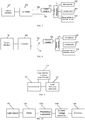
- FIG. 5 is a schematic structural diagram of a headphone according to Embodiment 5 of the present invention.
- the headphone further includes a first analog channel 109, and the controller 102 is electrically connected to the biological features detection module 105, the microphone 103 and the loudspeaker 104 via the first analog channel 109, to control detection of biological features and processing of audio and video data to match the microphone 103 and the loudspeaker 104.
- the headphone further includes a multiplexing switch 110.
- the multiplexing switch 110 is configured to control the biological features detection module 105, the microphone 103 and the loudspeaker 104 via multiplex the same first analog channel 109.
- a signal wire corresponding to the microphone 103 is multiplexed to supply power to the biological features detection module 105, and carry out uplink communication of the biological features detection module 105; and left and right sound channel wires corresponding to the loudspeaker 104 are multiplexed to carry out downlink communication of the biological features detection module 105.
- the uplink communication includes uploading detected biological features data and the like to the terminal such as a mobile phone and the like, and the downlink communication includes sending a control instruction and the like to the biological features detection module 105 by the terminal such as a mobile phone via the controller 102.
- the first analog channel 109 is connected to the microphone 103 and the loudspeaker 104.
- the headphone is connected to the smart terminal, music or voice interactions for instant communication or the like are played, and digital signals corresponding to the music are converted into audio and video analog signals and are then amplified to play using the loudspeaker 104; or audio and video analog signals acquired using the microphone 103 are converted by means of analog-to-digital conversion and digital-to-analog conversion to audio and video analog signals and are then amplified to play using the loudspeaker 104, which is not described herein any further.
- the controller 102 when the headphone is connected to a smart terminal, for example, in a wireless manner or in a wired manner, according to a control instruction of the smart terminal, when the biological features detection module 105 is triggered to perform detection of biological features, the controller 102 is connected to the biological features detection module 105 via the first analog channel 109, to control detection of biological features.
- the Type-C interface 101 includes a fourth pin and a fifth pin.
- the fourth pin and the fifth pin are respectively pulled down to the ground via a first pull-down resistor and a second pull-down resistor, such that the headphone is in an analog mode.
- the Type-C interface 101 includes a plurality of sixth pins.
- the sixth pin is connected to the first analog channel 109 via the controller 102, and is configured to carry out communication between the Type-C interface 101 and the biological features detection module 105, the microphone 103 and the loudspeaker 104.
- FIG. 6 is a schematic structural diagram of a headphone according to Embodiment 6 of the present invention.
- the headphone further includes a first analog channel 109, and the controller 102 is electrically connected to the biological features detection module 105, the microphone 103 and the loudspeaker 104 via the first analog channel 109, to control detection of biological features and processing of audio and video data to match the microphone 103 and the loudspeaker 104.
- the headphone further includes a codec module 106.
- the codec module 106 is configured to communicate with the controller 102 via a first digital channel 107, and is configured to process audio and video analog signals and process audio and video digital signals; and the controller 102 is configured to communicate with the biological features detection module 105 by the first digital channel 107, to control detection of biological features.
- the headphone further includes a switching module.
- the switching module is configured to switch to detect of biological features and process audio and video data by the first analog channel 109 or the first digital channel 107, so as to match the microphone 103 and the loudspeaker 104.
- switching of the first analog channel and the first digital channel is controlled by using the switching module, thereby implementing transmission of both digital audio protocol and analog audio.
- the switching module such devices as mobile phones and the like that are equipped with a built-in Hi-Fi module or supports analog audio output may employ analog audio transmission, and such devices as mobile phone and the like that support the digital audio protocol may employ digital audio transmission.
- FIG. 7 is a schematic structural diagram of a headphone according to Embodiment 7 of the present invention.
- the headphone further includes a first analog channel 109.
- the controller 102 is electrically connected to the biological features detection module 105, the microphone 103 and the loudspeaker 104 via the first analog channel 109, to control detection of biological features and processing of audio and video data to match the microphone 103 and the loudspeaker 104.
- the controller 102 is configured to communicate with the biological features detection module 105 via a second digital channel 108, to control detection of biological features and processing of audio and video data to match the microphone 103 and the loudspeaker 104.
- the headphone further includes a codec module 106.
- the codec module 106 is configured to communicate with the controller 102 by the second digital channel 108 and is configured to process audio and video analog signals and process audio and video digital signals.
- the headphone further includes a switching module.
- the switching module is configured to switch to detect biological features and process audio and video data by the first analog channel 109 or the second digital channel 108, so as to match the microphone 103 and the loudspeaker 104.
- switching of the first analog channel and the second digital channel is controlled by using the switching module, thereby implementing transmission of both digital audio protocol and analog audio.
- the switching module such devices as mobile phones and the like that are equipped with a built-in Hi-Fi module or supports analog audio output may employ analog audio transmission, and such devices as mobile phone and the like that support the digital audio protocol may employ digital audio transmission.
- FIG. 8 is a schematic structural diagram of a headphone according to Embodiment 8 of the present invention.
- the processor further includes a codec module 106.
- the codec module 106 is configured to communicate with the controller 102 via a first digital channel 107, and is configured to process audio and video analog signals and process audio and video digital signals.
- the controller 102 is configured to communicate with the biological features detection module 105 via a second digital channel 108, to control detection of biological features and processing of audio and video data to match the microphone 103 and the loudspeaker 104.
- the headphone further includes a first analog channel 109.
- the controller 102 is electrically connected to the biological features detection module 105, the microphone 103 and the loudspeaker 104 via the first analog channel 109, to control detection of biological features and processing of audio and video data to match the microphone 103 and the loudspeaker 104.
- the headphone further includes a switching module.
- the switching module is configured to switch to detect biological features and process audio and video data by the first analog channel 109 or the first/second digital channel, so as to match the microphone 103 and the loudspeaker 104.
- switching of the first analog channel and the first/second digital channel is controlled by using the switching module, thereby implementing transmission of both digital audio protocol and analog audio.
- the switching module such devices as mobile phones and the like that are equipped with a built-in Hi-Fi module or supports analog audio output may employ analog audio transmission, and such devices as mobile phone and the like that support the digital audio protocol may employ digital audio transmission.
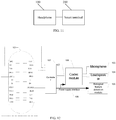
- FIG. 9 is a schematic structural diagram of a biological features detection module according to Embodiment 9 of the present invention.
- the biological features detection module includes a signal processing submodule 115 and a sensor module 125.
- the sensor module is configured to detect the biological features; and the signal processing submodule 115 is configured to acquire the detected biological features and process the acquired biological features.
- a logic and time-sequence control module 135, configured to perform time-sequence control on the sensor module and the signal processing submodule 115.
- FIG. 10 is a schematic structural diagram of a sensor module according to Embodiment 10 of the present invention.
- the sensor module includes: a light source 1251 configured to irradiate a detected region, a driver 1252 configured to drive the light source to emit light, an photoelectric converter 1253 configured to receive an optical signal reflected by the detected region and convert the optical signal into a current signal, a current-voltage converter 1254 configured to convert the current signal into a voltage signal, and a processor 1255 configured to process the voltage signal.
- FIG. 11 is a schematic structural diagram of an interaction system according to Embodiment 11 of the present invention.
- the interaction system includes a smart terminal 200 and a headphone 100 as described in any of the above embodiments. Processing of audio and video data and detection of biological features by the biological features detection module in the headphone are triggered by connecting the Type-C interface in the headphone to the smart terminal 200.
- FIG. 12 is a schematic structural diagram of a headphone according to Embodiment 12 of the present invention.
- the processor further includes a codec module 106.
- the codec module 106 is configured to communicate with the controller 102 via a first digital channel 107, and is configured to process audio and video analog signals and process audio and video digital signals; and the controller 102 is configured to communicate with the biological features detection module 105 via a second digital channel 108, to control detection of biological features and processing of audio and video data to match the microphone 103 and the loudspeaker 104 to match the microphone 103 and the loudspeaker 104.
- the Type-C interface 101 is a Type-C male connector, and may specifically includes totally 24 pins including a Type-C male connector 101 (an connector between a headphone and a terminal device) supporting the USB interface, a Vconn pin, a D1+ pin, a D1- pin, a D2+ pin, a D2- pin, four VBUS pins, four GND pins, a CC1 pin, a CC2 pin (multiplexing the Vconn pin), a SBU1 pin, a SBU2 pin, an RX1+ pin, an RX1- pin, an RX2+ pin, an RX2- pin, a TX1+ pin, a TX1- pin, a TX2+ pin, a TX2- pin that are specified in the protocol of the Type-C interface 101.
- the D1+ pin, the D1- pin, the D2+ pin and the D2- pin are two pairs of D+s and D-s in the drawing.
- the CC2 pin of the Type-C interface 101 is configured to the Vconn pin and electrically connected to the controller 102, and is configured to supply power to the controller 102, the biological features detection module 105, the microphone 103 and the loudspeaker 104.
- the CC1 pin of the Type-C interface 101 is electrically connected to the controller 102, and is configured to carry out communication for paring the headphone and the terminal using the headphone.
- the VBUS pin of the Type-C interface 101 is electrically connected to the processor and the codec module 106 via the controller 102, and is configured to supply power to the biological features detection module 105 and the codec module 106.
- the TX1+, TX1-, RX1+, RX1-, D+ and D- pins of the Type-C interface 101 are electrically connected to the controller 102, and are configured to carry out communication between the Type-C interface 101 and the biological features detection module 105, the microphone 103 and the loudspeaker 104.
- FIG. 13 is a schematic structural diagram of a headphone according to Embodiment 13 of the present invention.
- the headphone further includes a first analog channel 109, and the controller 102 is electrically connected to the biological features detection module 105, the microphone 103 and the loudspeaker 104 via the first analog channel 109, to control detection of biological features and processing of audio and video data to match the microphone 103 and the loudspeaker 104.
- the multiplexing switch 110 is configured to control the biological features detection module 105, the microphone 103 and the loudspeaker 104 to multiplex the same first analog channel 109.
- a signal wire corresponding to the microphone 103 is multiplexed to supply power to the biological features detection module 105, and carry out uplink communication of the biological features detection module 105; and left and right sound channel wires corresponding to the loudspeaker 104 are multiplexed to carry out downlink communication of the biological features detection module 105.
- the first analog channel 109 may include a wire of the microphone 103, two sound channel wires, and a ground wire; the loudspeaker 104 is electrically connected to the two sound channel wires; and the microphone 103 is electrically connected to the wire of the microphone 103.
- the Type-C interface is a Type-C male connector, and may specifically includes totally 24 pins including a Type-C male connector 101 (an connector between a headphone and a terminal device) supporting the USB interface, a Vconn pin, a D1+ pin, a D1- pin, a D2+ pin, a D2- pin, four VBUS pins, four GND pins, a CC1 pin, a CC2 pin, a SBU1 pin, a SBU2 pin, an RX1+ pin, an RX1- pin, an RX2+ pin, an RX2- pin, a TX1+ pin, a TX1- pin, a TX2+ pin, a TX2- pin that are specified in the protocol of the Type-C interface 101.
- the D1+ pin, the D1- pin, the D2+ pin and the D2- pin are two pairs of D+s and D-s in the drawing.
- the CC1 pin and the CC2 pin of the Type-C interface 101 are pulled down to the ground via a first pull-down resistor and a second pull-down resistor, such that the headphone is in an analog mode.
- the GND, CC1, CC2, SBU1, SBU2, D+ and D- pins of the Type-C interface 101 are electrically connected to the first analog channel 109 via the controller 102, and are configured to carry out communication between the Type-C interface 101 and the biological features detection module 105, the microphone 103 and the loudspeaker 104.
- FIG. 14 is a schematic structural diagram of a headphone according to Embodiment 14 of the present invention.
- the headphone further includes a codec module 106.
- the codec module 106 is configured to communicate with the controller 102 via a first digital channel 107, and is configured to process audio and video analog signals and process audio and video digital signals.
- the headphone further includes a first analog channel 109.
- the controller 102 is electrically connected to the biological features detection module 105, the microphone 103 and the loudspeaker 104 via the first analog channel 109, to control detection of biological features and processing of audio and video data to match the microphone 103 and the loudspeaker 104.
- the headphone further includes a switching module 111.
- the switching module 111 is configured to switch to detect biological features and process audio and video data by the analog channel or the first digital channel, so as to match the microphone 103 and the loudspeaker 104.
- the codec module 106 is configured to communicate with the switching module 111 via a second analog channel 112.
- the multiplexing switch 110 is configured to control the biological features detection module 105, the microphone 103 and the loudspeaker to multiplex the same third analog channel 113.
- the switching module is connected to the multiplexing switch 110 via the third analog channel 113.
- the third analog channel 113 includes a microphone wire 1131 and two sound channel wires 1132, and the two sound channel wires 1132 correspond to the left and right sound channel.
- the second analog channel 112 is connected to the microphone wire 1131 and the two sound channel wires 1132; and in an analog headphone mode, the first analog channel 109 is connected to the microphone wire 1131 and the two sound channel wires 1132.
- the CC2 pin of the Type-C interface 101 is configured to the Vconn pin and connected to the controller 102, and is configured to supply power to the controller 102.
- the CC1 pin of the Type-C interface 101 is electrically connected to the controller 102, and is configured to carry out communication for paring the headphone and the terminal using the headphone.
- the VBUS pin of the Type-C interface 101 is electrically connected to the biological features detection module 105 and the codec module 106 via the controller 102, and is configured to supply power to the biological features detection module 105 and the codec module 106.
- the TX1+, RX1+, D+ and D- pins of the Type-C interface 101 are electrically connected to the controller 102, and are configured to carry out communication between the Type-C interface 101 and the processor.
- the CC1 pin and the CC2 pin of the Type-C interface 101 are pulled down to the ground via a first pull-down resistor and a second pull-down resistor respectively.
- the SBU1, SBU2, D+ and D-pins of the Type-C interface 101 are electrically connected to a first analog channel 109 via the controller 102, and are configured to carry out communication between the Type-C interface 101 and the processor.
- FIG. 15 is a schematic structural diagram of a biological features detection module according to Embodiment 15 of the present invention.
- the biological features detection module 105 includes a signal processing submodule 115 and a sensor module 125.
- the sensor module 125 includes: an LED light source configured to irradiate a detected region of a user, an LED driver configured to drive the light source to emit light, an photoelectric converter configured to receive an optical signal reflected by the detected region and convert the optical signal into a current signal, an IV converter configured to convert the current signal into a voltage signal, and an ADC configured to process the voltage signal.
- an amplifier configured to amplify signals output by the IV converter may be added before the ADC.
- the signal processing submodule 115 may judge a heart rate parameter of a tested object according to the regular variation of the strength of the reflected light, such that the biological features detection module 105 supports the heart rate detection function.
- the Type-C interface since the Type-C interface not only supports analog communication, but also supports digital communication and analog-digital hybrid communication, no dedicated headphone socket is needed during practice of biological features detection using the headphone; instead, the Type-C interface may be directly used, which optimizes extensibility of the headphone. Biological features detection based on digital communication, analog communication and analog-digital hybrid communication may be implemented by pairing the Type-C interface and the smart terminal.
- the Type-C interface of the terminal such as the mobile phone may be multiplexed, one interface of the terminal is capable of supporting external headphones, charging and data transmission simultaneously and may be extended to such interfaces as an audio accessory/VGA/HDM/DP or the like. If an adapter is equipped, the Type-C interface may further support previous-generation interfaces such as USB3.0, USB2.0 and the like.
- the apparatus according to the embodiments of the present application may be practiced by a computer program.
- a person skilled in the art should understand the above division of units and modules is only an exemplary one, and if the apparatus is divided into other units or modules or not divided, the technical solution shall also fall within the protection scope of the present application as long as the information object has the above functions.
- the embodiments of the present application may be described to illustrate methods, apparatuses (devices), or computer program products. Therefore, hardware embodiments, software embodiments, or hardware-plus-software embodiments may be used to illustrate the present application.
- the present application may further employ a computer program product which may be implemented by at least one non-transitory computer-readable storage medium with an executable program code stored thereon.
- the non-transitory computer-readable storage medium comprises but not limited to a disk memory, a CD-ROM, and an optical memory.
- the present invention is described based on the flowcharts and/or block diagrams of the method, apparatus (device), and computer program product. It should be understood that each process and/or block in the flowcharts and/or block diagrams, and any combination of the processes and/or blocks in the flowcharts and/or block diagrams may be implemented using computer program instructions. These computer program instructions may be issued to a computer, a dedicated computer, an embedded processor, or processors of other programmable data processing device to generate a machine, which enables the computer or the processors of other programmable data processing devices to execute the instructions to implement an apparatus for implementing specific functions in at least one process in the flowcharts and/or at least one block in the block diagrams.
- These computer program instructions may also be stored a non-transitory computer-readable memory capable of causing a computer or other programmable data processing devices to work in a specific mode, such that the instructions stored on the non-transitory computer-readable memory implement a product comprising an instruction apparatus, where the instruction apparatus implements specific functions in at least one process in the flowcharts and/or at least one block in the block diagrams.
- These computer program instructions may also be stored on a computer or other programmable data processing devices, such that the computer or the other programmable data processing devices execute a series of operations or steps to implement processing of the computer.
- the instructions when executed on the computer or the other programmable data processing devices, implement the specific functions in at least one process in the flowcharts and/or at least one block in the block diagrams.
Landscapes
- Engineering & Computer Science (AREA)
- Physics & Mathematics (AREA)
- Health & Medical Sciences (AREA)
- Signal Processing (AREA)
- Life Sciences & Earth Sciences (AREA)
- Acoustics & Sound (AREA)
- Multimedia (AREA)
- Biomedical Technology (AREA)
- General Health & Medical Sciences (AREA)
- Biophysics (AREA)
- Animal Behavior & Ethology (AREA)
- Veterinary Medicine (AREA)
- Public Health (AREA)
- Human Computer Interaction (AREA)
- Pathology (AREA)
- Heart & Thoracic Surgery (AREA)
- Medical Informatics (AREA)
- Molecular Biology (AREA)
- Surgery (AREA)
- Theoretical Computer Science (AREA)
- Cardiology (AREA)
- General Engineering & Computer Science (AREA)
- Manufacturing & Machinery (AREA)
- Optics & Photonics (AREA)
- Spectroscopy & Molecular Physics (AREA)
- Audiology, Speech & Language Pathology (AREA)
- Computational Linguistics (AREA)
- Physiology (AREA)
- Mathematical Physics (AREA)
- Computer Hardware Design (AREA)
- General Physics & Mathematics (AREA)
- Telephone Function (AREA)
- Circuit For Audible Band Transducer (AREA)
- Headphones And Earphones (AREA)
Claims (11)
- Casque, comprenant:une interface USB-C (101);un contrôleur (102) relié électriquement à l'interface USB-C (101);un module de détection de caractéristiques biologiques (105) relié au contrôleur (102);un microphone (103) relié électriquement au contrôleur (102), etun haut-parleur (104) relié électriquement au contrôleur (102);dans lequel le module de détection de caractéristiques biologiques (105) est configuré pour détecter des caractéristiques biologiques d'un utilisateur portant le casque (100); le contrôleur (102) est configuré pour contrôler, lorsque le casque (100) est en mode numérique, l'association entre l'interface USB-C (101) et un terminal (200) et la communication entre le terminal (200), lemodule de détection de caractéristiques biologiques(105), le microphone (103) et le haut-parleur (104), pour contrôler la détection des caractéristiques biologiques et le traitement des données audio,le casque comprenant en outre:un premier canal numérique (107) et un module de codec (106), dans lequel le module de codec (106) est configuré pour communiquer avec le contrôleur (102) via le premier canal numérique (107), et est configuré pour traiter des signaux audio analogiques et signaux audio numériques; le contrôleur (102) est configuré pour communiquer avec le module de détection de caractéristiques biologiques (105) via le premier canal numérique (107) pour contrôler la détection de caractéristiques biologiques, ou le contrôleur (102) est configuré pour communiquer avec le module de détection de caractéristiques biologiques (105) via un deuxième canal numérique (108) pour contrôler la détection des caractéristiques biologiques et le traitement des données audio;un canal analogique (109), dans lequel le contrôleur (102) est relié électriquement au module de détection de caractéristiques biologiques (105), au microphone (103) et au haut-parleur (104) via le canal analogique (109) pour contrôler la détection de caractéristiques biologiques et le traitement des données audio; etun module de commutation (111), dans lequel le module de commutation (111) est configuré pour commuter pour détecter des caractéristiques biologiques et traiter des données audio par le premier canal numérique (107) ou le canal analogique (109).
- Casque selon la revendication 1, dans lequel le contrôleur (102) est configuré pour communiquer avec le module de détection de caractéristiques biologiques (105) via le deuxième canal numérique (108) pour contrôler la détection des caractéristiques biologiques et le traitement des données audio; le casque (100) comprend en outre un module de codec (106) qui est configuré pour communiquer avec le contrôleur (102) par le deuxième canal numérique (108) et traiter les signaux audio analogiques et traiter les signaux audionumériques.
- Casque selon l'une quelconque des revendications 1 à 2, dans lequel l'interface USB-C (101) comprend une première broche, dans lequel la première broche est reliée électriquement au contrôleur (102) et est configurée pour alimenter le contrôleur (102), le module de détection de caractéristiques biologiques (105), le microphone (103) et le haut-parleur (104).
- Casque selon l'une quelconque des revendications 1 à 2, dans lequel l'interface USB-C (101) comprend une deuxième broche, dans lequel la deuxième broche est reliée électriquement au contrôleur (102) et est configurée pour effectuer une communication si l'association est effectuée entre le casque (100) et un terminal (200) utilisant le casque (100).
- Casque selon l'une quelconque des revendications 1 à 2, dans lequel l'interface USB-C (101) comprend une troisième broche, dans lequel la troisième broche est reliée électriquement au module de détection de caractéristiques biologiques (105) et est configurée pour alimenter le module de détection de caractéristiques biologiques (105) et le module de codec (106).
- Casque selon l'une quelconque des revendications 1 à 2, dans lequel l'interface USB-C (101) comprend une pluralité de quatrièmes broches, dans lequel la quatrième broche est reliée électriquement au contrôleur (102) et est configurée pour effectuer une communication entre l'interface USB-C (101) et le module de détection de caractéristiques biologiques (105), le microphone (103) et le haut-parleur (104).
- Casque selon la revendication 1, comprenant en outre un commutateur de multiplexage (110) configuré pour contrôler le module de détection de caractéristiques biologiques (105), le microphone (103) et le haut-parleur (104) pour multiplexer le même canal analogique (109).
- Casque selon la revendication 7, dans lequel un fil de signal correspondant au microphone (103) est multiplexé pour alimenter le module de détection de caractéristiques biologiques (105) et effectuer une communication en liaison montante du module de détection de caractéristiques biologiques (105); des fils des canaux sonores gauche et droit correspondant au haut-parleur (104) sont multiplexés pour effectuer une communication en liaison descendante du module de détection de caractéristiques biologiques (105).
- Casque selon la revendication 1, dans lequel l'interface USB-C (101) comprend une quatrième broche et une cinquième broche, dans lequel la quatrième broche et la cinquième broche sont respectivement tirées vers le bas au sol via une première résistance de rappelet une seconde résistance de rappel, de telle sorte que le casque (100) est en mode analogique.
- Casque selon la revendication 1, dans lequel l'interface USB-C (101) comprend une pluralité de sixièmes broches, dans lequel la sixième broche est reliée au canal analogique (109) via le contrôleur (102) et est configurée pour exécuter communication entre l'interface USB-C (101) et le module de détection de caractéristiques biologiques (105), le microphone (103) et le haut-parleur (104).
- Système d'interaction, comprenant un terminal intelligent (200) et le casque (100) tel que défini dans l'une quelconque des revendications 1 à 10; dans lequel le traitement de données audio et la détection de caractéristiques biologiques par le module de détection de caractéristiques biologiques (105) dans le casque (100) sont déclenchés en connectant l'interface USB-C (101) dans le casque (100) au terminal intelligent (200).
Applications Claiming Priority (1)
| Application Number | Priority Date | Filing Date | Title |
|---|---|---|---|
| PCT/CN2016/090604 WO2018014246A1 (fr) | 2016-07-20 | 2016-07-20 | Écouteur et système interactif |
Publications (3)
| Publication Number | Publication Date |
|---|---|
| EP3370434A1 EP3370434A1 (fr) | 2018-09-05 |
| EP3370434A4 EP3370434A4 (fr) | 2018-11-14 |
| EP3370434B1 true EP3370434B1 (fr) | 2020-03-11 |
Family
ID=60989689
Family Applications (1)
| Application Number | Title | Priority Date | Filing Date |
|---|---|---|---|
| EP16890905.9A Active EP3370434B1 (fr) | 2016-07-20 | 2016-07-20 | Écouteur et système interactif |
Country Status (5)
| Country | Link |
|---|---|
| US (1) | US10277972B2 (fr) |
| EP (1) | EP3370434B1 (fr) |
| KR (1) | KR101992036B1 (fr) |
| CN (1) | CN108012585B (fr) |
| WO (1) | WO2018014246A1 (fr) |
Cited By (1)
| Publication number | Priority date | Publication date | Assignee | Title |
|---|---|---|---|---|
| US11162991B2 (en) | 2016-10-25 | 2021-11-02 | Samsung Electronics Co., Ltd. | Electronic device and method by which electronic device recognizes connection terminal of external device |
Families Citing this family (9)
| Publication number | Priority date | Publication date | Assignee | Title |
|---|---|---|---|---|
| GB2552559A (en) | 2016-07-25 | 2018-01-31 | Cirrus Logic Int Semiconductor Ltd | Connectors for data transfer |
| US10353853B1 (en) * | 2018-04-11 | 2019-07-16 | Cypress Semiconductor Corporation | USB type-C sideband signal interface circuit |
| US11290817B2 (en) | 2018-06-01 | 2022-03-29 | Gn Audio A/S | Headset system with a headset and a control box |
| CN110891225B (zh) * | 2018-09-07 | 2022-02-25 | 中兴通讯股份有限公司 | 一种音频信号处理方法、装置、设备及存储介质 |
| CN111562490B (zh) * | 2019-02-14 | 2023-01-20 | 深圳市汇顶科技股份有限公司 | 测试方法及系统 |
| CN112218196A (zh) * | 2019-07-10 | 2021-01-12 | Oppo广东移动通信有限公司 | 耳机及耳机控制方法 |
| KR102839898B1 (ko) * | 2020-11-26 | 2025-07-29 | 삼성전자주식회사 | 커넥터를 포함하는 전자 장치 |
| CN112637717B (zh) * | 2020-12-21 | 2023-04-18 | 重庆蓝岸科技股份有限公司 | 具有外接指纹模块端口的智能终端系统及其指纹识别方法 |
| US12054283B1 (en) * | 2023-07-25 | 2024-08-06 | Honeywell International Inc. | Lighting system for preventing bird strikes and aircraft incorporating the same |
Family Cites Families (19)
| Publication number | Priority date | Publication date | Assignee | Title |
|---|---|---|---|---|
| US7534212B2 (en) * | 2004-03-08 | 2009-05-19 | Nellcor Puritan Bennett Llc | Pulse oximeter with alternate heart-rate determination |
| US20090010461A1 (en) * | 2007-07-02 | 2009-01-08 | Gunnar Klinghult | Headset assembly for a portable mobile communications device |
| US8295567B2 (en) * | 2008-06-30 | 2012-10-23 | Nellcor Puritan Bennett Ireland | Systems and methods for ridge selection in scalograms of signals |
| CN102065350B (zh) * | 2010-11-01 | 2014-04-09 | 中兴通讯股份有限公司 | 一种智能控制多媒体播放的方法、系统及耳机 |
| EP2728899A4 (fr) * | 2011-10-20 | 2014-09-03 | Huawei Device Co Ltd | Connecteur multifonctionnel pour multiplexage d'une interface de casque d'écoute en une interface vidéo et audio haute définition et dispositif électronique portatif |
| CN104080028B (zh) * | 2013-03-25 | 2016-08-17 | 联想(北京)有限公司 | 一种识别方法、电子设备及耳机 |
| GB201416794D0 (en) * | 2014-09-23 | 2014-11-05 | Sound Venture Co The Ltd | A personal listening device |
| US9736567B2 (en) * | 2014-09-29 | 2017-08-15 | Qualcomm Incorporated | Electronics interface for device headset jack |
| GB2532950B (en) * | 2014-12-02 | 2017-04-12 | Cirrus Logic Int Semiconductor Ltd | Digital accessory interface calibration |
| CN104394491B (zh) * | 2014-12-09 | 2018-01-23 | 北京奇虎科技有限公司 | 一种智能耳机、云服务器以及音量调节方法和系统 |
| CN104618829A (zh) * | 2014-12-29 | 2015-05-13 | 歌尔声学股份有限公司 | 耳机环境声音的调节方法和耳机 |
| GB2553875B (en) * | 2015-02-25 | 2018-09-05 | Cirrus Logic Int Semiconductor Ltd | Connectors for audio data transfer |
| GB2536309B (en) * | 2015-03-09 | 2017-08-02 | Cirrus Logic Int Semiconductor Ltd | Low power bidirectional bus |
| CN105120404B (zh) * | 2015-07-31 | 2018-11-30 | 华为技术有限公司 | 一种音频设备、终端设备及电子设备 |
| CN105163220A (zh) * | 2015-09-29 | 2015-12-16 | 努比亚技术有限公司 | 一种智能推送方法及耳机 |
| CN105491483B (zh) * | 2015-11-30 | 2018-11-02 | 歌尔股份有限公司 | 用于耳机的佩戴状态检测方法、系统及耳机 |
| CN105487899B (zh) * | 2015-11-30 | 2018-12-04 | 歌尔股份有限公司 | 用于耳机的佩戴状态报告方法、系统及耳机 |
| CN105451115B (zh) * | 2016-01-05 | 2019-04-30 | 深圳市汇顶科技股份有限公司 | 一种具有生物特征检测功能的耳机、交互系统及方法 |
| CN105704602A (zh) * | 2016-01-29 | 2016-06-22 | 宇龙计算机通信科技(深圳)有限公司 | 一种智能配置方法、装置及耳机 |
-
2016
- 2016-07-20 EP EP16890905.9A patent/EP3370434B1/fr active Active
- 2016-07-20 WO PCT/CN2016/090604 patent/WO2018014246A1/fr not_active Ceased
- 2016-07-20 CN CN201680000605.8A patent/CN108012585B/zh active Active
- 2016-07-20 KR KR1020177024882A patent/KR101992036B1/ko not_active Expired - Fee Related
-
2017
- 2017-09-01 US US15/693,477 patent/US10277972B2/en active Active
Non-Patent Citations (1)
| Title |
|---|
| None * |
Cited By (1)
| Publication number | Priority date | Publication date | Assignee | Title |
|---|---|---|---|---|
| US11162991B2 (en) | 2016-10-25 | 2021-11-02 | Samsung Electronics Co., Ltd. | Electronic device and method by which electronic device recognizes connection terminal of external device |
Also Published As
| Publication number | Publication date |
|---|---|
| US10277972B2 (en) | 2019-04-30 |
| CN108012585B (zh) | 2020-07-28 |
| KR20180021670A (ko) | 2018-03-05 |
| US20180027320A1 (en) | 2018-01-25 |
| WO2018014246A1 (fr) | 2018-01-25 |
| KR101992036B1 (ko) | 2019-06-21 |
| EP3370434A1 (fr) | 2018-09-05 |
| CN108012585A (zh) | 2018-05-08 |
| EP3370434A4 (fr) | 2018-11-14 |
Similar Documents
| Publication | Publication Date | Title |
|---|---|---|
| EP3370434B1 (fr) | Écouteur et système interactif | |
| EP3691291A1 (fr) | Écouteur sans fil et son procédé de commande | |
| KR102336612B1 (ko) | 외부 전자 장치의 통신 설정 정보를 이용하여 오디오 신호를 수신하기 위한 전자 장치 및 그의 동작 방법 | |
| US9351065B2 (en) | Loudspeaker enclosure system having detachable wireless headphones and control method thereof | |
| US20140370818A1 (en) | Auto-discovery and auto-configuration of media devices | |
| EP3322199A1 (fr) | Casque, système et procédé d'interaction avec fonction de détection de caractéristiques biométriques | |
| CN108886653B (zh) | 一种耳机声道控制方法、相关设备及系统 | |
| US20180035207A1 (en) | Monitoring and hearing aid headphone intercom system | |
| CN112468644B (zh) | 智能手表和智能手表的通话方法 | |
| US20160196100A1 (en) | Headphones having an attached sound module | |
| US20190327551A1 (en) | Wireless headphone system | |
| CN112013949A (zh) | 耳机佩戴状态的确定方法、装置及耳机 | |
| WO2020019820A1 (fr) | Procédé de détection d'obstruction de trou de microphone et produit associé | |
| JP2020057929A (ja) | 複数電源対応ワイヤレスイヤホン及び当該ワイヤレスイヤホンの制御方法 | |
| CN105323682B (zh) | 一种数模混合麦克风及耳机 | |
| EP3804352B1 (fr) | Un système de casque avec un casque d'écoute et une boîte de commande | |
| WO2018058946A1 (fr) | Procédé et dispositif de commutation de signaux, et support d'informations pour ordinateur | |
| CN205987282U (zh) | 数字耳麦和耳麦系统 | |
| JP6370205B2 (ja) | 生体情報測定システム | |
| KR200413422Y1 (ko) | 유무선 겸용 음성신호 재생장치 | |
| CN110611852B (zh) | 带有自适应控制的耳机 | |
| CN103369419A (zh) | 带线绳音频装置 | |
| US20240236543A1 (en) | Magnetic connector and sensor for detecting a presence of a function | |
| CN103986818A (zh) | 一种信息处理方法和电子设备 | |
| CN115002612A (zh) | 麦克风装置、电子设备的控制方法 |
Legal Events
| Date | Code | Title | Description |
|---|---|---|---|
| STAA | Information on the status of an ep patent application or granted ep patent |
Free format text: STATUS: UNKNOWN |
|
| STAA | Information on the status of an ep patent application or granted ep patent |
Free format text: STATUS: THE INTERNATIONAL PUBLICATION HAS BEEN MADE |
|
| PUAI | Public reference made under article 153(3) epc to a published international application that has entered the european phase |
Free format text: ORIGINAL CODE: 0009012 |
|
| STAA | Information on the status of an ep patent application or granted ep patent |
Free format text: STATUS: REQUEST FOR EXAMINATION WAS MADE |
|
| 17P | Request for examination filed |
Effective date: 20170901 |
|
| AK | Designated contracting states |
Kind code of ref document: A1 Designated state(s): AL AT BE BG CH CY CZ DE DK EE ES FI FR GB GR HR HU IE IS IT LI LT LU LV MC MK MT NL NO PL PT RO RS SE SI SK SM TR |
|
| AX | Request for extension of the european patent |
Extension state: BA ME |
|
| A4 | Supplementary search report drawn up and despatched |
Effective date: 20181017 |
|
| RIC1 | Information provided on ipc code assigned before grant |
Ipc: H04R 1/10 20060101AFI20181011BHEP |
|
| STAA | Information on the status of an ep patent application or granted ep patent |
Free format text: STATUS: EXAMINATION IS IN PROGRESS |
|
| 17Q | First examination report despatched |
Effective date: 20190619 |
|
| GRAP | Despatch of communication of intention to grant a patent |
Free format text: ORIGINAL CODE: EPIDOSNIGR1 |
|
| STAA | Information on the status of an ep patent application or granted ep patent |
Free format text: STATUS: GRANT OF PATENT IS INTENDED |
|
| DAV | Request for validation of the european patent (deleted) | ||
| DAX | Request for extension of the european patent (deleted) | ||
| INTG | Intention to grant announced |
Effective date: 20191024 |
|
| GRAS | Grant fee paid |
Free format text: ORIGINAL CODE: EPIDOSNIGR3 |
|
| GRAA | (expected) grant |
Free format text: ORIGINAL CODE: 0009210 |
|
| STAA | Information on the status of an ep patent application or granted ep patent |
Free format text: STATUS: THE PATENT HAS BEEN GRANTED |
|
| AK | Designated contracting states |
Kind code of ref document: B1 Designated state(s): AL AT BE BG CH CY CZ DE DK EE ES FI FR GB GR HR HU IE IS IT LI LT LU LV MC MK MT NL NO PL PT RO RS SE SI SK SM TR |
|
| REG | Reference to a national code |
Ref country code: GB Ref legal event code: FG4D |
|
| REG | Reference to a national code |
Ref country code: CH Ref legal event code: EP |
|
| REG | Reference to a national code |
Ref country code: AT Ref legal event code: REF Ref document number: 1244658 Country of ref document: AT Kind code of ref document: T Effective date: 20200315 |
|
| REG | Reference to a national code |
Ref country code: IE Ref legal event code: FG4D |
|
| REG | Reference to a national code |
Ref country code: DE Ref legal event code: R096 Ref document number: 602016031806 Country of ref document: DE |
|
| PG25 | Lapsed in a contracting state [announced via postgrant information from national office to epo] |
Ref country code: NO Free format text: LAPSE BECAUSE OF FAILURE TO SUBMIT A TRANSLATION OF THE DESCRIPTION OR TO PAY THE FEE WITHIN THE PRESCRIBED TIME-LIMIT Effective date: 20200611 Ref country code: FI Free format text: LAPSE BECAUSE OF FAILURE TO SUBMIT A TRANSLATION OF THE DESCRIPTION OR TO PAY THE FEE WITHIN THE PRESCRIBED TIME-LIMIT Effective date: 20200311 Ref country code: RS Free format text: LAPSE BECAUSE OF FAILURE TO SUBMIT A TRANSLATION OF THE DESCRIPTION OR TO PAY THE FEE WITHIN THE PRESCRIBED TIME-LIMIT Effective date: 20200311 |
|
| REG | Reference to a national code |
Ref country code: NL Ref legal event code: MP Effective date: 20200311 |
|
| PG25 | Lapsed in a contracting state [announced via postgrant information from national office to epo] |
Ref country code: SE Free format text: LAPSE BECAUSE OF FAILURE TO SUBMIT A TRANSLATION OF THE DESCRIPTION OR TO PAY THE FEE WITHIN THE PRESCRIBED TIME-LIMIT Effective date: 20200311 Ref country code: LV Free format text: LAPSE BECAUSE OF FAILURE TO SUBMIT A TRANSLATION OF THE DESCRIPTION OR TO PAY THE FEE WITHIN THE PRESCRIBED TIME-LIMIT Effective date: 20200311 Ref country code: HR Free format text: LAPSE BECAUSE OF FAILURE TO SUBMIT A TRANSLATION OF THE DESCRIPTION OR TO PAY THE FEE WITHIN THE PRESCRIBED TIME-LIMIT Effective date: 20200311 Ref country code: BG Free format text: LAPSE BECAUSE OF FAILURE TO SUBMIT A TRANSLATION OF THE DESCRIPTION OR TO PAY THE FEE WITHIN THE PRESCRIBED TIME-LIMIT Effective date: 20200611 Ref country code: GR Free format text: LAPSE BECAUSE OF FAILURE TO SUBMIT A TRANSLATION OF THE DESCRIPTION OR TO PAY THE FEE WITHIN THE PRESCRIBED TIME-LIMIT Effective date: 20200612 |
|
| REG | Reference to a national code |
Ref country code: LT Ref legal event code: MG4D |
|
| PG25 | Lapsed in a contracting state [announced via postgrant information from national office to epo] |
Ref country code: NL Free format text: LAPSE BECAUSE OF FAILURE TO SUBMIT A TRANSLATION OF THE DESCRIPTION OR TO PAY THE FEE WITHIN THE PRESCRIBED TIME-LIMIT Effective date: 20200311 |
|
| PG25 | Lapsed in a contracting state [announced via postgrant information from national office to epo] |
Ref country code: SK Free format text: LAPSE BECAUSE OF FAILURE TO SUBMIT A TRANSLATION OF THE DESCRIPTION OR TO PAY THE FEE WITHIN THE PRESCRIBED TIME-LIMIT Effective date: 20200311 Ref country code: PT Free format text: LAPSE BECAUSE OF FAILURE TO SUBMIT A TRANSLATION OF THE DESCRIPTION OR TO PAY THE FEE WITHIN THE PRESCRIBED TIME-LIMIT Effective date: 20200805 Ref country code: IS Free format text: LAPSE BECAUSE OF FAILURE TO SUBMIT A TRANSLATION OF THE DESCRIPTION OR TO PAY THE FEE WITHIN THE PRESCRIBED TIME-LIMIT Effective date: 20200711 Ref country code: EE Free format text: LAPSE BECAUSE OF FAILURE TO SUBMIT A TRANSLATION OF THE DESCRIPTION OR TO PAY THE FEE WITHIN THE PRESCRIBED TIME-LIMIT Effective date: 20200311 Ref country code: LT Free format text: LAPSE BECAUSE OF FAILURE TO SUBMIT A TRANSLATION OF THE DESCRIPTION OR TO PAY THE FEE WITHIN THE PRESCRIBED TIME-LIMIT Effective date: 20200311 Ref country code: SM Free format text: LAPSE BECAUSE OF FAILURE TO SUBMIT A TRANSLATION OF THE DESCRIPTION OR TO PAY THE FEE WITHIN THE PRESCRIBED TIME-LIMIT Effective date: 20200311 Ref country code: CZ Free format text: LAPSE BECAUSE OF FAILURE TO SUBMIT A TRANSLATION OF THE DESCRIPTION OR TO PAY THE FEE WITHIN THE PRESCRIBED TIME-LIMIT Effective date: 20200311 Ref country code: RO Free format text: LAPSE BECAUSE OF FAILURE TO SUBMIT A TRANSLATION OF THE DESCRIPTION OR TO PAY THE FEE WITHIN THE PRESCRIBED TIME-LIMIT Effective date: 20200311 |
|
| REG | Reference to a national code |
Ref country code: AT Ref legal event code: MK05 Ref document number: 1244658 Country of ref document: AT Kind code of ref document: T Effective date: 20200311 |
|
| REG | Reference to a national code |
Ref country code: DE Ref legal event code: R097 Ref document number: 602016031806 Country of ref document: DE |
|
| PLBE | No opposition filed within time limit |
Free format text: ORIGINAL CODE: 0009261 |
|
| STAA | Information on the status of an ep patent application or granted ep patent |
Free format text: STATUS: NO OPPOSITION FILED WITHIN TIME LIMIT |
|
| PG25 | Lapsed in a contracting state [announced via postgrant information from national office to epo] |
Ref country code: ES Free format text: LAPSE BECAUSE OF FAILURE TO SUBMIT A TRANSLATION OF THE DESCRIPTION OR TO PAY THE FEE WITHIN THE PRESCRIBED TIME-LIMIT Effective date: 20200311 Ref country code: DK Free format text: LAPSE BECAUSE OF FAILURE TO SUBMIT A TRANSLATION OF THE DESCRIPTION OR TO PAY THE FEE WITHIN THE PRESCRIBED TIME-LIMIT Effective date: 20200311 Ref country code: AT Free format text: LAPSE BECAUSE OF FAILURE TO SUBMIT A TRANSLATION OF THE DESCRIPTION OR TO PAY THE FEE WITHIN THE PRESCRIBED TIME-LIMIT Effective date: 20200311 Ref country code: IT Free format text: LAPSE BECAUSE OF FAILURE TO SUBMIT A TRANSLATION OF THE DESCRIPTION OR TO PAY THE FEE WITHIN THE PRESCRIBED TIME-LIMIT Effective date: 20200311 |
|
| 26N | No opposition filed |
Effective date: 20201214 |
|
| PG25 | Lapsed in a contracting state [announced via postgrant information from national office to epo] |
Ref country code: MC Free format text: LAPSE BECAUSE OF FAILURE TO SUBMIT A TRANSLATION OF THE DESCRIPTION OR TO PAY THE FEE WITHIN THE PRESCRIBED TIME-LIMIT Effective date: 20200311 Ref country code: PL Free format text: LAPSE BECAUSE OF FAILURE TO SUBMIT A TRANSLATION OF THE DESCRIPTION OR TO PAY THE FEE WITHIN THE PRESCRIBED TIME-LIMIT Effective date: 20200311 Ref country code: SI Free format text: LAPSE BECAUSE OF FAILURE TO SUBMIT A TRANSLATION OF THE DESCRIPTION OR TO PAY THE FEE WITHIN THE PRESCRIBED TIME-LIMIT Effective date: 20200311 |
|
| REG | Reference to a national code |
Ref country code: CH Ref legal event code: PL |
|
| REG | Reference to a national code |
Ref country code: BE Ref legal event code: MM Effective date: 20200731 |
|
| PG25 | Lapsed in a contracting state [announced via postgrant information from national office to epo] |
Ref country code: CH Free format text: LAPSE BECAUSE OF NON-PAYMENT OF DUE FEES Effective date: 20200731 Ref country code: LI Free format text: LAPSE BECAUSE OF NON-PAYMENT OF DUE FEES Effective date: 20200731 Ref country code: LU Free format text: LAPSE BECAUSE OF NON-PAYMENT OF DUE FEES Effective date: 20200720 Ref country code: FR Free format text: LAPSE BECAUSE OF NON-PAYMENT OF DUE FEES Effective date: 20200731 |
|
| PG25 | Lapsed in a contracting state [announced via postgrant information from national office to epo] |
Ref country code: BE Free format text: LAPSE BECAUSE OF NON-PAYMENT OF DUE FEES Effective date: 20200731 |
|
| PG25 | Lapsed in a contracting state [announced via postgrant information from national office to epo] |
Ref country code: IE Free format text: LAPSE BECAUSE OF NON-PAYMENT OF DUE FEES Effective date: 20200720 |
|
| PG25 | Lapsed in a contracting state [announced via postgrant information from national office to epo] |
Ref country code: TR Free format text: LAPSE BECAUSE OF FAILURE TO SUBMIT A TRANSLATION OF THE DESCRIPTION OR TO PAY THE FEE WITHIN THE PRESCRIBED TIME-LIMIT Effective date: 20200311 Ref country code: MT Free format text: LAPSE BECAUSE OF FAILURE TO SUBMIT A TRANSLATION OF THE DESCRIPTION OR TO PAY THE FEE WITHIN THE PRESCRIBED TIME-LIMIT Effective date: 20200311 Ref country code: CY Free format text: LAPSE BECAUSE OF FAILURE TO SUBMIT A TRANSLATION OF THE DESCRIPTION OR TO PAY THE FEE WITHIN THE PRESCRIBED TIME-LIMIT Effective date: 20200311 |
|
| PG25 | Lapsed in a contracting state [announced via postgrant information from national office to epo] |
Ref country code: MK Free format text: LAPSE BECAUSE OF FAILURE TO SUBMIT A TRANSLATION OF THE DESCRIPTION OR TO PAY THE FEE WITHIN THE PRESCRIBED TIME-LIMIT Effective date: 20200311 Ref country code: AL Free format text: LAPSE BECAUSE OF FAILURE TO SUBMIT A TRANSLATION OF THE DESCRIPTION OR TO PAY THE FEE WITHIN THE PRESCRIBED TIME-LIMIT Effective date: 20200311 |
|
| PGFP | Annual fee paid to national office [announced via postgrant information from national office to epo] |
Ref country code: GB Payment date: 20230721 Year of fee payment: 8 |
|
| PGFP | Annual fee paid to national office [announced via postgrant information from national office to epo] |
Ref country code: DE Payment date: 20230719 Year of fee payment: 8 |
|
| REG | Reference to a national code |
Ref country code: DE Ref legal event code: R119 Ref document number: 602016031806 Country of ref document: DE |
|
| GBPC | Gb: european patent ceased through non-payment of renewal fee |
Effective date: 20240720 |
|
| PG25 | Lapsed in a contracting state [announced via postgrant information from national office to epo] |
Ref country code: DE Free format text: LAPSE BECAUSE OF NON-PAYMENT OF DUE FEES Effective date: 20250201 |
|
| PG25 | Lapsed in a contracting state [announced via postgrant information from national office to epo] |
Ref country code: GB Free format text: LAPSE BECAUSE OF NON-PAYMENT OF DUE FEES Effective date: 20240720 |