EP3373206A2 - Carte de transaction en deux parties possédant une incrustation de tissu - Google Patents
Carte de transaction en deux parties possédant une incrustation de tissu Download PDFInfo
- Publication number
- EP3373206A2 EP3373206A2 EP17208790.0A EP17208790A EP3373206A2 EP 3373206 A2 EP3373206 A2 EP 3373206A2 EP 17208790 A EP17208790 A EP 17208790A EP 3373206 A2 EP3373206 A2 EP 3373206A2
- Authority
- EP
- European Patent Office
- Prior art keywords
- inlay
- fabric material
- fabric
- housing
- coating
- Prior art date
- Legal status (The legal status is an assumption and is not a legal conclusion. Google has not performed a legal analysis and makes no representation as to the accuracy of the status listed.)
- Granted
Links
Images




Classifications
-
- G—PHYSICS
- G06—COMPUTING OR CALCULATING; COUNTING
- G06K—GRAPHICAL DATA READING; PRESENTATION OF DATA; RECORD CARRIERS; HANDLING RECORD CARRIERS
- G06K19/00—Record carriers for use with machines and with at least a part designed to carry digital markings
- G06K19/06—Record carriers for use with machines and with at least a part designed to carry digital markings characterised by the kind of the digital marking, e.g. shape, nature, code
- G06K19/067—Record carriers with conductive marks, printed circuits or semiconductor circuit elements, e.g. credit or identity cards also with resonating or responding marks without active components
- G06K19/07—Record carriers with conductive marks, printed circuits or semiconductor circuit elements, e.g. credit or identity cards also with resonating or responding marks without active components with integrated circuit chips
- G06K19/077—Constructional details, e.g. mounting of circuits in the carrier
- G06K19/0772—Physical layout of the record carrier
-
- G—PHYSICS
- G06—COMPUTING OR CALCULATING; COUNTING
- G06K—GRAPHICAL DATA READING; PRESENTATION OF DATA; RECORD CARRIERS; HANDLING RECORD CARRIERS
- G06K19/00—Record carriers for use with machines and with at least a part designed to carry digital markings
- G06K19/06—Record carriers for use with machines and with at least a part designed to carry digital markings characterised by the kind of the digital marking, e.g. shape, nature, code
- G06K19/067—Record carriers with conductive marks, printed circuits or semiconductor circuit elements, e.g. credit or identity cards also with resonating or responding marks without active components
- G06K19/07—Record carriers with conductive marks, printed circuits or semiconductor circuit elements, e.g. credit or identity cards also with resonating or responding marks without active components with integrated circuit chips
- G06K19/077—Constructional details, e.g. mounting of circuits in the carrier
- G06K19/0772—Physical layout of the record carrier
- G06K19/07722—Physical layout of the record carrier the record carrier being multilayered, e.g. laminated sheets
-
- B—PERFORMING OPERATIONS; TRANSPORTING
- B32—LAYERED PRODUCTS
- B32B—LAYERED PRODUCTS, i.e. PRODUCTS BUILT-UP OF STRATA OF FLAT OR NON-FLAT, e.g. CELLULAR OR HONEYCOMB, FORM
- B32B15/00—Layered products comprising a layer of metal
- B32B15/04—Layered products comprising a layer of metal comprising metal as the main or only constituent of a layer, which is next to another layer of the same or of a different material
- B32B15/08—Layered products comprising a layer of metal comprising metal as the main or only constituent of a layer, which is next to another layer of the same or of a different material of synthetic resin
-
- B—PERFORMING OPERATIONS; TRANSPORTING
- B32—LAYERED PRODUCTS
- B32B—LAYERED PRODUCTS, i.e. PRODUCTS BUILT-UP OF STRATA OF FLAT OR NON-FLAT, e.g. CELLULAR OR HONEYCOMB, FORM
- B32B15/00—Layered products comprising a layer of metal
- B32B15/14—Layered products comprising a layer of metal next to a fibrous or filamentary layer
-
- B—PERFORMING OPERATIONS; TRANSPORTING
- B32—LAYERED PRODUCTS
- B32B—LAYERED PRODUCTS, i.e. PRODUCTS BUILT-UP OF STRATA OF FLAT OR NON-FLAT, e.g. CELLULAR OR HONEYCOMB, FORM
- B32B21/00—Layered products comprising a layer of wood, e.g. wood board, veneer, wood particle board
- B32B21/02—Layered products comprising a layer of wood, e.g. wood board, veneer, wood particle board the layer being formed of fibres, chips, or particles, e.g. MDF, HDF, OSB, chipboard, particle board, hardboard
-
- B—PERFORMING OPERATIONS; TRANSPORTING
- B32—LAYERED PRODUCTS
- B32B—LAYERED PRODUCTS, i.e. PRODUCTS BUILT-UP OF STRATA OF FLAT OR NON-FLAT, e.g. CELLULAR OR HONEYCOMB, FORM
- B32B21/00—Layered products comprising a layer of wood, e.g. wood board, veneer, wood particle board
- B32B21/04—Layered products comprising a layer of wood, e.g. wood board, veneer, wood particle board comprising wood as the main or only constituent of a layer, which is next to another layer of the same or of a different material
- B32B21/08—Layered products comprising a layer of wood, e.g. wood board, veneer, wood particle board comprising wood as the main or only constituent of a layer, which is next to another layer of the same or of a different material of synthetic resin
-
- B—PERFORMING OPERATIONS; TRANSPORTING
- B32—LAYERED PRODUCTS
- B32B—LAYERED PRODUCTS, i.e. PRODUCTS BUILT-UP OF STRATA OF FLAT OR NON-FLAT, e.g. CELLULAR OR HONEYCOMB, FORM
- B32B21/00—Layered products comprising a layer of wood, e.g. wood board, veneer, wood particle board
- B32B21/10—Next to a fibrous or filamentary layer
-
- B—PERFORMING OPERATIONS; TRANSPORTING
- B32—LAYERED PRODUCTS
- B32B—LAYERED PRODUCTS, i.e. PRODUCTS BUILT-UP OF STRATA OF FLAT OR NON-FLAT, e.g. CELLULAR OR HONEYCOMB, FORM
- B32B21/00—Layered products comprising a layer of wood, e.g. wood board, veneer, wood particle board
- B32B21/14—Layered products comprising a layer of wood, e.g. wood board, veneer, wood particle board comprising wood board or veneer
-
- B—PERFORMING OPERATIONS; TRANSPORTING
- B32—LAYERED PRODUCTS
- B32B—LAYERED PRODUCTS, i.e. PRODUCTS BUILT-UP OF STRATA OF FLAT OR NON-FLAT, e.g. CELLULAR OR HONEYCOMB, FORM
- B32B27/00—Layered products comprising a layer of synthetic resin
- B32B27/12—Layered products comprising a layer of synthetic resin next to a fibrous or filamentary layer
-
- B—PERFORMING OPERATIONS; TRANSPORTING
- B32—LAYERED PRODUCTS
- B32B—LAYERED PRODUCTS, i.e. PRODUCTS BUILT-UP OF STRATA OF FLAT OR NON-FLAT, e.g. CELLULAR OR HONEYCOMB, FORM
- B32B27/00—Layered products comprising a layer of synthetic resin
- B32B27/30—Layered products comprising a layer of synthetic resin comprising vinyl (co)polymers; comprising acrylic (co)polymers
- B32B27/304—Layered products comprising a layer of synthetic resin comprising vinyl (co)polymers; comprising acrylic (co)polymers comprising vinyl halide (co)polymers, e.g. PVC, PVDC, PVF, PVDF
-
- B—PERFORMING OPERATIONS; TRANSPORTING
- B32—LAYERED PRODUCTS
- B32B—LAYERED PRODUCTS, i.e. PRODUCTS BUILT-UP OF STRATA OF FLAT OR NON-FLAT, e.g. CELLULAR OR HONEYCOMB, FORM
- B32B27/00—Layered products comprising a layer of synthetic resin
- B32B27/30—Layered products comprising a layer of synthetic resin comprising vinyl (co)polymers; comprising acrylic (co)polymers
- B32B27/308—Layered products comprising a layer of synthetic resin comprising vinyl (co)polymers; comprising acrylic (co)polymers comprising acrylic (co)polymers
-
- B—PERFORMING OPERATIONS; TRANSPORTING
- B32—LAYERED PRODUCTS
- B32B—LAYERED PRODUCTS, i.e. PRODUCTS BUILT-UP OF STRATA OF FLAT OR NON-FLAT, e.g. CELLULAR OR HONEYCOMB, FORM
- B32B27/00—Layered products comprising a layer of synthetic resin
- B32B27/34—Layered products comprising a layer of synthetic resin comprising polyamides
-
- B—PERFORMING OPERATIONS; TRANSPORTING
- B32—LAYERED PRODUCTS
- B32B—LAYERED PRODUCTS, i.e. PRODUCTS BUILT-UP OF STRATA OF FLAT OR NON-FLAT, e.g. CELLULAR OR HONEYCOMB, FORM
- B32B27/00—Layered products comprising a layer of synthetic resin
- B32B27/36—Layered products comprising a layer of synthetic resin comprising polyesters
-
- B—PERFORMING OPERATIONS; TRANSPORTING
- B32—LAYERED PRODUCTS
- B32B—LAYERED PRODUCTS, i.e. PRODUCTS BUILT-UP OF STRATA OF FLAT OR NON-FLAT, e.g. CELLULAR OR HONEYCOMB, FORM
- B32B27/00—Layered products comprising a layer of synthetic resin
- B32B27/36—Layered products comprising a layer of synthetic resin comprising polyesters
- B32B27/365—Layered products comprising a layer of synthetic resin comprising polyesters comprising polycarbonates
-
- B—PERFORMING OPERATIONS; TRANSPORTING
- B32—LAYERED PRODUCTS
- B32B—LAYERED PRODUCTS, i.e. PRODUCTS BUILT-UP OF STRATA OF FLAT OR NON-FLAT, e.g. CELLULAR OR HONEYCOMB, FORM
- B32B27/00—Layered products comprising a layer of synthetic resin
- B32B27/40—Layered products comprising a layer of synthetic resin comprising polyurethanes
-
- B—PERFORMING OPERATIONS; TRANSPORTING
- B32—LAYERED PRODUCTS
- B32B—LAYERED PRODUCTS, i.e. PRODUCTS BUILT-UP OF STRATA OF FLAT OR NON-FLAT, e.g. CELLULAR OR HONEYCOMB, FORM
- B32B3/00—Layered products comprising a layer with external or internal discontinuities or unevennesses, or a layer of non-planar shape; Layered products comprising a layer having particular features of form
- B32B3/02—Layered products comprising a layer with external or internal discontinuities or unevennesses, or a layer of non-planar shape; Layered products comprising a layer having particular features of form characterised by features of form at particular places, e.g. in edge regions
- B32B3/04—Layered products comprising a layer with external or internal discontinuities or unevennesses, or a layer of non-planar shape; Layered products comprising a layer having particular features of form characterised by features of form at particular places, e.g. in edge regions characterised by at least one layer folded at the edge, e.g. over another layer ; characterised by at least one layer enveloping or enclosing a material
-
- B—PERFORMING OPERATIONS; TRANSPORTING
- B32—LAYERED PRODUCTS
- B32B—LAYERED PRODUCTS, i.e. PRODUCTS BUILT-UP OF STRATA OF FLAT OR NON-FLAT, e.g. CELLULAR OR HONEYCOMB, FORM
- B32B3/00—Layered products comprising a layer with external or internal discontinuities or unevennesses, or a layer of non-planar shape; Layered products comprising a layer having particular features of form
- B32B3/02—Layered products comprising a layer with external or internal discontinuities or unevennesses, or a layer of non-planar shape; Layered products comprising a layer having particular features of form characterised by features of form at particular places, e.g. in edge regions
- B32B3/06—Layered products comprising a layer with external or internal discontinuities or unevennesses, or a layer of non-planar shape; Layered products comprising a layer having particular features of form characterised by features of form at particular places, e.g. in edge regions for securing layers together; for attaching the product to another member, e.g. to a support, or to another product, e.g. groove/tongue, interlocking
-
- B—PERFORMING OPERATIONS; TRANSPORTING
- B32—LAYERED PRODUCTS
- B32B—LAYERED PRODUCTS, i.e. PRODUCTS BUILT-UP OF STRATA OF FLAT OR NON-FLAT, e.g. CELLULAR OR HONEYCOMB, FORM
- B32B3/00—Layered products comprising a layer with external or internal discontinuities or unevennesses, or a layer of non-planar shape; Layered products comprising a layer having particular features of form
- B32B3/02—Layered products comprising a layer with external or internal discontinuities or unevennesses, or a layer of non-planar shape; Layered products comprising a layer having particular features of form characterised by features of form at particular places, e.g. in edge regions
- B32B3/08—Layered products comprising a layer with external or internal discontinuities or unevennesses, or a layer of non-planar shape; Layered products comprising a layer having particular features of form characterised by features of form at particular places, e.g. in edge regions characterised by added members at particular parts
-
- B—PERFORMING OPERATIONS; TRANSPORTING
- B32—LAYERED PRODUCTS
- B32B—LAYERED PRODUCTS, i.e. PRODUCTS BUILT-UP OF STRATA OF FLAT OR NON-FLAT, e.g. CELLULAR OR HONEYCOMB, FORM
- B32B3/00—Layered products comprising a layer with external or internal discontinuities or unevennesses, or a layer of non-planar shape; Layered products comprising a layer having particular features of form
- B32B3/26—Layered products comprising a layer with external or internal discontinuities or unevennesses, or a layer of non-planar shape; Layered products comprising a layer having particular features of form characterised by a particular shape of the outline of the cross-section of a continuous layer; characterised by a layer with cavities or internal voids ; characterised by an apertured layer
- B32B3/263—Layered products comprising a layer with external or internal discontinuities or unevennesses, or a layer of non-planar shape; Layered products comprising a layer having particular features of form characterised by a particular shape of the outline of the cross-section of a continuous layer; characterised by a layer with cavities or internal voids ; characterised by an apertured layer characterised by a layer having non-uniform thickness
-
- B—PERFORMING OPERATIONS; TRANSPORTING
- B32—LAYERED PRODUCTS
- B32B—LAYERED PRODUCTS, i.e. PRODUCTS BUILT-UP OF STRATA OF FLAT OR NON-FLAT, e.g. CELLULAR OR HONEYCOMB, FORM
- B32B3/00—Layered products comprising a layer with external or internal discontinuities or unevennesses, or a layer of non-planar shape; Layered products comprising a layer having particular features of form
- B32B3/26—Layered products comprising a layer with external or internal discontinuities or unevennesses, or a layer of non-planar shape; Layered products comprising a layer having particular features of form characterised by a particular shape of the outline of the cross-section of a continuous layer; characterised by a layer with cavities or internal voids ; characterised by an apertured layer
- B32B3/266—Layered products comprising a layer with external or internal discontinuities or unevennesses, or a layer of non-planar shape; Layered products comprising a layer having particular features of form characterised by a particular shape of the outline of the cross-section of a continuous layer; characterised by a layer with cavities or internal voids ; characterised by an apertured layer characterised by an apertured layer, the apertures going through the whole thickness of the layer, e.g. expanded metal, perforated layer, slit layer regular cells B32B3/12
-
- B—PERFORMING OPERATIONS; TRANSPORTING
- B32—LAYERED PRODUCTS
- B32B—LAYERED PRODUCTS, i.e. PRODUCTS BUILT-UP OF STRATA OF FLAT OR NON-FLAT, e.g. CELLULAR OR HONEYCOMB, FORM
- B32B3/00—Layered products comprising a layer with external or internal discontinuities or unevennesses, or a layer of non-planar shape; Layered products comprising a layer having particular features of form
- B32B3/26—Layered products comprising a layer with external or internal discontinuities or unevennesses, or a layer of non-planar shape; Layered products comprising a layer having particular features of form characterised by a particular shape of the outline of the cross-section of a continuous layer; characterised by a layer with cavities or internal voids ; characterised by an apertured layer
- B32B3/30—Layered products comprising a layer with external or internal discontinuities or unevennesses, or a layer of non-planar shape; Layered products comprising a layer having particular features of form characterised by a particular shape of the outline of the cross-section of a continuous layer; characterised by a layer with cavities or internal voids ; characterised by an apertured layer characterised by a layer formed with recesses or projections, e.g. hollows, grooves, protuberances, ribs
-
- B—PERFORMING OPERATIONS; TRANSPORTING
- B32—LAYERED PRODUCTS
- B32B—LAYERED PRODUCTS, i.e. PRODUCTS BUILT-UP OF STRATA OF FLAT OR NON-FLAT, e.g. CELLULAR OR HONEYCOMB, FORM
- B32B5/00—Layered products characterised by the non- homogeneity or physical structure, i.e. comprising a fibrous, filamentary, particulate or foam layer; Layered products characterised by having a layer differing constitutionally or physically in different parts
- B32B5/02—Layered products characterised by the non- homogeneity or physical structure, i.e. comprising a fibrous, filamentary, particulate or foam layer; Layered products characterised by having a layer differing constitutionally or physically in different parts characterised by structural features of a fibrous or filamentary layer
- B32B5/022—Non-woven fabric
-
- B—PERFORMING OPERATIONS; TRANSPORTING
- B32—LAYERED PRODUCTS
- B32B—LAYERED PRODUCTS, i.e. PRODUCTS BUILT-UP OF STRATA OF FLAT OR NON-FLAT, e.g. CELLULAR OR HONEYCOMB, FORM
- B32B5/00—Layered products characterised by the non- homogeneity or physical structure, i.e. comprising a fibrous, filamentary, particulate or foam layer; Layered products characterised by having a layer differing constitutionally or physically in different parts
- B32B5/02—Layered products characterised by the non- homogeneity or physical structure, i.e. comprising a fibrous, filamentary, particulate or foam layer; Layered products characterised by having a layer differing constitutionally or physically in different parts characterised by structural features of a fibrous or filamentary layer
- B32B5/024—Woven fabric
-
- B—PERFORMING OPERATIONS; TRANSPORTING
- B32—LAYERED PRODUCTS
- B32B—LAYERED PRODUCTS, i.e. PRODUCTS BUILT-UP OF STRATA OF FLAT OR NON-FLAT, e.g. CELLULAR OR HONEYCOMB, FORM
- B32B5/00—Layered products characterised by the non- homogeneity or physical structure, i.e. comprising a fibrous, filamentary, particulate or foam layer; Layered products characterised by having a layer differing constitutionally or physically in different parts
- B32B5/02—Layered products characterised by the non- homogeneity or physical structure, i.e. comprising a fibrous, filamentary, particulate or foam layer; Layered products characterised by having a layer differing constitutionally or physically in different parts characterised by structural features of a fibrous or filamentary layer
- B32B5/026—Knitted fabric
-
- B—PERFORMING OPERATIONS; TRANSPORTING
- B32—LAYERED PRODUCTS
- B32B—LAYERED PRODUCTS, i.e. PRODUCTS BUILT-UP OF STRATA OF FLAT OR NON-FLAT, e.g. CELLULAR OR HONEYCOMB, FORM
- B32B5/00—Layered products characterised by the non- homogeneity or physical structure, i.e. comprising a fibrous, filamentary, particulate or foam layer; Layered products characterised by having a layer differing constitutionally or physically in different parts
- B32B5/22—Layered products characterised by the non- homogeneity or physical structure, i.e. comprising a fibrous, filamentary, particulate or foam layer; Layered products characterised by having a layer differing constitutionally or physically in different parts characterised by the presence of two or more layers which are next to each other and are fibrous, filamentary, formed of particles or foamed
- B32B5/24—Layered products characterised by the non- homogeneity or physical structure, i.e. comprising a fibrous, filamentary, particulate or foam layer; Layered products characterised by having a layer differing constitutionally or physically in different parts characterised by the presence of two or more layers which are next to each other and are fibrous, filamentary, formed of particles or foamed one layer being a fibrous or filamentary layer
- B32B5/26—Layered products characterised by the non- homogeneity or physical structure, i.e. comprising a fibrous, filamentary, particulate or foam layer; Layered products characterised by having a layer differing constitutionally or physically in different parts characterised by the presence of two or more layers which are next to each other and are fibrous, filamentary, formed of particles or foamed one layer being a fibrous or filamentary layer another layer next to it also being fibrous or filamentary
-
- B—PERFORMING OPERATIONS; TRANSPORTING
- B32—LAYERED PRODUCTS
- B32B—LAYERED PRODUCTS, i.e. PRODUCTS BUILT-UP OF STRATA OF FLAT OR NON-FLAT, e.g. CELLULAR OR HONEYCOMB, FORM
- B32B5/00—Layered products characterised by the non- homogeneity or physical structure, i.e. comprising a fibrous, filamentary, particulate or foam layer; Layered products characterised by having a layer differing constitutionally or physically in different parts
- B32B5/22—Layered products characterised by the non- homogeneity or physical structure, i.e. comprising a fibrous, filamentary, particulate or foam layer; Layered products characterised by having a layer differing constitutionally or physically in different parts characterised by the presence of two or more layers which are next to each other and are fibrous, filamentary, formed of particles or foamed
- B32B5/24—Layered products characterised by the non- homogeneity or physical structure, i.e. comprising a fibrous, filamentary, particulate or foam layer; Layered products characterised by having a layer differing constitutionally or physically in different parts characterised by the presence of two or more layers which are next to each other and are fibrous, filamentary, formed of particles or foamed one layer being a fibrous or filamentary layer
- B32B5/28—Layered products characterised by the non- homogeneity or physical structure, i.e. comprising a fibrous, filamentary, particulate or foam layer; Layered products characterised by having a layer differing constitutionally or physically in different parts characterised by the presence of two or more layers which are next to each other and are fibrous, filamentary, formed of particles or foamed one layer being a fibrous or filamentary layer impregnated with or embedded in a plastic substance
-
- B—PERFORMING OPERATIONS; TRANSPORTING
- B32—LAYERED PRODUCTS
- B32B—LAYERED PRODUCTS, i.e. PRODUCTS BUILT-UP OF STRATA OF FLAT OR NON-FLAT, e.g. CELLULAR OR HONEYCOMB, FORM
- B32B7/00—Layered products characterised by the relation between layers; Layered products characterised by the relative orientation of features between layers, or by the relative values of a measurable parameter between layers, i.e. products comprising layers having different physical, chemical or physicochemical properties; Layered products characterised by the interconnection of layers
- B32B7/04—Interconnection of layers
- B32B7/05—Interconnection of layers the layers not being connected over the whole surface, e.g. discontinuous connection or patterned connection
-
- B—PERFORMING OPERATIONS; TRANSPORTING
- B32—LAYERED PRODUCTS
- B32B—LAYERED PRODUCTS, i.e. PRODUCTS BUILT-UP OF STRATA OF FLAT OR NON-FLAT, e.g. CELLULAR OR HONEYCOMB, FORM
- B32B7/00—Layered products characterised by the relation between layers; Layered products characterised by the relative orientation of features between layers, or by the relative values of a measurable parameter between layers, i.e. products comprising layers having different physical, chemical or physicochemical properties; Layered products characterised by the interconnection of layers
- B32B7/04—Interconnection of layers
- B32B7/12—Interconnection of layers using interposed adhesives or interposed materials with bonding properties
-
- G—PHYSICS
- G06—COMPUTING OR CALCULATING; COUNTING
- G06K—GRAPHICAL DATA READING; PRESENTATION OF DATA; RECORD CARRIERS; HANDLING RECORD CARRIERS
- G06K19/00—Record carriers for use with machines and with at least a part designed to carry digital markings
- G06K19/06—Record carriers for use with machines and with at least a part designed to carry digital markings characterised by the kind of the digital marking, e.g. shape, nature, code
- G06K19/067—Record carriers with conductive marks, printed circuits or semiconductor circuit elements, e.g. credit or identity cards also with resonating or responding marks without active components
- G06K19/07—Record carriers with conductive marks, printed circuits or semiconductor circuit elements, e.g. credit or identity cards also with resonating or responding marks without active components with integrated circuit chips
- G06K19/077—Constructional details, e.g. mounting of circuits in the carrier
- G06K19/07745—Mounting details of integrated circuit chips
-
- B—PERFORMING OPERATIONS; TRANSPORTING
- B32—LAYERED PRODUCTS
- B32B—LAYERED PRODUCTS, i.e. PRODUCTS BUILT-UP OF STRATA OF FLAT OR NON-FLAT, e.g. CELLULAR OR HONEYCOMB, FORM
- B32B2250/00—Layers arrangement
- B32B2250/02—2 layers
-
- B—PERFORMING OPERATIONS; TRANSPORTING
- B32—LAYERED PRODUCTS
- B32B—LAYERED PRODUCTS, i.e. PRODUCTS BUILT-UP OF STRATA OF FLAT OR NON-FLAT, e.g. CELLULAR OR HONEYCOMB, FORM
- B32B2250/00—Layers arrangement
- B32B2250/03—3 layers
-
- B—PERFORMING OPERATIONS; TRANSPORTING
- B32—LAYERED PRODUCTS
- B32B—LAYERED PRODUCTS, i.e. PRODUCTS BUILT-UP OF STRATA OF FLAT OR NON-FLAT, e.g. CELLULAR OR HONEYCOMB, FORM
- B32B2255/00—Coating on the layer surface
- B32B2255/02—Coating on the layer surface on fibrous or filamentary layer
-
- B—PERFORMING OPERATIONS; TRANSPORTING
- B32—LAYERED PRODUCTS
- B32B—LAYERED PRODUCTS, i.e. PRODUCTS BUILT-UP OF STRATA OF FLAT OR NON-FLAT, e.g. CELLULAR OR HONEYCOMB, FORM
- B32B2255/00—Coating on the layer surface
- B32B2255/26—Polymeric coating
-
- B—PERFORMING OPERATIONS; TRANSPORTING
- B32—LAYERED PRODUCTS
- B32B—LAYERED PRODUCTS, i.e. PRODUCTS BUILT-UP OF STRATA OF FLAT OR NON-FLAT, e.g. CELLULAR OR HONEYCOMB, FORM
- B32B2262/00—Composition or structural features of fibres which form a fibrous or filamentary layer or are present as additives
- B32B2262/02—Synthetic macromolecular fibres
- B32B2262/0261—Polyamide fibres
- B32B2262/0269—Aromatic polyamide fibres
-
- B—PERFORMING OPERATIONS; TRANSPORTING
- B32—LAYERED PRODUCTS
- B32B—LAYERED PRODUCTS, i.e. PRODUCTS BUILT-UP OF STRATA OF FLAT OR NON-FLAT, e.g. CELLULAR OR HONEYCOMB, FORM
- B32B2262/00—Composition or structural features of fibres which form a fibrous or filamentary layer or are present as additives
- B32B2262/02—Synthetic macromolecular fibres
- B32B2262/0276—Polyester fibres
-
- B—PERFORMING OPERATIONS; TRANSPORTING
- B32—LAYERED PRODUCTS
- B32B—LAYERED PRODUCTS, i.e. PRODUCTS BUILT-UP OF STRATA OF FLAT OR NON-FLAT, e.g. CELLULAR OR HONEYCOMB, FORM
- B32B2262/00—Composition or structural features of fibres which form a fibrous or filamentary layer or are present as additives
- B32B2262/06—Vegetal fibres
- B32B2262/062—Cellulose fibres, e.g. cotton
-
- B—PERFORMING OPERATIONS; TRANSPORTING
- B32—LAYERED PRODUCTS
- B32B—LAYERED PRODUCTS, i.e. PRODUCTS BUILT-UP OF STRATA OF FLAT OR NON-FLAT, e.g. CELLULAR OR HONEYCOMB, FORM
- B32B2262/00—Composition or structural features of fibres which form a fibrous or filamentary layer or are present as additives
- B32B2262/10—Inorganic fibres
- B32B2262/106—Carbon fibres, e.g. graphite fibres
-
- B—PERFORMING OPERATIONS; TRANSPORTING
- B32—LAYERED PRODUCTS
- B32B—LAYERED PRODUCTS, i.e. PRODUCTS BUILT-UP OF STRATA OF FLAT OR NON-FLAT, e.g. CELLULAR OR HONEYCOMB, FORM
- B32B2270/00—Resin or rubber layer containing a blend of at least two different polymers
-
- B—PERFORMING OPERATIONS; TRANSPORTING
- B32—LAYERED PRODUCTS
- B32B—LAYERED PRODUCTS, i.e. PRODUCTS BUILT-UP OF STRATA OF FLAT OR NON-FLAT, e.g. CELLULAR OR HONEYCOMB, FORM
- B32B2274/00—Thermoplastic elastomer material
-
- B—PERFORMING OPERATIONS; TRANSPORTING
- B32—LAYERED PRODUCTS
- B32B—LAYERED PRODUCTS, i.e. PRODUCTS BUILT-UP OF STRATA OF FLAT OR NON-FLAT, e.g. CELLULAR OR HONEYCOMB, FORM
- B32B2307/00—Properties of the layers or laminate
- B32B2307/40—Properties of the layers or laminate having particular optical properties
- B32B2307/402—Coloured
- B32B2307/4023—Coloured on the layer surface, e.g. ink
-
- B—PERFORMING OPERATIONS; TRANSPORTING
- B32—LAYERED PRODUCTS
- B32B—LAYERED PRODUCTS, i.e. PRODUCTS BUILT-UP OF STRATA OF FLAT OR NON-FLAT, e.g. CELLULAR OR HONEYCOMB, FORM
- B32B2307/00—Properties of the layers or laminate
- B32B2307/40—Properties of the layers or laminate having particular optical properties
- B32B2307/41—Opaque
-
- B—PERFORMING OPERATIONS; TRANSPORTING
- B32—LAYERED PRODUCTS
- B32B—LAYERED PRODUCTS, i.e. PRODUCTS BUILT-UP OF STRATA OF FLAT OR NON-FLAT, e.g. CELLULAR OR HONEYCOMB, FORM
- B32B2307/00—Properties of the layers or laminate
- B32B2307/70—Other properties
- B32B2307/73—Hydrophobic
-
- B—PERFORMING OPERATIONS; TRANSPORTING
- B32—LAYERED PRODUCTS
- B32B—LAYERED PRODUCTS, i.e. PRODUCTS BUILT-UP OF STRATA OF FLAT OR NON-FLAT, e.g. CELLULAR OR HONEYCOMB, FORM
- B32B2425/00—Cards, e.g. identity cards, credit cards
-
- B—PERFORMING OPERATIONS; TRANSPORTING
- B32—LAYERED PRODUCTS
- B32B—LAYERED PRODUCTS, i.e. PRODUCTS BUILT-UP OF STRATA OF FLAT OR NON-FLAT, e.g. CELLULAR OR HONEYCOMB, FORM
- B32B2429/00—Carriers for sound or information
-
- B—PERFORMING OPERATIONS; TRANSPORTING
- B32—LAYERED PRODUCTS
- B32B—LAYERED PRODUCTS, i.e. PRODUCTS BUILT-UP OF STRATA OF FLAT OR NON-FLAT, e.g. CELLULAR OR HONEYCOMB, FORM
- B32B2519/00—Labels, badges
- B32B2519/02—RFID tags
Definitions
- the disclosed embodiments generally relate to transaction card constructions. More particularly, and without limitation, the disclosed embodiments relate to a two-piece transaction card having a fabric inlay.
- Transaction cards such as credit and debit cards
- Traditional transaction cards are formed of plastic material as a single piece.
- a typical credit card may be manufactured out of PVC plastic using an injection molding process.
- the plastic card may then be modified to add functional and/or visual features.
- a magnetic strip may be affixed to one side, the card may be stamped with the card number and customer name, and color or a design may be added for appearance.
- Some transaction cards may also include advanced data storage components attached to or embedded within the card.
- some transaction cards may include microchips (e.g., EMV chips) that more securely and efficiently manage card and customer information and/or near field communication (NFC) components that can wirelessly communicate with outside devices (e.g., a point of sale device, mobile device, etc.). While these types of technology provide several advantages to customers, the conventional, one-piece transaction card and associated methods of construction may not be ideal and could likely benefit significantly from improvements.
- the present disclosure is directed to improvements in transaction cards and methods of manufacture thereof.
- the disclosed embodiments relate to a transaction card and a process/method for constructing the card, wherein the card includes a fabric inlay.
- a transaction card may comprise a housing component having a first housing surface opposite a second housing surface; and an inlay component having a first inlay surface opposite a second inlay surface, the inlay and housing being joined along the second inlay surface and the first housing surface, the first inlay surface comprising: a fabric material; and a backer layer configured to support the fabric material of the first inlay surface.
- a method of manufacturing a transaction card may comprise forming a housing component having a first housing surface opposite a second housing surface; forming an inlay component having a first inlay surface opposite a second inlay surface, the inlay component comprising a backer layer configured to support a fabric layer; applying a fabric material to the backer layer to form the first inlay surface; and joining the housing component and the inlay component via the second inlay surface and the first housing surface.
- Disclosed embodiments include a two-piece transaction card with an inlay.
- the inlay may comprise a fabric material, or it may resemble a fabric or fabric-like material.
- Disclosed embodiments further include a two-piece transaction card having two separate card components that may be connectable to form the transaction card.
- the two card components when connected, may define a space for receiving at least one data storage component.
- Various methods may be used to manufacture the separate card components out of different types of materials that are suitable for satisfying certain criteria or preferences.
- the construction of the separate components may allow for ease of assembly, as well as interchangeability of the components.
- transaction card may refer to a physical card product that is provided with features to receive, store, and/or transmit transaction information.
- personal information may include information that is associated with a user of the card or information associated with an account of/for the card user.
- personal information may include "transaction information," such as financial information (e.g., card numbers, account numbers, expiration dates etc.), quasi-financial information (e.g., rewards balance, discount information, etc.), individual-identifying information (e.g., name, address, etc.), bank information, and/or transaction network information.
- financial information e.g., card numbers, account numbers, expiration dates etc.
- quasi-financial information e.g., rewards balance, discount information, etc.
- individual-identifying information e.g., name, address, etc.
- bank information e.g., bank information
- transaction network information e.g., debit cards, gift cards, rewards cards, frequent flyer cards, merchant-specific cards, discount cards, identification cards, membership cards, and driver
- the physical properties of the transaction card may meet various international standards, including, for example, ISO/IEC 7810, ISO/IEC 7811, ISO/IEC 7812, ISO/IEC 7813, ISO/IEC 7816, ISO 8583, ISO/IEC 4909, and ISO/IEC 14443.
- a transaction card may have a dimension of 85.60 mm (width) by 53.98 mm (height) by 0.76 mm (thickness), as specified in ISO/IEC 7810.
- Fig. 1 illustrates an exemplary transaction system 10.
- Transaction system 10 may be a computing system configured to receive and send information between the components of transaction system 10 and/or with components outside of system 10.
- Transaction system 10 may include a financial service provider system 12 and a merchant system 14, which may be connected by a network 16. It should be understood, however, that transaction system 10 may include additional and/or alternative components.
- Financial service provider system 12 may be one or more computer systems associated with an entity that provides financial services.
- the entity may be a bank, credit union, credit card issuer, or other type of financial service entity that generates, provides, manages, and/or maintains financial service accounts for one or more customers.
- Financial service accounts may include, for example, credit card accounts, checking accounts, savings accounts, loan accounts, reward accounts, and any other types of financial service account.
- Financial service accounts may be associated with physical financial service transaction cards, such as a credit or debit cards that a user may carry on their person and use to perform financial service transactions, such as purchasing goods and/or services at a point of sale (POS) terminal.
- Financial service accounts may also be associated with electronic financial products and services, such as a digital wallet or similar account that may be used to perform electronic transactions, such as purchasing goods and/or services online.
- Merchant system 14 may be one or more computer systems associated with a merchant.
- merchant system 14 may be associated with an entity that provides goods and/or services (e.g., a retail store).
- the merchant may include brick-and-mortar location(s) that a customer may physically visit and purchase goods and services.
- Such physical locations may include computing devices (e.g., merchant system 14) that perform financial service transactions with customers (e.g., POS terminal(s), kiosks, etc.).
- merchant system 14 may be associated with a merchant who provides electronic shopping mechanisms, such as a website or a similar online location that consumers may access using a computer through browser software, a mobile application, or similar software.
- Merchant system 14 may include a client device, such as a laptop computer, desktop computer, smart phone, or tablet, that a customer may operate to accesses the electronic shopping mechanism.
- Network 16 may be any type of network that facilitates communications and data transfer between components of transaction system 10, such as, for example, financial service provider system 12 and merchant system 14.
- Network 16 may include but is not limited to a Local Area Network (LAN), a Wide Area Network (WAN), such as the Internet, and may be a single network or a combination of networks.
- LAN Local Area Network
- WAN Wide Area Network
- Network 16 is not limited to the above examples, and transaction system 10 may implement any type of network that allows the entities (shown and not shown) of transaction system 10 to exchange data and information.
- Transaction system 10 may be configured to conduct a transaction associated with the use of a transaction card 20.
- financial service provider system 12 may provide transaction card 20 to a customer for use in conducting transactions associated with a financial service account held by the customer.
- the customer may use transaction card 20 at a merchant location to make a purchase.
- information may be transferred from transaction card 20 to merchant system 14 (e.g., a point of sale device).
- Merchant system 14 may communicate with financial service provider system 12 via network 16 to complete the transaction.
- merchant system 14 may receive account information from transaction card 20.
- Merchant system 14 may transmit the account information and a purchase amount, among other transaction information, to financial service provider system 12.
- Financial service provider system 12 may settle the transaction by transferring funds from the customer's financial service account to a financial service account associated with the merchant.
- transaction card 20 may include a data storage component 24 disposed in a card frame 22.
- a “data storage component” may be or include one or more devices configured to receive, store, process, provide, transfer, send, delete, and/or generate data or other information.
- data storage component 24 may include a microchip (e.g., EMV chip), a communication device (e.g., Near Field Communication (NFC) antenna, radiofrequency identification (RFID) device, Bluetooth® device, WiFi device), a magnetic strip, a barcode, a Quick Response (QR) code, and/or other devices.
- Data storage device 24 may be configured to store information in a computer-readable format.
- data storage device may be configured to store information in a format that can be read by merchant system 14, transmitted over network 16, and read or processed by financial service provider system 12.
- transaction system 10 and transaction card 20 are depicted and described in relation to transactions that involve customers, merchants, and financial service providers, it should be understood that these entities are used only as an example to illustrate one environment in which transaction card 20 may be used. It should be understood that transaction card 20 is not limited to financial products and may be any physical card product that is configured to receive, store, and/or transmit information. For example, transaction card 20 may be an identification card configured to provide information for identifying the holder of the card (e.g., driver's license).
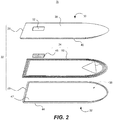
- transaction card 20 may include card frame 22 having an inlay component ("inlay”) 26 and a housing component ("housing”) 28.
- Inlay 26 may be visible from a first side 30 of transaction card 20, and housing 28 may be visible from a second side 32 of transaction card 20 opposite first side 30.
- Inlay 26 and housing 28 may be separate components that are connectable to form card frame 22. That is, housing and inlay components 26 and 28 may be non-unitary (i.e., formed initially as two distinct components).
- Inlay 26 may have a first inlay surface 38 and a second inlay surface 40 opposite first inlay surface 38.
- First inlay surface 38 may be visible from first side 30 and, as described below, may include visible information (e.g., personal information).
- Housing 28 may include a first housing surface 42 and a second housing surface 44 opposite first housing surface 42.
- Second housing surface 44 may be visible from second side 32 of card 20 and, as described below, may also or alternatively include visible information.
- Inlay 26 and housing 28 may be configured to be joined or connected via second inlay surface 40 and first housing surface 42 using various techniques.
- inlay 26 and housing 28 may be discrete layers that are stacked or abutted and joined by a suitable technique or mechanism, such as (but not limited to) adhesive materials, fasteners, interconnecting features (e.g., snap-fit features), interference fit, and/or combinations thereof. Other joining techniques or mechanisms may be used.
- inlay 26 may be a top outward-facing component of card 20. In some embodiments, inlay 26 may be partially set into housing 28. In other embodiments, inlay 26 not be set into housing 28 but may otherwise be affixed thereto. Inlay 26 may include a fabric material, which may be visible from first side 30 or second side 32 of card 20. Methods/processes of forming inlay 26 will be discussed in further detail below.
- Housing 28 may be a bottom outward-facing component of card 20. Housing 28 may be configured to house or contain other components of card 20. Housing 28 may include a cavity 36 that partially defines a space (not depicted in Fig. 2 ) (i.e., a void space) within card 20 when housing and inlay components 26 and 28 are assembled (space is shown as 34 in Figs. 5C and 6C ). In some embodiments, data storage component 24 may be disposed within cavity 36 to house and/or protect data storage component 24 from the elements, from wear-and-tear, and/or from tampering.
- cavity 36 may be configured (e.g., sized, shaped, etc.) to at least partially contain one or more of a microchip 48 (e.g., an EMV chip), a communication device 50 (e.g., an NFC or RFID device), and/or a magnetic strip (not shown).
- a microchip 48 e.g., an EMV chip
- a communication device 50 e.g., an NFC or RFID device
- a magnetic strip not shown
- cavity 36 may be configured to at least partially contain other or additional types of data storage components and/or other card components and is not limited to those mentioned above.
- Housing 28 may be formed of multiple separate components or as a unitary structure.
- housing 28 may be formed using molding process, such as an injection molding, compression molding, or other type of molding process.
- Housing 28 may be formed of, for example, polycarbonate (PC), polyvinyl chloride (PVC), or a resin mixture configured to impart additional or desired properties on housing 28.
- housing 28 may be formed of a resin mixture comprising one or more of a thermoplastic elastomer (TPE), polybutylene terephthalate (PBT), an acetal homopolymer, and/or other materials.
- TPE thermoplastic elastomer
- PBT polybutylene terephthalate
- acetal homopolymer and/or other materials.
- the TPE and/or other materials may be selected to provide card 20 with a "soft-touch feel" (i.e., a haptic sensation that occurs when a person touches something that, for example, feels soft, smooth, and/or satiny).
- the resin mixture may include a polyester elastomer, a block copolymer, a thermoplastic olefin, an elastomeric alloy, a thermoplastic polyurethane, a thermoplastic copolyester, or a thermoplastic polyamide.
- housing 28 may be non-opaque (e.g., translucent, transparent, clear, etc.) after manufacturing is complete (e.g., after setting).
- Interior features of housing 28 may be formed during the formation of housing 28 (e.g., during injection molding, compression molding, etc.) or during a subsequent manufacturing process.
- interior features of housing 28, such as cavity 36 may be formed using a milling process (e.g., computer numeric control (CNC) or manual milling), a laser-cutting process, a sanding or grinding process, or a material deposition process (e.g., 3-D printing).
- CNC computer numeric control
- a laser-cutting process e.g., a laser-cutting process
- a sanding or grinding process e.g., 3-D printing
- Card 20 may be configured to permit, enable, or enhance data transmission functions of data storage device 24.
- an aperture 52 may be provided on or in inlay 28 to permit, enable, and/or enhance transmission functions of data storage component 24.
- Aperture 52 may be configured to allow data storage component 24 to transmit information through physical contact, optical recognition, radiofrequency communication, or other mechanisms.
- aperture 52 may also or alternatively be provided on or in housing 28.
- Aperture 52 may be formed using a milling process, laser-cutting process, stamping process, or another suitable process.
- forming when used to describe methods, processes, or steps of forming components or features of transaction cards, may encompass acts of constructing components from constituent or stock materials.
- forming may also encompass acts of "providing" components that have already been constructed from constituent or stock materials.
- Fig. 3A shows a front view of card 20 from first side 30.
- inlay 26 may include visible information 54.
- Visible information 54 may include, for example, personal information, such as information that is associated with a card, a user of the card, or information relating to an account associated with the card or card user.
- visible information 54 may include "transaction information," such as financial information (e.g., card numbers, account numbers, expiration dates etc.), individual-identifying information (e.g., name, address, signature, etc.), bank information, and/or transaction network information, logos, designs, graphics, and/or other information.
- Visible information 54 may be disposed on first inlay surface 38 to enable information 54 to be visible from first side 30 of card 20.
- visible information 54 may be formed into first inlay surface 38. That is, for example, visible information 54 may be stamped (i.e., through the formation of one or more mechanical indents), printed, etched, milled, laser-cut, embossed, embroidered, stitched, woven, etc., into or onto first inlay surface 38 (i.e., into or onto the fabric material of first inlay surface 38).
- visible information 54 may be disposed on second housing surface 44 in a similar manner.
- an aperture 52 may be disposed on first inlay surface 38 and configured to provide access to or enable functionality of a data storage component 24 (e.g., an EMV chip).
- a data storage component 24 e.g., an EMV chip
- Fig. 3B shows a rear view of card 20 from second side 32.
- Second housing surface 44 may be visible from second side 32.
- visible information 54 may be disposed on second housing surface 44 instead of or in addition to first inlay surface 38.
- Information 54 visible from second side 32 may include any information described above with respect to information 54 visible from first side 30. Other or additional information may also or alternatively be included.
- data storage component 24 may be visible or otherwise accessible from second side 32.
- a magnetic strip 56 may be disposed on or accessible from (i.e., readable from) second housing surface 44.
- an aperture (not shown) may be disposed on second housing surface 44 and configured to provide access to or enable functionality of a data storage component.
- one or more data storage components may be disposed within card 20 (e.g., in cavity 36 of housing 28) and configured to perform data transmission functions through the material of housing 28 and/or inlay 26 without an aperture.
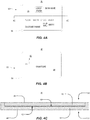
- Figs. 4A-4C show an exemplary embodiment of card 20 without a microchip or internal data storage component.
- Fig. 4A shows a front view of card 20 from first side 30.
- first inlay surface 38 may not include an aperture.
- a data storage component 24, such as a magnetic strip 56, may be disposed on second housing surface 44 and visible from second side 32 of card 20, as shown in Fig. 4B.
- Fig. 4C depicts a cross-sectional view of card 20 of Figs. 4A and 4B along line 4C-4C.
- inlay 26 and housing 28 may be joined via second inlay surface 40 and first housing surface 42.
- First inlay surface 38 may face outward (with respect to card 20) and away from first and second housing surfaces 42, 44.
- first inlay surface 38 may face and be visible from first side 30 of card 20.
- Second inlay surface 40 may face inward (with respect to card 20) and toward first and second housing surfaces 42, 44.
- First housing surface 42 may face inward (with respect to card 20) and toward first and second inlay surfaces 38, 40.
- Second housing surface 44 may face outward (with respect to card 20) and away from first and second inlay surfaces 38, 40. That is, second housing surface 44 may face and be visible from second side 32 of card 20.
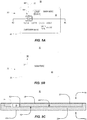
- Figs 5A-5C show an exemplary embodiment of card 20 having a microchip 48 as a first data storage component 24.
- Fig. 5A shows a front view of card 20 from first side 30.
- first inlay surface 38 may include aperture 52.
- Microchip 48 may be accessible (i.e., able to participate in data transfer) via aperture 52.
- second data storage component 24, such as a magnetic strip 56 may be disposed on second housing surface 44 and visible from second side 32 of card 20.
- Fig. 5C depicts a cross-sectional view of card 20 of Figs. 5A and 5B along line 5C-5C.
- aperture 52 may partially define space 34.
- Space 34 may be a void space within card 20 or its components (e.g., within one or more of inlay 26 and housing 28). Space 34 may be configured to house or contain microchip 48.
- space 34 may extend from first inlay surface to below first housing surface 42, but not to second housing surface 44. That is, space 34 may extend through inlay 26 and partially through housing 28. In other embodiments, space 34 may extend fully or only partially through inlay 26, but not into housing 28.
- space 34 may extend from an aperture in second housing surface 44 into housing 28 toward first inlay surface 42 (e.g., partially or fully through housing 28) and may extend partially into inlay 26 (i.e., through second inlay surface 40 but not first inlay surface 38).
- inlay 26 and housing 28 may be joined via second inlay surface 40 and first housing surface 42.
- First inlay surface 38 may face outward (with respect to card 20) and away from first and second housing surfaces 42, 44. That is, first inlay surface 38 may face and be visible from first side 30 of card 20.
- Second inlay surface 40 may face inward (with respect to card 20) and toward first and second housing surfaces 42, 44.
- First housing surface 42 may face inward (with respect to card 20) and toward first and second inlay surfaces 38, 40.
- Second housing surface 44 may face outward (with respect to card 20) and away from first and second inlay surfaces 38, 40. That is, second housing surface 44 may face and be visible from second side 32 of card 20.
- Figs. 6A-6C show an exemplary embodiment of card 20 having a communication device 50 as a first data storage component 24.
- Fig. 6A shows a front view of card 20 from first side 30.
- first inlay surface 38 may include a microchip 48 (shown in dashed lines as an optional component), accessible through aperture 52 (also shown in dashed lines as an optional component), as a second, optional, data storage component 24.
- third optional data storage component 24, such as a magnetic strip 56 may be disposed on second housing surface 44 and visible from second side 32 of card 20.
- Fig. 6C depicts a cross-sectional view of card 20 of Figs. 6A and 6B along line 6C-6C.
- inlay 26 and housing 28 may be configured to partially define space 34 when joined.
- second inlay surface 40 and first housing surface 42 may partially define space 34.
- Space 34 may be a void space within card 20 or its components (e.g., inlay 26 and/or housing 28 may include cavities or recesses that partially define space 34).
- Space 34 may be configured to house or contain communication device 50.
- space 34 may also or alternatively be configured to house or contain other components of card 20, such as interconnecting features (e.g., for joining inlay 26 and housing 28), electronics (e.g., data storage or transmission components, data processing components, lighting, power generation or storage components, circuitry components, etc.), and/or other components.
- interconnecting features e.g., for joining inlay 26 and housing 28
- electronics e.g., data storage or transmission components, data processing components, lighting, power generation or storage components, circuitry components, etc.
- inlay 26 and housing 28 may be joined via second inlay surface 40 and first housing surface 42.
- First inlay surface 38 may face outward (with respect to card 20) and away from first and second housing surfaces 42, 44. That is, first inlay surface 38 may face and be visible from first side 30 of card 20.
- Second inlay surface 40 may face inward (with respect to card 20) and toward first and second housing surfaces 42, 44.
- First housing surface 42 may face inward (with respect to card 20) and toward first and second inlay surfaces 38, 40.
- Second housing surface 44 may face outward (with respect to card 20) and away from first and second inlay surfaces 38, 40. That is, second housing surface 44 may face and be visible from second side 32 of card 20.
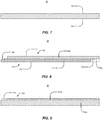
- Fig. 7 shows an exemplary inlay component 26 comprising a fabric material.
- fabric refers to a material constructed using natural or synthetic fibers. The fabric may be constructed using, but is not limited to, a weaving process, knitting process, or nonwoven process.
- woven refers to any fabric material constructed through the interlacing of vertical and horizontal yarns.
- knit refers to any fabric material constructed by rows of interlocking loops.
- yarn refers to a continuous strand of fibers, formed into a thread, for use in weaving or knitting processes.
- Nonwoven processes may include, but are not limited to, a stapling process (spinning, cutting, and laying a nonwoven fabric), a melt-blowing process, a spunlaid process (spinning and then directly dispersing a nonwoven fabric), a flashspin process, or the like.
- inlay component 26 may be a unitary structure comprising first inlay surface 38 and second inlay surface 40.
- inlay 26 may be formed of a fabric material having desired mechanical properties. That is, the fabric material of inlay 26 may be chosen to achieve desired stiffness, strength, and/or other measures of durability of the inlay 26 or the card 20. In order to achieve these desired characteristics, parameters of the fabric material of inlay 26 may be varied.
- the fabric material of inlay 26 may be woven, knit, or nonwoven, may be constructed with different weaving patterns, may use different yarn weights, may contain different fabric finishes or coatings, fiber compositions including natural and/or synthetic fibers, and may contain varying thread counts.
- the fabric material of inlay 26 may be a woven fabric constructed using a specific weaving pattern.
- the fabric material of inlay 26 may be constructed using, but is not limited to, any of the following weaving patterns: plain (or alternating), basket, satin, sateen, twill, ripstop, or jacquard.
- plain (or alternating) plain (or alternating)
- basket satin
- sateen twill
- ripstop or jacquard.
- the fabric material may have different mechanical properties.
- an inlay 26 constructed using a plain weave may provide additional fabric stability.
- an inlay 26 constructed using a satin weave may produce a fabric with increased flexibility.
- an inlay 26 constructed using a ripstop weave with a crosshatch pattern containing reinforcement threads may be more resistant to ripping or tearing.
- the type of weaving pattern used to construct the fabric material of inlay 26 may enhance other desired characteristics for the fabric material, such as water, stain, or abrasion resistance. For example, in some embodiments, additional abrasion resistance may be gained where the weaving pattern used to construct the fabric material of inlay 26 includes longer floats in the weaving pattern. In some embodiments, the density of the weaving pattern (i.e., the number of threads in a given amount of space) used to construct the fabric material of inlay 26 may create a fabric material with limited or no porosity in order to enhance water and stain resistance.
- the fabric material of inlay 26 may be constructed using yarns of a specific weight.
- an inlay 26 constructed using a fabric with higher weight will produce a sturdier fabric.
- the fabric material of inlay 26 may contain a specific thread count to obtain desired characteristics. The thread count may be calculated by counting the total number of warp ends (along the length) and weft ends (along the width) in two adjacent edges of a one-inch square of the fabric.
- a high thread count fabric may be used to construct the fabric material of inlay 26 in order to obtain a more durable fabric.
- the thread count of the fabric material constructed with natural fibers may, for example, be between 250 and 1200.
- the thread count of the fabric material constructed with synthetic fibers may, for example, be between 25 and 75.
- an inlay having a unitary structure and comprising a fabric material may comprise a single layer of fabric having desired mechanical properties.
- fabrics resulting in a stiffer (i.e., more rigid or sturdy) inlay may include aramid or para-aramid fabrics, such as poly-paraphenylene terephthalamide (e.g., Kevlar®).
- Suitable fabrics may include nonwoven fabrics, i.e., sheets of fibers that are chemically, thermally, or mechanically bonded.
- Nonwoven fabrics may include, for example, fibers of carbon, glass, aramid, polyester, thermoplastic, or mixtures thereof.
- Fabrics for inlay 26 may also be chosen based on desired aesthetic and/or tactile properties. That is, in addition to meeting certain mechanical requirements, selected fabrics may have a desired look or feel. For example, nonwoven fabrics having a desired fiber matrix pattern or design may be used. In other embodiments, woven or knit fabrics having desired mechanical and aesthetic/tactile properties may be used. For example, sturdy woven fabrics, such as canvas, denim, or other woven cotton fabrics. By way of further example, the woven cotton fabric may be denim constructed with a 3:1 twill weave, 2:1 twill weave, or a plain weave. In some embodiments, other weaving patterns used to construct inlay 26 may enhance the appearance, touch, and feel of first inlay surface 38. In other embodiments, a high thread-count cotton-polyester blend fabric may be used. In yet other embodiments, synthetic fibers (e.g., polyester, or para-aramids, such as Kevlar®) may be used.
- synthetic fibers e.g., polyester, or para-aramids, such
- inlay 26 may include a fabric layer 60 supported by a backer layer 62 to enhance mechanical performance of inlay 26 or card 20.
- backer layer 62 may be joined with fabric layer 60 to increase rigidity, strength, and/or other mechanical properties, and to reduce warping or rippling when inlay 26 and housing 28 (depicted in Figs. 2-6C ) are joined.
- fabric layer 60 may have a first fabric surface 64 opposite a second fabric surface 66.
- Backer layer 62 may have a first backer surface 68 opposite a second backer surface 70.
- first fabric surface 64 and second backer surface 70 may correspond to first inlay surface 38 and second inlay surface 40 (depicted in Figs. 2-6C ), respectively.
- Fabric layer 60 and backer layer 62 may be joined using an adhesive layer 72 or other suitable joining mechanism (e.g., lamination, fastening, interconnecting features, etc.).
- backer layer 62 may be formed integrally with fabric layer 60, e.g., by forming backer layer 62 via hot melt directly on fabric layer 60.
- Fig. 8 is a partially cut-away cross-sectional view of an exemplary embodiment of inlay 26 showing fabric layer 60 joined to backer layer 62 by adhesive layer 72.
- Including backer layer 62 with fabric layer 60 may allow fabric layer 60 to be thinner while also enabling inlay 26 to achieve desired mechanical properties. Thinner or less rigid fabric materials having desirable visual, aesthetic, and/or tactile properties may be joined with backer layer to provide inlay 26 with the desired visual, aesthetic, and/or tactile properties without rendering inlay 26 unacceptably flexible or delicate. In this way, fabrics that may be more visually appealing but less rigid may be used as fabric layer 60 in inlay 26.
- Backer layer 62 may be formed of a material more rigid or sturdy than fabric layer 60.
- backer layer 62 may be formed of wood, wood composite (e.g., medium-density fiberboard), metal, plastic (e.g., acrylic, polycarbonate, polyethylene terephthalate, thermoplastics, etc.), and/or other materials or combinations thereof.
- backer layer 62 may comprise nonwoven fabric comprising fibers of, for example, carbon, glass, aramid, polyester, thermoplastic, poly-paraphenylene terephthalamide, or mixtures thereof.
- the fabric material for inlay 26 may be chosen based on a number of criteria, including desired visual, aesthetic, and/or tactile characteristics. Some fabric materials have desirable visual, aesthetic, and/or tactile characteristics in their natural state. That is, some fabrics have a desirable look or feel that can be lost if covered or coated with other materials. To preserve the natural look or feel of a fabric material, the fabric material of inlay 26 may, in some embodiments, be left in a natural state without coatings. In other embodiments, as shown in Fig. 9 , inlay 26 (or just fabric layer 60) may be coated with a coating material 74 to provide additional benefits.
- coating material 74 may be applied to fabric layer 60 of multi-layer inlay 26.
- coating material 74 may be applied to first inlay surface 38 when inlay 26 comprises a unitary layer of fabric material (i.e., when inlay 26 does not include backer layer 62).
- Coating material 74 may be configured to cause inlay 26 to exhibit properties of being, for example, hydrophobic, oelophobic (i.e., stain resistant), laser-reactive, more durable, etc.
- coating material 74 may be a hydrophobic coating material configured to provide water-resistant or water-repellant functionality to inlay 26.
- Hydrophobic coating materials may include, for example, fluoropolymer-based coatings, silicone-based coatings, fluorochemical compounds, silastic or silicone elastomer coatings (e.g., acrylics, vinyls, polyurethanes and the like), rubber, polyvinyl chloride, and wax. Other types of water-resistant, water-repellant, and/or waterproof materials may be used.
- coating material 74 may also or alternatively be oleophobic and stain-resistant.
- coating material 74 may be applied using a chemical vapor deposition (CVD) process, allowing coating material 74 to be relatively very thin to minimize the effects of coating 74 on the fabric material's natural aesthetic/tactile properties.
- CVD chemical vapor deposition
- coating material 74 may be sprayed, brushed, or otherwise applied to inlay 26.
- inlay 26, fabric layer 60, and/or other components of card 20 may be dipped (separately or together) in coating material 74.
- coating material 74 may comprise a laser-reactive material to enable the underlying material (e.g., fabric) to be marked by a laser. That is, some fabric materials which may have desirable aesthetic and/or tactile properties may not react to laser light in a way that allows the fabric to be properly marked, etched, or engraved. Such fabrics may be coated with a laser-reactive material to provide laser-reactive functionality to the fabric. Laser-reactive materials may include materials configured to absorb energy from laser light to change color or shade.
- Non-limiting examples of laser-reactive materials may include antimony-doped tin oxide, metal oxide-coated micas including metal-doped metal oxide-coated micas, clays, talc, kaolins, chalks, aluminas, phyllosilicates, carbon black, salts of antimony, copper, and other metals such as antimony (III) oxide, metallic pigments such as aluminum flake pigments, and pearlescent pigments.
- Laser-reactive materials may also or alternatively include polymers, including, but not limited to, acrylic polymers, polyurethanes, polyethers, cellulosics, epoxy polymers and oligomers, polyesters, alkyds, and combinations thereof. Commercially available laser-reactive materials may be used to coat components of inlay 26.
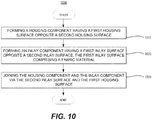
- Fig. 10 shows an exemplary method/process 1000 of forming a transaction card 20 consistent with disclosed embodiments.
- the process 1000 may include forming a housing component having a first housing surface opposite a second housing surface (Step 1010).
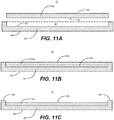
- Fig. 11A illustrates an example of step 1010 in which inlay component 26 and housing component 28 may be formed separately (i.e., as distinct components via separate, respective processes).
- Housing 28 of Figs. 2-6C may be formed during step 1010, for example, by a molding process (e.g., injection molding, compression molding, etc.), milling process, stamping process, or combinations thereof.
- features of housing 28, such as first housing surface 42, second housing surface 44, and cavity 36 may be formed during a process of injection molding housing 28.
- a portion of housing 28 may be formed (e.g., by a molding or sheet forming process), and housing features may be formed or refined during a subsequent manufacturing process.
- first and second housing surfaces 42, 44 and/or cavity 36 may be formed by forming or providing a portion of housing 28 and removing material to generate housing features (e.g., via a milling, laser cutting, or other process).
- Housing 28 may include first housing surface 42 and second housing surface 44 (as depicted in Figs. 2 , 4C , 5C , and 6C ).
- Process 1000 may also include forming an inlay component having a first inlay surface opposite a second inlay surface, wherein the first inlay surface comprises a fabric material (Step 1020).
- Inlay 26 of Figs. 2-9 may be formed during step 1020.
- forming inlay 26 may include weaving, knitting, or binding fibers of desired material, or by cutting or otherwise separating a portion of fabric material from a roll or sheet of stock material.
- inlay 26 may be a unitary component (i.e., may be a single component or layer).
- Inlay 26 may include first inlay surface 38 and second inlay surface 4, as shown in Fig. 11A .
- forming inlay 26 may include addition steps or sub-steps, as discussed below.
- Process 1000 may also include joining the housing component and the inlay component via the second inlay surface and the first housing surface (Step 1030).
- inlay 26 and housing 28 may be brought together during step 1030 such that second inlay surface 40 faces and/or contacts first housing surface 42.
- First inlay surface 38 and second housing surface 44 may face away from each other (i.e., in opposite directions), and may each face away from each of second inlay surface 40 and first housing surface 42.
- inlay 26 may be inserted (e.g., partially or fully) into cavity 36 of housing 28.
- Inlay 26 and housing 28 may be joined, for example, using an adhesive material, interconnecting features, fasteners, and/or another types of joining technique or mechanism.
- adhesive layer 72 may be disposed between and contact each of second inlay surface 40 and first housing surface 42 for joining inlay 26 to housing 28.
- inlay 26 may be inserted into cavity 36 of housing 28 such that first inlay surface 38 rests below a top surface of housing 28.
- inlay 26 may be placed in housing 28 such that a top surface 58 of housing 28 extends beyond (or above) first inlay surface 38 in order to further protect inlay 26 and the edges of inlay 26 in particular from wear during use of transaction card 20.
- first inlay surface 38 may be protected from scratching, tearing, or other wearing when card 20 is used (i.e., swiped or inserted into a card reader), dropped, slid across a surface (such as a counter, desk, or table), etc. In this way, the service life of card 20 may be increased.
- inlay component 26 may, in some embodiments, be formed as a unitary structure. In other embodiments, inlay 26 may comprise a plurality of components or subcomponents.
- Fig. 12 shows an exemplary process/method of forming an inlay component 26 having multiple subcomponents consistent with disclosed embodiments.
- Process 1200 may include forming a backer layer configured to support the fabric material of the first inlay surface (Step 1210).
- Fig. 13A illustrates an example of step 1210 in which a fabric layer 60 and a backer layer 62 may be formed separately (i.e., as distinct components via separate, respective processes).
- Forming fabric layer 60 may include weaving, knitting, or binding fibers of desired material, or by cutting or otherwise separating a portion of fabric material from a roll or sheet of stock material.
- Fabric layer 60 may be formed to have a first fabric surface 64 opposite a second fabric surface 66.
- backer layer 62 may include a first backer surface 68 opposite a second backer surface 70.
- Backer layer 62 may be formed of a material more rigid or sturdy than fabric layer 60.
- backer layer 62 may be formed of wood, wood composite (e.g., medium-density fiberboard), metal, plastic (e.g., acrylic, polycarbonate, polyethylene terephthalate, thermoplastics, etc.), and/or other materials or combinations thereof.
- backer layer 62 may also or alternatively comprise nonwoven fabric comprising fibers of, for example, carbon, glass, aramid, polyester, thermoplastic, poly-paraphenylene terephthalamide, or mixtures thereof.
- Backer layer 62 may support fabric layer 60 such that first fabric surface 64 corresponds to first inlay surface 38 and second backer layer 70 corresponds to second inlay layer 40 (as depicted in Figs. 2 , 4C , 5C , and 6C ).
- Process 1200 may also include joining the fabric layer and the backer layer via the second fabric surface and the first backer surface (Step 1220).
- fabric layer 60 and backer layer 62 may be brought together during step 1220 such that second fabric surface 66 faces and/or contacts first backer surface 68.
- First fabric surface 64 and second backer surface 70 may face away from each other (i.e., in opposite directions), and may each face away from each of second fabric surface 66 and first backer surface 68.
- fabric surface 60 and backer surface 62 may be joined, for example, using an adhesive material, interconnecting features, fasteners, and/or another types of joining technique or mechanism.
- adhesive layer 72 may be disposed between and in contact with each of second fabric surface 66 and first backer surface 68 for joining fabric surface 60 to backer surface 62.
- Process 1200 may also include disposing visible information on the fabric material of first inlay surface (Step 1230).
- Visible information may include, for example, personal information, such as information that is associated with a card, a user of the card, or information relating to an account associated with the card or card user.
- visible information may include "transaction information," such as financial information (e.g., card numbers, account numbers, expiration dates etc.), individual-identifying information (e.g., name, address, signature, etc.), bank information, and/or transaction network information, logos, designs, graphics, and/or other information.
- Visible information may be disposed on first inlay surface 38 (e.g., on first fabric surface 64). In some embodiments, visible information may be formed into first inlay surface 38.
- visible information may be stamped, printed, etched, milled, laser-cut, embossed, embroidered, stitched, woven, etc., into or onto first inlay surface 38 (i.e., into or onto the fabric material of first inlay surface 38).
- visible information may be disposed on second housing surface 44 in a similar manner.
- Process 1200 may further include coating the fabric material of the first inlay surface with a coating material (Step 1240).
- coating material 74 may be disposed on fabric layer 60 to, for example, protect fabric layer 60 from the elements.
- coating material 74 may be applied to fabric layer 60 to provide water-repellant, water-resistant, oleophobic (i.e., stain resistant), and/or laser reactive properties to inlay 26.
- coating material 74 may be a hydrophobic coating material configured to provide water-resistant or water-repellant functionality to inlay 26.
- Hydrophobic coating materials may include, for example, fluoropolymer-based coatings, silicone-based coatings, fluorochemical compounds, silastic or silicone elastomer coatings (e.g., acrylics, vinyls, polyurethanes and the like), rubber, polyvinyl chloride, and wax. Other types of water-resistant, water-repellant, and/or waterproof materials may be used.
- coating material 74 may also or alternatively be oleophobic and stain-resistant.
- coating material 74 may be applied using a chemical vapor deposition (CVD) process, allowing coating material 74 to be relatively very thin to minimize the effects of coating 74 on the fabric material's natural visual, aesthetic, and/or tactile properties.
- CVD chemical vapor deposition
- coating material 74 may be sprayed, brushed, or otherwise applied to inlay 26.
- inlay 26, fabric layer 60, and/or other components of card 20 may be dipped (separately or together) in coating material 74.
- coating material 74 may comprise a laser-reactive material to enable the underlying material (e.g., fabric) to be marked by a laser (e.g., for providing visible information on fabric layer 60). That is, some fabric materials which may have desirable aesthetic and/or tactile properties may not react to laser light in a way that allows the fabric to be properly marked, etched, or engraved. Such fabrics may be coated with a laser-reactive material to provide laser-reactive functionality to the fabric. Laser-reactive materials may include materials configured to absorb energy from laser light to change color or shade.
- Non-limiting examples of laser-reactive materials may include antimony-doped tin oxide, metal oxide-coated micas including metal-doped metal oxide-coated micas, clays, talc, kaolins, chalks, aluminas, phyllosilicates, carbon black, salts of antimony, copper, and other metals such as antimony (III) oxide, metallic pigments such as aluminum flake pigments, and pearlescent pigments.
- Laser-reactive materials may also or alternatively include polymers, including, but not limited to, acrylic polymers, polyurethanes, polyethers, cellulosics, epoxy polymers and oligomers, polyesters, alkyds, and/or combinations thereof.
- step 1240 may be performed, at least in part, prior to step 1230.
- fabric layer 60 may be coated with coating material 74, and the visual information may then be disposed either on coating material 74 (e.g., via laser or other method to which coating material 74 is reactive) or on fabric layer 60 by means of coating material 74 (e.g., by manipulating coating material 74 to only coat a portion of fabric layer 60 such that the visual information is visible via a visual or tactile difference between the portion of fabric layer 60 that is coated and the portion that is not).
- visual information may be disposed on second housing surface 44, after which fabric layer 60 may be coated with coating material 74, after which additional visual information may be disposed either on coating material 74 or on fabric layer 60 by means of coating material 74.
Landscapes
- Engineering & Computer Science (AREA)
- Wood Science & Technology (AREA)
- Life Sciences & Earth Sciences (AREA)
- Textile Engineering (AREA)
- Computer Hardware Design (AREA)
- Microelectronics & Electronic Packaging (AREA)
- Theoretical Computer Science (AREA)
- General Physics & Mathematics (AREA)
- Physics & Mathematics (AREA)
- Casings For Electric Apparatus (AREA)
- Mechanical Engineering (AREA)
- Credit Cards Or The Like (AREA)
- Telephone Set Structure (AREA)
Applications Claiming Priority (1)
| Application Number | Priority Date | Filing Date | Title |
|---|---|---|---|
| US201662436809P | 2016-12-20 | 2016-12-20 |
Publications (3)
| Publication Number | Publication Date |
|---|---|
| EP3373206A2 true EP3373206A2 (fr) | 2018-09-12 |
| EP3373206A3 EP3373206A3 (fr) | 2018-11-14 |
| EP3373206B1 EP3373206B1 (fr) | 2020-02-05 |
Family
ID=60953541
Family Applications (1)
| Application Number | Title | Priority Date | Filing Date |
|---|---|---|---|
| EP17208790.0A Active EP3373206B1 (fr) | 2016-12-20 | 2017-12-20 | Carte de transaction en deux parties possédant une incrustation de tissu |
Country Status (4)
| Country | Link |
|---|---|
| US (6) | US10121100B2 (fr) |
| EP (1) | EP3373206B1 (fr) |
| CN (1) | CN108205697B (fr) |
| CA (1) | CA2989543C (fr) |
Cited By (1)
| Publication number | Priority date | Publication date | Assignee | Title |
|---|---|---|---|---|
| EP3560697A1 (fr) * | 2018-04-26 | 2019-10-30 | Capital One Services, LLC | Carte de toile de polyester |
Families Citing this family (6)
| Publication number | Priority date | Publication date | Assignee | Title |
|---|---|---|---|---|
| US10121100B2 (en) * | 2016-12-20 | 2018-11-06 | Capital One Services, Llc | Two piece transaction card having fabric inlay |
| FR3073307B1 (fr) * | 2017-11-08 | 2021-05-28 | Oberthur Technologies | Dispositif de securite tel qu'une carte a puce |
| US12159180B1 (en) * | 2021-11-29 | 2024-12-03 | Metaland Llc | RFID enabled metal transaction cards with coupler coil couplings and related methods |
| US12153984B2 (en) * | 2023-01-19 | 2024-11-26 | Capital One Services, Llc | Authentication card with integrated stitching |
| US12210923B2 (en) * | 2023-03-16 | 2025-01-28 | Capital One Services, Llc | Authentication card with integrated cloth |
| FR3163187A1 (fr) * | 2024-06-05 | 2025-12-12 | Idemia France | Carte à puce avec couche d’incrustation encapsulant une partie de bouchage en fibres de carbone |
Family Cites Families (53)
| Publication number | Priority date | Publication date | Assignee | Title |
|---|---|---|---|---|
| US4879170A (en) * | 1988-03-18 | 1989-11-07 | Kimberly-Clark Corporation | Nonwoven fibrous hydraulically entangled elastic coform material and method of formation thereof |
| US6025283A (en) * | 1995-05-12 | 2000-02-15 | The Real Gold Card Company Limited | Charge card |
| EP0913268A4 (fr) * | 1997-05-19 | 2004-11-17 | Hitachi Maxell | Module de circuit integre flexible et son procede de production, procede de production de support d'information comprenant ledit module |
| FR2782822A1 (fr) * | 1998-09-02 | 2000-03-03 | Hitachi Maxell | Module a semi-conducteur et procede de production |
| US7306158B2 (en) * | 2001-07-10 | 2007-12-11 | American Express Travel Related Services Company, Inc. | Clear contactless card |
| US6749123B2 (en) * | 1999-09-07 | 2004-06-15 | American Express Travel Related Services Company, Inc. | Transaction card |
| US6737625B2 (en) | 2001-06-28 | 2004-05-18 | Agilent Technologies, Inc. | Bad pixel detection and correction in an image sensing device |
| US7009121B2 (en) * | 2002-04-25 | 2006-03-07 | Preh-Werke Gmbh & Co. Kg | Keyboard, especially for electronic payment terminals, and keypad |
| DE10226386A1 (de) * | 2002-06-13 | 2003-12-24 | Datacard Corp | Dokument |
| US7721956B2 (en) * | 2003-12-10 | 2010-05-25 | American Express Travel Related Services Company, Inc. | Foldable transaction card systems |
| US7287704B2 (en) * | 2005-05-03 | 2007-10-30 | Composecure, Llc | Laser markable secure documents |
| US20060292946A1 (en) * | 2005-06-22 | 2006-12-28 | Perfect Plastic Printing Corporation | Financial Transaction Card With Embedded Fabric |
| WO2007097249A1 (fr) * | 2006-02-20 | 2007-08-30 | Daicel Chemical Industries, Ltd. | Film poreux et produit stratifie comprenant un film poreux |
| CN100556708C (zh) * | 2006-04-05 | 2009-11-04 | 中钞信用卡产业发展有限公司 | 带有镶嵌物的卡及其制造方法 |
| US20080005047A1 (en) | 2006-06-29 | 2008-01-03 | Microsoft Corporation | Scenario-based search |
| US8344888B2 (en) * | 2006-08-31 | 2013-01-01 | Semiconductor Energy Laboratory Co., Ltd. | Semiconductor device |
| JP4874035B2 (ja) * | 2006-09-05 | 2012-02-08 | 均 北吉 | キャビティ付き薄型スロットアンテナ及びアンテナ給電方法並びにこれらを用いたrfidタグ装置 |
| US8608080B2 (en) * | 2006-09-26 | 2013-12-17 | Feinics Amatech Teoranta | Inlays for security documents |
| EP2085914B1 (fr) * | 2006-11-07 | 2014-03-12 | Toppan Forms Co., Ltd. | Matériau de base de fenêtre, et carte à module incorporé et son procédé de fabrication |
| US9440481B1 (en) * | 2007-04-06 | 2016-09-13 | Citicorp Credit Services, Inc. | Transaction card with carbon fiber substructure and method of making same |
| EP2001077A1 (fr) * | 2007-05-21 | 2008-12-10 | Gemplus | Procédé de réalisation d'un dispositif comportant une antenne de transpondeur connectée à des plages de contact et dispositif obtenu |
| US7997775B2 (en) * | 2007-09-24 | 2011-08-16 | Nite Glow Industries, Inc. | High visibility safety lighting system integrated within a vehicle's frame |
| CN101971194A (zh) * | 2007-12-19 | 2011-02-09 | 谢玉莲 | 非接触式和双界面嵌体及其生产方法 |
| US20090181215A1 (en) * | 2008-01-15 | 2009-07-16 | Innovatier, Inc. | Plastic card and method for making a plastic card |
| DE102008052569B3 (de) * | 2008-10-21 | 2010-04-15 | Bundesdruckerei Gmbh | Inlay für ein Sicherheits- und/oder Wertdokument, Verfahren zu seiner Herstellung sowie seine Verwendung in einem Verfahren zur Herstellung eines Sicherheits- und/oder Wertdokumentes |
| EP2199100A1 (fr) * | 2008-12-22 | 2010-06-23 | Agfa-Gevaert N.V. | Laminés de sécurité pour documents de sécurité |
| TWI547916B (zh) * | 2009-07-07 | 2016-09-01 | 友輝光電股份有限公司 | 一種承載具有微結構之圖案標記的表面及其製造方法 |
| JP5547811B2 (ja) * | 2009-09-03 | 2014-07-16 | テイジン・アラミド・ゲーエムベーハー | アラミド繊維布帛およびその使用 |
| US8474726B2 (en) * | 2010-08-12 | 2013-07-02 | Feinics Amatech Teoranta | RFID antenna modules and increasing coupling |
| US10544502B2 (en) * | 2009-11-30 | 2020-01-28 | Xefco Pty Ltd | Functional composite garment materials |
| AT12513U1 (de) * | 2010-12-02 | 2012-06-15 | Schaefer Philipp | Verbundmaterial |
| US20140103116A1 (en) * | 2011-03-24 | 2014-04-17 | Tagsys Sas | Rfid tag assembly and label process |
| US9960476B2 (en) * | 2014-08-10 | 2018-05-01 | Féinics Amatech Teoranta | Smart card constructions |
| US8789761B2 (en) * | 2011-10-07 | 2014-07-29 | Intelligent Material Solutions, Inc. | Transaction card |
| CN103042777B (zh) * | 2011-10-14 | 2016-09-14 | 杜邦公司 | 具有改进的抗冲击强度的复合层合物及其制备方法和用途 |
| US9129201B2 (en) * | 2012-02-03 | 2015-09-08 | Checkpoint Systems, Inc. | Technology enhancement clip for hard tags |
| US8915000B2 (en) * | 2012-05-15 | 2014-12-23 | American Greetings Corporation | Greeting cards with optical fibers |
| US9898694B2 (en) * | 2012-05-30 | 2018-02-20 | Black Card Llc | Tri-layer transaction cards and associated methods |
| US8857722B2 (en) * | 2012-07-20 | 2014-10-14 | CPI Card Group—Colorado, Inc. | Weighted transaction card |
| US10032099B2 (en) * | 2012-07-20 | 2018-07-24 | CPI Card Group—Colorado, Inc. | Weighted transaction card |
| EP2779029B1 (fr) * | 2013-03-13 | 2017-07-26 | SES RFID Solutions GmbH | Implant de carte à puce pour des cartes à puce à réaction par contact et sans contact |
| US9172130B2 (en) * | 2013-03-13 | 2015-10-27 | Avery Dennison Corporation | RFID inlay incorporating a ground plane |
| DE102014005553A1 (de) * | 2014-04-15 | 2015-10-15 | Giesecke & Devrient Gmbh | Portabler Datenträger |
| JP6562952B2 (ja) * | 2014-05-09 | 2019-08-21 | ザ ノース フェイス アパレル コーポレイションThe North Face Apparel Corp. | 複数のゾーンの単一の織られた生地構築体 |
| CN106462782B (zh) * | 2014-05-22 | 2020-04-03 | 安全创造有限责任公司 | 具有选定纹理和着色的交易和id卡 |
| JP6824594B2 (ja) | 2014-09-11 | 2021-02-03 | Jnc株式会社 | 合成遺伝子の設計方法 |
| KR102210477B1 (ko) * | 2014-10-31 | 2021-01-29 | 에스케이케미칼 주식회사 | 다층 플라스틱 카드 |
| AU2015343255B2 (en) * | 2014-11-03 | 2020-09-17 | Composecure Llc | Ceramic-containing and ceramic composite transaction cards |
| US9911017B2 (en) * | 2015-04-09 | 2018-03-06 | Smartrac Ip B.V. | Integrated RFID antenna fabrication method and apparatus for transponder assembly |
| US9968861B2 (en) * | 2016-02-29 | 2018-05-15 | Dolhman Brown, Sr. | Detachable multi-functional housing compartment insert with attachable accessory templates |
| US10163050B2 (en) * | 2016-11-29 | 2018-12-25 | Capital One Services, Llc | Wood inlay card and method for making the same |
| US10121100B2 (en) * | 2016-12-20 | 2018-11-06 | Capital One Services, Llc | Two piece transaction card having fabric inlay |
| WO2018152218A1 (fr) * | 2017-02-14 | 2018-08-23 | Cpi Card Group - Colorado, Inc. | Carte métallique bord à bord et procédé de production |
-
2017
- 2017-09-05 US US15/695,099 patent/US10121100B2/en active Active
- 2017-09-14 US US15/704,288 patent/US10108897B2/en active Active
- 2017-12-19 CA CA2989543A patent/CA2989543C/fr active Active
- 2017-12-20 EP EP17208790.0A patent/EP3373206B1/fr active Active
- 2017-12-20 CN CN201711381511.2A patent/CN108205697B/zh active Active
-
2018
- 2018-10-08 US US16/154,000 patent/US10607130B2/en active Active
- 2018-10-22 US US16/166,393 patent/US10325193B2/en active Active
-
2020
- 2020-02-20 US US16/796,285 patent/US10949728B2/en active Active
-
2021
- 2021-02-18 US US17/178,963 patent/US11551049B2/en active Active
Non-Patent Citations (1)
| Title |
|---|
| None |
Cited By (2)
| Publication number | Priority date | Publication date | Assignee | Title |
|---|---|---|---|---|
| EP3560697A1 (fr) * | 2018-04-26 | 2019-10-30 | Capital One Services, LLC | Carte de toile de polyester |
| US10744811B2 (en) | 2018-04-26 | 2020-08-18 | Capital One Services, Llc | Polyester canvas card |
Also Published As
| Publication number | Publication date |
|---|---|
| US10949728B2 (en) | 2021-03-16 |
| US20210248440A1 (en) | 2021-08-12 |
| CA2989543A1 (fr) | 2018-06-20 |
| US20190156172A1 (en) | 2019-05-23 |
| US20180174011A1 (en) | 2018-06-21 |
| EP3373206A3 (fr) | 2018-11-14 |
| US10121100B2 (en) | 2018-11-06 |
| US10607130B2 (en) | 2020-03-31 |
| CA2989543C (fr) | 2026-03-24 |
| US20190057294A1 (en) | 2019-02-21 |
| EP3373206B1 (fr) | 2020-02-05 |
| CN108205697B (zh) | 2024-02-23 |
| CN108205697A (zh) | 2018-06-26 |
| US11551049B2 (en) | 2023-01-10 |
| US10108897B2 (en) | 2018-10-23 |
| US20180174012A1 (en) | 2018-06-21 |
| US10325193B2 (en) | 2019-06-18 |
| US20200193256A1 (en) | 2020-06-18 |
Similar Documents
| Publication | Publication Date | Title |
|---|---|---|
| US11551049B2 (en) | Two piece transaction card having fabric inlay | |
| US11321601B2 (en) | Transaction card having an electrically applied coating | |
| US10744811B2 (en) | Polyester canvas card | |
| US10357989B1 (en) | Polyester canvas card | |
| US9898694B2 (en) | Tri-layer transaction cards and associated methods | |
| EP3332937A1 (fr) | Résine tactile souple et carte de transaction la comprenant, méthode de production de cette carte | |
| HK1185433B (en) | Aramid transaction card | |
| HK1185433A (en) | Aramid transaction card |
Legal Events
| Date | Code | Title | Description |
|---|---|---|---|
| PUAI | Public reference made under article 153(3) epc to a published international application that has entered the european phase |
Free format text: ORIGINAL CODE: 0009012 |
|
| STAA | Information on the status of an ep patent application or granted ep patent |
Free format text: STATUS: THE APPLICATION HAS BEEN PUBLISHED |
|
| AK | Designated contracting states |
Kind code of ref document: A2 Designated state(s): AL AT BE BG CH CY CZ DE DK EE ES FI FR GB GR HR HU IE IS IT LI LT LU LV MC MK MT NL NO PL PT RO RS SE SI SK SM TR |
|
| AX | Request for extension of the european patent |
Extension state: BA ME |
|
| PUAL | Search report despatched |
Free format text: ORIGINAL CODE: 0009013 |
|
| AK | Designated contracting states |
Kind code of ref document: A3 Designated state(s): AL AT BE BG CH CY CZ DE DK EE ES FI FR GB GR HR HU IE IS IT LI LT LU LV MC MK MT NL NO PL PT RO RS SE SI SK SM TR |
|
| AX | Request for extension of the european patent |
Extension state: BA ME |
|
| RIC1 | Information provided on ipc code assigned before grant |
Ipc: G06K 19/077 20060101AFI20181010BHEP |
|
| STAA | Information on the status of an ep patent application or granted ep patent |
Free format text: STATUS: REQUEST FOR EXAMINATION WAS MADE |
|
| 17P | Request for examination filed |
Effective date: 20190513 |
|
| RBV | Designated contracting states (corrected) |
Designated state(s): AL AT BE BG CH CY CZ DE DK EE ES FI FR GB GR HR HU IE IS IT LI LT LU LV MC MK MT NL NO PL PT RO RS SE SI SK SM TR |
|
| GRAP | Despatch of communication of intention to grant a patent |
Free format text: ORIGINAL CODE: EPIDOSNIGR1 |
|
| STAA | Information on the status of an ep patent application or granted ep patent |
Free format text: STATUS: GRANT OF PATENT IS INTENDED |
|
| RIC1 | Information provided on ipc code assigned before grant |
Ipc: B32B 27/36 20060101ALI20190603BHEP Ipc: B32B 15/14 20060101ALI20190603BHEP Ipc: B32B 27/12 20060101ALI20190603BHEP Ipc: B32B 7/12 20060101ALI20190603BHEP Ipc: G06K 19/02 20060101AFI20190603BHEP Ipc: B32B 21/08 20060101ALI20190603BHEP Ipc: B32B 27/34 20060101ALI20190603BHEP Ipc: B32B 15/08 20060101ALI20190603BHEP Ipc: B32B 5/02 20060101ALI20190603BHEP Ipc: B32B 21/14 20060101ALI20190603BHEP Ipc: B32B 27/40 20060101ALI20190603BHEP Ipc: B32B 3/08 20060101ALI20190603BHEP Ipc: B32B 7/04 20190101ALI20190603BHEP Ipc: B32B 21/02 20060101ALI20190603BHEP Ipc: B32B 5/28 20060101ALI20190603BHEP Ipc: B32B 7/08 20190101ALI20190603BHEP Ipc: B32B 5/26 20060101ALI20190603BHEP Ipc: B32B 21/10 20060101ALI20190603BHEP Ipc: B32B 27/30 20060101ALI20190603BHEP Ipc: B32B 3/04 20060101ALI20190603BHEP |
|
| INTG | Intention to grant announced |
Effective date: 20190702 |
|
| GRAS | Grant fee paid |
Free format text: ORIGINAL CODE: EPIDOSNIGR3 |
|
| GRAA | (expected) grant |
Free format text: ORIGINAL CODE: 0009210 |
|
| STAA | Information on the status of an ep patent application or granted ep patent |
Free format text: STATUS: THE PATENT HAS BEEN GRANTED |
|
| AK | Designated contracting states |
Kind code of ref document: B1 Designated state(s): AL AT BE BG CH CY CZ DE DK EE ES FI FR GB GR HR HU IE IS IT LI LT LU LV MC MK MT NL NO PL PT RO RS SE SI SK SM TR |
|
| REG | Reference to a national code |
Ref country code: GB Ref legal event code: FG4D |
|
| REG | Reference to a national code |
Ref country code: AT Ref legal event code: REF Ref document number: 1230399 Country of ref document: AT Kind code of ref document: T Effective date: 20200215 |
|
| REG | Reference to a national code |
Ref country code: DE Ref legal event code: R096 Ref document number: 602017011382 Country of ref document: DE |
|
| REG | Reference to a national code |
Ref country code: IE Ref legal event code: FG4D |
|
| REG | Reference to a national code |
Ref country code: CH Ref legal event code: EP |
|
| REG | Reference to a national code |
Ref country code: NL Ref legal event code: MP Effective date: 20200205 |
|
| PG25 | Lapsed in a contracting state [announced via postgrant information from national office to epo] |
Ref country code: RS Free format text: LAPSE BECAUSE OF FAILURE TO SUBMIT A TRANSLATION OF THE DESCRIPTION OR TO PAY THE FEE WITHIN THE PRESCRIBED TIME-LIMIT Effective date: 20200205 Ref country code: FI Free format text: LAPSE BECAUSE OF FAILURE TO SUBMIT A TRANSLATION OF THE DESCRIPTION OR TO PAY THE FEE WITHIN THE PRESCRIBED TIME-LIMIT Effective date: 20200205 Ref country code: PT Free format text: LAPSE BECAUSE OF FAILURE TO SUBMIT A TRANSLATION OF THE DESCRIPTION OR TO PAY THE FEE WITHIN THE PRESCRIBED TIME-LIMIT Effective date: 20200628 Ref country code: NO Free format text: LAPSE BECAUSE OF FAILURE TO SUBMIT A TRANSLATION OF THE DESCRIPTION OR TO PAY THE FEE WITHIN THE PRESCRIBED TIME-LIMIT Effective date: 20200505 |
|
| REG | Reference to a national code |
Ref country code: LT Ref legal event code: MG4D |
|
| PG25 | Lapsed in a contracting state [announced via postgrant information from national office to epo] |
Ref country code: BG Free format text: LAPSE BECAUSE OF FAILURE TO SUBMIT A TRANSLATION OF THE DESCRIPTION OR TO PAY THE FEE WITHIN THE PRESCRIBED TIME-LIMIT Effective date: 20200505 Ref country code: IS Free format text: LAPSE BECAUSE OF FAILURE TO SUBMIT A TRANSLATION OF THE DESCRIPTION OR TO PAY THE FEE WITHIN THE PRESCRIBED TIME-LIMIT Effective date: 20200605 Ref country code: GR Free format text: LAPSE BECAUSE OF FAILURE TO SUBMIT A TRANSLATION OF THE DESCRIPTION OR TO PAY THE FEE WITHIN THE PRESCRIBED TIME-LIMIT Effective date: 20200506 Ref country code: LV Free format text: LAPSE BECAUSE OF FAILURE TO SUBMIT A TRANSLATION OF THE DESCRIPTION OR TO PAY THE FEE WITHIN THE PRESCRIBED TIME-LIMIT Effective date: 20200205 Ref country code: SE Free format text: LAPSE BECAUSE OF FAILURE TO SUBMIT A TRANSLATION OF THE DESCRIPTION OR TO PAY THE FEE WITHIN THE PRESCRIBED TIME-LIMIT Effective date: 20200205 Ref country code: HR Free format text: LAPSE BECAUSE OF FAILURE TO SUBMIT A TRANSLATION OF THE DESCRIPTION OR TO PAY THE FEE WITHIN THE PRESCRIBED TIME-LIMIT Effective date: 20200205 |
|
| PG25 | Lapsed in a contracting state [announced via postgrant information from national office to epo] |
Ref country code: NL Free format text: LAPSE BECAUSE OF FAILURE TO SUBMIT A TRANSLATION OF THE DESCRIPTION OR TO PAY THE FEE WITHIN THE PRESCRIBED TIME-LIMIT Effective date: 20200205 |
|
| PG25 | Lapsed in a contracting state [announced via postgrant information from national office to epo] |
Ref country code: SK Free format text: LAPSE BECAUSE OF FAILURE TO SUBMIT A TRANSLATION OF THE DESCRIPTION OR TO PAY THE FEE WITHIN THE PRESCRIBED TIME-LIMIT Effective date: 20200205 Ref country code: DK Free format text: LAPSE BECAUSE OF FAILURE TO SUBMIT A TRANSLATION OF THE DESCRIPTION OR TO PAY THE FEE WITHIN THE PRESCRIBED TIME-LIMIT Effective date: 20200205 Ref country code: RO Free format text: LAPSE BECAUSE OF FAILURE TO SUBMIT A TRANSLATION OF THE DESCRIPTION OR TO PAY THE FEE WITHIN THE PRESCRIBED TIME-LIMIT Effective date: 20200205 Ref country code: CZ Free format text: LAPSE BECAUSE OF FAILURE TO SUBMIT A TRANSLATION OF THE DESCRIPTION OR TO PAY THE FEE WITHIN THE PRESCRIBED TIME-LIMIT Effective date: 20200205 Ref country code: LT Free format text: LAPSE BECAUSE OF FAILURE TO SUBMIT A TRANSLATION OF THE DESCRIPTION OR TO PAY THE FEE WITHIN THE PRESCRIBED TIME-LIMIT Effective date: 20200205 Ref country code: ES Free format text: LAPSE BECAUSE OF FAILURE TO SUBMIT A TRANSLATION OF THE DESCRIPTION OR TO PAY THE FEE WITHIN THE PRESCRIBED TIME-LIMIT Effective date: 20200205 Ref country code: EE Free format text: LAPSE BECAUSE OF FAILURE TO SUBMIT A TRANSLATION OF THE DESCRIPTION OR TO PAY THE FEE WITHIN THE PRESCRIBED TIME-LIMIT Effective date: 20200205 Ref country code: SM Free format text: LAPSE BECAUSE OF FAILURE TO SUBMIT A TRANSLATION OF THE DESCRIPTION OR TO PAY THE FEE WITHIN THE PRESCRIBED TIME-LIMIT Effective date: 20200205 |
|
| REG | Reference to a national code |
Ref country code: DE Ref legal event code: R097 Ref document number: 602017011382 Country of ref document: DE |
|
| REG | Reference to a national code |
Ref country code: AT Ref legal event code: MK05 Ref document number: 1230399 Country of ref document: AT Kind code of ref document: T Effective date: 20200205 |
|
| PLBE | No opposition filed within time limit |
Free format text: ORIGINAL CODE: 0009261 |
|
| STAA | Information on the status of an ep patent application or granted ep patent |
Free format text: STATUS: NO OPPOSITION FILED WITHIN TIME LIMIT |
|
| 26N | No opposition filed |
Effective date: 20201106 |
|
| PG25 | Lapsed in a contracting state [announced via postgrant information from national office to epo] |
Ref country code: IT Free format text: LAPSE BECAUSE OF FAILURE TO SUBMIT A TRANSLATION OF THE DESCRIPTION OR TO PAY THE FEE WITHIN THE PRESCRIBED TIME-LIMIT Effective date: 20200205 Ref country code: AT Free format text: LAPSE BECAUSE OF FAILURE TO SUBMIT A TRANSLATION OF THE DESCRIPTION OR TO PAY THE FEE WITHIN THE PRESCRIBED TIME-LIMIT Effective date: 20200205 |
|
| PG25 | Lapsed in a contracting state [announced via postgrant information from national office to epo] |
Ref country code: SI Free format text: LAPSE BECAUSE OF FAILURE TO SUBMIT A TRANSLATION OF THE DESCRIPTION OR TO PAY THE FEE WITHIN THE PRESCRIBED TIME-LIMIT Effective date: 20200205 Ref country code: PL Free format text: LAPSE BECAUSE OF FAILURE TO SUBMIT A TRANSLATION OF THE DESCRIPTION OR TO PAY THE FEE WITHIN THE PRESCRIBED TIME-LIMIT Effective date: 20200205 |
|
| REG | Reference to a national code |
Ref country code: DE Ref legal event code: R119 Ref document number: 602017011382 Country of ref document: DE |
|
| REG | Reference to a national code |
Ref country code: CH Ref legal event code: PL |
|
| PG25 | Lapsed in a contracting state [announced via postgrant information from national office to epo] |
Ref country code: MC Free format text: LAPSE BECAUSE OF FAILURE TO SUBMIT A TRANSLATION OF THE DESCRIPTION OR TO PAY THE FEE WITHIN THE PRESCRIBED TIME-LIMIT Effective date: 20200205 |
|
| REG | Reference to a national code |
Ref country code: BE Ref legal event code: MM Effective date: 20201231 |
|
| PG25 | Lapsed in a contracting state [announced via postgrant information from national office to epo] |
Ref country code: LU Free format text: LAPSE BECAUSE OF NON-PAYMENT OF DUE FEES Effective date: 20201220 Ref country code: IE Free format text: LAPSE BECAUSE OF NON-PAYMENT OF DUE FEES Effective date: 20201220 Ref country code: FR Free format text: LAPSE BECAUSE OF NON-PAYMENT OF DUE FEES Effective date: 20201231 |
|
| PG25 | Lapsed in a contracting state [announced via postgrant information from national office to epo] |
Ref country code: LI Free format text: LAPSE BECAUSE OF NON-PAYMENT OF DUE FEES Effective date: 20201231 Ref country code: CH Free format text: LAPSE BECAUSE OF NON-PAYMENT OF DUE FEES Effective date: 20201231 Ref country code: DE Free format text: LAPSE BECAUSE OF NON-PAYMENT OF DUE FEES Effective date: 20210701 |
|
| PG25 | Lapsed in a contracting state [announced via postgrant information from national office to epo] |
Ref country code: TR Free format text: LAPSE BECAUSE OF FAILURE TO SUBMIT A TRANSLATION OF THE DESCRIPTION OR TO PAY THE FEE WITHIN THE PRESCRIBED TIME-LIMIT Effective date: 20200205 Ref country code: MT Free format text: LAPSE BECAUSE OF FAILURE TO SUBMIT A TRANSLATION OF THE DESCRIPTION OR TO PAY THE FEE WITHIN THE PRESCRIBED TIME-LIMIT Effective date: 20200205 Ref country code: CY Free format text: LAPSE BECAUSE OF FAILURE TO SUBMIT A TRANSLATION OF THE DESCRIPTION OR TO PAY THE FEE WITHIN THE PRESCRIBED TIME-LIMIT Effective date: 20200205 |
|
| PG25 | Lapsed in a contracting state [announced via postgrant information from national office to epo] |
Ref country code: MK Free format text: LAPSE BECAUSE OF FAILURE TO SUBMIT A TRANSLATION OF THE DESCRIPTION OR TO PAY THE FEE WITHIN THE PRESCRIBED TIME-LIMIT Effective date: 20200205 Ref country code: AL Free format text: LAPSE BECAUSE OF FAILURE TO SUBMIT A TRANSLATION OF THE DESCRIPTION OR TO PAY THE FEE WITHIN THE PRESCRIBED TIME-LIMIT Effective date: 20200205 |
|
| PG25 | Lapsed in a contracting state [announced via postgrant information from national office to epo] |
Ref country code: BE Free format text: LAPSE BECAUSE OF NON-PAYMENT OF DUE FEES Effective date: 20201231 |
|
| PGFP | Annual fee paid to national office [announced via postgrant information from national office to epo] |
Ref country code: GB Payment date: 20221124 Year of fee payment: 6 |
|
| GBPC | Gb: european patent ceased through non-payment of renewal fee |
Effective date: 20231220 |
|
| PG25 | Lapsed in a contracting state [announced via postgrant information from national office to epo] |
Ref country code: GB Free format text: LAPSE BECAUSE OF NON-PAYMENT OF DUE FEES Effective date: 20231220 |
|
| PG25 | Lapsed in a contracting state [announced via postgrant information from national office to epo] |
Ref country code: GB Free format text: LAPSE BECAUSE OF NON-PAYMENT OF DUE FEES Effective date: 20231220 |