EP3373508A1 - Sicherheitsvorrichtung und sicherheitsverfahren - Google Patents
Sicherheitsvorrichtung und sicherheitsverfahren Download PDFInfo
- Publication number
- EP3373508A1 EP3373508A1 EP15907797.3A EP15907797A EP3373508A1 EP 3373508 A1 EP3373508 A1 EP 3373508A1 EP 15907797 A EP15907797 A EP 15907797A EP 3373508 A1 EP3373508 A1 EP 3373508A1
- Authority
- EP
- European Patent Office
- Prior art keywords
- key
- registration
- command
- unit
- signature
- Prior art date
- Legal status (The legal status is an assumption and is not a legal conclusion. Google has not performed a legal analysis and makes no representation as to the accuracy of the status listed.)
- Granted
Links
Images






Classifications
-
- H—ELECTRICITY
- H04—ELECTRIC COMMUNICATION TECHNIQUE
- H04L—TRANSMISSION OF DIGITAL INFORMATION, e.g. TELEGRAPHIC COMMUNICATION
- H04L9/00—Cryptographic mechanisms or cryptographic arrangements for secret or secure communications; Network security protocols
- H04L9/32—Cryptographic mechanisms or cryptographic arrangements for secret or secure communications; Network security protocols including means for verifying the identity or authority of a user of the system or for message authentication, e.g. authorization, entity authentication, data integrity or data verification, non-repudiation, key authentication or verification of credentials
- H04L9/3271—Cryptographic mechanisms or cryptographic arrangements for secret or secure communications; Network security protocols including means for verifying the identity or authority of a user of the system or for message authentication, e.g. authorization, entity authentication, data integrity or data verification, non-repudiation, key authentication or verification of credentials using challenge-response
- H04L9/3278—Cryptographic mechanisms or cryptographic arrangements for secret or secure communications; Network security protocols including means for verifying the identity or authority of a user of the system or for message authentication, e.g. authorization, entity authentication, data integrity or data verification, non-repudiation, key authentication or verification of credentials using challenge-response using physically unclonable functions [PUF]
-
- H—ELECTRICITY
- H04—ELECTRIC COMMUNICATION TECHNIQUE
- H04L—TRANSMISSION OF DIGITAL INFORMATION, e.g. TELEGRAPHIC COMMUNICATION
- H04L9/00—Cryptographic mechanisms or cryptographic arrangements for secret or secure communications; Network security protocols
- H04L9/08—Key distribution or management, e.g. generation, sharing or updating, of cryptographic keys or passwords
- H04L9/0861—Generation of secret information including derivation or calculation of cryptographic keys or passwords
- H04L9/0866—Generation of secret information including derivation or calculation of cryptographic keys or passwords involving user or device identifiers, e.g. serial number, physical or biometrical information, DNA, hand-signature or measurable physical characteristics
-
- G—PHYSICS
- G06—COMPUTING OR CALCULATING; COUNTING
- G06F—ELECTRIC DIGITAL DATA PROCESSING
- G06F21/00—Security arrangements for protecting computers, components thereof, programs or data against unauthorised activity
- G06F21/60—Protecting data
-
- G—PHYSICS
- G06—COMPUTING OR CALCULATING; COUNTING
- G06F—ELECTRIC DIGITAL DATA PROCESSING
- G06F21/00—Security arrangements for protecting computers, components thereof, programs or data against unauthorised activity
- G06F21/70—Protecting specific internal or peripheral components, in which the protection of a component leads to protection of the entire computer
- G06F21/71—Protecting specific internal or peripheral components, in which the protection of a component leads to protection of the entire computer to assure secure computing or processing of information
- G06F21/73—Protecting specific internal or peripheral components, in which the protection of a component leads to protection of the entire computer to assure secure computing or processing of information by creating or determining hardware identification, e.g. serial numbers
-
- H—ELECTRICITY
- H04—ELECTRIC COMMUNICATION TECHNIQUE
- H04L—TRANSMISSION OF DIGITAL INFORMATION, e.g. TELEGRAPHIC COMMUNICATION
- H04L63/00—Network architectures or network communication protocols for network security
- H04L63/12—Applying verification of the received information
-
- H—ELECTRICITY
- H04—ELECTRIC COMMUNICATION TECHNIQUE
- H04L—TRANSMISSION OF DIGITAL INFORMATION, e.g. TELEGRAPHIC COMMUNICATION
- H04L9/00—Cryptographic mechanisms or cryptographic arrangements for secret or secure communications; Network security protocols
- H04L9/08—Key distribution or management, e.g. generation, sharing or updating, of cryptographic keys or passwords
-
- H—ELECTRICITY
- H04—ELECTRIC COMMUNICATION TECHNIQUE
- H04L—TRANSMISSION OF DIGITAL INFORMATION, e.g. TELEGRAPHIC COMMUNICATION
- H04L9/00—Cryptographic mechanisms or cryptographic arrangements for secret or secure communications; Network security protocols
- H04L9/08—Key distribution or management, e.g. generation, sharing or updating, of cryptographic keys or passwords
- H04L9/0816—Key establishment, i.e. cryptographic processes or cryptographic protocols whereby a shared secret becomes available to two or more parties, for subsequent use
- H04L9/0819—Key transport or distribution, i.e. key establishment techniques where one party creates or otherwise obtains a secret value, and securely transfers it to the other(s)
- H04L9/0825—Key transport or distribution, i.e. key establishment techniques where one party creates or otherwise obtains a secret value, and securely transfers it to the other(s) using asymmetric-key encryption or public key infrastructure [PKI], e.g. key signature or public key certificates
-
- H—ELECTRICITY
- H04—ELECTRIC COMMUNICATION TECHNIQUE
- H04L—TRANSMISSION OF DIGITAL INFORMATION, e.g. TELEGRAPHIC COMMUNICATION
- H04L9/00—Cryptographic mechanisms or cryptographic arrangements for secret or secure communications; Network security protocols
- H04L9/08—Key distribution or management, e.g. generation, sharing or updating, of cryptographic keys or passwords
- H04L9/0894—Escrow, recovery or storing of secret information, e.g. secret key escrow or cryptographic key storage
-
- H—ELECTRICITY
- H04—ELECTRIC COMMUNICATION TECHNIQUE
- H04L—TRANSMISSION OF DIGITAL INFORMATION, e.g. TELEGRAPHIC COMMUNICATION
- H04L9/00—Cryptographic mechanisms or cryptographic arrangements for secret or secure communications; Network security protocols
- H04L9/10—Cryptographic mechanisms or cryptographic arrangements for secret or secure communications; Network security protocols with particular housing, physical features or manual controls
-
- H—ELECTRICITY
- H04—ELECTRIC COMMUNICATION TECHNIQUE
- H04L—TRANSMISSION OF DIGITAL INFORMATION, e.g. TELEGRAPHIC COMMUNICATION
- H04L9/00—Cryptographic mechanisms or cryptographic arrangements for secret or secure communications; Network security protocols
- H04L9/32—Cryptographic mechanisms or cryptographic arrangements for secret or secure communications; Network security protocols including means for verifying the identity or authority of a user of the system or for message authentication, e.g. authorization, entity authentication, data integrity or data verification, non-repudiation, key authentication or verification of credentials
- H04L9/3247—Cryptographic mechanisms or cryptographic arrangements for secret or secure communications; Network security protocols including means for verifying the identity or authority of a user of the system or for message authentication, e.g. authorization, entity authentication, data integrity or data verification, non-repudiation, key authentication or verification of credentials involving digital signatures
Definitions
- the present invention relates to a security device executing processes such as authentication or cryptography, for example a security device for securely holding a key used in a cryptographic process, and a security method therefor.
- Patent Document 1 is described under a premise that a key to be registered in a device is preregistered in the device. In reality, however, it is first necessary to register a key to be registered in the device. If the device trusts and registers all the keys provided for registration, it means that an attacker also can freely register keys in the device. Therefore, it is necessary that a privileged command such as a key registration is access-controlled. However, Patent Document 1 discloses nothing about access control in providing a key to a device.
- Non-Patent Document 1 being one of manuals for an embedded device describes that an access control method is adopted for the device.
- the access control method the ID of a debugging device authorized to use privileged commands is registered in advance in the embedded device and is compared with the ID of a device requesting connection to perform access control.
- a personal identification number called PIN is used as a device access control method.
- Patent Document 1 Japanese Patent Laid-Open Publication No. 2010-226603
- Non-Patent Document 1 RX71M Group User's Manual: Hardware, Rev.1.00, January 2015, Renesas Electronics
- Patent Document 1 where the PUF is used to protect a key, the key is encrypted using a value specific to the device which is obtained from the PUF.
- the value specific to the device used for key encryption is not stored in its memory.
- the specific value is temporarily used for key encryption, and then destroyed. Therefore, under the premise that a value specific to a device is not stored in its memory, in order to realize access control, it is not allowed to adopt a method in which a device's ID, namely a value specific to the device, is registered in its memory as shown in Non-Patent Document 1, or a method in which a PIN is stored in its memory.
- a conventional technique disclosed in Patent Document 1 or Non-Patent Document 1 has a problem that the legitimate debugging device may be impersonated.
- the present invention is made to solve the problem described above and to realize, without storing a device's ID or a PIN in a memory, access control for privileged commands such as a key registration.
- a security device includes: a public key storage unit to store a public key; an identifier generation unit to generate an identifier specific to the security device by using a PUF (physical unclonable function); a PUF key generation unit to generate a PUF key specific to the security device by using the identifier; a registration key storage unit to store a registration key; a reception unit to receive a registration command in which the registration key and a signature generated for the registration key by using a secret key corresponding to the public key are contained; a signature verification unit to verify, using the public key, validity of the signature contained in the registration command received by the reception unit and output the verification result indicating either failure or success in the verification; and a command execution unit to reject execution of the registration command in a case where the verification result outputted from the signature verification unit is failure, and to encrypt the registration key of the registration command with the PUF key and then store the encrypted registration key in the registration key storage unit in a case where the verification result is success
- a signature is given to a privileged command such as a key registration, and then the signature is then verified.
- a privileged command such as a key registration
- a security device 1 receives, from a party with legitimate authority via a setting device 2, a registration key Km to be used in the security device's authentication process and encryption process, and the registration key Km is stored in the security device 1.
- LSI Large Scale Integration
- a registration key Km is a key used in an authentication process, a cryptographic process, etc. performed by the security device, and the registration key Km is set by an LSI manufacturer via a debugging device.
- the registration key Km is, for example, generated from a key derivation function or the like by using a physical random number.
- the registration key Km is an object which only an authorized party can set and securely manage.
- a PUF key Kpuf is a key specific to a security device, which reflects physical differences between individual security devices.
- the PUF key Kpuf is generated from a value specific to the security device obtained by utilizing a PUF.
- a public key Krp and a secret key Krs are generated, for example, by using a key derivation algorithm for RSA encryption. These keys are a public key and a secret key of an LSI manufacturer. The secret key Krs is held by the LSI manufacturer and the public key Krp is stored in a nonvolatile memory of the security device.
- An encryption function Enc and a decryption function Dec respectively are, for example, an encryption function and a decryption function specified in a common key encryption method such as AES (Advanced Encryption Standard).
- the encryption function, c Enc ( m, k ), encrypts an input m with a key k .
- the decryption function, m Dec ( c, k ), decodes an input c with the key k .
- a signature generation function Sig and a signature verification function Veri are, for example, functions for generating and verifying an RSA signature or the like.
- the signature generation function, s Sig ( m, Ks), generates a signature s of an input m using a secret key Ks.
- the signature verification function, r Veri (( s
- B means that A and B are concatenated.
- Fig. 1 shows a configuration example of the security device according to Embodiment 1.
- the security device 1 is an IC (integrated circuit) chip; and a setting device 2 performs processes such as those for registering, deleting, and updating keys, and registering the ID of an apparatus to communicate with.
- access control is performed for impersonation prevention and commands for executing these processes are called privileged commands.
- privileged commands In the present embodiment, the processing of the security device will be explained using a key registration processing as an example. Also, a privileged command to perform the key registration processing is called a registration command and a key to be registered is called a registration key.
- the setting device 2 includes a signature generation unit 3, a command generation unit 4, and a transmission unit 5.
- the signature generation unit 3 uses a registration key and a secret key to generate a signature of the registration key.
- the command generation unit 4 uses the signature and the registration key to generate a registration command.
- the transmission unit 5 transmits the generated registration command to the security device 1.
- the security device 1 includes a reception unit 6, a signature verification unit 7, a public key storage unit 8, a command execution unit 9, an identifier generation unit 10, a PUF key generation unit 11, a cryptographic processing unit 12, and a registration key storage unit 13.
- the reception unit 6 receives the registration command transmitted from the transmission unit 5 of the setting device 2.
- the signature verification unit 7 verifies the signature included in the received registration command, using a public key stored in the public key storage unit 8.
- the command execution unit 9 encrypts the registration key included in the registration command verified by the signature verification unit 7, by using the identifier generation unit 10, the PUF key generation unit 11, and the cryptographic processing unit 12, and then stores the encrypted registration key in the registration key storage unit 13.
- the identifier generation unit 10 uses a PUF to generate an identifier specific to the device. From the generated identifier, the PUF key generation unit 11 generates a PUF key which is a key specific to the device.
- the cryptographic processing unit 12 uses the generated PUF key to encrypt the registration key.
- Fig. 2 shows an example of a hardware configuration of the security device 1.
- the security device 1 is an IC chip; and the reception unit 6, the signature verification unit 7, the command execution unit 9, the PUF key generation unit 11, and the cryptographic processing unit 12 of the security device 1 can be realized by a security circuit or a program.
- the identifier generation unit 10 is realized by a security circuit corresponding to a PUF circuit 28 which will be later described.
- the security device 1 has a hardware configuration in which a processor 21, a rewritable nonvolatile memory 22, an input/output interface 23, a communication interface 24, a setting interface 25, and a security circuit 26 are connected to a bus 20.
- the processor 21 is a central processing unit (CPU) or the like to execute a program.
- the rewritable nonvolatile memory 22 is a rewriteable EP ROM (Erasable Programmable Read-only Memory); and, for example, a flash-type EEPROM (electrically-Erasable Programmable Read-Only Memory is used.
- the rewritable nonvolatile memory 22 realizes the registration key storage unit 13 and stores the encrypted registration key Km.
- the input/output interface 23 is a device to process input/output data transmitted to and from the security device 1, which is for example an input/output (I/O) board.
- I/O input/output
- the communication interface 24 is an electronic circuit to perform data communication processes, which is for example a communication board.
- the setting interface 25 is an interface to directly communicate with the setting device 2 without using the bus 20.
- the setting interface is a debug interface based on JTAG (Joint Test Action Group) standard.
- the security circuit 26 is an electronic circuit in a case where the reception unit 6, the signature verification unit 7, the command execution unit 9, the identifier generation unit 10, the PUF key generation unit 11, and the cryptographic processing unit 12 are each configured with a dedicated circuit. Also, the security circuit 26 includes a non-rewritable nonvolatile memory 27 and a PUF circuit 28.
- the non-rewritable nonvolatile memory 27 is a read-only memory (ROM), to which a mask ROM is applicable.
- ROM read-only memory
- the non-rewritable nonvolatile memory 27 realizes the public key storage unit 8 to store the public key Krp.
- a program is stored in the rewritable nonvolatile memory 22 and is read and executed by the processor 21.
- This program is a program which realizes the functions having been explained as the units configuring the security device 1, namely the reception unit 6, the signature verification unit 7, the command execution unit 9, the PUF key generation unit 11, and the cryptographic processing unit 12.
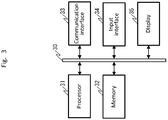
- Fig. 3 shows an example of the hardware configuration of the setting device 2.
- the setting device 2 is a computer and each of the configuration components of the setting device 2 can be realized by a program.
- the setting device 2 has a hardware configuration in which a processor 31, a memory 32, a communication interface 33, an input interface 34, and a display 35 are connected to a bus 30.
- the processor 31 is a central processing unit (CPU) or the like which executes a program.
- the memory 2 is a main storage such as a RAM (Random Access Memory), or an external storage device such as a ROM (Read Only Memory), a flash memory, or a hard disk.
- a RAM Random Access Memory
- ROM Read Only Memory
- flash memory or a hard disk.
- the communication interface 33 is an electronic circuit such as a communication board to perform data communication processes.
- the input interface 34 is a device such as a touch panel, a hardware key, a mouse, and a keyboard which process data to be inputted to the setting device 2.
- the display 35 is a device with which the setting device 2 displays data to be outputted.
- a program is stored in the memory 32, to be read to and executed by the processor 31.
- This program is a program to realize the functions having been explained as the signature generation unit 3, the command generation unit 4, and the transmission unit 5 which constitute the setting device 2.
- an operating system is stored in the external storage device of the memory 32; at least a portion of the OS is loaded into the main storage and the processor 31 executes the above-mentioned program while executing the OS.
- the memory 31 stores files including information, data, signal values, and variable values which are the processing results of the signature generation unit 3, the command generation unit 4, and the transmission unit 5.
- Fig. 2 and Fig. 3 are only examples of the hardware configurations of the devices.
- the hardware configurations of the devices are not limited to the configurations shown in Fig. 2 and Fig. 3 , and other configurations may be adopted.
- the security device 1 stores a public key Krp in the public key storage unit 8
- the LSI manufacturer holds a registration key Km and a secret key Krs which corresponds to the public key Krp.
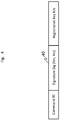
- Fig. 4 shows a data format of a secret-information registration request 40 which is an example of commands.
- the data format of the secret-information registration request 40 includes a command ID, a signature, and a registration key Km.
- the command ID is an ID uniquely identifying a command transmitted from the setting device 2 to the security device 1.
- the signature is a signature calculated for the registration key Km.
- the registration key Km is a key to be registered in the security device 1.
- Fig. 5 is a flowchart showing the operation flow of the setting device 2 according to Embodiment 1.
- step S100 the LSI manufacturer inputs the registration key Km and the secret key Krs to the setting device 2.
- Such pieces of information may be inputted to the setting device 2 from its outside, held therein beforehand, or inputted in other ways.
- step S102 the command generation unit 4 generates a registration command using ( s
- step S103 the transmission unit 5 transmits the registration command as a secret-information registration request 40 to the security device 1, and then ends the process.
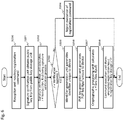
- Fig. 6 is a flowchart showing the operation flow of the security device 1 according to Embodiment 1.
- step S200 the reception unit 6 receives the registration command transmitted from the setting device 2.
- step S201 the signature verification unit 7 obtains the public key Krp from the public key storage unit 8.
- step S203 the signature verification unit 7 checks the signature verification result r .
- the signature verification unit 7 inputs the registration key Km to the command execution unit 9 and a "Yes" route is taken to proceed to step S205.
- a "No" route is taken to proceed to step S204 and execution of the registration command is rejected to end the process.
- step S205 the command execution unit 9 requests the identifier generation unit 10 to generate a PUF key Kpuf, and then the identifier generation unit 10 generates an identifier specific to the device.
- step S206 the PUF key generation unit 11 uses the identifier specific to the device generated by the identifier generation unit 10, to generate a PUF key Kpuf specific to the device and then transmit it to the command execution unit 9.
- step S207 the command execution unit 9 having received the PUF key Kpuf inputs the PUF key Kpuf and the registration key Km to the cryptographic processing unit 12 and requests the cryptographic processing unit 12 to perform encryption.
- step S208 the command execution unit 9 stores the encrypted registration key c in the registration key storage unit 13 and ends the process.
- the LSI manufacturer sets the registration key Km to the security device 1.
- the identifier generation unit 10 and the PUF key generation unit 11 are made generate the PUF key Kpuf, and then the encryption result c of the registration key Km and the PUF key Kpuf are inputted to the cryptographic processing unit 12 to request them to perform a process for decryption.
- Embodiment 1 a signature is provided to a privileged command such as a key registration and the signature is verified. This brings an effect that without storing the device's ID or PIN in the memory, a third party's unauthorized readout can be prevented, realizing access control to privileged commands.
- the security device 1 only a public key Krp for signature verification and an encryption result c of the registration key Km are stored. Therefore, even when an unauthorized memory readout or the like occurs, information to be obtained is only the public key Krp being public information and the encryption result c having been encrypted, which can prevent information leakage.
- Embodiment 1 only a party that has the secret key Krs corresponding to the public key Krp stored in the public key storage unit 8 of the security device 1 can register a registration key Km to the security device 1.
- the LSI manufacturer it is also difficult for the LSI manufacturer to provide the secret key Krs because they may sell the same security device 1 to other apparatus manufacturers.
- this problem will be solved by hierarchically managing the keys.
- a public key Kmp and a secret key Kms are a public key and a secret key, respectively, of an apparatus manufacturer which manufactures an apparatus using an LSI manufactured by an LSI manufacturer.
- the secret key Kms is held by the apparatus manufacturer and the public key Kmp is held by the LSI manufacturer.
- the public key is encrypted and stored in the registration key storage unit 13 of the security device 1.
- the Key identifier w is an identifier which indicates either an apparatus-manufacturer public-key registration request being a command for the LSI manufacturer to request registration of the public key Kmp, or an apparatus-manufacturer secret-information registration request being a command for the apparatus manufacturer to request registration of the registration key Km which is secret information.
- the security device 1 uses the identifier to choose key information to be read out.
- Fig. 7 shows a configuration example of the security device according to Embodiment 2.
- the security device 1 includes a key information acquisition unit 14 in addition to the configuration shown in Embodiment 1.
- the key information acquisition unit 14 checks a key identifier contained in a registration command transmitted from a setting device 2 and notifies a signature verification unit 7 of key information according to the key identifier. According to the key information notified of by the key information acquisition unit 14, the signature verification unit 7 and a command execution unit 9 obtain a key from the registration key storage unit 13.
- the hardware configurations of the security device 1 and the setting device 2 in Embodiment 2 are the same as the configurations shown in Fig. 2 and Fig. 3 of Embodiment 1.
- the key information acquisition unit 14 can be realized by a security circuit or a program.
- the program of the key information acquisition unit 14 is stored in the rewritable nonvolatile memory 22.
- Embodiment 2 Next, explanation will be made about operation flows of the security device 1 and the setting device 2 according to Embodiment 2. It is assumed here that an LSI manufacturer holds a secret key Krs for the LSI manufacturer and a public key Kmp for an apparatus manufacturer. Also, the apparatus manufacturer holds a secret key Kms and a registration key Km for the apparatus manufacturer. In Embodiment 2, the LSI manufacturer registers the apparatus manufacturer's public key Kmp in the security device 1, and the apparatus manufacturer registers the registration key Km in the security device 1.
- Fig. 8 shows data formats of command examples: the apparatus manufacturer's public-key registration request 80 and the apparatus manufacturer's secret-information registration request 81.
- each data format of the apparatus manufacturer's public-key registration request 80 and the apparatus manufacturer's secret-information registration request 81 includes a command ID, a key identifier, and a signature, and also includes either the apparatus manufacturer's public key Kmp or a registration key Km.
- the key identifier is the key identifier having been described above; for the apparatus manufacturer's public-key registration request 80, the key identifier is w : and for the apparatus manufacturer's secret-information registration request 81, the key identifier is w '.
- the command ID is an ID to uniquely identify a command which the setting device 2 transmits to the security device 1.
- the signature is a signature calculated for the apparatus manufacturer's public key Kmp or the registration key Km.
- the apparatus manufacturer's public key Kmp is a key which the LSI manufacturer registers in the security device 1
- the registration key Km is a key which the apparatus manufacturer is going to register in the security device 1.
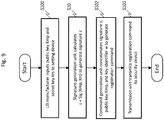
- Fig. 9 is a flowchart showing an operation (a public key Kmp setting by the LSI manufacturer) flow of the setting device 2 according to Embodiment 2.
- step S300 an LSI manufacturer inputs a public key Kmp and a secret key Krs to the setting device 2. Such pieces of information may be inputted to the setting device 2 from its outside, held therein in advance, or inputted in other ways.
- step S302 the command generation unit 4 generates a registration command by using ( w
- step S303 the transmission unit 5 transmits the registration command serving as the apparatus manufacturer's public-key registration request 80, to the security device 1, and then ends the process.
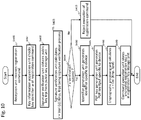
- Fig. 10 is a flowchart showing the operation (the public key Kmp setting by the LSI manufacturer) flow of the security device 1 according to Embodiment 2.
- step S400 the reception unit 6 receives a registration command transmitted from the setting device 2.
- step S401 the key information acquisition unit 14 checks the key identifier w of the registration command and confirms that the registration command is for the apparatus manufacturer's public-key registration request 80.
- the key information acquisition unit 14 notifies the signature verification unit 7 that the registration command is for the apparatus manufacturer's public-key registration request 80.
- step S402 the signature verification unit 7 obtains the public key Krp from the public key storage unit 8.
- step S404 the signature verification unit 7 checks the signature verification result r.
- the signature verification unit 7 notifies the command execution unit 9 that the registration command is for the apparatus manufacturer's public-key registration request 80, inputs the public key Kmp to the command execution unit 9, and then takes a "Yes" route to proceed to step S406.
- the signature verification unit 7 takes a "No" route to proceed to step S405 and rejects execution of the registration command to end the process.
- step S406 the command execution unit 9 requests the identifier generation unit 10 to generate a PUF key Kpuf and the identifier generation unit 10 generates an identifier specific to the device.
- step S407 the PUF key generation unit 11 generates the PUF key Kpuf specific to the device using the identifier specific to the device generated by the identifier generation unit 10, and transmits the PUF key Kpuf to the command execution unit 9.
- step S408 the command execution unit 9 having obtained the PUF key Kpuf inputs the PUF key Kpuf and the public key Kmp to the cryptographic processing unit 12 and requests to perform encryption.
- step S409 the command execution unit 9 stores the encrypted registration key c in the registration key storage unit 13 to end the process.
- the LSI manufacturer sets the public key Kmp to the security device 1.
- Fig. 11 is a flowchart showing the operation (the registration key Km setting by the apparatus manufacturer) flow of the setting device 2 according to Embodiment 2.
- step S500 an apparatus manufacturer inputs a registration key Km and a secret key Kms to the setting device 2.
- Such pieces of information may be inputted to the setting device 2 from its outside, held therein in advance, or inputted in other ways.
- step S502 the command generation unit 4 generates a registration command by using ( w 'l
- step S503 the transmission unit 5 transmits the registration command serving as the apparatus manufacturer's secret-information registration request 81, to the security device 1 and ends the process.
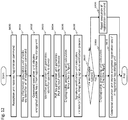
- Fig. 12 is a flowchart showing the operation (the registration key Km setting by the apparatus manufacturer) flow of the security device 1 according to Embodiment 2.
- step S600 the reception unit 6 receives a registration command transmitted from the setting device 2.
- step S601 the key information acquisition unit 14 checks the key identifier w' of the registration command and confirms that the registration command is for the apparatus manufacturer's secret-information registration request 81.
- the key information acquisition unit 14 notifies the signature verification unit 7 that the registration command is for the apparatus manufacturer's secret-information registration request 81.
- step S602 the signature verification unit 7 notifies the command execution unit 9 that the registration command is for the apparatus manufacturer's secret-information registration request 81, and the command execution unit 9 obtains the encrypted public key c from the registration key storage unit 13.
- step S603 the command execution unit 9 requests the identifier generation unit 10 to generate a PUF key Kpuf, and the identifier generation unit 10 generates an identifier specific to the device.
- step S604 the PUF key generation unit 11 generates the PUF key Kpuf specific to the device, using the identifier specific to the device generated by the identifier generation unit 10, and transmits the PUF key Kpuf to the command execution unit 9.
- step S607 the signature verification unit 7 checks the signature verification result r.
- the signature verification unit 7 notifies the command execution unit 9 that the registration command is for the apparatus manufacturer's secret-information registration request 81, inputs the registration key Km to the command execution unit 9, and takes a "Yes" route to proceed to step S609.
- the signature verification unit 7 takes a "No" route to proceed to step S608 and rejects execution of the registration command to end the process.
- step S610 the command execution unit 9 stores the encrypted registration key c in the registration key storage unit 13, and ends the process.
- the apparatus manufacturer sets the registration key Km to the security device 1.
- an LSI manufacturer changes a security device's public key set according to each of apparatus manufacturers, to sell the security device; and the apparatus manufacturer uses the public key uniquely assigned to the manufacturer to register, on its own, a registration key which the apparatus manufacturer wishes to register. This brings about an effect that the apparatus manufacturer can freely register the registration key.
Landscapes
- Engineering & Computer Science (AREA)
- Computer Security & Cryptography (AREA)
- Computer Networks & Wireless Communication (AREA)
- Signal Processing (AREA)
- Theoretical Computer Science (AREA)
- Computer Hardware Design (AREA)
- General Engineering & Computer Science (AREA)
- Physics & Mathematics (AREA)
- General Physics & Mathematics (AREA)
- Software Systems (AREA)
- Health & Medical Sciences (AREA)
- Bioethics (AREA)
- General Health & Medical Sciences (AREA)
- Mathematical Physics (AREA)
- Computing Systems (AREA)
- Storage Device Security (AREA)
Applications Claiming Priority (1)
| Application Number | Priority Date | Filing Date | Title |
|---|---|---|---|
| PCT/JP2015/081111 WO2017077611A1 (ja) | 2015-11-05 | 2015-11-05 | セキュリティ装置、及びセキュリティ方法 |
Publications (3)
| Publication Number | Publication Date |
|---|---|
| EP3373508A1 true EP3373508A1 (de) | 2018-09-12 |
| EP3373508A4 EP3373508A4 (de) | 2019-06-19 |
| EP3373508B1 EP3373508B1 (de) | 2020-11-04 |
Family
ID=58662522
Family Applications (1)
| Application Number | Title | Priority Date | Filing Date |
|---|---|---|---|
| EP15907797.3A Active EP3373508B1 (de) | 2015-11-05 | 2015-11-05 | Sicherheitsgerät und sicherheitsverfahren |
Country Status (7)
| Country | Link |
|---|---|
| US (1) | US10841087B2 (de) |
| EP (1) | EP3373508B1 (de) |
| JP (1) | JP6103169B1 (de) |
| KR (1) | KR101933363B1 (de) |
| CN (1) | CN108352984B (de) |
| TW (1) | TWI613900B (de) |
| WO (1) | WO2017077611A1 (de) |
Cited By (1)
| Publication number | Priority date | Publication date | Assignee | Title |
|---|---|---|---|---|
| EP4086800A1 (de) * | 2021-05-03 | 2022-11-09 | InfoKeyVault Technology Co., Ltd. | Integriertes schaltungsmodul für informationssicherheit |
Families Citing this family (14)
| Publication number | Priority date | Publication date | Assignee | Title |
|---|---|---|---|---|
| US11050575B2 (en) * | 2018-01-10 | 2021-06-29 | Ememory Technology Inc. | Entanglement and recall system using physically unclonable function technology |
| CN109462477B (zh) * | 2018-12-28 | 2021-05-25 | 芯海科技(深圳)股份有限公司 | 基于物联网嵌入式设备的白盒加密方法 |
| US11218330B2 (en) * | 2019-03-25 | 2022-01-04 | Micron Technology, Inc. | Generating an identity for a computing device using a physical unclonable function |
| US11323275B2 (en) | 2019-03-25 | 2022-05-03 | Micron Technology, Inc. | Verification of identity using a secret key |
| US11361660B2 (en) | 2019-03-25 | 2022-06-14 | Micron Technology, Inc. | Verifying identity of an emergency vehicle during operation |
| US11233650B2 (en) | 2019-03-25 | 2022-01-25 | Micron Technology, Inc. | Verifying identity of a vehicle entering a trust zone |
| KR102314391B1 (ko) * | 2019-03-27 | 2021-10-19 | 미쓰비시덴키 가부시키가이샤 | 라이센스 이행 툴, 기록 매체, 및 라이센스 이행 시스템 |
| US11048549B2 (en) | 2019-04-04 | 2021-06-29 | Google Llc | Transferral of process state and/or components in computing environments |
| CN110290115A (zh) * | 2019-06-04 | 2019-09-27 | 广东元一科技实业有限公司 | 一种物联网注册方法及注册系统 |
| US11343109B2 (en) * | 2019-06-12 | 2022-05-24 | Arizona Board Of Regents On Behalf Of Northern Arizona University | Secure enrollment for physical unclonable function devices |
| EP4158507B1 (de) * | 2020-05-28 | 2026-02-25 | SandGrain B.V. | Zentralisierte handhabung von ic-identifikationscodes |
| KR20220005705A (ko) * | 2020-07-07 | 2022-01-14 | 삼성전자주식회사 | 동형 암호를 이용하는 전자 장치 및 그것의 암호화 데이터 처리 방법 |
| CN113918992A (zh) * | 2021-10-19 | 2022-01-11 | 深圳市锐尔觅移动通信有限公司 | 日志数据处理方法及装置、存储介质和电子设备 |
| US12368606B1 (en) * | 2022-09-22 | 2025-07-22 | Marvell Asia Pte Ltd | Secure verification of physical unclonable function |
Family Cites Families (29)
| Publication number | Priority date | Publication date | Assignee | Title |
|---|---|---|---|---|
| JP4201107B2 (ja) * | 2001-04-06 | 2008-12-24 | 日本電信電話株式会社 | 埋め込み型権限委譲方法 |
| JP2004320220A (ja) * | 2003-04-14 | 2004-11-11 | Nippon Telegr & Teleph Corp <Ntt> | 認証方法及びシステム |
| JP2004348526A (ja) * | 2003-05-23 | 2004-12-09 | Dainippon Printing Co Ltd | Icカード、icカードプログラム及びコード部の入れ替え方法 |
| CN1868229B (zh) * | 2003-10-16 | 2010-10-06 | 松下电器产业株式会社 | 用于对存储在记录载体上的数据进行条件存取的记录载体、系统、方法和程序 |
| EP1785878B2 (de) * | 2004-08-20 | 2016-08-10 | Mitsubishi Electric Corporation | Speicherkarte, datenaustauschsystem und datenaustauschverfahren |
| JP2008545323A (ja) * | 2005-07-07 | 2008-12-11 | コーニンクレッカ フィリップス エレクトロニクス エヌ ヴィ | 物の真正性を検証する方法、装置及びシステム |
| US20110002461A1 (en) * | 2007-05-11 | 2011-01-06 | Validity Sensors, Inc. | Method and System for Electronically Securing an Electronic Biometric Device Using Physically Unclonable Functions |
| JP5025009B2 (ja) * | 2008-02-15 | 2012-09-12 | 株式会社東芝 | 認証方法、ホスト計算機及び記録媒体 |
| US20090260064A1 (en) * | 2008-04-15 | 2009-10-15 | Problem Resolution Enterprise, Llc | Method and process for registering a device to verify transactions |
| US8699714B2 (en) * | 2008-11-17 | 2014-04-15 | Intrinsic Id B.V. | Distributed PUF |
| JP5423088B2 (ja) | 2009-03-25 | 2014-02-19 | ソニー株式会社 | 集積回路、暗号通信装置、暗号通信システム、情報処理方法、及び暗号通信方法 |
| WO2011152065A1 (ja) | 2010-06-04 | 2011-12-08 | パナソニック株式会社 | コントローラ、制御方法、コンピュータプログラム、プログラム記録媒体、記録装置及び記録装置の製造方法 |
| KR101139630B1 (ko) * | 2010-12-09 | 2012-05-30 | 한양대학교 산학협력단 | 식별키 생성 장치 및 방법 |
| JP5664236B2 (ja) * | 2010-12-29 | 2015-02-04 | ソニー株式会社 | データ記憶装置、情報処理装置、および情報処理方法、並びにプログラム |
| KR101514166B1 (ko) * | 2011-06-02 | 2015-04-21 | 미쓰비시덴키 가부시키가이샤 | 키 정보 생성 장치 및 키 정보 생성 방법 |
| JP2013031151A (ja) * | 2011-06-20 | 2013-02-07 | Renesas Electronics Corp | 暗号通信システムおよび暗号通信方法 |
| JP5770026B2 (ja) | 2011-06-20 | 2015-08-26 | ルネサスエレクトロニクス株式会社 | 半導体装置 |
| US10079678B2 (en) * | 2012-07-24 | 2018-09-18 | Intel Corporation | Providing access to encrypted data |
| US9100174B2 (en) * | 2012-08-31 | 2015-08-04 | Freescale Semiconductor, Inc. | Secure provisioning in an untrusted environment |
| US9742563B2 (en) * | 2012-09-28 | 2017-08-22 | Intel Corporation | Secure provisioning of secret keys during integrated circuit manufacturing |
| KR101653121B1 (ko) * | 2012-12-11 | 2016-08-31 | 미쓰비시덴키 가부시키가이샤 | 통합 시큐리티 장치 및 통합 시큐리티 장치에 이용되는 신호 처리 방법 |
| US8938792B2 (en) * | 2012-12-28 | 2015-01-20 | Intel Corporation | Device authentication using a physically unclonable functions based key generation system |
| JP6107191B2 (ja) * | 2013-02-08 | 2017-04-05 | 凸版印刷株式会社 | Icカード |
| KR20140126787A (ko) * | 2013-04-22 | 2014-11-03 | (주) 아이씨티케이 | PUF 기반 하드웨어 OTP 제공 장치 및 이를 이용한 2-Factor 인증 방법 |
| JP6224401B2 (ja) * | 2013-10-04 | 2017-11-01 | ルネサスエレクトロニクス株式会社 | 半導体メモリ |
| DE102013227184A1 (de) * | 2013-12-27 | 2015-07-02 | Robert Bosch Gmbh | Verfahren zur Absicherung eines Systems-on-a-Chip |
| US9672342B2 (en) * | 2014-05-05 | 2017-06-06 | Analog Devices, Inc. | System and device binding metadata with hardware intrinsic properties |
| EP3207539B1 (de) * | 2014-10-13 | 2021-03-17 | Intrinsic ID B.V. | Kryptographische vorrichtung mit einer physikalischen unklonbaren funktion |
| US9674664B1 (en) * | 2016-04-28 | 2017-06-06 | T-Mobile Usa, Inc. | Mobile device in-motion proximity guidance system |
-
2015
- 2015-11-05 WO PCT/JP2015/081111 patent/WO2017077611A1/ja not_active Ceased
- 2015-11-05 KR KR1020187011855A patent/KR101933363B1/ko not_active Expired - Fee Related
- 2015-11-05 US US15/761,318 patent/US10841087B2/en not_active Expired - Fee Related
- 2015-11-05 CN CN201580084173.9A patent/CN108352984B/zh active Active
- 2015-11-05 JP JP2016571759A patent/JP6103169B1/ja active Active
- 2015-11-05 EP EP15907797.3A patent/EP3373508B1/de active Active
- 2015-11-12 TW TW104137286A patent/TWI613900B/zh not_active IP Right Cessation
Cited By (2)
| Publication number | Priority date | Publication date | Assignee | Title |
|---|---|---|---|---|
| EP4086800A1 (de) * | 2021-05-03 | 2022-11-09 | InfoKeyVault Technology Co., Ltd. | Integriertes schaltungsmodul für informationssicherheit |
| US12267413B2 (en) | 2021-05-03 | 2025-04-01 | InfoKeyVault Technology Co., Ltd. | Integrated circuit module functioning for information security |
Also Published As
| Publication number | Publication date |
|---|---|
| CN108352984A (zh) | 2018-07-31 |
| JP6103169B1 (ja) | 2017-03-29 |
| US10841087B2 (en) | 2020-11-17 |
| KR101933363B1 (ko) | 2018-12-27 |
| WO2017077611A1 (ja) | 2017-05-11 |
| KR20180066111A (ko) | 2018-06-18 |
| JPWO2017077611A1 (ja) | 2017-11-09 |
| CN108352984B (zh) | 2021-06-01 |
| EP3373508B1 (de) | 2020-11-04 |
| EP3373508A4 (de) | 2019-06-19 |
| US20180248690A1 (en) | 2018-08-30 |
| TWI613900B (zh) | 2018-02-01 |
| TW201717574A (zh) | 2017-05-16 |
Similar Documents
| Publication | Publication Date | Title |
|---|---|---|
| EP3373508B1 (de) | Sicherheitsgerät und sicherheitsverfahren | |
| EP3444999B1 (de) | Verfahren zur erzeugung eines öffentlichen/privaten schlüsselpaares und öffentliches schlüsselzertifikat für eine internet-der-dinge-vorrichtung | |
| Tomlinson | Introduction to the TPM | |
| EP3458999B1 (de) | Validierung der autonomen kryptographischen startpolitik | |
| KR101863953B1 (ko) | 전자 서명 서비스 시스템 및 방법 | |
| EP3360070B1 (de) | Datenverarbeitungsvorrichtung | |
| US11552807B2 (en) | Data processing method and apparatus | |
| CN111199058B (zh) | 用于确保数据的完整性和机密性的系统和方法 | |
| US20140189374A1 (en) | System and method for the secure transmission of data | |
| CN117397198A (zh) | 绑定加密密钥证明 | |
| JP2007512787A (ja) | トラステッド・モバイル・プラットフォーム・アーキテクチャ | |
| US20190325137A1 (en) | Secure boot | |
| US20200344075A1 (en) | Secure provisioning of keys | |
| CN111512593B (zh) | 半导体设备、提供更新数据的方法、接收更新数据的方法以及介质 | |
| JP2017505048A (ja) | 電子署名方法、システムおよび装置 | |
| US20130305361A1 (en) | Protection of a prime number generation against side-channel attacks | |
| JP2018117185A (ja) | 情報処理装置、情報処理方法 | |
| EP3610401B1 (de) | Speichern von daten auf zieldatenverarbeitungsvorrichtungen | |
| JP2025024582A (ja) | 電子情報記憶媒体、icチップ、署名検証処理方法、及びプログラム | |
| US20250238534A1 (en) | Data protection | |
| US12621167B2 (en) | Method of updating device certificate and device for driving the method | |
| US20240073033A1 (en) | Method of updating device certificate and device for driving the method | |
| JP4158758B2 (ja) | プログラムid通信処理制御方法、プログラムid通信範囲制御方法および公開鍵毎通信路提供方法 | |
| KR20250063084A (ko) | 로봇의 응용 프로그램 보호를 위한 방법 및 이를 실행하기 위한 컴퓨팅 장치 | |
| CN120342584A (zh) | 数据保护 |
Legal Events
| Date | Code | Title | Description |
|---|---|---|---|
| STAA | Information on the status of an ep patent application or granted ep patent |
Free format text: STATUS: THE INTERNATIONAL PUBLICATION HAS BEEN MADE |
|
| PUAI | Public reference made under article 153(3) epc to a published international application that has entered the european phase |
Free format text: ORIGINAL CODE: 0009012 |
|
| STAA | Information on the status of an ep patent application or granted ep patent |
Free format text: STATUS: REQUEST FOR EXAMINATION WAS MADE |
|
| 17P | Request for examination filed |
Effective date: 20180528 |
|
| AK | Designated contracting states |
Kind code of ref document: A1 Designated state(s): AL AT BE BG CH CY CZ DE DK EE ES FI FR GB GR HR HU IE IS IT LI LT LU LV MC MK MT NL NO PL PT RO RS SE SI SK SM TR |
|
| AX | Request for extension of the european patent |
Extension state: BA ME |
|
| DAV | Request for validation of the european patent (deleted) | ||
| DAX | Request for extension of the european patent (deleted) | ||
| A4 | Supplementary search report drawn up and despatched |
Effective date: 20190520 |
|
| RIC1 | Information provided on ipc code assigned before grant |
Ipc: H04L 9/32 20060101AFI20190514BHEP |
|
| STAA | Information on the status of an ep patent application or granted ep patent |
Free format text: STATUS: EXAMINATION IS IN PROGRESS |
|
| 17Q | First examination report despatched |
Effective date: 20200115 |
|
| REG | Reference to a national code |
Ref country code: DE Ref legal event code: R079 Ref document number: 602015061729 Country of ref document: DE Free format text: PREVIOUS MAIN CLASS: H04L0009100000 Ipc: H04L0009320000 |
|
| GRAP | Despatch of communication of intention to grant a patent |
Free format text: ORIGINAL CODE: EPIDOSNIGR1 |
|
| STAA | Information on the status of an ep patent application or granted ep patent |
Free format text: STATUS: GRANT OF PATENT IS INTENDED |
|
| INTG | Intention to grant announced |
Effective date: 20200605 |
|
| RIC1 | Information provided on ipc code assigned before grant |
Ipc: G06F 21/60 20130101ALI20200525BHEP Ipc: H04L 9/32 20060101AFI20200525BHEP Ipc: H04L 9/10 20060101ALI20200525BHEP Ipc: H04L 9/08 20060101ALI20200525BHEP |
|
| GRAS | Grant fee paid |
Free format text: ORIGINAL CODE: EPIDOSNIGR3 |
|
| GRAA | (expected) grant |
Free format text: ORIGINAL CODE: 0009210 |
|
| STAA | Information on the status of an ep patent application or granted ep patent |
Free format text: STATUS: THE PATENT HAS BEEN GRANTED |
|
| AK | Designated contracting states |
Kind code of ref document: B1 Designated state(s): AL AT BE BG CH CY CZ DE DK EE ES FI FR GB GR HR HU IE IS IT LI LT LU LV MC MK MT NL NO PL PT RO RS SE SI SK SM TR |
|
| REG | Reference to a national code |
Ref country code: GB Ref legal event code: FG4D |
|
| REG | Reference to a national code |
Ref country code: CH Ref legal event code: EP |
|
| REG | Reference to a national code |
Ref country code: AT Ref legal event code: REF Ref document number: 1332230 Country of ref document: AT Kind code of ref document: T Effective date: 20201115 |
|
| REG | Reference to a national code |
Ref country code: IE Ref legal event code: FG4D |
|
| REG | Reference to a national code |
Ref country code: DE Ref legal event code: R096 Ref document number: 602015061729 Country of ref document: DE |
|
| REG | Reference to a national code |
Ref country code: NL Ref legal event code: MP Effective date: 20201104 |
|
| REG | Reference to a national code |
Ref country code: AT Ref legal event code: MK05 Ref document number: 1332230 Country of ref document: AT Kind code of ref document: T Effective date: 20201104 |
|
| PG25 | Lapsed in a contracting state [announced via postgrant information from national office to epo] |
Ref country code: GR Free format text: LAPSE BECAUSE OF FAILURE TO SUBMIT A TRANSLATION OF THE DESCRIPTION OR TO PAY THE FEE WITHIN THE PRESCRIBED TIME-LIMIT Effective date: 20210205 Ref country code: RS Free format text: LAPSE BECAUSE OF FAILURE TO SUBMIT A TRANSLATION OF THE DESCRIPTION OR TO PAY THE FEE WITHIN THE PRESCRIBED TIME-LIMIT Effective date: 20201104 Ref country code: PT Free format text: LAPSE BECAUSE OF FAILURE TO SUBMIT A TRANSLATION OF THE DESCRIPTION OR TO PAY THE FEE WITHIN THE PRESCRIBED TIME-LIMIT Effective date: 20210304 Ref country code: FI Free format text: LAPSE BECAUSE OF FAILURE TO SUBMIT A TRANSLATION OF THE DESCRIPTION OR TO PAY THE FEE WITHIN THE PRESCRIBED TIME-LIMIT Effective date: 20201104 Ref country code: NO Free format text: LAPSE BECAUSE OF FAILURE TO SUBMIT A TRANSLATION OF THE DESCRIPTION OR TO PAY THE FEE WITHIN THE PRESCRIBED TIME-LIMIT Effective date: 20210204 |
|
| PG25 | Lapsed in a contracting state [announced via postgrant information from national office to epo] |
Ref country code: SE Free format text: LAPSE BECAUSE OF FAILURE TO SUBMIT A TRANSLATION OF THE DESCRIPTION OR TO PAY THE FEE WITHIN THE PRESCRIBED TIME-LIMIT Effective date: 20201104 Ref country code: LV Free format text: LAPSE BECAUSE OF FAILURE TO SUBMIT A TRANSLATION OF THE DESCRIPTION OR TO PAY THE FEE WITHIN THE PRESCRIBED TIME-LIMIT Effective date: 20201104 Ref country code: PL Free format text: LAPSE BECAUSE OF FAILURE TO SUBMIT A TRANSLATION OF THE DESCRIPTION OR TO PAY THE FEE WITHIN THE PRESCRIBED TIME-LIMIT Effective date: 20201104 Ref country code: IS Free format text: LAPSE BECAUSE OF FAILURE TO SUBMIT A TRANSLATION OF THE DESCRIPTION OR TO PAY THE FEE WITHIN THE PRESCRIBED TIME-LIMIT Effective date: 20210304 Ref country code: BG Free format text: LAPSE BECAUSE OF FAILURE TO SUBMIT A TRANSLATION OF THE DESCRIPTION OR TO PAY THE FEE WITHIN THE PRESCRIBED TIME-LIMIT Effective date: 20210204 Ref country code: ES Free format text: LAPSE BECAUSE OF FAILURE TO SUBMIT A TRANSLATION OF THE DESCRIPTION OR TO PAY THE FEE WITHIN THE PRESCRIBED TIME-LIMIT Effective date: 20201104 Ref country code: AT Free format text: LAPSE BECAUSE OF FAILURE TO SUBMIT A TRANSLATION OF THE DESCRIPTION OR TO PAY THE FEE WITHIN THE PRESCRIBED TIME-LIMIT Effective date: 20201104 |
|
| REG | Reference to a national code |
Ref country code: LT Ref legal event code: MG9D |
|
| PG25 | Lapsed in a contracting state [announced via postgrant information from national office to epo] |
Ref country code: HR Free format text: LAPSE BECAUSE OF FAILURE TO SUBMIT A TRANSLATION OF THE DESCRIPTION OR TO PAY THE FEE WITHIN THE PRESCRIBED TIME-LIMIT Effective date: 20201104 |
|
| REG | Reference to a national code |
Ref country code: CH Ref legal event code: PL |
|
| PG25 | Lapsed in a contracting state [announced via postgrant information from national office to epo] |
Ref country code: LT Free format text: LAPSE BECAUSE OF FAILURE TO SUBMIT A TRANSLATION OF THE DESCRIPTION OR TO PAY THE FEE WITHIN THE PRESCRIBED TIME-LIMIT Effective date: 20201104 Ref country code: LU Free format text: LAPSE BECAUSE OF NON-PAYMENT OF DUE FEES Effective date: 20201105 Ref country code: SM Free format text: LAPSE BECAUSE OF FAILURE TO SUBMIT A TRANSLATION OF THE DESCRIPTION OR TO PAY THE FEE WITHIN THE PRESCRIBED TIME-LIMIT Effective date: 20201104 Ref country code: CZ Free format text: LAPSE BECAUSE OF FAILURE TO SUBMIT A TRANSLATION OF THE DESCRIPTION OR TO PAY THE FEE WITHIN THE PRESCRIBED TIME-LIMIT Effective date: 20201104 Ref country code: EE Free format text: LAPSE BECAUSE OF FAILURE TO SUBMIT A TRANSLATION OF THE DESCRIPTION OR TO PAY THE FEE WITHIN THE PRESCRIBED TIME-LIMIT Effective date: 20201104 Ref country code: RO Free format text: LAPSE BECAUSE OF FAILURE TO SUBMIT A TRANSLATION OF THE DESCRIPTION OR TO PAY THE FEE WITHIN THE PRESCRIBED TIME-LIMIT Effective date: 20201104 Ref country code: SK Free format text: LAPSE BECAUSE OF FAILURE TO SUBMIT A TRANSLATION OF THE DESCRIPTION OR TO PAY THE FEE WITHIN THE PRESCRIBED TIME-LIMIT Effective date: 20201104 |
|
| REG | Reference to a national code |
Ref country code: DE Ref legal event code: R097 Ref document number: 602015061729 Country of ref document: DE |
|
| REG | Reference to a national code |
Ref country code: BE Ref legal event code: MM Effective date: 20201130 |
|
| PG25 | Lapsed in a contracting state [announced via postgrant information from national office to epo] |
Ref country code: MC Free format text: LAPSE BECAUSE OF FAILURE TO SUBMIT A TRANSLATION OF THE DESCRIPTION OR TO PAY THE FEE WITHIN THE PRESCRIBED TIME-LIMIT Effective date: 20201104 Ref country code: CH Free format text: LAPSE BECAUSE OF NON-PAYMENT OF DUE FEES Effective date: 20201130 Ref country code: DK Free format text: LAPSE BECAUSE OF FAILURE TO SUBMIT A TRANSLATION OF THE DESCRIPTION OR TO PAY THE FEE WITHIN THE PRESCRIBED TIME-LIMIT Effective date: 20201104 Ref country code: LI Free format text: LAPSE BECAUSE OF NON-PAYMENT OF DUE FEES Effective date: 20201130 |
|
| PLBE | No opposition filed within time limit |
Free format text: ORIGINAL CODE: 0009261 |
|
| STAA | Information on the status of an ep patent application or granted ep patent |
Free format text: STATUS: NO OPPOSITION FILED WITHIN TIME LIMIT |
|
| 26N | No opposition filed |
Effective date: 20210805 |
|
| PG25 | Lapsed in a contracting state [announced via postgrant information from national office to epo] |
Ref country code: NL Free format text: LAPSE BECAUSE OF FAILURE TO SUBMIT A TRANSLATION OF THE DESCRIPTION OR TO PAY THE FEE WITHIN THE PRESCRIBED TIME-LIMIT Effective date: 20201104 Ref country code: FR Free format text: LAPSE BECAUSE OF NON-PAYMENT OF DUE FEES Effective date: 20210104 Ref country code: AL Free format text: LAPSE BECAUSE OF FAILURE TO SUBMIT A TRANSLATION OF THE DESCRIPTION OR TO PAY THE FEE WITHIN THE PRESCRIBED TIME-LIMIT Effective date: 20201104 Ref country code: IE Free format text: LAPSE BECAUSE OF NON-PAYMENT OF DUE FEES Effective date: 20201105 Ref country code: IT Free format text: LAPSE BECAUSE OF FAILURE TO SUBMIT A TRANSLATION OF THE DESCRIPTION OR TO PAY THE FEE WITHIN THE PRESCRIBED TIME-LIMIT Effective date: 20201104 |
|
| PG25 | Lapsed in a contracting state [announced via postgrant information from national office to epo] |
Ref country code: SI Free format text: LAPSE BECAUSE OF FAILURE TO SUBMIT A TRANSLATION OF THE DESCRIPTION OR TO PAY THE FEE WITHIN THE PRESCRIBED TIME-LIMIT Effective date: 20201104 |
|
| PG25 | Lapsed in a contracting state [announced via postgrant information from national office to epo] |
Ref country code: IS Free format text: LAPSE BECAUSE OF FAILURE TO SUBMIT A TRANSLATION OF THE DESCRIPTION OR TO PAY THE FEE WITHIN THE PRESCRIBED TIME-LIMIT Effective date: 20210304 Ref country code: TR Free format text: LAPSE BECAUSE OF FAILURE TO SUBMIT A TRANSLATION OF THE DESCRIPTION OR TO PAY THE FEE WITHIN THE PRESCRIBED TIME-LIMIT Effective date: 20201104 Ref country code: MT Free format text: LAPSE BECAUSE OF FAILURE TO SUBMIT A TRANSLATION OF THE DESCRIPTION OR TO PAY THE FEE WITHIN THE PRESCRIBED TIME-LIMIT Effective date: 20201104 Ref country code: CY Free format text: LAPSE BECAUSE OF FAILURE TO SUBMIT A TRANSLATION OF THE DESCRIPTION OR TO PAY THE FEE WITHIN THE PRESCRIBED TIME-LIMIT Effective date: 20201104 |
|
| PG25 | Lapsed in a contracting state [announced via postgrant information from national office to epo] |
Ref country code: MK Free format text: LAPSE BECAUSE OF FAILURE TO SUBMIT A TRANSLATION OF THE DESCRIPTION OR TO PAY THE FEE WITHIN THE PRESCRIBED TIME-LIMIT Effective date: 20201104 |
|
| PG25 | Lapsed in a contracting state [announced via postgrant information from national office to epo] |
Ref country code: BE Free format text: LAPSE BECAUSE OF NON-PAYMENT OF DUE FEES Effective date: 20201130 |
|
| P01 | Opt-out of the competence of the unified patent court (upc) registered |
Effective date: 20230512 |
|
| REG | Reference to a national code |
Ref country code: GB Ref legal event code: 746 Effective date: 20240326 |
|
| PGFP | Annual fee paid to national office [announced via postgrant information from national office to epo] |
Ref country code: DE Payment date: 20250930 Year of fee payment: 11 |
|
| PGFP | Annual fee paid to national office [announced via postgrant information from national office to epo] |
Ref country code: GB Payment date: 20251001 Year of fee payment: 11 |