EP3374357B1 - Composé de diaryloxybenzohétérodiazole disubstitué - Google Patents
Composé de diaryloxybenzohétérodiazole disubstitué Download PDFInfo
- Publication number
- EP3374357B1 EP3374357B1 EP16816743.5A EP16816743A EP3374357B1 EP 3374357 B1 EP3374357 B1 EP 3374357B1 EP 16816743 A EP16816743 A EP 16816743A EP 3374357 B1 EP3374357 B1 EP 3374357B1
- Authority
- EP
- European Patent Office
- Prior art keywords
- general formula
- disubstituted
- compound
- ranging
- mixtures
- Prior art date
- Legal status (The legal status is an assumption and is not a legal conclusion. Google has not performed a legal analysis and makes no representation as to the accuracy of the status listed.)
- Active
Links
- 0 CC(***1)=C1C(c1c(*)c(*)c(*)[s]1)=COC(C=C)=CC=CCO* Chemical compound CC(***1)=C1C(c1c(*)c(*)c(*)[s]1)=COC(C=C)=CC=CCO* 0.000 description 5
- PBXSRGADCRZQJV-UHFFFAOYSA-N CC(C(OCCOC(c(cc1)ccc1Oc1c(-c2ccc[s]2)c2n[s]nc2c(-c2ccc[s]2)c1Oc1ccccc1)=O)=O)=C Chemical compound CC(C(OCCOC(c(cc1)ccc1Oc1c(-c2ccc[s]2)c2n[s]nc2c(-c2ccc[s]2)c1Oc1ccccc1)=O)=O)=C PBXSRGADCRZQJV-UHFFFAOYSA-N 0.000 description 1
Images


Classifications
-
- C—CHEMISTRY; METALLURGY
- C07—ORGANIC CHEMISTRY
- C07D—HETEROCYCLIC COMPOUNDS
- C07D417/00—Heterocyclic compounds containing two or more hetero rings, at least one ring having nitrogen and sulfur atoms as the only ring hetero atoms, not provided for by group C07D415/00
- C07D417/14—Heterocyclic compounds containing two or more hetero rings, at least one ring having nitrogen and sulfur atoms as the only ring hetero atoms, not provided for by group C07D415/00 containing three or more hetero rings
-
- C—CHEMISTRY; METALLURGY
- C09—DYES; PAINTS; POLISHES; NATURAL RESINS; ADHESIVES; COMPOSITIONS NOT OTHERWISE PROVIDED FOR; APPLICATIONS OF MATERIALS NOT OTHERWISE PROVIDED FOR
- C09K—MATERIALS FOR MISCELLANEOUS APPLICATIONS, NOT PROVIDED FOR ELSEWHERE
- C09K11/00—Luminescent materials, e.g. electroluminescent or chemiluminescent
- C09K11/06—Luminescent materials, e.g. electroluminescent or chemiluminescent containing organic luminescent materials
-
- H—ELECTRICITY
- H10—SEMICONDUCTOR DEVICES; ELECTRIC SOLID-STATE DEVICES NOT OTHERWISE PROVIDED FOR
- H10F—INORGANIC SEMICONDUCTOR DEVICES SENSITIVE TO INFRARED RADIATION, LIGHT, ELECTROMAGNETIC RADIATION OF SHORTER WAVELENGTH OR CORPUSCULAR RADIATION
- H10F77/00—Constructional details of devices covered by this subclass
- H10F77/40—Optical elements or arrangements
- H10F77/42—Optical elements or arrangements directly associated or integrated with photovoltaic cells, e.g. light-reflecting means or light-concentrating means
- H10F77/45—Wavelength conversion means, e.g. by using luminescent material, fluorescent concentrators or up-conversion arrangements
-
- C—CHEMISTRY; METALLURGY
- C09—DYES; PAINTS; POLISHES; NATURAL RESINS; ADHESIVES; COMPOSITIONS NOT OTHERWISE PROVIDED FOR; APPLICATIONS OF MATERIALS NOT OTHERWISE PROVIDED FOR
- C09K—MATERIALS FOR MISCELLANEOUS APPLICATIONS, NOT PROVIDED FOR ELSEWHERE
- C09K11/00—Luminescent materials, e.g. electroluminescent or chemiluminescent
- C09K11/02—Use of particular materials as binders, particle coatings or suspension media therefor
-
- C—CHEMISTRY; METALLURGY
- C09—DYES; PAINTS; POLISHES; NATURAL RESINS; ADHESIVES; COMPOSITIONS NOT OTHERWISE PROVIDED FOR; APPLICATIONS OF MATERIALS NOT OTHERWISE PROVIDED FOR
- C09K—MATERIALS FOR MISCELLANEOUS APPLICATIONS, NOT PROVIDED FOR ELSEWHERE
- C09K2211/00—Chemical nature of organic luminescent or tenebrescent compounds
- C09K2211/10—Non-macromolecular compounds
- C09K2211/1003—Carbocyclic compounds
- C09K2211/1007—Non-condensed systems
-
- C—CHEMISTRY; METALLURGY
- C09—DYES; PAINTS; POLISHES; NATURAL RESINS; ADHESIVES; COMPOSITIONS NOT OTHERWISE PROVIDED FOR; APPLICATIONS OF MATERIALS NOT OTHERWISE PROVIDED FOR
- C09K—MATERIALS FOR MISCELLANEOUS APPLICATIONS, NOT PROVIDED FOR ELSEWHERE
- C09K2211/00—Chemical nature of organic luminescent or tenebrescent compounds
- C09K2211/10—Non-macromolecular compounds
- C09K2211/1003—Carbocyclic compounds
- C09K2211/1011—Condensed systems
-
- C—CHEMISTRY; METALLURGY
- C09—DYES; PAINTS; POLISHES; NATURAL RESINS; ADHESIVES; COMPOSITIONS NOT OTHERWISE PROVIDED FOR; APPLICATIONS OF MATERIALS NOT OTHERWISE PROVIDED FOR
- C09K—MATERIALS FOR MISCELLANEOUS APPLICATIONS, NOT PROVIDED FOR ELSEWHERE
- C09K2211/00—Chemical nature of organic luminescent or tenebrescent compounds
- C09K2211/10—Non-macromolecular compounds
- C09K2211/1018—Heterocyclic compounds
- C09K2211/1025—Heterocyclic compounds characterised by ligands
- C09K2211/1044—Heterocyclic compounds characterised by ligands containing two nitrogen atoms as heteroatoms
- C09K2211/1051—Heterocyclic compounds characterised by ligands containing two nitrogen atoms as heteroatoms with sulfur
-
- C—CHEMISTRY; METALLURGY
- C09—DYES; PAINTS; POLISHES; NATURAL RESINS; ADHESIVES; COMPOSITIONS NOT OTHERWISE PROVIDED FOR; APPLICATIONS OF MATERIALS NOT OTHERWISE PROVIDED FOR
- C09K—MATERIALS FOR MISCELLANEOUS APPLICATIONS, NOT PROVIDED FOR ELSEWHERE
- C09K2211/00—Chemical nature of organic luminescent or tenebrescent compounds
- C09K2211/10—Non-macromolecular compounds
- C09K2211/1018—Heterocyclic compounds
- C09K2211/1025—Heterocyclic compounds characterised by ligands
- C09K2211/1092—Heterocyclic compounds characterised by ligands containing sulfur as the only heteroatom
-
- H—ELECTRICITY
- H02—GENERATION; CONVERSION OR DISTRIBUTION OF ELECTRIC POWER
- H02S—GENERATION OF ELECTRIC POWER BY CONVERSION OF INFRARED RADIATION, VISIBLE LIGHT OR ULTRAVIOLET LIGHT, e.g. USING PHOTOVOLTAIC [PV] MODULES
- H02S40/00—Components or accessories in combination with PV modules, not provided for in groups H02S10/00 - H02S30/00
- H02S40/20—Optical components
- H02S40/22—Light-reflecting or light-concentrating means
-
- H—ELECTRICITY
- H10—SEMICONDUCTOR DEVICES; ELECTRIC SOLID-STATE DEVICES NOT OTHERWISE PROVIDED FOR
- H10F—INORGANIC SEMICONDUCTOR DEVICES SENSITIVE TO INFRARED RADIATION, LIGHT, ELECTROMAGNETIC RADIATION OF SHORTER WAVELENGTH OR CORPUSCULAR RADIATION
- H10F39/00—Integrated devices, or assemblies of multiple devices, comprising at least one element covered by group H10F30/00, e.g. radiation detectors comprising photodiode arrays
- H10F39/10—Integrated devices
- H10F39/12—Image sensors
- H10F39/18—Complementary metal-oxide-semiconductor [CMOS] image sensors; Photodiode array image sensors
- H10F39/189—X-ray, gamma-ray or corpuscular radiation imagers
- H10F39/1898—Indirect radiation image sensors, e.g. using luminescent members
-
- H—ELECTRICITY
- H10—SEMICONDUCTOR DEVICES; ELECTRIC SOLID-STATE DEVICES NOT OTHERWISE PROVIDED FOR
- H10F—INORGANIC SEMICONDUCTOR DEVICES SENSITIVE TO INFRARED RADIATION, LIGHT, ELECTROMAGNETIC RADIATION OF SHORTER WAVELENGTH OR CORPUSCULAR RADIATION
- H10F77/00—Constructional details of devices covered by this subclass
- H10F77/40—Optical elements or arrangements
- H10F77/496—Luminescent members, e.g. fluorescent sheets
-
- H—ELECTRICITY
- H10—SEMICONDUCTOR DEVICES; ELECTRIC SOLID-STATE DEVICES NOT OTHERWISE PROVIDED FOR
- H10K—ORGANIC ELECTRIC SOLID-STATE DEVICES
- H10K30/00—Organic devices sensitive to infrared radiation, light, electromagnetic radiation of shorter wavelength or corpuscular radiation
- H10K30/451—Organic devices sensitive to infrared radiation, light, electromagnetic radiation of shorter wavelength or corpuscular radiation comprising a metal-semiconductor-metal [m-s-m] structure
-
- H—ELECTRICITY
- H10—SEMICONDUCTOR DEVICES; ELECTRIC SOLID-STATE DEVICES NOT OTHERWISE PROVIDED FOR
- H10K—ORGANIC ELECTRIC SOLID-STATE DEVICES
- H10K30/00—Organic devices sensitive to infrared radiation, light, electromagnetic radiation of shorter wavelength or corpuscular radiation
- H10K30/80—Constructional details
- H10K30/87—Light-trapping means
-
- H—ELECTRICITY
- H10—SEMICONDUCTOR DEVICES; ELECTRIC SOLID-STATE DEVICES NOT OTHERWISE PROVIDED FOR
- H10K—ORGANIC ELECTRIC SOLID-STATE DEVICES
- H10K39/00—Integrated devices, or assemblies of multiple devices, comprising at least one organic radiation-sensitive element covered by group H10K30/00
- H10K39/10—Organic photovoltaic [PV] modules; Arrays of single organic PV cells
-
- H—ELECTRICITY
- H10—SEMICONDUCTOR DEVICES; ELECTRIC SOLID-STATE DEVICES NOT OTHERWISE PROVIDED FOR
- H10K—ORGANIC ELECTRIC SOLID-STATE DEVICES
- H10K85/00—Organic materials used in the body or electrodes of devices covered by this subclass
- H10K85/10—Organic polymers or oligomers
- H10K85/141—Organic polymers or oligomers comprising aliphatic or olefinic chains, e.g. poly N-vinylcarbazol, PVC or PTFE
-
- H—ELECTRICITY
- H10—SEMICONDUCTOR DEVICES; ELECTRIC SOLID-STATE DEVICES NOT OTHERWISE PROVIDED FOR
- H10K—ORGANIC ELECTRIC SOLID-STATE DEVICES
- H10K85/00—Organic materials used in the body or electrodes of devices covered by this subclass
- H10K85/60—Organic compounds having low molecular weight
- H10K85/615—Polycyclic condensed aromatic hydrocarbons, e.g. anthracene
- H10K85/626—Polycyclic condensed aromatic hydrocarbons, e.g. anthracene containing more than one polycyclic condensed aromatic rings, e.g. bis-anthracene
-
- H—ELECTRICITY
- H10—SEMICONDUCTOR DEVICES; ELECTRIC SOLID-STATE DEVICES NOT OTHERWISE PROVIDED FOR
- H10K—ORGANIC ELECTRIC SOLID-STATE DEVICES
- H10K85/00—Organic materials used in the body or electrodes of devices covered by this subclass
- H10K85/60—Organic compounds having low molecular weight
- H10K85/649—Aromatic compounds comprising a hetero atom
- H10K85/655—Aromatic compounds comprising a hetero atom comprising only sulfur as heteroatom
-
- H—ELECTRICITY
- H10—SEMICONDUCTOR DEVICES; ELECTRIC SOLID-STATE DEVICES NOT OTHERWISE PROVIDED FOR
- H10K—ORGANIC ELECTRIC SOLID-STATE DEVICES
- H10K85/00—Organic materials used in the body or electrodes of devices covered by this subclass
- H10K85/60—Organic compounds having low molecular weight
- H10K85/649—Aromatic compounds comprising a hetero atom
- H10K85/657—Polycyclic condensed heteroaromatic hydrocarbons
-
- Y—GENERAL TAGGING OF NEW TECHNOLOGICAL DEVELOPMENTS; GENERAL TAGGING OF CROSS-SECTIONAL TECHNOLOGIES SPANNING OVER SEVERAL SECTIONS OF THE IPC; TECHNICAL SUBJECTS COVERED BY FORMER USPC CROSS-REFERENCE ART COLLECTIONS [XRACs] AND DIGESTS
- Y02—TECHNOLOGIES OR APPLICATIONS FOR MITIGATION OR ADAPTATION AGAINST CLIMATE CHANGE
- Y02E—REDUCTION OF GREENHOUSE GAS [GHG] EMISSIONS, RELATED TO ENERGY GENERATION, TRANSMISSION OR DISTRIBUTION
- Y02E10/00—Energy generation through renewable energy sources
- Y02E10/50—Photovoltaic [PV] energy
- Y02E10/52—PV systems with concentrators
-
- Y—GENERAL TAGGING OF NEW TECHNOLOGICAL DEVELOPMENTS; GENERAL TAGGING OF CROSS-SECTIONAL TECHNOLOGIES SPANNING OVER SEVERAL SECTIONS OF THE IPC; TECHNICAL SUBJECTS COVERED BY FORMER USPC CROSS-REFERENCE ART COLLECTIONS [XRACs] AND DIGESTS
- Y02—TECHNOLOGIES OR APPLICATIONS FOR MITIGATION OR ADAPTATION AGAINST CLIMATE CHANGE
- Y02E—REDUCTION OF GREENHOUSE GAS [GHG] EMISSIONS, RELATED TO ENERGY GENERATION, TRANSMISSION OR DISTRIBUTION
- Y02E10/00—Energy generation through renewable energy sources
- Y02E10/50—Photovoltaic [PV] energy
- Y02E10/549—Organic PV cells
Definitions
- the present invention relates to a disubstituted diaryloxybenzoheterodiazole compound.
- the present invention relates to a diaryloxybenzoheterodiazole compound disubstituted with thiophene groups having the general formula (I) or (II) shown below.
- the present invention also relates to processes for preparing said diaryloxybenzoheterodiazole compound disubstituted with thiophene groups.
- Said disubstituted diaryloxybenzoheterodiazole compound having general formula (I), as such or after (co)polymerization, and said disubstituted diaryloxybenzoheterodiazole compound having general formula (II), as such, may advantageously be used as spectrum converters in luminescent solar concentrators (LSCs), which are in turn capable improving the performance of photovoltaic devices (or solar devices) selected, for example, from photovoltaic cells (or solar cells), photovoltaic modules (or solar modules), on both rigid and flexible supports.
- LSCs luminescent solar concentrators
- the present invention also relates to a luminescent solar concentrator (LSC) including at least one diaryloxybenzoheterodiazole compound disubstituted with thiophene groups having general formula (I) or (II), so as to a photovoltaic device (or solar device) comprising said luminescent solar concentrator (LSC).
- LSC luminescent solar concentrator
- one of the main limiations on the utilisation of energy from solar radiation is represented by the capacity of photovoltaic devices (or solar devices) to absorb optimally only radiation having a wavelength falling within a narrow spectral range.
- photovoltaic cells based for example on crystalline silicon have an optimum absorption zone (effective spectrum) in the range 900 nm - 1100 nm, while polymer photovoltaic cells (or solar cells) are likely to become damaged if exposed to radiation having a wavelength of below approximately 500 nm, because of induced photodegradation phenomena which become significant below that limit.
- the efficiency of the photovoltaic devices (or solar devices) in the state of the art is a maximum in the spectral region ranging from 570 nm to 680 nm (yellow-orange).
- EQE quantum efficiency
- said luminescent solar concentrators comprise large sheets of a material transparent to solar radiation (for example, polymer or inorganic glasses), within which fluorescent compounds acting as spectrum converters are dispersed or chemically bound to said material.
- fluorescent compounds acting as spectrum converters are dispersed or chemically bound to said material.
- the radiation emitted by the fluorescent compounds is "guided" towards the thin edges of the sheet where it is concentrated on photovoltaic cells (or solar cells) located there.
- photovoltaic cells or solar cells
- the fluorescent compounds may be deposited on the glass substrate in the form of thin films or, as in case of polymer materials, they may be dispersed within the polymer matrix.
- the polymer matrix may be directly functionalised with fluorescent chromophore groups.
- fluorescent compounds must have the following properties in order to be used in spectrum converters:
- benzothiadiazole compounds in particular 4,7-di-(thien-2'-yl)-2,1,3-benzothiadiazole (DTB) are fluorescent compounds that may be used in the construction of luminescent solar concentrators (LSCs).
- LSCs luminescent solar concentrators
- DTB 4,7-di-(thien-2'-yl)-2,1,3-benzothiadiazole
- DTB is characterised by emission centred around 579 nm, a value corresponding to an energy well above the minimum operating threshold of photovoltaic cells (or solar cells), a threshold which, for example, corresponds to a wavelength of approximately 1100 nm in the most commonly used silicon-based photovoltaic cells (or solar cells).
- a threshold which, for example, corresponds to a wavelength of approximately 1100 nm in the most commonly used silicon-based photovoltaic cells (or solar cells).
- 550 nm the wavelength of green radiation
- DTB 4,7-di-(thien-2'-yl)-2,1,3-benzothiadiazole
- DTB 4,7-di-(thien-2'-yl)-2,1,3-benzothiadiazole
- the aforesaid diaryloxybenzoheterodiazole compound disubstituted with thiophene groups has been said to be advantageously capable of being used as a spectrum converter in luminescent solar concentrators (LSCs), which are in turn capable of improving the performance of photovoltaic devices (or solar devices) selected, for example, from photovoltaic cells (or solar cells), photovoltaic modules (or solar modules), on both rigid and flexible supports.
- LSCs luminescent solar concentrators
- the Applicant has therefore set itself the problem of finding disubstituted diaryloxybenzoheterodiazole compounds capable of providing performance comparable to or even better than known benzothiadiazole compounds, in particular in terms of the power generated by the photovoltaic devices wherein they are used.
- disubstituted diaryloxybenzoheterodiazole compounds having specific general formulae [i.e. having general formula (I) or (II) shown below], which may advantageously be used as such, or, in the case of compounds having general formula (I), also after (co)polymerization, as spectrum converters in the construction of luminescent solar concentrators (LSCs).
- LSCs luminescent solar concentrators
- Said luminescent solar concentrators (LSCs) may in turn be advantageously used together, for example, with photovoltaic cells (or solar cells), in the construction of photovoltaic devices (or solar devices).
- Said disubstituted diaryloxybenzoheterodiazole compounds are able to provide performance comparable to or even better than known benzothiadiazole compounds, in particular in terms of the power generated by the photovoltaic devices wherein they are used.
- One object of the present invention is therefore a disubstituted diaryloxybenzoheterodiazole compound having general formula (I) or (II): wherein:
- C 1 -C 20 alkyl groups is intended to mean linear or branched alkyl groups having from 1 to 20 carbon atoms.
- Specific examples of C 1 -C 20 alkyl groups are: methyl, ethyl, n -propyl, iso propyl, n-butyl, iso -butyl, t -butyl, pentyl, 2-ethyl-hexyl, hexyl, heptyl, octyl, nonyl, decyl, dodecyl.
- C 1 -C 20 alkyl groups optionally containing heteroatoms is intended to mean linear or branched, saturated or unsaturated, alkyl groups having from 1 to 20 carbon atoms wherein at least one of the hydrogen atoms is substituted with a heteroatom selected from: halogens such as, for example, fluorine, chlorine, preferably fluorine; nitrogen; sulfur; oxygen.
- C 1 -C 20 alkyl groups optionally containing heteroatoms are: fluoromethyl, difluoromethyl, trifluoromethyl, trichloromethyl, 2,2,2-trifluoroethyl, 2,2,2-trichlororoethyl, 2,2,3,3-tetrafluoropropyl, 2,2,3,3,3-pentafluoropropyl, perfluoropentyl, perfluoroctyl, perfluorodecyl, oxymethyl, thiomethyl, thioethyl, dimethylamino, dipropylamino, dioctylamino.
- cycloalkyl groups is intended to mean cycloalkyl groups having from 3 to 10 carbon atoms. Said cycloalkyl groups may be optionally substituted with one or more groups, identical or different, selected from: halogen atoms such as, for example, fluorine, chlorine, preferably fluorine; hydroxyl groups; C 1 -C 20 alkyl groups; C 1 -C 20 alkoxy groups; cyano groups; amine groups; nitro groups; aryl groups.
- cycloalkyl groups are: cyclopropyl, 1,4-dioxin, 2,2-difluorocyclopropyl, cyclobutyl, cyclopentyl, cyclohexyl, methylcyclohexyl, methoxycyclohexyl, fluorocyclohexyl, phenylcyclohexyl.
- aryl groups is intended to mean aromatic carbocyclic groups. Said aryl groups may be optionally substituted with one or more groups, identical or different, selected from: halogen atoms such as, for example, fluorine, chlorine, preferably fluorine; hydroxyl groups; C 1 -C 20 alkyl groups; C 1 -C 20 alkoxy groups; cyano groups; dialkylamino groups; nitro groups; aryl groups.
- halogen atoms such as, for example, fluorine, chlorine, preferably fluorine
- hydroxyl groups C 1 -C 20 alkyl groups; C 1 -C 20 alkoxy groups
- cyano groups dialkylamino groups
- nitro groups aryl groups.
- aryl groups are: phenyl, methylphenyl, dimethylphenyl, trimethylphenyl, di- iso -propylphenyl, t -butylphenyl, methoxyphenyl, hydroxyphenyl, phenyloxyphenyl, fluorophenyl, pentafluorophenyl, chlorophenyl, nitrophenyl, dimethylaminophenyl, naphthyl, phenylnaphthyl, phenanthrene, anthracene.
- C 1 -C 20 alkoxy groups is intended to mean linear or branched alkoxy groups having from 1 to 20 carbon atoms. Said alkoxy groups may be optionally substituted with one or more groups, identical or different, selected from: halogen atoms such as, for example, fluorine, chlorine, preferably fluorine; hydroxyl groups; C 1 -C 20 alkyl groups; C 1 -C 20 alkoxy groups; cyano groups; amino groups; nitro groups.
- C 1 -C 20 alkoxy groups are: methoxy, ethoxy, fluoroethoxy, n -propoxy, iso -propoxy, n -butoxy, n -fluoro-butoxy, iso -butoxy, t -butoxy, pentoxy, hexyloxy, heptyloxy, octyloxy, nonyloxy, decyloxy, dodecyloxy.
- optionally substituted phenoxy groups means C 6 H 5 O phenoxy groups optionally substituted with one or more groups, identical or different, selected from: halogen atoms such as, for example, fluorine, chlorine, preferably fluorine; C 1 -C 20 alkyl groups; C 1 -C 20 alkoxy groups; cyano groups; amino groups; nitro groups.
- the present invention also relates to processes for the preparation of disubstituted diaryloxybenzoheterodiazole compounds having general formula (I) or (II).
- a further object of the present invention is therefore a process for the preparation of a disubstituted diaryloxybenzoheterodiazole compound having general formula (I): wherein Z, R 1 , R 2 , R 3 , R 4 , m and n have the same meanings as described above, comprising reacting at least one acid of a disubstituted diaryloxybenzoheterodiazole compound having general formula (III): wherein Z, R 1 , R 2 , R 3 , m and n have the same meanings as described above, with at least one hydroxyalkyl (meth)acrylate in the presence of at least one carbodiimide and at least one dialkyl-aminopyridine.
- said hydroxyalkyl (meth)acrylate may be selected, for example, from: 2-hydroxyethyl acrylate, 2-hydroxyethyl methacrylate (HEMA), 2-hydroxypropyl acrylate, 2-hydroxypropyl methacrylate, 3-hydroxypropyl acrylate, 3-hydroxypropyl methacrylate, 3-hydroxybutyl acrylate, 3-hydroxybutyl methacrylate, 4-hydroxybutyl acrylate, 4-hydroxybutyl methacrylate, 6-hydroxyhexyl acrylate, 6-hydroxyhexyl methacrylate, 3-hydroxy-2-ethylhexyl acrylate, 3-hydroxy-2-ethylhexyl methacrylate, neopentyl glycol monoacrylate, neopentyl glycol monomethacrylate, 1,5-pentanediol monoacrylate, 1,5-pentanediol monomethacrylate, 1,6-hexanedi
- HEMA 2-hydroxyethyl meth
- said acid of a disubstituted diaryloxybenzoheterodiazole compound having general formula (III) and said hydroxyalkyl (meth)acrylate may be used in molar ratios ranging from 1:3 to 1:15, preferably ranging from 1:3 to 1:8.
- said carbodiimide may be selected, for example, from: water-insoluble carbodiimides such as, for example, dicyclohexylcarbodiimide (DCC), diisopropylcarbodiimide; or from water-soluble carbodiimides such as, for example, 1-ethyl-[3-(3-dimethylamino)propyl]-carbodiimide hydrochloride (WSC).
- DCC dicyclohexylcarbodiimide
- WSC water-soluble carbodiimides
- Dicyclohexylcarbodiimide DCC
- 1-ethyl-[3-(3-dimethylamino)propyl]-carbodiimide hydrochloride WSC
- 1-ethyl-[3-(3-dimethylamino)propyl]-carbodiimide hydrochloride WSC
- said acid of a disubstituted diaryloxybenzoheterodiazole compound having general formula (III) and said carbodiimide may be used in molar ratios ranging from 1:1 to 1:5, preferably ranging from 1:1 to 1:3.
- said dialkyl-aminopyridine may be selected, for example, from: N,N -dimethyl-4-aminopyridine (DMPA), N,N -diethyl-4-aminopyridine, N,N -dibutyl-4-aminopyridine.
- DMPA N,N -dimethyl-4-aminopyridine
- DMPA is preferred.
- said acid of a disubstituted diaryloxybenzoheterodiazole compound having general formula (III) and said dialkyl-aminopyridine may be used in molar ratios ranging from 1:0.1 to 1:2, preferably ranging from 1:0.2 to 1:1.
- said process may be carried out in the presence of at least one organic solvent which may be selected, for example, from: ethers such as, for example, 1,2-dimethoxyethane, 1,4-dioxane, tetrahydrofuran, or mixtures thereof; hydrocarbons such as, for example, toluene, xylene, or mixtures thereof; solvent esters such as, for example, methyl acetate, ethyl acetate, or mixtures thereof; dipolar aprotic solvents such as, for example, N,N -dimethylformamide, N -methylpyrrolidone, dimethylsulfoxide, or mixtures thereof; chlorinated solvents such as, for example, dichloromethane, dichloroethane, dichlorobenzene, or mixtures thereof; or mixtures thereof, preferably dichloromethane, more preferably anhydrous dichloromethane.
- organic solvent which may be selected, for example, from: ethers such as, for example, 1,
- said acid of a disubstituted diaryloxybenzoheterodiazole compound having general formula (III) may be used in said organic solvent in such a quantity as to have a molar concentration in said organic solvent ranging from 0.005 M to 2 M, preferably ranging from 0.01 M to 0.1 M.
- said process may be carried out at a temperature ranging from -40°C to 40°C, preferably ranging from 0°C to 30°C.
- said process may be carried out for a time ranging from 1 hour to 30 hours, preferably ranging from 2 hours to 20 hours.
- the mixture obtained at the end of the aforesaid process is poured into water and extracted with dichloromethane obtaining an organic phase which is washed to neutral first with a saturated aqueous solution of ammonium chloride, then with a saturated aqueous solution of sodium bicarbonate and finally with brine and subsequently dried on sodium sulfate.
- the residual solvent is then removed (for example, by distillation under reduced pressure) and the residue obtained is purified using normal methods of purification such as, for example, elution on a silica gel, neutral alumina, or basic alumina, preferably neutral alumina or basic alumina chromatography column, and/or crystallization from organic solvents such as, for example: hydrocarbons (e.g., n -heptane, hexane, toluene, or mixtures thereof); chlorinated solvents (e.g., dichloromethane, chloroform, or mixtures thereof); solvent esters (e.g., methyl acetate, ethyl acetate, methyl propionate, or mixtures thereof); solvent ethers (e.g., ethyl ether, tetrahydrofuran, t -butylmethylether, or mixtures thereof); alcohols (e.g., methanol, ethanol, propanol, or mixtures thereof);
- the acids of disubstituted diaryloxybenzoheterodiazole compounds having general formula (III) may be obtained by saponification of the corresponding ester or disubstituted diaryloxybenzoheterodiazole compounds having general formula (II), operating in accordance with procedures known in the art, as described, for example, by Wang, L.-Y. et al., in "Macromolecules” (2010), Vol. 43, p. 1277-1288 .
- At least one disubstituted diaryloxybenzoheterodiazole compound having general formula (II) is caused to react with at least one alkali metal hydroxide selected, for example, from sodium hydroxide, potassium hydroxide, lithium hydroxide, preferably sodium hydroxide, potassium hydroxide.
- at least one alkali metal hydroxide selected, for example, from sodium hydroxide, potassium hydroxide, lithium hydroxide, preferably sodium hydroxide, potassium hydroxide.
- said disubstituted diaryloxybenzoheterodiazole compound having general formula (II) and said alkali metal hydroxide may be used in molar ratios ranging from 1:1 to 1:30, preferably ranging from 1:1 to 1:15.
- said reaction is carried out in the presence of at least one alcohol selected, for example, from: methanol, ethanol, propanol, butanol, iso -propanol, iso -butanol, pentanol, 3-methyl-1-butanol, or mixtures thereof, preferably ethanol.
- Said alcohol may also be used in a mixture with water.
- said reaction is carried out at a temperature ranging from 20°C to 100°C, more preferably ranging from 40°C to 90°C, for a time ranging from 1 hour to 14 hours, preferably ranging from 3 hours to 12 hours.
- the disubstituted diaryloxybenzoheterodiazole compounds having general formula (II) may be obtained using the processes described below.
- a further object of the present invention is a first process for preparing a disubstituted diaryloxybenzoheterodiazole compound having general formula (II): wherein Z, R 1 , R 2 , R 3 and R 5 , have the same meanings as described above, and n and m are equal to 1, comprising:
- said disubstituted fluorinated benzoheterodiazole compound having general formula (IV) and said alkyl 4-hydroxybenzoate having general formula (V) may be used in molar ratios ranging from 1:2 to 1:10, preferably ranging from 1:2 to 1:5.
- said step (a) may be carried out in the presence of at least one weak organic base which may be selected, for example, from: alkali metal (e.g., sodium, potassium, cesium) or alkaline-earth metal (e.g., magnesium, calcium) carboxylates such as, for example, potassium acetate, sodium acetate, cesium acetate, magnesium acetate, calcium acetate, potassium propionate, sodium propionate, cesium propionate, magnesium propionate, calcium propionate, or mixtures thereof; alkali metal (e.g., lithium, sodium, potassium, cesium) or alkaline-earth metal (e.g., magnesium, calcium) carbonates such as, for example, lithium carbonate, potassium carbonate, sodium carbonate, cesium carbonate, magnesium carbonate, calcium carbonate, or mixtures thereof; alkali metal (e.g., lithium, sodium, potassium, cesium) or alkaline-earth metal (e.g., magnesium, calcium) carboxylates such as, for example, potassium
- said disubstituted fluorinated benzoheterodiazole compound having general formula (IV) and said weak organic base may be used in molar ratios ranging from 1:1 to 1:10, preferably ranging from 1:2 to 1:5.
- said step (a) may be carried out in the presence of at least one organic solvent which may be selected, for example, from: ethers such as, for example, 1,2-dimethoxyethane, 1,4-dioxane, tetrahydrofuran, or mixtures thereof; chlorinated solvents such as, for example, dichloromethane, chloroform, or mixtures thereof; dipolar aprotic solvents such as, for example, N,N -dimethylformamide, N -methylpyrrolidone, dimethyl sulfoxide, or mixtures thereof; preferably N,N -dimethylformamide.
- organic solvent which may be selected, for example, from: ethers such as, for example, 1,2-dimethoxyethane, 1,4-dioxane, tetrahydrofuran, or mixtures thereof; chlorinated solvents such as, for example, dichloromethane, chloroform, or mixtures thereof; dipolar aprotic solvents such as, for example
- said disubstituted fluorinated benzoheterodiazole compound having general formula (IV) may be used in said organic solvent in such a quantity as to have a molar concentration in said organic solvent ranging from 0.05 M to 2 M, preferably ranging from 0.1 M to 1 M.
- said step (a) may be carried out at a temperature ranging from 60°C to 150°C, preferably ranging from 80°C to 120°C.
- said step (a) may be carried out for a time ranging from 1 hour to 24 hours, preferably ranging from 2 hours to 18 hours.
- said disubstituted diaryloxybenzoheterodiazole compound having general formula (VI) and said compund selected from N -haloimides may be used in molar ratios ranging from 1:2 to 1:3, preferably ranging from 1:2 to 1:2.5.
- said step (b) may be carried out in the presence of at least one organic solvent which may be selected, for example, from: ethers such as, for example, 1,2-dimethoxyethane, 1,4-dioxane, tetrahydrofuran, or mixtures thereof; chlorinated solvents such as, for example, dichloromethane, chloroform, or mixtures thereof; dipolar aprotic solvents such as, for example, N,N -dimethylformamide, N -methylpyrrolidone, dimethylsulfoxide or mixtures thereof; preferably tetrahydrofuran.
- organic solvent which may be selected, for example, from: ethers such as, for example, 1,2-dimethoxyethane, 1,4-dioxane, tetrahydrofuran, or mixtures thereof; chlorinated solvents such as, for example, dichloromethane, chloroform, or mixtures thereof; dipolar aprotic solvents such as, for example, N,N
- said disubstituted diaryloxybenzoheterodiazole compound having general formula (VI) may be used in said organic solvent in such a quantity as to have a molar concentration in said organic solvent ranging from 0.01 M to 5 M, preferably ranging from 0.02 M to 2 M.
- said step (b) may be carried out at a temperature ranging from 20°C to 50°C, preferably ranging from 22°C to 30°C.
- said step (b) may be carried out for a time ranging from 1 hour to 24 hours, preferably ranging from 4 hours to 18 hours.
- step (b) the mixture obtained, after the addition of distilled water, is subjected to filtration obtaiuning a residue, which is washed with distilled water to remove all the imide formed during the reaction and the product obtained may be used as such in step (c).
- step (c) may be carried out according to the Suzuki reaction.
- said disubstituted halogenated diaryloxybenzoheterodiazole compound having general formula (VII) and said aryl boron compound having general formula (VIII) may be used in molar ratios ranging from 1:2 to 1:5, preferably ranging from 1:2 to 1:4.
- said step (c) may be carried out in the presence of at least one catalyst containing palladium which maybe selected, for example, from palladium compounds in oxidation state (0) or (II), such as, for example, palladium-tetrakistriphenylphosphine [Pd(PPh 3 ) 4 ], bis-triphenylphosphine palladium dichloride [PdCl 2 (PPh 3 ) 2 ], preferably palladium-tetrakistriphenylphosphine [Pd(PPh 3 ) 4 ].
- at least one catalyst containing palladium which maybe selected, for example, from palladium compounds in oxidation state (0) or (II), such as, for example, palladium-tetrakistriphenylphosphine [Pd(PPh 3 ) 4 ], bis-triphenylphosphine palladium dichloride [PdCl 2 (PPh 3 ) 2 ], preferably palladium-tetraki
- said disubstituted halogenated diaryloxybenzoheterodiazole compound having general formula (VII) and said catalyst may be used in molar ratios ranging from 1:0.15 to 1:0.01, preferably ranging from 1:0.02 to 1:0.12.
- said step (c) may be carried out in the presence of at least one weak organic base which may be selected, for example, from: alkali metal (e.g., sodium, potassium, cesium) or alkaline-earth metal (e.g., magnesium, calcium) carboxylates such as, for example, potassium acetate, sodium acetate, cesium acetate, magnesium acetate, calcium acetate, potassium propionate, sodium propionate, cesium propionate, magnesium propionate, calcium propionate, or mixtures thereof; alkali metal (e.g., lithium, sodium, potassium, cesium) or alkaline-earth metal (e.g., magnesium, calcium) carbonates such as, for example, lithium carbonate, potassium carbonate, sodium carbonate, cesium carbonate, magnesium carbonate, calcium carbonate, or mixtures thereof; alkali metal (e.g., lithium, sodium, potassium, cesium) or alkaline-earth metal (e.g,.,.
- magnesium, calcium bicarbonates such as, for example, lithium bicarbonate, potassium bicarbonate, sodium bicarbonate, cesium bicarbonate, magnesium bicarbonate, calcium bicarbonate, or mixtures thereof; or mixtures thereof; preferably potassium carbonate, sodium carbonate, cesium carbonate.
- said base may be used as such, or in aqueous solution.
- said disubstituted halogenated diaryloxybenzoheterodiazole compound having general formula (VII) and said weak organic base may be used in molar ratios ranging from 1:1 to 1:20, preferably ranging from 1:2 to 1:10.
- said step (c) may be carried out in the presence of at least one organic solvent which may be selected, for example, from: ethers such as, for example, 1,2-dimethoxyethane, 1,4-dioxane, tetrahydrofuran, or mixtures thereof; hydrocarbons such as, for example, toluene, xylene, or mixtures thereof; dipolar aprotic solvents such as, for example, N,N- dimethylformamide, N -methylpyrrolidone, dimethylsulfoxide, or mixtures thereof; or mixtures thereof; preferably 1,4-dioxane.
- said organic solvent may also be used in a mixture with at least one alcohol such as, for example, methanol, ethanol, n-propanol, iso -propanol, or mixtures thereof.
- said disubstituted halogenated diaryloxybenzoheterodiazole compound having general formula (VII) may be used in said organic solvent in such a quantity as to have a molar concentration in said organic solvent ranging from 0.01 M to 2 M, preferably ranging from 0.02 M to 1 M.
- said step (c) may be carried out at a temperature ranging from 50°C to 140°C, preferably ranging from 60°C to 120°C.
- said step (c) may be carried out for a time ranging from 2 hours to 36 hours, preferably ranging from 4 hours to 18 hours.
- the mixture obtained after the addition of distilled water, is extracted with an organic solvent (for example, dichloromethane) obtaining an organic phase which is washed to neutral (for example, with distilled water) and dried (for example, on sodium sulfate).
- an organic solvent for example, dichloromethane
- the residual solvent is then removed (for example, by distillation under reduced pressure) and the residue obtained is purified using normal laboratory techniques (for example, elution on a chromatography column and/or crystallization, working as described above).
- Yet another object of the present invention is a second process for preparing a disubstituted diaryloxybenzoheterodiazole compound having general formula (II): wherein Z, R 1 , R 2 , R 3 and R 5 have the same meanings as described above, and if n is 0 m is 1 or viceversa, comprising:
- said disubstituted fluorinated monoaryloxybenzoheterodiazole compound having general formula (VIa) may optionally be isolated from the reaction mixture obtained in said step (a 1 ) and subsequently caused to react with at least one phenol having formula (IX), said phenol having formula (IX) being used in equal molar ratios or in molar excess with respect to said disubstituted fluorinated monoaryloxybenzoheterodiazole compound having general formula (Via).
- said step (a 1 ) may be carried out in the presence of at least one weak organic base which may, for example, be selected from: alkali metal (e.g., sodium, potassium, cesium) or alkaline-earth metal (e.g., magnesium, calcium) carboxylates such as, for example, potassium acetate, sodium acetate, cesium acetate, magnesium acetate, calcium acetate, potassium propionate, sodium propionate, cesium propionate, magnesium propionate, calcium propionate, or mixtures thereof; alkali metal (e.g., lithium, sodium, potassium, cesium) or alkaline-earth metal (e.g., magnesium, calcium) carbonates such as, for example, lithium carbonate, potassium carbonate, sodium carbonate, cesium carbonate, magnesium carbonate, calcium carbonate, or mixtures thereof; alkali metal (e.g., lithium, sodium, potassium, cesium) or alkaline-earth metal (e.g., magnesium), magnesium, calcium) carboxylates such as,
- said disubstituted fluorinated benzoheterodiazole compound having general formula (IV) and said weak organic base may be used in molar ratios ranging from 1:1 to 1:10, preferably ranging from 1:1 to 1:5.
- said step (a 1 ) may be carried out in the presence of at least one organic solvent which may be selected, for example, from: ethers such as, for example, 1,2-dimethoxyethane, 1,4-dioxane, tetrahydrofuran, or mixtures thereof; chlorinated solvents such as, for example, dichloromethane, chloroform, or mixtures thereof; dipolar aprotic solvents such as, for example, N,N -dimethylformamide, N -methylpyrrolidone, dimethylsulfoxide; or mixtures thereof; preferably N,N -dimethylformamide.
- organic solvent which may be selected, for example, from: ethers such as, for example, 1,2-dimethoxyethane, 1,4-dioxane, tetrahydrofuran, or mixtures thereof; chlorinated solvents such as, for example, dichloromethane, chloroform, or mixtures thereof; dipolar aprotic solvents such as, for
- said disubstituted fluorinated benzoheterodiazole compound having general formula (IV) may be used in said organic solvent in such a quantity as to have a molar concentration in said organic solvent ranging from 0.05 M to 2 M, preferably ranging from 0.1 M to 1 M.
- both said step (a 1 ) and said step (b 1 ) may be carried out separately at a temperature ranging from 60°C to 150°C, preferably ranging from 80°C to 100°C.
- both said step (a 1 ) and said step (b 1 ), independently, may be carried out for a time ranging from 1 hour to 24 hours, preferably ranging from 1 hour to 12 hours.
- the mixture obtained after the addition of distilled water, may be subjected to filtration obtaining a solid residue which is washed with water, or may be extracted with an organic solvent (for example, dichloromethane) obtaining an organic phase which is washed to neutral (for example, with distilled water) and dried (for example, on sodium sulfate).
- an organic solvent for example, dichloromethane
- the residual solvent is then removed (for example, by distillation under reduced pressure) and the residue obtained is purified using normal laboratory techniques (for example, elution on a chromatography column and/or crystallization, working as described above).
- steps (c 1 ) and (d 1 ), independently, may be carried out under the same operating conditions as described above for steps (b) and (c).
- the mixture obtained after the addition of distilled water, is extracted with an organic solvent (for example, dichloromethane) obtaining an organic phase which is washed to neutral (for example, with distilled water) and dried (for example, on sodium sulfate).
- an organic solvent for example, dichloromethane
- the residual solvent is then removed (for example, by distillation under reduced pressure) and the residue obtained is purified using normal laboratory techniques (for example, elution on a chromatography column and/or crystallization, working as described above).
- a further object of the present invention is a process for preparing a disubstituted diaryloxybenzoheterodiazole compound having general formula (XII): wherein Z, R 1 , R 2 and R 3 have the same meanings as described above, R a and R b , which are different, represent a hydrogen atom; or are selected from linear or branched C 1 -C 20 , preferably C 1 -C 8 , alkyl groups optionally containing heteroatoms, optionally substituted cycloalkyl groups, optionally substituted aryl groups, optionally substituted linear or branched C 1 -C 20 , preferably C 1 -C 8 , alkoxy groups, optionally substituted phenoxy groups, -COOR c groups wherein R c is selected from linear or branched C 1 -C 20 , preferably C 1 -C 8 , alkyl groups, -CON(R c ) 2 groups wherein R c has the same meanings as described
- steps (a' 1 ) - (d' 1 ), independently, may be carried out under the same operating conditions as described above for steps (a 1 ) - (d 1 ).
- said disubstituted fluorinated monoaryloxybenzoheterodiazole compound having general formula (Xlla) may be isolated from the reaction mixture obtained in said step (a 1 ) and subsequently caused to react with at least one substituted phenol having general formula (XIV), said substituted phenol having formula (XIV) being used in equal molar ratios or in molar excess with respect to said disubstituted fluorinated monoaryloxybenzoheterodiazole compound having general formula (Xlla).
- N-haloimides and the aryl boron compounds having general formula (VIII) are commercially available.
- said disubstituted diaryloxybenzoheterodiazole compound having general formula (I) or (II), like the disubstituted diaryloxybenzoheterodiazole compound having general formula (XII) [indicated below for greater clarity as "compound having general formula (I) or (II) or (XII)"], may advantageously be used as a spectrum converter in luminescent solar concentrators (LSCs), capable in turn of improving the performance of photovoltaic devices (or solar devices) such as, for example, photovoltaic cells (or solar cells), photovoltaic modules (or solar modules), on both rigid and flexible supports.
- LSCs luminescent solar concentrators
- LSCs luminescent solar concentrators
- Compound having general formula (I) or (II) or (XII) may be used in said luminescent solar concentrator (LSC) in the following ways: dispersed in polymer, chemically bound to the polymer, in solution.
- the luminescent solar concentrator may contain a transparent matrix, where the term transparent matrix means any transparent material used in the form of a support, binder, or material wherein at least one compound having general formula (I) or (II) or (XII) is dispersed or incorporated.
- the material used for the matrix is transparent, as such, to the radiation of interest and, in particular, to the radiation of frequency within the effective spectrum of the photovoltaic device (or solar device) such as, for example, the photovoltaic cell (or solar cell) wherein it is used.
- Suitable materials for the purpose of the present invention may therefore be selected from materials which are transparent to radiation of wavelengths ranging from 250 nm to 800 nm.
- the transparent matrix that may be used for the purpose of the present invention may be selected, for example, from polymers. Said matrix is characterized by high transparency and high durability with respect to heat and light.
- Polymers that may advantageously be used for the purpose of the present invention are, for example, polymethyl methacrylate (PMMA), epoxy resins, silicone resins, polyalkylene terephthalates, polycarbonates, polystyrene, preferably polymethyl methacrylate (PMMA).
- the luminescent solar concentrator (LSC) to which the present patent relates may be prepared according to known techniques such as, for example:
- a support of the vitreous type may be used.
- said at least one compound having general formula (I) or (II) or (XII) may be dissolved in at least one solvent obtaining a solution which is deposited on a sheet of said support of the vitreous type, forming a film comprising said at least one compound having general formula (I) or (II) or (XII), operating, for example, using a film-forming device of the "Doctor Blade" type; said solvent being then allowed to evaporate.
- Yet a further object of the present invention is a photovoltaic device (or solar device) comprising at least one photovoltaic cell (or solar cell), and at least one luminescent solar concentrator (LSC) including at least one compound having general formula (I) or (II).
- a photovoltaic device or solar device
- LSC luminescent solar concentrator
- Said photovoltaic device may be obtained, for example, by assembling the aforesaid luminescent solar concentrator with a photovoltaic cell (or solar cell).
- the aforesaid solar concentrator may be made in the form of a transparent sheet obtained by dissolving said at least one compound having general formula (I) or (II) or (XII) and the polymer used for the purpose in at least one solvent obtaining a solution which is deposited on a sheet of said polymer, forming a film comprising said at least one compound having general formula (I) or (II) or (XII) and said polymer, operating, for example, using a film-forming device of the "Doctor Blade" type; said solvent being then allowed to evaporate.
- said sheets may then be coupled with a photovoltaic cell (or solar cell).
- Methyl 4-hydroxybenzoate (Aldrich) (882 mg; 5,8 mmoles) and potassium carbonate (Aldrich) (952 mg; 6,9 mmoles) were added to a suspension of 5,6-difluoro-4,7-bis(2-thienyl)-2,1,3-benzothiadiazole (Sunatech) (928 mg; 2.8 mmoles) in N,N -dimethylformamide (Aldrich) (12 ml) in a 100 ml flask equipped with a magnetic stirrer, thermometer and condenser, under an inert atmosphere: the reaction mixture obtained was heated to 92°C and held at said temperature, under stirring, for 12 hours.
- N-bromosuccinimide (Aldrich) (566.4 mg; 3.2 mmoles) was added to a suspension of methyl 4-(6-phenoxy-4,7-di(2-thienyl)benzo[3,4-c]1,2,5-thiadiazo-5-yloxy)benzoate having formula (IIa) obtained as described in Example 1 (800 mg; 1.5 mmoles) in tetrahydrofuran (Aldrich) (8.3 ml) in a 100 ml flask equipped with a magnetic stirrer, thermometer and condenser, under an inert atmosphere, the reaction mixture obtained was left in the dark, under stirring, at ambient temperature (25°C) for 12 hours.
- N-bromosuccinimide (Aldrich) (478 mg; 2.7 mmoles) was added to a suspension of methyl 4- ⁇ 6-[4-(methoxycarbonyl)phenoxy]-4,7-di(2-thienyl)benzo[3,4-c]1,2,5-thiadiazo-5-yloxy ⁇ benzoate obtained as described in Example 2 (720 mg; 1.2 mmoles) in tetrahydrofuran (Aldrich) (18 ml) in a 100 ml flask equipped with a magnetic stirrer, under an inert atmosphere: the reaction mixture obtained was left in the dark, under stirring, at ambient temperature (25°C), for 12 hours.
- reaction mixture was poured into distilled water (50 ml) and extracted with dichloromethane (Aldrich) (50 ml).
- the aqueous phase obtained was acidified to pH 1 through the addition of a 0.1M solution of hydrochloric acid (Aldrich) and extracted with dichloromethane (3 x 50 ml).
- the organic phase obtained was washed with brine and subsequently dried on sodium sulfate.
- HEMA 2-hydroxyethyl methacrylate
- Aldrich 370.5 mg; 2.85 mmoles
- 4-(N,N-dimethylamino)pyridine 46,4 mg; 0,38 mmoles
- 4-(6-phenoxy-4,7-di(2-thienyl)benzo[3,4-c]1,2,5-thiadiazo-5-yloxy)benzoic acid obtained as described in Example 8 (501.6 mg; 0.95 mmoles) in anhydrous dichloromethane (Aldrich) (17 ml) in a 100 ml flask equipped with a magnetic stirrer, under an inert atmosphere.
- reaction mixture was poured into distilled water (50 ml) and extracted with dichloromethane (Aldrich) (1 x 50 ml).
- the aqueous phase obtained was acidified to pH 1 through the addition of a 0.1M solution of hydrochloric acid (Aldrich) and extracted with dichloromethane (3 x 50 ml).
- the organic phase obtained was washed with brine and subsequently dried on sodium sulfate.
- HEMA 2-hydroxyethyl methacrylate
- Aldrich 741 mg; 5.7 mmoles
- 4-(N,N- dimethylamino)pyridine 92.7 mg; 0.76 mmoles
- 4-[6-(4-carboxyphenoxy)-4,7-di(2-thienyl)benzo[c]1,2,5-thiadiazo-5-yloxy]benzoic acid obtained as described in Example 8 (543.4 mg; 0.95 mmoles) in anhydrous dichloromethane (Aldrich) (34 ml) in a 100 ml flask equipped with a magnetic stirrer, under an inert atmosphere.
- reaction mixture was poured into distilled water (50 ml) and extracted with dichloromethane (Aldrich) (1 x 50 ml).
- the aqueous phase obtained was acidified to pH 1 through the addition of a 0.1M solution of hydrochloric acid (Aldrich) and extracted with dichloromethane (3 x 50 ml).
- the organic phase obtained was washed with brine and subsequently dried on sodium sulfate.
- HEMA 2-hydroxyethyl methacrylate
- 4-(N,N-dimethylamino)pyridine 46.4 mg; 0.38 mmoles
- 4- ⁇ 4,7-bis[5-(2,5-dimethylphenyl)(2-thienyl)]-6-phenoxybenzo [3,4-c]1,2,5-thiadiazo-5-yloxy ⁇ benzoic acid obtained as described in Example 12 (700 mg; 0.95 mmoles) in anhydrous dichloromethane (Aldrich) (17 ml) in a 100 ml flask equipped with a magnetic stirrer, under an inert atmosphere.
- An IXYS-KXOB22-12 photovoltaic cell having a surface area of 1.2 cm 2 was then applied to one of the edges of the polymer sheet.
- the main surface of the polymer sheet [that coated with the thin film containing 4,7-di-(thien-2'-yl)-2,1,3-benzothiadiazole (DTB)] was then illuminated with a light source of power 1 sun (1000 W/m 2 ) and the electrical power generated through the effect of the illumination was measured
- the power (P) measurements have been realized by illuminating a portion of sheet of dimensions 100 mm x 90 mm, at an increasing distance (d) from the edge to which the photovoltaic cell was attached. These measurements at a variable distance from the photovoltaic cell allow the quantification of the contribution of wave guide, edge and autoabsorption effects.
- Figure 1 shows the graph for the value of the power (P) generated expressed in mW (shown as the ordinate) as a function of the distance (d) from the edge to which the photovoltaic cell was attached, expressed in cm (shown as the abscissa).
- Figure 2 shows the value of the power (P) generated expressed in mW (shown as the ordinate) obtained (the example number is shown as the abscissa).
- the solution obtained was then uniformly deposited on a sheet of polymethyl methacrylate (dimensions 300 mm x 90 mm x 6 mm) using a film-forming device of the "Doctor Blade” type and the solvent was allowed to evaporate off at ambient temperature (25°C), in a gentle flow of air, for 24 hours. From this there resulted a transparent sheet of a red color imparted by the film, the thickness of which was ranging from 100 ⁇ m to 50 ⁇ m.
- the main surface of the polymer sheet (that coated with the thin film) was then illuminated with a light source of power 1 sun (1000 W/m 2 ) and the electrical power generated through the effect of the illumination was measured.
- the power (P) measurements have been realized by illuminating a portion of sheet of dimensions 100 mm x 90 mm, at an increasing distance (d) from the edge to which the photovoltaic cell was attached. These measurements at a variable distance from the photovoltaic cell allow the quantification of the contribution of wave guide, edge and autoabsorption effects.
- Figure 1 shows the graph for the value of the power (P) generated expressed in mW (shown as the ordinate) as a function of the distance (d) from the edge to which the photovoltaic cell was attached, expressed in cm (shown as the abscissa).
- Figure 2 shows the value of the power (P) generated expressed in mW (shown as the ordinate) (the example number is shown as the abscissa).
- An IXYS-KXOB22-12 photovoltaic cell having a surface area of 1.2 cm 2 was then applied to one of the edges of the polymer sheet.
- the main surface of the polymer sheet (that coated with the thin film) was then illuminated with a light source of power 1 sun (1000 W/m 2 ) and the electrical power generated through the effect of the illumination was measured
- the power (P) measurements have been realized by illuminating a portion of sheet of dimensions 100 mm x 90 mm, at an increasing distance (d) from the edge to which the photovoltaic cell was attached. These measurements at a variable distance from the photovoltaic cell allow the quantification of the contribution of wave guide, edge and autoabsorption effects.
- Figure 1 shows the graph for the value of the power (P) generated expressed in mW (shown as the ordinate) as a function of the distance (d) from the edge to which the photovoltaic cell was attached, expressed in cm (shown as the abscissa).
- Figure 2 shows the value of the power (P) generated expressed in mW (shown as the ordinate) (the example number is shown as the abscissa).
- An IXYS-KXOB22-12 photovoltaic cell having a surface area of 1.2 cm 2 was then applied to one of the edges of the polymer sheet.
- the main surface of the polymer sheet (that coated with the thin film) was then illuminated with a light source of power 1 sun (1000 W/m 2 ) and the electrical power generated through the effect of the illumination was measured.
- the power (P) measurements have been realized by illuminating a portion of sheet of dimensions 100 mm x 90 mm, at an increasing distance (d) from the edge to which the photovoltaic cell was attached. These measurements at a variable distance from the photovoltaic cell allow the quantification of the contribution of wave guide, edge and autoabsorption effects.
- Figure 1 shows the graph for the value of the power (P) generated expressed in mW (shown as the ordinate) as a function of the distance (d) from the edge to which the photovoltaic cell was attached, expressed in cm (shown as the abscissa).
- Figure 2 shows the value of the power (P) generated expressed in mW (shown as the ordinate) (the example number is shown as the abscissa).
- the solution obtained was then uniformly deposited on a sheet of polymethyl methacrylate (dimensions 300 mm x 90 mm x 6 mm) using a film-forming device of the "Doctor Blade” type and the solvent was allowed to evaporate off at ambient temperature (25°C), in a gentle flow of air, for 24 hours. From this there resulted a transparent sheet of orange color imparted by the film, the thickness of which was ranging from 100 ⁇ m to 50 ⁇ m.
- An IXYS-KXOB22-12 photovoltaic cell having a surface area of 1.2 cm 2 was then applied to one of the edges of the polymer sheet.
- the main surface of the polymer sheet (that coated with the thin film) was then illuminated with a light source of power 1 sun (1000 W/m 2 ) and the electrical power generated through the effect of the illumination was measured
- the power (P) measurements have been realized by illuminating a portion of sheet of dimensions 100 mm x 90 mm, at an increasing distance (d) from the edge to which the photovoltaic cell was attached. These measurements at a variable distance from the photovoltaic cell allow the quantification of the contribution of wave guide, edge and autoabsorption effects.
- Figure 1 shows the graph for the value of the power (P) generated expressed in mW (shown as the ordinate) as a function of the distance (d) from the edge to which the photovoltaic cell was attached, expressed in cm (shown as the abscissa).
- Figure 2 shows the value of the power (P) generated expressed in mW (shown as the ordinate) (the example number is shown as the abscissa).
- the solution obtained was then uniformly deposited on a sheet of polymethyl methacrylate (dimensions 300 mm x 90 mm x 6 mm) using a film-forming device of the "Doctor Blade” type and the solvent was allowed to evaporate off at ambient temperature (25°C), in a gentle flow of air, for 24 hours. From this there resulted a transparent sheet of orange color imparted by the film, the thickness of which was ranging from 100 ⁇ m to 50 ⁇ m.
- An IXYS-KXOB22-12 photovoltaic cell having a surface area of 1.2 cm 2 was then applied to one of the edges of the polymer sheet.
- the main surface of the polymer sheet (that coated with the thin film) was then illuminated with a light source of power 1 sun (1000 W/m 2 ) and the electrical power generated through the effect of the illumination was measured
- the power (P) measurements have been realized by illuminating a portion of sheet of dimensions 100 mm x 90 mm, at an increasing distance (d) from the edge to which the photovoltaic cell was attached. These measurements at a variable distance from the photovoltaic cell allow the quantification of the contribution of wave guide, edge and autoabsorption effects.
- Figure 1 shows the graph for the value of the power (P) generated expressed in mW (shown as the ordinate) as a function of the distance (d) from the edge to which the photovoltaic cell was attached, expressed in cm (shown as the abscissa).
- Figure 2 shows the value of the power (P) generated expressed in mW (shown as the ordinate) (the example number is shown as the abscissa).
- the solution obtained was then uniformly deposited on a sheet of polymethyl methacrylate (dimensions 300 mm x 90 mm x 6 mm) using a film-forming device of the "Doctor Blade” type and the solvent was allowed to evaporate off at ambient temperature (25°C), in a gentle flow of air, for 24 hours. From this there resulted a transparent sheet of orange color imparted by the film, the thickness of which was ranging from 100 ⁇ m to 50 ⁇ m.
- An IXYS-KXOB22-12 photovoltaic cell having a surface area of 1.2 cm 2 was then applied to one of the edges of the polymer sheet.
- the main surface of the polymer sheet (that coated with the thin film) was then illuminated with a light source of power 1 sun (1000 W/m 2 ) and the electrical power generated through the effect of the illumination was measured
- the power (P) measurements have been realized by illuminating a portion of sheet of dimensions 100 mm x 90 mm, at an increasing distance (d) from the edge to which the photovoltaic cell was attached. These measurements at a variable distance from the photovoltaic cell allow the quantification of the contribution of wave guide, edge and autoabsorption effects.
- Figure 1 shows the graph for the value of the power (P) generated expressed in mW (shown as the ordinate) as a function of the distance (d) from the edge to which the photovoltaic cell was attached, expressed in cm (shown as the abscissa).
- Figure 2 shows the value of the power (P) generated expressed in mW (shown as the ordinate) (the example number is shown as the abscissa).
- the solution obtained was then uniformly deposited on a sheet of polymethyl methacrylate (dimensions 300 mm x 90 mm x 6 mm) using a film-forming device of the "Doctor Blade” type and the solvent was allowed to evaporate off at ambient temperature (25°C), in a gentle flow of air, for 24 hours. From this there resulted a transparent sheet of orange color imparted by the film, the thickness of which was ranging from 100 ⁇ m to 50 ⁇ m.
- An IXYS-KXOB22-12 photovoltaic cell having a surface area of 1.2 cm 2 was then applied to one of the edges of the polymer sheet.
- the main surface of the polymer sheet (that coated with the thin film) was then illuminated with a light source of power 1 sun (1000 W/m 2 ) and the electrical power generated through the effect of the illumination was measured
- the power (P) measurements have been realized by illuminating a portion of sheet of dimensions 100 mm x 90 mm, at an increasing distance (d) from the edge to which the photovoltaic cell was attached. These measurements at a variable distance from the photovoltaic cell allow the quantification of the contribution of wave guide, edge and autoabsorption effects.
- Figure 1 shows the graph for the value of the power (P) generated expressed in mW (shown as the ordinate) as a function of the distance (d) from the edge to which the photovoltaic cell was attached, expressed in cm (shown as the abscissa).
- Figure 2 shows the value of the power (P) generated expressed in mW (shown as the ordinate) (the example number is shown as the abscissa).
- the solution obtained was then uniformly deposited on a sheet of polymethyl methacrylate (dimensions 300 mm x 90 mm x 6 mm) using a film-forming device of the "Doctor Blade” type and the solvent was allowed to evaporate off at ambient temperature (25°C), in a gentle flow of air, for 24 hours. From this there resulted a transparent sheet of orange color imparted by the film, the thickness of which was ranging from 100 ⁇ m to 50 ⁇ m.
- An IXYS-KXOB22-12 photovoltaic cell having a surface area of 1.2 cm 2 was then applied to one of the edges of the polymer sheet.
- the main surface of the polymer sheet (that coated with the thin film) was then illuminated with a light source of power 1 sun (1000 W/m 2 ) and the electrical power generated through the effect of the illumination was measured
- the power (P) measurements have been realized by illuminating a portion of sheet of dimensions 100 mm x 90 mm, at an increasing distance (d) from the edge to which the photovoltaic cell was attached. These measurements at a variable distance from the photovoltaic cell allow the quantification of the contribution of wave guide, edge and autoabsorption effects.
- Figure 1 shows the graph for the value of the power (P) generated expressed in mW (shown as the ordinate) as a function of the distance (d) from the edge to which the photovoltaic cell was attached, expressed in cm (shown as the abscissa).
- Figure 2 shows the value of the power (P) generated expressed in mW (shown as the ordinate) (the example number is shown as the abscissa).
Landscapes
- Chemical & Material Sciences (AREA)
- Organic Chemistry (AREA)
- Engineering & Computer Science (AREA)
- Materials Engineering (AREA)
- Organic Low-Molecular-Weight Compounds And Preparation Thereof (AREA)
- Low-Molecular Organic Synthesis Reactions Using Catalysts (AREA)
- Plural Heterocyclic Compounds (AREA)
- Cephalosporin Compounds (AREA)
- Heterocyclic Carbon Compounds Containing A Hetero Ring Having Nitrogen And Oxygen As The Only Ring Hetero Atoms (AREA)
Claims (9)
- Un composé de diaryloxybenzohétérodiazole disubstitué ayant la formule générale (I) ou (II) :

 - Z représente un atome de soufre, un atome d'oxygène, un atome de sélénium ; ou un groupe NR6 dans lequel R6 est sélectionné parmi des groupes alkyle en C1 à C20, préférablement en C1 à C8, linéaires ou ramifiés, ou parmi des groupes aryle éventuellement substitués ;- R1, R2 et R3, identiques ou différents les uns des autres, représentent un atome d'hydrogène ; ou ils sont sélectionnés parmi des groupes alkyle en C1 à C20, préférablement en C1 à C8, linéaires ou ramifiés, contenant éventuellement des hétéroatomes, des groupes cycloalkyle éventuellement substitués, des groupes aryle éventuellement substitués, des groupes alcoxy en C1 à C20, préférablement en C1 à C8, linéaires ou ramifiés, éventuellement substitués, des groupes phénoxy éventuellement substitués, ou un groupe cyano ;- ou R1 et R2 peuvent être éventuellement liés ensemble de façon à former, conjointement avec les atomes de carbone auxquels ils sont liés, un cycle ou un système polycyclique contenant de 3 à 14 atomes de carbone, préférablement de 4 à 6 atomes de carbone, saturé, insaturé, ou aromatique, contenant éventuellement un ou plusieurs hétéroatomes tels que l'oxygène, le soufre, l'azote, le silicium, le phosphore, le sélénium ;- ou R2 et R3 peuvent être éventuellement liés ensemble de façon à former, conjointement avec les atomes de carbone auxquels ils sont liés, un cycle ou un système polycyclique contenant de 3 à 14 atomes de carbone, préférablement de 4 à 6 atomes de carbone, saturé, insaturé, ou aromatique, contenant éventuellement un ou plusieurs hétéroatomes tels que l'oxygène, le soufre, l'azote, le silicium, le phosphore, le sélénium ;- R4, identiques ou différents les uns des autres, représentent des atomes d'hydrogène ; ou ils sont sélectionnés parmi des groupes alkyle en C1 à C20, préférablement en C1 à C8, linéaires ou ramifiés ;- R5, identiques ou différents les uns des autres, sont sélectionnés parmi des groupes alkyle en C1 à C20, préférablement en C1 à C8, linéaires ou ramifiés, contenant éventuellement des hétéroatomes, des groupes cycloalkyle éventuellement substitués ;- n et m, identiques ou différents les uns des autres, valent 0 ou 1, à condition qu'au moins soit m, soit n vaille 1.
 - Un composé de diaryloxybenzohétérodiazole disubstitué selon la revendication 1, dans lequel dans ladite formule générale (I) ou (II) :- Z représente un atome de soufre ;- R1, identiques les uns aux autres, représentent des atomes d'hydrogène ou ils sont sélectionnés parmi des groupes aryle éventuellement substitués, préférablement ils sont le 2,6-diméthylphényl, le 2,5-diméthylphényl ;- R2 et R3, identiques les uns aux autres, représentent un atome d'hydrogène ;- R4, identiques les uns aux autres, sont sélectionnés parmi des groupes alkyle en C1 à C8 linéaires ou ramifiés, préférablement ils sont un méthyle ;- R5, identiques les uns aux autres, sont sélectionnés parmi des groupes alkyle en C1 à C8 linéaires ou ramifiés, préférablement ils sont un méthyle ;- n et m, identiques ou différents les uns des autres, valent 0 ou 1, à condition qu'au moins soit n, soit m vaille 1.
- Un procédé pour la préparation d'un composé de diaryloxybenzohétérodiazole disubstitué ayant la formule générale (I) :

 - ledit hydroxyalkyl(méth)acrylate est sélectionné parmi : le 2-hydroxyéthyl acrylate, le 2-hydroxyéthyl méthacrylate (HEMA), le 2-hydroxypropyl acrylate, le 2-hydroxypropyl méthacrylate, le 3-hydroxypropyl acrylate, le 3-hydroxypropyl méthacrylate, le 3-hydroxybutyl acrylate, le 3-hydroxybutyl méthacrylate, le 4-hydroxybutyl acrylate, le 4-hydroxybutyl méthacrylate, le 6-hydroxyhexyl acrylate, le 6-hydroxyhexyl méthacrylate, le 3-hydroxy-2-éthylhexyl acrylate, le 3-hydroxy-2-éthylhexyl méthacrylate, le néopentyl glycol monoacrylate, le néopentyl glycol monométhacrylate, le 1,5-pentanediol monoacrylate, le 1,5-pentanediol monométhacrylate, le 1,6-hexanediol monoacrylate, le 1,6-hexanediol monométhacrylate, ou des mélanges de ceux-ci ; préférablement entre le 2-hydroxyéthyl méthacrylate (HEMA), le 2-hydroxypropyl méthacrylate ; de préférence encore il s'agit du 2-hydroxyéthyl méthacrylate (HEMA) ; et/ou- ledit acide d'un composé de diaryloxybenzohétérodiazole disubstitué ayant la formule générale (III) et ledit hydroxyalkyl(méth)acrylate sont utilisés dans des rapports molaires compris dans l'intervalle allant de 1:3 à 1:15, préférablement dans l'intervalle allant de 1:3 à 1:8 ; et/ou- ledit carbodiimide est sélectionné parmi : des carbodiimides non hydrosolubles tels que le dicyclohexylcarbodiimide (DCC), le diisopropylcarbodiimide ; ou parmi des carbodiimides hydrosolubles tels que le 1-éthyl-[3-(3-diméthylamino)propyl]-carbodiimide hydrochloride (WSC), préférablement parmi le dicyclohexylcarbodiimide (DCC), le 1-éthyl-[3-(3-diméthylamino)propyl]-carbodiimide hydrochloride (WSC) ; de préférence encore il s'agit du 1-éthyl-[3-(3-diméthylamino)propyl]-carbodiimide hydrochloride (WSC) ; et/ou- ledit acide d'un composé de diaryloxybenzohétérodiazole disubstitué ayant la formule générale (III) et ledit carbodiimide sont utilisés dans des rapports molaires compris dans l'intervalle allant de 1:1 à 1:5, préférablement dans l'intervalle allant de 1:1 à 1:3 ; et/ou- ladite dialkyl-aminopyridine est sélectionnée parmi : la N,N-diméthyl-4-aminopyridine (DMPA), la N,N-diéthyl-4-aminopyridine, la N,N-dibutyl-4-aminopyridine ; préférablement il s'agit de la N,N-diméthyl-4-aminopyridine (DMPA) ; et/ou- ledit acide d'un composé de diaryloxybenzohétérodiazole disubstitué ayant la formule générale (III) et ladite dialkyl-aminopyridine sont utilisés dans des rapports molaires compris dans l'intervalle allant de 1:0,1 à 1:2, préférablement dans l'intervalle allant de 1:0,2 à 1:1 ; et/ou- ledit procédé est mis en oeuvre en présence d'au moins un solvant organique sélectionné parmi : des éthers tels que le 1,2-diméthoxyéthane, le 1,4-dioxane, le tétrahydrofurane, ou des mélanges de ceux-ci ; des hydrocarbures tels que le toluène, le xylène, ou des mélanges de ceux-ci ; des solvants esters tels que l'acétate de méthyle, l'acétate d'éthyle, ou des mélanges de ceux-ci ; des solvants aprotiques dipolaires tels que le N,N-diméthylformamide, le N-méthylpyrrolidone, le diméthylsulfoxide, ou des mélanges de ceux-ci ; des solvants chlorés tels que le dichlorométhane, le dichloroéthane, le dichlorobenzène, ou des mélanges de ceux-ci ; ou des mélanges de ceux-ci ; préférablement le dichlorométhane, de préférence encore le dichlorométhane anhydre ; et/ou- ledit acide d'un composé de diaryloxybenzohétérodiazole disubstitué ayant la formule générale (III) est utilisé dans ledit solvant organique dans une quantité susceptible d'obtenir une concentration molaire dans ledit solvant organique comprise dans l'intervalle allant de 0,005 M à 2 M, préférablement dans l'intervalle allant de 0,01 M à 0,1 M ; et/ou- ledit procédé est mis en oeuvre à une température comprise dans l'intervalle allant de -40 °C à 40 °C, préférablement dans l'intervalle allant de 0 °C à 30 °C ; et/ou- ledit procédé est mis en oeuvre pendant une durée comprise dans l'intervalle allant de 1 heure à 30 heures, préférablement dans l'intervalle allant de 2 heures à 20 heures.
 - Un procédé pour la préparation d'un composé de diaryloxybenzohétérodiazole disubstitué ayant la formule générale (II) :
 (a) la mise en réaction d'au moins un composé de benzohétérodiazole fluoré disubstitué ayant la formule générale (IV) :

 (b) la mise en réaction d'au moins un composé de diaryloxybenzohétérodiazole disubstitué ayant la formule générale (VI) obtenu à l'étape (a) avec au moins un composé sélectionné parmi les N-haloimides tels que le N-bromosuccinimide, le N-bromophtalimide, le N-iodosuccinimide, le N-iodophtalimide, pour obtenir un composé de diaryloxybenzohétérodiazole halogéné disubstitué ayant la formule générale (VII) :
 (c) la mise en réaction d'au moins un composé de diaryloxybenzohétérodiazole halogéné disubstitué ayant la formule générale (VII) obtenu à l'étape (b) avec au moins un composé aryle-bore ayant la formule générale (VIII) :
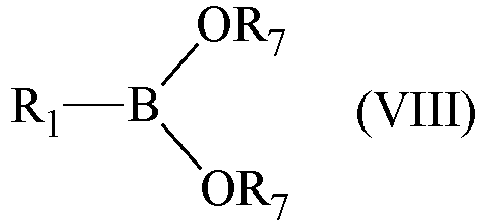 - à ladite étape (a) ledit composé de diaryloxybenzohétérodiazole fluoré disubstitué ayant la formule générale (IV) et ledit 4-hydroxybenzoate d'alkyle ayant la formule générale (V) sont utilisés dans des rapports molaires compris dans l'intervalle allant de 1:2 à 1:10, préférablement dans l'intervalle allant de 1:2 à 1:5 ; et/ou- ladite étape (a) est mise en oeuvre en présence d'au moins une base organique faible sélectionnée parmi : des carboxylates de métaux alcalins ou alcalinoterreux tels que l'acétate de potassium, l'acétate de sodium, l'acétate de césium, l'acétate de magnésium, l'acétate de calcium, le propionate de potassium, le propionate de sodium, le propionate de césium, le propionate de magnésium, le propionate de calcium, ou des mélanges de ceux-ci ; des carbonates de métaux alcalins ou alcalinoterreux tels que le carbonate de lithium, le carbonate de potassium, le carbonate de sodium, le carbonate de césium, le carbonate de magnésium, le carbonate de calcium, ou des mélanges de ceux-ci ; des bicarbonates de métaux alcalins ou alcalinoterreux tels que le bicarbonate de lithium, le bicarbonate de potassium, le bicarbonate de sodium, le bicarbonate de césium, le bicarbonate de magnésium, le bicarbonate de calcium, ou des mélanges de ceux-ci ; ou des mélanges de ceux-ci ; préférablement le carbonate de potassium, le carbonate de sodium, le carbonate de césium ; et/ou- ledit composé de diaryloxybenzohétérodiazole fluoré disubstitué ayant la formule générale (IV) et ladite base organique faible sont utilisés dans des rapports molaires compris dans l'intervalle allant de 1:1 à 1:10, préférablement dans l'intervalle allant de 1:2 à 1:5 ; et/ou- ladite étape (a) est mise en oeuvre en présence d'au moins un solvant organique sélectionné parmi : des éthers tels que le 1,2-diméthoxyéthane, le 1,4-dioxane, le tétrahydrofurane, ou des mélanges de ceux-ci ; des solvants chlorés tels que le dichlorométhane, le chloroforme, ou des mélanges de ceux-ci ; des solvants aprotiques dipolaires tels que le N,N-diméthylformamide, le N-méthylpyrrolidone, le diméthylsulfoxide, ou des mélanges de ceux-ci ; préférablement le N,N-diméthylformamide ; et/ou- ledit composé de diaryloxybenzohétérodiazole fluoré disubstitué ayant la formule générale (IV) est utilisé dans ledit solvant organique dans une quantité susceptible d'obtenir une concentration molaire dans ledit solvant organique comprise dans l'intervalle allant de 0,05 M à 2 M, préférablement dans l'intervalle allant de 0,1 M à 1 M ; et/ou- ladite étape (a) est mise en oeuvre à une température comprise dans l'intervalle allant de 60 °C à 150 °C, préférablement dans l'intervalle allant de 80 °C à 120 °C ; et/ou- ladite étape (a) est mise en oeuvre pendant une durée comprise dans l'intervalle allant de 1 heure à 24 heures, préférablement dans l'intervalle allant de 2 heures à 18 heures ; et/ou- à ladite étape (b) ledit composé de diaryloxybenzohétérodiazole disubstitué ayant la formule générale (VI) et ledit composé sélectionné parmi des N-haloimides sont utilisés dans des rapports molaires compris dans l'intervalle allant de 1:2 à 1:3, préférablement dans l'intervalle allant de 1:2 à 1:2,5 ; et/ou- ladite étape (b) est mise en oeuvre en présence d'au moins un solvant organique sélectionné parmi : des éthers tels que le 1,2-diméthoxyéthane, le 1,4-dioxane, le tétrahydrofurane, ou des mélanges de ceux-ci ; des solvants chlorés tels que le dichlorométhane, le chloroforme, ou des mélanges de ceux-ci ; des solvants aprotiques dipolaires tels que le N,N-diméthylformamide, le N-méthylpyrrolidone, le diméthylsulfoxide, ou des mélanges de ceux-ci ; préférablement le tétrahydrofurane ; et/ou- ledit composé de diaryloxybenzohétérodiazole disubstitué ayant la formule générale (VI) est utilisé dans ledit solvant organique dans une quantité susceptible d'obtenir une concentration molaire dans ledit solvant organique comprise dans l'intervalle allant de 0,01 M à 5 M, préférablement dans l'intervalle allant de 0,02 M à 2 M ; et/ou- ladite étape (b) est mise en oeuvre à une température comprise dans l'intervalle allant de 20 °C à 50 °C, préférablement dans l'intervalle allant de 22 °C à 30 °C ; et/ou- ladite étape (b) est mise en oeuvre pendant une durée comprise dans l'intervalle allant de 1 heure à 24 heures, préférablement dans l'intervalle allant de 4 heures à 18 heures ; et/ou- à ladite étape (c) ledit composé de diaryloxybenzohétérodiazole halogéné disubstitué ayant la formule générale (VII) et ledit composé aryle-bore ayant la formule générale (VIII) sont utilisés dans des rapports molaires compris dans l'intervalle allant de 1:2 à 1:5, préférablement dans l'intervalle allant de 1:2 à 1:4 ; et/ou- ladite étape (c) est mise en oeuvre en présence d'au moins un catalyseur contenant du palladium sélectionné parmi des composés de palladium à l'état d'oxydation (0) ou (II) tels que le palladium-tétrakistriphénylphosphine [Pd(PPh3)4], le dichlorure de palladium bis-triphénylphosphine [PdCl2(PPh3)2], préférablement le palladium-tétrakistriphénylphosphine [Pd(PPh3)4] ; et/ou- ledit composé de diaryloxybenzohétérodiazole halogéné disubstitué ayant la formule générale (VII) et ledit catalyseur sont utilisés dans des rapports molaires compris dans l'intervalle allant de 1:0,15 à 1:0,01, préférablement dans l'intervalle allant de 1:0,02 à 1:12 ; et/ou- ladite étape (c) est mise en oeuvre en présence d'au moins une base organique faible sélectionnée parmi : des carboxylates de métaux alcalins ou alcalinoterreux tels que l'acétate de potassium, l'acétate de sodium, l'acétate de césium, l'acétate de magnésium, l'acétate de calcium, le propionate de potassium, le propionate de sodium, le propionate de césium, le propionate de magnésium, le propionate de calcium, ou des mélanges de ceux-ci ; des carbonates de métaux alcalins ou alcalinoterreux tels que le carbonate de lithium, le carbonate de potassium, le carbonate de sodium, le carbonate de césium, le carbonate de magnésium, le carbonate de calcium, ou des mélanges de ceux-ci ; des bicarbonates de métaux alcalins ou alcalinoterreux tels que le bicarbonate de lithium, le bicarbonate de potassium, le bicarbonate de sodium, le bicarbonate de césium, le bicarbonate de magnésium, le bicarbonate de calcium, ou des mélanges de ceux-ci ; ou des mélanges de ceux-ci ; préférablement le carbonate de potassium, le carbonate de sodium, le carbonate de césium ; et/ou- ledit composé de diaryloxybenzohétérodiazole halogéné disubstitué ayant la formule générale (VII) et ladite base organique faible sont utilisés dans des rapports molaires compris dans l'intervalle allant de 1:1 à 1:20, préférablement dans l'intervalle allant de 1:2 à 1:10 ; et/ou- ladite étape (c) est mise en oeuvre en présence d'au moins un solvant organique sélectionné parmi : des éthers tels que le 1,2-diméthoxyéthane, le 1,4-dioxane, le tétrahydrofurane, ou des mélanges de ceux-ci ; des hydrocarbures tels que le toluène, le xylène, ou des mélanges de ceux-ci ; des solvants aprotiques dipolaires tels que le N,N-diméthylformamide, le N-méthylpyrrolidone, le diméthylsulfoxide, ou des mélanges de ceux-ci ; ou des mélanges de ceux-ci ; préférablement le 1,4-dioxane ; et/ou- à ladite étape (b), ledit solvant organique peut être utilisé en mélange avec au moins un alcool tel que le méthanol, l'éthanol, le n-propanol, l'iso-propanol, ou des mélanges de ceux-ci ; et/ou- ledit composé de diaryloxybenzohétérodiazole halogéné disubstitué ayant la formule générale (VII) est utilisé dans ledit solvant organique dans une quantité susceptible d'obtenir une concentration molaire dans ledit solvant organique comprise dans l'intervalle allant de 0,01 M à 2 M, préférablement dans l'intervalle allant de 0,02 M à 1 M ; et/ou- ladite étape (c) est mise en oeuvre à une température comprise dans l'intervalle allant de 50 °C à 140 °C, préférablement dans l'intervalle allant de 60 °C à 120 °C ; et/ou- ladite étape (c) est mise en oeuvre pendant une durée comprise dans l'intervalle allant de 2 heures à 36 heures, préférablement dans l'intervalle allant de 4 heures à 18 heures.
 - Un procédé pour la préparation d'un composé de diaryloxybenzohétérodiazole disubstitué ayant la formule générale (II) :
 (a1) la mise en réaction d'au moins un composé de diaryloxybenzohétérodiazole fluoré disubstitué ayant la formule générale (IV) :
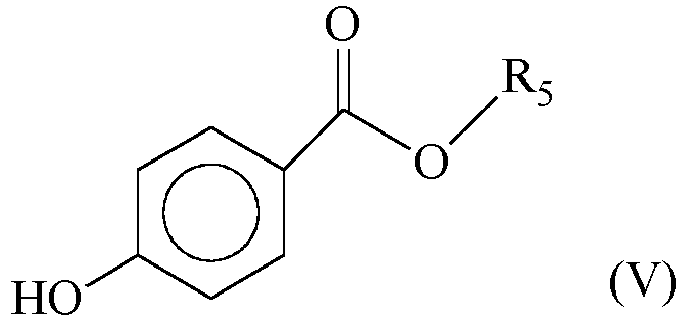
 (b1) l'ajout, directement dans le mélange réactionnel obtenu à l'étape (a1), d'au moins un phénol ayant la formule (IX), ledit phénol ayant la formule (IX) étant utilisé dans des rapports molaires égaux ou en excès molaire respectivement audit composé de diaryloxybenzohétérodiazole fluoré disubstitué ayant la formule générale (IV) :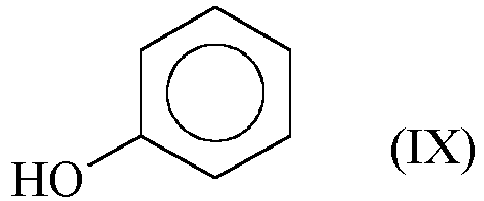
 (c1) la mise en réaction d'au moins un composé de diaryloxybenzohétérodiazole disubstitué ayant la formule générale (X) obtenu à l'étape (b1) avec au moins un composé sélectionné parmi des N-haloimides tels que le N-bromosuccinimide, le N-bromophtalimide, le N-iodosuccinimide, le N-iodophtalimide, pour obtenir un composé de diaryloxybenzohétérodiazole halogéné disubstitué ayant la formule générale (XI) :
 (d1) la mise en réaction d'au moins un composé de diaryloxybenzohétérodiazole halogéné disubstitué ayant la formule générale (XI) obtenu à l'étape (c1) avec au moins un composé aryle-bore ayant la formule générale (VIII) :
 - ladite étape (a1) est mise en oeuvre en présence d'au moins une base organique faible sélectionnée parmi : des carboxylates de métaux alcalins ou alcalinoterreux tels que l'acétate de potassium, l'acétate de sodium, l'acétate de césium, l'acétate de magnésium, l'acétate de calcium, le propionate de potassium, le propionate de sodium, le propionate de césium, le propionate de magnésium, le propionate de calcium, ou des mélanges de ceux-ci ;
des carbonates de métaux alcalins ou alcalinoterreux tels que le carbonate de lithium, le carbonate de potassium, le carbonate de sodium, le carbonate de césium, le carbonate de magnésium, le carbonate de calcium, ou des mélanges de ceux-ci ; des bicarbonates de métaux alcalins ou alcalinoterreux tels que le bicarbonate de lithium, le bicarbonate de potassium, le bicarbonate de sodium, le bicarbonate de césium, le bicarbonate de magnésium, le bicarbonate de calcium, ou des mélanges de ceux-ci ; ou des mélanges de ceux-ci ; préférablement le carbonate de potassium, le carbonate de sodium, le carbonate de césium ; et/ou- ledit composé de diaryloxybenzohétérodiazole fluoré disubstitué ayant la formule générale (IV) et ladite base organique faible sont utilisés dans des rapports molaires compris dans l'intervalle allant de 1:1 à 1:10, préférablement dans l'intervalle allant de 1:1 à 1:5 ; et/ou- ladite étape (a1) est mise en oeuvre en présence d'au moins un solvant organique qui est sélectionné parmi : des éthers tels que le 1,2-diméthoxyéthane, le 1,4-dioxane, le tétrahydrofurane, ou des mélanges de ceux-ci ; des solvants chlorés tels que le dichlorométhane, le chloroforme, ou des mélanges de ceux-ci ; des solvants aprotiques dipolaires tels que le N,N-diméthylformamide, le N-méthylpyrrolidone, le diméthylsulfoxide, ou des mélanges de ceux-ci ; préférablement le N,N-diméthylformamide ; et/ou- ledit composé de diaryloxybenzohétérodiazole fluoré disubstitué ayant la formule générale (IV) est utilisé dans ledit solvant organique dans une quantité susceptible d'obtenir une concentration molaire dans ledit solvant organique comprise dans l'intervalle allant de 0,05 M à 2 M, préférablement dans l'intervalle allant de 0,1 M à 1 M ; et/ou- ladite étape (a1), et ladite étape (b1), sont mises en oeuvre à une température comprise dans l'intervalle allant de 60 °C à 150 °C, préférablement dans l'intervalle allant de 80 °C à 100 °C ;- ladite étape (a1) et ladite étape (b1), indépendamment, sont mises en oeuvre pendant une durée comprise dans l'intervalle allant de 1 heure à 24 heures, préférablement dans l'intervalle allant de 1 heure à 12 heures ;- ladite étape (c1), et ladite étape (d1), indépendamment, sont mises en oeuvre dans les mêmes conditions d'opération que les étapes (b) et (c), tel que revendiqué à la revendication 4. - Un procédé pour la préparation d'un composé de diaryloxybenzohétérodiazole disubstitué ayant la formule générale (XII) :
 (a'1) la mise en réaction d'au moins un composé de diaryloxybenzohétérodiazole disubstitué fluoré ayant la formule générale (IV) :

 (b'1) l'ajout, directement dans le mélange réactionnel obtenu à l'étape (a'1), d'au moins un phénol substitué ayant la formule générale (XIV), ledit phénol substitué ayant la formule générale (XIV) étant utilisé dans des rapports molaires égaux ou en excès molaire respectivement audit composé de diaryloxybenzohétérodiazole fluoré disubstitué ayant la formule générale (IV) :
 (c'1) la mise en réaction d'au moins un composé de diaryloxybenzohétérodiazole disubstitué ayant la formule générale (XV) obtenu à l'étape (b'1) avec au moins un composé sélectionné parmi les N-haloimides tels que le N-bromosuccinimide, le N-bromophtalimide, le N-iodosuccinimide, le N-iodophtalimide, pour obtenir un composé de diaryloxybenzohétérodiazole halogéné disubstitué ayant la formule générale (XVI) :
 (d'1) la mise en réaction d'au moins un composé de diaryloxybenzohétérodiazole halogéné disubstitué ayant la formule générale (XVI) obtenu à l'étape (c'1) avec au moins un composé aryle-bore ayant la formule générale (VIII) :
 - les étapes (a'1) à (d'1) ci-dessus, indépendamment, sont mises en oeuvre dans les mêmes conditions d'opération que les étapes (a1) à (d1), tel que revendiqué à la revendication 5.
 - Un concentrateur solaire luminescent (LSC) incluant au moins un composé de diaryloxybenzohétérodiazole disubstitué ayant la formule générale (I) ou (II) selon la revendication 1 ou la revendication 2.
- Un dispositif photovoltaïque (ou dispositif solaire) comprenant au moins une cellule photovoltaïque (ou cellule solaire), et au moins un concentrateur solaire luminescent (LSC) incluant au moins un composé de diaryloxybenzohétérodiazole disubstitué ayant la formule générale (I) ou (II) selon la revendication 7.
- Utilisation d'au moins un composé de diaryloxybenzohétérodiazole disubstitué ayant la formule générale (I) ou (II) selon la revendication 1 ou la revendication 2, dans un concentrateur solaire luminescent (LSC).
Priority Applications (1)
| Application Number | Priority Date | Filing Date | Title |
|---|---|---|---|
| PL16816743T PL3374357T3 (pl) | 2015-11-13 | 2016-11-11 | Dipodstawione związki diaryloksybenzoheterodiazolowe |
Applications Claiming Priority (2)
| Application Number | Priority Date | Filing Date | Title |
|---|---|---|---|
| ITUB2015A005558A ITUB20155558A1 (it) | 2015-11-13 | 2015-11-13 | Composti diarilossibenzoeterodiazolici disostituiti |
| PCT/IB2016/056793 WO2017081645A1 (fr) | 2015-11-13 | 2016-11-11 | Composé de diaryloxybenzohétérodiazole disubstitué |
Publications (2)
| Publication Number | Publication Date |
|---|---|
| EP3374357A1 EP3374357A1 (fr) | 2018-09-19 |
| EP3374357B1 true EP3374357B1 (fr) | 2019-10-02 |
Family
ID=55446976
Family Applications (1)
| Application Number | Title | Priority Date | Filing Date |
|---|---|---|---|
| EP16816743.5A Active EP3374357B1 (fr) | 2015-11-13 | 2016-11-11 | Composé de diaryloxybenzohétérodiazole disubstitué |
Country Status (9)
| Country | Link |
|---|---|
| US (2) | US11208406B2 (fr) |
| EP (1) | EP3374357B1 (fr) |
| CN (1) | CN108473486B (fr) |
| CA (1) | CA3004472C (fr) |
| DK (1) | DK3374357T3 (fr) |
| ES (1) | ES2764558T3 (fr) |
| IT (1) | ITUB20155558A1 (fr) |
| PL (1) | PL3374357T3 (fr) |
| WO (1) | WO2017081645A1 (fr) |
Families Citing this family (5)
| Publication number | Priority date | Publication date | Assignee | Title |
|---|---|---|---|---|
| IT201800000667A1 (it) * | 2018-01-10 | 2019-07-10 | Eni Spa | Procedimento per la preparazione di composti diarilossibenzoeterodiazolici disostituiti |
| CN109326672B (zh) * | 2018-08-23 | 2020-06-05 | 宁波大学 | 一种基于全无机钙钛矿量子点的太阳能荧光集光器的制备方法 |
| IT201800009633A1 (it) * | 2018-10-19 | 2020-04-19 | Eni Spa | Composti diarilossibenzoeterodiazolici disostituiti |
| IT201900004161A1 (it) * | 2019-03-22 | 2020-09-22 | Eni Spa | Composti fluoroarilossibenzoeterodiazolici disostituiti |
| IT201900020970A1 (it) * | 2019-11-12 | 2021-05-12 | Eni Spa | Composti diarilossibenzoeterodiazolici disostituiti con gruppi tienotiofenici |
Family Cites Families (11)
| Publication number | Priority date | Publication date | Assignee | Title |
|---|---|---|---|---|
| DE10229370A1 (de) * | 2002-06-29 | 2004-01-15 | Covion Organic Semiconductors Gmbh | 2,1,3-Benzothiadiazole |
| KR20080105127A (ko) * | 2006-03-30 | 2008-12-03 | 이데미쓰 고산 가부시키가이샤 | 유기 전계발광 소자용 재료 및 이것을 사용한 유기 전계발광 소자 |
| US8298686B2 (en) * | 2008-02-18 | 2012-10-30 | Sumitomo Chemical Company, Limited | Composition and organic photoelectric converter using the same |
| US8883407B2 (en) * | 2009-06-12 | 2014-11-11 | Rohm And Haas Electronic Materials Llc | Coating compositions suitable for use with an overcoated photoresist |
| IT1396026B1 (it) | 2009-10-19 | 2012-11-09 | Eni Spa | Composizioni fotoluminescenti per convertitori di spettro a migliorata efficienza |
| IT1401129B1 (it) * | 2010-07-16 | 2013-07-12 | Eni Spa | Processo per la sintesi di composti benzotiadiazolici |
| ITMI20111268A1 (it) * | 2011-07-07 | 2013-01-08 | Eni Spa | Concentratore solare luminescente comprendente composti benzoselenadiazolici disostituiti |
| EP2730600A1 (fr) * | 2012-11-07 | 2014-05-14 | LANXESS Deutschland GmbH | Composé polymère conjugué comprenant des unités 1,2,3-benzothiadiazole et son utilisation dans des dispositifs photovoltaïques |
| ITMI20130038A1 (it) * | 2013-01-14 | 2014-07-15 | Eni Spa | Procedimento per la preparazione di composti benzoetero[1,3]diazolici disostituiti con gruppi eteroarilici |
| ITMI20131620A1 (it) * | 2013-10-01 | 2015-04-02 | Eni Spa | Concentratore solare luminescente comprendente composti benzoeterodiazolici tetrasostituiti |
| WO2016046319A1 (fr) | 2014-09-25 | 2016-03-31 | Eni S.P.A. | Composés disubstitués de diaryloxybenzohétérodiazole |
-
2015
- 2015-11-13 IT ITUB2015A005558A patent/ITUB20155558A1/it unknown
-
2016
- 2016-11-11 CN CN201680077916.4A patent/CN108473486B/zh active Active
- 2016-11-11 DK DK16816743.5T patent/DK3374357T3/da active
- 2016-11-11 EP EP16816743.5A patent/EP3374357B1/fr active Active
- 2016-11-11 CA CA3004472A patent/CA3004472C/fr active Active
- 2016-11-11 ES ES16816743T patent/ES2764558T3/es active Active
- 2016-11-11 PL PL16816743T patent/PL3374357T3/pl unknown
- 2016-11-11 US US15/774,212 patent/US11208406B2/en active Active
- 2016-11-11 WO PCT/IB2016/056793 patent/WO2017081645A1/fr not_active Ceased
-
2021
- 2021-10-20 US US17/506,183 patent/US11713314B2/en active Active
Non-Patent Citations (1)
| Title |
|---|
| None * |
Also Published As
| Publication number | Publication date |
|---|---|
| US11208406B2 (en) | 2021-12-28 |
| CA3004472A1 (fr) | 2017-05-18 |
| ITUB20155558A1 (it) | 2017-05-13 |
| US20220098185A1 (en) | 2022-03-31 |
| ES2764558T3 (es) | 2020-06-03 |
| WO2017081645A1 (fr) | 2017-05-18 |
| US20180327400A1 (en) | 2018-11-15 |
| US11713314B2 (en) | 2023-08-01 |
| CA3004472C (fr) | 2024-02-06 |
| CN108473486A (zh) | 2018-08-31 |
| PL3374357T3 (pl) | 2020-05-18 |
| CN108473486B (zh) | 2021-06-01 |
| DK3374357T3 (da) | 2020-01-13 |
| EP3374357A1 (fr) | 2018-09-19 |
Similar Documents
| Publication | Publication Date | Title |
|---|---|---|
| US11713314B2 (en) | Disubstituted diaryloxybenzoheterodiazole compounds | |
| US11133474B2 (en) | Disubstituted diaryloxybenzoheterodiazole compounds | |
| US10312395B2 (en) | Luminescent solar concentrator comprising disubstituted benzoheterodiazole compounds | |
| US11930705B2 (en) | Diaryloxybenzoheterodiazole compounds di-substituted with thienothiophenic groups | |
| US11706979B2 (en) | Disubstituted diaryloxybenzoheterodiazole compounds | |
| US12279526B2 (en) | Disubstituted fluoroaryloxybenzoheterodiazole compounds | |
| US20210320262A1 (en) | Luminescent solar concentrator comprising dithienylpyridinethiadioazole compounds | |
| EP3867333B1 (fr) | Composés d'aryloxybenzohétérodiazole disubstitués |
Legal Events
| Date | Code | Title | Description |
|---|---|---|---|
| STAA | Information on the status of an ep patent application or granted ep patent |
Free format text: STATUS: UNKNOWN |
|
| STAA | Information on the status of an ep patent application or granted ep patent |
Free format text: STATUS: THE INTERNATIONAL PUBLICATION HAS BEEN MADE |
|
| PUAI | Public reference made under article 153(3) epc to a published international application that has entered the european phase |
Free format text: ORIGINAL CODE: 0009012 |
|
| STAA | Information on the status of an ep patent application or granted ep patent |
Free format text: STATUS: REQUEST FOR EXAMINATION WAS MADE |
|
| 17P | Request for examination filed |
Effective date: 20180612 |
|
| AK | Designated contracting states |
Kind code of ref document: A1 Designated state(s): AL AT BE BG CH CY CZ DE DK EE ES FI FR GB GR HR HU IE IS IT LI LT LU LV MC MK MT NL NO PL PT RO RS SE SI SK SM TR |
|
| AX | Request for extension of the european patent |
Extension state: BA ME |
|
| DAV | Request for validation of the european patent (deleted) | ||
| DAX | Request for extension of the european patent (deleted) | ||
| GRAP | Despatch of communication of intention to grant a patent |
Free format text: ORIGINAL CODE: EPIDOSNIGR1 |
|
| STAA | Information on the status of an ep patent application or granted ep patent |
Free format text: STATUS: GRANT OF PATENT IS INTENDED |
|
| INTG | Intention to grant announced |
Effective date: 20190506 |
|
| GRAS | Grant fee paid |
Free format text: ORIGINAL CODE: EPIDOSNIGR3 |
|
| GRAA | (expected) grant |
Free format text: ORIGINAL CODE: 0009210 |
|
| STAA | Information on the status of an ep patent application or granted ep patent |
Free format text: STATUS: THE PATENT HAS BEEN GRANTED |
|
| AK | Designated contracting states |
Kind code of ref document: B1 Designated state(s): AL AT BE BG CH CY CZ DE DK EE ES FI FR GB GR HR HU IE IS IT LI LT LU LV MC MK MT NL NO PL PT RO RS SE SI SK SM TR |
|
| REG | Reference to a national code |
Ref country code: GB Ref legal event code: FG4D |
|
| REG | Reference to a national code |
Ref country code: CH Ref legal event code: EP Ref country code: AT Ref legal event code: REF Ref document number: 1186042 Country of ref document: AT Kind code of ref document: T Effective date: 20191015 |
|
| REG | Reference to a national code |
Ref country code: DE Ref legal event code: R096 Ref document number: 602016021851 Country of ref document: DE |
|
| REG | Reference to a national code |
Ref country code: IE Ref legal event code: FG4D |
|
| REG | Reference to a national code |
Ref country code: FI Ref legal event code: FGE |
|
| REG | Reference to a national code |
Ref country code: DK Ref legal event code: T3 Effective date: 20200107 |
|
| REG | Reference to a national code |
Ref country code: NL Ref legal event code: FP |
|
| REG | Reference to a national code |
Ref country code: SE Ref legal event code: TRGR |
|
| REG | Reference to a national code |
Ref country code: NO Ref legal event code: T2 Effective date: 20191002 |
|
| REG | Reference to a national code |
Ref country code: LT Ref legal event code: MG4D |
|
| REG | Reference to a national code |
Ref country code: CH Ref legal event code: NV Representative=s name: TROESCH SCHEIDEGGER WERNER AG, CH |
|
| PG25 | Lapsed in a contracting state [announced via postgrant information from national office to epo] |
Ref country code: GR Free format text: LAPSE BECAUSE OF FAILURE TO SUBMIT A TRANSLATION OF THE DESCRIPTION OR TO PAY THE FEE WITHIN THE PRESCRIBED TIME-LIMIT Effective date: 20200103 Ref country code: PT Free format text: LAPSE BECAUSE OF FAILURE TO SUBMIT A TRANSLATION OF THE DESCRIPTION OR TO PAY THE FEE WITHIN THE PRESCRIBED TIME-LIMIT Effective date: 20200203 Ref country code: LT Free format text: LAPSE BECAUSE OF FAILURE TO SUBMIT A TRANSLATION OF THE DESCRIPTION OR TO PAY THE FEE WITHIN THE PRESCRIBED TIME-LIMIT Effective date: 20191002 Ref country code: BG Free format text: LAPSE BECAUSE OF FAILURE TO SUBMIT A TRANSLATION OF THE DESCRIPTION OR TO PAY THE FEE WITHIN THE PRESCRIBED TIME-LIMIT Effective date: 20200102 Ref country code: LV Free format text: LAPSE BECAUSE OF FAILURE TO SUBMIT A TRANSLATION OF THE DESCRIPTION OR TO PAY THE FEE WITHIN THE PRESCRIBED TIME-LIMIT Effective date: 20191002 |
|
| PG25 | Lapsed in a contracting state [announced via postgrant information from national office to epo] |
Ref country code: HR Free format text: LAPSE BECAUSE OF FAILURE TO SUBMIT A TRANSLATION OF THE DESCRIPTION OR TO PAY THE FEE WITHIN THE PRESCRIBED TIME-LIMIT Effective date: 20191002 Ref country code: RS Free format text: LAPSE BECAUSE OF FAILURE TO SUBMIT A TRANSLATION OF THE DESCRIPTION OR TO PAY THE FEE WITHIN THE PRESCRIBED TIME-LIMIT Effective date: 20191002 Ref country code: IS Free format text: LAPSE BECAUSE OF FAILURE TO SUBMIT A TRANSLATION OF THE DESCRIPTION OR TO PAY THE FEE WITHIN THE PRESCRIBED TIME-LIMIT Effective date: 20200224 |
|
| REG | Reference to a national code |
Ref country code: ES Ref legal event code: FG2A Ref document number: 2764558 Country of ref document: ES Kind code of ref document: T3 Effective date: 20200603 |
|
| PG25 | Lapsed in a contracting state [announced via postgrant information from national office to epo] |
Ref country code: AL Free format text: LAPSE BECAUSE OF FAILURE TO SUBMIT A TRANSLATION OF THE DESCRIPTION OR TO PAY THE FEE WITHIN THE PRESCRIBED TIME-LIMIT Effective date: 20191002 |
|
| REG | Reference to a national code |
Ref country code: DE Ref legal event code: R097 Ref document number: 602016021851 Country of ref document: DE |
|
| PG2D | Information on lapse in contracting state deleted |
Ref country code: IS |
|
| PG25 | Lapsed in a contracting state [announced via postgrant information from national office to epo] |
Ref country code: MC Free format text: LAPSE BECAUSE OF FAILURE TO SUBMIT A TRANSLATION OF THE DESCRIPTION OR TO PAY THE FEE WITHIN THE PRESCRIBED TIME-LIMIT Effective date: 20191002 Ref country code: RO Free format text: LAPSE BECAUSE OF FAILURE TO SUBMIT A TRANSLATION OF THE DESCRIPTION OR TO PAY THE FEE WITHIN THE PRESCRIBED TIME-LIMIT Effective date: 20191002 Ref country code: EE Free format text: LAPSE BECAUSE OF FAILURE TO SUBMIT A TRANSLATION OF THE DESCRIPTION OR TO PAY THE FEE WITHIN THE PRESCRIBED TIME-LIMIT Effective date: 20191002 Ref country code: LU Free format text: LAPSE BECAUSE OF NON-PAYMENT OF DUE FEES Effective date: 20191111 Ref country code: IS Free format text: LAPSE BECAUSE OF FAILURE TO SUBMIT A TRANSLATION OF THE DESCRIPTION OR TO PAY THE FEE WITHIN THE PRESCRIBED TIME-LIMIT Effective date: 20200202 |
|
| PLBE | No opposition filed within time limit |
Free format text: ORIGINAL CODE: 0009261 |
|
| STAA | Information on the status of an ep patent application or granted ep patent |
Free format text: STATUS: NO OPPOSITION FILED WITHIN TIME LIMIT |
|
| PG25 | Lapsed in a contracting state [announced via postgrant information from national office to epo] |
Ref country code: SM Free format text: LAPSE BECAUSE OF FAILURE TO SUBMIT A TRANSLATION OF THE DESCRIPTION OR TO PAY THE FEE WITHIN THE PRESCRIBED TIME-LIMIT Effective date: 20191002 Ref country code: SK Free format text: LAPSE BECAUSE OF FAILURE TO SUBMIT A TRANSLATION OF THE DESCRIPTION OR TO PAY THE FEE WITHIN THE PRESCRIBED TIME-LIMIT Effective date: 20191002 |
|
| 26N | No opposition filed |
Effective date: 20200703 |
|
| PG25 | Lapsed in a contracting state [announced via postgrant information from national office to epo] |
Ref country code: IE Free format text: LAPSE BECAUSE OF NON-PAYMENT OF DUE FEES Effective date: 20191111 |
|
| PG25 | Lapsed in a contracting state [announced via postgrant information from national office to epo] |
Ref country code: SI Free format text: LAPSE BECAUSE OF FAILURE TO SUBMIT A TRANSLATION OF THE DESCRIPTION OR TO PAY THE FEE WITHIN THE PRESCRIBED TIME-LIMIT Effective date: 20191002 |
|
| PG25 | Lapsed in a contracting state [announced via postgrant information from national office to epo] |
Ref country code: CY Free format text: LAPSE BECAUSE OF FAILURE TO SUBMIT A TRANSLATION OF THE DESCRIPTION OR TO PAY THE FEE WITHIN THE PRESCRIBED TIME-LIMIT Effective date: 20191002 |
|
| PG25 | Lapsed in a contracting state [announced via postgrant information from national office to epo] |
Ref country code: HU Free format text: LAPSE BECAUSE OF FAILURE TO SUBMIT A TRANSLATION OF THE DESCRIPTION OR TO PAY THE FEE WITHIN THE PRESCRIBED TIME-LIMIT; INVALID AB INITIO Effective date: 20161111 Ref country code: MT Free format text: LAPSE BECAUSE OF FAILURE TO SUBMIT A TRANSLATION OF THE DESCRIPTION OR TO PAY THE FEE WITHIN THE PRESCRIBED TIME-LIMIT Effective date: 20191002 |
|
| PG25 | Lapsed in a contracting state [announced via postgrant information from national office to epo] |
Ref country code: TR Free format text: LAPSE BECAUSE OF FAILURE TO SUBMIT A TRANSLATION OF THE DESCRIPTION OR TO PAY THE FEE WITHIN THE PRESCRIBED TIME-LIMIT Effective date: 20191002 |
|
| PG25 | Lapsed in a contracting state [announced via postgrant information from national office to epo] |
Ref country code: MK Free format text: LAPSE BECAUSE OF FAILURE TO SUBMIT A TRANSLATION OF THE DESCRIPTION OR TO PAY THE FEE WITHIN THE PRESCRIBED TIME-LIMIT Effective date: 20191002 |
|
| REG | Reference to a national code |
Ref country code: AT Ref legal event code: UEP Ref document number: 1186042 Country of ref document: AT Kind code of ref document: T Effective date: 20191002 |
|
| P01 | Opt-out of the competence of the unified patent court (upc) registered |
Effective date: 20230414 |
|
| REG | Reference to a national code |
Ref country code: CH Ref legal event code: U11 Free format text: ST27 STATUS EVENT CODE: U-0-0-U10-U11 (AS PROVIDED BY THE NATIONAL OFFICE) Effective date: 20251201 |
|
| PGFP | Annual fee paid to national office [announced via postgrant information from national office to epo] |
Ref country code: NL Payment date: 20251126 Year of fee payment: 10 |
|
| PGFP | Annual fee paid to national office [announced via postgrant information from national office to epo] |
Ref country code: DE Payment date: 20251128 Year of fee payment: 10 |
|
| PGFP | Annual fee paid to national office [announced via postgrant information from national office to epo] |
Ref country code: GB Payment date: 20251127 Year of fee payment: 10 |
|
| PGFP | Annual fee paid to national office [announced via postgrant information from national office to epo] |
Ref country code: NO Payment date: 20251128 Year of fee payment: 10 |
|
| PGFP | Annual fee paid to national office [announced via postgrant information from national office to epo] |
Ref country code: AT Payment date: 20251128 Year of fee payment: 10 |
|
| PGFP | Annual fee paid to national office [announced via postgrant information from national office to epo] |
Ref country code: FI Payment date: 20251125 Year of fee payment: 10 Ref country code: DK Payment date: 20251125 Year of fee payment: 10 Ref country code: IT Payment date: 20251119 Year of fee payment: 10 |
|
| PGFP | Annual fee paid to national office [announced via postgrant information from national office to epo] |
Ref country code: FR Payment date: 20251125 Year of fee payment: 10 |
|
| PGFP | Annual fee paid to national office [announced via postgrant information from national office to epo] |
Ref country code: BE Payment date: 20251127 Year of fee payment: 10 |
|
| PGFP | Annual fee paid to national office [announced via postgrant information from national office to epo] |
Ref country code: SE Payment date: 20251127 Year of fee payment: 10 Ref country code: CH Payment date: 20251201 Year of fee payment: 10 |
|
| PGFP | Annual fee paid to national office [announced via postgrant information from national office to epo] |
Ref country code: CZ Payment date: 20251023 Year of fee payment: 10 |
|
| PGFP | Annual fee paid to national office [announced via postgrant information from national office to epo] |
Ref country code: PL Payment date: 20251021 Year of fee payment: 10 |
|
| PGFP | Annual fee paid to national office [announced via postgrant information from national office to epo] |
Ref country code: ES Payment date: 20251201 Year of fee payment: 10 |