EP3374860B1 - Übermittlung von informationen über eine aktualisierung einer anwendung - Google Patents
Übermittlung von informationen über eine aktualisierung einer anwendung Download PDFInfo
- Publication number
- EP3374860B1 EP3374860B1 EP16798903.7A EP16798903A EP3374860B1 EP 3374860 B1 EP3374860 B1 EP 3374860B1 EP 16798903 A EP16798903 A EP 16798903A EP 3374860 B1 EP3374860 B1 EP 3374860B1
- Authority
- EP
- European Patent Office
- Prior art keywords
- application
- user
- update
- time
- information
- Prior art date
- Legal status (The legal status is an assumption and is not a legal conclusion. Google has not performed a legal analysis and makes no representation as to the accuracy of the status listed.)
- Active
Links
Images



Classifications
-
- H—ELECTRICITY
- H04—ELECTRIC COMMUNICATION TECHNIQUE
- H04W—WIRELESS COMMUNICATION NETWORKS
- H04W8/00—Network data management
- H04W8/22—Processing or transfer of terminal data, e.g. status or physical capabilities
-
- G—PHYSICS
- G06—COMPUTING OR CALCULATING; COUNTING
- G06F—ELECTRIC DIGITAL DATA PROCESSING
- G06F8/00—Arrangements for software engineering
- G06F8/30—Creation or generation of source code
- G06F8/38—Creation or generation of source code for implementing user interfaces
-
- G—PHYSICS
- G06—COMPUTING OR CALCULATING; COUNTING
- G06F—ELECTRIC DIGITAL DATA PROCESSING
- G06F8/00—Arrangements for software engineering
- G06F8/60—Software deployment
- G06F8/65—Updates
-
- H—ELECTRICITY
- H04—ELECTRIC COMMUNICATION TECHNIQUE
- H04M—TELEPHONIC COMMUNICATION
- H04M1/00—Substation equipment, e.g. for use by subscribers
- H04M1/72—Mobile telephones; Cordless telephones, i.e. devices for establishing wireless links to base stations without route selection
- H04M1/724—User interfaces specially adapted for cordless or mobile telephones
- H04M1/72448—User interfaces specially adapted for cordless or mobile telephones with means for adapting the functionality of the device according to specific conditions
Definitions
- Application software products i.e., applications have been developed to perform a variety of functions related to, for example, word processing, spreadsheets, slide show presentations, database management, electronic mail, Internet access, business productivity, educational assistance, health and fitness management, providing digital content (such as, for example, text, pictures, audio, video, and electronic games), navigation, text messaging, access to social media networks, etc.
- entities such as developers, that prepare, maintain, or own such applications want or need to provide updates to them. Such updates can be made for a variety of reasons including, for example, to fix software bugs, to add features, to address issues related to security, and to ensure compatibility with changes to operating systems used to run the corresponding applications.
- the information about the update is instead included in the user interface for the user device.
- the update may be retained at the digital distribution platform initially, and then information about the update may be communicated to the user device as part of the user interface.
- the computer-implemented method may further comprise communicating the generated user interface from the digital distribution platform to the user device.
- a system for communicating information about an update of an application can include means for receiving the update of the application.
- the system can include means for receiving a signal from a user device.
- the signal can include a request to receive a transmission of a user interface customized for a user account.
- the system can include means for determining a time at which the update was received.
- the system can include means for determining a time at which the request was received.
- the system can include means for determining, in response to receipt of the request to receive the transmission of the user interface customized for the user account, a time at which the application was downloaded to the user device.
- the system can include means for generating, in response to the time at which the system received the update being later than the time at which the application was downloaded to the user device and in response to the time at which the system received the request being later than the time at which the system received the update, the user interface.
- the user interface can include the information about the update.
- a wide assortment of information can be provided to users as digital content.
- Digital content intended to be presented to users can be included in application software products (i.e., applications or "apps").
- applications have also been developed to perform a variety of functions related to, for example, word processing, spreadsheets, slide show presentations, database management, electronic mail, Internet access, business productivity, educational assistance, health and fitness management, navigation, text messaging, access to social media networks, etc.
- entities, such as developers, that prepare, maintain, or own such applications may want or need to provide updates to them. Such updates can be made for a variety of reasons including, for example, to fix software bugs, to add features, to address issues related to security, and to ensure compatibility with changes to operating systems used to run the corresponding applications.
- mobile computing devices such as, for example, tablet computers, smartphones, and personal digital assistants.
- mobile computing devices can obtain information about their locations.
- the combination of the portability of mobile computing devices and the ability of these devices to obtain information about their locations has encouraged the introduction of vast numbers of applications to expand the functionality of these devices. Additional numbers of applications have also been produced for traditional, stationary computing devices such as, for example, desktop computers.
- the growth in electronic communication network bandwidth has also enabled the delivery of applications to shift from being performed primarily via physical data storage devices (such as, for example, floppy disks, compact discs, digital versatile discs, and Universal Serial Bus flash drives) to being performed via online distribution in which developers can upload applications to a digital distribution platform and users can download applications from the digital distribution platform.
- Online distribution has also allowed applications to be updated at an increasingly frequent rate. This situation gives rise to the specific problem, rooted in the vast numbers of applications and the increasingly frequent rate at which they are updated, of communicating to users information about updates made to previously downloaded applications.
- information about updates made to previously downloaded applications is automatically communicated via a push approach.
- a push approach information about the updates is automatically communicated, when a threshold is reached, to user devices to which respective applications were previously downloaded.
- the threshold can be a count of updates to be made to several applications and/or a duration of time since information about updates was previously communicated.
- Such information merely includes notices that the applications have been updated and invitations for users of the user devices to download the updates.
- Such an approach fails to provide users with specific information about the updates such as the content of the update, what features or portions of an application may be available in conjunction with installation of the update, which are unavailable or function differently without installation of the update, and the like.
- the push approach may result in users declining to download updates out of a belief that the updates are irrelevant or not of interest to the users.
- information about updates can be communicated to the user in response to a user account, provided by a digital distribution provider, being accessed by a user.
- the information about the update can be presented to the user in an environment in which the user may be more likely to be receptive to thinking about the information about the update. In such an environment, the user may be more likely to act on the information about the update, for example, by downloading the update.
- the user can be provided with specific information about the update, such as that the update includes additional content, features, options, or the like, or specific descriptions of the additional or different content, features, options, or the like (e.g., "50% New Content!, “Free currency now included!”, “Check out the free items inside!”, “See the discounts on back to school items!, etc.). Having such specific information, the user may be more likely to act on the information about the update, for example, by downloading the update.
- FIG. 1 is a diagram illustrating an example of an environment 100 in which the information about an update of an application can be communicated according to the disclosed subject matter.
- the environment 100 can include several elements such as, for example, a digital distribution platform 102, an upload platform 104, and a user device 106.
- an element of the environment 100 can be communicatively connected to one or more other elements via a network 108.
- the digital distribution platform 102 such as an application marketplace, online store, or other distribution system, can be used, for example, by a digital distribution provider 110.
- the upload platform 104 can be used, for example, by a developer 112.
- the user device 106 can be used, for example, by a user 114.
- the developer 112 can upload an application to the digital distribution platform 102.
- the user 114 using the user device 106 and via the network 108, can establish a user account provided by the digital distribution provider 110.
- the digital distribution platform 102 may then provide a user interface, such as a web page, for the user account.
- the user interface can be provided to the user device 106 via the network 108.
- the user interface can include one or more graphical control elements that can be selected or otherwise activated by the user, such as to execute or to access one or more applications.
- a graphical representation such as an icon, can be associated with each of the graphical control elements.
- Each graphical representation can identify a particular application.
- the user 114 using the user interface, can download an application from the digital distribution platform 102, via the network 108, to the user device 106.
- the developer 112 using the upload platform 104 and via the network 108, can also upload an update to an application to the digital distribution platform 102, which then can be used by the user 114 to update the application as disclosed in further detail herein.
- each of the platforms 102 and 104 can be a computer-implemented platform configured to automatically perform some or all of the functions disclosed herein.
- the digital distribution platform 102 can be, for example, a combination of hardware architecture, operating system, runtime libraries, and/or computer software or code object to support digital distribution applications. In an embodiment, the digital distribution platform 102 can be configured specifically to perform digital distribution operations.
- the upload platform 104 can be, for example, a combination of hardware architecture, operating system, runtime libraries, and/or computer software or code object to support upload applications. In an embodiment, the upload platform 104 can be configured specifically to perform upload operations.
- the user device 106 can be, for example, any suitable electronic user device, such as a smartphone, a cellular phone, a personal digital assistant (PDA), a wireless communication device, a handheld device, a desktop computer, a laptop computer, a netbook, a tablet computer, a web portal, a digital video recorder, a video game console, an e-book reader, etc.
- a smartphone a cellular phone
- PDA personal digital assistant
- wireless communication device such as a smartphone, a cellular phone, a personal digital assistant (PDA), a wireless communication device, a handheld device, a desktop computer, a laptop computer, a netbook, a tablet computer, a web portal, a digital video recorder, a video game console, an e-book reader, etc.
- PDA personal digital assistant
- the network 108 can be, for example, a telecommunications network configured to allow computers to exchange data. Connections between elements of the environment 100 via the network 108 can be established using cable media, wireless media, or both. Data traffic on the network 108 can be organized according to a variety of communications protocols including, but not limited to, the Internet Protocol Suite (Transmission Control Protocol/Internet Protocol (TCP/IP)), the Institute of Electrical and Electronics Engineers (IEEE) 802 protocol suite, the synchronous optical networking (SONET) protocol, the Asynchronous Transfer Mode (ATM) switching technique, or any combination thereof.
- TCP/IP Transmission Control Protocol/Internet Protocol
- IEEE 802 Institute of Electrical and Electronics Engineers
- SONET synchronous optical networking
- ATM Asynchronous Transfer Mode
- the network 108 can include the Internet.
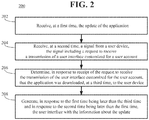
- FIG. 2 is a flow diagram illustrating an example of a method 200 for communicating information about an update of an application according to an embodiment of the disclosed subject matter.
- a digital distribution platform can receive, at a first time, the update of the application.
- the digital distribution platform can be the digital distribution platform 102 illustrated in FIG. 1 .
- the digital distribution platform can include or can be operatively coupled to a first database.
- the first database can be configured to store the application, information about the application, etc.
- the first database can be configured to record activities of a developer with respect to the application. Such activities can include, for example, dates and times at which the application is uploaded, dates and times at which updates to the application are uploaded, information about the updates, etc.
- a processor of the digital distribution platform can be configured to retrieve the first time from the first database.
- the digital distribution platform can receive, at a second time, a signal from a user device.
- the signal can include a request to receive a transmission of a user interface customized for a user account.
- the user device and the user account can be associated with a user.
- the user account can be with a digital distribution provider.
- the digital distribution provider can be configured to provide, for each user account, a customized user interface.
- the customized user interface can be configured to present information in a manner preferred by the associated user.
- the user device can be the user device 106
- the user can be the user 114
- the digital distribution provider can be the digital distribution provider 110 as illustrated in FIG. 1 .
- communications circuitry of the digital distribution platform can be configured to receive the signal from the user device.
- the digital distribution platform can automatically determine, in response to receipt of the signal and/or the request to receive the transmission of the user interface customized for the user account, that the application was downloaded, at a third time, to the user device.
- the digital distribution platform can include or can be operatively coupled to a second database.
- the second database can be configured to store information about a user account provided by the digital distribution provider such as an application marketplace, online store, or other distribution system.
- the second database can be configured to record activities of the user with respect to the user account.
- Such activities can include, for example, dates and times at which the user logs into the user account, dates and times at which the user logs out of the user account, identifications of applications downloaded, dates and times at which applications are downloaded, dates and times at which graphical control elements are selected or otherwise activated on a user interface for the user account, etc.
- a processor of the digital distribution platform can be configured to retrieve the third time from the second database.
- the digital distribution platform can automatically generate, in response to the first time being later than the third time and in response to the second time being later than the first time, the user interface.
- the user interface can include the information about the update. For example, if the digital distribution platform received the update of the application on September 15, 2015 (the first time), received the request to receive the transmission of the user interface customized for the user account on September 30, 2015 (the second time), determined that the application was downloaded to the user device on July 1, 2015 (the third time), the digital distribution platform can automatically generate the user interface with the information about the update.
- the information about the update can include a description of a change in content of the application included in the update.
- the change in content can be a new user feature of the application, a new game component in the application, a new promotion available, within the application, to a user, a change determined to be of interest to the user, the like, or any combination thereof.
- the new user feature can be background information added to a digital media content application, new graphical control elements that allow the user to perform additional operations, new security features, etc.
- the new game component can include additional levels, new characters, changed items, etc.
- the new promotion can include coupons, digital currency, virtual currency, award points, etc.
- the change determined to be of interest to the user can be a particular change made to the application based upon information obtained from a profile of the user.
- the information about the update can be presented as a change in an appearance of the user interface.
- the appearance of the user interface can be customized for the user account.
- the appearance of the user interface can include an arrangement of one or more graphical representations such that each graphical representation is associated with a corresponding application.
- the change in the appearance can be a change in an appearance of a graphical representation for the application (e.g., a change in appearance of an icon for the application, a star placed next to the icon, text placed next to the icon in which the text states "50% New Content!, “Free currency now included!”, “Check out the free items inside!”, “See the discounts on back to school items!, etc.), an addition of text that includes at least some of the information about the update (e.g., addition of text in a display window of the user interface in which the text states "Application A now has new content!), a change in a position of the graphical representation for the application in the arrangement (e.g., changing the position of the icon for the application to a more prominent position in the arrangement), the like, or any combination thereof.
- a change in appearance of a graphical representation for the application e.g., a change in appearance of an icon for the application, a star placed next to the icon, text placed next to the icon in which the text states "50%
- an ordering of graphic representations in the arrangement can be based on an expected response of a user associated with the user account to the ordering.
- a processor of the digital distribution platform can be configured to retrieve, from the second database, a user history with respect to one or more applications.
- the digital distribution platform can be configured to retrieve information about how the arrangement of the graphical representations for those one or more application were ordered on the user interface for the user account.
- the digital distribution platform can be configured to determine if the user is more likely to respond to a graphical representation presented at a center of the user interface and less likely to respond to graphical representations presented progressively further away from the center of the user interface, or if the user is more likely to respond to a graphical representation presented near a top, left corner of the user interface and less likely to respond to graphical representations presented progressively further away from the top, left corner of the user interface, etc.
- the information about the update can be communicated to the user in response to a request from the user to receive the transmission of the user interface customized for the user account
- the information about the update can be presented to the user in an environment in which the user may be more likely to be receptive to thinking about the information about the update. In such an environment, the user may be more likely to act on the information about the update, for example, by downloading the update.
- the user can be provided with specific information about the update (e.g., "50% New Content!, “Free currency now included!”, “Check out the free items inside!”, “See the discounts on back to school items!, etc.), the user may be more likely to act on the information about the update, for example, by downloading the update.
- specific information about the update e.g., "50% New Content!”, “Free currency now included!”, “Check out the free items inside!”, “See the discounts on back to school items!, etc.
- having the information about the update communicated according to the method 200 can reduce an amount of time that a processor of the digital distribution platform spends processing such automatic push approach communications, which can free the processor to perform other operations. Additionally or alternatively, reducing the operation of the circuits of the digital distribution platform to process such automatic push approach communications can prolong the life of such circuits.
- having the information about the update communicated according to the method 200 can reduce an amount of time that a processor of the user device spends processing such automatic push approach communications, which can free the processor to perform other operations. Additionally or alternatively, reducing the operation of the circuits of the user device to process such automatic push approach communications can prolong the life of such circuits. Additionally or alternatively, if the user device receives power from a portable energy source, such as a battery or a fuel cell, then reducing the operation of the circuits of the user device to process such automatic push approach communications can prolong a duration of time before the portable energy source would need to be replenished.
- a portable energy source such as a battery or a fuel cell
- having the information about the update communicated according to the method 200 can free the bandwidth, which would otherwise be consumed to convey such automatic push approach communications, to convey other information.
- FIG. 3 is a flow diagram illustrating an example of a method 300 for communicating information about an update of an application by changing an arrangement, on a user interface customized for a user account, of graphical representations for applications.
- the digital distribution platform can receive, at the first time, the update of the application.
- the digital distribution platform can receive, at the second time, the signal from the user device.
- the signal can include the request to receive the transmission of the user interface customized for the user account.
- the digital distribution platform can automatically determine, in response to receipt of the request to receive the transmission of the user interface customized for the user account, that the application was downloaded, at the third time, to the user device.
- the information about the update can be presented as a change in an appearance of the user interface.
- the appearance of the user interface can be customized for the user account.
- the appearance of the user interface can include an arrangement of one or more graphical representations such that each graphical representation is associated with a corresponding application.
- the change in the appearance can be a change in an appearance of a graphical representation for the application, an addition of text that includes at least some of the information about the update, a change in a position of the graphical representation for the application in the arrangement, the like, or any combination thereof.
- the change in the appearance can be based on a first prediction.
- the first prediction can be a prediction of a response of a user associated with the user account to the information about the update.
- a processor of the digital distribution platform can be configured to retrieve, from the second database, a user history with respect to one or more applications.
- the digital distribution platform can be configured to determine, from the user history, activities performed by the user in response to information about one or more previous updates to the one or more applications.
- the activities performed by the user in response to the information about a previous update can include activities such as selecting or otherwise activating a graphical control element in response to the information about the previous update to find out information about the respective update and/or the corresponding application, to download the respective update and/or the corresponding application, to make a purchase, etc.
- the digital distribution platform can produce the first prediction.
- the change in the appearance of the user interface can include a change in the information about the update and/or a change in a classification of the user with respect to being targeted to receive the information about the update.
- the change in the appearance can be based on a second prediction.
- the second prediction can be a prediction of a preference of the user for the application, a prediction of an expected value for a developer of the application, a prediction of an expected value for a digital distribution provider, associated with the digital distribution platform, of the application, the like, or any combination thereof.
- a processor of the digital distribution platform can be configured to retrieve, from the second database, a user history with respect to one or more other applications.
- the digital distribution platform can be configured to determine, from the user history, preferences of the user for one or more other applications. Based on the preferences of the user for the one or more other applications, the digital distribution platform can produce a prediction of the preference of the user for the application.
- the developer and the digital distribution provider can have an agreement in which the digital distribution provider is compensated in response to the user selecting or otherwise activating a graphical control element of an application of the developer.
- the expected value for the developer can be a product of a value to the developer of an application in having a user select or otherwise activate a graphical control element of the application multiplied by a probability that the user will select or otherwise activate the graphical control element of the application.
- the user may select or otherwise activate the graphical control element of the application to find out information about the application, to download the application, etc.
- the value to the developer of the application can be different depending upon the purpose for which the user selects or otherwise activates the graphical control element of the application.
- the expected value for the digital distribution provider can be a product of a value to the digital distribution provider in having a user select or otherwise activate a particular graphical control element of a particular application multiplied by a probability that the user will select or otherwise activate that graphical control element.
- the digital distribution platform can change the appearance of the user interface to arrange the one or more graphic representations for the one or more applications to have a form that is likely to optimize the expected value to the developer, the expected value to the digital distribution provider, or both.
- the digital distribution platform can automatically receive at least some of the predictions. Such predictions can have been produced external of the digital distribution platform. Additionally or alternatively, at an operation 304, the digital distribution platform can automatically produce at least some of the predictions.
- the digital distribution platform can include or can be operatively coupled to a recommendation engine configured to interact with a processor of the digital distribution platform to produce the prediction of the preference of the user for the application, the prediction of the expected value for the developer of the application, the prediction of the expected value for the digital distribution provider of the application, or any combination thereof.
- the information that the application has been updated can be used to produce one or more of the predictions.
- the digital distribution platform can be configured to receive the information that the application has been updated.
- a developer using an upload platform and via a network, can upload the update to the application to a digital distribution platform.
- the developer can be the developer 112
- the upload platform can be the upload platform 104
- the network can be the network 108
- the digital distribution platform can be the digital distribution platform 102 as illustrated in FIG. 1 .
- the developer, using the upload platform and via the network can upload information about the update to the first database.
- a processor of the digital distribution platform can be configured to retrieve, from the first database, information about updates to the application.
- the digital distribution platform can be configured to use this information to produce one or more of the predictions. For instance, the digital distribution platform can receive, at a fourth time, the information that the application has been updated. The digital distribution platform can automatically generate the user interface at a fifth time (at an operation 306). The fifth time can be different from the fourth time. For example, in order to optimize the expected value to the developer, the expected value to the digital distribution provider, or a both, the digital distribution platform can determine that the information about the update should be communicated to the user at a time that is different from the time at which the information that the application has been updated was received by the digital distribution platform.
- the time at which the digital distribution platform receives the information that the application has been updated can be the time at which the digital distribution platform receives the update of the application (the first time). In another aspect, the fourth time can be different from the first time.
- the information that the application has been updated can include an index of the application.
- an application that includes digital media content e.g., a movie, an e-book, etc.
- the digital distribution platform can produce at least some of the index of the application.
- a processor of the digital distribution platform can be configured to retrieve, from the first database, a first version of the application and a second version of the application.
- the processor can be configured to produce an index of the first version of the application and an index of a second version of the application.
- the processor can be configured to determine that the application has been updated from a comparison of the index of the first version of the application with the index of the second version of the application.
- the digital distribution platform can automatically generate, in response to the first time being later than the third time and in response to the second time being later than the first time, the user interface with the information about the update by changing the arrangement, on the user interface, of the graphical representations for the applications based on the one or more predictions.
- FIG. 4 is a flow diagram illustrating an example of a method 400 for communicating information about an update of an application in response to determining that the application had last been executed on a user device a long time ago.
- the digital distribution platform can receive, at the first time, the update of the application.
- the digital distribution platform can receive, at the second time, the signal from the user device.
- the signal can include the request to receive the transmission of the user interface customized for the user account.
- the digital distribution platform can automatically determine, in response to receipt of the request to receive the transmission of the user interface customized for the user account, that the application was downloaded, at the third time, to the user device.
- the digital distribution platform can automatically determine that the application had last been executed on the user device at a sixth time.
- the digital distribution platform can be configured to retrieve, from the user device via a network, information that indicates the last time that the application had been executed on the user device.
- the sixth time can be earlier than a difference of a predetermined duration of time subtracted from a present time. For example, if the sixth time is May 1, 2015, the predetermined duration of time is three months, and the present time is September 30, 2015, then the application had last been executed on the user device more than three months earlier than the present time. For example, if the application is an electronic game, then it could be the situation that the user is no longer interested in playing this electronic game.
- the digital distribution platform can automatically generate, in response to the first time being later than the third time, in response to the second time being later than the first time, and in response to the application having last been executed on the user device at the sixth time, the user interface with the information about the update.
- the information about the update can be communicated to the user in response to determining that the application had last been executed on the user device a long time ago. Having such information, the user may decide to download the update.
- FIG. 5 is a flow diagram illustrating an example of a method 500 for communicating information about an update of an application in response to determining that the application has been deleted from a user device.
- the digital distribution platform can receive, at the first time, the update of the application.
- the digital distribution platform can receive, at the second time, the signal from the user device.
- the signal can include the request to receive the transmission of the user interface customized for the user account.
- the digital distribution platform can automatically determine, in response to receipt of the request to receive the transmission of the user interface customized for the user account, that the application was downloaded, at the third time, to the user device.
- the digital distribution platform can automatically determine that the application has been deleted from the user device.
- the digital distribution platform can be configured to retrieve, from the user device via the network, information that indicates that the application has been deleted from the user device.
- the digital distribution platform can automatically generate, in response to the first time being later than the third time, in response to the second time being later than the first time, and in response to the application having been deleted from the user device, the user interface with the information about the update. In this manner, the information about the update can be communicated to the user in response to determining that the application has been deleted from the user device. Having such information, the user may decide to re-download the application with the update.
- FIG. 6 is a flow diagram illustrating an example of a method 600 for communicating information about an update of an application in response to a search request.
- the digital distribution platform can receive, at the first time, the update of the application.
- the digital distribution platform can receive, at the second time, the signal from the user device.
- the signal can include the request to receive the transmission of the user interface customized for the user account.
- the digital distribution platform can automatically determine, in response to receipt of the request to receive the transmission of the user interface customized for the user account, that the application was downloaded, at the third time, to the user device.
- the digital distribution platform can receive a search request.
- the information about the update of the application can be relevant to the search request.
- the search request can be for a particular application, for a particular classification of applications, for a particular feature in an application, etc.
- the digital distribution platform can automatically process the search request.
- the digital distribution platform can automatically generate, in response to the first time being later than the third time, in response to the second time being later than the first time, and based on a result of the search request, the user interface with the information about the update.
- Generation of the user interface can include a change in a position of a graphical representation for the application in an arrangement, on the user interface, of one or more graphical representations for one or more applications.
- the information about the update can be presented as a change in an appearance of the user interface.
- the appearance of the user interface can be customized for the user account.
- the appearance of the user interface can include an arrangement of one or more graphical representations such that each graphical representation is associated with a corresponding application.
- the user interface can include more graphical representations than can ergonomically be displayed on a screen of the user interface initially presented to the user. In such a case, graphical representations that are not displayed on the screen initially presented to the user can be displayed on one or more other screens.
- the screen can include a scroll feature so that the user can cause such graphical representations to be displayed on the screen.
- the arrangement of the graphical representations can have a first form in which a first set of graphical representations is displayed on the screen initially presented to the user and a second set of graphical representations is not displayed on the screen initially presented to the user.
- the arrangement of the graphical representations can have a second form such that graphical representations for applications included in the result of the search request can be included in the first set and displayed on the screen initially presented to the user.
- the graphical representations for applications included in the result of the search request can be placed at more prominent positions in the arrangement.
- the change in the appearance of the user interface can include a change in an appearance of a graphical representation for the application (e.g., a change in appearance of an icon for the application, a star placed next to the icon, text placed next to the icon in which the text states "50% New Content!, “Free currency now included!”, “Check out the free items inside!”, “See the discounts on back to school items!, etc.) and/or an addition of text that includes at least some of the information about the update (e.g., addition of text in a display window of the user interface in which the text states "Application A now has new content!).
- the information about the update can be communicated to the user in response to the search request. Having such information, the user may decide to download the application with the update.
- the user interface with the information about the update can be generated using any combination of the operations of the methods 200, 300, 400, 500, and 600.
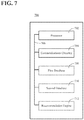
- FIG. 7 is a block diagram illustrating an example of a system 700 for communicating information about an update of an application according to an embodiment of the disclosed subject matter.
- the system 700 can be a digital distribution platform such as the digital distribution platform 102 illustrated in FIG. 1 .
- the system 700 can include, for example, a processor 702, communications circuitry 704, and a bus 706.
- the processor 702 can include any processing circuit operative to control an operation of the system 700.
- the communications circuitry 704 can provide communications between the system 700 and devices external to the system 700.
- the communications circuitry 704 can be configured to provide communications via a packet switched network, a cellular network, a satellite network, an optical network, a telephone link, the like, or any combination thereof.
- the communications circuitry 704 can be configured to provide communications in a wired or a wireless manner.
- the communications circuitry 704 can be configured to perform simultaneously several communications operations using different networks.
- the bus 706 can be coupled to the processor 702 and the communications circuitry 704, and can be configured to facilitate communications among these components.
- Other devices and components (not illustrated) can be included in the system 700.
- the communications circuitry 704 can be configured to receive the update of the application.
- the system 700 can include a first database 708.
- the first database 708 can be configured to store the application, information about the application, etc.
- the first database 708 can be configured to record activities of a developer with respect to the application. Such activities can include, for example, dates and times at which the application is uploaded, dates and times at which updates to the application are uploaded, information about the updates, etc.
- the processor 702 can be configured to retrieve, from the first database 708, a time at which the system 700 received the update of the application.
- the communications circuitry 704 can be configured to receive a signal from a user device.
- the signal can include a request to receive a transmission of a user interface customized for a user account.
- the user device and the user account can be associated with a user.
- the user account can be with a digital distribution provider.
- the digital distribution provider can be configured to provide, for each user account, a customized user interface.
- the customized user interface can be configured to present information in a manner preferred by the associated user.
- the user device can be the user device 106, the user can be the user 114, and the digital distribution provider can be the digital distribution provider 110 as illustrated in FIG. 1 .
- the processor 702 can be configured to determine a time at which the system 700 received, from the user device, the request to receive the transmission of the user interface customized for the user account.
- the processor 702 can be configured to determine, in response to receipt of the request to receive the transmission of the user interface customized for the user account, a time at which the application was downloaded to the user device.
- the system 700 can include a second database 710.
- the second database 710 can be configured to store information about a user account provided by the digital distribution provider such as an application marketplace, online store, or other distribution system.
- the second database 710 can be configured to record activities of the user with respect to the user account.
- Such activities can include, for example, dates and times at which the user logs into the user account, dates and times at which the user logs out of the user account, identifications of applications downloaded, dates and times at which applications are downloaded, dates and times at which graphical control elements are selected or otherwise activated on a user interface for the user account, etc.
- the processor 702 can be configured to retrieve, from the second database 710, the time at which the application was downloaded to the user device.
- the processor 702 can be configured to generate, in response to the time at which the system received the update being later than the time at which the application was downloaded and in response to the time at which the system received the request being later than the time at which the system received the update, the user interface.
- the user interface can include the information about the update. For example, if the system 700 received the update of the application on September 15, 2015, and received the request to receive the transmission of the user interface customized for the user account on September 30, 2015, and the processor 702 determined that the application was downloaded to the user device on July 1, 2015, the processor 702 can generate the user interface with the information about the update.
- the information about the update can include a description of a change in content of the application included in the update.
- the change in content can be a new user feature of the application, a new game component in the application, a new promotion available, within the application, to a user, a change determined to be of interest to the user, the like, or any combination thereof.
- the new user feature can be background information added to a digital media content application, new graphical control elements that allow the user to perform additional operations, new security features, etc.
- the new game component can include additional levels, new characters, changed items, etc.
- the new promotion can include coupons, digital currency, virtual currency, award points, etc.
- the change determined to be of interest to the user can be a particular change made to the application based upon information obtained from a profile of the user.
- the information about the update can be presented as a change in an appearance of the user interface.
- the appearance of the user interface can be customized for the user account.
- the appearance of the user interface can include an arrangement of one or more graphical representations such that each graphical representation is associated with a corresponding application.
- the change in the appearance can be a change in an appearance of a graphical representation for the application (e.g., a change in appearance of an icon for the application, a star placed next to the icon, text placed next to the icon in which the text states "50% New Content!, “Free currency now included!”, “Check out the free items inside!”, “See the discounts on back to school items!, etc.), an addition of text that includes at least some of the information about the update (e.g., addition of text in a display window of the user interface in which the text states "Application A now has new content!), a change in a position of the graphical representation for the application in the arrangement (e.g., changing the position of the icon for the application to a more prominent position in the arrangement), the like, or any combination thereof.
- a change in appearance of a graphical representation for the application e.g., a change in appearance of an icon for the application, a star placed next to the icon, text placed next to the icon in which the text states "50%
- an ordering of graphic representations in the arrangement can be based on an expected response of a user associated with the user account to the ordering.
- the processor 702 can be configured to retrieve, from the second database 710, a user history with respect to one or more applications.
- the processor 702 can be configured to retrieve information about how the arrangement of the graphical representations for those one or more application were ordered on the user interface for the user account.
- the processor 702 can be configured to determine if the user is more likely to respond to a graphical representation presented at a center of the user interface and less likely to respond to graphical representations presented progressively further away from the center of the user interface, or if the user is more likely to respond to a graphical representation presented near a top, left corner of the user interface and less likely to respond to graphical representations presented progressively further away from the top, left corner of the user interface, etc.
- the change in the appearance can be based on a first prediction.
- the first prediction can be a prediction of a response of a user associated with the user account to the information about the update.
- the processor 702 can be configured to retrieve, from the second database 710, a user history with respect to one or more applications.
- the processor 702 can be configured to determine, from the user history, activities performed by the user in response to information about one or more previous updates to the one or more applications.
- the activities performed by the user in response to the information about a previous update can include activities such as selecting or otherwise activating a graphical control element in response to the information about the previous update to find out information about the respective update and/or the corresponding application, to download the respective update and/or the corresponding application, to make a purchase, etc.
- the processor 702 can produce the first prediction.
- the change in the appearance of the user interface can include a change in the information about the update and/or a change in a classification of the user with respect to being targeted to receive the information about the update.
- the change in the appearance can be based on a second prediction.
- the second prediction can be a prediction of a preference of the user for the application, a prediction of an expected value for a developer of the application, a prediction of an expected value for a digital distribution provider, associated with the digital distribution platform, of the application, the like, or any combination thereof.
- the processor 702 can be configured to retrieve, from the second database 710, a user history with respect to one or more other applications.
- the processor 702 can be configured to determine, from the user history, preferences of the user for one or more other applications. Based on the preferences of the user for the one or more other applications, the processor 702 can produce a prediction of the preference of the user for the application.
- the developer and the digital distribution provider can have an agreement in which the digital distribution provider is compensated in response to the user selecting or otherwise activating a graphical control element of an application of the developer.
- the expected value for the developer can be a product of a value to the developer of an application in having a user select or otherwise activate a graphical control element of the application multiplied by a probability that the user will select or otherwise activate the graphical control element of the application.
- the user may select or otherwise activate the graphical control element of the application to find out information about the application, to download the application, etc.
- the value to the developer of the application can be different depending upon the purpose for which the user selects or otherwise activates the graphical control element of the application.
- the expected value for the digital distribution provider can be a product of a value to the digital distribution provider in having a user select or otherwise activate a particular graphical control element of a particular application multiplied by a probability that the user will select or otherwise activate that graphical control element.
- the system 700 can change the appearance of the user interface to arrange the one or more graphic representations for the one or more applications to have a form that is likely to optimize the expected value to the developer, the expected value to the digital distribution provider, or both.
- the system 700 via the communications circuitry 704, can be configured to receive at least some of the predictions. Such predictions can have been produced external of the system 700. Additionally or alternatively, the processor 704 can be configured to produce at least some of the predictions. In an embodiment, the system 700 can include a recommendation engine 712 configured to interact with the processor 702 to produce the prediction of the preference of the user for the application, the prediction of the expected value for the developer of the application, the prediction of the expected value for the digital distribution provider of the application, or any combination thereof.
- a recommendation engine 712 configured to interact with the processor 702 to produce the prediction of the preference of the user for the application, the prediction of the expected value for the developer of the application, the prediction of the expected value for the digital distribution provider of the application, or any combination thereof.
- the information that the application has been updated can be used to produce one or more of the predictions.
- the system 700 via the communications circuitry 704, can be configured to receive the information that the application has been updated.
- a developer using an upload platform and via a network, can upload the update to the application to the system 700.
- the developer can be the developer 112
- the upload platform can be the upload platform 104
- the network can be the network 108
- the digital distribution platform can be the digital distribution platform 102 as illustrated in FIG. 1 .
- the developer, using the upload platform and via the network can upload information about the update to the first database 708.
- the processor 702 can be configured to retrieve, from the first database 708, information about updates to the application.
- the processor 702 can be configured to use this information to produce one or more of the predictions.
- the system 700 via the communications circuitry 704, can be configured to receive, at a first time, the information that the application has been updated.
- the processor 702 can be configured to generate the user interface at a second time. The second time can be different from the first time.
- the processor 702 can determine that the information about the update should be communicated to the user at a time that is different from the time at which the information that the application has been updated was received by the system 700.
- the time at which the system 700 receives the information that the application has been updated can be the time at which the communications circuitry 704 receives the update of the application. In another aspect the time at which the system 700 receives the information that the application has been updated can be different from the time at which the communications circuitry 704 receives the update of the application.
- the information that the application has been updated can include an index of the application.
- an application that includes digital media content e.g., a movie, an e-book, etc.
- an index can identify portions of the digital media content.
- the system 700 can produce at least some of the index of the application.
- the processor 702 can be configured to retrieve, from the first database 708, a first version of the application and a second version of the application.
- the processor 702 can be configured to produce an index of the first version of the application and an index of a second version of the application.
- the processor 702 can be configured to determine that the application has been updated from a comparison of the index of the first version of the application with the index of the second version of the application.
- the processor 702 can be configured to generate, in response to the time at which the system received the update being later than the time at which the application was downloaded to the user device and in response to the time at which the system received the request being later than the time at which the system received the update, the user interface with the information about the update by changing the arrangement, on the user interface, of the graphical representations for the applications based on the one or more predictions.
- the processor 702 can be configured to determine that the application had last been executed on the user device at a particular time. For example, the processor 702 can be configured to retrieve, from the user device via a network, information that indicates the last time that the application had been executed on the user device. The particular time can be earlier than a difference of a predetermined duration of time subtracted from a present time. For example, if the particular time is May 1, 2015, the predetermined duration of time is three months, and the present time is September 30, 2015, then the application had last been executed on the user device more than three months earlier than the present time. For example, if the application is an electronic game, then it could be the situation that the user is no longer interested in playing this electronic game.
- the processor 702 can be configured to generate, in response to the time at which the system received the update being later than the time at which the application was downloaded to the user device, in response to the time at which the system received the request being later than the time at which the system received the update, and in response to the application having last been executed on the user device at the particular time, the user interface with the information about the update. In this manner, the information about the update can be communicated to the user in response to determining that the application had last been executed on the user device a long time ago. Having such information, the user may decide to download the update.
- the processor 702 can be configured to determine that the application has been deleted from the user device. For example, the processor 702 can be configured to retrieve, from the user device via the network, information that indicates that the application has been deleted from the user device. In this embodiment, the processor 702 can be configured to generate, in response to the time at which the system received the update being later than the time at which the application was downloaded to the user device, in response to the time at which the system received the request being later than the time at which the system received the update, and in response to the application having been deleted from the user device, the information about the update to the user. Having such information, the user may decide to re-download the application with the update.
- the system 700 via the communications circuitry 704, can be configured to receive a search request.
- the information about the update of the application can be relevant to the search request.
- the search request can be for a particular application, for a particular classification of applications, for a particular feature in an application, etc.
- the processor 702 can be configured to process the search request and to generate, in response to the time at which the system received the update being later than the time at which the application was downloaded to the user device, in response to the time at which the system received the request being later than the time at which the system received the update, and based on a result of the search request, the user interface with the information about the update.
- Generation of the user interface can include a change in a position of a graphical representation for the application in an arrangement, on the user interface, of one or more graphical representations for one or more applications.
- the information about the update can be presented as a change in an appearance of the user interface.
- the appearance of the user interface can be customized for the user account.
- the appearance of the user interface can include an arrangement of one or more graphical representations such that each graphical representation is associated with a corresponding application.
- the user interface can include more graphical representations than can ergonomically be displayed on a screen of the user interface initially presented to the user. In such a case, graphical representations that are not displayed on the screen initially presented to the user can be displayed on one or more other screens.
- the screen can include a scroll feature so that the user can cause such graphical representations to be displayed on the screen.
- the arrangement of the graphical representations can have a first form in which a first set of graphical representations is displayed on the screen initially presented to the user and a second set of graphical representations is not displayed on the screen initially presented to the user.
- the arrangement of the graphical representations can have a second form such that graphical representations for applications included in the result of the search request can be included in the first set and displayed on the screen initially presented to the user.
- the graphical representations for applications included in the result of the search request can be placed at more prominent positions in the arrangement.
- the change in the appearance of the user interface can include a change in an appearance of a graphical representation for the application (e.g., a change in appearance of an icon for the application, a star placed next to the icon, text placed next to the icon in which the text states "50% New Content!, “Free currency now included!”, “Check out the free items inside!”, “See the discounts on back to school items!, etc.) and/or an addition of text that includes at least some of the information about the update (e.g., addition of text in a display window of the user interface in which the text states "Application A now has new content!).
- the information about the update can be communicated to the user in response to the search request. Having such information, the user may decide to download the application with the update.
- the users may be provided with an opportunity to control whether programs or features collect user information (e.g., information about a user's social network, social actions or activities, profession, a user's preferences, or a user's current location), or to control whether and/or how to receive content from the content server that may be more relevant to the user.
- user information e.g., information about a user's social network, social actions or activities, profession, a user's preferences, or a user's current location
- certain data may be treated in one or more ways before it is stored or used, so that personally identifiable information is removed.
- a user's identity may be treated so that no personally identifiable information can be determined for the user, or a user's geographic location may be generalized where location information is obtained (such as to a city, ZIP code, or state level), so that a particular location of a user cannot be determined.
- location information such as to a city, ZIP code, or state level
- the user may have control over how information is collected about the user and used by a system as disclosed herein.
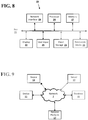
- FIG. 8 illustrates an example computing device 20 suitable for implementing embodiments of the presently disclosed subject matter.
- the device 20 can be, for example, a desktop or laptop computer, or a mobile computing device such as a smart phone, tablet, or the like.
- the device 20 can include a bus 21 (which can interconnect major components of the computer 20, such as a central processor 24), a memory 27 (such as random-access memory (RAM), read-only memory (ROM), flash RAM, or the like), a user display 22 (such as a display screen), a user input interface 26 (which can include one or more controllers and associated user input devices such as a keyboard, mouse, touch screen, and the like), a fixed storage 23 (such as a hard drive, flash storage, and the like), a removable media component 25 (operative to control and receive an optical disk, flash drive, and the like), and a network interface 29 operable to communicate with one or more remote devices via a suitable network connection.
- a bus 21 which can interconnect major components of the computer 20, such as a central processor 24
- a memory 27 such as random-access memory (RAM), read-only memory (ROM), flash RAM, or the like
- RAM random-access memory
- ROM read-only memory
- flash RAM flash RAM
- a user display 22 such as a display
- the bus 21 can allow data communication between the central processor 24 and one or more memory components, which can include RAM, ROM, and other memory, as previously noted.
- RAM can be the main memory into which an operating system and application programs are loaded.
- a ROM or flash memory component can contain, among other code, the basic input-output system (BIOS) which can control basic hardware operation such as the interaction with peripheral components.
- BIOS basic input-output system
- Applications resident with the computer 20 can generally be stored on and accessed via a computer readable medium, such as a hard disk drive (e.g., fixed storage 23), an optical drive, floppy disk, or other storage medium.
- the fixed storage 23 can be integral with the computer 20 or can be separate and accessed through other interfaces.
- the network interface 29 can provide a direct connection to a remote server via a wired or wireless connection.
- the network interface 29 can provide such connection using any suitable technique and protocol as is readily understood by one of skill in the art, including digital cellular telephone, WiFiTM, Bluetooth®, near-field, and the like.
- the network interface 29 can allow the computer to communicate with other computers via one or more local, wide-area, or other communication networks, as described in further detail below.
- FIG. 8 Many other devices or components (not shown) can be connected in a similar manner (e.g., document scanners, digital cameras and so on). Conversely, all of the components illustrated in FIG. 8 need not be present to practice the present disclosure. The components can be interconnected in different ways from that illustrated. The operation of a computer such as that illustrated in FIG. 8 is readily known in the art and is not discussed in detail in this application. Code to implement the present disclosure can be stored in computer-readable storage media such as one or more of the memory 27, fixed storage 23, removable media 25, or on a remote storage location.
- FIG. 9 illustrates an example network arrangement according to an embodiment of the disclosed subject matter.
- One or more devices 10, 11, such as local computers, smart phones, tablet computing devices, and the like can connect to other devices via one or more networks 7.
- Each device can be a computing device as previously described.
- the network can be a local network, wide-area network, the Internet, or any other suitable communication network or networks, and can be implemented on any suitable platform including wired and/or wireless networks.
- the devices can communicate with one or more remote devices, such as servers 13 and/or databases 15.
- the remote devices can be directly accessible by the devices 10, 11, or one or more other devices can provide intermediary access such as where a server 13 provides access to resources stored in a database 15.
- the devices 10, 11 also can access remote platforms 17 or services provided by remote platforms 17 such as cloud computing arrangements and services.
- the remote platform 17 can include one or more servers 13 and/or databases 15.
- various embodiments of the presently disclosed subject matter can include or be embodied in the form of computer-implemented processes and apparatuses for practicing those processes.
- Embodiments also can be embodied in the form of a computer program product having computer program code containing instructions embodied in non-transitory and/or tangible media, such as floppy diskettes, CD-ROMs, hard drives, universal serial bus (USB) drives, or any other machine readable storage medium, such that when the computer program code is loaded into and executed by a computer, the computer becomes an apparatus for practicing embodiments of the disclosed subject matter.
- Embodiments also can be embodied in the form of computer program code, for example, whether stored in a storage medium, loaded into and/or executed by a computer, or transmitted over some transmission medium, such as over electrical wiring or cabling, through fiber optics, or via electromagnetic radiation, such that when the computer program code is loaded into and executed by a computer, the computer becomes an apparatus for practicing embodiments of the disclosed subject matter.
- computer program code segments configure the microprocessor to create specific logic circuits.
- a set of computer-readable instructions stored on a computer-readable storage medium can be implemented by a general-purpose processor, which can transform the general-purpose processor or a device containing the general-purpose processor into a special-purpose device configured to implement or carry out the instructions.
- Embodiments can be implemented using hardware that can include a processor, such as a general purpose microprocessor and/or an application-specific integrated circuit (ASIC) that embodies all or part of the techniques according to embodiments of the disclosed subject matter in hardware and/or firmware.
- the processor can be coupled to memory, such as RAM, ROM, flash memory, a hard disk or any other device capable of storing electronic information.
- the memory can store instructions adapted to be executed by the processor to perform the techniques according to embodiments of the disclosed subject matter.
Landscapes
- Engineering & Computer Science (AREA)
- Theoretical Computer Science (AREA)
- Software Systems (AREA)
- General Engineering & Computer Science (AREA)
- Physics & Mathematics (AREA)
- General Physics & Mathematics (AREA)
- Human Computer Interaction (AREA)
- Computer Networks & Wireless Communication (AREA)
- Signal Processing (AREA)
- Computer Security & Cryptography (AREA)
- Databases & Information Systems (AREA)
- Information Transfer Between Computers (AREA)
- Stored Programmes (AREA)
- Telephonic Communication Services (AREA)
Claims (15)
- Computerimplementiertes Verfahren zum Kommunizieren von Informationen über eine Aktualisierung einer Anwendung, umfassend:Empfangen, durch eine digitale Vertriebsplattform (102) zu einem ersten Zeitpunkt, einer Aktualisierung einer Anwendung;Empfangen, durch die digitale Vertriebsplattform (102) zu einem zweiten Zeitpunkt, eines Signals von einem Benutzergerät (106), wobei das Signal eine Anforderung beinhaltet, eine Übertragung einer für ein Benutzerkonto angepassten Benutzeroberfläche zu empfangen;automatisches Ermitteln, durch die digitale Vertriebsplattform in Reaktion auf das Empfangen der Anforderung, die Übertragung der für das Benutzerkonto angepassten Benutzeroberfläche zu empfangen, dass die Anwendung zu einem dritten Zeitpunkt auf das Benutzergerät (106) heruntergeladen wurde; undautomatisches Erzeugen, durch die digitale Verteilungsplattform (102) in Reaktion auf den ersten Zeitpunkt, der später ist als der dritte Zeitpunkt und in Reaktion auf den zweiten Zeitpunkt, der später ist als der erste Zeitpunkt, der Benutzeroberfläche, wobei die Benutzeroberfläche Informationen über die Aktualisierung beinhaltet.
- Computerimplementiertes Verfahren nach Anspruch 1, wobei die Informationen über die Aktualisierung eine Beschreibung einer Änderung des Inhalts der in der Aktualisierung enthaltenen Anwendung umfassen, wobei die Änderung des Inhalts zumindest eine Änderung umfasst, ausgewählt aus der Gruppe, bestehend aus:einer neuen Benutzerfunktion der Anwendung, einer neuen Spielkomponente in der Anwendung;einer neuen Werbeaktion, die innerhalb der Anwendung für einen Benutzer verfügbar ist; undeiner Änderung, die als für den Benutzer von Interesse ermittelt wurde.
- Computerimplementiertes Verfahren nach einem der vorhergehenden Ansprüche, wobei die Informationen über die Aktualisierung als eine Änderung des Erscheinungsbildes der Benutzeroberfläche vorliegen, wobei die Änderung des Erscheinungsbildes zumindest eine Änderung umfasst, ausgewählt aus der Gruppe, bestehend aus:einer Änderung des Erscheinungsbildes einer grafischen Darstellung für die Anwendung;einem Hinzufügen von Text, der zumindest einige der Informationen über die Aktualisierung beinhaltet; undeiner Änderung der Position der grafischen Darstellung in einer Anordnung einer Vielzahl von grafischen Darstellungen für eine Vielzahl von Anwendungen.
- Computerimplementiertes Verfahren nach Anspruch 3, wobei eine Anordnung der grafischen Darstellungen in der Anordnung auf einer erwarteten Reaktion eines mit dem Benutzerkonto assoziierten Benutzers auf die Anordnung basiert.
- Computerimplementiertes Verfahren nach Anspruch 3 oder Anspruch 4, wobei die Änderung des Erscheinungsbildes auf einer ersten Vorhersage basiert, wobei die erste Vorhersage eine Vorhersage einer Reaktion eines mit dem Benutzerkonto assoziierten Benutzers auf die erste Information über die Aktualisierung ist, wobei die Änderung des Erscheinungsbildes ferner auf einer zweiten Vorhersage basiert, wobei die zweite Vorhersage zumindest eine Vorhersage umfasst, ausgewählt aus der Gruppe, bestehend aus:einer Vorhersage einer Präferenz des Benutzers für die Anwendung;einer Vorhersage eines erwarteten Werts für einen Entwickler der Anwendung; undeiner Vorhersage eines erwarteten Werts für einen digitalen Anbieter, der mit der digitalen Vertriebsplattform (102) der Anwendung assoziiert ist.
- Computerimplementiertes Verfahren nach Anspruch 5, ferner umfassend das Empfangen, über die digitale Vertriebsplattform (102), zumindest einer der ersten Vorhersage oder der zweiten Vorhersage.
- Computerimplementiertes Verfahren nach Anspruch 5, ferner umfassend das Erzeugen, über die digitale Vertriebsplattform (102), zumindest einer der ersten Vorhersage oder der zweiten Vorhersage, wobei das Erzeugen der zweiten Vorhersage auf den Informationen basiert, dass die Anwendung aktualisiert wurde, wobei das Verfahren ferner das Empfangen, über die digitale Vertriebsplattform (102), der Informationen umfasst, dass die Anwendung aktualisiert wurde.
- Computerimplementiertes Verfahren nach Anspruch 7, wobei das Empfangen der Informationen, dass die Anwendung aktualisiert wurde, zu einem vierten Zeitpunkt erfolgt, das automatische Erzeugen der Benutzeroberfläche zu einem fünften Zeitpunkt erfolgt und der fünfte Zeitpunkt vom vierten Zeitpunkt verschieden ist, wobei der vierte Zeitpunkt der erste Zeitpunkt ist.
- Computerimplementiertes Verfahren nach einem der vorhergehenden Ansprüche, ferner umfassend das automatische Ermitteln, durch die digitale Vertriebsplattform (102), dass die Anwendung zuletzt zu einem sechsten Zeitpunkt auf dem Benutzergerät (106) ausgeführt wurde, wobei der sechste Zeitpunkt vor einer Differenz einer vorbestimmten Dauer, subtrahiert von einem aktuellen Zeitpunkt, liegt, wobei das automatische Erzeugen der Benutzeroberfläche in Reaktion darauf erfolgt, dass die Anwendung zuletzt zum sechsten Zeitpunkt auf dem Benutzergerät (106) ausgeführt wurde.
- Computerimplementiertes Verfahren nach einem der vorhergehenden Ansprüche, ferner umfassend das automatische Ermitteln, durch die digitale Vertriebsplattform (102), dass die Anwendung von einem Benutzergerät (106) gelöscht wurde ist, wobei das automatische Erzeugen der Benutzeroberfläche in Reaktion darauf erfolgt, dass die Anwendung von dem Benutzergerät (106) gelöscht wurde.
- Computerimplementiertes Verfahren nach einem der vorhergehenden Ansprüche, ferner umfassend:Empfangen, durch die digitale Vertriebsplattform (102), einer Suchanforderung, wobei die Informationen über die Aktualisierung der Anwendung für die Suchanforderung relevant sind; undautomatisches Verarbeiten, durch die digitale Vertriebsplattform, der Suchanforderung, wobei das automatische Erzeugen der Benutzeroberfläche auf einem Ergebnis der Suchanforderung basiert und eine Änderung in einer Position einer grafischen Darstellung für die Anwendung in einer Anordnung, auf der Benutzeroberfläche, einer Vielzahl von grafischen Darstellungen für eine Vielzahl von Anwendungen beinhaltet.
- Nicht-flüchtiges computerlesbares Medium, das Computercode zum Steuern eines Prozessors speichert, um den Prozessor zu veranlassen, Informationen über eine Aktualisierung einer Anwendung zu übermitteln, wobei der Computercode Anweisungen beinhaltet, um den Prozessor zu veranlassen, ein Verfahren nach einem der vorhergehenden Ansprüche auszuführen.
- System (700) zum Übermitteln von Informationen über eine Aktualisierung einer Anwendung, umfassend:eine Kommunikationsschaltung (704), die konfiguriert ist, um die Aktualisierung der Anwendung zu empfangen und ein Signal von einem Benutzergerät (106) zu empfangen, wobei das Signal eine Anforderung beinhaltet, eine Übertragung einer für ein Benutzerkonto angepassten Benutzeroberfläche zu empfangen; undeinen Prozessor (702), der konfiguriert ist, um einen Zeitpunkt zu ermitteln, zu dem das System die Aktualisierung empfangen hat, um einen Zeitpunkt zu ermitteln, zu dem das System die Anforderung empfangen hat, um in Reaktion auf das Empfangen der Anforderung, die Übertragung der für das Benutzerkonto angepassten Benutzeroberfläche zu empfangen, einen Zeitpunkt zu ermitteln, zu dem die Anwendung auf das Benutzergerät heruntergeladen wurde, und um zu erzeugen, in Reaktion darauf, dass der Zeitpunkt, zu dem das System (700) die Aktualisierung empfangen hat, später ist als der Zeitpunkt, zu dem die Anwendung auf das Benutzergerät heruntergeladen wurde, und in Reaktion darauf, dass der Zeitpunkt, zu dem das System (700) die Anforderung empfangen hat, später ist als der Zeitpunkt, zu dem das System die Aktualisierung empfangen hat, die Benutzeroberfläche zu erzeugen, wobei die Benutzeroberfläche die Informationen über die Aktualisierung beinhaltet.
- System nach Anspruch 13, ferner umfassend:eine erste Datenbank (708), die konfiguriert ist, um Informationen über die Anwendung zu speichern; undeine zweite Datenbank (710), die konfiguriert ist, um Informationen über das Benutzerkonto zu speichern, wobei der Prozessor (702) konfiguriert ist, um von der ersten Datenbank (708) den Zeitpunkt zu empfangen, zu dem das System die Aktualisierung empfangen hat, und um von der zweiten Datenbank (710) den Zeitpunkt zu empfangen, zu dem die Anwendung auf das Benutzergerät (106) heruntergeladen wurde.
- System nach Anspruch 13, wobei die Informationen über die Aktualisierung als eine Änderung einer Position einer grafischen Darstellung für die Anwendung in einer Anordnung einer Vielzahl von grafischen Darstellungen für eine Vielzahl von Anwendungen dargestellt werden und ferner eine Empfehlungsmaschine (712) umfasst, die konfiguriert ist, um mit dem Prozessor (702) zusammenzuwirken, um eine Vorhersage zu erzeugen, wobei die Vorhersage zumindest eine Vorhersage umfasst, ausgewählt aus der Gruppe, bestehend aus:einer Vorhersage einer Reaktion eines Benutzers, der mit dem Benutzerkonto assoziiert ist, auf die Informationen über die Aktualisierung;einer Vorhersage einer Präferenz des Benutzers für die Anwendung;einer Vorhersage eines erwarteten Werts für einen Entwickler der Anwendung; undeiner Vorhersage eines erwarteten Werts für einen digitalen Anbieter, der mit der digitalen Vertriebsplattform (102) der Anwendung assoziiert ist.
Applications Claiming Priority (2)
| Application Number | Priority Date | Filing Date | Title |
|---|---|---|---|
| US14/936,762 US9661491B1 (en) | 2015-11-10 | 2015-11-10 | Communicating information about an update of an application |
| PCT/US2016/061112 WO2017083370A1 (en) | 2015-11-10 | 2016-11-09 | Communicating information about an update of an application |
Publications (2)
| Publication Number | Publication Date |
|---|---|
| EP3374860A1 EP3374860A1 (de) | 2018-09-19 |
| EP3374860B1 true EP3374860B1 (de) | 2021-09-29 |
Family
ID=57389555
Family Applications (1)
| Application Number | Title | Priority Date | Filing Date |
|---|---|---|---|
| EP16798903.7A Active EP3374860B1 (de) | 2015-11-10 | 2016-11-09 | Übermittlung von informationen über eine aktualisierung einer anwendung |
Country Status (4)
| Country | Link |
|---|---|
| US (1) | US9661491B1 (de) |
| EP (1) | EP3374860B1 (de) |
| CN (1) | CN108139900B (de) |
| WO (1) | WO2017083370A1 (de) |
Families Citing this family (3)
| Publication number | Priority date | Publication date | Assignee | Title |
|---|---|---|---|---|
| US9891910B1 (en) * | 2017-09-14 | 2018-02-13 | Secret Location Inc. | Systems and methods for pre-processing and runtime distribution of interactive content |
| CN109002321A (zh) * | 2018-07-19 | 2018-12-14 | 万翼科技有限公司 | 软件功能提示方法、装置及计算机可读存储介质 |
| US12175235B2 (en) * | 2022-12-28 | 2024-12-24 | Pc Matic, Inc. | Smart software update system |
Family Cites Families (18)
| Publication number | Priority date | Publication date | Assignee | Title |
|---|---|---|---|---|
| US6151643A (en) | 1996-06-07 | 2000-11-21 | Networks Associates, Inc. | Automatic updating of diverse software products on multiple client computer systems by downloading scanning application to client computer and generating software list on client computer |
| US6829475B1 (en) * | 1999-09-22 | 2004-12-07 | Motorola, Inc. | Method and apparatus for saving enhanced information contained in content sent to a wireless communication device |
| US6826581B2 (en) | 2000-12-06 | 2004-11-30 | Intel Corporation | Upgrading a device over a network by downloading results of command execution from script file |
| US7647254B2 (en) | 2002-11-20 | 2010-01-12 | Acer Incorporated | Method and system for providing customized computer solutions |
| US8250058B2 (en) * | 2005-10-18 | 2012-08-21 | Fish Robert D | Table for storing parameterized product/services information using variable field columns |
| US20070233782A1 (en) * | 2006-03-28 | 2007-10-04 | Silentclick, Inc. | Method & system for acquiring, storing, & managing software applications via a communications network |
| US7930646B2 (en) * | 2007-10-19 | 2011-04-19 | Microsoft Corporation | Dynamically updated virtual list view |
| US20090307682A1 (en) * | 2008-06-08 | 2009-12-10 | Sam Gharabally | Techniques for Acquiring Updates for Application Programs |
| JPWO2010073530A1 (ja) * | 2008-12-26 | 2012-06-07 | 日本電気株式会社 | ダウンロードシステム、情報処理端末、管理装置、それに用いる方法およびプログラム |
| EP2553561A4 (de) * | 2010-04-01 | 2016-03-30 | Citrix Systems Inc | Interaktion mit entfernten, auf einem virtuellen desktop einer tablet-computervorrichtung angezeigten anwendungen |
| US8914791B1 (en) * | 2010-11-30 | 2014-12-16 | Cellco Partnership | Method for updating of wireless terminal software |
| US9098798B2 (en) | 2011-05-26 | 2015-08-04 | Massachusetts Institute Of Technology | Methods and apparatus for prediction and modification of behavior in networks |
| US20130232229A1 (en) * | 2012-03-02 | 2013-09-05 | Ilya Firman | Distribution of Application Files |
| US20140195297A1 (en) | 2013-01-04 | 2014-07-10 | International Business Machines Corporation | Analysis of usage patterns and upgrade recommendations |
| US9852448B2 (en) * | 2013-09-19 | 2017-12-26 | Samsung Electronics Co., Ltd. | Identifying gaps in search results |
| US9788061B2 (en) | 2013-11-19 | 2017-10-10 | Rovi Guides, Inc. | Methods and systems for recommending media content related to a recently completed activity |
| US9817651B2 (en) * | 2014-03-17 | 2017-11-14 | Successfactors, Inc. | Recommending updates to an instance in a SaaS model |
| CN104572962A (zh) * | 2014-12-31 | 2015-04-29 | 浙江大学 | 一种app推荐的方法和系统 |
-
2015
- 2015-11-10 US US14/936,762 patent/US9661491B1/en active Active
-
2016
- 2016-11-09 EP EP16798903.7A patent/EP3374860B1/de active Active
- 2016-11-09 CN CN201680057787.2A patent/CN108139900B/zh active Active
- 2016-11-09 WO PCT/US2016/061112 patent/WO2017083370A1/en not_active Ceased
Also Published As
| Publication number | Publication date |
|---|---|
| CN108139900A (zh) | 2018-06-08 |
| US20170134934A1 (en) | 2017-05-11 |
| CN108139900B (zh) | 2022-09-13 |
| US9661491B1 (en) | 2017-05-23 |
| EP3374860A1 (de) | 2018-09-19 |
| WO2017083370A1 (en) | 2017-05-18 |
Similar Documents
| Publication | Publication Date | Title |
|---|---|---|
| US9942358B2 (en) | Recommending applications | |
| US10878198B2 (en) | Intent arbitration for a virtual assistant | |
| US11410075B2 (en) | Contextually-aware recommendations for assisting users with task completion | |
| US9454349B2 (en) | User interface placeholders for application extensions | |
| US20170097743A1 (en) | Recommending Applications | |
| KR20140078676A (ko) | 웹 페이지의 맞춤 최적화 기법 | |
| US20140303964A1 (en) | System and method for generating ethnic and cultural emoticon language dictionaries | |
| US20190124466A1 (en) | Geographically-driven group communications | |
| EP3508262A1 (de) | Verfahren und system zur gemeinsamen nutzung von benutzeraktivitätsinformationen | |
| CN114375451A (zh) | 用于驱动自动化定制系统配置的站点和服务信号 | |
| JP2021120867A (ja) | 融合関係ネットワークの構築方法、融合関係ネットワークの構築装置、電子デバイス、記憶媒体及びプログラム | |
| KR20200043659A (ko) | 미응답 메시지를 수집하는 방법, 시스템, 및 비-일시적인 컴퓨터 판독가능한 기록 매체 | |
| WO2018128954A1 (en) | Identification of documents based on location, usage patterns and content | |
| EP3374860B1 (de) | Übermittlung von informationen über eine aktualisierung einer anwendung | |
| US20140201650A1 (en) | Adjusting the display of social media updates to varying degrees of richness based on environmental conditions and importance of the update | |
| CN111580883B (zh) | 应用程序启动方法、装置、计算机系统和介质 | |
| US20210099503A1 (en) | Method, system, and non-transitory computer readable record medium for processing chatroom based on usage | |
| TWI570675B (zh) | 提供詞彙學習內容的方法和系統及記錄介質 | |
| CN107403352B (zh) | 对根据产品评估确定的感兴趣主题进行优先级排序 | |
| US9806941B2 (en) | Systems and methods for the management and distribution of settings | |
| CN112348614B (zh) | 用于推送信息的方法和装置 | |
| KR101775293B1 (ko) | 메신저 대화 관리 방법과 시스템 및 기록 매체 | |
| KR20260012479A (ko) | 사용자 프로필의 상태 메시지에 대한 프리셋을 제공하는 방법, 컴퓨터 장치, 및 컴퓨터 프로그램 | |
| KR20240108713A (ko) | 일정 정보에 기반하여 메시지 검색 결과를 추천하는 방법, 컴퓨터 장치, 및 컴퓨터 프로그램 | |
| CN117234630A (zh) | 一种界面显示方法、装置、电子设备及介质 |
Legal Events
| Date | Code | Title | Description |
|---|---|---|---|
| STAA | Information on the status of an ep patent application or granted ep patent |
Free format text: STATUS: UNKNOWN |
|
| STAA | Information on the status of an ep patent application or granted ep patent |
Free format text: STATUS: THE INTERNATIONAL PUBLICATION HAS BEEN MADE |
|
| PUAI | Public reference made under article 153(3) epc to a published international application that has entered the european phase |
Free format text: ORIGINAL CODE: 0009012 |
|
| STAA | Information on the status of an ep patent application or granted ep patent |
Free format text: STATUS: REQUEST FOR EXAMINATION WAS MADE |
|
| 17P | Request for examination filed |
Effective date: 20180315 |
|
| AK | Designated contracting states |
Kind code of ref document: A1 Designated state(s): AL AT BE BG CH CY CZ DE DK EE ES FI FR GB GR HR HU IE IS IT LI LT LU LV MC MK MT NL NO PL PT RO RS SE SI SK SM TR |
|
| AX | Request for extension of the european patent |
Extension state: BA ME |
|
| DAV | Request for validation of the european patent (deleted) | ||
| DAX | Request for extension of the european patent (deleted) | ||
| STAA | Information on the status of an ep patent application or granted ep patent |
Free format text: STATUS: EXAMINATION IS IN PROGRESS |
|
| 17Q | First examination report despatched |
Effective date: 20190327 |
|
| REG | Reference to a national code |
Ref country code: DE Ref legal event code: R079 Ref document number: 602016064384 Country of ref document: DE Free format text: PREVIOUS MAIN CLASS: G06F0009445000 Ipc: G06F0008650000 |
|
| GRAP | Despatch of communication of intention to grant a patent |
Free format text: ORIGINAL CODE: EPIDOSNIGR1 |
|
| STAA | Information on the status of an ep patent application or granted ep patent |
Free format text: STATUS: GRANT OF PATENT IS INTENDED |
|
| RIC1 | Information provided on ipc code assigned before grant |
Ipc: G06F 9/44 20180101ALI20210423BHEP Ipc: G06F 9/445 20180101ALI20210423BHEP Ipc: G06F 8/38 20180101ALI20210423BHEP Ipc: G06F 8/65 20180101AFI20210423BHEP |
|
| INTG | Intention to grant announced |
Effective date: 20210519 |
|
| GRAS | Grant fee paid |
Free format text: ORIGINAL CODE: EPIDOSNIGR3 |
|
| GRAA | (expected) grant |
Free format text: ORIGINAL CODE: 0009210 |
|
| STAA | Information on the status of an ep patent application or granted ep patent |
Free format text: STATUS: THE PATENT HAS BEEN GRANTED |
|
| AK | Designated contracting states |
Kind code of ref document: B1 Designated state(s): AL AT BE BG CH CY CZ DE DK EE ES FI FR GB GR HR HU IE IS IT LI LT LU LV MC MK MT NL NO PL PT RO RS SE SI SK SM TR |
|
| REG | Reference to a national code |
Ref country code: GB Ref legal event code: FG4D |
|
| REG | Reference to a national code |
Ref country code: DE Ref legal event code: R096 Ref document number: 602016064384 Country of ref document: DE |
|
| REG | Reference to a national code |
Ref country code: CH Ref legal event code: EP Ref country code: AT Ref legal event code: REF Ref document number: 1434802 Country of ref document: AT Kind code of ref document: T Effective date: 20211015 |
|
| REG | Reference to a national code |
Ref country code: IE Ref legal event code: FG4D |
|
| REG | Reference to a national code |
Ref country code: LT Ref legal event code: MG9D |
|
| PG25 | Lapsed in a contracting state [announced via postgrant information from national office to epo] |
Ref country code: LT Free format text: LAPSE BECAUSE OF FAILURE TO SUBMIT A TRANSLATION OF THE DESCRIPTION OR TO PAY THE FEE WITHIN THE PRESCRIBED TIME-LIMIT Effective date: 20210929 Ref country code: BG Free format text: LAPSE BECAUSE OF FAILURE TO SUBMIT A TRANSLATION OF THE DESCRIPTION OR TO PAY THE FEE WITHIN THE PRESCRIBED TIME-LIMIT Effective date: 20211229 Ref country code: HR Free format text: LAPSE BECAUSE OF FAILURE TO SUBMIT A TRANSLATION OF THE DESCRIPTION OR TO PAY THE FEE WITHIN THE PRESCRIBED TIME-LIMIT Effective date: 20210929 Ref country code: FI Free format text: LAPSE BECAUSE OF FAILURE TO SUBMIT A TRANSLATION OF THE DESCRIPTION OR TO PAY THE FEE WITHIN THE PRESCRIBED TIME-LIMIT Effective date: 20210929 Ref country code: NO Free format text: LAPSE BECAUSE OF FAILURE TO SUBMIT A TRANSLATION OF THE DESCRIPTION OR TO PAY THE FEE WITHIN THE PRESCRIBED TIME-LIMIT Effective date: 20211229 Ref country code: SE Free format text: LAPSE BECAUSE OF FAILURE TO SUBMIT A TRANSLATION OF THE DESCRIPTION OR TO PAY THE FEE WITHIN THE PRESCRIBED TIME-LIMIT Effective date: 20210929 Ref country code: RS Free format text: LAPSE BECAUSE OF FAILURE TO SUBMIT A TRANSLATION OF THE DESCRIPTION OR TO PAY THE FEE WITHIN THE PRESCRIBED TIME-LIMIT Effective date: 20210929 |
|
| REG | Reference to a national code |
Ref country code: NL Ref legal event code: MP Effective date: 20210929 |
|
| REG | Reference to a national code |
Ref country code: AT Ref legal event code: MK05 Ref document number: 1434802 Country of ref document: AT Kind code of ref document: T Effective date: 20210929 |
|
| PG25 | Lapsed in a contracting state [announced via postgrant information from national office to epo] |
Ref country code: LV Free format text: LAPSE BECAUSE OF FAILURE TO SUBMIT A TRANSLATION OF THE DESCRIPTION OR TO PAY THE FEE WITHIN THE PRESCRIBED TIME-LIMIT Effective date: 20210929 Ref country code: GR Free format text: LAPSE BECAUSE OF FAILURE TO SUBMIT A TRANSLATION OF THE DESCRIPTION OR TO PAY THE FEE WITHIN THE PRESCRIBED TIME-LIMIT Effective date: 20211230 |
|
| PG25 | Lapsed in a contracting state [announced via postgrant information from national office to epo] |
Ref country code: AT Free format text: LAPSE BECAUSE OF FAILURE TO SUBMIT A TRANSLATION OF THE DESCRIPTION OR TO PAY THE FEE WITHIN THE PRESCRIBED TIME-LIMIT Effective date: 20210929 |
|
| PG25 | Lapsed in a contracting state [announced via postgrant information from national office to epo] |
Ref country code: IS Free format text: LAPSE BECAUSE OF FAILURE TO SUBMIT A TRANSLATION OF THE DESCRIPTION OR TO PAY THE FEE WITHIN THE PRESCRIBED TIME-LIMIT Effective date: 20220129 Ref country code: SK Free format text: LAPSE BECAUSE OF FAILURE TO SUBMIT A TRANSLATION OF THE DESCRIPTION OR TO PAY THE FEE WITHIN THE PRESCRIBED TIME-LIMIT Effective date: 20210929 Ref country code: RO Free format text: LAPSE BECAUSE OF FAILURE TO SUBMIT A TRANSLATION OF THE DESCRIPTION OR TO PAY THE FEE WITHIN THE PRESCRIBED TIME-LIMIT Effective date: 20210929 Ref country code: PT Free format text: LAPSE BECAUSE OF FAILURE TO SUBMIT A TRANSLATION OF THE DESCRIPTION OR TO PAY THE FEE WITHIN THE PRESCRIBED TIME-LIMIT Effective date: 20220131 Ref country code: PL Free format text: LAPSE BECAUSE OF FAILURE TO SUBMIT A TRANSLATION OF THE DESCRIPTION OR TO PAY THE FEE WITHIN THE PRESCRIBED TIME-LIMIT Effective date: 20210929 Ref country code: NL Free format text: LAPSE BECAUSE OF FAILURE TO SUBMIT A TRANSLATION OF THE DESCRIPTION OR TO PAY THE FEE WITHIN THE PRESCRIBED TIME-LIMIT Effective date: 20210929 Ref country code: ES Free format text: LAPSE BECAUSE OF FAILURE TO SUBMIT A TRANSLATION OF THE DESCRIPTION OR TO PAY THE FEE WITHIN THE PRESCRIBED TIME-LIMIT Effective date: 20210929 Ref country code: EE Free format text: LAPSE BECAUSE OF FAILURE TO SUBMIT A TRANSLATION OF THE DESCRIPTION OR TO PAY THE FEE WITHIN THE PRESCRIBED TIME-LIMIT Effective date: 20210929 Ref country code: CZ Free format text: LAPSE BECAUSE OF FAILURE TO SUBMIT A TRANSLATION OF THE DESCRIPTION OR TO PAY THE FEE WITHIN THE PRESCRIBED TIME-LIMIT Effective date: 20210929 Ref country code: AL Free format text: LAPSE BECAUSE OF FAILURE TO SUBMIT A TRANSLATION OF THE DESCRIPTION OR TO PAY THE FEE WITHIN THE PRESCRIBED TIME-LIMIT Effective date: 20210929 |
|
| PG25 | Lapsed in a contracting state [announced via postgrant information from national office to epo] |
Ref country code: MC Free format text: LAPSE BECAUSE OF FAILURE TO SUBMIT A TRANSLATION OF THE DESCRIPTION OR TO PAY THE FEE WITHIN THE PRESCRIBED TIME-LIMIT Effective date: 20210929 |
|
| REG | Reference to a national code |
Ref country code: DE Ref legal event code: R097 Ref document number: 602016064384 Country of ref document: DE Ref country code: CH Ref legal event code: PL |
|
| PG25 | Lapsed in a contracting state [announced via postgrant information from national office to epo] |
Ref country code: LU Free format text: LAPSE BECAUSE OF NON-PAYMENT OF DUE FEES Effective date: 20211109 Ref country code: DK Free format text: LAPSE BECAUSE OF FAILURE TO SUBMIT A TRANSLATION OF THE DESCRIPTION OR TO PAY THE FEE WITHIN THE PRESCRIBED TIME-LIMIT Effective date: 20210929 Ref country code: BE Free format text: LAPSE BECAUSE OF NON-PAYMENT OF DUE FEES Effective date: 20211130 |
|
| REG | Reference to a national code |
Ref country code: BE Ref legal event code: MM Effective date: 20211130 |
|
| PLBE | No opposition filed within time limit |
Free format text: ORIGINAL CODE: 0009261 |
|
| STAA | Information on the status of an ep patent application or granted ep patent |
Free format text: STATUS: NO OPPOSITION FILED WITHIN TIME LIMIT |
|
| PG25 | Lapsed in a contracting state [announced via postgrant information from national office to epo] |
Ref country code: LI Free format text: LAPSE BECAUSE OF NON-PAYMENT OF DUE FEES Effective date: 20211130 Ref country code: CH Free format text: LAPSE BECAUSE OF NON-PAYMENT OF DUE FEES Effective date: 20211130 |
|
| 26N | No opposition filed |
Effective date: 20220630 |
|
| PG25 | Lapsed in a contracting state [announced via postgrant information from national office to epo] |
Ref country code: IE Free format text: LAPSE BECAUSE OF NON-PAYMENT OF DUE FEES Effective date: 20211109 |
|
| PG25 | Lapsed in a contracting state [announced via postgrant information from national office to epo] |
Ref country code: SI Free format text: LAPSE BECAUSE OF FAILURE TO SUBMIT A TRANSLATION OF THE DESCRIPTION OR TO PAY THE FEE WITHIN THE PRESCRIBED TIME-LIMIT Effective date: 20210929 Ref country code: FR Free format text: LAPSE BECAUSE OF NON-PAYMENT OF DUE FEES Effective date: 20211129 |
|
| PG25 | Lapsed in a contracting state [announced via postgrant information from national office to epo] |
Ref country code: IT Free format text: LAPSE BECAUSE OF FAILURE TO SUBMIT A TRANSLATION OF THE DESCRIPTION OR TO PAY THE FEE WITHIN THE PRESCRIBED TIME-LIMIT Effective date: 20210929 |
|
| PG25 | Lapsed in a contracting state [announced via postgrant information from national office to epo] |
Ref country code: HU Free format text: LAPSE BECAUSE OF FAILURE TO SUBMIT A TRANSLATION OF THE DESCRIPTION OR TO PAY THE FEE WITHIN THE PRESCRIBED TIME-LIMIT; INVALID AB INITIO Effective date: 20161109 |
|
| P01 | Opt-out of the competence of the unified patent court (upc) registered |
Effective date: 20230505 |
|
| PG25 | Lapsed in a contracting state [announced via postgrant information from national office to epo] |
Ref country code: CY Free format text: LAPSE BECAUSE OF FAILURE TO SUBMIT A TRANSLATION OF THE DESCRIPTION OR TO PAY THE FEE WITHIN THE PRESCRIBED TIME-LIMIT Effective date: 20210929 |
|
| PG25 | Lapsed in a contracting state [announced via postgrant information from national office to epo] |
Ref country code: SM Free format text: LAPSE BECAUSE OF FAILURE TO SUBMIT A TRANSLATION OF THE DESCRIPTION OR TO PAY THE FEE WITHIN THE PRESCRIBED TIME-LIMIT Effective date: 20210929 |
|
| PG25 | Lapsed in a contracting state [announced via postgrant information from national office to epo] |
Ref country code: MK Free format text: LAPSE BECAUSE OF FAILURE TO SUBMIT A TRANSLATION OF THE DESCRIPTION OR TO PAY THE FEE WITHIN THE PRESCRIBED TIME-LIMIT Effective date: 20210929 |
|
| PG25 | Lapsed in a contracting state [announced via postgrant information from national office to epo] |
Ref country code: TR Free format text: LAPSE BECAUSE OF FAILURE TO SUBMIT A TRANSLATION OF THE DESCRIPTION OR TO PAY THE FEE WITHIN THE PRESCRIBED TIME-LIMIT Effective date: 20210929 |
|
| PG25 | Lapsed in a contracting state [announced via postgrant information from national office to epo] |
Ref country code: MT Free format text: LAPSE BECAUSE OF FAILURE TO SUBMIT A TRANSLATION OF THE DESCRIPTION OR TO PAY THE FEE WITHIN THE PRESCRIBED TIME-LIMIT Effective date: 20210929 |
|
| PGFP | Annual fee paid to national office [announced via postgrant information from national office to epo] |
Ref country code: DE Payment date: 20251128 Year of fee payment: 10 |
|
| PGFP | Annual fee paid to national office [announced via postgrant information from national office to epo] |
Ref country code: GB Payment date: 20251127 Year of fee payment: 10 |