EP3375171B1 - Accès à un fichier de réseau ayant subi un équilibrage de charge - Google Patents
Accès à un fichier de réseau ayant subi un équilibrage de charge Download PDFInfo
- Publication number
- EP3375171B1 EP3375171B1 EP16863737.9A EP16863737A EP3375171B1 EP 3375171 B1 EP3375171 B1 EP 3375171B1 EP 16863737 A EP16863737 A EP 16863737A EP 3375171 B1 EP3375171 B1 EP 3375171B1
- Authority
- EP
- European Patent Office
- Prior art keywords
- addresses
- network
- file system
- server
- computing devices
- Prior art date
- Legal status (The legal status is an assumption and is not a legal conclusion. Google has not performed a legal analysis and makes no representation as to the accuracy of the status listed.)
- Active
Links
Images






Classifications
-
- H—ELECTRICITY
- H04—ELECTRIC COMMUNICATION TECHNIQUE
- H04L—TRANSMISSION OF DIGITAL INFORMATION, e.g. TELEGRAPHIC COMMUNICATION
- H04L67/00—Network arrangements or protocols for supporting network services or applications
- H04L67/01—Protocols
- H04L67/10—Protocols in which an application is distributed across nodes in the network
- H04L67/1001—Protocols in which an application is distributed across nodes in the network for accessing one among a plurality of replicated servers
- H04L67/1004—Server selection for load balancing
- H04L67/1008—Server selection for load balancing based on parameters of servers, e.g. available memory or workload
-
- G—PHYSICS
- G06—COMPUTING OR CALCULATING; COUNTING
- G06F—ELECTRIC DIGITAL DATA PROCESSING
- G06F16/00—Information retrieval; Database structures therefor; File system structures therefor
- G06F16/10—File systems; File servers
- G06F16/18—File system types
- G06F16/182—Distributed file systems
-
- H—ELECTRICITY
- H04—ELECTRIC COMMUNICATION TECHNIQUE
- H04L—TRANSMISSION OF DIGITAL INFORMATION, e.g. TELEGRAPHIC COMMUNICATION
- H04L43/00—Arrangements for monitoring or testing data switching networks
- H04L43/08—Monitoring or testing based on specific metrics, e.g. QoS, energy consumption or environmental parameters
- H04L43/0852—Delays
-
- H—ELECTRICITY
- H04—ELECTRIC COMMUNICATION TECHNIQUE
- H04L—TRANSMISSION OF DIGITAL INFORMATION, e.g. TELEGRAPHIC COMMUNICATION
- H04L43/00—Arrangements for monitoring or testing data switching networks
- H04L43/08—Monitoring or testing based on specific metrics, e.g. QoS, energy consumption or environmental parameters
- H04L43/0876—Network utilisation, e.g. volume of load or congestion level
- H04L43/0882—Utilisation of link capacity
-
- H—ELECTRICITY
- H04—ELECTRIC COMMUNICATION TECHNIQUE
- H04L—TRANSMISSION OF DIGITAL INFORMATION, e.g. TELEGRAPHIC COMMUNICATION
- H04L61/00—Network arrangements, protocols or services for addressing or naming
- H04L61/50—Address allocation
- H04L61/5007—Internet protocol [IP] addresses
-
- H—ELECTRICITY
- H04—ELECTRIC COMMUNICATION TECHNIQUE
- H04L—TRANSMISSION OF DIGITAL INFORMATION, e.g. TELEGRAPHIC COMMUNICATION
- H04L67/00—Network arrangements or protocols for supporting network services or applications
- H04L67/01—Protocols
- H04L67/06—Protocols specially adapted for file transfer, e.g. file transfer protocol [FTP]
-
- H—ELECTRICITY
- H04—ELECTRIC COMMUNICATION TECHNIQUE
- H04L—TRANSMISSION OF DIGITAL INFORMATION, e.g. TELEGRAPHIC COMMUNICATION
- H04L67/00—Network arrangements or protocols for supporting network services or applications
- H04L67/01—Protocols
- H04L67/10—Protocols in which an application is distributed across nodes in the network
- H04L67/1001—Protocols in which an application is distributed across nodes in the network for accessing one among a plurality of replicated servers
- H04L67/1004—Server selection for load balancing
- H04L67/101—Server selection for load balancing based on network conditions
-
- H—ELECTRICITY
- H04—ELECTRIC COMMUNICATION TECHNIQUE
- H04L—TRANSMISSION OF DIGITAL INFORMATION, e.g. TELEGRAPHIC COMMUNICATION
- H04L67/00—Network arrangements or protocols for supporting network services or applications
- H04L67/01—Protocols
- H04L67/10—Protocols in which an application is distributed across nodes in the network
- H04L67/1001—Protocols in which an application is distributed across nodes in the network for accessing one among a plurality of replicated servers
- H04L67/1029—Protocols in which an application is distributed across nodes in the network for accessing one among a plurality of replicated servers using data related to the state of servers by a load balancer
-
- H—ELECTRICITY
- H04—ELECTRIC COMMUNICATION TECHNIQUE
- H04L—TRANSMISSION OF DIGITAL INFORMATION, e.g. TELEGRAPHIC COMMUNICATION
- H04L67/00—Network arrangements or protocols for supporting network services or applications
- H04L67/01—Protocols
- H04L67/10—Protocols in which an application is distributed across nodes in the network
- H04L67/1097—Protocols in which an application is distributed across nodes in the network for distributed storage of data in networks, e.g. transport arrangements for network file system [NFS], storage area networks [SAN] or network attached storage [NAS]
-
- H—ELECTRICITY
- H04—ELECTRIC COMMUNICATION TECHNIQUE
- H04L—TRANSMISSION OF DIGITAL INFORMATION, e.g. TELEGRAPHIC COMMUNICATION
- H04L69/00—Network arrangements, protocols or services independent of the application payload and not provided for in the other groups of this subclass
- H04L69/40—Network arrangements, protocols or services independent of the application payload and not provided for in the other groups of this subclass for recovering from a failure of a protocol instance or entity, e.g. service redundancy protocols, protocol state redundancy or protocol service redirection
-
- H—ELECTRICITY
- H04—ELECTRIC COMMUNICATION TECHNIQUE
- H04L—TRANSMISSION OF DIGITAL INFORMATION, e.g. TELEGRAPHIC COMMUNICATION
- H04L2101/00—Indexing scheme associated with group H04L61/00
- H04L2101/60—Types of network addresses
- H04L2101/668—Internet protocol [IP] address subnets
Definitions
- FIG. 1 illustrates various example configurations of a distributed electronic storage system in accordance with aspects of this disclosure.
- a local area network (LAN) 102 comprising one or more virtual distributed electronic storage system (DESS) nodes 120 (indexed by integers from 1 to J, for j ⁇ 1), and optionally comprising (indicated by dashed lines): one or more dedicated storage nodes 106 (indexed by integers from 1 to M, for M ⁇ 1), one or more compute nodes 104 (indexed by integers from 1 to N, for N ⁇ 1), and/or an edge router that connects the LAN 102 to a remote network 118.
- DSS virtual distributed electronic storage system
- the remote network 118 optionally comprises one or more storage services 114 (indexed by integers from 1 to K, for K ⁇ 1), and/or one or more dedicated storage nodes 115 (indexed by integers from 1 to L, for L ⁇ 1).
- the nodes of the LAN 102 are communicatively coupled via interconnect 101 (e.g., copper cables, fiber cables, wireless links, switches, bridges, hubs, and/or the like).
- Each compute node 104 n (n an integer, where 1 ⁇ n ⁇ N) is a networked computing device (e.g., a server, personal computer, or the like) that comprises circuitry for running a variety of client processes (either directly on an operating system of the device 104 n and/or in one or more virtual machines/containers running in the device 104 n ) and for interfacing with one or more DESS nodes 120.
- a networked computing device e.g., a server, personal computer, or the like
- client processes either directly on an operating system of the device 104 n and/or in one or more virtual machines/containers running in the device 104 n
- DESS nodes 120 for interfacing with one or more DESS nodes 120.
- a "client process” is a process that reads data from storage and/or writes data to storage in the course of performing its primary function, but whose primary function is not storage-related (i.e., the process is only concerned that its data is reliable stored and retrievable when needed, and not concerned with where, when, or how the data is stored).
- Example applications which give rise to such processes include: an email server application, a web server application, office productivity applications, customer relationship management (CRM) applications, and enterprise resource planning (ERP) applications, just to name a few.
- Example configurations of a compute node 104 n are described below with reference to FIG. 2 .
- Each DESS node 120 j (j an integer, where 1 ⁇ j ⁇ J) is a networked computing device (e.g., a server, personal computer, or the like) that comprises circuitry for running DESS processes and, optionally, client processes (either directly on an operating system of the device 104 n and/or in one or more virtual machines running in the device 104 n ).
- a "DESS process” is a process that implements one or more of: the DESS driver, the DESS front end, the DESS back end, and the DESS memory controller described below in this disclosure. Example configurations of a DESS node 120 j are described below with reference to FIG. 3 .
- resources e.g., processing and memory resources
- the processes of the DESS may be configured to demand relatively small amounts of the resources to minimize the impact on the performance of the client applications.
- the interface with the DESS may be independent of the particular physical machine(s) on which the DESS process(es) are running.
- Each on-premises dedicated storage node 106 m (m an integer, where 1 ⁇ m ⁇ M) is a networked computing device and comprises one or more storage devices and associated circuitry for making the storage device(s) accessible via the LAN 102.
- An example configuration of a dedicated storage node 106 m is described below with reference to FIG. 4 .
- Each storage service 114 k (k an integer, where 1 ⁇ k ⁇ K) may be a cloud-based service such as Amazon S3, Microsoft Azure, Google Cloud, Rackspace, Amazon Glacier, and Google Nearline.
- Each remote dedicated storage node 115 l (1 an integer, where 1 ⁇ 1 ⁇ L) may be similar to, or the same as, an on-premises dedicated storage node 106.
- a remote dedicated storage node 115 l may store data in a different format and/or be accessed using different protocols than an on-premises dedicated storage node 106 (e.g., HTTP as opposed to Ethernet-based or RDMA-based protocols).
- FIG. 2 illustrates various example configurations of a compute node that uses a DESS in accordance with aspects of this disclosure.
- the example compute node 104 n comprises hardware 202 that, in turn, comprises a processor chipset 204 and a network adaptor 208.
- the processor chipset 204 may comprise, for example, an x86-based chipset comprising a single or multi-core processor system on chip, one or more RAM ICs, and a platform controller hub IC.
- the chipset 204 may comprise one or more bus adaptors of various types for connecting to other components of hardware 202 (e.g., PCIe, USB, SATA, and/or the like).
- the network adaptor 208 may, for example, comprise circuitry for interfacing to an Ethernet-based and/or RDMA-based network.
- the network adaptor 208 may comprise a processor (e.g., an ARM-based processor) and one or more of the illustrated software components may run on that processor.
- the network adaptor 208 interfaces with other members of the LAN 100 via (wired, wireless, or optical) link 226.
- the network adaptor 208 may be integrated with the chipset 204.
- Software running on the hardware 202 includes at least: an operating system and/or hypervisor 212, one or more client processes 218 (indexed by integers from 1 to Q, for Q ⁇ 1) and one or both of: a DESS driver 221 and DESS front end 220.
- Additional software that may optionally run on the compute node 104 n includes: one or more virtual machines (VMs) and/or containers 216 (indexed by integers from 1 to R, for R ⁇ 1).
- VMs virtual machines
- containers 216 indexed by integers from 1 to R, for R ⁇ 1).
- Each client process 218 q (q an integer, where 1 ⁇ q ⁇ Q) may run directly on an operating system/hypervisor 212 or may run in a virtual machine and/or container 216 r (r an integer, where 1 ⁇ r ⁇ R) serviced by the OS and/or hypervisor 212.
- Each client processes 218 is a process that reads data from storage and/or writes data to storage in the course of performing its primary function, but whose primary function is not storage-related (i.e., the process is only concerned that its data is reliably stored and is retrievable when needed, and not concerned with where, when, or how the data is stored).
- Example applications which give rise to such processes include: an email server application, a web server application, office productivity applications, customer relationship management (CRM) applications, and enterprise resource planning (ERP) applications, just to name a few.
- the DESS driver 221 is operable to receive/intercept local file system commands (e.g., POSIX commands) and generate corresponding file system requests (e.g., read, write, create, make directory, remove, remove directory, link, etc.) to be transmitted onto the interconnect 101.
- the file system requests transmitted on the interconnect 101 may be of a format customized for use with the DESS front end 220 and/or DESS back end 222 described herein.
- the file system requests transmitted on the interconnect 101 may adhere to a standard such as Network File System (NFS), Server Message Block (DMB), Common Internet File System (CIFS), and/or the like.
- NFS Network File System
- DMB Server Message Block
- CIFS Common Internet File System
- Each DESS front end instance 220 s (s an integer, where 1 ⁇ s ⁇ S if at least one front end instance is present on compute node 104 n ) provides an interface for routing file system requests to an appropriate DESS back end instance (running on a DESS node), where the file system requests may originate from one or more of the client processes 218, one or more of the VMs and/or containers 216, and/or the OS and/or hypervisor 212.
- Each DESS front end instance 220 s may run on the processor of chipset 204 or on the processor of the network adaptor 208. For a multi-core processor of chipset 204, different instances of the DESS front end 220 may run on different cores.
- FIG. 3 shows various example configurations of a dedicated distributed electronic storage system node in accordance with aspects of this disclosure.
- the example DESS node 120 j comprises hardware 302 that, in turn, comprises a processor chipset 304, a network adaptor 308, and, optionally, one or more storage devices 306 (indexed by integers from 1 to W, for W ⁇ 1).
- Each storage device 306 p (p an integer, where 1 ⁇ p ⁇ P if at least one storage device is present) may comprise any suitable storage device for realizing a tier of storage that it is desired to realize within the DESS node 120 j .
- the processor chipset 304 may be similar to the chipset 204 described above with reference to FIG. 2 .
- the network adaptor 308 may be similar to the network adaptor 208 described above with reference to FIG. 2 and may interface with other nodes of LAN 100 via link 326.
- Software running on the hardware 302 includes at least: an operating system and/or hypervisor 212, and at least one of: one or more instances of DESS front end 220 (indexed by integers from 1 to W, for W ⁇ 1), one or more instances of DESS back end 222 (indexed by integers from 1 to X, for X ⁇ 1), and one or more instances of DESS memory controller 224 (indexed by integers from 1 to Y, for Y ⁇ 1).
- Additional software that may optionally run on the hardware 302 includes: one or more virtual machines (VMs) and/or containers 216 (indexed by integers from 1 to R, for R ⁇ 1), and/or one or more client processes 318 (indexed by integers from 1 to Q, for Q ⁇ 1).
- VMs virtual machines
- client processes 318 indexed by integers from 1 to Q, for Q ⁇ 1).
- DESS processes and client processes may share resources on a DESS node and/or may reside on separate nodes.
- the client processes 218 and VM(s) and/or container(s) 216 may be as described above with reference to FIG. 2 .
- Each DESS front end instance 220 w (w an integer, where 1 ⁇ w ⁇ W if at least one front end instance is present on DESS node 120 j ) provides an interface for routing file system requests to an appropriate DESS back end instance (running on the same or a different DESS node), where the file system requests may originate from one or more of the client processes 218, one or more of the VMs and/or containers 216, and/or the OS and/or hypervisor 212.
- Each DESS front end instance 220 w may run on the processor of chipset 304 or on the processor of the network adaptor 308. For a multi-core processor of chipset 304, different instances of the DESS front end 220 may run on different cores.
- Each DESS back end instance 222 x (x an integer, where 1 ⁇ x ⁇ X if at least one back end instance is present on DESS node 120 j ) services the file system requests that it receives and carries out tasks to otherwise manage the DESS (e.g., load balancing, journaling, maintaining metadata, caching, moving of data between tiers, removing stale data, correcting corrupted data, etc.)
- Each DESS back end instance 222 x may run on the processor of chipset 304 or on the processor of the network adaptor 308. For a multi-core processor of chipset 304, different instances of the DESS back end 222 may run on different cores.
- Each DESS memory controller instance 224 u (u an integer, where 1 ⁇ u ⁇ U if at least DESS memory controller instance is present on DESS node 120 j ) handles interactions with a respective storage device 306 (which may reside in the DESS node 120j or another DESS node 120 or a storage node 106). This may include, for example, translating addresses, and generating the commands that are issued to the storage device (e.g., on a SATA, PCIe, or other suitable bus). Thus, the DESS memory controller instance 224 u operates as an intermediary between a storage device and the various DESS back end instances of the DESS.
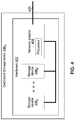
- FIG. 4 illustrates various example configurations of a dedicated storage node in accordance with aspects of this disclosure.
- the example dedicated storage node 106 m comprises hardware 402 which, in turn, comprises a network adaptor 408 and at least one storage device 306 (indexed by integers from 1 to Z, for Z ⁇ 1). Each storage device 306 z may be the same as storage device 306 w described above with reference to FIG. 3 .
- the network adaptor 408 may comprise circuitry (e.g., an arm based processor) and a bus (e.g., SATA, PCIe, or other) adaptor operable to access (read, write, etc.) storage device(s) 406 1 -406 z in response to commands received over network link 426.
- a bus e.g., SATA, PCIe, or other
- the commands may adhere to a standard protocol.
- the dedicated storage node 106 m may support RDMA based protocols (e.g., Infiniband, RoCE, iWARP etc.) and/or protocols which ride on RDMA (e.g., NVMe over fabrics).
- tier 1 memory is distributed across one or more storage devices 306 (e.g., FLASH devices) residing in one or more storage node(s) 106 and/or one or more DESS node(s) 120. Data written to the DESS is initially stored to Tier 1 memory and then migrated to one or more other tier(s) as dictated by data migration policies, which may be user-defined and/or adaptive based on machine learning.
- storage devices 306 e.g., FLASH devices
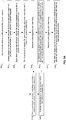
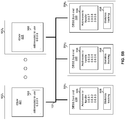
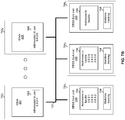
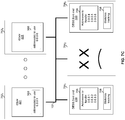
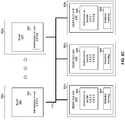
- FIG. 5A is a flowchart of an example process for load balancing the handling of file system requests in accordance with aspects of this disclosure. The process is described with reference to FIGS. 5B-5D which depict a plurality (three in the non-limiting example shown) of computing devices 554 which operate as file system servers to server file system requests transmitted over the interconnect 101 by a plurality (nine in the non-limiting example shown) of computing devices 552 which operate as file system clients.
- Each of the computing devices 552 comprises an instance of driver 221.
- Each instance of driver 221 is configured to send file system requests (e.g., transmitted in accordance with NFS and/or SMB standards) to the network address (an IPv4 address in the non-limiting example shown) stored in a its respective memory address 560.
- Each of the computing devices 554 comprises an instance of DESS front end 220.
- Each instance of the DESS front end 220 is configured to serve any file systems requests received via interconnect 101 that are destined for the network addresses stored in its respective memory location 556. Also, each instance of the DESS front end 220 is configured to track statistics, in a respective memory location 558, regarding file systems requests that it serves.
- the statistics may comprise, for example: count of file system requests destined, during a determined time interval, to each of the network addresses in its memory location 556, count of bits (e.g., total and/or average) sent, during a determined time interval, to and/or from each of the network addresses in its memory location 556, amount of time (e.g., total and/or average milliseconds) to serve received file system requests, and/or the like.
- FIG. 5B depicts the network before a failure condition
- FIG. 5C depicts the network during the failure condition
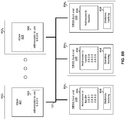
- FIG. 5D depicts the network after the failure condition.
- the process begins in block 502 in which a set of network addresses is allocated for use as the destination addresses of file system requests.
- the allocated addresses are IPv4 addresses 0.0.0.1 to 0.0.0.9.
- IPv4 addresses 0.0.0.1 to 0.0.0.3 are allocated to device 554 1
- IPv4 addresses 0.0.0.4 to 0.0.0.6 are allocated to device 554 2
- IPv4 addresses 0.0.0.7 to 0.0.0.9 are allocated to device 554 3 .
- each client device that will issue network file system requests is assigned or selects one or more IP addresses from the set.
- the assignment may, for example, comprise manual configuration by a network administrator or automatic configuration by the devices themselves and/or a device operating as a management entity (e.g., a router to which the devices 552 1 -552 9 are connected).
- a management entity e.g., a router to which the devices 552 1 -552 9 are connected.
- each of devices 552 1 -552 9 is assigned a respective one of IPv4 addresses 0.0.0.1 to 0.0.0.9.
- the client devices transmit file system requests using their respective one or more of the IP addresses.
- each of devices 552 1 -552 3 transmits file system requests to a respective one of addresses 0.0.0.1-0.0.0.3 and the requests are served by device 554 1
- each of devices 552 4 -552 6 transmits file system requests to a respective one of addresses 0.0.0.4-0.0.0.6 and the requests are served by device 554 2
- each of devices 552 7 -552 9 transmits file system requests to a respective one of addresses 0.0.0.7-0.0.0.9 and the requests are served by device 554 3 .
- Each of the devices 554 1 -554 3 maintains statistics regarding the files system requests that it serves.
- a network event occurs which triggers load balancing.
- Example network events include: loss of a device (e.g., due to failure or simple removal from the network), a recovery of a previously failed device, an addition of a device to the network, a lapse of a determined time interval, a detection of an imbalance in the load imposed on the devices 554 by file system requests, number of file requests per time interval going above or falling below a threshold, and/or the like.
- the network event is a failure of device 554 2 .
- the statistics regarding the network addresses are used to distribute the failed server's subset of the network addresses among the remaining servers in an effort to evenly distribute the failed server's load among the remaining servers.
- the statistics indicate the load on IP address 0.0.0.4 is larger than the load on IP addresses 0.0.0.5 and 0.0.0.6 (i.e., client 552 4 is generating more file system traffic than clients 552 5 and 552 6 ). Accordingly, to redistribute the load as evenly as possible, 0.0.0.4 is reassigned to device 554 1 and addresses 0.0.0.5 and 0.0.06 are reassigned to device 554 3 .
- the fact that device 554 2 served multiple network addresses enables redistributing its load among multiple other devices 554 in manner that is transparent to the client devices 552 1 -552 9 .
- a network event occurs which triggers load balancing.
- the event is the recovery of device 554 2 such that it is ready to again begin serving file system requests.
- the statistics regarding the network addresses are used to offload some of the network addresses to the recovered or newly added server in an effort to evenly distribute the load of file system requests among the servers.
- the statistics indicate that the most even distribution is to reassign 0.0.0.4 and 0.0.0.7 to device 554 2 .
- the reassignment may comprise, for example, ranking the loads on all the IP addresses and then using the ranking to assign network addresses in an effort to distribute the load as evenly as possible.
- the ranking may be 0.0.0.4 > 0.0.0.1 > 0.0.0.8 > 0.0.0.2 > 0.0.0.9 > 0.0.0.3 > 0.0.0.5 > 0.0.0.6 > 0.0.0.7.
- the different servers may be assigned different numbers of network addresses in order to more uniformly distribute the load.
- the (re)assignment may comprise assigning a weight to the load on each network address and such that the total load assigned to each server is as uniform as possible.
- the normalized loads may be as shown in the following table: Ranked IP address Normalized load 0.0.0.4 4 0.0.0.1 3.5 0.0.0.8 3.2 0.0.0.2 2.1 0.0.0.9 2 0.0.0.3 1.8 0.0.0.5 1.3 0.0.0.6 1.1 0.0.0.7 1
- this may result in an assignment of 0.0.0.4, 0.0.0.3, 0.0.0.7 (total normalized load of 6.8) to a first one of the servers, 0.0.0.8, 0.0.0.2, 0.0.0.5 (total normalized load of 6.6) to a second one of the servers, and 0.0.0.1, 0.0.0.9, 0.0.0.6 (total normalized load of 6.6) to a third one of the servers.
- the (re)assignment of network addresses may take into account the available resources of the various servers. That is, a first server may have more available resources (e.g., processor cycles, network bandwidth, memory, etc.) than a second server and thus the first server may be assigned a larger percentage of the file system request load than the second server.
- available resources e.g., processor cycles, network bandwidth, memory, etc.
- the first may be assigned a total normalized load close to 10 (e.g., 0.0.0.4, 0.0.0.1, 0.0.0.6, 0.0.0.7 for a total of 9.9) while each of the other two is assigned a load close to 5 (e.g., 0.0.0.8, 0.0.0.3 for a total of 5, and 0.0.0.2, 0.0.0.9, 0.0.0.y for a total of 5.1).
- a total normalized load close to 10 e.g., 0.0.0.4, 0.0.0.1, 0.0.0.6, 0.0.0.7 for a total of 9.9
- each of the other two is assigned a load close to 5 (e.g., 0.0.0.8, 0.0.0.3 for a total of 5, and 0.0.0.2, 0.0.0.9, 0.0.0.y for a total of 5.1).
- blocks 518 and 520 which may, for example, run continually or periodically as a background process.
- each server tracks statistics regarding each IP address of its subset of the IP addresses.
- the statistics generated in block 518 are distributed among the servers and/or provided to a coordinator device (e.g., one of the servers elected as coordinator through some voting process or other selection algorithm) such that the statistics of all the servers are available for performing reassignment of network addresses.
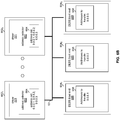
- FIG. 6A is a flowchart of an example process for load balancing the handling of file system requests in accordance with aspects of this disclosure. The process is described with reference to FIGS. 6B-6C which depict a plurality (three in the non-limiting example shown) of computing devices 654 which operate as file system servers to server file system requests transmitted over the interconnect 101 by a plurality (nine in the non-limiting example shown) of computing devices 652 which operate as file system clients.
- FIG. 6B illustrates the network before and after a device failure and FIG. 6C shows the network during a failure condition.
- Each of the computing devices 652 comprises an instance of driver 221.
- Each instance of driver 221 is configured to send file system requests (e.g., transmitted in accordance with NFS and/or SMB standards) to a network address selected by its address selector circuitry 662.
- the address selector 662 may select from the set of addresses in its memory 664.
- the address selector 662 may sequentially cycle through the set of addresses in its memory 664, or may randomly select from among the set of addresses in its memory 664 such that requests are uniformly distributed among the network addresses.
- a new address may, for example, be selected periodically, prior to each file system request to be sent, every Nth (N being an integer) file system request, and/or the like.
- Each of the computing devices 654 comprises an instance of DESS front end 220.
- Each instance of the DESS front end 220 is configured to serve any file systems requests received via interconnect 101 that are destined for the network addresses stored in its respective memory location 556.
- each of a plurality of computing devices that will serve file system requests is assigned a network addresses.
- device 654 1 is assigned to handle file system requests destined for 0.0.0.1
- device 654 2 is assigned to handle file system requests destined for 0.0.0.2
- device 654 3 is assigned to handle file system requests destined for 0.0.0.3.
- the client devices begin transmitting file system requests onto the interconnect 101 with the destinations addresses of the requests being uniformly distributed among the network addresses in the set of network addresses.
- Blocks 608 and 610 represent one possible sequence of events after block 606 and blocks 612-616 represent another possible sequence of events after block 606.
- one of the devices serving the file system requests fails.
- the device 654 2 fails.
- the network address assigned to the failed device is removed from (or flagged as "do not use” in) the set of network addresses from which the address selectors 662 are selecting addresses for file system requests.
- IPv4 address 0.0.0.2 associated with failed device 654 2 is removed from each of the memory locations 664.
- the failed device recovers or a new device for serving file system requests is added.
- server 654 2 recovers and is ready to again begin serving file system requests.
- the recovered device is assigned a network address.
- the device 654 2 is again assigned 0.0.0.2.
- the network address assigned to the recovered or newly-added computing device is added to the set from which the address selectors 662 are selecting addresses for file system requests.
- IPv4 address 0.0.0.2 associated with new or recovered device 654 2 is added to the set in each of the memory locations 664.
- FIG. 7A is a flowchart of an example process for handling of file system requests in accordance with aspects of this disclosure.
- one or more first devices are servicing file system requests while one or more second devices are in standby.
- devices 754 1 and 754 2 are servicing file system requests while 754 3 is in standby.
- one of the first devices fails.
- device 754 2 fails.
- one or more of the second devices come out of standby to handle the file system requests previously handled by the failed device.
- the device 754 3 comes out of standby and takes over the IP addresses that were being handled by the failed device 754 2 .
- rebalancing triggered as a result of, for example, the device 754 3 having different available resources than the device 754 2 may, for example, result in some of the addresses being shifted from device 754 1 to 754 3 , or visa-versa. Where devices 754 2 and 754 3 are identical, for example, such rebalancing may be unnecessary.
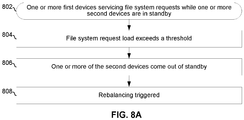
- FIG. 8A is a flowchart of an example process for load balancing the handling of file system requests in accordance with aspects of this disclosure.
- one or more first devices are servicing file system requests while one or more second devices are in standby.
- devices 854 1 and 854 2 are servicing file system requests while 854 3 is in standby.
- the file system request load on the devices e.g., measured in terms of number of file system requests per time interval, number of currently pending file system requests, average time for one or more of the devices 854 to service a file system request, and/or the like
- exceeds a threshold e.g., measured in terms of number of file system requests per time interval, number of currently pending file system requests, average time for one or more of the devices 854 to service a file system request, and/or the like
- the second devices come out of standby. In the example of FIGS.
- the device 854 3 comes out of standby.
- rebalancing triggered and the network addresses are redistributed among the devices including the device(s) which came out of standby.
- the load balancing results in device 854 1 handling addresses 0.0.0.2 and 0.0.0.3, device 854 2 handling addresses 0.0.0.5 and 0.0.0.6, and device 854 3 handling address 0.0.0.1 and 0.0.0.4.
- a system comprises a plurality of computing devices (e.g., 552 1 -552 9 , 554 1 -554 3 , and/or one or more devices (e.g., router) of interconnect 101) and control circuitry (e.g., hardware 202 and associated software and/or firmware of one or more of the devices 554 1 -554 3 , and/or hardware and associated software and/or firmware of a device (e.g., router) of interconnect 101).
- computing devices e.g., 552 1 -552 9 , 554 1 -554 3 , and/or one or more devices (e.g., router) of interconnect 101
- control circuitry e.g., hardware 202 and associated software and/or firmware of one or more of the devices 554 1 -554 3 , and/or hardware and associated software and/or firmware of a device (e.g., router) of interconnect 101.
- the control circuitry is operable to: assign, prior to a network event, a first plurality of IP addresses of a set of IP addresses to a first server of the plurality of computing devices such that file system requests destined to any of the first plurality of IP addresses are to be served by the first server; assign, prior to the network event, a second plurality of IP addresses of the set of IP addresses to a second server of the plurality of computing devices such that file system requests destined to any of the second plurality of IP addresses are to be served by the second server; and assign, prior to the network event, a third plurality of IP addresses of the set of IP addresses to a third server of the plurality of computing devices such that file system requests destined to any of the third plurality of the IP addresses are to be served by the third server.
- the control circuitry is operable to maintain statistics regarding file system requests sent to each IP address of the set of IP addresses.
- the control circuitry is operable to determine, based on the statistics, a first portion of the first plurality of IP addresses to reassign to the second server and a second portion of the first plurality of IP addresses to reassign to the third server.
- the control circuitry is operable to reassign, subsequent to the network event, the first portion of the first plurality of IP addresses to the second server such that file system requests destined to any of the first portion of the first plurality of IP addresses are to be served by the second server.
- the control circuitry is operable to reassign, subsequent to the network event, a second portion of the first plurality of IP addresses to the third server such that file system requests destined to any of the second portion of the first plurality of IP addresses are to be served by the third server, wherein the reassignment is based on the statistics.
- a system comprises a plurality of computing devices (e.g., 552 1 -552 9 , 554 1 -554 3 , and/or one or more devices (e.g., router) of interconnect 101) and control circuitry (e.g., hardware 202 and associated software and/or firmware of one or more of the devices 554 1 -554 3 , and/or hardware and associated software and/or firmware of a device (e.g., router) of interconnect 101).
- computing devices e.g., 552 1 -552 9 , 554 1 -554 3 , and/or one or more devices (e.g., router) of interconnect 101
- control circuitry e.g., hardware 202 and associated software and/or firmware of one or more of the devices 554 1 -554 3 , and/or hardware and associated software and/or firmware of a device (e.g., router) of interconnect 101.
- the control circuitry is operable to assign a first of the computing devices (e.g., 554 1 ) to serve file system requests destined for any of a first plurality of network addresses; assign a second of the computing devices (e.g., 554 2 ) to serve file system requests destined for any of a second plurality of network addresses; maintain statistics regarding file system requests sent to each of the first plurality of network addresses and the second plurality of network addresses; and reassign, based on the statistics, the first of the computing devices to serve file system requests destined for a selected one of the second plurality of network addresses.
- a first of the computing devices e.g., 554 1
- assign a second of the computing devices e.g., 554 2
- maintain statistics regarding file system requests sent to each of the first plurality of network addresses and the second plurality of network addresses and reassign, based on the statistics, the first of the computing devices to serve file system requests destined for a selected one of the second plurality of network addresses.
- the plurality of computing devices may comprise a plurality of third computing devices (e.g., 552 1 -552 9 ), each of which is assigned to send its file system requests to a respective one of the first plurality of network addresses and the second plurality of network addresses.
- the plurality of computing devices may comprise a plurality of third computing devices (e.g., 552 1 -552 9 ) operable to generate a plurality of file system requests, wherein destination network addresses of the plurality of file system requests are uniformly distributed among the first plurality of network addresses.
- the present methods and systems may be realized in hardware, software, or a combination of hardware and software.
- the present methods and/or systems may be realized in a centralized fashion in at least one computing system, or in a distributed fashion where different elements are spread across several interconnected computing systems. Any kind of computing system or other apparatus adapted for carrying out the methods described herein is suited.
- a typical combination of hardware and software may be a general-purpose computing system with a program or other code that, when being loaded and executed, controls the computing system such that it carries out the methods described herein.
- Another typical implementation may comprise an application specific integrated circuit or chip.
- Some implementations may comprise a non-transitory machine-readable medium (e.g., FLASH drive(s), optical disk(s), magnetic storage disk(s), and/or the like) having stored thereon one or more lines of code executable by a computing device, thereby configuring the machine to be configured to implement one or more aspects of the virtual file system described herein.
- a non-transitory machine-readable medium e.g., FLASH drive(s), optical disk(s), magnetic storage disk(s), and/or the like
- circuits and circuitry refer to physical electronic components (i.e. hardware) and any software and/or firmware ("code") which may configure the hardware, be executed by the hardware, and or otherwise be associated with the hardware.
- code software and/or firmware
- a particular processor and memory may comprise first "circuitry” when executing a first one or more lines of code and may comprise second "circuitry” when executing a second one or more lines of code.
- and/or means any one or more of the items in the list joined by “and/or”.
- x and/or y means any element of the three-element set ⁇ (x), (y), (x, y) ⁇ .
- x and/or y means “one or both of x and y”.
- x, y, and/or z means any element of the seven-element set ⁇ (x), (y), (z), (x, y), (x, z), (y, z), (x, y, z) ⁇ .
- x, y and/or z means “one or more of x, y and z”.
- exemplary means serving as a non-limiting example, instance, or illustration.
- the terms "e.g.,” and “for example” set off lists of one or more non-limiting examples, instances, or illustrations.
- circuitry is "operable" to perform a function whenever the circuitry comprises the necessary hardware and code (if any is necessary) to perform the function, regardless of whether performance of the function is disabled or not enabled (e.g., by a user-configurable setting, factory trim, etc.).
Landscapes
- Engineering & Computer Science (AREA)
- Computer Networks & Wireless Communication (AREA)
- Signal Processing (AREA)
- General Engineering & Computer Science (AREA)
- Theoretical Computer Science (AREA)
- Environmental & Geological Engineering (AREA)
- Computer Hardware Design (AREA)
- Data Mining & Analysis (AREA)
- General Physics & Mathematics (AREA)
- Computer Security & Cryptography (AREA)
- Physics & Mathematics (AREA)
- Databases & Information Systems (AREA)
- Data Exchanges In Wide-Area Networks (AREA)
- Information Retrieval, Db Structures And Fs Structures Therefor (AREA)
- Computer And Data Communications (AREA)
Claims (15)
- Système comprenant :une pluralité de dispositifs informatiques (5521-5529, 5541-5543) ; etun montage de circuits de commande (202), dans lequel ledit montage de circuits de commande est exploitable de manière à :maintenir (518) des statistiques concernant des demandes de système de fichiers envoyées à chaque adresse IP d'un ensemble d'adresses IP ;affecter (504), avant un événement de réseau, une première pluralité d'adresses IP dudit ensemble d'adresses IP à un premier serveur de ladite pluralité de dispositifs informatiques, de sorte que celles desdites demandes de système de fichiers qui sont destinées à l'une quelconque de ladite première pluralité d'adresses IP doivent être desservies par ledit premier serveur ;affecter (504), avant ledit événement de réseau, une deuxième pluralité d'adresses IP dudit ensemble d'adresses IP, à un deuxième serveur de ladite pluralité de dispositifs informatiques, de sorte que celles desdites demandes de système de fichiers qui sont destinées à l'une quelconque de ladite deuxième pluralité d'adresses IP doivent être desservies par ledit deuxième serveur ; etaffecter (504), avant ledit événement de réseau, une troisième pluralité d'adresses IP dudit ensemble d'adresses IP, à un troisième serveur de ladite pluralité de dispositifs informatiques, de sorte que celles desdites demandes de système de fichiers qui sont destinées à l'une quelconque de ladite troisième pluralité desdites adresses IP doivent être desservies par ledit troisième serveur ;déterminer (516), sur la base desdites statistiques, une première partie de ladite première pluralité d'adresses IP à réaffecter audit deuxième serveur, et une seconde partie de ladite première pluralité d'adresses IP à réaffecter audit troisième serveur ;réaffecter (516), subséquemment audit événement de réseau, ladite première partie de ladite première pluralité d'adresses IP audit deuxième serveur, de sorte que celles desdites demandes de système de fichiers qui sont destinées à une quelconque adresse de ladite première partie de ladite première pluralité d'adresses IP, doivent être desservies par ledit deuxième serveur ; etréaffecter (516), subséquemment audit événement de réseau, une seconde partie de ladite première pluralité d'adresses IP audit troisième serveur, de sorte que celles desdites demandes de système de fichiers qui sont destinées à une adresse quelconque de ladite seconde partie de ladite première pluralité d'adresses IP doivent être desservies par ledit troisième serveur, dans lequel ladite réaffectation est basée sur lesdites statistiques.
- Système selon la revendication 1, dans lequel ledit événement de réseau :(i) est une défaillance dudit premier serveur ;
et/ou(ii) est l'expiration d'un intervalle de temps déterminé ;
et/ou(iii) est la détection d'un déséquilibre de charge entre ledit premier serveur, ledit deuxième serveur et ledit troisième serveur. - Système selon la revendication 1, dans lequel lesdites statistiques comprennent :(i) pour chaque adresse IP dudit ensemble d'adresses IP, un comptage du nombre desdites demandes de système de fichiers envoyées à ladite adresse IP ;
et/ou(ii) pour chaque adresse IP dudit ensemble d'adresses IP, un comptage du nombre de bits envoyés vers ou depuis ladite adresse IP ; et/ou(iii) pour chaque adresse IP dudit ensemble d'adresses IP, une indication d'une durée nécessaire pour desservir celles desdites demandes de système de fichiers qui sont envoyées à ladite adresse IP. - Système selon la revendication 1, dans lequel ladite détermination est basée sur un objectif de répartition uniforme, entre ledit deuxième serveur et ledit troisième serveur, de celles desdites demandes de système de fichiers qui seront envoyées à ladite première pluralité d'adresses IP.
- Système selon la revendication 1, dans lequel lesdites demandes de système de fichiers adhèrent au protocole de système de fichiers de réseau (NFS, Network File System) et/ou au protocole de bloc de messages de serveur (SMB, Server Message Block).
- Système comprenant :une pluralité de dispositifs informatiques (5521-5529, 5541-5543) ; etun montage de circuits de commande (202), dans lequel ledit montage de circuits de commande est exploitable de manière à :affecter (504) un premier desdits dispositifs informatiques pour desservir des demandes de système de fichiers destinées à l'une quelconque d'une première pluralité d'adresses de réseau ;affecter (504) un deuxième desdits dispositifs informatiques pour desservir des demandes de système de fichiers destinées à l'une quelconque d'une seconde pluralité d'adresses de réseau ;maintenir (518) des statistiques concernant des demandes de système de fichiers envoyées à chaque adresse de ladite première pluralité d'adresses de réseau et de ladite seconde pluralité d'adresses de réseau ; etréaffecter (516), sur la base desdites statistiques, ledit premier desdits dispositifs informatiques pour desservir des demandes de système de fichiers destinées à une adresse sélectionnée parmi ladite seconde pluralité d'adresses de réseau.
- Système selon la revendication 6, dans lequel ladite réaffectation est en réponse à un événement de réseau.
- Système selon la revendication 7, dans lequel ledit événement de réseau :(i) est une défaillance dudit premier desdits dispositifs informatiques ;
et/ou(ii) est l'expiration d'un intervalle de temps déterminé ;
et/ou(iii) est la détection d'un déséquilibre de charge entre ledit premier desdits dispositifs informatiques et ledit second desdits dispositifs informatiques. - Système selon la revendication 6, dans lequel lesdites statistiques comprennent :(i) pour chaque adresse de réseau de ladite première pluralité d'adresses de réseau et de ladite seconde pluralité d'adresses de réseau, un comptage du nombre de demandes de système de fichiers envoyées à ladite adresse de réseau ;
et/ou(ii) pour chaque adresse de réseau de ladite première pluralité d'adresses de réseau et de ladite seconde pluralité d'adresses de réseau, un comptage du nombre de bits envoyés vers ou depuis ladite adresse de réseau ;
et/ou(iii) pour chaque adresse de réseau de ladite première pluralité d'adresses de réseau et de ladite seconde pluralité d'adresses de réseau, une indication d'une durée nécessaire pour desservir des demandes de système de fichiers envoyées à ladite adresse de réseau. - Système selon la revendication 6, dans lequel ladite réaffectation est basée sur un objectif de répartition uniforme, entre ledit deuxième serveur et ledit troisième serveur, de futures demandes de système de fichiers à ladite première pluralité d'adresses de réseau.
- Système selon la revendication 6, dans lequel ladite pluralité de dispositifs informatiques comprend :(i) une pluralité de trois dispositifs informatiques, dont chacun est affecté pour envoyer ses demandes de système de fichiers à une adresse respective parmi ladite première pluralité d'adresses de réseau et ladite seconde pluralité d'adresses de réseau ;
et/ou(ii) un troisième dispositif informatique exploitable de manière à générer une pluralité de demandes de système de fichiers, dans lequel des adresses de réseau de destination de la pluralité de demandes de système de fichiers sont uniformément réparties entre les adresses de ladite première pluralité d'adresses de réseau. - Système selon la revendication 6, dans lequel lesdites demandes de système de fichiers adhèrent au protocole de système de fichiers de réseau (NFS, Network File System) et/ou au protocole de bloc de messages de serveur (SMB, Server Message Block).
- Système selon la revendication 1, ou système selon la revendication 6, dans lequel ledit montage de circuits de commande comprend un ou plusieurs processeurs et/ou un ou plusieurs adaptateurs de réseau d'un ou plusieurs dispositifs de ladite pluralité de dispositifs informatiques.
- Système selon la revendication 6, dans lequel ledit montage de circuits de commande est exploitable de manière à :détecter un événement de réseau ; eten réponse audit événement de réseau, déclencher un troisième dispositif de ladite pluralité de dispositifs informatiques afin qu'il sorte d'un mode de veille et qu'il prenne en charge la desserte de demandes de système de fichiers destinées à une ou plusieurs adresses sélectionnées de ladite première pluralité d'adresses de réseau et/ou à une ou plusieurs adresses sélectionnées de ladite seconde pluralité d'adresses de réseau.
- Système selon la revendication 14, dans lequel ledit événement de réseau :(i) est une défaillance d'un dispositif ou des deux dispositifs parmi ledit premier dispositif de ladite pluralité de dispositifs informatiques et ledit deuxième dispositif de ladite pluralité de dispositifs informatiques ;
et/ou(ii) est une charge de demandes de système de fichiers sur l'un ou les deux dispositifs dudit premier dispositif de ladite pluralité de dispositifs informatiques et dudit second dispositif de ladite pluralité de dispositifs informatiques dépassant un seuil déterminé.
Priority Applications (2)
| Application Number | Priority Date | Filing Date | Title |
|---|---|---|---|
| EP20217036.1A EP3876501B1 (fr) | 2015-11-11 | 2016-09-02 | Accès à un fichier de réseau ayant subi un équilibrage de charge |
| EP23214363.6A EP4340329A3 (fr) | 2015-11-11 | 2016-09-02 | Accès à un fichier de réseau équilibré en charge |
Applications Claiming Priority (2)
| Application Number | Priority Date | Filing Date | Title |
|---|---|---|---|
| US14/938,468 US9699244B2 (en) | 2015-11-11 | 2015-11-11 | Load balanced network file accesses |
| PCT/IB2016/001357 WO2017081526A1 (fr) | 2015-11-11 | 2016-09-02 | Accès à un fichier de réseau ayant subi un équilibrage de charge |
Related Child Applications (2)
| Application Number | Title | Priority Date | Filing Date |
|---|---|---|---|
| EP20217036.1A Division EP3876501B1 (fr) | 2015-11-11 | 2016-09-02 | Accès à un fichier de réseau ayant subi un équilibrage de charge |
| EP23214363.6A Division EP4340329A3 (fr) | 2015-11-11 | 2016-09-02 | Accès à un fichier de réseau équilibré en charge |
Publications (3)
| Publication Number | Publication Date |
|---|---|
| EP3375171A1 EP3375171A1 (fr) | 2018-09-19 |
| EP3375171A4 EP3375171A4 (fr) | 2019-04-24 |
| EP3375171B1 true EP3375171B1 (fr) | 2021-01-20 |
Family
ID=58664281
Family Applications (3)
| Application Number | Title | Priority Date | Filing Date |
|---|---|---|---|
| EP16863737.9A Active EP3375171B1 (fr) | 2015-11-11 | 2016-09-02 | Accès à un fichier de réseau ayant subi un équilibrage de charge |
| EP23214363.6A Pending EP4340329A3 (fr) | 2015-11-11 | 2016-09-02 | Accès à un fichier de réseau équilibré en charge |
| EP20217036.1A Active EP3876501B1 (fr) | 2015-11-11 | 2016-09-02 | Accès à un fichier de réseau ayant subi un équilibrage de charge |
Family Applications After (2)
| Application Number | Title | Priority Date | Filing Date |
|---|---|---|---|
| EP23214363.6A Pending EP4340329A3 (fr) | 2015-11-11 | 2016-09-02 | Accès à un fichier de réseau équilibré en charge |
| EP20217036.1A Active EP3876501B1 (fr) | 2015-11-11 | 2016-09-02 | Accès à un fichier de réseau ayant subi un équilibrage de charge |
Country Status (4)
| Country | Link |
|---|---|
| US (6) | US9699244B2 (fr) |
| EP (3) | EP3375171B1 (fr) |
| CN (1) | CN108463988B (fr) |
| WO (1) | WO2017081526A1 (fr) |
Families Citing this family (44)
| Publication number | Priority date | Publication date | Assignee | Title |
|---|---|---|---|---|
| EP3140734B1 (fr) | 2014-05-09 | 2020-04-08 | Nutanix, Inc. | Mécanisme pour fournir un accès externe à un environnement de virtualisation en réseau sécurisé |
| US9699244B2 (en) | 2015-11-11 | 2017-07-04 | Weka.IO Ltd. | Load balanced network file accesses |
| US10095506B2 (en) | 2016-02-12 | 2018-10-09 | Nutanix, Inc. | Virtualized file server data sharing |
| US11218418B2 (en) | 2016-05-20 | 2022-01-04 | Nutanix, Inc. | Scalable leadership election in a multi-processing computing environment |
| US10440620B2 (en) | 2016-07-22 | 2019-10-08 | Rockwell Automation Technologies, Inc. | Systems and methods for bidirectional network geography delivery |
| US10108216B2 (en) | 2016-07-22 | 2018-10-23 | Rockwell Automation Technologies, Inc. | Power tap with adjustable configuration |
| US10218699B2 (en) | 2016-07-22 | 2019-02-26 | Rockwell Automation Technologies, Inc. | Systems and methods for adding a non-inherent component to a device key of a networked device |
| US10154006B2 (en) * | 2016-07-22 | 2018-12-11 | Rockwell Automation Technologies, Inc. | Systems, methods and apparatus for supporting multiple network addressing modes |
| US10108238B2 (en) | 2016-07-22 | 2018-10-23 | Rockwell Automation Technologies, Inc. | Intelligent power tap for providing power and communicating in industrial automation applications |
| US10126799B2 (en) | 2016-07-22 | 2018-11-13 | Rockwell Automation Technologies, Inc. | Intelligent power tap with zone control and safety zone control |
| US10824455B2 (en) | 2016-12-02 | 2020-11-03 | Nutanix, Inc. | Virtualized server systems and methods including load balancing for virtualized file servers |
| US11562034B2 (en) | 2016-12-02 | 2023-01-24 | Nutanix, Inc. | Transparent referrals for distributed file servers |
| US10728090B2 (en) | 2016-12-02 | 2020-07-28 | Nutanix, Inc. | Configuring network segmentation for a virtualization environment |
| US11568073B2 (en) | 2016-12-02 | 2023-01-31 | Nutanix, Inc. | Handling permissions for virtualized file servers |
| US11294777B2 (en) | 2016-12-05 | 2022-04-05 | Nutanix, Inc. | Disaster recovery for distributed file servers, including metadata fixers |
| US11281484B2 (en) | 2016-12-06 | 2022-03-22 | Nutanix, Inc. | Virtualized server systems and methods including scaling of file system virtual machines |
| US11288239B2 (en) | 2016-12-06 | 2022-03-29 | Nutanix, Inc. | Cloning virtualized file servers |
| US10356048B2 (en) * | 2017-03-17 | 2019-07-16 | Verizon Patent And Licensing Inc. | Container deployment for a network |
| US10728116B1 (en) * | 2017-11-03 | 2020-07-28 | EMC IP Holding Company LLC | Intelligent resource matching for request artifacts |
| CN107872402B (zh) * | 2017-11-15 | 2021-04-09 | 北京奇艺世纪科技有限公司 | 全局流量调度的方法、装置及电子设备 |
| US11086826B2 (en) | 2018-04-30 | 2021-08-10 | Nutanix, Inc. | Virtualized server systems and methods including domain joining techniques |
| US11042661B2 (en) * | 2018-06-08 | 2021-06-22 | Weka.IO Ltd. | Encryption for a distributed filesystem |
| US11194680B2 (en) | 2018-07-20 | 2021-12-07 | Nutanix, Inc. | Two node clusters recovery on a failure |
| CN109039764B (zh) * | 2018-08-28 | 2021-07-20 | 郑州云海信息技术有限公司 | 一种分布式存储系统的网络参数配置方法 |
| US11770447B2 (en) | 2018-10-31 | 2023-09-26 | Nutanix, Inc. | Managing high-availability file servers |
| CN111124657B (zh) * | 2018-10-31 | 2024-03-08 | 北京金山云网络技术有限公司 | 资源管理方法、装置、电子设备及存储介质 |
| US11245750B2 (en) | 2019-02-16 | 2022-02-08 | International Business Machines Corporation | File server load balancing |
| US12541431B2 (en) | 2019-12-31 | 2026-02-03 | Nutanix, Inc. | Parallel change file tracking in a distributed file server virtual machine (FSVM) architecture |
| US11768809B2 (en) | 2020-05-08 | 2023-09-26 | Nutanix, Inc. | Managing incremental snapshots for fast leader node bring-up |
| US12248435B2 (en) | 2021-03-31 | 2025-03-11 | Nutanix, Inc. | File analytics systems and methods |
| US12131192B2 (en) | 2021-03-18 | 2024-10-29 | Nutanix, Inc. | Scope-based distributed lock infrastructure for virtualized file server |
| US12197398B2 (en) | 2021-03-31 | 2025-01-14 | Nutanix, Inc. | Virtualized file servers and methods to persistently store file system event data |
| US12242455B2 (en) | 2021-03-31 | 2025-03-04 | Nutanix, Inc. | File analytics systems and methods including receiving and processing file system event data in order |
| US12367108B2 (en) | 2021-03-31 | 2025-07-22 | Nutanix, Inc. | File analytics systems and methods including retrieving metadata from file system snapshots |
| US12248434B2 (en) | 2021-03-31 | 2025-03-11 | Nutanix, Inc. | File analytics systems including examples providing metrics adjusted for application operation |
| US12117972B2 (en) | 2021-08-19 | 2024-10-15 | Nutanix, Inc. | File server managers and systems for managing virtualized file servers |
| US20230066137A1 (en) | 2021-08-19 | 2023-03-02 | Nutanix, Inc. | User interfaces for disaster recovery of distributed file servers |
| US12153690B2 (en) | 2022-01-24 | 2024-11-26 | Nutanix, Inc. | Consistent access control lists across file servers for local users in a distributed file server environment |
| US12182264B2 (en) | 2022-03-11 | 2024-12-31 | Nutanix, Inc. | Malicious activity detection, validation, and remediation in virtualized file servers |
| US12189499B2 (en) | 2022-07-29 | 2025-01-07 | Nutanix, Inc. | Self-service restore (SSR) snapshot replication with share-level file system disaster recovery on virtualized file servers |
| US12572503B2 (en) | 2022-08-26 | 2026-03-10 | Nutanix, Inc. | Application level to share level replication policy transition for file server disaster recovery systems |
| US12517874B2 (en) | 2022-09-30 | 2026-01-06 | Nutanix, Inc. | Data analytics systems for file systems including tiering |
| CN116527658B (zh) * | 2023-05-18 | 2025-11-25 | 北京字跳网络技术有限公司 | 资源加载方法、装置、介质及电子设备 |
| US12461832B2 (en) | 2023-09-27 | 2025-11-04 | Nutanix, Inc. | Durable handle management for failover in distributed file servers |
Family Cites Families (20)
| Publication number | Priority date | Publication date | Assignee | Title |
|---|---|---|---|---|
| US6665702B1 (en) * | 1998-07-15 | 2003-12-16 | Radware Ltd. | Load balancing |
| US7657629B1 (en) * | 2000-09-26 | 2010-02-02 | Foundry Networks, Inc. | Global server load balancing |
| US7454500B1 (en) * | 2000-09-26 | 2008-11-18 | Foundry Networks, Inc. | Global server load balancing |
| US20020194324A1 (en) * | 2001-04-26 | 2002-12-19 | Aloke Guha | System for global and local data resource management for service guarantees |
| WO2003021395A2 (fr) * | 2001-09-05 | 2003-03-13 | Eli Abir | Procede et appareil pour systeme dynamique d'equilibre de charge cote client |
| US7124171B1 (en) * | 2002-05-23 | 2006-10-17 | Emc Corporation | In a networked computing cluster storage system and plurality of servers sharing files, in the event of server unavailability, transferring a floating IP network address from first server to second server to access area of data |
| US7574508B1 (en) * | 2002-08-07 | 2009-08-11 | Foundry Networks, Inc. | Canonical name (CNAME) handling for global server load balancing |
| US8578053B2 (en) * | 2002-12-05 | 2013-11-05 | Fujitsu Limited | NAS load balancing system |
| US7496651B1 (en) * | 2004-05-06 | 2009-02-24 | Foundry Networks, Inc. | Configurable geographic prefixes for global server load balancing |
| US7209967B2 (en) * | 2004-06-01 | 2007-04-24 | Hitachi, Ltd. | Dynamic load balancing of a storage system |
| US8364638B2 (en) * | 2005-09-15 | 2013-01-29 | Ca, Inc. | Automated filer technique for use in virtualized appliances and applications |
| WO2009088435A1 (fr) * | 2007-12-31 | 2009-07-16 | Netapp, Inc. | Système et procédé pour un équilibrage de charge de stockage automatique dans des environnements de serveurs virtuels |
| US8918475B2 (en) | 2009-04-02 | 2014-12-23 | Lely Patent N.V. | Method of and computer program for managing one or more agricultural devices |
| US8458287B2 (en) | 2009-07-31 | 2013-06-04 | Microsoft Corporation | Erasure coded storage aggregation in data centers |
| CN101778050A (zh) * | 2010-03-11 | 2010-07-14 | 浪潮(北京)电子信息产业有限公司 | 负载均衡方法、装置和系统 |
| US8751641B2 (en) * | 2011-09-15 | 2014-06-10 | International Business Machines Corporation | Optimizing clustered network attached storage (NAS) usage |
| US9813491B2 (en) * | 2011-10-20 | 2017-11-07 | Oracle International Corporation | Highly available network filer with automatic load balancing and performance adjustment |
| US9083709B2 (en) * | 2012-05-11 | 2015-07-14 | Cisco Technology, Inc. | Virtual internet protocol migration and load balancing |
| US9021099B2 (en) * | 2012-07-03 | 2015-04-28 | Box, Inc. | Load balancing secure FTP connections among multiple FTP servers |
| US9699244B2 (en) | 2015-11-11 | 2017-07-04 | Weka.IO Ltd. | Load balanced network file accesses |
-
2015
- 2015-11-11 US US14/938,468 patent/US9699244B2/en active Active
-
2016
- 2016-09-02 EP EP16863737.9A patent/EP3375171B1/fr active Active
- 2016-09-02 EP EP23214363.6A patent/EP4340329A3/fr active Pending
- 2016-09-02 CN CN201680078552.1A patent/CN108463988B/zh active Active
- 2016-09-02 EP EP20217036.1A patent/EP3876501B1/fr active Active
- 2016-09-02 WO PCT/IB2016/001357 patent/WO2017081526A1/fr not_active Ceased
-
2017
- 2017-02-08 US US15/427,510 patent/US9948705B2/en active Active
-
2018
- 2018-03-16 US US15/922,997 patent/US11108852B2/en active Active
-
2021
- 2021-08-16 US US17/402,834 patent/US11736561B2/en active Active
-
2023
- 2023-07-27 US US18/359,986 patent/US12267387B2/en active Active
-
2025
- 2025-02-21 US US19/059,586 patent/US20250193276A1/en active Pending
Non-Patent Citations (1)
| Title |
|---|
| None * |
Also Published As
| Publication number | Publication date |
|---|---|
| US20250193276A1 (en) | 2025-06-12 |
| EP3876501B1 (fr) | 2024-01-10 |
| EP4340329A2 (fr) | 2024-03-20 |
| US20180205787A1 (en) | 2018-07-19 |
| WO2017081526A1 (fr) | 2017-05-18 |
| US20170149874A1 (en) | 2017-05-25 |
| CN108463988A (zh) | 2018-08-28 |
| US9699244B2 (en) | 2017-07-04 |
| US20230379381A1 (en) | 2023-11-23 |
| EP3375171A4 (fr) | 2019-04-24 |
| EP3375171A1 (fr) | 2018-09-19 |
| CN108463988B (zh) | 2021-04-06 |
| US9948705B2 (en) | 2018-04-17 |
| US20210377337A1 (en) | 2021-12-02 |
| US11736561B2 (en) | 2023-08-22 |
| US11108852B2 (en) | 2021-08-31 |
| US12267387B2 (en) | 2025-04-01 |
| EP3876501A1 (fr) | 2021-09-08 |
| US20170134477A1 (en) | 2017-05-11 |
| EP4340329A3 (fr) | 2024-06-12 |
Similar Documents
| Publication | Publication Date | Title |
|---|---|---|
| US12267387B2 (en) | Load balanced network file accesses | |
| US11972107B2 (en) | Quality of service management in a distributed storage system | |
| KR102843602B1 (ko) | 저장 어드레스 결정을 위한 다중 레벨 해싱 함수를 갖는 객체 스토리지 시스템 | |
| CN113014611B (zh) | 一种负载均衡方法及相关设备 | |
| US9495238B2 (en) | Fractional reserve high availability using cloud command interception | |
| US20140105068A1 (en) | Methods for Zero Loss and Nonstop Packet Processing During System Software Upgrades | |
| US9641431B1 (en) | System and methods for utilization-based balancing of traffic to an information retrieval system | |
| CN112202918B (zh) | 长连接通信的负载调度方法、装置、设备及存储介质 | |
| CN110868435B (zh) | 一种裸金属服务器调度方法、装置及存储介质 | |
| US10530845B1 (en) | Shuffle sharded load balancing | |
| US20170285963A1 (en) | Methods for sharing nvm ssd across a cluster group and devices thereof | |
| Wang et al. | Approaches for resilience against cascading failures in cloud datacenters | |
| US20150365474A1 (en) | Computer-readable recording medium, task assignment method, and task assignment apparatus | |
| JP6272190B2 (ja) | 計算機システム、計算機、負荷分散方法及びそのプログラム | |
| US20160019090A1 (en) | Data processing control method, computer-readable recording medium, and data processing control device | |
| JP2017037492A (ja) | 分散処理プログラム、分散処理方法および分散処理装置 | |
| US20240160465A1 (en) | Orchestration model integration method in heterogeneous cluster environment | |
| CN107577425A (zh) | 一种数据迁移方法及装置 | |
| EP4170477A1 (fr) | Système de stockage électronique | |
| CN106506647A (zh) | 一种客户端具有数据备份装置的智慧社区云存储系统 | |
| CN105373451B (zh) | 一种虚拟机放置的方法及装置 | |
| CN112948201B (zh) | 一种自动化运维方法和系统 | |
| CN108234637A (zh) | 一种基于zookeeper实现负载均衡的方法和系统 | |
| CN120950223B (zh) | 服务器调度方法、系统、计算机程序产品、设备及介质 |
Legal Events
| Date | Code | Title | Description |
|---|---|---|---|
| STAA | Information on the status of an ep patent application or granted ep patent |
Free format text: STATUS: THE INTERNATIONAL PUBLICATION HAS BEEN MADE |
|
| PUAI | Public reference made under article 153(3) epc to a published international application that has entered the european phase |
Free format text: ORIGINAL CODE: 0009012 |
|
| STAA | Information on the status of an ep patent application or granted ep patent |
Free format text: STATUS: REQUEST FOR EXAMINATION WAS MADE |
|
| 17P | Request for examination filed |
Effective date: 20180508 |
|
| AK | Designated contracting states |
Kind code of ref document: A1 Designated state(s): AL AT BE BG CH CY CZ DE DK EE ES FI FR GB GR HR HU IE IS IT LI LT LU LV MC MK MT NL NO PL PT RO RS SE SI SK SM TR |
|
| AX | Request for extension of the european patent |
Extension state: BA ME |
|
| RIN1 | Information on inventor provided before grant (corrected) |
Inventor name: ZVIBEL, LIRAN Inventor name: PALMON, OMRI Inventor name: BEN-DAYAN, MAOR |
|
| DAV | Request for validation of the european patent (deleted) | ||
| DAX | Request for extension of the european patent (deleted) | ||
| A4 | Supplementary search report drawn up and despatched |
Effective date: 20190326 |
|
| RIC1 | Information provided on ipc code assigned before grant |
Ipc: H04L 29/08 20060101AFI20190320BHEP Ipc: G06F 16/10 20190101ALI20190320BHEP Ipc: H04L 29/12 20060101ALI20190320BHEP Ipc: H04L 29/14 20060101ALI20190320BHEP |
|
| GRAP | Despatch of communication of intention to grant a patent |
Free format text: ORIGINAL CODE: EPIDOSNIGR1 |
|
| STAA | Information on the status of an ep patent application or granted ep patent |
Free format text: STATUS: GRANT OF PATENT IS INTENDED |
|
| RIC1 | Information provided on ipc code assigned before grant |
Ipc: G06F 16/182 20190101ALI20200128BHEP Ipc: H04L 29/06 20060101AFI20200128BHEP |
|
| RIN1 | Information on inventor provided before grant (corrected) |
Inventor name: PALMON, OMRI Inventor name: BEN-DAYAN, MAOR Inventor name: ZVIBEL, LIRAN |
|
| INTG | Intention to grant announced |
Effective date: 20200219 |
|
| GRAJ | Information related to disapproval of communication of intention to grant by the applicant or resumption of examination proceedings by the epo deleted |
Free format text: ORIGINAL CODE: EPIDOSDIGR1 |
|
| STAA | Information on the status of an ep patent application or granted ep patent |
Free format text: STATUS: REQUEST FOR EXAMINATION WAS MADE |
|
| GRAP | Despatch of communication of intention to grant a patent |
Free format text: ORIGINAL CODE: EPIDOSNIGR1 |
|
| STAA | Information on the status of an ep patent application or granted ep patent |
Free format text: STATUS: GRANT OF PATENT IS INTENDED |
|
| INTC | Intention to grant announced (deleted) | ||
| RIC1 | Information provided on ipc code assigned before grant |
Ipc: H04L 29/14 20060101ALI20200629BHEP Ipc: H04L 29/12 20060101ALI20200629BHEP Ipc: G06F 16/182 20190101ALI20200629BHEP Ipc: H04L 29/08 20060101AFI20200629BHEP |
|
| INTG | Intention to grant announced |
Effective date: 20200730 |
|
| GRAS | Grant fee paid |
Free format text: ORIGINAL CODE: EPIDOSNIGR3 |
|
| GRAA | (expected) grant |
Free format text: ORIGINAL CODE: 0009210 |
|
| STAA | Information on the status of an ep patent application or granted ep patent |
Free format text: STATUS: THE PATENT HAS BEEN GRANTED |
|
| AK | Designated contracting states |
Kind code of ref document: B1 Designated state(s): AL AT BE BG CH CY CZ DE DK EE ES FI FR GB GR HR HU IE IS IT LI LT LU LV MC MK MT NL NO PL PT RO RS SE SI SK SM TR |
|
| REG | Reference to a national code |
Ref country code: GB Ref legal event code: FG4D |
|
| REG | Reference to a national code |
Ref country code: CH Ref legal event code: EP |
|
| REG | Reference to a national code |
Ref country code: AT Ref legal event code: REF Ref document number: 1357339 Country of ref document: AT Kind code of ref document: T Effective date: 20210215 |
|
| REG | Reference to a national code |
Ref country code: IE Ref legal event code: FG4D |
|
| REG | Reference to a national code |
Ref country code: DE Ref legal event code: R096 Ref document number: 602016051860 Country of ref document: DE |
|
| REG | Reference to a national code |
Ref country code: CH Ref legal event code: PK Free format text: BERICHTIGUNGEN |
|
| RIN2 | Information on inventor provided after grant (corrected) |
Inventor name: BEN DAYAN, MAOR Inventor name: ZVIBEL, LIRAN Inventor name: PALMON, OMRI |
|
| REG | Reference to a national code |
Ref country code: NL Ref legal event code: MP Effective date: 20210120 |
|
| REG | Reference to a national code |
Ref country code: LT Ref legal event code: MG9D |
|
| REG | Reference to a national code |
Ref country code: AT Ref legal event code: MK05 Ref document number: 1357339 Country of ref document: AT Kind code of ref document: T Effective date: 20210120 |
|
| PG25 | Lapsed in a contracting state [announced via postgrant information from national office to epo] |
Ref country code: FI Free format text: LAPSE BECAUSE OF FAILURE TO SUBMIT A TRANSLATION OF THE DESCRIPTION OR TO PAY THE FEE WITHIN THE PRESCRIBED TIME-LIMIT Effective date: 20210120 Ref country code: HR Free format text: LAPSE BECAUSE OF FAILURE TO SUBMIT A TRANSLATION OF THE DESCRIPTION OR TO PAY THE FEE WITHIN THE PRESCRIBED TIME-LIMIT Effective date: 20210120 Ref country code: GR Free format text: LAPSE BECAUSE OF FAILURE TO SUBMIT A TRANSLATION OF THE DESCRIPTION OR TO PAY THE FEE WITHIN THE PRESCRIBED TIME-LIMIT Effective date: 20210421 Ref country code: NO Free format text: LAPSE BECAUSE OF FAILURE TO SUBMIT A TRANSLATION OF THE DESCRIPTION OR TO PAY THE FEE WITHIN THE PRESCRIBED TIME-LIMIT Effective date: 20210420 Ref country code: PT Free format text: LAPSE BECAUSE OF FAILURE TO SUBMIT A TRANSLATION OF THE DESCRIPTION OR TO PAY THE FEE WITHIN THE PRESCRIBED TIME-LIMIT Effective date: 20210520 Ref country code: BG Free format text: LAPSE BECAUSE OF FAILURE TO SUBMIT A TRANSLATION OF THE DESCRIPTION OR TO PAY THE FEE WITHIN THE PRESCRIBED TIME-LIMIT Effective date: 20210420 Ref country code: LT Free format text: LAPSE BECAUSE OF FAILURE TO SUBMIT A TRANSLATION OF THE DESCRIPTION OR TO PAY THE FEE WITHIN THE PRESCRIBED TIME-LIMIT Effective date: 20210120 |
|
| PG25 | Lapsed in a contracting state [announced via postgrant information from national office to epo] |
Ref country code: SE Free format text: LAPSE BECAUSE OF FAILURE TO SUBMIT A TRANSLATION OF THE DESCRIPTION OR TO PAY THE FEE WITHIN THE PRESCRIBED TIME-LIMIT Effective date: 20210120 Ref country code: RS Free format text: LAPSE BECAUSE OF FAILURE TO SUBMIT A TRANSLATION OF THE DESCRIPTION OR TO PAY THE FEE WITHIN THE PRESCRIBED TIME-LIMIT Effective date: 20210120 Ref country code: LV Free format text: LAPSE BECAUSE OF FAILURE TO SUBMIT A TRANSLATION OF THE DESCRIPTION OR TO PAY THE FEE WITHIN THE PRESCRIBED TIME-LIMIT Effective date: 20210120 Ref country code: PL Free format text: LAPSE BECAUSE OF FAILURE TO SUBMIT A TRANSLATION OF THE DESCRIPTION OR TO PAY THE FEE WITHIN THE PRESCRIBED TIME-LIMIT Effective date: 20210120 Ref country code: AT Free format text: LAPSE BECAUSE OF FAILURE TO SUBMIT A TRANSLATION OF THE DESCRIPTION OR TO PAY THE FEE WITHIN THE PRESCRIBED TIME-LIMIT Effective date: 20210120 |
|
| PG25 | Lapsed in a contracting state [announced via postgrant information from national office to epo] |
Ref country code: IS Free format text: LAPSE BECAUSE OF FAILURE TO SUBMIT A TRANSLATION OF THE DESCRIPTION OR TO PAY THE FEE WITHIN THE PRESCRIBED TIME-LIMIT Effective date: 20210520 |
|
| REG | Reference to a national code |
Ref country code: DE Ref legal event code: R097 Ref document number: 602016051860 Country of ref document: DE |
|
| PG25 | Lapsed in a contracting state [announced via postgrant information from national office to epo] |
Ref country code: SM Free format text: LAPSE BECAUSE OF FAILURE TO SUBMIT A TRANSLATION OF THE DESCRIPTION OR TO PAY THE FEE WITHIN THE PRESCRIBED TIME-LIMIT Effective date: 20210120 Ref country code: CZ Free format text: LAPSE BECAUSE OF FAILURE TO SUBMIT A TRANSLATION OF THE DESCRIPTION OR TO PAY THE FEE WITHIN THE PRESCRIBED TIME-LIMIT Effective date: 20210120 Ref country code: EE Free format text: LAPSE BECAUSE OF FAILURE TO SUBMIT A TRANSLATION OF THE DESCRIPTION OR TO PAY THE FEE WITHIN THE PRESCRIBED TIME-LIMIT Effective date: 20210120 |
|
| PLBE | No opposition filed within time limit |
Free format text: ORIGINAL CODE: 0009261 |
|
| REG | Reference to a national code |
Ref country code: DE Ref legal event code: R079 Ref document number: 602016051860 Country of ref document: DE Free format text: PREVIOUS MAIN CLASS: H04L0029080000 Ipc: H04L0065000000 |
|
| STAA | Information on the status of an ep patent application or granted ep patent |
Free format text: STATUS: NO OPPOSITION FILED WITHIN TIME LIMIT |
|
| PG25 | Lapsed in a contracting state [announced via postgrant information from national office to epo] |
Ref country code: RO Free format text: LAPSE BECAUSE OF FAILURE TO SUBMIT A TRANSLATION OF THE DESCRIPTION OR TO PAY THE FEE WITHIN THE PRESCRIBED TIME-LIMIT Effective date: 20210120 Ref country code: SK Free format text: LAPSE BECAUSE OF FAILURE TO SUBMIT A TRANSLATION OF THE DESCRIPTION OR TO PAY THE FEE WITHIN THE PRESCRIBED TIME-LIMIT Effective date: 20210120 Ref country code: DK Free format text: LAPSE BECAUSE OF FAILURE TO SUBMIT A TRANSLATION OF THE DESCRIPTION OR TO PAY THE FEE WITHIN THE PRESCRIBED TIME-LIMIT Effective date: 20210120 |
|
| 26N | No opposition filed |
Effective date: 20211021 |
|
| PG25 | Lapsed in a contracting state [announced via postgrant information from national office to epo] |
Ref country code: AL Free format text: LAPSE BECAUSE OF FAILURE TO SUBMIT A TRANSLATION OF THE DESCRIPTION OR TO PAY THE FEE WITHIN THE PRESCRIBED TIME-LIMIT Effective date: 20210120 Ref country code: ES Free format text: LAPSE BECAUSE OF FAILURE TO SUBMIT A TRANSLATION OF THE DESCRIPTION OR TO PAY THE FEE WITHIN THE PRESCRIBED TIME-LIMIT Effective date: 20210120 |
|
| PG25 | Lapsed in a contracting state [announced via postgrant information from national office to epo] |
Ref country code: SI Free format text: LAPSE BECAUSE OF FAILURE TO SUBMIT A TRANSLATION OF THE DESCRIPTION OR TO PAY THE FEE WITHIN THE PRESCRIBED TIME-LIMIT Effective date: 20210120 |
|
| PG25 | Lapsed in a contracting state [announced via postgrant information from national office to epo] |
Ref country code: IT Free format text: LAPSE BECAUSE OF FAILURE TO SUBMIT A TRANSLATION OF THE DESCRIPTION OR TO PAY THE FEE WITHIN THE PRESCRIBED TIME-LIMIT Effective date: 20210120 |
|
| REG | Reference to a national code |
Ref country code: CH Ref legal event code: PL |
|
| REG | Reference to a national code |
Ref country code: BE Ref legal event code: MM Effective date: 20210930 |
|
| PG25 | Lapsed in a contracting state [announced via postgrant information from national office to epo] |
Ref country code: IS Free format text: LAPSE BECAUSE OF FAILURE TO SUBMIT A TRANSLATION OF THE DESCRIPTION OR TO PAY THE FEE WITHIN THE PRESCRIBED TIME-LIMIT Effective date: 20210520 Ref country code: MC Free format text: LAPSE BECAUSE OF FAILURE TO SUBMIT A TRANSLATION OF THE DESCRIPTION OR TO PAY THE FEE WITHIN THE PRESCRIBED TIME-LIMIT Effective date: 20210120 |
|
| PG25 | Lapsed in a contracting state [announced via postgrant information from national office to epo] |
Ref country code: LU Free format text: LAPSE BECAUSE OF NON-PAYMENT OF DUE FEES Effective date: 20210902 Ref country code: IE Free format text: LAPSE BECAUSE OF NON-PAYMENT OF DUE FEES Effective date: 20210902 Ref country code: BE Free format text: LAPSE BECAUSE OF NON-PAYMENT OF DUE FEES Effective date: 20210930 |
|
| PG25 | Lapsed in a contracting state [announced via postgrant information from national office to epo] |
Ref country code: LI Free format text: LAPSE BECAUSE OF NON-PAYMENT OF DUE FEES Effective date: 20210930 Ref country code: CH Free format text: LAPSE BECAUSE OF NON-PAYMENT OF DUE FEES Effective date: 20210930 |
|
| P01 | Opt-out of the competence of the unified patent court (upc) registered |
Effective date: 20230516 |
|
| PG25 | Lapsed in a contracting state [announced via postgrant information from national office to epo] |
Ref country code: NL Free format text: LAPSE BECAUSE OF NON-PAYMENT OF DUE FEES Effective date: 20210120 Ref country code: CY Free format text: LAPSE BECAUSE OF FAILURE TO SUBMIT A TRANSLATION OF THE DESCRIPTION OR TO PAY THE FEE WITHIN THE PRESCRIBED TIME-LIMIT Effective date: 20210120 |
|
| PG25 | Lapsed in a contracting state [announced via postgrant information from national office to epo] |
Ref country code: HU Free format text: LAPSE BECAUSE OF FAILURE TO SUBMIT A TRANSLATION OF THE DESCRIPTION OR TO PAY THE FEE WITHIN THE PRESCRIBED TIME-LIMIT; INVALID AB INITIO Effective date: 20160902 |
|
| PG25 | Lapsed in a contracting state [announced via postgrant information from national office to epo] |
Ref country code: MK Free format text: LAPSE BECAUSE OF FAILURE TO SUBMIT A TRANSLATION OF THE DESCRIPTION OR TO PAY THE FEE WITHIN THE PRESCRIBED TIME-LIMIT Effective date: 20210120 |
|
| PG25 | Lapsed in a contracting state [announced via postgrant information from national office to epo] |
Ref country code: TR Free format text: LAPSE BECAUSE OF FAILURE TO SUBMIT A TRANSLATION OF THE DESCRIPTION OR TO PAY THE FEE WITHIN THE PRESCRIBED TIME-LIMIT Effective date: 20210120 |
|
| PG25 | Lapsed in a contracting state [announced via postgrant information from national office to epo] |
Ref country code: MT Free format text: LAPSE BECAUSE OF FAILURE TO SUBMIT A TRANSLATION OF THE DESCRIPTION OR TO PAY THE FEE WITHIN THE PRESCRIBED TIME-LIMIT Effective date: 20210120 |
|
| PGFP | Annual fee paid to national office [announced via postgrant information from national office to epo] |
Ref country code: DE Payment date: 20250923 Year of fee payment: 10 |
|
| PGFP | Annual fee paid to national office [announced via postgrant information from national office to epo] |
Ref country code: GB Payment date: 20250923 Year of fee payment: 10 |
|
| PGFP | Annual fee paid to national office [announced via postgrant information from national office to epo] |
Ref country code: FR Payment date: 20250925 Year of fee payment: 10 |