EP3375371A1 - System, vorrichtung und verfahren zur schätzung des standorts und/oder der ausrichtung einer tragbaren körperpflegevorrichtung in bezug zu einem benutzer - Google Patents
System, vorrichtung und verfahren zur schätzung des standorts und/oder der ausrichtung einer tragbaren körperpflegevorrichtung in bezug zu einem benutzer Download PDFInfo
- Publication number
- EP3375371A1 EP3375371A1 EP17160532.2A EP17160532A EP3375371A1 EP 3375371 A1 EP3375371 A1 EP 3375371A1 EP 17160532 A EP17160532 A EP 17160532A EP 3375371 A1 EP3375371 A1 EP 3375371A1
- Authority
- EP
- European Patent Office
- Prior art keywords
- personal care
- user
- care device
- posture
- handheld personal
- Prior art date
- Legal status (The legal status is an assumption and is not a legal conclusion. Google has not performed a legal analysis and makes no representation as to the accuracy of the status listed.)
- Withdrawn
Links
- 238000000034 method Methods 0.000 title claims abstract description 30
- 238000005259 measurement Methods 0.000 claims abstract description 136
- 230000036544 posture Effects 0.000 claims description 161
- 238000012545 processing Methods 0.000 claims description 55
- 238000004891 communication Methods 0.000 claims description 12
- 238000003384 imaging method Methods 0.000 claims description 5
- 238000002567 electromyography Methods 0.000 claims description 4
- 229940025016 jointflex Drugs 0.000 claims description 4
- 230000008859 change Effects 0.000 claims description 3
- 230000000694 effects Effects 0.000 description 27
- 210000003128 head Anatomy 0.000 description 26
- 210000002414 leg Anatomy 0.000 description 11
- 210000003127 knee Anatomy 0.000 description 9
- 238000004458 analytical method Methods 0.000 description 6
- 210000001061 forehead Anatomy 0.000 description 4
- 210000002683 foot Anatomy 0.000 description 3
- 230000006870 function Effects 0.000 description 3
- 230000001133 acceleration Effects 0.000 description 2
- 210000003423 ankle Anatomy 0.000 description 2
- 210000003205 muscle Anatomy 0.000 description 2
- 230000008569 process Effects 0.000 description 2
- 230000003716 rejuvenation Effects 0.000 description 2
- 208000019300 CLIPPERS Diseases 0.000 description 1
- 238000003491 array Methods 0.000 description 1
- 238000005452 bending Methods 0.000 description 1
- 230000009286 beneficial effect Effects 0.000 description 1
- 230000008901 benefit Effects 0.000 description 1
- 230000005540 biological transmission Effects 0.000 description 1
- 208000021930 chronic lymphocytic inflammation with pontine perivascular enhancement responsive to steroids Diseases 0.000 description 1
- 230000001419 dependent effect Effects 0.000 description 1
- 238000001035 drying Methods 0.000 description 1
- 210000000887 face Anatomy 0.000 description 1
- 210000000245 forearm Anatomy 0.000 description 1
- 230000003779 hair growth Effects 0.000 description 1
- 230000004886 head movement Effects 0.000 description 1
- 238000012544 monitoring process Methods 0.000 description 1
- 238000001126 phototherapy Methods 0.000 description 1
- 238000007781 pre-processing Methods 0.000 description 1
- 230000005855 radiation Effects 0.000 description 1
- 230000004044 response Effects 0.000 description 1
- 210000002027 skeletal muscle Anatomy 0.000 description 1
- 230000036559 skin health Effects 0.000 description 1
- 230000000638 stimulation Effects 0.000 description 1
- 238000012360 testing method Methods 0.000 description 1
- 230000003813 thin hair Effects 0.000 description 1
- 238000009966 trimming Methods 0.000 description 1
- 210000000689 upper leg Anatomy 0.000 description 1
- 210000000707 wrist Anatomy 0.000 description 1
Images




Classifications
-
- A—HUMAN NECESSITIES
- A61—MEDICAL OR VETERINARY SCIENCE; HYGIENE
- A61B—DIAGNOSIS; SURGERY; IDENTIFICATION
- A61B5/00—Measuring for diagnostic purposes; Identification of persons
- A61B5/103—Measuring devices for testing the shape, pattern, colour, size or movement of the body or parts thereof, for diagnostic purposes
- A61B5/11—Measuring movement of the entire body or parts thereof, e.g. head or hand tremor or mobility of a limb
- A61B5/1116—Determining posture transitions
-
- A—HUMAN NECESSITIES
- A45—HAND OR TRAVELLING ARTICLES
- A45D—HAIRDRESSING OR SHAVING EQUIPMENT; EQUIPMENT FOR COSMETICS OR COSMETIC TREATMENTS, e.g. FOR MANICURING OR PEDICURING
- A45D26/00—Hair-singeing apparatus; Apparatus for removing superfluous hair, e.g. tweezers
-
- A—HUMAN NECESSITIES
- A46—BRUSHWARE
- A46B—BRUSHES
- A46B15/00—Other brushes; Brushes with additional arrangements
- A46B15/0002—Arrangements for enhancing monitoring or controlling the brushing process
- A46B15/0004—Arrangements for enhancing monitoring or controlling the brushing process with a controlling means
- A46B15/0006—Arrangements for enhancing monitoring or controlling the brushing process with a controlling means with a controlling brush technique device, e.g. stroke movement measuring device
-
- A—HUMAN NECESSITIES
- A61—MEDICAL OR VETERINARY SCIENCE; HYGIENE
- A61B—DIAGNOSIS; SURGERY; IDENTIFICATION
- A61B18/00—Surgical instruments, devices or methods for transferring non-mechanical forms of energy to or from the body
- A61B18/18—Surgical instruments, devices or methods for transferring non-mechanical forms of energy to or from the body by applying electromagnetic radiation, e.g. microwaves
-
- A—HUMAN NECESSITIES
- A61—MEDICAL OR VETERINARY SCIENCE; HYGIENE
- A61B—DIAGNOSIS; SURGERY; IDENTIFICATION
- A61B5/00—Measuring for diagnostic purposes; Identification of persons
- A61B5/0059—Measuring for diagnostic purposes; Identification of persons using light, e.g. diagnosis by transillumination, diascopy, fluorescence
- A61B5/0077—Devices for viewing the surface of the body, e.g. camera, magnifying lens
-
- A—HUMAN NECESSITIES
- A61—MEDICAL OR VETERINARY SCIENCE; HYGIENE
- A61B—DIAGNOSIS; SURGERY; IDENTIFICATION
- A61B5/00—Measuring for diagnostic purposes; Identification of persons
- A61B5/06—Devices, other than using radiation, for detecting or locating foreign bodies ; Determining position of diagnostic devices within or on the body of the patient
-
- A—HUMAN NECESSITIES
- A61—MEDICAL OR VETERINARY SCIENCE; HYGIENE
- A61B—DIAGNOSIS; SURGERY; IDENTIFICATION
- A61B5/00—Measuring for diagnostic purposes; Identification of persons
- A61B5/103—Measuring devices for testing the shape, pattern, colour, size or movement of the body or parts thereof, for diagnostic purposes
- A61B5/11—Measuring movement of the entire body or parts thereof, e.g. head or hand tremor or mobility of a limb
- A61B5/1126—Measuring movement of the entire body or parts thereof, e.g. head or hand tremor or mobility of a limb using a particular sensing technique
- A61B5/1128—Measuring movement of the entire body or parts thereof, e.g. head or hand tremor or mobility of a limb using a particular sensing technique using image analysis
-
- A—HUMAN NECESSITIES
- A61—MEDICAL OR VETERINARY SCIENCE; HYGIENE
- A61B—DIAGNOSIS; SURGERY; IDENTIFICATION
- A61B5/00—Measuring for diagnostic purposes; Identification of persons
- A61B5/68—Arrangements of detecting, measuring or recording means, e.g. sensors, in relation to patient
- A61B5/6801—Arrangements of detecting, measuring or recording means, e.g. sensors, in relation to patient specially adapted to be attached to or worn on the body surface
-
- A—HUMAN NECESSITIES
- A61—MEDICAL OR VETERINARY SCIENCE; HYGIENE
- A61B—DIAGNOSIS; SURGERY; IDENTIFICATION
- A61B5/00—Measuring for diagnostic purposes; Identification of persons
- A61B5/72—Signal processing specially adapted for physiological signals or for diagnostic purposes
- A61B5/7235—Details of waveform analysis
- A61B5/7264—Classification of physiological signals or data, e.g. using neural networks, statistical classifiers, expert systems or fuzzy systems
- A61B5/7267—Classification of physiological signals or data, e.g. using neural networks, statistical classifiers, expert systems or fuzzy systems involving training the classification device
-
- A—HUMAN NECESSITIES
- A61—MEDICAL OR VETERINARY SCIENCE; HYGIENE
- A61N—ELECTROTHERAPY; MAGNETOTHERAPY; RADIATION THERAPY; ULTRASOUND THERAPY
- A61N5/00—Radiation therapy
- A61N5/06—Radiation therapy using light
- A61N5/0613—Apparatus adapted for a specific treatment
- A61N5/0616—Skin treatment other than tanning
- A61N5/0617—Hair treatment
-
- A—HUMAN NECESSITIES
- A46—BRUSHWARE
- A46B—BRUSHES
- A46B2200/00—Brushes characterized by their functions, uses or applications
- A46B2200/10—For human or animal care
- A46B2200/1006—Brushes for cleaning the hand or the human body
-
- A—HUMAN NECESSITIES
- A61—MEDICAL OR VETERINARY SCIENCE; HYGIENE
- A61B—DIAGNOSIS; SURGERY; IDENTIFICATION
- A61B18/00—Surgical instruments, devices or methods for transferring non-mechanical forms of energy to or from the body
- A61B2018/00315—Surgical instruments, devices or methods for transferring non-mechanical forms of energy to or from the body for treatment of particular body parts
- A61B2018/00452—Skin
- A61B2018/00476—Hair follicles
-
- A—HUMAN NECESSITIES
- A61—MEDICAL OR VETERINARY SCIENCE; HYGIENE
- A61B—DIAGNOSIS; SURGERY; IDENTIFICATION
- A61B18/00—Surgical instruments, devices or methods for transferring non-mechanical forms of energy to or from the body
- A61B2018/00636—Sensing and controlling the application of energy
- A61B2018/00773—Sensed parameters
- A61B2018/00839—Bioelectrical parameters, e.g. ECG, EEG
-
- A—HUMAN NECESSITIES
- A61—MEDICAL OR VETERINARY SCIENCE; HYGIENE
- A61B—DIAGNOSIS; SURGERY; IDENTIFICATION
- A61B2562/00—Details of sensors; Constructional details of sensor housings or probes; Accessories for sensors
- A61B2562/02—Details of sensors specially adapted for in-vivo measurements
- A61B2562/0219—Inertial sensors, e.g. accelerometers, gyroscopes, tilt switches
-
- A—HUMAN NECESSITIES
- A61—MEDICAL OR VETERINARY SCIENCE; HYGIENE
- A61N—ELECTROTHERAPY; MAGNETOTHERAPY; RADIATION THERAPY; ULTRASOUND THERAPY
- A61N5/00—Radiation therapy
- A61N5/06—Radiation therapy using light
- A61N2005/0626—Monitoring, verifying, controlling systems and methods
-
- A—HUMAN NECESSITIES
- A61—MEDICAL OR VETERINARY SCIENCE; HYGIENE
- A61N—ELECTROTHERAPY; MAGNETOTHERAPY; RADIATION THERAPY; ULTRASOUND THERAPY
- A61N5/00—Radiation therapy
- A61N5/06—Radiation therapy using light
- A61N2005/0635—Radiation therapy using light characterised by the body area to be irradiated
- A61N2005/0643—Applicators, probes irradiating specific body areas in close proximity
- A61N2005/0644—Handheld applicators
-
- B—PERFORMING OPERATIONS; TRANSPORTING
- B26—HAND CUTTING TOOLS; CUTTING; SEVERING
- B26B—HAND-HELD CUTTING TOOLS NOT OTHERWISE PROVIDED FOR
- B26B19/00—Clippers or shavers operating with a plurality of cutting edges, e.g. hair clippers, dry shavers
- B26B19/38—Details of, or accessories for, hair clippers, or dry shavers, e.g. housings, casings, grips, guards
- B26B19/3873—Electric features; Charging; Computing devices
- B26B19/388—Sensors; Control
-
- G—PHYSICS
- G16—INFORMATION AND COMMUNICATION TECHNOLOGY [ICT] SPECIALLY ADAPTED FOR SPECIFIC APPLICATION FIELDS
- G16H—HEALTHCARE INFORMATICS, i.e. INFORMATION AND COMMUNICATION TECHNOLOGY [ICT] SPECIALLY ADAPTED FOR THE HANDLING OR PROCESSING OF MEDICAL OR HEALTHCARE DATA
- G16H50/00—ICT specially adapted for medical diagnosis, medical simulation or medical data mining; ICT specially adapted for detecting, monitoring or modelling epidemics or pandemics
- G16H50/70—ICT specially adapted for medical diagnosis, medical simulation or medical data mining; ICT specially adapted for detecting, monitoring or modelling epidemics or pandemics for mining of medical data, e.g. analysing previous cases of other patients
Definitions
- the invention relates to a system and method for estimating a location and/or orientation of a personal care device with respect to a user.
- some personal care systems include cameras which are capable of capturing images of large portions of a user or their body, including, for example, their face. Since some personal care activities may be considered to be private or intimate in nature, it may be undesirable to use a system in which the camera is capable of capturing large images, particularly if the system is capable of connecting to, and transmitting data to and from, a network, such as the internet.
- a personal care device In order to operate in an optimal manner, it can be beneficial to identify an approximate location and/or orientation of a personal care device relative to the body of a user of the device, for example by identifying a part of the body to which a personal care activity is being performed, and the orientation in which the personal care device is being held.
- Existing means for determining a location of a device can be ineffective.
- some existing means can require images to be acquired, or data to be obtained from multiple sensors. Therefore, there is a desire for a more effective means for estimating the location and/or orientation of a personal care device with respect to a user of the device.
- a location, an orientation, or both a location and an orientation of a device can be estimated if a posture of a part of the user's body is known.
- a method of estimating a location and/or orientation of a handheld personal care device with respect to a user of the handheld personal care device comprising: obtaining measurements of a posture of a part of the body of the user as the user uses the handheld personal care device; and using the measurements to estimate the location and/or orientation of the handheld personal care device with respect to the user during use of the handheld personal care device based on a predetermined relationship between the location and/or orientation of the handheld personal care device and the posture of the part of the body of the user.
- Estimating the location and/or orientation may, in some embodiments, comprise consulting a lookup table or database comprising the predetermined relationship between the posture of the part of the body of the user and the location and/or orientation of the handheld personal care device. Data in the look-up table may be entered manually, for example by a user, or by the device manufacturer. In some cases, the device may be used in a calibration mode, whereby the user moves the device as if in use, and movements of a body part may be measured as the device is moved.
- the method may further comprise adjusting a parameter of the handheld personal care device based on the estimation of the location and/or orientation of the handheld personal care device with respect to the user.
- the predetermined relationship may define a particular location and/or orientation of the handheld personal care device for each of a plurality of particular postures of a particular part of the body of the user.
- a personal care system comprising: a handheld personal care device; a posture measurement device for measuring a posture of a part of the body of a user; and an apparatus as described above in accordance with the second aspect of the invention.
- the posture measurement device may comprise a sensor for measuring a parameter indicative of the posture of the part of the body; and a controller.
- the posture measurement device may comprise communication circuitry for enabling communication between the posture measurement device and one or more of the handheld personal care device and the processing apparatus.
- the posture measurement device may comprise at least one of: electromyography (EMG) instrumentation; body joint flex sensing instrumentation; an inertial measurement unit (IMU); an imaging device; and a range-finding device.
- EMG electromyography
- IMU inertial measurement unit
- the posture measurement device may, in some embodiments, comprise a mount for mounting the posture measurement device to the part of the body of the user.
- the handheld personal care device may comprise a further sensor for measuring an orientation and/or change in location of the handheld personal care device relative to the user.
- the processing apparatus may be configured to estimate the location and/or orientation of the handheld personal care device with respect to the user during use of the handheld personal care device based on a measurement from the further sensor and on the predetermined relationship.
- the location and/or orientation information may be used to determine information regarding the operation of the device. In some cases, the information may be used to set or adjust operating parameters of the device.
- a user may move a part of his or her body in a particular position, location or orientation to enable him or her to perform a personal care activity to that, or some other, part of their body.
- the inventors of the present invention have realised that an estimation of the location and/or the orientation of a personal care device with respect to the body can be made based on knowledge of a posture of a part of the body of the user.
- FIG. 1 shows, schematically, an example of a personal care system 100.
- the personal care system 100 comprises a personal care device 110 (e.g. a handheld personal care device), a posture measurement device 120 and processing apparatus 130.
- the personal care device 110, the posture measurement device 120 and the processing apparatus 130 may communicate with one another and, in some embodiments, with other devices, via a wired or wireless connection.
- communication may be enabled via a Bluetooth connection or a wireless local area network (WLAN) connection, such as Wi-Fi.
- WLAN wireless local area network
- the personal care device 110 may comprise any device capable of being used to perform a personal care activity on a user.
- the personal care device 110 may, for example, comprise a hair removal device, such as an epilator or an intense pulsed light (IPL) device, a hair care device, such as a shaver, clipper or a hair trimmer, a skin health analysis device, an electric massager, a phototherapy device, a skin cleansing device, a skin rejuvenation device, a skin sensing device or a pain relief device.
- a hair removal device such as an epilator or an intense pulsed light (IPL) device
- a hair care device such as a shaver, clipper or a hair trimmer
- a skin health analysis device such as a shaver, clipper or a hair trimmer
- an electric massager such as a skin cleansing device, a skin rejuvenation device, a skin sensing device or a pain relief device.
- Other personal care devices are also envisaged.
- the apparatus comprises processing apparatus (such as processing apparatus 130), which is configured to obtain measurements of a posture of a part of the body of the user as the user uses the handheld personal care device; and estimate the location and/or orientation of the handheld personal care device with respect to the user during use of the handheld personal care device based on a predetermined relationship between the location and/or orientation of the handheld personal care device and the posture of the part of the body of the user.
- processing apparatus such as processing apparatus 130
- the apparatus comprises processing apparatus (such as processing apparatus 130), which is configured to obtain measurements of a posture of a part of the body of the user as the user uses the handheld personal care device; and estimate the location and/or orientation of the handheld personal care device with respect to the user during use of the handheld personal care device based on a predetermined relationship between the location and/or orientation of the handheld personal care device and the posture of the part of the body of the user.
- the invention relates to a personal care system comprising a handheld personal care device (such as the device 110); a posture measurement device (such as the device 120) for measuring the posture of a part of the body of a user; and the apparatus 150 described above.
- the apparatus 150 may comprise a computing device, such as smartphone, a smart watch, a tablet computer or a laptop computer. In other embodiments, the apparatus 150 may comprise any other device having processing apparatus configured to operate in the manner described above.
- FIG 2 shows an illustration of an example of a personal care system 200 being used by a user 202.
- the personal care system 200 includes a personal care device 210, a posture measurement device 220 and processing apparatus 230.
- the user 202 is holding the handheld personal care device 210 which, in this embodiment, is a skin cleansing device.
- the skin cleansing device 210 includes a personal care element 212 which, in this example is a brush element.
- the brush element 212 includes a plurality of bristles, and the brush element is caused to rotate either clockwise or anti-clockwise relative to the skin cleansing device 210.
- the user 202 holds the skin cleansing device 210 such that the bristles of the brush element 212 brush against the user's skin.
- a dashed ring 204 indicates an area of the skin of the user 202 being treated while the skin cleansing device 210 is held as shown in Figure 2 .
- the posture measurement device 220 comprises a headband worn around the head of the user 202.
- the headband 220 comprises a measurement element 222 which includes a sensor (not shown in Figure 2 ).
- the sensor is configured to measure the posture of the user's head.
- the sensor of the measurement element 222 may be attached to, and configured to measure the posture of, a different part of the user's body.
- the sensor of the measurement element 222 may be configured to measure a parameter of a part of the body of the user (e.g. a parameter of the part of the user's body to which the posture measurement device 220 is attached), the parameter being indicative of a posture of the body part.
- the database or look-up table may additionally or alternatively include information indicative of an orientation of the skin cleansing device 210 corresponding to the measured posture.
- the measurement element 222 detects that the user's head is tilted to the left (from the user's perspective)
- the database or look-up table may indicate that the skin cleansing device is being used on the right cheek.
- the user wears a posture measurement device 320.
- the posture measurement device 320 comprises a strap worn around the knee of the user 302.
- the strap 320 of the embodiment of Figure 3 comprises a measurement element 322 which includes a sensor (not shown in Figure 3 ).
- the sensor is configured to measure the posture of the user's knee and/or a portion of the user's lower leg (i.e. below the knee).
- the sensor of the measurement element 322 may be attached to, and configured to measure the posture or a parameter of, a different part of the user's body (e.g. a foot or an ankle).
- the measured posture may be transmitted to the processing apparatus 330 either via a wire or cable, or wirelessly.
- the processing apparatus 330 is located remote from the personal care device 310 and the posture measurement device 320.
- the processing apparatus 330 may interrogate or consult a database or look-up table for a location or position of the IPL device 310 corresponding to the measured posture of the part of the body (i.e. the user's leg in this embodiment).
- the database or look-up table may additionally or alternatively include information indicative of an orientation of the IPL device 210 corresponding to the measured posture.
- the posture measurement device 120, 220, 320 may be sized and shaped according to the body part to be monitored (i.e. the body part whose posture is to be measured).
- the posture measurement device may be configured to measure a posture of a part of a user's body while it is positioned remote from the body part.
- the posture measurement device may be positioned on, or attached to a body part whose posture is to be measured.
- the posture measurement device may, in some examples, be attached to a part of the user's body, but maybe configured to measure the posture of a different part of the user's body.
- the posture measurement device may be attached to a user's leg, and configured to measure the posture of a user's foot, using muscle movements detected in the leg.
- the posture measurement device 420 comprises a measurement element 422, which may include one or more sensors 424 (only one sensor 424 is shown in Figure 4 ).
- the sensor 424 (or at least one sensor where multiple sensors are provided) is configured to measure a posture of a body part.
- the measurement element 422 may include a transmitter 426 for transmitting measurements acquired by the sensor 424 to processing apparatus, such as processing apparatus 130, 230, 330, for analysis. The transmission of data by the transmitter 426 may be made via a wired or wireless connection.
- the posture measurement device 420 or the measurement element 422 comprises a receiver (not shown) for receiving signals, such as instruction signals, from a computing device, for example.
- Such instruction signals may include instructions for the measurement element 422 to take a measurement of a posture of the body part.
- the posture measurement device may include control circuitry or processing circuitry for processing signals received by the receiver, and/or for processing, or pre-processing, data acquired by the sensor 424.
- the processing circuity may serve as control circuitry for controlling the measurement element 422.
- the posture measurement device 420 is a strap capable of being attached to a part of a user's body, such as a head, a neck, an arm, a wrist, a hand, a waist, a leg, an ankle or a foot.
- the posture measurement device 420 includes an attachment element 428 to enable to the posture measurement device to be attached to a body part.
- the attachment element 428 may enable the length of the posture measurement device 420 to be adjusted as desired.
- the attachment element 428 may comprise, for example, a buckle, a clip, or a hook and loop attachment means.
- the posture measurement device 420 In order for the posture measurement device 420 to accurately measure a posture of a body part, it may be desirable, in some embodiments, for the measurement element 422, to be mounted or attached to the body part in a particular orientation. For example, in order to accurately measure the posture of the user's head in Figure 2 , the headband 220 should be positioned such that the measurement element 222 is central with respect to the user's face, and at the highest point of the headband. To aid correct positioning, the posture measurement device 420 may, in some embodiments, include an indicator (not shown), such as a position indicator, an orientation indicator, or text or an image to indicate to a user how the posture measurement device should be positioned for optimum accuracy.
- an indicator not shown
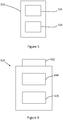
- FIG. 5 shows, schematically, a posture measurement device 520, similar to the devices 120, 220, 320 and 420 discussed above.
- the posture measurement device 520 comprises a sensor 522 configured to measure a parameter indicative of a posture of the part of a body, the posture corresponding, by a predetermined relationship, to a location and/or orientation of a handheld personal care device.
- the posture measurement device 520 further comprises communication circuitry 526 configured to transmit the measured parameter to processing apparatus for estimating the location and/or orientation of the handheld personal care device based on the predetermined relationship.
- the posture measurement device 120, 220, 320, 420, 520 may comprise at least one of electromyography (EMG) instrumentation; body joint flex sensing instrumentation; an inertial measurement unit (IMU); an imaging device; and a range-finding device.
- EMG instrumentation may be used to evaluate electrical activity produced by skeletal muscles. By analysing the electrical activity, a measure of the posture of the muscle (and, therefore, the associated body part) can be determined.
- Joint flex sensing instrumentation may be used to measure the amount of flexing in a joint of a user as the user moves a body part. The amount of flexing may be used as an indicator of the posture of the body part.
- the posture measurement device 520 may comprise a mount, such as the attachment element discussed above, for mounting the posture measurement device to a part of the body of the user.
- the personal care device 110, 210, 310 may comprise any device capable of being used to perform a personal care activity, and examples are discussed above.
- the personal care device includes a personal care element (such as the brush element 212 or the light emitting element 312 discussed above).
- the personal care element is a portion of the personal care device 110, 210, 310 that performs the personal care activity, and it will be appreciated that the nature of the personal care element will depend on the nature of the particular personal care device.
- the handheld personal care device 610 includes a personal care element 612.
- the personal care device 610 also comprises a further sensor 614 for measuring an orientation and/or change in location of the handheld personal care device relative to the user.
- the further sensor 614 may, for example, comprise an accelerometer, a gyroscope and/or an IMU.
- Processing apparatus (such as the processing apparatus 130, 230, 330) may be configured to estimate the location and/or orientation of the handheld personal care device 610 with respect to the user during use of the handheld personal care device based on a measurement from the further sensor 614 and on the predetermined relationship.
- a more accurate measure of the posture and/or the orientation and/or the location of the user's body part may be determined.
- the handheld personal care device 610 may, in some embodiments, comprise communication circuitry 616 for enabling communication between the handheld personal care device and at least one of the posture measurement device and the processing apparatus.
- a further aspect of the invention relates to a method of estimating a location and/or orientation of a handheld personal care device with respect to a user of the handheld personal care device.
- Figure 7 is a flowchart of an example of such a method 700.
- the method 700 comprises, at step 702, obtaining measurements of a posture of a part of the body of the user as the user uses the handheld personal care device. As noted above, such measurements may be obtained using a posture measurement device, such as the devices 120, 220, 320, 420, 520.
- the method 700 comprises, at step 704, using the measurements to estimate the location and/or orientation of the handheld personal care device with respect to the user during use of the handheld personal care device based on a predetermined relationship between the location and/or orientation of the handheld personal care device and the posture of the part of the body of the user.
- the posture measurement device 220 worn on the user's head may detect that the head has moved in a particular manner (e.g. upwards and to the left), and may send that information to the processing apparatus 230 for analysis.
- the processing apparatus 230 may refer to a database or look-up table, for example, to find a predetermined relationship between that particular head movement (i.e. posture) and an associated location and/or orientation of the handheld personal care device.
- a look-up table may include an entry indicating that a movement of the head up and to the left corresponds to a user performing a personal care activity to the right cheek.
- the processing apparatus 230 may estimate that the handheld personal care device is located near to the right cheek of the user, and that the handheld personal care device may be oriented approximately vertically (as that tends to be how such a device is held when treating the cheeks).
- the processing apparatus may itself be able to determine an approximate location of the posture measurement device (e.g. on a head, on an arm, or on a leg), so that an accurate determination (e.g. left cheek, forehead, left forearm, right inner thigh) can be made.
- an accurate determination e.g. left cheek, forehead, left forearm, right inner thigh
- a user may manually input details of the part of a body to be treated, and/or the type of personal care device being used to perform the personal care activity.
- the user 302 is sitting down, using the IPL device 310 on an outer side (i.e. the left side) of the left leg. While using the device 310 in this manner, the user 302 tends to raise the left knee upwards. The knee may also be tilted towards the body of the user. Such a position may allow the user to reach the leg easily.
- the posture measurement device 320 worn on the user's knee may detect that the knee has moved in a particular manner (e.g. bent and moved upwards and towards the user's body), and may send that information to the processing apparatus 330 for analysis.
- the processing apparatus 330 may determine that the measured posture corresponds (according to a predetermined relationship) to a personal care activity being performed on the lower left leg of the user.
- Figure 8 is a graph 800 showing an example of a predetermined relationship between the location and/or orientation of a handheld personal care device and a posture of a part of the body of the user.
- the data in the graph of Figure 8 relates to the example shown in Figure 2 , where a user 202 performs a personal care activity to the face using a skin cleansing device 210.
- the data is based on an orientation of the head of the user, as measured using the measurement element 222 of the headband 220, and is defined in terms of two parameters: yaw (i.e. left and right rotation of the head about a vertical axis) and pitch (i.e. up and down rotation of the head).
- a measurement of a posture of the user's head falls within a shaded range 810 indicated in the graph, then it can be assumed that the personal care device is being used on the user's forehead; if a measurement of a posture of the user's head falls within a shaded range 812 indicated in the graph, then it can be assumed that the personal care device is being used on the user's neck; if a measurement of a posture of the user's head falls within a shaded range 814 indicated in the graph, then it can be assumed that the personal care device is being used on the user's right cheek; and if a measurement of a posture of the user's head falls within a shaded range 816 indicated in the graph, then it can be assumed that the personal care device is being used on the user's left cheek.
- the example shown in the graph 800 of Figure 8 may be entered into a look-up table or database in terms of a polar angle (i.e. an angle ⁇ of rotation from axis x in Figure 8 ), as follows: Polar angle, ⁇ ° Location of personal care application ⁇ ⁇ 14° and ⁇ >334° Right cheek 14° ⁇ ⁇ ⁇ 144° Forehead 144° ⁇ ⁇ ⁇ 228° Left cheek 228° ⁇ ⁇ ⁇ 334° Neck
- ⁇ arctan2(pitch, yaw).
- the information may be used for various purposes.
- the method 700 may further comprise storing at least one of the measured posture (or a parameter indicative of the posture), the estimated location and the estimated orientation of the personal care device in a storage medium, such as a memory.
- the data may be used at a later time.
- the stored data may be used to generate a log or a record of the locations on the user's body where the personal care activity has been performed.
- Such information may be used to provide an indication to the user of parts of his or her body that have not yet been treated, or portions of his or her body to which the personal care activity has been performed too many times. In this way, feedback may be provided in real time and/or subsequently to the user regarding a quality of the user's performance of the personal care activity.
- the transmitted data may be delivered to a manufacturer of the personal care device to enable the manufacturer to determine the extent to which the personal care device is used on different parts of the body and/or to enable the manufacturer to track the usage of the device so that the user may be informed when the personal care element is due to be replaced, for example.
- Figure 9 is a flowchart of an example of a method 900 for estimating the location and/or orientation of a handheld personal care device with respect to a user.
- the method 900 includes the steps 702 and 704 discussed above with reference to Figure 7 .
- the method 900 further comprises, at step 902, adjusting a parameter of the handheld personal care device based on the estimation of the location and/or orientation of the handheld personal care device with respect to the user.
- the parameter may be an operating parameter (e.g. a parameter that affects the operation of the device).
- the personal care element 212, 312, 612 of the personal care device 110, 210, 310, 610 may be caused to operate in accordance with one or more operating parameters which may depend on the nature of the personal care element, and/or on the nature of the user (e.g. male or female). However, the personal care element may be caused to operate in accordance with one or more parameters which can be adjusted or tailored depending on the body part on which the personal care activity is being performed.
- an intensity and/or a wavelength of radiation to be emitted by the personal care element may depend upon the type of hair to be treated and, therefore, on the body part from which the hair is growing.
- the treatment of relatively thick hair may require a greater intensity than relatively thin hair, for example.
- a relatively greater intensity of light may be applied to a hair growing deeper in the skin of the body of the user than to a hair which is growing shallower in the skin.
- the processing apparatus may adjust, or instruct the personal care device to adjust, one or more parameters of the personal care element based on the estimation of the location and/or orientation of the personal care device made in step 704.
- one or more optimum settings or parameters maybe stored (for example in a storage unit of the personal care device) which correspond to the various body parts, or to particular locations and/or orientations of the personal care device.
- the processing apparatus may automatically adjust the operating parameters of the personal care element to suit the body part being treated, such that the personal care activity is performed in an optimised manner.
- a user may manually adjust one or more parameters based on the estimated body part.
- a further aspect of the invention relates to a machine-readable medium (e.g. a computer-readable medium) which may comprise instructions which, when executed by a processor or processing apparatus, cause the processor or processing apparatus to perform the methods disclosed herein.
- Figure 10 shows an example of a machine readable medium 1002 with a processor 1004, which may be similar to the processing apparatus 130, 230 or 330.
- the machine-readable medium 1002 comprises instructions which, when executed by the processor 1004, cause the processor to obtain measurements of a posture of a part of the body of a user as the user uses a handheld personal care device; and use the measurements to estimate a location and/or orientation of the handheld personal care device with respect to the user during use of the handheld personal care device based on a predetermined relationship between the location and/or orientation of the handheld personal care device and the posture of the part of the body of the user.
- the machine-readable medium 1002 may comprise instructions which, when executed by the processor 1004, cause the processor to adjust a parameter of the handheld personal care device based on the estimation of the location and/or orientation of the handheld personal care device with respect to the user.
Landscapes
- Health & Medical Sciences (AREA)
- Life Sciences & Earth Sciences (AREA)
- Engineering & Computer Science (AREA)
- Biomedical Technology (AREA)
- Biophysics (AREA)
- Surgery (AREA)
- Animal Behavior & Ethology (AREA)
- General Health & Medical Sciences (AREA)
- Public Health (AREA)
- Veterinary Medicine (AREA)
- Physics & Mathematics (AREA)
- Pathology (AREA)
- Molecular Biology (AREA)
- Medical Informatics (AREA)
- Heart & Thoracic Surgery (AREA)
- Physiology (AREA)
- Nuclear Medicine, Radiotherapy & Molecular Imaging (AREA)
- Oral & Maxillofacial Surgery (AREA)
- Dentistry (AREA)
- Artificial Intelligence (AREA)
- Radiology & Medical Imaging (AREA)
- Computer Vision & Pattern Recognition (AREA)
- Otolaryngology (AREA)
- Electromagnetism (AREA)
- Fuzzy Systems (AREA)
- Human Computer Interaction (AREA)
- Evolutionary Computation (AREA)
- Mathematical Physics (AREA)
- Signal Processing (AREA)
- Psychiatry (AREA)
- Measurement Of The Respiration, Hearing Ability, Form, And Blood Characteristics Of Living Organisms (AREA)
- Measuring And Recording Apparatus For Diagnosis (AREA)
- Radiation-Therapy Devices (AREA)
- Devices For Medical Bathing And Washing (AREA)
Priority Applications (8)
| Application Number | Priority Date | Filing Date | Title |
|---|---|---|---|
| EP17160532.2A EP3375371A1 (de) | 2017-03-13 | 2017-03-13 | System, vorrichtung und verfahren zur schätzung des standorts und/oder der ausrichtung einer tragbaren körperpflegevorrichtung in bezug zu einem benutzer |
| US16/492,191 US20200037927A1 (en) | 2017-03-13 | 2018-03-13 | System, apparatus and method of estimating the location and/or orientation of a handheld personal care device with respect to a user |
| JP2019550241A JP7107960B2 (ja) | 2017-03-13 | 2018-03-13 | ユーザに対するハンドヘルド・パーソナルケアデバイスの位置及び/又は向きを推定するシステム、装置、方法及びマシン読取可能媒体 |
| CN201880017423.0A CN110446462B (zh) | 2017-03-13 | 2018-03-13 | 用于评估手持个人护理设备相对于用户的位置和/或取向的系统、装置和方法 |
| BR112019018720A BR112019018720A2 (pt) | 2017-03-13 | 2018-03-13 | método para estimar uma localização e/ou orientação de um dispositivo de mão para cuidados pessoais, aparelho para estimar uma localização e/ou orientação de um dispositivo de mão para cuidados pessoais, sistema para cuidados pessoais e mídia legível por máquina |
| RU2019132462A RU2783795C2 (ru) | 2017-03-13 | 2018-03-13 | Система, устройство и способ оценки местоположения и/или ориентации удерживаемого в руке устройства для личного ухода относительно пользователя |
| PCT/EP2018/056260 WO2018167073A1 (en) | 2017-03-13 | 2018-03-13 | A system, apparatus and method of estimating the location and/or orientation of a handheld personal care device with respect to a user |
| EP18710474.0A EP3595524A1 (de) | 2017-03-13 | 2018-03-13 | System, vorrichtung und verfahren zur schätzung des standorts und/oder der ausrichtung einer tragbaren körperpflegevorrichtung in bezug zu einem benutzer |
Applications Claiming Priority (1)
| Application Number | Priority Date | Filing Date | Title |
|---|---|---|---|
| EP17160532.2A EP3375371A1 (de) | 2017-03-13 | 2017-03-13 | System, vorrichtung und verfahren zur schätzung des standorts und/oder der ausrichtung einer tragbaren körperpflegevorrichtung in bezug zu einem benutzer |
Publications (1)
| Publication Number | Publication Date |
|---|---|
| EP3375371A1 true EP3375371A1 (de) | 2018-09-19 |
Family
ID=58277205
Family Applications (2)
| Application Number | Title | Priority Date | Filing Date |
|---|---|---|---|
| EP17160532.2A Withdrawn EP3375371A1 (de) | 2017-03-13 | 2017-03-13 | System, vorrichtung und verfahren zur schätzung des standorts und/oder der ausrichtung einer tragbaren körperpflegevorrichtung in bezug zu einem benutzer |
| EP18710474.0A Withdrawn EP3595524A1 (de) | 2017-03-13 | 2018-03-13 | System, vorrichtung und verfahren zur schätzung des standorts und/oder der ausrichtung einer tragbaren körperpflegevorrichtung in bezug zu einem benutzer |
Family Applications After (1)
| Application Number | Title | Priority Date | Filing Date |
|---|---|---|---|
| EP18710474.0A Withdrawn EP3595524A1 (de) | 2017-03-13 | 2018-03-13 | System, vorrichtung und verfahren zur schätzung des standorts und/oder der ausrichtung einer tragbaren körperpflegevorrichtung in bezug zu einem benutzer |
Country Status (6)
| Country | Link |
|---|---|
| US (1) | US20200037927A1 (de) |
| EP (2) | EP3375371A1 (de) |
| JP (1) | JP7107960B2 (de) |
| CN (1) | CN110446462B (de) |
| BR (1) | BR112019018720A2 (de) |
| WO (1) | WO2018167073A1 (de) |
Families Citing this family (12)
| Publication number | Priority date | Publication date | Assignee | Title |
|---|---|---|---|---|
| CN109288230B (zh) * | 2018-10-25 | 2024-08-02 | 深圳和而泰智能控制股份有限公司 | 一种智能美发器 |
| EP3782536A1 (de) | 2019-08-20 | 2021-02-24 | Koninklijke Philips N.V. | Identifizierung eines körperteils |
| US11959997B2 (en) * | 2019-11-22 | 2024-04-16 | Magic Leap, Inc. | System and method for tracking a wearable device |
| EP3900574A1 (de) | 2020-04-21 | 2021-10-27 | Koninklijke Philips N.V. | Körperpflegevorrichtungen |
| EP3922419A1 (de) * | 2020-06-09 | 2021-12-15 | Koninklijke Philips N.V. | Vorhersage des erscheinungsbildes eines benutzers nach der behandlung |
| GB2597688B (en) | 2020-07-29 | 2022-09-21 | Dyson Technology Ltd | Hairstyling device |
| GB2597680B (en) | 2020-07-29 | 2022-12-28 | Dyson Technology Ltd | Hairstyling device |
| EP3974126A1 (de) * | 2020-09-23 | 2022-03-30 | Koninklijke Philips N.V. | Interaktion mit einem benutzer einer körperpflegevorrichtung |
| US11974658B2 (en) * | 2020-11-30 | 2024-05-07 | L'oreal | Handheld cosmetic device with kinematic and optical sensing for customizing treatment routines |
| JP7641562B2 (ja) * | 2021-02-04 | 2025-03-07 | パナソニックIpマネジメント株式会社 | 毛切断用理美容機器および理美容システム |
| JP7692166B2 (ja) * | 2021-02-04 | 2025-06-13 | パナソニックIpマネジメント株式会社 | 電気かみそり |
| EP4039426A1 (de) | 2021-02-09 | 2022-08-10 | Koninklijke Philips N.V. | Bestimmung von betriebsparametern von haarschneidevorrichtungen |
Citations (1)
| Publication number | Priority date | Publication date | Assignee | Title |
|---|---|---|---|---|
| WO2015140340A1 (en) * | 2014-03-21 | 2015-09-24 | Koninklijke Philips N.V. | A system and a method for treating a part of a body of a person |
Family Cites Families (16)
| Publication number | Priority date | Publication date | Assignee | Title |
|---|---|---|---|---|
| KR100738074B1 (ko) * | 2005-07-16 | 2007-07-10 | 삼성전자주식회사 | 건강관리장치 및 방법 |
| WO2010093503A2 (en) * | 2007-01-05 | 2010-08-19 | Myskin, Inc. | Skin analysis methods |
| JP2010207488A (ja) | 2009-03-12 | 2010-09-24 | Gifu Univ | 行動解析装置及びプログラム |
| US9747417B2 (en) * | 2013-11-14 | 2017-08-29 | Mores, Inc. | Method and apparatus for enhanced personal care |
| RU2552992C2 (ru) | 2009-12-23 | 2015-06-10 | Конинклейке Филипс Электроникс Н.В. | Зубная щетка с отслеживанием положения |
| JP6261984B2 (ja) * | 2011-02-04 | 2018-01-17 | コーニンクレッカ フィリップス エヌ ヴェKoninklijke Philips N.V. | 絶対的な基準系を作成するのに固有受容性を使用するジェスチャ制御可能システム |
| WO2013057622A1 (en) * | 2011-10-17 | 2013-04-25 | Koninklijke Philips Electronics N.V. | A device for monitoring a user and a method for calibrating the device |
| US9179987B2 (en) * | 2012-03-13 | 2015-11-10 | Loma Linda University | Method and device for reducing angulation error during dental procedures |
| US10668636B2 (en) | 2012-10-15 | 2020-06-02 | Matthew W. Krenik | Cutter head for automated hair cutting system |
| GB201219244D0 (en) * | 2012-10-26 | 2012-12-12 | 3M Innovative Properties Co | Monitoring system for use in compression therapy |
| US11040458B2 (en) | 2012-12-31 | 2021-06-22 | Matthew W. Krenik | Hair cutting device for automated hair cutting system |
| JP6358730B2 (ja) | 2013-04-11 | 2018-07-18 | ライオン株式会社 | 歯ブラシの位置姿勢伝達方法、および歯ブラシの位置姿勢伝達システム |
| WO2015067498A1 (en) | 2013-11-06 | 2015-05-14 | Koninklijke Philips N.V. | A system and a method for treating a part of a body |
| MX2016006148A (es) * | 2013-11-21 | 2016-08-12 | Colgate Palmolive Co | Implemento para el cuidado bucal y sistema para el cuidado bucal. |
| CN103970277A (zh) * | 2014-05-27 | 2014-08-06 | 福建天晴数码有限公司 | 基于手持电子设备的健康阅读监测方法及其装置 |
| CN104407709B (zh) * | 2014-12-09 | 2015-12-02 | 北京银河润泰科技有限公司 | 可穿戴设备的穿戴状态的处理方法及装置 |
-
2017
- 2017-03-13 EP EP17160532.2A patent/EP3375371A1/de not_active Withdrawn
-
2018
- 2018-03-13 CN CN201880017423.0A patent/CN110446462B/zh active Active
- 2018-03-13 BR BR112019018720A patent/BR112019018720A2/pt not_active Application Discontinuation
- 2018-03-13 JP JP2019550241A patent/JP7107960B2/ja active Active
- 2018-03-13 WO PCT/EP2018/056260 patent/WO2018167073A1/en not_active Ceased
- 2018-03-13 US US16/492,191 patent/US20200037927A1/en not_active Abandoned
- 2018-03-13 EP EP18710474.0A patent/EP3595524A1/de not_active Withdrawn
Patent Citations (1)
| Publication number | Priority date | Publication date | Assignee | Title |
|---|---|---|---|---|
| WO2015140340A1 (en) * | 2014-03-21 | 2015-09-24 | Koninklijke Philips N.V. | A system and a method for treating a part of a body of a person |
Non-Patent Citations (1)
| Title |
|---|
| WESTHOVEN MARTIN ET AL: "Posture Based Recognition of the Visual Focus of Attention for Adaptive Mobile Information Systems", 21 June 2016, NETWORK AND PARALLEL COMPUTING; [LECTURE NOTES IN COMPUTER SCIENCE; LECT.NOTES COMPUTER], SPRINGER INTERNATIONAL PUBLISHING, CHAM, PAGE(S) 416 - 427, ISBN: 978-3-642-18420-8, ISSN: 0302-9743, XP047349558 * |
Also Published As
| Publication number | Publication date |
|---|---|
| JP7107960B2 (ja) | 2022-07-27 |
| CN110446462B (zh) | 2023-07-18 |
| EP3595524A1 (de) | 2020-01-22 |
| BR112019018720A2 (pt) | 2020-04-07 |
| JP2020512074A (ja) | 2020-04-23 |
| RU2019132462A3 (de) | 2021-07-14 |
| RU2019132462A (ru) | 2021-04-14 |
| CN110446462A (zh) | 2019-11-12 |
| US20200037927A1 (en) | 2020-02-06 |
| WO2018167073A1 (en) | 2018-09-20 |
Similar Documents
| Publication | Publication Date | Title |
|---|---|---|
| EP3375371A1 (de) | System, vorrichtung und verfahren zur schätzung des standorts und/oder der ausrichtung einer tragbaren körperpflegevorrichtung in bezug zu einem benutzer | |
| EP3582936B1 (de) | Betrieb einer körperpflegevorrichtung | |
| JP6330199B2 (ja) | スマートウェアラブル装置の身体位置最適化及び生体信号フィードバック | |
| RU2711387C2 (ru) | Система для определения относительной ориентации устройства к пользователю | |
| US9370658B2 (en) | System and a method for transcranial stimulation of a head region of a subject | |
| EP3752896B1 (de) | Positionsbestimmung einer körperpflegevorrichtung | |
| JP7639896B2 (ja) | 生体データ測定システム | |
| CN114502341B (zh) | 确定设备的定位 | |
| EP3375370A1 (de) | Vorrichtung und verfahren zur schätzung der position einer tragbaren körperpflegevorrichtung in bezug auf einen benutzer | |
| RU2783795C2 (ru) | Система, устройство и способ оценки местоположения и/или ориентации удерживаемого в руке устройства для личного ухода относительно пользователя | |
| KR20220033303A (ko) | 비접촉식 생체신호 측정 장치 및 방법 | |
| CN112156360B (zh) | 刺激信号的发生方法、发生装置及终端设备 |
Legal Events
| Date | Code | Title | Description |
|---|---|---|---|
| PUAI | Public reference made under article 153(3) epc to a published international application that has entered the european phase |
Free format text: ORIGINAL CODE: 0009012 |
|
| AK | Designated contracting states |
Kind code of ref document: A1 Designated state(s): AL AT BE BG CH CY CZ DE DK EE ES FI FR GB GR HR HU IE IS IT LI LT LU LV MC MK MT NL NO PL PT RO RS SE SI SK SM TR |
|
| AX | Request for extension of the european patent |
Extension state: BA ME |
|
| STAA | Information on the status of an ep patent application or granted ep patent |
Free format text: STATUS: THE APPLICATION IS DEEMED TO BE WITHDRAWN |
|
| 18D | Application deemed to be withdrawn |
Effective date: 20190320 |