EP3375457B1 - Conception de séquences peptidiques et leur utilisation pour l'administration d'arnsi induite par des peptides - Google Patents
Conception de séquences peptidiques et leur utilisation pour l'administration d'arnsi induite par des peptides Download PDFInfo
- Publication number
- EP3375457B1 EP3375457B1 EP18170087.3A EP18170087A EP3375457B1 EP 3375457 B1 EP3375457 B1 EP 3375457B1 EP 18170087 A EP18170087 A EP 18170087A EP 3375457 B1 EP3375457 B1 EP 3375457B1
- Authority
- EP
- European Patent Office
- Prior art keywords
- sirna
- peptide
- peptides
- complex
- seq
- Prior art date
- Legal status (The legal status is an assumption and is not a legal conclusion. Google has not performed a legal analysis and makes no representation as to the accuracy of the status listed.)
- Active
Links
Images



Classifications
-
- A—HUMAN NECESSITIES
- A61—MEDICAL OR VETERINARY SCIENCE; HYGIENE
- A61K—PREPARATIONS FOR MEDICAL, DENTAL OR TOILETRY PURPOSES
- A61K31/00—Medicinal preparations containing organic active ingredients
- A61K31/70—Carbohydrates; Sugars; Derivatives thereof
- A61K31/7088—Compounds having three or more nucleosides or nucleotides
- A61K31/713—Double-stranded nucleic acids or oligonucleotides
-
- A—HUMAN NECESSITIES
- A61—MEDICAL OR VETERINARY SCIENCE; HYGIENE
- A61K—PREPARATIONS FOR MEDICAL, DENTAL OR TOILETRY PURPOSES
- A61K47/00—Medicinal preparations characterised by the non-active ingredients used, e.g. carriers or inert additives; Targeting or modifying agents chemically bound to the active ingredient
- A61K47/50—Medicinal preparations characterised by the non-active ingredients used, e.g. carriers or inert additives; Targeting or modifying agents chemically bound to the active ingredient the non-active ingredient being chemically bound to the active ingredient, e.g. polymer-drug conjugates
- A61K47/51—Medicinal preparations characterised by the non-active ingredients used, e.g. carriers or inert additives; Targeting or modifying agents chemically bound to the active ingredient the non-active ingredient being chemically bound to the active ingredient, e.g. polymer-drug conjugates the non-active ingredient being a modifying agent
- A61K47/62—Medicinal preparations characterised by the non-active ingredients used, e.g. carriers or inert additives; Targeting or modifying agents chemically bound to the active ingredient the non-active ingredient being chemically bound to the active ingredient, e.g. polymer-drug conjugates the non-active ingredient being a modifying agent the modifying agent being a protein, peptide or polyamino acid
- A61K47/64—Drug-peptide, drug-protein or drug-polyamino acid conjugates, i.e. the modifying agent being a peptide, protein or polyamino acid which is covalently bonded or complexed to a therapeutically active agent
-
- A—HUMAN NECESSITIES
- A61—MEDICAL OR VETERINARY SCIENCE; HYGIENE
- A61K—PREPARATIONS FOR MEDICAL, DENTAL OR TOILETRY PURPOSES
- A61K47/00—Medicinal preparations characterised by the non-active ingredients used, e.g. carriers or inert additives; Targeting or modifying agents chemically bound to the active ingredient
- A61K47/50—Medicinal preparations characterised by the non-active ingredients used, e.g. carriers or inert additives; Targeting or modifying agents chemically bound to the active ingredient the non-active ingredient being chemically bound to the active ingredient, e.g. polymer-drug conjugates
- A61K47/51—Medicinal preparations characterised by the non-active ingredients used, e.g. carriers or inert additives; Targeting or modifying agents chemically bound to the active ingredient the non-active ingredient being chemically bound to the active ingredient, e.g. polymer-drug conjugates the non-active ingredient being a modifying agent
- A61K47/62—Medicinal preparations characterised by the non-active ingredients used, e.g. carriers or inert additives; Targeting or modifying agents chemically bound to the active ingredient the non-active ingredient being chemically bound to the active ingredient, e.g. polymer-drug conjugates the non-active ingredient being a modifying agent the modifying agent being a protein, peptide or polyamino acid
- A61K47/64—Drug-peptide, drug-protein or drug-polyamino acid conjugates, i.e. the modifying agent being a peptide, protein or polyamino acid which is covalently bonded or complexed to a therapeutically active agent
- A61K47/645—Polycationic or polyanionic oligopeptides, polypeptides or polyamino acids, e.g. polylysine, polyarginine, polyglutamic acid or peptide TAT
- A61K47/6455—Polycationic oligopeptides, polypeptides or polyamino acids, e.g. for complexing nucleic acids
-
- A—HUMAN NECESSITIES
- A61—MEDICAL OR VETERINARY SCIENCE; HYGIENE
- A61K—PREPARATIONS FOR MEDICAL, DENTAL OR TOILETRY PURPOSES
- A61K9/00—Medicinal preparations characterised by special physical form
- A61K9/0012—Galenical forms characterised by the site of application
- A61K9/0019—Injectable compositions; Intramuscular, intravenous, arterial, subcutaneous administration; Compositions to be administered through the skin in an invasive manner
-
- A—HUMAN NECESSITIES
- A61—MEDICAL OR VETERINARY SCIENCE; HYGIENE
- A61K—PREPARATIONS FOR MEDICAL, DENTAL OR TOILETRY PURPOSES
- A61K9/00—Medicinal preparations characterised by special physical form
- A61K9/08—Solutions
-
- A—HUMAN NECESSITIES
- A61—MEDICAL OR VETERINARY SCIENCE; HYGIENE
- A61P—SPECIFIC THERAPEUTIC ACTIVITY OF CHEMICAL COMPOUNDS OR MEDICINAL PREPARATIONS
- A61P35/00—Antineoplastic agents
-
- C—CHEMISTRY; METALLURGY
- C07—ORGANIC CHEMISTRY
- C07K—PEPTIDES
- C07K14/00—Peptides having more than 20 amino acids; Gastrins; Somatostatins; Melanotropins; Derivatives thereof
- C07K14/435—Peptides having more than 20 amino acids; Gastrins; Somatostatins; Melanotropins; Derivatives thereof from animals; from humans
- C07K14/46—Peptides having more than 20 amino acids; Gastrins; Somatostatins; Melanotropins; Derivatives thereof from animals; from humans from vertebrates
- C07K14/47—Peptides having more than 20 amino acids; Gastrins; Somatostatins; Melanotropins; Derivatives thereof from animals; from humans from vertebrates from mammals
- C07K14/4701—Peptides having more than 20 amino acids; Gastrins; Somatostatins; Melanotropins; Derivatives thereof from animals; from humans from vertebrates from mammals not used
- C07K14/4723—Cationic antimicrobial peptides, e.g. defensins
-
- C—CHEMISTRY; METALLURGY
- C07—ORGANIC CHEMISTRY
- C07K—PEPTIDES
- C07K19/00—Hybrid peptides, i.e. peptides covalently bound to nucleic acids, or non-covalently bound protein-protein complexes
-
- C—CHEMISTRY; METALLURGY
- C12—BIOCHEMISTRY; BEER; SPIRITS; WINE; VINEGAR; MICROBIOLOGY; ENZYMOLOGY; MUTATION OR GENETIC ENGINEERING
- C12N—MICROORGANISMS OR ENZYMES; COMPOSITIONS THEREOF; PROPAGATING, PRESERVING, OR MAINTAINING MICROORGANISMS; MUTATION OR GENETIC ENGINEERING; CULTURE MEDIA
- C12N15/00—Mutation or genetic engineering; DNA or RNA concerning genetic engineering, vectors, e.g. plasmids, or their isolation, preparation or purification; Use of hosts therefor
- C12N15/09—Recombinant DNA-technology
- C12N15/11—DNA or RNA fragments; Modified forms thereof; Non-coding nucleic acids having a biological activity
- C12N15/111—General methods applicable to biologically active non-coding nucleic acids
-
- C—CHEMISTRY; METALLURGY
- C12—BIOCHEMISTRY; BEER; SPIRITS; WINE; VINEGAR; MICROBIOLOGY; ENZYMOLOGY; MUTATION OR GENETIC ENGINEERING
- C12N—MICROORGANISMS OR ENZYMES; COMPOSITIONS THEREOF; PROPAGATING, PRESERVING, OR MAINTAINING MICROORGANISMS; MUTATION OR GENETIC ENGINEERING; CULTURE MEDIA
- C12N15/00—Mutation or genetic engineering; DNA or RNA concerning genetic engineering, vectors, e.g. plasmids, or their isolation, preparation or purification; Use of hosts therefor
- C12N15/09—Recombinant DNA-technology
- C12N15/11—DNA or RNA fragments; Modified forms thereof; Non-coding nucleic acids having a biological activity
- C12N15/113—Non-coding nucleic acids modulating the expression of genes, e.g. antisense oligonucleotides; Antisense DNA or RNA; Triplex- forming oligonucleotides; Catalytic nucleic acids, e.g. ribozymes; Nucleic acids used in co-suppression or gene silencing
- C12N15/1135—Non-coding nucleic acids modulating the expression of genes, e.g. antisense oligonucleotides; Antisense DNA or RNA; Triplex- forming oligonucleotides; Catalytic nucleic acids, e.g. ribozymes; Nucleic acids used in co-suppression or gene silencing against oncogenes or tumor suppressor genes
-
- C—CHEMISTRY; METALLURGY
- C12—BIOCHEMISTRY; BEER; SPIRITS; WINE; VINEGAR; MICROBIOLOGY; ENZYMOLOGY; MUTATION OR GENETIC ENGINEERING
- C12N—MICROORGANISMS OR ENZYMES; COMPOSITIONS THEREOF; PROPAGATING, PRESERVING, OR MAINTAINING MICROORGANISMS; MUTATION OR GENETIC ENGINEERING; CULTURE MEDIA
- C12N15/00—Mutation or genetic engineering; DNA or RNA concerning genetic engineering, vectors, e.g. plasmids, or their isolation, preparation or purification; Use of hosts therefor
- C12N15/09—Recombinant DNA-technology
- C12N15/87—Introduction of foreign genetic material using processes not otherwise provided for, e.g. co-transformation
-
- A—HUMAN NECESSITIES
- A61—MEDICAL OR VETERINARY SCIENCE; HYGIENE
- A61K—PREPARATIONS FOR MEDICAL, DENTAL OR TOILETRY PURPOSES
- A61K38/00—Medicinal preparations containing peptides
-
- C—CHEMISTRY; METALLURGY
- C12—BIOCHEMISTRY; BEER; SPIRITS; WINE; VINEGAR; MICROBIOLOGY; ENZYMOLOGY; MUTATION OR GENETIC ENGINEERING
- C12N—MICROORGANISMS OR ENZYMES; COMPOSITIONS THEREOF; PROPAGATING, PRESERVING, OR MAINTAINING MICROORGANISMS; MUTATION OR GENETIC ENGINEERING; CULTURE MEDIA
- C12N15/00—Mutation or genetic engineering; DNA or RNA concerning genetic engineering, vectors, e.g. plasmids, or their isolation, preparation or purification; Use of hosts therefor
- C12N15/09—Recombinant DNA-technology
- C12N15/11—DNA or RNA fragments; Modified forms thereof; Non-coding nucleic acids having a biological activity
- C12N15/113—Non-coding nucleic acids modulating the expression of genes, e.g. antisense oligonucleotides; Antisense DNA or RNA; Triplex- forming oligonucleotides; Catalytic nucleic acids, e.g. ribozymes; Nucleic acids used in co-suppression or gene silencing
-
- C—CHEMISTRY; METALLURGY
- C12—BIOCHEMISTRY; BEER; SPIRITS; WINE; VINEGAR; MICROBIOLOGY; ENZYMOLOGY; MUTATION OR GENETIC ENGINEERING
- C12N—MICROORGANISMS OR ENZYMES; COMPOSITIONS THEREOF; PROPAGATING, PRESERVING, OR MAINTAINING MICROORGANISMS; MUTATION OR GENETIC ENGINEERING; CULTURE MEDIA
- C12N2310/00—Structure or type of the nucleic acid
- C12N2310/10—Type of nucleic acid
- C12N2310/14—Type of nucleic acid interfering nucleic acids [NA]
-
- C—CHEMISTRY; METALLURGY
- C12—BIOCHEMISTRY; BEER; SPIRITS; WINE; VINEGAR; MICROBIOLOGY; ENZYMOLOGY; MUTATION OR GENETIC ENGINEERING
- C12N—MICROORGANISMS OR ENZYMES; COMPOSITIONS THEREOF; PROPAGATING, PRESERVING, OR MAINTAINING MICROORGANISMS; MUTATION OR GENETIC ENGINEERING; CULTURE MEDIA
- C12N2320/00—Applications; Uses
- C12N2320/30—Special therapeutic applications
- C12N2320/32—Special delivery means, e.g. tissue-specific
-
- C—CHEMISTRY; METALLURGY
- C12—BIOCHEMISTRY; BEER; SPIRITS; WINE; VINEGAR; MICROBIOLOGY; ENZYMOLOGY; MUTATION OR GENETIC ENGINEERING
- C12N—MICROORGANISMS OR ENZYMES; COMPOSITIONS THEREOF; PROPAGATING, PRESERVING, OR MAINTAINING MICROORGANISMS; MUTATION OR GENETIC ENGINEERING; CULTURE MEDIA
- C12N2320/00—Applications; Uses
- C12N2320/50—Methods for regulating/modulating their activity
- C12N2320/51—Methods for regulating/modulating their activity modulating the chemical stability, e.g. nuclease-resistance
Definitions
- the present invention relates to peptide sequences and their use for short interfering RNA (siRNA) delivery.
- RNAi RNA interference
- PTGS post transcriptional gene silencing
- RNAi short interfering RNA
- miRNA micro RNA
- tncRNA tiny non-coding RNA
- shRNA short hairpin RNA
- siRNA reticuloendothelial system
- nucleic acid (NA)-based drugs are subjected to enzymatic degradation during circulation and within the cell, resulting in insufficient drug potency at the target site.
- Chemical modifications in the sugars, nucleobases, and the phosphate ester backbone of siRNA have been applied to improve its nuclease resistance without interfering with the silencing efficiency [Manoharan 2004, Verma, et al. 2003, Zhang, et al. 2006].
- Conjugation with hydrophobic functional groups has also enhanced the cellular uptake [Oliviera et al., 2006].
- the carriers including viral vectors, lipids, polymers, and peptides, co-assembled or covalently conjugated with siRNA, are designed to enhance cell targeting, prolong drug circulation time, and improve membrane permeation.
- peptides have been employed to deliver synthetic drugs, small molecules, bioactive peptides, therapeutic proteins, and NAs by a mechanism that has not yet been fully understood.
- These peptides may include protein-derived cell penetrating peptides (CPPs) [Langel 2007], cationic peptides [Benoit, et al. 2006], designed amphiphilic peptides [Oehlke, et al. 1998], fusogenic peptides [Mok, et al. 2008], cell targeting peptides (CTP) [vives 2005], and peptides containing a nuclear localization signal [Cartier, et al.
- CPPs protein-derived cell penetrating peptides
- Benoit, et al. 2006 designed amphiphilic peptides [Oehlke, et al. 1998], fusogenic peptides [Mok, et al. 2008], cell targeting peptides (CTP) [vives 2005],
- Cationic peptides rich in basic amino acids can electrostatically interact with small NAs or condense NA into small stable particles.
- CPPs can facilitate the translocation of the complex through the cell membrane.
- Histidine-rich pH-sensitive or fusogenic peptides can enhance the endosomal escape and cytoplasmic release of the gene complex.
- Involvement of CTPs in gene delivery systems mediates cell and/or tissue-specific targeting.
- attachment of a NLS peptide improves nuclear localization of the gene complex.
- Tat and Penetratin are the most widely investigated peptides among protein-derived peptides.
- CPPs cell-penetrating peptides identified as effective carriers for NAs
- CPPs cell-penetrating peptides identified as effective carriers for NAs
- International patent applications publication nos. WO2007/076904 to Brock et al. and WO2007/069090 to Divita et al. although not all describe the transport of siRNA, see e.g. United States patents 7,163,695 to Mixson and 7,112,442 to Rice et al.
- the NA is covalently linked to a carrier peptide of a specific sequence
- a carrier peptide of a specific sequence see e.g. International patent application publication no. WO2008/063113 to Langel et al. and United States patent application publication no. US2005/0260756 to Troy et al.
- Specific peptides have been linked to NA via chemical linkers, see e.g. WO2008/033285 to Troy et al and WO2007/069068 to Alluis et al.
- United States patent 7,420,031 to Karas reports a peptide capable of delivering NAs to an intracellular compartment of a cell; the peptide-cargo moiety complex is formed by a chemical cross-linking or bridging method.
- United States patent 7,306,784 to Piwinica-Worms describes use of cell membrane-permeant peptide conjugate coordination and covalent complexes having target cell specificity.
- WO-A-2011/020188 to Chen describes complex peptide-nucleic acid complexes for nucleic acid delivery.
- the present invention provides a peptide having the amino acid sequence according to any one of SEQ ID NOs: 12-21, 26-33 and 43-46.
- the present invention provides a complex comprising a peptide having the amino acid sequence according to any one of SEQ ID NOs: 12-21, 26-33 and 43-46 and a cargo molecule, wherein the cargo molecule is a nucleic acid.
- the cargo molecule is siRNA.
- a pharmaceutical composition of the complex for delivering a therapeutically effective amount of siRNA.
- a method for reducing the levels of a gene product within a cell or tissue of an animal comprising administering a therapeutically effective amount of siRNA.
- the peptide-cargo complexes of the present invention are formed by a noncovalent molecular association through weak interactions between peptide and siRNA, which provides a simple and fast means to formulate siRNA therapeutics.
- the molecular association of the complexes of the present invention is less expensive and complex than cross-linking or bridging methods. Through this assembly, peptide-siRNA complexes/assemblies, often in the form of nanoparticles, can be conveniently generated.
- hydrophilic side interacts with hydrophilic drugs/genes, and the hydrophilic heads of the lipid bilayer through electrostatic interaction, while the hydrophobic side is anchored in the hydrophobic core of the bilayer, assisting the translocation of peptide-cargo to the cytosol.
- peptides having the following amino acid sequences: Table 1: C1 family peptide sequences Name Sequence Seq. ID number C1M FQFNFQFNGGGPKKKRKV (SEQ. ID. NO 1) C1M1 FQFNFQFNGGGPKPKRKV (SEQ. ID. NO 2) C1M2 FQFNFQFNFQFNGGGPKKKRKV (SEQ. ID. NO 3) C1M3 FQFNFQFNFQFNWSQPKPKRKV (SEQ. ID. NO 4) C1M4 FQFNFQFNFQFNGGGPKPKRKV (SEQ. ID. NO 5) C1M5 FQFNFQFNFQFNGGGCHHRRRRRRHC (SEQ. ID. NO 6) C1M6 FQFNFQFNFQFNGGGCPKPKRKVC (SEQ. ID. NO 7)
- This group of peptides was designed to explore the possibility of using peptides with ⁇ -strand secondary structures as delivery vehicles.
- the hydrophobic and hydrophilic segments at two opposite ends of these sequences are joined through a linker.
- Chen et al. describe different mechanisms including electrostatic, hydrogen bonding, hydrophobic, and ⁇ - ⁇ stacking interactions incorporated in peptide assembly.
- These strategies were applied in designing the hydrophobic section of this class of peptides which can self assemble through complementarity of weak interaction such as hydrogen bonding and hydrophobic forces.
- the length of hydrophobic section has also changed in C1M2 to C1M4 from 8 to 12 amino acids, to evaluate the significance of hydrophobic segment length.
- the linker, GGG was used to link the hydrophobic and hydrophilic together while keeping the flexibility in the peptide backbone.
- the linker was changed in C1M3 to WSQP to evaluate any possible effect of linker [Deshayes, et al. 2004].
- the positively-charged hydrophilic segment is responsible for both co-assembling with siRNA and approaching the cell membrane through electrostatic interaction between guanidino groups in argenine and lysine of the peptide and phosphate groups in siRNA backbone and phospholipid bilayers of the cells.
- a nuclear localization sequence (NLS), PKKKRKV, in C1M replaced the argenine-rich segment of peptide C1, with a sequence of FQFNFQFNGGGHRRRRRRR, originally reported in international patent application publication no. WO2011/020188 to Chen et al.
- the sequence was further modified by a single mutation of a lysine residue in NLS to a proline residue in order to limit its nuclear translocation and rapid release of the cargo in the cytoplasm in C1M1, C1M3, and C1M4.
- the hydrophilic segment was also replaced with CHHRRRRRRHC and CPKPKRKVC in C1M5 and C1M6, respectively, to evaluate the effect of cystine amino acid in enhancing the release of siRNA from the complex due to the pH change in endosome and cytoplasm.
- peptides having the following amino acid sequences: Table 2: E3 family peptide sequences Name Sequence Seq. ID number E3M RLTLHLRLELTLHLE (SEQ. ID. NO 8) E3M1 RWTWHWRWEWTWHWE (SEQ. ID. NO 9)
- This group of peptides was also designed based on amino acid paring strategies mentioned by Chen et al. in international patent application publication no. WO2009/026729 .
- the hydrophilic amino acids, R and H are distributed among the hydrophobic residues.
- the peptide E3 with a sequence of RFTFHFRFEFTFHFE was originally reported in international patent application publication no. WO2011/020188 by Chen et al. Here, we have further modified this sequence.
- the self-assembly of these sequences is favored by electrostatic interaction between R and E, hydrogen bonding between T and H, and hydrophobic interaction between F's in E3, L's in E3M, and W's in E3M1.
- the histidine residues were also used to enhance the endosomal escape for the complex as it is protonated at low pH. When a histidine containing peptide is taken into the endosome during endocytosis, it may act as a proton sponge, disrupting the endosomal pH balance, releasing the complex from the endosome.
- the hydrophobic amino acids, L and W in E3M and E3M1 respectively, replaced F residues in E3 to evaluate the effect of hydrophobic strength of peptides.
- tryptophan residues were reported to facilitate translocation of the peptide through the cell membrane.
- peptides having the following amino acid sequences: Table 3: A7 family peptide sequences A7M RHALAHLLHKLKHLLHALAHR (SEQ. ID. NO 10) A7M1 RHALAHLLHRLRHLLHALAHR (SEQ. ID. NO 11)
- the group mainly consisted of arginine, lysine, histidine, leucine, and alanine, was designed to have an ⁇ -helical secondary structure having three distinct sections when viewed from the top, each contributed by the amino acids leucine and/or alanine, arginine and/or lysine, and histidine. It is believed that hydrophobic residues such as leucine may assist in cell penetration through interacting with the hydrophobic tails in the lipid bilayer of the cell, and also assist in pore formation in the cell membrane [Langel 2007].
- Several studies have investigated the translocation efficiency of arginine-rich peptides of various lengths.
- Histidine is a pH sensitive amino acid as it will be protonated at low pH. When a histidine containing peptide is taken into the endosome during endocytosis, it may act as a proton sponge, disrupting the endosomal pH balance. This may result in the leakage of the endosomal content, releasing the siRNA complexes to the cytosol.
- Peptide A7 with a sequence of HRLRHALAHLLHKLKHLLHALAHRLRH, originally reported in international patent application publication no. WO2011/020188 by Chen et al. Here, we evaluated the sequence length effect, as well as the effect of replacement of argenine with lysine in A7M and A7M1.
- the present invention provides peptides having the following amino acid sequences: Table 4: C6 family peptide sequences Name Sequence Seq. ID number C6M RLWRLWLRLWRRLWRLLR (SEQ. ID. NO 12) C6M1 RLWRLLWRLWRRLWRLLR (SEQ. ID. NO 13) C6M2 RLWRLLWHLWRHLWRLLR (SEQ. ID. NO 14) C6M3 RLWHLLWRLWRRLHRLLR (SEQ. ID. NO 15) C6M4 HLLRLLLRLWHRLWRLLR (SEQ. ID. NO 16) C6M5 HLWHLLLRLWRRLLRLLR (SEQ. ID.
- C6M6 GLWHLLLHLWRRLLRLLR (SEQ. ID. NO 18) C6M7 GLWHLLLHLWRRHHRHHR (SEQ. ID. NO 19) C6M8 GLWHLHLWRRHHRLLR (SEQ. ID. NO 20) C6M9 GLWHLLLHLWHRLLRHHR (SEQ. ID. NO 21)
- This group of peptides was designed based on peptide C6, reported by Chen et al, in international patent application publication no. WO2009/026729 .
- C6 was designed to contain seven positively charged arginine residues.
- Arginine rich peptides are reported to be capable of delivering siRNA into cells with high efficiency and low toxicity [Futaki, et al., 2001; Wang, et al., 2006] while at least five arginine residues are required to maintain the transfection efficiency.
- Hydrophobic residues such as leucine are also included in C6 sequence.
- hydrophobic amino acids can facilitate the translocation of peptide by interacting with the hydrophobic tails in the lipid bilayer or assisting in pore formation in the cell membrane [Langel. 2007]. It has been found that alanine, leucine and histidine are found abundantly in the helical regions of proteins [Chou and Fasman 1973]. They indicate that leucine is the strongest structure forming residue in the proteins they investigated.
- C6 sequence was modified to increase its solubility and transfection efficiency, and series of derivatives were obtained.
- the derivatives were designed to allow positioning of hydrophilic and hydrophobic residues on opposite faces of the molecule, upon adapting a helical structure.
- Figure 1 shows the amino acids have been predicted to position the nonpolar and polar amino acids in the two different faces of the helix, possibly to facilitate self/co assembly..
- Some hydrophobic leucine residues are selectively substituted with less hydrophobic tryptophan residues to improve their solubility in water. Meanwhile, the aromatic tryptophan is reported to play an essential role in the cellular uptake of many cell-penetrating peptides [Derossi, et al. 1994; Heitz, et al.
- Histidine is a pH sensitive amino acid, suitable to be contained in a peptide sequence exhibiting the ability to interact with siRNA molecules and to favor the escape of siRNA from endosomes, due to the protonation effect of its imidazole ring at pH 6 [Lo & S. Wang, 2008]. This results in the leakage of the endosomal content, releasing siRNA into the cytoplasm where RNA interference happens. Tryptophan and histidine, were added at different positions in the peptide sequence to combine their cell penetration and endosomal disruption capabilities.
- the C6 derivatives incorporate functional moieties of various co-assembling peptides, cell penetrating peptides and endosomal disruptive peptides.
- peptides having the following amino acid sequences: Table 5: MW family peptide sequences Name Sequence Seq. ID number MW1 MWKSKIGSWILVRWAMWSKKRPKP (SEQ. ID. NO 22) MW2 MWKSHIGSWILVRWAMWSHKRPKP (SEQ. ID. NO 23) MW3 MWKSKISWILVSKPGLCKKRPKP (SEQ. ID. NO 24) MW4 MHKSKISWHLVSKPGLCHKRPKP (SEQ. ID. NO 25)
- This group of peptides is derived from N-terminal sequence (1-30) of the bovine prion protein (bPrPp).
- the bovine PrP with the sequence of MVKSKIGSWILVLFVAMWSDV GLCKKRPKP adopts a largely ⁇ -helical structure [Biverst ⁇ hl, et al. 2004].
- the basic sequence of bovine PrP (residues 23-28) resembles a nuclear localization sequence (NLS) and stimulates cellular uptake by lipid raft-dependent and macropinocytosis [Wadia, et al. 2008].
- the transfection efficiency of Bovine PrP is reported to be 48% [Endoh & Ohtsuki, 2009]. Thus, some trypotophan and histidine residues are added to the sequence to increase the affinity of the peptide with membrane and promote endosomal escape.
- the present invention provides peptides having the following amino acid sequences: Table 6: D-form peptide sequences Name Sequences Seq. ID number C6-Dr rLLrLLLrLWrrLLrLLrLLr (SEQ. ID. NO 26) C6-D rllrlllrlwrrllrllr (SEQ. ID. NO 27) C6M1-Dr rLWrLLWrLWrrLWrLLr (SEQ. ID. NO 28) C6M1-D rlwrllwrlwrrlwrllr (SEQ. ID. NO 29) C6M3-Dr rLWHLLWrLWrrLHrLLr (SEQ. ID.
- the peptide is not only responsible for the delivery of siRNA, but also plays an important role in protecting siRNA from the degradation by nucleases in serum, which will influence the gene silencing efficiency. This gives us the hint to make modifications of some peptide sequences.
- Using the D-form of R(r) also affects the secondary structure of the peptide, and correspondingly may influence the shape and size of the peptide-siRNA complex.
- Peptide sequences C6, C6M1, C6M3 and C6M6 were converted into total D-form to alter transfection efficiency, stability, and cytotoxicity.
- peptides having the following amino acid sequences: Table 7: GL peptide sequences Name Sequence Seq. ID number GL1 GLWRAWLWKAFLASNWRRLLRLLR (SEQ. ID. NO 34) GL2 GLWRASWLKAWLASNWHKKHRLLR (SEQ. ID. NO 35) GL3 GLWGAWFIEGWEGMIDGRRLLRLLR (SEQ. ID. NO 36) GL4 GLWRASWLKAFLASNWHKKLHKK (SEQ. ID. NO 37) HA2-C6 (SEQ. ID. NO 38) HA2-PK GLFGAIAGFIENGWEGMIDGWYGPKKKRKV (SEQ. ID. NO 39)
- This group comprises additional W and H amino acids which may increase the affinity of peptides with cell membranes and increase endosomal escape. Also the n-terminal domain was replaced with GLW, which is reported to be important in CADY [Karidia, et al. 2009] and MPG [Simeoni, et al. 2003] peptides.
- HA2 GLFGAIAGFIENGWEGMIDGWYG
- HA2-Penetratin a CPPs
- NLS nuclear localization sequence
- PKKKRKV a nuclear localization sequence with lysine-rich segments
- peptides having the following amino acid sequences: Table 8: STR modified peptide sequences Name Sequence Seq. ID number STR-C1 CH 3 (CH 2 ) 16 -GGGPKPKRKV (SEQ. ID. NO 40) STR-HK CH 3 (CH 2 ) 16 -HHHPKPKRKV (SEQ. ID. NO 41) STR-HKC CH 3 (CH 2 ) 16 -HHHCPKKKRKVC (SEQ. ID. NO 42)
- Stearic acid is one of the fatty acids occurring abundantly in the body and has high interaction ability with the cell membrane. It has been reported that the cell penetrating peptides with stearic acid modification at the N-terminal could increase the cellular uptake of siRNA-peptide complex [Tanaka, et al. 2010], which may be due to the increased affinity to the cell membrane mediated by stearic acid. Meanwhile, it is believed that stearic acid modified PEI could increase siRNA protection from degradation in Fetal Bovine Serum (FBS) as compared to the parent PEI [Alshamsan, et al. 2009].
- FBS Fetal Bovine Serum
- stearic acid was incorporated into the C1 family peptides to increase the membrane affinity of the hydrophobic domain and to enhance siRNA stability in serum.
- the hydrophobic segments are separated from hydrophilic parts, it is easier to replace the hydrophobic domain with stearic acid to evaluate the effect of different hydrophobic segments.
- Three peptides were chosen from C1 family with different degree of hydrophobic interaction with cell membrane, and modified with stearic acid.
- linker GGG was changed in STR-HK and STR-HKC to HHH to enhance the endosomal escape of the complex, as it is protonated at low pH and also to evaluate the effect of a different linker.
- the present invention provides peptides having one of the following amino acid sequences: Table 9: CYSt modified peptide sequences Name Sequence Seq. ID number C6-CYSt RLLRLLLRLWRRLLRLLR-Cysteamide (SEQ. ID. NO 43) C6M1-CYSt RLWRLLWRLWRRLWRLLR-Cysteamide (SEQ. ID. NO 44) C6M3-CYSt RLWHLLWRLWRRLHRLLR-Cysteamide (SEQ. ID. NO 45) C6M6-CYSt GLWHLLLHLWRRLLRLLR-Cysteamide (SEQ. ID. NO 46)
- Cysteamide is the simplest stable aminothiol and a degradation product of amino acid cysteine. It has been reported that attaching cysteamide group at the C-terminus of peptide could promote efficient transfection of DNA-peptide complexes [Simeoni, et al. 2003]. It has also been studied that peptides modified with cysteamide at C-terminus shows higher potency to cross cell membranes than the original peptide [Crombez, et al. 2009].
- Example 1 Peptide-siRNA assemblies/nanoparticles: preparation and transfection in vitro
- siRNA The ability of promising peptides to deliver siRNA was evaluated on CHO cells using GAPDH as the target gene.
- Chinese hamster ovary cells CHO-K1 (ATCC CCL-61) were derived as a subclone from the parental CHO cell line initiated from a biopsy of an ovary of an adult Chinese hamster.
- Glyceraldehyde-3-phosphate dehydrogenase Glyceraldehyde-3-phosphate dehydrogenase (GAPDH) is a housekeeping gene widely expressed in diverse tissues and cell types and functions in a variety of cellular processes.
- the corresponding siRNA i.e. Silencer® GAPDH siRNA (Human, Mouse, Rat), was purchased from Ambion. The molar concentration of siRNA was determined by absorption spectroscopy, using an extinction coefficient of 385103 L/mol cm.
- a peptide array consisting of crude peptides with N-terminal acetylation and C-terminal amidation was purchased from Pepscan Systems (Leystad, Netherlands).
- siRNA concentrations of 50 nM and Peptide/siRNA molar ratios of 20/1 and 40/1 were used in screening experiments.
- the cells were seeded with a confluency of 35,000 cells/well in F12K medium with 10% FBS without antibacterial agents, 24 hrs before transfection.
- the cells were incubated with the complex at 37°C in an incubator. After 4 hours, 300 ⁇ L F12-K with 20% FBS was added without removing the transfection mixture.
- the cells were rinsed and lysed 48 hours after the start of transfection.
- RNA from the cells was extracted with TRIzol reagent (Invitrogen, Carlsbad, CA, USA), then treated with chloroform (Sigma, Oakville, Ontario, Canada) and 2-propanol (Sigma, Oakville, Ontario, Canada) as recommended by the manufacturer.
- the RNA concentrations were measured by Nanodrop (Nanodrop spectrophotometer ND-1000, Thermo scientific, Ottawa, Canada). All the RNAs were reverse transcribed with Bio-Rad iScript cDNA synthesis kit according to the protocol. The cDNA synthesis was primed with a unique blend of oligo (dT) and random primers.
- PCR was performed with primers for mouse GAPDH gene with: 5'-TTGCTGTTGAAGTCGCAGGAG-3' (Primer 1, SEQ ID NO: 47 ) and 5'-TGTGTCCGTCGTGGATCTGA-3' (Primer 2, SEQ ID NO: 48 ) (Sigma, Oakville, Ontario, Canada).
- primers for mouse GAPDH gene with: 5'-TTGCTGTTGAAGTCGCAGGAG-3' (Primer 1, SEQ ID NO: 47 ) and 5'-TGTGTCCGTCGTGGATCTGA-3' (Primer 2, SEQ ID NO: 48 ) (Sigma, Oakville, Ontario, Canada).
- SEQ ID NO: 47 5'-TTGCTGTTGAAGTCGCAGGAG-3'
- 5'-TGTGTCCGTCGTGGATCTGA-3' Primary PCR primers for mouse GAPDH gene with: 5'-TTGCTGTTGAAGTCGCAGGAG-3' (Primer 1, SEQ ID NO: 47 ) and 5'-TGTGTCCGTCGTGG
- mice/rat cyclophilin mRNA Normalization was performed by the amplification of mouse/rat cyclophilin mRNA with the following primers 5'-AGGGTTTCTCCACTTCGATCTTGC-3' (Primer 3, SEQ ID NO: 49 ) and 5'-AGATGGCACAGGAGGAAAGAGC AT-3' (Primer 4, SEQ ID NO: 50 ) (Sigma, Oakville, Ontario, Canada).
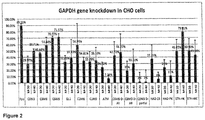
- Figure 2 shows the intracellular silencing of GAPDH gene in CHO cells where siRNA were complexed with peptides at a molar ratio of 20:1 and 40:1. mRNA levels were measured 48 hours after transfection. The results shown in Figure 2 correspond to an average of at least three separate experiments.
- Example 2 Formulation protocol can refer to the above Example
- the cells were seeded with a confluency of 5000 cells/well in F12K medium with 10% FBS without antibacterial agents, 24 hrs before transfection.
- the confluency of the cells was 40-60% the day of transfection.
- the cells were rinsed with PBS and 50 uL of Opti-MEM was added, then 50 uL of the complex solution (siRNA-peptide or controls) was added to each well.
- the cells were incubated with the complex at 37°C in a CO2 incubator for 3-6 hours; a period of 4 hours is usually enough. After incubation, 50 uL F12K medium with 30% FBS was added without removing the transfection mixture.
- the cells were rinsed and lysed 48 hours after the start of transfection.
- GAPDH KDalert kit was used to measure the activity of enzymatic activity of glyceralde-hyde-3-phosphate dehydrogenase (GAPDH) in treated and control cells:
- the KDalertTM GAPDH Assay Kit is a rapid, convenient, fluorescence-based method for measuring the enzymatic activity of glyceralde-hyde-3-phosphate dehydrogenase (GAPDH) in cultured cells derived from human, mouse, and rat.
- GPDH glyceralde-hyde-3-phosphate dehydrogenase
- the KDalert GAPDH Assay Kit is designed to facilitate identification of optimal siRNA delivery conditions by assessment of GAPDH expression and knockdown at the protein level.
- GAPDH is a tetrameric enzyme, composed of 36 kD protein subunits. It catalyzes the oxidative phosphorylation of glyceraldehyde-3-phosphate (G-3-P) to bisphosphoglycerate (BPG):
- the KDalert GAPDH Assay measures the conversion of NAD+ to NADH by GAPDH in the presence of phosphate and G-3-P. Under the recommended assay conditions, the rate of NADH production is proportional to the amount of GAPDH enzyme present. Thus the assay can be used to accurately determine the amount of GAPDH protein in a sample.
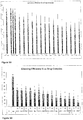
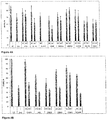
- Figure 3A shows the silencing efficiency of peptides-siRNA complex, with two Molar Ratio: 20 and 40.
- Figure 3B shows the results of a different run for the silencing efficiency of peptides-siRNA complex, with the same Molar Ratios.
- Figure 4A shows the cytotoxicity of 18 peptide-siRNA compelxes against CHO-K1 cells.
- Figure 4B shows the cytotoxicity of 6 peptide-siRNA compelxes against CHO-K1 cells.
- DLS Dynamic Light Scattering
- Figure 5 shows the size of the complexes of C6M1 peptide and siRNA at peptide/siRNA molar ratios from 1:1 to 60:1 over time. As shown, the size of the complex increases over time, by increasing peptide/siRNA molar ratio. As the size range of 100 to 250 nm might be the appropriate range for in vitro and in vivo treatment, the molar ratio of 20:1 with an incubation time of less than 30 min might be the optimum conditions for complex preparation.
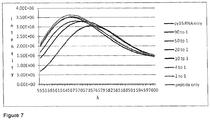
- the peptide C6M1 was used in this experiment to study the interaction between peptide and siRNA using fluorescence spectroscopy method.
- C6M1 has four tryptophan amino acids which can be used as fluorescence probe.
- Figure 6 by adding more siRNA to samples of fixed C6M1 concentration, the intensity of fluorescence decreased, indicating the interaction between peptide and siRNA.
- a blue shift from 355 to 330nm was also observed in molar ratios of less than 40:1, clearly at 20:1 and 10:1, probably due to the change in the environment of tryptophan by adding more hydrophilic siRNA molecules.
- Example 5 C6M1/siRNA complex inhibits proliferation of cancer cells in nude mice
- the potency of C6M1/siRNA complexes to inhibit cancer cell proliferation was investigated on a tumor animal model.
- siRNA targeting the bcl-2 gene product was used here.
- the bcl-2 protein regulates the mitochondria-mediated apoptosis pathway, and various cell death stimuli, including chemotherapeutic agents. So that a drug to reduce the levels of this protein would be expected to promote apoptosis and would therefore be considered a promising therapeutic agent.
- mice were killed by dislocation, separate tumor and weighed it. We calculated average weight of each group and tumor inhibition rate.
- the siRNA group inhibition rate is 37%, siRNA-C6M1 53%, which can inhibit tumor growth significantly.
Landscapes
- Health & Medical Sciences (AREA)
- Life Sciences & Earth Sciences (AREA)
- Chemical & Material Sciences (AREA)
- Engineering & Computer Science (AREA)
- Genetics & Genomics (AREA)
- General Health & Medical Sciences (AREA)
- Organic Chemistry (AREA)
- Molecular Biology (AREA)
- Bioinformatics & Cheminformatics (AREA)
- Biochemistry (AREA)
- Medicinal Chemistry (AREA)
- Biomedical Technology (AREA)
- Zoology (AREA)
- Public Health (AREA)
- Animal Behavior & Ethology (AREA)
- Pharmacology & Pharmacy (AREA)
- Proteomics, Peptides & Aminoacids (AREA)
- Veterinary Medicine (AREA)
- Epidemiology (AREA)
- Biotechnology (AREA)
- Wood Science & Technology (AREA)
- General Engineering & Computer Science (AREA)
- Biophysics (AREA)
- Physics & Mathematics (AREA)
- Plant Pathology (AREA)
- Microbiology (AREA)
- Gastroenterology & Hepatology (AREA)
- Toxicology (AREA)
- Dermatology (AREA)
- Oncology (AREA)
- General Chemical & Material Sciences (AREA)
- Nuclear Medicine, Radiotherapy & Molecular Imaging (AREA)
- Chemical Kinetics & Catalysis (AREA)
- Peptides Or Proteins (AREA)
- Medicines That Contain Protein Lipid Enzymes And Other Medicines (AREA)
Claims (16)
- Complexe comprenant un peptide ayant la séquence d'acides aminés selon l'un quelconque des SEQ ID N° : 12-21, 26-33 et 43-46 et une molécule cargo, dans lequel la molécule cargo est un acide nucléique.
- Complexe selon la revendication 1, dans lequel l'acide nucléique est un ARN interférant court (ARNsi).
- Complexe selon la revendication 2, dans lequel l'ARNsi est complexé avec le peptide selon un rapport molaire dans la plage de 1:1 à 60:1.
- Complexe selon la revendication 2, dans lequel l'ARNsi est complexé avec le peptide selon un rapport molaire dans la plage de 5:1 à 60:1.
- Complexe selon la revendication 2, dans lequel l'ARNsi est complexé avec le peptide selon un rapport molaire de 20:1.
- Complexe selon la revendication 2, dans lequel l'ARNsi est complexé avec le peptide selon un rapport molaire de 40:1.
- Complexe selon la revendication 1, dans lequel le peptide a la séquence d'acides aminés selon l'un quelconque des SEQ ID N° : 12-21, 28-33 et 44-46.
- Composition pharmaceutique comprenant un complexe selon l'une quelconque des revendications 2 à 7 permettant l'administration d'une quantité thérapeutiquement efficace d'ARNsi.
- Complexe selon l'une quelconque des revendications 2 à 7, destiné à être utilisé en thérapie pour administrer de l'ARNsi dans une cellule.
- Complexe destiné à être utilisé selon la revendication 9, caractérisé en ce que la cellule est une cellule CHO.
- Complexe destiné à être utilisé selon la revendication 9 ou 10, dans lequel l'ARNsi réduit les niveaux d'une protéine endogène de la cellule.
- Composition pharmaceutique selon la revendication 8, destinée à être utilisée en thérapie pour réduire les niveaux d'un produit génique dans une cellule ou un tissu d'un animal.
- Composition pharmaceutique destinée à être utilisée selon la revendication 12, la cellule étant une cellule tumorale ou le tissu étant un tissu tumoral.
- Composition pharmaceutique destinée à être utilisée selon la revendication 12, dans laquelle l'ARNsi cible un produit génique qui régule l'apoptose.
- Composition pharmaceutique destinée à être utilisée selon la revendication 14, dans laquelle le gène qui régule l'apoptose est bcl-2.
- Peptide ayant la séquence d'acides aminés selon l'un quelconque des SEQ ID N° : 12-21, 26-33 et 43-46.
Priority Applications (1)
| Application Number | Priority Date | Filing Date | Title |
|---|---|---|---|
| EP20174827.4A EP3725333B1 (fr) | 2011-11-24 | 2012-11-23 | Conception de séquences peptidiques et leur utilisation pour l'administration d'arnsi induite par des peptides |
Applications Claiming Priority (3)
| Application Number | Priority Date | Filing Date | Title |
|---|---|---|---|
| US201161563591P | 2011-11-24 | 2011-11-24 | |
| PCT/CA2012/050843 WO2013075244A1 (fr) | 2011-11-24 | 2012-11-23 | Conception de séquences peptidiques et leur l'utilisation pour l'administration d'arnsi induite par des peptides |
| EP12852395.8A EP2782926B1 (fr) | 2011-11-24 | 2012-11-23 | Conception de séquences peptidiques et leur utilisation pour l'administration d'arnsi induite par des peptides |
Related Parent Applications (2)
| Application Number | Title | Priority Date | Filing Date |
|---|---|---|---|
| EP12852395.8A Division-Into EP2782926B1 (fr) | 2011-11-24 | 2012-11-23 | Conception de séquences peptidiques et leur utilisation pour l'administration d'arnsi induite par des peptides |
| EP12852395.8A Division EP2782926B1 (fr) | 2011-11-24 | 2012-11-23 | Conception de séquences peptidiques et leur utilisation pour l'administration d'arnsi induite par des peptides |
Related Child Applications (2)
| Application Number | Title | Priority Date | Filing Date |
|---|---|---|---|
| EP20174827.4A Division EP3725333B1 (fr) | 2011-11-24 | 2012-11-23 | Conception de séquences peptidiques et leur utilisation pour l'administration d'arnsi induite par des peptides |
| EP20174827.4A Division-Into EP3725333B1 (fr) | 2011-11-24 | 2012-11-23 | Conception de séquences peptidiques et leur utilisation pour l'administration d'arnsi induite par des peptides |
Publications (2)
| Publication Number | Publication Date |
|---|---|
| EP3375457A1 EP3375457A1 (fr) | 2018-09-19 |
| EP3375457B1 true EP3375457B1 (fr) | 2020-06-24 |
Family
ID=48468958
Family Applications (3)
| Application Number | Title | Priority Date | Filing Date |
|---|---|---|---|
| EP18170087.3A Active EP3375457B1 (fr) | 2011-11-24 | 2012-11-23 | Conception de séquences peptidiques et leur utilisation pour l'administration d'arnsi induite par des peptides |
| EP12852395.8A Active EP2782926B1 (fr) | 2011-11-24 | 2012-11-23 | Conception de séquences peptidiques et leur utilisation pour l'administration d'arnsi induite par des peptides |
| EP20174827.4A Active EP3725333B1 (fr) | 2011-11-24 | 2012-11-23 | Conception de séquences peptidiques et leur utilisation pour l'administration d'arnsi induite par des peptides |
Family Applications After (2)
| Application Number | Title | Priority Date | Filing Date |
|---|---|---|---|
| EP12852395.8A Active EP2782926B1 (fr) | 2011-11-24 | 2012-11-23 | Conception de séquences peptidiques et leur utilisation pour l'administration d'arnsi induite par des peptides |
| EP20174827.4A Active EP3725333B1 (fr) | 2011-11-24 | 2012-11-23 | Conception de séquences peptidiques et leur utilisation pour l'administration d'arnsi induite par des peptides |
Country Status (4)
| Country | Link |
|---|---|
| US (3) | US9259483B2 (fr) |
| EP (3) | EP3375457B1 (fr) |
| CN (3) | CN104487450B (fr) |
| WO (1) | WO2013075244A1 (fr) |
Families Citing this family (10)
| Publication number | Priority date | Publication date | Assignee | Title |
|---|---|---|---|---|
| CN103694317A (zh) * | 2013-12-12 | 2014-04-02 | 南京工业大学 | 一种阳离子型聚肽,以及基于所述聚肽的siRNA基因转染试剂及其制备方法 |
| CN104725478B (zh) * | 2013-12-18 | 2018-12-25 | 纳肽得有限公司 | 多肽化合物、多肽化合物与siRNA的组装体及其应用 |
| WO2018085460A2 (fr) | 2016-11-02 | 2018-05-11 | Flagship Pioneering, Inc. | Compositions et procédés de livraison de cellules |
| JP7512207B2 (ja) * | 2018-05-24 | 2024-07-08 | サーナオミクス インコーポレイテッド | 核酸治療薬のための調節可能な共カップリングポリペプチドナノ粒子送達系の組成物および方法 |
| EP3597223A1 (fr) * | 2018-07-17 | 2020-01-22 | Centre National De La Recherche Scientifique | Peptides pour utilisation en tant que peptides pénétrant des cellules |
| WO2020214846A1 (fr) | 2019-04-17 | 2020-10-22 | Aadigen, Llc | Peptides et nanoparticules pour l'administration intracellulaire de molécules |
| CN112979758A (zh) * | 2021-03-05 | 2021-06-18 | 扬州博科文化发展有限公司 | 一类多肽及其制备多肽花青素复合物的方法与应用 |
| CN117700490B (zh) * | 2022-12-30 | 2024-06-11 | 云南沃森生物技术股份有限公司 | 一种四支链多肽及其制备方法 |
| CN116870186B (zh) * | 2023-06-06 | 2026-06-23 | 天津医科大学 | siRNA药物递送体系及其制备方法和应用 |
| CN119970778B (zh) * | 2025-02-13 | 2026-04-10 | 中国科学院广州生物医药与健康研究院 | siRNA在制备TILRR表达抑制剂中的应用 |
Family Cites Families (28)
| Publication number | Priority date | Publication date | Assignee | Title |
|---|---|---|---|---|
| US5955343A (en) | 1992-12-28 | 1999-09-21 | Massachusetts Institute Of Technology | Stable macroscopic membranes formed by self-assembly of amphiphilic peptides and uses therefor |
| US5614503A (en) | 1993-11-12 | 1997-03-25 | Aronex Pharmaceuticals, Inc. | Amphipathic nucleic acid transporter |
| US6040295A (en) | 1995-01-13 | 2000-03-21 | Genemedicine, Inc. | Formulated nucleic acid compositions and methods of administering the same for gene therapy |
| GB9504761D0 (en) | 1995-03-09 | 1995-04-26 | Unilever Plc | Amphiphilic peptide and analogs thereof |
| WO1997023607A2 (fr) * | 1995-12-21 | 1997-07-03 | The University Court Of The University Of Dundee | Presentation d'antigenes, introduits dans les cellules par stimulation de la macropinocytose |
| US6387700B1 (en) | 1996-11-04 | 2002-05-14 | The Reagents Of The University Of Michigan | Cationic peptides, Cys-Trp-(LYS)n, for gene delivery |
| ES2210761T3 (es) | 1997-05-21 | 2004-07-01 | The Board Of Trustees Of The Leland Stanford Junior University | Composicion y procedimiento para mejorar el transporte a traves de las membranas biologicas. |
| US7306784B2 (en) | 1998-06-20 | 2007-12-11 | Washington University | Membrane-permeant peptide complexes for medical imaging, diagnostics, and pharmaceutical therapy |
| CA2394758A1 (fr) | 1999-12-29 | 2001-07-05 | A. James Mixson | Copolymere d'histidine et procedes d'utilisation associes |
| EP1242609A2 (fr) * | 1999-12-30 | 2002-09-25 | Novartis AG | Nouveaux vecteurs synthetiques colloides destines a la therapie genique |
| SE0201863D0 (en) | 2002-06-18 | 2002-06-18 | Cepep Ab | Cell penetrating peptides |
| US20040147027A1 (en) | 2003-01-28 | 2004-07-29 | Troy Carol M. | Complex for facilitating delivery of dsRNA into a cell and uses thereof |
| US7166692B2 (en) | 2003-03-04 | 2007-01-23 | Canbrex Bio Science Walkersville, Inc. | Intracellular delivery of small molecules, proteins, and nucleic acids |
| US20060035815A1 (en) * | 2004-05-04 | 2006-02-16 | Nastech Pharmaceutical Company Inc. | Pharmaceutical compositions for delivery of ribonucleic acid to a cell |
| US20080299104A1 (en) * | 2004-07-01 | 2008-12-04 | California Institute Of Technology | Methods for detecting agents involved in neuronal apoptosis and compositions thereof |
| US7084248B2 (en) | 2004-07-14 | 2006-08-01 | Gene Tools, Llc | Peptide composition and method for delivering substances into the cytosol of cells |
| EP1969000A2 (fr) | 2005-12-06 | 2008-09-17 | Centre National de la Recherche Scientifique | Peptides penetrant dans les cellules a delivrance intracellulaire des molecules |
| US7579318B2 (en) * | 2005-12-06 | 2009-08-25 | Centre De La Recherche De La Scientifique | Cell penetrating peptides for intracellular delivery of molecules |
| EP1968643A2 (fr) | 2005-12-16 | 2008-09-17 | Diatos | Conjugués peptidiques de pénétration cellulaire pour la délivrance d'acides nucléiques dans une cellule |
| DE602006020617D1 (de) | 2005-12-30 | 2011-04-21 | Evonik Roehm Gmbh | Lactoferrin-peptide, geeignet als in die zelle eindringende peptide |
| US7521232B2 (en) * | 2006-05-31 | 2009-04-21 | Icx Nomadics, Inc. | Emissive species for clinical imaging |
| WO2008033285A2 (fr) | 2006-09-15 | 2008-03-20 | The Trustees Of Culumbia University In The City Of New York | Délivrance d'arn à double brin dans le système nerveux central |
| WO2008063113A1 (fr) | 2006-11-20 | 2008-05-29 | Cepep Iii Ab | Peptides de pénétration cellulaire et construction les contenant constitués de 15 à 25 acides aminés de la protéine de suppression tumorale p14arf ou p19arf |
| WO2009026729A1 (fr) | 2007-08-30 | 2009-03-05 | University Of Waterloo | Peptides à auto-assemblage à base d'appariement d'acides aminés et procédés |
| WO2010039088A1 (fr) | 2008-09-16 | 2010-04-08 | Kariem Ahmed | Peptides de pénétration cellulaire chimiquement modifiés pour une administration améliorée de composés de modulation de gène |
| WO2011020188A1 (fr) * | 2009-08-21 | 2011-02-24 | University Of Waterloo | Séquence peptidique et administration d'un arnsi par l'intermédiaire dudit peptide |
| WO2011087804A2 (fr) * | 2009-12-21 | 2011-07-21 | Medtronic, Inc. | Compositions peptide-polynucléotide, et procédés de transfection d'une cellule avec de l'adn et traitement d'une maladie neurodégénérative |
| US9006415B2 (en) * | 2010-04-06 | 2015-04-14 | Massachusetts Institute Of Technology | Targeted delivery of nucleic acids |
-
2012
- 2012-11-23 EP EP18170087.3A patent/EP3375457B1/fr active Active
- 2012-11-23 EP EP12852395.8A patent/EP2782926B1/fr active Active
- 2012-11-23 CN CN201280057898.5A patent/CN104487450B/zh active Active
- 2012-11-23 CN CN201811108533.6A patent/CN110251682B/zh not_active Expired - Fee Related
- 2012-11-23 CN CN202211606804.7A patent/CN116549655A/zh not_active Withdrawn
- 2012-11-23 WO PCT/CA2012/050843 patent/WO2013075244A1/fr not_active Ceased
- 2012-11-23 EP EP20174827.4A patent/EP3725333B1/fr active Active
- 2012-11-23 US US14/359,873 patent/US9259483B2/en active Active
-
2015
- 2015-12-29 US US14/983,194 patent/US9603946B2/en not_active Expired - Fee Related
-
2017
- 2017-01-17 US US15/407,802 patent/US9950073B2/en not_active Expired - Fee Related
Non-Patent Citations (1)
| Title |
|---|
| None * |
Also Published As
| Publication number | Publication date |
|---|---|
| EP3725333A1 (fr) | 2020-10-21 |
| US20170128582A1 (en) | 2017-05-11 |
| EP2782926A1 (fr) | 2014-10-01 |
| EP3725333B1 (fr) | 2023-08-23 |
| US20160175456A1 (en) | 2016-06-23 |
| EP2782926B1 (fr) | 2018-07-04 |
| CN104487450B (zh) | 2018-09-21 |
| WO2013075244A1 (fr) | 2013-05-30 |
| EP3375457A1 (fr) | 2018-09-19 |
| US20140350082A1 (en) | 2014-11-27 |
| CN104487450A (zh) | 2015-04-01 |
| CN110251682A (zh) | 2019-09-20 |
| CN110251682B (zh) | 2022-12-06 |
| US9259483B2 (en) | 2016-02-16 |
| US9603946B2 (en) | 2017-03-28 |
| CN116549655A (zh) | 2023-08-08 |
| US9950073B2 (en) | 2018-04-24 |
| EP2782926A4 (fr) | 2015-11-04 |
Similar Documents
| Publication | Publication Date | Title |
|---|---|---|
| US9950073B2 (en) | Peptide sequence design and use thereof for peptide-mediated siRNA delivery | |
| Gooding et al. | siRNA delivery: from lipids to cell‐penetrating peptides and their mimics | |
| Deshayes et al. | Delivery of proteins and nucleic acids using a non-covalent peptide-based strategy | |
| Kim et al. | Enhanced siRNA delivery using cationic liposomes with new polyarginine-conjugated PEG-lipid | |
| Hayashi et al. | Cell penetrating peptide-mediated systemic siRNA delivery to the liver | |
| Hyun et al. | Construction of histidine-containing hydrocarbon stapled cell penetrating peptides for in vitro and in vivo delivery of siRNAs | |
| Soudah et al. | AntimiR-155 cyclic peptide–PNA conjugate: synthesis, cellular uptake, and biological activity | |
| US20140038281A1 (en) | System for cargo delivery into the cells | |
| WO2011020188A1 (fr) | Séquence peptidique et administration d'un arnsi par l'intermédiaire dudit peptide | |
| Oskolkov et al. | NickFects, phosphorylated derivatives of transportan 10 for cellular delivery of oligonucleotides | |
| WO2021134026A2 (fr) | Compositions et méthodes d'administration d'acides nucléiques | |
| CN112584873A (zh) | 用作细胞穿透肽的肽 | |
| Hirano et al. | Magainin 2-derived stapled peptides derived with the ability to deliver pDNA, mRNA, and siRNA into cells | |
| Jafari et al. | Peptide mediated siRNA delivery | |
| WO2015090212A1 (fr) | Polypeptide et utilisation de celui-ci en tant que vecteur d'administration | |
| Lindberg et al. | Therapeutic delivery opportunities, obstacles and applications for cell-penetrating peptides | |
| KR20110114952A (ko) | 유전자 운반체 | |
| Glebova et al. | Therapeutic siRNAs and nonviral systems for their delivery | |
| Xu et al. | In vitro and in vivo therapeutic siRNA delivery induced by a tryptophan-rich endosomolytic peptide | |
| Nielsen | RNA targeting using peptide nucleic acid | |
| Li et al. | Emerging Landscape of Therapeutic Oligonucleotide Delivery by Cell‐penetrating Peptides | |
| Hadianamrei | Design and evaluation of short cationic amphiphilic anticancer peptides with gene delivery potential | |
| Langel | Methods for CPP Functionalization with Oligonucleotides | |
| Gamboa | Characterization and Evaluation Of Hybrid Collagen/Cell Penetrating Peptides for Sirna Delivery | |
| Schmitz | From cell penetrating peptides to peptoids and polyamines as novel artificial molecular transporters |
Legal Events
| Date | Code | Title | Description |
|---|---|---|---|
| PUAI | Public reference made under article 153(3) epc to a published international application that has entered the european phase |
Free format text: ORIGINAL CODE: 0009012 |
|
| STAA | Information on the status of an ep patent application or granted ep patent |
Free format text: STATUS: THE APPLICATION HAS BEEN PUBLISHED |
|
| AC | Divisional application: reference to earlier application |
Ref document number: 2782926 Country of ref document: EP Kind code of ref document: P |
|
| AK | Designated contracting states |
Kind code of ref document: A1 Designated state(s): AL AT BE BG CH CY CZ DE DK EE ES FI FR GB GR HR HU IE IS IT LI LT LU LV MC MK MT NL NO PL PT RO RS SE SI SK SM TR |
|
| AX | Request for extension of the european patent |
Extension state: BA ME |
|
| RIN1 | Information on inventor provided before grant (corrected) |
Inventor name: JAFARI, MOUSA Inventor name: CHEN, PU Inventor name: XU, WEN Inventor name: PAN, RAN Inventor name: CHEN, BAOLING Inventor name: KARUNARATNE, NEDRA |
|
| RIN1 | Information on inventor provided before grant (corrected) |
Inventor name: CHEN, PU Inventor name: PAN, RAN Inventor name: KARUNARATNE, NEDRA Inventor name: JAFARI, MOUSA Inventor name: CHEN, BAOLING Inventor name: XU, WEN |
|
| STAA | Information on the status of an ep patent application or granted ep patent |
Free format text: STATUS: REQUEST FOR EXAMINATION WAS MADE |
|
| 17P | Request for examination filed |
Effective date: 20190218 |
|
| RBV | Designated contracting states (corrected) |
Designated state(s): AL AT BE BG CH CY CZ DE DK EE ES FI FR GB GR HR HU IE IS IT LI LT LU LV MC MK MT NL NO PL PT RO RS SE SI SK SM TR |
|
| GRAP | Despatch of communication of intention to grant a patent |
Free format text: ORIGINAL CODE: EPIDOSNIGR1 |
|
| STAA | Information on the status of an ep patent application or granted ep patent |
Free format text: STATUS: GRANT OF PATENT IS INTENDED |
|
| RIC1 | Information provided on ipc code assigned before grant |
Ipc: C07K 14/47 20060101ALI20200122BHEP Ipc: C12N 15/113 20100101ALI20200122BHEP Ipc: C12N 15/87 20060101ALI20200122BHEP Ipc: A61K 38/00 20060101ALI20200122BHEP Ipc: A61K 9/08 20060101ALI20200122BHEP Ipc: A61K 31/713 20060101ALI20200122BHEP Ipc: C12N 15/11 20060101ALI20200122BHEP Ipc: A61K 47/64 20170101AFI20200122BHEP Ipc: A61P 35/00 20060101ALI20200122BHEP Ipc: A61K 9/00 20060101ALI20200122BHEP Ipc: C07K 14/00 20060101ALI20200122BHEP |
|
| INTG | Intention to grant announced |
Effective date: 20200217 |
|
| GRAS | Grant fee paid |
Free format text: ORIGINAL CODE: EPIDOSNIGR3 |
|
| GRAA | (expected) grant |
Free format text: ORIGINAL CODE: 0009210 |
|
| STAA | Information on the status of an ep patent application or granted ep patent |
Free format text: STATUS: THE PATENT HAS BEEN GRANTED |
|
| AC | Divisional application: reference to earlier application |
Ref document number: 2782926 Country of ref document: EP Kind code of ref document: P |
|
| AK | Designated contracting states |
Kind code of ref document: B1 Designated state(s): AL AT BE BG CH CY CZ DE DK EE ES FI FR GB GR HR HU IE IS IT LI LT LU LV MC MK MT NL NO PL PT RO RS SE SI SK SM TR |
|
| REG | Reference to a national code |
Ref country code: GB Ref legal event code: FG4D |
|
| REG | Reference to a national code |
Ref country code: CH Ref legal event code: EP |
|
| REG | Reference to a national code |
Ref country code: DE Ref legal event code: R096 Ref document number: 602012070969 Country of ref document: DE |
|
| REG | Reference to a national code |
Ref country code: AT Ref legal event code: REF Ref document number: 1283243 Country of ref document: AT Kind code of ref document: T Effective date: 20200715 |
|
| REG | Reference to a national code |
Ref country code: IE Ref legal event code: FG4D |
|
| PG25 | Lapsed in a contracting state [announced via postgrant information from national office to epo] |
Ref country code: SE Free format text: LAPSE BECAUSE OF FAILURE TO SUBMIT A TRANSLATION OF THE DESCRIPTION OR TO PAY THE FEE WITHIN THE PRESCRIBED TIME-LIMIT Effective date: 20200624 Ref country code: FI Free format text: LAPSE BECAUSE OF FAILURE TO SUBMIT A TRANSLATION OF THE DESCRIPTION OR TO PAY THE FEE WITHIN THE PRESCRIBED TIME-LIMIT Effective date: 20200624 Ref country code: NO Free format text: LAPSE BECAUSE OF FAILURE TO SUBMIT A TRANSLATION OF THE DESCRIPTION OR TO PAY THE FEE WITHIN THE PRESCRIBED TIME-LIMIT Effective date: 20200924 Ref country code: GR Free format text: LAPSE BECAUSE OF FAILURE TO SUBMIT A TRANSLATION OF THE DESCRIPTION OR TO PAY THE FEE WITHIN THE PRESCRIBED TIME-LIMIT Effective date: 20200925 Ref country code: LT Free format text: LAPSE BECAUSE OF FAILURE TO SUBMIT A TRANSLATION OF THE DESCRIPTION OR TO PAY THE FEE WITHIN THE PRESCRIBED TIME-LIMIT Effective date: 20200624 |
|
| REG | Reference to a national code |
Ref country code: LT Ref legal event code: MG4D |
|
| PG25 | Lapsed in a contracting state [announced via postgrant information from national office to epo] |
Ref country code: RS Free format text: LAPSE BECAUSE OF FAILURE TO SUBMIT A TRANSLATION OF THE DESCRIPTION OR TO PAY THE FEE WITHIN THE PRESCRIBED TIME-LIMIT Effective date: 20200624 Ref country code: BG Free format text: LAPSE BECAUSE OF FAILURE TO SUBMIT A TRANSLATION OF THE DESCRIPTION OR TO PAY THE FEE WITHIN THE PRESCRIBED TIME-LIMIT Effective date: 20200924 Ref country code: LV Free format text: LAPSE BECAUSE OF FAILURE TO SUBMIT A TRANSLATION OF THE DESCRIPTION OR TO PAY THE FEE WITHIN THE PRESCRIBED TIME-LIMIT Effective date: 20200624 Ref country code: HR Free format text: LAPSE BECAUSE OF FAILURE TO SUBMIT A TRANSLATION OF THE DESCRIPTION OR TO PAY THE FEE WITHIN THE PRESCRIBED TIME-LIMIT Effective date: 20200624 |
|
| REG | Reference to a national code |
Ref country code: NL Ref legal event code: MP Effective date: 20200624 |
|
| REG | Reference to a national code |
Ref country code: AT Ref legal event code: MK05 Ref document number: 1283243 Country of ref document: AT Kind code of ref document: T Effective date: 20200624 |
|
| PG25 | Lapsed in a contracting state [announced via postgrant information from national office to epo] |
Ref country code: NL Free format text: LAPSE BECAUSE OF FAILURE TO SUBMIT A TRANSLATION OF THE DESCRIPTION OR TO PAY THE FEE WITHIN THE PRESCRIBED TIME-LIMIT Effective date: 20200624 Ref country code: AL Free format text: LAPSE BECAUSE OF FAILURE TO SUBMIT A TRANSLATION OF THE DESCRIPTION OR TO PAY THE FEE WITHIN THE PRESCRIBED TIME-LIMIT Effective date: 20200624 |
|
| PG25 | Lapsed in a contracting state [announced via postgrant information from national office to epo] |
Ref country code: RO Free format text: LAPSE BECAUSE OF FAILURE TO SUBMIT A TRANSLATION OF THE DESCRIPTION OR TO PAY THE FEE WITHIN THE PRESCRIBED TIME-LIMIT Effective date: 20200624 Ref country code: CZ Free format text: LAPSE BECAUSE OF FAILURE TO SUBMIT A TRANSLATION OF THE DESCRIPTION OR TO PAY THE FEE WITHIN THE PRESCRIBED TIME-LIMIT Effective date: 20200624 Ref country code: SM Free format text: LAPSE BECAUSE OF FAILURE TO SUBMIT A TRANSLATION OF THE DESCRIPTION OR TO PAY THE FEE WITHIN THE PRESCRIBED TIME-LIMIT Effective date: 20200624 Ref country code: IT Free format text: LAPSE BECAUSE OF FAILURE TO SUBMIT A TRANSLATION OF THE DESCRIPTION OR TO PAY THE FEE WITHIN THE PRESCRIBED TIME-LIMIT Effective date: 20200624 Ref country code: AT Free format text: LAPSE BECAUSE OF FAILURE TO SUBMIT A TRANSLATION OF THE DESCRIPTION OR TO PAY THE FEE WITHIN THE PRESCRIBED TIME-LIMIT Effective date: 20200624 Ref country code: EE Free format text: LAPSE BECAUSE OF FAILURE TO SUBMIT A TRANSLATION OF THE DESCRIPTION OR TO PAY THE FEE WITHIN THE PRESCRIBED TIME-LIMIT Effective date: 20200624 Ref country code: ES Free format text: LAPSE BECAUSE OF FAILURE TO SUBMIT A TRANSLATION OF THE DESCRIPTION OR TO PAY THE FEE WITHIN THE PRESCRIBED TIME-LIMIT Effective date: 20200624 Ref country code: PT Free format text: LAPSE BECAUSE OF FAILURE TO SUBMIT A TRANSLATION OF THE DESCRIPTION OR TO PAY THE FEE WITHIN THE PRESCRIBED TIME-LIMIT Effective date: 20201026 |
|
| PG25 | Lapsed in a contracting state [announced via postgrant information from national office to epo] |
Ref country code: PL Free format text: LAPSE BECAUSE OF FAILURE TO SUBMIT A TRANSLATION OF THE DESCRIPTION OR TO PAY THE FEE WITHIN THE PRESCRIBED TIME-LIMIT Effective date: 20200624 Ref country code: SK Free format text: LAPSE BECAUSE OF FAILURE TO SUBMIT A TRANSLATION OF THE DESCRIPTION OR TO PAY THE FEE WITHIN THE PRESCRIBED TIME-LIMIT Effective date: 20200624 Ref country code: IS Free format text: LAPSE BECAUSE OF FAILURE TO SUBMIT A TRANSLATION OF THE DESCRIPTION OR TO PAY THE FEE WITHIN THE PRESCRIBED TIME-LIMIT Effective date: 20201024 |
|
| REG | Reference to a national code |
Ref country code: DE Ref legal event code: R097 Ref document number: 602012070969 Country of ref document: DE |
|
| PG25 | Lapsed in a contracting state [announced via postgrant information from national office to epo] |
Ref country code: DK Free format text: LAPSE BECAUSE OF FAILURE TO SUBMIT A TRANSLATION OF THE DESCRIPTION OR TO PAY THE FEE WITHIN THE PRESCRIBED TIME-LIMIT Effective date: 20200624 |
|
| PLBE | No opposition filed within time limit |
Free format text: ORIGINAL CODE: 0009261 |
|
| STAA | Information on the status of an ep patent application or granted ep patent |
Free format text: STATUS: NO OPPOSITION FILED WITHIN TIME LIMIT |
|
| 26N | No opposition filed |
Effective date: 20210325 |
|
| PG25 | Lapsed in a contracting state [announced via postgrant information from national office to epo] |
Ref country code: MC Free format text: LAPSE BECAUSE OF FAILURE TO SUBMIT A TRANSLATION OF THE DESCRIPTION OR TO PAY THE FEE WITHIN THE PRESCRIBED TIME-LIMIT Effective date: 20200624 |
|
| REG | Reference to a national code |
Ref country code: CH Ref legal event code: PL |
|
| PG25 | Lapsed in a contracting state [announced via postgrant information from national office to epo] |
Ref country code: LU Free format text: LAPSE BECAUSE OF NON-PAYMENT OF DUE FEES Effective date: 20201123 |
|
| REG | Reference to a national code |
Ref country code: BE Ref legal event code: MM Effective date: 20201130 |
|
| PG25 | Lapsed in a contracting state [announced via postgrant information from national office to epo] |
Ref country code: LI Free format text: LAPSE BECAUSE OF NON-PAYMENT OF DUE FEES Effective date: 20201130 Ref country code: CH Free format text: LAPSE BECAUSE OF NON-PAYMENT OF DUE FEES Effective date: 20201130 Ref country code: SI Free format text: LAPSE BECAUSE OF FAILURE TO SUBMIT A TRANSLATION OF THE DESCRIPTION OR TO PAY THE FEE WITHIN THE PRESCRIBED TIME-LIMIT Effective date: 20200624 |
|
| PG25 | Lapsed in a contracting state [announced via postgrant information from national office to epo] |
Ref country code: IE Free format text: LAPSE BECAUSE OF NON-PAYMENT OF DUE FEES Effective date: 20201123 |
|
| PG25 | Lapsed in a contracting state [announced via postgrant information from national office to epo] |
Ref country code: TR Free format text: LAPSE BECAUSE OF FAILURE TO SUBMIT A TRANSLATION OF THE DESCRIPTION OR TO PAY THE FEE WITHIN THE PRESCRIBED TIME-LIMIT Effective date: 20200624 Ref country code: MT Free format text: LAPSE BECAUSE OF FAILURE TO SUBMIT A TRANSLATION OF THE DESCRIPTION OR TO PAY THE FEE WITHIN THE PRESCRIBED TIME-LIMIT Effective date: 20200624 Ref country code: CY Free format text: LAPSE BECAUSE OF FAILURE TO SUBMIT A TRANSLATION OF THE DESCRIPTION OR TO PAY THE FEE WITHIN THE PRESCRIBED TIME-LIMIT Effective date: 20200624 |
|
| PG25 | Lapsed in a contracting state [announced via postgrant information from national office to epo] |
Ref country code: MK Free format text: LAPSE BECAUSE OF FAILURE TO SUBMIT A TRANSLATION OF THE DESCRIPTION OR TO PAY THE FEE WITHIN THE PRESCRIBED TIME-LIMIT Effective date: 20200624 |
|
| PG25 | Lapsed in a contracting state [announced via postgrant information from national office to epo] |
Ref country code: BE Free format text: LAPSE BECAUSE OF NON-PAYMENT OF DUE FEES Effective date: 20201130 |
|
| P01 | Opt-out of the competence of the unified patent court (upc) registered |
Effective date: 20230608 |
|
| PGFP | Annual fee paid to national office [announced via postgrant information from national office to epo] |
Ref country code: DE Payment date: 20250522 Year of fee payment: 13 |
|
| PGFP | Annual fee paid to national office [announced via postgrant information from national office to epo] |
Ref country code: GB Payment date: 20250528 Year of fee payment: 13 |
|
| PGFP | Annual fee paid to national office [announced via postgrant information from national office to epo] |
Ref country code: FR Payment date: 20250528 Year of fee payment: 13 |
|
| REG | Reference to a national code |
Ref country code: DE Ref legal event code: R119 Ref document number: 602012070969 Country of ref document: DE |