EP3375880B1 - Verfahren zur herstellung von schwerkettiger aminocarbonsäure - Google Patents
Verfahren zur herstellung von schwerkettiger aminocarbonsäure Download PDFInfo
- Publication number
- EP3375880B1 EP3375880B1 EP16860246.4A EP16860246A EP3375880B1 EP 3375880 B1 EP3375880 B1 EP 3375880B1 EP 16860246 A EP16860246 A EP 16860246A EP 3375880 B1 EP3375880 B1 EP 3375880B1
- Authority
- EP
- European Patent Office
- Prior art keywords
- gene
- dna
- primer
- recombinant microorganism
- artificial sequence
- Prior art date
- Legal status (The legal status is an assumption and is not a legal conclusion. Google has not performed a legal analysis and makes no representation as to the accuracy of the status listed.)
- Active
Links
Images





Classifications
-
- C—CHEMISTRY; METALLURGY
- C12—BIOCHEMISTRY; BEER; SPIRITS; WINE; VINEGAR; MICROBIOLOGY; ENZYMOLOGY; MUTATION OR GENETIC ENGINEERING
- C12N—MICROORGANISMS OR ENZYMES; COMPOSITIONS THEREOF; PROPAGATING, PRESERVING, OR MAINTAINING MICROORGANISMS; MUTATION OR GENETIC ENGINEERING; CULTURE MEDIA
- C12N15/00—Mutation or genetic engineering; DNA or RNA concerning genetic engineering, vectors, e.g. plasmids, or their isolation, preparation or purification; Use of hosts therefor
- C12N15/09—Recombinant DNA-technology
- C12N15/63—Introduction of foreign genetic material using vectors; Vectors; Use of hosts therefor; Regulation of expression
- C12N15/70—Vectors or expression systems specially adapted for E. coli
-
- C—CHEMISTRY; METALLURGY
- C12—BIOCHEMISTRY; BEER; SPIRITS; WINE; VINEGAR; MICROBIOLOGY; ENZYMOLOGY; MUTATION OR GENETIC ENGINEERING
- C12N—MICROORGANISMS OR ENZYMES; COMPOSITIONS THEREOF; PROPAGATING, PRESERVING, OR MAINTAINING MICROORGANISMS; MUTATION OR GENETIC ENGINEERING; CULTURE MEDIA
- C12N15/00—Mutation or genetic engineering; DNA or RNA concerning genetic engineering, vectors, e.g. plasmids, or their isolation, preparation or purification; Use of hosts therefor
- C12N15/09—Recombinant DNA-technology
- C12N15/63—Introduction of foreign genetic material using vectors; Vectors; Use of hosts therefor; Regulation of expression
- C12N15/79—Vectors or expression systems specially adapted for eukaryotic hosts
- C12N15/80—Vectors or expression systems specially adapted for eukaryotic hosts for fungi
- C12N15/81—Vectors or expression systems specially adapted for eukaryotic hosts for fungi for yeasts
-
- C—CHEMISTRY; METALLURGY
- C12—BIOCHEMISTRY; BEER; SPIRITS; WINE; VINEGAR; MICROBIOLOGY; ENZYMOLOGY; MUTATION OR GENETIC ENGINEERING
- C12N—MICROORGANISMS OR ENZYMES; COMPOSITIONS THEREOF; PROPAGATING, PRESERVING, OR MAINTAINING MICROORGANISMS; MUTATION OR GENETIC ENGINEERING; CULTURE MEDIA
- C12N15/00—Mutation or genetic engineering; DNA or RNA concerning genetic engineering, vectors, e.g. plasmids, or their isolation, preparation or purification; Use of hosts therefor
- C12N15/09—Recombinant DNA-technology
- C12N15/63—Introduction of foreign genetic material using vectors; Vectors; Use of hosts therefor; Regulation of expression
- C12N15/79—Vectors or expression systems specially adapted for eukaryotic hosts
- C12N15/80—Vectors or expression systems specially adapted for eukaryotic hosts for fungi
- C12N15/81—Vectors or expression systems specially adapted for eukaryotic hosts for fungi for yeasts
- C12N15/815—Vectors or expression systems specially adapted for eukaryotic hosts for fungi for yeasts for yeasts other than Saccharomyces
-
- C—CHEMISTRY; METALLURGY
- C12—BIOCHEMISTRY; BEER; SPIRITS; WINE; VINEGAR; MICROBIOLOGY; ENZYMOLOGY; MUTATION OR GENETIC ENGINEERING
- C12N—MICROORGANISMS OR ENZYMES; COMPOSITIONS THEREOF; PROPAGATING, PRESERVING, OR MAINTAINING MICROORGANISMS; MUTATION OR GENETIC ENGINEERING; CULTURE MEDIA
- C12N9/00—Enzymes; Proenzymes; Compositions thereof; Processes for preparing, activating, inhibiting, separating or purifying enzymes
- C12N9/0004—Oxidoreductases (1.)
- C12N9/0008—Oxidoreductases (1.) acting on the aldehyde or oxo group of donors (1.2)
-
- C—CHEMISTRY; METALLURGY
- C12—BIOCHEMISTRY; BEER; SPIRITS; WINE; VINEGAR; MICROBIOLOGY; ENZYMOLOGY; MUTATION OR GENETIC ENGINEERING
- C12N—MICROORGANISMS OR ENZYMES; COMPOSITIONS THEREOF; PROPAGATING, PRESERVING, OR MAINTAINING MICROORGANISMS; MUTATION OR GENETIC ENGINEERING; CULTURE MEDIA
- C12N9/00—Enzymes; Proenzymes; Compositions thereof; Processes for preparing, activating, inhibiting, separating or purifying enzymes
- C12N9/0004—Oxidoreductases (1.)
- C12N9/001—Oxidoreductases (1.) acting on the CH-CH group of donors (1.3)
-
- C—CHEMISTRY; METALLURGY
- C12—BIOCHEMISTRY; BEER; SPIRITS; WINE; VINEGAR; MICROBIOLOGY; ENZYMOLOGY; MUTATION OR GENETIC ENGINEERING
- C12N—MICROORGANISMS OR ENZYMES; COMPOSITIONS THEREOF; PROPAGATING, PRESERVING, OR MAINTAINING MICROORGANISMS; MUTATION OR GENETIC ENGINEERING; CULTURE MEDIA
- C12N9/00—Enzymes; Proenzymes; Compositions thereof; Processes for preparing, activating, inhibiting, separating or purifying enzymes
- C12N9/10—Transferases (2.)
- C12N9/1096—Transferases (2.) transferring nitrogenous groups (2.6)
-
- C—CHEMISTRY; METALLURGY
- C12—BIOCHEMISTRY; BEER; SPIRITS; WINE; VINEGAR; MICROBIOLOGY; ENZYMOLOGY; MUTATION OR GENETIC ENGINEERING
- C12P—FERMENTATION OR ENZYME-USING PROCESSES TO SYNTHESISE A DESIRED CHEMICAL COMPOUND OR COMPOSITION OR TO SEPARATE OPTICAL ISOMERS FROM A RACEMIC MIXTURE
- C12P13/00—Preparation of nitrogen-containing organic compounds
- C12P13/001—Amines; Imines
-
- C—CHEMISTRY; METALLURGY
- C12—BIOCHEMISTRY; BEER; SPIRITS; WINE; VINEGAR; MICROBIOLOGY; ENZYMOLOGY; MUTATION OR GENETIC ENGINEERING
- C12P—FERMENTATION OR ENZYME-USING PROCESSES TO SYNTHESISE A DESIRED CHEMICAL COMPOUND OR COMPOSITION OR TO SEPARATE OPTICAL ISOMERS FROM A RACEMIC MIXTURE
- C12P13/00—Preparation of nitrogen-containing organic compounds
- C12P13/005—Amino acids other than alpha- or beta amino acids, e.g. gamma amino acids
-
- C—CHEMISTRY; METALLURGY
- C12—BIOCHEMISTRY; BEER; SPIRITS; WINE; VINEGAR; MICROBIOLOGY; ENZYMOLOGY; MUTATION OR GENETIC ENGINEERING
- C12P—FERMENTATION OR ENZYME-USING PROCESSES TO SYNTHESISE A DESIRED CHEMICAL COMPOUND OR COMPOSITION OR TO SEPARATE OPTICAL ISOMERS FROM A RACEMIC MIXTURE
- C12P13/00—Preparation of nitrogen-containing organic compounds
- C12P13/04—Alpha- or beta- amino acids
-
- C—CHEMISTRY; METALLURGY
- C12—BIOCHEMISTRY; BEER; SPIRITS; WINE; VINEGAR; MICROBIOLOGY; ENZYMOLOGY; MUTATION OR GENETIC ENGINEERING
- C12P—FERMENTATION OR ENZYME-USING PROCESSES TO SYNTHESISE A DESIRED CHEMICAL COMPOUND OR COMPOSITION OR TO SEPARATE OPTICAL ISOMERS FROM A RACEMIC MIXTURE
- C12P7/00—Preparation of oxygen-containing organic compounds
- C12P7/64—Fats; Fatty oils; Ester-type waxes; Higher fatty acids, i.e. having at least seven carbon atoms in an unbroken chain bound to a carboxyl group; Oxidised oils or fats
- C12P7/6409—Fatty acids
-
- C—CHEMISTRY; METALLURGY
- C12—BIOCHEMISTRY; BEER; SPIRITS; WINE; VINEGAR; MICROBIOLOGY; ENZYMOLOGY; MUTATION OR GENETIC ENGINEERING
- C12Y—ENZYMES
- C12Y102/00—Oxidoreductases acting on the aldehyde or oxo group of donors (1.2)
- C12Y102/01—Oxidoreductases acting on the aldehyde or oxo group of donors (1.2) with NAD+ or NADP+ as acceptor (1.2.1)
- C12Y102/01003—Aldehyde dehydrogenase (NAD+) (1.2.1.3)
-
- C—CHEMISTRY; METALLURGY
- C12—BIOCHEMISTRY; BEER; SPIRITS; WINE; VINEGAR; MICROBIOLOGY; ENZYMOLOGY; MUTATION OR GENETIC ENGINEERING
- C12Y—ENZYMES
- C12Y103/00—Oxidoreductases acting on the CH-CH group of donors (1.3)
- C12Y103/03—Oxidoreductases acting on the CH-CH group of donors (1.3) with oxygen as acceptor (1.3.3)
- C12Y103/03006—Acyl-CoA oxidase (1.3.3.6)
-
- C—CHEMISTRY; METALLURGY
- C12—BIOCHEMISTRY; BEER; SPIRITS; WINE; VINEGAR; MICROBIOLOGY; ENZYMOLOGY; MUTATION OR GENETIC ENGINEERING
- C12Y—ENZYMES
- C12Y206/00—Transferases transferring nitrogenous groups (2.6)
- C12Y206/01—Transaminases (2.6.1)
-
- C—CHEMISTRY; METALLURGY
- C12—BIOCHEMISTRY; BEER; SPIRITS; WINE; VINEGAR; MICROBIOLOGY; ENZYMOLOGY; MUTATION OR GENETIC ENGINEERING
- C12Y—ENZYMES
- C12Y206/00—Transferases transferring nitrogenous groups (2.6)
- C12Y206/01—Transaminases (2.6.1)
- C12Y206/01018—Beta-alanine-pyruvate transaminase (2.6.1.18)
Definitions
- the present invention relates to a method for producing a medium chain aminocarboxylic acid, and more particularly, to a method for producing a medium chain aminocarboxylic acid from a fatty acid by culturing a recombinant microorganism from which a fatty aldehyde dehydrogenase (or fatty alcohol dehydrogenase) gene in an ⁇ -oxidative metabolism pathway and ⁇ -oxidative metabolism pathway-related genes are deleted and into which an ⁇ -transaminase gene is also introduced.
- a fatty aldehyde dehydrogenase or fatty alcohol dehydrogenase
- Bioplatform compounds are produced through biological or chemical conversion on the basis of biomass-derived raw materials, and thus have been used for synthesis of polymeric monomers, new materials, and the like.
- a medium chain aminocarboxylic acid is a material used as a monomer for polyamides.
- the polyamides are classified into aliphatic polyamides, aromatic polyamides, and aliphatic cyclic polyamides.
- Representative examples of the aliphatic polyamides includes Nylon 12, Nylon 6, and Nylon 66, and the aromatic polyamides have an aromatic framework introduced therein in order to further improve heat resistance, and are also known under the name of aramid.
- nylon is a representative engineering plastic material whose demand and use have increased steadily due to high crystallinity, mechanical strength and thermal stability, excellent wear/friction resistance characteristics, and the like. Also, there has been continuous research conducted in various fields to improve the thermal and mechanical properties of nylon. Among theses, there is research conducted to impregnate wax and graphite so as to improve wear resistance of nylon. In addition, there is ongoing research conducted to improve the physical properties of nylon through the crosslinking of polymers.
- Nylon 12 synthesized through the polycondensation of 12-aminododecanoic acid exhibits low specific gravity, excellent low-temperature characteristics and wear resistance and high weather resistance due to the insignificant effects of ultraviolet rays, and also has a very short -CH 2 - chain length, compared to other nylon resins (i.e., Nylons 6, 66).
- Nylon 12 has a low probability of having a hydrogen bond of H 2 O to an amide functional group when present in the same weight, Nylon 12 may serve to prevent the degradation of mechanical strength caused by moisture absorption, which is one of the biggest drawbacks of the nylon resins, which makes it possible to widely apply it to materials for automobile parts, aircraft materials, heat-resistant special fibers, and the like ( Beomsik, Shin, et al., Polymer, 35(1):30-34, 2011 ).
- Production of medium chain aminocarboxylic acids such as 12-aminododecanoic acid may be carried out using biological methods through chemical synthesis or microbial fermentation.
- biological methods through chemical synthesis or microbial fermentation.
- the use of such biological methods requires the development of novel strains and the optimization of fermentation processes using metabolic engineering technology.
- a microorganism which harbors both a ⁇ -oxidative metabolism pathway and an ⁇ -oxidative metabolism pathway may be used as the strain capable of producing a medium chain aminocarboxylic acid.
- a method for producing ⁇ -aminododecanoic acid in Escherichia coli is known ( US 2010/0324257 A1 ).
- the medium chain aminocarboxylic acid is prepared by further introducing a process of transferring an amine group to a medium chain aldehyde carboxylic acid, the medium chain aminocarboxylic acid has a drawback in that it may not be produced with high yield when it is produced using the microorganism.
- a recombinant microorganism from which a fatty aldehyde dehydrogenase gene in an ⁇ -oxidative metabolism pathway and ⁇ -oxidative metabolism pathway-related genes are deleted and into which an ⁇ -transaminase gene is also introduced.
- the fatty aldehyde dehydrogenase gene and the ⁇ -oxidative metabolism pathway-related genes are preferably deleted from all homologous genes present in the microorganism, but the present invention is not limited thereto.
- the fatty aldehyde dehydrogenase gene and the ⁇ -oxidative metabolism pathway-related genes are preferably deleted from some of the homologous genes present in the corresponding microorganism, but the present invention is not limited thereto.
- the fatty aldehyde dehydrogenase gene may be a gene selected from the group consisting of FALDH1, FALDH2, FALDH3, and FALDH4 genes, but the present invention is not limited thereto.
- the ⁇ -oxidative metabolism pathway-related genes may be an acyl-CoA oxidase gene, but the present invention is not limited thereto.
- the acyl-CoA oxidase gene may be selected from the group consisting of ACO1, ACO2, ACO3, ACO4, ACO5, and ACO6 genes, but the present invention is not limited thereto.
- the microorganism may be a yeast or Escherichia coli, but the present invention is not limited thereto.
- the yeast may be selected from the group of the yeast consisting of Yarrowia sp., Saccharomyces sp., Pichia sp., and Candida sp., but the present invention is not limited thereto.
- the Yarrowia sp. yeast may be Yarrowia lipolytica, but the present invention is not limited thereto.
- a method for producing a medium chain aminocarboxylic acid which comprises (1) preparing the recombinant microorganism from which a fatty aldehyde dehydrogenase gene in an ⁇ -oxidative metabolism pathway and ⁇ -oxidative metabolism pathway-related genes are deleted and into which an ⁇ -transaminase gene is also introduced; and (2) treating the recombinant microorganism with a substrate to culture the recombinant microorganism.
- the substrate may include a fatty acid, but the present invention is not limited thereto.
- the fatty acid and medium chain aminocarboxylic acid may have 5 to 30 carbon atoms, preferably 6 to 20 carbon atoms, and more preferably 8 to 16 carbon atoms, but the present invention is not limited thereto.
- the fatty acid may be dodecanoic acid, but the present invention is not limited thereto.
- the medium chain aminocarboxylic acid may be 12-aminododecanoic acid, but the present invention is not limited thereto.
- a recombinant microorganism of the present invention can produce a medium chain aminocarboxylic acid, for example, 12-aminodecane used as a raw material of Nylon 12, from a substrate such as a fatty acid by deleting a fatty aldehyde dehydrogenase gene in an ⁇ -oxidative metabolism pathway and ⁇ -oxidative metabolism pathway-related genes and introducing an ⁇ -transaminase gene.
- a medium chain aminocarboxylic acid for example, 12-aminodecane used as a raw material of Nylon 12
- the present invention provides a recombinant microorganism from which a fatty aldehyde dehydrogenase gene in an ⁇ -oxidative metabolism pathway and ⁇ -oxidative metabolism pathway-related genes are deleted and into which an ⁇ -transaminase gene is also introduced.
- ⁇ -oxidation refers to a metabolic process in which the terminal methyl group of a fatty acid is oxidized to form dicarboxylic acid
- ⁇ -oxidation refers to a metabolic process in which a carbon atom at the ⁇ -position in a carboxyl group is oxidized to release acetyl-CoA, whereby fatty acids are gradually decomposed into fatty acids whose number of carbon atoms is reduced by two.
- the concept of the ⁇ - and ⁇ -oxidations and the enzymes involved in such metabolic processes are widely known to persons having ordinary skill in the field of biochemistry.
- an ⁇ -hydroxy fatty acid is first produced by means of an action of cytochrome P450 and an NADPH-cytochrome P450 reductase. Then, the ⁇ -hydroxy fatty acid is converted into ⁇ -aldehyde fatty acid by an action of a fatty alcohol dehydrogenase and a fatty alcohol oxidase, and the ⁇ -aldehyde fatty acid is converted into dicarboxylic acid by an action of a fatty aldehyde dehydrogenase. Also, for the ⁇ -oxidation, a fatty acid whose number of carbon atoms is reduced by two is produced by an acyl-CoA oxidase (see FIG. 1 ).
- Transaminase (TA, EC 2.6.1.X) is an enzyme which exists widely in nature and is involved in the transfer of an amine group in the nitrogen metabolism of an organism. Generally, transaminases serve to remove an amino group from one amino acid to transfer the amino group to another ⁇ -keto acid. The transaminases are used to produce optically pure non-natural amino acids and amine compounds because the transaminases have various outstanding advantages in that they exhibit wide specificity to substrates, high optical selectivity, a rapid reaction rate, and superior stability, and have no need for reproduction of coenzymes, and the like. The transaminases may be classified into five groups depending on the structures and multisequence alignments of proteins found in the Pfam database.
- the transaminases belonging to Group III including an ⁇ -amino acid:pyruvate transaminase, an ornithine transaminase, a 4-aminobutyrate transaminase, and the like are referred to as ⁇ -transaminases.
- the ⁇ -transaminases perform a reaction of transferring an amine group of an amino acid- or carboxyl group-free amine compound, which contains an amine group at a position other than the ⁇ -position, to an amine receptor such as 2-ketoglutarate or pyruvate.
- the ⁇ -transaminases may be used as enzymes very useful for production of optically active amine compounds.
- the ⁇ -transaminases were first employed at 1990 by Celgene Co. (USA) to synthesize chiral amines.
- the ⁇ -transaminases have been importantly employed for studies on asymmetric synthesis of chiral amines and studies on improvement of kinetic resolution.
- Evonik Industries AG Germany reported one case in which 12-oxolauric acid methyl ester is converted into 12-aminolauric acid methyl ester using an ⁇ -transaminase of a Chromobacterium violaceum DSM30191 strain.
- the fatty aldehyde dehydrogenase gene is preferably deleted from all homologous genes present in the corresponding microorganism, but a recombinant microorganism from which some of these genes are deleted may also be applied to the present invention, when necessary.
- the fatty aldehyde dehydrogenase gene may be selected from the group consisting of FALDH1, FALDH2, FALDH3, and FALDH4 genes, but the present invention is not limited thereto.
- the FALDH1, FALDH2, FALDH3, and FALDH4 genes may comprise base sequences set forth in SEQ ID NOs: 1 to 4, respectively, but the present invention is not limited thereto.
- the ⁇ -oxidative metabolism pathway-related genes are preferably deleted from all homologous genes present in the corresponding microorganism, but a recombinant microorganism from which some of these genes are deleted may also be applied to the present invention, when necessary.
- the ⁇ -oxidative metabolism pathway-related genes preferably includes an acyl-CoA oxidase gene, and the acyl-CoA oxidase gene may be selected from the group consisting of ACO1, ACO2, ACO3, ACO4, ACO5, and ACO6 genes, but the present invention is not limited thereto (see FIG. 2 ).
- the ACO1, ACO2, ACO3, ACO4, ACO5, and ACO6 genes may comprise base sequences set forth in SEQ ID NOs: 5 to 10, respectively, but the present invention is not limited thereto.
- the ⁇ -transaminase gene may comprise a base sequence set forth in SEQ ID NO: 11, but the present invention is not limited thereto.
- the recombinant microorganism from which the fatty aldehyde dehydrogenase gene and the ⁇ -oxidative metabolism pathway-related genes are deleted and into which the ⁇ -transaminase gene is also introduced may be prepared using conventional genetic recombinant technology known in the related art.
- the term "deletion” is used as a meaning generally encompassing a physical deletion of part or all of the corresponding gene, and also encompassing a situation in which a protein is not expressed from mRNA transcribed from the corresponding gene and a situation in which a protein expressed from the corresponding gene does not function.
- introduction is used as a meaning generally encompassing all situations in which a gene is inserted into the genome of a microorganism, or a gene is expressed without insertion of the corresponding gene into the genome of the microorganism.
- Examples of the genetic recombinant technology that may be used herein may include methods such as transformation, transduction, transfection, microinjection, electroporation, and the like, but the present invention is not limited thereto.
- any microorganisms having both ⁇ -oxidative and ⁇ -oxidative metabolism processes may be used without limitation.
- eukaryotes including a yeast and prokaryotes including Escherichia coli may be used.
- the yeast is preferably used as the microorganism.
- yeasts such as Yarrowia sp., Saccharomyces sp., Pichia sp., Candida sp., and the like may be used as the yeast without limitation.
- yeasts such as Yarrowia sp., Saccharomyces sp., Pichia sp., Candida sp., and the like may be used as the yeast without limitation.
- yeasts such as Yarrowia sp., Saccharomyces sp., Pichia sp., Candida sp., and the like may be used as the yeast without limitation.
- Yarrowia lipolytica Candida tropicalis, Candida infanticola, Saccharomyces cere
- the fatty aldehyde dehydrogenase is deletion, no further oxidation occurs anymore. Also, the fatty acid aldehyde thus formed is aminated by an action of an ⁇ -transaminase to form an aminocarboxylic acid.
- the present invention provides a method for producing a medium chain aminocarboxylic acid, which comprises:
- the recombinant microorganism from which the fatty aldehyde dehydrogenase gene in the ⁇ -oxidative metabolism pathway and the ⁇ -oxidative metabolism pathway-related genes are deleted and into which the ⁇ -transaminase gene is also introduced, may be used to produce a medium chain aminocarboxylic acid with high yield by preventing additional oxidation and ⁇ -oxidative metabolism of fatty acid aldehydes and introducing an amine group to the medium chain aldehyde fatty acid as well.
- the fatty aldehyde dehydrogenase gene and the ⁇ -oxidative metabolism pathway-related genes are preferably deleted from all homologous genes present in the corresponding microorganism, but a recombinant microorganism from which some of these genes are deleted may also be applied to the present invention, when necessary.
- any microorganisms having both ⁇ -oxidative and ⁇ -oxidative metabolism processes may be used without limitation.
- eukaryotes including a yeast and prokaryotes including Escherichia coli may be used.
- the yeast is preferably used as the microorganism.
- yeasts such as Yarrowia sp., Saccharomyces sp., Pichia sp., Candida sp., and the like may be used as the yeast without limitation.
- yeasts such as Yarrowia sp., Saccharomyces sp., Pichia sp., Candida sp., and the like may be used as the yeast without limitation.
- yeasts such as Yarrowia sp., Saccharomyces sp., Pichia sp., Candida sp., and the like may be used as the yeast without limitation.
- Yarrowia lipolytica Candida tropicalis, Candida infanticola, Saccharomyces cere
- the recombinant microorganism from which the fatty aldehyde dehydrogenase gene and the ⁇ -oxidative metabolism pathway-related genes are deleted and into which the ⁇ -transaminase gene is also introduced may be prepared using conventional genetic recombinant technology known in the related art.
- the term “deletion” is used as a meaning generally encompassing a physical deletion of part or all of the corresponding gene, and also encompassing a situation in which a protein is not expressed from mRNA transcribed from the corresponding gene and a situation in which a protein expressed from the corresponding gene does not function.
- introduction is used as a meaning generally encompassing all situations in which a gene is inserted into the genome of a microorganism, or a gene is expressed without insertion of the corresponding gene into the genome of the microorganism.
- the "medium chain aminocarboxylic acid” is used as a meaning encompassing all medium chain aminocarboxylic acids having 5 to 30 carbon atoms, preferably 8 to 16 carbon atoms.
- the medium chain aminocarboxylic acid is preferably 12-aminododecanoic acid having 12 carbon atoms, but the present invention is not limited thereto.
- the substrate of step (2) may be a fatty acid, but the present invention is not limited thereto.
- a fatty acid having 5 to 30 carbon atoms, preferably 8 to 16 carbon atoms, and more preferably dodecanoic acid having 12 carbon atoms may be used as the fatty acid, but the present invention is not limited thereto.
- a vector containing an ura3 gene to be used as a selective marker for gene knockout to modify a strain, and a pop-out region for deleting the ura3 gene after insertion of a knock-out cassette was constructed ( FIG. 3 ).
- a Yarrowia-derived gene was used as the ura3 gene, and the pop-out region used to modify a strain had a total of four sequences, and was referenced from two genes.
- a Bacillus-derived glutamate-producing gene was used as one of the genes, and a gene associated with a Salmonella- or cloning vector pHUKH-derived His operon was used as the other one.
- the primers and sequences thereof used to construct the pop-out vectors are listed in the following Table 1.
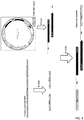
- a knock-out cassette was constructed as shown in FIG. 4 .
- PCR of a homologous region (HR) to be knocked out from the genomic DNA of Yarrowia sp., and PCR of two 5'- and 3'-terminal fragments from a pop-out vector were carried out separately. Thereafter, each of the 5' HR and 3' HR was subjected to alignment PCR (2 nd PCR) with a PO-ura3 region to construct a knock-out cassette.
- the primers and sequences thereof used to amplify the respective homologous regions are listed in Table 2.
- the transaminase cassettes were constructed in the same manner as in FIG. 4 , except that, when two fragments of PCR products were obtained from the vector, the genes spanning from a promoter to ura3 were amplified to construct the cassettes.
- the primers used to construct the cassettes are listed in the following Table 5.
- Example 3 Preparation of recombinant microorganism strain
- the knock-out cassette constructed in Example 1 and the transduction vector constructed in Example 2 were used to prepare a total of eight knock-out strains from which some of all of a fatty aldehyde dehydrogenase gene in an ⁇ -oxidative metabolism pathway present in a wild-type Yarrowia strain and ⁇ -oxidative metabolism pathway-related genes were deleted and into which an ⁇ -transaminase gene was also introduced ( FIG. 6 ). Specifically, a strain in which a gene was to be knocked out or be introduced was plated on an YPD plate, and cultured at 30 °C for 16 to 24 hours.
- the cultured cells were scraped with a loop, put into 100 ⁇ L of a one-step buffer (45% PEG4000, 100 mM DTT, 0.1 L of LiAc, 25 ⁇ g of single-strand carrier DNA), and vortexed. Thereafter, the knock-out cassette and the transduction vector (1 ng or more) were added thereto, and the resulting mixture was vortexed again, and then cultured at 39 °C for an hour.
- the cultured sample was loaded onto a selective medium (6.7 g/L of YNB without amino acids, and 20 g/L of glucose), and then cultured at 30 °C for 48 hours to screen the strains into which the constructed cassette was inserted. To check whether the cassettes were correctly inserted onto the genomes of the screened strains, PCR was then performed using the primers included in the gene deletions listed in Table 2.
- a pop-out process was performed on the strain into which the cassette was inserted.
- the strain screened from the selective medium was inoculated in 2 mL of an YPD medium, and cultured at 30 °C for 16 hours, and 200 ⁇ L of the culture broth was then spread on a 5' FOA medium (6.7 g/L of YNB without amino acids, 20 g/L of glucose, 0.8 g/L of 5' FOA, 0.1 g/L of uracil, and 0.1 g/L of uridine), and then cultured at 30 °C for 48 hours.
- the strains grown on the 5' FOA medium were picked, and spread on an YPD plate and a UD plate to screen the strains grown on the YPD plate. Also, a PCR process was again performed using the primers listed in Table 2 to check whether the ura3 gene was deleted from the strains. A knock-out process was performed on other genes of the Ura3-free strains.
- Example 4 Culturing of recombinant microorganism strain
- the strain to be cultured and tested was inoculated in 2 mL of an YPD medium (Bacto Laboratories, 10 g/L of Yeast extract, 20 g/L of peptone, and 20 g/L of glucose), and grown at 30 °C and 200 rpm for a day.
- 2 mL of a growth medium (pH 6.0) having the compositions listed in Table 7 was put into a 24-well plate, and a pre-cultured culture broth was inoculated at 1%. Thereafter, the strains were cultured at 30 °C and 450 rpm for a day in a plate stirrer.
- the strains cultured for a day were inoculated at a volume of 900 ⁇ L in a new plate containing 900 ⁇ L of a conversion medium (pH 7.6) listed in Table 8, and 200 ⁇ L of a substrate was added thereto at the same time.
- the resulting mixture was cultured at 30 °C and 450 rpm for a day.
- 10 g/L of dodecanoic acid dissolved in DMSO was used as the substrate.
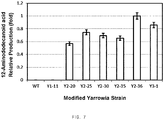
- the Y2-36 strain exhibited an ability to synthesize approximately 8 mg/L of 12-aminododecanoic acid when cultured in the flask ( FIG. 8 ).
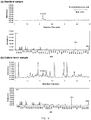
- a sample analysis test was performed using the Y2-36 strain.
Landscapes
- Chemical & Material Sciences (AREA)
- Organic Chemistry (AREA)
- Life Sciences & Earth Sciences (AREA)
- Health & Medical Sciences (AREA)
- Engineering & Computer Science (AREA)
- Zoology (AREA)
- Wood Science & Technology (AREA)
- Genetics & Genomics (AREA)
- Bioinformatics & Cheminformatics (AREA)
- General Engineering & Computer Science (AREA)
- General Health & Medical Sciences (AREA)
- Biochemistry (AREA)
- Biotechnology (AREA)
- Microbiology (AREA)
- Biomedical Technology (AREA)
- Molecular Biology (AREA)
- Medicinal Chemistry (AREA)
- General Chemical & Material Sciences (AREA)
- Chemical Kinetics & Catalysis (AREA)
- Mycology (AREA)
- Physics & Mathematics (AREA)
- Biophysics (AREA)
- Plant Pathology (AREA)
- Oil, Petroleum & Natural Gas (AREA)
- Proteomics, Peptides & Aminoacids (AREA)
- Preparation Of Compounds By Using Micro-Organisms (AREA)
- Micro-Organisms Or Cultivation Processes Thereof (AREA)
Claims (15)
- Ein rekombinanter Mikroorganismus, aus dem ein Fettaldehyd-Dehydrogenase-Gen in einem ω-oxidativen Stoffwechselweg und zum β-oxidativen Stoffwechselweg gehörenden Gene entfernt werden und in den auch ein ω-Transaminase-Gen eingeführt wird.
- Rekombinanter Mikroorganismus nach Anspruch 1, wobei das Fettaldehyd-Dehydrogenase-Gen und die zum β-oxidativen Stoffwechselweg gehörenden Gene aus allen homologen Genen entfernt werden, die im Mikroorganismus vorhanden sind.
- Rekombinanter Mikroorganismus nach Anspruch 1, wobei das Fettaldehyd-Dehydrogenase-Gen und die zum β-oxidativen Stoffwechselweg gehörenden Gene aus einigen homologen Genen entfernt werden, die im entsprechenden Mikroorganismus vorhanden sind.
- Rekombinanter Mikroorganismus nach Anspruch 1, wobei das Fettaldehyd-Dehydrogenase-Gen aus der Gruppe ausgewählt wird, die aus FALDH1, FALDH2, FALDH3 und FALDH4-Genen besteht und wobei vorzugsweise jedes der FALDH1, FALDH2, FALDH3 und FALDH4-Gene Basissequenzen enthält, die in SEQ ID NO: 1 bis 4 wiedergegeben sind.
- Rekombinanter Mikroorganismus nach Anspruch 1, wobei das zum β-oxidativen Stoffwechselweg gehörenden Gen ein Acyl-CoA-Oxidase-Gen ist.
- Rekombinanter Mikroorganismus nach Anspruch 5, wobei das Acyl-CoA-Oxidase-Gen aus der Gruppe ausgewählt wird, die aus ACO1, ACO2, ACO3, ACO4, ACO5 und ACO6-Genen besteht und wobei vorzugsweise jedes der ACO1, ACO2, ACO3, ACO4, ACO5 und ACO6-Gene Basissequenzen enthält, die jeweils in SEQ ID NO: 5 bis 10 wiedergegeben sind.
- Rekombinanter Mikroorganismus nach Anspruch 1, wobei das ω-transaminase-Gen eine Basissequenz enthält, die in SEQ ID NO: 11 wiedergegeben ist.
- Rekombinanter Mikroorganismus nach Anspruch 1, wobei der Mikroorganismus eine Hefe oder Escherichia coli ist.
- Rekombinanter Mikroorganismus nach Anspruch 8, wobei die Hefe aus der Hefe-Gruppe ausgewählt wird, die aus Yarrowia sp., Saccharomyces sp., Pichia sp., und Candida sp. besteht.
- Rekombinanter Mikroorganismus nach Anspruch 9, wobei die Yarrowia sp.-Hefe Yarrowia lipolytica ist.
- Ein Verfahren zur Herstellung von mittelkettiger Aminocarbonsäure, bestehend aus:(1) Herstellung des rekombinanten Mikroorganismus nach einem der Ansprüche 1 bis 10; und(2) Behandlung des rekombinanten Mikroorganismus mit einem Substrat zur Kultivierung des rekombinanten Mikroorganismus.
- Verfahren nach Anspruch 11, wobei das Substrat eine Fettsäure ist, wobei die Fettsäure vorzugsweise eine Fettsäure mit 5 bis 30 Kohlenstoffatomen ist.
- Verfahren nach Anspruch 12, wobei die Fettsäure eine Dodekansäure ist.
- Verfahren nach Anspruch 11, wobei die mittelkettige Aminocarbonsäure eine Aminocarbonsäureverbindung mit 5 bis 30 Kohlenstoffatomen ist.
- Verfahren nach Anspruch 14, wobei die mittelkettige Aminocarbonsäure eine 12-Aminododekansäure ist.
Applications Claiming Priority (2)
| Application Number | Priority Date | Filing Date | Title |
|---|---|---|---|
| KR20150149254 | 2015-10-27 | ||
| PCT/KR2016/012172 WO2017074063A1 (ko) | 2015-10-27 | 2016-10-27 | 중쇄 아미노카르복시산의 생산 방법 |
Publications (3)
| Publication Number | Publication Date |
|---|---|
| EP3375880A1 EP3375880A1 (de) | 2018-09-19 |
| EP3375880A4 EP3375880A4 (de) | 2018-10-24 |
| EP3375880B1 true EP3375880B1 (de) | 2019-12-25 |
Family
ID=58743957
Family Applications (1)
| Application Number | Title | Priority Date | Filing Date |
|---|---|---|---|
| EP16860246.4A Active EP3375880B1 (de) | 2015-10-27 | 2016-10-27 | Verfahren zur herstellung von schwerkettiger aminocarbonsäure |
Country Status (5)
| Country | Link |
|---|---|
| US (1) | US20180327724A1 (de) |
| EP (1) | EP3375880B1 (de) |
| JP (1) | JP7164112B2 (de) |
| KR (1) | KR101903553B1 (de) |
| CN (1) | CN108473993A (de) |
Families Citing this family (4)
| Publication number | Priority date | Publication date | Assignee | Title |
|---|---|---|---|---|
| KR102173101B1 (ko) * | 2018-12-04 | 2020-11-03 | 고려대학교 산학협력단 | 디카르복시산 생합성 관련 효소 및 이를 이용한 디카르복시산 생산방법 |
| CN109593737B (zh) * | 2019-01-02 | 2022-02-11 | 中国人民解放军第二军医大学 | 红花CtACO3基因、其编码蛋白质及应用 |
| CN112410355B (zh) * | 2020-11-23 | 2022-03-25 | 昆明理工大学 | 一种酰基辅酶a氧化酶2基因rkacox2及其应用 |
| WO2025134826A1 (ja) * | 2023-12-22 | 2025-06-26 | Ube株式会社 | 新規アミノ基転移酵素及びそれを利用したアミノ化合物の製造方法 |
Family Cites Families (10)
| Publication number | Priority date | Publication date | Assignee | Title |
|---|---|---|---|---|
| FR2879215B1 (fr) * | 2004-12-15 | 2010-08-20 | Inst Francais Du Petrole | Production d'acides dicarboxyliques par des souches mutantes ameliorees de yarrowia lipolytica |
| JP4923631B2 (ja) | 2005-03-04 | 2012-04-25 | 宇部興産株式会社 | 12−アミノドデカン酸の製造方法及びその製造方法に使用する生体触媒 |
| DE102007060705A1 (de) * | 2007-12-17 | 2009-06-18 | Evonik Degussa Gmbh | ω-Aminocarbonsäuren oder ihre Lactame, herstellende, rekombinante Zellen |
| KR101145405B1 (ko) | 2008-12-03 | 2012-05-16 | 한국생명공학연구원 | 글리세롤 산화경로가 차단된 1、3―프로판디올 생산 변이체 |
| JP5619400B2 (ja) * | 2009-09-11 | 2014-11-05 | 第一ファインケミカル株式会社 | 酸性ホスファターゼ及びそれをコードする核酸、並びにこれらを利用したリボフラビン−5’−リン酸の製造方法 |
| DE102011110946A1 (de) * | 2011-08-15 | 2016-01-21 | Evonik Degussa Gmbh | Biotechnologisches Syntheseverfahren von omegafunktionalisierten Carbonsäuren und Carbonsäure-Estern aus einfachen Kohlenstoffquellen |
| EP2706118A1 (de) * | 2012-09-11 | 2014-03-12 | Basf Se | Verfahren zur Herstellung von Primäraminen |
| EP2746397A1 (de) * | 2012-12-21 | 2014-06-25 | Evonik Industries AG | Herstellung von Omega-Aminofettsäuren |
| SI2984490T1 (sl) * | 2013-06-14 | 2020-10-30 | Genomatica, Inc. | Metode proizvodnje derivatov omega hidroksilirane maščobne kisline |
| DE102014220186B4 (de) * | 2013-12-12 | 2017-06-22 | Technische Universität Dresden | Hefestämme und Verfahren zur Produktion von Omega-Hydroxyfettsäuren und Dicarbonsäuren |
-
2016
- 2016-10-27 KR KR1020160141019A patent/KR101903553B1/ko active Active
- 2016-10-27 JP JP2018522065A patent/JP7164112B2/ja active Active
- 2016-10-27 US US15/771,812 patent/US20180327724A1/en not_active Abandoned
- 2016-10-27 CN CN201680076062.8A patent/CN108473993A/zh active Pending
- 2016-10-27 EP EP16860246.4A patent/EP3375880B1/de active Active
Non-Patent Citations (1)
| Title |
|---|
| None * |
Also Published As
| Publication number | Publication date |
|---|---|
| KR101903553B1 (ko) | 2018-10-04 |
| KR20170049436A (ko) | 2017-05-10 |
| JP2018531615A (ja) | 2018-11-01 |
| EP3375880A4 (de) | 2018-10-24 |
| JP7164112B2 (ja) | 2022-11-01 |
| US20180327724A1 (en) | 2018-11-15 |
| CN108473993A (zh) | 2018-08-31 |
| EP3375880A1 (de) | 2018-09-19 |
Similar Documents
| Publication | Publication Date | Title |
|---|---|---|
| Holwerda et al. | Metabolic and evolutionary responses of Clostridium thermocellum to genetic interventions aimed at improving ethanol production | |
| Lu et al. | Biosynthesis of monomers for plastics from renewable oils | |
| CN111705029B (zh) | 一种基于嗜盐菌高效生产3-羟基丙酸(3hp)及其衍生物的方法 | |
| EP3375880B1 (de) | Verfahren zur herstellung von schwerkettiger aminocarbonsäure | |
| JP7829285B2 (ja) | グリセロール生成が抑制された組換え耐酸性酵母及びこれを用いた乳酸の製造方法 | |
| JP2026063010A (ja) | 乳酸生産能が増加した組換え耐酸性酵母 | |
| SG192706A1 (en) | Cells and methods for producing isobutyric acid | |
| KR20190121031A (ko) | 에탄올 생산 경로가 억제된 내산성 효모 및 이를 이용한 젖산의 제조방법 | |
| CN119464244B (zh) | 一种合成(2s)-柚皮素的解脂亚洛酵母菌株及应用 | |
| EP4279586A1 (de) | Manipulierte mikroorganismen zur expression von acetoacetyl-coa-reduktasevarianten und verfahren zur verbesserung der ausbeute von pha | |
| KR20250129721A (ko) | 효소, 살리드로사이드를 생산하는 균주 및 생산 방법 | |
| EP3378941B1 (de) | Verfahren zur herstellung eines schwerkettigen diamins | |
| WO2010015122A1 (en) | Yeast strains and methods for making and using such yeast strains | |
| EP3378940B1 (de) | Verfahren zur herstellung von schwerkettigem diol | |
| US20200131538A1 (en) | Microorganism with stabilized copy number of functional dna sequence and associated methods | |
| CN117586933A (zh) | 一种利用甲醇培养重组盐单胞菌的方法及其应用 | |
| JP2008301766A (ja) | 乳酸製造用培地及び乳酸の製造方法 | |
| WO2017074063A1 (ko) | 중쇄 아미노카르복시산의 생산 방법 | |
| KR20250117284A (ko) | 여러 가지 폴리(에스터 아마이드)의 제조방법 | |
| CN121699918A (zh) | β-裂解酶突变体及其在麦角硫因合成中的应用 | |
| KR20230147948A (ko) | 목질계 바이오매스 공정을 위한 형질전환된 비브리오속 dhg 균주 | |
| CN121915019A (zh) | 一种β-裂解酶突变体及其应用 | |
| CN120989029A (zh) | 一种ω转氨酶突变体及其制备方法与应用 | |
| WO2022210228A1 (ja) | 改変型α-イソプロピルマレートシンターゼ | |
| JP2023056613A (ja) | 形質転換微生物、及びポリ(3-ヒドロキシアルカノエート)の製造方法 |
Legal Events
| Date | Code | Title | Description |
|---|---|---|---|
| STAA | Information on the status of an ep patent application or granted ep patent |
Free format text: STATUS: THE INTERNATIONAL PUBLICATION HAS BEEN MADE |
|
| PUAI | Public reference made under article 153(3) epc to a published international application that has entered the european phase |
Free format text: ORIGINAL CODE: 0009012 |
|
| STAA | Information on the status of an ep patent application or granted ep patent |
Free format text: STATUS: REQUEST FOR EXAMINATION WAS MADE |
|
| 17P | Request for examination filed |
Effective date: 20180525 |
|
| AK | Designated contracting states |
Kind code of ref document: A1 Designated state(s): AL AT BE BG CH CY CZ DE DK EE ES FI FR GB GR HR HU IE IS IT LI LT LU LV MC MK MT NL NO PL PT RO RS SE SI SK SM TR |
|
| AX | Request for extension of the european patent |
Extension state: BA ME |
|
| A4 | Supplementary search report drawn up and despatched |
Effective date: 20180920 |
|
| RIC1 | Information provided on ipc code assigned before grant |
Ipc: C12N 9/10 20060101ALI20180915BHEP Ipc: C12N 15/70 20060101AFI20180915BHEP Ipc: C12N 9/02 20060101ALI20180915BHEP Ipc: C12P 7/64 20060101ALI20180915BHEP Ipc: C12N 15/81 20060101ALI20180915BHEP Ipc: C12P 13/00 20060101ALI20180915BHEP |
|
| DAV | Request for validation of the european patent (deleted) | ||
| DAX | Request for extension of the european patent (deleted) | ||
| REG | Reference to a national code |
Ref country code: DE Ref legal event code: R079 Ref document number: 602016027088 Country of ref document: DE Free format text: PREVIOUS MAIN CLASS: C12N0015700000 Ipc: C12P0013040000 |
|
| GRAP | Despatch of communication of intention to grant a patent |
Free format text: ORIGINAL CODE: EPIDOSNIGR1 |
|
| STAA | Information on the status of an ep patent application or granted ep patent |
Free format text: STATUS: GRANT OF PATENT IS INTENDED |
|
| INTG | Intention to grant announced |
Effective date: 20190725 |
|
| RIC1 | Information provided on ipc code assigned before grant |
Ipc: C12N 15/81 20060101ALI20190712BHEP Ipc: C12P 13/00 20060101ALI20190712BHEP Ipc: C12P 13/04 20060101AFI20190712BHEP Ipc: C12N 9/10 20060101ALI20190712BHEP Ipc: C12N 9/02 20060101ALI20190712BHEP Ipc: C12P 7/64 20060101ALI20190712BHEP Ipc: C12N 15/70 20060101ALI20190712BHEP |
|
| GRAS | Grant fee paid |
Free format text: ORIGINAL CODE: EPIDOSNIGR3 |
|
| GRAA | (expected) grant |
Free format text: ORIGINAL CODE: 0009210 |
|
| STAA | Information on the status of an ep patent application or granted ep patent |
Free format text: STATUS: THE PATENT HAS BEEN GRANTED |
|
| AK | Designated contracting states |
Kind code of ref document: B1 Designated state(s): AL AT BE BG CH CY CZ DE DK EE ES FI FR GB GR HR HU IE IS IT LI LT LU LV MC MK MT NL NO PL PT RO RS SE SI SK SM TR |
|
| REG | Reference to a national code |
Ref country code: GB Ref legal event code: FG4D |
|
| REG | Reference to a national code |
Ref country code: CH Ref legal event code: EP |
|
| REG | Reference to a national code |
Ref country code: DE Ref legal event code: R096 Ref document number: 602016027088 Country of ref document: DE |
|
| REG | Reference to a national code |
Ref country code: AT Ref legal event code: REF Ref document number: 1217170 Country of ref document: AT Kind code of ref document: T Effective date: 20200115 |
|
| REG | Reference to a national code |
Ref country code: IE Ref legal event code: FG4D |
|
| REG | Reference to a national code |
Ref country code: NL Ref legal event code: MP Effective date: 20191225 |
|
| PG25 | Lapsed in a contracting state [announced via postgrant information from national office to epo] |
Ref country code: SE Free format text: LAPSE BECAUSE OF FAILURE TO SUBMIT A TRANSLATION OF THE DESCRIPTION OR TO PAY THE FEE WITHIN THE PRESCRIBED TIME-LIMIT Effective date: 20191225 Ref country code: LV Free format text: LAPSE BECAUSE OF FAILURE TO SUBMIT A TRANSLATION OF THE DESCRIPTION OR TO PAY THE FEE WITHIN THE PRESCRIBED TIME-LIMIT Effective date: 20191225 Ref country code: NO Free format text: LAPSE BECAUSE OF FAILURE TO SUBMIT A TRANSLATION OF THE DESCRIPTION OR TO PAY THE FEE WITHIN THE PRESCRIBED TIME-LIMIT Effective date: 20200325 Ref country code: GR Free format text: LAPSE BECAUSE OF FAILURE TO SUBMIT A TRANSLATION OF THE DESCRIPTION OR TO PAY THE FEE WITHIN THE PRESCRIBED TIME-LIMIT Effective date: 20200326 Ref country code: LT Free format text: LAPSE BECAUSE OF FAILURE TO SUBMIT A TRANSLATION OF THE DESCRIPTION OR TO PAY THE FEE WITHIN THE PRESCRIBED TIME-LIMIT Effective date: 20191225 Ref country code: BG Free format text: LAPSE BECAUSE OF FAILURE TO SUBMIT A TRANSLATION OF THE DESCRIPTION OR TO PAY THE FEE WITHIN THE PRESCRIBED TIME-LIMIT Effective date: 20200325 Ref country code: FI Free format text: LAPSE BECAUSE OF FAILURE TO SUBMIT A TRANSLATION OF THE DESCRIPTION OR TO PAY THE FEE WITHIN THE PRESCRIBED TIME-LIMIT Effective date: 20191225 |
|
| REG | Reference to a national code |
Ref country code: LT Ref legal event code: MG4D |
|
| PG25 | Lapsed in a contracting state [announced via postgrant information from national office to epo] |
Ref country code: HR Free format text: LAPSE BECAUSE OF FAILURE TO SUBMIT A TRANSLATION OF THE DESCRIPTION OR TO PAY THE FEE WITHIN THE PRESCRIBED TIME-LIMIT Effective date: 20191225 Ref country code: RS Free format text: LAPSE BECAUSE OF FAILURE TO SUBMIT A TRANSLATION OF THE DESCRIPTION OR TO PAY THE FEE WITHIN THE PRESCRIBED TIME-LIMIT Effective date: 20191225 |
|
| PG25 | Lapsed in a contracting state [announced via postgrant information from national office to epo] |
Ref country code: AL Free format text: LAPSE BECAUSE OF FAILURE TO SUBMIT A TRANSLATION OF THE DESCRIPTION OR TO PAY THE FEE WITHIN THE PRESCRIBED TIME-LIMIT Effective date: 20191225 |
|
| PG25 | Lapsed in a contracting state [announced via postgrant information from national office to epo] |
Ref country code: CZ Free format text: LAPSE BECAUSE OF FAILURE TO SUBMIT A TRANSLATION OF THE DESCRIPTION OR TO PAY THE FEE WITHIN THE PRESCRIBED TIME-LIMIT Effective date: 20191225 Ref country code: PT Free format text: LAPSE BECAUSE OF FAILURE TO SUBMIT A TRANSLATION OF THE DESCRIPTION OR TO PAY THE FEE WITHIN THE PRESCRIBED TIME-LIMIT Effective date: 20200520 Ref country code: NL Free format text: LAPSE BECAUSE OF FAILURE TO SUBMIT A TRANSLATION OF THE DESCRIPTION OR TO PAY THE FEE WITHIN THE PRESCRIBED TIME-LIMIT Effective date: 20191225 Ref country code: EE Free format text: LAPSE BECAUSE OF FAILURE TO SUBMIT A TRANSLATION OF THE DESCRIPTION OR TO PAY THE FEE WITHIN THE PRESCRIBED TIME-LIMIT Effective date: 20191225 Ref country code: RO Free format text: LAPSE BECAUSE OF FAILURE TO SUBMIT A TRANSLATION OF THE DESCRIPTION OR TO PAY THE FEE WITHIN THE PRESCRIBED TIME-LIMIT Effective date: 20191225 |
|
| PG25 | Lapsed in a contracting state [announced via postgrant information from national office to epo] |
Ref country code: SK Free format text: LAPSE BECAUSE OF FAILURE TO SUBMIT A TRANSLATION OF THE DESCRIPTION OR TO PAY THE FEE WITHIN THE PRESCRIBED TIME-LIMIT Effective date: 20191225 Ref country code: IS Free format text: LAPSE BECAUSE OF FAILURE TO SUBMIT A TRANSLATION OF THE DESCRIPTION OR TO PAY THE FEE WITHIN THE PRESCRIBED TIME-LIMIT Effective date: 20200425 Ref country code: SM Free format text: LAPSE BECAUSE OF FAILURE TO SUBMIT A TRANSLATION OF THE DESCRIPTION OR TO PAY THE FEE WITHIN THE PRESCRIBED TIME-LIMIT Effective date: 20191225 |
|
| REG | Reference to a national code |
Ref country code: DE Ref legal event code: R097 Ref document number: 602016027088 Country of ref document: DE |
|
| PG25 | Lapsed in a contracting state [announced via postgrant information from national office to epo] |
Ref country code: ES Free format text: LAPSE BECAUSE OF FAILURE TO SUBMIT A TRANSLATION OF THE DESCRIPTION OR TO PAY THE FEE WITHIN THE PRESCRIBED TIME-LIMIT Effective date: 20191225 Ref country code: DK Free format text: LAPSE BECAUSE OF FAILURE TO SUBMIT A TRANSLATION OF THE DESCRIPTION OR TO PAY THE FEE WITHIN THE PRESCRIBED TIME-LIMIT Effective date: 20191225 |
|
| PLBE | No opposition filed within time limit |
Free format text: ORIGINAL CODE: 0009261 |
|
| STAA | Information on the status of an ep patent application or granted ep patent |
Free format text: STATUS: NO OPPOSITION FILED WITHIN TIME LIMIT |
|
| REG | Reference to a national code |
Ref country code: AT Ref legal event code: MK05 Ref document number: 1217170 Country of ref document: AT Kind code of ref document: T Effective date: 20191225 |
|
| PG25 | Lapsed in a contracting state [announced via postgrant information from national office to epo] |
Ref country code: SI Free format text: LAPSE BECAUSE OF FAILURE TO SUBMIT A TRANSLATION OF THE DESCRIPTION OR TO PAY THE FEE WITHIN THE PRESCRIBED TIME-LIMIT Effective date: 20191225 |
|
| 26N | No opposition filed |
Effective date: 20200928 |
|
| PG25 | Lapsed in a contracting state [announced via postgrant information from national office to epo] |
Ref country code: IT Free format text: LAPSE BECAUSE OF FAILURE TO SUBMIT A TRANSLATION OF THE DESCRIPTION OR TO PAY THE FEE WITHIN THE PRESCRIBED TIME-LIMIT Effective date: 20191225 Ref country code: AT Free format text: LAPSE BECAUSE OF FAILURE TO SUBMIT A TRANSLATION OF THE DESCRIPTION OR TO PAY THE FEE WITHIN THE PRESCRIBED TIME-LIMIT Effective date: 20191225 |
|
| PG25 | Lapsed in a contracting state [announced via postgrant information from national office to epo] |
Ref country code: PL Free format text: LAPSE BECAUSE OF FAILURE TO SUBMIT A TRANSLATION OF THE DESCRIPTION OR TO PAY THE FEE WITHIN THE PRESCRIBED TIME-LIMIT Effective date: 20191225 |
|
| REG | Reference to a national code |
Ref country code: CH Ref legal event code: PL |
|
| PG25 | Lapsed in a contracting state [announced via postgrant information from national office to epo] |
Ref country code: MC Free format text: LAPSE BECAUSE OF FAILURE TO SUBMIT A TRANSLATION OF THE DESCRIPTION OR TO PAY THE FEE WITHIN THE PRESCRIBED TIME-LIMIT Effective date: 20191225 Ref country code: LU Free format text: LAPSE BECAUSE OF NON-PAYMENT OF DUE FEES Effective date: 20201027 |
|
| REG | Reference to a national code |
Ref country code: BE Ref legal event code: MM Effective date: 20201031 |
|
| PG25 | Lapsed in a contracting state [announced via postgrant information from national office to epo] |
Ref country code: BE Free format text: LAPSE BECAUSE OF NON-PAYMENT OF DUE FEES Effective date: 20201031 Ref country code: CH Free format text: LAPSE BECAUSE OF NON-PAYMENT OF DUE FEES Effective date: 20201031 Ref country code: LI Free format text: LAPSE BECAUSE OF NON-PAYMENT OF DUE FEES Effective date: 20201031 |
|
| PG25 | Lapsed in a contracting state [announced via postgrant information from national office to epo] |
Ref country code: IE Free format text: LAPSE BECAUSE OF NON-PAYMENT OF DUE FEES Effective date: 20201027 |
|
| PG25 | Lapsed in a contracting state [announced via postgrant information from national office to epo] |
Ref country code: TR Free format text: LAPSE BECAUSE OF FAILURE TO SUBMIT A TRANSLATION OF THE DESCRIPTION OR TO PAY THE FEE WITHIN THE PRESCRIBED TIME-LIMIT Effective date: 20191225 Ref country code: MT Free format text: LAPSE BECAUSE OF FAILURE TO SUBMIT A TRANSLATION OF THE DESCRIPTION OR TO PAY THE FEE WITHIN THE PRESCRIBED TIME-LIMIT Effective date: 20191225 Ref country code: CY Free format text: LAPSE BECAUSE OF FAILURE TO SUBMIT A TRANSLATION OF THE DESCRIPTION OR TO PAY THE FEE WITHIN THE PRESCRIBED TIME-LIMIT Effective date: 20191225 |
|
| PG25 | Lapsed in a contracting state [announced via postgrant information from national office to epo] |
Ref country code: MK Free format text: LAPSE BECAUSE OF FAILURE TO SUBMIT A TRANSLATION OF THE DESCRIPTION OR TO PAY THE FEE WITHIN THE PRESCRIBED TIME-LIMIT Effective date: 20191225 |
|
| PGFP | Annual fee paid to national office [announced via postgrant information from national office to epo] |
Ref country code: GB Payment date: 20250904 Year of fee payment: 10 |
|
| PGFP | Annual fee paid to national office [announced via postgrant information from national office to epo] |
Ref country code: FR Payment date: 20250908 Year of fee payment: 10 |
|
| PGFP | Annual fee paid to national office [announced via postgrant information from national office to epo] |
Ref country code: DE Payment date: 20250902 Year of fee payment: 10 |
|
| REG | Reference to a national code |
Ref country code: DE Ref legal event code: R082 Ref document number: 602016027088 Country of ref document: DE Representative=s name: VUILLERMOZ, BRUNO, FR |