EP3376231A1 - Überprüfungssystem - Google Patents
Überprüfungssystem Download PDFInfo
- Publication number
- EP3376231A1 EP3376231A1 EP16864105.8A EP16864105A EP3376231A1 EP 3376231 A1 EP3376231 A1 EP 3376231A1 EP 16864105 A EP16864105 A EP 16864105A EP 3376231 A1 EP3376231 A1 EP 3376231A1
- Authority
- EP
- European Patent Office
- Prior art keywords
- liquid
- temperature
- reaction
- sensor chip
- flow path
- Prior art date
- Legal status (The legal status is an assumption and is not a legal conclusion. Google has not performed a legal analysis and makes no representation as to the accuracy of the status listed.)
- Withdrawn
Links
Images



Classifications
-
- G—PHYSICS
- G01—MEASURING; TESTING
- G01N—INVESTIGATING OR ANALYSING MATERIALS BY DETERMINING THEIR CHEMICAL OR PHYSICAL PROPERTIES
- G01N21/00—Investigating or analysing materials by the use of optical means, i.e. using sub-millimetre waves, infrared, visible or ultraviolet light
- G01N21/62—Systems in which the material investigated is excited whereby it emits light or causes a change in wavelength of the incident light
- G01N21/63—Systems in which the material investigated is excited whereby it emits light or causes a change in wavelength of the incident light optically excited
- G01N21/64—Fluorescence; Phosphorescence
- G01N21/645—Specially adapted constructive features of fluorimeters
- G01N21/648—Specially adapted constructive features of fluorimeters using evanescent coupling or surface plasmon coupling for the excitation of fluorescence
-
- G—PHYSICS
- G01—MEASURING; TESTING
- G01N—INVESTIGATING OR ANALYSING MATERIALS BY DETERMINING THEIR CHEMICAL OR PHYSICAL PROPERTIES
- G01N21/00—Investigating or analysing materials by the use of optical means, i.e. using sub-millimetre waves, infrared, visible or ultraviolet light
- G01N21/01—Arrangements or apparatus for facilitating the optical investigation
-
- G—PHYSICS
- G01—MEASURING; TESTING
- G01N—INVESTIGATING OR ANALYSING MATERIALS BY DETERMINING THEIR CHEMICAL OR PHYSICAL PROPERTIES
- G01N21/00—Investigating or analysing materials by the use of optical means, i.e. using sub-millimetre waves, infrared, visible or ultraviolet light
- G01N21/01—Arrangements or apparatus for facilitating the optical investigation
- G01N21/03—Cuvette constructions
- G01N21/0332—Cuvette constructions with temperature control
-
- G—PHYSICS
- G01—MEASURING; TESTING
- G01N—INVESTIGATING OR ANALYSING MATERIALS BY DETERMINING THEIR CHEMICAL OR PHYSICAL PROPERTIES
- G01N21/00—Investigating or analysing materials by the use of optical means, i.e. using sub-millimetre waves, infrared, visible or ultraviolet light
- G01N21/01—Arrangements or apparatus for facilitating the optical investigation
- G01N21/03—Cuvette constructions
- G01N21/05—Flow-through cuvettes
-
- G—PHYSICS
- G01—MEASURING; TESTING
- G01N—INVESTIGATING OR ANALYSING MATERIALS BY DETERMINING THEIR CHEMICAL OR PHYSICAL PROPERTIES
- G01N21/00—Investigating or analysing materials by the use of optical means, i.e. using sub-millimetre waves, infrared, visible or ultraviolet light
- G01N21/01—Arrangements or apparatus for facilitating the optical investigation
- G01N21/11—Filling or emptying of cuvettes
-
- G—PHYSICS
- G01—MEASURING; TESTING
- G01N—INVESTIGATING OR ANALYSING MATERIALS BY DETERMINING THEIR CHEMICAL OR PHYSICAL PROPERTIES
- G01N35/00—Automatic analysis not limited to methods or materials provided for in any single one of groups G01N1/00 - G01N33/00; Handling materials therefor
-
- G—PHYSICS
- G01—MEASURING; TESTING
- G01N—INVESTIGATING OR ANALYSING MATERIALS BY DETERMINING THEIR CHEMICAL OR PHYSICAL PROPERTIES
- G01N35/00—Automatic analysis not limited to methods or materials provided for in any single one of groups G01N1/00 - G01N33/00; Handling materials therefor
- G01N35/10—Devices for transferring samples or any liquids to, in, or from, the analysis apparatus, e.g. suction devices, injection devices
-
- C—CHEMISTRY; METALLURGY
- C40—COMBINATORIAL TECHNOLOGY
- C40B—COMBINATORIAL CHEMISTRY; LIBRARIES, e.g. CHEMICAL LIBRARIES
- C40B30/00—Methods of screening libraries
- C40B30/04—Methods of screening libraries by measuring the ability to specifically bind a target molecule, e.g. antibody-antigen binding, receptor-ligand binding
-
- C—CHEMISTRY; METALLURGY
- C40—COMBINATORIAL TECHNOLOGY
- C40B—COMBINATORIAL CHEMISTRY; LIBRARIES, e.g. CHEMICAL LIBRARIES
- C40B40/00—Libraries per se, e.g. arrays, mixtures
- C40B40/04—Libraries containing only organic compounds
- C40B40/10—Libraries containing peptides or polypeptides, or derivatives thereof
-
- G—PHYSICS
- G01—MEASURING; TESTING
- G01N—INVESTIGATING OR ANALYSING MATERIALS BY DETERMINING THEIR CHEMICAL OR PHYSICAL PROPERTIES
- G01N21/00—Investigating or analysing materials by the use of optical means, i.e. using sub-millimetre waves, infrared, visible or ultraviolet light
- G01N21/62—Systems in which the material investigated is excited whereby it emits light or causes a change in wavelength of the incident light
- G01N21/63—Systems in which the material investigated is excited whereby it emits light or causes a change in wavelength of the incident light optically excited
- G01N21/64—Fluorescence; Phosphorescence
- G01N21/645—Specially adapted constructive features of fluorimeters
- G01N2021/6482—Sample cells, cuvettes
-
- G—PHYSICS
- G01—MEASURING; TESTING
- G01N—INVESTIGATING OR ANALYSING MATERIALS BY DETERMINING THEIR CHEMICAL OR PHYSICAL PROPERTIES
- G01N21/00—Investigating or analysing materials by the use of optical means, i.e. using sub-millimetre waves, infrared, visible or ultraviolet light
- G01N21/17—Systems in which incident light is modified in accordance with the properties of the material investigated
- G01N21/47—Scattering, i.e. diffuse reflection
- G01N21/49—Scattering, i.e. diffuse reflection within a body or fluid
-
- G—PHYSICS
- G01—MEASURING; TESTING
- G01N—INVESTIGATING OR ANALYSING MATERIALS BY DETERMINING THEIR CHEMICAL OR PHYSICAL PROPERTIES
- G01N21/00—Investigating or analysing materials by the use of optical means, i.e. using sub-millimetre waves, infrared, visible or ultraviolet light
- G01N21/17—Systems in which incident light is modified in accordance with the properties of the material investigated
- G01N21/59—Transmissivity
- G01N21/61—Non-dispersive gas analysers
-
- G—PHYSICS
- G01—MEASURING; TESTING
- G01N—INVESTIGATING OR ANALYSING MATERIALS BY DETERMINING THEIR CHEMICAL OR PHYSICAL PROPERTIES
- G01N21/00—Investigating or analysing materials by the use of optical means, i.e. using sub-millimetre waves, infrared, visible or ultraviolet light
- G01N21/75—Systems in which material is subjected to a chemical reaction, the progress or the result of the reaction being investigated
- G01N21/77—Systems in which material is subjected to a chemical reaction, the progress or the result of the reaction being investigated by observing the effect on a chemical indicator
-
- G—PHYSICS
- G01—MEASURING; TESTING
- G01N—INVESTIGATING OR ANALYSING MATERIALS BY DETERMINING THEIR CHEMICAL OR PHYSICAL PROPERTIES
- G01N33/00—Investigating or analysing materials by specific methods not covered by groups G01N1/00 - G01N31/00
- G01N33/48—Biological material, e.g. blood, urine; Haemocytometers
- G01N33/50—Chemical analysis of biological material, e.g. blood, urine; Testing involving biospecific ligand binding methods; Immunological testing
- G01N33/53—Immunoassay; Biospecific binding assay; Materials therefor
-
- G—PHYSICS
- G01—MEASURING; TESTING
- G01N—INVESTIGATING OR ANALYSING MATERIALS BY DETERMINING THEIR CHEMICAL OR PHYSICAL PROPERTIES
- G01N35/00—Automatic analysis not limited to methods or materials provided for in any single one of groups G01N1/00 - G01N33/00; Handling materials therefor
- G01N35/02—Automatic analysis not limited to methods or materials provided for in any single one of groups G01N1/00 - G01N33/00; Handling materials therefor using a plurality of sample containers moved by a conveyor system past one or more treatment or analysis stations
-
- G—PHYSICS
- G01—MEASURING; TESTING
- G01N—INVESTIGATING OR ANALYSING MATERIALS BY DETERMINING THEIR CHEMICAL OR PHYSICAL PROPERTIES
- G01N35/00—Automatic analysis not limited to methods or materials provided for in any single one of groups G01N1/00 - G01N33/00; Handling materials therefor
- G01N35/02—Automatic analysis not limited to methods or materials provided for in any single one of groups G01N1/00 - G01N33/00; Handling materials therefor using a plurality of sample containers moved by a conveyor system past one or more treatment or analysis stations
- G01N35/04—Details of the conveyor system
-
- G—PHYSICS
- G01—MEASURING; TESTING
- G01N—INVESTIGATING OR ANALYSING MATERIALS BY DETERMINING THEIR CHEMICAL OR PHYSICAL PROPERTIES
- G01N37/00—Details not covered by any other group of this subclass
Definitions
- the present invention relates to an inspection system, for example, an inspection system that utilizes surface plasmon resonance to detect the presence of specimens relating to a disease included in a specimen liquid obtained by biopsy.
- Inspection systems that utilize surface plasmon resonance are conventionally known for acquiring data for diagnosis of a variety of diseases (for example, in PTL 1).
- the inspection system disclosed in PTL 1 includes a detection chip (a sensor chip) for conducting a biological reaction necessary for diagnosis of a disease and a detection device (SPFS device) for detecting, after the sensor chip is set, the above biological reaction by surface plasmon field-enhanced fluorescence spectroscopy (SPFS).
- a detection chip a sensor chip
- SPFS device a detection device for detecting, after the sensor chip is set, the above biological reaction by surface plasmon field-enhanced fluorescence spectroscopy (SPFS).
- This sensor chip has a minute-flow-path with an inlet and an outlet open for immunoassay.
- the bottom of this flow path includes a dielectric member, a metallic thin film formed over the upper surface of the dielectric member, and a minute-flow-path constituting member provided on the metallic thin film.
- Antibodies (ligands) or the like are immobilized on at least part of the metallic thin film, where, for example, if a blood sample (a specimen liquid) taken from a patient, is injected into the reaction site, biomolecules (relevant to a specific disease) included in the specimen liquid are specifically captured by the immobilized antibodies by means of antigen-antibody reaction. Subsequently, fluorescent-labeled secondary antibodies are specifically bonded with other parts (epitopes) than the antibody-bonded parts of the captured biomolecules, then, the inspection device detects whether the captures have occurred by surface plasmon field-enhanced fluorescence spectroscopy (SPFS), thereby detecting whether the biomolecules are included in the biopsy sample.
- SPFS surface plasmon field-enhanced fluorescence spectroscopy
- the above-described biological reaction occurs at the reaction site of the sensor chip, and the temperature of the reaction site is regulated to a temperature suitable for the biological reaction by a heater or the like since the efficiency of the biological reaction is fluctuated depending on the temperature of the reaction liquid at the reaction site (temperature of the reaction site).
- the present invention has been contemplated in consideration of the above problems and aims to provide an inspection system where a target biological reaction can be acquired under temperature conditions suitable for the biological reaction even if reciprocal liquid feeding is performed.
- the inspection system of the present invention includes:
- an inspection system capable of performing a target biological reaction under temperature conditions suitable for the biological reaction even if reciprocal liquid feeding is performed.
- the inspection system of the present invention includes the following:
- the inspection system 100 of the first embodiment includes: as illustrated in Figs. 1 to 2 , a sensor chip 1 that has a flow path 2 equipped with a reaction site 3 for a biological reaction in at least part of the flow path 2; and an SPFS device 4 as an inspection device where the sensor chip 1 is set and the above-described biological reaction is performed while performing the reciprocal liquid feeding for the flow path 2 and predetermined temperature adjustments (as will be described later), thereby detecting the biological reaction.
- the above-described biological reaction refers to a biological reaction (e.g., immunological reaction) that is required for a medical diagnosis (pathological diagnosis).
- this biological reaction include: antigen-antibody reaction (biological reaction) between biomolecules specific to the blood of patients with malignant tumor, myocardial infarction, or the like (analytes; e.g., CTC, cardiac troponin I) and antibodies that specifically capture such biomolecules (ligands; e.g., CD45 antibody, Anti-Troponin I antibody, respectively corresponding to the above examples), as well as, antigen-antibody reaction (biological reaction) between biomolecules that are captured by the ligands and secondary antibodies that recognize epitopes of the biomolecules that are different from those recognized by the above antibodies and specifically bond with the biomolecules captured by the ligands.
- antigen-antibody reaction biological reaction
- ligands
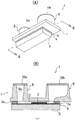
- This sensor chip 1 at least includes a dielectric member 5, a metallic thin film 6 that is formed over the upper surface of the dielectric member 5; and a minute-flow-path constituting member 7 provided on the metallic thin film 6.
- the minute-flow-path constituting member 7 includes, as illustrated in Figs. 2A and 2B , a liquid discharger/suction unit 8 (described later), a liquid mixing unit 9 (described later), and the like.
- a minute flow path 2 is formed by joining the lower surface of the minute-flow-path constituting member 7 with the upper surface of the metallic thin film 6 on the dielectric member 5 using a frame-like double-sided tape 7a (refer to Fig. 2B ).
- the material of the dielectric member 5 includes optically transparent insulating resin and glass.
- the material of the dielectric member 5 preferably is a resin with a refractive index of 1.4 to 1.6 and with small double refraction.
- the shape of the dielectric member 5 is, for example, a pyramid shape, such as a hexahedron having a substantially trapezoidal cross section (truncated quadrangular pyramid), quadrangular pyramid, cone, triangular pyramid, polygonal pyramid, or a frustum, which can be formed by injection molding.
- a pyramid shape such as a hexahedron having a substantially trapezoidal cross section (truncated quadrangular pyramid), quadrangular pyramid, cone, triangular pyramid, polygonal pyramid, or a frustum, which can be formed by injection molding.
- the metallic thin film 6 of the sensor chip 1 is preferably made of at least one kind of metals selected from a group consisting of gold, silver, aluminum, copper, and platinum, and can be formed on the surface of the dielectric member 5 by means of a sputtering method, evaporation method, electrolytic plating method, electroless plating method, or the like.
- the thickness of the metallic thin film 6 is preferably 5 to 500 nm, and, from an aspect of electric field reinforcing effect, 20 to 70 nm when the material of the metallic thin film 6 is gold, silver, copper, or platinum; 10 to 50 nm when aluminum; and 10 to 70 nm when alloy of these metals.
- Fig. 2B shows a section view taken along the line A-A of the sensor chip 1 illustrated in Fig. 2A .
- the sensor chip 1 as illustrated in Fig. 2B , is equipped with a liquid discharger/suction unit 8 on the upstream side (left side in Fig. 2B ) of the minute flow path 2 (also simply referred to as the "flow path") formed by the minute-flow-path constituting member 7 on the metallic thin film 6 and with a liquid mixing unit 9 on the downstream side thereof (right side in Fig. 2B ).
- the liquid discharger/suction unit 8 has a space 8a that communicates with the flow path 2 of the sensor chip 1, as well as, capable of accommodating the tip end of the pipette tip (liquid holding section) 10 as will be described later
- the upper surfaces of the liquid discharger/suction unit 8 and the liquid mixing unit 9 are, as illustrated in Fig. 2 , sealed by hermetic seals 10a, 10b, and a reaction liquid (a specimen liquid, cleaning liquid, fluorescent-labelled secondary antibody aqueous solution, or the like) can be supplied to the minute flow path 2 by breaking the hermetic seal 10a on the liquid discharger/suction unit 8 side with the tip end (refer to Fig. 5 ) of the pipette tip (described later) 10 attached to the pump 12 of the liquid feeder 11.
- a reaction liquid a specimen liquid, cleaning liquid, fluorescent-labelled secondary antibody aqueous solution, or the like
- the hermetic seal 10b has a vent (air hole) necessary for feeding a reaction liquid to the flow path 2 (not shown). It should be noted that the liquid mixing unit 9 may instead has a vent (air hole). Alternatively, a vent (air hole) may be formed by breaking through the hermetic seal 10b with a pipette tip or the like (liquid holding section) of the liquid feeder in the SPFS device before feeding a reaction liquid.
- the minute flow path 2 of the sensor chip 1 is provided with a reaction site 3 (also, referred to as a sensor unit) for an immunoassay reaction and the reaction site 3 has antibodies (ligands) immobilized thereon that specifically bond with specific antigens (analytes) included in a specimen liquid (not shown).
- a reaction site 3 also, referred to as a sensor unit
- the reaction site 3 has antibodies (ligands) immobilized thereon that specifically bond with specific antigens (analytes) included in a specimen liquid (not shown).
- the method of immobilizing may include forming a SAM (Self Assembled Monolayer) on the upper surface of the metallic thin film 6 using commercially available SAM forming reagent (e.g., 10-carboxy-1-decanethiol) and causing a ligand solution including N-hydroxysuccinimide (NHS) to contact with the SAM so as to make bonds between the SAM and ligands, whereby ligands are immobilized on the reaction site 3 (not shown).
- SAM Self Assembled Monolayer
- SAM forming reagent e.g., 10-carboxy-1-decanethiol
- NHS N-hydroxysuccinimide
- An alternative method includes causing the reducing terminals of hydrophilic macromolecules, such as carboxymethyldextran (CMD), and the amino group of the SAM to form Schiff base bonding so as to immobilize the hydrophilic macromolecules on the SAM, dipping the area of the metallic thin film 6 including the immobilized portion in N-hydroxysuccinimide and water-soluble carbodiimide of 50 mM (mol m -3 ) to 100 mM (mol m -3 ), then, bringing the ligand (e.g., antibody) solution into contact with the above-described area to immobilize the ligands (e.g., antibodies) on the hydrophilic macromolecules (e.g., CMD), thereby immobilizing the ligands on the metallic thin film 6 via the hydrophilic macromolecules and SAM.
- hydrophilic macromolecules such as carboxymethyldextran (CMD)
- amino group of the SAM to form Schiff base bonding so as to immobilize the hydrophil
- This SPFS device 4 is a surface plasmon fluorometric analysis device that detects analytes included in a specimen liquid utilizing a surface plasmon resonance (SPR) phenomenon.
- SPR surface plasmon resonance
- the SPFS device 4, as illustrated in Fig. 1 at least includes a liquid feeder 11 that at least has a pump 12 and a pipette tip 10 as a liquid holding section; a first heat block (first temperature adjuster) 21 that adjusts the temperature of a reaction liquid (a specimen liquid, cleaning liquid, fluorescent-labelled secondary antibody solution, or a mixed solution thereof) that has flowed, by the liquid feeder 11, in the flow path 2 of the sensor chip 1; a second heat block (second temperature adjuster) 22 that adjusts the temperature of liquid held in the pipette tip 10 through temperature adjustment of the pipette tip 10 of the liquid feeder 11 (refer to Fig. 3 ).
- first heat block first temperature adjuster
- second temperature adjuster 22 that adjusts the temperature of liquid held in the pipette tip 10 through temperature adjustment of the pipette tip 10 of the liquid feeder 11 (refer to Fig. 3 ).
- the SPFS device 4 as illustrated in Fig. 1 , has a third heat block (third temperature adjuster) 23 that adjusts the temperature of the liquid reservoir 13 for reserving the reaction liquid and of the reaction liquid (e.g., specimen liquid) reserved in the liquid reservoir 13 before liquid-feeding.
- the above-described liquid feeder 11 of the SPFS device 4 and the first to third heat blocks 21 to 23 are arranged inside a case 14 that is provided in the SPFS device as a liquid feed reaction chamber.
- this case 14 is preferably made of a heat-insulating resin.
- the case 14 is preferably made of polystylene form, rigid urethane foam, highly foamed polyethylene, or phenol form.
- the SPFS device 4 has: a sensor chip conveyance mechanism 15 that conveys the sensor chip 1 that is set by a user in the SPFS device 4 to a predetermined position inside the SPFS device 4 (a liquid feed reaction position RP of the case 14 or an optical detectable position DP of the optical measurement chamber (described later)); a light-emitting optical system 16 that emits excitation light h to the sensor chip 1 that has been conveyed to and arranged at the optical detectable position DP; and a light-receiving optical system 17 that receives fluorescent light that is emitted, in response to the excitation light h, from the sensor chip 1.
- a sensor chip conveyance mechanism 15 that conveys the sensor chip 1 that is set by a user in the SPFS device 4 to a predetermined position inside the SPFS device 4 (a liquid feed reaction position RP of the case 14 or an optical detectable position DP of the optical measurement chamber (described later)); a light-emitting optical system 16 that emits excitation light h to the sensor chip 1
- the above-described light-emitting optical system 16 and light-receiving optical system 17 of the SPFS device 4 are arranged inside a case 18 equipped in the SPFS device as an optical measurement chamber that is different from the above-described case.
- the case 18 is preferably made of a heat-insulating resin material.
- the case 18 is preferably made of polystylene form, rigid urethane foam, highly foamed polyethylene, or phenol form.
- a heat-insulating material that is used for a partitioning member, as will be described later, may be used.
- the case 14 as a liquid feed reaction chamber of the SPFS device 4 and the case 18 as an optical measurement chamber of the SPFS device 4, as illustrated in Fig. 1 are partitioned in an openable/closable manner by a partition 19 (described later) that opens/closes an opening through which both chambers communicate with each other, where both chambers are insulated from each other by closing the opening by the partition 19.
- a partition 19 described later
- the SPFS device 4 has: a controller 24A that controls the operation of the above-described liquid feeder 11, first to third heat blocks 21 to 23, light-emitting optical system 16, light-receiving optical system 17, partition 19, and the like; and a memory 24B and the like used by the controller 24A.
- the liquid feeder 11 causes a reaction liquid to flow in and to flow out of the flow path 2 of the sensor chip 1, thus, has a pump 12 for feeding or sucking the reaction liquid to and from the flow path 2 of the sensor chip 1 and a pipette tip (liquid holding section) 10 attached to the pump 12.
- a pipette tip 10 attached to the pump 12
- suction and discharge operation of the pump 12 causes the pipette tip 10 to suck a liquid (e.g., a reaction liquid) and discharge the sucked liquid.
- the pump 12 may be, for example, a plunger pump or a micro pump described in Re-publication of PCT International Publication No. 2012/153723 .
- the liquid feeder 11 has a function of sucking a reaction liquid reserved in the liquid reservoir 13 by the pump 12 and holding it in the pipette tip 10, then, discharging the liquid held inside (by breaking the hermetic seal 10a of the liquid discharger/suction unit 8 side of the sensor chip 1) to cause the reaction liquid (e.g., a specimen liquid) to flow in the flow path 2 of the sensor chip 1.
- the reaction liquid e.g., a specimen liquid
- the liquid feeder 11 further has a function of feeding a liquid (reciprocal liquid feeding) where at least some of the reaction liquid that has flowed in the flow path 2 of the sensor chip 1 is caused to flow out of the flow path 2 (in some cases, out of the sensor chip) and (after temporarily holding the liquid in the pipette tip 10) to flow in the flow path 2 again, thereby moving the liquid reciprocally, for a predetermined number of times.
- a liquid reciprocal liquid feeding
- the material of the pipette tip 10 may be the same material as pipette tips that are usually used in biotechnology experiments (e.g., polypropylene resin (PP), polystyrene (PS), polyethylene (PE), low density polyethylene (LDPE), fluororesin), or other material (e.g., resin, metal, or the like of higher heat conductivity than PP and other materials) that is heat conductive so that the warm or cold heat from the second heat block 22 can be easily conducted to the reaction liquid that is held in the pipette tip 10 through the thick part of the pipette tip 10.
- PP polypropylene resin
- PS polystyrene
- PE polyethylene
- LDPE low density polyethylene
- fluororesin fluororesin
- the liquid holding section of the liquid feeder 11 may be, for example, a (flexible) capillary similar to those used in a capillary sequencer for decoding DNA sequences or a permanent nozzle made of metal, without limited to the above-described pipette tip.
- the first heat block (first temperature adjuster) 21 adjusts the temperature of the reaction liquid (e.g., a specimen liquid or a chemical liquid) that has flowed into the flow path 2 of the sensor chip 1 to a predetermined temperature (first temperature adjustment).
- the predetermined temperature is preferably set to an optimal temperature for a biological reaction that takes place at the reaction site 3 inside the sensor chip 1.
- the temperature of the liquid in the flow path 2 of the sensor chip 1 (especially, the reaction site 3) is set to the above-described predetermined temperature so that the highest efficiency can be attained in this biological reaction.
- the first heat block 21 is preferably provided adjacent to the sensor chip 1 and configured to adjust the temperature of the reaction site 3 of the sensor chip 1 in response to instructions from the controller 24A.
- the first temperature adjuster may be other known temperature adjustment means that can adjust the temperature of the reaction site 3 of the sensor chip 1 to the above-described predetermined temperature (first temperature adjustment).
- the first temperature adjuster may be a blowing means that blows out cold or warm air toward the sensor chip 1 to make the temperature of the reaction liquid at the reaction site 3 the above-described predetermined temperature.
- the second heat block (second temperature adjuster) 22 (refer to Figs. 1 and 3 ) adjusts the temperature of a reaction liquid (e.g., a specimen liquid or a chemical liquid) that is sucked from and discharged in (reciprocal liquid feeding) the flow path 2 of the sensor chip 1 by the liquid feeder 11 (second temperature adjustment) and at least adjusts the temperature of the reaction liquid that has flowed out of the flow path 2 of the sensor chip 1 in the reciprocal liquid feeding to maintain as much as possible at the temperature inside the flow path 2 before flowing out thereof.
- a reaction liquid e.g., a specimen liquid or a chemical liquid
- adjust temperature to maintain as much as possible means adjusting the temperature of the reaction liquid by the second temperature adjuster to make the fluctuation of the temperature of the reaction liquid during a single round of reciprocal liquid feeding (where a single peak appears in a chronological chart representing the temperature) (refer to Figs. 7 and 8 ) becomes smaller than when reciprocal liquid feeding is performed under the same conditions without the second temperature adjustment (e.g., refer to Figs. 7A and 8A in comparison).
- the second heat block 22 has a function of adjusting the temperature of the specimen liquid, which is temporarily transferred inside the pipette tip (liquid holding section) 10 of the liquid feeder 11 from the flow path 2 of the sensor chip 1 in the reciprocal liquid feeding, to maintain as much as possible at the temperature of the specimen liquid inside the flow path 2 of the sensor chip 1 before transferring the liquid to the pipette tip 10 by heating or cooling the pipette tip 10 by the second heat block 22.
- Fig. 3 shows a partially enlarged perspective view showing the second heat block (second temperature adjuster) 22 and liquid feeder 11. As illustrated in Fig. 3 , the pipette tip (liquid holding section) 10 of the liquid feeder 11 is covered over the (generally) entire peripheral surface with the second heat block 22.
- a resin (e.g., PP) pipette tip 10 is detachably attached to the pipette tip attachment base 12a of a cylindrical shape that is equipped on the pump 12 of the liquid feeder 11, and these pipette tip 10 and pipette tip attachment base 12a are inserted in a through hole (a tunnel section) 22a of a cylindrical shape formed in the second heat block 22 with a gap from the inner peripheral surface of the through hole 22a, thereby the (generally) entire periphery of the pipette tip 10 is covered with the second heat block 22.
- the second heat block 22 is fixed to the SPFS device 4 by means of a fixing means which is not shown.
- the gap between the pipette tip 10 and the inner peripheral surface of the tunnel section 22a is to allow the liquid feeder 11 and second heat block 22 move relative to each other by an actuator (not shown) so that the tip end of the pipette tip 10 projects from the lower end opening of the tunnel section 22a or the pipette tip 10 is withdrawn from the lower end opening of the tunnel section 22a, whereby the hermetic seal 10a of the liquid discharger/suction unit 8 of the sensor chip 1 is broken through to allow liquid feeding.
- the pipette tip is replaceable after each inspection.
- the second temperature adjuster other known temperature adjustment means that can perform the second temperature adjustment to a reaction liquid inside the pipette tip (liquid holding section), for example, an air conditioning means that can control the air temperature inside the liquid feed reaction chamber, may also be used instead of the heat block.
- an air conditioning means that can control the air temperature inside the liquid feed reaction chamber.
- the configuration of having a heat block is preferable since a heat block can perform the second temperature adjustment with lower costs compared with such an air conditioning means.
- a heater may be arranged as a second temperature adjuster outside the permanent nozzle and the heater may adjust the temperature of the permanent nozzle (second temperature adjustment).
- the liquid reservoir 13 is for reserving, mixing, and draining a reaction liquid, and usually, there are preferably a plurality of kinds of liquid reservoirs for a variety of liquids as described above. Further the plurality of kinds of liquid reservoirs 13 are preferably linearly provided adjacent to the sensor chip 1 so that the liquid feeder 11 moves the shortest distance when it moves back and forth between the liquid discharger/suction unit 8 of the sensor chip 1 and each liquid reservoir 13.
- the material of the liquid reservoir 13 is usually a synthetic resin, such as polypropylene and polyethylene, or glass, however, other material may also be used to enhance efficiency of the third temperature adjustment as will be described later (e.g., chemical-resistant fluororesin coating resin with high thermal conductivity, metal such as stainless steel).
- the third heat block (third temperature adjuster) 23 is a means to adjust the temperature of a reaction liquid reserved in the liquid reservoir 13 before liquid-feeding (third temperature adjustment) and performs temperature adjustment so that the reaction liquid of a predetermined temperature can be fed to the reaction site 3.
- the third temperature adjustment preferably adjusts the temperature of the reaction liquid inside the liquid reservoir 13 before liquid-feeding to the preset temperature targeted by the first temperature adjustment.
- the third temperature adjustment is usually performed via heating or cooling of the liquid reservoir 13.
- the third heat block 23, as illustrated in Fig. 1 is preferably configured with a plurality of recessed portions corresponding to the shape of the bottoms of the plurality of liquid reservoirs 13 which are fitted into the recessed portions to be subjected to the third temperature adjustment.
- the third temperature adjuster other known temperature adjustment means can be used instead of the above-described heat block.
- a blowing means that blows warm or cold air to the bottom of the liquid reservoir 13 from the lower part of the liquid reservoir 13 for the third temperature adjustment may be used.
- the light-emitting optical system 16 includes, for example as illustrated in Fig. 1 , a light source 25, an angle scanning mechanism 26 for adjusting the irradiation angle of the light source 25, and an optical control mechanism 27 for controlling the light source 25 to adjust the intensity or the like of excitation light emitted from the light source 25.
- the light source 25 may be a laser output device that can emit a laser beam of a wavelength of excitation light.
- the light-emitting optical system 16 has a function of emitting excitation light to the incident surface of the dielectric member 5 of the sensor chip 1 that is conveyed to a predetermined optical detectable position DP, causing the excitation light passing through inside of the dielectric member 5 to proceed towards, with predetermined incident angle ⁇ which is a total internal reflection condition, the reaction site (sensor portion) 3 on the metallic thin film 6 having the reaction site (sensor portion) 3 on the upper surface, thereby causing the surface of the metallic thin film 6 to emit evanescent waves to excite the fluorescent material present at the reaction site (sensor portion) 3 in the minute flow path 2 of the sensor chip 1.
- the light-receiving optical system 17 is an optical system that has the same configuration as the conventional SPFS device, and, as illustrated in Fig. 1 , has, for example, a group of optical lenses 28, an excitation light cut filter for cutting components of excitation light (not shown), a light detector 29 for receiving and detecting fluorescent light, a sensor control mechanism 30 for controlling operation of the light detector 29, and a position switching mechanism (not shown) for locating the excitation light cut filter at the light axis of the group of optical lenses or moving the filter away from the light axis.
- the partition 19, as described above, is a means for partitioning, in an openable/closable manner, the opening 20 that makes the case 14 as the liquid feed reaction chamber and the case 18 as the optical measurement chamber to communicate with each other.
- the partition 19 at least has a partitioning member 19a that advances/retracts relative to the opening 20 that makes the case 14 and case 18 to communicate with each other to close/open the opening 20.
- This partitioning member 19a is preferably made of a heat-insulating material.
- heat-insulating materials disclosed in Japanese Unexamined Patent Application Publication No. 2012-188323 and No. 2012-144394 heat-insulating materials using heat-insulating sheets disclosed in Japanese Unexamined Patent Application Publication No. 2012-102204 and No. 2012-062341 , and commercially available heat insulating resin plates can be appropriately used.
- the partition 19 has an actuator (not shown) and is configured to advance and retract the partitioning member 19a relative to the opening 20 by control of the controller 24A.
- the sensor chip conveyance mechanism 15 (refer to Fig. 1 ) is a known means that allows a user to move the sensor chip 1 set in the SPFS device 4 to a predetermined position.
- the sensor chip conveyance mechanism 15 has a function of moving the sensor chip 1 to a liquid feed reaction position RP in the case 14 where the sensor chip 1 is subjected to liquid feeding and of moving the sensor chip 1 after completing a biological reaction to an optical detectable position DP in the case 18.
- This inspection method includes: a first temperature adjustment step (S1) that adjusts the temperature of a reaction liquid that has flowed in the flow path 2 of the sensor chip 1 to a predetermined temperature (first temperature adjustment); a specimen liquid feeding step (S4) that feeds a specimen liquid to the reaction site 3 in the flow path 2 of the sensor chip 1; a second temperature adjustment step (S2) that adjusts the temperature of the reaction liquid to be sucked from and discharged to, by the liquid feeder 11, the flow path 2 of the sensor chip 1 (reciprocal liquid feeding) (second temperature adjustment); a first reciprocal liquid feeding step (S5) that performs liquid feeding where at least some of the specimen liquid that has flowed in the flow path 2 is caused to flow out of the flow path 2 and to flow in again, thereby moving the liquid reciprocally (reciprocal liquid feeding); a fluorescent labelling step (S6) that feeds a liquid of secondary antibodies labelled with a fluorescent material to label the analytes captured by the first antibodies with fluorescent-labelled secondary antibodies;
- the above-described specimen liquid is a solution including specimens taken from a patient and used for pathological diagnosis, which may contain analytes (target biomolecules, such as biomolecules specific to blood of patients with malignant tumor, myocardial infarction, or the like).
- analytes target biomolecules, such as biomolecules specific to blood of patients with malignant tumor, myocardial infarction, or the like.
- “Analytes” are molecules or fragments of molecules that are specifically recognized by (or recognize) and bond with first ligands, where such "molecules” and “fragments of molecules” may include, for example, nucleic acids (single stranded or double stranded DNA, RNA, polynucleotide, oligonucleotide, PNA (peptide nucleic acid) and the like, or nucleosides, nucleotides and modified molecules thereof), proteins (e.g., polypeptide, oligopeptide), amino acids (including modified amino acids), saccharides (e.g., oligosaccharides, polysaccharides, sugar chains), lipids, or modified molecules or complexes of these, specifically, for example, AFP [ ⁇ fetoprotein] and other carcinoembryonic antigens and tumor markers, signaling substances, and hormones, without limitation.
- nucleic acids single stranded or double stranded DNA, RNA, polynucle
- the first temperature adjustment step (S1) is a step of performing a first temperature adjustment by the first heat block (first temperature adjuster) 21.
- the first temperature adjustment step (S1) is preferably performed at least from the specimen liquid feeding step (S4) until the end of the second reciprocal liquid feeding step (S7) (refer to Fig. 6 ).
- the temperature at the reaction site 3 of the sensor chip 1 is adjusted to a predetermined temperature (e.g., a temperature suitable for a biological reaction) by the first heat block 21 provided adjacent to the sensor chip 1 in response to instructions from the controller 24A.
- the first temperature adjustment step (S1) is preferably performed before the start of the specimen liquid feeding step (S4) for a time duration required for a temperature surrounding the reaction site 3 of the sensor chip 1 to reach the target temperature value of the first temperature adjustment.
- the second temperature adjustment step (S2) is a step of performing a second temperature adjustment by the second heat block (second temperature adjuster) 22, which is performed, as described above, at least along with the reciprocal liquid feeding (the first reciprocal liquid feeding step (S5) and the second reciprocal liquid feeding step (S7)) (refer to Fig. 6 ).
- the second heat block 22 provided adjacent to the pipette tip 10 is maintained at a certain temperature in response to instructions from the controller 24A to adjust the temperature of the reaction liquid when the reaction liquid has flowed out of the sensor chip 1 (sucked in the pipette tip 10) so that the reaction liquid is not easily affected by the temperature inside the SPFS device.
- the second temperature adjustment step (S2) is preferably performed at least from any time before the specimen liquid is fed to the sensor chip 1 until time when the biological reaction (in this example, the second reciprocal liquid feeding step (S7)) ends.
- the third temperature adjustment step (S3) is a step of adjusting the temperature, by the third heat block (third temperature adjuster) 23, of a reaction liquid (e.g., a specimen liquid, a cleaning liquid, and/or a fluorescent-labelled secondary antibody solution) reserved in the liquid reservoir 13 before liquid feeding (third temperature adjustment).
- the third temperature adjustment step (S3) adjusts the temperature of the reaction liquid that is reserved in the liquid reservoir 13 before being fed to the sensor chip 1 to a predetermined temperature (e.g., a temperature suitable for a biological reaction).
- the third temperature adjustment step (S3) is an arbitrary step, which is performed during an arbitrary time (time duration) from arbitrary time before the start of the specimen liquid feeding step (S4) until time before the detecting step (S8), as will be described later.
- the third temperature adjustment step (S3) is preferably performed from time before the start of each step (i.e., the specimen liquid feeding step (S4), first reciprocal liquid feeding step (S5), or fluorescent labelling step (S6)) for a duration of time that is required for the temperature of each reaction liquid to reach a target temperature value of the first temperature adjustment.
- the third temperature adjustment of the fluorescent-labelled secondary antibody solution used in the fluorescent labeling step (S6) is preferably performed from time before the start of the above-described fluorescent labeling step (S6) for a duration of time required for the temperature of the fluorescent-labelled secondary antibody solution to reach a target temperature value of the first temperature adjustment by the third temperature adjustment (until time when feeding of the fluorescent-labelled secondary antibody solution in the flow path of the sensor chip 1 ends).
- the target temperatures of the first to third temperature adjustments at the first to third temperature adjustment steps performed in parallel to the antibody liquid feeding step, reciprocal liquid feeding step, and fluorescent labeling step may be set at temperatures suitable for respective biological reactions.
- the specimen liquid feeding step (S4) is a step of feeding a specimen liquid in the flow path 2 that includes the reaction site 3 of the sensor chip 1 to cause specimens (e.g., biomolecules for determining a disease) included in the specimen liquid to make a biological reaction with capturing bodies (substances that capture the specimens, e.g., antibodies specifically bond with the biomolecules) immobilized on the reaction site 3.
- specimens e.g., biomolecules for determining a disease
- capturing bodies substances that capture the specimens, e.g., antibodies specifically bond with the biomolecules
- the temperature of the flow path 2 including the reaction site 3 and the temperature of the pipette tip 10 become a target temperature (e.g., a temperature suitable for a biological reaction) through the first and second temperature adjustment steps by the time the specimen liquid feeding step (S4) starts.
- the first reciprocal liquid feeding step (S5) is, as described above, a step of liquid feeding (reciprocal liquid feeding) by the liquid feeder 11 where at least some of the specimen liquid that has flowed in the flow path 2 including the reaction site 3 of the sensor chip 1 is caused to flow out of the flow path 2 of the sensor chip 1 and to flow in again, thereby moving the liquid reciprocally.
- the specimen liquid repeatedly flows over the reaction site 3 and the specimens in the specimen liquid (detection target biomolecules) are repeatedly exposed to collision with the ligands (e.g., antibodies) immobilized on the reaction site 3, thereby increasing the efficiency of a biological reaction occurring between the specimens (analytes such as biomolecules) and antibodies immobilized on the reaction site 3.
- the ligands e.g., antibodies
- the reciprocal liquid feeding is preferably performed 10 to 40 times in consideration of reaction efficiency and operability, which can be varied according to the reaction efficiency of a biological reaction.
- the liquid feeder 11 After the reciprocal liquid feeding of a specimen liquid for a predetermined number of times, the liquid feeder 11 sucks the specimen liquid and disposes in a drainage container. Subsequently, a cleaning liquid is instilled on the liquid discharger/suction unit 8 of the sensor chip 1 and fed to the flow path 2 by the pump 12 of the liquid feeder 11 for cleaning to remove unreacting antigens that remain in the reaction site 3.
- the cleaning liquid may be a buffering solution, such as PBS, or water.
- the fluorescent labeling step (S6) is a step of feeding a fluorescent-labelled secondary antibody solution in the flow path 2 of the sensor chip 1 and making the specimens (analytes) that were bonded with the ligands (first antibodies) immobilized on the reaction site 3 of the flow path 2 bond with fluorescent-labelled secondary antibodies to fluorescent-label the analytes.
- the fluorescent-labelled secondary antibody solution is a solution prepared by labelling secondary antibodies, which can bond with analytes in a specimen liquid bonded with the ligands immobilized on the reaction site 3 of the sensor chip 1, with a fluorescent material and dissolving the labelled secondary antibodies in a predetermined solvent (a buffering liquid such as PBS).
- a buffering liquid such as PBS
- fluorescent dyes are typically used for the above-described fluorescent material, although semiconductor nanoparticles, fluorescent dyes, and other known fluorescent materials may instead be used. Further, fluorescent nanoparticle aggregates manufactured by a manufacturing method of wrapping up fluorescent dyes with resin or silica as a base (immobilizing a fluorescent material on the inside or outside surface of the base) ( US Patent No. 5326692 (1992) , Langmuir Vol. 8 p. 2921 (1992 )) may also be used.
- fluorescent dyes examples include fluorescent dyes of fluorescein family (Integrated DNA Technologies, Inc.), fluorescent dyes of polyhalofluorescein family (Applied Biosystems Japan Ltd.), fluorescent dyes of hexachlorofluorescein family (Applied Biosystems Japan Ltd.), fluorescent dyes of coumarin family (Invitrogen Japan K.K.), fluorescent dyes of rhodamine family (GE Healthcare Bioscience Co., Ltd.), fluorescent dyes of cyanine family, fluorescent dyes of indocarbocyanine family, fluorescent dyes of oxazine family, fluorescent dyes of thiazine family, fluorescent dyes of squaraine family, fluorescent dyes of chelated lanthanide family, fluorescent dyes of BODIPY (registered trademark) family (Invitrogen Japan K.K.), fluorescent dyes of naphthalenesulfonic acid family, fluorescent dyes of pyrene family, fluorescent dyes of triphenylmethane family, and organic fluorescent dyes, such as Alexa Flu
- the second reciprocal liquid feeding step (S7) is, as described above, a step of liquid feeding (reciprocal liquid feeding) by the liquid feeder 11 where at least some of the fluorescent-labelled secondary antibody solution that has flowed in the flow path 2 including the reaction site 3 of the sensor chip 1 is caused to flow out of the flow path 2 of the sensor chip 1 and to flow in again the flow path 2, thereby moving the liquid reciprocally.
- the fluorescent-labelled secondary antibody solution repeatedly flows over the reaction site 3 and the fluorescent-labelled secondary antibodies in the solution are repeatedly exposed to collision with the analytes captured by the ligands at the reaction site 3, thereby increasing the efficiency of a biological reaction occurring between the specimens (analytes such as biomolecules) and the above-described secondary antibodies.
- the reciprocal liquid feeding is preferably performed 10 to 40 times in consideration of reaction efficiency and operability, which can be varied according to the reaction efficiency of a biological reaction.
- the liquid feeder 11 After the reciprocal liquid feeding of the specimen liquid for a predetermined number of times, the liquid feeder 11 sucks the specimen liquid and disposes in a drainage container. Subsequently, a cleaning liquid is instilled on the liquid discharger/suction unit 8 of the sensor chip 1 and fed to the flow path 2 by the pump 12 of the liquid feeder 11 for cleaning to remove unreacting substances that remain in the reaction site 3.
- the cleaning liquid may be a buffering solution, such as PBS, or water.
- the detecting step (S8) is a step of using SPFS to excite the fluorescent material of the secondary antibodies bonded with the analytes captured by the ligands at the reaction site 3 of the sensor chip 1 and detecting the presence of specimens (analytes).
- the SPFS is similar to common SPFS, which irradiates the metallic thin film 6 with excitation light, causing the metallic thin film 6 to generate evanescent waves that are amplified by surface plasmon resonances occurring in the metallic thin film, thereby exciting the fluorescent material to emit light.
- the partition 19 opens the opening 20, making the case 14 and the case 18 communicate with each other; the sensor chip conveyance mechanism 15 conveys the sensor chip 1 at the liquid feed reaction position RP of the case 14 to the optical detectable position DP of the case 18; then the opening 20 is closed immediately after the conveyance.
- This conveyance of the sensor chip is preferably performed within a very short time so that air within the case 14 that has changed by the first and second temperature adjustments (or first to third temperature adjustments) will not flow in the case 18.
- Fig. 4 illustrates the inspection system 100A of the second embodiment.
- the inspection system 100A of the second embodiment is different from the inspection system 100 of the first embodiment, as illustrated in Fig. 4 , in that the second heat block 22A of U-shaped section is provided along the longitudinal direction of the pipette tip 10 to surround the pipette tip 10 with a gap inbetween.
- the second heat block 22A is of a shape where one side wall of a cylindrical heat block of rectangular section is cut out and open (opening). It should be noted that other components of the inspection system 100A are the same as the inspection system 100 of the first embodiment, thus, the drawings and description thereof are omitted.
- the pipette tip 10 can be easily detached/attached in the SPFS device, which improves operability, shortens the inspection time, and improves throughput.
- pipette tip 10 of the liquid feeder 11 is required to be replaced with new pipette tip upon each inspection for preventing contamination of specimens. Thus, detaching and attaching operation of the pipette tip 10 is always included in each inspection process.
- the movement of a liquid in the pipette tip 10 can be observed; for example, when the pump or the like fails, the occurring problem can be quickly detected, and the possibility of not obtaining a correct inspection result due to the biological reaction with inappropriate liquid feeding can be recognized.
- the opening 22Aa of the second heat block 22A is not restricted to the opening shape of Fig. 4 , as long as the opening shape can easily realize automatic detachment/attachment, in the device, of the pipette tip 10 that is attached to the pump 12 of the liquid feeder 11.
- the shape of the opening 22Aa of the second heat block 22A may be of a shape where the opening 22Aa is tapered toward the tip end of the pipette tip 10 in accordance with the shape of the pipette tip 10 to improve heat insulating efficiency.
- Fig. 5 illustrates the inspection system 100B of the third embodiment.
- the second heat block 22B has a through hole 22Ba, through which the pipette tip 10 is inserted. Further, this pipette tip 10 is attached to the pipette tip attachment base 12a of the pump 12. In addition, only a part of the pipette tip 10 is covered with the second heat block 22B so that at least the tip end of the pipette tip 10 is exposed when the pipette tip 10 is inserted in the space 8a of the liquid discharger/suction unit 8 of the sensor chip 1.
- L1 and L2 are set to be L1 ⁇ L2.
- L1 and L2 are preferably generally the same lengths. It should be noted that the other components of the inspection system 100B are the same as the components of the inspection system 100 of the first embodiment, thus, the drawings and description thereof are omitted.
- the pipette tip can be inserted until deep inside the space 8a of the sensor chip 1, thus, stabilizing liquid feeding.
- the inspection systems used in the examples and comparative examples have thermistors in the flow path 2 of the sensor chip 1 and in the pipette tip 10 to monitor the temperature of a reaction liquid at each unit of the inspection system during, before, and after the reciprocal liquid feeding. Further, the temperature inside the SPFS device is adjusted to 15°C before conducting the examples and comparative examples.
- the first heat block (first temperature adjuster) 21 adjusted the temperature inside the flow path 2 of the sensor chip 1 to 40°C (first temperature adjustment), and the second heat block (second temperature adjuster) 22 heated the pipette tip (liquid holding section) 10 so as to adjust the pipette tip 10 and inside thereof to 38°C (second temperature adjustment) (first and second temperature adjustment steps).
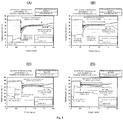
- Fig. 7A shows a chart representing the temperature change of each unit (inside the flow path of the sensor chip, inside the pipette tip) monitored over time in Example 1.
- Example 1 a temperature adjustment by the second temperature adjuster was performed for: the cleaning liquid that was fed to the flow path of the sensor chip in the cleaning processing that was performed after the first reciprocal liquid feeding step; the fluorescent-labelled secondary antibodies that were fed (or reciprocally fed) to the flow path of the sensor chip at the fluorescent labeling step and the second reciprocal liquid feeding step; and the cleaning liquid that was fed to the flow path of the sensor chip in cleaning processing performed after the second reciprocal liquid feeding step (which is similarly done in other examples as well).
- Example 1 the steps were performed in the same way as Example 1 except that the temperature of the specimen liquid for feeding was set to 15°C.
- the resultant chart is shown in Fig. 7B .
- Example 1 the steps were performed in the same way as Example 1 except that the temperature of the specimen liquid for feeding was set to 30°C.
- the resultant chart is shown in Fig. 7C .
- Example 1 the steps were performed in the same way as Example 1 except that the temperature of the specimen liquid for feeding was set to 37°C.
- the resultant chart is shown in Fig. 7D .
- Example 8A The steps were performed in the same way as Example 1 except that the second heat block was removed from the system that was used in Example 1 and, thus, the second temperature adjustment (step) was not performed. The result is shown in Fig. 8A . It should be noted that the temperature inside the sensor chip was 39°C, which is generally the same temperature as in Examples 1 to 4 and is within a detection error.
- Comparative Example 1 the steps were performed in the same way as Comparative Example 1 except that the temperature of the specimen liquid for feeding was set to 15°C. It should be noted that the temperature inside the sensor chip was 39°C, which is generally the same temperature as in Examples 1 to 4 and is within a detection error.
- the resultant chart is shown in Fig. 8B .
- Comparative Example 1 the steps were performed in the same way as Comparative Example 1 except that the temperature of the specimen liquid for feeding was set to 30°C.
- the resultant chart is shown in Fig. 8C .
- Comparative Example 1 the steps were performed in the same way as Comparative Example 1 except that the temperature of the specimen liquid for feeding was set to 37°C.
- the resultant chart is shown in Fig. 8D .
- the second temperature adjustment is performed (as in the Examples), even if some of the specimen liquid in the flow path 2 of the sensor chip 1 is transferred inside the pipette tip 10 outside of the flow path 2, the transferred specimen liquid is subjected to the second temperature adjustment in the pipette tip 10, thus, the specimen liquid is not easily affected by the temperature inside the SPFS device 4 (15°C). Even if a specimen liquid of 5 to 15°C is used, the temperature of the specimen liquid can be raised to a temperature suitable for a biological reaction (approximately 35 to 37°C) (Examples 1 to 3). Further, even if a specimen liquid that was pre-adjusted to 37°C is used, the specimen liquid is not overly heated, maintaining the temperature at 37°C (Example 4).
- the inspection system allows to obtain a sufficient biological reaction under temperature conditions suitable for the target biological reaction, as well as, to obtain a biological reaction in a temperature suitable for the biological reaction even with a specimen liquid of a varying temperature (e.g., low temperature such as 5 to 15°C) (i.e., robust for specimen liquids of varying initial temperatures).
- a specimen liquid of a varying temperature e.g., low temperature such as 5 to 15°C
- the inspection system of the first to third embodiments of the present invention has described the inspection system of the first to third embodiments of the present invention and examples thereof.
- the invention is, however, not limited to the above-described inspection system of the first to third embodiments, rather can be applied to any inspection system that includes an inspection device and a sensor chip and performs reciprocal liquid feeding, where at least some of a reaction liquid in a flow path of the sensor chip is caused to flow out of the sensor chip and to flow in again, and may embody the problems addressed by the present invention.
- the inspection system may include, for example, an SPR device or an Attenuated Total Reflection (ATR) device, as a detection system.
- ATR Attenuated Total Reflection
Landscapes
- Health & Medical Sciences (AREA)
- General Health & Medical Sciences (AREA)
- Life Sciences & Earth Sciences (AREA)
- Chemical & Material Sciences (AREA)
- Analytical Chemistry (AREA)
- Biochemistry (AREA)
- Physics & Mathematics (AREA)
- General Physics & Mathematics (AREA)
- Immunology (AREA)
- Pathology (AREA)
- Nuclear Medicine, Radiotherapy & Molecular Imaging (AREA)
- Automatic Analysis And Handling Materials Therefor (AREA)
- Investigating, Analyzing Materials By Fluorescence Or Luminescence (AREA)
- Investigating Or Analysing Materials By Optical Means (AREA)
Applications Claiming Priority (2)
| Application Number | Priority Date | Filing Date | Title |
|---|---|---|---|
| JP2015223369 | 2015-11-13 | ||
| PCT/JP2016/082643 WO2017082142A1 (ja) | 2015-11-13 | 2016-11-02 | 検査システム |
Publications (2)
| Publication Number | Publication Date |
|---|---|
| EP3376231A1 true EP3376231A1 (de) | 2018-09-19 |
| EP3376231A4 EP3376231A4 (de) | 2018-09-19 |
Family
ID=58696065
Family Applications (1)
| Application Number | Title | Priority Date | Filing Date |
|---|---|---|---|
| EP16864105.8A Withdrawn EP3376231A4 (de) | 2015-11-13 | 2016-11-02 | Überprüfungssystem |
Country Status (4)
| Country | Link |
|---|---|
| US (1) | US11079331B2 (de) |
| EP (1) | EP3376231A4 (de) |
| JP (1) | JPWO2017082142A1 (de) |
| WO (1) | WO2017082142A1 (de) |
Cited By (2)
| Publication number | Priority date | Publication date | Assignee | Title |
|---|---|---|---|---|
| EP3598129A4 (de) * | 2017-03-17 | 2020-03-11 | Konica Minolta, Inc. | Probendetektionssystem |
| US12117460B2 (en) | 2018-04-05 | 2024-10-15 | Otsuka Pharmaceutical Co., Ltd. | Temperature adjustment system and temperature adjustment method |
Families Citing this family (4)
| Publication number | Priority date | Publication date | Assignee | Title |
|---|---|---|---|---|
| JP7212632B2 (ja) * | 2017-12-21 | 2023-01-25 | 大塚製薬株式会社 | 温調システム |
| EP4537082A1 (de) * | 2022-06-13 | 2025-04-16 | Vysens B.V. | Oberflächenplasmonresonanzmesssystem und verfahren zur oberflächenplasmonresonanzmessung zur probeninjektion unter verwendung eines küvetteninjektionsflusssystems |
| JP2025132702A (ja) * | 2024-02-29 | 2025-09-10 | キヤノン株式会社 | 光学測定装置 |
| JP2026000788A (ja) * | 2024-06-18 | 2026-01-06 | キヤノン株式会社 | 反応測定装置 |
Family Cites Families (16)
| Publication number | Priority date | Publication date | Assignee | Title |
|---|---|---|---|---|
| JPS6322530Y2 (de) * | 1980-04-30 | 1988-06-21 | ||
| JPH0715479B2 (ja) * | 1986-01-20 | 1995-02-22 | 株式会社ニツテク | ピペツト装置 |
| JP2000065732A (ja) * | 1998-08-24 | 2000-03-03 | Nippon Laser Denshi Kk | 表面プラズモン共鳴角検出装置及び試料温度制御方法 |
| US20020055111A1 (en) * | 2000-08-25 | 2002-05-09 | Shiping Chen | Three-dimensional probe carriers |
| JP2004061173A (ja) | 2002-07-25 | 2004-02-26 | Sysmex Corp | 試料調製装置とそれを用いた試料分析装置 |
| JP4549803B2 (ja) | 2004-10-08 | 2010-09-22 | 富士フイルム株式会社 | スクリーニングシステム |
| JP5236612B2 (ja) * | 2009-11-04 | 2013-07-17 | 株式会社日立ハイテクノロジーズ | 自動分析装置 |
| WO2012105171A1 (ja) * | 2011-01-31 | 2012-08-09 | コニカミノルタホールディングス株式会社 | 検査チップ及びこの検査チップを備えた検査チップセット |
| JP5575043B2 (ja) * | 2011-03-31 | 2014-08-20 | 富士フイルム株式会社 | 分析装置 |
| JP2012225778A (ja) * | 2011-04-20 | 2012-11-15 | Konica Minolta Holdings Inc | 検査チップ及び計測装置 |
| US9080940B2 (en) * | 2011-06-14 | 2015-07-14 | Konica Minolta, Inc. | Sensor chip that is used in specimen material detection device and specimen material detection device using sensor chip |
| JP5789441B2 (ja) * | 2011-08-01 | 2015-10-07 | 株式会社日立ハイテクノロジーズ | 遺伝子検査システム |
| CN104871007A (zh) | 2012-12-26 | 2015-08-26 | 株式会社日立高新技术 | 自动分析装置 |
| JP2014209090A (ja) * | 2013-03-29 | 2014-11-06 | シスメックス株式会社 | 細胞分析方法及び装置 |
| EP3064928B1 (de) * | 2013-10-31 | 2019-04-17 | Konica Minolta, Inc. | Detektionsvorrichtung, detektionsverfahren mit dieser detektionsvorrichtung |
| JP6260317B2 (ja) | 2014-02-06 | 2018-01-17 | コニカミノルタ株式会社 | イムノアッセイ装置およびイムノアッセイ法 |
-
2016
- 2016-11-02 WO PCT/JP2016/082643 patent/WO2017082142A1/ja not_active Ceased
- 2016-11-02 JP JP2017550283A patent/JPWO2017082142A1/ja active Pending
- 2016-11-02 US US15/772,346 patent/US11079331B2/en not_active Expired - Fee Related
- 2016-11-02 EP EP16864105.8A patent/EP3376231A4/de not_active Withdrawn
Cited By (2)
| Publication number | Priority date | Publication date | Assignee | Title |
|---|---|---|---|---|
| EP3598129A4 (de) * | 2017-03-17 | 2020-03-11 | Konica Minolta, Inc. | Probendetektionssystem |
| US12117460B2 (en) | 2018-04-05 | 2024-10-15 | Otsuka Pharmaceutical Co., Ltd. | Temperature adjustment system and temperature adjustment method |
Also Published As
| Publication number | Publication date |
|---|---|
| US20180321151A1 (en) | 2018-11-08 |
| JPWO2017082142A1 (ja) | 2018-08-30 |
| US11079331B2 (en) | 2021-08-03 |
| WO2017082142A1 (ja) | 2017-05-18 |
| EP3376231A4 (de) | 2018-09-19 |
Similar Documents
| Publication | Publication Date | Title |
|---|---|---|
| US11079331B2 (en) | Inspection system | |
| JP5497587B2 (ja) | マイクロ流路チップ及びマイクロアレイチップ | |
| US7952705B2 (en) | Integrated microfluidic optical device for sub-micro liter liquid sample microspectroscopy | |
| US7964388B2 (en) | Chemical reaction device, chemical reaction system, and chemical reaction method | |
| JP5640980B2 (ja) | マイクロチップ送液システム、検体検出装置、及びマイクロチップ送液システムの送液方法 | |
| EP2229578A1 (de) | Detektionsinstrument mit integriertem mikrofluidischem array zur optischen detektion von biomarkern und verwendungsverfahren | |
| EP3394597B1 (de) | Optische erkennung einer substanz in einem fluid | |
| EP3064928B1 (de) | Detektionsvorrichtung, detektionsverfahren mit dieser detektionsvorrichtung | |
| US20160195524A1 (en) | Automated Assay | |
| JP6617374B2 (ja) | 送液方法、送液装置及び分析装置 | |
| JP5463840B2 (ja) | 測定方法及び表面プラズモン増強蛍光測定装置 | |
| WO2009029177A1 (en) | Integrated microfluidic optical device for sub-micro liter liquid sample microspectroscopy | |
| JP2010145272A (ja) | プラズモン励起センサを用いたアッセイ法 | |
| EP3598129A1 (de) | Probendetektionssystem | |
| JP6648764B2 (ja) | 反応方法 | |
| EP4083610A1 (de) | Biomolekularer inspektionschip für fluoreszenzdetektion | |
| JP6485356B2 (ja) | サンドイッチ−イムノアッセイ法を用いた抗原検出方法 | |
| JP6003645B2 (ja) | 蛍光検出装置およびこれを用いた蛍光検出方法 | |
| JP2024066198A (ja) | 生体分子自動検出装置 | |
| JP6885458B2 (ja) | 検体検出システム用センサーチップ | |
| KR101616985B1 (ko) | 비특이적 결합이 최소화된 나노입자 기반 체외진단 방법 및 반응용기 | |
| JP2011169609A (ja) | プラズモン励起センサを用いたアッセイ法 | |
| JP2012026924A (ja) | 光ファイバー型表面プラズモン増強蛍光測定装置およびこれに用いられるプラズモン励起センサ | |
| CN121399440A (zh) | 用于测量生物样品中分析物的量的设备 | |
| JP2014025951A (ja) | 測定方法及び表面プラズモン増強蛍光測定装置 |
Legal Events
| Date | Code | Title | Description |
|---|---|---|---|
| STAA | Information on the status of an ep patent application or granted ep patent |
Free format text: STATUS: THE INTERNATIONAL PUBLICATION HAS BEEN MADE |
|
| PUAI | Public reference made under article 153(3) epc to a published international application that has entered the european phase |
Free format text: ORIGINAL CODE: 0009012 |
|
| STAA | Information on the status of an ep patent application or granted ep patent |
Free format text: STATUS: REQUEST FOR EXAMINATION WAS MADE |
|
| 17P | Request for examination filed |
Effective date: 20180525 |
|
| A4 | Supplementary search report drawn up and despatched |
Effective date: 20180723 |
|
| AK | Designated contracting states |
Kind code of ref document: A1 Designated state(s): AL AT BE BG CH CY CZ DE DK EE ES FI FR GB GR HR HU IE IS IT LI LT LU LV MC MK MT NL NO PL PT RO RS SE SI SK SM TR |
|
| AX | Request for extension of the european patent |
Extension state: BA ME |
|
| DAV | Request for validation of the european patent (deleted) | ||
| DAX | Request for extension of the european patent (deleted) | ||
| STAA | Information on the status of an ep patent application or granted ep patent |
Free format text: STATUS: EXAMINATION IS IN PROGRESS |
|
| 17Q | First examination report despatched |
Effective date: 20200326 |
|
| GRAP | Despatch of communication of intention to grant a patent |
Free format text: ORIGINAL CODE: EPIDOSNIGR1 |
|
| STAA | Information on the status of an ep patent application or granted ep patent |
Free format text: STATUS: GRANT OF PATENT IS INTENDED |
|
| INTG | Intention to grant announced |
Effective date: 20210924 |
|
| STAA | Information on the status of an ep patent application or granted ep patent |
Free format text: STATUS: THE APPLICATION IS DEEMED TO BE WITHDRAWN |
|
| 18D | Application deemed to be withdrawn |
Effective date: 20220205 |