EP3376404A1 - Procédé et système d'évaluation de matériel de visualisation ainsi que programme - Google Patents
Procédé et système d'évaluation de matériel de visualisation ainsi que programme Download PDFInfo
- Publication number
- EP3376404A1 EP3376404A1 EP16886527.7A EP16886527A EP3376404A1 EP 3376404 A1 EP3376404 A1 EP 3376404A1 EP 16886527 A EP16886527 A EP 16886527A EP 3376404 A1 EP3376404 A1 EP 3376404A1
- Authority
- EP
- European Patent Office
- Prior art keywords
- matrix
- brain activity
- unit
- text information
- generating
- Prior art date
- Legal status (The legal status is an assumption and is not a legal conclusion. Google has not performed a legal analysis and makes no representation as to the accuracy of the status listed.)
- Withdrawn
Links
Images





Classifications
-
- G—PHYSICS
- G06—COMPUTING OR CALCULATING; COUNTING
- G06F—ELECTRIC DIGITAL DATA PROCESSING
- G06F40/00—Handling natural language data
- G06F40/30—Semantic analysis
-
- A—HUMAN NECESSITIES
- A61—MEDICAL OR VETERINARY SCIENCE; HYGIENE
- A61B—DIAGNOSIS; SURGERY; IDENTIFICATION
- A61B5/00—Measuring for diagnostic purposes; Identification of persons
- A61B5/05—Detecting, measuring or recording for diagnosis by means of electric currents or magnetic fields; Measuring using microwaves or radio waves
- A61B5/055—Detecting, measuring or recording for diagnosis by means of electric currents or magnetic fields; Measuring using microwaves or radio waves involving electronic [EMR] or nuclear [NMR] magnetic resonance, e.g. magnetic resonance imaging
-
- G—PHYSICS
- G06—COMPUTING OR CALCULATING; COUNTING
- G06F—ELECTRIC DIGITAL DATA PROCESSING
- G06F16/00—Information retrieval; Database structures therefor; File system structures therefor
-
- G—PHYSICS
- G06—COMPUTING OR CALCULATING; COUNTING
- G06F—ELECTRIC DIGITAL DATA PROCESSING
- G06F17/00—Digital computing or data processing equipment or methods, specially adapted for specific functions
- G06F17/10—Complex mathematical operations
- G06F17/16—Matrix or vector computation, e.g. matrix-matrix or matrix-vector multiplication, matrix factorization
-
- G—PHYSICS
- G06—COMPUTING OR CALCULATING; COUNTING
- G06F—ELECTRIC DIGITAL DATA PROCESSING
- G06F40/00—Handling natural language data
- G06F40/40—Processing or translation of natural language
-
- G—PHYSICS
- G06—COMPUTING OR CALCULATING; COUNTING
- G06Q—INFORMATION AND COMMUNICATION TECHNOLOGY [ICT] SPECIALLY ADAPTED FOR ADMINISTRATIVE, COMMERCIAL, FINANCIAL, MANAGERIAL OR SUPERVISORY PURPOSES; SYSTEMS OR METHODS SPECIALLY ADAPTED FOR ADMINISTRATIVE, COMMERCIAL, FINANCIAL, MANAGERIAL OR SUPERVISORY PURPOSES, NOT OTHERWISE PROVIDED FOR
- G06Q30/00—Commerce
- G06Q30/02—Marketing; Price estimation or determination; Fundraising
- G06Q30/0241—Advertisements
- G06Q30/0242—Determining effectiveness of advertisements
-
- G—PHYSICS
- G06—COMPUTING OR CALCULATING; COUNTING
- G06T—IMAGE DATA PROCESSING OR GENERATION, IN GENERAL
- G06T7/00—Image analysis
- G06T7/0002—Inspection of images, e.g. flaw detection
- G06T7/0012—Biomedical image inspection
-
- A—HUMAN NECESSITIES
- A61—MEDICAL OR VETERINARY SCIENCE; HYGIENE
- A61B—DIAGNOSIS; SURGERY; IDENTIFICATION
- A61B2503/00—Evaluating a particular growth phase or type of persons or animals
- A61B2503/12—Healthy persons not otherwise provided for, e.g. subjects of a marketing survey
-
- G—PHYSICS
- G06—COMPUTING OR CALCULATING; COUNTING
- G06T—IMAGE DATA PROCESSING OR GENERATION, IN GENERAL
- G06T2207/00—Indexing scheme for image analysis or image enhancement
- G06T2207/10—Image acquisition modality
- G06T2207/10072—Tomographic images
- G06T2207/10088—Magnetic resonance imaging [MRI]
-
- G—PHYSICS
- G06—COMPUTING OR CALCULATING; COUNTING
- G06T—IMAGE DATA PROCESSING OR GENERATION, IN GENERAL
- G06T2207/00—Indexing scheme for image analysis or image enhancement
- G06T2207/30—Subject of image; Context of image processing
- G06T2207/30004—Biomedical image processing
- G06T2207/30016—Brain
Definitions
- the present invention relates to a viewing material evaluating method, a viewing material evaluating system, and a program.
- CM a viewing material
- a subjective and qualitative evaluation is performed.
- a technology for estimating the semantic content of perception acquired by a test subject by measuring brain activity of the test subject under natural perception such as moving image viewing and analyzing measured information is known (for example, Patent Document 1).
- words having high likelihoods are estimated from parts of speech including nouns, verbs, and adjectives, and thus an objective index can be acquired.
- Patent Document 1 Japanese Unexamined Patent Application, First Publication No. 2015-077694
- the present invention is for solving the above-described problems, and an object thereof is to provide a viewing material evaluating method, a viewing material evaluating system, and a program capable of evaluating a viewing material objectively and qualitatively.
- a viewing material evaluating method including: a brain activity measuring step of measuring brain activity of a test subject who views a viewing material by using a brain activity measuring unit; a first matrix generating step of generating a first matrix estimating semantic content of perception of the test subject on the basis of a measurement result acquired in the brain activity measuring step by using a first matrix generating unit; a second matrix generating step of generating a second matrix by performing natural language processing for text information representing a planning intention of the viewing material by using a second matrix generating unit; and a similarity calculating step of calculating similarity between the first matrix and the second matrix by using a similarity calculating unit.
- a viewing material evaluating method in which, in the second matrix generating step of the viewing material evaluating method described above, the second matrix generating unit translates each of words acquired by dividing the text information into a matrix representing a position in a semantic space of a predetermined number of dimensions and generates the second matrix representing the center of the matrix.
- a viewing material evaluating method in which, in the viewing material evaluating method described above, cut text information representing a planning intention of each cut included in a storyboard of the viewing material is included in the text information, in the first matrix generating step, the first matrix generating unit generates the first matrix for each cut, in the second matrix generating step, the second matrix generating unit generates the second matrix corresponding to the cut text information, and, in the similarity calculating step, the similarity calculating unit calculates the similarity for each cut.
- a viewing material evaluating method in which, in the viewing material evaluating method described above, scene text information representing a planning intention of each scene included in the viewing material is included in the text information, in the first matrix generating step, the first matrix generating unit generates the first matrix for each scene, in the second matrix generating step, the second matrix generating unit generates the second matrix corresponding to the scene text information, and, in the similarity calculating step, the similarity calculating unit calculates the similarity for each scene.
- a viewing material evaluating method in which, in the brain activity measuring step of the viewing material evaluating method described above, the brain activity measuring unit measures brain activity of the test subject for each predetermined time interval, in the first matrix generating step, the first matrix generating unit generates the first matrix for each predetermined time interval, and, in the similarity calculating step, the similarity calculating unit calculates similarity between a mean first matrix representing a mean of the first matrix in a period corresponding to the text information and the second matrix.
- a viewing material evaluating method in which, in the viewing material evaluating method described above, overall intention text information representing an overall planning intention of the viewing material is included in the text information, in the brain activity measuring step, the brain activity measuring unit measures brain activity of the test subject for each predetermined time interval, in the first matrix generating step, the first matrix generating unit generates the first matrix for each predetermined time interval, in the second matrix generating step, the second matrix generating unit generates the second matrix corresponding to the overall intention text information, and, in the similarity calculating step, the similarity calculating unit calculates the similarity between the first matrix generated for each predetermined time interval and the second matrix corresponding to the overall intention text information.
- a viewing material evaluating method in which, in the viewing material evaluating method described above, a training measuring step of measuring brain activity of the test subject viewing a training moving image at a predetermined time interval by using the brain activity measuring unit and a model generating step of generating an estimation model for estimating the first matrix from measurement results on the basis of a plurality of the measurement results acquired in the training measuring step and a plurality of third matrixes generated by performing natural language processing for description text describing each scene of the training moving image by using a model generating unit are further included, wherein, in the first matrix generating step, the first matrix generating unit generates the first matrix on the basis of the measurement result acquired in the brain activity measuring step and the estimation model.
- a viewing material evaluating system including: a brain activity measuring unit measuring brain activity of a test subject who views a viewing material; a first matrix generating unit generating a first matrix estimating semantic content of perception of the test subject on the basis of a measurement result acquired by the brain activity measuring unit; a second matrix generating unit generating a second matrix by performing natural language processing for text information representing a planning intention of the viewing material; and a similarity calculating unit calculating similarity between the first matrix and the second matrix.
- a program causing a computer to execute: a first matrix generating step of generating a first matrix estimating semantic content of perception of a test subject on the basis of a measurement result acquired by a brain activity measuring unit measuring brain activity of the test subject who views a viewing material; a second matrix generating step of generating a second matrix by performing natural language processing for text information representing a planning intention of the viewing material; and a similarity calculating step of calculating similarity between the first matrix and the second matrix.
- a viewing material can be evaluated objectively and qualitatively.
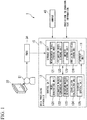
- Fig. 1 is a block diagram illustrating an example of an advertisement evaluating system 1 according to a first embodiment.
- the advertisement evaluating system 1 includes a data processing apparatus 10, an image reproducing terminal 20, and a functional magnetic resonance imaging (fMRI) 30.
- fMRI magnetic resonance imaging
- the advertisement evaluating system 1 allows a test subject S1 to view a commercial moving image (CM moving image; commercial film (CF)) and evaluates the degree of reflection of the intention of a CM planning paper (the intention of a producer) objectively and qualitatively.
- CM moving image (advertisement moving image) is an example of a viewing material
- advertisement evaluating system 1 will be described as an example of a viewing material evaluating system.
- the image reproducing terminal 20 is a terminal device including a liquid crystal display or the like and, for example, displays a moving image for training (training moving image), a CM moving image to be evaluated, or the like and allows a test subject S1 to view the displayed moving image.
- the training moving image is a moving image including a wide variety of images.
- the fMRI 30 measures brain activity of the test subject S1 who has viewed an image (for example, a CM moving image or the like) displayed by the image reproducing terminal 20.
- the fMRI 30 outputs an fMRI signal (brain activity signal) that visualizes a hemodynamic reaction relating to brain activity of the test subject S1.
- the fMRI 30 measures the brain activity of the test subject S1 at the predetermined time interval (for example, a two-second interval) and outputs a measurement result to the data processing apparatus 10 as an fMRI signal.
- the data processing apparatus 10 is a computer apparatus that evaluates a CM moving image on the basis of the measurement result for the brain activity of the test subject S1 measured by the fMRI 30. In addition, the data processing apparatus 10 generates an estimation model to be described later that is used for evaluating a CM moving image.
- the data processing apparatus 10 includes a display unit 11, a storage unit 12, and a control unit 13.
- the display unit 11 (an example of an output unit) is, for example, a display device such as a liquid crystal display and displays information relating to various processes performed by the data processing apparatus 10.
- the storage unit 12 stores various kinds of information used for various processes performed by the data processing apparatus 10.
- the storage unit 12 includes a measurement result storing unit 121, an estimation model storing unit 122, a matrix storing unit 123, and a correlation coefficient storing unit 124.
- the measurement result storing unit 121 stores a measurement result acquired by the fMRI 30.
- the measurement result storing unit 121 for example, stores time information (or a sampling number) and a measurement result acquired by the fMRI 30 in association with each other.
- the estimation model storing unit 122 stores an estimation model generated by a model generating unit 131 to be described later.
- the estimation model is a model for estimating an estimation matrix A (first matrix) estimating semantic content of perception of the test subject S1 from a measurement result acquired by the fMRI 30. Details of the estimation matrix A will be described later.
- the matrix storing unit 123 stores various kinds of matrix information used for evaluating a CM moving image.
- the matrix storing unit 123 for example, stores an object concept vector B (matrix B (second matrix)) generated from text information representing the intention of the plan of a CM, an estimation matrix A, and the like.
- the object concept vector is a vector representing the concept of an object, in other words, the intention of the plan.
- the correlation coefficient storing unit 124 stores a correlation coefficient (r) corresponding to an evaluation result for a CM moving image.
- the correlation coefficient storing unit 124 stores a correlation coefficient (r) that is calculated by a correlation calculating unit 134 to be described later on the basis of the estimation matrix A and the object concept vector B (matrix B).
- the correlation coefficient storing unit 124 for example, stores time information (or a sampling number) and the correlation coefficient (r) in association with each other.
- the similarity is calculated by using a Pearson correlation or a Euclidean distance.
- the control unit 13 for example, is a processor including a central processing unit (CPU) or the like and integrally controls the data processing apparatus 10.
- the control unit 13 performs various processes performed by the data processing apparatus 10. For example, the control unit 13 generates an estimation model on the basis of a measurement result acquired by the fMRI 30 by allowing the test subject S1 to view a training moving image (training motion video) and an annotation vector that is vector data generated on the basis of data to which an annotation is assigned in advance for the training moving image.
- control unit 13 generates a correlation coefficient (r) between a coordinate translation (matrix B) inside a semantic space used for evaluating a CM moving image and the matrix A on the basis of the measurement result acquired by the fMRI 30 by allowing the test subject S1 to view the CM moving image that is an evaluation target and text information representing the intention of the plan of the CM planning paper.
- control unit 13 includes a model generating unit 131, an estimation matrix generating unit 132, an intention matrix generating unit 133, a correlation calculating unit 134, and a display control unit 135.
- the model generating unit 131 generates an estimation model on the basis of a plurality of measurement results acquired by the fMRI 30 through measurements at the predetermined time interval by allowing the test subject S1 to view a training moving image and a plurality of annotation vectors (third matrixes) generated by performing natural language processing for description text describing each scene of the training moving image.
- the model generating unit 131 as illustrated in Fig. 2 , generates an annotation vector (matrix) based on a still image of each scene of a training moving image or a moving image.
- Fig. 2 is a diagram illustrating an example of generation of an annotation vector according to this embodiment.
- a language description (annotation) P2 representing the impression of the image is generated.
- Text of the language description (annotation) for example, is text of a description of a scene overview, a feeling, or the like, and in order to avoid the bias of individual expressions describing an annotation, annotations described by a plurality of persons are used.
- the model generating unit 131 performs a morpheme analysis P3 on the text of this language description (annotation), generates spaced word data to be decomposed into words and calculates an arithmetic mean of coordinate values of the words in an annotation vector space. Alternatively, coordinate values may be calculated for an aggregation of words, in other words, the whole text.
- the model generating unit 131 performs natural language processing for the spaced word data by using a corpus 40 and generates an annotation vector space P4 such as Skip-gram.
- the corpus 40 for example, is a database of a large amount of text data such as Wikipedia (registered trademark), newspaper articles, or the like.
- the model generating unit 131 performs natural language processing of such a large amount of text data for the spaced word data by using the corpus 40, thereby generating a word vector space.
- the word vector space assigns coordinates in a same space, in other words, a vector to one word such as a noun, an adjective, a verb, or the like on the basis of appearance probabilities of words inside the corpus or the like.
- a word such as a noun representing the name of an object, an adjective representing an impression, or the like can be translated into coordinate values in a vector space (middle representation space) in which relations between words are represented as a matrix, and a relation between specific words can be specified as a distance between coordinates.
- the vector space (middle representation space) is a matrix space of a predetermined number of dimensions (N dimension) as illustrated in Fig. 3 , and each word is assigned to corresponding coordinates of the matrix space (represented).
- the model generating unit 131 translates each word included in the language description (annotation) representing the impression of an image into an annotation vector representing a position in the semantic space.
- the translation process is performed for each annotation described by a plurality of persons as a target. Thereafter, a vector representing the center (mean) of a plurality of annotation vectors acquired by performing the translation process is generated as an annotation vector representing the impression of the image.
- the model generating unit 131 for example, generates an annotation vector (third matrix) of the training moving image for every scene at two-second intervals and stores the generated annotation vectors in the matrix storing unit 123.
- the model generating unit 131 for example, stores time information (or a sampling number) and an annotation vector (third matrix) of each scene of the training moving image in the matrix storing unit 123 in association with each other.
- the model generating unit 131 acquires a measurement result of brain activity every two seconds that is acquired by the fMRI 30 when the training moving image displayed by the image reproducing terminal 20 is viewed by the test subject S1 and stores the measurement results in the measurement result storing unit 121.
- the model generating unit 131 stores time information (or a sampling number) and a measurement result for brain activity acquired by the fMRI 30 on the basis of the training moving image in the measurement result storing unit 121 in association with each other.
- the model generating unit 131 generates an estimation model on the basis of the measurement results acquired by the fMRI 30 on the basis of the training moving image and the annotation vector (third matrix) of each scene of the training moving image.
- the estimation model is used for estimating an estimation matrix A that is semantic content of perception of the test subject S1 based on the measurement results of the brain activity.
- Fig. 4 is a diagram illustrating an example of an estimation model generating process according to this embodiment.
- the model generating unit 131 acquires the measurement results (X t1 , X t2 , ⁇ , X tn ) acquired by the fMRI 30 for the training moving image from the measurement result storing unit 121.
- the model generating unit 131 acquires the annotation vector (S t1 , S t2 , ⁇ , S tn ) of each scene of the training moving image from the matrix storing unit 123.
- f() represents a function
- ⁇ represents a parameter
- Equation (1) described above is represented as a linear model, it is represented as in the following Equation (2).
- S R ⁇ W
- a matrix W represents a coefficient parameter in a linear model.
- the model generating unit 131 generates an estimation model on the basis of Equation (2) described above by using the measurement result (matrix R) described above as a description variable and using the annotation vector (matrix S) as an objective variable.
- a statistical model used for generating the estimation model may be a linear model (for example, a linear regression model or the like) or a non-linear model (for example, a non-linear regression model or the like).
- the matrix R is a matrix of 3600 rows ⁇ 60000 digits.
- the matrix S is a matrix of 3600 rows ⁇ 1000 digits
- the matrix W is a matrix of 60000 rows ⁇ 1000 digits.
- the model generating unit 131 generates an estimation model corresponding to the matrix W on the basis of the matrix R, the matrix S, and Equation (2). By using this estimation model, from a measurement result of 60000 points acquired by the fMRI 30, an annotation vector of 1000 dimensions can be estimated.
- the model generating unit 131 stores the generated estimation model in the estimation model storing unit 122.
- the estimation model is preferably generated for each test subject S1, and the model generating unit 131 may store the generated estimation model and identification information used for identifying the test subject S1 in the estimation model storing unit 122 in association with each other.
- the estimation matrix generating unit 132 (an example of a first matrix generating unit) generates an estimation matrix A (first matrix) estimating the semantic content of the perception of the test subject S1 on the basis of the measurement result acquired by the fMRI 30.
- the estimation matrix generating unit 132 for example, generates an estimation matrix A in which a measurement result is assigned to the semantic space illustrated in Fig. 3 on the basis of the measurement result acquired by the fMRI 30 by using the estimation model stored by the estimation model storing unit 122.
- the estimation matrix generating unit 132 stores the generated estimation matrix A in the matrix storing unit 123.
- the estimation matrix generating unit 132 in a case in which the fMRI 30 outputs measurement results (X t1 , X t2 , ⁇ , X tn ) at the predetermined time interval (time t1, time t2, ⁇ , time tn), the estimation matrix generating unit 132 generates an estimation matrix A (A t1 , A t2 , ⁇ , A tn ). In such a case, the estimation matrix generating unit 132 stores time information (time t1, time t2, ⁇ , time tn) and the estimation matrix A (A t1 , A t2 , ⁇ , A tn ) in the matrix storing unit 123 in association with each other.
- the intention matrix generating unit 133 (an example of a second matrix generating unit) performs natural language processing for text information representing the intention of the plan of the CM moving image and generates an object concept vector B (matrix B (second matrix)) of the whole plan. For example, similar to the technique illustrated in Fig. 2 , from the text information representing the overall intention of the plan such as a planning paper or the like of the CM moving image, an object concept vector B (matrix B) is generated. In other words, the intention matrix generating unit 133 translates the text information into spaced word data by performing a morpheme analysis thereof and performs natural language processing for words included in the spaced word data by using the corpus 40, thereby generating an object concept vector in units of words.
- the intention matrix generating unit 133 generates an object concept vector B (matrix B) of the whole plan of which the center is calculated on the basis of the generated object concept vector in units of words.
- the intention matrix generating unit 133 translates each word acquired by dividing the text information into a matrix (object concept vector) representing a position in the semantic space of a predetermined number of dimensions (for example, 1000 dimensions) and generates a matrix B representing the center of the matrix.
- the intention matrix generating unit 133 stores the generated object concept vector B (matrix B) in the matrix storing unit 123.
- the correlation calculating unit 134 calculates a correlation (an example of similarity) between the estimation matrix A described above and the object concept vector B (matrix B).
- the correlation calculating unit 134 calculates correlation coefficients r(r t1 , r t2 , ⁇ , r tn ) between the estimation matrix A (A t1 , A t2 , ⁇ , A tn ) generated at each predetermined time interval and the object concept vector B (matrix B) corresponding to text information representing the overall intention of the plan of the CM.
- the correlation calculating unit 134 stores the generated correlation coefficients r (r t1 , r t2 , ⁇ , r tn ) and the time information (time t1, time t2, ⁇ , time tn) in the correlation coefficient storing unit 124 in association with each other.
- the display control unit 135 acquires the correlation coefficient r stored by the correlation coefficient storing unit 124, for example, generates a graph as illustrated in Fig. 8 to be described later, and displays a correlation between the overall intention of the plan of the CM and content perceived by a viewer that is output as a result of the brain activity of the viewer.
- the display control unit 135 displays (outputs) the generated graph of the correlation coefficient r on the display unit 11 as a result of the evaluation of the CM moving image.
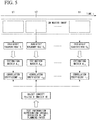
- Fig. 5 is a diagram illustrating an example of a CM moving image evaluating process according to this embodiment.
- the overall intention text information representing the overall intention of the plan of the advertisement moving image is included in text information representing the intention of the plan of the CM.
- the fMRI 30 measures the brain activity of the test subject S1 at each predetermined time interval (time t1, time t2, ⁇ , time tn) and outputs measurement results (X t1 , X t2 , ⁇ , X tn ).
- the estimation matrix generating unit 132 generates an estimation matrix A (A t1 , A t2 , ⁇ , A tn ) at each predetermined time interval from the measurement results (X t1 , X t2 , ⁇ , X tn ) by using the estimation model stored by the estimation model storing unit 122.
- the intention matrix generating unit 133 generates an object concept vector B corresponding to the overall intention text information.
- the correlation calculating unit 134 calculates correlation coefficients r (r t1 , r t2 , ⁇ , r tn ) between the estimation matrix A (A t1 , A t2 , ⁇ , A tn ) generated at each predetermined time interval and the object concept vector B (matrix B) corresponding to the overall intention text information.
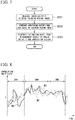
- Fig. 6 is a flowchart illustrating an example of the operation of the advertisement evaluating system 1 according to this embodiment.
- the model generating unit 131 of the data processing apparatus 10 generates an estimation model (Step S101).
- a detailed process of generating an estimation model will be described later with reference to Fig. 7 .
- the model generating unit 131 stores the generated estimation model in the estimation model storing unit 122.
- the fMRI 30 measures the brain activity of the test subject who has viewed the CM moving image at the predetermined time interval (Step S102).
- the fMRI 30 measures the brain activity of the test subject S1 who has viewed the CM moving image displayed by the image reproducing terminal 20, for example, at the interval of two seconds.
- the fMRI 30 outputs the measurement result (X t1 , X t2 , ⁇ , X tn ) acquired through measurement to the data processing apparatus 10, and the data processing apparatus 10, for example, stores the measurement result in the measurement result storing unit 121.
- the estimation matrix generating unit 132 of the data processing apparatus 10 generates an estimation matrix A at each predetermined time interval from the measurement result and the estimation model (Step S103).
- the estimation matrix generating unit 132 generates an estimation matrix A (for example, A t1 , A t2 , ⁇ , A tn illustrated in Fig. 5 ) for every two seconds from the measurement results for every two seconds stored by the measurement result storing unit 121 and the estimation model stored by the estimation model storing unit 122.
- the estimation matrix generating unit 132 stores the generated estimation matrix A in the matrix storing unit 123.
- the intention matrix generating unit 133 generates an object concept vector B (matrix B) from the text information (overall intention text information) representing the overall intention of the CM planning paper (Step S104).
- the intention matrix generating unit 133 for example, generates an object concept vector B (matrix B) by using a technique similar to the technique illustrated in Fig. 2 .
- the intention matrix generating unit 133 for example, translates each word acquired by dividing the overall intention text information into a matrix (object concept vector) representing a position in a semantic space of a predetermined number of dimensions (for example, a semantic space of 1000 dimensions) and generates an object concept vector B (matrix B) representing the center of the matrix (object concept vector).
- the intention matrix generating unit 133 stores the generated object concept vector B (matrix B) in the matrix storing unit 123.
- the correlation calculating unit 134 of the data processing apparatus 10 calculates a correlation coefficient r between the estimation matrix A at each predetermined time interval and the object concept vector B (matrix B) (Step S105).
- the correlation calculating unit 134 calculates correlation coefficients r (r t1 , r t2 , ⁇ , r tn ) between the estimation matrix A (A t1 , A t2 , ⁇ , A tn ) for every two seconds stored by the matrix storing unit 123 and the object concept vector B (matrix B) stored by the matrix storing unit 123.
- the correlation calculating unit 134 stores the calculated correlation coefficients r (r t1 , r t2 , ⁇ , r tn ) in the correlation coefficient storing unit 124.
- the data processing apparatus 10 generates a graph of the correlation coefficients r and displays the generated graph on the display unit 11 (Step SI06).
- the display control unit 135 of the data processing apparatus 10 acquires the correlation coefficients r (r t1 , r t2 , ⁇ , r tn ) for every two seconds stored by the correlation coefficient storing unit 124 and, for example, generates a graph as illustrated in Fig. 8 to be described later.
- the display control unit 135 displays (outputs) the generated graph of the correlation coefficients r on the display unit 11 as a result of the evaluation of the CM moving image and ends the process.
- the process of Step S102 corresponds to the process of a brain activity measuring step
- the process of Step S103 corresponds to the process of a first matrix generating step
- the process of Step S104 corresponds to the process of a second matrix generating step
- the process of Step S105 corresponds to the process of a correlation calculating step (a similarity calculating step).
- Fig. 7 is a flowchart illustrating an example of an estimation model generating process according to this embodiment.
- the fMRI 30 measures brain activity of a test subject who has viewed the training moving image at the predetermined time interval (Step S201).
- the fMRI 30 measures the brain activity of the test subject S1 who has viewed the training moving image displayed by the image reproducing terminal 20, for example, at the interval of two seconds.
- the fMRI 30 outputs the measurement result (X t1 , X t2 , ⁇ , X tn ) acquired through measurement to the data processing apparatus 10, and the model generating unit 131 of the data processing apparatus 10, for example, stores the measurement result in the measurement result storing unit 121.
- the model generating unit 131 generates an annotation vector that is vector data generated on the basis of data to which an annotation is assigned in advance for each scene of the training moving image (Step S202).
- the model generating unit 131 for example, generates an annotation vector (S t1 , S t2 , ⁇ , S tn ) at the interval of two seconds (for each scene) by using the technique illustrated in Fig. 2 .
- the model generating unit 131 stores the generated annotation vector (S t1 , S t2 , ⁇ , S tn ) in the matrix storing unit 123.
- the model generating unit 131 generates an estimation model from the measurement result of the brain activity and the annotation vector (Step S203).
- the model generating unit 131 generates an estimation model, as illustrated in Fig. 4 , by using Equation (2) using the measurement result (X t1 , X t2 , ⁇ , X tn ) stored by the measurement result storing unit 121 as the matrix R and the annotation vector (S t1 , S t2 , ⁇ , S tn ) stored by the matrix storing unit 123 as the matrix S.
- the model generating unit 131 stores the generated estimation model in the estimation model storing unit 122.
- the model generating unit 131 ends the estimation model generating process.
- Step S201 corresponds to the process of a training measuring step
- the process of Steps S202 and S203 corresponds to the process of a generation step.
- Fig. 8 is a diagram illustrating an example of the evaluation result of the advertisement evaluating system 1 according to this embodiment.
- Graphs illustrated in Fig. 8 represent graphs of evaluation results of an evaluation target CM (CMB), which is an evaluation target, and reference CM (CMA and CMC) for comparison.
- CMB evaluation target
- CMA and CMC reference CM
- the vertical axis represents the correlation coefficient r
- the horizontal axis represents the time.
- a correlation coefficient here is an index representing the degree of reflection of the overall intention text information representing the overall intention of a CM planning paper (a CM panning paper of CMB) on a target CM moving image.
- a correlation coefficient for the evaluation target CMB tends to be higher than correlation coefficients for the reference CMs (CMA and CMC), which represents that the evaluation target CMB reflects the intention of the CM planning paper (the planning paper of the CMB) well.
- the advertisement evaluating method (an example of a viewing material evaluating method) according to this embodiment includes a brain activity measuring step (Step S102 illustrated in Fig. 6 ), a first matrix generating step (Step S103 illustrated in Fig. 6 ), a second matrix generating step (Step S104 illustrated in Fig. 6 ), and a similarity calculating step (Step S105 illustrated in Fig. 6 ).
- the brain activity measuring step the fMRI 30 (brain activity measuring unit) measures the brain activity of a test subject S1 who has viewed a viewing material (CM moving image).
- the estimation matrix generating unit 132 (first matrix generating unit) generates an estimation matrix A (first matrix) used for estimating the semantic content of the perception of the test subject S1 on the basis of the measurement result acquired in the brain activity measuring step.
- the intention matrix generating unit 133 (second matrix generating unit) performs natural language processing for text information representing the intention of the plan of the advertisement moving image to generate an object concept vector B (the matrix B; the second matrix).
- the correlation calculating unit 134 calculates similarity (correlation coefficient r) between the estimation matrix A and the object concept vector B (matrix B).
- the advertisement evaluating method calculates a correlation coefficient r that is an index of an objective and qualitative CM evaluation of text information representing the intention of the plan of a viewing material (advertisement moving image), and accordingly, the viewing material (advertisement (CM)) can be evaluated objectively and qualitatively.
- the company can refer to other CMs (CMA and CMC) representing stronger reactions according to the intention of the plan of the CM of the own company than the CM (CMB) of the own company in a case in which CMs are present by comparing the evaluation results of the CM (CMA) of a competing company with the evaluation result of the CM (CMB) of the own company.
- the advertisement evaluating method it can be evaluated whether the intention of the plan at the time of ordering a CM to an advertisement agency is correctly delivered to viewers by comparing the object concept vector B (matrix B) on the basis of the overall intention text information according to the CM planning paper (for example, the planning paper of the CMB) with the estimation matrix A, for example, acquired by only viewing the CM (CMB) produced on the basis of the CM planning paper, and accordingly, the evaluation can be used as a material at the time of selecting an advertisement agent.
- the object concept vector B matrix B
- the estimation matrix A for example, acquired by only viewing the CM (CMB) produced on the basis of the CM planning paper
- the intention matrix generating unit 133 translates each word acquired by dividing text information into a matrix representing a position in the semantic space (see Fig. 3 ) of a predetermined number of dimensions (for example, 1000 dimensions) and generates an object concept vector B (matrix B) representing the center of the matrix.
- text information representing the intention of the plan of an advertisement moving image can be represented on a semantic space simply and appropriately, and accordingly, a relation between the intention of the plan according to the text information and the brain activity of the test subject S1 can be evaluated objectively and qualitatively.
- the fMRI 30 measures the brain activity of a test subject S1 at the predetermined time interval (for example, at the interval of two seconds).
- the estimation matrix generating unit 132 generates an estimation matrix A (for example, A t1 , A t2 , ⁇ , A tn ) at each predetermined time interval.
- the intention matrix generating unit 133 generates an object concept vector B (matrix B) corresponding to the overall intention text information.
- the correlation calculating unit 134 calculates similarity (correlation coefficient r) between the estimation matrix A (for example, A t1 , A t2 , ⁇ , A tn ) generated at each predetermined time interval and the object concept vector B (matrix B) corresponding to the overall intention text information.
- the advertisement evaluating method includes the training measuring step and the generation step.
- the training measuring step the fMRI 30 measures the brain activity of the test subject S1 who has viewed the training moving image at the predetermined time interval (for example, at the interval of two seconds).
- the model generating step the model generating unit 131 generates an estimation model for estimating the estimation matrix A from the measurement result X on the basis of a plurality of measurement results (for example, X t1 , X t2 , ⁇ , X tn illustrated in Fig.
- the estimation matrix generating unit 132 generates an estimation matrix A on the basis of the measurement result X acquired in the brain activity measuring step and the estimation model.
- an estimation model can be generated, and, for example, an estimation model that is optimal for each test subject S1 can be generated.
- the advertisement (CM) can be objectively and qualitatively evaluated with high accuracy for each test subject S1.
- the advertisement evaluating system 1 (an example of a viewing material evaluating system) according to this embodiment includes the fMRI 30, the estimation matrix generating unit 132, the intention matrix generating unit 133, and the correlation calculating unit 134.
- the fMRI 30 measures the brain activity of a test subject S1 who has viewed a CM moving image.
- the estimation matrix generating unit 132 generates an estimation matrix A (first matrix) estimating the semantic content of the perception of the test subject S1 on the basis of the measurement result acquired by the fMRI 30.
- the intention matrix generating unit 133 performs natural language processing for text information representing the intention of the plan of the CM moving image and generates an object concept vector B (matrix B (second matrix)).
- the correlation calculating unit 134 calculates similarity (correlation coefficient r) between the estimation matrix A and the object concept vector B (matrix B).
- the advertisement evaluating system 1 similar to the advertisement evaluating method according to this embodiment, can evaluate an advertisement (CM) objectively and qualitatively.
- the data processing apparatus 10 (an example of a viewing material evaluating apparatus) includes the estimation matrix generating unit 132, the intention matrix generating unit 133, and the correlation calculating unit 134.
- the estimation matrix generating unit 132 generates an estimation matrix A (first matrix) estimating the semantic content of the perception of the test subject S1 on the basis of the measurement result acquired by the fMRI 30 measuring the brain activity of the test subject S1 who has viewed the CM moving image.
- the intention matrix generating unit 133 performs natural language processing for text information representing the intention of the plan of the CM moving image and generates an object concept vector B (matrix B (second matrix)).
- the correlation calculating unit 134 calculates similarity (correlation coefficient r) between the estimation matrix A and the object concept vector B (matrix B).
- the data processing apparatus 10 (viewing material evaluating apparatus) according to this embodiment, similar to the advertisement evaluating method and the advertisement evaluating system 1 according to this embodiment, can evaluate an advertisement (CM) objectively and qualitatively.
- CM advertisement
- the configuration of the advertisement evaluating system 1 according to this embodiment is similar to that of the first embodiment illustrated in Fig 1 , and the description thereof will not be presented here.
- text information representing the intention of the plan is extracted for each cut of the storyboard that is an example of a planning paper of a CM, and the CM image is evaluated for each cut of the storyboard, which is different from the first embodiment.
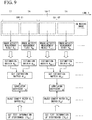
- Fig. 9 is a diagram illustrating an example of a CM moving image evaluating process according to the second embodiment.
- each cut of a storyboard corresponds to a plurality of number of times of measurement performed by a fMRI 30.
- a cut C1 corresponds to measurement of time t1 to time tm using the fMRI 30
- a cut C2 corresponds to measurement of time tm+1 to time tn using the fMRI 30.
- a text representing the intention of the plan corresponding to the cut C1 of the storyboard is cut text information (TX c1 )
- a text representing the intention of the plan corresponding to the cut C2 of the storyboard is cut text information (TX c2 ).
- an estimation matrix generating unit 132 generates an estimation matrix A1(A1 c1 , A1 c2 , ⁇ ) for each cut. For example, as illustrated in Fig. 9 , the estimation matrix generating unit 132 generates an estimation matrix A (A c1 to A cm ) corresponding to measurement results (X c1 to X cm ) using the fMRI 30 by using an estimation model stored by an estimation model storing unit 122. In addition, the estimation matrix generating unit 132 generates a mean estimation matrix A1 (mean first matrix) representing the mean of the estimation matrix A in a period corresponding to the cut text information.
- the estimation matrix generating unit 132 For example, for the cut C1 corresponding to time t1 to time tm, the estimation matrix generating unit 132 generates a mean estimation matrix A1c1 representing the mean of the estimation matrixes (A c1 to A cm ). In addition, for example, for the cut C2 corresponding to time tm+1 to time tn, the estimation matrix generating unit 132 generates a mean estimation matrix A1 c2 representing the mean of the estimation matrixes (A cm+1 to A cn ).
- the intention matrix generating unit 133 generates an object concept vector B (matrix B1) for each cut text information.
- the intention matrix generating unit 133 similar to the technique illustrated in Fig. 2 described above, generates an object concept vector (a matrix B1 c1 , a matrix B1 c2 , ⁇ ) for each cut text information.
- the correlation calculating unit 134 calculates a correlation coefficient r for each cut.
- correlation coefficients r (r c1 , r c2 , ⁇ ) between the mean estimation matrix A1 representing the mean of the estimation matrix A in a period corresponding to the cut text information and a second matrix.
- cut text information representing the intention of the plan of a CM planning paper
- cut text information for example, TX c1 , TX c2 , ⁇
- the estimation matrix generating unit 132 generates an estimation matrix A1 for each cut
- the intention matrix generating unit 133 generates an object concept vector B1 (matrix B1) for each cut text information
- the correlation calculating unit 134 calculates a correlation coefficient r for each cut.
- Fig. 10 is a flowchart illustrating an example of the operation of the advertisement evaluating system 1 according to this embodiment.
- a model generating unit 131 of a data processing apparatus 10 generates an estimation model (Step S301).
- an estimation model generating process using the model generating unit 131 is similar to that according to the first embodiment.
- the model generating unit 131 stores the generated estimation model in the estimation model storing unit 122.
- the fMRI 30 measures the brain activity of a test subject who has viewed a CM moving image at the predetermined time interval (Step S302).
- the fMRI 30 measures the brain activity of the test subject S1 who has viewed the CM moving image displayed by the image reproducing terminal 20, for example, at the interval of two seconds.
- the fMRI 30 outputs the measurement result (X t1 , X t2 , ⁇ , X tn ) acquired through measurement to the data processing apparatus 10, and the data processing apparatus 10, for example, stores the measurement result in the measurement result storing unit 121.
- the estimation matrix generating unit 132 of the data processing apparatus 10 generates an estimation matrix A1 for each cut from the measurement result and the estimation model (Step S303).
- the estimation matrix generating unit 132 as illustrated in Fig. 9 , generates an estimation matrix A for every two seconds from the measurement results for every two seconds stored by the measurement result storing unit 121 and the estimation model stored by the estimation model storing unit 122 and generates a mean estimation matrix A1 representing the mean of the estimation matrix A in a period corresponding to the cut text information.
- the estimation matrix generating unit 132 stores the generated estimation matrix A1 in the matrix storing unit 123.
- the intention matrix generating unit 133 generates an object concept vector B1 (matrix B1) from cut text information representing the intention for each cut of the storyboard (Step S304).
- the intention matrix generating unit 133 for example, generates an object concept vector B1 (matrix B1) for each cut of the storyboard by using a technique similar to the technique illustrated in Fig. 2 .
- the intention matrix generating unit 133 stores the generated object concept vector B1 (matrix B1) in the matrix storing unit 123.
- the correlation calculating unit 134 of the data processing apparatus 10 calculates a correlation coefficient r between the estimation matrix A1 for each cut and the object concept vector B1 (matrix B1) (Step S305).
- the correlation calculating unit 134 calculates correlation coefficients r (r c1 , r c2 , ⁇ ) between the estimation matrix A1 for each cut stored by the matrix storing unit 123 and the object concept vector B1 (matrix B1) for each cut stored by the matrix storing unit 123.
- the correlation calculating unit 134 stores the calculated correlation coefficients r (r c1 , r c2 , ⁇ ) in the correlation coefficient storing unit 124.
- the data processing apparatus 10 generates a graph of the correlation coefficients r and displays the generated graph on the display unit 11 (Step S306).
- the display control unit 135 of the data processing apparatus 10 acquires the correlation coefficients r (r c1 , r c2 , ⁇ ) for each cut stored by the correlation coefficient storing unit 124 and, for example, generates a graph of the correlation coefficient r for the cut of the storyboard.
- the display control unit 135 displays (outputs) the generated graph of the correlation coefficients r on the display unit 11 as a result of the evaluation of the CM moving image and ends the process.
- the process of Step S302 corresponds to the process of a brain activity measuring step
- the process of Step S303 corresponds to the process of a first matrix generating step
- the process of Step S304 corresponds to the process of a second matrix generating step
- the process of Step S305 corresponds to the process of a correlation calculating step (a similarity calculating step).
- cut text information representing the intention of the plan of each cut included in the storyboard of a CM moving image is included in the text information.
- the estimation matrix generating unit 132 generates an estimation matrix A1 for each cut of the storyboard
- the intention matrix generating unit 133 generates an object concept vector B1 (matrix B1) corresponding to the cut text information.
- the correlation calculating unit 134 calculates similarity (the correlation coefficient r) for each cut of the storyboard.
- the advertisement evaluating method can evaluate the advertisement (CM) for each cut of the storyboard objectively and qualitatively.
- the advertisement evaluating method of this embodiment for the intention of the production of the cut of the storyboard, the impression of the CM moving image can be evaluated objectively and qualitatively. Therefore, according to the advertisement evaluating method of this embodiment, an advertisement (CM) can be evaluated in more detail.
- the fMRI 30 measures the brain activity of a test subject S1 at a predetermined time interval (for example, at the interval of two seconds), and, in the first matrix generating step, the estimation matrix generating unit 132 generates an estimation matrix A at a predetermined time interval (for example, at the interval of two seconds). Then, the estimation matrix generating unit 132 generates a mean estimation matrix A1 representing the mean of the estimation matrix A in a period (a period corresponding to the cut) corresponding to text information (cut text information) for each cut as an estimation matrix.
- the correlation calculating unit 134 calculates a correlation coefficient r between the mean estimation matrix A1 representing the mean of the estimation matrix A in the period corresponding to the text information and the object concept vector B1 (matrix B1) for each cut.
- an estimation matrix A1 (mean estimation matrix) for each cut can be generated using a simple technique, and a CM moving image can be appropriately evaluated for each cut of the storyboard.
- the configuration of the advertisement evaluating system 1 according to this embodiment is similar to that of the first embodiment illustrated in Fig 1 , and the description thereof will not be presented here.
- text information representing the intention of the plan is extracted for each scene of the CM moving image, and the CM image is evaluated for each scene of the CM moving image, which is different from the first and second embodiments.
- a scene of a CM moving image is a partial moving image configured by a plurality of cuts (at least one cut).
- the cut of the storyboard according to the second embodiment is replaced with a scene, which is different from the second embodiment.
- an estimation matrix generating unit 132 generates an estimation matrix A2 for each scene
- an intention matrix generating unit 133 generates an object concept vector B2 for each scene text information.
- a correlation calculating unit 134 calculates similarity (correlation coefficient r) for each scene.
- Fig. 11 is a flowchart illustrating an example of the operation of the advertisement evaluating system 1 according to this embodiment.
- a model generating unit 131 of a data processing apparatus 10 generates an estimation model (Step S401).
- an estimation model generating process using the model generating unit 131 is similar to that according to the first embodiment.
- the model generating unit 131 stores the generated estimation model in the estimation model storing unit 122.
- the fMRI 30 measures the brain activity of a test subject who has viewed a CM moving image at the predetermined time interval (Step S402). In other words, the fMRI 30 measures the brain activity of the test subject S1 who has viewed the CM moving image displayed by the image reproducing terminal 20, for example, at the interval of two seconds.
- the fMRI 30 outputs the measurement result (X t1 , X t2 , ⁇ , X tn ) acquired through measurement to the data processing apparatus 10, and the data processing apparatus 10, for example, stores the measurement result in the measurement result storing unit 121.
- the estimation matrix generating unit 132 of the data processing apparatus 10 generates an estimation matrix A2 for each scene from the measurement result and the estimation model (Step S403).
- the estimation matrix generating unit 132 generates an estimation matrix A for every two seconds from the measurement results for every two seconds stored by the measurement result storing unit 121 and the estimation model stored by the estimation model storing unit 122 and generates a mean estimation matrix A2 representing the mean of the estimation matrix A in a period corresponding to the scene text information.
- the estimation matrix generating unit 132 stores the generated estimation matrix A2 in the matrix storing unit 123.
- the intention matrix generating unit 133 generates an object concept vector B2 (matrix B2) from scene text information representing the intention of the plan for each scene (Step S404).
- the intention matrix generating unit 133 for example, generates an object concept vector B2 (matrix B2) for each scene by using a technique similar to the technique illustrated in Fig. 2 .
- the intention matrix generating unit 133 stores the generated object concept vector B2 (matrix B2) in the matrix storing unit 123.
- the correlation calculating unit 134 of the data processing apparatus 10 calculates a correlation coefficient r between the estimation matrix A2 for each cut and the object concept vector B2 (matrix B2) (Step S405).
- the correlation calculating unit 134 calculates a correlation coefficient r between the estimation matrix A2 for each cut stored by the matrix storing unit 123 and the object concept vector B2 (matrix B2) for each cut stored by the matrix storing unit 123.
- the correlation calculating unit 134 stores the calculated correlation coefficient r in the correlation coefficient storing unit 124.
- the data processing apparatus 10 generates a graph of the correlation coefficients r and displays the generated graph on the display unit 11 (Step S406).
- the display control unit 135 of the data processing apparatus 10 acquires the correlation coefficient r for each scene stored by the correlation coefficient storing unit 124 and, for example, generates a graph of the correlation coefficient r for the scene of the CM moving image.
- the display control unit 135 displays (outputs) the generated graph of the correlation coefficients r on the display unit 11 as a result of the evaluation of the CM moving image and ends the process.
- the process of Step S402 corresponds to the process of a brain activity measuring step
- the process of Step S403 corresponds to the process of a first matrix generating step
- the process of Step S404 corresponds to the process of a second matrix generating step
- the process of Step S405 corresponds to the process of a correlation calculating step (a similarity calculating step).
- scene text information representing the intention of the plan of each scene included in a CM moving image is included in the text information.
- the estimation matrix generating unit 132 generates an estimation matrix A2 for each scene
- the intention matrix generating unit 133 generates an object concept vector B2 (matrix B2) corresponding to the cut text information.
- the correlation calculating unit 134 calculates similarity (the correlation coefficient r) for each cut of the storyboard.
- the advertisement evaluating method can evaluate the advertisement (CM) for each scene objectively and qualitatively.
- the advertisement evaluating method of this embodiment for the intention of the production of the scene, the impression of the CM moving image can be evaluated objectively and qualitatively. Therefore, according to the advertisement evaluating method of this embodiment, an advertisement (CM) can be evaluated in further more detail than the second embodiment. For example, while the intention of the plan of the CM is evaluated to be reflected on the whole as the evaluation of the whole CM or the evaluation of each cut, by evaluating a result of the perception of a viewer for a specific scene (for example, the expression or the behavior of an appearing actor) in detail, the effect of the CM can be improved.
- the fMRI 30 measures the brain activity of a test subject S1 at the predetermined time interval (for example, at the interval of two seconds), and, in the first matrix generating step, the estimation matrix generating unit 132 generates an estimation matrix A at the predetermined time interval (for example, at the interval of two seconds). Then, the estimation matrix generating unit 132 generates a mean estimation matrix A2 representing the mean of the estimation matrix A in a period (a period corresponding to the scene) corresponding to text information (scene text information) for each scene as an estimation matrix.
- the correlation calculating unit 134 calculates a correlation coefficient r between the mean estimation matrix A2 representing the mean of the estimation matrix A in the period corresponding to the text information and the object concept vector B2 (matrix B2) for each scene.
- an estimation matrix A2 (mean estimation matrix) for each scene can be generated using a simple technique, and an evaluation of each scene of the CM moving image can be appropriately performed.
- the configuration is not limited thereto.
- an estimation model generated in advance may be stored in the estimation model storing unit 122 without including the model generating unit 131.
- an apparatus such as an analysis apparatus that is separate from the data processing apparatus 10 may be configured to include the model generating unit 131.
- model generating unit 131 generates an estimation model by using the center of the annotation vector in units of words as the annotation vector of a scene
- the method of generating an estimation model is not limited thereto.
- an estimation model may be configured to be generated by using the annotation vector in units of words.
- a correlation coefficient r between the estimation matrix A of a predetermined time interval and the object concept vector B (matrix B) corresponding to the overall intention text information may be calculated and used for the evaluation.
- the evaluation may be performed by causing a test subject S1 to view an illustration or a still screen of a storyboard.
- the fMRI 30 may measure the brain activity of the test subject S1 who has viewed still screens of each storyboard plan, the estimation matrix generating unit 132 may generate an estimation matrix for a plurality of still screens, and the correlation calculating unit 134 may calculate a correlation coefficient on the basis of the estimation matrix.
- a storyboard plan that is closest to the conditions (the intention of production) of a planning paper can be evaluated before the production of a CM.
- a storyboard plan that is closer to the conditions (the intention of production) of the planning paper can be selected from among a plurality of storyboards.
- a viewing material that is the viewing material to be viewed and evaluated by the test subject S1 and is an evaluation target in addition to a moving image such as a CM moving image, includes a still screen, a printed material (for example, an advertisement, a leaflet, a web page or the like) using various media, and the like.
- each of the embodiments described above while an example in which a correlation coefficient (r) representing a correlation is used as an example of the similarity has been described, the similarity is not limited to the correlation coefficient.
- each of the embodiments described above may use another index representing the similarity, a semantic distance (statistical distance), or the like.
- the technique is not limited thereto, and any other technique using a distribution (dispersion) of a vector or the like may be used.
- the estimation matrix generating unit 132 may calculate a mean value over a period corresponding to a cut (or scene) of the measurement result acquired by the fMRI 30 of each predetermined time interval and generate an object concept vector for each cut (or scene) from the mean value of the measurement results.
- the output unit is not limited thereto.
- the output unit may be a printer, an interface unit outputting the evaluation result as a file, or the like.
- a part or the whole of the storage unit 12 may be arranged outside the data processing apparatus 10.
- each configuration included in the data processing apparatus 10 described above includes an internal computer system. Then, by recording a program used for realizing the function of each configuration included in the data processing apparatus 10 described above on a computer-readable recording medium and causing the computer system to read and execute the program recorded on this recording medium, the process of each configuration included in the data processing apparatus 10 described above may be performed.
- the computer system is caused to read and execute the program recorded on the recording medium includes a case in which the computer system is causes to install the program in the computer system.
- the "computer system” described here includes an OS and hardware such as peripherals.
- the "computer system” may include a plurality of computer apparatuses connected through a network including the Internet, a WAN, a LAN or a communication line such as a dedicated line.
- the "computer-readable recording medium” represents a portable medium such as a flexible disc, a magneto-optical disk, a ROM, or a CD-ROM or a storage device such as a hard disk built in the computer system.
- the recording medium in which the program is stored may be a non-transient recording medium such as a CD-ROM.
- the recording medium includes a recording medium installed inside or outside that is accessible from a distribution server for distributing the program. Furthermore, a configuration in which the program is divided into a plurality of parts, and the parts are downloaded at different timings and then are combined in each configuration included in the data processing apparatus 10 may be employed, and distribution servers distributing the divided programs may be different from each other.
- the "computer-readable recording medium” includes a medium storing the program for a predetermined time such as an internal volatile memory (RAM) of a computer system serving as a server or a client in a case in which the program is transmitted through a network.
- the program described above may be a program used for realizing a part of the function described above.
- the program may be a program to be combined with a program that has already been recorded in the computer system for realizing the function described above, a so-called a differential file (differential program).
- a part or the whole of the function described above may be realized by an integrated circuit of a large scale integration (LSI) or the like.
- LSI large scale integration
- Each function described above may be individually configured as a processor, or a part or the whole of the functions may be integrated and configured as a processor.
- a technique used for configuring the integrated circuit is not limited to the LSI, and each function may be realized by a dedicated circuit or a general-purpose processor.
- an integrated circuit using such a technology may be used.
Landscapes
- Engineering & Computer Science (AREA)
- Physics & Mathematics (AREA)
- Theoretical Computer Science (AREA)
- Health & Medical Sciences (AREA)
- General Physics & Mathematics (AREA)
- Business, Economics & Management (AREA)
- Life Sciences & Earth Sciences (AREA)
- General Health & Medical Sciences (AREA)
- Nuclear Medicine, Radiotherapy & Molecular Imaging (AREA)
- General Engineering & Computer Science (AREA)
- Finance (AREA)
- Strategic Management (AREA)
- Data Mining & Analysis (AREA)
- Development Economics (AREA)
- Accounting & Taxation (AREA)
- Mathematical Physics (AREA)
- Databases & Information Systems (AREA)
- Medical Informatics (AREA)
- Radiology & Medical Imaging (AREA)
- Mathematical Optimization (AREA)
- Pure & Applied Mathematics (AREA)
- Mathematical Analysis (AREA)
- Computational Mathematics (AREA)
- Marketing (AREA)
- Entrepreneurship & Innovation (AREA)
- General Business, Economics & Management (AREA)
- Game Theory and Decision Science (AREA)
- Economics (AREA)
- Audiology, Speech & Language Pathology (AREA)
- Molecular Biology (AREA)
- Computational Linguistics (AREA)
- Veterinary Medicine (AREA)
- Public Health (AREA)
- Animal Behavior & Ethology (AREA)
- Surgery (AREA)
- High Energy & Nuclear Physics (AREA)
- Artificial Intelligence (AREA)
- Biophysics (AREA)
- Pathology (AREA)
- Biomedical Technology (AREA)
Applications Claiming Priority (2)
| Application Number | Priority Date | Filing Date | Title |
|---|---|---|---|
| JP2016007307A JP6662644B2 (ja) | 2016-01-18 | 2016-01-18 | 視聴素材評価方法、視聴素材評価システム、及びプログラム |
| PCT/JP2016/088375 WO2017126288A1 (fr) | 2016-01-18 | 2016-12-22 | Procédé et système d'évaluation de matériel de visualisation ainsi que programme |
Publications (2)
| Publication Number | Publication Date |
|---|---|
| EP3376404A1 true EP3376404A1 (fr) | 2018-09-19 |
| EP3376404A4 EP3376404A4 (fr) | 2019-06-12 |
Family
ID=59362706
Family Applications (1)
| Application Number | Title | Priority Date | Filing Date |
|---|---|---|---|
| EP16886527.7A Withdrawn EP3376404A4 (fr) | 2016-01-18 | 2016-12-22 | Procédé et système d'évaluation de matériel de visualisation ainsi que programme |
Country Status (5)
| Country | Link |
|---|---|
| US (1) | US20180314687A1 (fr) |
| EP (1) | EP3376404A4 (fr) |
| JP (1) | JP6662644B2 (fr) |
| CN (1) | CN107851119A (fr) |
| WO (1) | WO2017126288A1 (fr) |
Families Citing this family (9)
| Publication number | Priority date | Publication date | Assignee | Title |
|---|---|---|---|---|
| US10915543B2 (en) | 2014-11-03 | 2021-02-09 | SavantX, Inc. | Systems and methods for enterprise data search and analysis |
| JP6618702B2 (ja) * | 2015-04-06 | 2019-12-11 | 国立研究開発法人情報通信研究機構 | 知覚意味内容推定装置および脳活動の解析による知覚意味内容の推定方法 |
| US11328128B2 (en) | 2017-02-28 | 2022-05-10 | SavantX, Inc. | System and method for analysis and navigation of data |
| EP3590053A4 (fr) * | 2017-02-28 | 2020-11-25 | SavantX, Inc. | Système et procédé d'analyse et de parcours de données |
| JP6928348B2 (ja) * | 2017-08-09 | 2021-09-01 | 国立研究開発法人情報通信研究機構 | 脳活動予測装置、知覚認知内容推定システム、及び脳活動予測方法 |
| US10915707B2 (en) * | 2017-10-20 | 2021-02-09 | MachineVantage, Inc. | Word replaceability through word vectors |
| JP7218154B2 (ja) * | 2018-11-05 | 2023-02-06 | 花王株式会社 | 評価方法 |
| US20250124385A1 (en) * | 2021-09-17 | 2025-04-17 | Nippon Telegraph And Telephone Corporation | Strategy planning support apparatus, strategy planning support method, and program |
| CN119907988A (zh) * | 2023-08-29 | 2025-04-29 | 乐天集团股份有限公司 | 学习装置、推定装置、学习方法、推定方法、及程序 |
Family Cites Families (9)
| Publication number | Priority date | Publication date | Assignee | Title |
|---|---|---|---|---|
| JP2008102594A (ja) * | 2006-10-17 | 2008-05-01 | Fujitsu Ltd | コンテンツの検索方法及び検索装置 |
| KR101464397B1 (ko) * | 2007-03-29 | 2014-11-28 | 더 닐슨 컴퍼니 (유에스) 엘엘씨 | 마케팅 및 엔터테인먼트 효과의 분석 |
| KR20100047865A (ko) * | 2007-08-28 | 2010-05-10 | 뉴로포커스, 인크. | 소비자 경험 평가 시스템 |
| US9451883B2 (en) * | 2009-03-04 | 2016-09-27 | The Regents Of The University Of California | Apparatus and method for decoding sensory and cognitive information from brain activity |
| JP5677002B2 (ja) * | 2010-09-28 | 2015-02-25 | キヤノン株式会社 | 映像制御装置、及び映像制御方法 |
| JP6236620B2 (ja) * | 2012-12-11 | 2017-11-29 | 株式会社国際電気通信基礎技術研究所 | 脳情報処理装置、脳情報処理方法、およびプログラム |
| JP6259353B2 (ja) * | 2014-04-17 | 2018-01-10 | 日本放送協会 | 映像評価装置及びそのプログラム |
| CN104408642B (zh) * | 2014-10-29 | 2017-09-12 | 云南大学 | 一种基于用户体验质量的广告制作方法 |
| JP5799351B1 (ja) * | 2014-12-09 | 2015-10-21 | 株式会社センタン | 評価装置および評価方法 |
-
2016
- 2016-01-18 JP JP2016007307A patent/JP6662644B2/ja active Active
- 2016-12-22 CN CN201680042712.7A patent/CN107851119A/zh active Pending
- 2016-12-22 US US15/740,256 patent/US20180314687A1/en not_active Abandoned
- 2016-12-22 WO PCT/JP2016/088375 patent/WO2017126288A1/fr not_active Ceased
- 2016-12-22 EP EP16886527.7A patent/EP3376404A4/fr not_active Withdrawn
Also Published As
| Publication number | Publication date |
|---|---|
| US20180314687A1 (en) | 2018-11-01 |
| JP2017129923A (ja) | 2017-07-27 |
| CN107851119A (zh) | 2018-03-27 |
| EP3376404A4 (fr) | 2019-06-12 |
| WO2017126288A1 (fr) | 2017-07-27 |
| JP6662644B2 (ja) | 2020-03-11 |
Similar Documents
| Publication | Publication Date | Title |
|---|---|---|
| EP3376404A1 (fr) | Procédé et système d'évaluation de matériel de visualisation ainsi que programme | |
| Lee et al. | The superstar social media influencer: exploiting linguistic style and emotional contagion over content? | |
| RU2409859C2 (ru) | Системы и способы для проектирования экспериментов | |
| Willems et al. | Correcting for dependent censoring in routine outcome monitoring data by applying the inverse probability censoring weighted estimator | |
| Scheffler et al. | Hybrid principal components analysis for region-referenced longitudinal functional EEG data | |
| Becker et al. | Examining explanatory models through research synthesis | |
| US20250131469A1 (en) | System and Method for Analyzing and Predicting Emotion Reaction | |
| US7958000B2 (en) | Method and system for analyzing the effectiveness of marketing strategies | |
| US11417232B2 (en) | Method, apparatus, and computer program for operating machine-learning framework | |
| CN108475381A (zh) | 用于媒体内容的表现的直接预测的方法和设备 | |
| Kumar et al. | On the use of confirmatory measurement models in the analysis of multiple-informant reports | |
| US20210296001A1 (en) | Dementia risk presentation system and method | |
| US8219673B2 (en) | Analysis apparatus, analysis method and recording medium for recording analysis program | |
| Yoder et al. | Partial-interval estimation of count: Uncorrected and Poisson-corrected error levels | |
| Stewart et al. | Body image, shape, and volumetric assessments using 3D whole body laser scanning and 2D digital photography in females with a diagnosed eating disorder: Preliminary novel findings | |
| CN118412120B (zh) | 认知障碍检测方法、系统和相关装置 | |
| US9501779B2 (en) | Automated thumbnail selection for online video | |
| JP7218154B2 (ja) | 評価方法 | |
| Mariano et al. | Covariates of the rating process in hierarchical models for multiple ratings of test items | |
| EP3406191B1 (fr) | Méthode d'évaluation d'un matériel et dispositif d'évaluation d'un matériel | |
| Booth et al. | People make mistakes: Obtaining accurate ground truth from continuous annotations of subjective constructs | |
| Takagi et al. | Cross-modal deep generative models reveal the cortical representation of dancing | |
| WO2008157566A2 (fr) | Évaluation informatique d'impressions d'utilisateur d'artéfacts de produit | |
| Strack et al. | Reliability of circumplex axes | |
| JP2022028370A (ja) | 疑似標本作成装置、疑似標本作成方法、およびプログラム |
Legal Events
| Date | Code | Title | Description |
|---|---|---|---|
| STAA | Information on the status of an ep patent application or granted ep patent |
Free format text: STATUS: THE INTERNATIONAL PUBLICATION HAS BEEN MADE |
|
| PUAI | Public reference made under article 153(3) epc to a published international application that has entered the european phase |
Free format text: ORIGINAL CODE: 0009012 |
|
| STAA | Information on the status of an ep patent application or granted ep patent |
Free format text: STATUS: REQUEST FOR EXAMINATION WAS MADE |
|
| 17P | Request for examination filed |
Effective date: 20171222 |
|
| AK | Designated contracting states |
Kind code of ref document: A1 Designated state(s): AL AT BE BG CH CY CZ DE DK EE ES FI FR GB GR HR HU IE IS IT LI LT LU LV MC MK MT NL NO PL PT RO RS SE SI SK SM TR |
|
| AX | Request for extension of the european patent |
Extension state: BA ME |
|
| RAP1 | Party data changed (applicant data changed or rights of an application transferred) |
Owner name: NTT DATA INSTITUTE OF MANAGEMENT CONSULTING, INC. Owner name: NATIONAL INSTITUTE OF INFORMATION AND COMMUNICATIO Owner name: NTT DATA CORPORATION |
|
| DAV | Request for validation of the european patent (deleted) | ||
| DAX | Request for extension of the european patent (deleted) | ||
| A4 | Supplementary search report drawn up and despatched |
Effective date: 20190510 |
|
| RIC1 | Information provided on ipc code assigned before grant |
Ipc: G06Q 30/02 20120101AFI20190506BHEP |
|
| STAA | Information on the status of an ep patent application or granted ep patent |
Free format text: STATUS: THE APPLICATION IS DEEMED TO BE WITHDRAWN |
|
| 18D | Application deemed to be withdrawn |
Effective date: 20191210 |