EP3376455A1 - Dispositif de génération de chaîne de blocs, procédé de génération de chaîne de blocs, dispositif de vérification de chaîne de blocs, procédé de vérification de chaîne de blocs et programme - Google Patents
Dispositif de génération de chaîne de blocs, procédé de génération de chaîne de blocs, dispositif de vérification de chaîne de blocs, procédé de vérification de chaîne de blocs et programme Download PDFInfo
- Publication number
- EP3376455A1 EP3376455A1 EP16864198.3A EP16864198A EP3376455A1 EP 3376455 A1 EP3376455 A1 EP 3376455A1 EP 16864198 A EP16864198 A EP 16864198A EP 3376455 A1 EP3376455 A1 EP 3376455A1
- Authority
- EP
- European Patent Office
- Prior art keywords
- blockchain
- data
- block
- transaction
- parameter
- Prior art date
- Legal status (The legal status is an assumption and is not a legal conclusion. Google has not performed a legal analysis and makes no representation as to the accuracy of the status listed.)
- Ceased
Links
Images






Classifications
-
- H—ELECTRICITY
- H04—ELECTRIC COMMUNICATION TECHNIQUE
- H04L—TRANSMISSION OF DIGITAL INFORMATION, e.g. TELEGRAPHIC COMMUNICATION
- H04L9/00—Cryptographic mechanisms or cryptographic arrangements for secret or secure communications; Network security protocols
- H04L9/32—Cryptographic mechanisms or cryptographic arrangements for secret or secure communications; Network security protocols including means for verifying the identity or authority of a user of the system or for message authentication, e.g. authorization, entity authentication, data integrity or data verification, non-repudiation, key authentication or verification of credentials
- H04L9/321—Cryptographic mechanisms or cryptographic arrangements for secret or secure communications; Network security protocols including means for verifying the identity or authority of a user of the system or for message authentication, e.g. authorization, entity authentication, data integrity or data verification, non-repudiation, key authentication or verification of credentials involving a third party or a trusted authority
-
- G—PHYSICS
- G06—COMPUTING OR CALCULATING; COUNTING
- G06Q—INFORMATION AND COMMUNICATION TECHNOLOGY [ICT] SPECIALLY ADAPTED FOR ADMINISTRATIVE, COMMERCIAL, FINANCIAL, MANAGERIAL OR SUPERVISORY PURPOSES; SYSTEMS OR METHODS SPECIALLY ADAPTED FOR ADMINISTRATIVE, COMMERCIAL, FINANCIAL, MANAGERIAL OR SUPERVISORY PURPOSES, NOT OTHERWISE PROVIDED FOR
- G06Q20/00—Payment architectures, schemes or protocols
- G06Q20/04—Payment circuits
- G06Q20/06—Private payment circuits, e.g. involving electronic currency used among participants of a common payment scheme
- G06Q20/065—Private payment circuits, e.g. involving electronic currency used among participants of a common payment scheme using e-cash
-
- G—PHYSICS
- G06—COMPUTING OR CALCULATING; COUNTING
- G06Q—INFORMATION AND COMMUNICATION TECHNOLOGY [ICT] SPECIALLY ADAPTED FOR ADMINISTRATIVE, COMMERCIAL, FINANCIAL, MANAGERIAL OR SUPERVISORY PURPOSES; SYSTEMS OR METHODS SPECIALLY ADAPTED FOR ADMINISTRATIVE, COMMERCIAL, FINANCIAL, MANAGERIAL OR SUPERVISORY PURPOSES, NOT OTHERWISE PROVIDED FOR
- G06Q20/00—Payment architectures, schemes or protocols
- G06Q20/04—Payment circuits
- G06Q20/06—Private payment circuits, e.g. involving electronic currency used among participants of a common payment scheme
- G06Q20/065—Private payment circuits, e.g. involving electronic currency used among participants of a common payment scheme using e-cash
- G06Q20/0658—Private payment circuits, e.g. involving electronic currency used among participants of a common payment scheme using e-cash e-cash managed locally
-
- G—PHYSICS
- G06—COMPUTING OR CALCULATING; COUNTING
- G06Q—INFORMATION AND COMMUNICATION TECHNOLOGY [ICT] SPECIALLY ADAPTED FOR ADMINISTRATIVE, COMMERCIAL, FINANCIAL, MANAGERIAL OR SUPERVISORY PURPOSES; SYSTEMS OR METHODS SPECIALLY ADAPTED FOR ADMINISTRATIVE, COMMERCIAL, FINANCIAL, MANAGERIAL OR SUPERVISORY PURPOSES, NOT OTHERWISE PROVIDED FOR
- G06Q20/00—Payment architectures, schemes or protocols
- G06Q20/22—Payment schemes or models
- G06Q20/223—Payment schemes or models based on the use of peer-to-peer networks
-
- H—ELECTRICITY
- H04—ELECTRIC COMMUNICATION TECHNIQUE
- H04L—TRANSMISSION OF DIGITAL INFORMATION, e.g. TELEGRAPHIC COMMUNICATION
- H04L2209/00—Additional information or applications relating to cryptographic mechanisms or cryptographic arrangements for secret or secure communication H04L9/00
- H04L2209/56—Financial cryptography, e.g. electronic payment or e-cash
-
- H—ELECTRICITY
- H04—ELECTRIC COMMUNICATION TECHNIQUE
- H04L—TRANSMISSION OF DIGITAL INFORMATION, e.g. TELEGRAPHIC COMMUNICATION
- H04L9/00—Cryptographic mechanisms or cryptographic arrangements for secret or secure communications; Network security protocols
- H04L9/06—Cryptographic mechanisms or cryptographic arrangements for secret or secure communications; Network security protocols the encryption apparatus using shift registers or memories for block-wise or stream coding, e.g. DES systems or RC4; Hash functions; Pseudorandom sequence generators
- H04L9/0643—Hash functions, e.g. MD5, SHA, HMAC or f9 MAC
-
- H—ELECTRICITY
- H04—ELECTRIC COMMUNICATION TECHNIQUE
- H04L—TRANSMISSION OF DIGITAL INFORMATION, e.g. TELEGRAPHIC COMMUNICATION
- H04L9/00—Cryptographic mechanisms or cryptographic arrangements for secret or secure communications; Network security protocols
- H04L9/32—Cryptographic mechanisms or cryptographic arrangements for secret or secure communications; Network security protocols including means for verifying the identity or authority of a user of the system or for message authentication, e.g. authorization, entity authentication, data integrity or data verification, non-repudiation, key authentication or verification of credentials
- H04L9/3247—Cryptographic mechanisms or cryptographic arrangements for secret or secure communications; Network security protocols including means for verifying the identity or authority of a user of the system or for message authentication, e.g. authorization, entity authentication, data integrity or data verification, non-repudiation, key authentication or verification of credentials involving digital signatures
-
- H—ELECTRICITY
- H04—ELECTRIC COMMUNICATION TECHNIQUE
- H04L—TRANSMISSION OF DIGITAL INFORMATION, e.g. TELEGRAPHIC COMMUNICATION
- H04L9/00—Cryptographic mechanisms or cryptographic arrangements for secret or secure communications; Network security protocols
- H04L9/50—Cryptographic mechanisms or cryptographic arrangements for secret or secure communications; Network security protocols using hash chains, e.g. blockchains or hash trees
-
- Y—GENERAL TAGGING OF NEW TECHNOLOGICAL DEVELOPMENTS; GENERAL TAGGING OF CROSS-SECTIONAL TECHNOLOGIES SPANNING OVER SEVERAL SECTIONS OF THE IPC; TECHNICAL SUBJECTS COVERED BY FORMER USPC CROSS-REFERENCE ART COLLECTIONS [XRACs] AND DIGESTS
- Y02—TECHNOLOGIES OR APPLICATIONS FOR MITIGATION OR ADAPTATION AGAINST CLIMATE CHANGE
- Y02P—CLIMATE CHANGE MITIGATION TECHNOLOGIES IN THE PRODUCTION OR PROCESSING OF GOODS
- Y02P80/00—Climate change mitigation technologies for sector-wide applications
- Y02P80/10—Efficient use of energy, e.g. using compressed air or pressurized fluid as energy carrier
- Y02P80/15—On-site combined power, heat or cool generation or distribution, e.g. combined heat and power [CHP] supply
Definitions
- the present invention relates to: a blockchain generation apparatus and a blockchain generation method that generate blockchain data which is a chain of blocks each including transaction datasets generated by a plurality of transaction generation apparatuses; a blockchain verification apparatus and a blockchain verification method that verify the blockchain data; and a program.
- a digital virtual currency such as Bitcoin (registered trademark) is used more and more these days.
- a mechanism for allowing credibility to be assured without needing centralized management is introduced.
- a virtual currency such as Bitcoin (registered trademark)
- technology called blockchain is used.
- Blockchain technology assures credibility of information exchanged between participants by using a consensus forming process in a network formed by all the participants.
- Blockchain technology also maintains soundness of the blockchain by preventing fraud, such as falsification and double spending, with the entire system.
- Information pieces on transactions of a virtual currency between participants (transactions) are bundled together into a unit called a block, and blocks form the blockchain.
- the blockchain functions as one gigantic ledger shared by all the participants on a P2P (Peer to Peer) network.
- Non-patent Document 1 the blockchain uses digital signatures as illustrated in Fig. 2 , and represents coin's transactional information with a chain of signatures.
- a digital virtual currency using the blockchain mechanism on behalf of the terminals participating in the network, one of them collects and approves transaction datasets broadcast to the network, generates a block including the transaction datasets, and notifies the other terminals. Then, the entire system, or more specifically, a plurality of terminals other than the one that generated the block verify that this process is not illegitimate.
- the terminal that generates a block needs costs for generating the block, but can obtain a new coin as a reward for generating the block. Thus, there is a competitive process acting among the participants to try to gain the right to generate a block.
- the blockchain may branch into two or more chains.
- the chain with the most blocks linked thereafter is set as the official chain.
- the blockchain generated at the highest cost is selected as the only blockchain to be shared. For this reason, to get through falsification or double spending, an attacker must link more blocks than those in other blockchains, and needs to spend more costs accordingly. This makes an attack difficult.
- PoW Proof of Work
- PoS Proof of Stake
- PoS has been proposed as an approach to replace PoW.
- PoS grants the right to generate a block to a participant who meets a mathematical condition. It is known that the difficulty based on which it is determined whether a participant meets the condition is adjusted according to the number of coins saved and owned by the participant ( Kourosh Davarpanah, Dan Kaufman, Ophelie Pubellier "NeuCoin: the First Secure, Cost-efficient and Decentralized Cryptocurrency", [online], June 15, 2015, ⁇ URL: http://www.neucoin.org/en/whitepaper/download> searched on the Internet on October 20, 2015). Specifically, PoS grants the right (qualification) to generate a block to a participant who meets a mathematical condition.
- a hash value of a value including the address of a participant, a hash value of the previous block, and the current time is computed, and under the condition where the hash value falls below a value which is proportional to the number of coins saved, the participant is granted the right to generate a block.
- the determination on the condition is carried out once a second by including the current time in parameters. In such PoS, participants provide the risk of holding a large number of coins as a cost.
- 51% attack an attack method used to make an illegitimate payment or to tamper with past histories .
- the block generation rate is proportional to the size of resources provided by PoW or PoS.
- attack is feasible by domination of 51% or more of the computer powers in the case of PoW and by domination of 51% or more of the total number of coins in the case of PoS.
- Non-patent Document 1 Kenji Saito, "Bitcoin: Digital Megalithic Currency Without Human Intervention", WIDE Technical Report
- PoS which is a succeeding algorithm
- costs required to dominate coin resources is much higher than costs for dominating computer resources, and also, an attack is expected to cause a collapse in the price of the coins.
- an attacker has low motives to carry out 51% attack and that PoS has a deterrent effect.
- the blockchain When the blockchain is regarded as one ledger recording the contents of all the transactions made by the participants, it is conceivable to apply the blockchain technology to various transactions of other than currency. For example, it is conceivable to use the blockchain as evidence of a contract agreement among a plurality of parties . It is possible to write evidence of a contract agreement onto the blockchain by causing transaction data to include the content of a contract as metadata and to be exchanged in connection with coin transactions.
- PoS PoS
- conventional PoS for a virtual currency when an attacker launches an attack aiming to make an illegitimate transaction of coins or to tamper with a history, the attack may cause a collapse in the price of the coins that they dominate, and this risk is working as a deterrent.
- the objective of an attacker is thought to be not to use coins illegitimately, but to cancel or rewrite the content of the contract written on the blockchain.
- an objective of the present invention is to provide a blockchain generation apparatus and a blockchain generation method that generate blockchain data, a blockchain verification apparatus and a blockchain verification method that verify blockchain data, and a program, with which it is possible to generate securer and more credible blockchain data for a digital virtual currency.
- a first feature of the present invention relates a blockchain generation apparatus that generates new blockchain data by linking a new block to blockchain data which is a chain of blocks each including transactional datasets generated by a plurality of transaction generation apparatuses.
- the blockchain generation apparatus comprises: a synchronizer that acquires shared data which includes the blockchain data and transaction datasets not included in the blockchain data; a parameter calculator that identifies a parameter type to be used for linkage of the new block, based on block approval method data specifying a blend pattern of a plurality of parameter types used for determination of presence or absence of qualification regarding linkage of a plurality of blocks in the blockchain data, and calculates a value for the identified parameter type based on transaction datasets which are among the transaction datasets in the blockchain data and are related to an identifier of a generating party using the blockchain generation apparatus; a block generation condition checker that determines whether the generating party is qualified to generate the new blockchain data, based on the value calculated by the parameter calculator; and
- the block approval method data may specify a blend pattern in which a first parameter type is repeated a first number of times and thereafter a second parameter type which conflicts with the first parameter type is repeated a second number of times.
- the block approval method data may specify a blend pattern in which a combination of a predetermined number of successive parameter types includes at least one first parameter type and at least one second parameter type.
- the predetermined number may be the number of blocks necessary for guaranteeing a true completion of a transaction for a certain block.
- a second feature of this invention relates a blockchain generation method for generating new blockchain data by linking a new block to blockchain data which is a chain of blocks each including transactional datasets generated by a plurality of transaction generation apparatuses.
- the blockchain generation method according to the second feature comprises the steps of: a computer acquiring shared data which includes the blockchain data and transaction datasets not included in the blockchain data; the computer identifying a parameter type to be used for linkage of the new block, based on block approval method data specifying a blend pattern of a plurality of parameter types used for determination of presence or absence of qualification regarding linkage of a plurality of blocks in the blockchain data; the computer calculating a value for the identified parameter type based on transaction datasets which are among the transaction datasets in the blockchain data and are related to an identifier of a generating party using the computer; the computer determining whether the generating party is qualified to generate the new blockchain data, based on the value calculated by the calculation step; and the computer trying to generate the new blockchain by referring to the shared data when it is determined that
- a third feature of this invention relates a blockchain verification apparatus that verifies blockchain data which is a chain of blocks each including transactional datasets generated by a plurality of transaction generation apparatuses.
- the blockchain verification apparatus according to the third feature comprising: a synchronizer that acquires shared data which includes the blockchain data; a block approval method verifier that identifies a parameter type to be used for linkage of the block based on block approval method data specifying a blend pattern of a plurality of parameter types used for determination of presence or absence of qualification regarding linkage of a plurality of blocks in the blockchain, and determines whether the blockchain data is generated based on the identified parameter type; a parameter calculator that calculates a value for the parameter type identified by the block approval method verifier, based on transaction datasets which are among the transaction datasets in the blockchain data and are related to an identifier of a generating party using an apparatus that generated the blockchain data; a block generation condition verifier that determines whether the generating party is qualified to generate the blockchain data, based on the value calculated by the parameter
- a forth feature relates a blockchain verification method for verifying blockchain data which is a chain of blocks each including transactional datasets generated by a plurality of transaction generation apparatuses.
- the blockchain verification method according to the forth feature comprising the steps of: a computer acquiring shared data which includes the blockchain data; the computer identifying a parameter type to be used for linkage of the block based on block approval method data specifying a blend pattern of a plurality of parameter types used for determination of presence or absence of qualification regarding linkage of a plurality of blocks in the blockchain, and determining whether the blockchain data is generated based on the identified parameter type; the computer calculating a value for the identified parameter type, based on transaction datasets which are among the transaction datasets in the blockchain data and are related to an identifier of a generating party using an apparatus that generated the blockchain data; the computer determining whether the generating party is qualified to generate the blockchain data, based on the value for the identified parameter type; and the computer approving the blockchain data if it is determined that the blockchain data is generated based on the
- a fifth feature of this invention relates program that causes a computer to function as the apparatus according to any one of the first feature and the third feature.
- the present invention can provide a blockchain generation apparatus and a blockchain generation method that generate blockchain data, a blockchain verification apparatus and a blockchain verification method that verify blockchain data, and a program, with which it is possible to generate securer and more credible blockchain data for a digital virtual currency.
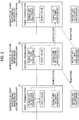
- a transaction assistance system 5 according to the embodiment of the present invention is described with reference to Fig. 1 .
- the transaction assistance system 5 includes a plurality of computers which are connected to one another autonomously in a decentralized manner via a P2P network 4 and communication controllers provided in the respective computers.
- the number of computers connected in the transaction assistance system 5 is not limited to what is illustrated in Fig. 1 , which is merely an example.
- the computers constituting the transaction assistance system 5 each have programs installed therein to implement a transaction of a digital virtual currency.
- Each computer acquires blockchain data and transaction datasets via the P2P network 4, and all the terminals participating in the network monitor illegitimate actions and share the only blockchain.
- Each computer functions as a blockchain generation apparatus 1, a blockchain verification apparatus 2, or a transaction generation apparatus 3, depending on the role to play in each situation in the transaction assistance system 5.
- a party that uses a virtual currency in the transaction assistance system 5 is referred to as a "participant”
- a participant that uses the blockchain generation apparatus is referred to as a "generating party”.
- the blockchain generation apparatus 1 When meeting a predetermined condition, the blockchain generation apparatus 1 links a new block to existing blockchain data, which is a chain of blocks each including transaction datasets generated by a plurality of transaction generation apparatuses 3, and thereby generates new blockchain data.
- the new block includes data on a transaction generated after the existing blockchain is generated.
- the new blockchain data generated by the blockchain generation apparatus 1 is shared among the other terminals via the P2P network 4.
- the blockchain verification apparatus 2 verifies the blockchain data generated by the blockchain generation apparatus 1.
- the blockchain verification apparatus 2 verifies blockchain data which is a chain of blocks each including transaction datasets generated by a plurality of transaction generation apparatuses 3.
- a verification result obtained by the blockchain verification apparatus 2 is shared with the other terminals via the P2P network 4.
- the given block in order for a transaction of a given block to truly complete, the given block has to be followed by a certain number of blocks after being linked and approved, and each of these blocks has to be linked and verified.
- the transaction of the block A which is the first one of the six blocks, is deemed truly completed.
- the number of blocks "6" used to approve true transaction completion is referred to as the "number of blocks for approval”.
- the transaction generation apparatus 3 generates a transaction dataset to be included in a block by transaction of a virtual currency, a contract, or the like.
- the transaction dataset generated by the transaction generation apparatus 3 is shared with the other terminals via the P2P network 4.
- the transaction generation apparatus 3 generates data on a second transaction T2 by applying a cryptographic hash function to data combining data on the latest transaction (a first transaction T1) and a public key of the third participant, and attaching a signature using a secret key of the second participant.
- the third participant receiving the coin checks whether the coin is passed from a legitimate owner by verifying the signature on the second transaction T2 using the public key of the receiver (the second participant) of the previous transaction (the first transaction T1) and re-computing a hash value.
- Data on each transaction includes the content of the transaction such as the value of a virtual currency transferred and an address which corresponds to the public key of the participant generating the transaction.
- the plurality of transaction datasets generated as illustrated in Fig. 2 are bundled into a block by the blockchain generation apparatus 1 under a predetermined condition, linked to the existing blockchain by the blockchain generation apparatus 1, and shared among the computers.
- the blockchain generation apparatus 1 collects transaction datasets yet to be included in the blockchain, and includes the collected transaction datasets and the hash value (256 bits) of the last block (the n-th block) of the current blockchain, in the new block (the (n+1)-th block).
- the blockchain generation apparatus 1 searches for an appropriate value to include in the currently-generated block (the (n+1) -th block), the appropriate value being a value that makes the first k bits of a hash value obtained by application of a cryptographic hash function (SHA-256) to the currently-generated block (the (n+1) -th block) all zeros.
- the block (the (n+1) -th block) including the appropriate value is linked to the end of the current blockchain, and is broadcast.
- the difficulty of obtaining the appropriate value is appropriately determined by changing the numerical value of k in "k bits", which is a condition used for the calculation of the appropriate value.
- the blockchain verification apparatus 2 verifies the blockchain data sent from the blockchain generation apparatus 1, and shares the verification result with the other terminals.
- the transaction generation apparatus 3 is described with reference to Fig. 4 .
- the transaction generation apparatus 3 is a general computer including a storage 310, a processor 320, and a communication controller 330. By executing programs for the general computer to implement predetermined functions, the transaction generation apparatus 3 implements the functions illustrated in Fig. 4 .
- the storage 310 stores shared data 311.
- the shared data 311 includes blockchain data 312 and transaction data 313 yet to be included in the blockchain.
- the shared data 311 is data shared in the transaction assistance system 5 illustrated in Fig. 1 .
- the processor 320 includes a synchronizer 321 and a transaction generator 322.
- the synchronizer 321 acquires the shared data 311 including the blockchain data 312 and the transaction data 313 yet to be included in the blockchain.
- the synchronizer 321 acquires the shared data 311 by communicating with the other apparatuses via the P2P network 4, and shares the shared data 311 synchronized with the up-to-date data.
- the synchronizer 321 broadcasts the updated data to the other apparatuses via the P2P network 4. Thereby, up-to-date data generated within the computer is shared with the other computers.
- the transaction generator 322 carries out a transaction of a virtual currency or a contract, and generates transaction data on this transaction.
- the generated transaction data is also sent to the other computers via the P2P network 4 and shared with them.
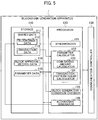
- the blockchain generation apparatus 1 is described with reference to Fig. 5 .
- the blockchain generation apparatus 1 is a general computer including a storage 110, a processor 120, and a communication controller 130. By executing programs for the general computer to implement predetermined functions, the blockchain generation apparatus 1 implements the functions illustrated in Fig. 4 .
- the storage 110 stores shared data 111, block approval method data 114, and parameter data 115.
- the shared data 111 is like the shared data 311 in the transaction generation apparatus 3 described with reference to Fig. 4 and includes blockchain data 112 and transaction data 113.
- the block approval method data 114 specifies a blend pattern of a plurality of parameter types used for determination of qualification regarding linkage of a plurality of blocks in the blockchain data 112.
- the block approval method data 114 allows each of a plurality of successive blocks in the blockchain data 112 to be associated with a parameter type used to link the block.
- the plurality of parameter types specified by the block approval method data conflict with one another.
- the block approval method data 114 is shared between the blockchain generation apparatus 1 and the blockchain verification apparatus 2 by, for example, being written in the programs used to implement the blockchain generation apparatus 1 and the blockchain verification apparatus 2 according to the embodiment of the present invention.
- whether a generating party on the blockchain generation apparatus 1 is qualified to generate and link a block is determined based not on a single parameter type, but on any of a plurality of parameter types.
- an approval method for each of successive blocks is one of a plurality of parameter types blended, and the block approval method data 114 specifies which parameter type to use to generate each block.
- the "plurality of parameter types” used as the methods for approving a plurality of blocks are conflicting parameter types.
- the "conflicting parameter types” are parameter types having a relation where domination of one type of resource does not affect domination of another type of resource. For example, the "number of coins saved” and the “number of coins spent” are conflicting parameter types since it is difficult to meet both of these conditions.
- PoW is a parameter related to external resources
- PoS is a parameter related to internal resources. For this reason, it is difficult for a single block generating party to meet both conditions, and PoW and PoS are therefore conflicting parameter types.
- the conflicting parameter types may be the "number of coins saved” and the "number of transaction path patterns” .
- the “number of transaction path patterns” is an index of the variety of transactions a generating party has carried out by spending coins.
- the “number of coins saved” is, on the other hand, about holding on to coins .
- the "number of coins saved” and the “number of transaction path patterns” hence have conflicting properties of holding a coin and spending a coin, and therefore it is difficult for a single block generating party to dominate these parameters at the same time.
- these parameter types, the "number of coins saved” and the "number of transaction path patterns” conflict with each other.
- the parameter data 115 a value for the parameter type used to approve a block newly generated by the blockchain generation apparatus 1 is set.
- the parameter data 115 is calculated by a parameter calculator 122 and stored in the storage 110.
- the processor 120 includes a synchronizer 121, the parameter calculator 122, a block generation condition checker 125, and a blockchain generator 126.
- the synchronizer 121 is the same as the synchronizer 321 of the transaction generation apparatus 3 described with reference to Fig. 4 .
- the parameter calculator 122 Based on the blockchain data 112 and the block approval method data 114, the parameter calculator 122 identifies a parameter type to be used for linkage of a new block.
- the parameter calculator 122 refers to the block approval method data 114 and identifies the approval method (parameter type) for a new block to be linked such that the approval methods for blocks in the blockchain data 112 and the approval method for the new block to be linked match the blend pattern specified by the block approval method data 114. In this operation, based on certain bits in data on each of already-linked blocks the parameter types of which need to be identified for linkage of a new block, the parameter calculator 122 identifies the parameter types used for the linkage of those blocks.
- the parameter calculator 122 calculates a value for the identified parameter type based on transaction datasets which are in the blockchain data 112 and related to the identifier of the generating party using the blockchain generation apparatus 1.
- parameter calculator 122 determines a parameter type to be used for approval of qualification of a generating party trying to add a new block.
- the parameter calculator 122 has calculators that perform calculations for respective parameter types specified by a blend pattern. For example, in a case where the conflicting parameter types set in a blend pattern in the block approval method data 114 are the number of coins saved and the number of transaction patterns, the parameter calculator 122 includes a coin saving amount calculator 123 that calculates the number of coins saved and a transaction pattern count calculator 124. The parameter calculator 122 may include a calculator that calculates a different parameter type depending on the parameter types specified by the blend pattern in the block approval method data 114.
- the block generation condition checker 125 determines whether the generating party of the new blockchain is qualified to generate new blockchain data. If the parameter calculator 122 calculates a value for a general parameter type such as the number of coins saved, the number of coins spent, PoW, or PoS, the block generation condition checker 125 uses a general method to determine whether the generating party is qualified to generate new blockchain data.
- a general parameter type such as the number of coins saved, the number of coins spent, PoW, or PoS
- the blockchain generator 126 refers to the shared data 111 and tries to generate a new blockchain. Specifically, the blockchain generator 126 tries to find the "appropriate value" illustrated in Fig. 3 by using the value set in the parameter data 115. If the appropriate value is found, the blockchain generator 126 generates a new block using the appropriate value. In this operation, in a predetermined bit in the new block generated, the blockchain generator 126 sets the identifier of the parameter type used to generate this block. The blockchain generator 126 links the newly generated block to the end of the existing blockchain data 112 to generate new blockchain data, and updates the shared data 111. If new blockchain is successfully generated, data on the new blockchain is broadcast to the P2P network to be shared with the other terminals.
- the blockchain generator 126 stops searching for the appropriate value with the old blockchain, and repeats searching for an appropriate value with the newly shared blockchain.
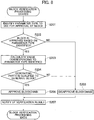
- the blockchain generation apparatus 1 refers to the block approval method data 114 and identifies a parameter type to be used for approval of generation of a new block.
- the blockchain generation apparatus 1 refers to the shared data 111 and calculates a value for the parameter type identified in Step S101.
- Step S103 based on the value calculated in Step S102, the blockchain generation apparatus 1 determines whether the generating party on the blockchain generation apparatus 1 is qualified to generate the block. If it is determined that the generating party is not qualified to generate the block, the processing ends.
- Step S104 the blockchain generation apparatus 1 starts calculating an appropriate value based on the parameter calculated in Step S103. If an appropriate value is successfully calculated, the blockchain generation apparatus 1 generates a new block using the calculated appropriate value, and stores new blockchain data in which the new block is linked to the existing blockchain.
- the blockchain verification apparatus 2 is described with reference to Fig. 7 .
- the blockchain verification apparatus 2 is a general computer including a storage 210, a processor 220, and a communication controller 230. By executing programs for the general computer to implement predetermined functions, the blockchain generation apparatus 1 implements the functions illustrated in Fig. 4 .
- the storage 210 stores shared data 211, block approval method data 214, and parameter data 215.
- the shared data 211 is like the shared data 311 of the transaction generation apparatus 3 described with reference to Fig. 4 and includes blockchain data 212 and transaction data 213. Note that the blockchain verification apparatus 2 does not have to have the transaction data 213 since the blockchain verification apparatus 2 is to verify the existing blockchain data 212.
- the block approval method data 214 and the parameter data 215 are the same as the block approval method data 114 and the parameter data 115 described with reference to Fig. 5 .
- the processor 220 includes a synchronizer 221, a block approval method verifier 222, a parameter calculator 223, a block generation condition verifier 226, and a blockchain verifier 227.
- the synchronizer 221 is the same as the synchronizer 321 of the transaction generation apparatus 3 described with reference to Fig. 4 .
- the block approval method verifier 222 identifies a parameter type to be used for linkage of the block based on the block approval method data 214, and determines whether the blockchain data 212 is generated based on the identified parameter type.
- the block approval method verifier 222 determines whether the approval methods for the blocks in the blockchain data 212 match the blend pattern specified by the block approval method data 214. In this operation, based on certain bits of data on each of blocks which are in the blockchain data 212 to be verified and the parameter types of which need to be identified for checking of agreement with the blend pattern, the block approval method verifier 222 identifies the parameter types used for the linkage of those blocks.
- the parameter calculator 223 calculates a value for the parameter type identified by the block approval method verifier 222, based on transaction datasets which are in the blockchain data 212 and are related to the identifier of the generating party using the apparatus that generated the blockchain data 212.
- the calculated value is stored in the storage 210 as the parameter data 215.
- the parameter calculator 223 includes calculators that calculate values for respective parameter types, such as a coin saving amount calculator 224 and a transaction pattern count calculator 225.
- the block generation condition verifier 226 determines whether the blockchain generating party is qualified to generate the blockchain data 212.
- the block generation condition verifier 226 uses a general method to determine whether the generating party is qualified to generate new blockchain data.
- the blockchain verifier 227 verifies the block based on results obtained by the block approval method verifier 222 and the block generation condition verifier 226. Specifically, the blockchain verifier 227 approves the blockchain data 212 when the block approval method verifier 222 determines that the blockchain data 212 is generated based on the parameter types identified and the block generation condition verifier 226 determines that the generating party is qualified to generate the blockchain data 212. The blockchain verifier 227 notifies the other terminals of a result of the verification. Upon receipt of a verification result indicating disapproval, a terminal performs, for example, processing to notify other terminals that the blockchain is not legitimate.
- the blockchain verification apparatus 2 refers to the block approval method data 214 and identifies the parameter type used for generation of the new block.
- Step S202 the blockchain verification apparatus 2 determines whether the block in the blockchain data 212 is approved with the parameter type identified in Step S201. If it is determined that the block is not approved with the parameter type identified, in Step S206 the blockchain verification apparatus 2 determines not to approve the blockchain data.
- Step S203 the blockchain verification apparatus 2 refers to the shared data 111 and calculates a value for the parameter type identified in Step S201.
- Step S204 based on the value calculated in Step S203, the blockchain generation apparatus 1 determines whether the generating party on the terminal that generated the block in the blockchain data 212 is qualified to generate the block. If it is determined that the generating party is not qualified to generate the block, in Step S206 the blockchain verification apparatus 2 determines not to approve the blockchain data.
- Step S205 the blockchain verification apparatus 2 determines to approve the blockchain data. Further, in Step S207, the blockchain verification apparatus 2 notifies the other terminals of a result of the verification.
- the block approval method data 114 referred to by the blockchain generation apparatus 1 and the block approval method data 214 referred to by the blockchain verification apparatus 2 are the same data.
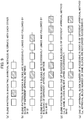
- the block approval method data specifies, for example, any of the blend patterns of approval methods illustrated in Fig. 6 .
- a linkage of squares in the examples illustrated in Fig. 9 represents a linkage of successive blocks in blockchain data.
- a hollow square indicates that the parameter type used for generation and linkage of the block is a "first parameter type”, and an obliquely hatched square indicates that the parameter type used for generation and linkage of the block is a "second parameter type" .
- the first parameter type and the second parameter type are in a conflicting relation with each other.
- the block approval method data 114 contains the identifier of the blend pattern of Fig. 9(a) .
- Blocks in the blockchain are newly generated and linked to the blockchain while being approved by the first parameter type and the second parameter type alternately and repeatedly.
- the blockchain generation apparatus 1 uses a parameter type different from the parameter type used for the generation of the last block to determine whether the generating party is qualified to generate the block. Further, when the last two blocks match the blend pattern of Fig. 9(a) , the blockchain verification apparatus 2 determines that the last block is approved based on the block approval method data 214.
- the block approval method data 114 includes the first number of times (N) besides the identifier of the blend pattern of Fig. 9(b) .
- Blocks in the blockchain are newly generated and linked to the blockchain after being repeatedly approved by the first parameter type N times and then approved by the second parameter type.
- the blockchain generation apparatus 1 uses the second parameter type for generation of the new block. Otherwise, i.e. , if the parameter type used for the generation of the last block is the second parameter type, or if the parameter types used for the generation of the last N blocks include the second parameter type, the blockchain generation apparatus 1 uses the first parameter type for generation of the new block. Further, when the last (N+1) blocks match the blend pattern of Fig. 9(b) , the blockchain verification apparatus 2 determines that the last block is approved based on the block approval method data 214.
- the block approval method data 114 includes the first number of times (N) and the second number of times (M) besides the identifier of the blend pattern of Fig. 9(c) .
- Blocks in the blockchain are newly generated and linked to the blockchain after being repeatedly approved by the first parameter type N times and then repeatedly approved by the second parameter type M times.
- the blockchain generation apparatus 1 uses the first parameter type for generation of the new block. If the parameter types used for the generation of the last N blocks are all the first parameter type, the blockchain generation apparatus 1 uses the second parameter type for generation of the new block. Otherwise, the blockchain generation apparatus 1 uses the parameter type used for the generation of the last block. Further, when the last (N+M) blocks match the blend pattern of Fig. 9(c) , the blockchain verification apparatus 2 determines that the last block is approved based on the block approval method data 214.
- a predetermined number of successive parameter types repeated include at least one first parameter type and at least one second parameter type.
- the block approval method data 114 contains the predetermined number of times (N) besides the identifier of the blend pattern of Fig. 9(d) .
- a parameter type is determined based on the parameter types used for the generation of the last (N-1) blocks, and a new block generated with the parameter type determined is linked to the blockchain.
- the blockchain generation apparatus 1 uses the second parameter type for generation of the new block. If the parameter types used for the generation of the last (N-1) blocks are all the second parameter type, the blockchain generation apparatus 1 uses the first parameter type for generation of the new block. Otherwise, the blockchain generation apparatus 1 selects the first parameter type or the second parameter type based on a predetermined algorithm such as a random number or a draw, generates a new block with the selected parameter type, and links the new block to the blockchain. Further, when the last N blocks include at least each one of the conflicting parameter types, the blockchain verification apparatus 2 determines that the last block is approved based on the block approval method data 214.
- Fig. 9(e) is a modification of the example illustrated in Fig. 9(d) , and is a method for setting the number of blocks for approval to a predetermined number of successive blocks (N) .
- the number of blocks for approval is the number of successively generated blocks necessary for a given block to be approved for a true completion of a transaction. Specifically, the number of blocks for approval is "6" if a given block A generated and linked is approved for a true completion of a transaction after five blocks are linked thereafter. Setting the number of blocks for approval as the predetermined number of successive blocks (N) ensures that the blocks are approved by a blend of a plurality of conflicting parameter types. Thus, an attack by a malicious participant can be avoided more surely.
- the parameter type used for the generation of each of the blocks in the blockchain data 112 is preferably specified in each of the blocks in the blockchain.
- the identifier of the parameter type used for generation of a given block is set in a predetermined bit within the block. Based on data on a predetermined bit in each of the already-linked blocks the parameter types of which need to be identified for linkage of a new block, the blockchain generation apparatus 1 identifies the parameter types used for the linkage of such blocks.
- the "blocks the parameter types of which need to be identified for linkage of a new block” differ depending on the identifier of the blend pattern specified by the block approval method data, configuration information such as N and M, and the like.
- the blockchain verification apparatus 2 identifies the parameter types used for the linkage of the blocks necessary for checking of agreement with the blend pattern in the blockchain data 212 to be verified, based on the data indicated by a predetermined bit in each of those blocks, and determines whether those parameter types match the blend pattern.
- the "blocks necessary for checking of agreement with the blend pattern" differ depending on the identifier of the blend pattern specified by the block approval method data, configuration information such as N and M, and the like.
- the transaction pattern count calculator 124 calculates the number of transaction patterns for a generating party using the blockchain generation apparatus 1, based on transaction datasets which are in the blockchain data 112 and are related to the generating party.
- the "number of transaction patterns" is an index of trustworthiness of a generating party.
- the number of transaction patterns corresponds to a trustworthiness score calculated focusing on the point that a transaction is conducted with trust on the transaction partner built by revealing each other's identities and knowing who the transaction partner is. It is expected that a participant who has conducted transactions with many nodes has been trusted by many nodes. If such an approved, highly trusted participant conducts 51% attack, he or she will be identified and lose trust socially as well. Thus, a collapse in trust is thought to serve as a deterrent to an attack.
- the "number of transaction patterns" can be obtained with reference to the blockchain data 112 by scoring how many nodes a participant has conducted transactions with. Further, the "number of transaction patterns" is a value obtained by spending a coin in a transaction, and therefore is used as a parameter type conflicting with the "number of coins saved”.
- a "transaction” is identified by a transaction dataset generated by the transaction generation apparatus 3, and includes not only transfer of a virtual currency, but also a contract made by using the blockchain as evidence of the contract agreed among a plurality of parties.
- a contact made by using the blockchain as evidence includes a contact of sale, purchase, transfer, application, licensing, and the like regarding an article, a task, or the like, and is signed by two or more individuals or bodies.
- the "number of coins saved" serves as cost.
- the embodiment of the present invention employs the number of transaction path patterns as a parameter type used for approval of a generating party generating a block.
- Fig. 10 The number of transaction patterns according to the embodiment of the present invention is described with reference to Fig. 10 .
- a group of path patterns issued by a certain participant in the past is denoted as a and the number of nodes included in a path pattern p included in this a is denoted as np,a
- the sum of the numbers of nodes in all the path patterns in a is as expressed by Formula (1).
- the number of transaction patterns is the total number of the identifiers of transaction partners in all combinations of the identifiers of transaction partners in transaction datasets related to the identifier of a block generating party (a generating party using the blockchain generation apparatus 1).
- a participant A has previously engaged in a transaction with only B, a transaction with only C, and a transaction with only B and C.
- the numbers of nodes in these respective transactions are 1, 1, and 2, respectively, and thus the number of transaction patterns in this case is "4".
- the number of transaction patterns may be the number of unique identifiers of transaction partners in transaction datasets related to the identifier of the block generating party. Specifically, in the case illustrated in Fig. 10(b) where a participant A has previously engaged in a transaction with only B, a transaction with only C, and a transaction with only B and C, the transaction partners of the participant A are A, B, and C, and thus the number of transaction patterns in this case is "3".
- the number of transaction patterns is calculated in such a manner as not to increase even if the generating party engages in a plurality of transactions with the same transaction partner or the same combination of transaction partners. This can avoid a fraud where a plurality of malicious participants cooperate to try to increase the number of transaction patterns .
- Fig. 10(c) illustrates an example of a conditional expression for an address of a possible block generating party, the expression being based on the number of transaction patterns (score(a)) calculated above.
- Fig. 10(c) is a conditional expression for an address of a possible block generating party based on PoS, in which the number of coins saved is converted to the number of transaction patterns.
- Step S151 the blockchain generation apparatus 1 extracts transactions related to the block generating party (the participant using the blockchain generation apparatus 1) from the past transactions in the blockchain data 112.
- Step S152 the blockchain generation apparatus 1 identifies transaction partners' identifiers in the transactions extracted in Step S151.
- Step S153 the blockchain generation apparatus 1 calculates the number of transaction patterns for the block generating party based on the transaction partners' identifiers identified in Step S152.
- the blockchain generation apparatus 1 determines whether the block generating party is qualified to link a new block to the blockchain.
- the blockchain is generated with each block generated based on a blend pattern in which the plurality of conflicting parameter patterns are blended.
- the "plurality of conflicting parameter types" are in a relation where domination of one of the resources does not affect domination of the other one of the resources, i.e., a relation where it is difficult for the same person to meet both conditions at the same time.
- the blockchain verification apparatus 2 approves the blockchain data.
- the embodiment of the present invention can prevent a malicious generating party from making an attack by linking blocks successively.
- the embodiment of the present invention uses the number of transaction patterns as a trustworthiness score of a generating party to determine whether the generating party is qualified to link a new block.
- the number of transaction patterns is based on a track record built over a long time, and a collapse in this trust serves as a deterrent to launching an attack.
- the approval for block generation based on the number of transaction patterns can be used not only for transfer of a virtual currency, but also when the blockchain is used to leave evidence of a contract agreed among a plurality of parties.
- the blockchain generation apparatus 1 and the blockchain verification apparatus 2 described in the embodiment of the present invention may be configured on a single piece of hardware as illustrated respectively in Figs. 5 and 7 , or may be configured on a plurality of pieces of hardware depending on their functions and the number of processes. Alternatively, they may be implemented on an existing information processing system.
Landscapes
- Business, Economics & Management (AREA)
- Engineering & Computer Science (AREA)
- Accounting & Taxation (AREA)
- Physics & Mathematics (AREA)
- General Business, Economics & Management (AREA)
- General Physics & Mathematics (AREA)
- Strategic Management (AREA)
- Theoretical Computer Science (AREA)
- Finance (AREA)
- Computer Security & Cryptography (AREA)
- Computer Networks & Wireless Communication (AREA)
- Signal Processing (AREA)
- Financial Or Insurance-Related Operations Such As Payment And Settlement (AREA)
- Storage Device Security (AREA)
Applications Claiming Priority (2)
| Application Number | Priority Date | Filing Date | Title |
|---|---|---|---|
| JP2015219424A JP6355168B2 (ja) | 2015-11-09 | 2015-11-09 | ブロックチェーン生成装置、ブロックチェーン生成方法、ブロックチェーン検証装置、ブロックチェーン検証方法およびプログラム |
| PCT/JP2016/083062 WO2017082237A1 (fr) | 2015-11-09 | 2016-11-08 | Dispositif de génération de chaîne de blocs, procédé de génération de chaîne de blocs, dispositif de vérification de chaîne de blocs, procédé de vérification de chaîne de blocs et programme |
Publications (2)
| Publication Number | Publication Date |
|---|---|
| EP3376455A1 true EP3376455A1 (fr) | 2018-09-19 |
| EP3376455A4 EP3376455A4 (fr) | 2019-04-24 |
Family
ID=58695635
Family Applications (1)
| Application Number | Title | Priority Date | Filing Date |
|---|---|---|---|
| EP16864198.3A Ceased EP3376455A4 (fr) | 2015-11-09 | 2016-11-08 | Dispositif de génération de chaîne de blocs, procédé de génération de chaîne de blocs, dispositif de vérification de chaîne de blocs, procédé de vérification de chaîne de blocs et programme |
Country Status (5)
| Country | Link |
|---|---|
| US (2) | US11139972B2 (fr) |
| EP (1) | EP3376455A4 (fr) |
| JP (1) | JP6355168B2 (fr) |
| CN (1) | CN108292395B (fr) |
| WO (1) | WO2017082237A1 (fr) |
Cited By (4)
| Publication number | Priority date | Publication date | Assignee | Title |
|---|---|---|---|---|
| KR20200091099A (ko) * | 2019-01-22 | 2020-07-30 | 주식회사 머니브레인 | 대화 이해 서비스 서버를 통하여, 블록체인 네트워크 상의 트랜잭션을 생성하는 방법, 컴퓨터 판독가능 기록 매체 및 컴퓨터 장치 |
| CN111526180A (zh) * | 2020-03-30 | 2020-08-11 | 中国建设银行股份有限公司 | 一种数据共享方法和装置 |
| US11106812B2 (en) | 2019-05-09 | 2021-08-31 | At&T Intellectual Property I, L.P. | Controlling access to datasets described in a cryptographically signed record |
| US11303733B2 (en) | 2018-02-15 | 2022-04-12 | Axell Corporation | Server apparatus, client apparatus, and data processing system |
Families Citing this family (35)
| Publication number | Priority date | Publication date | Assignee | Title |
|---|---|---|---|---|
| US8874477B2 (en) | 2005-10-04 | 2014-10-28 | Steven Mark Hoffberg | Multifactorial optimization system and method |
| EP3443517A1 (fr) * | 2016-04-11 | 2019-02-20 | Nchain Holdings Limited | Procédés et systèmes mis en oeuvre par ordinateur de validation de jetons pour crypto-monnaies à base de chaînes de blocs |
| GB2559640A (en) * | 2017-01-27 | 2018-08-15 | Zensar Tech Limited | A system and method for evaluating the feasibility of introducing a new node in a blockchain infrastructure |
| CN107395664B (zh) * | 2017-05-22 | 2019-09-03 | 阿里巴巴集团控股有限公司 | 一种业务执行的方法及装置 |
| JP7003995B2 (ja) * | 2017-08-22 | 2022-01-21 | 日本電気株式会社 | ブロックチェーン管理装置、ブロックチェーン管理方法及びプログラム |
| JP6718175B2 (ja) * | 2017-09-08 | 2020-07-08 | ヘルスメディア株式会社 | 秘密情報復元可能値分散システムおよび方法 |
| MX2020004000A (es) * | 2017-09-28 | 2020-10-05 | Algorand Inc | Cadenas de bloques acreditadas a traves de mensajes. |
| US10764142B2 (en) * | 2017-11-16 | 2020-09-01 | International Business Machines Corporation | Clustered application management with a blockchain |
| KR102417067B1 (ko) * | 2017-12-08 | 2022-07-05 | 한국전자통신연구원 | 블록 체인 네트워크의 노드에서 수행되는 블록 생성 방법 및 장치 |
| JP2019109635A (ja) * | 2017-12-16 | 2019-07-04 | 株式会社bitFlyer | ブロックチェーン・ネットワークにおいて過去のトランザクションにアクセス可能とするための方法及び当該ネットワークを構成するためのノード |
| JP6409115B1 (ja) * | 2017-12-26 | 2018-10-17 | アーバン・コーポレーション株式会社 | 自動仕訳サーバおよび自動仕訳プログラム |
| JP7031374B2 (ja) | 2018-03-01 | 2022-03-08 | 株式会社デンソー | 検証端末、検証システム |
| CN108737068B (zh) * | 2018-04-13 | 2020-08-07 | 中国地质大学(武汉) | 一种基于区块链的密码货币交易隐私保护方法及系统 |
| CN108647963B (zh) | 2018-05-02 | 2020-05-12 | 百度在线网络技术(北京)有限公司 | 区块链主链的确定方法、装置、服务器和存储介质 |
| JP2019211821A (ja) | 2018-05-31 | 2019-12-12 | ソニー株式会社 | 情報処理装置、情報処理方法、およびプログラム |
| GB201811263D0 (en) * | 2018-07-10 | 2018-08-29 | Netmaster Solutions Ltd | A method and system for managing digital using a blockchain |
| US11201751B2 (en) * | 2018-07-18 | 2021-12-14 | iComply Investor Services Inc. | System and method for off-chain cryptographic transaction verification |
| CN109067863B (zh) * | 2018-07-25 | 2021-03-05 | 上海点融信息科技有限责任公司 | 用于管理区块链节点的节点标识的方法、装置及存储介质 |
| CN109087098A (zh) * | 2018-07-27 | 2018-12-25 | 杭州复杂美科技有限公司 | 一种许可链的交易处理方法、系统、设备和存储介质 |
| CN109189853B (zh) * | 2018-08-08 | 2021-05-28 | 众安信息技术服务有限公司 | 一种区块链之间数据同步方法与装置 |
| KR102103473B1 (ko) * | 2018-08-08 | 2020-04-23 | 주식회사 우리은행 | 커뮤니티 화폐 플랫폼 운영 장치 및 그 서비스 제공 방법 |
| CN108932348B (zh) * | 2018-08-16 | 2020-06-30 | 北京京东尚科信息技术有限公司 | 区块链的合并处理方法、装置、区块链节点及存储介质 |
| AU2019342086B2 (en) * | 2018-09-18 | 2021-04-22 | Newsouth Innovations Pty Limited | A block chain-based system for multi-party, multistage process verification |
| CN109213828B (zh) * | 2018-09-18 | 2021-08-20 | 百度在线网络技术(北京)有限公司 | 区块生成方法、装置、设备及存储介质 |
| CN109361734B (zh) * | 2018-09-18 | 2021-04-20 | 百度在线网络技术(北京)有限公司 | 一种区块链的数据处理方法、装置、设备及介质 |
| US10637644B1 (en) * | 2018-12-21 | 2020-04-28 | Capital One Services, Llc | System and method for authorizing transactions in an authorized member network |
| US10861008B2 (en) | 2018-12-21 | 2020-12-08 | Capital One Services, Llc | System and method for optimizing cryptocurrency transactions |
| CN109995585B (zh) * | 2019-03-22 | 2021-12-31 | 杭州复杂美科技有限公司 | 一种异常处理方法、设备和存储介质 |
| US10503905B1 (en) * | 2019-06-26 | 2019-12-10 | Capital One Services, Llc | Data lineage management |
| US11522670B2 (en) | 2019-12-04 | 2022-12-06 | MaataData, Inc. | Pyramid construct with trusted score validation |
| KR102869069B1 (ko) * | 2019-12-13 | 2025-10-10 | 현대자동차 주식회사 | 블록체인 생성 시스템 및 그 운용 방법 |
| KR102317863B1 (ko) * | 2019-12-30 | 2021-10-27 | 인하대학교 산학협력단 | 블록체인을 이용한 영상저작권 보호 방식 |
| CN111461706B (zh) * | 2020-04-27 | 2023-09-05 | 杭州云萃流图网络科技有限公司 | 基于区块链的用户信息绑定方法及装置 |
| CN112929432B (zh) * | 2021-02-01 | 2022-07-15 | 杭州复杂美科技有限公司 | 一种基于重复广播历史的广播方法、设备及储存介质 |
| US11924351B1 (en) * | 2023-02-09 | 2024-03-05 | Hong Kong Applied Science and Technology Research Institute Company Limited | Optimizing data transactions and verification on a blockchain network |
Family Cites Families (9)
| Publication number | Priority date | Publication date | Assignee | Title |
|---|---|---|---|---|
| US10354325B1 (en) * | 2013-06-28 | 2019-07-16 | Winklevoss Ip, Llc | Computer-generated graphical user interface |
| US20150046337A1 (en) * | 2013-08-06 | 2015-02-12 | Chin-hao Hu | Offline virtual currency transaction |
| DK3095044T3 (da) * | 2013-11-19 | 2020-12-21 | Top Galore Ltd | Block mining fremgangsmåde og apparat |
| US9858569B2 (en) * | 2014-03-21 | 2018-01-02 | Ramanan Navaratnam | Systems and methods in support of authentication of an item |
| US10340038B2 (en) | 2014-05-13 | 2019-07-02 | Nant Holdings Ip, Llc | Healthcare transaction validation via blockchain, systems and methods |
| US9875510B1 (en) * | 2015-02-03 | 2018-01-23 | Lance Kasper | Consensus system for tracking peer-to-peer digital records |
| CN104735164B (zh) * | 2015-04-10 | 2018-05-18 | 网易(杭州)网络有限公司 | 一种保存文件信息的方法和装置 |
| CN104915249A (zh) * | 2015-05-21 | 2015-09-16 | 北京比特大陆科技有限公司 | 矿池中挖虚拟数字币的方法和装置 |
| JP6358658B2 (ja) | 2015-11-09 | 2018-07-18 | 日本電信電話株式会社 | ブロックチェーン生成装置、ブロックチェーン生成方法、ブロックチェーン検証装置、ブロックチェーン検証方法およびプログラム |
-
2015
- 2015-11-09 JP JP2015219424A patent/JP6355168B2/ja active Active
-
2016
- 2016-11-08 CN CN201680065546.2A patent/CN108292395B/zh active Active
- 2016-11-08 EP EP16864198.3A patent/EP3376455A4/fr not_active Ceased
- 2016-11-08 WO PCT/JP2016/083062 patent/WO2017082237A1/fr not_active Ceased
- 2016-11-08 US US15/770,803 patent/US11139972B2/en active Active
-
2021
- 2021-07-06 US US17/367,791 patent/US11716199B2/en active Active
Cited By (7)
| Publication number | Priority date | Publication date | Assignee | Title |
|---|---|---|---|---|
| US11303733B2 (en) | 2018-02-15 | 2022-04-12 | Axell Corporation | Server apparatus, client apparatus, and data processing system |
| KR20200091099A (ko) * | 2019-01-22 | 2020-07-30 | 주식회사 머니브레인 | 대화 이해 서비스 서버를 통하여, 블록체인 네트워크 상의 트랜잭션을 생성하는 방법, 컴퓨터 판독가능 기록 매체 및 컴퓨터 장치 |
| US11106812B2 (en) | 2019-05-09 | 2021-08-31 | At&T Intellectual Property I, L.P. | Controlling access to datasets described in a cryptographically signed record |
| US11645408B2 (en) | 2019-05-09 | 2023-05-09 | At&T Intellectual Property I, L.P. | Controlling access to datasets described in a cryptographically signed record |
| US12164659B2 (en) | 2019-05-09 | 2024-12-10 | At&T Intellectual Property I, L.P. | Controlling access to datasets described in a cryptographically signed record |
| CN111526180A (zh) * | 2020-03-30 | 2020-08-11 | 中国建设银行股份有限公司 | 一种数据共享方法和装置 |
| CN111526180B (zh) * | 2020-03-30 | 2022-05-24 | 中国建设银行股份有限公司 | 一种数据共享方法和装置 |
Also Published As
| Publication number | Publication date |
|---|---|
| US11139972B2 (en) | 2021-10-05 |
| EP3376455A4 (fr) | 2019-04-24 |
| US11716199B2 (en) | 2023-08-01 |
| JP2017091148A (ja) | 2017-05-25 |
| US20190058590A1 (en) | 2019-02-21 |
| JP6355168B2 (ja) | 2018-07-11 |
| US20210336785A1 (en) | 2021-10-28 |
| CN108292395A (zh) | 2018-07-17 |
| CN108292395B (zh) | 2021-03-02 |
| WO2017082237A1 (fr) | 2017-05-18 |
Similar Documents
| Publication | Publication Date | Title |
|---|---|---|
| US11716199B2 (en) | Blockchain generation apparatus, blockchain verification apparatus, and program | |
| US10790963B2 (en) | Blockchain generation apparatus, blockchain generation method, blockchain verification apparatus, blockchain verification method, and program | |
| Panda et al. | Bitcoin and blockchain: history and current applications | |
| Bhaskar et al. | Bitcoin mining technology | |
| JP7552970B2 (ja) | ブロックチェーンを用いてデータ記録を分配するシステム及び方法 | |
| US10997125B2 (en) | Proof of lottery (PoL) blockchain | |
| CN110189128B (zh) | 一种用于区块快速生成的分布式共识的方法和装置 | |
| US20240249289A1 (en) | System and Method for Securing a Non-Fungible Digital Asset | |
| CN113989047A (zh) | 基于区块链的资产发布方法及装置、电子设备 | |
| Reno et al. | Solving blockchain trilemma using off‐chain storage protocol | |
| US20240202711A1 (en) | Decentralized incentive system for validating transactions to blockchain miners | |
| Sello et al. | Erdos: a novel blockchain consensus algorithm with equitable node selection and deterministic block finalization | |
| US20230419285A1 (en) | NFT Enforcement Control System | |
| Verma et al. | LVCA: An efficient voting-based consensus algorithm in private Blockchain for enhancing data security | |
| JP2025521739A (ja) | オーナーシップの証明 | |
| Liu et al. | SmartZKCP: towards practical data exchange marketplace against active attacks | |
| KR102131548B1 (ko) | 전자지갑 생성 방법 및 이를 이용한 암호화폐 거래 방법 | |
| JP2025506211A (ja) | ブロックチェーントランザクション | |
| Fan et al. | Cross-chain transaction of notaries based on twostage improved pagerank algorithm | |
| Gupta et al. | Consensus Algorithms in Blockchain for an Efficient and Secure Network | |
| Zhu | Consensus Algorithms in Blockchain: A survey to create decision trees for blockchain applications | |
| Peterson | Detecting selfish mining attacks against a blockchain using machine learning | |
| Sweet | A Decentralized computation platform | |
| Huang et al. | The Last Survivor of PoS Pools: Staker's Dilemma |
Legal Events
| Date | Code | Title | Description |
|---|---|---|---|
| STAA | Information on the status of an ep patent application or granted ep patent |
Free format text: STATUS: THE INTERNATIONAL PUBLICATION HAS BEEN MADE |
|
| PUAI | Public reference made under article 153(3) epc to a published international application that has entered the european phase |
Free format text: ORIGINAL CODE: 0009012 |
|
| STAA | Information on the status of an ep patent application or granted ep patent |
Free format text: STATUS: REQUEST FOR EXAMINATION WAS MADE |
|
| 17P | Request for examination filed |
Effective date: 20180529 |
|
| AK | Designated contracting states |
Kind code of ref document: A1 Designated state(s): AL AT BE BG CH CY CZ DE DK EE ES FI FR GB GR HR HU IE IS IT LI LT LU LV MC MK MT NL NO PL PT RO RS SE SI SK SM TR |
|
| AX | Request for extension of the european patent |
Extension state: BA ME |
|
| DAV | Request for validation of the european patent (deleted) | ||
| DAX | Request for extension of the european patent (deleted) | ||
| A4 | Supplementary search report drawn up and despatched |
Effective date: 20190325 |
|
| RIC1 | Information provided on ipc code assigned before grant |
Ipc: G06Q 20/06 20120101AFI20190319BHEP Ipc: G06Q 20/22 20120101ALI20190319BHEP |
|
| STAA | Information on the status of an ep patent application or granted ep patent |
Free format text: STATUS: EXAMINATION IS IN PROGRESS |
|
| 17Q | First examination report despatched |
Effective date: 20191203 |
|
| APBK | Appeal reference recorded |
Free format text: ORIGINAL CODE: EPIDOSNREFNE |
|
| APBN | Date of receipt of notice of appeal recorded |
Free format text: ORIGINAL CODE: EPIDOSNNOA2E |
|
| APBR | Date of receipt of statement of grounds of appeal recorded |
Free format text: ORIGINAL CODE: EPIDOSNNOA3E |
|
| APAF | Appeal reference modified |
Free format text: ORIGINAL CODE: EPIDOSCREFNE |
|
| APBX | Invitation to file observations in appeal sent |
Free format text: ORIGINAL CODE: EPIDOSNOBA2E |
|
| APBZ | Receipt of observations in appeal recorded |
Free format text: ORIGINAL CODE: EPIDOSNOBA4E |
|
| REG | Reference to a national code |
Ref country code: DE Ref legal event code: R003 |
|
| APBT | Appeal procedure closed |
Free format text: ORIGINAL CODE: EPIDOSNNOA9E |
|
| STAA | Information on the status of an ep patent application or granted ep patent |
Free format text: STATUS: THE APPLICATION HAS BEEN REFUSED |
|
| 18R | Application refused |
Effective date: 20231010 |