EP3377205B1 - Verfahren zur herstellung von partikeln mit kontrollierter form und/oder grösse - Google Patents
Verfahren zur herstellung von partikeln mit kontrollierter form und/oder grösse Download PDFInfo
- Publication number
- EP3377205B1 EP3377205B1 EP16825542.0A EP16825542A EP3377205B1 EP 3377205 B1 EP3377205 B1 EP 3377205B1 EP 16825542 A EP16825542 A EP 16825542A EP 3377205 B1 EP3377205 B1 EP 3377205B1
- Authority
- EP
- European Patent Office
- Prior art keywords
- droplets
- emulsion
- phase
- particles
- cooling
- Prior art date
- Legal status (The legal status is an assumption and is not a legal conclusion. Google has not performed a legal analysis and makes no representation as to the accuracy of the status listed.)
- Not-in-force
Links
Images

Classifications
-
- A—HUMAN NECESSITIES
- A61—MEDICAL OR VETERINARY SCIENCE; HYGIENE
- A61K—PREPARATIONS FOR MEDICAL, DENTAL OR TOILETRY PURPOSES
- A61K9/00—Medicinal preparations characterised by special physical form
- A61K9/48—Preparations in capsules, e.g. of gelatin, of chocolate
- A61K9/50—Microcapsules having a gas, liquid or semi-solid filling; Solid microparticles or pellets surrounded by a distinct coating layer, e.g. coated microspheres, coated drug crystals
- A61K9/5005—Wall or coating material
- A61K9/5021—Organic macromolecular compounds
- A61K9/5026—Organic macromolecular compounds obtained by reactions only involving carbon-to-carbon unsaturated bonds, e.g. polyvinyl pyrrolidone, poly(meth)acrylates
-
- A—HUMAN NECESSITIES
- A61—MEDICAL OR VETERINARY SCIENCE; HYGIENE
- A61K—PREPARATIONS FOR MEDICAL, DENTAL OR TOILETRY PURPOSES
- A61K47/00—Medicinal preparations characterised by the non-active ingredients used, e.g. carriers or inert additives; Targeting or modifying agents chemically bound to the active ingredient
- A61K47/30—Macromolecular organic or inorganic compounds, e.g. inorganic polyphosphates
- A61K47/32—Macromolecular compounds obtained by reactions only involving carbon-to-carbon unsaturated bonds, e.g. carbomers, poly(meth)acrylates, or polyvinyl pyrrolidone
-
- A—HUMAN NECESSITIES
- A23—FOODS OR FOODSTUFFS; TREATMENT THEREOF, NOT COVERED BY OTHER CLASSES
- A23L—FOODS, FOODSTUFFS OR NON-ALCOHOLIC BEVERAGES, NOT OTHERWISE PROVIDED FOR; PREPARATION OR TREATMENT THEREOF
- A23L33/00—Modifying nutritive qualities of foods; Dietetic products; Preparation or treatment thereof
- A23L33/10—Modifying nutritive qualities of foods; Dietetic products; Preparation or treatment thereof using additives
- A23L33/15—Vitamins
-
- A—HUMAN NECESSITIES
- A23—FOODS OR FOODSTUFFS; TREATMENT THEREOF, NOT COVERED BY OTHER CLASSES
- A23P—SHAPING OR WORKING OF FOODSTUFFS, NOT FULLY COVERED BY A SINGLE OTHER SUBCLASS
- A23P10/00—Shaping or working of foodstuffs characterised by the products
- A23P10/40—Shaping or working of foodstuffs characterised by the products free-flowing powder or instant powder, i.e. powder which is reconstituted rapidly when liquid is added
- A23P10/47—Shaping or working of foodstuffs characterised by the products free-flowing powder or instant powder, i.e. powder which is reconstituted rapidly when liquid is added using additives, e.g. emulsifiers, wetting agents or dust-binding agents
-
- A—HUMAN NECESSITIES
- A61—MEDICAL OR VETERINARY SCIENCE; HYGIENE
- A61K—PREPARATIONS FOR MEDICAL, DENTAL OR TOILETRY PURPOSES
- A61K9/00—Medicinal preparations characterised by special physical form
- A61K9/10—Dispersions; Emulsions
-
- A—HUMAN NECESSITIES
- A61—MEDICAL OR VETERINARY SCIENCE; HYGIENE
- A61K—PREPARATIONS FOR MEDICAL, DENTAL OR TOILETRY PURPOSES
- A61K9/00—Medicinal preparations characterised by special physical form
- A61K9/10—Dispersions; Emulsions
- A61K9/107—Emulsions ; Emulsion preconcentrates; Micelles
-
- A—HUMAN NECESSITIES
- A61—MEDICAL OR VETERINARY SCIENCE; HYGIENE
- A61K—PREPARATIONS FOR MEDICAL, DENTAL OR TOILETRY PURPOSES
- A61K9/00—Medicinal preparations characterised by special physical form
- A61K9/48—Preparations in capsules, e.g. of gelatin, of chocolate
- A61K9/50—Microcapsules having a gas, liquid or semi-solid filling; Solid microparticles or pellets surrounded by a distinct coating layer, e.g. coated microspheres, coated drug crystals
- A61K9/51—Nanocapsules; Nanoparticles
- A61K9/5107—Excipients; Inactive ingredients
- A61K9/5123—Organic compounds, e.g. fats, sugars
-
- B—PERFORMING OPERATIONS; TRANSPORTING
- B01—PHYSICAL OR CHEMICAL PROCESSES OR APPARATUS IN GENERAL
- B01J—CHEMICAL OR PHYSICAL PROCESSES, e.g. CATALYSIS OR COLLOID CHEMISTRY; THEIR RELEVANT APPARATUS
- B01J13/00—Colloid chemistry, e.g. the production of colloidal materials or their solutions, not otherwise provided for; Making microcapsules or microballoons
- B01J13/02—Making microcapsules or microballoons
- B01J13/06—Making microcapsules or microballoons by phase separation
- B01J13/08—Simple coacervation, i.e. addition of highly hydrophilic material
-
- B—PERFORMING OPERATIONS; TRANSPORTING
- B01—PHYSICAL OR CHEMICAL PROCESSES OR APPARATUS IN GENERAL
- B01J—CHEMICAL OR PHYSICAL PROCESSES, e.g. CATALYSIS OR COLLOID CHEMISTRY; THEIR RELEVANT APPARATUS
- B01J13/00—Colloid chemistry, e.g. the production of colloidal materials or their solutions, not otherwise provided for; Making microcapsules or microballoons
- B01J13/02—Making microcapsules or microballoons
- B01J13/06—Making microcapsules or microballoons by phase separation
- B01J13/14—Polymerisation; cross-linking
-
- A—HUMAN NECESSITIES
- A23—FOODS OR FOODSTUFFS; TREATMENT THEREOF, NOT COVERED BY OTHER CLASSES
- A23V—INDEXING SCHEME RELATING TO FOODS, FOODSTUFFS OR NON-ALCOHOLIC BEVERAGES AND LACTIC OR PROPIONIC ACID BACTERIA USED IN FOODSTUFFS OR FOOD PREPARATION
- A23V2002/00—Food compositions, function of food ingredients or processes for food or foodstuffs
Definitions
- the present invention relates to a method of preparing particles from emulsions and particularly but not exclusively a method of preparing particles with controlled shape and/or size.
- the disclosure further relates to particles formed in accordance with the disclosed method.
- the preparation of emulsions with submicron size of the droplets includes two main approaches: high-energy dissipation methods and low-energy dissipation methods.
- the high-energy dissipation methods require homogenization of oil with water in presence of surfactants.
- the typical homogenizing equipment includes high-pressure homogenization, rotor-stator, turbulent stirred vessels, ultra-sound, etc.
- the solvent exchange methods are based on the dissolution of the oil phase in an organic solvent.
- examples of such solvents are acetone and chloroform.
- the oil-solvent solution is mixed with water and the organic solvent is extracted or evaporated. This way, one could prepare nano-particles and nano-emulsions.
- the solvents are usually volatile and/or toxic, which makes them undesirable for pharmaceutical applications and disallows them for food applications.
- the spontaneous emulsification leads to the preparation of thermodynamically stable emulsions.
- Requirements for the preparation of such emulsions is ultra-low interfacial tension (usually in the order 10 -3 - 10 -6 mN m -1 ) and vast amount of surfactants, e.g. 10 wt% or more.
- These emulsions are extremely sensitive to changes in the storage conditions, which limits their usability. In very few cases, one could add oil soluble component (pigments, dyes or drugs) to such system, without causing demulsification.
- phase inversion A pending problem for such spontaneously formed emulsions is the so-called "phase inversion". Often, due to a temperature change or else, the surfactant changes its solubility, which causes the emulsions to change their type: the ones, which are initially water-in-oil become oil-in-water and vice versa. These emulsions are kinetically stable and their average drop size is often smaller than 1 micron. Nevertheless, due to the extreme heating (up to several dozens of degrees Celsius), this method is inappropriate for temperature sensitive components (drugs, proteins, gelatin, etc).
- the new method should evade the use of high temperature and should be more energy-efficient than the currently existing methods.
- the new method should be industrially scalable. There are numerous methods, which allow the control over the particle shape ( WO2008/031035 A2 ; US2007/0105972 ; US8,043,480 ; WO 2008/100304 A2 ; US8,420,124 ; US2007/0054119 ; WO2008/058297 ), but these methods allow only ultra-low production volumes. Other methods provide scalability, but are limited in their capabilities for the production of different particle shapes ( US4,748,817 , EP0266859 ). Therefore, there is a desire for the development of a new method for preparation of particles with different from spherical shapes.
- KUDLA P ET AL Phase behavior of liquid-crystalline emulsion systems
- ANALYTICAL SCIENCES THE JAPAN SOCIETY FOR ANALYTICAL CHEMISTRY
- US, vol. 349, no. 2, 15 September 2010 (2010-09-15) pages 554-559 discloses a method comprising the steps of preparing an emulsion of molten fatty alcohols in water and cooling said emulsion from 80°C to room temperature whereby the molten fatty alcohols transform into liquid crystals.
- the current invention is a method for preparation of particles (e.g. organic and composite particles) with defined shape and/or size.
- the method allows the control of the shape of the particles (e.g. prepared from organic materials or a combination of organic material(s) and inorganic one(s)).
- the invention allows the preparation of droplets with submicron size from an emulsion with initial size of the droplets between 5 nm and 1000 microns.
- control over the shape and size of organic particles is important for vast number of applications, including industrial products, such as paints and varnishes, catalyst supports, pharmaceutical drug carriers, as well as the rheological properties and texture of foods and personal care products.
- One of the embodiments of the current method is the preparation of particles with pre-defined shape.
- Their preparation is a two-step process - preparation of an initial emulsion, through mild stirring, membrane emulsification or high-pressure homogenization; and cooling of the emulsion close to the melting point of the drop phase or below it, so the droplets start to deform driven by the formation of, e.g. a plastic crystal phase at the liquid-liquid interface.
- the plastic phase may be only occur in a subset of the molecules in the droplet (e.g. molecules forming an outer shell of the droplet), and often many of the droplets contain liquid. Such differently shaped droplets could drastically change the rheological properties of the emulsion.
- the droplets could be solidified into particles (e.g. by either freezing or by polymerization).
- the initial emulsion may be prepared in presence of surfactant or a mixture of surfactants, which stabilizes the final emulsion over prolonged periods, such as months and even years.
- This method is industrially scalable, and characterizes with low energy consumption compared to high-energy dissipation methods; and may allow much lower concentration of surfactants, compared to low-energy dissipation methods.
- the method allows applications, where low temperatures or narrow temperature intervals are required. Such are the cases of oil soluble drugs, vitamins, pigments, etc.
- the method allows shifting the melting point of the particles, via their polymerization or incorporation of functionality of the particles, through dispersion or dissolution of different components in the oil phase.
- the plastic state (e.g. state in which the relative positions of at least a portion of the molecules in the droplets (e.g. portion of molecules forming an outer layer or outer layers of the droplets) start to become fixed but still maintain the ability to change their orientation) is selected from the group of: a rotator phase state (e.g. a plastic crystal state); a polymorphic transition state; and a liquid-crystal state.
- a rotator phase state e.g. a plastic crystal state
- a polymorphic transition state e.g. a polymorphic transition state
- a liquid-crystal state e.g. a liquid-crystal state.
- this portion of molecules typically a thin outer layer of molecules perhaps in the order of tens to hundreds of molecules in thickness
- Additional steps might be included in the method, such as: a subsequent phase transition from the plastic state to a solid state (e.g. by freezing, polymerization or encapsulation); physical and/or chemical surface modification; functionalization.
- the emulsion is oil-in-water.
- the cooling step leads to deformation of the droplets (e.g. into a specific shape (e.g. from a range of obtainable shapes)).
- the method leads to breakage of the droplets into smaller ones than their initial size.
- the newly formed droplets can continue to transform into different shapes.
- the process does not employ a phase inversion step.
- the cooling could be performed without phase transition of the continuous phase.
- the initial emulsion could be prepared via microfluidic device.
- the dispersed or oil phase could form a rotator phase/plastic crystal or liquid crystal.
- the oil phase is hydrocarbon, e.g. linear alkanes with 10 to 50 carbon atoms in the hydrocarbon chain (C 10 -C 50 ).
- alkanes with 14 to 20 carbon atoms in the hydrocarbon chain are alkanes with 14 to 20 carbon atoms in the hydrocarbon chain.
- the hydrophobic phase includes one or more of: a linear hydrocarbon, cyclic hydrocarbon, asymmetric alkane, alkene, alkine, alcohol with one or more hydroxyl groups, ester, ether, amine, amide, aldehyde, ketone, fluoro-alkane or a mixture of these compounds.
- the concentration of the linear hydrocarbon could be between 0.5 and 70 wt% (e.g. between 1 and 70 wt% ) with respect to the emulsion weight and could, for example, be 5, 10, 15, 20, 25, 30, 35, 40, 45, 50, 55, 60, 65, 70 wt.%.
- emulsion refers to the sum of the masses of the hydrophilic phase (e.g. water), the hydrophobic phase (e.g. oil) and the components dissolved or dispersed in them.
- the hydrophobic phase comprises a mixture of hydrophobic substances (e.g. a mixture of hydrocarbons).
- the hydrophobic phase is mixture of two or more alkanes; alkane and oil soluble component(s); or alkane and insoluble component(s), which are dispersed in the oil phase.
- the hydrophobic phase is mixture of oils, which are not linear alkanes; they might be a combination of linear hydrocarbon, cyclic hydrocarbon, or combining linear and cyclid groups, with alkene, alkine, alcohol with one or more hydroxyl groups, ester, ether, amine, amide, aldehyde, ketone, fluoro-alkane and might contain insoluble components, which are dispersed in the oil phase.
- the emulsion further comprises at least one oil dispersible component.
- the at least one oil dispersible component may include surfactants, vitamins, proteins, drugs, drug carriers, solid particles or a mixture of thereof.
- the at least one oil dispersible component comprises an oil soluble component, e.g. surfactants, molecules forming plastic phases and/or combination thereof.
- the emulsion contains polymeryzable agent.
- the emulsion contains nano- or micro-particles.
- the particles could be inside of the emulsion drops, at their surface or in the water phase.
- the oil dispersible components e.g. oil soluble components
- the oil dispersible components could be up to 50 wt% with respect to the mass of the emulsion.
- Insoluble components could be up to 50 wt% with respect to the mass of the emulsion.
- the emulsion contains at least one surfactant.
- hydrophilic-lipophilic balance HLB
- the substance used for formation of the particles/drops is liquid at room temperature (25°C).
- the substance used for formation of the particles/drops is solid at room temperature (25°C).
- the method further comprises a step for melting of the hydrophobic phase before the preparation of the initial emulsion.
- the method further comprises a step for polymerization of a component (e.g. hydrophobic phase) of the emulsion.
- a component e.g. hydrophobic phase
- polymerization is achieved by the application of UV energy.
- polymerization is achieved by the application of heat or a reactive substance.
- the surfactant is water soluble or oil soluble, or there is a combination of water soluble and oil soluble surfactants, e.g. nonionic surfactants, which is soluble in the oil phase and another one, which is soluble in the water phase.
- the surfactant could be soluble in both phases.
- surfactants used in some embodiments are Brij 52, Brij 58, Brij 72, Brij 78, Brij S10, Brij S20, Brij C10, Brij C20, Tween 20, Tween 40, Tween 60, Tween 80, Span 20, Span 40, Span 60, Span 80, Span 85, Lutensol in all of its trade forms, Neodol in all of its trade forms or Enordet in all of its trade forms, as well as other products with the same or similar chemical structure but different trade names.
- the surfactant is non-ionic.
- the surfactant may be an ethoxylated surfactant.
- examples of surfactants used in some of the embodiments are ethoxylated alcohol, sorbitan ester of their derivatives.
- the surfactant is ionic.
- examples of surfactants used in some of the embodiments are alkyl bromides, alkyl sulfates, alkyl sulfonates, betaine, surfactants with similar functional groups and/or combinations thereof.
- the surfactant is anionic, e.g. sodium tetradecyl sulfate (C 14 H 29 SO 4 Na).
- the surfactant is cationic, e.g. cetyl trimethyl ammonium bromide ((C 16 H 33 )N(CH 3 ) 3 Br).
- ferrofluid comprising of solid, magnetic nano- and micro particles and oily substance.
- the ceramic material there is ceramic material (e.g. in the form of nano- or micro-particles).
- the ceramic material is in the form of a shell (e.g. thick shell), which covers the droplets, e.g. core-shell particles with different shapes.
- a combination of surfactants may be used.
- the surfactant contains a hydrocarbon chain, which has length close to the one of the used hydrocarbon (oil), whereas it could be shorter than it with up to 4 carbon atoms, equal in length or longer than the one of the component or the mixture of components constrained within the droplets.
- the surfactant comprises a hydrocarbon chain with a length longer than a hydrocarbon chain of the hydrophobic phase (oil phase).
- the surfactant has a concentration ⁇ 5 wt.% with respect to the emulsion, whereas it could be between 0.01 and 5 wt%, e.g. 0.05, 0.5, 1, 1.5, 2, 2.5, 2.75, 3, 3.25, 3.5, 3.75, 4, 4.25, 4.5, 4.75 or 5 wt.%.
- the concentration is higher than 5 wt.%, for example higher than 10 wt% and specifically up to 20 wt.%.
- the purity of the surfactant trade product is 95 wt.% or more, e.g. cetyltrimethyl ammonium bromide has purity of at least 99 %.
- the size of the initial droplets is between 5 nm and 2 mm, e.g. 5 nm and 100 microns, for example between 100 nm and 100 microns (e.g. 50 microns), or for further example between 100 nm and 30 microns.
- the initial emulsion is mechanically stirred or injected via applied pressure, e.g. via membrane, valve or capillary.
- the initial emulsion is monodisperse, whereas more than 50 % of the droplets (in number), e.g. 60, 65, 70, 75, 80, 85 or more, are within ⁇ 10% of the average size.
- the emulsion contains a broad range of sizes, spanning over several characteristic sizes, e.g. between 5 nm and 50 ⁇ m, but not limited to this range.
- the emulsion forming step a) of the method includes preparation of an initial emulsion through any of the following methods: membrane emulsification, homogenization equipment (e.g. high pressure homogenization, rotor-stator homogenization), mechanical stirring (e.g. using stirred vessels, magnetic or non-magnetic stirring devices), mechanical shaking or any combination of these methods.
- homogenization equipment e.g. high pressure homogenization, rotor-stator homogenization
- mechanical stirring e.g. using stirred vessels, magnetic or non-magnetic stirring devices
- the final particles are solid or semi-liquid organic particles, prepared via change of the temperature, the latter of which induced change in their shape.
- the temperature could be set stationary (e.g. with cooling the droplets at a fixed temperature) or changed at a controlled cooling rate, e.g. between 0.0001 and 10 Celsius degrees per minute, including any rate therebetween.
- Solid organic or composite particles with various shapes could be prepared using this method.
- the change in the temperature could be performed at rates different than these rates as well, e.g. with changes up to 30 000 Celsius degrees per second, which occurs at liquid propane jet cooling.
- the shape of the particles could be changed or frozen in a specific moment.
- the method further comprises a stage of solidifying (e.g. by freezing or polymerization) the droplets (e.g. to form a suspension).
- the step of solidifying may comprise partially solidifying the droplets by polymerization or phase separation.
- the method further comprises a stage of freezing the droplets (e.g. after the cooling step) or vitrification of the droplets.
- the method comprises a step of freezing or vitrification of the emulsion. Freezing the continuous hydrophilic phase could be performed or not.
- the emulsion e.g. hydrophobic phase
- the emulsion is polymerized (e.g. after the cooling step b)).
- the droplets are encapsulated via a (e.g. organic or inorganic) shell.
- Encapsulation may take place with or without polymerization.
- An example of encapsulation of particles without polymerization is the process of polycondensation of tetraethyl orthosilicate (TEOS) on the surface of frozen particles. Different layer-by-layer growth/deposition processes may be possible whilst the particles are frozen/polymerized/encapsulated.
- TEOS tetraethyl orthosilicate
- Encapsulation may take place when the droplets are in a non-frozen state or in frozen state (in which case the core may or may not be subsequently melted).
- the method comprises functionalization of the droplets.
- they could include active drug compounds mixed with the oil phase.
- Functionalization may take place with or without polymerization.
- An example of functionalization without polymerization includes surface modification of the particles via inorganic reactions, e.g. silanization of the particles, after their encapsulation with polycondensation of TEOS or similar substances.
- the functionalization in liquid state is also possible via addition of oil soluble or oil dispersible components.
- Such components may be hydrophobic magnetic particles, which remain in the particles (and on their surface) and enable magnetic functionality.
- Other functionalization is the addition of trimethylolpropane methacrylate in the stearyl methacrylate, which enables (partial) cross-linking of the particles in a pre-defined shape, thus changing the melting point and other properties.
- the solid or semi-liquid particles have a smooth surface.
- the solid or semi-liquid particles have a rough surface (e.g. in the form of nano- or micro- particles, spikes or polymeric brushes with different length/size and/or density).
- the emulsion droplets break into smaller ones (e.g. as a result of the cooling step b) and/or of a subsequent step (e.g. cooling step and/or a subsequent heating step)).
- the liquid drops could be deformed into different shape, for instance polyhedral, rods with different aspect ratios; prism, with triangular, quadratic or multipolar bases, polygons, etc.
- the shapes could be continuous or with inscribed holes with geometrical shapes. They might be spherical droplets with fibers coming out of them.
- solid particles e.g. solid organic particles (e.g. with anisotropic shape) are obtained.
- the solid particles could be polyhedral, rod-like, fibrilar, prismatic with different geometric bases; they may contain holes with different geometrical shapes and sizes.
- the temperature of the emulsion in emulsion forming step a) is higher than the melting temperature of the droplets. The latter could be different than the melting point of the bulk hydrophobic material.
- the method includes a step of emulsion cooling and/or heating which are performed above the freezing point of the hydrophilic phase.
- the hydrophilic phase comprises an anti-freezing component (e.g. there is an anti-freezing agent added in the continuous hydrophilic phase), e.g. alcohol, ethylene glycol or glycerol, but not limited to them.
- an anti-freezing component e.g. there is an anti-freezing agent added in the continuous hydrophilic phase
- an anti-freezing agent e.g. alcohol, ethylene glycol or glycerol, but not limited to them.
- the concentration of anti-freezing agent is below 30 wt% with respect to the mass of the hydrophilic phase.
- the anti-freezing component is up to 100 vol. % with respect to the volume of the hydrophilic phase.
- the temperature may be kept constant or could be increased to melt the particles.
- the temperature may be kept constant or could be increased to melt the particles.
- the melting temperature of the particles might be different than the melting temperature of the bulk hydrophobic phase, typically lower but in some cases it could be higher as well.
- the step of emulsion cooling occurs by achieving (e.g. and maintaining) a temperature below the freezing temperature of the droplets.
- the method further comprises subjecting the emulsion (or suspension formed after solidification of the droplets) to a change (e.g. temperature change) or shock (e.g. mechanical shock) to cause a decrease of droplet size (e.g. by droplet breakup during emulsion cooling and/or by a subsequent increase of the temperature (e.g. whereby complete or partial melting of the droplets is performed).
- a change e.g. temperature change
- shock e.g. mechanical shock
- the method further comprises a (e.g. subsequent) increase of the temperature and complete or partial melting of the droplets/particles is performed.
- a (e.g. subsequent) increase of the temperature and complete or partial melting of the droplets/particles is performed.
- the temperature of the emulsion could be increased above the melting point of the droplets and then decreased again. This cycle could be used for the preparation of droplets with submicron size and/or for the preparation of particles with different shapes.
- the method comprises one or more (e.g. two or more) cycles of cooling and heating of the emulsion (e.g. leading to preparation of smaller particles/droplets and/or evoking further changes in their shape).
- the method provides emulsions with average diameter of the droplets below one micron.
- the particles are subsequently isolated from the hydrophilic phase (e.g. and separated into different groups depending upon shape or size).
- the particles are separated from the hydrophilic phase via centrifugation, filtration/dialyses or another process of that kind.
- the particles are separated using an external field, e.g. gravitational, electric, magnetic.
- the particles are organic and have anisotropic shape.
- the method yields submicron droplets or particles (e.g. droplets or particles with a mean diameter of less than 1 micron).
- the shape of the fluid particles could be controlled via cooling, via using a surfactant and/or via the initial droplet size.
- the particles are modified by one or more of: polymerization, encapsulations, surface or bulk-modification; and functionalization.
- modification may take place either before or after solidification.
- the particles are modified before or after the cooling step b).
- the submicron particles could be prepared without using organic solvents or high energy-dissipation method.
- the current invention could be used in various applications: pharmacy, foods, cosmetics, electronics, paints and varnishes, catalyst supports, etc.
- the current method allows precise control over the shape of the particles, while simultaneously allows high yields.
- the current invention is industrially scalable.
- the method allows the preparation of kilograms and potentially tons of particles over short periods of time, e.g. one day.
- a dispersion of liquid, semi-liquid or solid particles obtained or obtainable from the method of any embodiment of the first aspect of the present invention.
- a solid particle obtained or obtainable from the method of any embodiment of the first aspect of the present invention.
- Such dispersions and solid particles are disclosed but are not part of the invention.
- Emulsion is a mixture of two immiscible liquids, whereas one is dispersed in the other in the form of droplets.
- the emulsion is made of polar (hydrophilic) phase, e.g. water, and non-polar (hydrophobic) phase, which is called oil.
- polar phase e.g. water
- non-polar (hydrophobic) phase which is called oil.
- oil phase e.g. water
- water soluble surfactants have hydrophilic-lipophilic balance (HLB) > 10, for example 30>HLB>14 (e.g. 18>HLB>14).
- Immiscible means that after mixing there is more than one component and more than one phase.
- One of the components could be partially soluble into the other components but at least two separate phases should be present.
- surfactant should be understood as single or multiple surfactants.
- Surfactants are class of molecules with amphiphilic nature - polar group (head) and non-polar group (tail).
- the head could be ionic or non-ionic.
- the tail is usually a hydrocarbon sequence. They could be oil or water soluble.
- Surfactants with HLB ⁇ 10 are oil soluble and those with HLB >10 are water soluble.
- Initial emulsion is used for the preparation of drops with specific shape and/or breakage into smaller droplets.
- the initial emulsion consists of oil drops, dispersed in water in presence of surfactant and could be prepared via any other method, including membrane emulsification, high pressure homogenization, rotor-stator homogenization, stirred vessels, magnetic or non-magnetic stirring devices, etc.
- Membrane emulsification is a method for injecting one phase into the other by the means of applied pressure (see Examples).
- rotator phase; plastic crystal; polymorphic transition; and liquid-crystal to be considered synonyms. They are characterized with translational symmetry of the molecules, which however have rotational freedom. (see Sirota, E.B., Herhold, A.B. Transient phase-induced nucleation. Science 283, 529-532 (1999 ); Ueno, S., Hamada, Y., Sato, K. Controlling Polymorphic Crystallization of n-Alkane Crystals in Emulsion Droplets through Interfacial Heterogeneous Nucleation. Cryst. Growth Des. 3, 935-939 (2003 )). Their presence could be detected via X-ray diffraction.
- Nonionic surfactants Polyoxyethylene glycol alkyl eter: CH 3 -(CH 2 ) 7-16 -(O-C 2 H 4 ) 1-25 -OH, e.g. octa-or penta- ethyleneglycol monodecyl ether; Polyoxypropylene glycol alkyl ethers CH 3 -(CH 2 ) 10-17 -(O-C 3 H 6 ) 1-25 -OH; Glycoside alkyl ether CH 3 -(CH 2 ) 10-17 -(O-Glucoside) 1-3 -OH, e.g.
- decyl- or lauryl-glucoside Polyoxyethyle glycol octylphenol eters: C 8 H 17 -(C 6 H 4 )-(O-C 2 H 4 ) 1-25 -OH, e.g. Triton X-100; Polyoxyethylene glycol alkylphenol eters: C 9 H 19 -(C 6 H 4 )-(O-C 2 H 4 ) 1-25 -OH, for instance Nonoxynol-9; glycerol alkyl esters like glyceryl laurate; Polyoxyethylene glycol sorbitan alkyl esters.
- Polysorbates Polysorbates; Sorbitan alkyl esters, for example Span; Cocamide DEA, Cocamide MEA, dodecylmethylamine oxide, copolymers of polyoxyethylene glycol and propylene glycol, for instance Poloxamer; and polyoxyethylene amine.
- Cationic surfactants Including alkyl trimethyl ammonium salts, e.g. cetyltrimethyl ammonium bromide, cetyltrimethyl ammonium chloride, cetylpyridinum chloride, alkyl dimethyl benzyl ammonium chloride, 5-bromo-5-nitro-1,3-dioxane, dimethyl dioctyl ammonium chloride, cetrimide, dioctyl decyl methyl ammonium bromide, etc.
- alkyl trimethyl ammonium salts e.g. cetyltrimethyl ammonium bromide, cetyltrimethyl ammonium chloride, cetylpyridinum chloride, alkyl dimethyl benzyl ammonium chloride, 5-bromo-5-nitro-1,3-dioxane, dimethyl dioctyl ammonium chloride, cetrimide, dioctyl decyl methyl ammonium bromide, etc.
- Anionic surfactants Including ammonium lauryl sulfate, sodium dodecyl sulfate and similar alkyl eter sulfates with different chain length.
- Amphoteric surfactants examples include cocamidopropyl betaine, lauryl betaine, sulfobetaine and their derivatives.
- Oil soluble surfactants are some non-ionic surfactants with HLB ⁇ 10, e.g. sorbitan esters of fatty acids (polysorbates), such as Span 40, Span 60, Brij 52, etc.
- the shape of the particles, prepared through the method presented in this invention depends on the chemical composition of the dispersed phase (droplets), the initial size of the droplets, the choice of surfactant, the cooling/heating rate or temperature. Additional information is included in the EXAMPLES section.
- the controlled rate of cooling/heating is the temperature difference applied by us for a period of time, divided by the time.
- the rate could be changed, kept constant or could be zero.
- Thermostated vessel - in the current invention thin glass capillaries were used, fitted in a metal plate.
- the method is not limited to capillaries. Vessels could be beakers, cylinders, centrifugal tubes, pipes, etc., as long as their temperature can be changed in a predefined manner.
- Rotator phases could be formed from alkanes, alkenes, alkines, alcohols with one or more hydroxyl groups, esters (mono-, di-, tri-, etc.), eters, amides, amines, aldehydes, ketones, nitriles, fluorinated hydrocarbons, mixtures of them (e.g. carboxylic acids, or a mixture of alcohol and aldehyde or ketone), pyrrolidinium salts and derivatives, imidazolium salts and derivatives, etc.
- the rotator phases must be at least partially insoluble in the hydrophilic phase.
- Solid organic particles with anisotropic shape are particles, prepared from any of the aforementioned substances or mixture of substances, which yield shape of the particles different from spherical (which may be the preferred form of small drops in liquids).
- Aspect ratio is the relation between the longest projections of the particles, divided by the initial size of the drops, before their deformation.
- High-aspect ratio is aspect ratio of 5 or more, wherein it could be more than 100.
- the current invention uses oil-in-water emulsions for initial emulsions. They are used to produce emulsions with much smaller size of the droplets, e.g. submicron size but not limited to; and/or for control of the particle shape.
- the initial emulsion is prepared via any other method.
- the emulsion contains oil droplets, dispersed in water or in water-containing solution or in mixture of hydrophilic phases. The deformation of the droplets depends on the applied temperature, the oil chosen, the drop size, waiting time, etc.
- the choices of surfactant and oil define if the drops are going to break into smaller ones, but are not the only limiting factors.
- the drop breakage could occur during the cooling or during the melting of already frozen or deformed particles.
- the temperature of breakage is system specific and it could be higher or lower than the melting/freezing temperature of the bulk phase.
- the method requires different temperatures and temperature intervals, depending on the oil, surfactant, drops size, etc.
- the preparation of tetradecane droplets with different shapes requires working between 273 and 280 K, while for hexadecane it is necessary to work in between 282 and 291 K and for eicosane-between 303 and 308 K for droplets with the same size and surfactant.
- One of the potential applications is the enhanced control over rheological properties of emulsions and suspensions.
- Using the method described here allowed preparation of particles with high aspect ratios, which could increase the viscoelastic response several orders of magnitude even at low concentrations of the dispersed phase.
- the method does not require the use of volatile solvents; it has a high yield and requires low energy consumption compared to conventional shear methods.
- Alkanes, used in the current invention are purchased from Sigma-Aldrich and have analytical purity, ⁇ 99%. Additional purification of alkanes was performed by the means of silicagel column (Florisil). The interfacial tension of the alkanes used in the current study was ⁇ 50 mN/m, depending on the specific hydrocarbon used. In presence of surfactants the interfacial tension was between 2 and 10 mN/m at temperatures close to the freezing temperature of the drops.
- Emulsions were prepared with membrane emulsification in presence of 1.5 wt% water soluble surfactant.
- the amount of surfactant was calculated with respect to the water phase.
- the oil droplets were generated by the means of glass membranes (Shiratzu porous glass). Membranes had different size of monodisperse pores - generally: 1, 2, 3, 5 or 10 ⁇ m.
- Emulsions were put in capillaries - 50 mm long, 1 mm wide and 0.10 mm high.
- the capillaries were put in a thermostated vessel, consisting of a metal plate with water circulating through it.
- the vessel is connected to a cryo-thermostate (Julabo CF30), allowing high precision temperature control (accuracy ⁇ 0.2 °C).
- a microscope Axioplan or AxioImager.M2m (Zeiss, Germany) was used in transmitted white, polarized light.
- the microscopes were equipped with ⁇ plate, set at 45° in between the analyzer and the polarizer.
- the observations were held by the means of long-distance objective with 20, 50 or 100 times magnification.
- the size of the drops and particles was determined from the microscopic images.
- the surfactants are a class of substances, consisting of a polar part (head) and non-polar part (tail).
- the tail usually consists of a hydrocarbon segment, while the head consist of a functional group, which could be either ionic or non-ionic.
- the surfactant has amphiphilic nature - hydrophobic tail and hydrophilic head.
- surfactants with tails similar or longer than the used hydrocarbon in the case of alkanes
- the surface hardens" and changes the shape of the droplets.
- the cooling rate affects the observed phenomenon significantly.
- the emulsion droplets change their shape significantly.
- the emulsions prepared in the presence of 1.5 wt.% Brij 58 and hexadecane form polyhedra initially.
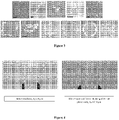
- the polyhedra gradually evolve in series of different shapes: hexagonal prisms, then quadrupolar prisms, elongated quadrupolar prisms with high aspect ratio and in the end they become fibers.
- Each of the stages of the drop shape evolution could be used for preparation of particles, either by freezing or via vitrification.
- Brij 58 enables yields as high as 75 ⁇ 5 % for quadrupolar prisms and 25 ⁇ 5 % for triangular ones; or 90 ⁇ 5 % for high-aspect ratio quadrupolar prisms; or 90 ⁇ 5 % for fibrilar structures, depending on the different ways of preparation.
- Tween 60 allows preparation of more than 90 % rod-like particles.
- the shape of the particles depends on the size of the droplets in the emulsions. At higher rates of cooling, e.g. 5 K/min, depending on the surfactant used, the largest drops often freeze without shape transformations.
- Example 1 Preparation of particles with different aspect ratios.
- the current example demonstrates the preparation of solid particles with different aspect rations, as illustrated in Figure 1 .
- the nonionic surfactant, Tween 40 is dissolved into water. Its concentration is 1.5 wt. % with respect to the mass of water. Then hexadecane droplets with diameter 15 ⁇ m are injected into the water phase. The concentration of the droplets is 1 vol. % with respect to the whole amount of emulsion.
- the emulsion [301] is put in a capillary [302] and put in thermostated chamber [303]. There is cooling liquid which circulates throughout the vessel [304, 305].
- the initial temperature is 298 K and the cooling rate is 1.4 K/min.
- Their aspect ratio final-to-initial length ratio
- the initial temperature is 298 K and the cooling rate is 0.16 K/min.
- Their aspect ratio final-to-initial length ratio
- the yield is around 90% in number of particles for both cooling rates.
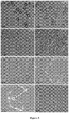
- This example demonstrates the drop-size reduction, which is illustrated in Figure 4 .
- 0.6 wt.% Brij 58 is dissolved in water and 0.4 wt.% Brij 52 is dissolved in hexadecane.
- the hexadecane is dispersed in water in volume ratio 1:3, through membrane emulsification.
- the emulsions are cooled down from 298 to 278 K in a fridge and then heated back up to 298 K. After two cycles the final drop size 0.9 ⁇ m in diameter.
- the droplets could be liquid or solid.
- the current example demonstrates the preparation of polymerized particles with different geometrical shapes, as demonstrated in Figure 1 .
- the nonionic surfactant, Tween 40 is dissolved into water. Its concentration is 0.15 wt. % with respect to the mass of water.
- stearyl methacrylate droplets with diameter 10 ⁇ m are injected into the water phase. The concentration of the droplets is 1 vol. % with respect to the whole amount of emulsion.
- the emulsion [301] is mixed with water soluble component - ⁇ -ketoglutaric acid, e.g. 1.75 wt.% with respect to the water phase; then put in a capillary, and finally - put in thermostated chamber.
- the initial temperature of the emulsion is 298 K and the temperature in the cooling chamber is 292 ⁇ 3 K.
- the liquid prisms could be polymerized via irradiation with UV light at 365 nm, or left to change shape and then polymerized. Yield was more than 80 % hexagonal prisms (by number of drops converted in prisms) or more than 50% triangular prisms.
- Ferrofluid or hydrophobic ceramic nano-particles with concentration 2 wt% are dispersed in stearyl methacrylate. Then procedure in example 3 is followed.
- Example 5 Tuning surface chemistry and morphology (growing spikes or brushes) (not according to the invention)
- the nonionic surfactant, Tween 40 is dissolved into water. Its concentration is 10-16 wt. % with respect to the mass of water. Then stearyl methacrylate droplets with diameter 35 ⁇ m are injected into the water phase. The concentration of the droplets is 1 vol. % with respect to the whole amount of emulsion.
- the emulsion [301] is mixed with water soluble component - ⁇ -ketoglutaric acid, e.g. 0.5 wt.% with respect to the water phase; then put in a capillary [302], and finally - put in thermostated chamber [303].
- the initial temperature of the emulsion is 298 K and the temperature in the cooling chamber is 308 ⁇ 3 K.
- the liquid drops are polymerized via irradiation with UV light at 365 nm for 30-60 min with UV LED.
- emulsion/suspension is cooled down to 292 ⁇ 3 K and left for few hours.
- Spike with different size and density are grown based on time for cooling. For example, 10 wt% Tween 40 gives at least 5 ⁇ m spikes (brushes) within 5 hours of waiting.
- the nonionic surfactant, Tween 40 is dissolved into water. Its concentration is 0.3 wt. % with respect to the mass of water. Then stearyl methacrylate droplets with diameter 10 ⁇ m are injected into the water phase.
- the methacrylate droplets might contain any of the listed oil soluble components, but not limited to them:
- the emulsion is mixed with water soluble component - ⁇ -ketoglutaric acid, e.g. 1.75 wt.% with respect to the water phase; then put in a capillary, and finally - put in thermostated chamber.
- water soluble component - ⁇ -ketoglutaric acid e.g. 1.75 wt.% with respect to the water phase
- the initial temperature of the emulsion is 298 K and the final temperature depends on the amount of added components and the component type: typically between 273 and 353 K.
- the liquid drops are polymerized via irradiation with UV light at 365 nm for 15-30 min with UV.
Landscapes
- Health & Medical Sciences (AREA)
- Chemical & Material Sciences (AREA)
- Life Sciences & Earth Sciences (AREA)
- Medicinal Chemistry (AREA)
- Pharmacology & Pharmacy (AREA)
- Epidemiology (AREA)
- Animal Behavior & Ethology (AREA)
- General Health & Medical Sciences (AREA)
- Public Health (AREA)
- Veterinary Medicine (AREA)
- Engineering & Computer Science (AREA)
- Dispersion Chemistry (AREA)
- Organic Chemistry (AREA)
- Bioinformatics & Cheminformatics (AREA)
- Chemical Kinetics & Catalysis (AREA)
- Food Science & Technology (AREA)
- Polymers & Plastics (AREA)
- Inorganic Chemistry (AREA)
- Physics & Mathematics (AREA)
- Biomedical Technology (AREA)
- Nanotechnology (AREA)
- Optics & Photonics (AREA)
- Nutrition Science (AREA)
- Mycology (AREA)
- Medicinal Preparation (AREA)
- Colloid Chemistry (AREA)
Claims (13)
- Verfahren, umfassend die Schritte:a. Herstellen einer Emulsion einer hydrophoben Phase in einer hydrophilen Phase, um Tröpfchen der hydrophoben Phase zu bilden, wobei die hydrophobe Phase so ausgewählt wird, dass sie sich bei Abkühlen von einem flüssigen Zustand in einen plastischen Zustand umwandelt; undb. Abkühlen der Tröpfchen auf eine Temperatur, bei der die hydrophobe Phase einen Phasenübergang von einem flüssigen Zustand zu einem plastischen Zustand durchläuft;wobei der Kühlschritt b) Kühlen der Tröpfchen mit einer gesteuerten Kühlrate mit einer gesteuerten Kühlrate von zwischen 0,0001 und 5 K pro Minute umfasst.
- Verfahren gemäß Anspruch 1, wobei die hydrophobe Phase einen oder mehrere der folgenden Stoffe oder Stoffklassen enthält: linearen Kohlenwasserstoff, cyclischen Kohlenwasserstoff, asymmetrisches Alkan, Alken, Alkin, Alkohol mit einer oder mehreren Hydroxygruppen, Ester, Ether, Amin, Amid, Aldehyd, Keton, Fluoralkan.
- Verfahren gemäß Anspruch 2, wobei die linearen Kohlenwasserstoffmoleküle zwischen 10 und 50 Kohlenstoffatome enthalten.
- Verfahren gemäß Anspruch 3, wobei die hydrophobe Phase zwischen 0,1 und 70 Gew.-%, bezogen auf die Emulsion, darstellt und wobei die hydrophobe Phase ein Gemisch von hydrophoben Stoffen umfasst.
- Verfahren gemäß Anspruch 4, wobei die Emulsion ferner wenigstens eine öldispergierbare Komponente umfasst, wobei die Konzentration an öldispergierbarer Komponente bis zu 50 Gew.-%, bezogen auf das Gewicht der Emulsion, beträgt.
- Verfahren gemäß einem der Ansprüche 1 bis 5, wobei die Emulsion wenigstens ein Tensid enthält, einschließlich Tenside aus denn folgenden Klassen, nichtionisches Tensid, wie z. B. nichtionisches ethoxyliertes Tensid, oder ionisches Tensid.
- Verfahren gemäß Anspruch 6, wobei das ionische Tensid eines oder eine Kombination von Alkyltrimethylammoniumsalzen, Alkylbromid, Alkylsulfat, Alkylsulfonat oder Betain umfasst.
- Verfahren gemäß Anspruch 6 oder 7, wobei die Konzentration des einen oder der mehreren Tenside niedriger als 5 Gew.-%, bezogen auf das Gewicht der Emulsion, ist.
- Verfahren gemäß Anspruch 6 oder 7, wobei das eine oder die mehreren Tenside eine Kohlenwasserstoffkette mit einer Länge von bis zu 4 Kohlenstoffatome kürzer als eine Kohlenwasserstoffkette der hydrophoben Phase umfassen.
- Verfahren gemäß einem der Ansprüche 1 bis 9, wobei das Verfahren Herstellen einer Ausgangsemulsion mit einer Ausgangsgröße der Tröpfchen von zwischen 5 nm und 2 mm durch Membranemulgierung, mechanisches Rühren, mechanisches Schütteln oder Verwenden einer Homogenisierungsvorrichtung umfasst.
- Verfahren gemäß einem der Ansprüche 1 bis 10, ferner umfassend eine Stufe des Verfestigens der Tröpfchen, wobei die Tröpfchen durch Einfrieren oder Polymerisation verfestigt werden, und/oder ferner umfassend einen Schritt des Kühlens und/oder Erhitzens, der über dem Gefrierpunkt der hydrophilen Phase durchgeführt wird, wobei die hydrophile Phase eine Gefrierschutzkomponente umfasst und wobei die Gefrierschutzkomponente bis zu 95 Vol.-%, bezogen auf das Emulsionsvolumen, bildet.
- Verfahren gemäß einem der Ansprüche 1 bis 11, wobei das Verfahren ferner eines oder mehrere von Funktionalisierung der Tröpfchen und Verkapselung der Tröpfchen umfasst.
- Verfahren gemäß Anspruch 12, wobei die Tröpfchen von der hydrophilen Phase isoliert werden.
Applications Claiming Priority (2)
| Application Number | Priority Date | Filing Date | Title |
|---|---|---|---|
| BG112154A BG112154A (bg) | 2015-11-19 | 2015-11-19 | Метод за получаване на течни, по лутечни и твърди органични частици с контролирана форма и/или размер |
| PCT/GB2016/053607 WO2017085508A1 (en) | 2015-11-19 | 2016-11-18 | A method for the preparation of particles with controlled shape and/or size |
Publications (2)
| Publication Number | Publication Date |
|---|---|
| EP3377205A1 EP3377205A1 (de) | 2018-09-26 |
| EP3377205B1 true EP3377205B1 (de) | 2022-04-27 |
Family
ID=57777664
Family Applications (1)
| Application Number | Title | Priority Date | Filing Date |
|---|---|---|---|
| EP16825542.0A Not-in-force EP3377205B1 (de) | 2015-11-19 | 2016-11-18 | Verfahren zur herstellung von partikeln mit kontrollierter form und/oder grösse |
Country Status (4)
| Country | Link |
|---|---|
| US (1) | US20180369155A1 (de) |
| EP (1) | EP3377205B1 (de) |
| BG (1) | BG112154A (de) |
| WO (1) | WO2017085508A1 (de) |
Families Citing this family (2)
| Publication number | Priority date | Publication date | Assignee | Title |
|---|---|---|---|---|
| PL3115316T3 (pl) | 2015-07-07 | 2018-10-31 | Swiss Coffee Innovation Ag | Kapsułka zawierająca proszek do przygotowania napoju, w szczególności do przygotowania parzonej kawy |
| EP3511266A1 (de) * | 2018-01-15 | 2019-07-17 | Axel Nickel | Getränkepulver und füllstoff enthaltende kapsel, insbesondere zur zubereitung von gebrühtem kaffee |
Citations (1)
| Publication number | Priority date | Publication date | Assignee | Title |
|---|---|---|---|---|
| DE69103807T2 (de) * | 1990-04-12 | 1995-03-23 | Du Pont | Verfahren zum Anlöten metallisierter Komponenten an keramische Substrate. |
Family Cites Families (18)
| Publication number | Priority date | Publication date | Assignee | Title |
|---|---|---|---|---|
| DE3024870C2 (de) | 1980-07-01 | 1985-01-10 | Th. Goldschmidt Ag, 4300 Essen | Verfahren zur Herstellung einer stabilen Emulsion |
| EP0266859A1 (de) | 1986-10-06 | 1988-05-11 | Taiyo Sanso Co Ltd. | Verfahren und Vorrichtung zur Erzeugung von sehr feinkörnigen, gefrorenen Partikeln |
| JP2582186B2 (ja) | 1989-05-04 | 1997-02-19 | サウザン リサーチ インスティチュート | カプセル封じ法及びその製品 |
| DE69528062T2 (de) | 1994-06-20 | 2003-04-30 | Nippon Shinyaku Co., Ltd. | Verfahren zum herstellen von emulsionen aus einem emulgator |
| US6767637B2 (en) | 2000-12-13 | 2004-07-27 | Purdue Research Foundation | Microencapsulation using ultrasonic atomizers |
| AU2001298061A1 (en) | 2000-12-13 | 2003-07-09 | Purdue Research Foundation | Microencapsulation of drugs by solvent exchange |
| US8263129B2 (en) | 2003-12-19 | 2012-09-11 | The University Of North Carolina At Chapel Hill | Methods for fabricating isolated micro-and nano-structures using soft or imprint lithography |
| US8043480B2 (en) | 2004-11-10 | 2011-10-25 | The Regents Of The University Of Michigan | Methods for forming biodegradable nanocomponents with controlled shapes and sizes via electrified jetting |
| US20070054119A1 (en) | 2005-03-04 | 2007-03-08 | Piotr Garstecki | Systems and methods of forming particles |
| US7709544B2 (en) | 2005-10-25 | 2010-05-04 | Massachusetts Institute Of Technology | Microstructure synthesis by flow lithography and polymerization |
| ATE477792T1 (de) * | 2005-11-22 | 2010-09-15 | Nestec Sa | Öl-in-wasser-emulsion und ihre verwendung zur abgabe einer funktionalität |
| DE102006030532A1 (de) | 2006-07-01 | 2008-01-03 | Goldschmidt Gmbh | Verfahren zur Verschiebung der Phaseninversionstemperatur von Mikroemulsionen und zur Herstellung feinteiliger Öl-in-Wasser Emulsion |
| EP2061434A2 (de) | 2006-09-08 | 2009-05-27 | The Regent of the University of California | Herstellungsform für polymer-mikro- und nanoteilchen |
| JP2008086887A (ja) | 2006-09-29 | 2008-04-17 | Fujifilm Corp | 乳化物及び乳化物の製造方法 |
| WO2008058297A2 (en) | 2006-11-10 | 2008-05-15 | Harvard University | Non-spherical particles |
| US20100216928A1 (en) | 2006-11-15 | 2010-08-26 | The University of North Carolona at Chapel Hill | Polymer particle composite having high fidelity order, size, and shape particles |
| KR101163862B1 (ko) | 2010-03-23 | 2012-07-09 | (주)아모레퍼시픽 | 수중유형 나노 에멀젼 조성물 및 이의 제조방법 |
| US20110275738A1 (en) * | 2010-05-05 | 2011-11-10 | Basf Se | Process for producing finely divided suspensions by melt emulsification |
-
2015
- 2015-11-19 BG BG112154A patent/BG112154A/bg unknown
-
2016
- 2016-11-18 WO PCT/GB2016/053607 patent/WO2017085508A1/en not_active Ceased
- 2016-11-18 US US15/777,450 patent/US20180369155A1/en not_active Abandoned
- 2016-11-18 EP EP16825542.0A patent/EP3377205B1/de not_active Not-in-force
Patent Citations (1)
| Publication number | Priority date | Publication date | Assignee | Title |
|---|---|---|---|---|
| DE69103807T2 (de) * | 1990-04-12 | 1995-03-23 | Du Pont | Verfahren zum Anlöten metallisierter Komponenten an keramische Substrate. |
Also Published As
| Publication number | Publication date |
|---|---|
| BG112154A (bg) | 2017-05-31 |
| WO2017085508A1 (en) | 2017-05-26 |
| EP3377205A1 (de) | 2018-09-26 |
| US20180369155A1 (en) | 2018-12-27 |
Similar Documents
| Publication | Publication Date | Title |
|---|---|---|
| US11229892B2 (en) | Compositions and methods for forming emulsions | |
| Tcholakova et al. | Efficient self-emulsification via cooling-heating cycles | |
| Joye et al. | Production of nanoparticles by anti-solvent precipitation for use in food systems | |
| JP6831843B2 (ja) | シリカベースのカプセル内における物質のカプセル化方法、及びそれにより得られる製品 | |
| Clausse et al. | Morphology characterization of emulsions by differential scanning calorimetry | |
| CA3005385A1 (en) | A method for the preparation of particles with controlled shape and/or size | |
| Valkova et al. | Mechanisms and control of self-emulsification upon freezing and melting of dispersed alkane drops | |
| EP3377205B1 (de) | Verfahren zur herstellung von partikeln mit kontrollierter form und/oder grösse | |
| CA2502908C (en) | Method for preparing emulsions | |
| Xu et al. | Microfluidic preparation and structure evolution of double emulsions with two-phase cores | |
| Tian et al. | Rapid visualized hydrophobic-force-driving self-assembly towards brilliant photonic crystals | |
| US9000053B2 (en) | Process and system for reducing sizes of emulsion droplets and emulsions having reduced droplet sizes | |
| Kluge et al. | Emulsion crystallization of phenanthrene by supercritical fluid extraction of emulsions | |
| Dang et al. | Core–shell droplets and microcapsules formed through liquid–liquid phase separation of a colloid–polymer mixture | |
| EP4475986A1 (de) | Kapseln mit erstarrter matrix | |
| Cholakova et al. | Spontaneous particle desorption and “Gorgon” drop formation from particle-armored oil drops upon cooling | |
| Dluska et al. | Regimes of multiple emulsions of W1/O/W2 and O1/W/O2 type in the continuous Couette‐Taylor flow contactor | |
| CN104955560B (zh) | 封装体系 | |
| US20120193574A1 (en) | Method Of Controlling Crystallization | |
| JP4385886B2 (ja) | 微小流路構造体を用いた固体状粒子の製造方法 | |
| Dinc et al. | Controlled release of microcargo from water-in-liquid crystal emulsions via interfacial shear induced by synthetic microstirrers | |
| Labes-Carrier et al. | DSC as a tool to predict emulsion stability | |
| Knowles | Shear-Mediated Sol-Gel Transition of | |
| US9073022B2 (en) | System and method for recycling surfactant in emulsion production | |
| Kobayashi et al. | Production of Monodisperse Fine Dispersions by Microchannel/Nanochannel Emulsifi cation |
Legal Events
| Date | Code | Title | Description |
|---|---|---|---|
| STAA | Information on the status of an ep patent application or granted ep patent |
Free format text: STATUS: UNKNOWN |
|
| STAA | Information on the status of an ep patent application or granted ep patent |
Free format text: STATUS: THE INTERNATIONAL PUBLICATION HAS BEEN MADE |
|
| PUAI | Public reference made under article 153(3) epc to a published international application that has entered the european phase |
Free format text: ORIGINAL CODE: 0009012 |
|
| STAA | Information on the status of an ep patent application or granted ep patent |
Free format text: STATUS: REQUEST FOR EXAMINATION WAS MADE |
|
| 17P | Request for examination filed |
Effective date: 20180516 |
|
| AK | Designated contracting states |
Kind code of ref document: A1 Designated state(s): AL AT BE BG CH CY CZ DE DK EE ES FI FR GB GR HR HU IE IS IT LI LT LU LV MC MK MT NL NO PL PT RO RS SE SI SK SM TR |
|
| AX | Request for extension of the european patent |
Extension state: BA ME |
|
| DAV | Request for validation of the european patent (deleted) | ||
| DAX | Request for extension of the european patent (deleted) | ||
| STAA | Information on the status of an ep patent application or granted ep patent |
Free format text: STATUS: EXAMINATION IS IN PROGRESS |
|
| 17Q | First examination report despatched |
Effective date: 20200309 |
|
| GRAP | Despatch of communication of intention to grant a patent |
Free format text: ORIGINAL CODE: EPIDOSNIGR1 |
|
| STAA | Information on the status of an ep patent application or granted ep patent |
Free format text: STATUS: GRANT OF PATENT IS INTENDED |
|
| REG | Reference to a national code |
Ref country code: DE Ref legal event code: R079 Ref document number: 602016071573 Country of ref document: DE Free format text: PREVIOUS MAIN CLASS: B01F0003220000 Ipc: B01J0013140000 |
|
| GRAS | Grant fee paid |
Free format text: ORIGINAL CODE: EPIDOSNIGR3 |
|
| GRAA | (expected) grant |
Free format text: ORIGINAL CODE: 0009210 |
|
| STAA | Information on the status of an ep patent application or granted ep patent |
Free format text: STATUS: THE PATENT HAS BEEN GRANTED |
|
| INTG | Intention to grant announced |
Effective date: 20220301 |
|
| RIC1 | Information provided on ipc code assigned before grant |
Ipc: B01J 13/14 20060101AFI20220310BHEP |
|
| AK | Designated contracting states |
Kind code of ref document: B1 Designated state(s): AL AT BE BG CH CY CZ DE DK EE ES FI FR GB GR HR HU IE IS IT LI LT LU LV MC MK MT NL NO PL PT RO RS SE SI SK SM TR |
|
| REG | Reference to a national code |
Ref country code: GB Ref legal event code: FG4D |
|
| REG | Reference to a national code |
Ref country code: CH Ref legal event code: EP |
|
| REG | Reference to a national code |
Ref country code: AT Ref legal event code: REF Ref document number: 1486495 Country of ref document: AT Kind code of ref document: T Effective date: 20220515 |
|
| REG | Reference to a national code |
Ref country code: DE Ref legal event code: R096 Ref document number: 602016071573 Country of ref document: DE |
|
| REG | Reference to a national code |
Ref country code: IE Ref legal event code: FG4D |
|
| REG | Reference to a national code |
Ref country code: LT Ref legal event code: MG9D |
|
| REG | Reference to a national code |
Ref country code: NL Ref legal event code: MP Effective date: 20220427 |
|
| REG | Reference to a national code |
Ref country code: AT Ref legal event code: MK05 Ref document number: 1486495 Country of ref document: AT Kind code of ref document: T Effective date: 20220427 |
|
| PG25 | Lapsed in a contracting state [announced via postgrant information from national office to epo] |
Ref country code: NL Free format text: LAPSE BECAUSE OF FAILURE TO SUBMIT A TRANSLATION OF THE DESCRIPTION OR TO PAY THE FEE WITHIN THE PRESCRIBED TIME-LIMIT Effective date: 20220427 |
|
| PG25 | Lapsed in a contracting state [announced via postgrant information from national office to epo] |
Ref country code: SE Free format text: LAPSE BECAUSE OF FAILURE TO SUBMIT A TRANSLATION OF THE DESCRIPTION OR TO PAY THE FEE WITHIN THE PRESCRIBED TIME-LIMIT Effective date: 20220427 Ref country code: PT Free format text: LAPSE BECAUSE OF FAILURE TO SUBMIT A TRANSLATION OF THE DESCRIPTION OR TO PAY THE FEE WITHIN THE PRESCRIBED TIME-LIMIT Effective date: 20220829 Ref country code: NO Free format text: LAPSE BECAUSE OF FAILURE TO SUBMIT A TRANSLATION OF THE DESCRIPTION OR TO PAY THE FEE WITHIN THE PRESCRIBED TIME-LIMIT Effective date: 20220727 Ref country code: LT Free format text: LAPSE BECAUSE OF FAILURE TO SUBMIT A TRANSLATION OF THE DESCRIPTION OR TO PAY THE FEE WITHIN THE PRESCRIBED TIME-LIMIT Effective date: 20220427 Ref country code: HR Free format text: LAPSE BECAUSE OF FAILURE TO SUBMIT A TRANSLATION OF THE DESCRIPTION OR TO PAY THE FEE WITHIN THE PRESCRIBED TIME-LIMIT Effective date: 20220427 Ref country code: GR Free format text: LAPSE BECAUSE OF FAILURE TO SUBMIT A TRANSLATION OF THE DESCRIPTION OR TO PAY THE FEE WITHIN THE PRESCRIBED TIME-LIMIT Effective date: 20220728 Ref country code: FI Free format text: LAPSE BECAUSE OF FAILURE TO SUBMIT A TRANSLATION OF THE DESCRIPTION OR TO PAY THE FEE WITHIN THE PRESCRIBED TIME-LIMIT Effective date: 20220427 Ref country code: ES Free format text: LAPSE BECAUSE OF FAILURE TO SUBMIT A TRANSLATION OF THE DESCRIPTION OR TO PAY THE FEE WITHIN THE PRESCRIBED TIME-LIMIT Effective date: 20220427 Ref country code: AT Free format text: LAPSE BECAUSE OF FAILURE TO SUBMIT A TRANSLATION OF THE DESCRIPTION OR TO PAY THE FEE WITHIN THE PRESCRIBED TIME-LIMIT Effective date: 20220427 |
|
| PGFP | Annual fee paid to national office [announced via postgrant information from national office to epo] |
Ref country code: GB Payment date: 20220906 Year of fee payment: 7 |
|
| PG25 | Lapsed in a contracting state [announced via postgrant information from national office to epo] |
Ref country code: RS Free format text: LAPSE BECAUSE OF FAILURE TO SUBMIT A TRANSLATION OF THE DESCRIPTION OR TO PAY THE FEE WITHIN THE PRESCRIBED TIME-LIMIT Effective date: 20220427 Ref country code: PL Free format text: LAPSE BECAUSE OF FAILURE TO SUBMIT A TRANSLATION OF THE DESCRIPTION OR TO PAY THE FEE WITHIN THE PRESCRIBED TIME-LIMIT Effective date: 20220427 Ref country code: LV Free format text: LAPSE BECAUSE OF FAILURE TO SUBMIT A TRANSLATION OF THE DESCRIPTION OR TO PAY THE FEE WITHIN THE PRESCRIBED TIME-LIMIT Effective date: 20220427 Ref country code: IS Free format text: LAPSE BECAUSE OF FAILURE TO SUBMIT A TRANSLATION OF THE DESCRIPTION OR TO PAY THE FEE WITHIN THE PRESCRIBED TIME-LIMIT Effective date: 20220827 |
|
| REG | Reference to a national code |
Ref country code: DE Ref legal event code: R097 Ref document number: 602016071573 Country of ref document: DE |
|
| PG25 | Lapsed in a contracting state [announced via postgrant information from national office to epo] |
Ref country code: SM Free format text: LAPSE BECAUSE OF FAILURE TO SUBMIT A TRANSLATION OF THE DESCRIPTION OR TO PAY THE FEE WITHIN THE PRESCRIBED TIME-LIMIT Effective date: 20220427 Ref country code: SK Free format text: LAPSE BECAUSE OF FAILURE TO SUBMIT A TRANSLATION OF THE DESCRIPTION OR TO PAY THE FEE WITHIN THE PRESCRIBED TIME-LIMIT Effective date: 20220427 Ref country code: RO Free format text: LAPSE BECAUSE OF FAILURE TO SUBMIT A TRANSLATION OF THE DESCRIPTION OR TO PAY THE FEE WITHIN THE PRESCRIBED TIME-LIMIT Effective date: 20220427 Ref country code: EE Free format text: LAPSE BECAUSE OF FAILURE TO SUBMIT A TRANSLATION OF THE DESCRIPTION OR TO PAY THE FEE WITHIN THE PRESCRIBED TIME-LIMIT Effective date: 20220427 Ref country code: DK Free format text: LAPSE BECAUSE OF FAILURE TO SUBMIT A TRANSLATION OF THE DESCRIPTION OR TO PAY THE FEE WITHIN THE PRESCRIBED TIME-LIMIT Effective date: 20220427 Ref country code: CZ Free format text: LAPSE BECAUSE OF FAILURE TO SUBMIT A TRANSLATION OF THE DESCRIPTION OR TO PAY THE FEE WITHIN THE PRESCRIBED TIME-LIMIT Effective date: 20220427 |
|
| PGFP | Annual fee paid to national office [announced via postgrant information from national office to epo] |
Ref country code: FR Payment date: 20221124 Year of fee payment: 7 Ref country code: DE Payment date: 20221124 Year of fee payment: 7 |
|
| PLBE | No opposition filed within time limit |
Free format text: ORIGINAL CODE: 0009261 |
|
| STAA | Information on the status of an ep patent application or granted ep patent |
Free format text: STATUS: NO OPPOSITION FILED WITHIN TIME LIMIT |
|
| PG25 | Lapsed in a contracting state [announced via postgrant information from national office to epo] |
Ref country code: AL Free format text: LAPSE BECAUSE OF FAILURE TO SUBMIT A TRANSLATION OF THE DESCRIPTION OR TO PAY THE FEE WITHIN THE PRESCRIBED TIME-LIMIT Effective date: 20220427 |
|
| 26N | No opposition filed |
Effective date: 20230130 |
|
| PG25 | Lapsed in a contracting state [announced via postgrant information from national office to epo] |
Ref country code: SI Free format text: LAPSE BECAUSE OF FAILURE TO SUBMIT A TRANSLATION OF THE DESCRIPTION OR TO PAY THE FEE WITHIN THE PRESCRIBED TIME-LIMIT Effective date: 20220427 |
|
| PG25 | Lapsed in a contracting state [announced via postgrant information from national office to epo] |
Ref country code: MC Free format text: LAPSE BECAUSE OF FAILURE TO SUBMIT A TRANSLATION OF THE DESCRIPTION OR TO PAY THE FEE WITHIN THE PRESCRIBED TIME-LIMIT Effective date: 20220427 |
|
| REG | Reference to a national code |
Ref country code: CH Ref legal event code: PL |
|
| REG | Reference to a national code |
Ref country code: BE Ref legal event code: MM Effective date: 20221130 |
|
| PG25 | Lapsed in a contracting state [announced via postgrant information from national office to epo] |
Ref country code: LI Free format text: LAPSE BECAUSE OF NON-PAYMENT OF DUE FEES Effective date: 20221130 Ref country code: CH Free format text: LAPSE BECAUSE OF NON-PAYMENT OF DUE FEES Effective date: 20221130 |
|
| PG25 | Lapsed in a contracting state [announced via postgrant information from national office to epo] |
Ref country code: LU Free format text: LAPSE BECAUSE OF NON-PAYMENT OF DUE FEES Effective date: 20221118 |
|
| PG25 | Lapsed in a contracting state [announced via postgrant information from national office to epo] |
Ref country code: IE Free format text: LAPSE BECAUSE OF NON-PAYMENT OF DUE FEES Effective date: 20221118 |
|
| PG25 | Lapsed in a contracting state [announced via postgrant information from national office to epo] |
Ref country code: BE Free format text: LAPSE BECAUSE OF NON-PAYMENT OF DUE FEES Effective date: 20221130 |
|
| PG25 | Lapsed in a contracting state [announced via postgrant information from national office to epo] |
Ref country code: IT Free format text: LAPSE BECAUSE OF FAILURE TO SUBMIT A TRANSLATION OF THE DESCRIPTION OR TO PAY THE FEE WITHIN THE PRESCRIBED TIME-LIMIT Effective date: 20220427 |
|
| PG25 | Lapsed in a contracting state [announced via postgrant information from national office to epo] |
Ref country code: HU Free format text: LAPSE BECAUSE OF FAILURE TO SUBMIT A TRANSLATION OF THE DESCRIPTION OR TO PAY THE FEE WITHIN THE PRESCRIBED TIME-LIMIT; INVALID AB INITIO Effective date: 20161118 |
|
| PG25 | Lapsed in a contracting state [announced via postgrant information from national office to epo] |
Ref country code: CY Free format text: LAPSE BECAUSE OF FAILURE TO SUBMIT A TRANSLATION OF THE DESCRIPTION OR TO PAY THE FEE WITHIN THE PRESCRIBED TIME-LIMIT Effective date: 20220427 |
|
| PG25 | Lapsed in a contracting state [announced via postgrant information from national office to epo] |
Ref country code: MK Free format text: LAPSE BECAUSE OF FAILURE TO SUBMIT A TRANSLATION OF THE DESCRIPTION OR TO PAY THE FEE WITHIN THE PRESCRIBED TIME-LIMIT Effective date: 20220427 |
|
| REG | Reference to a national code |
Ref country code: DE Ref legal event code: R119 Ref document number: 602016071573 Country of ref document: DE |
|
| GBPC | Gb: european patent ceased through non-payment of renewal fee |
Effective date: 20231118 |
|
| PG25 | Lapsed in a contracting state [announced via postgrant information from national office to epo] |
Ref country code: BG Free format text: LAPSE BECAUSE OF NON-PAYMENT OF DUE FEES Effective date: 20221118 |
|
| PG25 | Lapsed in a contracting state [announced via postgrant information from national office to epo] |
Ref country code: MT Free format text: LAPSE BECAUSE OF FAILURE TO SUBMIT A TRANSLATION OF THE DESCRIPTION OR TO PAY THE FEE WITHIN THE PRESCRIBED TIME-LIMIT Effective date: 20220427 |
|
| PG25 | Lapsed in a contracting state [announced via postgrant information from national office to epo] |
Ref country code: DE Free format text: LAPSE BECAUSE OF NON-PAYMENT OF DUE FEES Effective date: 20240601 |
|
| PG25 | Lapsed in a contracting state [announced via postgrant information from national office to epo] |
Ref country code: GB Free format text: LAPSE BECAUSE OF NON-PAYMENT OF DUE FEES Effective date: 20231118 |
|
| PG25 | Lapsed in a contracting state [announced via postgrant information from national office to epo] |
Ref country code: FR Free format text: LAPSE BECAUSE OF NON-PAYMENT OF DUE FEES Effective date: 20231130 |
|
| PG25 | Lapsed in a contracting state [announced via postgrant information from national office to epo] |
Ref country code: GB Free format text: LAPSE BECAUSE OF NON-PAYMENT OF DUE FEES Effective date: 20231118 Ref country code: FR Free format text: LAPSE BECAUSE OF NON-PAYMENT OF DUE FEES Effective date: 20231130 Ref country code: DE Free format text: LAPSE BECAUSE OF NON-PAYMENT OF DUE FEES Effective date: 20240601 |
|
| PG25 | Lapsed in a contracting state [announced via postgrant information from national office to epo] |
Ref country code: TR Free format text: LAPSE BECAUSE OF FAILURE TO SUBMIT A TRANSLATION OF THE DESCRIPTION OR TO PAY THE FEE WITHIN THE PRESCRIBED TIME-LIMIT Effective date: 20220427 |