EP3377656B1 - Chargement d'acides nucléiques sur des substrats - Google Patents
Chargement d'acides nucléiques sur des substrats Download PDFInfo
- Publication number
- EP3377656B1 EP3377656B1 EP16867159.2A EP16867159A EP3377656B1 EP 3377656 B1 EP3377656 B1 EP 3377656B1 EP 16867159 A EP16867159 A EP 16867159A EP 3377656 B1 EP3377656 B1 EP 3377656B1
- Authority
- EP
- European Patent Office
- Prior art keywords
- polymerase
- template
- nucleic acid
- beads
- peg
- Prior art date
- Legal status (The legal status is an assumption and is not a legal conclusion. Google has not performed a legal analysis and makes no representation as to the accuracy of the status listed.)
- Active
Links
Images



Classifications
-
- B—PERFORMING OPERATIONS; TRANSPORTING
- B01—PHYSICAL OR CHEMICAL PROCESSES OR APPARATUS IN GENERAL
- B01J—CHEMICAL OR PHYSICAL PROCESSES, e.g. CATALYSIS OR COLLOID CHEMISTRY; THEIR RELEVANT APPARATUS
- B01J19/00—Chemical, physical or physico-chemical processes in general; Their relevant apparatus
- B01J19/0046—Sequential or parallel reactions, e.g. for the synthesis of polypeptides or polynucleotides; Apparatus and devices for combinatorial chemistry or for making molecular arrays
-
- C—CHEMISTRY; METALLURGY
- C12—BIOCHEMISTRY; BEER; SPIRITS; WINE; VINEGAR; MICROBIOLOGY; ENZYMOLOGY; MUTATION OR GENETIC ENGINEERING
- C12Q—MEASURING OR TESTING PROCESSES INVOLVING ENZYMES, NUCLEIC ACIDS OR MICROORGANISMS; COMPOSITIONS OR TEST PAPERS THEREFOR; PROCESSES OF PREPARING SUCH COMPOSITIONS; CONDITION-RESPONSIVE CONTROL IN MICROBIOLOGICAL OR ENZYMOLOGICAL PROCESSES
- C12Q1/00—Measuring or testing processes involving enzymes, nucleic acids or microorganisms; Compositions therefor; Processes of preparing such compositions
- C12Q1/68—Measuring or testing processes involving enzymes, nucleic acids or microorganisms; Compositions therefor; Processes of preparing such compositions involving nucleic acids
- C12Q1/6806—Preparing nucleic acids for analysis, e.g. for polymerase chain reaction [PCR] assay
-
- B—PERFORMING OPERATIONS; TRANSPORTING
- B01—PHYSICAL OR CHEMICAL PROCESSES OR APPARATUS IN GENERAL
- B01J—CHEMICAL OR PHYSICAL PROCESSES, e.g. CATALYSIS OR COLLOID CHEMISTRY; THEIR RELEVANT APPARATUS
- B01J2219/00—Chemical, physical or physico-chemical processes in general; Their relevant apparatus
- B01J2219/00274—Sequential or parallel reactions; Apparatus and devices for combinatorial chemistry or for making arrays; Chemical library technology
- B01J2219/00277—Apparatus
- B01J2219/00279—Features relating to reactor vessels
- B01J2219/00306—Reactor vessels in a multiple arrangement
- B01J2219/00313—Reactor vessels in a multiple arrangement the reactor vessels being formed by arrays of wells in blocks
- B01J2219/00315—Microtiter plates
- B01J2219/00317—Microwell devices, i.e. having large numbers of wells
-
- B—PERFORMING OPERATIONS; TRANSPORTING
- B01—PHYSICAL OR CHEMICAL PROCESSES OR APPARATUS IN GENERAL
- B01J—CHEMICAL OR PHYSICAL PROCESSES, e.g. CATALYSIS OR COLLOID CHEMISTRY; THEIR RELEVANT APPARATUS
- B01J2219/00—Chemical, physical or physico-chemical processes in general; Their relevant apparatus
- B01J2219/00274—Sequential or parallel reactions; Apparatus and devices for combinatorial chemistry or for making arrays; Chemical library technology
- B01J2219/00583—Features relative to the processes being carried out
- B01J2219/00603—Making arrays on substantially continuous surfaces
- B01J2219/00605—Making arrays on substantially continuous surfaces the compounds being directly bound or immobilised to solid supports
- B01J2219/00632—Introduction of reactive groups to the surface
- B01J2219/00637—Introduction of reactive groups to the surface by coating it with another layer
-
- B—PERFORMING OPERATIONS; TRANSPORTING
- B01—PHYSICAL OR CHEMICAL PROCESSES OR APPARATUS IN GENERAL
- B01J—CHEMICAL OR PHYSICAL PROCESSES, e.g. CATALYSIS OR COLLOID CHEMISTRY; THEIR RELEVANT APPARATUS
- B01J2219/00—Chemical, physical or physico-chemical processes in general; Their relevant apparatus
- B01J2219/00274—Sequential or parallel reactions; Apparatus and devices for combinatorial chemistry or for making arrays; Chemical library technology
- B01J2219/00583—Features relative to the processes being carried out
- B01J2219/00603—Making arrays on substantially continuous surfaces
- B01J2219/00646—Making arrays on substantially continuous surfaces the compounds being bound to beads immobilised on the solid supports
- B01J2219/00648—Making arrays on substantially continuous surfaces the compounds being bound to beads immobilised on the solid supports by the use of solid beads
-
- B—PERFORMING OPERATIONS; TRANSPORTING
- B01—PHYSICAL OR CHEMICAL PROCESSES OR APPARATUS IN GENERAL
- B01J—CHEMICAL OR PHYSICAL PROCESSES, e.g. CATALYSIS OR COLLOID CHEMISTRY; THEIR RELEVANT APPARATUS
- B01J2219/00—Chemical, physical or physico-chemical processes in general; Their relevant apparatus
- B01J2219/00274—Sequential or parallel reactions; Apparatus and devices for combinatorial chemistry or for making arrays; Chemical library technology
- B01J2219/00583—Features relative to the processes being carried out
- B01J2219/00603—Making arrays on substantially continuous surfaces
- B01J2219/00659—Two-dimensional arrays
-
- B—PERFORMING OPERATIONS; TRANSPORTING
- B01—PHYSICAL OR CHEMICAL PROCESSES OR APPARATUS IN GENERAL
- B01J—CHEMICAL OR PHYSICAL PROCESSES, e.g. CATALYSIS OR COLLOID CHEMISTRY; THEIR RELEVANT APPARATUS
- B01J2219/00—Chemical, physical or physico-chemical processes in general; Their relevant apparatus
- B01J2219/00274—Sequential or parallel reactions; Apparatus and devices for combinatorial chemistry or for making arrays; Chemical library technology
- B01J2219/00709—Type of synthesis
-
- B—PERFORMING OPERATIONS; TRANSPORTING
- B01—PHYSICAL OR CHEMICAL PROCESSES OR APPARATUS IN GENERAL
- B01J—CHEMICAL OR PHYSICAL PROCESSES, e.g. CATALYSIS OR COLLOID CHEMISTRY; THEIR RELEVANT APPARATUS
- B01J2219/00—Chemical, physical or physico-chemical processes in general; Their relevant apparatus
- B01J2219/00274—Sequential or parallel reactions; Apparatus and devices for combinatorial chemistry or for making arrays; Chemical library technology
- B01J2219/00718—Type of compounds synthesised
- B01J2219/0072—Organic compounds
- B01J2219/00722—Nucleotides
Definitions
- the small observation volumes often used for single molecule analysis methods are typically provided by immobilizing or otherwise localizing molecules of interest within optical confinement reaction/observation regions, such as an array of extremely small wells as in an array of Zero Mode Waveguides (ZMWs) or other nanoscale wells.
- ZMWs Zero Mode Waveguides
- entropic barriers to loading can be significant when attempting to load large reactant molecules (e.g., large nucleic acid template-polymerase complexes) into nanoscale reaction sites.
- WO 2011/026102 describes methods of bead manipulation and forming bead arrays.
- US 2012/071359 describes purified extended polymerase/ template complex for sequencing.
- US 8 715 930 describes loading molecules onto substrates.
- US 2013/178369 describes treatment for stabilizing nucleic acid arrays.
- the condensing agent can facilitate loading of large nucleic acids into the nanoscale wells.
- the nucleic acids are at least about 10 kb in length, at least about 20 kb in length, at least about 30 kb in length, or at least about 40 kb in length.
- the nucleic acid molecules are part of protein-nucleic acid complexes, for example, polymerase-template complexes or helicase-nucleic acid complexes.
- the nucleic acid molecules are immobilized in the nanoscale wells
- the solution comprises PEG 8000, for example, at a concentration of 2.5-25 mM or 5-15 mM.
- the cation can be, e.g., a monovalent or divalent cation.
- the solution comprises a monovalent cation, e.g., at a concentration of 50 to 500 mM or 100 to 300 mM, e.g., Na + or K + .
- the solution comprises a divalent cation, e.g., at a concentration of 0.05 to 10 mM, e.g., Sr 2+ .
- the nucleic acids e.g., the templates of the polymerase-template complexes
- the nucleic acids are at least about 10 kb in length, at least about 20 kb in length, at least about 30 kb in length, or at least about 40 kb in length.
- Provision of the PEG and cation can also facilitate more rapid loading than can be achieved in the absence of these reagents.
- distributing is complete in about 0.5-5, 1-4.5, 1.5-4, 1-3, or 2-3.5 hours.
- the templates of the polymerase-template complexes are optionally hybridized to primers.
- the polymerase-template complexes can be immobilized at the bottom of nanoscale wells, e.g., by binding to a moiety located at the bottom of each well.
- the nucleic acids can diffuse through the solution, or their movement can be assisted, e.g., by beads to which the nucleic acids are attached.
- the polymerase-template complexes are bound to magnetic beads
- the array regions comprise nanoscale wells having bases having coupling agent bound thereto
- the methods include applying a dynamic magnetic field to move the magnetic beads in solution down to the top of the surface.
- the dynamic magnetic field also causes the beads to be moved across the surface, whereby some polymerase-nucleic acid complexes become bound to the coupling agent on the bases of the nanoscale wells.
- the nanoscale wells comprise a coupling agent at their bases, and the polymerase-template complexes diffuse through the solution to the bases of the nanoscale wells and bind to the coupling agent, thereby immobilizing the polymerase-template complexes in the nanoscale wells.
- the templates in the polymerase-template complexes are of different lengths, at least one of which lengths is greater than 10 kb. After immobilization of the complexes in nanoscale wells, the percentage of nanoscale wells occupied by immobilized templates whose length is greater than 10 kb is equal to or greater than the percentage of templates in the initial solution whose length is greater than 10 kb. In a related class of embodiments, the templates in the polymerase-template complexes are of different lengths, at least one of which lengths is greater than 20kb.
- the percentage of nanoscale wells occupied by immobilized templates whose length is greater than 20 kb is equal to or greater than the percentage of templates in the initial solution whose length is greater than 20 kb.
- the templates in the polymerase-template complexes comprise a first template whose length is at least 20 times the length of a second template. After immobilization of the complexes, a ratio of immobilized first template to immobilized second template is equal to or is greater than a ratio of first template to second template in the initial solution.
- nucleic acids e.g., polymerase-template complexes
- at least 38% of the array regions are occupied by a single immobilized nucleic acid (e.g., a single immobilized polymerase-template complex), e.g., at least 50% or at least 75% of the regions.
- polymerase-template complexes are distributed to and immobilized nanoscale wells, and after the immobilizing step at least 38% or at least 50% of the nanoscale wells are occupied by a single immobilized polymerase-template complex.
- the nucleic acids can be, e.g., fully or partially double-stranded or single-stranded.
- Suitable nucleic acids include, but are not limited to, SMRTbells TM (circular nucleic acids having a double-stranded central region and single-stranded hairpin ends), double-stranded circular DNA molecules (e.g., nicked or gapped double-stranded circular DNA molecules, e.g., nicked or gapped plasmids), and linear molecules (e.g., genomic DNA fragments).
- polymerase-template complexes are distributed to the nanoscale wells and the templates of the polymerase-template complexes each comprise a double-stranded central region and two identical single-stranded hairpin end regions.
- the double-stranded central region is at least about 5 kb in length, e.g., at least about 10 kb, at least about 20 kb, at least about 30 kb, or at least about 40 kb.
- the templates of the polymerase-template complexes each comprise a double-stranded central region and two different single-stranded hairpin end regions.
- polymerase-template complexes are distributed to the nanoscale wells, and the templates of the polymerase-template complexes comprise nicked or gapped double-stranded circular DNA molecules.
- the double-stranded circular DNA molecules are at least about 5 kb in length, e.g., at least about 10 kb, at least about 20 kb, at least about 30 kb, or at least about 40 kb.
- polymerase-template complexes are distributed to the nanoscale wells, and the templates of the polymerase-template complexes comprise linear molecules, e.g., double-stranded molecules, e.g., genomic DNA fragments or amplicons.
- the linear templates are at least about 5 kb in length, e.g., at least about 10 kb, at least about 20 kb, at least about 30 kb, or at least about 40 kb.
- Loading of nucleic acids into array regions can facilitate subsequent analysis of the nucleic acids, for example, nucleic acid sequencing, and in particular single-molecule nucleic acid sequencing.
- the methods optionally include analyzing the nucleic acids in the nanoscale wells, e.g., by determining their nucleic acid sequence.
- the PEG is optionally removed from the nucleic acids, e.g., by washing, prior to such analysis.
- a solution of beads is provided, individual beads having bound thereto a plurality of polymerase-nucleic acid complexes.
- the solution is exposed to a substrate in the presence of at least one nucleic acid condensing agent.
- the substrate comprises an array of zero mode waveguides.
- the substrate comprises coupling groups selective for coupling the polymerase-nucleic acid complexes to the substrate, e.g., within the zero mode waveguides.
- a field is applied to draw the beads to the substrate, whereby polymerase-nucleic acid complexes become bound to the substrate through the coupling groups.
- the at least one nucleic acid condensing agent comprises polyethylene glycol (PEG), e.g., PEG 8000.
- the at least one nucleic acid condensing agent comprises a cation, e.g., a monovalent cation and/or a divalent cation.
- the field that draws the beads to the substrate is a magnetic, electric, or gravitational field.
- the methods can include applying a field that moves the beads across the surface of the substrate.
- the field to draw the beads to the substrate and the field to move the beads across the substrate comprise different types of fields.
- the field to draw the beads to the substrate and the field to move the beads comprise the same type of field, e.g., a magnetic field.
- the magnetic field is applied using one or more permanent magnets that are moved with respect to the substrate.
- the magnetic field is applied using one or more electromagnets.
- a monovalent cation can be provided at a final concentration in the immobilization mixture between about 50 mM and about 500 mM, e.g., between about 50 mM and about 400 mM or between about 100 mM and about 300 mM.
- a divalent cation can be provided at a final concentration in the immobilization mixture between about 0.05 and about 10 mM, for example, between about 1 and about 10 mM where a monovalent cation is not also provided or between about 0.05 mM and about 0.3 mM where a monovalent cation is also provided.
- the nucleic acids and the condensing agent are applied to a substrate and the condensed nucleic acids diffuse to the desired locations.
- the condensing agent serves to increase the density of a spike solution.
- the higher density spike solution is applied to a liquid-covered substrate and sinks, carrying the nucleic acids with it to the array regions.
- the nucleic acids are attached to beads.
- motion of the beads in an applied field positions the condensed nucleic acids for localization on the substrate.
- Suitable nucleic acids include, but are not limited to, SMRTbells TM (circular nucleic acids having a double-stranded central region and single-stranded hairpin ends), double-stranded circular DNA molecules (e.g., nicked or gapped double-stranded circular DNA molecules, e.g., nicked or gapped plasmids), and linear molecules (e.g., genomic DNA fragments).
- SMRTbells TM circular nucleic acids having a double-stranded central region and single-stranded hairpin ends
- double-stranded circular DNA molecules e.g., nicked or gapped double-stranded circular DNA molecules, e.g., nicked or gapped plasmids
- linear molecules e.g., genomic DNA fragments
- At least about 1% of the nucleic acids initially present in the sample occupy array regions after distribution of the nucleic acids onto the substrate and optionally immobilization of nucleic acid molecules in or at the array regions, e.g., at least about 2%, at least about 5%, or at least about 10%.
- the condensing agent can be removed (e.g., by washing the array) after distribution of the nucleic acids onto the substrate and optional immobilization of nucleic acid molecules in or at the array regions, permitting the nucleic acids to uncondense.
- the concentration of the condensing agent can be reduced (e.g., by diluting the solution) to permit the nucleic acids to uncondense.
- analysis is subsequently performed on the nucleic acids (e.g., single molecule sequencing)
- the agent can be completely removed or the agent (or, in embodiments in which the agent is removed, any residual agent) does not interfere with the analysis.
- preferred condensing agents do not deleteriously affect a relevant activity of the protein (e.g., nucleic acid binding, enzymatic activity, or the like).
- nanoscale wells e.g., regular or irregular arrays.
- Such nanoscale wells can in certain examples be zero mode waveguides (ZMWs), and in further examples, those ZMWs may have biotinylated bases and passivated sides, which can be of use in the methods of loading described herein as well as in later downstream applications, such as sequencing reactions.
- ZMWs zero mode waveguides
- any discussion herein referring to nanoscale wells and/or ZMWs is applicable to any form of reaction sites and encompasses all types of surfaces, shapes and configurations of regions into which molecules of interest can be loaded.
- the loading methods described herein will often refer to PEG and cations as useful for condensing for nucleic acids.
- PEG and/or cations is applicable to any form of nucleic acid condensing agent and encompasses all types of compositions that condense nucleic acids, thereby facilitating their loading into reaction sites.
- the loading methods described herein will often refer to polymerase-template complexes (also referred to as polymerase-nucleic acid complexes).
- any discussion herein referring to loading of polymerase-template complexes is applicable to loading of any form of nucleic acid, including isolated nucleic acids or complexes of nucleic acids with other components.
- compositions produced by, or of use in, the methods of the invention are also features of the invention, as are related kits and systems.
- the nucleic acids are attached to beads, e.g., magnetic beads.
- a field is provided to bring the beads into proximity or contact with the substrate and optionally to move the beads with respect to the substrate.
- the nucleic acids or nucleic acid complexes become bound to the substrate, for example, through coupling groups on the substrate.
- the substrate comprises an array of nanoscale wells such as zero mode waveguides (ZMWs).
- ZMWs zero mode waveguides
- the nucleic acids or complexes become bound to the base of the wells.
- the flexible linker comprises a PEG linker.
- the PEG spacer is flexible, hydrophilic, and does not exhibit non-specific binding interaction with polymerases.
- the PEG spacer optionally includes 2-30 PEG units, e.g., 4-20 units, 6 units (18 atoms), or 12 units (36 atoms). Other flexible hydrophilic moieties can also be employed.
- Linkers that do not increase nonspecific binding interactions, e.g., with polymerase, are preferred. Non-nucleotide spacers are therefore preferred, since merely including extra bases between the capture and priming regions of the oligonucleotide can increase nonspecific polymerase binding and/or may not relieve steric hindrance as efficiently.
- the SMRTbell TM template is symmetric (it includes a double-stranded central region and two identical single-stranded hairpin end regions). One copy of the primer can therefore bind to each of the single-stranded end regions.
- an asymmetric SMRTbell TM template is employed (including a double-stranded central region and two single-stranded hairpin end regions having different sequences).
- a capture oligonucleotide including a flexible hydrophilic linker can be hybridized to one end region for capture of the template to a bead, while a separate sequencing primer is hybridized to the other end region.
- oligonucleotides used to capture the nucleic acids to beads can be bound directly to the beads or can be indirectly bound to the beads (e.g., through hybridization to another oligonucleotide that is in turn bound to the beads, e.g., through polyA-polyT hybridization).
- introduction of a nucleic acid condensation agent to the immobilization reaction media can facilitate loading, particularly of large nucleic acid templates (e.g., greater than 10 kb, greater than 15 kb, greater than 20 kb, greater than 30 kb, greater than 40 kb, greater than 50 kb, greater than 70 kb, greater than 100 kb, greater than 200 kb, greater than 500 kb, or even greater than 1000 kb) into deep, narrow nanoscale wells.
- large nucleic acid templates e.g., greater than 10 kb, greater than 15 kb, greater than 20 kb, greater than 30 kb, greater than 40 kb, greater than 50 kb, greater than 70 kb, greater than 100 kb, greater than 200 kb, greater than 500 kb, or even greater than 1000 kb
- large radius of gyration of DNA templates can hinder their immobilization inside a nanostructure such as a ZMW.
- provision of a condensation agent can
- Suitable condensing agents have been described above, and include monovalent cations (e.g., Na + and K + ), divalent cations (e.g., Sr 2+ , Mg 2+ , Ca 2+ , Zn 2+ , Co 2+ , Ni 2+ , Eu 2+ , Ba 2+ , and Fe 2+ ), trivalent cations (e.g., Co 3+ ), multi-positively-charged organic molecules (e.g., spermidine, histones, and other polycations), nanoparticles, and polyethylene glycols (PEGs) and PEG polymers, as well as combinations thereof.
- a combination of PEG and at least one cation is employed.
- Exemplary PEGs and cations have been detailed above, as have suitable concentration ranges.
- PEG In addition to increasing the number of ZMW wells productively loaded, inclusion of PEG also improves the uniformity of DNA immobilization. Without limitation to any particular mechanism, PEG efficiently prevents surface drying during immobilization and subsequent washing steps, and this reduces DNA loss and polymerase deactivation during such drying events. This also improves the overall immobilization performance.
- the polymerase-template complexes can be formed and attached to beads in an aqueous solution lacking PEG, then applied to a ZMW chip covered with a layer of an equal volume of another aqueous solution containing PEG at twice the desired final concentration, such that after mixing on-chip the desired final concentration of PEG (and cations) is achieved.
- the polymerase-template complexes can be bound to beads, and PEG/cations can be added to the complexes before they are contacted with the ZMW chip.
- the nucleic acid condensing agent is present when the template (or other nucleic acid) is bound to the beads. Presence of PEG and cations, or another condensing agent, during binding of the nucleic acids to the beads can improve loading of the beads. For capture of SMRTbell TM templates through hybridization of poly-dA on the template (or on a capture primer as described above) to poly-T coated beads, binding efficiency generally decreases as the size of the DNA template increases.
- Capture of large templates can thus be enhanced by inclusion of PEG and at least one cation (e.g., as detailed above for loading) during immobilization of the template onto the beads, optionally in addition to during loading of the bead-bound templates into ZMWs.
- Nucleic acids can also be captured to beads through nonspecific binding (e.g., electrostatic interactions) rather than through hybridization, in the presence of PEG and cation.
- beads can be employed for deposition of isolated polymerase-nucleic acid complexes directly onto substrates.
- the technique comprises obtaining a solution of beads that have polymerase-nucleic acid complexes attached to them.
- the solution of beads is brought into contact with or in close proximity to a substrate onto which it is desired to deposit the complexes (preferably in the presence of a nucleic acid condensing agent, as detailed above).
- the substrate that is used is prepared to have groups that bind to the polymerase-nucleic acid complexes.
- the beads are removed, leaving polymerase-nucleic acid complexes bound to the substrate.
- the beads Prior to removal of the beads from the substrate, it is also generally desirable to induce movement between the beads and the substrate, e.g. moving the beads across the surface of the substrate in order to increase the number of complexes that are deposited. Prior to removal of the beads from the substrate, it can be desirable to induce dissociation of complexes from the beads, e.g., by adding an excess concentration of molecule(s) that weaken the magnitude of an affinity interaction between the beads and complexes. For example, in the case of templates with poly-dA sequence captured onto poly-T coated beads, a high concentration of single-stranded poly-A oligo can be added to compete template-polymerase complexes off the beads.
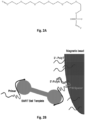
- Figure 6 shows an embodiment of the invention for loading polymerase-nucleic acid complexes onto a substrate directly from beads.
- a substrate 610 is provided.
- the substrate will generally have coupling groups that will react with moieties on the polymerase-nucleic acid complexes to bind the complexes to the surface.
- the substrate comprises an array of nanoscale wells or zero mode waveguides 616.
- the zero mode waveguides 616 on substrate 610 are nanoscale apertures through a cladding layer 614 that has been deposited onto a transparent substrate 612.
- the thickness of the cladding layer is generally from about 10 nm to about 300 nm.
- the zero mode waveguides can be, for example, cylindrical holes having diameters from about 10 nm to about 300 nm. Such zero mode waveguide arrays can be used for single molecule analysis such as single molecule sequencing as described herein.
- the zero mode waveguide can be in any suitable shape including cylinders or cones. The shape can be a channel.
- the cross sectional shape of the zero mode waveguide can be a circle, a triangle, a square, a rectangle, or an ellipse, or the cross sectional shape can be an arbitrary shape. For performing analysis within zero mode waveguides it is often desirable to have immobilized molecules of interest bound to the base of the zero mode waveguide, but to have little to substantially no molecules of interest on other parts of the substrate.
- the substrate Onto the substrate is dispensed a solution of beads 602 having molecules of interest, e.g. polymerase-nucleic acid complexes 604, bound to them.
- the complexes will generally have a binding moiety that will attach to the coupling group deposited onto the substrate surface.
- a biotin binding protein can be bound to the polymerase-nucleic acid complex.
- the biotin binding protein can be, for example, streptavidin that is bound to the polymerase enzyme.
- These polymerase-nucleic acid complex coated beads can be made in any suitable manner.
- the solution comprising the beads 602 is generally an aqueous solution having the components required for keeping the polymerase-nucleic acid complex together.
- the beads 602 can be magnetic beads. The size of the beads will depend on the application. In some cases, it is desirable that the beads have a diameter that is larger than the diameter of the zero mode waveguide.
- step (I) the beads are brought into contact with the substrate.
- a field that causes the beads to move down onto the top of the substrate Where the beads are magnetic, a magnetic field can be used to draw the beads down.
- One or more permanent magnets can be moved in a rotary fashion such that the beads are swept across the surface.
- one or more fixed electromagnets provided with varying currents can be used to produce the dynamic field.
- beads are referred to as magnetic beads where a magnetic field can be used to move the beads.
- step (II) the beads are removed from the substrate surface. Where magnetic beads are used, this removal or isolation can be performed by using magnets to the side and from above the sample.
- the attachment between the polymerase-nucleic acid complex and the bead is broken during the process, leaving the complex bound to the surface while the beads are removed.
- the place at which the break occurs can be controlled by designing into construct linkages having appropriate levels of binding. Various types of linkages are possible, and some types have stronger binding than others.
- a nucleic acid hybridization is used as the weakest link in the chain of binding. In some cases two or more hybridization linkages can occur in the chain of binding, and one can be made to be stronger than another, for example by having a longer region of sequence homology.
- the strength of the linkage can also be controlled by including modified or non-natural bases, e.g. peptide nucleic acids (PNAs), adding mismatched bases, and by changing the conditions in the solution including ionic strength and/or the temperature.
- PNAs peptide nucleic acids
- the polymerase enzyme is bound to the surface via a biotin-streptavidin linkage
- the polymerase enzyme is bound to the nucleic acid by an enzyme-substrate interaction at the active site
- the nucleic acid is bound to a hook oligonucleotide by hybridization with a capture sequence on the hook oligonucleotide to a sequence on a hairpin adaptor portion of the nucleic acid of about 10 to about 15 base pairs
- the hook oligonucleotide is attached by hybridization from a retrieval region on the hook oligonucleotide of about 18 to about 30 nucleotides to an oligonucleotide attached to a magnetic bead, e.g.
- the hybridization linkage between the capture region of the hook and the nucleic acid is the weakest link that is most susceptible to breaking during the magnetic bead loading. Having breakage at this locus is advantageous, as it leaves the polymerase-nucleic acid complex on the surface without the hook or any portion of the bead attached to it.
- the beads coated with polymerase-nucleic acid complex can be produced as described herein or in any other suitable manner. While the disclosure is described in terms of beads, it is to be understood that other solid surfaces having polymerase-nucleic complexes attached can be used, as long as the solid surface can be brought into proximity or into contact with the substrate to deposit polymerase-nucleic acid complexes.
- the beads are generally spherical, but can have any other suitable shape, for example fibers, rods, disks, cubes, or other shaped materials can be used. Beads are useful as they can be readily manipulated within a solution. Beads for use in the invention can be functionalized on their outer surfaces for the attachment of polymerase-nucleic acid complexes.
- Suitable beads include polymeric beads having functional organic molecules on their surfaces allowing for such attachment.
- a variety of types of types of beads are known and used and many are commercially available.
- the beads can be produced in various size ranges from the nanometer to the millimeter size range. In some cases, the beads can be produced to be relatively monodisperse, which can be helpful in obtaining consistent results.
- the beads can be brought into proximity or contact with the substrate in a variety of ways. Forces such as gravitational force, centrifugal force, magnetic, electrical, or dielectric forces or a combination thereof can be used to bring the beads into contact with the surface and to move the beads with respect to the surface. In some disclosures, magnetic beads are used, and magnetic fields are applied both to bring the beads down into proximity or into contact with the substrate and to move the beads across the substrate.
- Magnetic beads have been used for purification and separation in chemical and biochemical processes, and functionalized magnetic beads are commercially available.
- NEB offers a variety of magnetic beads including Amylose Magnetic Beads, Anti-MBP Magnetic Beads, Chitin Magnetic Beads, Goat Anti-Mouse IgG Magnetic Beads, Goat Anti-Rabbit IgG Magnetic Beads, Goat Anti-Rat IgG Magnetic Beads, Hydrophilic Streptavidin Magnetic Beads, Protein A Magnetic Beads, Protein G Magnetic Beads, Streptavidin Magnetic Beads, SNAP-Capture Magnetic Beads, Oligo(dT) Magnetic Beads; Dynal (Life Technologies) offers a variety of functionalized magnetic beads including streptavidin coated beads, beads for binding with His tags, anion exchange, cation exchange, hydrophobic capture, and antibody beads.
- Micromod offers magnetic beads functionalized with surface functionalities NH2, PEG-NH2 and PEG-COOH for the covalent binding of proteins, antibodies or other molecules.
- Tubobeads LLC offers beads having streptavidin, sulfonate, carboxylate, or ammonium functionality.
- Spherotech Inc. offers magnetic beads having a variety of functionalities including carboxyl, amino, antibodies, and proteins. Using functionalized beads and known methods of surface polymer synthesis, beads with a variety of properties can be made, including those having oligonucleotides or peptides having specified sequences.
- the beads can comprise polymers including polystyrene / polymethacrylate, dextran, crosslinked dextran, silica-fortified dextran, starch (BNF-starch particles), poly(lactic acid), poly(ethylene imine), or chitosan.
- the beads can also be made from inorganic material such as carbon, iron oxide, silica, or silicon.
- the magnetic beads can be useful as long as they are effectively moved by an applied magnetic field.
- the beads can be ferromagnetic or paramagnetic, or superparamagnetic.
- the methods, compositions, and devices of the disclosure are particularly useful for performing single-molecule analysis.
- a reason for this is that the methods are useful for providing molecules of interest such as polymerase-nucleic acid complexes at relatively sparse levels on a substrate.
- the method can be used to deposit molecules of interest on a substrate such that the molecules of interest are provided at a surface density such that the molecules of interest are independently optically observable.
- the substrate comprises an array of nanoscale wells such as arrays of zero mode waveguides (ZMWs).
- the substrate can have a transparent lower layer comprised, for example, of fused silica, upon which is deposited a cladding layer with a thickness of between about 10 nm and about 500 nm.
- the cladding layer is generally an opaque layer and can be a metal layer.
- Through the cladding layer is an array of holes extending to the transparent substrate, and in some cases extending into the transparent substrate.
- the holes can have any suitable cross-sectional profile including a circular profile. Where the holes have a circular profile, the diameter of the holes is generally from about 20 nm to about 500 nm.
- the holes extending to the transparent substrate will generally have a portion of the transparent substrate as their base, thus forming nanoscale wells.
- the arrays of nanoscale wells are functionalized such that binding molecules are attached at the bases of the wells for binding the molecule or molecules of interest, such as a polymerase-nucleic acid complex, within the well.
- the arrays are selectively functionalized such that a higher density of binding molecules is present within the wells than outside of the wells.
- Approaches to functionalizing zero mode waveguide substrates are provided in U.S. Patent Nos. 7,833,398 , 7,292,742 and in U.S. Patent Application Nos. 11/731,748, filed March, 29, 2007 , 12/079922, filed March 27, 2008 , and 12/074,716, filed March 5, 2008 .
- these nanoscale wells provide for carrying out analyses on very small numbers of molecules down to single molecules.
- the methods, devices, and compositions of the disclosure allow for the deposition of single molecules of interest within nanoscale wells.
- the diameter of the beads When depositing molecules of interest, e.g. polymerase-nucleic acid complexes into ZMWs, in some cases, it is desirable for the diameter of the beads to be larger than the smallest cross-sectional dimension for the ZMW; where the ZMW has a circular profile, larger than the diameter of the ZMW. In some cases the diameter of the bead is 20% greater or more than the smallest cross-sectional dimension of the ZMW. In some cases the diameter of the bead is 2 times greater or more than the smallest cross-sectional dimension of the ZMW. In some cases the diameter of the bead is 2 times greater to 10,000 times greater than the smallest cross-sectional dimension of the ZMW. In other cases, it can be useful to have the size of the bead be smaller than the size of the ZMW. The size of the beads can be, for example, from about 40 nm to about 10 microns in diameter.
- the beads generally do not have a perfectly spherical shape, and are generally not perfectly monodisperse, but will have a distribution of sizes and shapes.
- the outsides surfaces of the particles are composed of polymers that are soluble or partly soluble in the solution, the surfaces are not smooth flat surfaces, but the groups attached to the surface can extend from the bead on polymer chains into the solution.
- these polymer chains extending into solution can provide polymer-nucleic acid complex into nanoscale wells from beads that would be too large to fit into the wells. This property can be used to advantage in the loading of ZMWs.
- spacer or linker molecules are provided on the bead surface between a functional group on the bead and the group that is used to link to the hook molecule or to link directly to the molecule of interest such as the polymerase-nucleic acid complex.
- the spacer or linker can be any suitable molecular structure. It can be made, for example from a polymer such as polypeptide, poly(vinyl alcohol), polyethylene glycol, or polysaccharide.
- the linker will generally be made using a polymer that is soluble in the solution that the bead deposition takes place in. Where the molecule of interest is an enzyme, this is generally a polar solution, such as an aqueous environment, for which a polar or hydrophilic linker or spacer is used.
- a method for loading active polymerase-nucleic acid complexes onto a substrate comprising: providing a solution of magnetic beads having polymerase-nucleic acid complexes bound thereto, each polymerase-nucleic acid complex comprising a polymerase enzyme and a template nucleic acid; in the presence of at least one nucleic acid condensing agent, contacting the solution of magnetic beads with the top of a substrate comprising an array of nanoscale wells having bases, wherein the bases of the wells have coupling agent bound thereto; and applying a dynamic magnetic field from below the substrate to move the magnetic beads in solution down to the top of the substrate, whereby the dynamic magnetic field causes the beads to be moved across the top surface of the substrate, whereby some polymerase-nucleic acid complexes become bound to the coupling groups on the bases of the nanoscale wells.
- the magnetic field is applied from above or adjacent to the substrate. For example, field focusing can be used which allows for applying magnetic fields from above
- the coupling groups or binding molecules on the substrate for coupling to the molecule of interest can be any suitable coupling group or binding molecules.
- the coupling can be accomplished by forming a covalent bond or through a non-covalent interaction. It is generally desired that the coupling to the substrate result in a strong bond relative to the other linkages, e.g. between the polymerase-nucleic acid complex and the capture molecule and between the capture molecule and the bead.
- Many types of binding pairs are known in the art. In some cases, an interaction between biotin and a biotin binding protein such as avidin or streptavidin is used.
- an antibody-antigen interaction for example between digoxigenin and anti-digoxigenin
- Reactions that form covalent linkages for example, Spy, SNAP, or Click chemistry, can be used to bind the polymerase-nucleic acid complex to the substrate.
- Oligonucleotide hybridization can also be used for the attachment. Where such hybridization is used, the linkages are designed such that the oligonucleotide binding to the surface is stronger, e.g. has a higher Tm, than the other linkages between the surface and the bead.
- Binding of the polymerase-nucleic acid complex to the substrate is generally carried out by forming a bond to the polymerase.
- One member of the binding pair that is generally used to attach the complex to the substrate is connected directly or indirectly to the polymerase.
- a biotinylation sequence is included when producing the polymerase, and the protein is biotinylated and attached to streptavidin prior to formation of the complex.
- the polymerase-streptavidin is then ready for binding to a substrate that is prepared by having biotin groups on its surface.
- the nucleic acid template complexed with the polymerase is attached to the substrate. See, e.g., the references hereinbelow.
- the solution that is used for deposition with beads is generally an aqueous solution.
- the components of the solution and the conditions are controlled as described above in order that the polymerase-nucleic acid complex remains intact.
- the appropriate level of monovalent and divalent ions, the concentration of nucleotide, the pH, and the temperature are controlled.
- the polymerase not continue to perform nucleic acid synthesis during deposition, and strontium and calcium can be added in order to inhibit or reduce polymerization.
- a condensing agent is included as described above to facilitate immobilization.
- a bead There is generally a plurality of molecules of interest attached to a bead. For example, there can be from tens to millions or more of molecules attached to a bead. In some cases, the beads, or a subset of the beads will each only have one molecule of interest attached.
- the beads can be brought into contact with the substrate by applying a force to the beads which can involve placing the beads in a field which applies such a force.
- An effective process for binding the molecules of interest generally involves applying both a field that forces the beads down to the surface of the substrate and a field that moves the beads across the surface of the substrate. These two fields can be different fields, or can be two components of the same field.
- the fields can be, for example, gravitational, centrifugal, magnetic, electric, or dielectric.
- a magnetic field can be used to bring down the particles and to move the particles across the surface of the substrate, either in contact with or in proximity to the substrate.
- the magnetic field can be applied using one or more permanent magnets, or using one or more electromagnets.
- Each of these approaches has its benefits and drawbacks, and each can be employed to carry out the invention.
- one, two, three, four or more permanent magnets are held below the substrate, and are continuously moved with respect to the substrate. In this manner, the beads are both pulled down to the substrate and are moved across the substrate surface.
- the movement of the magnet or magnets can be in any pattern that provides suitable movement of the beads.
- the beads can be moved around in the plane of the substrate, or can be moved such that they move away from and back toward the substrate as well.
- a circular movement of one or more magnets underneath the substrate has been found to be straightforward to implement and to provide the requisite movement.
- the magnets can remain fixed and the substrate moved with respect to the magnets. In some cases, both the substrate and the magnet are moved
- the choice of the mode of magnetic movement will also depend on the size and shape of the substrate to which the beads are to be contacted or moved into proximity of.
- the magnets can be made to trace wider circles to ensure that the beads come into contact with the outer regions of a larger surface.
- two magnets held next to one another under the substrate are used, one having its north pole facing upward, and the other having its north pole facing downward.
- This pair of magnets is attached to a mechanism that rotates the pair underneath the substrate.
- the pair of magnets is rotated in the plane of the substrate below the substrate at about 10 to about 120 rpm. In some cases, rotation rates of 1 rpm to 600 rpm, 3 rpm to 120 rpm, or 6 rpm to 20 rpm are used.
- the beads are moved across the substrate typically for about 5 to about 20 minutes, but in some cases for about 1 minute to about 2 hours.
- a variety of permanent magnets are readily available commercially.
- Dura Magnetics Inc. has available on their website (www (dot) duramag (dot) com/magnet-material (dot) html) various magnets including magnets having various magnetic strengths.
- the type and shape of the permanent magnet can be chosen for ease of implementation and to optimize loading. For example, button magnets, bar magnets, or sheet magnets can be employed.
- One or more electromagnets can also be utilized to move the particles for deposition.
- one or more electromagnets can be mounted below the substrate, and the current to the electromagnet(s) can be varied in order to vary the strength of the magnetic field.
- a moving magnetic field can be produced above the substrate which can both bring down the magnetic particles and move the particles across the substrate surface.
- the use of electromagnets has the advantage that a system for moving the beads can be constructed with no moving parts. The current flowing through the electromagnets will produce heat at the electromagnet. When using this approach, this heat generation should be taken into account.
- heat-sinking, insulation, and/or active cooling is provided to control the temperature.
- the magnetic strength, number of magnets, speed of movement, distance from substrate, and time of deposition can be varied to obtain the desired results. Even for very small magnetic beads, microscopy can be used to observe the behavior of the cloud of beads being moved by the magnetic field in real time. These observations can also be used to set the appropriate parameters for deposition.
- Gravitational fields can be used for relatively large beads. As the beads become smaller, however, the ability of a gravitational force to move the beads down from solution becomes limited.
- the chip can be slowly rotated while the beads move across the top of the surface. The rotation allows for the beads to move relative to the chip surface. In some cases, the chip is tilted while it is rotated to facilitate the movement of the beads across the surface. Centrifugal fields can also be applied to bring down the beads and also to move the beads across the surface of the substrate.
- the substrates can be mounted within a centrifuge such that the substrate is at an angle with the centrifugal force vector, and the substrate can be rotated such that the beads move around across its surface.
- Electric fields can be used to move the particles where the particles have the characteristics that they will move in an electric field. For example, particles having a net charge, or particles made of a polymer having a net charge surrounded by counterions of the opposite charge, will move in an electric field.
- a dynamic electric field can be used to both move the particles to the substrate and to move the particles across the surface of the substrate.
- electrodes will be placed in contact with the solution. The appropriate voltages are then applied to the electrodes as a function of time to produce the electric field.
- Particles can also be made to move according to the invention using dielectric field gradients and alternating currents.
- Acoustic fields sonication
- Hydrodynamic forces e.g. through creation of a vortex, can also be utilized.
- Combinations of fields can also be used.
- a magnet can be used to pull down the beads and another force, such as ultrasonication, can be used to move them, or centrifugation can be used to pull down the beads and a separate force used to move them.
- molecules of interest such as polymerase-nucleic acid complexes
- a substrate for single molecule analysis it is generally desired that single molecules of interest are bound to a substrate at a density and pattern such that the optical signal from one molecule can be detected distinctly from signals from other molecules and from solution. That is, the molecules are deposited so as to be individually optically resolvable.
- One method that has been used for this purpose is to deposit molecules of interest from a solution that is diluted such that on average, an acceptable number of single molecules will be individually optically resolvable. If the concentration is too high, the density on the surface will be such that few, if any, single molecules will be resolvable. If the concentration is too low, this may also result in very few single molecules.
- the methods, devices and compositions of the present disclosure provide an alternative approach for obtaining high levels of optically resolvable single molecules on
- a preferred substrate for single-molecule analysis is a zero mode waveguide (ZMW) array.
- the optical analysis is carried out only within disclosure the ZMWs on the surface.
- the disclosure provides useful methods for loading single molecules into a ZMW array.
- loading molecules of interest onto ZMWs to obtain acceptable numbers of single molecules has often been carried out with a dilution method where solutions at various dilution levels are applied to the surface to obtain the optimal loading.
- the methods of the disclosure provide tools for controlling the way in which molecules of interest are loaded into ZMWs.
- Other suitable substrates include, e.g., arrays of nanopores.
- a library is produced having a plurality of double stranded fragments, the various fragments having sequences from portions of an original DNA sample.
- the plurality of double stranded fragments can be produced, for example, by shearing or using restriction enzymes.
- the size distribution can be controlled, for example, to give relatively long fragments - e.g. 10 kb or greater, or relatively small fragments - e.g. 200 - 300 bases.
- Hairpin adaptors are ligated onto the ends of the double stranded fragments to produce circular template molecules having a central double-stranded portion and single-stranded hairpin loops at the ends (see SMRTbells TM from Pacific Biosciences ® ).
- the hairpin adaptors are primed with primers having a 3'-poly(A) region.
- the primers hybridize with the hairpin adaptor portion such that the complementary region of the primer hybridizes to the hairpin adaptor while the poly(A) portion remains unhybridized and single stranded.
- the solution of primed SMRTbell TM templates is exposed to phi-29 polymerase under conditions in which the polymerase-nucleic acid complex forms. This step is generally carried out with an excess of polymerase.
- a solution of magnetic beads having attached poly(T) DNA (e.g. Dynal beads) is added to a tube (optionally in the presence of a condensing agent as detailed herein).
- the beads are brought to the side of the tube with a magnet and rinsed with buffer, e.g. once with high salt, and once with a buffer similar to that used for sequencing or with a buffer including a condensing agent.
- the polymerase-nucleic acid complex is then added to the beads at the appropriate level of dilution (e.g. 20 pM), and the beads are re-suspended into this solution.
- the beads are in contact with the solution to allow the poly(A) tails of the primers to hybridize to the poly(T) groups on the beads.
- the level of attachment of the complexes to the beads can be determined by fluorometric methods.
- diffusion of nucleic acids through the loading solution achieves the desired speed and degree of loading.
- Diffusion loading of nucleic acids, particularly large nucleic acids can be enhanced by provision of a nucleic acid condensation agent.
- a nucleic acid condensation agent can reduce the radius of gyration and consequently increase diffusion and overall immobilization speed and efficiency to useful levels.
- the amount and/or concentration of input nucleic acids can also be reduced.
- the solution that is used for deposition is generally an aqueous solution.
- a polymerase-nucleic acid complex is to be deposited, the components of the solution and the conditions are controlled as described above in order that the polymerase-nucleic acid complex remains intact.
- the appropriate level of monovalent and divalent ions, the concentration of nucleotide, the pH, and the temperature are controlled. It is also generally desired that the polymerase not continue to perform nucleic acid synthesis during deposition, and strontium and calcium can be added in order to inhibit or reduce polymerization.
- the polymerase comprises a biotin tag
- the polymerase-template complex is immobilized through binding of the biotin tag to a biotin-binding protein (e.g., streptavidin, avidin, neutravidin, traptavidin, or the like) that is in turn bound to the base of a nanoscale well, e.g., a biotinylated base.
- a biotin-binding protein e.g., streptavidin, avidin, neutravidin, traptavidin, or the like
- the polymerase enzyme is attached directly to the substrate.
- the nucleic acid template complexed with the polymerase is attached to the substrate.
- immobilizing nucleic acids and proteins whether covalently or non-covalently, via a linker moiety, or tethering them to an immobilized moiety. These methods are well known in the field of solid phase synthesis and micro-arrays ( Beier et al., Nucleic Acids Res. 27:1970-1-977 (1999 )).
- Suitable nucleic acids include, but are not limited to, SMRTbells TM (circular nucleic acids having a double-stranded central region and single-stranded hairpin ends), double-stranded circular DNA molecules (e.g., nicked or gapped double-stranded circular DNA molecules, e.g., nicked or gapped plasmids), and linear molecules (e.g., genomic DNA fragments).
- SMRTbells TM circular nucleic acids having a double-stranded central region and single-stranded hairpin ends
- double-stranded circular DNA molecules e.g., nicked or gapped double-stranded circular DNA molecules, e.g., nicked or gapped plasmids
- linear molecules e.g., genomic DNA fragments
- the nanoscale wells optionally have a critical dimension of 50 nm - 400 nm or 50 nm - 300 nm, e.g., the diameter of the top opening of the well or the diameter of the base of the well.
- inclusion of a nucleic acid condensing agent can result in loading and immobilization of large nucleic acids (e.g., nucleic acids greater than 5 kb, greater than 10 kb, greater than 20 kb, greater than 30 kb, greater than 40 kb, greater than 50 kb, greater than 70 kb, greater than 100 kb, greater than 200 kb, greater than 500 kb, or even greater than 1000 kb in length) being as efficient as loading and immobilization of smaller nucleic acids (e.g., 1 or 2 kb).
- nucleic acids e.g., nucleic acids greater than 5 kb, greater than 10 kb, greater than 20 kb, greater than 30 kb, greater than 40 kb, greater than 50 kb, greater than 70 kb, greater than 100 kb, greater than 200 kb, greater than 500 kb, or even greater than 1000 kb in length
- smaller nucleic acids e.g.
- nucleic acids of a given length can be represented among the immobilized population at the same frequency - or at an even greater frequency - than the frequency at which nucleic acids of that length were represented in the starting sample.
- Frequency can be assessed, e.g., as a percentage of nanoscale wells occupied by molecules of that length, or as the percentage of molecules in the initial sample having the indicated length.
- a ratio of templates of different sizes can also be assessed.
- the templates in the polymerase-template complexes are of different lengths. At least one of the lengths is greater than 10 kb.
- the percentage of the nanoscale wells occupied by immobilized templates whose length is greater than 10 kb is equal to or greater than the percentage of templates in the initial solution whose length is greater than 10 kb.
- the percentage of nanoscale wells occupied by immobilized templates whose length is greater than 20 kb is equal to or greater than the percentage of templates in the initial solution whose length is greater than 20 kb.
- the initial solution also includes at least one nucleic acid whose length is less than 20 kb (e.g., less than 10 kb, less than 5 kb, less than 2 kb, or less than 1kb); after loading and immobilization, the percentage of the nanoscale wells occupied by immobilized templates whose length is less than 20 kb is equal to or less than the percentage of templates in the initial solution whose length is less than 20 kb.
- the templates in the polymerase-template complexes comprise a first template whose length is at least 20 times the length of a second template (e.g., at least 25 times, at least 30 times, at least 40 times, at least 50 times, or at least 100 times).
- a ratio of immobilized first template to immobilized second template is equal to or is greater than a ratio of first template to second template in the initial solution.
- the ratio of wells occupied by immobilized 20 kb template to wells occupied by immobilized 1 kb template will be at least 1:1 (e.g., 1.5:1, 2:1, or 3:1 or more). It will be evident that typical samples can include a large number of nucleic acids of many varying lengths; the above examples merely call out two representative lengths chosen to assess relative loading efficiency of the different lengths.
- Another general class of disclosures provides methods that result in improved loading of the nucleic acids as compared to typical diffusion loading methods not including condensing agents.
- the condensing agent serves to increase the density of a spike solution.
- the higher density spike solution is applied to a liquid-covered substrate and sinks, carrying the nucleic acids with it to the array regions.
- nucleic acid molecules and any molecules or compounds associated with those nucleic acid molecules
- the methods, devices, compositions, and systems result in improved loading of nucleic acids as compared to typical diffusion loading methods in the absence of a condensing agent.
- polymerase enzyme compositions it will be appreciated that any other molecule, including other enzymes or other proteins, molecules, or nucleic acids, can be used in the methods, devices, compositions, and systems of the disclosure.
- isolated nucleic acids can be loaded using the techniques described for polymerase compositions.
- polymerase compositions as used in this section is meant to encompass compositions comprising nucleic acid templates and polymerase enzymes, as well as any associated molecules, including, for example, primers, dNTPs, and any other additives.
- the polymerase compositions comprise polymerase complexes in which a polymerase is attached to a nucleic acid template that is in some examples also further hybridized to a primer.
- the methods and systems described herein improve the rate at which nucleic acid templates and any associated molecules are loaded to reaction regions on a surface as compared to typical diffusion methods in the absence of condensing agent.
- Typical diffusion loading methods will rely on diffusion (and gravity) to load molecules to a surface without the use of solutions with density differentials as described herein.
- typical diffusion loading methods generally require higher concentrations of input sample to load compositions to a surface in a given amount of time.
- the methods and systems described have improved efficiency of loading, such that a smaller input concentration is required to load compositions to a surface in the same given amount of time.
- the methods utilize a density differential between a solution bathing the surface and a solution containing the polymerase compositions to increase the efficiency of the loading of those polymerase compositions to the surface.
- increasing the efficiency of loading is meant increasing the speed at which the compositions reach the surface and/or decreasing the amount of input concentration needed to occupy the surface within a given time frame.
- a surface is covered in a standard buffer.
- that surface further includes a plurality of array regions.
- the solution containing the polymerase compositions (also referred to herein as a "spike" solution) includes a nucleic acid condensing agent and has a higher density than the standard buffer, and when the higher density spike solution is added to the standard buffer the higher density solution travels through that buffer to cover the surface as well as any array regions on that surface - as a result, the polymerase compositions in that spike solution are also carried to the surface and loaded into the array regions.
- the density differential allows the spike solution to carry the polymerase compositions to the surface in an efficient manner. This high density loading results in increased speed of loading of the enzyme compositions as compared to methods relying on typical diffusion controlled methods in the absence of condensing agent.
- the spike solution includes an additive that includes without limitation, polyethylene glycol (PEG) or another PEG polymer.
- PEG is a preferred additive since it can serve both to increase the density of the spike solution and as a nucleic acid condensing agent, as detailed above.
- Other large neutral or cationic polymers such as dextran and Ficoll can also be employed to both increase the density of the spike solution and as a nucleic acid condensing agent.
- Other exemplary additives include aminodextran, dextrin, cluster dextrin, sucrose, DMSO, glycerol, and pullulan.
- the spike solutions are optionally enriched for such polymerase complexes by including a step in which molecules that are not appropriate for loading are removed from the spike solution.
- the cleaning step removes "free" polymerase enzymes and primers - i.e., polymerase enzymes and primers that are not part of a polymerase-nucleic acid complex.
- this cleaning step is accomplished using particles that are able to bind to the non-complexed molecules.
- Such methods are of particular use in situations where high concentrations of primers and polymerases are used in order to bias complex formation. Techniques for enriching the spike solutions for polymerase complexes are described, e.g., in US patent application 62/257,152 .
- the nucleic acids and any associated molecules are loaded onto a surface, wherein the surface includes a plurality of array regions.
- array regions can in still further examples include nanowells.
- Such nanowells may in further examples include without limitation zero mode waveguides (ZMWs).
- the array regions can include nanopores.
- compositions disclosed herein include polymerase molecules each complexed to a single template nucleic acid molecule.
- the single template nucleic acid molecule can comprise DNA, RNA, non-natural nucleotides, or a combination thereof.
- the template nucleic acid may be single stranded and/or double stranded.
- the template nucleic acid is double stranded with a first end and a second end.
- a first hairpin oligonucleotide connects each strand of the template nucleic acid at the first end
- a second hairpin oligonucleotide connects each strand of the template nucleic acid at the second end.
- first and second hairpin oligonucleotides are identical (also described herein as symmetrical templates), and in other examples the first and second hairpin oligonucleotides are not the same (also described herein as asymmetrical templates).
- the polymerase-template complexes that are distributed onto the substrate as described herein are subsequently immobilized or bound to the substrate.
- the polymerase can have a member of a binding pair connected to it which can bind to the other member of the binding pair attached to the substrate.
- the binding pair includes biotin and a protein that binds biotin such as avidin or streptavidin.
- biotin a protein that binds biotin
- avidin or streptavidin Many types of binding pairs are known in the art.
- an interaction between biotin and a biotin binding protein such as avidin or streptavidin is used.
- an antibody-antigen interaction for example between digoxigenin and anti-digoxigenin, is used.
- Reactions that form covalent linkages for example, Spy, SNAP, or Click chemistry can be used to bind the polymerase-nucleic acid complex to the substrate.
- Oligonucleotide hybridization can also be used for the attachment.
- the polymerase enzyme is attached directly to the substrate.
- the nucleic acid template complexed with the polymerase is attached to the substrate.
- immobilizing nucleic acids and proteins whether covalently or non-covalently, via a linker moiety, or tethering them to an immobilized moiety. These methods are well known in the field of solid phase synthesis and micro-arrays ( Beier et al., Nucleic Acids Res. 27:1970-1-977 (1999 )).
- Non-limiting exemplary binding moieties for attaching either nucleic acids or polymerases to a solid support include streptavidin or avidin/biotin linkages, carbamate linkages, ester linkages, amide, thiolester, (N)-functionalized thiourea, functionalized maleimide, amino, disulfide, amide, and hydrazone linkages, among others.
- Antibodies that specifically bind to one or more reaction components can also be employed as the binding moieties.
- a silyl moiety can be attached to a nucleic acid and directly to a substrate such as glass using methods known in the art.
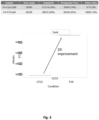
- the methods and systems described herein offer several advantages over conventional methods and systems for loading molecules onto a surface. For example, for a given amount of time, the methods and systems described herein allow for smaller amounts of input molecule (such as nucleic acids or polymerase-template complexes) for the same speed of loading. In some examples, the methods and systems described herein result in about a 2X to about 100X faster loading of the polymerase composition as compared to methods and systems based on diffusion loading without the use of solutions with density differentials and condensing agents.
- a further advantage of the methods and systems described herein is that a smaller input concentration of polymerase compositions is needed to achieve the same speed and level of loading as under typical diffusion loading methods without density differentials and condensing agents.
- a yet further advantage of methods described herein is that in general, applying a sample directly to a surface without the use of the solution differentials described herein can result in a patchy, uneven loading, due to (without being limited by mechanism) evaporation of the sample before it has a chance to evenly cover the entire surface. This is particularly true for surfaces generally used in reactions such as sequencing reactions, which generally may have surface areas of about 20 - 150 mm 2 .
- the surface to which the polymerase compositions are loaded in accordance with any of the methods described herein has a circular geometry or a rectangular geometry. Such a surface may further comprise about 120,000 to about 2,000,000 ZMWs. In disclosures in which the surface has a circular geometry, the surface in general can comprise about 100,000, 150,000, 200,000, or 250,000 ZMWs. In disclosures in which the surface has a rectangular geometry, the surface can comprise about 750,000, 1,000,000, or 1,500,000 or more ZMWs. In further disclosures, the surface comprises about 0.5-20, 1-19, 2-18, 3-17, 4-16, 5-15, 6-14, 7-13, 8-12, or 9-11 million ZMWs. In other disclosures, such a surface may include nanopores, and any of the loading methods described herein are equally applicable to delivery of nucleic acids of any type or length to a surface comprising nanopores.
- the methods of loading described herein result in about a 2X to about 100X faster loading of the polymerase composition as compared to methods and systems based on diffusion loading without the use of solutions with nucleic acid condensation and density differentials.
- the methods of loading result in about a 5-90X, 10-80X, 15-70X, 20-60X, 25-50X, or 30-40X faster loading of the polymerase composition as compared to methods and systems based on diffusion loading without the use of solutions with nucleic acid condensation and density or other solution differentials.
- a surface is covered in a standard buffer.
- that surface further includes a plurality of array regions, which may in turn comprise nanowells (nanoscale wells). Those nanowells may comprise without limitation ZMWs.
- the spike solution containing the polymerase compositions has a higher density than the standard buffer, such that when the higher density spike solution is added to buffer the higher density solution travels through that buffer to cover the surface as well as any array regions on that surface.
- the polymerase compositions in that spike solution are also carried to the surface and loaded into any array regions on that surface.
- the density differential allows the spike solution to carry the polymerase compositions to the surface in an efficient manner.
- This high density loading results in increased speed of loading of the polymerase compositions as compared to methods relying on typical diffusion controlled methods in the absence of nucleic acid condensing/density increasing components.
- the density of the spike solution can be heightened in comparison to the standard buffer covering the surface using additives known in the art and described herein.
- PEG serves both to increase the density of the spike solution and to condense nucleic acids.
- PEG can be included in the spike solution at concentrations of between about 1-20% by volume (v/v), e.g., at concentrations of about 2-18%, 5-15%, 8-10%, or 3-10% by volume.
- a combination of PEG and at least one cation is employed to condense the nucleic acids.
- Suitable PEGs (and other PEG polymers) and exemplary cations have been detailed above, as have suitable concentration ranges.
- a density enhancing additive can be provided in addition to a nucleic acid condensing agent (e.g., a combination of PEG, polycation, or another condensing agent and a density modifying additive can be employed).
- exemplary density modifying additives include a neutral and hydrophilic polysaccharide, a highly branched, high-mass polysaccharide, dextran, aminodextran, dextrin, cluster dextrin, Ficoll, sucrose, PEG, DMSO, glycerol, and pullulan.
- the spike solution comprises a volume excluding buffer.
- additives can be included in the solution at any concentration useful for increasing the density of the solution. Such additives may be included at concentrations of between about 1-20% by volume (v/v). In further disclosures, such additives are included at concentrations of about 2-18%, 5-15%, 8-10%, or 3-10% by volume.
- the loading of the polymerase compositions using the spike solution occurs about 2 - 50 fold faster as compared to distributing by diffusion without the spike solution.
- the distributing with the spike solution occurs at about a 5-45, 10-40, 15-35, 20-30 fold faster rate as compared to distributing without the spike solution.
- the distributing with the spike solution occurs at least 2, 5, 10, 20, 50, 75, 100, 150, or 200-fold faster as compared to distributing by diffusion without the spike solution.
- the spike solution has a lower volume than that of the buffer bathing the surface onto which the polymerase compositions are to be distributed.
- the spike solution has a volume that is about 1% to about 20% of the volume of the buffer.
- the spike solution has a volume of about 1-30%, 5-15%, 10-25%, or 15-20% of the volume of the buffer.
- the spike solution has a volume of about 2%, 5%, 10%, 15%, 20%, 25%, 30%, 35%, 40%, 45%, or 50% of the volume of the buffer.
- the volume of the spike solution is in a ratio to the volume of the buffer of about 1:5, 1:7, 1:9, 1:10, 1:12, 1:15, 1:20, 1:30, 1:40, or 1:50.
- increasing salt concentrations can further enhance density loading as described herein.
- the salt includes without limitation potassium acetate, sodium acetate, sodium chloride, potassium chloride, or any other salt generally used in buffer solutions.
- the high density loading methods utilize spike solutions comprising about 100-600, 150-550, 200-500, 250-450, or 300-400 mM salt.
- high density loading methods as described herein include providing a surface comprising an array of nanowells. These nanowells may include in further embodiments ZMWs.
- the surface with the nanowells further comprises a standard buffer solution, including any standard buffers used for example in sequencing reactions and that are known in the art.
- the standard buffer includes a potassium salt and has a pH in the range of 7-9.
- the buffer may include Tris acetate or Tris-HCl as exemplary embodiments.
- a spike solution with a higher density than that of the standard buffer and containing nucleic acids is applied to the standard buffer.
- nucleic acids e.g., complexes of polymerase enzymes attached to nucleic acid templates that are further hybridized with primers
- the higher density of the spike solution causes it to travel through the standard buffer to the nanowells and load the nucleic acids or polymerase complexes into the nanowells at a faster rate compared to that seen when there is no density differential between the loading solution and the standard buffer.
- the density of the spike solution can be of any density that is higher than that of the standard buffer.
- the density of the spike solution is 0.1, 0.2, 0.3, 0.4, 0.5, 0.6, 0.7, 0.8, 0.9, 1.0, 1.1, 1.2, 1.3, 1.4, 1.5, 1.6, 1.7, 1.8, 1.9, 2.0, 2.1, 2.2, 2.3, 2.4, 2.5, 2.6, 2.7, 2.8, 2.9, 3.0, 3.2, 3.4, 3.6 3.8, 4.0, 4.2, 4.4, 4.6, 4.8, 5.0X higher than the density of the standard buffer.
- the spike solution is about 0.5 - 3X, 0.6 - 2.5X, 0.8 - 2.0X, 1.0 - 1.5X higher than the density of the standard buffer.
- the density (also referred to as specific gravity) of the spike solution is about 2 - 20 % higher than that of the standard buffer.
- the density of the spike solution is about 1.5 - 30, 2 - 28, 3 - 26, 4 - 24, 5 - 22, 6 - 20, 7 - 18 8 - 16, 9 - 14, 10 - 12 % higher than the density of the standard buffer.
- the density of the spike solution is about 1-5, 1.1-1.5, 1.2-2.0, 1.3-2.5, 1.4-3.0, 1.5-3.5, 1.6-4.0, 1.7-4.5, 1.8-5, 1.9-5.5, 2.0-6.0 g/cm 3 .
- the distributing of the molecules to the surface in any of the methods described herein and in accordance with any of the above is complete in about 0.5 to about 5 hours. In still further disclosures, the distributing is complete in about 1-4.5, 1.5-4, 1-3, or 2-3.5 hours.
- the amount of input sample including any one or combination of input nucleic acid templates, polymerase molecules, and primers, produces the same amount of loading in less time than is seen without the use of a high density spike solution. In other words, for the same given amount of time, less input sample is needed to load the same number of molecules to the surface when using the high density solution methods described herein than when using diffusion controlled methods that do not utilize solutions of differing density.
- nucleic acid templates among the molecules that are loaded to the surface using the methods described herein are nucleic acid templates, generally as part of complexes with polymerase molecules.
- nucleic acid templates can include any nucleic acid molecules known in the art and described herein.
- the nucleic acid templates are at least 5 kb in length, e.g., at least 10 kb, at least 15 kb, at least 20 kb, at least 25 kb, at least 30 kb, at least 40 kb, at least 50 kb, at least 70 kb, at least 100 kb, at least 200 kb, at least 500 kb, or even at least 1000 kb in length.
- the nucleic acid templates are part of polymerase-template complexes.
- the nucleic acid templates are themselves further hybridized to primers.
- the spike solution has a greater viscosity than the buffer into which it is placed.
- “Viscosity” as used herein refers to dynamic viscosity, the resistance of a fluid to shearing flow.
- the viscosity of the spike solution is no more than 10X that of the viscosity of water.
- the viscosity of the spike solution is no more than 8X, 6X, 4X, or 2X that of water.
- the balance between the viscosity and density of the spike solution is such that the efficiency of the loading of spike solution (and the molecules that it contains) is increased over that of solutions that do not have that balance between viscosity and density.
- the viscosity of the spike solution is about 1.5-10, 2-9, 2.5-8, 3-7, 3.5-6, 4-5 cP.
- the density of the spike solution is from about 1-5, 1.1-1.5, 1.2-2.0, 1.3-2.5, 1.4-3.0, 1.5-3.5, 1.6-4.0, 1.7-4.5, 1.8-5, 1.9-5.5, 2.0-6.0 g/cm 3 and a viscosity of about 2-12, 3-11,4-10, 5-9, 6-8 cP.
- One difficulty in performing single molecule analyses occurs in loading the reaction/observation region of single molecule analysis devices with the molecules of interest (e.g., template or other analyte and/or enzyme).
- Loading two or more molecules of interest into a ZMW or other small observation volume tends to complicate any analysis of signals observed from the double (or more than double)-loaded region. This is because two (or more) sets of signals may simultaneously be observed from the ZMW or other observation volume, meaning that the signals from the ZMW would have to be deconvoluted before data from the observation region could be used.
- Data from double(+) loaded ZMWs can be recognized by various data analysis methods.
- Data from mis-loaded ZMWs or other relevant observation volumes can be discarded, e.g., where it cannot be deconvoluted; typically a deconvolution algorithm is able to reclaim useful data from a portion of the total data produced by double(+) loaded ZMWs.
- condensation of a large nucleic acid e.g., greater than 8 kb, greater than 10 kb, greater than 15 kb, greater than 20 kb, greater than 30 kb, greater than 40 kb, greater than 50 kb, greater than 70 kb, greater than 100 kb, greater than 200 kb, greater than 500 kb, or even greater than 1000 kb
- a condensed molecule that excludes enough volume to disfavor immobilization of a second nucleic acid in the same reaction region or nanoscale well.
- At least 38% of the nanoscale wells (or other array regions) are occupied by a single immobilized nucleic acid (e.g., a single immobilized polymerase-template complex), e.g., at least 50% or at least 75% of the wells or regions.
- Loading can be bead-assisted, by diffusion, or by density spike as detailed above.
- the degree of condensation can be modulated by adjusting solution conditions, e.g., type of PEG, concentration of PEG, and/or concentration of monovalent and divalent ions, and thereby affect the extent of volume excluded by a nucleic acid.
- the nanoscale wells optionally have a critical dimension of 50 nm - 400 nm or 50 nm - 300 nm, e.g., the diameter of the top opening of the well or the diameter of the base of the well.
- Additional size exclusion effects can be achieved, for example, by attaching one or more particles to the nucleic acid (including, e.g., to another molecule bound in turn to the nucleic acid, such as a polymerase molecule). Attachment is optionally covalent (e.g., through a coupling molecule engineered with a cleavable linkage to allow dissociation of the particle from the template after immobilization) or noncovalent (e.g., through hybridization, e.g., poly A on template to poly-dT coated beads, or through non-specific ionic interaction).
- Suitable particles for attachment to nucleic acids include, but are not limited to, magnetic or non-magnetic beads or particles of any size, biological molecules such as proteins, DNA or oligomers, complexes, and aggregates thereof.
- the overall size of a suitable particle is slightly smaller or slightly larger than the bottom ZMW diameter or top diameter (or than the critical dimension of another array region).
- suitable particles are magnetic or non-magnetic dT beads (e.g., 50 to 300 nm), polymer particles functionalized with dT or another oligo or with carboxyl groups (e.g., Ampure ® beads), histones or other basic proteins with affinity for DNA, engineered self-assembling polyhedral protein shell with DNA binding groups, and viral (hollow) capsids functionalized with DNA binding groups.
- Particles can be employed solely for their size exclusion benefits, or the particles (e.g., beads) can be employed to assist in loading as detailed above (e.g., under the influence of a gravitational or magnetic field) in addition to providing size exclusion benefits.
- coupling agent for immobilization of the nucleic acids, e.g., at the base of nanoscale wells
- controlling the density or number of the coupling agent on the surface can assist in attaining the desired occupancy.
- density or number of the coupling agent on the surface can be adjusted such that enough agent is available to readily bind to the first nucleic acid to encounter the base of a nanoscale well, but such that occupancy of the well by that first nucleic acid is sufficient to occlude accessibility of coupling agent in that well by other nucleic acids.
- the density or number of the coupling agent will be some fraction of the maximum possible density or number of the coupling agent on the surface in a nanoscale well.
- nucleic acids employed in the practice of the invention can be fully or partially double-stranded or can be single-stranded.
- Suitable nucleic acids include, but are not limited to, SMRTbells TM (circular nucleic acids having a double-stranded central region and single-stranded hairpin ends), double-stranded circular DNA molecules (e.g., nicked or gapped double-stranded circular DNA molecules, e.g., nicked or gapped plasmids), and linear molecules (e.g., genomic DNA fragments).
- Nucleic acids including template nucleic acids, can be prepared using techniques well known in the art, from essentially any desired sample.
- circular templates including, e.g., simple circles and SMRTbells TM (circular nucleic acids having a double-stranded central region and single-stranded hairpin ends), see, e.g., USPN 8,236,499 “Methods and Compositions for Nucleic Acid Sample Preparation,” USPN 8,153,375 “Compositions and Methods for Nucleic Acid Sequencing,” and Travers et al. (2010) Nucl. Acids Res. 38(15):e159 , As noted, the methods can be particularly useful for loading of large template molecules.
- the nucleic acid templates are at least 5000, 10000, 15000, 20000, 25000, 30000, 40000, 50000, 60000, 70000, 80000, 90000, 100,000, 120,000, 130,000, 140,000, 150,000, 200,000, 500,000, or 1,000,000 nucleotides in length.
- a template nucleic acid is a molecule for which the complementary sequence is (or can be) synthesized in a polymerase reaction.
- template sequences can be of any length or structure.
- the template nucleic acid is linear; in some cases, the template nucleic acid is circular.
- the template nucleic acid can be DNA, RNA, and/or a non-natural RNA or DNA analog. Any template nucleic acid that is suitable for replication by a polymerase enzyme can be used in the methods and systems described herein.
- the template nucleic acids used in methods and compositions of the present invention comprise nucleic acids obtained from a sample.
- the sample may comprise any number of things, including, but not limited to, bodily fluids (including, but not limited to, blood, urine, serum, lymph, saliva, anal and vaginal secretions, perspiration and semen) and cells of virtually any organism, with mammalian samples being preferred and human samples being particularly preferred; environmental samples (including, but not limited to, air, agricultural, water and soil samples); biological warfare agent samples; research samples (e.g., in the case of nucleic acids, the sample may be the products of an amplification reaction, including both target and signal amplification, such as PCR amplification reactions; purified samples, such as purified genomic DNA, RNA preparations, raw samples (bacteria, virus, genomic DNA, etc.); as will be appreciated by those in the art, virtually any experimental manipulation may have been done on the samples.
- bodily fluids including, but not limited to, blood, urine, serum, lymph, saliva, an
- nucleic acid molecules are obtained from a sample and fragmented for use in (or prior to use in) methods of the invention as template nucleic acids.
- the fragments may be single or double stranded and may further be modified in accordance with any methods known in the art and described herein.
- Template nucleic acids may be generated by fragmenting source nucleic acids, such as genomic DNA, using any method known in the art. In one embodiment, shear forces during lysis and extraction of genomic DNA generate fragments in a desired range. Also encompassed by the present disclosure are methods of fragmentation utilizing restriction endonucleases.
- the template nucleic acids may be generated from a source nucleic acid, such as genomic DNA, by fragmentation to produce fragments of a specific size.
- the fragments are at least 5000, 10000, 15000, 20000, 25000, 30000, 40000, 50000, 60000, 70000, 80000, 90000, 100,000, 120,000, 130,000, 140,000, or 150,000 nucleotides in length.
- the nucleic acid templates are at least 5000, 10000, 15000, 20000, 25000, 30000, 40000, 50000, 60000, 70000, 80000, 90000, 100,000, 120,000, 130,000, 140,000, 150,000, 200,000, 500,000, or 1,000,000 nucleotides in length.
- the nucleic acids are part of polymerase-template complexes.
- the nucleic acid templates are themselves further hybridized to primers.
- the template sequence may be a linear single or double stranded nucleic acid sequence.
- the template may be provided as a circular or functionally circular construct that allows redundant processing of the same nucleic acid sequence by the synthesis complex. Use of such circular constructs has been described in, e.g., U.S. Patent No. 7,315,019 and U.S. Patent Application No. 12/220674, filed July 25th, 2008 , and alternate functional circular constructs are also described in US Pat. App. Pub. No. 20090298075 .
- such alternate constructs include template sequences that possess a central double stranded portion that is linked at each end by an appropriate linking oligonucleotide, such as a hairpin loop segment (SMRTbells TM ).
- an appropriate linking oligonucleotide such as a hairpin loop segment (SMRTbells TM ).
- Such structures not only provide the ability to repeatedly replicate a single molecule (and thus sequence that molecule), but also provide for additional redundancy by replicating both the sense and antisense portions of the double stranded portion. In the context of sequencing applications, such redundant sequencing provides great advantages in terms of sequence accuracy.
- the template nucleic acid used in the compositions of the present invention includes: a double stranded nucleic acid segment having a first and second end; a first hairpin oligonucleotide connecting each strand of the single template nucleic acid at the first end; and a second hairpin oligonucleotide connecting each strand of the single template nucleic acid at the second end.
- the first hairpin and second hairpin oligonucleotide are identical.
- the first hairpin and second hairpin oligonucleotides are not identical - in other words, the template nucleic acid, despite being an alternate circular construct, is nevertheless asymmetrical.
- the first hairpin oligonucleotide includes a primer binding site whereas the second hairpin oligonucleotide includes a capture adapter (or vice versa).
- the capture adapter is generally of a sequence that can be used to enrich a population for the hairpins of choice - for example, in some embodiments, the capture adapter comprises a poly A sequence, thereby allowing capture using beads or column chromatography utilizing polyT sequences. In some embodiments, the capture adapter comprises at least one methoxy residue.
- the capture adapter is complementary to an oligonucleotide attached to a bead, which can in further embodiments be a magnetic bead that can be used to enrich a population for template nucleic acids containing the capture adapter.
- the population of templates includes templates with different adapters or in which each template comprises a different adapter at each end
- different beads can be used which contain oligonucleotides complementary to the different adapters.
- two different beads can be used for populations containing a plurality of different adapters.
- a concomitant number of different types of beads can be used that are directed to those adapters.
- the same bead can contain different oligonucleotides complementary to the different adapters in the population of templates, such that the same bead can capture different adapters (and their associated templates).
- the first or second hairpin comprises a self-primed adapter sequence in which the primer is part of the adapter.
- an additional oligonucleotide primer is not needed to allow a polymerase molecule to begin replicating the template.
- the nucleic acid template contains only a single hairpin at one end or the other.
- the polymerase enzymes of use in the methods and compositions described herein generally require a primer. While in most cases an oligonucleotide primer is used, in some cases a protein such as a terminal protein can acts as a primer. Oligonucleotide primers are generally complementary to a portion of the template nucleic acid.
- the primers can comprise naturally occurring RNA or DNA oligonucleotides.
- the primers may also be synthetic analogs.
- the primers may have alternative backbones as described above.
- the primers may also have other modifications, such as the inclusion of heteroatoms, the attachment of labels, such as dyes, or substitution with functional groups which will still allow for base pairing and for recognition by the enzyme.
- Primers can select tighter binding primer sequences, e.g., GC rich sequences, as well as employ primers that include within their structure non-natural nucleotides or nucleotide analogs, e.g., peptide nucleic acids (PNAs) or locked nucleic acids (LNAs), that can demonstrate higher affinity pairing with the template.
- the primers can also be selected to influence the kinetics of the polymerase reaction through the use of length, nucleotide content, and/or any of the modifications discussed above.
- self-priming templates are employed.
- a SMRTbell TM including a self-primed adapter sequence can be employed, as noted above.
- a double-stranded template including at least one nick or gap can be employed (e.g., a nicked or gapped double-stranded plasmid).
- polymerase enzymes also referred to herein as "polymerases”
- Any suitable polymerase enzyme can be used in the systems and methods disclosed herein.
- Suitable polymerases include DNA dependent DNA polymerases, DNA dependent RNA polymerases, RNA dependent DNA polymerases (reverse transcriptases), and RNA dependent RNA polymerases.
- the polymerases used in the methods and compositions of the present invention are strand-displacing polymerases.
- polymerases of use in the presently disclosed methods may include modifications that improve certain characteristics of the enzyme, including processivity, resistance to photodamage, and conduciveness to immobilization.
- polymerases used in the methods and systems disclosed herein include a linker, motif (e.g., a biotin ligase recognition sequence), or domain through which the polymerases (and any other molecules they are complexed with, such as template nucleic acids) can be immobilized onto a surface.
- DNA polymerases are sometimes classified into six main groups based upon various phylogenetic relationships, e.g., with E. coli Pol I (class A), E. coli Pol II (class B), E. coli Pol III (class C), Euryarchaeotic Pol II (class D), human Pol beta (class X), and E. coli UmuC/DinB and eukaryotic RAD30/xeroderma pigmentosum variant (class Y).
- E. coli Pol I class A
- E. coli Pol II class B
- E. coli Pol III class C
- Euryarchaeotic Pol II class D
- human Pol beta class X
- E. coli UmuC/DinB and eukaryotic RAD30/xeroderma pigmentosum variant class Y.
- chimeric polymerases made from a mosaic of different sources can be used.
- ⁇ 29 polymerases made by taking sequences from more than one parental polymerase into account can be used as a starting point for mutation to produce the polymerases used in methods described herein.
- Chimeras can be produced, e.g., using consideration of similarity regions between the polymerases to define consensus sequences that are used in the chimera, or using gene shuffling technologies in which multiple ⁇ 29-related polymerases are randomly or semi-randomly shuffled via available gene shuffling techniques (e.g., via "family gene shuffling"; see Crameri et al.
- the recombination points can be predetermined such that the gene fragments assemble in the correct order.
- the combinations e.g., chimeras
- the combinations can be formed at random.
- five gene chimeras e.g., comprising segments of a Phi29 polymerase, a PZA polymerase, an M2 polymerase, a B103 polymerase, and a GA-1 polymerase, can be generated.
- Appropriate mutations to improve branching fraction, increase closed complex stability, or alter reaction rate constants can be introduced into the chimeras.
- Available DNA polymerase enzymes have also been modified in any of a variety of ways, e.g., to reduce or eliminate exonuclease activities (many native DNA polymerases have a proof-reading exonuclease function that interferes with, e.g., sequencing applications), to simplify production by making protease digested enzyme fragments such as the Klenow fragment recombinant, etc.
- polymerases have also been modified to confer improvements in specificity, processivity, and improved retention time of labeled nucleotides in polymerase-DNA-nucleotide complexes (e.g., WO 2007/076057 Polymerases For Nucleotide Analogue Incorporation by Hanzel et al.
- the polymerase is modified in order to more effectively incorporate desired nucleotide analogs, e.g. analogs having four or more phosphates in their polyphosphate chain.
- Enzymes mutated to more readily accept nucleotide analogs having such properties are described, for example in the applications described above and in US 20120034602 - Recombinant Polymerases for Improved Single Molecule Sequencing; US 20100093555 - Enzymes Resistant to Photodamage; US 20110189659 - Generation of Modified Polymerases for Improved Accuracy in Single Molecule Sequencing; US 20100112645 - Generation of Modified Polymerases for Improved Accuracy in Single Molecule Sequencing; US 2008/0108082 - Polymerase enzymes and reagents for enhanced nucleic acid sequencing; and US 20110059505 - Polymerases for Nucleotide Analogue Incorporation
- DNA Polymerase Beta is available from R&D systems.
- DNA polymerase I is available from Epicenter, GE Health Care, Invitrogen, New England Biolabs, Promega, Roche Applied Science, Sigma Aldrich and many others.
- the Klenow fragment of DNA Polymerase I is available in both recombinant and protease digested versions, from, e.g., Ambion, Chimerx, eEnzyme LLC, GE Health Care, Invitrogen, New England Biolabs, Promega, Roche Applied Science, Sigma Aldrich and many others.
- Recent commercial DNA polymerases include Phusion TM High-Fidelity DNA Polymerase, available from New England Biolabs; GoTaq ® Flexi DNA Polymerase, available from Promega; RepliPHI TM ⁇ 29 DNA Polymerase, available from Epicentre Biotechnologies; PfuUltra TM Hotstart DNA Polymerase, available from Stratagene; KOD HiFi DNA Polymerase, available from Novagen; and many others. Biocompare(dot)com provides comparisons of many different commercially available polymerases.
- DNA polymerases that are preferred substrates for mutation to improve desired properties include, e.g., Taq polymerases, exonuclease deficient Taq polymerases, E. coli DNA Polymerase 1, Klenow fragment, reverse transcriptases, ⁇ 29-related polymerases including wild type ⁇ 29 polymerase and derivatives of such polymerases such as exonuclease deficient forms, T7 DNA polymerase, T5 DNA polymerase, an RB69 polymerase, etc.
- the polymerase of use in the methods and compositions described herein is a modified ⁇ 29-type DNA polymerase.
- the modified recombinant DNA polymerase can be homologous to a wild-type or exonuclease deficient ⁇ 29 DNA polymerase, e.g., as described in U.S. Patent Nos. 5,001,050 , 5,198,543 , or 5,576,204 .
- the modified recombinant DNA polymerase can be homologous to other ⁇ 29-type DNA polymerases, such as B103, GA-1, PZA, ⁇ 15, BS32, M2Y, Nf, G1, Cp-1, PRD1, PZE, SF5, Cp-5, Cp-7, PR4, PR5, PR722, L17, ⁇ 21, or the like.
- ⁇ 29-type DNA polymerases such as B103, GA-1, PZA, ⁇ 15, BS32, M2Y, Nf, G1, Cp-1, PRD1, PZE, SF5, Cp-5, Cp-7, PR4, PR5, PR722, L17, ⁇ 21, or the like.
- Suitable polymerases are described, for example, in U.S.
- the polymerase enzyme used in the methods described herein includes RNA dependent DNA polymerases or reverse transcriptases.
- Suitable reverse transcriptase enzymes include HIV-1, M-MLV, AMV, and Telomere Reverse Transcriptase.
- Reverse transcriptases also allow for the direct sequencing of RNA substrates such as messenger RNA, transfer RNA, non-coding RNA, ribosomal RNA, micro RNA or catalytic RNA.
- polymerases for use in the above techniques optionally include one or more mutations (e.g., substitutions, insertions, and/or deletions) relative to the parental polymerase that reduce or eliminate endogenous exonuclease activity.
- mutations e.g., substitutions, insertions, and/or deletions
- the parental polymerase that reduce or eliminate endogenous exonuclease activity.
- one or more of positions N62, D12, E14, T15, H61, D66, D169, K143, Y148, and H149 is optionally mutated to reduce exonuclease activity in a recombinant ⁇ 29 polymerase.
- Exemplary mutations that can reduce exonuclease activity in a recombinant ⁇ 29 polymerase include, e.g., N62D, N62H, D12A, T15I, E14I, E14A, D66A, K143D, D145A and D169A substitutions, as well as addition of an exogenous feature at the C-terminus (e.g., a polyhistidine tag). See, e.g., US patent application publication 2014/0094375 ,
- the methods result in loading an array of reaction regions such that a single nucleic acid (or a single polymerase enzyme complexed with a nucleic acid template and optionally a primer) occupy a plurality of the reaction regions, thus allowing for single molecule sequencing from those reaction regions.
- certain embodiments of the present invention provide a way to achieve high density single molecule loading, which allows single molecule analysis to be conducted more efficiently and with greater speed because there will be fewer "unusable" regions on a substrate surface for the sequencing reaction (i.e., regions that have no or multiple polymerase compositions loaded, which provide either no information (for the empty regions) or sequencing information that must be deconvoluted to account for the multiply loaded molecules).
- Sequence analysis can be performed after distribution of the nucleic acids to (and their optional immobilization in) the array regions.
- condensing agent is typically removed (e.g., by washing with a suitable buffer) prior to determination of the sequence of the nucleic acids.
- the present invention includes methods of analyzing the sequence of template nucleic acids.
- the sequence analysis typically employs template dependent synthesis in identifying the nucleotide sequence of the template nucleic acid.
- Nucleic acid sequence analysis that employs template dependent synthesis identifies individual bases, or groups of bases, as they are added during a template mediated synthesis reaction, such as a primer extension reaction, where the identity of the base is required to be complementary to the template sequence to which the primer sequence is hybridized during synthesis.
- Other such processes include ligation driven processes, where oligo- or polynucleotides are complexed with an underlying template sequence, in order to identify the sequence of nucleotides in that sequence.
- nucleic acid polymerases such as DNA polymerases, RNA polymerases, reverse transcriptases, and the like, or other enzymes such as in the case of ligation driven processes, e.g., ligases.
- Sequence analysis using template dependent synthesis can include a number of different processes. For example, in embodiments utilizing sequence by synthesis processes, individual nucleotides or nucleotide analogs are identified iteratively as they are added to the growing primer extension product.
- the progress of the reaction through these steps can of significant importance.
- the detectability of the incorporation event is improved based upon the amount of time the nucleotide is incorporated into and retained within the synthesis complex during its ultimate incorporation into a primer extension product.
- the presence of the nucleotide in the synthesis complex is detected either by virtue of a focused observation of the synthesis complex, or through the use of interactive labeling techniques that produce characteristic signals when the nucleotide is within the synthesis complex. See, e.g., Levene, et al., Science 299:682-686, January 2003 , and Eid, J. et al., Science, 323(5910), 133-138 (2009 ),
- the methods of the present invention include steps from any single molecule sequencing methods known in the art. See, e.g., Rigler, et al., DNA-Sequencing at the Single Molecule Level, Journal of Biotechnology, 86(3): 161 (2001 ); Goodwin, P. M., et al., Application of Single Molecule Detection to DNA Sequencing.
- methods of single molecule sequencing known in the art include detecting individual nucleotides as they are incorporated into a primed template, i.e., sequencing by synthesis. Such methods often utilize exonucleases to sequentially release individual fluorescently labeled bases as a second step after DNA polymerase has formed a complete complementary strand. See Goodwin et al., "Application of Single Molecule Detection to DNA Sequencing," Nucleos. Nucleot. 16: 543-550 (1997 ).
- individual polymerase compositions are provided within separate discrete regions of a support.
- individual complexes may be provided within individual confinement structures, including nanoscale structures such as nanoscale wells.
- zero-mode waveguide cores or any of the reaction regions discussed above in the stepwise sequencing section serve as the reaction regions for sequencing methods utilizing compositions of the present invention. Examples of waveguides and processes for immobilizing individual complexes therein are described in, e.g., Published International Patent Application No.
- nucleic acids e.g., polymerase/template complexes
- the nucleic acids can be provided onto or proximal to structures or regions that allow for electronic single molecule sequencing.
- Such structures can include nanoscale electronic structures such as electrodes, capacitors, or field effect transducers (nanoFETs). NanoFETs include those having carbon nanotube gates.
- nanoFETs include those having carbon nanotube gates.
- incorporation of labeled nucleotide analogs by polymerases is particularly useful in a variety of different nucleic acid analyses, including real-time monitoring of DNA polymerization.
- the label can itself be incorporated, or more preferably, can be released during incorporation of the analog.
- analog incorporation can be monitored in real time by monitoring label release during incorporation of the analog by the polymerase.
- the portion of the analog that is incorporated can be the same as a natural nucleotide, or can include features of the analog that differ from a natural nucleotide.
- label incorporation or release can be used to indicate the presence and composition of a growing nucleic acid strand, e.g., providing evidence of template replication/amplification and/or sequence of the template.
- Signaling from the incorporation can be the result of detecting labeling groups that are liberated from the incorporated analog, e.g., in a solid phase assay, or can arise upon the incorporation reaction.
- the enzyme may be labeled with one member of a FRET pair proximal to the active site, and incorporation of an analog bearing the other member will allow energy transfer upon incorporation.
- the use of enzyme bound FRET components in nucleic acid sequencing applications is described, e.g., in U.S. Patent Application Publication No. 2003/0044781 .
- a polymerase reaction can be isolated within an extremely small observation volume that effectively results in observation of individual polymerase molecules.
- the incorporation event provides observation of an incorporating nucleotide analog that is readily distinguishable from non-incorporated nucleotide analogs.
- small observation volumes are provided by immobilizing the polymerase enzyme within an optical confinement, such as a Zero Mode Waveguide (ZMW).
- ZMW Zero Mode Waveguide
- a polymerase enzyme is complexed with the template strand in the presence of one or more nucleotides and/or one or more nucleotide analogs.
- labeled analogs are present representing analogous compounds to each of the four natural nucleotides, A, T, G and C, e.g., in separate polymerase reactions, as in classical Sanger sequencing, or multiplexed together, e.g., in a single reaction, as in multiplexed sequencing approaches.
- incorporation can result in a label being released, e.g., in polyphosphate analogs, cleaving between the ⁇ and ⁇ phosphorus atoms in the analog, and consequently releasing the labeling group (or a portion thereof).
- the incorporation event is detected, either by virtue of a longer presence of the analog and, thus, the label, in the complex, or by virtue of release of the label group into the surrounding medium.
- a nucleic acid synthesis complex including a polymerase enzyme, a template sequence and a complementary primer sequence, is provided immobilized within an observation region that permits illumination and observation of a small volume that includes the complex without excessive illumination of the surrounding volume.
- the fluorescently labeled nucleotides (e.g., analogs corresponding to A, C, G and T) bear one or more fluorescent dye groups on a terminal phosphate moiety that is cleaved from the nucleotide upon incorporation.
- synthesized nucleic acids do not bear the build-up of fluorescent labels, as the labeled polyphosphate groups diffuse away from the complex following incorporation of the associated nucleotide, nor do such labels interfere with the incorporation event. See, e.g., Korlach et al. (2008) Nucleosides, Nucleotides and Nucleic Acids 27:1072-1083 .
- the donor and acceptor are brought close enough together to generate energy transfer signal.
- acceptor labels on the different types of nucleotides, one obtains a characteristic FRET-based fluorescent signal for the incorporation of each type of nucleotide, as the incorporation is occurring.
- a nucleotide analog may include two interacting fluorophores that operate as a donor/quencher pair, where one member is present on the nucleobase or other retained portion of the nucleotide, while the other member is present on a phosphate group or other portion of the nucleotide that is released upon incorporation, e.g., a terminal phosphate group.
- the donor and quencher Prior to incorporation, the donor and quencher are sufficiently proximal on the same analog as to provide characteristic signal quenching.
- the quenching is removed and the resulting characteristic fluorescent signal of the donor is observable.
- each base incorporation event results in a prolonged illumination (or localization) of one of four differentially labeled nucleotides being incorporated, so as to yield a recognizable pulse (peak) that carries a distinguishable spectral profile or color.
- Data formats for the signal data may comprise any convenient format, including digital image based data formats, such as JPEG, GIF, BMP, TIFF, or other convenient formats, while video based formats, such as avi, mpeg, mov, rmv, or other video formats may be employed.
- the software processes of the invention may generally be programmed in a variety of programming languages including, e.g., Matlab, C, C++, C#, NET, Visual Basic, Python, JAVA, CGI, and the like.
- kits of the present disclosure include (alone, or in any combination with the above described components of kits) components for use in the loading methods described herein.
- Such components may include in any combination one or more of the following: one or more nucleic acid condensing agent (e.g., in a prepared solution), standard buffer for covering the surface, high density loading solution, polymerase enzymes, nucleic acid templates, primer sequences, particles for cleaning the high density loading solution, magnetic beads or other particles for loading the nucleic acids, and any other composition described herein associated with loading polymerase compositions to a surface and/or conducting a sequencing reaction.
- nucleic acid condensing agent e.g., in a prepared solution
- standard buffer for covering the surface
- high density loading solution polymerase enzymes
- nucleic acid templates e.g., primer sequences
- particles for cleaning the high density loading solution e.g., magnetic beads or other particles for loading the nucleic acids
- kits will typically include instructions for combining the various components in the amounts and/or ratios set forth herein, to carry out the desired processes, as also described or referenced herein, e.g., for performing sequence by incorporation reactions and/or loading methods.
- methods of the invention utilize substrates that include one or more reaction regions (also referred to herein as “array regions”) arranged in the form of an array on an inert substrate material, also referred to herein as a "solid support” or “surface”, that allows for combination of reactants (e.g., in a sequencing reaction) in a defined space.
- arrays can be regular or irregular, e.g., random.
- the substrates and array regions can also allow for detection, e.g., of the sequencing reaction event.
- nucleic acids or polymerase complexes can be deposited in the reaction regions such that individual nucleic acids (or polymerase reactions) are independently optically observable.
- a reaction region can be a localized area on the substrate material that facilitates interaction of reactants, e.g., in a nucleic acid sequencing reaction.
- a reaction region may in certain embodiments be a nanoscale well (also referred to herein as a nanowell), and in further embodiments the nanowell is a ZMW.
- a nanoscale well typically has dimensions in the nanometer range, i.e., less than 1 micrometer.
- a nanoscale well has a cross-sectional diameter of less than 300, 250, or 200 nm.
- a nanoscale well has a depth of less than 1000, 900, 800, 700, 600, or 500 nm, e.g., less than 400, 350, 300, 250, or 200 nm.
- the sequencing reactions contemplated by the invention can in some embodiments occur on numerous individual nucleic acid samples in tandem, in particular simultaneously sequencing numerous nucleic acid samples, e.g., derived from genomic and chromosomal DNA.
- the apparatus of the invention can therefore include an array having a sufficient number of array regions/reaction regions to carry out such numerous individual sequencing reactions.
- the array comprises at least 1,000 reaction regions.
- the array comprises greater than 400,000 reaction regions, preferably between 400,000 and 20,000,000 reaction regions.
- the array comprises between 1,000,000 and 16,000,000 reaction regions, e.g., 1,000,000, 2,000,000, 3,000,000, 4,000,000, or 5,000,000 reaction regions.
- the reaction regions on the array may take the form of a cavity or well in the substrate material, having a width and depth, into which reactants can be deposited.
- One or more of the reactants typically are bound to the substrate material in the reaction region and the remainder of the reactants are in a medium which facilitates the reaction and which flows through or contacts the reaction region.
- the chambers are preferably of sufficient dimension and order to allow for (i) the introduction of the necessary reactants into the chambers, (ii) reactions to take place within the chamber and (iii) inhibition of mixing of reactants between chambers.
- the shape of the well or cavity is preferably circular or cylindrical, but can be multisided so as to approximate a circular or cylindrical shape. In another embodiment, the shape of the well or cavity is substantially hexagonal.
- the cavity can have a smooth wall surface. In an additional embodiment, the cavity can have at least one irregular wall surface.
- the cavities can have, e.g., a planar bottom or a concave bottom.
- reaction regions may in some situations take the form of a nanopore.
- Such reaction regions including arrays of nanopores, are known in the art and described for example in US Published App. Nos. 2013/0327644 and 2014/0051068 ,
- the solid support material can be planar or can be cavitated, e.g., in a cavitated terminus of a fiber optic or in a microwell etched, molded, or otherwise micromachined into the planar surface, e.g. using techniques commonly used in the construction of microelectromechanical systems.
- the solid support is optically transparent, e.g., glass.
- Suitable substrates include chips having arrays of nanoscale wells or zero mode waveguides.
- Exemplary substrates include substrates having a metal or metal oxide layer on a silica-based layer, with nanoscale wells disposed through the metal or metal layer to or into the silica-based layer.
- Such substrates are described, for example in U.S. Patent Application No's. 10/259,268 , 14/187,198 , 14/107,730 , 13/920,037 , and U.S. Patent No's 8,994,946 , 8,906,670 , 8,993,307 , 8,802,600 , 7,907,800 , and 7,302,146 ,
- a capture primer as schematically illustrated in Figure 1 including a six unit PEG spacer ( Figure 2A ) separating and connecting a bead-capture poly-A tail and a priming region complementary to the DNA template, is produced.
- An equivalent control primer lacking the PEG spacer is also produced.
- a symmetric 11 kb SMRTbell TM template (including a double-stranded central region and two identical single-stranded hairpin end regions) is complexed with DNA polymerase and primer, bound to magnetic beads coated with poly-T, and loaded into ZMWs using a dynamic magnetic field as described above and in U.S. patent number 8,715,930 .
- the capture primer including the six unit PEG spacer (18 atoms, P18) exhibits improved DNA immobilization in sequencing experiments.
- the number of productively singly loaded ZMWs is greater when a capture primer including a P18 spacer is employed than when a capture primer lacking any spacer (C2V2) is employed with an 11 kb symmetric SMRTbell TM template.
- Inclusion of the P18 spacer increases the number of ZMWs loaded with a single polymerase-template complex and yielding sequencing data by more than twofold, from 19% to 43%.
- SMRTbell template is annealed with a P18 primer (described hereinabove), complexed with polymerase, and captured to magnetic beads according to published protocols for MagBeads (Pacific Biosciences of California), except that beads are washed prior to addition of sample using MagBead Binding Buffer and are washed twice after sample addition with MagBead Wash Buffer, followed by resuspension in MagBead Binding Buffer.
- Sequencing is performed on a Sequel TM System ( Pacific Biosciences of California) according to published protocols, with the following change: dilution buffer is replaced with dilution buffer containing PEG 8000 (at twice the desired final concentration) and potassium acetate. Briefly, the dilution buffer containing PEG is added to the ZMW chip. The suspension of magnetic beads with attached DNA polymerase complex is then added to the chip; at this point, the mixture on the chip contains 250 mM potassium acetate and 8% w/v PEG 8000. Mixing is performed by robot on chip, and the chip is moved to a magnetic bead loading station for immobilization.
- Sequel TM System Pacific Biosciences of California
- the graph shown in Figure 4 includes results for sequencing runs (120 minute movies) employing two different wash conditions, standard and gentle. For both types of wash, inclusion of PEG in the immobilization mixture greatly increases the number of ZMWs loaded. For this experiment, 10 fmole of 19 kb symmetric SMRTbell TM template complexed with a ten-fold excess of primer and polymerase is loaded per chip, with 120 minute loading time.
- PEG In addition to increasing the number of ZMW wells productively loaded, inclusion of PEG also improves the uniformity of DNA immobilization. Without limitation to any particular mechanism, PEG efficiently prevents surface drying during immobilization and subsequent washing steps, and this reduces DNA loss and polymerase deactivation during such drying events. This also improves the overall immobilization performance. See the data presented in Figures 5A and 5B ; note the under-loaded area in the center of the control chip ( Figure 5A ). With PEG, the center part of the chip is uniformly loaded ( Figure 5B ).
- Bead binding efficiency of SMRTbells TM with different sized inserts is measured in the presence or absence of PEG.
- BWB indicates MagBead Wash Buffer;
- BWB-PEG is a comparable buffer including 12.5 mM PEG 8000, 400 mM potassium acetate, and 0.05 mM strontium acetate.
- Table 2 Bead binding efficiency (%DNA recovered on beads) 48k ⁇ 30k E. coli 19k 15k E. coli BWB 45% 69% 62% 79% BWB-PEG >98%** >98% >98% >98% ** The DNA in solution after beading is too low to be accurately measured by Qubit TM fluorometry.
- Templates are SMRTbells TM including either a 19 kb plasmid insert or a 48 kb ⁇ insert.
- Complexes are formed by incubating one of the templates with a modified ⁇ 29 polymerase and a P18 primer (as described herein) then column cleaned to remove excess primer and/or free polymerase.
- a Sequel TM chip (Pacific Biosciences of California) is optionally washed three times with 150 ⁇ l ethanol, four to five times with 150 ⁇ l immobilization buffer, and twice with 100 ⁇ l 10 mM PEG 8000, 250 mM potassium acetate, and 0.15 mM strontium acetate in a solution buffered with Tris, pH 8.
- the polymerase-template sample is diluted into 150 ⁇ l final volume of 10 mM PEG 8000, 250 mM potassium acetate, and 0.15 mM strontium acetate, mixed well, dispensed onto the ZMW chip, mixed again on chip, and incubated in a humidity chamber for two hours.
- One or more random or specific nick sites or gap sites are introduced on double-stranded circular DNA (including on a large circular DNA, e.g., a plasmid) using one or more appropriate commercially available endonucleases. Where multiple nicked or gapped sites are introduced into a single DNA molecule, the distance between them is preferably greater than the expected readlength of a subsequent sequencing reaction to ensure that sequencing is not terminated prematurely.
- the template and polymerase are next incubated together in buffer to allow the polymerase to bind to the nick or gap site. In one example, the template and polymerase are mixed at close to 1:1 ratio or at slight template excess (e.g.
Landscapes
- Chemical & Material Sciences (AREA)
- Organic Chemistry (AREA)
- Life Sciences & Earth Sciences (AREA)
- Health & Medical Sciences (AREA)
- Zoology (AREA)
- Wood Science & Technology (AREA)
- Engineering & Computer Science (AREA)
- Proteomics, Peptides & Aminoacids (AREA)
- Chemical Kinetics & Catalysis (AREA)
- Analytical Chemistry (AREA)
- Molecular Biology (AREA)
- Immunology (AREA)
- Microbiology (AREA)
- Biotechnology (AREA)
- Biochemistry (AREA)
- Bioinformatics & Cheminformatics (AREA)
- General Engineering & Computer Science (AREA)
- General Health & Medical Sciences (AREA)
- Genetics & Genomics (AREA)
- Physics & Mathematics (AREA)
- Biophysics (AREA)
- Measuring Or Testing Involving Enzymes Or Micro-Organisms (AREA)
- Apparatus Associated With Microorganisms And Enzymes (AREA)
Claims (14)
- Procédé de distribution de c dans une pluralité de puits à l'échelle nanométrique, le procédé comprenant les étapes consistant à :fournir une surface comprenant la pluralité de puits à l'échelle nanométrique, dans lequel les puits à l'échelle nanométrique présentent un diamètre de section transversale inférieur à 300 nm et une profondeur inférieure à 1 000 nm ;mettre en contact des complexes de polymérase-matrice en solution avec du polyéthylène glycol (PEG) et un sel comprenant un cation pour compacter les matrices des complexes de polymérase-matrice, en fournissant ainsi une solution comprenant des complexes de polymérase-matrice compactés, dans lequel la solution comprend le PEG à 2-30 % poids/volume et le cation à 0,05-1 000 mM, dans lequel les complexes de polymérase-matrice comprennent des acides nucléiques présentant une taille supérieure à 5 kb ; etexposer la surface à la solution, moyennant quoi les complexes de polymérase-matrice compactés se diffusent dans les puits à l'échelle nanométrique, en distribuant ainsi les complexes de polymérase-matrice compactés dans les puits à l'échelle nanométrique.
- Procédé selon la revendication 1, dans lequel la solution comprend du PEG 8000, facultativement du PEG 8000 à 2,5-25 mM ou du PEG 8000 à 5-15 mM.
- Procédé selon la revendication 1, dans lequel la solution comprend un cation monovalent, facultativement un cation monovalent à 50-500 mM ou 100-300 mM.
- Procédé selon la revendication 1, dans lequel la solution comprend un cation divalent, facultativement un cation divalent à 0,05-10 mM.
- Procédé selon la revendication 1, dans lequel la solution comprend du PEG 8000 et du K+, facultativement du PEG 8000 à 5-15 mM et du K+ à 100-300 mM.
- Procédé selon la revendication 1, dans lequel la solution comprend du PEG 8000, du K+ et Sr2+, facultativement du PEG 8000 à 5-15 mM, du K+ à 100-300 mM et du Sr2+ à 0,05-0,3 mM.
- Procédé selon la revendication 1, dans lequel les puits à l'échelle nanométrique comprennent des guides d'ondes à mode zéro (ZMW).
- Procédé selon la revendication 1, dans lequel les matrices des complexes de polymérase-matrice présentent une longueur d'au moins environ 10 kb.
- Procédé selon la revendication 1, comprenant une immobilisation des complexes de polymérase-matrice dans les puits à l'échelle nanométrique.
- Procédé selon la revendication 1, dans lequel les puits à l'échelle nanométrique comprennent un agent de couplage au niveau de leurs bases, dans lequel les complexes de polymérase-matrice se diffusent à travers la solution jusqu'aux bases des puits à l'échelle nanométrique et se lient à l'agent de couplage, en immobilisant ainsi les complexes de polymérase-matrice dans les puits à l'échelle nanométrique.
- Procédé selon la revendication 10, dans lequel les matrices dans les complexes de polymérase-matrice sont de longueurs différentes, longueurs dont au moins une est supérieure à 10 kb ; dans lequel le pourcentage de puits à l'échelle nanométrique occupés par des matrices immobilisées dont la longueur est supérieure à 10 kb est égal ou supérieur au pourcentage de matrices dans la solution initiale dont la longueur est supérieure à 10 kb.
- Procédé selon la revendication 10, dans lequel les matrices dans les complexes de polymérase-matrice comprennent une première matrice dont la longueur est au moins 20 fois la longueur d'une seconde matrice, dans lequel un rapport de la première matrice immobilisée sur la seconde matrice immobilisée est égal ou supérieur à un rapport de la première matrice sur la seconde matrice dans la solution initiale.
- Procédé selon la revendication 1, dans lequel les complexes de polymérase-matrice compactés présentent un diamètre inférieur à 200 nm.
- Procédé selon la revendication 1, dans lequel les complexes de polymérase-matrice compactés présentent un diamètre inférieur à 150 nm.
Applications Claiming Priority (4)
| Application Number | Priority Date | Filing Date | Title |
|---|---|---|---|
| US201562257152P | 2015-11-18 | 2015-11-18 | |
| US201662396637P | 2016-09-19 | 2016-09-19 | |
| US201662413313P | 2016-10-26 | 2016-10-26 | |
| PCT/US2016/062582 WO2017087702A1 (fr) | 2015-11-18 | 2016-11-17 | Chargement d'acides nucléiques sur des substrats |
Publications (3)
| Publication Number | Publication Date |
|---|---|
| EP3377656A1 EP3377656A1 (fr) | 2018-09-26 |
| EP3377656A4 EP3377656A4 (fr) | 2019-03-27 |
| EP3377656B1 true EP3377656B1 (fr) | 2025-07-02 |
Family
ID=58691190
Family Applications (1)
| Application Number | Title | Priority Date | Filing Date |
|---|---|---|---|
| EP16867159.2A Active EP3377656B1 (fr) | 2015-11-18 | 2016-11-17 | Chargement d'acides nucléiques sur des substrats |
Country Status (4)
| Country | Link |
|---|---|
| US (4) | US10814299B2 (fr) |
| EP (1) | EP3377656B1 (fr) |
| CN (1) | CN108350491A (fr) |
| WO (1) | WO2017087702A1 (fr) |
Families Citing this family (37)
| Publication number | Priority date | Publication date | Assignee | Title |
|---|---|---|---|---|
| US10337054B2 (en) | 2004-02-02 | 2019-07-02 | Quantum-Si Incorporated | Enrichment of nucleic acid targets |
| US9566335B1 (en) | 2009-09-25 | 2017-02-14 | The Governing Council Of The University Of Toronto | Protein sequencing method and reagents |
| WO2013123442A1 (fr) | 2012-02-17 | 2013-08-22 | Fred Hutchinson Cancer Research Center | Compositions et procédés permettant d'identifier de manière précise des mutations |
| US10174363B2 (en) | 2015-05-20 | 2019-01-08 | Quantum-Si Incorporated | Methods for nucleic acid sequencing |
| WO2016185284A1 (fr) | 2015-05-20 | 2016-11-24 | Boreal Genomics, Inc. | Procédé pour isoler un acide nucléique cible à l'aide des protéines de liaison hétéroduplexes |
| WO2017087696A1 (fr) | 2015-11-18 | 2017-05-26 | Pacific Biosciences Of California, Inc. | Méthodes et compositions pour charger des complexes de polymérases |
| CA3006792A1 (fr) | 2015-12-08 | 2017-06-15 | Twinstrand Biosciences, Inc. | Adaptateurs ameliores, procedes, et compositions pour le sequencage en double helice |
| US10711300B2 (en) | 2016-07-22 | 2020-07-14 | Pacific Biosciences Of California, Inc. | Methods and compositions for delivery of molecules and complexes to reaction sites |
| WO2018118997A2 (fr) | 2016-12-19 | 2018-06-28 | Quantum-Si Incorporated | Enzymes de polymérisation pour des réactions de séquençage |
| BR112019012414A2 (pt) * | 2016-12-19 | 2020-02-27 | Quantum-Si Incorporated | Carregamento de moléculas em poços de amostra para análise |
| WO2018183942A1 (fr) * | 2017-03-31 | 2018-10-04 | Grail, Inc. | Préparation de banques améliorées et leur utilisation pour la correction d'erreurs basées sur le séquençage et/ou l'identification de variants |
| KR102709865B1 (ko) | 2017-05-05 | 2024-09-26 | 퀀텀-에스아이 인코포레이티드 | 생물학적 반응에 있어서 개질된 표면 반응성 및 오손방지 특성을 갖는 기재 |
| WO2019023257A1 (fr) | 2017-07-24 | 2019-01-31 | Quantum-Si Incorporated | Compositions de réactifs marqués à haute intensité et méthodes de séquençage |
| GB201715684D0 (en) | 2017-09-28 | 2017-11-15 | Univ Gent | Means and methods for single molecule peptide sequencing |
| AU2018366213B2 (en) | 2017-11-08 | 2025-05-15 | Twinstrand Biosciences, Inc. | Reagents and adapters for nucleic acid sequencing and methods for making such reagents and adapters |
| US10655168B2 (en) | 2017-12-22 | 2020-05-19 | Pacific Biosciences Of California, Inc. | Modified biotin-binding proteins for immobilization |
| CN112534063A (zh) | 2018-05-22 | 2021-03-19 | 安序源有限公司 | 用于核酸测序的方法、系统和组合物 |
| GB201808556D0 (en) * | 2018-05-24 | 2018-07-11 | Oxford Nanopore Tech Ltd | Method |
| WO2020006421A1 (fr) * | 2018-06-29 | 2020-01-02 | Pacific Biosciences Of California, Inc. | Procédés et compositions pour l'administration de molécules et de complexes à des sites de réaction |
| BR112021000409A2 (pt) | 2018-07-12 | 2021-04-06 | Twinstrand Biosciences, Inc. | Métodos e reagentes para caracterizar edição genômica, expansão clonal e aplicações associadas |
| CA3105715A1 (fr) | 2018-07-13 | 2020-01-16 | Quantum-Si Incorporated | Indicateurs bioconjugables et methodes d'utilisation |
| WO2020037284A1 (fr) * | 2018-08-16 | 2020-02-20 | Life Technologies Corporation | Système et procédé de préparation d'un dispositif de séquençage |
| US20200149095A1 (en) * | 2018-11-14 | 2020-05-14 | Element Biosciences, Inc. | Low binding supports for improved solid-phase dna hybridization and amplification |
| US10704094B1 (en) | 2018-11-14 | 2020-07-07 | Element Biosciences, Inc. | Multipart reagents having increased avidity for polymerase binding |
| AU2019380606B2 (en) | 2018-11-15 | 2026-04-23 | Quantum-Si Incorporated | Methods and compositions for protein sequencing |
| WO2020154546A1 (fr) | 2019-01-23 | 2020-07-30 | Quantum-Si Incorporated | Compositions de réactifs marqués à haute intensité et méthodes de séquençage |
| EP3956467A1 (fr) * | 2019-04-16 | 2022-02-23 | F. Hoffmann-La Roche AG | Dosage cellulaire de criblage de petites molécules utilisant des billes modifiées |
| US12313627B2 (en) | 2019-05-01 | 2025-05-27 | Element Biosciences, Inc. | Multivalent binding composition for nucleic acid analysis |
| US11959105B2 (en) | 2019-06-28 | 2024-04-16 | Quantum-Si Incorporated | Polymerizing enzymes for sequencing reactions |
| US11712715B2 (en) | 2019-10-11 | 2023-08-01 | Quantum-Si Incorporated | Surface modification in the vapor phase |
| US12011716B2 (en) | 2019-10-29 | 2024-06-18 | Quantum-Si Incorporated | Peristaltic pumping of fluids and associated methods, systems, and devices |
| WO2021150614A1 (fr) | 2020-01-21 | 2021-07-29 | Quantum-Si Incorporated | Composés et méthodes pour le marquage d'extrémité c sélectif |
| EP4143579A2 (fr) | 2020-05-20 | 2023-03-08 | Quantum-si Incorporated | Procédés et compositions de séquençage de protéines |
| AU2022316142A1 (en) | 2021-07-21 | 2024-02-22 | Element Biosciences, Inc. | Optical systems for nucleic acid sequencing and methods thereof |
| CN118318049A (zh) | 2021-09-28 | 2024-07-09 | 安序源有限公司 | 用于处理核酸样品的方法以及核酸样品的组合物 |
| US20250043336A1 (en) | 2023-08-04 | 2025-02-06 | Pacific Biosciences Of California, Inc. | Detection of 5-methylcytosine |
| US20260015601A1 (en) | 2024-07-15 | 2026-01-15 | Pacific Biosciences Of California, Inc. | Improved loading of molecules and complexes to reaction sites |
Family Cites Families (32)
| Publication number | Priority date | Publication date | Assignee | Title |
|---|---|---|---|---|
| AU4690596A (en) | 1994-12-30 | 1996-07-24 | Chiron Viagene, Inc. | Nucleic acid condensing agents with reduced immunogenicity |
| US7056661B2 (en) | 1999-05-19 | 2006-06-06 | Cornell Research Foundation, Inc. | Method for sequencing nucleic acid molecules |
| US6917726B2 (en) | 2001-09-27 | 2005-07-12 | Cornell Research Foundation, Inc. | Zero-mode clad waveguides for performing spectroscopy with confined effective observation volumes |
| US7316769B2 (en) | 2001-03-19 | 2008-01-08 | Cornell Research Foundation, Inc. | Length-dependent recoil separation of long molecules |
| CA2579150C (fr) | 2004-09-17 | 2014-11-25 | Pacific Biosciences Of California, Inc. | Appareil et procede d'analyse de molecules |
| WO2006135782A2 (fr) | 2005-06-10 | 2006-12-21 | Applera Corporation | Procede et systeme d'analyse genetique multiplexe |
| CA2633524A1 (fr) | 2005-12-22 | 2007-07-05 | Pacific Biosciences Of California, Inc. | Polymerases permettant d'incorporer des analogues de nucleotides |
| WO2007075987A2 (fr) | 2005-12-22 | 2007-07-05 | Pacific Biosciences Of California, Inc. | Polymérases actives couplées à des surfaces |
| US8975216B2 (en) * | 2006-03-30 | 2015-03-10 | Pacific Biosciences Of California | Articles having localized molecules disposed thereon and methods of producing same |
| CN101915957B (zh) | 2006-06-12 | 2012-12-12 | 加利福尼亚太平洋生物科学公司 | 实施分析反应的基材 |
| WO2009120374A2 (fr) | 2008-03-28 | 2009-10-01 | Pacific Biosciences Of California, Inc. | Procédés et compositions pour la préparation d’échantillon d’acide nucléique |
| EP4230747A3 (fr) | 2008-03-28 | 2023-11-15 | Pacific Biosciences Of California, Inc. | Compositions et procédés de séquençage d'acide nucléique |
| EP2881736B1 (fr) * | 2008-03-31 | 2017-06-07 | Pacific Biosciences of California, Inc. | Procédés de chargement de polymerase unique et compositions |
| US8481264B2 (en) | 2008-09-19 | 2013-07-09 | Pacific Biosciences Of California, Inc. | Immobilized nucleic acid complexes for sequence analysis |
| EP2362947B1 (fr) | 2008-09-30 | 2017-05-10 | Pacific Biosciences of California, Inc. | Systèmes analytiques à multiplexage ultra-élevé et procédés |
| EP3514244B1 (fr) * | 2009-04-03 | 2021-07-07 | Sequenom, Inc. | Procédés de préparation d'acides nucléiques |
| WO2011026136A1 (fr) | 2009-08-31 | 2011-03-03 | Life Technologies Corporation | Système de séquençage de faible volume et son procédé d'utilisation |
| US8906670B2 (en) | 2009-09-11 | 2014-12-09 | Pacific Bioscience Of California, Inc. | Zero-mode waveguides with non-reflecting walls |
| US8994946B2 (en) | 2010-02-19 | 2015-03-31 | Pacific Biosciences Of California, Inc. | Integrated analytical system and method |
| SG10201503540QA (en) * | 2010-05-06 | 2015-06-29 | Ibis Biosciences Inc | Integrated sample preparation systems and stabilized enzyme mixtures |
| WO2012033524A2 (fr) | 2010-09-07 | 2012-03-15 | The Regents Of The University Of California | Contrôle du mouvement de l'adn dans un nanopore précis au nucléotide près par une enzyme processive |
| US8936911B2 (en) | 2010-09-22 | 2015-01-20 | Pacific Biosciences Of California, Inc. | Purified extended polymerase/template complex for sequencing |
| EP2689028B1 (fr) | 2011-03-23 | 2017-08-30 | Pacific Biosciences Of California, Inc. | Isolement de complexes polymérase-acide nucléique et charge sur des substrats |
| EP3305400A3 (fr) * | 2011-10-28 | 2018-06-06 | Illumina, Inc. | Système et procédé de fabrication de microréseau |
| US10837879B2 (en) | 2011-11-02 | 2020-11-17 | Complete Genomics, Inc. | Treatment for stabilizing nucleic acid arrays |
| US8956816B2 (en) | 2012-06-05 | 2015-02-17 | Pacific Biosciences Of California, Inc. | Methods and compositions for performing analytical operations |
| GB2559073A (en) | 2012-06-08 | 2018-07-25 | Pacific Biosciences California Inc | Modified base detection with nanopore sequencing |
| US9399766B2 (en) | 2012-10-01 | 2016-07-26 | Pacific Biosciences Of California, Inc. | Recombinant polymerases for incorporation of protein shield nucleotide analogs |
| US9797011B2 (en) | 2013-09-13 | 2017-10-24 | Life Technologies Corporation | Device preparation using condensed nucleic acid particles |
| EP3274473B1 (fr) | 2015-03-24 | 2020-10-28 | Pacific Biosciences of California, Inc. | Procédés et compositions de charge d'une composition à molécule unique |
| WO2017087696A1 (fr) | 2015-11-18 | 2017-05-26 | Pacific Biosciences Of California, Inc. | Méthodes et compositions pour charger des complexes de polymérases |
| BR112019012414A2 (pt) | 2016-12-19 | 2020-02-27 | Quantum-Si Incorporated | Carregamento de moléculas em poços de amostra para análise |
-
2016
- 2016-11-17 EP EP16867159.2A patent/EP3377656B1/fr active Active
- 2016-11-17 WO PCT/US2016/062582 patent/WO2017087702A1/fr not_active Ceased
- 2016-11-17 CN CN201680064335.7A patent/CN108350491A/zh active Pending
- 2016-11-17 US US15/354,812 patent/US10814299B2/en active Active
-
2020
- 2020-09-15 US US17/021,374 patent/US11642643B2/en active Active
-
2023
- 2023-03-22 US US18/125,041 patent/US12233391B2/en active Active
-
2025
- 2025-01-16 US US19/024,209 patent/US20250269346A1/en active Pending
Non-Patent Citations (3)
| Title |
|---|
| CHAO CHENG: "Polyethylene glycol and divalent salt-induced DNA reentrant condensation revealed by single molecule measurements", SOFT MATTER, vol. 11, no. 19, 1 January 2015 (2015-01-01), GB, pages 3927 - 3935, XP093164039, ISSN: 1744-683X, DOI: 10.1039/C5SM00619H * |
| V. V. VASILEVSKAYA: "Collapse of single DNA molecule in poly(ethylene glycol) solutions", THE JOURNAL OF CHEMICAL PHYSICS, vol. 102, no. 16, 22 April 1995 (1995-04-22), US, pages 6595 - 6602, XP093164026, ISSN: 0021-9606, Retrieved from the Internet <URL:https://pubs.aip.org/aip/jcp/article-pdf/102/16/6595/19083555/6595_1_online.pdf> [retrieved on 20240517], DOI: 10.1063/1.469375 * |
| VICTOR A BLOOMFIELD: "DNA condensation", CURRENT OPINION IN STRUCTURAL BIOLOGY, vol. 6, 1 January 1996 (1996-01-01), GB, pages 334 - 341, XP093164053, ISSN: 0959-440X * |
Also Published As
| Publication number | Publication date |
|---|---|
| US11642643B2 (en) | 2023-05-09 |
| US10814299B2 (en) | 2020-10-27 |
| US12233391B2 (en) | 2025-02-25 |
| US20170136433A1 (en) | 2017-05-18 |
| EP3377656A1 (fr) | 2018-09-26 |
| CN108350491A (zh) | 2018-07-31 |
| WO2017087702A1 (fr) | 2017-05-26 |
| EP3377656A4 (fr) | 2019-03-27 |
| US20210069664A1 (en) | 2021-03-11 |
| US20250269346A1 (en) | 2025-08-28 |
| US20230405544A1 (en) | 2023-12-21 |
Similar Documents
| Publication | Publication Date | Title |
|---|---|---|
| US12233391B2 (en) | Loading nucleic acids onto substrates | |
| US11827934B2 (en) | Methods for isolating nucleic acids | |
| JP7846146B2 (ja) | 連結型ライゲーション | |
| JP7032930B2 (ja) | 核酸のモノクローナルクラスターの生成および配列決定のための方法およびアレイ | |
| KR102262995B1 (ko) | 고체 지지체 상의 샘플 제조법 | |
| US20240384337A1 (en) | Linked target capture and ligation | |
| US20230160005A1 (en) | Methods and compositions for delivery of molecules and complexes to reaction sites | |
| JP2019150020A (ja) | アンモニア酸化細菌に結合する核酸分子、その核酸分子を用いるアンモニア酸化細菌の検出方法及び検出キット | |
| WO2026019720A1 (fr) | Chargement amélioré de molécules et de complexes dans des sites de réaction |
Legal Events
| Date | Code | Title | Description |
|---|---|---|---|
| STAA | Information on the status of an ep patent application or granted ep patent |
Free format text: STATUS: THE INTERNATIONAL PUBLICATION HAS BEEN MADE |
|
| PUAI | Public reference made under article 153(3) epc to a published international application that has entered the european phase |
Free format text: ORIGINAL CODE: 0009012 |
|
| STAA | Information on the status of an ep patent application or granted ep patent |
Free format text: STATUS: REQUEST FOR EXAMINATION WAS MADE |
|
| 17P | Request for examination filed |
Effective date: 20180423 |
|
| AK | Designated contracting states |
Kind code of ref document: A1 Designated state(s): AL AT BE BG CH CY CZ DE DK EE ES FI FR GB GR HR HU IE IS IT LI LT LU LV MC MK MT NL NO PL PT RO RS SE SI SK SM TR |
|
| AX | Request for extension of the european patent |
Extension state: BA ME |
|
| DAV | Request for validation of the european patent (deleted) | ||
| DAX | Request for extension of the european patent (deleted) | ||
| A4 | Supplementary search report drawn up and despatched |
Effective date: 20190227 |
|
| RIC1 | Information provided on ipc code assigned before grant |
Ipc: C12Q 1/68 20180101ALI20190221BHEP Ipc: B01J 19/00 20060101AFI20190221BHEP |
|
| STAA | Information on the status of an ep patent application or granted ep patent |
Free format text: STATUS: EXAMINATION IS IN PROGRESS |
|
| 17Q | First examination report despatched |
Effective date: 20191008 |
|
| RAP3 | Party data changed (applicant data changed or rights of an application transferred) |
Owner name: PACIFIC BIOSCIENCES OF CALIFORNIA, INC. |
|
| GRAP | Despatch of communication of intention to grant a patent |
Free format text: ORIGINAL CODE: EPIDOSNIGR1 |
|
| STAA | Information on the status of an ep patent application or granted ep patent |
Free format text: STATUS: GRANT OF PATENT IS INTENDED |
|
| INTG | Intention to grant announced |
Effective date: 20250129 |
|
| GRAS | Grant fee paid |
Free format text: ORIGINAL CODE: EPIDOSNIGR3 |
|
| GRAA | (expected) grant |
Free format text: ORIGINAL CODE: 0009210 |
|
| STAA | Information on the status of an ep patent application or granted ep patent |
Free format text: STATUS: THE PATENT HAS BEEN GRANTED |
|
| AK | Designated contracting states |
Kind code of ref document: B1 Designated state(s): AL AT BE BG CH CY CZ DE DK EE ES FI FR GB GR HR HU IE IS IT LI LT LU LV MC MK MT NL NO PL PT RO RS SE SI SK SM TR |
|
| P01 | Opt-out of the competence of the unified patent court (upc) registered |
Free format text: CASE NUMBER: APP_24786/2025 Effective date: 20250523 |
|
| REG | Reference to a national code |
Ref country code: GB Ref legal event code: FG4D |
|
| REG | Reference to a national code |
Ref country code: CH Ref legal event code: EP |
|
| REG | Reference to a national code |
Ref country code: DE Ref legal event code: R096 Ref document number: 602016092795 Country of ref document: DE |
|
| REG | Reference to a national code |
Ref country code: IE Ref legal event code: FG4D |
|
| REG | Reference to a national code |
Ref country code: NL Ref legal event code: MP Effective date: 20250702 |
|
| PG25 | Lapsed in a contracting state [announced via postgrant information from national office to epo] |
Ref country code: PT Free format text: LAPSE BECAUSE OF FAILURE TO SUBMIT A TRANSLATION OF THE DESCRIPTION OR TO PAY THE FEE WITHIN THE PRESCRIBED TIME-LIMIT Effective date: 20251103 |
|
| PG25 | Lapsed in a contracting state [announced via postgrant information from national office to epo] |
Ref country code: NL Free format text: LAPSE BECAUSE OF FAILURE TO SUBMIT A TRANSLATION OF THE DESCRIPTION OR TO PAY THE FEE WITHIN THE PRESCRIBED TIME-LIMIT Effective date: 20250702 |
|
| REG | Reference to a national code |
Ref country code: AT Ref legal event code: MK05 Ref document number: 1808661 Country of ref document: AT Kind code of ref document: T Effective date: 20250702 |
|
| PG25 | Lapsed in a contracting state [announced via postgrant information from national office to epo] |
Ref country code: IS Free format text: LAPSE BECAUSE OF FAILURE TO SUBMIT A TRANSLATION OF THE DESCRIPTION OR TO PAY THE FEE WITHIN THE PRESCRIBED TIME-LIMIT Effective date: 20251102 |
|
| PGFP | Annual fee paid to national office [announced via postgrant information from national office to epo] |
Ref country code: DE Payment date: 20251128 Year of fee payment: 10 |
|
| PGFP | Annual fee paid to national office [announced via postgrant information from national office to epo] |
Ref country code: GB Payment date: 20251127 Year of fee payment: 10 |
|
| PG25 | Lapsed in a contracting state [announced via postgrant information from national office to epo] |
Ref country code: NO Free format text: LAPSE BECAUSE OF FAILURE TO SUBMIT A TRANSLATION OF THE DESCRIPTION OR TO PAY THE FEE WITHIN THE PRESCRIBED TIME-LIMIT Effective date: 20251002 |
|
| REG | Reference to a national code |
Ref country code: LT Ref legal event code: MG9D |
|
| PG25 | Lapsed in a contracting state [announced via postgrant information from national office to epo] |
Ref country code: AT Free format text: LAPSE BECAUSE OF FAILURE TO SUBMIT A TRANSLATION OF THE DESCRIPTION OR TO PAY THE FEE WITHIN THE PRESCRIBED TIME-LIMIT Effective date: 20250702 |
|
| PG25 | Lapsed in a contracting state [announced via postgrant information from national office to epo] |
Ref country code: FI Free format text: LAPSE BECAUSE OF FAILURE TO SUBMIT A TRANSLATION OF THE DESCRIPTION OR TO PAY THE FEE WITHIN THE PRESCRIBED TIME-LIMIT Effective date: 20250702 |
|
| PG25 | Lapsed in a contracting state [announced via postgrant information from national office to epo] |
Ref country code: HR Free format text: LAPSE BECAUSE OF FAILURE TO SUBMIT A TRANSLATION OF THE DESCRIPTION OR TO PAY THE FEE WITHIN THE PRESCRIBED TIME-LIMIT Effective date: 20250702 |
|
| PGFP | Annual fee paid to national office [announced via postgrant information from national office to epo] |
Ref country code: FR Payment date: 20251125 Year of fee payment: 10 |
|
| PG25 | Lapsed in a contracting state [announced via postgrant information from national office to epo] |
Ref country code: GR Free format text: LAPSE BECAUSE OF FAILURE TO SUBMIT A TRANSLATION OF THE DESCRIPTION OR TO PAY THE FEE WITHIN THE PRESCRIBED TIME-LIMIT Effective date: 20251003 |
|
| PG25 | Lapsed in a contracting state [announced via postgrant information from national office to epo] |
Ref country code: SE Free format text: LAPSE BECAUSE OF FAILURE TO SUBMIT A TRANSLATION OF THE DESCRIPTION OR TO PAY THE FEE WITHIN THE PRESCRIBED TIME-LIMIT Effective date: 20250702 Ref country code: CZ Free format text: LAPSE BECAUSE OF FAILURE TO SUBMIT A TRANSLATION OF THE DESCRIPTION OR TO PAY THE FEE WITHIN THE PRESCRIBED TIME-LIMIT Effective date: 20250702 |
|
| PG25 | Lapsed in a contracting state [announced via postgrant information from national office to epo] |
Ref country code: LV Free format text: LAPSE BECAUSE OF FAILURE TO SUBMIT A TRANSLATION OF THE DESCRIPTION OR TO PAY THE FEE WITHIN THE PRESCRIBED TIME-LIMIT Effective date: 20250702 |
|
| PG25 | Lapsed in a contracting state [announced via postgrant information from national office to epo] |
Ref country code: PL Free format text: LAPSE BECAUSE OF FAILURE TO SUBMIT A TRANSLATION OF THE DESCRIPTION OR TO PAY THE FEE WITHIN THE PRESCRIBED TIME-LIMIT Effective date: 20250702 Ref country code: BG Free format text: LAPSE BECAUSE OF FAILURE TO SUBMIT A TRANSLATION OF THE DESCRIPTION OR TO PAY THE FEE WITHIN THE PRESCRIBED TIME-LIMIT Effective date: 20250702 |
|
| PG25 | Lapsed in a contracting state [announced via postgrant information from national office to epo] |
Ref country code: RS Free format text: LAPSE BECAUSE OF FAILURE TO SUBMIT A TRANSLATION OF THE DESCRIPTION OR TO PAY THE FEE WITHIN THE PRESCRIBED TIME-LIMIT Effective date: 20251002 |
|
| PG25 | Lapsed in a contracting state [announced via postgrant information from national office to epo] |
Ref country code: ES Free format text: LAPSE BECAUSE OF FAILURE TO SUBMIT A TRANSLATION OF THE DESCRIPTION OR TO PAY THE FEE WITHIN THE PRESCRIBED TIME-LIMIT Effective date: 20250702 |
|
| PG25 | Lapsed in a contracting state [announced via postgrant information from national office to epo] |
Ref country code: RO Free format text: LAPSE BECAUSE OF FAILURE TO SUBMIT A TRANSLATION OF THE DESCRIPTION OR TO PAY THE FEE WITHIN THE PRESCRIBED TIME-LIMIT Effective date: 20250702 |
|
| PG25 | Lapsed in a contracting state [announced via postgrant information from national office to epo] |
Ref country code: SM Free format text: LAPSE BECAUSE OF FAILURE TO SUBMIT A TRANSLATION OF THE DESCRIPTION OR TO PAY THE FEE WITHIN THE PRESCRIBED TIME-LIMIT Effective date: 20250702 |
|
| PG25 | Lapsed in a contracting state [announced via postgrant information from national office to epo] |
Ref country code: DK Free format text: LAPSE BECAUSE OF FAILURE TO SUBMIT A TRANSLATION OF THE DESCRIPTION OR TO PAY THE FEE WITHIN THE PRESCRIBED TIME-LIMIT Effective date: 20250702 |
|
| PG25 | Lapsed in a contracting state [announced via postgrant information from national office to epo] |
Ref country code: IT Free format text: LAPSE BECAUSE OF FAILURE TO SUBMIT A TRANSLATION OF THE DESCRIPTION OR TO PAY THE FEE WITHIN THE PRESCRIBED TIME-LIMIT Effective date: 20250702 |
|
| PG25 | Lapsed in a contracting state [announced via postgrant information from national office to epo] |
Ref country code: SK Free format text: LAPSE BECAUSE OF FAILURE TO SUBMIT A TRANSLATION OF THE DESCRIPTION OR TO PAY THE FEE WITHIN THE PRESCRIBED TIME-LIMIT Effective date: 20250702 Ref country code: EE Free format text: LAPSE BECAUSE OF FAILURE TO SUBMIT A TRANSLATION OF THE DESCRIPTION OR TO PAY THE FEE WITHIN THE PRESCRIBED TIME-LIMIT Effective date: 20250702 |