EP3378312A1 - Préparation de phéromone à libération prolongée - Google Patents
Préparation de phéromone à libération prolongée Download PDFInfo
- Publication number
- EP3378312A1 EP3378312A1 EP18163069.0A EP18163069A EP3378312A1 EP 3378312 A1 EP3378312 A1 EP 3378312A1 EP 18163069 A EP18163069 A EP 18163069A EP 3378312 A1 EP3378312 A1 EP 3378312A1
- Authority
- EP
- European Patent Office
- Prior art keywords
- acetate
- remaining
- unsaturated aliphatic
- ratio
- weight percentage
- Prior art date
- Legal status (The legal status is an assumption and is not a legal conclusion. Google has not performed a legal analysis and makes no representation as to the accuracy of the status listed.)
- Granted
Links
Images


Classifications
-
- A—HUMAN NECESSITIES
- A01—AGRICULTURE; FORESTRY; ANIMAL HUSBANDRY; HUNTING; TRAPPING; FISHING
- A01N—PRESERVATION OF BODIES OF HUMANS OR ANIMALS OR PLANTS OR PARTS THEREOF; BIOCIDES, e.g. AS DISINFECTANTS, AS PESTICIDES OR AS HERBICIDES; PEST REPELLANTS OR ATTRACTANTS; PLANT GROWTH REGULATORS
- A01N25/00—Biocides, pest repellants or attractants, or plant growth regulators, characterised by their forms, or by their non-active ingredients or by their methods of application, e.g. seed treatment or sequential application; Substances for reducing the noxious effect of the active ingredients to organisms other than pests
- A01N25/08—Biocides, pest repellants or attractants, or plant growth regulators, characterised by their forms, or by their non-active ingredients or by their methods of application, e.g. seed treatment or sequential application; Substances for reducing the noxious effect of the active ingredients to organisms other than pests containing solids as carriers or diluents
- A01N25/10—Macromolecular compounds
-
- A—HUMAN NECESSITIES
- A01—AGRICULTURE; FORESTRY; ANIMAL HUSBANDRY; HUNTING; TRAPPING; FISHING
- A01N—PRESERVATION OF BODIES OF HUMANS OR ANIMALS OR PLANTS OR PARTS THEREOF; BIOCIDES, e.g. AS DISINFECTANTS, AS PESTICIDES OR AS HERBICIDES; PEST REPELLANTS OR ATTRACTANTS; PLANT GROWTH REGULATORS
- A01N25/00—Biocides, pest repellants or attractants, or plant growth regulators, characterised by their forms, or by their non-active ingredients or by their methods of application, e.g. seed treatment or sequential application; Substances for reducing the noxious effect of the active ingredients to organisms other than pests
- A01N25/02—Biocides, pest repellants or attractants, or plant growth regulators, characterised by their forms, or by their non-active ingredients or by their methods of application, e.g. seed treatment or sequential application; Substances for reducing the noxious effect of the active ingredients to organisms other than pests containing liquids as carriers, diluents or solvents
- A01N25/04—Dispersions, emulsions, suspoemulsions, suspension concentrates or gels
-
- A—HUMAN NECESSITIES
- A01—AGRICULTURE; FORESTRY; ANIMAL HUSBANDRY; HUNTING; TRAPPING; FISHING
- A01N—PRESERVATION OF BODIES OF HUMANS OR ANIMALS OR PLANTS OR PARTS THEREOF; BIOCIDES, e.g. AS DISINFECTANTS, AS PESTICIDES OR AS HERBICIDES; PEST REPELLANTS OR ATTRACTANTS; PLANT GROWTH REGULATORS
- A01N31/00—Biocides, pest repellants or attractants, or plant growth regulators containing organic oxygen or sulfur compounds
- A01N31/02—Acyclic compounds
-
- A—HUMAN NECESSITIES
- A01—AGRICULTURE; FORESTRY; ANIMAL HUSBANDRY; HUNTING; TRAPPING; FISHING
- A01N—PRESERVATION OF BODIES OF HUMANS OR ANIMALS OR PLANTS OR PARTS THEREOF; BIOCIDES, e.g. AS DISINFECTANTS, AS PESTICIDES OR AS HERBICIDES; PEST REPELLANTS OR ATTRACTANTS; PLANT GROWTH REGULATORS
- A01N37/00—Biocides, pest repellants or attractants, or plant growth regulators containing organic compounds containing a carbon atom having three bonds to hetero atoms with at the most two bonds to halogen, e.g. carboxylic acids
- A01N37/06—Unsaturated carboxylic acids or thio analogues thereof; Derivatives thereof
-
- C—CHEMISTRY; METALLURGY
- C08—ORGANIC MACROMOLECULAR COMPOUNDS; THEIR PREPARATION OR CHEMICAL WORKING-UP; COMPOSITIONS BASED THEREON
- C08L—COMPOSITIONS OF MACROMOLECULAR COMPOUNDS
- C08L67/00—Compositions of polyesters obtained by reactions forming a carboxylic ester link in the main chain; Compositions of derivatives of such polymers
- C08L67/04—Polyesters derived from hydroxycarboxylic acids, e.g. lactones
-
- C—CHEMISTRY; METALLURGY
- C08—ORGANIC MACROMOLECULAR COMPOUNDS; THEIR PREPARATION OR CHEMICAL WORKING-UP; COMPOSITIONS BASED THEREON
- C08L—COMPOSITIONS OF MACROMOLECULAR COMPOUNDS
- C08L2201/00—Properties
- C08L2201/06—Biodegradable
Definitions
- the invention relates to a sustained release pheromone preparation for controlling a pest insect which comprises, at a constant ratio as sex pheromone components, an unsaturated aliphatic acetate compound and an unsaturated aliphatic alcohol compound having a structure in which the acetyl group of the unsaturated aliphatic acetate compound is replaced with a hydrogen atom, wherein the preparation comprises the unsaturated aliphatic acetate compound and the unsaturated aliphatic alcohol compound.
- Control of a pest insect by mating disruption is achieved by releasing the synthetic pheromone of a pest insect to be controlled into the air so that mating between males and females will be disrupted to reduce their copulation index, thereby suppressing the birth of the next generation.
- a preparation for releasing this synthetic pheromone is required to release the sex pheromone stably during an emergence period (for from 2 to 6 months) of the pest insect.
- a sex pheromone of a pest insect is species-specific. Accordingly, when a pest insect has a natural composition containing, at a certain ratio as sex pheromone components, an unsaturated aliphatic acetate compound and an unsaturated aliphatic alcohol compound having a structure in which the acetyl group of the unsaturated aliphatic acetate compound is replaced with a hydrogen atom, it is necessary to release the unsaturated aliphatic acetate compound and the unsaturated aliphatic alcohol compound at the same ratio as that of the natural composition in order to disrupt the mating ( J. Eco. Ent., 93(3), 820-827(2000 )).
- Various types of sustained release preparations have been developed for controlling the release rate of a synthetic pheromone.
- JP 2010-047564A proposes a mating disruptant against a pest insect not substantially containing an alcohol compound but containing one or more acetate compounds as a natural pheromone.
- the mating disruptant comprises a polyolefin type container, and the acetate compound and an alcohol compound corresponding to the acetate compound (i.e. an alcohol compound having a structure where the acetyl group of the acetate compound is replaced with a hydrogen atom) in the container.
- Polyolefin is often used as a sex pheromone-permeable membrane of a container of a sustained release pheromone preparation in consideration of its stability against the sex pheromone and processability.
- a permeation rate through a polyolefin membrane differs largely between an unsaturated aliphatic acetate compound and an unsaturated aliphatic alcohol compound.
- the Detailed Description of the Invention and Examples in JP 2010-047564A include examples in which a mixture of 100 parts by weight of an acetate compound and 0.5 to 10 parts by weight of an alcohol compound corresponding to the acetate compound is enclosed in a polyethylene container or the like, and then sustainedly released.
- the acetate compound and the alcohol compound differ in affinity for the polyethylene so that the respective membrane permeation rates differ largely. More specifically, the affinity of the alcohol compound with the polyolefin is markedly low compared with that of the acetate compound with the polyolefin so that the membrane permeation rate of the alcohol component becomes markedly smaller than that of the acetate component. This means that the alcohol concentration in the mixture remaining in the container increases gradually with the progress of the release.
- a release ratio of the acetate compound and the alcohol compound always varies throughout the effective action period of the preparation, differing from the component ratio at the time when they are enclosed in the container.
- a sustained release pheromone preparation for controlling a pest insect comprising, as sex pheromone components thereof, an unsaturated aliphatic acetate compound and an unsaturated aliphatic alcohol compound having a structure where the acetyl group of the unsaturated aliphatic acetate compound is replaced with a hydrogen atom
- the preparation comprising: a mixture solution containing the unsaturated aliphatic acetate compound and the unsaturated aliphatic alcohol compound in a weight ratio of from 10:90 to 99.5:0.5, and a container for enclosing the mixture solution, the container comprising, as at least a part of the container, a membrane of a polyester corresponding to Formula (I): wherein R 1 and R 2 may be the same or different and each stands for a divalent hydrocarbon group having from 1 to 20 carbon atoms, m is an integer of 4 or more, n is 2 or 3, and x is the number of from 0.6 to 1.0
- a sustained release pheromone preparation comprising a mixture solution of an unsaturated aliphatic acetate compound and an unsaturated aliphatic alcohol compound having a structure where the acetyl group of the unsaturated aliphatic acetate compound is replaced with a hydrogen atom can keep a ratio between the acetate compound and the alcohol compound in the mixture solution constant throughout an effective action period of the sustained release pheromone preparation.
- a volatile substance such as a pheromone substance
- a pheromone substance enclosed in a polymer tube or a polymer ampule, or wrapped with a sheet or a polymer film has been put into practical use as a sustained release pheromone preparation for control of a pest insect.
- polystyrene examples include a thermoplastic resin such as a polyolefin (e.g., polyethylene), polyvinyl chloride, polystyrene, polyvinyl acetate, polyurethane, an acrylic resin, an ABS resin, and copolymers thereof.
- a polyolefin e.g., polyethylene
- polyvinyl chloride e.g., polyethylene
- polystyrene polyvinyl acetate
- polyurethane an acrylic resin
- ABS resin an ABS resin
- An aliphatic polyester is known as a polymer having biodegradability.
- the aliphatic polyester include a polyester in which structural units, that is, a dicarboxylic acid and a diol have been condensed with each other (which will hereinafter also be called “Polyester A”) and a polyester in which structural units, that is, hydroxycarboxylic acids have been condensed with each other (which will hereinafter also be called “Polyester B").
- Examples of the dicarboxylic acid as a structural unit of the Polyester A include malonic acid, succinic acid, glutaric acid, adipic acid, sebacic acid and fumaric acid, and examples of the diol include ethylene glycol, propylene glycol, butanediol, pentanediol, hexanediol, octanediol and decanediol.
- hydroxycarboxylic acid as a structural unit of the Polyester B include lactic acid, hydroxyvaleric acid, hydroxycapric acid, hydroxypropionic acid (in this case, the polyester may be prepared not by condensation polymerization but ring opening polymerization using propiolactone as a monomer), hydroxycaproic acid (in this case, the polyester may be prepared not by condensation polymerization but ring opening polymerization using caprolactone as a monomer).
- aliphatic polyesters are conventionally added to attain biodegradability.
- a mixture solution of an unsaturated aliphatic acetate compound and an alcohol compound having a structure where the acetyl group of the unsaturated aliphatic acetate compound is replaced with a hydrogen atom is enclosed in a container and used as a sustained release pheromone preparation, the relationship was investigated between a release period and a ratio of them enclosed in the container.
- the Polyester B having a hydroxycarboxylic acid structural unit and a condensed structure was investigated.
- the Polyester B having lactic acid, hydroxyvaleric acid, hydroxycaproic acid or hydroxycapric acid as a structural unit shows low affinity for the unsaturated aliphatic acetate compound and therefore has a small permeation rate, and that it hardly has affinity for the alcohol compound and therefore a polyester composed only of this structural unit cannot be used as the sustained release preparation.
- polyesters including the polyester having, as the dicarboxylic acid structural unit, malonic acid, succinic acid, glutaric acid, adipic acid, sebacic acid or fumaric acid, and, as the diol structural unit, ethylene glycol, propylene glycol, butanediol, pentanediol, hexanediol, octanediol or decanediol.
- the polyester having, as the dicarboxylic acid structural unit, malonic acid, succinic acid, glutaric acid, adipic acid, sebacic acid or fumaric acid
- diol structural unit ethylene glycol, propylene glycol, butanediol, pentanediol, hexanediol, octanediol or decanediol.
- a sustained release preparation comprising a membrane of the polyester corresponding to Formula (I) below as at least a part of a container of the preparation, and a mixture solution of an unsaturated aliphatic acetate compound and an alcohol compound having a structure where the acetyl group of the unsaturated aliphatic acetate compound is replaced with a hydrogen atom, can keep a component ratio in the mixture solution remaining in the sustained release preparation constant throughout the release period.
- R 1 and R 2 may be the same or different and each stands for a divalent hydrocarbon group having from 1 to 20 carbon atoms, m is an integer of 4 or more, n is 2 or 3, and x stands for a mole fraction and is the number of from 0.6 to 1.0.
- the structural unit having the mole fraction x may be of a single kind or two or more kinds such as a structural unit of a copolymer of butylene adipate (i.e. m is 4 and R 1 means butylene) and butylene succinate (i.e. m is 4 and R 1 means ethylene).
- the structural unit having the mole fraction (1-x) may be a single kind or two or more kinds.
- m and n are different from each other. It has been found that since m and n are different, the respective percentages of the remaining unsaturated aliphatic acetate compound and the remaining alcohol compound having a structure where the acetyl group of the unsaturated aliphatic acetate compound is replaced with a hydrogen atom change almost identically to the percentage of the total of these remaining two compounds.
- Polyester A is a condensation polymer having succinic acid (i.e. R 1 and R 2 each means -(CH 2 ) 2 - in Formula (I)) as the dicarboxylic acid structural unit and ethylene glycol (i.e. both of m and n are 2 in Formula (I)) as the diol structural unit, due to a difference in affinity between the unsaturated aliphatic acetate compound and the unsaturated aliphatic alcohol compound, only the unsaturated aliphatic acetate compound is released in a large amount.
- succinic acid i.e. R 1 and R 2 each means -(CH 2 ) 2 - in Formula (I)
- ethylene glycol i.e. both of m and n are 2 in Formula (I)
- Polyester A is a condensation polymer having adipic acid (R 1 and R 2 each means -(CH 2 ) 4 - in Formula (I)) as the dicarboxylic acid structural unit and butane diol (both of m and n are 4 in Formula (I)) as the diol structural unit
- the component ratio between the unsaturated aliphatic acetate compound and the unsaturated aliphatic alcohol compound, both which are enclosed in the container changes at a certain ratio throughout the release period.
- Polyester A is a condensation polymer having adipic acid (R 1 and R 2 each means -(CH 2 ) 4 - in Formula (I)) as the dicarboxylic acid structural unit and ethylene glycol (both m and n are 2 in Formula (I)) as the diol structural unit, only the acetate compound is released in a large amount.
- R 1 and R 2 each means a divalent hydrocarbon group having from 1 to 20 carbon atoms, preferably from 2 to 12 carbon atoms, more preferably from 2 to 10 carbon atoms.
- R 1 and R 2 may be the same or different.
- Examples of the divalent hydrocarbon group having from 1 to 20 carbon atoms include divalent hydrocarbon groups obtained by removal of any two hydrogen atoms from a hydrocarbon compound having a linear, branched, cyclic or polycyclic carbon skeleton.
- C 1-20 hydrocarbon compound having a linear, branched, cyclic or polycyclic carbon skeleton include linear, branched, cyclic or polycyclic saturated or unsaturated hydrocarbon compounds such as methane, ethane, propane, butane, isobutane, pentane, isopentane, neopentane, hexane, isohexane, methylhexane, heptane, isoheptane, methylheptane, octane, nonane, decane, undecane, dodecane, cyclopropane, cyclobutane, cyclopentane, cyclohexane, cycloheptane, cyclooctane, bicyclo[2.2.1]heptane, bicyclo[2.2.2]octane, bicyclo[3.3.0]octane, bicyclo[4.3.0]nonane
- At least one of hydrogen atom of these hydrocarbon compounds may be substituted with an alkyl group such as methyl, ethyl, butyl, isobutyl, sec-butyl or tert-butyl; an aryl group such as phenyl, tolyl or xylyl; or an aralkyl group such as benzyl.
- an alkyl group such as methyl, ethyl, butyl, isobutyl, sec-butyl or tert-butyl
- an aryl group such as phenyl, tolyl or xylyl
- an aralkyl group such as benzyl.
- the divalent hydrocarbon group as R 1 or R 2 include a 1,2-ethylene group (-(CH 2 ) 2 -), a trimethylene group (1,3-propylene group, -(CH 2 ) 3 -), a tetramethylene group (1,4-butylene group, -(CH 2 ) 4 -), a pentamethylene group (1,5-pentylene group, -(CH 2 ) 5 -), a hexamethylene group (1,6-hexylene group, -(CH 2 ) 6 -), a methylethylene group (propylene group, -CH 2 -CH(CH 3 )-), a 2-methyltrimethylene group (2-methyl-1,3-propylene group), a 2,2-dimethyltrimethylene group (2,2-dimethyl-1,3-propylene group), a cyclohexane-1,2-diyl group, a cyclohexane-1,3-diyl group, a cycl
- the membrane which is at least a part of the container of the sustained release pheromone preparation may be formed using only the polyester of Formula (I) or a copolymer of the polyester of Formula (I). It may also be formed using a polymer blend of the polyester of Formula (I) with a biodegradable polyester, or a polymer blend of a copolymer of the polyester of Formula (I) with a biodegradable polyester.
- the polyester having the mole fraction (i.e. composition ratio of the structural unit) x of 1 in Formula (I) is not particularly limited, and may be a random copolymer, an alternate copolymer, a block copolymer, or a graft copolymer.
- Examples thereof include polybutylene succinate; a copolymer of butylene adipate and butylene succinate at a mole ratio of preferably from 10:90 to 95:5, more preferably from 20:80 to 50:50; a copolymer of butylene adipate and butylene terephthalate at a mole ratio of preferably from 97:3 to 50:50, more preferably from 95:5 to 70:30; a copolymer of butylene succinate and butylene terephthalate; and a terpolymer of butylene succinate, butylene adipate and butylene terephthalate.
- the copolymer of the polyester of Formula (I) is not particularly limited, and may be a random copolymer, an alternate copolymer, a block copolymer or a graft copolymer.
- the mole fraction (i.e. composition ratio of the structural unit) x in Formula (I) with respect to the copolymer is the number of from 0.6 to 1.0, preferably of from 0.6 to 0.95, more preferably of from 0.7 to 0.95.
- the copolymer is, for example, a copolymer of butylene adipate and ethylene adipate at a mole ratio of preferably from 95:5 to 55:45, more preferably from 90:10 to 60:40.
- the biodegradable polyester to be used for the polymer blend may be Polyester A in which the above-described dicarboxylic acid and diol structural units have been condensed with each other, or Polyester B in which hydroxycarboxylic acid structural units have been condensed with each other.
- Polyester A in which the above-described dicarboxylic acid and diol structural units have been condensed with each other
- Polyester B in which hydroxycarboxylic acid structural units have been condensed with each other.
- examples thereof include these polyesters, condensation polymers of dicarboxylic acids and diols outside of Formula (I), and copolymers thereof.
- biodegradable polyester to be used for the polymer blend examples include condensation polymers or ring-opening polymers of ⁇ -caprolactone, lactic acid, 3-hydroxybutyric acid, 3-hydroxyvaleric acid or 3-hydroxycaproic acid, and copolymers thereof.
- An amount of the biodegradable polyester to be blended is preferably from 5 to 40 parts by weight relative to 100 parts by weight of the polyester of Formula (I) or a copolymer of the polyester from the standpoint of keeping the component ratio constant between the unsaturated aliphatic acetate component and the unsaturated aliphatic alcohol component in the remaining solution.
- the sustained release pheromone preparation targets a pest insect comprising, as sex pheromone components, an unsaturated aliphatic acetate compound and an unsaturated aliphatic alcohol compound having a structure where the acetyl group of the unsaturated aliphatic acetate compound is replaced with a hydrogen atom, and comprises a mixture solution containing the unsaturated aliphatic acetate compound and the unsaturated aliphatic alcohol compound in a weight ratio of from 10:90 to 99.5:0.5.
- the unsaturated aliphatic acetate compound is preferably an acetate ester having at least one double bond or triple bond between carbon atoms and not containing a cyclic structure.
- Examples include monoenyl acetates having a double bond such as Z3-decenyl acetate, Z4-decenyl acetate, E5-decenyl acetate, Z7-undecenyl acetate, Z8-undecenyl acetate, E9-undecenyl acetate, E7-dodecenyl acetate, Z7-dodecenyl acetate, Z8-dodecenyl acetate, E8-dodecenyl acetate, E9-dodecenyl acetate, 11-dodecenyl acetate, Z4-tridecenyl acetate, E6-tridecenyl acetate, E8-tride
- the unsaturated aliphatic alcohol compound corresponding to the unsaturated aliphatic acetate compound is an unsaturated aliphatic alcohol compound having a structure where the acetyl group of the unsaturated aliphatic acetate compound is replaced with a hydrogen atom, preferably an alcohol compound having at least one double bond or triple bond between carbon atoms and not containing a cyclic structure.
- Examples of the alcohol compounds corresponding to the acetate compound include monoenols having a double bond such as Z3-decenol, Z4-decenol, E5-decenol, Z7-undecenol, Z8-undecenol, E9-undecenol, E7-dodecenol, Z7-dodecenol, Z8-dodecenol, E8-dodecenol, E9-dodecenol, 11-dodecenol, Z4-tridecenol, E6-tridecenol, E8-tridecenol, Z8-tridecenol, Z7-tetradecenol, E8-tetradecenol, Z8-tetradecenol, E9-tetradecenol, Z9-tetradecenol, E10-tetradecenol,
- the sustained release pheromone preparation targets a pest insect containing, at a certain ratio as sex pheromone components, the unsaturated aliphatic acetate compound and the unsaturated aliphatic alcohol compound having a structure where the acetyl group of the unsaturated aliphatic acetate compound is replaced by a hydrogen atom.
- Examples of a pest insect containing, as sex pheromone components, the unsaturated aliphatic acetate compound and the unsaturated aliphatic alcohol compound having a structure where the acetyl group of the unsaturated aliphatic acetate compound is replaced with a hydrogen atom include the peach twig borer ( Anarsia lineatella ) containing, as a sex pheromone, a 85:15 (weight ratio) mixture of E5-decenyl acetate and E5-decenol ( Roelofs, Environ.
- Entomol (1975 ) wherein it is known that the bioactivity is markedly reduced when either one of the two compounds is missing or the component ratio thereof is different from said ratio.
- this is the pest insect containing the acetate and the alcohol at a ratio of 85:15.
- pest insects containing, at a predetermined ratio, the unsaturated aliphatic acetate compound and the unsaturated aliphatic alcohol compound having a structure where the acetyl group of the unsaturated aliphatic acetate compound is replaced with a hydrogen atom.
- the other examples include mimosa webworm ( Homadaula anisocentra ) containing, as the sex pheromone, a 50:50 (weight ratio) mixture of E11-tetradecenyl acetate and E11-decenol; stone leek miner ( Acrolepia alliella ) containing, as the sex pheromone, a 45:45:10 (weight ratio) mixture of Z11-hexadecenal, Z11-hexadecenyl acetate and Z11-hexadecenol; Asiatic common looper ( Autographa nigrisigna ) containing, as the sex pheromone, a 2:100: 62:4 (weight ratio) mixture of Z5-dodecenyl acetate, Z7-dodecenyl acetate, Z7-dodecenol and Z7-tetradecenyl acetate; Mediterranean
- a sex pheromone is species-specific and reduces bioactivity when one of the components is missing or the component ratio is changed. Accordingly, it is important as the characteristic of the sustained release pheromone preparation to keep the component ratio constant in the remaining solution during the acting period of the preparation.
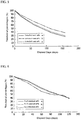
- FIG. 1 shows an example of time-dependent change of a weight percentage "a" of the remaining acetate compound, a weight percentage "b” of the remaining alcohol compound, and a percentage weight "c" of the total of the remaining acetate and alcohol compounds with respect to the sustained release pheromone preparation containing a 98.9:1.1 (weight ratio) mixture solution of an unsaturated aliphatic acetate compound (Z-8-dodecenyl acetate) and an unsaturated aliphatic alcohol compound (Z-8-dodecenol) having a structure where the acetyl group of the unsaturated aliphatic acetate compound is replaced with a hydrogen atom in a container made of a condensation polymer of at least one dicarboxylic acid and at least one diol, a copolymer of the condensation poly
- FIG. 2 shows an example of a time-dependent change of a residual weight percentage "a" of the remaining acetate compound, a residual weight percentage "b” of the remaining alcohol compound, and a residual weight percentage "c" of the total of the remaining acetate and alcohol compounds with respect to the sustained release pheromone preparation containing a 98.9:1.1 (weight ratio) mixture solution of an unsaturated aliphatic acetate compound (Z-8-dodecenyl acetate) and an unsaturated aliphatic alcohol compound (Z-8-dodecenol) having a structure where the acetyl group of the unsaturated aliphatic acetate compound is replaced with a hydrogen atom in a container made of high-density polyethylene.
- the sustained release pheromone preparation comprises a container comprising, as at least a part thereof, a membrane of the polyester corresponding to Formula (I), a copolymer of the polyester, or a polymer blend of the polyester or the copolymer with a biodegradable polyester
- the residual weight percentage "a” of the remaining acetate compound, the residual weight percentage "b” of the remaining alcohol compound, and the residual weight percentage "c" of the total of the remaining acetate and alcohol compounds have time-dependent change almost on the same line.
- the sustained release pheromone preparation comprises a container made of high-density polyethylene
- the change of the residual weight percentage "b" of the remaining alcohol component is quite different from the change of the residual weight percentage "c" of the total of the remaining acetate and alcohol compounds. It is shown in Table 1 and FIG. 1 that a "b/c" ratio falls within a range of from 0.99 to 1.03 for from Day 15 to Day 105, while it is shown in Table 1 and FIG. 2 that a "b/c” ratio gradually increases from 1.11 on Day 15 to 4.19 on Day 105.
- the sustained release pheromone preparation comprises a container made of high-density polyethylene
- a weight ratio between each component in the remaining solution shows a gradual change because the weight ratio of the released alcohol component to the total of the released components is small.
- a ratio (a/c) of the residual weight percentage of the remaining acetate compound to the residual weight percentage of the total of the remaining two components and a ratio (b/c) of the residual weight percentage of the remaining alcohol compound to the residual weight percentage of the total of the remaining two components each falls within a range of from 0.80 to 1.20, preferably from 0.85 to 1.15, more preferably from 0.90 to 1.10 throughout the period of release from the sustained release pheromone preparation.
- a ratio (a/b) of the residual weight percentage of the remaining acetate compound to the residual weight percentage of the remaining alcohol compound falls within a range of from 0.80 to 1.25, preferably from 0.85 to 1.20, more preferably from 0.95 to 1.15 throughout the period of release from the sustained release pheromone preparation.
- FIGS. 1 and 2 show the behavior of the sex pheromone released from the sustained release pheromone preparation at a constant temperature and a constant wind velocity.
- a sustained release pheromone preparation for pest insect control is used actually in a field and in the presence of a pest insect to be controlled. Thus, the preparation is exposed to variation in temperature and/or wind velocity between day and night or among seasons and is used under varying conditions.
- the sustained release pheromone preparation is required to keep a release ratio between the sex pheromone components constant similarly to a mixing ratio of the sex pheromone components of the target pest insect, even under such varying conditions.
- the release performance under predetermined conditions is obviously different from that under the conditions of a field, but the essential performance of the preparation is desirably evaluated under predetermined conditions. Empirically, there is sufficient correlation between release behavior of the preparation evaluated under predetermined conditions and actual release behavior in a field, but first it is necessary to confirm that the intended performance is exhibited under predetermined conditions.
- the sustained release pheromone preparation comprises a container comprising, as at least a part of the container, a membrane of the polyester corresponding to Formula (I), a copolymer of the polyester, or a polymer blend of the polyester or the copolymer with a biodegradable polyester. Since such a membrane is present as at least a part of the container, a sex pheromone can permeate through the membrane.
- the membrane is present as at least a part of the container so that a polymer tube or the like made entirely of such a membrane is also included.
- the polymer tube can be obtained by continuous processing such as extrusion.
- the inner diameter of polymer tube is preferably from 0.4 to 2 mm, more preferably from 0.6 to 1.6 mm.
- the thickness of the polymer tube is preferably from 0.15 to 1.2 mm, more preferably from 0.25 to 0.8 mm from the standpoint of the moldability of the preparation or a diffusion rate of the sex pheromone.
- a sustained release pheromone preparation in another embodiment may be a bag-like preparation obtained by sealing two films at four sides thereof to form a bag and then filling the bag with a pheromone.
- the thickness of the film is preferably from 0.15 to 0.6 mm, more preferably from 0.15 to 0.5 mm from the standpoint of the strength or processability of the bag.
- the bag has each side of preferably from 10 to 150 mm, more preferably from 20 to 100 mm from the standpoint of workability for placing the preparation in a field or from the economic standpoint.
- the effective action period of the sustained release pheromone preparation is a period during which a mixture solution being enclosed in the container of the sustained release pheromone preparation and containing an unsaturated aliphatic acetate compound and an unsaturated aliphatic alcohol compound in a weight ratio of from 10:90 to 99.5:0.5 acts on the target pest insect. It does not simply mean the number of months or number of days, but it varies depending on the situation in which the sustained release pheromone preparation is required.
- Mating disruption for controlling a pest insect comprises a step of releasing the sex pheromone of the target pest insect into the air to disrupting mating between males and females to reduce their copulation index, thereby suppressing the birth of the next generation.
- the sustained release pheromone preparation is required to stably release a sex pheromone component during the emergence period of adult pest insects.
- the emergence of adult pest insects sometimes continues from 2 to 6 months without intermission of emergence of adult pest insects, or although the emergence continues only for about one month, the emergence takes place from 2 to 5 times a year.
- the sustained release pheromone preparation can maintain stable release of a mixture solution contained therein, while keeping a component ratio constant in the mixture solution, during the period when the synthetic sex pheromone components act on a pest insect.
- the effective action period of the sustained release pheromone preparation may be, in another expression, a period during which the residual weight percentage of the mixture solution contained in the sustained release pheromone preparation changes ideally from 100% to 0%. This is because it is ideal to release all the amount of the sex pheromone contained in the sustained release pheromone preparation into the air without any waste. However, it is difficult to realize an ideal sustained release pheromone preparation in which the residual weight percentage of the mixture solution changes from 100% to 0%, because the preparation is required to release while keeping the component ratio constant in the mixture solution contained in the sustained release pheromone preparation. For example, the period during which the residual weight percentage changes from 100% to 20% can be regarded as an effective action period. Further, in a broad sense, the period during which the residual weight percentage changes from 90% to 40% may be regarded as an effective action period if it is considered to be sufficient to use about half of the mixture solution contained in the preparation.
- a polymer tube was produced by extruding a 20:80 (mole ratio) copolymer of butylene adipate and butylene succinate ("Bionolle #3001", product of Showa Denko) into a long tube having an inner diameter of 1.4 mm and a wall thickness of 0.60 mm, and cutting the long tube into a tube having a length of 200 mm.
- a sustained release pheromone preparation was obtained by filling the resulting polymer tube with 260 mg of a mixture solution containing Z-8-dodecenyl acetate, E-8-dodecenyl acetate and Z-8-dodecenol at a weight ratio of 93:6:1 (sex pheromone composition of oriental fruit moth) and heat-sealing both ends of the polymer tube.
- the resulting sustained release pheromone preparation was left to stand at a wind velocity of 0.7 m/sec and 30°C to release the solution from the preparation.
- the remaining amounts of Z-8-dodecenyl acetate, E-8-dodecenyl acetate and Z-8-dodecenol in the preparation were analyzed by gas chromatography.
- the residual weight percentage "a" of the remaining acetate component, the residual weight percentage "b" of the remaining alcohol component, and the residual weight percentage "c" of the total of the remaining two components were determined.
- the ratio "a/c” falls within a range of from 1.00 to 0.97, but the ratio “b/c” ranges from 1.00 to 4.18.
- the ratio "a/b” falls within a range of from 1.00 to 0.23. It is evident that the release ratio of the alcohol component is small so that the alcohol component remains in the preparation.
- a polymer tube was produced by extruding butylene succinate ("Bionolle #1001", product of Showa Denko) into a long tube having an inner diameter of 1.08 mm and a wall thickness of 0.35 mm and cutting the long tube into a 200-mm length tube.
- a sustained release pheromone preparation was then obtained by filling the resulting polymer tube with 150 mg of a mixture solution containing Z-11-hexadecenyl acetate and Z-11-hexadecenol at a weight ratio of 75:25 (sex pheromone composition of pink borer) and heat-sealing both ends of the polymer tube.
- the sustained release pheromone preparation thus obtained was left to stand at a wind velocity of 0.7 m/sec and 30°C to release the solution from the preparation. With the passage of time, the respective remaining amounts of Z-1 1-hexadecenyl acetate and Z-11-hexadecenol in the preparation were analyzed by gas chromatography. The residual weight percentage "a” of the remaining acetate component, the residual weight percentage "b” of the remaining alcohol component, and the residual weight percentage "c" of the total of the remaining two components were determined.
- the sustained release pheromone preparations (100 tubes) obtained in Example 2 were placed in a cane sugar field in Miyako City in Okinawa Prefecture on April 23. Ten tubes were collected on each of installment day (i.e. Day 0), Day 30, Day 60, Day 78, Day 91, Day 109, and Day 122, and the amount of the pheromone remaining in the sustained release pheromone preparation was analyzed by gas chromatography.
- the residual weight percentage of the remaining acetate component, the residual weight percentage of the remaining alcohol component, and the residual weight percentage of the total of the remaining two components were determined. Then the respective ratios of the residual weight percentages of the remaining two components to the residual weight percentage of the total of the remaining two components, "a/c" and “b/c", and the ratio of the residual weight percentage of the remaining acetate component to the residual weight percentage of the remaining alcohol component, "a/b”, were calculated. The results are shown in Table 3.
- the ratios "a/c" and “b/c” each falls within a range of from 0.90 to 1.05 and the ratio "a/b” falls within the range of 0.93 to 1.14, indicating that the component ratio is maintained in a long period of time.
- Example 3 is an example proving that the release performance under predetermined conditions (30°C, wind velocity: 0.7 m/sec) is also displayed in the actual field.
- Table 3 Elapsed Days Day0 Day30 Day 60 Day78 Day91 Day109 Day122 Ex.3 Z11-16:Ac (mg) (75) 123.2 108.4 84.0 71.6 64.8 54.3 46.1 Z11-16:OH (mg) (25) 41.0 33.5 27.2 20.8 19.8 19.4 17.6 total of Z11-16:Ac and Z11-16:OH (mg) 164.2 141.9 108.2 92.4 84.6 73.7 63.7 remaining Z11-16:Ac a% 100 88.0 68.2 58.1 52.6 44.1 39.2 remaining Z11-16:OH b% 100 82.1 58.2 51.2 48.2 47.1 37.4 remaining Z11-16:Ac and Z11-16:OH c% 100 86.4 65.9 56.3 51.5 44.9 38.8 a/c 1.00 1.02 1.03 1.03 1.02 0.98 1.01 b/
- a polymer tube was produced by carrying out condensation polymerization of adipic acid and a 60:40 (weight ratio) mixture liquid of butane diol and ethylene glycol to obtain a random copolymer; extruding the random copolymer into a long tube having an inner diameter of 0.84 mm and a wall thickness of 0.40 mm; and cutting the resulting tube into a tube having a length of 20 mm.
- a sustained release pheromone preparation was obtained by filling the resulting polymer tube with 8 mg of a mixture solution containing E-5-decenyl acetate and E-5-decenol at a weight ratio of 82:18 and then heat-sealing both ends of the polymer tube.
- the sustained release pheromone preparation thus obtained was left to stand at a wind velocity of 0.7 m/sec and 30°C to release the solution from the preparation. With the passage of time, the respective remaining amounts of E-5-decenyl acetate and E-5-decenol in the preparation were analyzed by gas chromatography. The residual weight percentage "a" of the remaining acetate component, the residual weight percentage "b” of the remaining alcohol component, and the residual weight percentage "c" of the total of the remaining two components were determined.
- Example 4 shows that the two components are released at a relatively constant ratio.
- a polymer tube was produced by extruding a polymer blend obtained by blending a 20:80 (mole ratio) copolymer of butylene adipate and butylene succinate ("Bionolle #3001", product of Showa Denko) with a 94:6 (mole ratio) copolymer of 3-hydroxyvaleric acid and 3-hydroxycaproic acid ("AONILEX X131A", product of Kaneka Corporation) at 90:10 (weight ratio) into a long tube having an inner diameter of 0.8 mm and a wall thickness of 0.40 mm, and then cutting it into a tube having a length of 200-mm.
- a polymer blend obtained by blending a 20:80 (mole ratio) copolymer of butylene adipate and butylene succinate ("Bionolle #3001", product of Showa Denko) with a 94:6 (mole ratio) copolymer of 3-hydroxyvaleric acid and 3-hydroxycaproic acid ("AONILEX X131
- a sustained release pheromone preparation was obtained by filling the resulting polymer tube with 90 mg of a mixture solution containing E-5-decenyl acetate and E-5-decenol at a weight ratio of 50:50 and heat-sealing both ends of the polymer tube.
- the resulting sustained release pheromone preparation was left to stand at a wind velocity of 0.7 m/sec and 30°C to release the solution from the preparation. With the passage of time, the respective remaining amounts of E-5-decenyl acetate and E-5-decenol in the preparation were analyzed by gas chromatography. The residual weight percentage "a" of the remaining acetate component, the residual weight percentage "b” of the remaining alcohol component, and the residual weight percentage "c" of the total of the remaining two components were determined.
- the ratio "a/c” changes within a range of from 1.00 to 0.98
- the ratio “b/c” changes within a range of from 1.00 to 1.02
- the ratio "a/b” changes within a range of 1.00 to 0.96, indicating release of the components at the constant component ratio.
- Example 6 is an example in which a polymer blend of the polyester (80 parts by weight) corresponding to Formula (I) and the biodegradable polyester (20 parts by weight) is used. It is evident from the results that the acetate component and the alcohol component are released at a constant ratio.
- Example 7 is an example in which a polymer blend of the polyester (70 parts by weight) corresponding to Formula (I) and the biodegradable polyester (30 parts by weight). It is evident from the results that the acetate component and the alcohol component are released at a constant ratio.
- Comparative Example 5 is an example in which a polymer blend of the polyester (50 parts by weight) corresponding to Formula (I) and the biodegradable polyester (50 parts by weight). It is evident from the results that when the number of parts by weight of the polyester corresponding to Formula (I) is decreased, release of the acetate component and the alcohol component becomes different, which is away from ideal release at the constant component ratio.
- E5-10:Ac (mg) (50) 45.0 26.9 15.3 E5-10:OH (mg) (50) 43.7 61.6 22.9 total of E5-10:Ac and 5-10:OH (mg) 88.7 58.5 38.2 remaining E5-10:Ac a% 100 60.0 34.0 remaining E5-10:OH b% 100 72.3 52.4 remaining E5-10:Ac and E5-10:OH c% 100 66.0 43.1 a/c 1.00 0.91 0.79 b/c 1.00 1.10 1.22 a/b 1.00 0.83 0.65 E5-10:Ac means E-5-decenyl acetate, and E5-10:OH means E-5-decenol.
- a polymer tube was produced by extruding a polymer blend obtained by blending a 20:80 (mole ratio) copolymer of butylene adipate and butylene succinate ("Bionolle #3001", product of Showa Denko) and poly- ⁇ -caprolactone ("CAPA6800", product of Perstorp) at a weight ratio of 65:35 into a long tube having an inner diameter of 0.6 mm and a wall thickness of 0.30 mm and cutting the long tube into a tube having a length of 200 mm.
- a polymer blend obtained by blending a 20:80 (mole ratio) copolymer of butylene adipate and butylene succinate ("Bionolle #3001", product of Showa Denko) and poly- ⁇ -caprolactone ("CAPA6800", product of Perstorp) at a weight ratio of 65:35 into a long tube having an inner diameter of 0.6 mm and a wall thickness of 0.30 mm and cutting the long tube into a tube
- a sustained release pheromone preparation was obtained by filling the resulting polymer tube with 50 mg of a mixture solution (sex pheromone composition of Toleria romanovi ) of (Z,Z)-3,13-octadecadienyl acetate and (Z,Z)-3,13-octadecadienol at a weight ratio of 10:90 and heat-sealing both ends of the polymer tube.
- the resulting sustained release pheromone preparation was left to stand at a wind velocity of 0.7 m/sec and 40°C to release the solution from the preparation.
- the respective remaining amounts of (Z,Z)-3,13-octadecadienyl acetate and (Z,Z)-3,13-octadecadienol in the preparation were analyzed by gas chromatography.
- the residual weight percentage "a" of the remaining acetate component, the residual weight percentage "b" of the remaining alcohol component, and the residual weight percentage "c" of the total of the remaining two components were determined.
- the preparation contains a higher content of the alcohol component, such as the preparation containing 10 parts by weight of the acetate component and 90 parts by weight of the alcohol component, the preparation has such a release characteristic as to keep the ratio between the acetate component and the alcohol component constant in the mixture solution remaining in the preparation.
- the ratio "a/c” falls within a range of 1.00 to 0.10
- the ratio "b/c” falls within a range of from 1.00 to 1.10
- the ratio "a/b” falls within a range of from 1.00 to 0.09, indicating that only the acetate component is released first and a ratio of the acetate component in the mixture solution remaining in the preparation lowers markedly.
- a polymer tube was produced by extruding a polymer blend obtained by blending a 95:5 (mole ratio) copolymer of butylene adipate and butylene terephthalate with poly- ⁇ -caprolactone ("CAPA6800", product of Perstorp) at a weight ratio of 90:10 into a long tube having an inner diameter of 1.07 mm and a wall thickness of 0.40 mm and cutting the long tube into a tube having a length of 200 mm.
- CAPA6800 poly- ⁇ -caprolactone
- a sustained release pheromone preparation was obtained by filling the resulting polymer tube with 150 mg of a mixture solution (sex pheromone composition of pink borer) of Z-11-hexadecenyl acetate and Z-11-hexadecenol at a weight ratio of 75:25 and heat-sealing both ends of the polymer tube.
- the resulting sustained release pheromone preparation was left to stand at a wind velocity of 0.7 m/sec and 30°C to release the solution from the preparation.
- the respective remaining amounts of Z-11-hexadecenyl acetate and Z-11-hexadecenol in the preparation were analyzed by gas chromatography.
- the residual weight percentage "a" of the remaining acetate component, the residual weight percentage "b” of the remaining alcohol component, and the residual weight percentage "c" of the total of the remaining two components were determined.
- the preparation contains a higher content of the acetate component, such as the preparation containing 75 parts by weight of the acetate component and 25 parts by weight of the alcohol component, the preparation has such a release characteristic as to keep the ratio between the acetate component and the alcohol component constant in the mixture solution remaining in the preparation.
Landscapes
- Life Sciences & Earth Sciences (AREA)
- Health & Medical Sciences (AREA)
- General Health & Medical Sciences (AREA)
- Dentistry (AREA)
- Zoology (AREA)
- Environmental Sciences (AREA)
- Pest Control & Pesticides (AREA)
- Plant Pathology (AREA)
- Agronomy & Crop Science (AREA)
- Engineering & Computer Science (AREA)
- Wood Science & Technology (AREA)
- Chemical & Material Sciences (AREA)
- Toxicology (AREA)
- Dispersion Chemistry (AREA)
- Chemical Kinetics & Catalysis (AREA)
- Medicinal Chemistry (AREA)
- Polymers & Plastics (AREA)
- Organic Chemistry (AREA)
- Agricultural Chemicals And Associated Chemicals (AREA)
- Catching Or Destruction (AREA)
Applications Claiming Priority (1)
| Application Number | Priority Date | Filing Date | Title |
|---|---|---|---|
| JP2017059444 | 2017-03-24 |
Publications (2)
| Publication Number | Publication Date |
|---|---|
| EP3378312A1 true EP3378312A1 (fr) | 2018-09-26 |
| EP3378312B1 EP3378312B1 (fr) | 2022-03-02 |
Family
ID=61731679
Family Applications (1)
| Application Number | Title | Priority Date | Filing Date |
|---|---|---|---|
| EP18163069.0A Active EP3378312B1 (fr) | 2017-03-24 | 2018-03-21 | Préparation de phéromone à libération prolongée |
Country Status (4)
| Country | Link |
|---|---|
| US (1) | US20180271088A1 (fr) |
| EP (1) | EP3378312B1 (fr) |
| JP (1) | JP6914221B2 (fr) |
| ES (1) | ES2913927T3 (fr) |
Cited By (2)
| Publication number | Priority date | Publication date | Assignee | Title |
|---|---|---|---|---|
| EP3888460A1 (fr) * | 2020-03-31 | 2021-10-06 | Shin-Etsu Chemical Co., Ltd. | Préparation de phéromone à libération prolongée et procédé de lutte contre les insectes l'utilisant |
| US20230165243A1 (en) * | 2021-11-26 | 2023-06-01 | Shin-Etsu Chemical Co., Ltd. | Sustained-release pheromone preparation |
Families Citing this family (2)
| Publication number | Priority date | Publication date | Assignee | Title |
|---|---|---|---|---|
| JP7696554B2 (ja) * | 2022-05-18 | 2025-06-23 | 国立研究開発法人農業・食品産業技術総合研究機構 | ツマジロクサヨトウの性誘引物質 |
| CN119632048A (zh) * | 2025-02-17 | 2025-03-18 | 浙江森护熙健康科技有限公司 | 一种蚊蝇引诱剂组合物及其制备方法 |
Citations (6)
| Publication number | Priority date | Publication date | Assignee | Title |
|---|---|---|---|---|
| US5993843A (en) * | 1996-06-28 | 1999-11-30 | Research Association For Biotechnology Of Agricultural | Biodegradable sustained-release preparation |
| US20080187597A1 (en) * | 2006-04-11 | 2008-08-07 | Shin-Etsu Chemical Co., Ltd. | Sustained Release Preparation Comprising a Foamed Capillary Tube |
| JP2010047564A (ja) | 2008-07-24 | 2010-03-04 | Shin-Etsu Chemical Co Ltd | アセテートを含む交信撹乱剤及びこれを用いた交信撹乱方法 |
| JP2012250957A (ja) * | 2011-06-06 | 2012-12-20 | Shin Etsu Polymer Co Ltd | 生分解性フェロモンディスペンサー |
| US20140308328A1 (en) * | 2011-12-09 | 2014-10-16 | Shin-Etsu Chemical Co., Ltd. | Sustained release preparation comprising insect pest-targeting gel composition |
| WO2015128428A1 (fr) * | 2014-02-27 | 2015-09-03 | Basf Se | Distributeur de phéromones en matière plastique |
Family Cites Families (2)
| Publication number | Priority date | Publication date | Assignee | Title |
|---|---|---|---|---|
| JPS62181203A (ja) * | 1986-02-05 | 1987-08-08 | Shin Etsu Chem Co Ltd | 異なる害虫の性フエロモンの同時放出制御方法 |
| JPH06211614A (ja) * | 1993-01-19 | 1994-08-02 | Shin Etsu Chem Co Ltd | 徐放性フェロモン製剤 |
-
2018
- 2018-03-20 US US15/926,455 patent/US20180271088A1/en not_active Abandoned
- 2018-03-21 ES ES18163069T patent/ES2913927T3/es active Active
- 2018-03-21 EP EP18163069.0A patent/EP3378312B1/fr active Active
- 2018-03-23 JP JP2018056850A patent/JP6914221B2/ja active Active
Patent Citations (6)
| Publication number | Priority date | Publication date | Assignee | Title |
|---|---|---|---|---|
| US5993843A (en) * | 1996-06-28 | 1999-11-30 | Research Association For Biotechnology Of Agricultural | Biodegradable sustained-release preparation |
| US20080187597A1 (en) * | 2006-04-11 | 2008-08-07 | Shin-Etsu Chemical Co., Ltd. | Sustained Release Preparation Comprising a Foamed Capillary Tube |
| JP2010047564A (ja) | 2008-07-24 | 2010-03-04 | Shin-Etsu Chemical Co Ltd | アセテートを含む交信撹乱剤及びこれを用いた交信撹乱方法 |
| JP2012250957A (ja) * | 2011-06-06 | 2012-12-20 | Shin Etsu Polymer Co Ltd | 生分解性フェロモンディスペンサー |
| US20140308328A1 (en) * | 2011-12-09 | 2014-10-16 | Shin-Etsu Chemical Co., Ltd. | Sustained release preparation comprising insect pest-targeting gel composition |
| WO2015128428A1 (fr) * | 2014-02-27 | 2015-09-03 | Basf Se | Distributeur de phéromones en matière plastique |
Non-Patent Citations (3)
| Title |
|---|
| J. ECO. ENT., vol. 93, no. 3, 2000, pages 820 - 827 |
| JAN J DE VLIEGER: "Development of a sprayable slow-release formulation for the sex pheromone of the Mediterranean Corn Borer, Sesamia nonagroides", THE ENVIRONMENTALIST, KLUWER ACADEMIC PUBLISHERS, BO, vol. 28, no. 1, 6 July 2007 (2007-07-06), pages 45 - 48, XP019572459, ISSN: 1573-2991 * |
| ROELOFS, ENVIRON. ENTOMOL, 1975 |
Cited By (2)
| Publication number | Priority date | Publication date | Assignee | Title |
|---|---|---|---|---|
| EP3888460A1 (fr) * | 2020-03-31 | 2021-10-06 | Shin-Etsu Chemical Co., Ltd. | Préparation de phéromone à libération prolongée et procédé de lutte contre les insectes l'utilisant |
| US20230165243A1 (en) * | 2021-11-26 | 2023-06-01 | Shin-Etsu Chemical Co., Ltd. | Sustained-release pheromone preparation |
Also Published As
| Publication number | Publication date |
|---|---|
| US20180271088A1 (en) | 2018-09-27 |
| ES2913927T3 (es) | 2022-06-06 |
| EP3378312B1 (fr) | 2022-03-02 |
| JP6914221B2 (ja) | 2021-08-04 |
| JP2018162244A (ja) | 2018-10-18 |
Similar Documents
| Publication | Publication Date | Title |
|---|---|---|
| EP3378312B1 (fr) | Préparation de phéromone à libération prolongée | |
| CN104837923B (zh) | 生物可降解的聚酯混合物 | |
| KR101342237B1 (ko) | 축중합체의 배합 방법 | |
| US20040068059A1 (en) | Aliphatic polyester copolymer and process for producing the same, biodegradable resin molding based on aliphatic polyester, and lactone-containing resin | |
| EP1317506B1 (fr) | Techniques permettant de ralentir le taux de degradation d'un polymere biodegradable et de compositions de polymere biodegradable et compositions de ce polymere | |
| Xuan et al. | Tailoring oligomeric plasticizers for polylactide through structural control | |
| JP5154848B2 (ja) | 包装用フィルム | |
| JP2022103210A (ja) | ハスモンヨトウの防除方法 | |
| MXPA02007642A (es) | Procedimiento para la reduccion de la permeabilidad al vapor de agua de laminas o recubrimientos. | |
| JP5379704B2 (ja) | ポリ塩化ビニル系樹脂組成物及びそれを用いたラップフィルム | |
| JP4634235B2 (ja) | 生分解性樹脂組成物及びフィルム | |
| EP3427582B1 (fr) | Préparation de phéromone à libération prolongée et procédé de lutte contre les insectes l'utilisant | |
| EP3888460B1 (fr) | Préparation de phéromone à libération prolongée et procédé de lutte contre les insectes l'utilisant | |
| JP4530804B2 (ja) | 徐放性フェロモン製剤 | |
| JP2008044359A (ja) | 包装用フィルム | |
| EP3504968B1 (fr) | Composition ayant une activité de phéromone sexuelle sur le pou de san josé et appât, agent d'accouplement, procédé d'attraction et procédé de dissociation d'accouplement pour le pou de san josé | |
| JP2007063297A (ja) | 樹脂組成物 | |
| JP2004352987A (ja) | 水蒸気バリヤー性が改善された生分解性フィルムおよび水蒸気バリヤー性のコントロール方法 | |
| JP7257309B2 (ja) | シロイチモジヨトウの防除方法 | |
| JP2006028219A (ja) | 生分解性樹脂組成物 | |
| JP3047925B2 (ja) | フェロモン徐放性製剤 | |
| JPH05125266A (ja) | 生分解性高分子組成物 | |
| TWI912656B (zh) | 包含無定形聚羥基烷酸酯的組成物及其用途 | |
| JP3448875B2 (ja) | 薬剤徐放性樹脂組成物 | |
| CN116783248A (zh) | 树脂组合物、含有该树脂组合物的部件、层叠体和防虫剂缓释制剂 |
Legal Events
| Date | Code | Title | Description |
|---|---|---|---|
| PUAI | Public reference made under article 153(3) epc to a published international application that has entered the european phase |
Free format text: ORIGINAL CODE: 0009012 |
|
| STAA | Information on the status of an ep patent application or granted ep patent |
Free format text: STATUS: THE APPLICATION HAS BEEN PUBLISHED |
|
| AK | Designated contracting states |
Kind code of ref document: A1 Designated state(s): AL AT BE BG CH CY CZ DE DK EE ES FI FR GB GR HR HU IE IS IT LI LT LU LV MC MK MT NL NO PL PT RO RS SE SI SK SM TR |
|
| AX | Request for extension of the european patent |
Extension state: BA ME |
|
| STAA | Information on the status of an ep patent application or granted ep patent |
Free format text: STATUS: REQUEST FOR EXAMINATION WAS MADE |
|
| 17P | Request for examination filed |
Effective date: 20190326 |
|
| RBV | Designated contracting states (corrected) |
Designated state(s): AL AT BE BG CH CY CZ DE DK EE ES FI FR GB GR HR HU IE IS IT LI LT LU LV MC MK MT NL NO PL PT RO RS SE SI SK SM TR |
|
| STAA | Information on the status of an ep patent application or granted ep patent |
Free format text: STATUS: EXAMINATION IS IN PROGRESS |
|
| 17Q | First examination report despatched |
Effective date: 20200113 |
|
| GRAP | Despatch of communication of intention to grant a patent |
Free format text: ORIGINAL CODE: EPIDOSNIGR1 |
|
| STAA | Information on the status of an ep patent application or granted ep patent |
Free format text: STATUS: GRANT OF PATENT IS INTENDED |
|
| INTG | Intention to grant announced |
Effective date: 20210928 |
|
| GRAS | Grant fee paid |
Free format text: ORIGINAL CODE: EPIDOSNIGR3 |
|
| GRAA | (expected) grant |
Free format text: ORIGINAL CODE: 0009210 |
|
| STAA | Information on the status of an ep patent application or granted ep patent |
Free format text: STATUS: THE PATENT HAS BEEN GRANTED |
|
| AK | Designated contracting states |
Kind code of ref document: B1 Designated state(s): AL AT BE BG CH CY CZ DE DK EE ES FI FR GB GR HR HU IE IS IT LI LT LU LV MC MK MT NL NO PL PT RO RS SE SI SK SM TR |
|
| REG | Reference to a national code |
Ref country code: GB Ref legal event code: FG4D |
|
| REG | Reference to a national code |
Ref country code: CH Ref legal event code: EP Ref country code: AT Ref legal event code: REF Ref document number: 1471517 Country of ref document: AT Kind code of ref document: T Effective date: 20220315 |
|
| REG | Reference to a national code |
Ref country code: DE Ref legal event code: R096 Ref document number: 602018031470 Country of ref document: DE |
|
| REG | Reference to a national code |
Ref country code: IE Ref legal event code: FG4D |
|
| REG | Reference to a national code |
Ref country code: ES Ref legal event code: FG2A Ref document number: 2913927 Country of ref document: ES Kind code of ref document: T3 Effective date: 20220606 |
|
| REG | Reference to a national code |
Ref country code: LT Ref legal event code: MG9D |
|
| REG | Reference to a national code |
Ref country code: NL Ref legal event code: MP Effective date: 20220302 |
|
| PG25 | Lapsed in a contracting state [announced via postgrant information from national office to epo] |
Ref country code: SE Free format text: LAPSE BECAUSE OF FAILURE TO SUBMIT A TRANSLATION OF THE DESCRIPTION OR TO PAY THE FEE WITHIN THE PRESCRIBED TIME-LIMIT Effective date: 20220302 Ref country code: RS Free format text: LAPSE BECAUSE OF FAILURE TO SUBMIT A TRANSLATION OF THE DESCRIPTION OR TO PAY THE FEE WITHIN THE PRESCRIBED TIME-LIMIT Effective date: 20220302 Ref country code: NO Free format text: LAPSE BECAUSE OF FAILURE TO SUBMIT A TRANSLATION OF THE DESCRIPTION OR TO PAY THE FEE WITHIN THE PRESCRIBED TIME-LIMIT Effective date: 20220602 Ref country code: LT Free format text: LAPSE BECAUSE OF FAILURE TO SUBMIT A TRANSLATION OF THE DESCRIPTION OR TO PAY THE FEE WITHIN THE PRESCRIBED TIME-LIMIT Effective date: 20220302 Ref country code: HR Free format text: LAPSE BECAUSE OF FAILURE TO SUBMIT A TRANSLATION OF THE DESCRIPTION OR TO PAY THE FEE WITHIN THE PRESCRIBED TIME-LIMIT Effective date: 20220302 Ref country code: BG Free format text: LAPSE BECAUSE OF FAILURE TO SUBMIT A TRANSLATION OF THE DESCRIPTION OR TO PAY THE FEE WITHIN THE PRESCRIBED TIME-LIMIT Effective date: 20220602 |
|
| REG | Reference to a national code |
Ref country code: AT Ref legal event code: MK05 Ref document number: 1471517 Country of ref document: AT Kind code of ref document: T Effective date: 20220302 |
|
| PG25 | Lapsed in a contracting state [announced via postgrant information from national office to epo] |
Ref country code: PL Free format text: LAPSE BECAUSE OF FAILURE TO SUBMIT A TRANSLATION OF THE DESCRIPTION OR TO PAY THE FEE WITHIN THE PRESCRIBED TIME-LIMIT Effective date: 20220302 Ref country code: LV Free format text: LAPSE BECAUSE OF FAILURE TO SUBMIT A TRANSLATION OF THE DESCRIPTION OR TO PAY THE FEE WITHIN THE PRESCRIBED TIME-LIMIT Effective date: 20220302 Ref country code: GR Free format text: LAPSE BECAUSE OF FAILURE TO SUBMIT A TRANSLATION OF THE DESCRIPTION OR TO PAY THE FEE WITHIN THE PRESCRIBED TIME-LIMIT Effective date: 20220603 Ref country code: FI Free format text: LAPSE BECAUSE OF FAILURE TO SUBMIT A TRANSLATION OF THE DESCRIPTION OR TO PAY THE FEE WITHIN THE PRESCRIBED TIME-LIMIT Effective date: 20220302 |
|
| PG25 | Lapsed in a contracting state [announced via postgrant information from national office to epo] |
Ref country code: NL Free format text: LAPSE BECAUSE OF FAILURE TO SUBMIT A TRANSLATION OF THE DESCRIPTION OR TO PAY THE FEE WITHIN THE PRESCRIBED TIME-LIMIT Effective date: 20220302 |
|
| PG25 | Lapsed in a contracting state [announced via postgrant information from national office to epo] |
Ref country code: SM Free format text: LAPSE BECAUSE OF FAILURE TO SUBMIT A TRANSLATION OF THE DESCRIPTION OR TO PAY THE FEE WITHIN THE PRESCRIBED TIME-LIMIT Effective date: 20220302 Ref country code: SK Free format text: LAPSE BECAUSE OF FAILURE TO SUBMIT A TRANSLATION OF THE DESCRIPTION OR TO PAY THE FEE WITHIN THE PRESCRIBED TIME-LIMIT Effective date: 20220302 Ref country code: RO Free format text: LAPSE BECAUSE OF FAILURE TO SUBMIT A TRANSLATION OF THE DESCRIPTION OR TO PAY THE FEE WITHIN THE PRESCRIBED TIME-LIMIT Effective date: 20220302 Ref country code: PT Free format text: LAPSE BECAUSE OF FAILURE TO SUBMIT A TRANSLATION OF THE DESCRIPTION OR TO PAY THE FEE WITHIN THE PRESCRIBED TIME-LIMIT Effective date: 20220704 Ref country code: EE Free format text: LAPSE BECAUSE OF FAILURE TO SUBMIT A TRANSLATION OF THE DESCRIPTION OR TO PAY THE FEE WITHIN THE PRESCRIBED TIME-LIMIT Effective date: 20220302 Ref country code: CZ Free format text: LAPSE BECAUSE OF FAILURE TO SUBMIT A TRANSLATION OF THE DESCRIPTION OR TO PAY THE FEE WITHIN THE PRESCRIBED TIME-LIMIT Effective date: 20220302 Ref country code: AT Free format text: LAPSE BECAUSE OF FAILURE TO SUBMIT A TRANSLATION OF THE DESCRIPTION OR TO PAY THE FEE WITHIN THE PRESCRIBED TIME-LIMIT Effective date: 20220302 |
|
| REG | Reference to a national code |
Ref country code: CH Ref legal event code: PL |
|
| PG25 | Lapsed in a contracting state [announced via postgrant information from national office to epo] |
Ref country code: IS Free format text: LAPSE BECAUSE OF FAILURE TO SUBMIT A TRANSLATION OF THE DESCRIPTION OR TO PAY THE FEE WITHIN THE PRESCRIBED TIME-LIMIT Effective date: 20220702 Ref country code: AL Free format text: LAPSE BECAUSE OF FAILURE TO SUBMIT A TRANSLATION OF THE DESCRIPTION OR TO PAY THE FEE WITHIN THE PRESCRIBED TIME-LIMIT Effective date: 20220302 |
|
| REG | Reference to a national code |
Ref country code: DE Ref legal event code: R097 Ref document number: 602018031470 Country of ref document: DE |
|
| REG | Reference to a national code |
Ref country code: BE Ref legal event code: MM Effective date: 20220331 |
|
| PLBE | No opposition filed within time limit |
Free format text: ORIGINAL CODE: 0009261 |
|
| STAA | Information on the status of an ep patent application or granted ep patent |
Free format text: STATUS: NO OPPOSITION FILED WITHIN TIME LIMIT |
|
| PG25 | Lapsed in a contracting state [announced via postgrant information from national office to epo] |
Ref country code: MC Free format text: LAPSE BECAUSE OF FAILURE TO SUBMIT A TRANSLATION OF THE DESCRIPTION OR TO PAY THE FEE WITHIN THE PRESCRIBED TIME-LIMIT Effective date: 20220302 Ref country code: LU Free format text: LAPSE BECAUSE OF NON-PAYMENT OF DUE FEES Effective date: 20220321 Ref country code: LI Free format text: LAPSE BECAUSE OF NON-PAYMENT OF DUE FEES Effective date: 20220331 Ref country code: IE Free format text: LAPSE BECAUSE OF NON-PAYMENT OF DUE FEES Effective date: 20220321 Ref country code: DK Free format text: LAPSE BECAUSE OF FAILURE TO SUBMIT A TRANSLATION OF THE DESCRIPTION OR TO PAY THE FEE WITHIN THE PRESCRIBED TIME-LIMIT Effective date: 20220302 Ref country code: CH Free format text: LAPSE BECAUSE OF NON-PAYMENT OF DUE FEES Effective date: 20220331 |
|
| 26N | No opposition filed |
Effective date: 20221205 |
|
| PG25 | Lapsed in a contracting state [announced via postgrant information from national office to epo] |
Ref country code: SI Free format text: LAPSE BECAUSE OF FAILURE TO SUBMIT A TRANSLATION OF THE DESCRIPTION OR TO PAY THE FEE WITHIN THE PRESCRIBED TIME-LIMIT Effective date: 20220302 Ref country code: BE Free format text: LAPSE BECAUSE OF NON-PAYMENT OF DUE FEES Effective date: 20220331 |
|
| GBPC | Gb: european patent ceased through non-payment of renewal fee |
Effective date: 20220602 |
|
| PG25 | Lapsed in a contracting state [announced via postgrant information from national office to epo] |
Ref country code: GB Free format text: LAPSE BECAUSE OF NON-PAYMENT OF DUE FEES Effective date: 20220602 |
|
| PG25 | Lapsed in a contracting state [announced via postgrant information from national office to epo] |
Ref country code: HU Free format text: LAPSE BECAUSE OF FAILURE TO SUBMIT A TRANSLATION OF THE DESCRIPTION OR TO PAY THE FEE WITHIN THE PRESCRIBED TIME-LIMIT; INVALID AB INITIO Effective date: 20180321 |
|
| PG25 | Lapsed in a contracting state [announced via postgrant information from national office to epo] |
Ref country code: MK Free format text: LAPSE BECAUSE OF FAILURE TO SUBMIT A TRANSLATION OF THE DESCRIPTION OR TO PAY THE FEE WITHIN THE PRESCRIBED TIME-LIMIT Effective date: 20220302 Ref country code: CY Free format text: LAPSE BECAUSE OF FAILURE TO SUBMIT A TRANSLATION OF THE DESCRIPTION OR TO PAY THE FEE WITHIN THE PRESCRIBED TIME-LIMIT Effective date: 20220302 |
|
| PG25 | Lapsed in a contracting state [announced via postgrant information from national office to epo] |
Ref country code: TR Free format text: LAPSE BECAUSE OF FAILURE TO SUBMIT A TRANSLATION OF THE DESCRIPTION OR TO PAY THE FEE WITHIN THE PRESCRIBED TIME-LIMIT Effective date: 20220302 |
|
| PG25 | Lapsed in a contracting state [announced via postgrant information from national office to epo] |
Ref country code: MT Free format text: LAPSE BECAUSE OF FAILURE TO SUBMIT A TRANSLATION OF THE DESCRIPTION OR TO PAY THE FEE WITHIN THE PRESCRIBED TIME-LIMIT Effective date: 20220302 |
|
| PGFP | Annual fee paid to national office [announced via postgrant information from national office to epo] |
Ref country code: ES Payment date: 20250403 Year of fee payment: 8 |
|
| PGFP | Annual fee paid to national office [announced via postgrant information from national office to epo] |
Ref country code: DE Payment date: 20260128 Year of fee payment: 9 |
|
| PGFP | Annual fee paid to national office [announced via postgrant information from national office to epo] |
Ref country code: IT Payment date: 20260220 Year of fee payment: 9 |
|
| PGFP | Annual fee paid to national office [announced via postgrant information from national office to epo] |
Ref country code: FR Payment date: 20260209 Year of fee payment: 9 |