EP3379429A1 - Verfahren zur wiedergabe einer empfehlung aus einer wissensdatenbank eines kartenausgabesystems - Google Patents
Verfahren zur wiedergabe einer empfehlung aus einer wissensdatenbank eines kartenausgabesystems Download PDFInfo
- Publication number
- EP3379429A1 EP3379429A1 EP17169904.4A EP17169904A EP3379429A1 EP 3379429 A1 EP3379429 A1 EP 3379429A1 EP 17169904 A EP17169904 A EP 17169904A EP 3379429 A1 EP3379429 A1 EP 3379429A1
- Authority
- EP
- European Patent Office
- Prior art keywords
- ticket
- received query
- textual description
- knowledge database
- ticketing system
- Prior art date
- Legal status (The legal status is an assumption and is not a legal conclusion. Google has not performed a legal analysis and makes no representation as to the accuracy of the status listed.)
- Withdrawn
Links
Images


Classifications
-
- G—PHYSICS
- G06—COMPUTING OR CALCULATING; COUNTING
- G06F—ELECTRIC DIGITAL DATA PROCESSING
- G06F16/00—Information retrieval; Database structures therefor; File system structures therefor
-
- G—PHYSICS
- G06—COMPUTING OR CALCULATING; COUNTING
- G06N—COMPUTING ARRANGEMENTS BASED ON SPECIFIC COMPUTATIONAL MODELS
- G06N3/00—Computing arrangements based on biological models
- G06N3/02—Neural networks
- G06N3/04—Architecture, e.g. interconnection topology
- G06N3/042—Knowledge-based neural networks; Logical representations of neural networks
-
- G—PHYSICS
- G06—COMPUTING OR CALCULATING; COUNTING
- G06F—ELECTRIC DIGITAL DATA PROCESSING
- G06F16/00—Information retrieval; Database structures therefor; File system structures therefor
- G06F16/20—Information retrieval; Database structures therefor; File system structures therefor of structured data, e.g. relational data
- G06F16/24—Querying
- G06F16/245—Query processing
- G06F16/2458—Special types of queries, e.g. statistical queries, fuzzy queries or distributed queries
- G06F16/2462—Approximate or statistical queries
-
- G—PHYSICS
- G06—COMPUTING OR CALCULATING; COUNTING
- G06F—ELECTRIC DIGITAL DATA PROCESSING
- G06F16/00—Information retrieval; Database structures therefor; File system structures therefor
- G06F16/20—Information retrieval; Database structures therefor; File system structures therefor of structured data, e.g. relational data
- G06F16/25—Integrating or interfacing systems involving database management systems
- G06F16/252—Integrating or interfacing systems involving database management systems between a Database Management System and a front-end application
-
- G—PHYSICS
- G06—COMPUTING OR CALCULATING; COUNTING
- G06F—ELECTRIC DIGITAL DATA PROCESSING
- G06F40/00—Handling natural language data
- G06F40/30—Semantic analysis
-
- G—PHYSICS
- G06—COMPUTING OR CALCULATING; COUNTING
- G06N—COMPUTING ARRANGEMENTS BASED ON SPECIFIC COMPUTATIONAL MODELS
- G06N3/00—Computing arrangements based on biological models
- G06N3/02—Neural networks
- G06N3/04—Architecture, e.g. interconnection topology
- G06N3/043—Architecture, e.g. interconnection topology based on fuzzy logic, fuzzy membership or fuzzy inference, e.g. adaptive neuro-fuzzy inference systems [ANFIS]
-
- G—PHYSICS
- G06—COMPUTING OR CALCULATING; COUNTING
- G06N—COMPUTING ARRANGEMENTS BASED ON SPECIFIC COMPUTATIONAL MODELS
- G06N3/00—Computing arrangements based on biological models
- G06N3/02—Neural networks
- G06N3/04—Architecture, e.g. interconnection topology
- G06N3/044—Recurrent networks, e.g. Hopfield networks
-
- G—PHYSICS
- G06—COMPUTING OR CALCULATING; COUNTING
- G06N—COMPUTING ARRANGEMENTS BASED ON SPECIFIC COMPUTATIONAL MODELS
- G06N3/00—Computing arrangements based on biological models
- G06N3/02—Neural networks
- G06N3/04—Architecture, e.g. interconnection topology
- G06N3/044—Recurrent networks, e.g. Hopfield networks
- G06N3/0442—Recurrent networks, e.g. Hopfield networks characterised by memory or gating, e.g. long short-term memory [LSTM] or gated recurrent units [GRU]
-
- G—PHYSICS
- G06—COMPUTING OR CALCULATING; COUNTING
- G06N—COMPUTING ARRANGEMENTS BASED ON SPECIFIC COMPUTATIONAL MODELS
- G06N3/00—Computing arrangements based on biological models
- G06N3/02—Neural networks
- G06N3/08—Learning methods
-
- G—PHYSICS
- G06—COMPUTING OR CALCULATING; COUNTING
- G06N—COMPUTING ARRANGEMENTS BASED ON SPECIFIC COMPUTATIONAL MODELS
- G06N3/00—Computing arrangements based on biological models
- G06N3/02—Neural networks
- G06N3/08—Learning methods
- G06N3/09—Supervised learning
-
- G—PHYSICS
- G06—COMPUTING OR CALCULATING; COUNTING
- G06Q—INFORMATION AND COMMUNICATION TECHNOLOGY [ICT] SPECIALLY ADAPTED FOR ADMINISTRATIVE, COMMERCIAL, FINANCIAL, MANAGERIAL OR SUPERVISORY PURPOSES; SYSTEMS OR METHODS SPECIALLY ADAPTED FOR ADMINISTRATIVE, COMMERCIAL, FINANCIAL, MANAGERIAL OR SUPERVISORY PURPOSES, NOT OTHERWISE PROVIDED FOR
- G06Q10/00—Administration; Management
- G06Q10/20—Administration of product repair or maintenance
Definitions
- the invention relates to a method for retrieving a recommendation from a knowledge database of a ticketing system in response to a received query.
- Conventional methods use machine learning and statistical tools such as Latent Dirichlet Allocation for documents clustering and cosine similarity to first learn document topics (representation) in generative and unsupervised paradigm and then the similarity is computed using topical features or latent representations learned.
- Conventional issue tracking systems propose machine learning based approaches for ticket classification. These issue tracking systems annotate the issue type with a class label which restricts them to predefined classes. Consequently, the conventional issue tracking system is not capable to scale in general application domains.
- Conventional issue tracking systems are not flexible and cannot be applied to different domain applications. Further, they require a high degree of human intervention to provide solutions for the reported issue.
- the invention provides according to a first aspect a method for retrieving a recommendation from a knowledge database of a ticketing system in response to a received query, the method comprising:
- the received query comprises as a textual description at least a subject text and/or a description text.
- each ticket stored in the knowledge database comprises as a textual description at least a subject text, a description text and/or a solution text.
- the representation of the textual description comprises a hidden state of an associated neural network.
- the representation of the textual description comprises a word embedding.
- multi-level symmetric representation differences and/or cross-level asymmetric representation differences between the received query and tickets stored in the knowledge database are calculated.
- the similarity score indicating a degree of similarity between the received query and a ticket stored in the knowledge database is calculated on the basis of the multi-level symmetric representation differences and/or on the basis of the cross-level asymmetric representation differences using a predetermined similarity metric.
- the similarity metric comprises a Manhattan similarity metric.
- the representation of the textual description comprises a hidden state of a bidirectional Long Short Term Memory, LSTM, network.
- each ticket stored in the knowledge database further comprises a timestamp, metadata, information data and/or control data.
- the query is input by a user.
- the query is generated by a controller of a machine in response to a monitored state of the respective machine.
- the solution of the identified ticket read from the knowledge database as the retrieved recommendation for the received query comprises a solution text of the identified ticket for a user and/or control data of the identified ticket which controls the machine automatically.
- the representations of the textual description of a ticket are updated during training of the associated neural networks and precalculated for evaluation in response to a received query.
- the invention further provides according to a further aspect a ticketing system comprising the features of claim 15.
- the invention provides according to the second aspect a ticketing system adapted to retrieve a recommendation from a knowledge database in response to a received query, said ticketing system comprising:
- the ticketing system 1 is adapted to receive at least one query Q to generate a corresponding recommendation REC for the received query Q.
- the ticketing system 1 as illustrated in Fig. 1 can form part of an industrial system comprising several industrial assets or machines such as turbines.
- the ticketing system 1 is adapted to retrieve the recommendation from a knowledge database in response to the received query Q.
- the ticketing system 1 can comprise a processing unit 2 (which may also be called a processor) adapted to perform semantic similarity learning in textual description pairs by calculating similarity scores for similarities between the received query Q and tickets T stored in the knowledge database 3 of the ticketing system 1 as shown in Fig. 2 .
- Each textual description pair includes a textual description of the received query Q and a textual description of a ticket T of a plurality of tickets stored in the knowledge database 3 of the ticketing system 1.
- the ticket T having the maximum similarity score is identified and a solution SOL of the identified ticket T is output as a retrieved recommendation REC for the received query Q by said ticketing system 1.
- Fig. 2 shows a block diagram of a possible exemplary embodiment of a ticketing system 1 according to an aspect of the present invention.
- the ticketing system 1 comprises a processing unit 2 and a knowledge database 3.
- the processing unit 2 has access to the database 3 as shown in Fig. 2 .
- the ticketing system 1 comprises an input interface to receive a query Q and an output interface to output the calculated recommendation REC.
- the processing unit 2 is adapted to perform semantic similarity learning in textual description pairs by calculating similarity scores for similarities between the received query Q and tickets stored in the knowledge database 3 of the ticketing system 1.
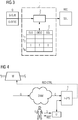
- Fig. 3 shows a further block diagram for illustrating an exemplary embodiment of the ticketing system 1 according to an aspect of the present invention.
- the query Q comprises as a textual description at least a subject text Q-SUB and/or a description text Q-DESC as shown in Fig. 3 .
- Each ticket T stored in the knowledge database 3 comprises in the illustrated embodiment as a textual description at least a subject text (SUB), a description text (DESC) and/or a solution text (SOL).
- the number of tickets T within the knowledge database 3 can vary depending on the use case.
- the processing unit 2 of the ticketing system 1 is configured to perform semantic similarity learning in textual description pairs by calculating similarity scores y for similarities between the received query Q and the tickets T stored in the knowledge database 3 of the ticketing system 1.
- Each textual description pair includes in a preferred embodiment a textual description of the received query Q and a textual description of a ticket T within the knowledge database 3.
- the ticket T within the knowledge database 3 having the maximum calculated similarity score is identified and its associated solution is output as a retrieved recommendation for the received query Q by the ticketing system 1 as also illustrated in Fig. 3 .
- the received query comprises a subject text Q-SUB and a description text Q-DESC.
- each ticket T stored in the knowledge database 3 comprises a subject text SUB, a description text DESC and a solution text SOL.
- the calculated representation of the textual description comprises a hidden state of an associated neural network.
- This neural network can comprise a recurrent neural network RNN.
- the neural network can comprise a bidirectional Long Short Term Memory, LSTM, network.
- the representation of the textual description can comprise a word embedding E.
- the number of representations for each textual description can vary.
- the representations calculated for a textual description can comprise a hidden state h of an associated neural network and/or a word embedding E.
- the processing unit 2 of the ticketing system 1 can be adapted to calculate multi-level symmetric representation differences and/or cross-level asymmetric representation differences between the representations of the textual descriptions within the received query Q and the representations of the respective ticket T stored in the knowledge database 3 of the ticketing system 1.
- the similarity score y indicated in a degree of similarity between a query Q and a ticket T stored in the knowledge database 3 is calculated in a preferred embodiment on the basis of the multi-level symmetric representation differences and/or on the basis of the cross-level asymmetric representation differences using a predetermined similarity metric.
- the similarity metric comprises a Manhattan similarity metric.
- a ticket T stored in the knowledge database 3 of the ticketing system 1 can further comprise a timestamp, metadata, information data and/or control data.
- a query Q can be input by a user or a technician by means of a user interface of the ticketing system 1.
- the query Q can also be generated by a controller of a machine in response to a monitored state of the machine and supplied to the ticketing system 1 via a logical data network.
- the solution SOL of the identified ticket T read from the knowledge database 3 as the retrieved recommendation REC for the received query Q can comprise a solution text of the identified ticket output to a user or a technician and/or control data of the identified ticket T which can be used to control the machine having caused the query Q automatically.
- the representation of the textual descriptions of a ticket T stored in the knowledge database 3 can be updated during training of the associated neural networks and precalculated for evaluation in response to a received query Q.
- Fig. 4 shows a schematic block diagram of a possible exemplary embodiment of a technical system using the ticketing system 1 according to an aspect of the present invention.
- the ticketing system 1 can be used for support and/or maintenance of a machine M as illustrated in Fig. 4 .
- the machine M may, for instance, be a turbine consisting of many subsystems and/or components.
- a user U such as a technician, can input via a user interface UI a query Q supplied to the ticketing system 1 for retrieving a recommendation REC.
- the query Q can also be provided by the machine itself.
- the internal states of the machine M are monitored and queries Q concerning issues or an abnormal behaviour of the machine M are generated automatically depending on the monitored state of the machine M.
- the generated query Q can be supplied by the machine M for instance via a data network DNW to an input interface of the ticketing system 1 as illustrated in Fig. 4 .
- the generated query Q can comprise in a possible implementation also a timestamp when the query Q was generated and/or metadata.
- the metadata may comprise additional information about the respective machine M or machine type.
- the query Q can include additional information data such as sensor data.
- the ticketing system 1 receives the query Q from the machine M or from the user interface UI to retrieve a recommendation REC from a knowledge database 3 in response to a received query Q.
- the solution of the identified ticket T read from the knowledge database 3 as the retrieved recommendation REC for the received query Q can comprise a solution text of the identified ticket for a user or a technician but also in a possible embodiment control data CTRL of the identified ticket T which can be used to control the machine M automatically, in particular to address the reported issue.
- the recommendation REC can comprise control data CTRL to switch off automatically a subsystem or component of the machine M.
- the solution text can be output via a display to a user or a technician and can include a recommendation for the user how to handle the reported issue and may optionally also inform him of any automatic action performed by the ticketing system 1 in response to the received query Q.
- Fig. 5 shows a flowchart of a possible exemplary embodiment of a method for retrieving a recommendation from a knowledge database 3 of a ticketing system 1 in response to a received query Q.
- the method comprises two main steps.
- a semantic textual similarity learning is performed in textual description pairs by calculating similarity scores y for similarities between a received query Q and tickets T stored in a knowledge database 3.
- Each description pair includes a textual description of the received query Q and a textual description of a ticket T of a plurality of tickets stores in the knowledge database 3.
- step S2 the ticket T having the maximum similarity score is identified and a solution SOL of the identified ticket is read from the knowledge database 3 as the retrieved recommendation REC for the received query Q.
- the query Q i.e. the reported issue
- the query Q can consist of a subject Q-SUB and a description Q-DESC.
- the subject Q-SUB normally comprises several words w.
- the description Q-DESC comprises in a possible embodiment a sequence of sentences each consisting of a set of words.
- Each ticket T stored in the knowledge database 3 of the ticketing system 1 consists of a subject, description and a solution as illustrated in Fig. 3 .
- the ticketing system 1 is used to retrieve an optimal action or solution for a reported issue.
- the ticketing system 1 is able to provide a recommendation REC even if different end users describe the reported issue in a subject and/or description in their individual human language.
- the statements or textual descriptions included in different queries Q or included in the plurality of tickets T stored in the knowledge database 3 may be completely different in language structure and lexical word sets.
- the ticketing system 1 according to the present invention is robust against a different human language used by a plurality of users for different reported issues.
- the ticketing system 1 achieves this by semantic similarity learning between text pairs using neural network architectures to form a highly structured space defining semantic relationships.
- the ticketing system 1 is adapted to calculate multi-level symmetric representation differences and/or cross-level asymmetric representation differences between the representations of the textual descriptions of the received query Q and of the stored tickets T.
- word embeddings E are generated along with representations or hidden states h of a LSTM network.
- char-word embeddings are generated using bidirectional LSTM networks for handling technical vocabulary and typos.
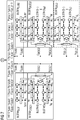
- Fig. 6 shows schematically a possible exemplary embodiment of a ticketing system 1 according to an aspect of the present invention using a Siamese bi-directional LSTM neural network architecture.
- the bidirectional LSTM network is implemented for the subject of the query Q and for the description of the query Q as shown in Fig. 6 .
- bidirectional LSTM neural networks are provided for subject, description and solution of a ticket T within the knowledge database 3.
- the bidirectional LSTM networks can be used to provide representations for the different textual descriptions of the received query Q and the investigated ticket T. For each textual description of the received query Q and for each textual description of the ticket T, at least one associated representation is calculated using the bidirectional LSTM neural networks shown in Fig. 6 .
- the representation of the textual description can comprise a hidden state h of the associated neural network as well as a word embedding E.
- the representations provided by the bidirectional LSTM neural networks are supplied to a calculation unit which is configured to calculate a similarity score y for similarities between the received query Q and the ticket T using a predetermined similarity metric.
- the similarity metric can comprise a Manhattan similarity metric.
- the similarity score y indicating a degree of similarity between the received query Q and the investigated ticket T stored in the knowledge database 3 is calculated on the basis of multi-level symmetric representation differences and on the basis of cross-level asymmetric representation differences using a Manhattan similarity metric.
- the bi-directional LSTM neural network used for the subject of the query Q provides two representations of the subject, i.e. a hidden state representation h of the subject of the query Q and a word embedding E SUBQ of the subject.
- a corresponding Siamese bidirectional LSTM neural network is used to calculate corresponding presentations of the subject of the investigated ticket T stored in the knowledge database.
- the BLSTM network used for the subject of the ticket T provides as a first representation a hidden state representation H SUB of the subject and as a second representation a word embedding E of the subject of the ticket T stored in the knowledge database 3.
- the system illustrated in Fig. 7 comprises a bidirectional LSTM neural network BLSTM used for the description of the received query Q and another bidirectional LSTM neural network used for the description of the investigated ticket T.
- BLSTM networks used for the description of the query Q and for the description of the investigated ticket T provide two representations including a hidden state representation h DESCQ of the query description and a hidden state representation h DESC of the ticket description. Additionally, corresponding word embeddings E are calculated by the respective bidirectional LSTM neural network.
- the received query Q does not comprise a solution.
- each ticket T of the tickets stored in the knowledge database 3 comprises a solution SOL.
- the system comprises a further bidirectional LSTM neural network BLSTM for calculating representations for the ticket solution.
- the BLSTM neural network calculates in the illustrated embodiment a word embedding E SOL representing the stored solution and a hidden state h SOL of the BLSTM network representing the stored solution SOL of the ticket T.
- the different representations of the different textual descriptions within the received query Q and of the investigated ticket T are supplied to the calculation unit which calculates different representation differences as illustrated in Fig. 7 . For example, a first multi-level representation difference is calculated between the hidden state representation h of the query subject and the hidden state representation h of the ticket subject using a predetermined metric.
- a cross-level representation difference can be calculated between the hidden state representation h of the subject of the query Q and the hidden state representation h of the description of the investigated ticket T.
- Representation differences can be calculated on the basis of the hidden state representations h and/or on the basis of the word embedding representations of the different textual descriptions as also illustrated in Fig. 7 .
- the subject of the query Q and the subject of the investigated ticket T can comprise a set of words w.
- a corresponding word vector can be calculated.
- This word vector can be used for providing the hidden state of the associated bi-directional LSTM neural network. Further, the word vectors can be averaged to calculate the word embedding representation of the subject as shown in Fig. 7 .
- the description of the query Q and the description of each ticket T stored in the knowledge database 3 comprise a set of sentences S each consisting of a set of words w.
- a hidden state is provided by the associated bidirectional LSTM network which forms the basis of the hidden state representation h of the corresponding description.
- the solution of the ticket T stored in the knowledge database 3 can comprise several sentences S each consisting of a set of words w.
- a hidden state representation h can be provided or calculated and used to derive a hidden state representation h of the complete solution text of the ticket T within the knowledge database 3.
- the calculation unit calculates a similarity score value y in response to the received query Q for the different tickets T stored in the knowledge database 3 to identify a ticket T within the knowledge database 3 having the maximum calculated similarity score.
- the solution SOL of this identified ticket T is output by the ticketing system 1 as a recommendation REC for the received query Q.
- the output recommendation REC can comprise the solution text of the ticket T with the maximum similarity score and in a possible embodiment, additional data, in particular control CTRL data for performing automatically additional actions concerning the reported issue.
- the ticketing system 1 according to the present invention provides an artificial intelligence tool which can generate labelled data pairs with associated similarity scores for any supervised task in order to overcome labelled data scarcity.
- the ticketing system 1 according to the present invention can be applied to any domain for STS and IR tasks.
- the ticketing system 1 can be used as a recommendation system or question-answering or performing a search in various technical domains.
- the ticketing system 1 does not require any extensive manual feature generation beyond the separately trained word2vec vectors and larger datasets.
- the system 1 improves a recall due to introduction of word and char-based embeddings.
- the ticketing system 1 use a Siamese LSTM network for multi-level and cross-level or asymmetric textual similarity learning.
- word embeddings are introduced in similarity learning metrics along with hidden representations from LSTM networks.
- the ticketing system 1 provides a real-world application of semantic textual similarity learning and retrieving of similar tickets based on a deep learning architecture. It can use char-word embeddings generated via bidirectional LSTM networks for handling technical vocabulary and typos.
- the ticketing system 1 according to the present invention can be used for any kind of industrial system or industrial domain.
- the system 1 helps in generating additional annotated and supervised or labelled data from a large unsupervised corpus.
- the ticketing system 1 can reduce human efforts and expert knowledge to manually annotate large corpus required in supervised modelling tasks.
- the ticketing system 1 according to the present invention allows to automate the solution recommendations for query tickets via semantic textual similarity learning.
- the system 1 helps in empowering similarity learning tools, in particular question and answering tools.
- the ticketing system 1 according to the present invention allows for preemptive maintenance and reduces the probability that a technical system or subsystem may fail during operation.
- the ticketing system 1 according to the present invention can be integrated in a machine M or subsystem for providing automatically recommendations to resolve any kind of abnormal behaviour of a subsystem or a component of the monitored machine M.
- the ticketing system 1 is a local ticketing system which can be used for one or several machines M of an industrial plant.
- the ticketing system 1 can also comprise a remote system connected to different machines M located on the same or different sites via a data network such as the internet.
- the ticketing system 1 can provide textual recommendations advising users how to resolve a technical problem concerning a machine M.
- the technical system 1 can also provide control data CTRL and/or control signals helping or supporting the user or technician in solving reported issues concerning a machine.
- the generated recommendation REC can be stored in the knowledge database 3 as an additional ticket T for further processing.
Landscapes
- Engineering & Computer Science (AREA)
- Theoretical Computer Science (AREA)
- Physics & Mathematics (AREA)
- General Physics & Mathematics (AREA)
- General Engineering & Computer Science (AREA)
- Data Mining & Analysis (AREA)
- Software Systems (AREA)
- Computational Linguistics (AREA)
- Mathematical Physics (AREA)
- Artificial Intelligence (AREA)
- Health & Medical Sciences (AREA)
- General Health & Medical Sciences (AREA)
- Computing Systems (AREA)
- Evolutionary Computation (AREA)
- Molecular Biology (AREA)
- Life Sciences & Earth Sciences (AREA)
- Biomedical Technology (AREA)
- Biophysics (AREA)
- Databases & Information Systems (AREA)
- Business, Economics & Management (AREA)
- Probability & Statistics with Applications (AREA)
- Human Resources & Organizations (AREA)
- Fuzzy Systems (AREA)
- Quality & Reliability (AREA)
- Entrepreneurship & Innovation (AREA)
- General Business, Economics & Management (AREA)
- Tourism & Hospitality (AREA)
- Strategic Management (AREA)
- Operations Research (AREA)
- Marketing (AREA)
- Economics (AREA)
- Audiology, Speech & Language Pathology (AREA)
- Automation & Control Theory (AREA)
- Computational Mathematics (AREA)
- Mathematical Analysis (AREA)
- Mathematical Optimization (AREA)
- Pure & Applied Mathematics (AREA)
- Information Retrieval, Db Structures And Fs Structures Therefor (AREA)
Priority Applications (4)
| Application Number | Priority Date | Filing Date | Title |
|---|---|---|---|
| PCT/EP2018/051520 WO2018171953A1 (en) | 2017-03-22 | 2018-01-23 | A method for retrieving a recommendation from a knowledge database of a ticketing system |
| EP18704427.6A EP3577580A1 (de) | 2017-03-22 | 2018-01-23 | Verfahren zur wiedergabe einer empfehlung aus einer wissensdatenbank eines kartenausgabesystems |
| CN201880019714.3A CN110419037A (zh) | 2017-03-22 | 2018-01-23 | 用于从票务系统的知识数据库中检索推荐的方法 |
| US16/495,243 US12182682B2 (en) | 2017-03-22 | 2018-01-23 | Method for retrieving a recommendation from a knowledge database of a ticketing system |
Applications Claiming Priority (1)
| Application Number | Priority Date | Filing Date | Title |
|---|---|---|---|
| IN201711010017 | 2017-03-22 |
Publications (1)
| Publication Number | Publication Date |
|---|---|
| EP3379429A1 true EP3379429A1 (de) | 2018-09-26 |
Family
ID=58698974
Family Applications (2)
| Application Number | Title | Priority Date | Filing Date |
|---|---|---|---|
| EP17169904.4A Withdrawn EP3379429A1 (de) | 2017-03-22 | 2017-05-08 | Verfahren zur wiedergabe einer empfehlung aus einer wissensdatenbank eines kartenausgabesystems |
| EP18704427.6A Ceased EP3577580A1 (de) | 2017-03-22 | 2018-01-23 | Verfahren zur wiedergabe einer empfehlung aus einer wissensdatenbank eines kartenausgabesystems |
Family Applications After (1)
| Application Number | Title | Priority Date | Filing Date |
|---|---|---|---|
| EP18704427.6A Ceased EP3577580A1 (de) | 2017-03-22 | 2018-01-23 | Verfahren zur wiedergabe einer empfehlung aus einer wissensdatenbank eines kartenausgabesystems |
Country Status (4)
| Country | Link |
|---|---|
| US (1) | US12182682B2 (de) |
| EP (2) | EP3379429A1 (de) |
| CN (1) | CN110419037A (de) |
| WO (1) | WO2018171953A1 (de) |
Cited By (2)
| Publication number | Priority date | Publication date | Assignee | Title |
|---|---|---|---|---|
| CN110428212A (zh) * | 2019-06-05 | 2019-11-08 | 福建奇点时空数字科技有限公司 | 一种基于百科知识模型的团建专业实体相似度计算方法 |
| CN116150400A (zh) * | 2023-02-07 | 2023-05-23 | 上海致景信息科技有限公司 | 基于知识图谱的纺织领域学习方法、系统、设备及介质 |
Families Citing this family (14)
| Publication number | Priority date | Publication date | Assignee | Title |
|---|---|---|---|---|
| EP3379429A1 (de) * | 2017-03-22 | 2018-09-26 | Siemens Aktiengesellschaft | Verfahren zur wiedergabe einer empfehlung aus einer wissensdatenbank eines kartenausgabesystems |
| US10764440B2 (en) * | 2018-12-21 | 2020-09-01 | Nextiva, Inc. | System and method of real-time wiki knowledge resources |
| US11704677B2 (en) * | 2019-01-25 | 2023-07-18 | EMC IP Holding Company LLC | Customer support ticket aggregation using topic modeling and machine learning techniques |
| WO2020240572A1 (en) * | 2019-05-29 | 2020-12-03 | Telefonaktiebolaget Lm Ericsson (Publ) | Method for training a discriminator |
| TWI837371B (zh) * | 2019-06-19 | 2024-04-01 | 日商住友重機械工業股份有限公司 | 支援裝置、顯示裝置、支援方法及支援程式 |
| CN115668266A (zh) * | 2020-08-19 | 2023-01-31 | 西门子股份公司 | 生产订单的分解方法和装置 |
| CA3129304A1 (en) * | 2020-08-28 | 2022-02-28 | Royal Bank Of Canada | Systems and methods for monitoring technology infrastructure |
| CN112199503B (zh) * | 2020-10-28 | 2023-04-28 | 南京信息工程大学 | 一种基于特征增强的非平衡Bi-LSTM的中文文本分类方法 |
| US20220334571A1 (en) * | 2021-04-16 | 2022-10-20 | Larsen & Toubro Infotech Ltd | Method and system for monitoring a plurality of critical assets associated with a production/process management system using one or more edge devices |
| US20240185096A1 (en) * | 2021-06-29 | 2024-06-06 | Siemens Aktiengesellschaft | A Method, Device and Storage Medium for Knowledge Recommendation |
| US20230080981A1 (en) * | 2021-09-13 | 2023-03-16 | International Business Machines Corporation | Predictive maintenance explanations based on user profile |
| US20230245146A1 (en) * | 2022-01-28 | 2023-08-03 | Walmart Apollo, Llc | Methods and apparatus for automatic item demand and substitution prediction using machine learning processes |
| US20230251646A1 (en) * | 2022-02-10 | 2023-08-10 | International Business Machines Corporation | Anomaly detection of complex industrial systems and processes |
| KR102744240B1 (ko) * | 2022-09-27 | 2024-12-19 | 네이버 주식회사 | 커뮤니티 네이티브 광고를 제공하는 방법, 시스템, 및 컴퓨터 프로그램 |
Citations (3)
| Publication number | Priority date | Publication date | Assignee | Title |
|---|---|---|---|---|
| EP2608138A1 (de) * | 2011-12-21 | 2013-06-26 | Ninian Solutions Limited | Verfahren, Vorrichtungen und Computerprogrammprodukte zur Bereitstellung von Inhalt für Benutzer in einem kollaborativen Arbeitsplatzsystem |
| WO2014035539A1 (en) * | 2012-08-28 | 2014-03-06 | Oracle International Corporation | Contextually blind data conversion using indexed string matching |
| EP2983048A2 (de) * | 2014-07-31 | 2016-02-10 | Doosan Heavy Industries & Construction Co., Ltd. | Windkraftanlagensystem und verfahren dafür |
Family Cites Families (17)
| Publication number | Priority date | Publication date | Assignee | Title |
|---|---|---|---|---|
| US7571177B2 (en) * | 2001-02-08 | 2009-08-04 | 2028, Inc. | Methods and systems for automated semantic knowledge leveraging graph theoretic analysis and the inherent structure of communication |
| US7860706B2 (en) * | 2001-03-16 | 2010-12-28 | Eli Abir | Knowledge system method and appparatus |
| US20080077570A1 (en) * | 2004-10-25 | 2008-03-27 | Infovell, Inc. | Full Text Query and Search Systems and Method of Use |
| US10911894B2 (en) * | 2005-09-14 | 2021-02-02 | Verizon Media Inc. | Use of dynamic content generation parameters based on previous performance of those parameters |
| US20120173373A1 (en) * | 2005-09-14 | 2012-07-05 | Adam Soroca | System for retrieving mobile communication facility user data from a plurality of providers |
| US20070061317A1 (en) * | 2005-09-14 | 2007-03-15 | Jorey Ramer | Mobile search substring query completion |
| US8862250B2 (en) * | 2010-05-07 | 2014-10-14 | Exxonmobil Research And Engineering Company | Integrated expert system for identifying abnormal events in an industrial plant |
| EP2416284A1 (de) | 2010-08-02 | 2012-02-08 | Amadeus S.A.S. | Automatische Anfrageerzeugung für ein Fahrtticketsverkaufssystem |
| US9015093B1 (en) * | 2010-10-26 | 2015-04-21 | Michael Lamport Commons | Intelligent control with hierarchical stacked neural networks |
| US8856936B2 (en) * | 2011-10-14 | 2014-10-07 | Albeado Inc. | Pervasive, domain and situational-aware, adaptive, automated, and coordinated analysis and control of enterprise-wide computers, networks, and applications for mitigation of business and operational risks and enhancement of cyber security |
| US9514421B2 (en) * | 2014-03-10 | 2016-12-06 | Regal Beloit America, Inc. | System and method for decommissioning a motor |
| US10417554B2 (en) * | 2014-05-22 | 2019-09-17 | Lee J. Scheffler | Methods and systems for neural and cognitive processing |
| US10108168B2 (en) * | 2014-06-01 | 2018-10-23 | Si-Ga Data Security (2014) Ltd. | Industrial control system smart hardware monitoring |
| US10332123B2 (en) * | 2015-08-27 | 2019-06-25 | Oracle International Corporation | Knowledge base search and retrieval based on document similarity |
| US10606846B2 (en) * | 2015-10-16 | 2020-03-31 | Baidu Usa Llc | Systems and methods for human inspired simple question answering (HISQA) |
| EP3379429A1 (de) * | 2017-03-22 | 2018-09-26 | Siemens Aktiengesellschaft | Verfahren zur wiedergabe einer empfehlung aus einer wissensdatenbank eines kartenausgabesystems |
| US20190195742A1 (en) * | 2017-12-22 | 2019-06-27 | Schneider Electric Software, Llc | Automated detection of anomalous industrial process operation |
-
2017
- 2017-05-08 EP EP17169904.4A patent/EP3379429A1/de not_active Withdrawn
-
2018
- 2018-01-23 CN CN201880019714.3A patent/CN110419037A/zh active Pending
- 2018-01-23 WO PCT/EP2018/051520 patent/WO2018171953A1/en not_active Ceased
- 2018-01-23 US US16/495,243 patent/US12182682B2/en active Active
- 2018-01-23 EP EP18704427.6A patent/EP3577580A1/de not_active Ceased
Patent Citations (3)
| Publication number | Priority date | Publication date | Assignee | Title |
|---|---|---|---|---|
| EP2608138A1 (de) * | 2011-12-21 | 2013-06-26 | Ninian Solutions Limited | Verfahren, Vorrichtungen und Computerprogrammprodukte zur Bereitstellung von Inhalt für Benutzer in einem kollaborativen Arbeitsplatzsystem |
| WO2014035539A1 (en) * | 2012-08-28 | 2014-03-06 | Oracle International Corporation | Contextually blind data conversion using indexed string matching |
| EP2983048A2 (de) * | 2014-07-31 | 2016-02-10 | Doosan Heavy Industries & Construction Co., Ltd. | Windkraftanlagensystem und verfahren dafür |
Cited By (2)
| Publication number | Priority date | Publication date | Assignee | Title |
|---|---|---|---|---|
| CN110428212A (zh) * | 2019-06-05 | 2019-11-08 | 福建奇点时空数字科技有限公司 | 一种基于百科知识模型的团建专业实体相似度计算方法 |
| CN116150400A (zh) * | 2023-02-07 | 2023-05-23 | 上海致景信息科技有限公司 | 基于知识图谱的纺织领域学习方法、系统、设备及介质 |
Also Published As
| Publication number | Publication date |
|---|---|
| US12182682B2 (en) | 2024-12-31 |
| US20200034689A1 (en) | 2020-01-30 |
| CN110419037A (zh) | 2019-11-05 |
| EP3577580A1 (de) | 2019-12-11 |
| WO2018171953A1 (en) | 2018-09-27 |
Similar Documents
| Publication | Publication Date | Title |
|---|---|---|
| US12182682B2 (en) | Method for retrieving a recommendation from a knowledge database of a ticketing system | |
| Huq et al. | Sentiment analysis on Twitter data using KNN and SVM | |
| Mills et al. | Automatic traceability maintenance via machine learning classification | |
| US10372763B2 (en) | Generating probabilistic annotations for entities and relations using reasoning and corpus-level evidence | |
| WO2019118007A1 (en) | Domain-specific natural language understanding of customer intent in self-help | |
| US11475529B2 (en) | Systems and methods for identifying and linking events in structured proceedings | |
| US20250156460A1 (en) | Systems and methods for generating a workflow data structure | |
| CN114579730B (zh) | 信息处理方法、电子设备和计算机程序产品 | |
| US9270749B2 (en) | Leveraging social media to assist in troubleshooting | |
| US12462108B1 (en) | Remediating hallucinations in language models | |
| WO2021199052A1 (en) | Methods and systems for searching and retrieving information | |
| Parker et al. | Named entity recognition through deep representation learning and weak supervision | |
| US11580499B2 (en) | Method, system and computer-readable medium for information retrieval | |
| CN120067856A (zh) | 一种实时自动化标注数据标签方法、系统、设备及存储介质 | |
| EP4365805A1 (de) | System und verfahren zur informationsextraktion, suche und zusammenfassung für dienstaktionsempfehlungen | |
| CN117874200A (zh) | 风电运维数据的答案文本生成方法、装置、设备及介质 | |
| CN117573673A (zh) | 一种区域电网数据管理方法、系统、设备及介质 | |
| CN112214990B (zh) | 轨道交通维修工单关键词提取方法及装置 | |
| Shardlow et al. | Exploring supervised approaches to the detection of anthropomorphic language in the reporting of NLP venues | |
| Kumar et al. | Automatic Assessment System Using Topic Modelling and TF-IDF Approach | |
| Meunier-Pion et al. | Assessing Product Reliability from Customer Reviews Through Natural Language Processing and Machine Learning | |
| RU2823436C1 (ru) | Система автоматического определения тематики текстовых документов на основе объяснимых методов искусственного интеллекта | |
| US12608657B1 (en) | Automated continual learning system for machine learning models | |
| JP2021111075A (ja) | 対話システムおよび文章生成装置の構成方法 | |
| CN118821933B (zh) | 电力系统的数据库构建方法、装置和存储介质 |
Legal Events
| Date | Code | Title | Description |
|---|---|---|---|
| PUAI | Public reference made under article 153(3) epc to a published international application that has entered the european phase |
Free format text: ORIGINAL CODE: 0009012 |
|
| STAA | Information on the status of an ep patent application or granted ep patent |
Free format text: STATUS: THE APPLICATION HAS BEEN PUBLISHED |
|
| AK | Designated contracting states |
Kind code of ref document: A1 Designated state(s): AL AT BE BG CH CY CZ DE DK EE ES FI FR GB GR HR HU IE IS IT LI LT LU LV MC MK MT NL NO PL PT RO RS SE SI SK SM TR |
|
| AX | Request for extension of the european patent |
Extension state: BA ME |
|
| STAA | Information on the status of an ep patent application or granted ep patent |
Free format text: STATUS: REQUEST FOR EXAMINATION WAS MADE |
|
| 17P | Request for examination filed |
Effective date: 20190218 |
|
| RBV | Designated contracting states (corrected) |
Designated state(s): AL AT BE BG CH CY CZ DE DK EE ES FI FR GB GR HR HU IE IS IT LI LT LU LV MC MK MT NL NO PL PT RO RS SE SI SK SM TR |
|
| STAA | Information on the status of an ep patent application or granted ep patent |
Free format text: STATUS: EXAMINATION IS IN PROGRESS |
|
| 17Q | First examination report despatched |
Effective date: 20200116 |
|
| STAA | Information on the status of an ep patent application or granted ep patent |
Free format text: STATUS: THE APPLICATION IS DEEMED TO BE WITHDRAWN |
|
| 18D | Application deemed to be withdrawn |
Effective date: 20200603 |