EP3379754A1 - Procédé, appareil et dispositif de retransmission de blocs de code - Google Patents
Procédé, appareil et dispositif de retransmission de blocs de code Download PDFInfo
- Publication number
- EP3379754A1 EP3379754A1 EP18163574.9A EP18163574A EP3379754A1 EP 3379754 A1 EP3379754 A1 EP 3379754A1 EP 18163574 A EP18163574 A EP 18163574A EP 3379754 A1 EP3379754 A1 EP 3379754A1
- Authority
- EP
- European Patent Office
- Prior art keywords
- transport block
- code block
- code
- group
- retransmitted
- Prior art date
- Legal status (The legal status is an assumption and is not a legal conclusion. Google has not performed a legal analysis and makes no representation as to the accuracy of the status listed.)
- Withdrawn
Links
Images


Classifications
-
- H—ELECTRICITY
- H04—ELECTRIC COMMUNICATION TECHNIQUE
- H04W—WIRELESS COMMUNICATION NETWORKS
- H04W28/00—Network traffic management; Network resource management
- H04W28/02—Traffic management, e.g. flow control or congestion control
- H04W28/04—Error control
-
- H—ELECTRICITY
- H04—ELECTRIC COMMUNICATION TECHNIQUE
- H04L—TRANSMISSION OF DIGITAL INFORMATION, e.g. TELEGRAPHIC COMMUNICATION
- H04L1/00—Arrangements for detecting or preventing errors in the information received
- H04L1/12—Arrangements for detecting or preventing errors in the information received by using return channel
- H04L1/16—Arrangements for detecting or preventing errors in the information received by using return channel in which the return channel carries supervisory signals, e.g. repetition request signals
- H04L1/18—Automatic repetition systems, e.g. Van Duuren systems
- H04L1/1809—Selective-repeat protocols
-
- H—ELECTRICITY
- H04—ELECTRIC COMMUNICATION TECHNIQUE
- H04L—TRANSMISSION OF DIGITAL INFORMATION, e.g. TELEGRAPHIC COMMUNICATION
- H04L1/00—Arrangements for detecting or preventing errors in the information received
- H04L1/12—Arrangements for detecting or preventing errors in the information received by using return channel
- H04L1/16—Arrangements for detecting or preventing errors in the information received by using return channel in which the return channel carries supervisory signals, e.g. repetition request signals
- H04L1/18—Automatic repetition systems, e.g. Van Duuren systems
- H04L1/1812—Hybrid protocols; Hybrid automatic repeat request [HARQ]
-
- H—ELECTRICITY
- H04—ELECTRIC COMMUNICATION TECHNIQUE
- H04L—TRANSMISSION OF DIGITAL INFORMATION, e.g. TELEGRAPHIC COMMUNICATION
- H04L1/00—Arrangements for detecting or preventing errors in the information received
- H04L1/12—Arrangements for detecting or preventing errors in the information received by using return channel
- H04L1/16—Arrangements for detecting or preventing errors in the information received by using return channel in which the return channel carries supervisory signals, e.g. repetition request signals
- H04L1/1607—Details of the supervisory signal
-
- H—ELECTRICITY
- H04—ELECTRIC COMMUNICATION TECHNIQUE
- H04L—TRANSMISSION OF DIGITAL INFORMATION, e.g. TELEGRAPHIC COMMUNICATION
- H04L1/00—Arrangements for detecting or preventing errors in the information received
- H04L1/12—Arrangements for detecting or preventing errors in the information received by using return channel
- H04L1/16—Arrangements for detecting or preventing errors in the information received by using return channel in which the return channel carries supervisory signals, e.g. repetition request signals
- H04L1/1607—Details of the supervisory signal
- H04L1/1614—Details of the supervisory signal using bitmaps
-
- H—ELECTRICITY
- H04—ELECTRIC COMMUNICATION TECHNIQUE
- H04L—TRANSMISSION OF DIGITAL INFORMATION, e.g. TELEGRAPHIC COMMUNICATION
- H04L1/00—Arrangements for detecting or preventing errors in the information received
- H04L1/12—Arrangements for detecting or preventing errors in the information received by using return channel
- H04L1/16—Arrangements for detecting or preventing errors in the information received by using return channel in which the return channel carries supervisory signals, e.g. repetition request signals
- H04L1/18—Automatic repetition systems, e.g. Van Duuren systems
- H04L1/1822—Automatic repetition systems, e.g. Van Duuren systems involving configuration of automatic repeat request [ARQ] with parallel processes
-
- H—ELECTRICITY
- H04—ELECTRIC COMMUNICATION TECHNIQUE
- H04L—TRANSMISSION OF DIGITAL INFORMATION, e.g. TELEGRAPHIC COMMUNICATION
- H04L1/00—Arrangements for detecting or preventing errors in the information received
- H04L1/12—Arrangements for detecting or preventing errors in the information received by using return channel
- H04L1/16—Arrangements for detecting or preventing errors in the information received by using return channel in which the return channel carries supervisory signals, e.g. repetition request signals
- H04L1/18—Automatic repetition systems, e.g. Van Duuren systems
- H04L1/1829—Arrangements specially adapted for the receiver end
-
- H—ELECTRICITY
- H04—ELECTRIC COMMUNICATION TECHNIQUE
- H04L—TRANSMISSION OF DIGITAL INFORMATION, e.g. TELEGRAPHIC COMMUNICATION
- H04L1/00—Arrangements for detecting or preventing errors in the information received
- H04L1/12—Arrangements for detecting or preventing errors in the information received by using return channel
- H04L1/16—Arrangements for detecting or preventing errors in the information received by using return channel in which the return channel carries supervisory signals, e.g. repetition request signals
- H04L1/18—Automatic repetition systems, e.g. Van Duuren systems
- H04L1/1867—Arrangements specially adapted for the transmitter end
-
- H—ELECTRICITY
- H04—ELECTRIC COMMUNICATION TECHNIQUE
- H04L—TRANSMISSION OF DIGITAL INFORMATION, e.g. TELEGRAPHIC COMMUNICATION
- H04L1/00—Arrangements for detecting or preventing errors in the information received
- H04L1/12—Arrangements for detecting or preventing errors in the information received by using return channel
- H04L1/16—Arrangements for detecting or preventing errors in the information received by using return channel in which the return channel carries supervisory signals, e.g. repetition request signals
- H04L1/18—Automatic repetition systems, e.g. Van Duuren systems
- H04L1/1867—Arrangements specially adapted for the transmitter end
- H04L1/1893—Physical mapping arrangements
-
- H—ELECTRICITY
- H04—ELECTRIC COMMUNICATION TECHNIQUE
- H04L—TRANSMISSION OF DIGITAL INFORMATION, e.g. TELEGRAPHIC COMMUNICATION
- H04L1/00—Arrangements for detecting or preventing errors in the information received
- H04L1/12—Arrangements for detecting or preventing errors in the information received by using return channel
- H04L1/16—Arrangements for detecting or preventing errors in the information received by using return channel in which the return channel carries supervisory signals, e.g. repetition request signals
- H04L1/18—Automatic repetition systems, e.g. Van Duuren systems
- H04L1/1867—Arrangements specially adapted for the transmitter end
- H04L1/1896—ARQ related signaling
Definitions
- the present invention relates to the field of electronics and communication, and in particular relates to a method, an apparatus and a device for retransmitting Code Blocks.
- LTE Long Time Evolution
- TBs Transport Blocks
- HARQ Hybrid Automatic Repeat request
- ACK ACK
- NACK NACK
- the HARQ feedback is still one Bit, and as a result, when a TB is divided into multiple CBs to be sent, even if only one CB is falsely transmitted, the HARQ feedback would be NACK, and the entire TB would need to be retransmitted, which may result in low efficiency.
- a method of retransmitting Code Blocks provided in the present application can realize high efficiency retransmission of Code Blocks.
- a method of retransmitting Code Blocks comprises:
- the control signal comprises a Hybrid Automatic Repeat request process number of the Transport Block where the at least one Code Block Group retransmitted is located, and one serial number of the at least one Code Block Group retransmitted in the Transport Block; different Transport Blocks have identical serial number for Code Block Groups in the respective Transport Block, and the serial number in one Transport Block uniquely identifies one Code Block Group in one Transport Block.
- control signal comprises a Hybrid Automatic Repeat request process number of the at least one Code Block Group retransmitted; and Code Block Groups in one Transport Block have different Hybrid Automatic Repeat request process numbers.
- a method of retransmitting Code Blocks comprises:
- an apparatus for retransmitting Code Blocks comprises:
- an apparatus for retransmitting Code Blocks comprises:
- an electronic device for retransmitting Code Blocks comprises a processor, a memory and a transceiver interconnected by a bus line, the transceiver is for sending and receiving data, the memory is for storing program codes, the processor is for calling the program codes stored in the memory to execute the following steps:
- an electronic device for retransmitting Code Blocks comprises a processor, a memory and a transceiver interconnected by a bus line, the transceiver is for sending and receiving data, the memory is for storing program codes, the processor is for calling the program codes stored in the memory to execute the following steps:
- a device provided comprises the electronic device provided in the fifth or seventh aspect.
- the first device sends a control signal corresponding to the CB Groups to be retransmitted, so that retransmission based on basic units of CB Groups is made possible, which may have the advantage of high efficiency.
- the first device may in particular be a base station, although it may also be other types of devices, such as a smart terminal, in a practical application;
- the second device may in particular be a smart terminal, although it may also be a base station when the first device is a smart terminal.
- the embodiments of the present invention are not limited to the above-mentioned forms of the first and second devices.
- NR New Radio
- eMBB enhanced Mobile BroadBand
- URLLC Ultra-Reliable and Low Latency Communications
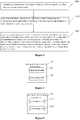
- Such diversity multiplexing may possibly cause that a first device allocates N Resource Blocks (RBs) of one Slot to eMBB UE#1, and the data and control signal corresponding to UE#1 are configured to be sent in Slot1 by the first device, however, in the middle of Slot1, a service of URLLC UE#2 suddenly arrived, and in order to meet the time-delay requirement for URLLC service, resource is required to be immediately allocated to URLLC UE#2, thus it is possible that part of symbols in the middle of Slot1 is then allocated to URLLC UE#2, that is to say, part of or all of the N Resource Blocks do not transmit the data and control signal of eMBB UE#1 in the duration of this part of symbols (as shown in Figure 1 , one CB in the middle is allocated to URLLC
- one TB of eMBB UE#1 would be divided into multiple CBs to be transmitted, but even if only one CB is falsely transmitted, one Bit of HARQ feedback which is NACK is still returned, and as a result, the entire TB would need to be retransmitted. This causes very low efficiency, because the TB of eMBB UE#1 is relatively large.
- HARQ feedback in a form of CB Groups, wherein the size of a CB Group is smaller than or equal to the size of a TB.
- a TB when a TB is very large, it can be divided into a plurality of CB Groups for feedback, i.e., one Bit of HARQ feedback is configured for each CB Group, so that only those falsely transmitted CB Groups, with a feedback of NACK, need to be retransmitted, it is not required to retransmit the entire TB.
- the NACK configuration of the above-mentioned one Bit of feedback may be that the value of 0 for the one Bit corresponds to NACK, and the value of 1 corresponds to ACK; or vice versa.
- the present invention is not limited to the above-mentioned specific values for ACK or NACK. In such situation, how to announce the unsuccessfully-received CB Group that corresponds to the retransmitted CB Group is a problem that needs to be solved.
- the present invention provides a method of retransmitting Code Blocks to solve the problem of announcing the identification of the retransmitted CB Group, so as to support retransmission based on basic units of CB Groups and improve efficiency.
- a method of retransmitting Code Blocks provided, as shown in Figure 2 , comprises:
- the HARQ feedback character in the above-mentioned Step S202 is a HARQ feedback character based on CB Groups, i.e., each CB Group corresponds to one Bit of HARQ feedback character.
- CB Groups i.e., each CB Group corresponds to one Bit of HARQ feedback character.
- TB1 contains 5 CB Groups
- an HARQ feedback character on LTE would indicate whether or not the entire TB1 is received successfully by a value of 0 or 1, but in the Step S202, the HARQ feedback character is 11011, wherein 1 represents successful reception and 0 represents unsuccessful reception, so 11011 indicates that the third CB Group of TB1 is falsely received and needs to be retransmitted.
- Step S203 if at least one Bit of the HARQ feedback character indicates that at least one of the Code Block Groups is not received successfully, the first device retransmits a Transport Block containing the at least one unsuccessfully-received Code Block Group to the second device, and the first device sends a corresponding control signal for the second device to identify at least one Code Block Group retransmitted.
- the control signal in the Steps S201 and S203 may be Downlink Control Information (DCI), or may be Uplink Control Information (UCI).
- DCI Downlink Control Information
- UCI Uplink Control Information
- other downlink or uplink information may also be used, for example, a new downlink or uplink information may be created for transmitting the control signal of the TB.
- a TB containing the third CB Group is retransmitted to the second device, and a control signal of this TB (e.g. DCI) is also sent to the second device, the DCI allows the second device, e.g. a smart terminal, to identify the unsuccessfully-received CB Group that corresponds to the retransmission of the third CB Group.
- a control signal of this TB e.g. DCI
- the DCI allows the second device, e.g. a smart terminal, to identify the unsuccessfully-received CB Group that corresponds to the retransmission of the third CB Group.
- an implementation way of the above-mentioned Step S203 is that: the base station sends an HARQ process number of the TB where the at least one CB Group retransmitted is located, and a serial number of the at least one CB Group retransmitted in the TB.
- HARQ feedback character For example, if the HARQ feedback character is 11011, an HARQ process number of TB1, for example TB#1, together with CB#3, are sent to the smart terminal, wherein, TB#1 represents the First TB, and CB#3 represents the third CB Group in TB#1.
- the serial number of the retransmitted CB Group in the TB may also be indicated as follows: if the TB has 5 CB Groups with serial numbers of CB#1, CB#2, CB#3, CB#4, CB#5 and the HARQ feedback indicates the third CB Group is falsely received, when retransmitting the third CB Group, 5 Bits are used to indicate the serial number of the retransmitted CB Group, wherein, each Bit corresponds to one CB Group, the leftmost Bit, i.e. the Bit with the highest order, may correspond to the CB Group with the smallest serial number or correspond to the CB Group with the largest serial number, and the other Bits sequentially correspond to every remaining CB Groups.
- the leftmost Bit i.e. the Bit with the highest order
- the 5 Bits are 00100; if the second and third CB Groups need to be retransmitted, the 5 Bits are 01100.
- the value "1" of a Bit indicates a retransmitted CB Group is contained in the TB, and the value "0" of a Bit indicates a retransmitted CB Group is not contained in the TB.
- the settings may be reversed, so that the value "0" of a Bit indicates a retransmitted CB Group is contained in the TB, and the value "1" of a Bit indicates a retransmitted CB Group is not contained in the TB.
- the CB Groups contained in the TB all correspond to retransmission of unsuccessfully-received CB Groups in one TB, with the same HARQ process number, and this sequence of 5 Bits also tells the user about the total number of CB Groups in this TB. For example, when the value "1" of a Bit indicates a corresponding retransmission of a CB Group, the total number of Bits having a value of "1" is the total number of CB Groups in this TB.
- TBs with different HARQ process numbers may have identical serial number for CB Groups in the respective TB.
- the CB#3 of TB#1 and the CB#2, CB#3 of TB#2 are retransmitted to the second device, herein, TB#1 and TB#2 with different HARQ process numbers have identical serial number for one CB Group in them, i.e. CB#3.
- One HARQ process number of a TB and one serial number of a CB Group in this TB uniquely identify one CB Group.
- CB Groups have the same HARQ process number of TB and the same serial number of CB Group in TB, it suggests that the subsequently received CB Group is a retransmitted CB Group of a previously received CB Group, and that the two CB Groups can be decoded in combination.
- an implementation way of the above-mentioned Step S203 is that: the first device sends HARQ process numbers of the at least one CB Group retransmitted.
- CB#1, CB#2, CB#3 belong to TB#1; CB#4, CB#5, CB#6, CB#7 belong to TB#2; CB#8, CB#9 belong to TB#3; CB#10, CB#11, CB#12 belong to TB#4; and CB#13 belongs to TB#5.
- the HARQ process number of the retransmitted CB Group needs to be sent, for example, the HARQ feedback character of TB1 is 110, the HARQ process number of CB#3 is sent when the first device retransmits CB#3 to the second device.
- the total number of HARQ processes of the CB Groups is 13, then 4 Bits is required for indicating the HARQ process number of a CB Group. For an initial transmission or a retransmission of CB#3, its HARQ process number is 0010; and for an initial transmission or a retransmission of CB#1, its HARQ process number is 0000.
- the first device sends a control signal corresponding to the CB Groups to be retransmitted, so that retransmission based on basic units of CB Groups is made possible, with the advantage of high efficiency.
- a method of retransmitting Code Blocks provided, as shown in Figure 3 , comprises:
- the control signal in the Steps S301 and S303 may be Downlink Control Information (DCI), or may be Uplink Control Information (UCI).
- DCI Downlink Control Information
- UCI Uplink Control Information
- other downlink or uplink information may also be used, for example, a new downlink or uplink information may be created for transmitting the control signal of the TB.
- the at least one CB Group retransmitted is combined with a CB Group corresponding thereto stored in a terminal, so that retransmission in basic units of CB Groups is supported.
- the apparatus comprises: A transceiver unit 401, for sending a control command and a TB to a second device, wherein, the TB comprises at least one CB Group which is a basic unit for sending the TB, and also for receiving an HARQ feedback character corresponding to each of the CB Groups in the TB sent from the second device;
- a processing unit 402 for retransmitting a TB containing at least one unsuccessfully-received CB Group to the second device and sending a corresponding control signal for the second device to identify the at least one CB Group retransmitted under the condition that at least one Bit of the HARQ feedback characters indicates that at least one CB Group is not received successfully.
- the control signals handled by the transceiver unit 401 and the processing unit 402 may be Downlink Control Information (DCI), or may be Uplink Control Information (UCI).
- DCI Downlink Control Information
- UCI Uplink Control Information
- other downlink or uplink information may also be used, for example, a new downlink or uplink information may be created for transmitting the control signal of the TB.
- the processing unit 402 in particular sends an HARQ process number of the TB where the at least one CB Group retransmitted is located, and a serial number that the at least one CB Group retransmitted has in this TB.
- the processing unit 402 in particular sends at least one HARQ process number of the at least one Code Block Group retransmitted.
- an apparatus 50 for retransmitting Code Blocks comprises: A transceiver unit 501, for receiving a control command and a TB sent from a first device, wherein, the TB comprises at least one CB Group which is a basic unit for sending the Transport Block, and also for sending an HARQ feedback character corresponding to each of the CB Groups in the TB to the first device;
- a processing unit 502 for receiving a control signal sent from the first device and a TB that comprises at least one unsuccessfully-received CB Group retransmitted from the first device, acquiring an identification of the at least one CB Group retransmitted according to the control signal, and combining the at least one CB Group retransmitted with a CB Group corresponding to the identification stored in a terminal.
- the control signals handled by the transceiver unit 501 and the processing unit 502 may be Downlink Control Information (DCI), or may be Uplink Control Information (UCI).
- DCI Downlink Control Information
- UCI Uplink Control Information
- other downlink or uplink information may also be used, for example, a new downlink or uplink information may be created for transmitting the control signal of the TB.
- the apparatus for retransmitting Code Blocks After receiving at least one CB Group retransmitted in basic units of CB Groups, the at least one CB Group retransmitted is combined with a CB Group corresponding thereto stored in a terminal, so that retransmission in basic units of CB Groups is supported.
- the embodiment of the present invention also provides a device 600, which includes, but not limited to, a smartphone, a smart watch, a tablet computer, a personal computer, a notebook computer, a computer group or a base station, wherein, the device 600 as shown in Figure 6 comprises a processor 601, a memory 602, a transceiver 603 and a bus line 604.
- the transceiver 603 is for sending data to and receiving data from external devices.
- the processor 601 in the terminal device 600 may be one or more. In some embodiments of the present application, the processor 601, the memory 602 and the transceiver 603 may be interconnected by the bus line or in other ways.
- the device 600 can be used to carry out the method shown in Figure 2 . Specifically, the processor 601 can call the program codes stored in the memory 602 to execute the following operations steps:
- the memory 602 stores program codes; and the processor 601 calls the program codes stored in the memory 602 to execute the steps shown in Figure 2 or Figure 3 .
- the processor 601 herein may be one processing element, or may be a joint name of multiple processing elements.
- the processor may be a Central Processing Unit (CPU), or may be an Application Specific Integrated Circuit (ASIC), or may be configured as one or more integrated circuits for implementing the embodiments of the present application, such as one or more Digital Signal Processors (DSPs), one or more Field Programmable Gate Arrays (FPGAs).
- DSPs Digital Signal Processors
- FPGAs Field Programmable Gate Arrays
- the memory 602 may be one storage element, or may be a joint name of multiple storage elements, for storing executable program codes as well as parameters and data required for running the application program.
- the memory 602 may comprise a Random Access Memory (RAM), or a non-volatile memory such as a magnetic storage or a Flash drive.
- RAM Random Access Memory
- non-volatile memory such as a magnetic storage or a Flash drive.
- the bus line 604 may be an Industry Standard Architecture (ISA) bus line, a Peripheral Component Interface (PCI) bus line, or an Extended Industry Standard Architecture (EISA) bus line.
- ISA Industry Standard Architecture
- PCI Peripheral Component Interface
- EISA Extended Industry Standard Architecture
- the bus line can be divided into an address bus line, a data bus line and a control bus line.
- figure 6 uses only one thick line to show it, but this does not mean there is only one bus line or one type of bus line.
- the device 600 may also comprise an input and output apparatus connected to the bus line 604, so as to be connected to other components such as the processor 601 through the bus line.
- the input and output apparatus provide an input interface for an operator, so that the operator can select a controlled option through this input interface; it may also be other interfaces for connecting to other external devices.
- the embodiment of the present invention also provides another device 700, which includes, but not limited to, a smartphone, a smart watch, a tablet computer, a personal computer, a notebook computer, a computer group or a base station, wherein, the device 700 as shown in Figure 7 comprises a processor 701, a memory 702, a transceiver 703 and a bus line 704.
- the transceiver 703 is for sending data to and receiving data from external devices.
- the processor 701 in the terminal device 700 may be one or more.
- the processor 701, the memory 702 and the transceiver 703 may be interconnected by the bus line or in other ways.
- the device 700 can be used to carry out the method shown in Figure 3 .
- the processor 701 can call the program codes stored in the memory 702 to execute the following operations steps:
- the memory 702 stores program codes; and the processor 701 calls the program codes stored in the memory 702 to execute the steps shown in Figure 3 .
- the processor 701 herein may be one processing element, or may be a joint name of multiple processing elements.
- the processor may be a Central Processing Unit (CPU), or may be an Application Specific Integrated Circuit (ASIC), or may be configured as one or more integrated circuits for implementing the embodiments of the present application, such as one or more Digital Signal Processors (DSPs), one or more Field Programmable Gate Arrays (FPGAs).
- DSPs Digital Signal Processors
- FPGAs Field Programmable Gate Arrays
- the memory 702 may be one storage element, or may be a joint name of multiple storage elements, for storing executable program codes as well as parameters and data required for running the application program.
- the memory 702 may comprise a Random Access Memory (RAM), or a non-volatile memory such as a magnetic storage or a Flash drive.
- RAM Random Access Memory
- non-volatile memory such as a magnetic storage or a Flash drive.
- the bus line 704 may be an Industry Standard Architecture (ISA) bus line, a Peripheral Component Interface (PCI) bus line, or an Extended Industry Standard Architecture (EISA) bus line.
- ISA Industry Standard Architecture
- PCI Peripheral Component Interface
- EISA Extended Industry Standard Architecture
- the bus line can be divided into an address bus line, a data bus line and a control bus line.
- figure 7 uses only one thick line to show it, but this does not mean there is only one bus line or one type of bus line.
- the device 700 may also comprise an input and output apparatus connected to the bus line 704, so as to be connected to other components such as the processor 701 through the bus line.
- the input and output apparatus provide an input interface for an operator, so that the operator can select a controlled option through this input interface; it may also be other interfaces for connecting to other external devices.
- the present invention may be implemented by software, hardware, firmware or a combination thereof.
- the aforementioned functions may be stored in a computer readable medium or transmitted as one or more instructions or codes on a computer readable medium.
- the computer readable medium includes a computer storage medium and a communication medium, wherein, the communication medium includes any medium for transmitting a computer program from one place to another; the storage medium may be any usable medium for a computer to access.
- the computer readable medium may include, for example, but not limited to, a Random Access Memory (RAM), a Read-Only Memory (ROM), an Electrically Erasable Programmable Read-Only Memory (EEPROM), a Compact Disk Read-Only Memory (CD-ROM) or other optical disk storage media, a magnetic disk storage medium or other magnetic disk storage devices, or any other media capable of carrying or storing the desired program codes with instructions and data structure forms and capable of being accessed by a computer.
- RAM Random Access Memory
- ROM Read-Only Memory
- EEPROM Electrically Erasable Programmable Read-Only Memory
- CD-ROM Compact Disk Read-Only Memory
- any connection medium can be a suitable computer readable medium.
- the software is transmitted from a website, a server or other remote sources by means of a coaxial cable, an optical fiber cable, a twisted-pair cable, a Digital Subscriber Line (DSL), or a wireless technique such as infrared, wireless waves or microwaves
- coaxial cable, optical fiber cable, twisted-pair cable, DSL, or wireless technique such as infrared, wireless waves or microwaves are all covered by the definition of the computer readable medium.
- a Disk/disk includes a Compact Disk (CD), a laser Disk, an optical Disk, a Digital Versatile Disk (DVD), a floppy disk, or a Bluelight Disk, wherein, a disk copies data magnetically, while a Disk copies data optically with laser.
- CD Compact Disk
- DVD Digital Versatile Disk
- a floppy disk or a Bluelight Disk, wherein, a disk copies data magnetically, while a Disk copies data optically with laser.
Landscapes
- Engineering & Computer Science (AREA)
- Computer Networks & Wireless Communication (AREA)
- Signal Processing (AREA)
- Detection And Prevention Of Errors In Transmission (AREA)
- Mobile Radio Communication Systems (AREA)
Applications Claiming Priority (1)
| Application Number | Priority Date | Filing Date | Title |
|---|---|---|---|
| CN201710184801.1A CN106953718A (zh) | 2017-03-24 | 2017-03-24 | 一种码块的重传进程的实现方法、装置及设备 |
Publications (1)
| Publication Number | Publication Date |
|---|---|
| EP3379754A1 true EP3379754A1 (fr) | 2018-09-26 |
Family
ID=59473786
Family Applications (1)
| Application Number | Title | Priority Date | Filing Date |
|---|---|---|---|
| EP18163574.9A Withdrawn EP3379754A1 (fr) | 2017-03-24 | 2018-03-23 | Procédé, appareil et dispositif de retransmission de blocs de code |
Country Status (3)
| Country | Link |
|---|---|
| US (1) | US20180279167A1 (fr) |
| EP (1) | EP3379754A1 (fr) |
| CN (1) | CN106953718A (fr) |
Cited By (1)
| Publication number | Priority date | Publication date | Assignee | Title |
|---|---|---|---|---|
| CN113273116A (zh) * | 2019-02-11 | 2021-08-17 | 华为技术有限公司 | 具有侧行链路harq反馈的用户设备协作的系统和方法 |
Families Citing this family (17)
| Publication number | Priority date | Publication date | Assignee | Title |
|---|---|---|---|---|
| CN108809481B (zh) * | 2017-04-28 | 2022-08-26 | 华为技术有限公司 | 数据处理方法和数据处理装置 |
| ES3015484T3 (en) | 2017-08-04 | 2025-05-05 | Wilus Inst Standards & Tech Inc | Method, apparatus, and system for transmitting or receiving data channel and control channel in wireless communication system |
| EP3657713B1 (fr) | 2017-08-08 | 2023-07-26 | Huawei Technologies Co., Ltd. | Procédé et dispositif de communication |
| CN109391381B (zh) | 2017-08-11 | 2022-06-03 | 中兴通讯股份有限公司 | 数据的确认信息生成和反馈、数据传输方法和装置 |
| US11239953B2 (en) * | 2017-08-11 | 2022-02-01 | Lenovo (Beijing) Co. Ltd | Triggering HARQ-ACK feedback for a downlink slot set |
| CN111034290B (zh) * | 2017-08-18 | 2023-08-04 | 松下电器(美国)知识产权公司 | 终端和通信方法 |
| CN109428670A (zh) * | 2017-08-23 | 2019-03-05 | 深圳市中兴微电子技术有限公司 | 一种数据差错校验方法及装置、计算机存储介质 |
| US10917219B2 (en) * | 2017-09-06 | 2021-02-09 | Qualcomm Incorporated | Multiplexing code block group level and transport block level feedback |
| CN109510691A (zh) * | 2017-09-15 | 2019-03-22 | 株式会社Kt | 基于码块组来发送和接收传输块的方法 |
| CN109560896B (zh) * | 2017-09-25 | 2021-10-08 | 中国信息通信研究院 | 一种5g系统中基于码块组进行数据传输的方法和系统 |
| CN109560898A (zh) * | 2017-09-27 | 2019-04-02 | 中国电信股份有限公司 | 重传请求反馈消息传输方法、ue及通信系统 |
| CN109639398B (zh) | 2017-10-09 | 2021-12-31 | 华为技术有限公司 | Harq-ack反馈码本的发送方法、装置及设备 |
| CN109905198B (zh) * | 2017-12-07 | 2021-03-16 | 维沃移动通信有限公司 | 基于码块组的数据传输方法、装置和设备 |
| CN109995480B (zh) * | 2017-12-29 | 2022-02-08 | 中国电信股份有限公司 | 数据重传方法和装置及计算机可读存储介质 |
| CN110011762A (zh) * | 2018-01-05 | 2019-07-12 | 中国移动通信有限公司研究院 | 混合自动重传请求信息的传输、检测方法、终端及基站 |
| WO2019191987A1 (fr) * | 2018-04-04 | 2019-10-10 | Oppo广东移动通信有限公司 | Procédé de transmission de données de liaison montante, équipement terminal et dispositif de réseau |
| US12206512B2 (en) | 2019-09-12 | 2025-01-21 | Lenovo (Beijing) Ltd. | Scheduling enhancement for enhanced machine-type communication |
Family Cites Families (4)
| Publication number | Priority date | Publication date | Assignee | Title |
|---|---|---|---|---|
| US10270579B2 (en) * | 2015-02-05 | 2019-04-23 | Qualcomm Incorporated | Efficient ACK/NACK transmission |
| US10574404B2 (en) * | 2016-04-22 | 2020-02-25 | Lg Electronics Inc. | Method for transmitting or receiving a HARQ-ACK signal in wireless communication system, and device therefor |
| US10492184B2 (en) * | 2016-12-09 | 2019-11-26 | Samsung Electronics Co., Ltd. | Multiplexing control information in a physical uplink data channel |
| US11303392B2 (en) * | 2017-03-16 | 2022-04-12 | Qualcomm Incorporated | Multi-HARQ methods and apparatus for codeblock group based transmissions |
-
2017
- 2017-03-24 CN CN201710184801.1A patent/CN106953718A/zh active Pending
-
2018
- 2018-01-12 US US15/870,194 patent/US20180279167A1/en not_active Abandoned
- 2018-03-23 EP EP18163574.9A patent/EP3379754A1/fr not_active Withdrawn
Non-Patent Citations (5)
| Title |
|---|
| INTERDIGITAL COMMUNICATIONS: "Multi-bits HARQ feedback", vol. RAN WG1, no. Athens, Greece; 20170213 - 20170217, 12 February 2017 (2017-02-12), XP051209533, Retrieved from the Internet <URL:http://www.3gpp.org/ftp/Meetings_3GPP_SYNC/RAN1/Docs/> [retrieved on 20170212] * |
| NTT DOCOMO ET AL: "Views on HARQ enhancements for NR", vol. RAN WG1, no. Athens, Greece; 20170213 - 20170217, 12 February 2017 (2017-02-12), XP051209960, Retrieved from the Internet <URL:http://www.3gpp.org/ftp/Meetings_3GPP_SYNC/RAN1/Docs/> [retrieved on 20170212] * |
| SAMSUNG: "CB-group based retransmission for eMBB", vol. RAN WG1, no. Athens, Greece; 20170213 - 20170217, 12 February 2017 (2017-02-12), XP051210132, Retrieved from the Internet <URL:http://www.3gpp.org/ftp/Meetings_3GPP_SYNC/RAN1/Docs/> [retrieved on 20170212] * |
| SAMSUNG: "TB/CB Handling for eMBB", vol. RAN WG1, no. Spokane, USA; 20170116 - 20170120, 16 January 2017 (2017-01-16), XP051208474, Retrieved from the Internet <URL:http://www.3gpp.org/ftp/Meetings_3GPP_SYNC/RAN1/Docs/> [retrieved on 20170116] * |
| ZTE ET AL: "NR HARQ timing and feedback schemes", vol. RAN WG1, no. Athens, Greece; 20170213 - 20170217, 12 February 2017 (2017-02-12), XP051208760, Retrieved from the Internet <URL:http://www.3gpp.org/ftp/Meetings_3GPP_SYNC/RAN1/Docs/> [retrieved on 20170212] * |
Cited By (2)
| Publication number | Priority date | Publication date | Assignee | Title |
|---|---|---|---|---|
| CN113273116A (zh) * | 2019-02-11 | 2021-08-17 | 华为技术有限公司 | 具有侧行链路harq反馈的用户设备协作的系统和方法 |
| CN113273116B (zh) * | 2019-02-11 | 2023-06-30 | 华为技术有限公司 | 具有侧行链路harq反馈的用户设备协作的系统和方法 |
Also Published As
| Publication number | Publication date |
|---|---|
| US20180279167A1 (en) | 2018-09-27 |
| CN106953718A (zh) | 2017-07-14 |
Similar Documents
| Publication | Publication Date | Title |
|---|---|---|
| EP3379754A1 (fr) | Procédé, appareil et dispositif de retransmission de blocs de code | |
| KR102785533B1 (ko) | 채널 배치 방법 및 단말, 기억 매체, 전자장치 | |
| EP3557930B1 (fr) | Procédé et dispositif de mise en uvre de coordination d'appareils utilisateurs | |
| EP3598672B1 (fr) | Procédé de transmission de signalisation de commande, station de base, et terminal | |
| US20180324779A1 (en) | Data transmission method and a base station | |
| US12132569B2 (en) | Method for sidelink rate matching and resource mapping, and device | |
| EP3570476B1 (fr) | Procédé et appareil de communication | |
| US10666399B2 (en) | Allocation method and apparatus for code block groups in a transport block | |
| US11728931B2 (en) | Communication method, network device, and terminal | |
| EP3930375B1 (fr) | Procédé et dispositif de transmission de données | |
| CN113677034B (zh) | 数据传输方法及相关设备 | |
| EP3952524A1 (fr) | Procédé et appareil de communication | |
| CN109951262A (zh) | 一种harq反馈的方法和装置 | |
| CN106507493B (zh) | 避免上行资源冲突的方法、装置、基站及终端 | |
| WO2019214684A1 (fr) | Procédé de communication, dispositif de communication et système | |
| CN110495130B (zh) | 控制信息的传输方法、重传方法、装置、终端及存储介质 | |
| CN105264808A (zh) | 一种信息传输方法及设备 | |
| CN110199495B (zh) | 上行传输的反馈方法、重传方法、装置、终端及存储介质 | |
| JP7688161B2 (ja) | コードブック構築方法、装置、通信機器、記憶媒体及びシステム | |
| CN107889226A (zh) | 一种确定时序的方法和设备 | |
| CN108880771B (zh) | 一种不同类型业务之间的上行控制信息的复用方法及装置 | |
| HK40064308A (en) | Sidelink rate matching and resource mapping method and device | |
| CN119547364A (zh) | 用于反馈传输的设备、方法、装置和计算机可读介质 | |
| HK40011681A (en) | Control signalling transmission method, base station and terminal |
Legal Events
| Date | Code | Title | Description |
|---|---|---|---|
| PUAI | Public reference made under article 153(3) epc to a published international application that has entered the european phase |
Free format text: ORIGINAL CODE: 0009012 |
|
| STAA | Information on the status of an ep patent application or granted ep patent |
Free format text: STATUS: THE APPLICATION HAS BEEN PUBLISHED |
|
| AK | Designated contracting states |
Kind code of ref document: A1 Designated state(s): AL AT BE BG CH CY CZ DE DK EE ES FI FR GB GR HR HU IE IS IT LI LT LU LV MC MK MT NL NO PL PT RO RS SE SI SK SM TR |
|
| AX | Request for extension of the european patent |
Extension state: BA ME |
|
| STAA | Information on the status of an ep patent application or granted ep patent |
Free format text: STATUS: REQUEST FOR EXAMINATION WAS MADE |
|
| 17P | Request for examination filed |
Effective date: 20190326 |
|
| STAA | Information on the status of an ep patent application or granted ep patent |
Free format text: STATUS: EXAMINATION IS IN PROGRESS |
|
| 17Q | First examination report despatched |
Effective date: 20200710 |
|
| STAA | Information on the status of an ep patent application or granted ep patent |
Free format text: STATUS: THE APPLICATION IS DEEMED TO BE WITHDRAWN |
|
| 18D | Application deemed to be withdrawn |
Effective date: 20201121 |